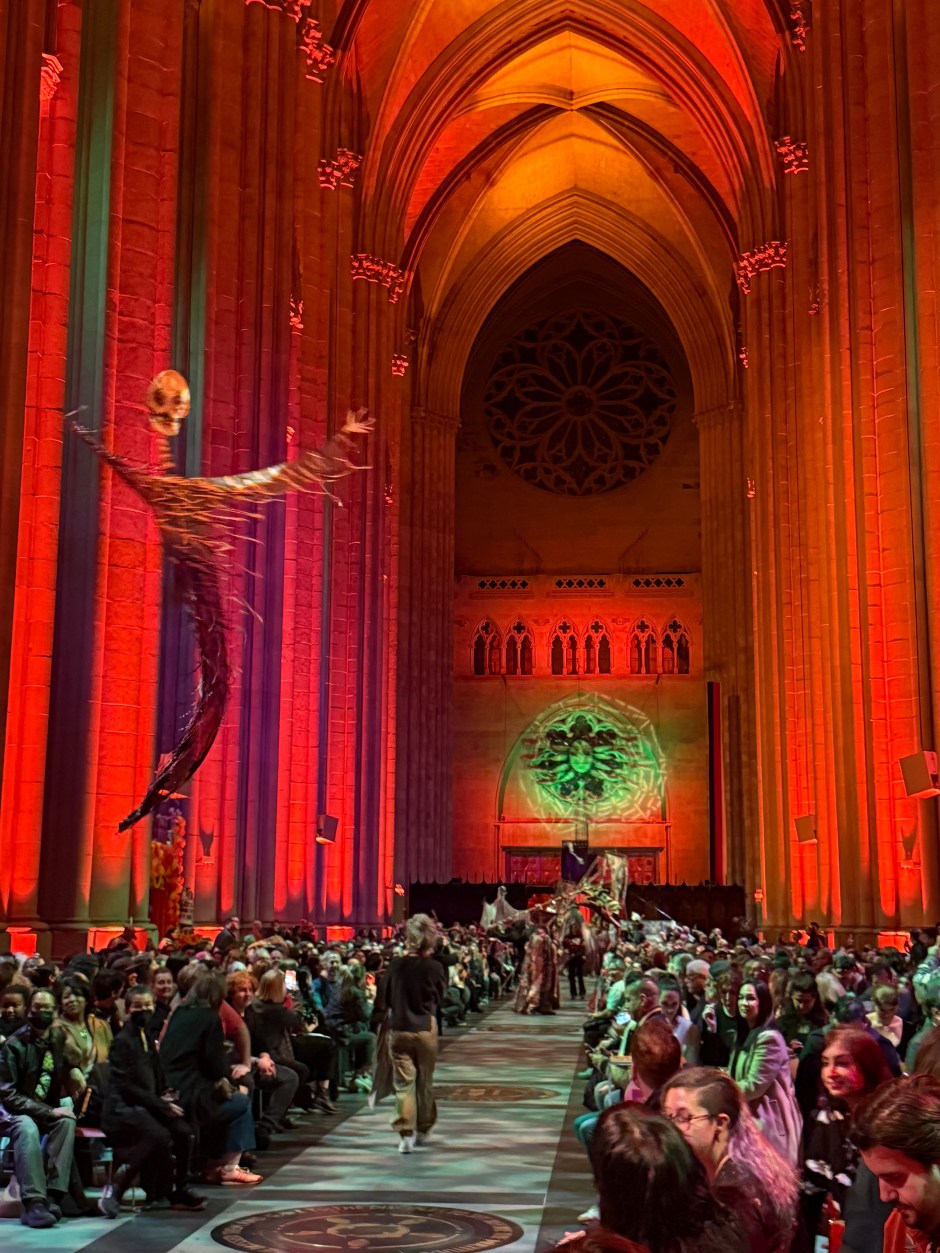
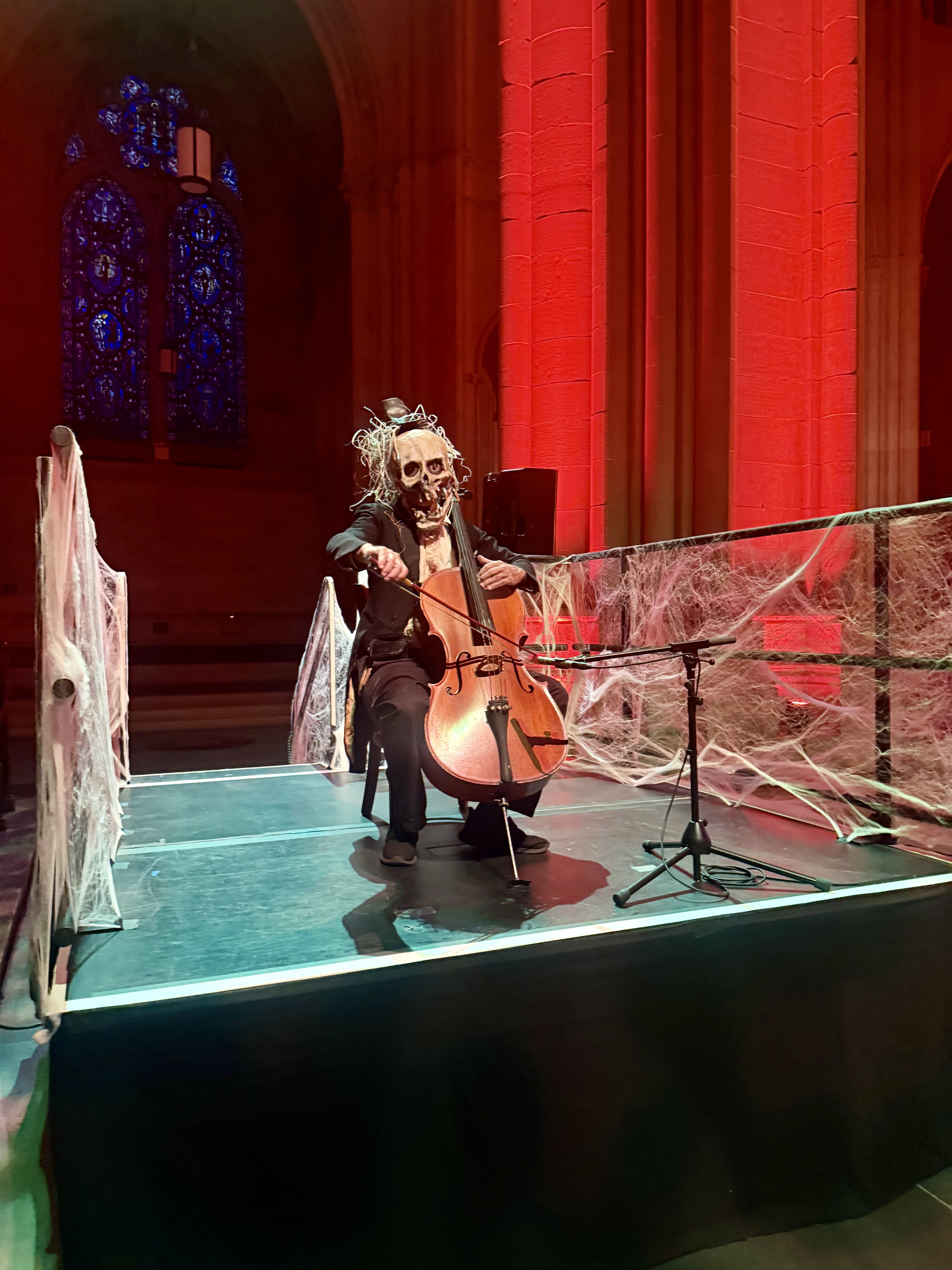
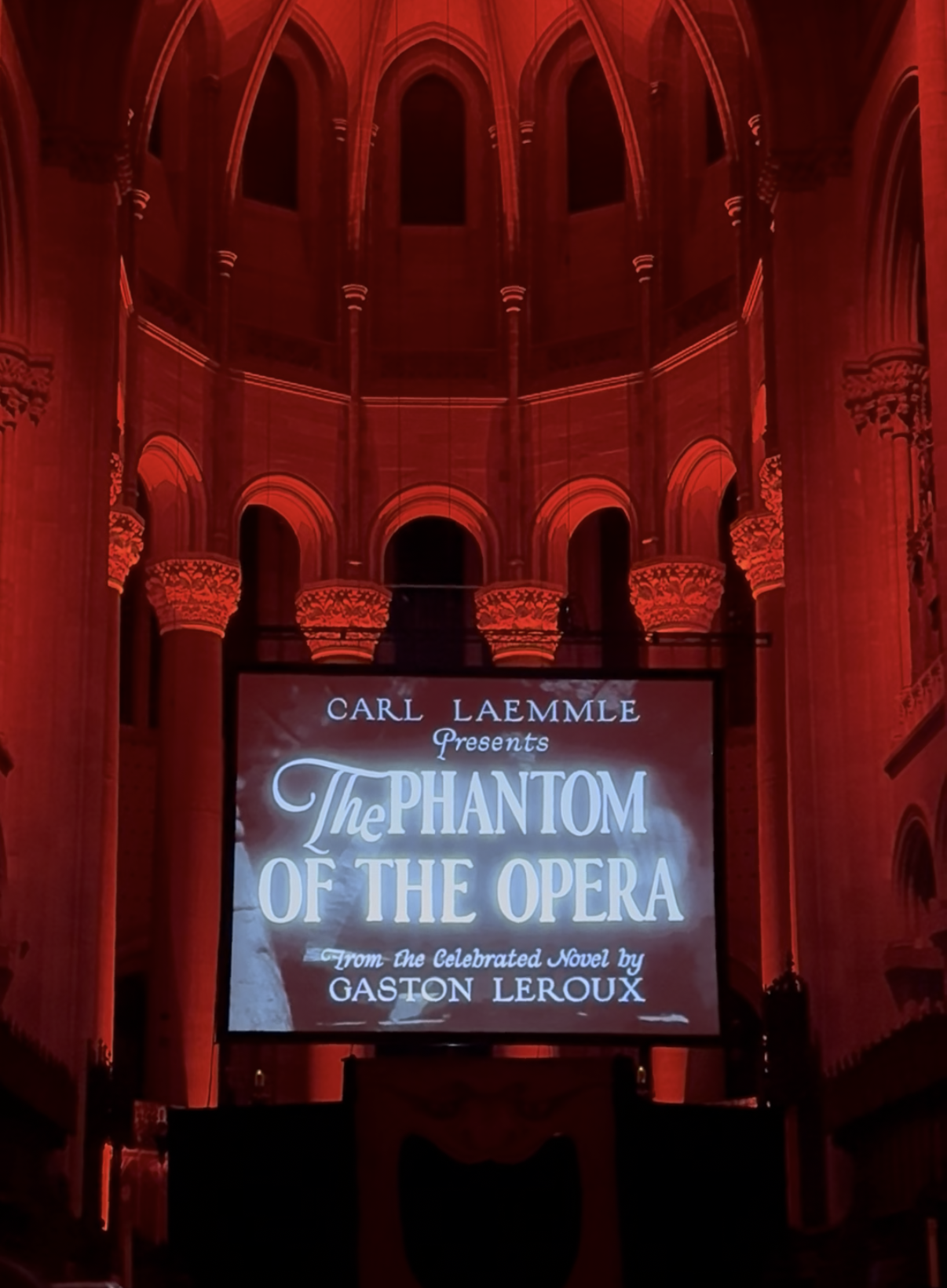
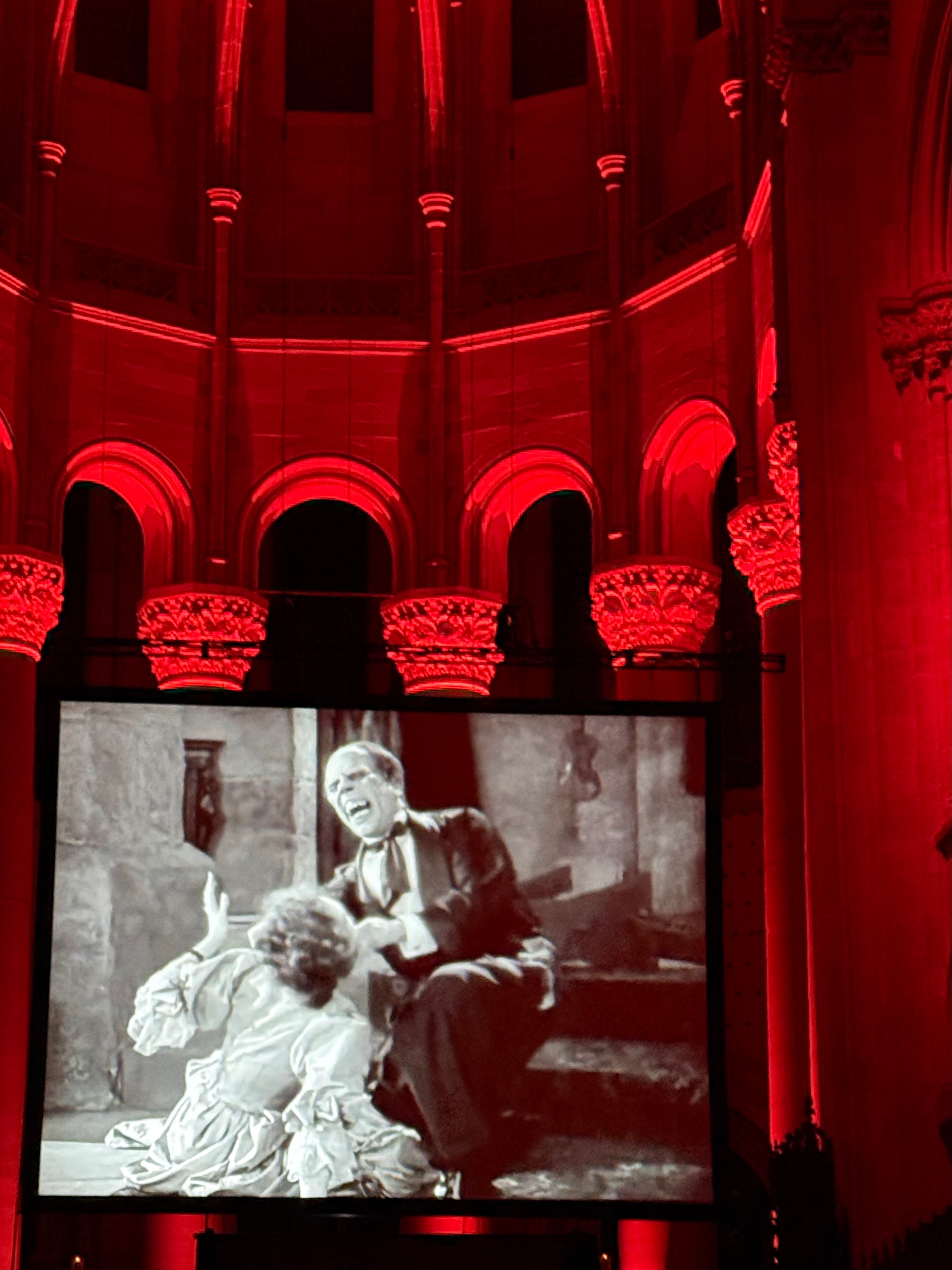
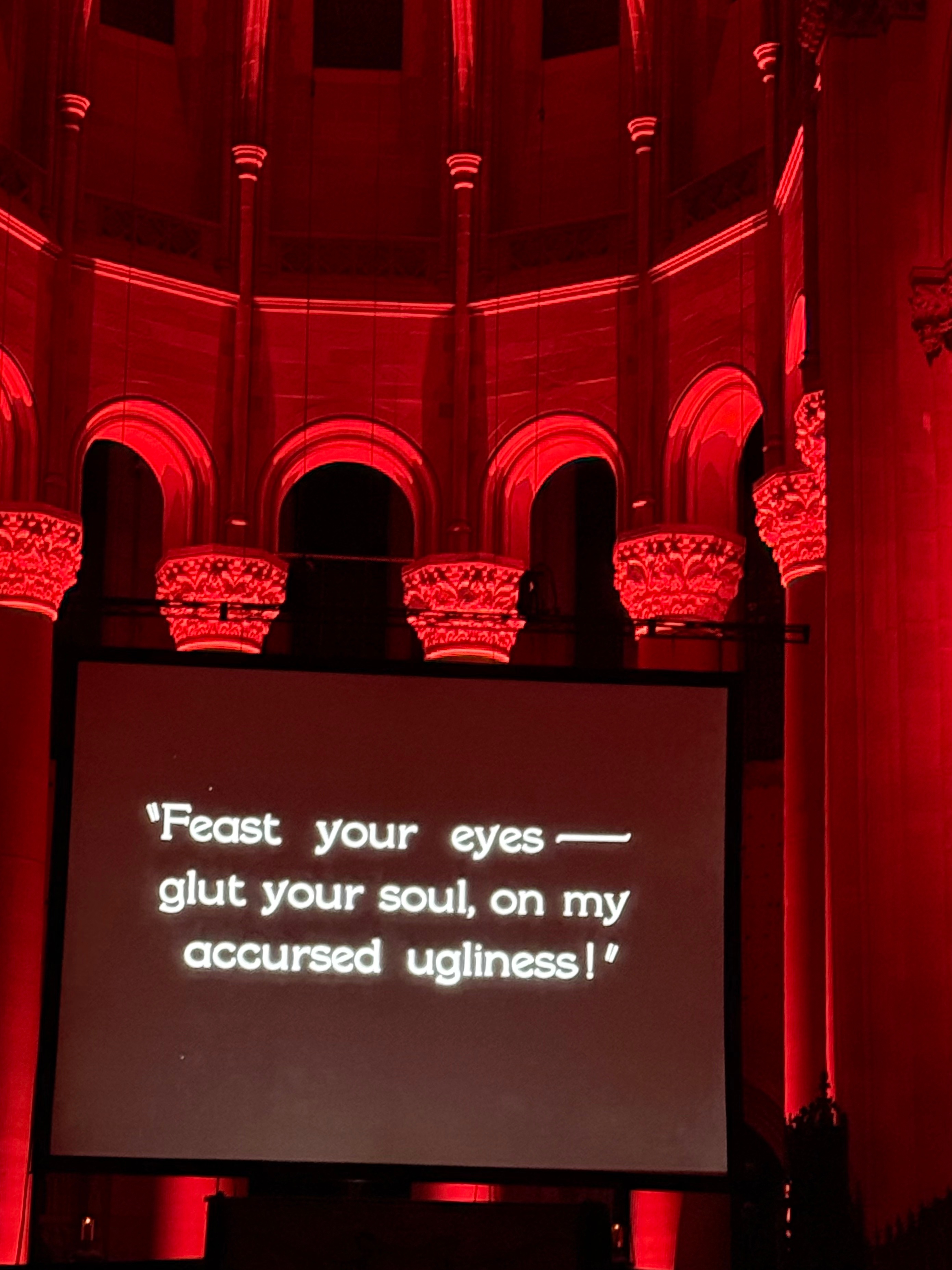
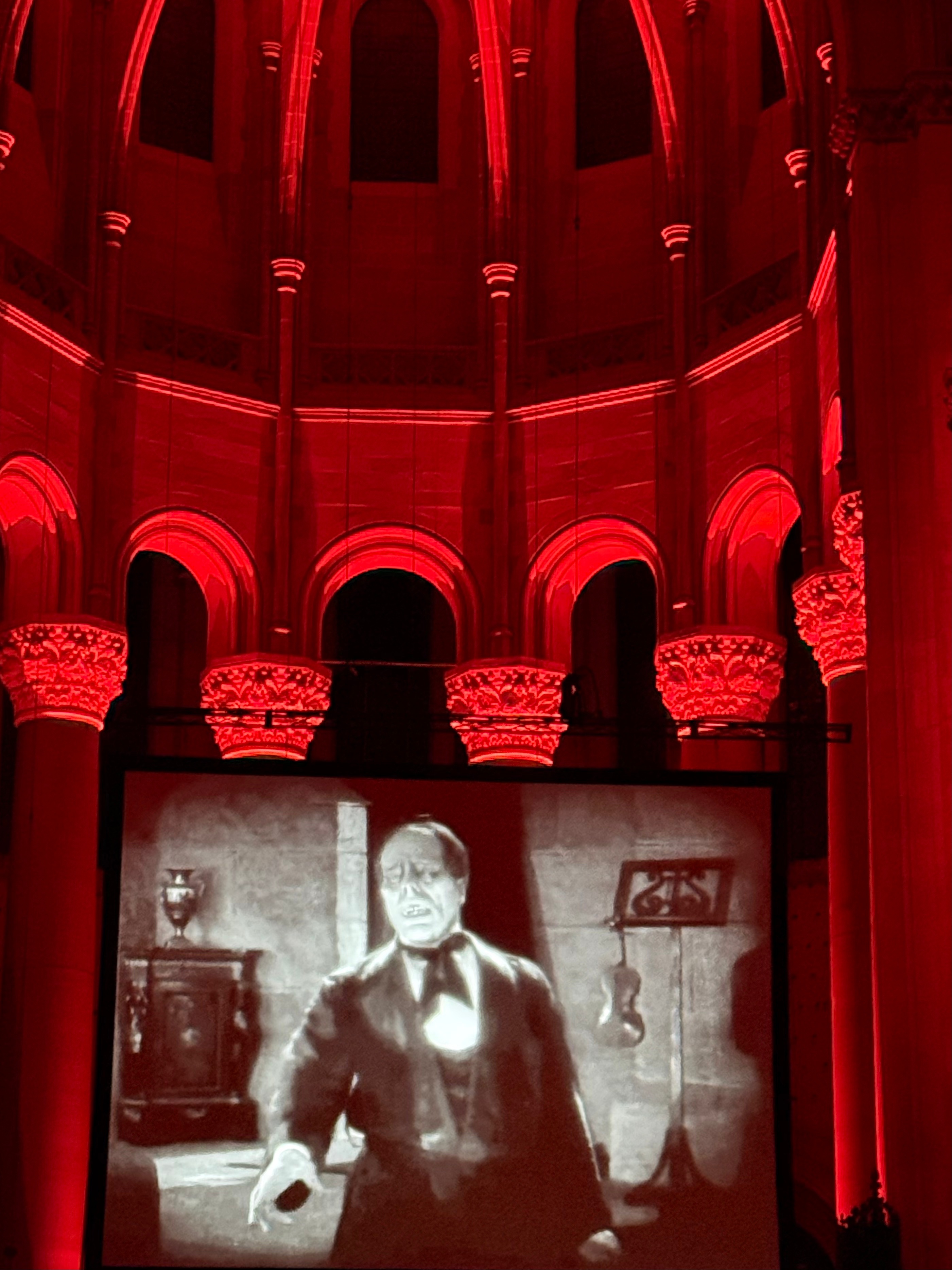
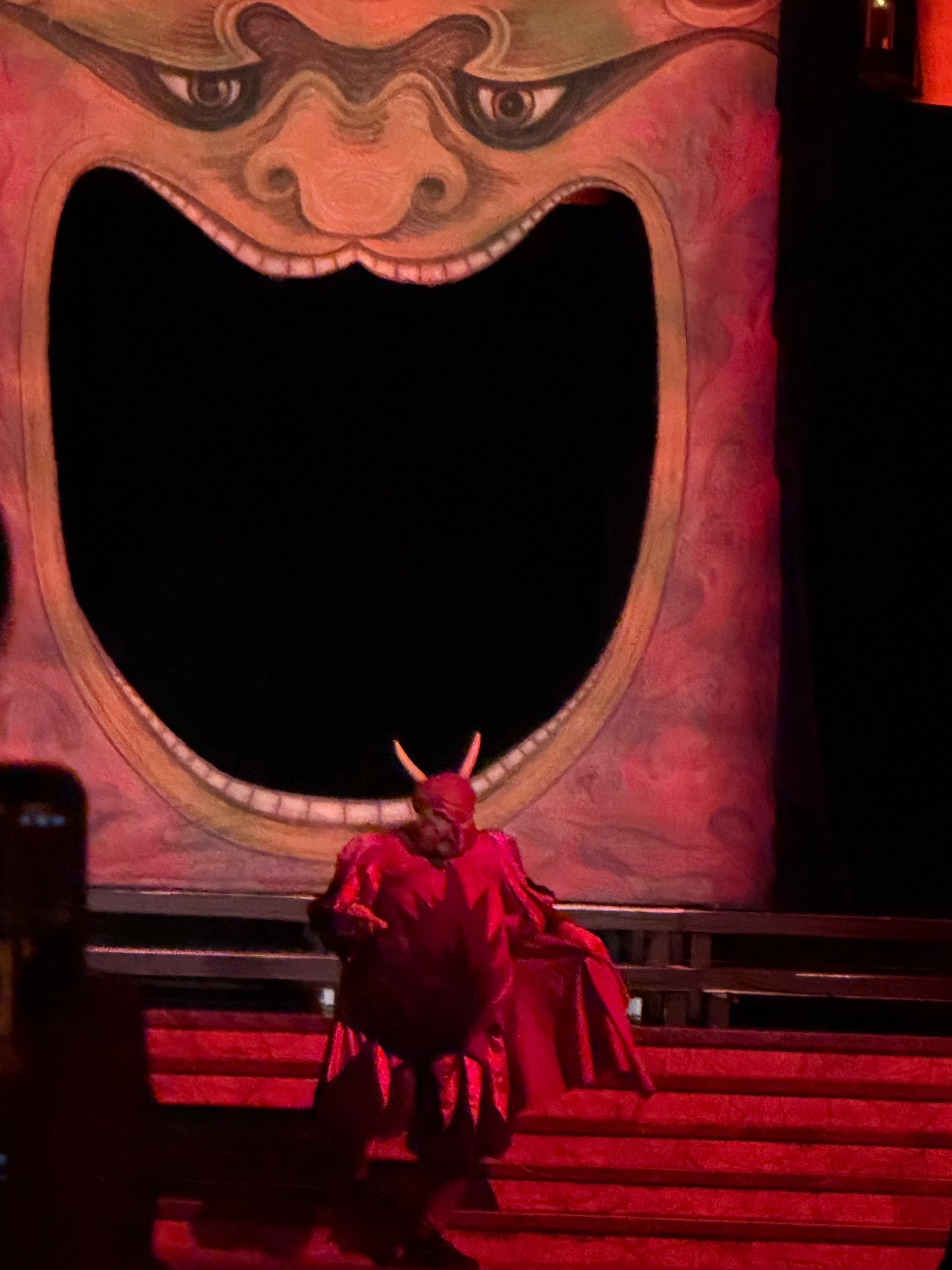
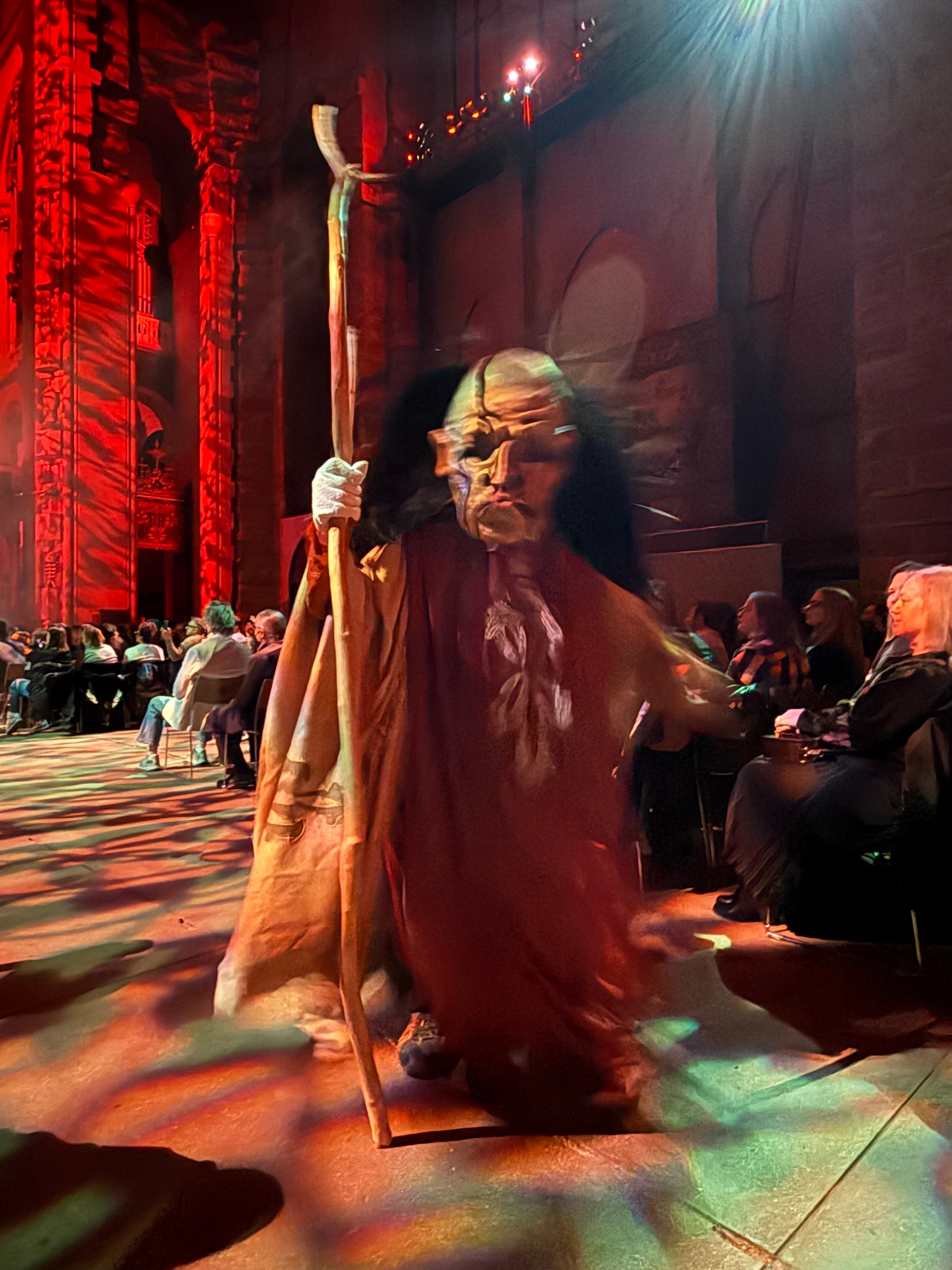
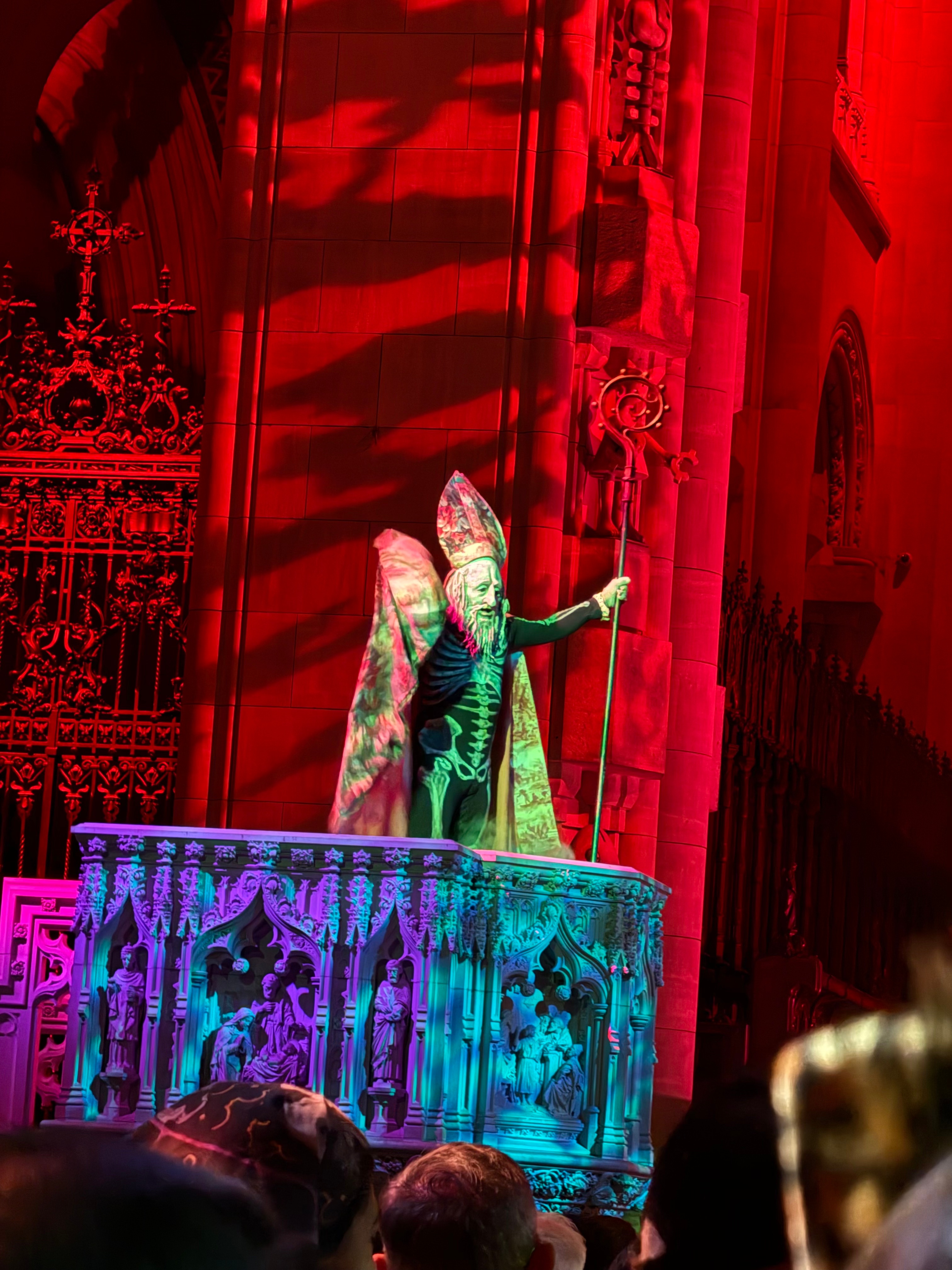
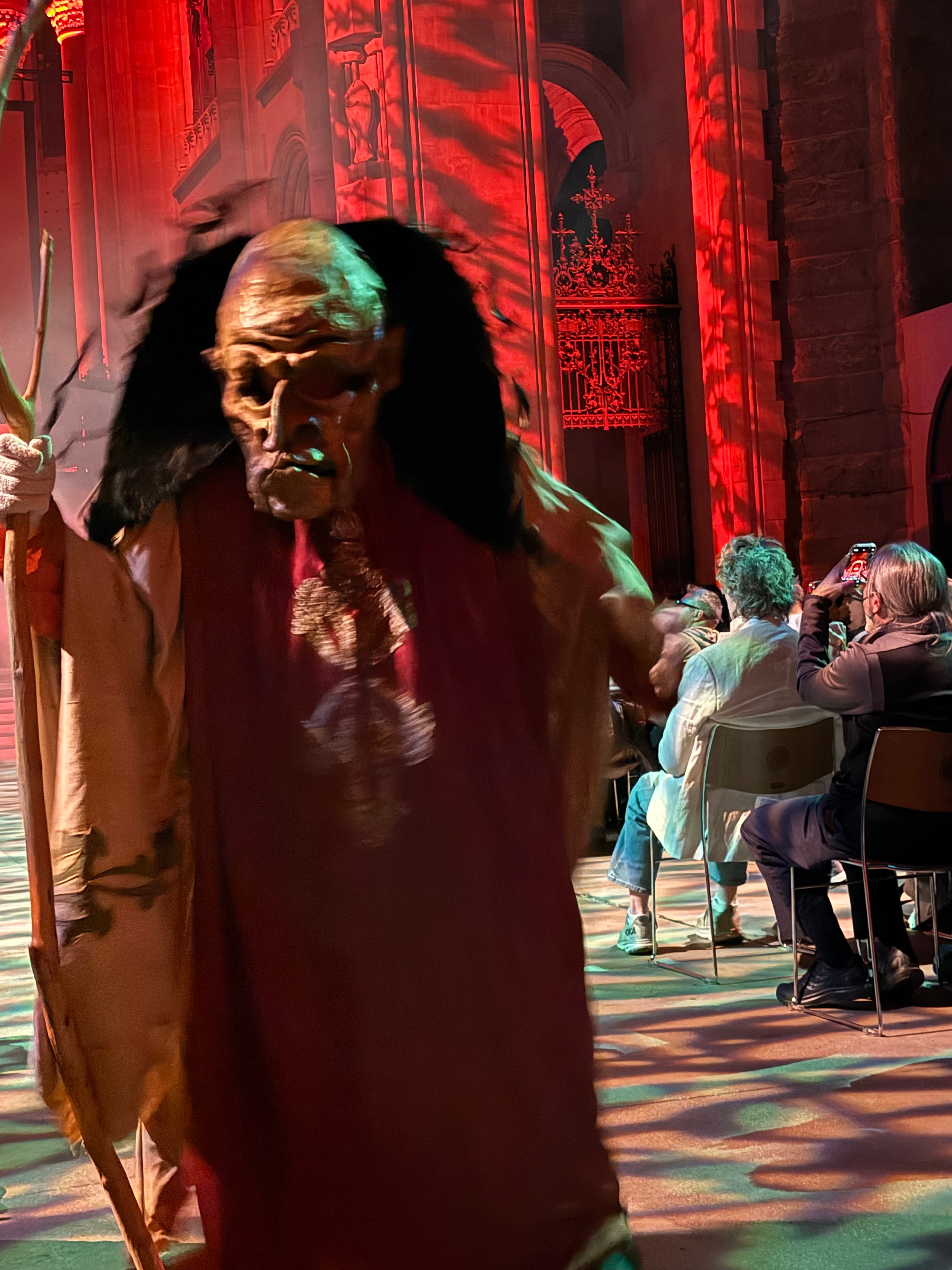
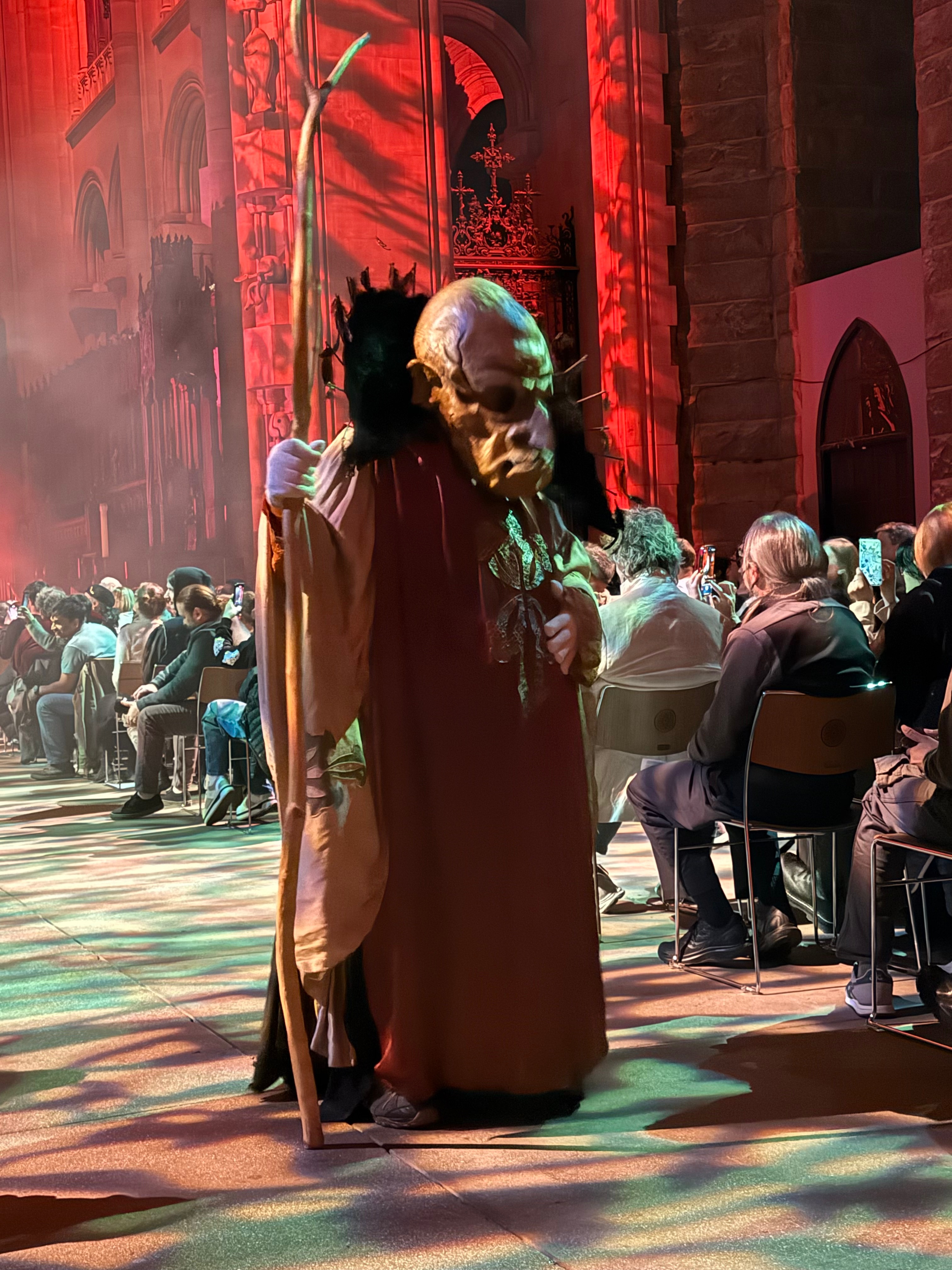
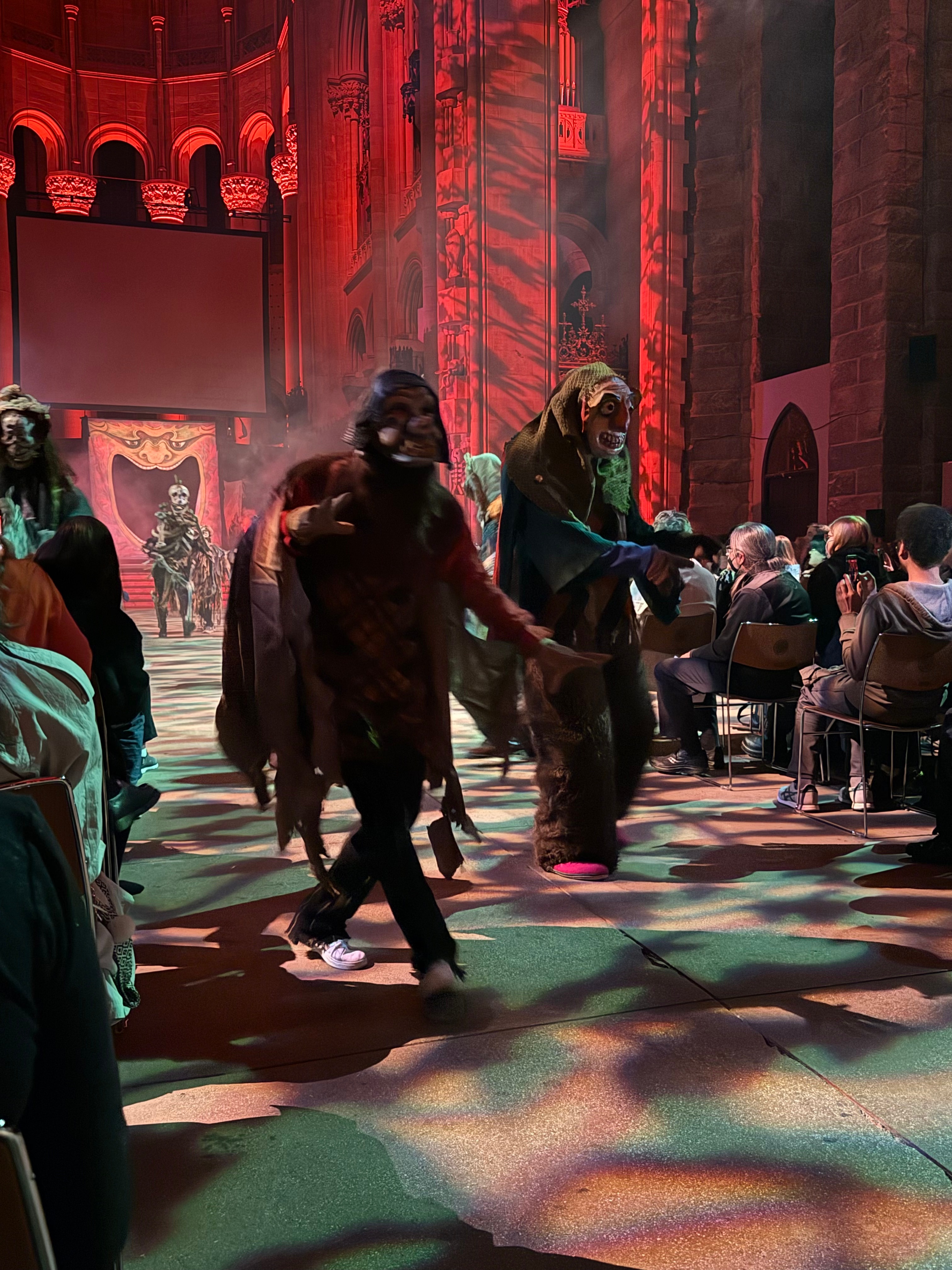
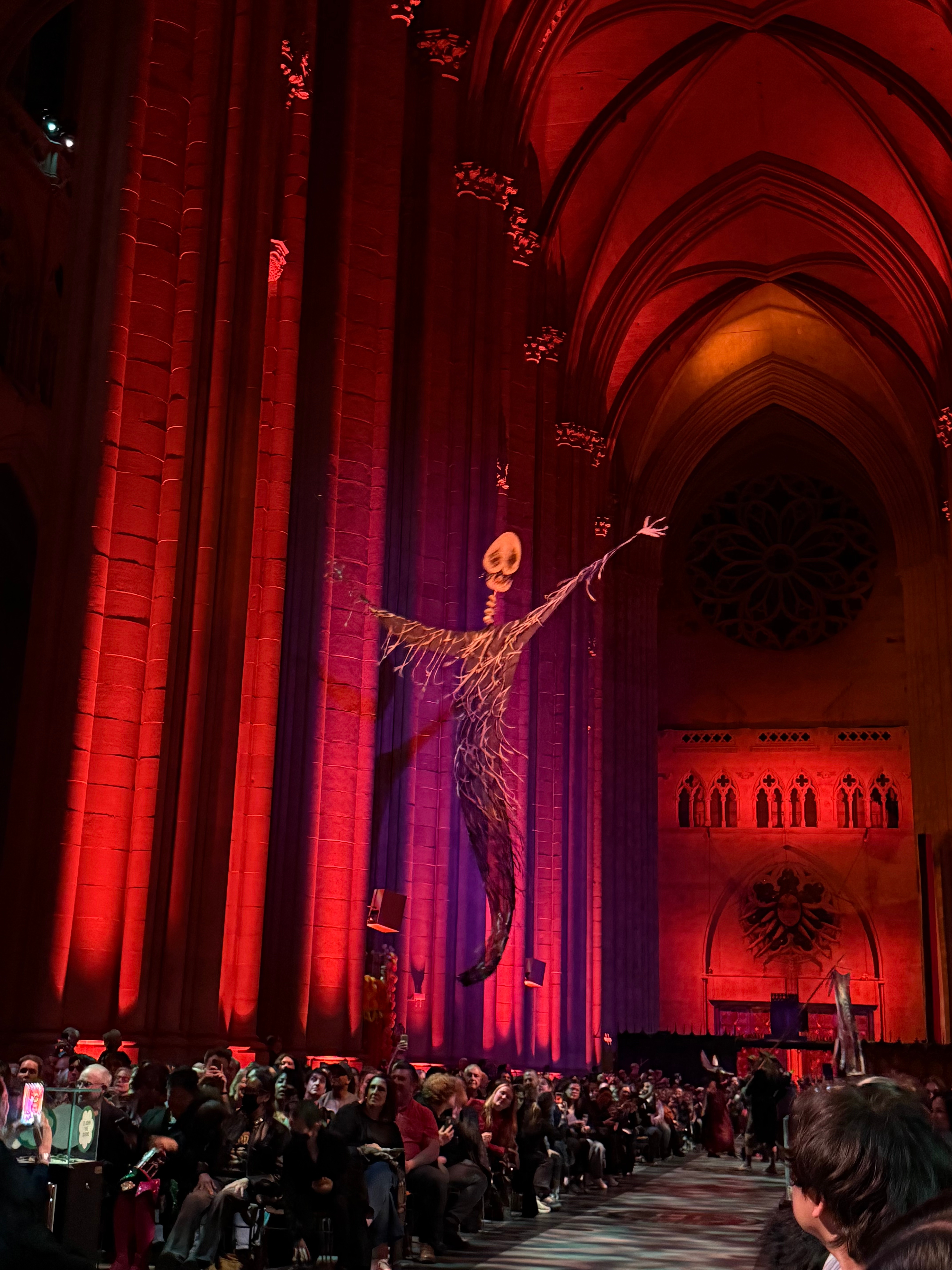
There are many wonderful Halloween experiences in New York City – in previous years, I have posted about the experience of walking around and seeing Halloween townhouse decor (see here and here), Halloween on Governors Island, Halloween at Chelsea Market, Halloween events at Carl Schurz Park, and the Halloween event at the Bronx Zoo. One very special Halloween event that I have attended many times is the Halloween Extravanganza at the Cathedral of St. John the Divine. It’s coming up later this month on October 23 and 24, but unfortunately, as per usual, is sold out. Keep an eye on their website next September to be sure to get tickets. But to give you an idea of what makes it such a worthwhile experience, this is what it was like last year (2025).
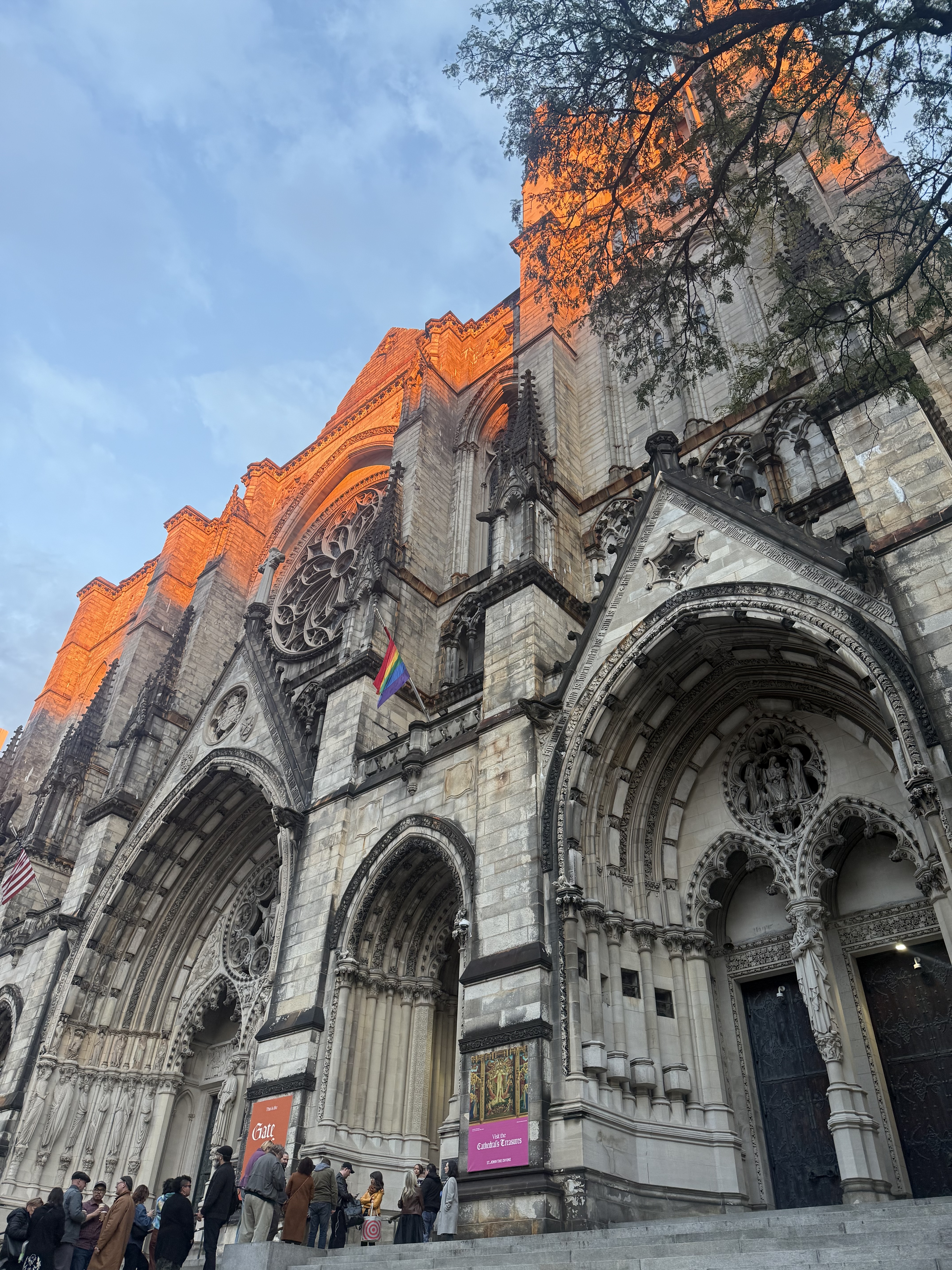
The Cathedral of St. John the Divine is the seat of the Episcopal Diocese of New York, and is located in Morningside Heights on Amsterdam Avenue between West 110 Street (AKA Cathedral Parkway) and West 113th Street. Entering the building, you are greeted by a cello-playing ghoul – see my video here. The mood is instantly set! The cathedral is enormous. I recommend getting to the event early, as early as an hour or more early, to get a prime spot (which, in my opinion, is close to the front but not so close that you are craning your neck to see the screen – and most importantly, on the middle aisle).
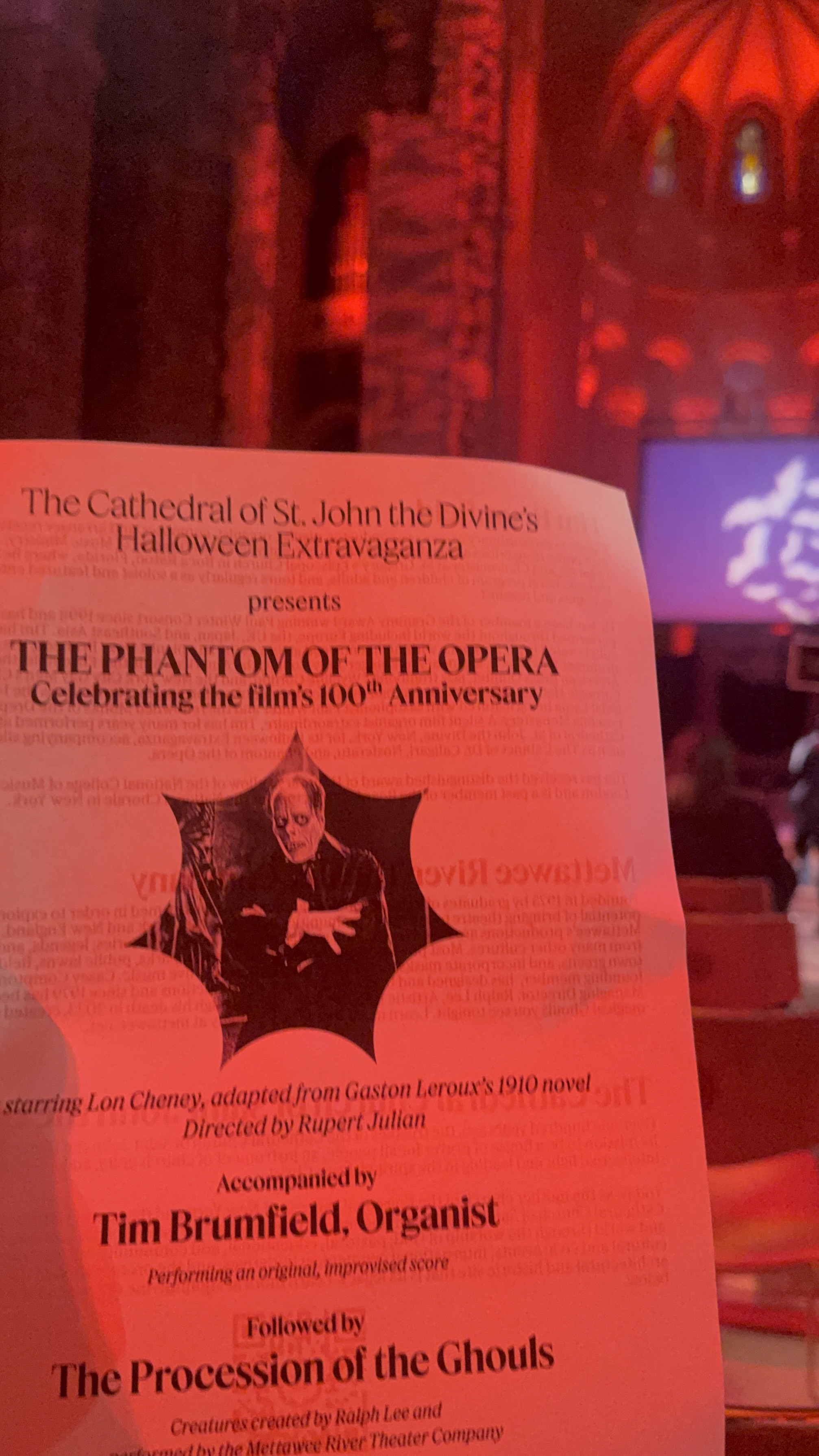
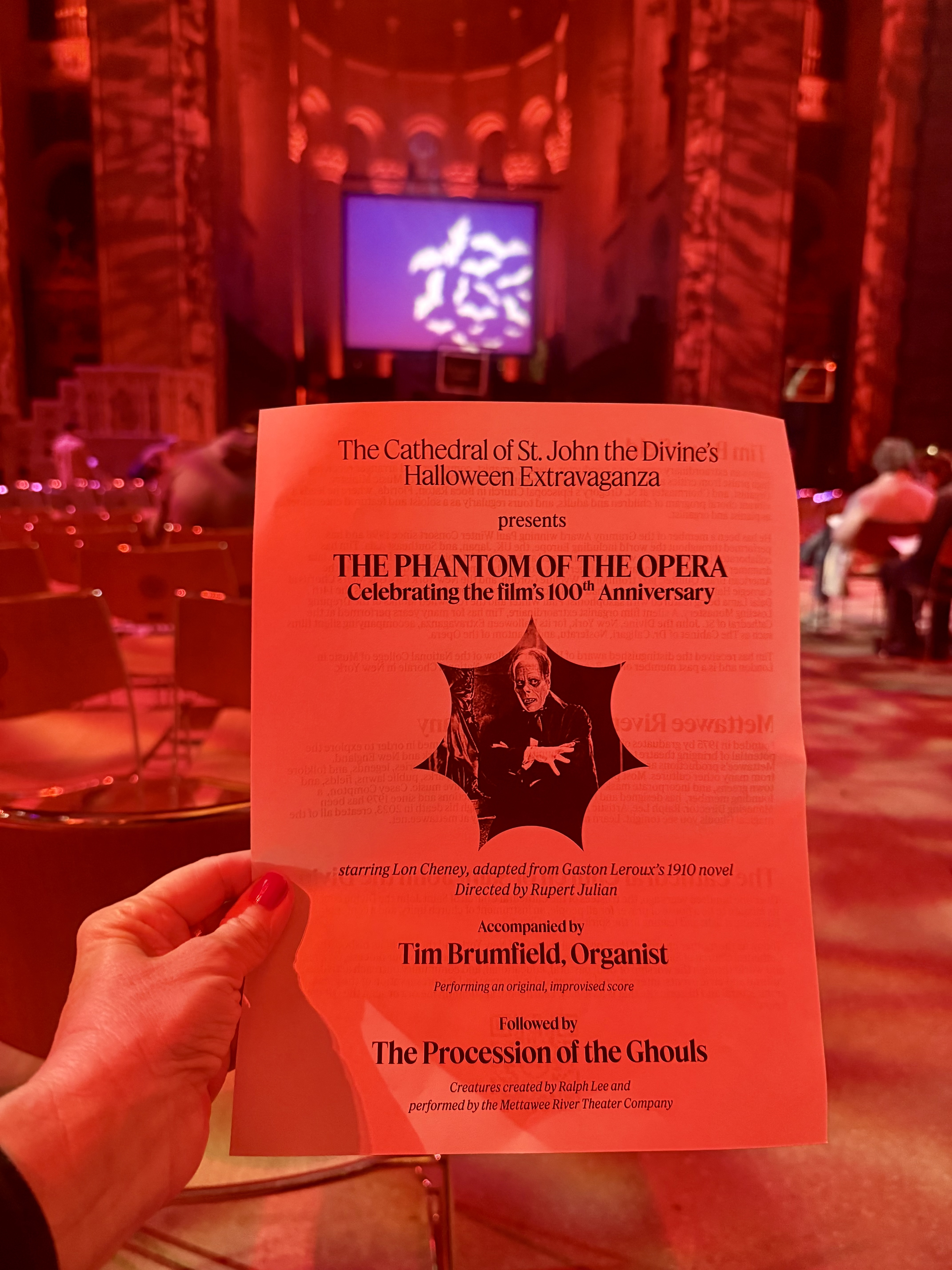
Each year they select an old silent horror film to show, accompanied by live improvised organ music performed by Tim Brumfield. In my experience, they rotate through The Cabinet of Dr. Caligari, Nosferatu, and The Phantom of the Opera, and I have seen all three (I noticed that this year, 2026, they are doing Dr Jekyll and Mr. Hyde.) . Last year was the 100th anniversary of the Phantom movie starring Lon Chaney, and that was the movie being shown. It’s really enjoyable to watch the silent film in a group setting, sharing the mood with so many others. And it is really amazing to listen to how the organist fits the mood of the scene with appropriate music. The prelude to the film is always Bach’s Toccata and Fugue in D minor, and then the beginning credits start as the Bach concludes and the improvisation begins.
As the end credits conclude for the film, the Processing of the Ghouls begins. Created by Ralph Lee and featuring his original costumes, the procession is presented by the Mettawee River Theater company. It is artistic, creepy, atmospheric, and immersive. You can see my video of the procession here.
Going to the Halloween Extravaganza, I am reminded of the rich array of experiences we are fortunate enough to have available to us here in New York City. There are a variety of things to experience, year-round. For Halloween, some of the events are more kid-friendly than others (I would include this one as more appropriate for older kids and teens, and most attendees are adults). I happen to love Halloween, and New York City is a particularly fun place to live in October!
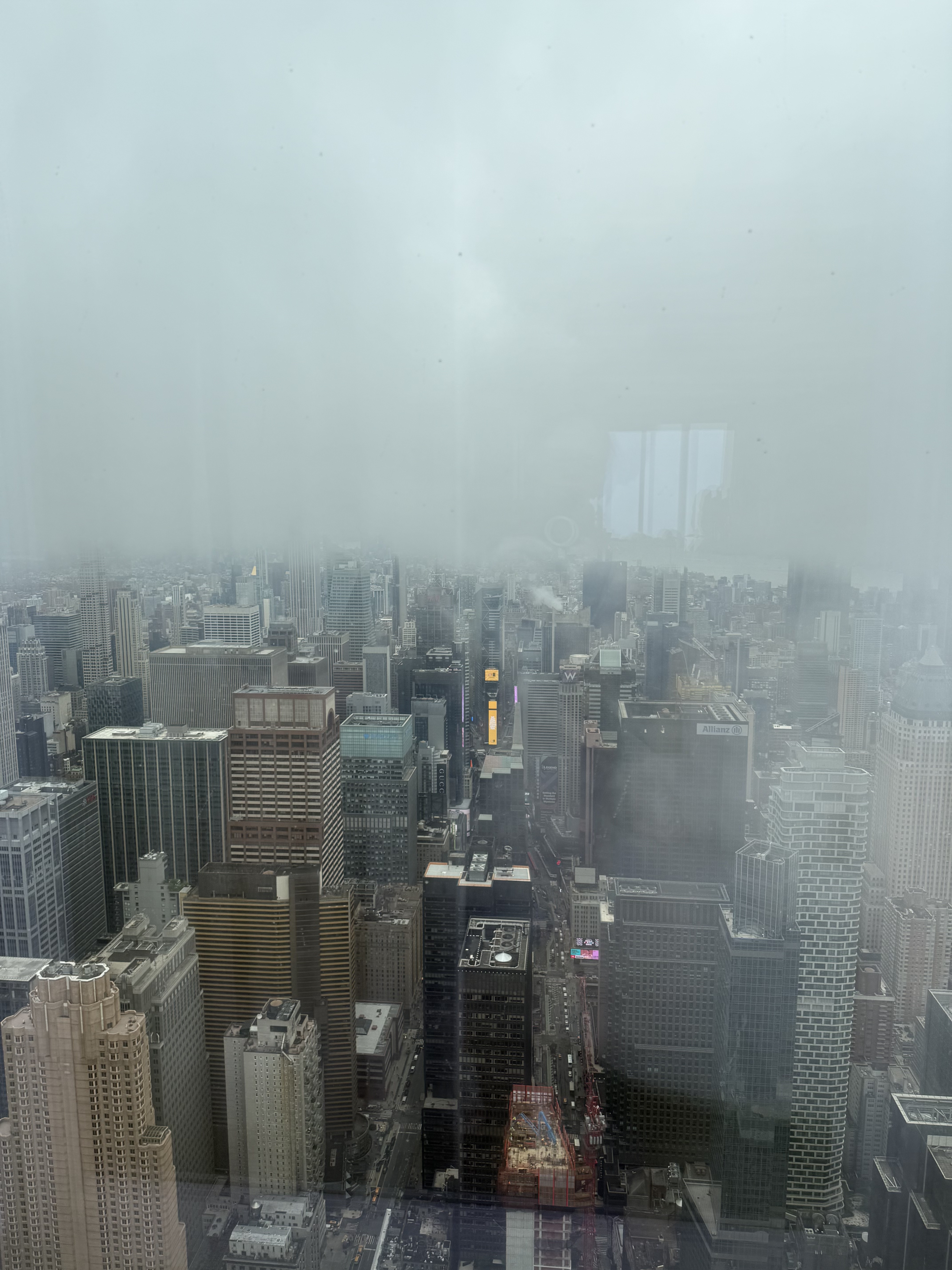
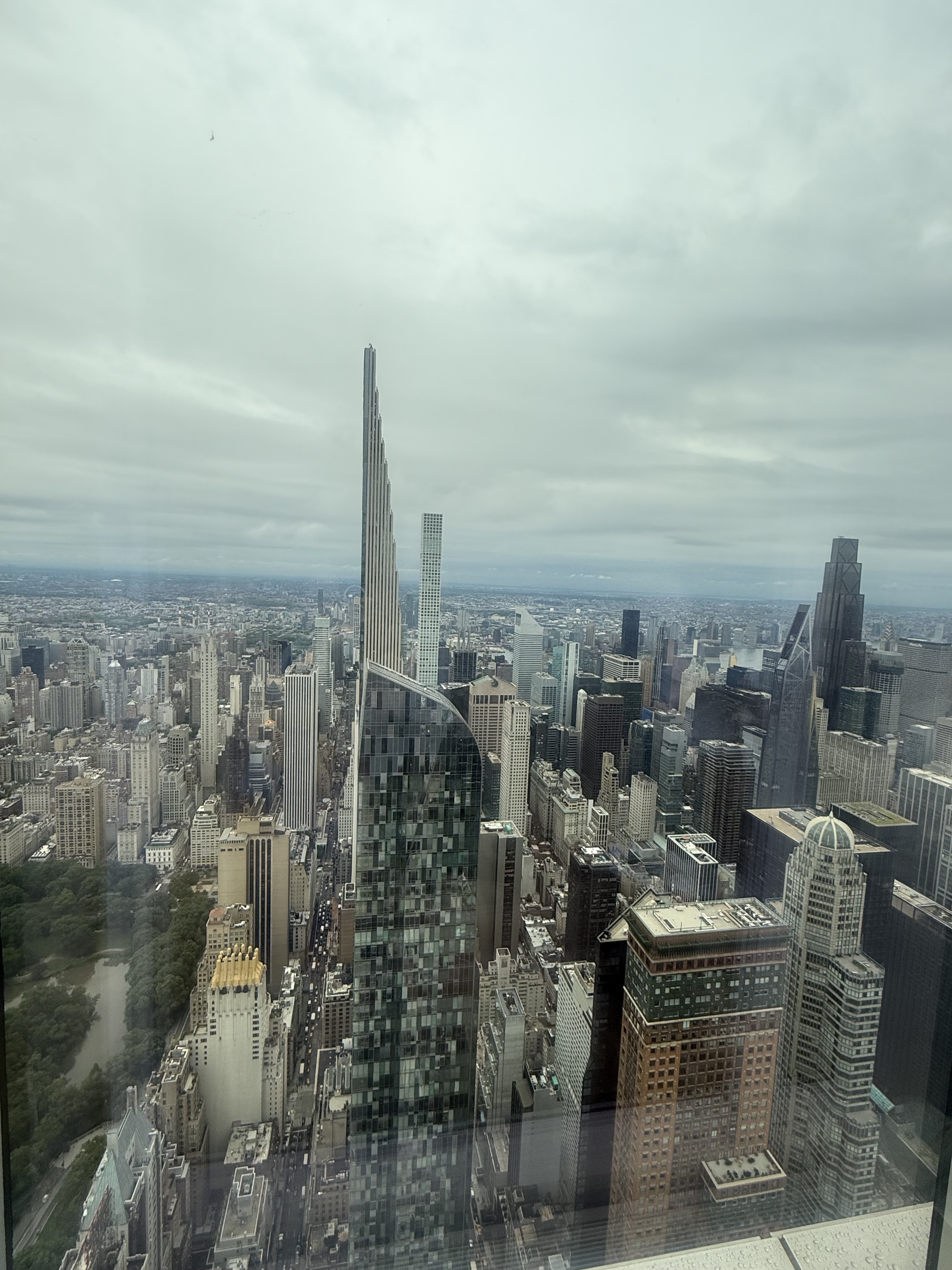
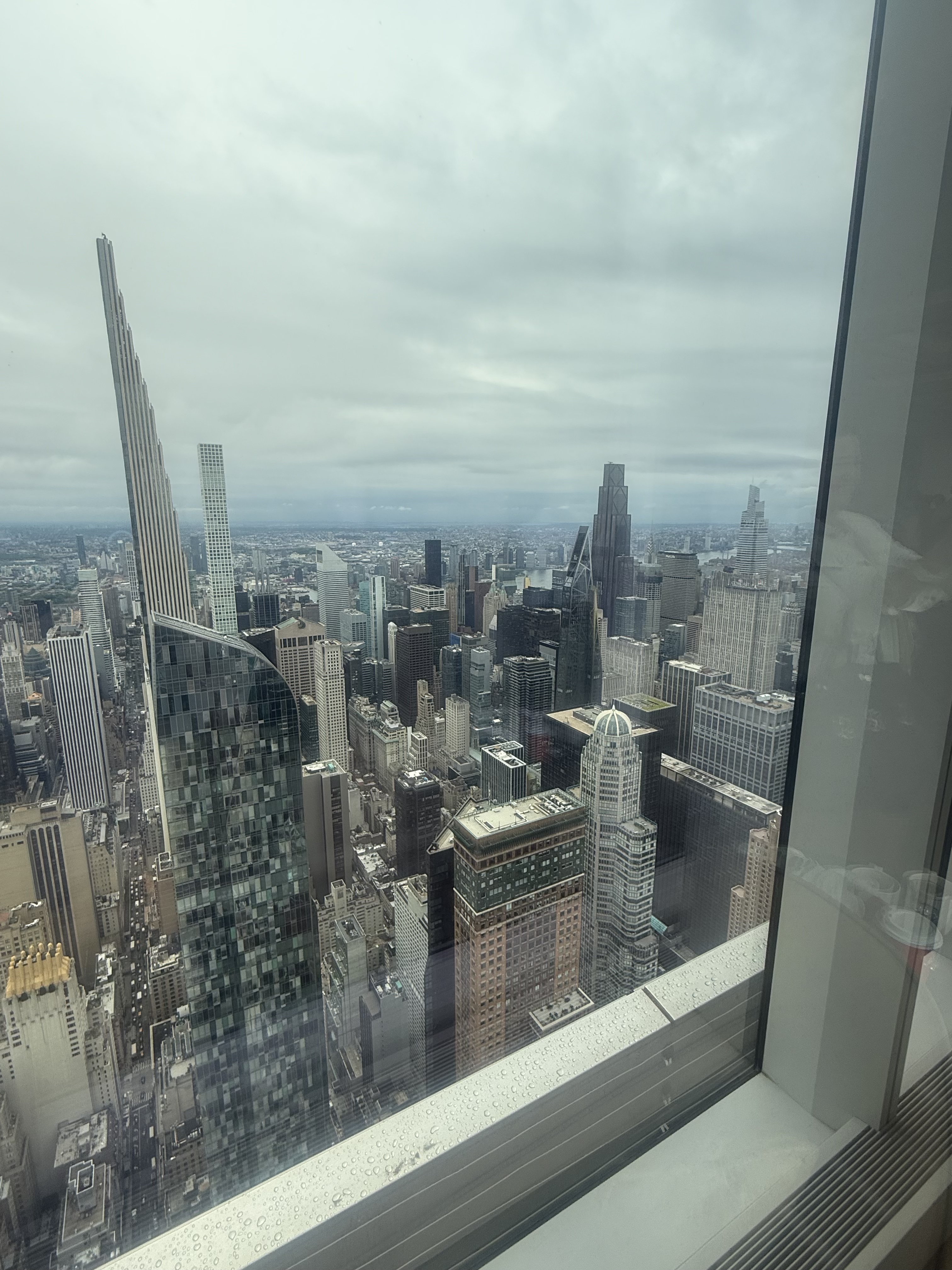
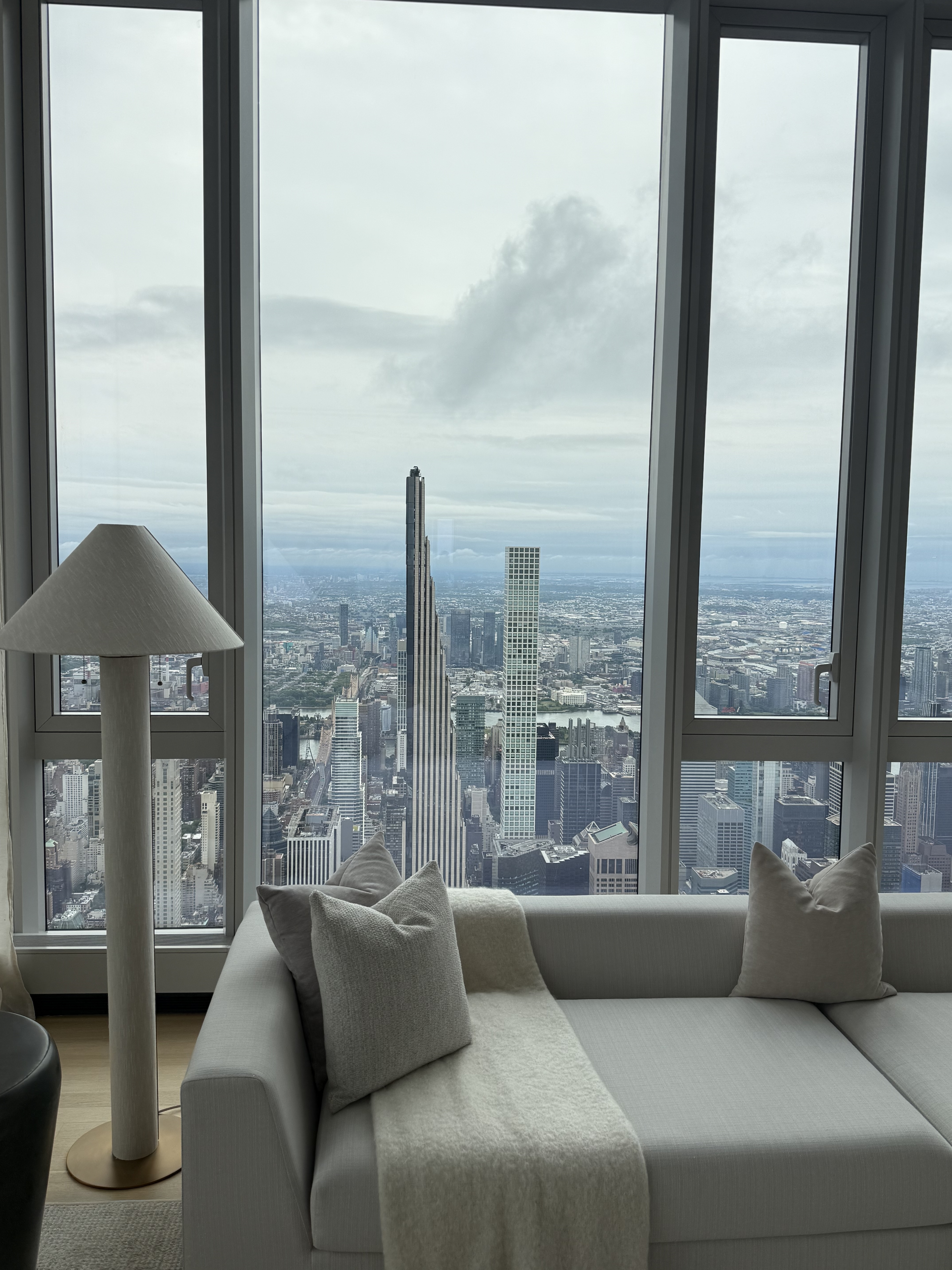
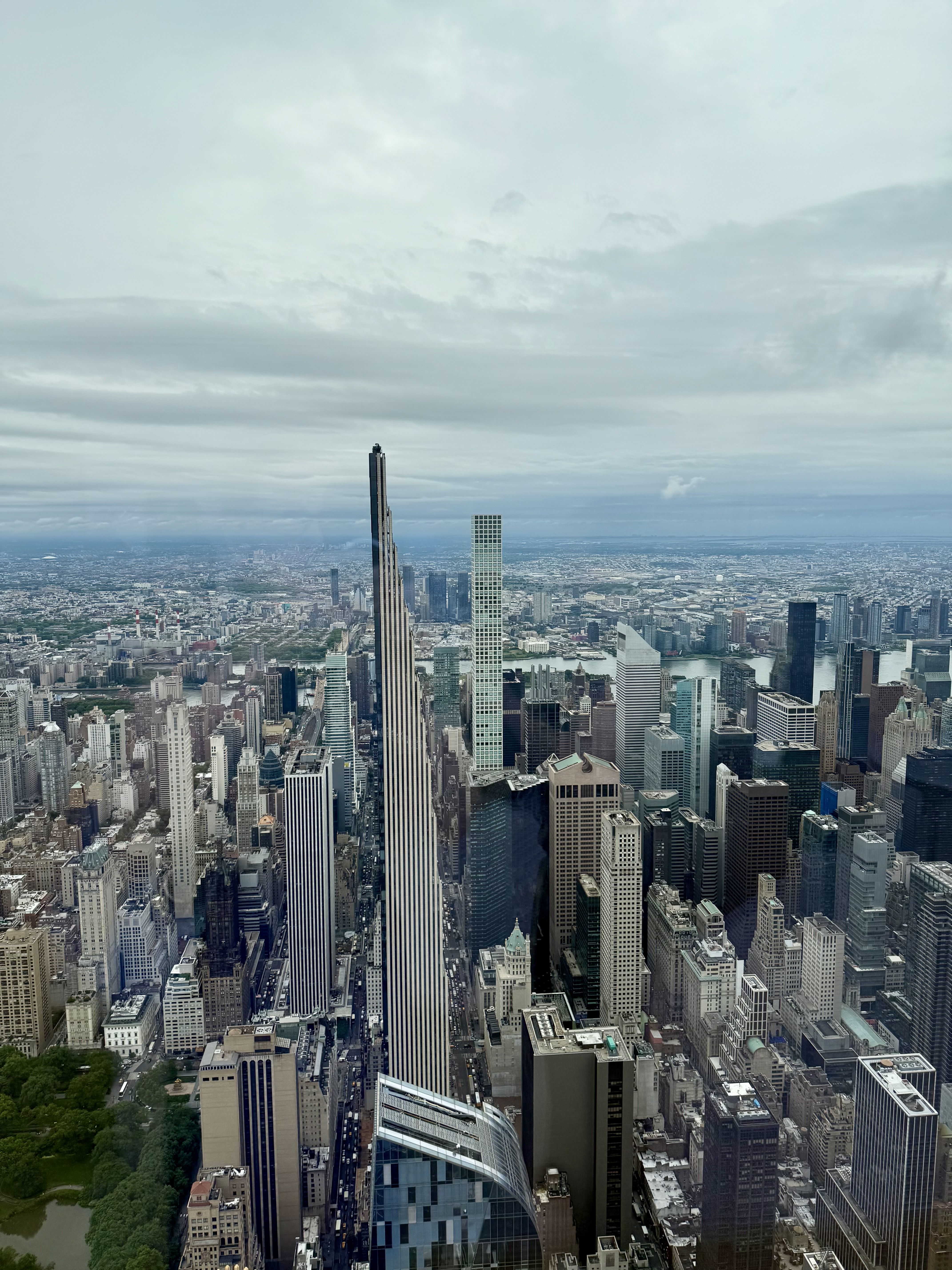
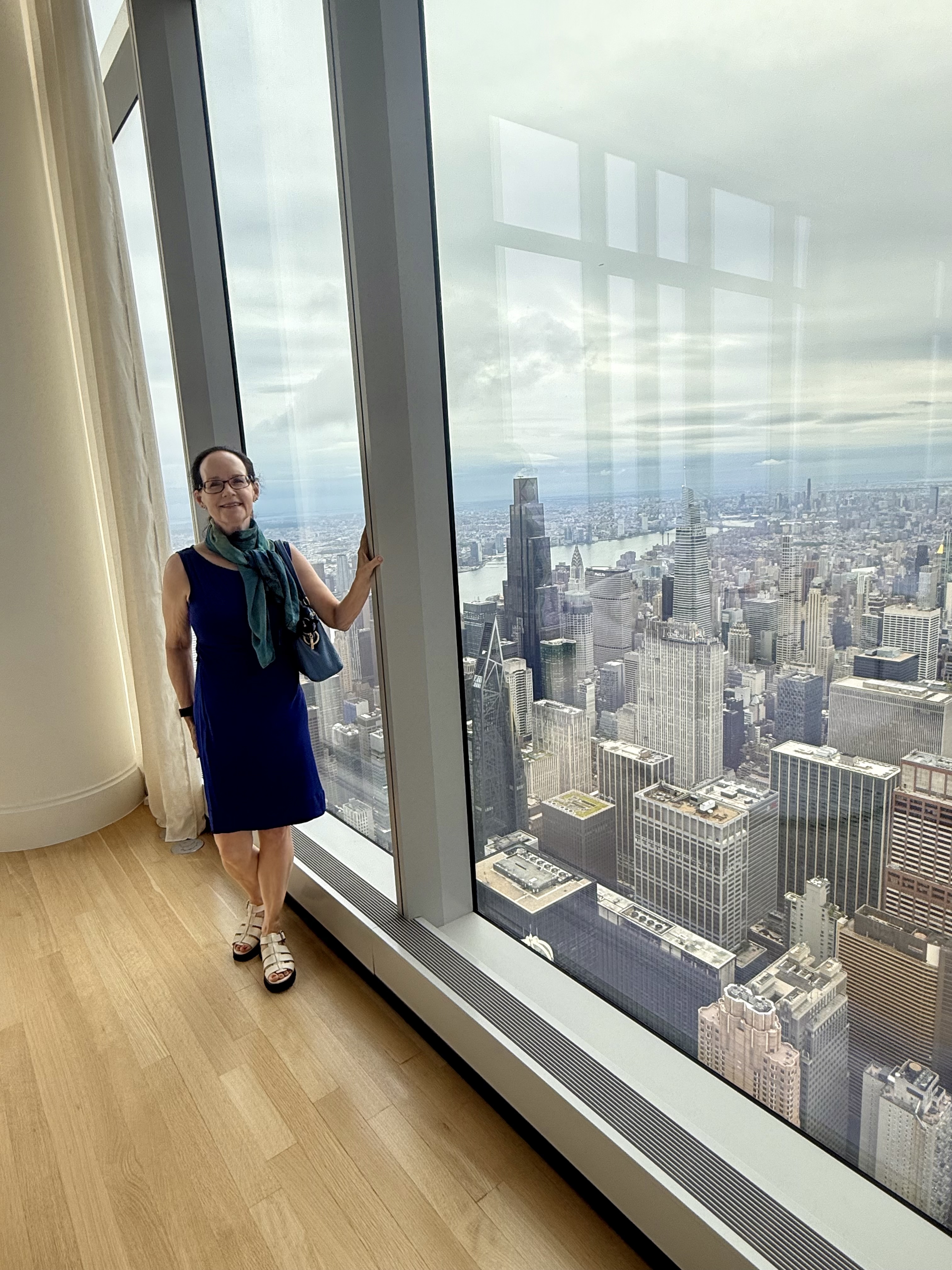
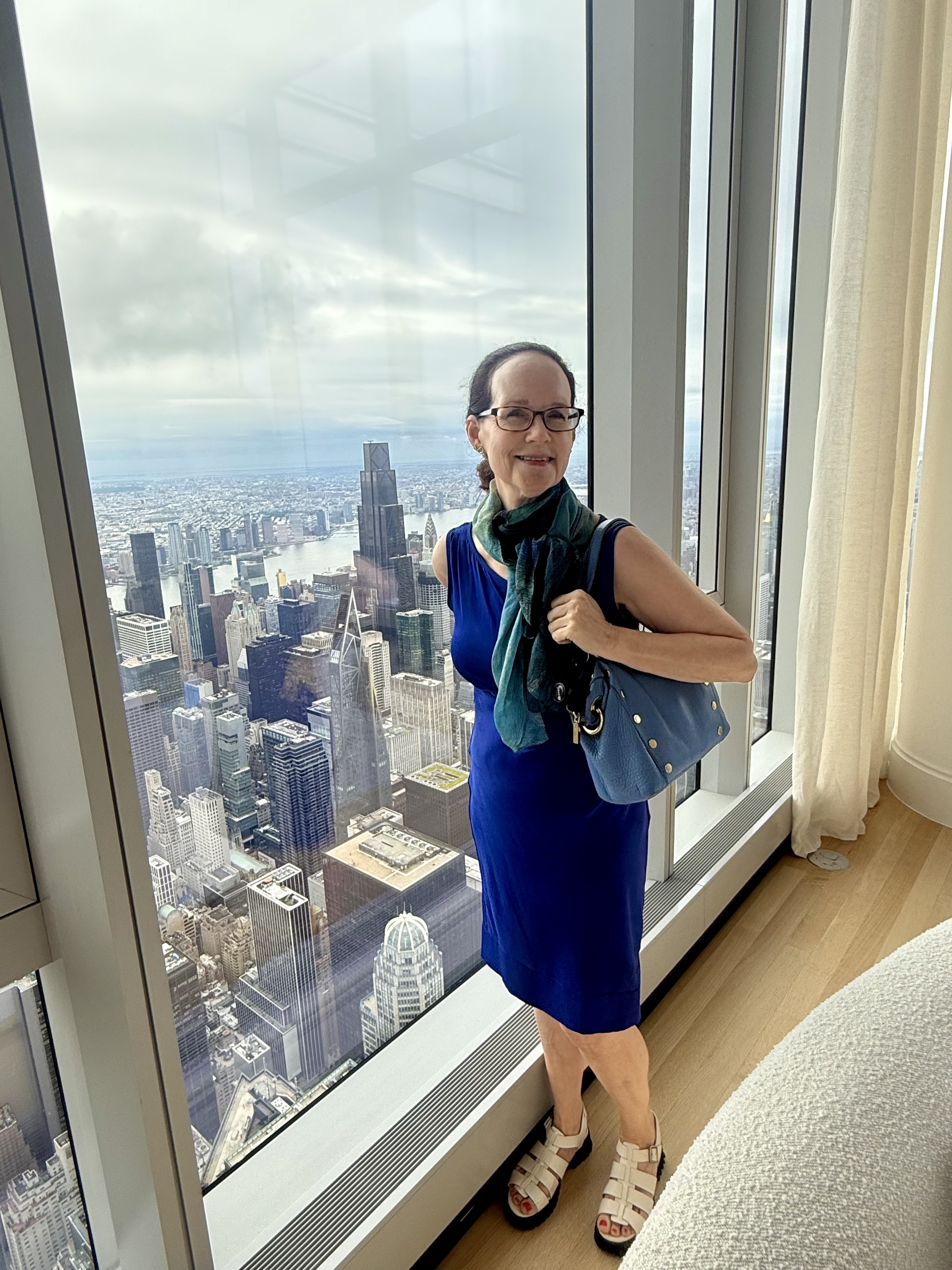
The skyline of Manhattan has been radically changed in the past decade with the addition of several “supertall” residential buildings along the 57th Street corridor. I wrote a few years ago about what it was like to be in Steinway Tower, aka 111 West 57th Street when it was being completed (read it HERE). Steinway Tower is the building that tapers dramatically at the top, and the views were astonishing. However, even at that time another building was reaching toward the sky, even higher – and recently I was able to visit Central Park Tower (217 West 57th Street). To my amazement, I was able to look down upon the top of Steinway Tower!
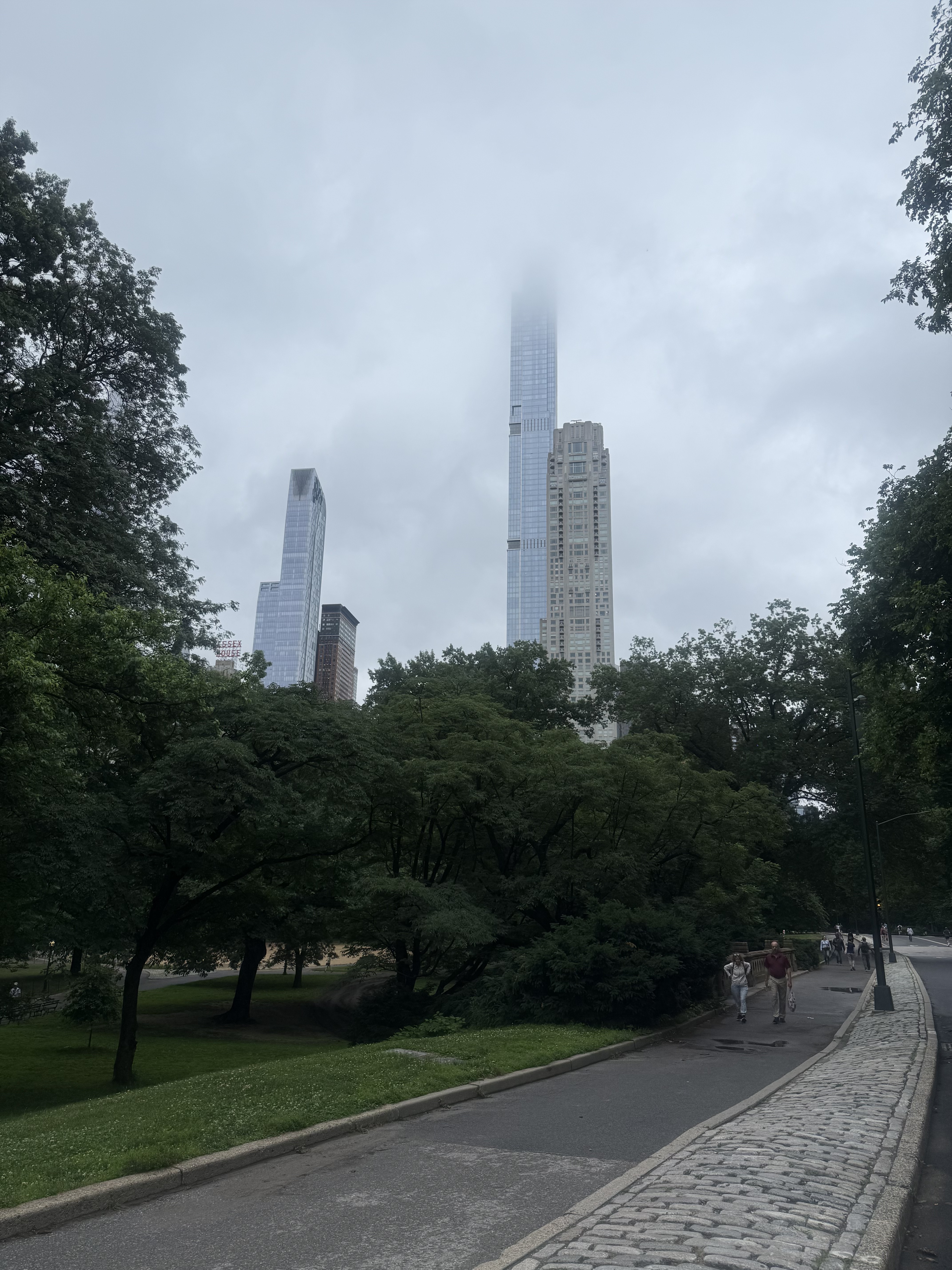
The day I was able to visit Central Park Tower started out foggy, and as I headed toward the building, through Central Park, I realized that I could not even see the top of the building (see above). Note in this picture that 157 West 57th (One 57), which was the first of the supertalls, looks practically diminutive with Central Park Tower looming to the right in the photo, disappearing into the clouds. Also note that Robert A.M. Stern’s 220 Central Park South, at 952 feet or 290 meters, stands just in front but significantly lower than Central Park Tower, but is of a more traditional limestone style (and 220 CPS stands in a league of its own in terms of price per square foot). Due to the use of a cantilever at Central Park Tower, the lower floors do not have views obstructed by 220 Central Park South.
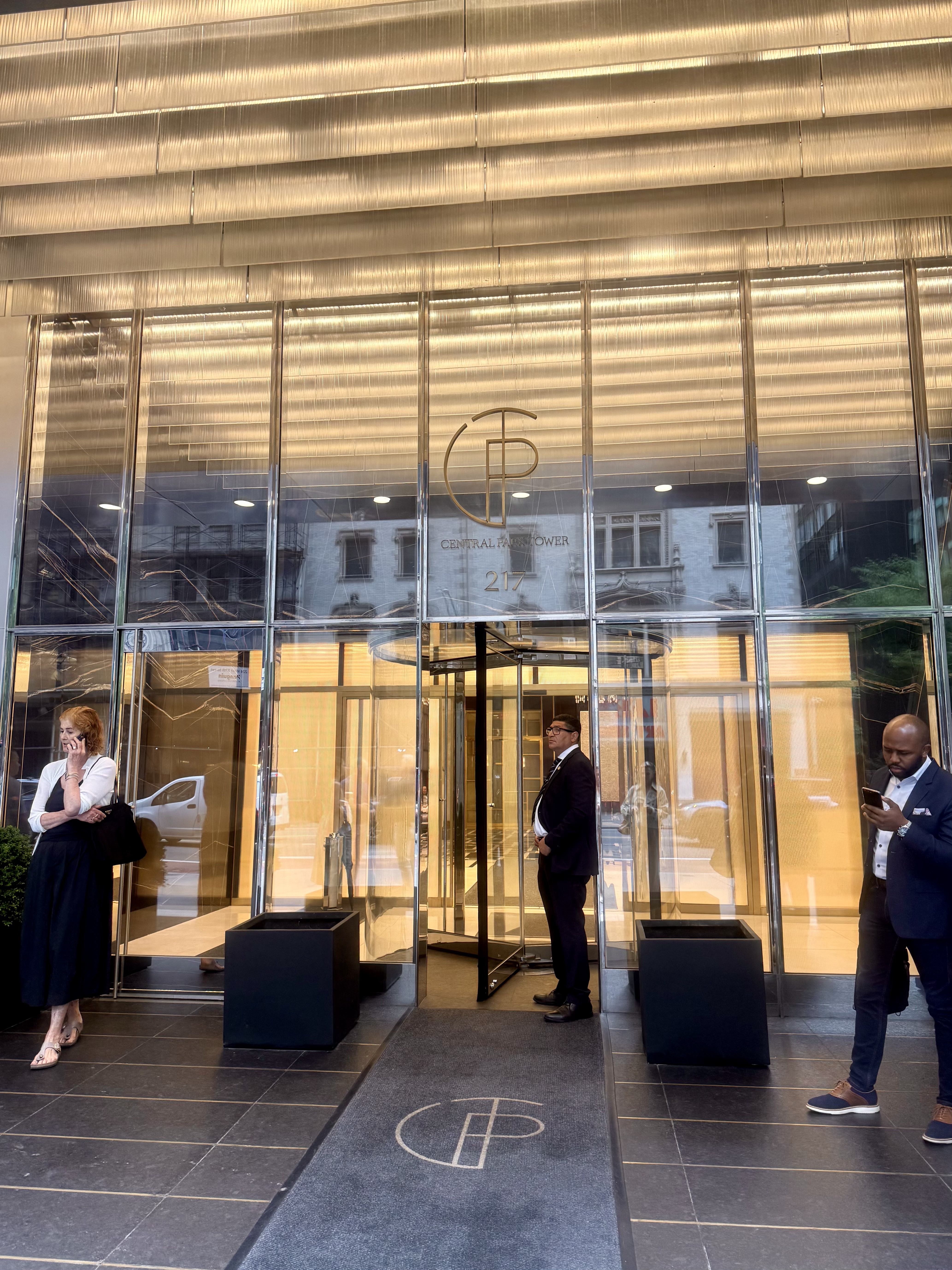
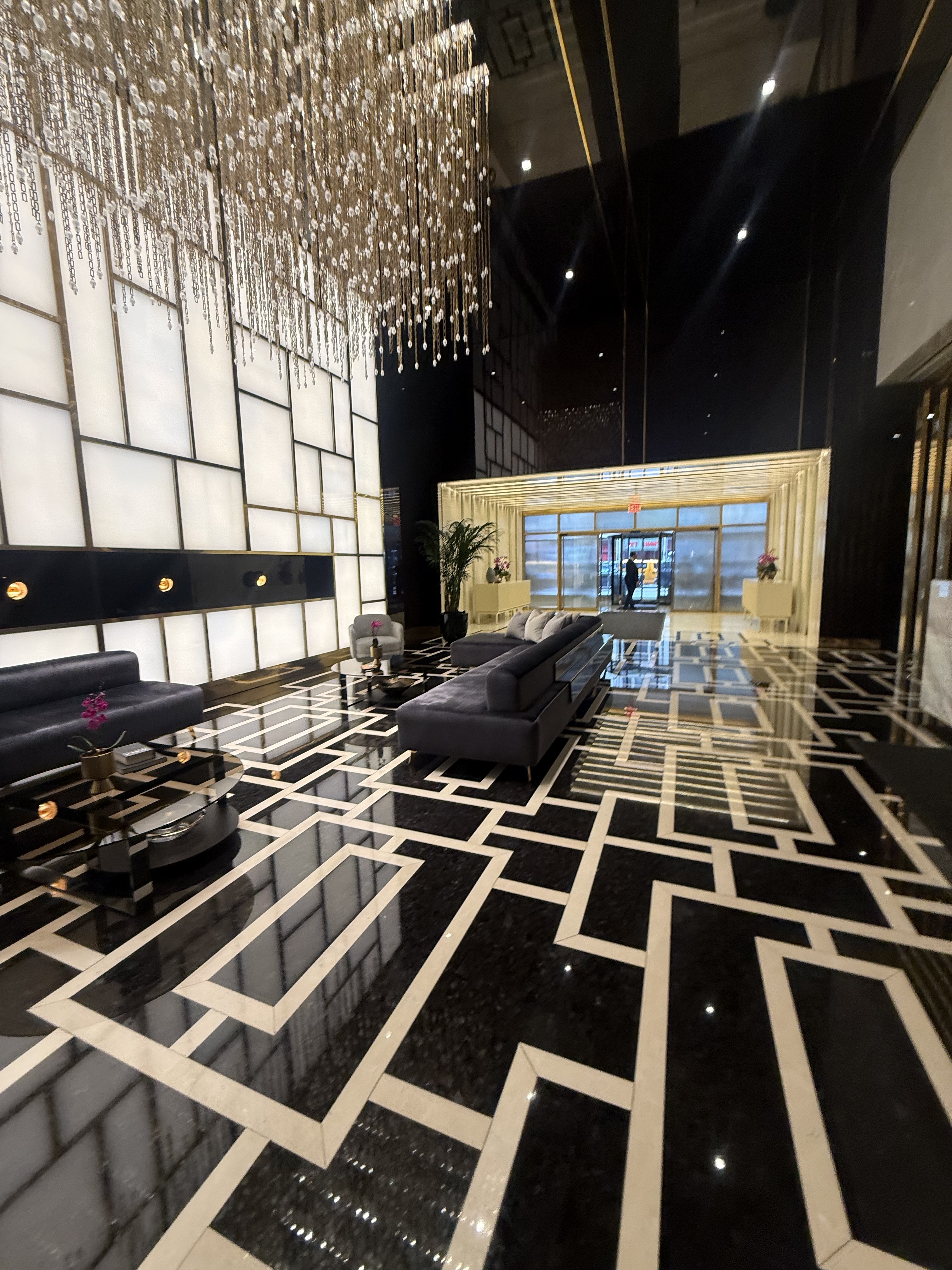
The entrance of the building on West 57th Street leads to a stylish lobby. The building was built partially on a cantilever to avoid demolition of the Arts Students League building, which is landmarked, and the Nordstrom department store sits just below it on West 57th (for this reason, early on the building was often called “Nordstrom Tower”). Central Park Tower holds the Guinness World Record for being the tallest cantilevered building in the world.
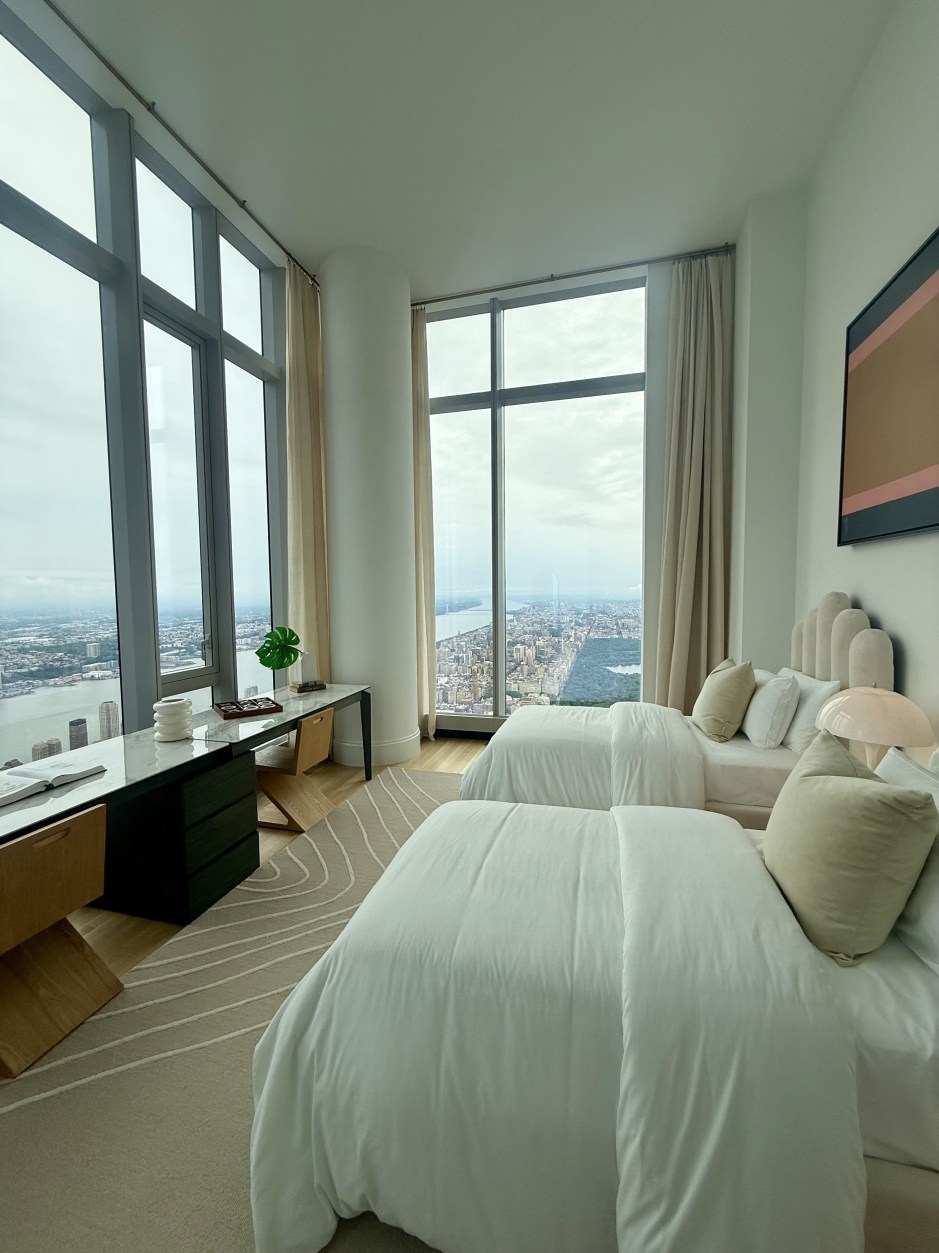
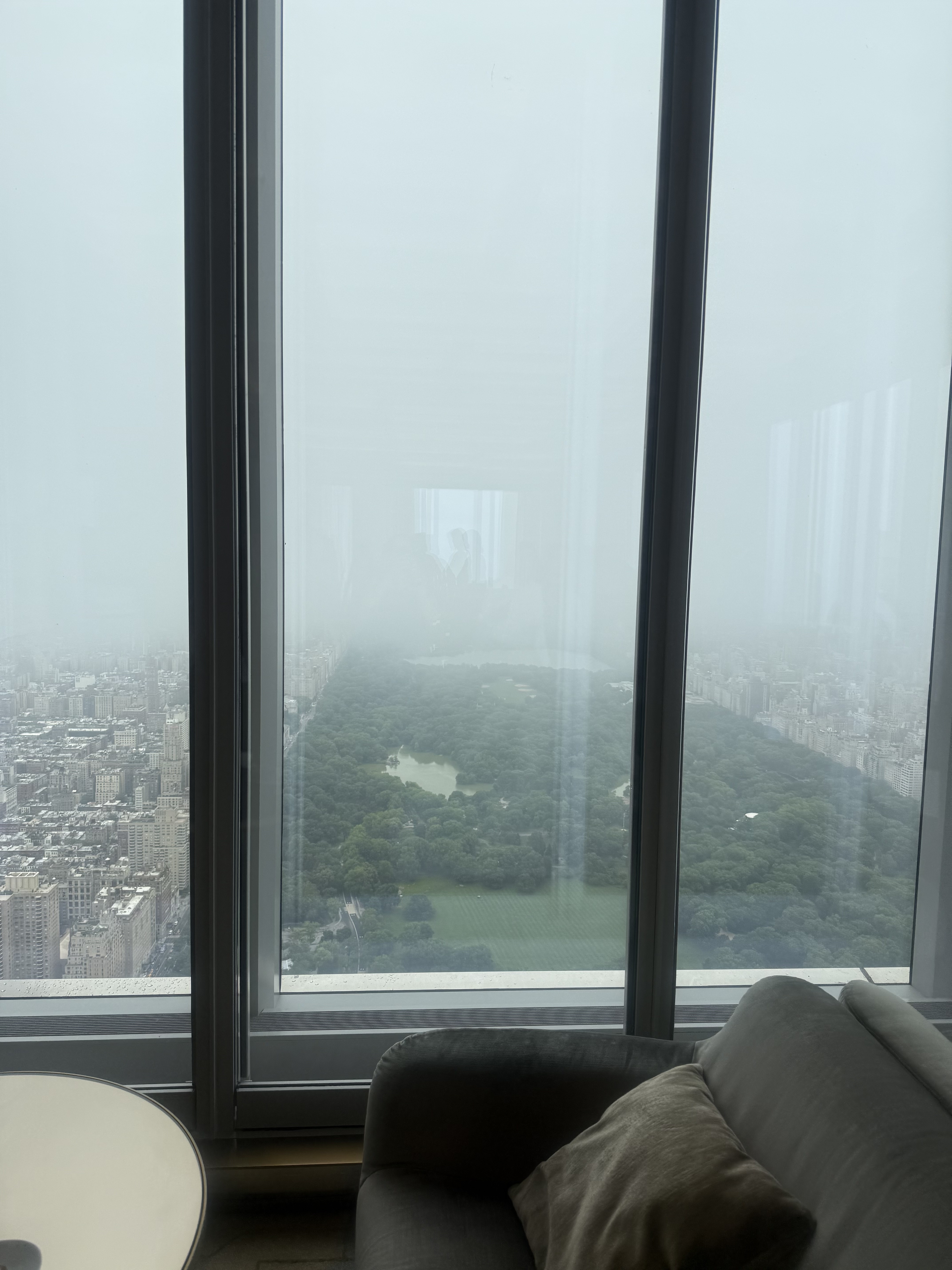
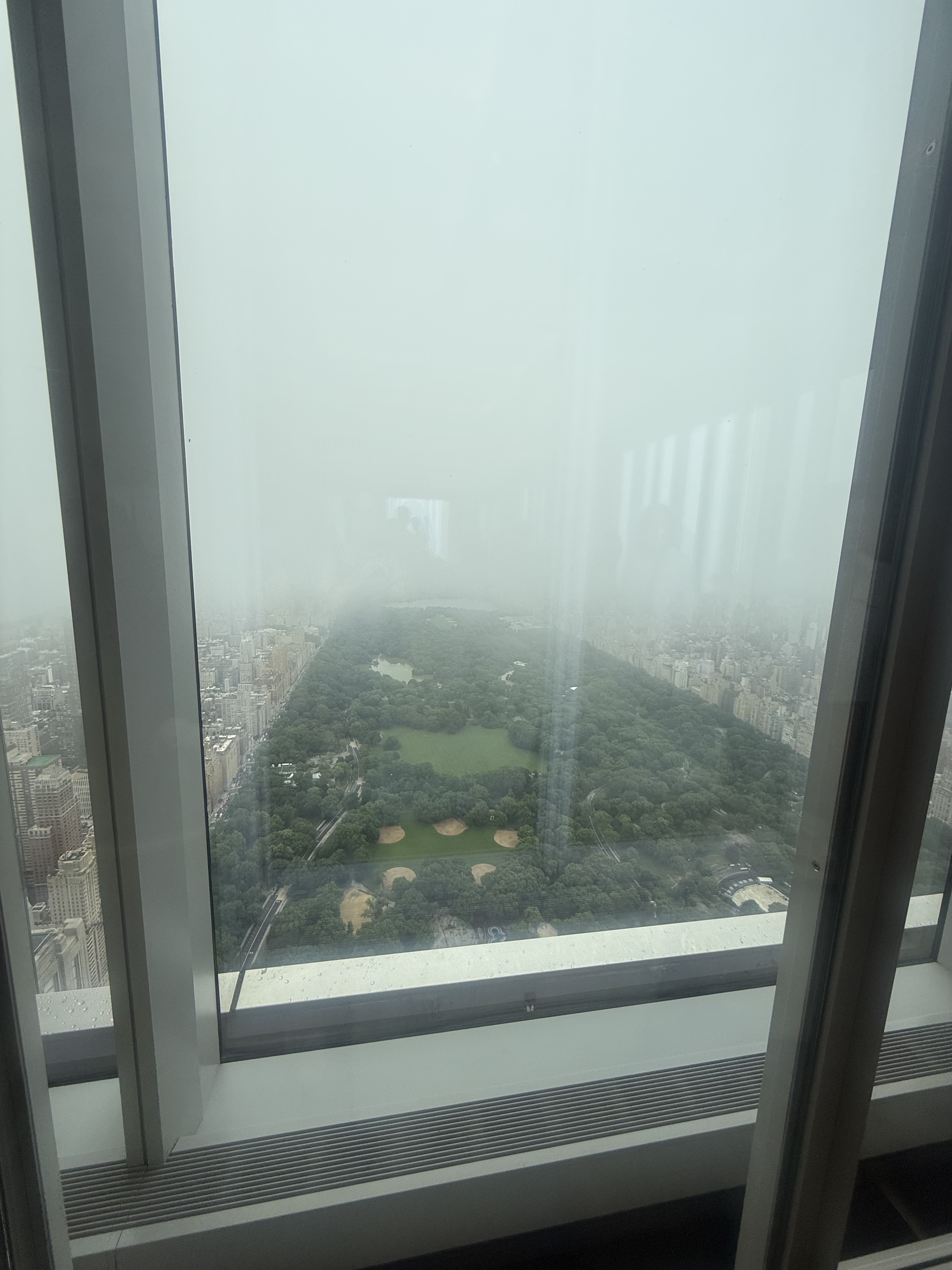
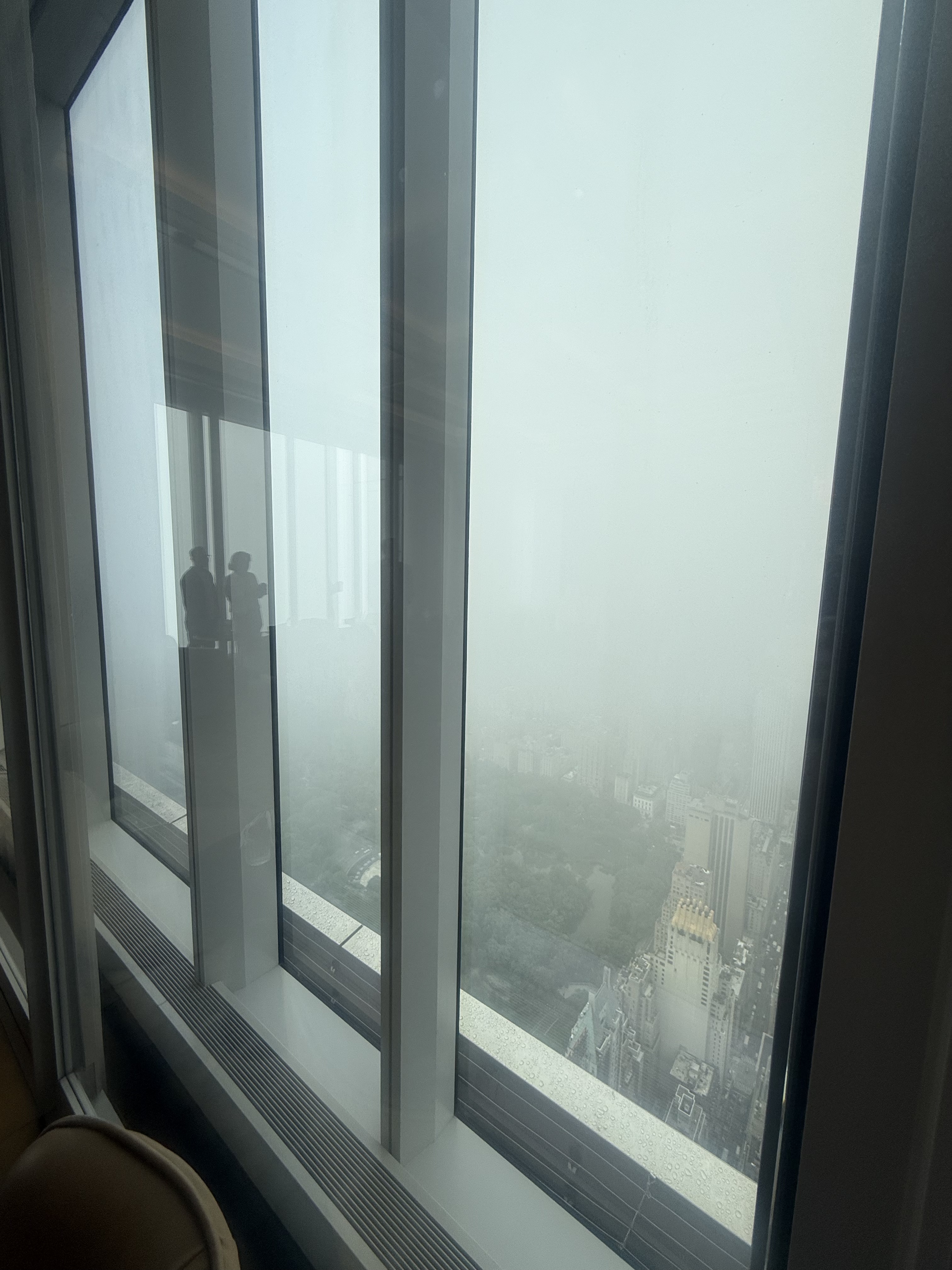
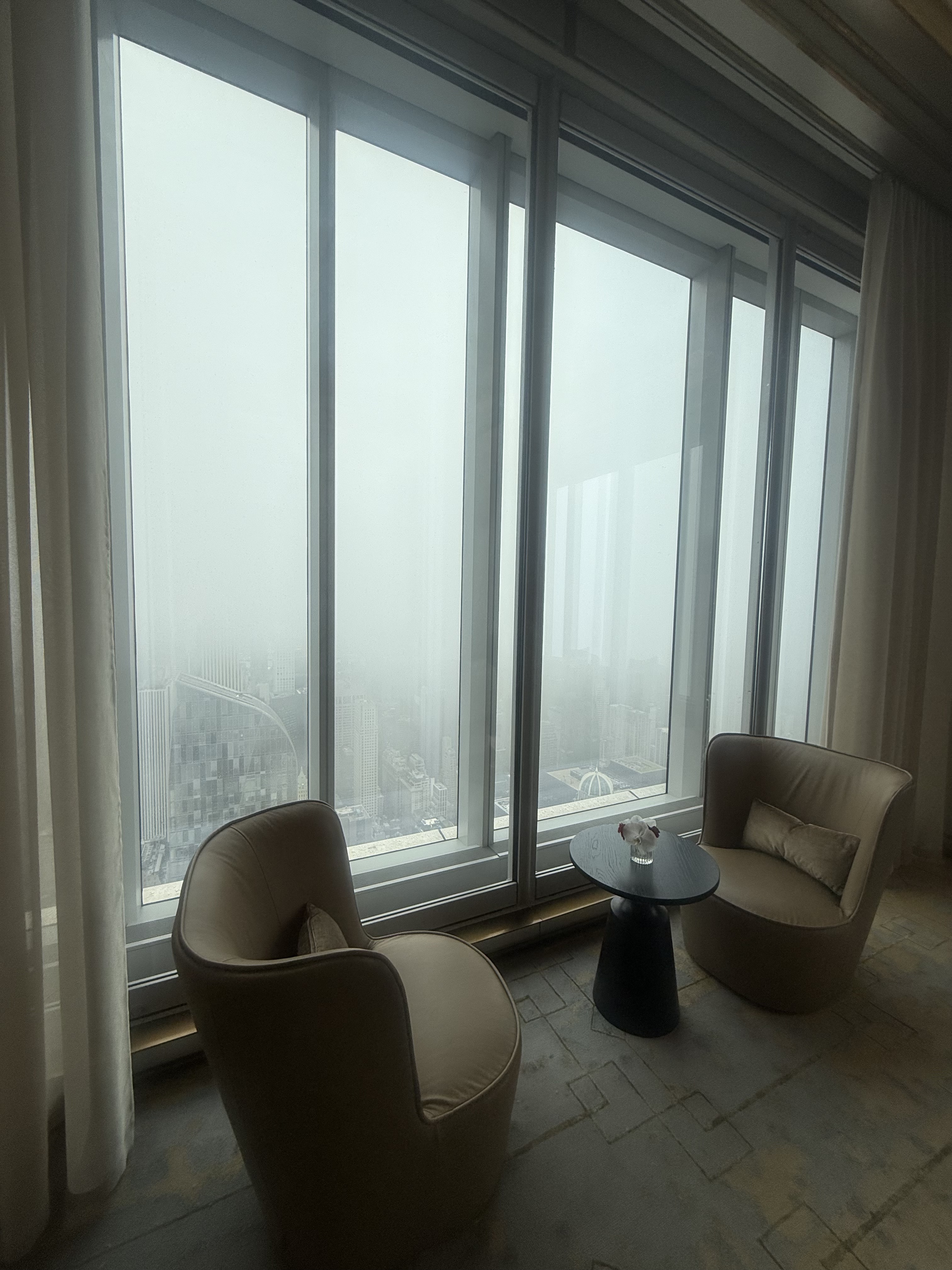
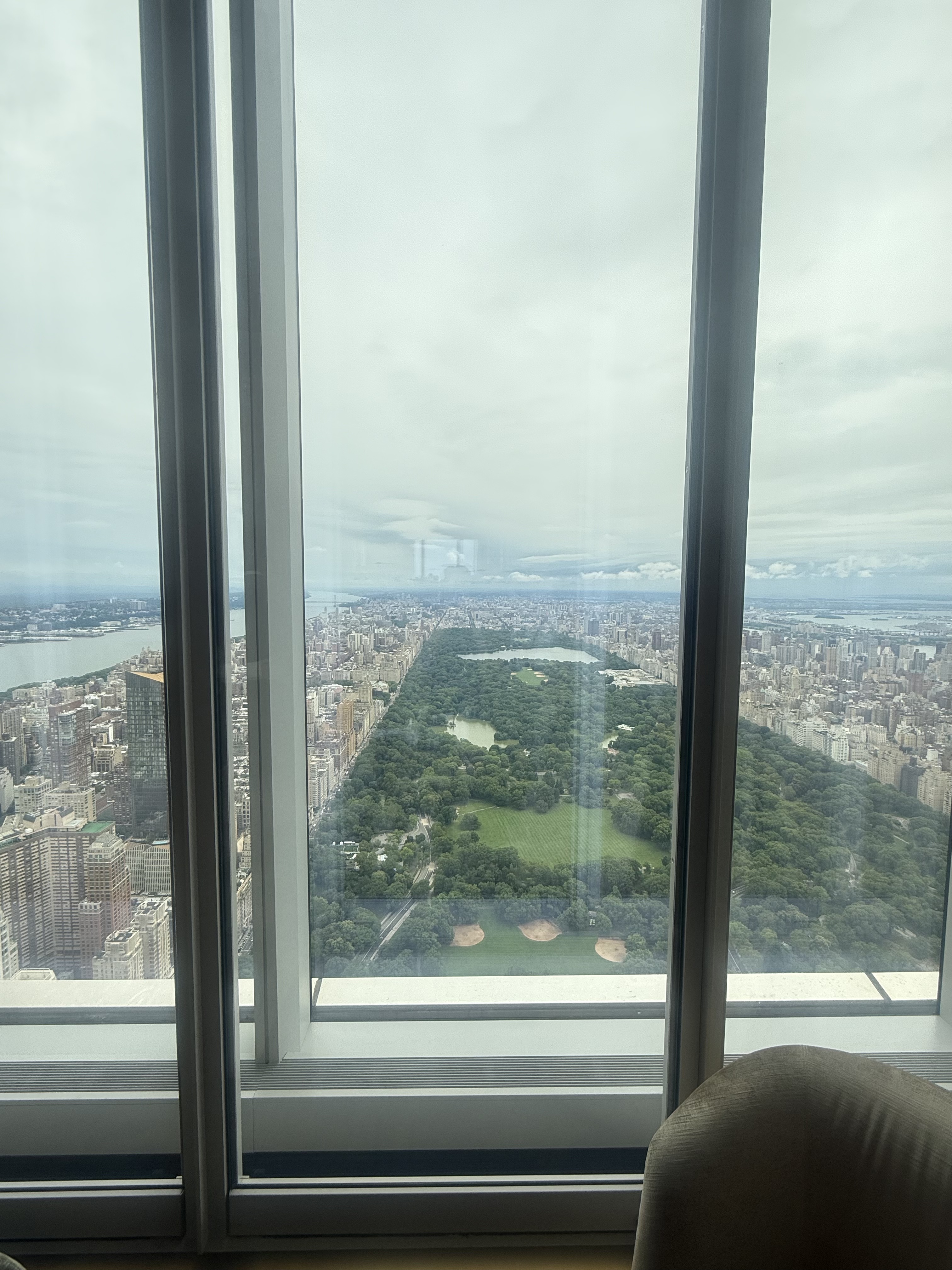
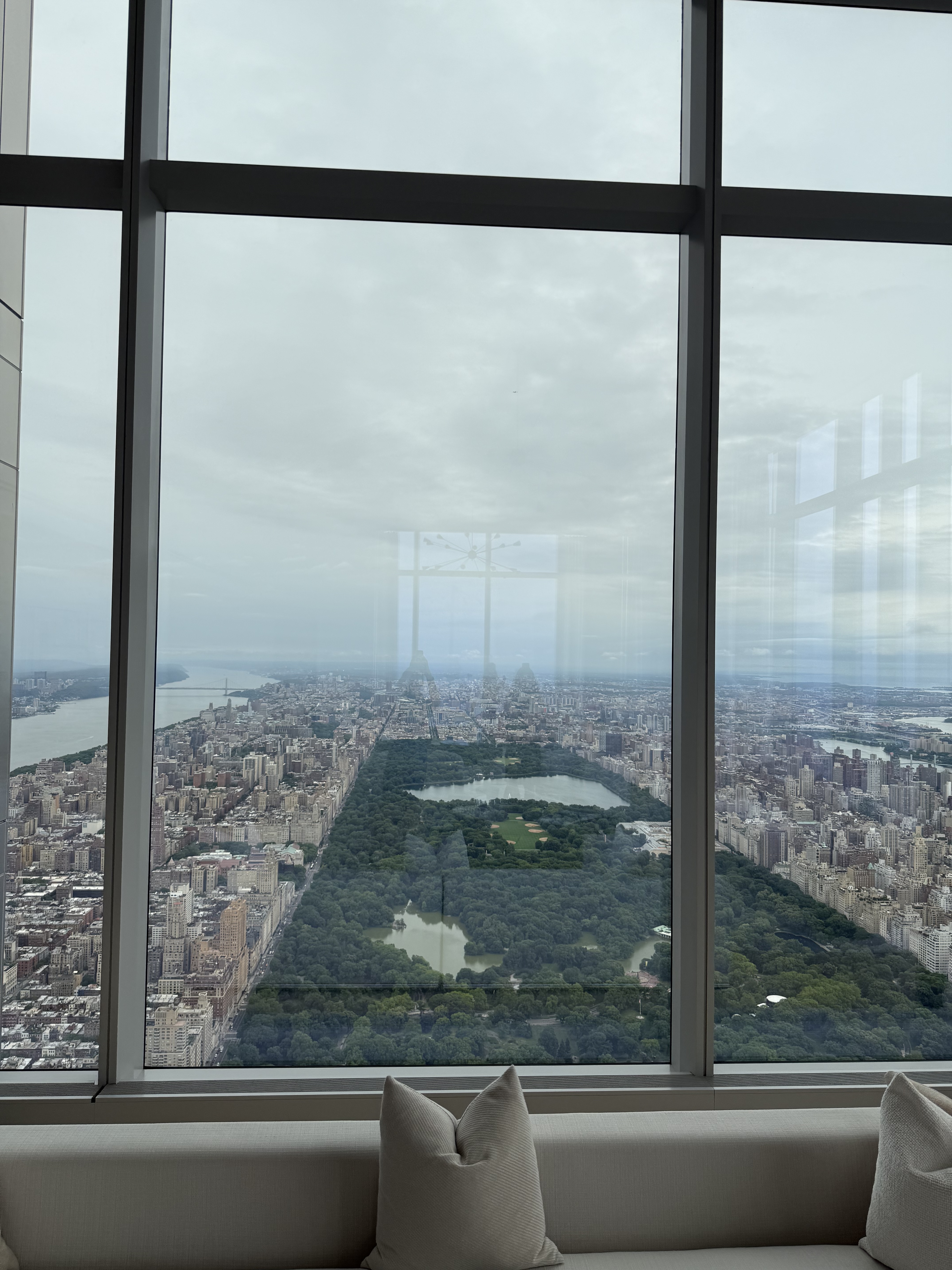
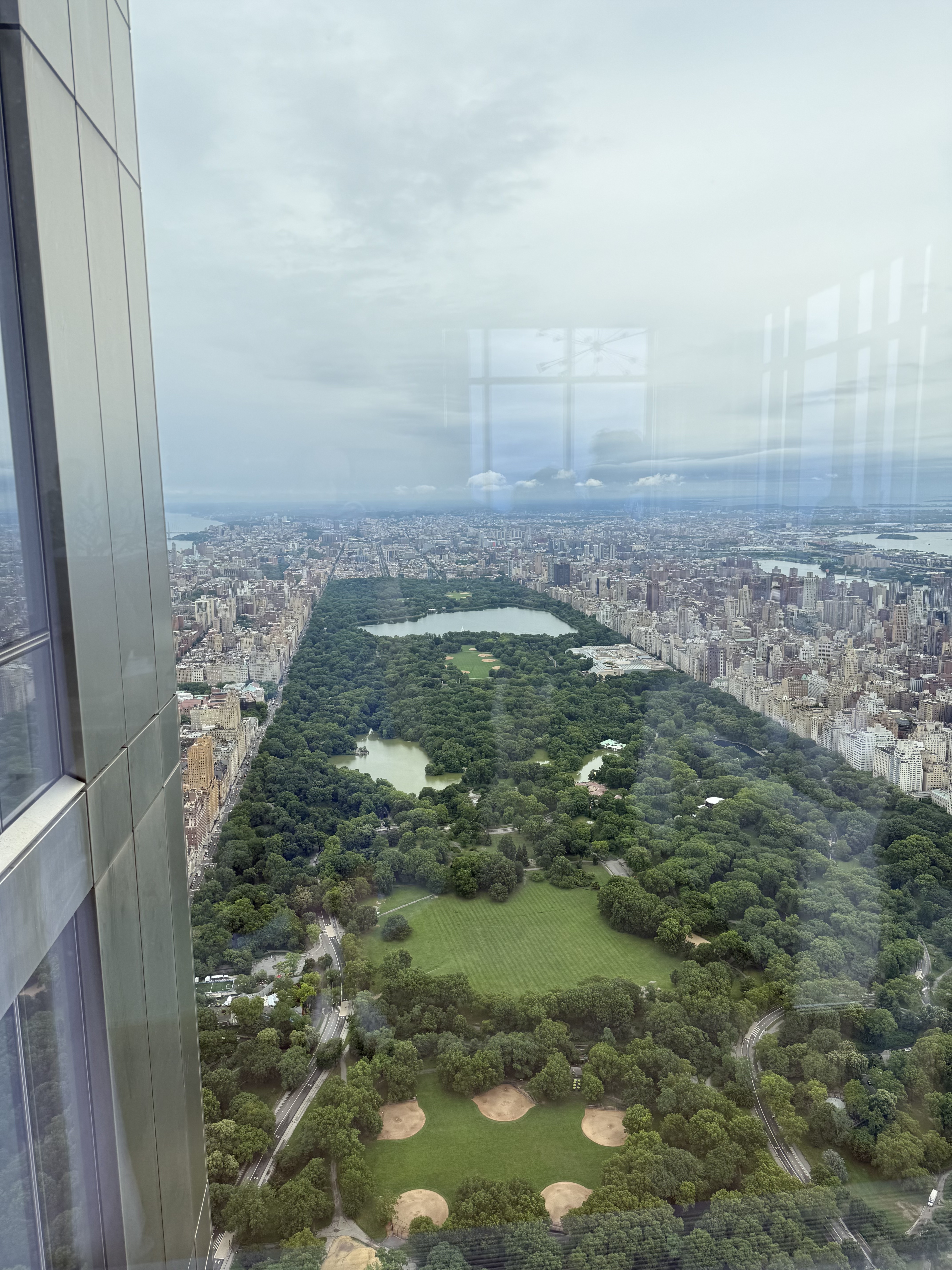
First stop was the residents’ club, on the 100th Floor! Marketed as the highest private club in the world, the club includes a 126-person ballroom, a private dining room, an Art Deco lounge, and a cigar bar. When first arriving there, we were still sitting in the clouds, but fortunately it began to clear up before I had a chance to visit the full-floor home on the 126th floor. Note that at the club you can see Steinway Tower to the east at about the same level as its top floors, and that the view of Central Park is also similar to that seen on the highest floors at Steinway Tower.
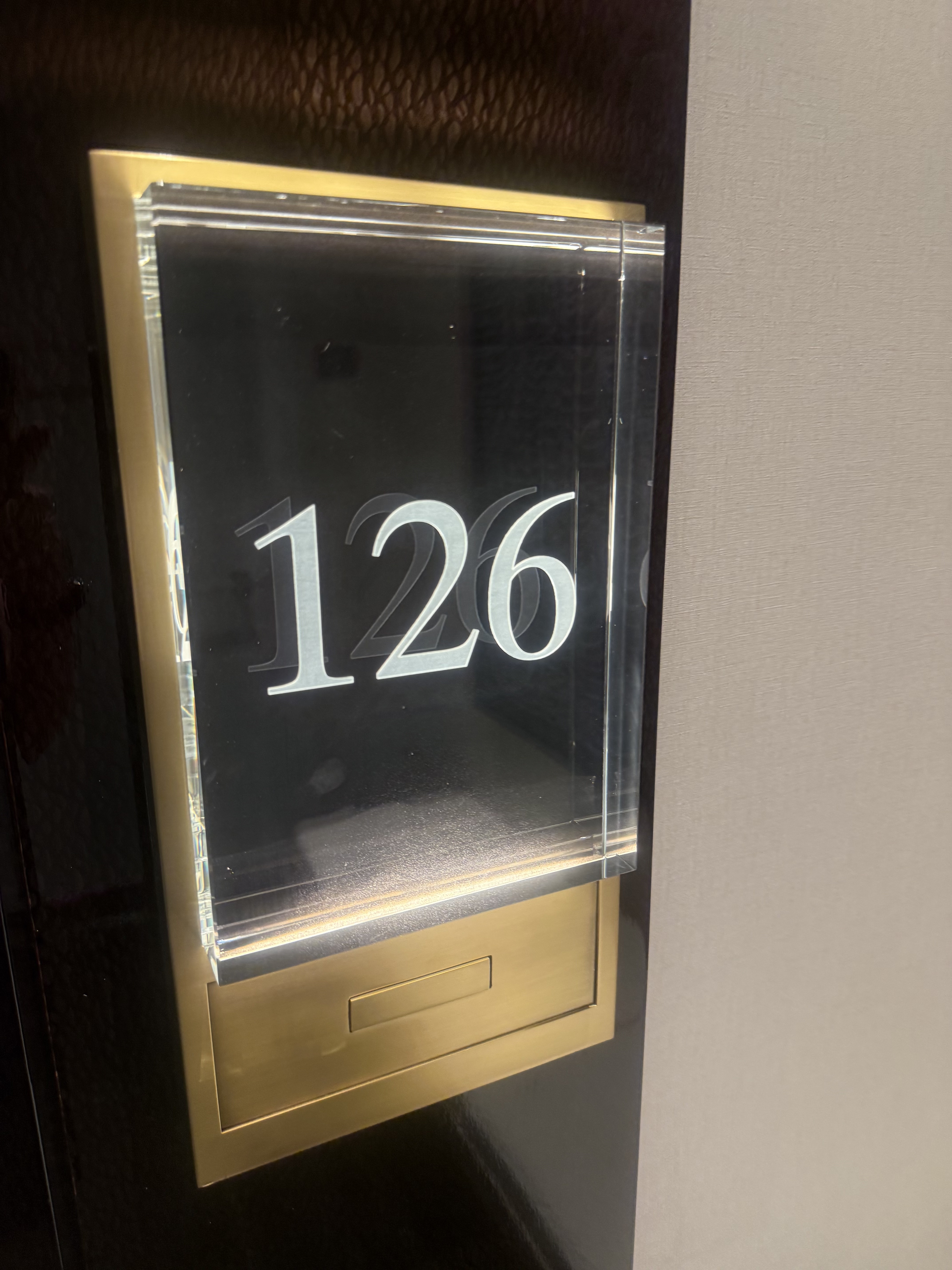
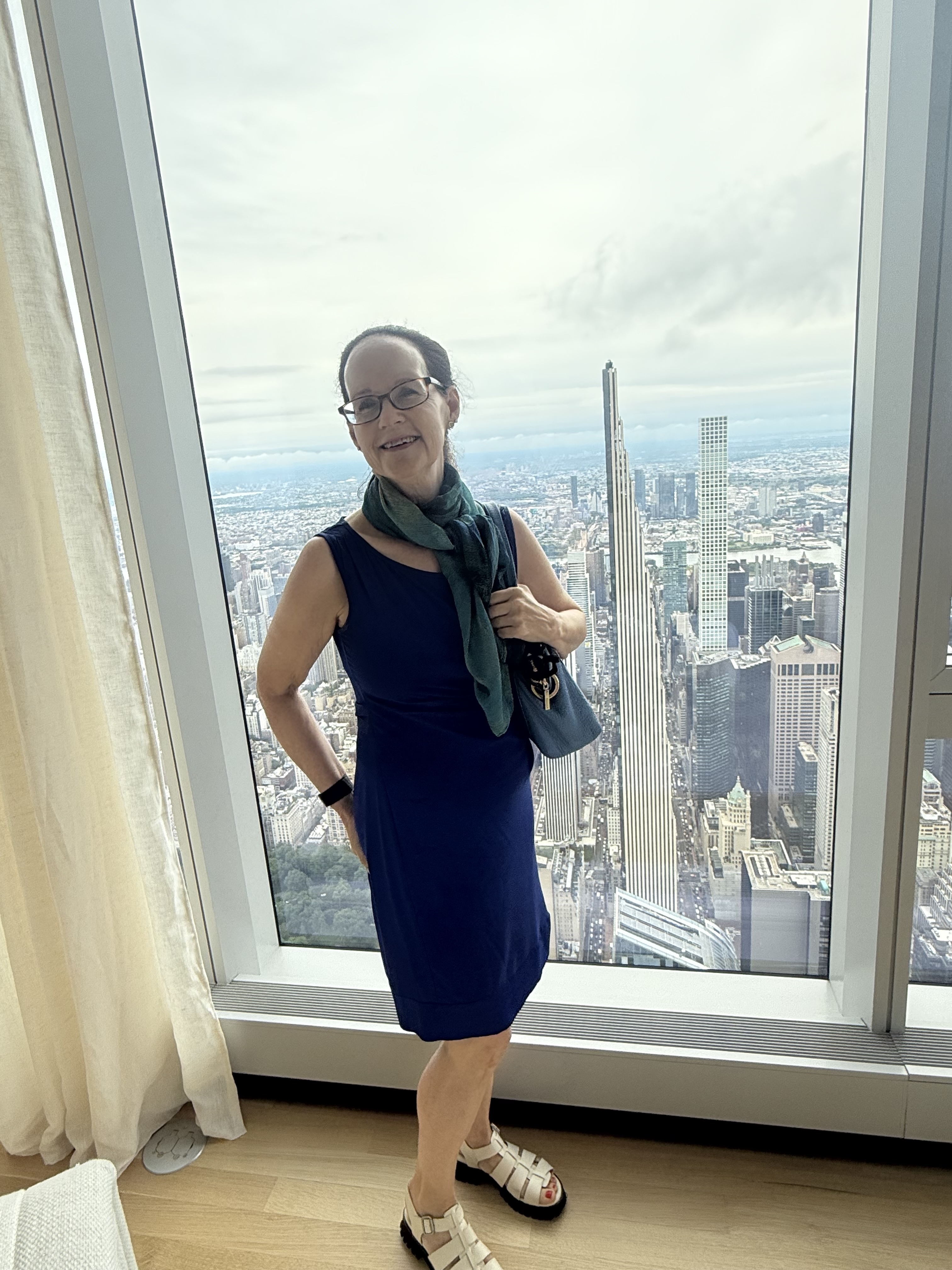
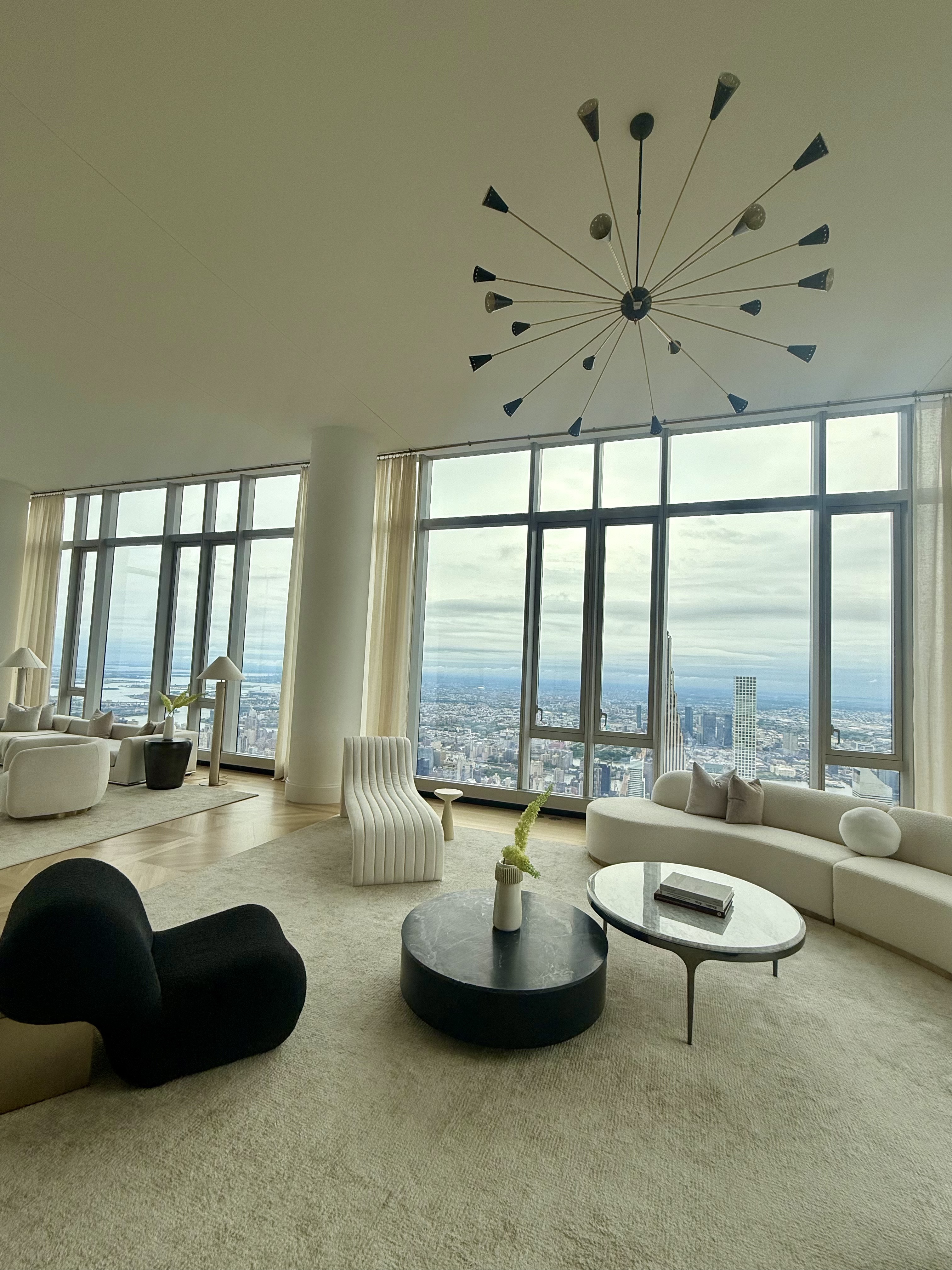
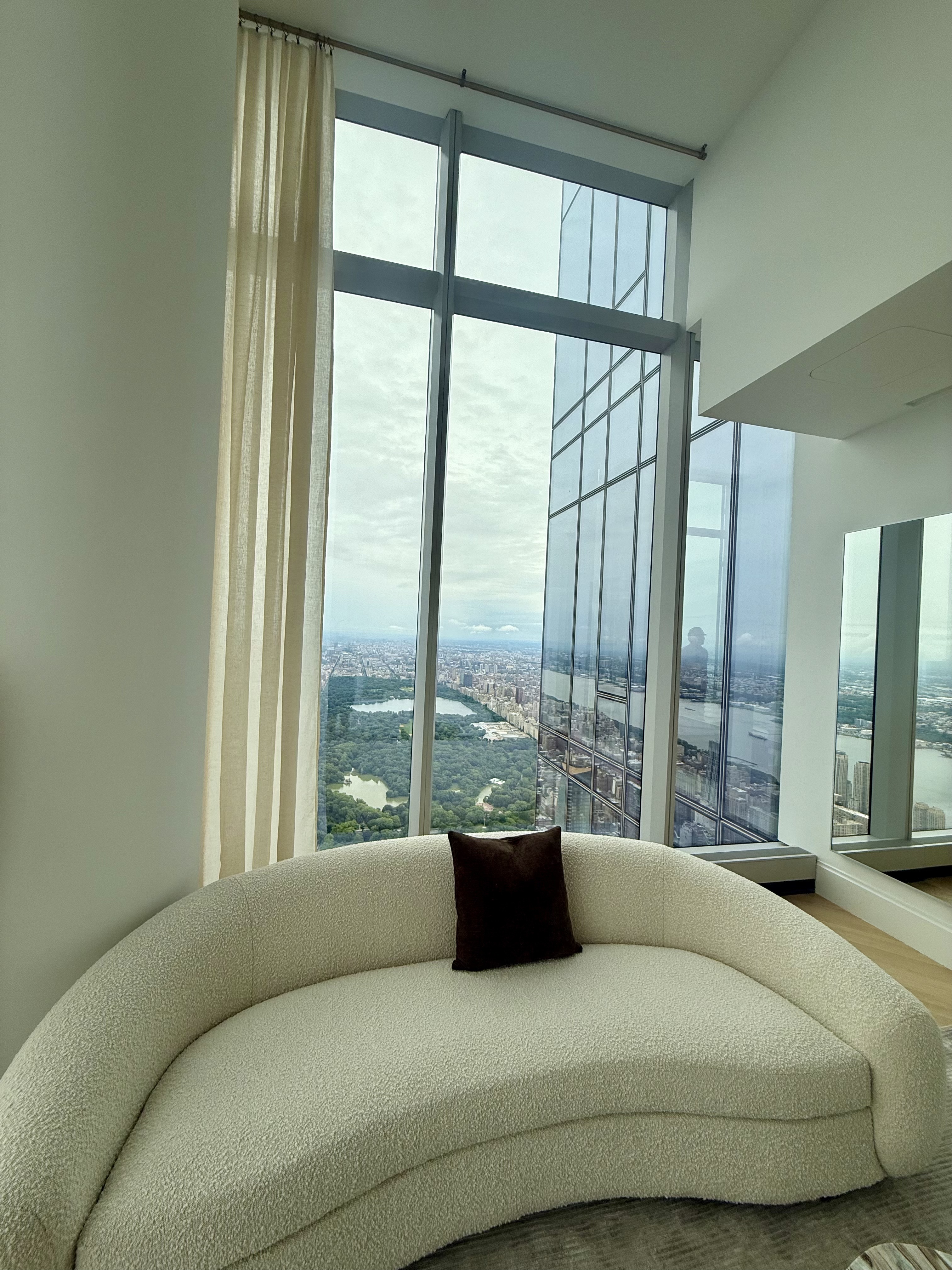
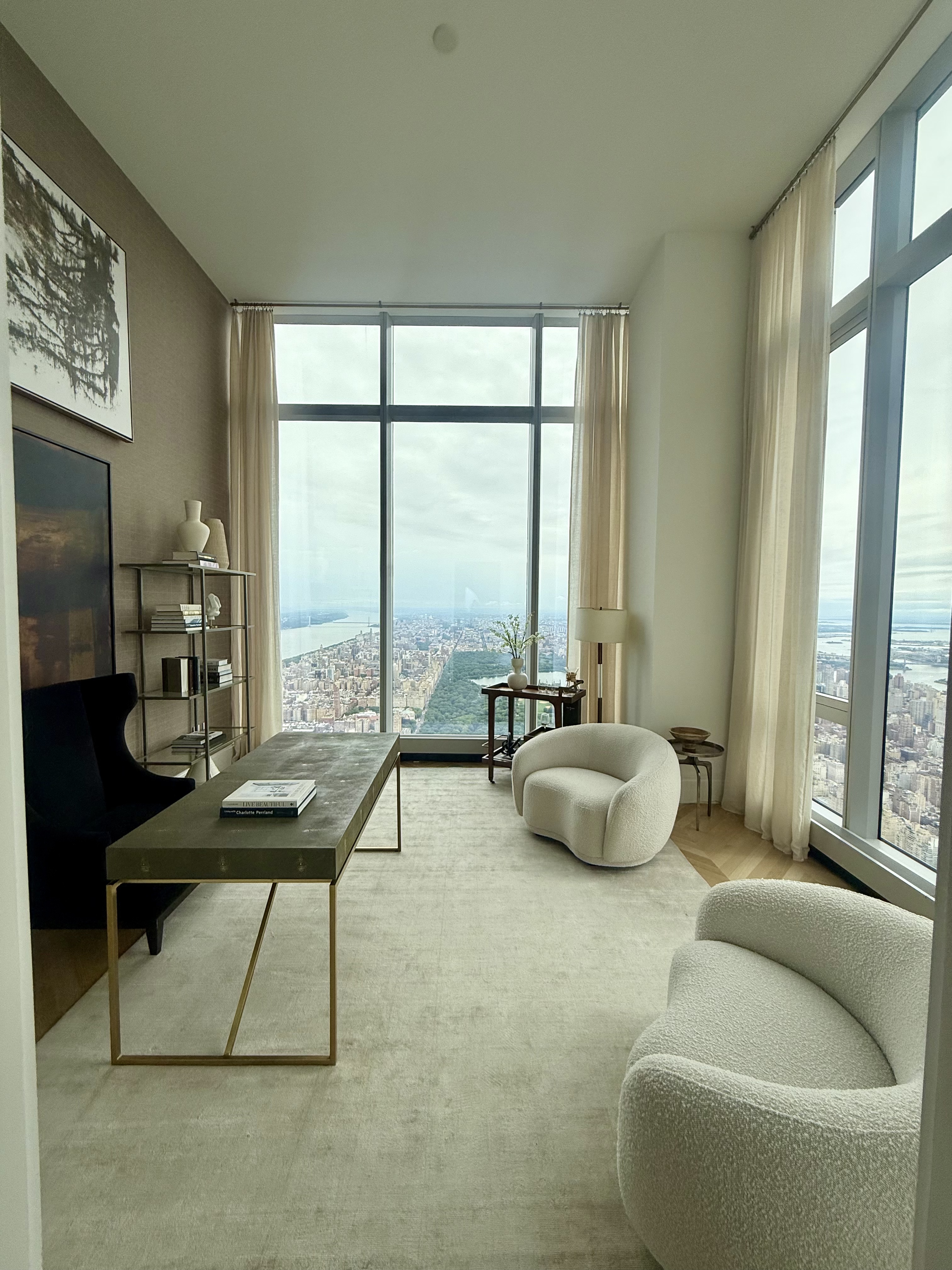
I was able to tour the apartment taking up the entire 126th floor, which is the highest full-floor home before getting to the two highest units: a duplex on floors 127-128, and the penthouse triplex on floors 129-131. These top two apartments have their own elevators, by the way! Let’s think about how tall this building actually is. It is the second tallest building in New York City at 1,550 feet or 472 meters, but the highest habitable floor (1,417 feet or 432 meters high) is actually higher than the observation deck at One World Trade, the tallest building. Central Park Tower is the highest fully residential building in the world (Burj Khalifa is taller, but is mixed-use). It is the second highest building not only in New York City, but in the entire Western Hemisphere. Being in 126, the feeling of experiencing views generally only experienced in an airplane is palpable. I definitely felt I was looking down on the top of Steinway Tower, and visualizing the entire span of Central Park was not only easy, but the park looked small from this height.
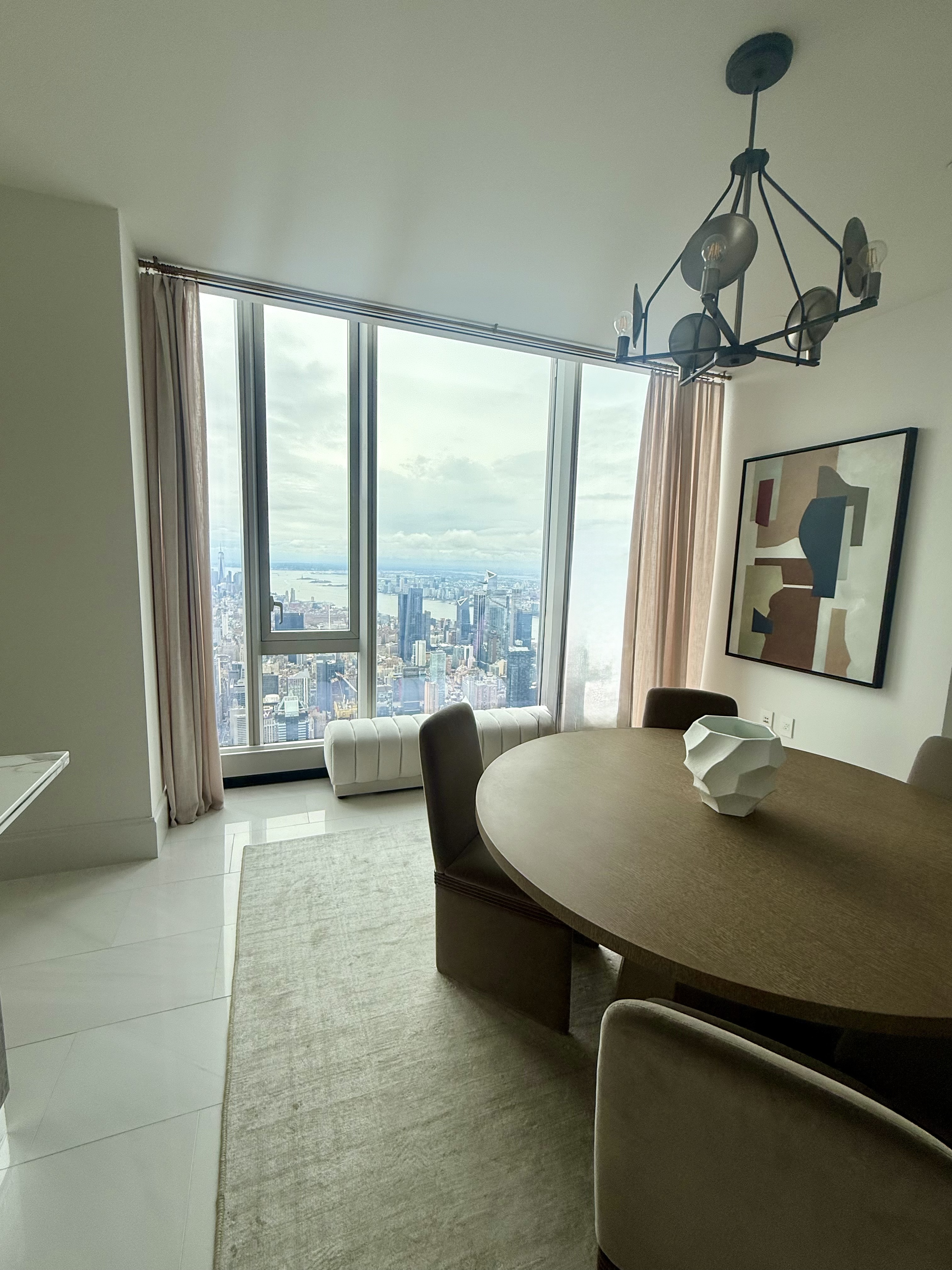
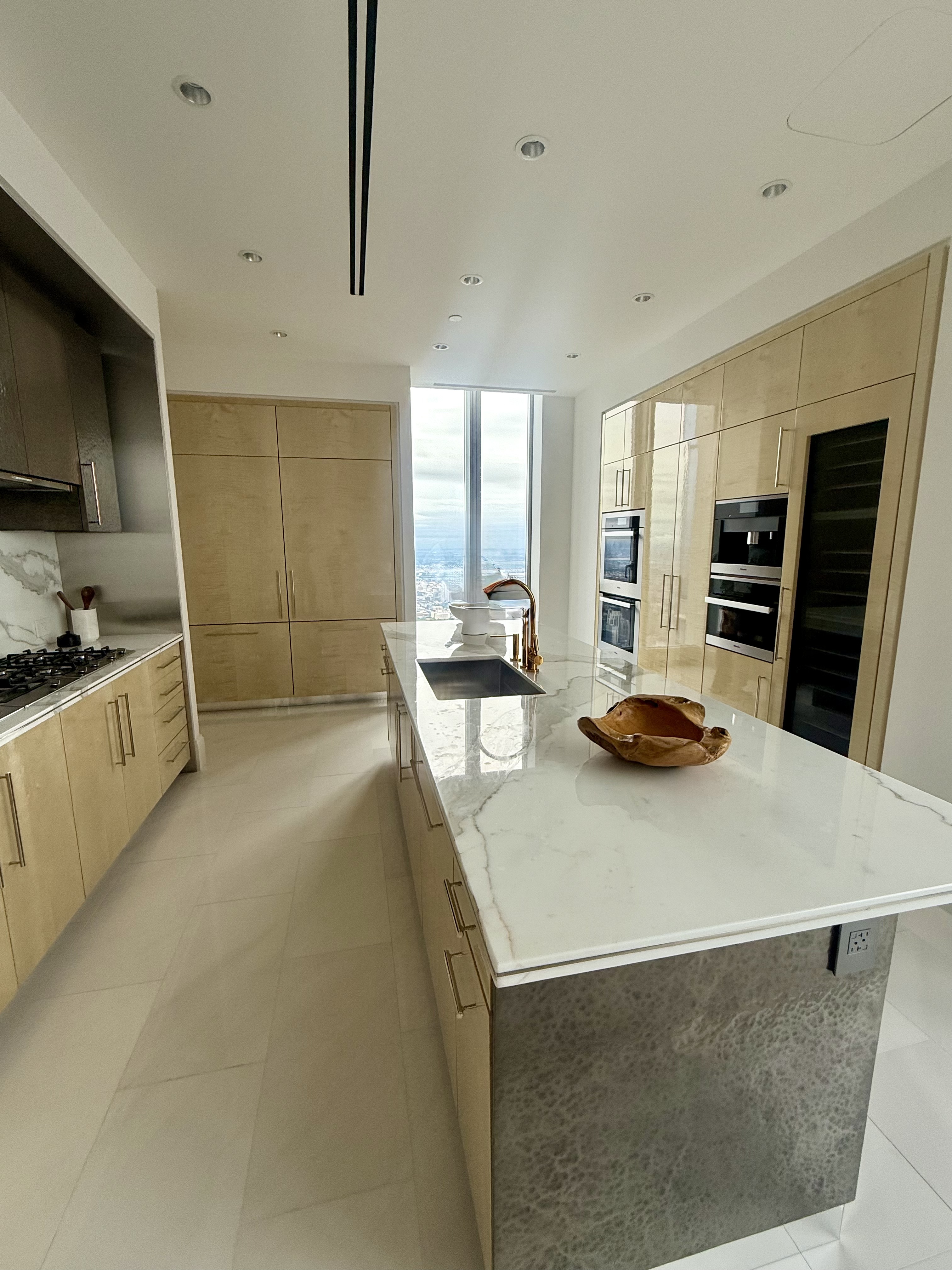
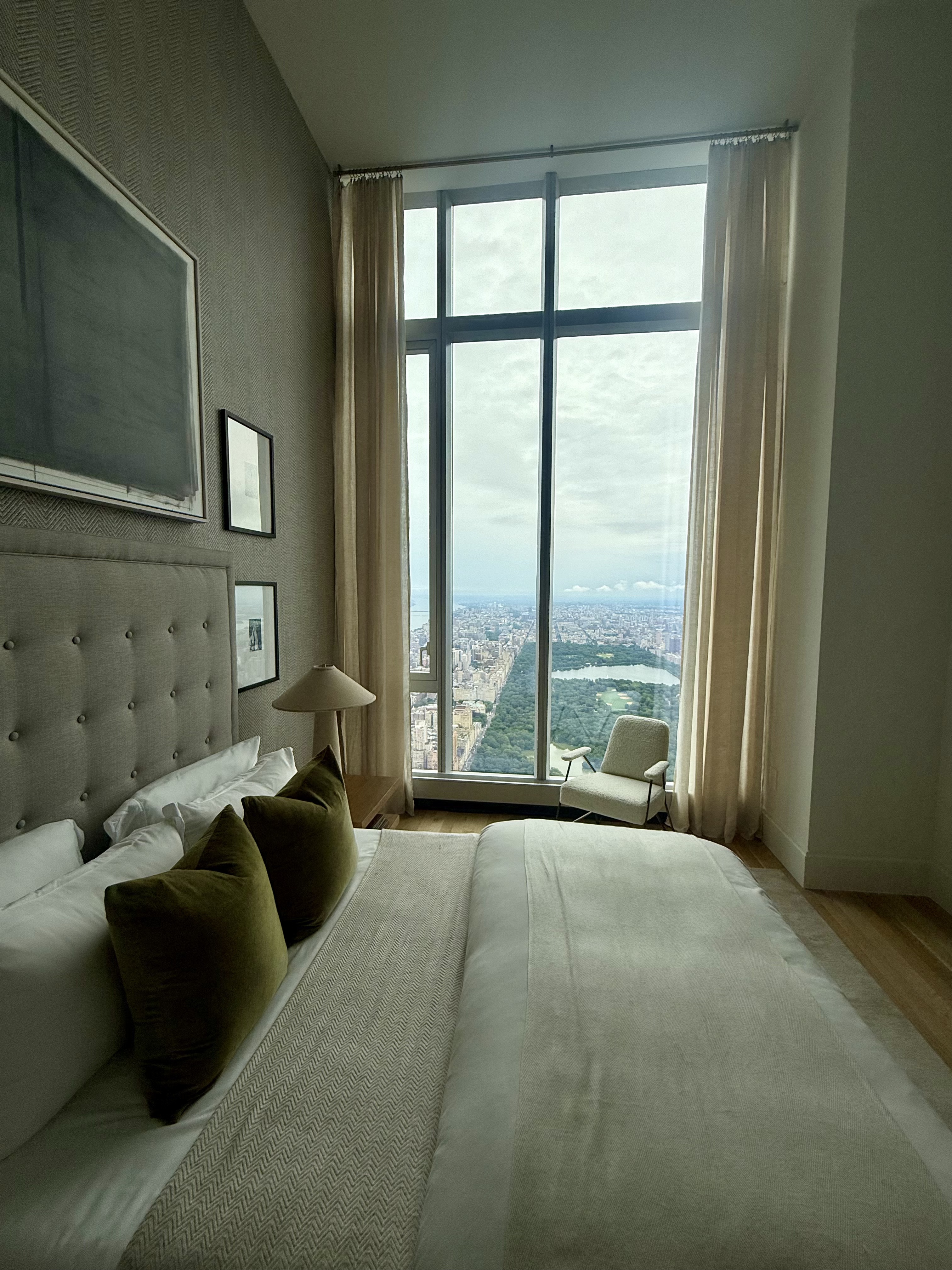
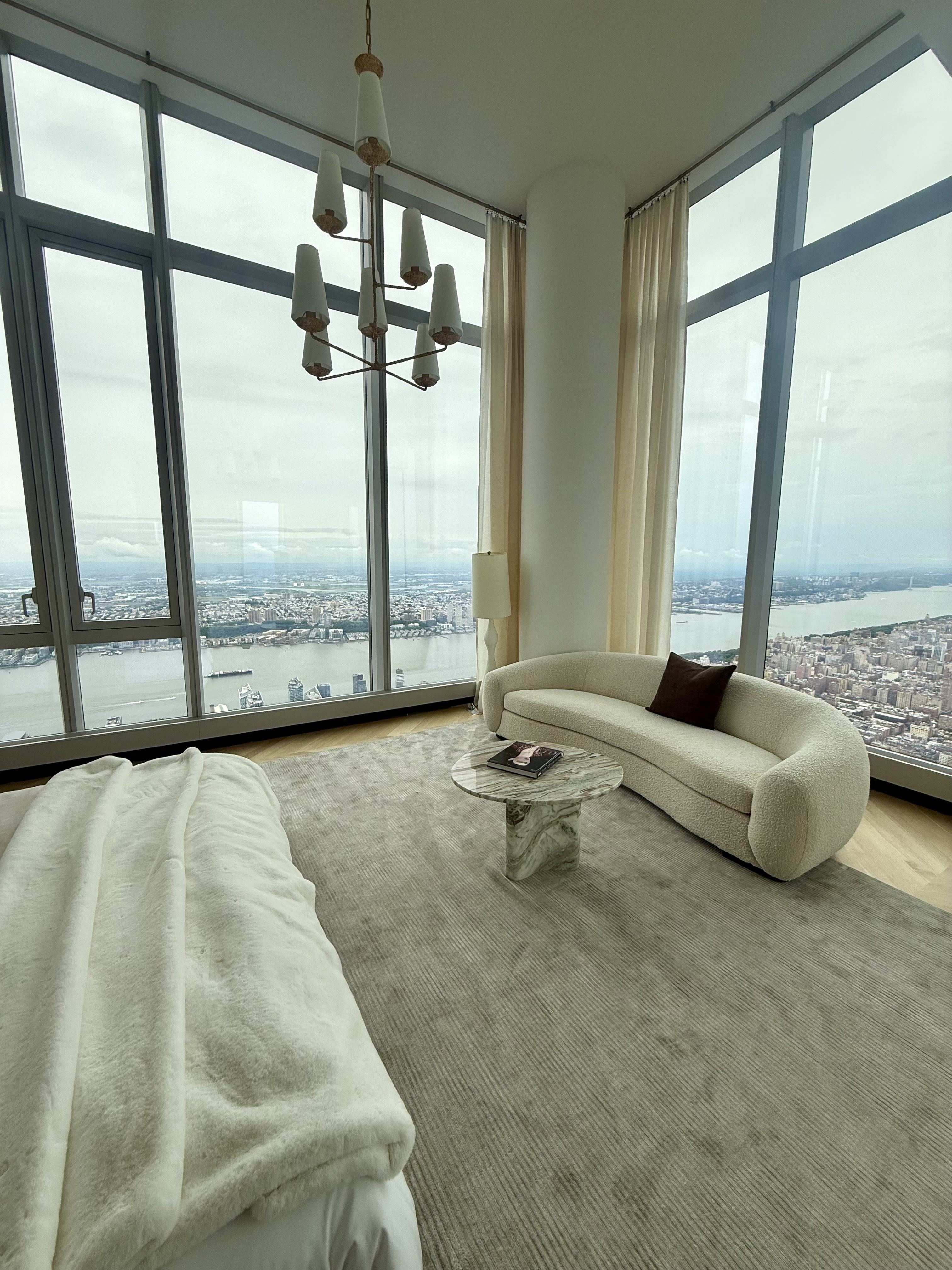
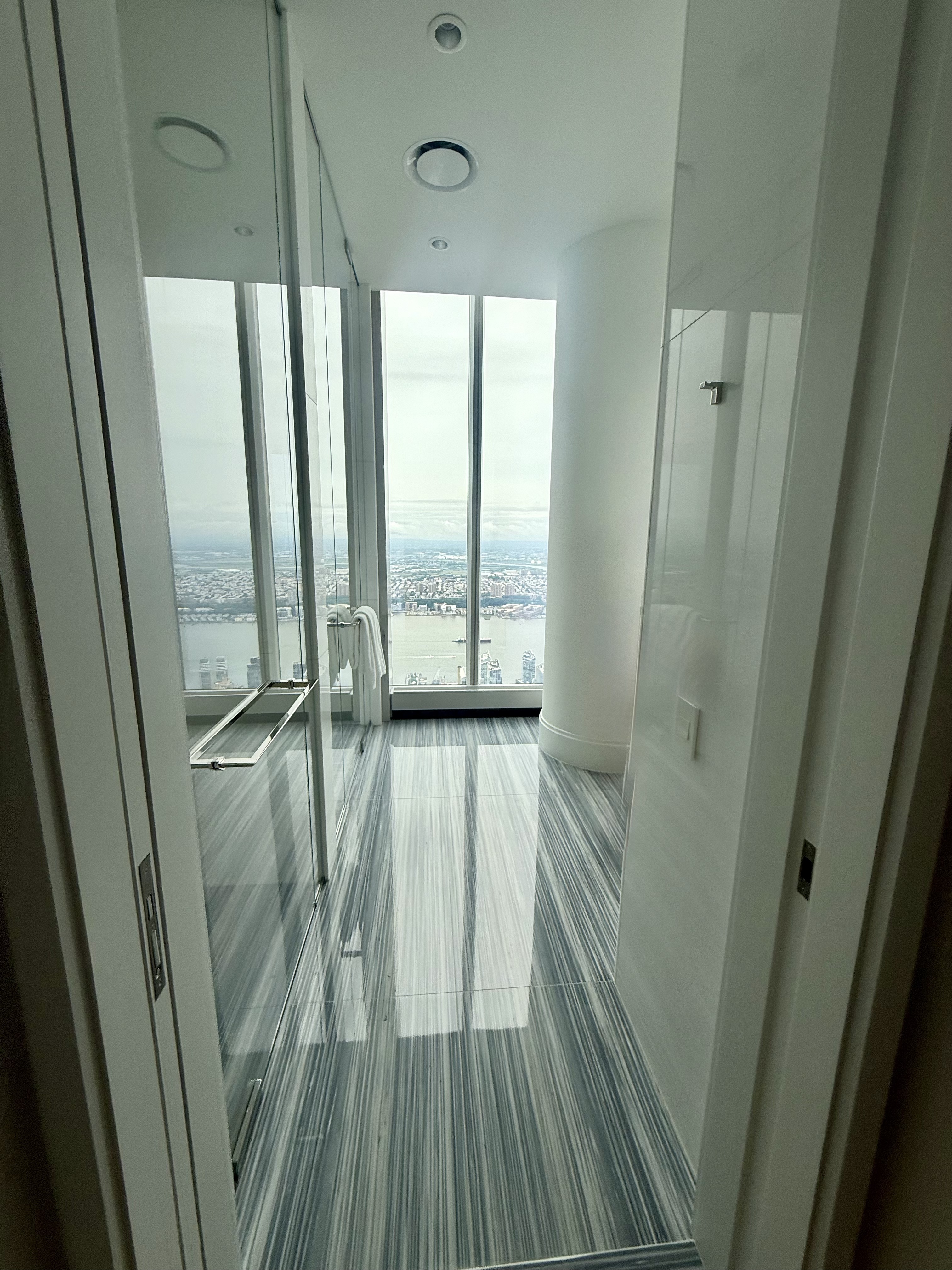
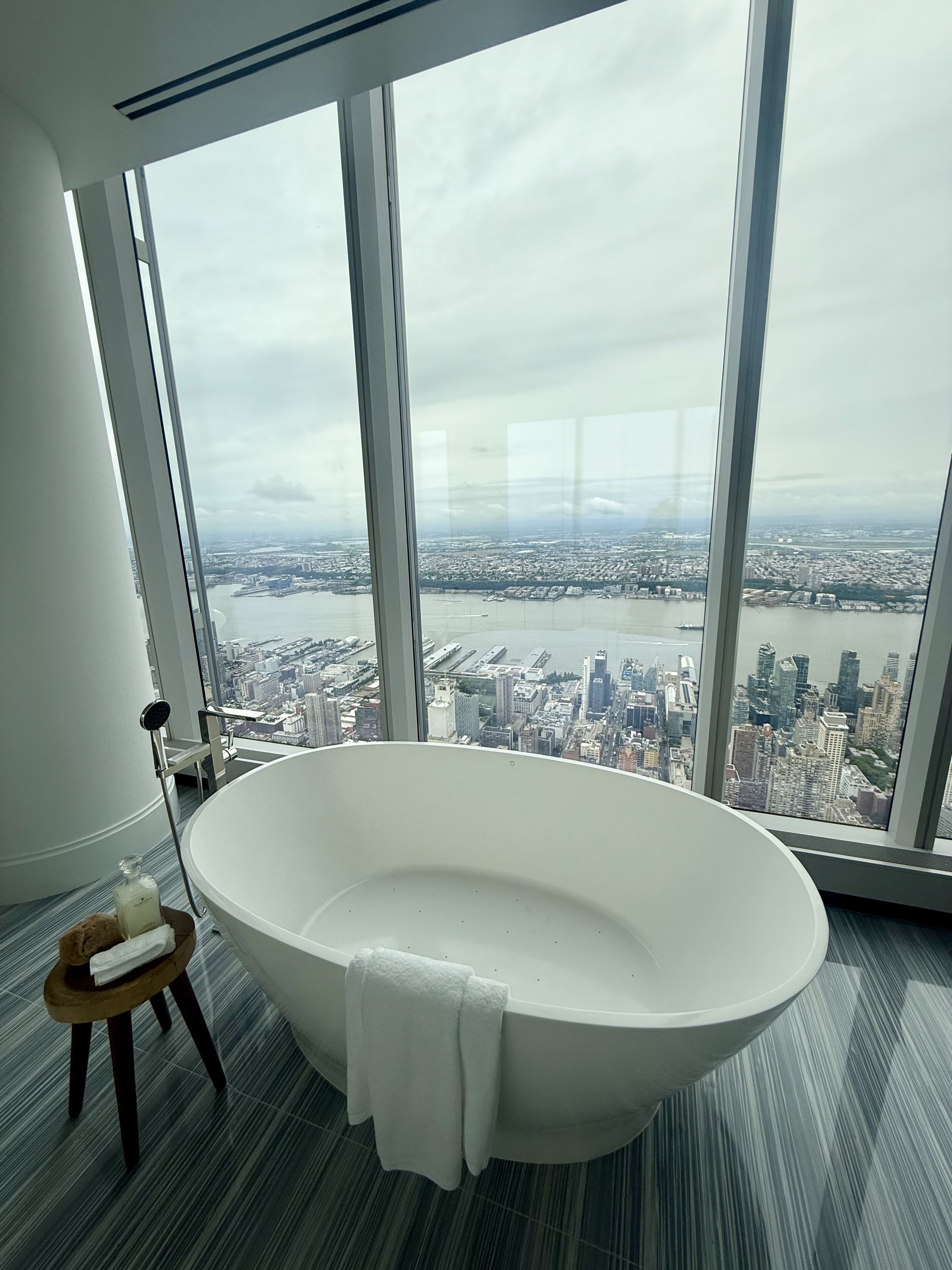
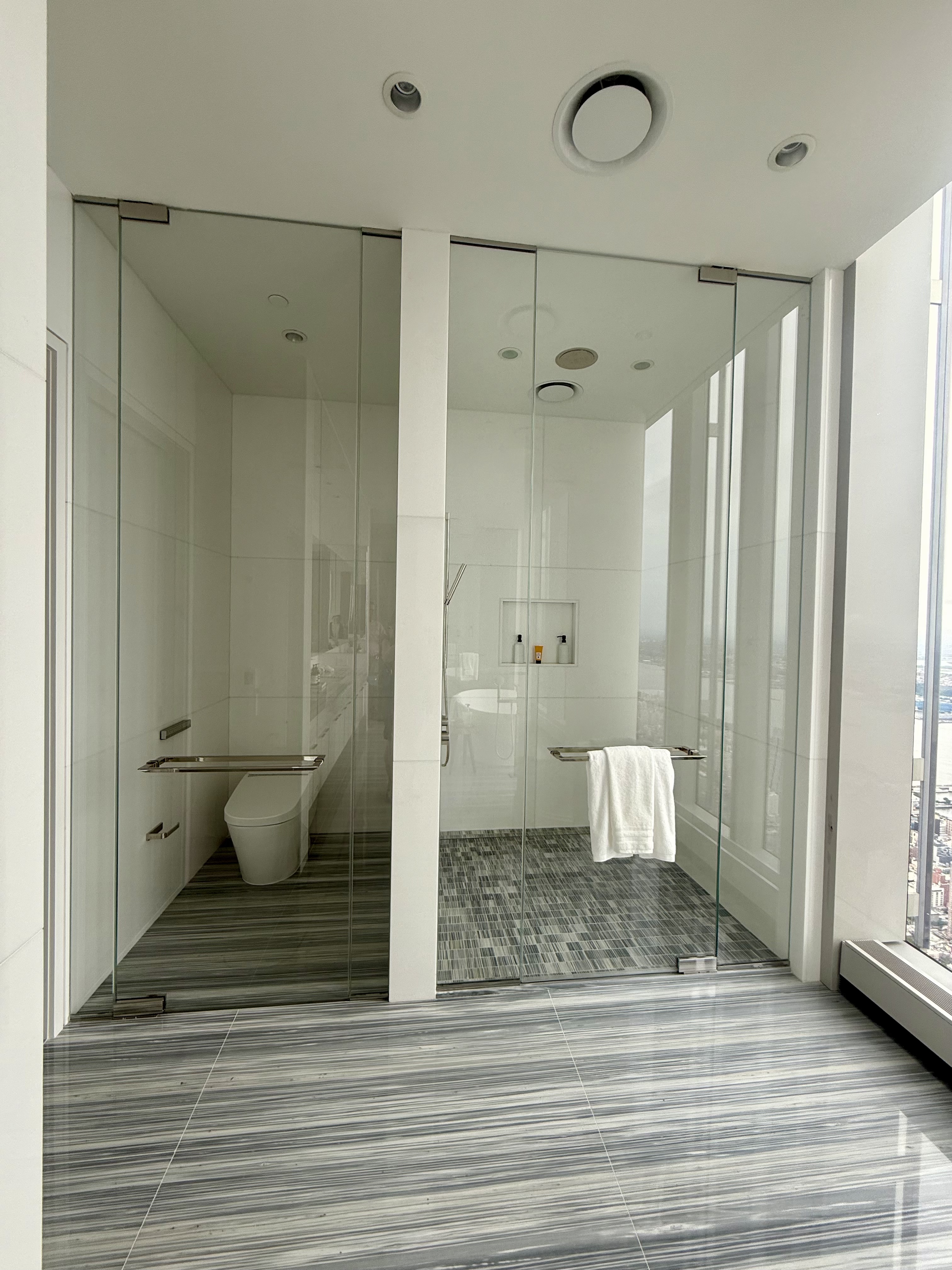
Apartment 126 had been staged, and has five bedrooms. Views stretch in every direction – north to see all of Central Park and beyond, west to the Hudson River and New Jersey, south over skyline views all the way to New York Harbor, and east over other supertalls and to the East River and on to Brooklyn and Queens.
Bathrooms are extraordinary, including this tub overlooking the Hudson River.
I want to point out how high the ceilings are, as well, giving even more emphasis to the overall impression of height. Having floor to ceiling windows allows for the spectacular views to dominate every room. On my Instagram, I posted a few videos of being in the space (see this one of the views from a home office, and this one of what it was like to ride down in the elevator!). The elevators go 2000 feet per second, and you can definitely feel it (and your ears feel the change in pressure).
These supertall buildings (many often called “:pencil skyscrapers” these days because of their slender shape and lofty height) are polarizing, to be sure. But I can’t imagine looking at them and not at least wondering what it is like to be at or near the top of them. Extraordinary views like this are why people pay to go to observation towers, and to imagine living at such a height is unimaginable for most. I feel privileged to be able to see the interiors of these singular buildings through my profession as a real estate agent, and to live and work in such an exceptional city.
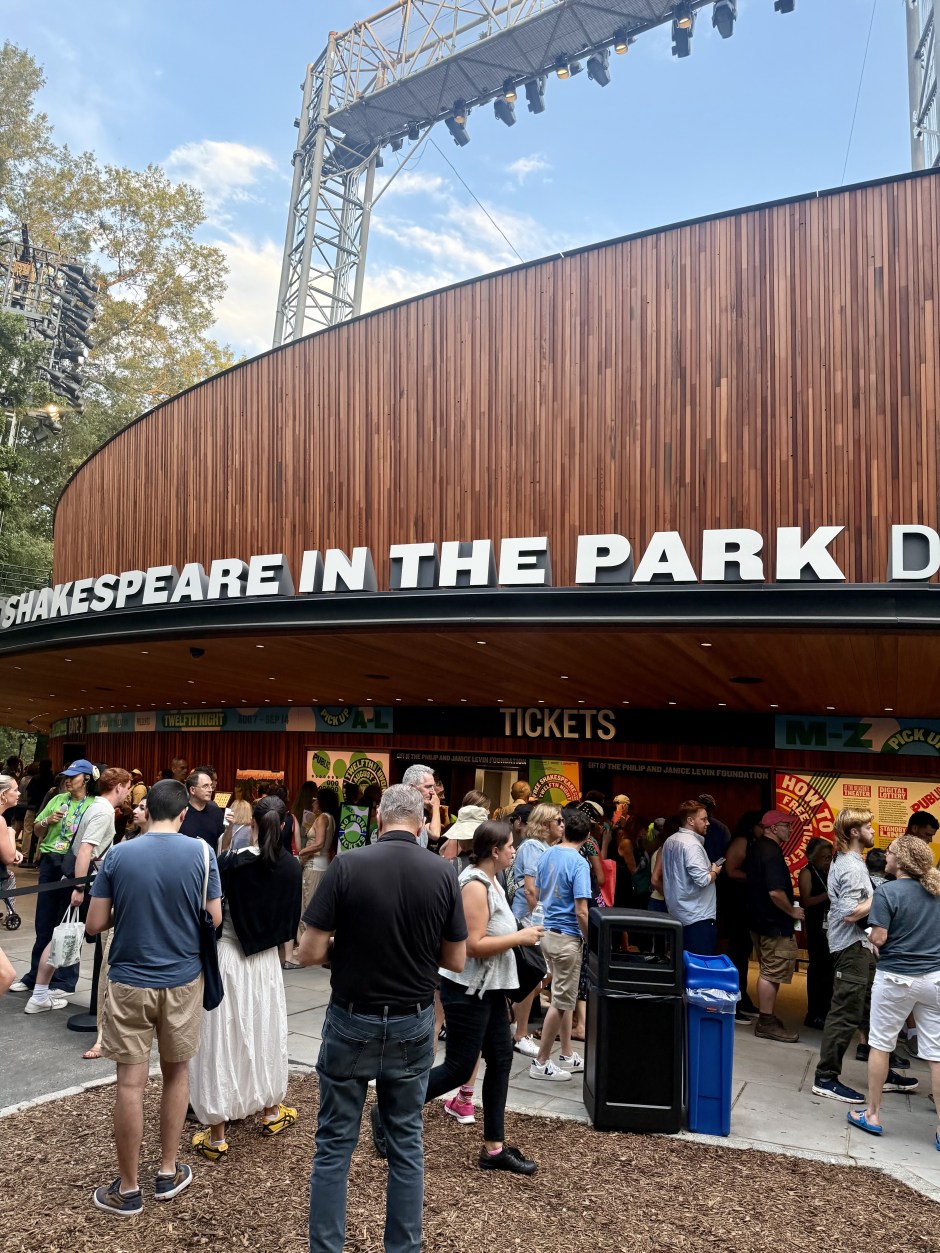
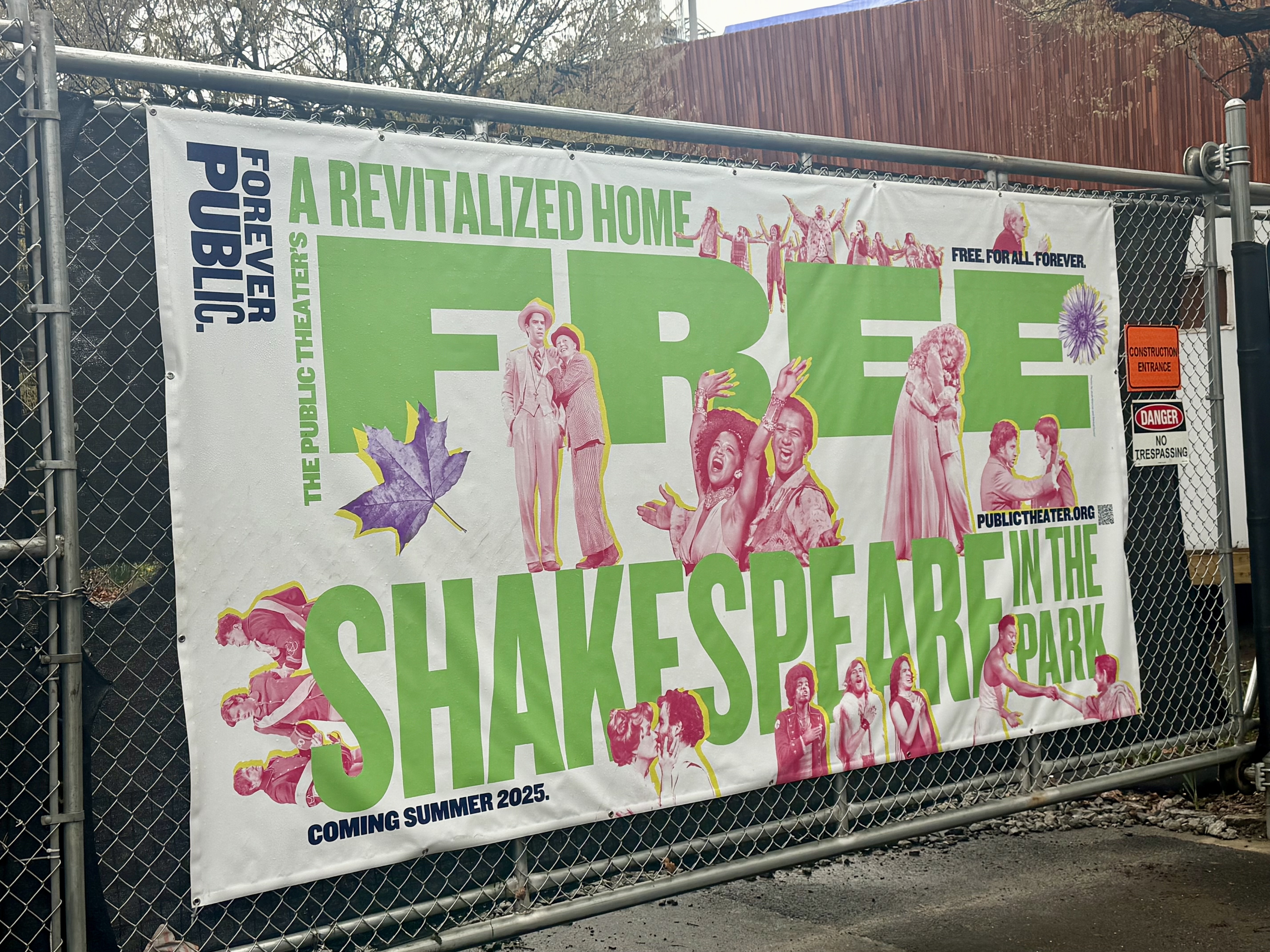
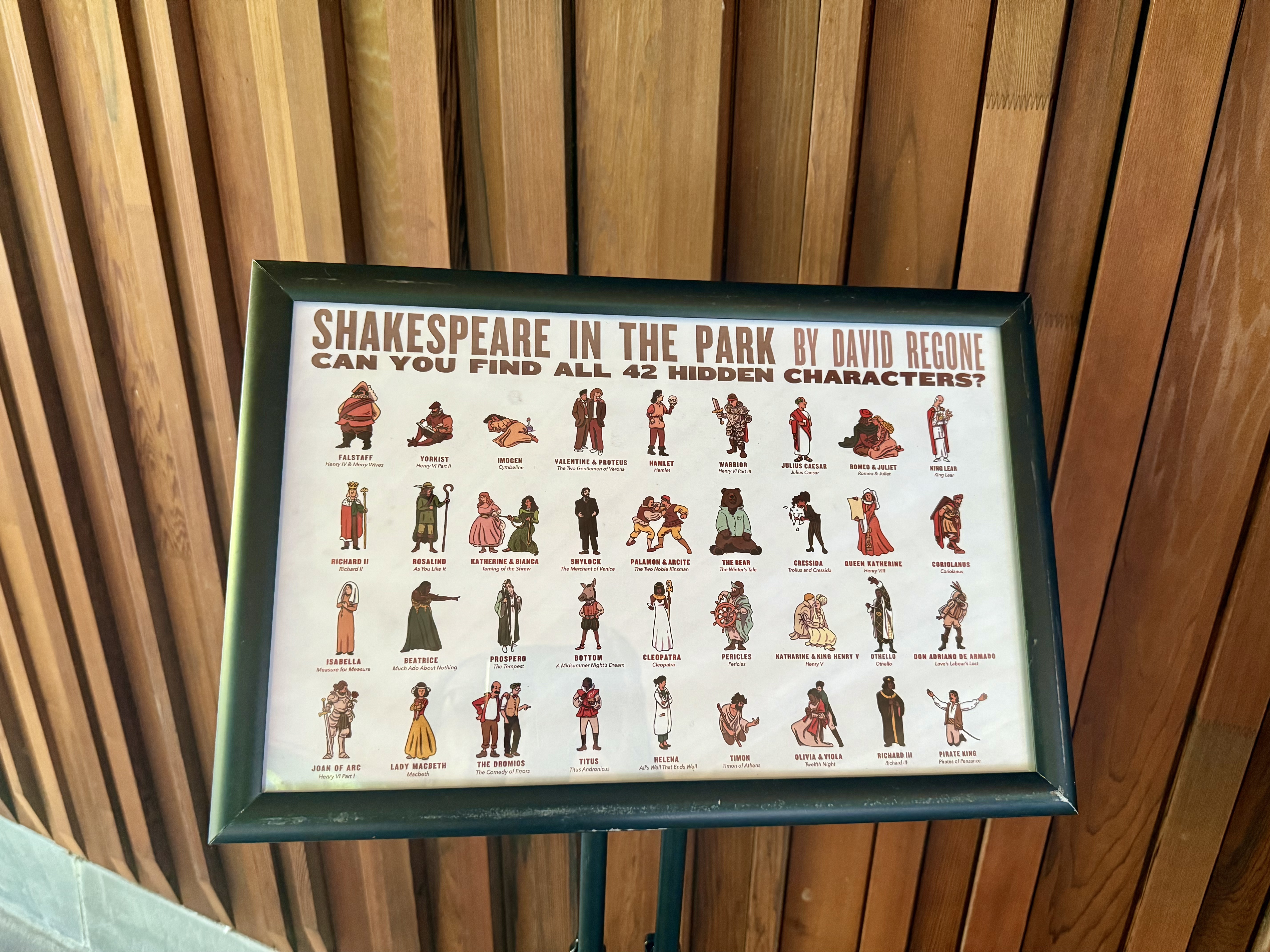
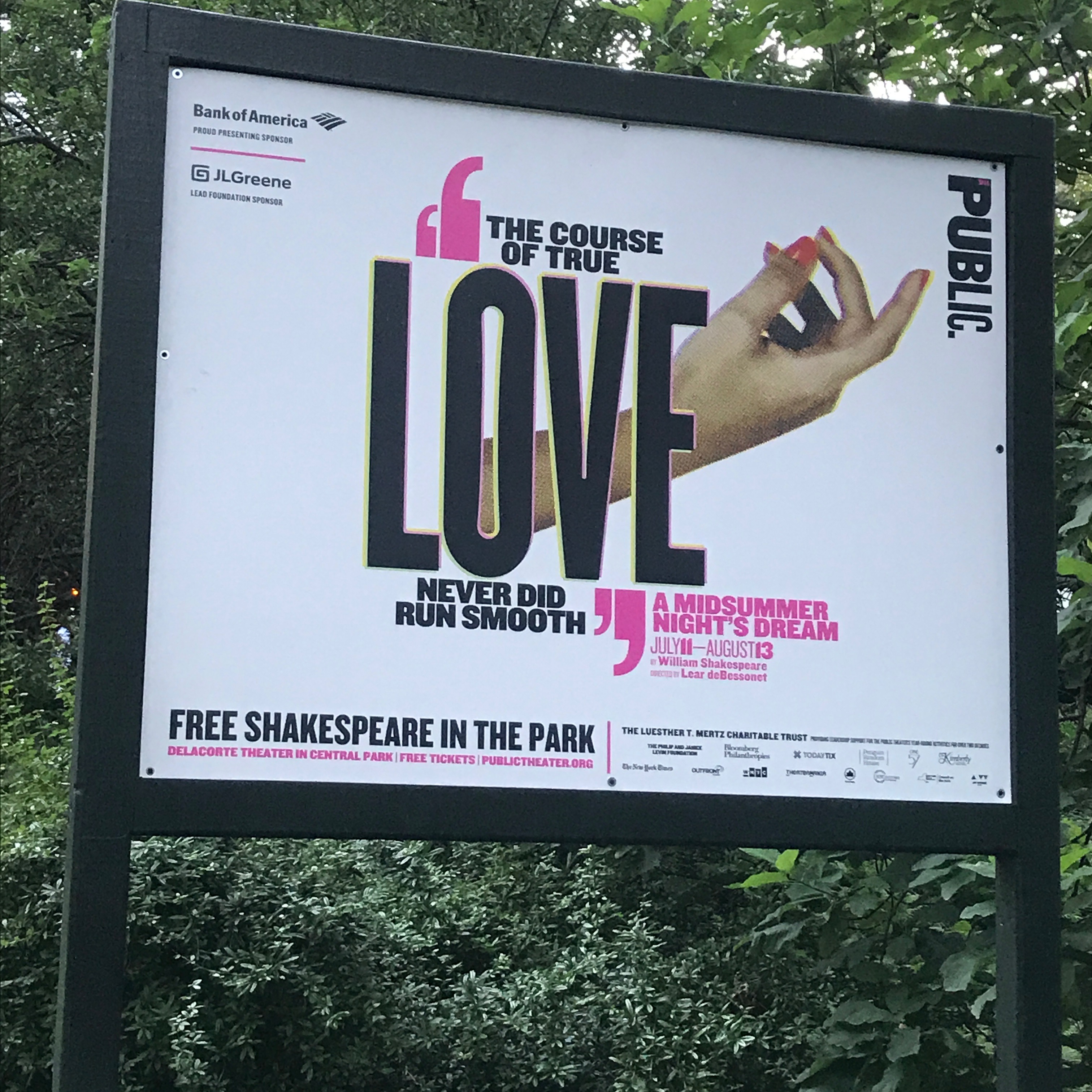
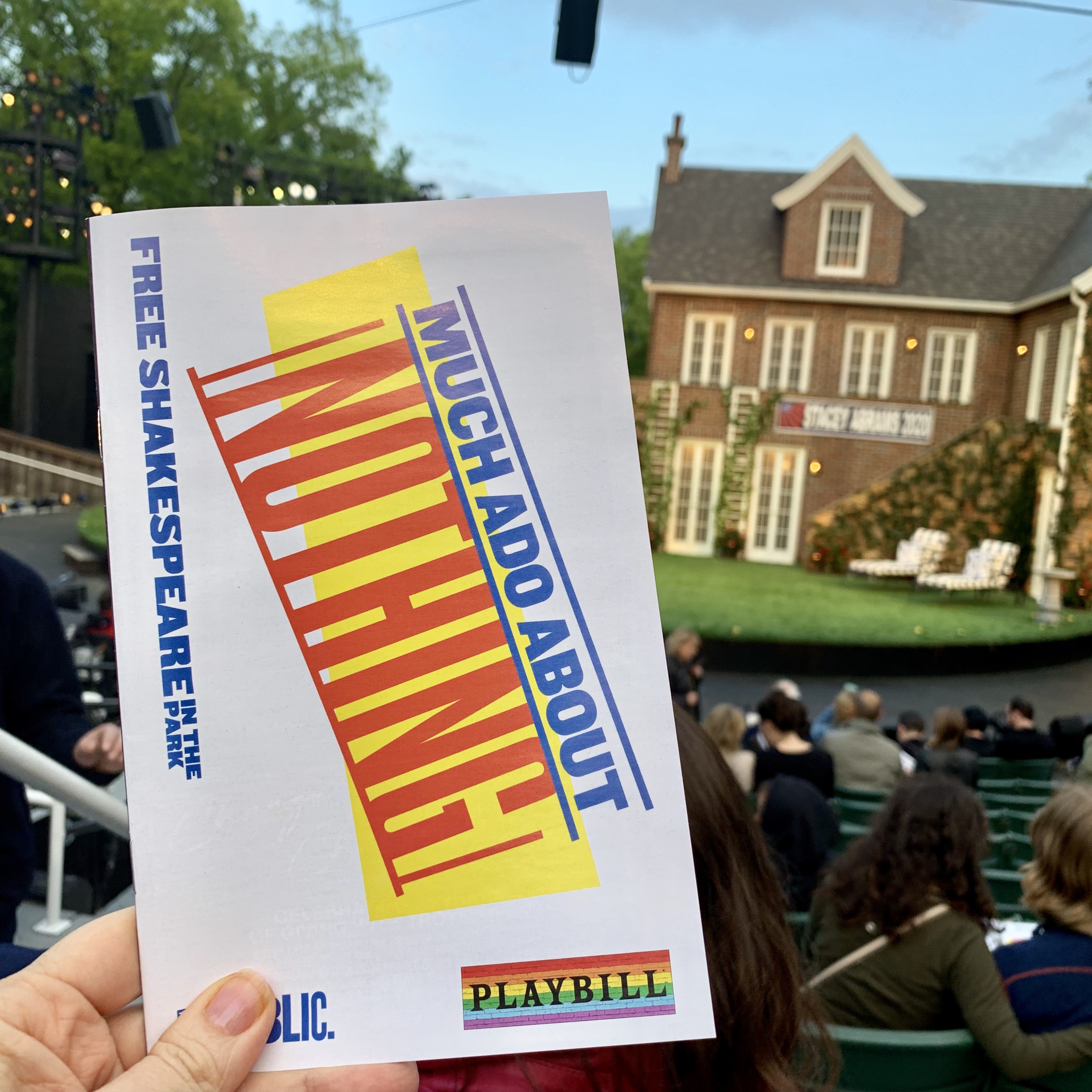
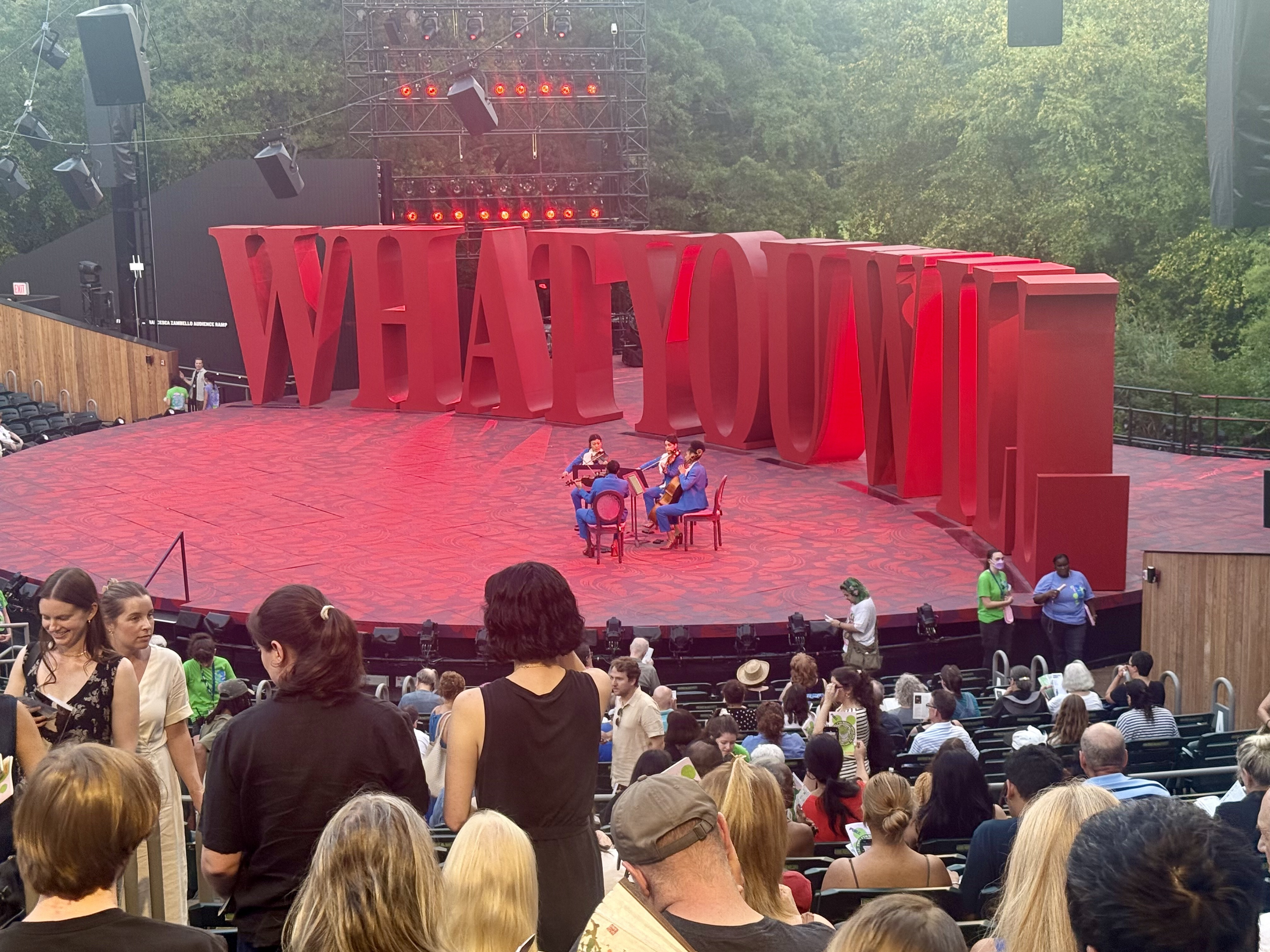
In the middle of Central Park, roughly where 80th Street would be, slightly closer to Central Park West than Fifth Avenue, just below the Great Lawn and just north of Belvedere Castle, sits our theatre – the Delacorte. Whenever I have heard Oskar Eustis welcome us to a performance of Shakespeare in the Park, he remind us that the Delacorte belongs to the city of New York, and sits in our park. Astonishingly, for over 60 years The Public Theater has been putting on world class theatrical productions (mostly Shakespeare, but occasionally other plays and even musicals) at the Delacorte and giving out the majority of the tickets for free. Truly all tickets are free – but those who are able to donate at certain levels to ensure that others can attend at no cost are guaranteed tickets. But more about how to get tickets later – let’s marvel at the experience itself first.
Joseph Papp from The Public Theater first conceived of the idea in 1954, and began with workshops and then free performances on the Lower East Side. In the late 1950s, he moved the performances to the lawn in front of Turtle Pond in Central Park, but did not have permission and was ticketed for eroding the grass. After a legal battle, the city built a theater for the free performances, with the first play performed at the Delacorte being The Merchant of Venice with George C. Scott and James Earl Jones, in 1962.
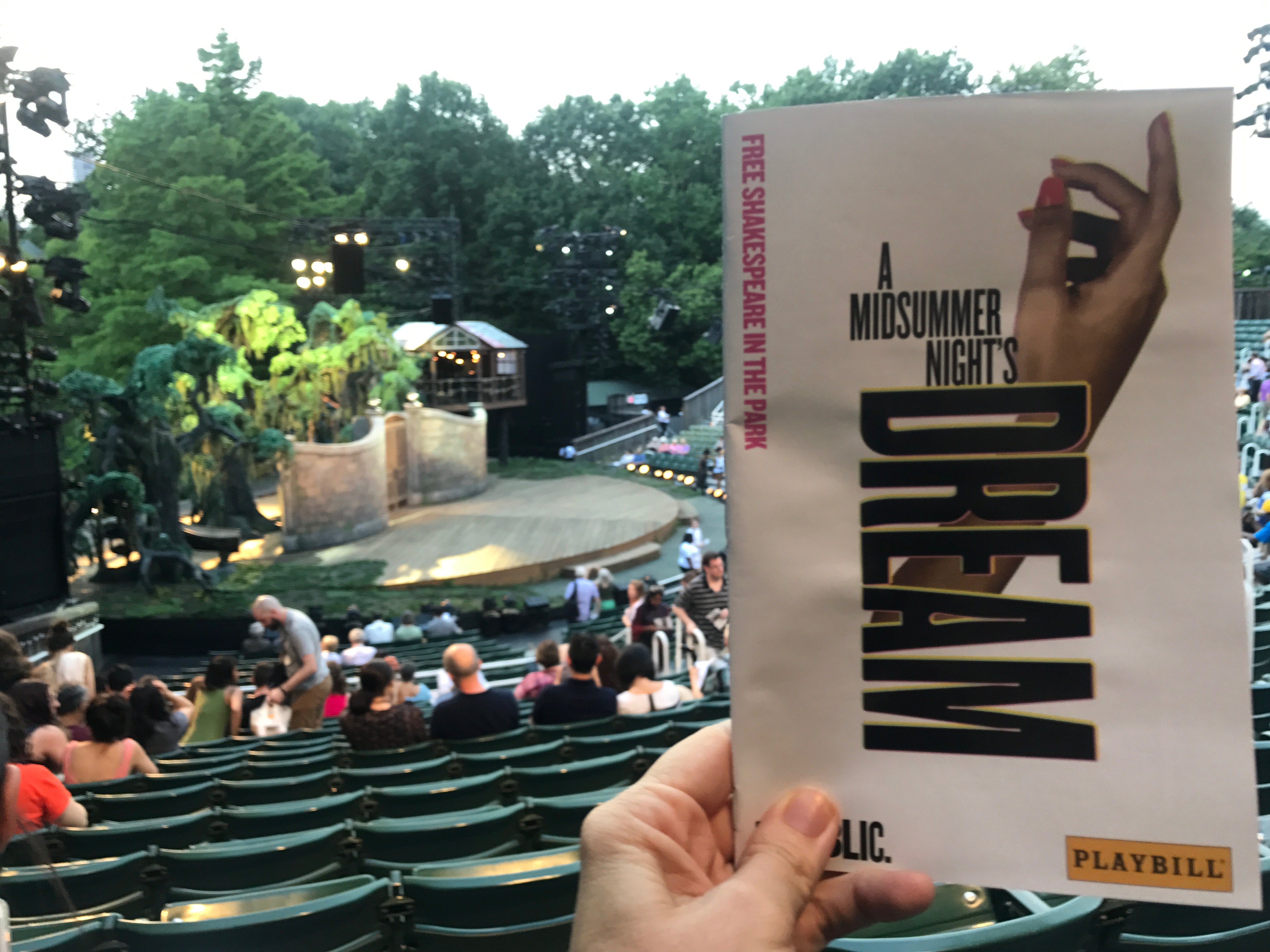
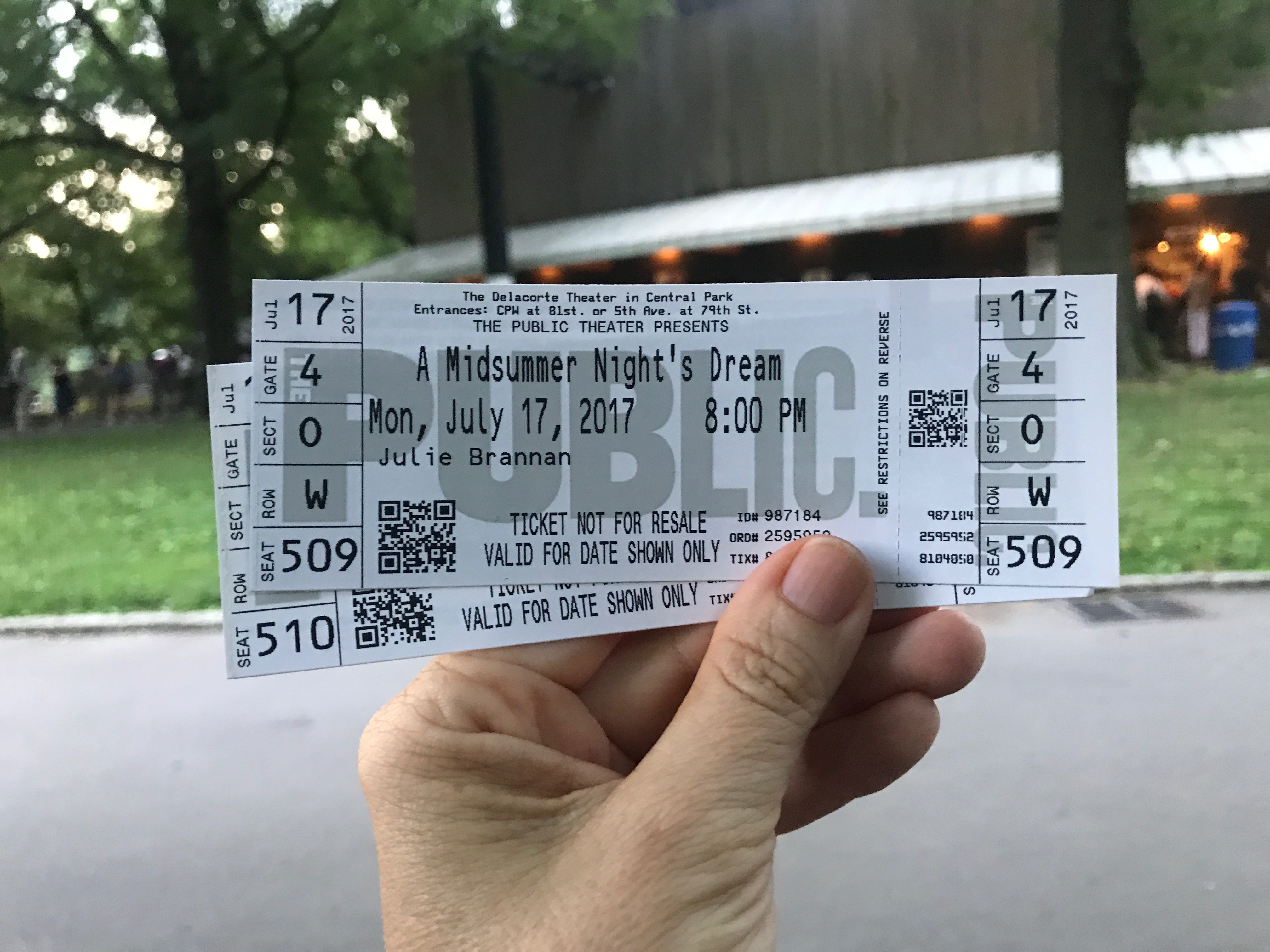
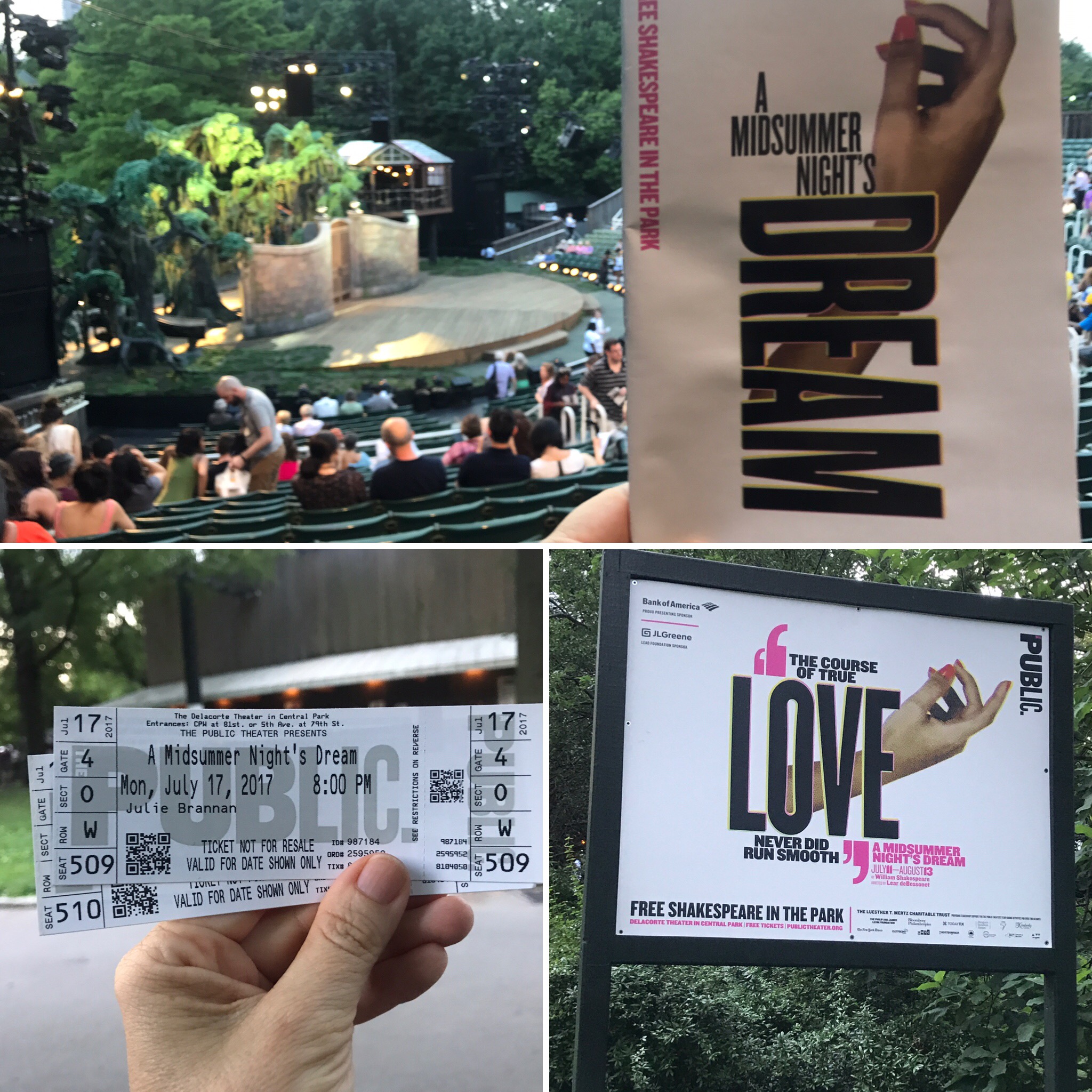
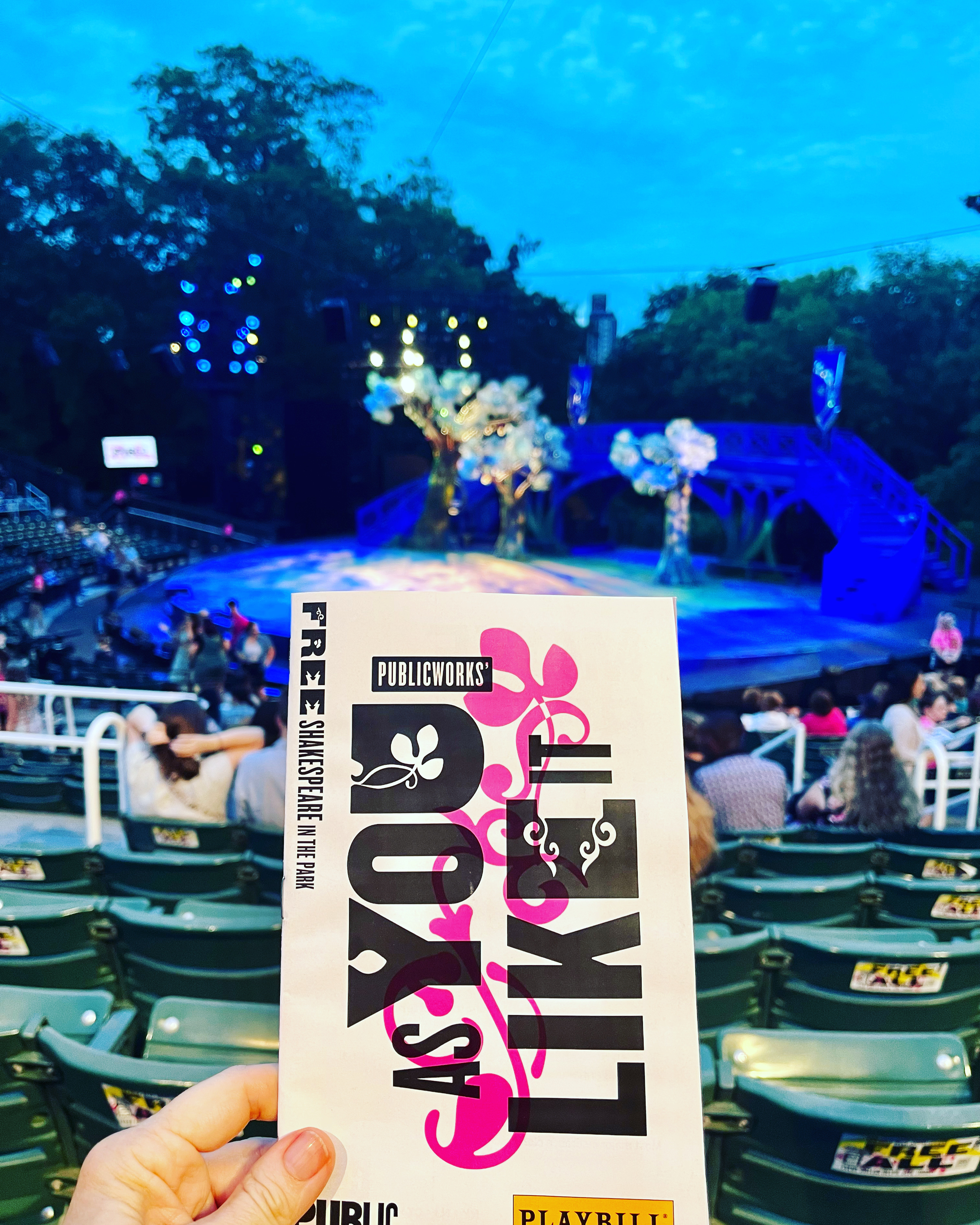
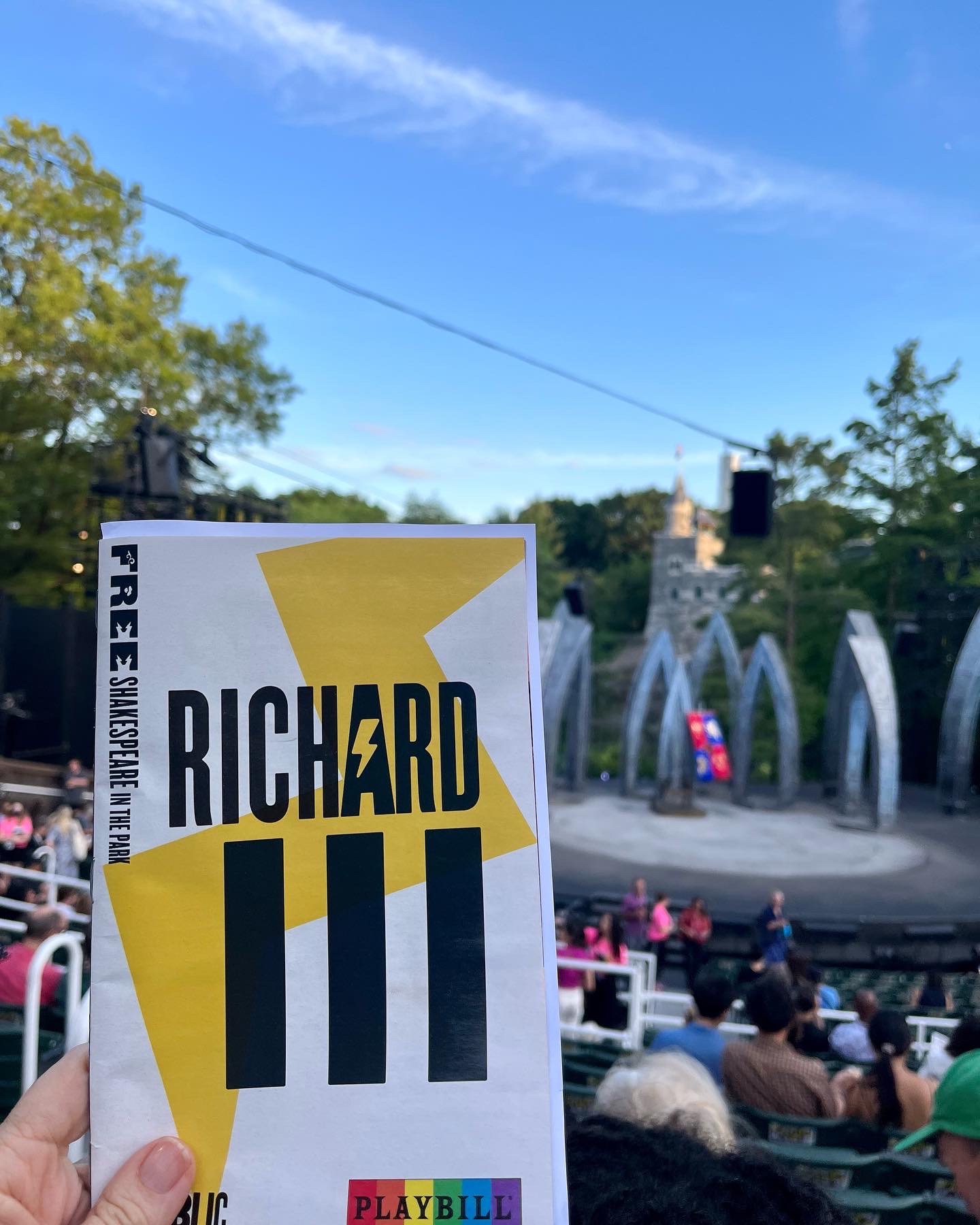
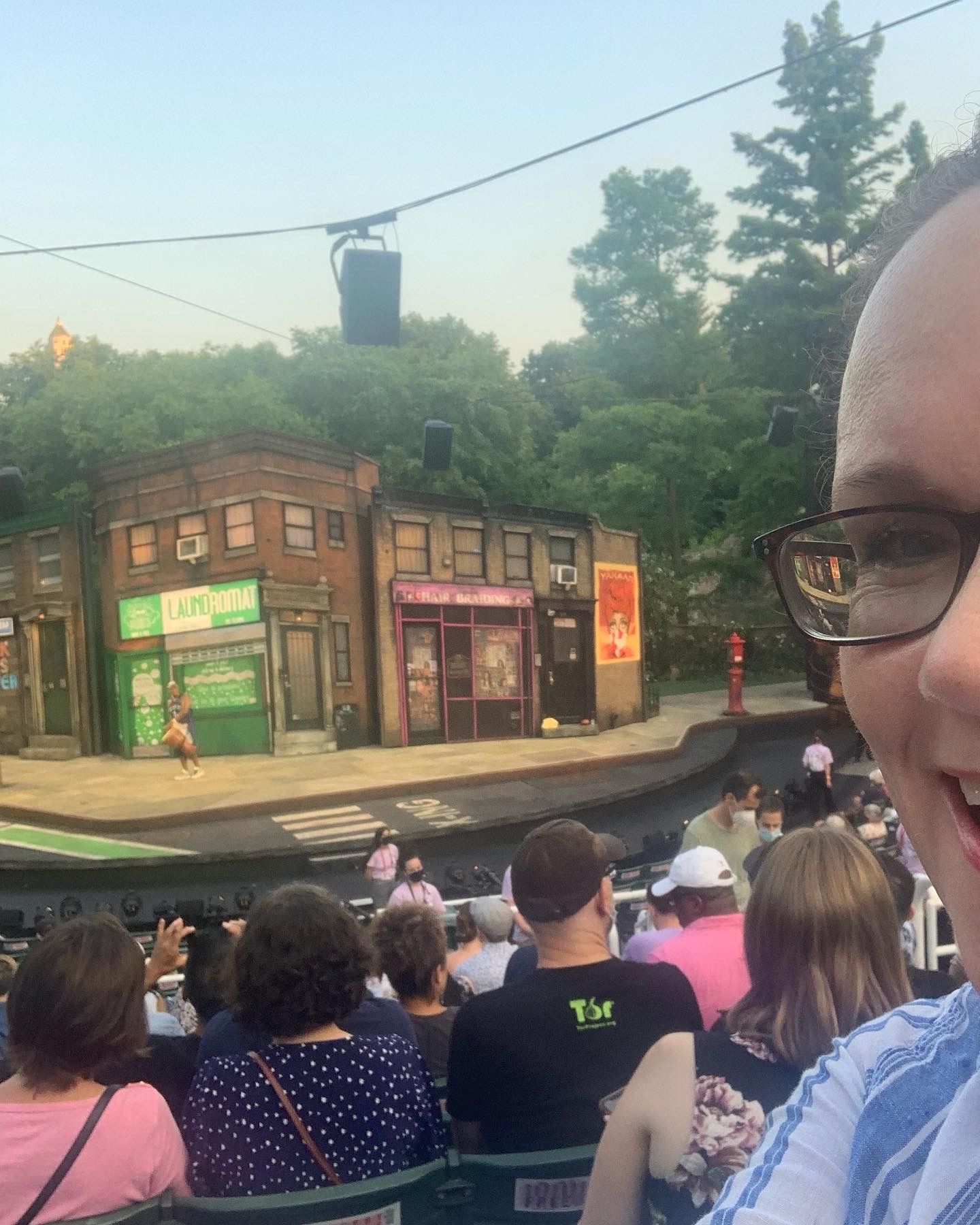
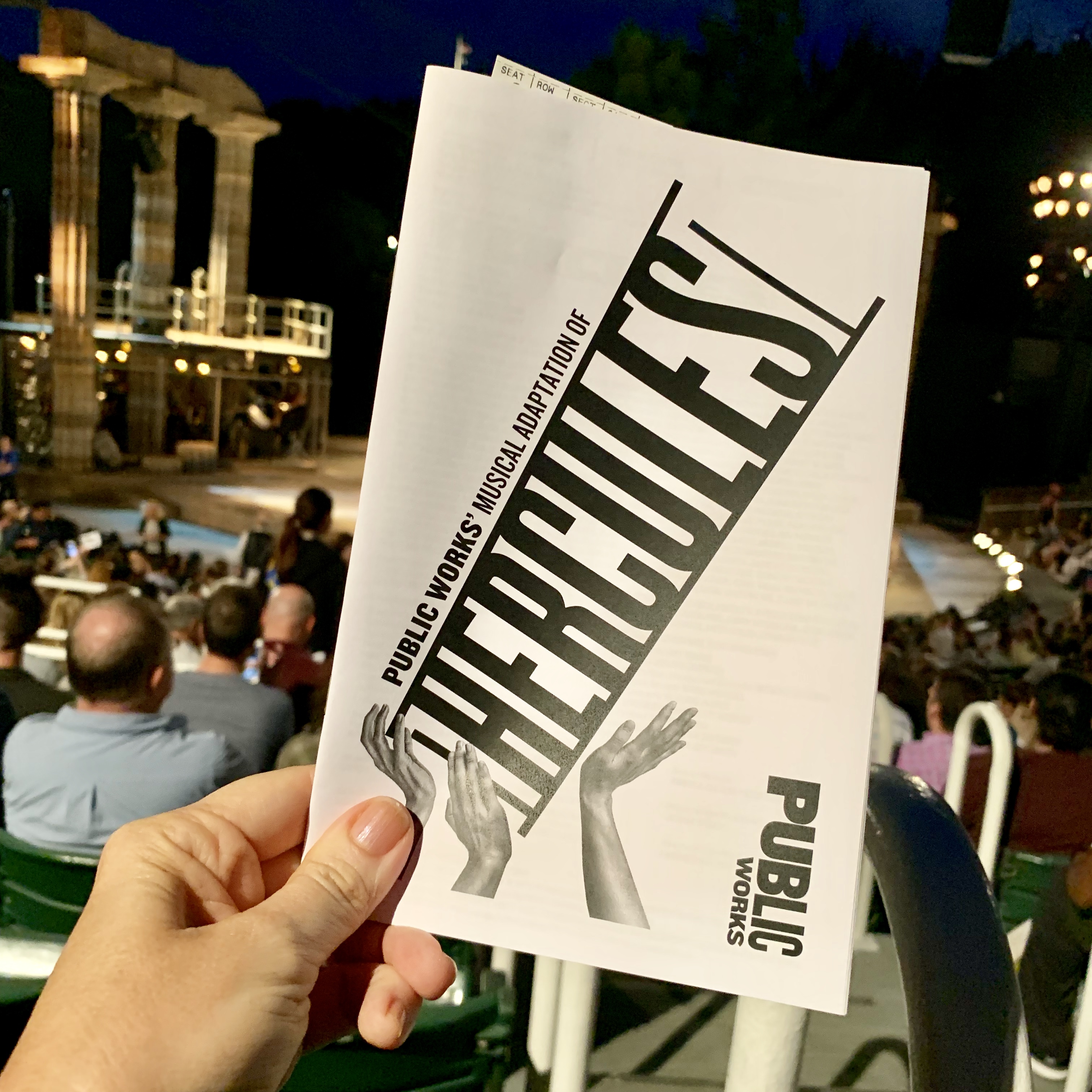
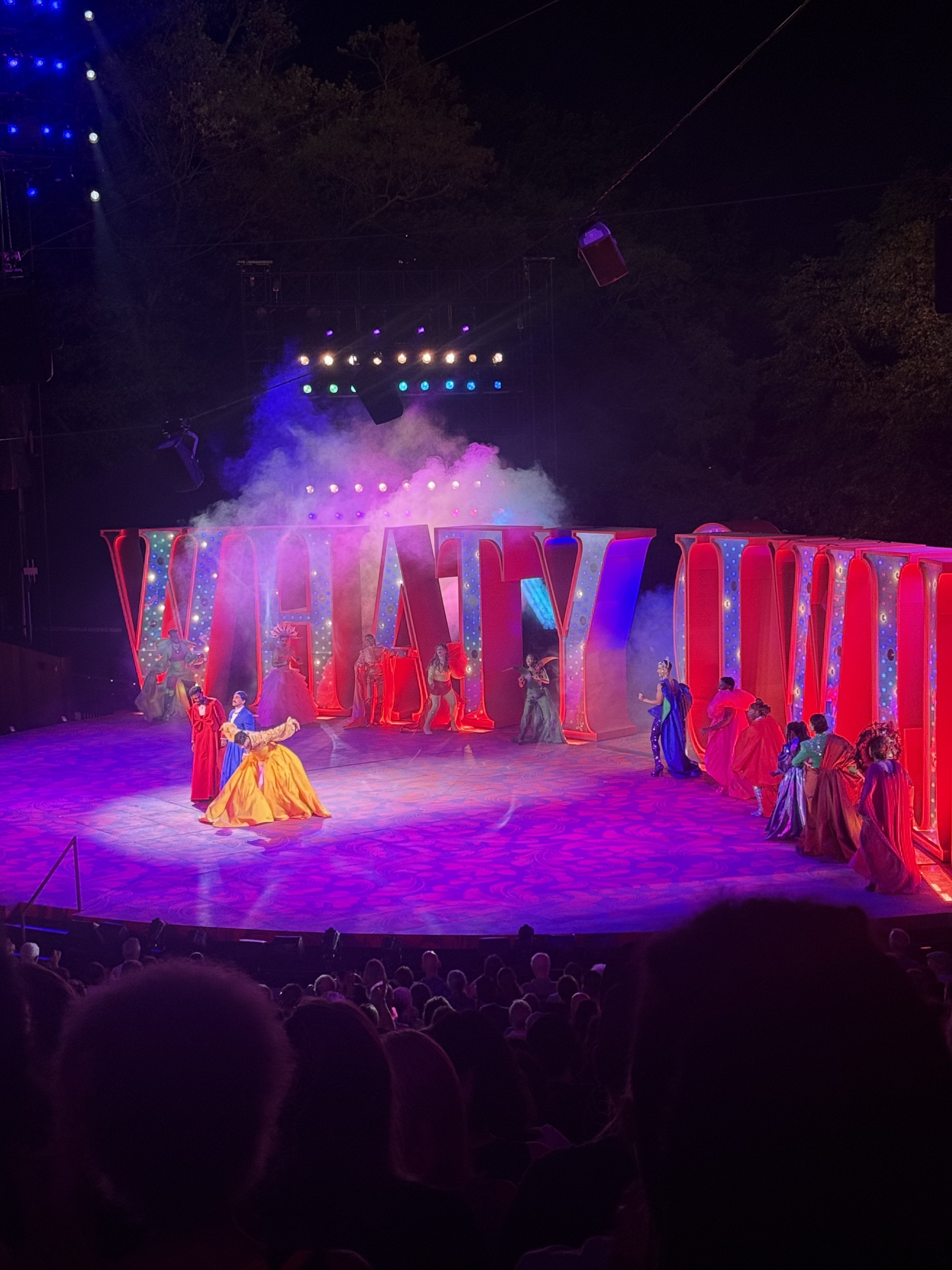
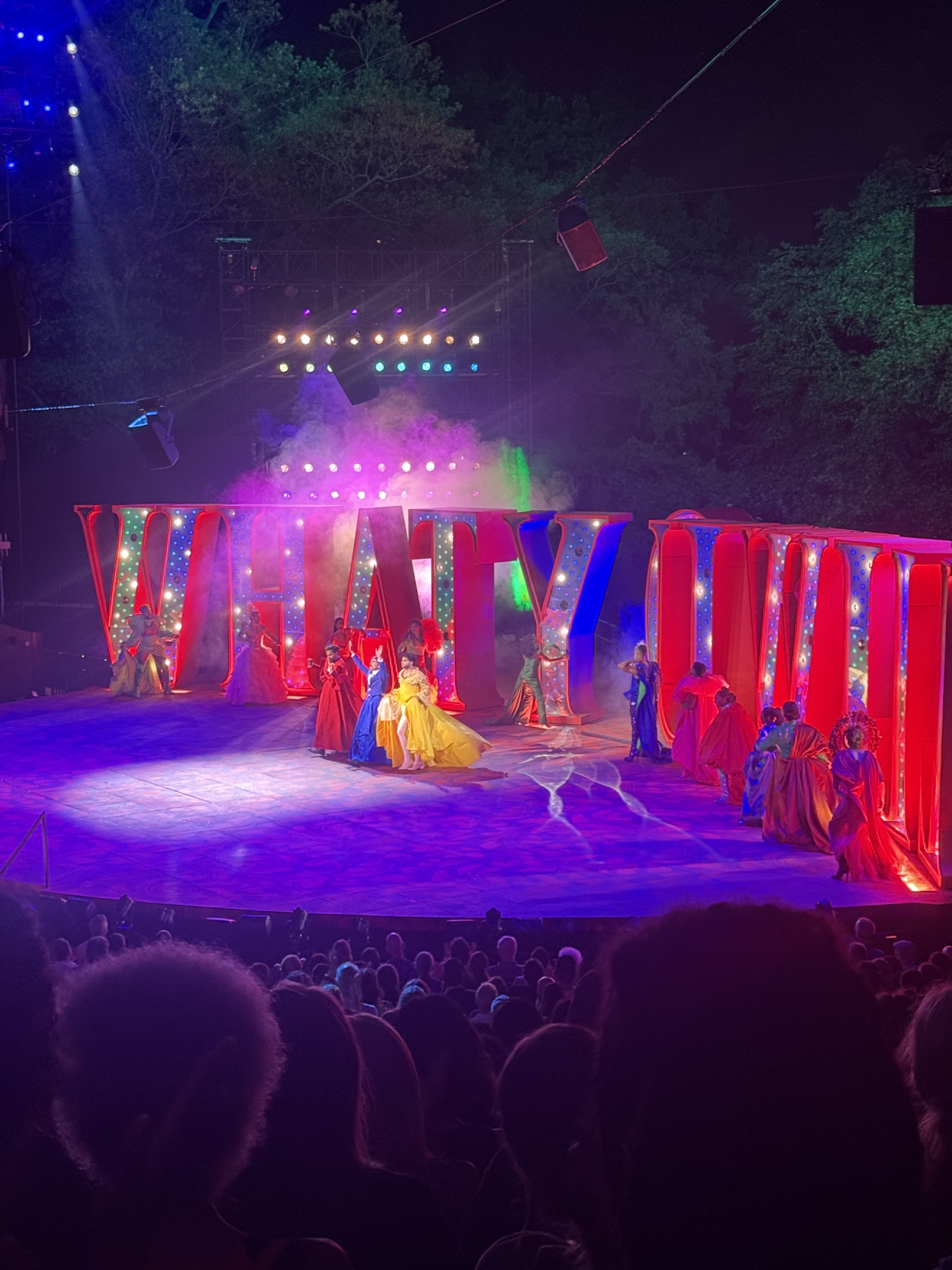
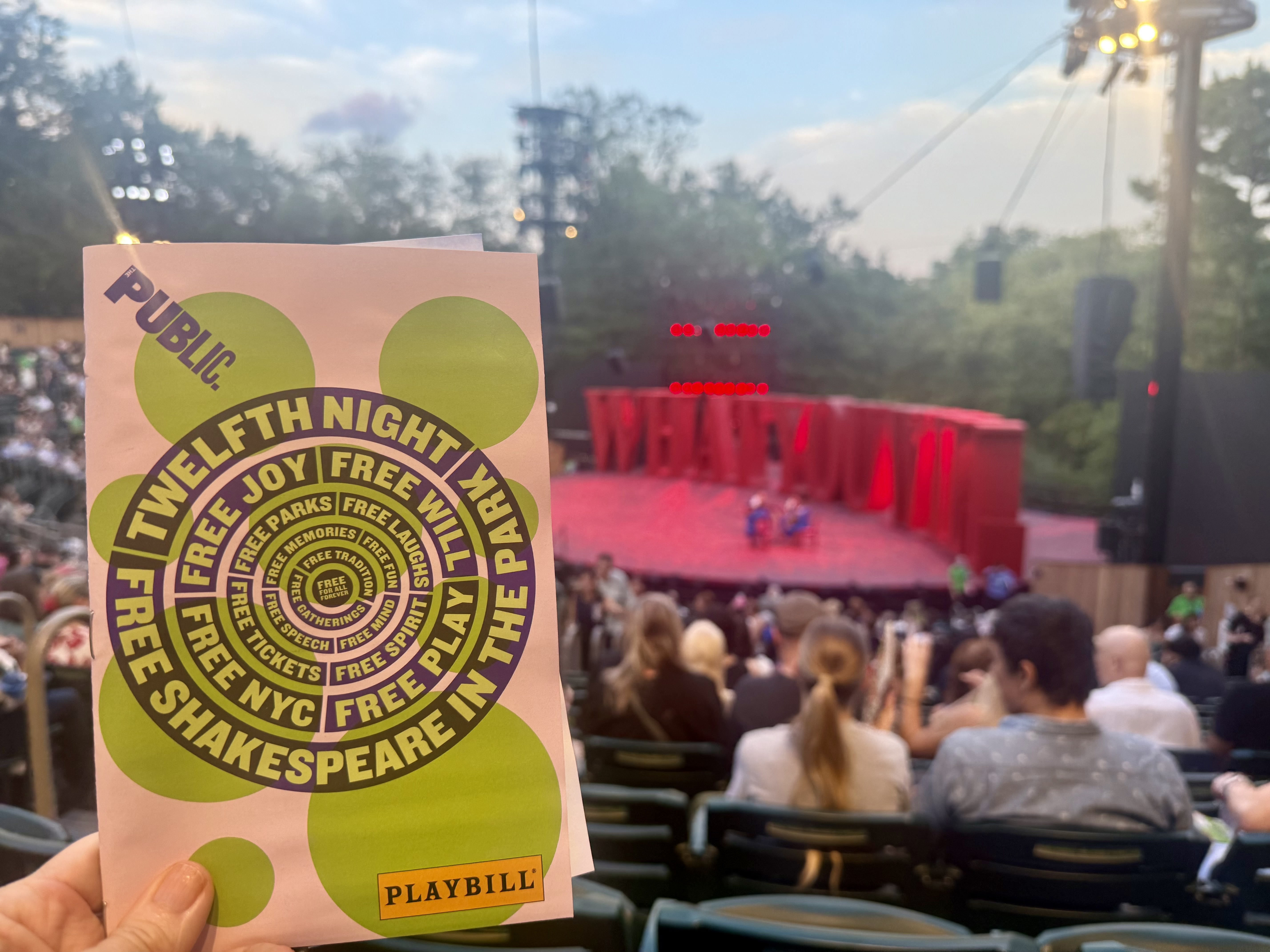
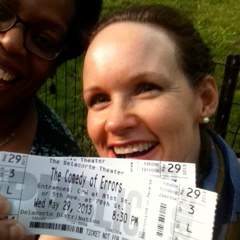
I haven’t missed a production since 2005, but here are some photos from the past ten years or so. The Delacorte is a large theatre (seats 1,872), and is an outdoor amphitheater. It completed a major renovation in 2025, with a star-studded production of Twelfth Night reopening the theater in late summer. The productions are fully produced professional performances, often featuring well-known stars of stage and screen.
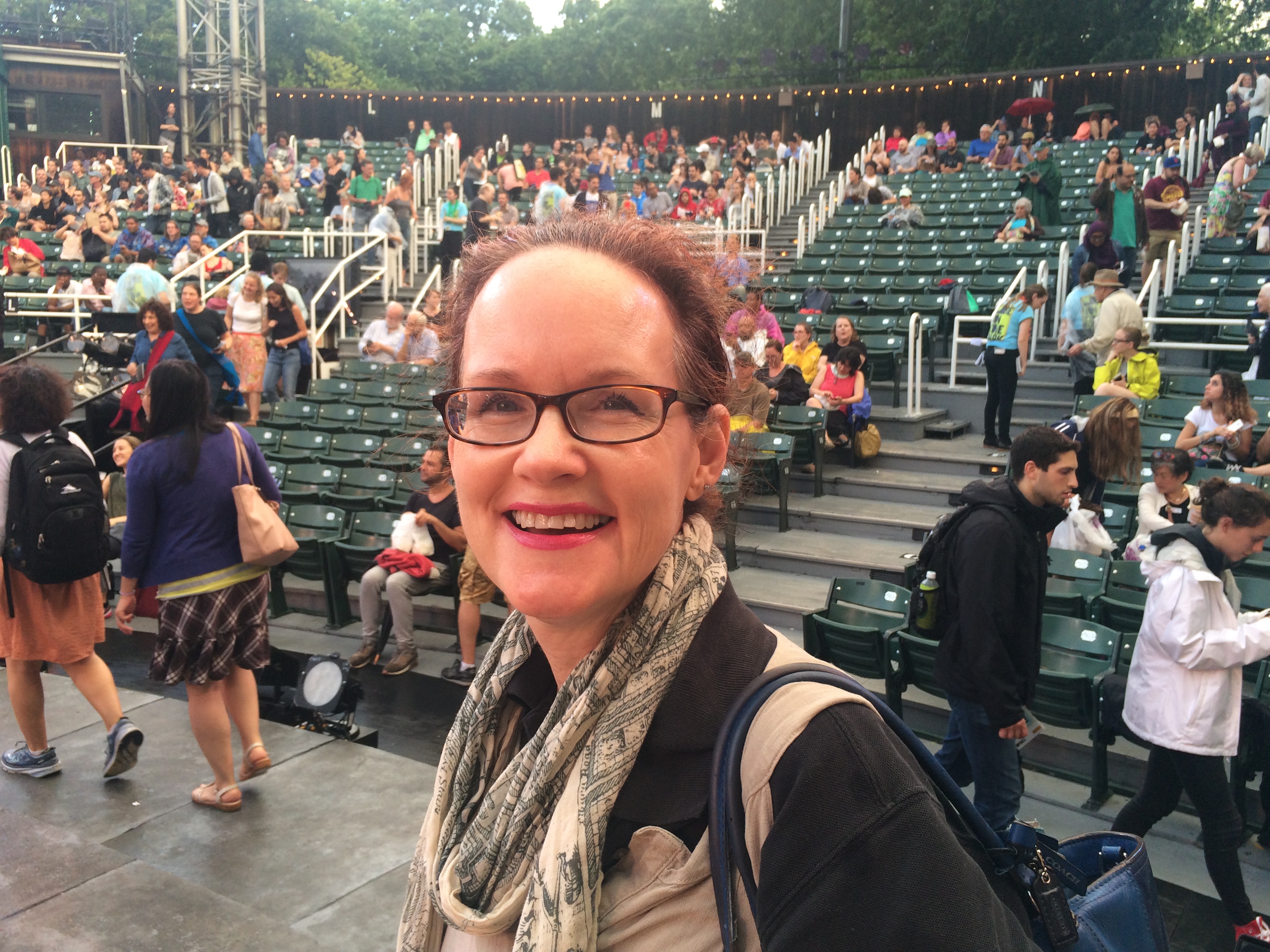
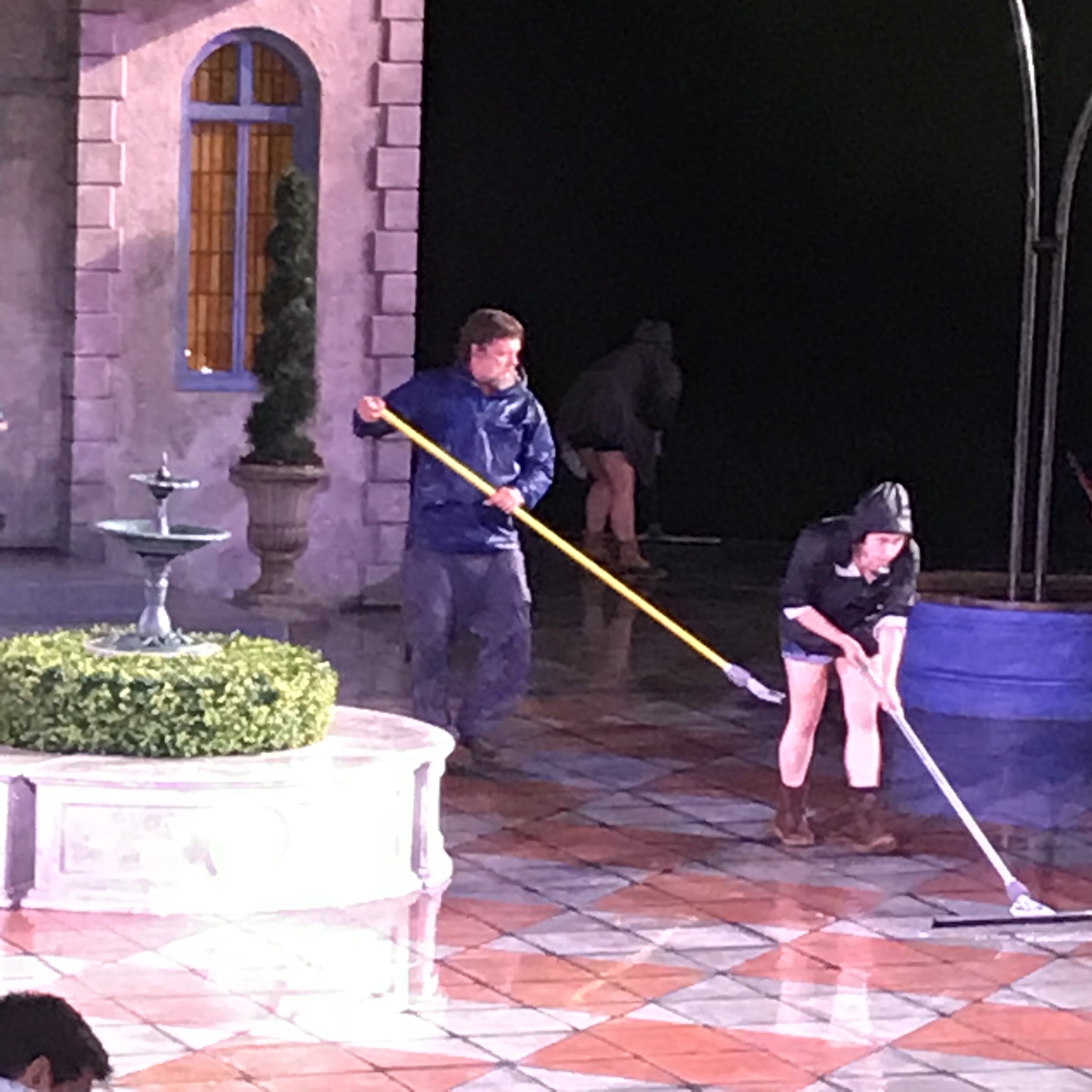
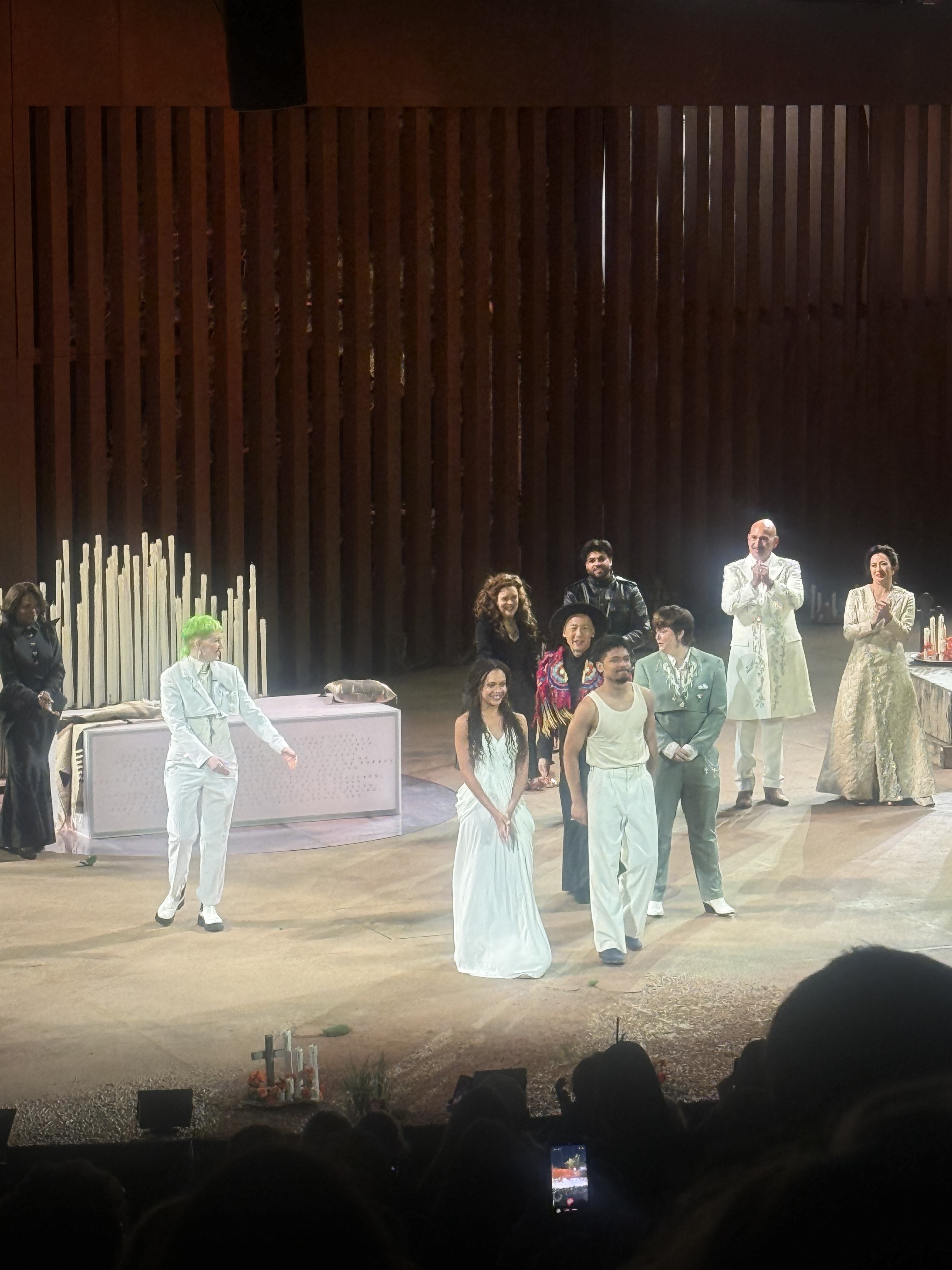
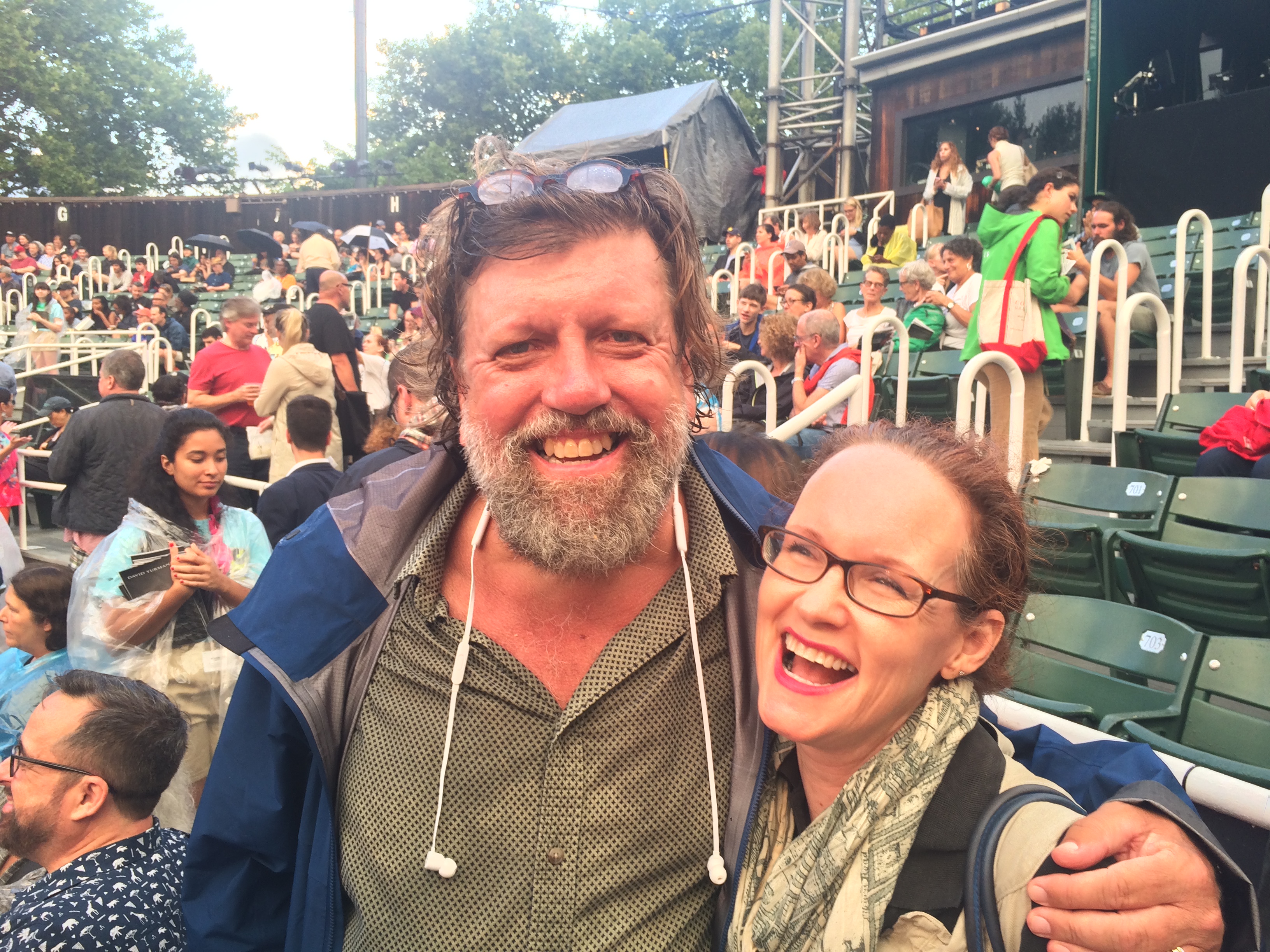
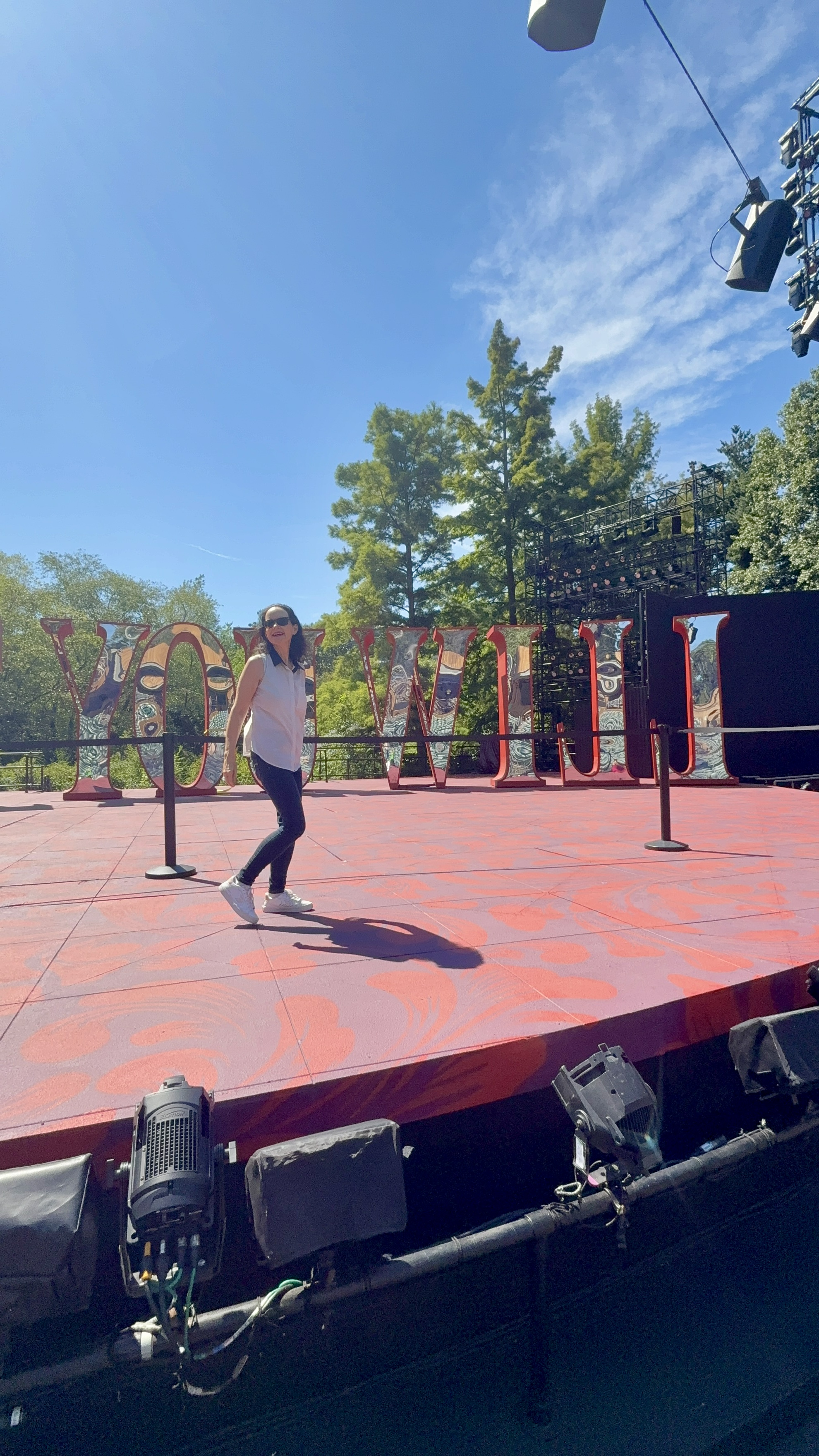
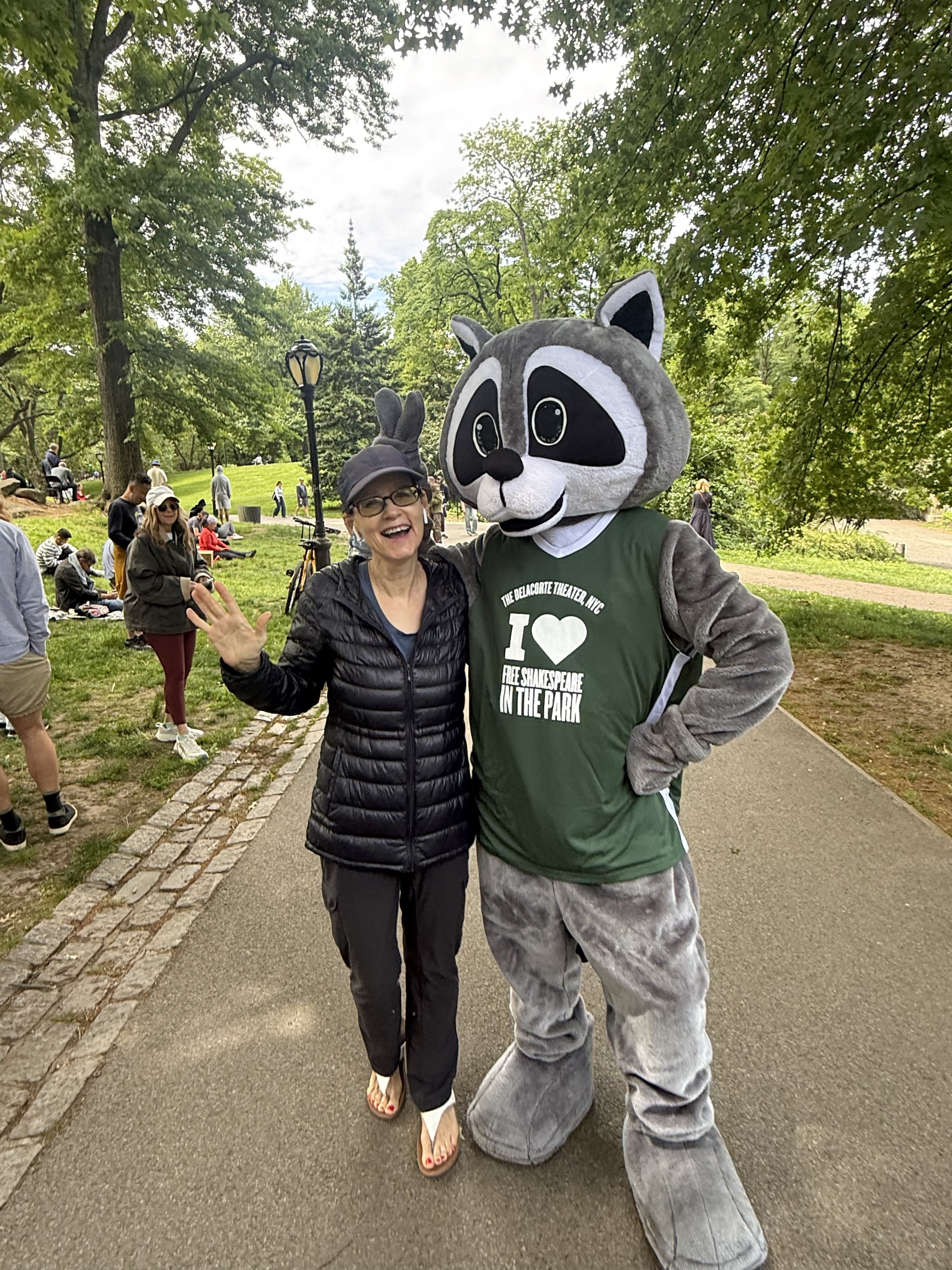
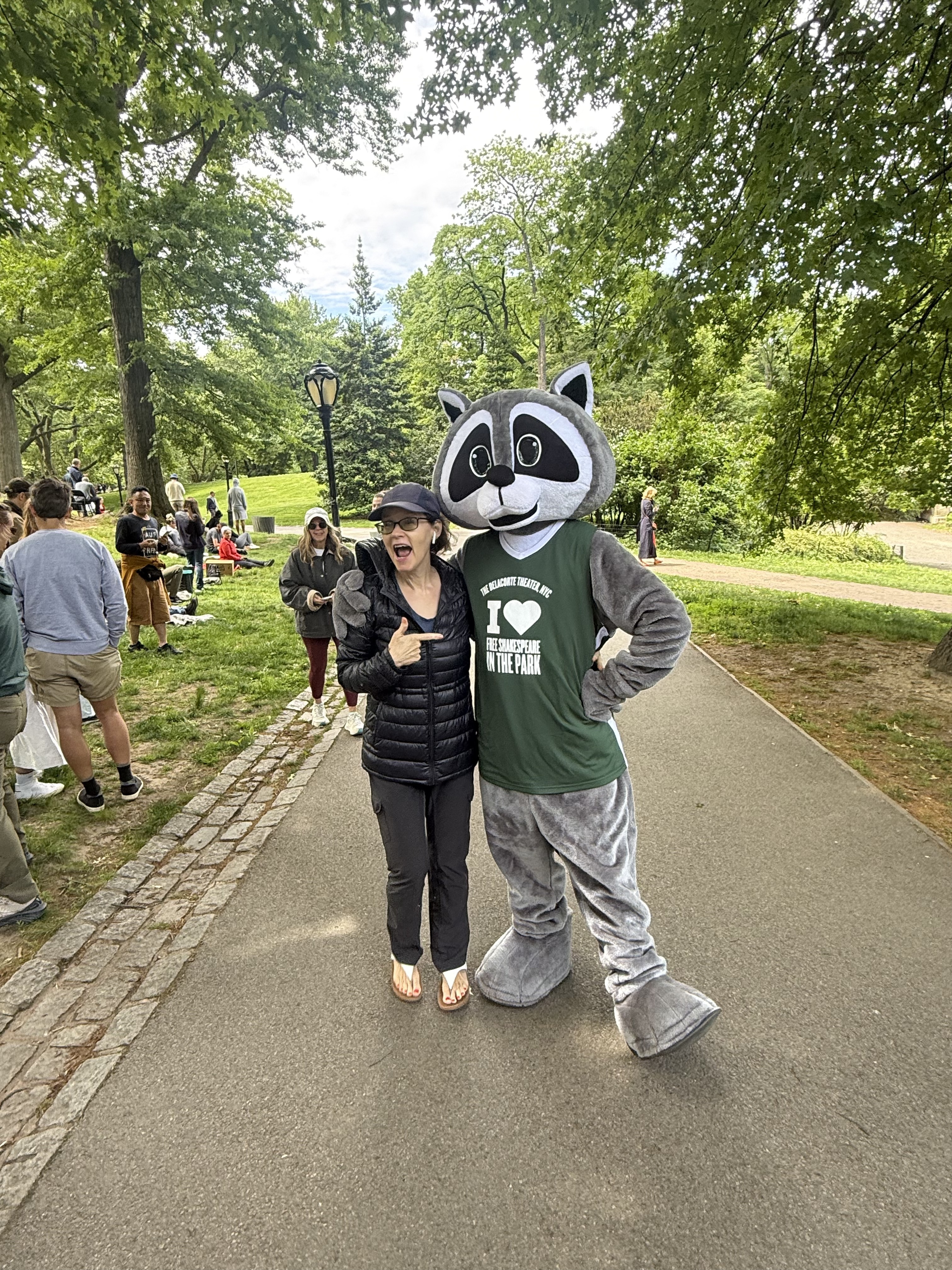
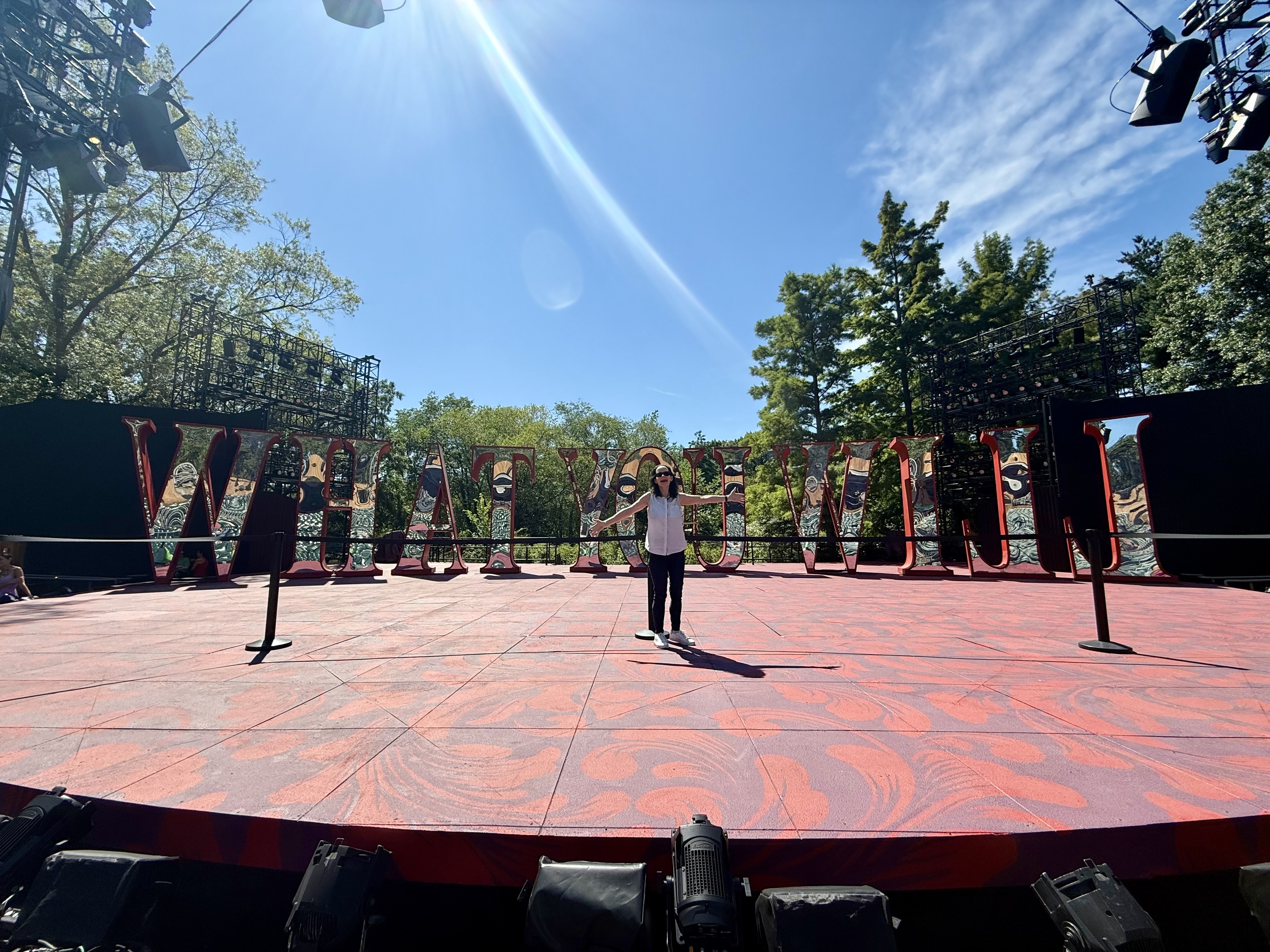
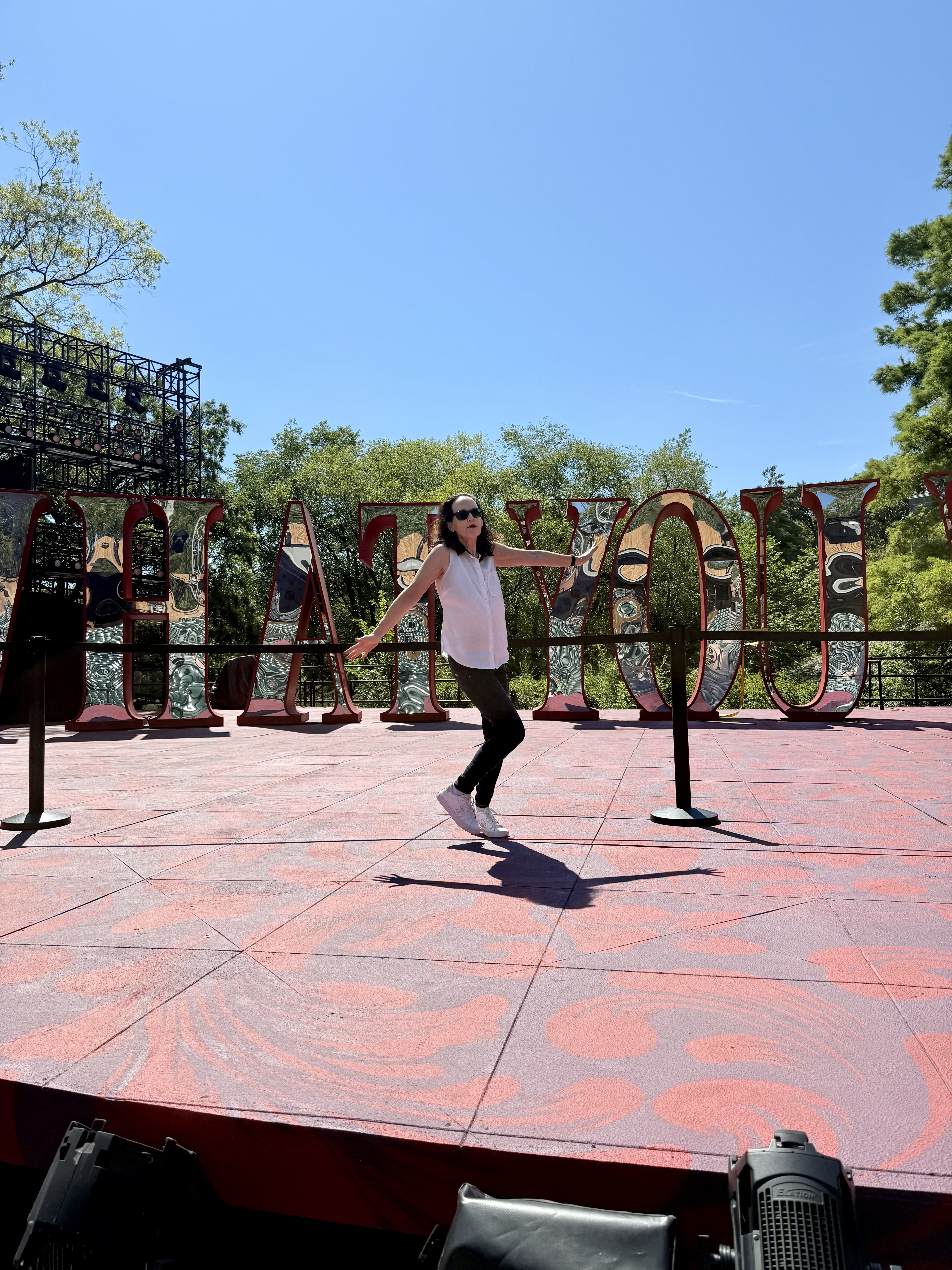
The Delacorte has on occasion allowed guests onstage either before a show begins, or in the case of the musical Hair in 2007, up to dance on stage with the cast during the curtain call (I wish I had a photo of myself from that!). Recently they have also been holding open houses periodically during the summer where you can visit the theater during the day and even take your picture on stage (see HERE). They also introduced a mascot last year, Romeo the Raccoon, who will sometimes visit the line of people waiting for tickets, or appear at family-friendly events (see HERE and HERE for some videos from this year). Why a raccoon? Because raccoons often wander on stage during performances! Photos are strictly forbidden during the performances but allowed during curtain calls (see a video from last year HERE). Note that I met and took my picture with Oskar Eustis a few years ago (photo above). When it rained during the performance (more about that later), he was on stage along with others squeegeeing the stage so that they could resume (photo was posted farther up).
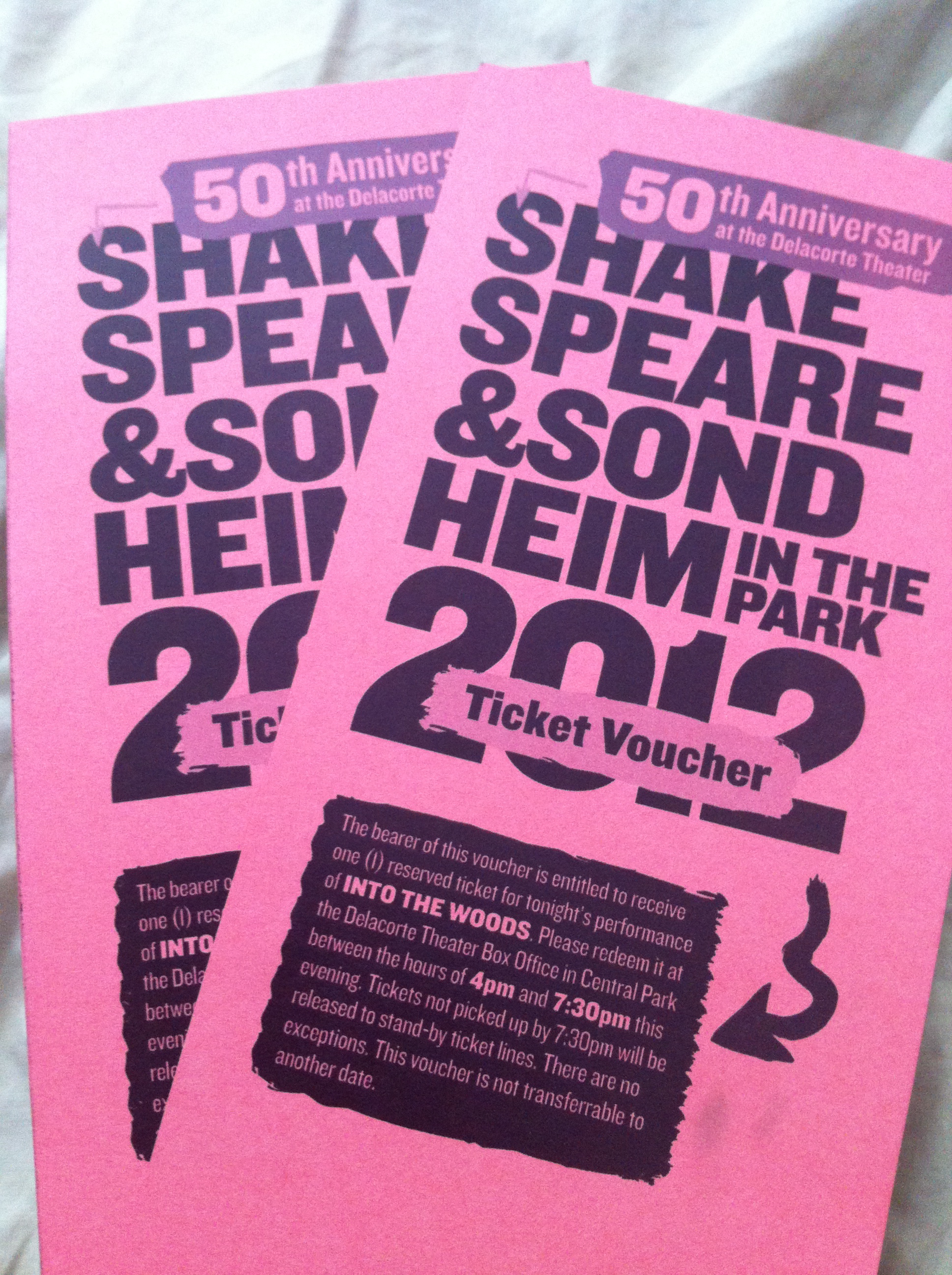
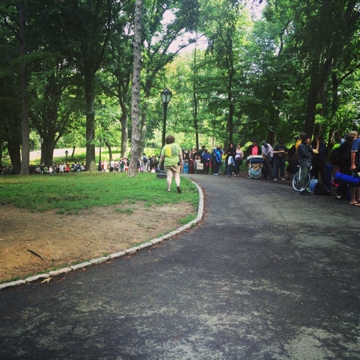
So how do you get the free tickets? Every year check out the most recent information on the Public Theater website for Shakespeare in the Park, but in general the ways are: wait on line in person in the park in the morning (see above – there are separate lines for those requiring ADA accommodations and older adults), enter a lottery in person at the Public Theater downtown on Astor Place, win the online Today Tix lottery, wait in the stand by line to see if tickets are returned by a donor, or go to a borough distribution on select days (always noted on the website). How hard is it to get tickets? It is entirely variable. A production with a well-know star will always be harder to get (for Al Pacino’s The Merchant of Venice, people would camp out on Central Park West late evening to be escorted in to wait in the park once it opened at 6am). Later in the run is always harder than earlier before reviews or word of mouth has drawn attention to the production. A day where it looks like it might rain always makes it easier to get tickets, but there is a chance your performance will be canceled (and since your tickets were free, there is no rescheduling). If it rains a little, they will keep going. If it rains a lot but stops, they might pause the production and pick back up. This summer (2026) it rained a lot, and many performances were canceled, or couldn’t perform the second act (including the very first performance of The Winter’s Tale), and many times people sat in light rain. You can bring a poncho but not have an umbrella open when the performance is happening, as it blocks the views of others behind you.
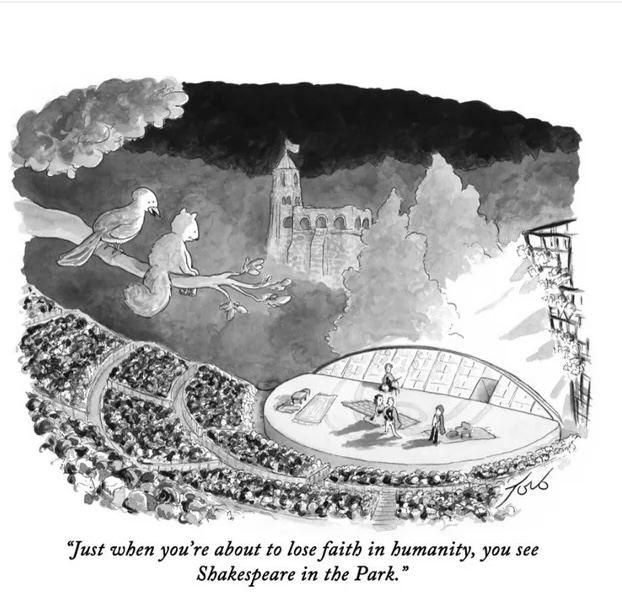
Over six million people have seen free Shakespeare (and other) performances at the Delacorte. The cartoon below, by Tom Toro, was published in The New Yorker in 2015. It sums up how I feel about the astonishing gift that is Shakespeare in the Park. “Just when you’re about to lose faith in humanity, you see Shakespeare in the Park.”
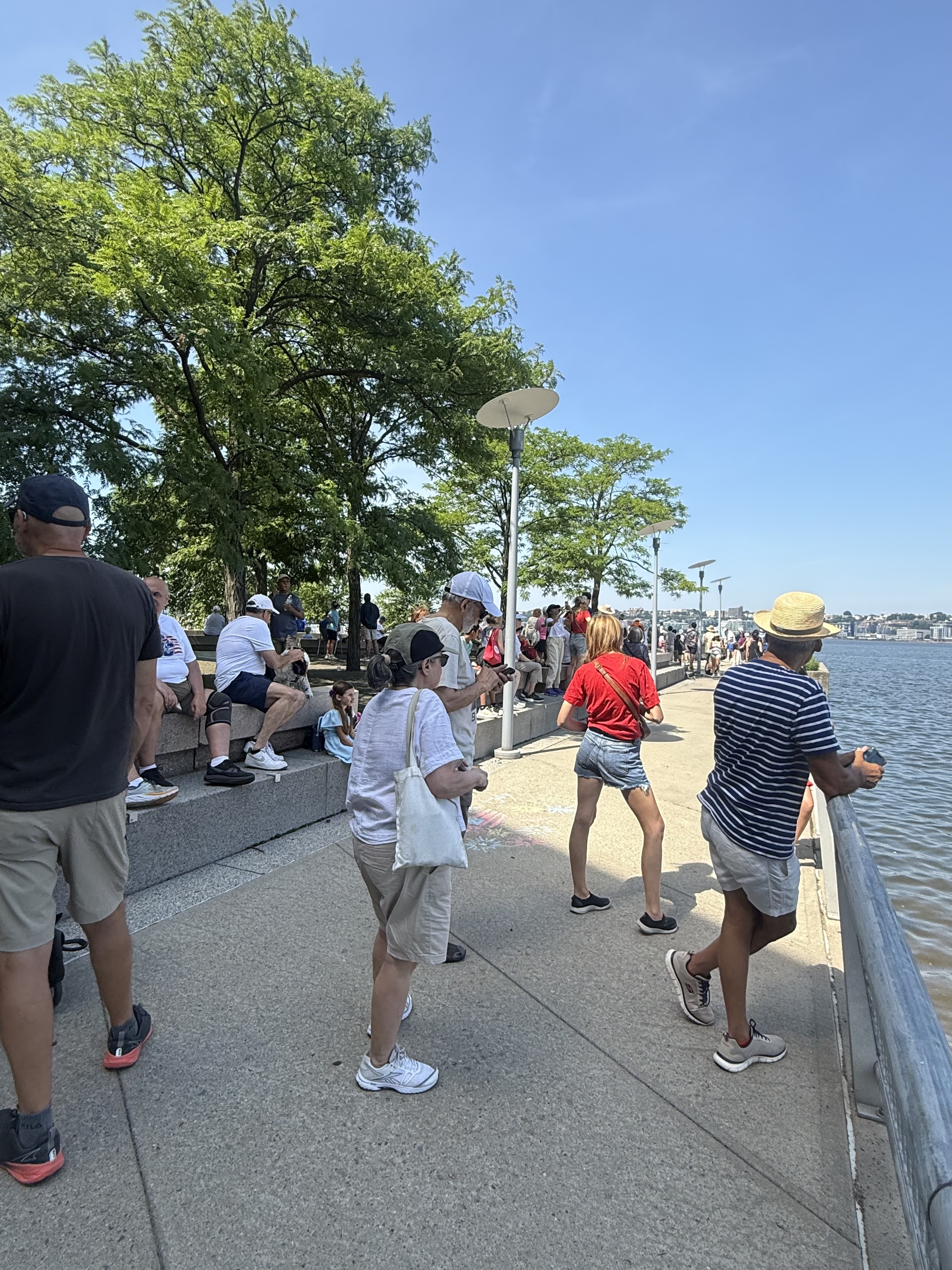
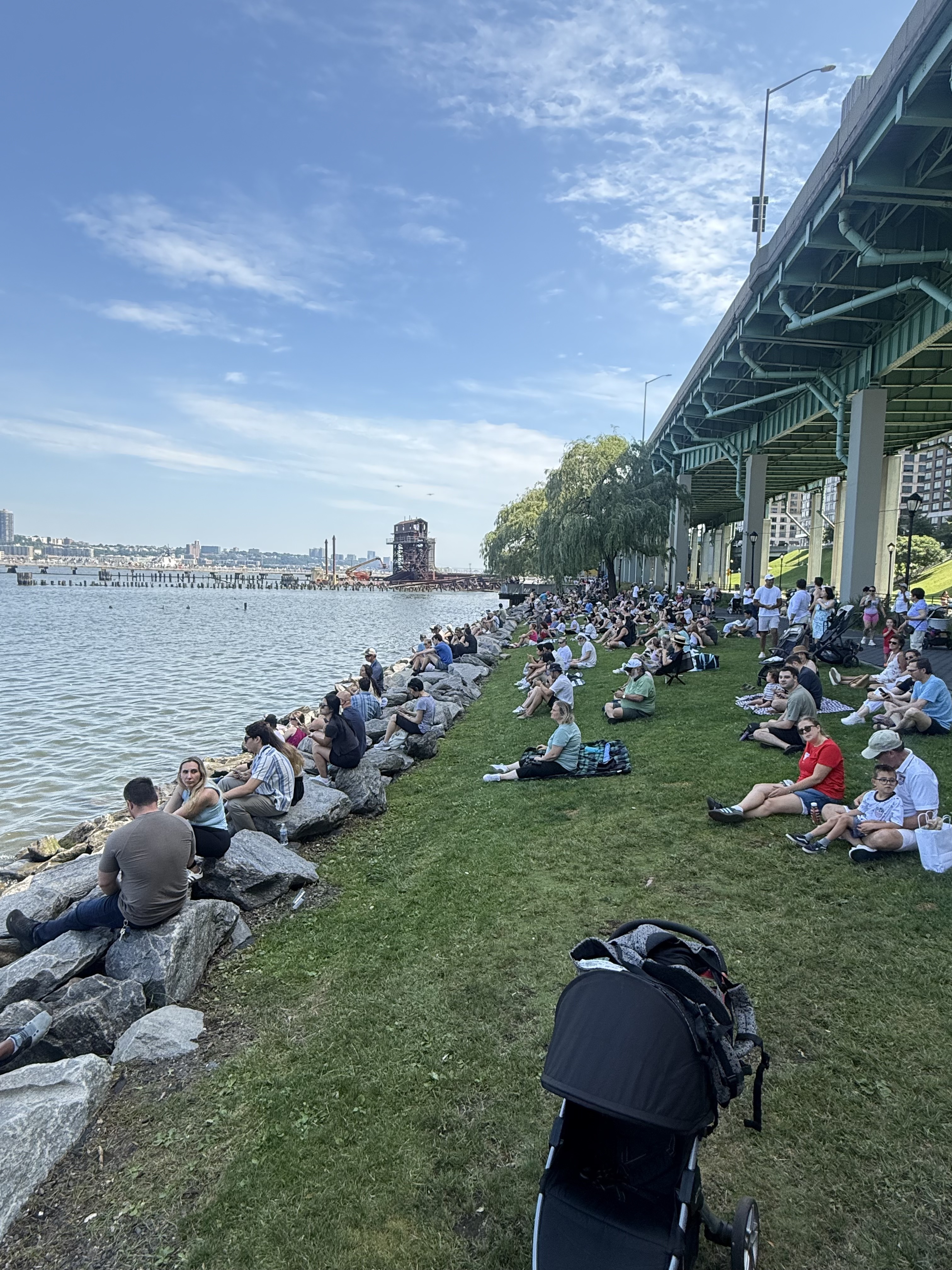
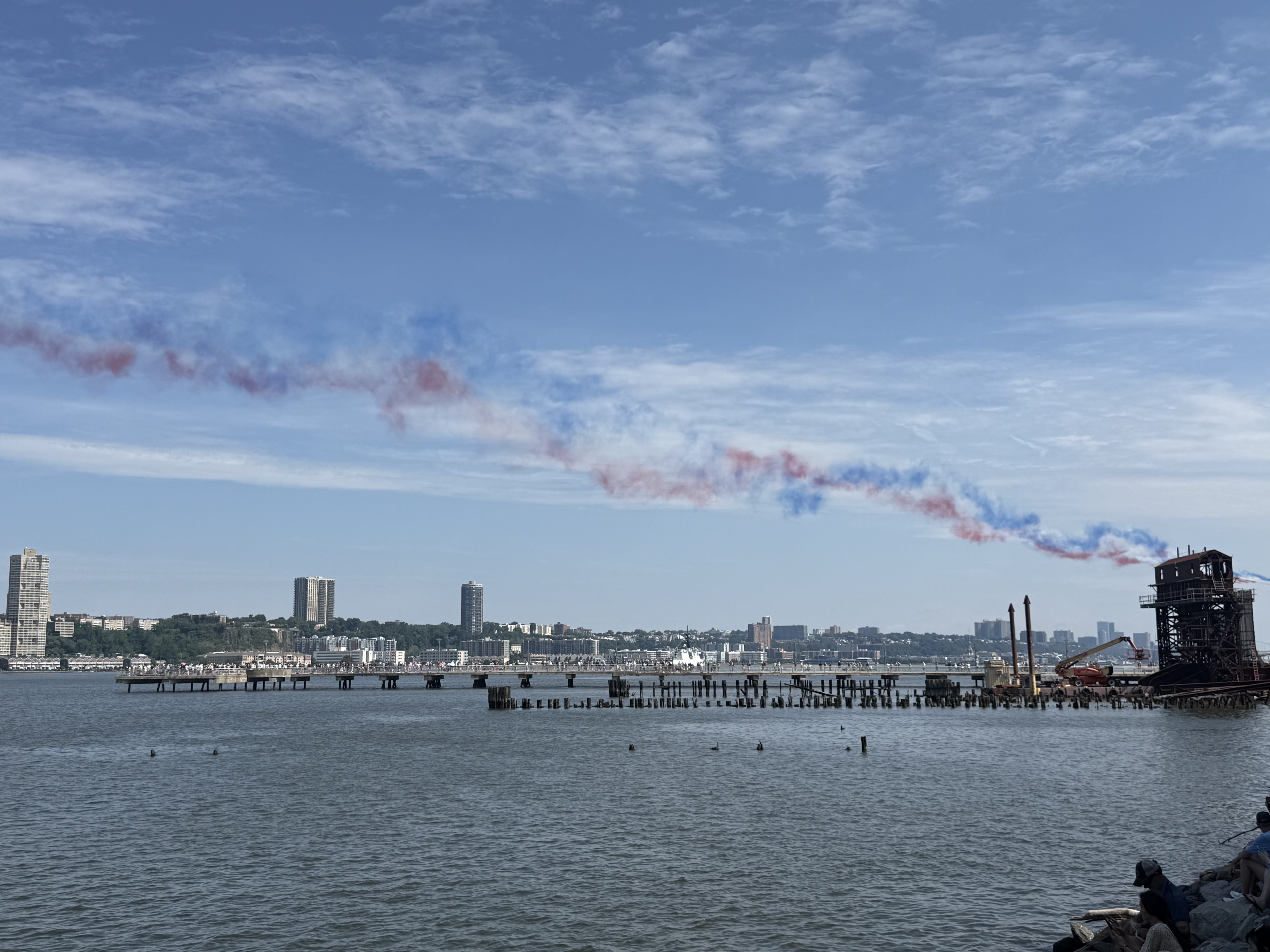
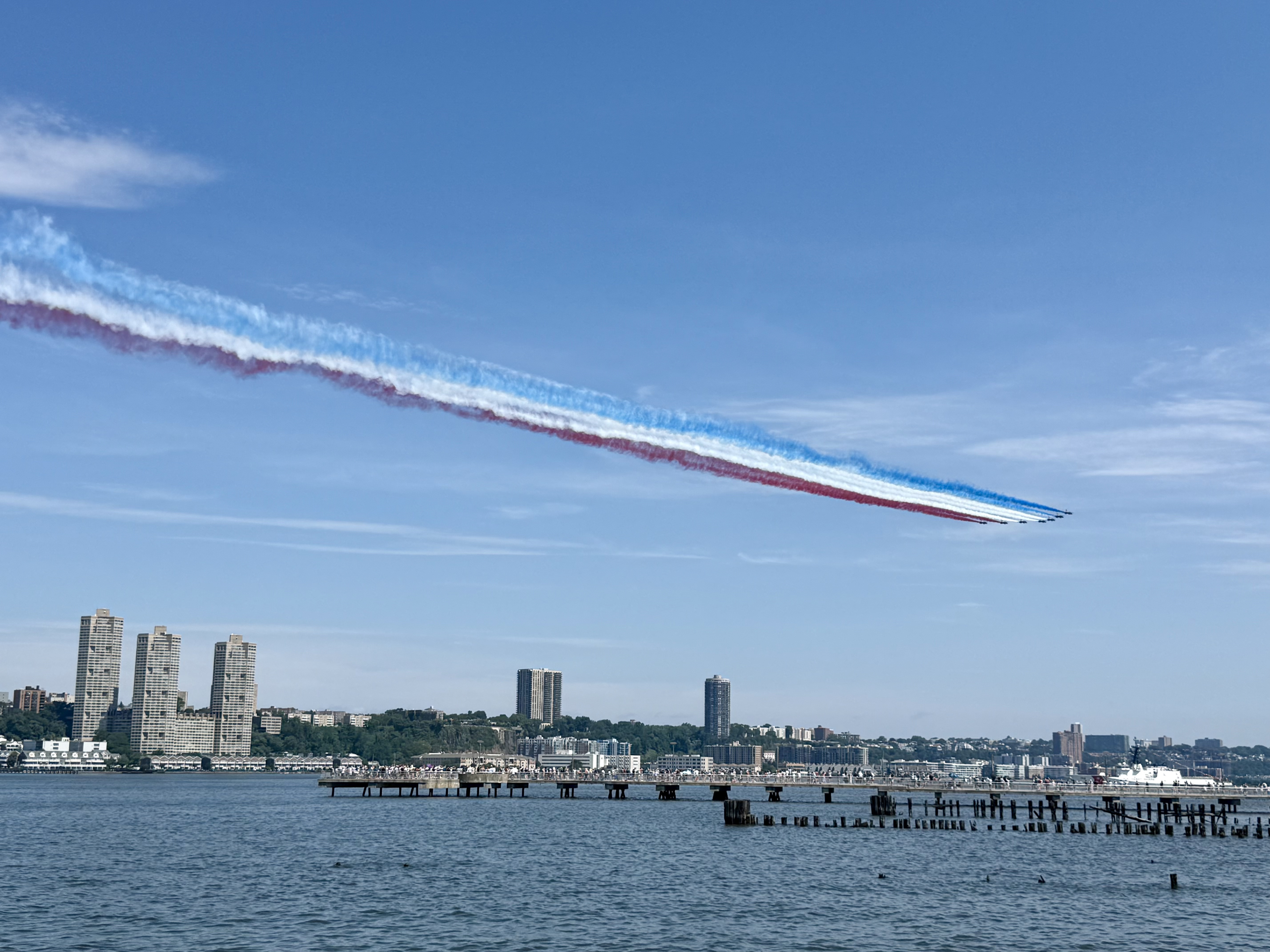
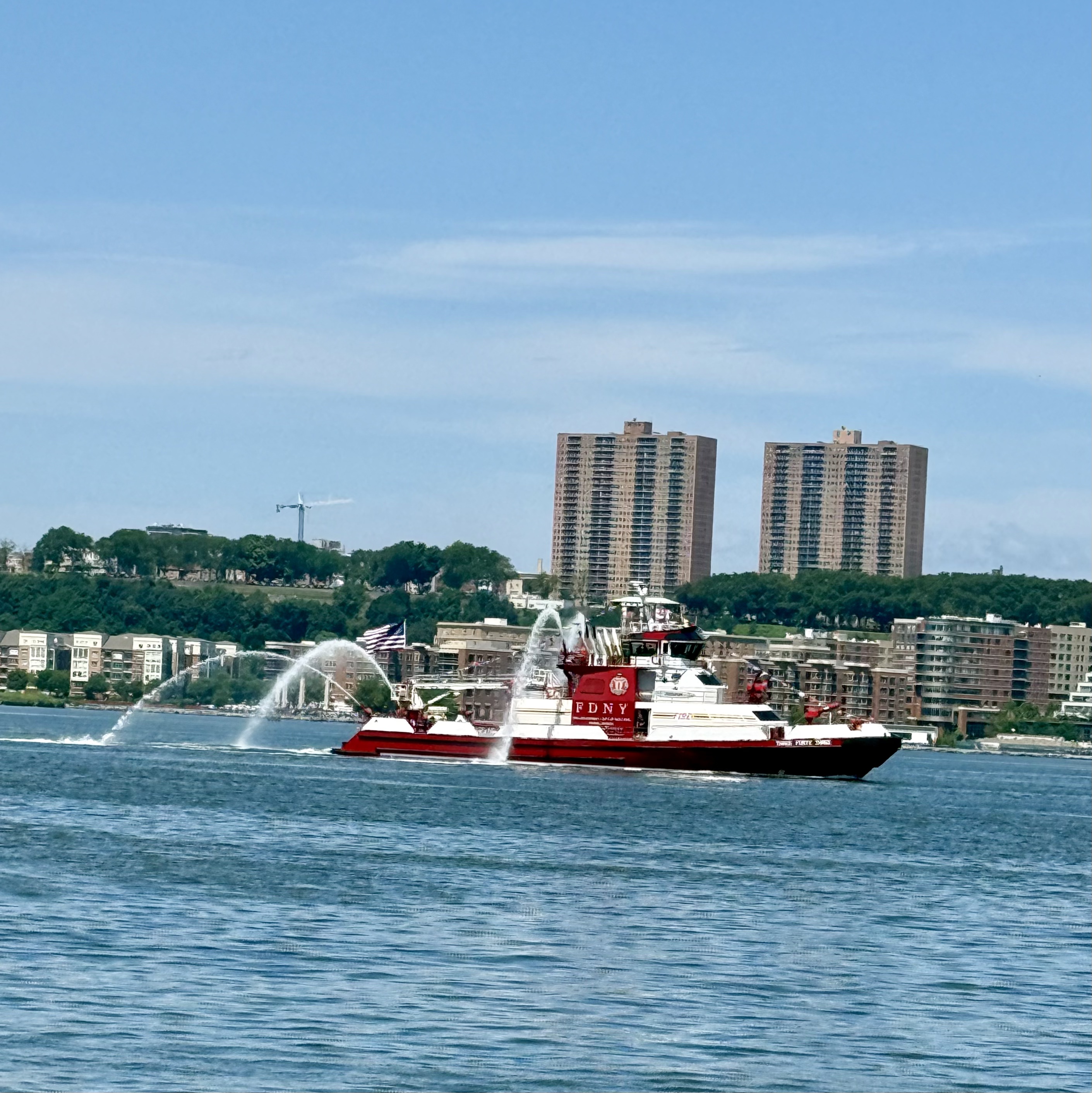
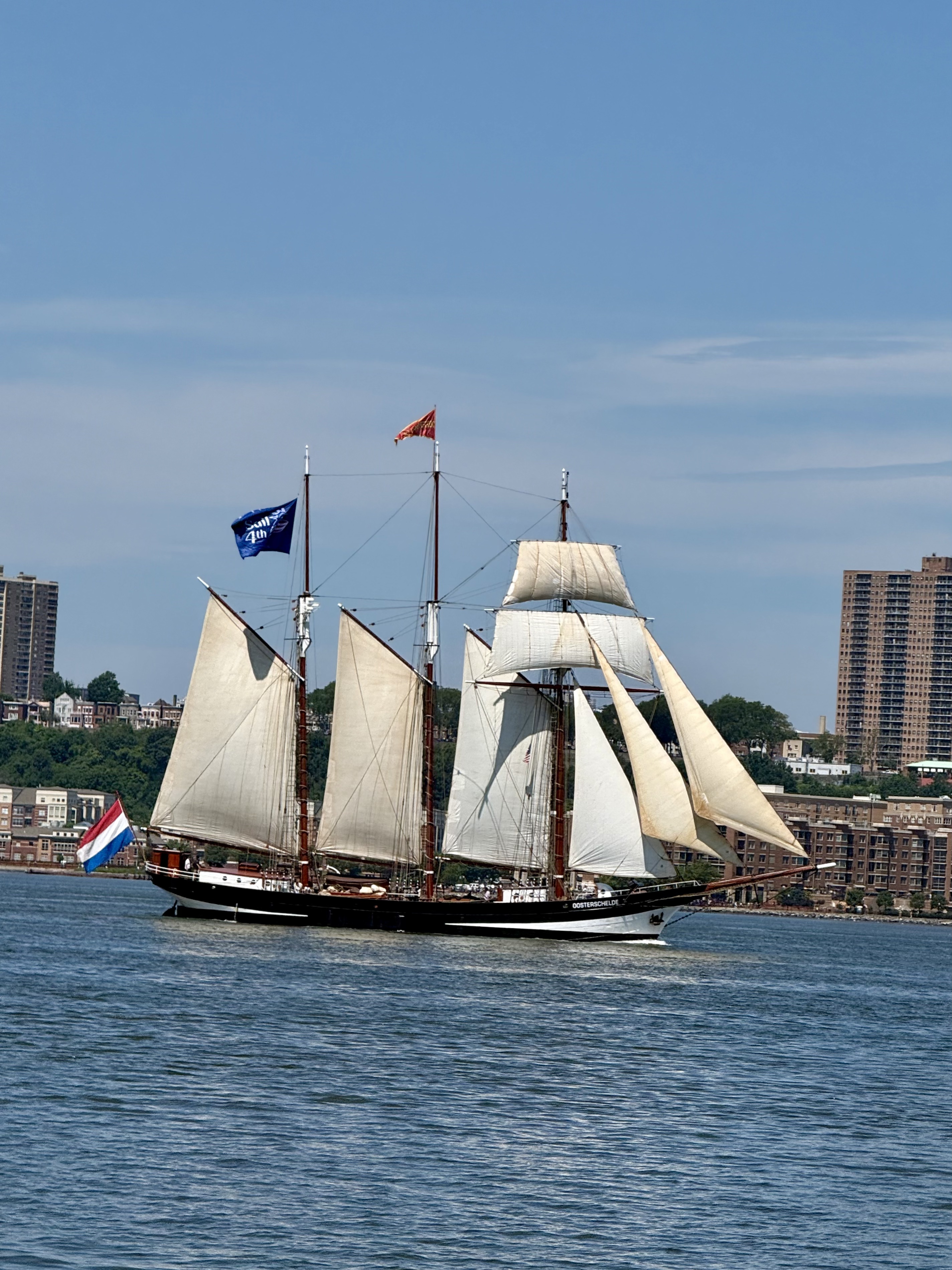
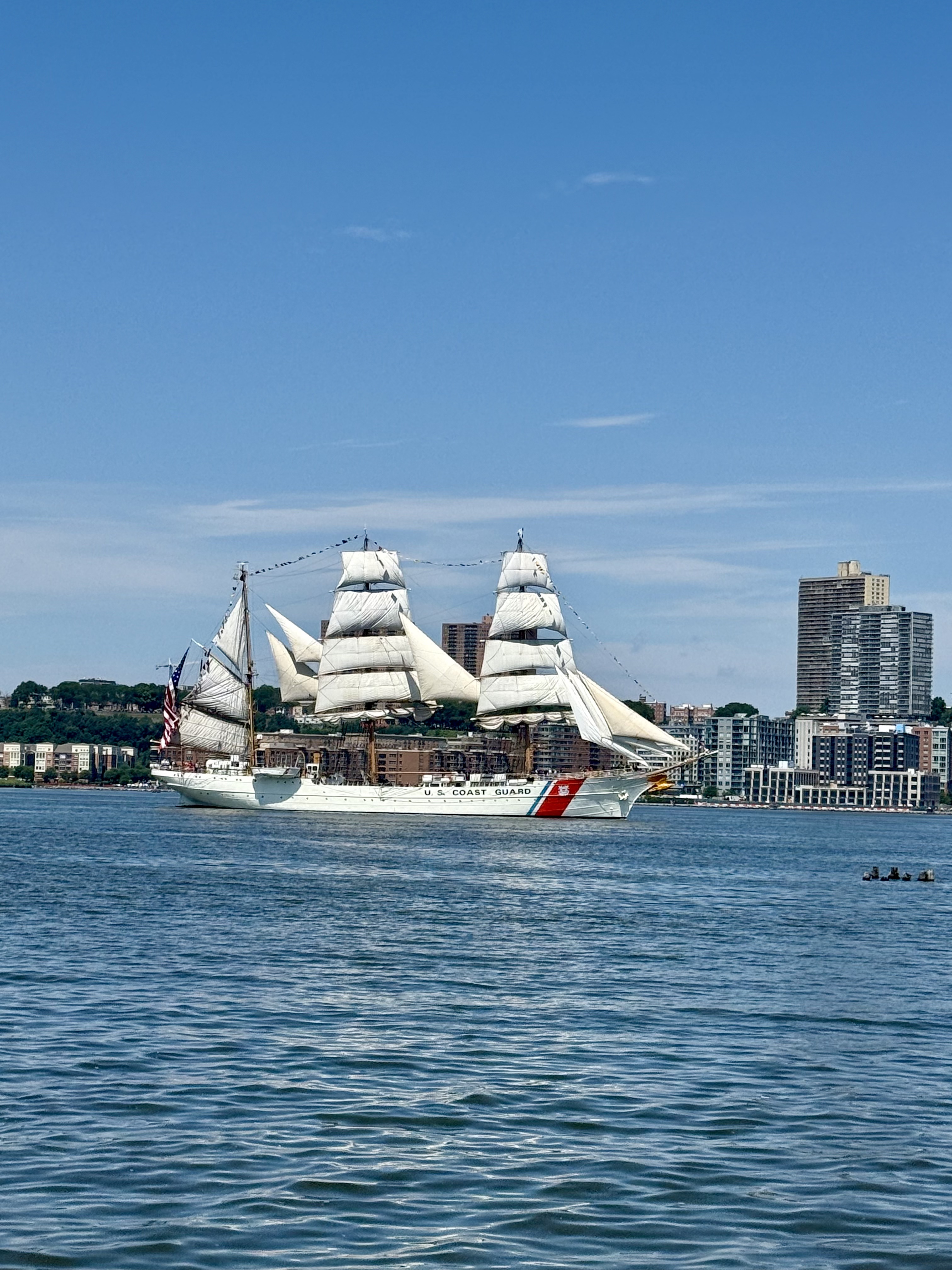
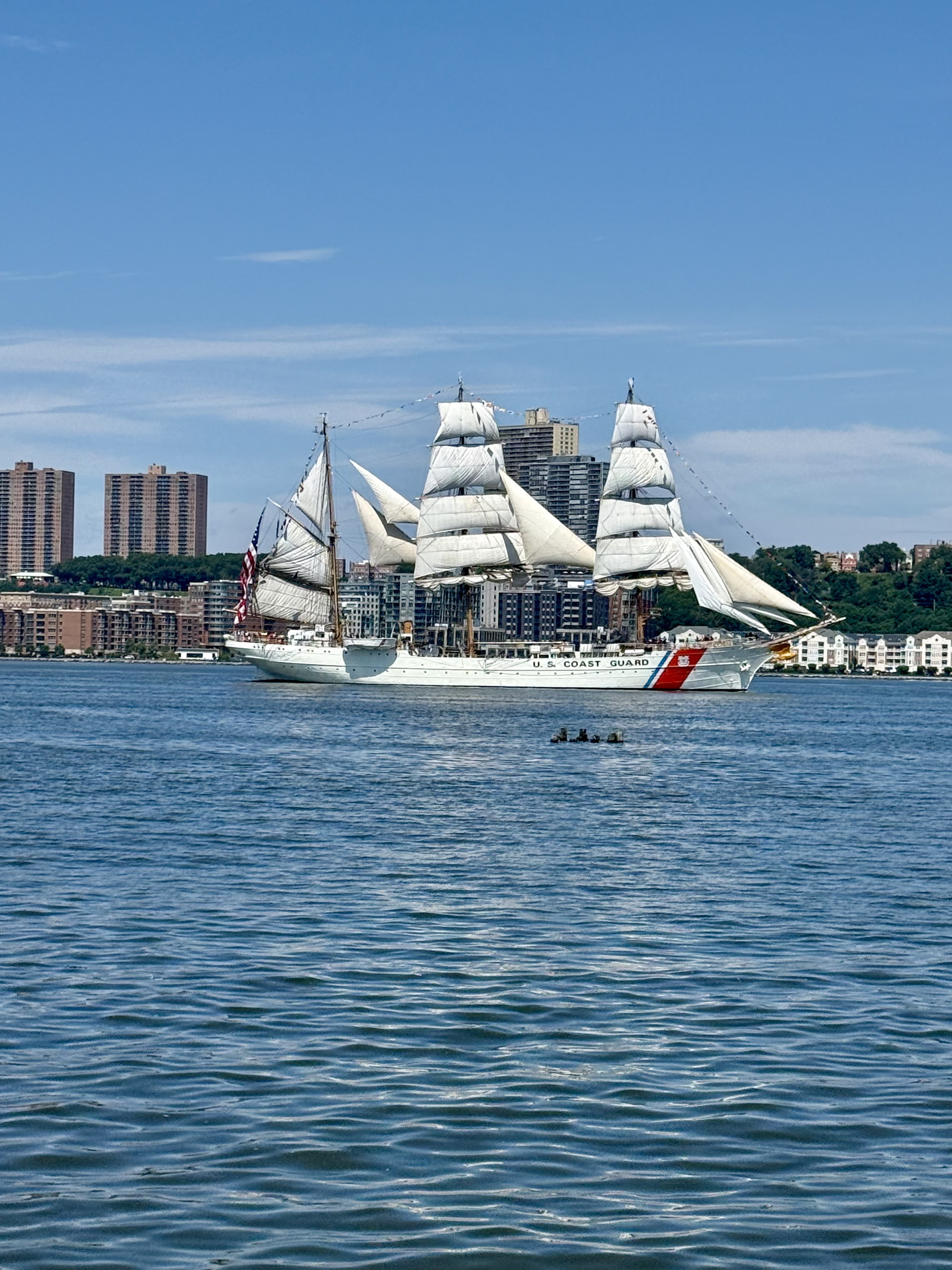
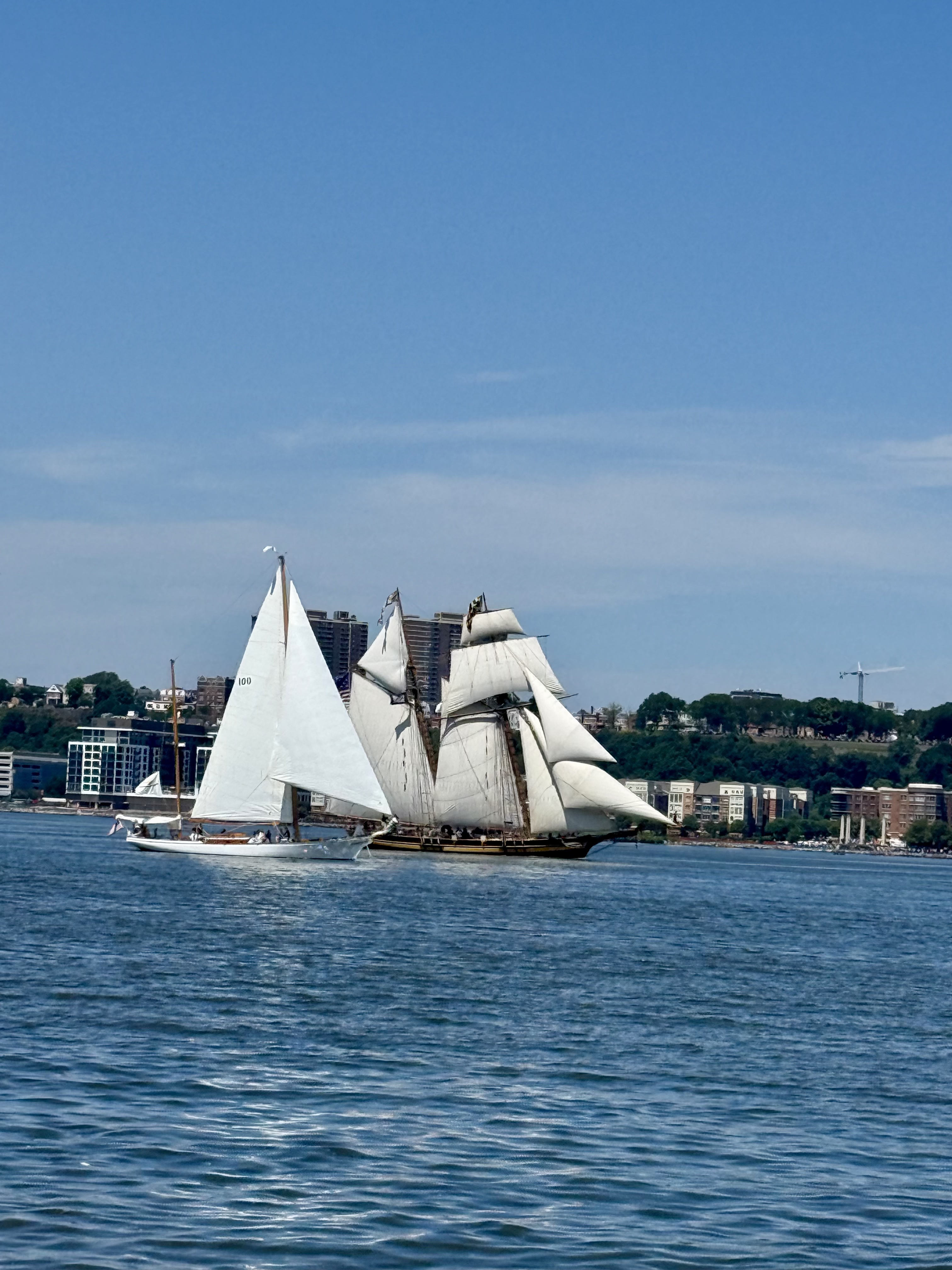
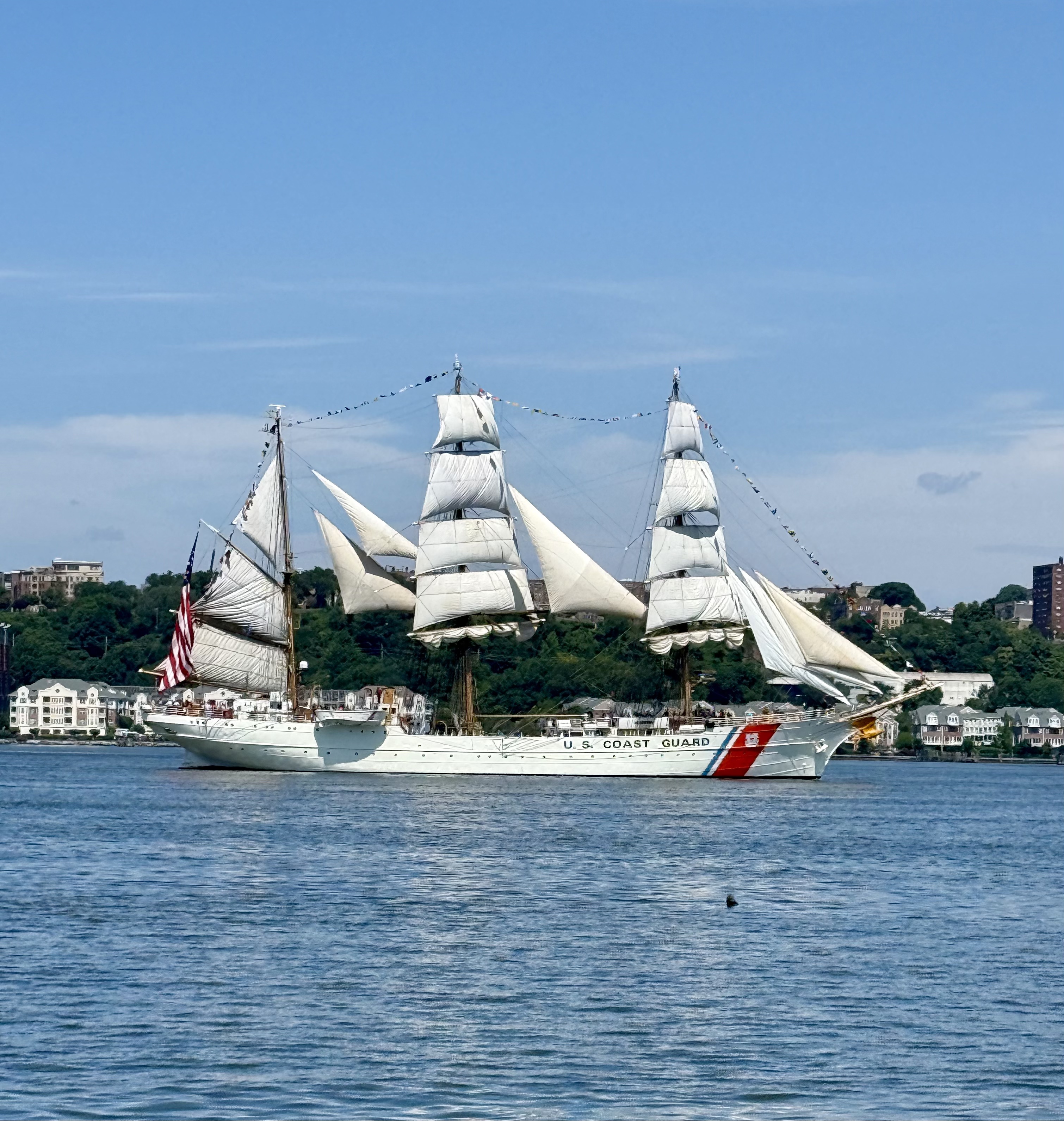
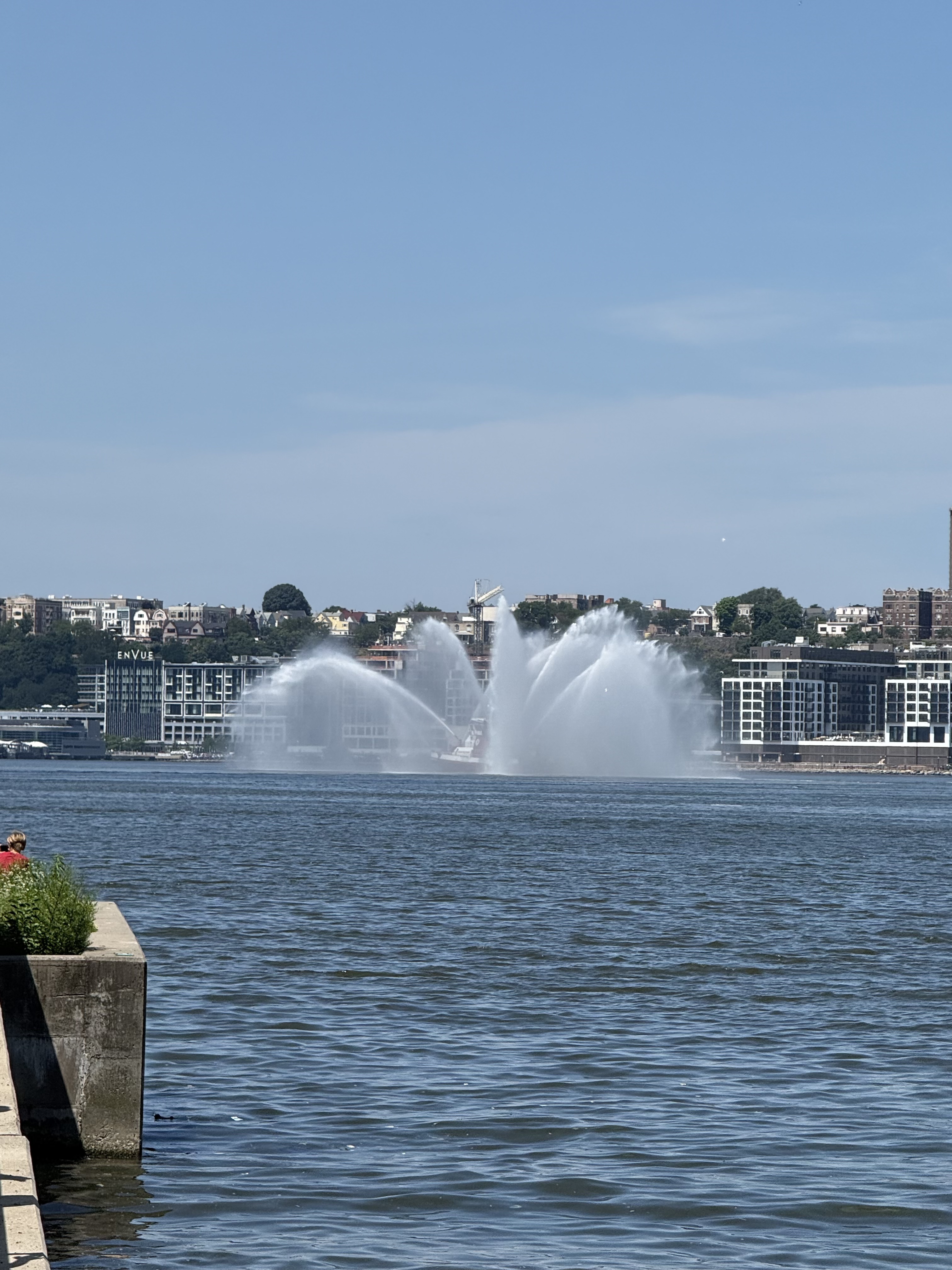
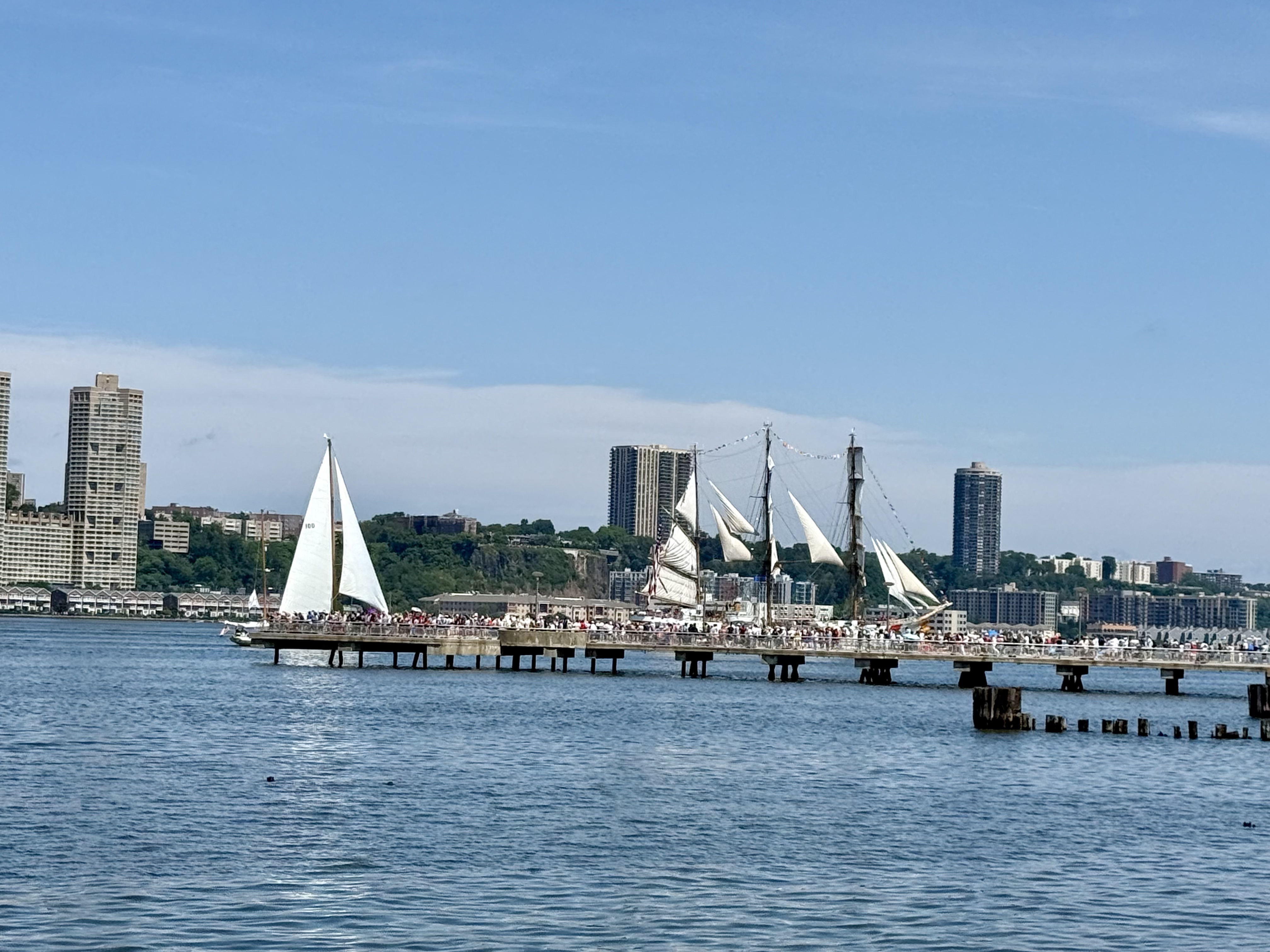
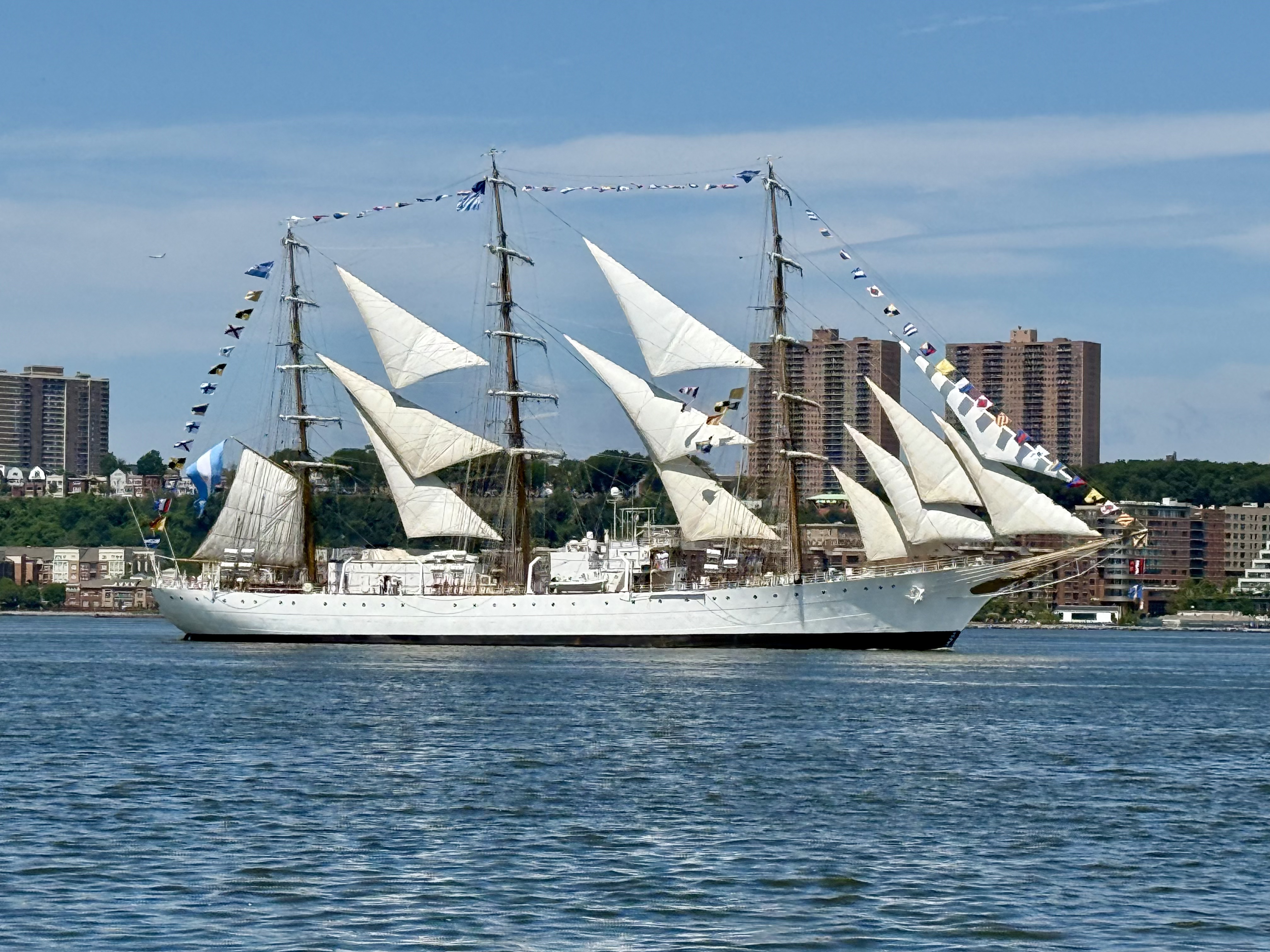
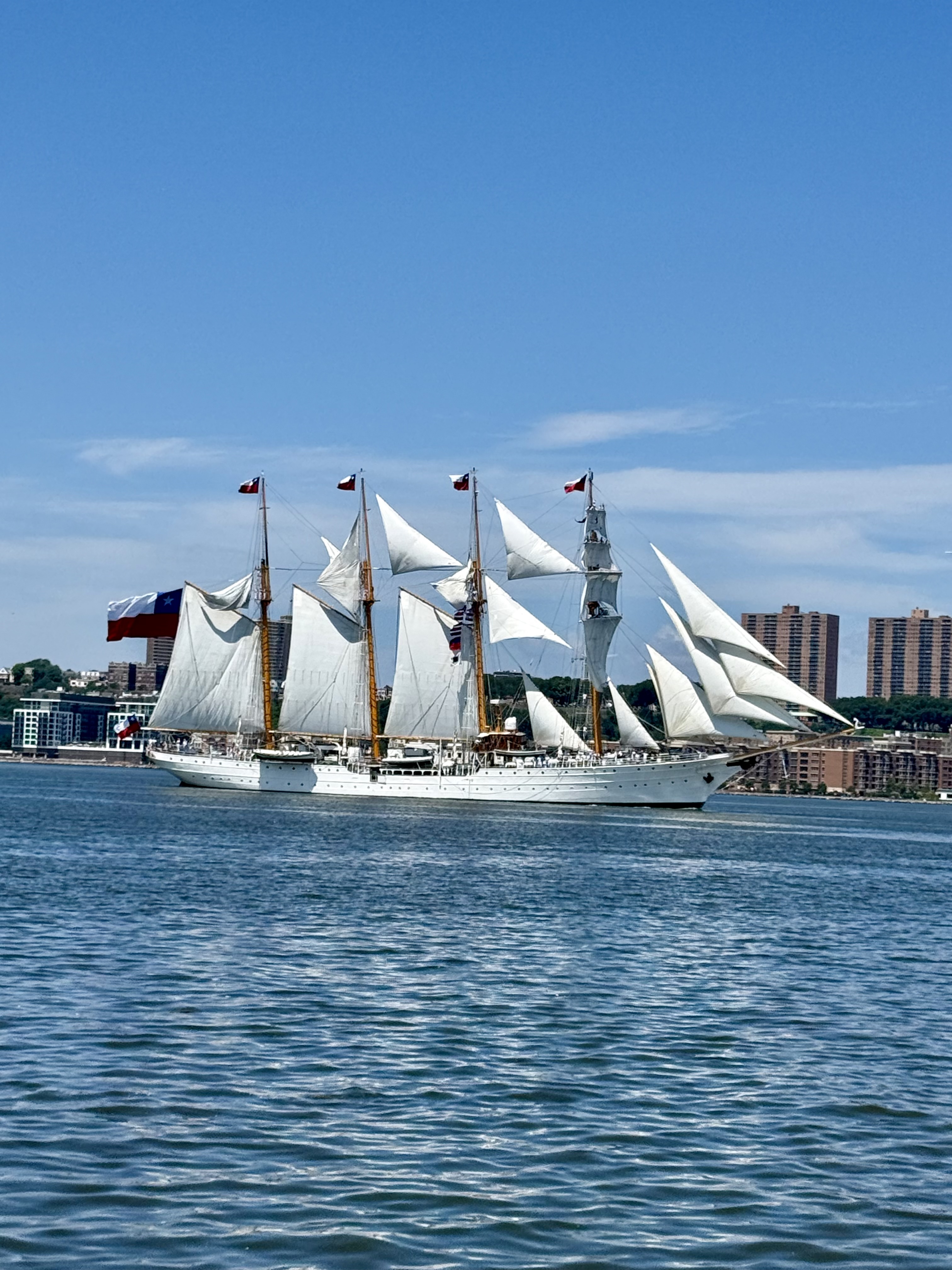
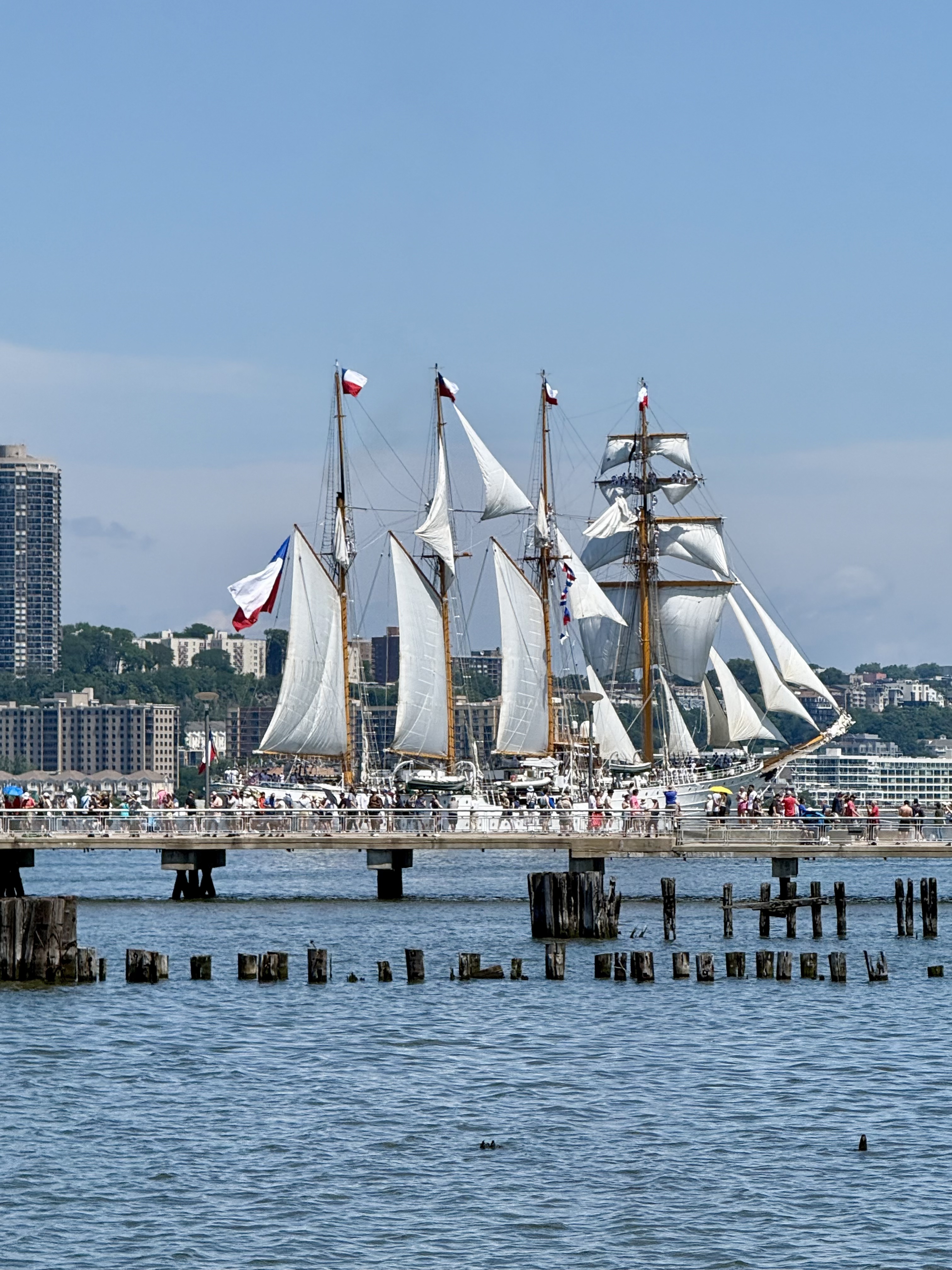
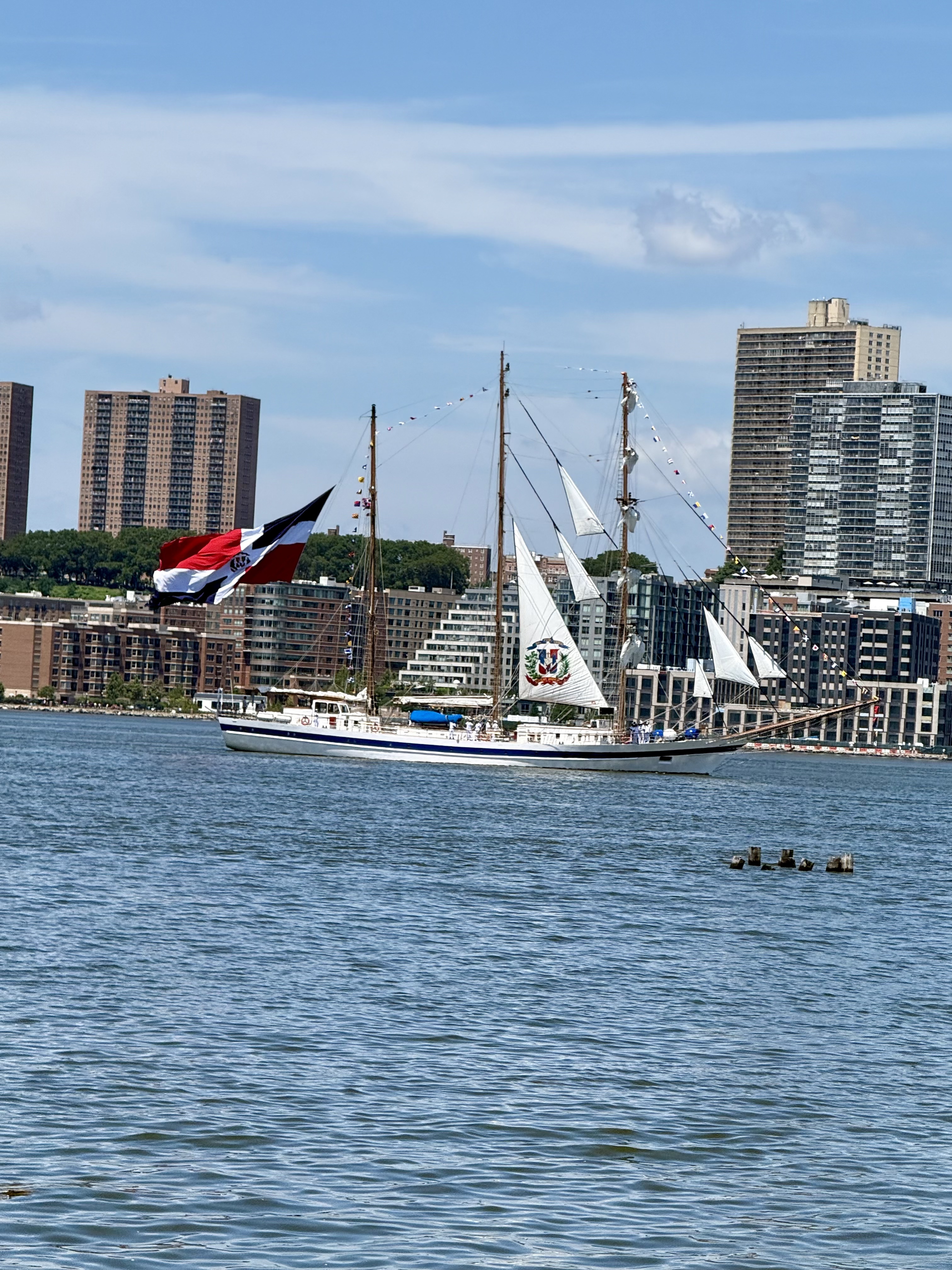
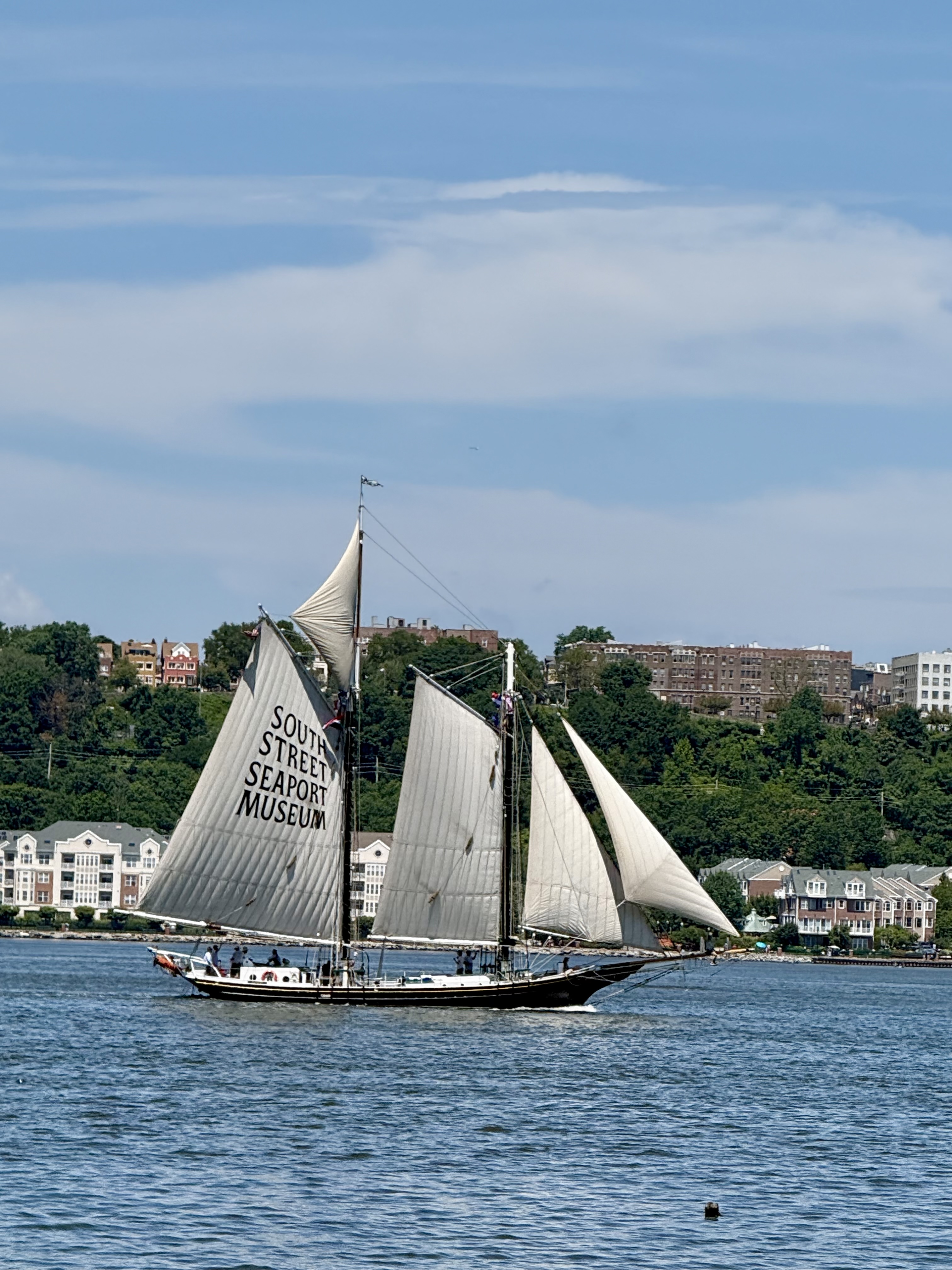
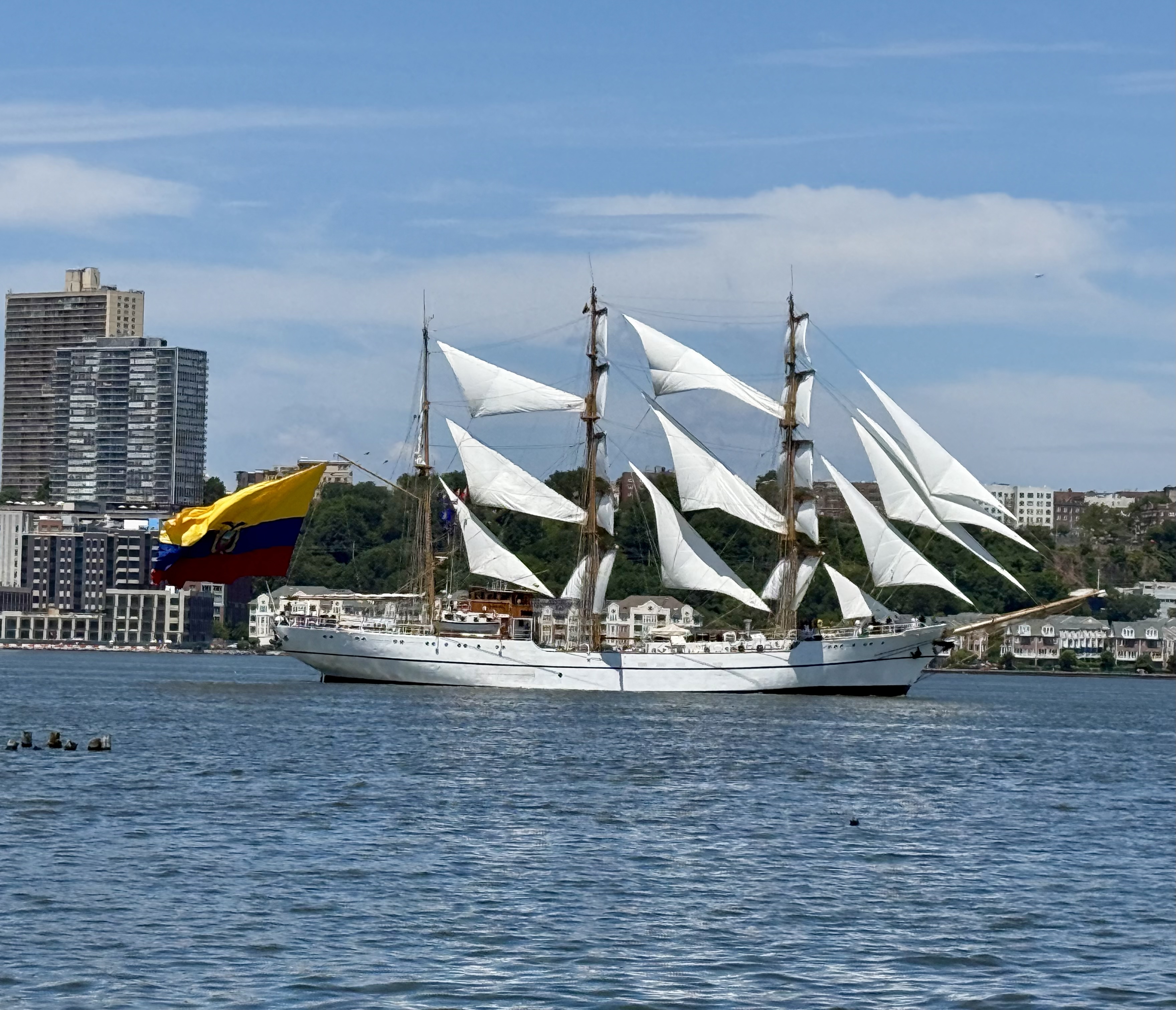
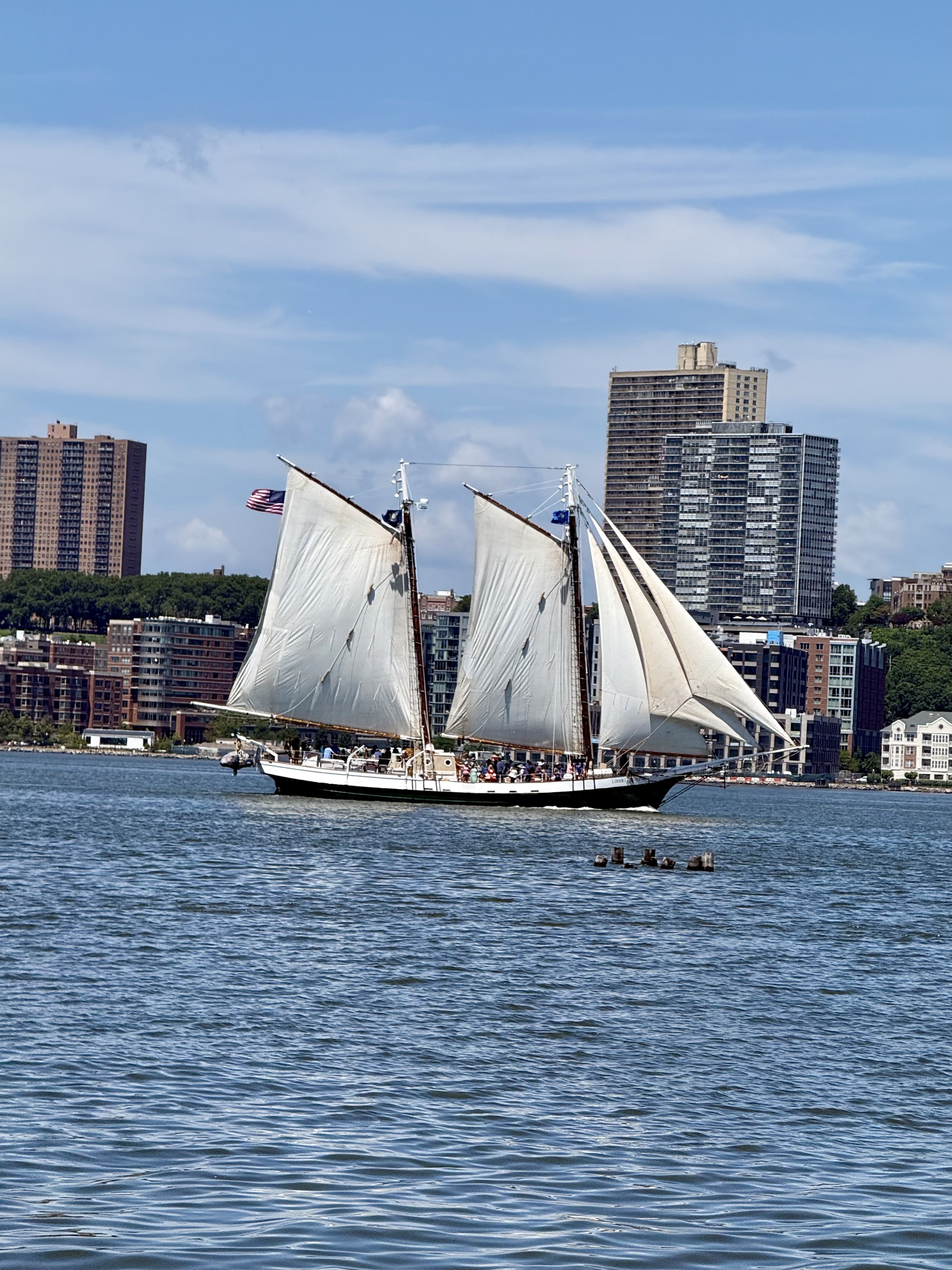
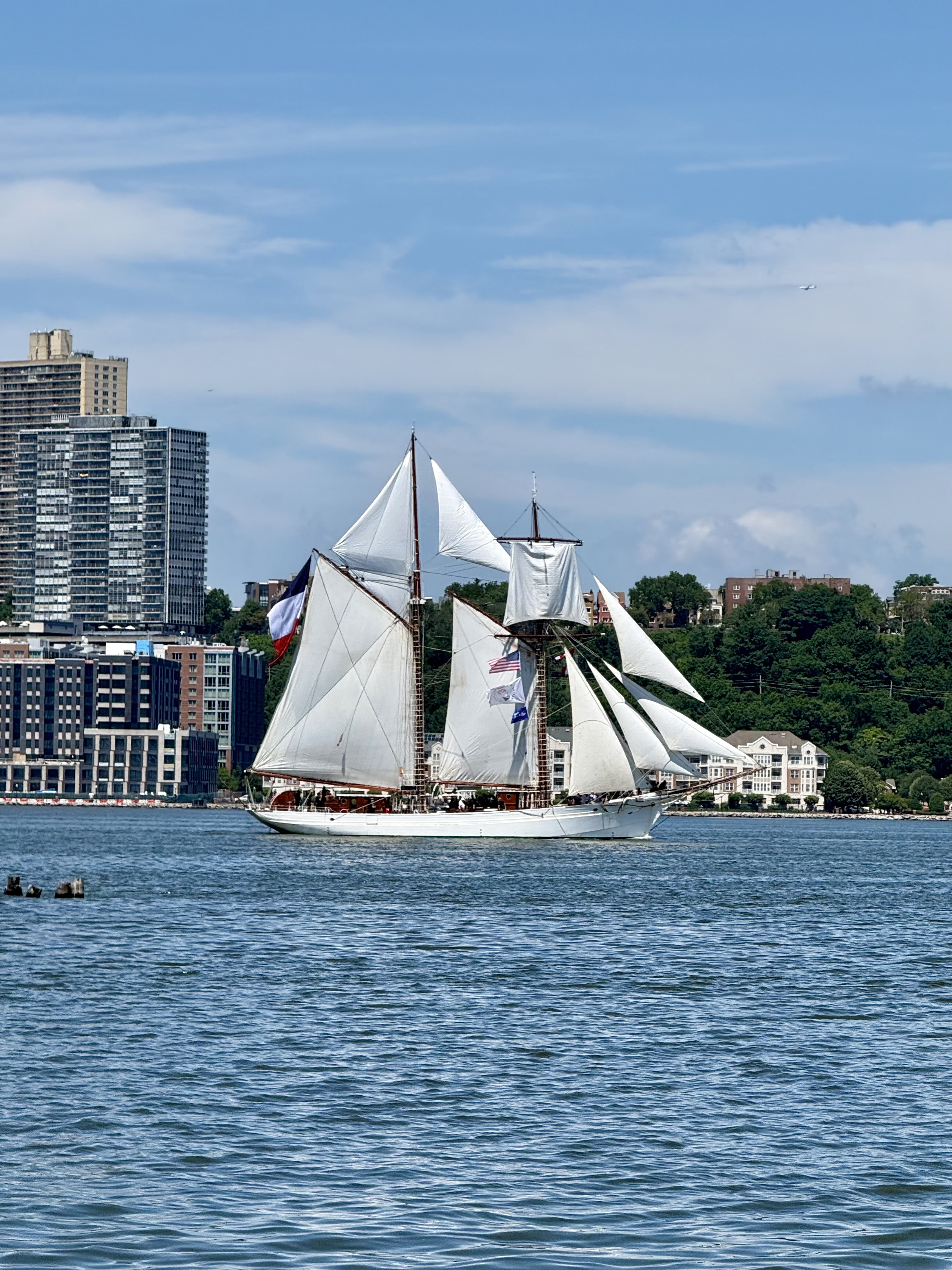
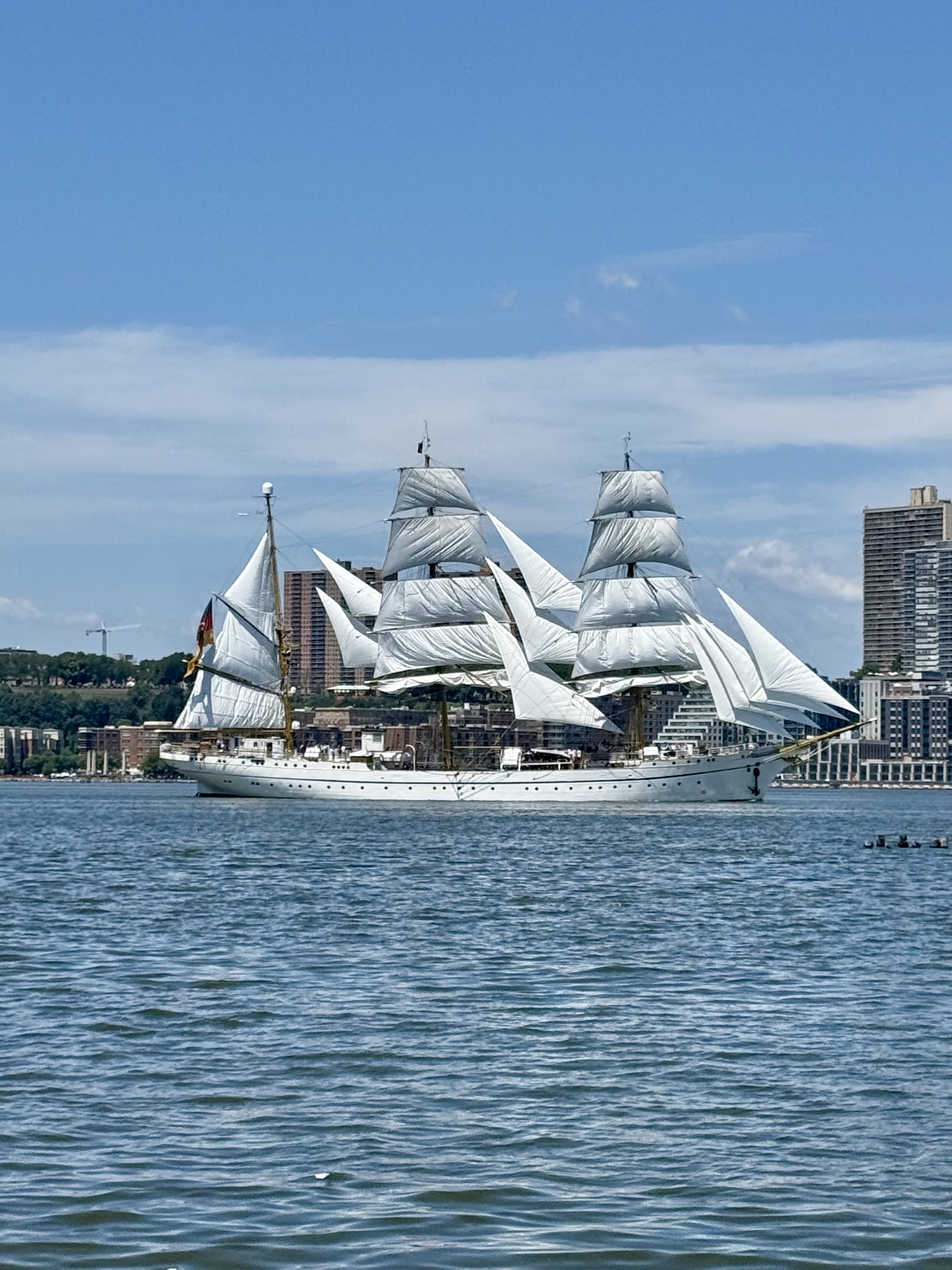
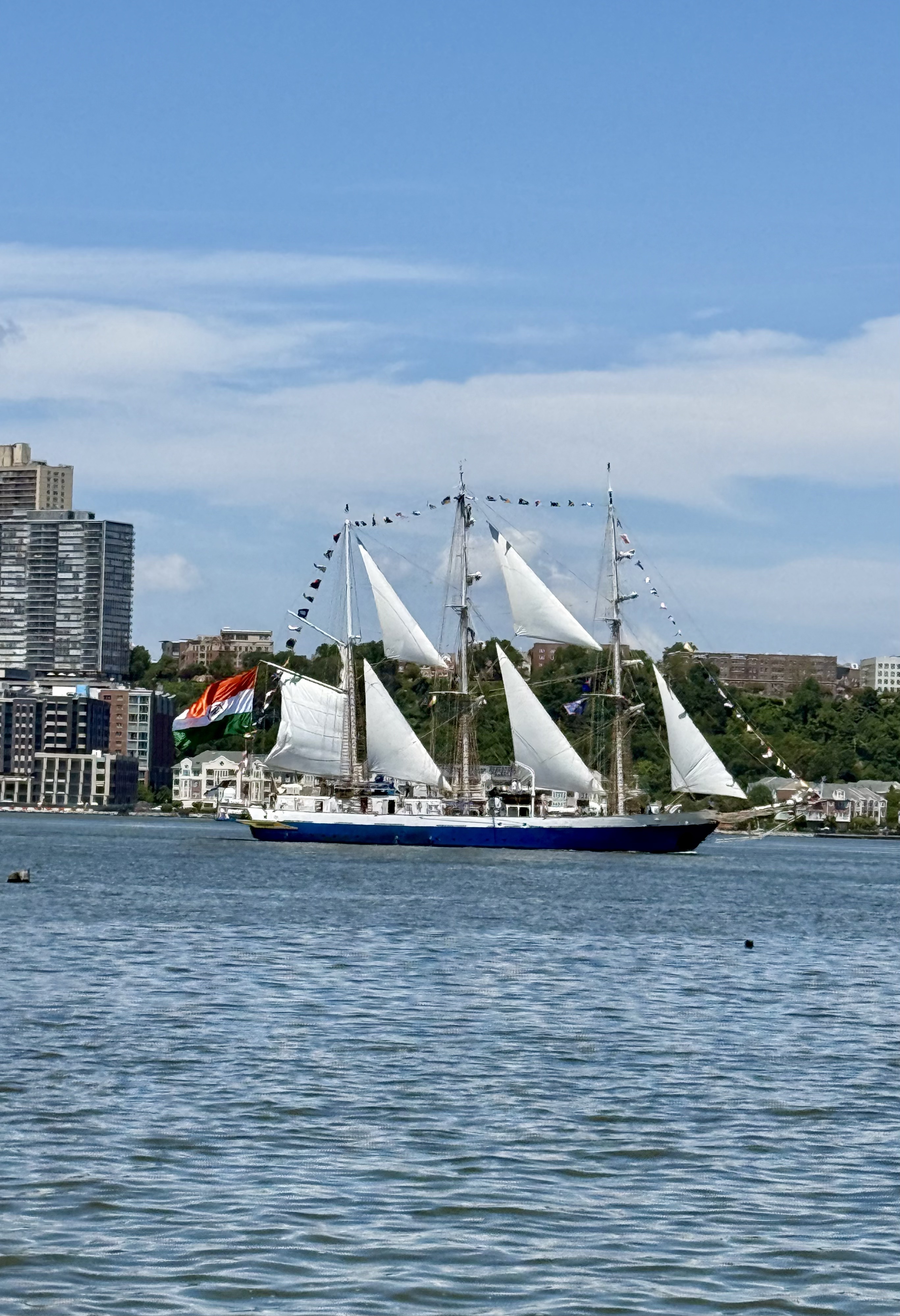
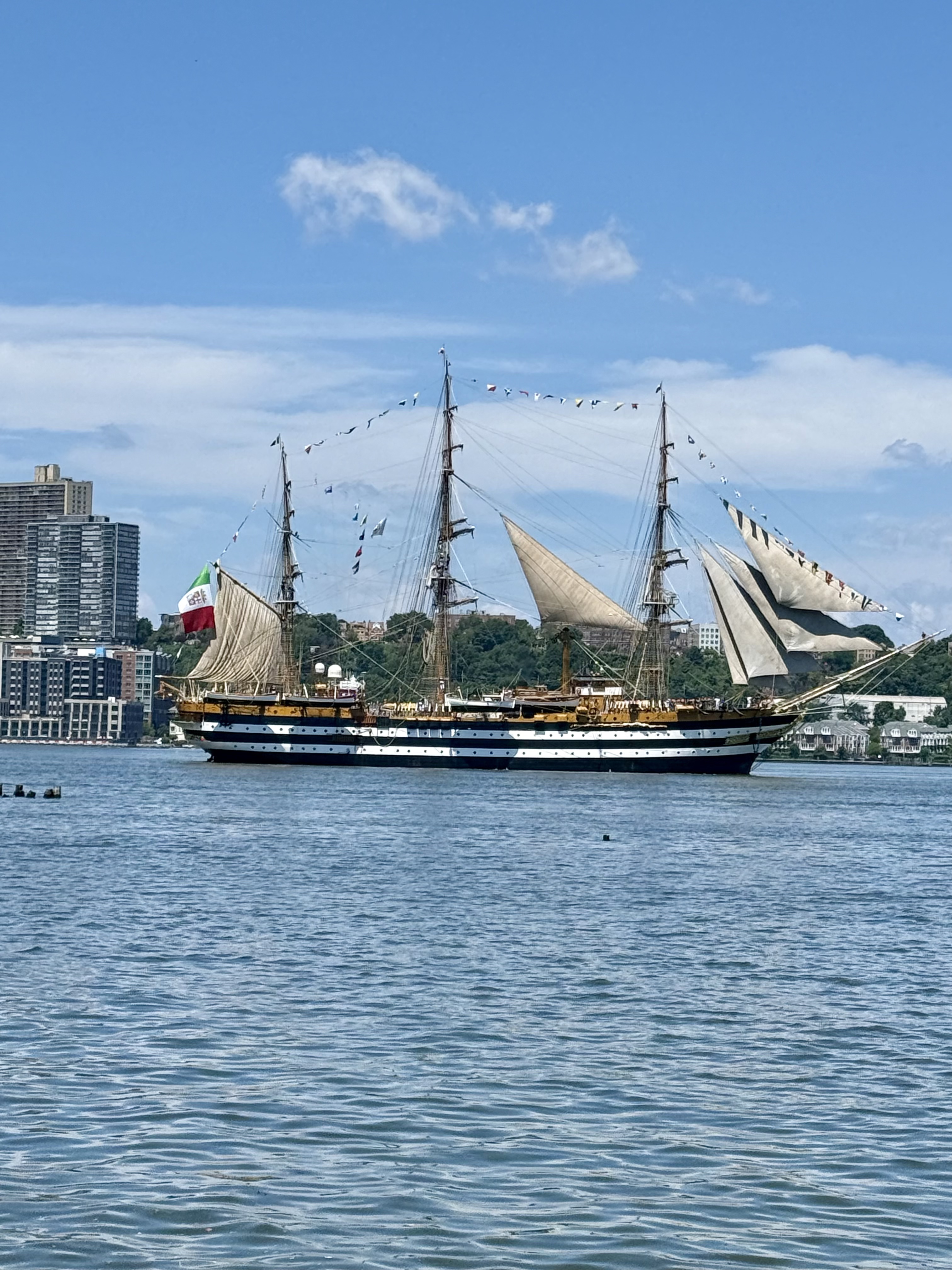
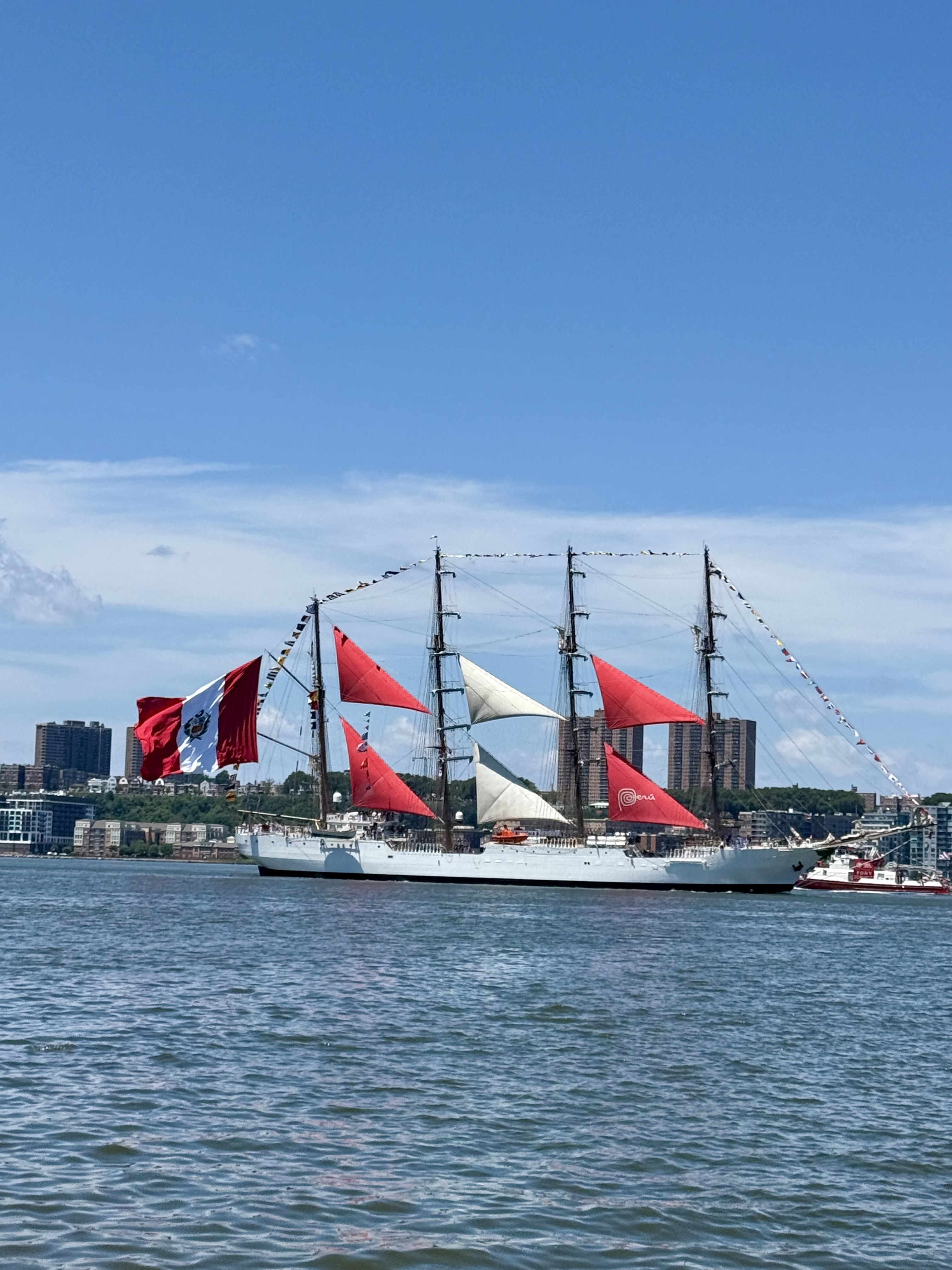
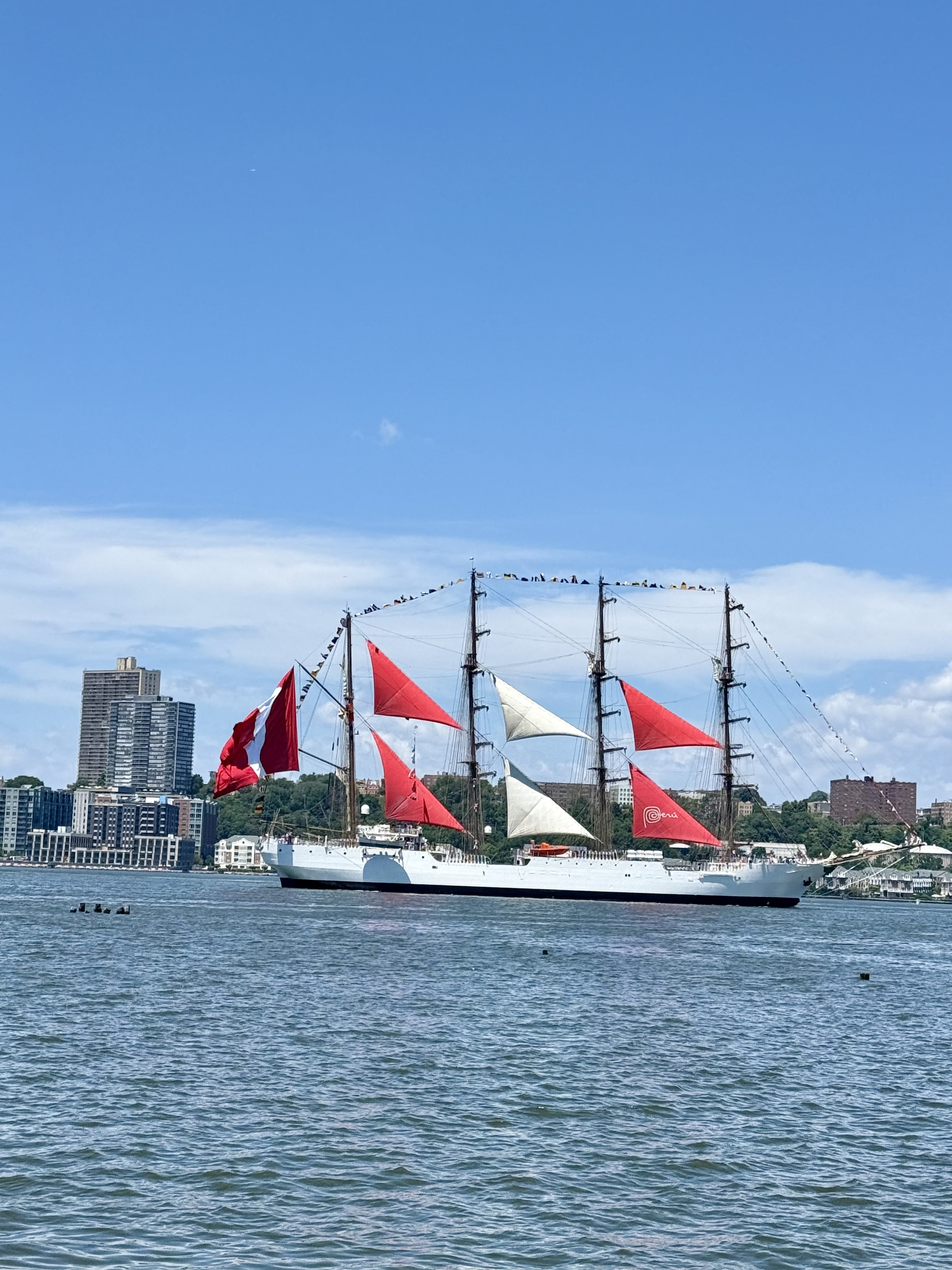
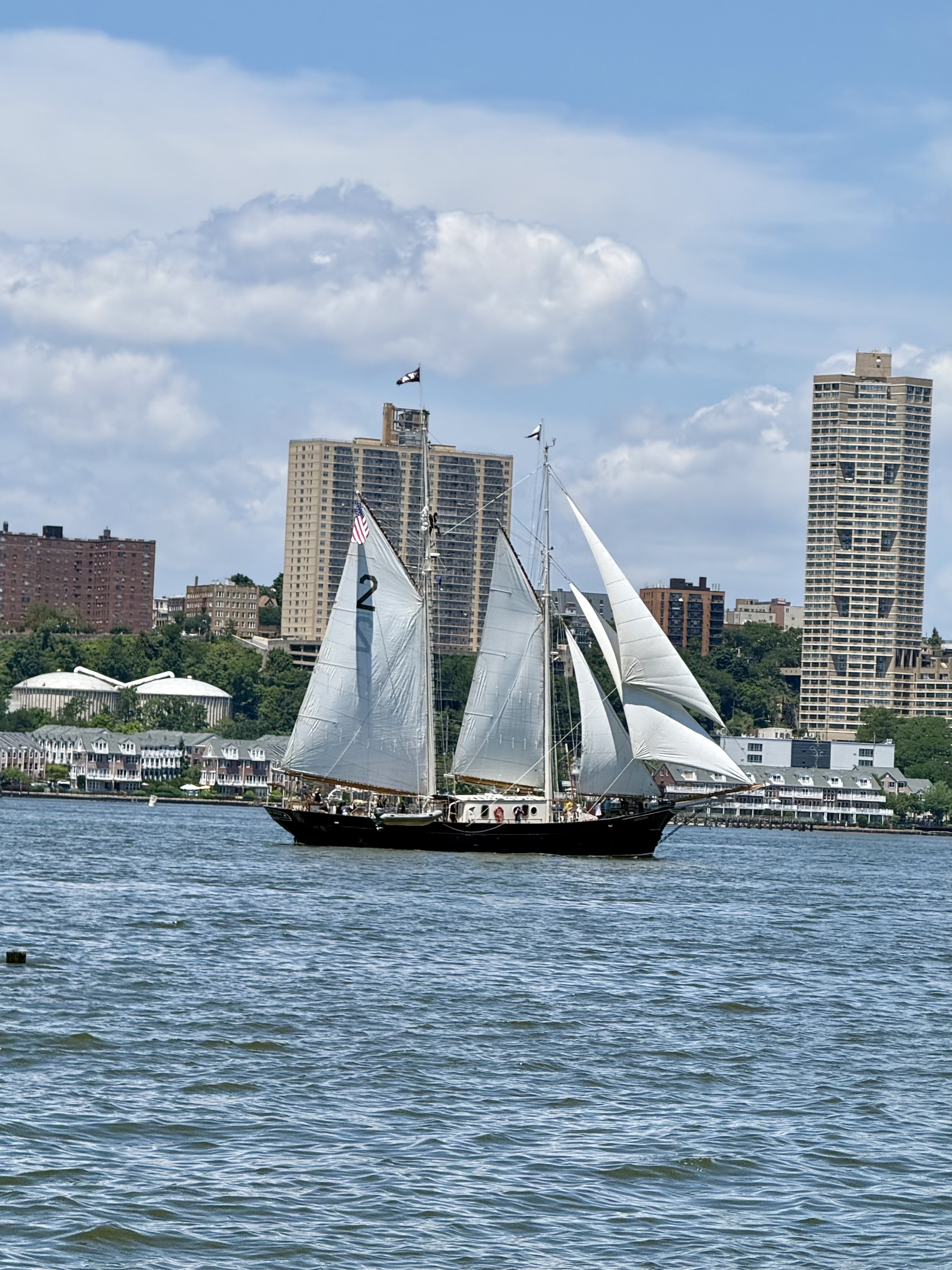
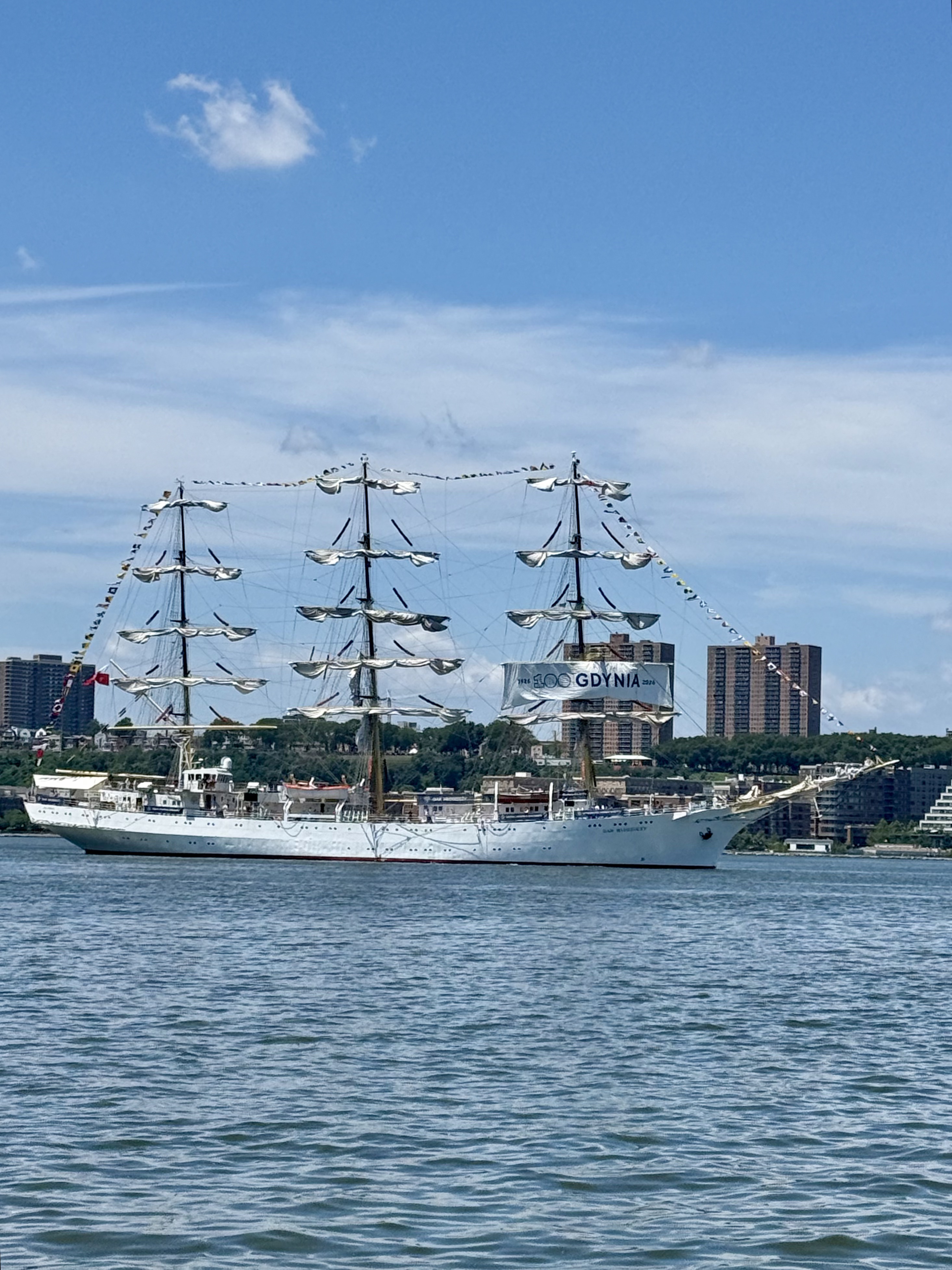
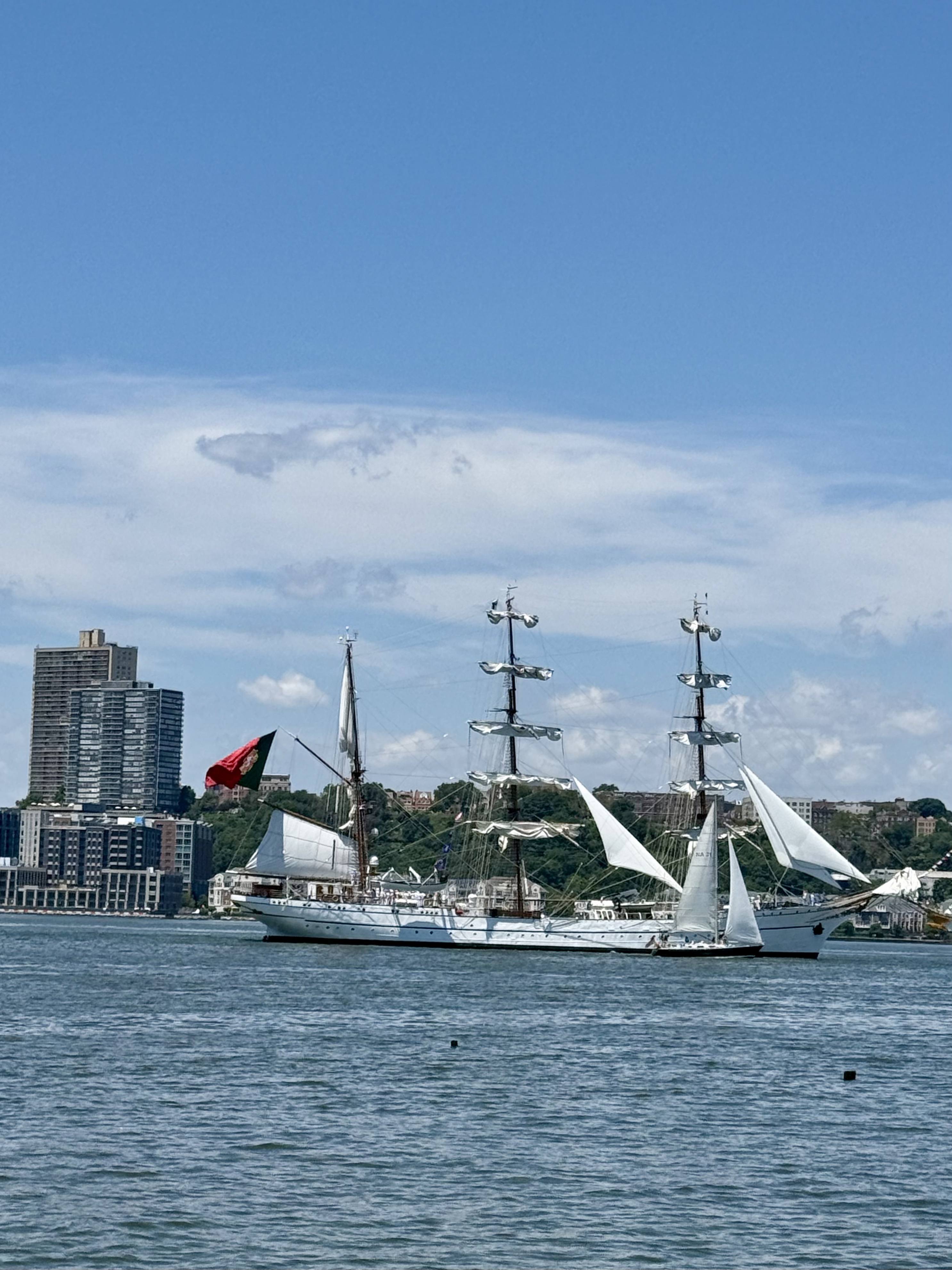
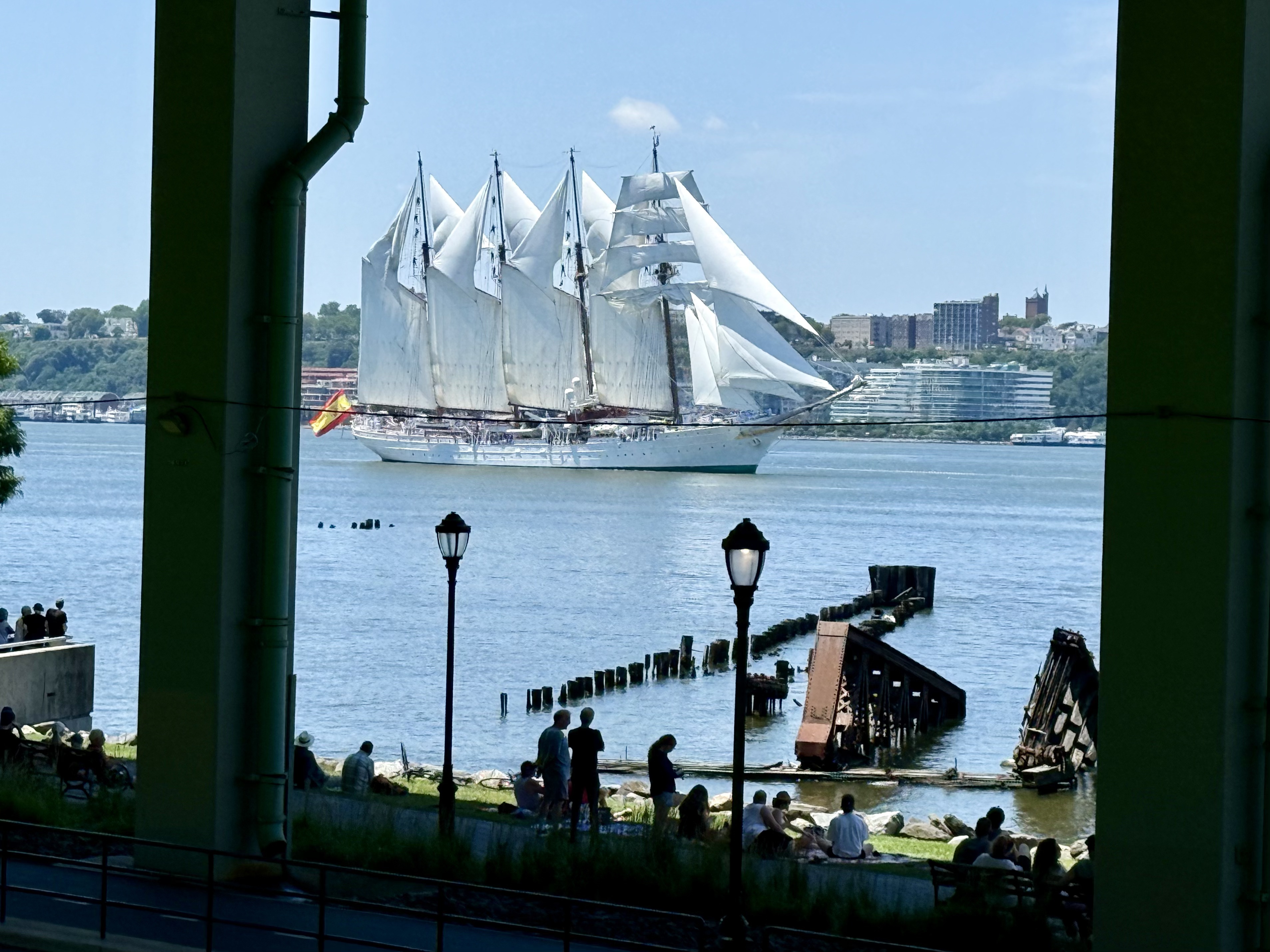
New York City celebrated the 250th anniversary of the signing of the Declaration of Independence in several ways: the Times Square ball dropped multiple times (the first time that had been done other than on New Year’s Eve), the Statue of Liberty was a part of a laser light show, and of course there were fantastic fireworks at night (starting about 30 minutes earlier to avoid some thunderstorms!). My favorite part of this very special celebration happened in the morning and early afternoon of July 4th: initially, a spectacular aerial show over New York Harbor, flying over the Hudson River north; followed by a magnificent parade of tall ships along with some Class B sailing ships, tugboats, and NYFD water boats, all passing through the Harbor, sailing up the Hudson to the George Washington Bridge, and then circling back to return.
I decided to watch all of this from the lower portion of Riverside Park, at about West 68th Street. Because of the West Side Highway on an overpass just east of the park, I knew from experience that there was good shade to be had, at least until early afternoon. This turned out to be even more important than usual, as NYC was entering the fourth day of an oppressive heat wave. However, I was able to find a place to sit in the shade, later moving to a standing position next to a rail, moving again to sit on the grass, and finally standing on the sidewalk almost in a bed of plants – all to avoid the sun as it slowly rose higher in the sky behind us. Although there were those who stood out on piers to be closer to the ships, and certainly were able to get stunning photos because of the proximity, I was happy with the view I had, and stayed much longer than I would have been able to in the sun.
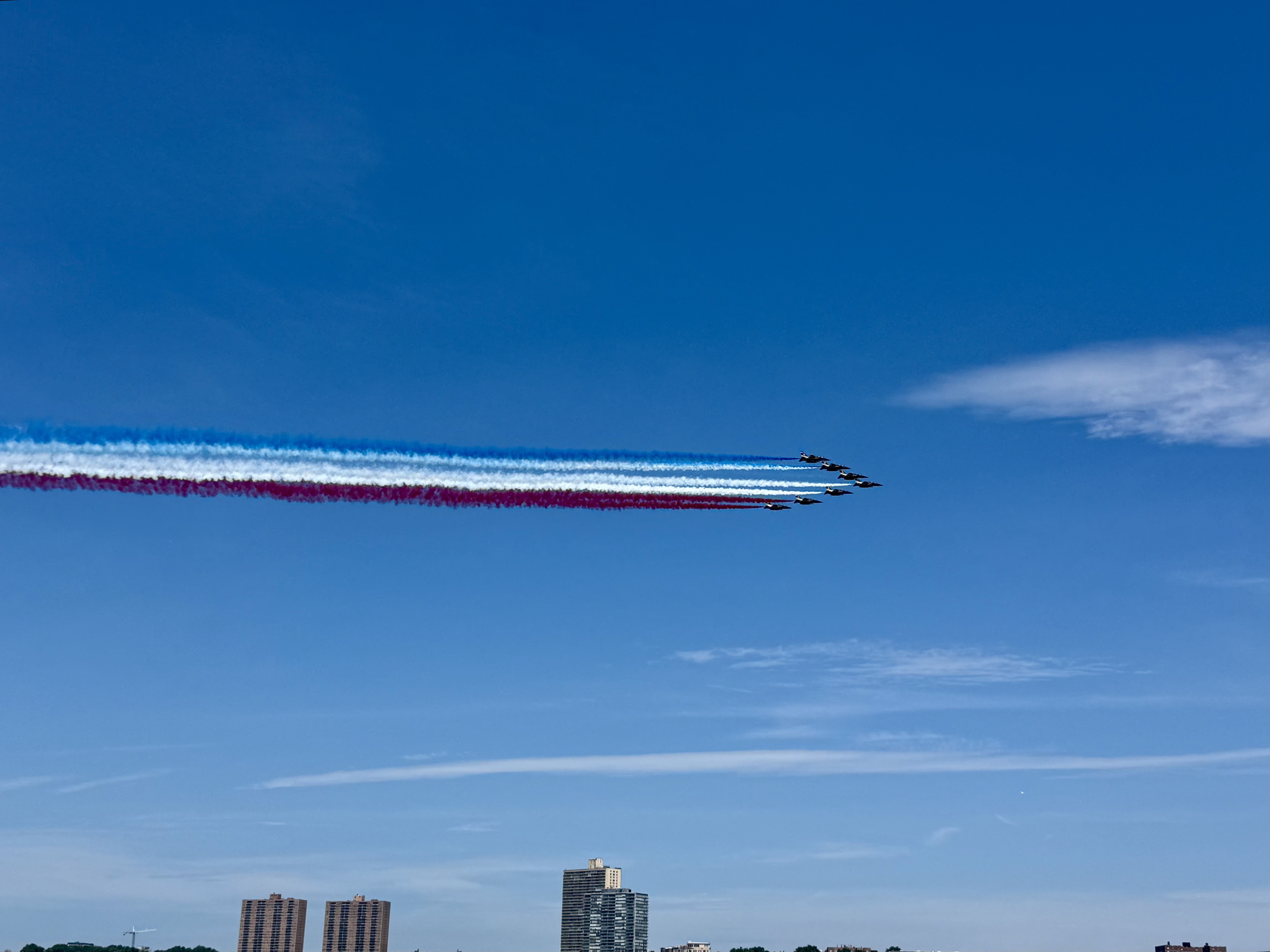
Starting at about 10:15 AM, there was a wonderful aerial show. I had never been to a show like this, and was amazed at how closely the airplanes flew to each other. From my perspective, at times it seemed they were almost on top of each other! Led by the Blue Angels, there were a variety of US and international fixed and rotary winged aircraft. I looked it up later and learned that I saw the U.S. Navy Blue Angels, the U.S. Air Force “Bomber Trifecta” (B-1, B-2, B-52), F-15 and F-22 fighters, Marine F-35s, France’s Patrouille de France and the UK’s Royal Air Force. You can see a video compilation of some of it on my Instagram posts HERE and HERE.
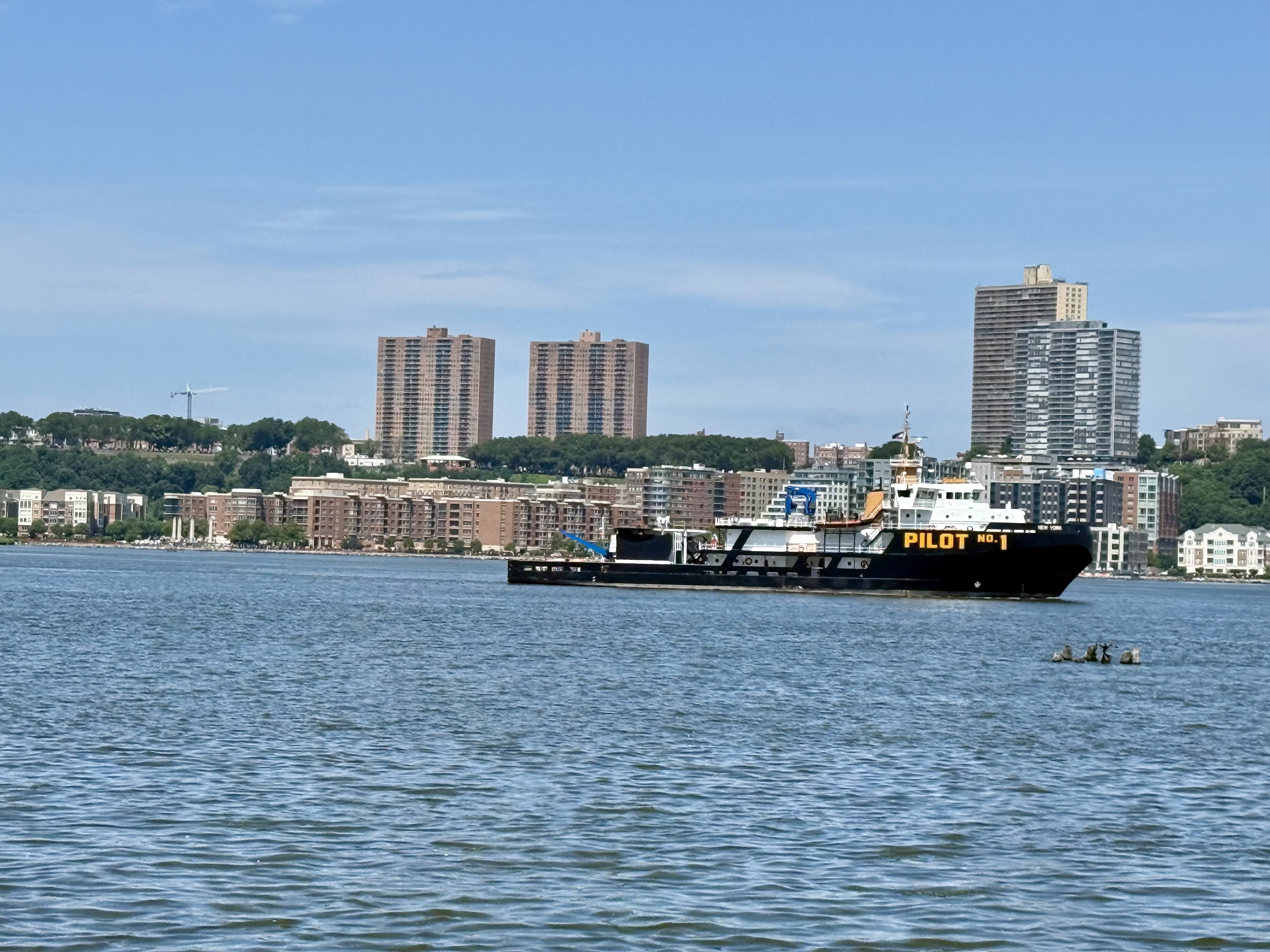
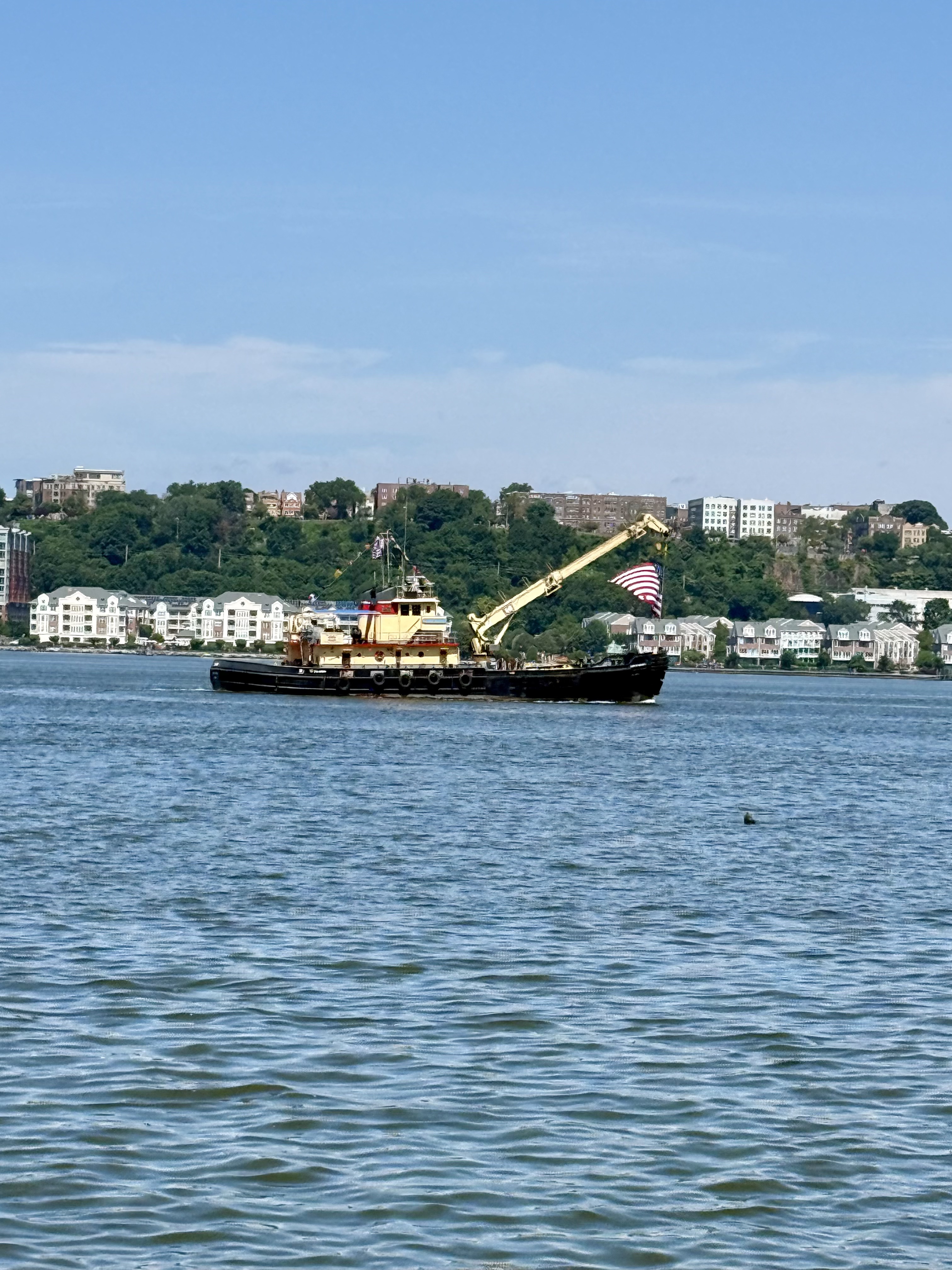
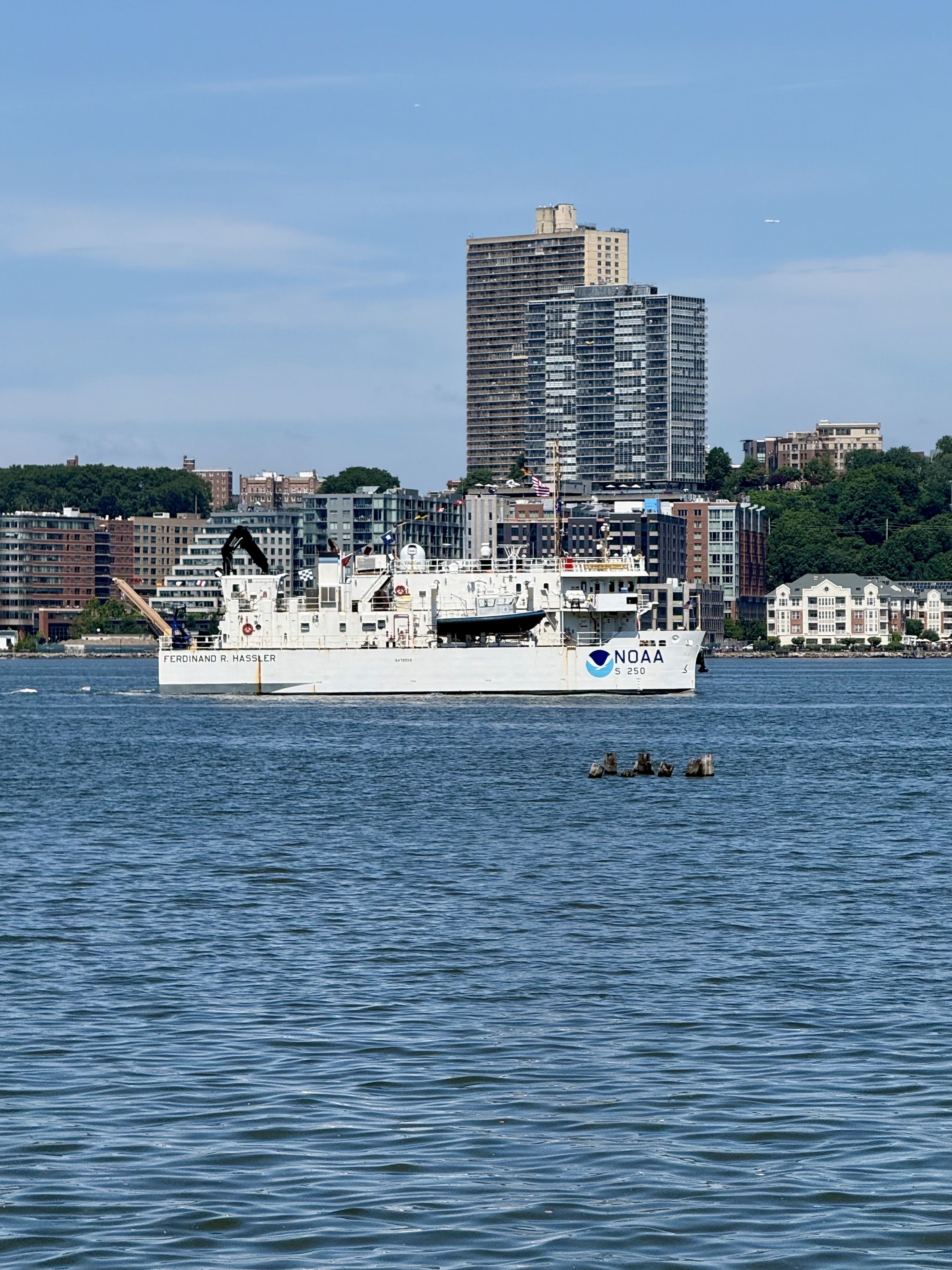
With the tall ships parade scheduled to start at 9:30, I was expecting to see the tall ships around 10:30, but the parade actually started about 10, so they got to where I was viewing by about 11. First there was a pilot boat, and NYFD water boat, among others. It was exciting at this point because every now and then you could hear one of the ships sounding its horn farther south.
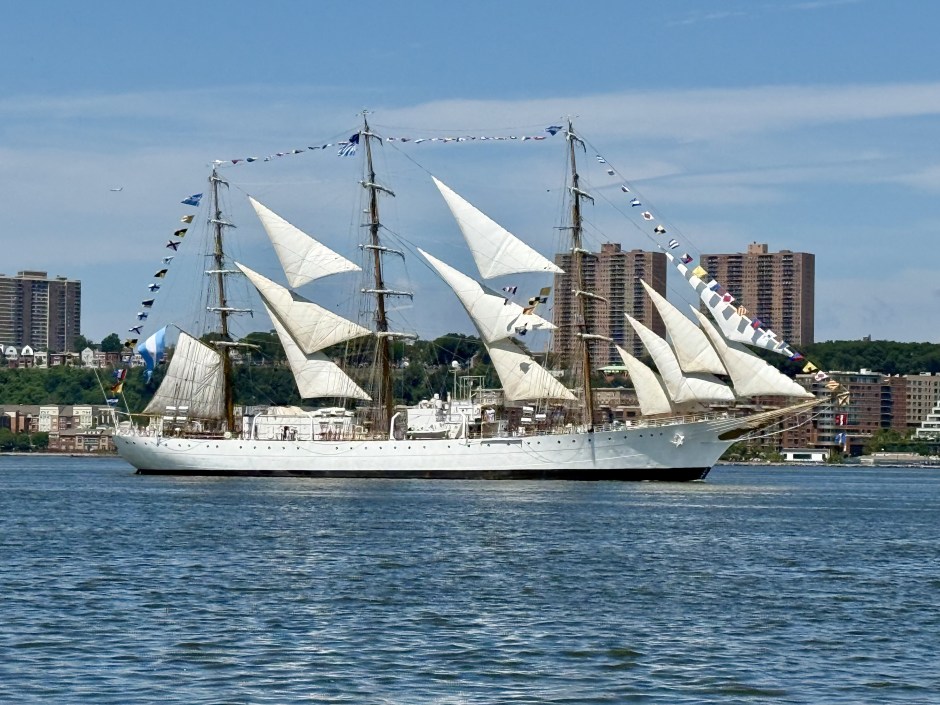
The tall ships were even more impressive than I had imagined! It was easy to tell which were the true tall ships versus the Class B sailing ships, which were scattered in with the tall ships. Often the ships would sound their horn as they passed by and everyone would cheer! You can see video of some of the ships on my Instagram reel HERE.
There were so many more ships than I had expected. Eventually some of the first ships were coming south again after turning around at the George Washington Bridge. I noticed that later in the parade more of the ships had their sails furled, perhaps to give them more control since they would be passing other ships coming south.
It was a lovely “Saturday in the park . . . I think it was the Fourth of July” (I made an Instagram reel using that song HERE haha). One of the things I loved about this was the international aspect of it – countries from all over the world here to celebrate our birthday, as we are reminded of our place alongside them. I doubt there will be another parade of tall ships like this for another 50 years, which I will not see. That knowledge made the experience all the more special, and I held a hope within my heart that those seeing the 300th birthday parade of tall ships will be doing so in a world and country that has improved in terms of peacefulness and quality of life for all.
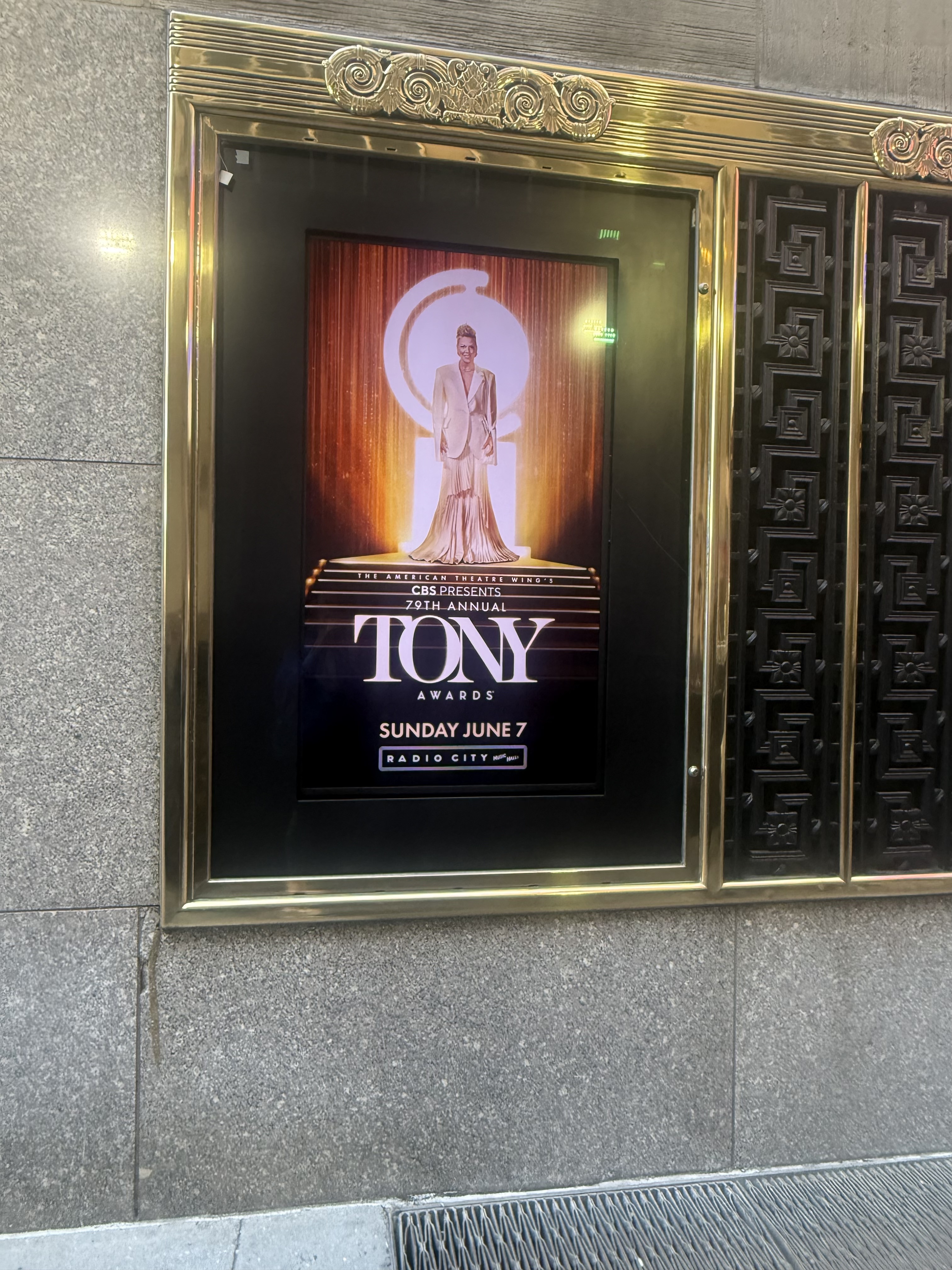
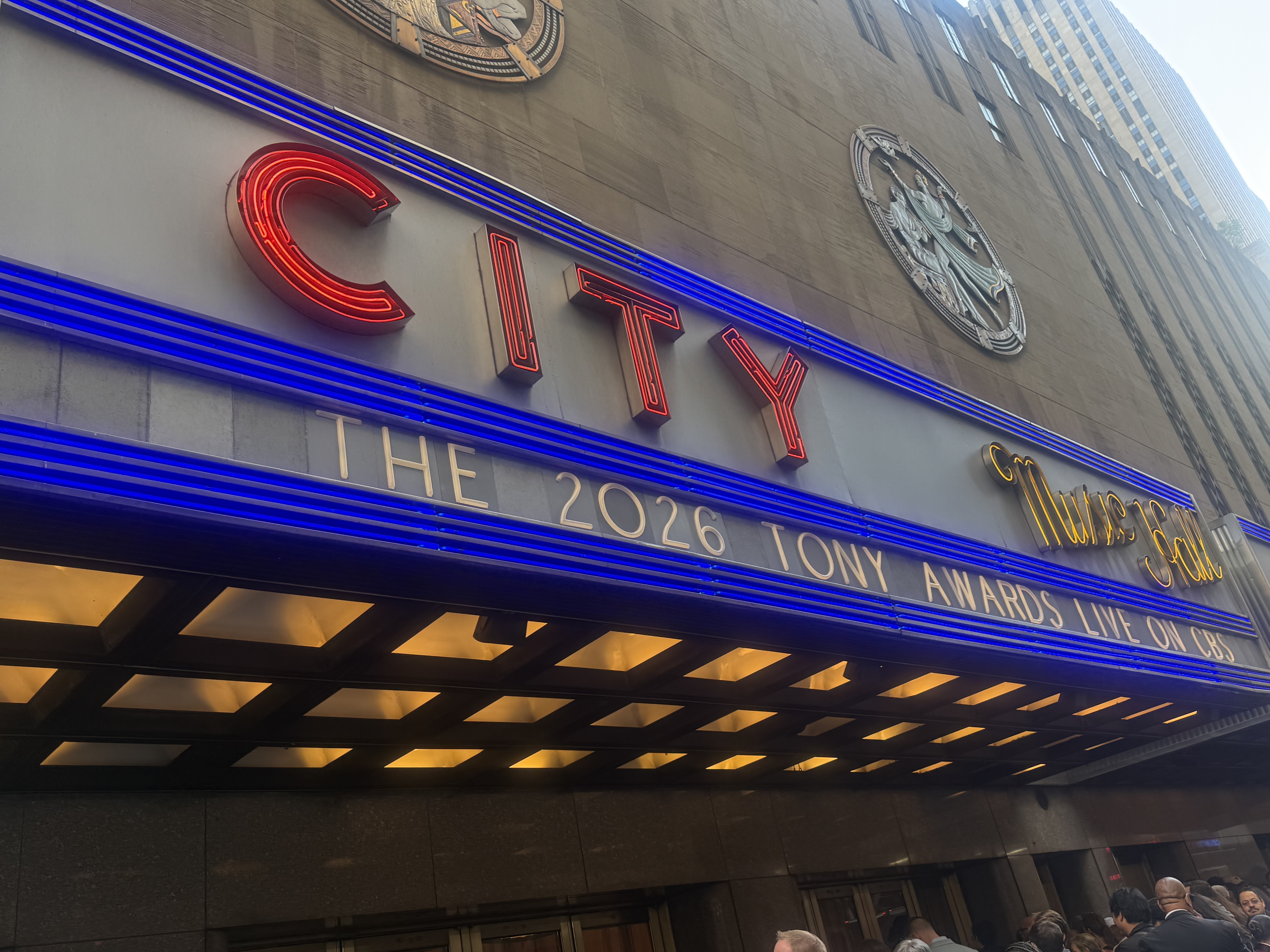
In 2022, I was lucky enough to attend the Tony Awards ceremony through a friend in the Broadway community, and I blogged about it the next year (here). This year I was able to attend the Tony Award dress rehearsal (through the same – very good! – friend) and thought I would compare the experiences.
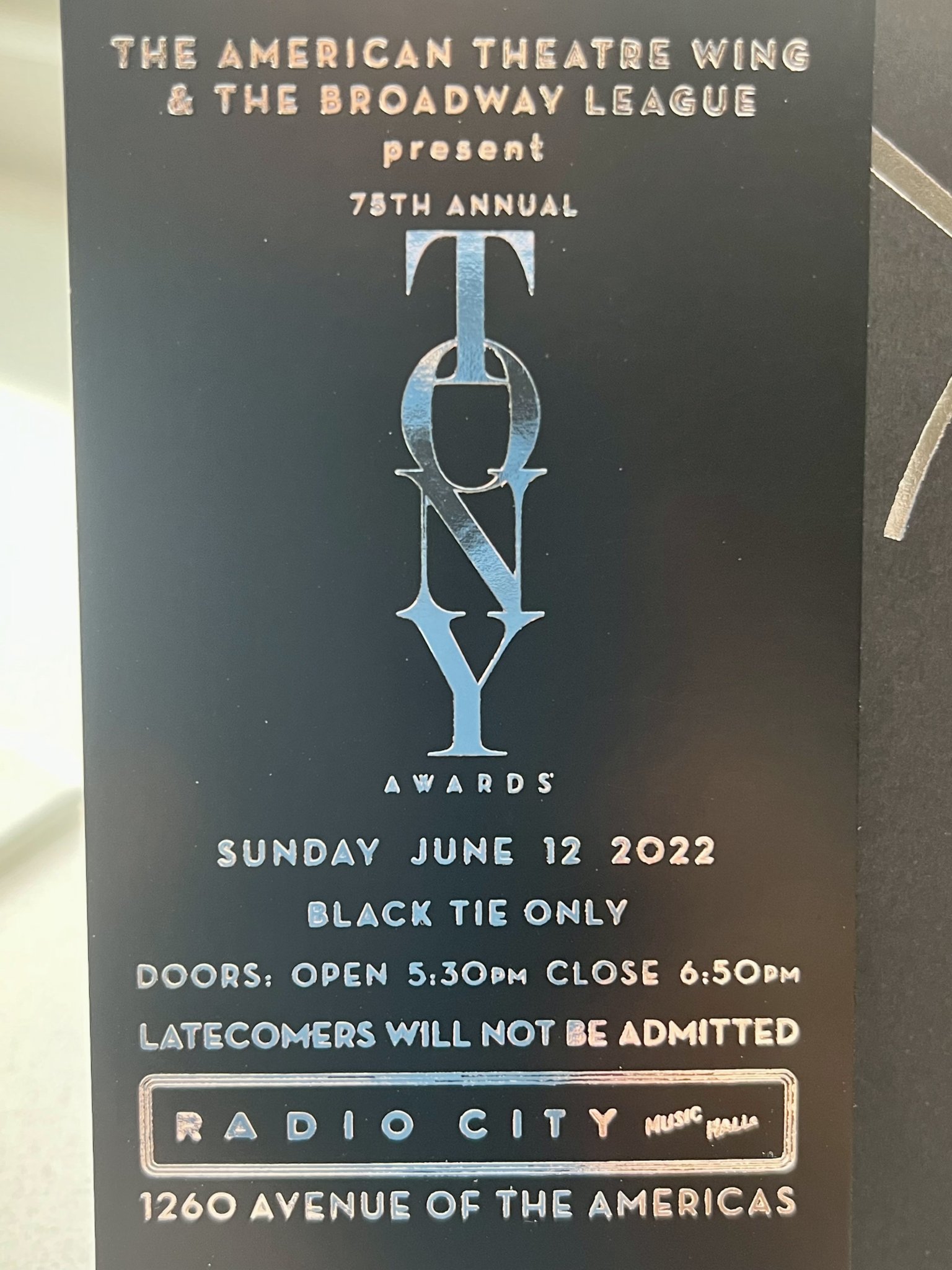
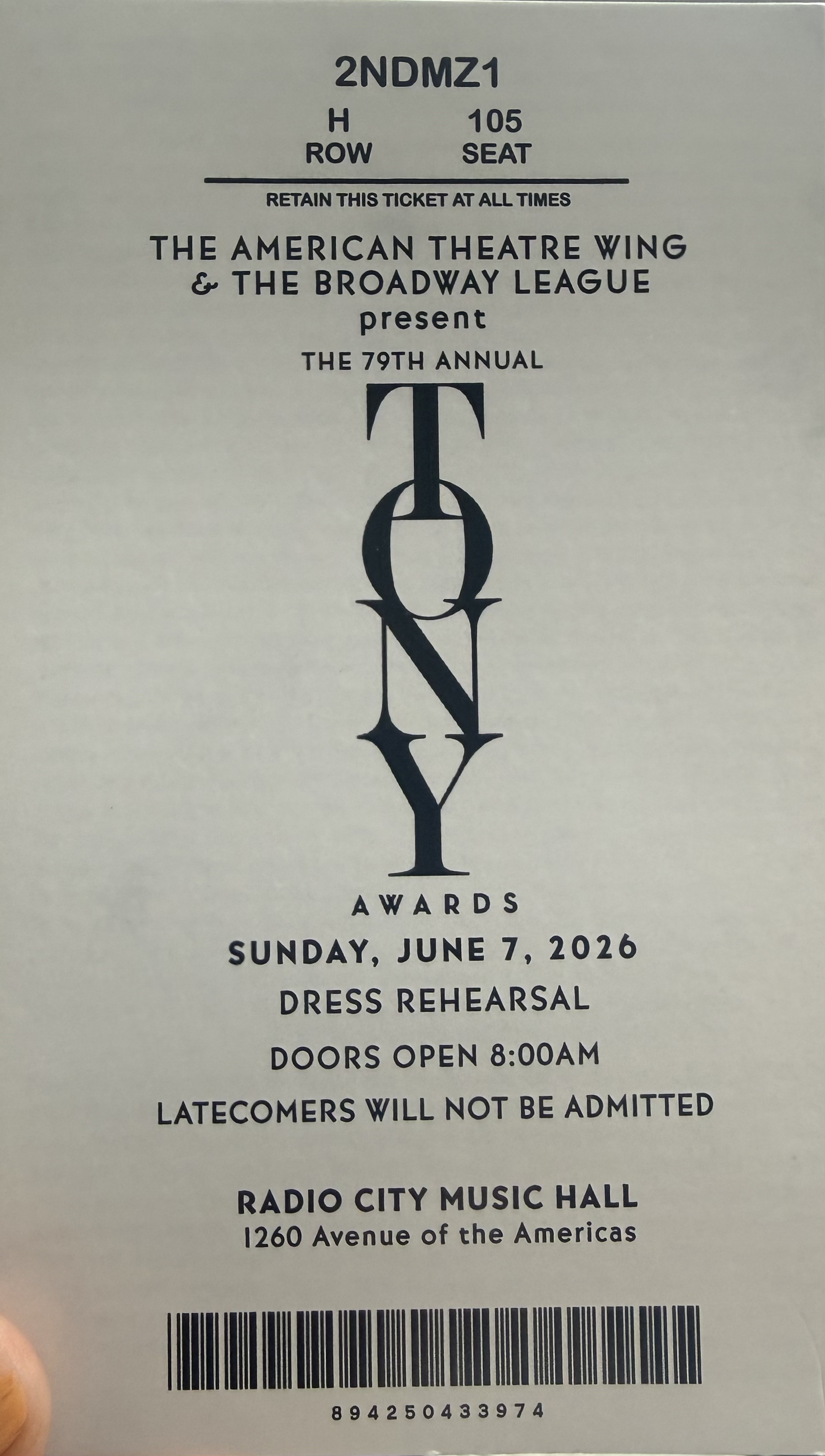
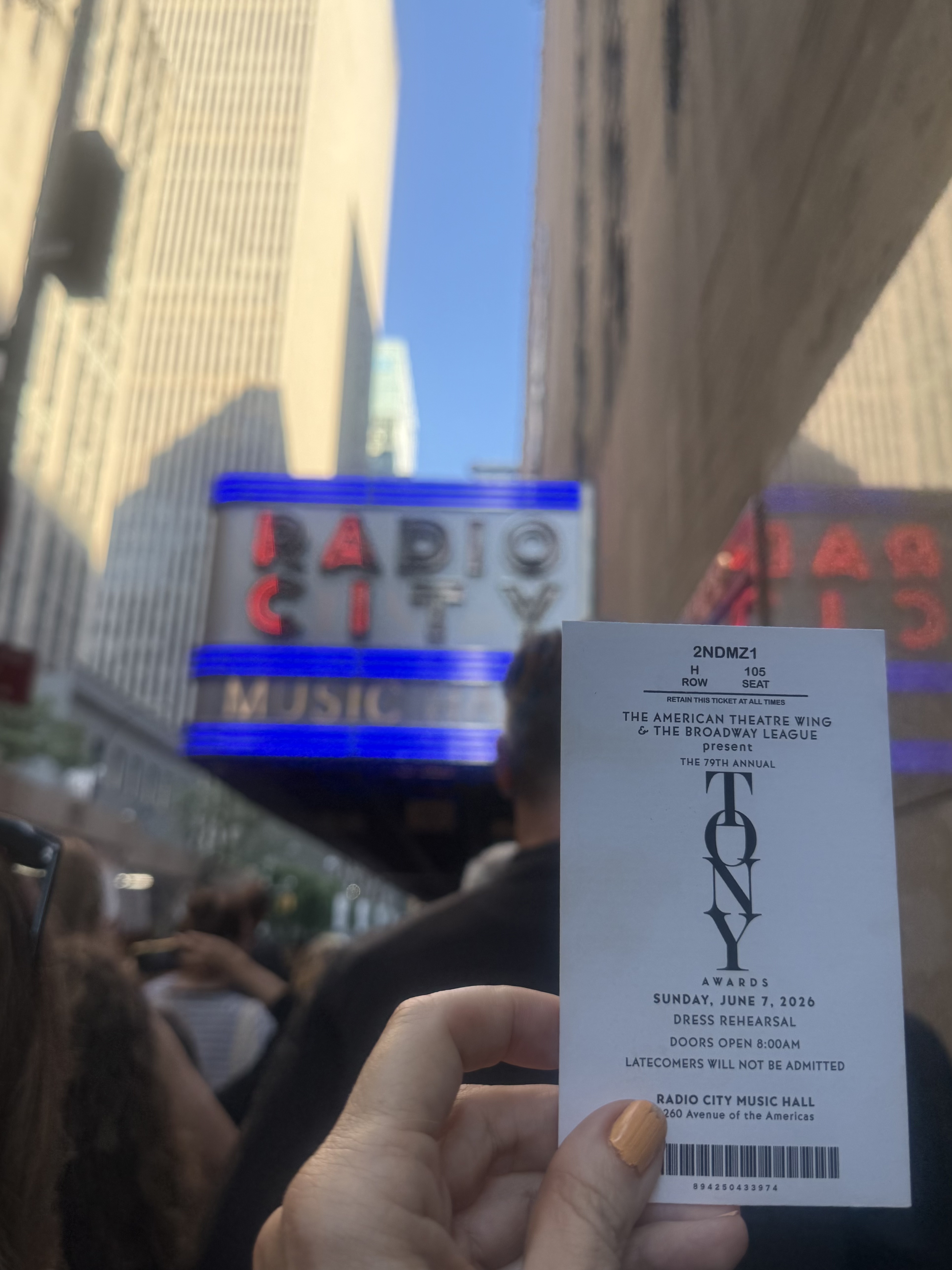
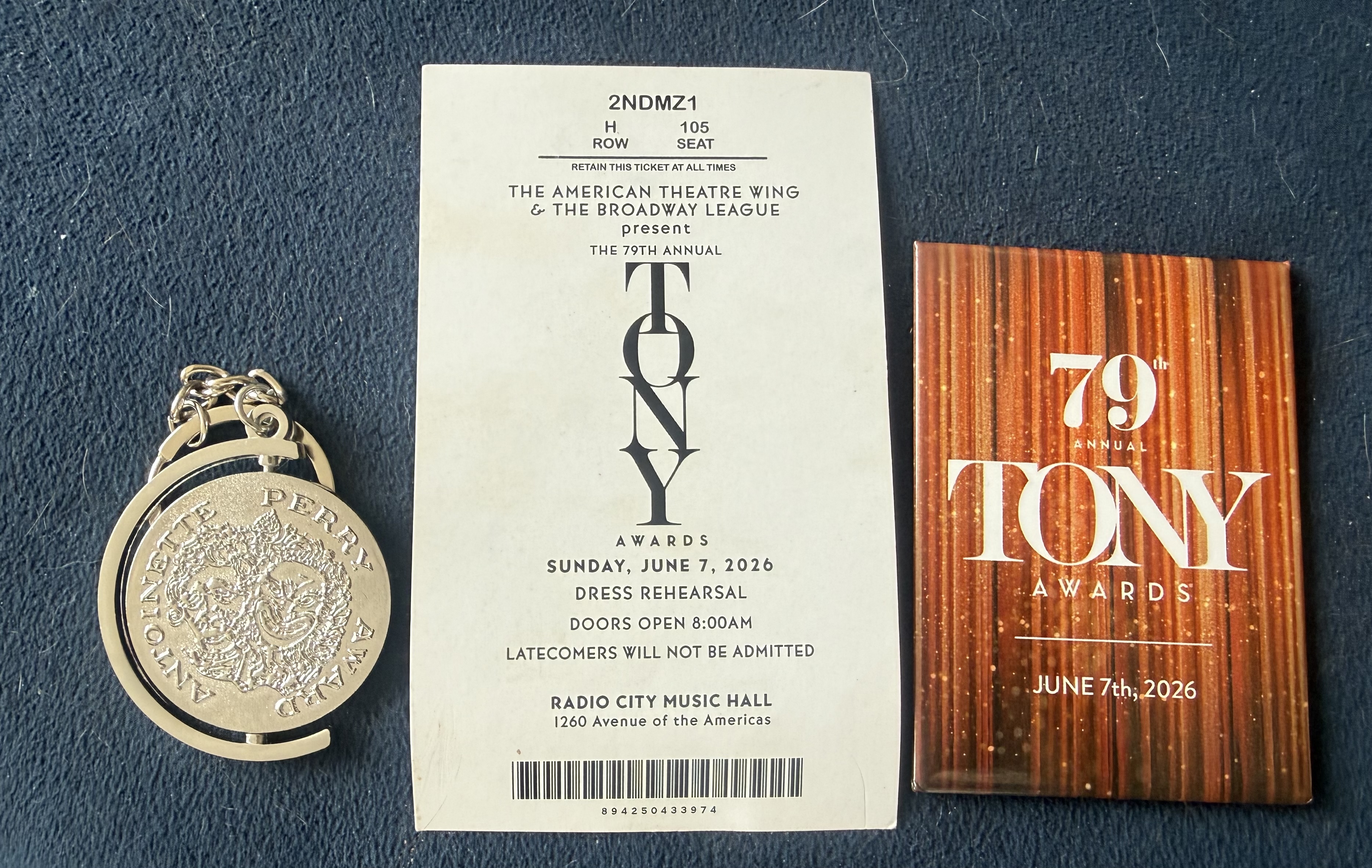
First, a comparison of the tickets. When I attended the ceremony, my ticket specified “black tie only” while that is not a requirement for the dress rehearsal. The ticket for the ceremony was thick and more elaborate – embossed, not printed. And I was fortunate enough to be in the orchestra for the 75th Tony Awards, but no ticket holder sits in the orchestra for the dress rehearsal.
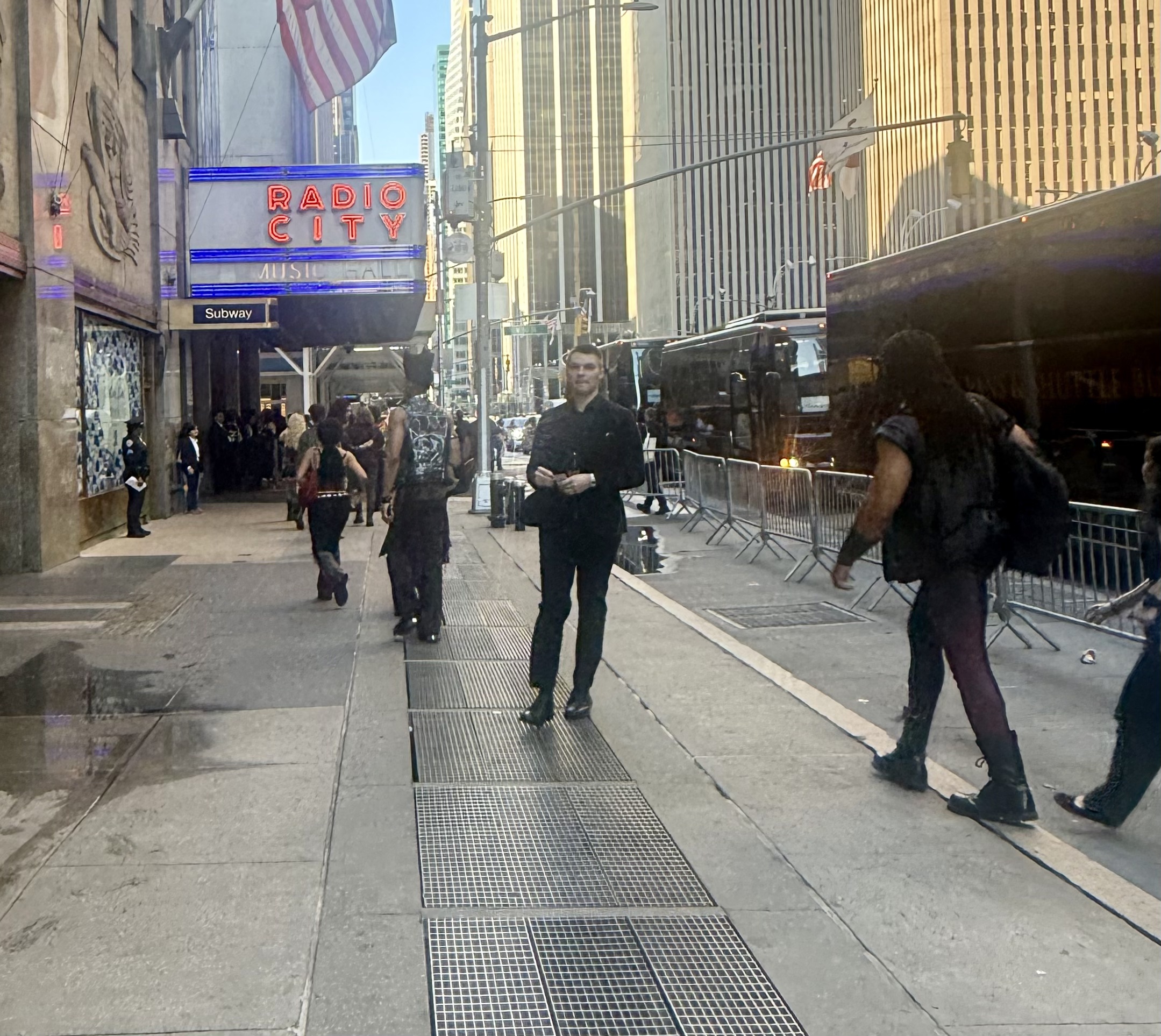
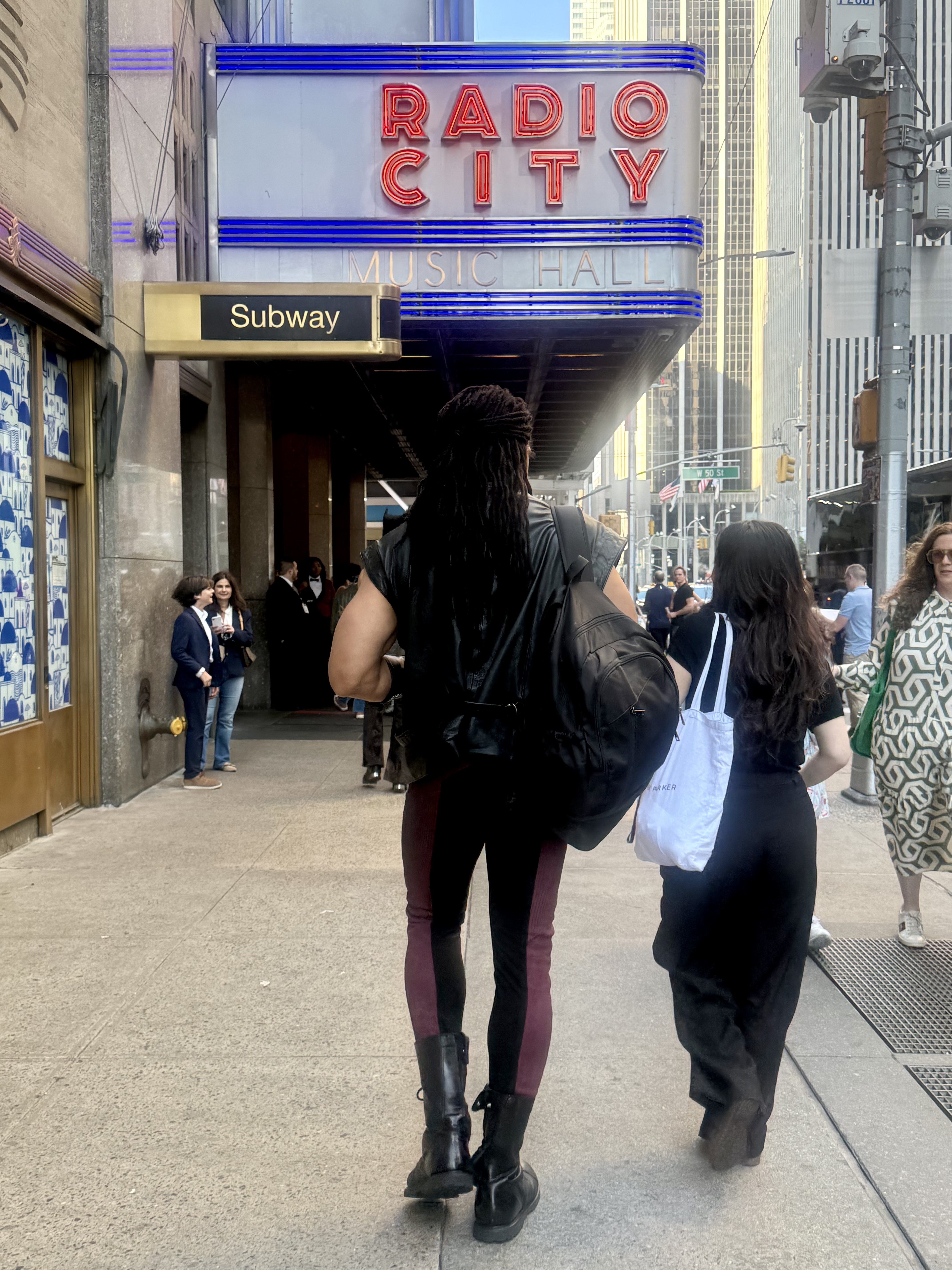
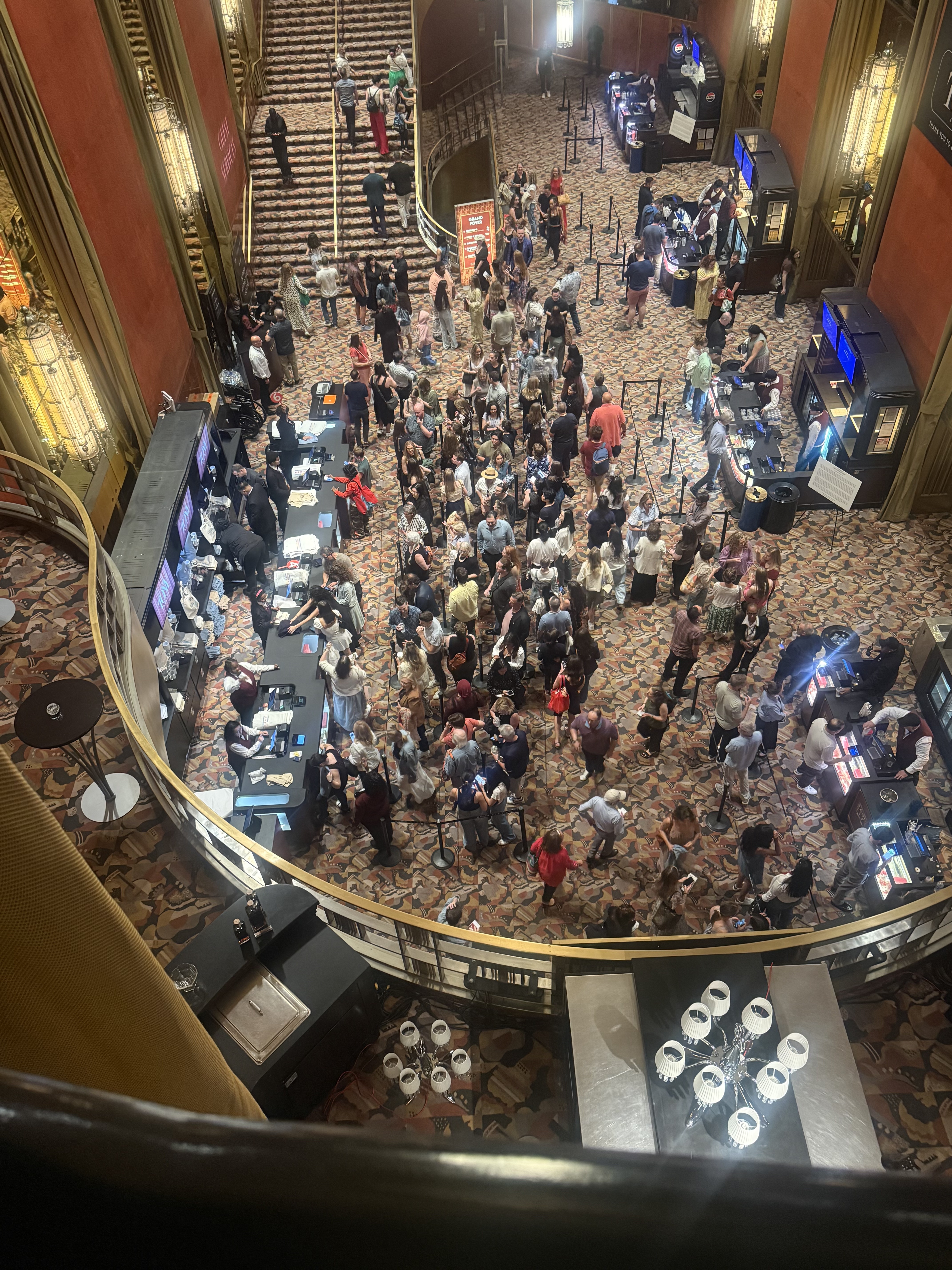
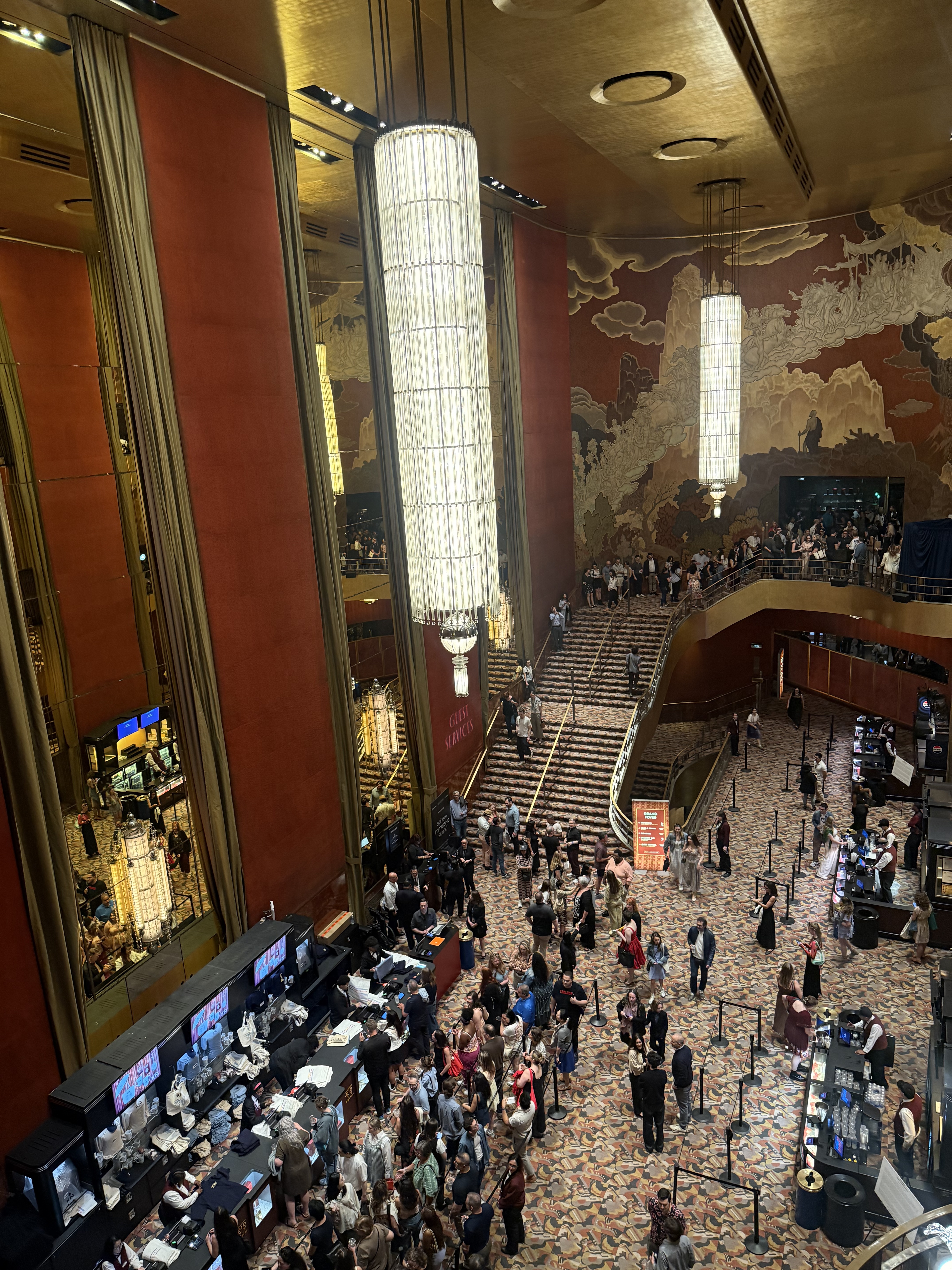
The dress rehearsal is held early on the same morning as the Tony Awards, which makes for a very long day for those also performing that day! As I was preparing to enter at 7:50, I saw the bus for The Lost Boys show up and the cast, already in full costume and makeup, enter Radio City (see below). They then performed at about 11:30 that morning in the dress rehearsal, had a 1PM matinee, and of course were back for the ceremony that evening. And then there are after-parties! Luckily there are generally no performances on Monday.
We were let in, under the usual tight security, at about 8am. There were concessions for sale, as well as merchandise. I was happy to see that, as I still enjoy the shirt and sweatpants I got at the 75th Tonys, and for this one I picked up a keychain and a magnet.
This dress rehearsal never has tickets for sale, they are freely distributed to the Broadway community and is an insider event. They have had tech rehearsals with no audience in the days leading up to Tony day, but this is a chance to do a run through in real time with an audience.
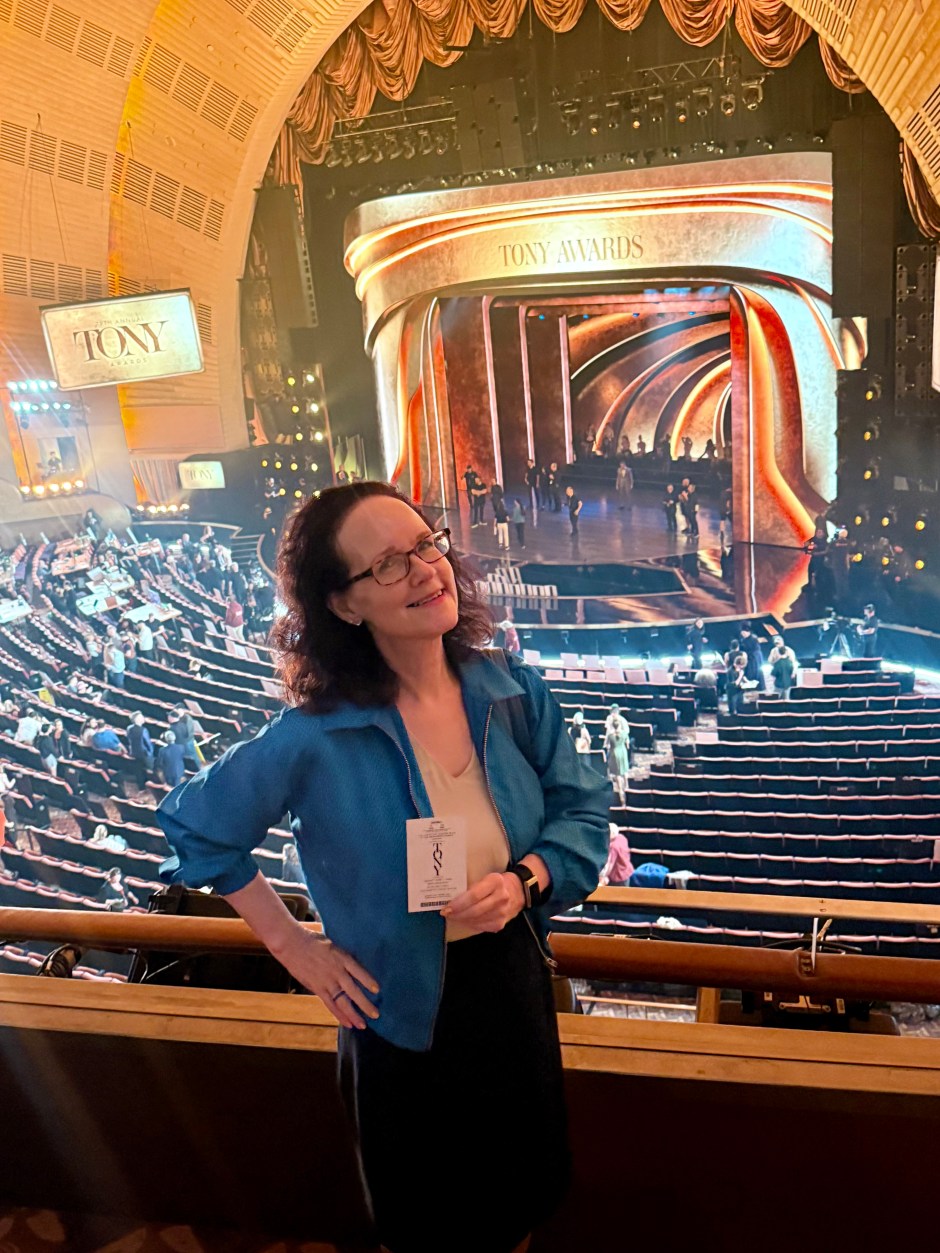
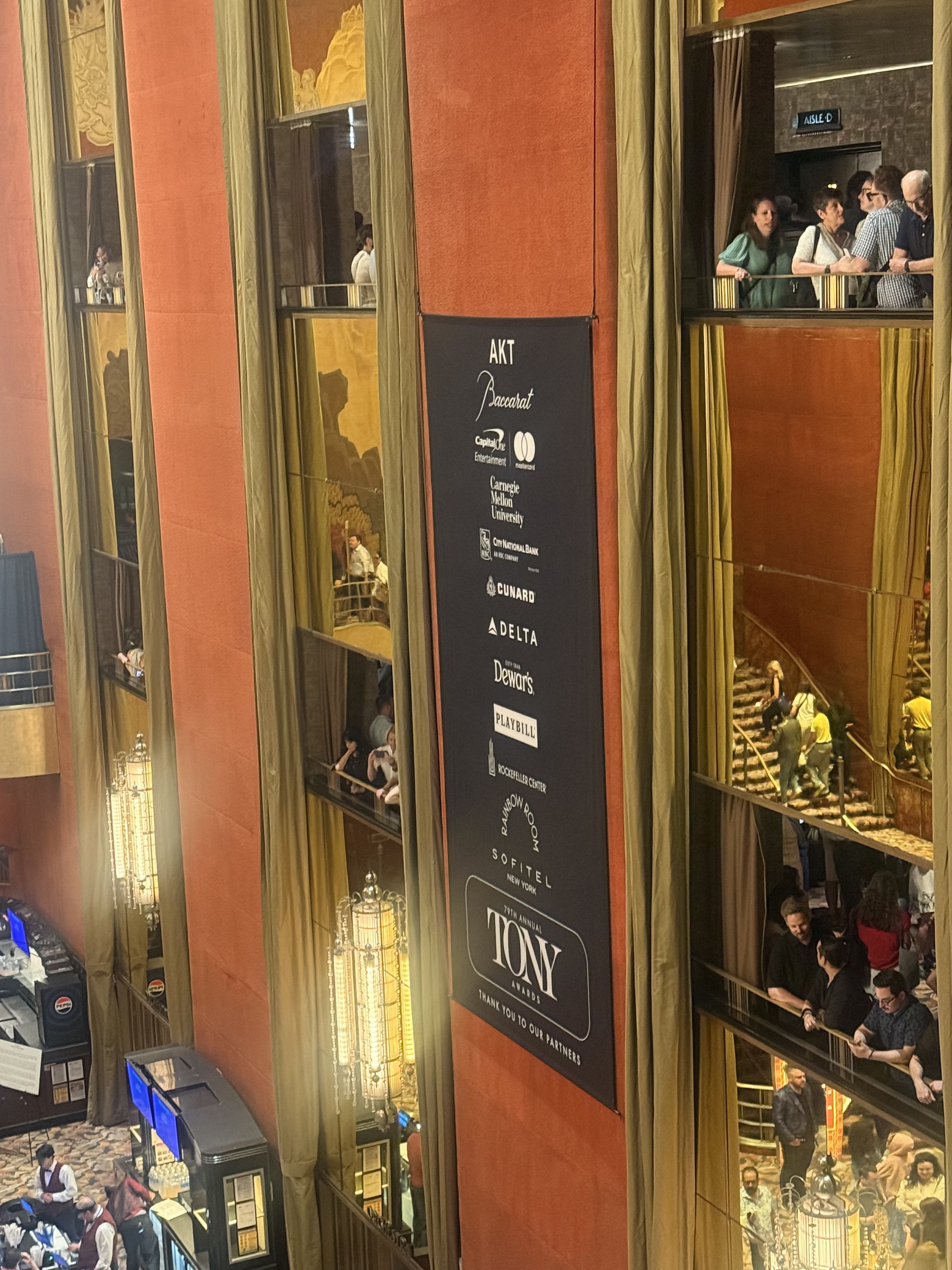
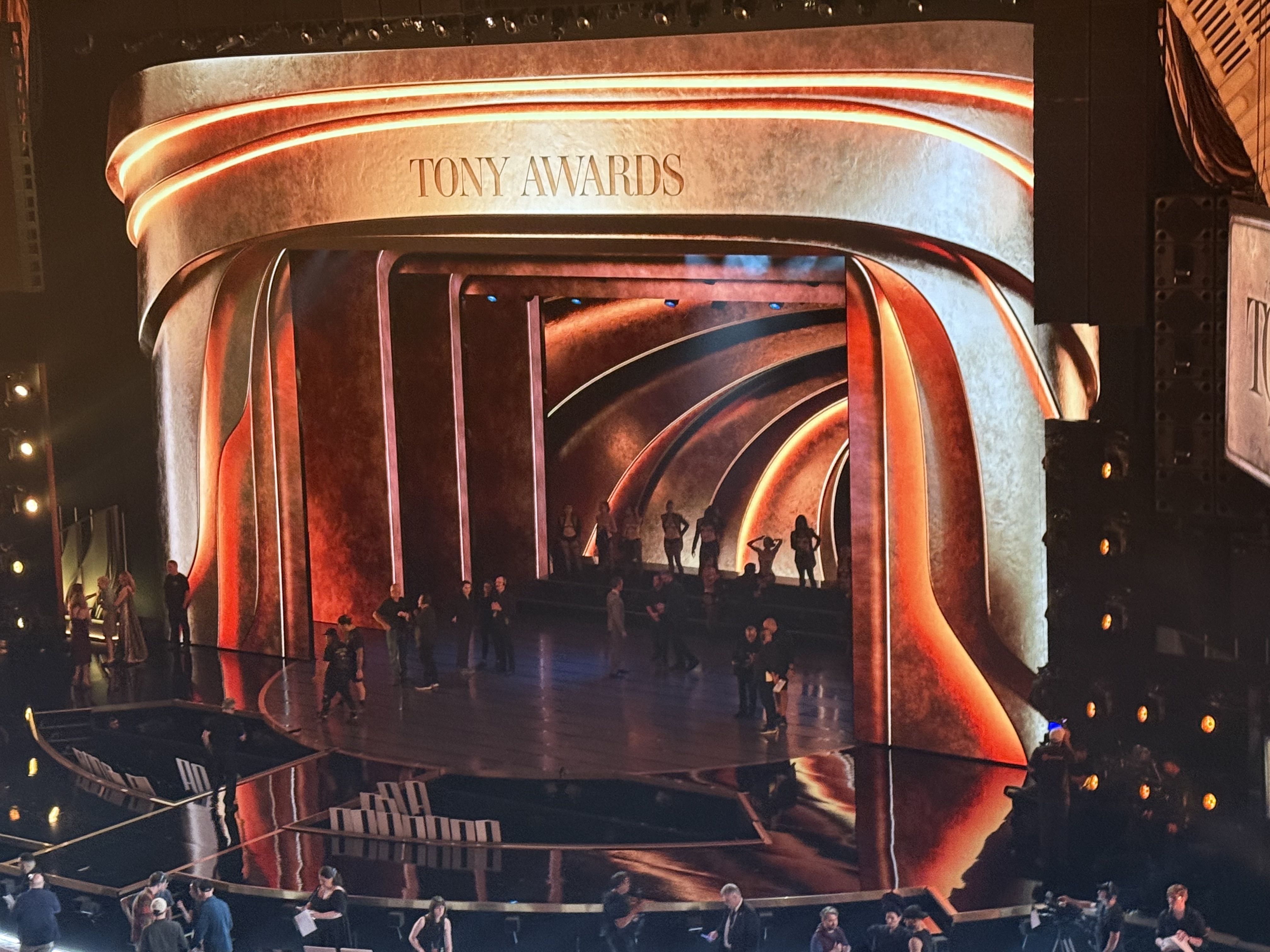
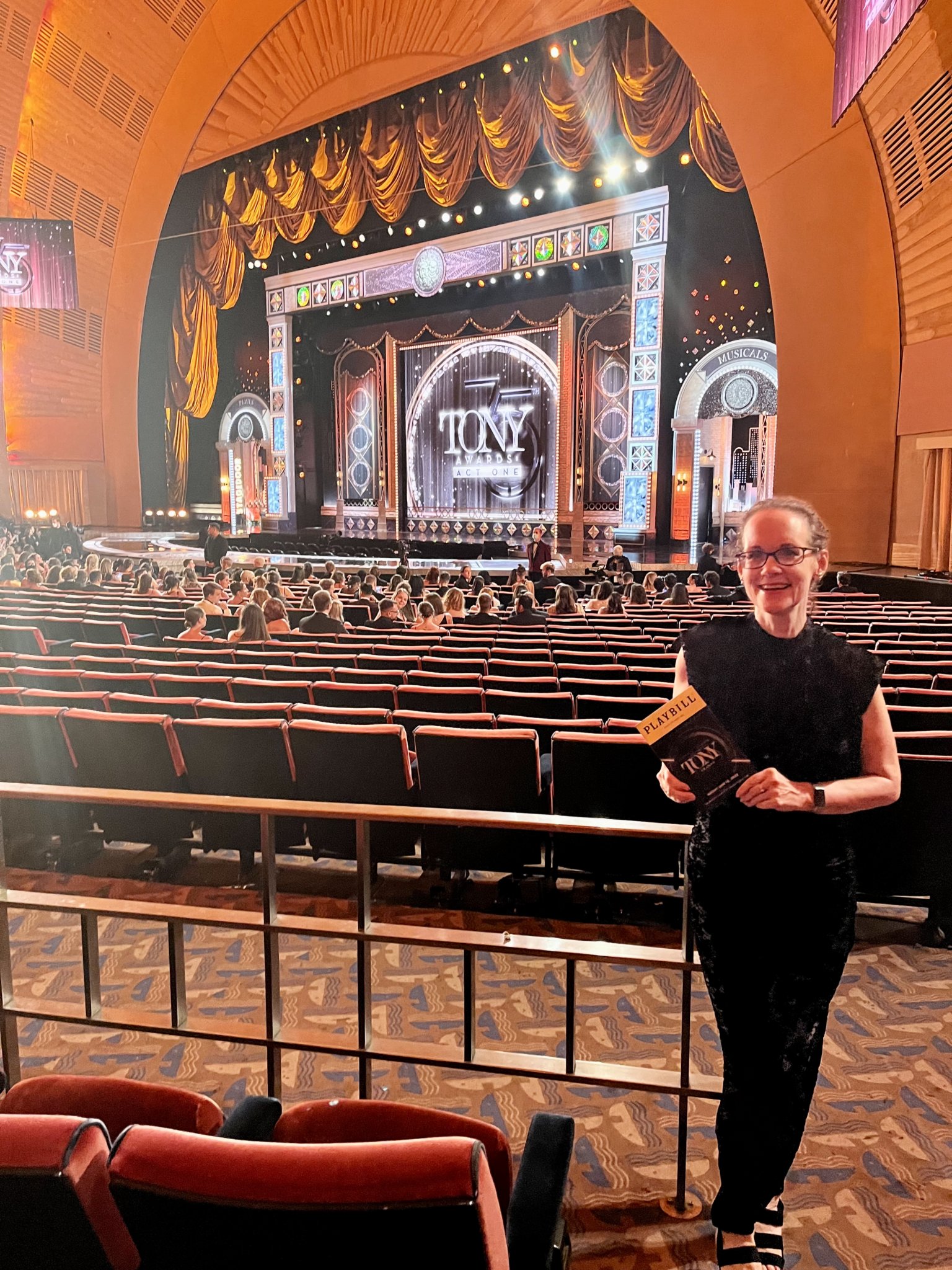
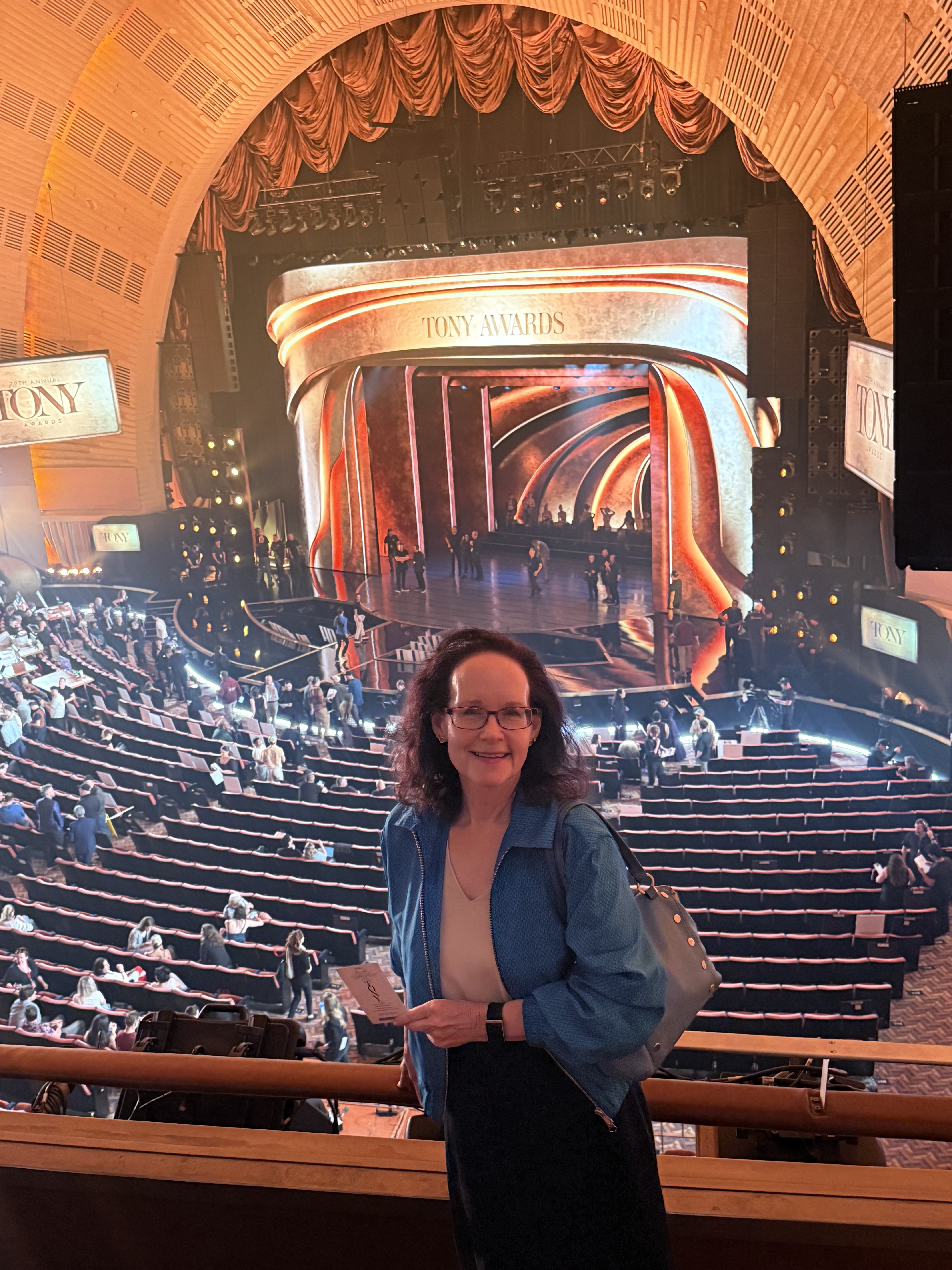
We were held in the lobby for longer than expected, and could faintly hear them rehearsing the opening number several times while waiting. We were finally let in a little after 9, with the dress rehearsal starting shortly after that. I had enough time to take a few pictures inside, of the set and of myself to compare with last time, before putting my phone away – no photos or videos allowed during the dress rehearsal.
One of the things you can see from looking behind me in the pictures from the dress rehearsal is how the orchestra is really a work zone. There were large signs on certain chairs where nominees or celebrities would be sitting, with a photo of them as well. For camera work during the dress rehearsal where they intend to show someone in the audience, you could see who they planned on showing because they would show the seat with the name and photo. During the Cats: The Jellicle Ball number I saw Rum Tum Tugger interacting with the chair for Paul Rudd, and in fact it did happen during the live show.
The show was a full run through of the main three hour ceremony aired on CBS that night. When there were commercial breaks, the time was used to set up for the next segment just as when you attend the award ceremony, and you hear the countdown in the same way (“back live in 15 seconds . . . . 10, 9, 8 . . .” etc). I don’t need to run through all the numbers since at this point anyone who cares has watched or could watch the awards show. But what was interesting was that they do go through giving out all the awards just as they would that evening. But each time the presenter would read out the “winner,” they would say, “And the Tony Award, for this rehearsal only, goes to . . .” and a seat filler would come up and accept the award. They really could say anything and had been encouraged to keep it brief. At least three of the “acceptances” contained some version of “Go Knicks!” as we are two wins away from the NBA Championship, which was kind of charming. I thought at first they were selecting the least likely to win in each category but realized toward the end, when the winner of Best Actor in A Musical was announced as Joshua Henry (one of the least surprising wins) that they were likely just trying to give the orchestra practice playing all of the snippets of music that would be played as a winner came up to accept an award. It also gave the announcer a chance to realize which names he needed to practice (as he mangled Lear DeBessonet’s name during the dress rehearsal).
Speaking of presenters, not all were at the dress rehearsal, so I was even more impressed with those who were: Sting, Annette Bening, Sarah Paulson, Patrick Wilson, Billy Crystal, Megan Thee Stallion, and even Bernadette Peters were there in person to run through their presentation. Even Stone, Parker, and Lopez were there to introduce the Book of Mormon 15th anniversary number. Others weren’t there for the rehearsal, like Paul Rudd and Nicole Scherzinger. Presenters just wore casual clothes as well, although Pink was in full attire including all her costume changes, and of course all the musical numbers had performers in full makeup and costume. But when Rachel Ziegler sang “What I did for Love,” or Neil Patrick Harris and Ariana DeBose showed up to give Pink tips on hosting, they were just in casual clothes.
Before two of the musical numbers, during the commercial breaks, the show’s choreographer came out to give us tips on how to participate. So on the award show, if you thought the audience magically knew how to clack their fans for Jellicle Ball or do the Time Warp during the Rocky Horror number, you can now realize they had been coached!
Occasionally, a cue was called out, and there was a small technical issue at the beginning of The Lost Boys number, but overall things went very smoothly. Pink fumbled lines once and said “I promise I will learn to speak by tonight!” And when she was trying to get out of her flying apparatus at the very beginning, Neil Patrick Harris had to help her – they handled it so well I thought it might have been scripted, but didn’t happen at the televised ceremony. We didn’t get a program, which is also what I have experienced when attending an invited dress rehearsal the night before a first preview of a new show on Broadway. Like those invited dress rehearsals, the one for the Tony Awards allowed the show to do a complete run through with an audience, and also serves as a way to thank all of the people in the Broadway community who are a part of each show’s success but are not routinely given tickets to the award ceremony.
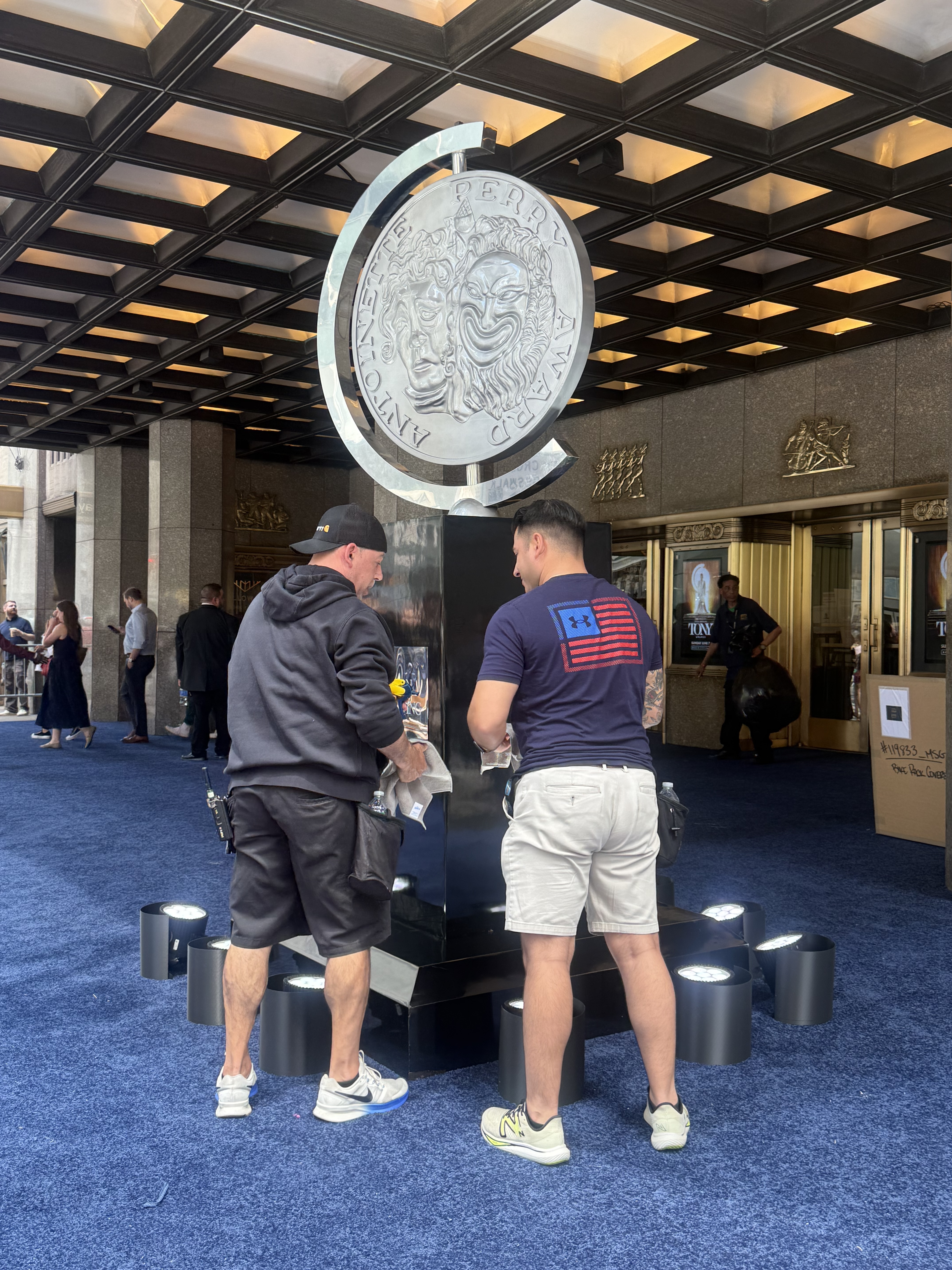
We got out about 12:15, and they were still setting up for the ceremony as we left, installing a huge Tony Award in front of Radio City and getting the red carpet ready. I really enjoyed experiencing the dress rehearsal, and of course hearing the musical numbers live is always a different experience that when hearing music broadcast. Leslie Odom Jr.’s “Without You” during In Memoriam, and Rachel Ziegler’s “What I did for love” were far more powerful in person than when I heard them on the live broadcast at night. I hope this wasn’t my last time to attend the Tony Awards dress – and if I am lucky perhaps attending both the dress and the ceremony in one day could be in the future as well!
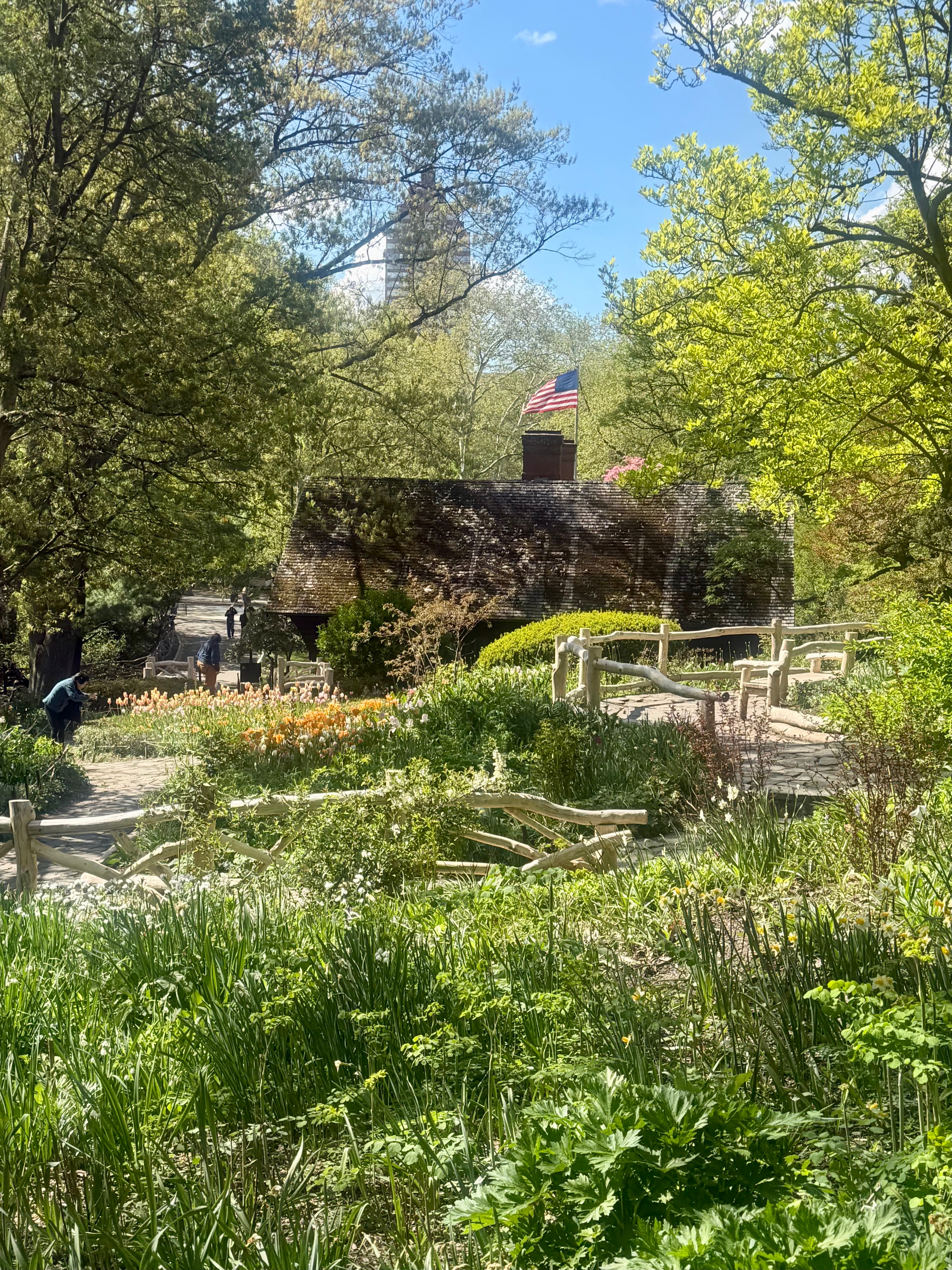
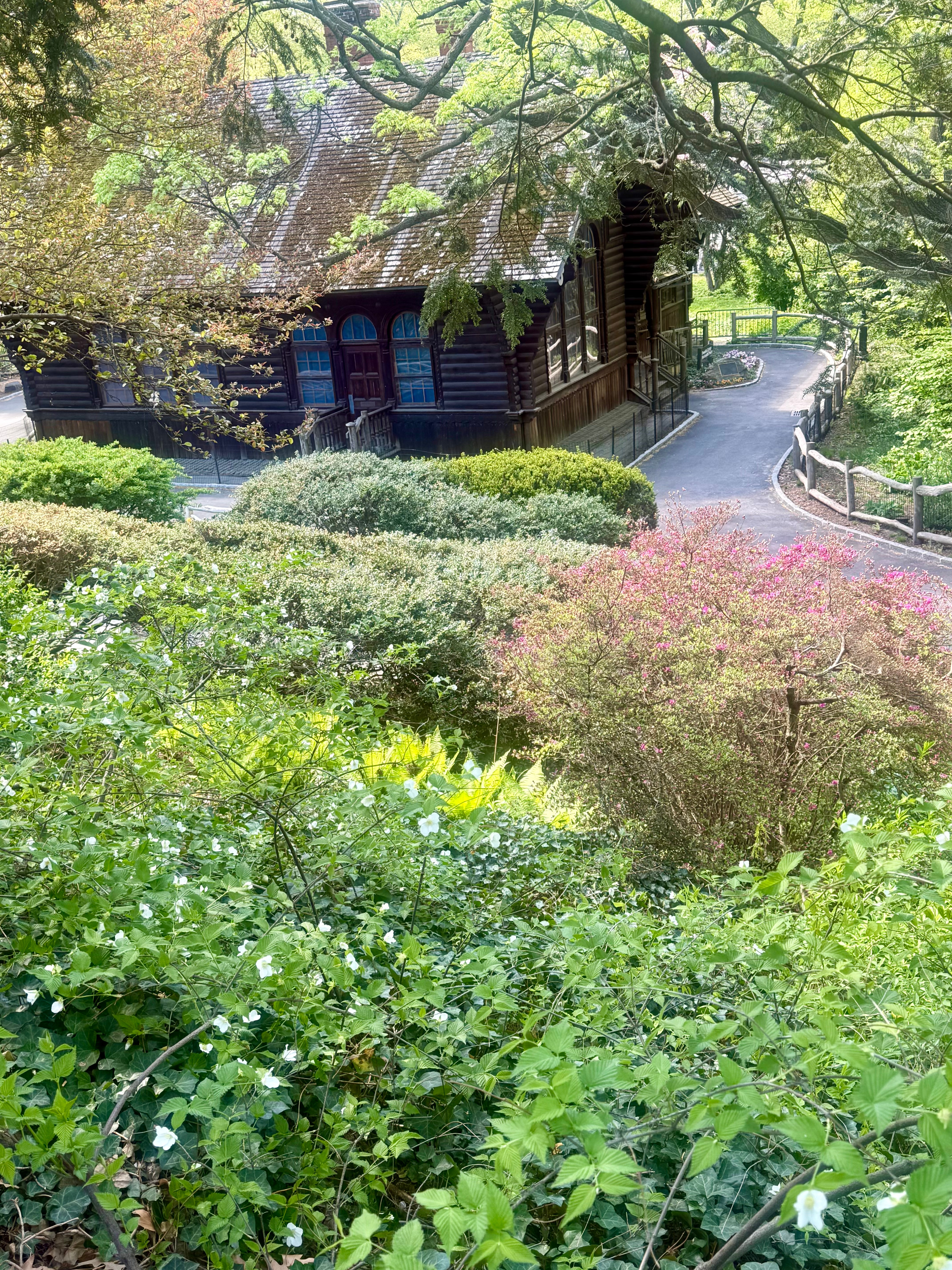
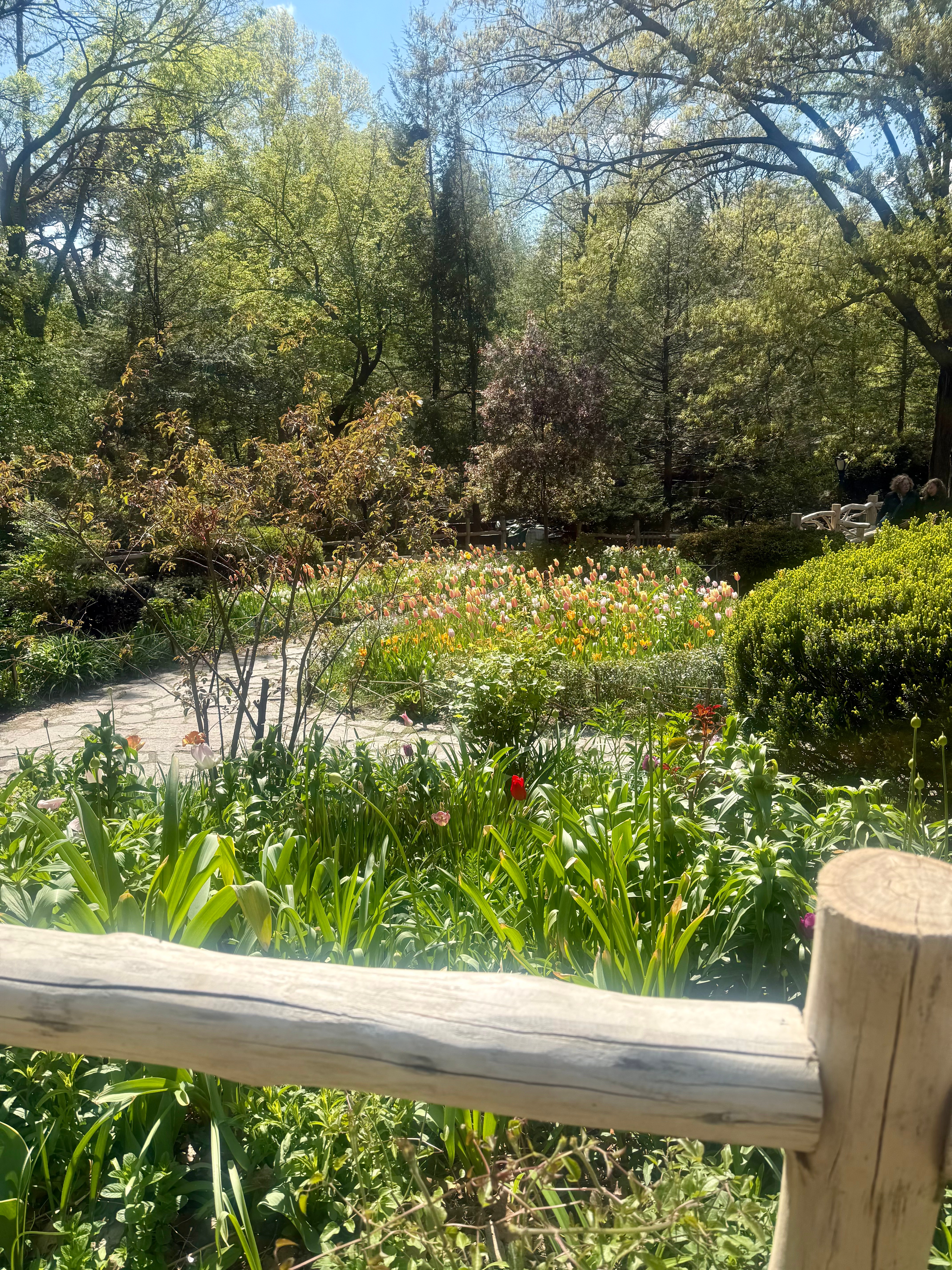
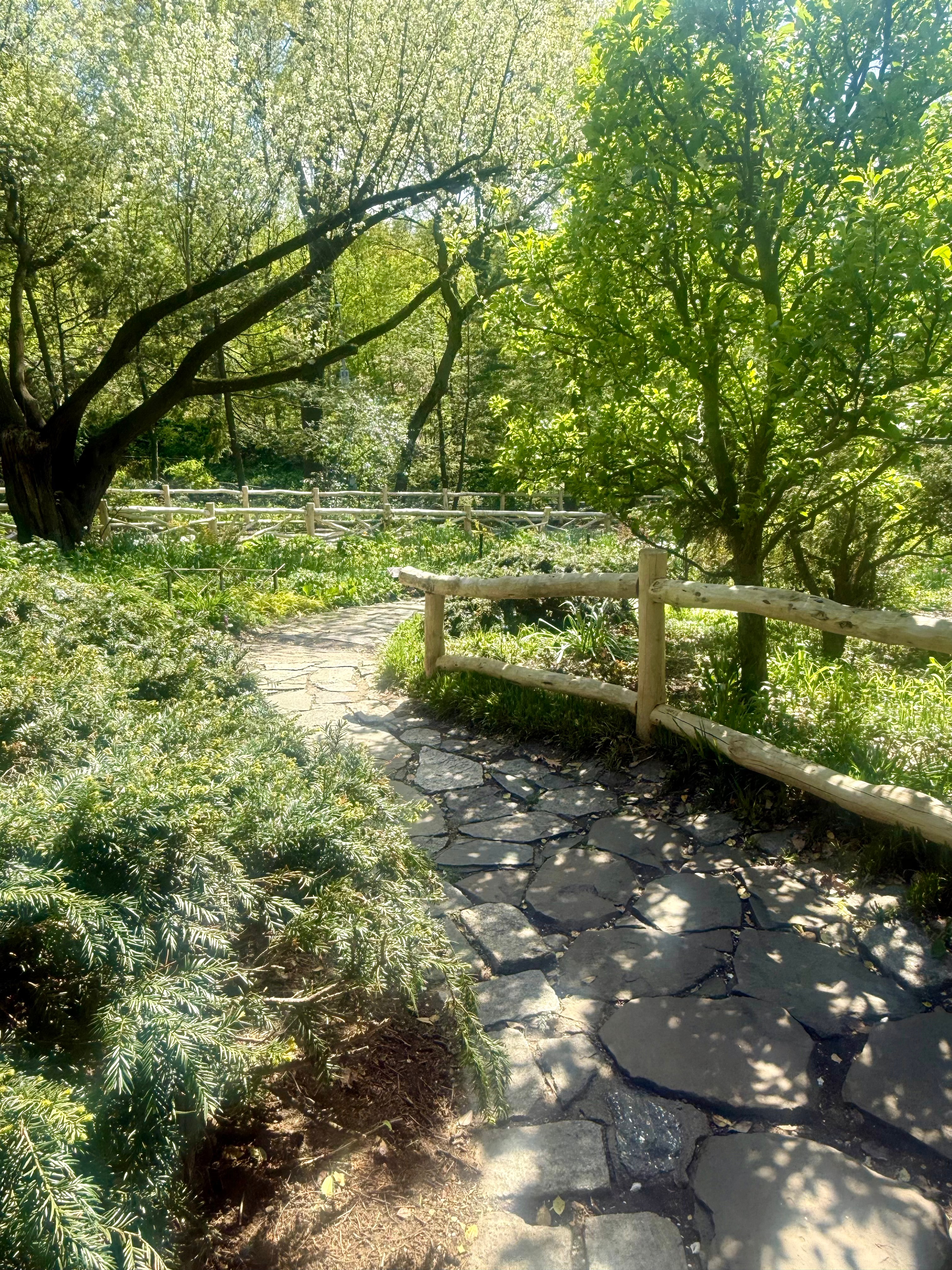
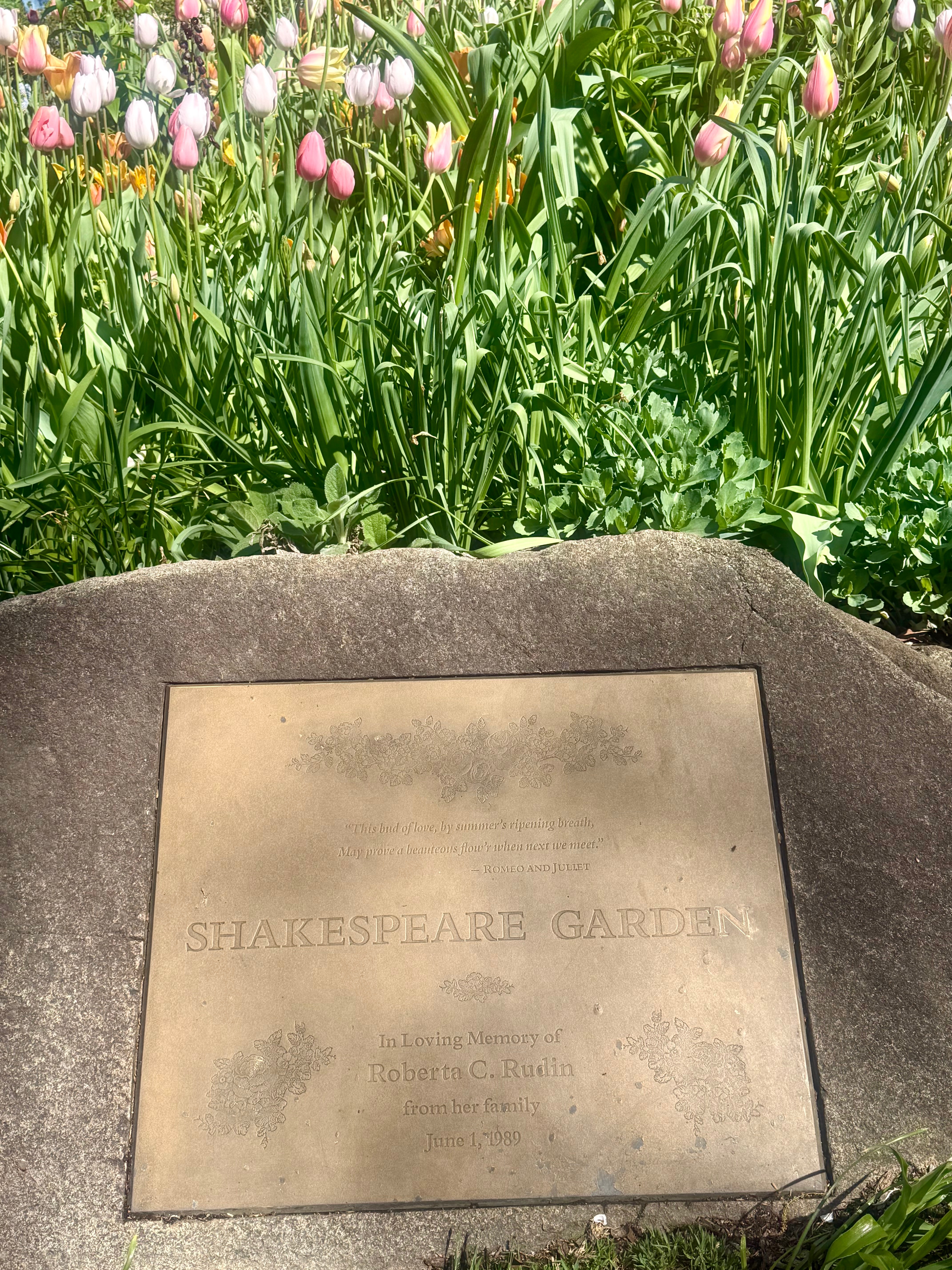
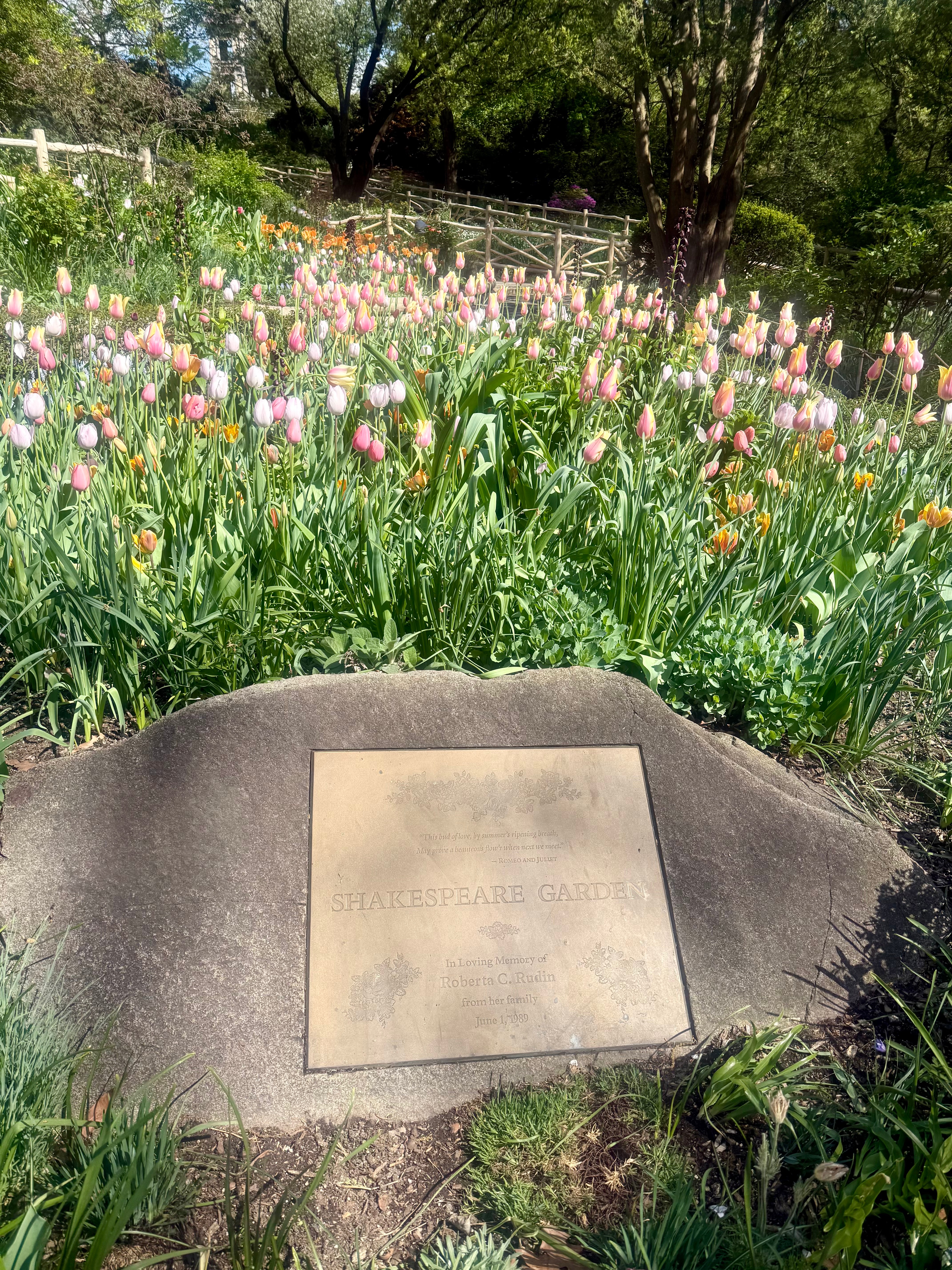
The Shakespeare Garden is located mid-park, closer to the west side, and closest to the 81st Street entrance. It is just behind the Swedish Marionette Theater, and to the side of the Delacorte Theater, home to free Shakespeare in the Park every summer. The park was once called “Garden of the Heart” and was designed to evoke an English cottage garden. It was renamed after Shakespeare in 1916 during the commemoration of the 300th anniversary of Shakespeare’s death.
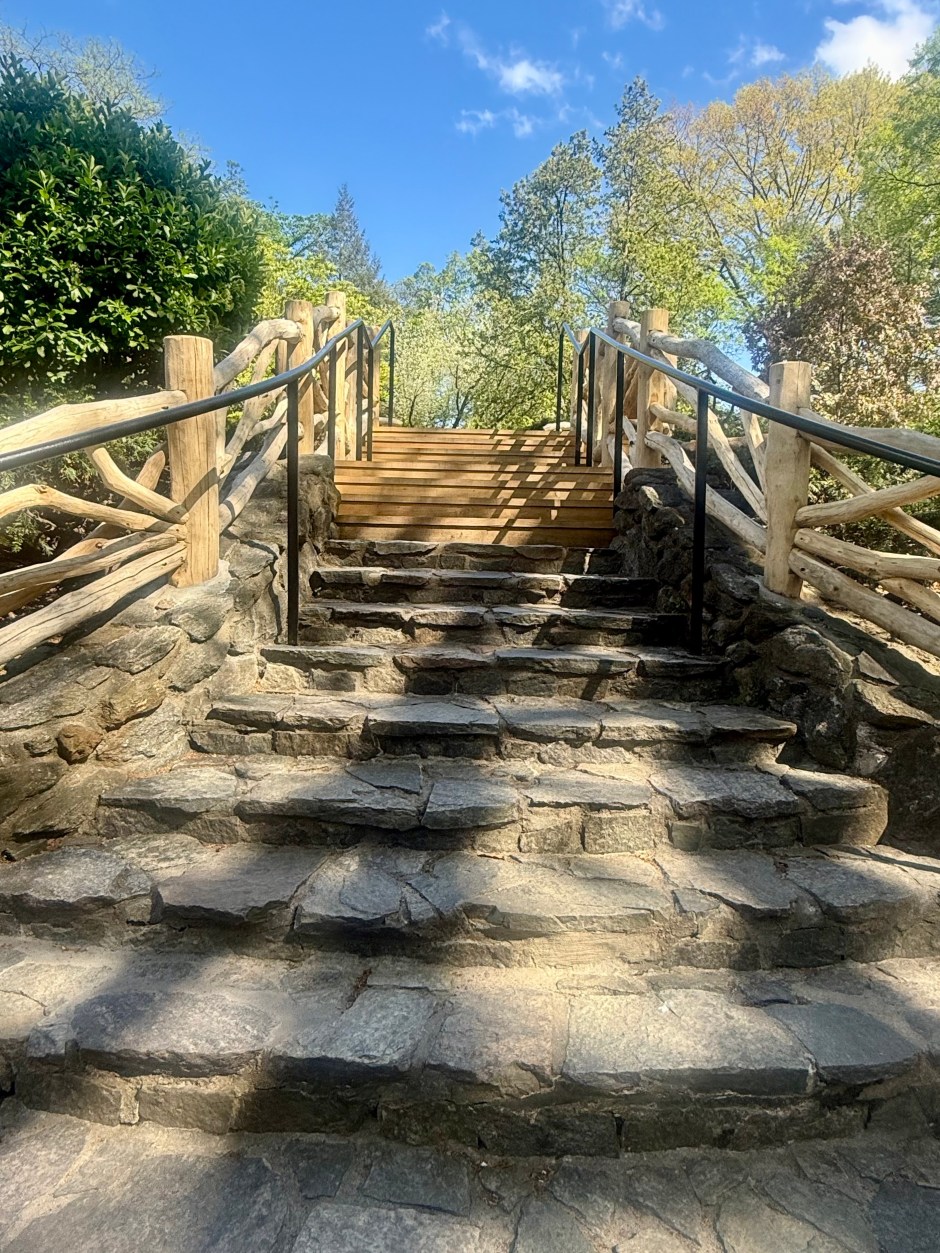
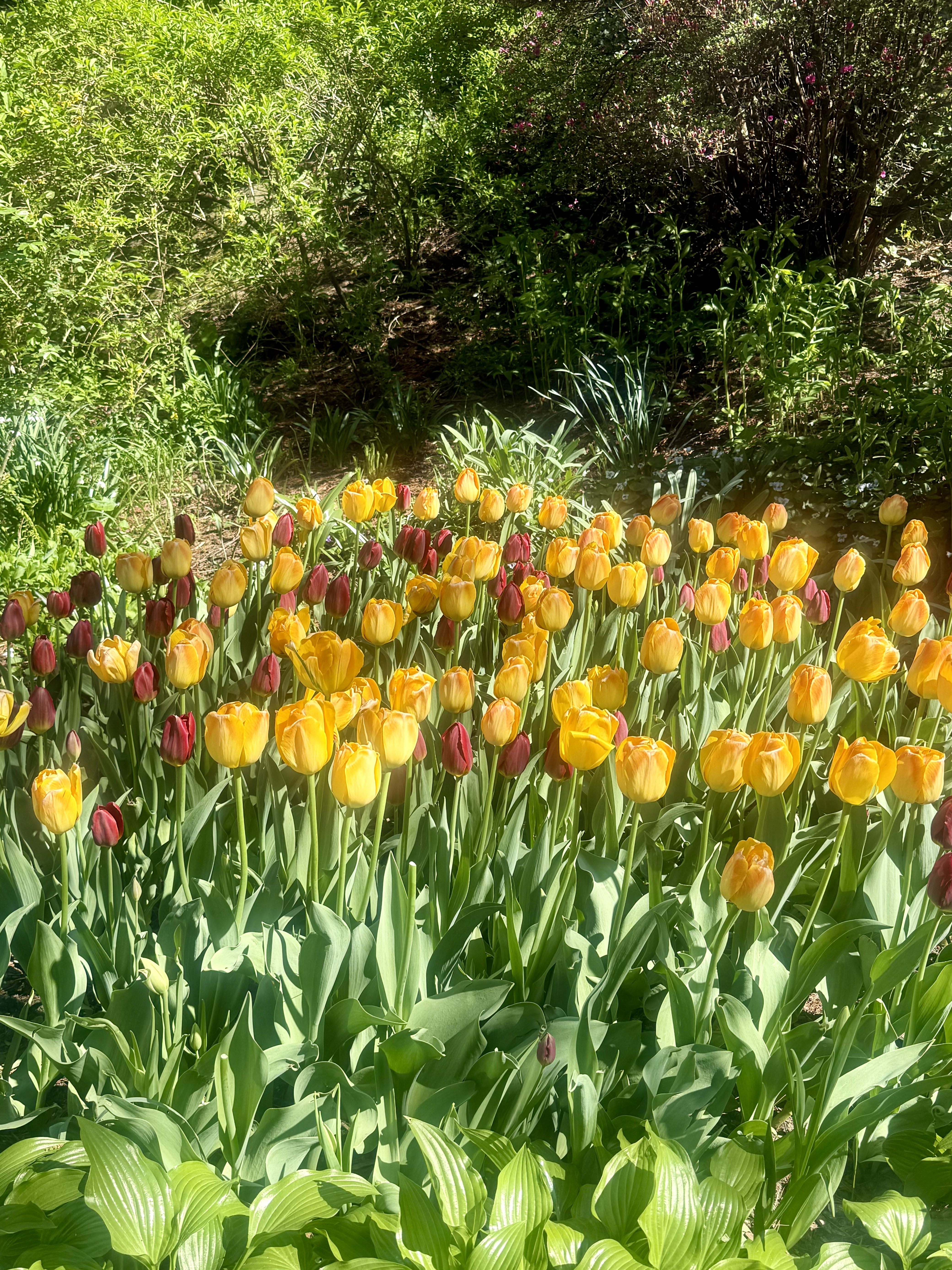
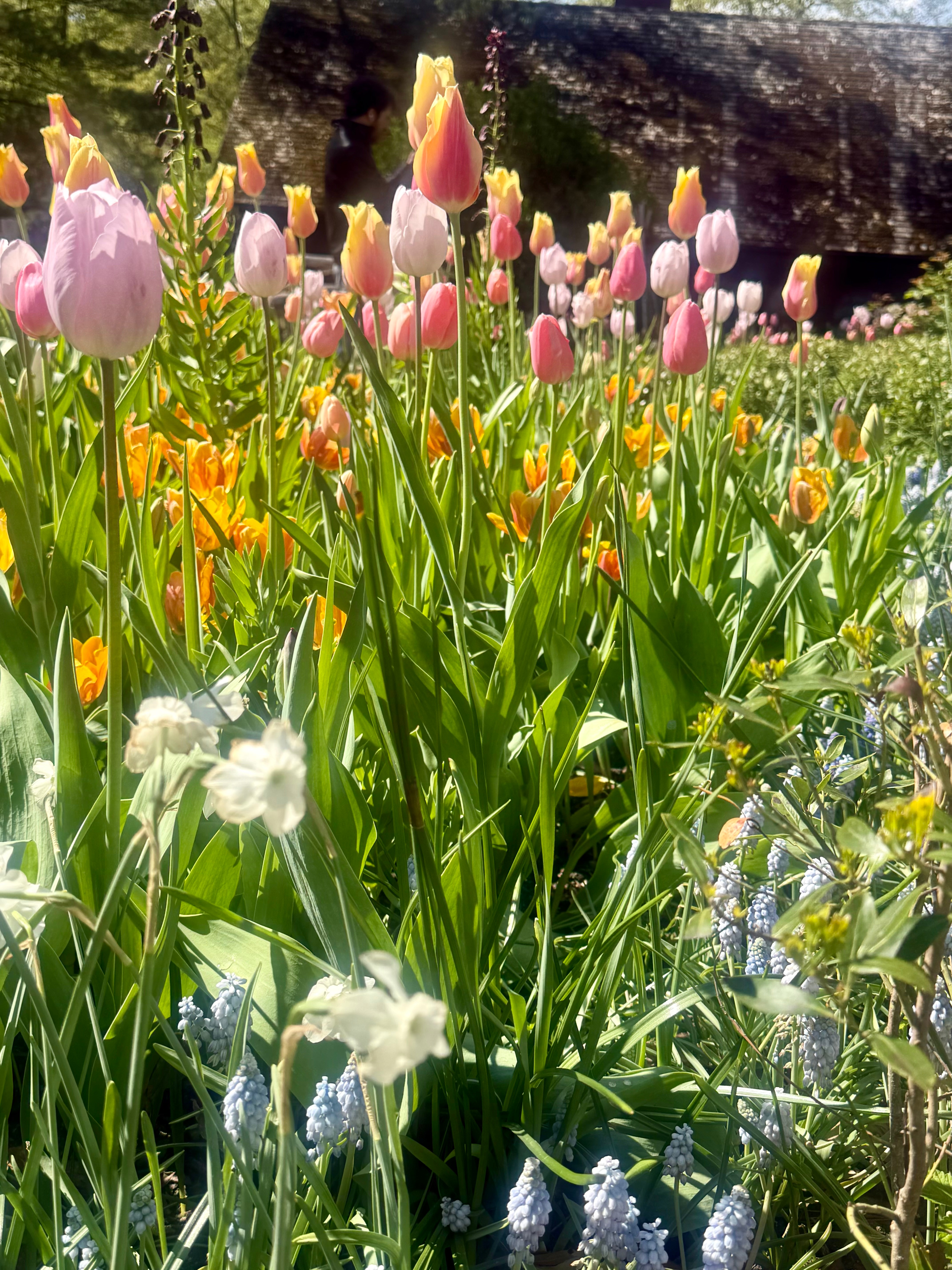
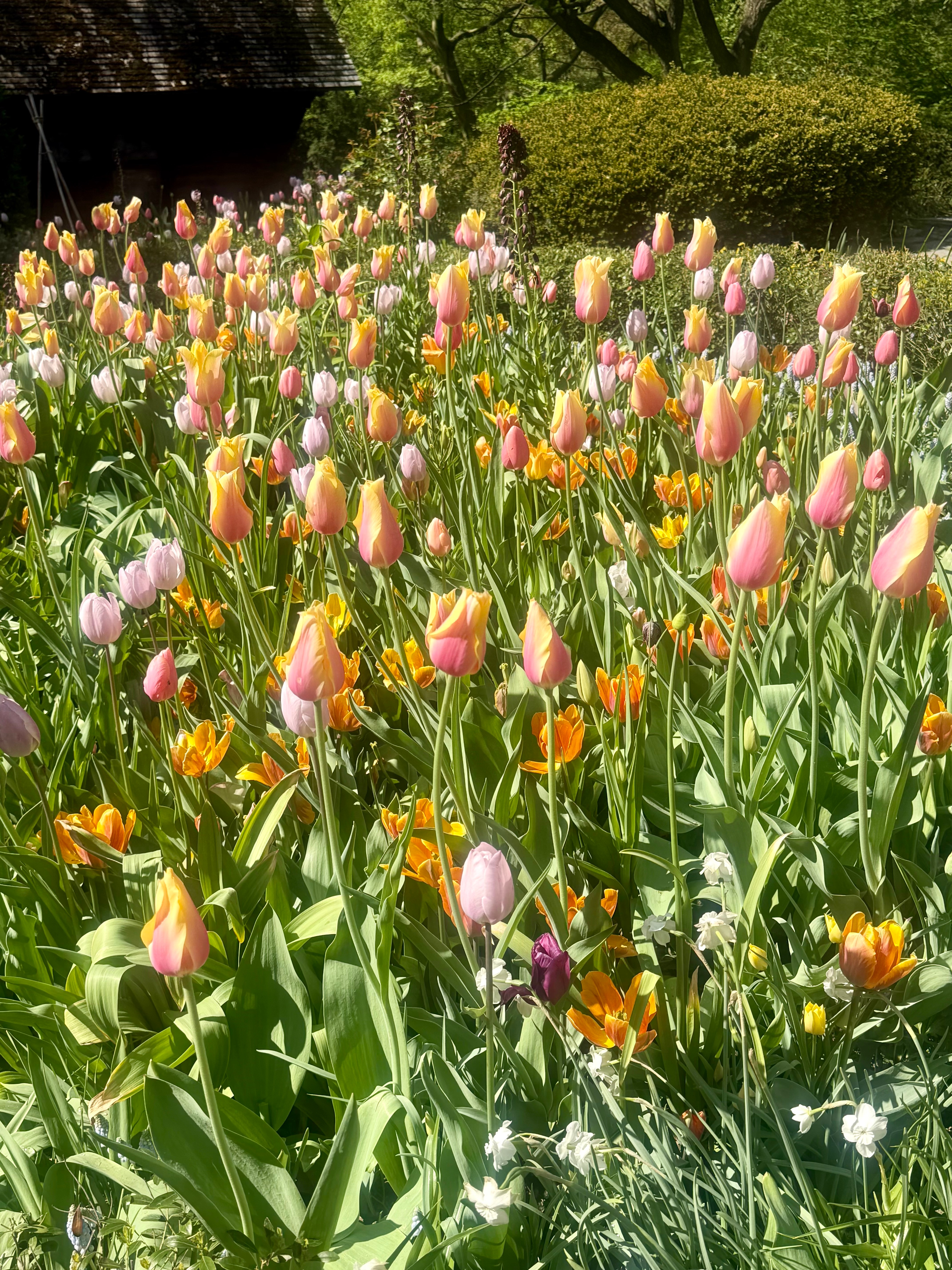
The garden is four acres in size, and beautiful all throughout the year – but perhaps most gorgeous in spring, when I took these photos. In the spring, I found daffodils, anemones, and many tulips, in addition to the other plants there throughout the year including lilies, roses, crocuses, and black-eyed Susans.
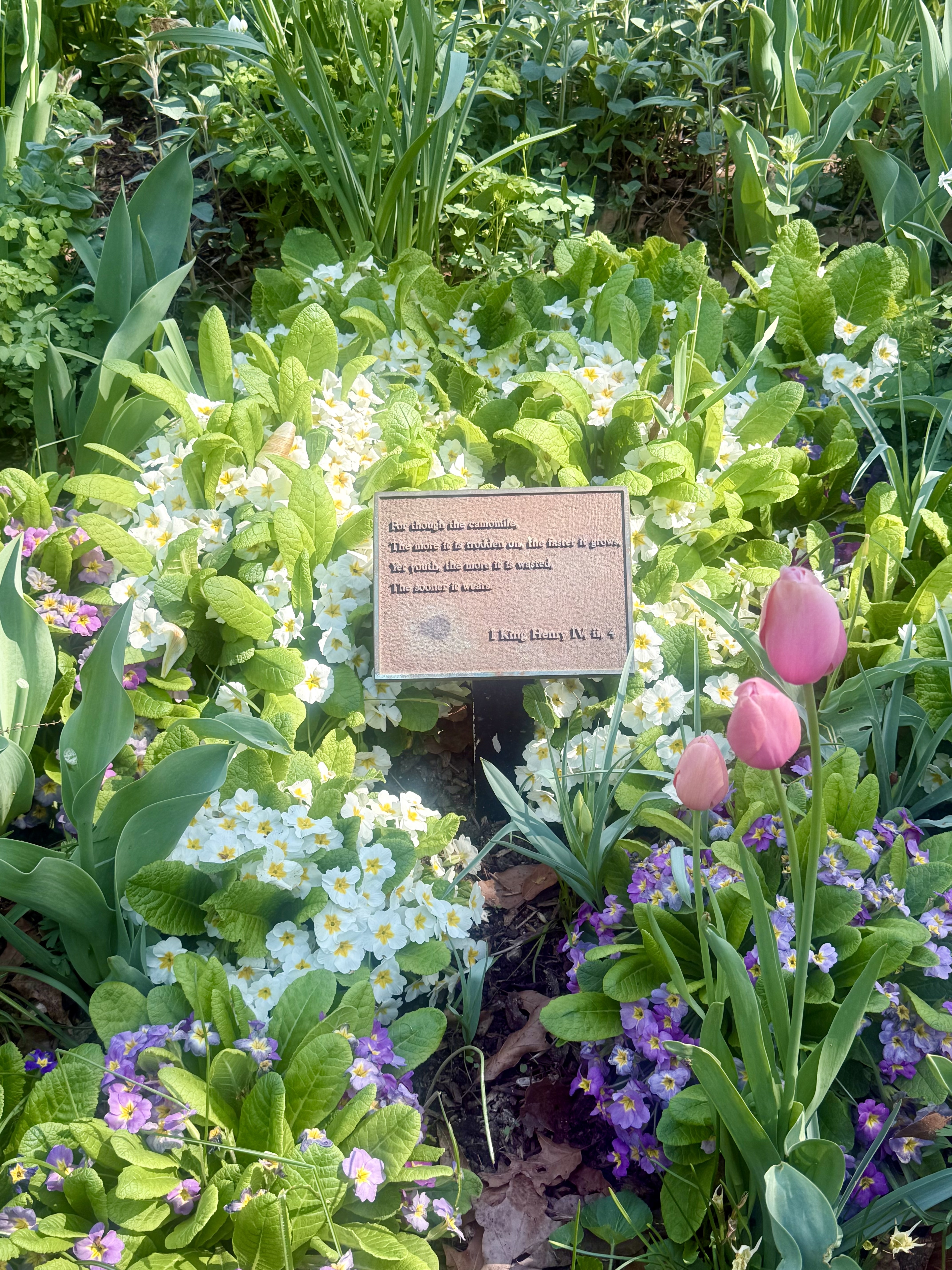
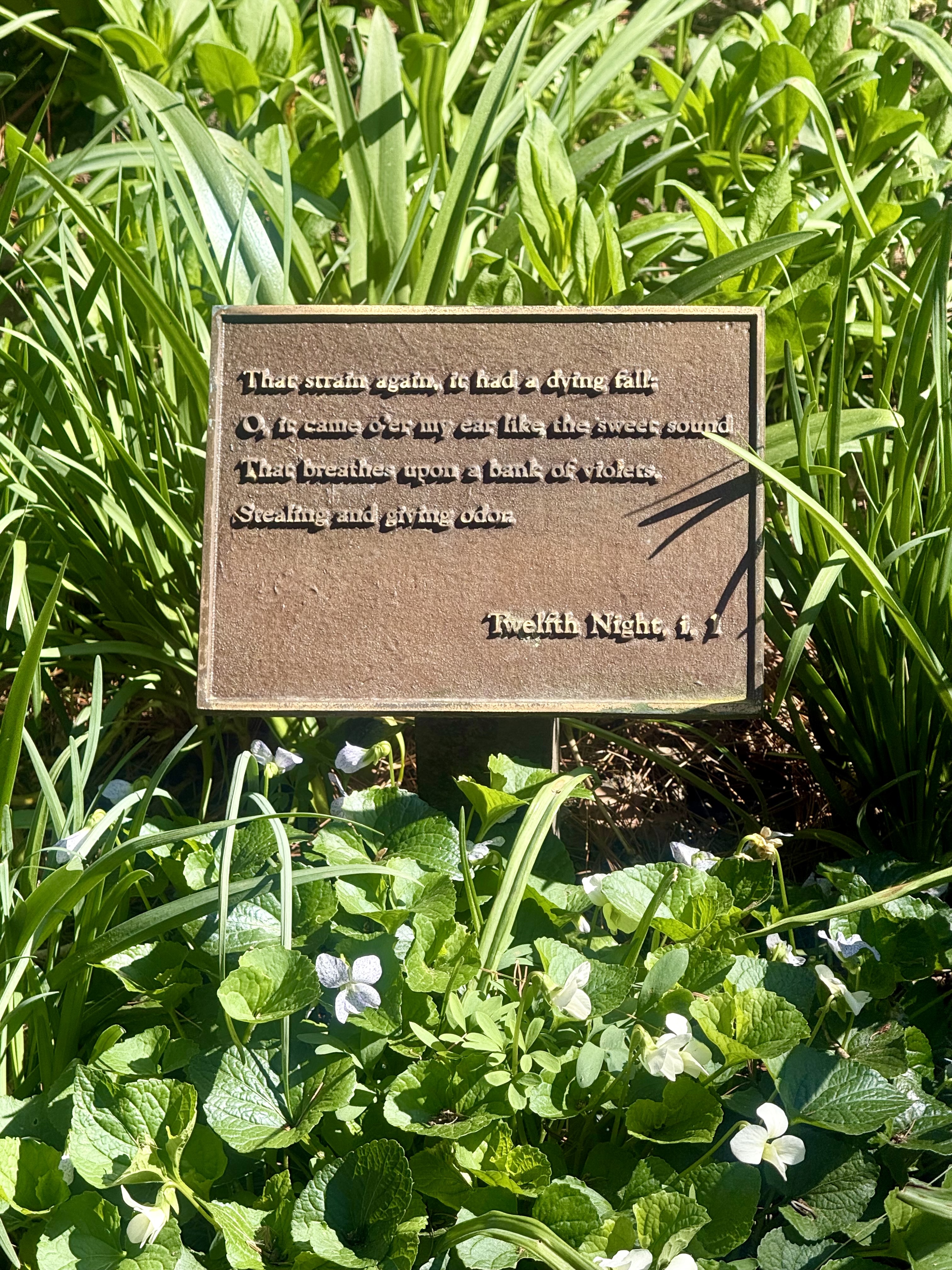
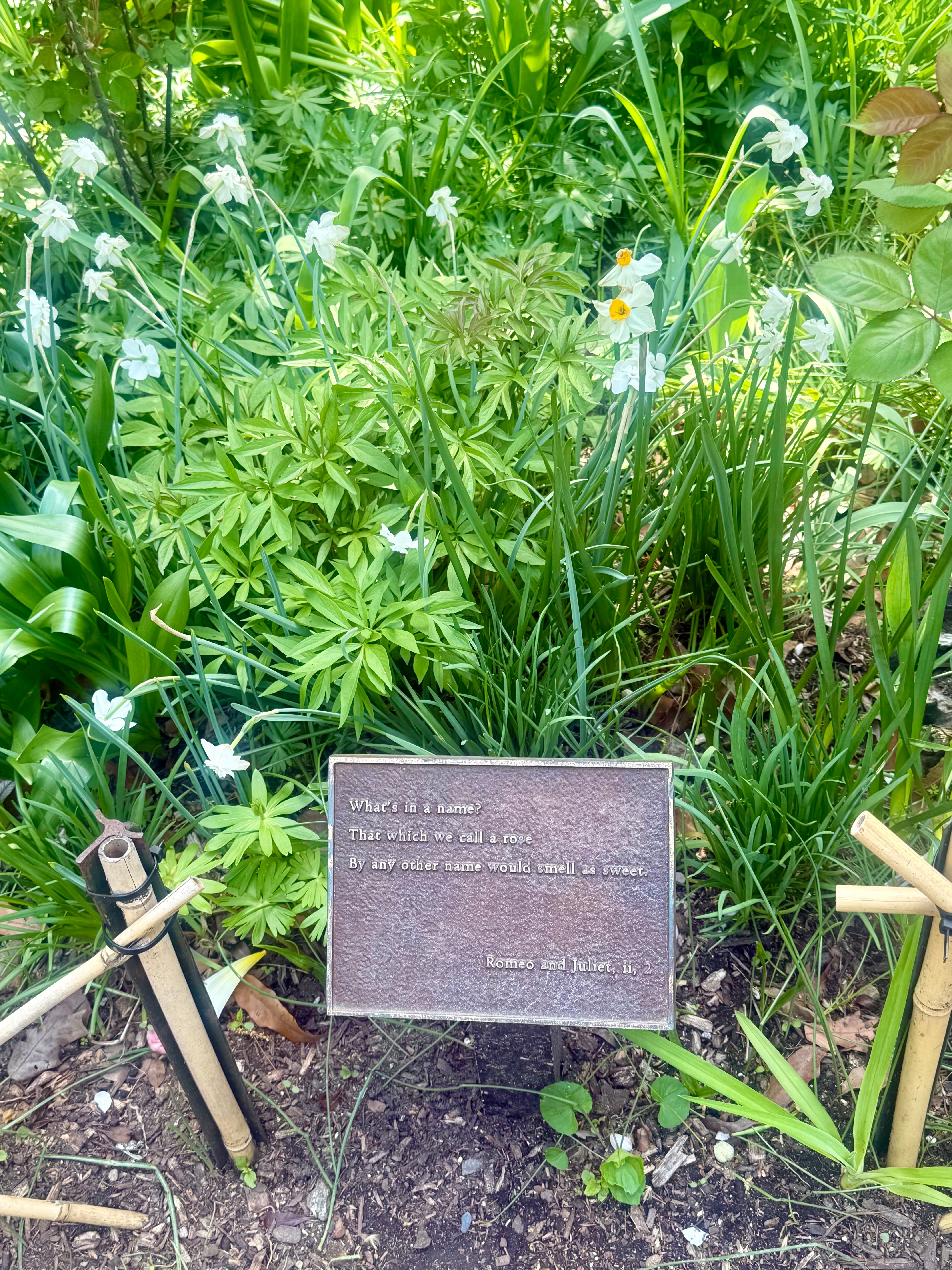
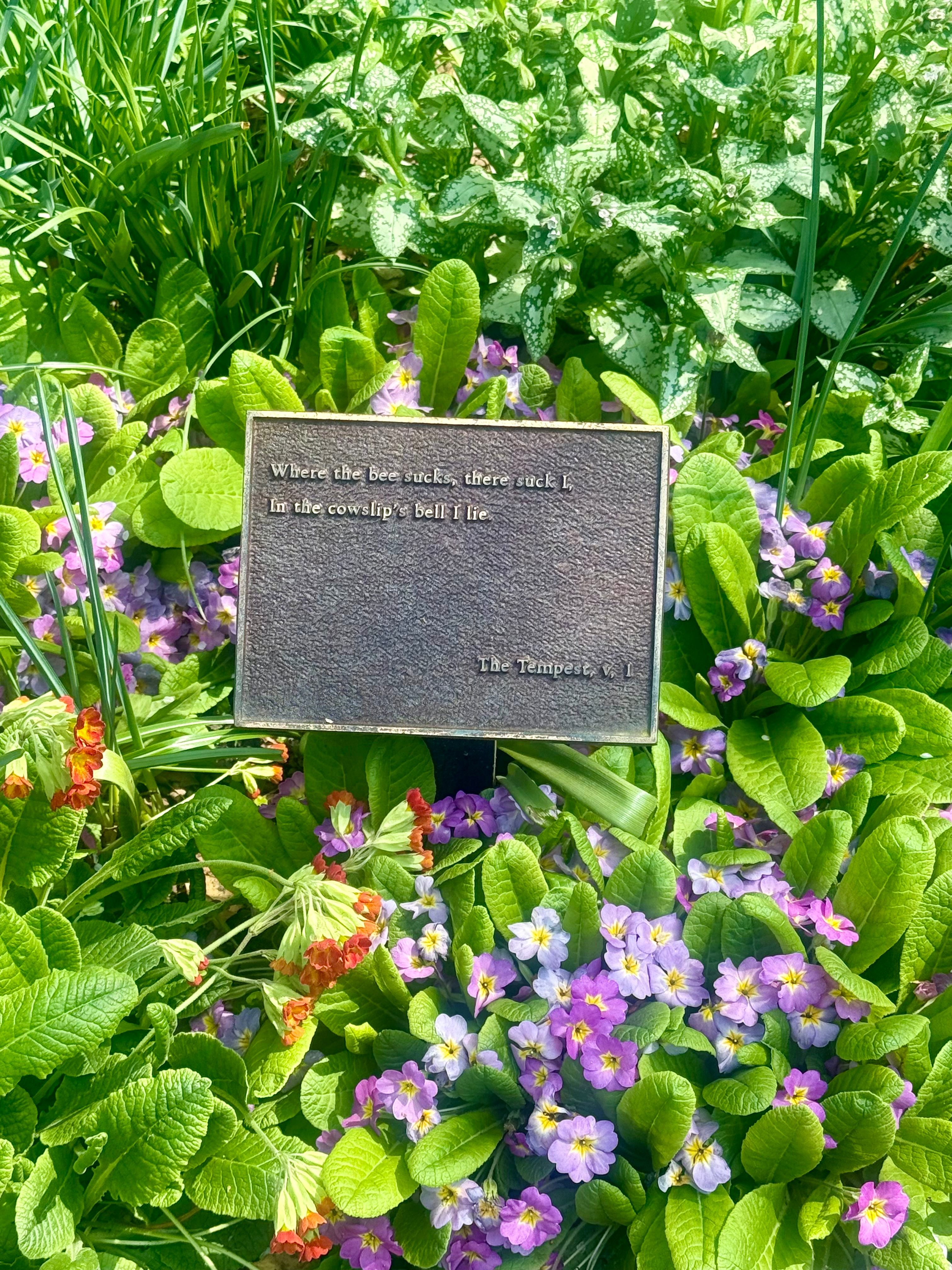
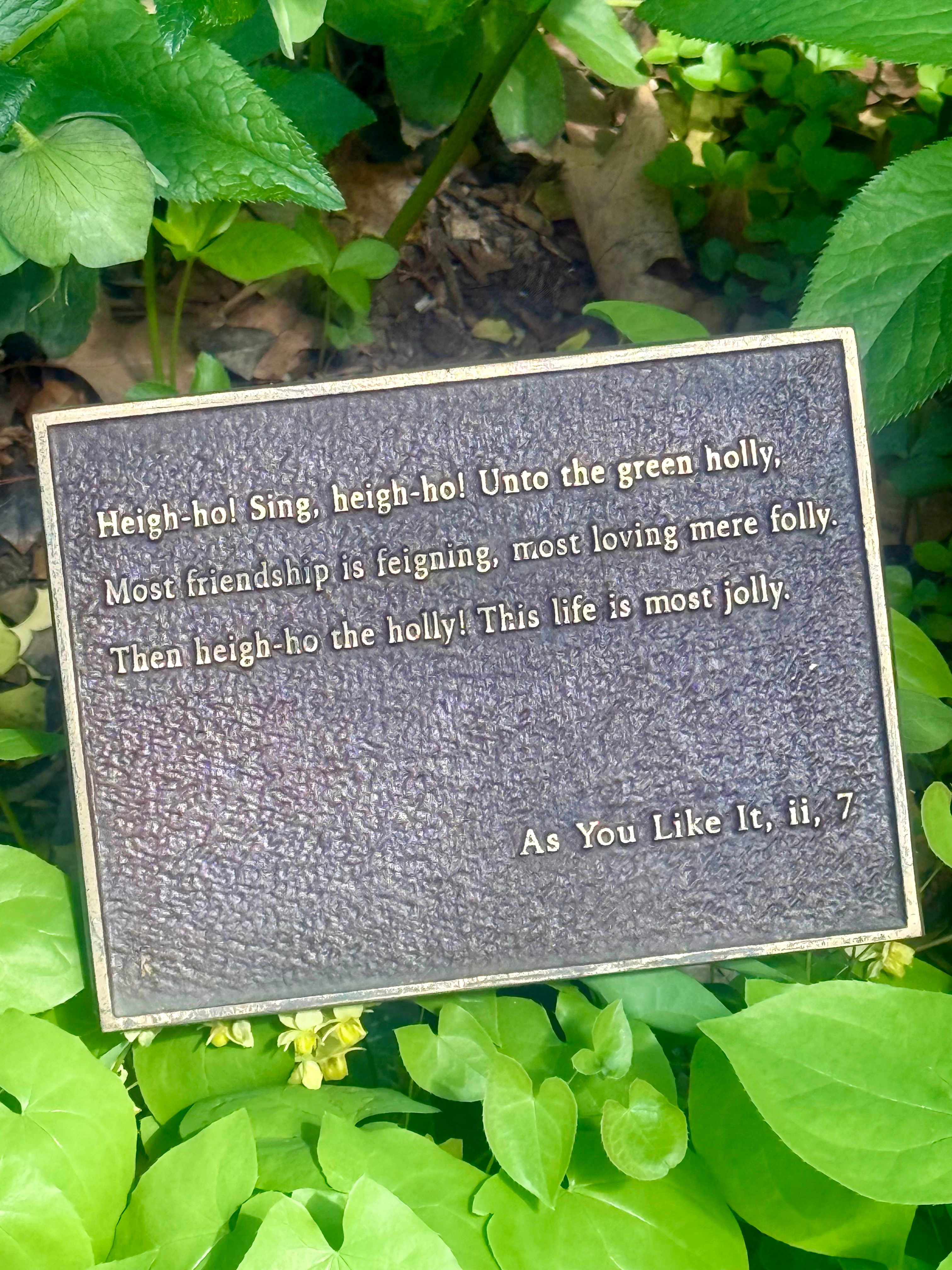
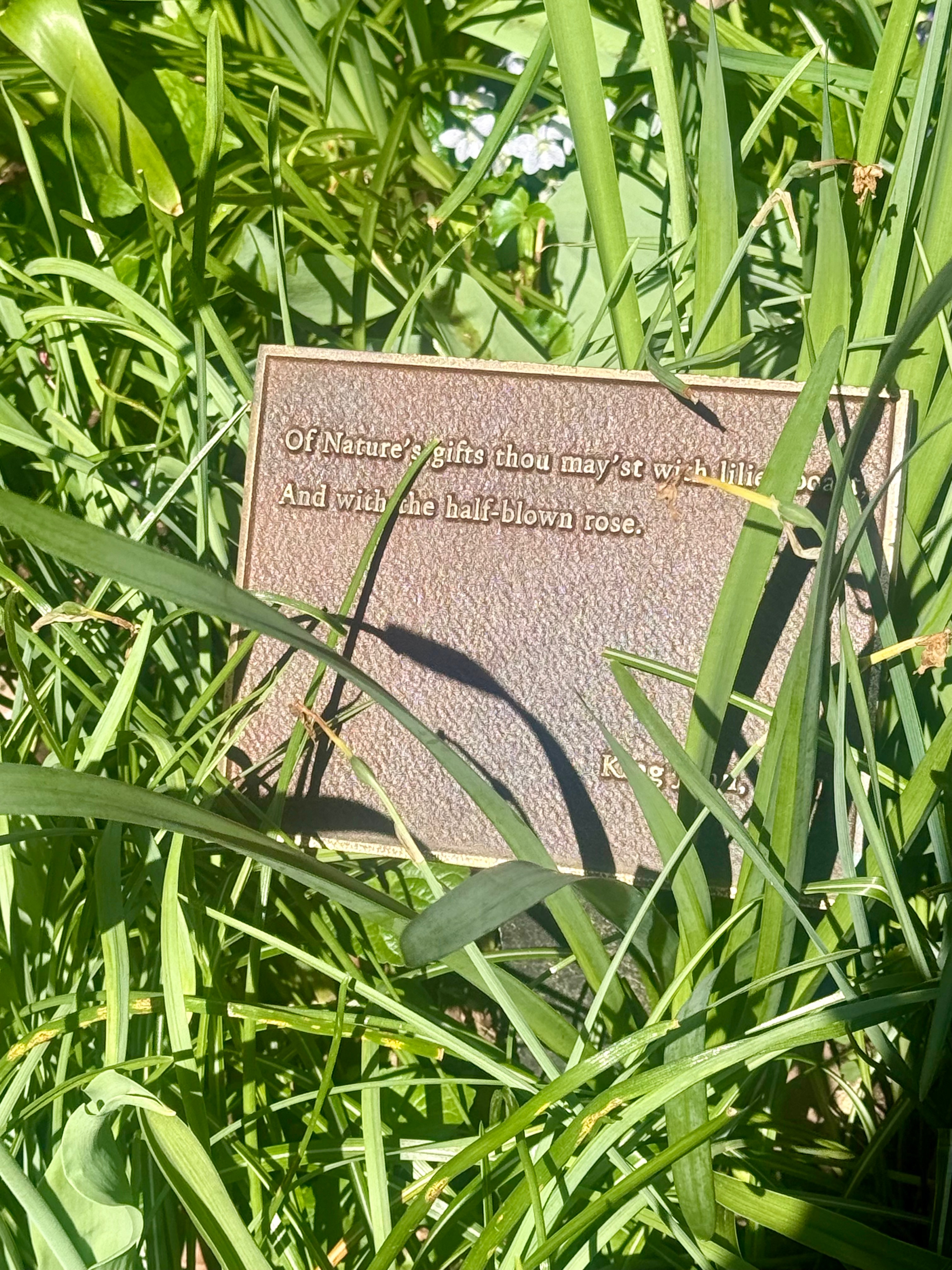
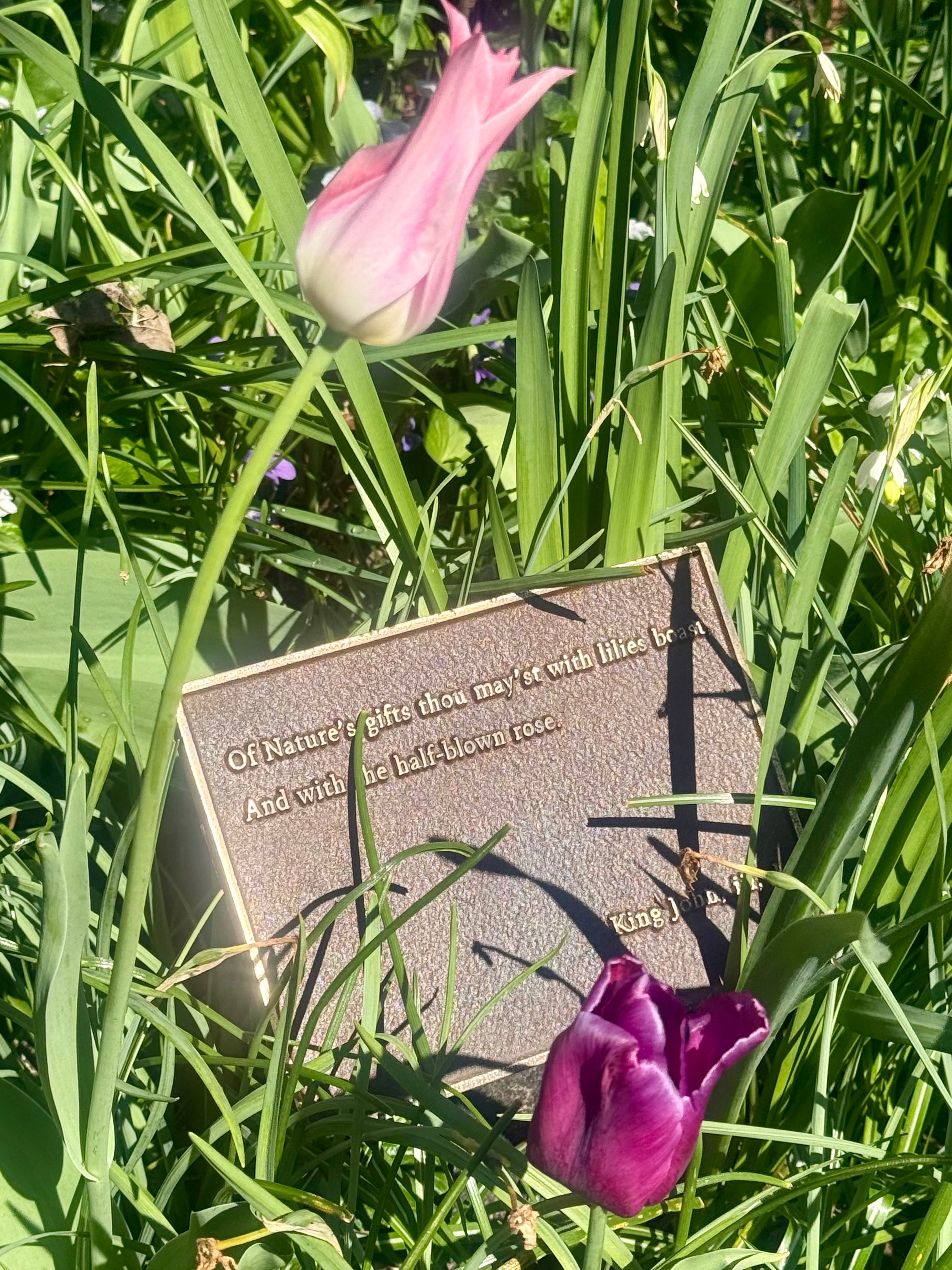
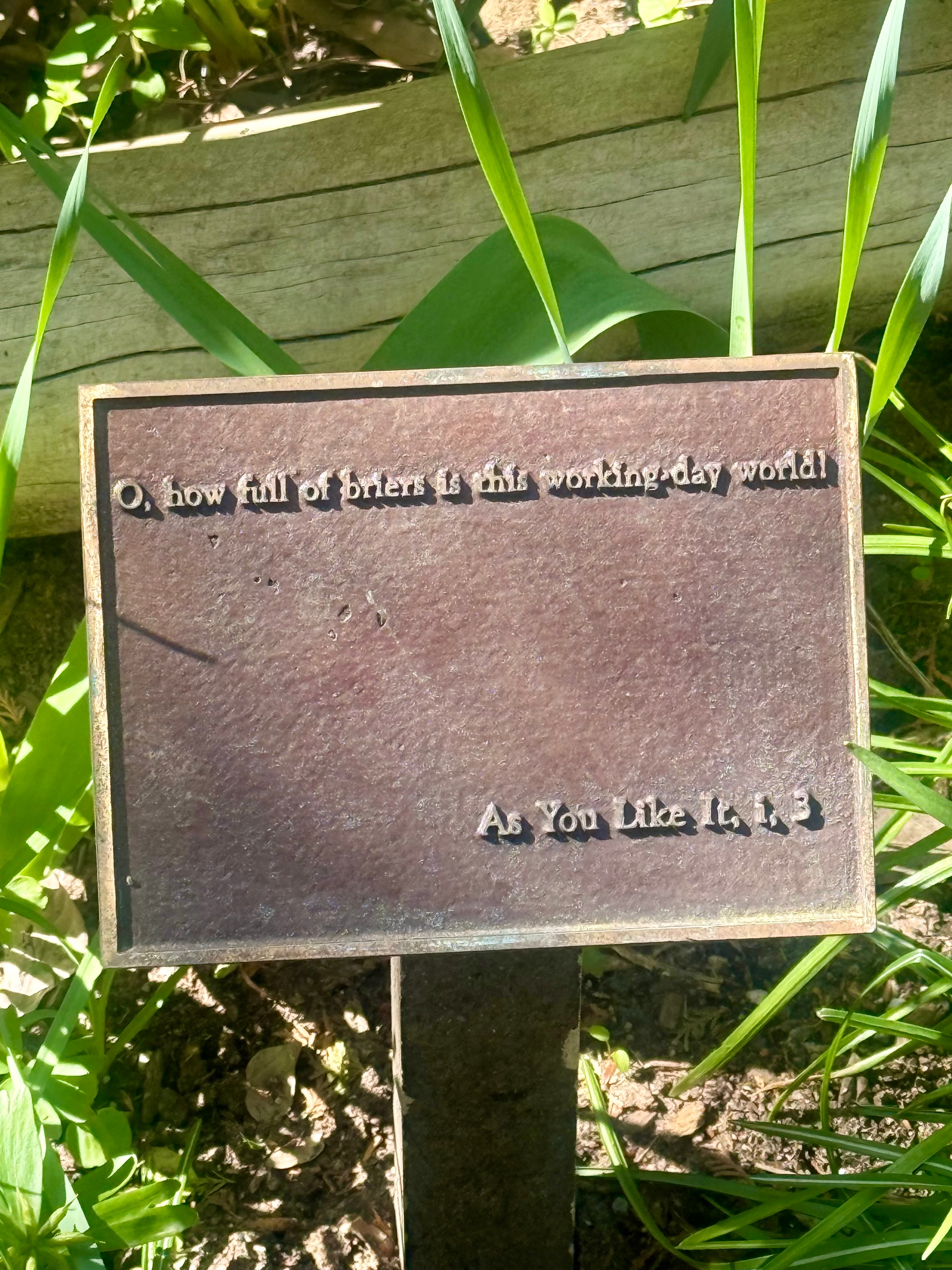
For me, the most unique experience in the Shakespeare Garden is looking for the quotes on bronze plaques, referencing trees, shrubs, flowers, and herbs mentioned in William Shakespeare’s plays and poems – plants that change according to the season. You might find rosemary and pansies – alluded to by Ophelia in Hamlet; or thistle – mentioned in the play Much Ado About Nothing. There is even a white mulberry tree that is said to have grown from a graft of a tree planted by Shakespeare himself in 1602!
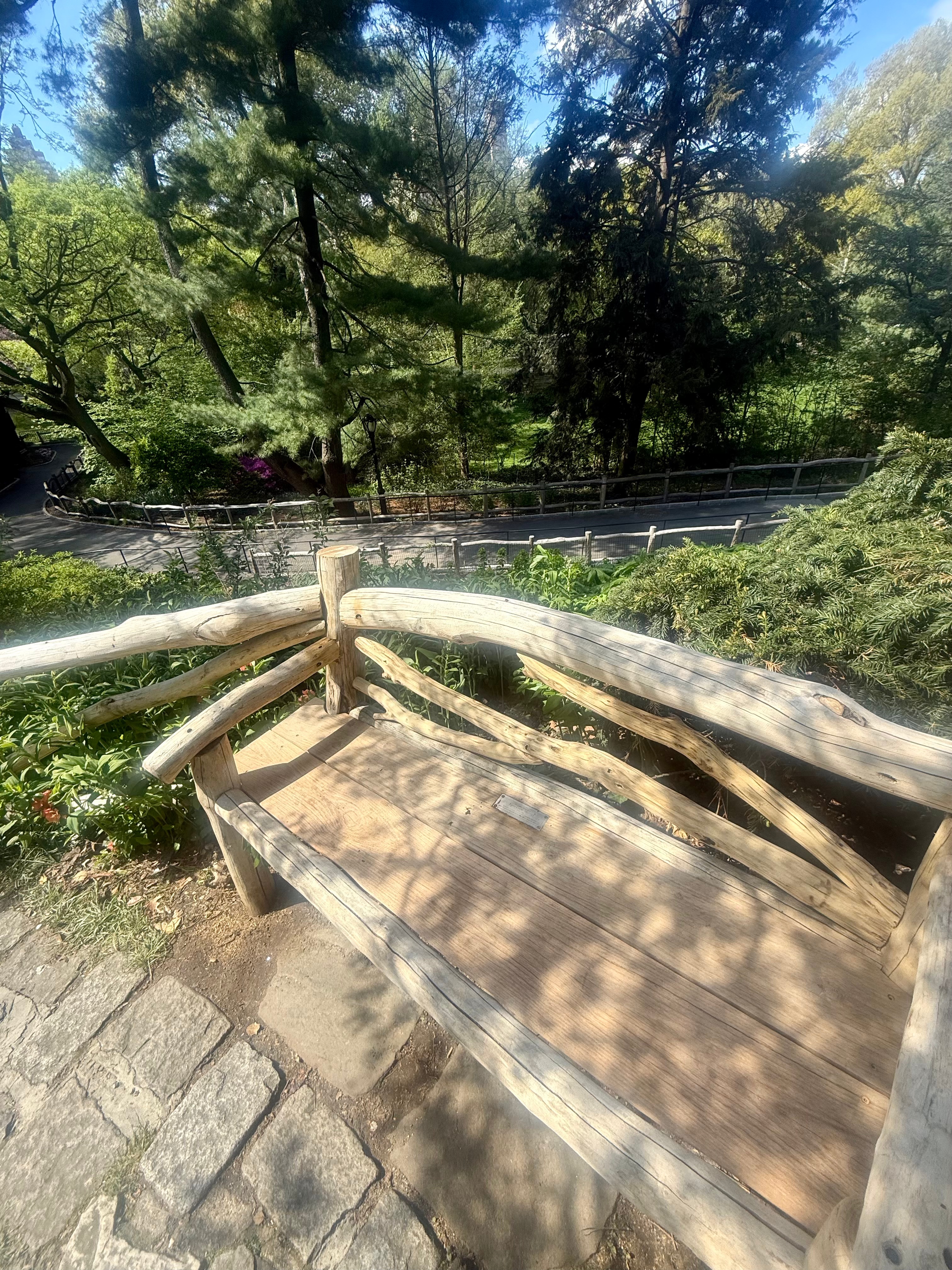
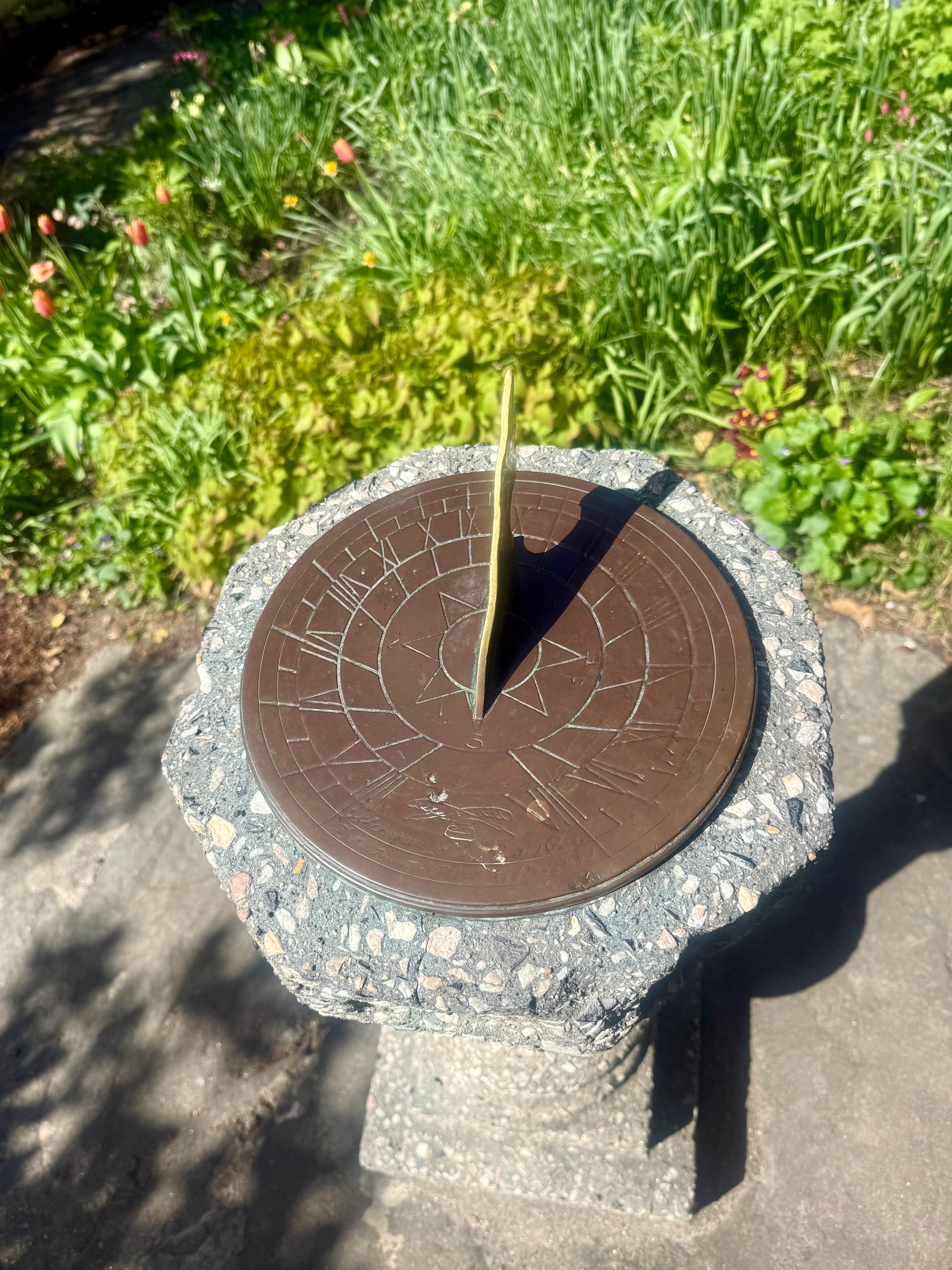
There is a working sundial – it is accurate, but remember that it is set up for standard time so appears to be an hour off when we are on Daylight Savings Time. Nearby is a bench dedicated to the actor Richard Burton, famous for his skill in performing in Shakespeare plays.
The large curving bench at the highest point in the Garden is called the “whisper bench.” I didn’t get a photo when I was there because people were sitting there, but because of its curvature, you can whisper something at one corner and it will only be heard by a person listening at the other corner. The garden also provides a home for many pollinators, including bees, butterflies, and hummingbirds.
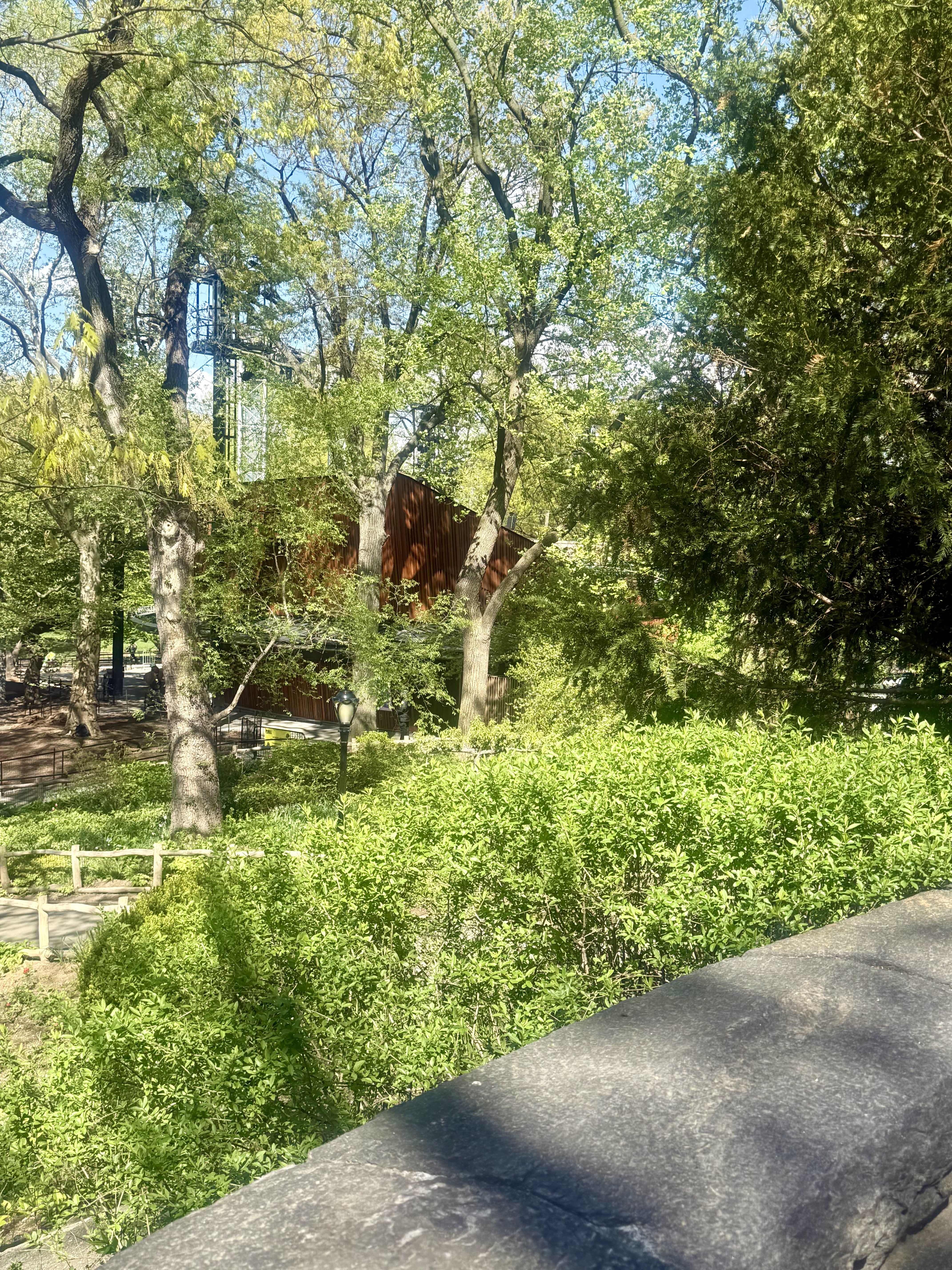
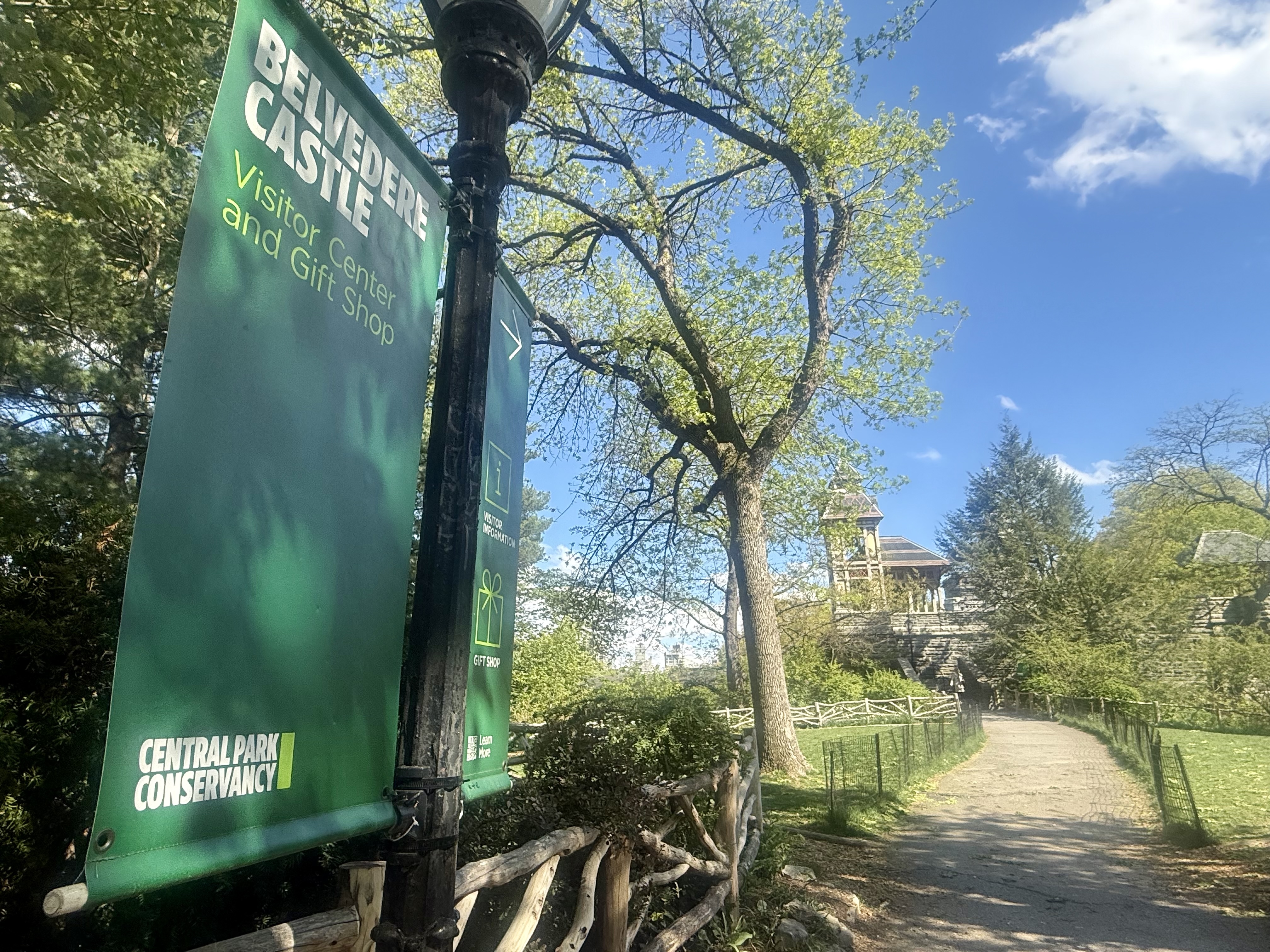
Looking at the Delacorte, I realized I have not written about Shakespeare in the Park, so expect a post about that this summer. There are so many special places in Central Park, but the Shakespeare Garden and the iconic spots nearby (including not just the Delacorte but Belvedere Castle, Turtle Pond, and the Great Lawn) is a section I find myself drawn to regularly. And a stroll through the Shakespeare Garden, meditating on the literary richness of the legacy of these plays as well as the incredible beauty of the natural world, is good for body and mind.
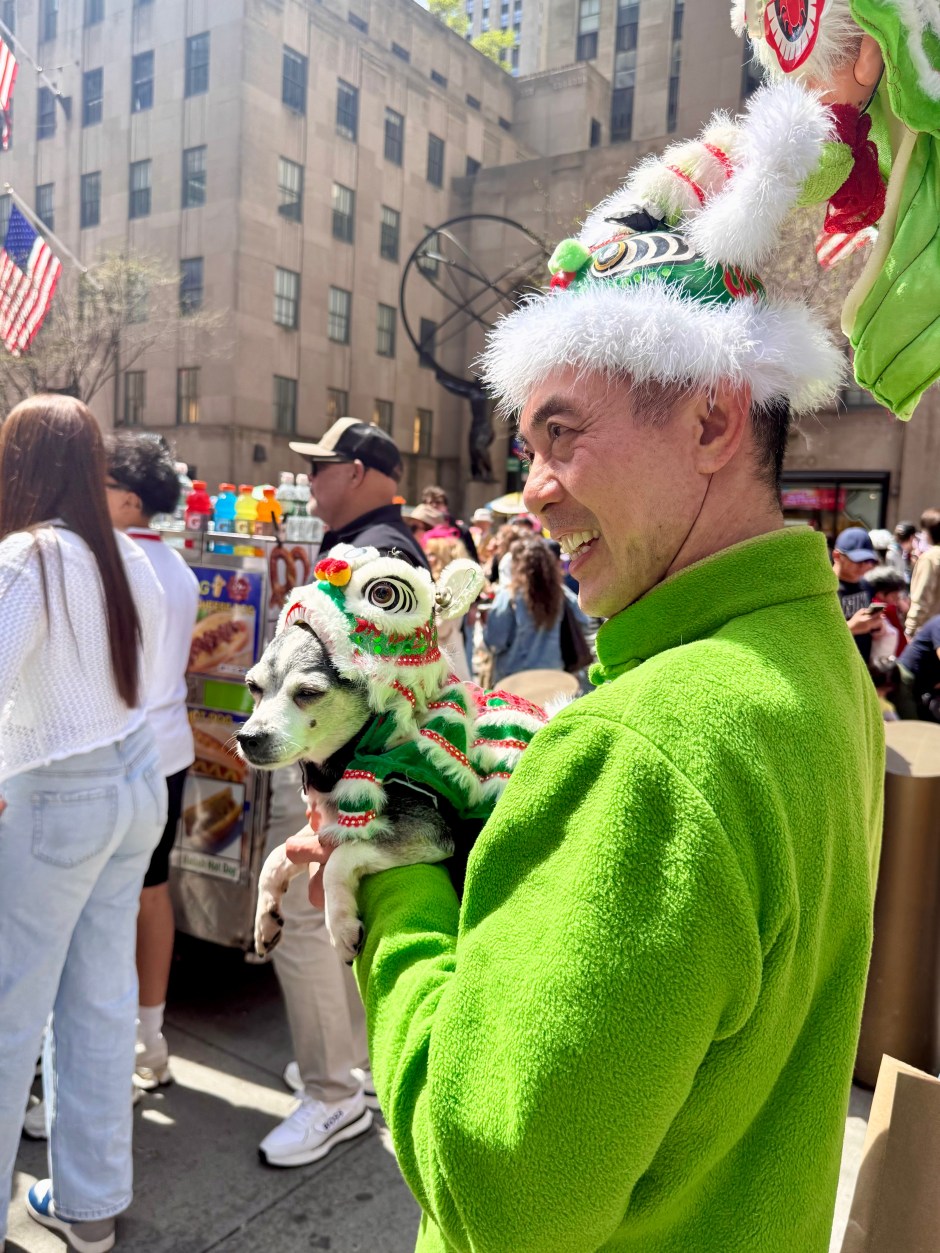
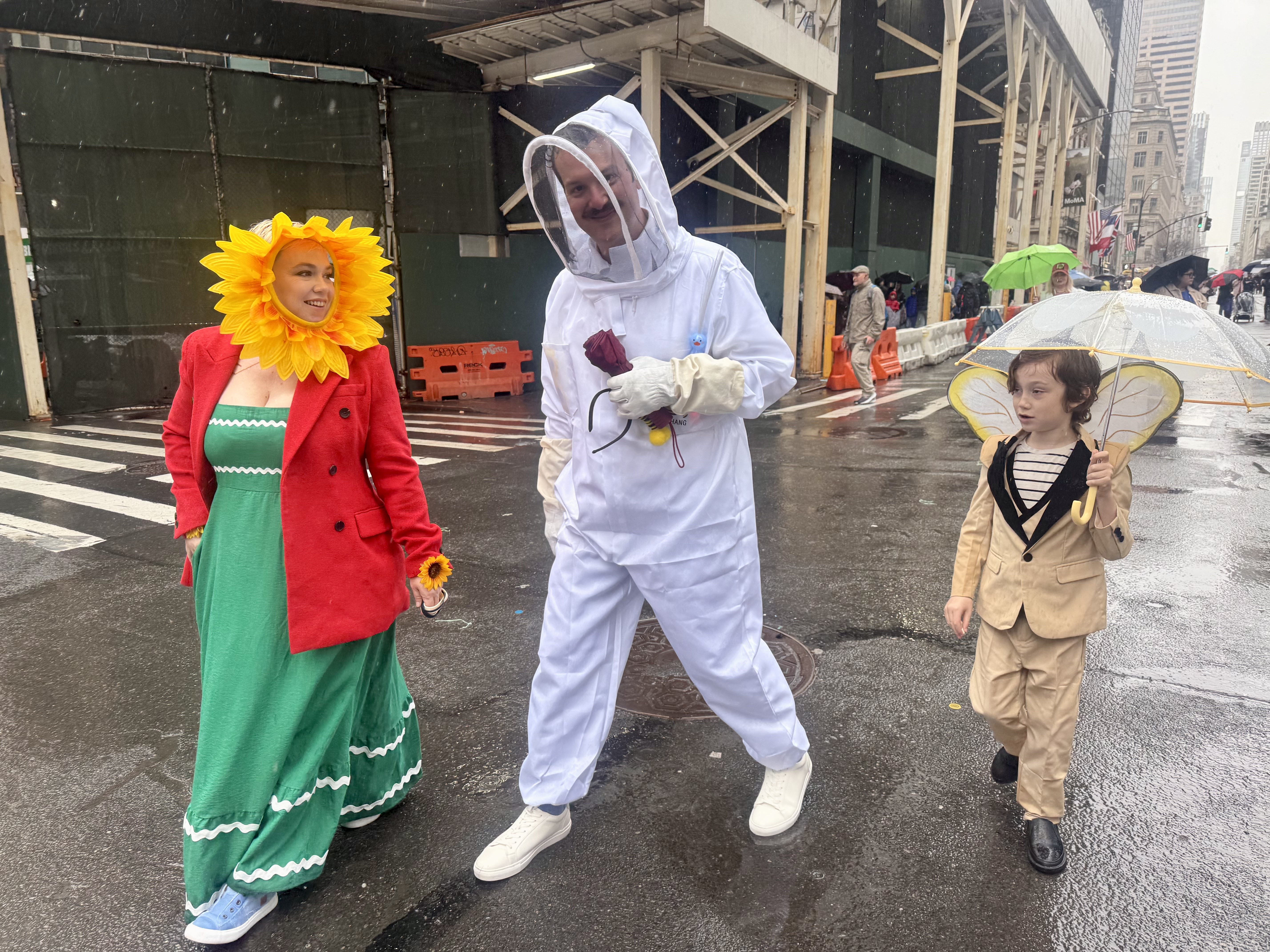
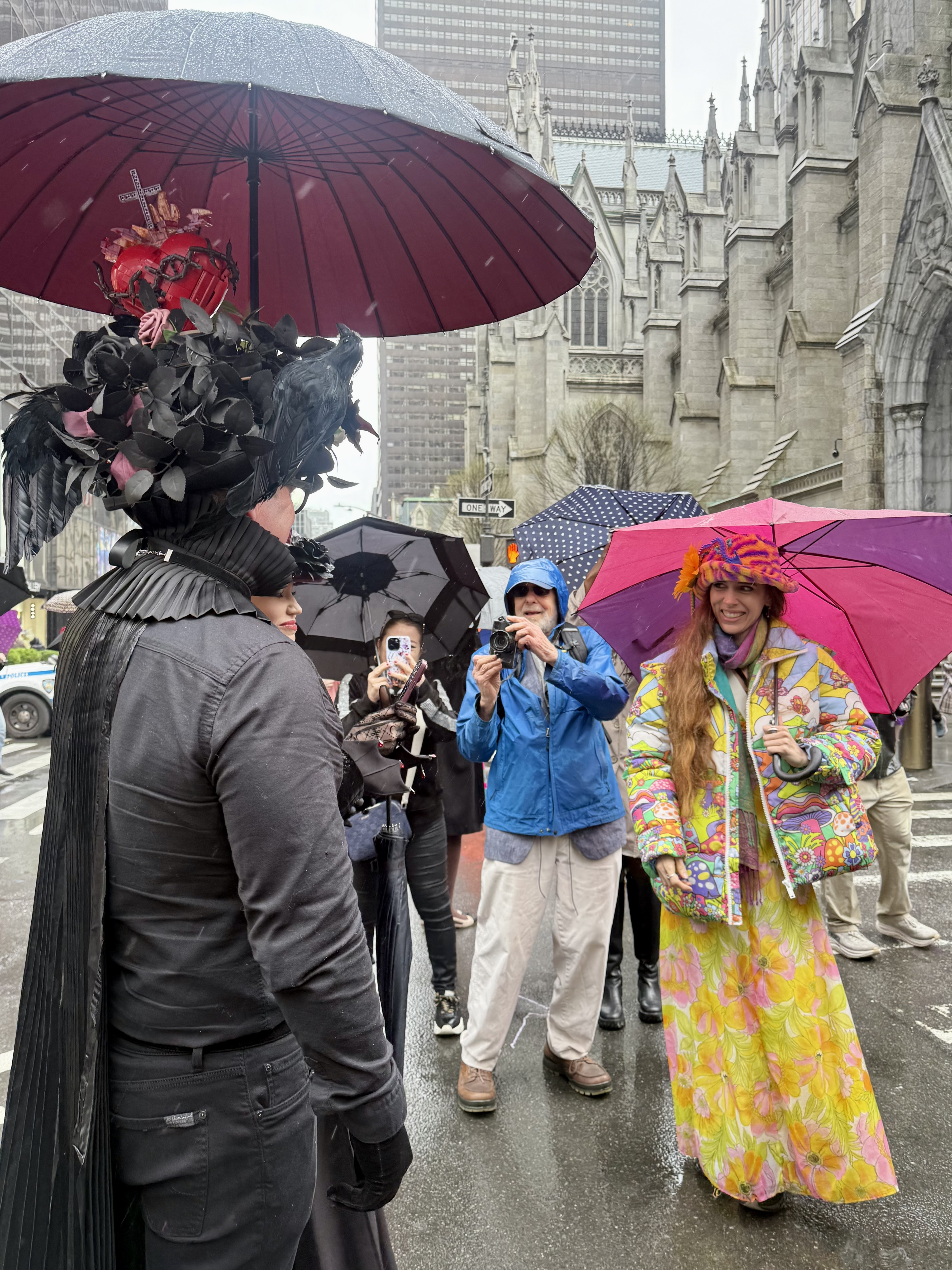
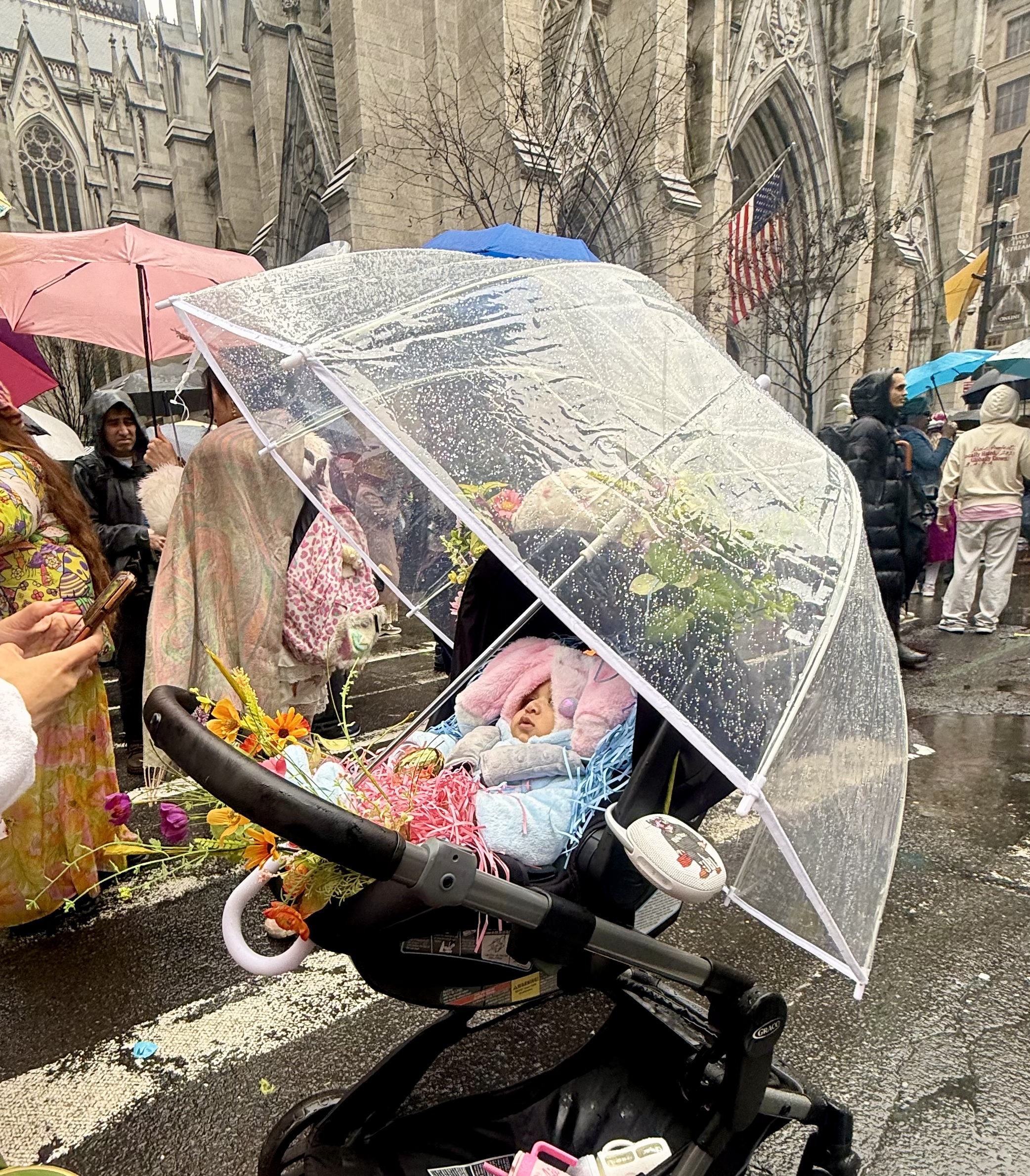
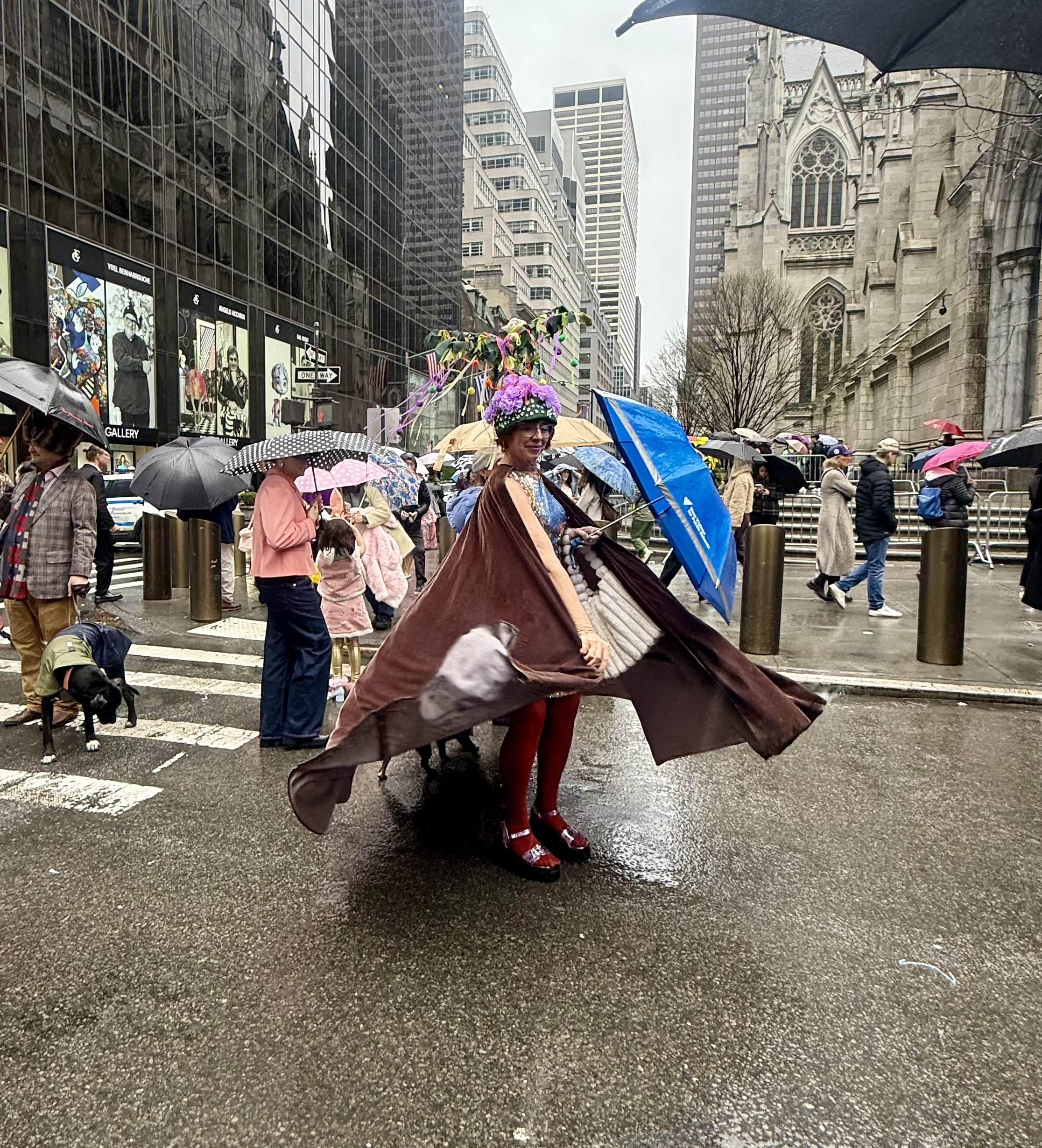
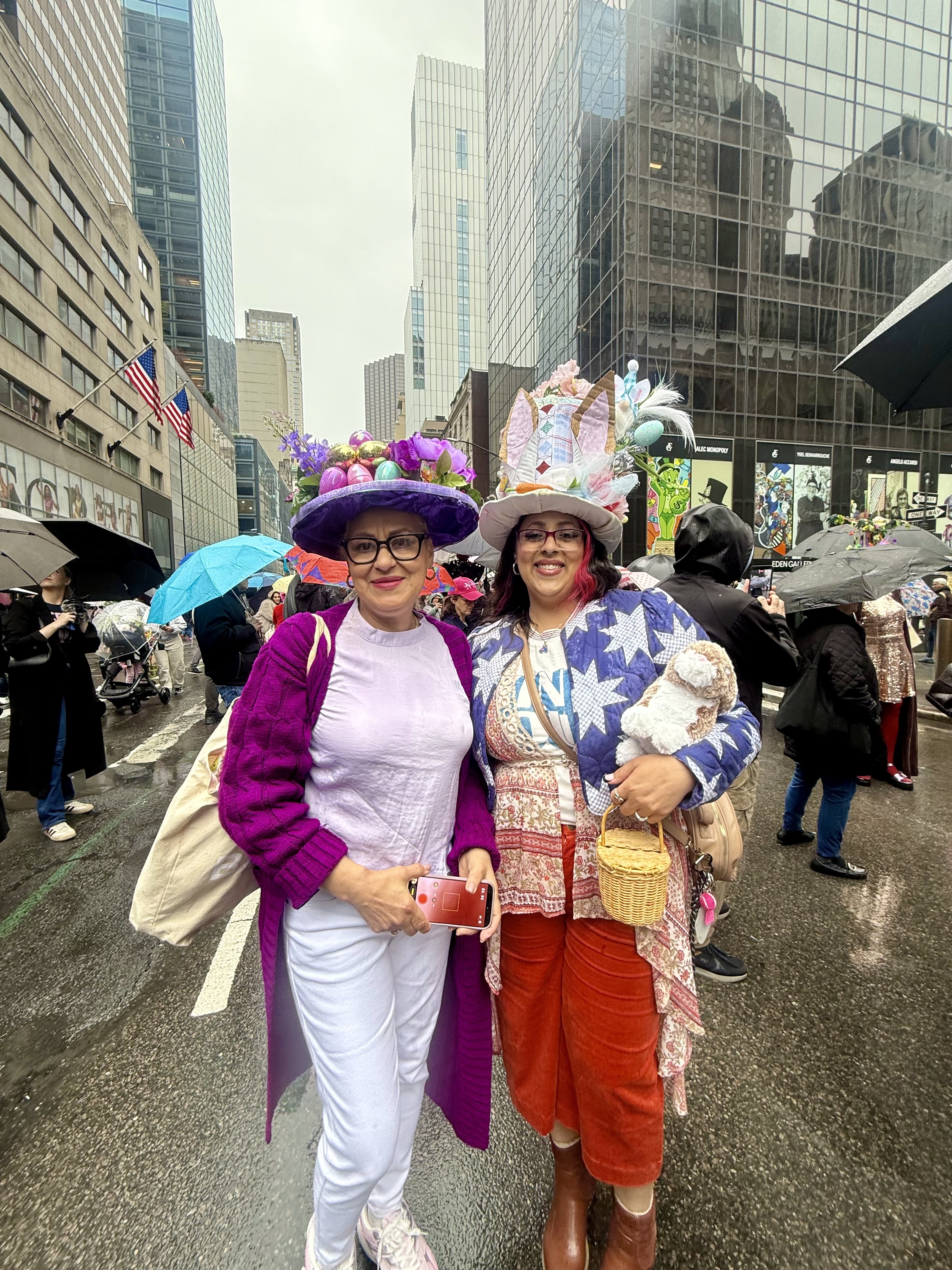
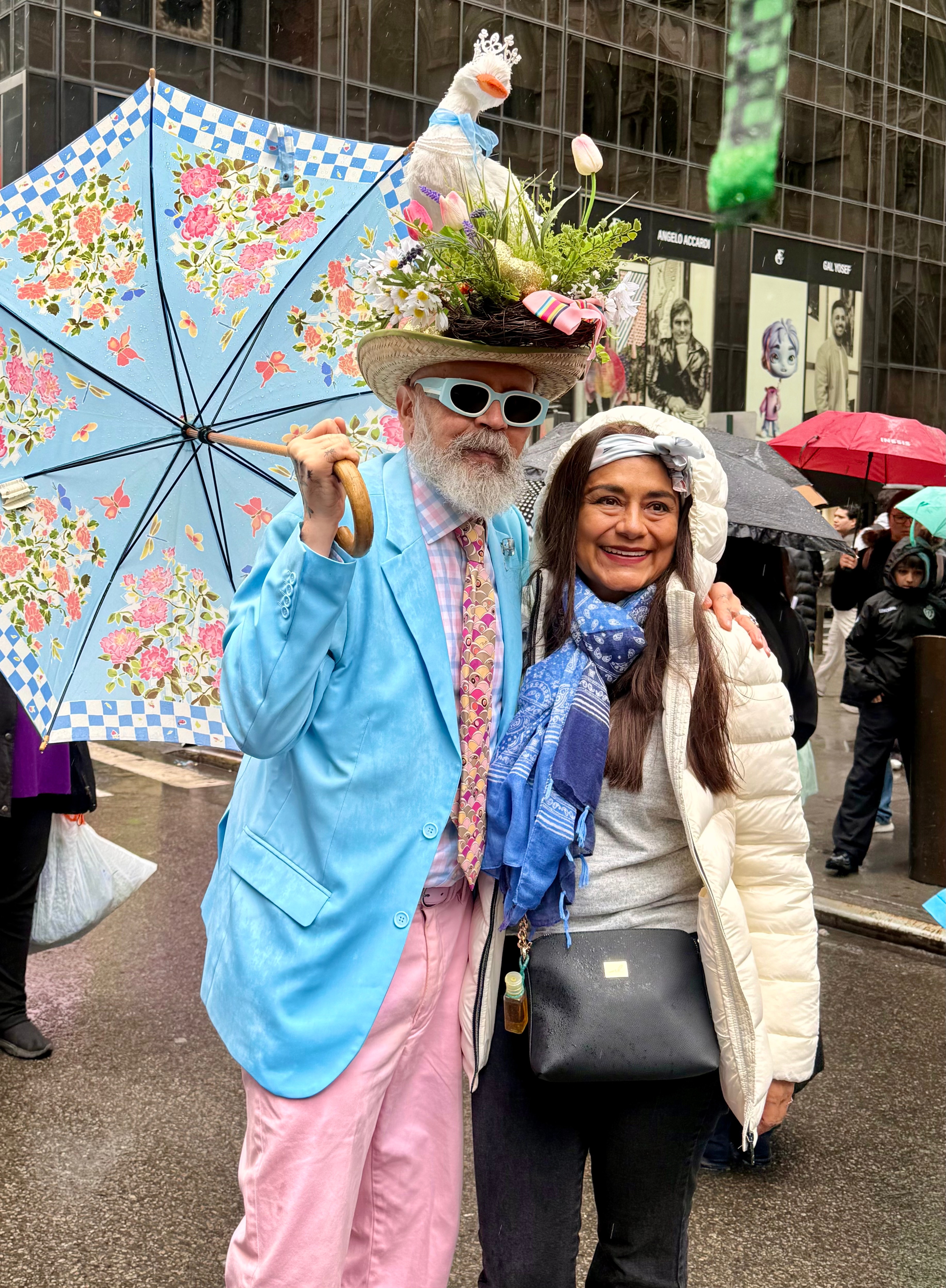
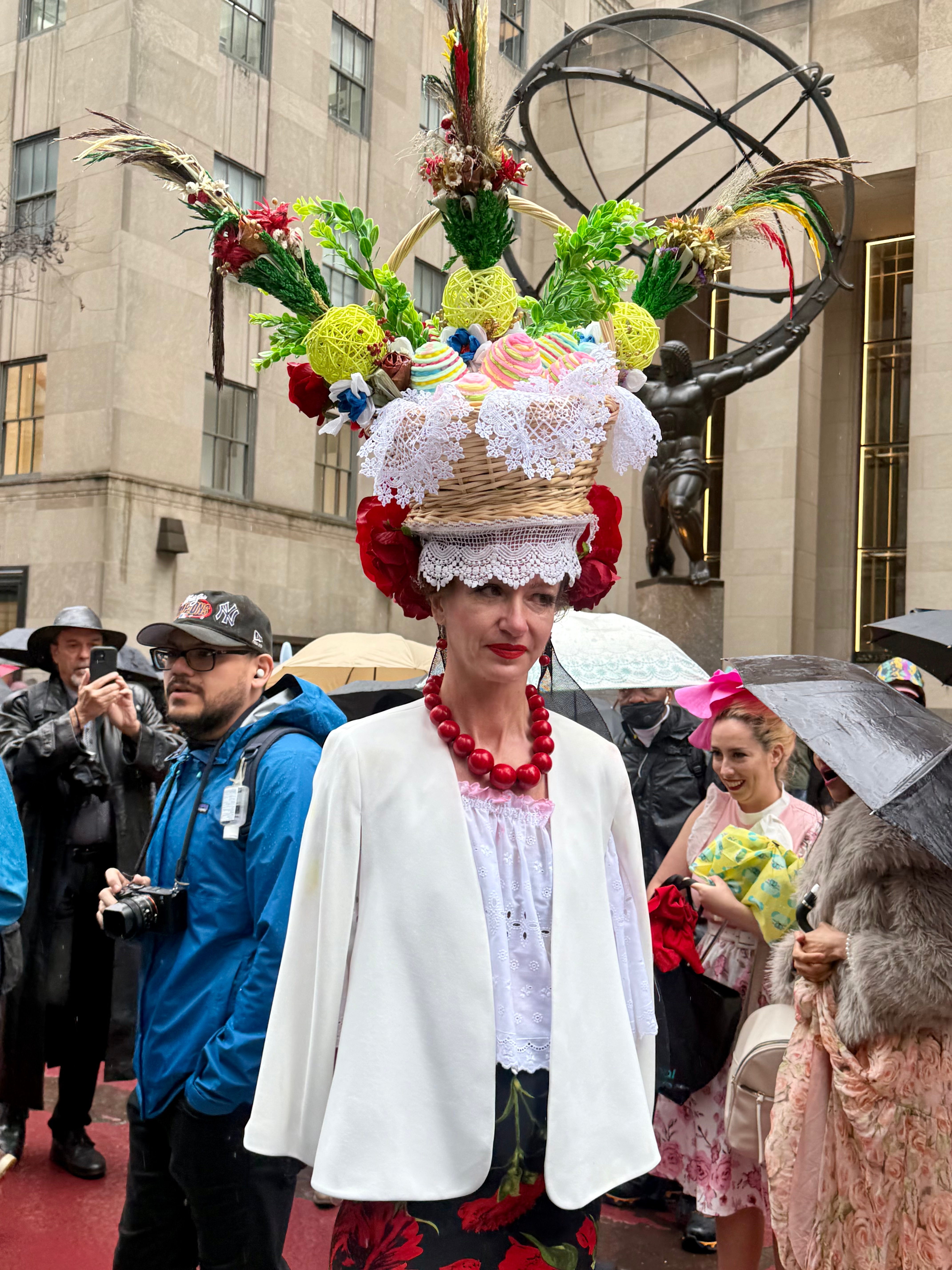
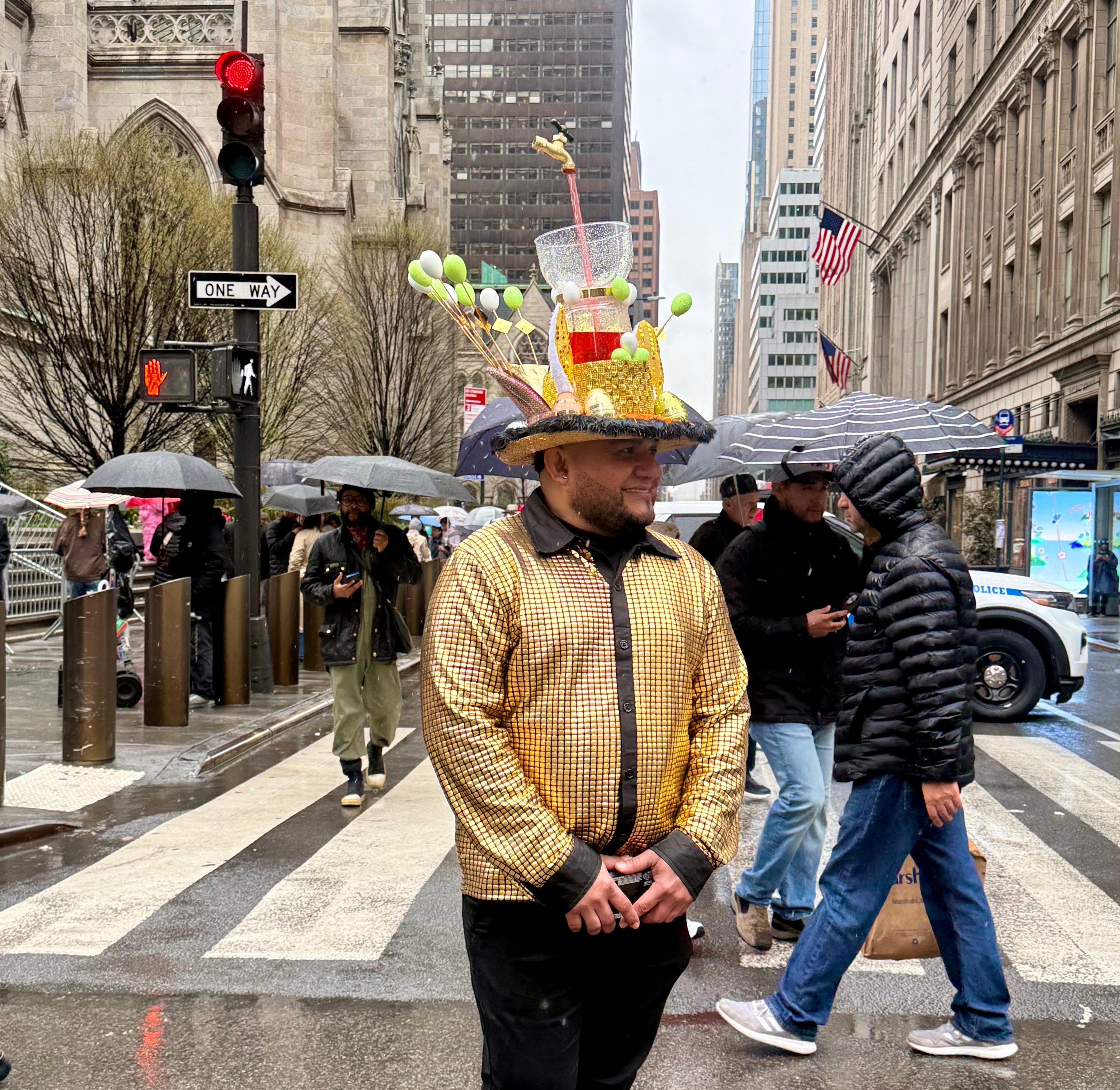
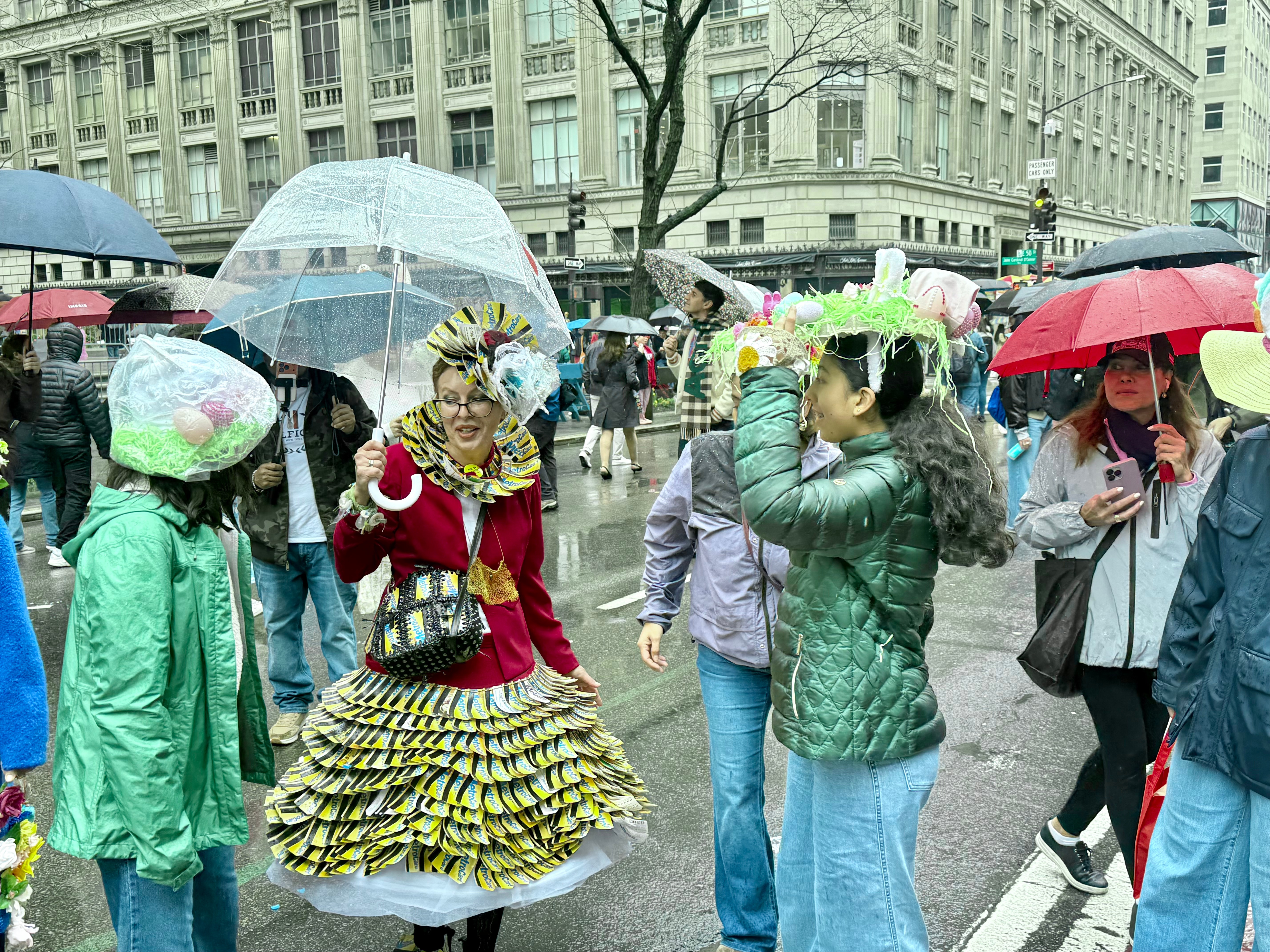
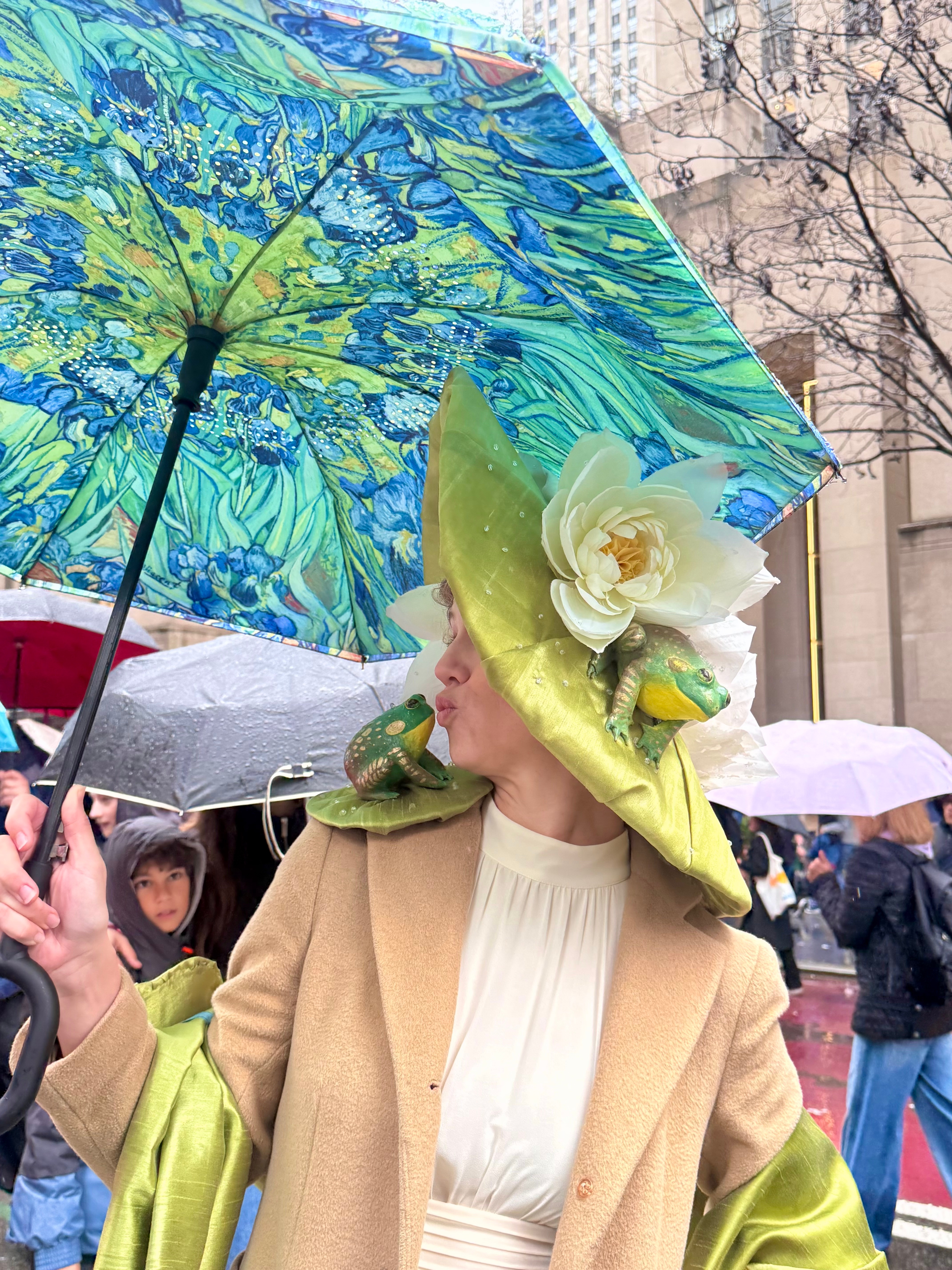
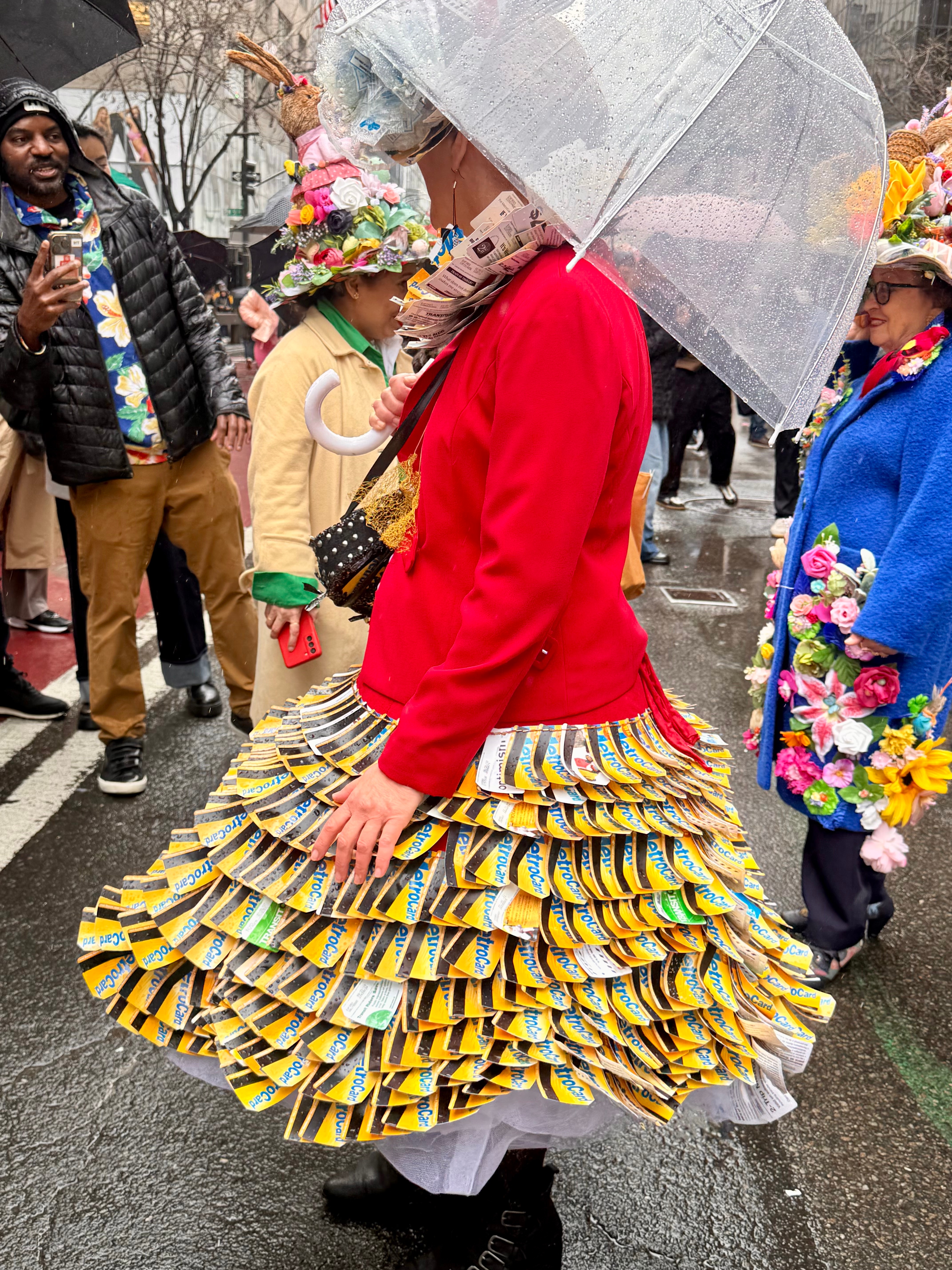
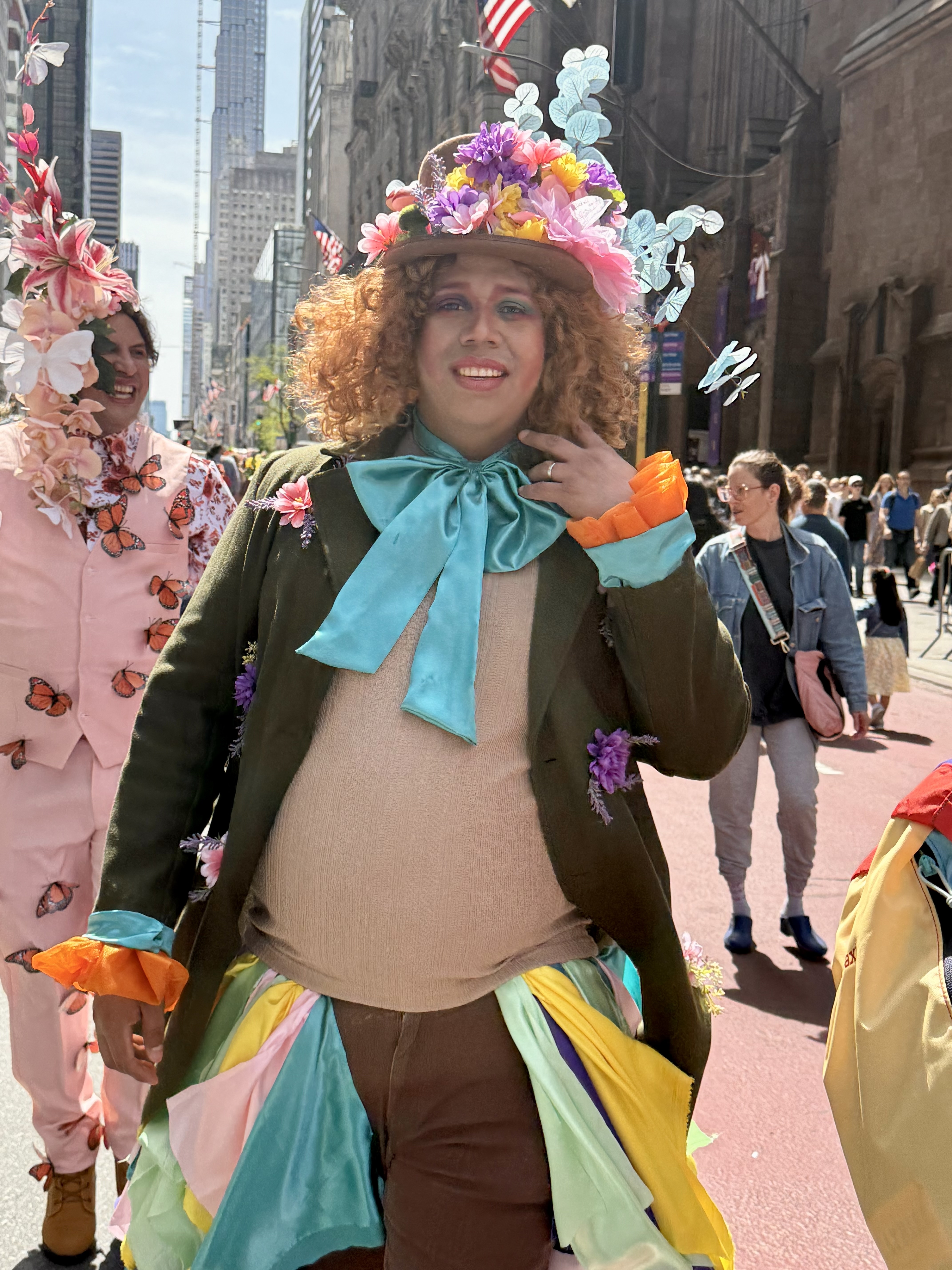
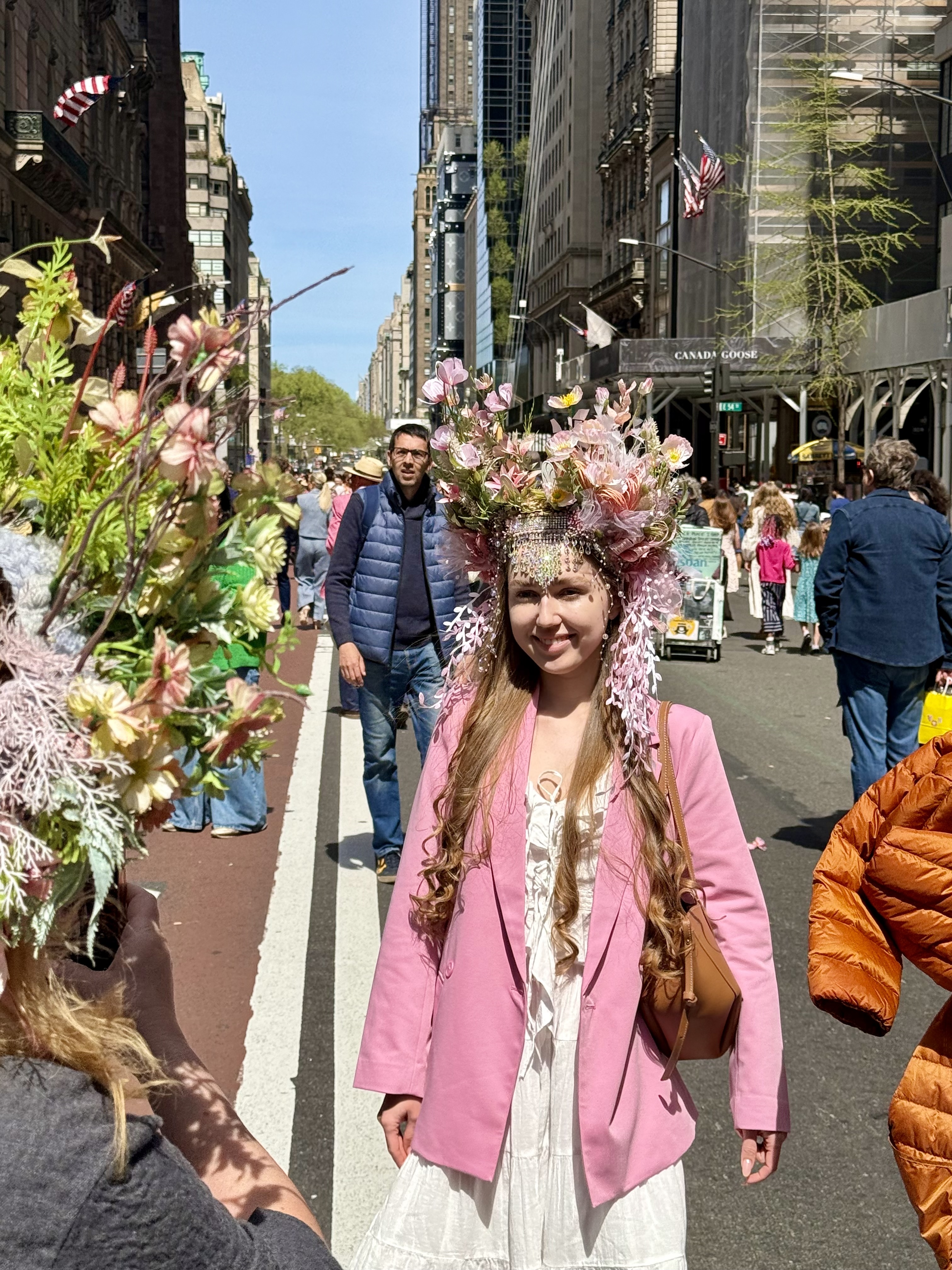
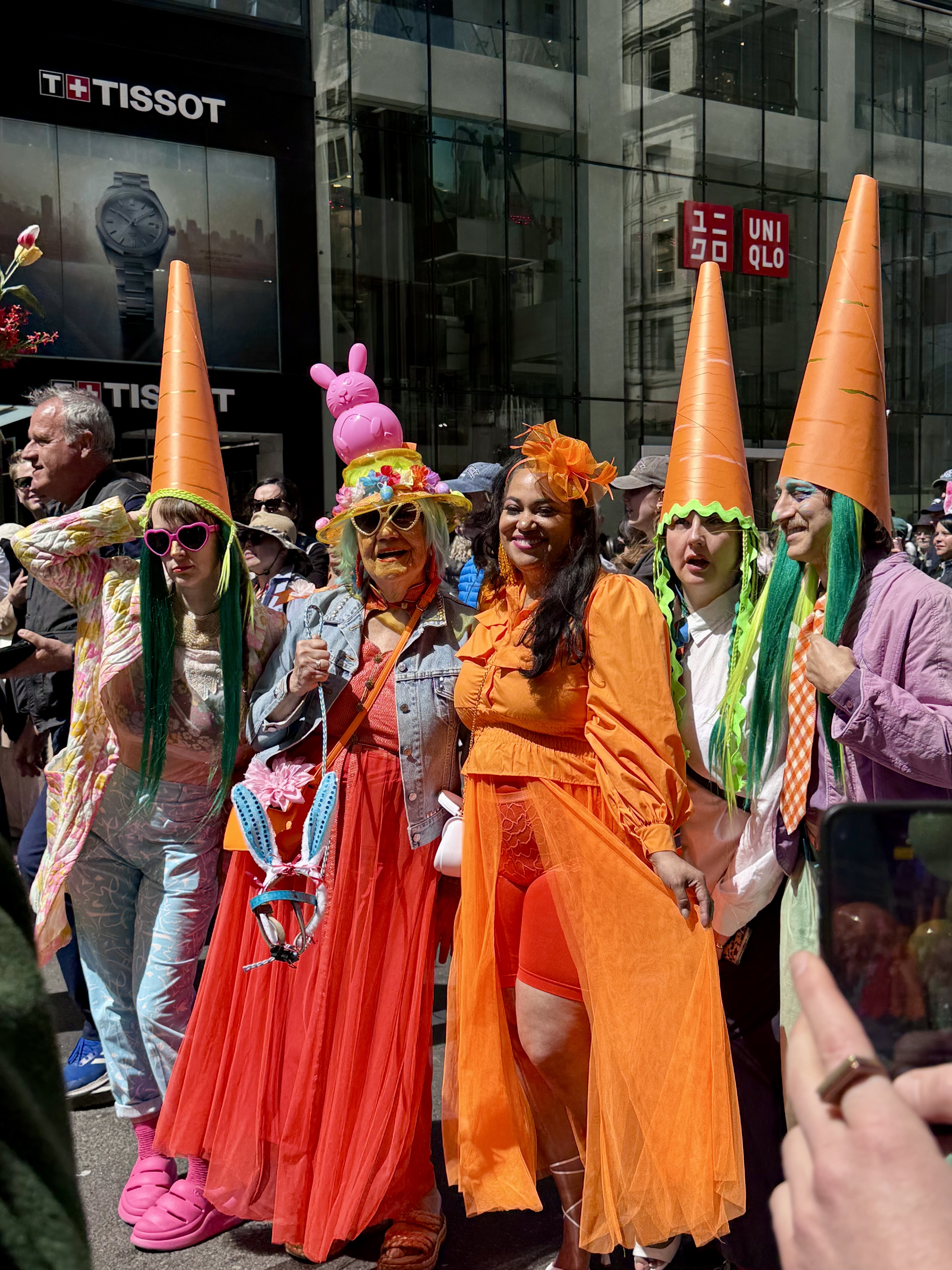
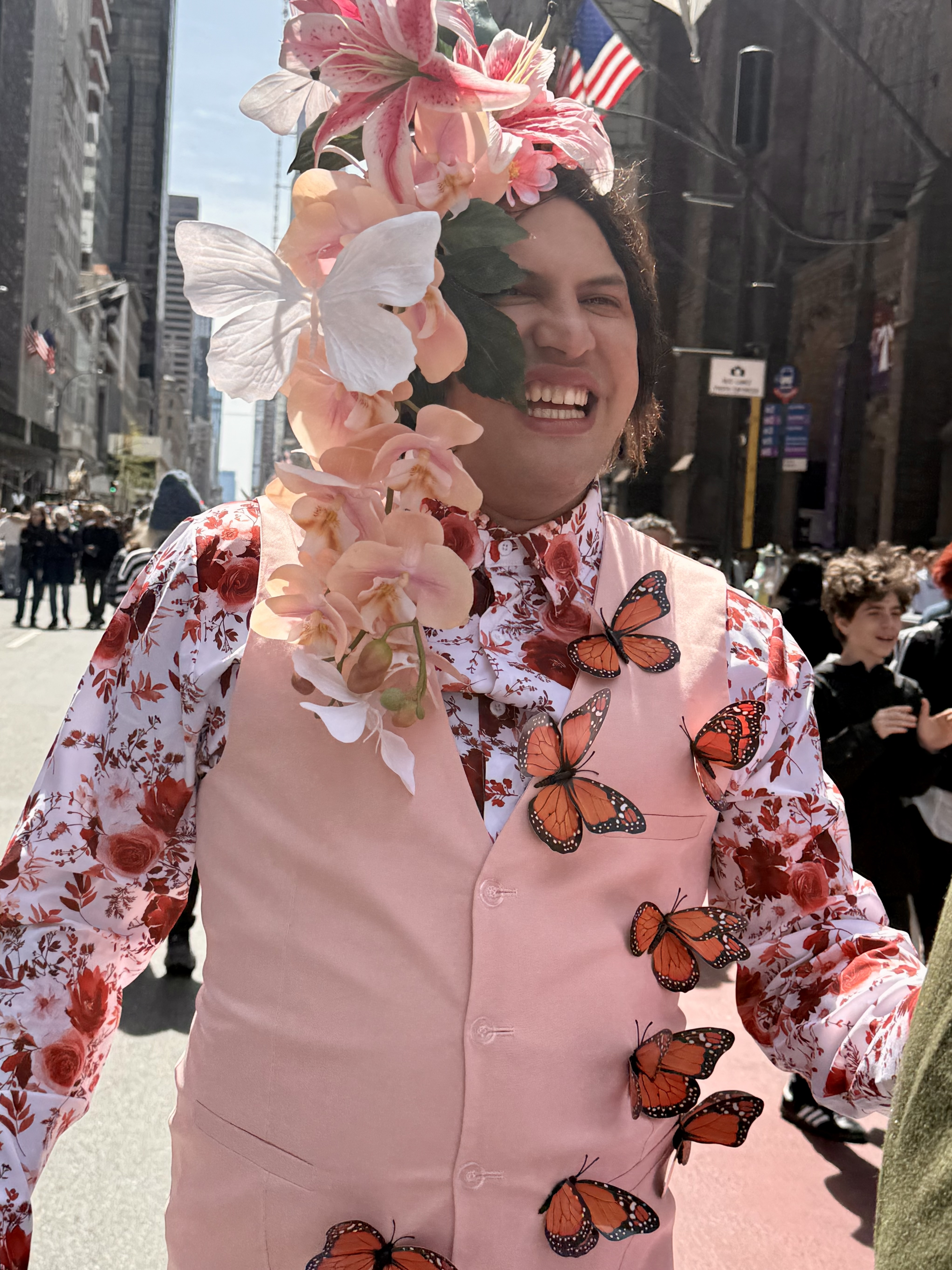
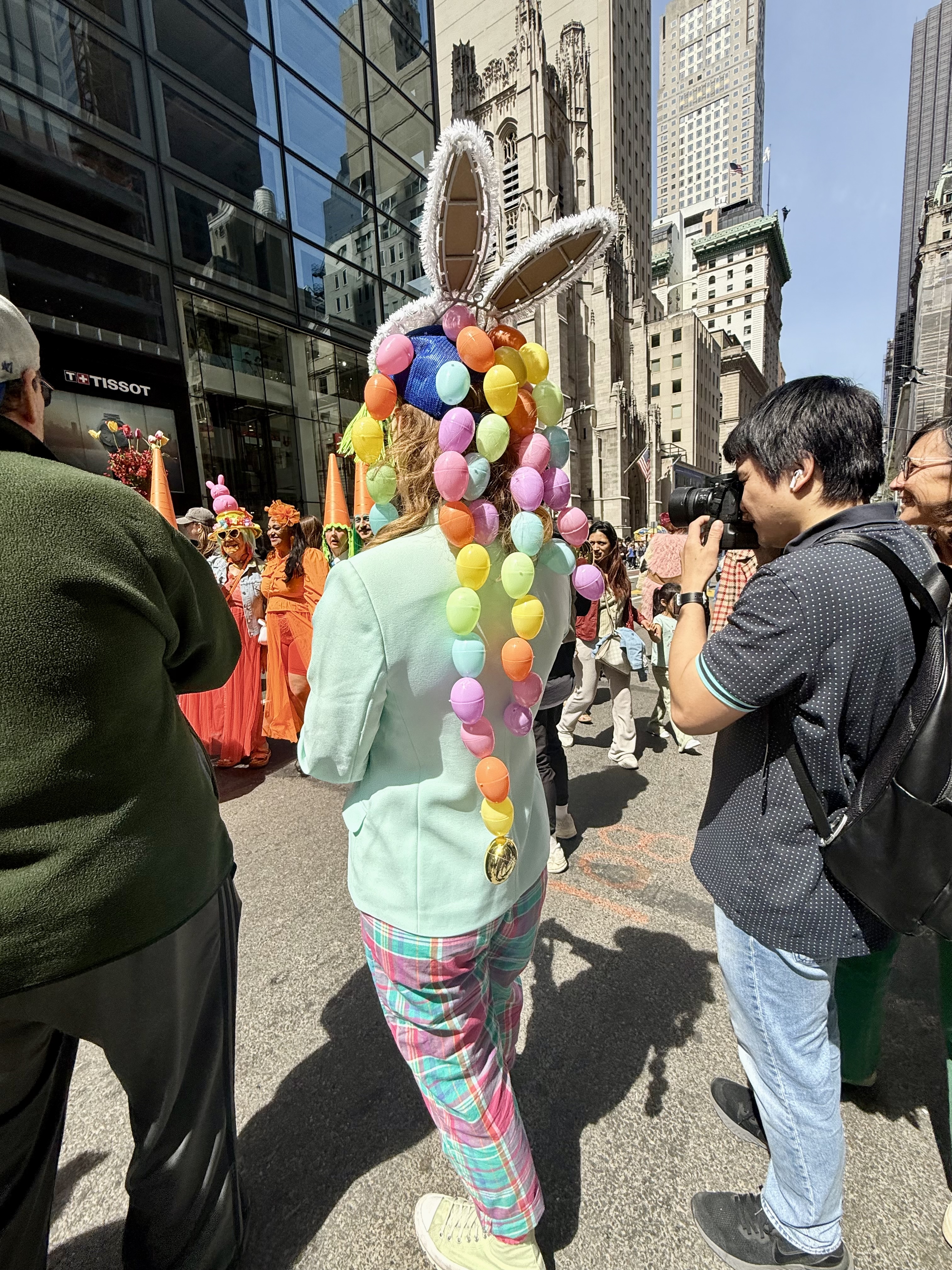
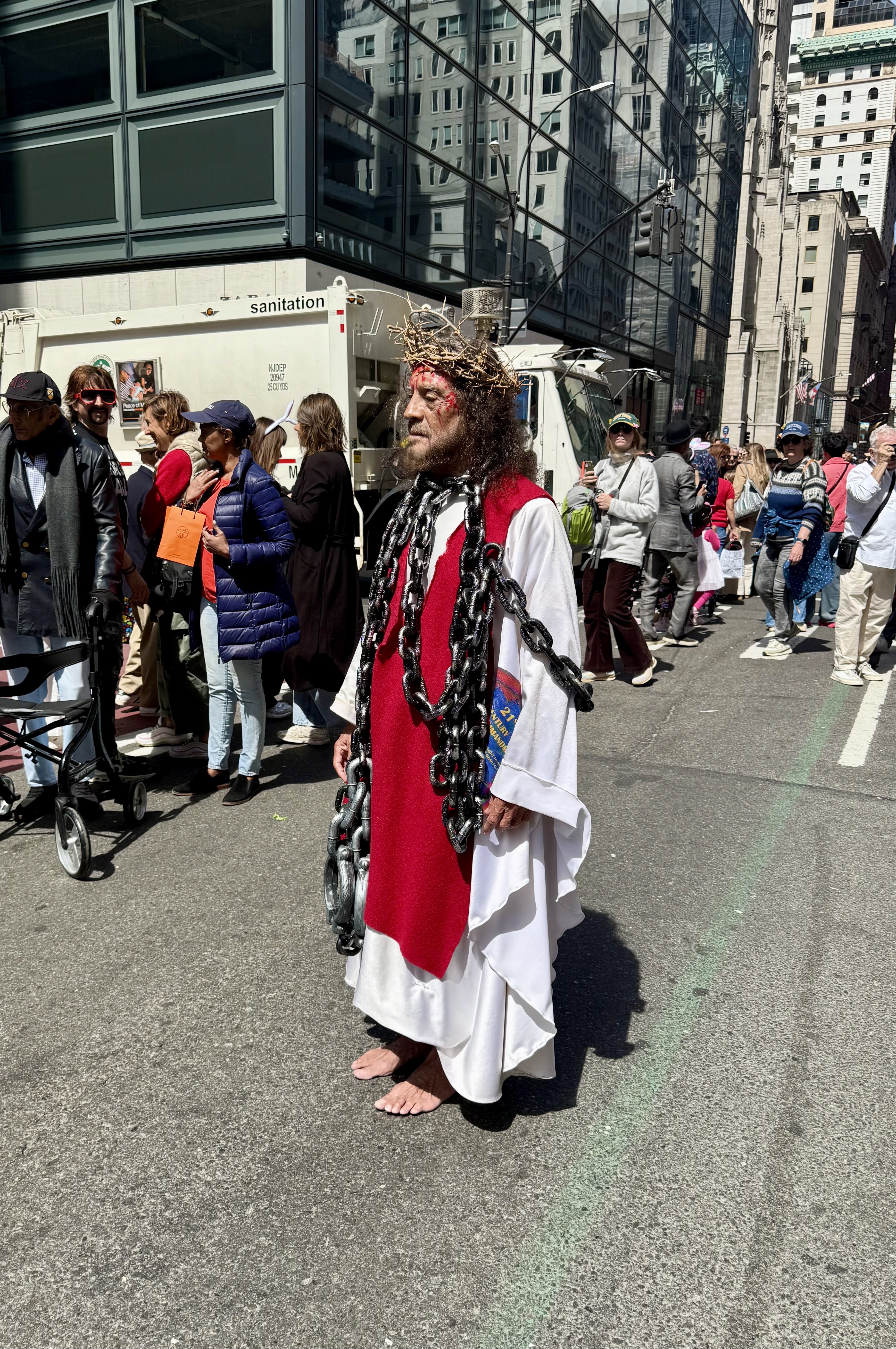
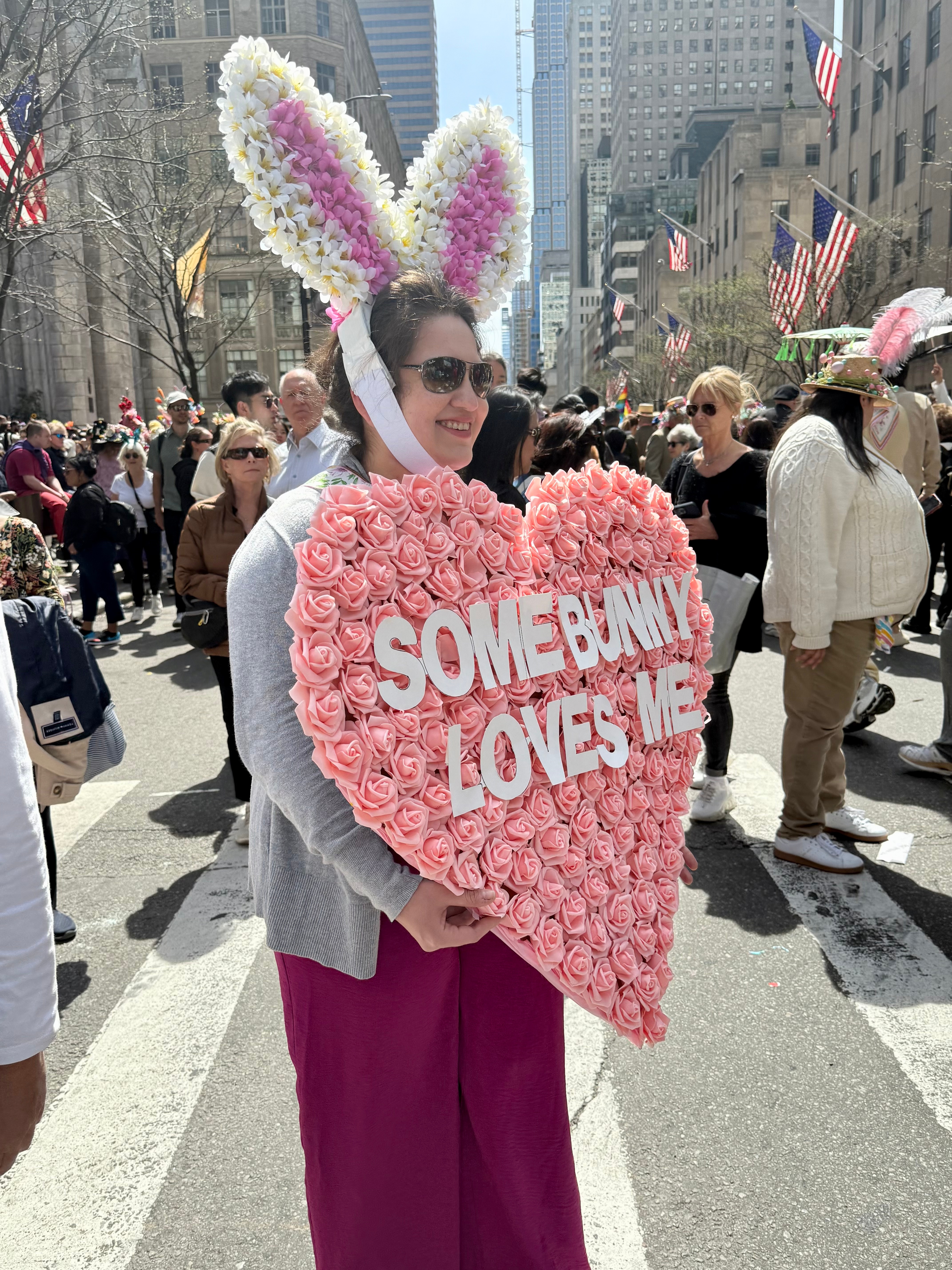
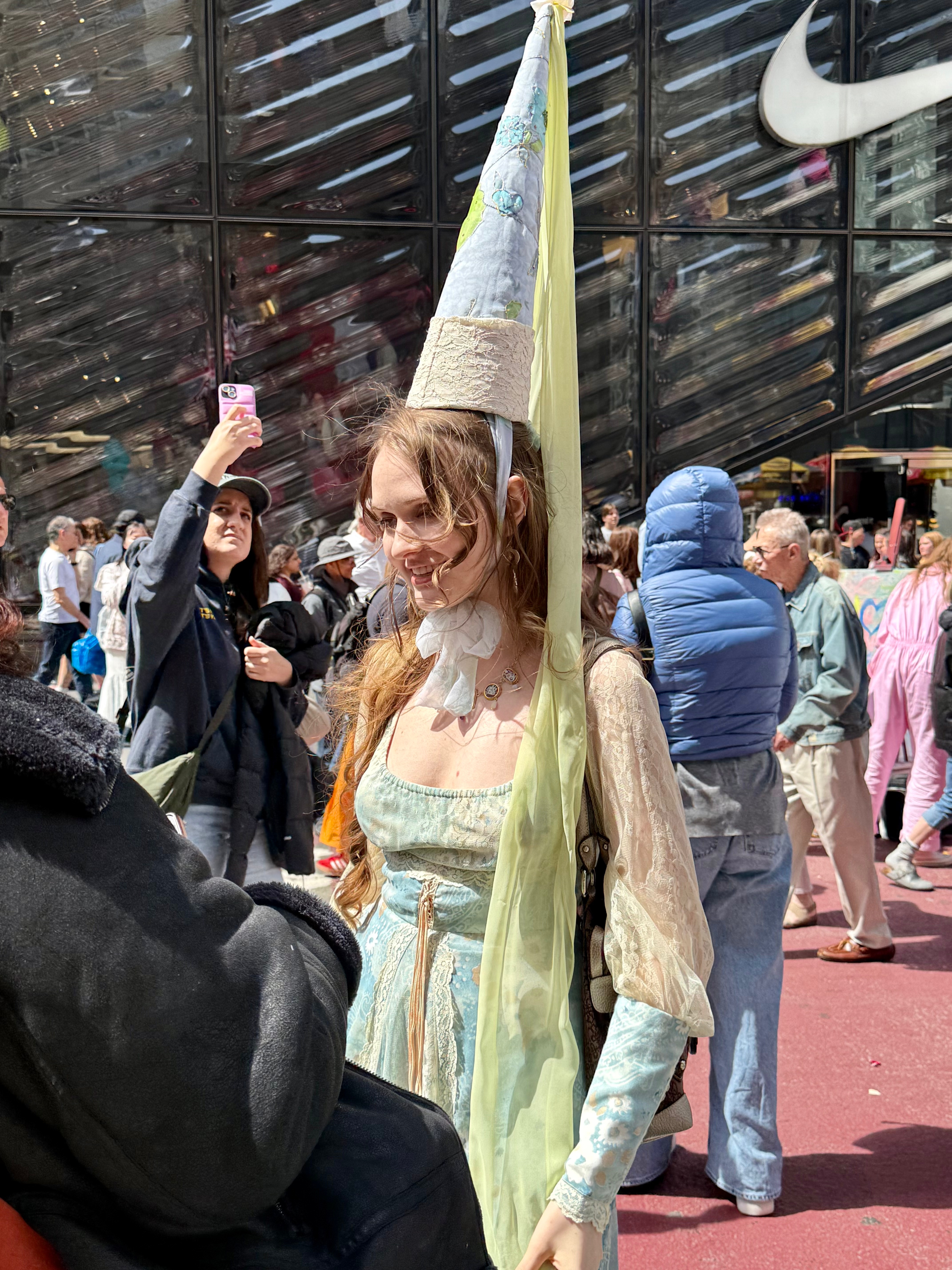
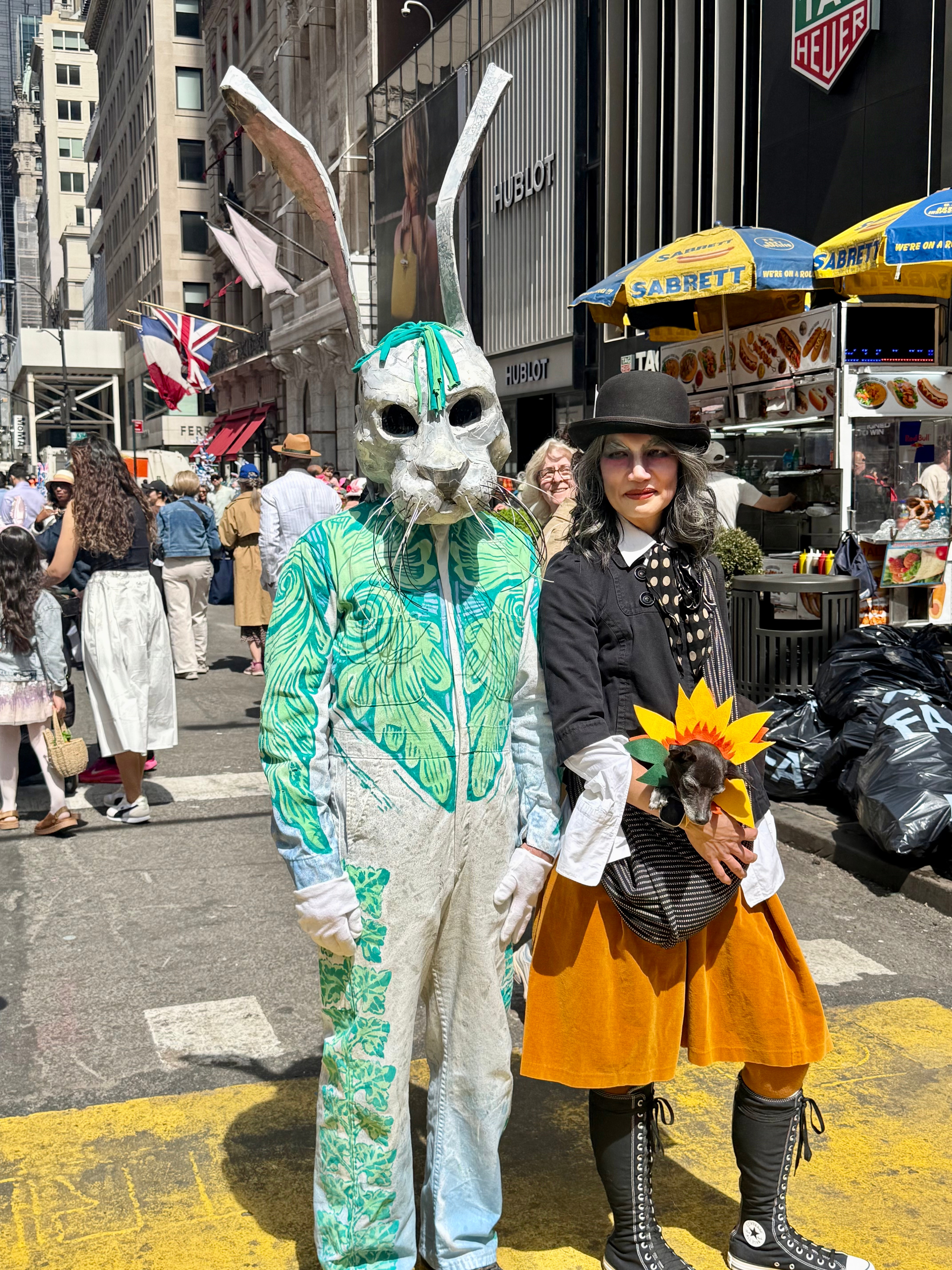
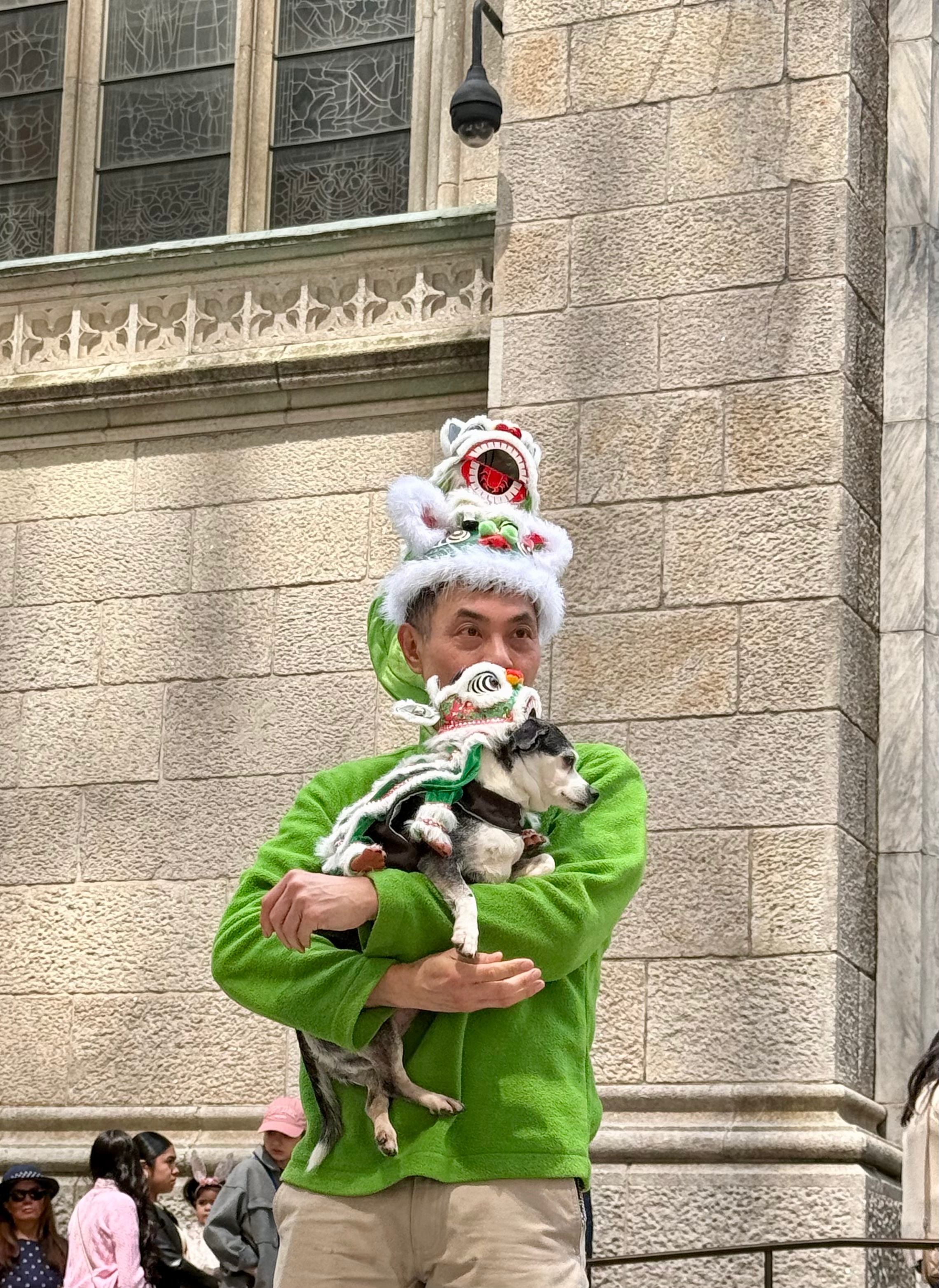
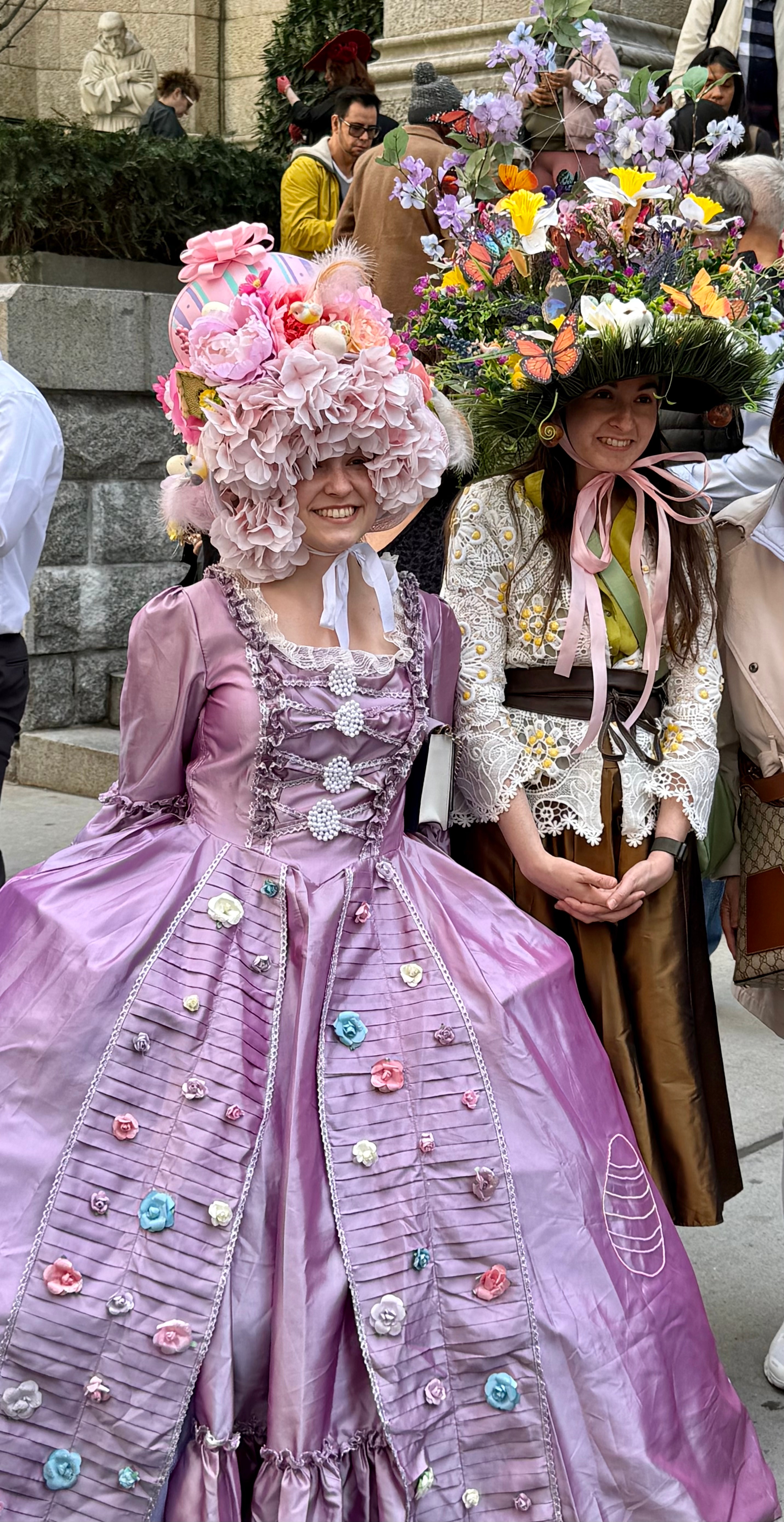
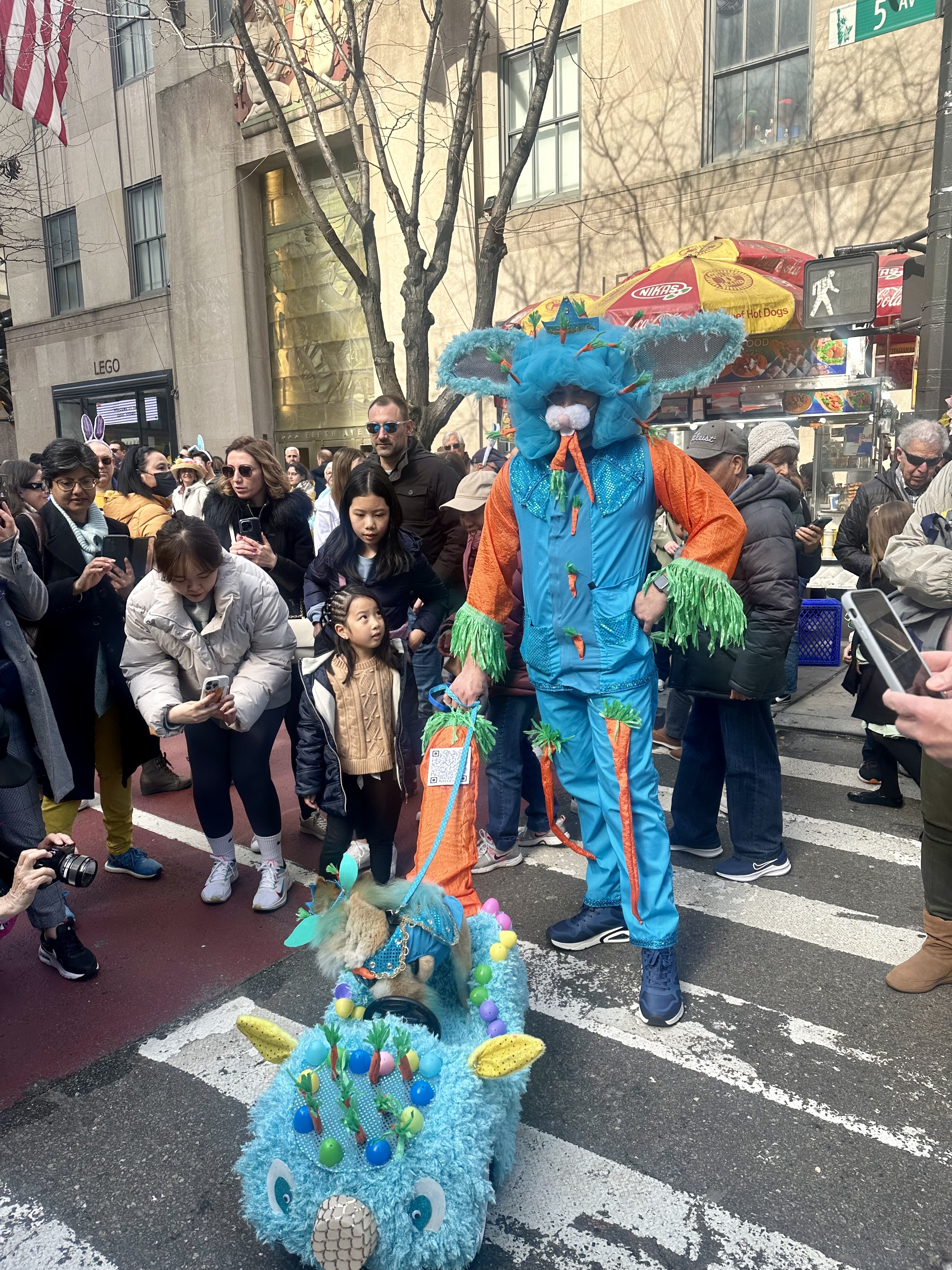
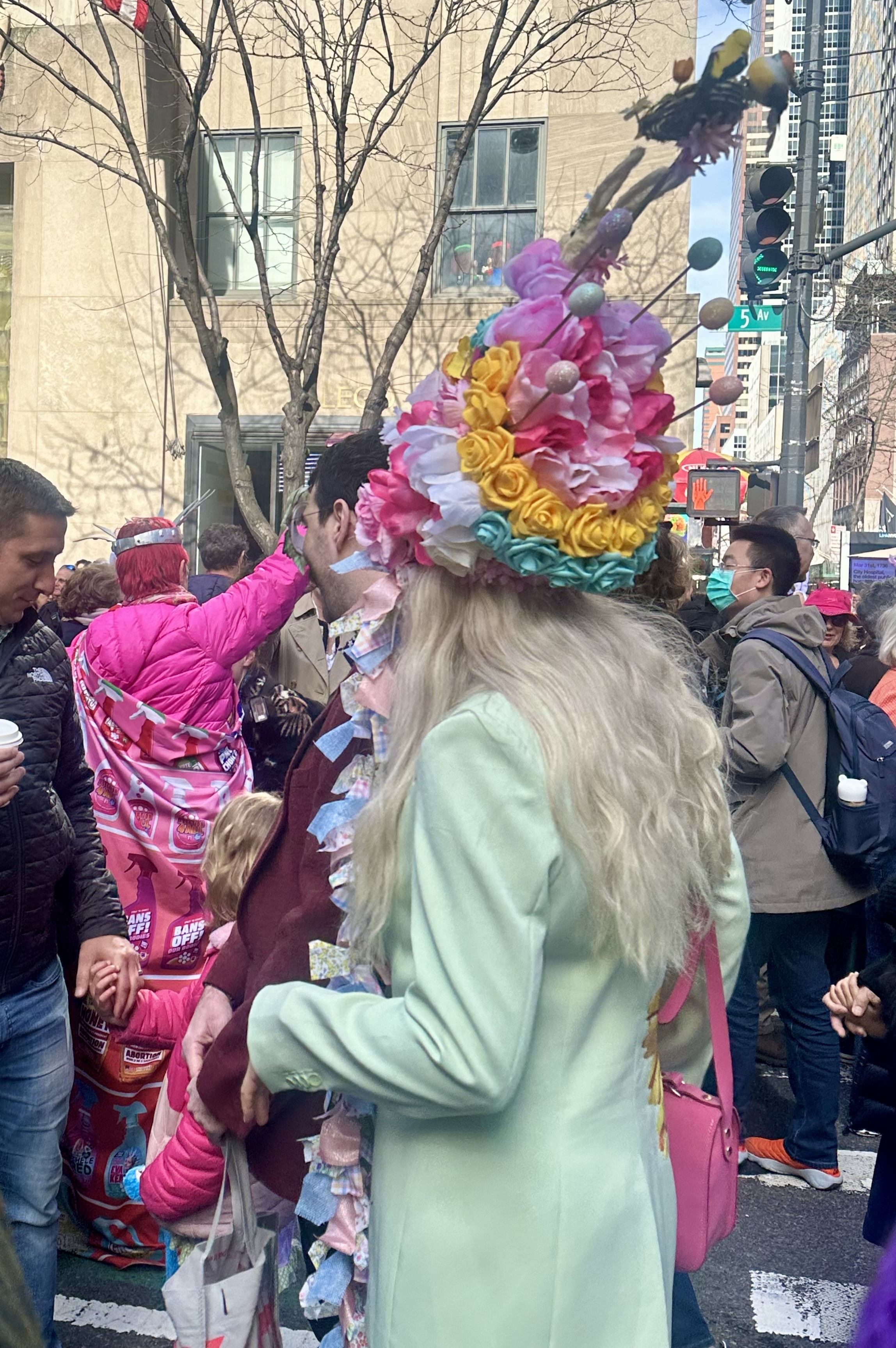
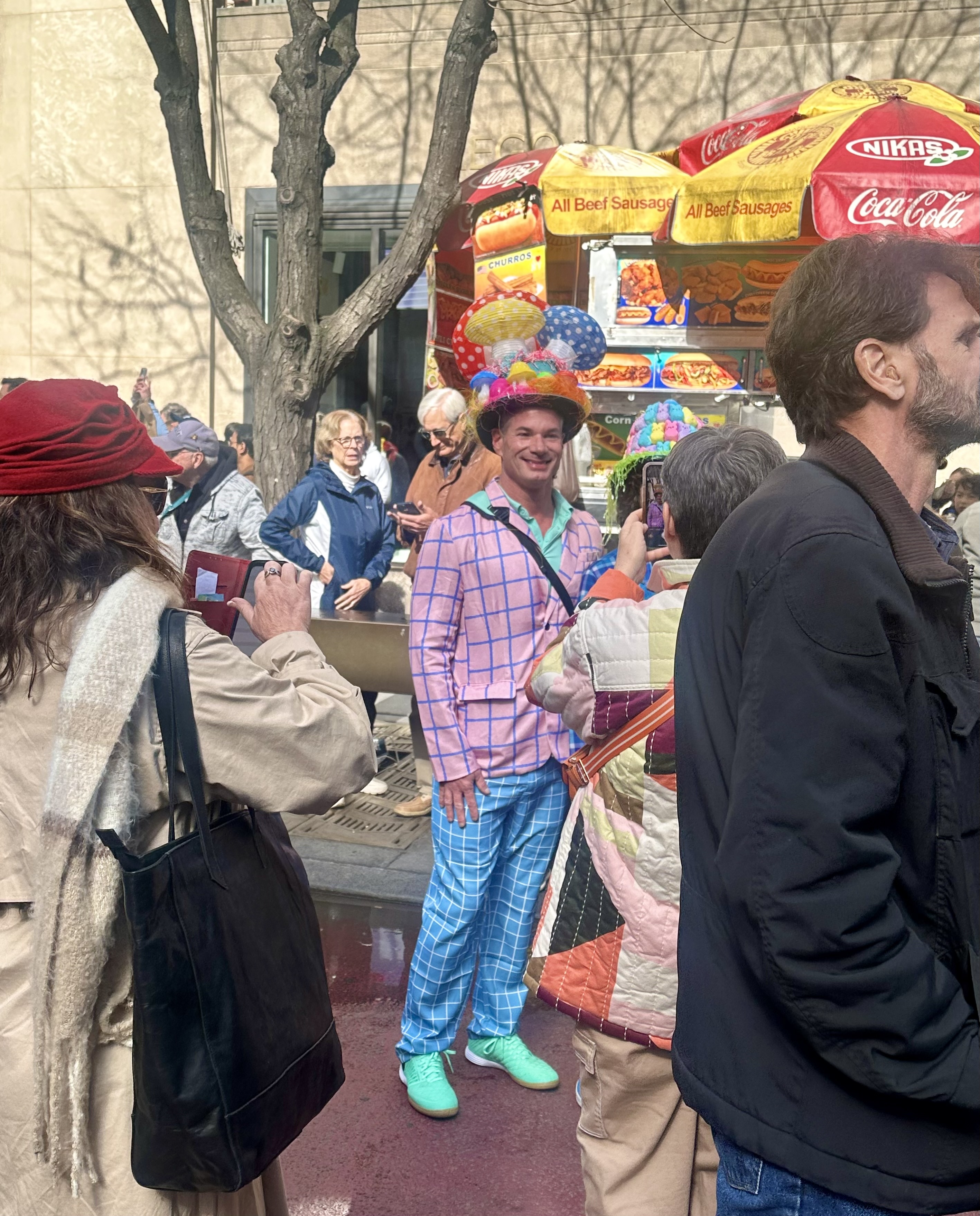
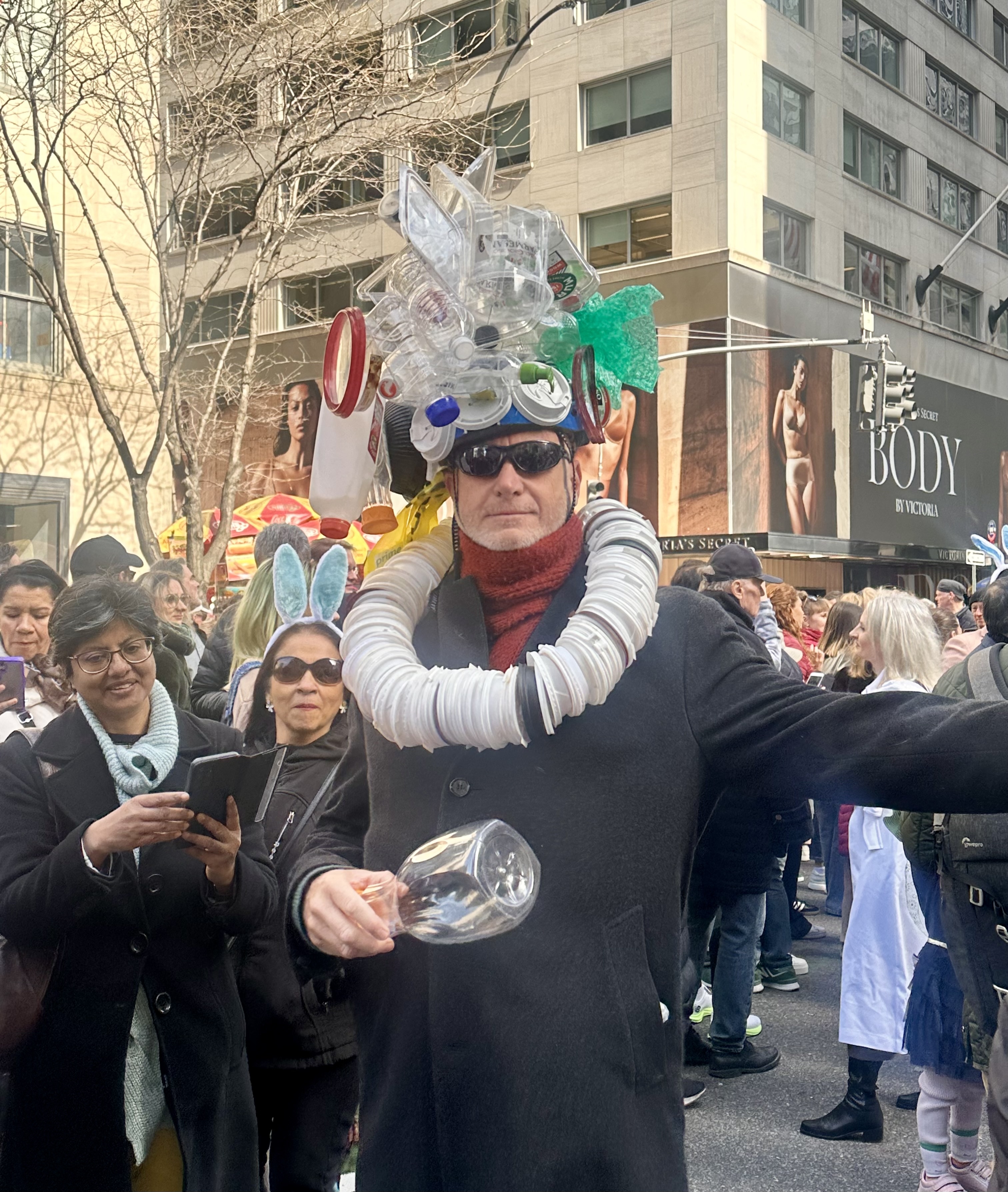
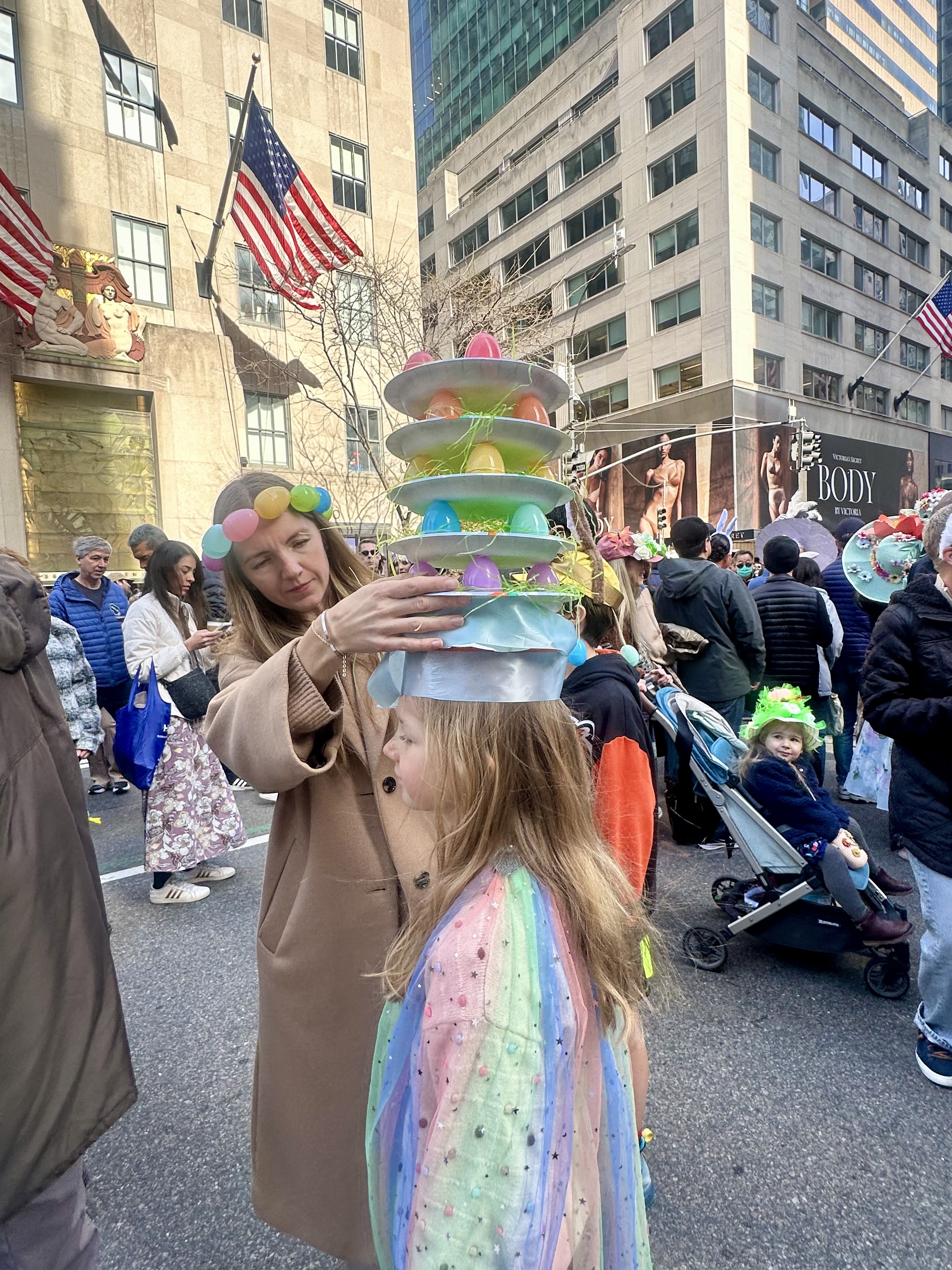
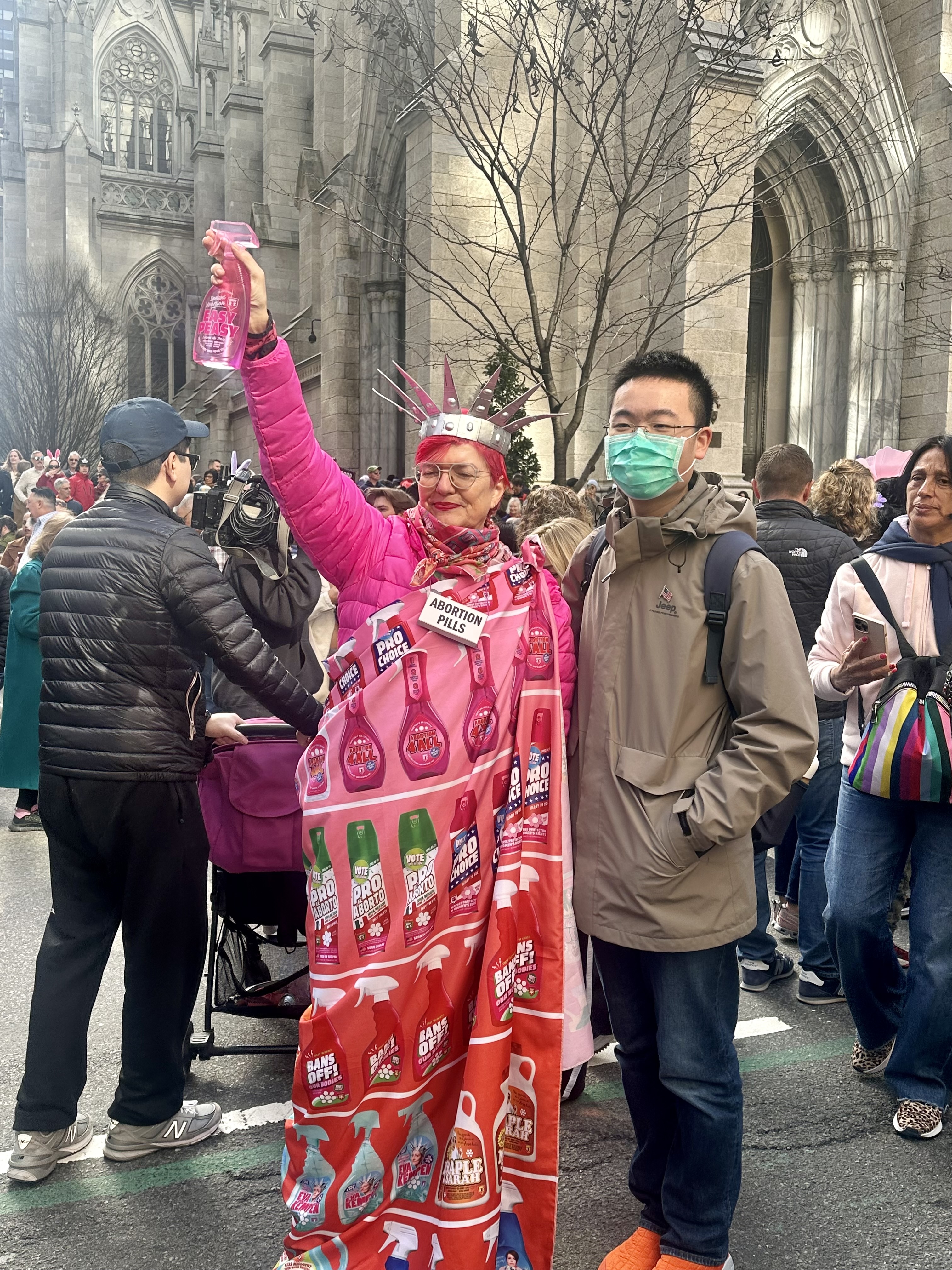
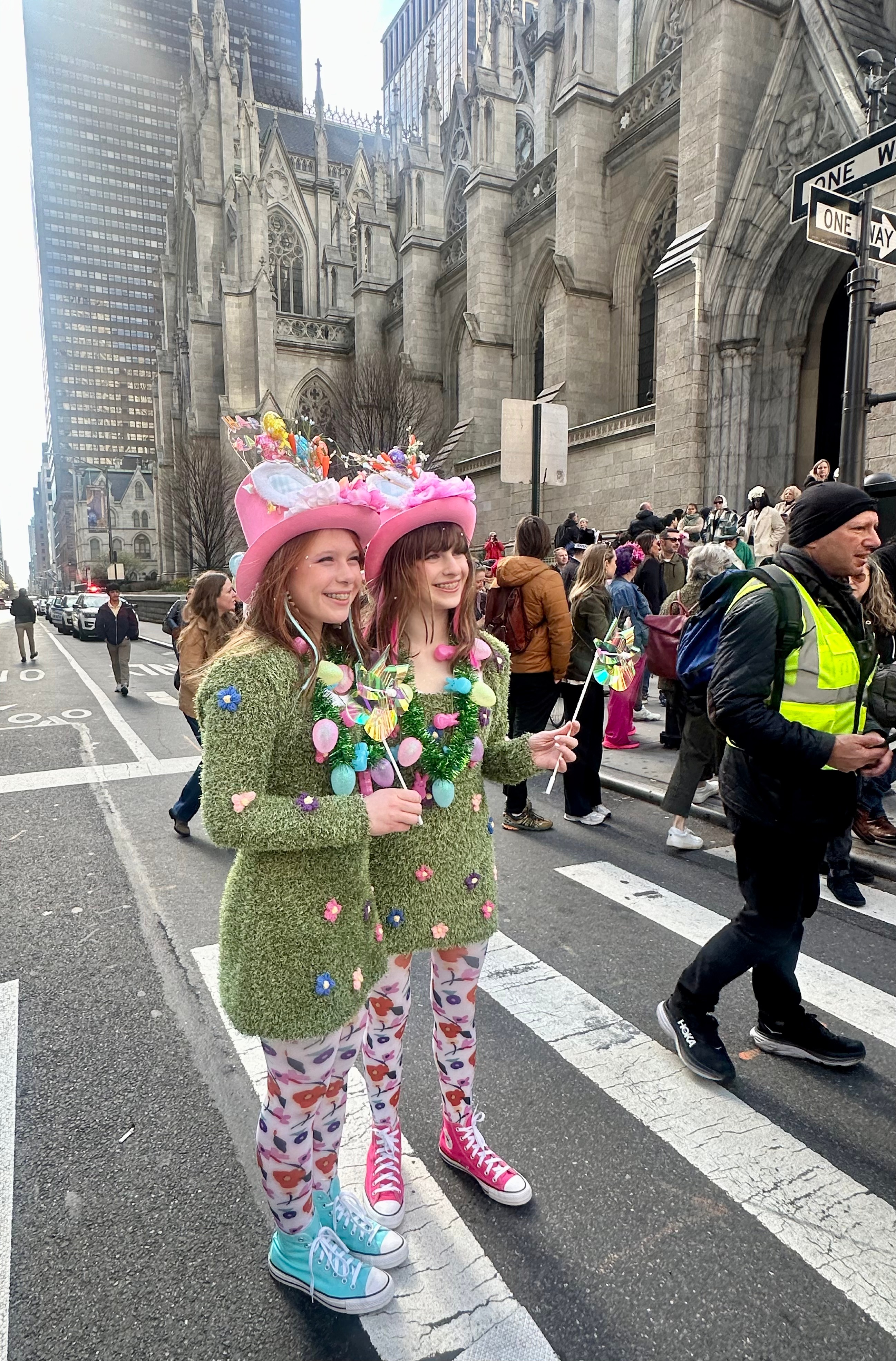
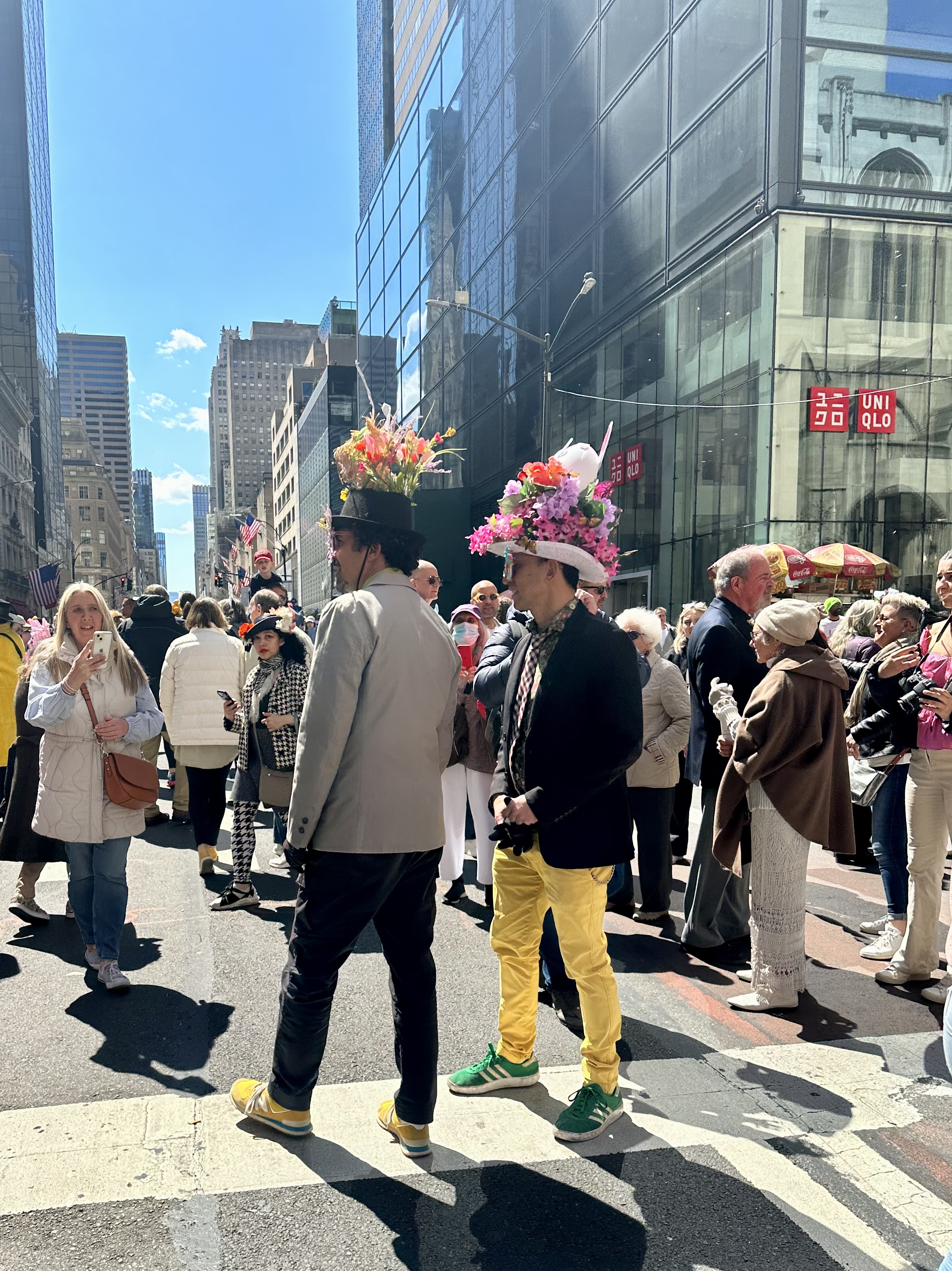
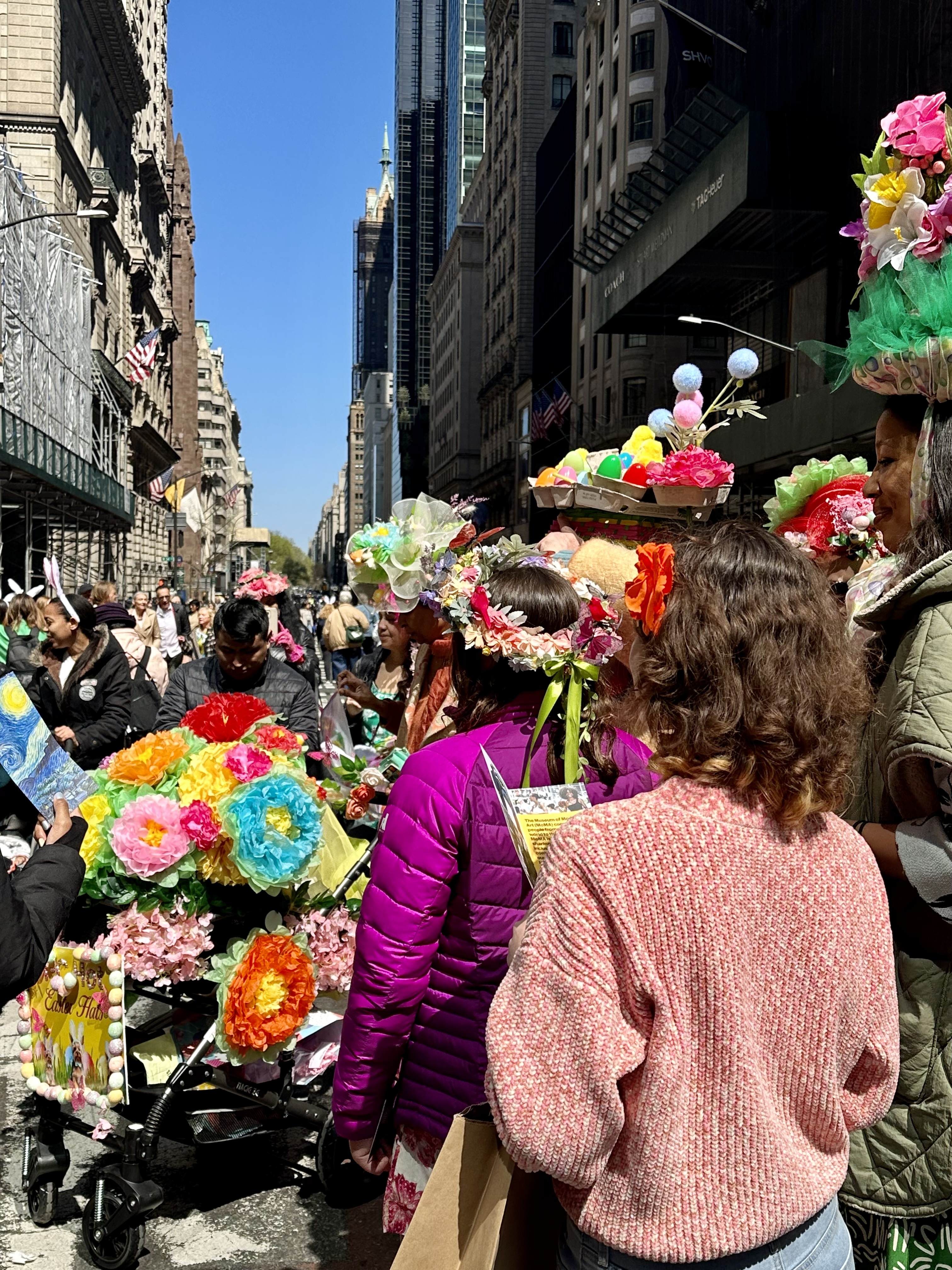
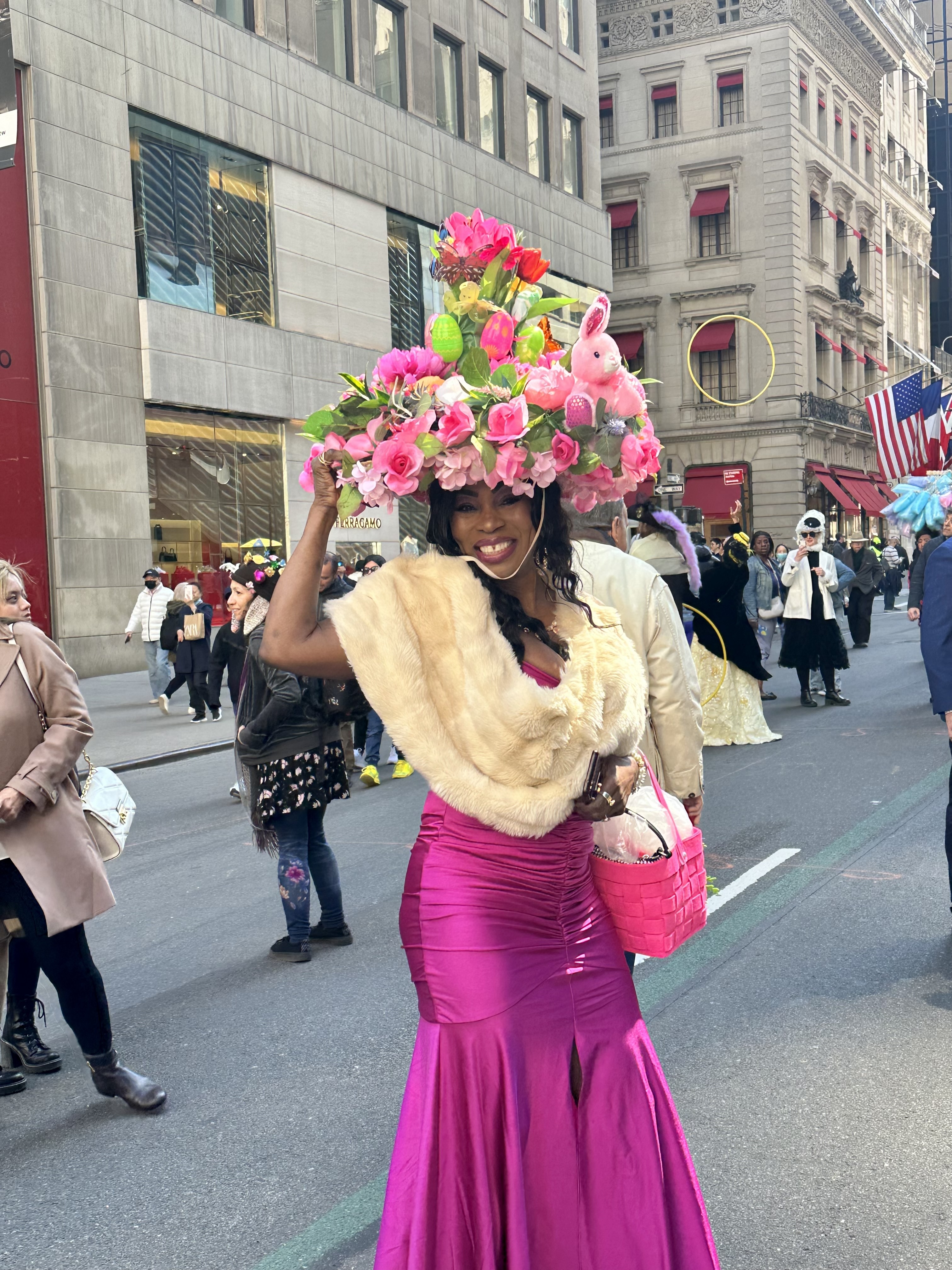
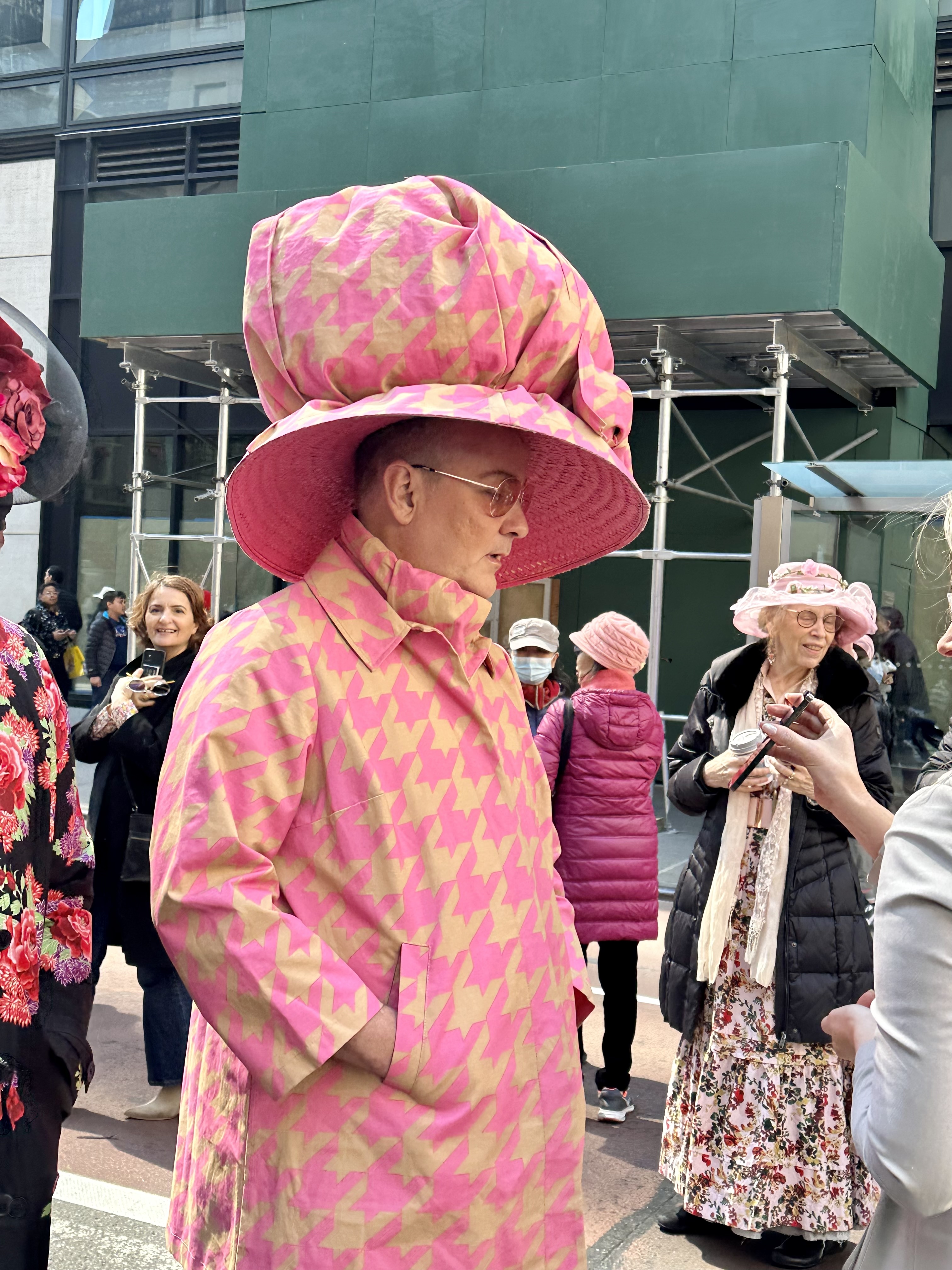
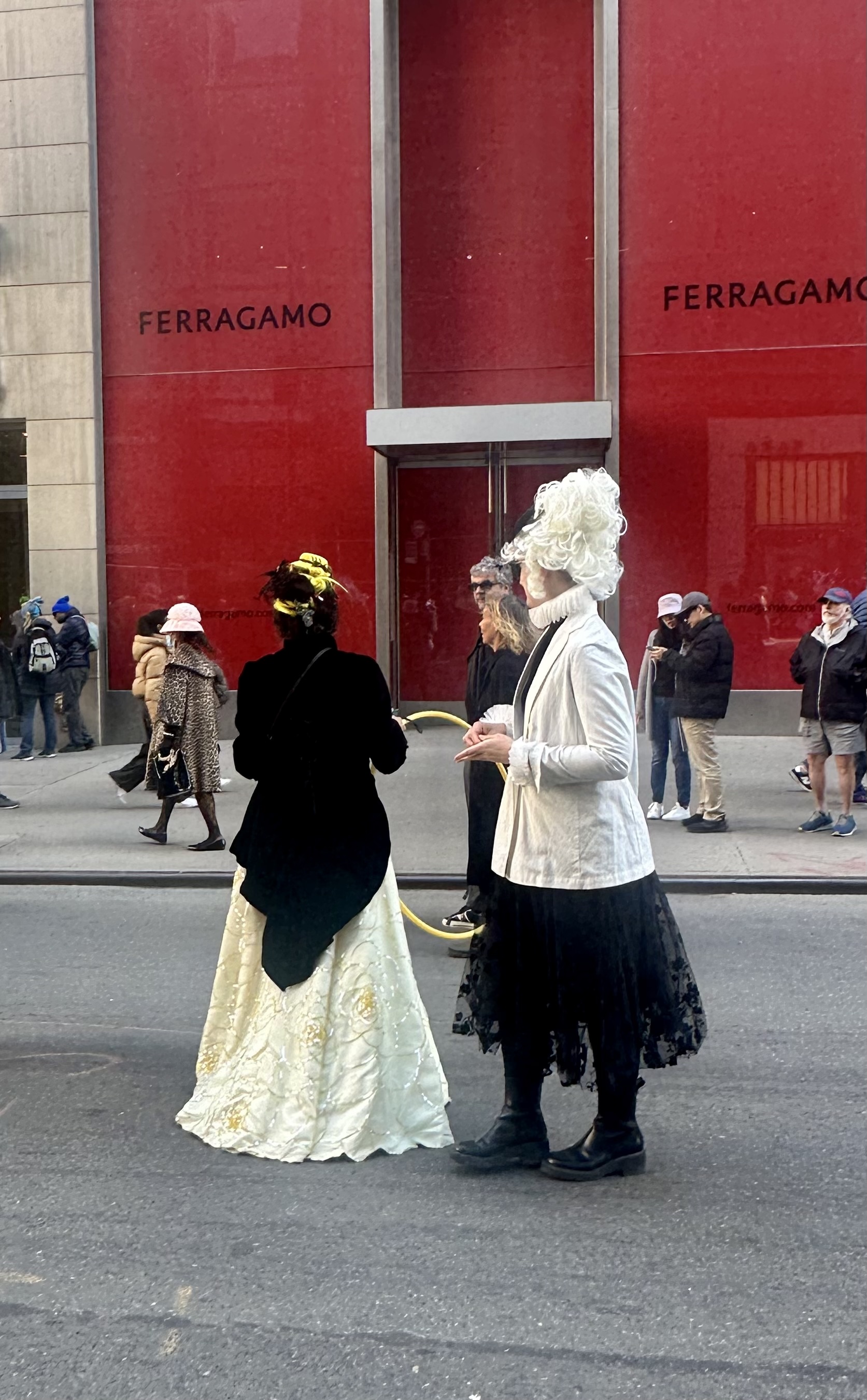
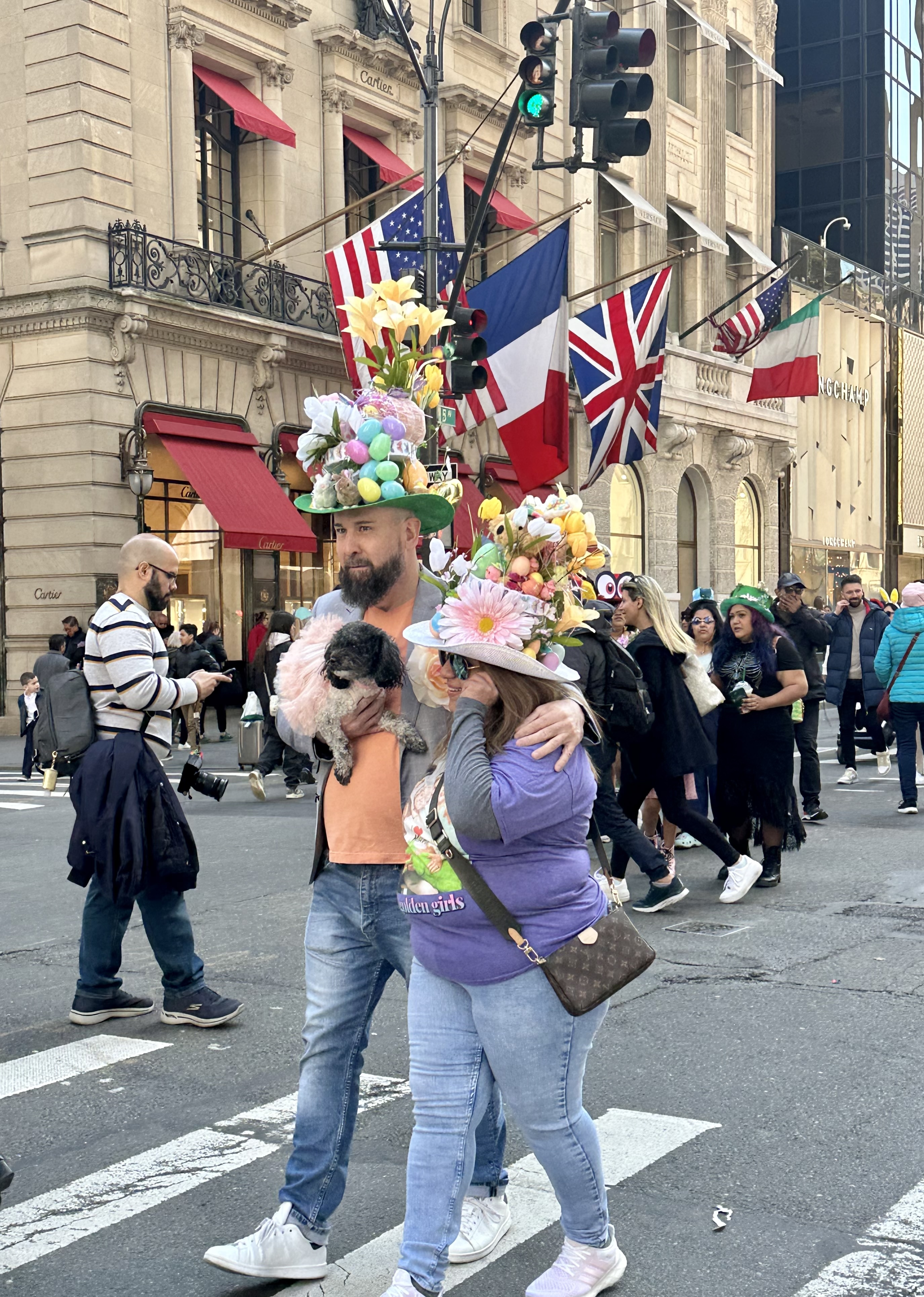
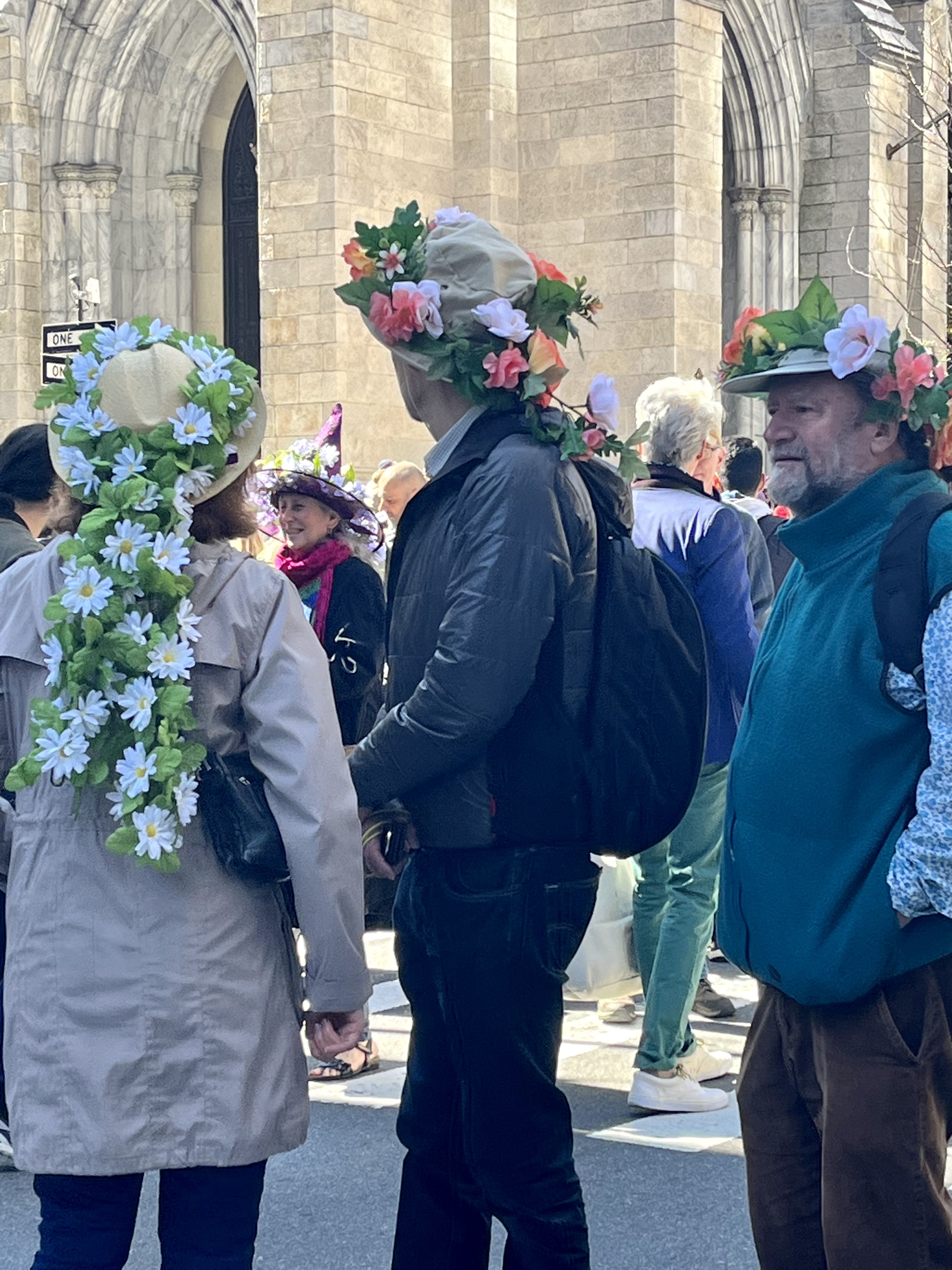
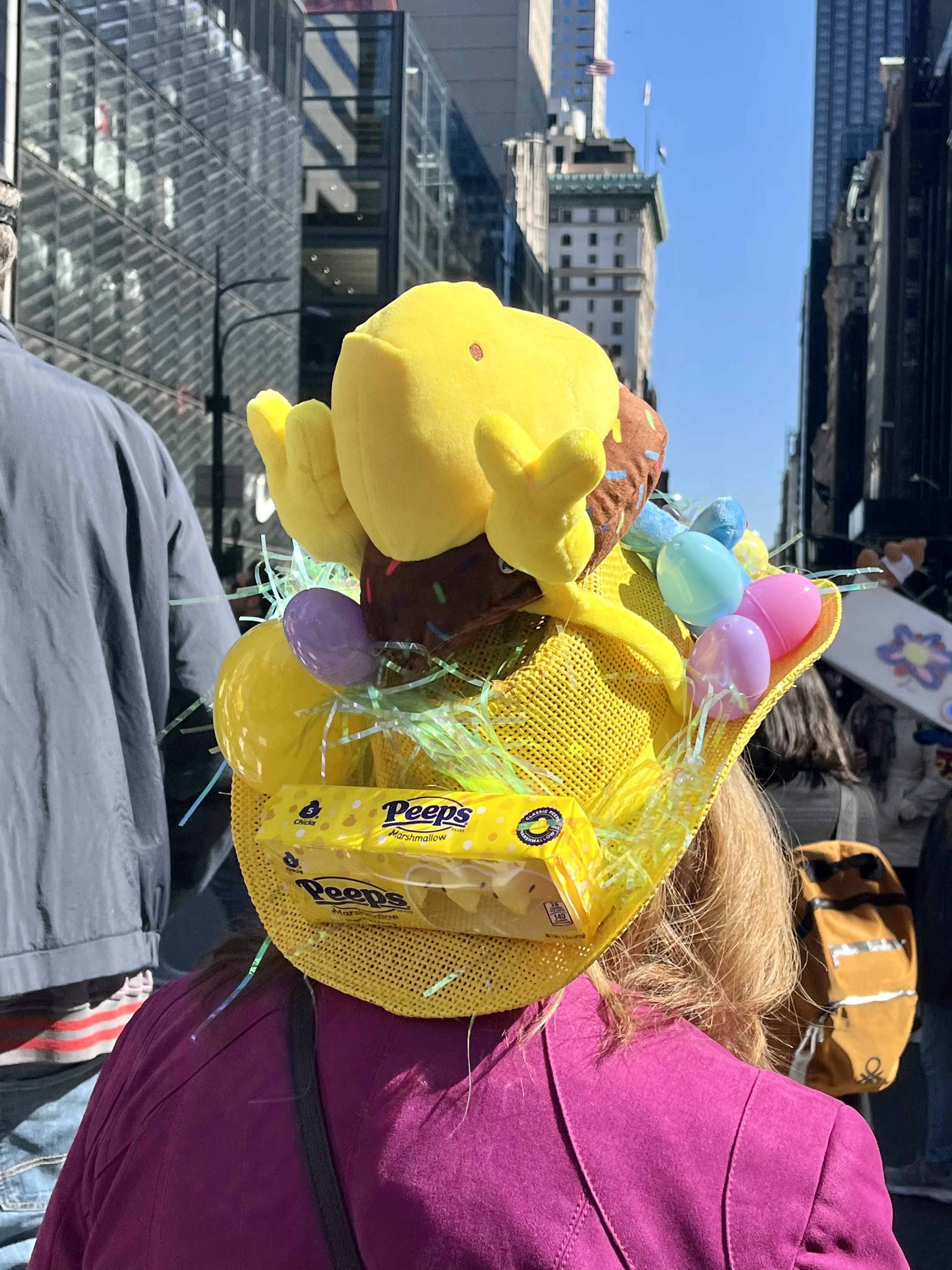
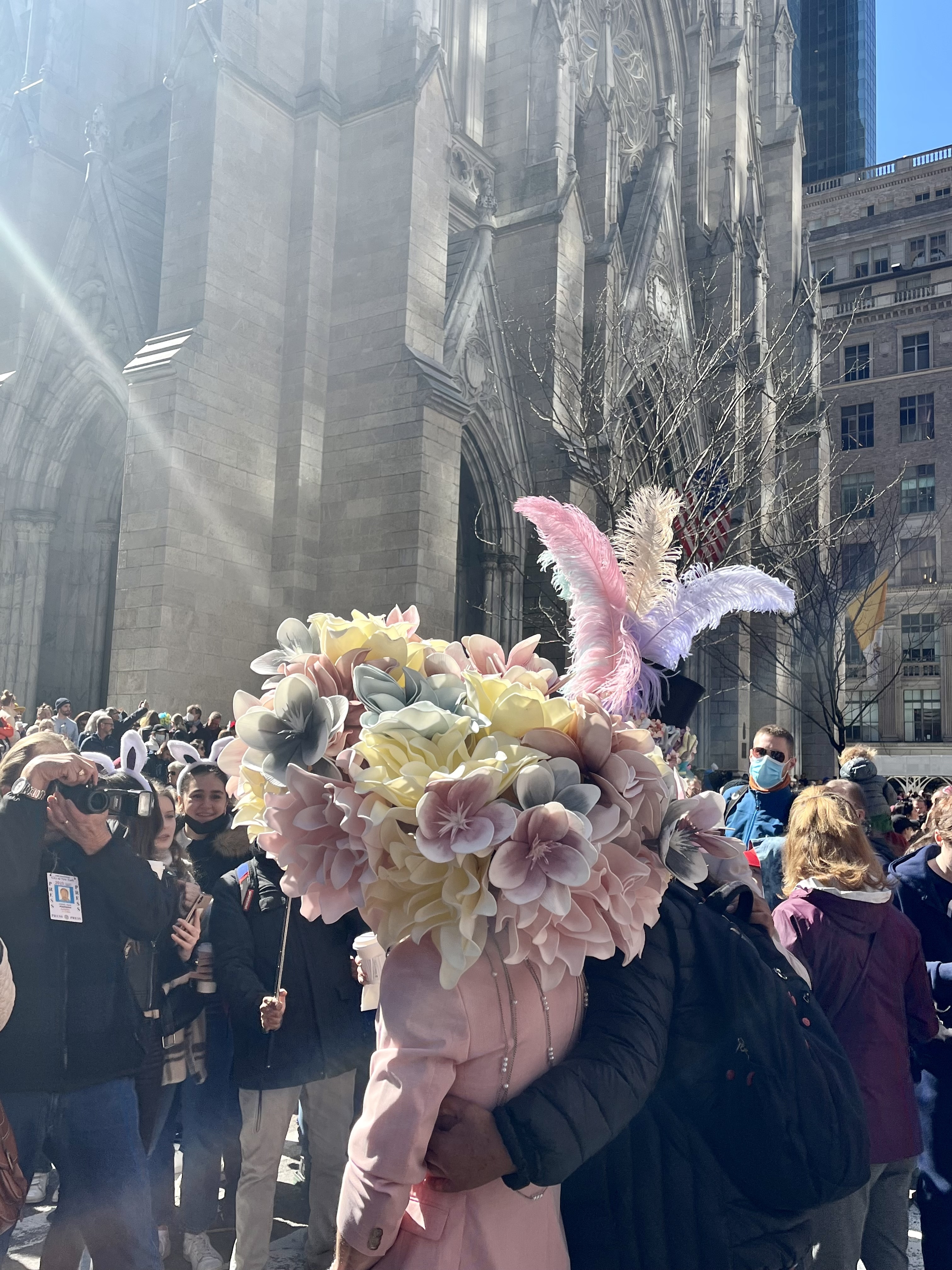
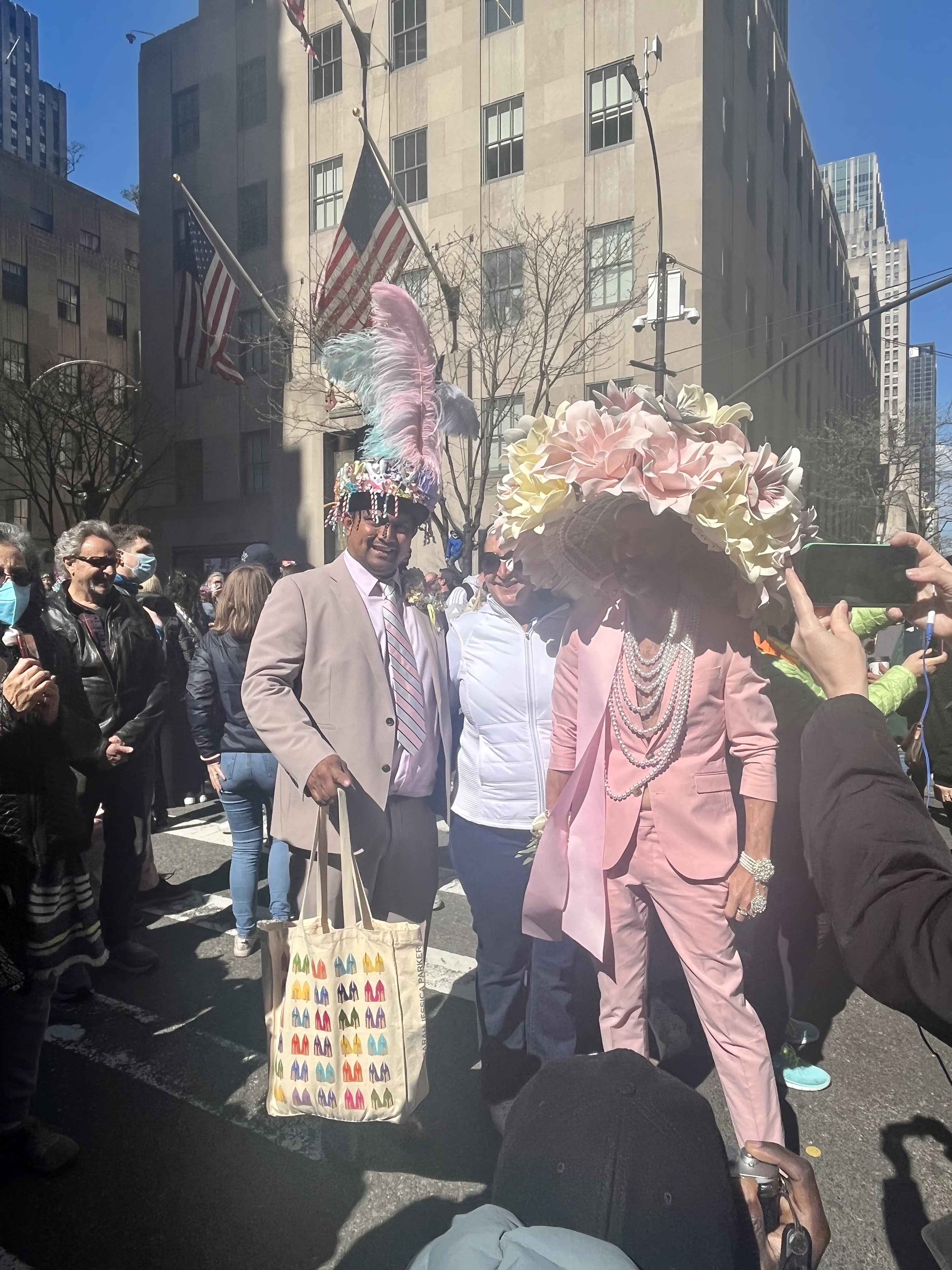
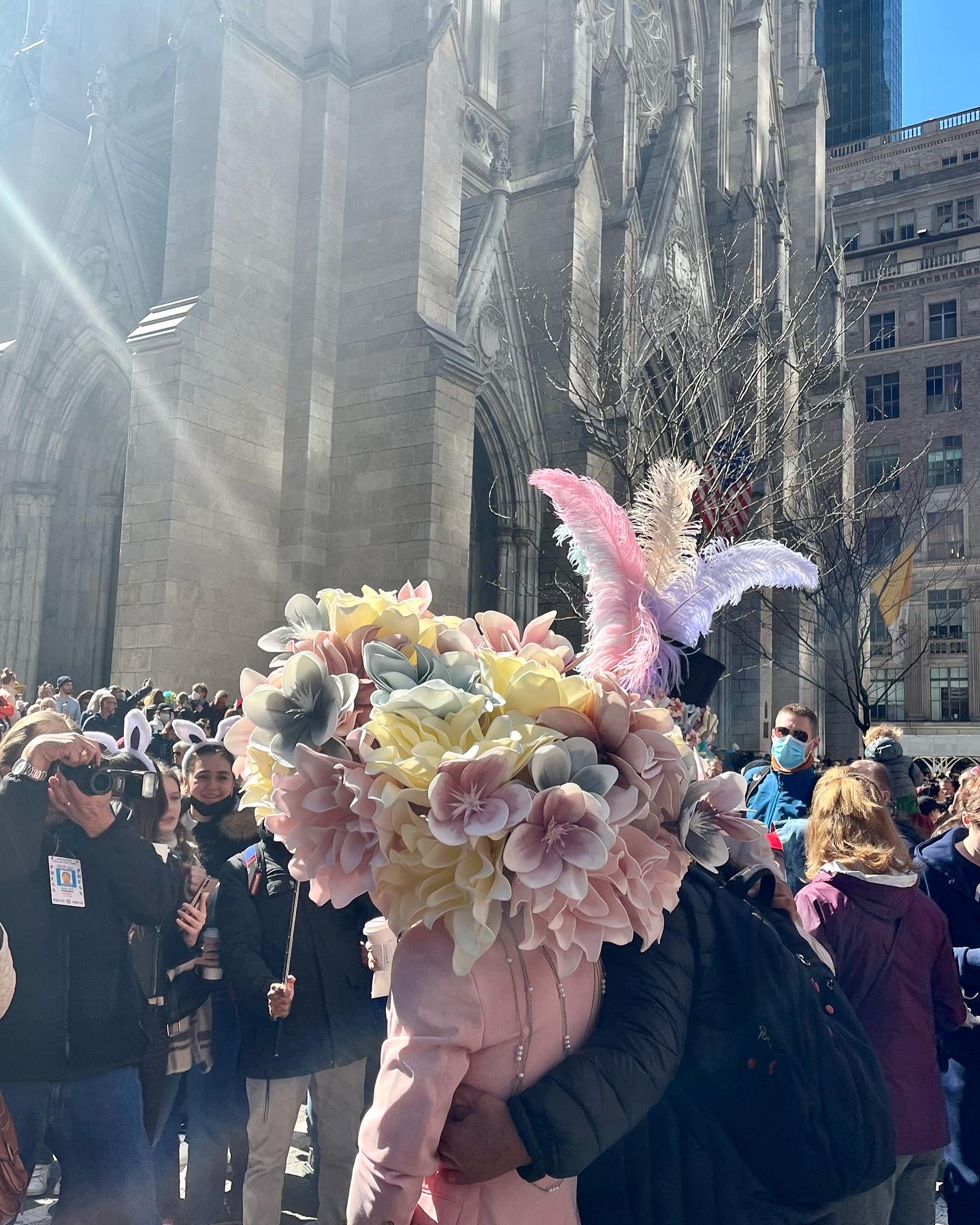
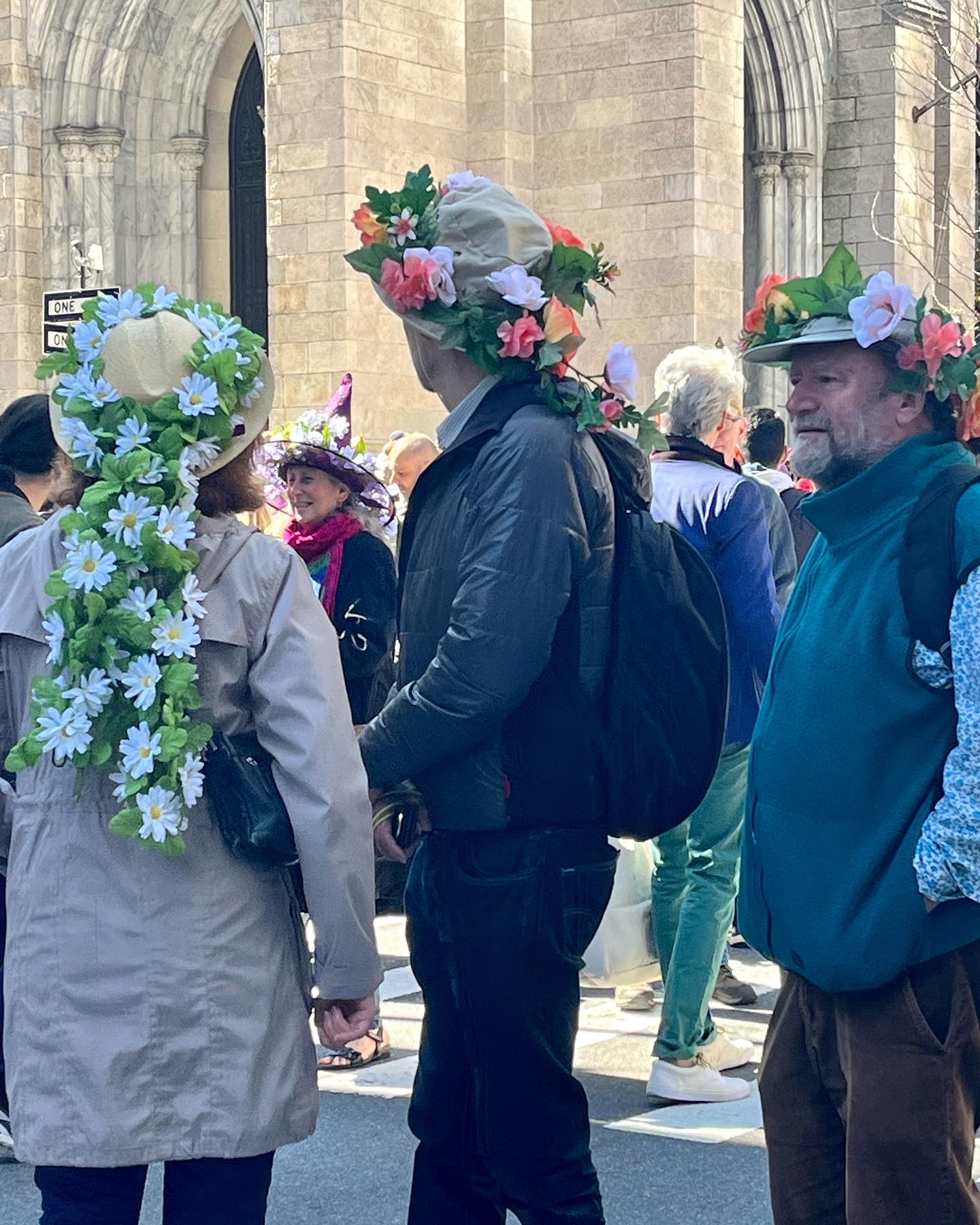
Irving Berlin famously wrote about it in 1933, Judy Garland sang about it in a movie in 1948, and most people have heard of it – New York City’s Easter Parade on Fifth Avenue. But many likely think of this parade in the way that a July 4th event or Macy’s on Thanksgiving deliver it. It is in reality more like a procession, quite unstructured, and anyone can show up in costume or with their cameras to experience this very unique event every Easter Sunday. Originating from the process of dressing up for Easter and promenading from one church to another to see the decorations during the 1800s, it became a formal event in 1890. Today, Fifth Avenue is closed to car traffic on Easter Sunday from 10am to 4pm, and I highly recommend wandering these blocks – whether in your elaborate bonnet or as an admirer of such – if you are able.
The above photos are from Easter 2026. I couldn’t get to the parade early enough to beat the rain, and wondered if anyone would be there. But there were more than I had anticipated, even if the crowds were not what I have experienced in other years. I had realized this spring that I never blogged about this very special event in New York City, and was disappointed when Easter looked to be rainy – but still found it very enjoyable. So if you are ever thinking of attending and it shows rain, don’t be put off! My personal favorite was the dress made from Metrocards (which were retired at the beginning of 2026).
On sunny Easters (I took the photos above on Easter 2025) it can be quite crowded, especially in the blocks immediately around St. Patrick’s Cathedral. It is believed that in the height of the parade’s popularity in the mid-20th century that a million people attended at some point during the six hours Fifth Avenue was pedestrian-only. But more recently estimates are closer to 30,000 – 50,000. If you go to take photos, know that the people in costume want their photo taken; they are there to be seen and appreciated!
I took the photos above on Easter of 2024, another sunny Sunday.
The photos above are from 2023.
The photos above are from 2022. I could keep going back for more memories, as I have seen the Easter parade numerous times and always try to make it to Fifth Avenue to view. If you arrive very early, close to 10AM, or later, 3PM or after, the crowds will be lighter but there may be fewer bonnets and costumes to view as well. But why not get a bonnet and costume and show up if you are able? I think I will one day! Who knows, I might even find myself in the “rotogravure” (basically, in a photo in the Sunday magazine – although these days it would be more likely to be in a photo feature in the New York Times online).
In your Easter bonnet With all the frills upon it You’ll be the grandest lady in the Easter parade I’ll be all in clover And when they look you over I’ll be the proudest fellow in the Easter parade
On the avenue Fifth avenue The photographers will snap us And you’ll find that you’re in the rotogravure Oh, I could write a sonnet About your Easter bonnet And of the girl I’m taking to the Easter parade
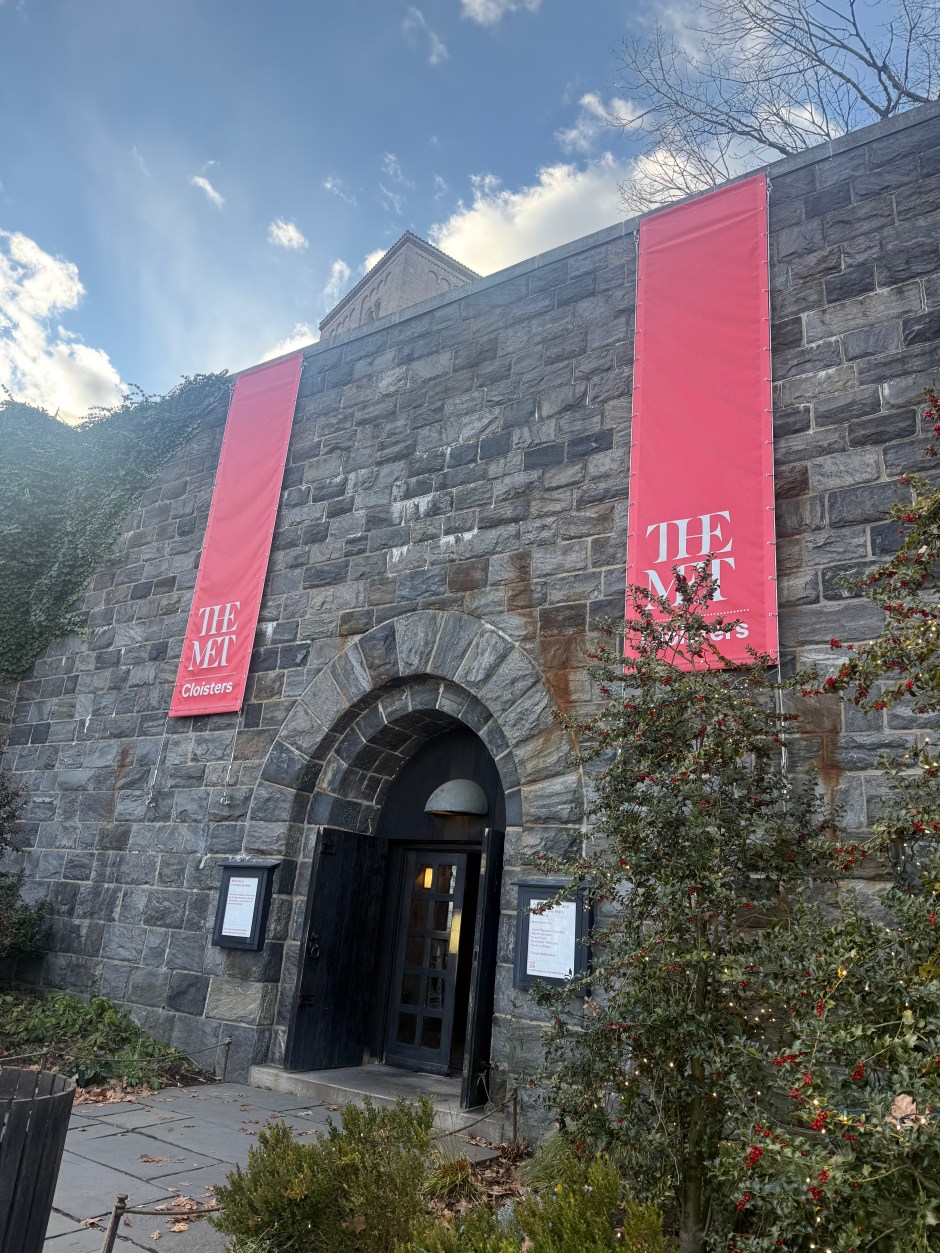
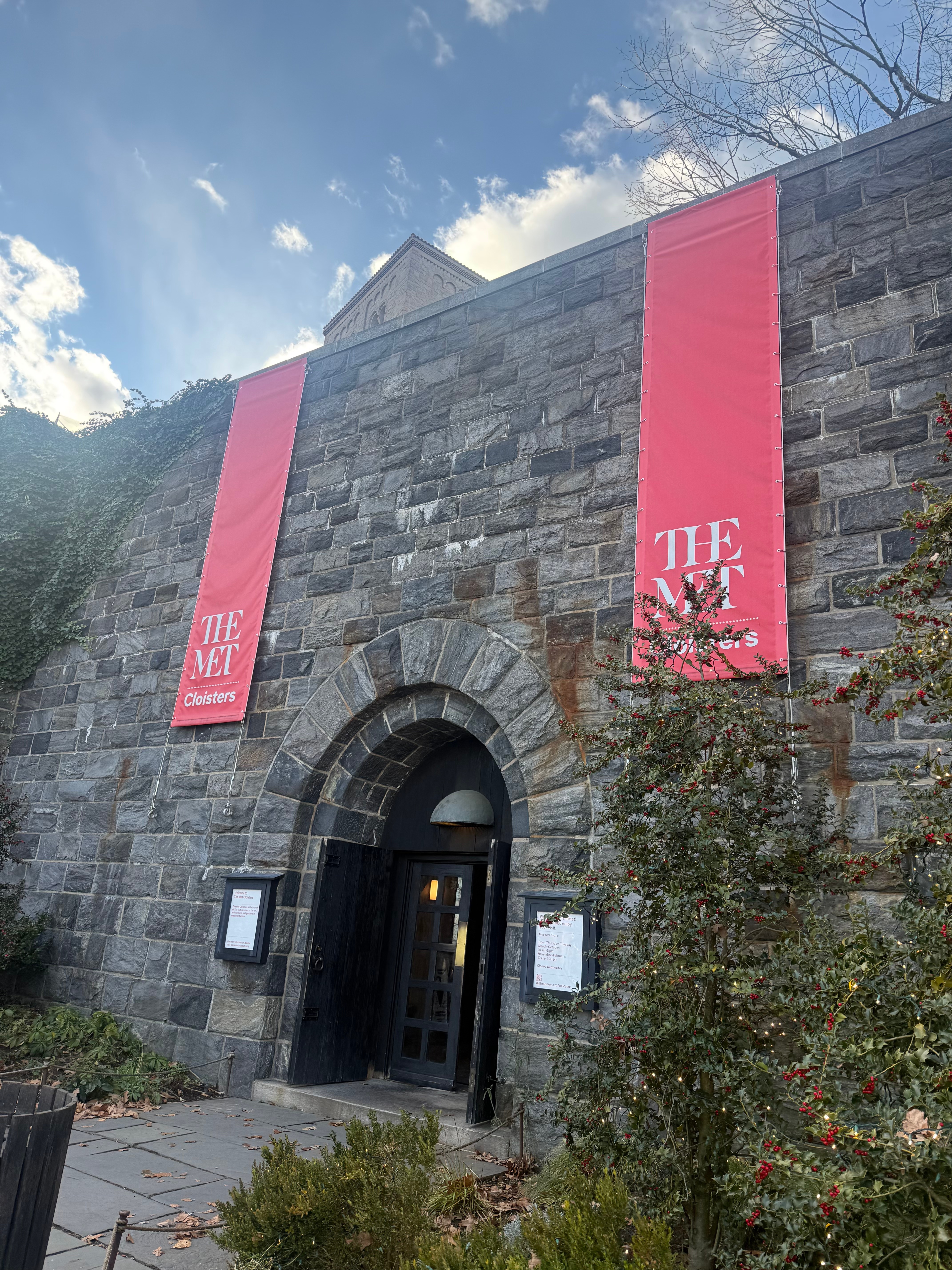
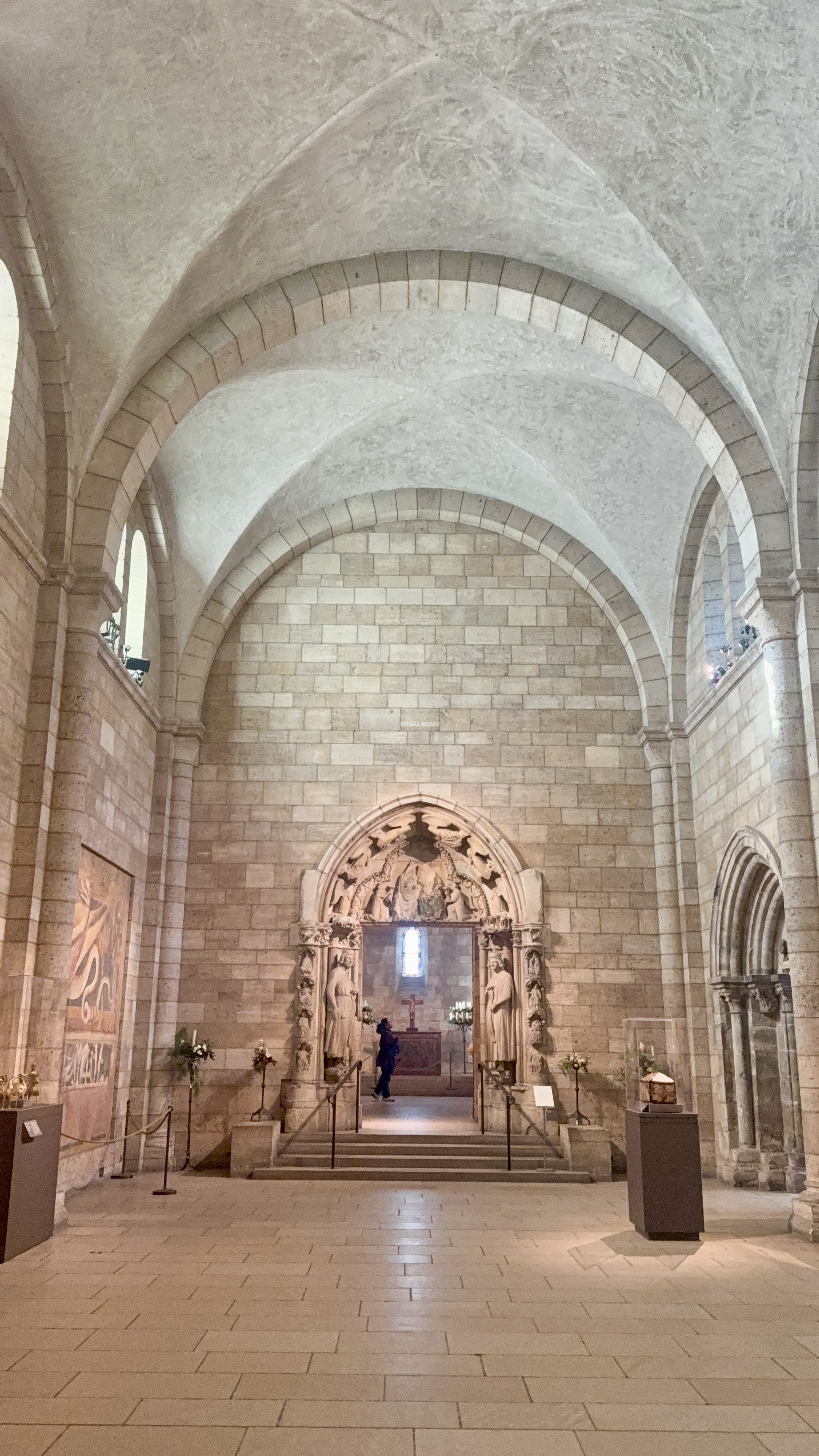
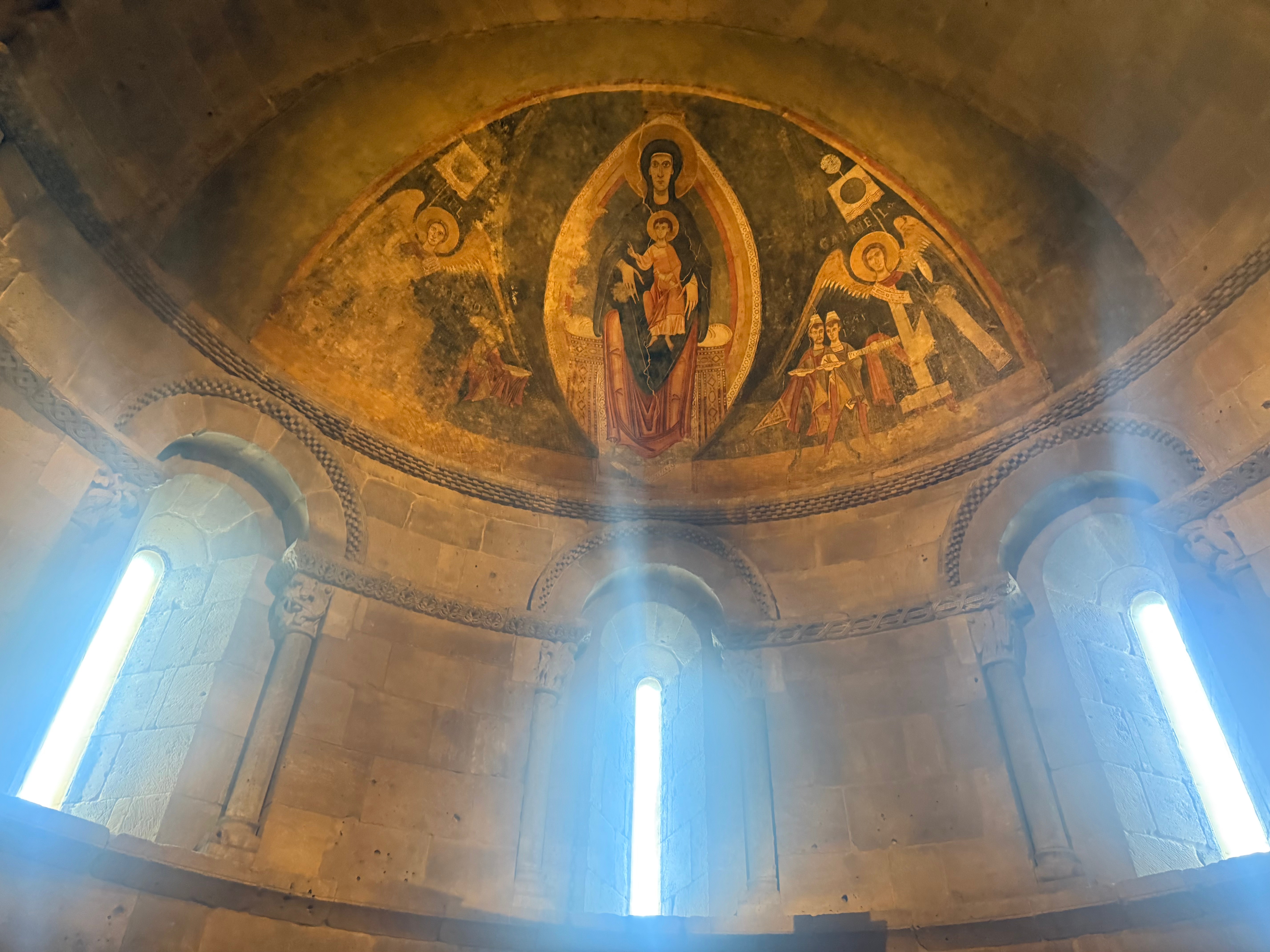
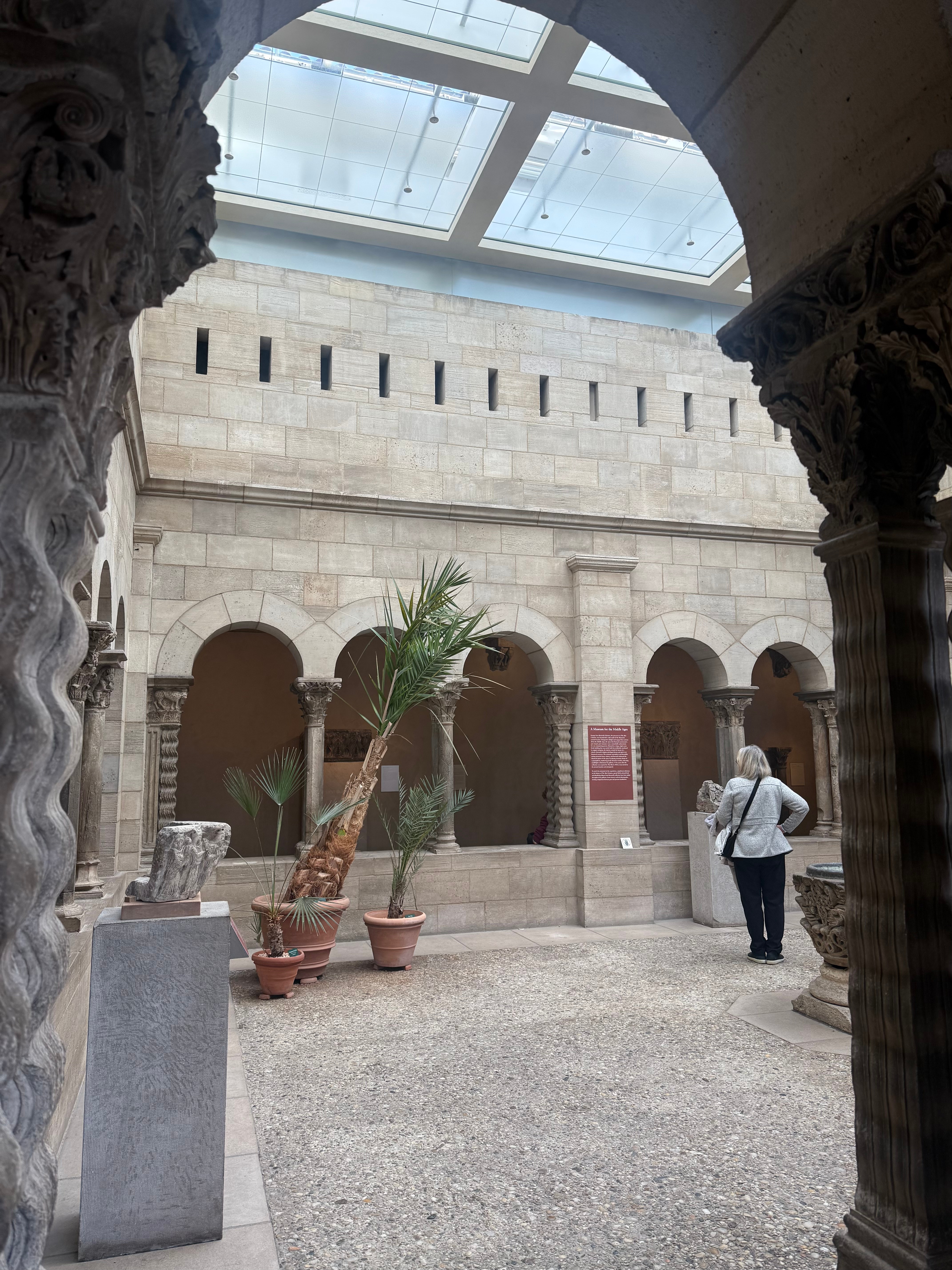
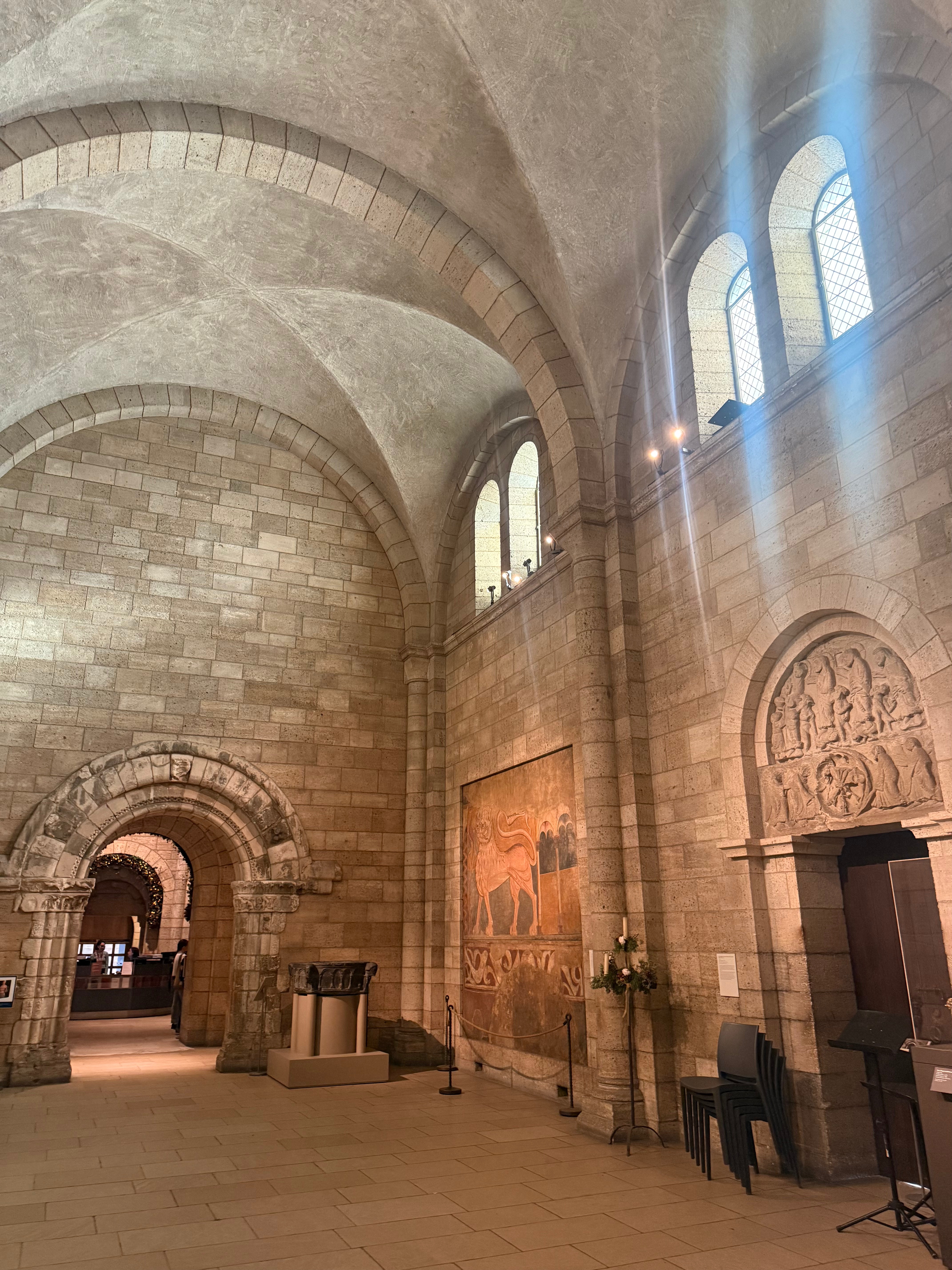
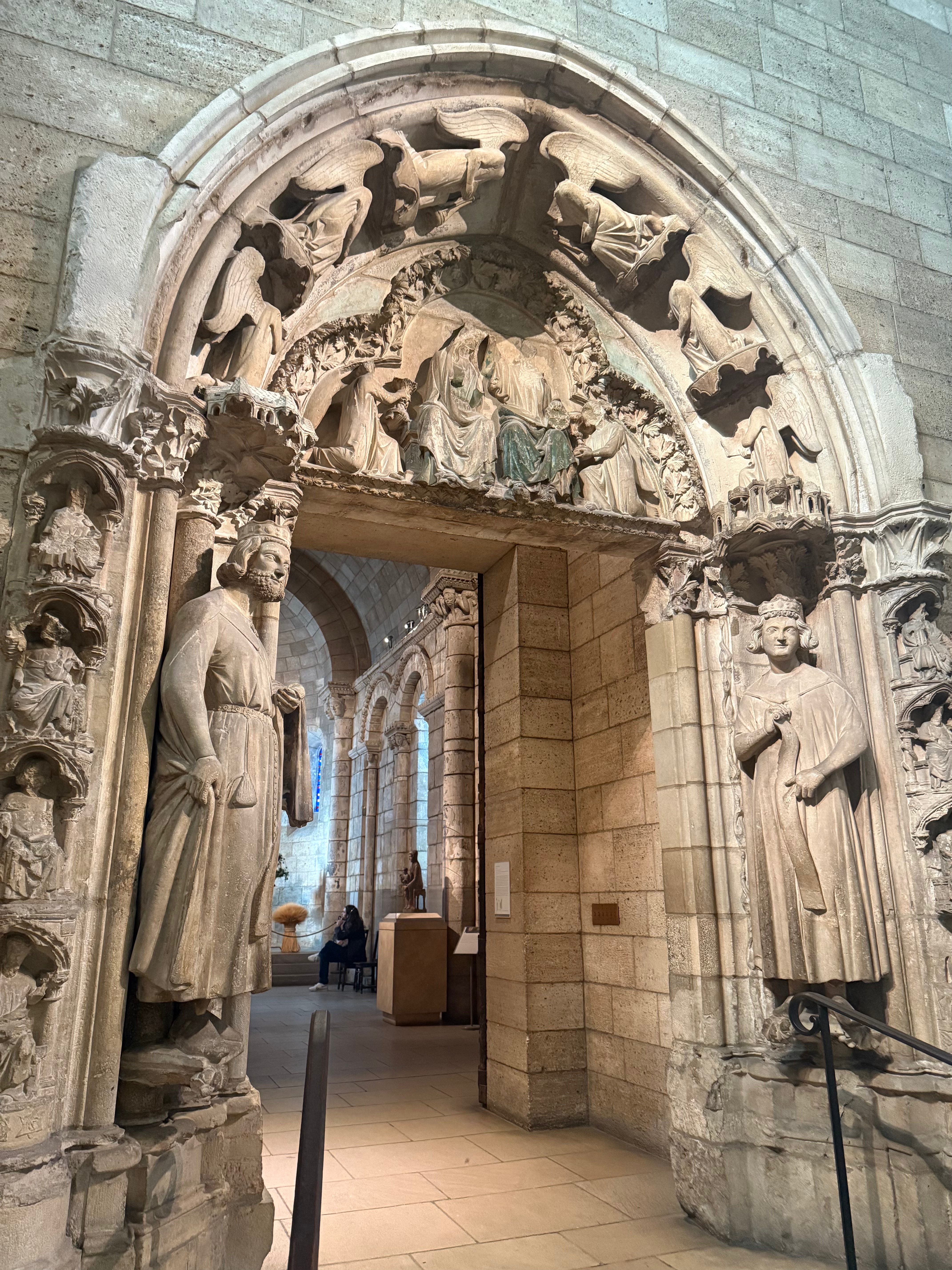
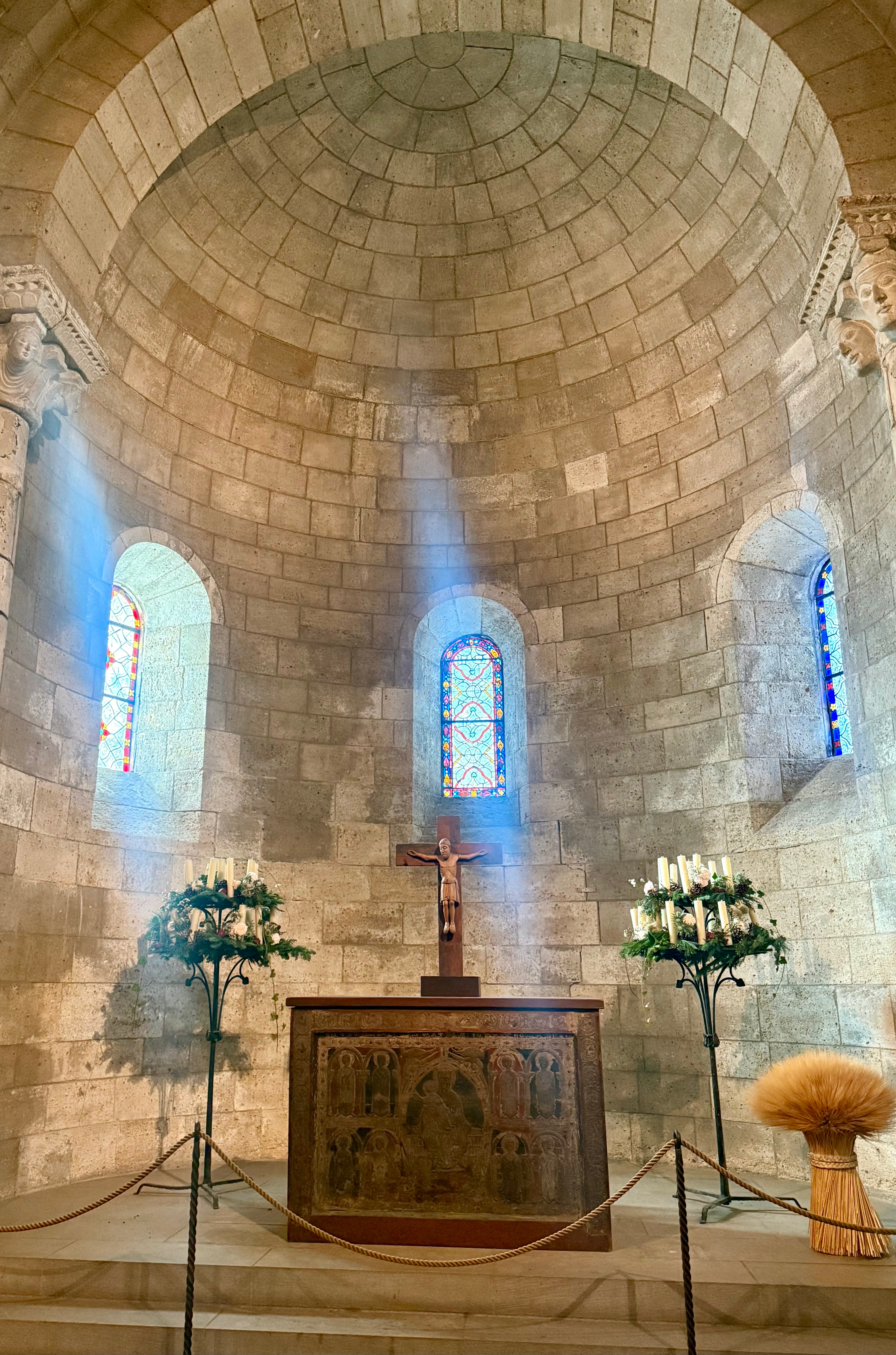
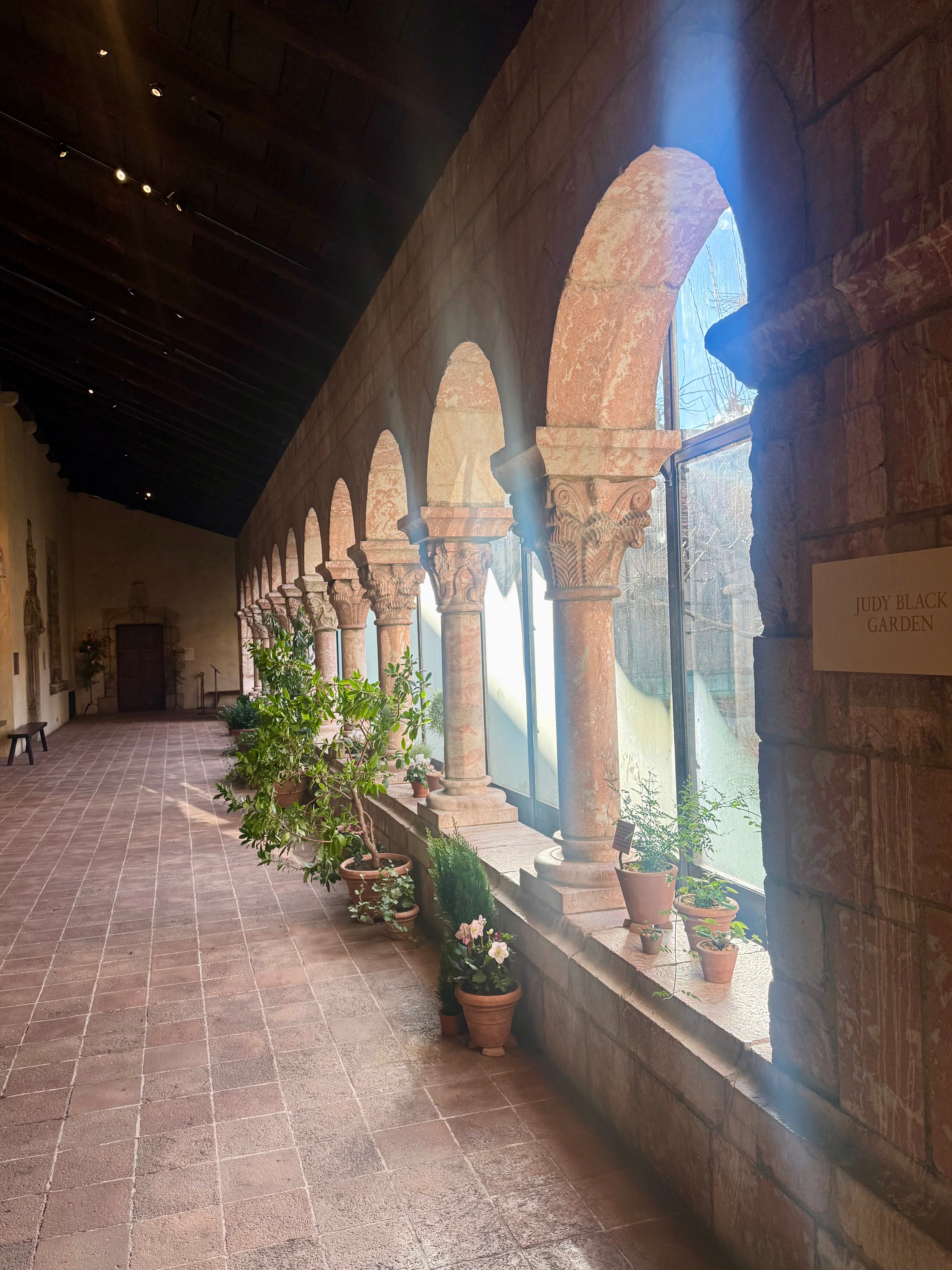
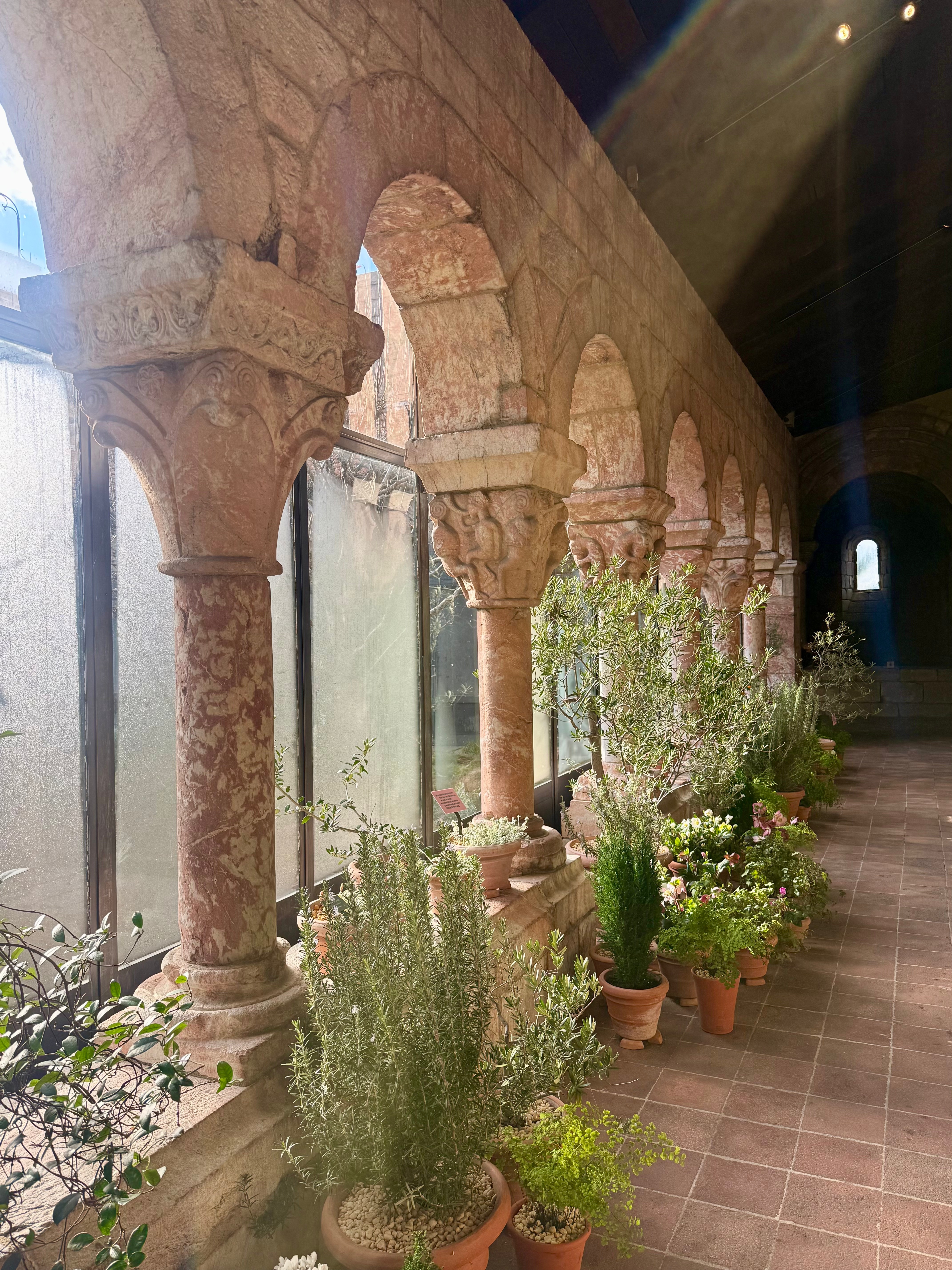
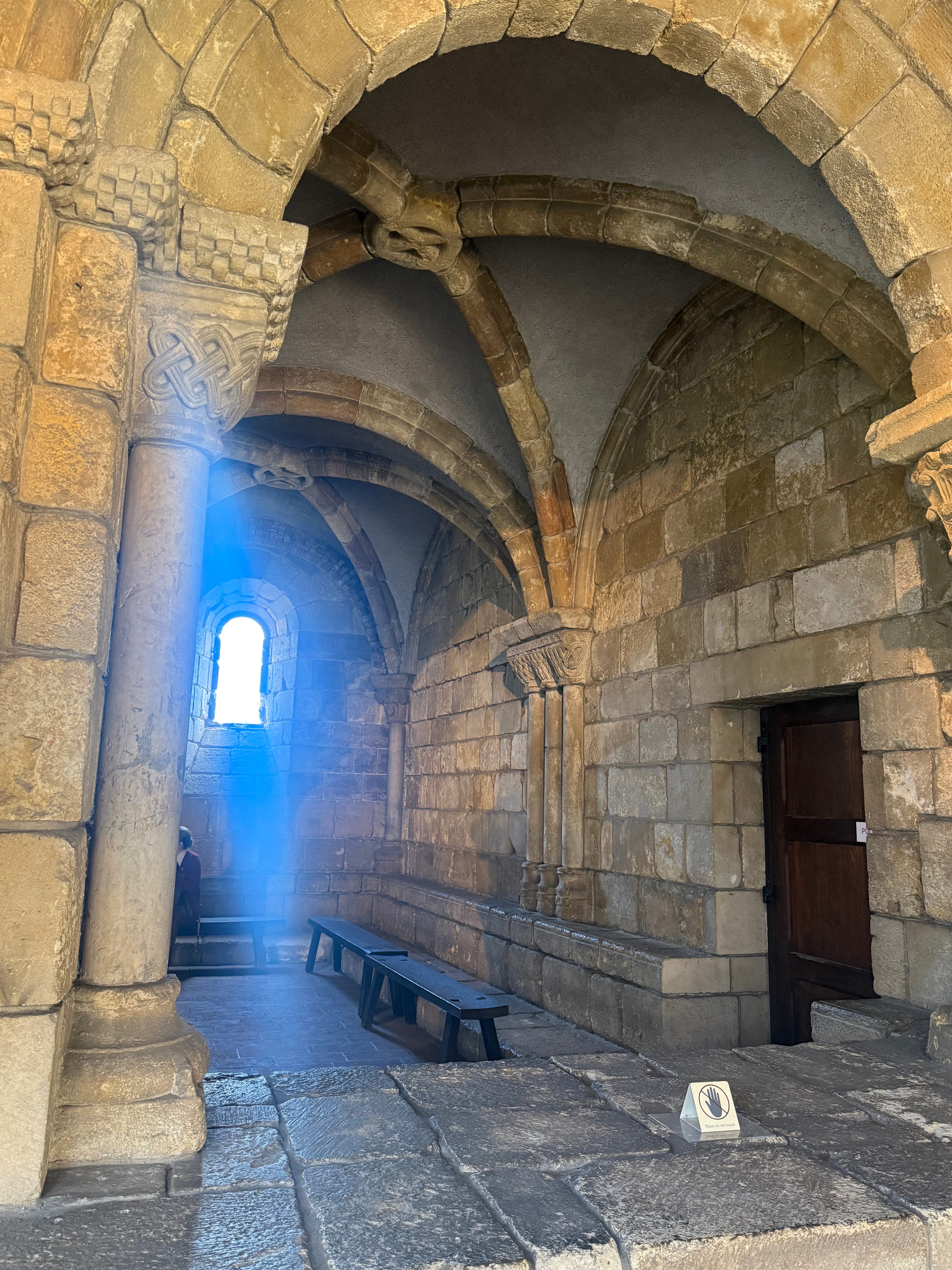
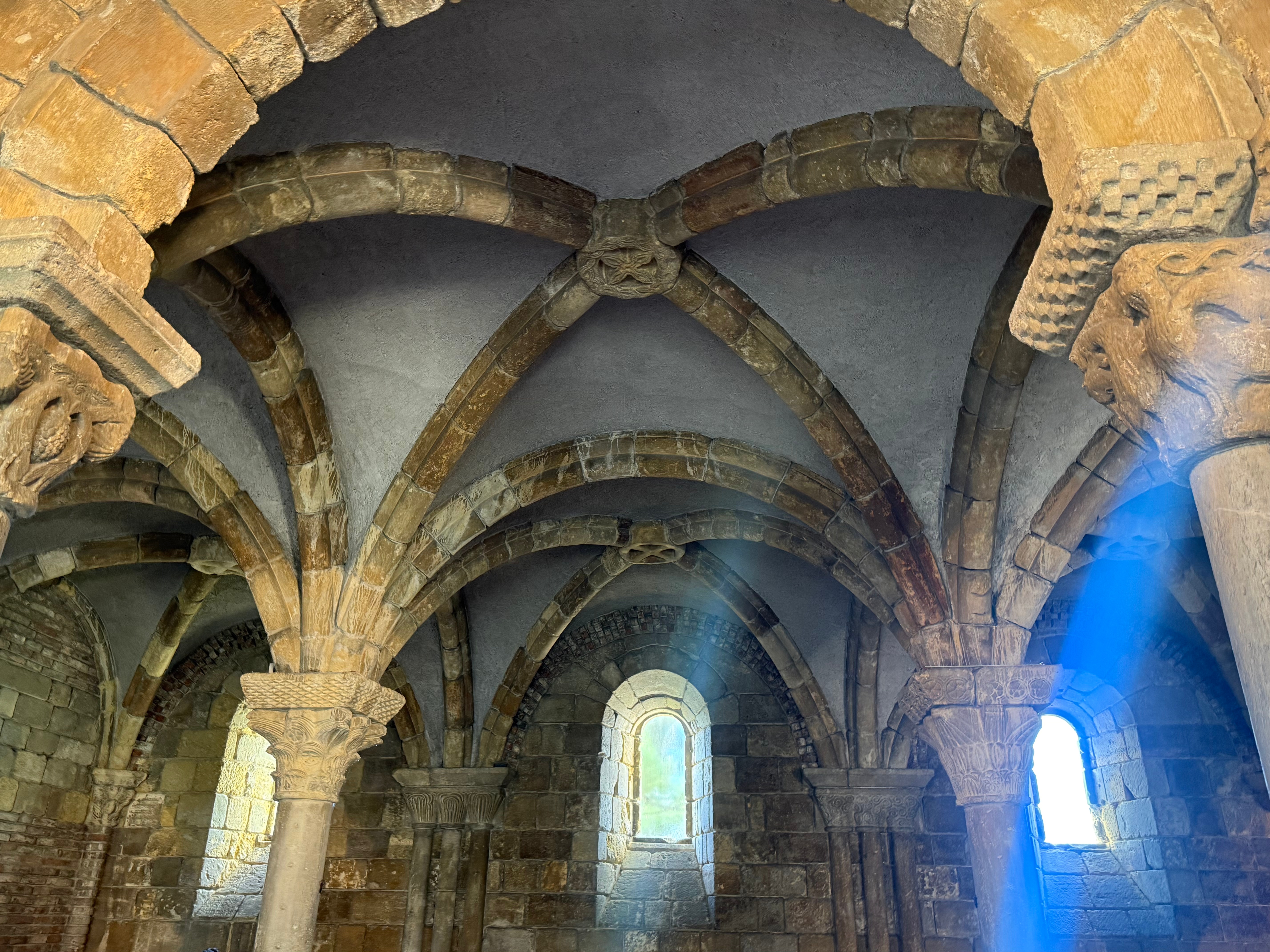
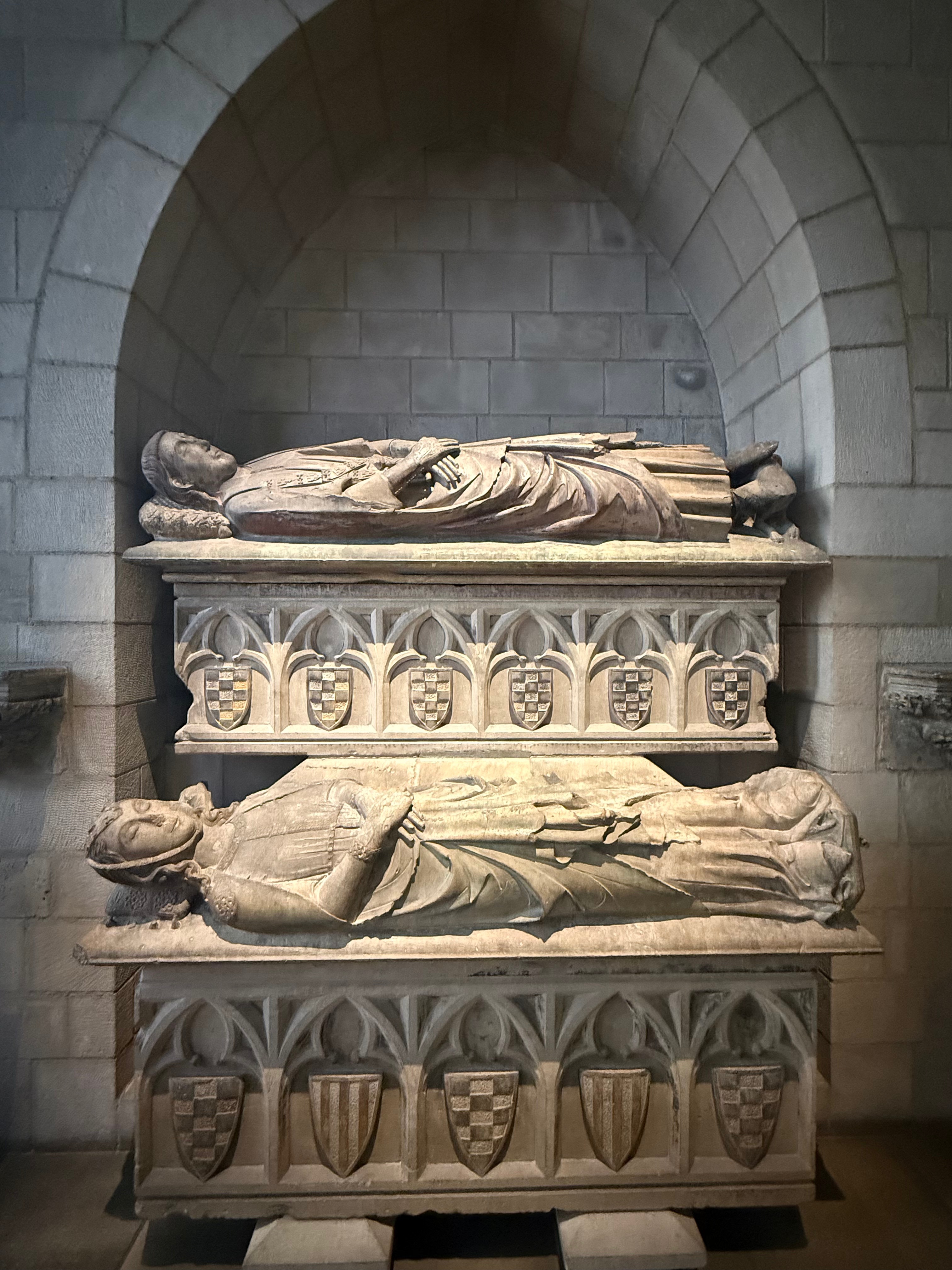
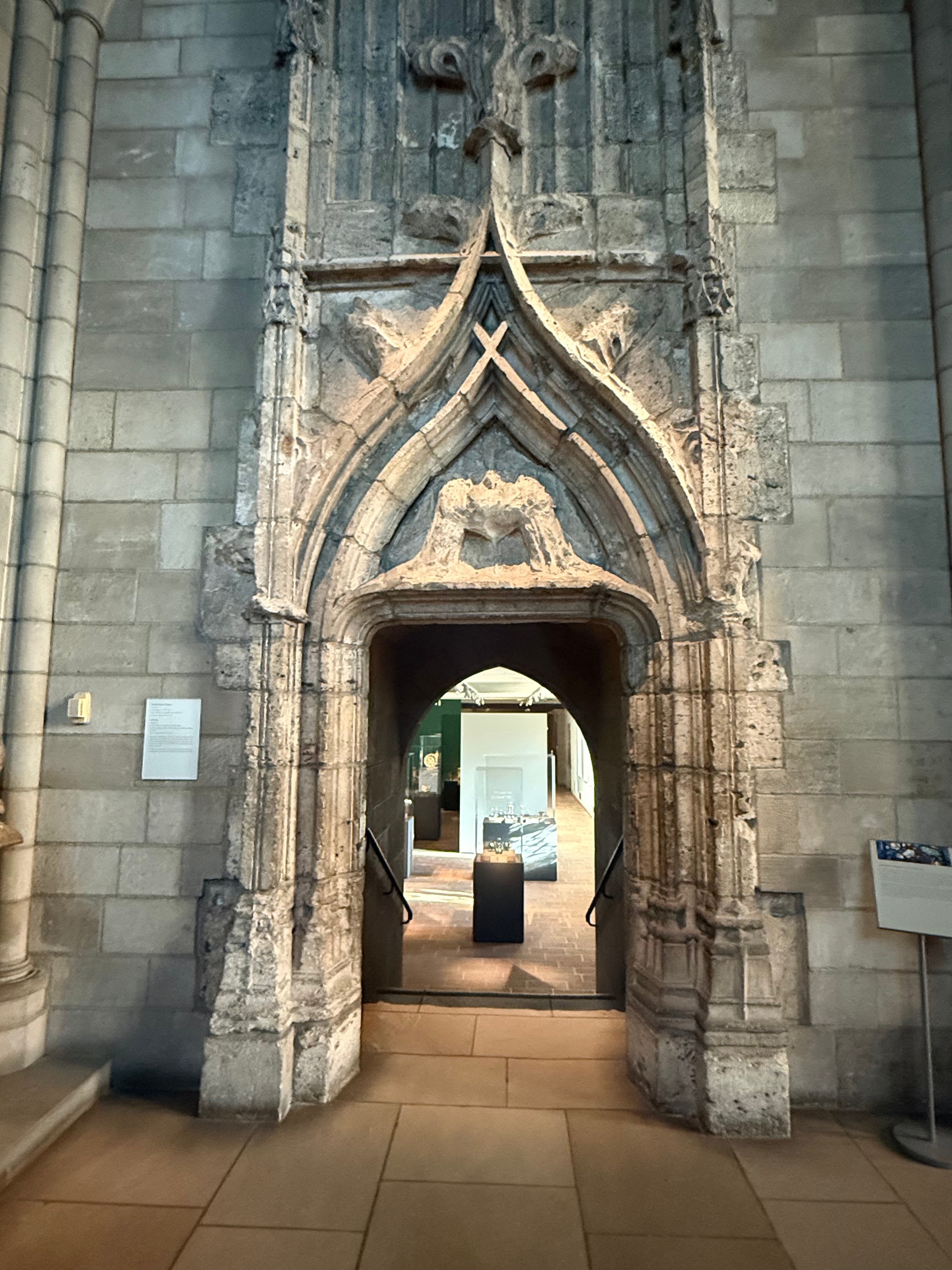
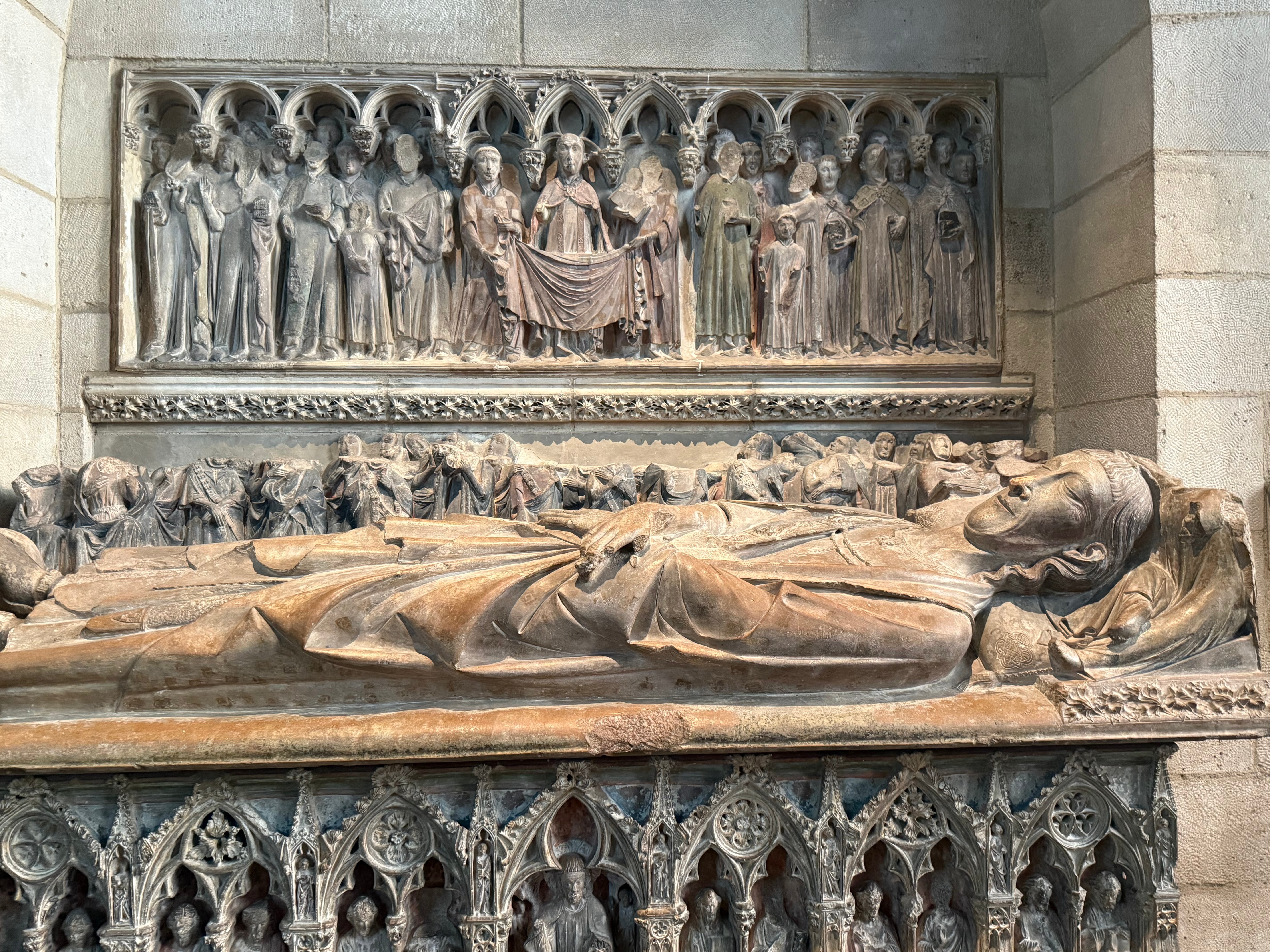
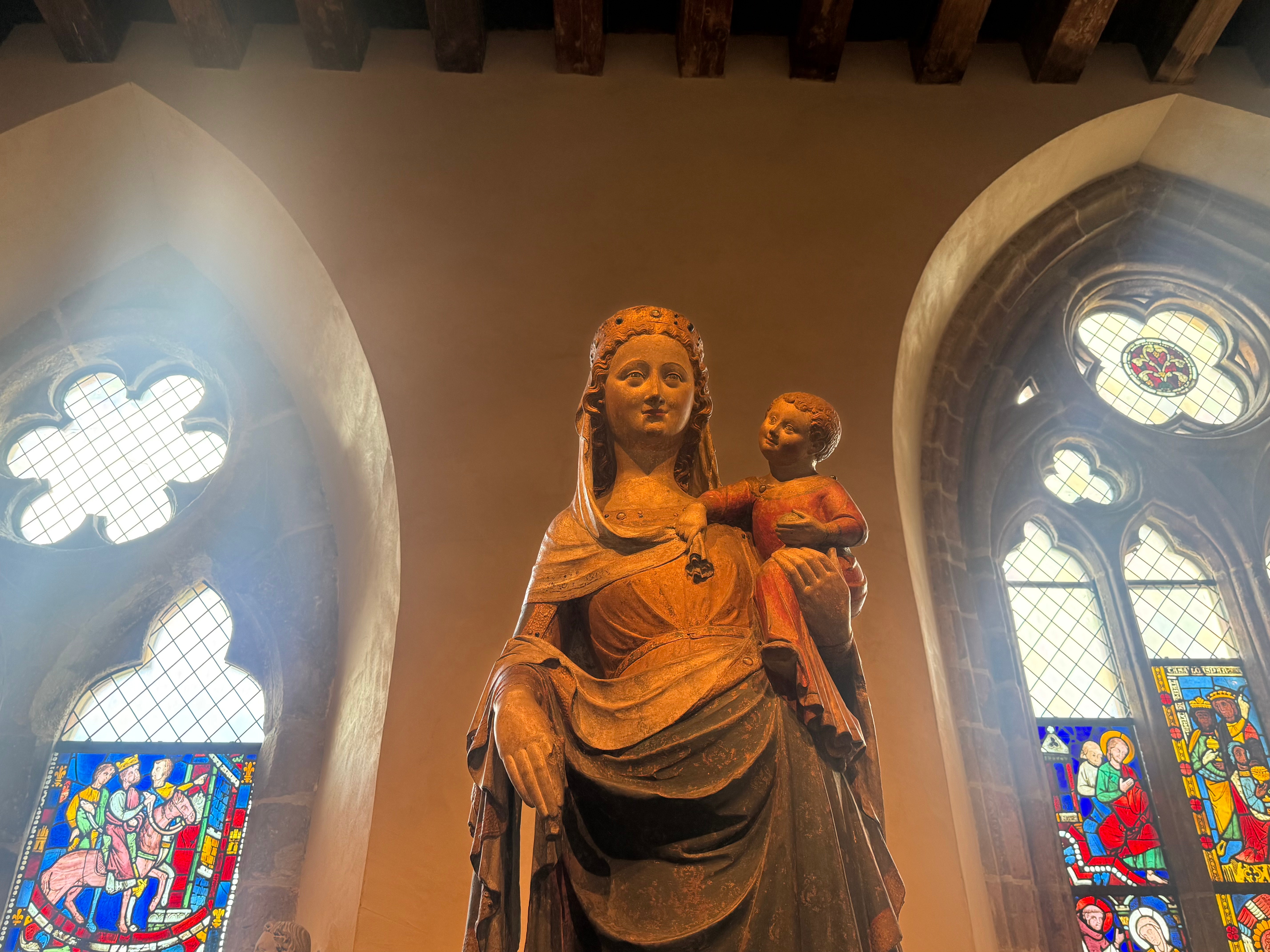
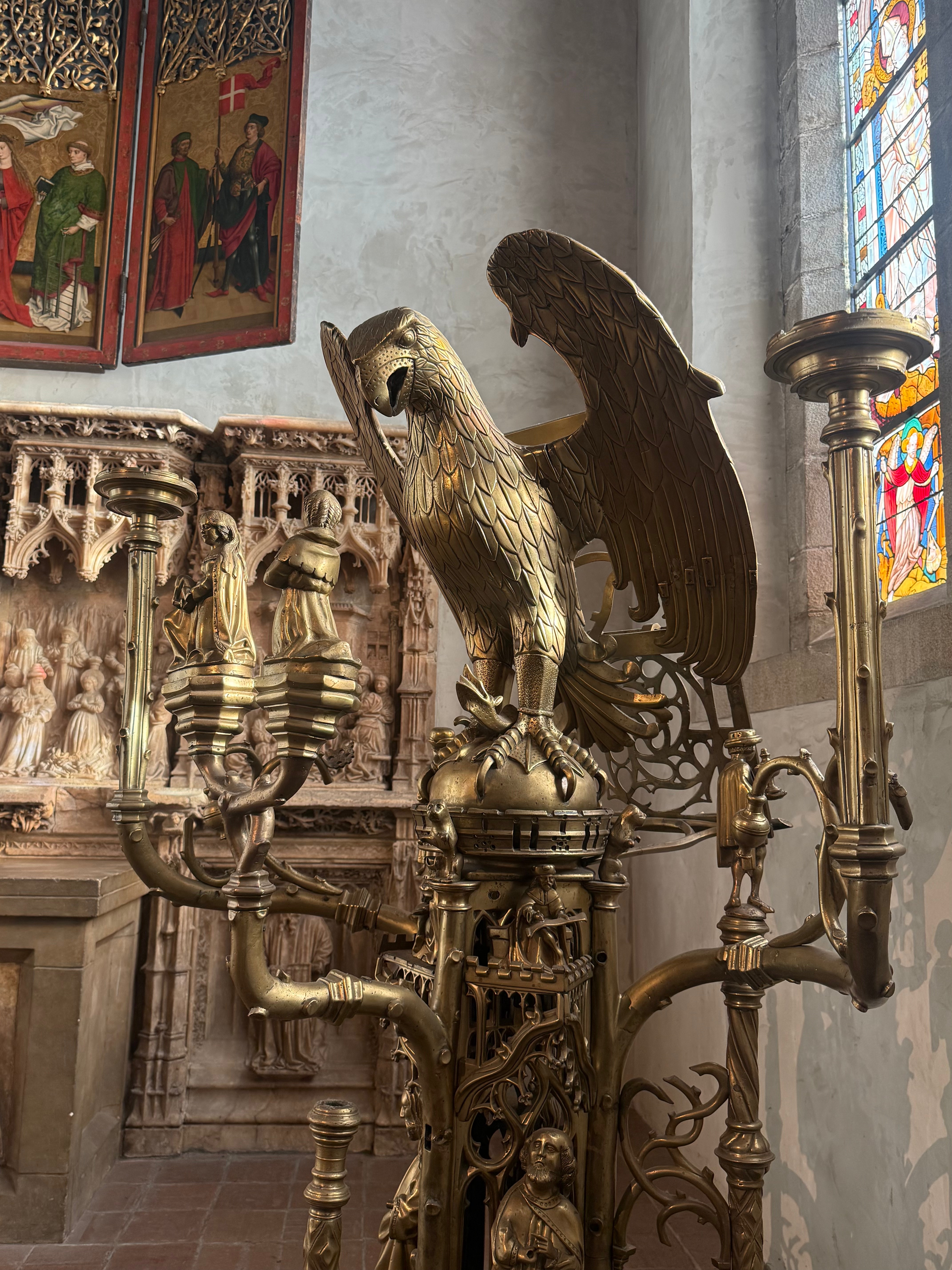
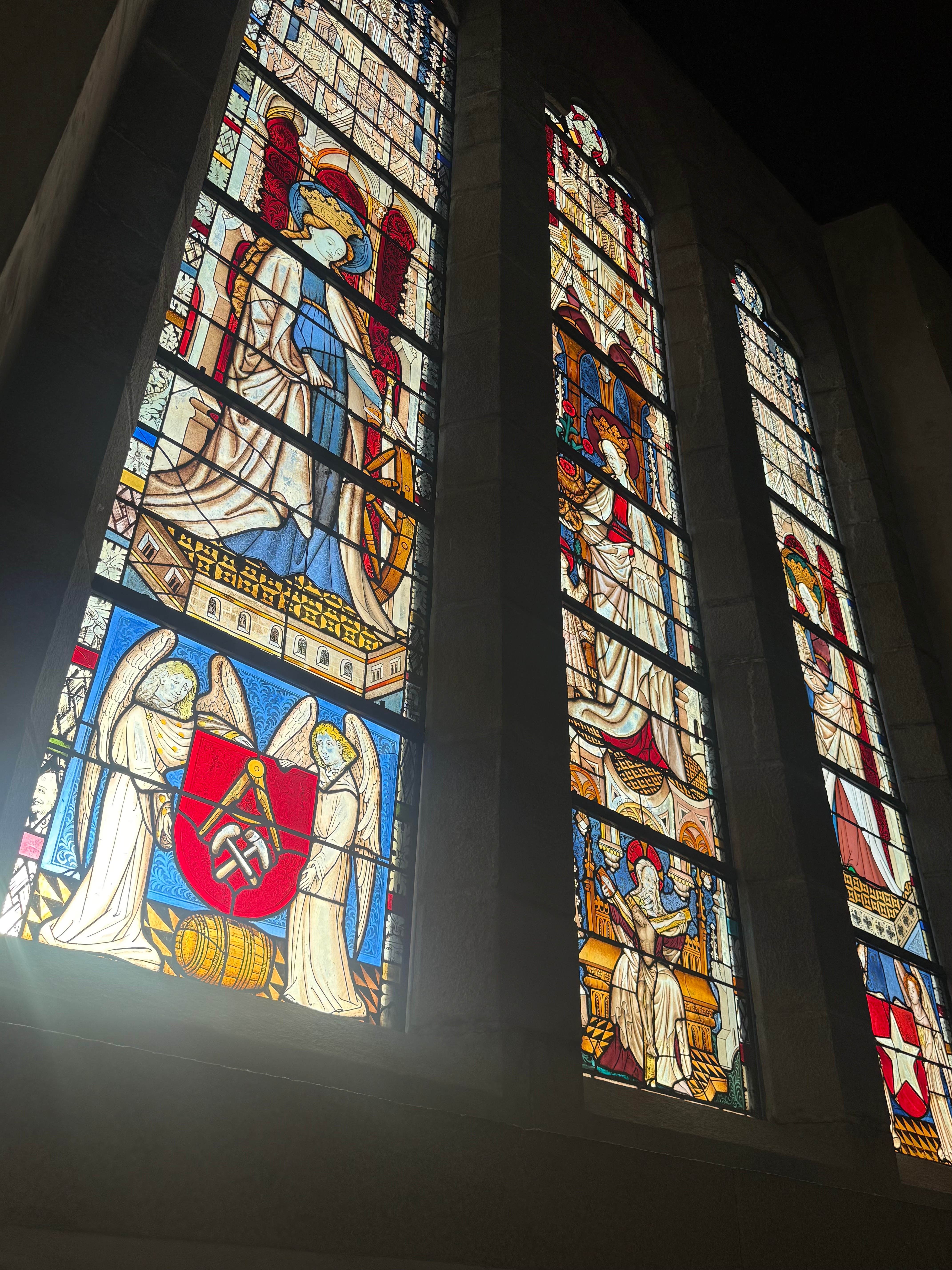
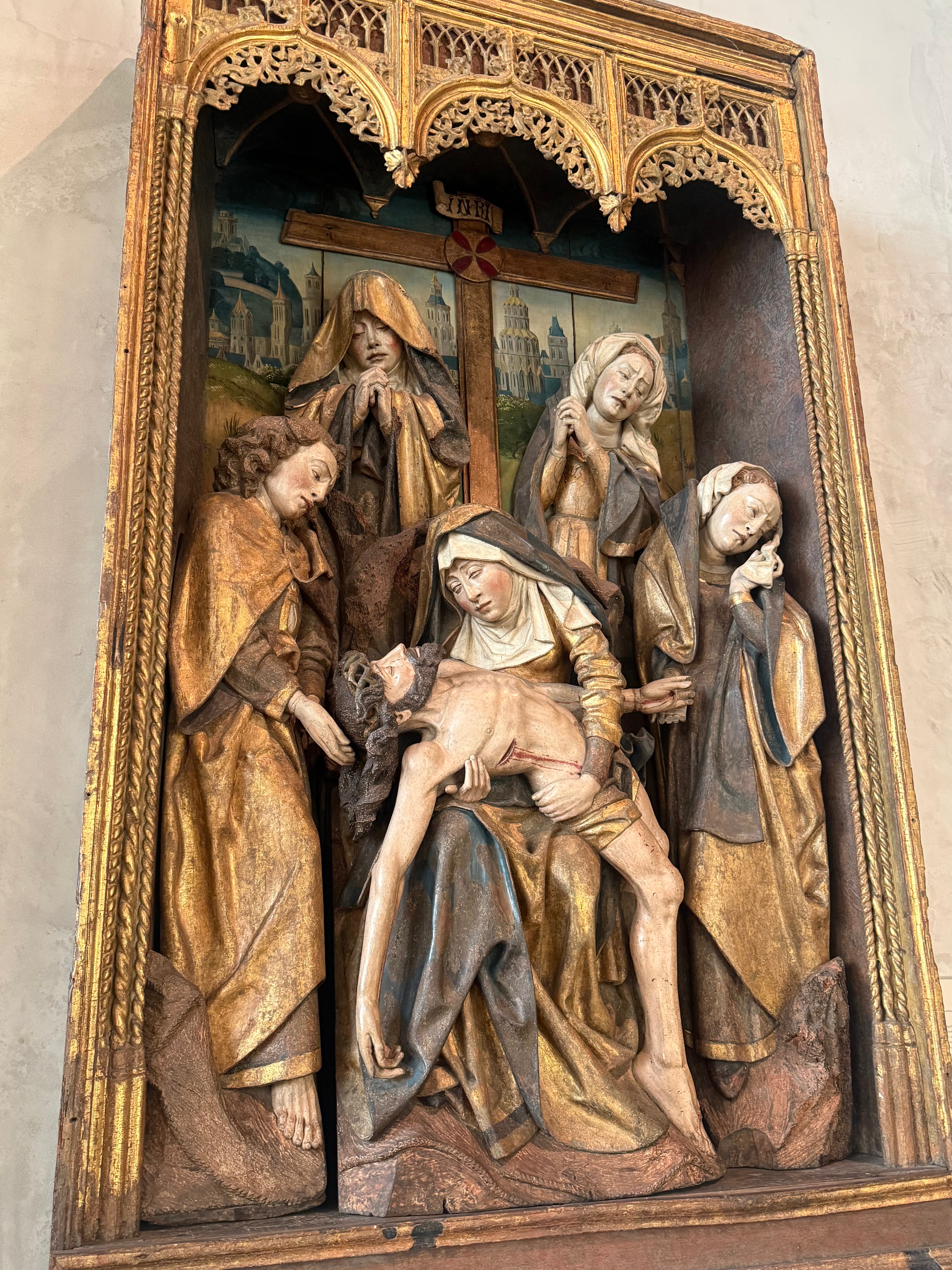
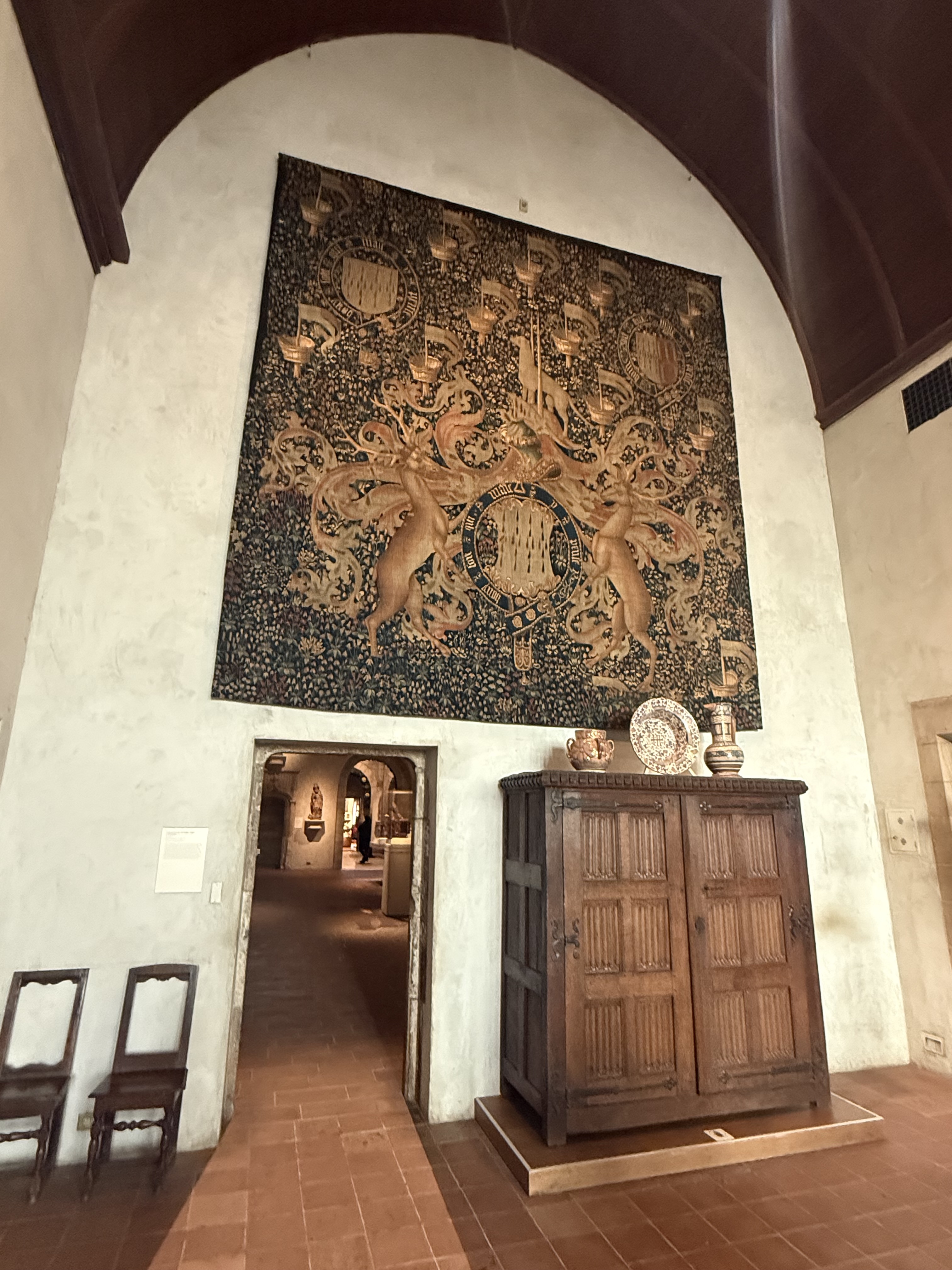
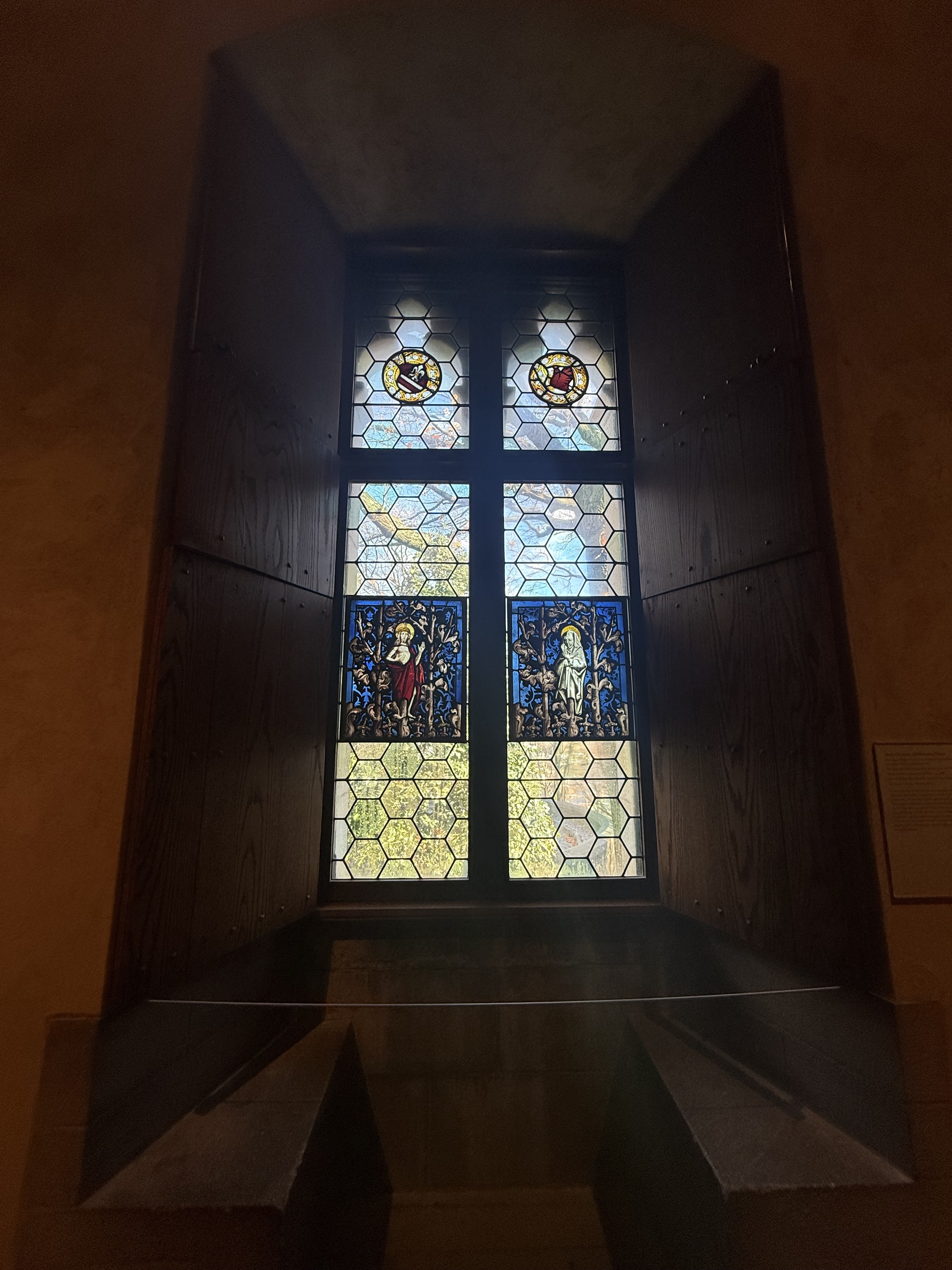
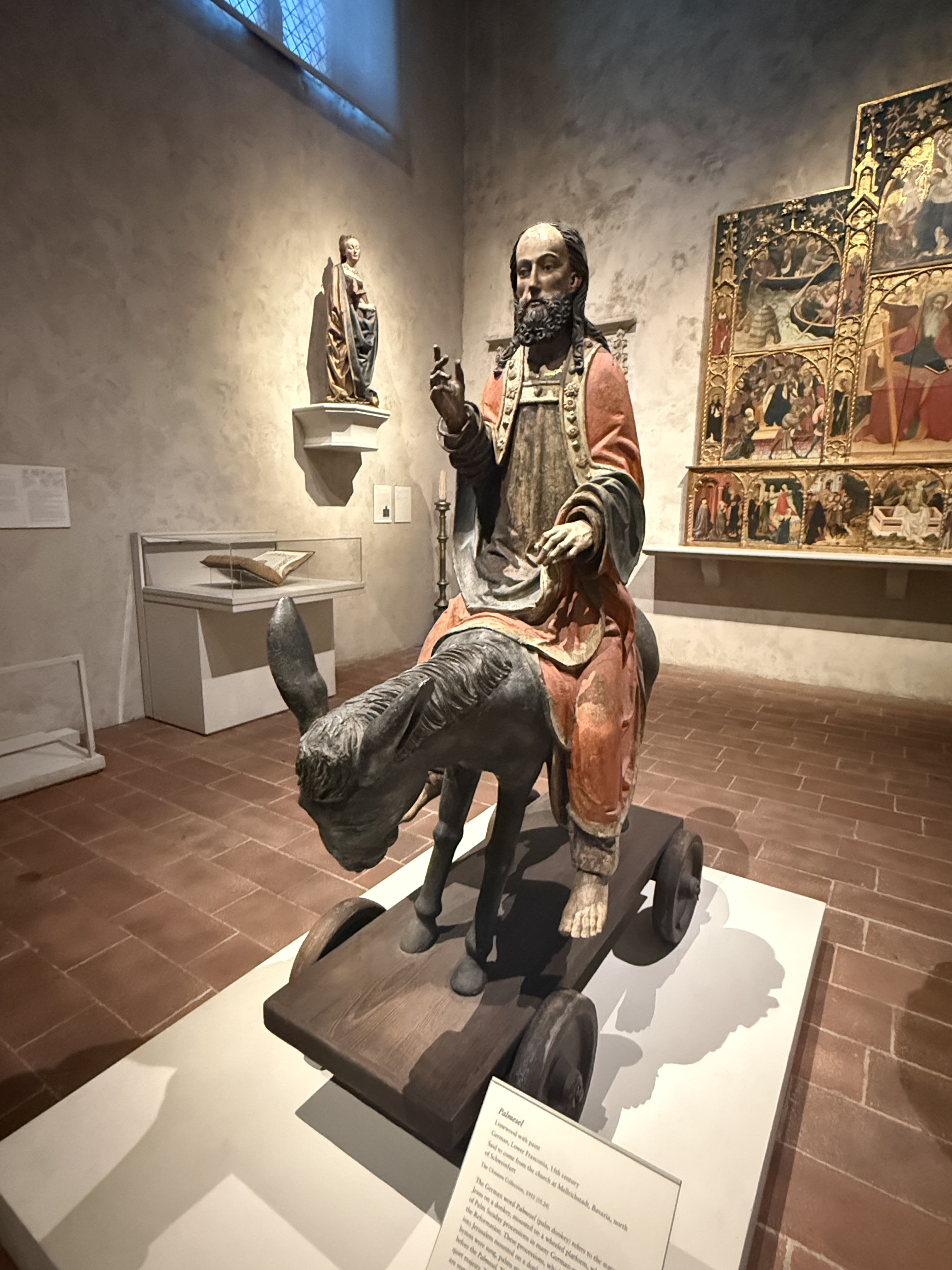
One of the wonderful things about traveling in Europe is the ability to explore ancient cathedrals and monasteries, experiencing extraordinary art and architecture from long ago. New York City is fortunate in that we can have that experience just a short subway ride, or express bus, away. The Cloisters is a part of the Metropolitan Museum of Art, and provides immersion into the art, architecture, and gardens of medieval Europe.
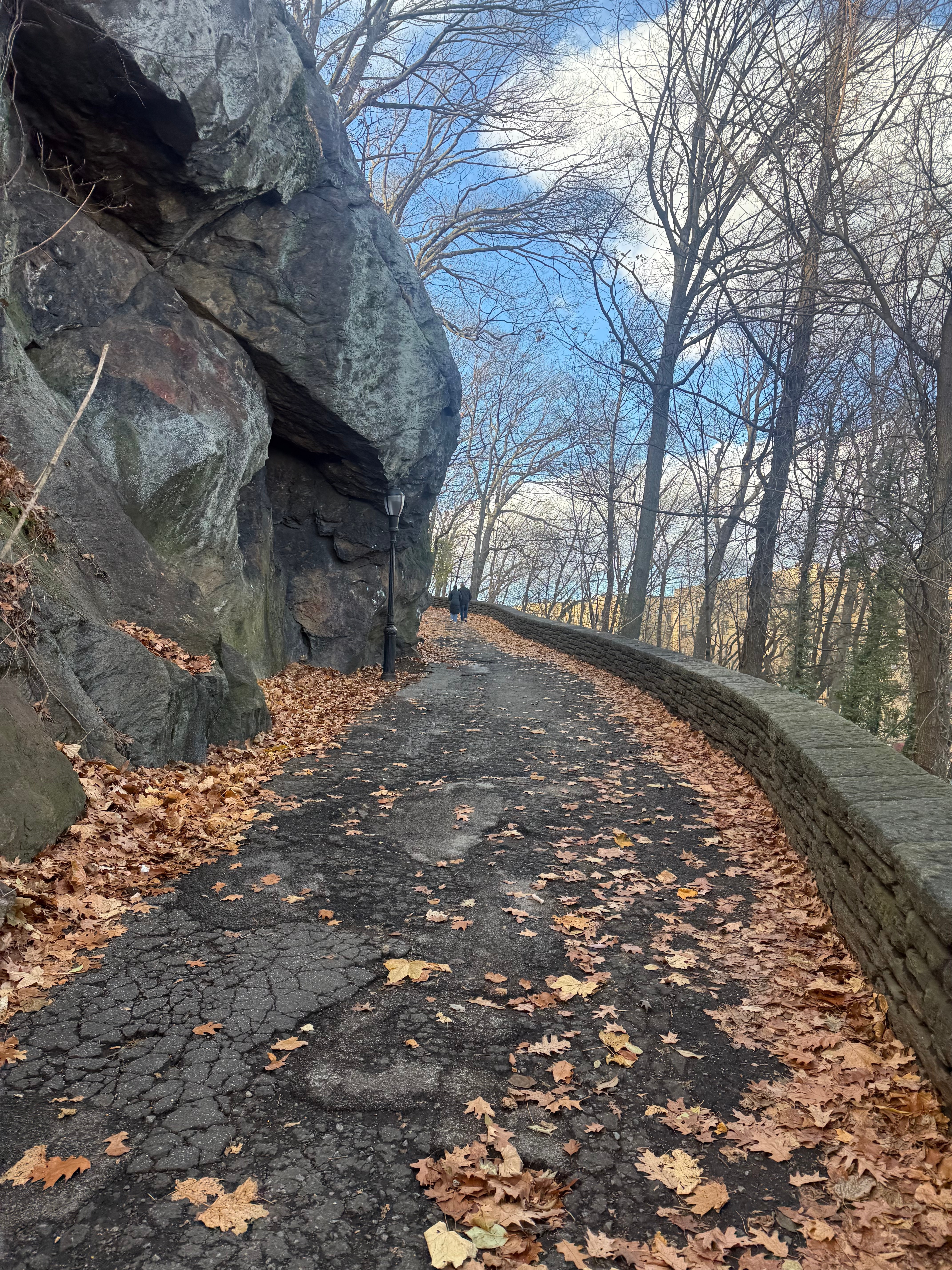
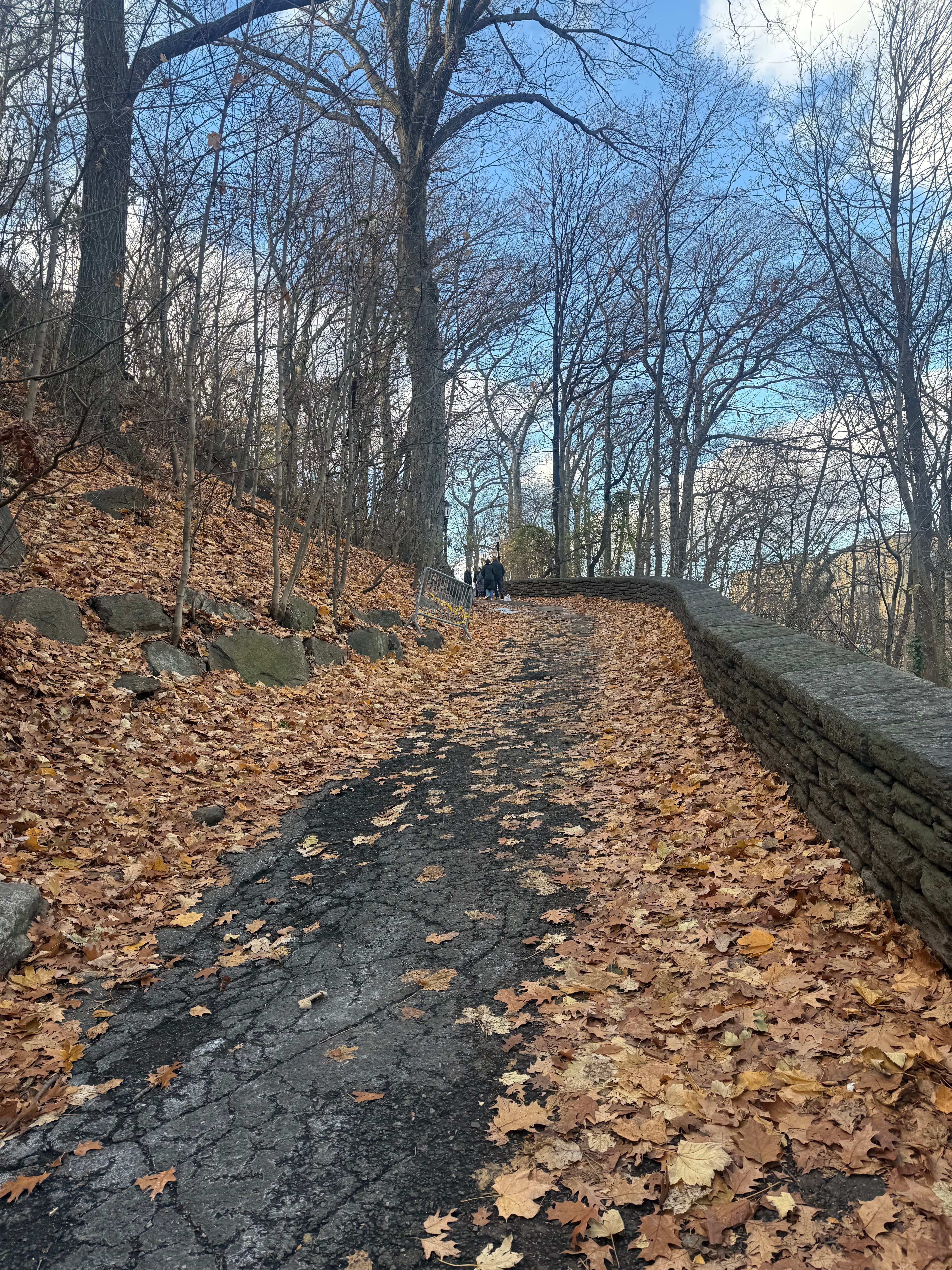
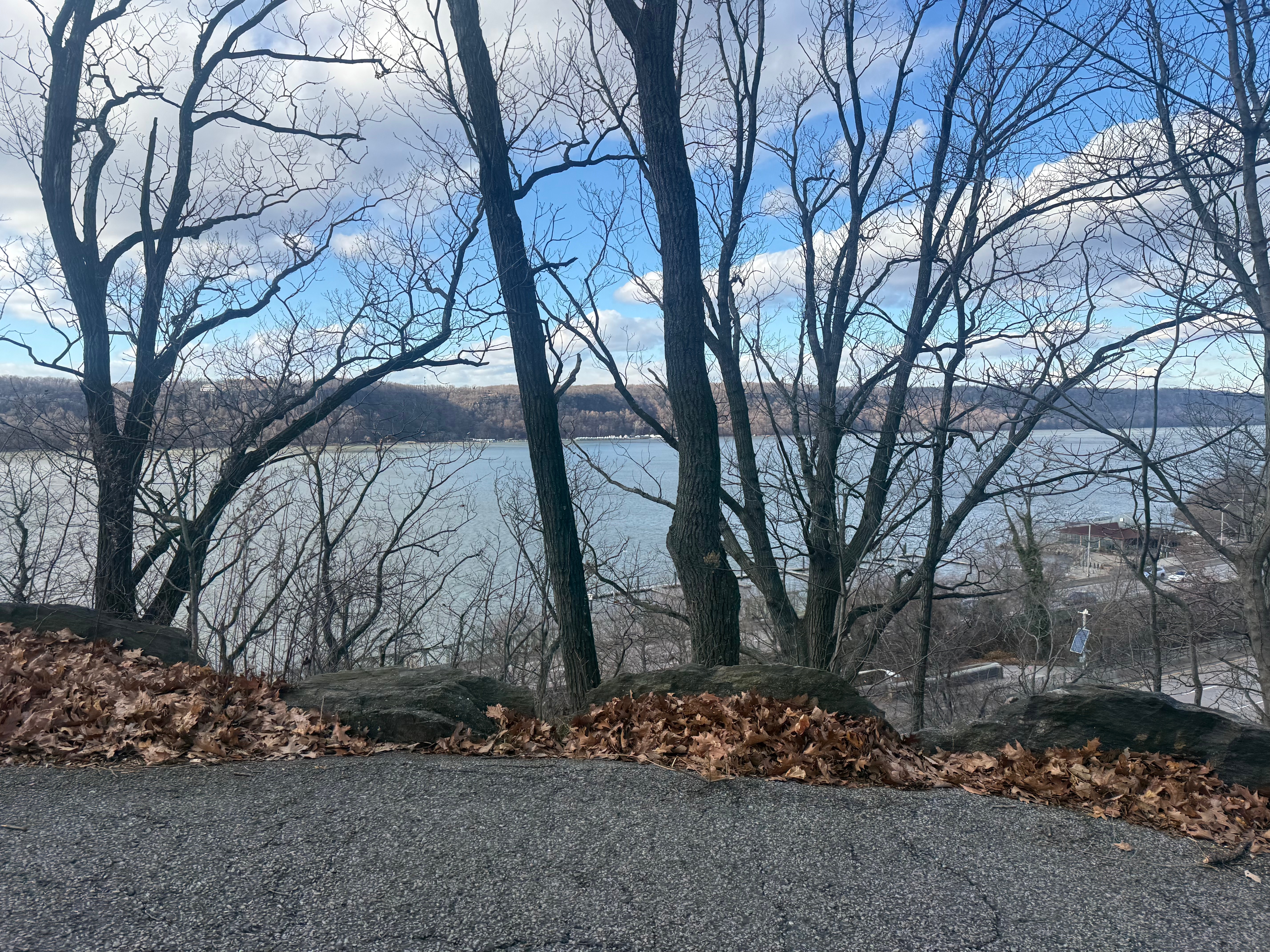
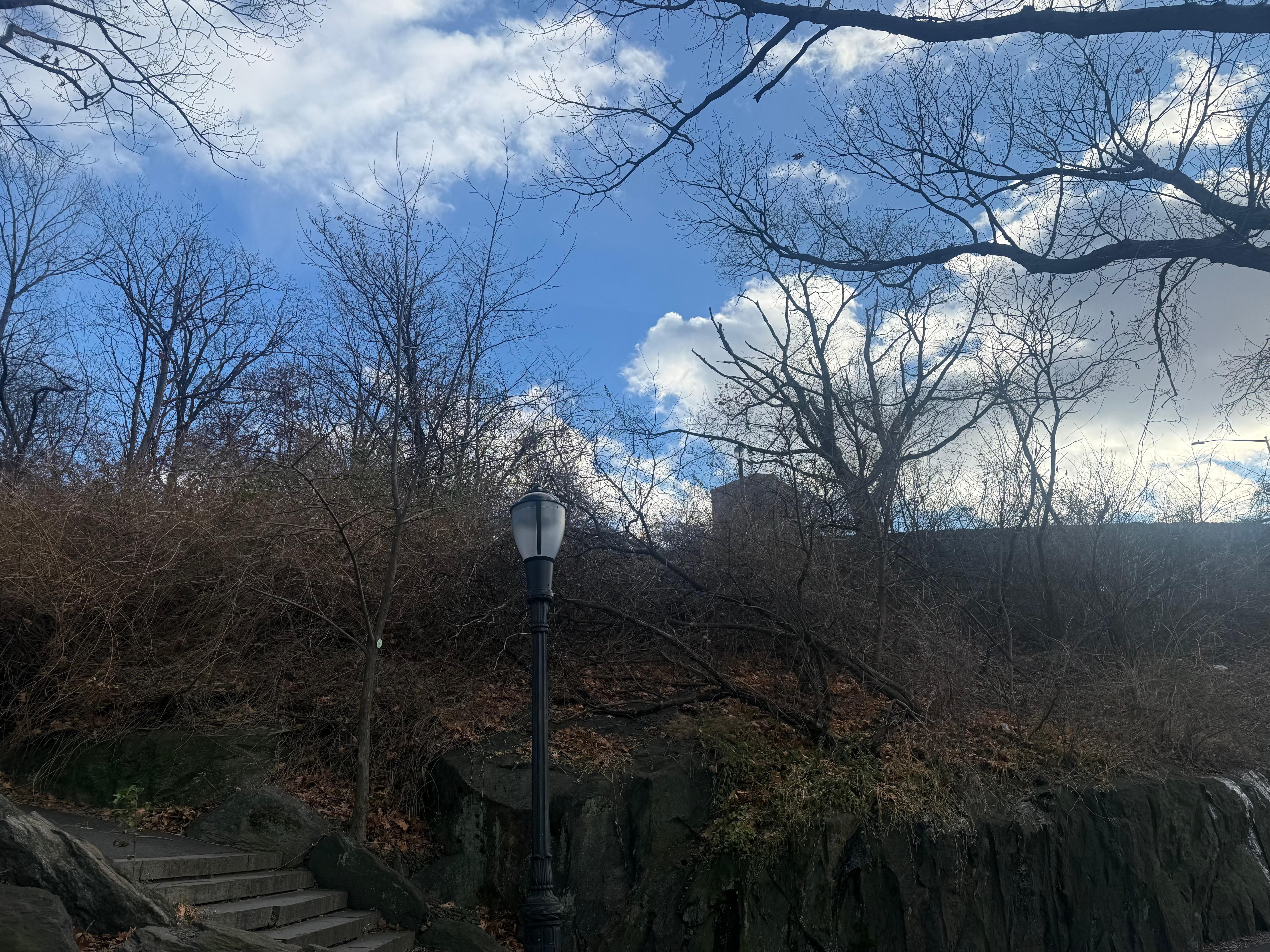
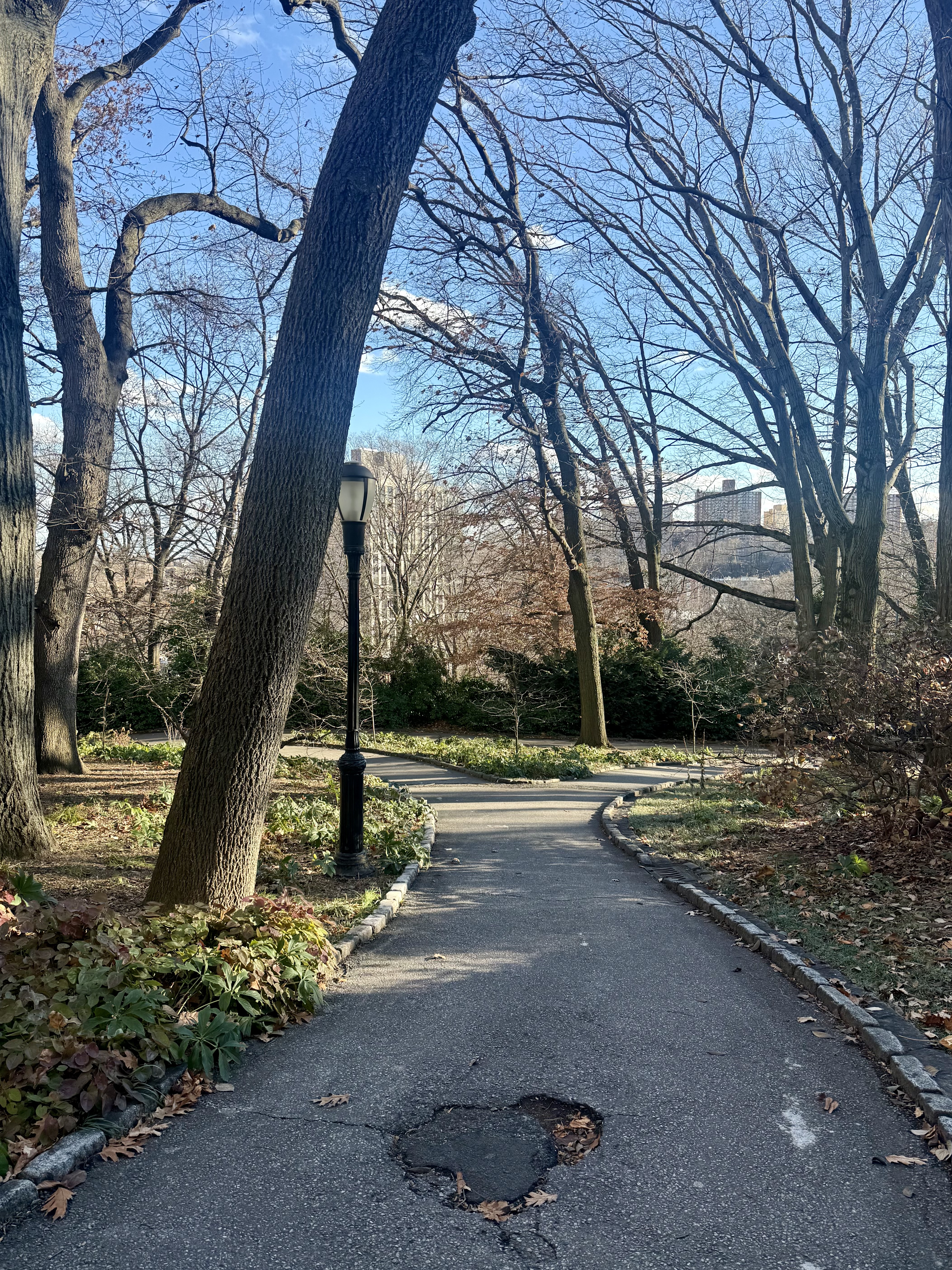
The Cloisters is in upper Manhattan, between Washington Heights and Inwood. If you have a car, you can drive there, and there is parking available. However, you can also get there via subway on the A train -getting off at Dyckman – on on the express bus BxM1 – getting off at Dyckman and Sherman – or by taking the regular M4 bus to the last stop. For all of these options except the M4 bus, you will face a ten minute hike up a winding path to get to the museum, which sits on the top of quite a steep hill. The M4 bus lets you off at the top of the hill, and the Met does have a shuttle bus to get people up the hill who can’t handle the hike; you just might need to wait a bit. The walk, if you are able, is pleasant and provides some lovely views of the Hudson river.
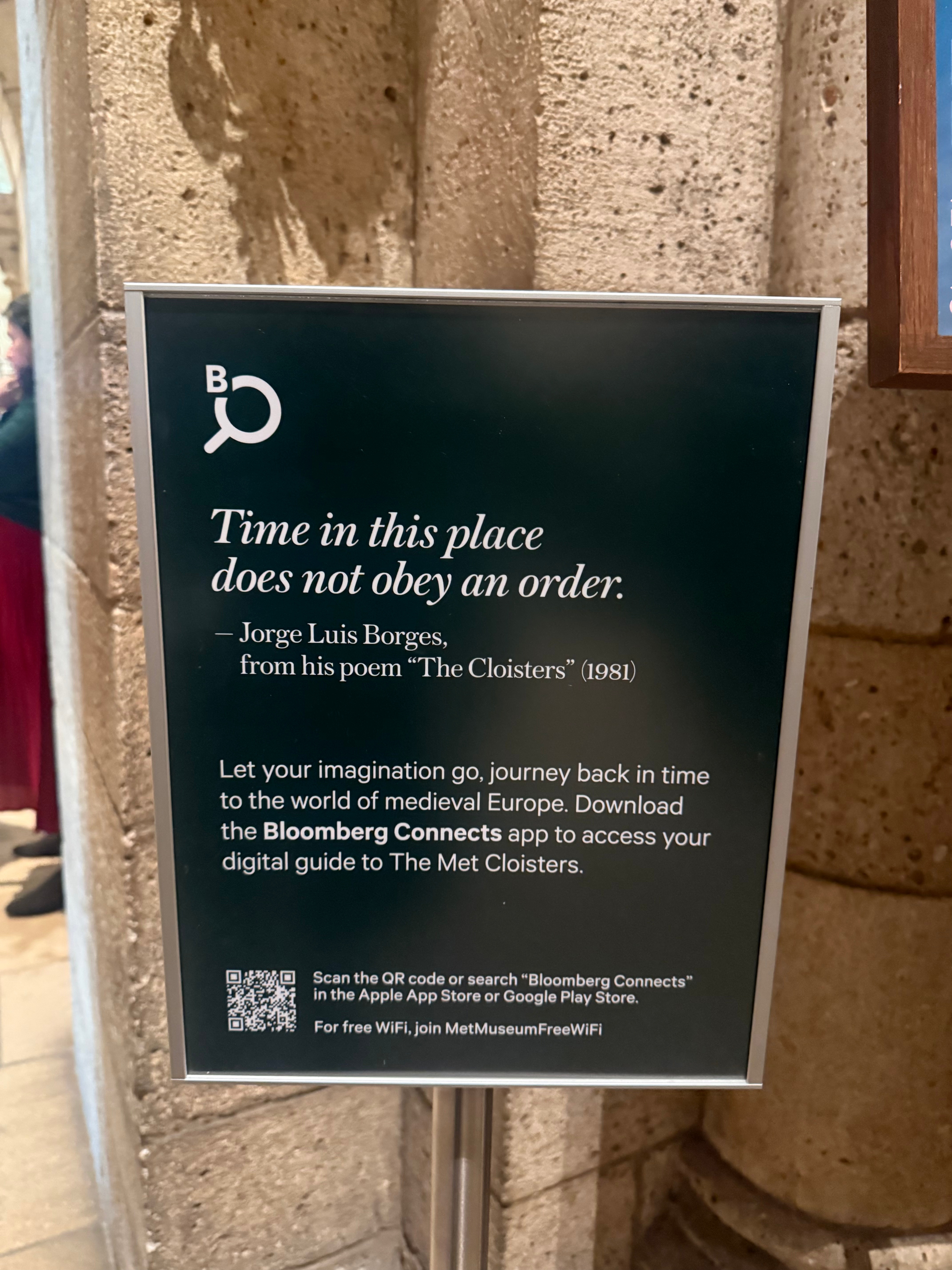
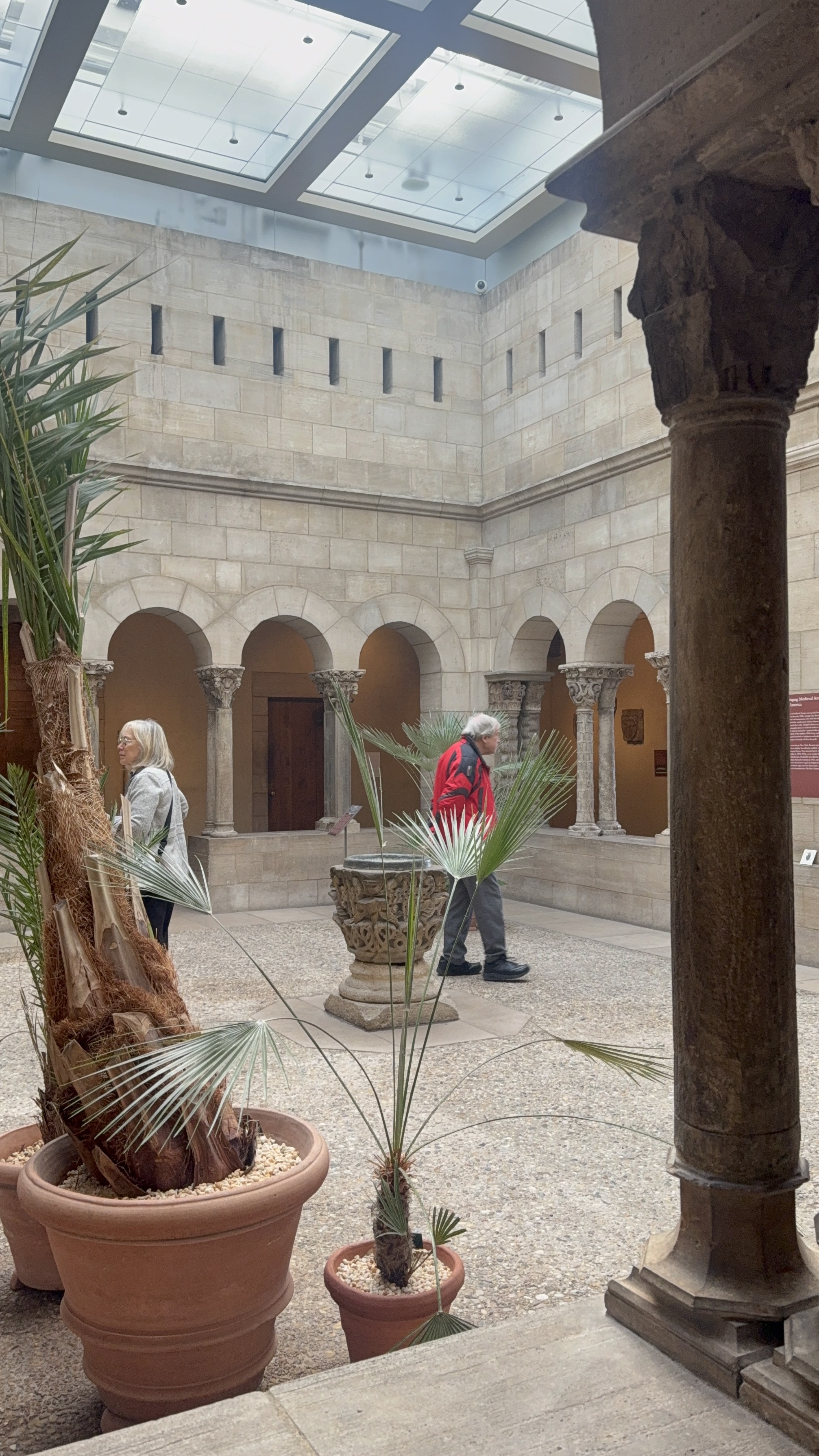
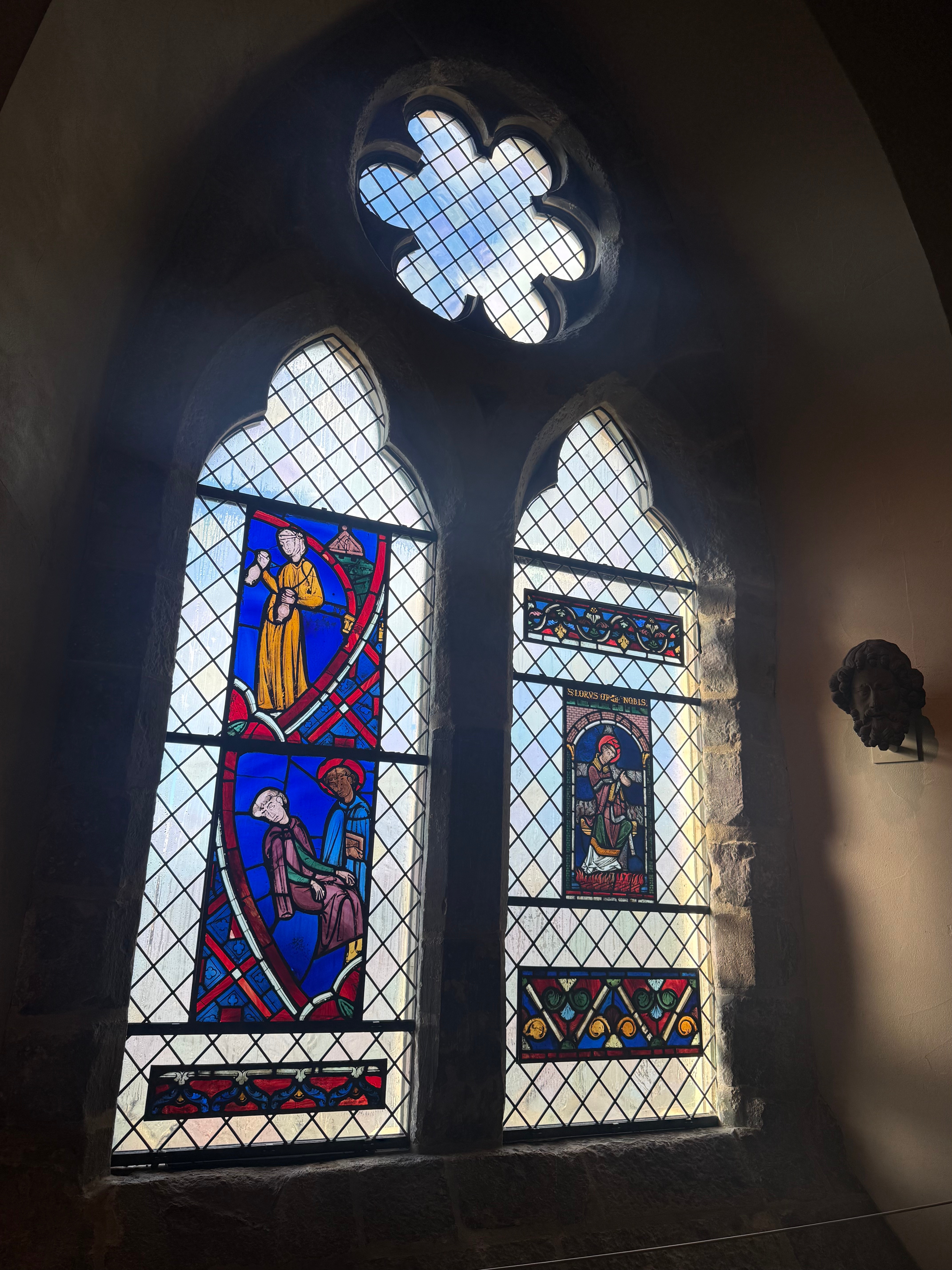
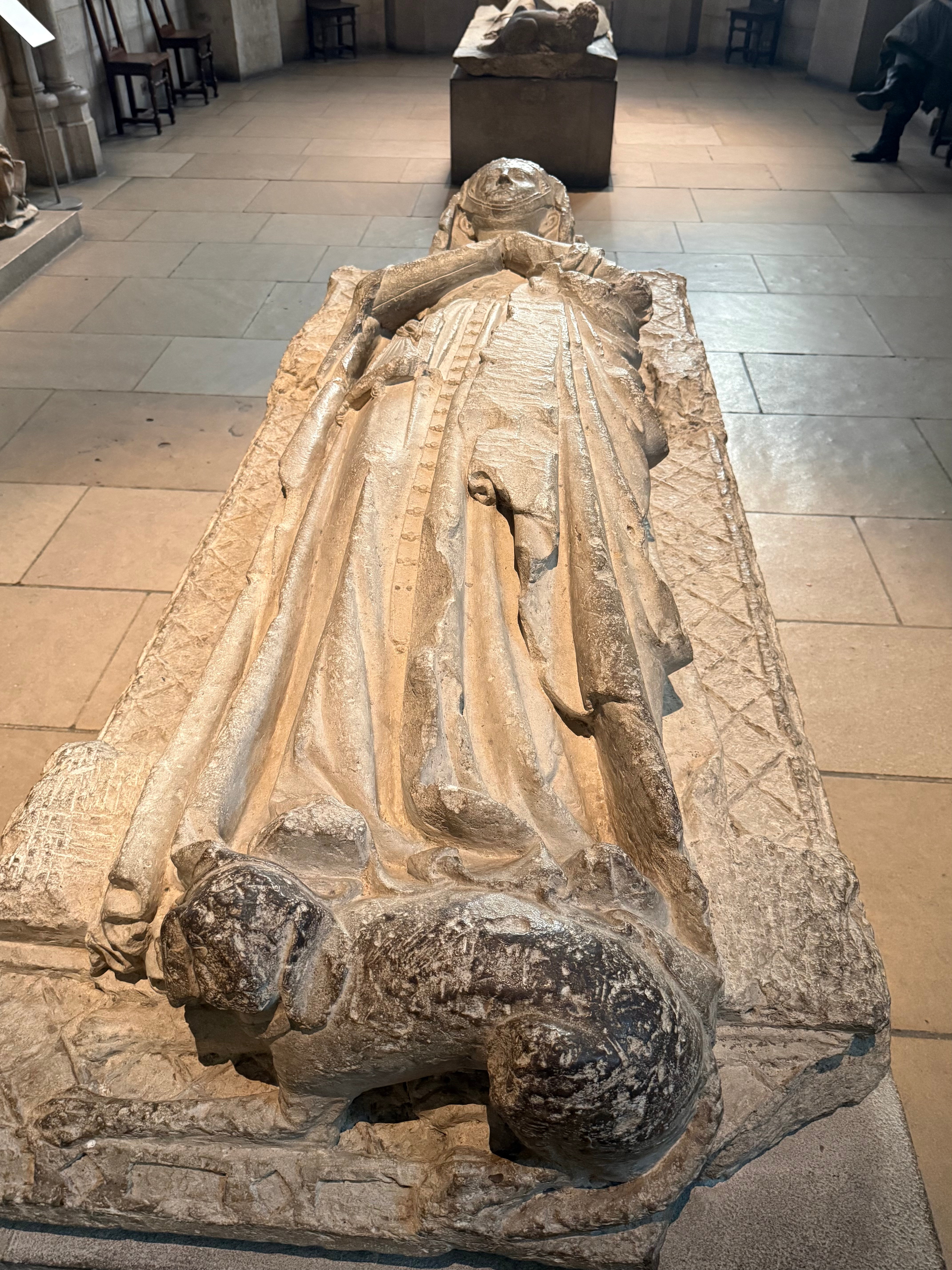
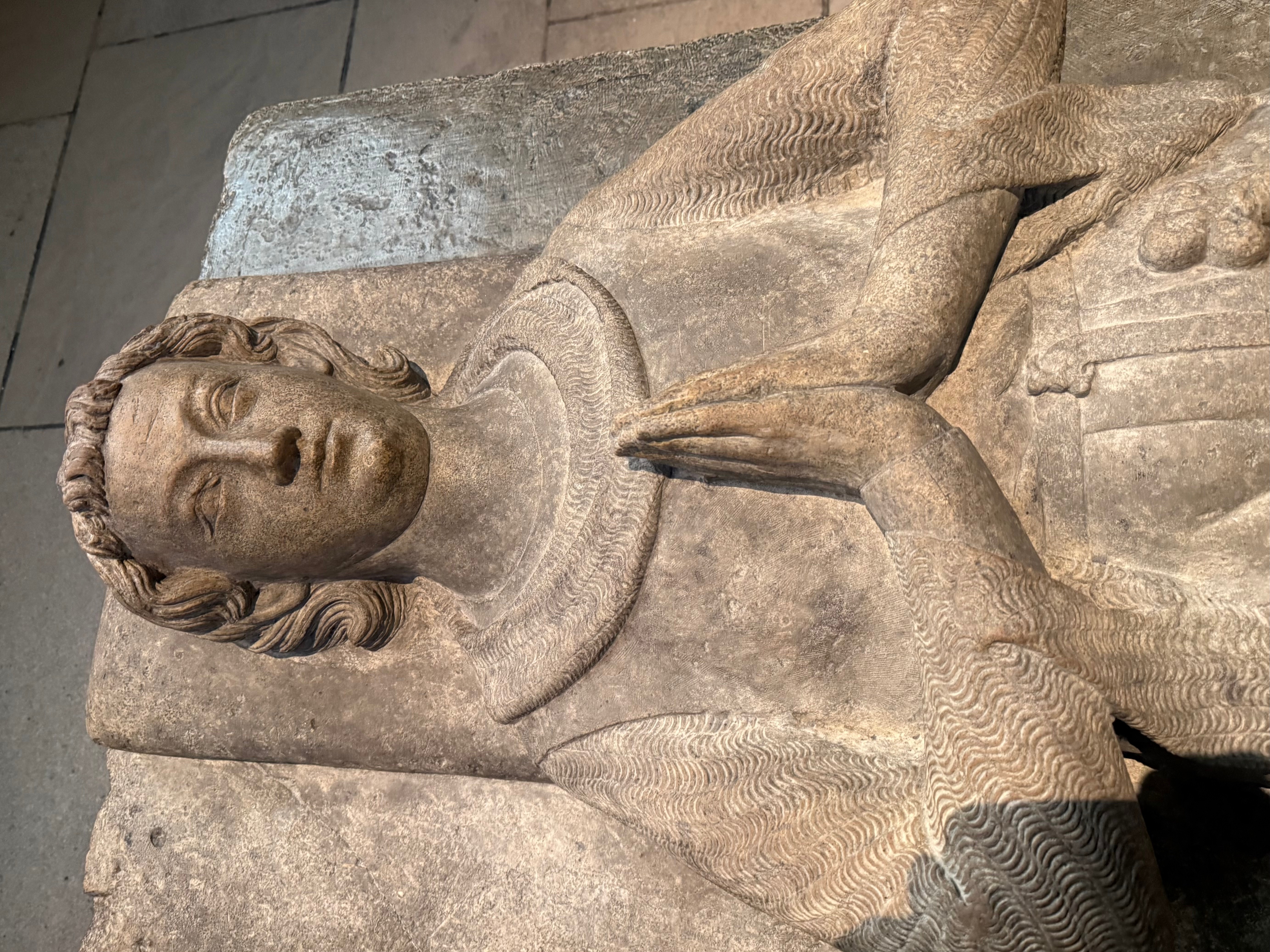
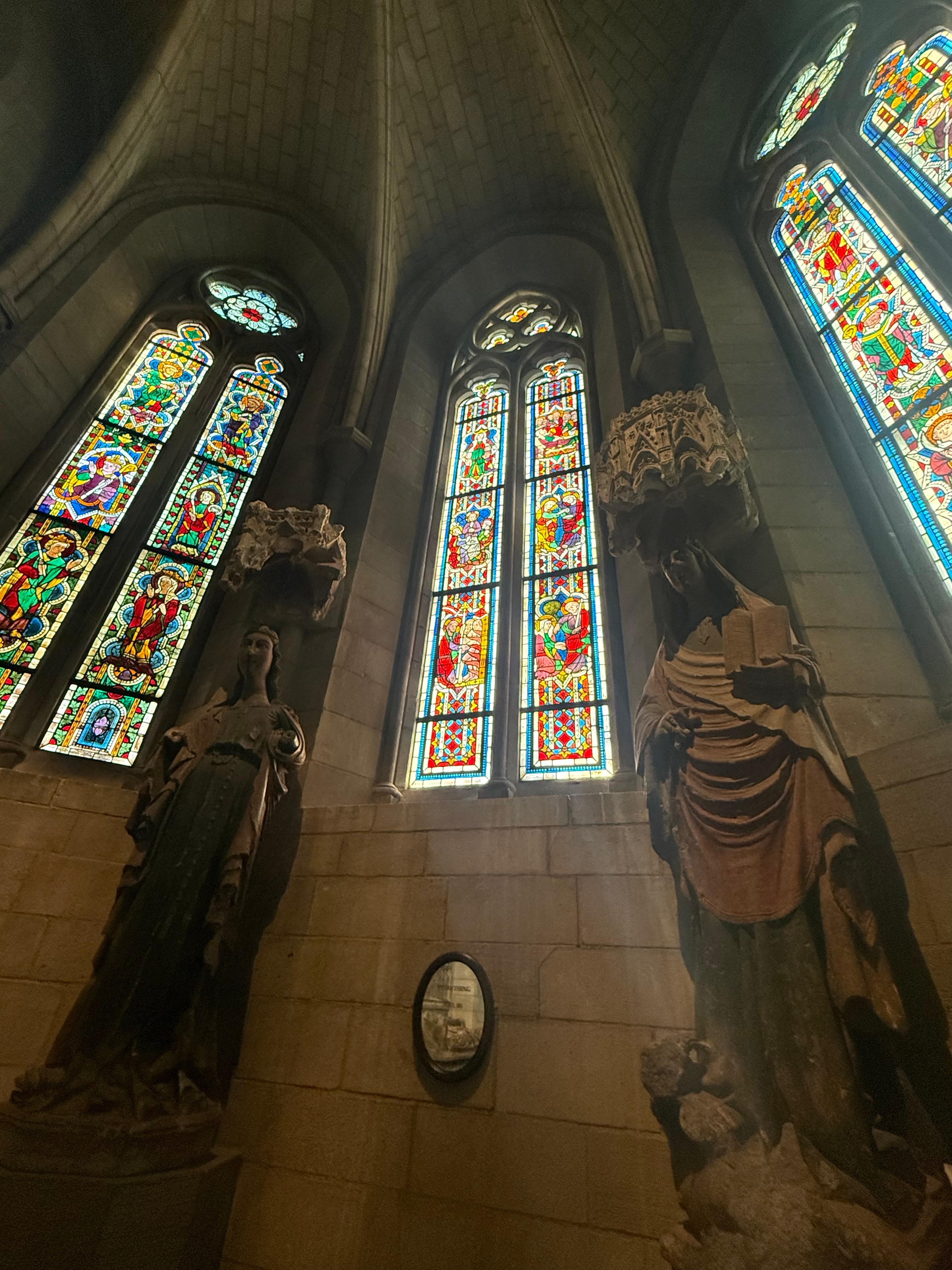
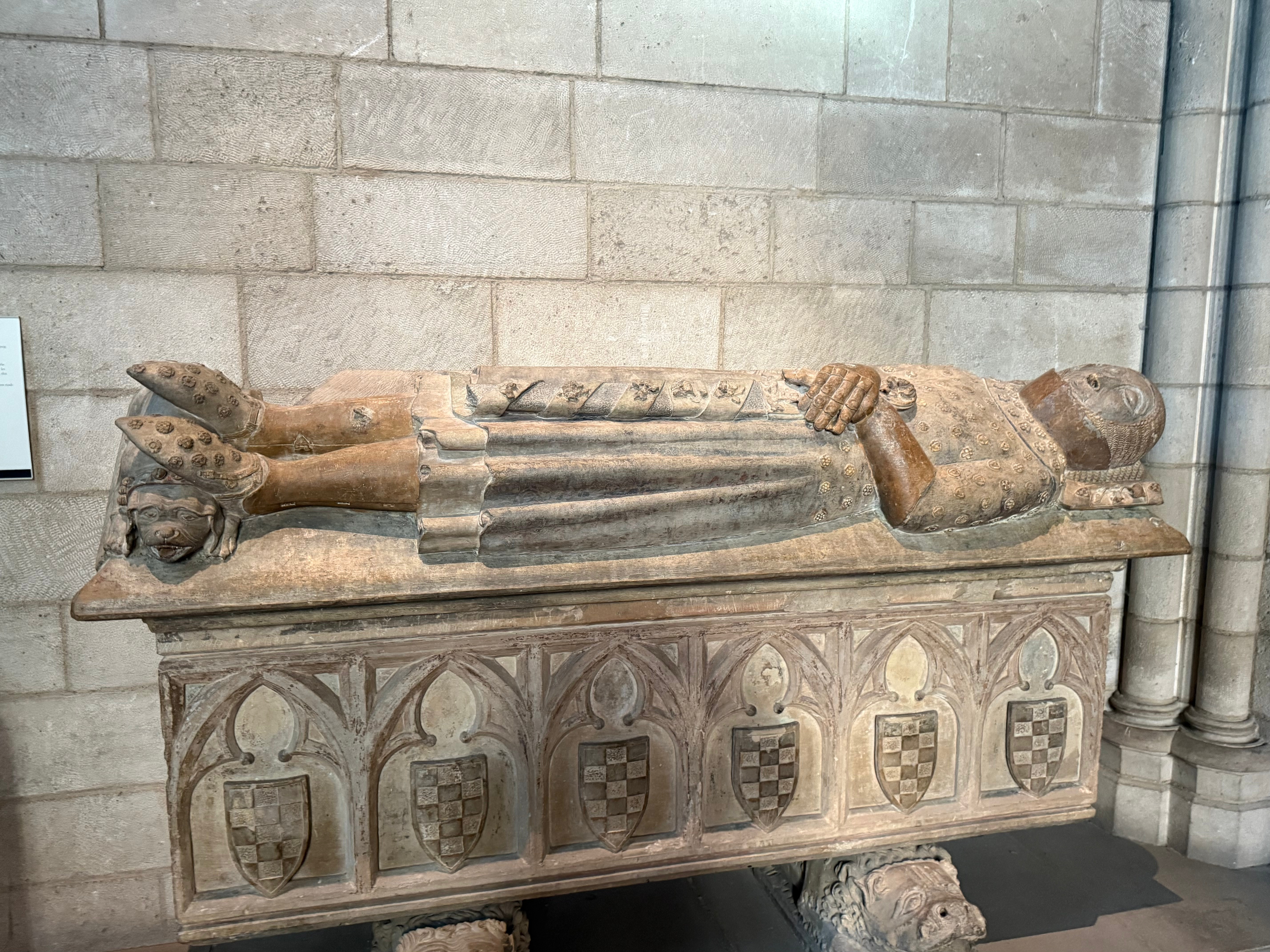
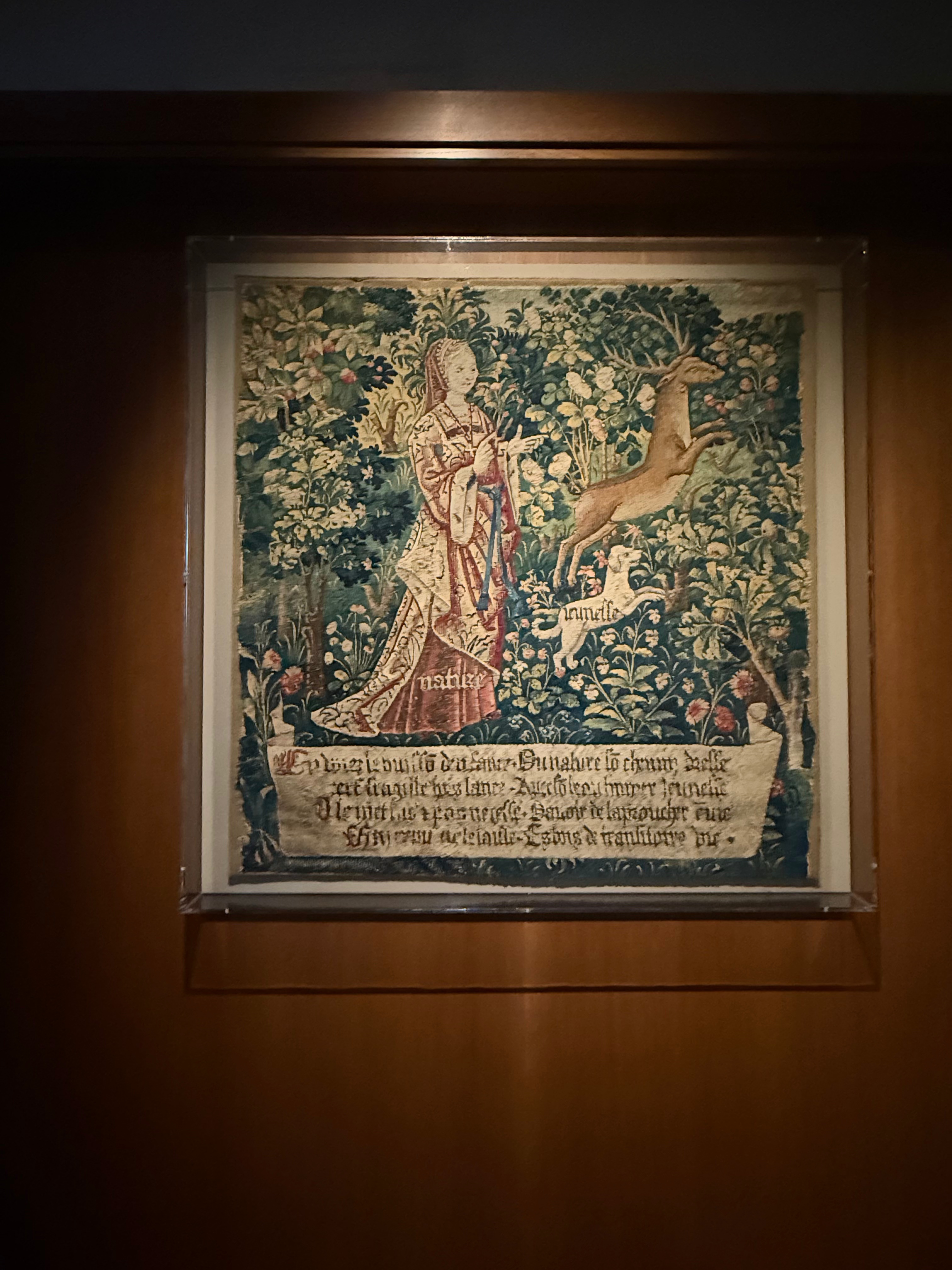
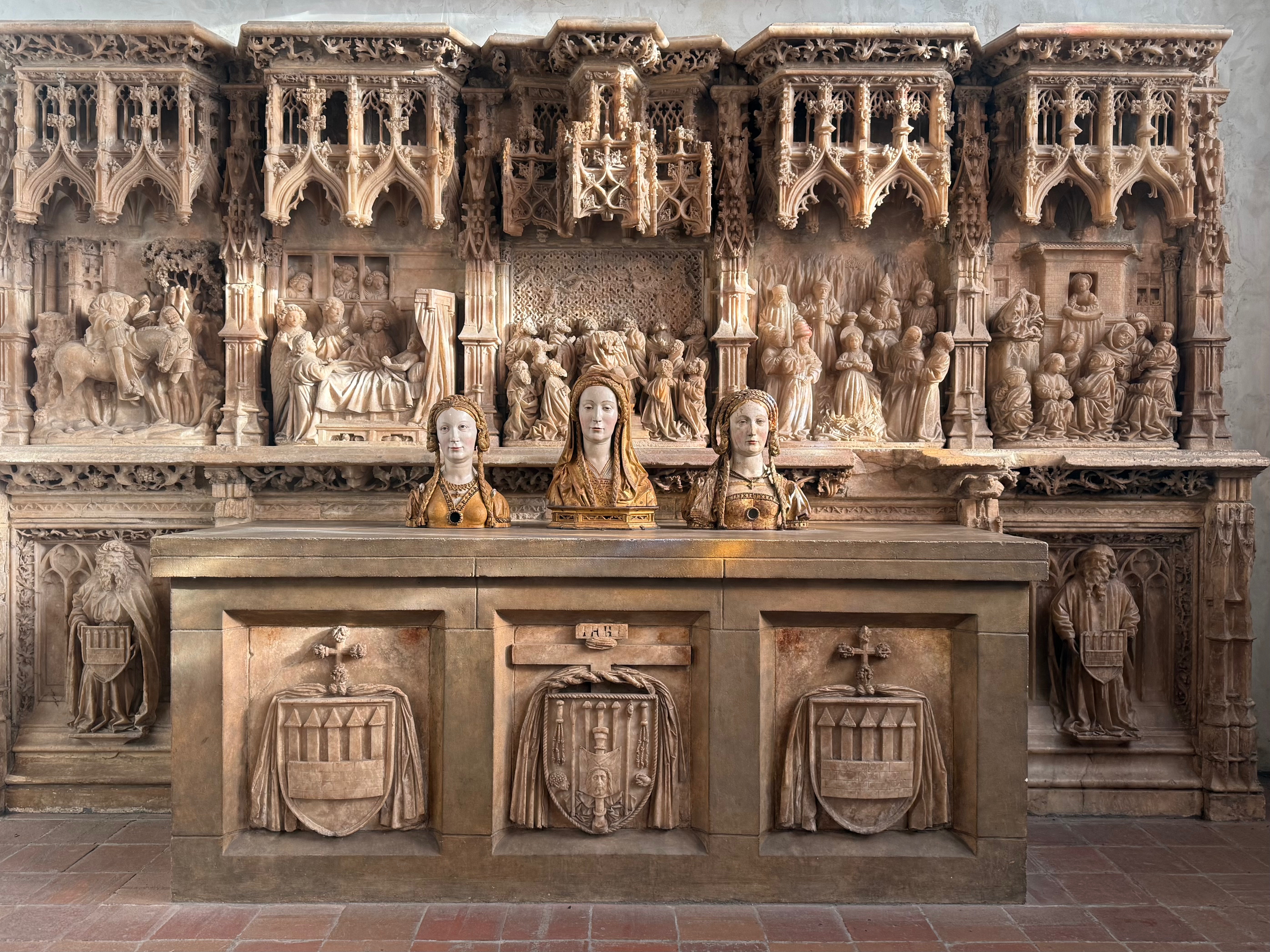
If you have already visited the main Met location that day, you can use the same ticket to visit the Cloisters at no extra cost. If you are only planning to visit the Cloisters, ticket prices can be found here, and note that New York State residents with valid ID can pay what you wish. The idea that “time in this place does not obey an order’ is immediately apparent – as soon as you enter the building, you are immersed in the past. The museum specializes in European medieval art and architecture, with a focus on the Romanesque and Gothic periods. Its large collection of medieval artworks are displayed within the architectural settings of French monasteries and abbeys. The building is centered around four medieval cloisters—the Cuxa, Saint-Guilhem, Bonnefont, and Trie-sur-Baïse—that were acquired by American sculptor and art dealer George Grey Barnard in France before 1913 and moved to New York. Barnard’s collection was bought for the museum by John D. Rockefeller Jr., while additional major sources of objects came from the collections of J. P. Morgan and Joseph Brummer.
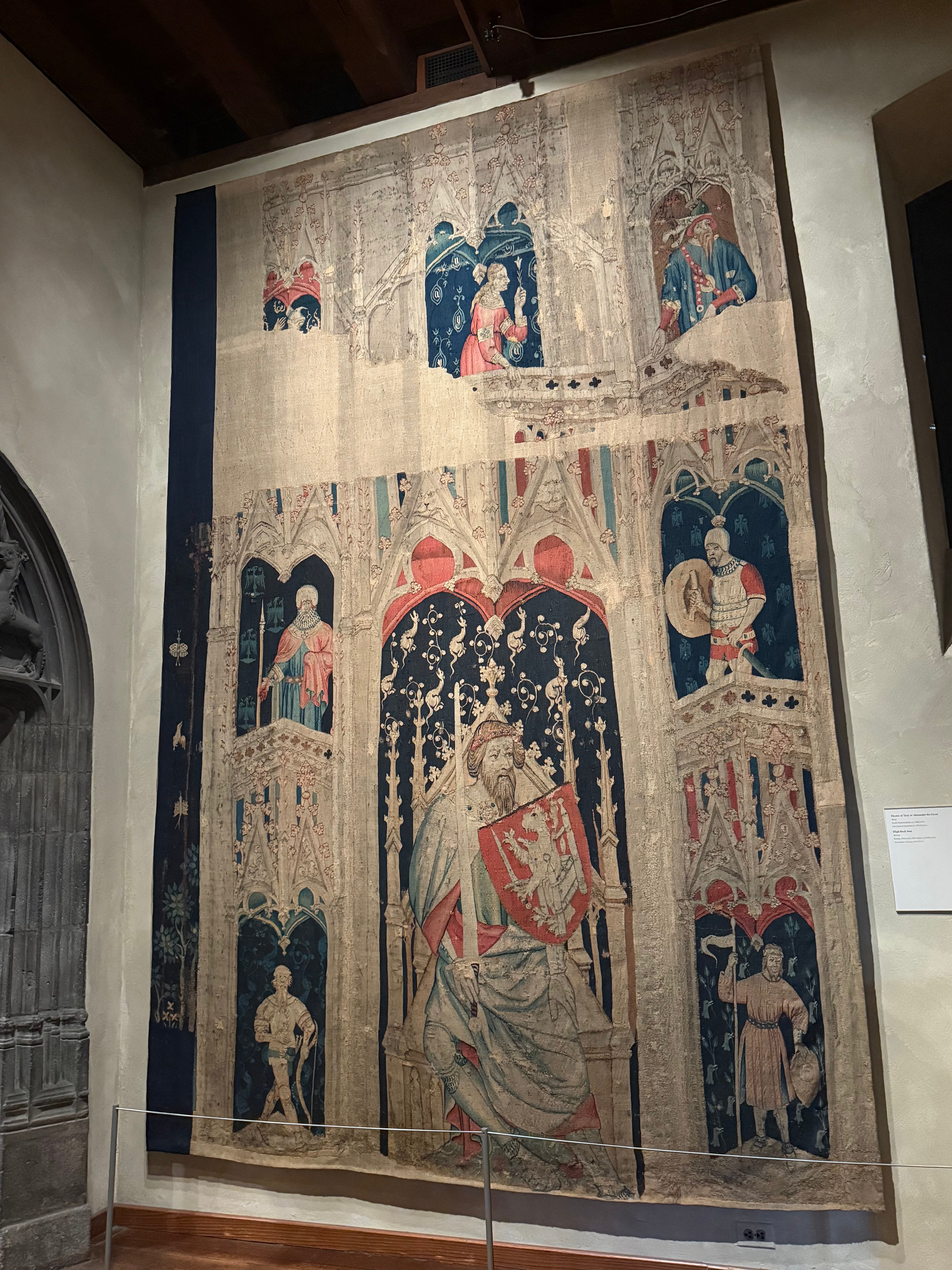
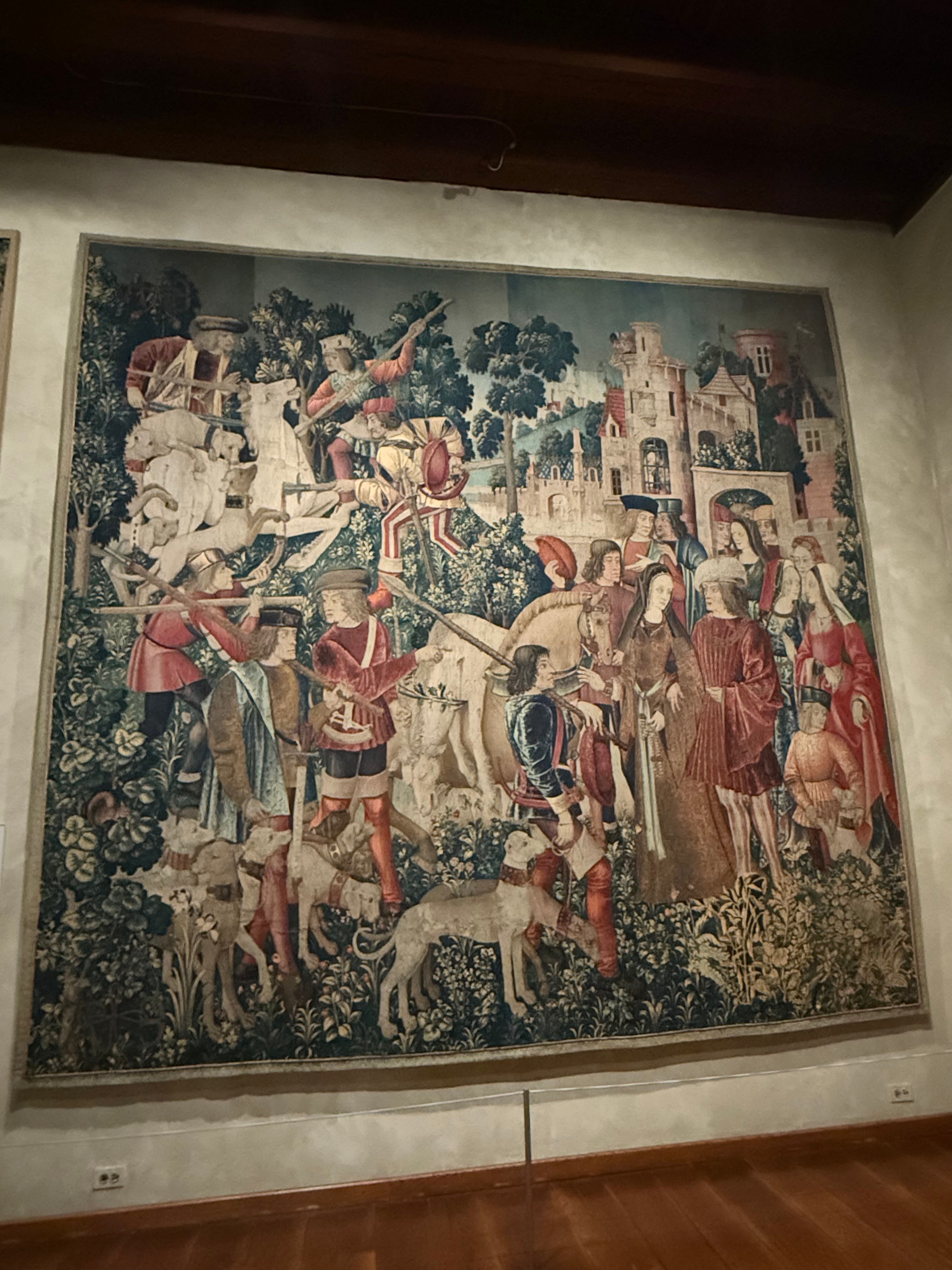
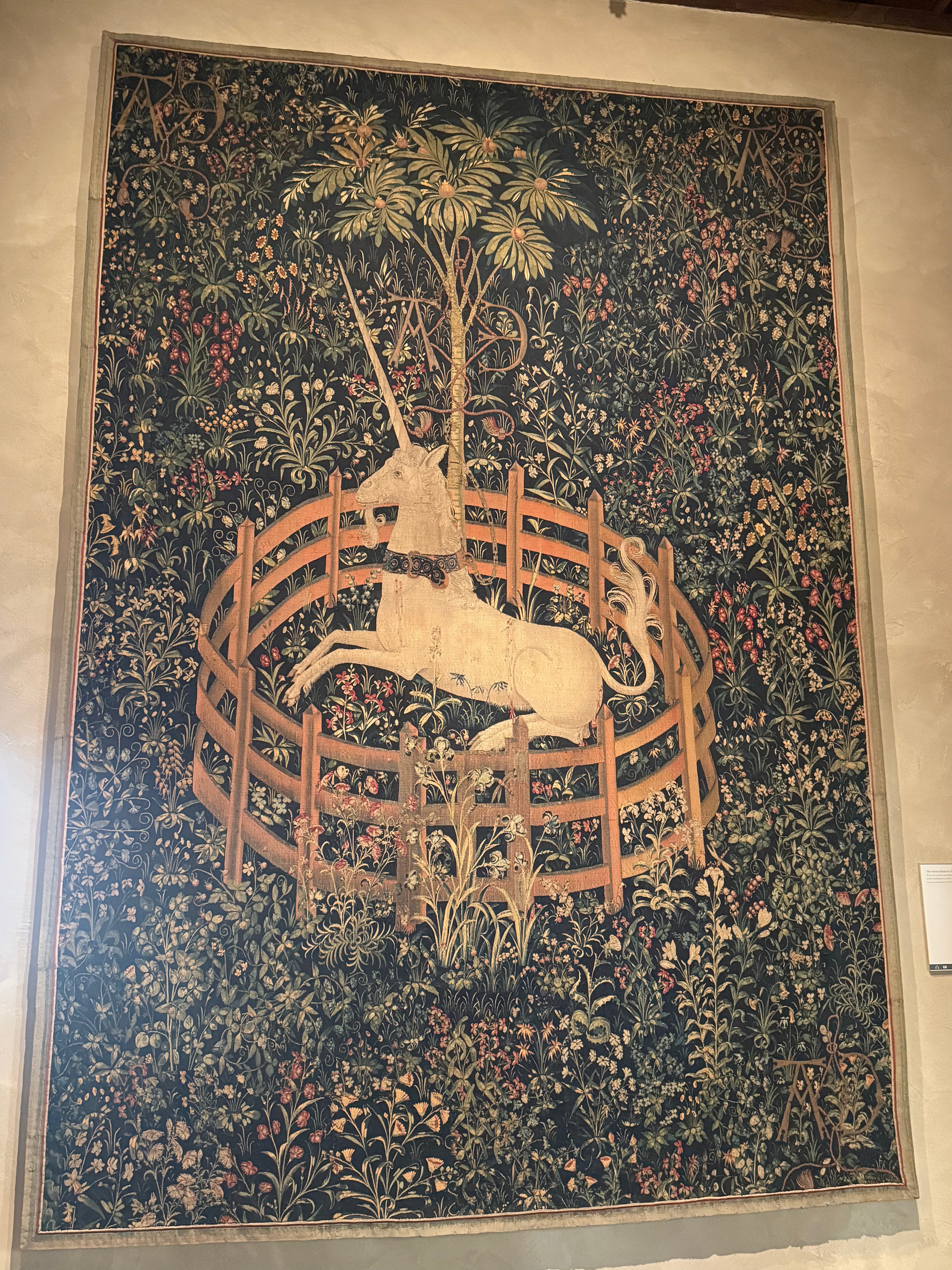
The museum’s building was designed by the architect Charles Collens, and has upper and lower levels. It contains medieval gardens at the center, and a series of chapels and themed galleries, including the Romanesque, Fuentidueña, Unicorn, Spanish, and Gothic rooms. The design, layout, and ambiance of the building are intended to evoke a sense of medieval European monastic life.
The best known works include the Early Netherlandish Mérode Altarpiece from about 1422 AD and the Flemish The Unicorn Tapestries (c. 1495–1505).
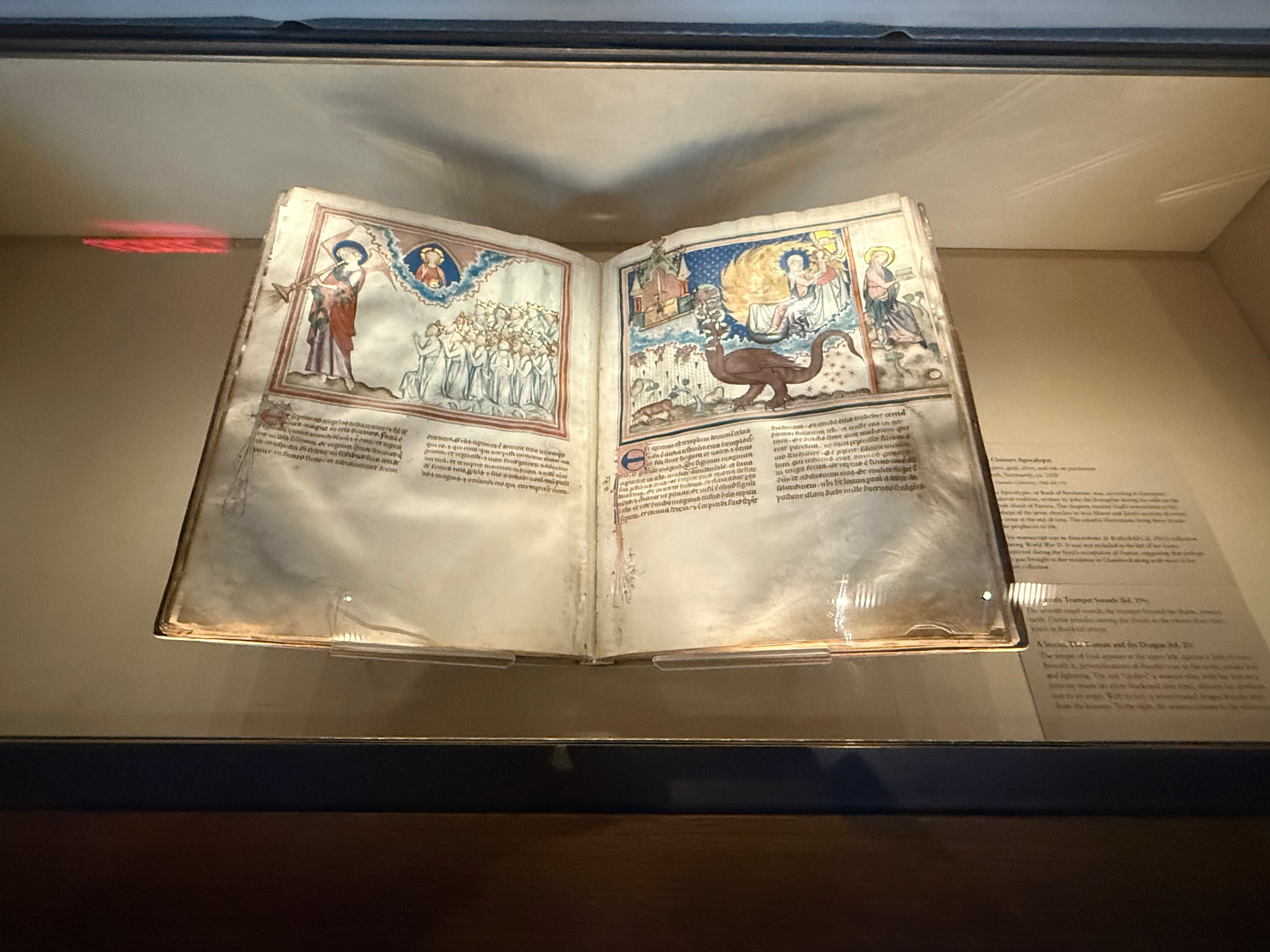
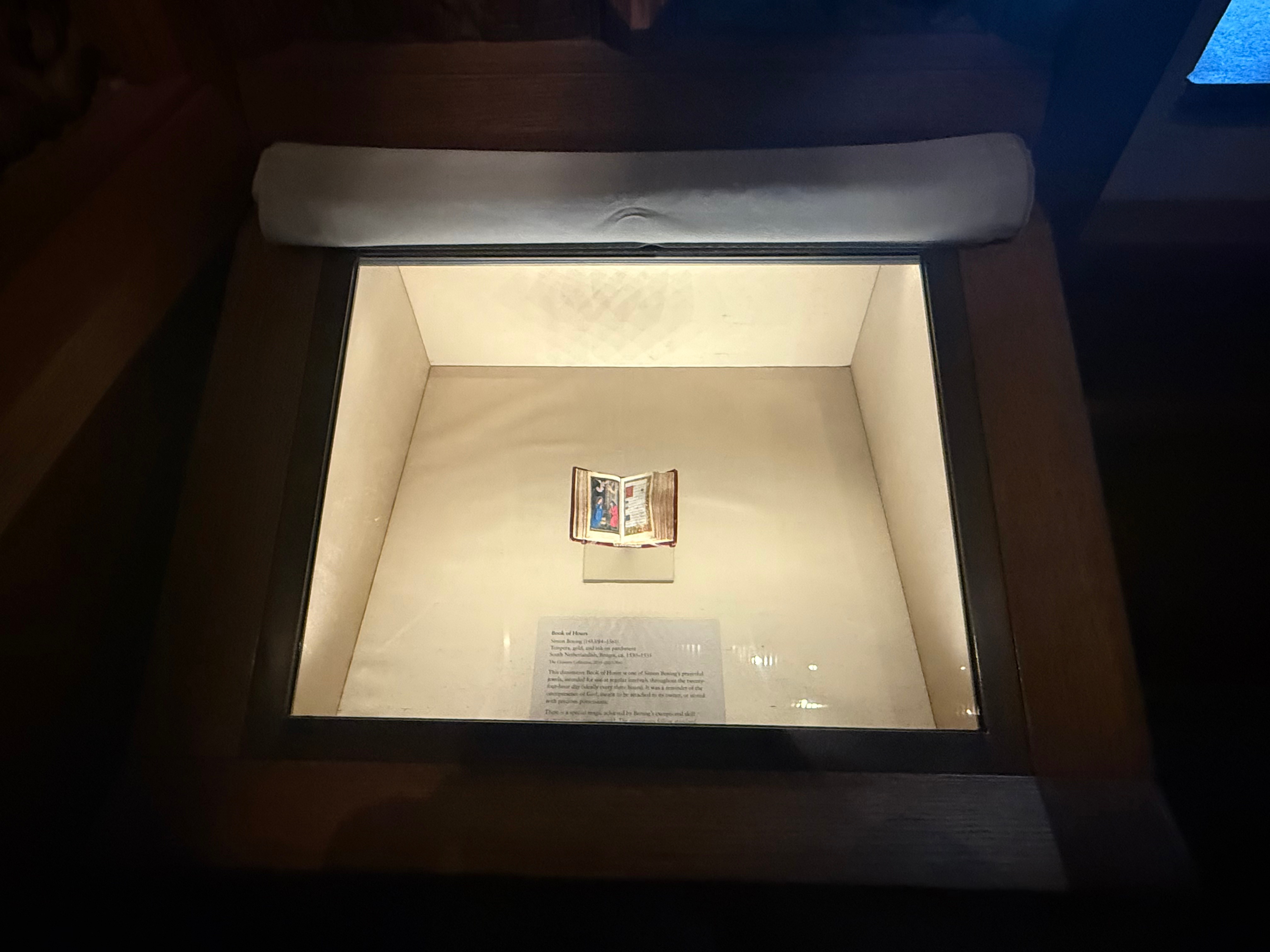
The museum’s collection of illuminated books is small but of exceptional quality. J.P. Morgan, a major early donor whose taste leaned heavily towards rare printed and illuminated books, donated most of his collection to the Morgan Library in midtown. However, there are some remarkable illuminated manuscripts at the Cloisters.
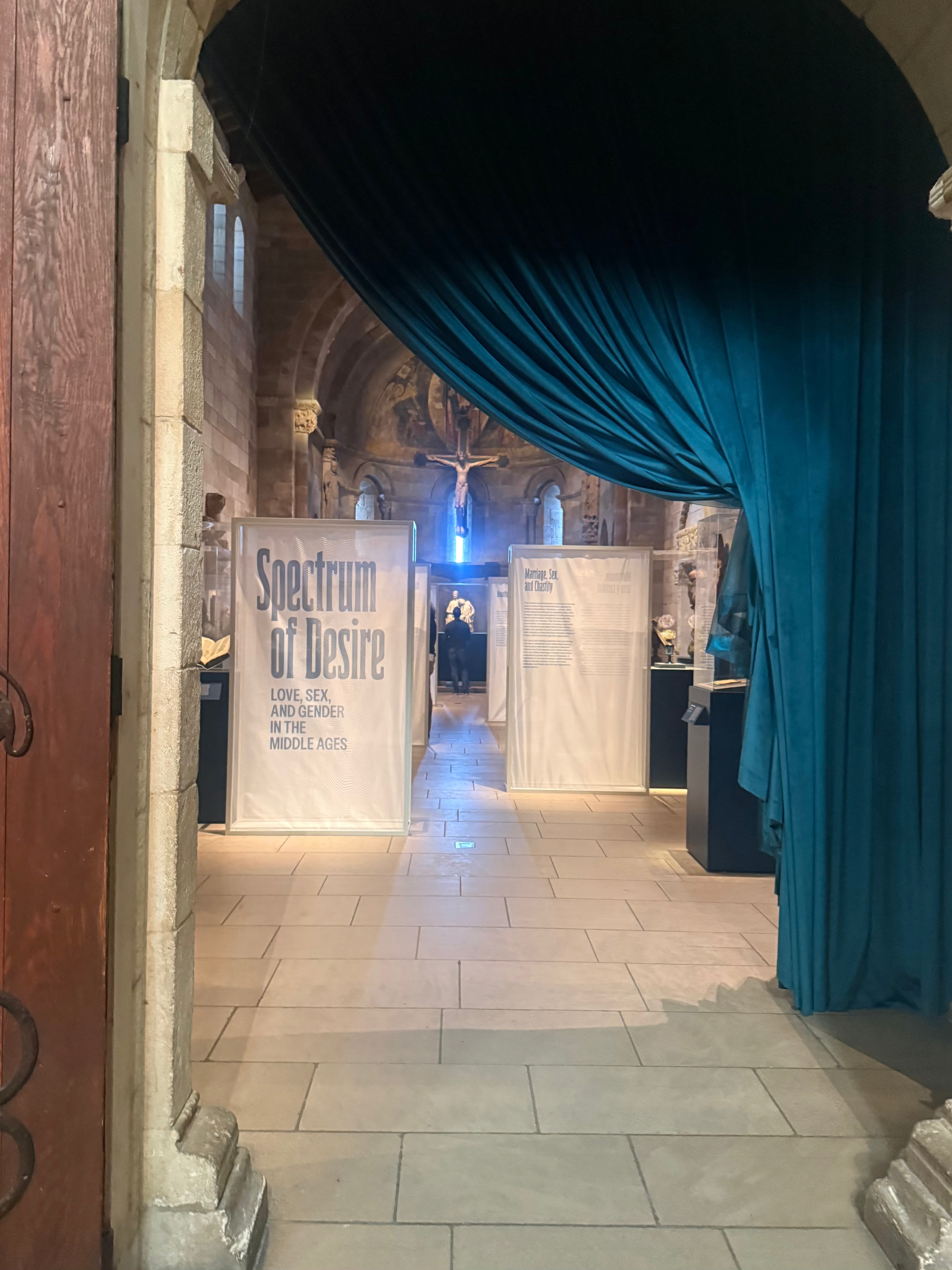
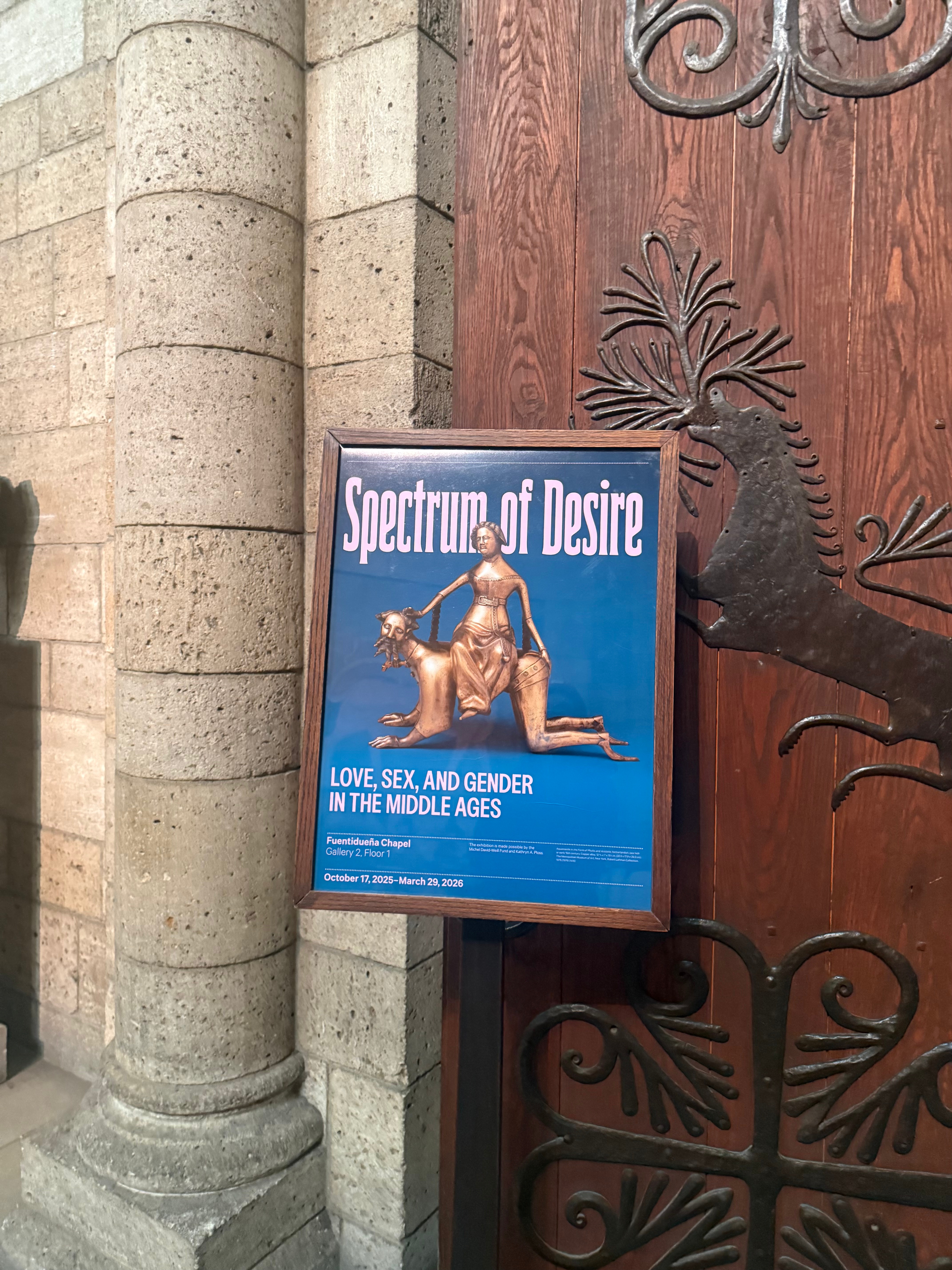
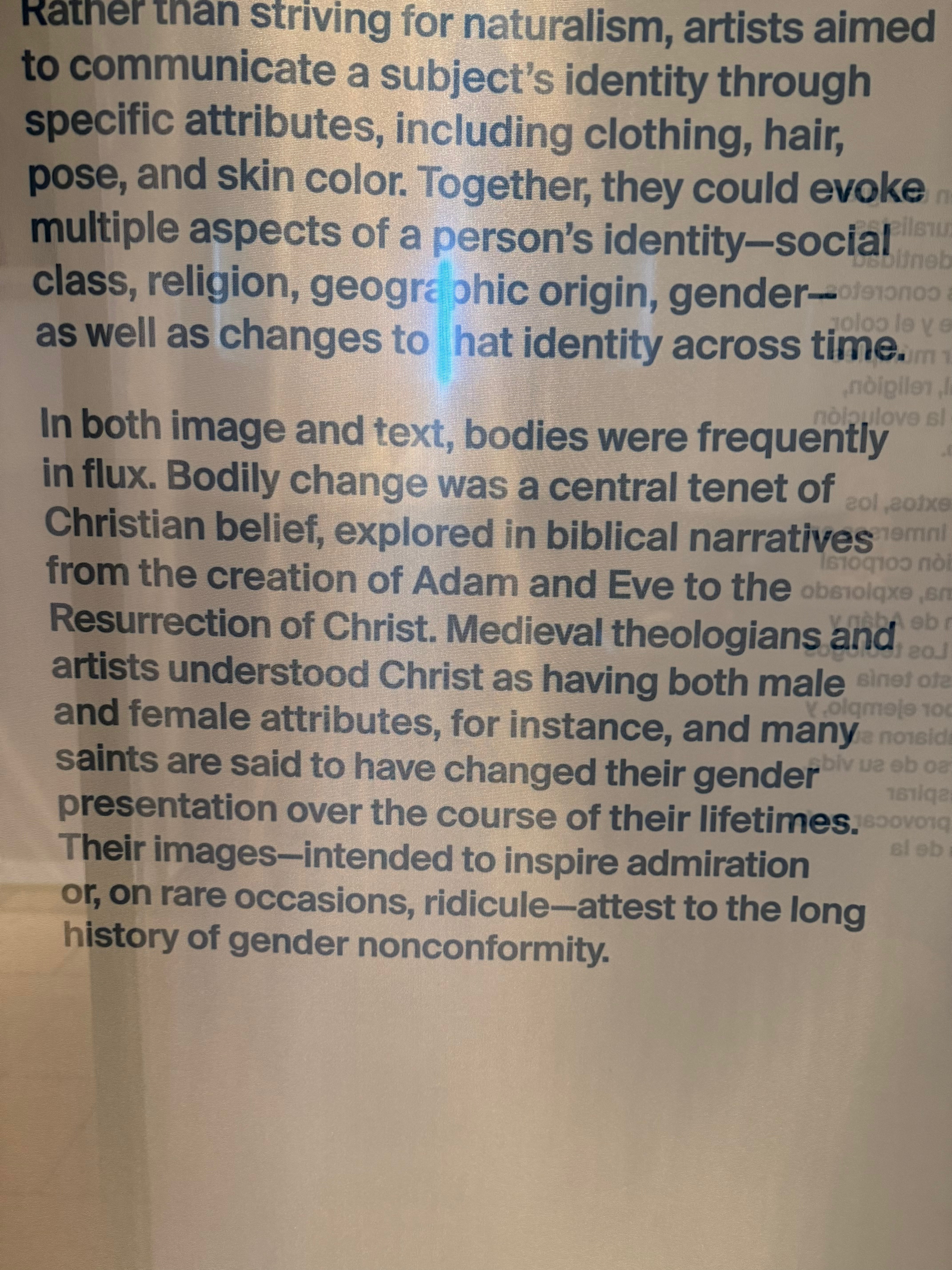
The Cloisters often has special exhibitions, and when I visited they had a very thought-provoking one called Spectrum of Desire, about love, sex, and gender in the Middle Ages. However, it’s about to close as I publish this post at the end of March of 2026.
Upon its opening on May 10, 1938, the Cloisters was described as a collection “shown informally in a picturesque setting, which stimulates imagination and creates a receptive mood for enjoyment.” Almost a century later, I would say that this description remains true. I highly recommend a trip to the Cloisters as a way to escape the noise and overstimulation that NYC can often provide, with the unique environment enabling moments of quiet reflection.
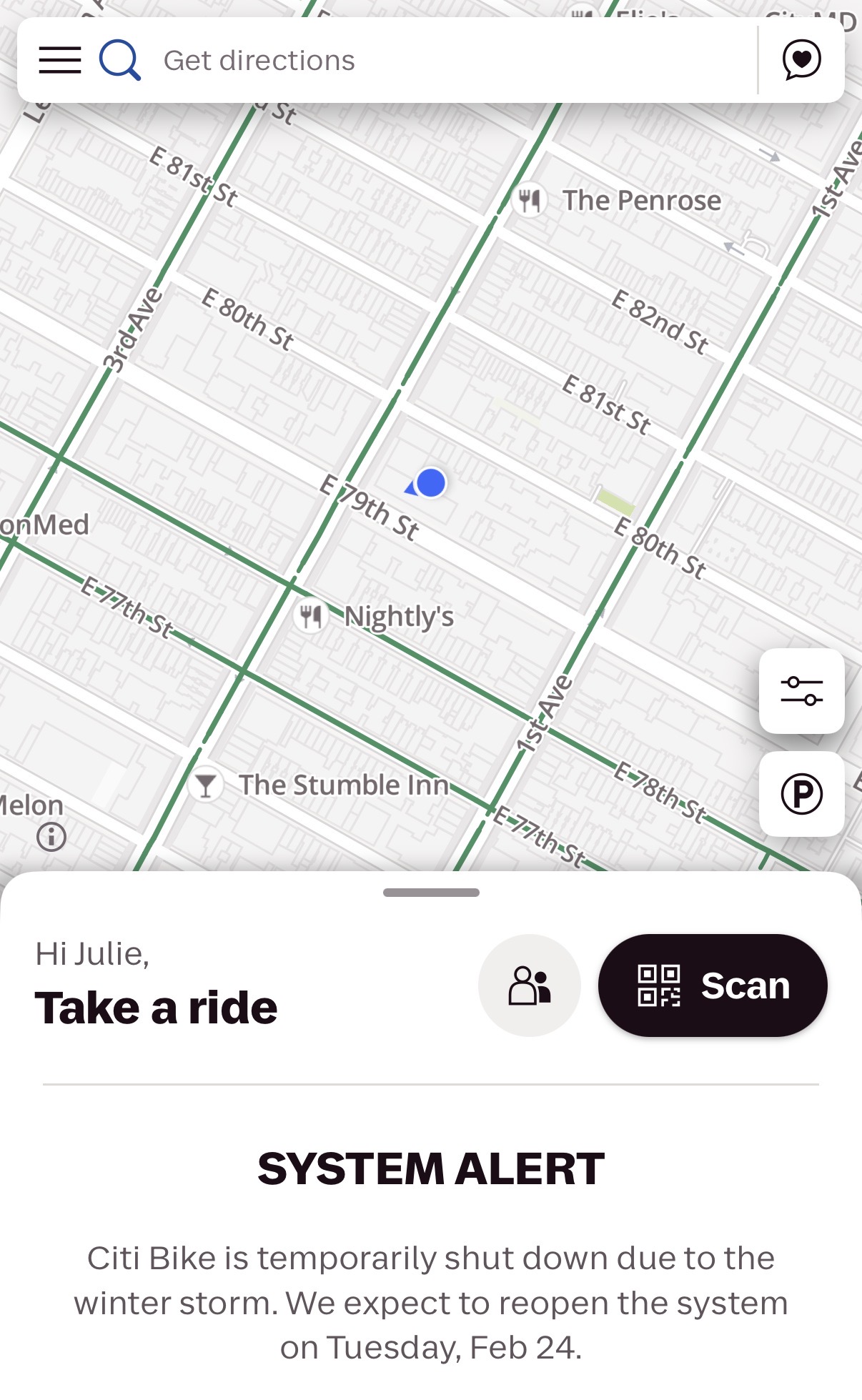
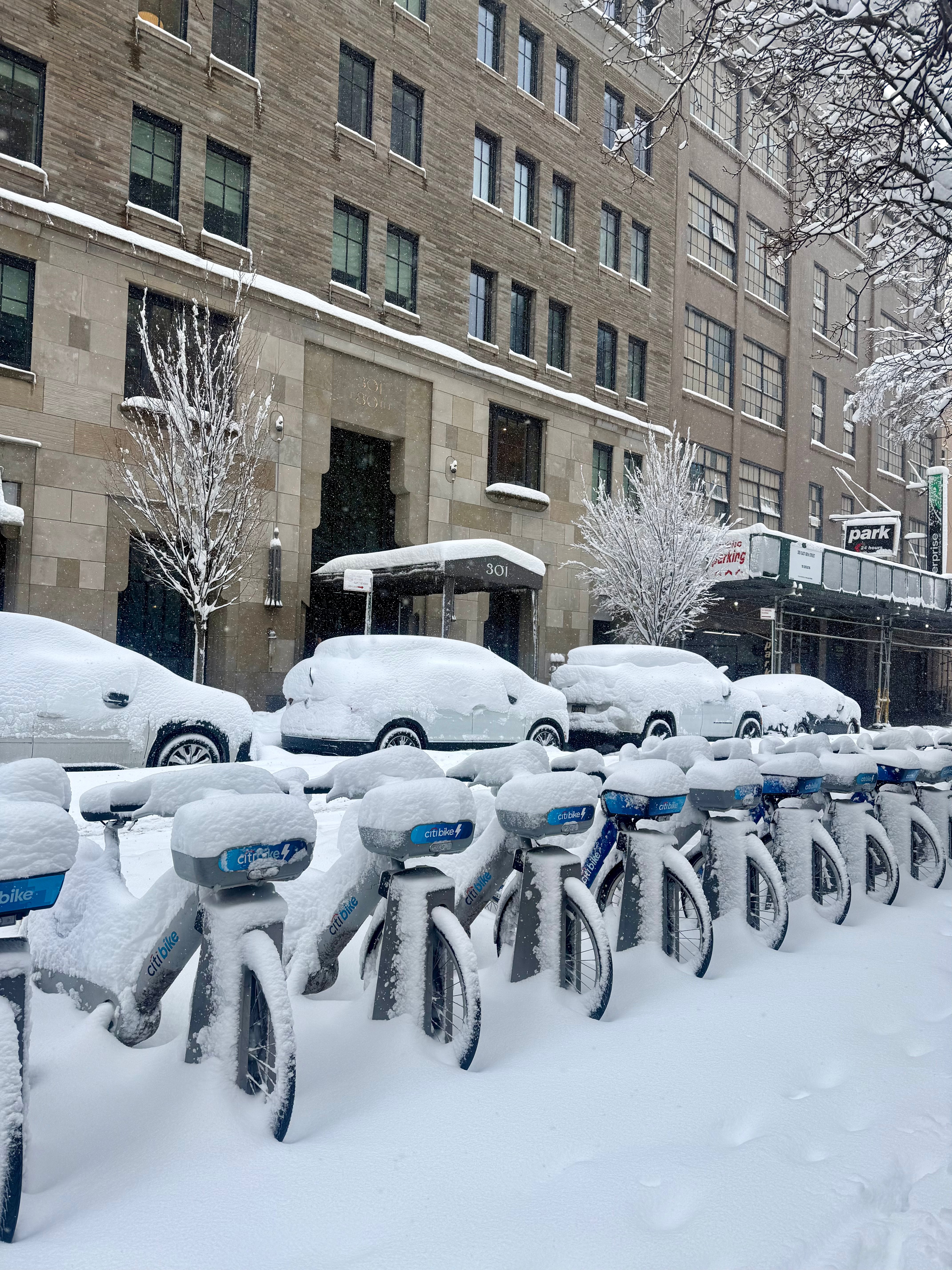
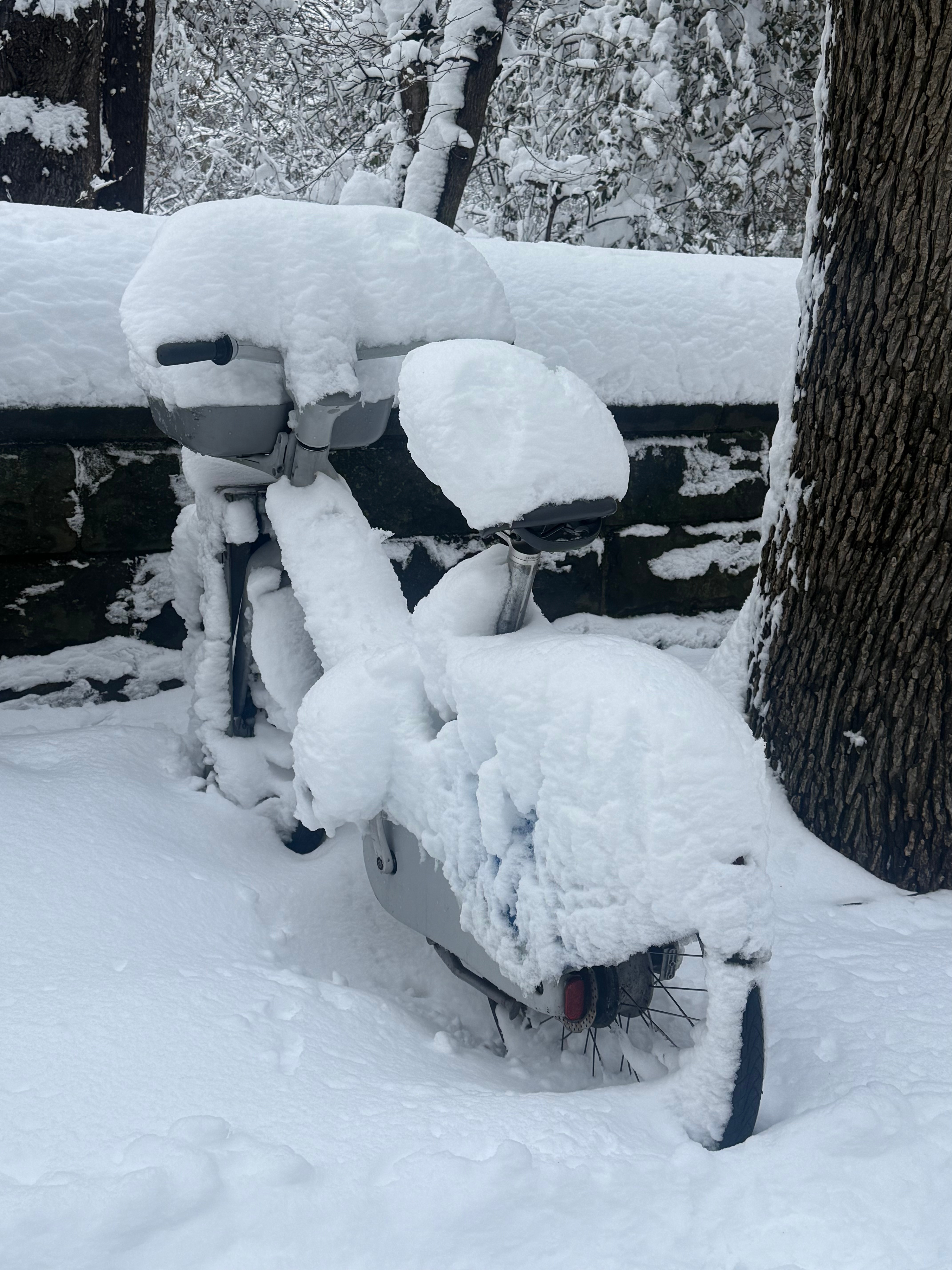
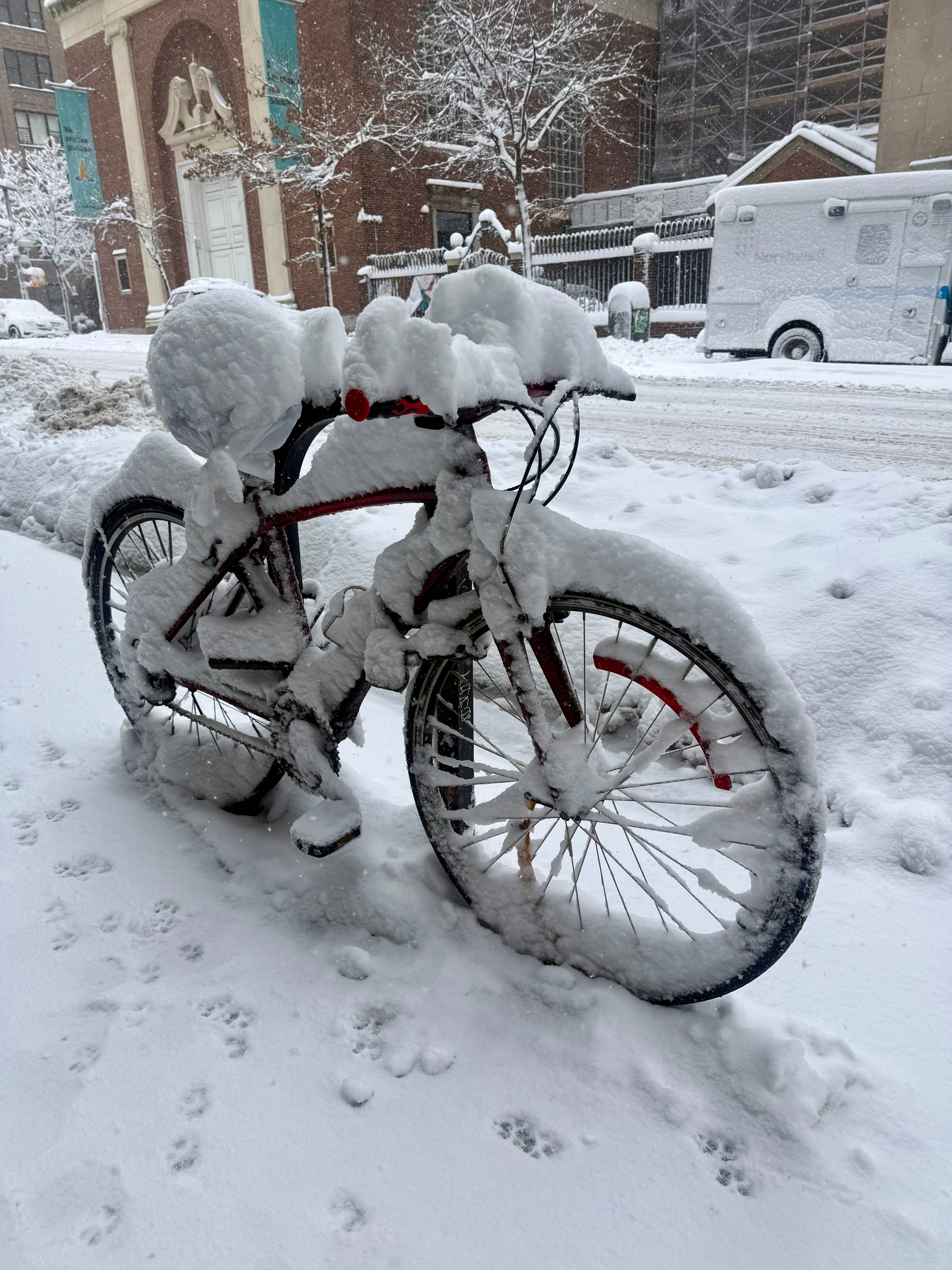
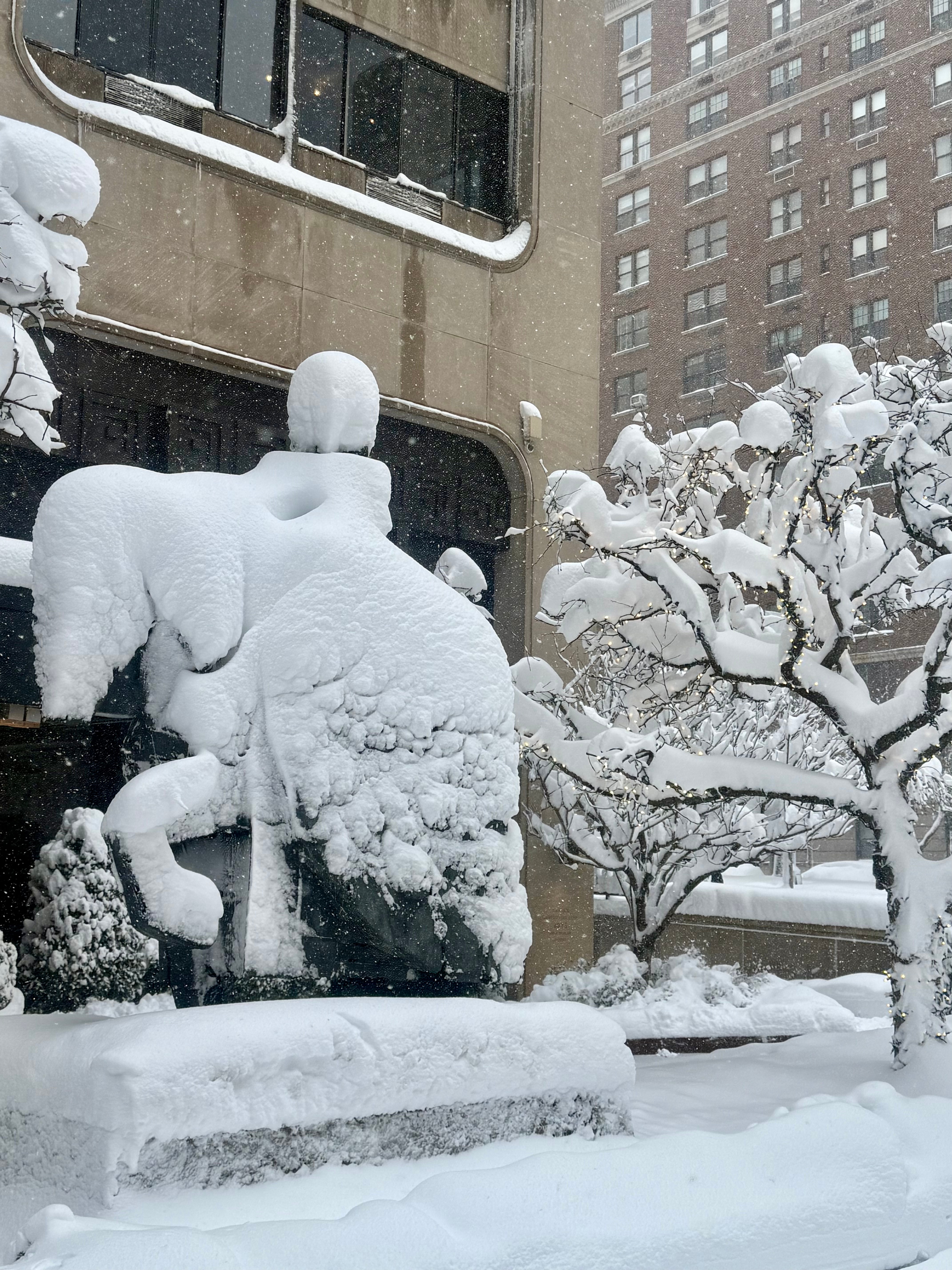
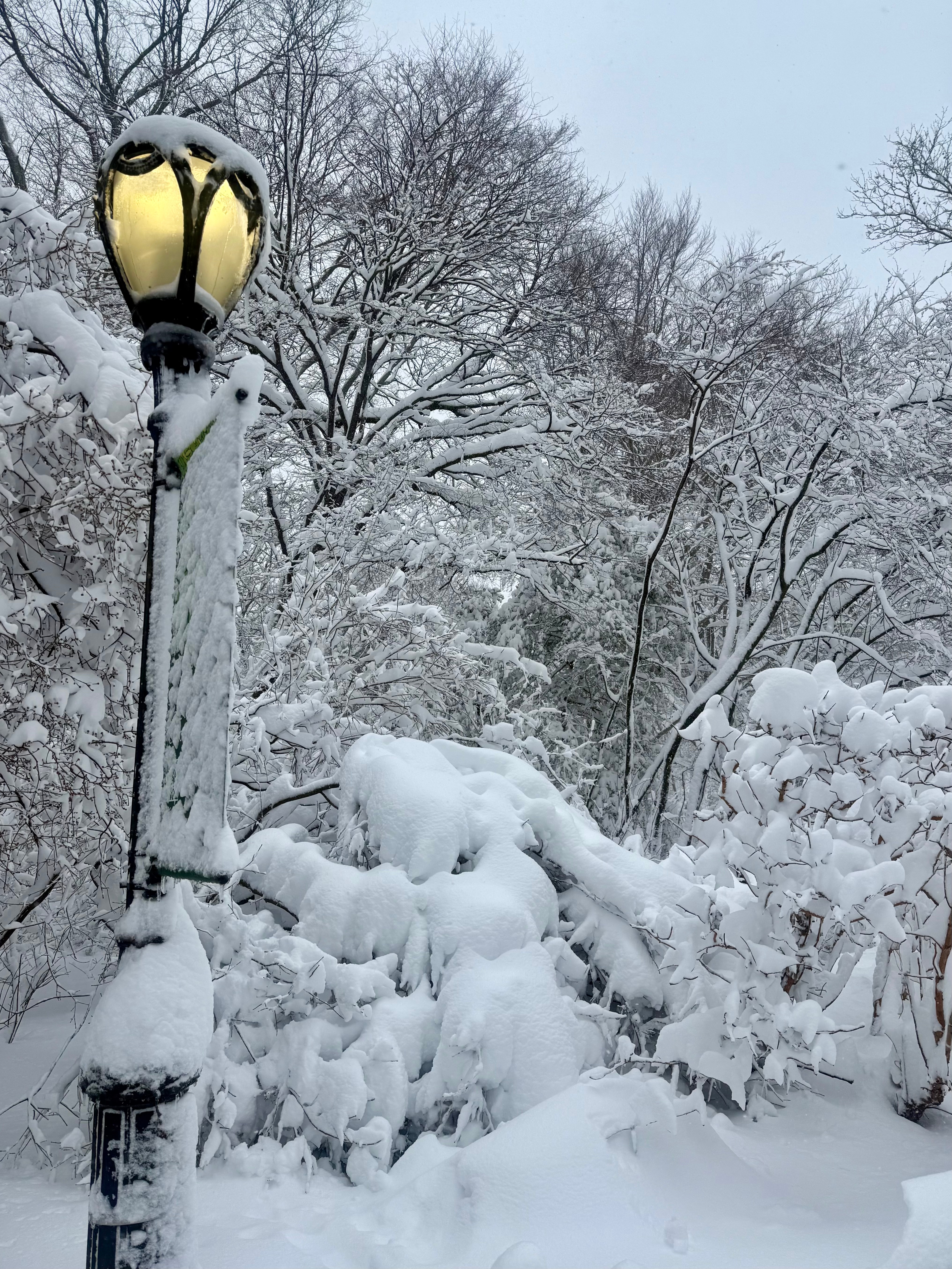
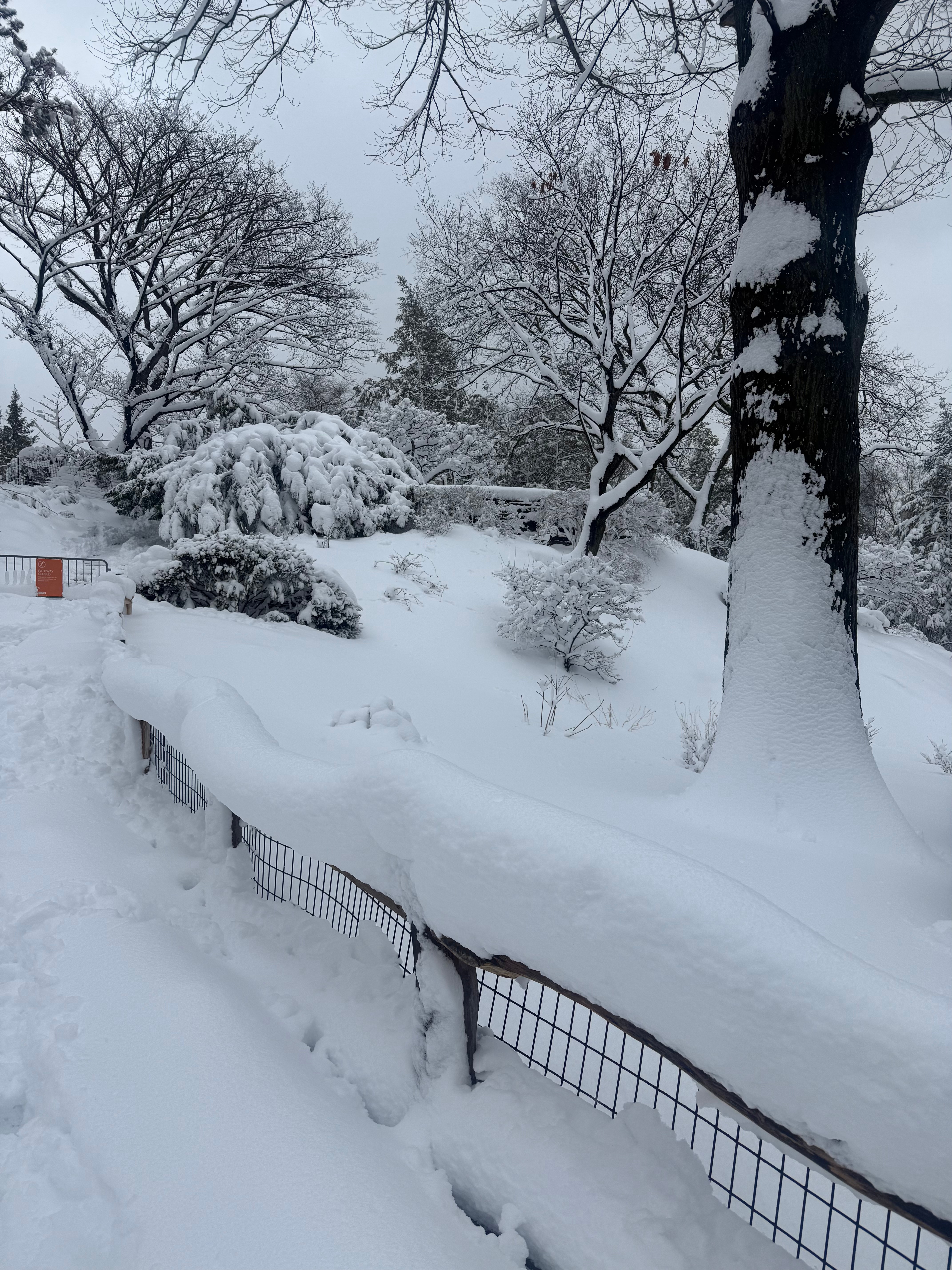
In January of 2026, New York City experienced a significant snowfall followed by weeks of temperatures much below average. You can see a few videos I made on Instagram from this snowstorm of the morning of the snow, snow removal in Central Park, a dog being carried down snow steps at the Bethesda Fountain, and of sledders in Central Park the day after the storm. Because of the frigid temps, the mountains of snow that formed where plows had pushed the snow off the roads hardened into ice. Citibikes were basically unusable for weeks, cemented into huge drifts of snow. Things had just begun to improve (although there was still snow around) in mid-February when there began to be murmurings of a possible big storm ahead. By February 20, they were predicting a blizzard (the definition of a blizzard has to do with low visibility due to high winds) with significant snowfall. The Blizzard of 2026 began on Sunday, February 22, and ended late afternoon on the 23rd, and this is what it was like in New York City – at least it’s my experience.
Screenshot
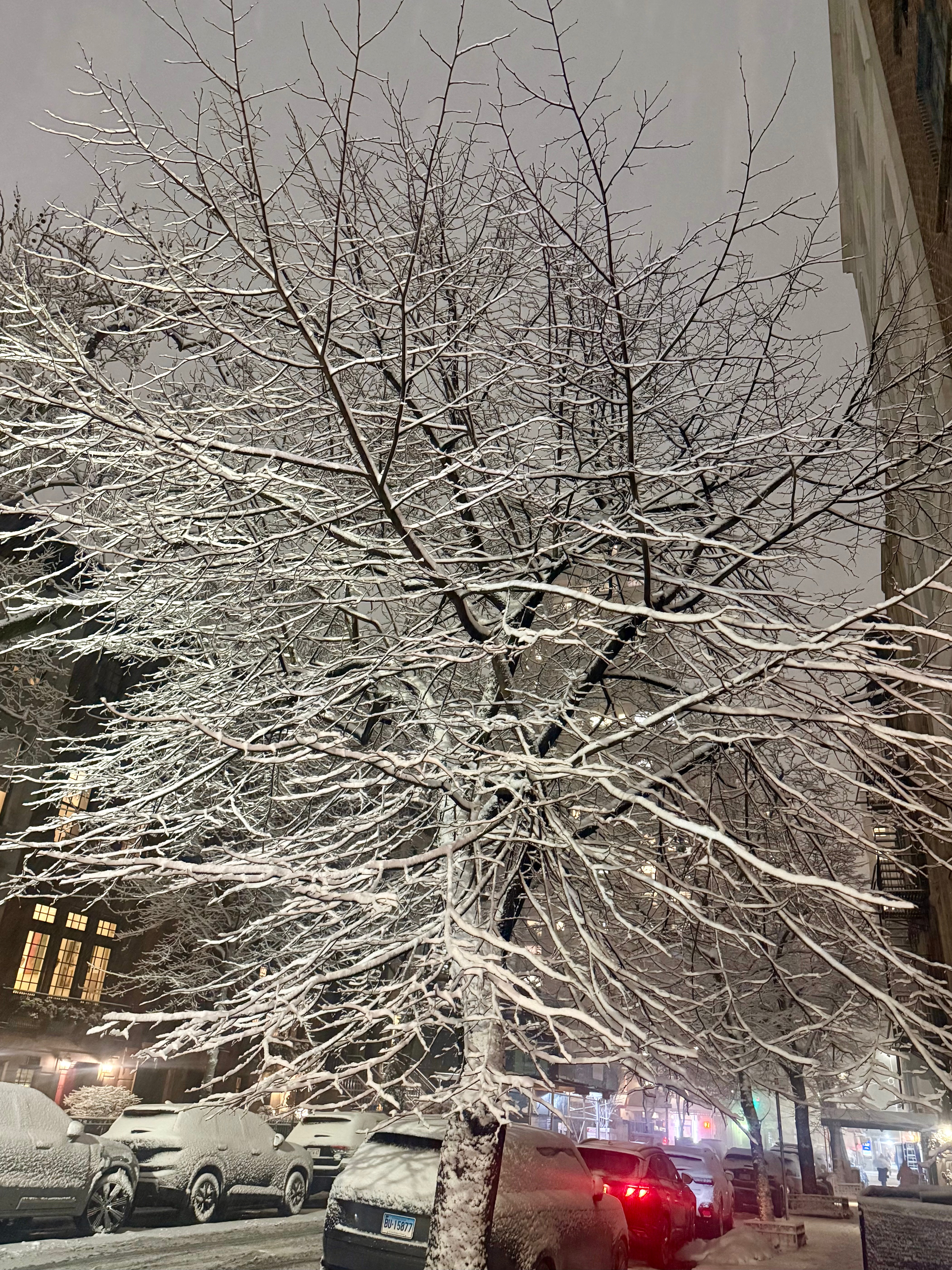
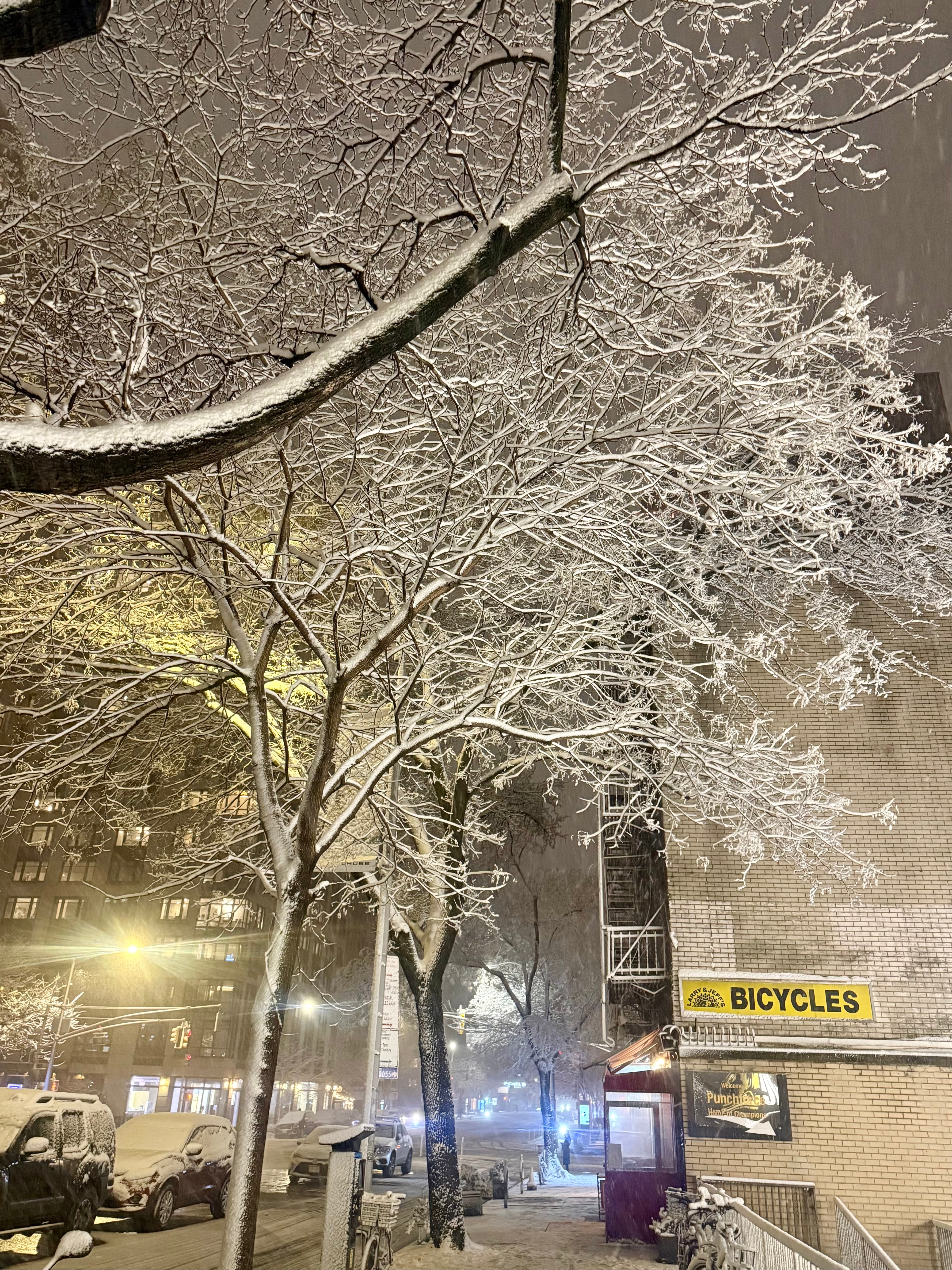
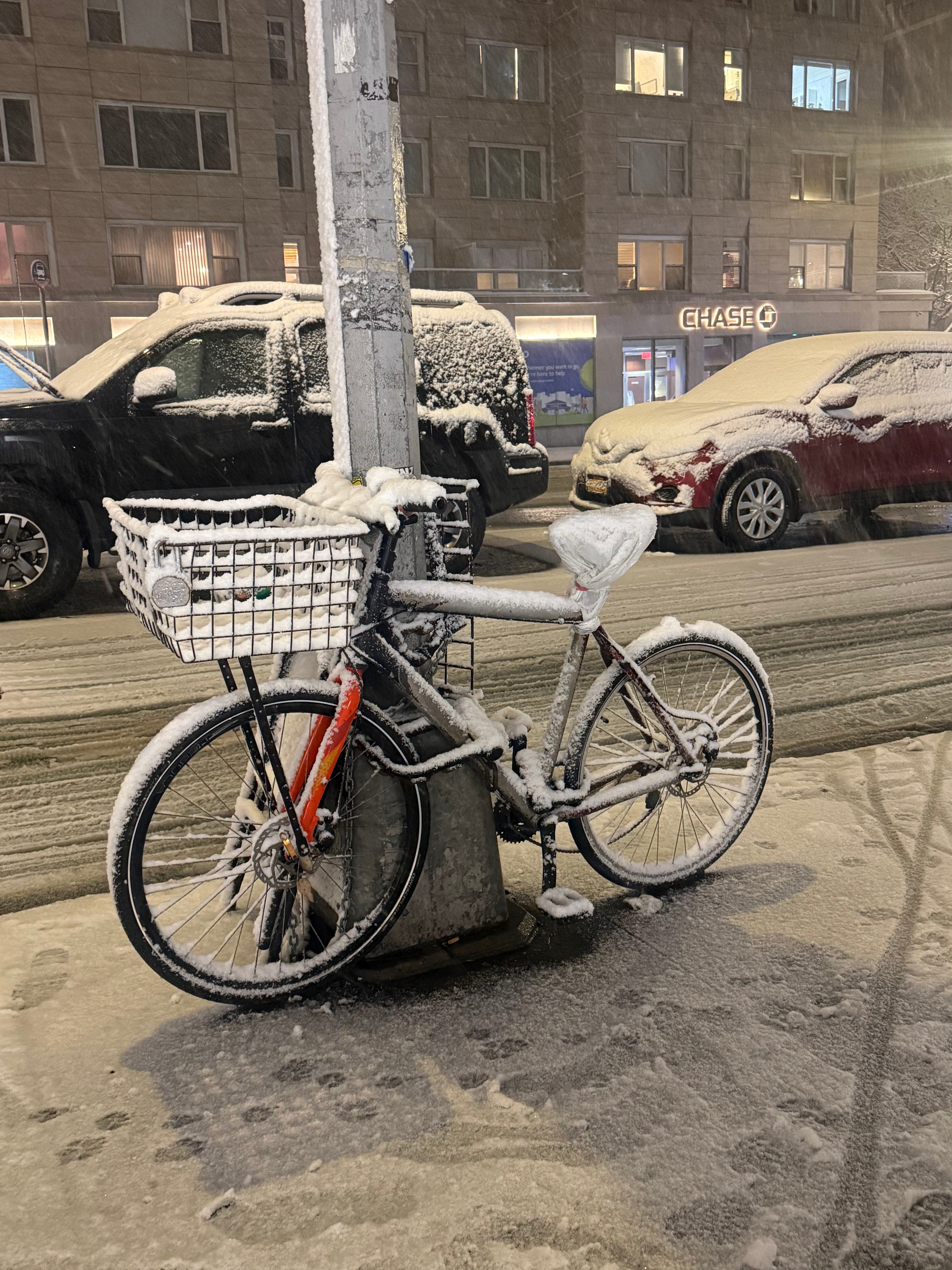
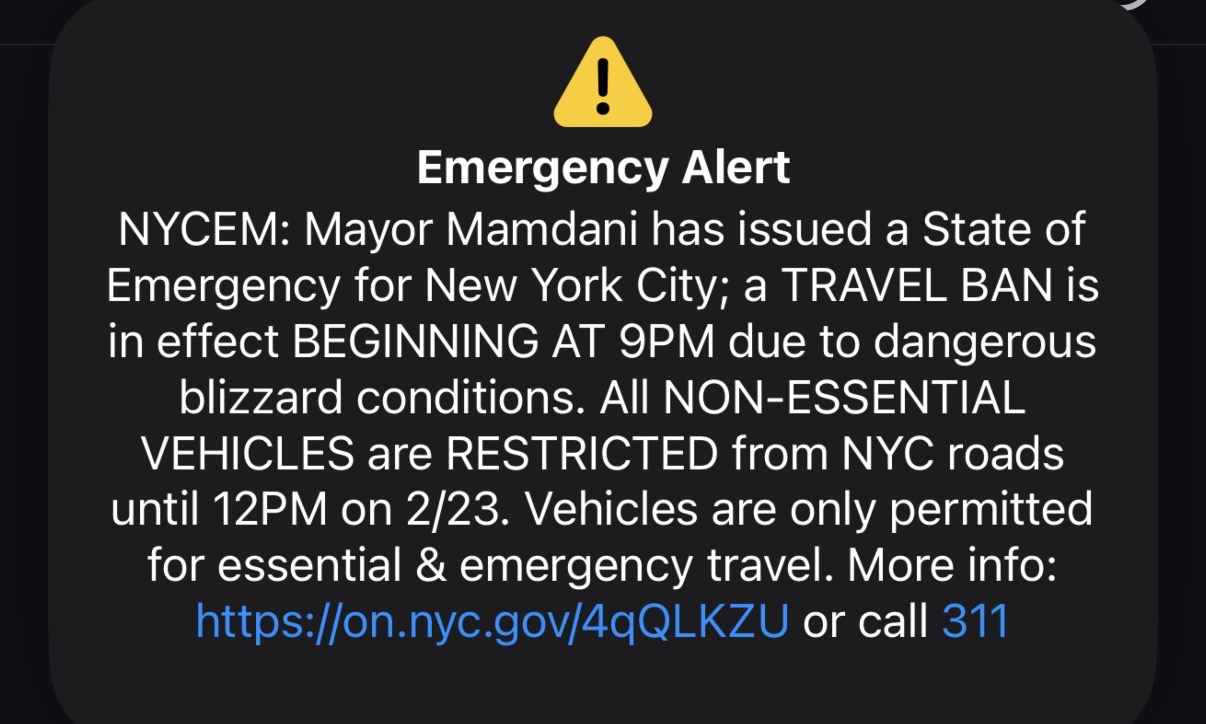
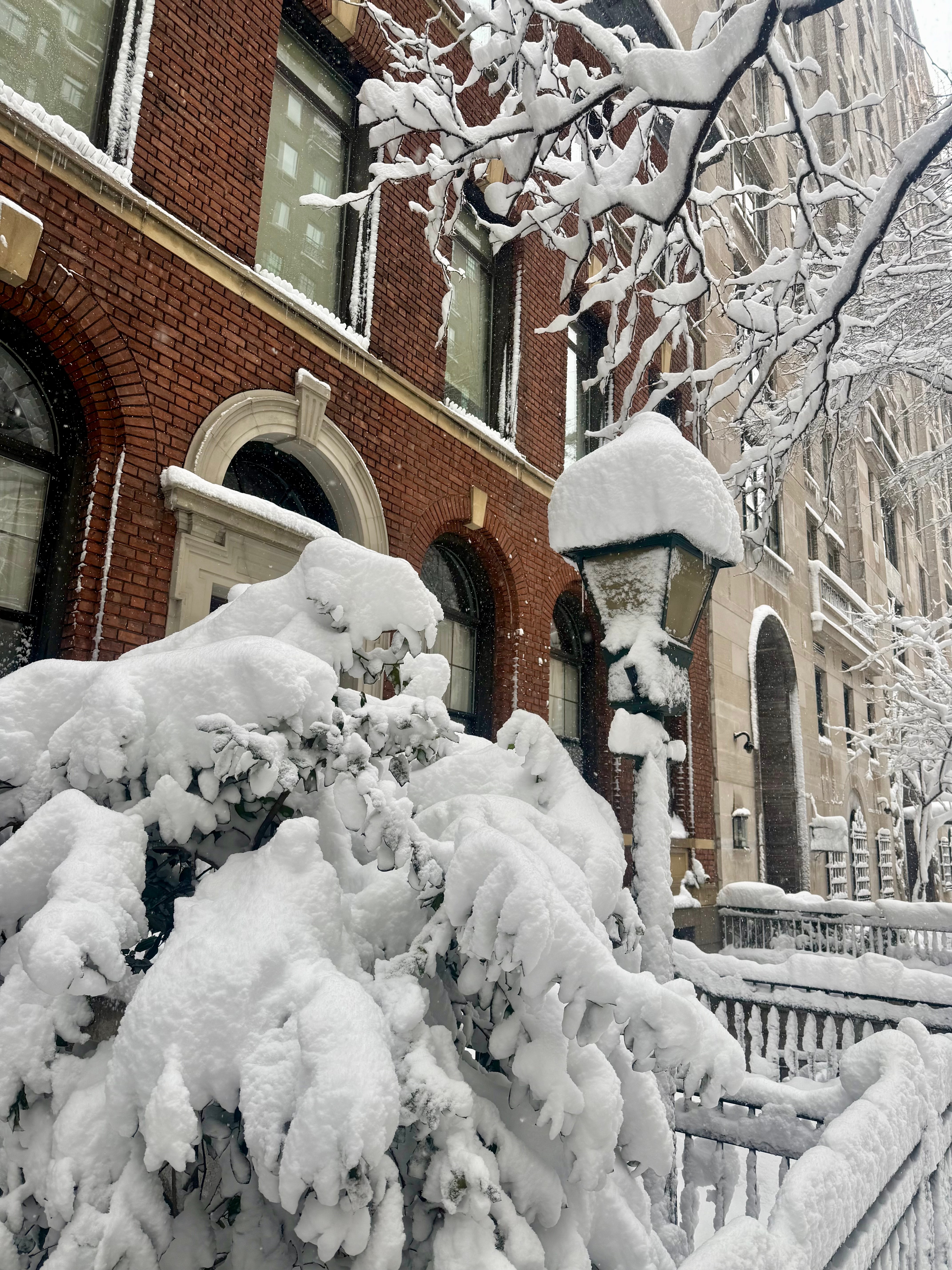
It started snowing lightly Sunday morning, but was really barely sticking until late afternoon. By 7PM, however, the snow was coming down and the wind was blowing. The photos above were taken on the Upper East Side in the evening. Around 8PM the emergency alert (photo above but thankfully I am not including the siren!) for NYC went off, startling everyone. There was a travel ban starting in the city at 9PM, lasting through noon on Monday. The snow and the wind increased overnight. I tried to take photos out my windows on Monday morning, but just captured whiteness.
Screenshot
Needless to say, my annual Citibike membership has been challenging to use this winter! I can always bundle up enough to ride even in the cold in the winter, but there is nothing that can be done when the bikes themselves are snowed in.
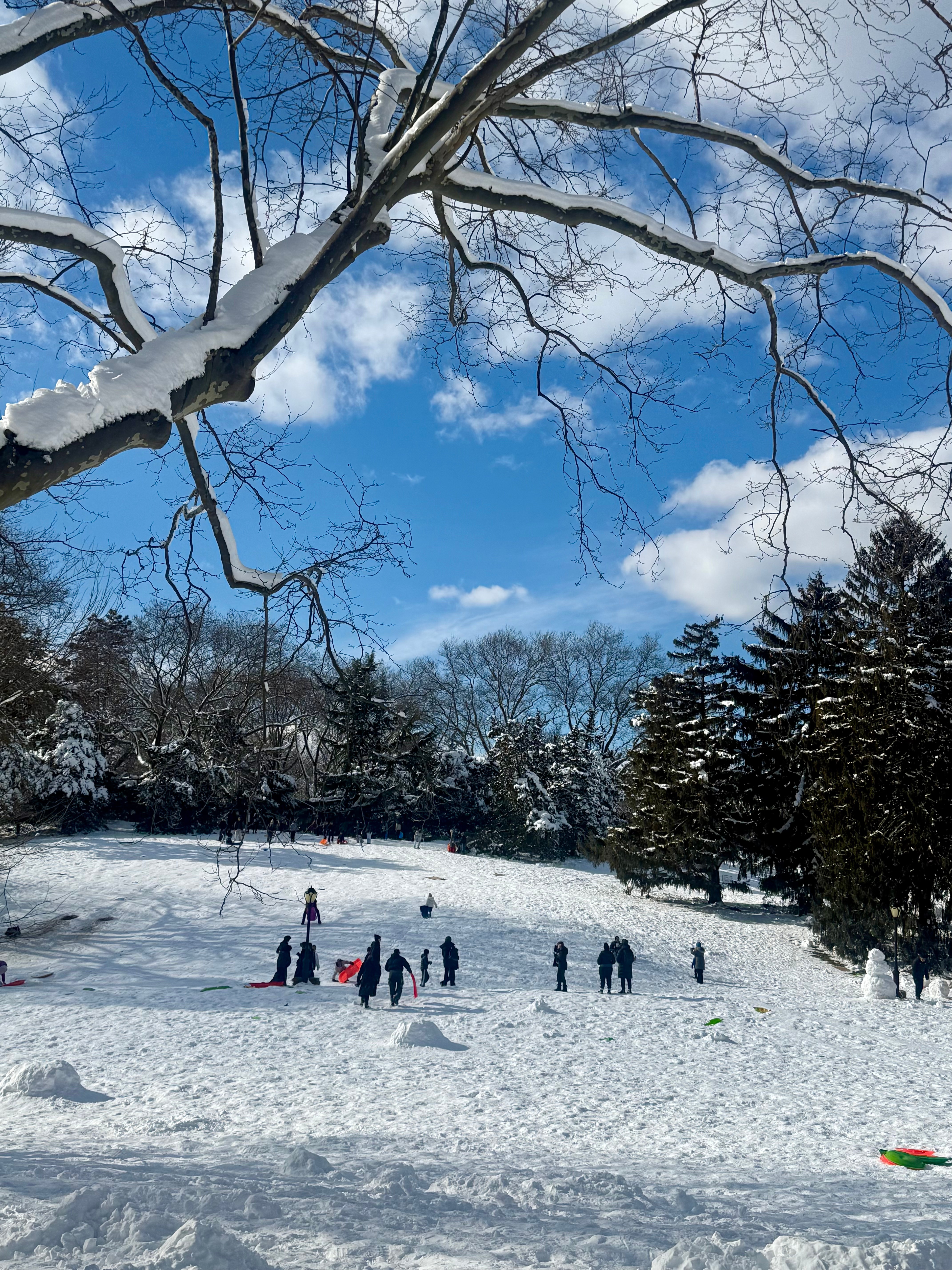
I went out Monday morning when it was still snowing – I think at this point we had 15 inches or so, and we ended up with just under 20. There were plenty of people out, and honestly, it was gorgeous (see my Instagram reel from that morning).
It was still lightly snowing when I went back mid-afternoon, but much of the accumulated snowfall had already occurred.
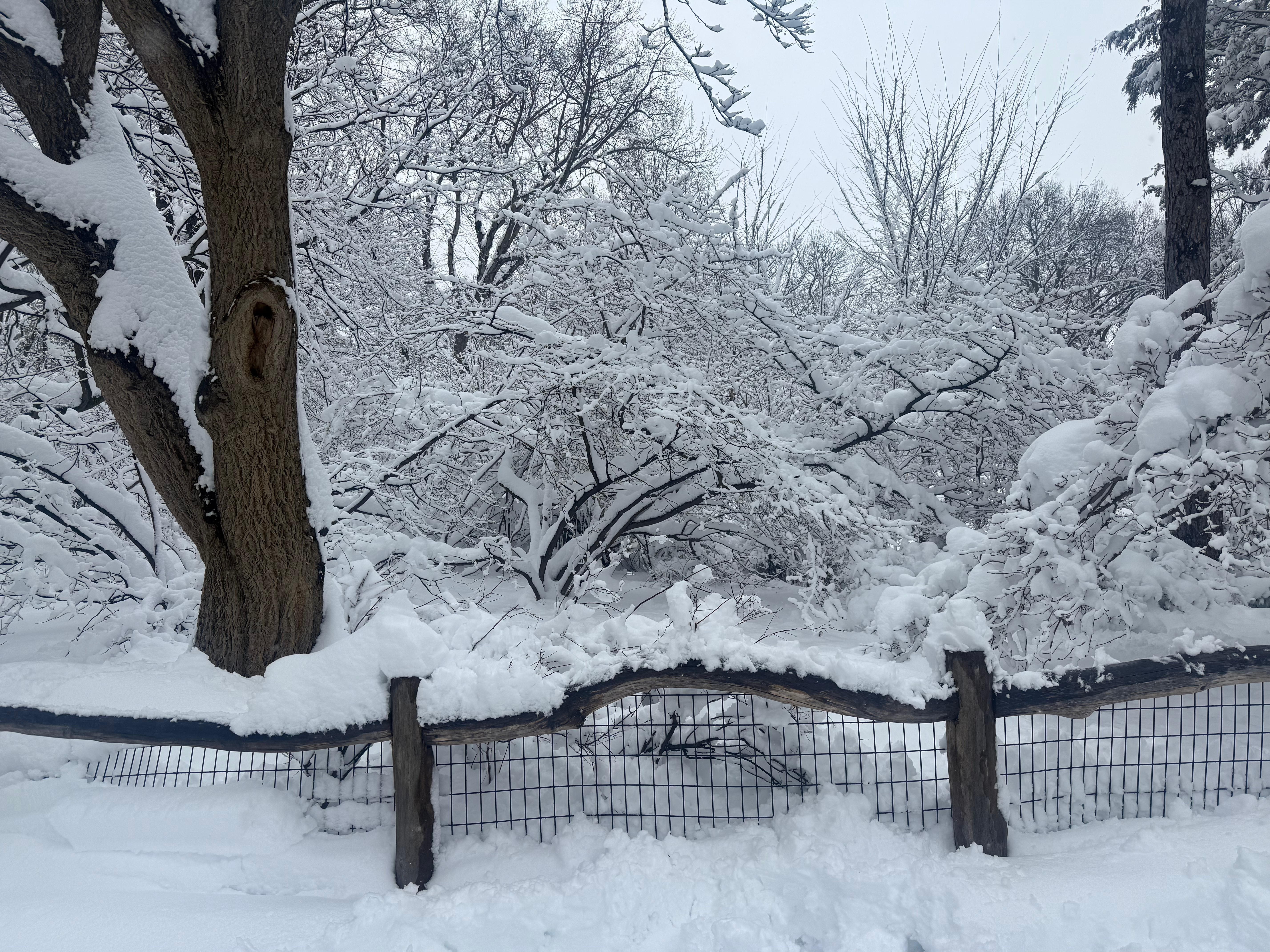
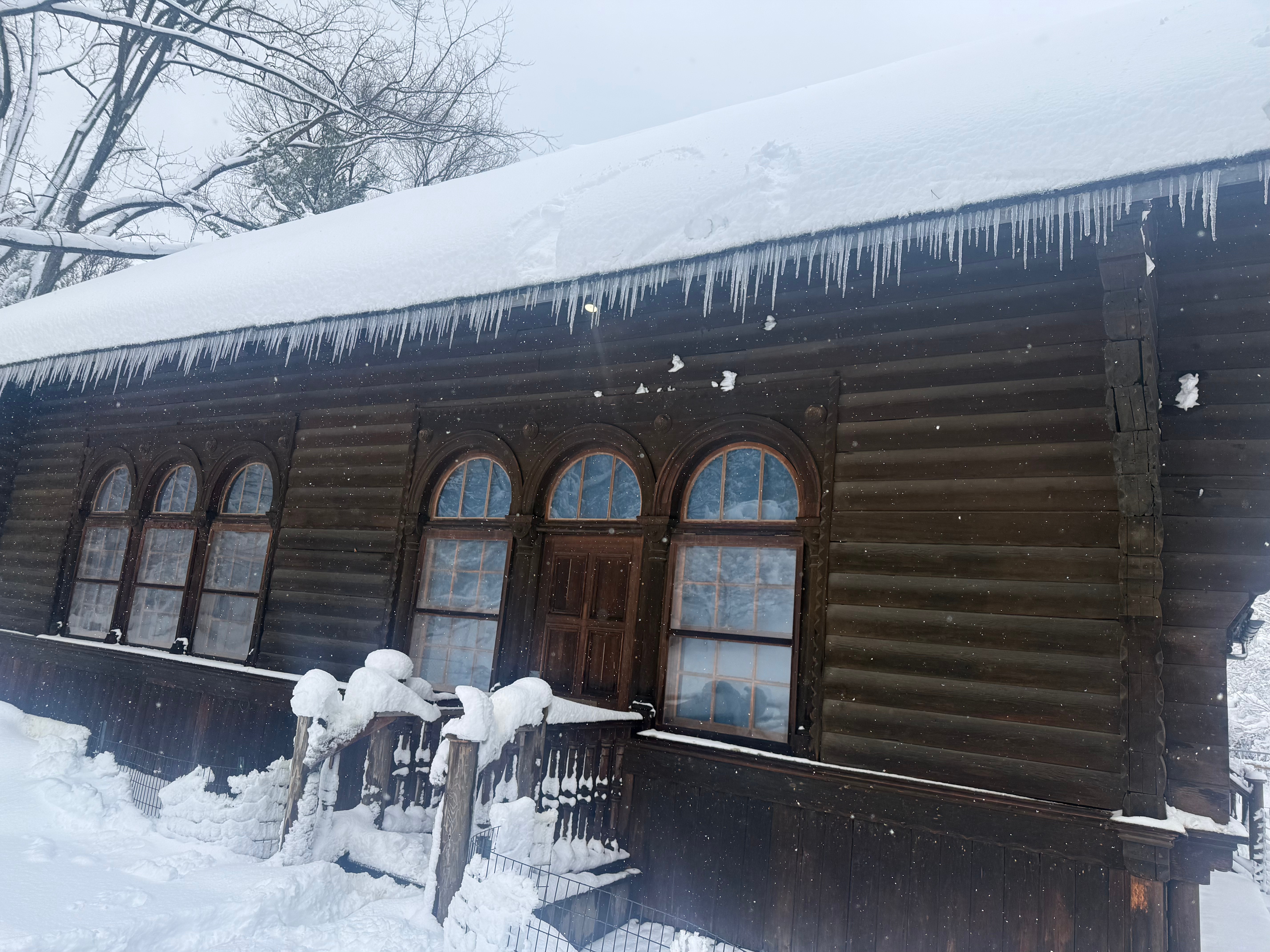
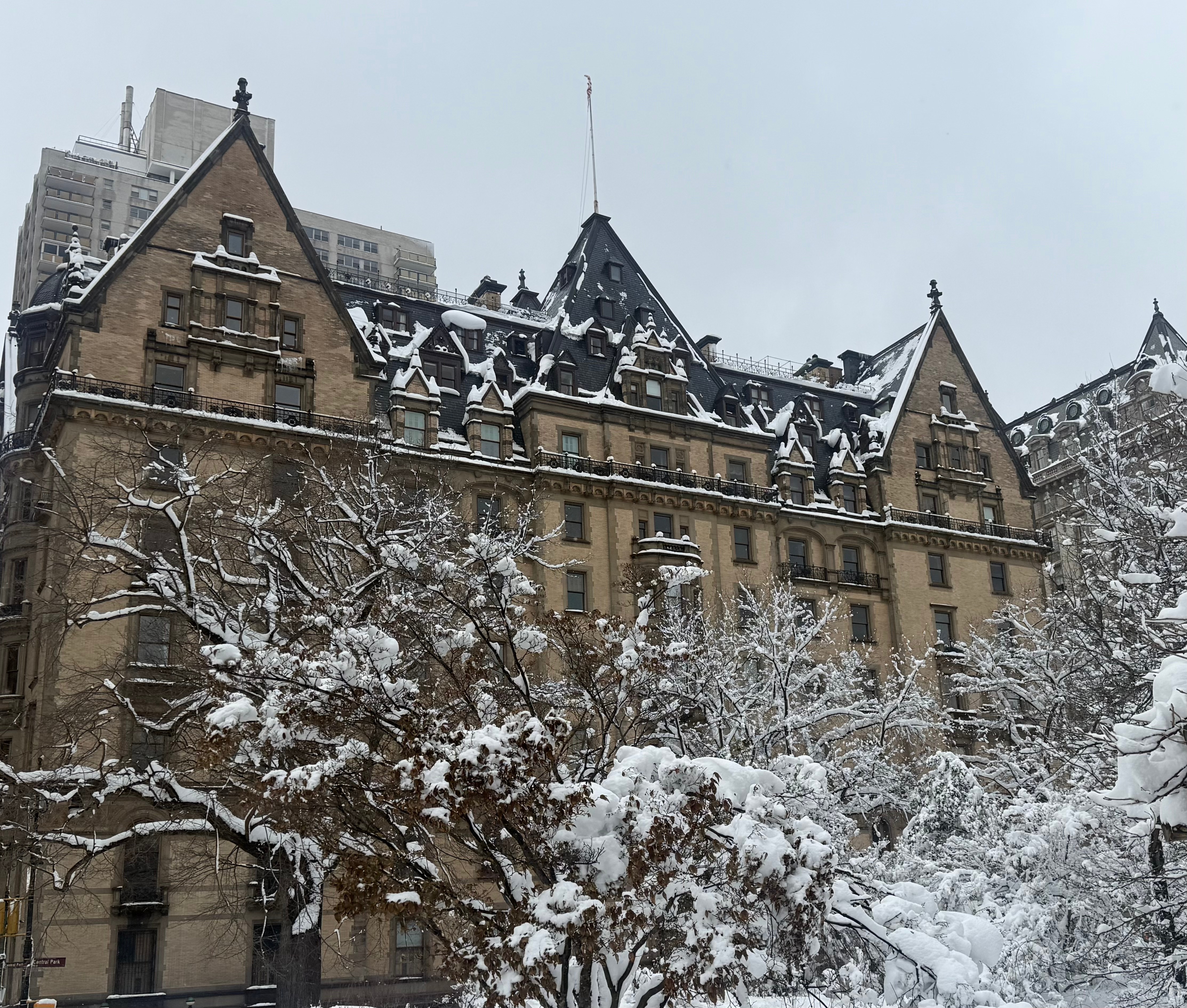
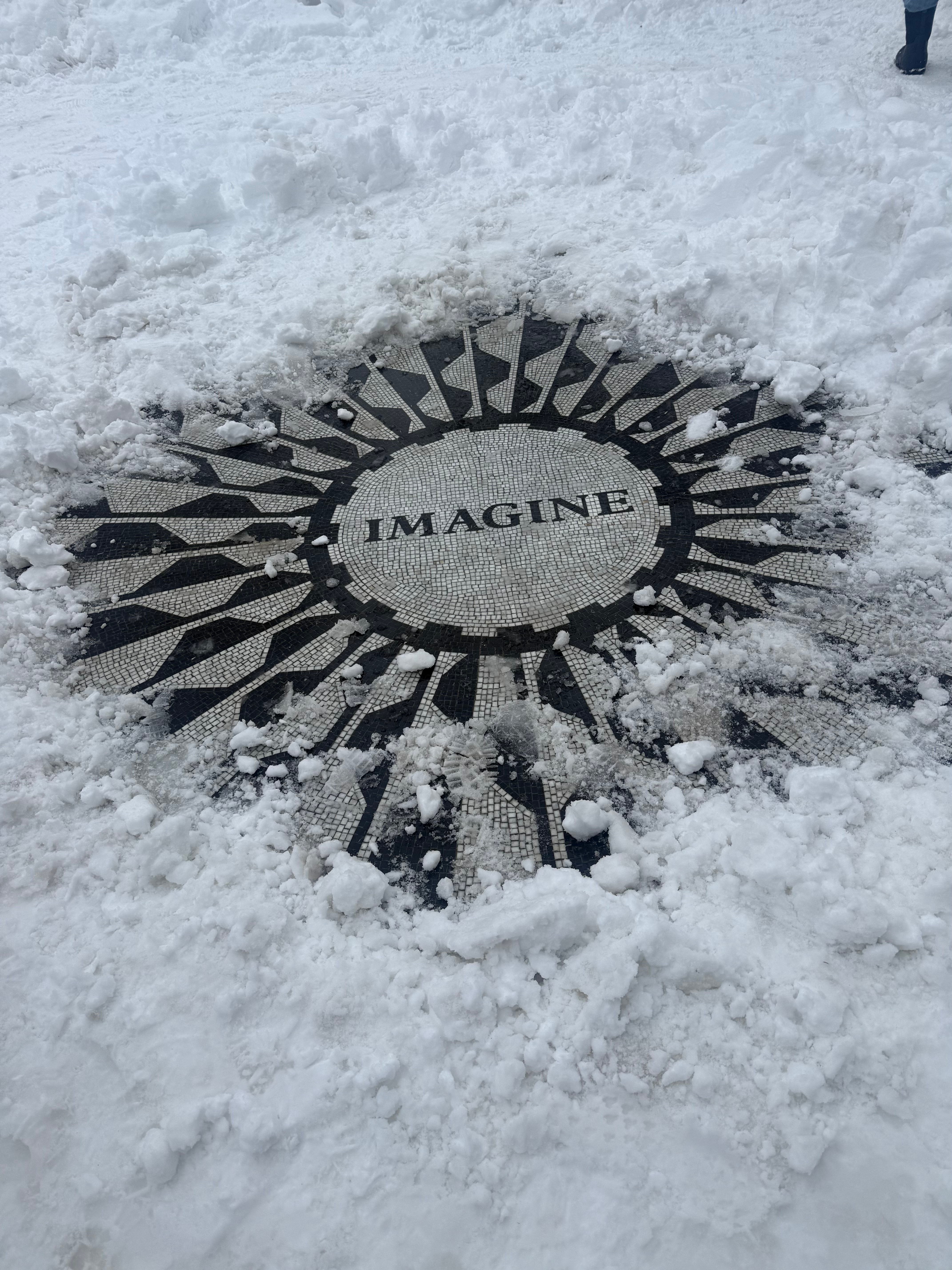
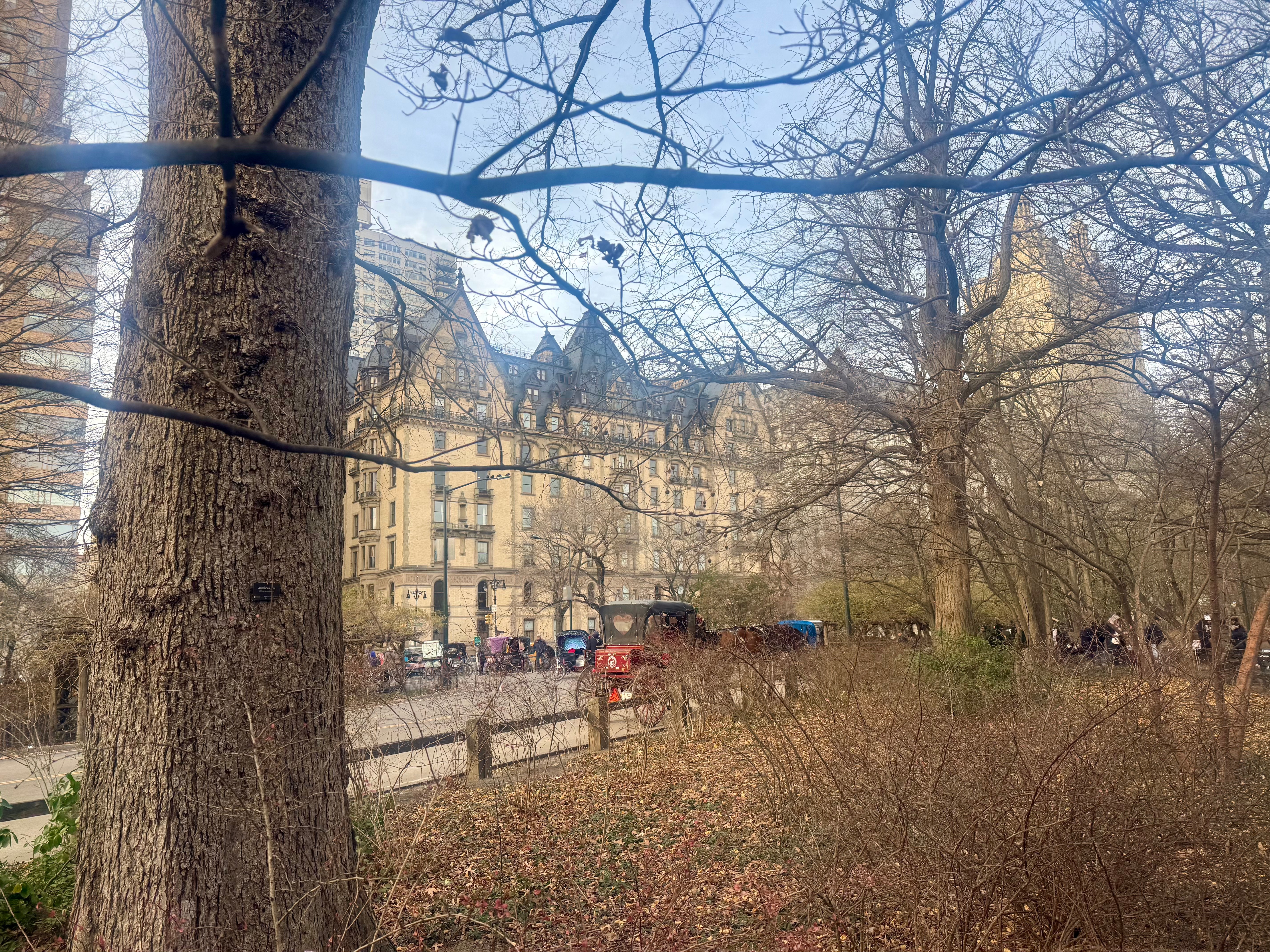
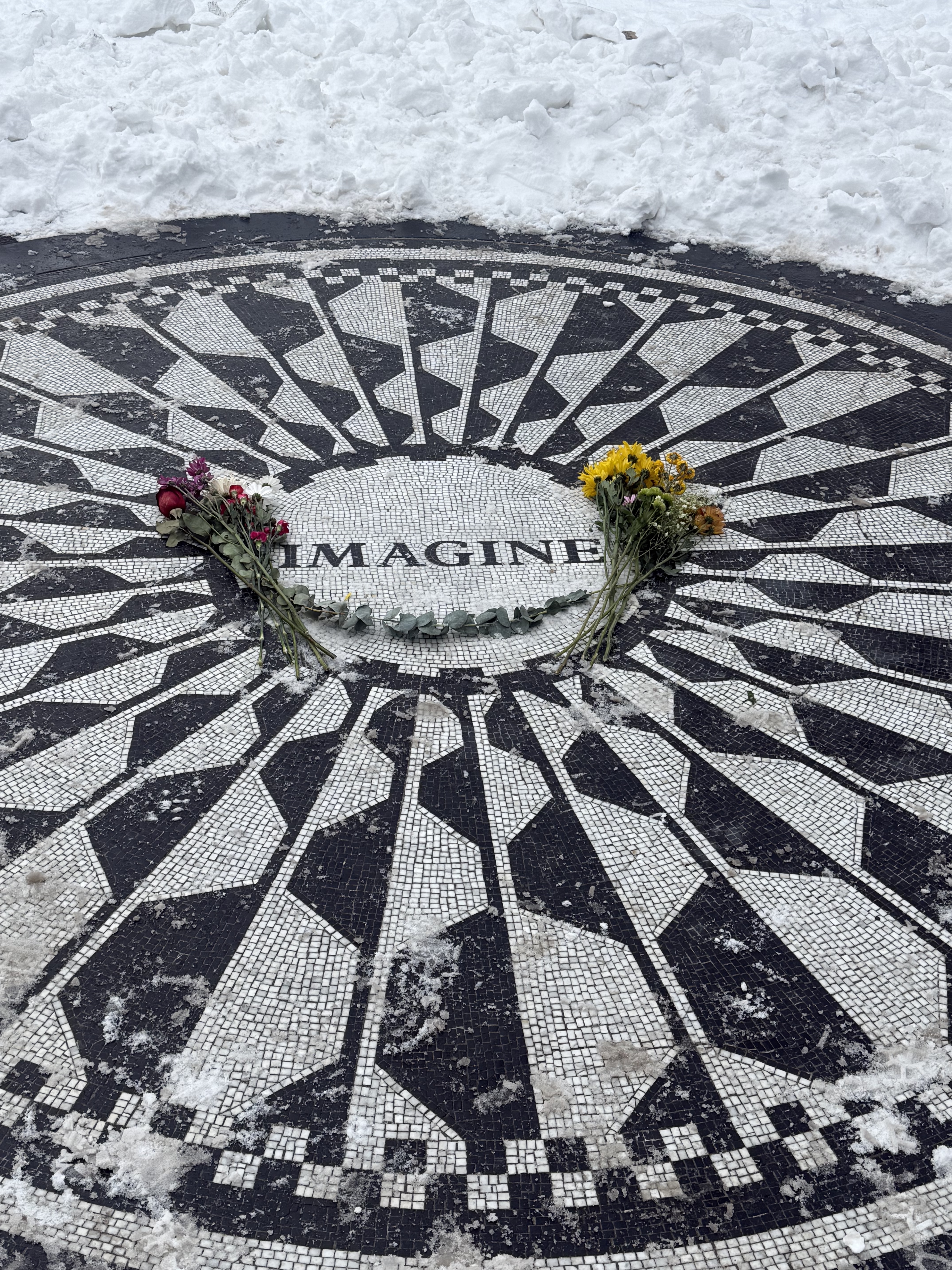
The Dakota looked stately as always, frosted with snow. And someone always keeps the Imagine mosaic honoring John Lennon in Strawberry Fields uncovered. The most entertaining and surprising thing I came across that Monday afternoon was winter sports at the Bethesda Fountain! Brave souls were skiing or skateboarding down the snow covered steps leading down to the fountain (see the video here).
Screenshot
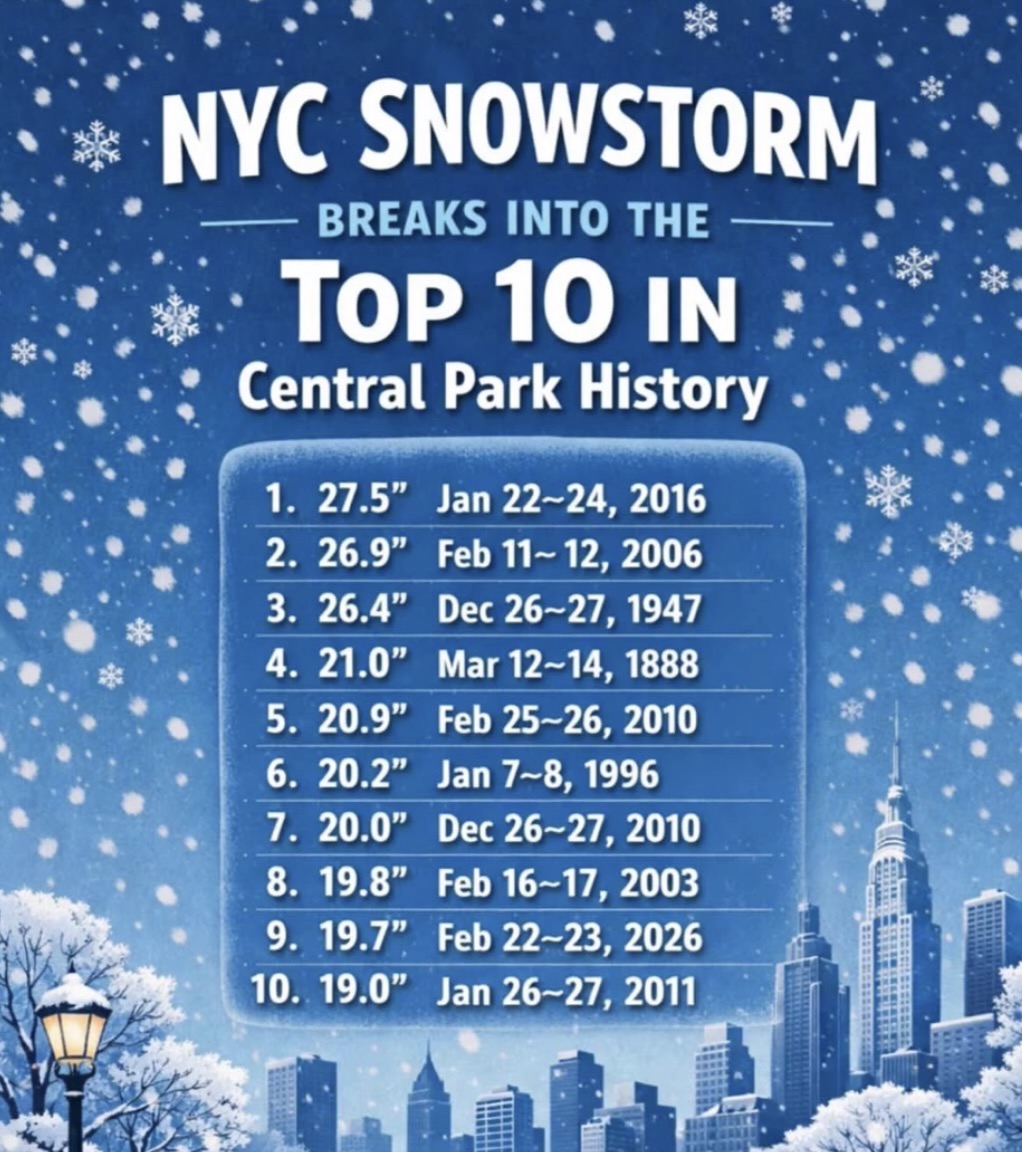
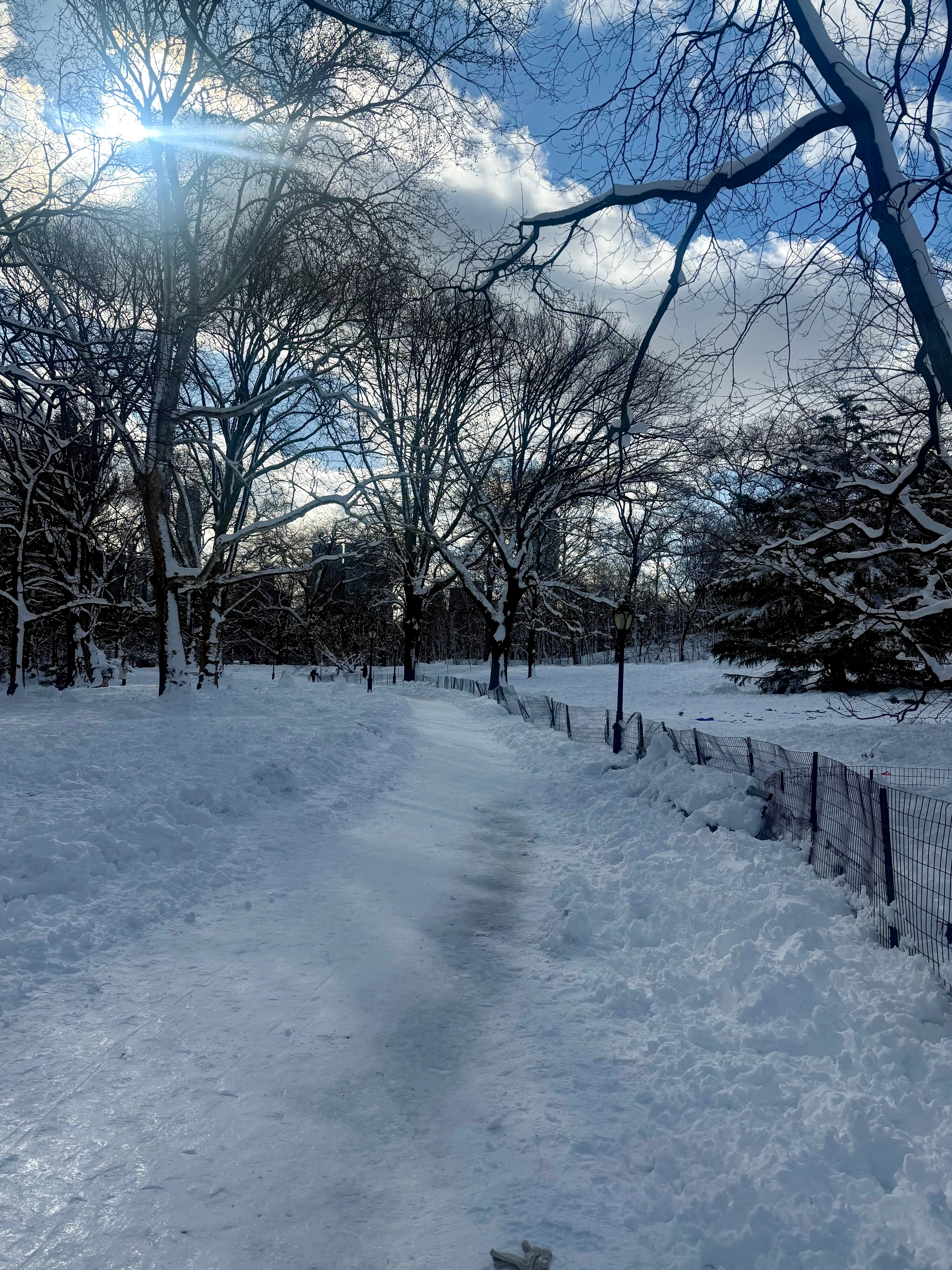
In the end, we barely squeaked into the top ten snowstorms (I am amazed that I have personally experienced all but two of the top ten – I was not alive for the 1947 or the 1888 ones!). The major impact of this storm was the blizzard conditions, and travel was certainly unsafe for a few days. In general, though, I found that snow removal was better than last time. With temperatures less arctic, it made snow removal easier than the storm with less accumulation the previous month. The packed down snow in Central Park that had turned to ice overnight was treacherous for walking, but great for sledding.
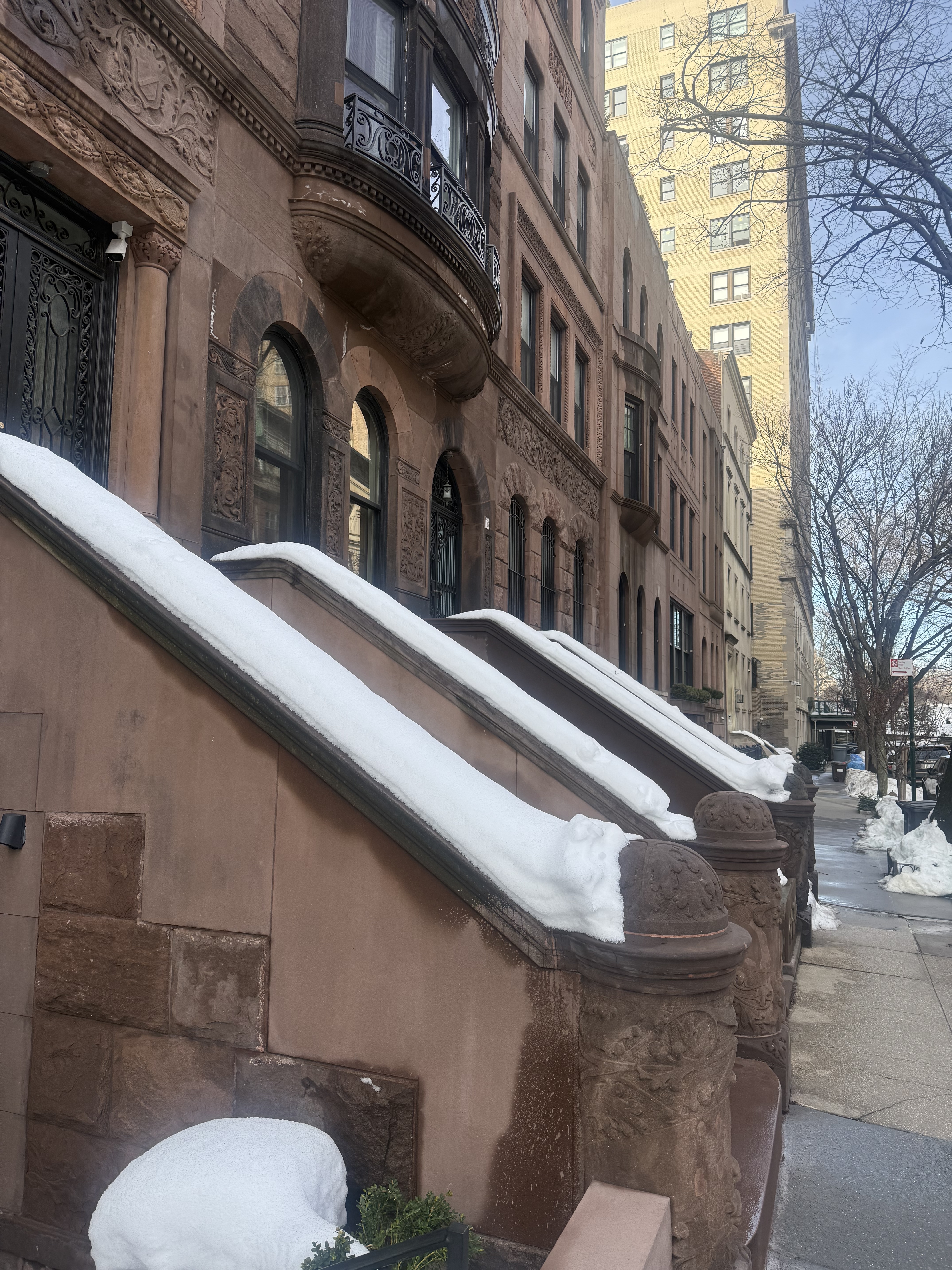
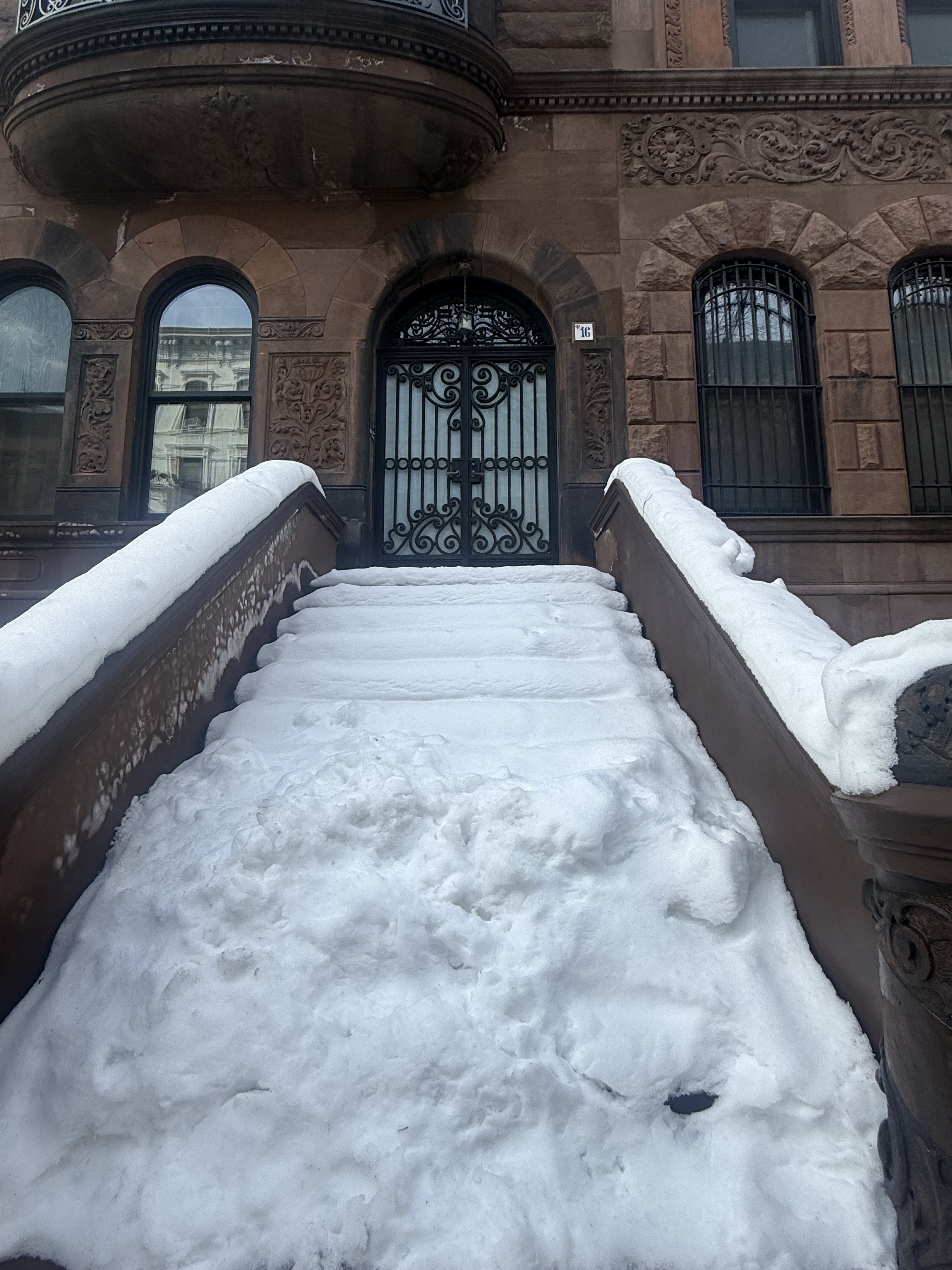
Three days after the snowstorm, there were still townhouses that had not cleared out their snow, and large drifts of snow remained.
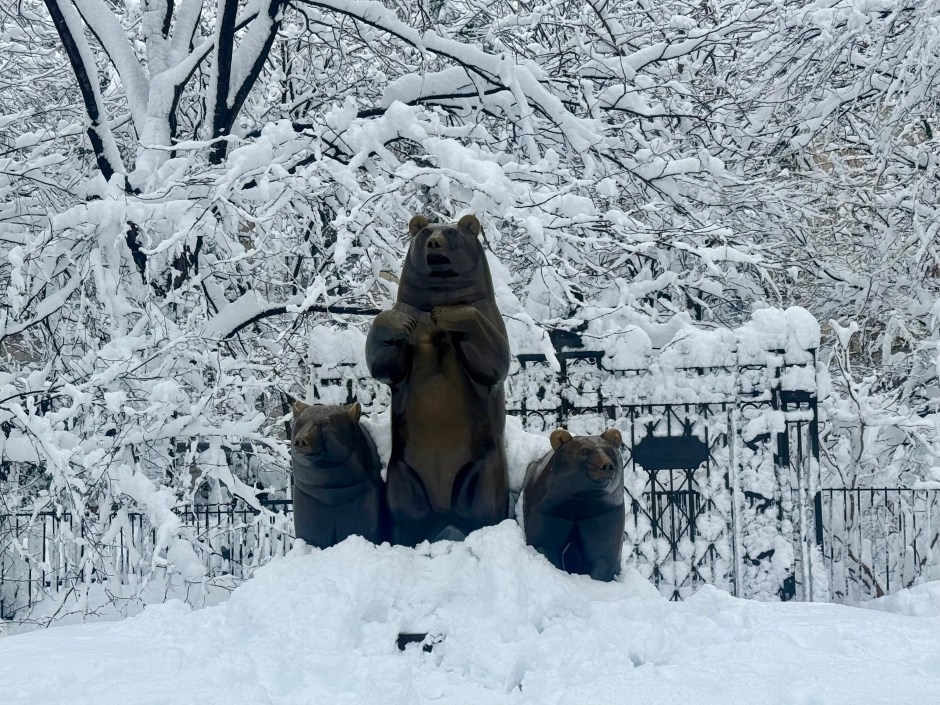
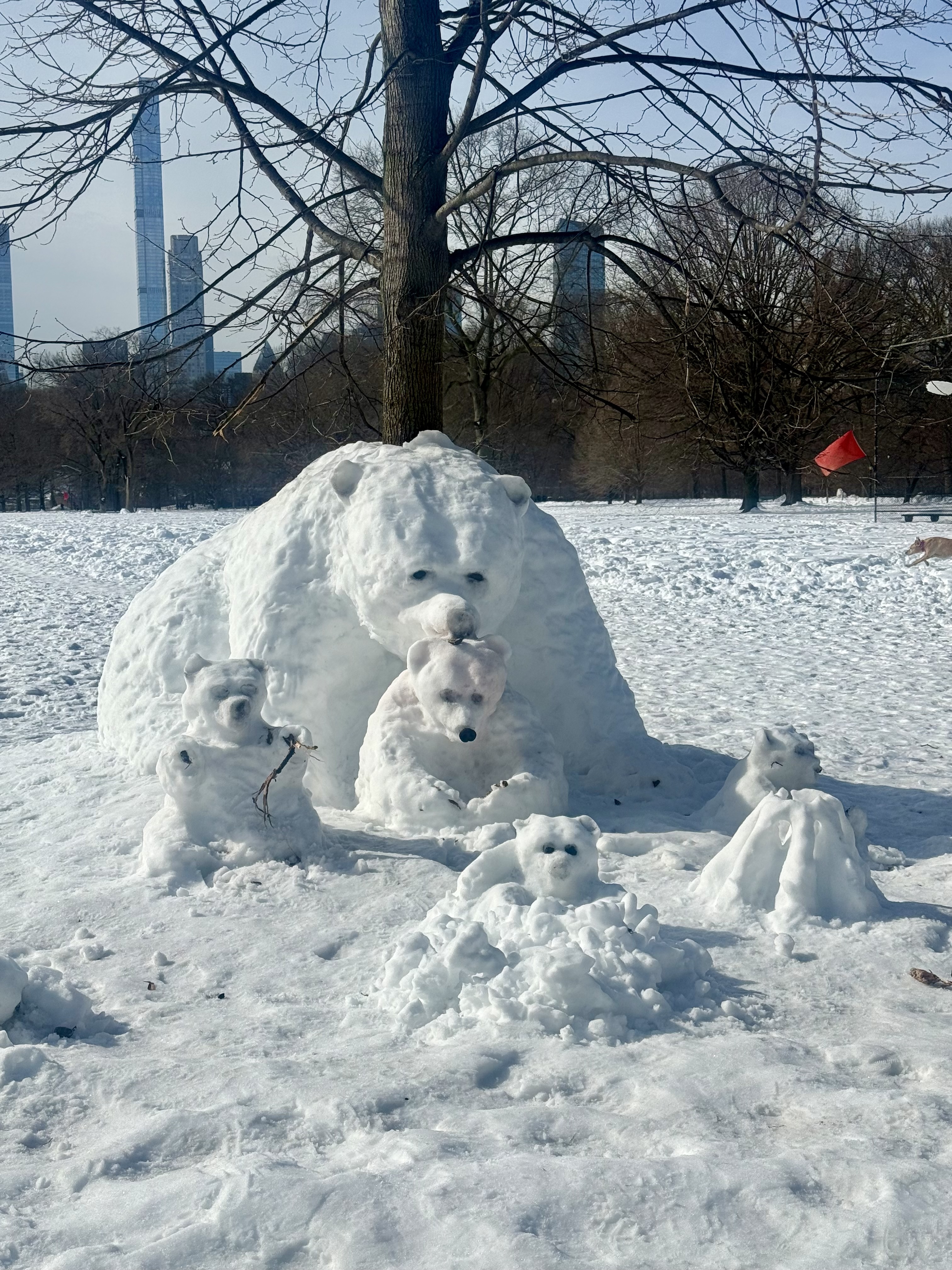
Polar Bear Fest is an event that takes place on the Great Lawn in Central Park after every significant snow fall. Subtitled, “Don’t let the earth melt,” this is a creative demonstration, meant to remind us of the dangers of greenhouse gases and climate change. Just noticing that eight of the top ten snowfall amounts in New York City have occurred since 1996, in just the past 30 years, is alarming. In the midst of all the beauty that New York City has to offer when covered in white, the polar bears on the Great Lawn remind us of the fragility of our environment, hopefully rekindling our desire to help make meaningful change for the benefit of our beloved Mother Earth.
When John Lennon and Yoko Ono moved from Greenwich Village to the Dakota apartment building on West 72nd Street and Central Park South in 1973, the area of Central Park directly across from their apartment because a beloved “front yard.” New Yorkers were charmed to find them strolling through the park regularly. On the night of December 8, 1980, when Lennon was shot to death when coming home to the Dakota, grief-stricken fans gathered just inside the park at West 72nd Street, singing, holding candles, and leaving flowers.
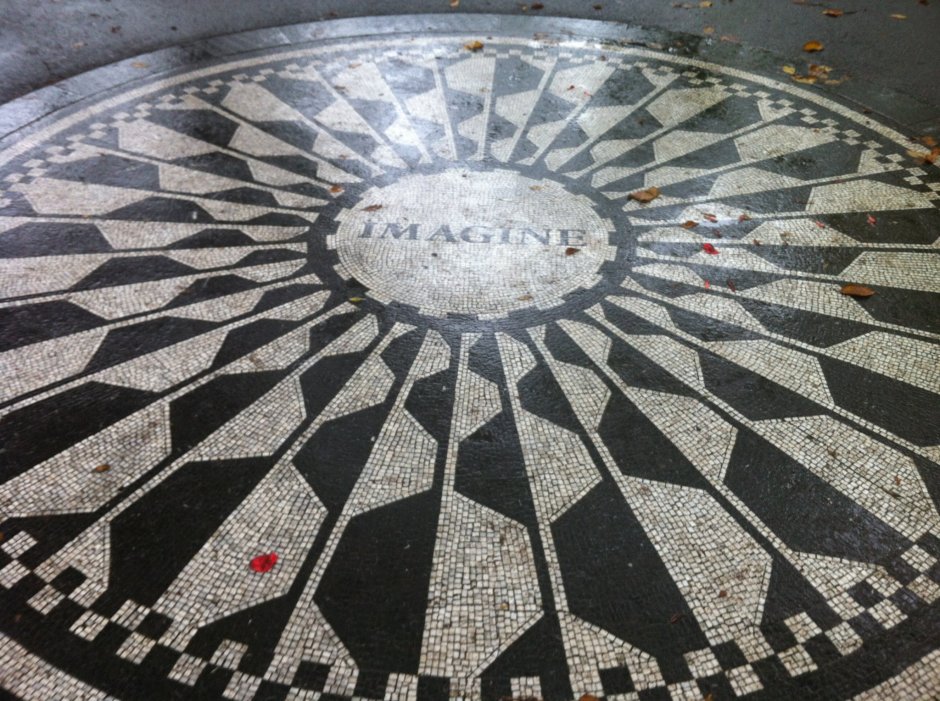
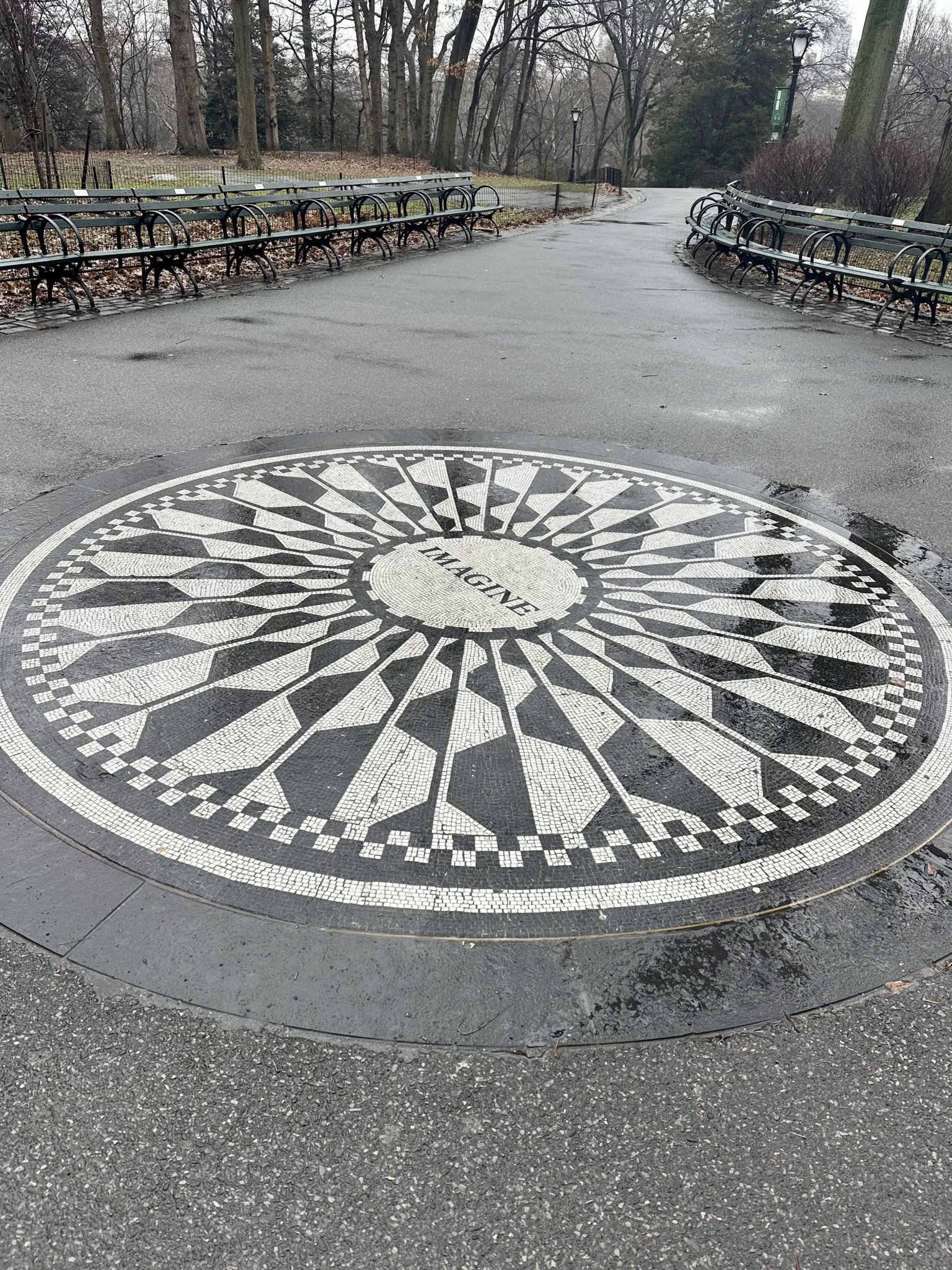
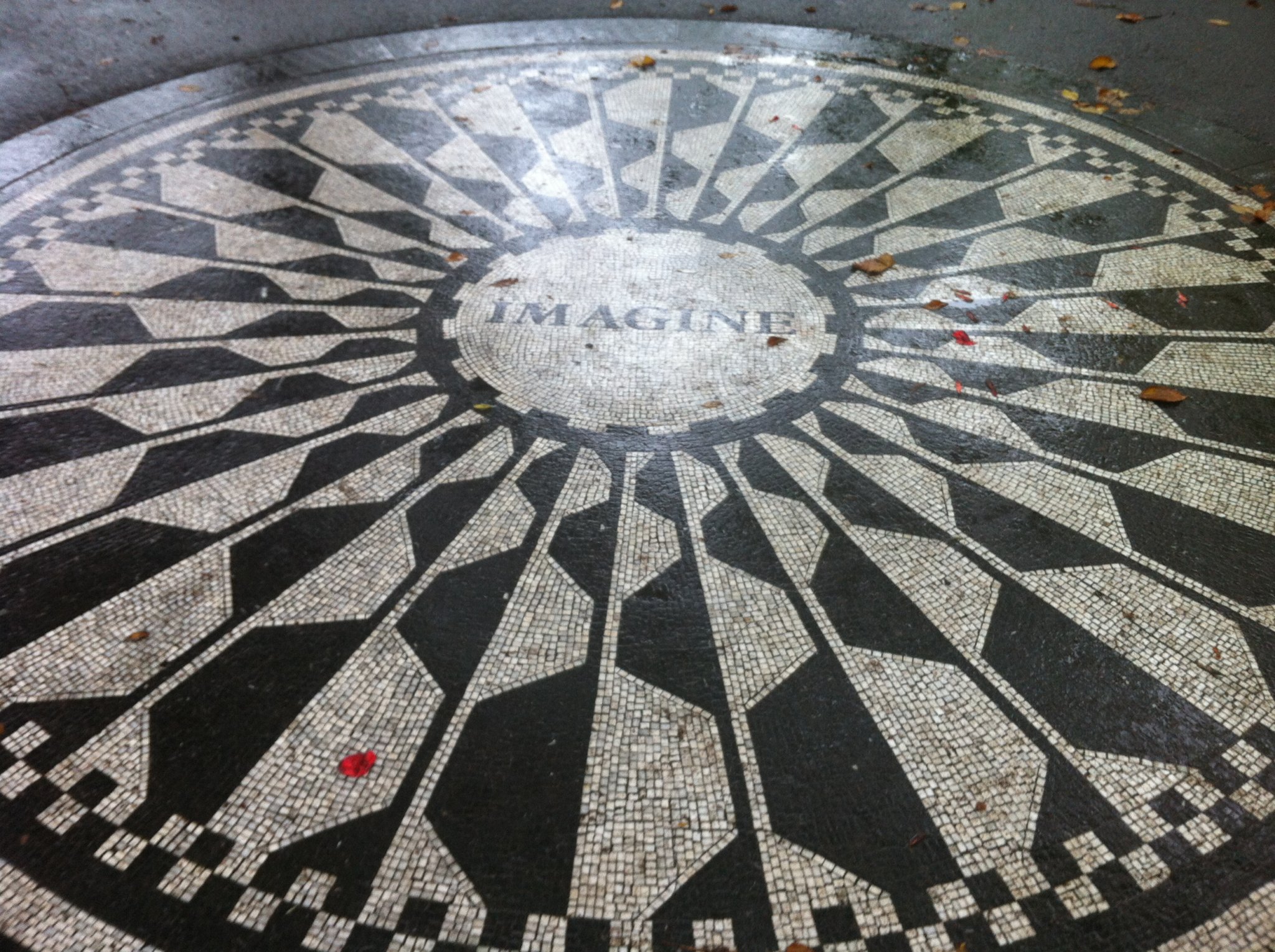
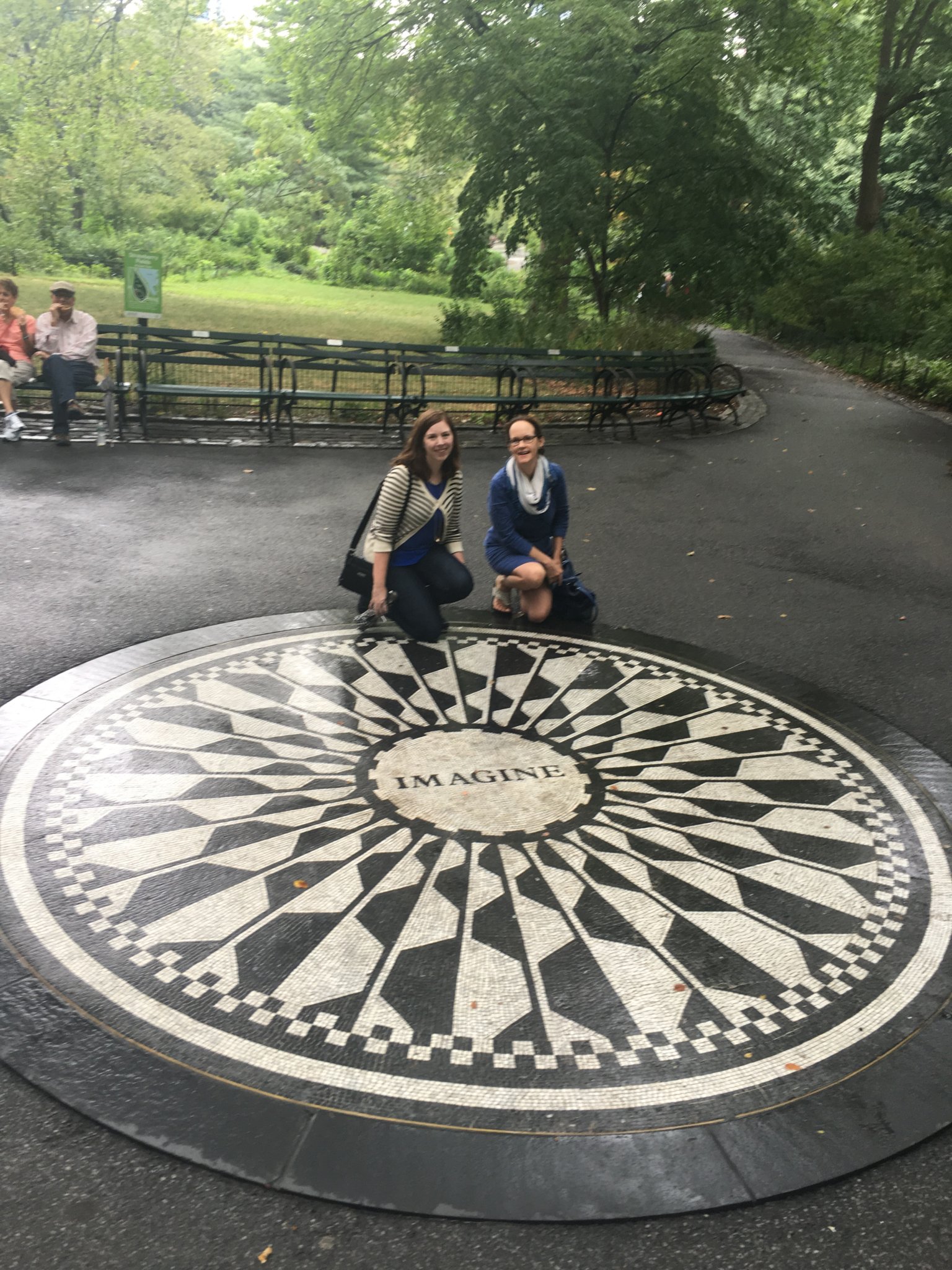
Plans for a memorial to John Lennon in Central Park began shortly after his death, and his widow worked with the city to create what she hoped would be an international garden of peace. First New York City resolved to rename this area of the park Strawberry Fields, after Lennon’s 1967 song with The Beatles, “Strawberry Fields Forever.” The design of the area served as a redevelopment of what had become a run-down part of the park, and includes several meadows and a winding path that leads through a wooded area. Countries all over the world contributed to the development of Strawberry Fields, and a plaque on a large rock just off the path shows gratitude for those donations. A central mosaic with the simple word “Imagine” – a tribute to Lennon’s beloved solo recording – was created in and donated by the city of Naples, Italy. This iconic mosaic is surrounded by benches and soon began to regularly attract groups of people to sing Lennon’s music and play guitars.
Strawberry Fields was officially dedicated on what would have been John Lennon’s 45th birthday – October 9, 1985. Since then, on anniversaries of his birth, and perhaps particularly on each anniversary of his death, large crowds gather to sing and show their love and respect.
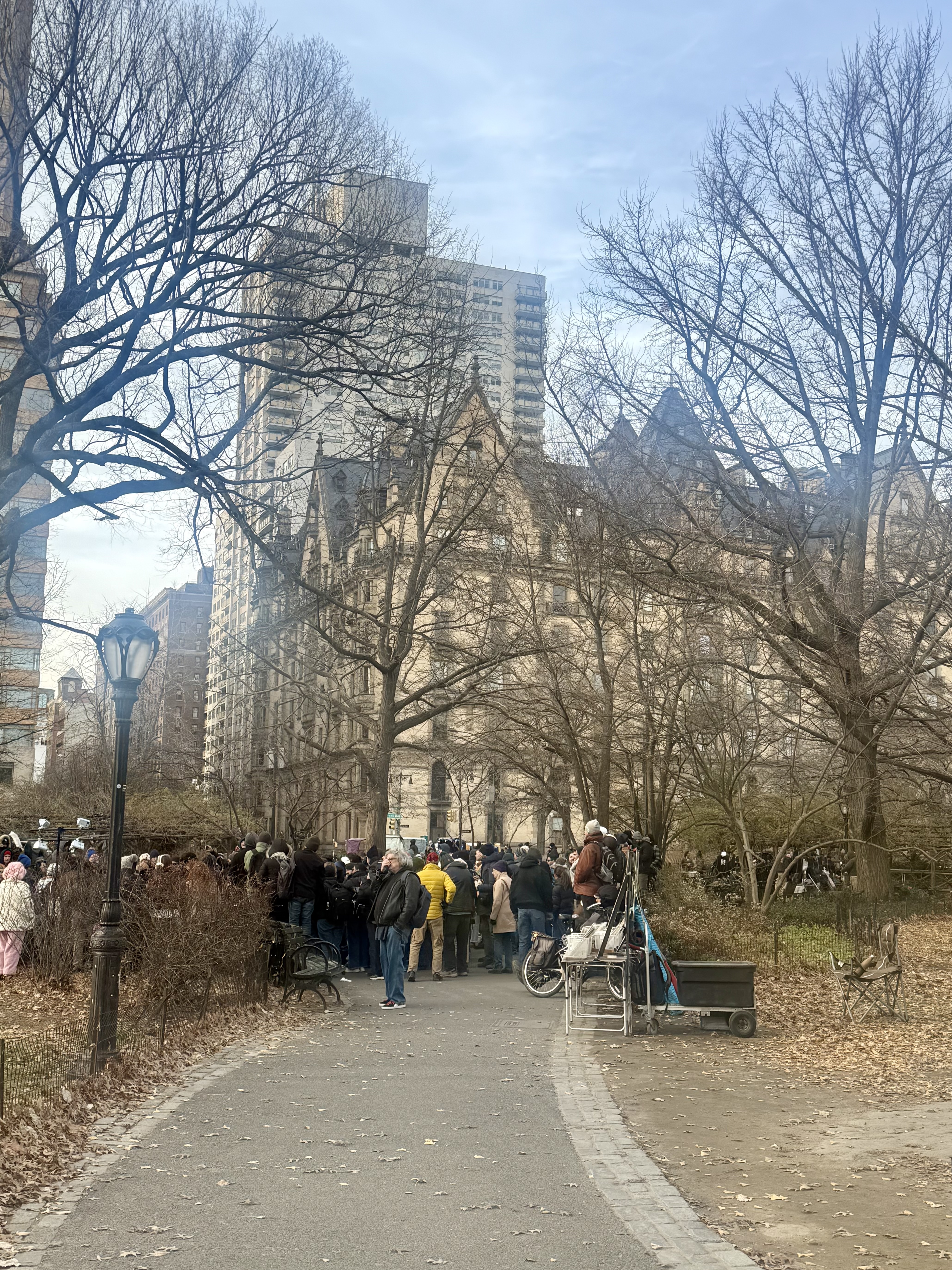
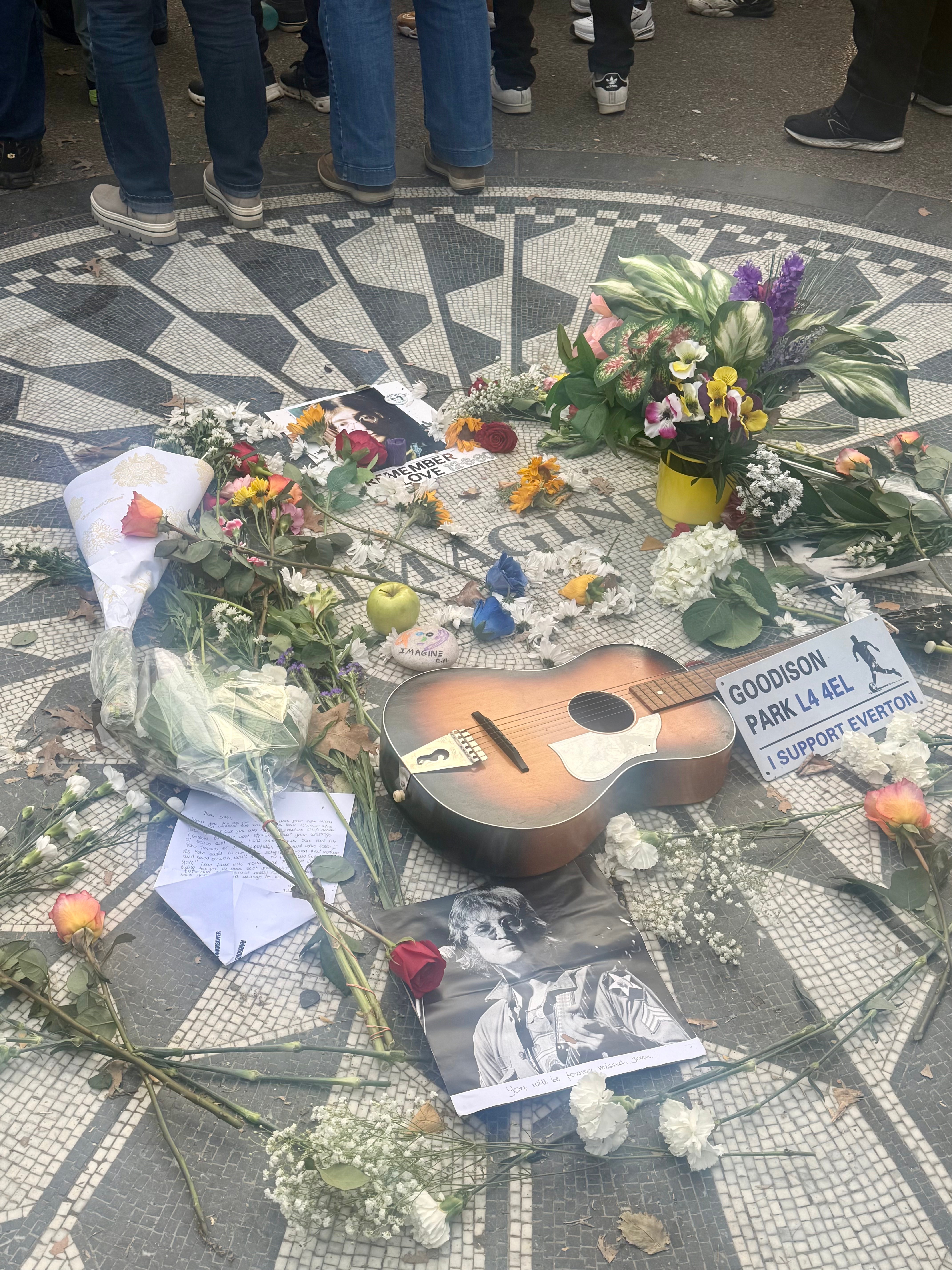
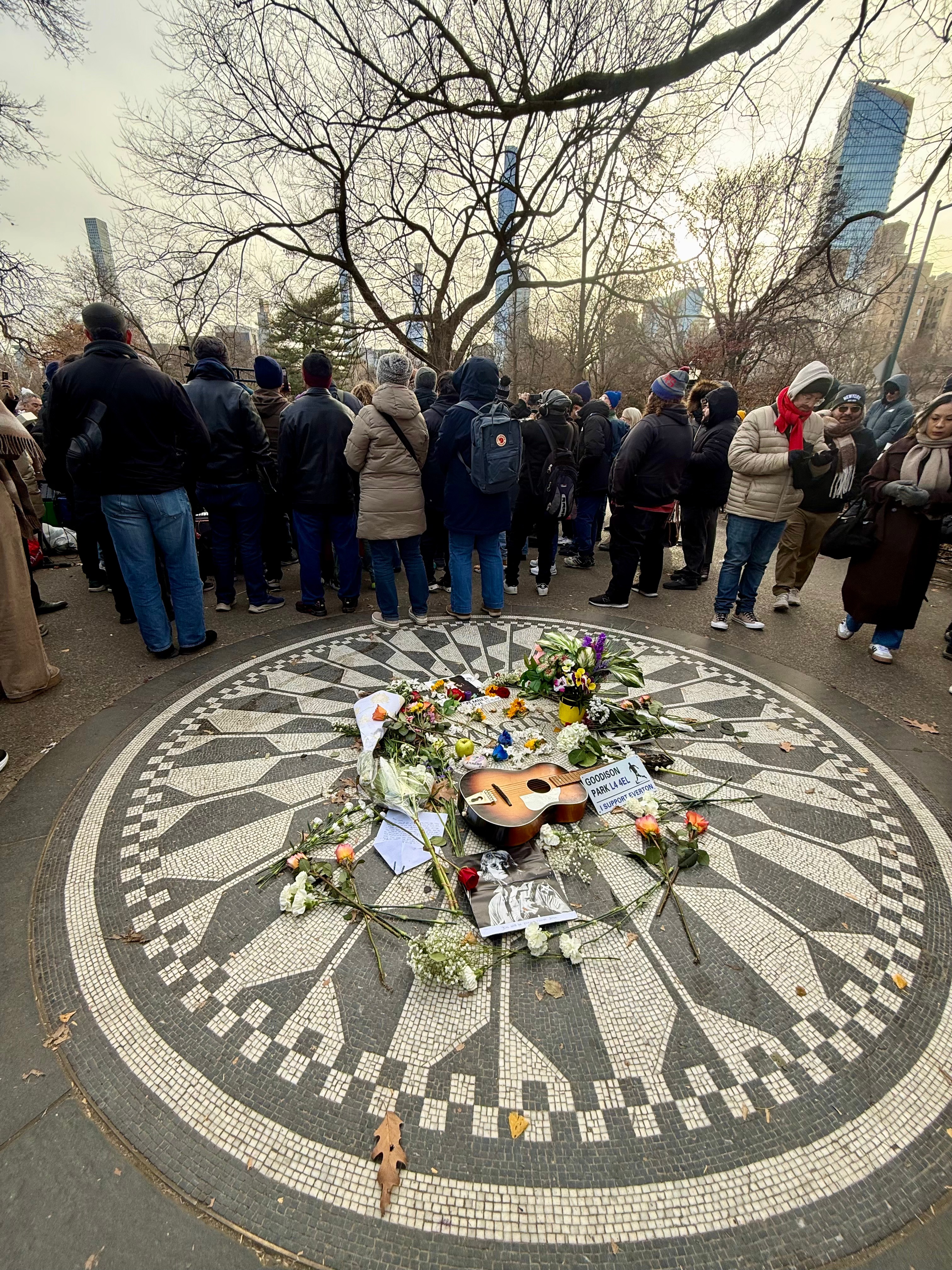
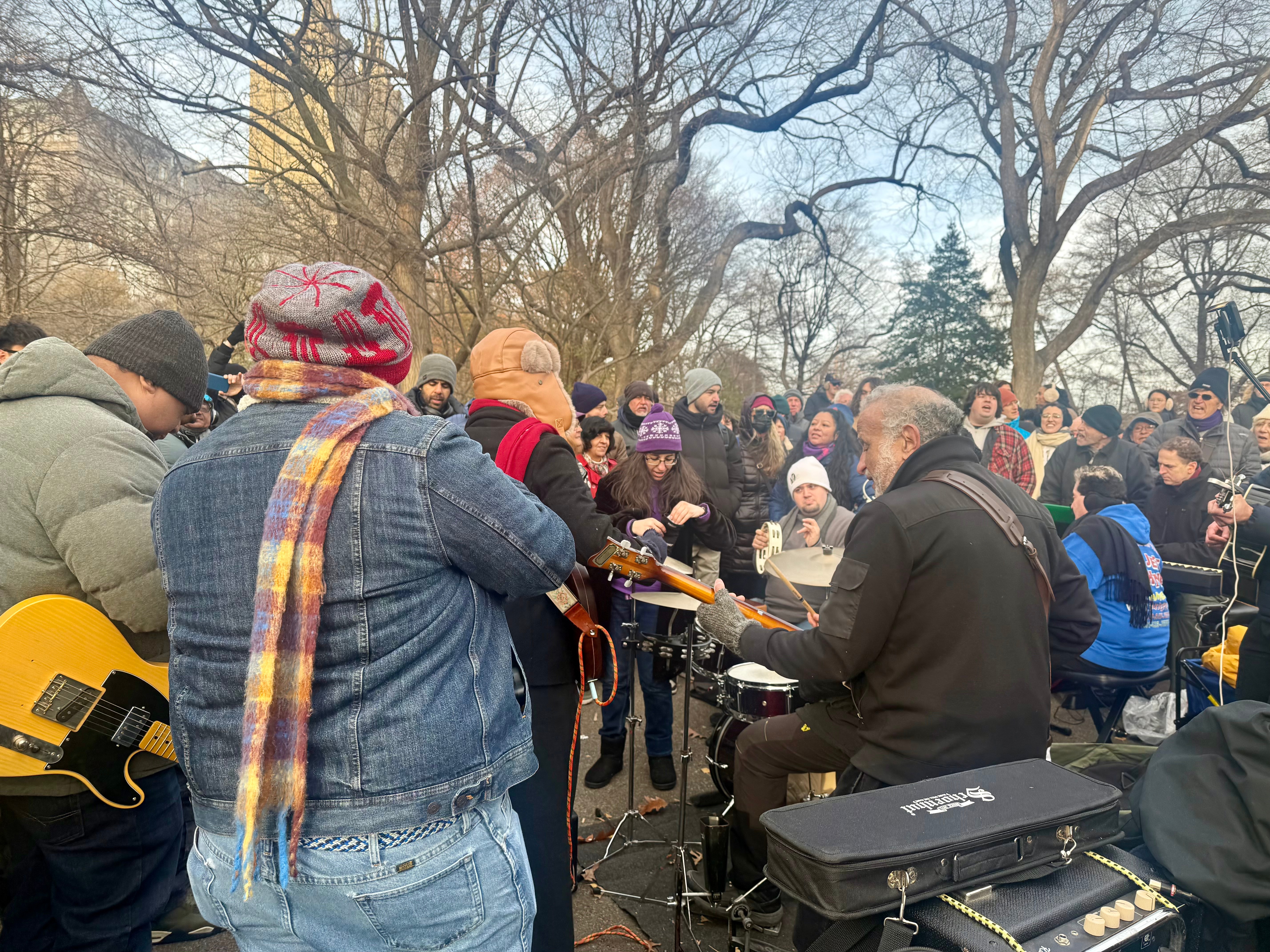
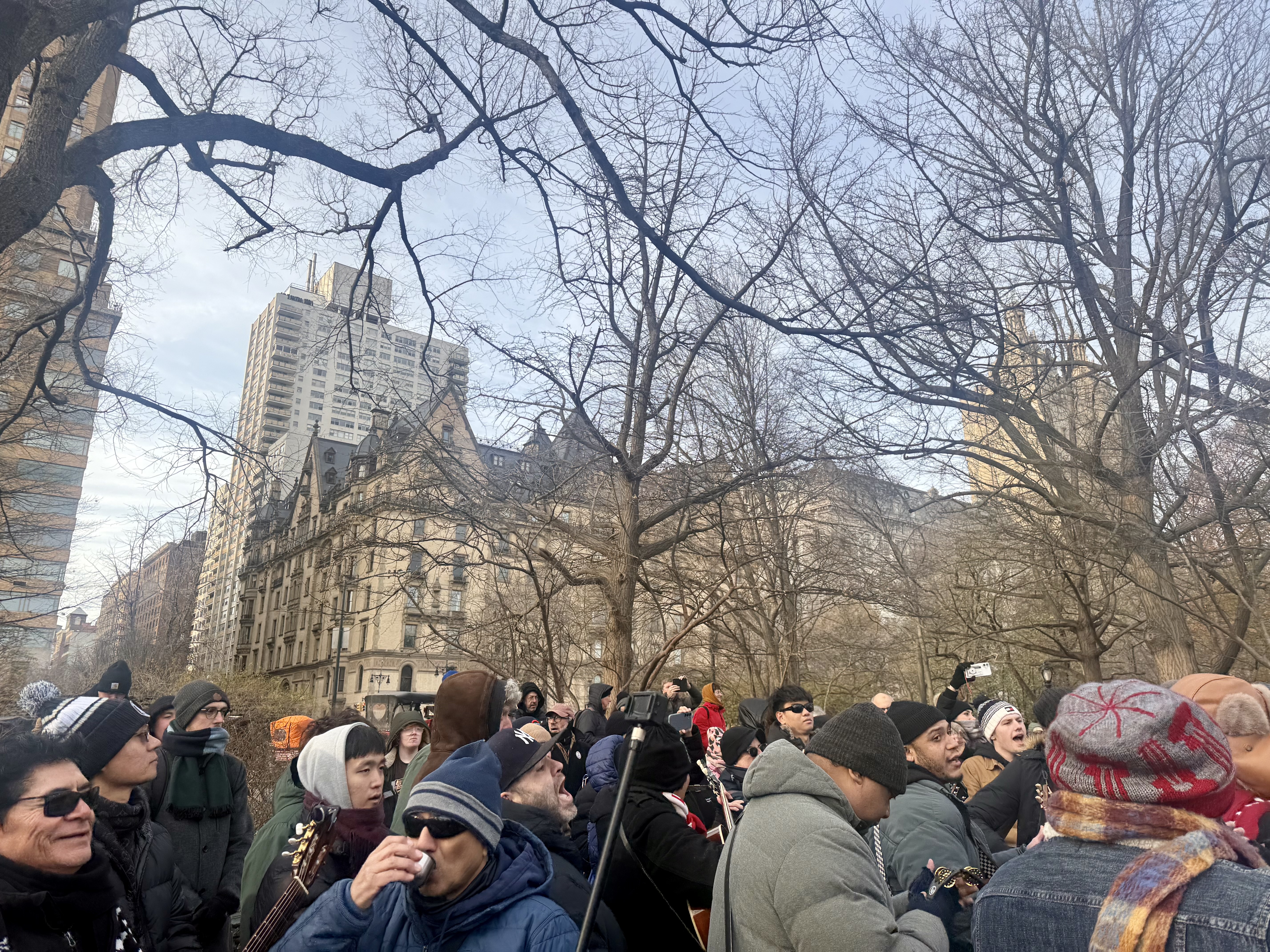
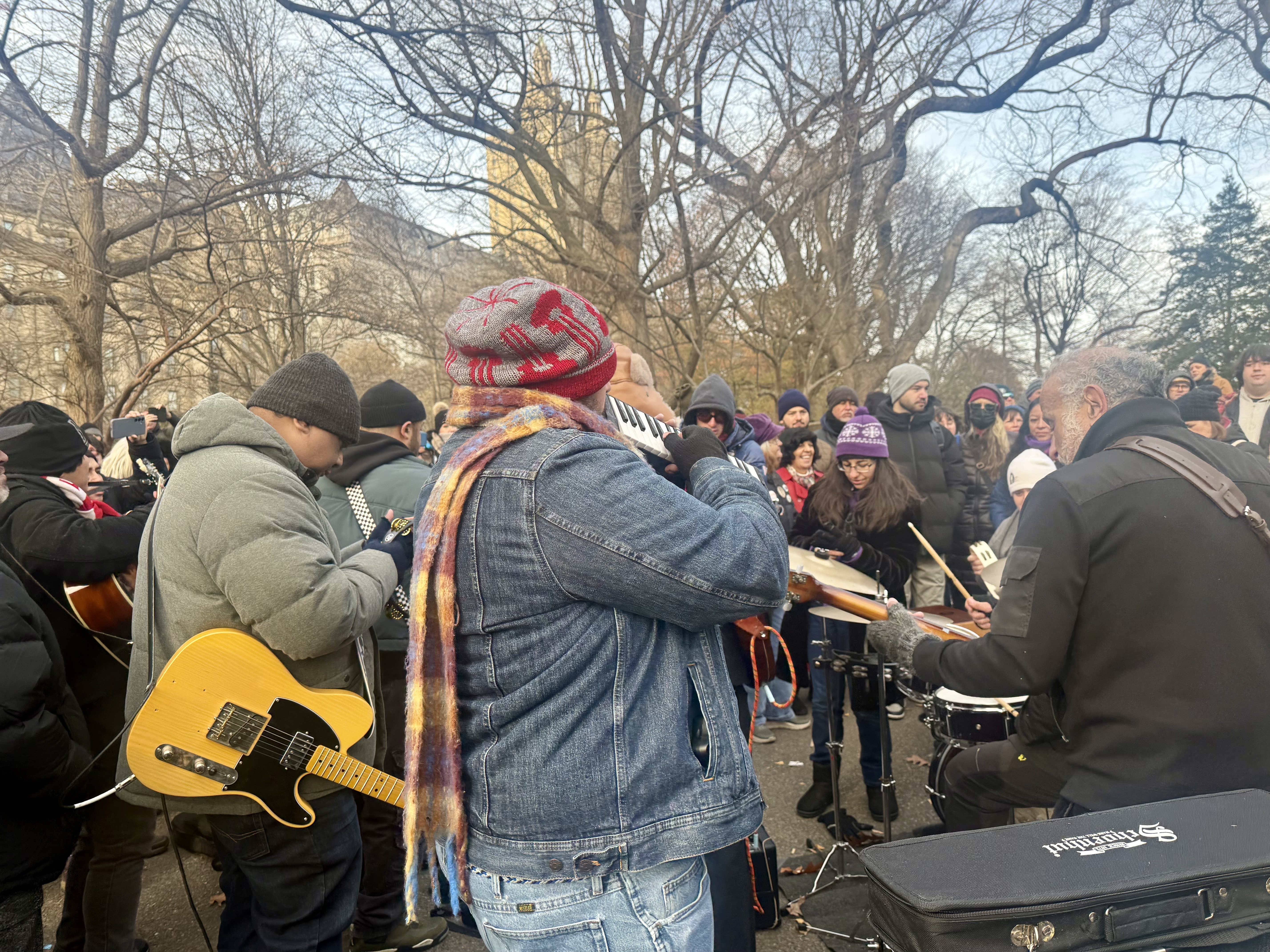
On December 8, 2025, I went by in the afternoon and found a large crowd gathered. There were more instrumentalists than the typical single acoustic guitar, and included amps, a keyboard, and drums. As I walked over, everyone was singing “If I Fell” (you can see a video of what it was like to walk up to the crowd HERE). It was a very cold day, but I stayed for many, many songs and regretted leaving when I had to. Perhaps a highlight was “We can work it out” (see a video I took of the song HERE). This song is one of the great examples of a true Lennon-McCartney collaboration, with the result being something much more than the sum of the two parts. Lennon’s weariness with the world’s constant struggles (“Life is very short/And there’s no time for fussing and fighting, my friend”) is a foil for McCartney’s sunnier optimism, constantly returning to the refrain “We can work it out.” In these troubled times, being in a group of strangers singing both to acknowledge the pain, and attempt to find hope, was a true balm to my soul.
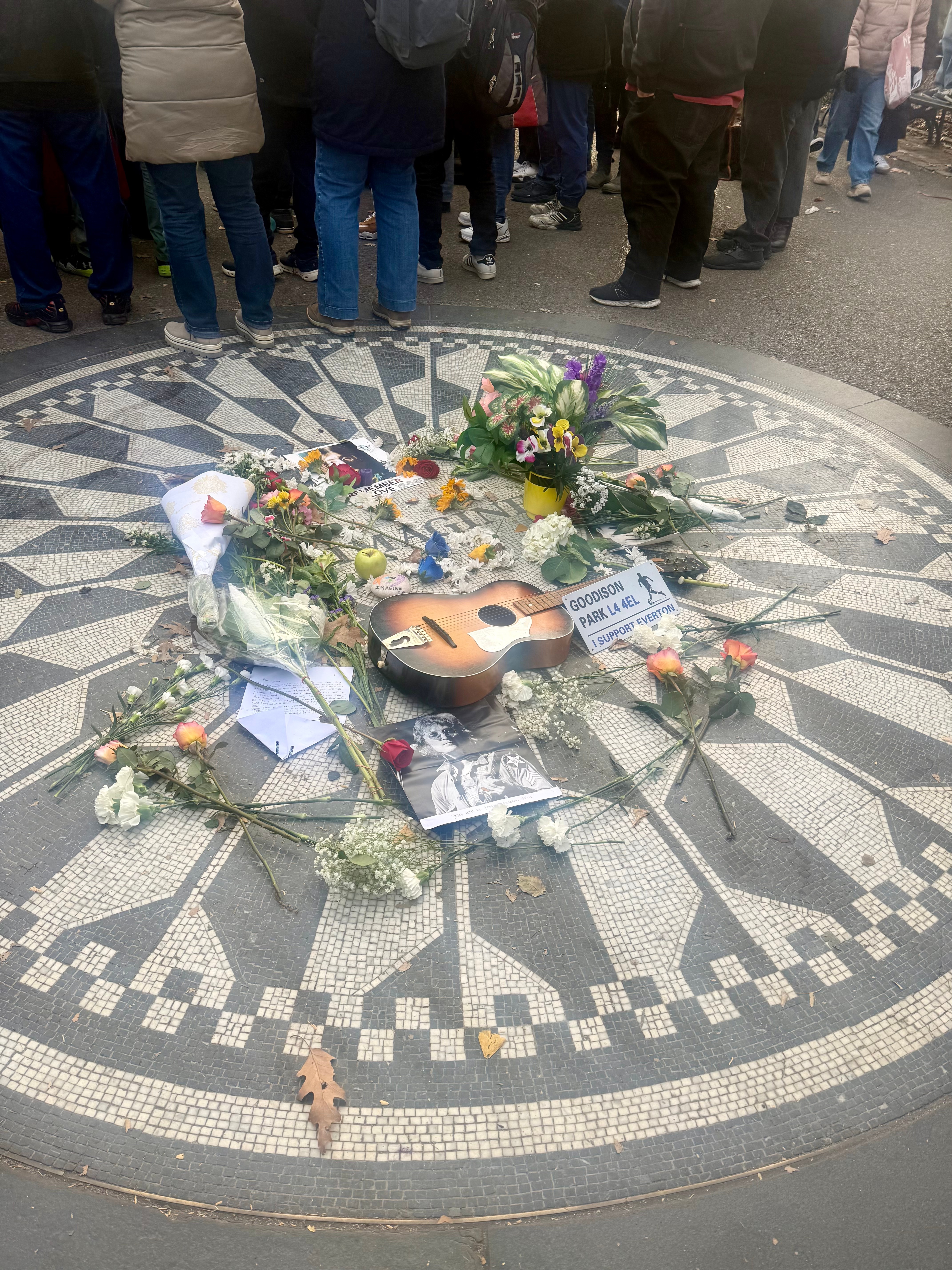
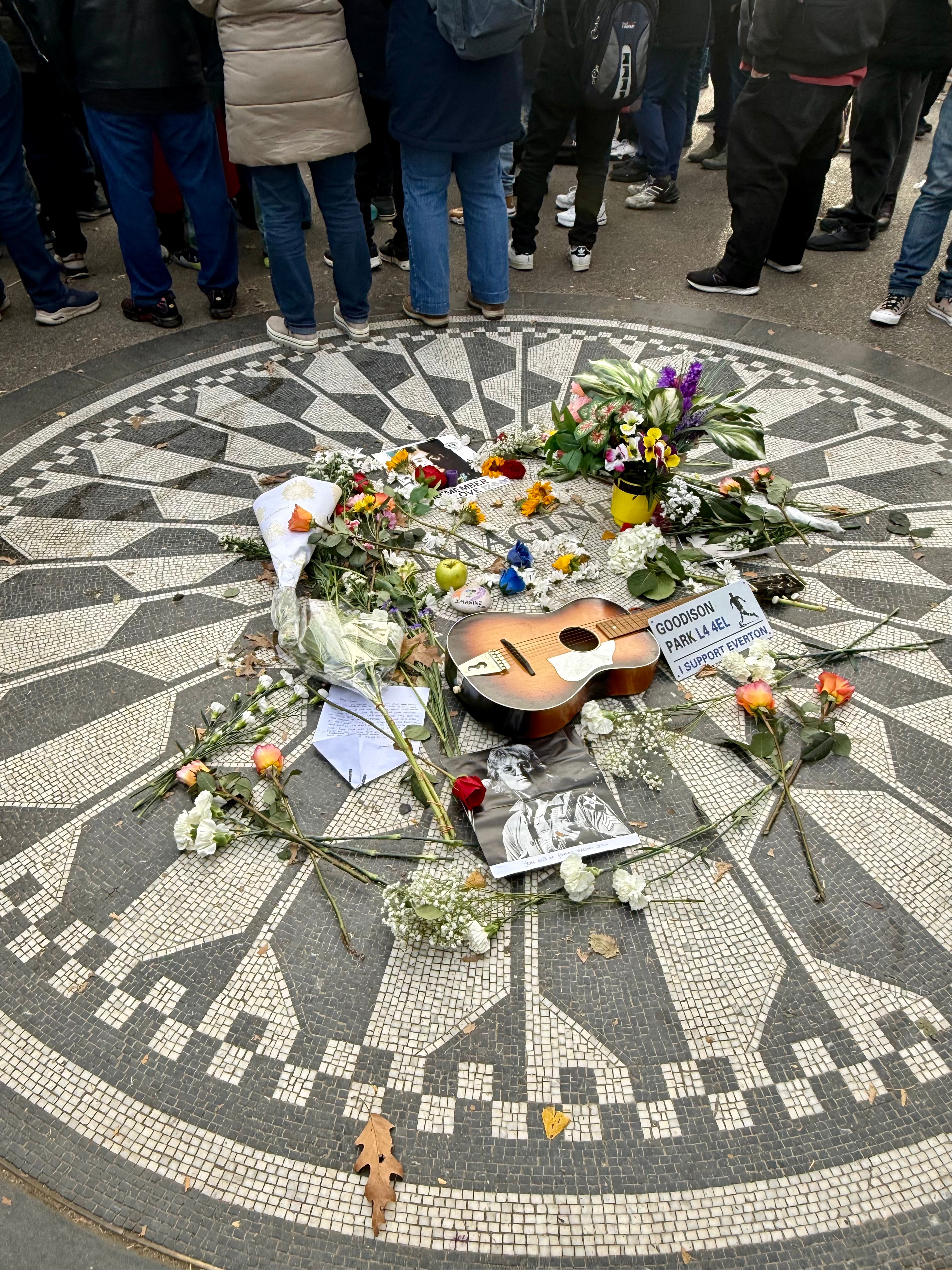
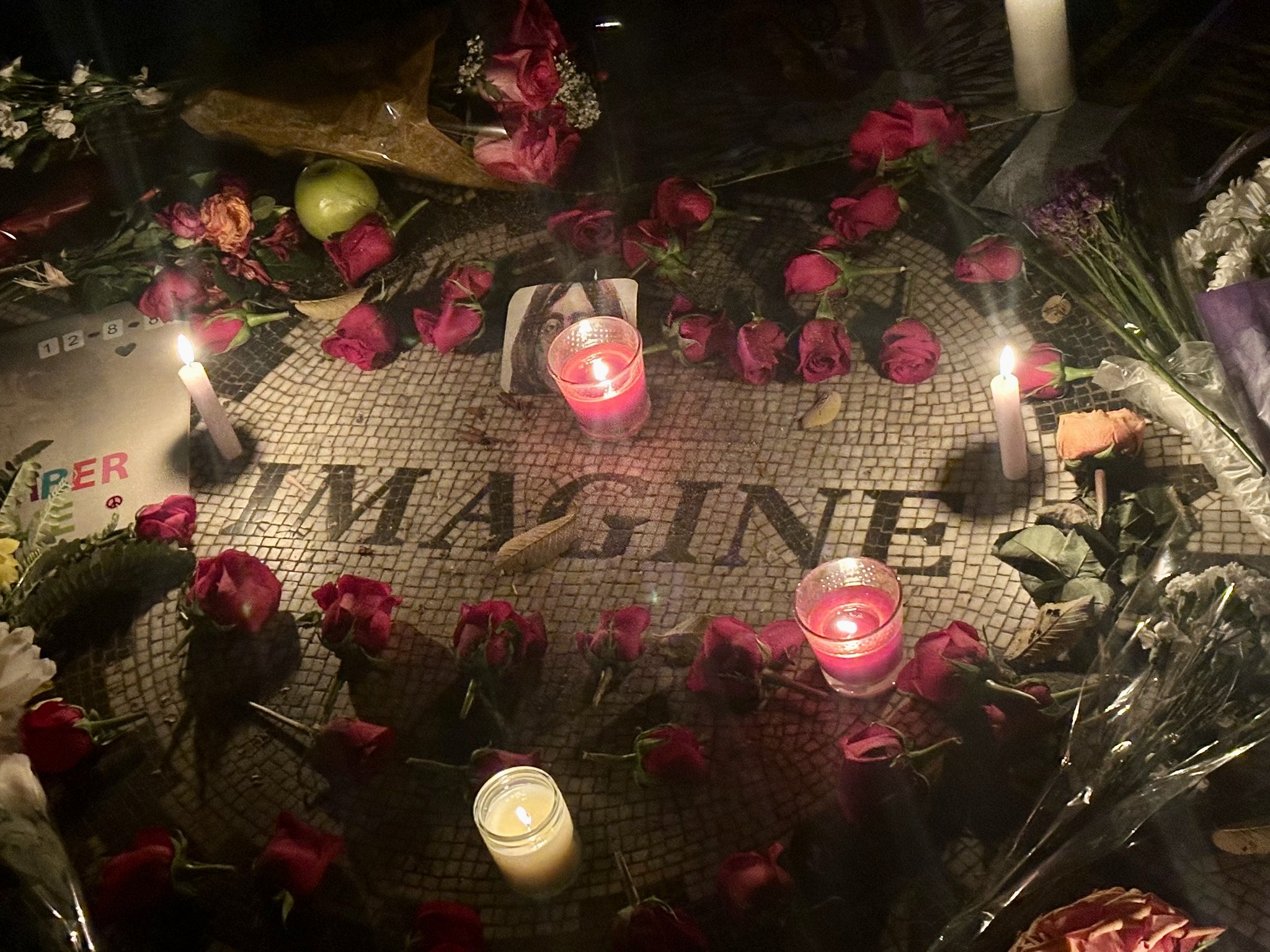
I was back later, and generally show up on the evening of December 8th to be a part of the crowd. The singing continued well into the night, with candles added to the tributes on the Imagine mosaic, and people waving their phone flashlights in time to the beat, today’s version of holding up a lighter.
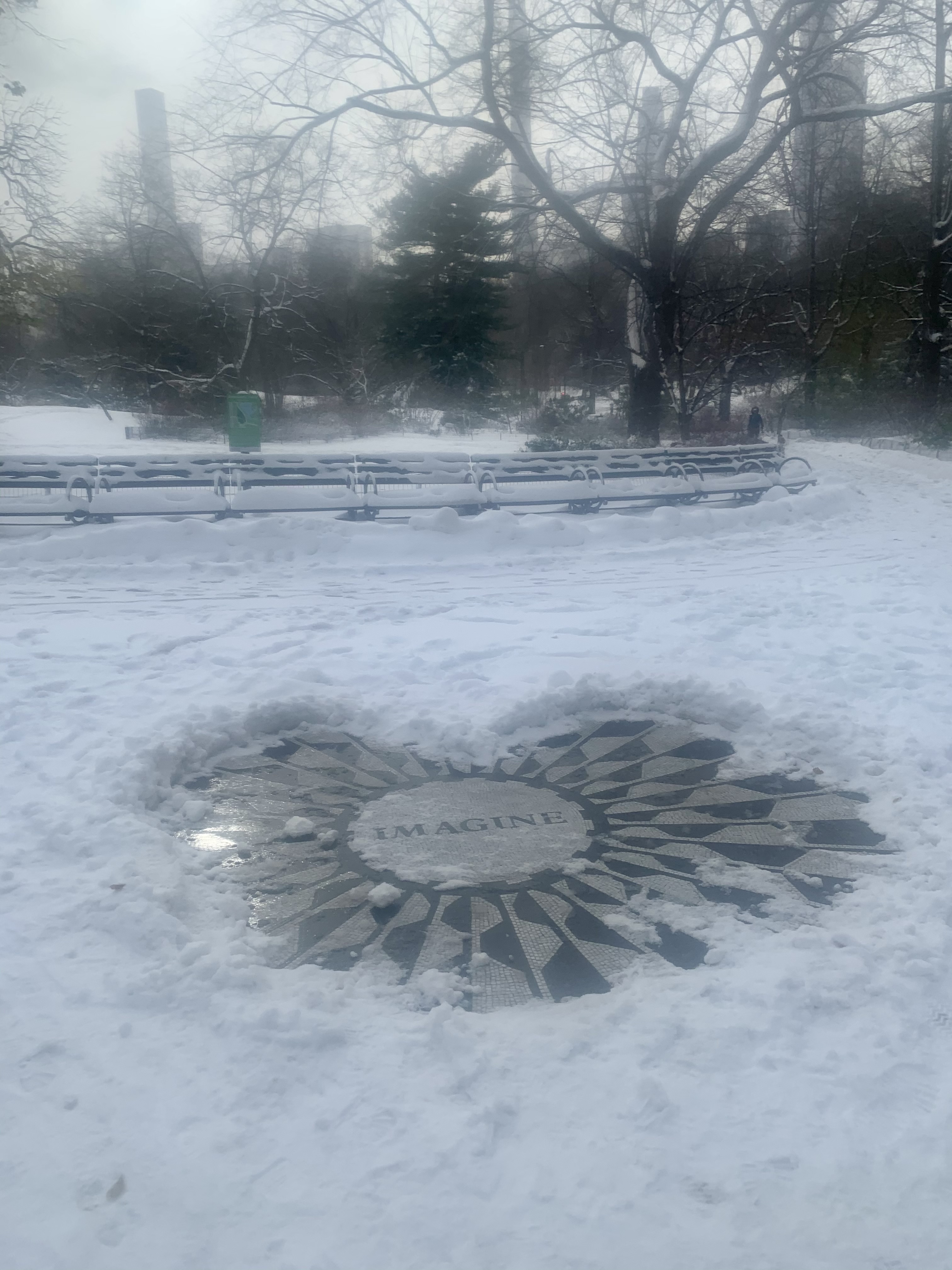
When it snows in Central Park, I am always impressed with how passersby keep the mosaic cleared and visible. Before too long, someone generally comes back to sing (see a recent video of someone singing “Girl” after a snowfall HERE). Quite often on any particular day, people will leave flowers, notes, or photographs at the memorial. I consider myself fortunate to live fairly nearby, and to walk through the park often. If I am able, I generally do try to walk through Strawberry Fields and feel my spirit lift just a bit. When people come to visit me, we often head to Strawberry Fields as part of a walk around my favorite spots in Central Park. There’s no denying the tragedy that occurred on December 8, 1980 – for his family and friends primarily, but also for the world. We will never know what he might have accomplished had he been given more time. But John Lennon’s spirit and desire to foster peace lives on through Strawberry Fields, a very special place for us to gather and remember – “You might say I’m a dreamer/But I’m not the only one.”