Shakespeare in the Park

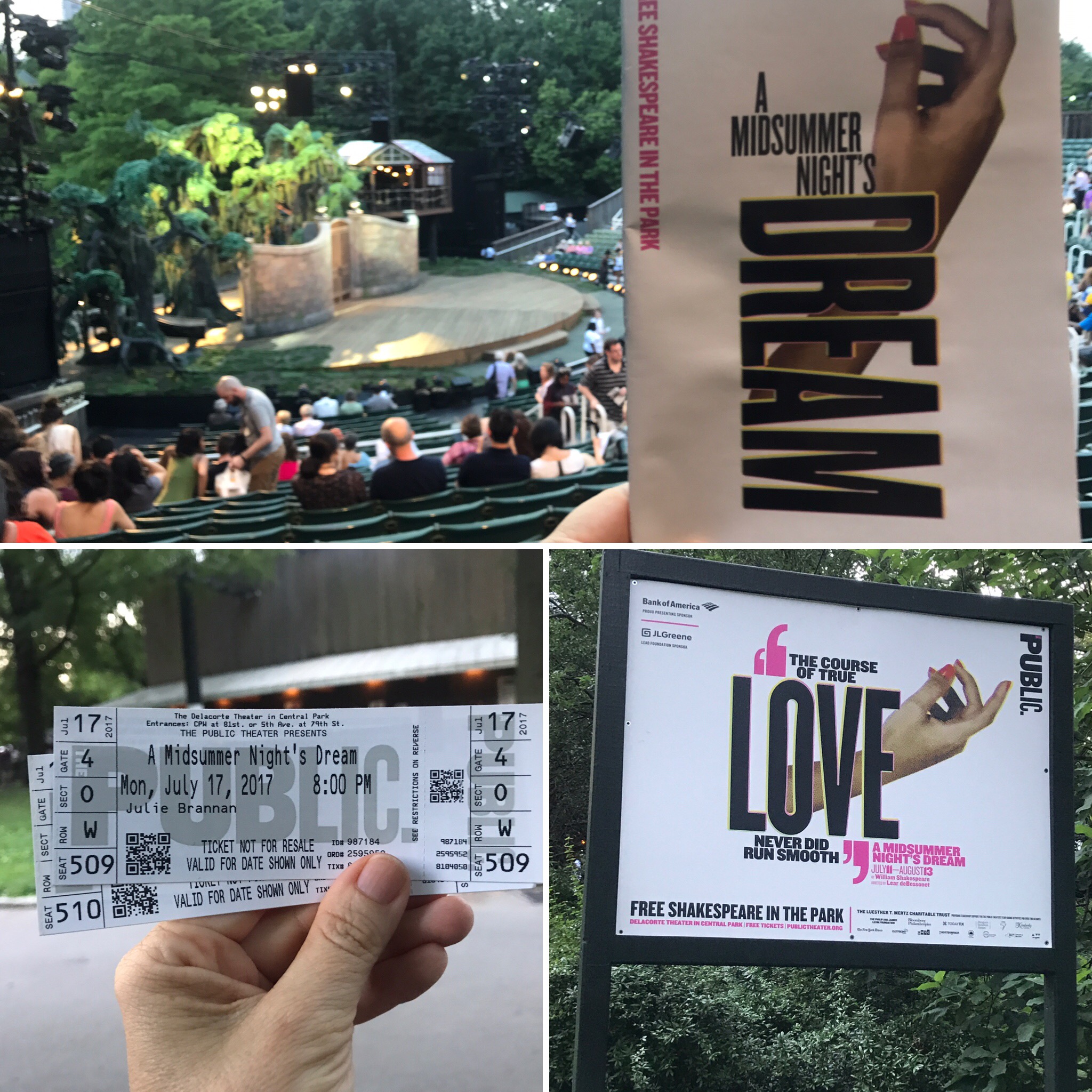
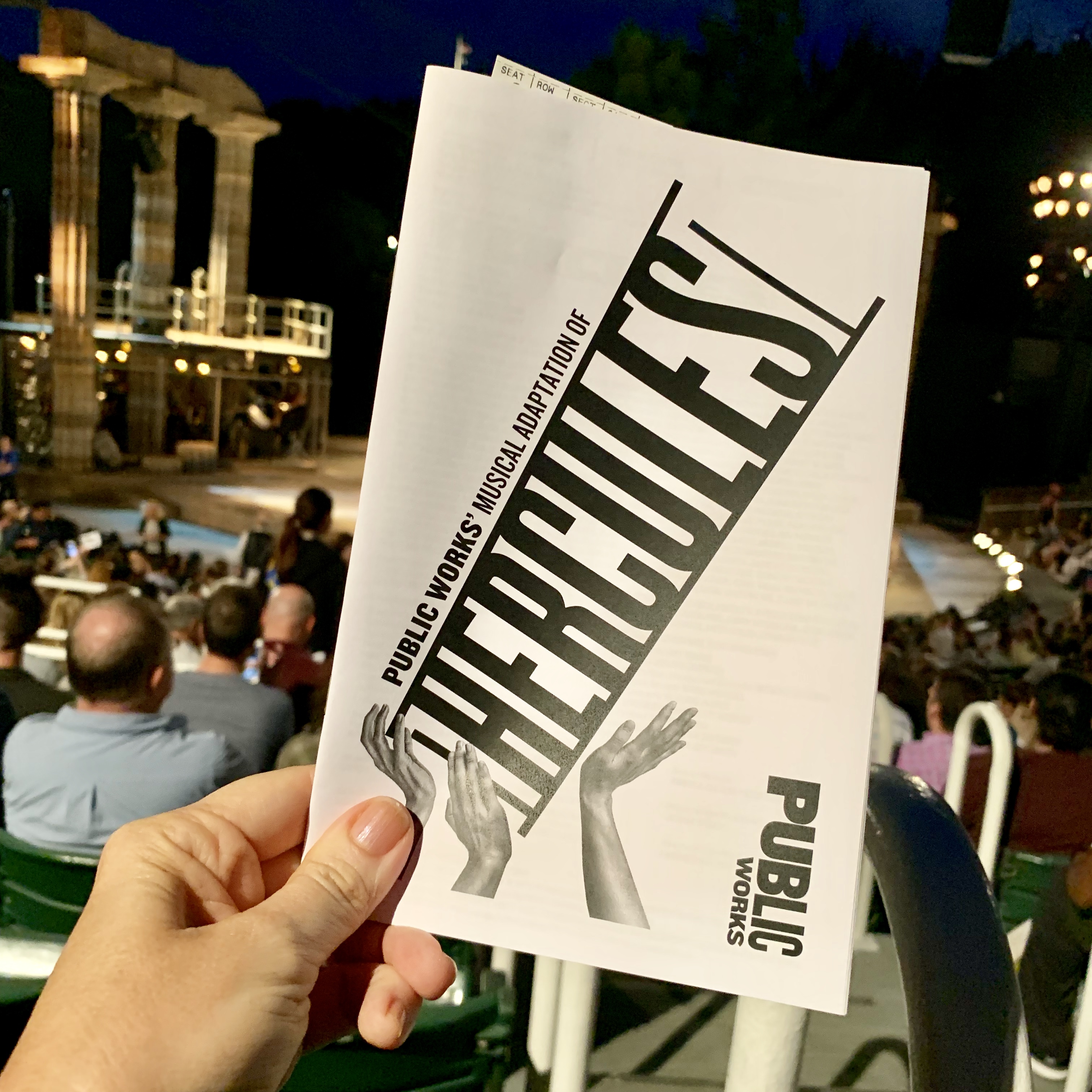
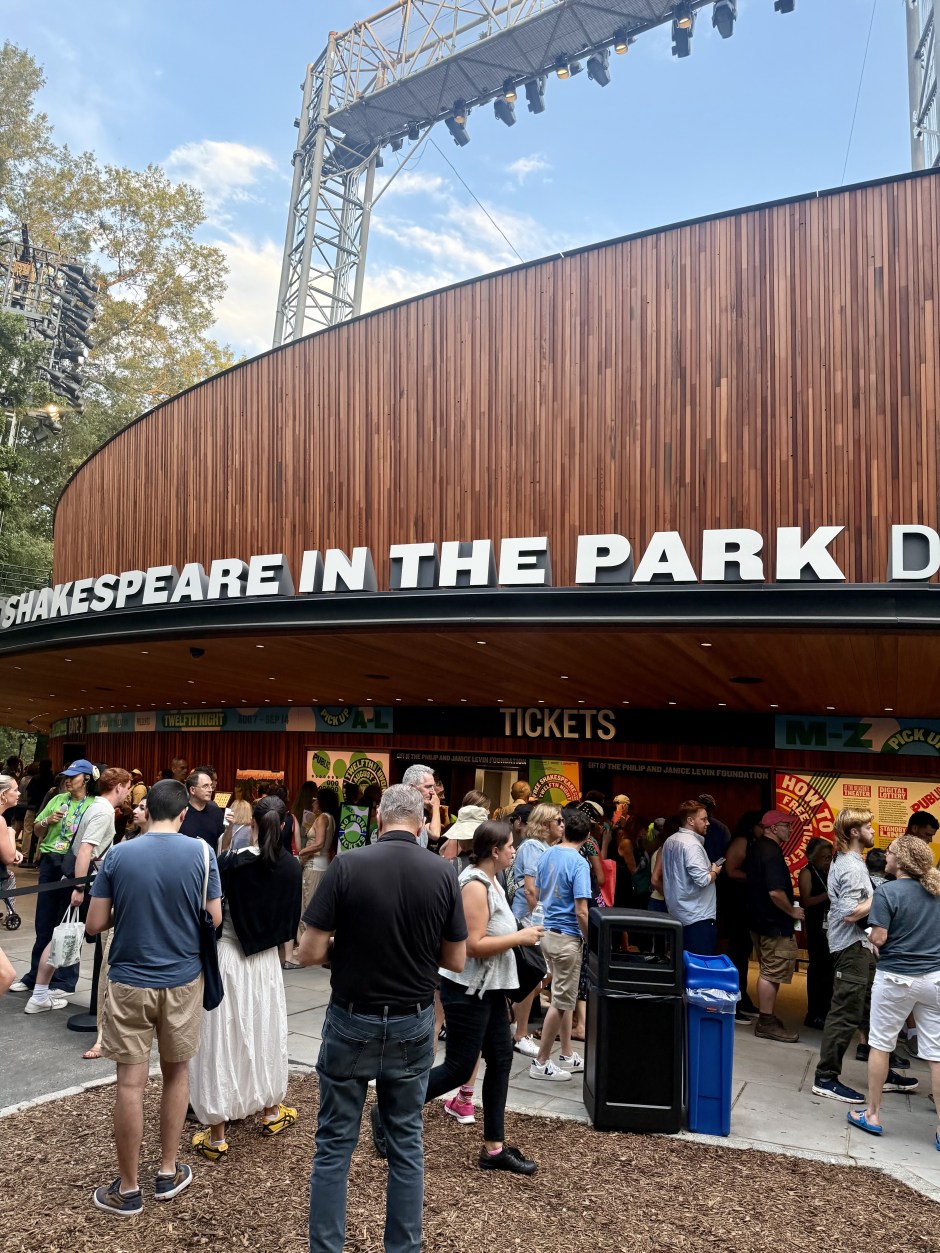
In the middle of Central Park, roughly where 80th Street would be, slightly closer to Central Park West than Fifth Avenue, just below the Great Lawn and just north of Belvedere Castle, sits our theatre – the Delacorte. Whenever I have heard Oskar Eustis welcome us to a performance of Shakespeare in the Park, he remind us that the Delacorte belongs to the city of New York, and sits in our park. Astonishingly, for over 60 years The Public Theater has been putting on world class theatrical productions (mostly Shakespeare, but occasionally other plays and even musicals) at the Delacorte and giving out the majority of the tickets for free. Truly all tickets are free – but those who are able to donate at certain levels to ensure that others can attend at no cost are guaranteed tickets. But more about how to get tickets later – let’s marvel at the experience itself first.
Joseph Papp from The Public Theater first conceived of the idea in 1954, and began with workshops and then free performances on the Lower East Side. In the late 1950s, he moved the performances to the lawn in front of Turtle Pond in Central Park, but did not have permission and was ticketed for eroding the grass. After a legal battle, the city built a theater for the free performances, with the first play performed at the Delacorte being The Merchant of Venice with George C. Scott and James Earl Jones, in 1962.
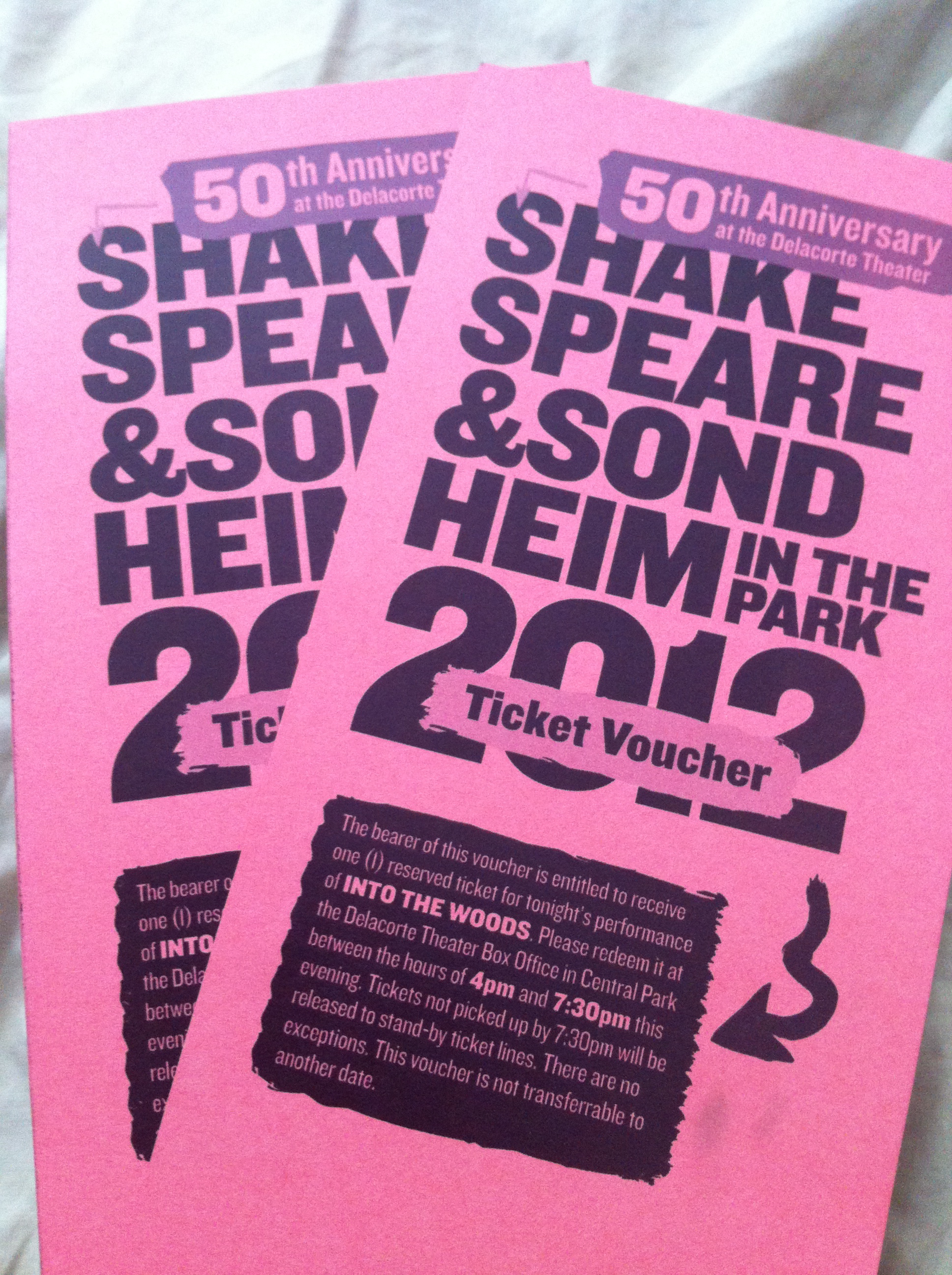
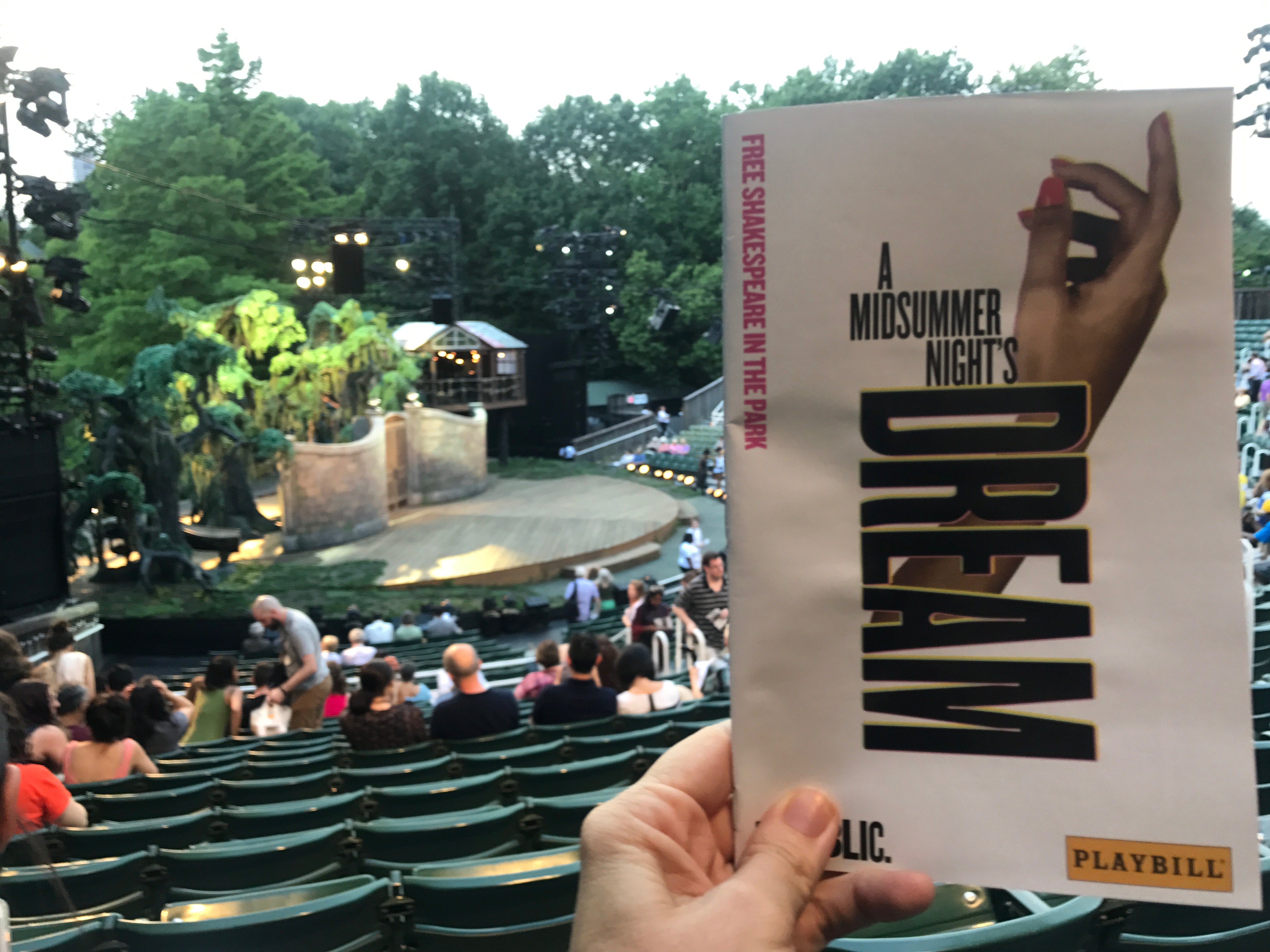
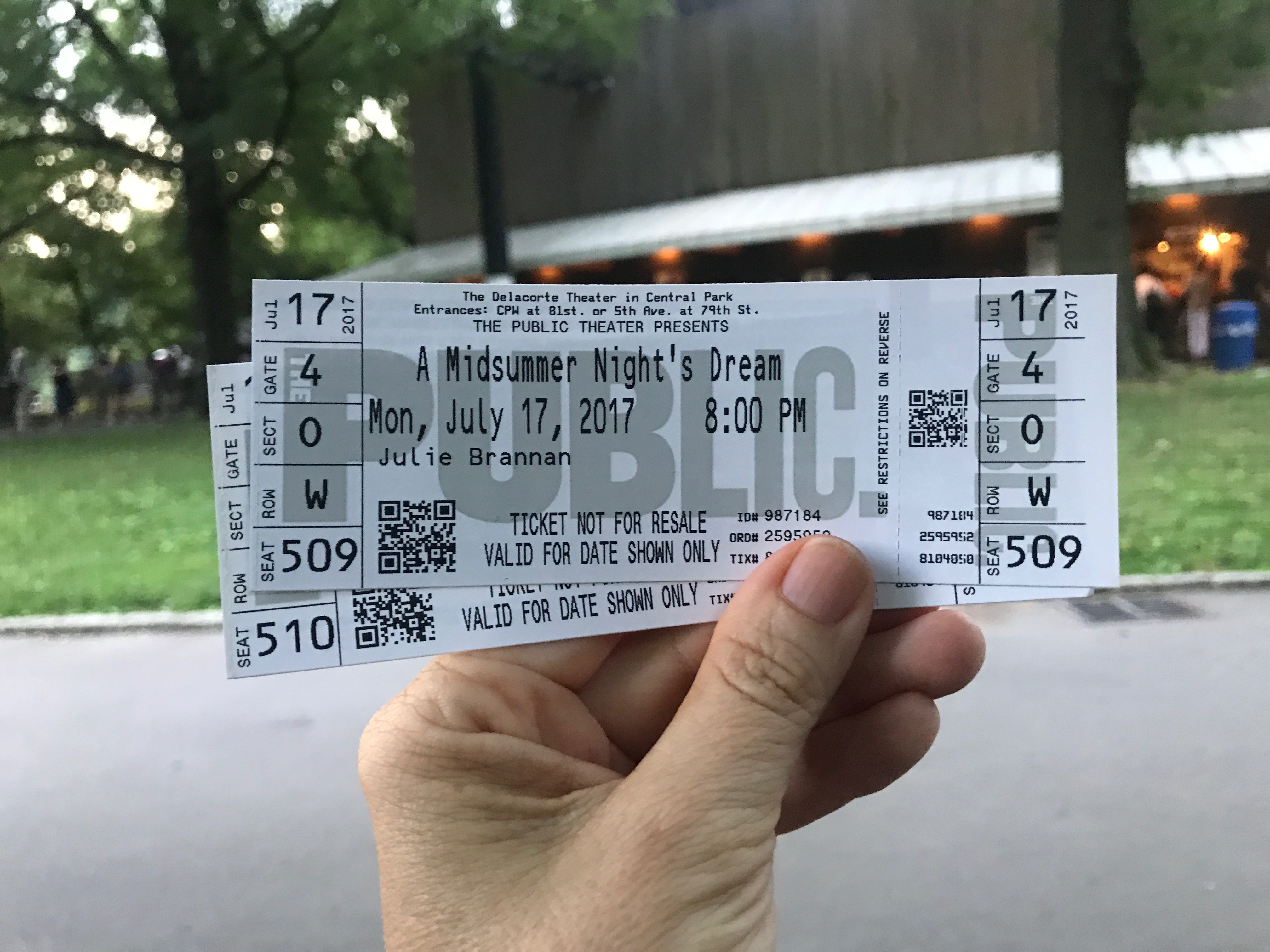
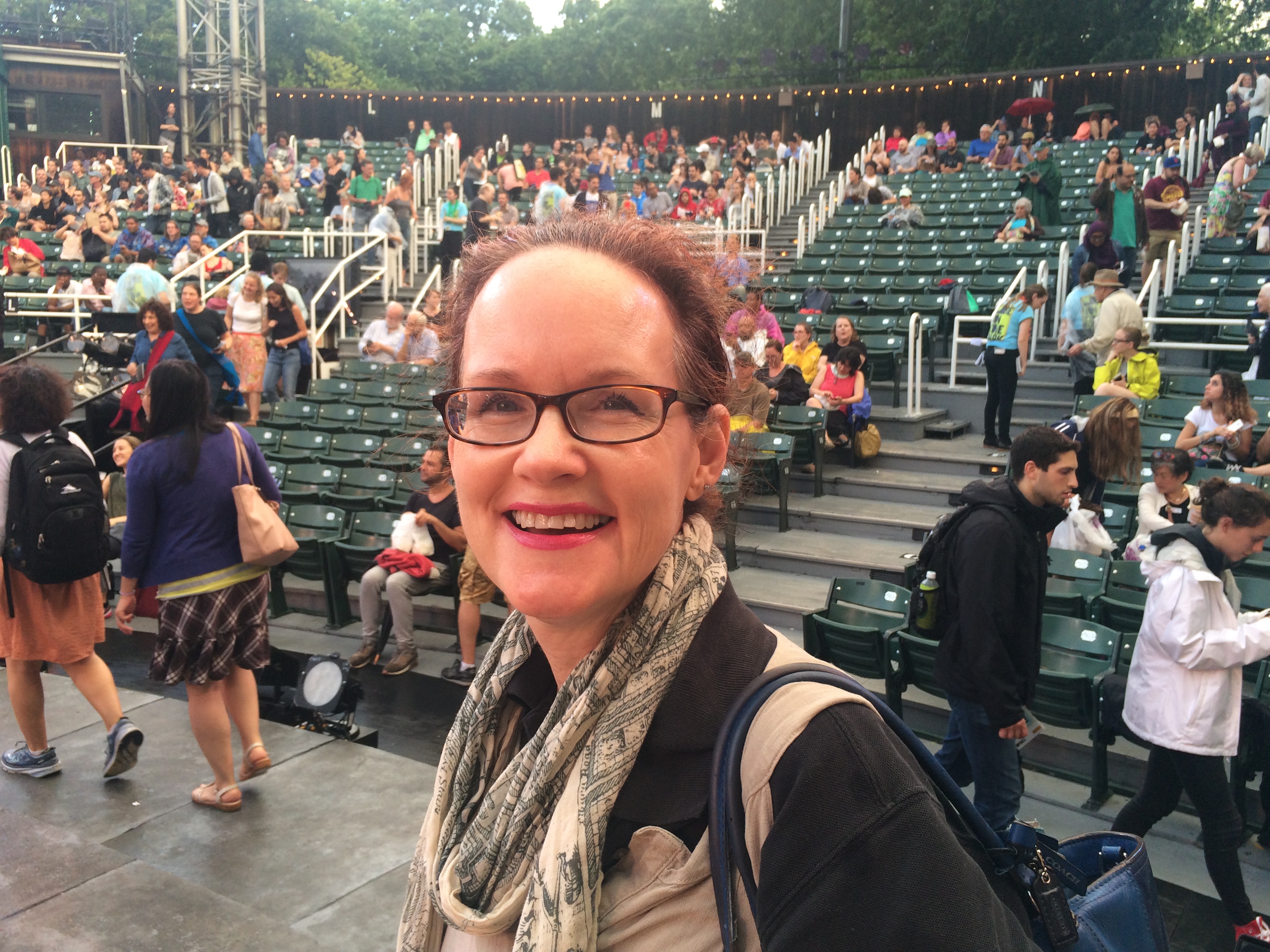
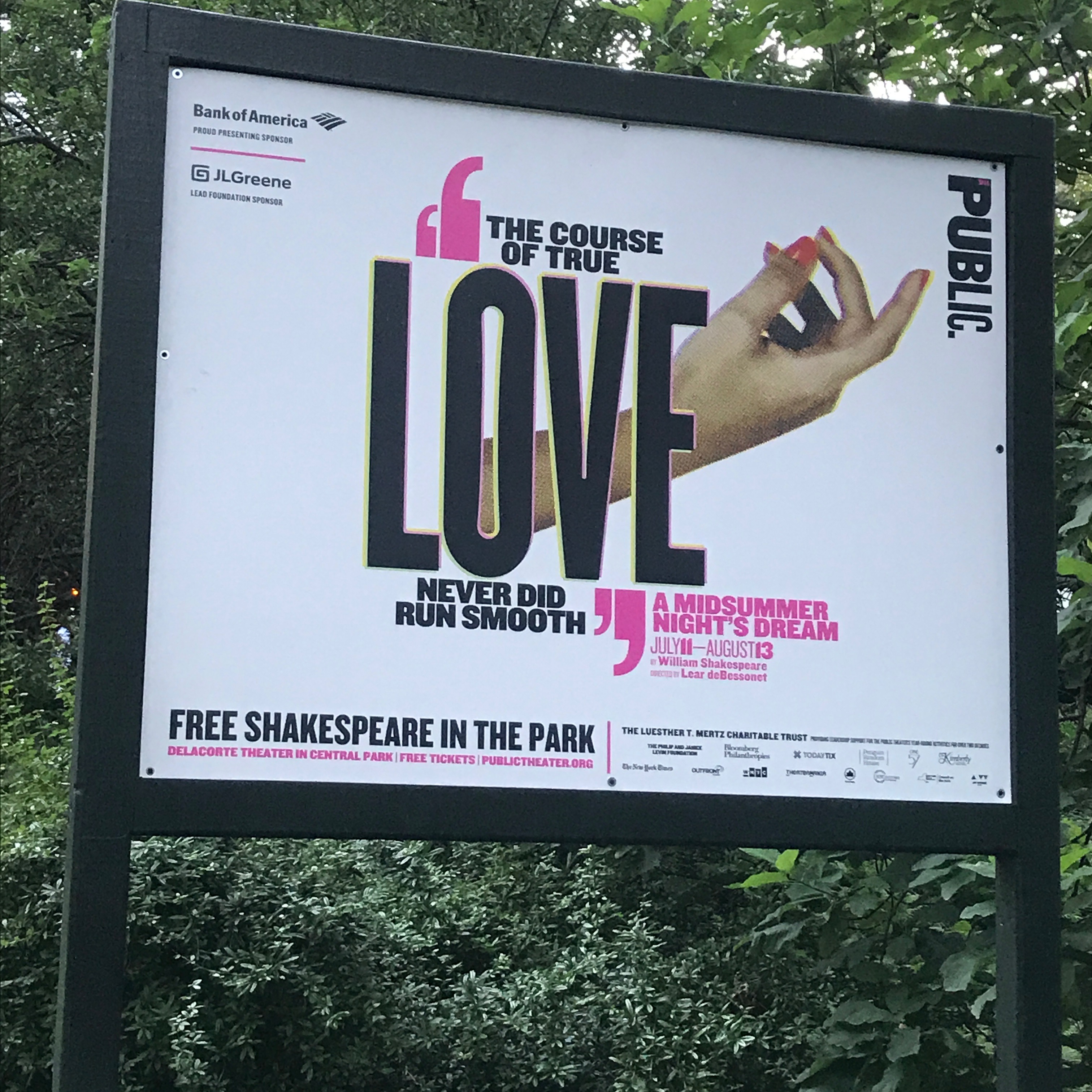
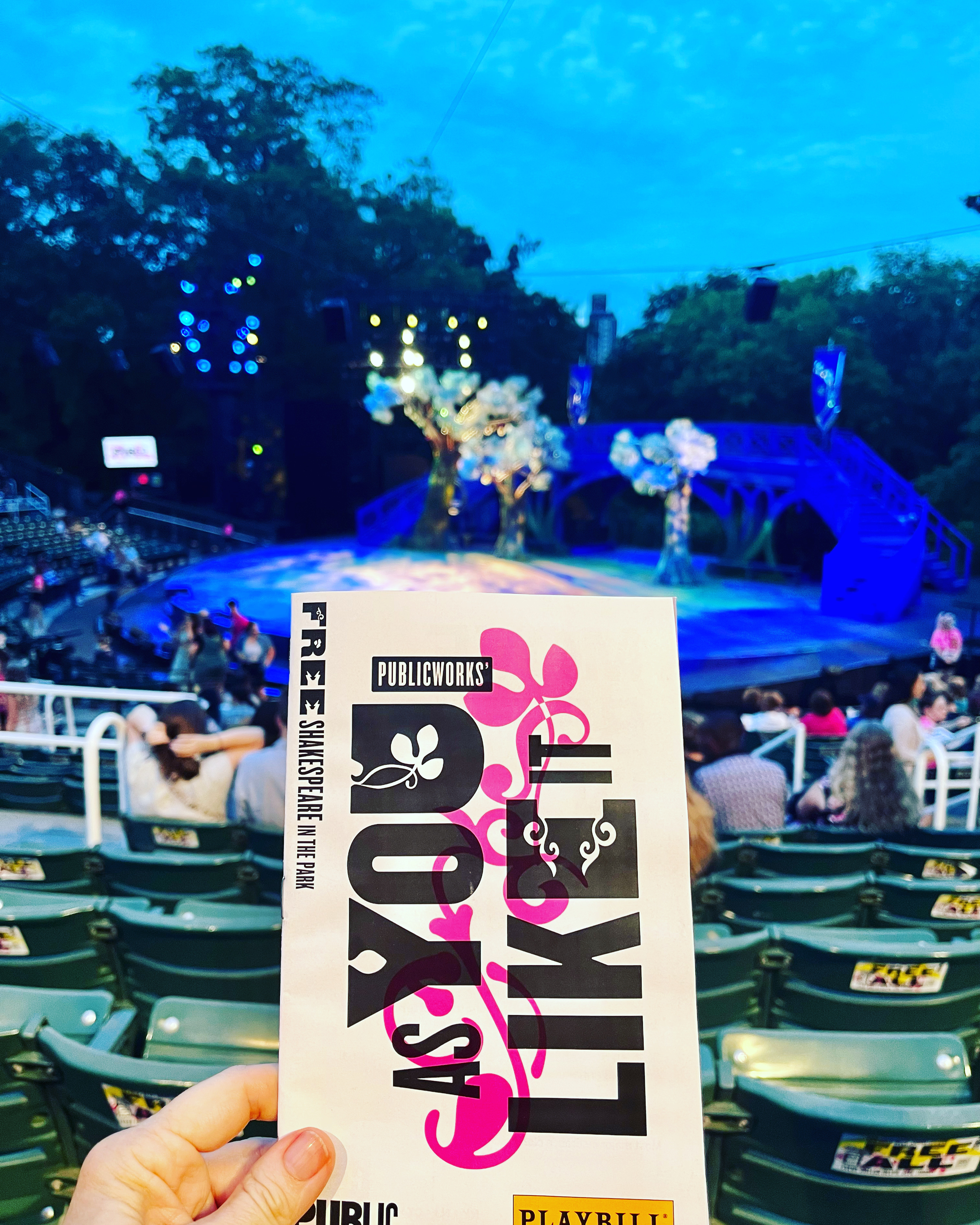
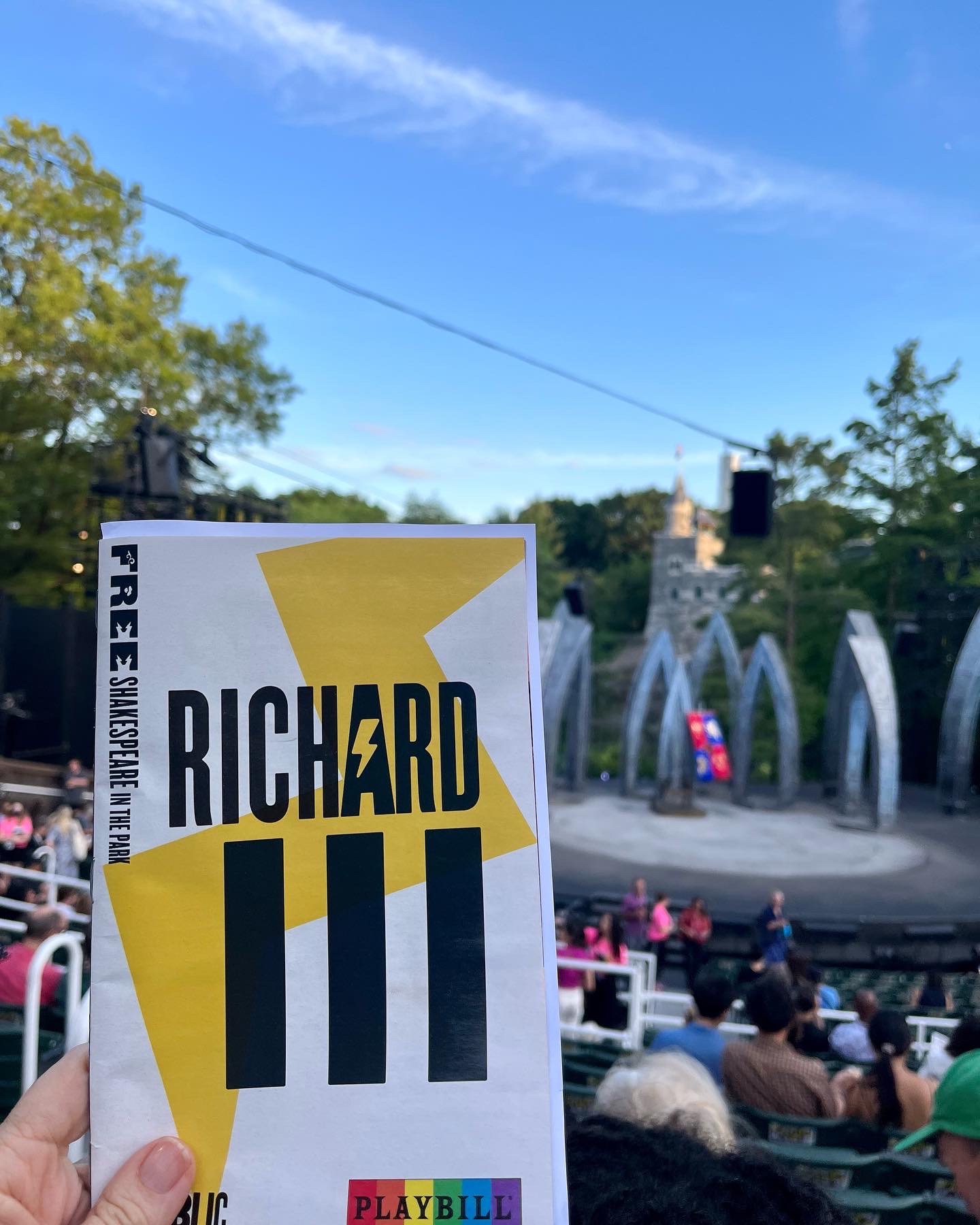
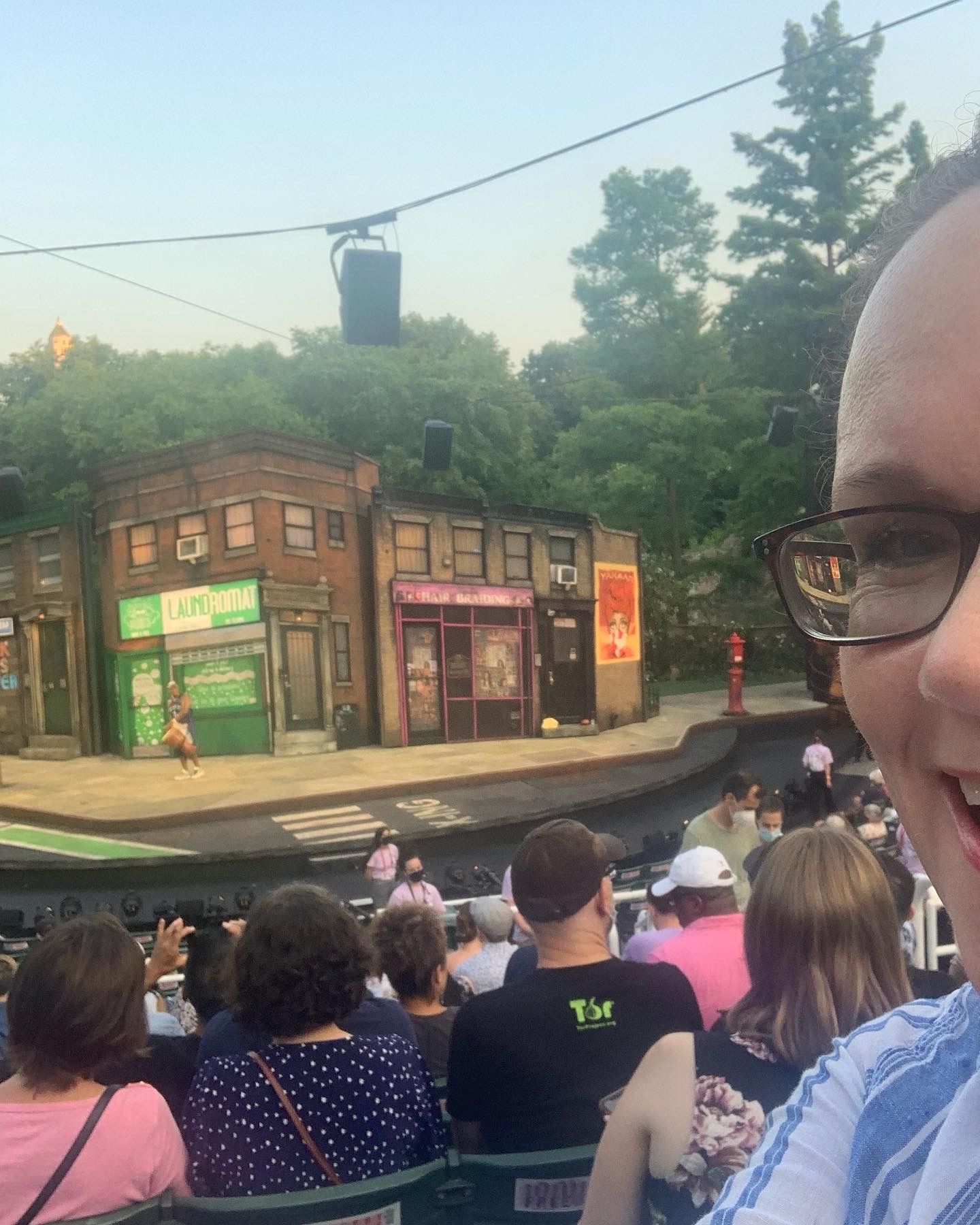
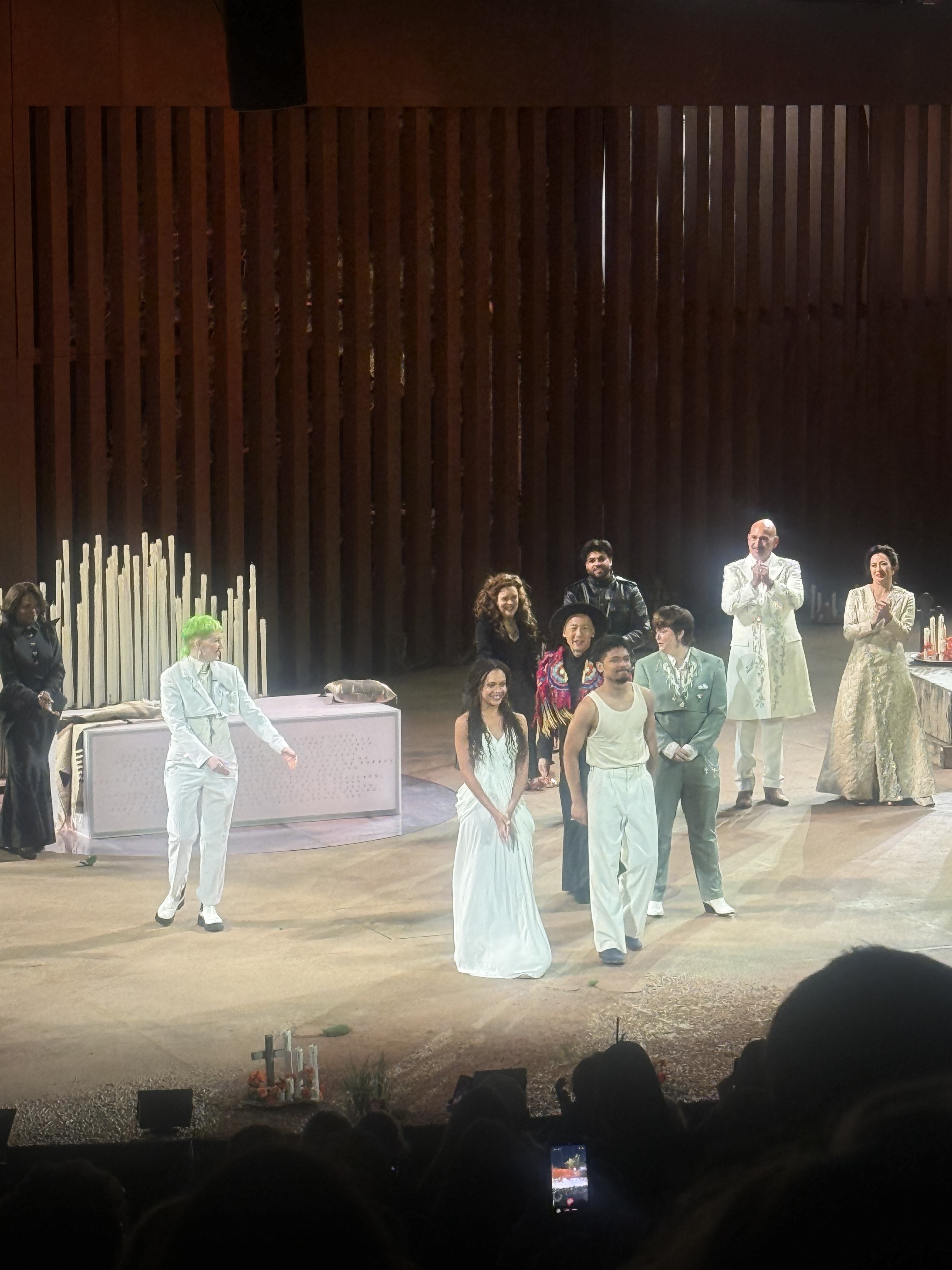
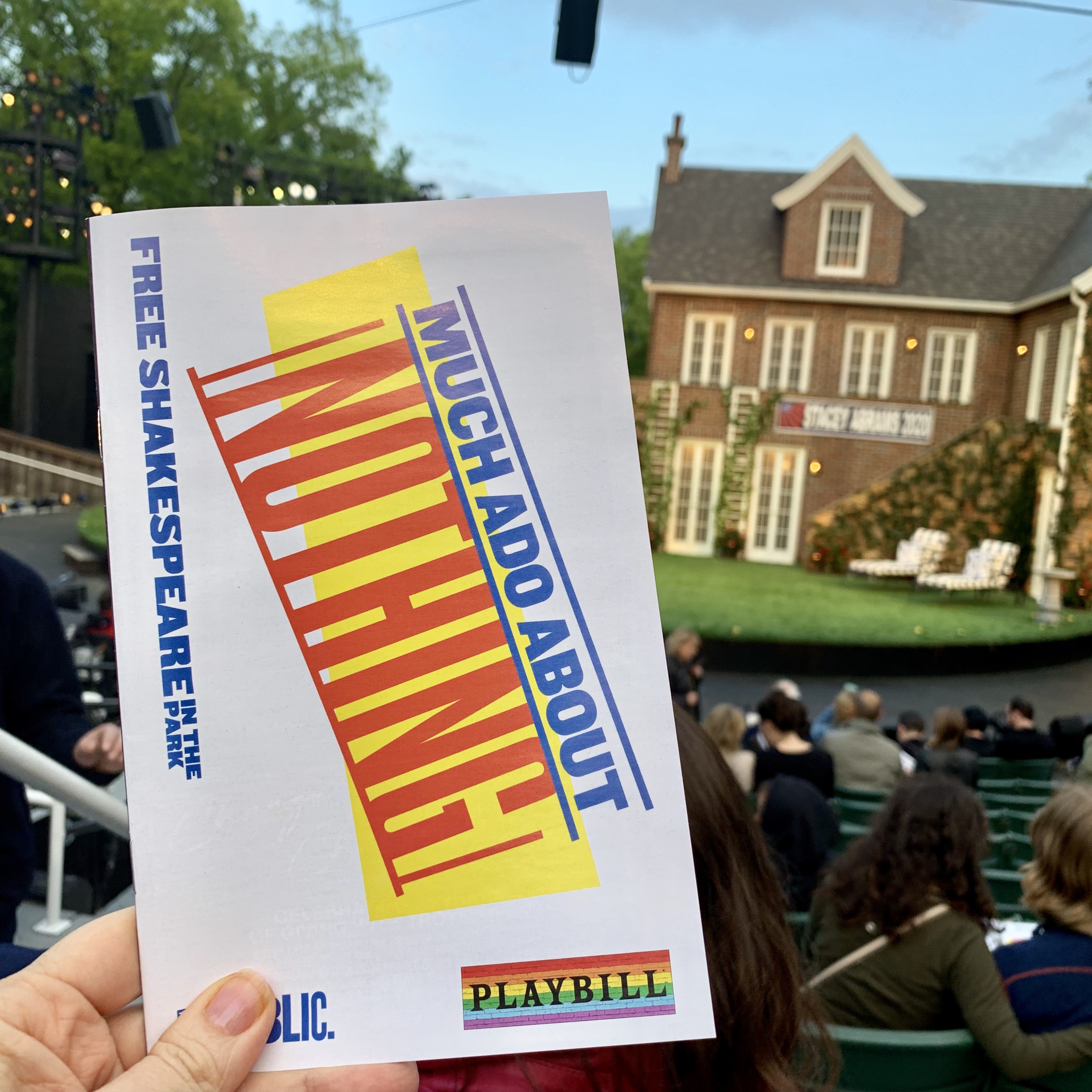
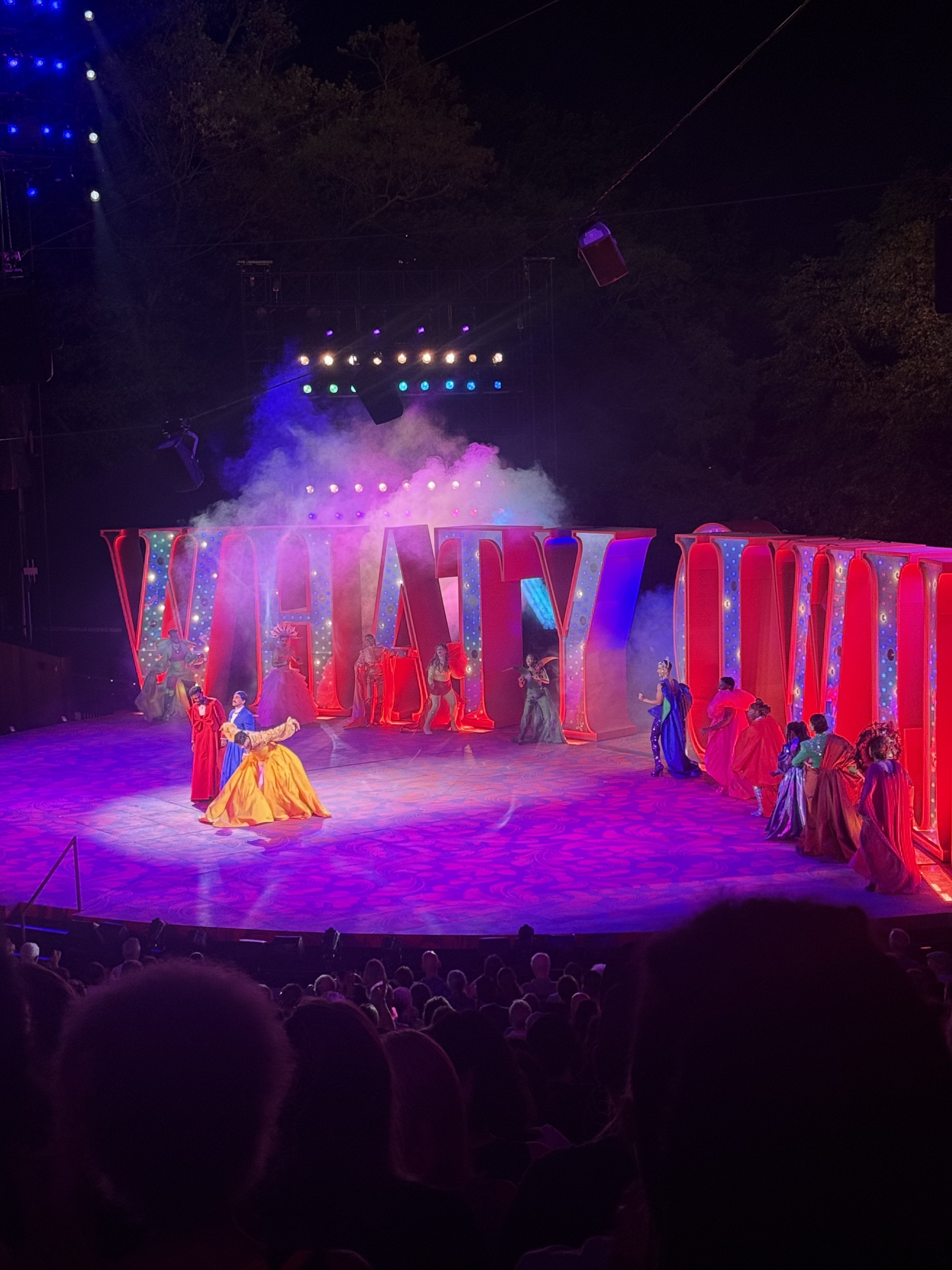
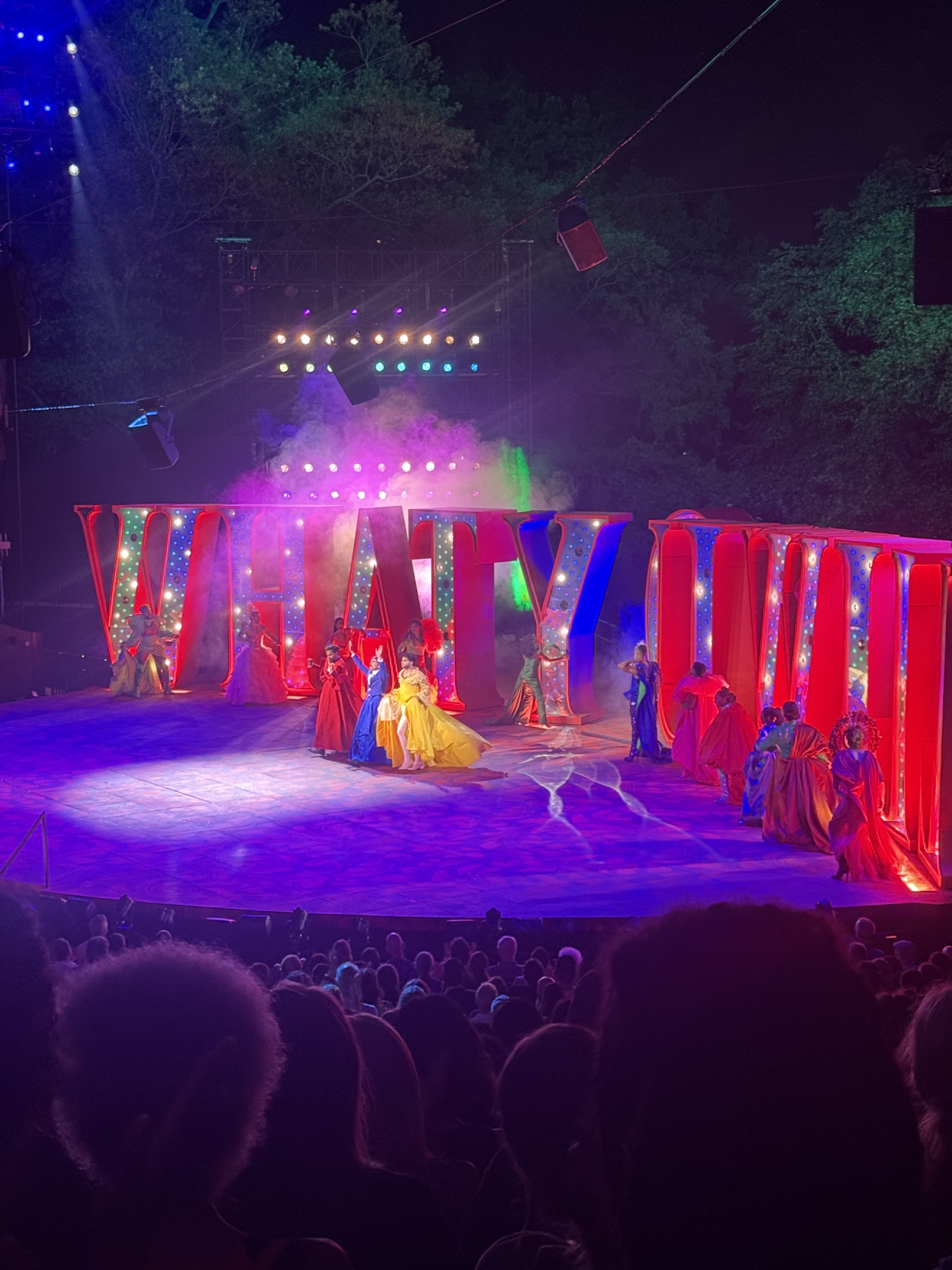
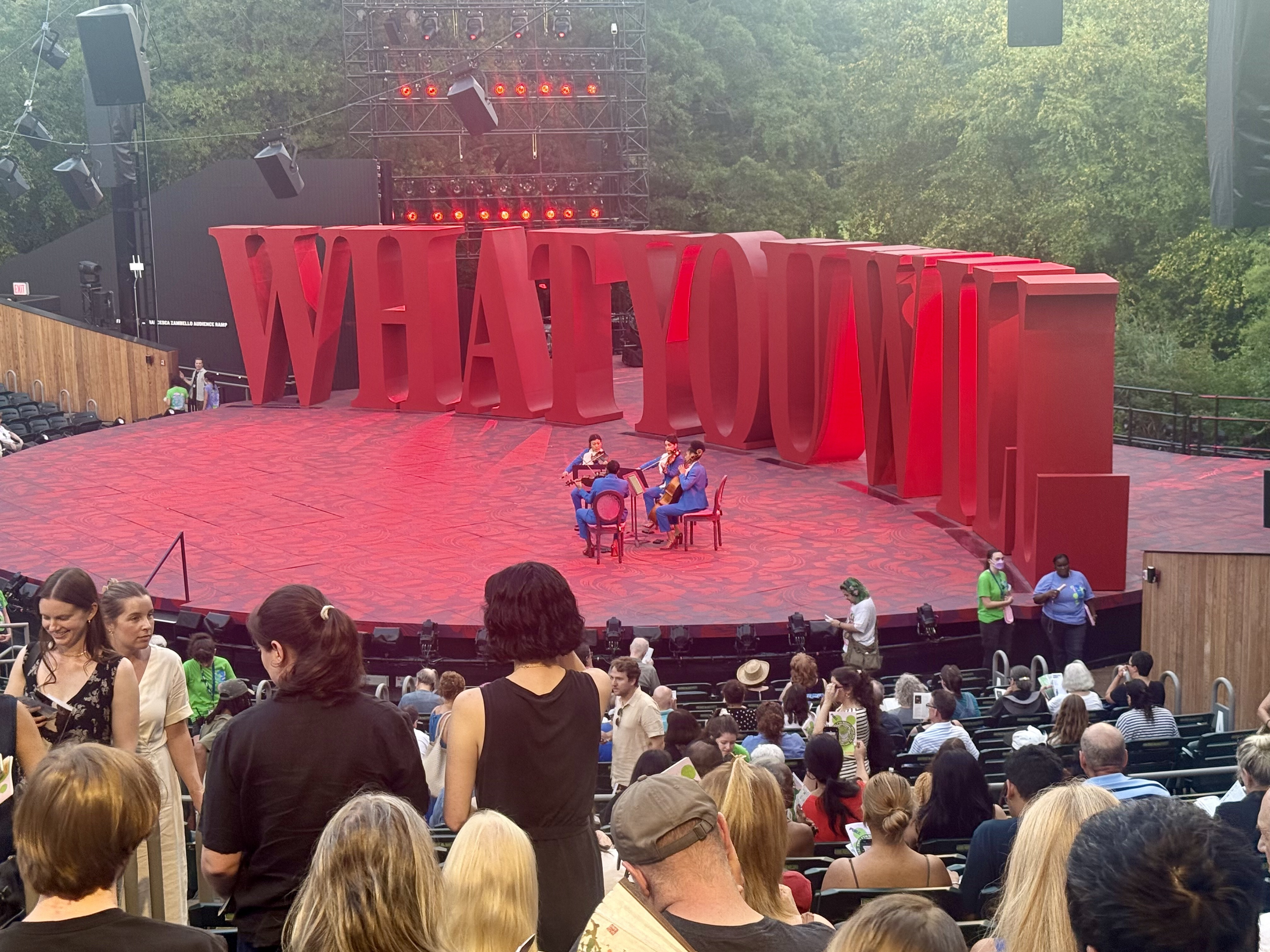
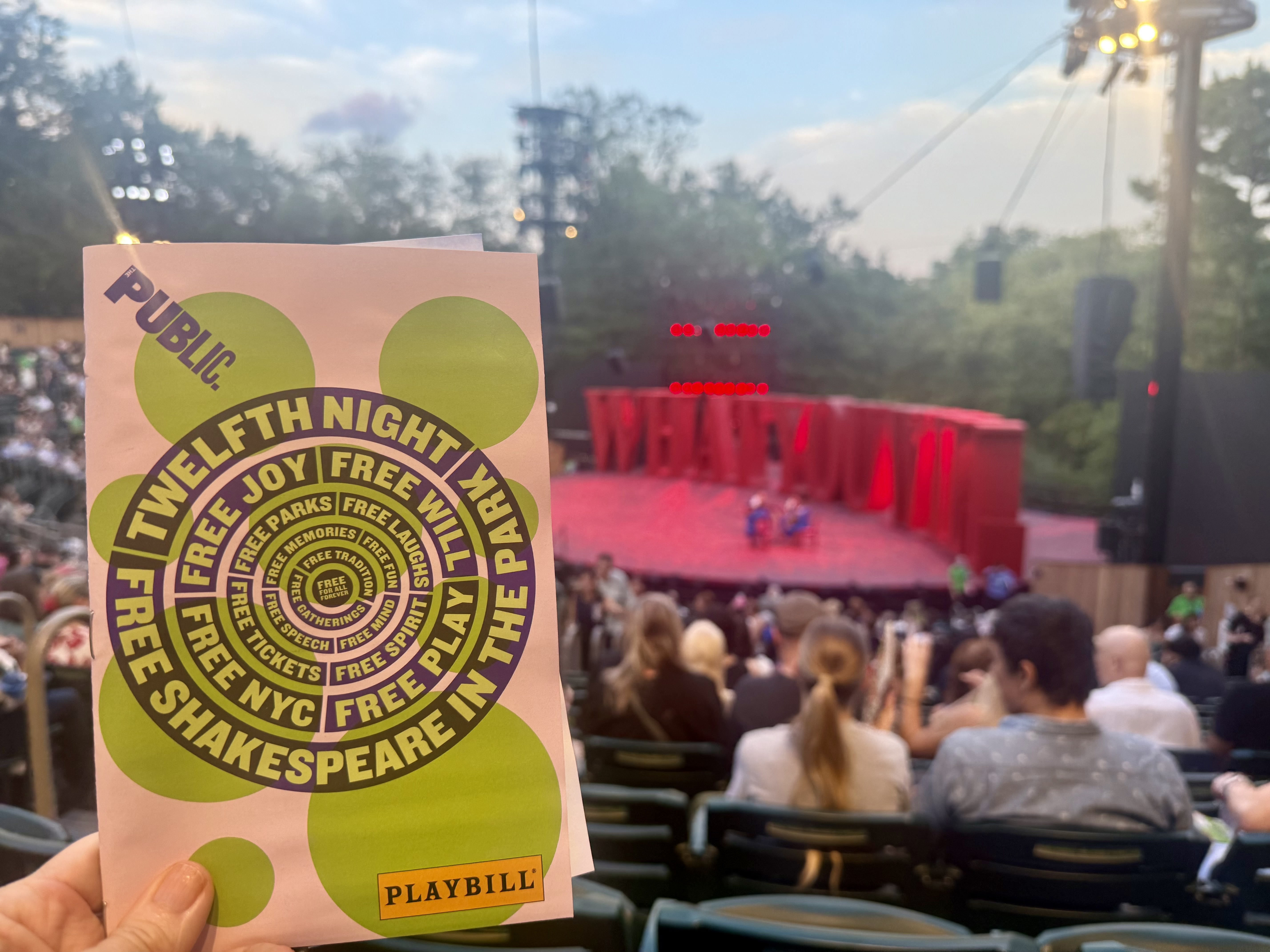
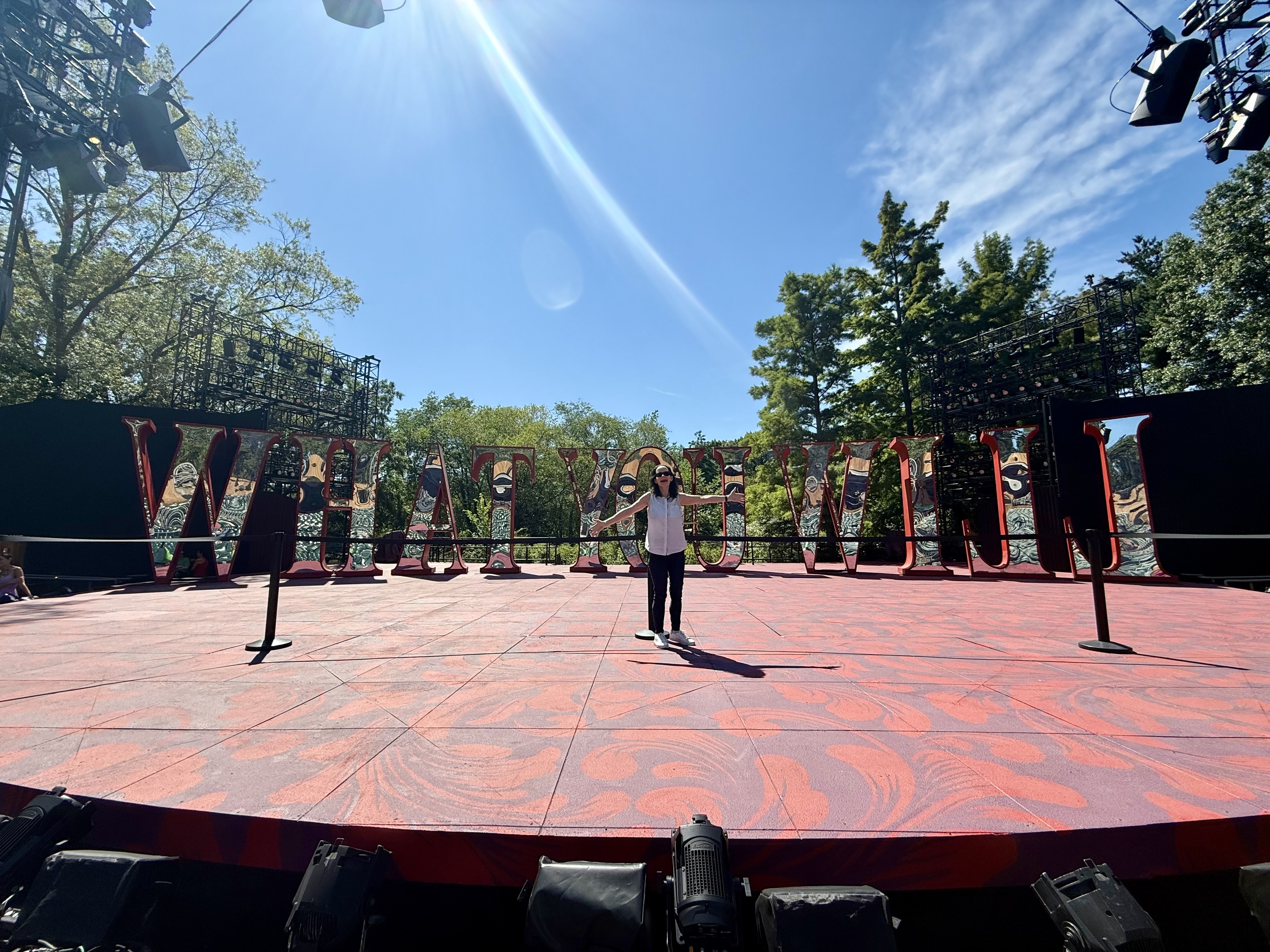
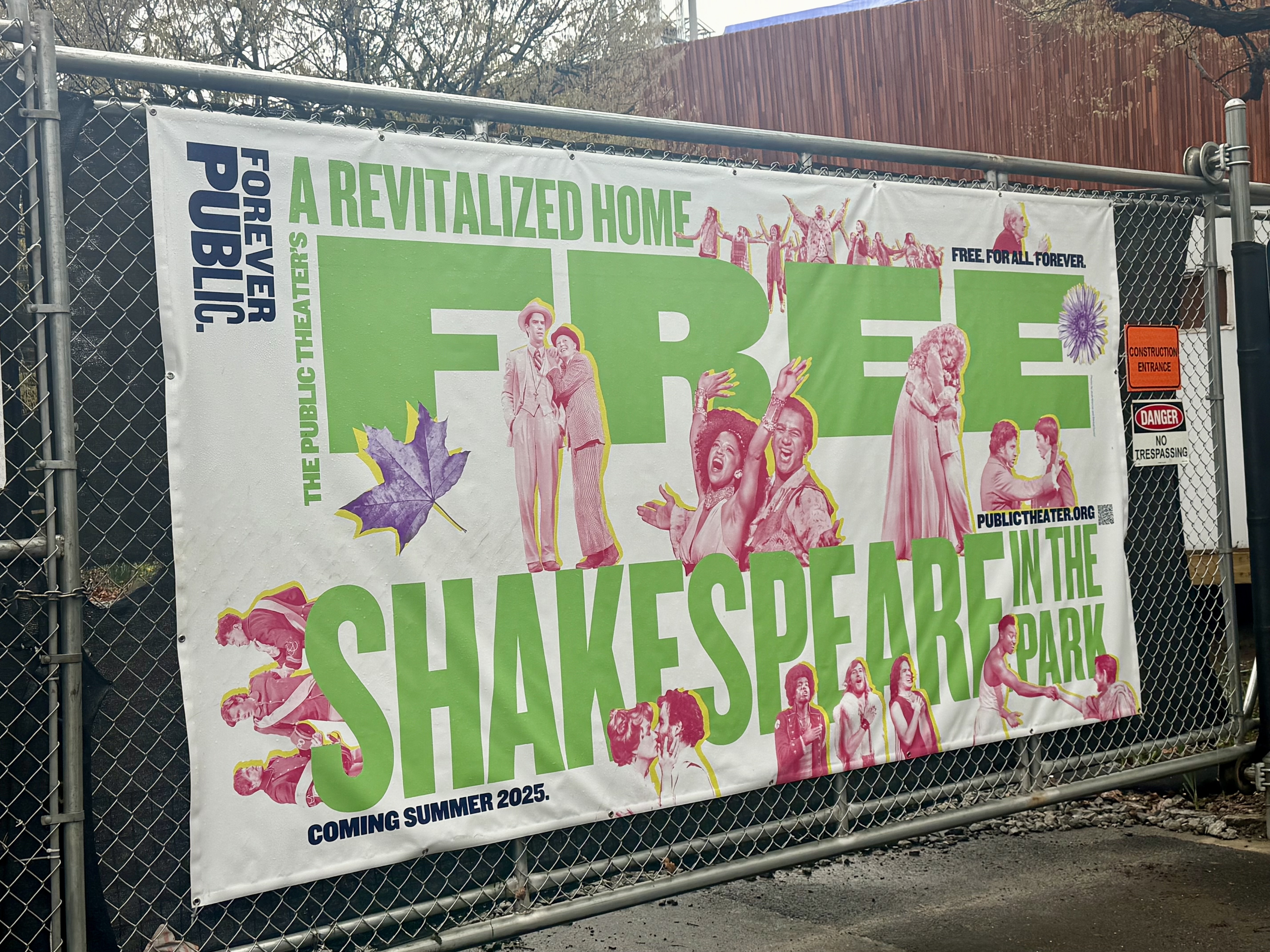
I haven’t missed a production since 2005, but here are some photos from the past ten years or so. The Delacorte is a large theatre (seats 1,872), and is an outdoor amphitheater. It completed a major renovation in 2025, with a star-studded production of Twelfth Night reopening the theater in late summer. The productions are fully produced professional performances, often featuring well-known stars of stage and screen.
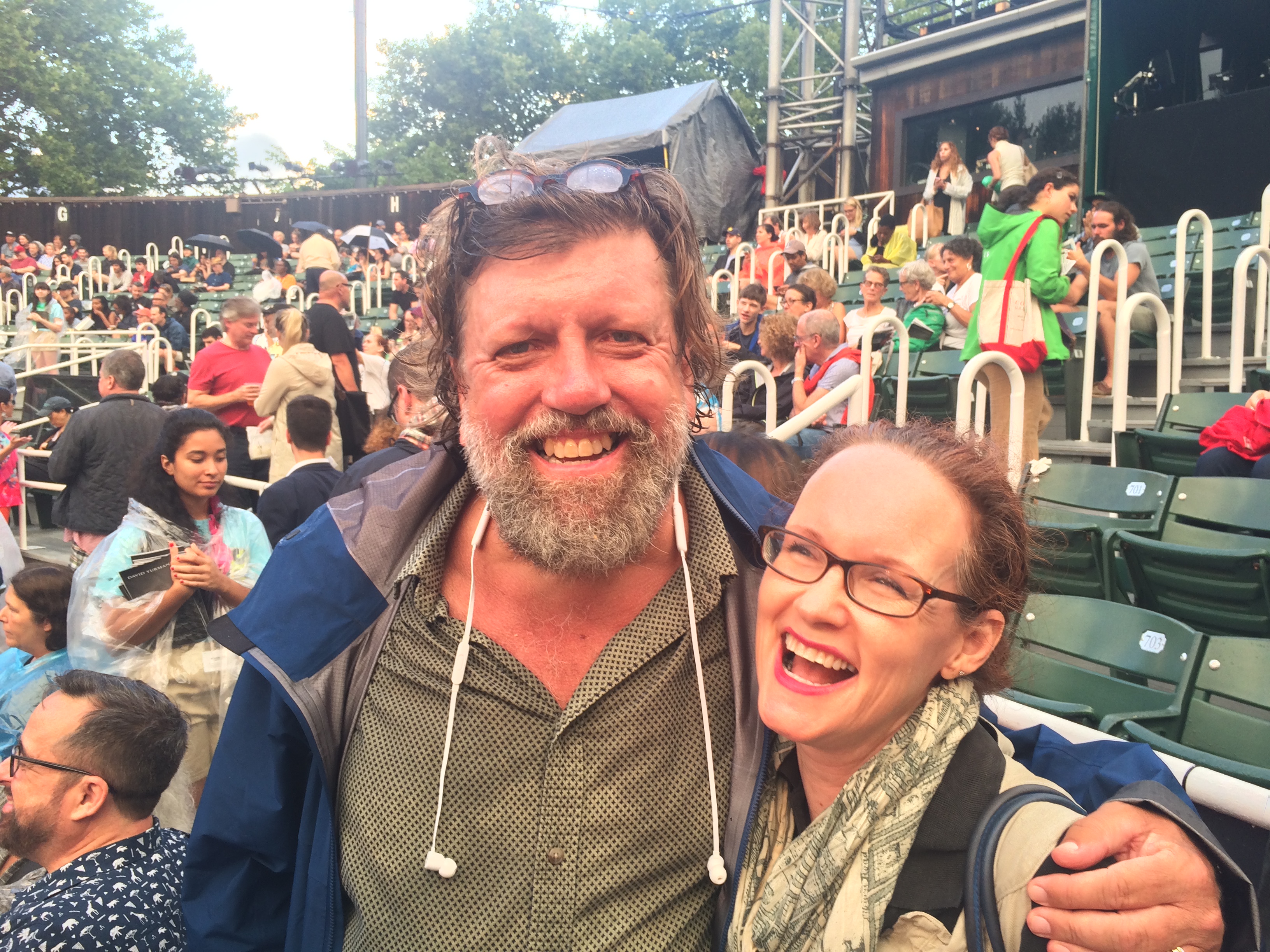
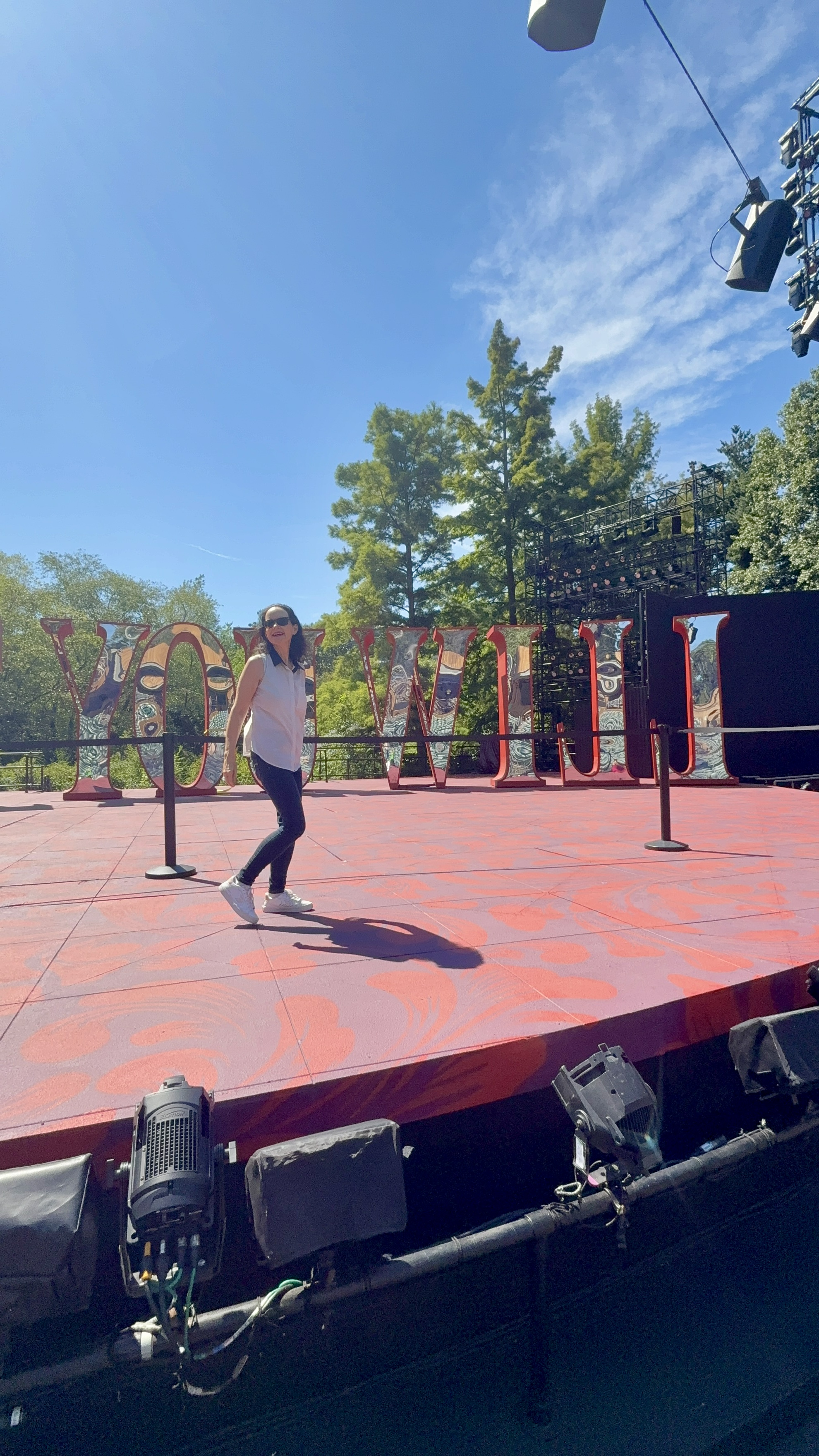
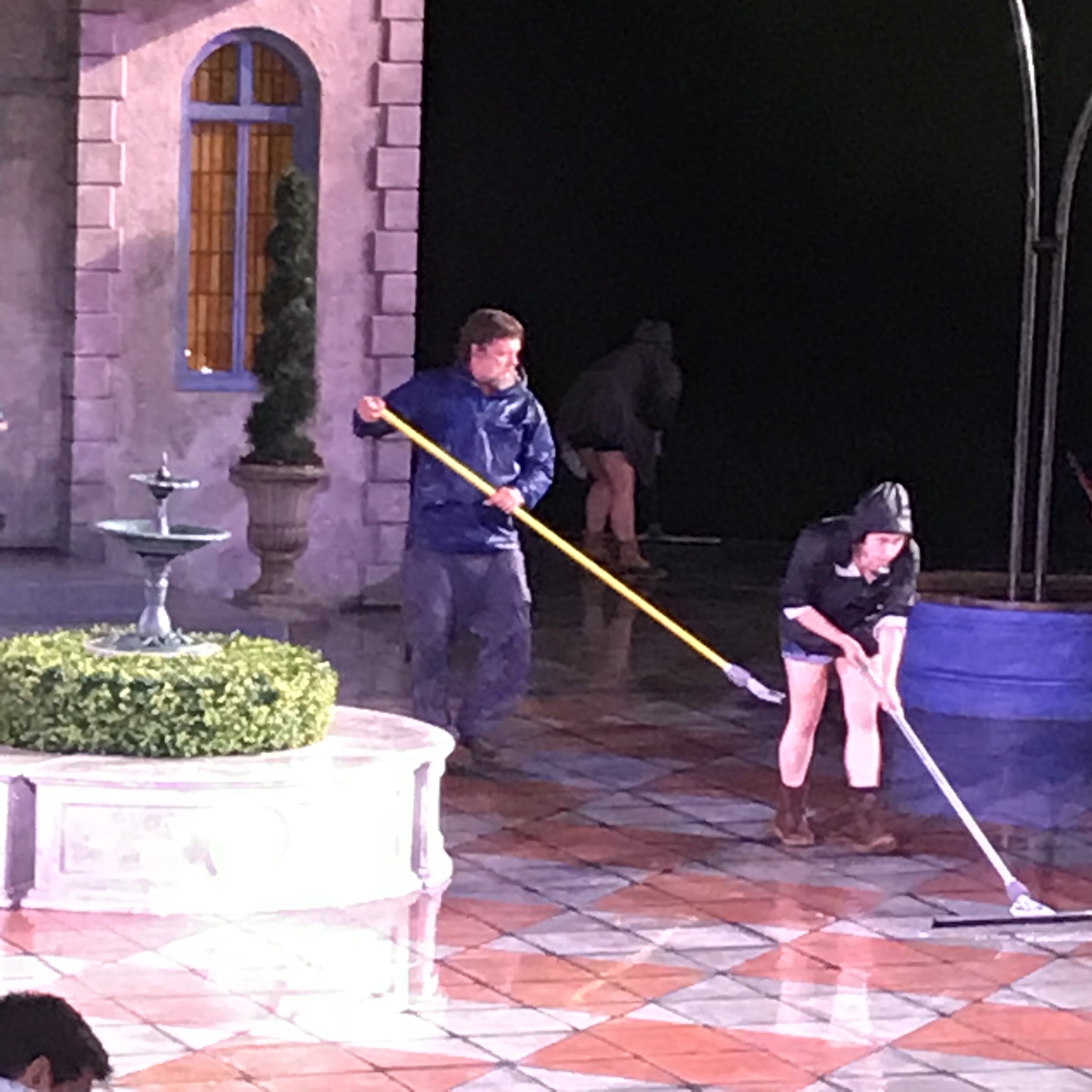
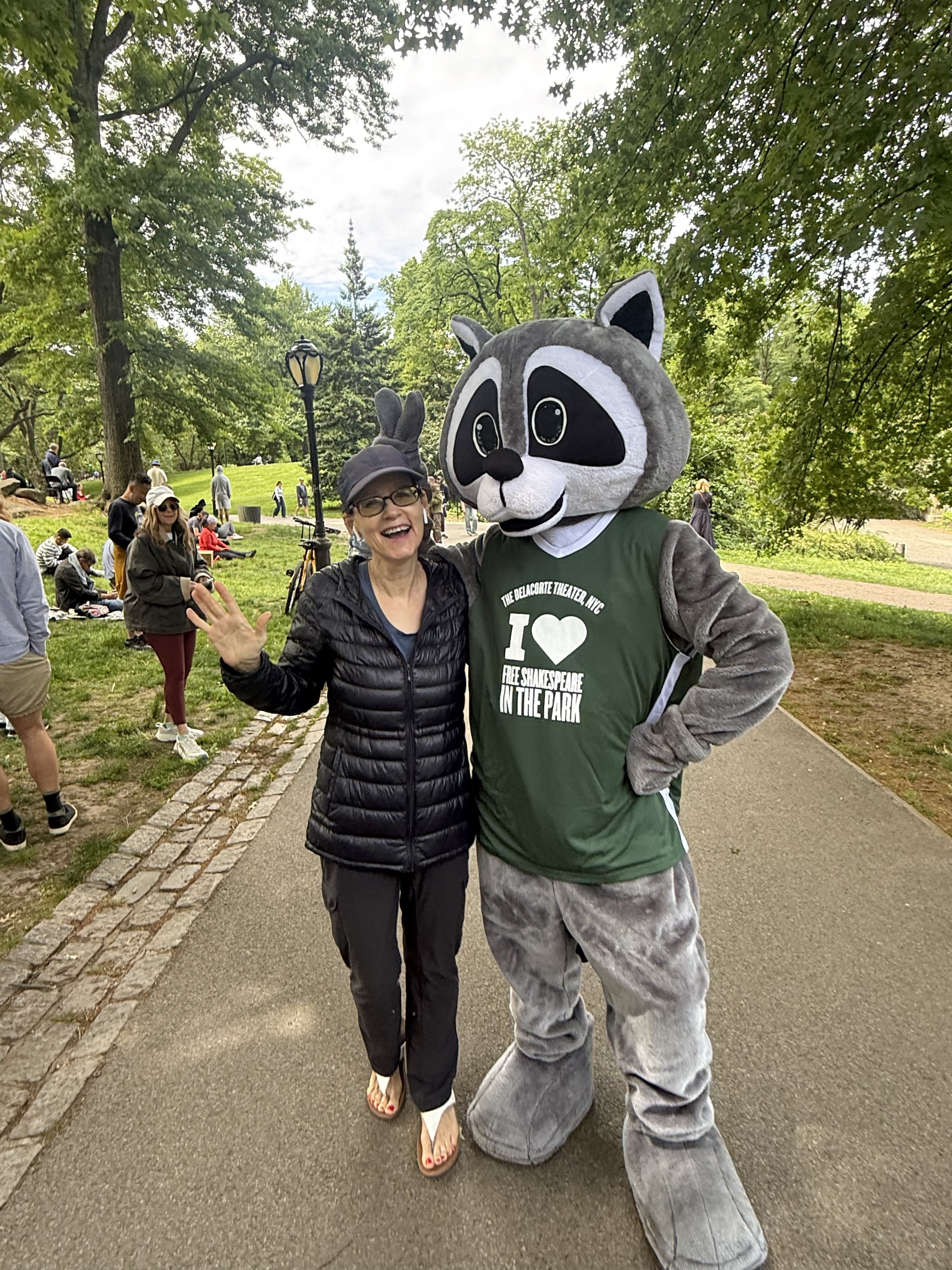
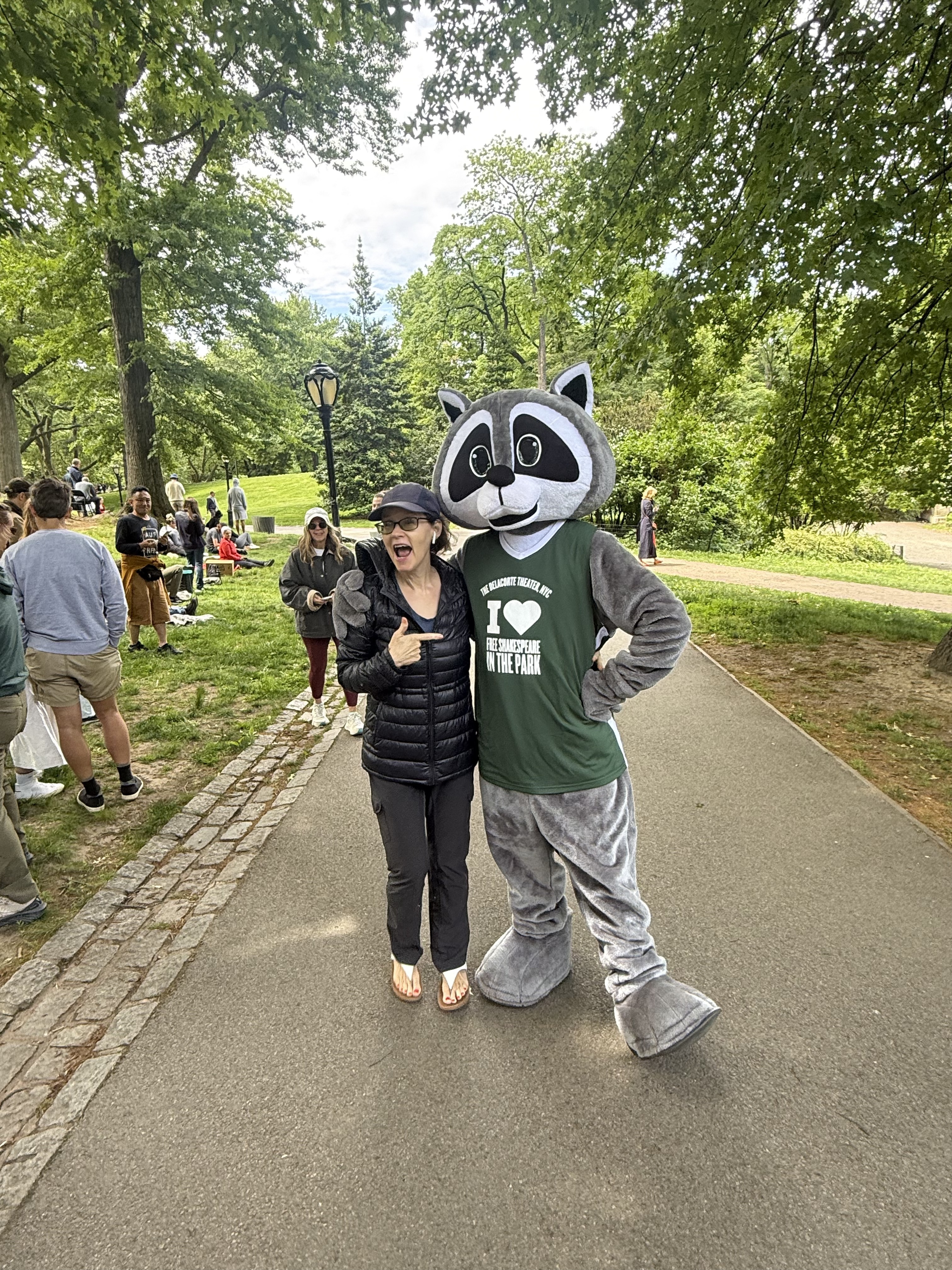
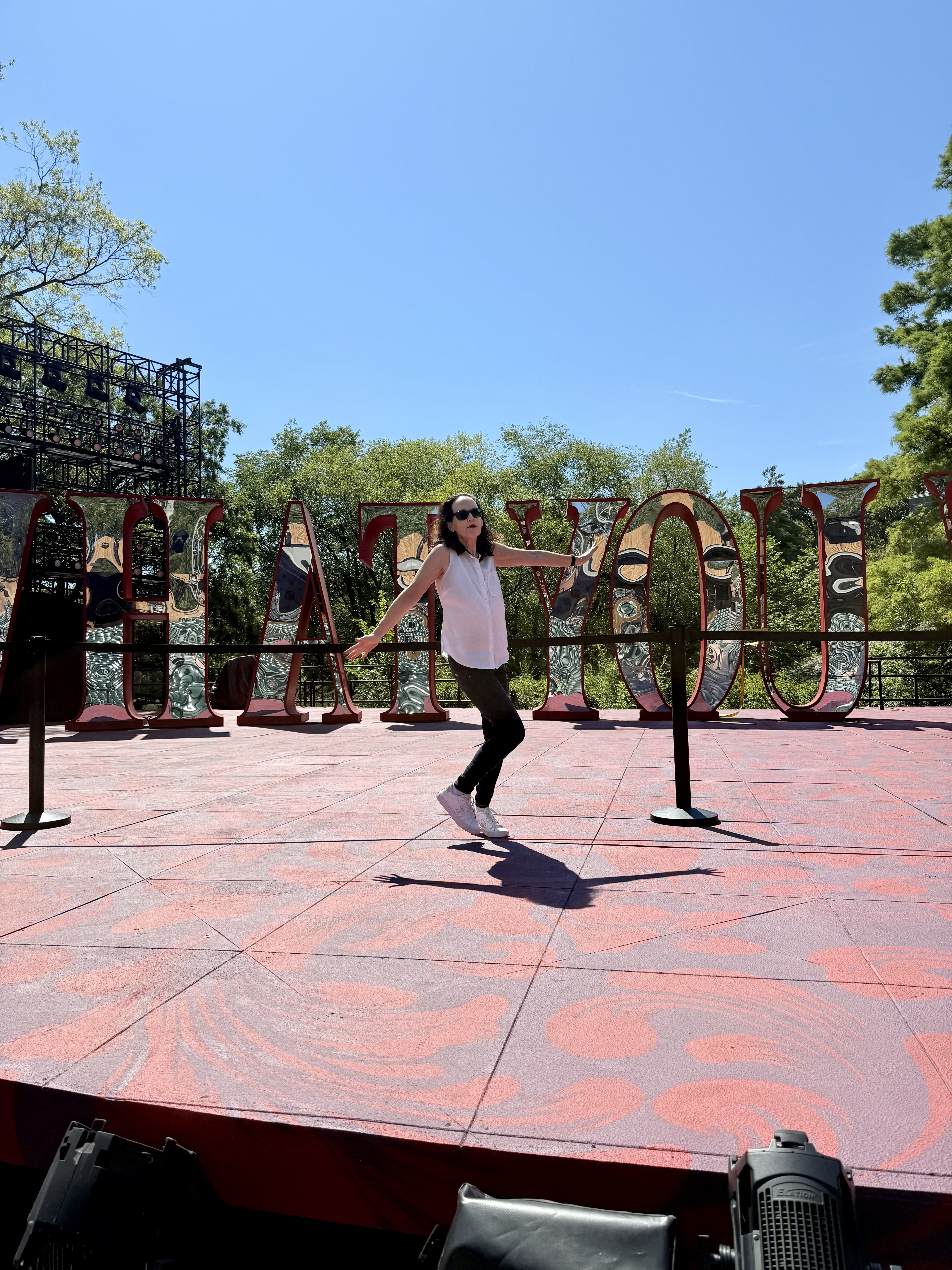
The Delacorte has on occasion allowed guests onstage either before a show begins, or in the case of the musical Hair in 2007, up to dance on stage with the cast during the curtain call (I wish I had a photo of myself from that!). Recently they have also been holding open houses periodically during the summer where you can visit the theater during the day and even take your picture on stage (see HERE). They also introduced a mascot last year, Romeo the Raccoon, who will sometimes visit the line of people waiting for tickets, or appear at family-friendly events (see HERE and HERE for some videos from this year). Why a raccoon? Because raccoons often wander on stage during performances! Photos are strictly forbidden during the performances but allowed during curtain calls (see a video from last year HERE). Note that I met and took my picture with Oskar Eustis a few years ago (photo above). When it rained during the performance (more about that later), he was on stage along with others squeegeeing the stage so that they could resume (photo was posted farther up).
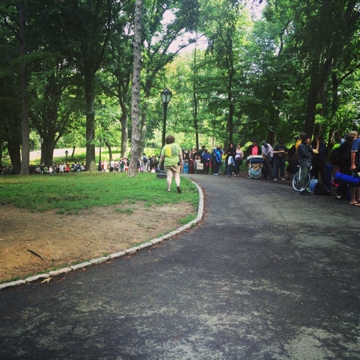
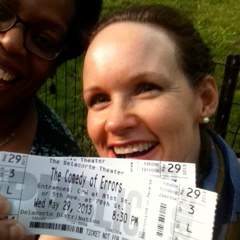
So how do you get the free tickets? Every year check out the most recent information on the Public Theater website for Shakespeare in the Park, but in general the ways are: wait on line in person in the park in the morning (see above – there are separate lines for those requiring ADA accommodations and older adults), enter a lottery in person at the Public Theater downtown on Astor Place, win the online Today Tix lottery, wait in the stand by line to see if tickets are returned by a donor, or go to a borough distribution on select days (always noted on the website). How hard is it to get tickets? It is entirely variable. A production with a well-know star will always be harder to get (for Al Pacino’s The Merchant of Venice, people would camp out on Central Park West late evening to be escorted in to wait in the park once it opened at 6am). Later in the run is always harder than earlier before reviews or word of mouth has drawn attention to the production. A day where it looks like it might rain always makes it easier to get tickets, but there is a chance your performance will be canceled (and since your tickets were free, there is no rescheduling). If it rains a little, they will keep going. If it rains a lot but stops, they might pause the production and pick back up. This summer (2026) it rained a lot, and many performances were canceled, or couldn’t perform the second act (including the very first performance of The Winter’s Tale), and many times people sat in light rain. You can bring a poncho but not have an umbrella open when the performance is happening, as it blocks the views of others behind you.
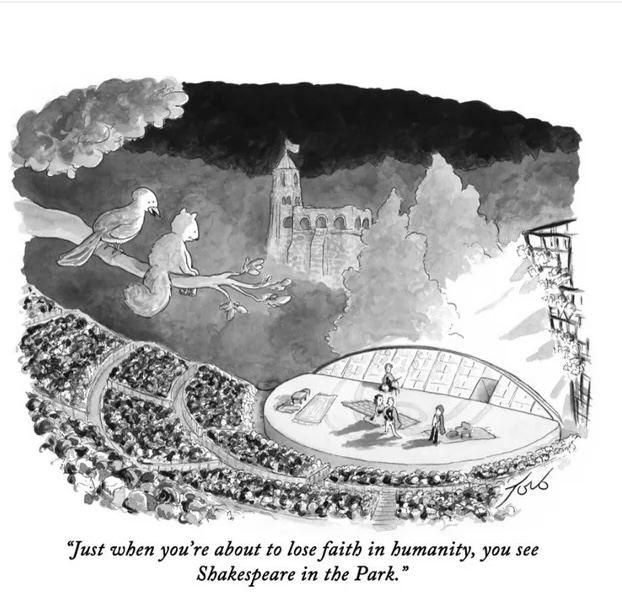
Over six million people have seen free Shakespeare (and other) performances at the Delacorte. The cartoon below, by Tom Toro, was published in The New Yorker in 2015. It sums up how I feel about the astonishing gift that is Shakespeare in the Park. “Just when you’re about to lose faith in humanity, you see Shakespeare in the Park.”
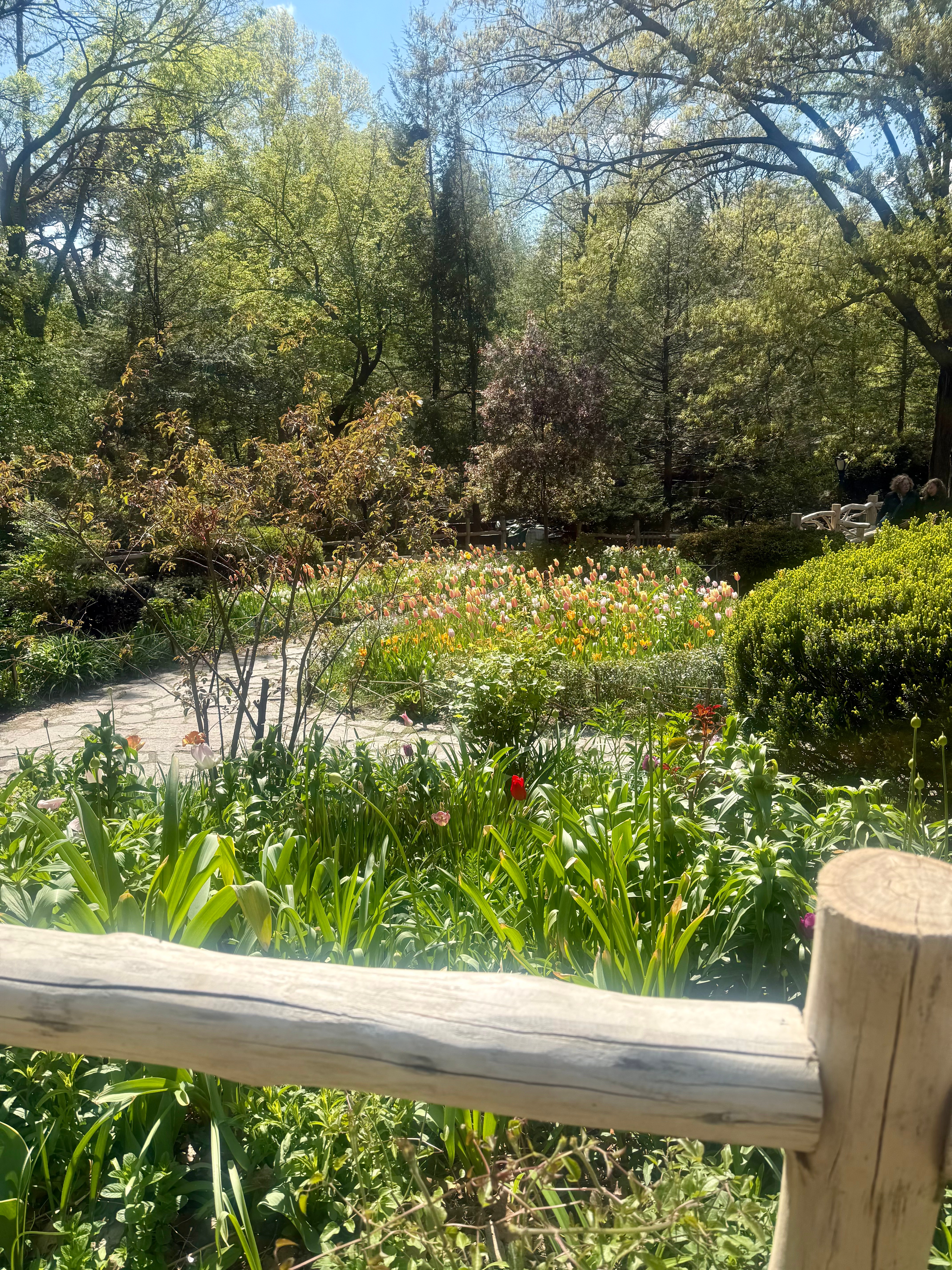
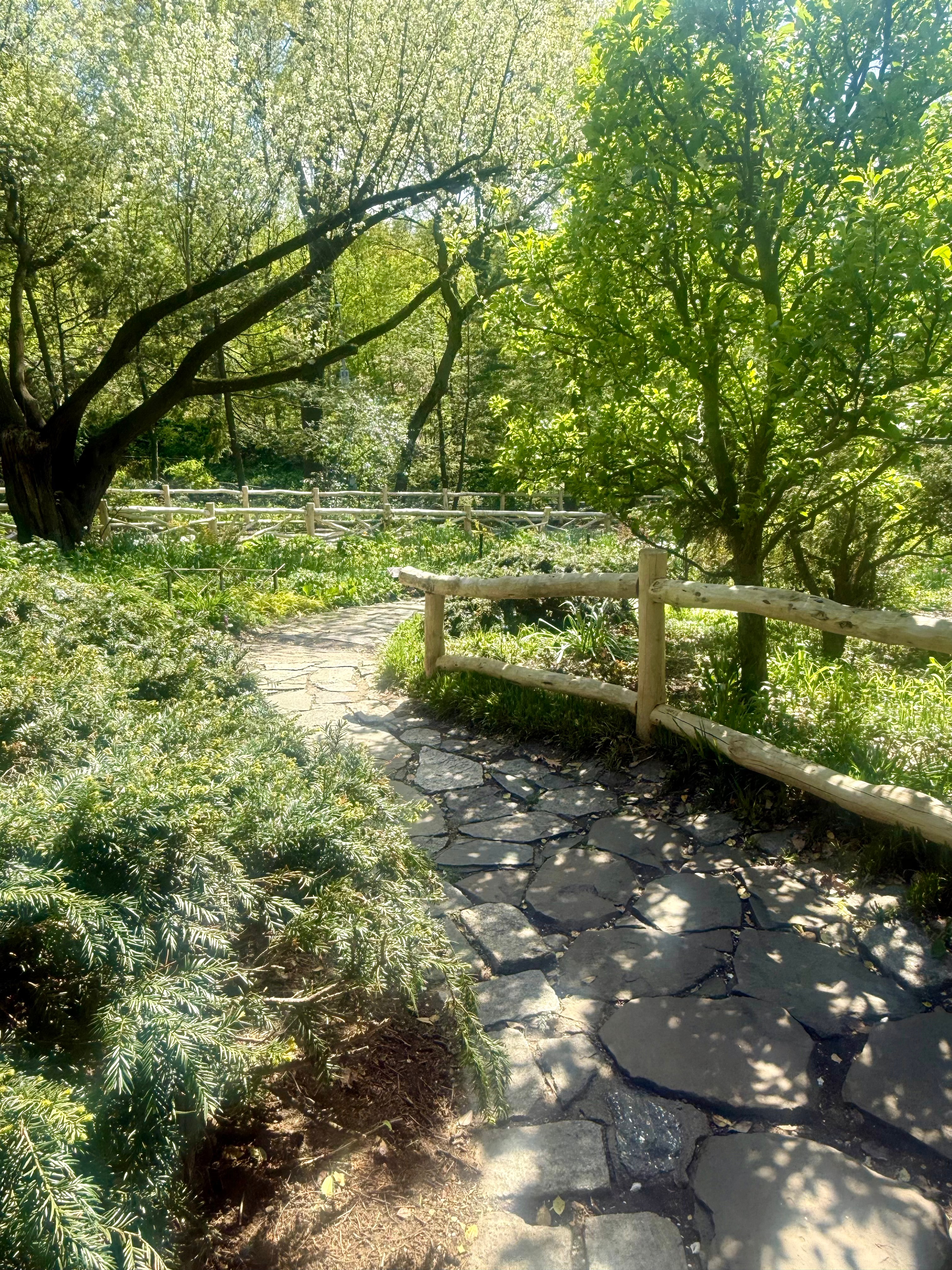
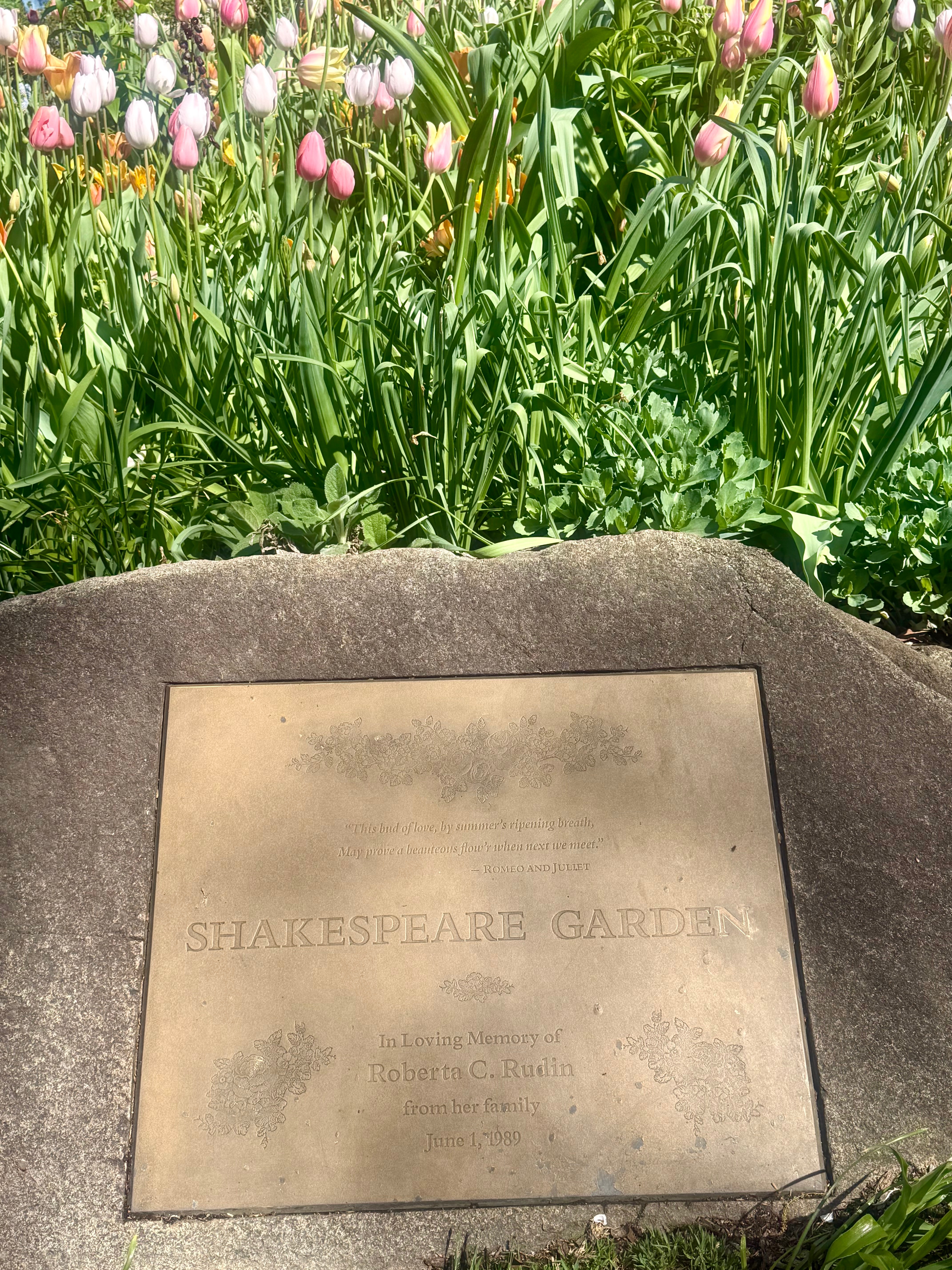
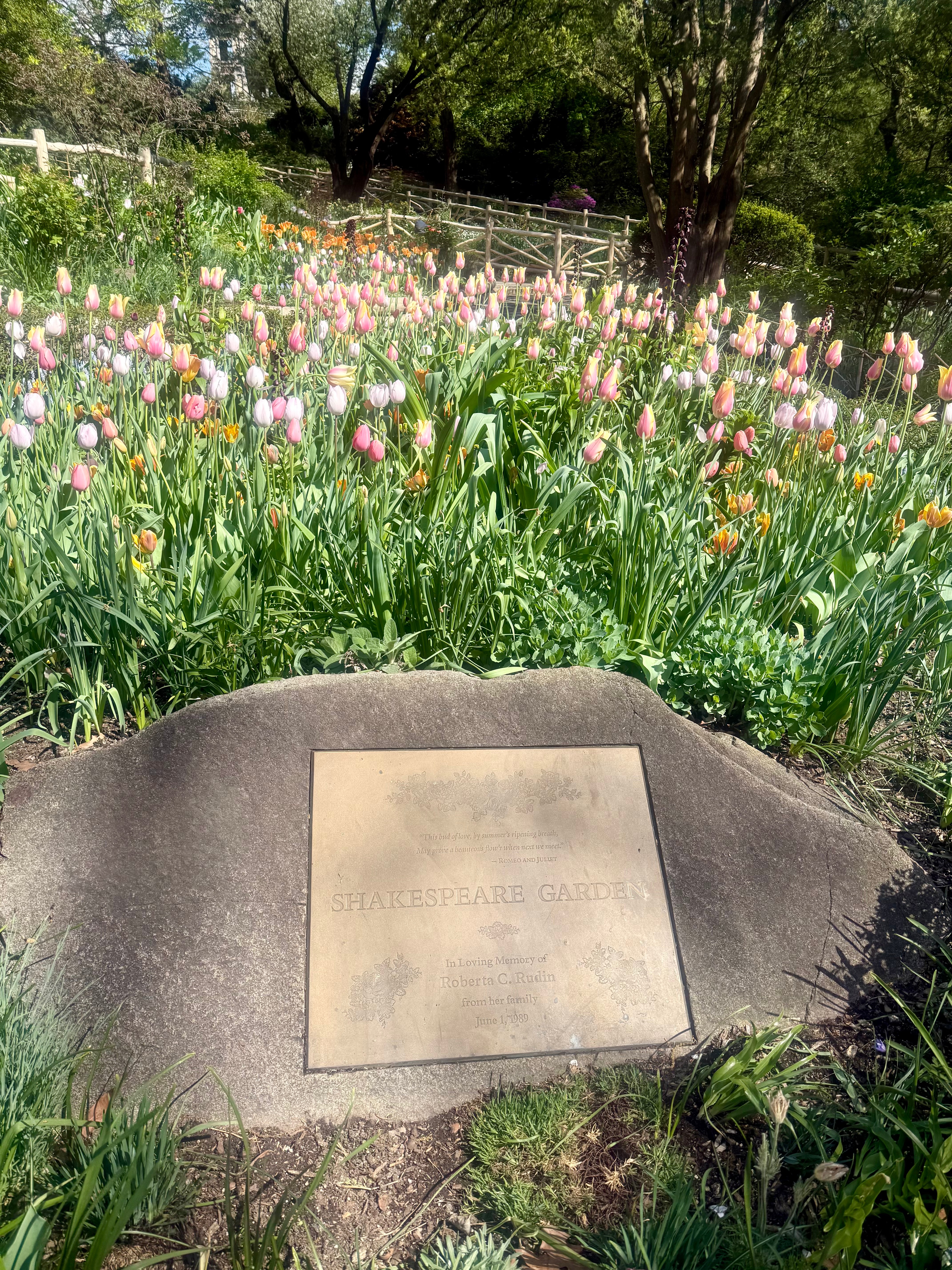
The Shakespeare Garden in Central Park

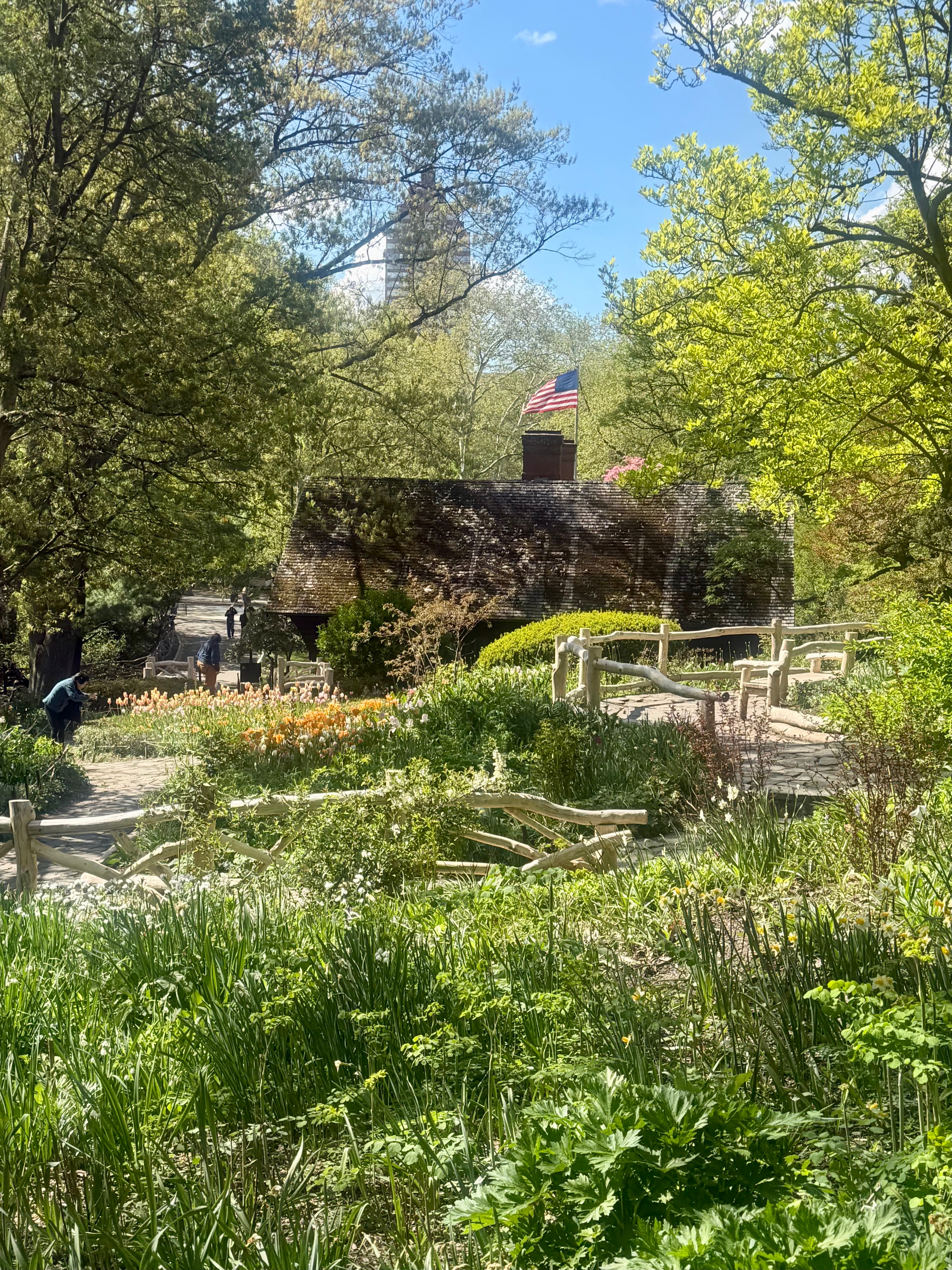
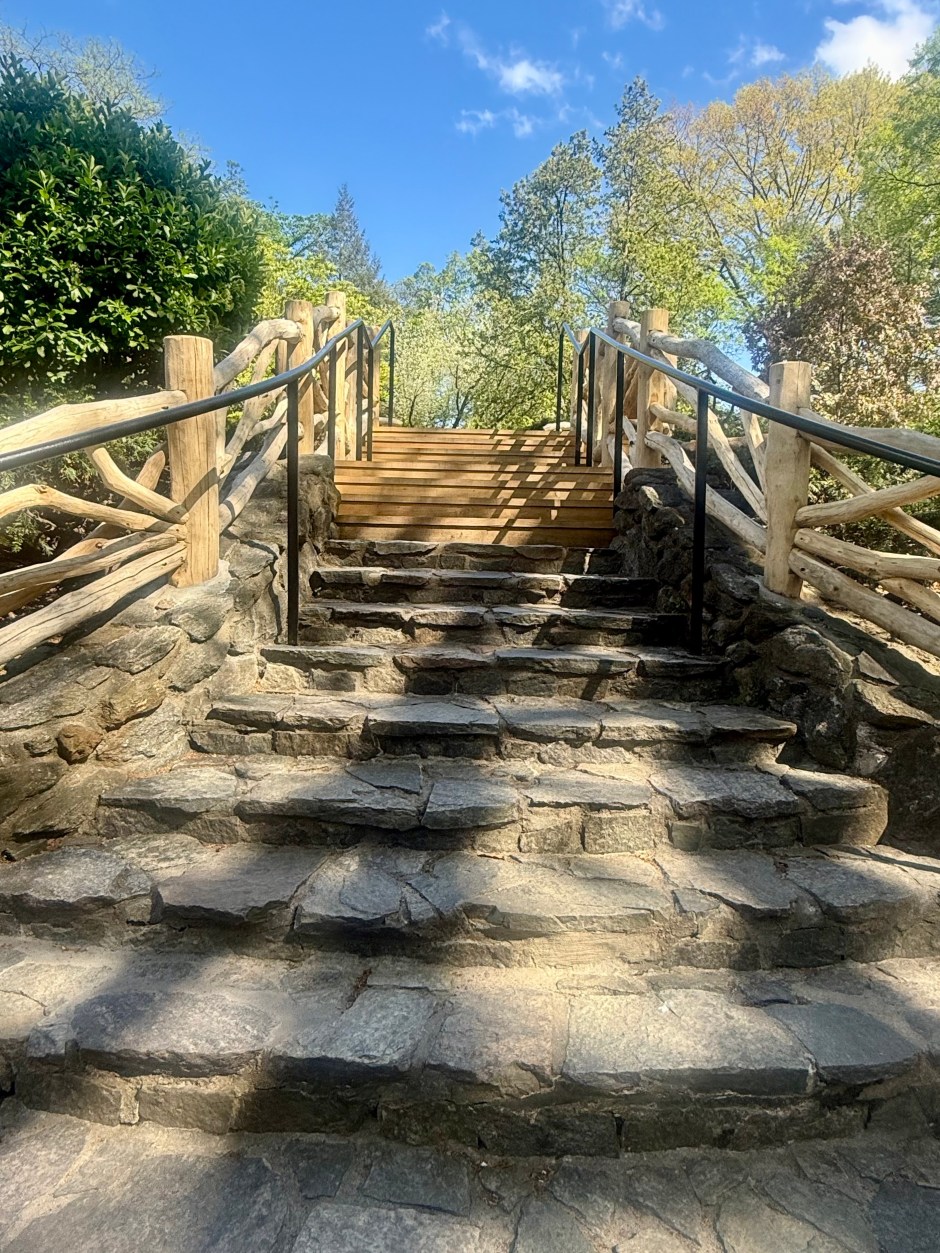
I have written many times about Central Park (Central Park in Spring, Central Park in Autumn, Central Park in winter (with photos), and Strawberry Fields in Central Park just to name a few!), and it is possible to constantly explore Central Park and keep finding new things to appreciate. Recently I found myself peacefully wandering the Shakespeare Garden and taking photos of this very special and beautiful place.

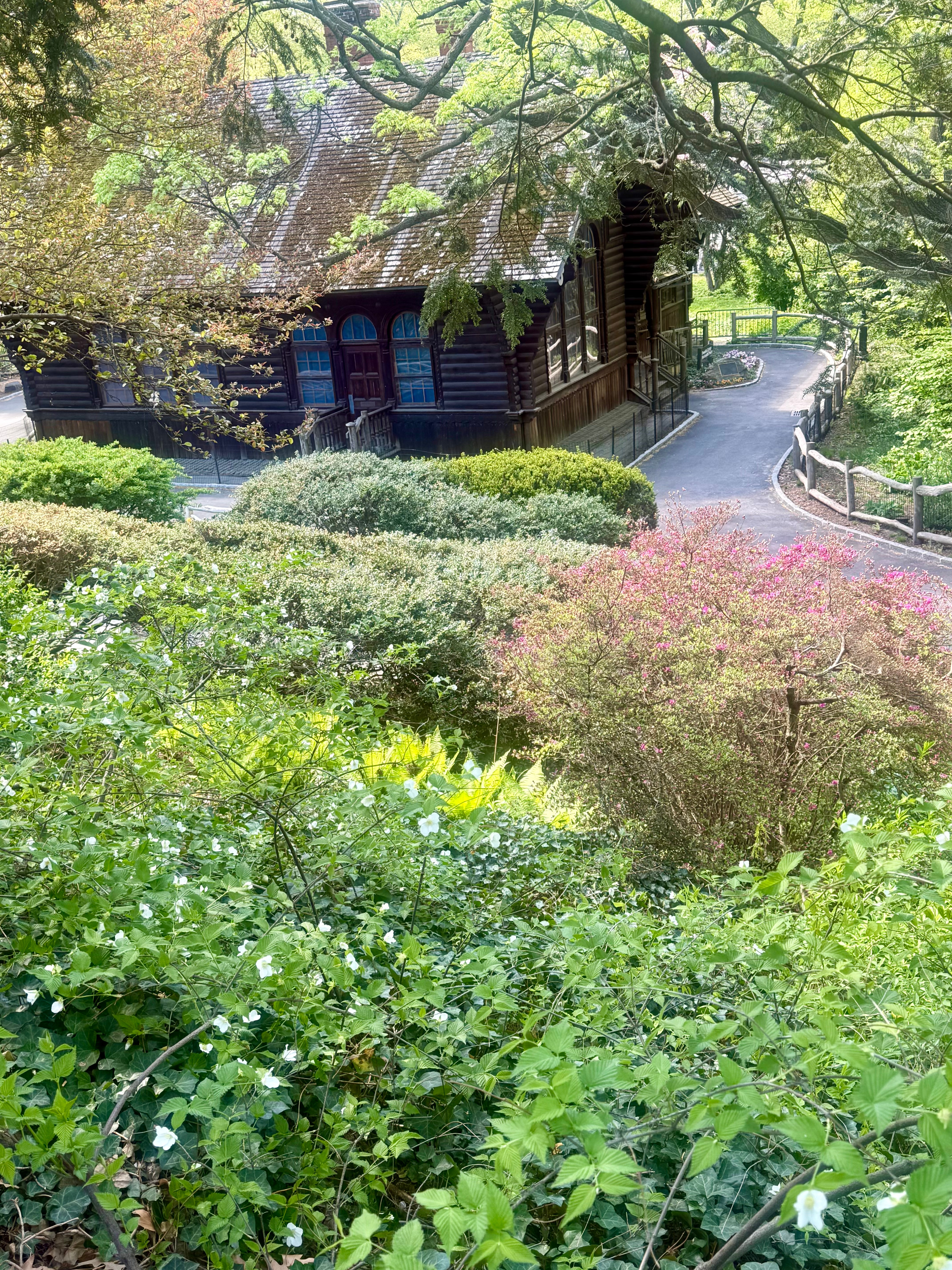
The Shakespeare Garden is located mid-park, closer to the west side, and closest to the 81st Street entrance. It is just behind the Swedish Marionette Theater, and to the side of the Delacorte Theater, home to free Shakespeare in the Park every summer. The park was once called “Garden of the Heart” and was designed to evoke an English cottage garden. It was renamed after Shakespeare in 1916 during the commemoration of the 300th anniversary of Shakespeare’s death.

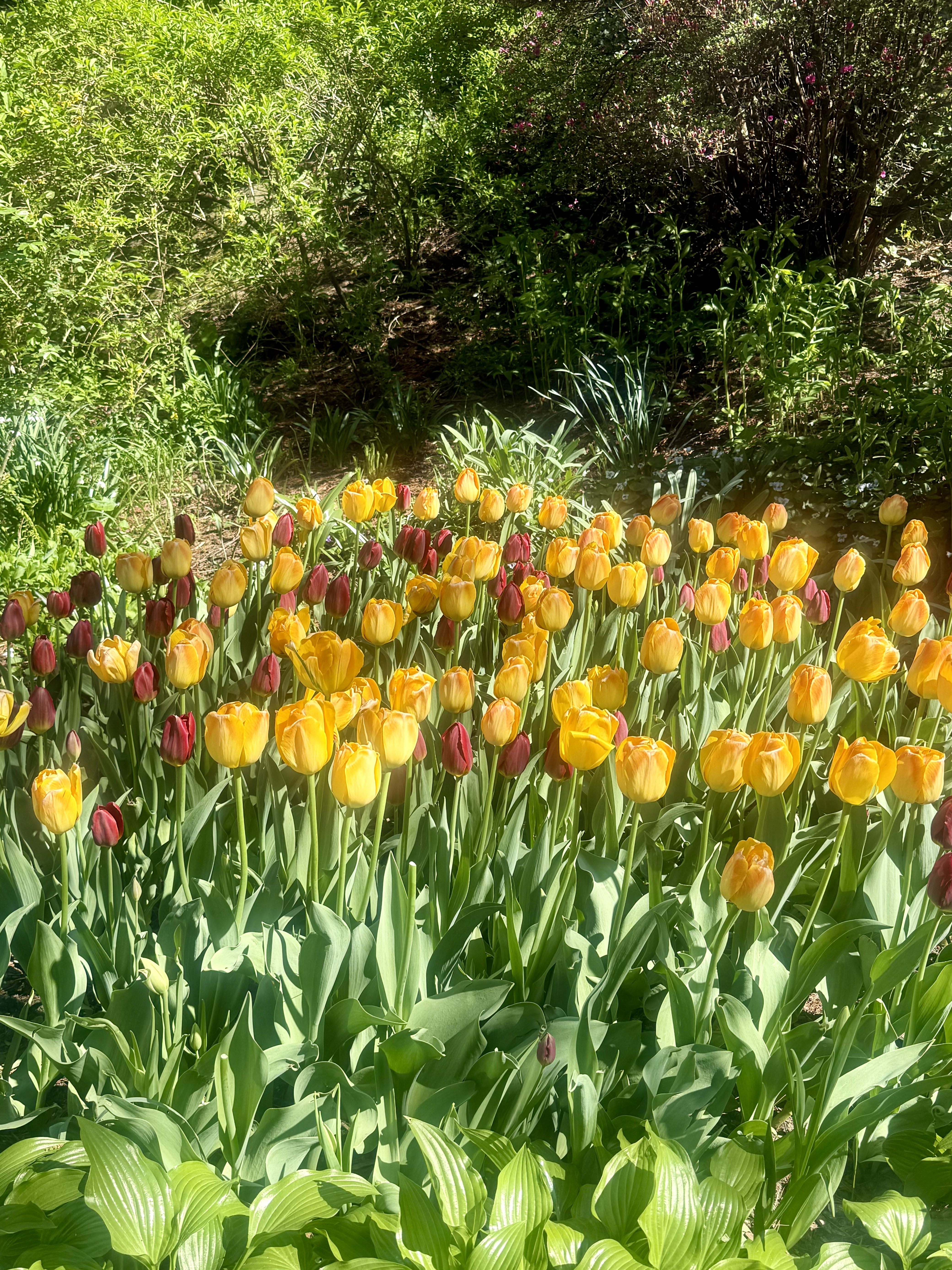
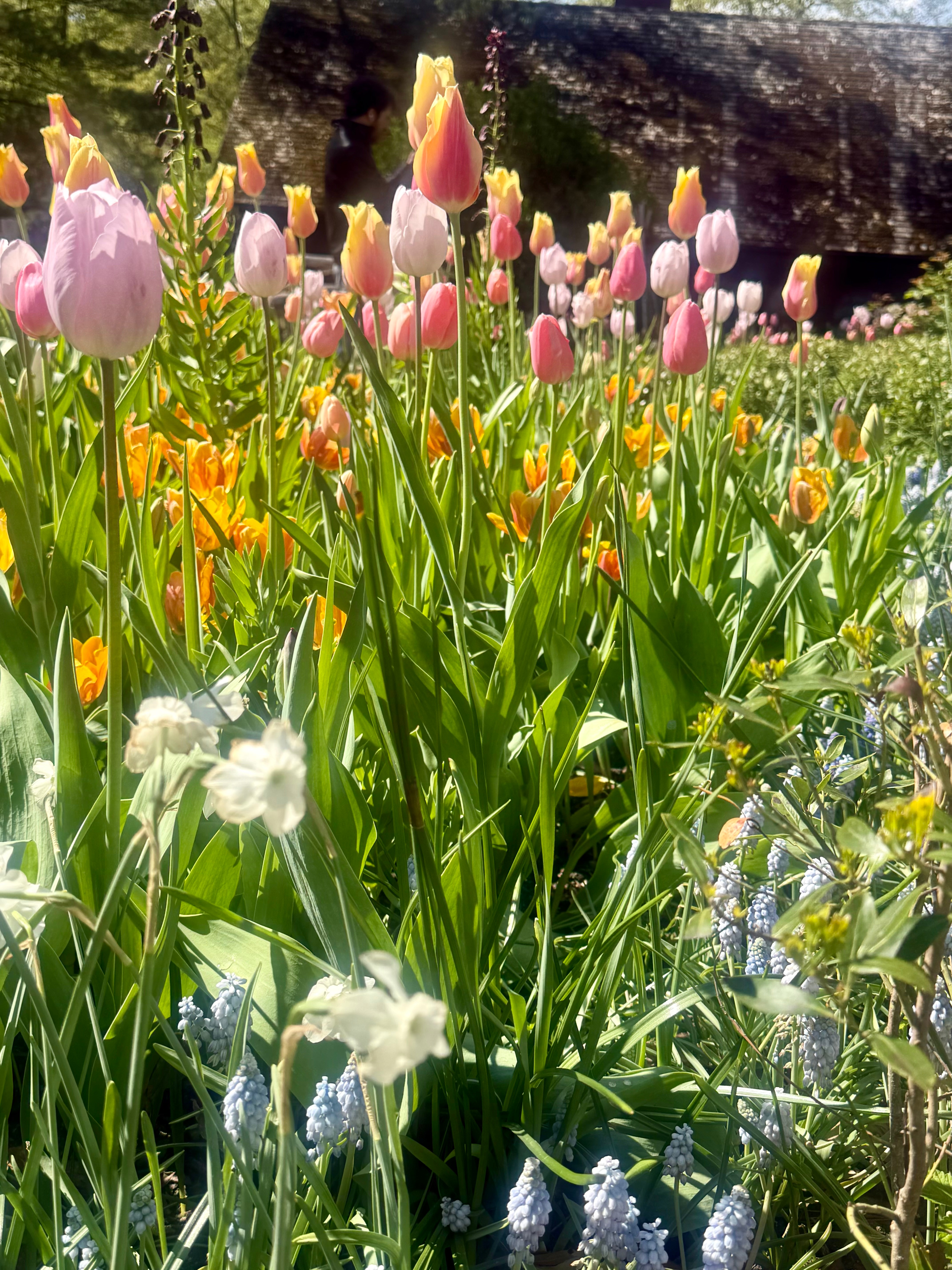
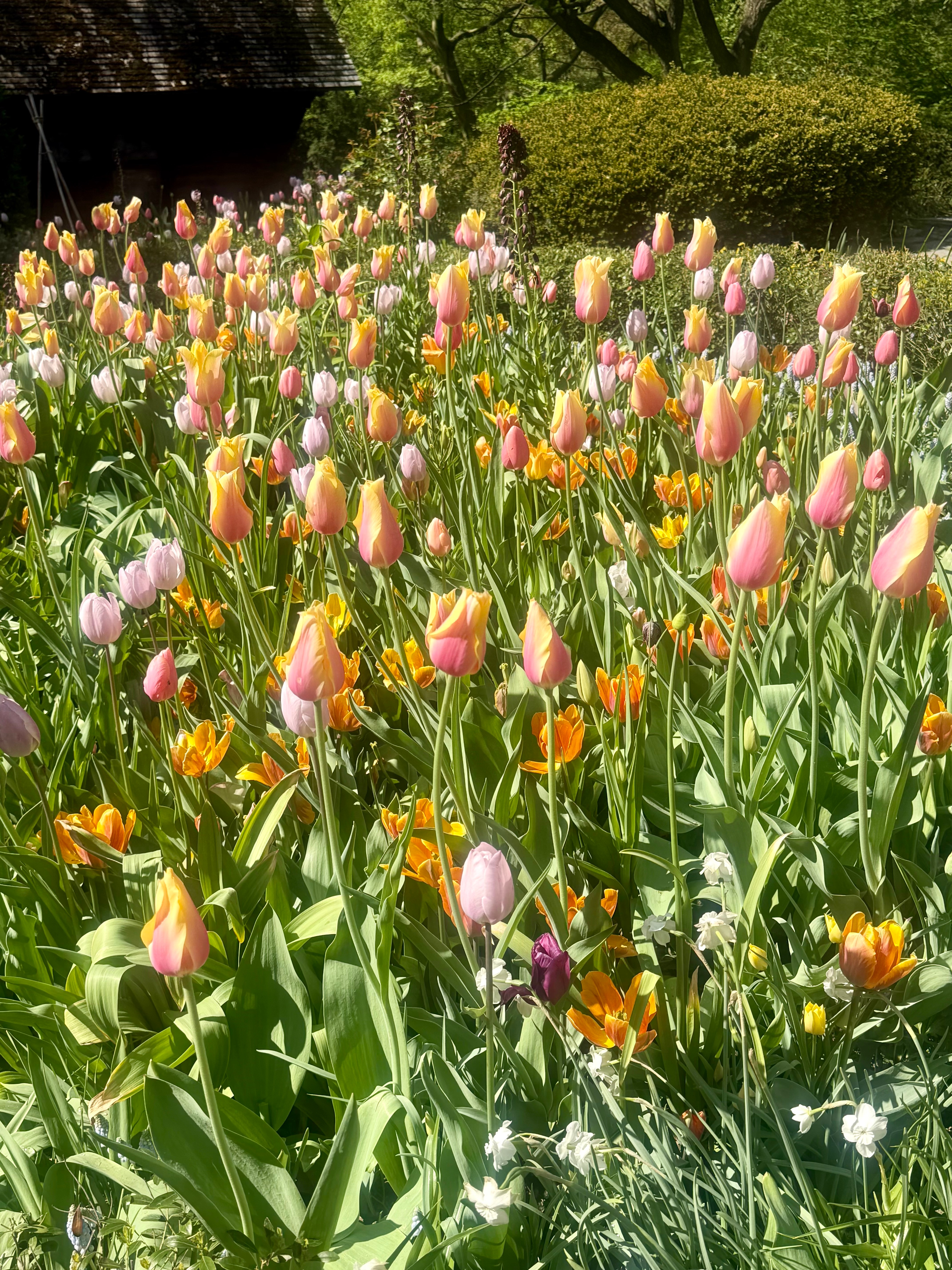
The garden is four acres in size, and beautiful all throughout the year – but perhaps most gorgeous in spring, when I took these photos. In the spring, I found daffodils, anemones, and many tulips, in addition to the other plants there throughout the year including lilies, roses, crocuses, and black-eyed Susans.

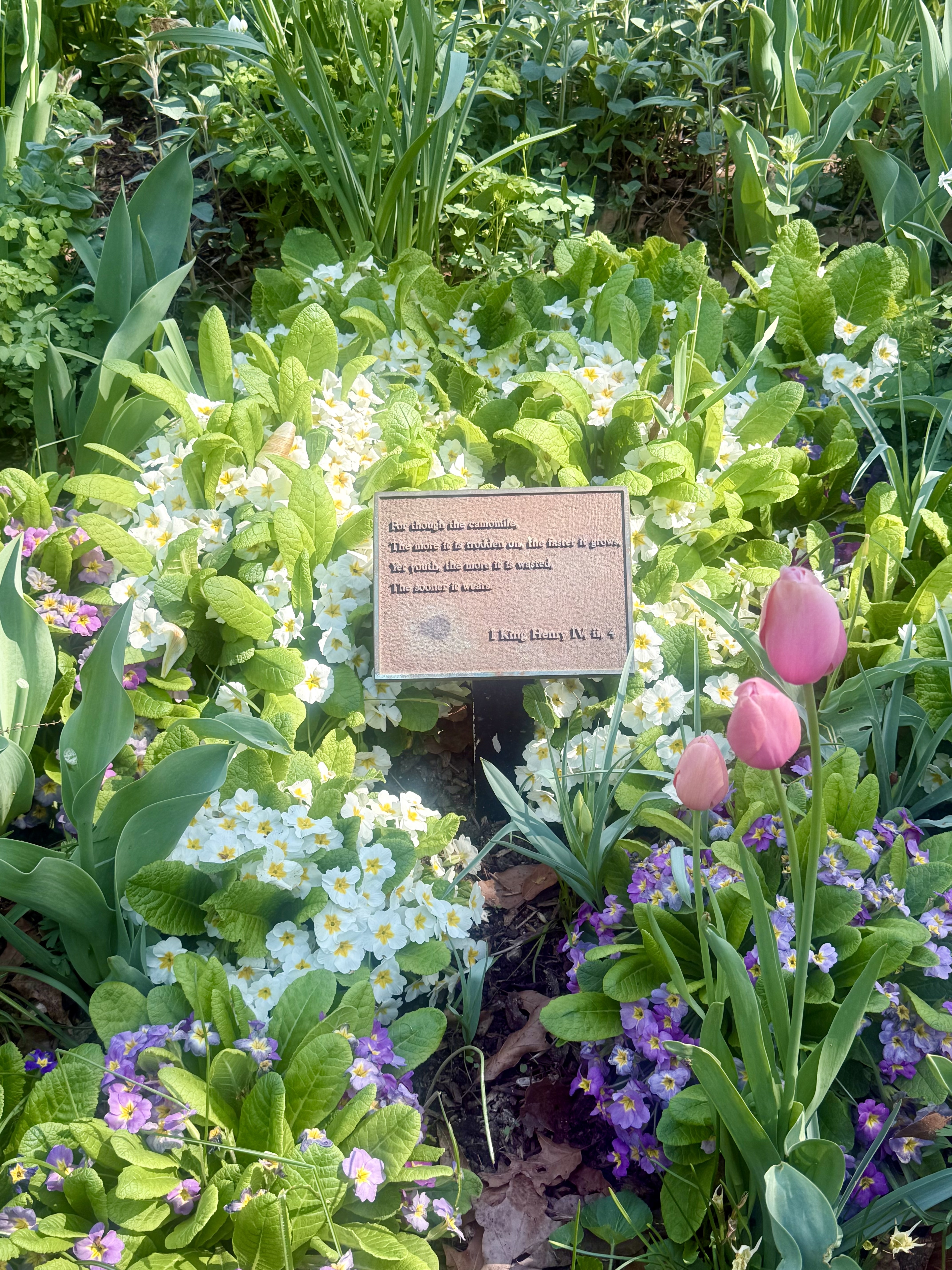
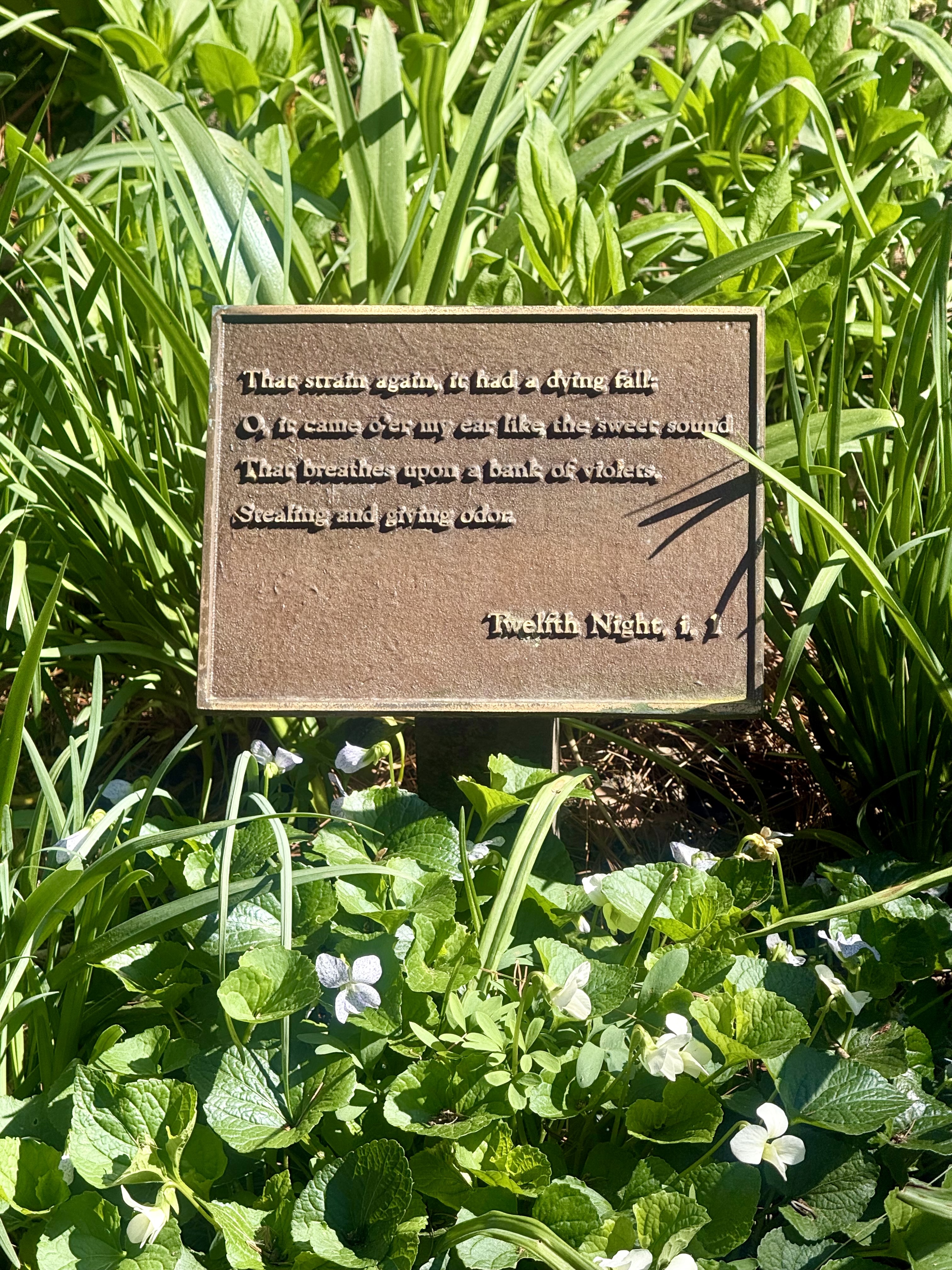
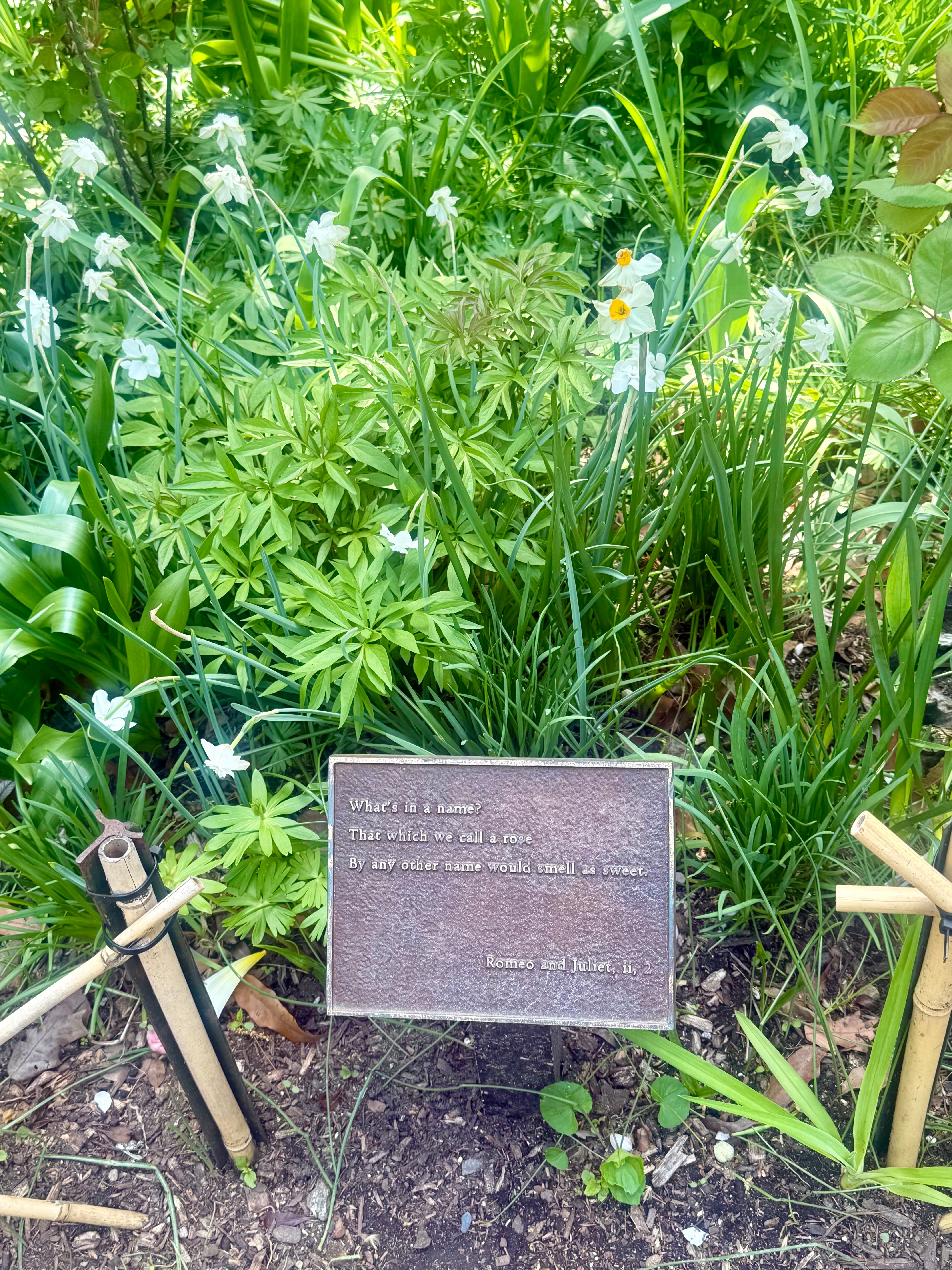
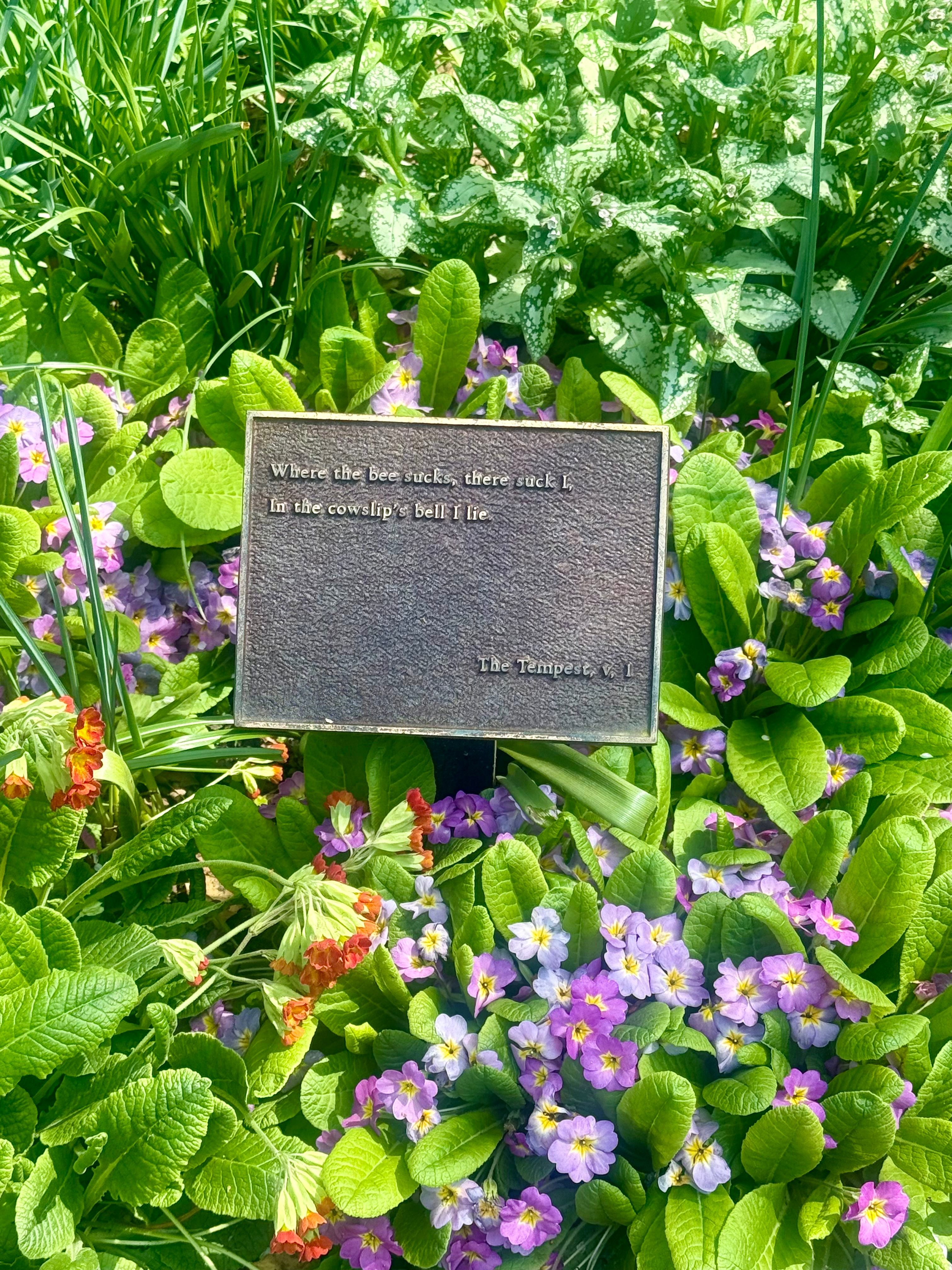
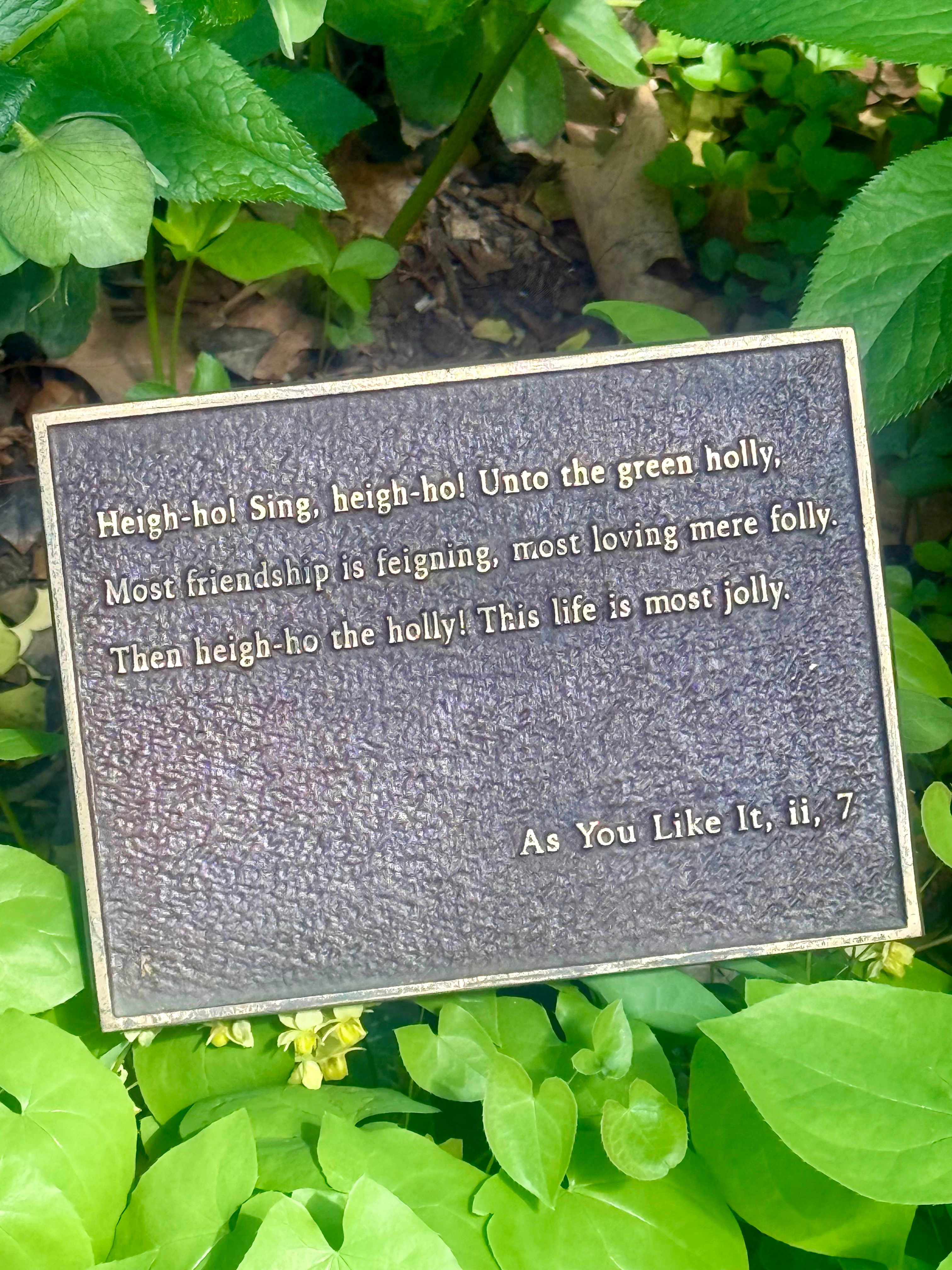
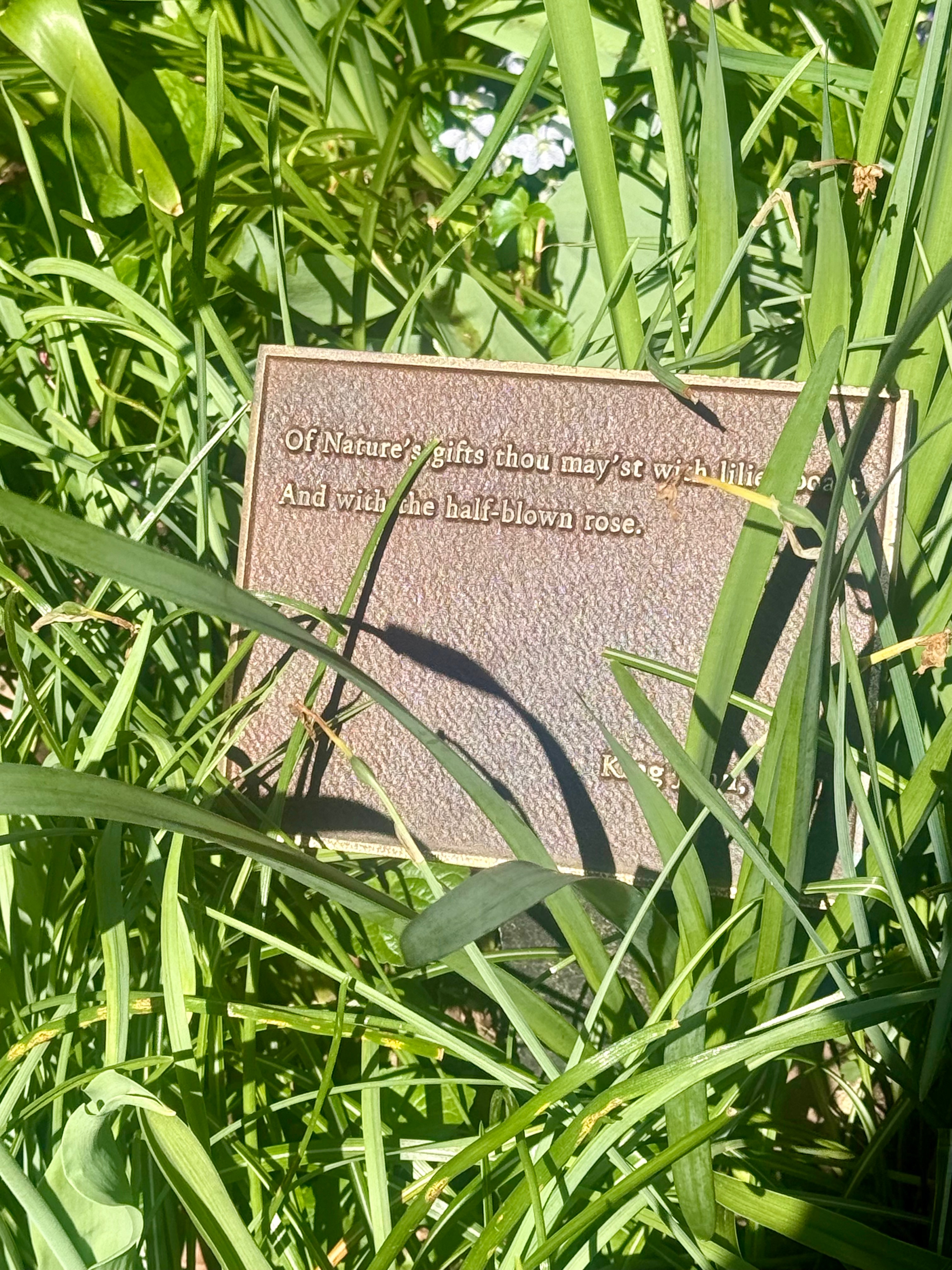
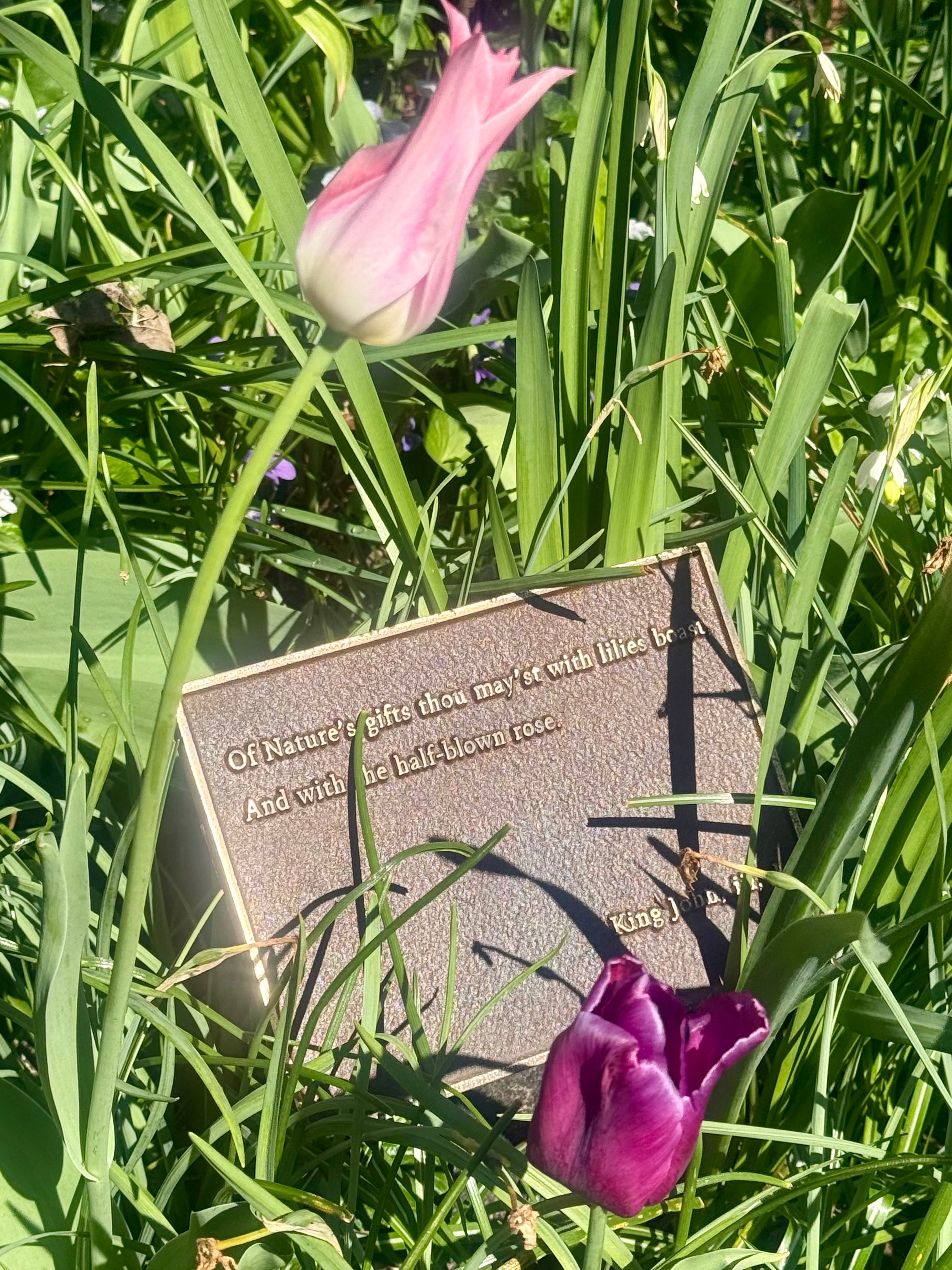
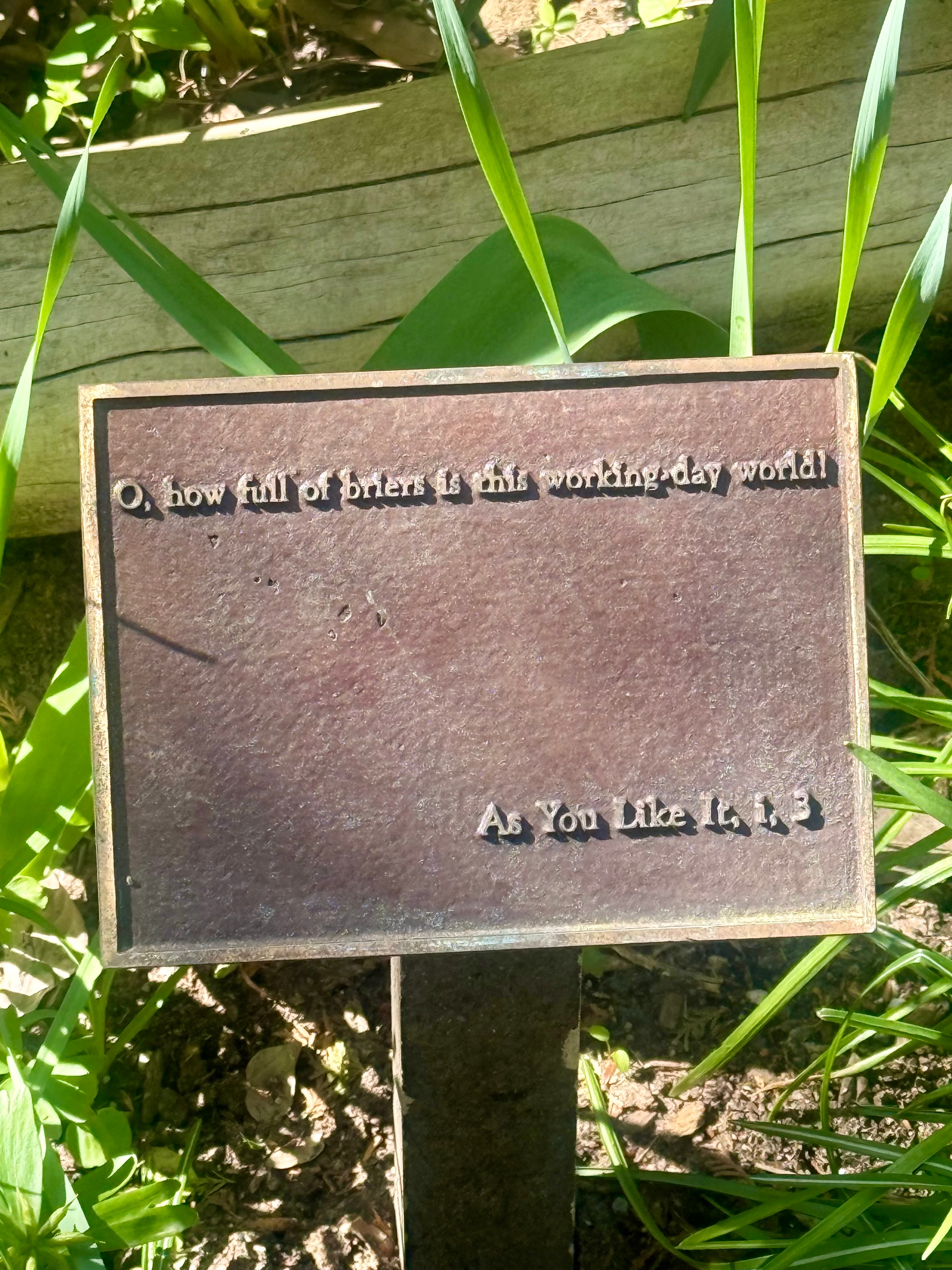
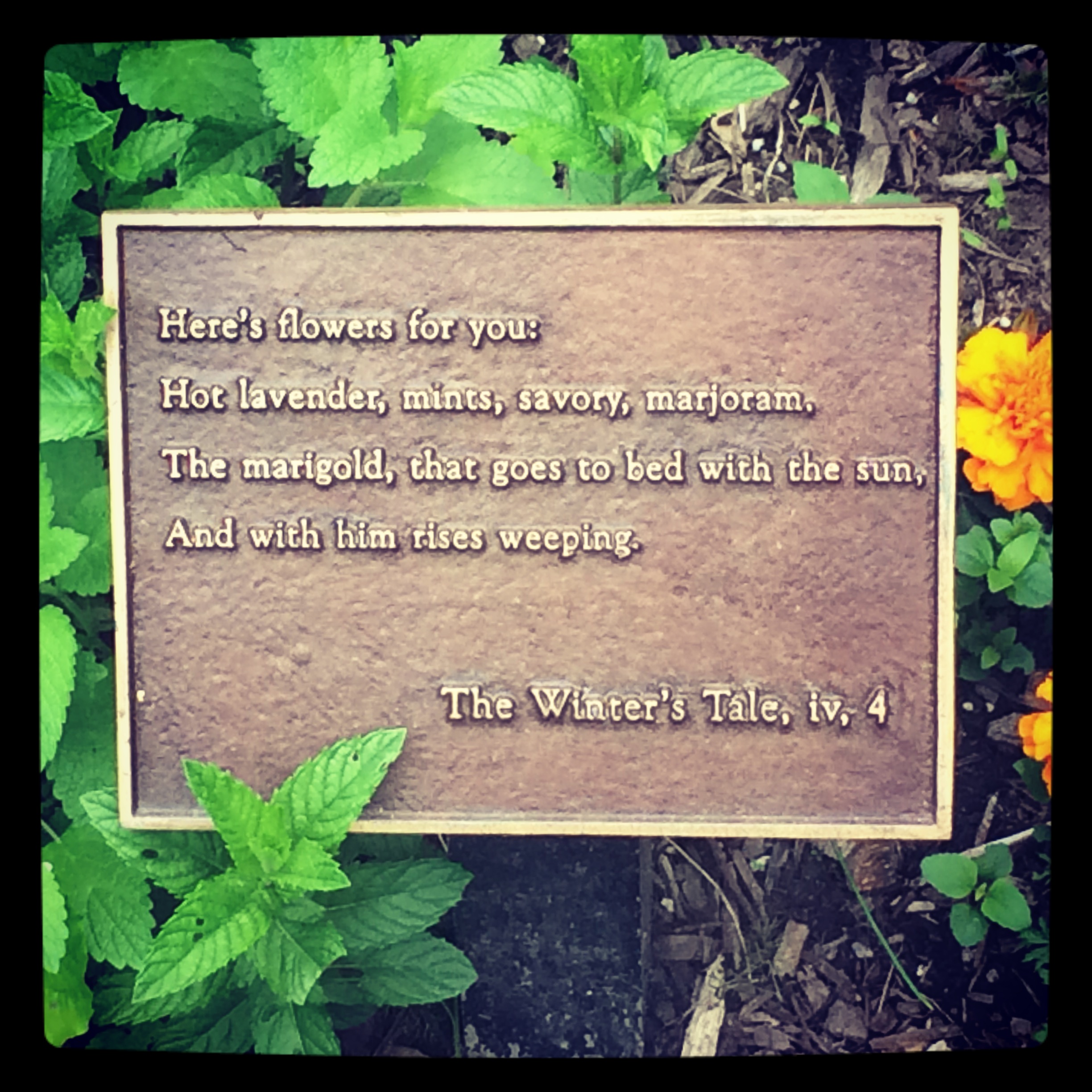
For me, the most unique experience in the Shakespeare Garden is looking for the quotes on bronze plaques, referencing trees, shrubs, flowers, and herbs mentioned in William Shakespeare’s plays and poems – plants that change according to the season. You might find rosemary and pansies – alluded to by Ophelia in Hamlet;  or thistle – mentioned in the play Much Ado About Nothing. There is even a white mulberry tree that is said to have grown from a graft of a tree planted by Shakespeare himself in 1602!

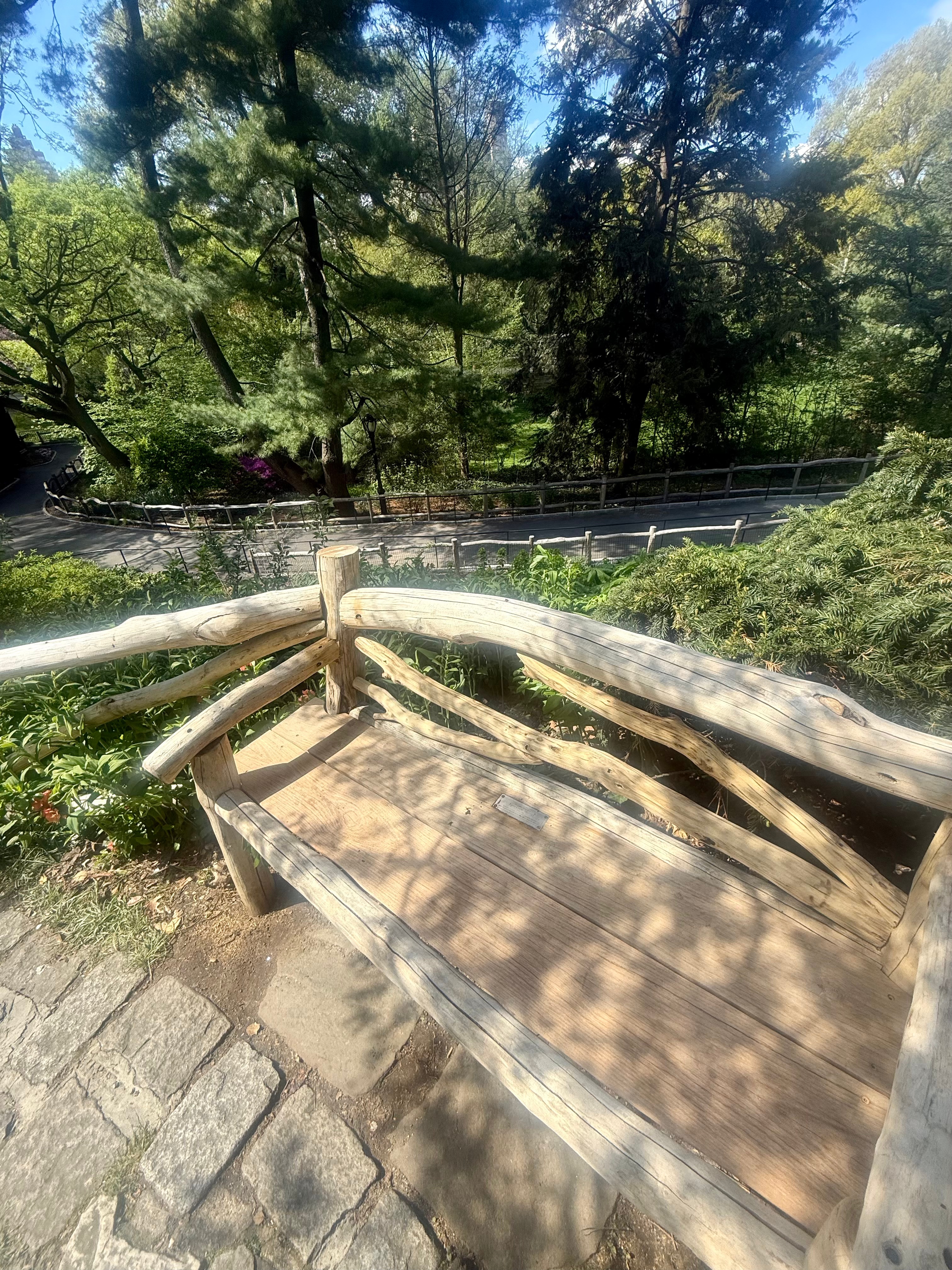
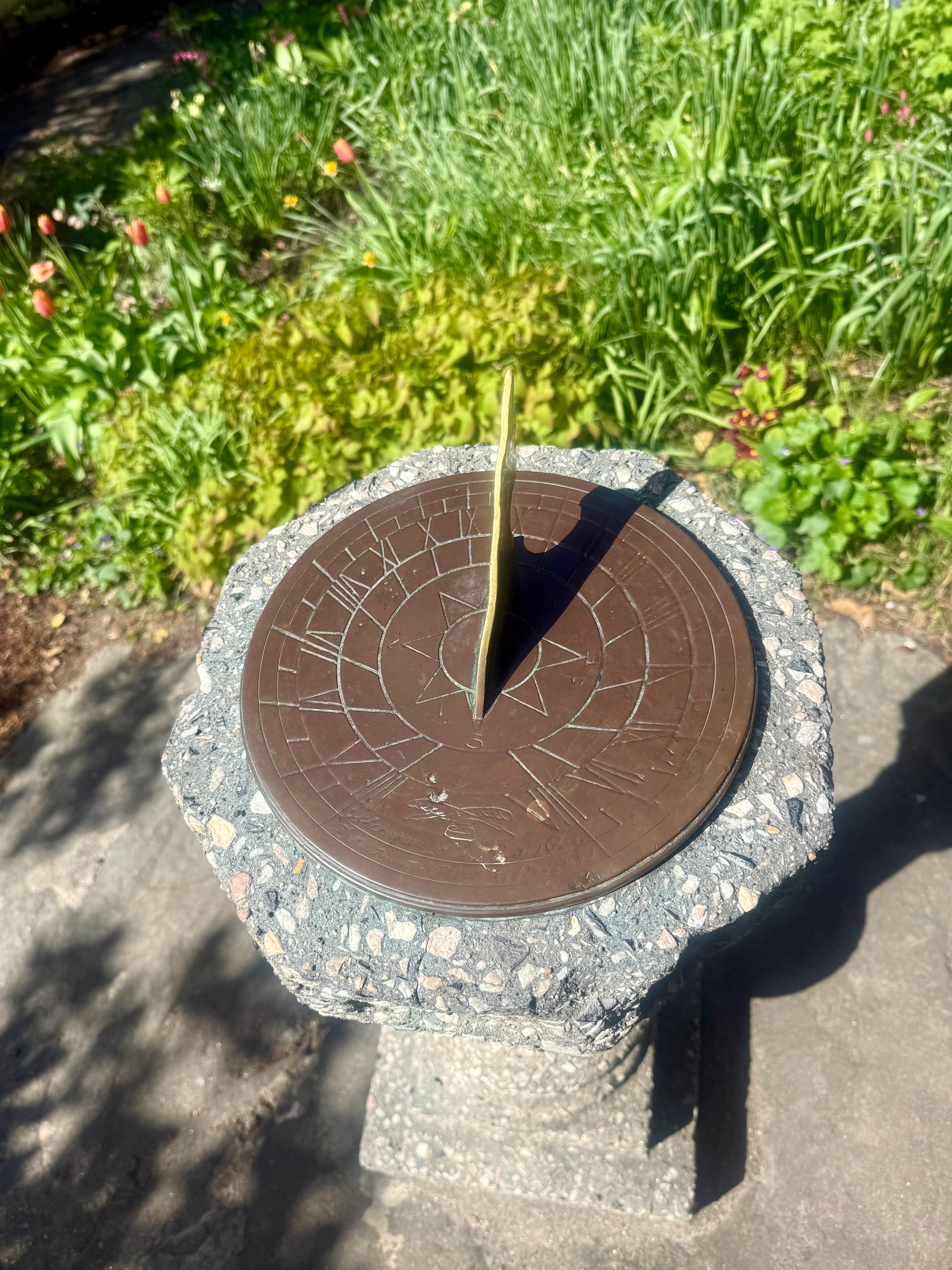
There is a working sundial – it is accurate, but remember that it is set up for standard time so appears to be an hour off when we are on Daylight Savings Time. Nearby is a bench dedicated to the actor Richard Burton, famous for his skill in performing in Shakespeare plays.

The large curving bench at the highest point in the Garden is called the “whisper bench.” I didn’t get a photo when I was there because people were sitting there, but because of its curvature, you can whisper something at one corner and it will only be heard by a person listening at the other corner. The garden also provides a home for many pollinators, including bees, butterflies, and hummingbirds.

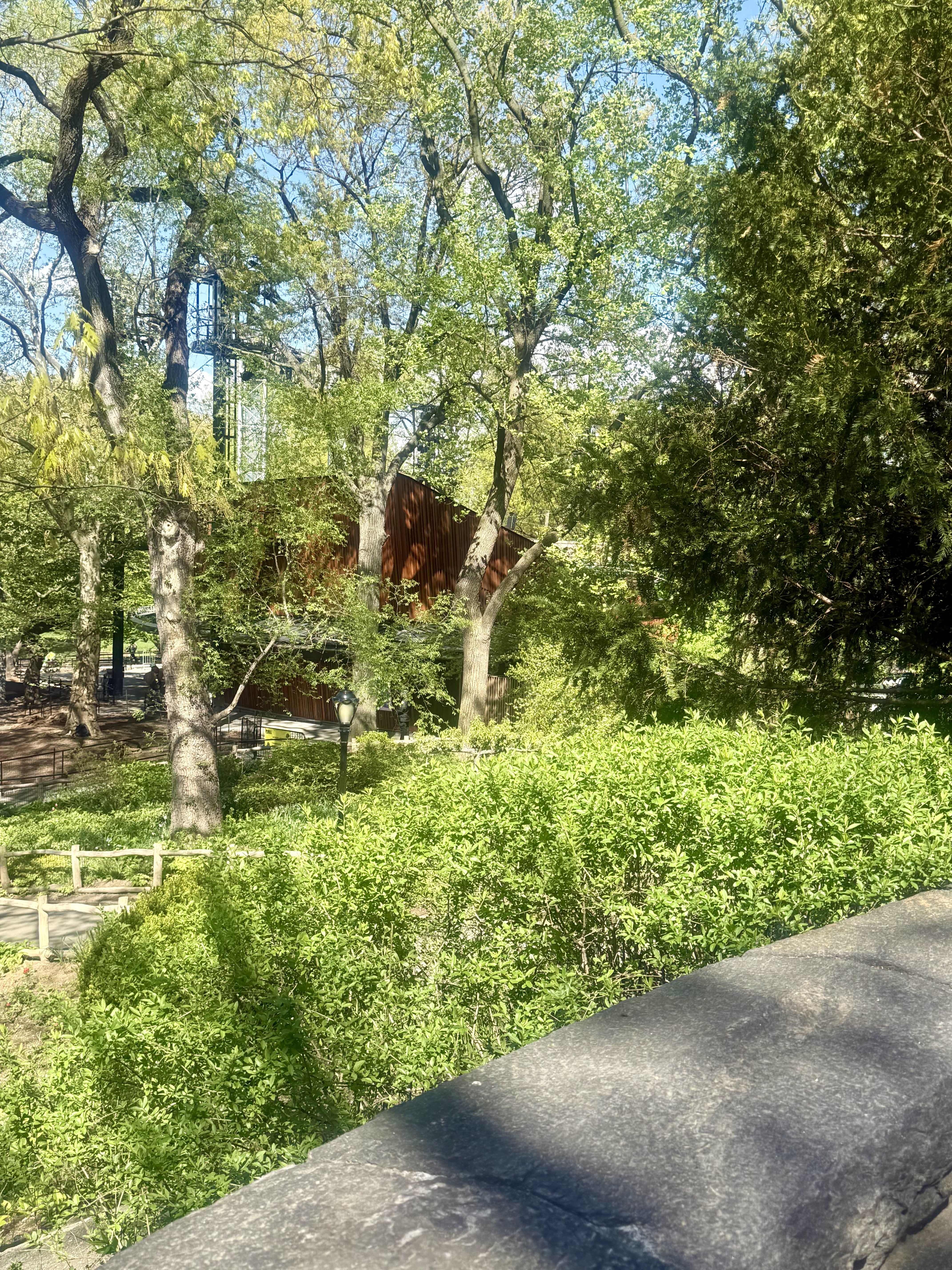
Looking at the Delacorte, I realized I have not written about Shakespeare in the Park, so expect a post about that this summer. There are so many special places in Central Park, but the Shakespeare Garden and the iconic spots nearby (including not just the Delacorte but Belvedere Castle, Turtle Pond, and the Great Lawn) is a section I find myself drawn to regularly. And a stroll through the Shakespeare Garden, meditating on the literary richness of the legacy of these plays as well as the incredible beauty of the natural world, is good for body and mind.

Early morning in Central Park – from the Metropolitan museum to the Shakespeare Garden

Shakespeare garden

On the first day that New York City felt like spring, I was compelled to take a dérive (an unplanned walk through an urban environment) through Central Park and I wrote about it earlier this year. Yesterday, on the first morning that it truly felt like summer, I was drawn to the park yet again, this time beginning on Fifth and 84th Street, entering the park to the north of the Metropolitan Museum of Art. On this very warm morning, it was hard to imagine the winter days I have been sledding on the sloping grounds next to the museum! Looking through the glassed in enclosure to the Temple of Dendur within the museum is most impressive at night, when there is no glare to prevent the surprising view of a temple built to Isis (and others) around 15 BC, framed by views of grand apartment buildings to the east and skyscrapers off to the south.

Dogs are allowed off leash in Central Park before 9 AM, and if you visit the park during the early morning hours, you are likely to encounter many in the Arthur Ross Pinetum, mid-park between 84th and 86th Streets. Although pine trees were an original part of Olmstead and Vaux’s plan for Central Park, they were eventually replaced by deciduous trees before being reintroduced into the park in the 1970’s. There are 17 different species of trees in the Pinetum, including some from Japan, Macedonia, and the Himalayas.

Continuing west, it is impossible to miss the Great Lawn, a 55-acre green expanse almost exactly in the geographic center of the park. Originally the site of a reservoir, it was filled in using the ground excavated from the construction of Rockefeller Center and opened in 1937 in its present form. Although there are some baseball diamonds around the edge, and a few concerts are still held on the Lawn, it is primarily an open space to relax and enjoy the park during the warmer months.

Heading south around the Great Lawn, to the east is something even older than the Temple of Dendur – Cleopatra’s Needle. An Egyptian obelisk from 1450 BC, it is one of three obelisks (the others are in London and Paris) all similarly named, and all with dubious links to Cleopatra. Our Cleopatra’s Needle is currently covered in scaffolding and is being cleaned of the grime that has accumulated since 1881 from its location in New York City’s open air.

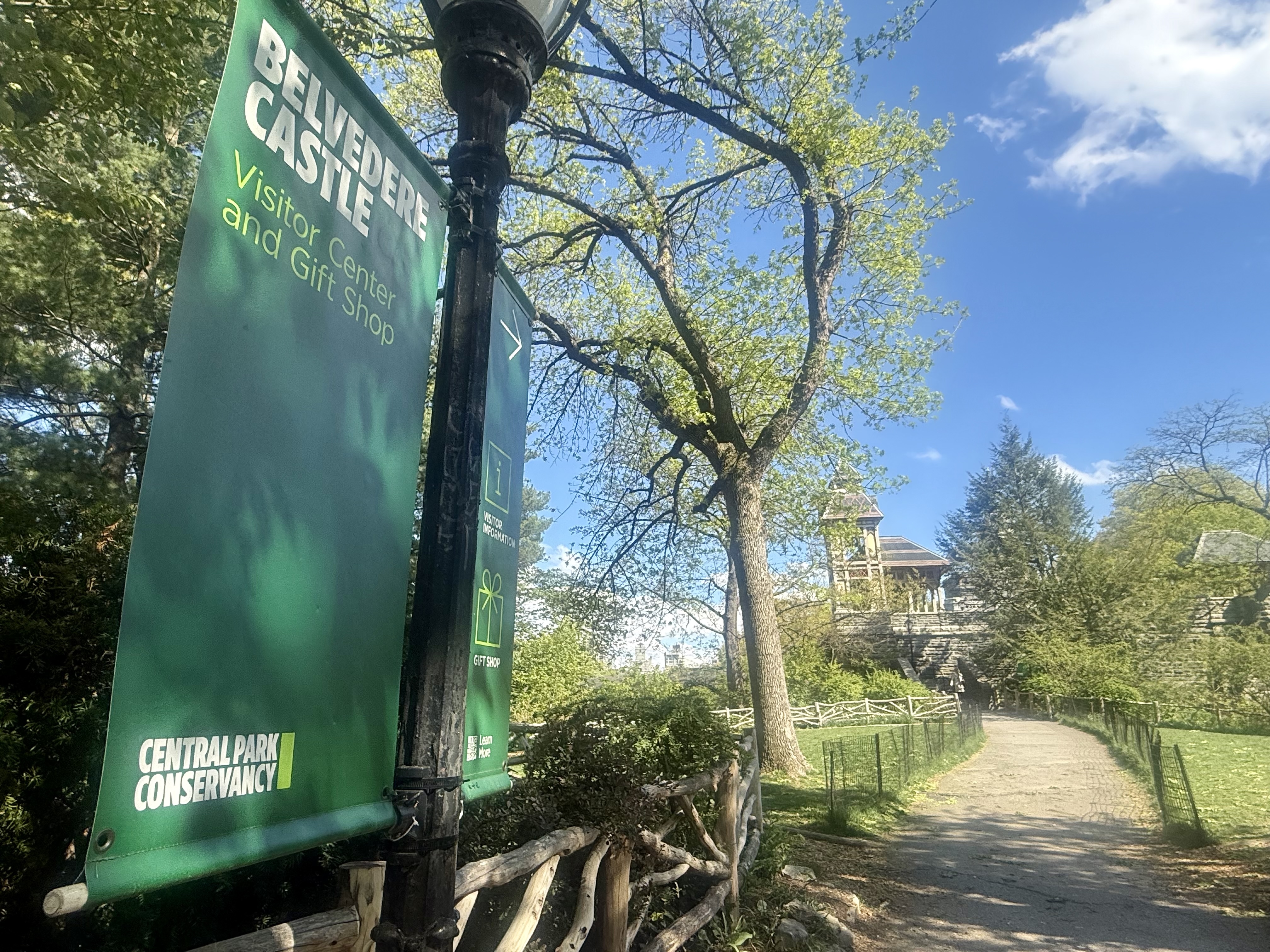
Continuing around the Great Lawn, Turtle Pond appears on your left. A small remnant of the reservoir that once covered the Great Lawn, it does in fact house turtles, believed to be descendants of house pets that outgrew their city accommodations and were sent to the Park to live. Belvedere Castle is visible behind Turtle Pond, and is one of the original buildings created in the park by Calvert Vaux. Its name translates as “beautiful view” and a visit to the castle will in fact reward you with wonderful vistas in all four directions. The National Weather Service official temperature and rainfall amounts for New York City are measured from equipment in and around the castle.

Next to Turtle Pond, on the southwest edge of the Great Lawn, sits the Delacorte Theater, home to Shakespeare in the Park. The Public Theater has been putting on free performances of Shakespeare for over 60 years, and is known for its innovation and stellar casting. I can say personally that the summer nights I have spent in this theater seeing excellent performances as varied as “Hair” and “The Merchant of Venice” have made me feel truly immersed in this wonderful city and its unparalleled artistic offerings. This summer, “Much Ado About Nothing” will run from June 3- July 6, and “King Lear” from July 22- August 17. To get free tickets, line up in the park early or try the virtual lottery on the Public’s website. Financial supporters are given tickets without having to wait, but the Public actually limits the number of supporter tickets available to ensure that free Shakespeare in the Park is available to as many as possible.

Just north of the Delacorte are large outcroppings of Manhattan schist, the bedrock formed during the ice age and the foundation for many of our skyscrapers.  Behind the Delacorte is the Shakespeare Garden, a four-acre beautiful tranquil space with lovely plantings featuring plants and flowers mentioned in Shakespeare’s works, interspersed with small bronze plaques with quotations from Shakespeare. It’s a rare spot in New York City that allows one to connect with nature and feed your intellect simultaneously, making this one of my favorite hidden spots within the park.

Tucked behind the Shakespeare Garden is the park’s Marionette Theater, a delightfully old-fashioned place to take children during the warmer months. Walking out of Central Park to the west, you find yourself on Central Park West and 81st Street, facing the Beresford apartment building and the Rose Center of the American Museum of Natural History. This dérive ends here, less than a mile from where it began, and illustrates once again the rich variety of experiences packed within the relatively small island of Manhattan.