The Shakespeare Garden in Central Park

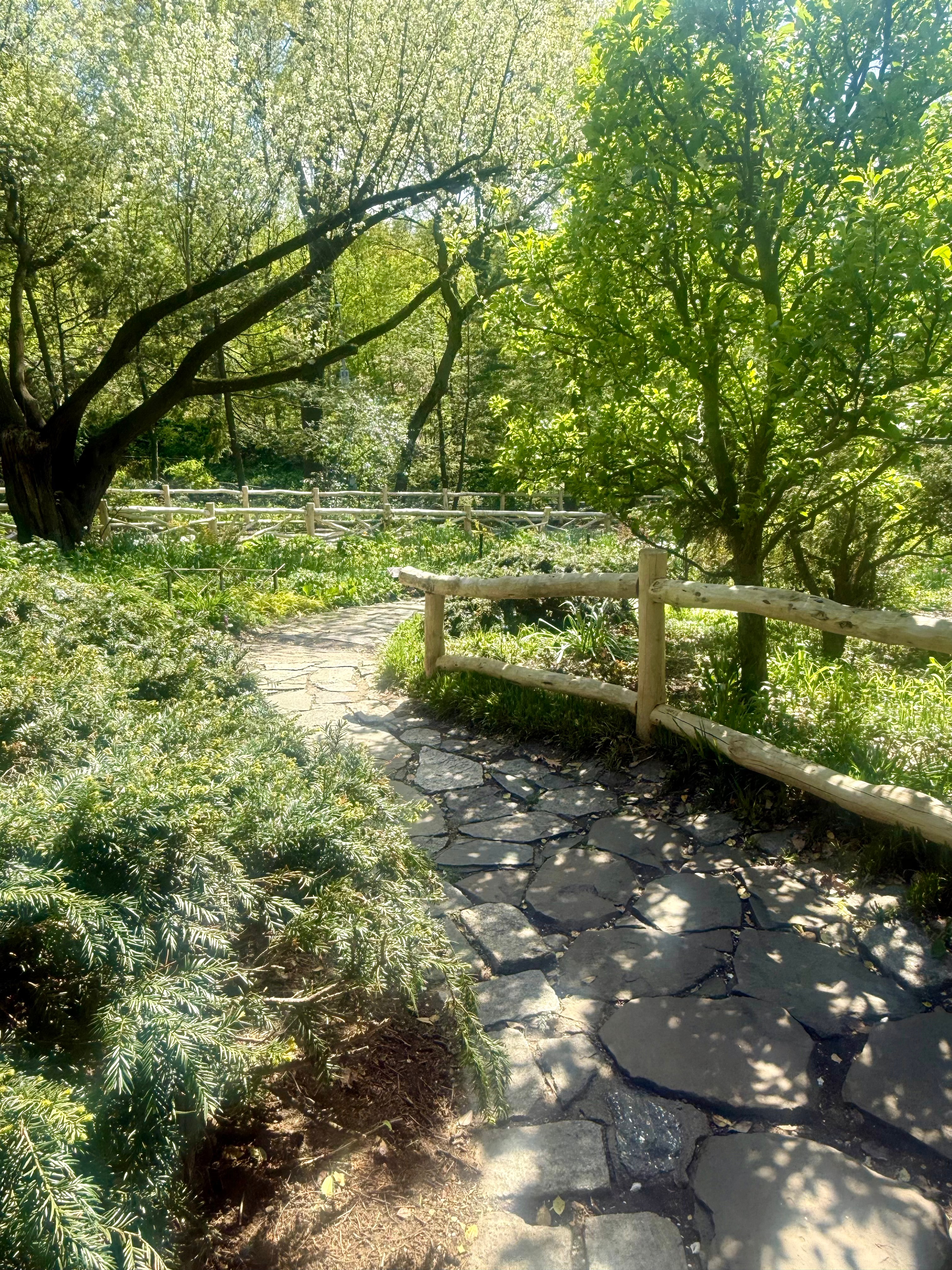
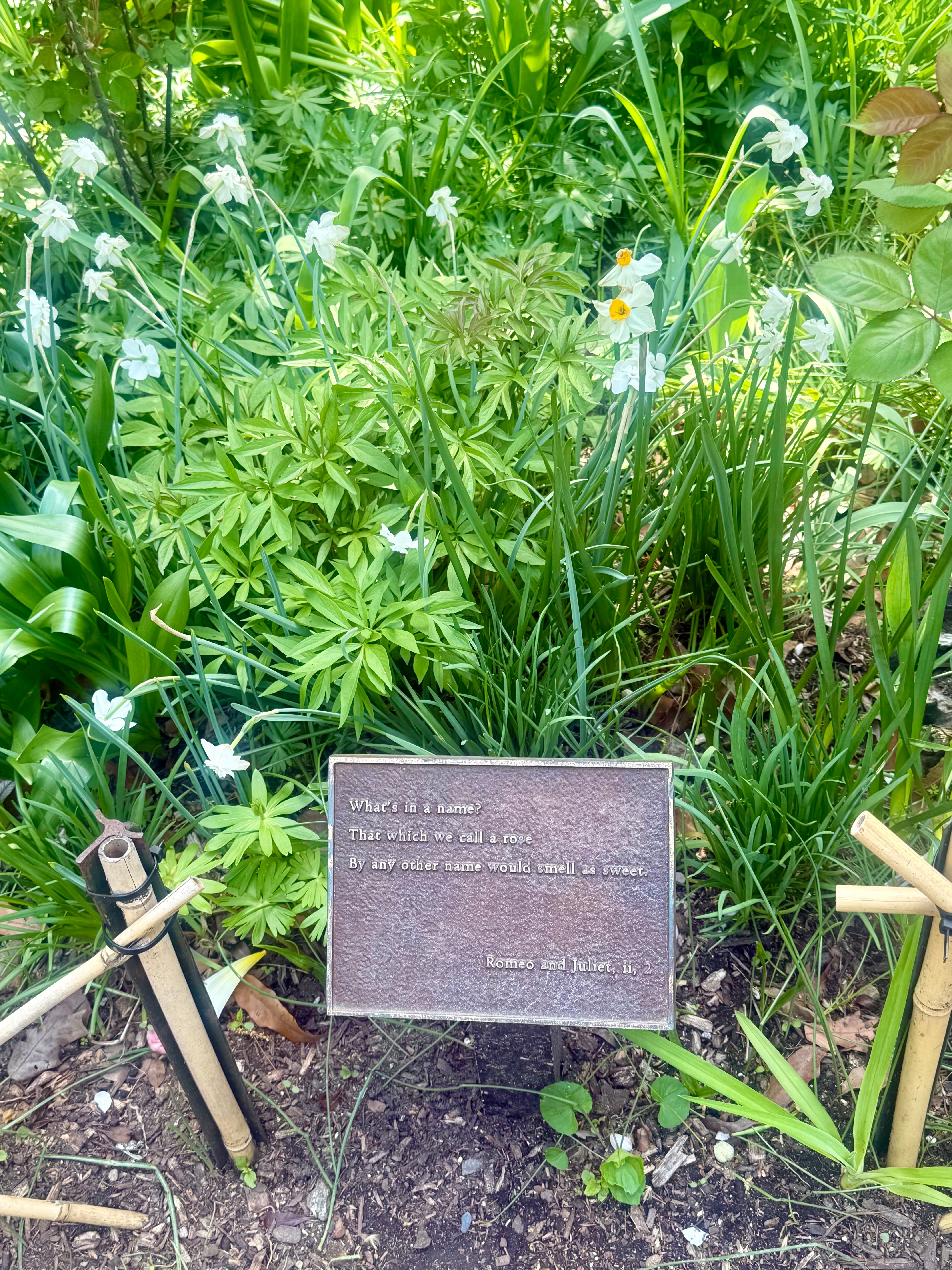
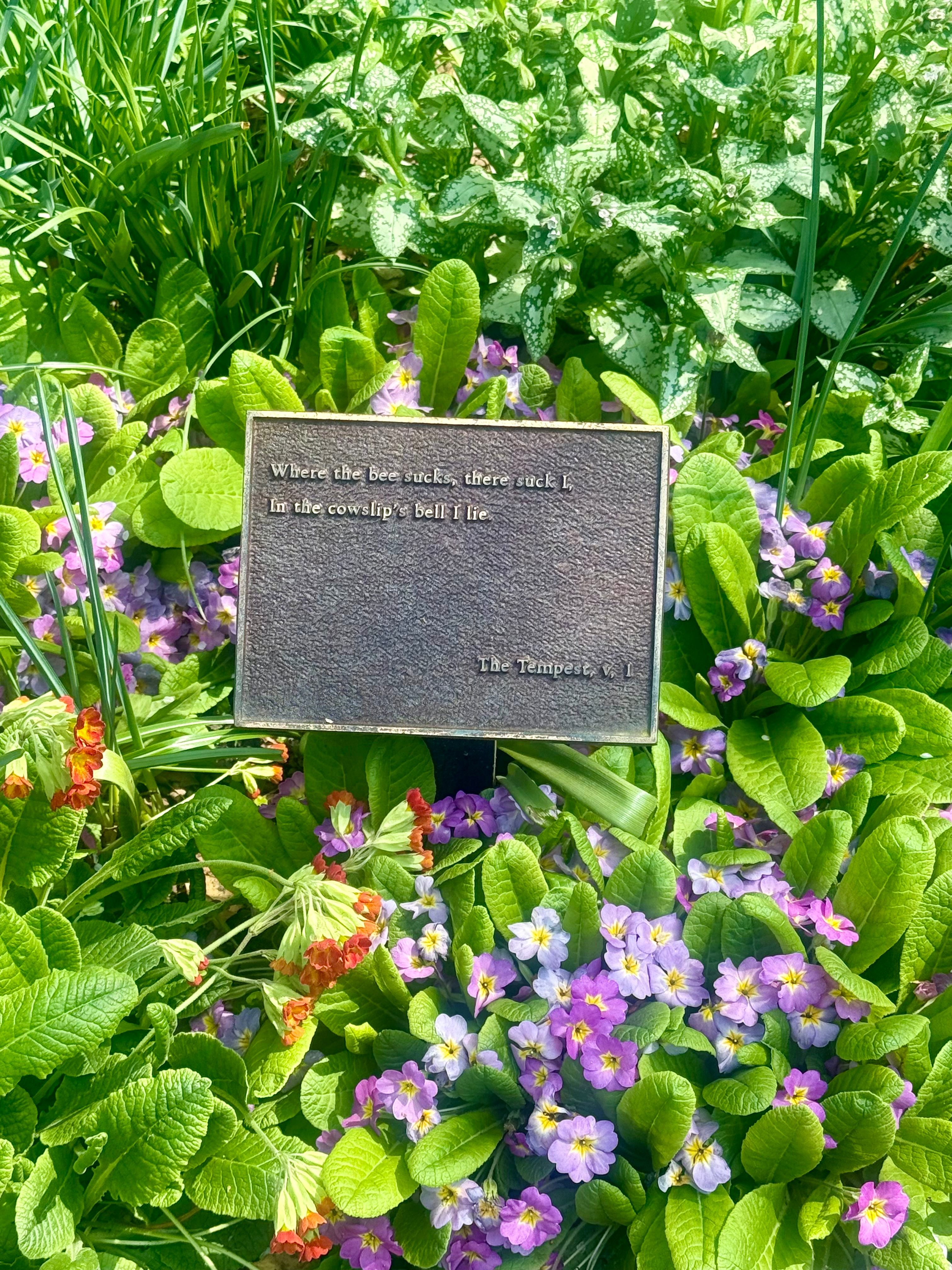
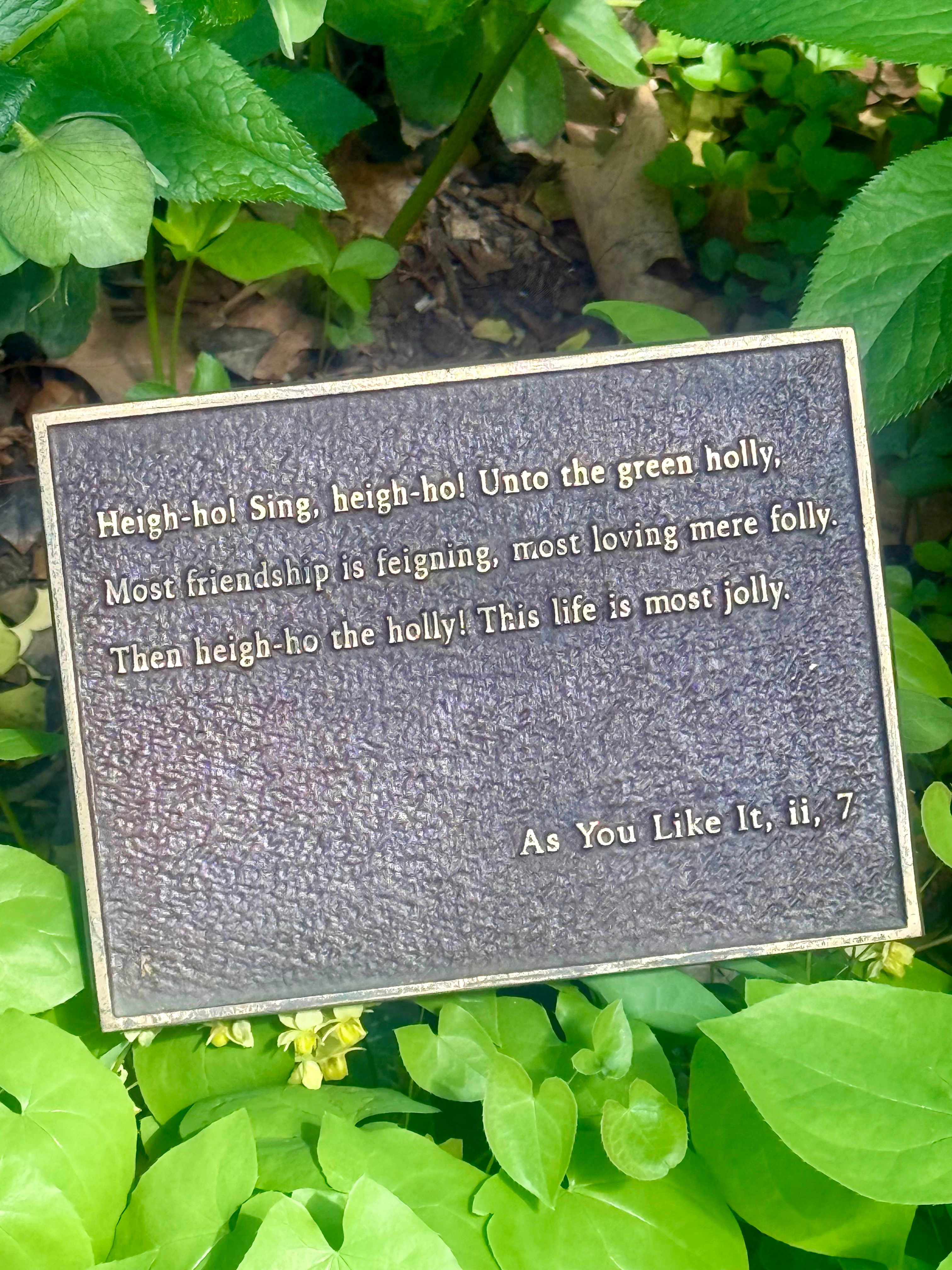
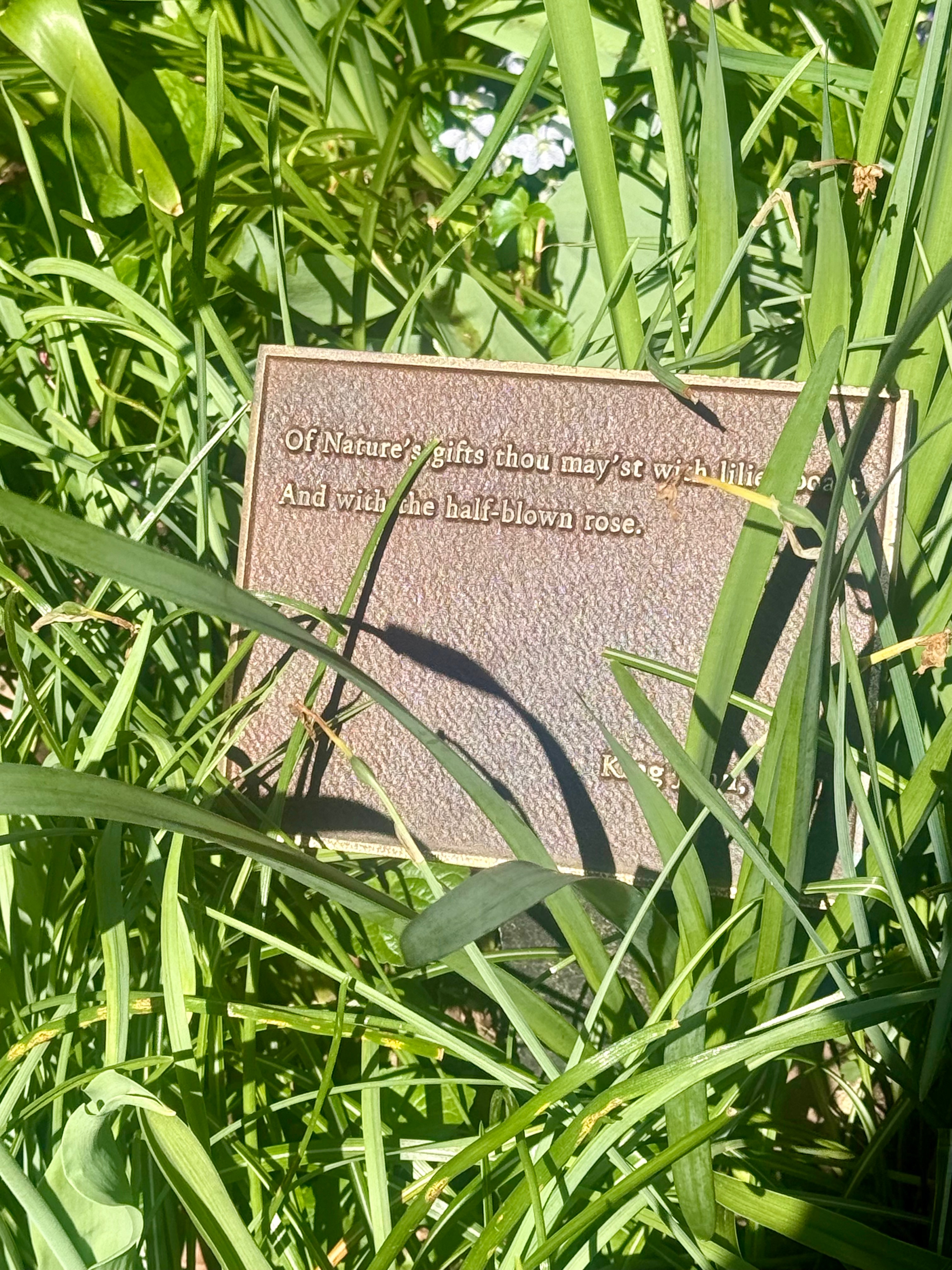
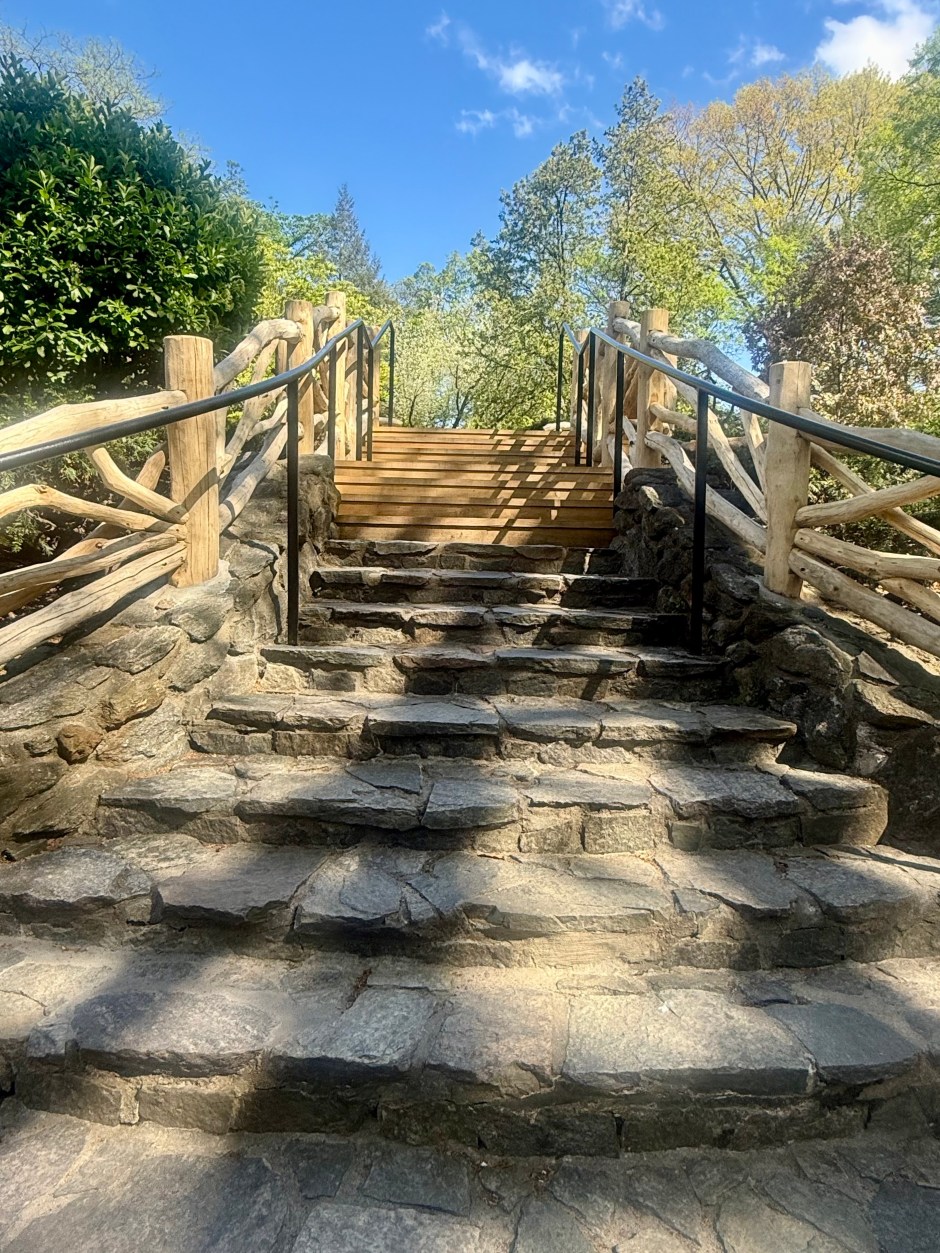
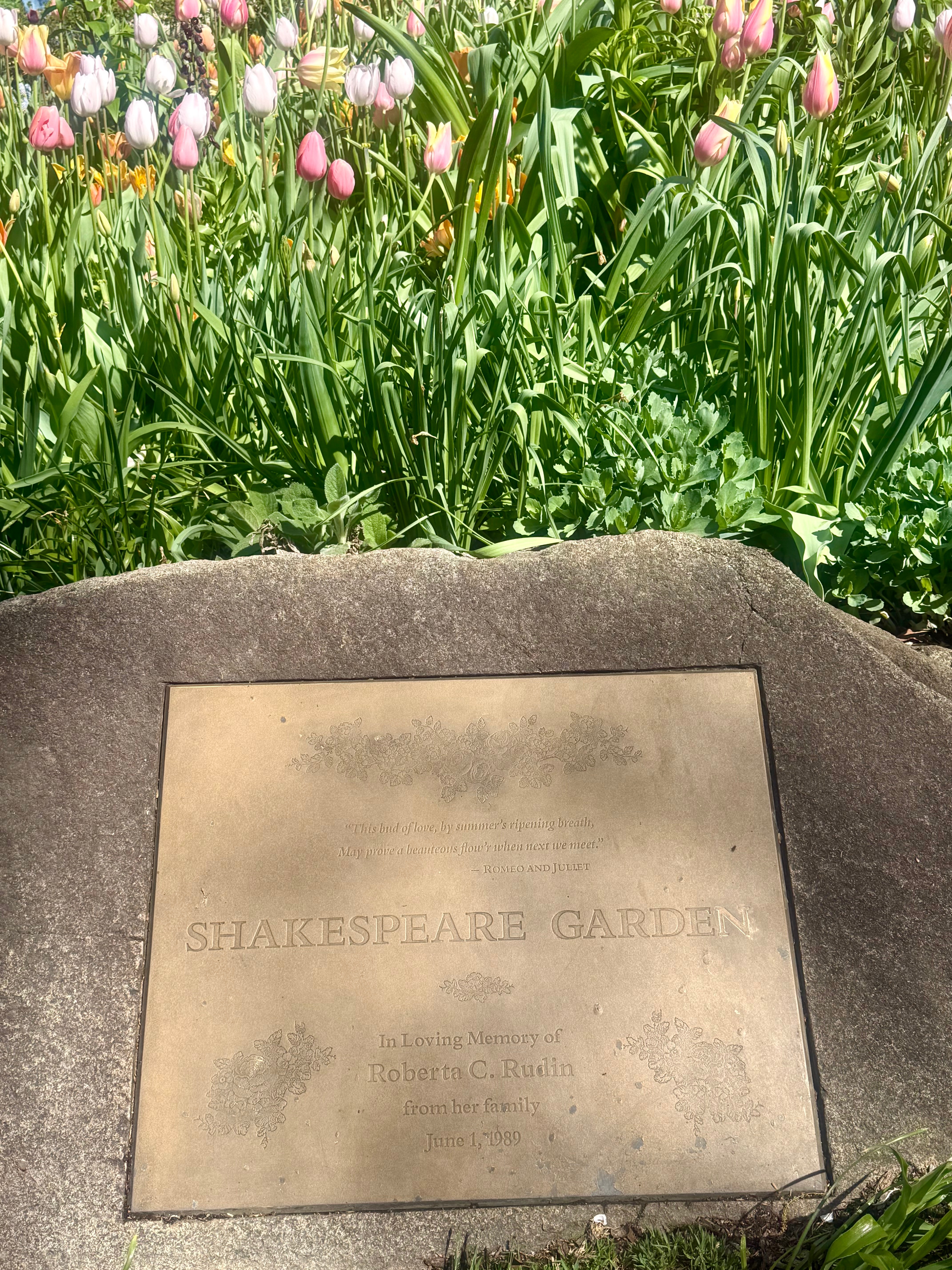
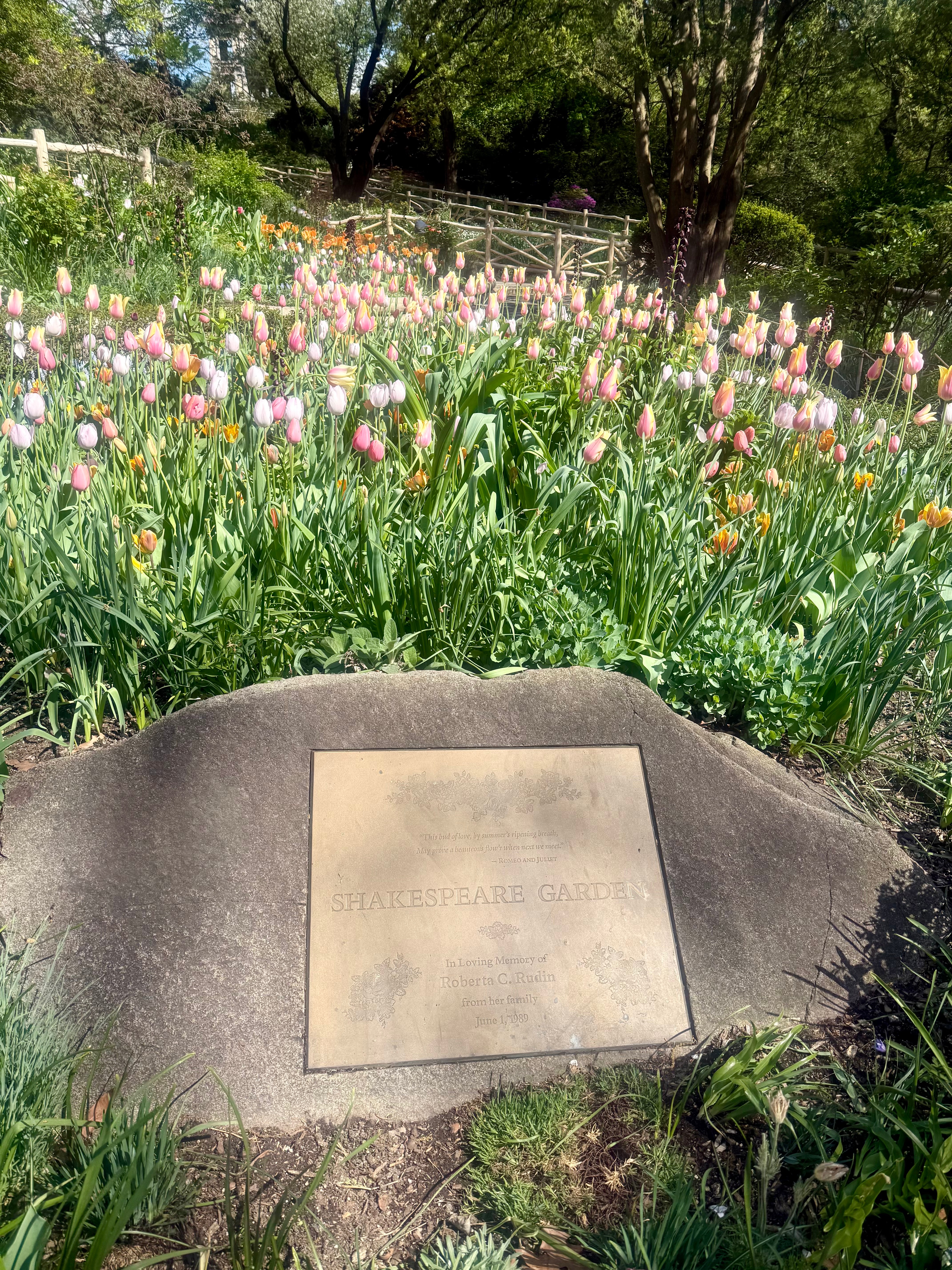
I have written many times about Central Park (Central Park in Spring, Central Park in Autumn, Central Park in winter (with photos), and Strawberry Fields in Central Park just to name a few!), and it is possible to constantly explore Central Park and keep finding new things to appreciate. Recently I found myself peacefully wandering the Shakespeare Garden and taking photos of this very special and beautiful place.
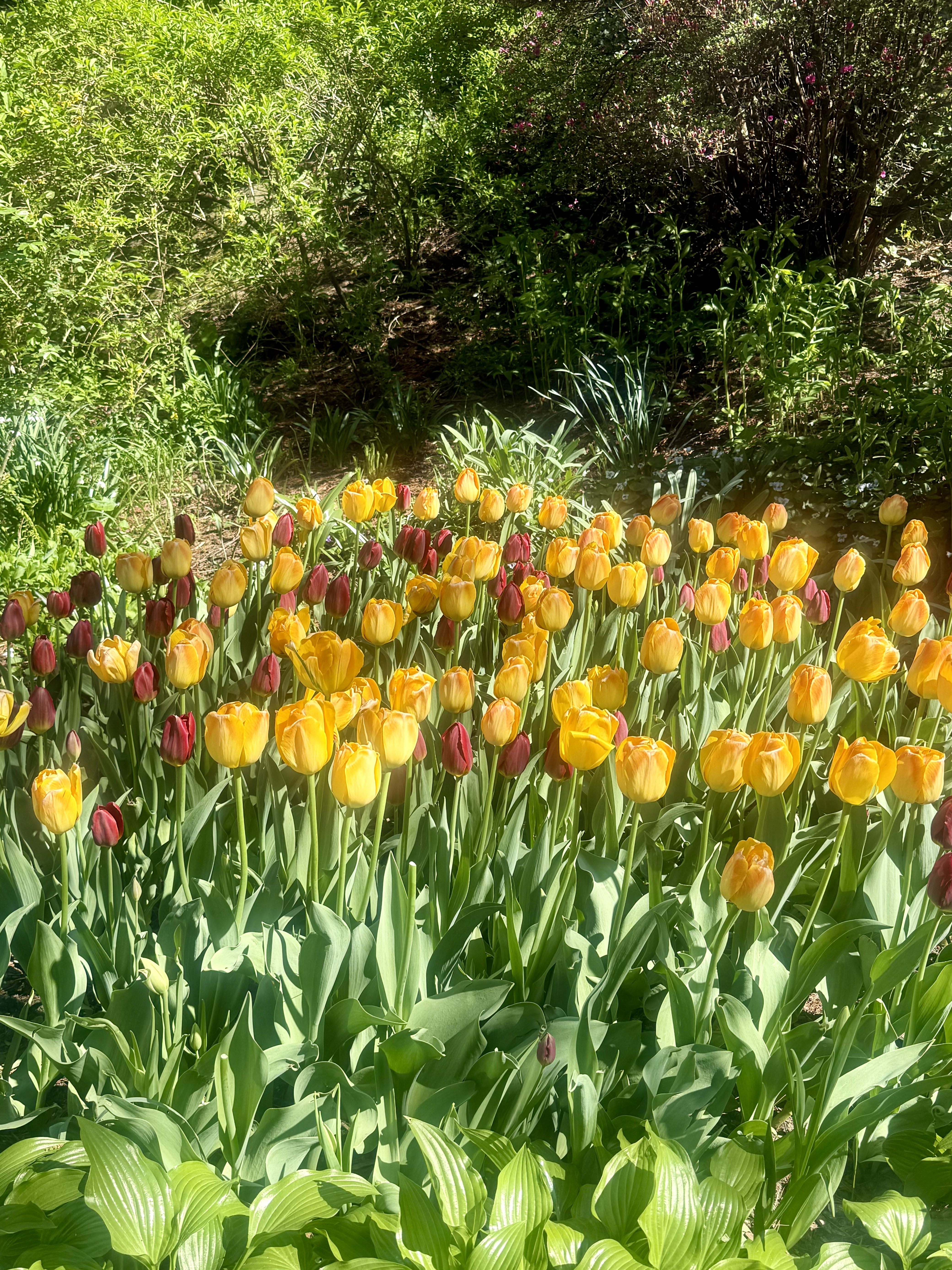
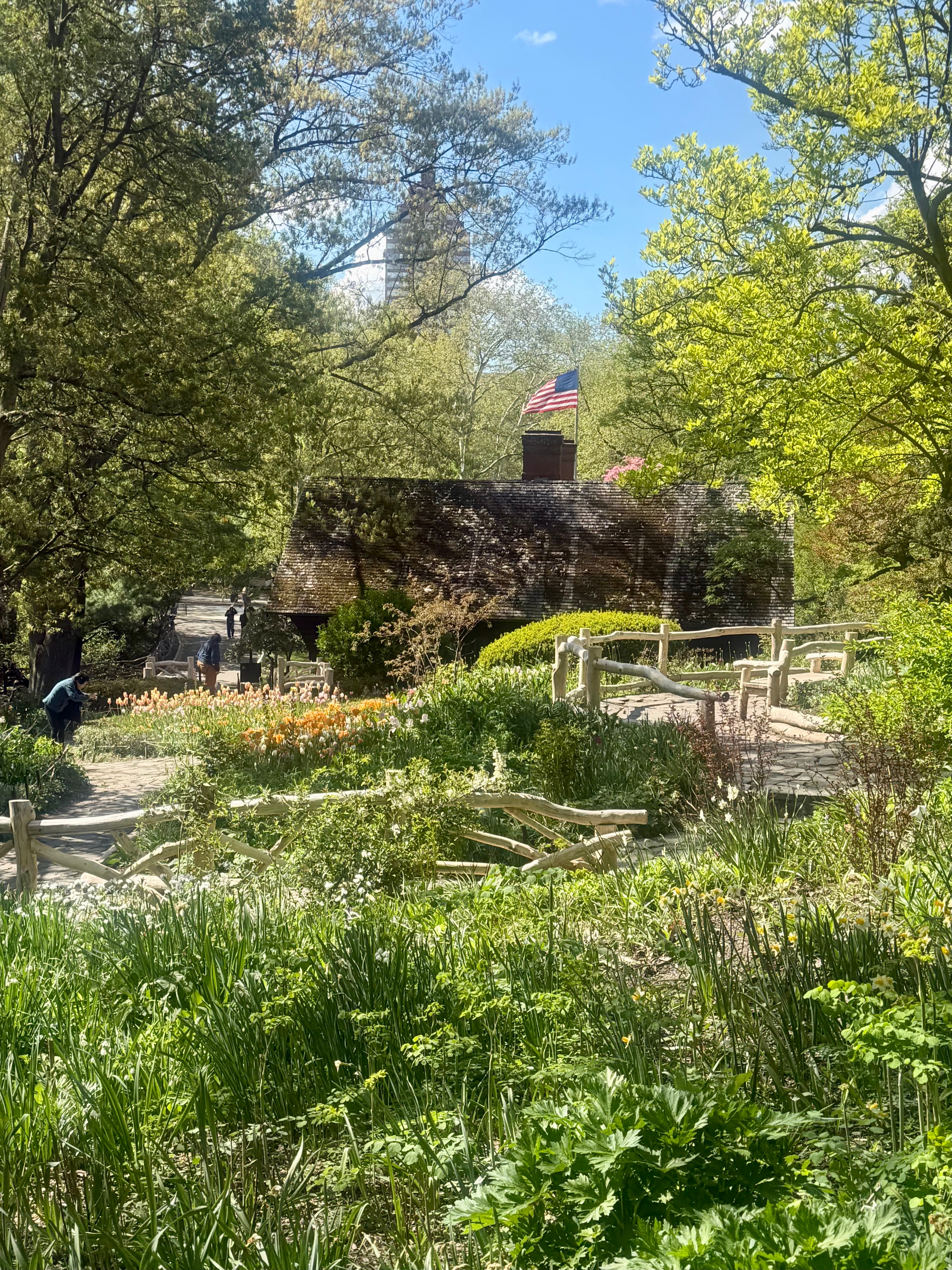
The Shakespeare Garden is located mid-park, closer to the west side, and closest to the 81st Street entrance. It is just behind the Swedish Marionette Theater, and to the side of the Delacorte Theater, home to free Shakespeare in the Park every summer. The park was once called “Garden of the Heart” and was designed to evoke an English cottage garden. It was renamed after Shakespeare in 1916 during the commemoration of the 300th anniversary of Shakespeare’s death.
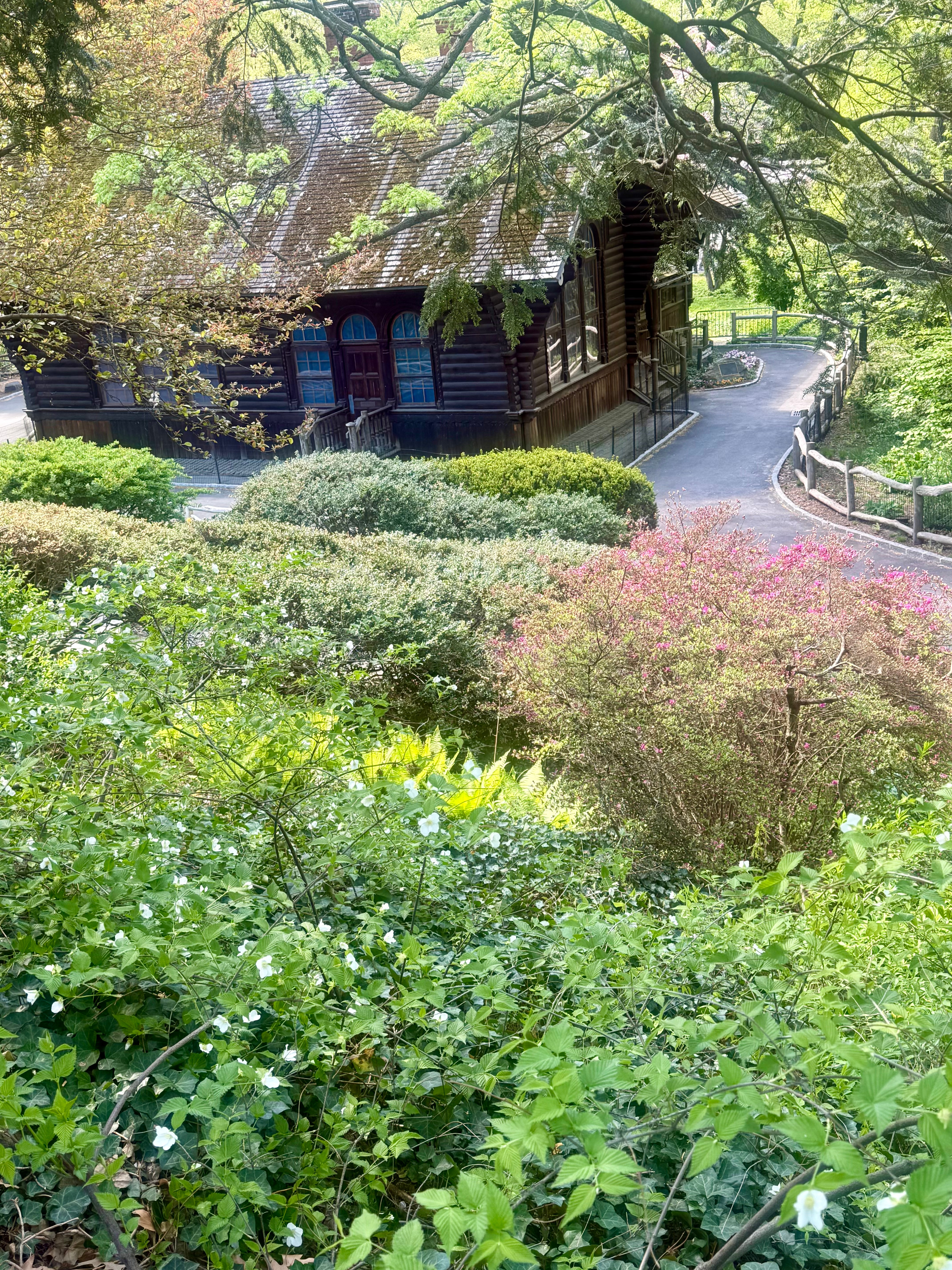
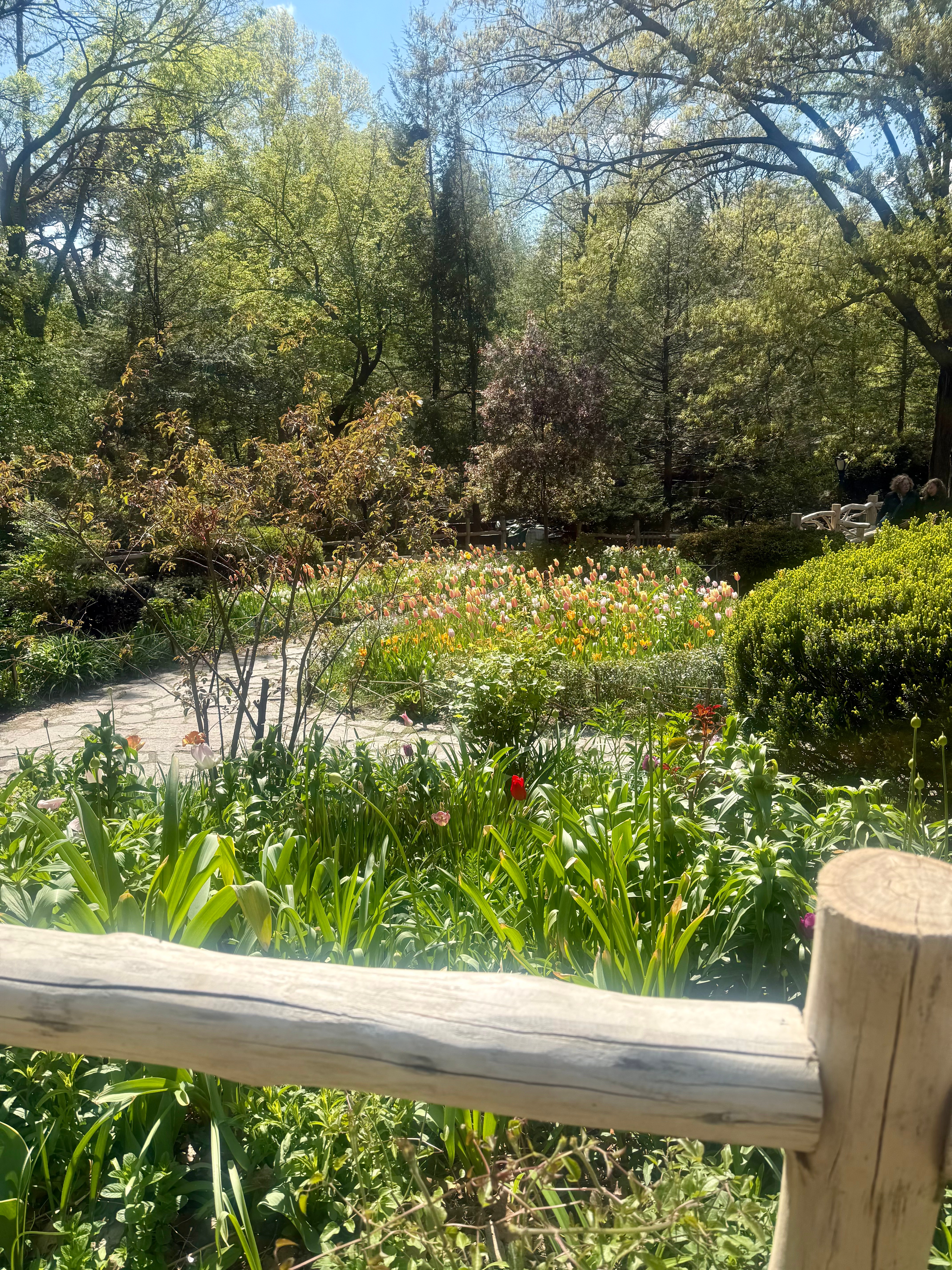
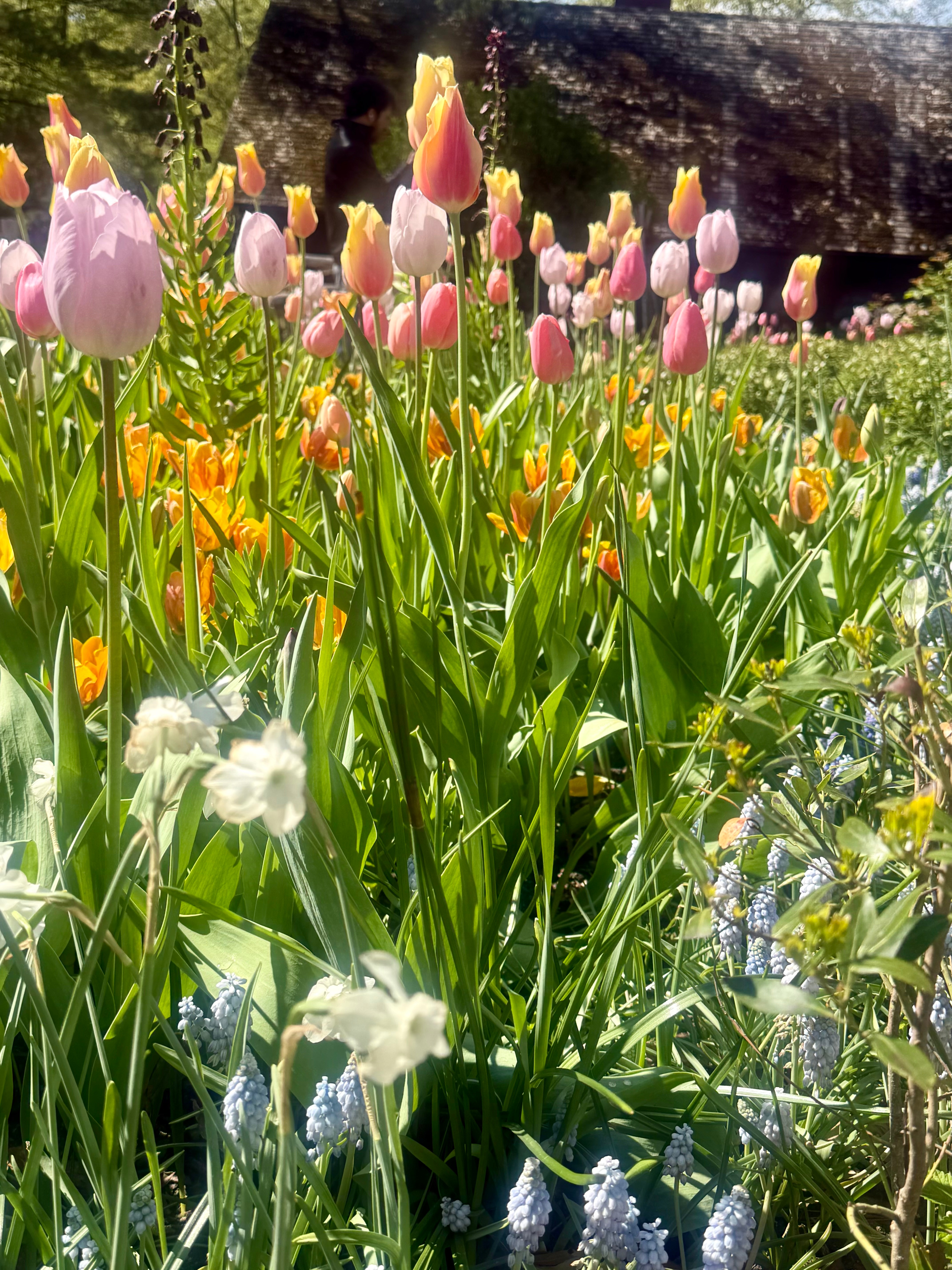
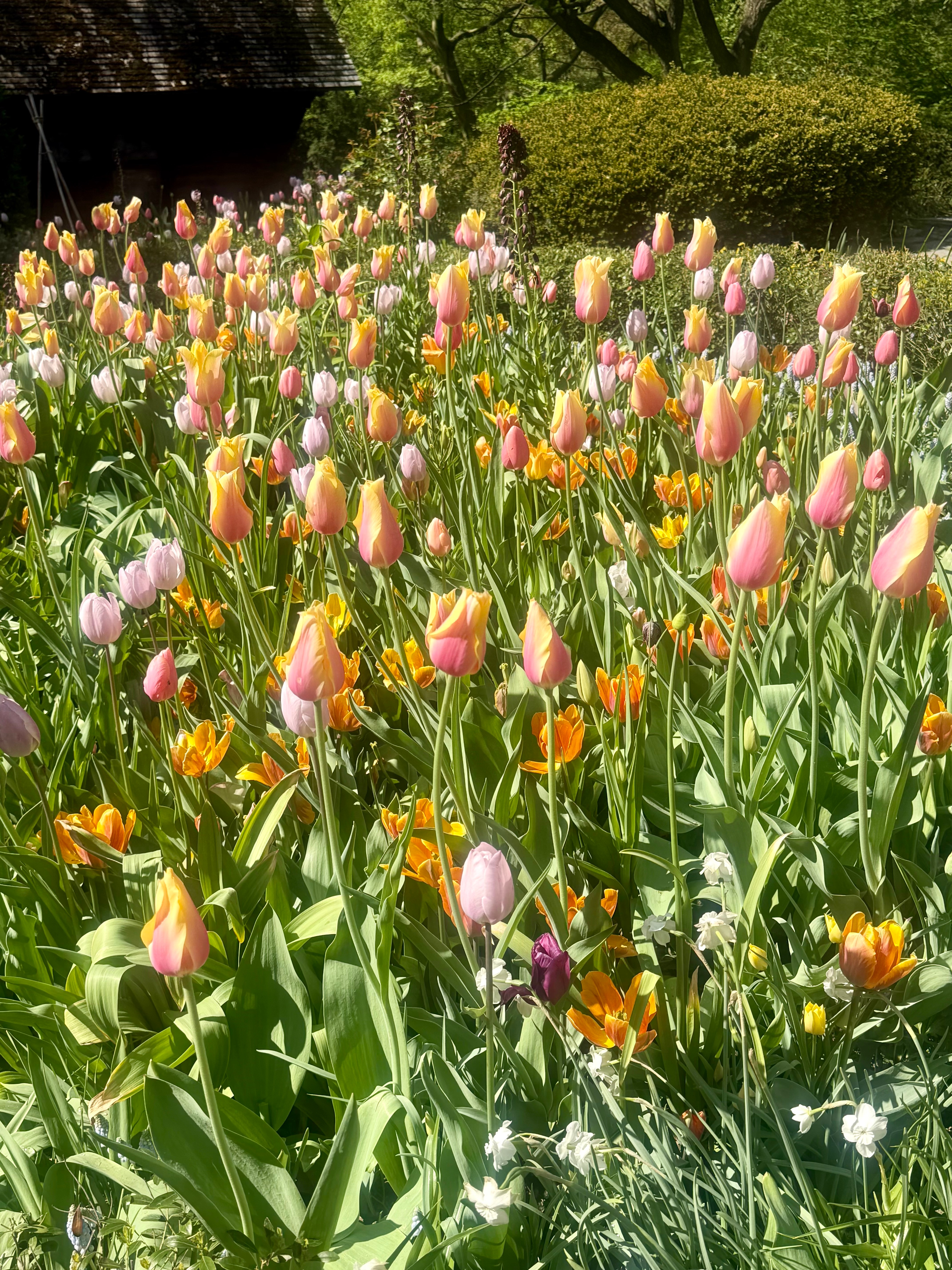
The garden is four acres in size, and beautiful all throughout the year – but perhaps most gorgeous in spring, when I took these photos. In the spring, I found daffodils, anemones, and many tulips, in addition to the other plants there throughout the year including lilies, roses, crocuses, and black-eyed Susans.
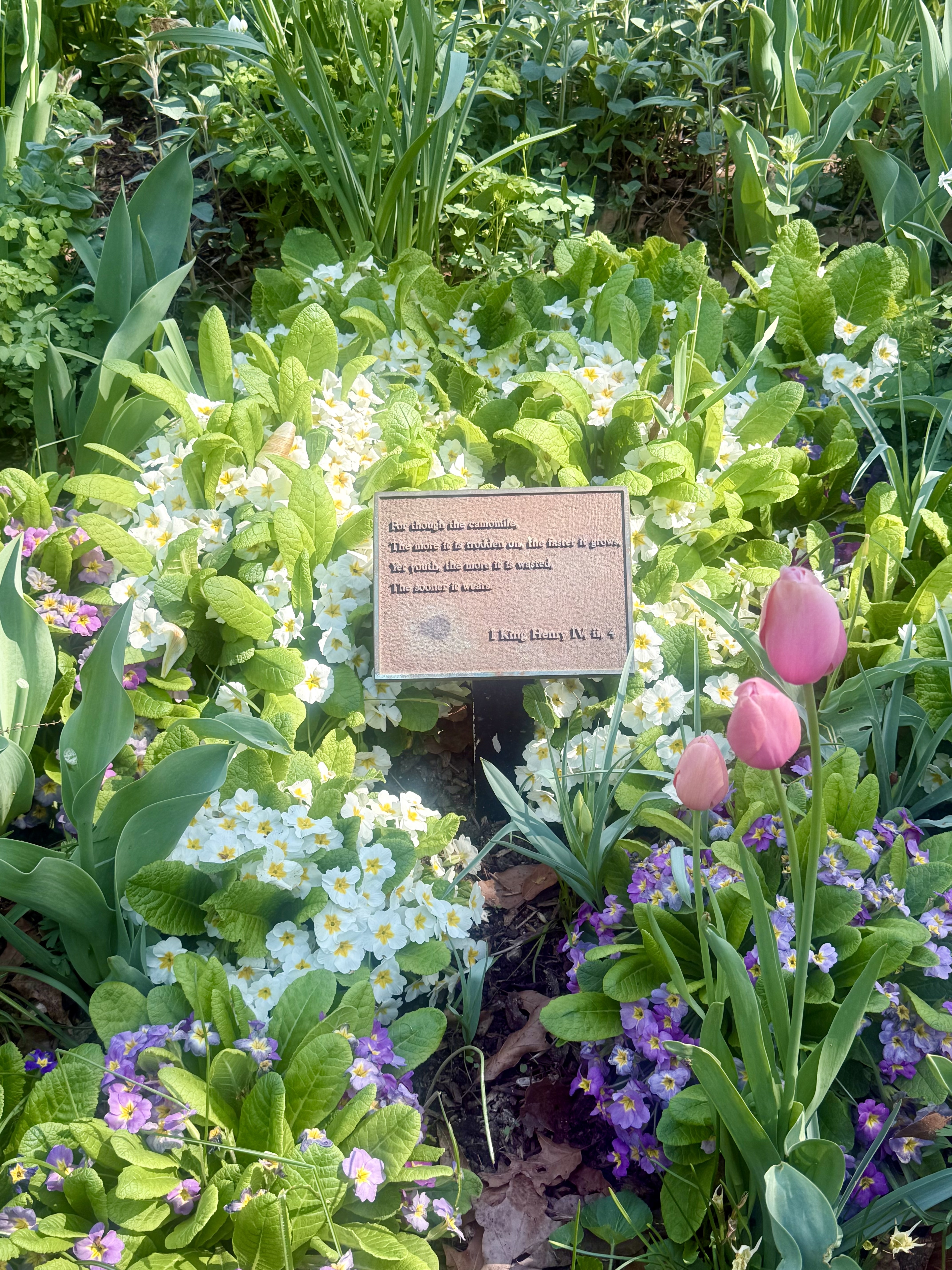
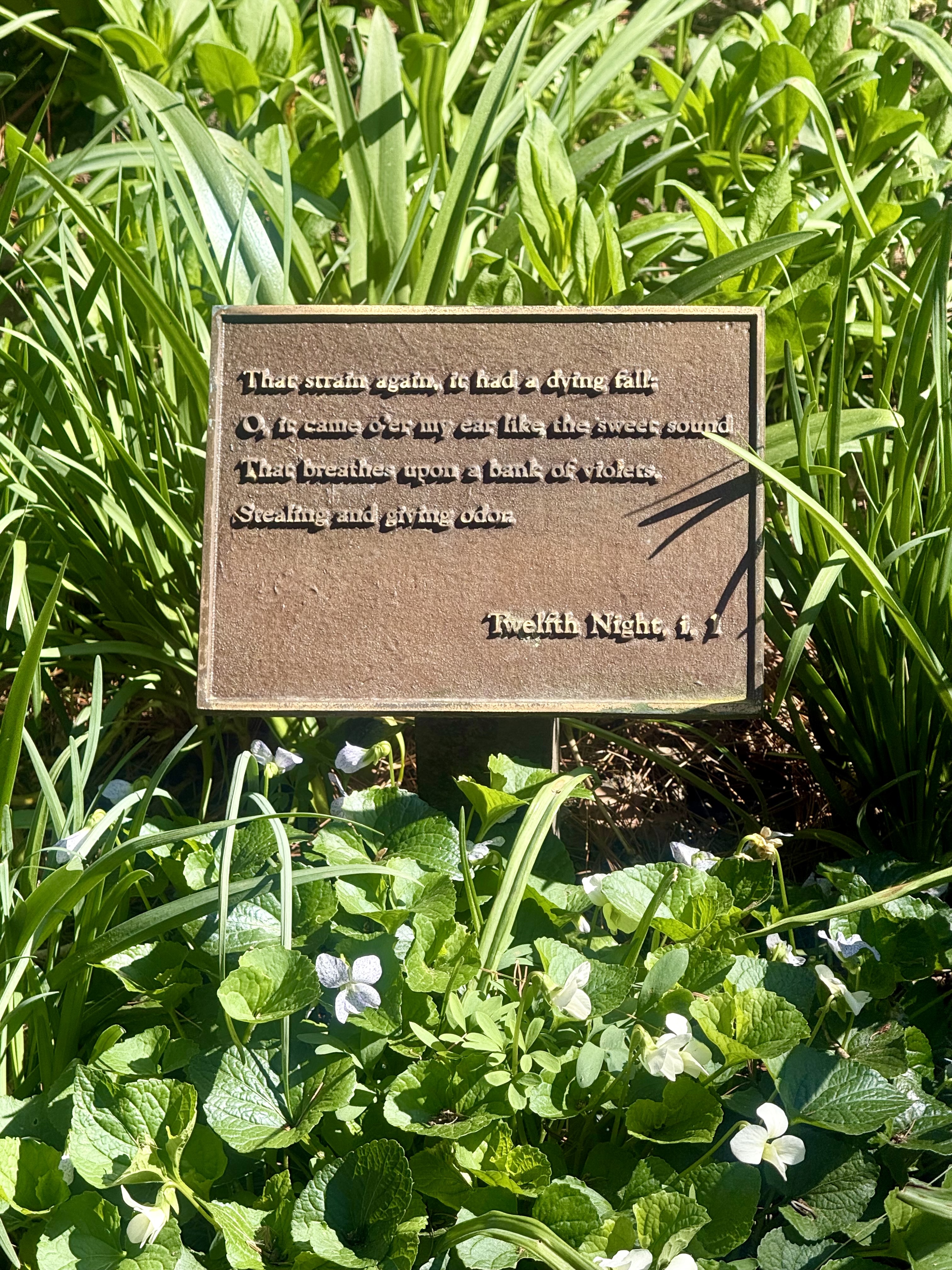
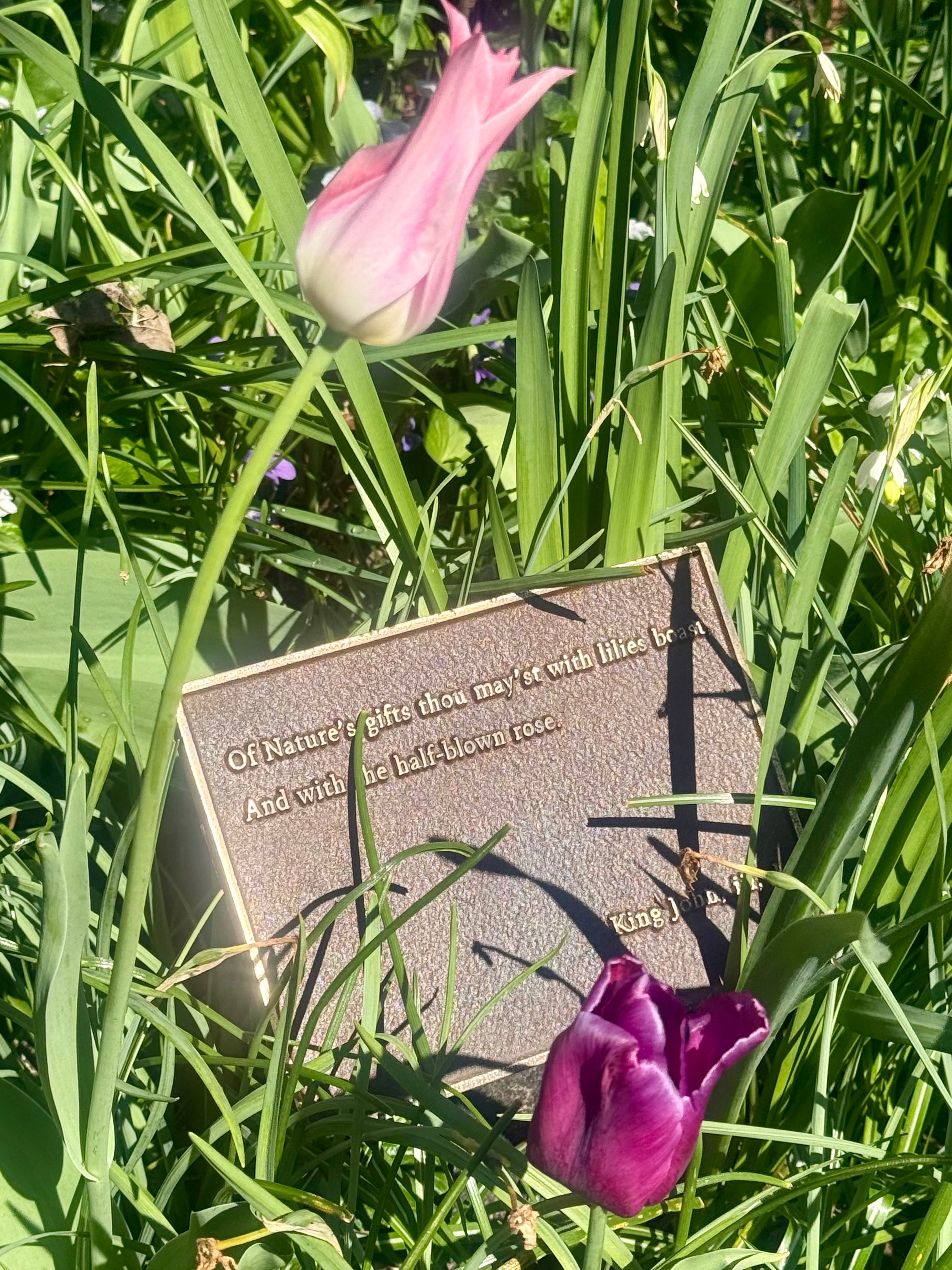
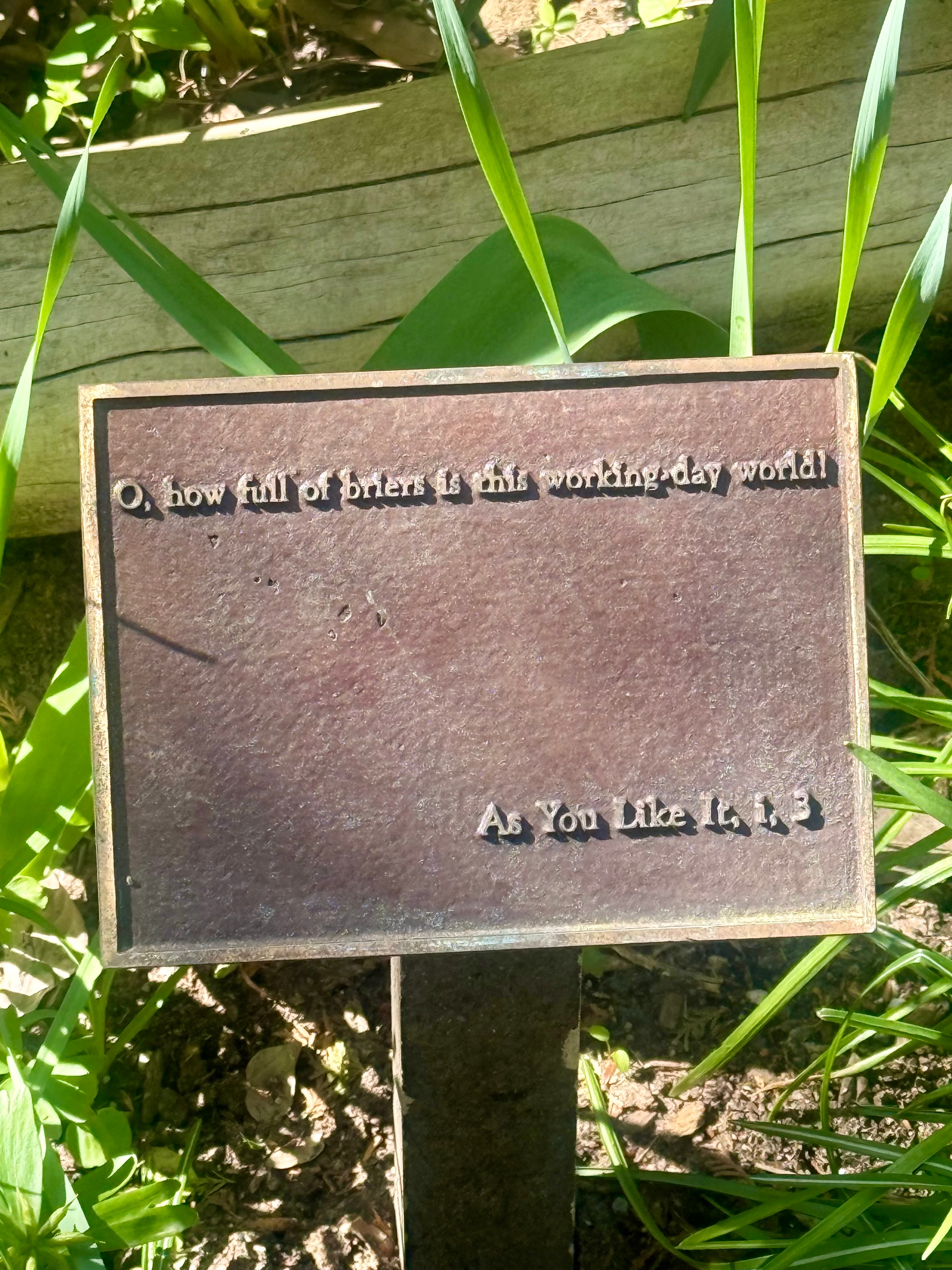
For me, the most unique experience in the Shakespeare Garden is looking for the quotes on bronze plaques, referencing trees, shrubs, flowers, and herbs mentioned in William Shakespeare’s plays and poems – plants that change according to the season. You might find rosemary and pansies – alluded to by Ophelia in Hamlet;  or thistle – mentioned in the play Much Ado About Nothing. There is even a white mulberry tree that is said to have grown from a graft of a tree planted by Shakespeare himself in 1602!
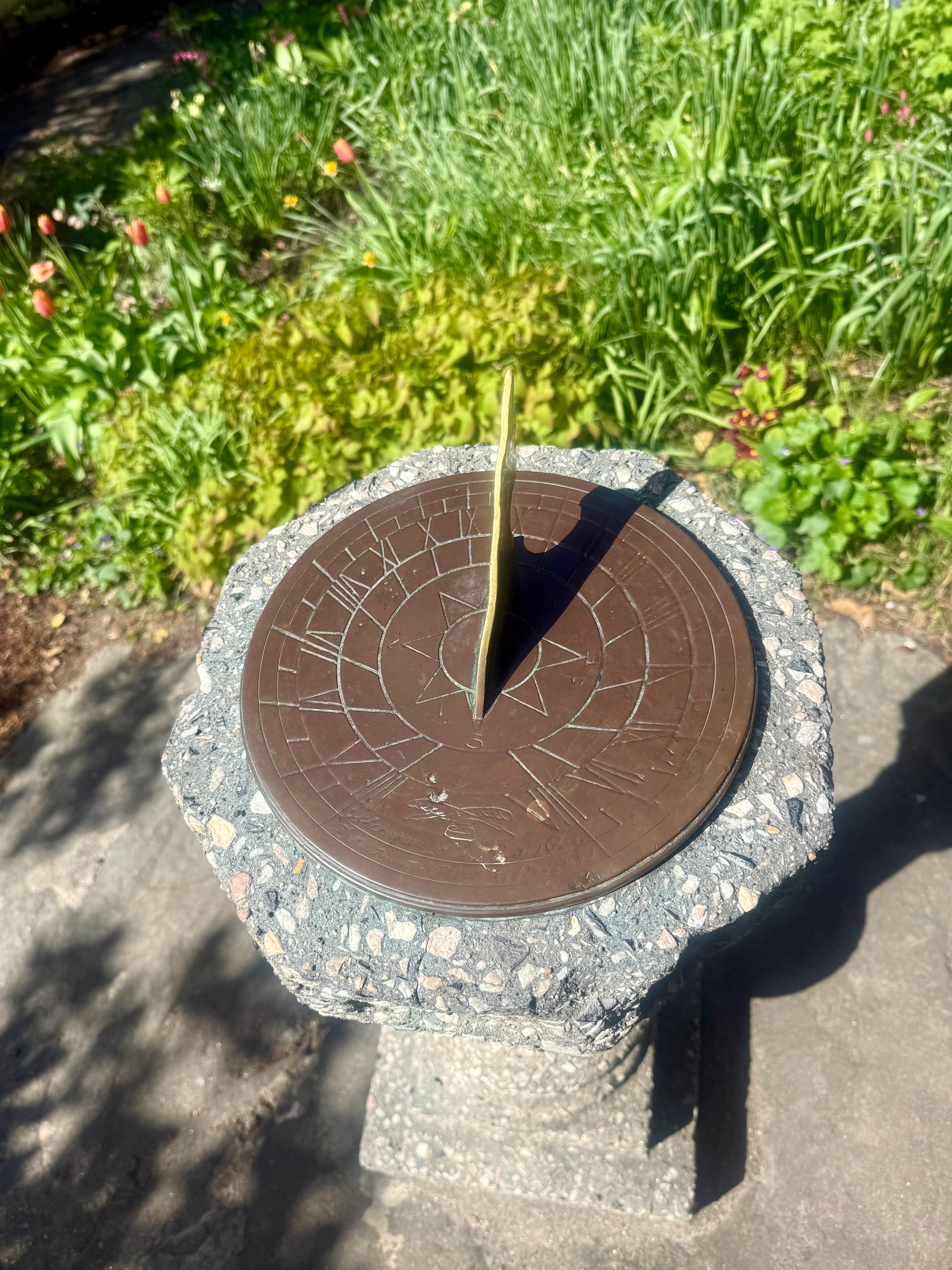
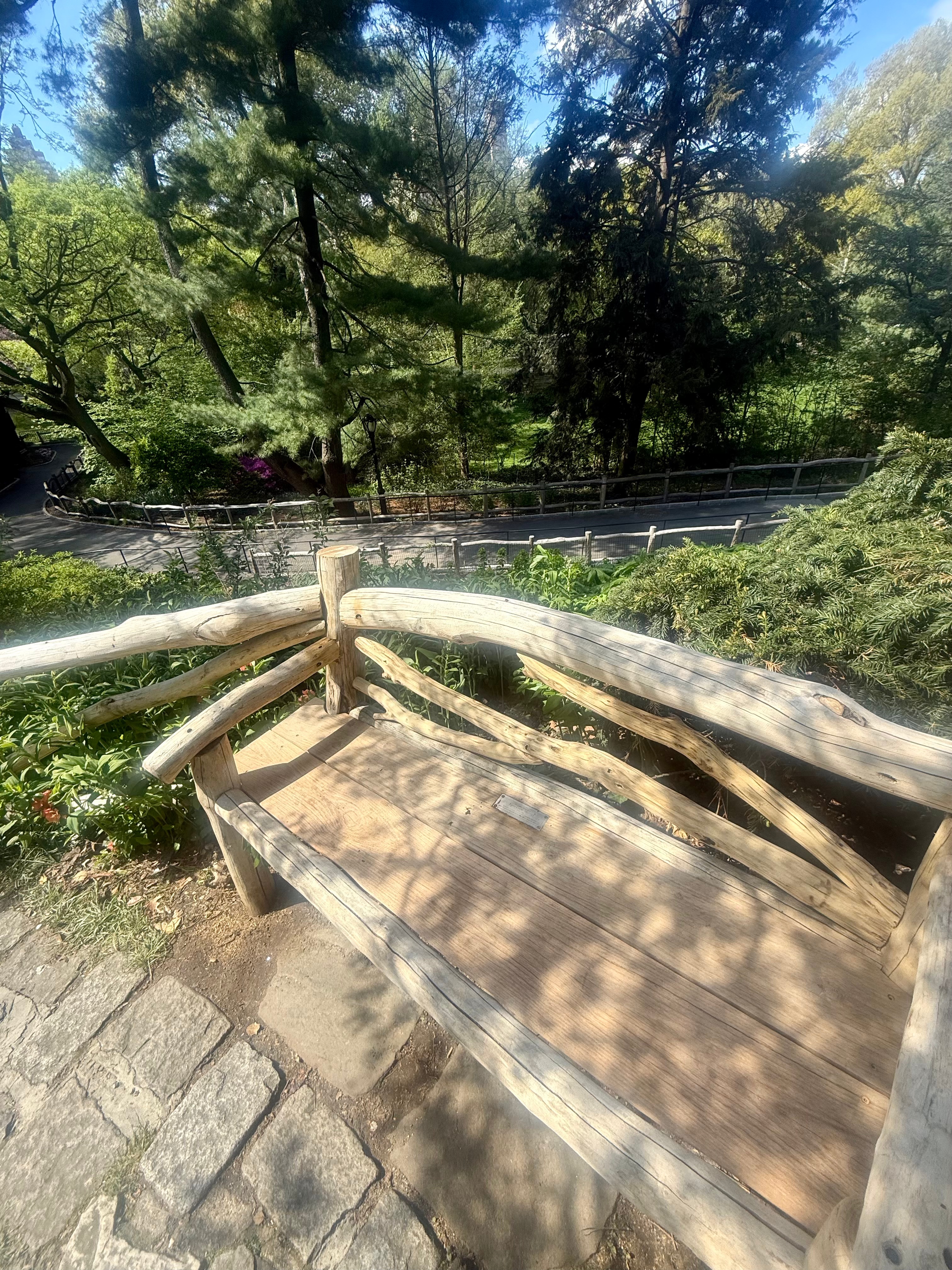
There is a working sundial – it is accurate, but remember that it is set up for standard time so appears to be an hour off when we are on Daylight Savings Time. Nearby is a bench dedicated to the actor Richard Burton, famous for his skill in performing in Shakespeare plays.
The large curving bench at the highest point in the Garden is called the “whisper bench.” I didn’t get a photo when I was there because people were sitting there, but because of its curvature, you can whisper something at one corner and it will only be heard by a person listening at the other corner. The garden also provides a home for many pollinators, including bees, butterflies, and hummingbirds.
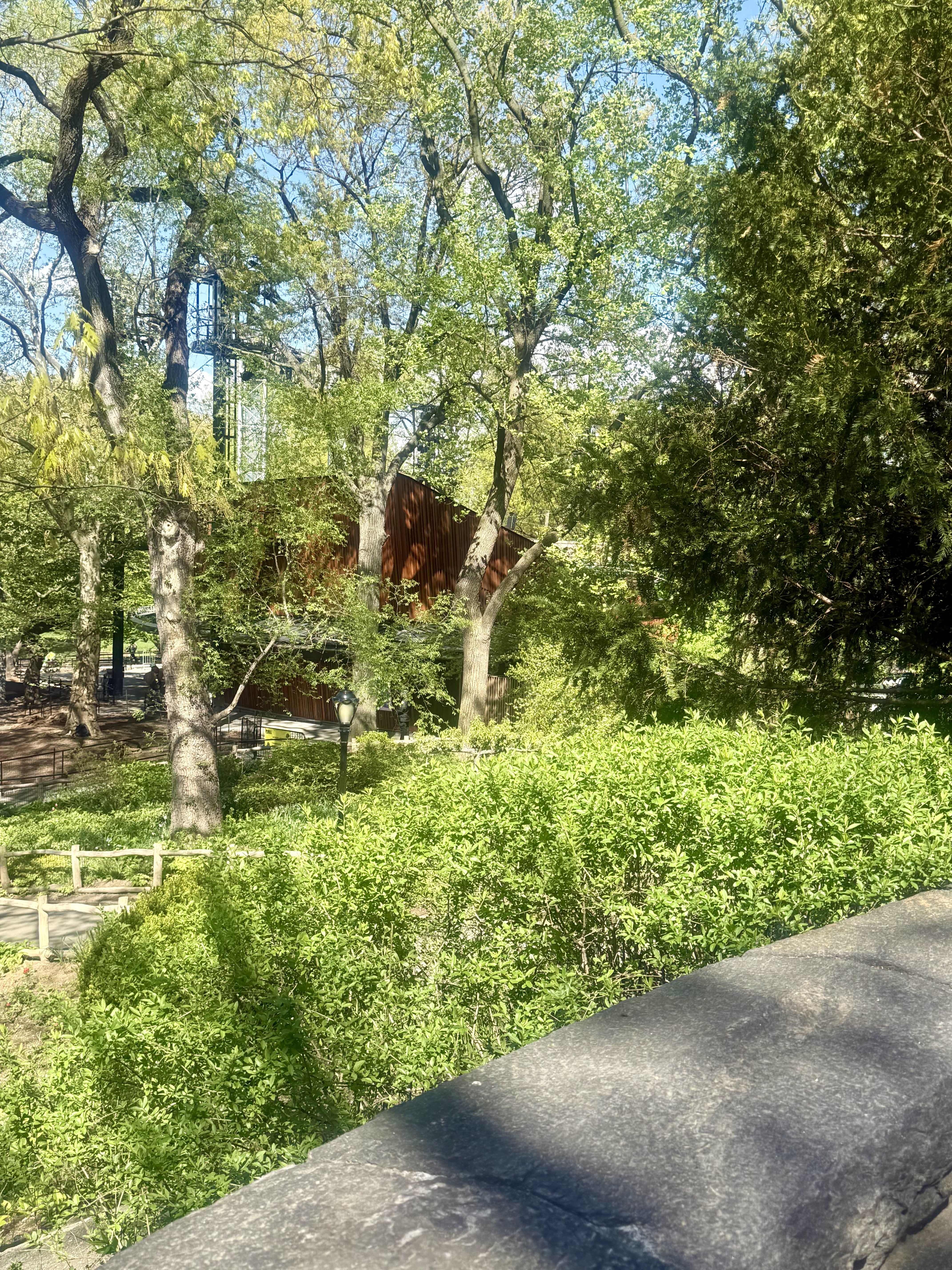
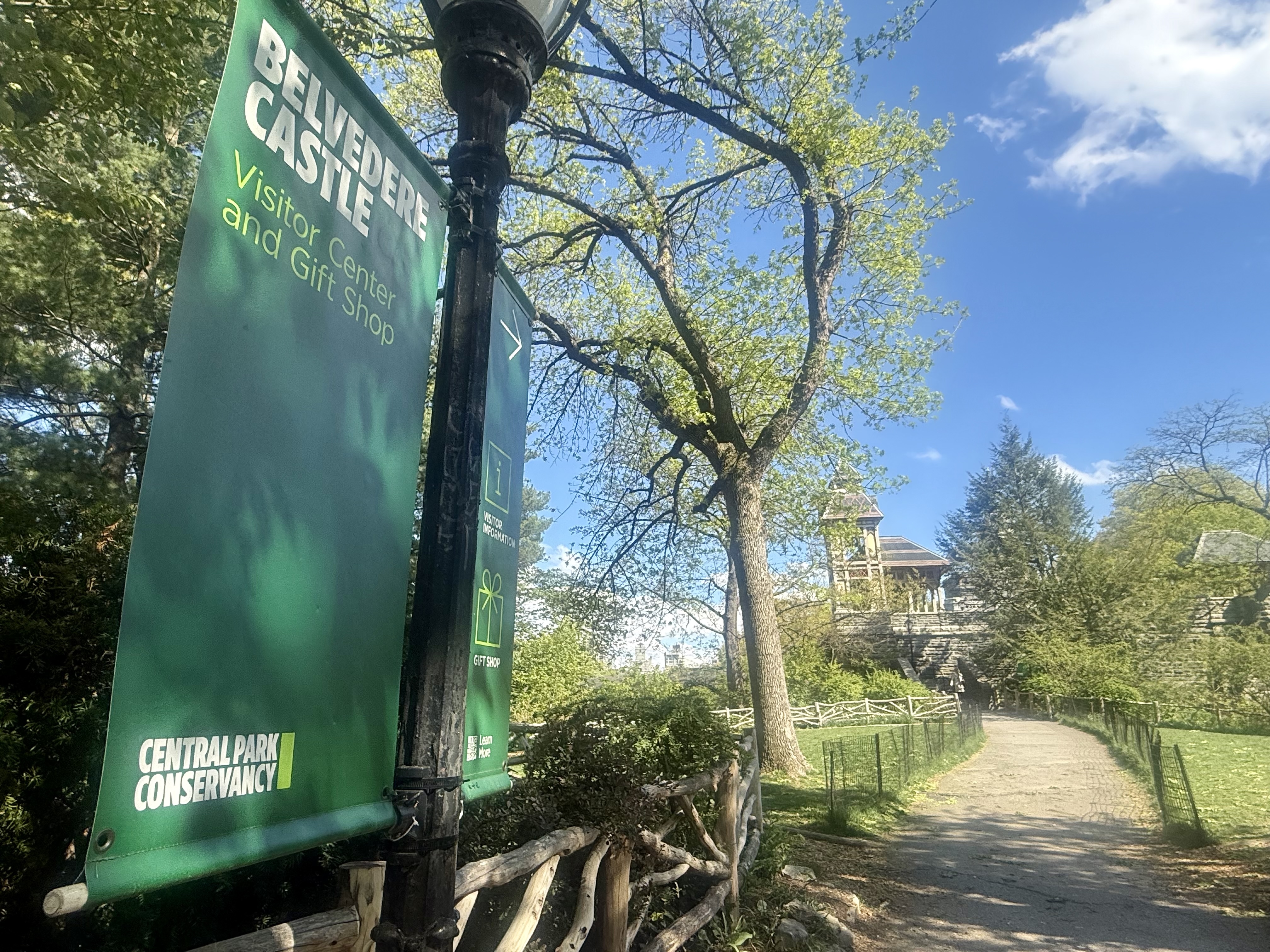
Looking at the Delacorte, I realized I have not written about Shakespeare in the Park, so expect a post about that this summer. There are so many special places in Central Park, but the Shakespeare Garden and the iconic spots nearby (including not just the Delacorte but Belvedere Castle, Turtle Pond, and the Great Lawn) is a section I find myself drawn to regularly. And a stroll through the Shakespeare Garden, meditating on the literary richness of the legacy of these plays as well as the incredible beauty of the natural world, is good for body and mind.
It’s terrace season!

IMG_0936
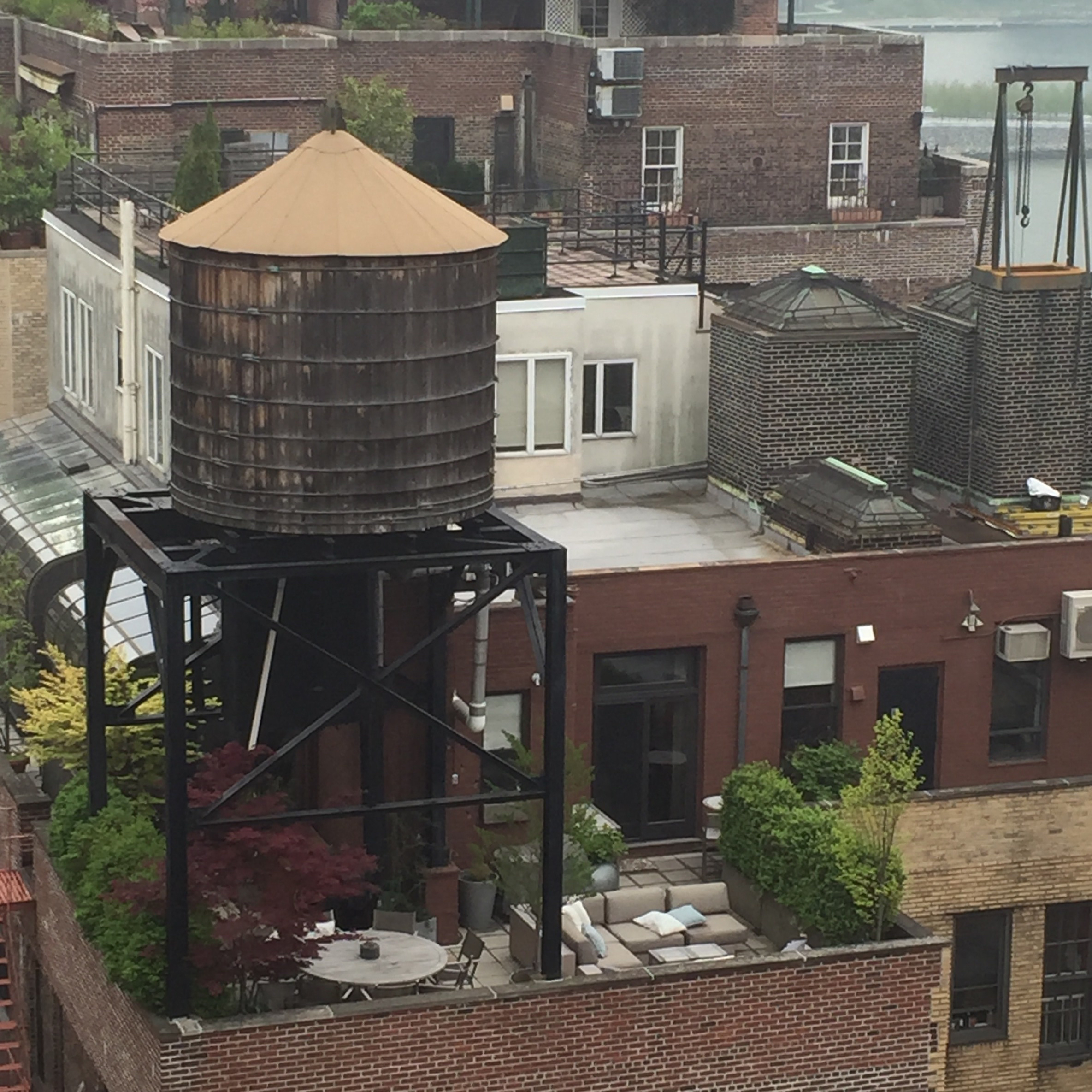
Gorgeous view of midtown Manhattan from a private rooftop terrace on the Upper West Side

I have recently been working with several buyers who either require private outdoor space, or have been lucky enough to find it included in an apartment they love for other reasons. Spring and summer are definitely “terrace season,” as outdoor space takes on a special appeal on sunny, warm days. In fact, one buyer I was working with lost out in a bidding war on an apartment with a large terrace directly facing Central Park, after months of little interest while it was listing during the winter. The listing broker even told me that we would have definitely gotten the apartment if we had been bidding the same amount back in the cold and gloomy months of January and February, but in late March/early April, the same apartment had a much broader appeal.

IMG_0847
A peek into a Beekman Place private terrace from a terrace at Southgate

Other buyers of mine, while not looking specifically for an apartment with outdoor space, found one with two large terraces, one with East River views, and fell in love. I have written before about the value of a view of nature from an apartment, as well as the value of a city view, and those intangible emotional benefits are heightened when the view is not contained behind glass, but rather experienced while also taking in the information obtained from other senses. To be on a terrace and seeing the East River, while also feeling a warm breeze, smelling the flowers you have placed in planters, and hearing the sounds of the city, is to be immersed in the experience.

IMG_0841
Ready for an al fresco dining experience in midtown Manhattan

There are multiple types of outdoor space, and some people have strong preferences for one type over the other, while others just want any opportunity to experience the outdoors from within their home. The least versatile is a Juliet balcony – enough to step outside and check the temperature or take in a few deep breaths of the summer air after a storm, but not enough to even place a chair. Larger than that are balconies, commonly boxy squares in postwar apartments, often with enough space for a few chairs and a table. The larger outdoor spaces tend to be true terraces (outdoor space with the building underneath it instead of something jutting from the building) or private gardens. Gardens tend to be most common in townhouses, or in the garden level apartments in converted townhomes or brownstones. Garden level apartments have the disadvantage of not being the sunniest apartments, with some exceptions, but for people who like the idea of children or pets playing in a ground-level garden, they can be highly valued. Large terraces are perhaps the most prized outdoor spaces, and relatively rare. A terrace with an iconic view – of Central Park, of a river, or a spectacular city view – can greatly increase the value of an apartment.

IMG_0846
A look at several of the terraces in the Beekman area with a view of the East River

So how much does outdoor space affect the value of an apartment, if you have one – or how much more do you have to pay to get a place if outdoor space is a priority to you? As with everything else in NYC real estate, it depends upon so many variables – the location, the apartment itself, whether the building is a condo or a coop, walk-up or elevator, etc., etc. However, the value of outdoor space is often about 25-50% of the apartment’s price per square foot – higher if the terrace has a great view or is attached to a spectacular apartment, lower if it is on a lower floor or attached to a small apartment.

IMG_0676
Even on an overcast day, it’s a killer view from this private terrace on Central Park South

The most valuable outdoor space is the very one my buyer lost out on this spring – unobstructed views of Central Park (enough to increase the value of an apartment by 50% even from park-facing windows with no outdoor space) from a large terrace. Is outdoor space worth such an increase in price? As with so many other aspects of NYC real estate, that is up to you – for some, they may feel that they wouldn’t really use outdoor space and don’t want to spend the extra money, while for others, outdoor space is the most important aspect of their home search and they won’t consider a place without it. What I have learned this spring, though, is that timing is extremely important. If I am representing a seller who has an apartment with outdoor space, I would strongly recommend trying to list during the warm weather months if at all possible. Conversely, if looking to purchase an apartment with outdoor space, jumping on something during the winter can lead to a relative bargain compared to getting into a bidding war when the outdoor space is showing at its best. If you are interested in buying a home in NYC with outdoor space, or if you have one to sell, feel free to contact me (with no obligation) at julie.brannan@compass.com.