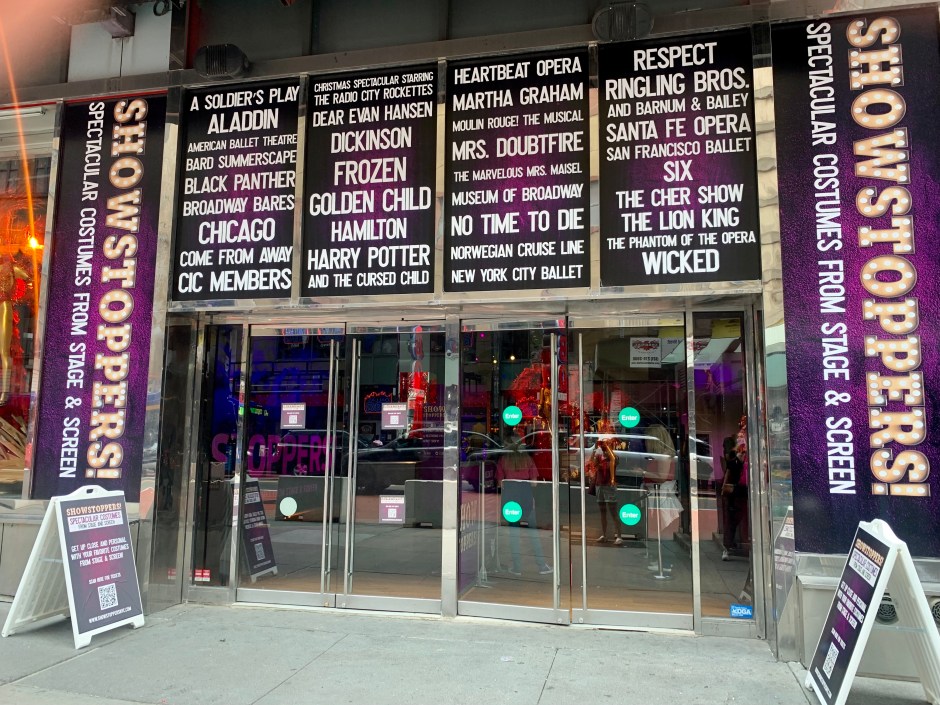
As Broadway reopens after 18 months of pandemic shutdown, there is an exhibit on West 42nd Street that highlights the incredible costumes that light up the stage (and screen). Open through September 26, tickets are required (go here for more information and to purchase) but proceeds go to help the talented people in the costume industry whose financial stability has been devastatingly impacted by the shuttering of the entertainment business. Here are my impressions from going a few weeks ago.
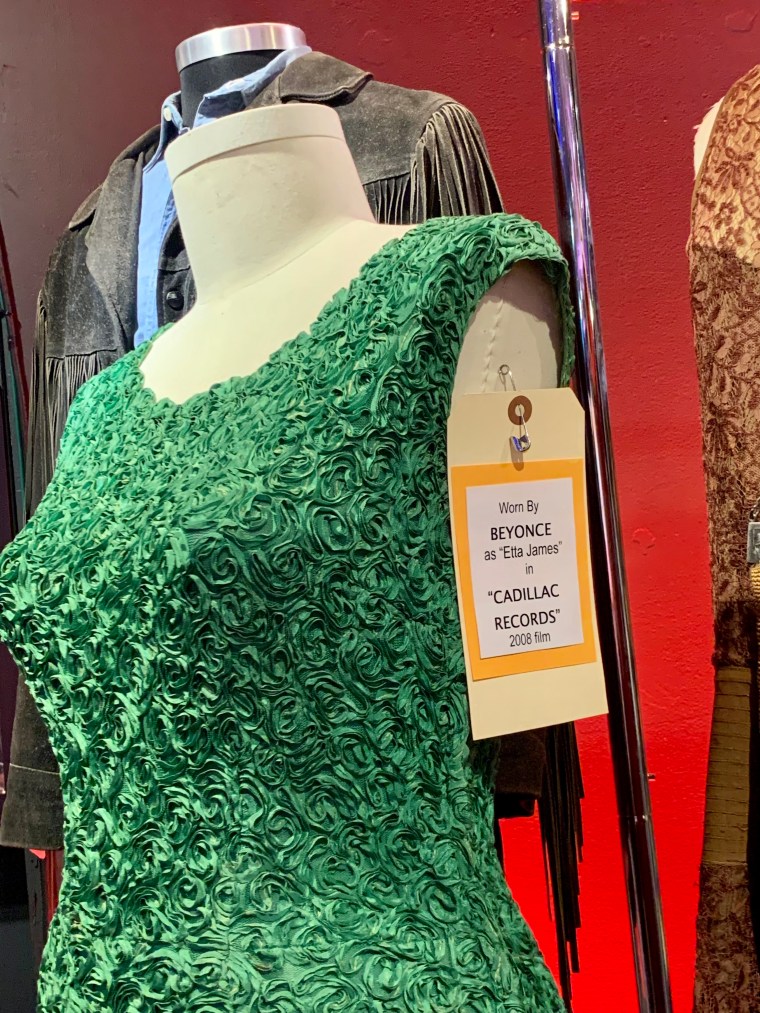
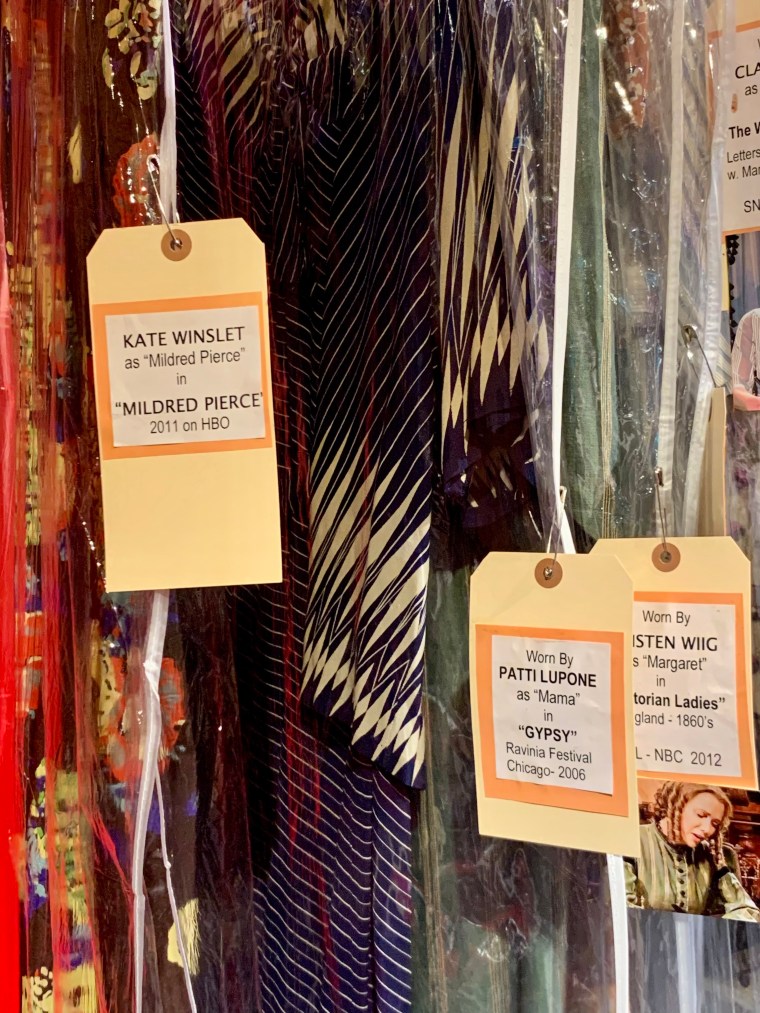
For a time-limited exhibition like this, I thought the layout and design was excellent. The exhibit aims to teach the observer about the work and design elements going behind these elaborate costumes, while giving the opportunity to see the details of the costumes up close.
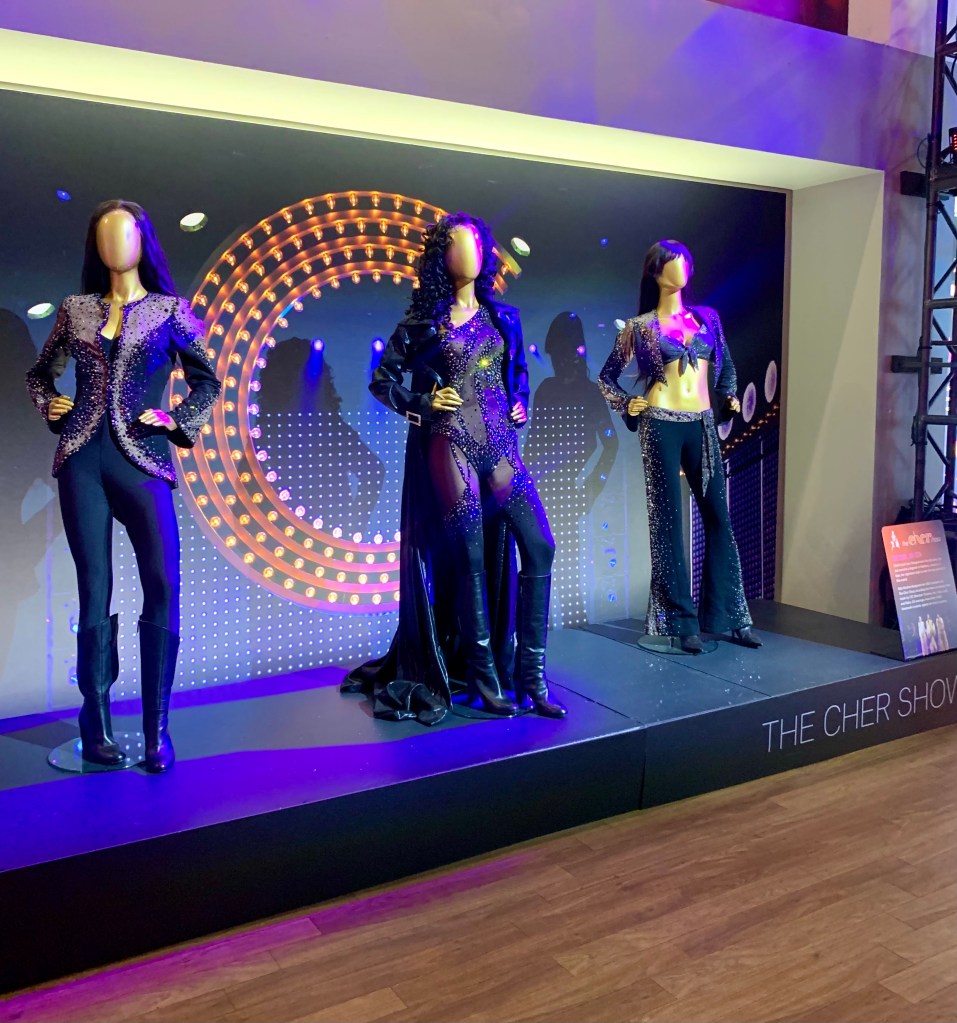
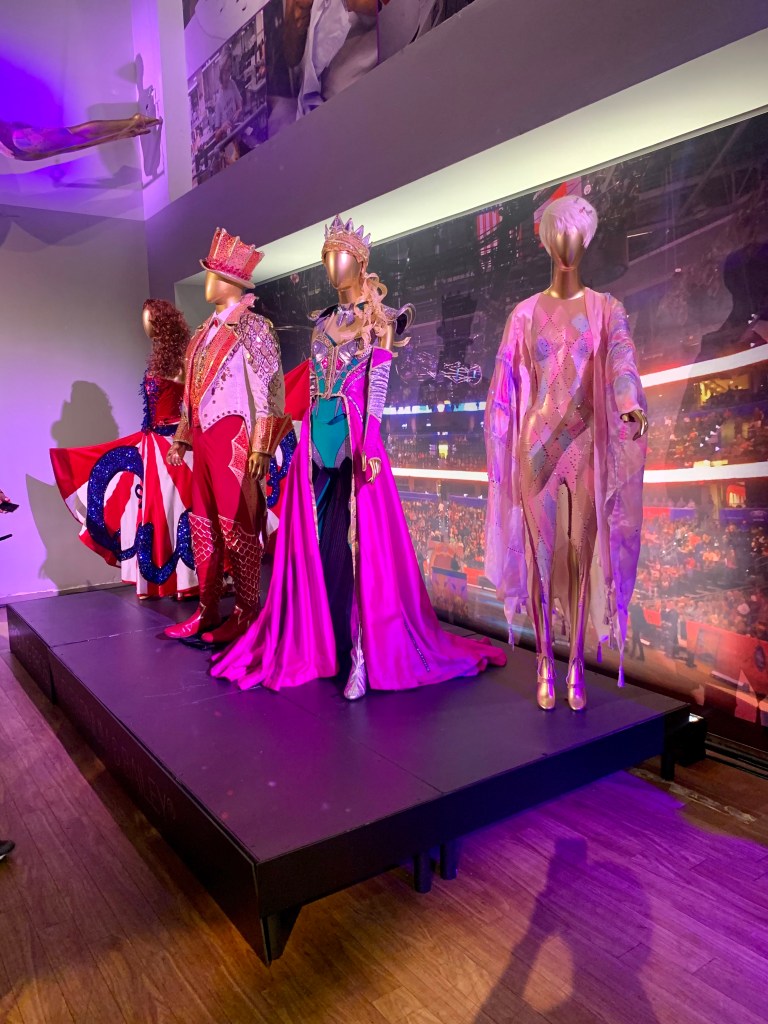
Here you see costumes from the Broadway productions of The Cher Show (Bob Mackie), Side Show (a particularly challenging costume) and Six (which was going to have opening night on the very evening that Broadway was shuttered).
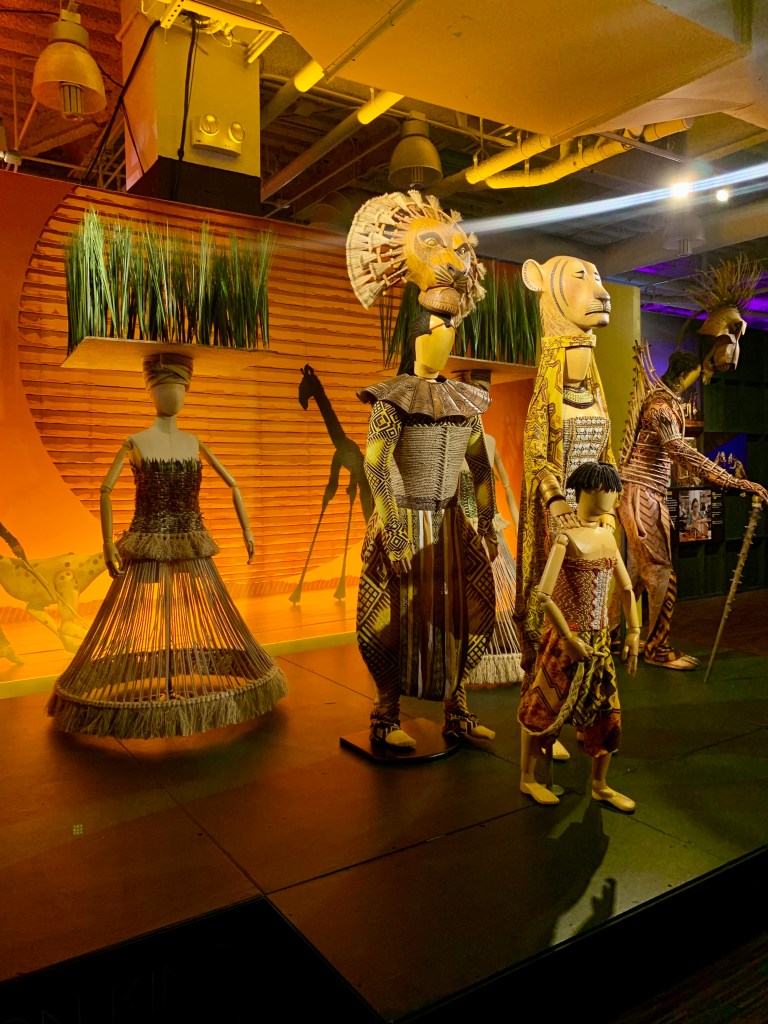
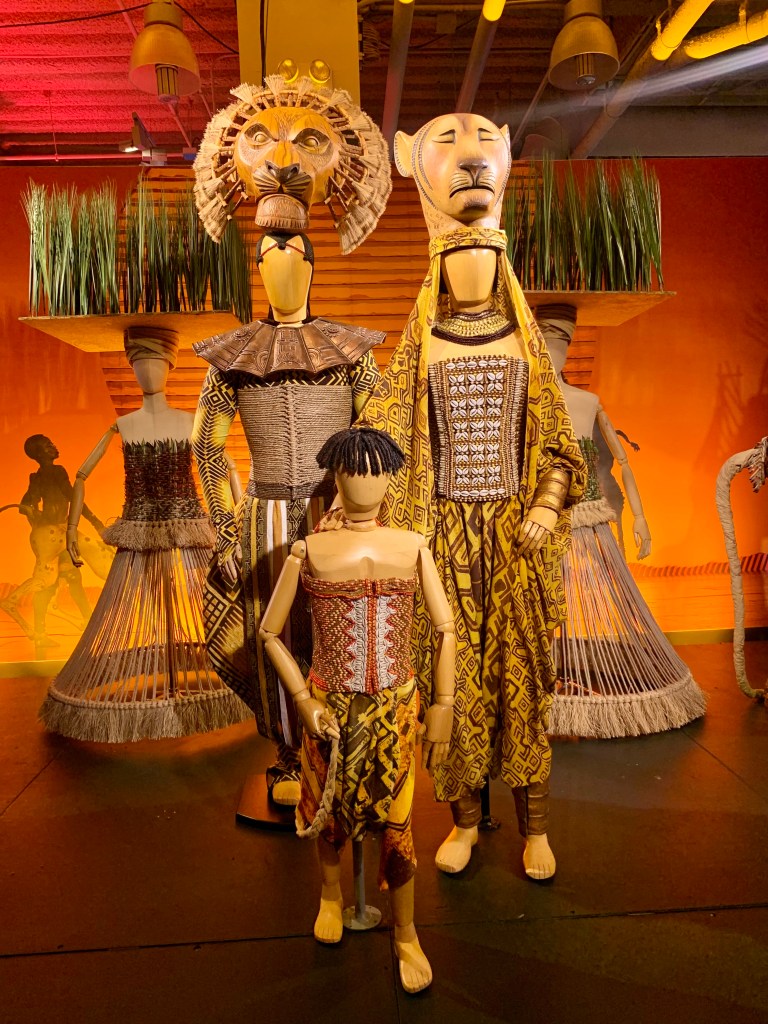
Disney productions are represented here: Aladdin, The Lion King, and Frozen.
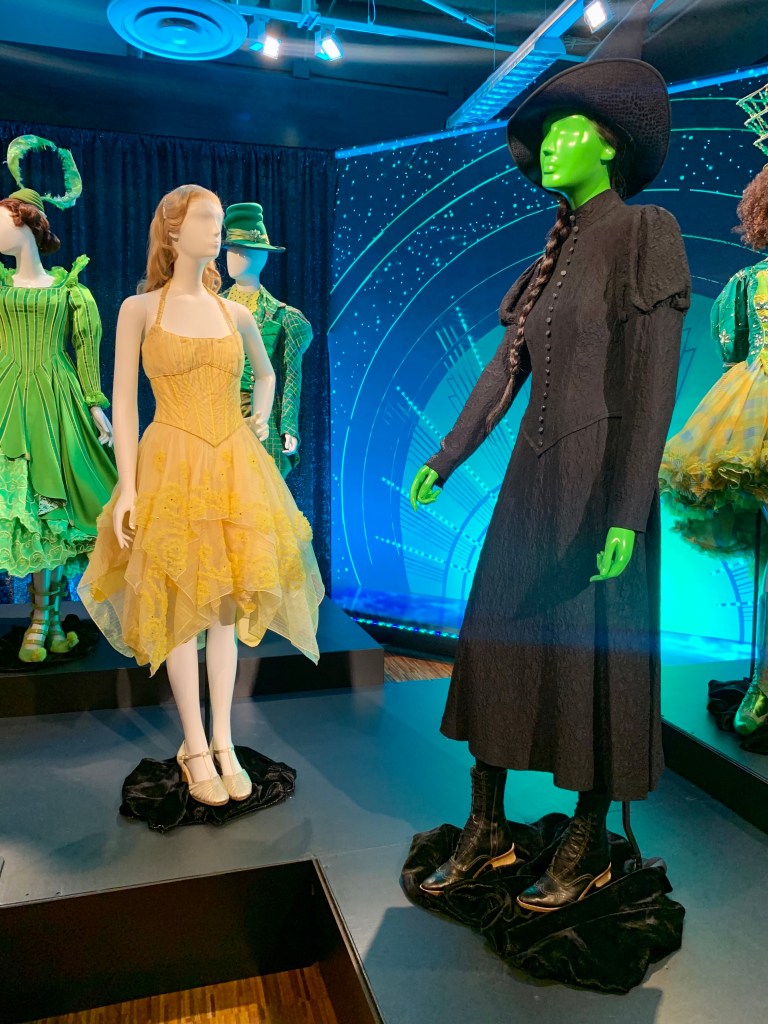
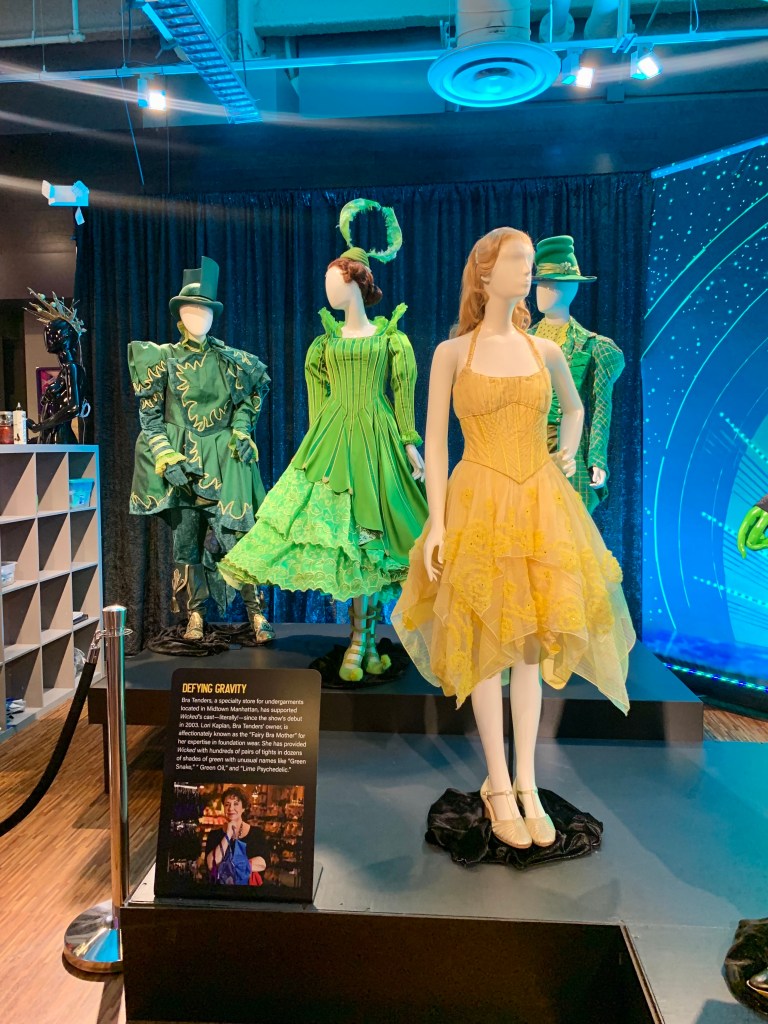
Wicked – it’s interesting to see Elphaba’s costume up close and see that it is not a matte black. Adding texture and some subtle color gives the dress depth on the stage.
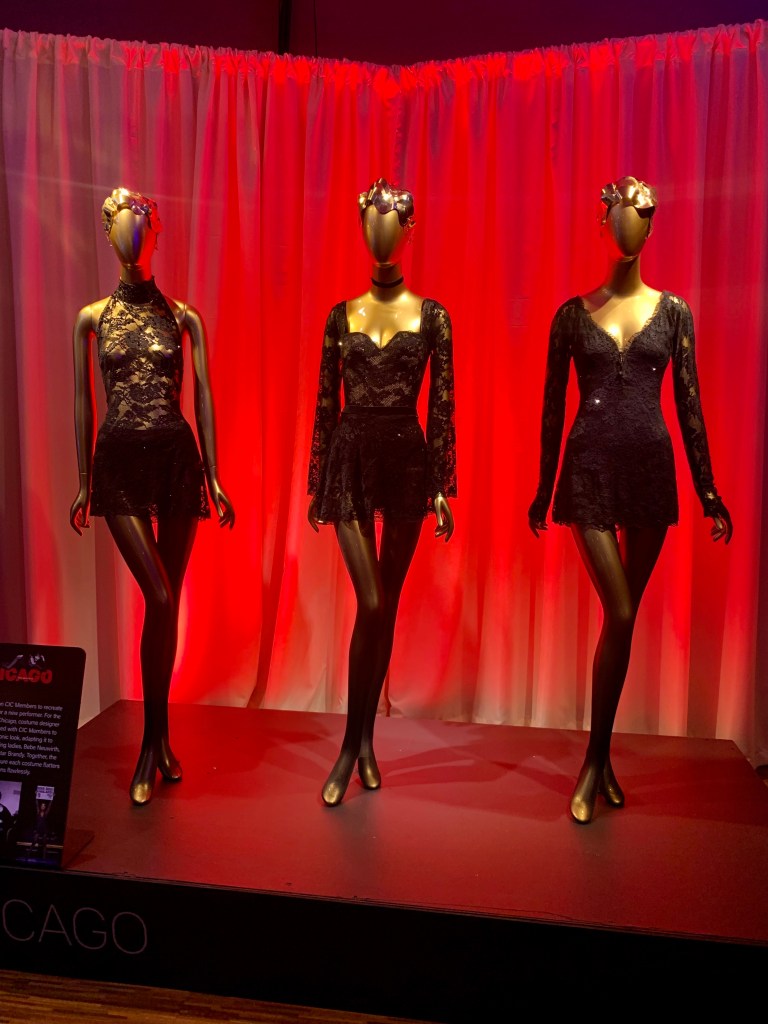
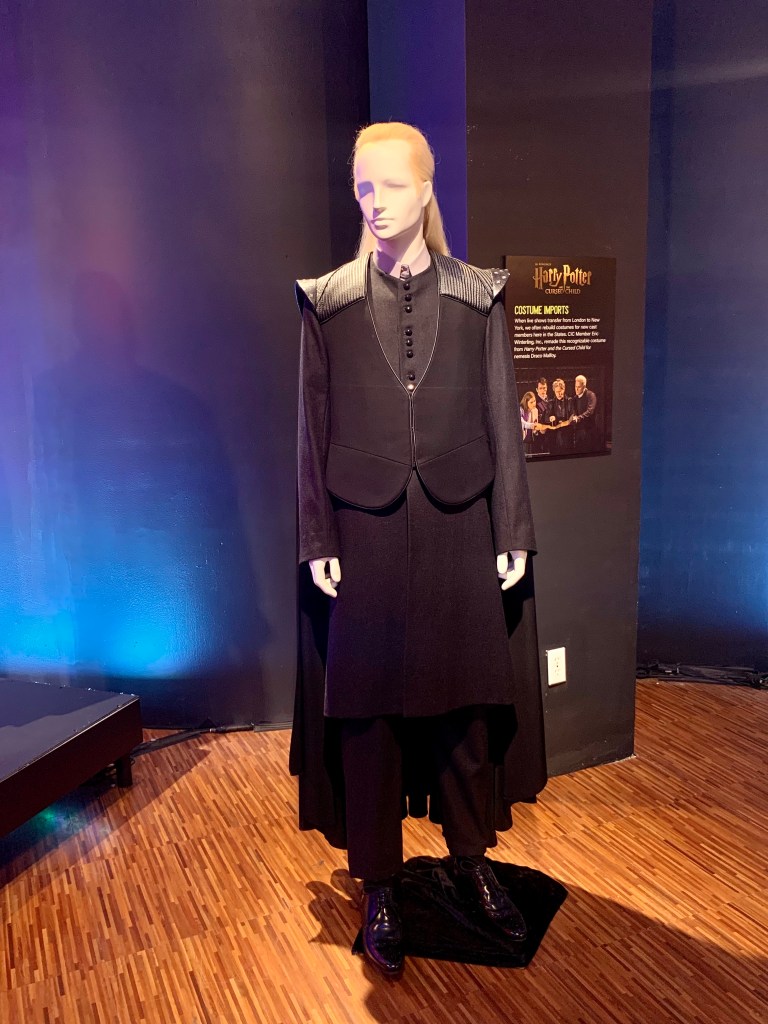
Costumes from Moulin Rouge, Chicago, and Cursed Child (Draco Malfoy).
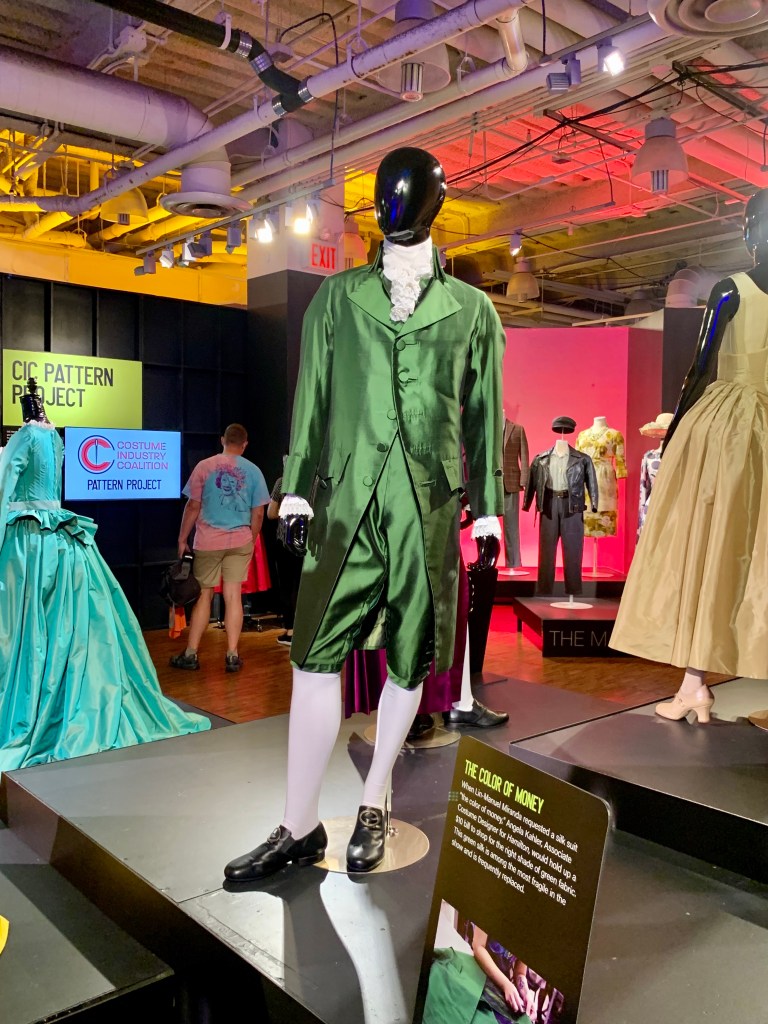
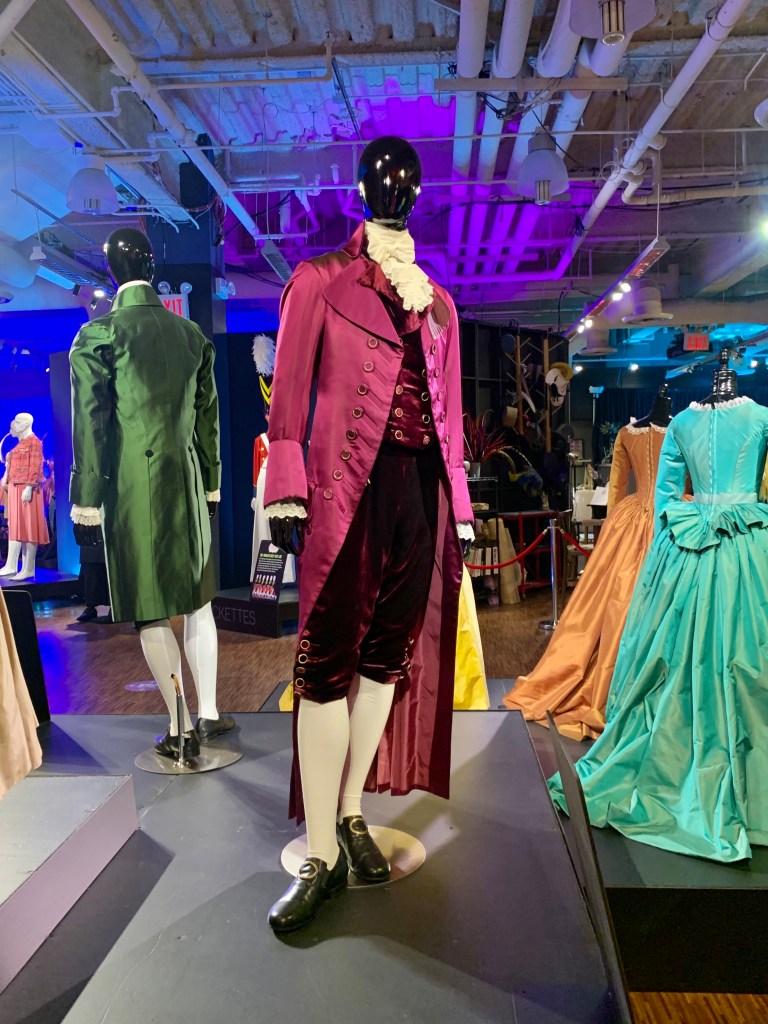
Hamilton! I was fortunate to be able to go backstage before pandemic and see some of these costumes up close then. Apparently Lin-Manuel Miranda asked for Alexander Hamilton’s costume to be “the color of money” and after several tries this iconic green silk was confirmed. Being able to make the ensemble’s costumes able to dance in – without looking like stretchy dance clothes -is a particular challenge for most Broadway costumers.
I have also been backstage at Phantom and seen the costumes at close range. For solid black or white costumes like these for the Phantom and Christine, texture and small variations in color are used to keep them from appearing flat from the audience.
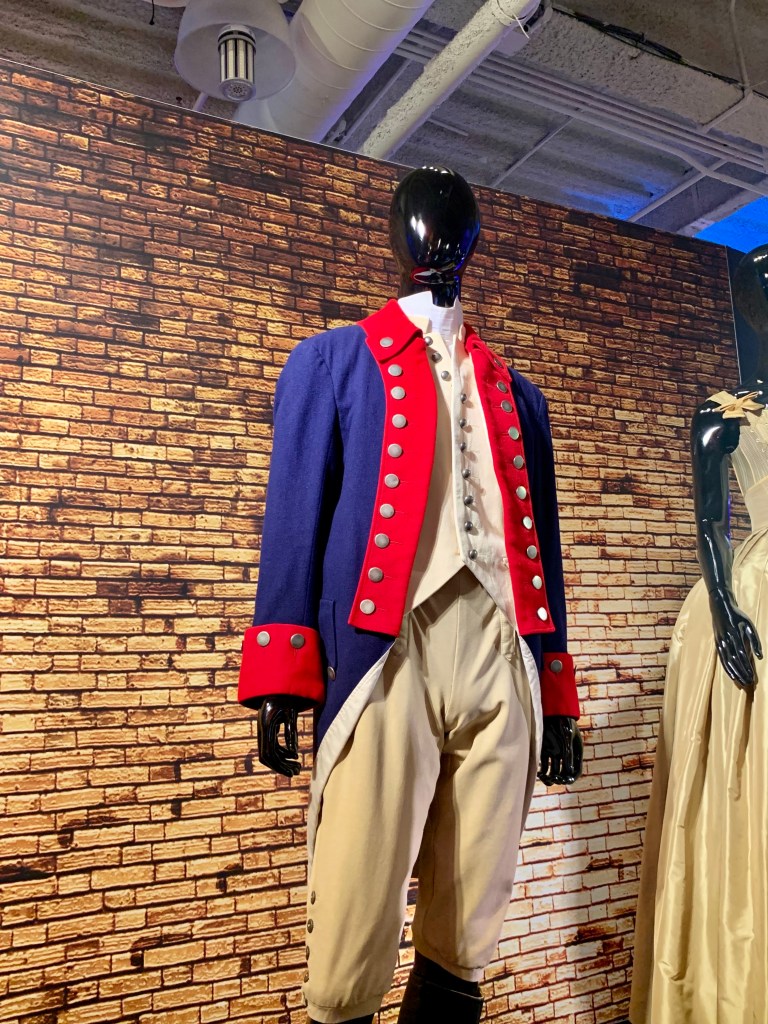
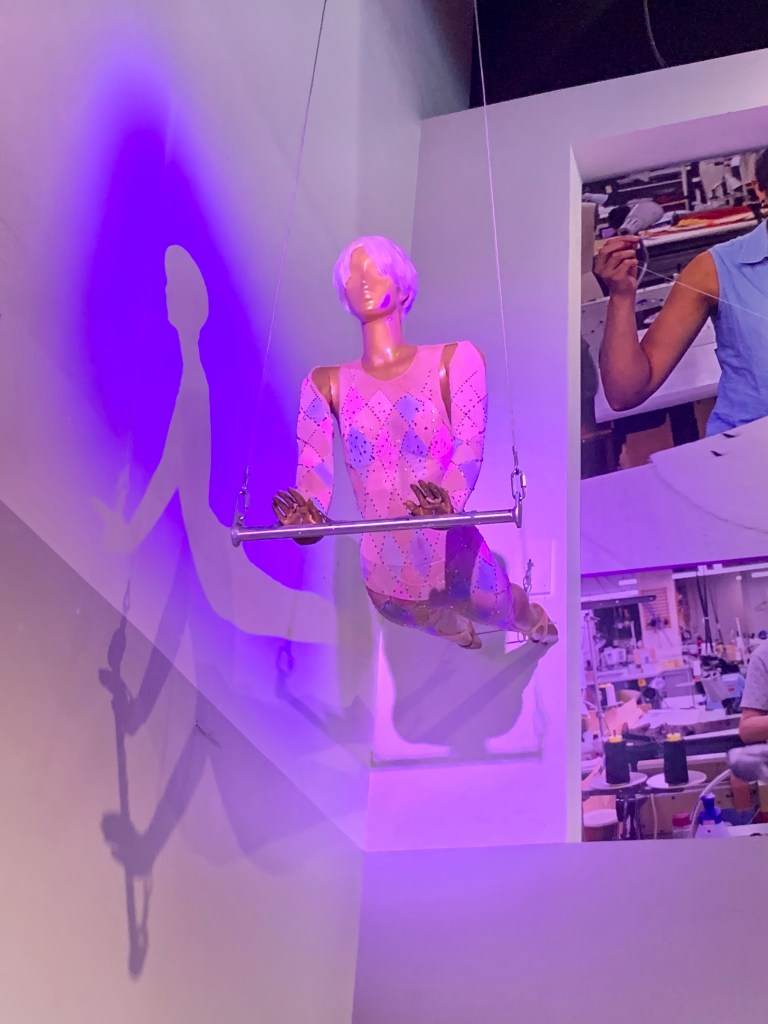
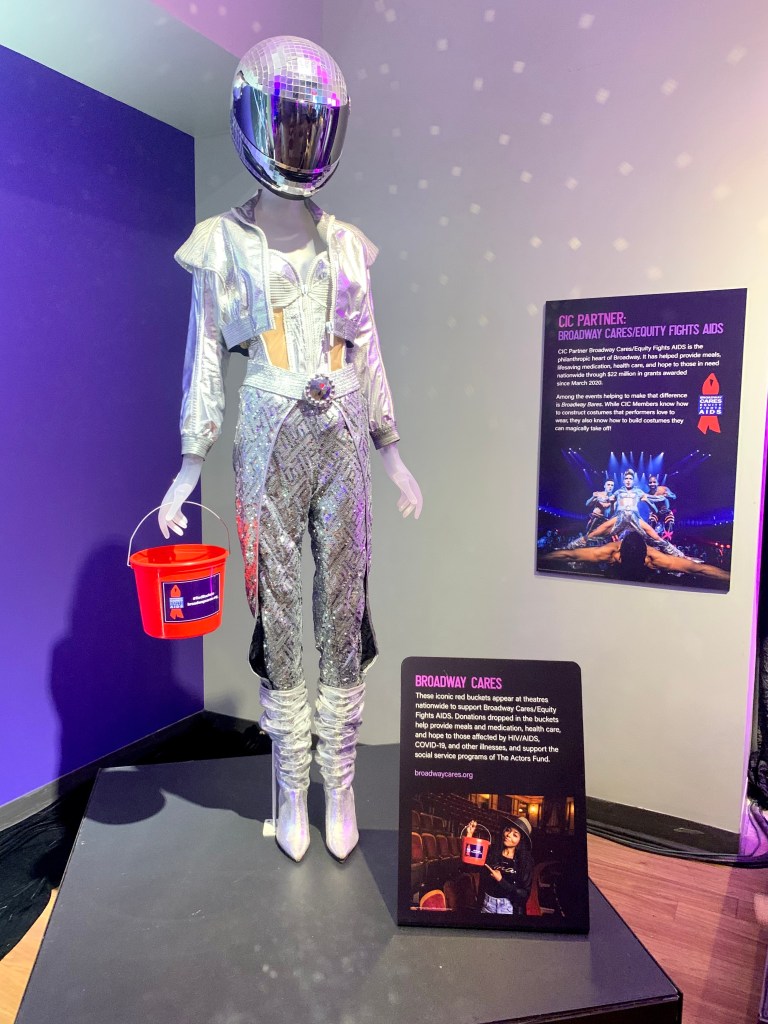
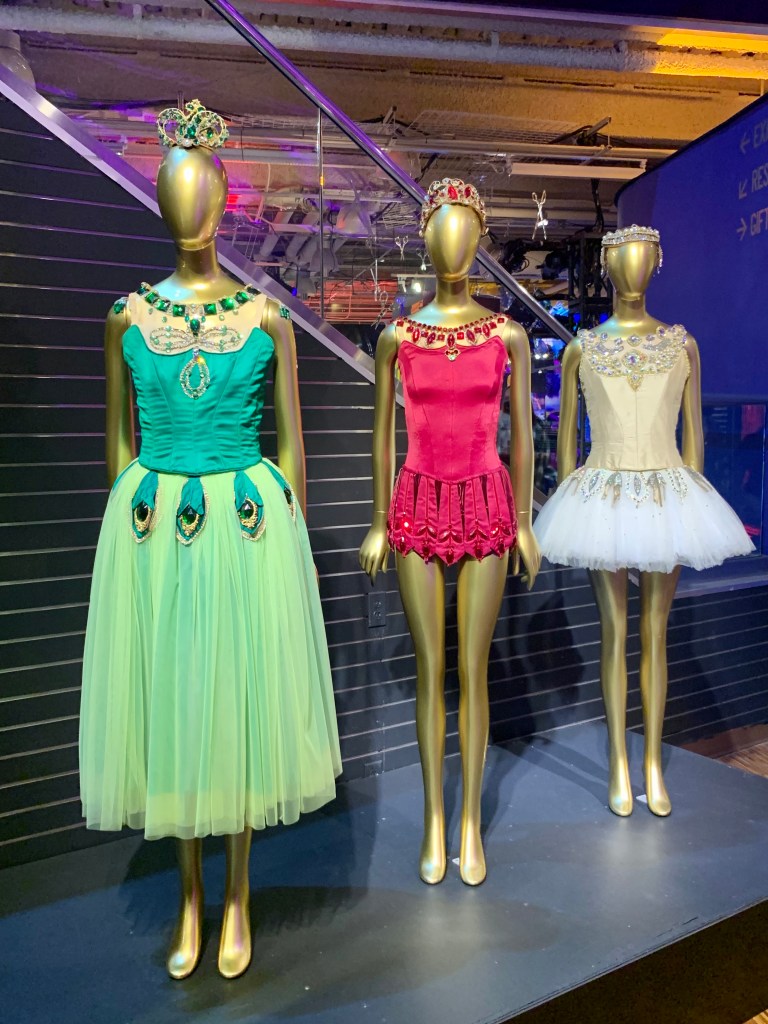
Costumes from non-Broadway productions were also highlighted. Here you see costumes from a cruise ship, from the circus, for a Broadway Cares production, from dance, and the iconic costume the Radio City Rockettes wear in the March of the Wooden Soldiers.
The exhibit also highlights the importance of cleaning and caring for costumes, with many from films being preserved since, unlike on Broadway where costumes wear through and are replaced constantly, a film is limited in time and requires fewer repairs or replacement of the costumes.
The exhibit ends on a positive note, with Broadway reopening happening on a rolling basis throughout the fall.If you are able to see the costume exhibit, it may improve your enjoyment of the costumes you see from your seat as you return to a Broadway theatre!
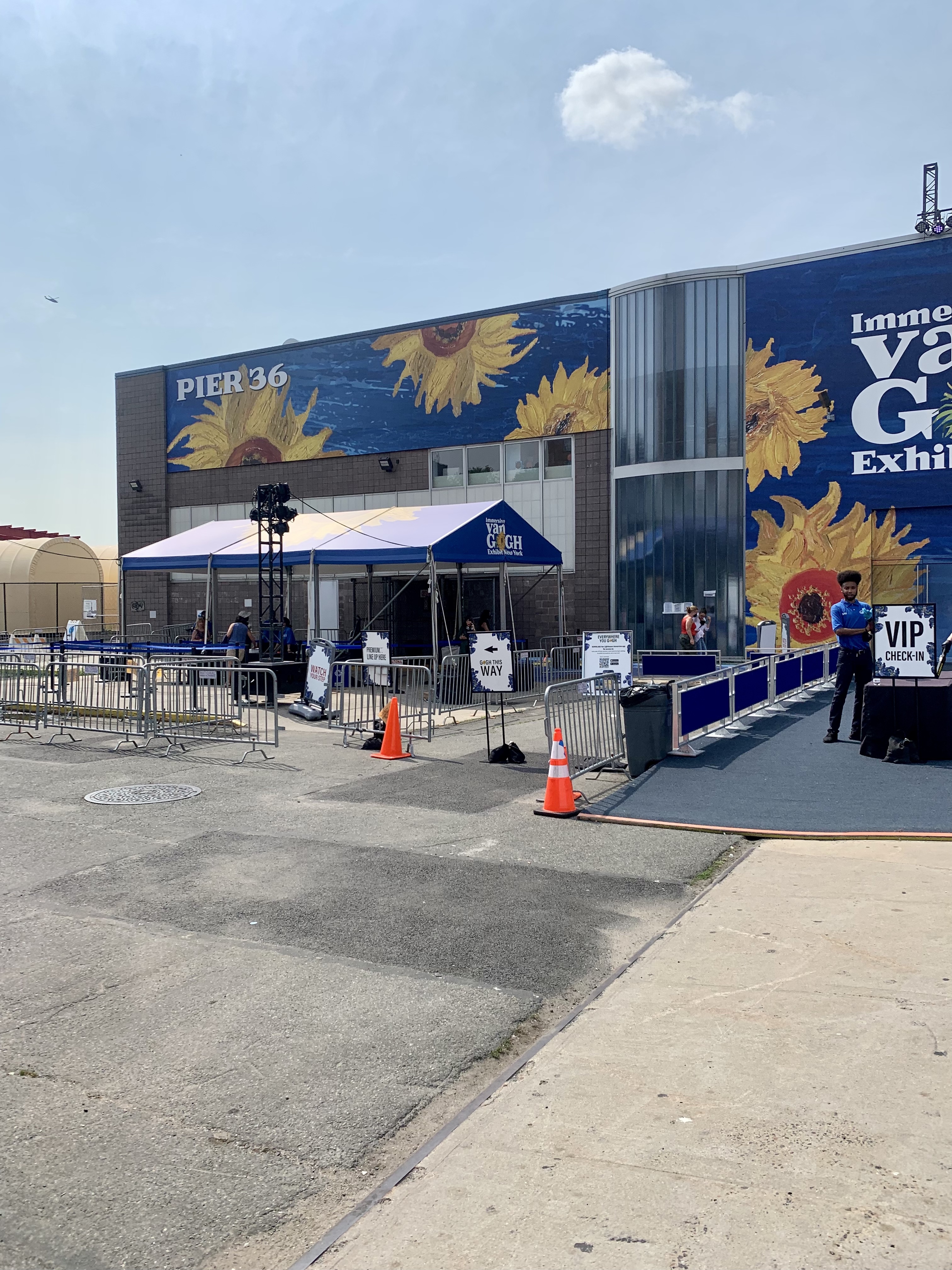
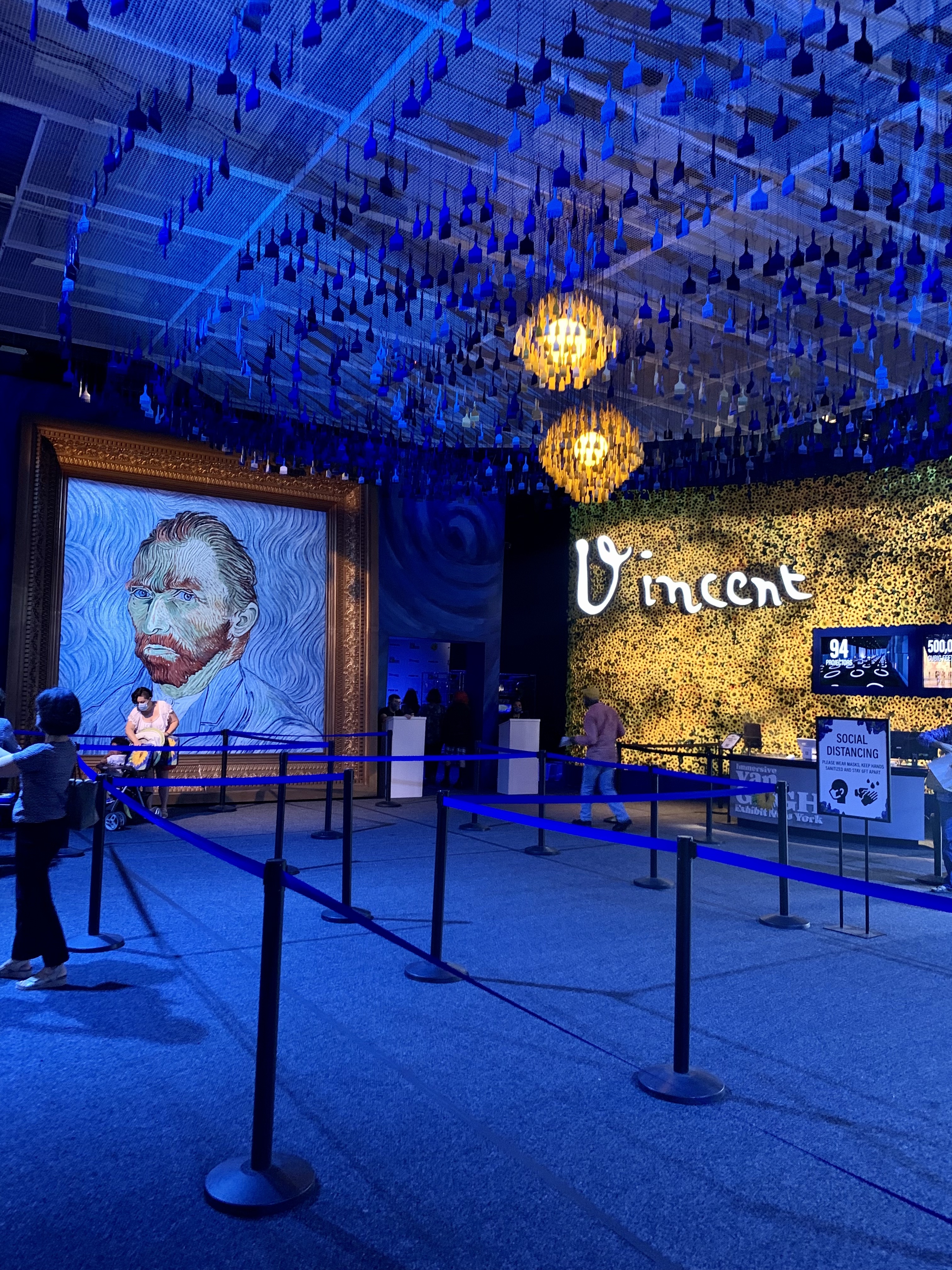
Imagine living inside the bold colors, textures, and images of a Van Gogh painting – music swelling as the lush visuals move around you. It can be experienced rather than imagined, by going to the Immersive Van Gogh Experience in NYC through September 6 (tickets are limited and it seems to be sold out the last weekend, so act quickly), and in cities all over the United States and Canada over the next year. I went to the exhibit on the East River here in Manhattan recently, and some of my tips about visiting will be specific to the NYC exhibit while others are more general and should apply to other locations.
The NYC experience is at Pier 36 on the East River, closest to Montgomery Street and South Street on the Lower East Side, between the Manhattan and Williamsburg Bridges. The 75,000 square foot interior space was designed by Broadway set designer David Korins (Hamilton, Dear Evan Hansen), a collaboration unique to New York.
Tickets can be – and should be – purchased in advance, and prices range from $39.99-$69.99 depending on the day of the week and the time of day. Masks are required, and the numbers are limited to keep the experience uncrowded as well as covid-safe.
Before entering the immersive area, there is a reminder of the basic facts of Vincent Van Gogh’s life – his production, lack of success during his lifetime, and posthumous spectacular fame. When MoMA first reopened last year, it was eerily uncrowded, and I posted a selfie of myself in front of his “Starry Night” in part because you normally can’t get ever close enough to see it properly.
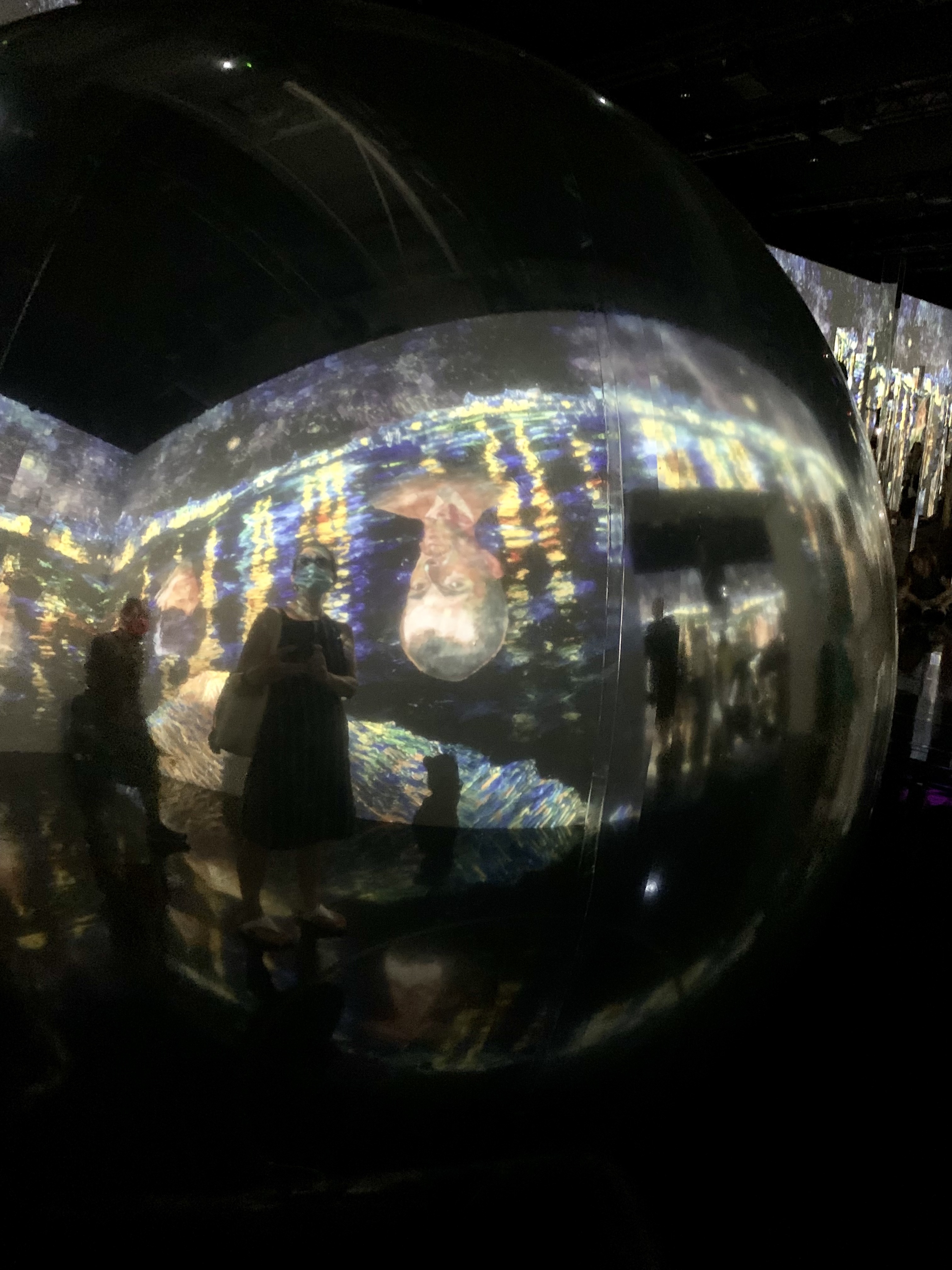
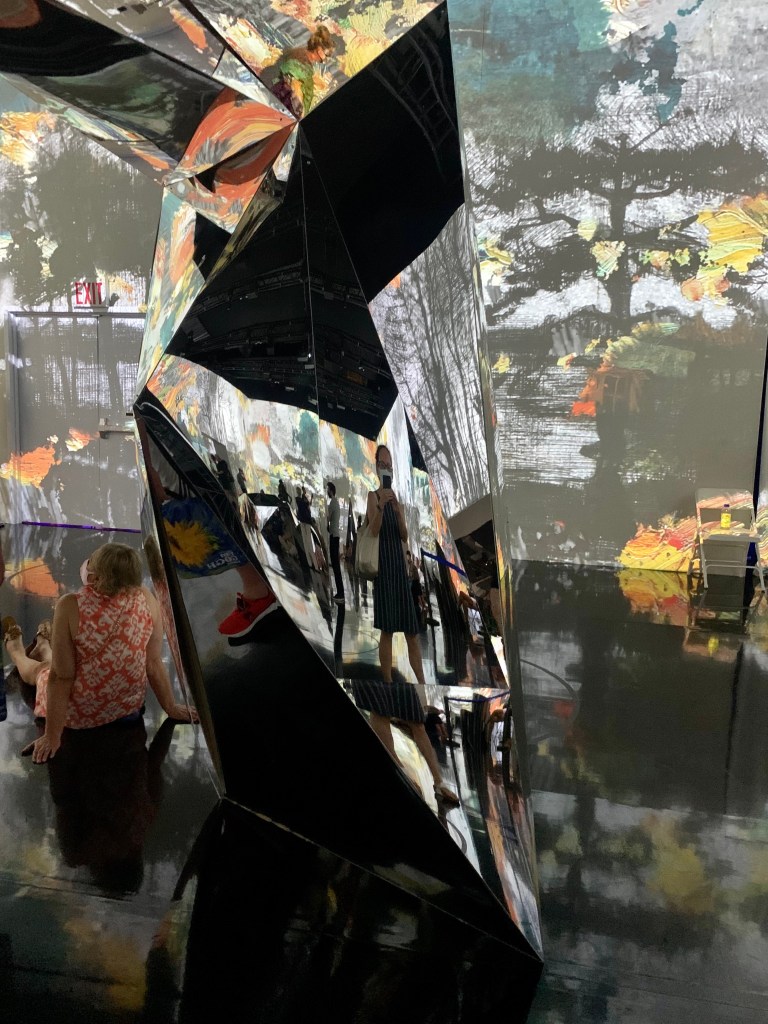
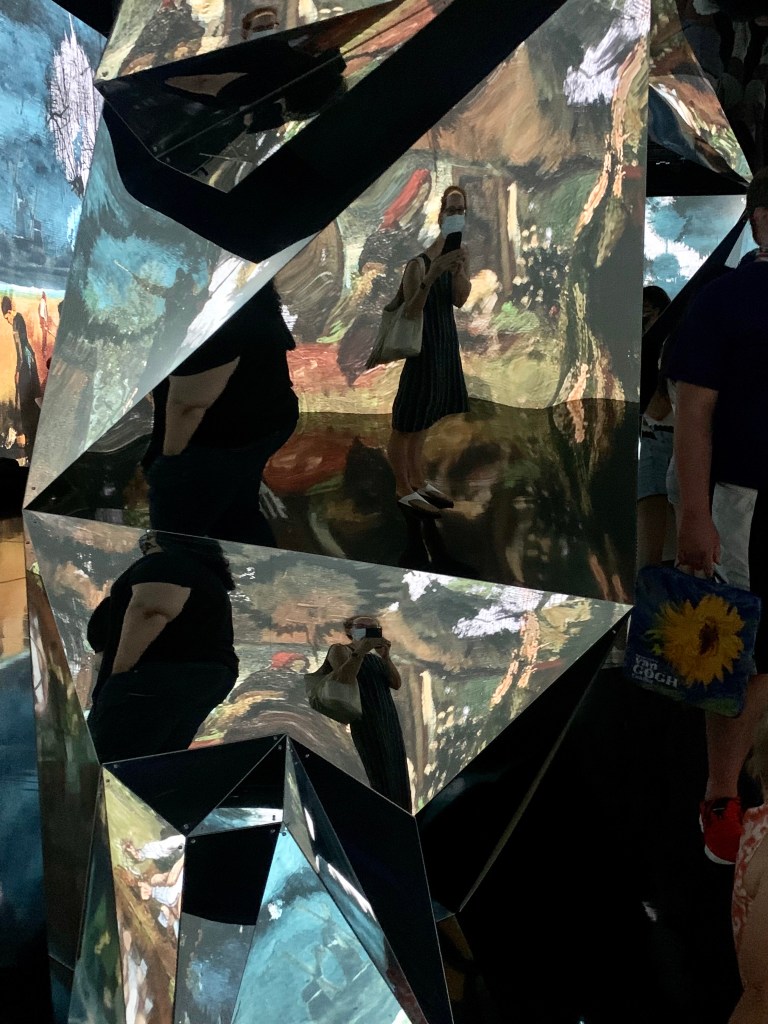
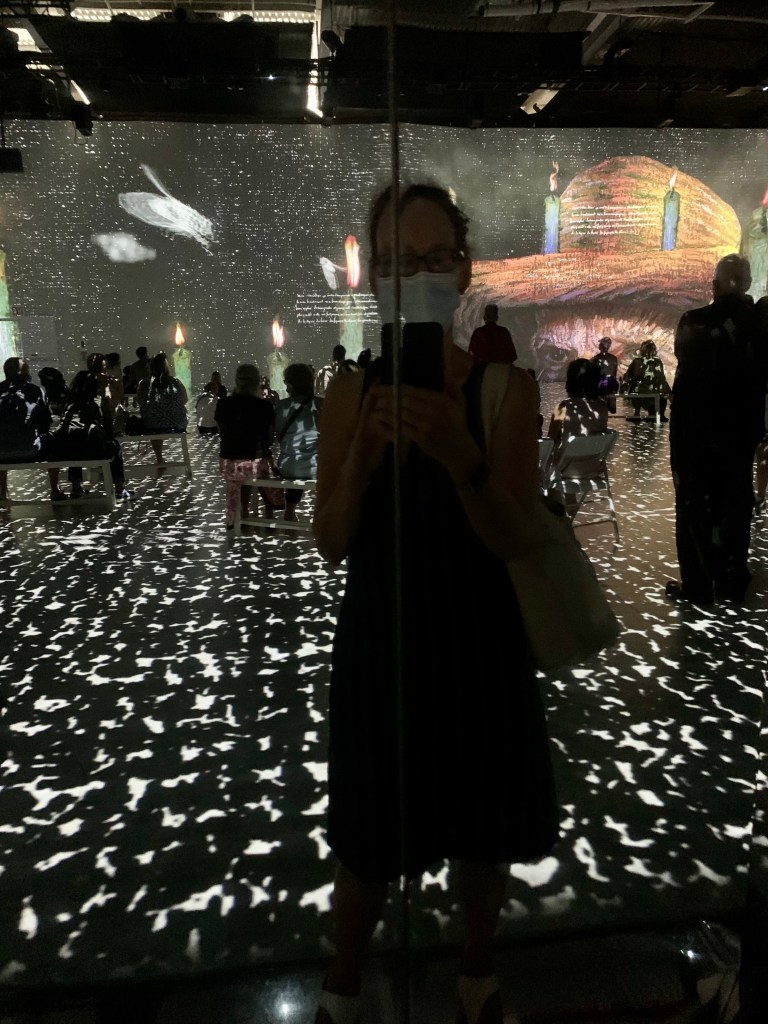
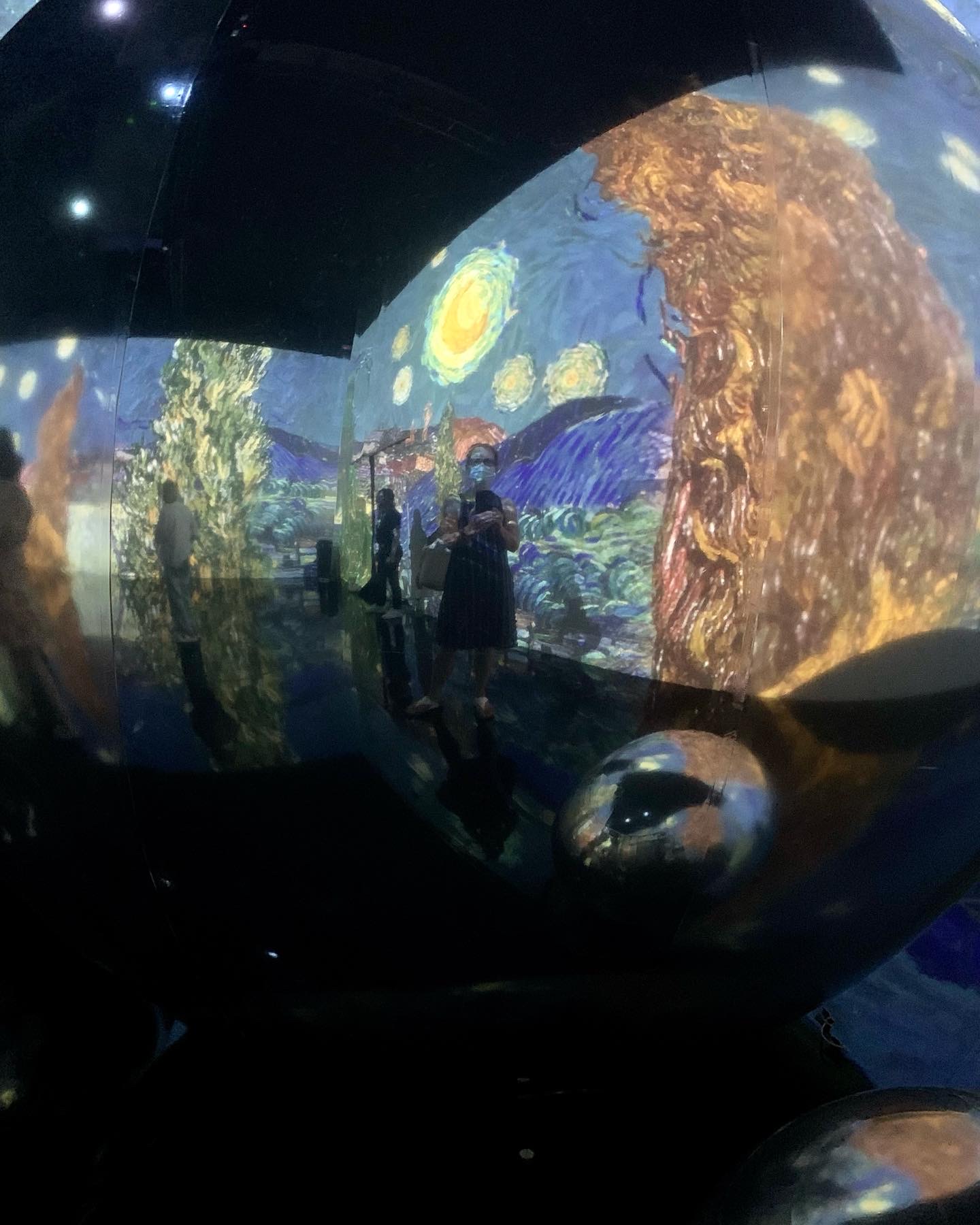
The first two rooms in the New York exhibit are smaller, and feature mirrored pieces designed by Korins to refract the larger projections on the walls and let you catch glimpses of yourself caught in the visuals. I noticed that many people got to the first room or two and stopped, and those rooms were more crowded as a result. My first tip would be that when you first enter, walk through the entire exhibit and see everything briefly before settling down to one spot. Also, visuals and music are on an about a 30 minute loop, so try to figure out where you are in the loop (if you see images from the asylum at Arles, with those crows of foreboding, you are near the end). Ideally you would see the entire “show” in one space, and in NYC the best space is the third gallery, which is enormous and has seating.
The third gallery in NYC also has an elevated platform, but my own personal experience was that being there felt less immersive that being on the floor. And what is the experience like? To me, I kept being reminded of an experience at the Rose Planetarium at the American Museum of Natural History (no longer offered, sadly) called “Sonic Vision.” That show featured music from Radiohead, Moby, and others, and the music at Immersive Van Gogh is mainly original music by creator Luca Longobardi, but ranges from Thom Yorke and Edith Piaf to Handel and Mussorgsky (see the Spotify playlist here).The somewhat overwhelming experience of being immersed in visuals with music is trippy – I used to say that going to Sonic Vision allowed me to go on a psychedelic trip safely without having to take drugs. There is an element of that here – but with somewhat of a storyline to the experience, and the knowledge of what Van Gogh’s life was like, there was an emotional depth to it as well. You can stay as long as you would like, but I would suggest you need at least an hour – the time you figure out the space before another loop of the experience begins, the entire (about 30 minute) presentation, and time to go back and take photos or see things you might have missed in the first walk through. You can go back and forth between the galleries.
There is an extensive gift shop as you exit, and not just Van Gogh related (not sure why “I’m glad you are as weird as me” candles were included), before you exit and find yourself right on the East River on Pier 36, walking along the back of the building to get back to reality. The real world is discernibly less vivid – but Van Gogh lived in the real world and was able to create gorgeous hyper-reality with his imagination, so the exhibit serves as a reminder to dream in color. I have no idea what Vincent himself would think of this exhibit, and I did wonder that a few times while there, but what would life be indeed, if we had the courage – as he did – to attempt anything?
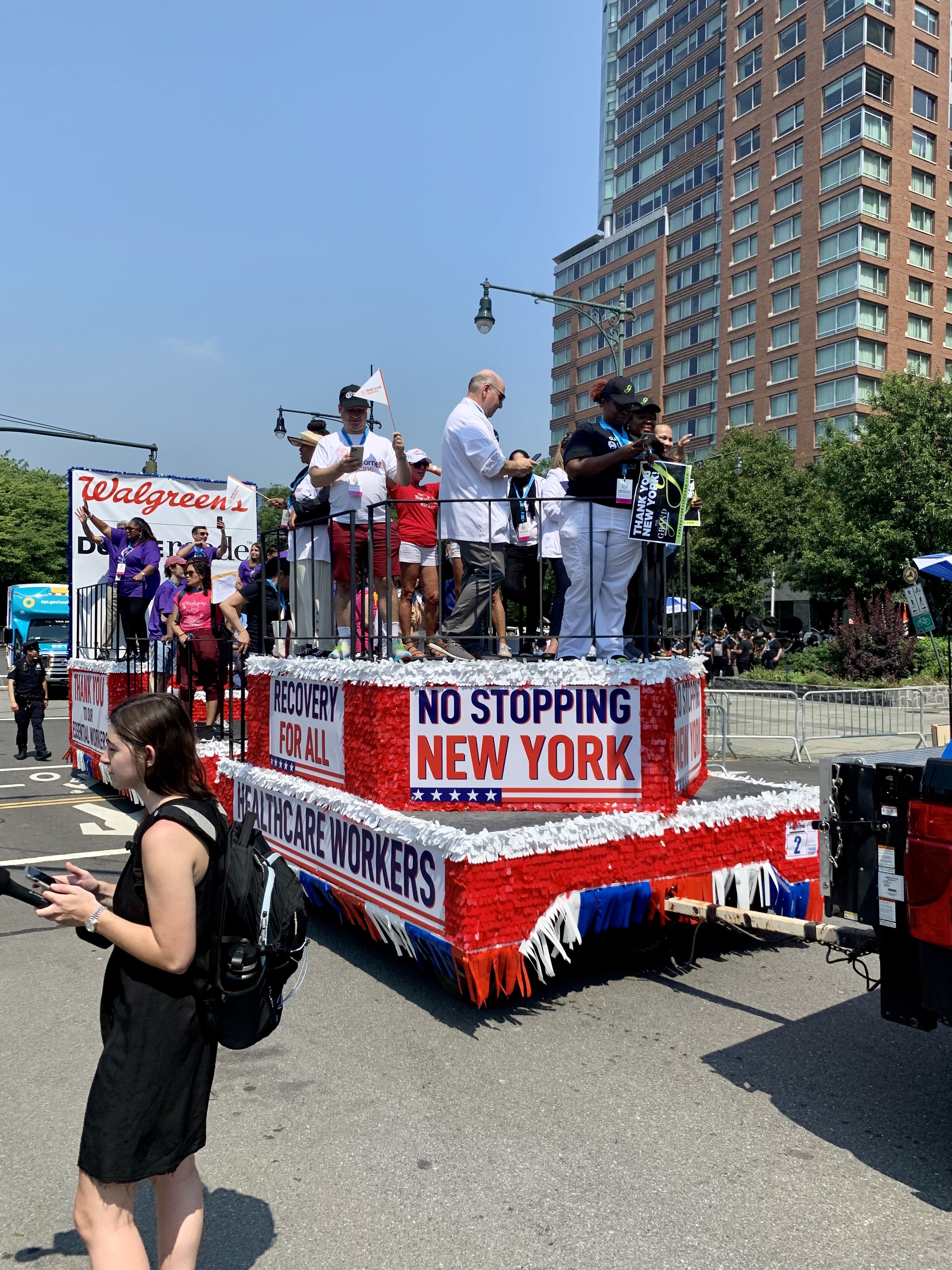
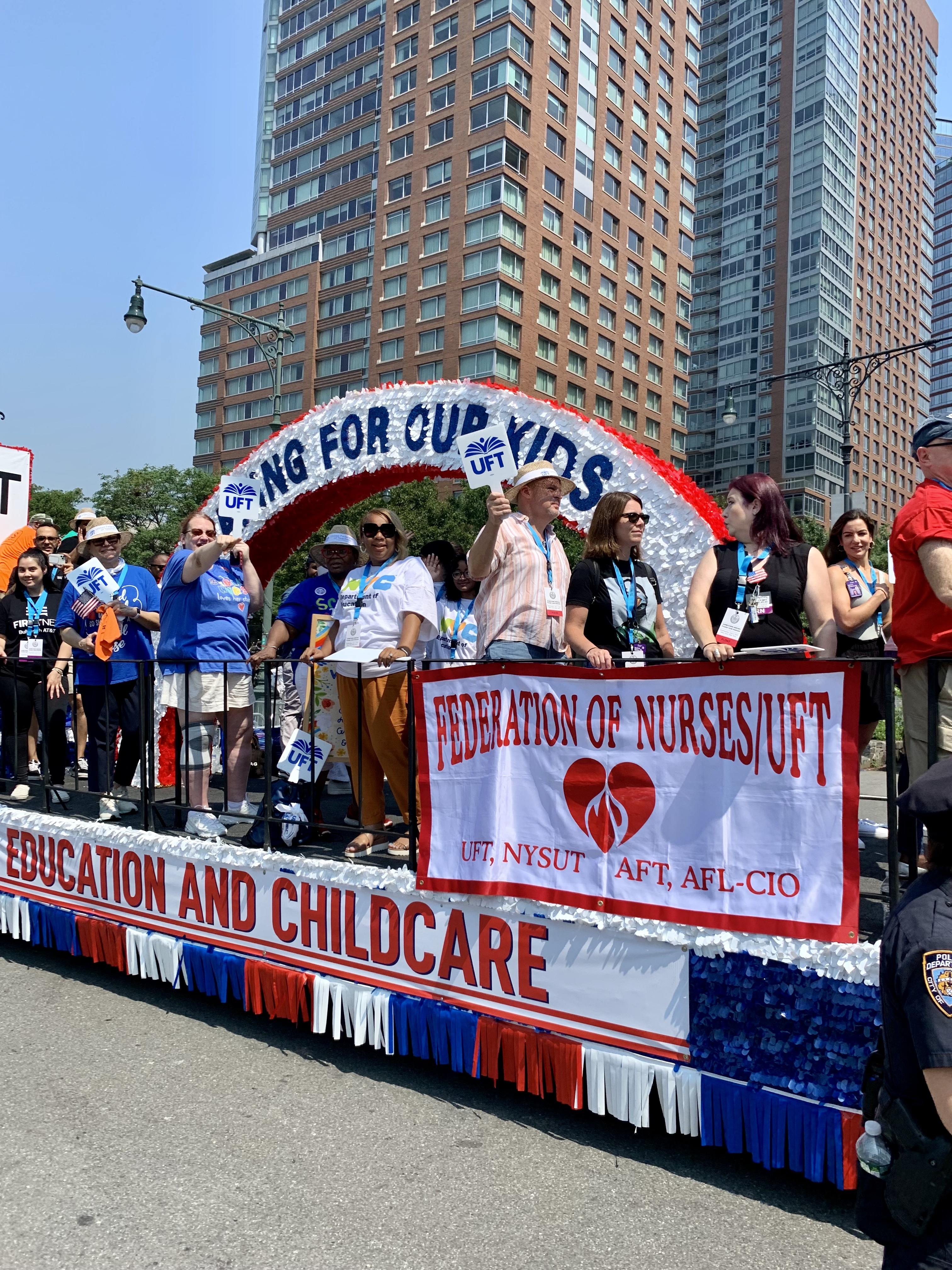
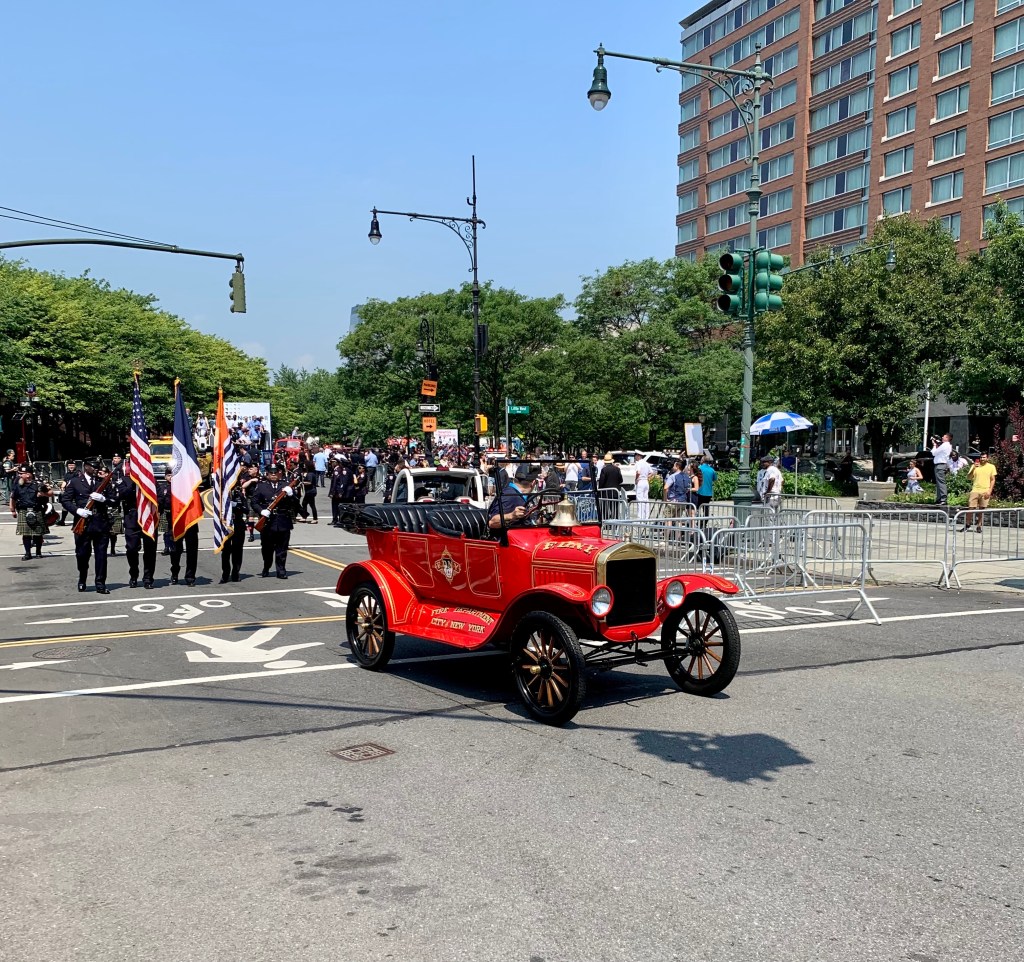
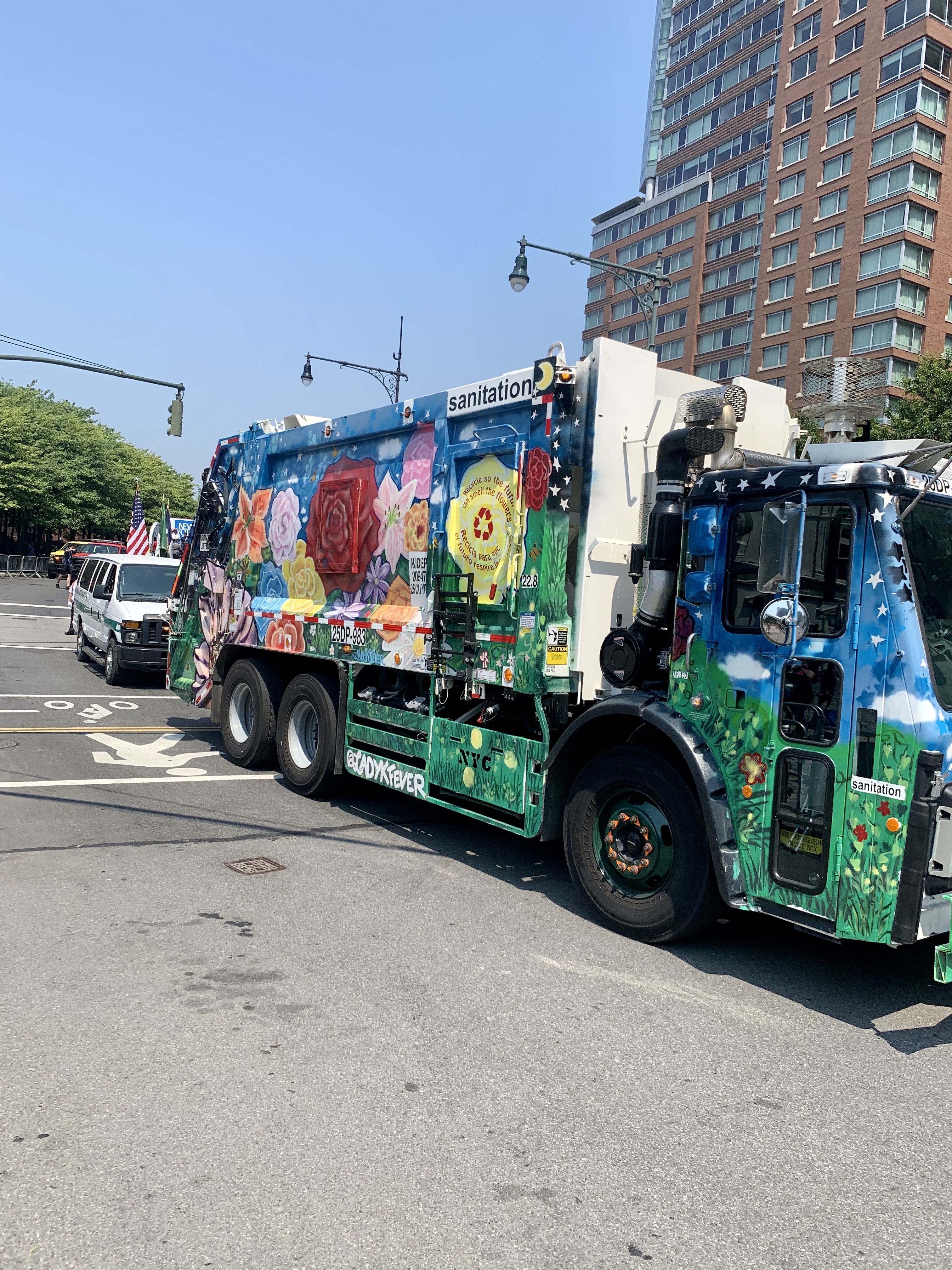
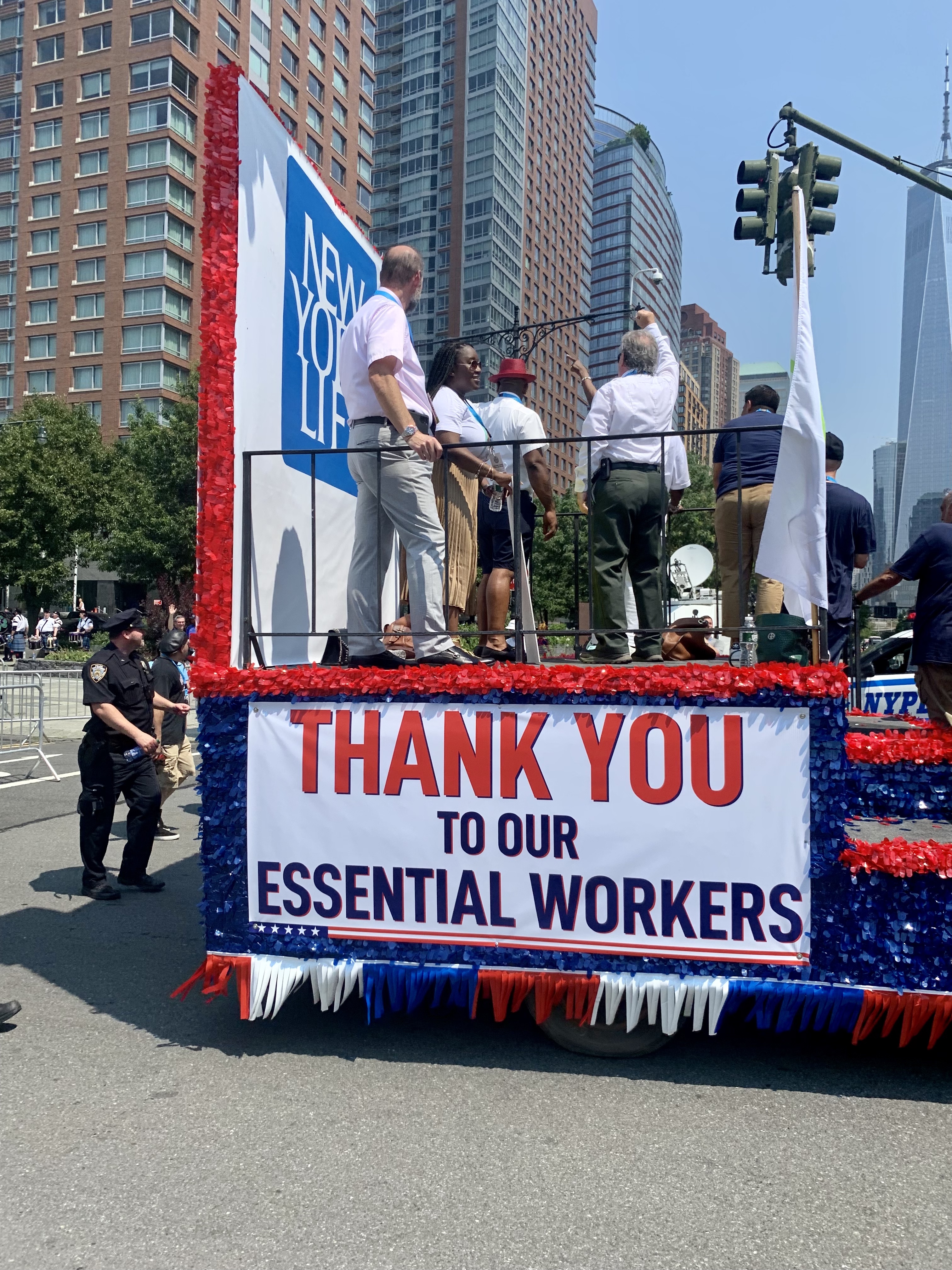
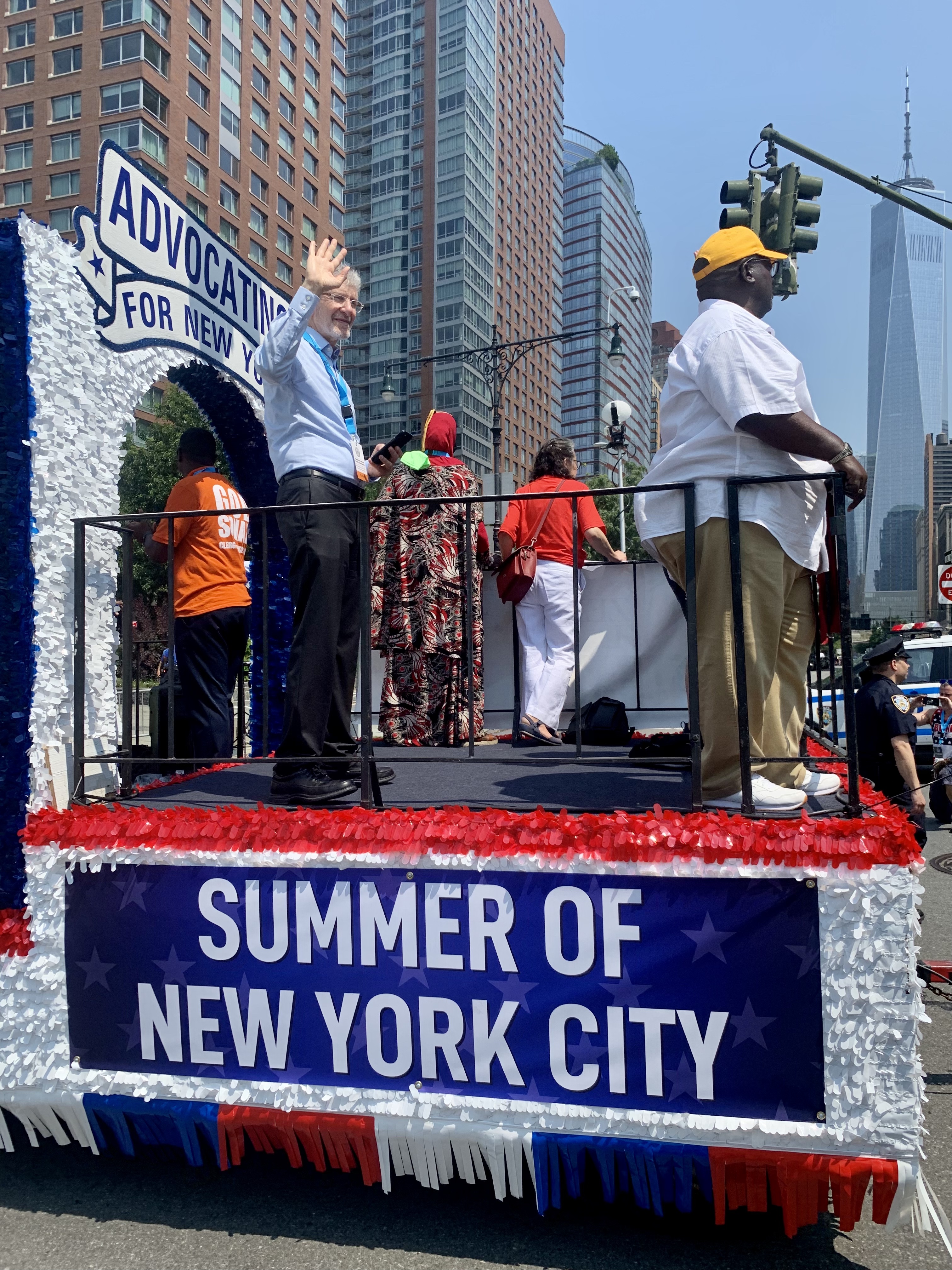
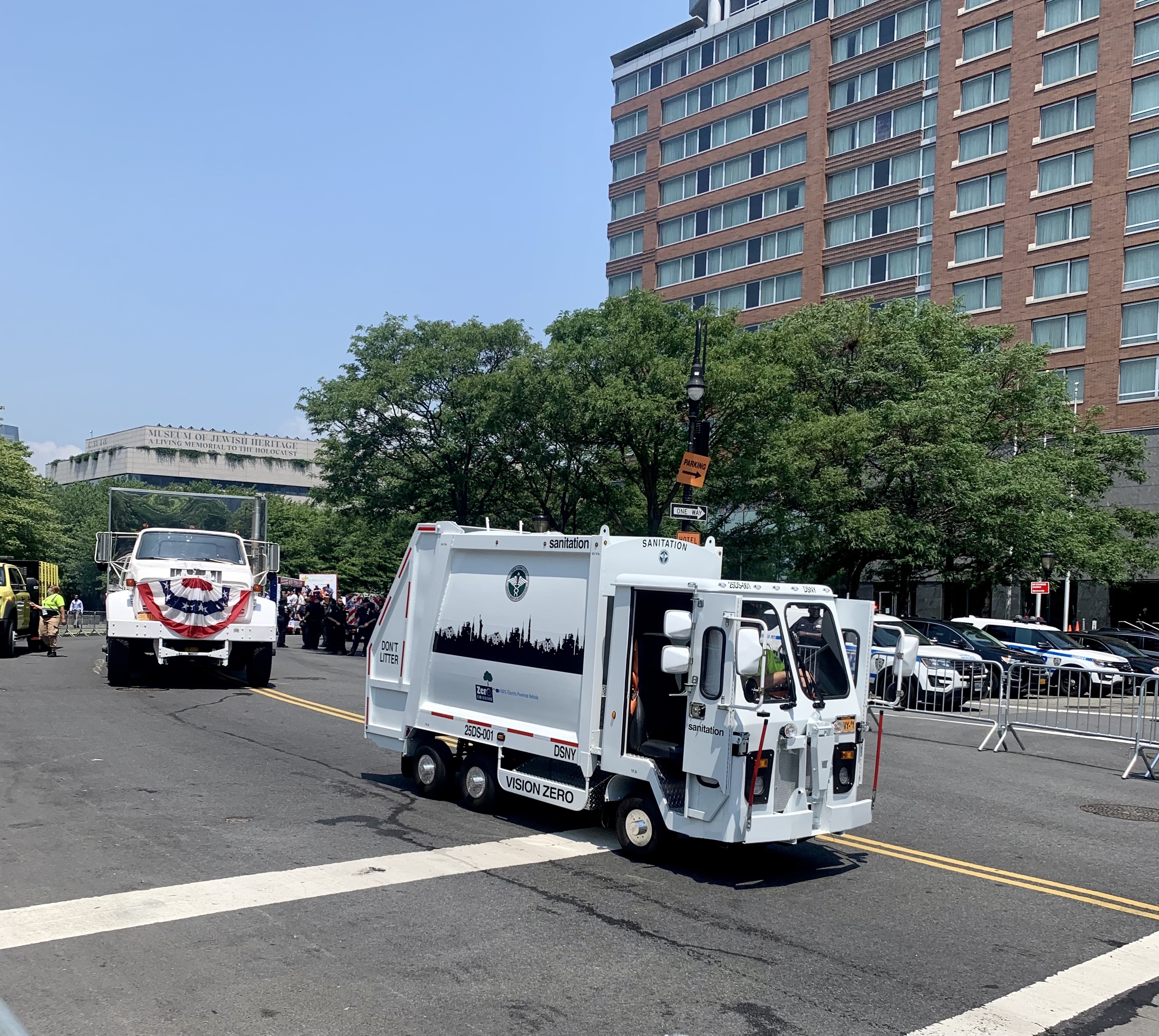
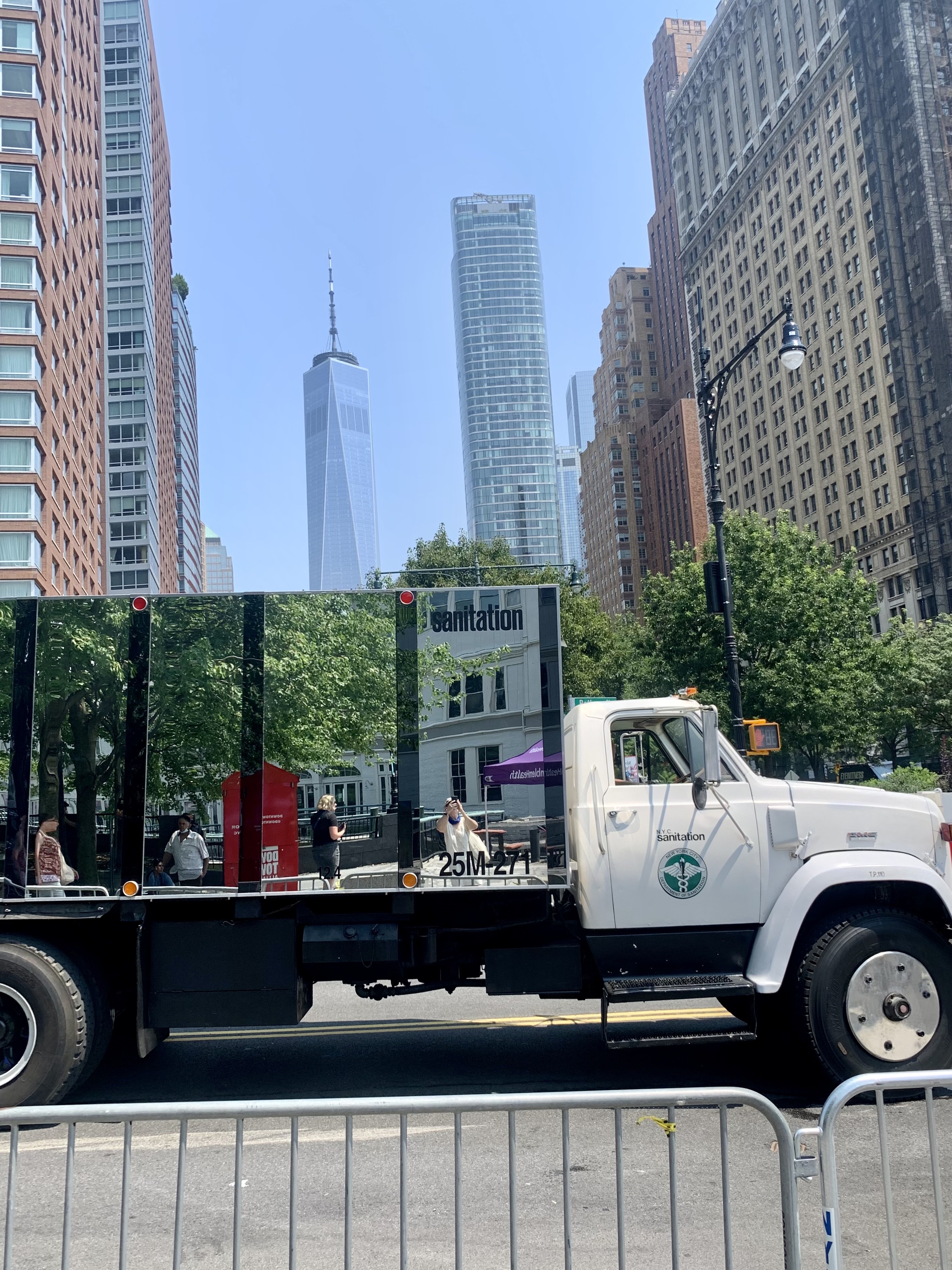
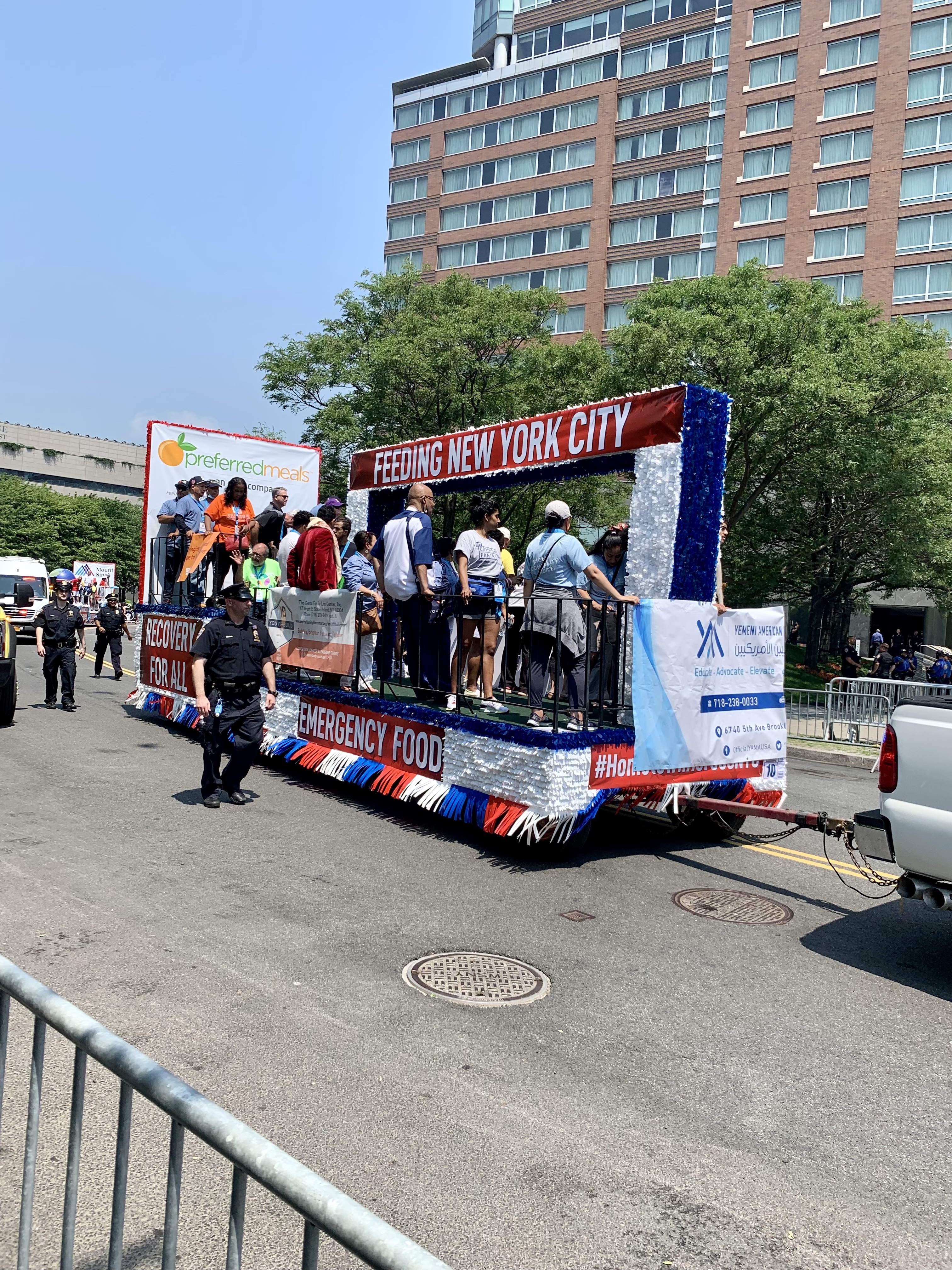
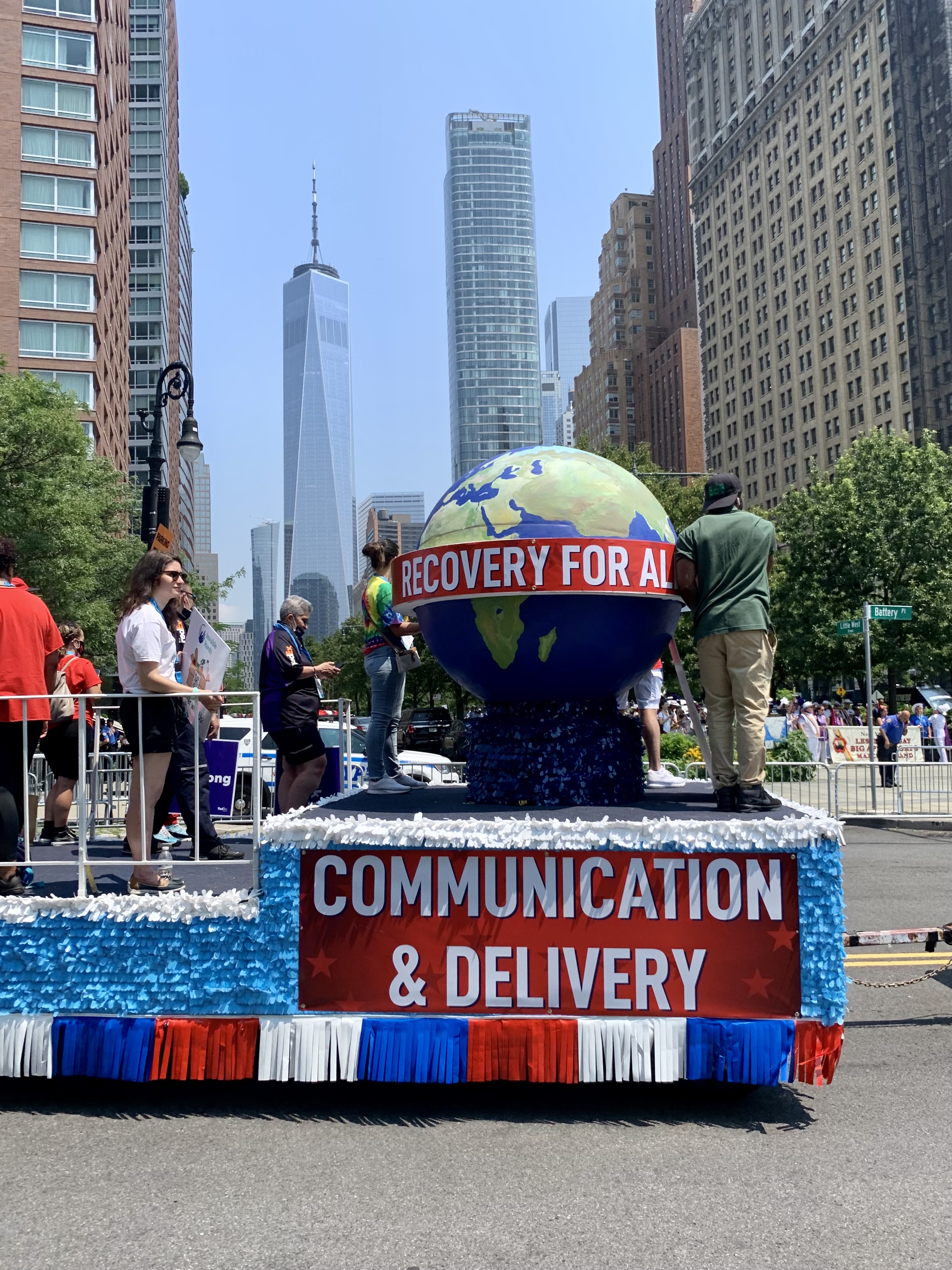
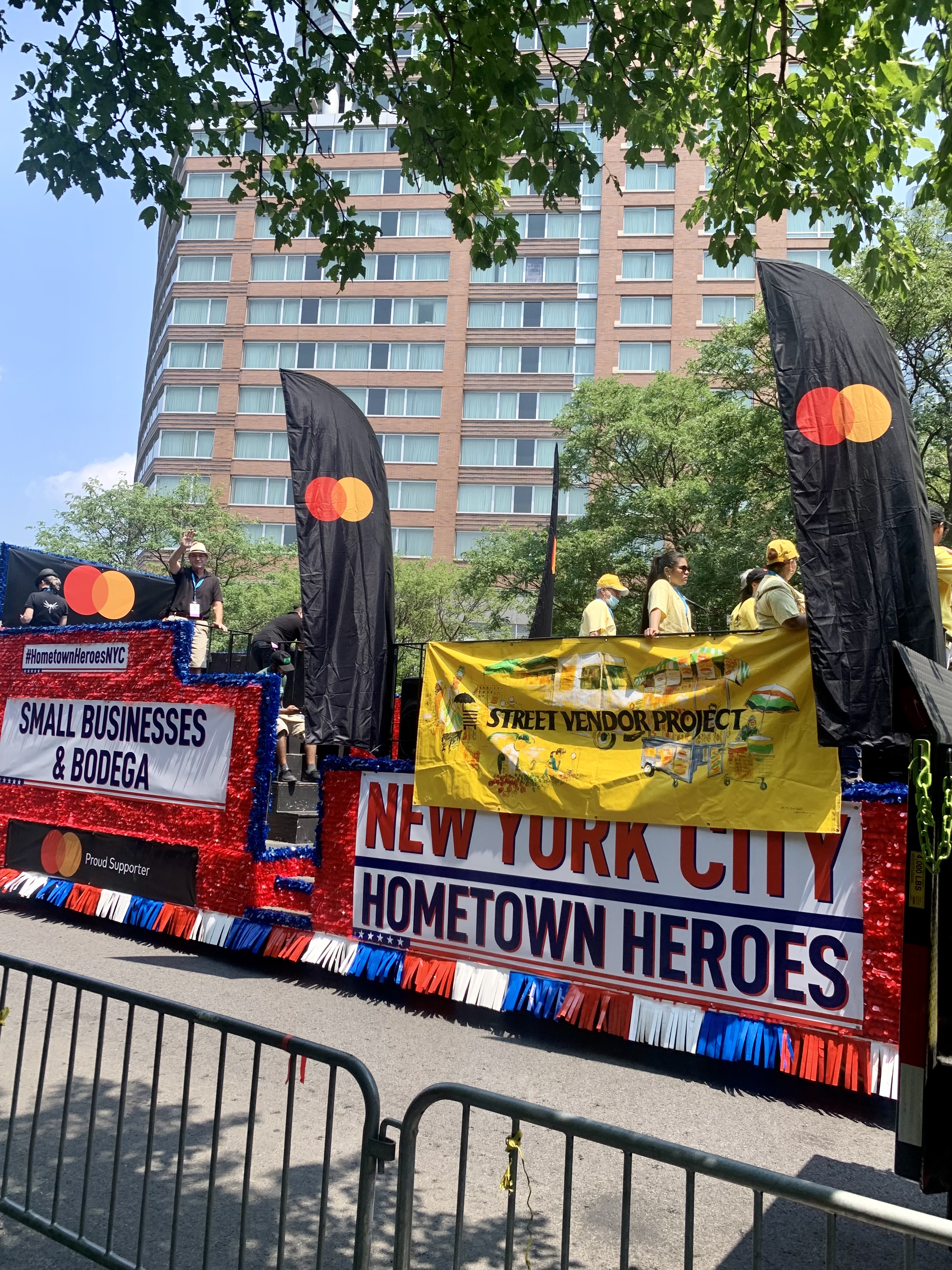
As I have posted before, I was in NYC during the entire Covid-19 pandemic lockdown, and have blogged about what that was like (“Missing my city while still in it,” here) as well as about how things slowly came back to life after being shut down (like NYC museums). Although it is impossible to pinpoint the exact moment that NYC is back – and in some ways, it still isn’t – the Hometown Heroes parade a few days ago was a celebration of those essential workers who kept the city going while most of us were sheltering in place. Having a parade like that (my favorite sign said simply “We Did It”) was certainly the most joyous indication that NYC is feeling more like itself again, thanks to high vaccination rates and very effective vaccines.
The first person to receive a Covid-19 vaccine in the United States, Sandra Lindsay, was the parade grand marshal.
One of the things that kept bringing up emotion to me during the parade was in part due to seeing it from its starting point in Battery Park. During the most extreme lockdown, when New Yorkers were asked to stay at home except for exercise, I began biking along the Hudson River bike path from Hell’s Kitchen to Battery Park, walking around, and biking back. It was so rare to see anyone else that if I did pass another biker we would generally wave and acknowledge each other. More often than not, I was completely alone walking in Battery Park, gazing out to the Statue of Liberty and seeing signs that once would have been baffling about wearing a mask and keeping six feet apart. To be back in Battery Park in a crowd of vaccinated and unmasked fellow New Yorkers, celebrating those who kept the city going, was especially meaningful to me.
NYC’s reawakening has been gradual, and many new parks (like the Pier 26 ecopark and Little Island Park) have opened during the pandemic while familiar places like Lincoln Center have found new ways to reimagine old spaces. For me, NYC will truly be back once I am in a Broadway theatre (I have so many tickets already!), and that day is coming soon. But on July 7, I remembered all the times we clapped for our essential workers in isolation, hearing our fellow New Yorkers do the same from their own isolation – but as we clapped and cheered as the parade passed by, we were finally able to do it together again.
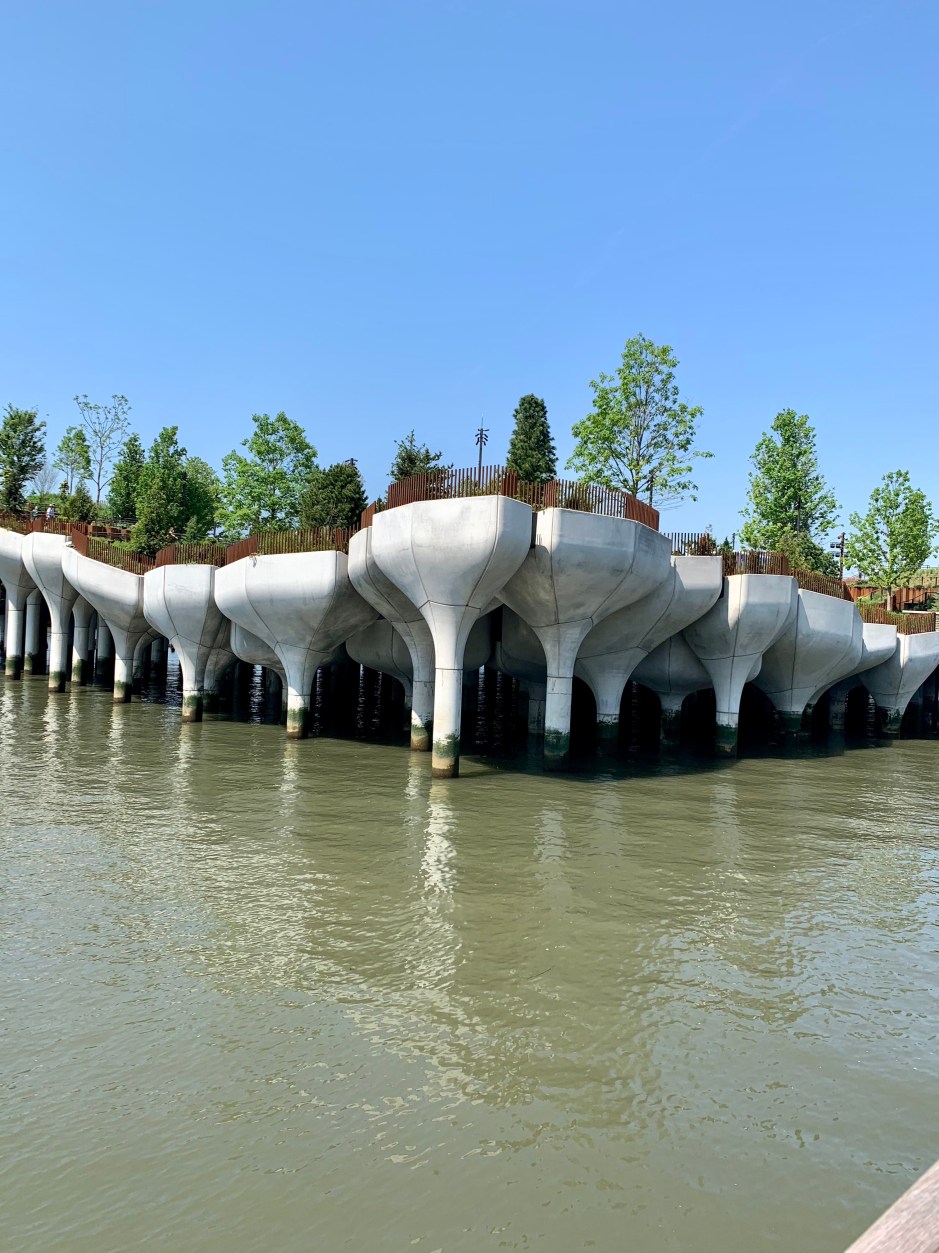
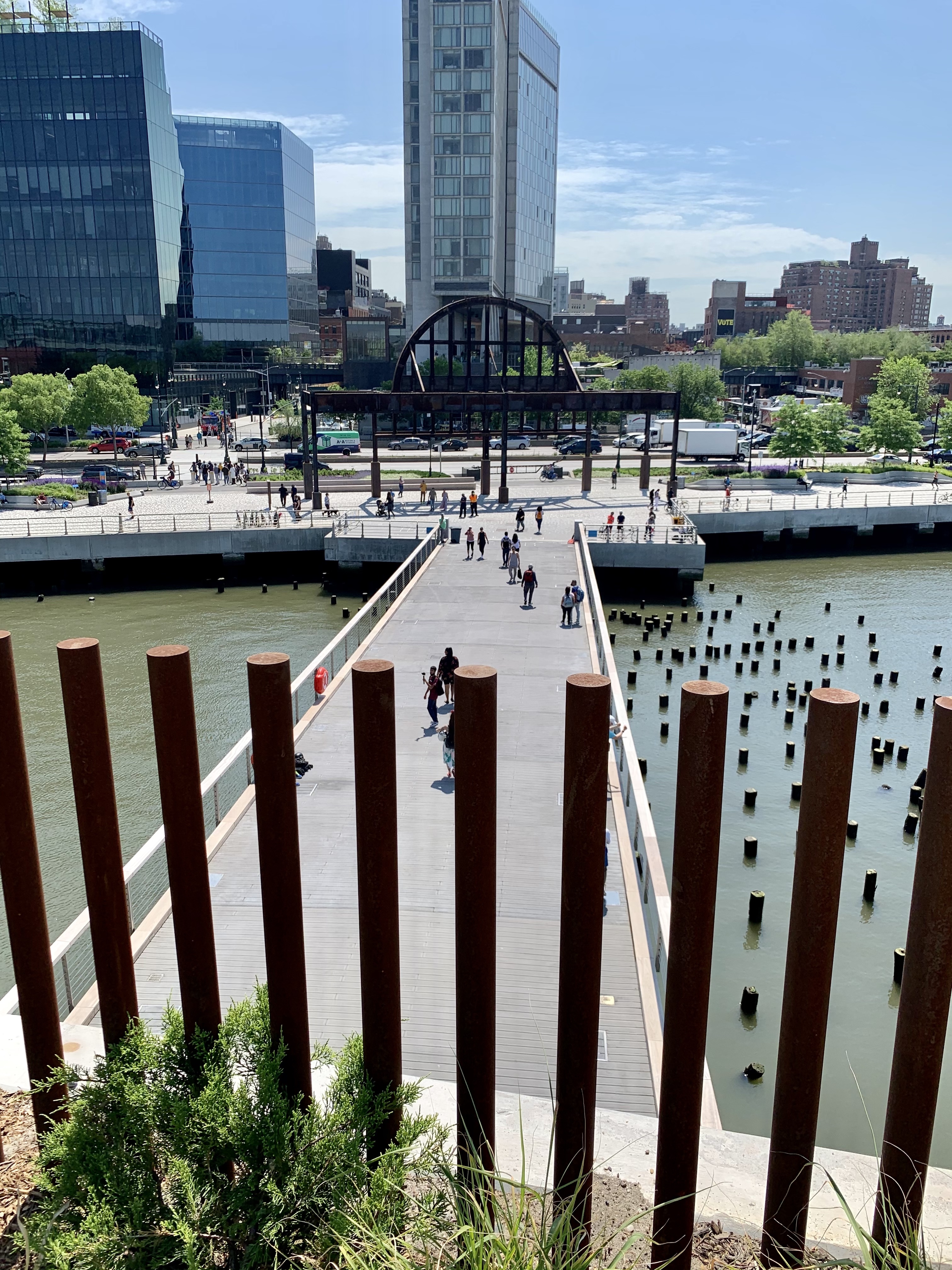
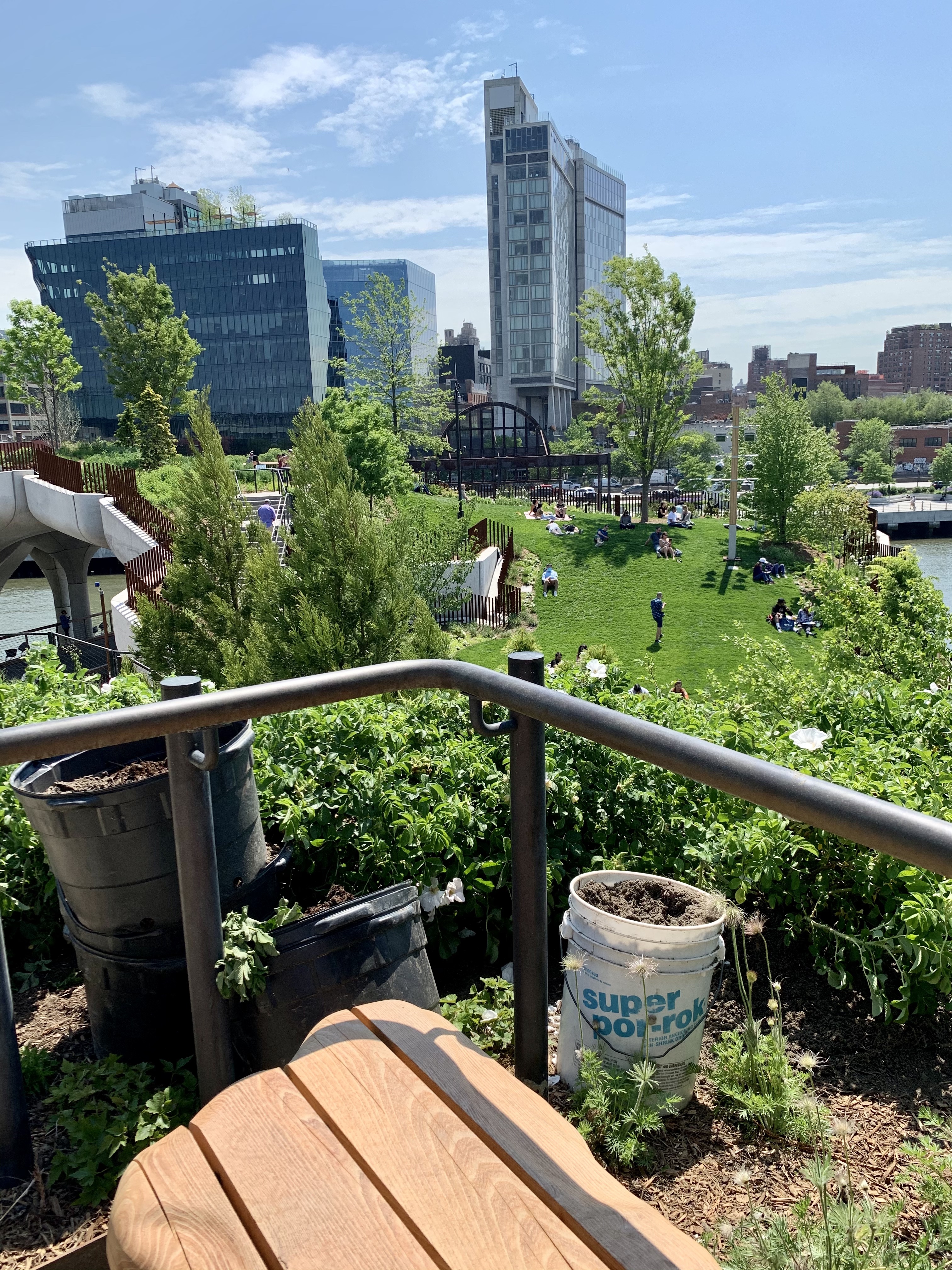
During New York City’s lockdown due to the Covid-19 pandemic in 2020, I took up bike riding, primarily along the Hudson River Greenway (see more detail about my perspective on biking in NYC here). Although I had previously noticed the odd constellation of what looked like concrete mushrooms blooming in the Hudson River just south of Chelsea Piers at Pier 55, on my nearly-daily rides past the construction area I watched with interest the development of the city’s newest park. I was thrilled to visit Little Island Park on its first day open to the public, May 21, have been back recently, and have another visit booked (more on the need to book timed tickets later).
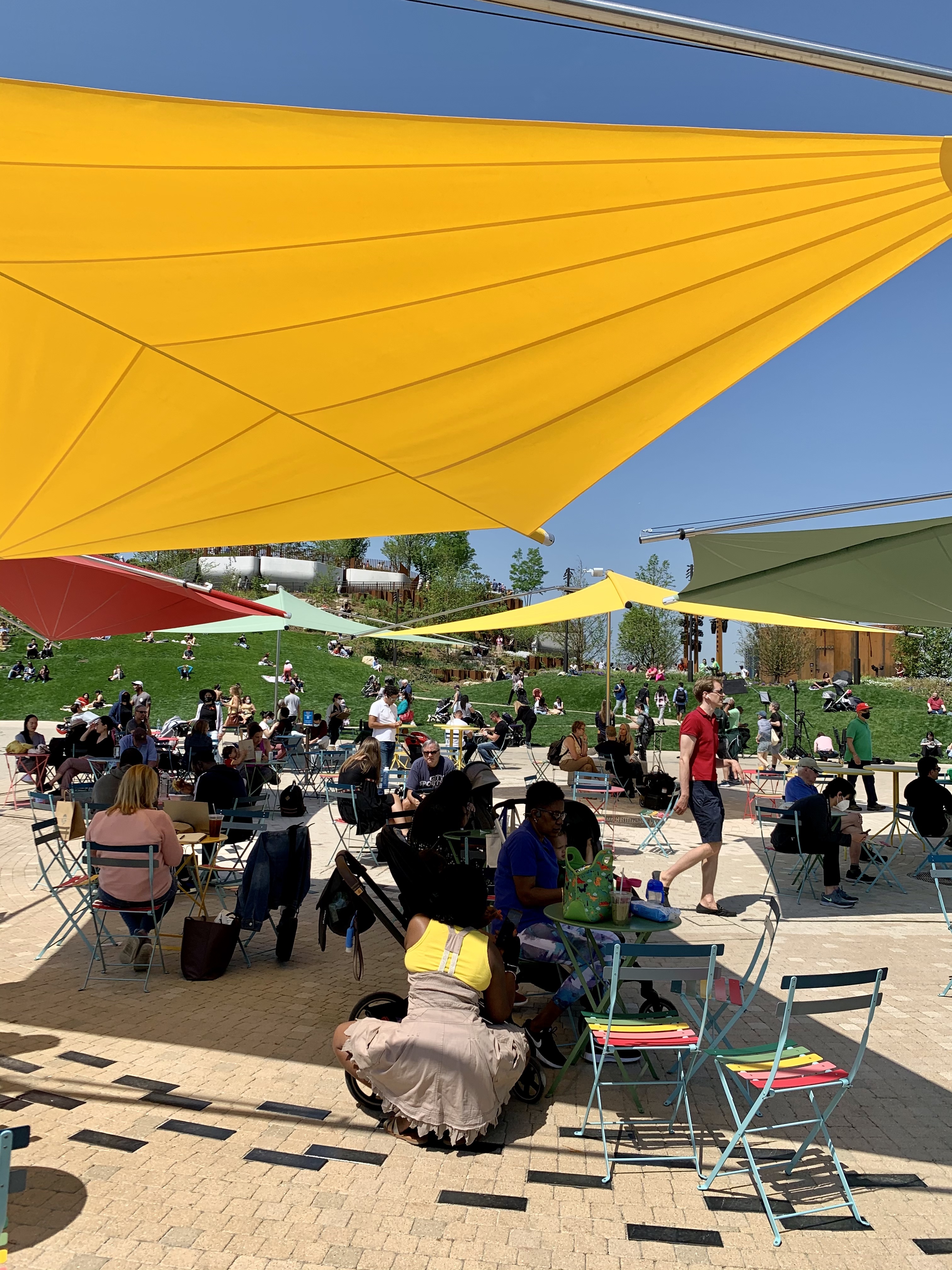
Enter where 13th Street meets the Hudson River, walking over a bridge to get to this park built over the water. One of the first things you see is a series of food trucks with an area to eat in the shade. There are a variety of wines, beers, and cocktails available in addition to food, coffee, pastries, and non-alcoholic beverages.
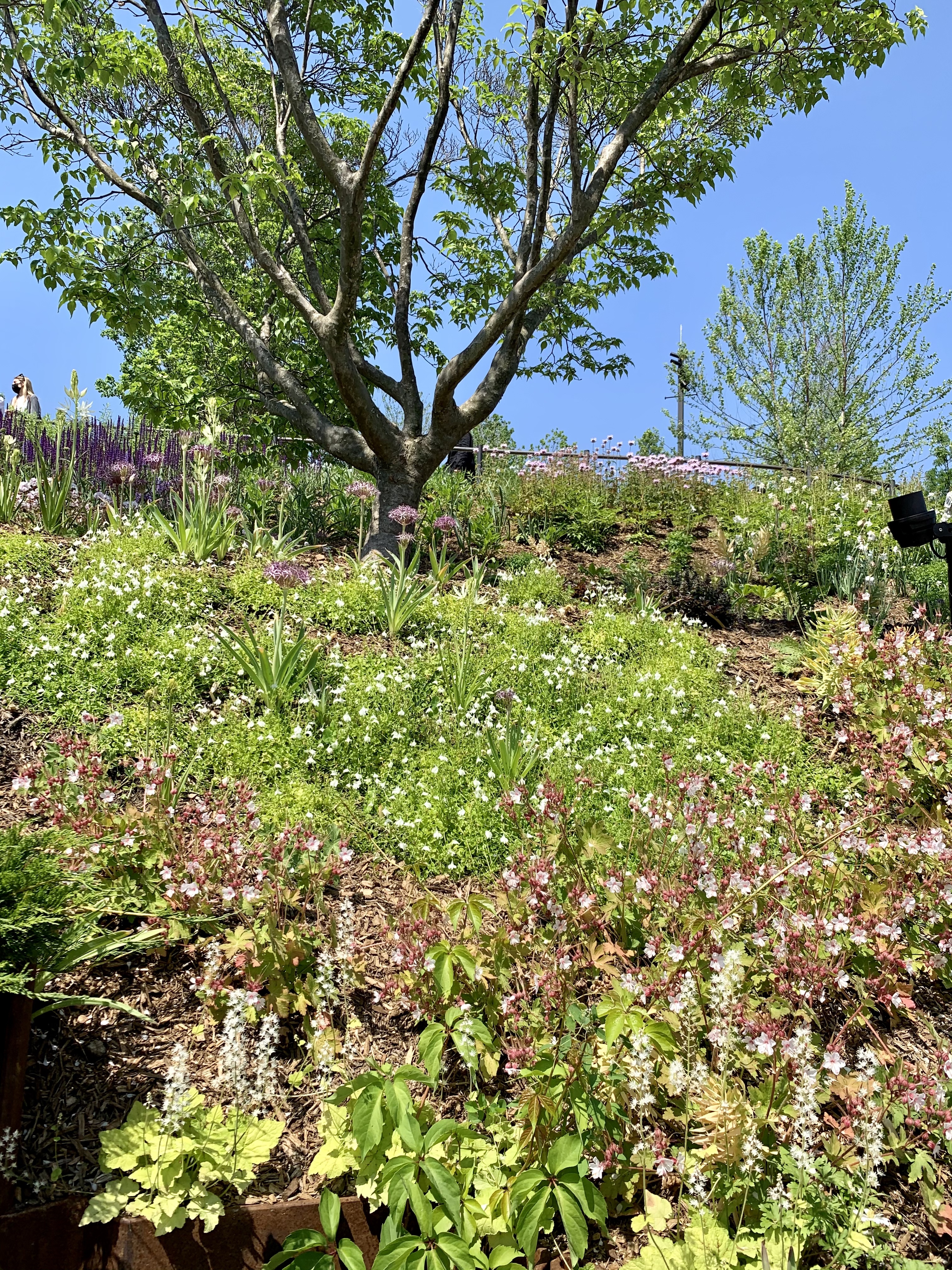
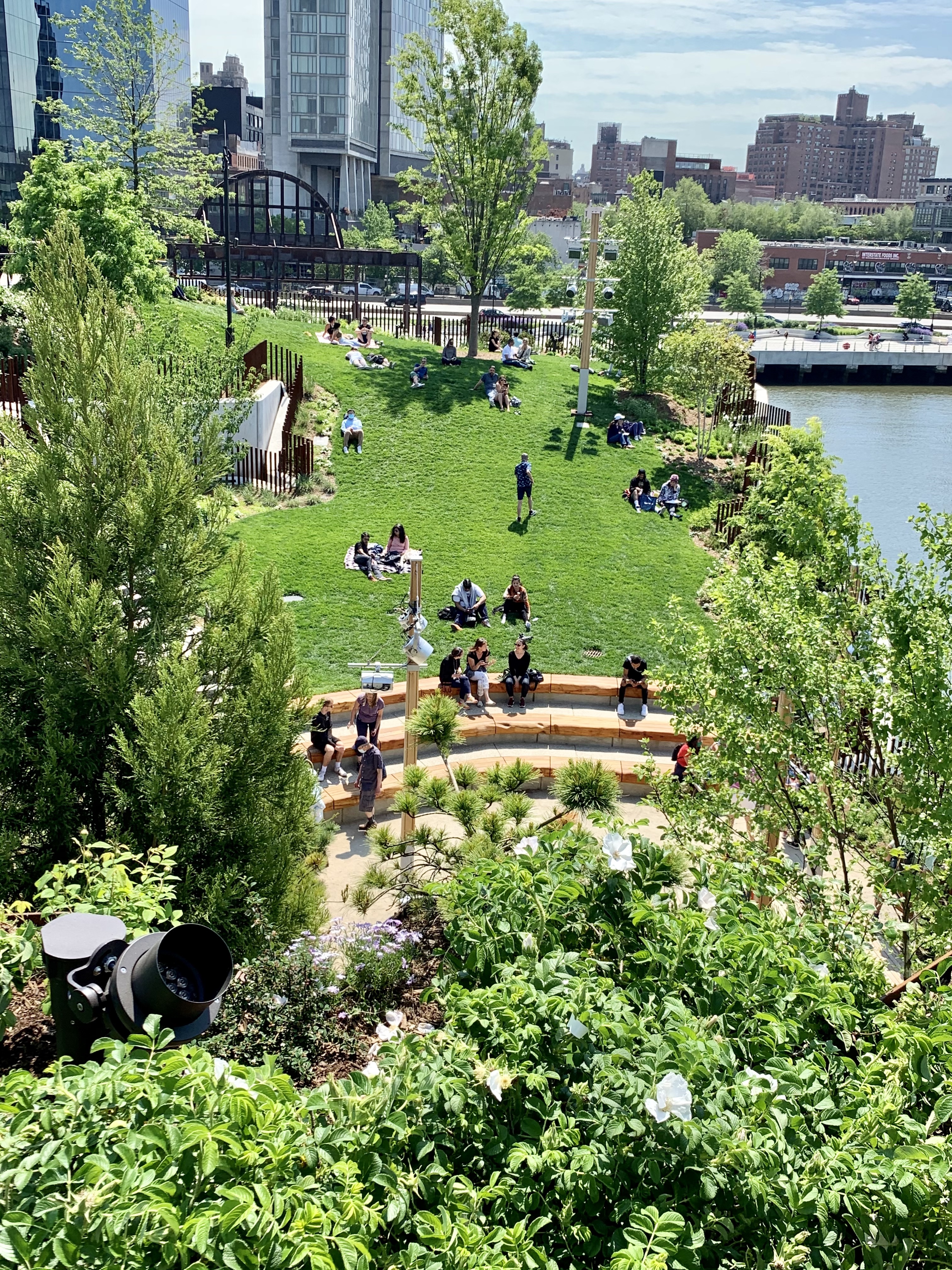
Flowers and other lush landscaping bloom atop the concrete petals. Once in the park, you barely notice the structure that is so striking from a distance – unless you happen to be walking under a few of them, as the park has many different elevations.
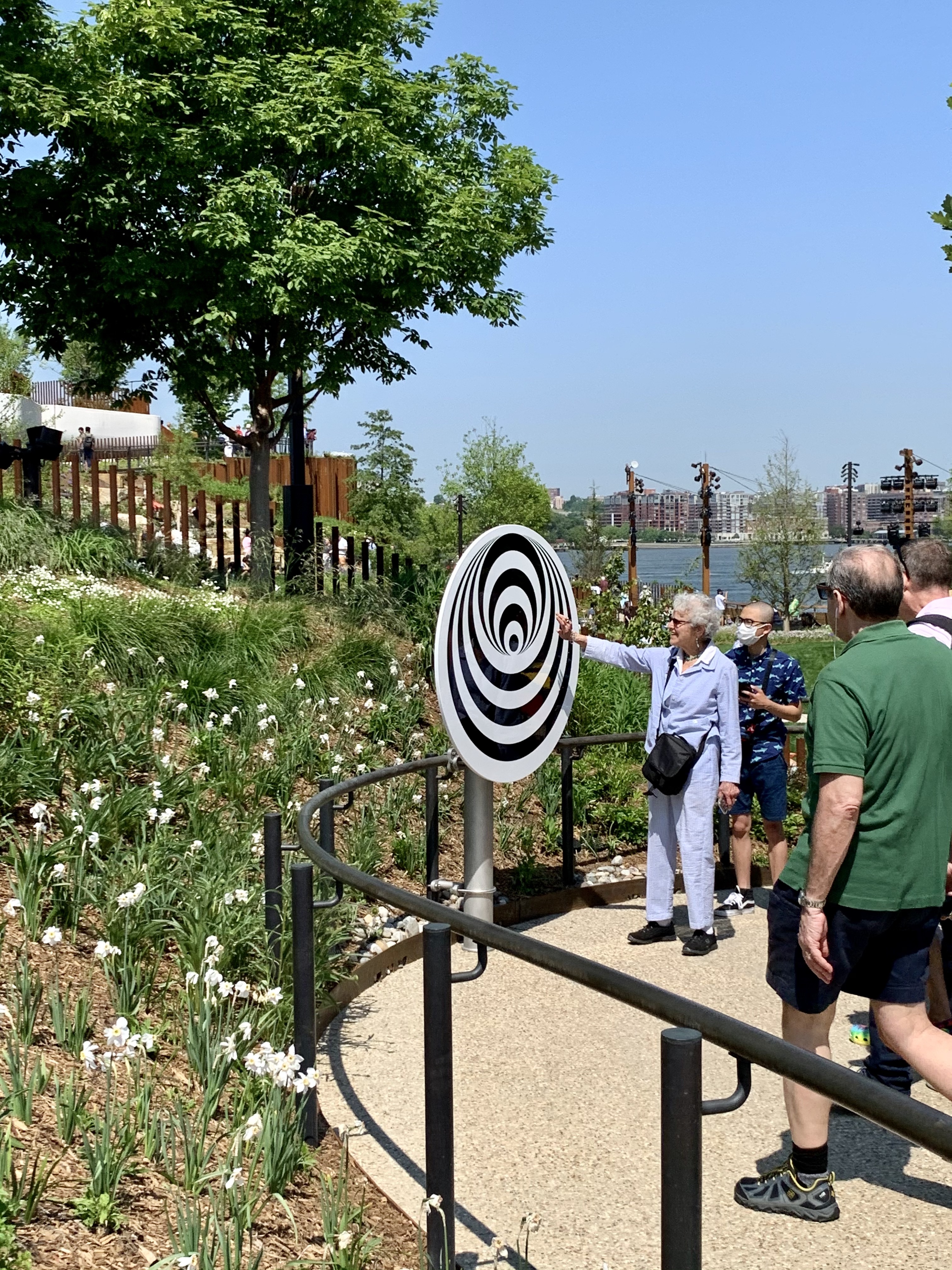
There are numerous whimsical touches – music you can create by jumping on tiles or pulling levers, and a few spinning devices for fun (or perhaps to hypnotize yourself or others).
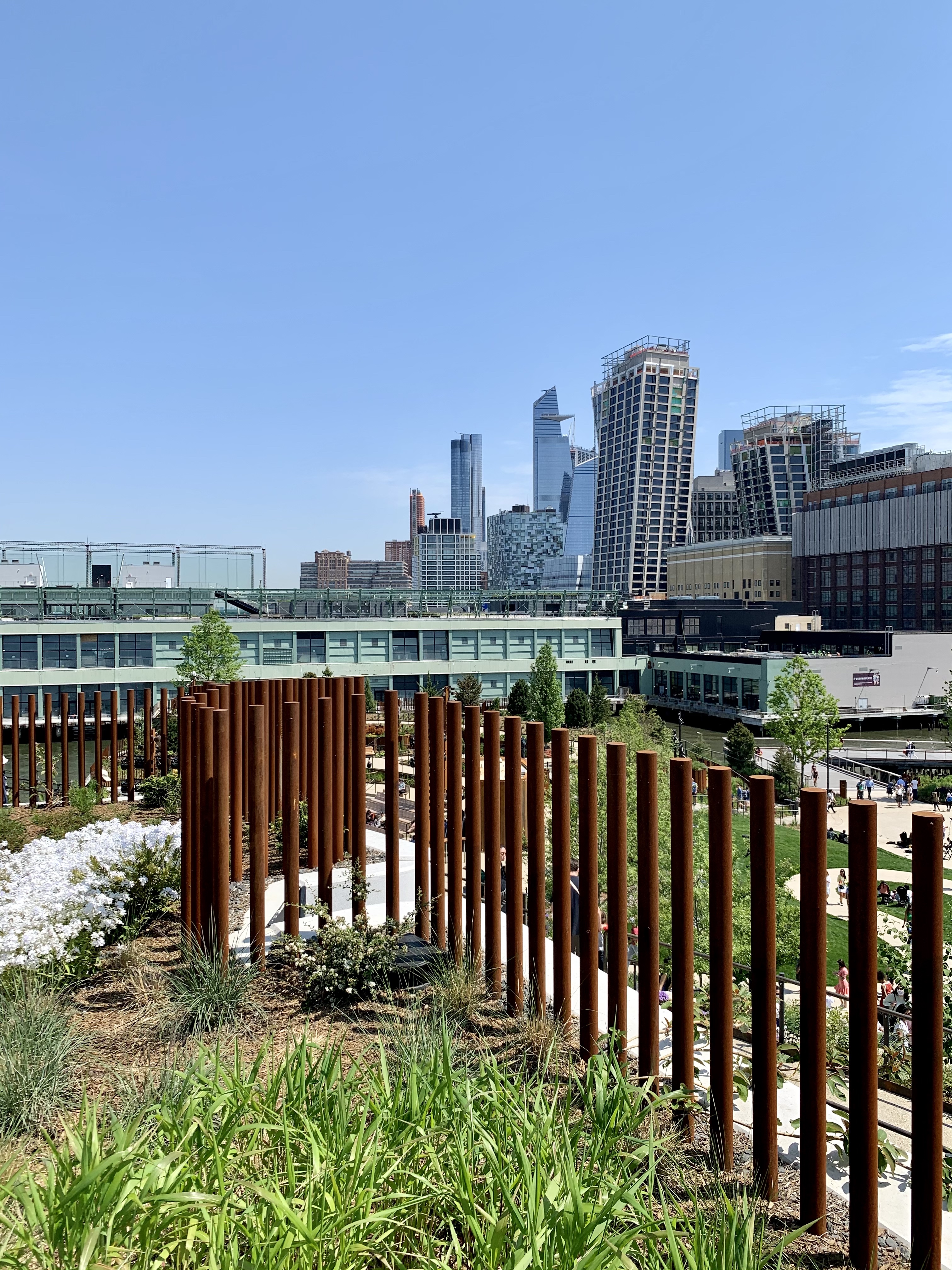
The views are spectacular as you wind your way around the park, and there are multiple places to sit – some intimate, and others grand (like the amphitheatre that will soon begin hosting performances).
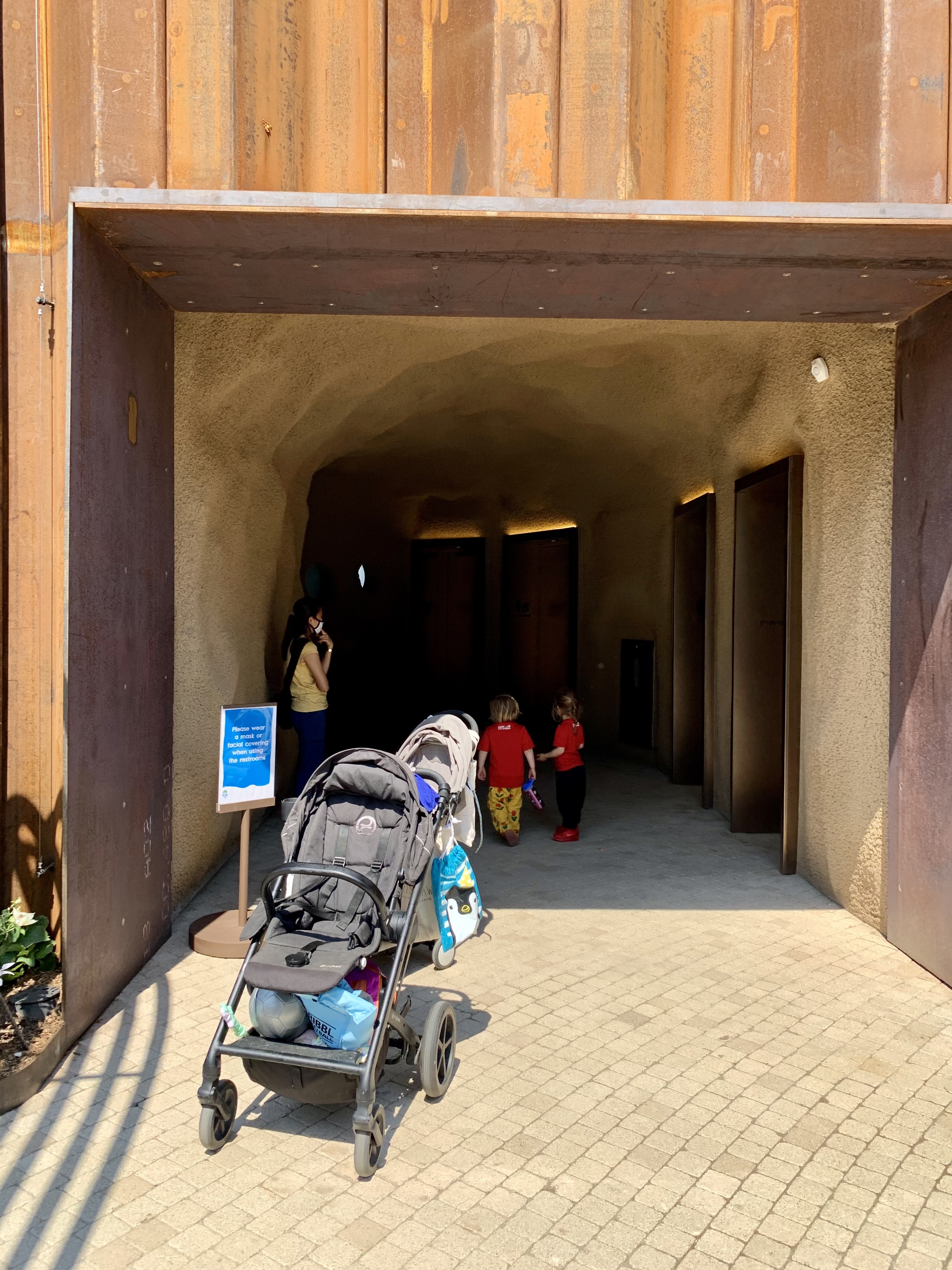
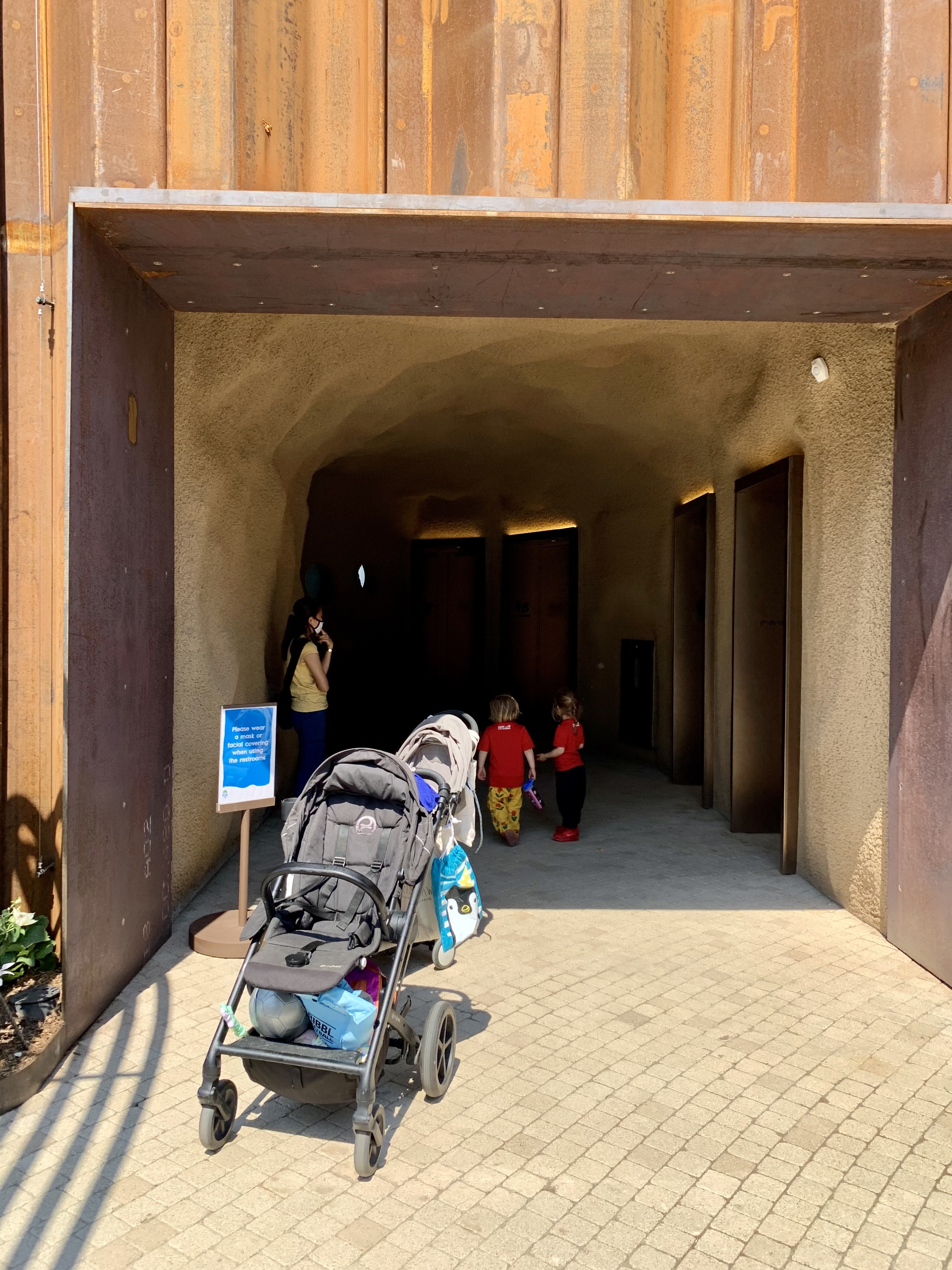
On opening day, they were giving out packets of seeds and colored pencils. Little Island also has large and very clean bathrooms, which is greatly appreciated.
When I went on opening day, I was there in the morning. At that point, they had a policy of requiring free timed tickets from 12-8 (reserve them here), but since then the park has been so popular that they require the tickets from noon until closing. Little Island is open every day from 6AM to 1AM, and if you can’t get a timed reservation, you could try going in the morning. I was just there on a timed ticket on a weekend afternoon, and the need for a reservation kept the park from feeling crowded. The next time I have planned, it will be to meet someone for lunch there (and we have reservations already). I think the park is still working out when they release reservations and for how long in advance, so keep checking if you are looking for a reservation and at first they are all sold out.
I will never forget my first time on the High Line Park (see an old blog post here and another when they expanded the park here). I was charmed, and also exhilarated with the feeling of experiencing something completely new. In our concrete jungle here in NYC, it is all the more important that we find these places to experience nature and feel a sense of integration between artificial and natural worlds that we strive to bridge. Going to Little Island Park has given me that same sense of wonder and appreciation. New York City is constantly evolving, and after a year or more of pandemic hardship and isolation, gathering together in this innovative new space feels like a wonderful way in which change can also heal.
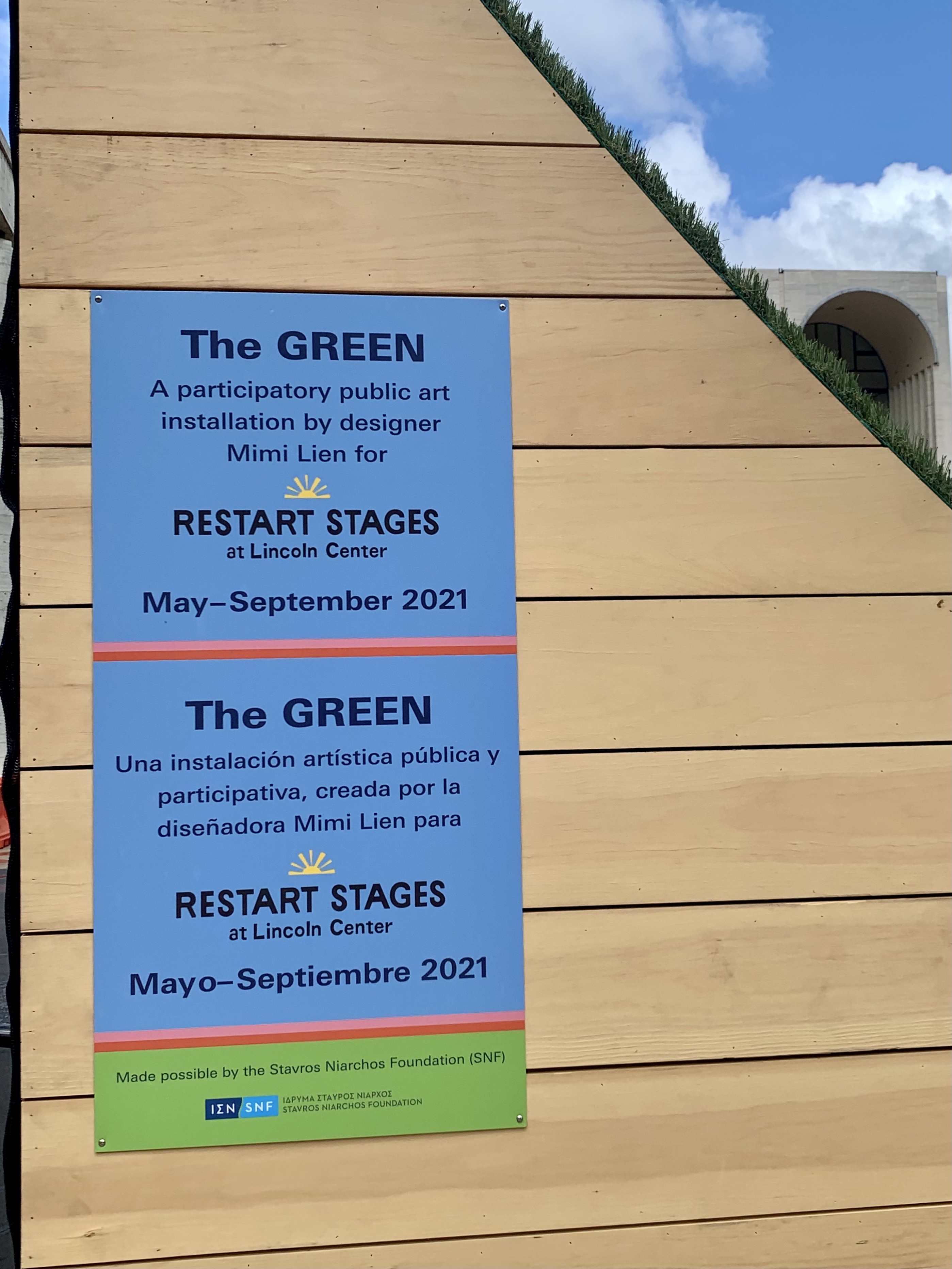
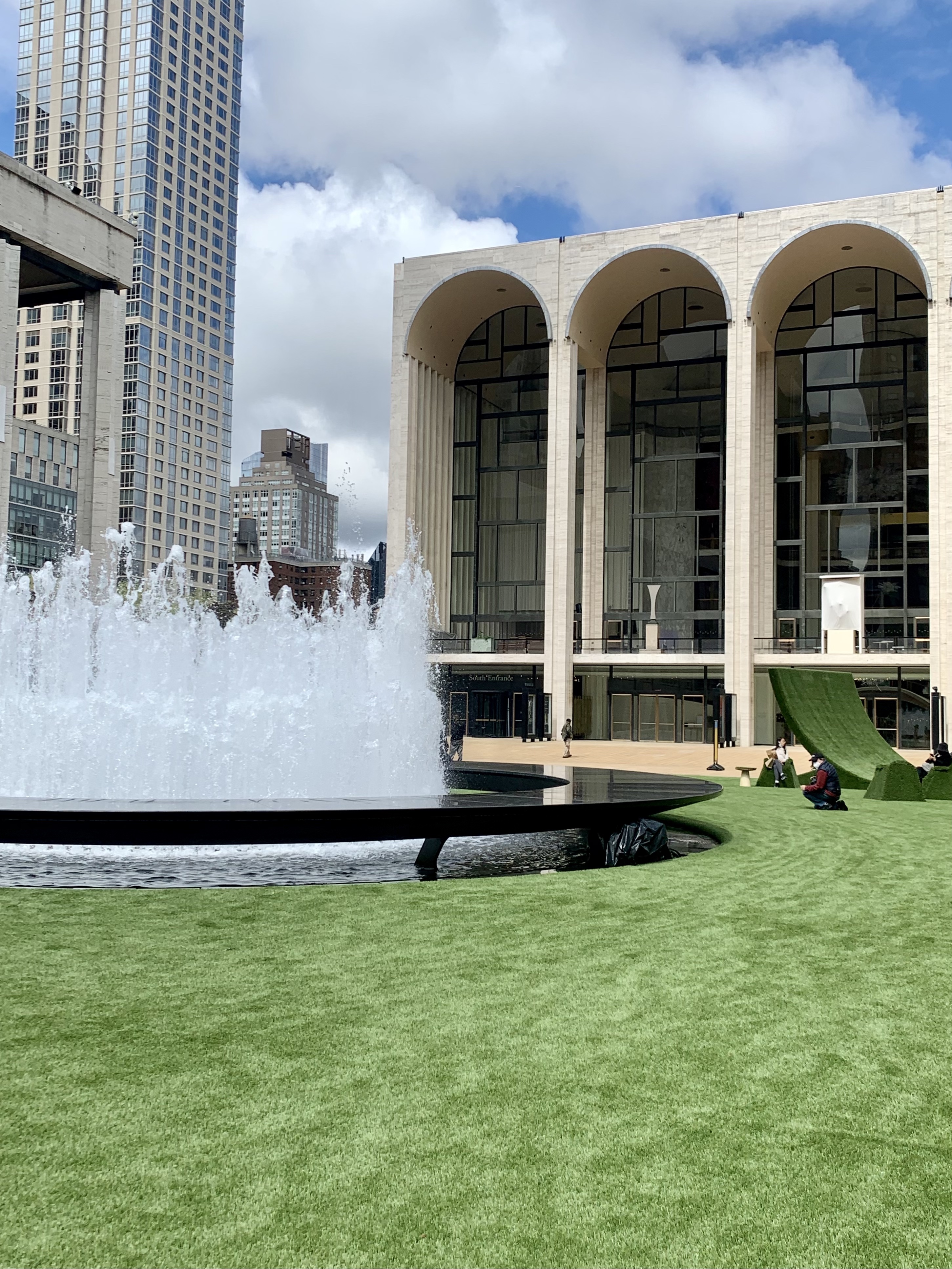
As of mid-May in New York City, we feel on the very brink of real reopening as our vaccination rate increases and our covid positivity level decreases. Many limitations will be lifted May 19th, and Broadway tickets are on sale now for performances beginning this September. Lincoln Center launches its “Restart Stages” performance schedule tonight (May 10) and will be offering multiple opportunities to enjoy the arts through September (check out the calendar here). In addition, they have transformed the iconic plaza into a lush green space with real grass, courtesy of MacArthur “Genius grant” recipient Mimi Lien. Here’s what it was like to be there on the first day it was open.
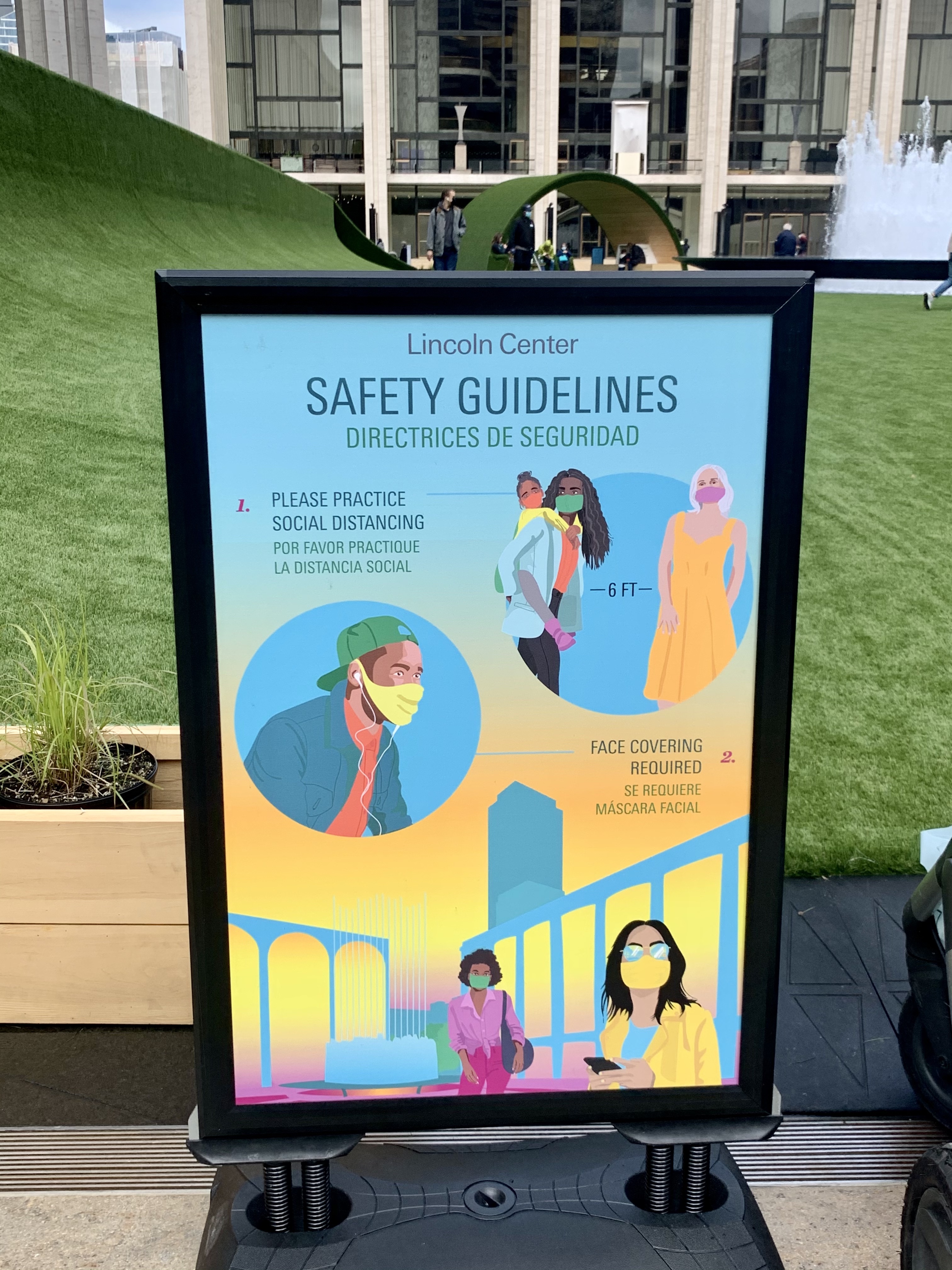
If you want to visit, you need your mask, and to keep distance from others.
The entire plaza is covered in lush green grass, and it swoops sinuously up on the north and south sides.
There are occasional swoops of green added for extra places to sit or relax.
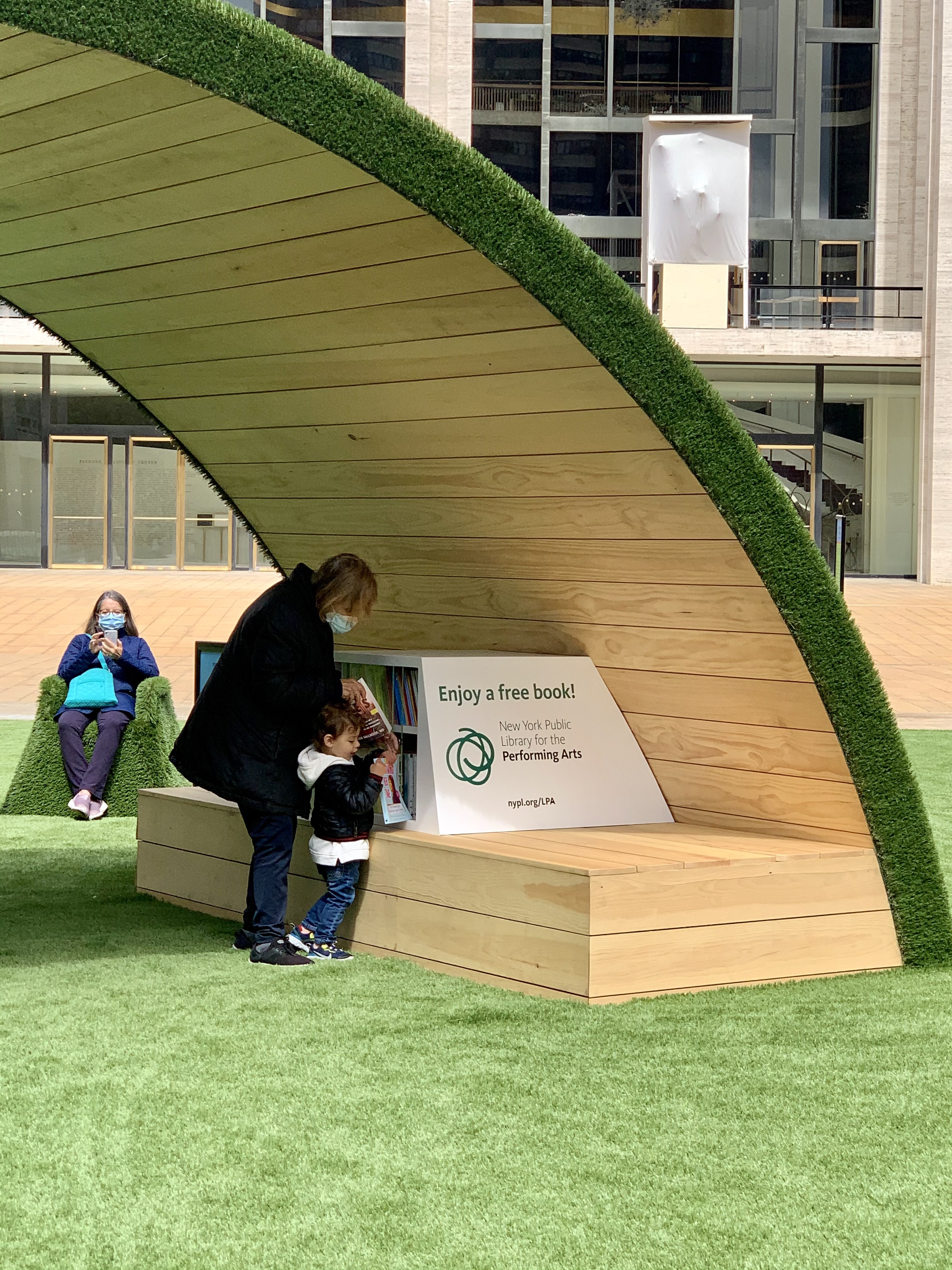
There’s even an upside-down swoop with free books and a shady reading space! There’s a pop-up sandwich shop for snacking as well.
My favorites were the grass-covered chairs and tables, though!
Elsewhere around the Lincoln Center campus, there are multiple outdoor performance spaces, some smaller and more intimate but others quite large like this one. Tickets are generally free, and can be won through an online lottery through the Today Tix app. Winners get a “pod” of two tickets – good luck and I hope to see you at Lincoln Center!
When New York City locked down last spring due to the Covid-19 pandemic, the normal ebb and flow (mostly flow!) of the lives of those staying in the city had to change radically – and I was one of those here during that strange and unmoored time. Like so many, I cleaned, learned to make sourdough bread, and had endless Zoom meetings and virtual cocktail hours. Some of these things have already faded as the city begins its reawakening, and others will as reopening continues. However, one of the changes that I as well as so many others also began during that time will continue in my life – biking in the city.
I grew up riding bicycles daily as a kid (not in NYC). When my daughters were small, we taught them to ride in Central Park, but walking the bikes to the park because of my strong feeling that riding a bike on city streets is highly unsafe was unwieldy and meant we didn’t ride regularly. Over the years, if on vacation in a place where it was easy to ride on a dedicated bike path (I’m looking at you, Huntington Beach, California!) I always took the opportunity to do so. But I never thought I would ride regularly in NYC until the fatigue with being home most of the day with only a daily walk outside overwhelmed me.
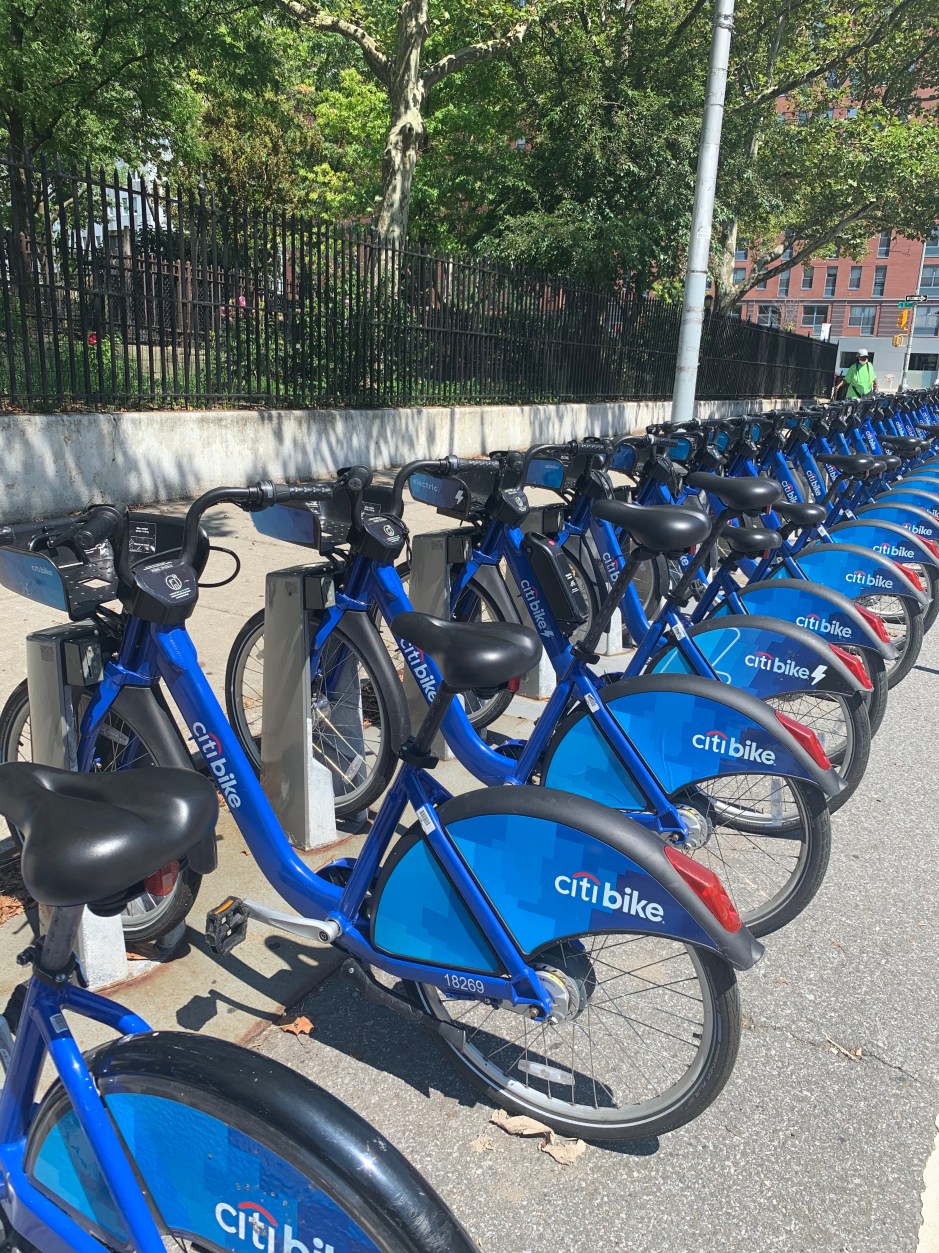
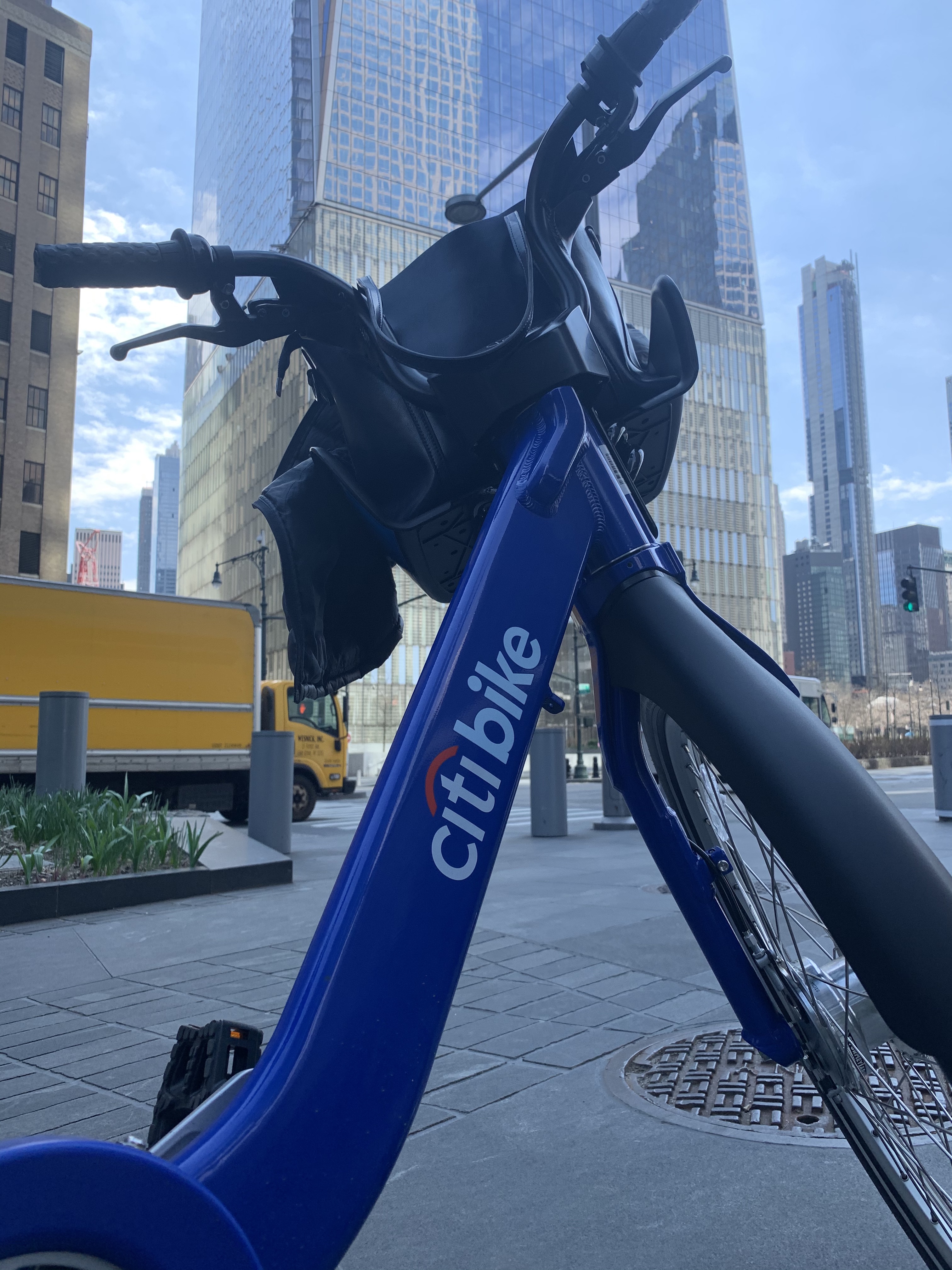
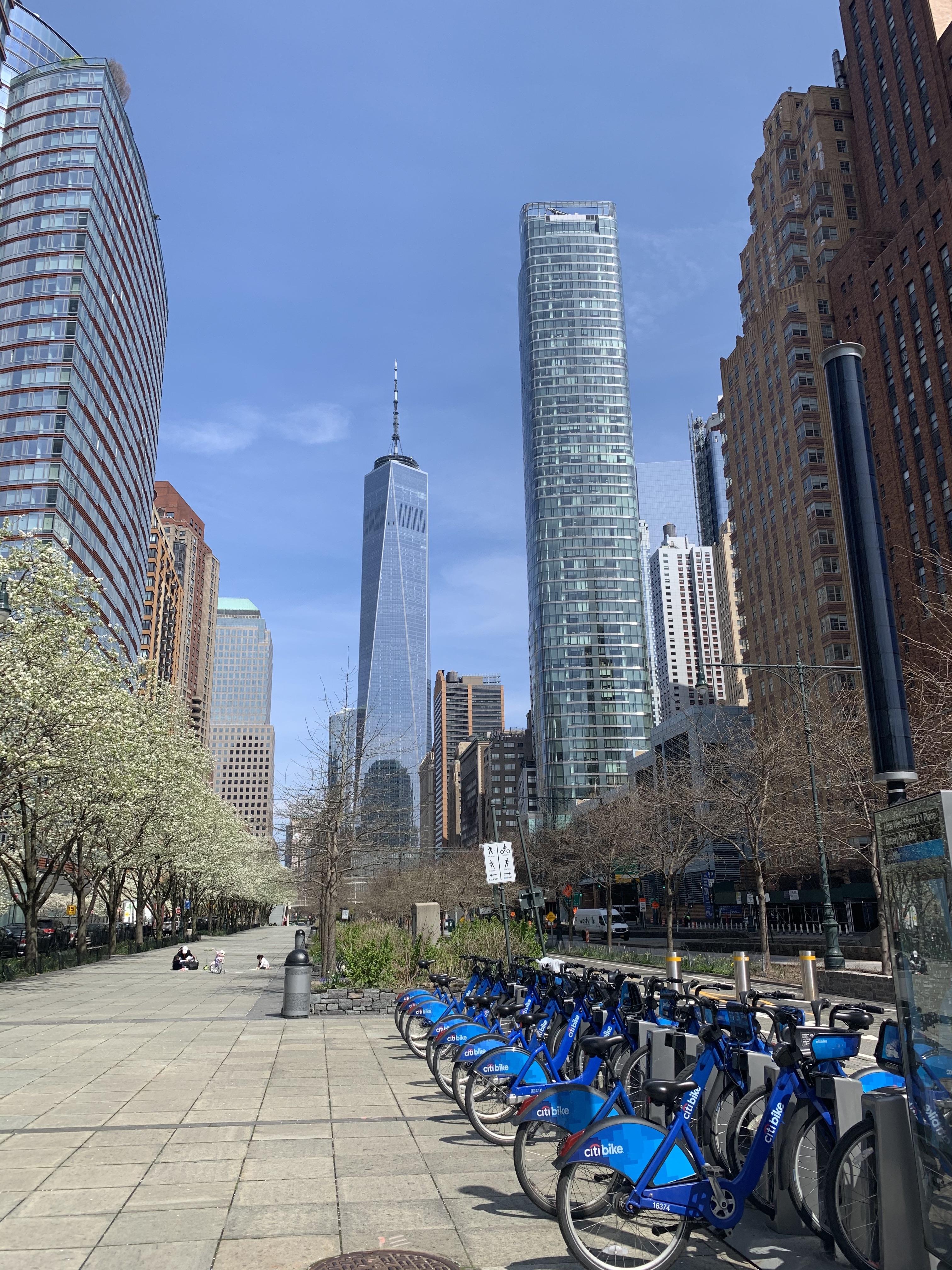
Hello, Citibike! I had seen them for years now, but always thought of them as being for those intrepid people who rode in the midst of traffic fearlessly. I had never really explored the system of bike paths that has been developed in the city over the past decade (and honestly, needs expansion). But in late March of 2020, I got on my first Citibike and there has been no looking back. From late March to Dec 31 of 2020, I rode 126 hours and 1313 miles on Citibikes, and am on a similar pace so far in 2021. So what changed? Am I now confident weaving in and out of automobile traffic? In a word – no. But I have discovered many enjoyable bike paths and have figured out some tips and tricks that might help you if you decide you would like to try biking in the city.
First – Citibike or your own bike? For your own bike, you need to know where you will store it, and how you will lock it up if you choose to go somewhere and then walk around. You are responsible of course for maintenance. But on the plus side, any bike you would purchase for yourself will be much lighter and easier to ride and maneuver than a Citibike. Citibikes are meant to be tough, and lock into the Citibike racks, and they are HEAVY. You will really notice this on a hill (and I will say that Central Park is much hillier on a bike than I ever noticed as a walker) or on a day with a lot of wind. However, Citibikes are easy to check out and check in if you are planning to bike somewhere else and then walk or go into a building. Citibikes are $15 for a day pass of unlimited 30 minute rides, but if you plan to ride regularly as I do, the yearly membership of $179 (billed annually) for unlimited 45 minute rides is the way to go. There are extra charges for an ebike (which gives you a little extra power on hills) and if you go over the time limit (but you can keep docking your bike and checking it back out for a longer ride without incurring extra costs), and of course a large charge if you don’t return the bike! Since I began riding last year, Citibike partnered with Lyft and you can now check out Citibikes or use your membership within the Lyft app. You scan the code on your bike with your camera phone and it unlocks automatically and starts timing your ride. When you dock the bike securely (look for the light to turn green, and enable notifications to see on your phone that the return was registered), the ride ends and you get a receipt.
There are many dedicated bike paths you can use to avoid the risk of riding in NYC traffic. My favorites are the Hudson River Bikeway along the west side, and the three different loops within Central Park. Some streets in the city have bike lanes next to the curb with parked cars between the bike lane and moving traffic, but if you use those, be aware that trucks are often double parked in the lane, and parked cars can open car doors into the lane. In addition, people can emerge between parked cars and may be hard to see in advance.
When first starting to bike in the city, I would suggest going on the dedicated bike paths, and either early in the morning or on a day where the weather is a little off. The bike paths can get quite crowded when the weather is excellent, and it will take you a while to get accustomed to the paths. Also, if you are using Citibike, pick a less hilly path (the Hudson River Bikeway is very flat; the Central Park lower loop that only goes up to 72nd is reasonably flat but the upper loops have some serious hills) and check the weather for wind. Early on, I often had the experience of biking four miles from midtown down to Battery Park and thinking what good shape I was in, only to realize when biking back that the wind was at my face and it had been helping me along on the first leg of the journey – and Citibikes never feel heavier than when riding into a stiff headwind!).
In terms of safety in general, biking in NYC is not without its risks (for that matter, neither is walking in the city). We have all seen the white bicycles installed in locations where a bicyclist has been struck my a motor vehicle and killed. Even Bono (from U2) a few years ago had a fairly serious bike accident inside Central Park. Helmets are not required, but of course are a good idea. I have a collapsible bike helmet that fits easily in my bag, that I bought at the MoMA design store (see it here). Practice defensive biking – just as good car drivers are constantly aware of their environment, a good bicyclist should always be looking out for pedestrians and other bikers (including electric scooters and rollerbladers, who also use bike lanes). Don’t stop suddenly or you might get rear-ended – I have seen that at crosswalks where one bicyclist stopped suddenly to allow a pedestrian to cross and another bicyclist was not expecting that and hit the stopped bike. Those crosswalks, by the way, are intended to remind bicyclists to yield to pedestrians already in the crosswalk, not an indication to stop. Look out for pedestrians ambling in the bike lane, and when you are a pedestrian, please stay out of the bike lane!
I even biked all last winter, and had never before biked in serious cold or snow. If it is cold, be sure to dress in layers, as biking makes you heat up and you may need to unzip some layers even on very cold days. Covering your face, ears, and hands is particularly important, and I found that mittens kept my hands much warmer when biking than gloves. Biking in snow is just like driving in snow – take your foot off the gas (stop pedaling) when you see ice or snow, and “pump” your brakes instead of stopping suddenly (squeezing and releasing the hand brakes quickly).
My final safety tip relates to the bike equivalent of “road rage.” If you bike enough, you will have people yell at you as they pass you. Don’t let them affect you, as they are clearly having a worse day by behaving in that way than you will letting them upset you. And obviously – don’t be that person! Don’t yell at pedestrians loitering in the bike lane, either – you can use the bell lightly if you are worried that they might step in front of you but that or a quick “on your left” should be done only as a safety signal and not as an intentional way to startle or scare them. I remember when first biking, there were so few people on the bike paths that we would routinely greet each other when we did pass. Now on a day with good weather, the crowds on the bike paths can be intense.
Getting upset while on a bicycle takes away from what I have found I love so much about biking – I find that it is not only a physically satisfying experience (that free feeling I had on a bike as a child, almost like flying!) but also a meditative and calming mental one. Starting as a way to get exercise during a time of lockdown and isolation, I have since found it to be as good for my mental as my physical health.
I was fortunate enough in February to work with videographer Mikey Pozarik and with Compass to create two videos that express my ethos as a real estate agent. The first one (see it here) features a quote by E.B. White, and reflects my love for New York City as someone who was born elsewhere but has chosen to live and work in the city. I hope every day that I am able to bring my passion to this city I love. The second one (see it here) is more of a manifesto. The quote is attributed to Steve Jobs, and I am drawn to the work ethic it expresses. I truly enjoyed making these videos – the locations were all areas of the city I have a particular relationship with, and selecting and recording the quotes was also a process I found artistically and creatively challenging in a very positive way. Even the process of deciding how to go about making these videos helped me think about and crystallize who I am in my role as a real estate agent. My thanks to Mikey and to Compass for helping these projects come to life.
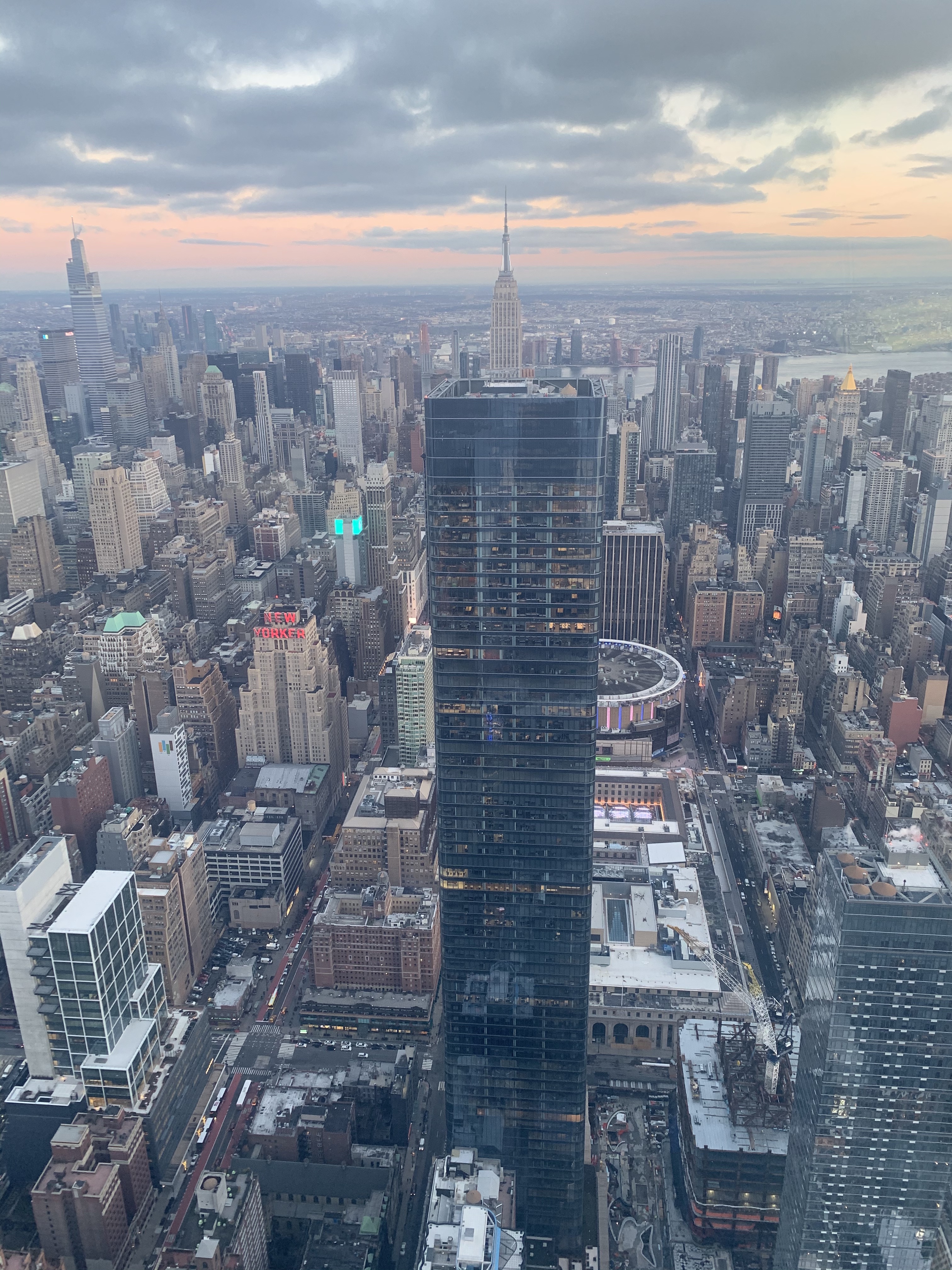
Always looking for another way to look at the New York City that I love so dearly, I was eagerly anticipating the opening of The Edge observatory in Hudson Yards last year. It opened on March 12, 2020 – and was shut down almost immediately by the pandemic. The Edge reopened in the fall with capacity restrictions, a mask requirement, and physical distancing, and I was able to experience it early in 2021. I had decided that it would be optimal to go for sunset, and those tickets sell out quickest (and have a surcharge). Given that going in inclement weather would reduce the view, I was looking for a time to buy tickets a day or so in advance when the weather was more predictable, and was able to once the holiday season increase in interest had passed.
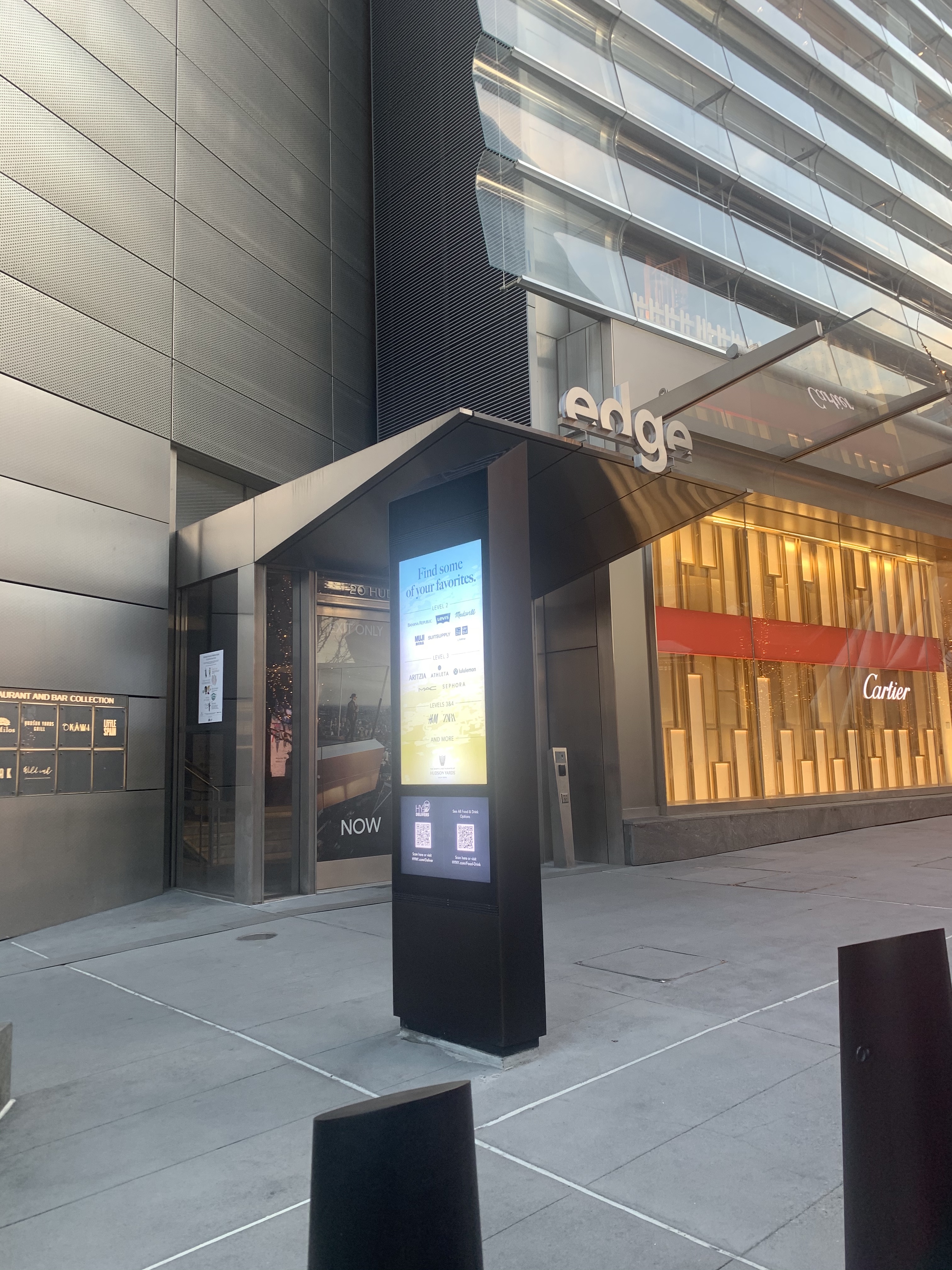
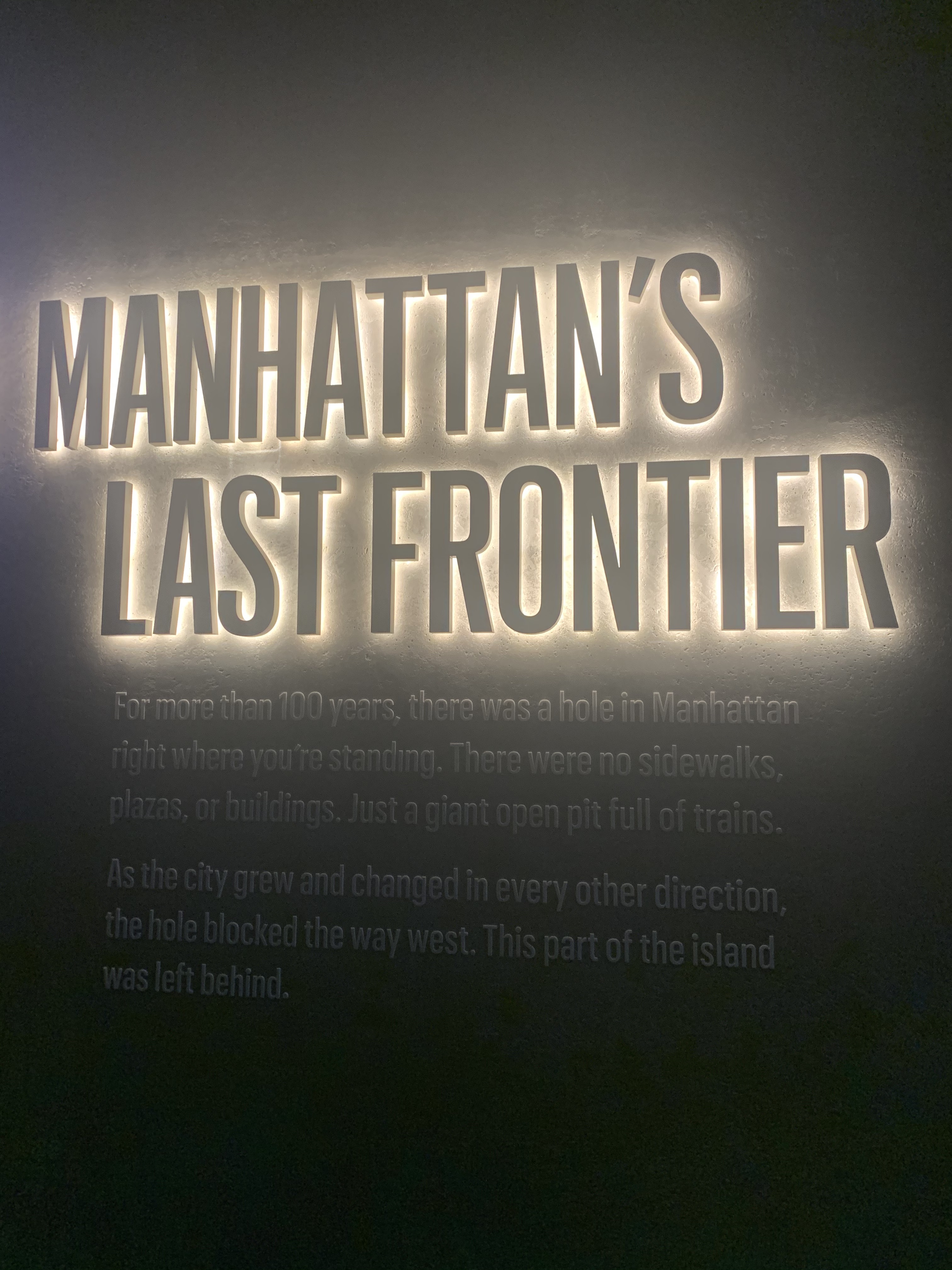
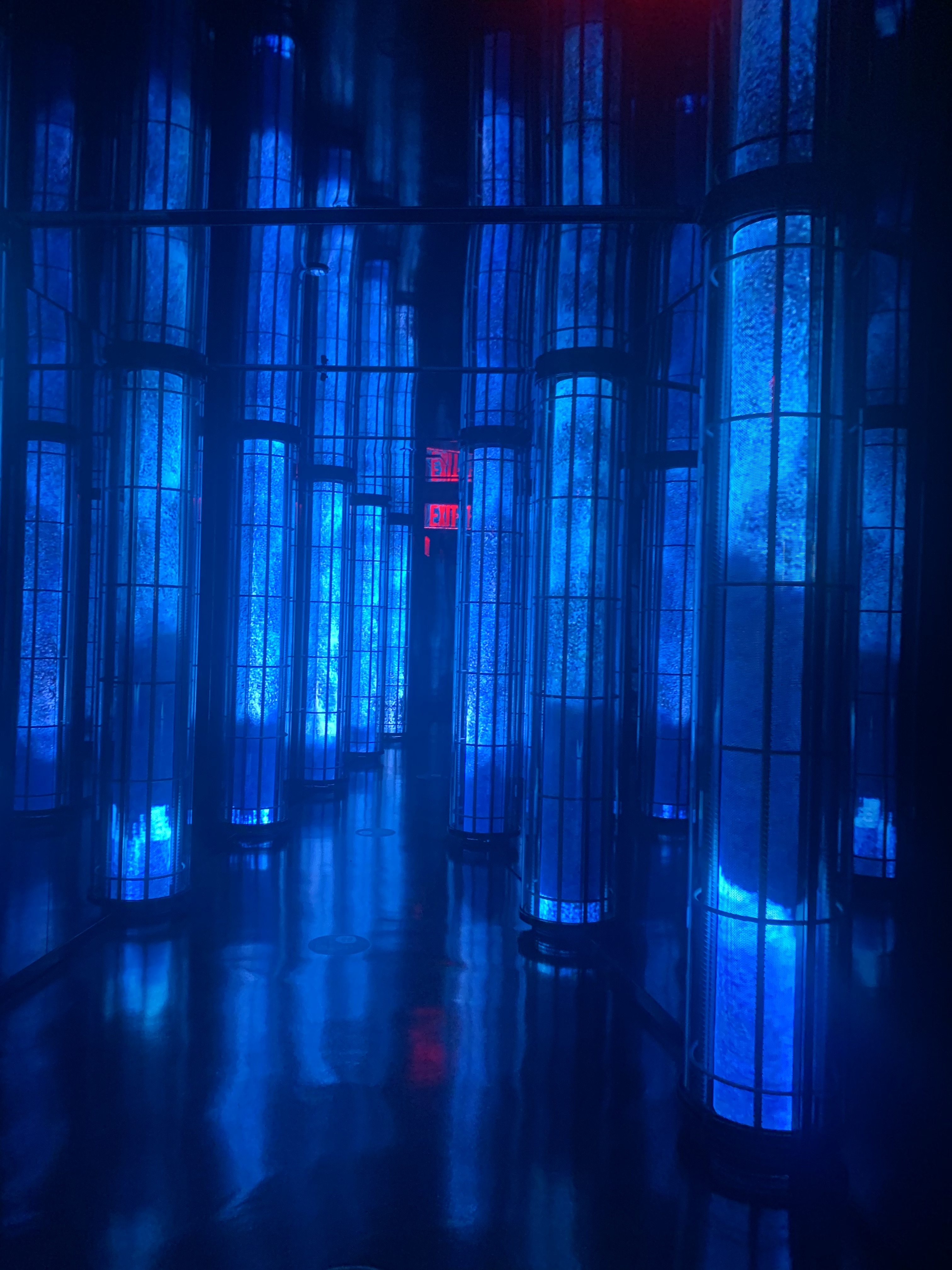
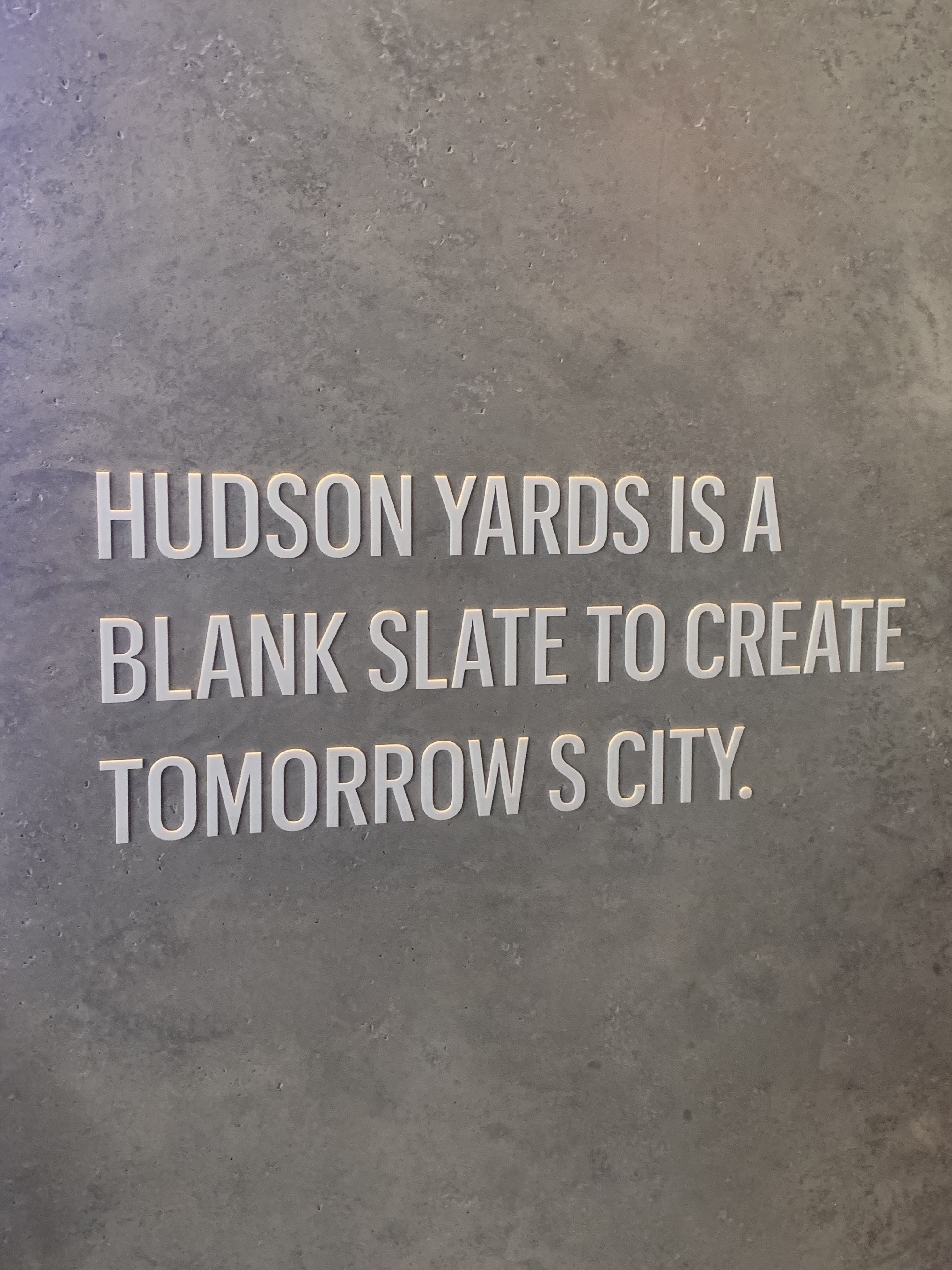
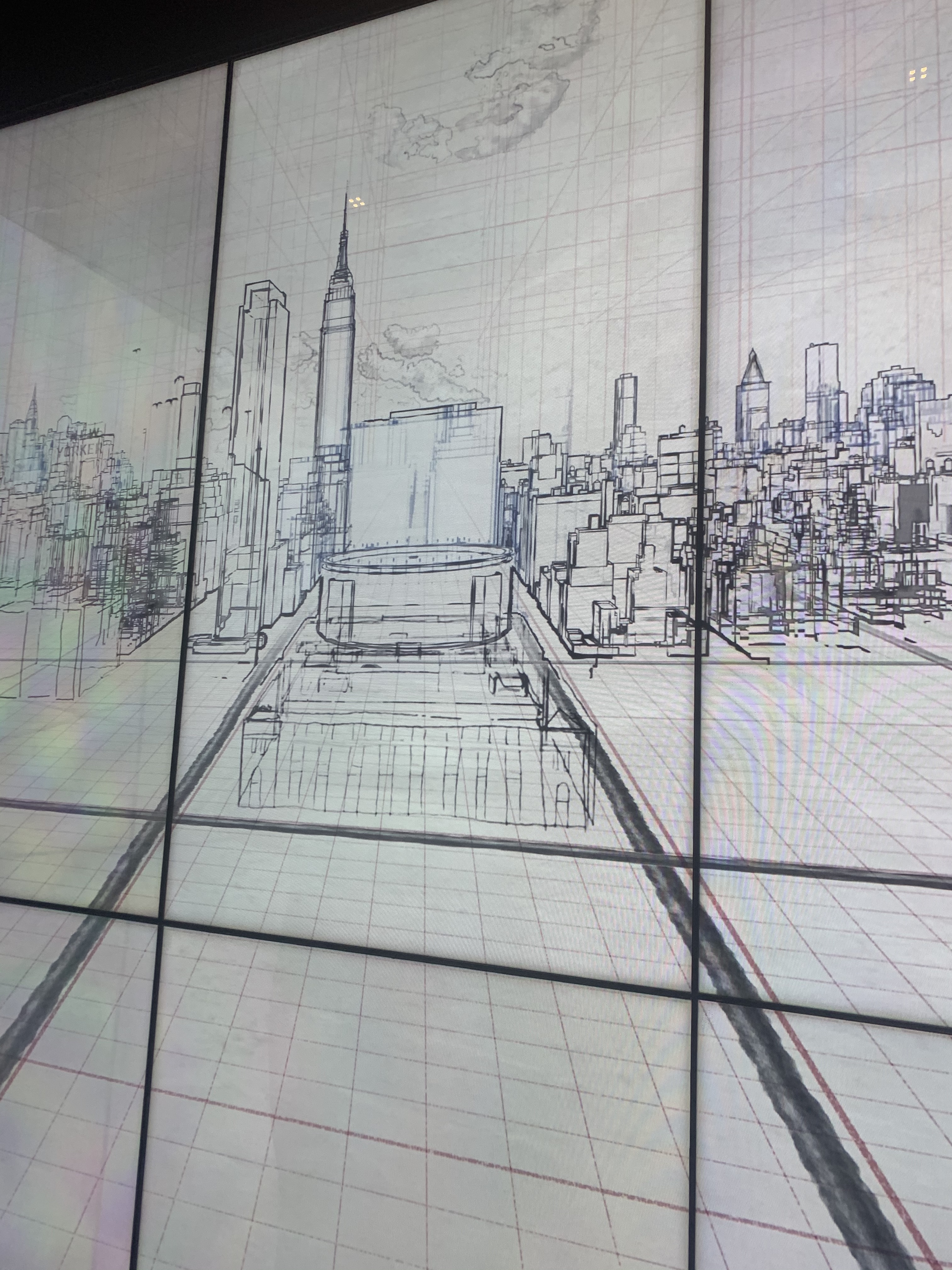
The entrance is just to the left of the shops at Hudson Yards, if you are standing with the Vessel behind you. Everything is clearly marked, and you will be unable to enter and have your ticket scanned until about ten minutes before the entry time listed on your ticket. After being scanned in, you walk through a high-tech display about the development of Hudson Yards (which is still only partially complete at this point), before entering an elevator to go up. A virtual display of the history of the area and the views plays as you ascend.
The time I had been able to get was 4:10, on a day when sunset would be just after 4:41. With the various procedures required to get up there, it was getting pretty close to sunset. We discovered that you needed to wait on line up in the inside area to get to the outside observatory, due to covid capacity limitations. Would we get out there in time?
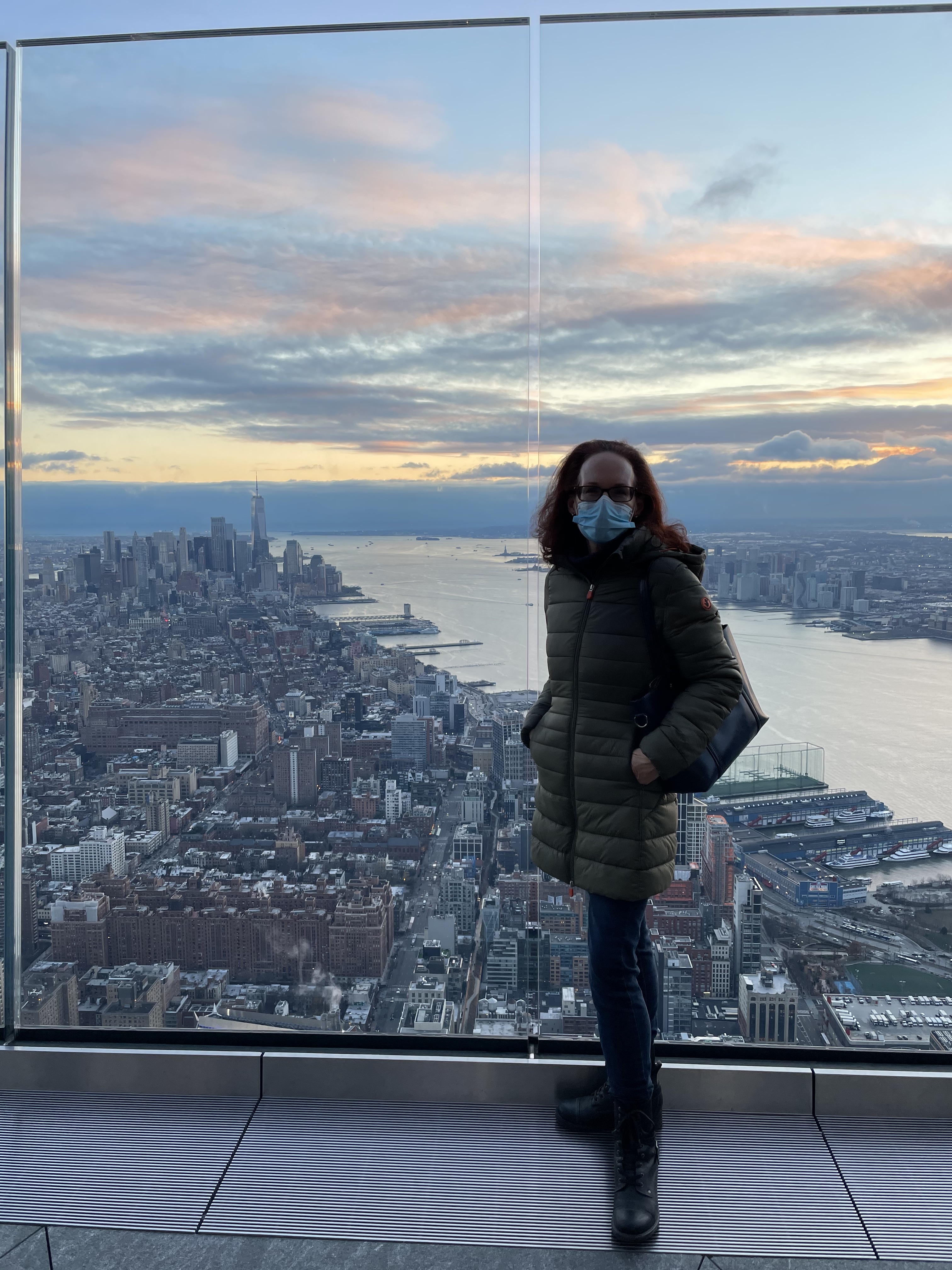
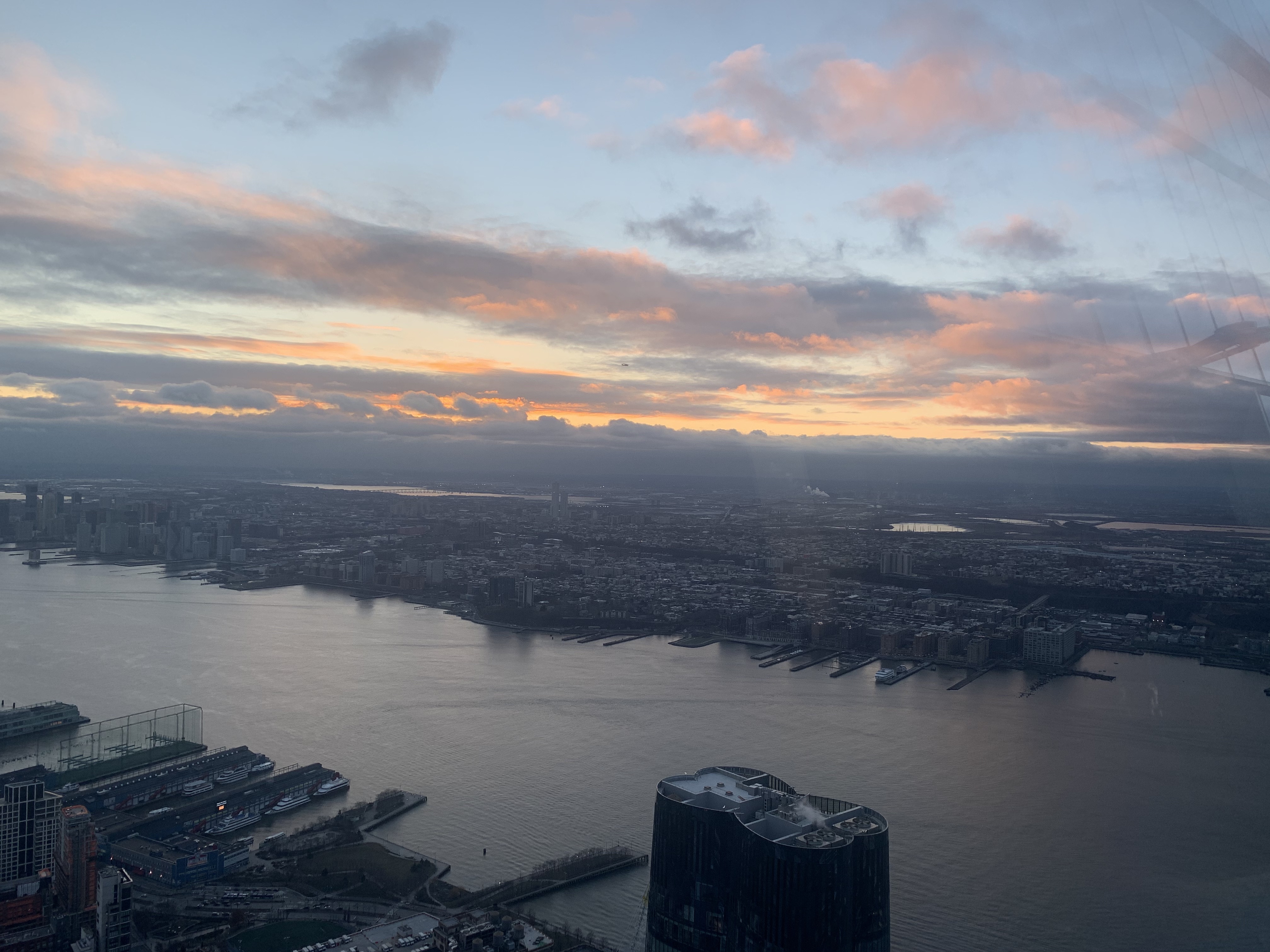
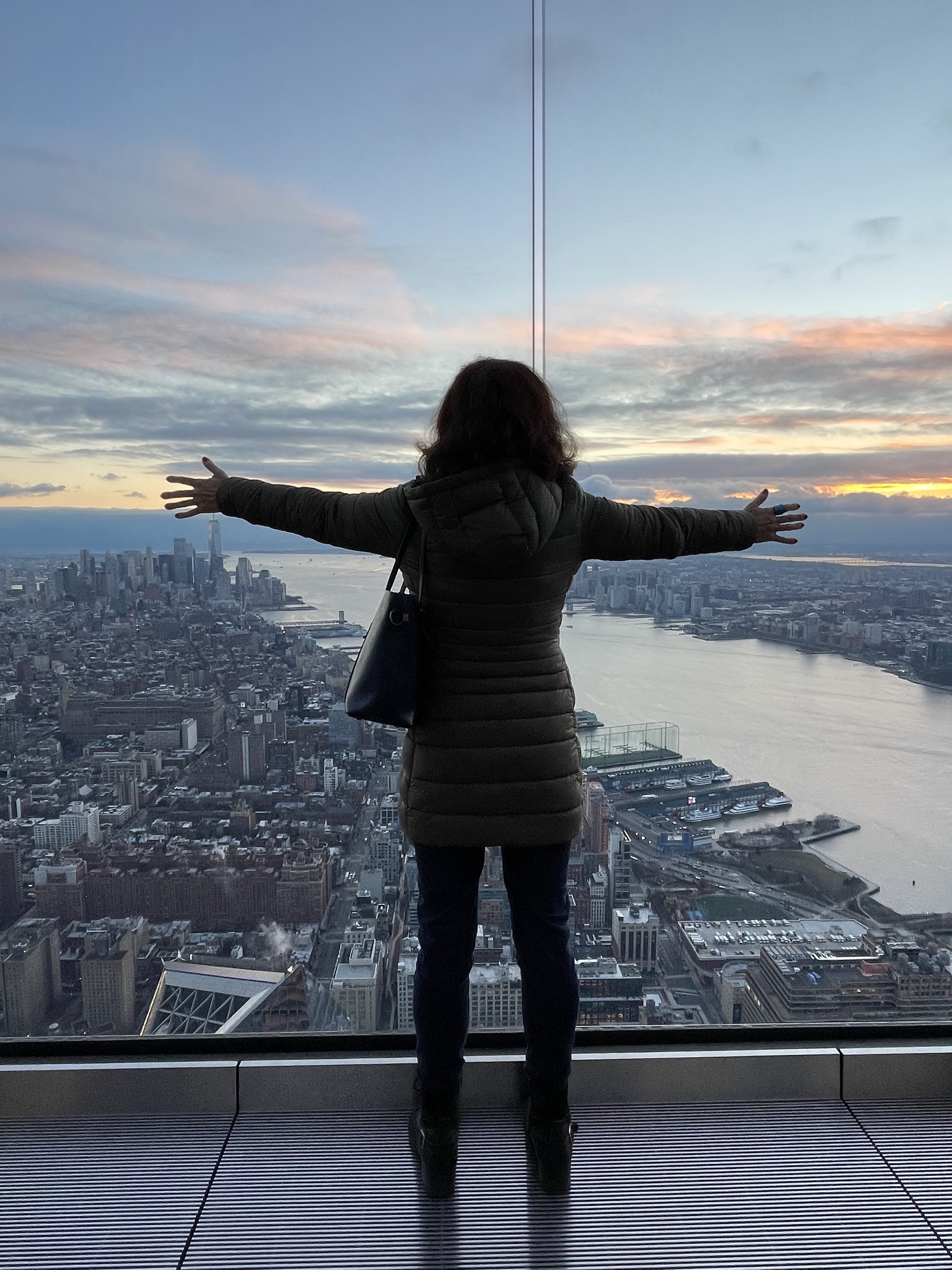
Luckily, things were run very smoothly, including limitations on time people could spend in the various corners outside, so we were able to get out before the sun had fully set. The Edge is the highest outdoor observatory in the Western Hemisphere, and with its unique design, you feel it. You are on a huge triangle protruding 80 feet out from the side of 20 Hudson Yards, 100 floors (or 1,131 feet) up. There are only glass walls surrounding you, and open air above.
And the views! Just lovely, and a different perspective from midtown observatories like Top of the Rock or the Empire State building, or One World Trade downtown.
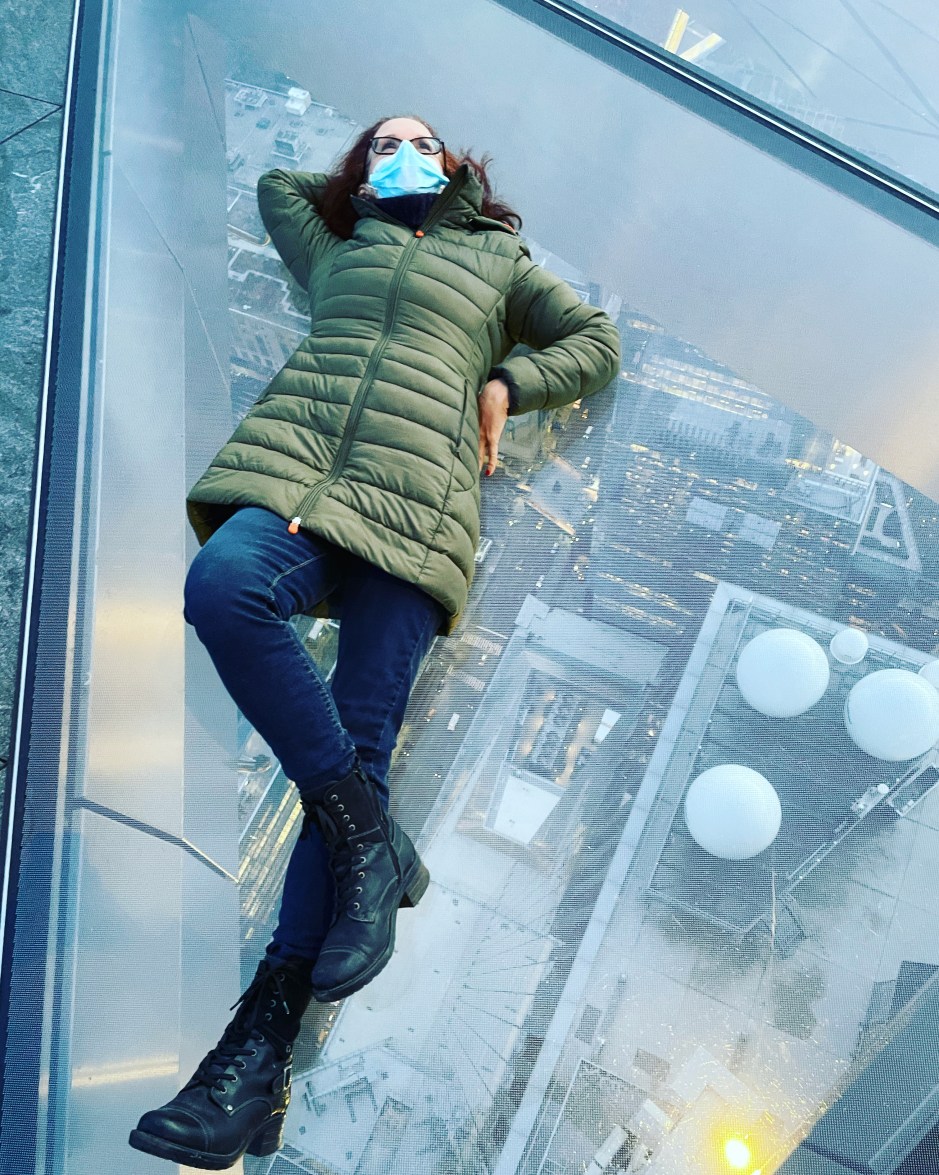
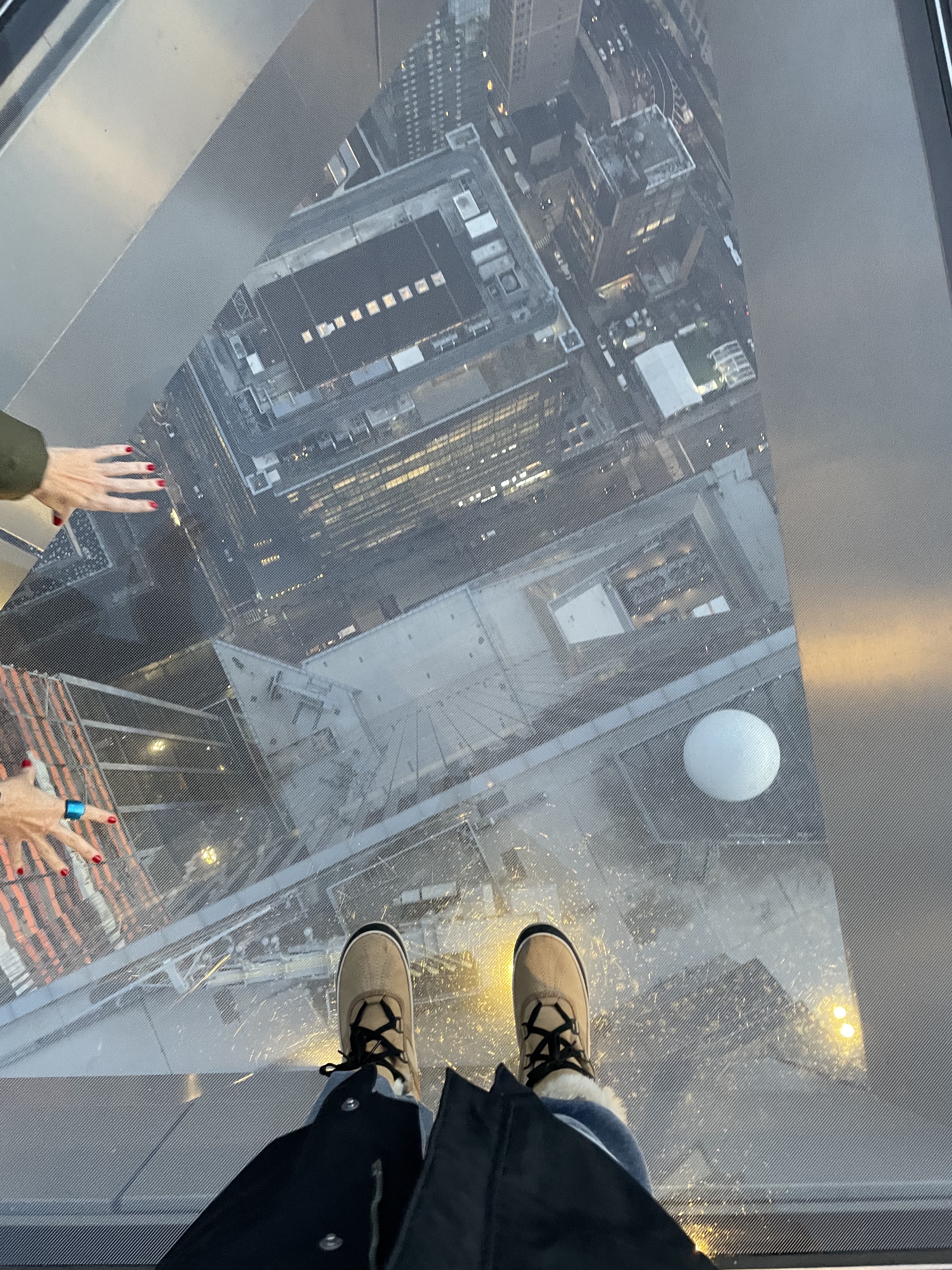
One of the most exciting things to do – if you can take it – is to go on top of the clear glass floor area that they have near the point of the triangle jutting off into space. It’s a long way down, and that distance is quite tangible! This is one of the places where they have staff monitoring your time, and you have one minute alone on the glass floor before you need to give someone else a turn. I found that the staff at The Edge were great at maintaining physical distance between visitors and monitoring time limits.
There are stairs with seating that are reserved for those who have ordered champagne or snacks from the bar. As sunset passed and the lights of the city began to sparkle, the experience transformed again from end of day to NYC night magic. Having been to several observatories in the city, I find this newcomer to the scene to be the “cool kid” of the bunch, and well worth your time. It’s not cheap, but there is a (small) discount if you are a NYC resident. If doing the sunset experience, try to get the earliest time you can within the sunset window, as it turns out they don’t limit your time while up there (just at a few of the photo opportunities) and I felt a little rushed getting out there for sunset with the timed ticket I had. While outside, we heard a cheer and caught the end of a successful marriage proposal . . . New York City, a little thrill, and romance – what more can you ask of an adventure these days?
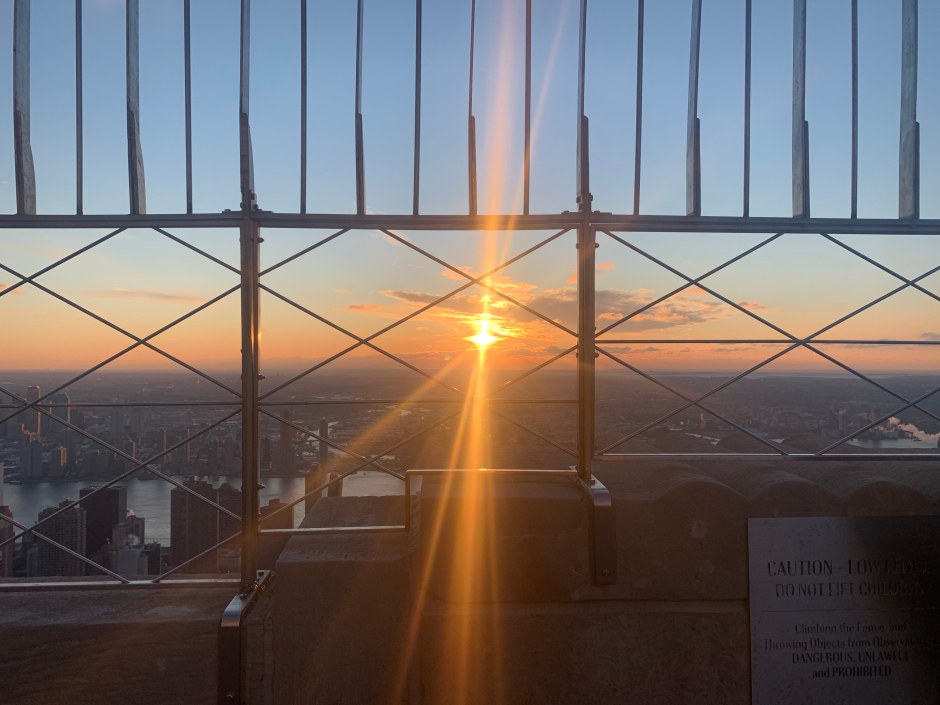
One of the things about living in a place like New York City is that often you don’t end up exploring many of the things that visitors consider a “must do” (unless, of course, you have visitors and accompany them!). But one of the silver linings of this pandemic time, when so many things are not available, is that you can find yourself drawn to figuring out what it is that you can do. One of my daughters discovered that the Empire State Building has an experience, limited to a very small group, where you watch the sun rise from the 86th floor observation deck. So, the day after Christmas in 2020, we found ourselves walking through the quiet city streets before dawn on a very cold and windy morning on our way to enjoy this experience.
Tickets are extremely limited – only 30 people – and on the morning we did it, there were only 18 (including ourselves). Our temperatures were taken, masks were required, and we filled out a health questionnaire upon checking in. Sunrise on Dec 26 was at 7:19, so we checked in at 6:30 and were allowed up (4 to an elevator) at 6:45.
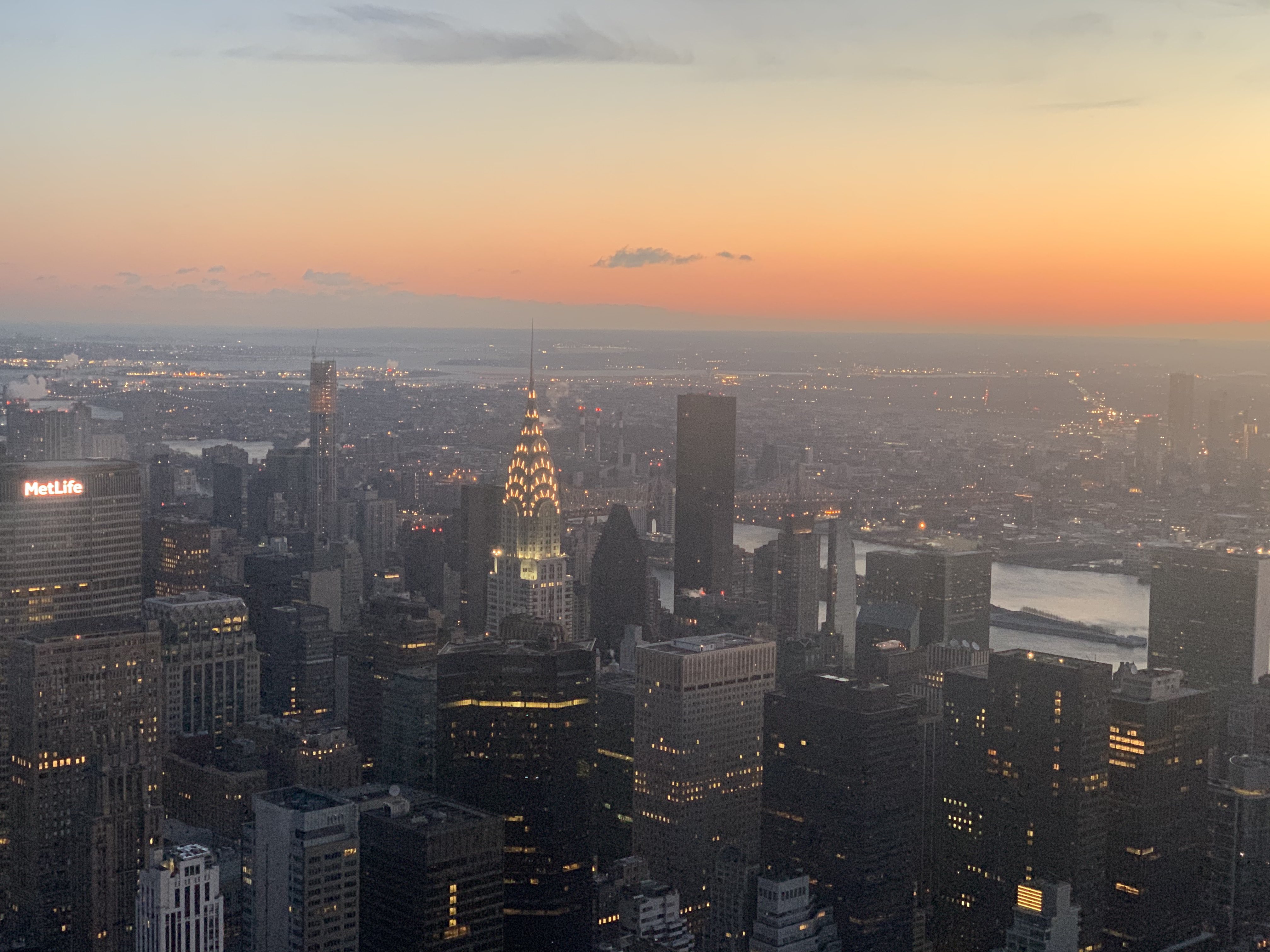
We had noticed even while walking there that the sky was brightening toward the east, and when we walked out to the observation deck, there was a definite sense of dawn even though the Chrysler Building was still illuminated.
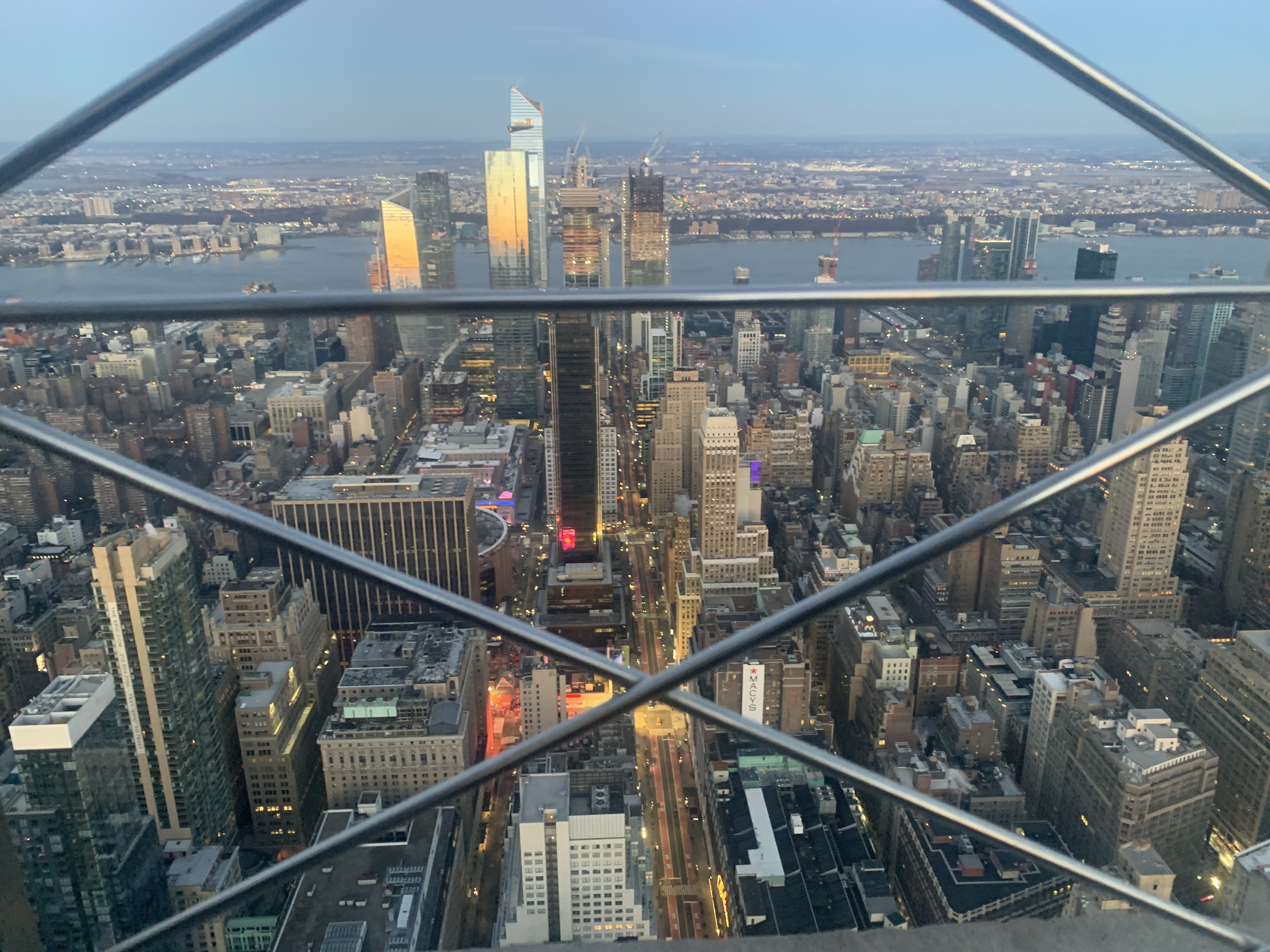
Being up there with so few people meant that often you had the feeling of having the deck – and the views – and the city! – to yourself.
From the deck, you could see not only the dawn, but the way the morning light hit buildings in every direction, giving them a pink glow.
I see many, many more sunsets than sunrises, so it was lovely to see the light slowly increase.
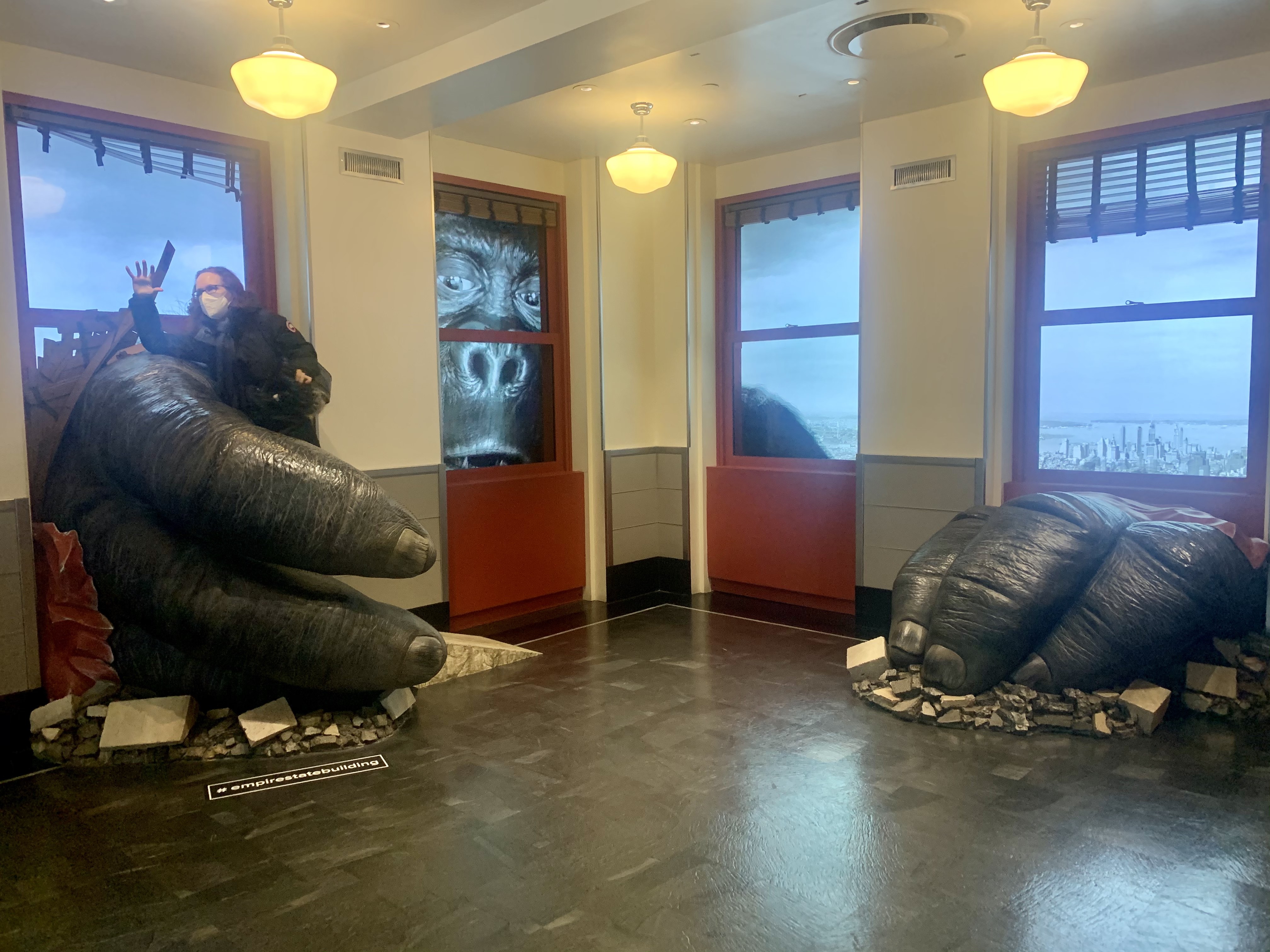
Finally, the sun appeared above a low bank of clouds on the eastern horizon! Over the next half hour, the morning sun rose and no longer gave a rosy glow, but simply illuminated the city – from One World Trade south to the entirety of Central Park looking north to Harlem. At 8AM, they were going to let regular ticket holders come up, so just before that, we left and were offered a private ride to the lower floor that held a display on the history of the building as well as a few fun photo ops. There were no other people there, and I can only imagine how crowded it must be usually (or how hard it is to get that perfect King Kong shot!).
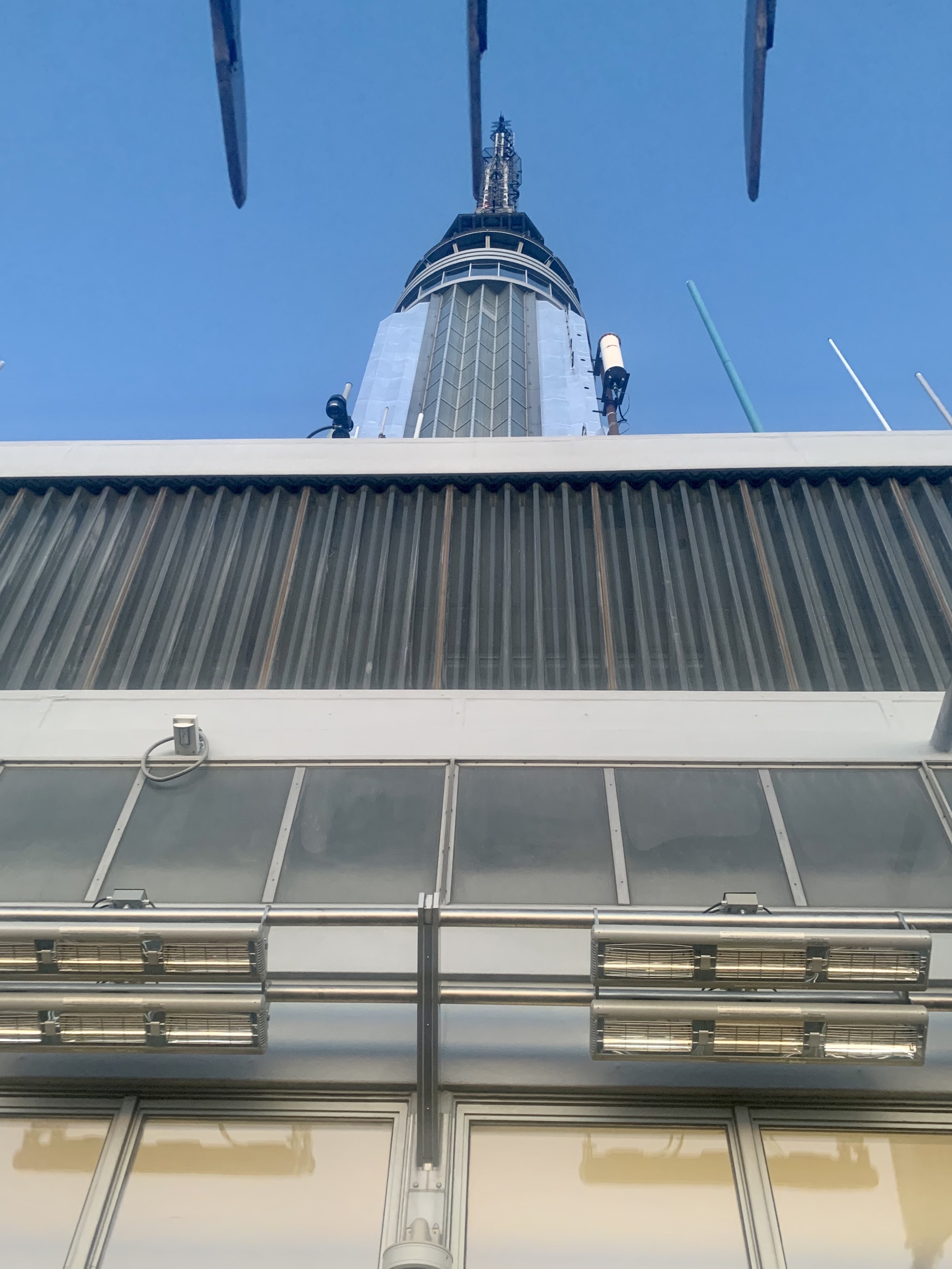
Walking back home to make coffee at what would normally be very close to the start of my day, I reflected on the experience. It was expensive, but the privacy of being up there with virtually no one else there made it worth the cost to me. Would I have preferred it be sunset rather than sunrise? Well, yes – but I can see that there is no way for them to clear the observation deck for a private sunset experience like they can at sunrise by simply opening earlier to a small group. Would I have preferred for it to be less cold? Definitely, although in the warmer months the sunrise is earlier so you have to be there earlier as well (as early as 4:30 near the summer solstice). The ESB sunrise experience runs most days in the peak tourist season (and yes, that will come again!) and only a few days per month the rest of the year. For the price, you want to be sure the weather is good because the tickets aren’t refundable if it is rainy or snowy and you can’t see much. For this reason, I waited until two days before to book – and in more popular times, it is possible that all the slots are gone by then. So all in all, I was very glad I went and very happy with the experience of seeing my city welcome the sun from King Kong’s personal favorite perch.
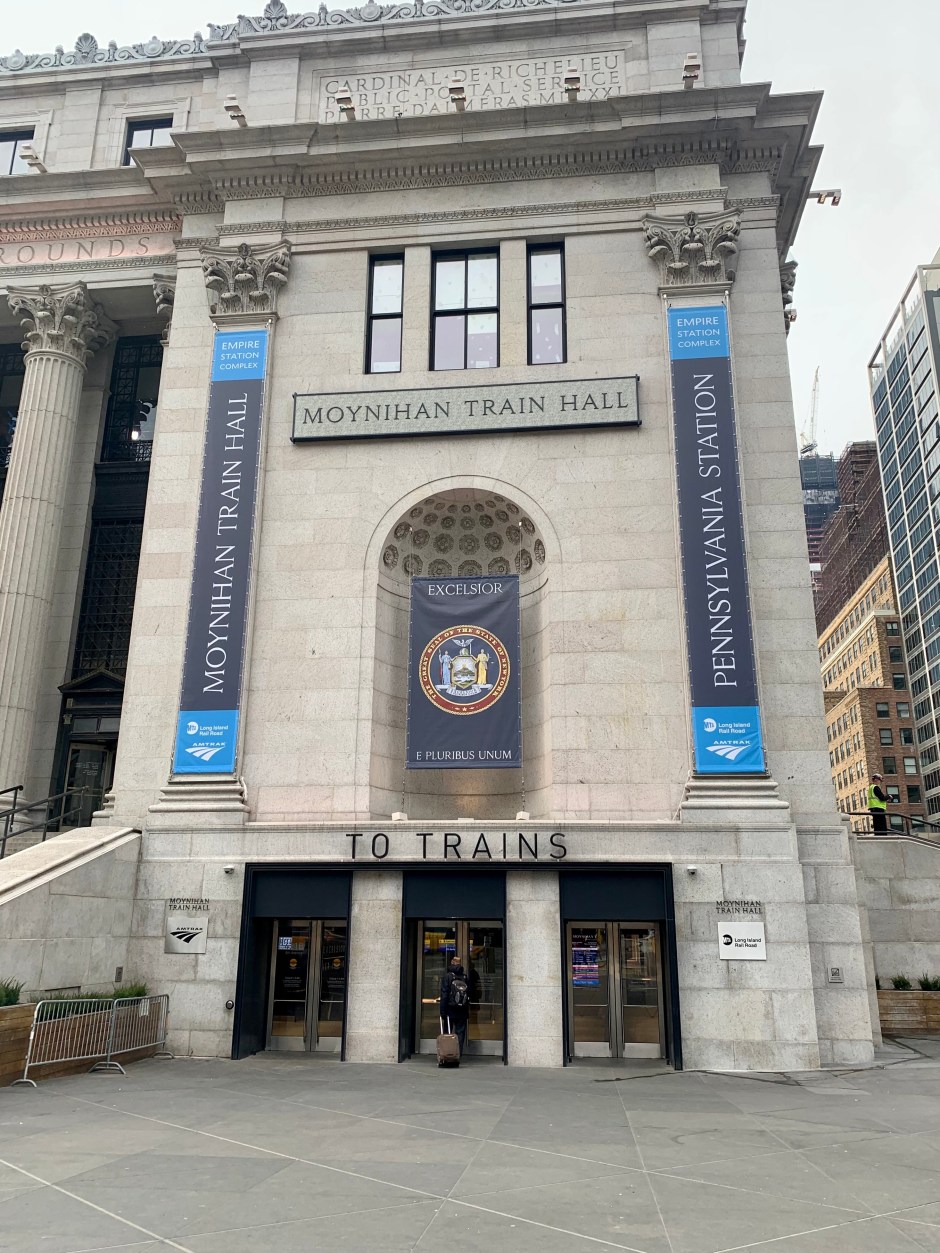
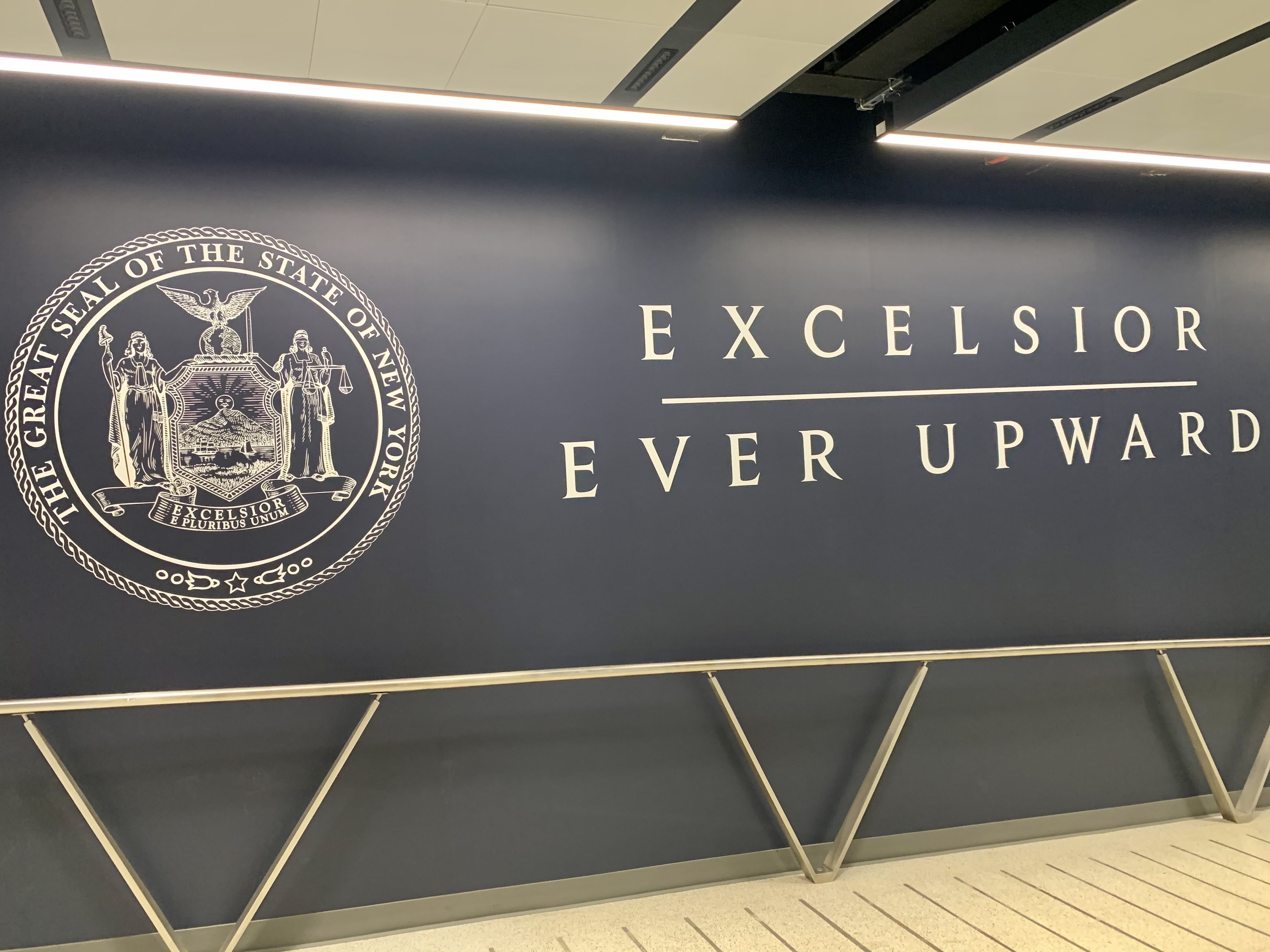
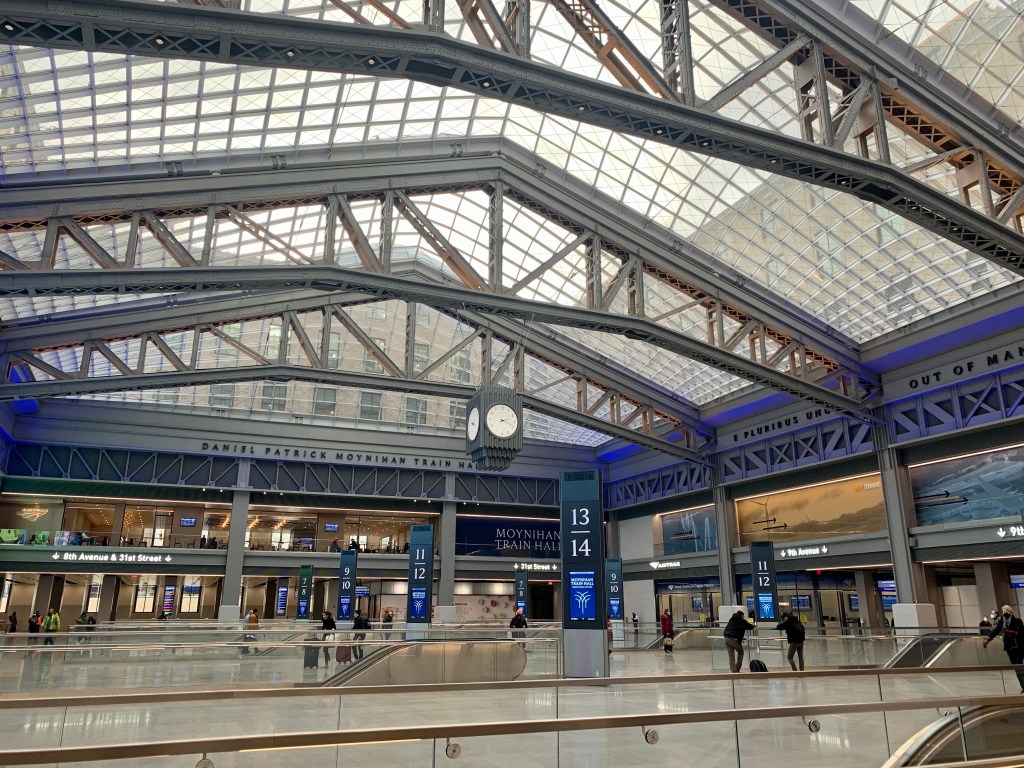
OK, who has had to take a train out of Penn Station? Now, who liked being in Penn Station? I don’t need to be able to see you to know that the answer to the second question is NO ONE. However, NYC has converted the old midtown post office building (once the only place you could mail your tax return late on April 15th to get the correct postmark before midnight!) into a magnificent new Penn Station. Enter on Eighth Avenue between 31th and 33rd Streets, and find yourself in a modern yet classic new station for LIRR and Amtrak trains (sorry, New Jersey Transit – you are still in the old Penn Station).
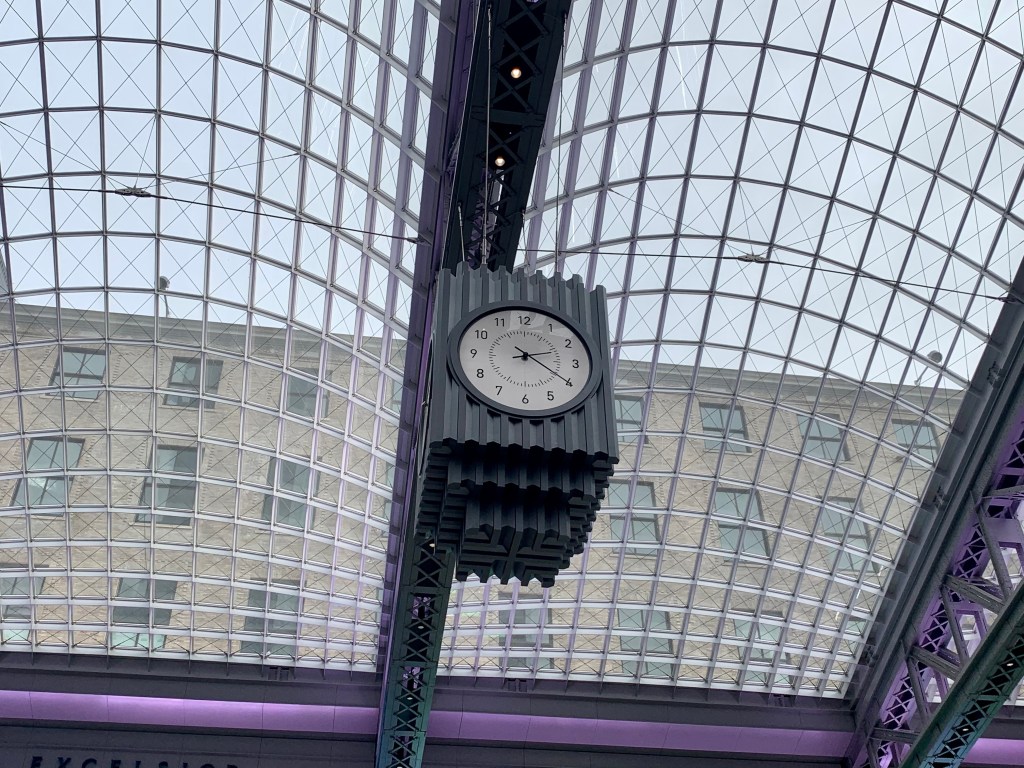
The station reminds me of the Upper East Side Q subway stations in the modern feel, wide passageways, and clean design. Then when you get to the main hall, it is airy, light and inviting.
Well done, NYC. And with the announcements recently of the High Line being extended to meet this train station, as well as the removal of the ugly tow lot on Pier 76 (at 40th Street) for the development of an additional park along the Hudson as well as the opening this year of the floating island park (yes, you read that correctly) called Little Island at Pier 55, the improvement of the far west side continues promisingly. I just wrote last year about the new eco-park at Pier 26. Investors take note: between Hudson Yards and the continual development of the Hudson River Park all the way along the river, this area will become more and more attractive to people looking to live in this once-barren area. I am a regular user of the dedicated bike lane from the upper 50’s to Battery Park, and am watching the area change before my eyes. New York City is always changing, and it’s wonderful when it becomes more beautiful and functional as it does.




































































 Julie Brannan, NYC residential real estate