Biking in NYC

When New York City locked down last spring due to the Covid-19 pandemic, the normal ebb and flow (mostly flow!) of the lives of those staying in the city had to change radically – and I was one of those here during that strange and unmoored time. Like so many, I cleaned, learned to make sourdough bread, and had endless Zoom meetings and virtual cocktail hours. Some of these things have already faded as the city begins its reawakening, and others will as reopening continues. However, one of the changes that I as well as so many others also began during that time will continue in my life – biking in the city.

I grew up riding bicycles daily as a kid (not in NYC). When my daughters were small, we taught them to ride in Central Park, but walking the bikes to the park because of my strong feeling that riding a bike on city streets is highly unsafe was unwieldy and meant we didn’t ride regularly. Over the years, if on vacation in a place where it was easy to ride on a dedicated bike path (I’m looking at you, Huntington Beach, California!) I always took the opportunity to do so. But I never thought I would ride regularly in NYC until the fatigue with being home most of the day with only a daily walk outside overwhelmed me.

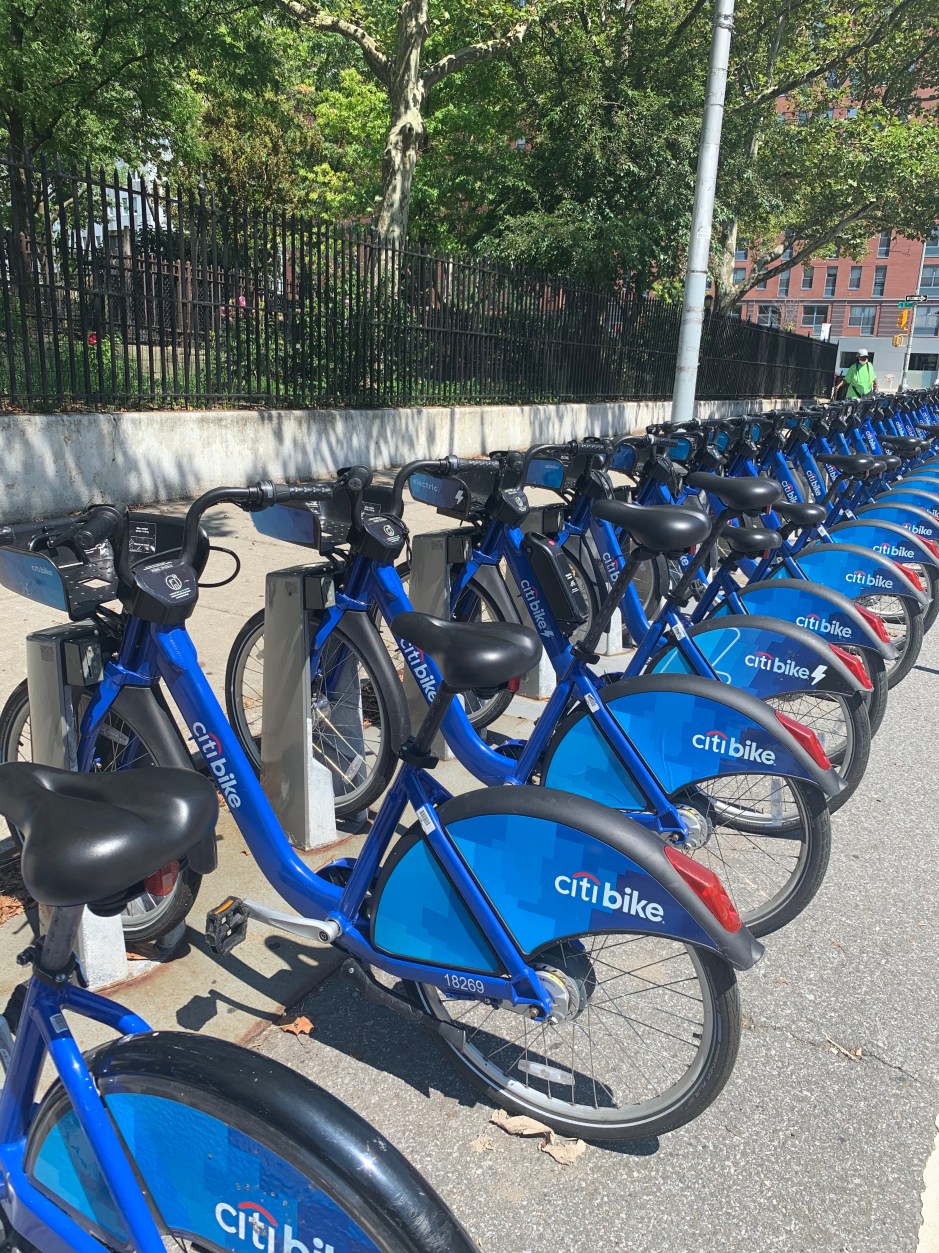
Hello, Citibike! I had seen them for years now, but always thought of them as being for those intrepid people who rode in the midst of traffic fearlessly. I had never really explored the system of bike paths that has been developed in the city over the past decade (and honestly, needs expansion). But in late March of 2020, I got on my first Citibike and there has been no looking back. From late March to Dec 31 of 2020, I rode 126 hours and 1313 miles on Citibikes, and am on a similar pace so far in 2021. So what changed? Am I now confident weaving in and out of automobile traffic? In a word – no. But I have discovered many enjoyable bike paths and have figured out some tips and tricks that might help you if you decide you would like to try biking in the city.

First – Citibike or your own bike? For your own bike, you need to know where you will store it, and how you will lock it up if you choose to go somewhere and then walk around. You are responsible of course for maintenance. But on the plus side, any bike you would purchase for yourself will be much lighter and easier to ride and maneuver than a Citibike. Citibikes are meant to be tough, and lock into the Citibike racks, and they are HEAVY. You will really notice this on a hill (and I will say that Central Park is much hillier on a bike than I ever noticed as a walker) or on a day with a lot of wind. However, Citibikes are easy to check out and check in if you are planning to bike somewhere else and then walk or go into a building. Citibikes are $15 for a day pass of unlimited 30 minute rides, but if you plan to ride regularly as I do, the yearly membership of $179 (billed annually) for unlimited 45 minute rides is the way to go. There are extra charges for an ebike (which gives you a little extra power on hills) and if you go over the time limit (but you can keep docking your bike and checking it back out for a longer ride without incurring extra costs), and of course a large charge if you don’t return the bike! Since I began riding last year, Citibike partnered with Lyft and you can now check out Citibikes or use your membership within the Lyft app. You scan the code on your bike with your camera phone and it unlocks automatically and starts timing your ride. When you dock the bike securely (look for the light to turn green, and enable notifications to see on your phone that the return was registered), the ride ends and you get a receipt.

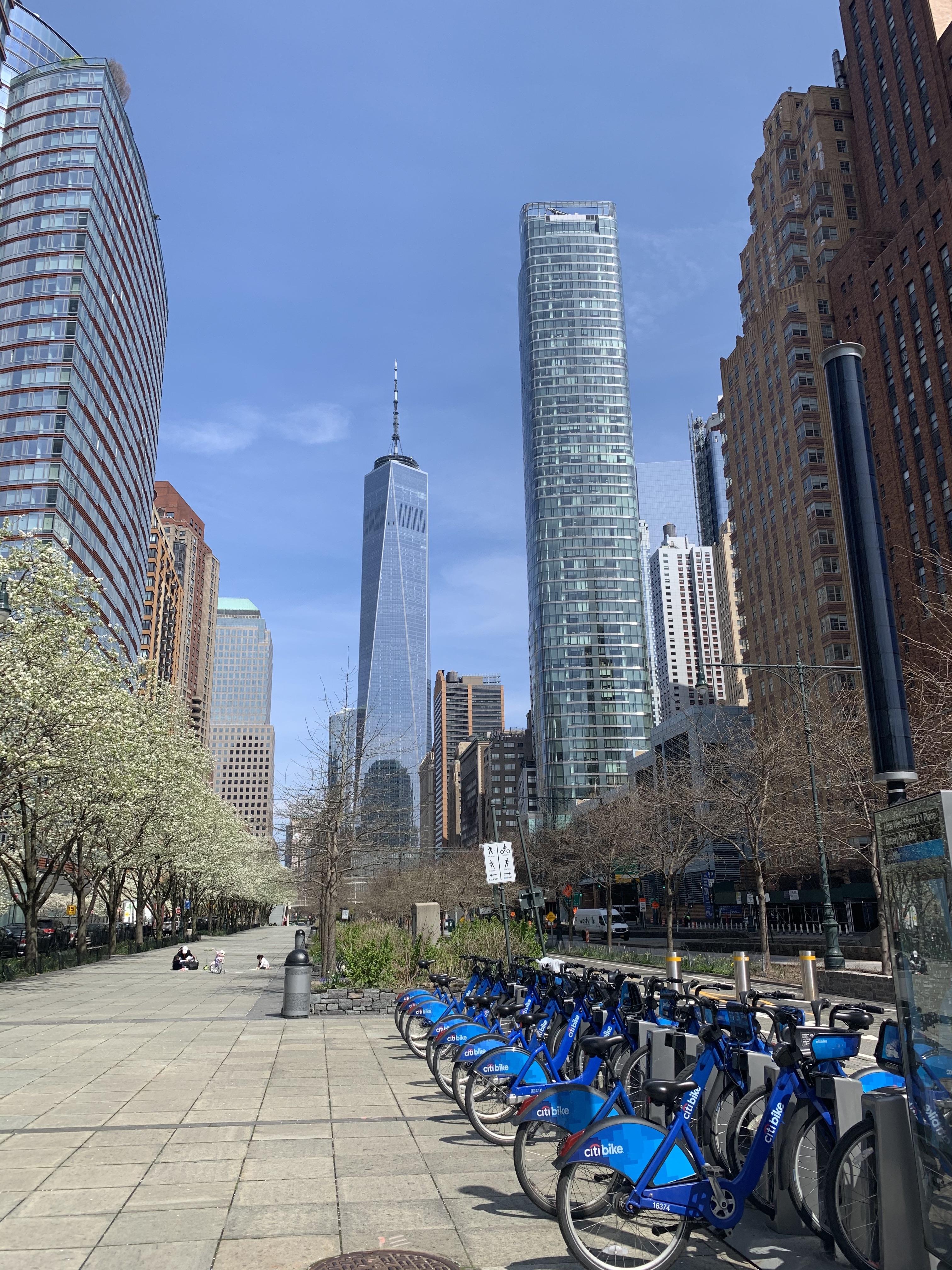
There are many dedicated bike paths you can use to avoid the risk of riding in NYC traffic. My favorites are the Hudson River Bikeway along the west side, and the three different loops within Central Park. Some streets in the city have bike lanes next to the curb with parked cars between the bike lane and moving traffic, but if you use those, be aware that trucks are often double parked in the lane, and parked cars can open car doors into the lane. In addition, people can emerge between parked cars and may be hard to see in advance.

When first starting to bike in the city, I would suggest going on the dedicated bike paths, and either early in the morning or on a day where the weather is a little off. The bike paths can get quite crowded when the weather is excellent, and it will take you a while to get accustomed to the paths. Also, if you are using Citibike, pick a less hilly path (the Hudson River Bikeway is very flat; the Central Park lower loop that only goes up to 72nd is reasonably flat but the upper loops have some serious hills) and check the weather for wind. Early on, I often had the experience of biking four miles from midtown down to Battery Park and thinking what good shape I was in, only to realize when biking back that the wind was at my face and it had been helping me along on the first leg of the journey – and Citibikes never feel heavier than when riding into a stiff headwind!).

In terms of safety in general, biking in NYC is not without its risks (for that matter, neither is walking in the city). We have all seen the white bicycles installed in locations where a bicyclist has been struck my a motor vehicle and killed. Even Bono (from U2) a few years ago had a fairly serious bike accident inside Central Park. Helmets are not required, but of course are a good idea. I have a collapsible bike helmet that fits easily in my bag, that I bought at the MoMA design store (see it here). Practice defensive biking – just as good car drivers are constantly aware of their environment, a good bicyclist should always be looking out for pedestrians and other bikers (including electric scooters and rollerbladers, who also use bike lanes). Don’t stop suddenly or you might get rear-ended – I have seen that at crosswalks where one bicyclist stopped suddenly to allow a pedestrian to cross and another bicyclist was not expecting that and hit the stopped bike. Those crosswalks, by the way, are intended to remind bicyclists to yield to pedestrians already in the crosswalk, not an indication to stop. Look out for pedestrians ambling in the bike lane, and when you are a pedestrian, please stay out of the bike lane!

I even biked all last winter, and had never before biked in serious cold or snow. If it is cold, be sure to dress in layers, as biking makes you heat up and you may need to unzip some layers even on very cold days. Covering your face, ears, and hands is particularly important, and I found that mittens kept my hands much warmer when biking than gloves. Biking in snow is just like driving in snow – take your foot off the gas (stop pedaling) when you see ice or snow, and “pump” your brakes instead of stopping suddenly (squeezing and releasing the hand brakes quickly).

My final safety tip relates to the bike equivalent of “road rage.” If you bike enough, you will have people yell at you as they pass you. Don’t let them affect you, as they are clearly having a worse day by behaving in that way than you will letting them upset you. And obviously – don’t be that person! Don’t yell at pedestrians loitering in the bike lane, either – you can use the bell lightly if you are worried that they might step in front of you but that or a quick “on your left” should be done only as a safety signal and not as an intentional way to startle or scare them. I remember when first biking, there were so few people on the bike paths that we would routinely greet each other when we did pass. Now on a day with good weather, the crowds on the bike paths can be intense.

Getting upset while on a bicycle takes away from what I have found I love so much about biking – I find that it is not only a physically satisfying experience (that free feeling I had on a bike as a child, almost like flying!) but also a meditative and calming mental one. Starting as a way to get exercise during a time of lockdown and isolation, I have since found it to be as good for my mental as my physical health.

NYC/Julie Brannan videos 2021

I was fortunate enough in February to work with videographer Mikey Pozarik and with Compass to create two videos that express my ethos as a real estate agent. The first one (see it here) features a quote by E.B. White, and reflects my love for New York City as someone who was born elsewhere but has chosen to live and work in the city. I hope every day that I am able to bring my passion to this city I love. The second one (see it here) is more of a manifesto. The quote is attributed to Steve Jobs, and I am drawn to the work ethic it expresses. I truly enjoyed making these videos – the locations were all areas of the city I have a particular relationship with, and selecting and recording the quotes was also a process I found artistically and creatively challenging in a very positive way. Even the process of deciding how to go about making these videos helped me think about and crystallize who I am in my role as a real estate agent. My thanks to Mikey and to Compass for helping these projects come to life.

The Edge Outdoor Observatory at Hudson Yards

Always looking for another way to look at the New York City that I love so dearly, I was eagerly anticipating the opening of The Edge observatory in Hudson Yards last year. It opened on March 12, 2020 – and was shut down almost immediately by the pandemic. The Edge reopened in the fall with capacity restrictions, a mask requirement, and physical distancing, and I was able to experience it early in 2021. I had decided that it would be optimal to go for sunset, and those tickets sell out quickest (and have a surcharge). Given that going in inclement weather would reduce the view, I was looking for a time to buy tickets a day or so in advance when the weather was more predictable, and was able to once the holiday season increase in interest had passed.

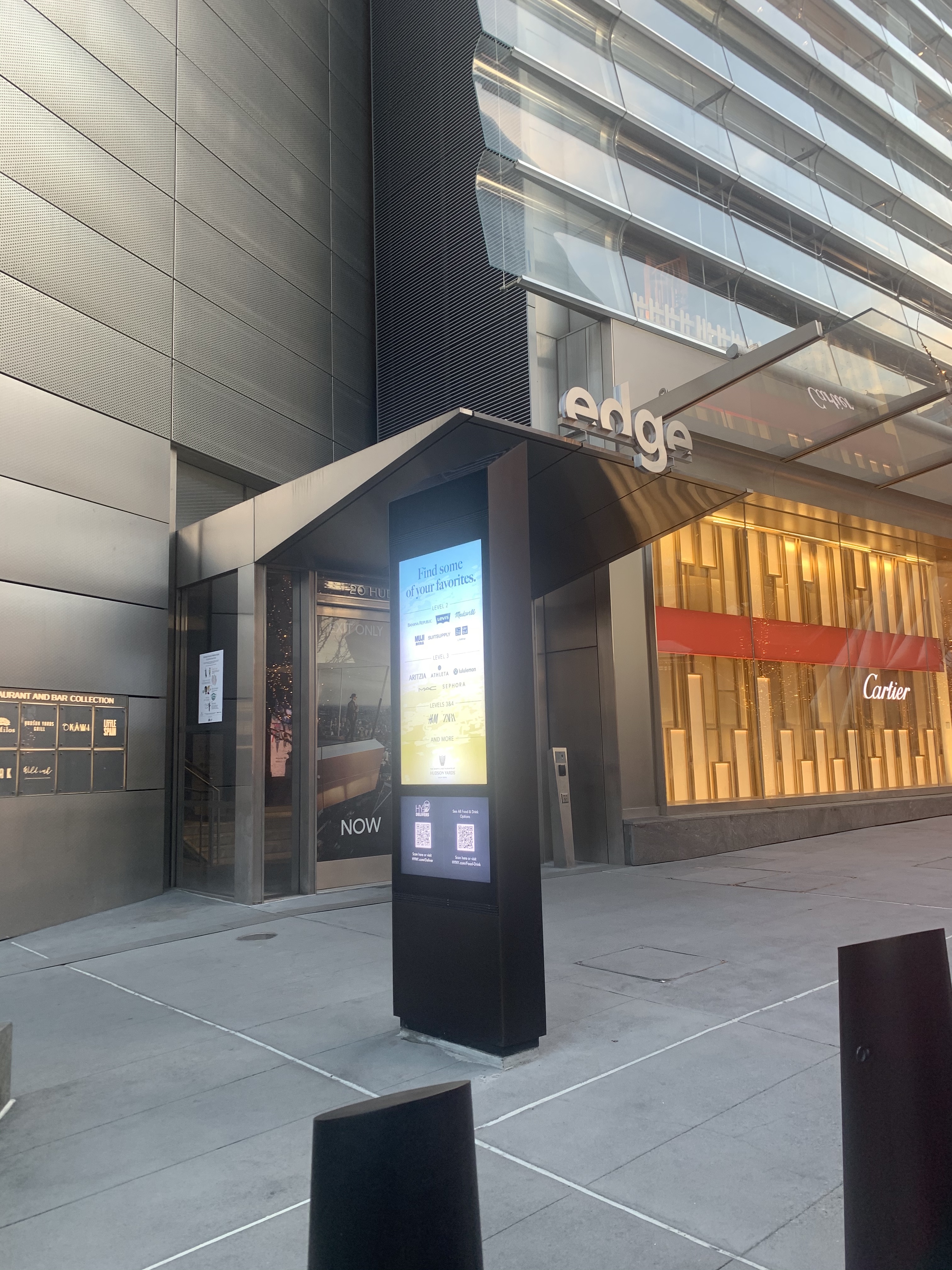
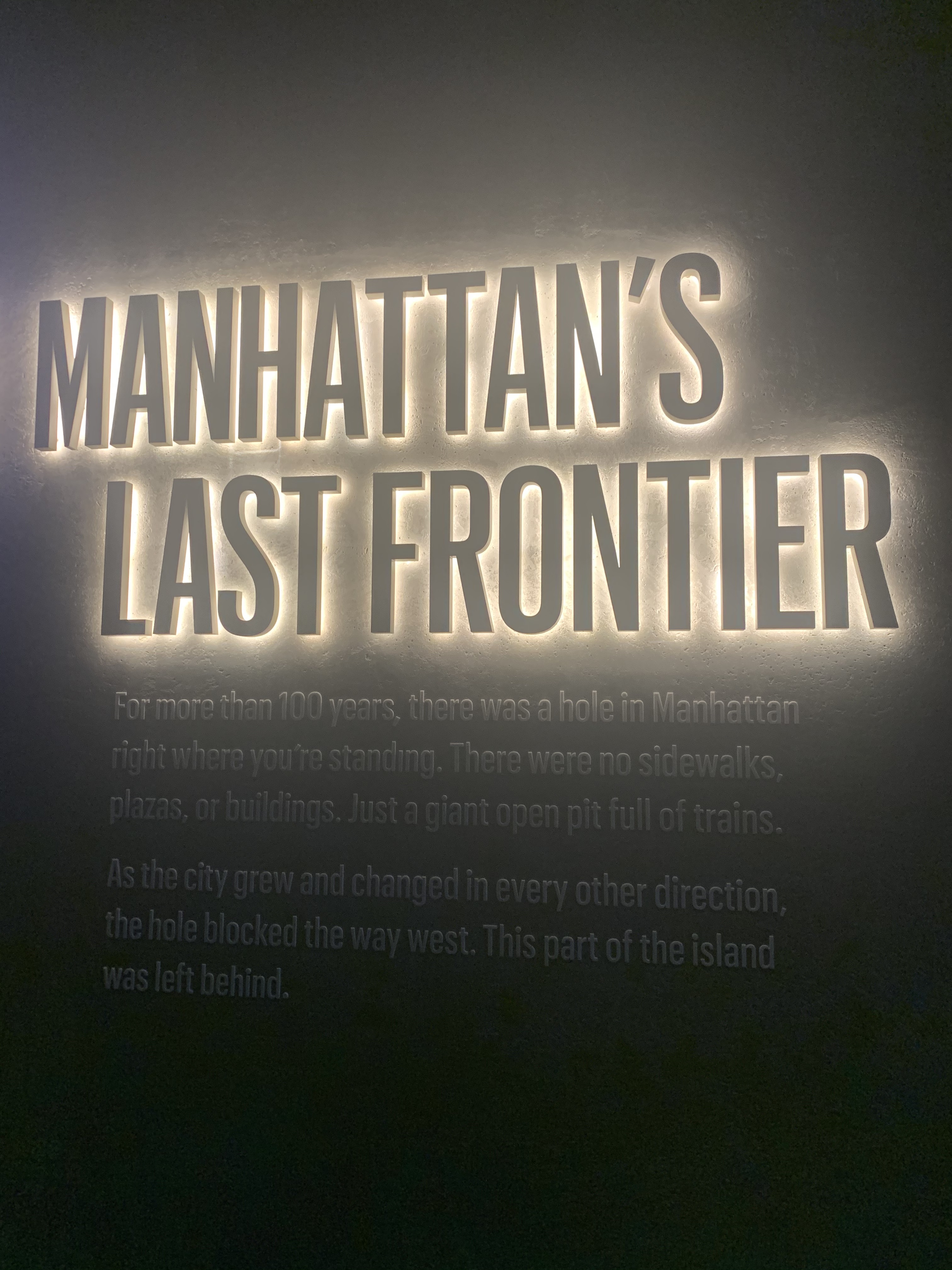
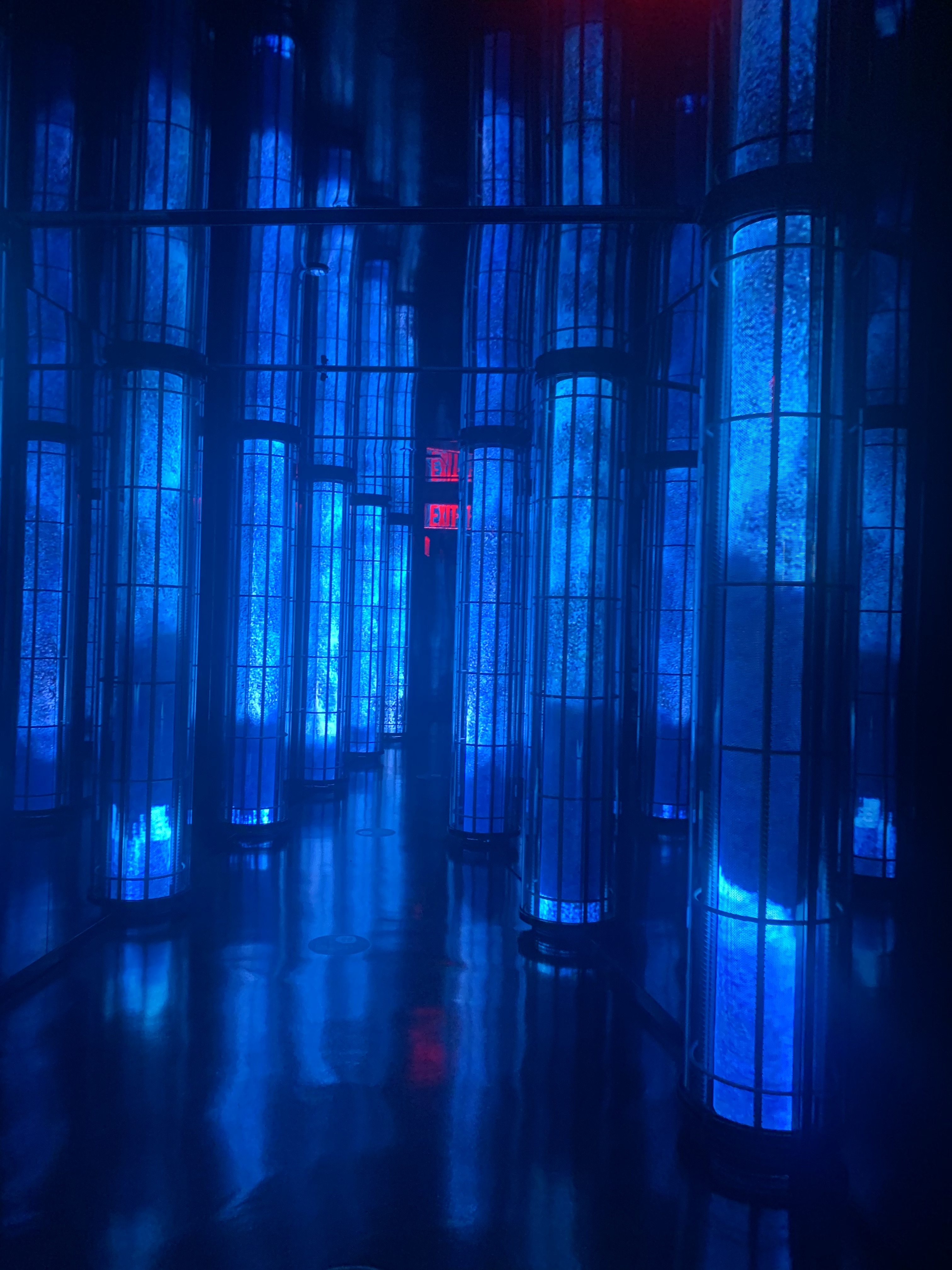
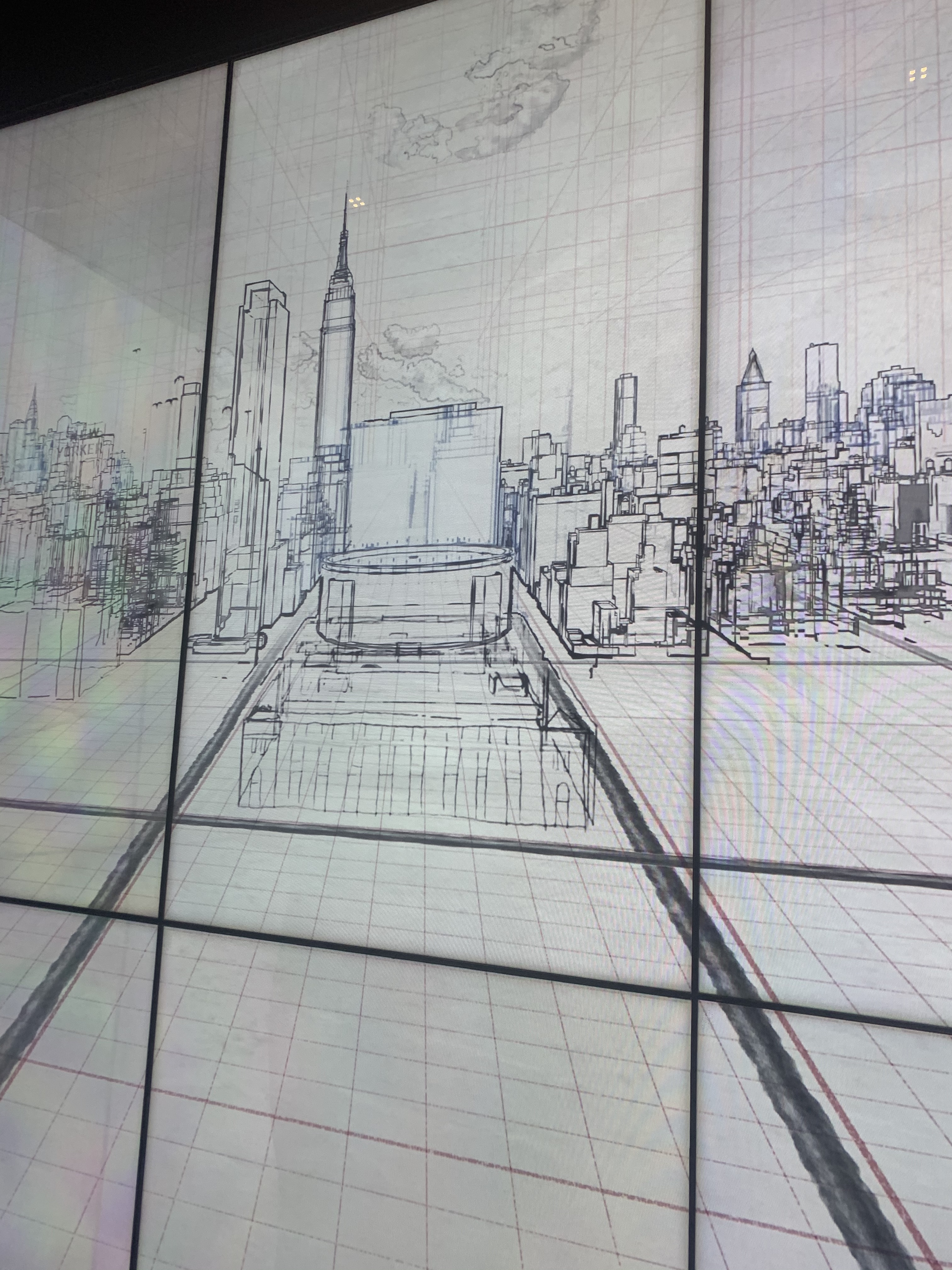
The entrance is just to the left of the shops at Hudson Yards, if you are standing with the Vessel behind you. Everything is clearly marked, and you will be unable to enter and have your ticket scanned until about ten minutes before the entry time listed on your ticket. After being scanned in, you walk through a high-tech display about the development of Hudson Yards (which is still only partially complete at this point), before entering an elevator to go up. A virtual display of the history of the area and the views plays as you ascend.

The time I had been able to get was 4:10, on a day when sunset would be just after 4:41. With the various procedures required to get up there, it was getting pretty close to sunset. We discovered that you needed to wait on line up in the inside area to get to the outside observatory, due to covid capacity limitations. Would we get out there in time?

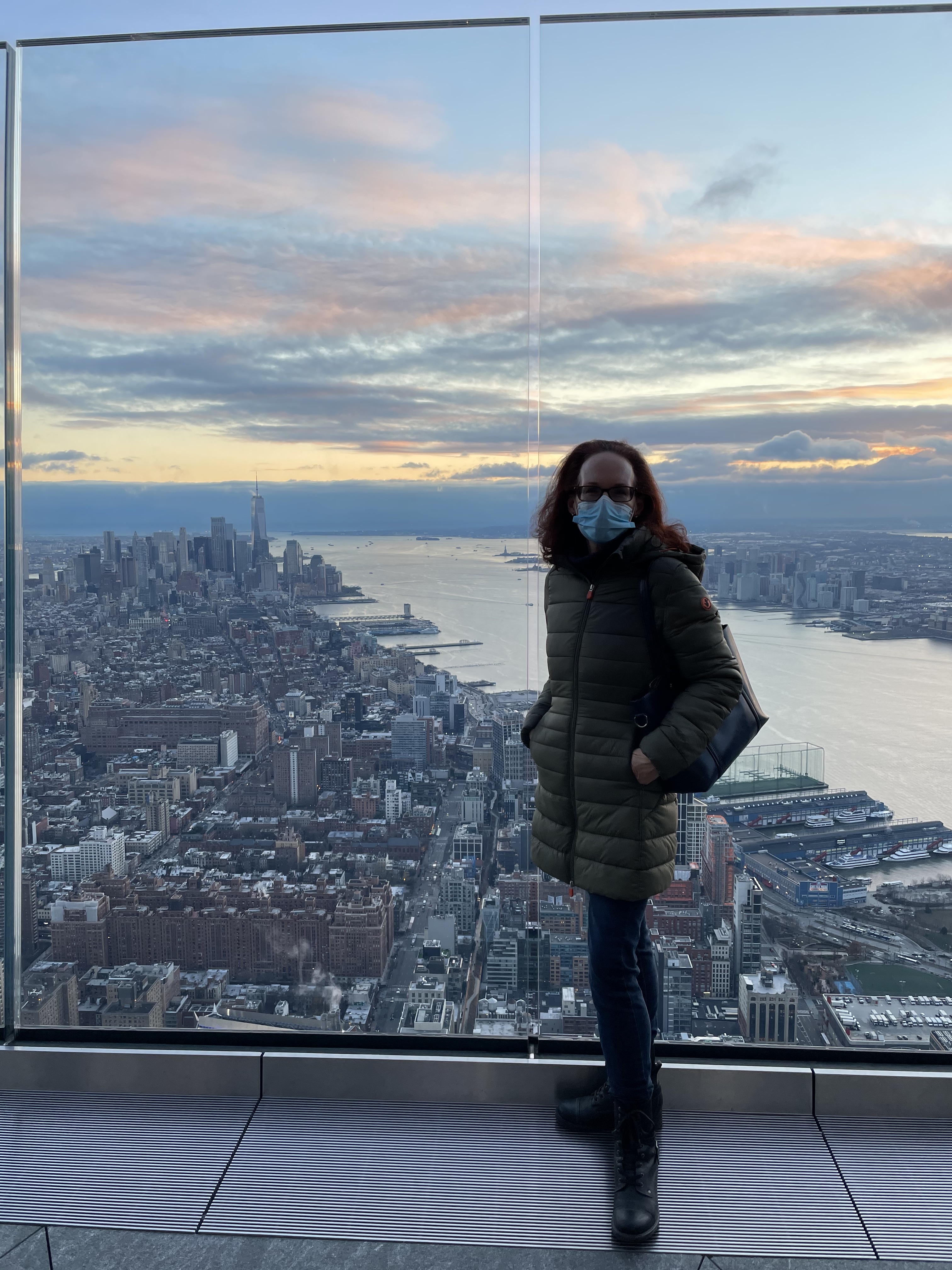
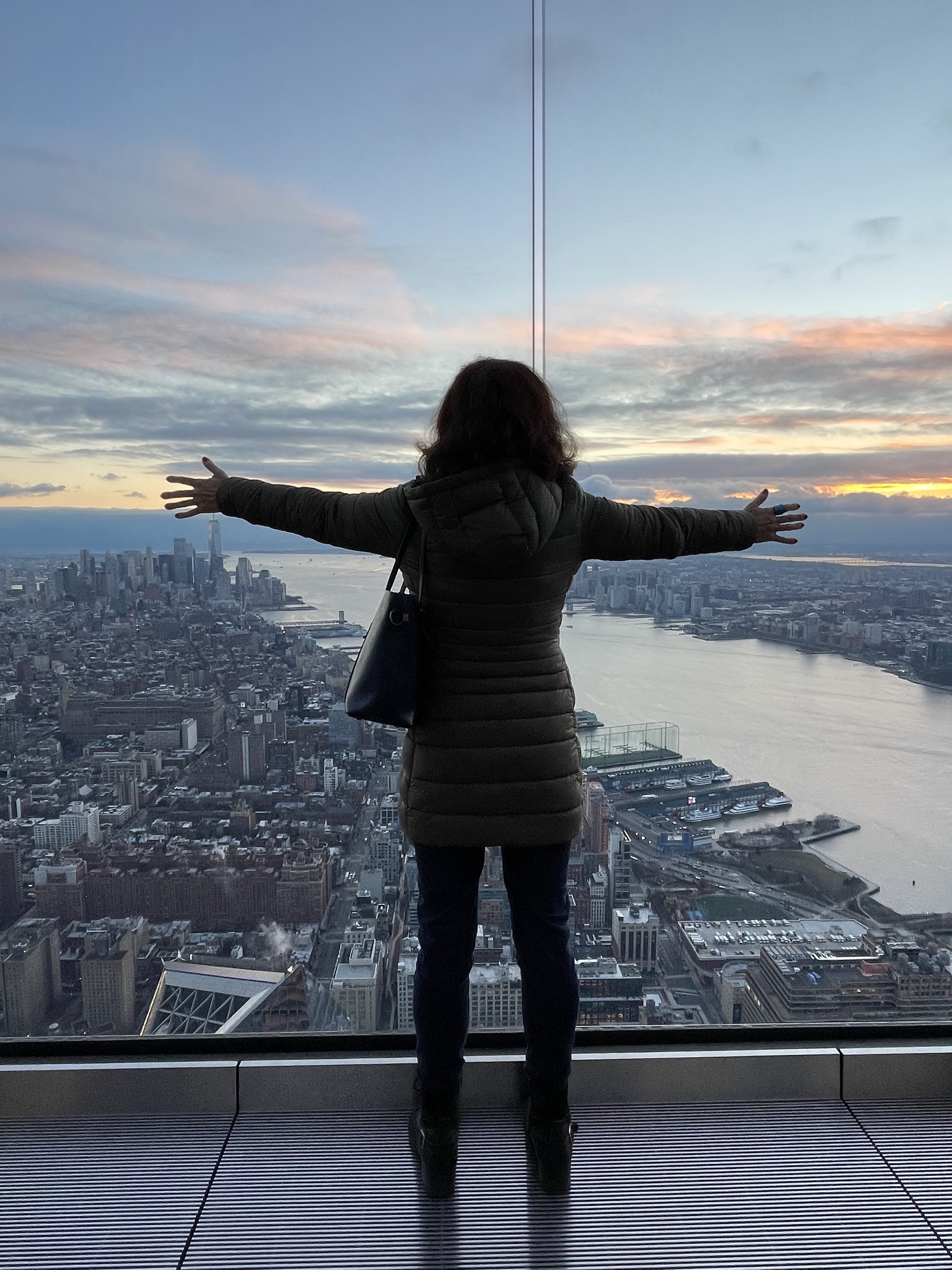
Luckily, things were run very smoothly, including limitations on time people could spend in the various corners outside, so we were able to get out before the sun had fully set. The Edge is the highest outdoor observatory in the Western Hemisphere, and with its unique design, you feel it. You are on a huge triangle protruding 80 feet out from the side of 20 Hudson Yards, 100 floors (or 1,131 feet) up. There are only glass walls surrounding you, and open air above.

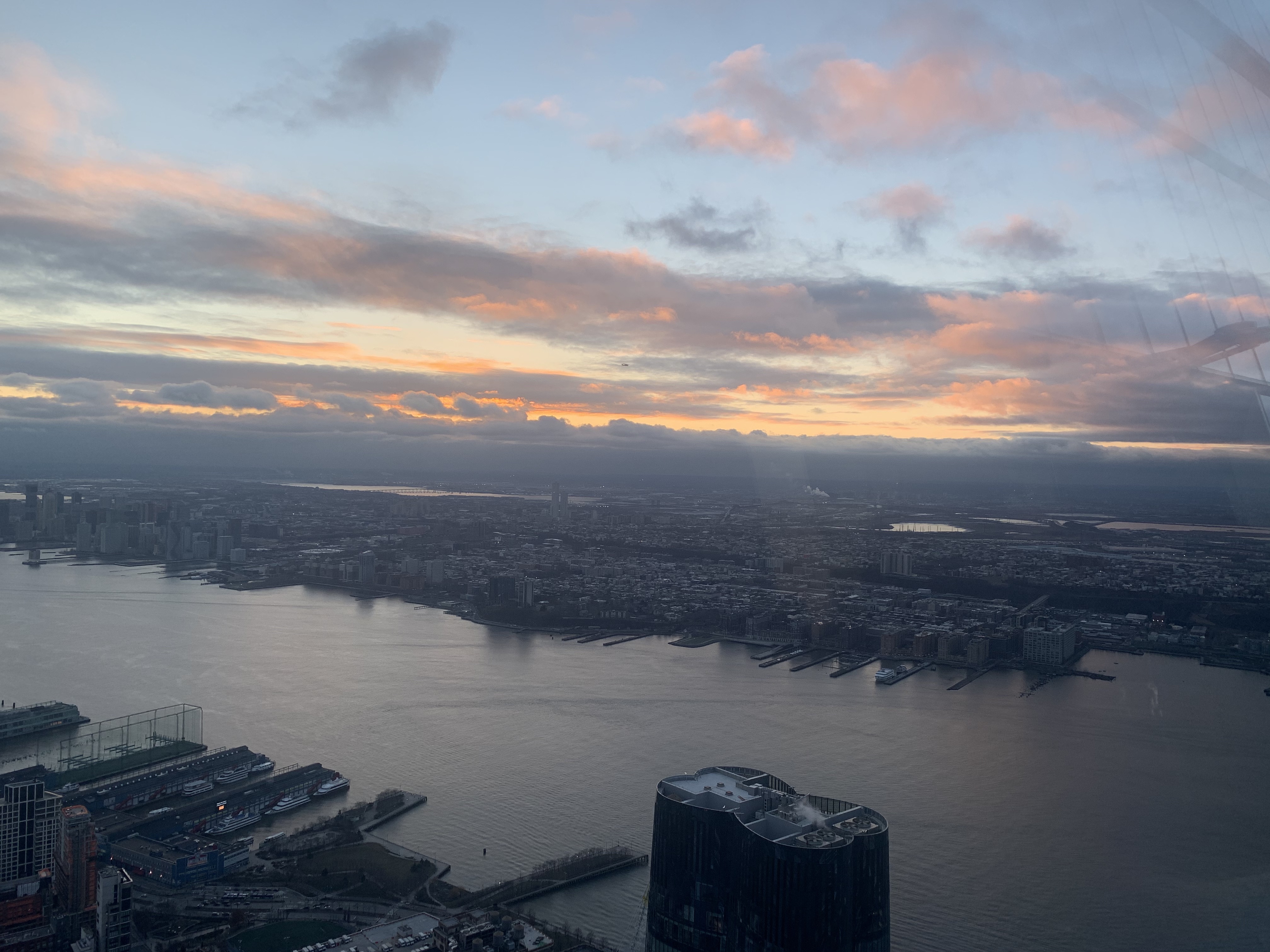
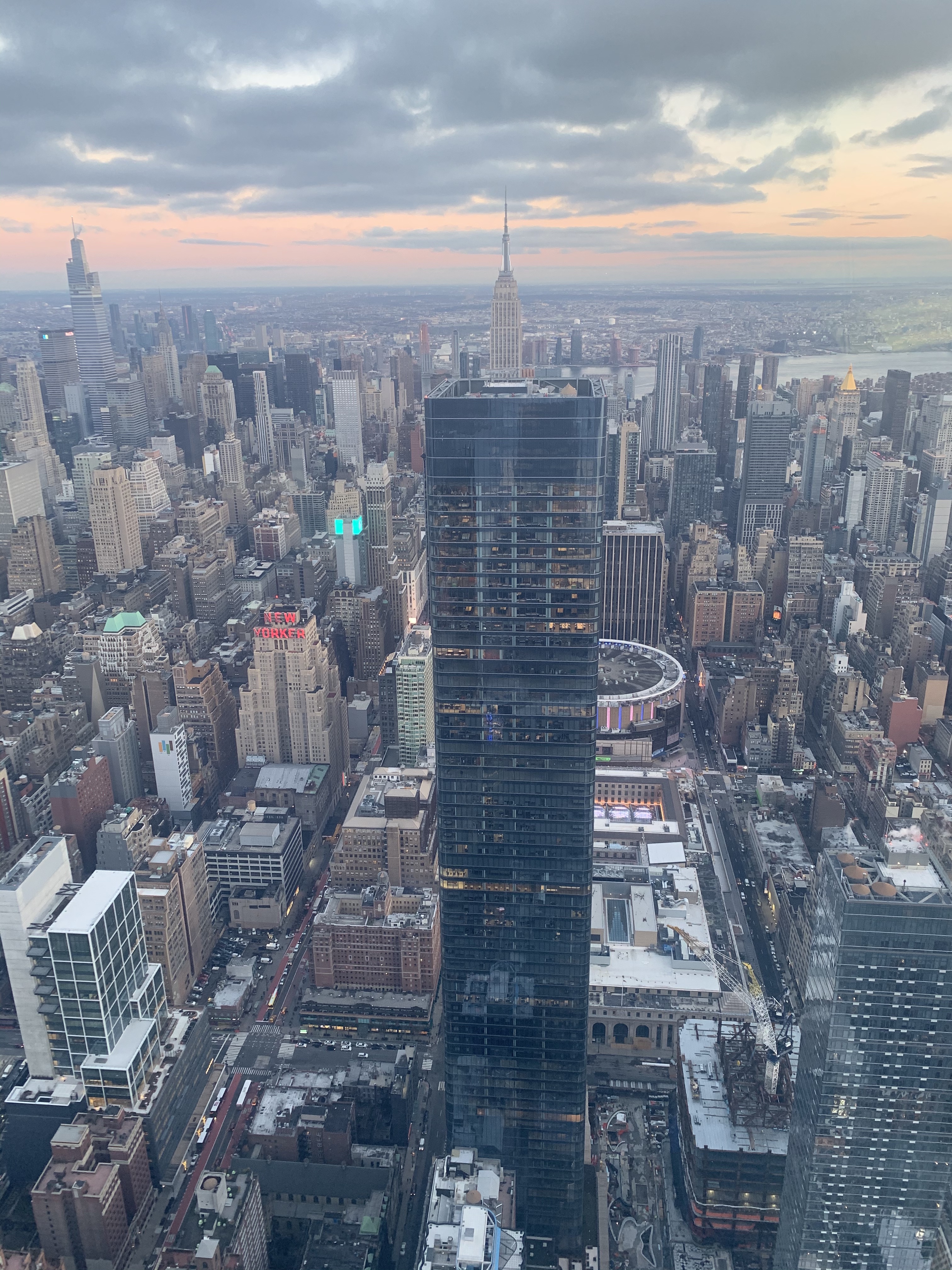
And the views! Just lovely, and a different perspective from midtown observatories like Top of the Rock or the Empire State building, or One World Trade downtown.

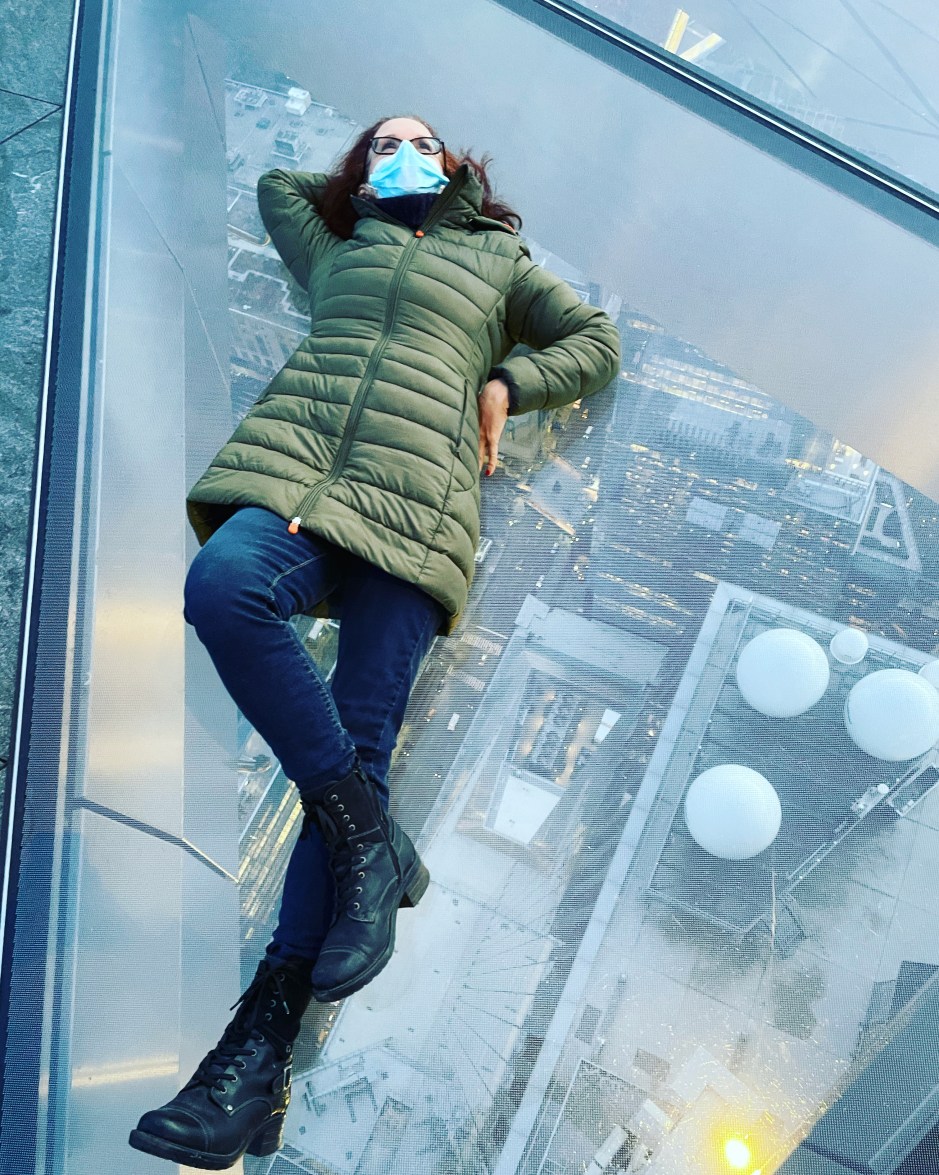
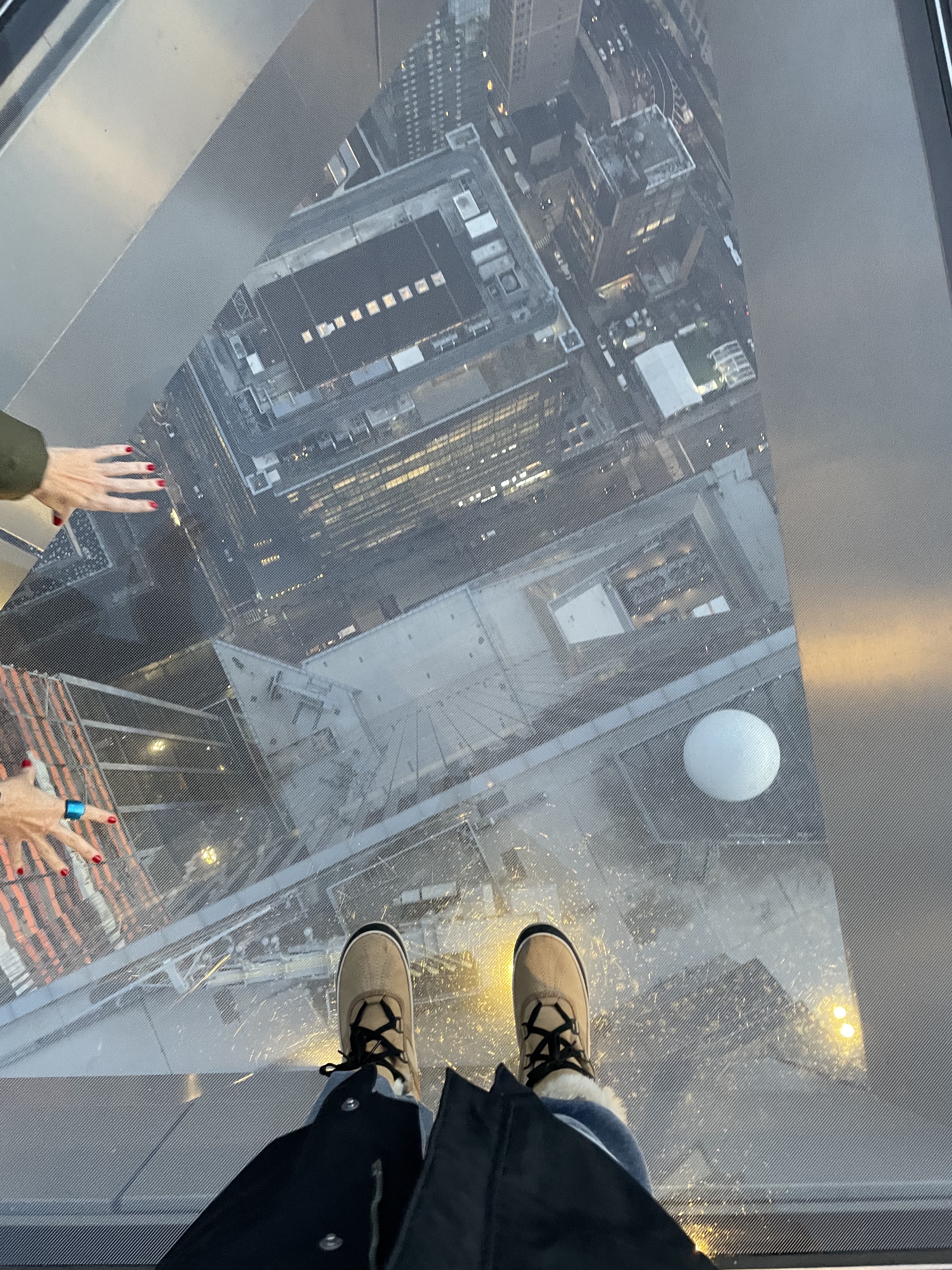
One of the most exciting things to do – if you can take it – is to go on top of the clear glass floor area that they have near the point of the triangle jutting off into space. It’s a long way down, and that distance is quite tangible! This is one of the places where they have staff monitoring your time, and you have one minute alone on the glass floor before you need to give someone else a turn. I found that the staff at The Edge were great at maintaining physical distance between visitors and monitoring time limits.

There are stairs with seating that are reserved for those who have ordered champagne or snacks from the bar. As sunset passed and the lights of the city began to sparkle, the experience transformed again from end of day to NYC night magic. Having been to several observatories in the city, I find this newcomer to the scene to be the “cool kid” of the bunch, and well worth your time. It’s not cheap, but there is a (small) discount if you are a NYC resident. If doing the sunset experience, try to get the earliest time you can within the sunset window, as it turns out they don’t limit your time while up there (just at a few of the photo opportunities) and I felt a little rushed getting out there for sunset with the timed ticket I had. While outside, we heard a cheer and caught the end of a successful marriage proposal . . . New York City, a little thrill, and romance – what more can you ask of an adventure these days?

Empire State Building Sunrise Experience

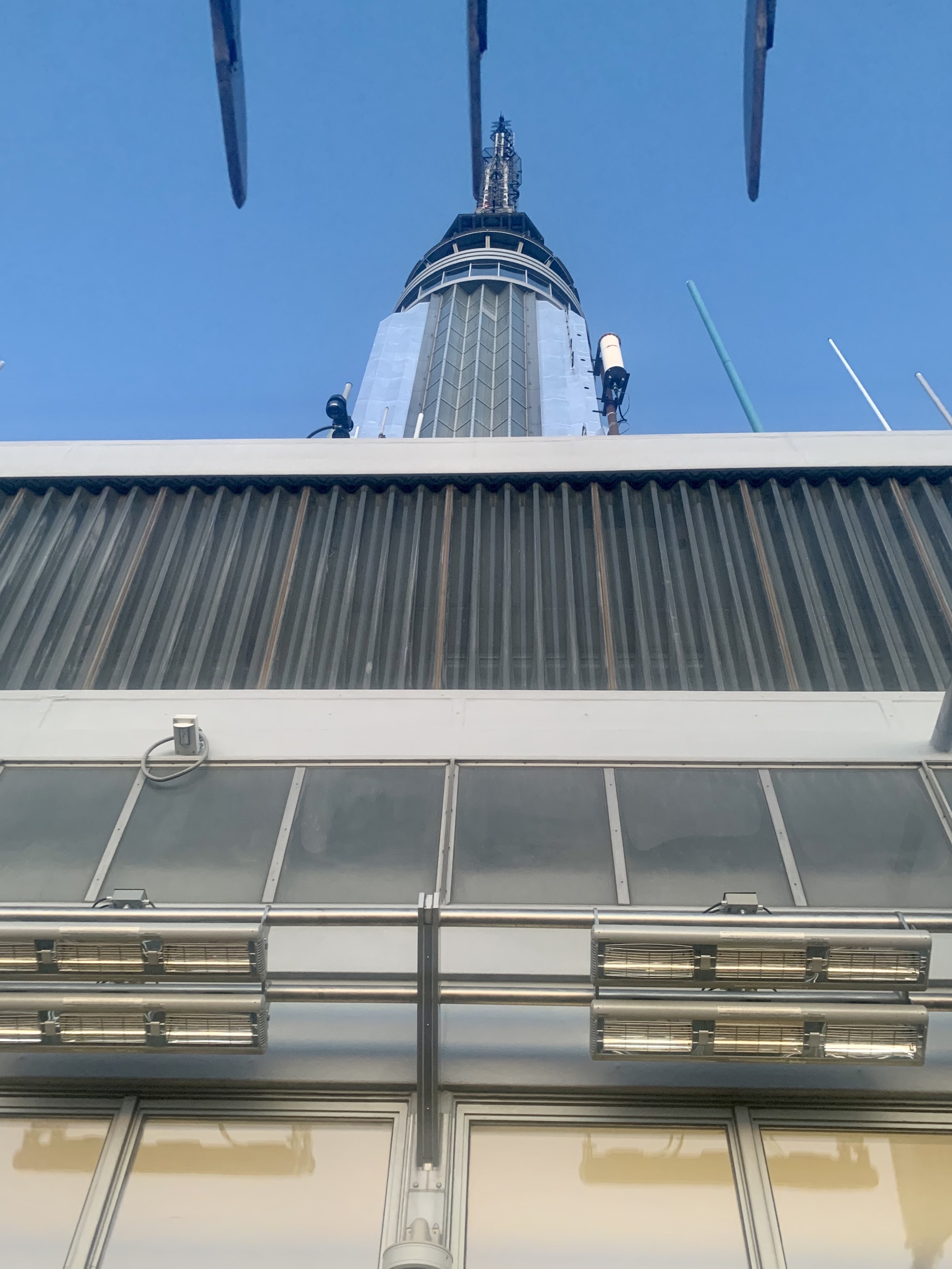
One of the things about living in a place like New York City is that often you don’t end up exploring many of the things that visitors consider a “must do” (unless, of course, you have visitors and accompany them!). But one of the silver linings of this pandemic time, when so many things are not available, is that you can find yourself drawn to figuring out what it is that you can do. One of my daughters discovered that the Empire State Building has an experience, limited to a very small group, where you watch the sun rise from the 86th floor observation deck. So, the day after Christmas in 2020, we found ourselves walking through the quiet city streets before dawn on a very cold and windy morning on our way to enjoy this experience.

Tickets are extremely limited – only 30 people – and on the morning we did it, there were only 18 (including ourselves). Our temperatures were taken, masks were required, and we filled out a health questionnaire upon checking in. Sunrise on Dec 26 was at 7:19, so we checked in at 6:30 and were allowed up (4 to an elevator) at 6:45.

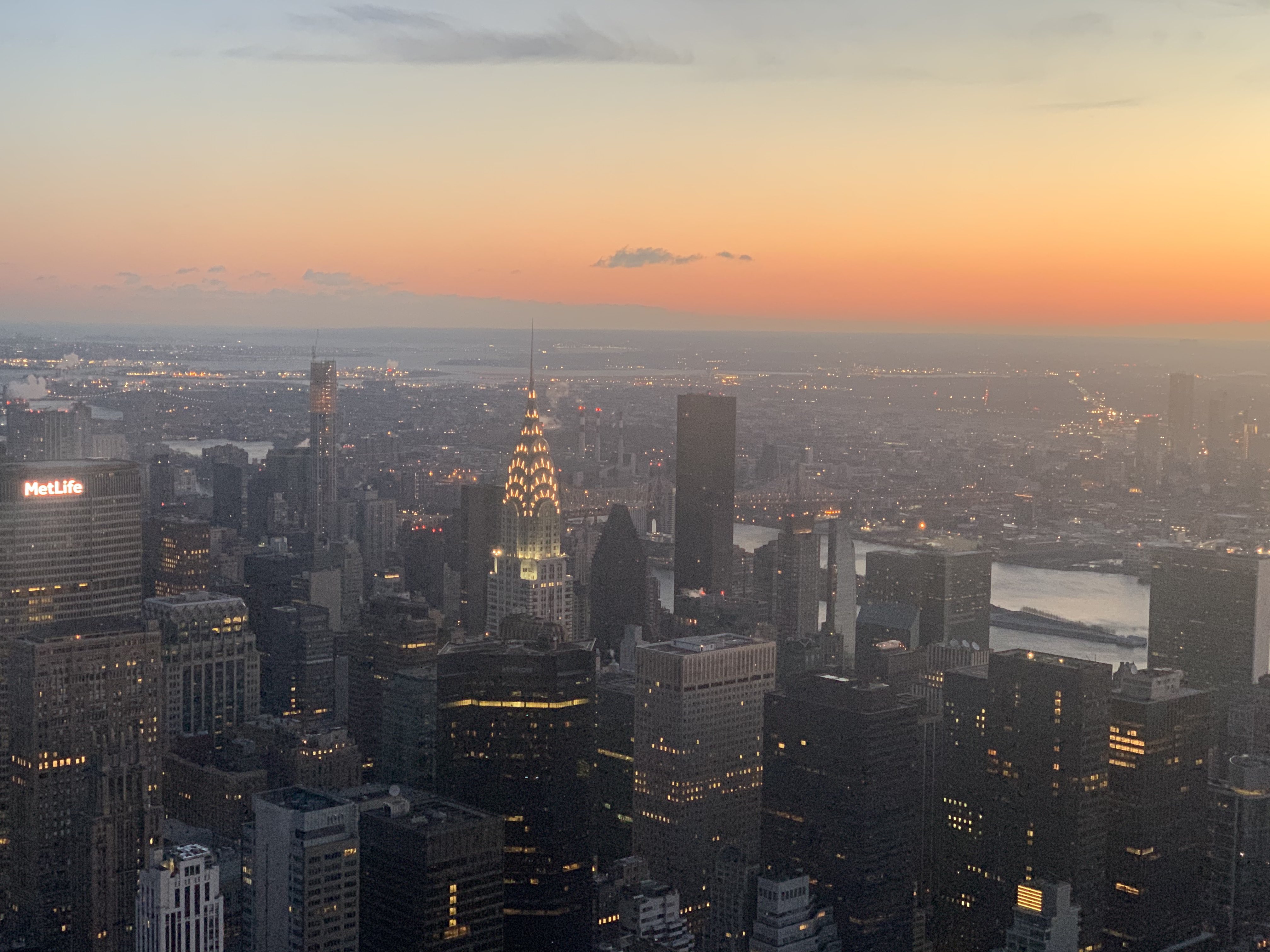
We had noticed even while walking there that the sky was brightening toward the east, and when we walked out to the observation deck, there was a definite sense of dawn even though the Chrysler Building was still illuminated.

Being up there with so few people meant that often you had the feeling of having the deck – and the views – and the city! – to yourself.

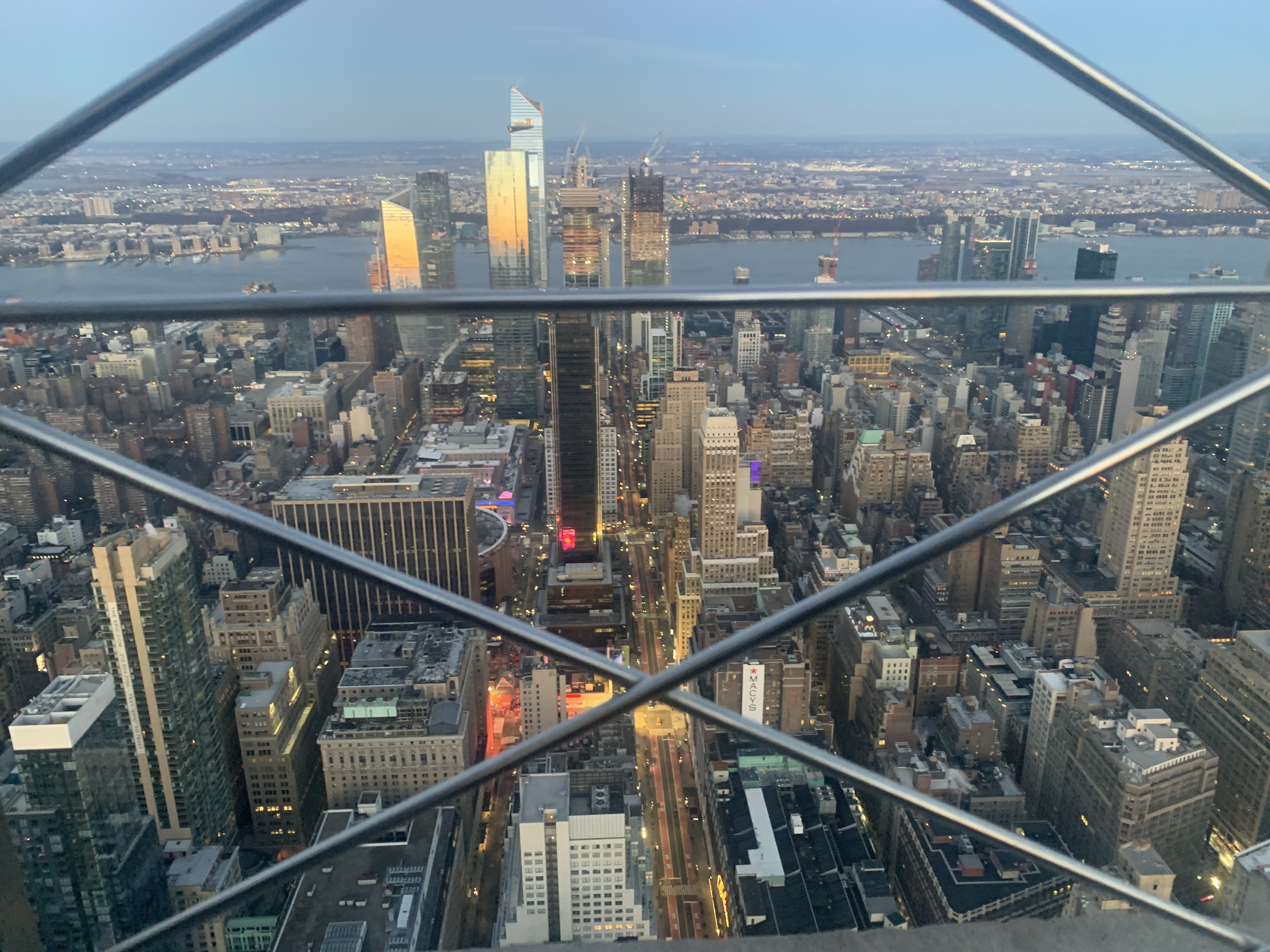
From the deck, you could see not only the dawn, but the way the morning light hit buildings in every direction, giving them a pink glow.

I see many, many more sunsets than sunrises, so it was lovely to see the light slowly increase.

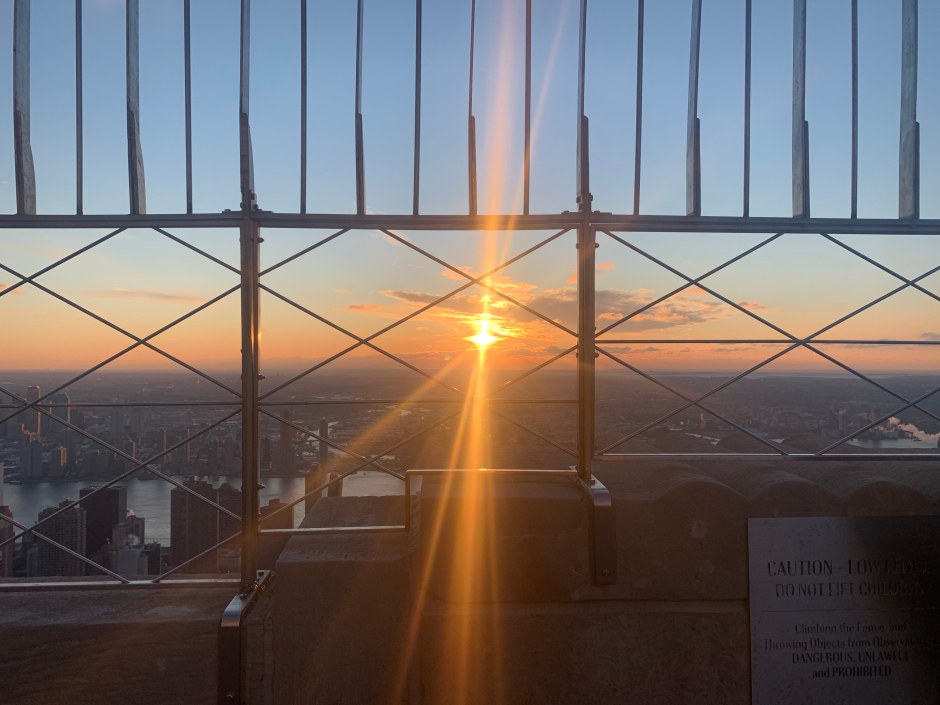
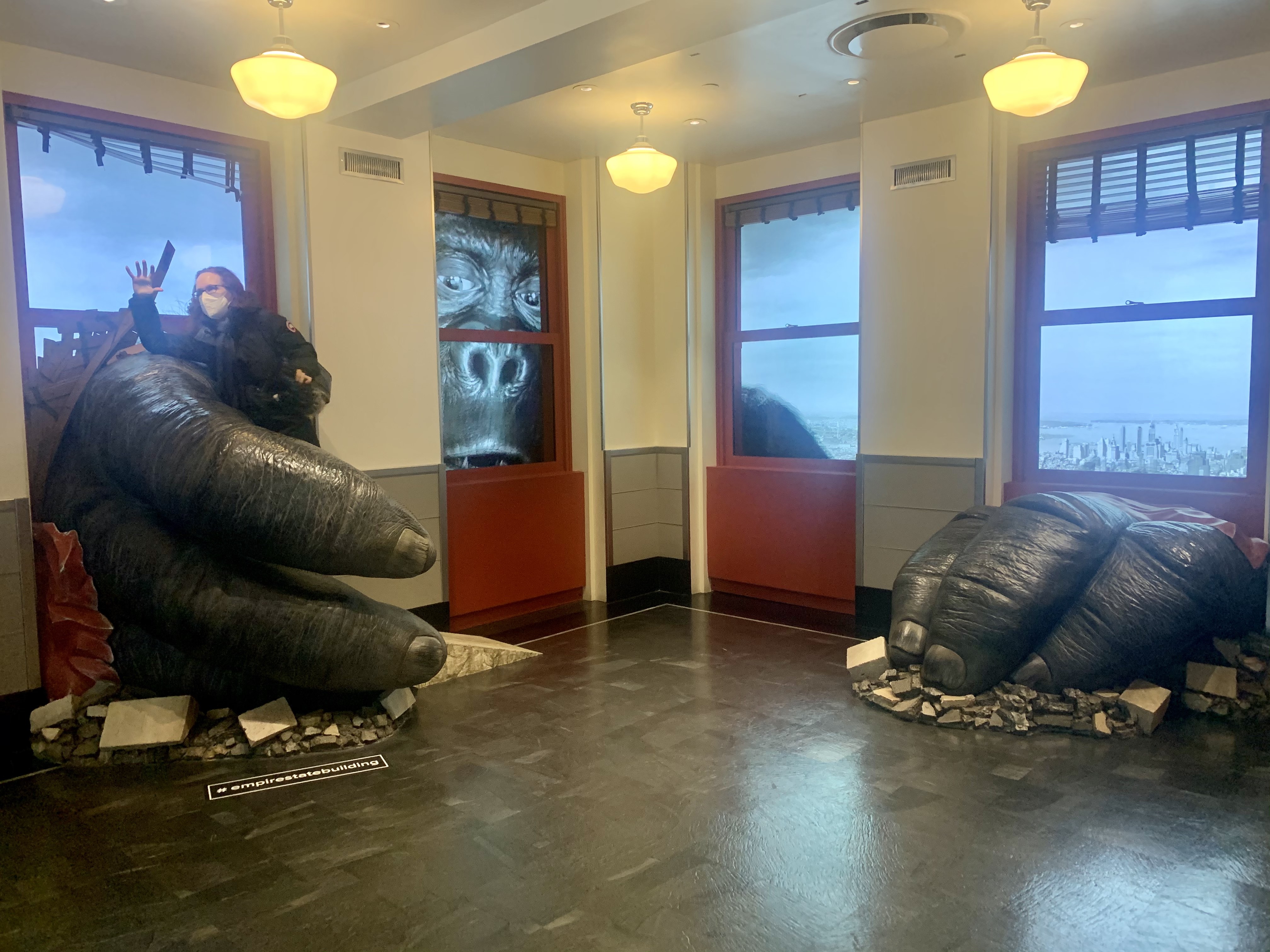
Finally, the sun appeared above a low bank of clouds on the eastern horizon! Over the next half hour, the morning sun rose and no longer gave a rosy glow, but simply illuminated the city – from One World Trade south to the entirety of Central Park looking north to Harlem. At 8AM, they were going to let regular ticket holders come up, so just before that, we left and were offered a private ride to the lower floor that held a display on the history of the building as well as a few fun photo ops. There were no other people there, and I can only imagine how crowded it must be usually (or how hard it is to get that perfect King Kong shot!).

Walking back home to make coffee at what would normally be very close to the start of my day, I reflected on the experience. It was expensive, but the privacy of being up there with virtually no one else there made it worth the cost to me. Would I have preferred it be sunset rather than sunrise? Well, yes – but I can see that there is no way for them to clear the observation deck for a private sunset experience like they can at sunrise by simply opening earlier to a small group. Would I have preferred for it to be less cold? Definitely, although in the warmer months the sunrise is earlier so you have to be there earlier as well (as early as 4:30 near the summer solstice). The ESB sunrise experience runs most days in the peak tourist season (and yes, that will come again!) and only a few days per month the rest of the year. For the price, you want to be sure the weather is good because the tickets aren’t refundable if it is rainy or snowy and you can’t see much. For this reason, I waited until two days before to book – and in more popular times, it is possible that all the slots are gone by then. So all in all, I was very glad I went and very happy with the experience of seeing my city welcome the sun from King Kong’s personal favorite perch.

The new Penn Station

OK, who has had to take a train out of Penn Station? Now, who liked being in Penn Station? I don’t need to be able to see you to know that the answer to the second question is NO ONE. However, NYC has converted the old midtown post office building (once the only place you could mail your tax return late on April 15th to get the correct postmark before midnight!) into a magnificent new Penn Station. Enter on Eighth Avenue between 31th and 33rd Streets, and find yourself in a modern yet classic new station for LIRR and Amtrak trains (sorry, New Jersey Transit – you are still in the old Penn Station).

The station reminds me of the Upper East Side Q subway stations in the modern feel, wide passageways, and clean design. Then when you get to the main hall, it is airy, light and inviting.

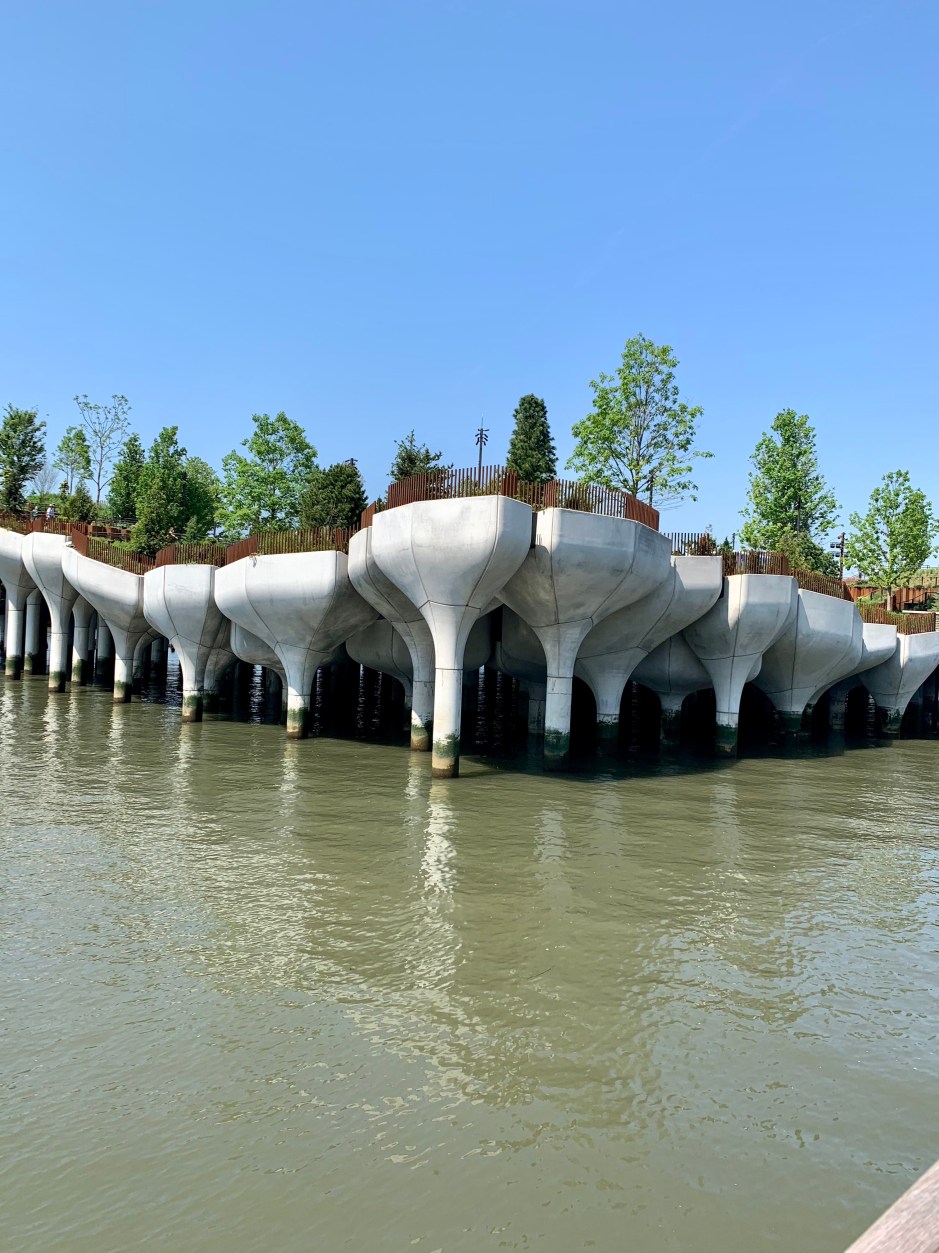
Well done, NYC. And with the announcements recently of the High Line being extended to meet this train station, as well as the removal of the ugly tow lot on Pier 76 (at 40th Street) for the development of an additional park along the Hudson as well as the opening this year of the floating island park (yes, you read that correctly) called Little Island at Pier 55, the improvement of the far west side continues promisingly. I just wrote last year about the new eco-park at Pier 26. Investors take note: between Hudson Yards and the continual development of the Hudson River Park all the way along the river, this area will become more and more attractive to people looking to live in this once-barren area. I am a regular user of the dedicated bike lane from the upper 50’s to Battery Park, and am watching the area change before my eyes. New York City is always changing, and it’s wonderful when it becomes more beautiful and functional as it does.

NYC Holiday Decorations 2020

The year 2020 in New York City has certainly not turned out as we all would have hoped when they were clearing confetti from Times Square on January 1. This holiday season is unlike any other one – no Radio City Christmas Spectacular, or NYCB Nutcracker at Lincoln Center, or Santaland at Macy’s, just to name a few- but despite the pandemic, the city came through again with plenty of gorgeous lights and decorations.

I was so relieved when I heard Rockefeller Center would have a tree again this year. They limited access so that crowds didn’t gather unsafely taking photos under the tree, but it was easy to see it from Fifth Avenue (actually easier than usual, with so few tourists here).

Similarly, it was great to see Saks continuing their tradition of decorating the facade of their building on Fifth Avenue (just across from the Rock Center tree) with a light/sound show every 15 minutes after dark. To see a video sample, check out my Instagram post here.

This display on Sixth Avenue is a favorite of mine. Again, if anything it is easier to appreciate this year with the crowds so light.

Many holiday displays this year managed to work proper modeling of mask wearing into their offerings, including the New York Public Library lions and this nutcracker on Sixth Avenue.

Walking along Fifth, you could mail a letter to Santa, or listen to holiday music played from the Cartier display.

The Winter Village at Bryant Park and holiday market was back this year, just with more space between vendors and lighter crowds. Skating is going on as well, you can see a video of that here. To see this and many other holiday markets a few years ago, click here.

There was no Macy’s Thanksgiving Day parade winding through the streets of Manhattan this year, but the Macy’s windows remind us of the importance of gratitude this year – for our health care and essential workers (and for our health if we have been lucky enough to maintain it).

There’s nothing quite as magical as New York City at Christmas, and we needed that delight and joy more than ever this year.

St. Patrick’s Cathedral was as majestic as ever this Christmas season.

Once again, New Yorkers decorated their homes to celebrate this dark time of year – in a very dark year – with light, humor, and bright color. To see a previous blog post about residential holiday decorations, click here.

So the dropping of the Times Square ball will be televised this December 31, but will occur in an empty area gated to prevent people from gathering. Regardless, the rejoicing that will ensue as we welcome in 2021 will not be lessened in any way by celebrating at home. As I wrote on the piece of confetti that will fall as 2021 arrives in NYC, I have tremendous hope for health, love and prosperity in this new year ahead.

Pier 26 Park on the Hudson River

One of the things I have done during this strange year of pandemic and lockdown has been to really get to know Hudson River Park (and I do plan a blog post on it soon). Although I have always explored Central Park – and it’s magnificent, no one can deny – during lockdown I began riding a bike (yet another planned post) and soon discovered my favorite thing was to use the dedicated bike lanes along the Hudson River, then explore the park on foot. On September 30, 2020, a new section of the park at Pier 26 opened, dedicated to the exploration of our waterfront’s ecology. Having visited it, I can say that it is a unique and very worthwhile addition to New York City’s incomparable parks.

Pier 26 juts out from West Street on the far side of Tribeca, roughly between Hubert and N. Moore Streets. It is just north of Pier 25 and behind City Vineyard restaurant and wine bar (more about that later!). Also in the old section of Pier 26 is the location for free kayaking (temporarily halted during pandemic, but keep it in mind for the future) and two dog runs.

The park is organized so that you experience different native ecological environments – woodland forests, coastal grasslands, maritime scrub, rocky tidal zone and the Hudson River itself. However, you could not even know that this was the purpose of the park and just enjoy the multiple places to relax, and the spectacular views.

This part has a really unique variety of places to sit and relax – loungers, workspaces with a bar to place your laptop or food on while sitting at barstools, and even BENCH SWINGS.

As the pier reaches out to its westernmost point, you can see the lower section leading to the tide deck and the Hudson River. This section isn’t open at all times, but in the future there will be periodic tours for the public. This tidal marsh was created with native grasses and shrubs, and is submerged at high tide and visible at low tide. The hope is that over time the pier will become home to native species. The rocky tidal marsh is visible at all times from the elevated platform above.

In addition to places to relax, and places to learn, there is a sports play area, a sunning lawn, and my favorite – lovely walking paths. At. the end of the pier, you have the choice of looking south to the Statue of Liberty, or east toward the NYC skyline. You might see boats pass by, or jet skis.

With City Vineyard at the entry to the pier available for food and drink in the open air, it would be easy to spend a day at Pier 26. The wine garden and rooftop deck are both outside, and the deck has incredible views of New York Harbor. City Vineyard’s menu is locally sourced and inspired, and its wines are actually made in the city with grapes from some of the finest vineyards in the world.

While 2020 has been a very difficult year to be sure, one silver lining has been that we have learned to explore and appreciate what we can do outdoors. When walking the Hudson River Park, I have seen toddler movement and music classes, yoga classes, and personal training in progress outside. The bike paths are crowded with scooters, skateboards, and skaters as well as bicyclists. Parks host joggers, walkers, and babies being pushed in strollers. This turns out to be the perfect time for this new park to be unveiled, its importance now – not only as a refuge for New Yorkers escaping a pandemic but also for a reminder of what we need to do to heal our broken planet – unimaginable when planned in the early 2000s.

Museums reopening in NYC, September 2020

For almost six months of 2020, New York City’s magnificent museums sat empty. After months of strict lockdown, and a very cautious and careful tiered reopening, the Covid-19 numbers in NYC came down and remained down to the point where museums were allowed to reopen in September. Capacity is limited, masks are required, and social distancing is enforced. This month, thirsty for the experience of once again being inside these magnificent buildings, I visited the Metropolitan Museum of Art, the American Museum of Natural History, the Museum of Modern Art, and the Whitney Museum of American Art. I ended up having experiences unlike any I have had before, and ended up figuratively discovering a kind of silver lining to all the clouds we have dealt with this year. I am aware that not everyone feels safe visiting museums, and everyone has their own calculus of risk when deciding what to do and what not to do. For anyone who is considering going to a museum in the next few months, however, I hope that this account will help you decide whether it is safe enough, and if it is worth it.

First, the Metropolitan Museum of Art – a museum so vast and all-encompassing that it can be overwhelming, especially when there are crowds. You have to make a timed reservation online in advance (here), your temperature is checked upon entrance, masks are required, hand sanitizer is easy to find, and there are social distancing signs everywhere. I didn’t ride in an elevator, but when I passed them there were long lines, in part because people were keeping six feet of distance even while waiting, but also because only two people were allowed in the elevator at the same time.

I didn’t have any trouble keeping physical distance, and in fact it was a little shocking (but wonderful) to be able to look at Van Gogh’s famous Irises without having to peer around a huge group of people. They have an ongoing project to reopen skylights in the galleries housing 17th and 18th Century European Painting, so I was unable to see my personal favorite Met painting (El Greco’s View of Toledo) but made do with another favorite shown above, a Renoir with three young girls that often reminds me of my own daughters when they were younger.

My next visit was to the American Museum of Natural History. Without realizing it, I went on the first day that it was open to the public (after a members’ preview) and they were giving out souvenir casts of a t-rex tooth as a welcome gift. This was surprisingly thrilling! Reservations were required in advance (here), masks required, temperature was checked as you entered, hand sanitizer was abundant, and I found the signage more explicit and clear here than in any other museum. This makes sense, as their demographic includes many younger visitors. Even the restrooms blocked off every other stall and every other sink to encourage distance – although when I was in there, I was alone so that wasn’t an issue.

The museum was decidedly empty. In the popular dinosaur hall, all traffic was clearly marked as one way, the arm bone of the apatosaurus that usually you can touch was covered, and touchscreens were no longer active as such. All the staff seemed very welcoming – I was thanked for coming repeatedly while here.

Next was MoMA, a personal favorite and only a few blocks from my home. Reservations were required in advance (here), as were masks and social distancing. Temperature was checked on arrival. Many galleries were one way, which makes navigating from the old wing to the new wing more challenging than usual. However, any inconvenience this caused was more than offset by the lack of crowds. I have never had a more enjoyable experience at MoMA. I felt at times as if I had the museum to myself, and it was magical.

Seriously. I rarely take selfies, but I did in front of Van Gogh’s Starry Night and Monet’s Water Lilies, because I was alone in the room with them instead of peering over a crowd. It was surreal.

My final museum of this month’s adventures was the Whitney. Again, reservations were required in advance (here), mask-wearing required, there were distancing reminders, and I saw staff members cleaning the stair railings. I saw someone with a thermometer to take temperatures upon entry, but I was not asked to stop for that, and as I left I saw people going in without being checked.

Crowds were very low, although not as empty as MoMA. I didn’t take an elevator, but they seemed to be taking four people at a time. Stairwells were only up or down and were clearly marked.

Overall, I felt safe visiting all four museums, and savored the experiences very much after not being able to for so long. In some ways, these were perhaps the most enjoyable times I have been to museums, because of the low crowds. This reminds me of walking the High Line Park now, which is often marred by enormous crowds but now requires timed reservations (easy to get online, and walk up is also possible if they are under the new limited capacity). I have gone three times since it reopened, and absolutely love the feeling of having the park to myself, and even being able to get one of the coveted loungers and relax – usually almost impossible. However, there is also a sadness in the same lack of crowds, and emptiness. We know that this is not how NYC should be. For all that we complain about the bustle and the throngs of tourists, they are also part of our DNA as a city and we thrive on it. So while I will continue to enjoy the singular solitude of communing alone in a gallery with Van Gogh, I also look forward to the time when I look back on this unusual time (what would we call it? the partially reopened era?) with fondness because our city has come roaring back to life. It always has before, and it will again.

Missing my city while still in it: NYC, Spring of 2020

January and February of 2020 were just another winter in NYC: cold, punctuated with occasional extreme cold, but not that much snow this year. I showed apartments, went to sales meetings and my office, and enjoyed the city as I always did: experiencing the performing arts multiple times per week, trying out bumper cars on ice at Bryant Park, and a public art installation just south of Times Square that involved giant seesaws in the middle of Broadway. There were reports on the news of a new virus in Wuhan, China. By the first week of March the alarms were beginning to sound louder. On March 6 (two days after I enjoyed a preview performance of Company with Patti Lupone), Compass, where I am an Associate Broker, suggested that agents work from home when possible. On March 7 I attended an all-day board retreat at the Larchmont Yacht Club, where one topic of conversation was contingency plans around the virus. Just a few days later, Thursday, March 12, Broadway and all performing arts in NYC were shut down for a month “resuming the week of April 13.”

By March 16, NY Governor Andrew Cuomo had placed our state on “pause.” Real estate showings were not allowed, and everything was shut down except for grocery stores, pharmacies, and other essential businesses (which included bike and liquor stores). People were encouraged to stay home at all times except for getting essential items like food, or for exercise outdoors.

The city quickly became a ghost of itself. Many who had another place to go left the city, and the rest of us spent most of our time inside our apartments. We all began to hear of friends who were sick, or even very sick.

As March crept into April, it became clear that we were far from the peak of infection, despite weeks of lockdown. As we headed toward the second week of April, when we did hit our peak, most of us learned that someone we knew had died, or was close to it.

In April, we began to see refrigerated trucks outside hospitals. The US Comfort docked a few blocks from my apartment, and the Javits Convention Center was set up for hospital overflow (although neither of these turned out to be heavily used). There were hospital tents in Central Park across from Mount Sinai Medical Center.

At first we were advised not to wear masks; but then we were. This is the way science works with a new phenomenon: educated guesses are made until more data come in that suggest alternate approaches. Going out for a walk every day for exercise and fresh air was eerie at times. Where were all the people? To stand in Times Square in the middle of the day and have no one else in your photos was previously not something I could have even imagined.

As April came to a close, it became clear that what we were doing – isolating, distancing, wearing masks – was working and our numbers began to improve. Signs began to appear everywhere showing what 6 feet of distance looked like, and reminding us that we are “New York Tough.”

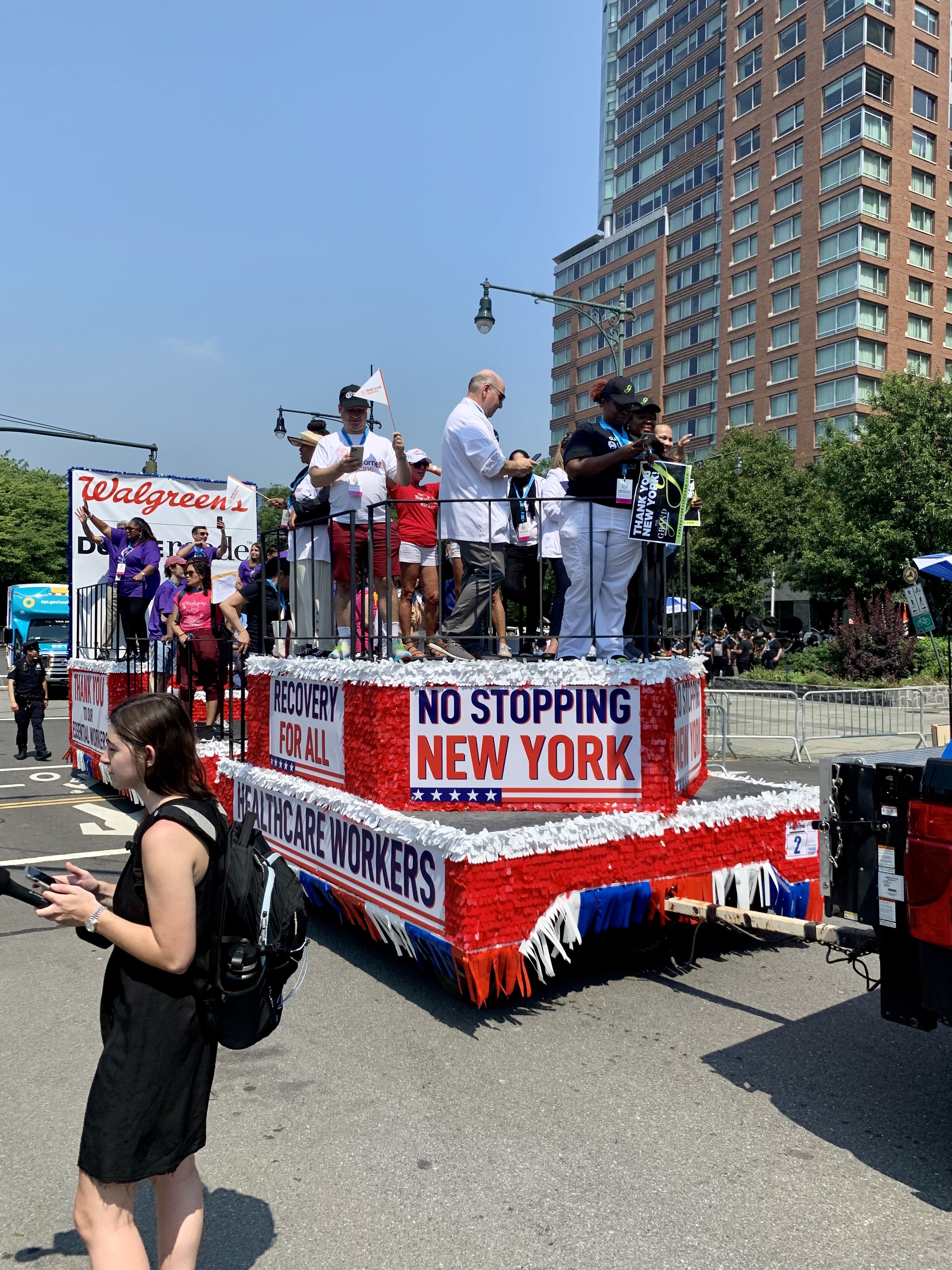
Meanwhile, the entire city seemed to lean out of their windows, go up to their roofs, or out to their balconies or terraces, to applaud and make noise to thank the essential workers every evening at 7PM. It was incredibly touching that so many people did this, night after night, and it also served as a way to feel less isolated. As we applauded with others, we also signaled to each other “I’m still here, and I’m glad you’re still here, too.”

As May turned toward June, our numbers were under control enough that we began hearing about the future of phased reopening. Simultaneously, protests over the death of George Floyd swept the city. Although the vast majority of these were peaceful, some of the unrest led to the city having a curfew for several nights.

In June, the city began to slowly reawaken. Times Square was still quite empty, but clever signs were put up to remind people of safe distance and mask wearing, with hat tips to beloved Broadway shows.

On June 22, Phase 2 reopening meant the return of real estate showings – with extensive safety measures in place. Appropriately, new Fair Housing disclosures and notices also became a part of our new normal, along with the Covid-19 health questionnaires and liability forms.

Now in August, it is clear that it will be a long time before New York City can reopen performing arts, indoor dining, and so many aspects of life that make living here such a rich and enjoyable experience. This pandemic has taken NYC’s super powers – so many people from so many places, all crowded together and often experiencing things together in crowds indoors – and turned them against us. But there is more to New York City than these experiences, although of course I can’t wait to be able to have our city back to normal again. We have shown that we could do the difficult things and make the difficult choices to save as many lives as possible, led by data and science, and beat back a virus that had taken hold before we realized it. If we can continue to do so, we can stave off this enemy until we can declare it vanquished and return safely to the activities we love. To meet a group of friends and hug them, to sit in a darkened Broadway theatre and be transported, to eat and drink and laugh and sing together – I believe we will do these things again. Many times before people have counted NYC out, and yet we always rise again like a phoenix. Being patient is hard, but we will rise again.

Outdoor activities in NYC, Summer of 2020

Since March of 2020, New York City has been fighting a war against Covid-19, and we have had to adjust many of the details of our daily lives. I am working on a post about what I witnessed during the months of lockdown (see it here), but this post focuses on what summer activities we can now do safely. Of course, our parks remain a respite from the city, as they were even during lockdown, but with so many indoor activities understandably closed now for safety reasons, what are other outdoor adventures we can still experience? In the past few weeks I have taken the ferry to Rockaway Beach, visited Governors Island, and walked the High Line park. All three experiences, while very worthwhile, are different from what they were in the past, and all have prioritized safety and continuing to keep New York’s infection rate under control.
I have written before about traveling to Rockaway Beach (see that post here). For the trip this month, I used Citibike to get to the Wall Street ferry station and back. The ferry now has an app and you can load tickets on the app before boarding, eliminating touching paper tickets or handing them to others (find the app and instructions here). Riders keep six feet apart from each other while lining up to board, and masks are required at all times. In fact, even on the top deck with the wind blowing, mask wearing was constantly enforced by the ferry staff. When you get off the ferry, you are a few blocks’ walk to the beach. While I did see people take off masks at the ocean, mask wearing was required on the boardwalk. There are a few places to eat open on the boardwalk, and although I didn’t try any, I did see social distancing was being enforced while waiting on line. The trip back involved a walk back to the ferry, a very pleasant ferry ride back to Manhattan, and then a Citibike home. For $2.75 each way, it’s a relatively easy way to get out of the city during these days when traveling is not recommended.
High Line Park, blissfully uncrowded

For months, the High Line Park was closed. Anyone who had been on it before the pandemic knew why – the park, while exceptionally lovely and unique, was always crowded. You can see a post from when the High Line had recently opened here. The park is only open now from Gansevoort Street to 23rd Street, reservations are required (get yours here), the park is only open from noon to 8 PM, and attendance is kept very low. That last difference is what makes it possible now to walk the High Line and almost experience it as a solitary stroll, delightful and unheard of before!

The sign above sums it up: masks are required, you only walk the park in one direction, and you should keep 6 feet of distance from others. There are dots everywhere demonstrating what six feet is. However, I had no problem keeping many multiples of six feet away from others. As you will see in the photos below, quite often it felt as though I had the High Line to myself.

Finally, I also went to Governors Island this month, which I have enjoyed many times before and blogged about here. Again, I took a Citibike to the ferry terminal. Reservations are required in advance and tickets were loaded to my phone (find out how to reserve here). If you are an IDNYC holder, the ferry is absolutely free. Reservations are limited to prevent crowding on the ferry, and you are required to reserve both your time to leave and your time to return. We waited for the ferry in designated circles six feet apart, and masks were required at all times. The ferry ride is short (unlike the one to the Rockaways). Once you get there, the island is huge compared to how many people they are allowing to visit at this point. Citibike stations exist at three places on the island, including one very close to the ferry terminal, so it is easy to bike to different places on the island as well as walk. When there, you truly feel as if you have gone far out of the city, even as you see extraordinary views of Lower Manhattan and the Statue of Liberty.

New York City has gone to extraordinary lengths to control this novel coronavirus – and to keep ourselves safe, we will likely need to adapt for some time yet. However, it is important to remember that while we miss so many things about our city, there are also many delightful summertime experiences that still beckon to us.