Times Square at year’s end

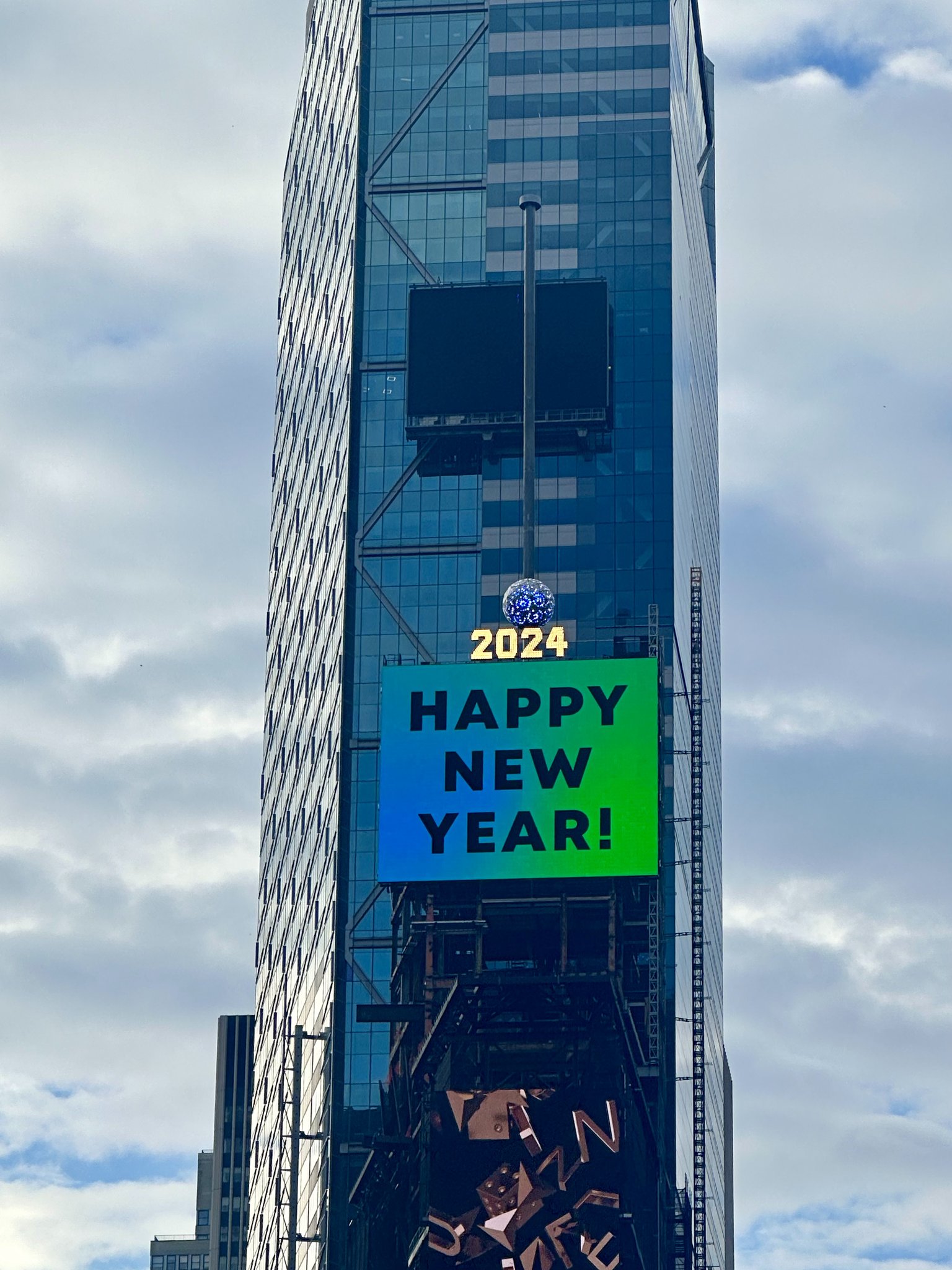
I didn’t grow up in New York City, and like so many others, when I was a child seeing the ball drop in Times Square on television was a normal part of my routine as one year passed into the next. I have now been fortunate enough to live in NYC for over 30 years now, for many of them just a few blocks from Times Square itself. Have I ever waited all day in Times Square to see the ball drop live on New Year’s Eve? No, I have not! But due to the pandemic I was able to get quite close to the ball as it dropped in 2020 without waiting, and there are many other events in Times Square at the end of each year that have now become a regular part of how I process the year past, and anticipate the year to come. Here’s my take on how you can be a part of the Times Square NYE celebration, with even a few ways to participate if you aren’t in the city.
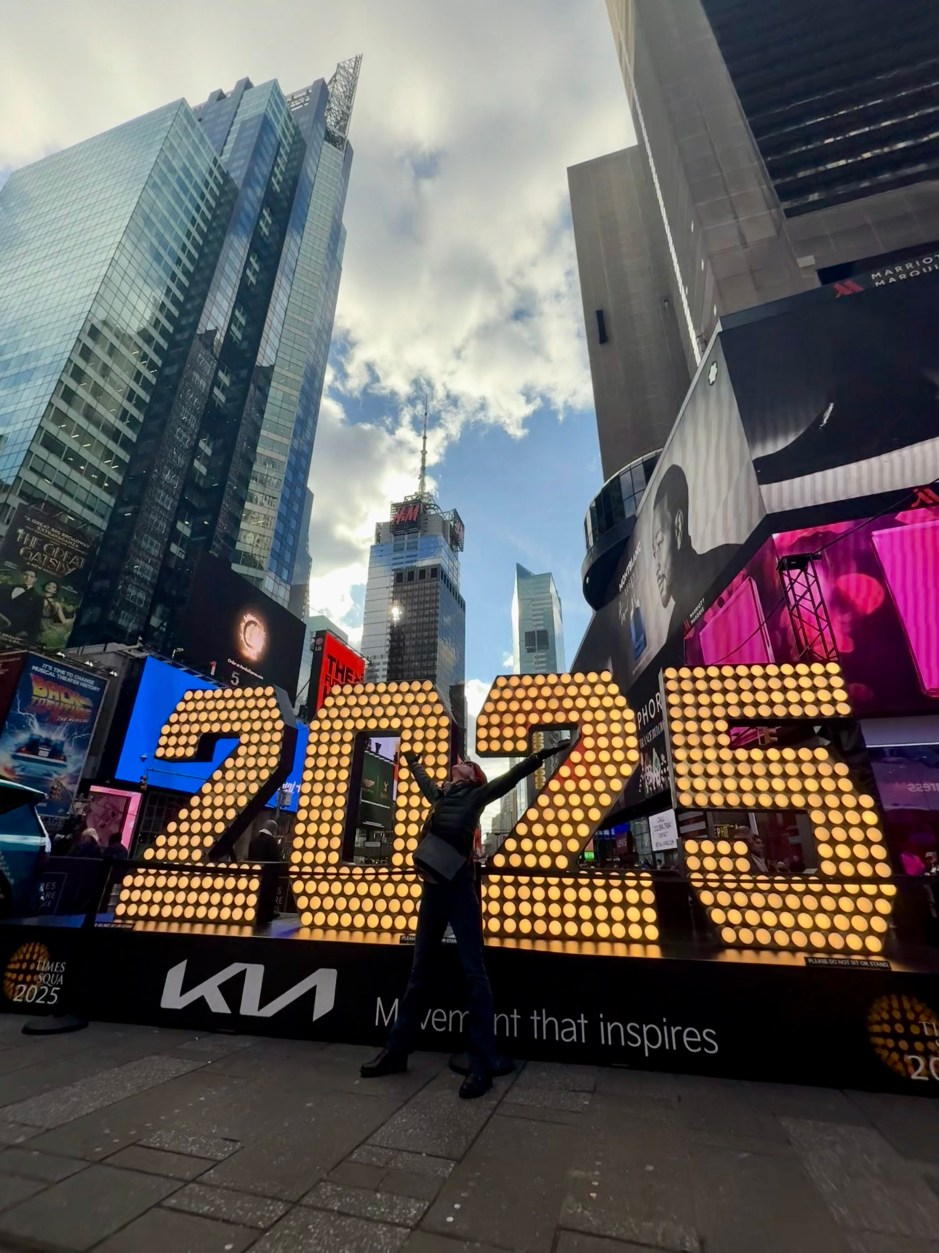
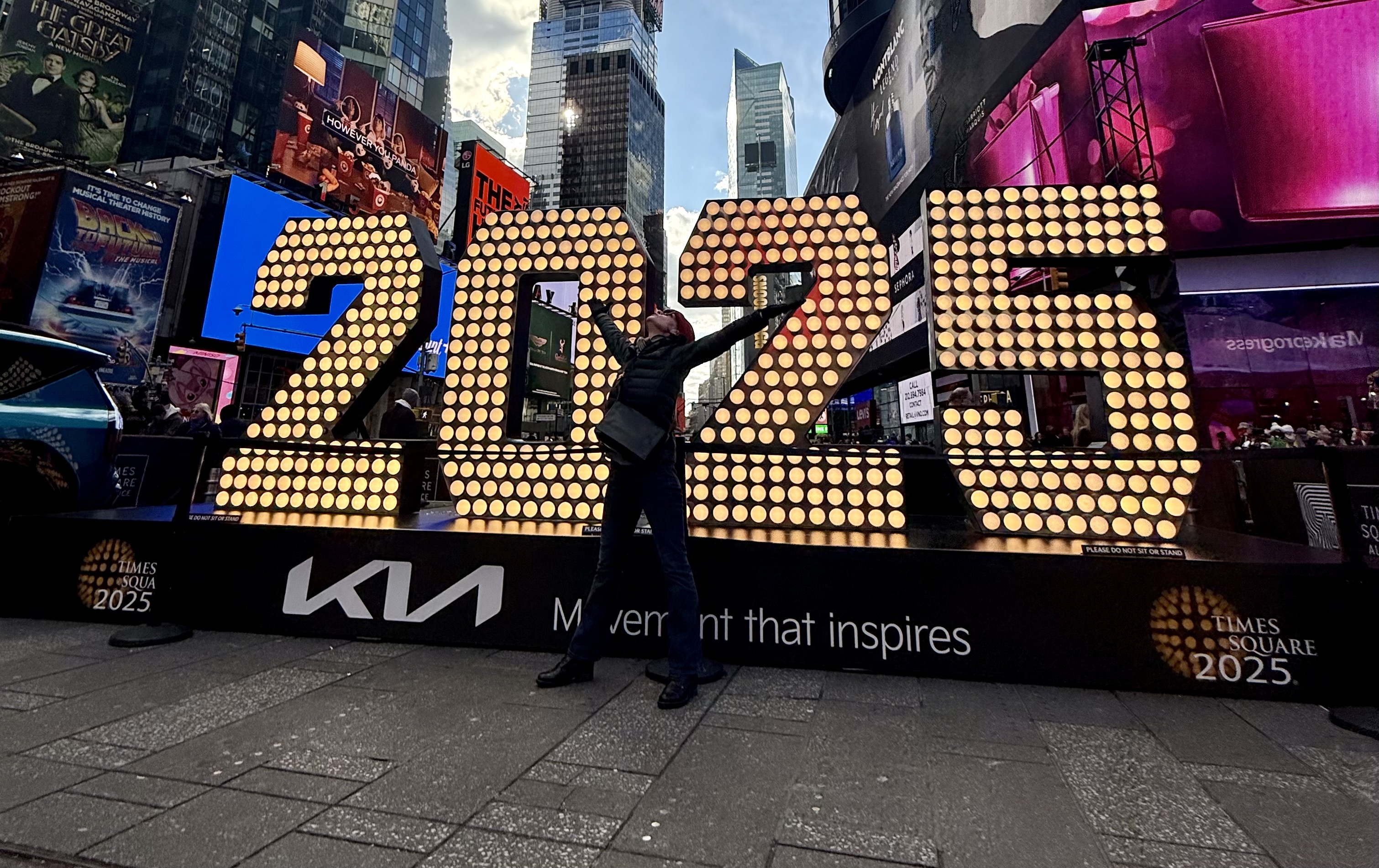
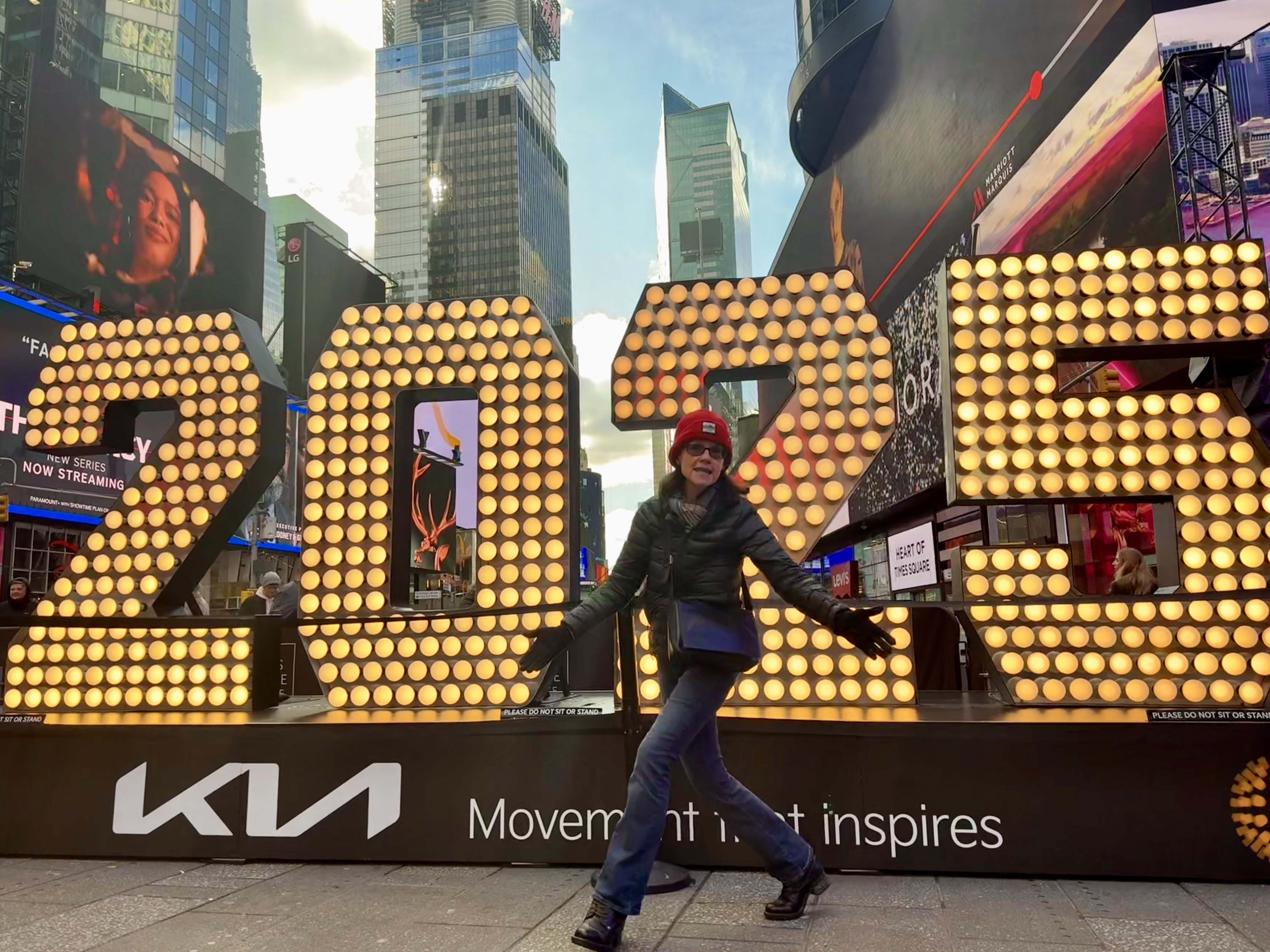
My favorite year-end event in Times Square is the arrival of the numerals that will replace the previous year’s numbers. They sit on the ground in Times Square for just a few days, and you can take your photo with them. You can find out when they will be available each year on the official Times Square website, but they are generally there for four or five days, and around the middle of the month (for 2024, they were there December 18-22). You might have to wait a bit for your turn at a photo, but if you can be there earlier in the day the area is much less crowded.

I think this is a relatively recent event, and the first year I remember seeing it (2018, to see the 2019 numbers) they only had the last two digits there (see above). Now the full year is on display for these few days.

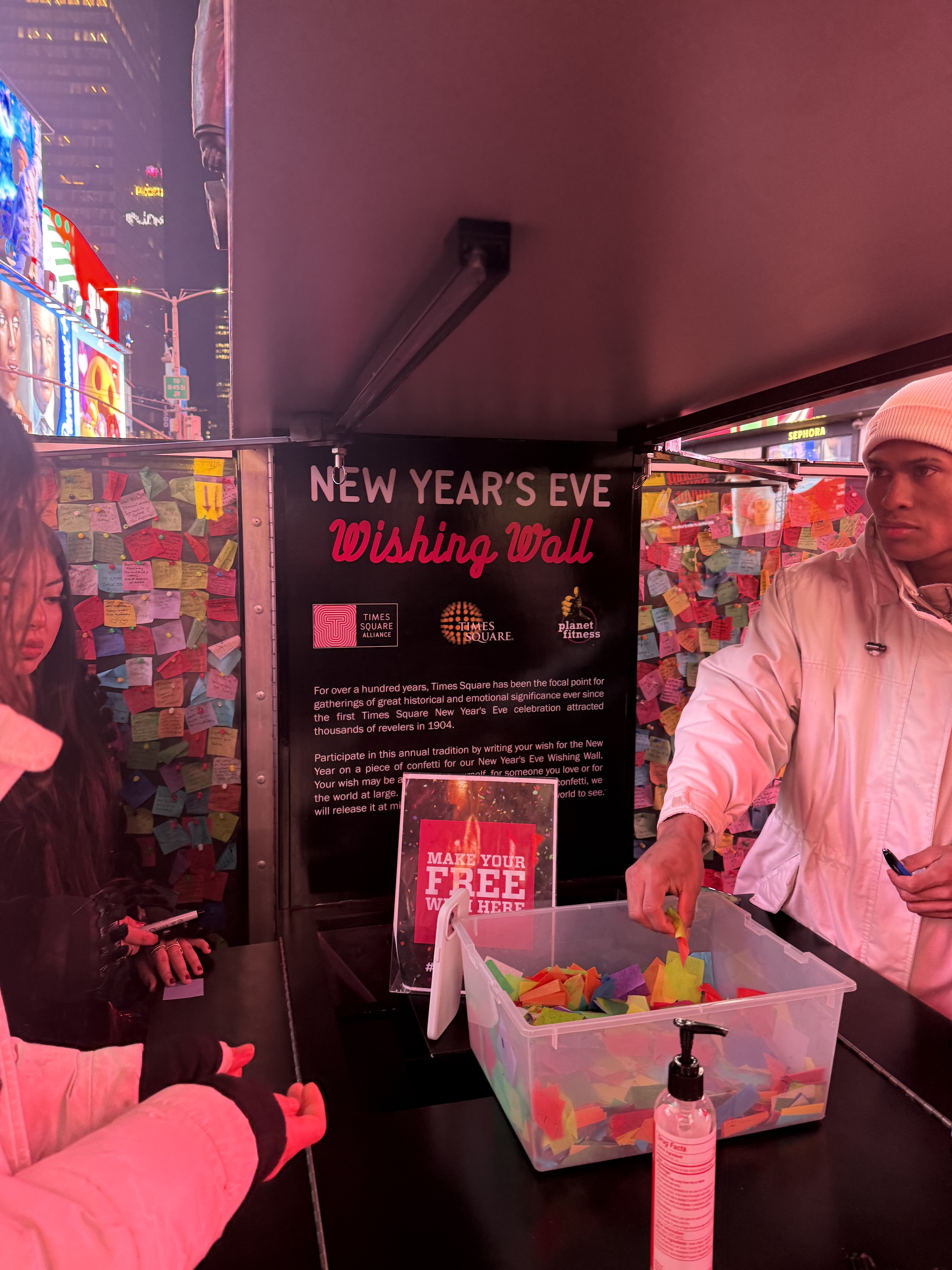
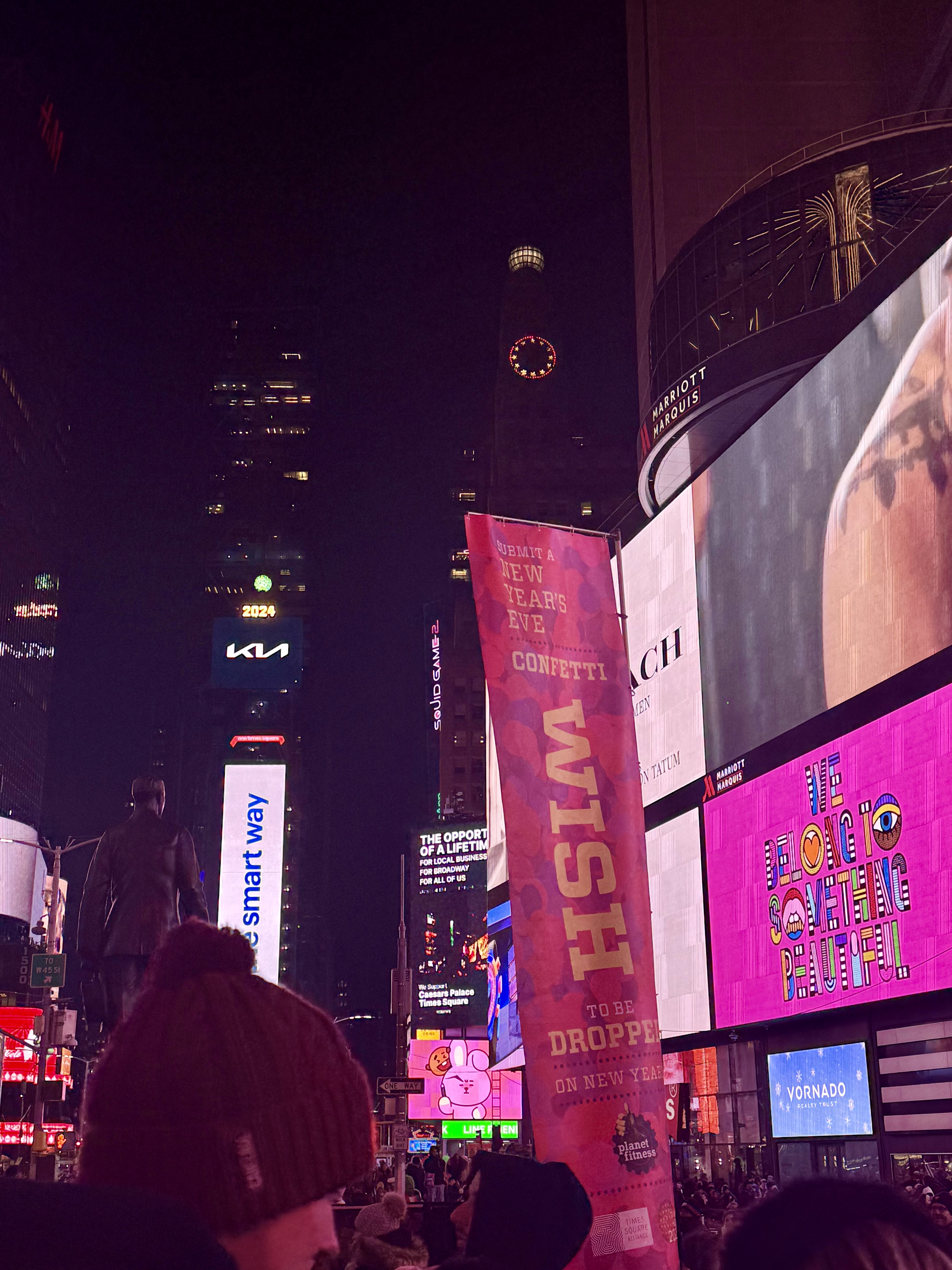
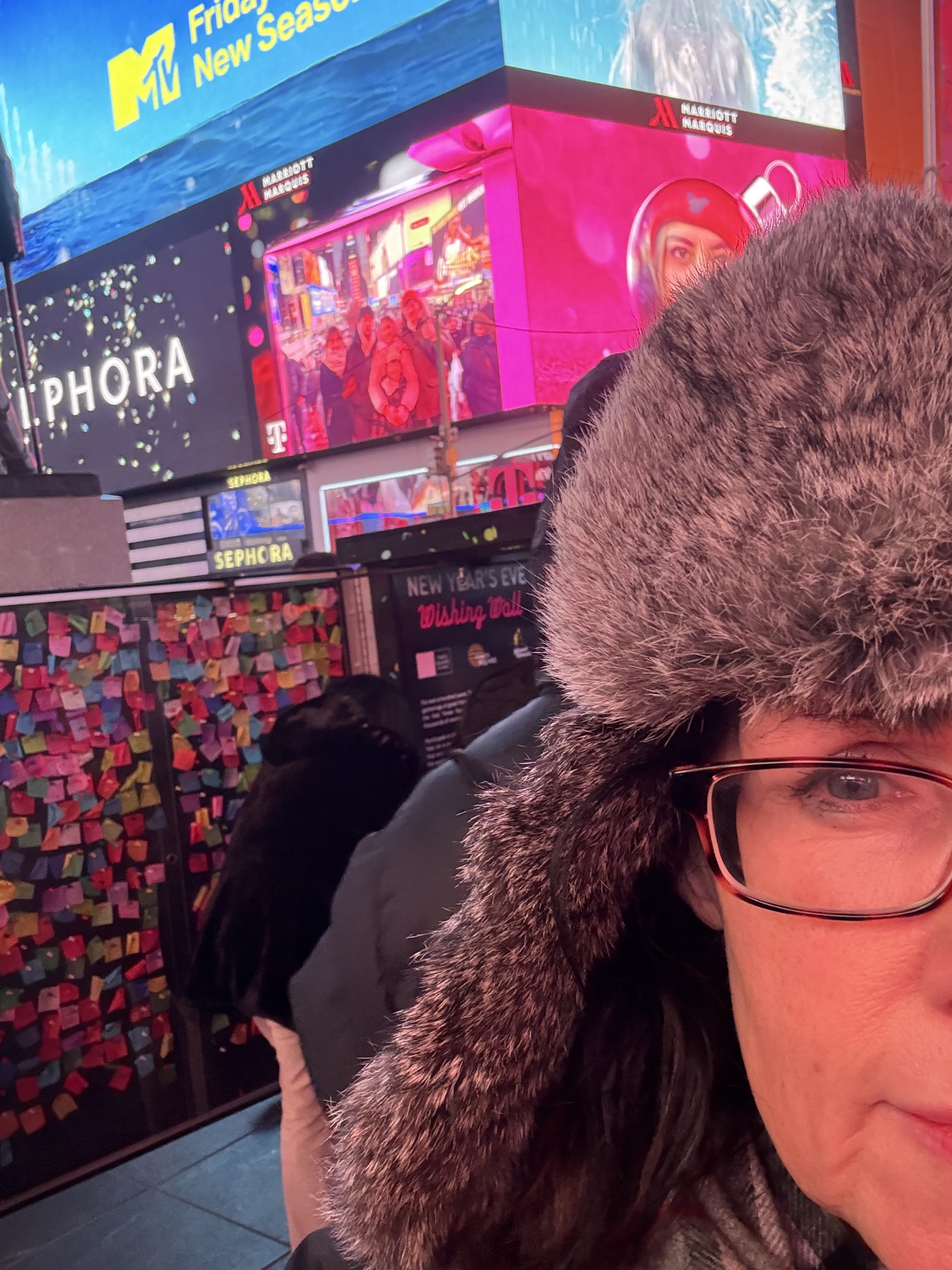
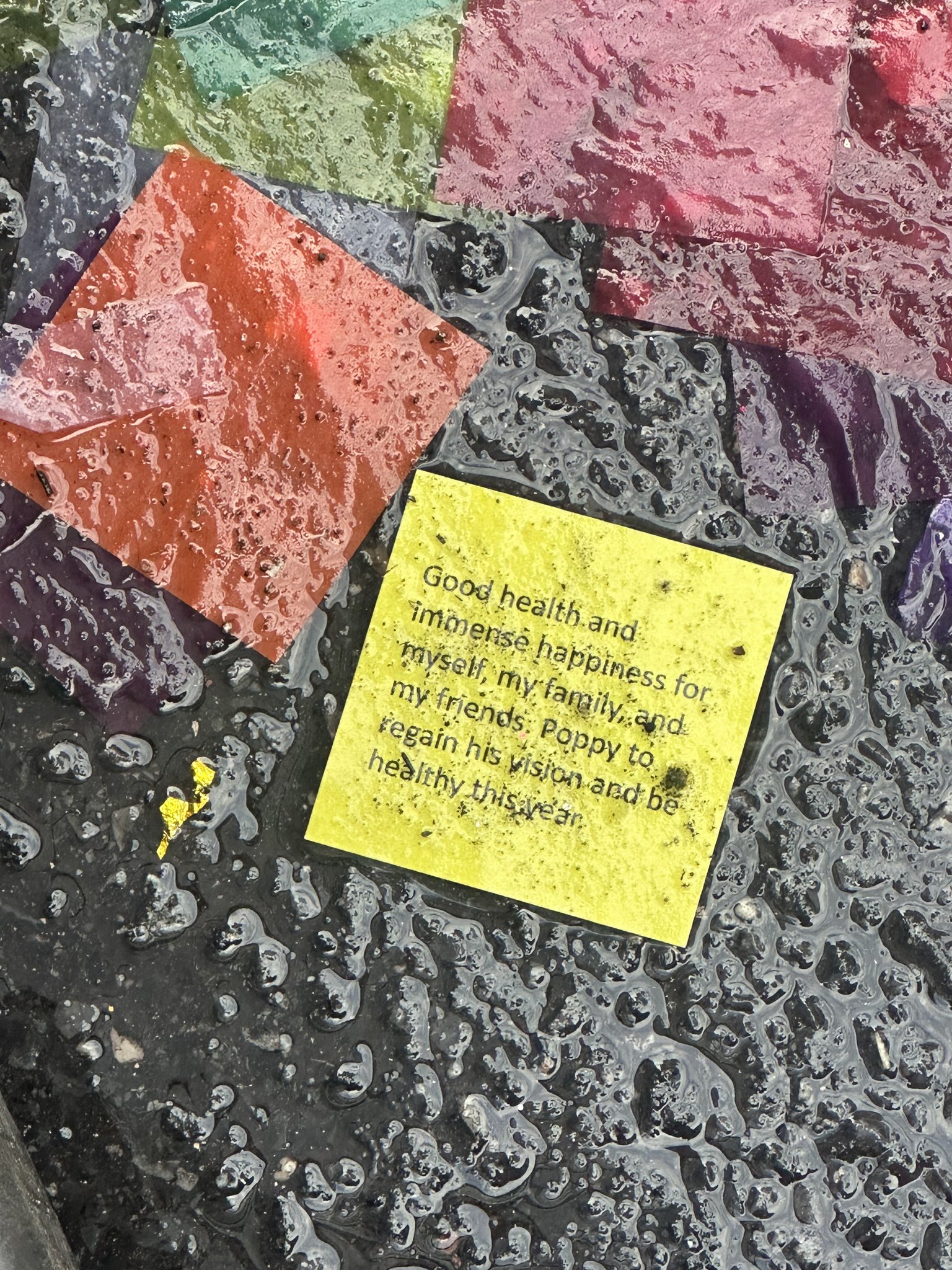
Another activity in Times Square that I really love is the New Year’s Eve Wishing Wall. For most of the month of December (for 2024, December 2-29) you can write wishes on little slips of tissue paper, and they are saved to throw among all the confetti (over one ton is dropped!) that is released at midnight on New Year’s Eve onto Times Square. I find this to be a wonderful way to crystallize my hopes as I enter a new year. This is fun to do in person, of course, but the Times Square Website also allows you to type in wishes from anywhere and they will also be part of the confetti (find it here).

Another fun event is Good Riddance Day (usually December 28, but you can check the Times Square Instagram each year to confirm). More or less in opposition to the cheerful Wishing Wall (haha), for this you write down things you want to leave behind in 2024 and not take with you to the new year. And they shred or even BURN THEM for you . . . good riddance!
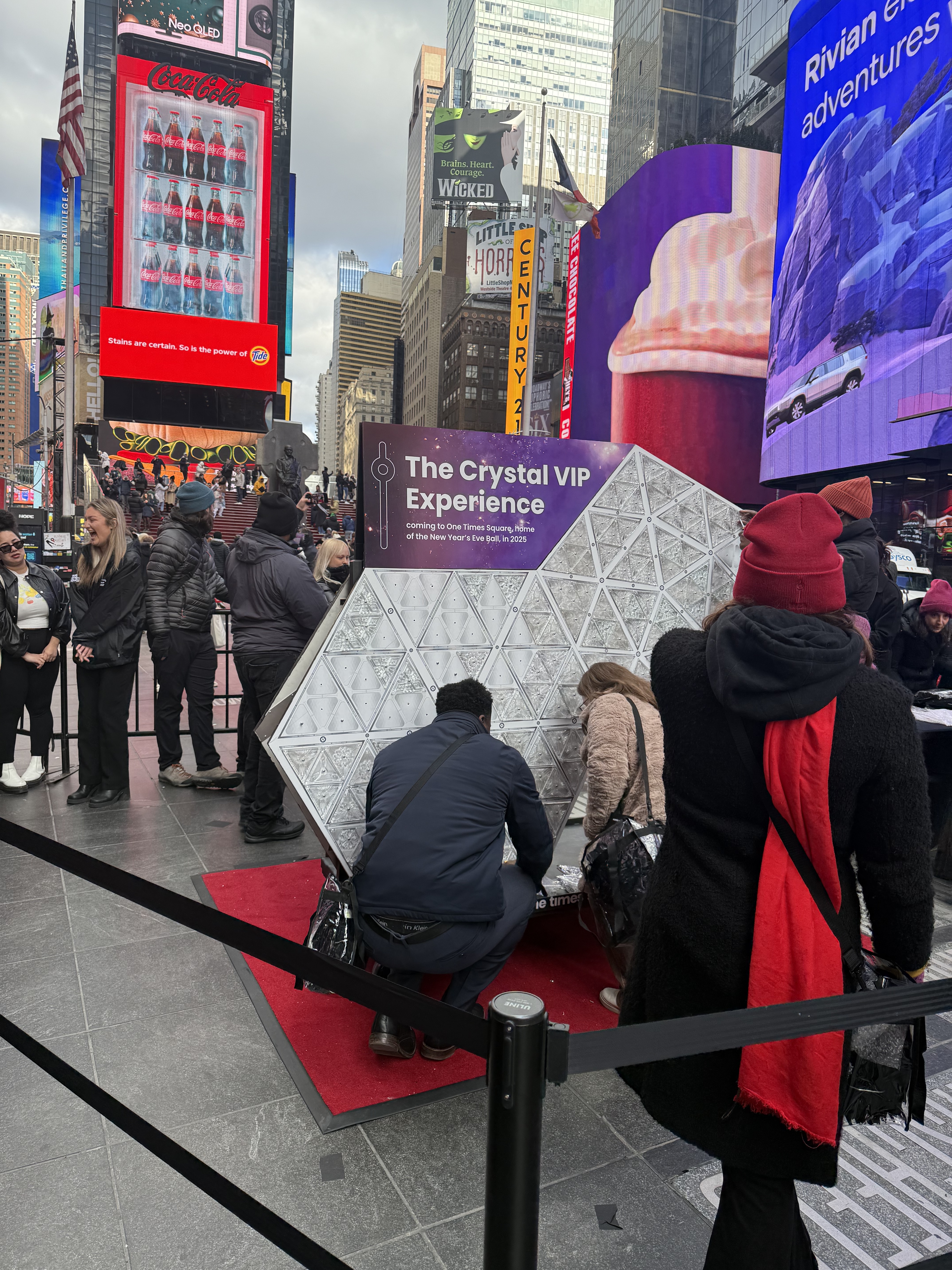
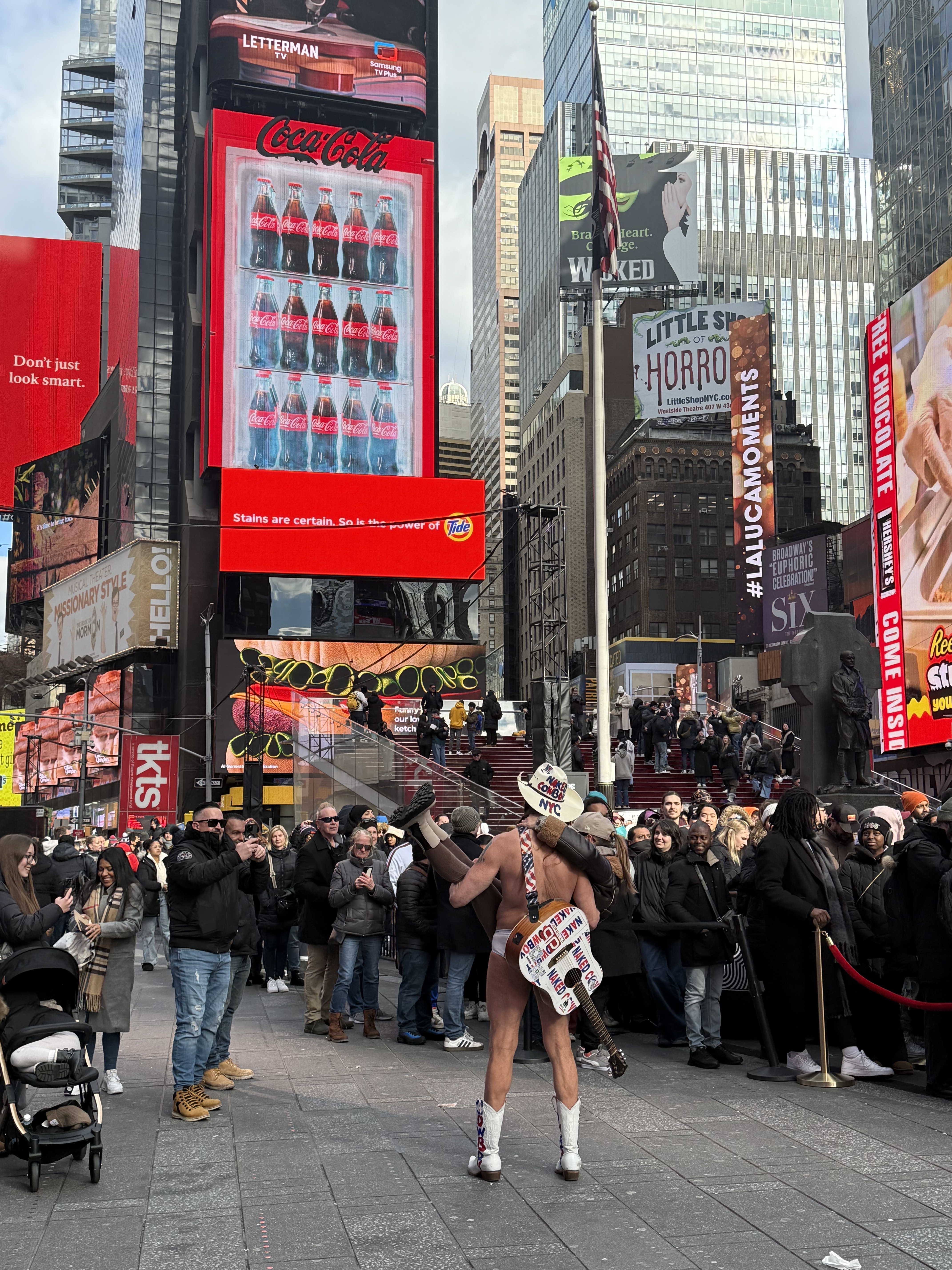
No guarantees that they will do this every year, but in 2024 on December 19 you could swap out old crystals on the actual Times Square ball for new ones, and you could keep the old crystal as a keepsake. Lines were long, but hey, at least the Naked Cowboy was there for entertainment.

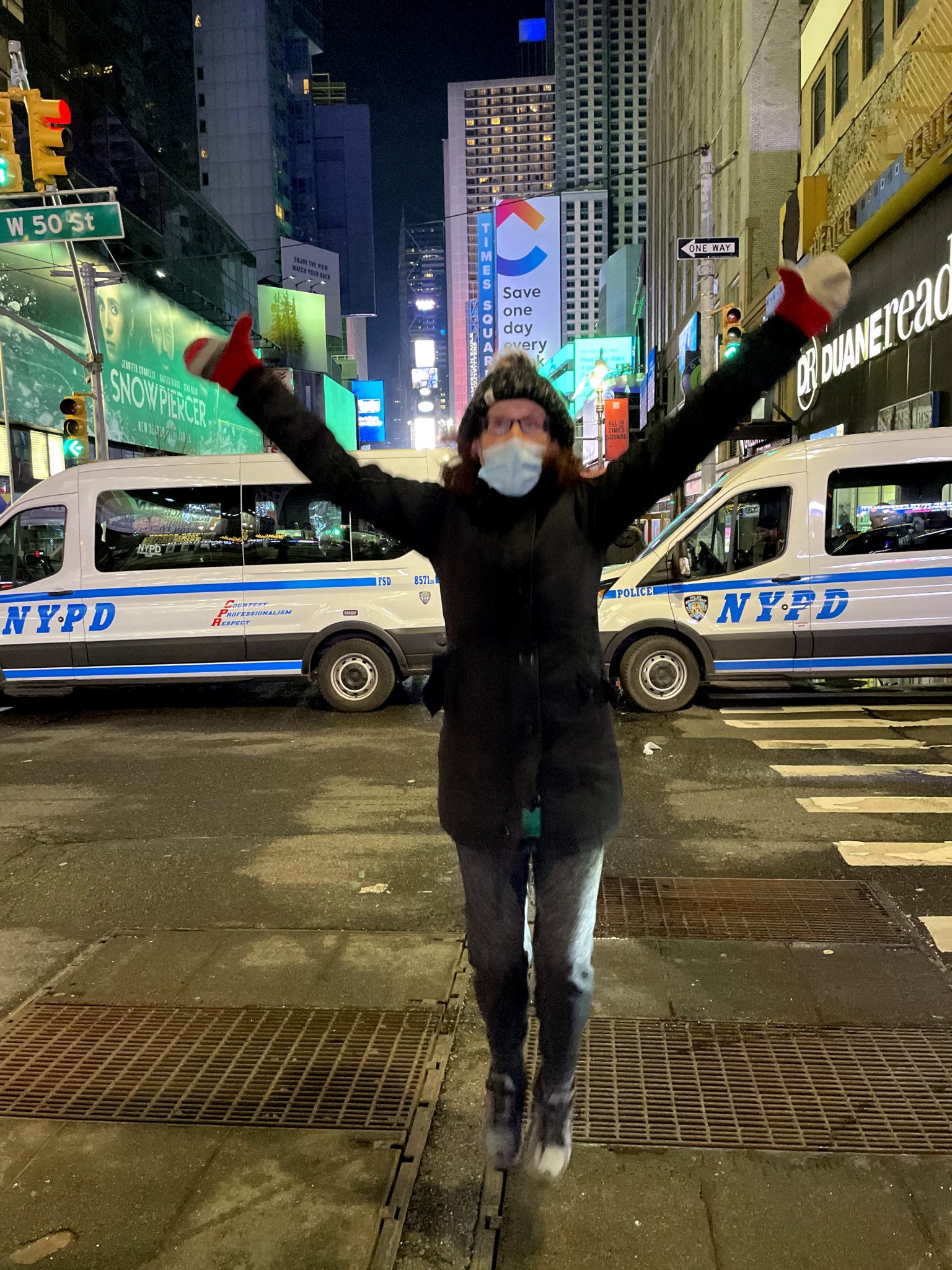
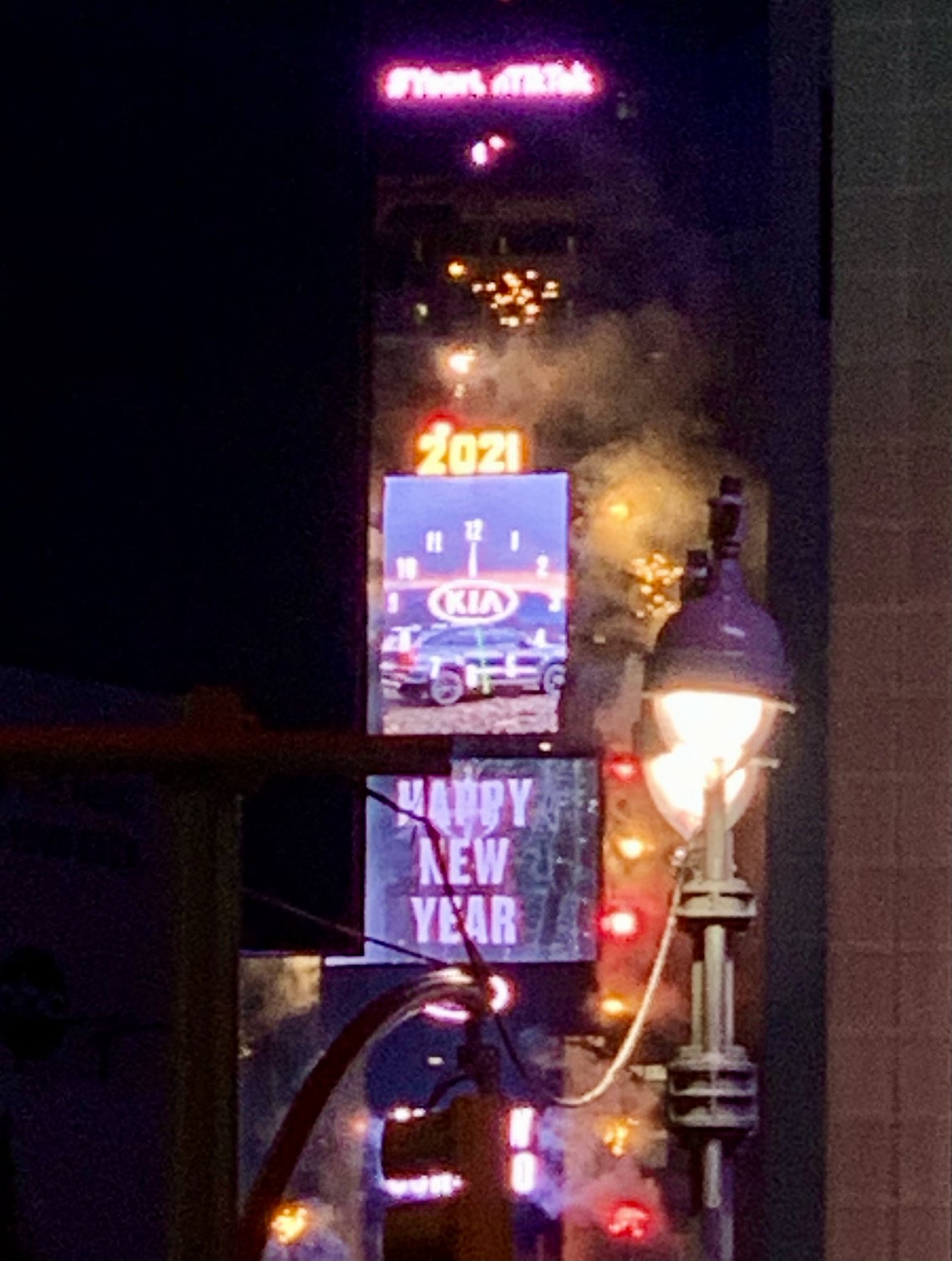
The big event of course is the actual ball drop on New Year’s Eve. The area around Times Square becomes entirely blocked off earlier in the day and everyone who enters this area (roughly 40th to 59th Streets, from Sixth to Eighth Avenues) goes through airport-style security. If you are interested in going, all your questions can be answered in the FAQ section of the official Times Square website, but I will answer the most important question here: no, there are no bathroom facilities. During the height of the covid pandemic in 2020, only a few blocks were cordoned off and there was no official viewing area. That year I was able to get just a few blocks away, and with no wait, and I saw the actual ball drop from a few blocks away on 50th and Broadway.

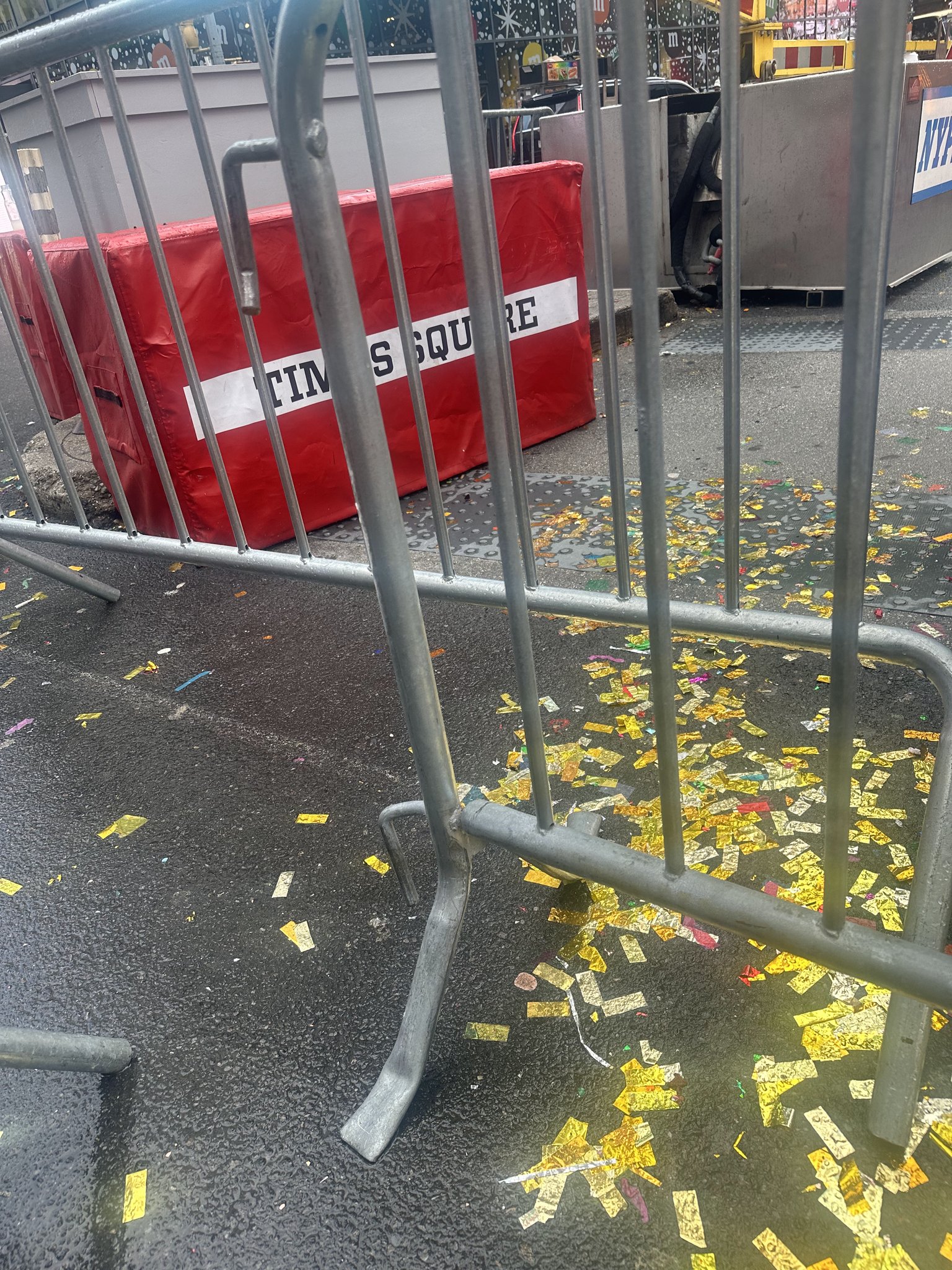
I enjoy going to Times Square the morning of New Year’s Day. It’s eerily quiet, and although the clean up is fast and efficient, you can still see remnants of the confetti drop the night before. I know it’s not cool to like Times Square, and there are certainly times I try to avoid it. But that little girl inside of me who looked longingly at the ball drop on television is still there, on some level, and I love that I have been able to find a way to make the reality of Times Square a part of my end-of-year routine.

Macy’s Thanksgiving Day Parade

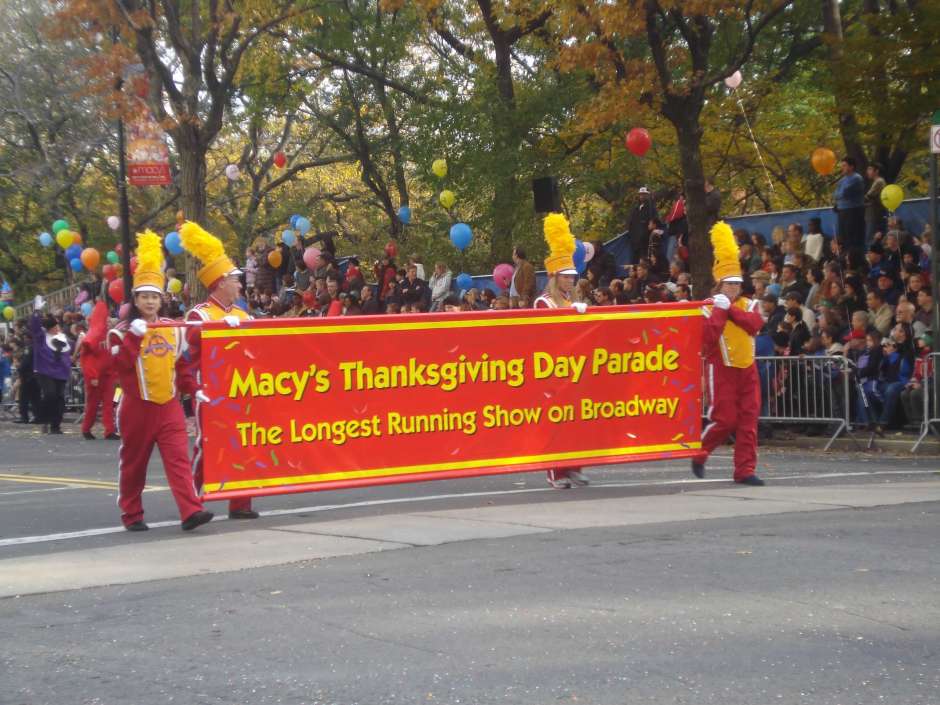
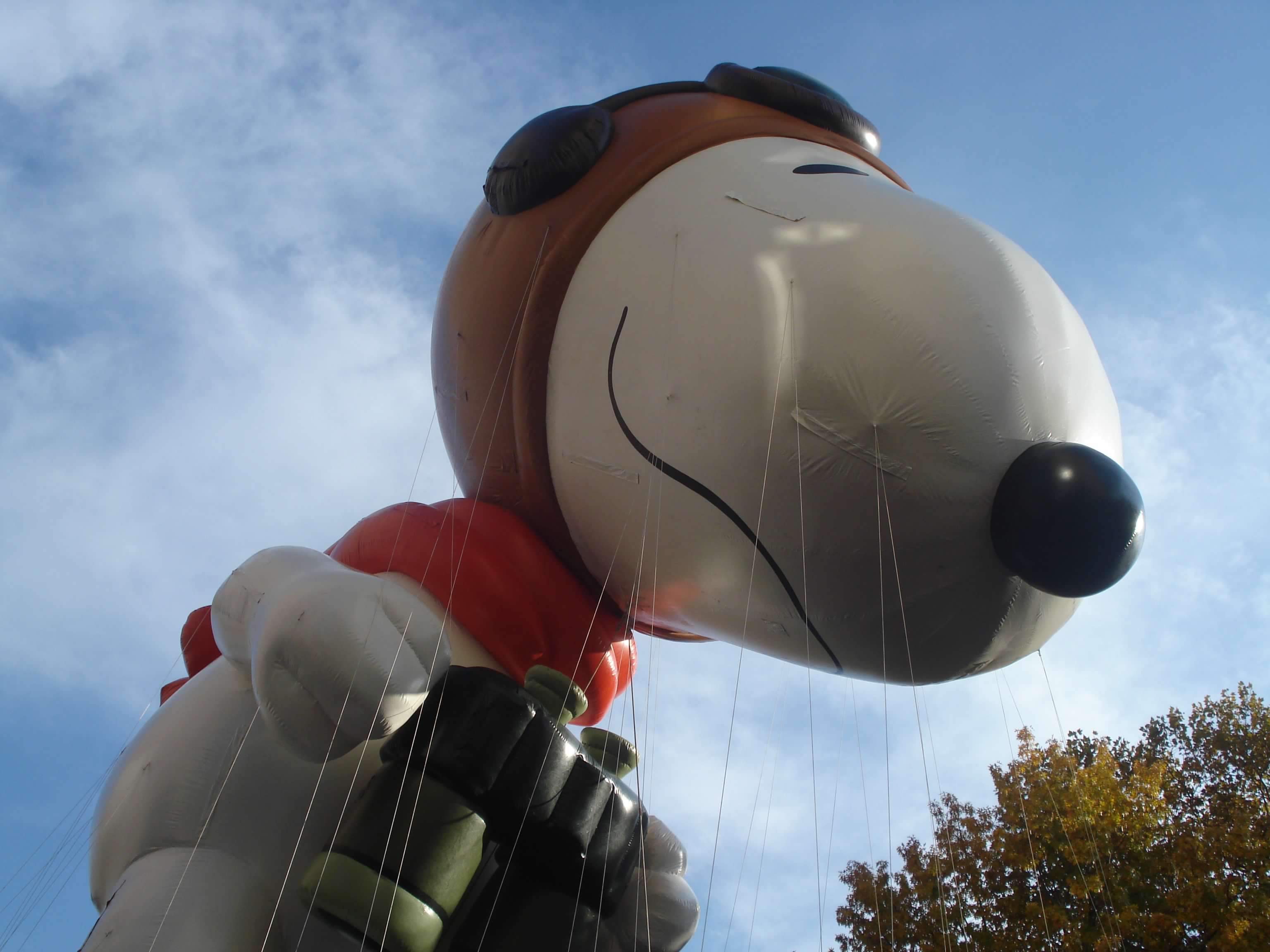
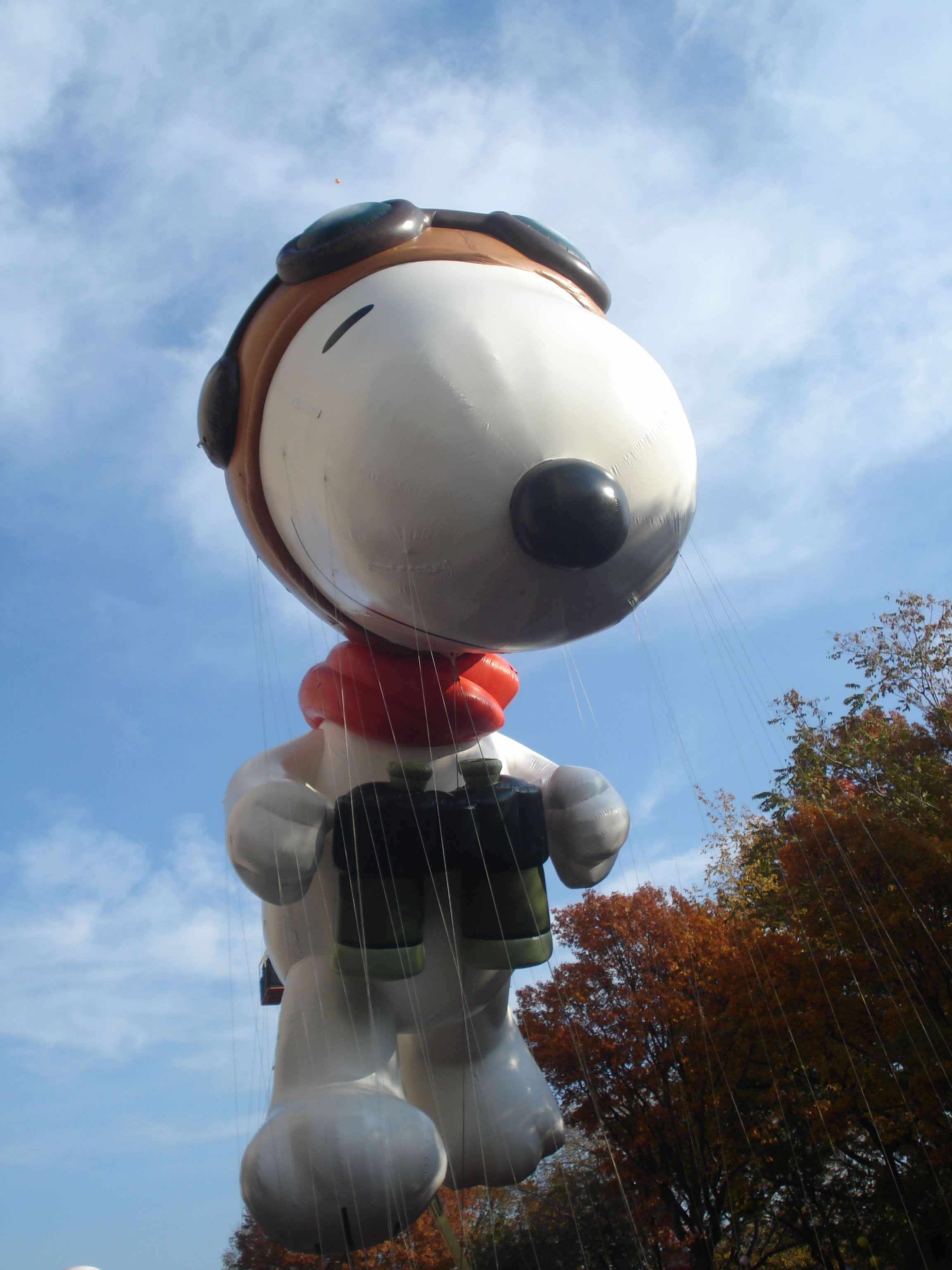
I truly believe some of my earliest memories are of watching the Macy’s Thanksgiving Day Parade and waiting to see the Snoopy balloon. My mother would be in the kitchen preparing Thanksgiving dinner and I would race in to make her come in and see when Snoopy finally arrived! Because I was not fortunate enough to be born in New York City, I watched it as most people do, on television. When I moved to NYC, the very first Thanksgiving I was lined up early on Central Park West to see the parade, and have seen it most years since then. I thought it might be fun to go into different ways to watch the parade, other than on TV. I was going to get photos this year (2024) but it was raining all morning and I knew the photos would not turn out. However, I have hundreds of photos from previous years, and had fun looking through them.

The parade starts on CPW and W 77th Street, and ends in front of the Macy’s department store, on W 34 between Broadway and Seventh Avenue. It heads south along CPW, turns at Columbus Circle for a few blocks along Central Park South, then heads south on Sixth until it turns on 34th Street. The blocks around the end of the parade, where the live performances in front of Macy’s are performed for the television audience and a few lucky people, are not accessible to the public.

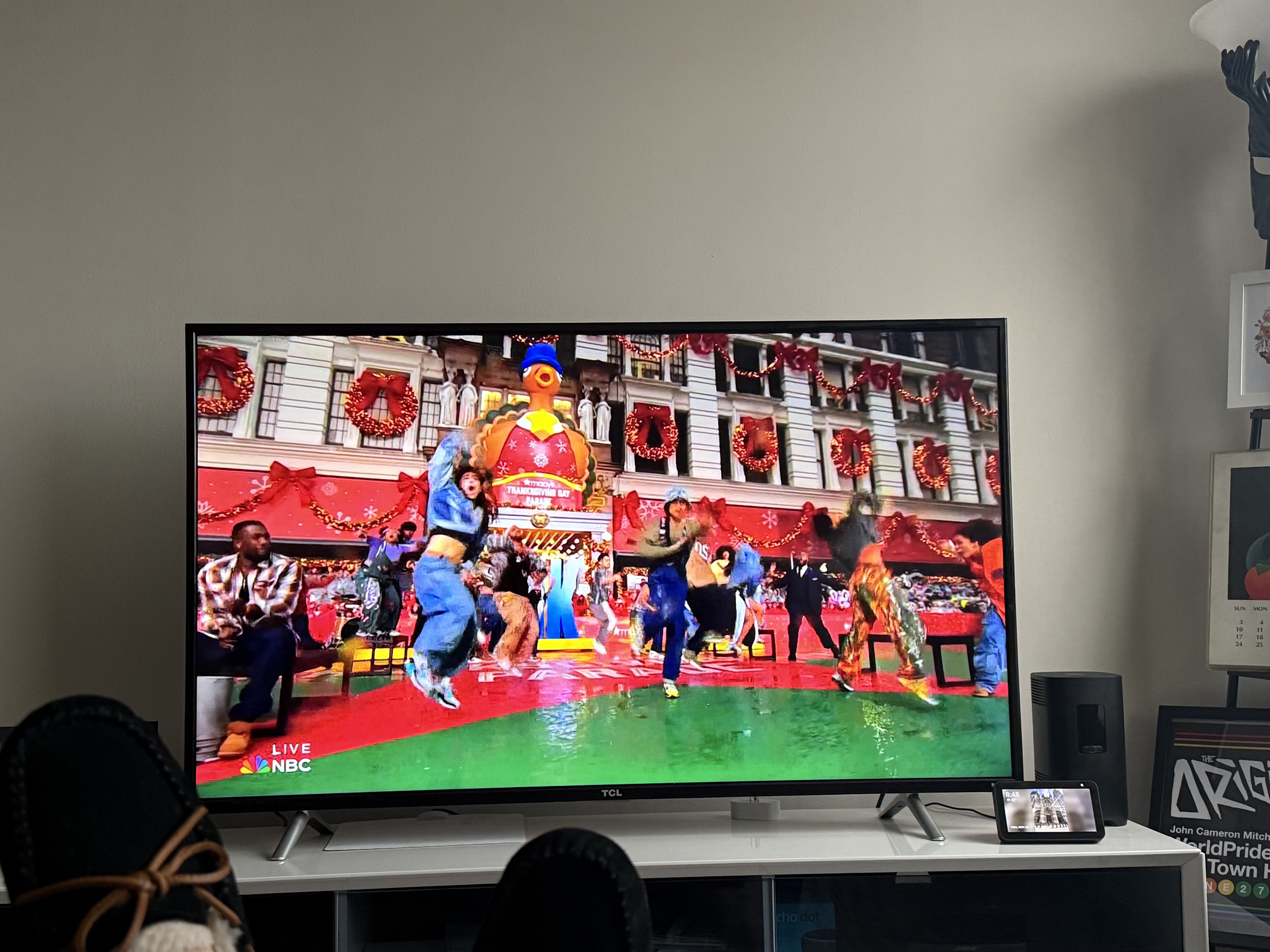
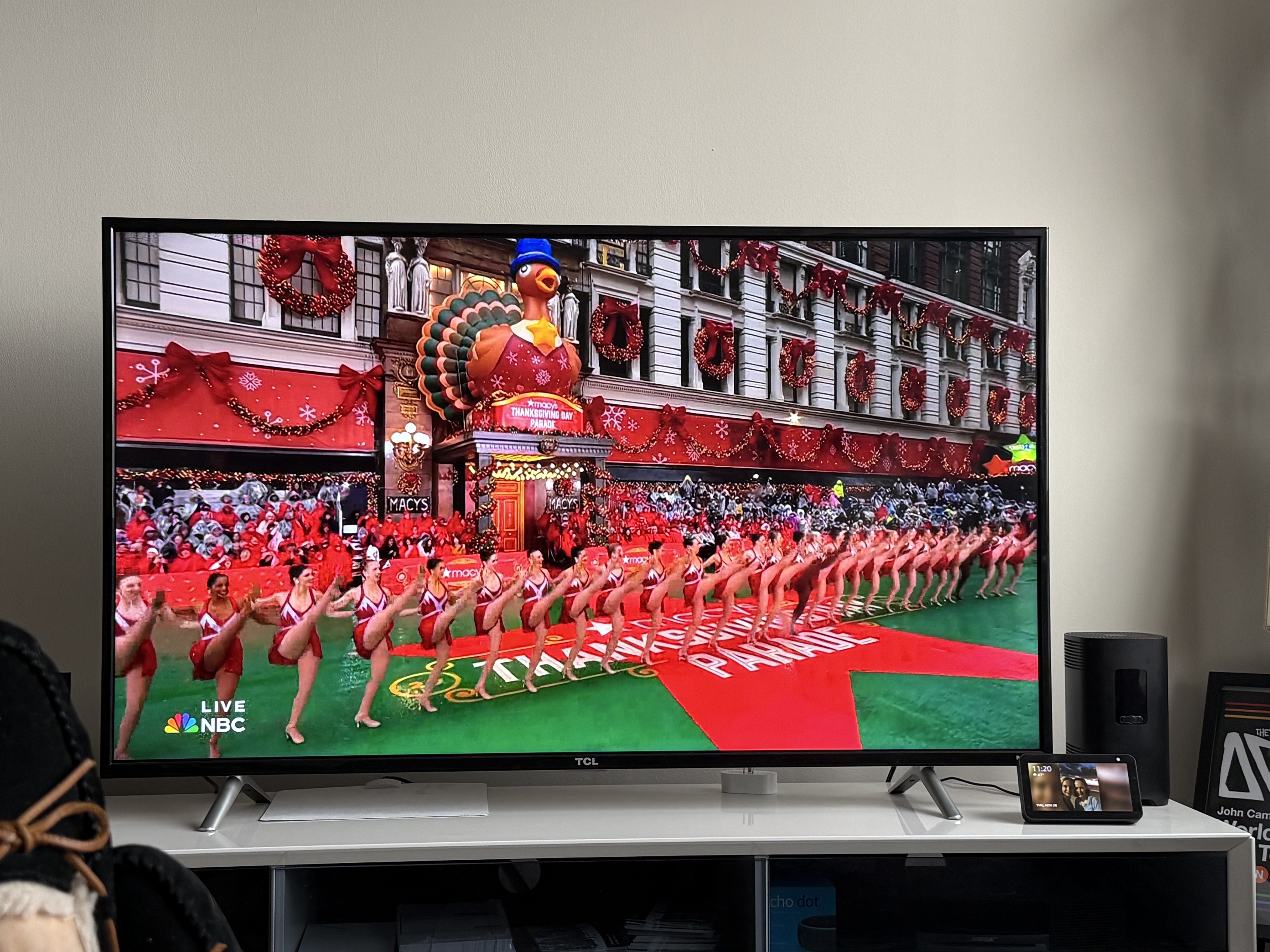
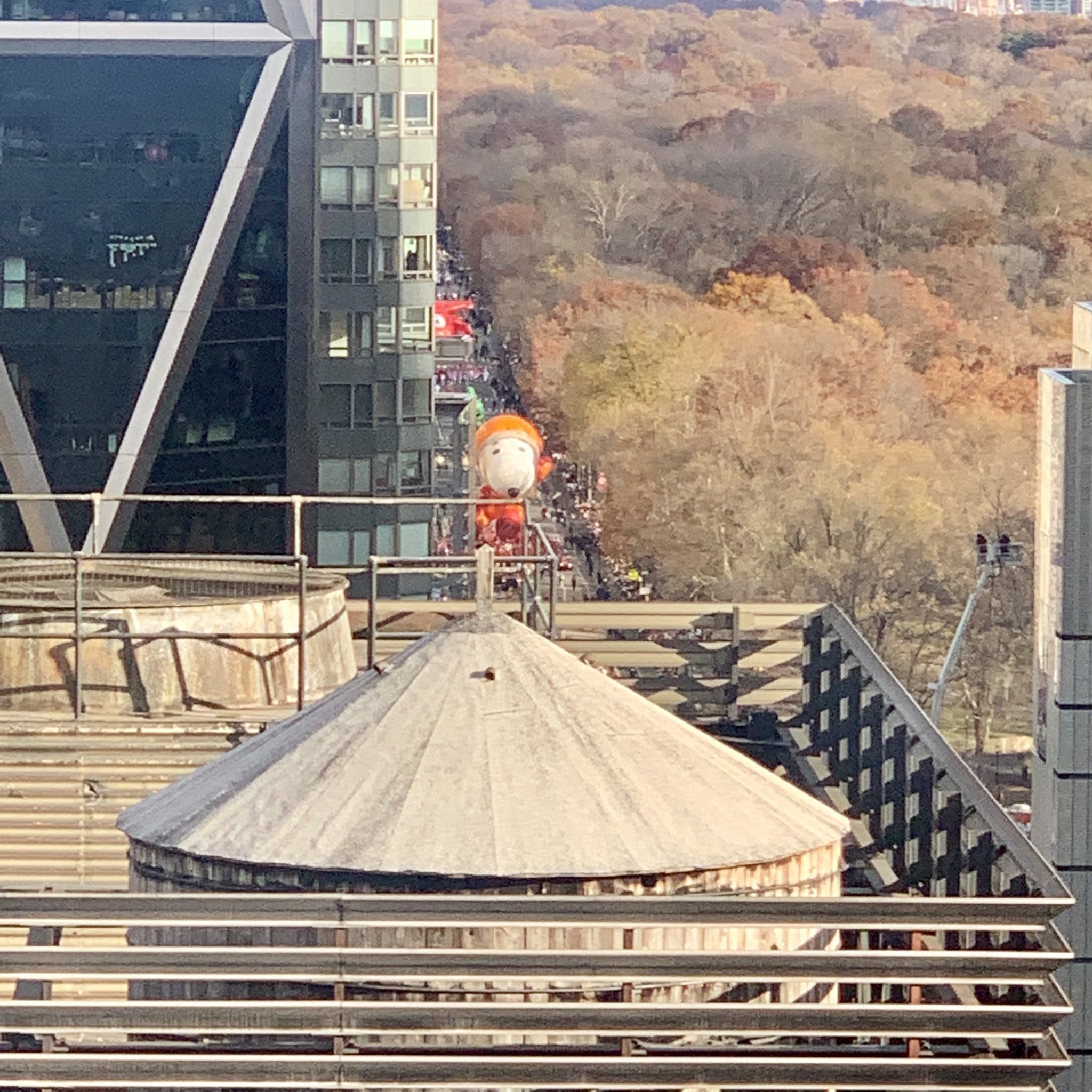
So the photos above (from 2024, of Hells Kitchen the musical, and the Rockettes) show the typical TV experience, and also show the parts you cannot see if you decide to watch the parade yourself in the city (Broadway and other live performances). If lucky enough to live in a building with a roof deck, you might be able to see the parade from a distance. The photos below are from the roof of an apartment building on Eighth Avenue and W 53rd Street. It’s fun to see the parade like that (and hey, there’s Snoopy!) but it can be distant.

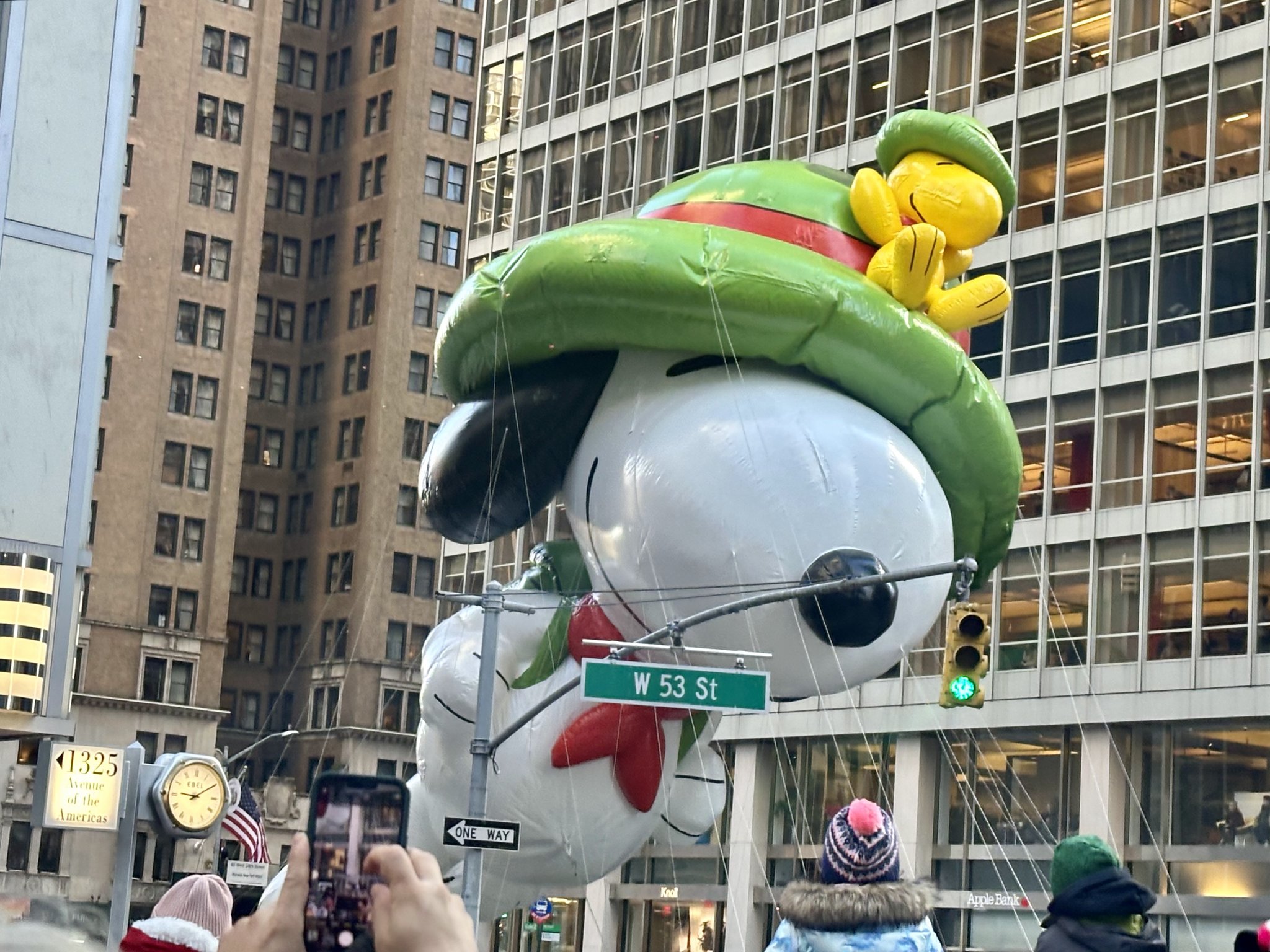
Midtown along Sixth Avenue can be an easier place to see the parade. There may be lots of people around, but the sidewalks and streets are wide enough that you will see the balloons easily even if you don’t get there early. The photos below are from midtown from a few different years (note that although there is always a Snoopy balloon, it changes out from time to time in terms of the design). The disadvantage to this area is that you may be too far away to really see the floats and clowns, etc., but you won’t need to get there early to be able to see the balloons.

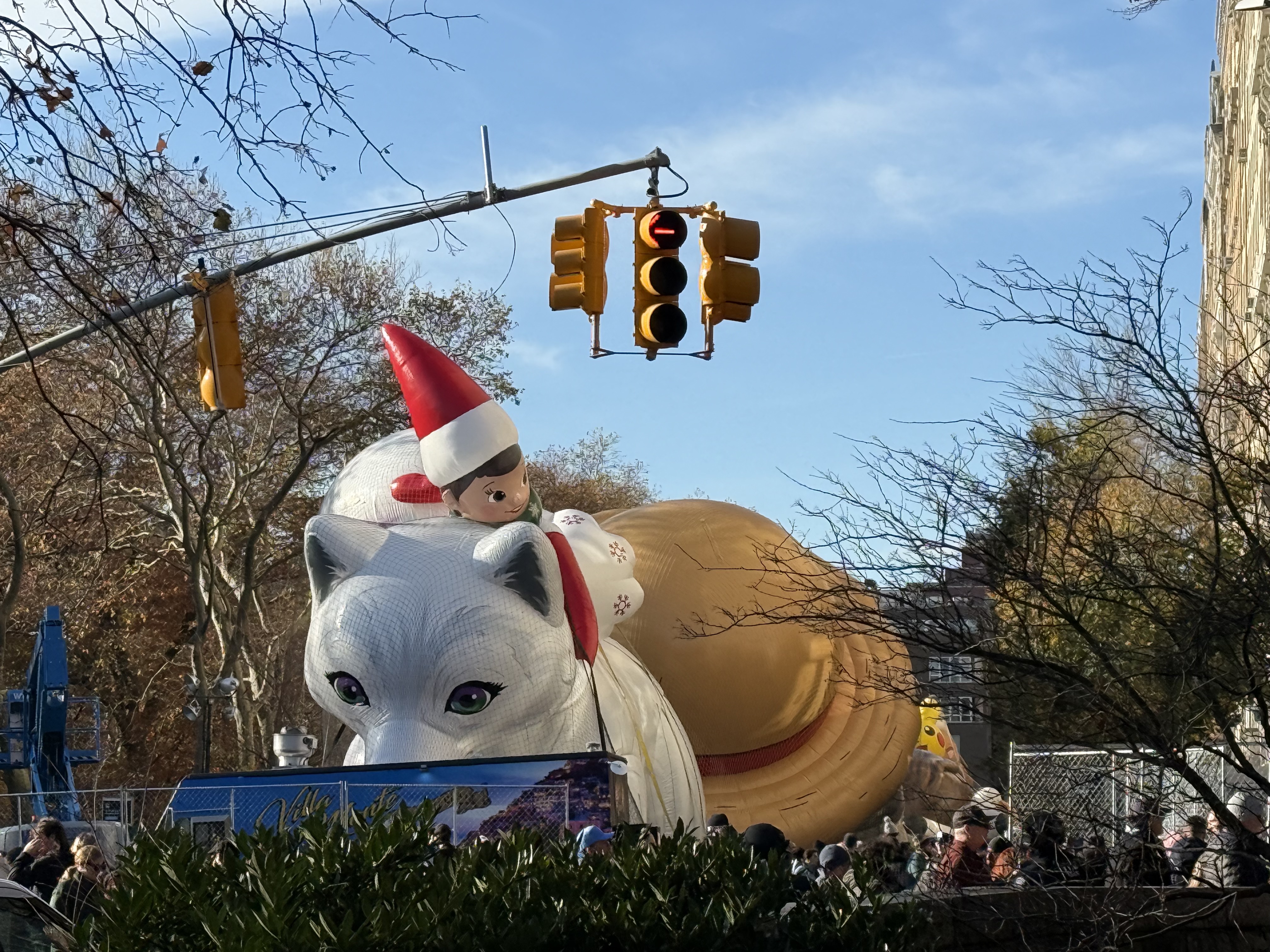
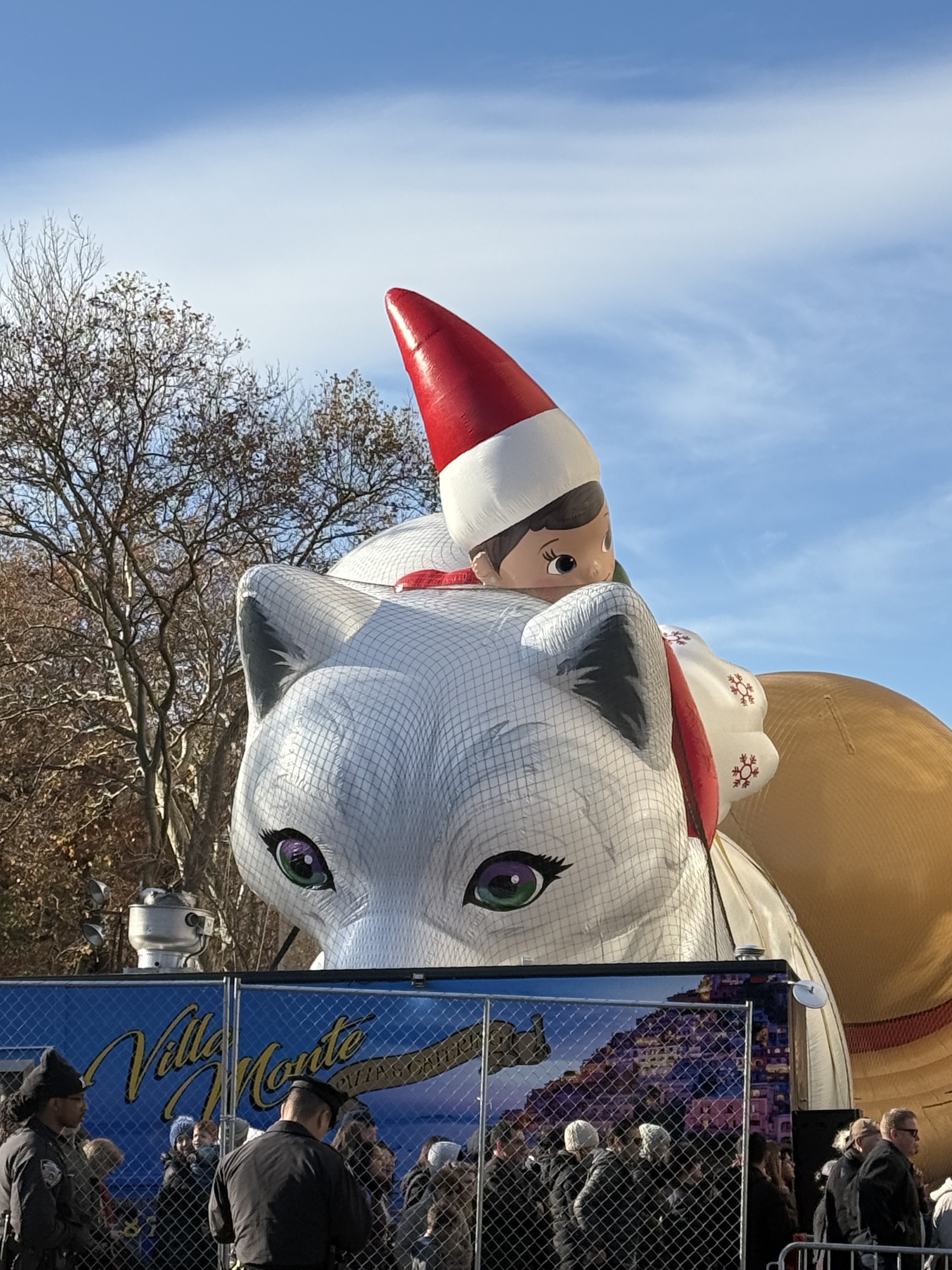
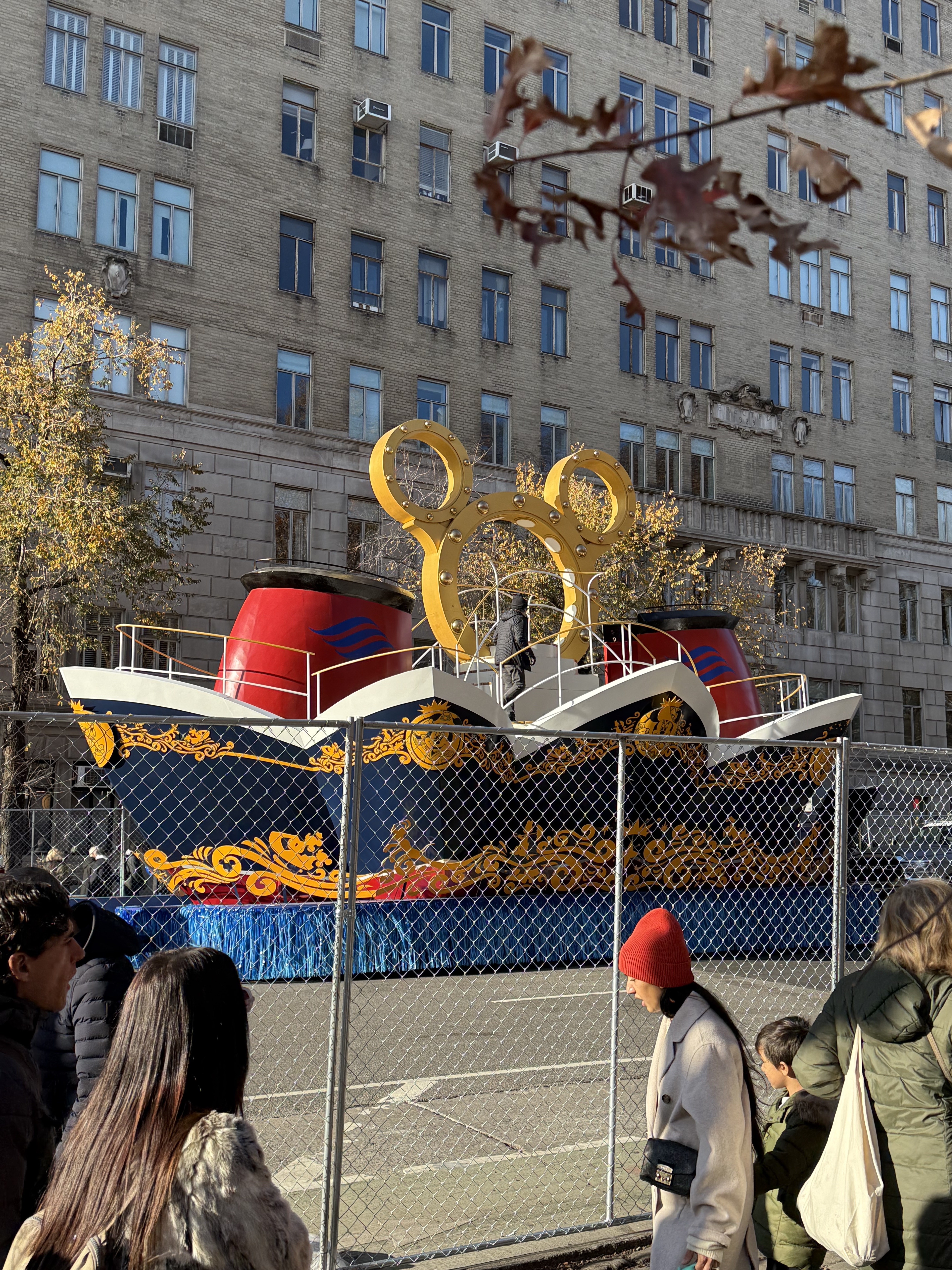
Another way to get up close and personal with the balloons is to go to the balloon inflation the day before Thanksgiving. The official area to walk around where the balloons are being inflated (and held under nets until the next morning) has an entrance at Columbus Avenue and W 72nd Street, and there is airport-style security. The hours are usually 1-6PM and it can get crowded. You can also see some of the balloons and floats, with no waiting and no crowds, from the west side of Central Park. The photos below were taken in the park just off the intersection of CPW and W 81st Street.

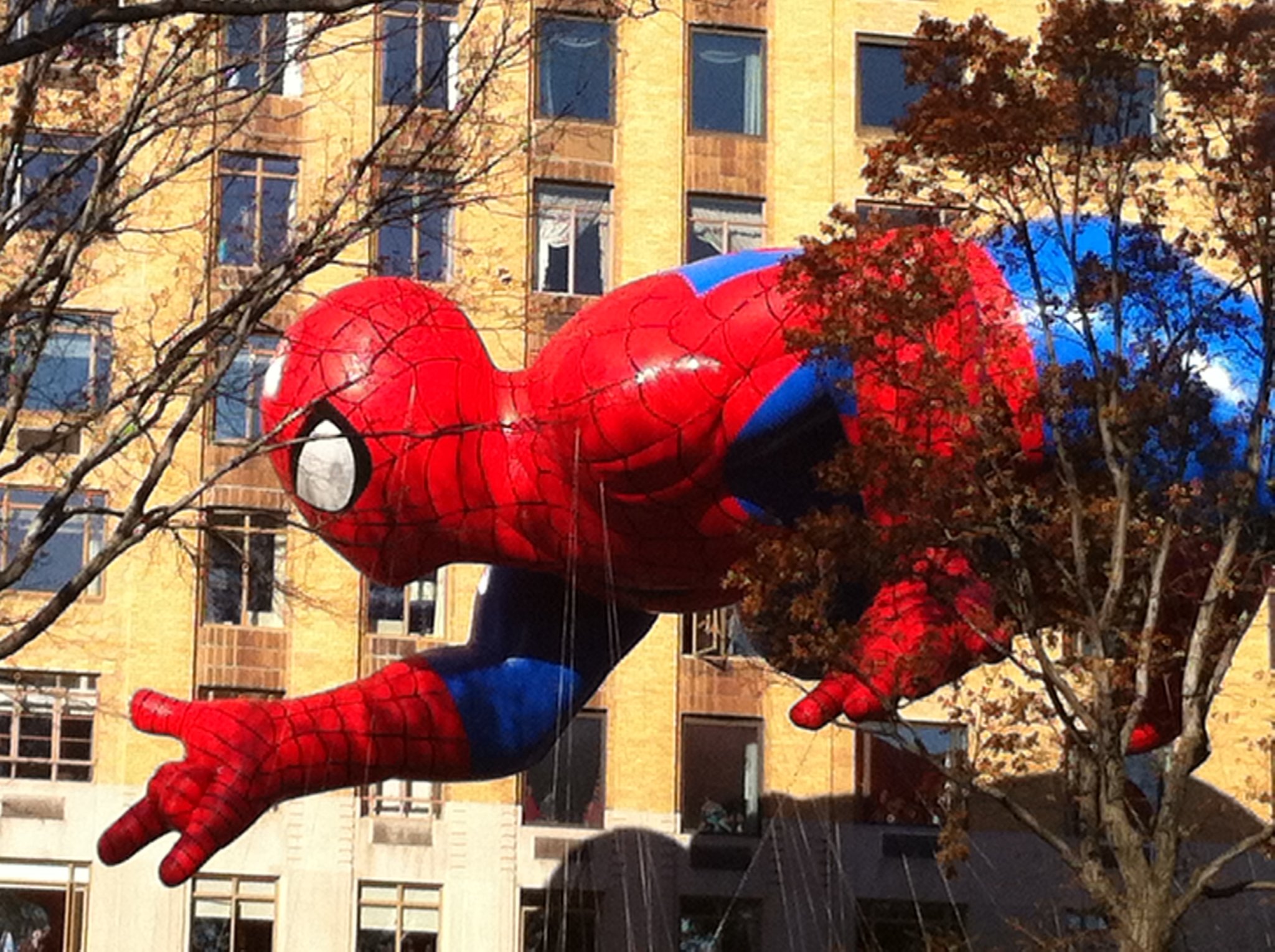
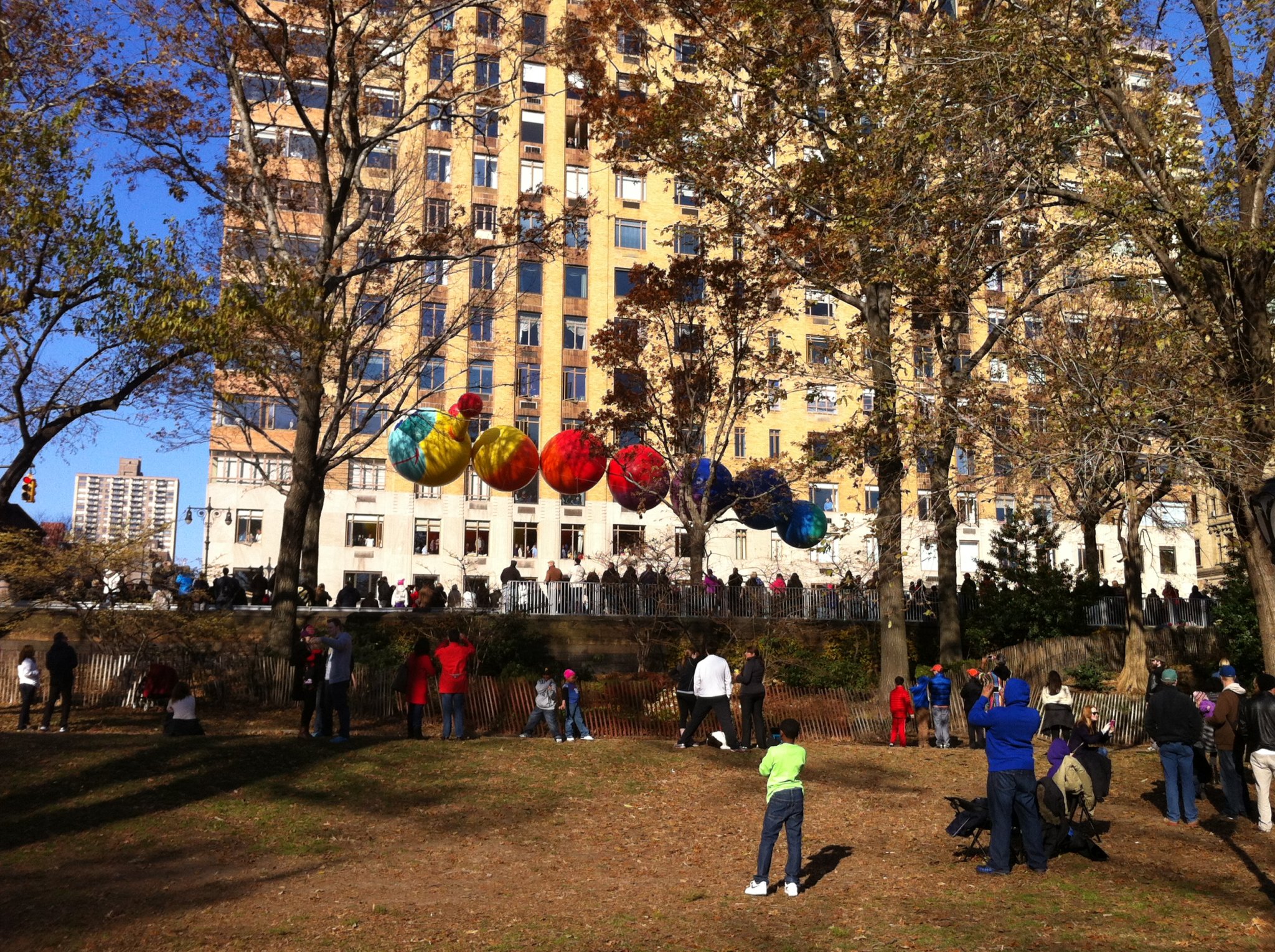
An insider tip that I rarely hear people mention is that you can get a surprisingly good view of the balloons (if not the floats) from inside Central Park during the parade, without waiting and with few crowds. The photos below were taken from inside the park on the west side at about W 72nd Street (note the Dakota as a backdrop for some of these). This is a really easy and fun way to see the balloons – and was what I was going to do this year (2024) until the rain descended and I decided TV was fine for this year!

The gold standard of seeing the parade – and the thing I did for years and years when my daughters were young – involves waiting on CPW to get a front row view of the parade. You have to get there early (some people sleep overnight in their spots), weather can be tough (I’ve been there in snow and on years when it was below freezing), but the view is impeccable. You can see everything, and clowns will come right up to you (fun clowns, not scary ones!).

There are always people walking behind any horses in the parade, and everyone along the parade route gives the pooper scooper people a huge round of applause, without fail. It’s always a fun moment.

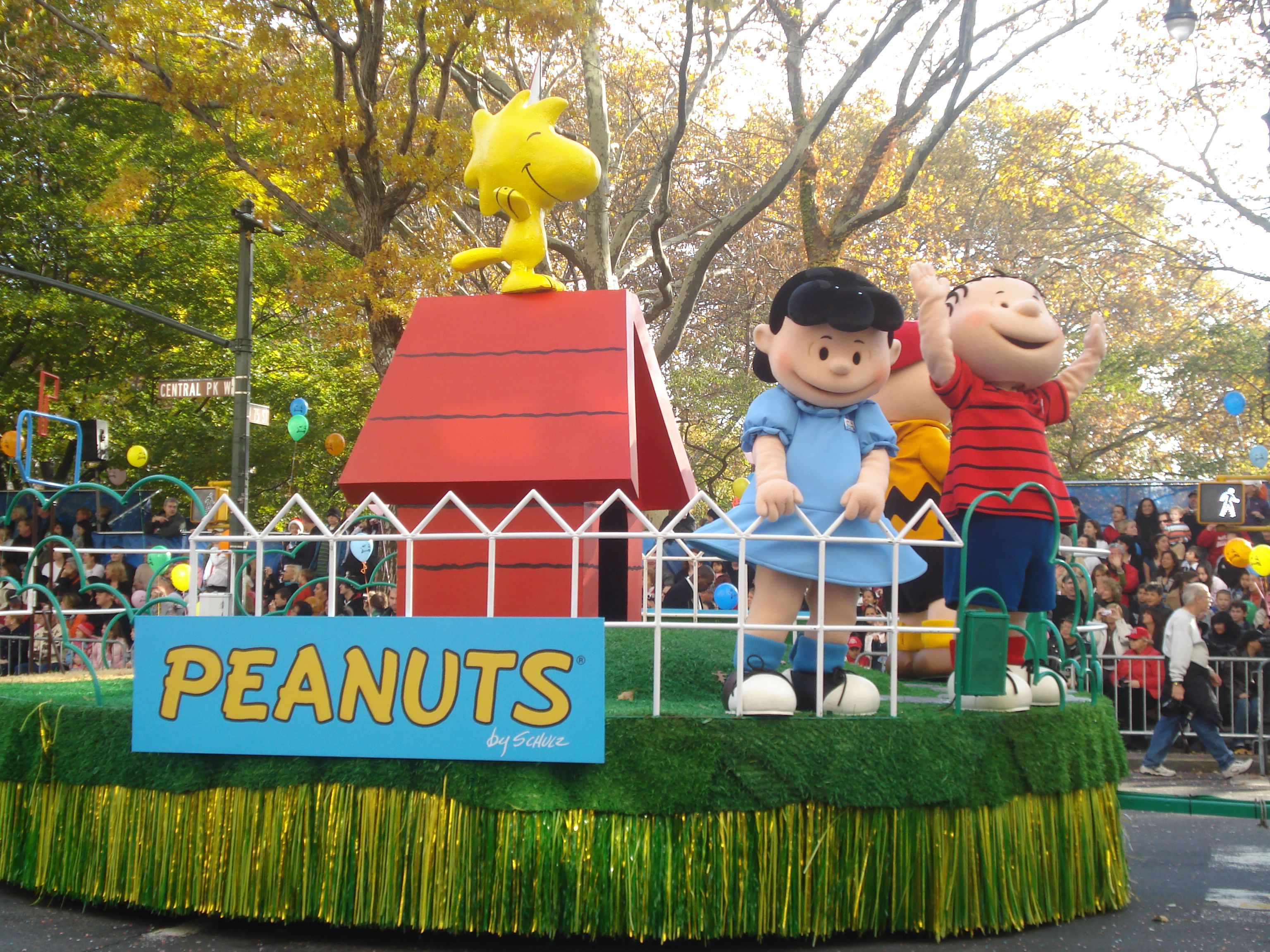
OK, back to Snoopy. There is simply no view like the one you get on the ground right on CPW. He (like all the other balloons) towers over you. And there is always a float with the other Peanut characters (see below for one year where they had a live beagle with them too!). Snoopy is the balloon character to have been in the most Macy’s parades, so I can’t be the only person obsessed . . .

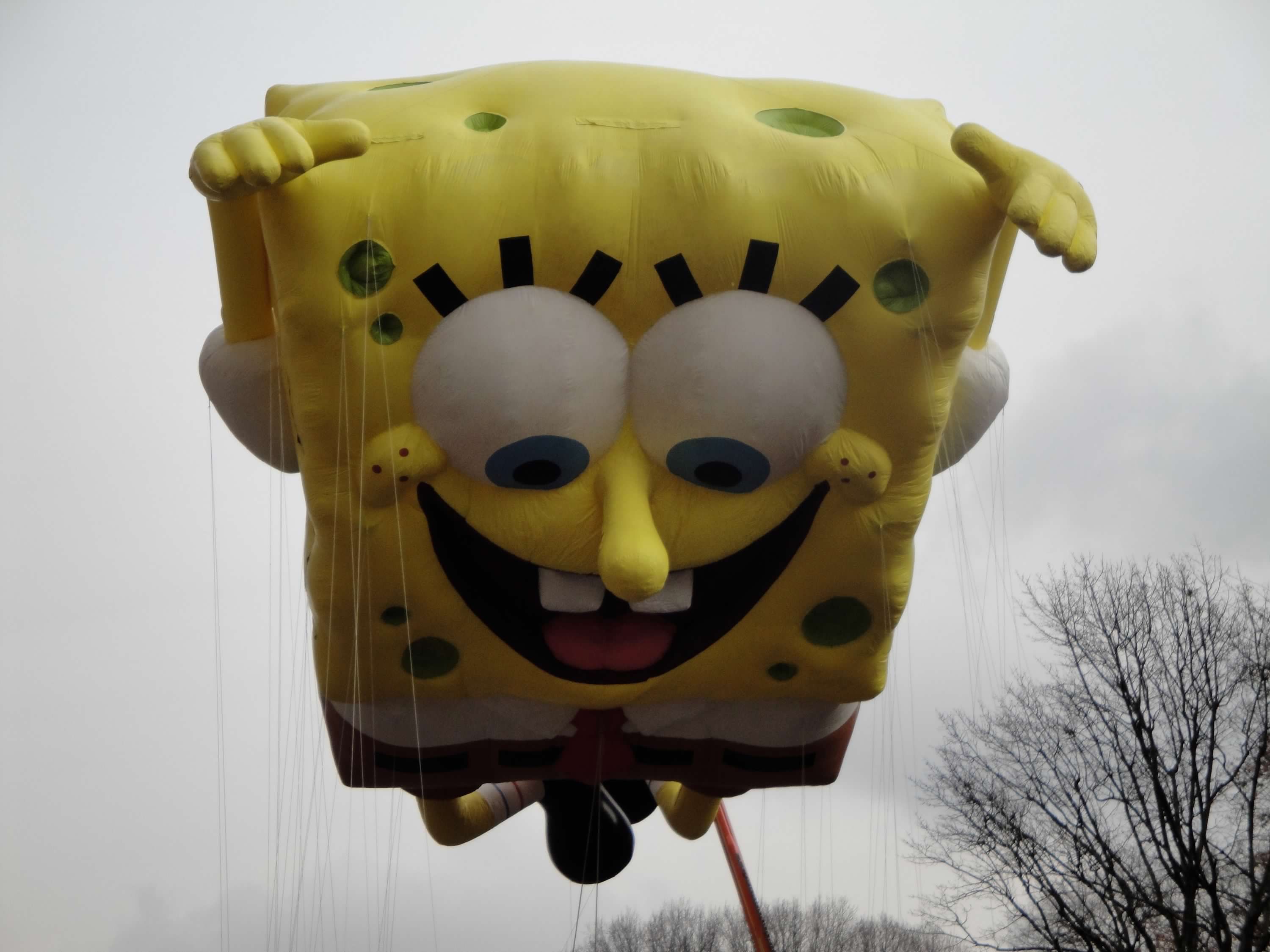
Here are some more photos of the balloons looming over you if you are standing at the front on Central Park West:

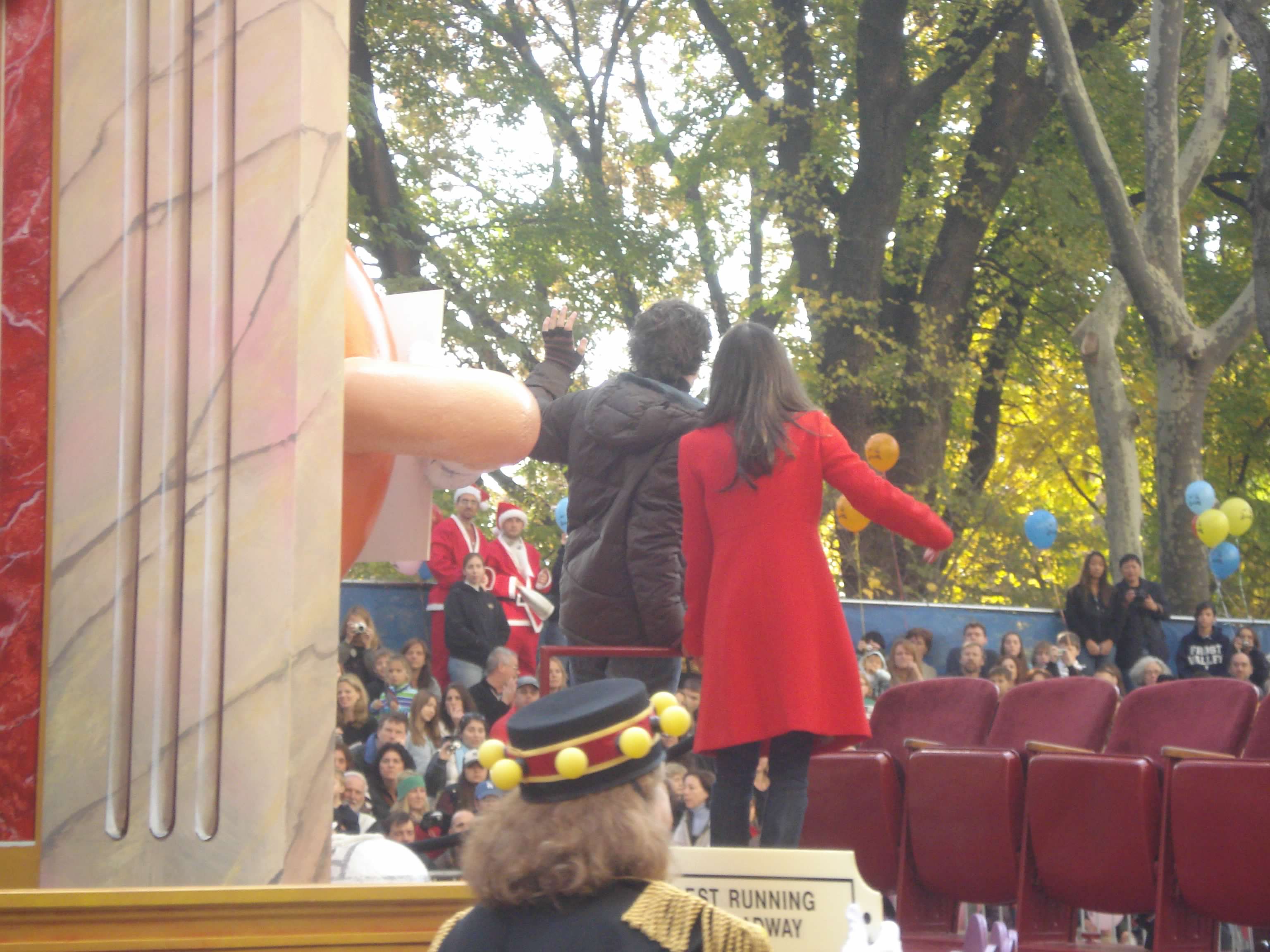
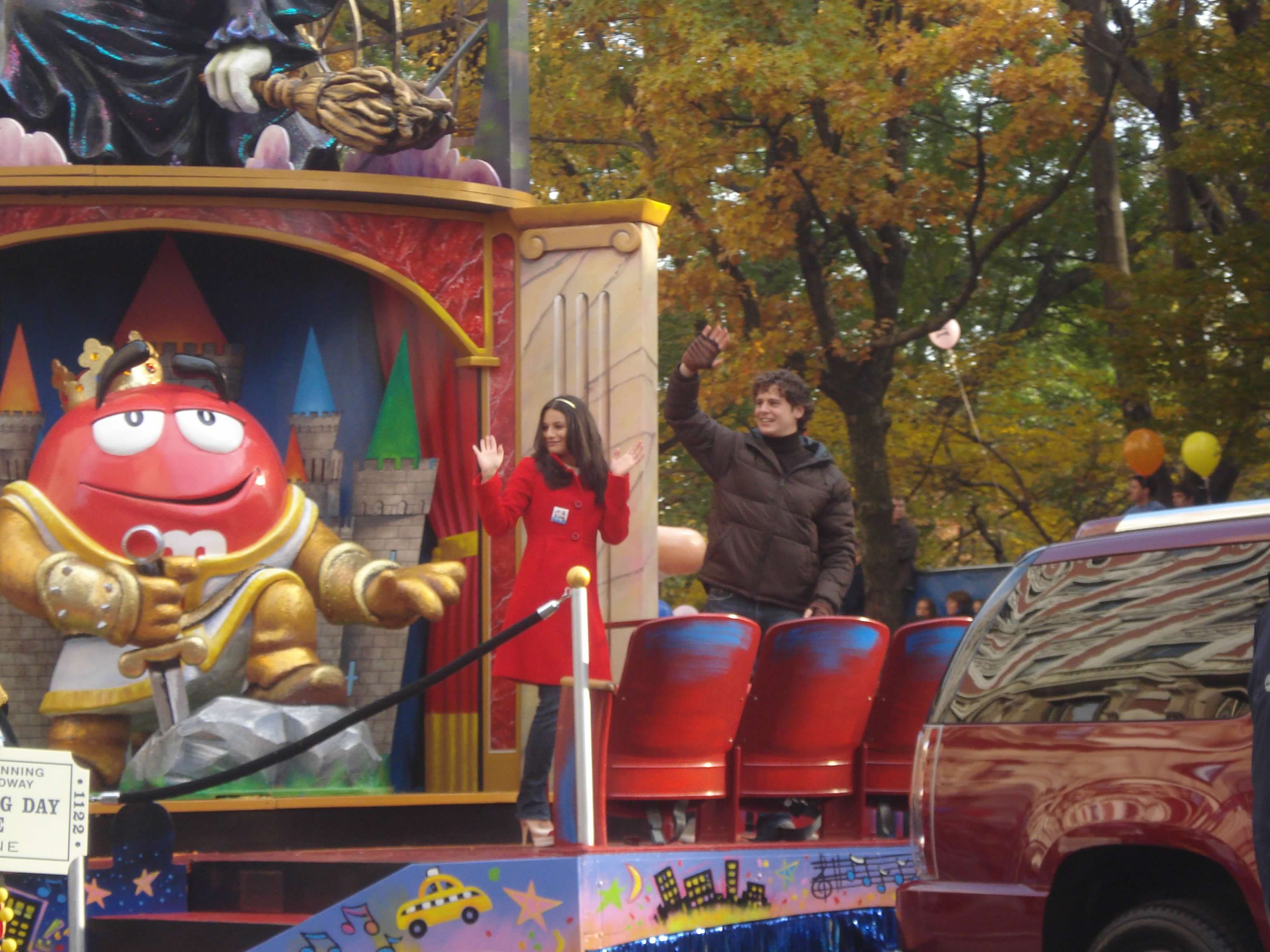
If you are right at the front, you can easily see the performers on the floats. They won’t sing (if they are going to at all) until they get to Macy’s but they will wave and it’s fun to see people. See below from 2007 when Jonathan Groff and Lea Michele were in Spring Awakening on Broadway and on a float, and for Corbin Bleu that same year.

I will say that the BEST way to see the parade is the hardest way – and I have only been fortunate enough to experience it this way once. This way is to have, or know someone with, an apartment with windows facing the parade route. When one of my daughters was in preschool, the grandparents of one of her classmates invited all the families from the class to their apartment on CPW to see the apartment and it was magical. If you have seen the movie Maestro, about Leonard Bernstein, you will have seen the balloons go right past the windows of the Bernstein apartment in the Dakota on Thanksgiving morning, and it is just that amazing to experience (as long as you aren’t having an argument as was happening in that scene). You also get to stay warm, protected from the elements, and eat and go to the bathroom when you need to. My dream is to have such an apartment but it hasn’t happened – yet.

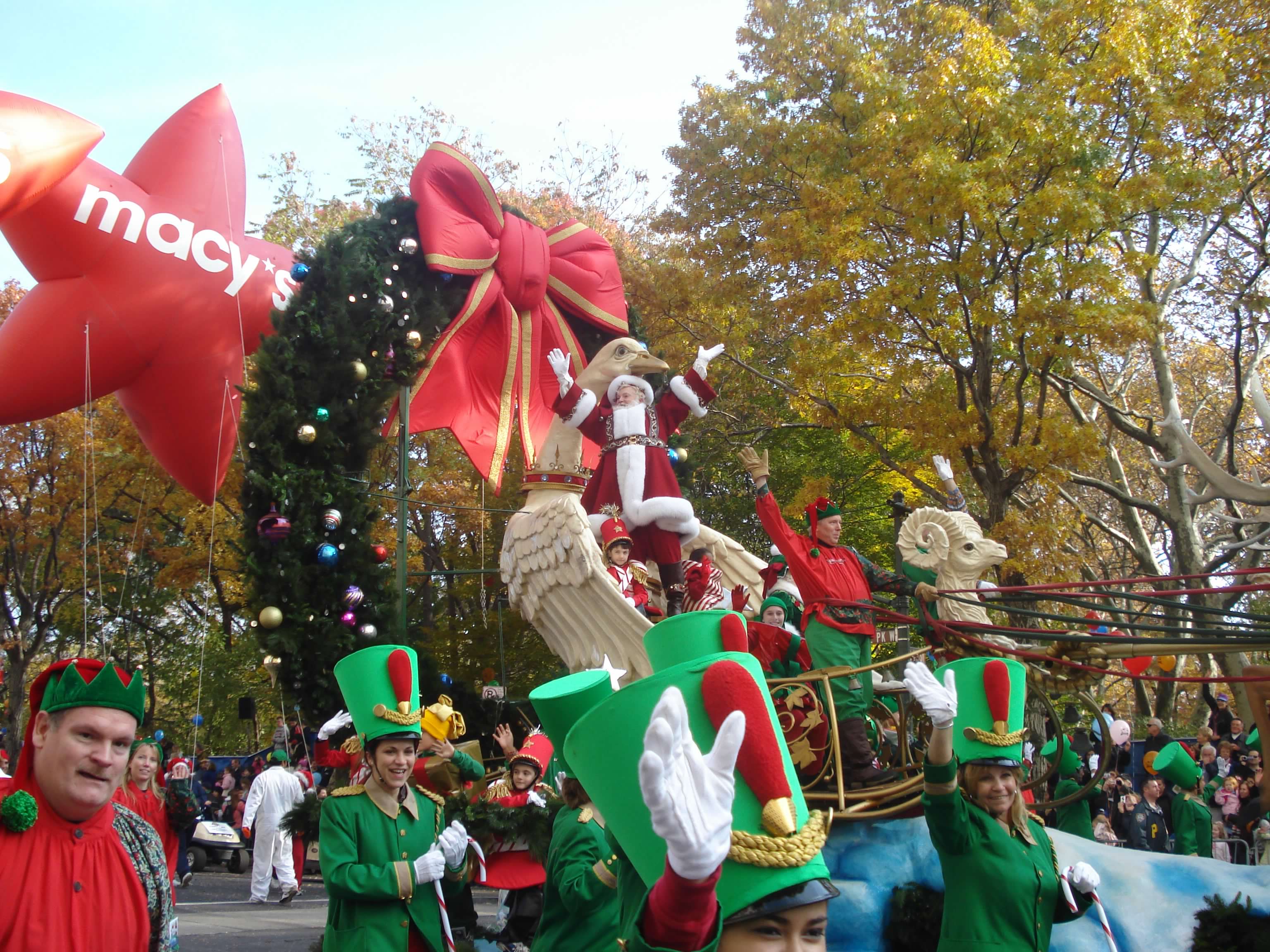
The end of the parade always heralds the beginning of the holiday season, with Santa (yes, the real one, since it’s Macy’s that is in Miracle on 34th Street after all) as the final float. I have blogged before about Santaland at Macy’s, and it opens the day after Thanksgiving so I guess in theory this is the big reveal before he gets to work meeting children at Macy’s.

Other ways to see the parade, that I have not experienced: know someone at Macy’s and get seats on the grandstand (that would be great!) or pay for a hotel room with a view of the parade (expensive to be sure but worth it if you can afford it, I guess).

A few facts about the parade, courtesy of Macy’s, that highlight what a big production this is:

-Years of the Macy’s Thanksgiving Day Parade – 98 (est. 1924)
-Years on NBC, official national broadcast partner – 72 (since 1952)
-Years of Al Roker as co-host- 30
-Featured character helium balloons – 17
-Heritage and novelty balloons – 15
-Height of tallest balloon – 60 ft (Disney Minnie Mouse by The Walt Disney Company) and Length of longest balloon – 77.5ft (Spider-Man by Marvel)
-Width of widest balloon – 66.5 ft (Gabby by Universal Studios’ Dreamworks Animation)
-Gallons of Paint – 2,000
-Pounds of Glitter – 300
-Pounds of Confetti – 200
-Costumes – 4,500+

Apparently they get to work planning the next year’s parade the day after Thanksgiving – it’s a big production with a standard of excellence, and it shows. I recently also read that the ratings for the Macy’s parade now beat out the Academy Awards, and advertising costs are only slightly less. I’m a fan, and would say that if you are in NYC and get a chance to see it in person (however you choose to do it), take that opportunity! Maybe I’ll wave to you there next year from the windows of my new apartment on Central Park West . . .

October happenings at Carl Schurz Park

The Yorkville neighborhood on the Upper East Side is a real hidden gem in Manhattan, and I have blogged about it often (Yorkville in the snow: A love letter, Goodbye to Glaser’s Bake Shop, the heart of Yorkville, Yorkville: From Lexington and 86th Street to the East River Promenade, for instance). The heart of this neighborhood is Carl Schurz Park, between East End Avenue and the East River, from 89th to 84th Street. The Carl Schurz Park Conservancy maintains and improves the park, and also holds special events throughout the year. In October, two extremely enjoyable (and entirely free!) events take over the park on two different Sundays: Harvest Festival, and the Halloween Howl. I went to both this year (2024), had a fantastic time, and took a lot of photos.

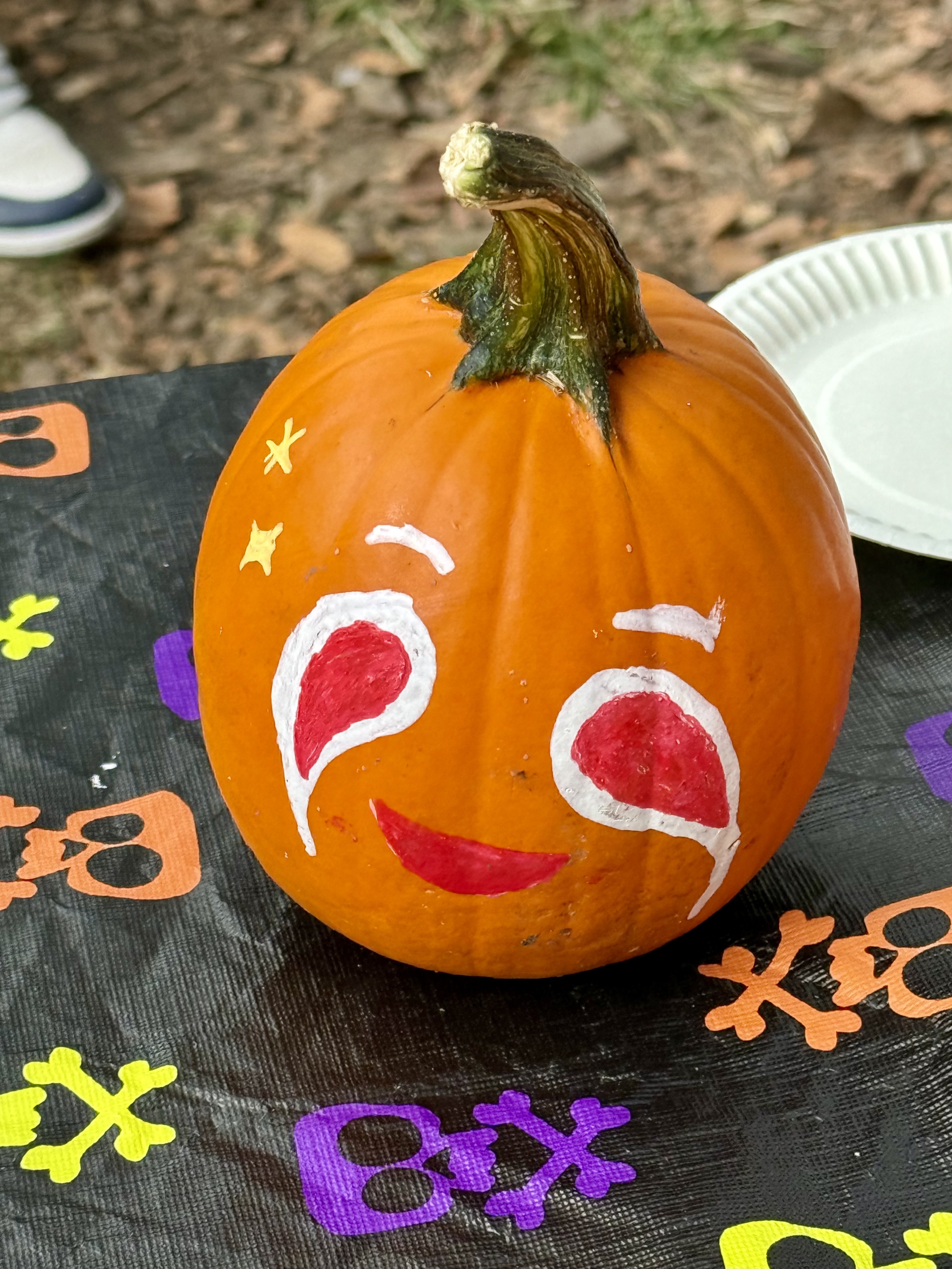
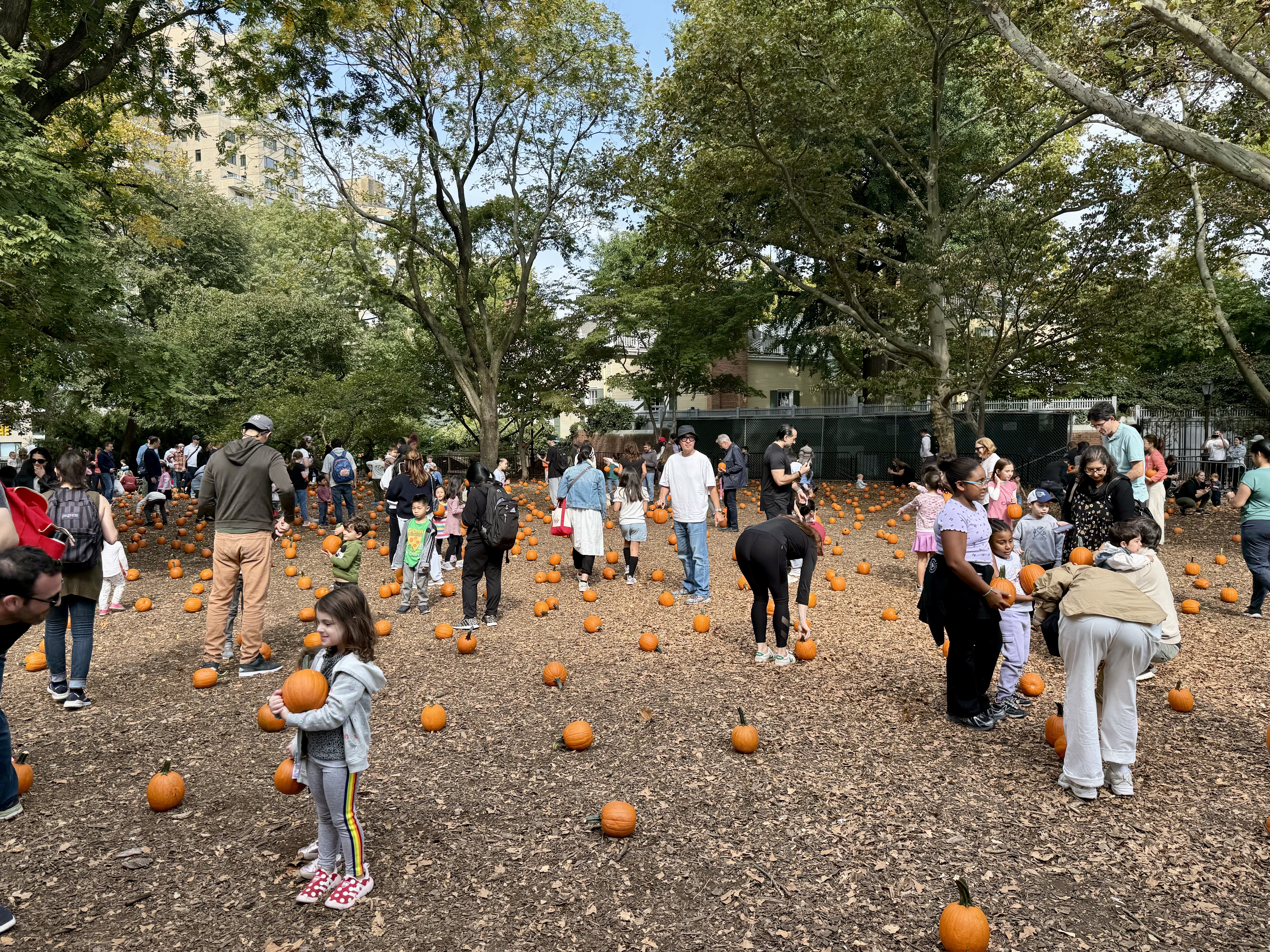
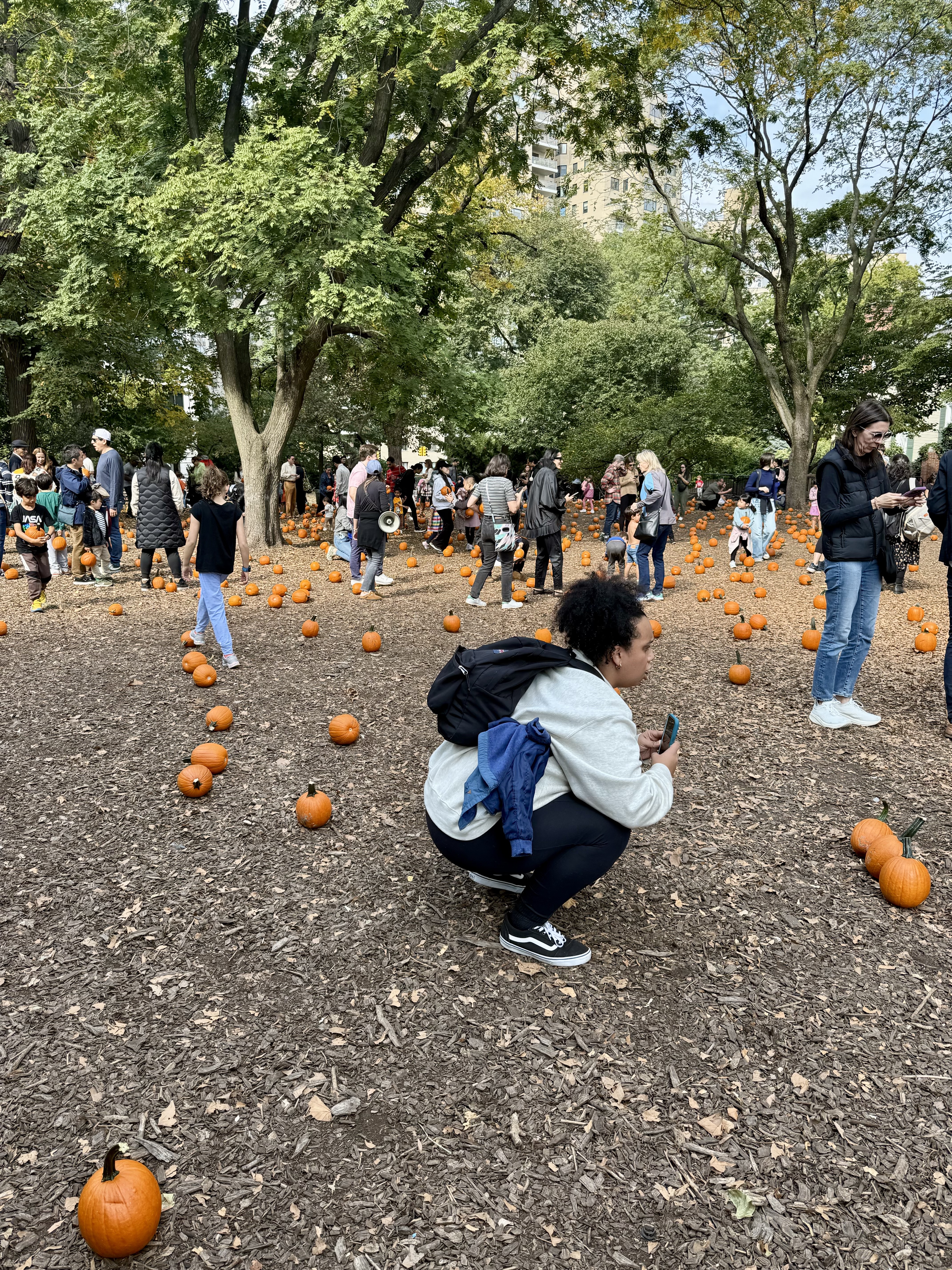
The highlight of the Harvest Festival is a gigantic pumpkin patch created on the lawn next to Gracie Mansion. Every child that attends can select a pumpkin and take it home at no cost.

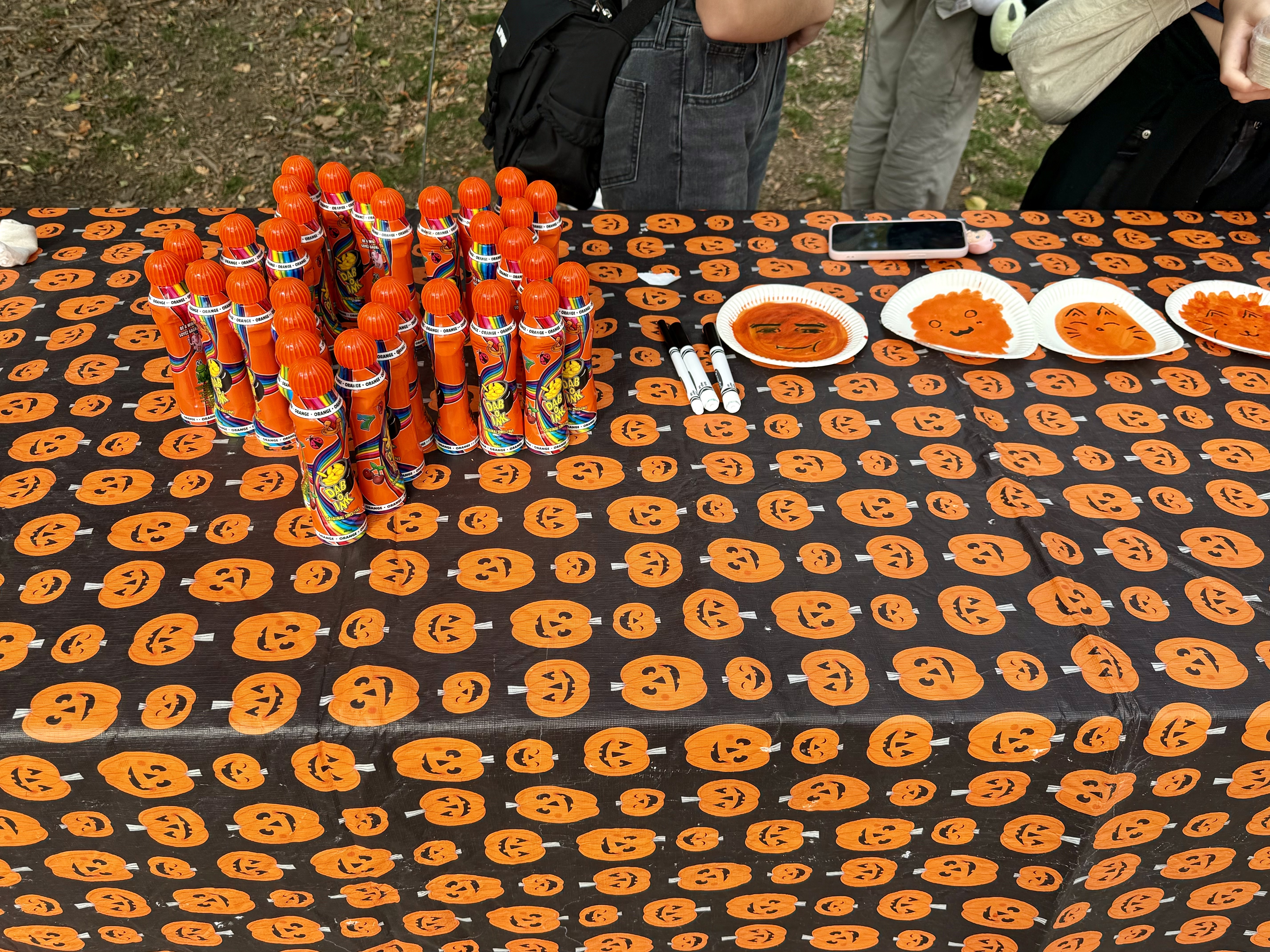
Surrounding the temporary pumpkin patch, multiple tables are set up with various ways for children to decorate their pumpkin once they select it.

When the ropes are dropped (this year, at 1PM), there is a bit of enjoyable chaos and mayhem, but even toddlers seemed to be able to go in and select a pumpkin without being trampled by larger kids.

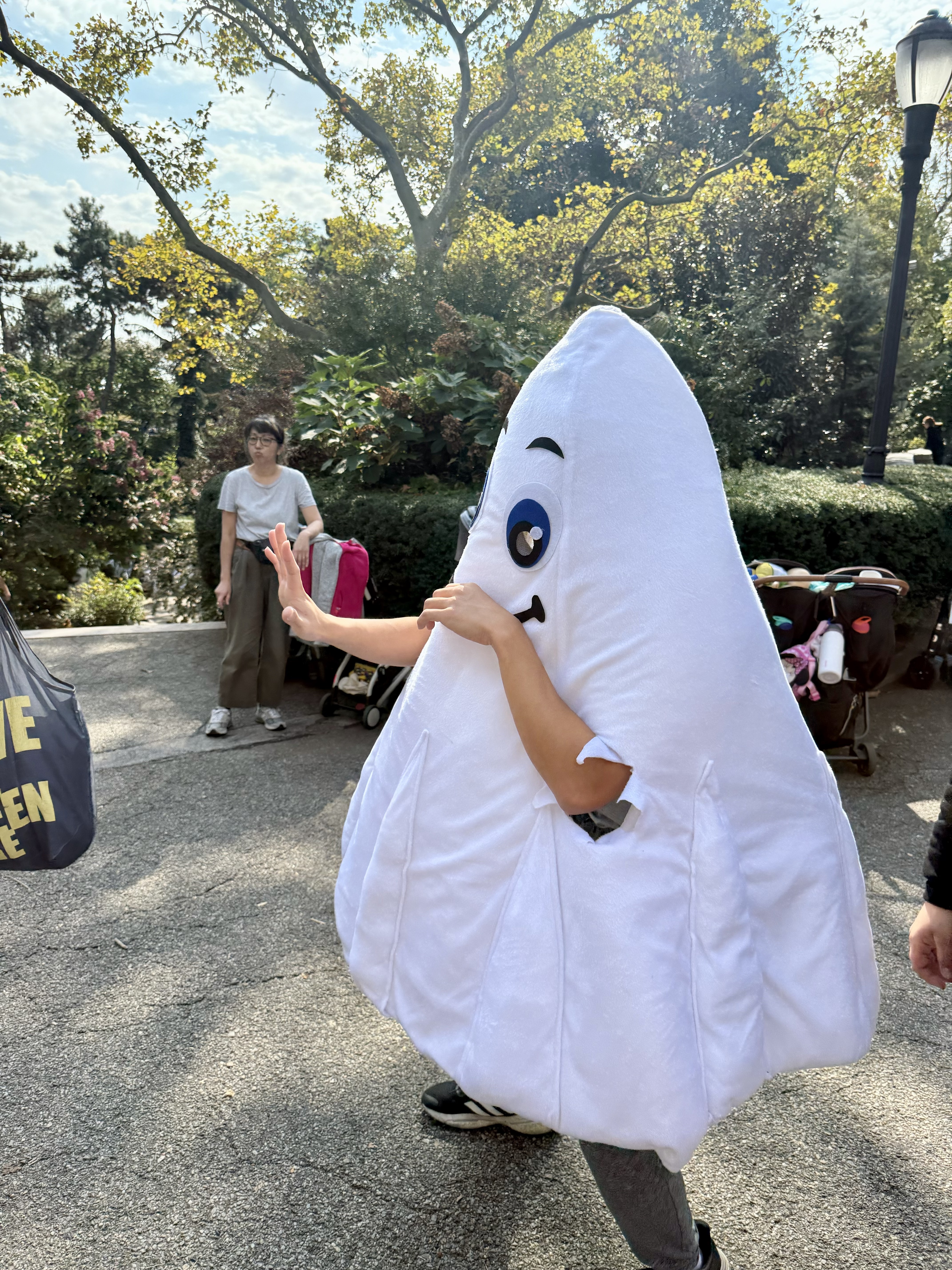
Near the pumpkin patch and decorating tables, there were friendly costumed characters and live music (Nice Brass, see a short video of them playing at the event here).

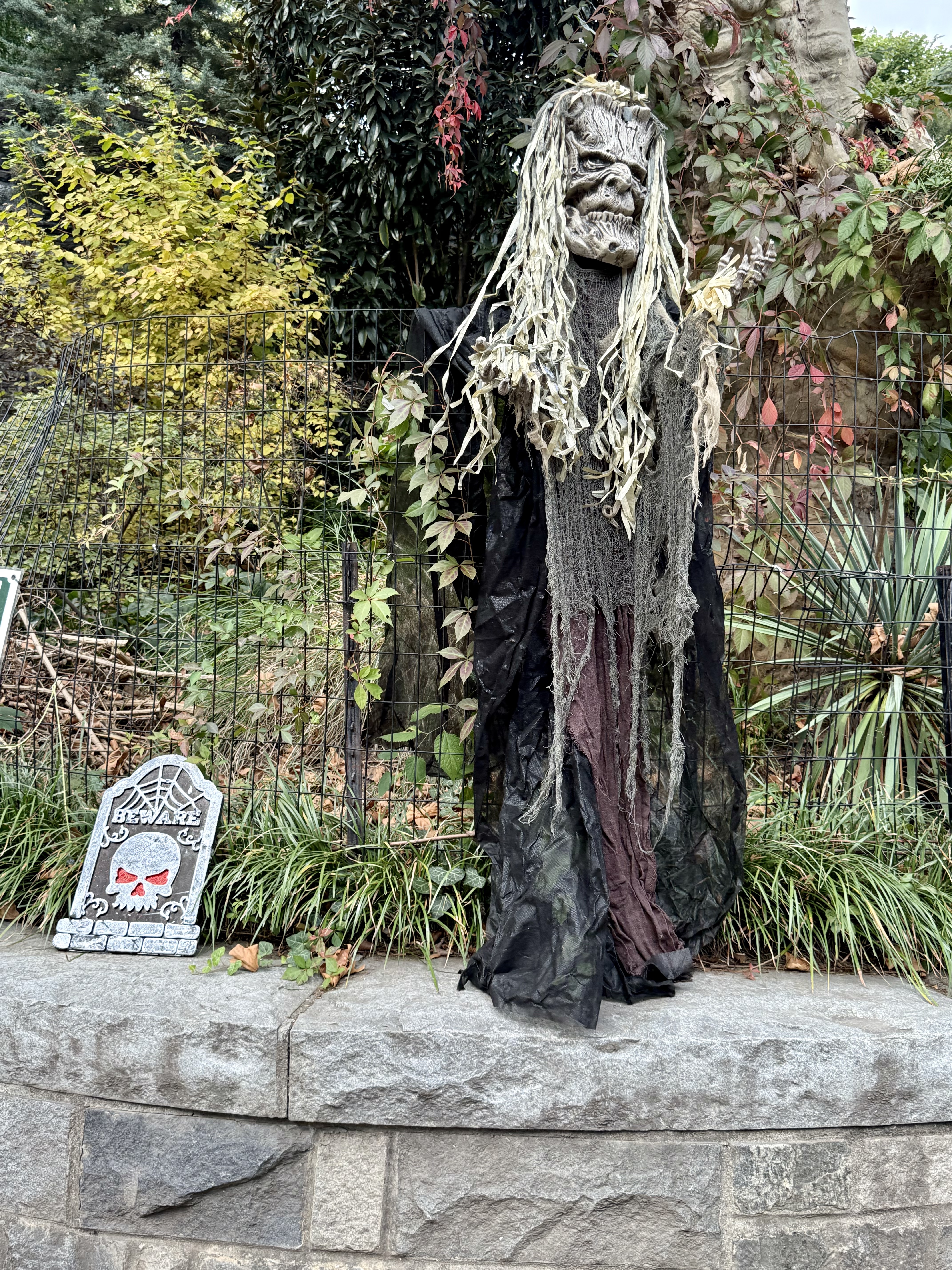
A really nice touch is that the scarier decorations are all located in a nearby area but one that you can’t see unless you choose to go there – perfect for those with young or easily frightened children (or adults, for that matter!). For my video montage of the entire event, see my Instagram reel here.

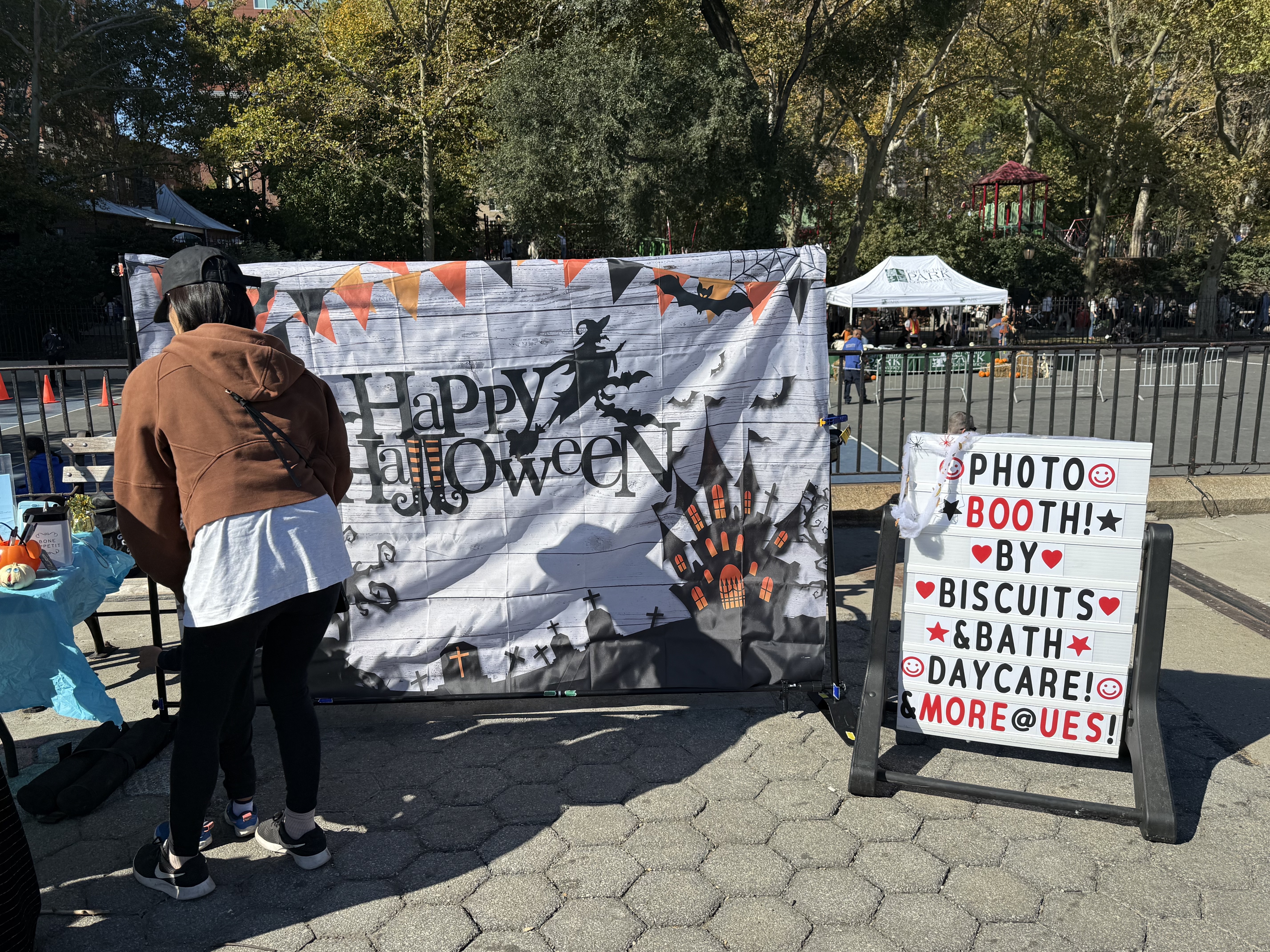
The following Sunday, Carl Schurz Park hosted the Halloween Howl.

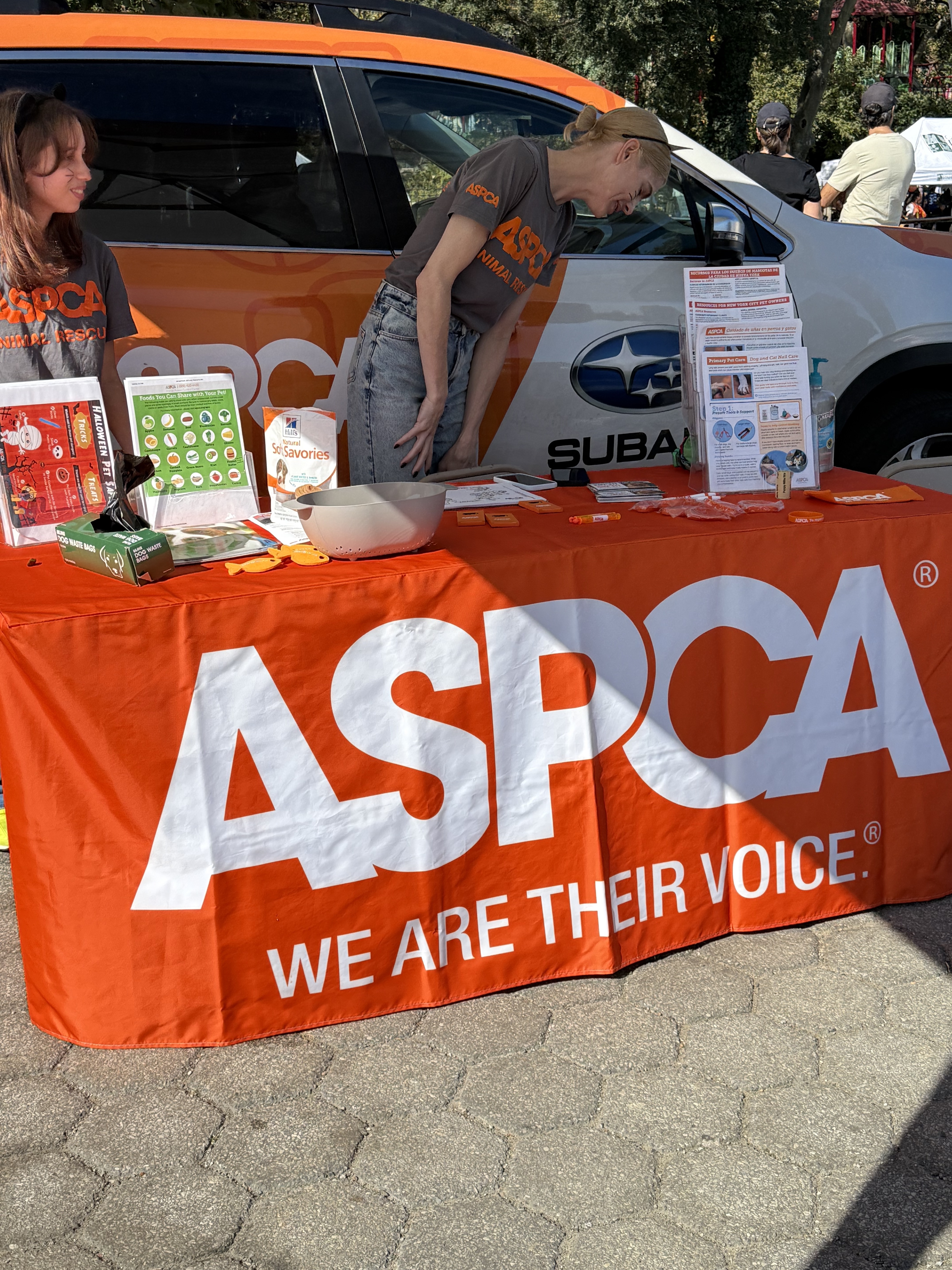
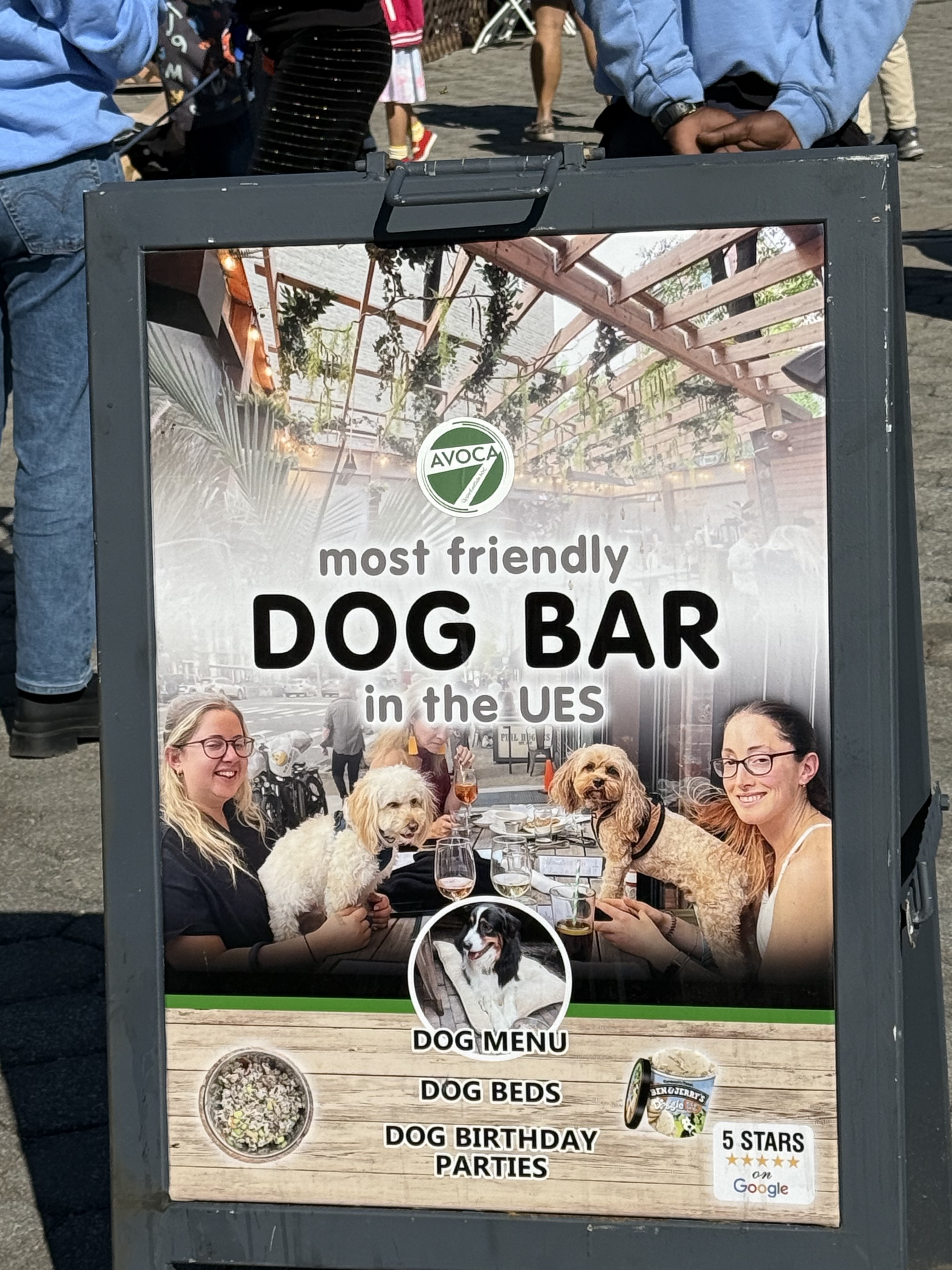
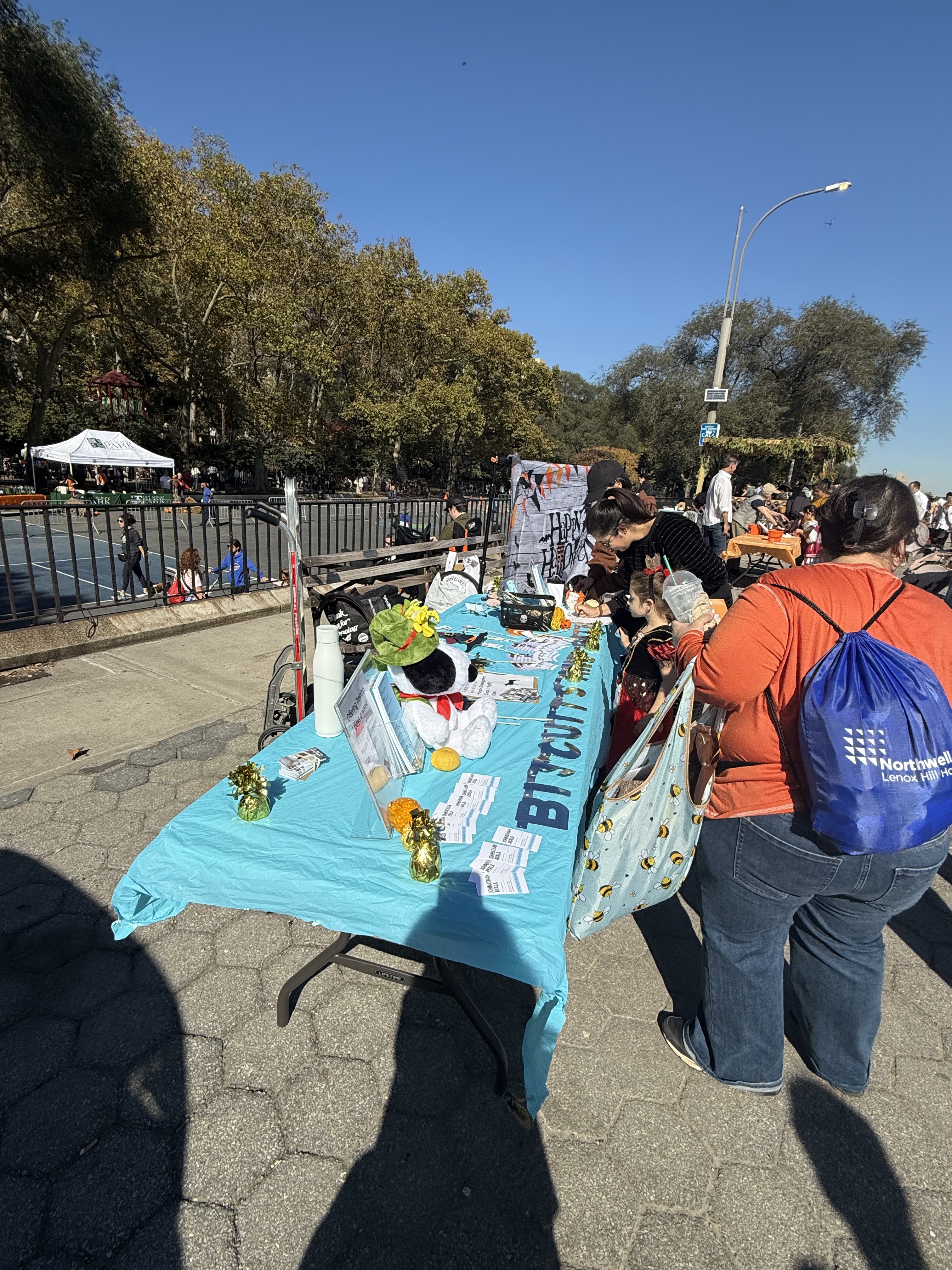
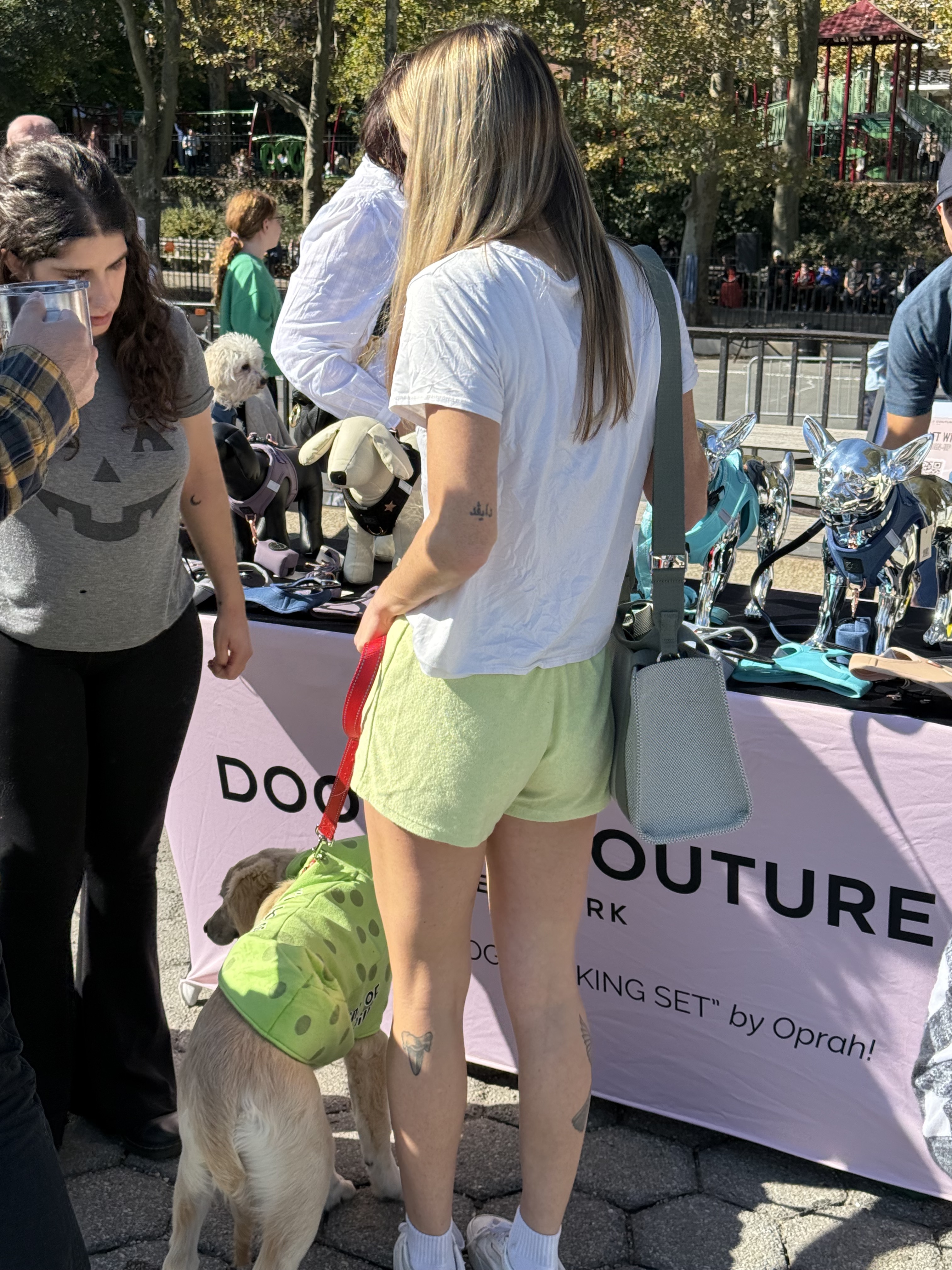
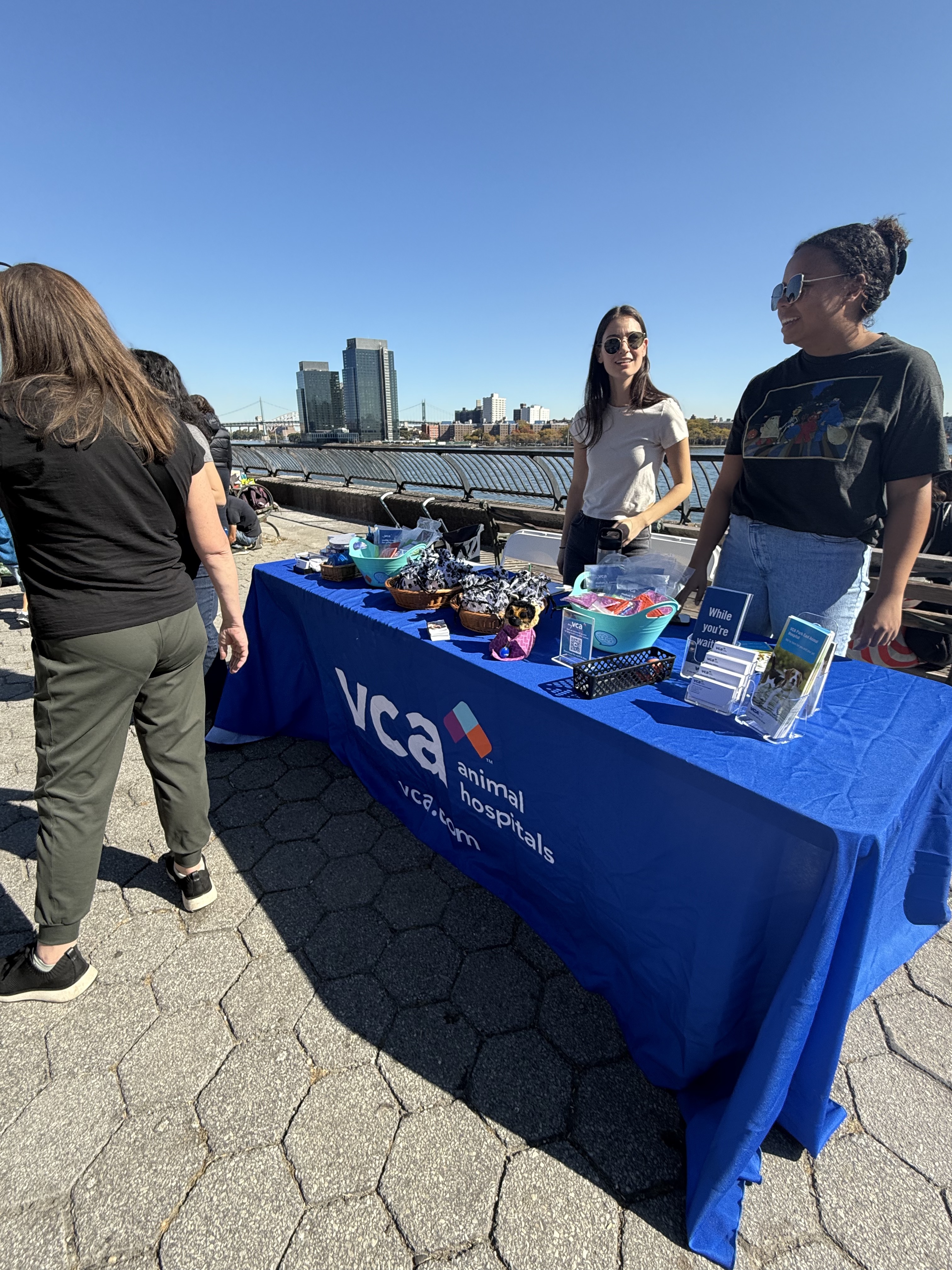
The Healthy Hound Vendor Fair started at 11AM, and was set up all along John Finley Walk next to the East River.

Text

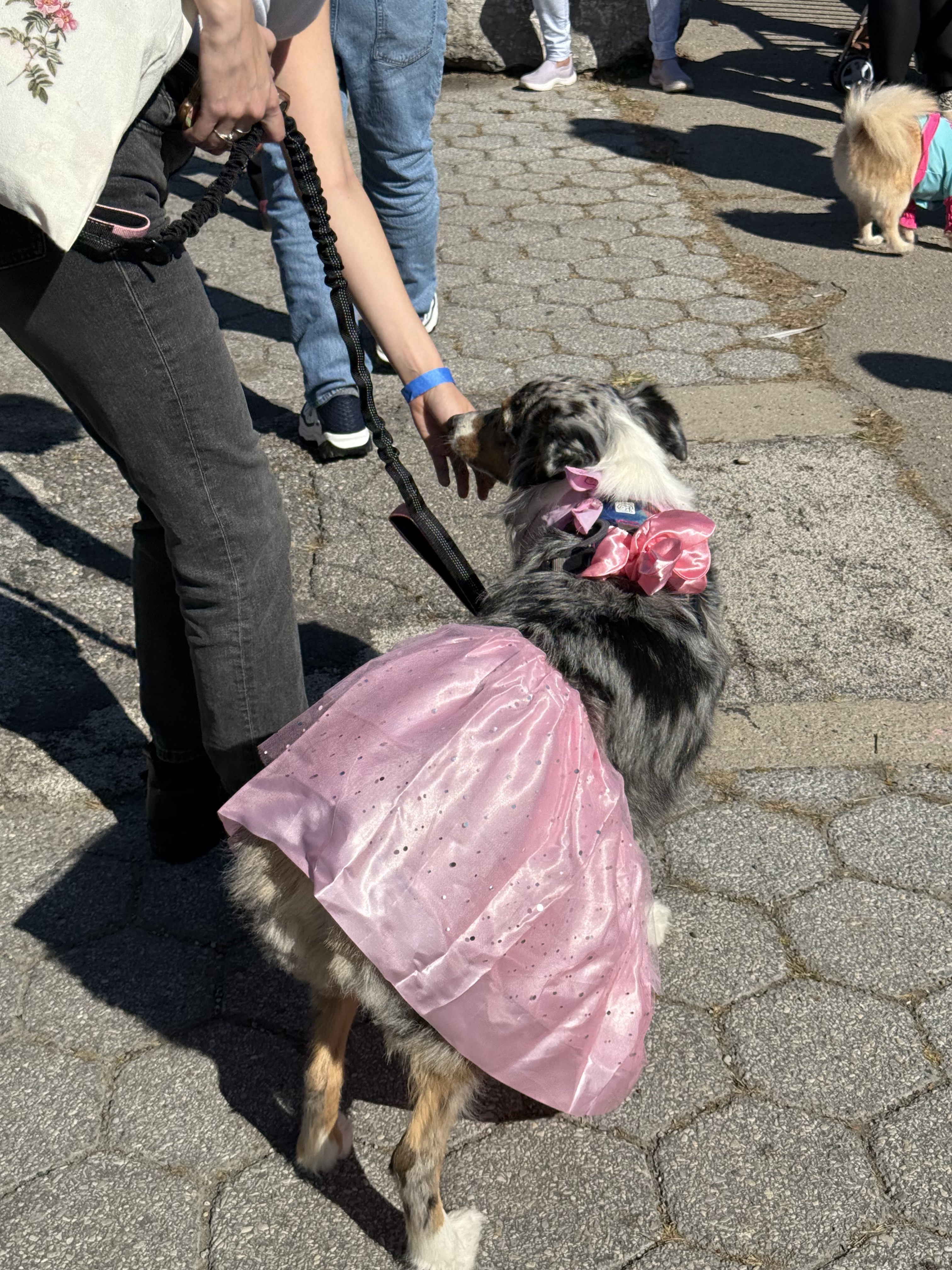
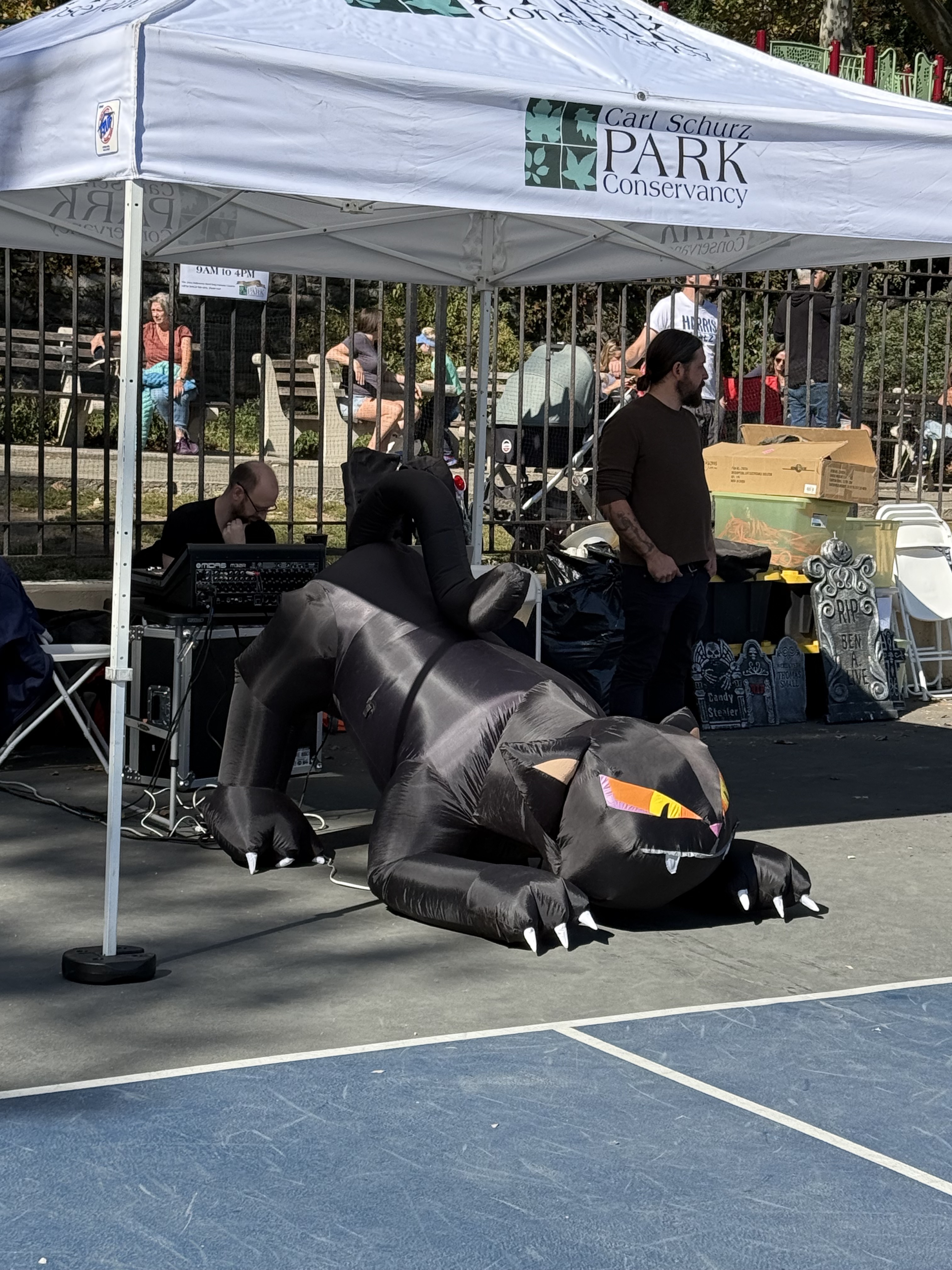
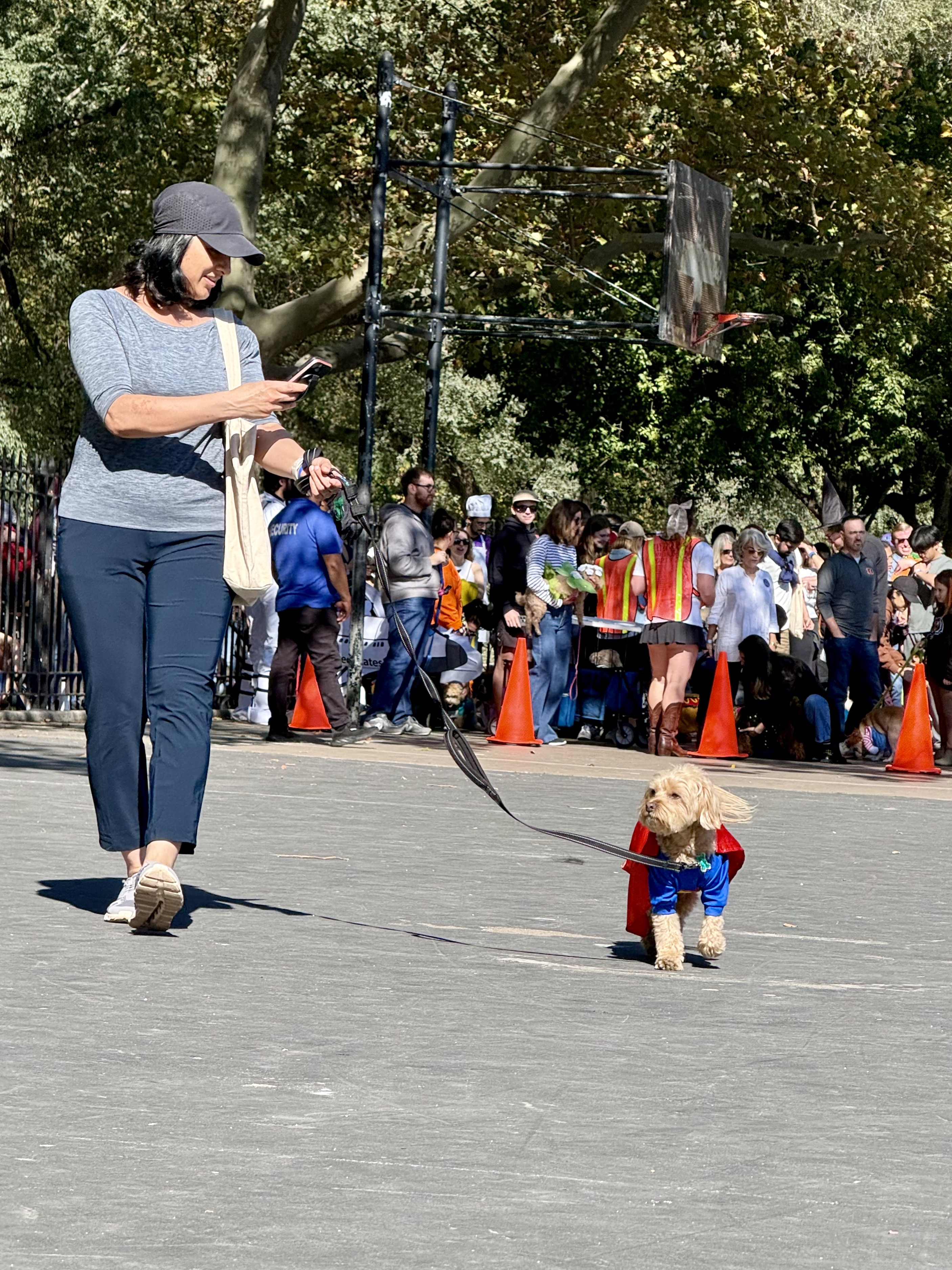
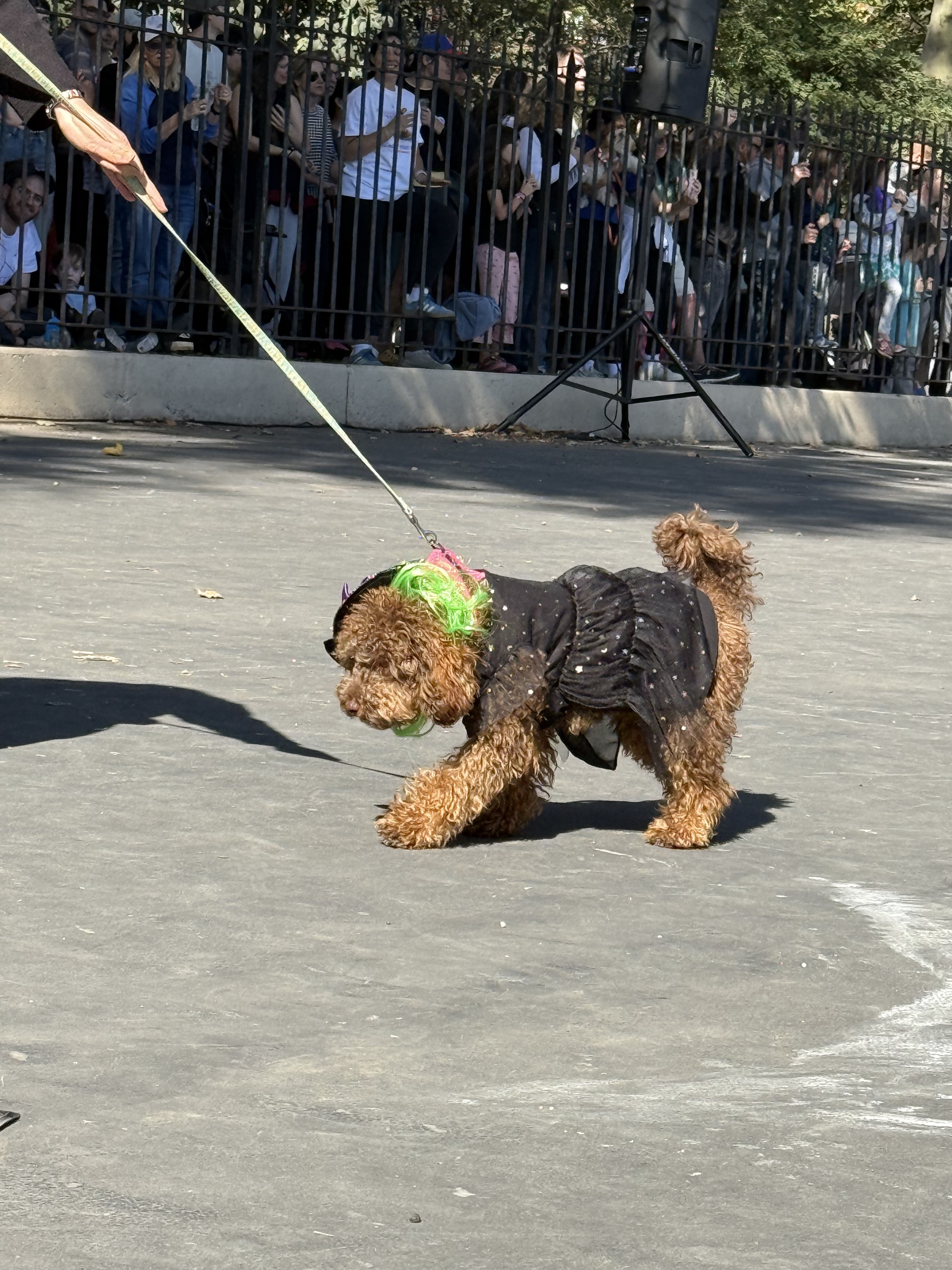
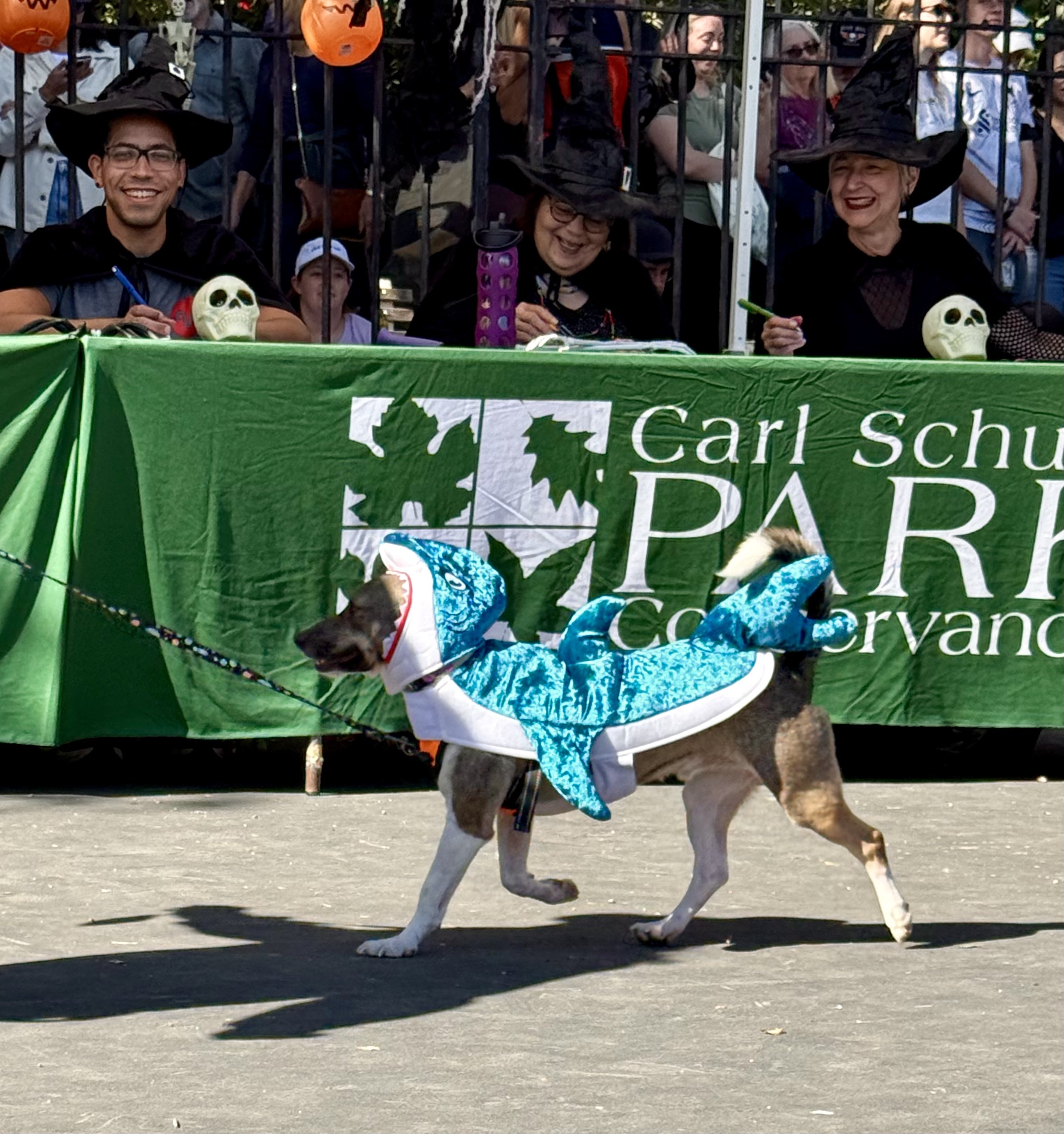
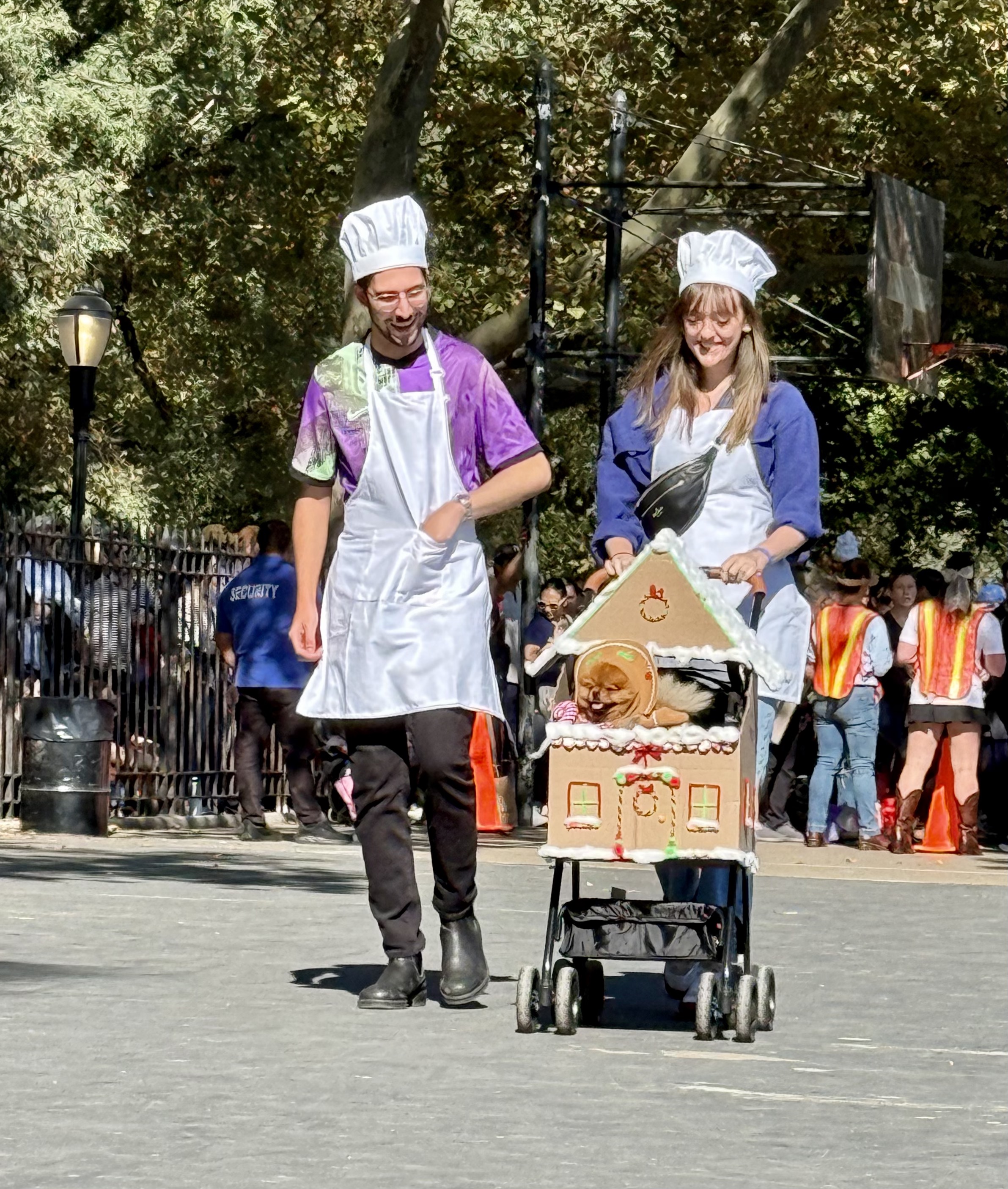
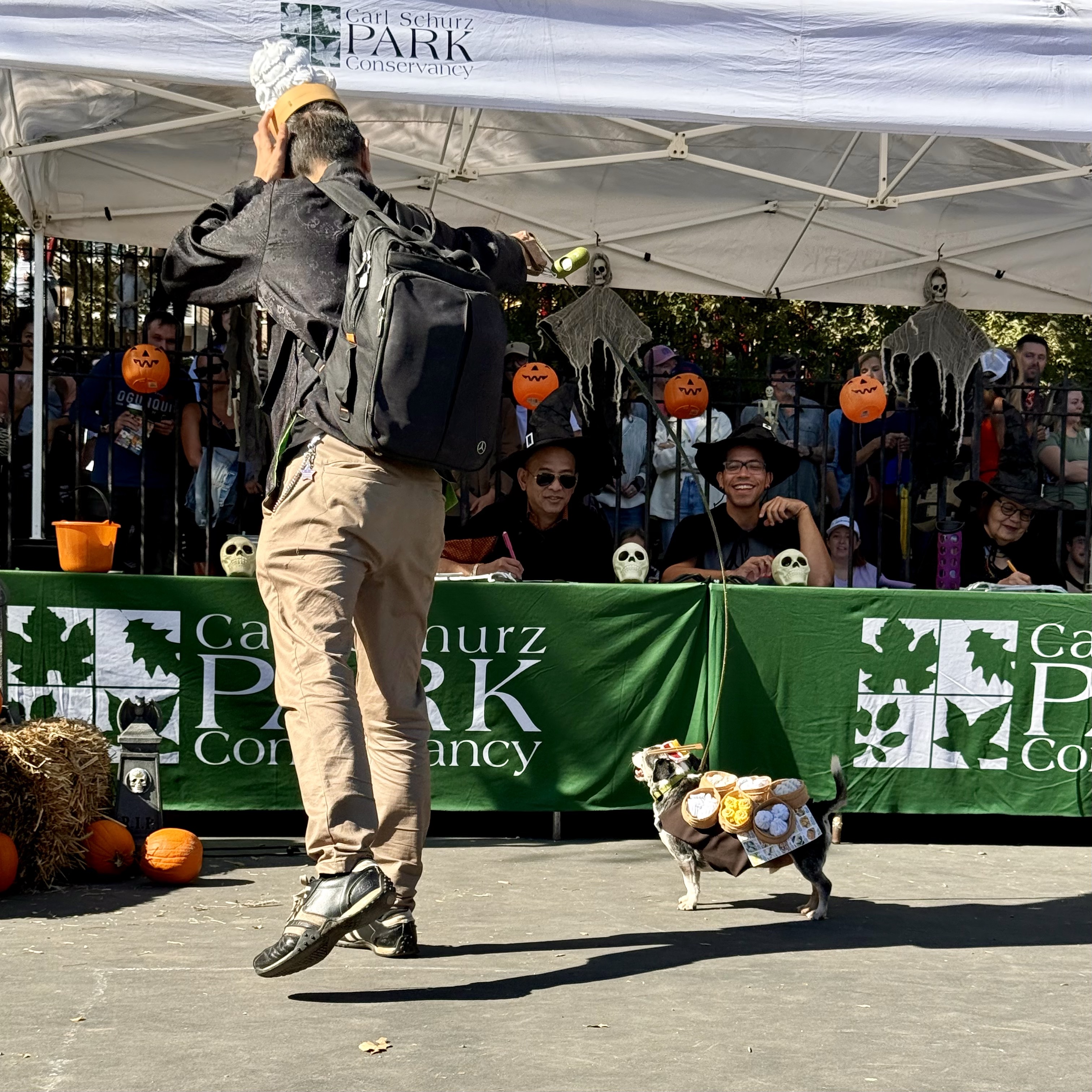
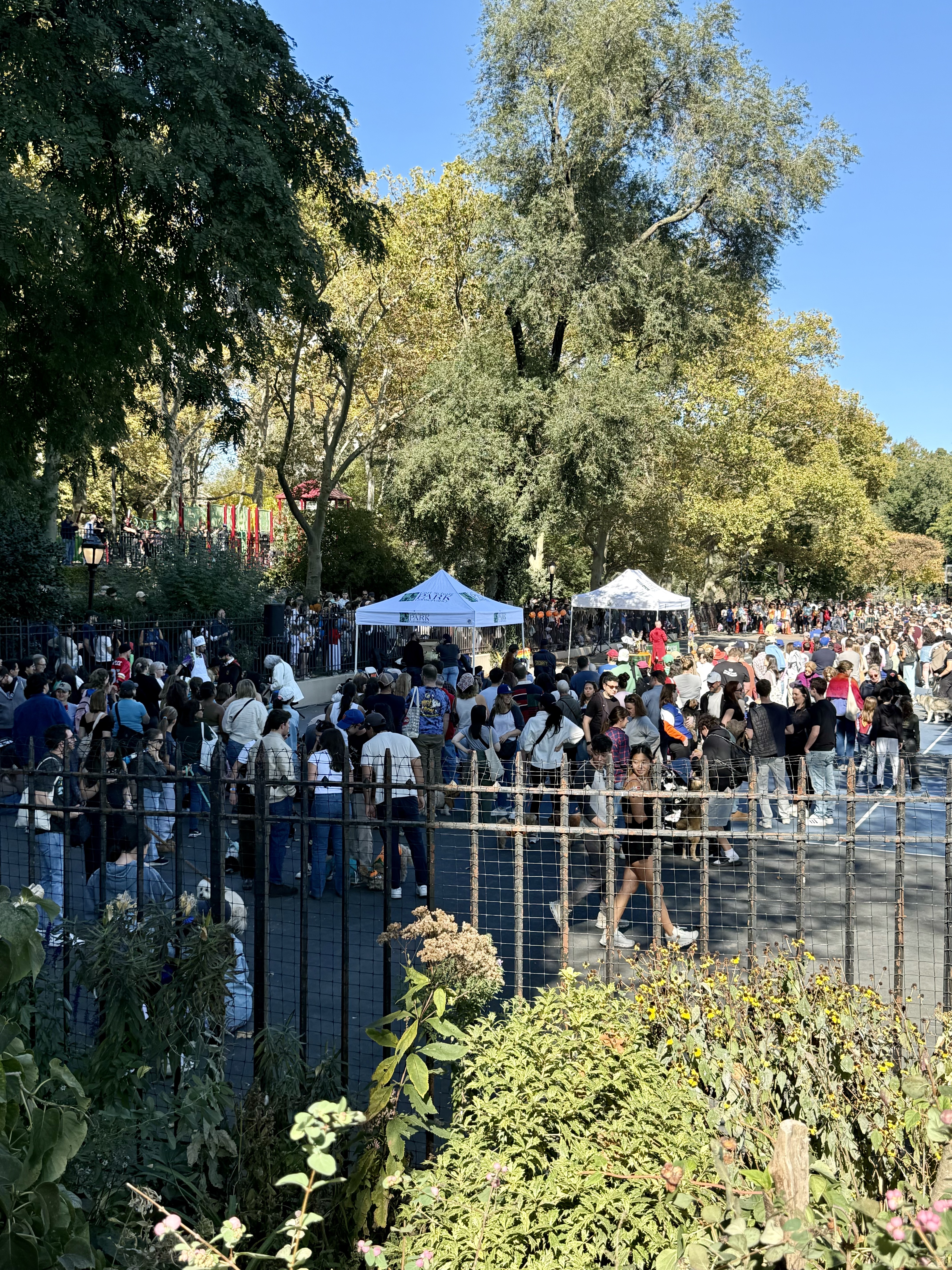
The canine Halloween costume contest was set up In the basketball court, and began at 1PM.

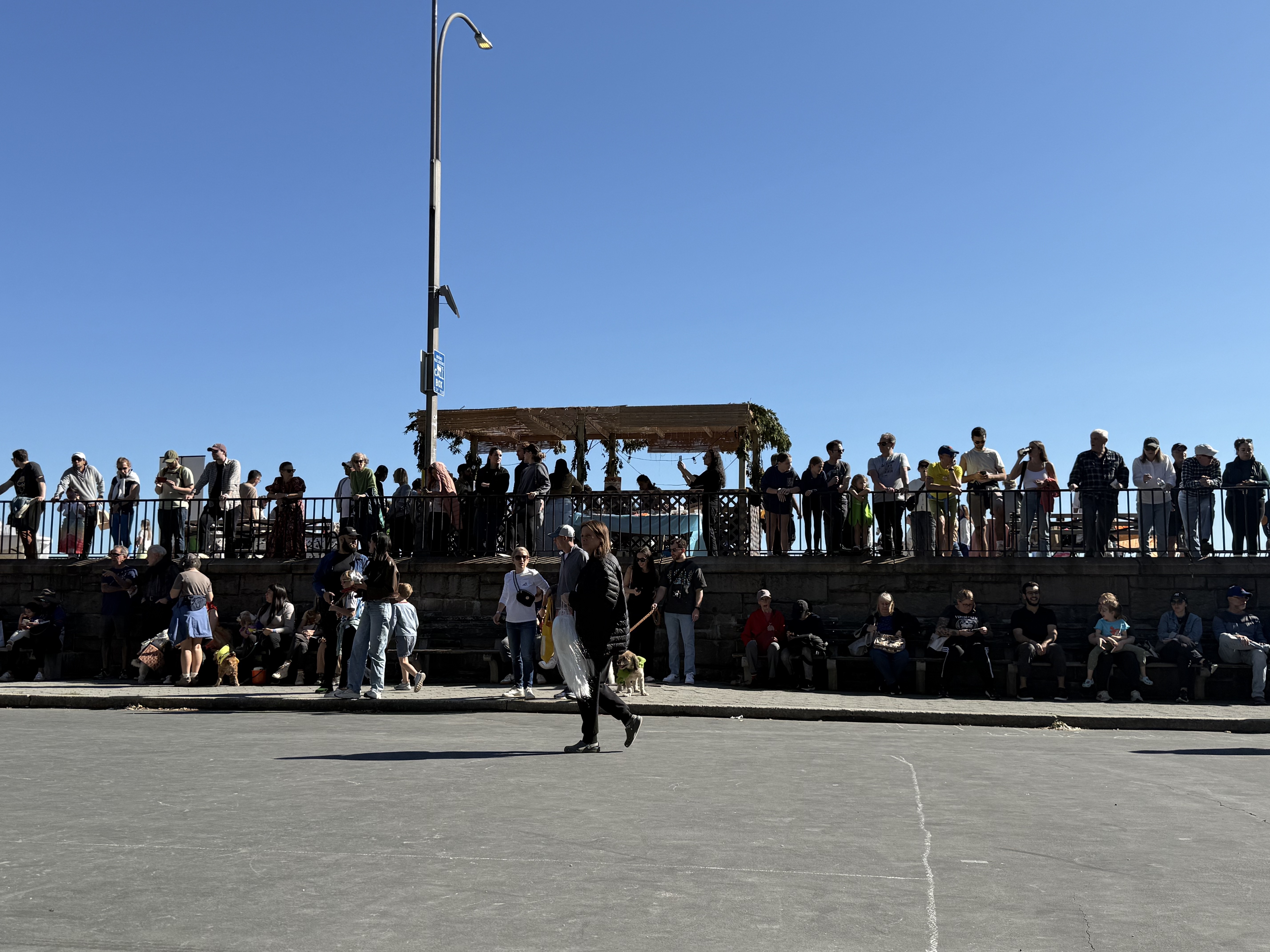
There were four categories: for small dogs, large dogs, children with their dogs, and groups. Judges were business owners from the Yorkville area, and spectators crowded all around the perimeter of the contest. You can see the video I made of the Halloween Howl here.

There are other events in Carl Schurz Park during the year – opportunities to help with planting, movies under the stars during the summer, a tree lighting in December – and these two October extravaganzas were delightful. But I would recommend visiting this little jewel of a park any time of the year. Hang out and watch the dogs play in either the big dog run or the little dog run. Stroll along the Promenade next to the East River and watch barges or even sailboats go past. You can continue south and connect eventually to the East Midtown Greenway. There’s a wonderful playground for little kids. I love Central Park, of course, but it’s not the only show in town! Check out Carl Schurz Park and let me know what you think.

A Brooklyn beach walk

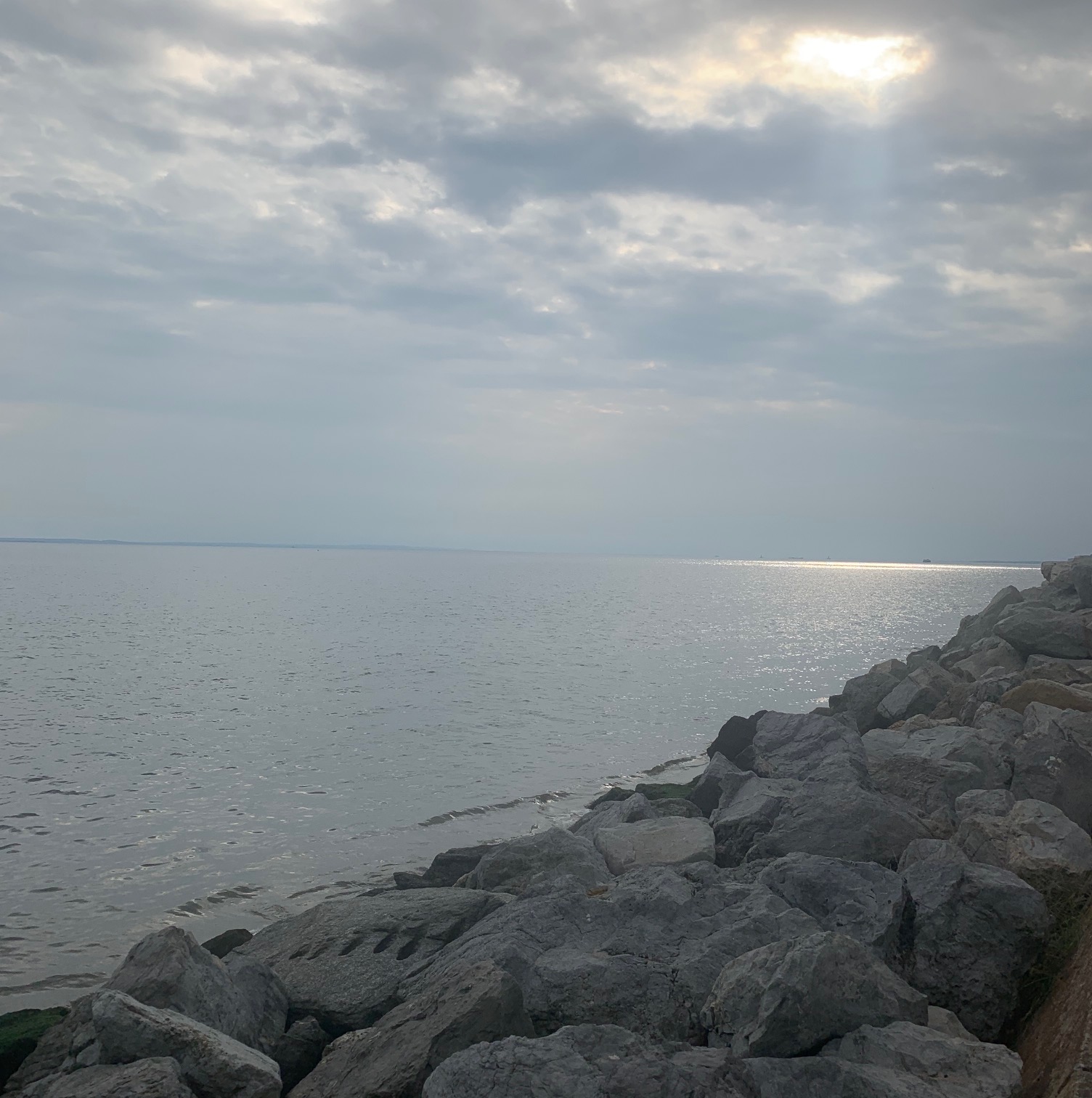
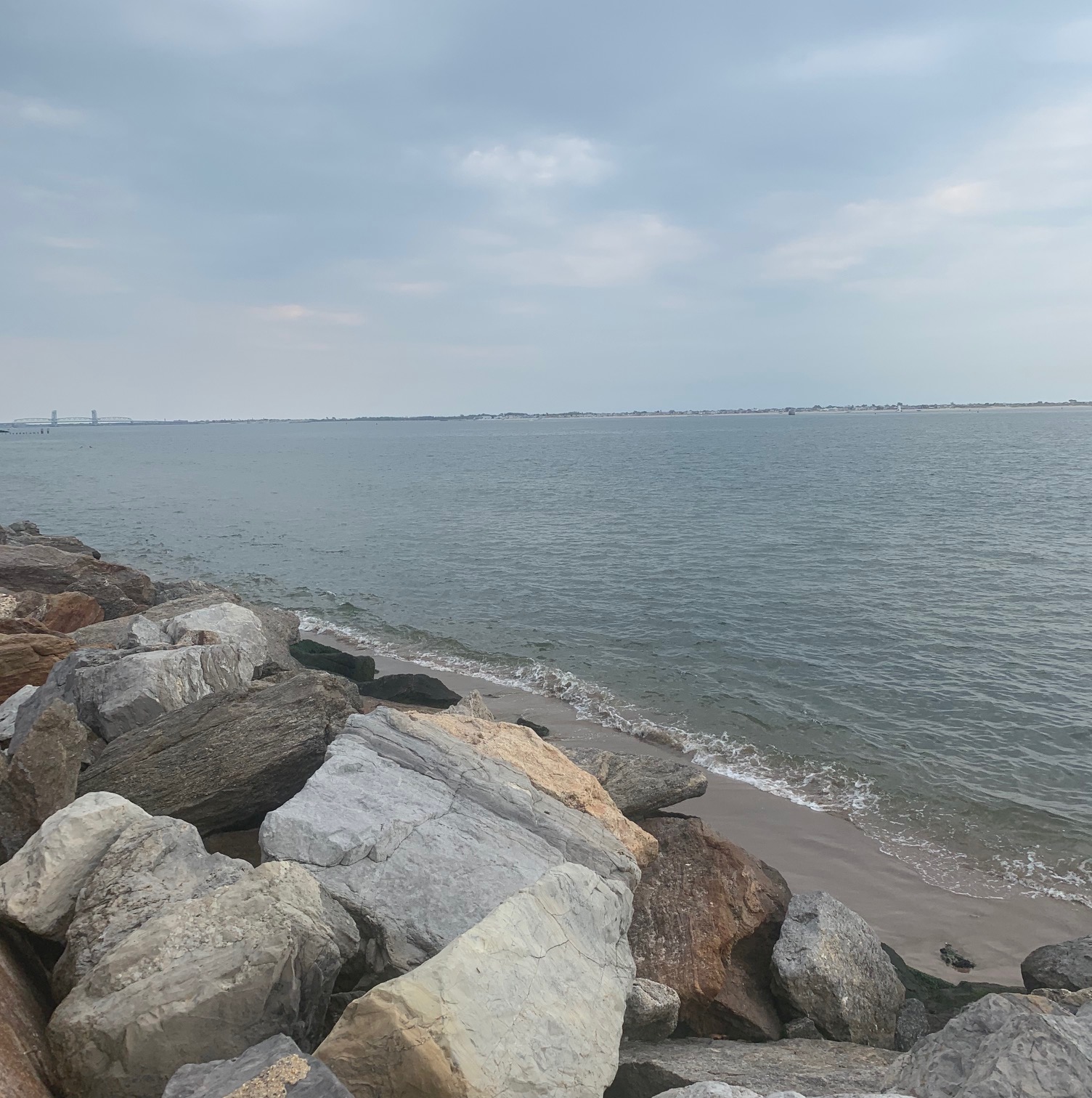
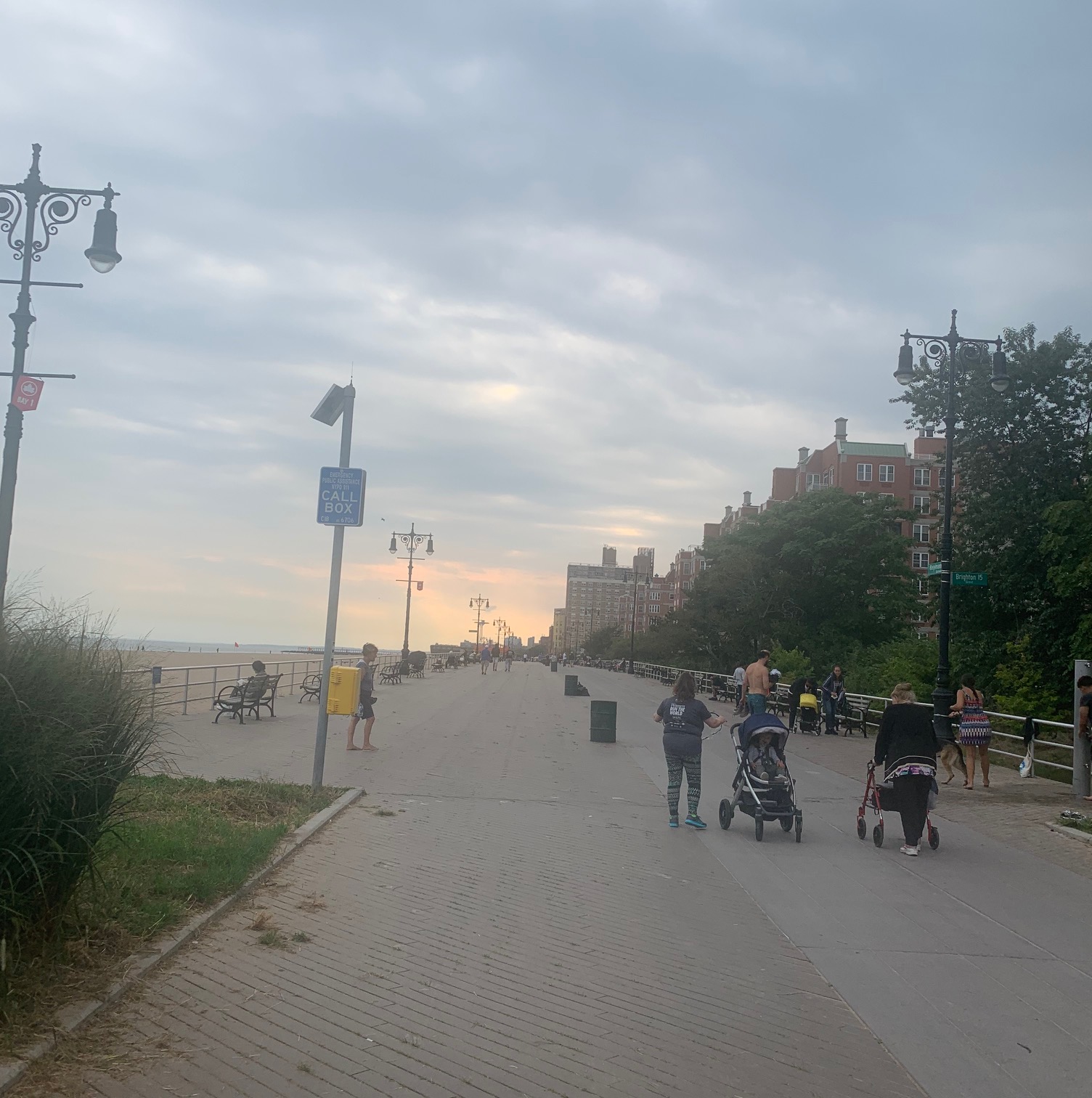
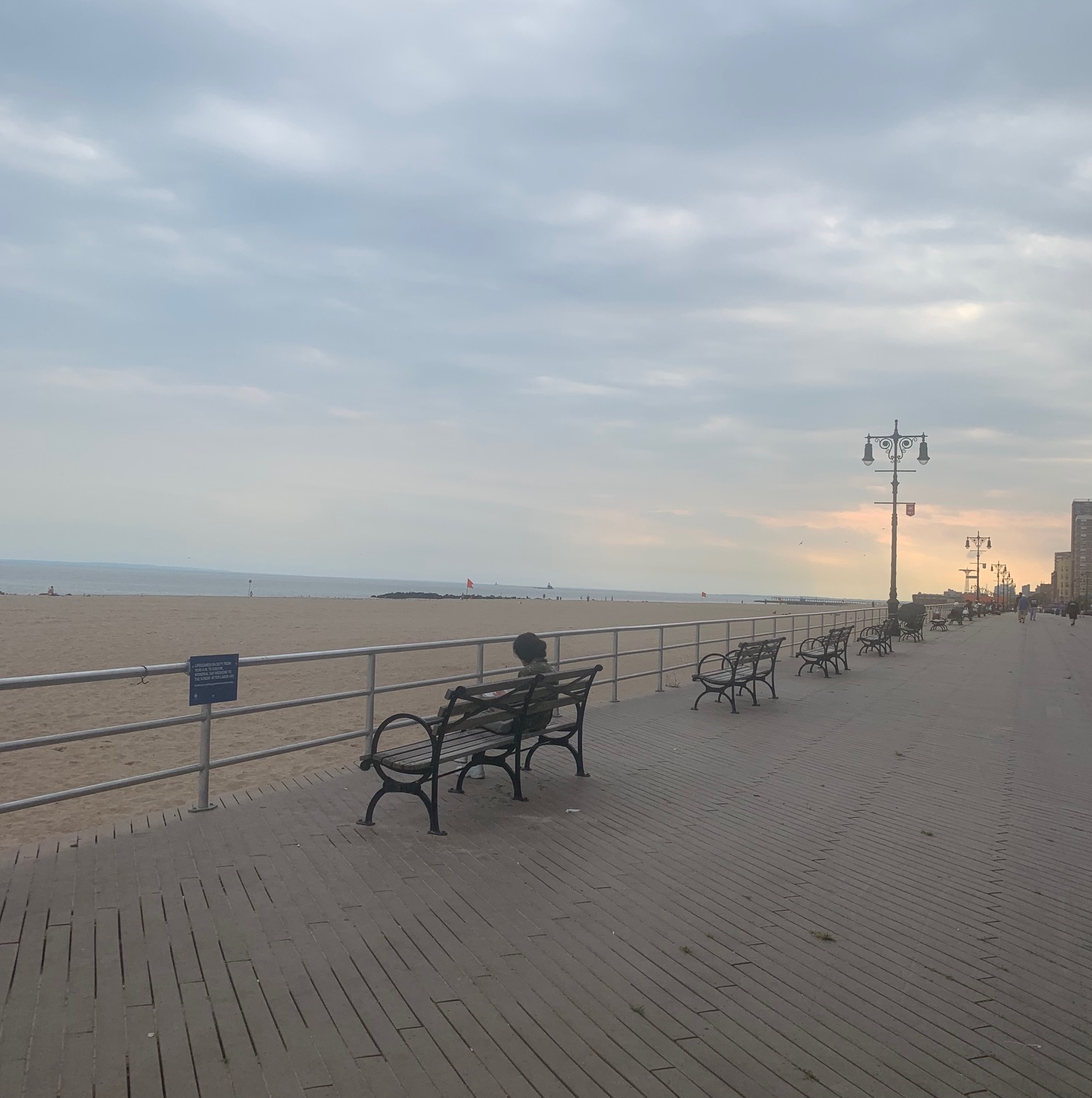
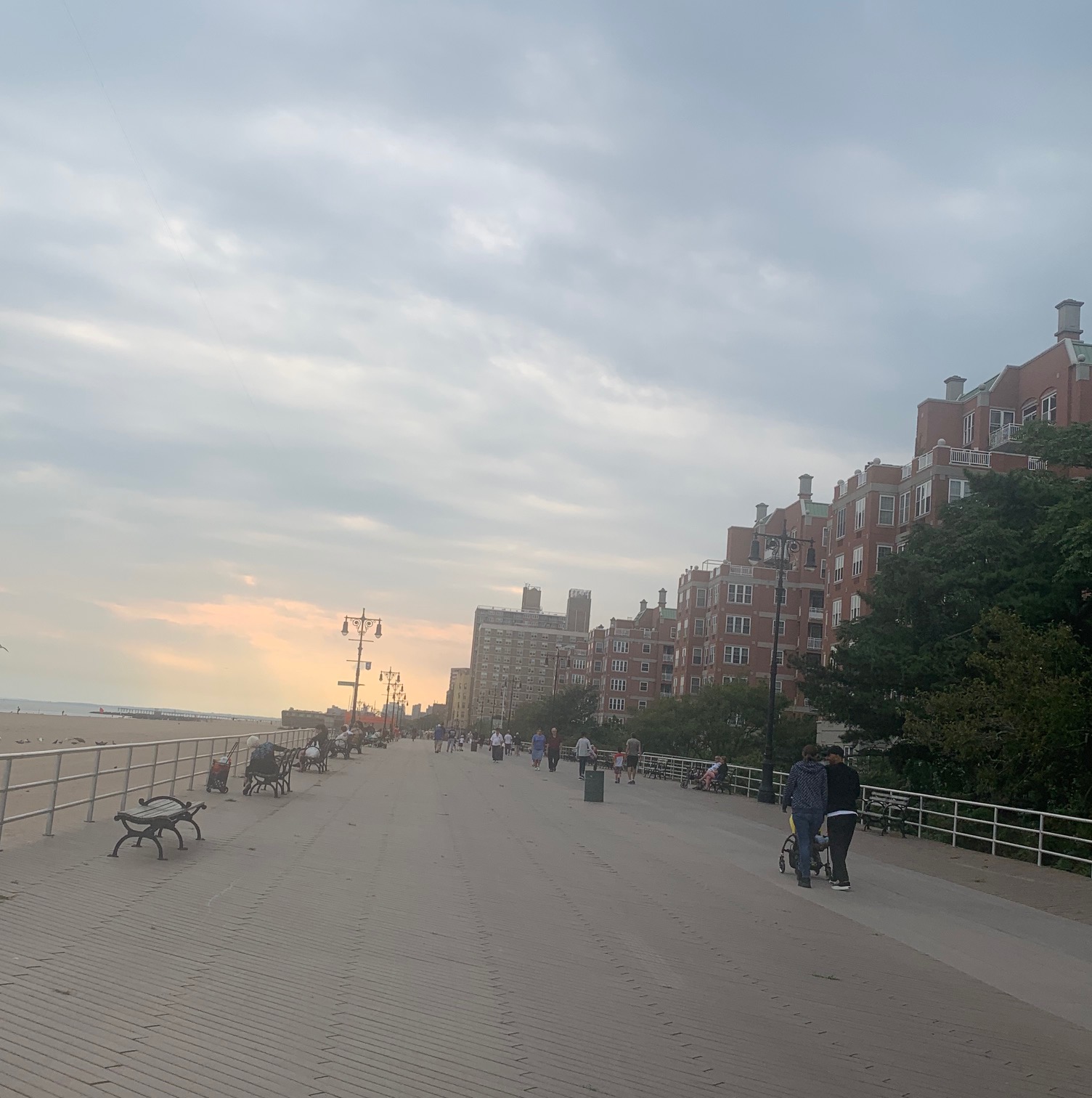
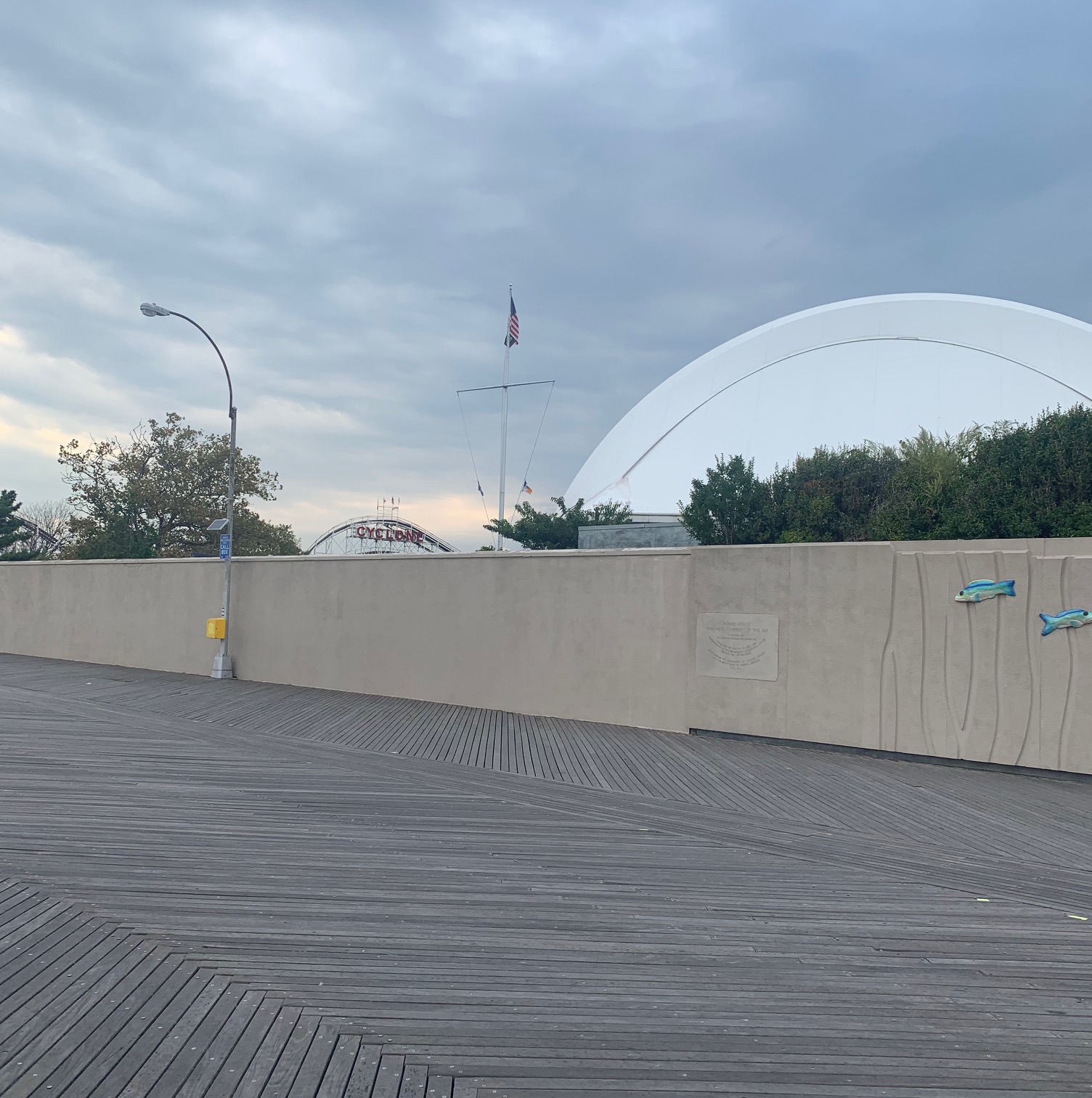
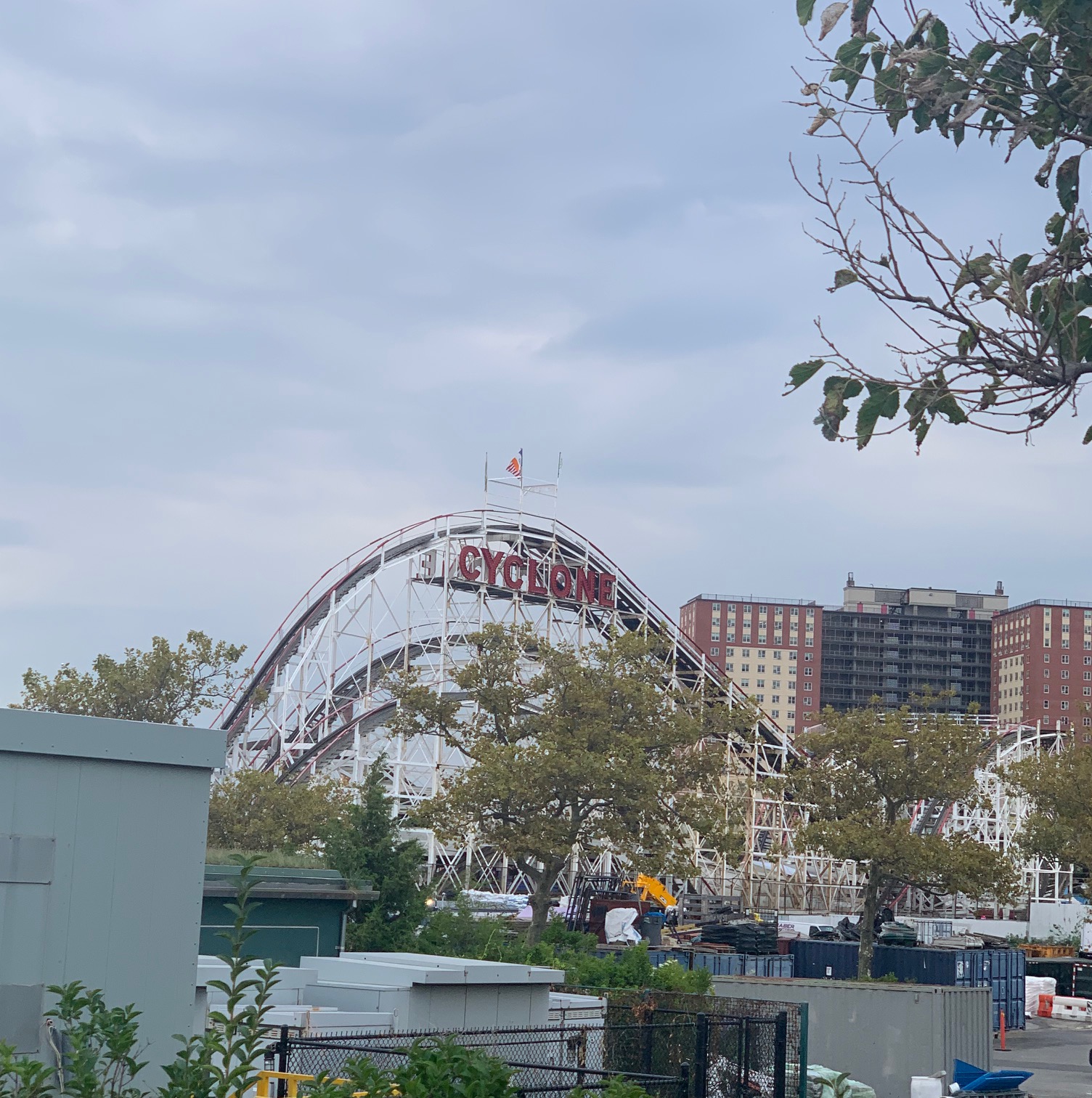
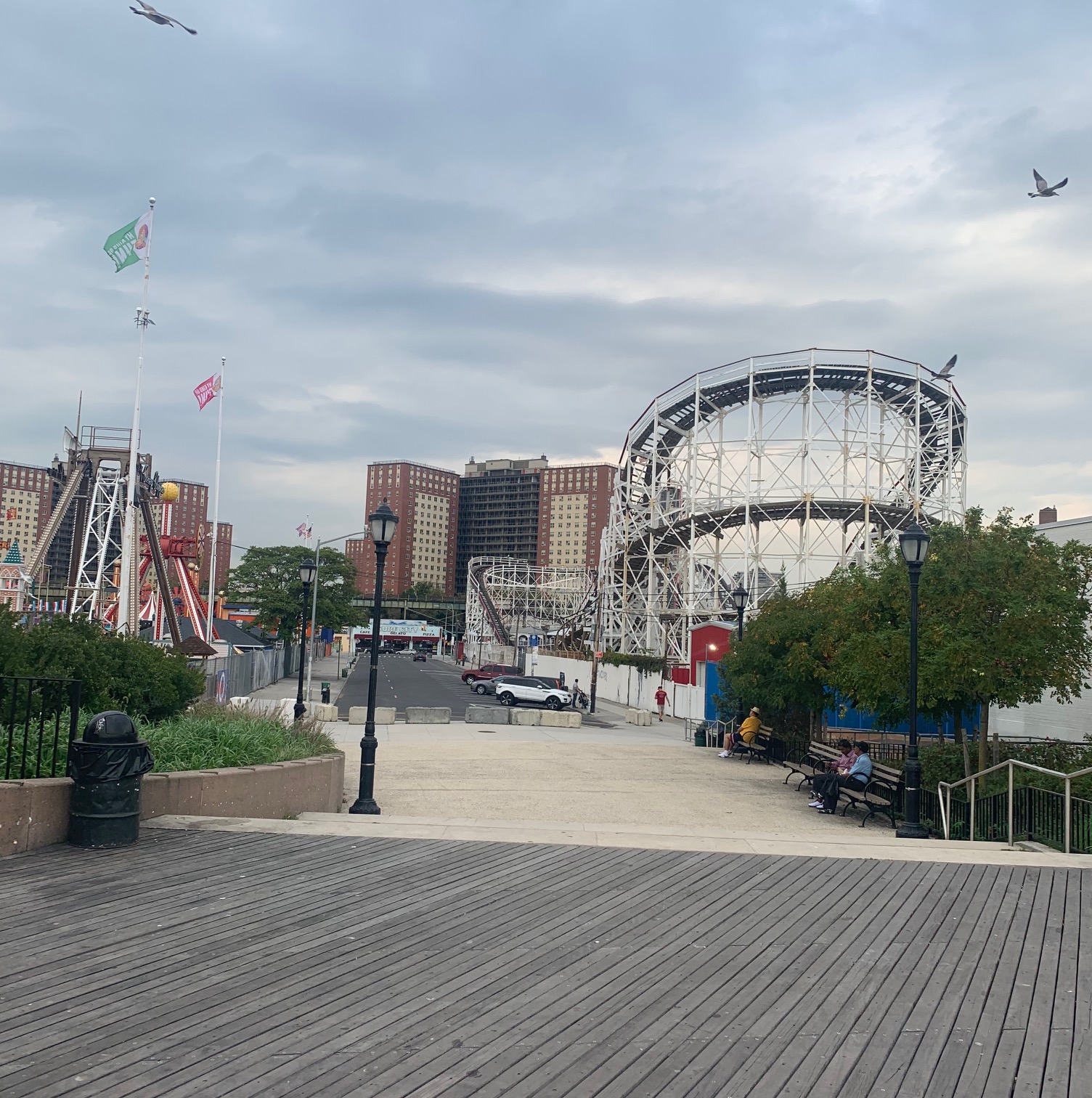
It’s been a hot summer in New York City, and many escape to the Jersey Shore or the Hamptons (or Martha’s Vineyard, Cape Cod, or Bar Harbor, for that matter) to find some cooling ocean breezes. However, we are fortunate that in NYC we have several beaches we can get to fairly easily via public transportation. I have previously blogged about taking the ferry to Rockaway Beach in Queens, and taking the subway to Coney Island. Recently though, I enjoyed a walk through three different beaches in Brooklyn, starting with Manhattan Beach, continuing to Brighton Beach, and then finishing up on Coney Island. Consider this a bit of a summer photo essay, and a reminder that there are always things to do in New York City.

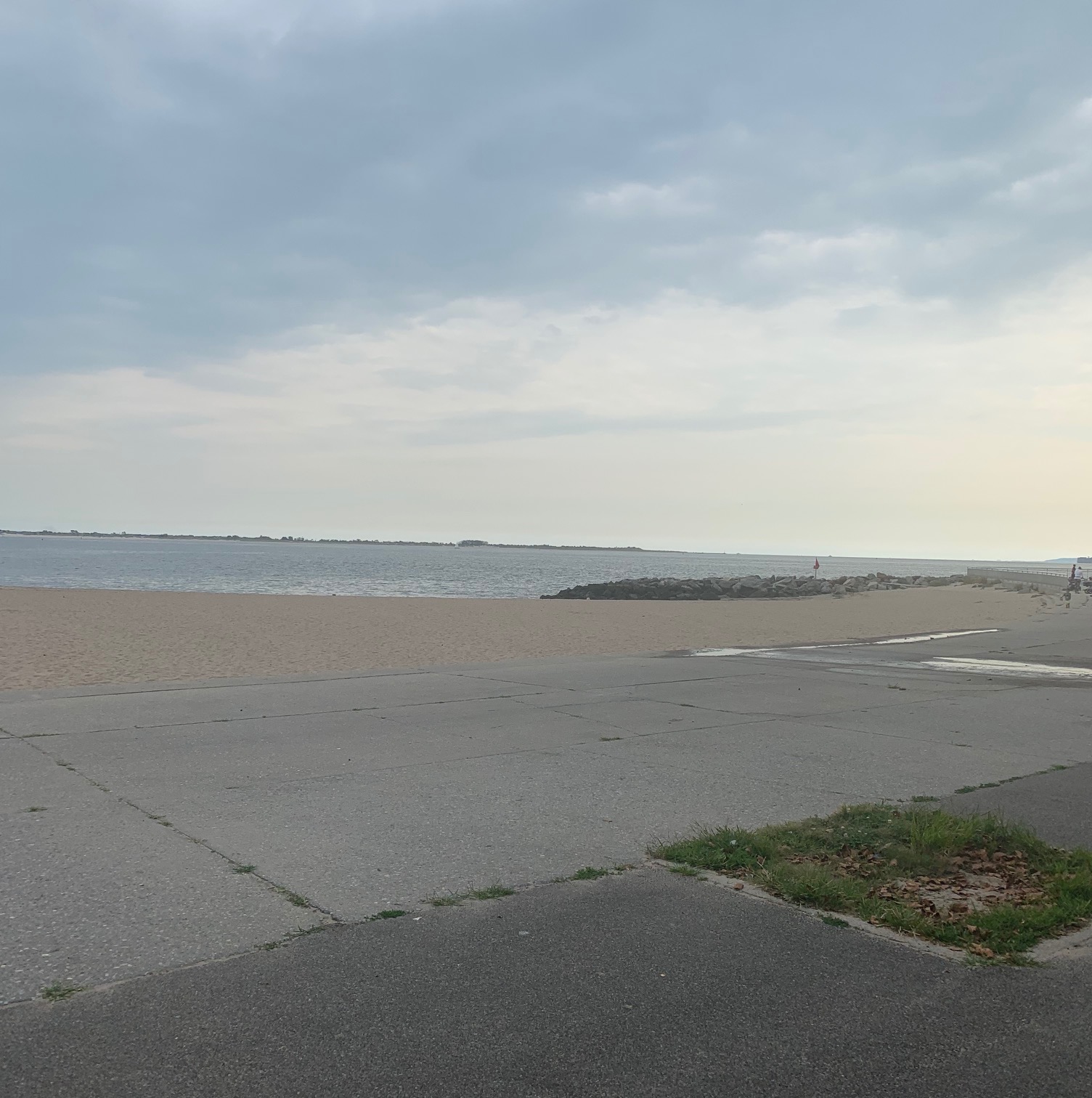
To get to Manhattan Beach, you can take the Q to the Brighton Beach stop, and then either take the B1 or B49 bus toward Sheepshead Bay, or walk about 20 minutes or so. Manhattan Beach looks across Jamaica Bay right at Rockaway Beach. Walk with the water to your left and you will be walking back toward Brighton Beach. You will get a boardwalk beginning in Brighton Beach, which then eventually joins the Coney Island boardwalk.

IMG_3722IMG_3723IMG_3724IMG_3725IMG_3726IMG_3727IMG_3728IMG_3729IMG_3730IMG_3731

IMG_3732IMG_3733IMG_3734IMG_3735IMG_3737IMG_3738IMG_3739IMG_3740IMG_3741IMG_3742

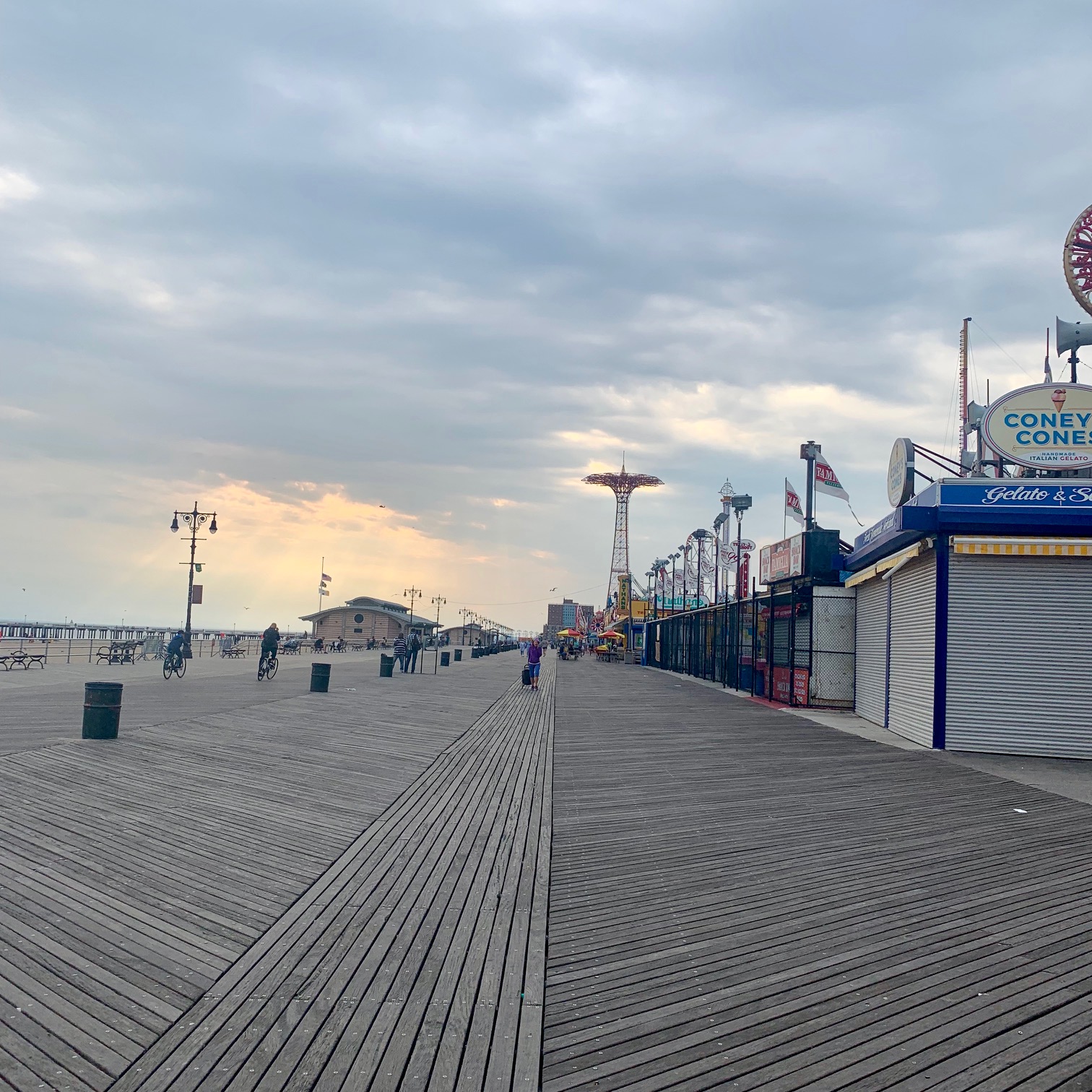
There are multiple public transportation options at Stillwell Avenue for getting back. If you don’t stop, the entire walk from Manhattan Beach to Coney Island Beach is about an hour. There are plenty of reasons to stop though – not only to enjoy the ocean but to have a bite to eat, or sit and people watch. I went late on a weekday when it had been threatening rain off and on, and the walk was quiet, but on a sunny summer day be prepared for it to be crowded. Hey, if you can spend the month of August somewhere cooler looking at some other beach, enjoy! But if you can’t, don’t forget all the beaches that are easy to get to within the city.

Field of Light NYC

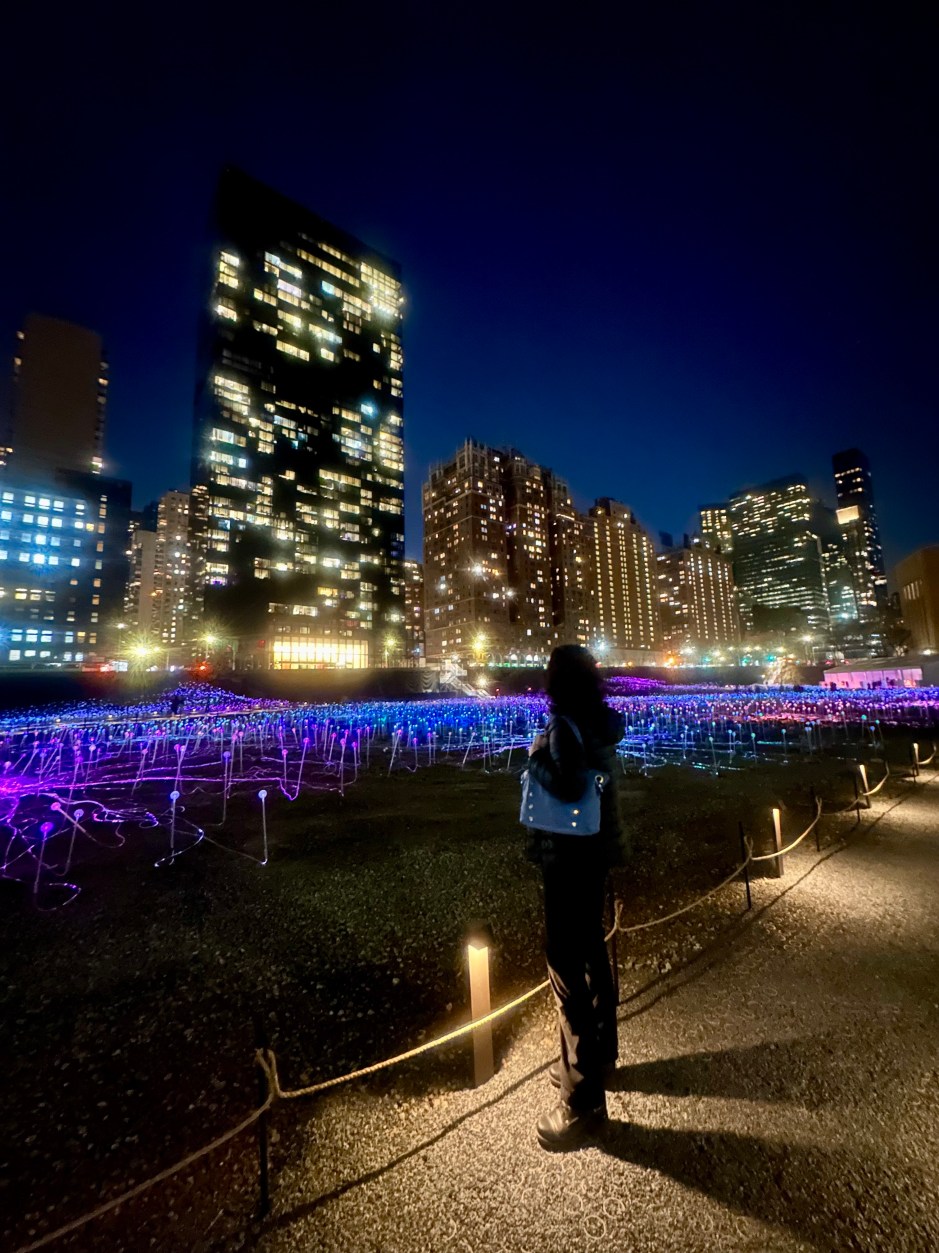
Walking around Manhattan’s East Side near the United Nations, there has always been a huge empty undeveloped (more about that later!) lot between E 38th and 41st Streets, from First Avenue to the East River. Beginning earlier this year, an enormous light installation has filled that space, Field of Light. I have been there twice and it is an unusual and charming experience.

The installation is free to enter, but you need to either have timed tickets or wait in a standby line. All of the procedures are pretty clear on their website. I have not seen long lines for standby, so even if you don’t have tickets I think your wait would be relatively short. You go through airport-style security, and then a few posters to set up the idea behind the installation and give information about the artist.

The artist, Bruce Munro, is drawn to creating large light installations, and this one in NYC is his largest to date. He notes that with buildings on three sides and the East River (and FDR Drive) on the other, the field is almost like a box filled with light.

From inside the installation, you can see the Chrysler Building, while the apartment buildings and the United Nations building surround the field, adding their own element of light.

Each bulb and stalk of light is interconnected to others in complicated tangles. The lights slowly change color over time as well.

There is a spider-web quality to the way the lighted strands snake around the bulbs on stalks.

This installation is sponsored by the Bjarke Ingels Group, which upon a little investigation, has plans for a megadevelopment in this space along the East River. A lot of it sounds good – affordable housing, a public park roughly the size of Bryant Park (the park behind the main branch of the New York Public Library), a museum (no idea what its focus would be), a dog run, play areas for children – but also a hotel … and an underground casino. See here for more details about the proposed development, which has to receive approval and licensing and hopes to by next year. The idea for the area shows a few tall buildings which would definitely impact views (and values) in Tudor City. Along with the proposed Times Square Caesar’s Palace Casino (see more about this here), and the question of whether a casino will be allowed in Hudson Yards, this casino raise the question of what NYC wants to be going forward. Proponents note the possibility of increased tourism and tax revenue, while opponents note that tourism based on gambling in places like Las Vegas and Atlantic City potentially creates a different atmosphere and clientele in those neighborhoods with a casino.

New York City is constantly changing, and there is a casino near JFK airport. I do wonder though what allowing casinos in Manhattan will change about the city. At this point New York State as announced that it will grant three licenses for NYC and/or it’s suburbs, and there is significant pushback against having a casino in a residential neighberhood. But . . . stay tuned! I enjoyed Field of Light but feel we need a little illumination (haha) about whether Manhattan wants casinos.

Porto and the Douro Valley

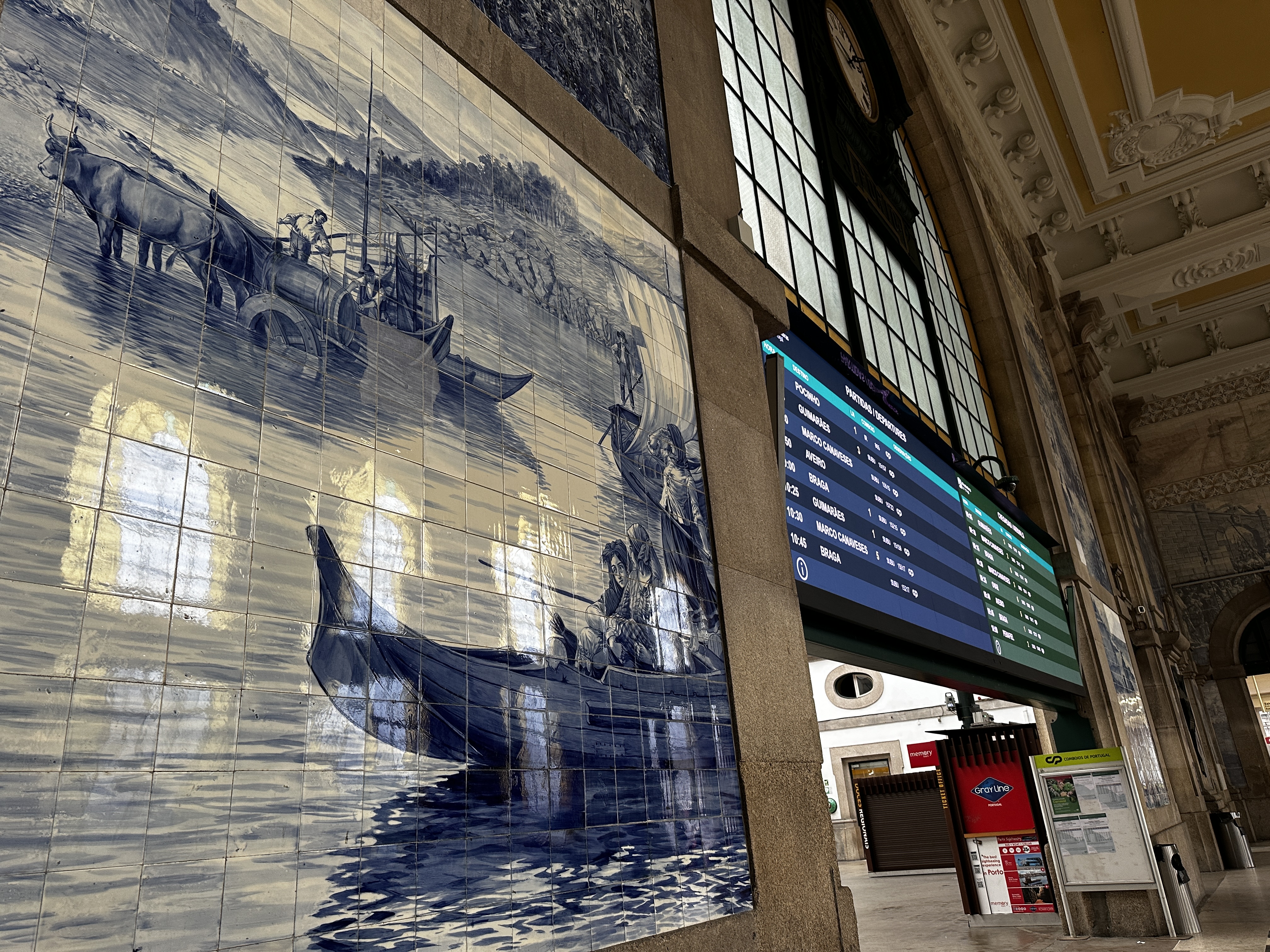
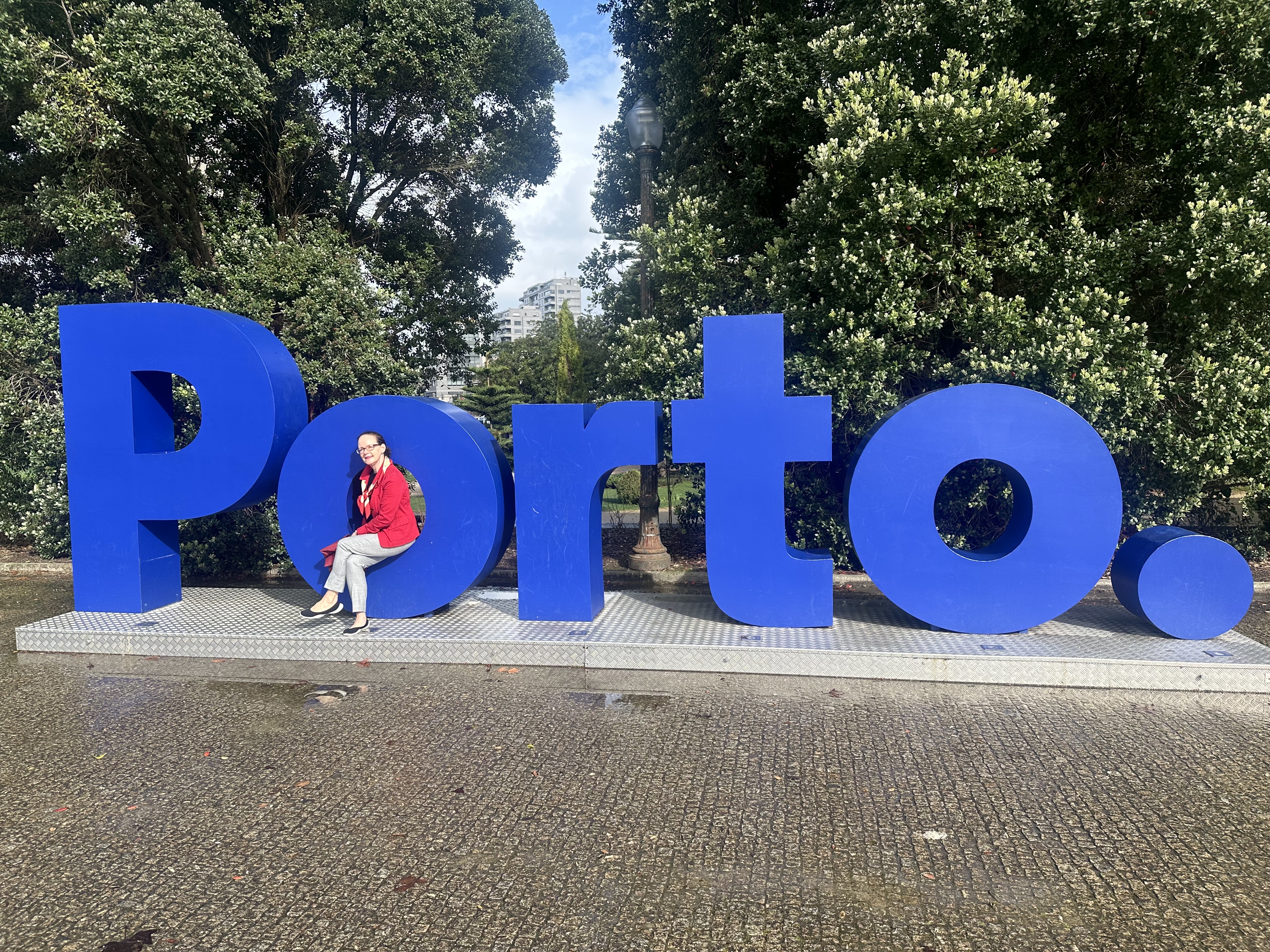
Some beloved family members – and their pets, two dogs and two cats – moved to Porto, Portugal about six months ago, and last month I went to visit them for the first of what I expect to be many trips to Portugal (as long as I don’t ruin things by being a terrible guest!). This trip was mainly about seeing them and where/how they are living now, but I can tell you about a few fun things I experienced this time and recommend if you plan to visit Porto.

My first day there, while staying up to fight jet lag and get adjusted to the time change, we went to a tour of the Pinhais sardine factory (more information and tickets here). In addition to seeing the factory itself, we learned about the history of sardines in Portugal, saw a staircase designed to look like a sardine when viewed from the correct angle ( see above – the light is its eye), practiced wrapping a tin of sardines (which the professionals can do perfectly in mere seconds but I definitely could not), and finally had a sardine/wine tasting.

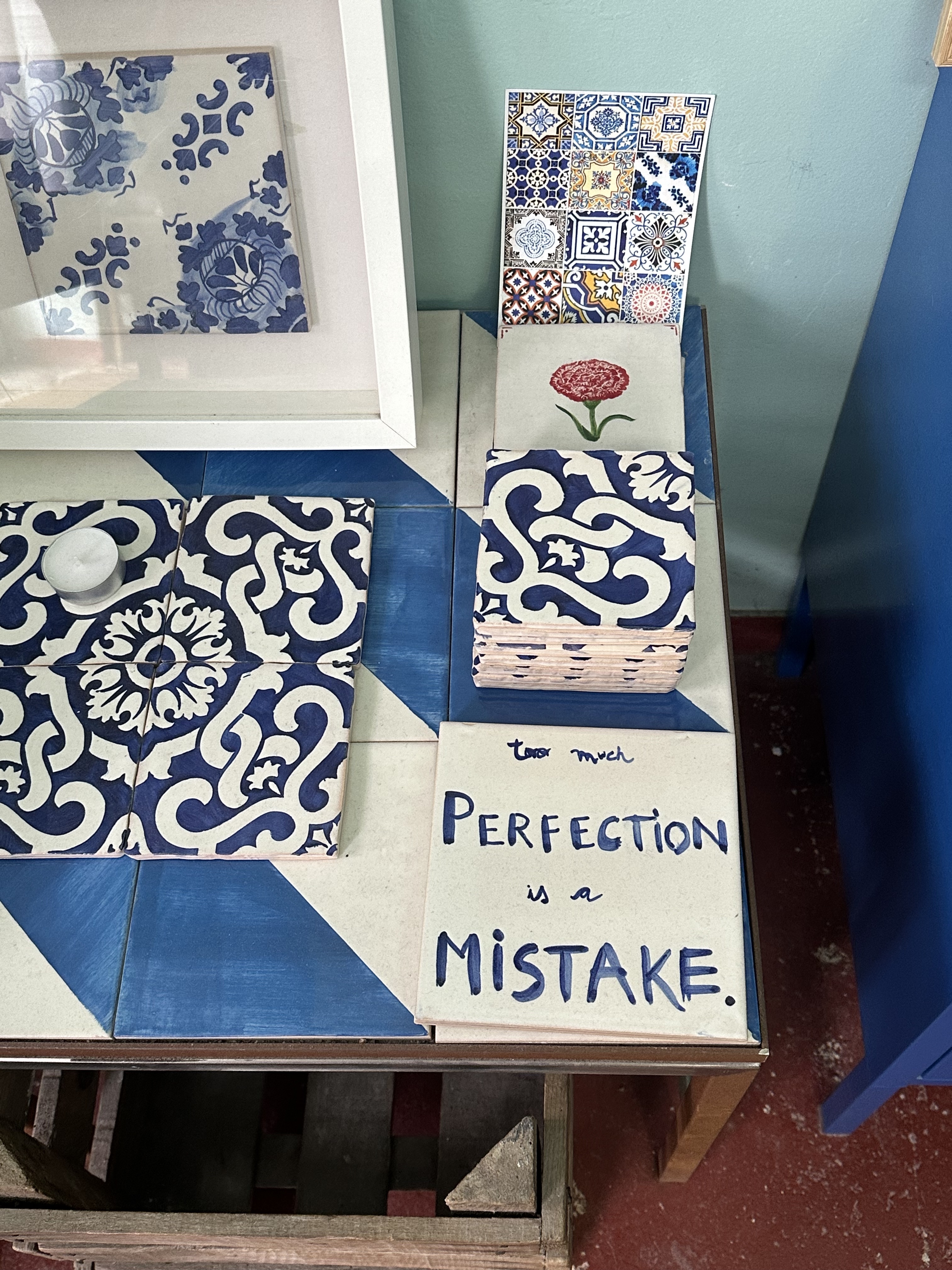
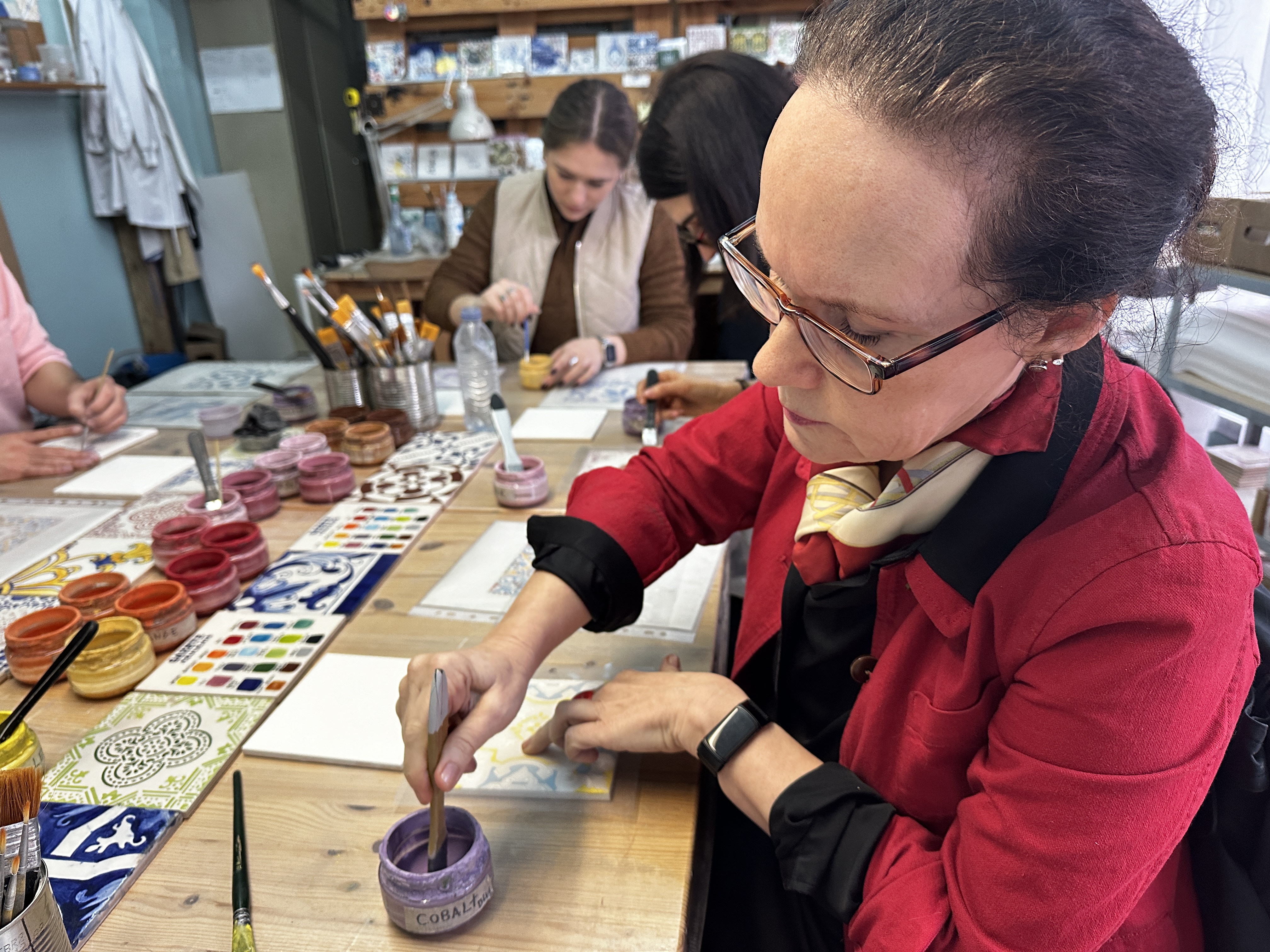
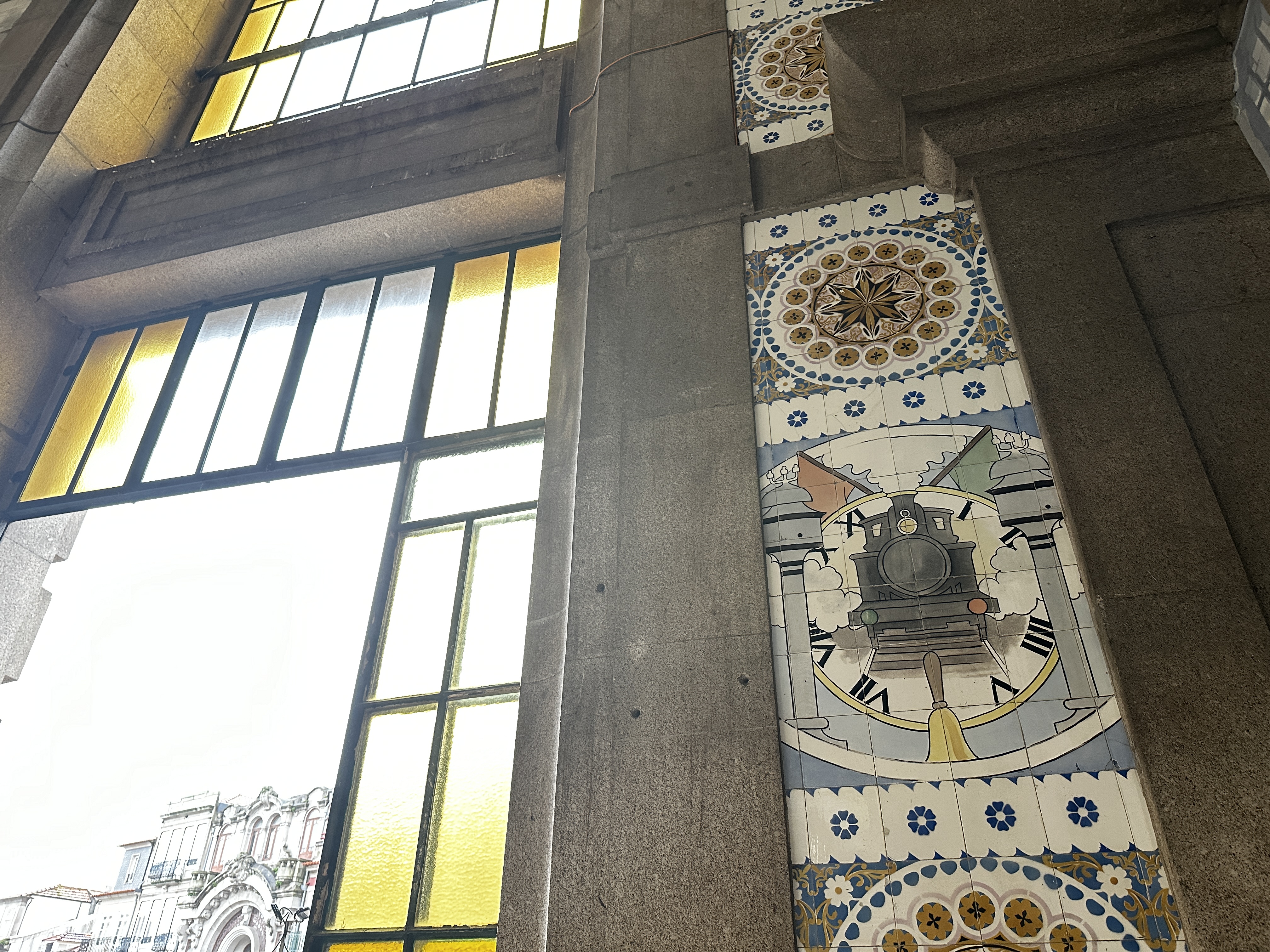
The next day, feeling fresh and ready to go, we enjoyed a fantastic tile painting class at Gazettes Azulejos (more information here). The tiles that are so beautiful covering the exteriors of buildings in Porto also serve practical purposes, keeping moisture from seeping into the facade, insulating from excess heat or cold, and strengthening the structures. Gazettes Azulejos is working to catalogue all the Porto facade tiles, and you can use a pattern from an actual address to recreate your own tile to take home as a souvenir. They admonish that “too much perfection is a mistake” and I would say that keeping that in mind is key to enjoying the workshop, as it is harder than it appears at first. The tiles I painted are definitely not perfect (the second one was better than the first, so practice helps), but I enjoyed making them, learning about the process, and bringing them home as a memento. One thing that surprised me is that Cobalt Blue looks light lavender before firing! You leave the painted tiles and come back to pick them up the next day after they are fired. I made a reel about the class that you can see on Instagram here.

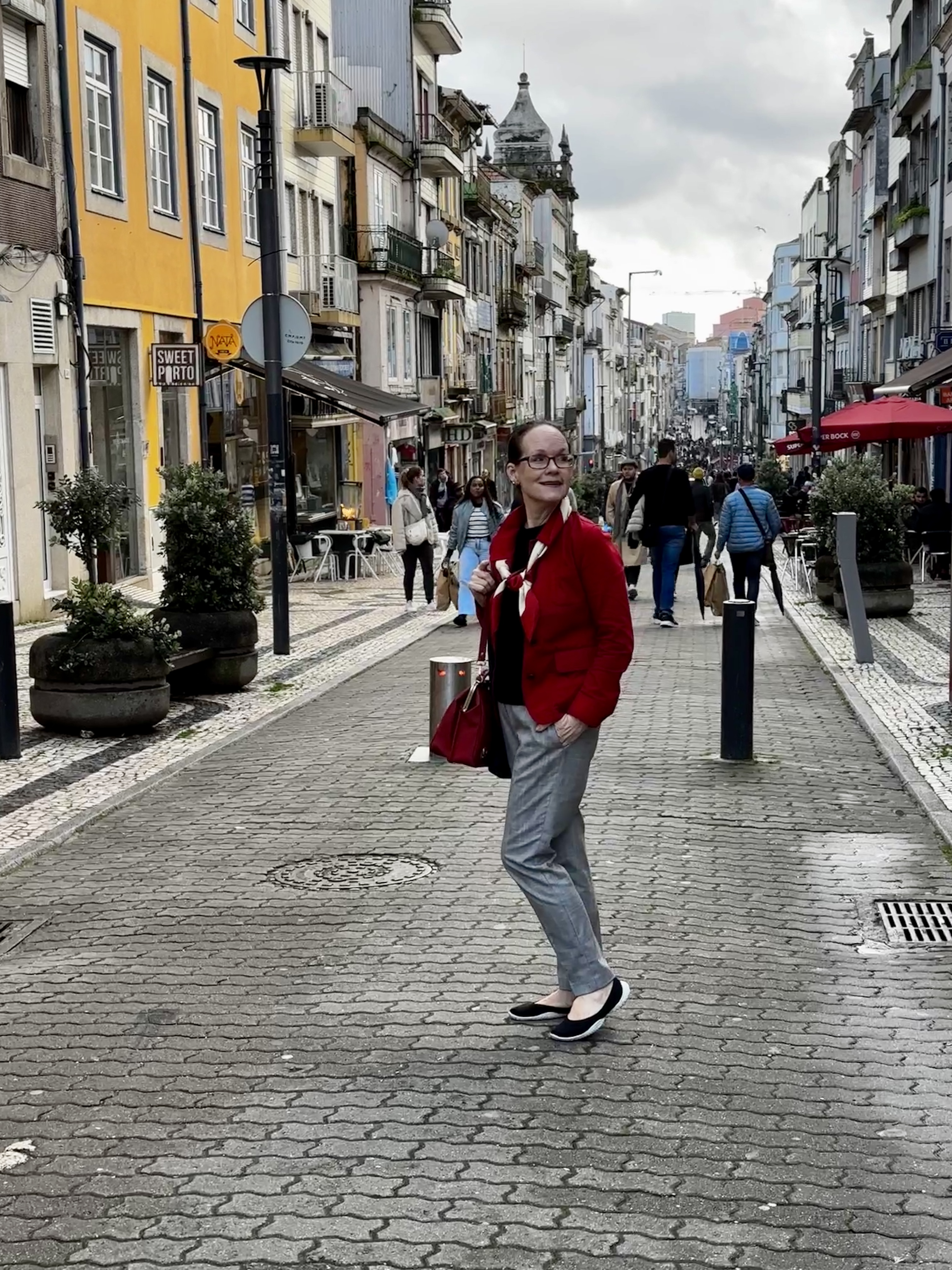
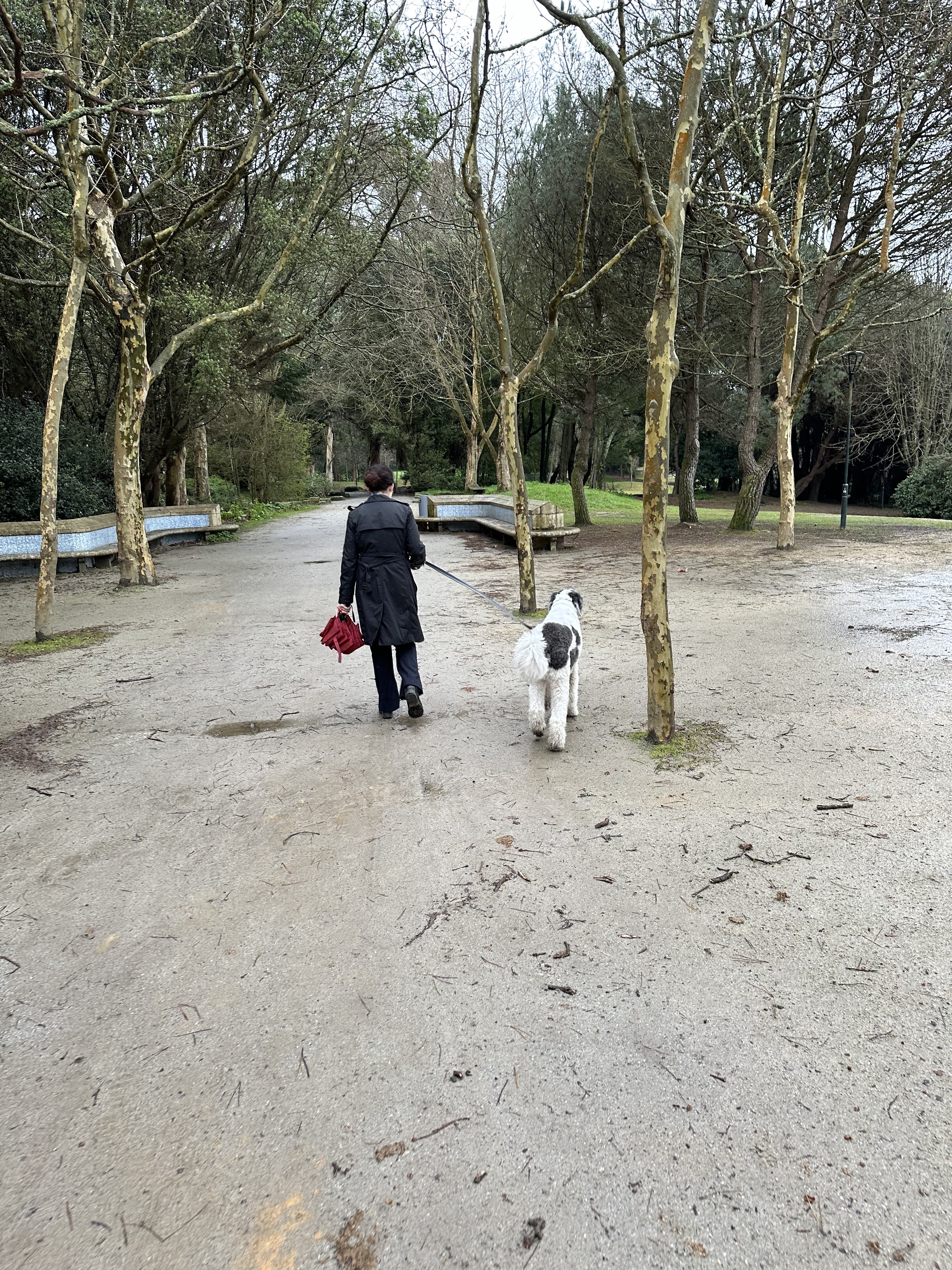
One of my favorite things to do in any city (including my own New York City) is to simply walk around and experience it. Porto was a beautiful walking city, with plenty of hills and staircases to keep things interesting and muscles fully engaged!

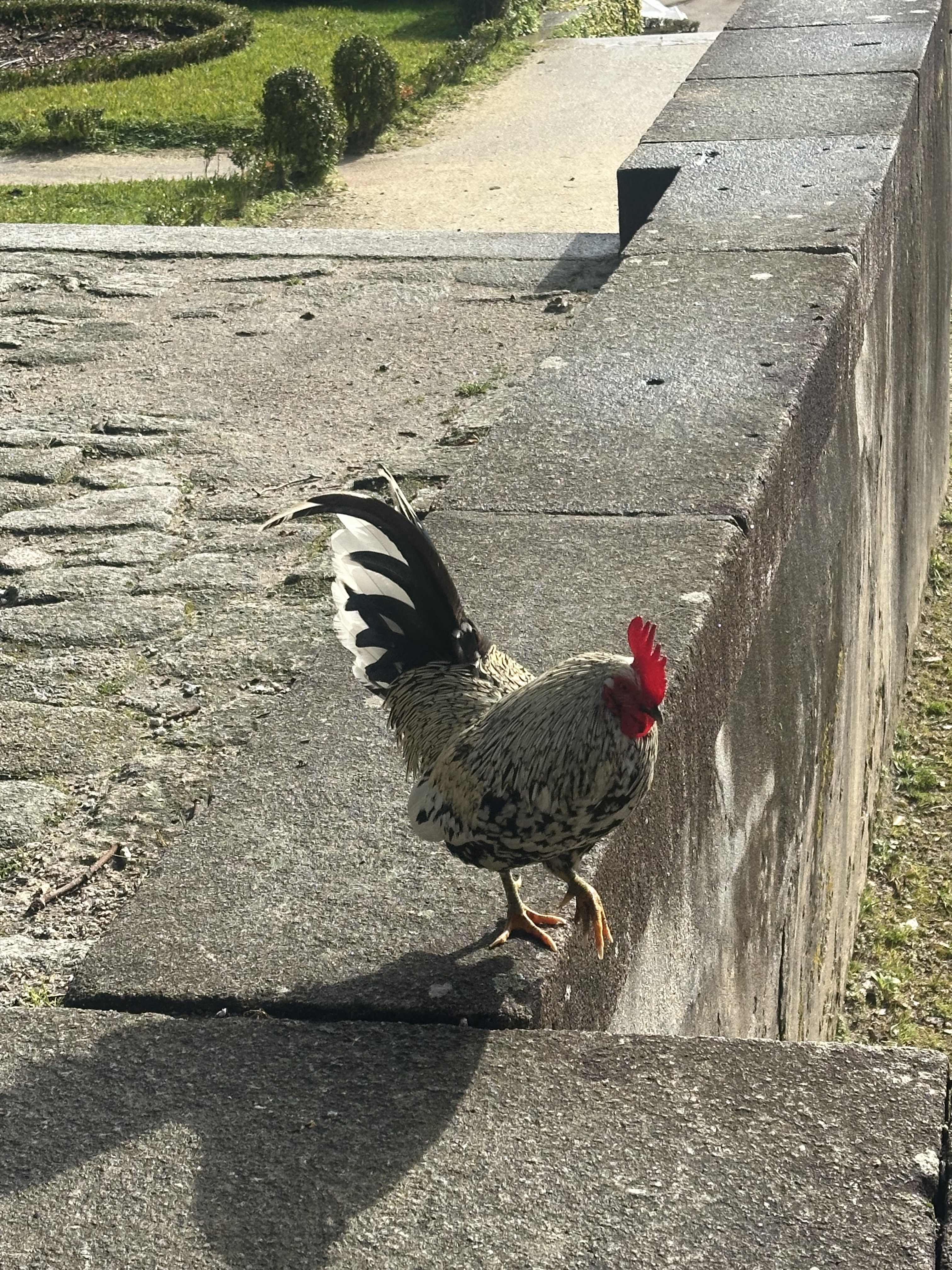
The rooster is the symbol of Portugal, and they roam many of the public parks. At the park next to the Crystal Palace, there were also peacocks. You can see a video of the peacock showing off on Instagram here.

Porto is – not surprisingly – known for its port wine, and a port wine tour and tasting at Grahams – across the river in Gaia -was fantastic. This particular tasting paired food (a pastel de nata pastry, aged cheese, and chocolate) with three different ports. Grahams has some bottles still aging from the 1860s! A reel about Grahams can be seen here.

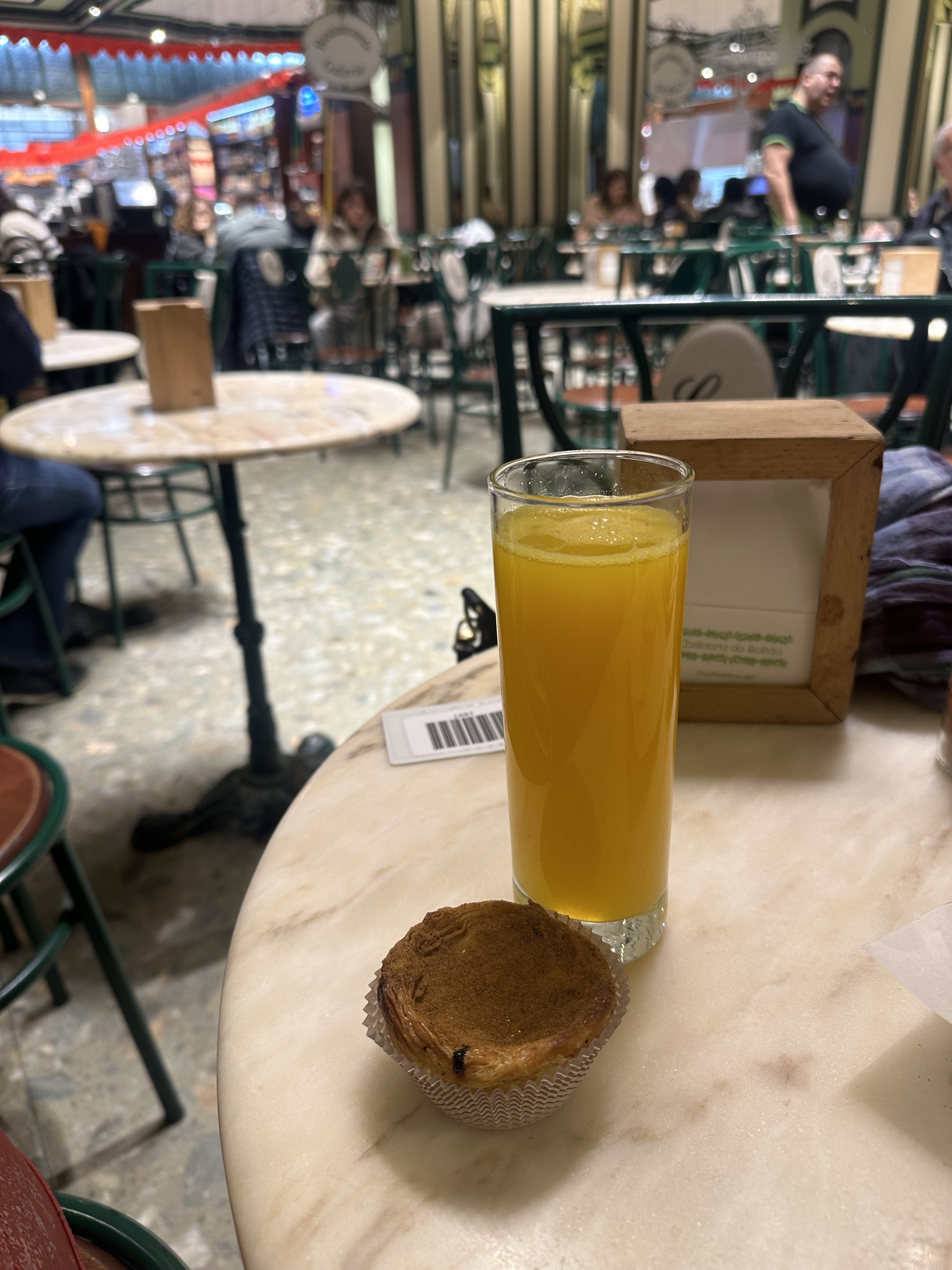
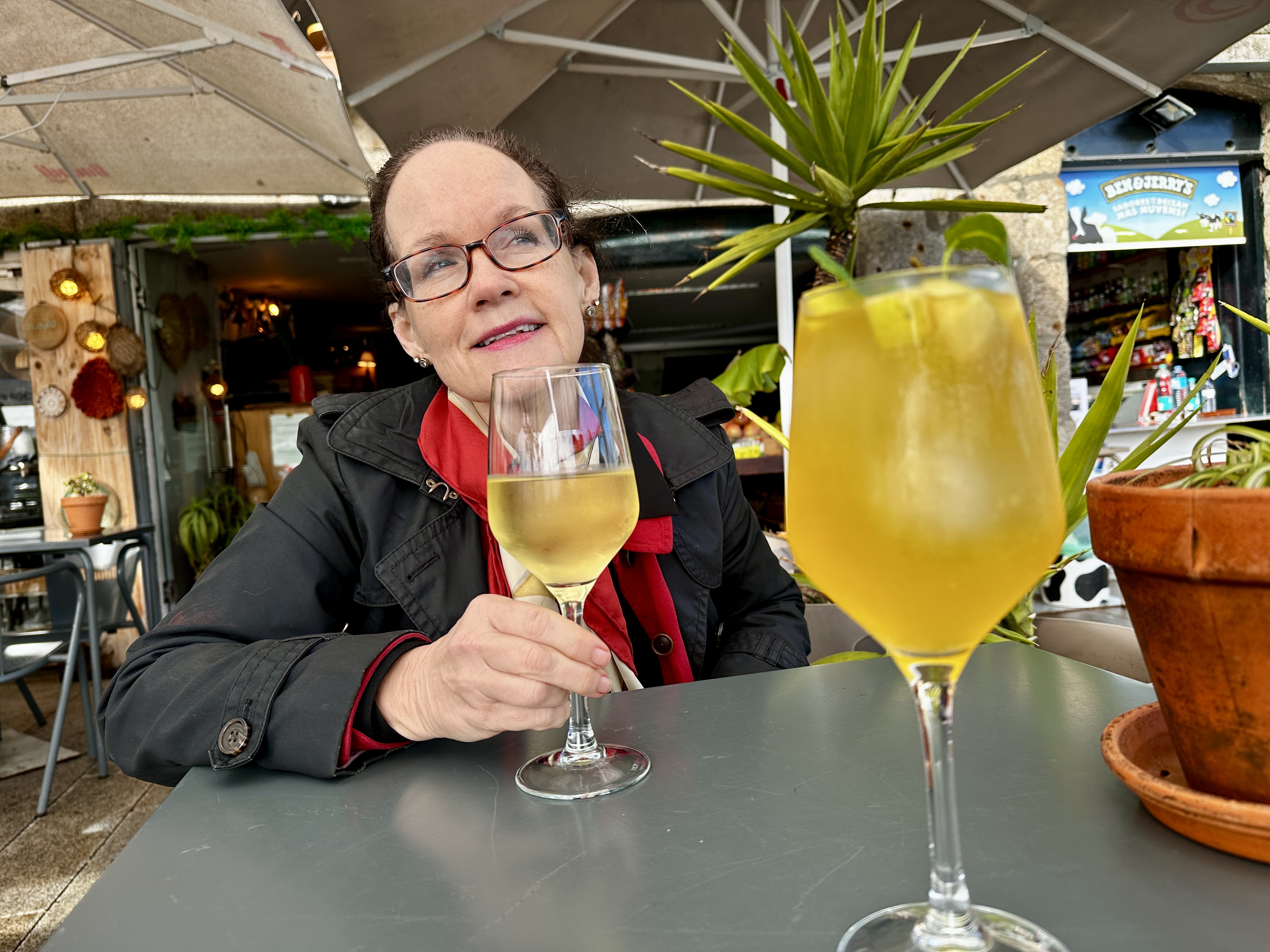
Speaking of pastel de nata, I tried several at different places. You can get these cups filled with sweet custard either plain or with cinnamon, and I liked mine with cinnamon. And the official cocktail of Porto, the porto tonico, was enjoyed several times! The porto tonico is white port and tonic water, garnished with orange peel, a cinnamon stick, and a mint leaf. Really, really good . . .

Livraria Lello proudly states itself to be “the most beautiful bookstore in the world” and I would dare not disagree. It is very hard to get into – you need timed tickets that you pay for, but the ticket cost can go toward a purchase. We went just before closing and managed to get a few photos without dozens of other people in the picture as well. To find out more about the bookstore or purchase a timed ticket, click here.

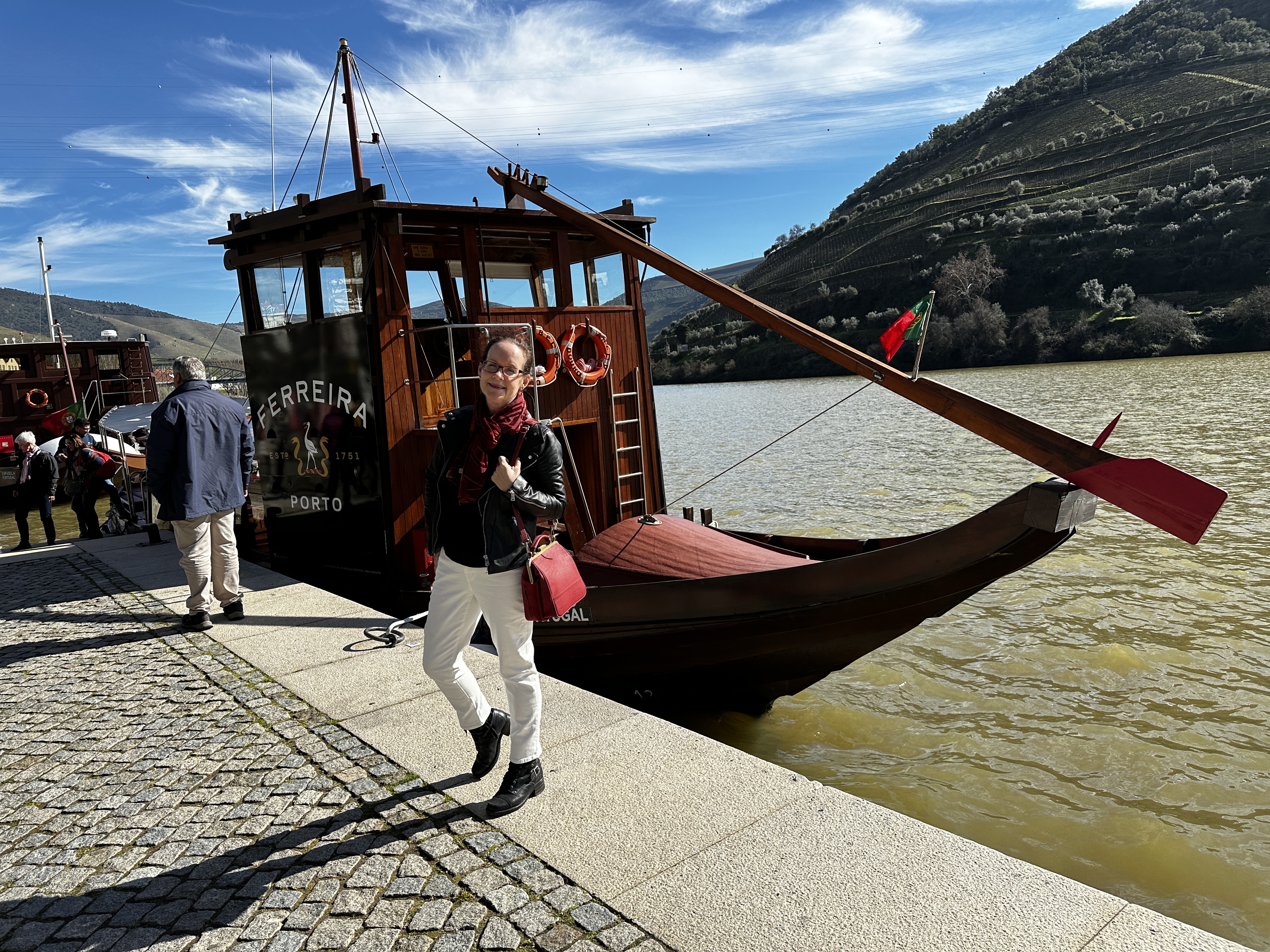
My final day before returning to NYC, we did a guided tour of the Douro Valley including wine tastings and a boat ride. The Douro Wine Region Valley is the oldest demarcated wine growing region in the world, and a World Heritage Site. The Douro (which ends up dividing Porto from Gaia just before emptying into the Atlantic Ocean) carved out this rich and beautiful landscape. I have written before about wine tasting in Napa and this day was just as special (see a reel about the day here on Instagram).

Of course the best part of this trip to Porto was spending time with family and experiencing a bit of the new life they have made there. They threw an amazing dinner one night where a private chef came in with all the ingredients and then we, the dinner party, made the meal under his guidance – so much fun, see a video reel here. And I look forward to exploring much more in Portugal as I visit them over the next many years.

East Midtown Greenway

The Hudson River Greenway along the Hudson River on Manhattan’s West Side is accessible for walking and biking from Battery Park all the way north to Inwood Hill Park at the top of the island. It keeps being expanded and is a destination for residents and visitors alike with recent additions like Little Island Park, Pier 26, and Pier 57. On the other hand, while the riverfront area along the East River has some lovely patches (like the John Finlay Walk next to Carl Schurz Park in Yorkville), there are also stretches where there is no waterfront access. There is a new plan to connect all of the East River waterfront, similarly to that seen on the Hudson River, and a new section of this was recently opened, beginning at East 54th Street and continuing up to connect an existing path at East 61st Street.

The goals of the new development, called the East Midtown Waterfront project, are to:

  • Maximize the location along the waterfront
  • Enhance safety for pedestrians and bicyclists
  • Improve access from upland areas
  • Account for sea-level rise

Entering the new stretch at East 54th Street, the views are instantly gorgeous. You can see south along the East River, as well as east to Long Island City.

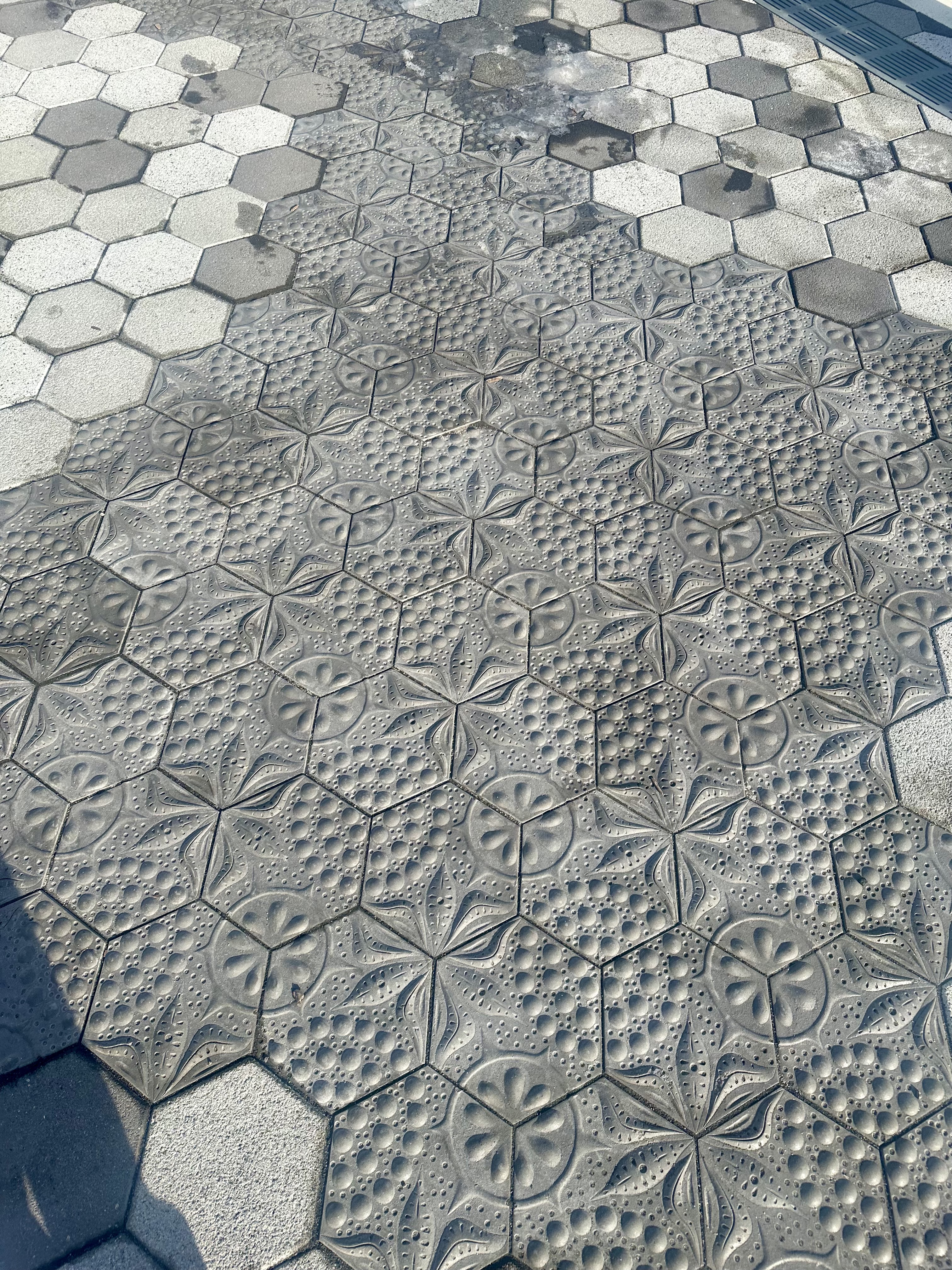
The tiling on the walkway is inspired by diatoms, single-celled microscopic algae. They are the base of the food chain in the river, and convert sunlight into energy. There can be hundreds or even thousands of diatoms in one spoonful of East River water. For more details about the use of these diatom-patterned pavers, check out the description from the artist who was involved, Stacy Levy.

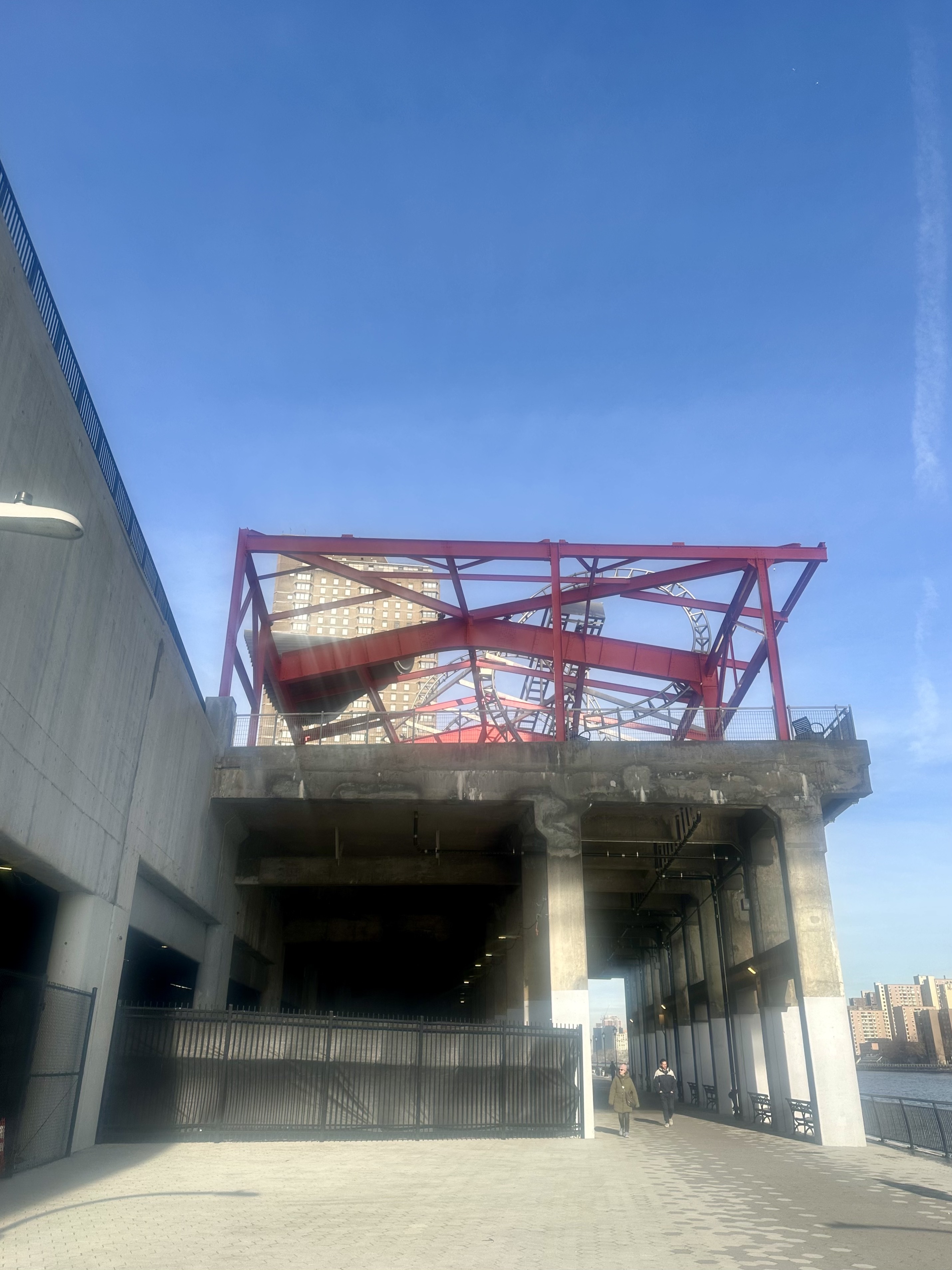
As you start to connect to Andrew Haswell Green Park at East 61st, you can’t help but notice the thing that looks like an abandoned steel roller coaster track. In fact, it is an artwork by artist Alice Aycock, called The Roundabout. A little more about that as we exit the new walkway next to it!

You get some thrilling views of the Ed Koch/Queensboro/59th Street Bridge, especially as you walk under it.

If you choose to exit at East 61st rather than continuing north to the existing Andrew Haswell Green park, you get an up close look at Roundabout. It covers the roof of a defunct Department of Sanitation Building, and was inspired by the weightlessness of Fred Astaire’s dancing! You can read more about this artwork here.

The eventual goal of the East River Waterfront project is to have a continuous loop around all of Manhattan next to the waterfront. It will likely help the livability (and hence the value) of the far east side of midtown Manhattan to have a waterfront park, and one that connects all waterfront areas in Manhattan will be even more appreciated. I look forward to seeing the East River waterway in Manhattan continue to develop and enrich the experience of New Yorkers and visitors to the city alike.

Santa Season in NYC

This time of the year, New York City is filled with holiday decor, the lights driving back the darkness a bit as we head into winter’s solstice. Not all the lights are specifically about Christmas, but images of Santa are plentiful. What if you are interested in seeing – or even meeting – Santa in the city? There are many opportunities, and I will describe a few, leading up to the “Miracle on 34th Street” pinnacle of seeing the “real” Santa at Macy’s Santaland (not for the faint of heart). I will also let you in on a few experiences where Santa is there but not necessarily the main event.

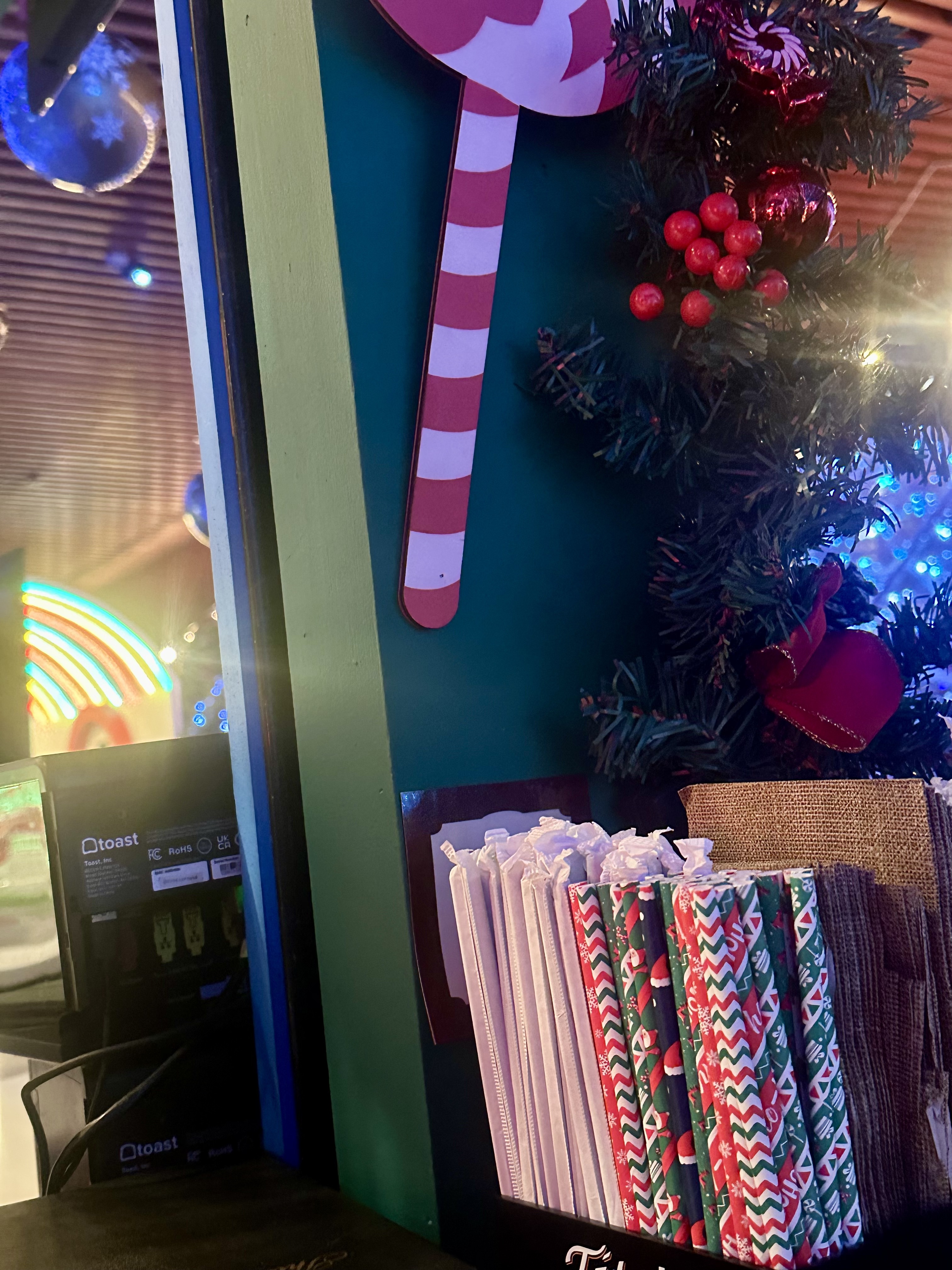
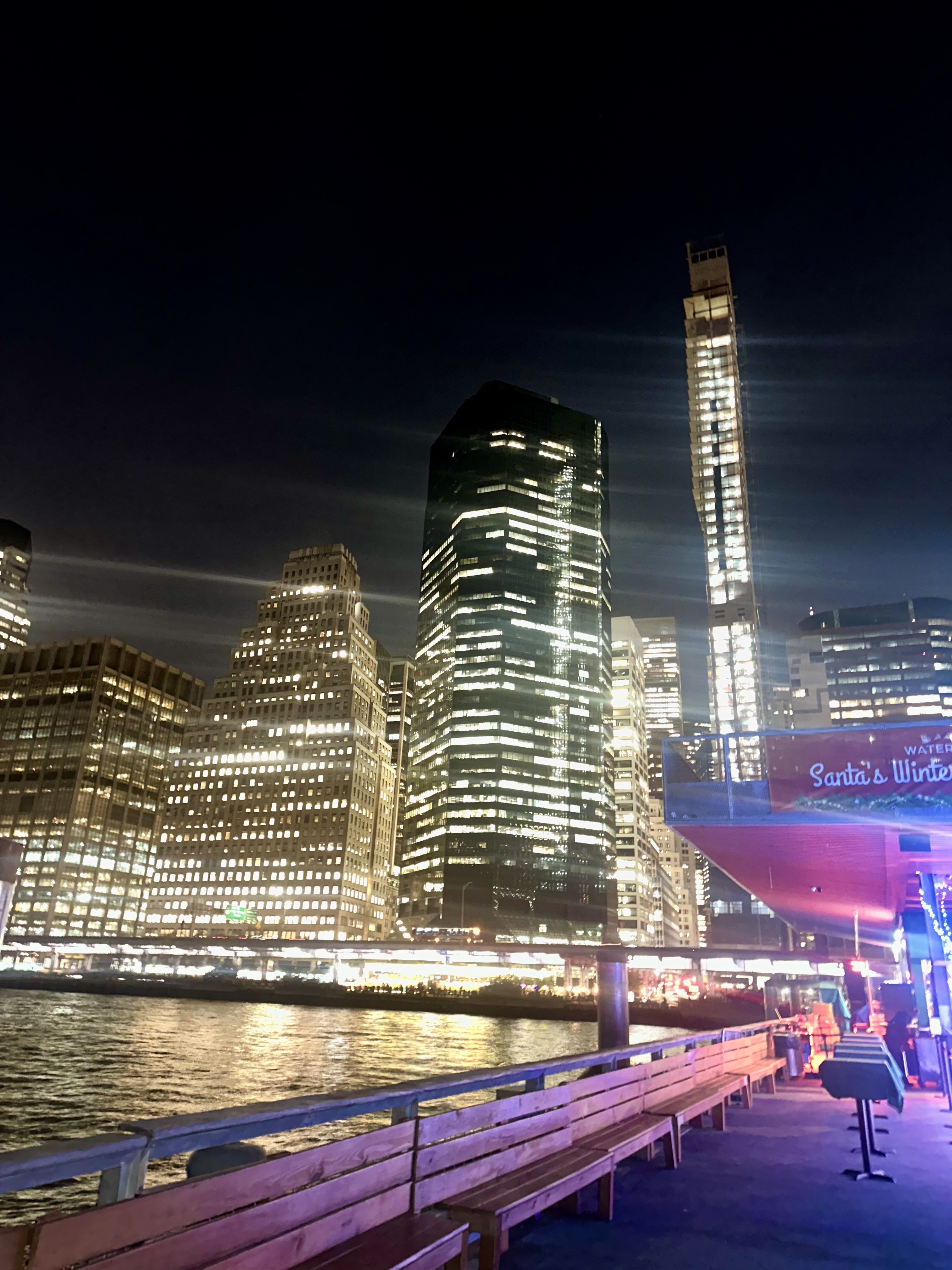
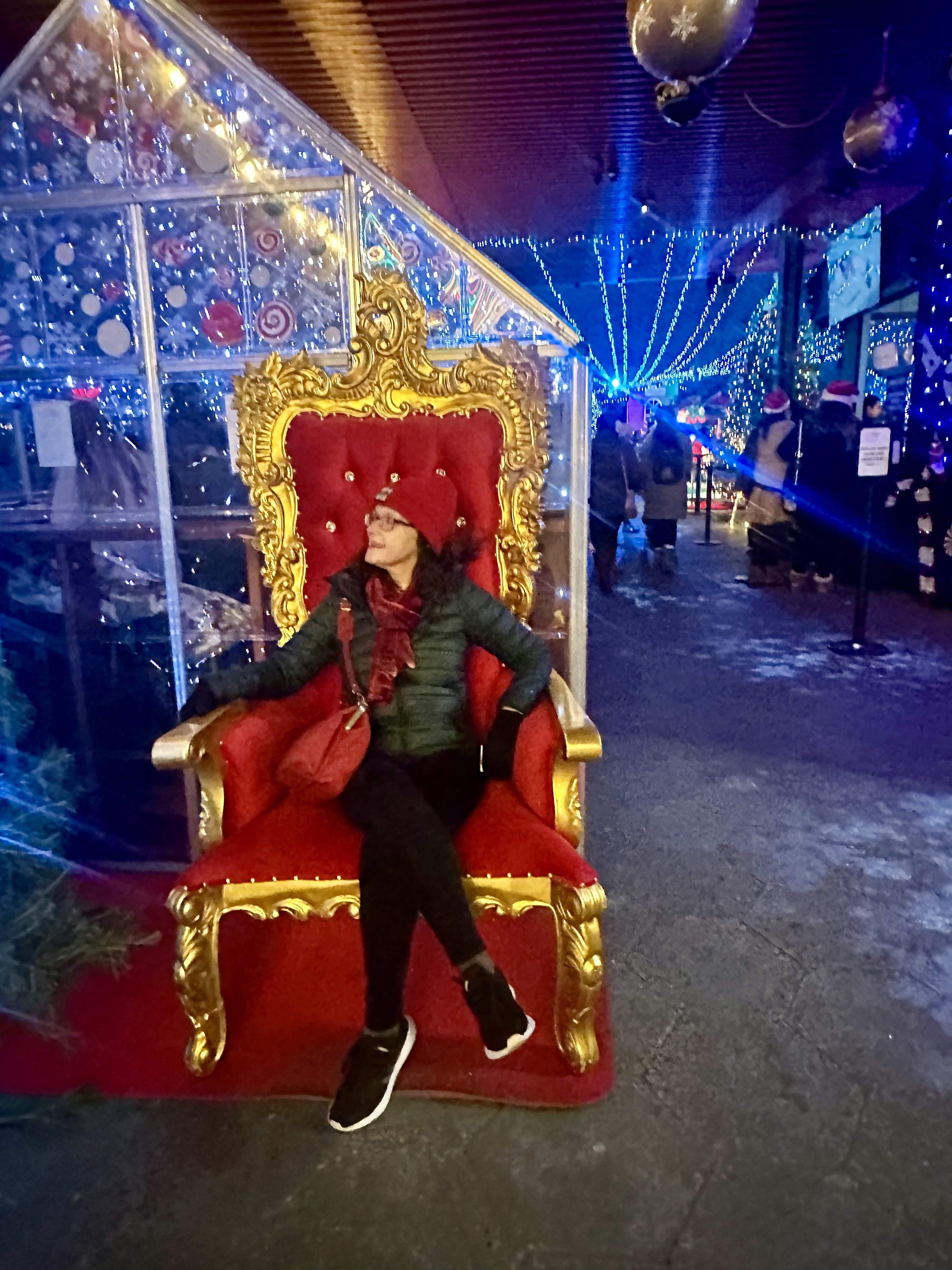
First, a new experience that I tried this year, Santa’s Winter Wonderland at Pier 15 in the South Street Seaport area. This is a fun experience that could work for a family with kids (there is Santa there for a visit with little or no line waiting, hot chocolate, snacks) or adults out for a fun evening (there are specialty cocktails, terrific views, etc).

This is a ticketed event, with timed entry. There is also an option for a sit-down meal at a specific time in an enclosed see-through hut, but I didn’t try that.

For general admission, you get a hot chocolate or hot cider, and a choice of snack (soft pretzel, chocolate chip cookie, or churro), and you can eat outside or in one inside dining area that has open seating (but was a little crowded when I was there).

For parents hoping for a Santa visit, I saw very little waiting time and plenty of interaction. I am sure adults could see Santa as well if they wanted!

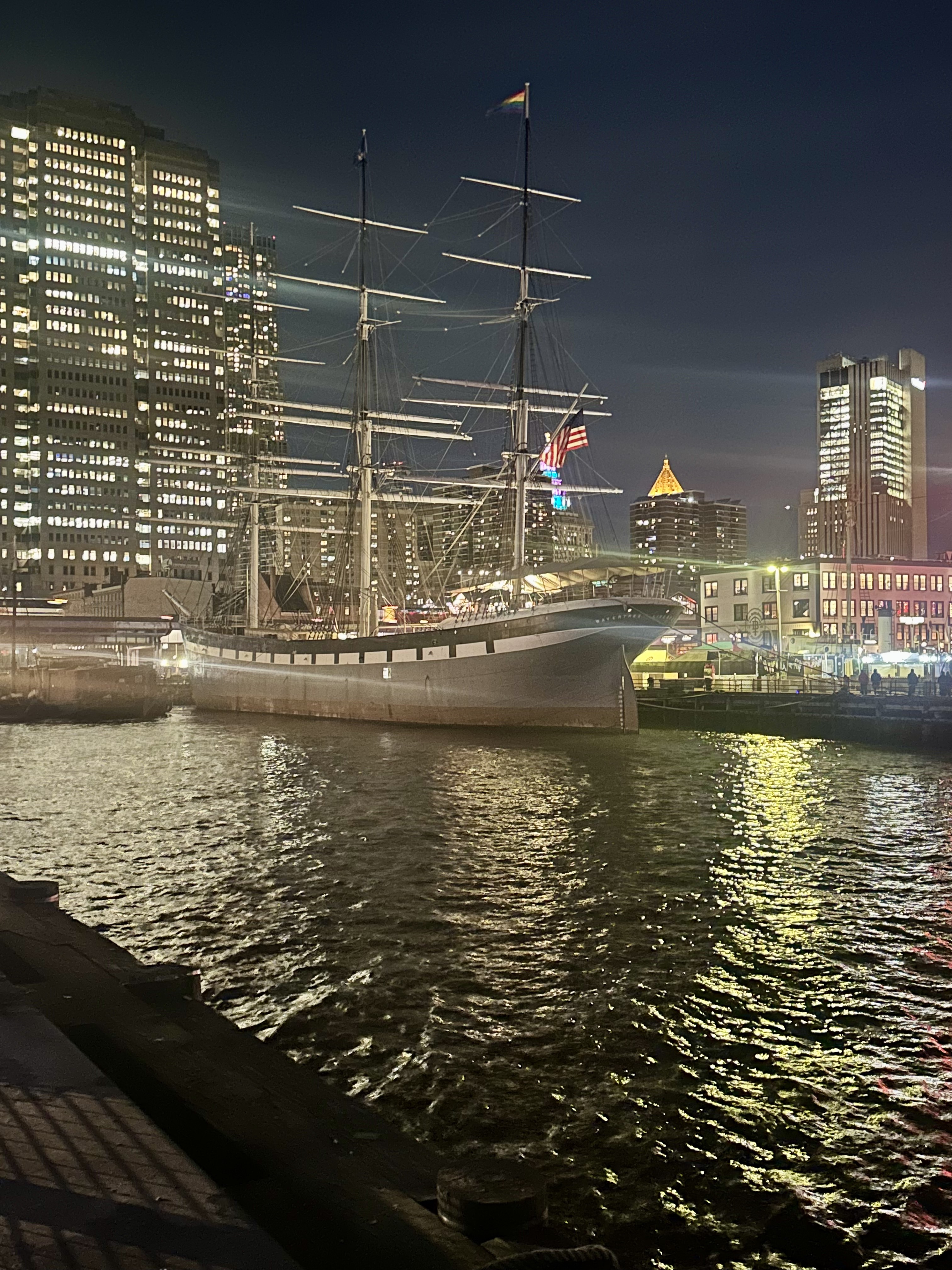
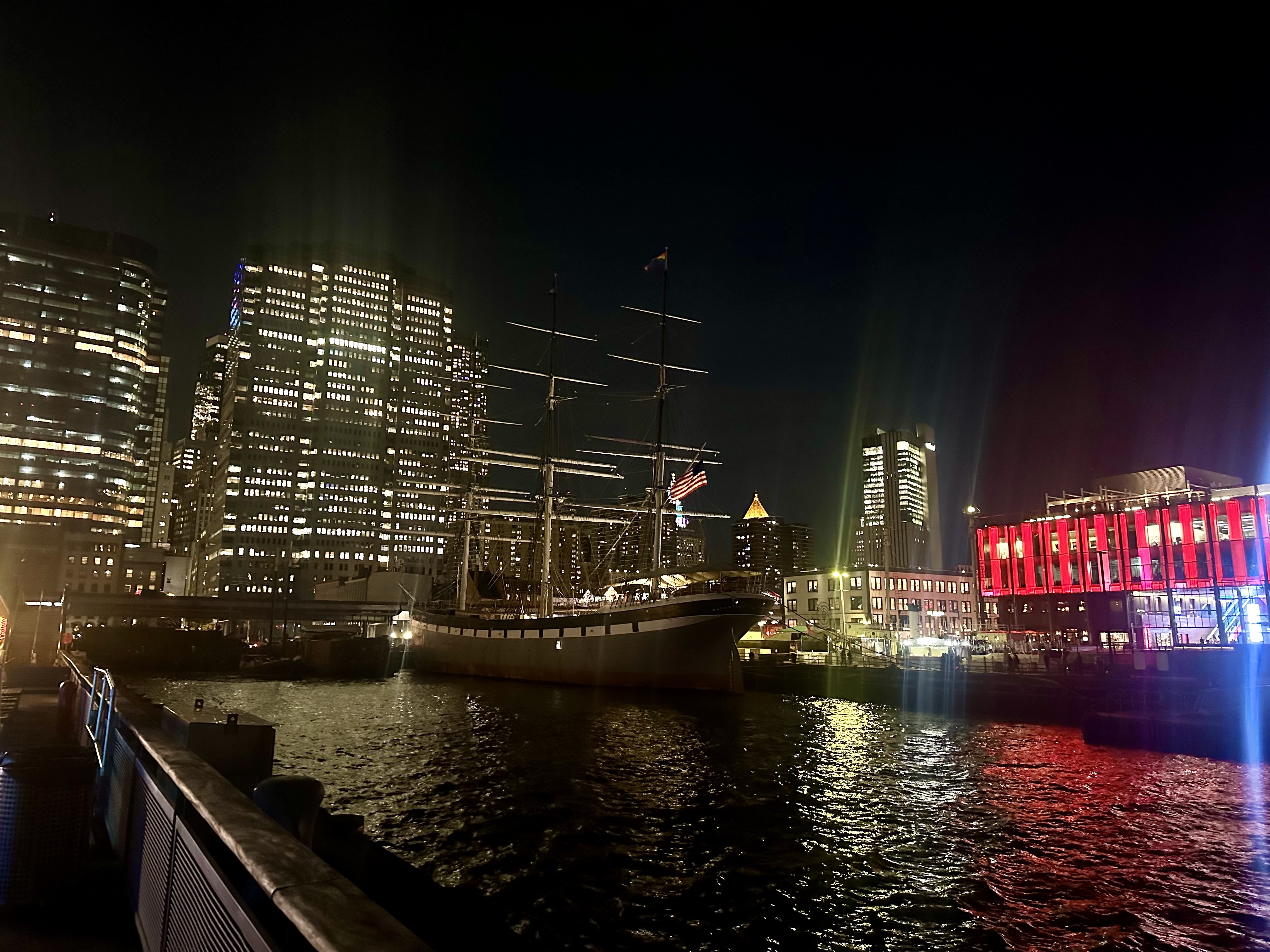
The decor was festive, and the views around lower Manhattan, the South Street Seaport, and the Brooklyn Bridge were all terrific. You could purchase a s’mores kit and roast the marshmallows over a fire.

Interestingly, there is a rival Santa experience right next door at Pier 17, Disney’s The Santa Clauses’ Winter Wonderland! More expensive, but also more elaborate, this experience has a synthetic ice skating rink as one of the possible activities. Santa is also available for a visit and photos, but on specific dates and times, so if that is important be sure to check that out before purchasing timed tickets.

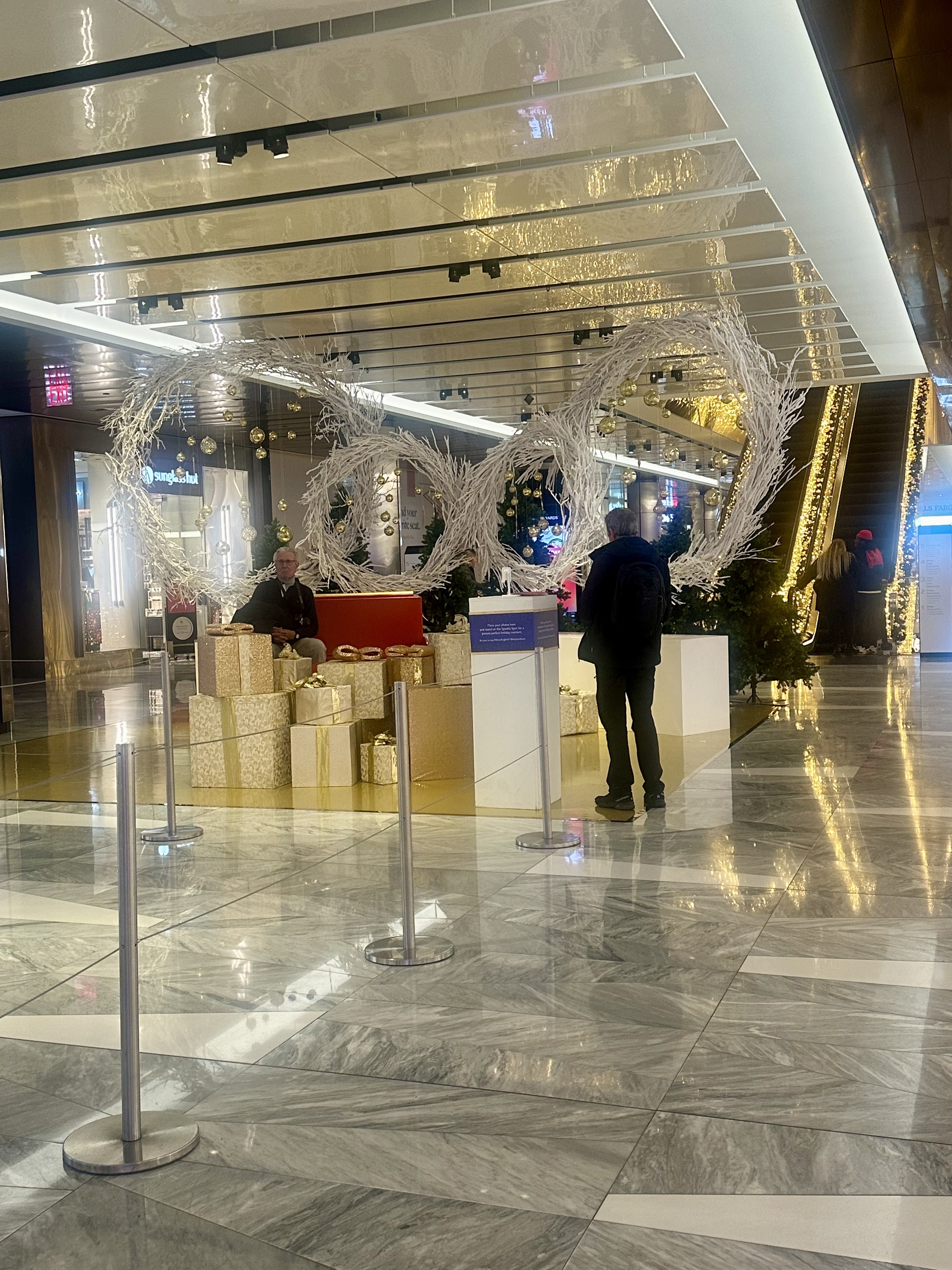
Not all Santa experiences cost money (although many might cost time!). Hudson Yards is decorated fabulously for the holidays and has signs up saying when Santa is available, free of charge. I haven’t been there during those times, but the place where Santa is looks like a lovely photo opportunity. Hudson Yards has also set up “twinkle spots” all over the building for you to set up your phone to get a photo of yourself with all the holiday lights.

Winter Village at Bryant Park has the best holiday market in the world (and I agree with this recent ranking) and Santa is there for free photo opportunities, see his schedule here. Bloomingdale’s also has an opportunity to meet Santa, reservations required, and a $25 booking fee is involved but you get it back in the form of a $25 gift certificate. The time for this has passed this year but if interested in future years the information about booking was here.

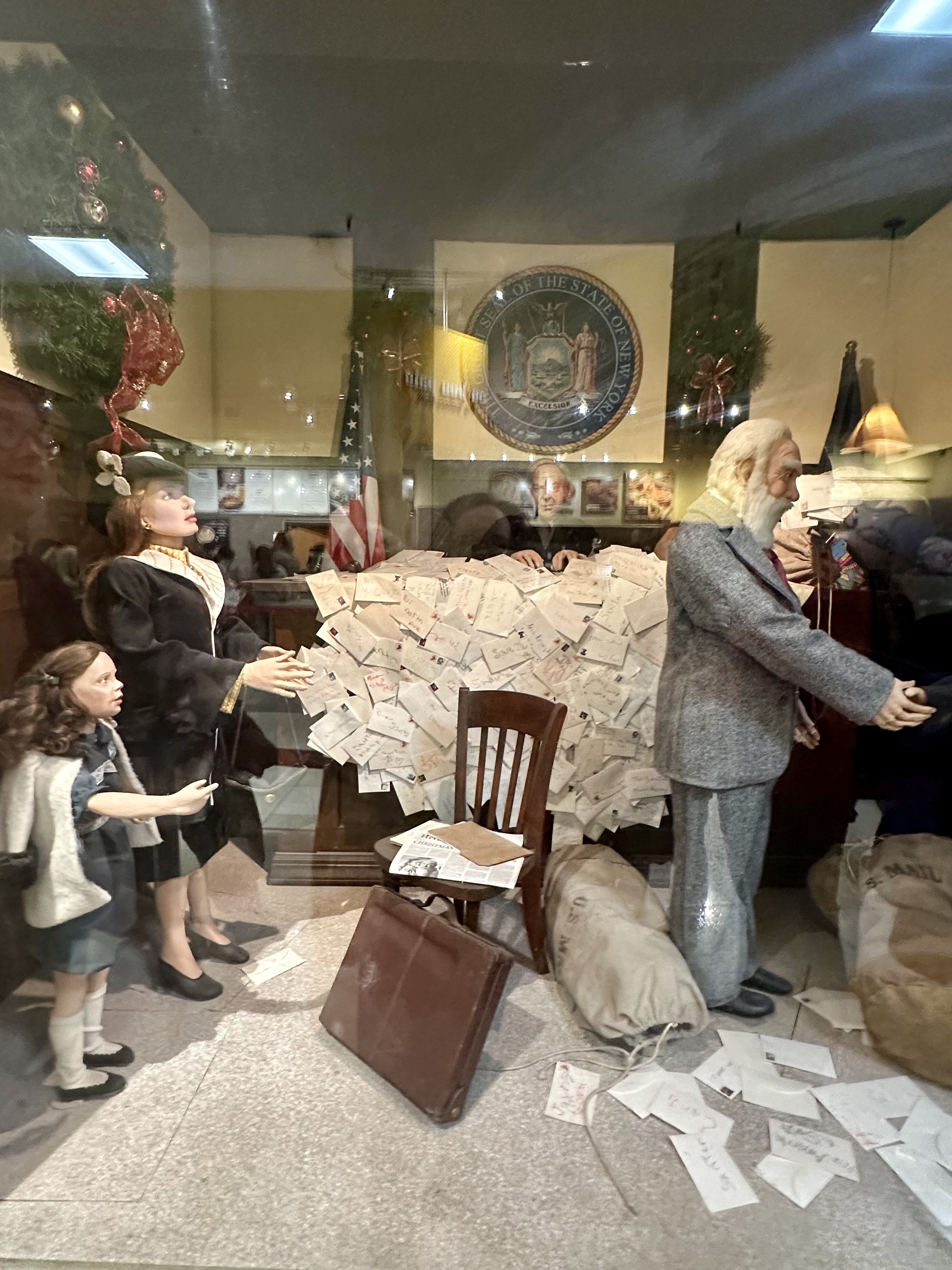
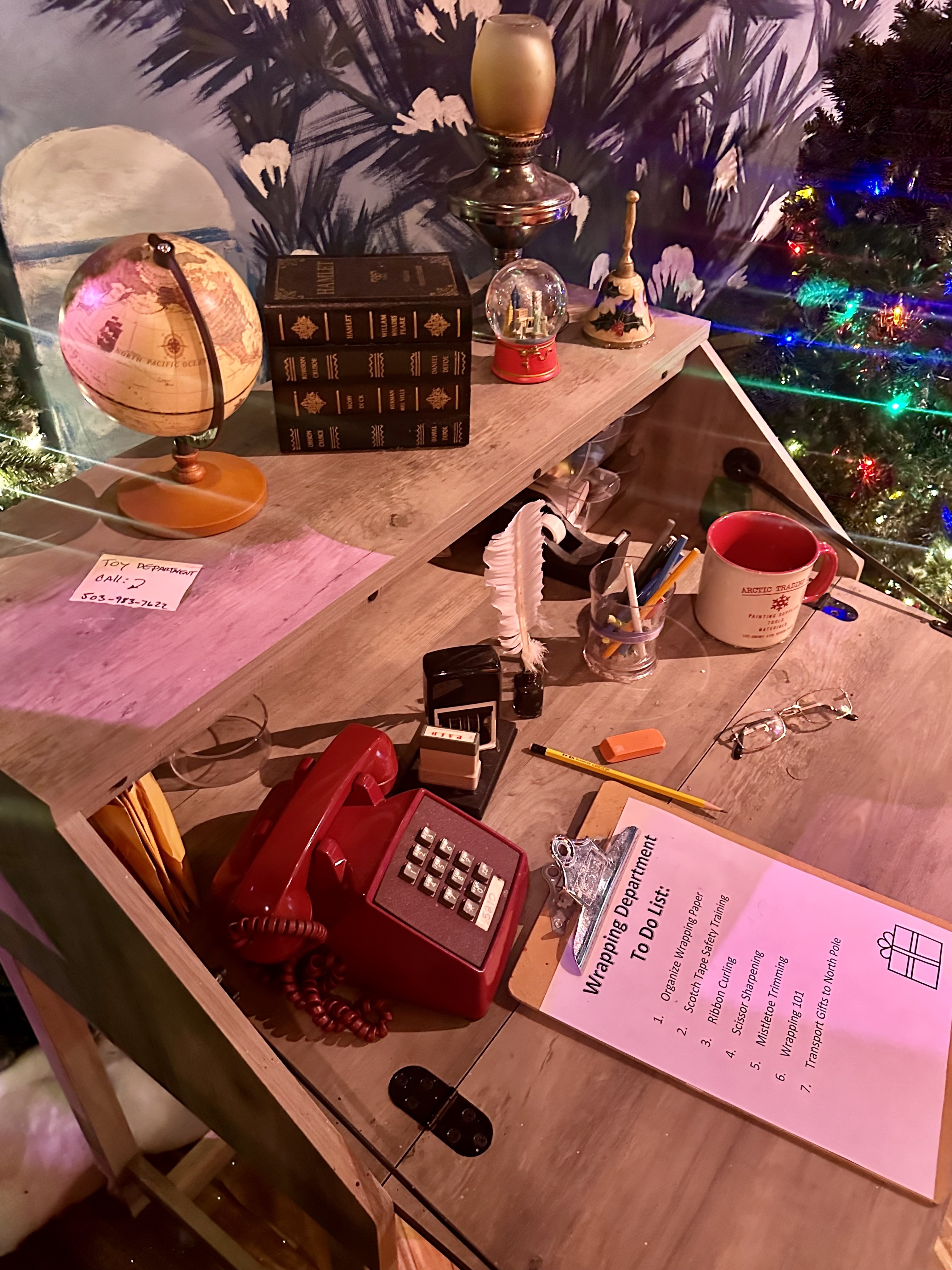
Finally the ultimate – visiting the “real” Santa at Santaland at Macy’s. The procedure now is via reservation only, and the reservations open up five days in advance. In my experience, they go very quickly. There is no entering the line without a reservation, but the reservation does not prevent you from waiting on a line. When I went this year, on a Saturday in early December, in the afternoon, we waited 90 minutes to see Santa! Some of the time was spent in the delightfully decorated line inside Santaland, but a fair amount was spent in a line in a hallway that wrapped back behind the entrance to Santaland. When I have gone before on a weekday, the experience has not been this difficult, but of course most people need to work during the week, making the weekends extremely busy.

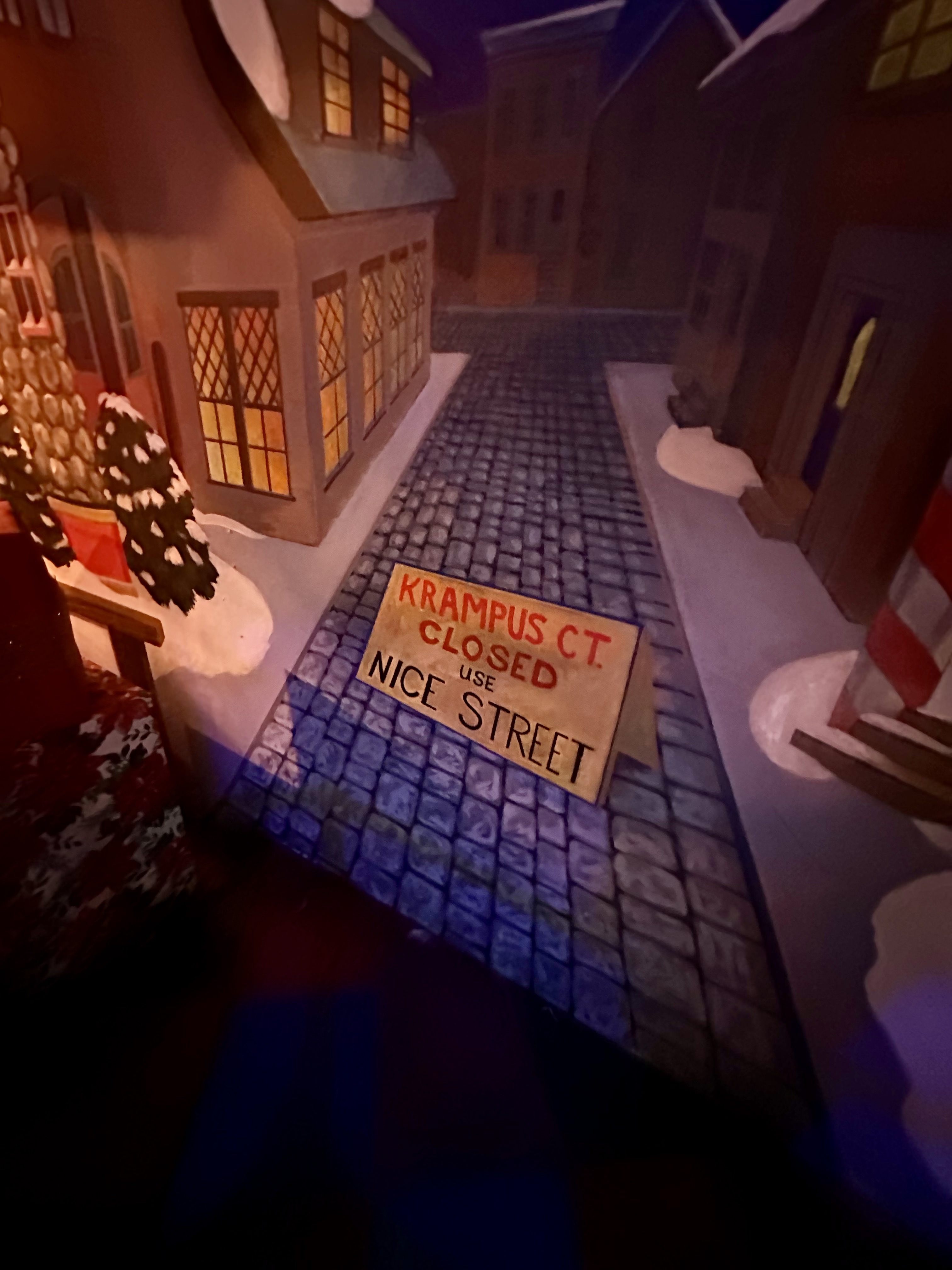
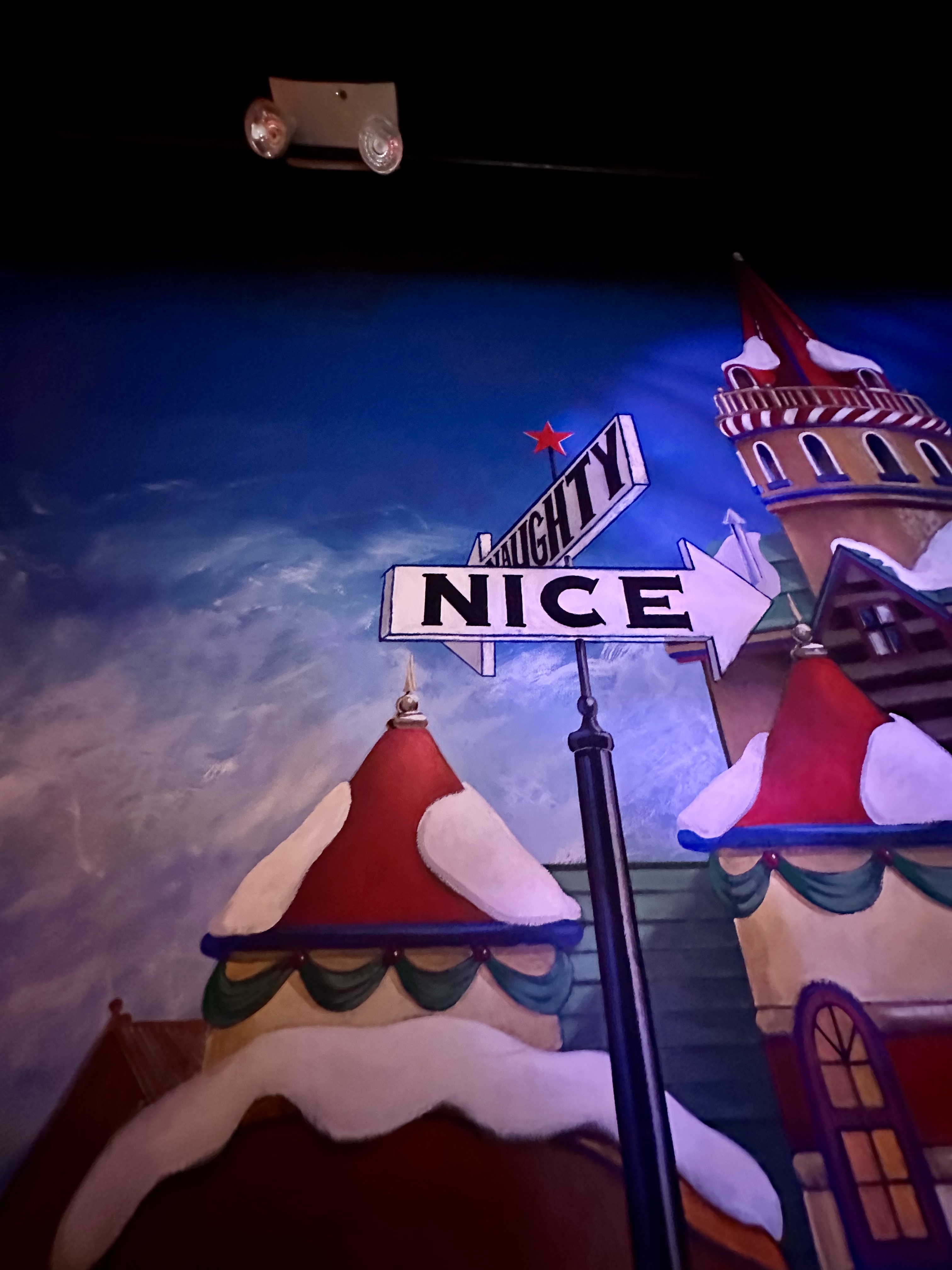
You have to pack your patience for a wait like that, and it may be difficult to stay off Krampus Court and keep on Nice Street . . . but seeing Santa there is a special experience. Macy’s won’t charge anything unless you choose to purchase their photos (which I recommend, they are terrific photos with very cute digital borders) and you are free to take your own photos too. You will pay with time and effort, but isn’t that often the case with so many things in NYC? I was at Santaland with a child this year, but a few years ago was with another adult (on a weekday, without a huge line! see below for picture) and Santa was just as kind to us as he was around a cute baby. Even as I was walking out this year, having been there mainly to see this baby get first photos with Santa and to take candids, Santa stopped me to ask my name and what I wanted this for Christmas! We are never too old to be reminded of our inner child, in my opinion.

Whether we are going to see Santa this year, or whether we ARE Santa this year, this holiday season reminds us that in the midst of darkness there can be light, that babies and children represent hope, and that opening ourselves up to unlocking our own inner childlike wonder can let a little magic into our everyday experience. Happy holidays to all!

Climbing Mount Kilimanjaro: Preparation

One would only need to glance at this blog or know me a little to know that I walk all over New York City year-round, 50 or miles a week or more with regularity. I also bike – over 3200 miles in the past two years according to my Citibike app stats. I have blogged about walking in London and Paris, and even Los Angeles. My blog tagline is “A New York Real Estate Agent Explores the City.” But this post, and the next few I have planned, will be taking a markedly different tone, as I am about to leave NYC for Tanzania in a few days – to attempt to summit Mount Kilimanjaro, and celebrate afterwards with a photo safari.

At the top of this post there is a screen grab of Mount Kilimanjaro as seen at the Disney attraction “Soarin’ Over the World.” And just above this paragraph is a Disney wiki entry showing that Mount Kilimanjaro appears in the opening sequence of Disney’s “The Lion King,” as animals travel for the presentation of Simba. This, plus a vague knowledge that Hemingway wrote a book called “The Snows of Kilimanjaro,” was my primary knowledge (absurdly limited! Kilimanjaro is in “Pride Lands” rather than Tanzania) about Kilimanjaro until a family member who enjoys hiking and I started to talk about combining her love for hiking with my desire to do a photo safari somewhere in Africa.

As I began to learn more, more decisions became necessary: which route to take up the mountain (there are several), which guiding company to go with (you are not allowed to climb Kili unguided, nor would I want to), and when to go. Here are some of my thoughts behind these choices:

Which Route

Kilimanjaro is a dormant volcano in Tanzania, with three volcanic cones: Kibo, Mawenzi, and Shira. Kibo has the highest elevation, Uhuru Peak at 5,895 m (19,341 ft) above sea level. Kilimanjaro is the highest free-standing mountain in the world, and, as the highest mountain on the continent of Africa, one of the “Seven Summits” (the highest peak on each continent). For perspective, Kilimanjaro is fourth highest of the Seven Summits, being less tall than Everest, Aconcagua, and Denali. The Marangu route, the only one with huts to stay in rather than camping, is the original way to the top. It is easier in some ways – more gradual, fewer steps since fairly direct – but is less favorable for acclimation to the altitude, leading to a success rate as low as 45%. The Machame route is the most popular route, and is often completed in six to seven days (more days leads to a higher chance of success). The Umbwe route is considered the most challenging route, very steep, and also without as much opportunity for acclimation. The Rongai route approaches from the Kenyan side of Kili, is less steep than Machame, and can be dryer during the rainy seasons (more about time of year later). Northern Circuit is a long route taking nine days, excellent for acclimation, and avoiding the Barranco wall if rock scrambling is a concern. The route I chose, Lemosho, is an eight day trip, considered to be one of the most beautiful journeys on Kili, starting in the rainforest, traveling through heather/moorlands, into Arctic desert, and concluding in the Arctic zone for the summit.

Which Guiding Company

I did a lot of research before booking with Ultimate Kilimanjaro, which has an excellent reputation for support and safety. However, there are many good companies and the most important thing is to book with a company that is a part of KPAP (Kilimanjaro Porters Assistance Project). If a company is certified by KPAP, it means that the local guides and porters are being paid a fair wage, and experience ethical treatment while working on the mountain. You can check on the KPAP site to ensure a company you are considering is on the list. Prices vary a lot between companies, and some of the least expensive companies may cut corners with payment and conditions for the people crucially supporting our climb.

When to go

Kilimanjaro is very near the equator, so temperatures don’t vary significantly between summer (December, January, February) and winter (June, July, August), but there are rainy seasons and more dry seasons. It is definitely easier to climb when you aren’t being rained on virtually every day, with snow once you get high enough, so I picked dry season (end of August). The big rainy season is in March through May, with another rainy season in November/December (usually less rainy). It can rain (or snow) any time of the year, of course, and rain is quite common year-round in the rainforest, but in the dry season you are unlikely (unless very unlucky) to have precipitation every day. The temperature on the mountain changes so much, however, that it is like climbing from the equator to the arctic in just a few days!

Physical training

For the Lemosho route, I will hike about 45 miles, with plenty of uphill and downhill elevation, and some rock scrambling. Obviously it is best to be in good physical shape, and hiking is the best exercise for that (in addition to all my daily walking and biking in NYC, I did some hiking in California earlier this year to try out my boots and other gear, see below). Being in good cardio shape, resistance training, squats, and – especially – stairs (up and down, as the effort required for going down 15,000 feet over two days often does a real number on hikers’ quads, calves, and knees) are useful. Hiking with gear plus your fully weighed day pack is good preparation (see here for such a hike I did in Manhattan). You tend to go up slowly, to help with acclimation, and down quickly, to get back to oxygen-rich air!

Gear and clothing

At Kilimanjaro, you start out in the rainforest (at least on the Lemosho route) and end up in the Arctic zone. Temperatures at the summit range between 20 and -20 degrees Fahrenheit (-7 to -29 degrees Celsius), and the wind can vary as well, influencing the perceived temperature. Because of this range of conditions, it is challenging to pack clothes and gear for this trek. There is also a weight limit to how much your porters are allowed to carry, dictated by KPAP. I won’t go into all the details about clothing and gear, as there are many sites (including Ultimate Kilimanjaro’s) to give you sample packing lists and even specific items that are recommended. The most important items are your hiking boots, which must be comfortable, supportive, and waterproof – and well broken-in. There are no huts to stay in on the Lemosho route, so I will be sleeping in a tent. No electricity, although I will take battery packs to keep my few electronic items charged. No running water, no showers. Below is what my duffle for the mountain looks like, with things organized in waterproof bags.

Vaccinations and medications

Although there are no requirements for vaccines to travel to Tanzania other than if you are coming from a place where Yellow Fever is an issue (and coming from the US via a plane change in The Netherlands, this is not an issue for me), the CDC has a list of recommended vaccines, which you can see on their website here. I updated my TDaP, and had Hep A and Typhoid vaccines, and was fully up-to-date on everything else. As for medications, you need anti-malarials (and there are various kinds with different pluses and minuses, so look at the CDC site and talk to your doctor – all require a prescription) and you can choose to take acetazolamide (also a prescription), which may help with altitude sickness, and ibuprofen (over-the-counter) for sore muscles and symptoms of altitude sickness. Most people who are unable to summit, who need to be evacuated, or experience severe illness on the mountain are experiencing the effects of extreme altitude on the body. Going up slowly can help your body to adapt to the altitude, but some people are more susceptible than others and even people who have not had trouble with altitude before can have a bad experience on a subsequent trip. Because of lower atmospheric pressure and lower oxygen levels, at 10,000 feet and above, 75% of all people will experience some symptoms of altitude sickness (headache, nausea, dizziness, shortness of breath, loss of appetite, trouble sleeping, fatigue) but Acute Mountain Sickness (AMS) is a more severe form of altitude sickness that can affect the lungs or the brain, and if you have AMS it is crucial that you descend as quickly as possible. On my trek the guide will be checking my pulse rate, blood oxygenation level, and administering the Lake Louise Scoring System by asking questions morning and night. I have agreed that if the guide says I need to descend, I will do it. However, on the Lemosho route, which has multiple opportunities to “climb high/sleep low” (optimal for acclimation) and also takes six days to ascend (two days to descend!), as many as 90% of all climbers on this route are able to summit.

As is clear from the two quotes above, climbing a mountain is often used as a metaphor for life, for overcoming difficulties, and/or for a personal journey. In the next few weeks I will have the literal experience of putting one foot in front of the other and – hopefully – looking back to discover that I have climbed a mountain. But I expect that this physical journey will end up to be an emotional/psychological one as well. I intend to take each day as a grand adventure, focusing on the experience rather than the inconveniences, discomfort, fatigue or the ultimate goal. Although I certainly will do everything within my power to reach the summit, if altitude sickness prevents it, there will be so many other experiences that will make the trip worthwhile. And, after getting down from the mountain, a five-day safari awaits. Hopefully next month I will be posting twice, once about the Kili climb, and once about the safari. (POSTSCRIPT: read about the Kili climb here and the safari afterward here!) It’s almost time to leave – wish me luck!

La Biennale di Venezia

Every two years since 1895 the city of Venice, Italy, has hosted a festival of the arts that draws art, artists, and art-lovers from around the world. I have attended this fantastic event every two years since 2009 (making this year my sixth visit) and found the art this year to be perhaps the most thought-provoking I have experienced so far at the Biennale. I have been to Venice once in the past ten years during an even-numbered year – so not during the Biennale – and find the excitement and richness of having this city, already an art form itself, completely immersed in modern art to be my favorite way to experience it. First, for those not fortunate enough to have visited Venice yet, a bit about the city.

IMG_3010

As everyone knows, the city improbably rests on a nest of tiny islands (118 of them!) of land, surrounded by water. You can get around via water taxi if you have money to burn, a gondola once just for fun (try a traghetto across the Grand Canal for two euro to get the same feeling for a lot less), or a vaporetto (water bus on set schedules; buy a pass), but my favorite way to get around Venice is to walk. If you are able-bodied, you can walk from one end of Venice to the other in less than an hour, crossing bridge after bridge (there are over 400 of them) and wandering through twisting alleyways.

IMG_3017

Forget about Google maps, just understand Venice enough to understand the basic location of the different sestieri (six neighborhoods) and know certain landmarks (San Marco, the main piazza where the Basilica and Doge’s Palace are; Rialto, the iconic bridge; Accademia Bridge, connecting San Marco sestiere with Dorsoduro and leading to you to Peggy Guggenheim’s palazzo/museum; Ferrovia, the train station; and Piazzale Roma, the place near the port where buses from the mainland drive in). See above an example of the signs you will constantly see when walking through Venice that say “per San Marco” or “alla Ferrovia” to direct you. I usually stay in the sestiere Cannaregio and once I get off the main Strada Nova it seems I rarely take the same route twice to get to San Marco, but the signs always guide me correctly.

IMG_3016

Back to visiting the Biennale – it is held in two locations, both within the sestiere of San Marco. Held in odd-numbered years, it runs from late May until late November (you have until November 24 to attend this year). My favorite time of the year to go is in fall (although I failed to do that this year, going in blazing August!). The disadvantage to fall is that you are more likely to experience aqua alta (flooding) but bring proper footwear and be prepared to walk along the wooden bridges the city places out, and the lack of heat and crowds will make up for the inconvenience.

To get to the Biennale, once you have found your way to Piazza San Marco, you will be looking at the lagoon, with the Doge’s Palace to your left. Turn left and walk along the water for about 15 minutes until you see the traditional red kiosk indicating the Biennale:

IMG_3019

You will turn away from the water toward the kiosk and shortly will be at one of the two main venues, the Arsenale.


A ticket purchase allows you to visit both venues, and you can go to each on a different day – or if you start early and aren’t easily tired, can go from one to the other and see both in one day.

IMG_3023

The theme this year is “May you live in interesting times,” and the curator did something different this year in that artists were chosen for their personal diversity of expression. So the same artists that you see in the Arsenale will have other works, in a different form, in the main exhibition area of the Giardini, the second site. One of the questions I have often been asked by people who have never attended the Biennale is if all the art is Italian. Far from it, this is an international art festival featuring artists from all over the world.

The amount of art can be overwhelming, and the media and topics are wide-ranging. One of my favorite things about visiting the Biennale is the idea that as I walk from giant room to giant room, or go behind a curtain, I never know what I will see. It’s thrilling.

Far from being simply a treat for the senses, modern art today stimulates the intellect. I found this year’s art overall to be more thought-provoking than other years I have been, and I have continued to think about some of the pieces since returning.

Your trip through the Arsenale will eventually lead outside. There is a cafe there for lunch or refreshments. Now on to the Giardini!

IMG_3048

Head back to the lagoon and continue to the left for 10 minutes or so until you see another kiosk. The Giardini is, as promised, a garden – with a large exhibition hall as well as individual pavilions for art from countries around the world.

IMG_3049

This year the large exhibition hall featured different work from the same artists who had been selected to present in the Arsenale.

There is a cafe in the main hall as well as a bookstore. Then wandering through the gardens, you come across the pavilions from different countries. Each country selects an artist to represent them for each Biennale.

To do both venues and all the country pavilions in one day starting at 10 and ending at 6 is certainly possible – it’s what I usually do. But it is an exhausting day, and not recommended for your first visit.

IMG_3142

There are also auxiliary art installations and sites all over Venice. If you are in the city for several days, you will stumble upon several (many of which are free) and you can also look in your Biennale guide to see all the locations.

As mentioned before, the city of Venice itself is an enormous art form, and the best way to experience it (in my opinion) is to wander and get lost a bit. You can never get hopelessly lost as long as you know the landmarks and look out for the directional signs.

And finally, don’t forget to just enjoy being in Venice. A spritz on a piazza, soaking in the ambiance of Harry’s Bar, and enjoying gelato (I’ve tried them all and always go back to Ca’ D’Oro) . . . there is certainly an art in savoring life itself, and there is really no place to do this better than Venezia.