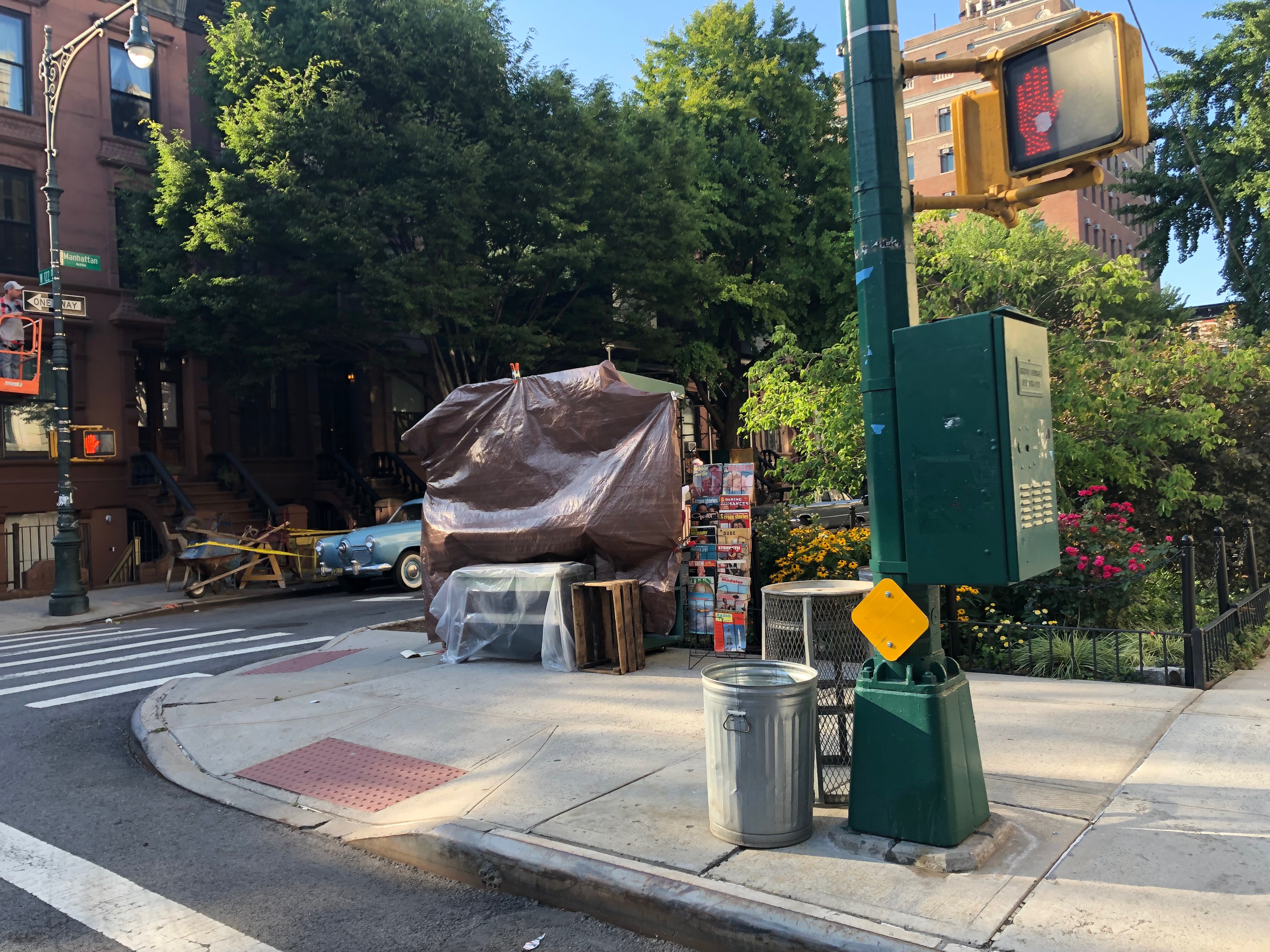
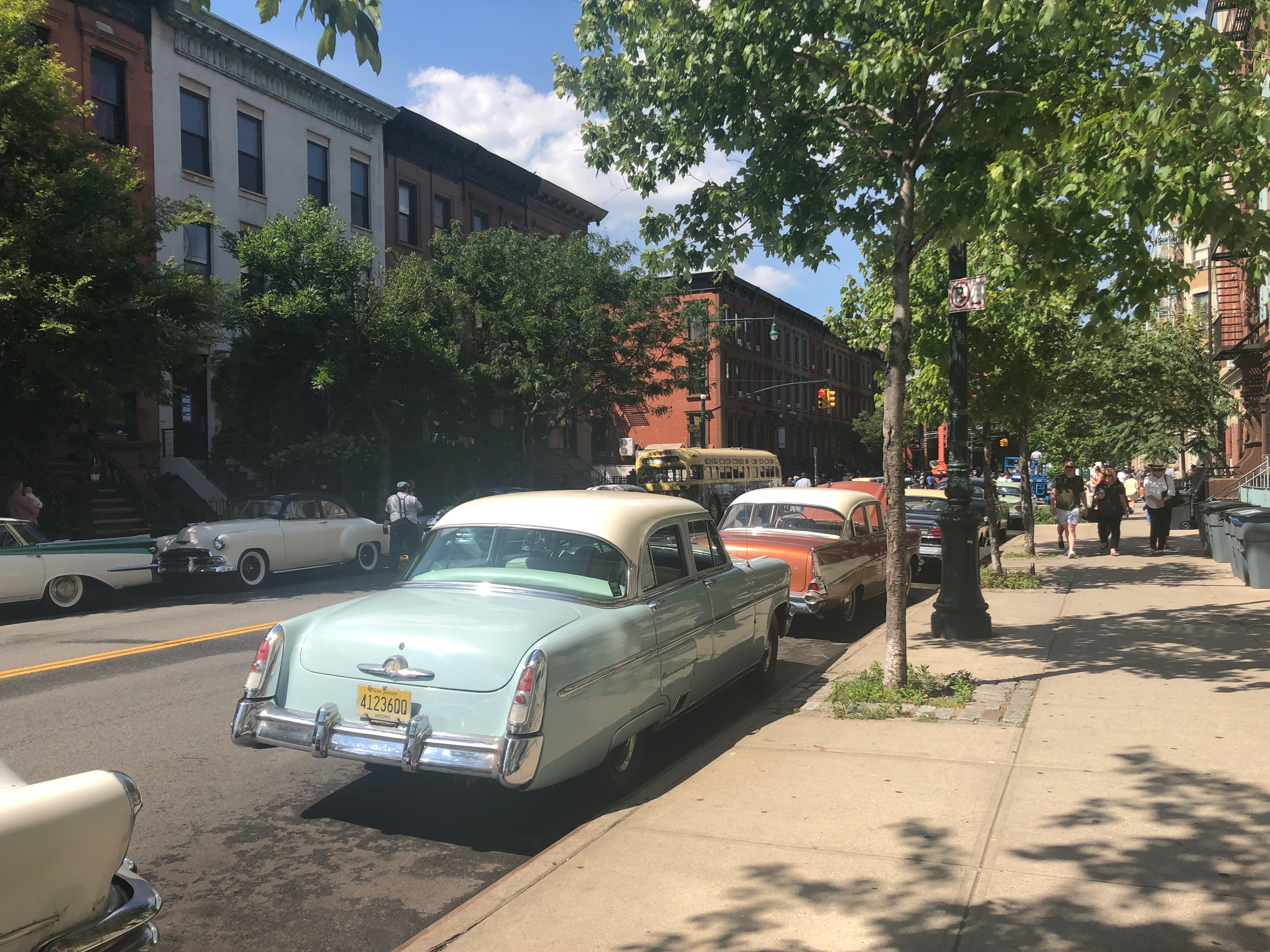
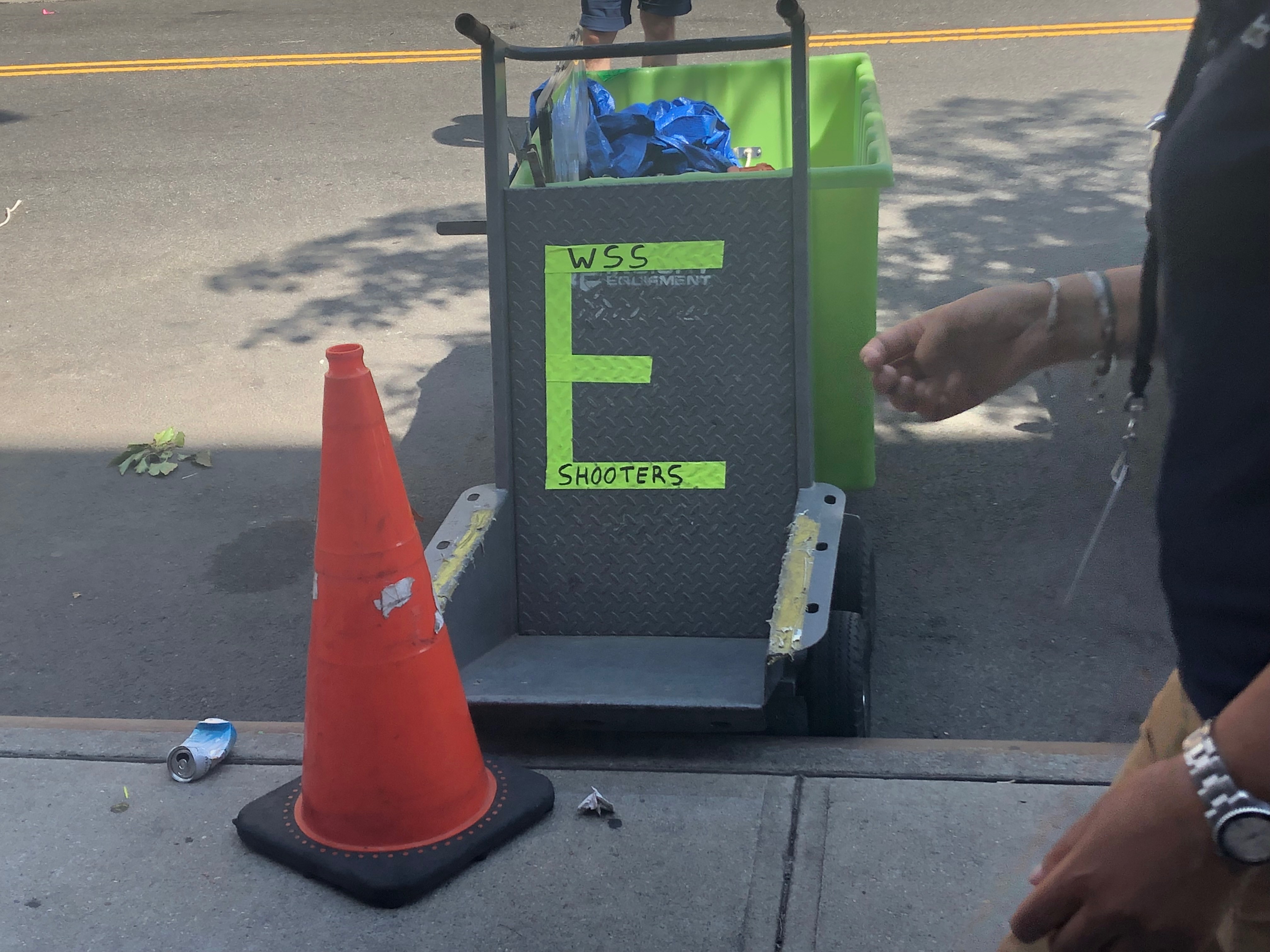
I saw the new 2021 remake of West Side Story last week, and it made me think of when they were shooting some exterior scenes in Harlem. This was in the “before times” – before COVID-19 lockdowns and restrictions -in the summer of 2019, July 13 and 14th. It was hot when they were shooting “America,” with temperatures in the 90’s. They had (I believe) wrapped that scene earlier on July 14th, and it was shot on St. Nicholas Avenue between 111th and 113th. As with most shots on location, when not actively filming, you are free to be in the area and look at exterior sets and equipment.
Old-fashioned telephone booth.Partially covered set pieces; vintage magazine rack.Gorgeous old cars!How they get those fantastic shots zooming up over the dancers!Equipment.So difficult to shoot on location, but the result is worth it!
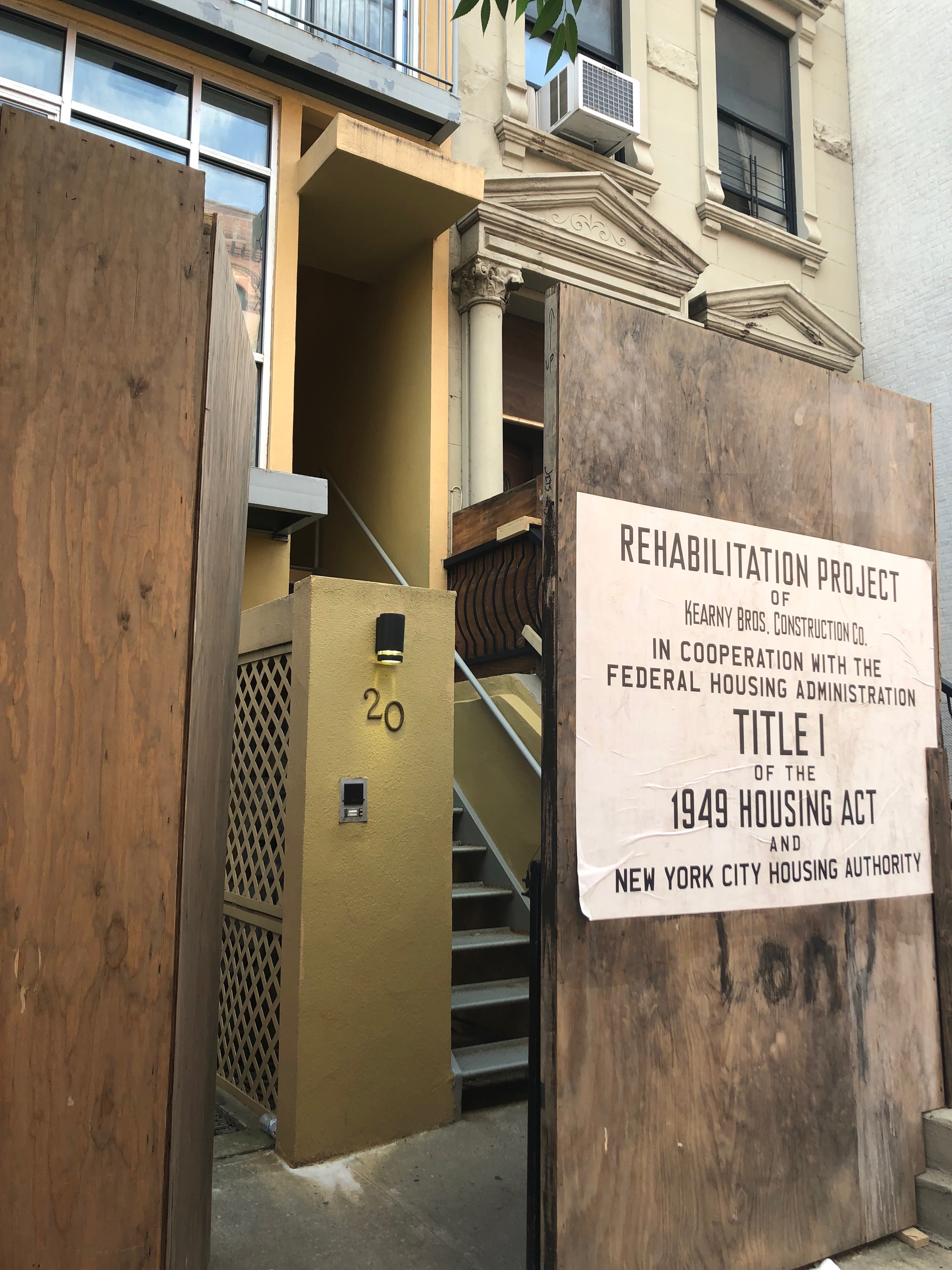
On E. 131st between Fifth and Lenox, there was signage about demolishing buildings to make way for Lincoln Center:
The film was enjoyable on so many levels, one of which being seeing so many Broadway stars on the big screen. Ariana DeBose (“Anita”), from the original company of Hamilton and on to A Bronx Tale and Summer; Mike Faist (“Riff”), from the original cast of Newsies to Dear Evan Hansen; even Brian d’Arcy James (“Officer Krupke” – unfortunately not a singing and dancing role!). with a long resume including Next to Normal, Shrek the Musical, Something Rotten!, and Hamilton. Sentimentally, my favorite was David Alvarez (“Bernardo”), who won a Tony Award in 2009 as one of the three original “Billys” in Billy Eliott the Musical. I remember taking my daughters, who were a little younger, to meet and have things signed by the three young men. It’s fantastic to see him giving such a vivid performance now as a grown man on the big screen.
Looking back on these photos, two-and-a-half years ago but feeling like much longer, it’s clear that the 2021 release of West Side Story involves not only time travel back to the time of the show but also to the time of the filming. Even now, with the film in theaters only, not everyone feels safe seeing it on the big screen with vaccines giving protection but a new variant of COVID-19 running rampant. When you can see this version of West Side Story, however, I do recommend you check it out as I greatly enjoyed it.
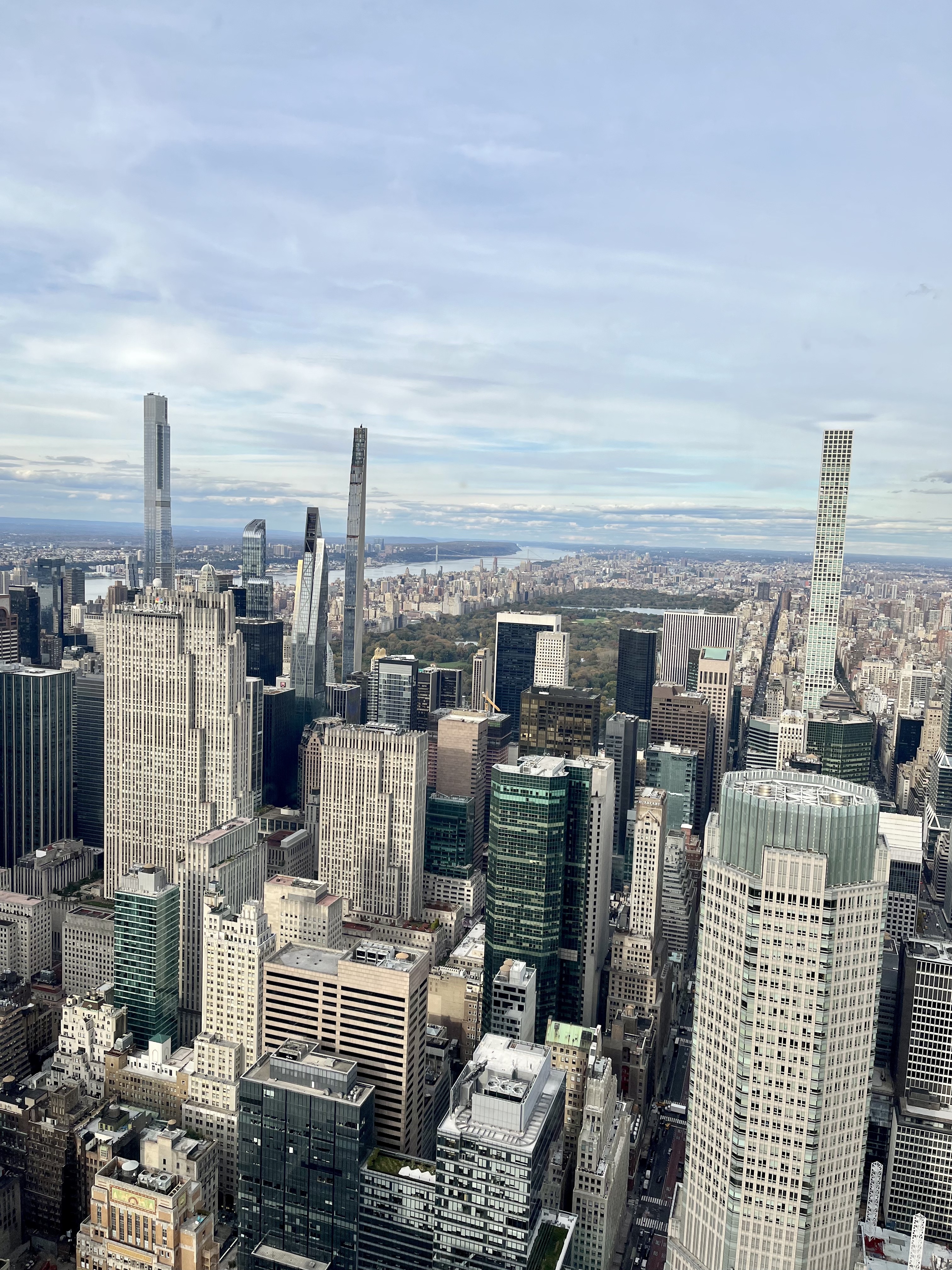
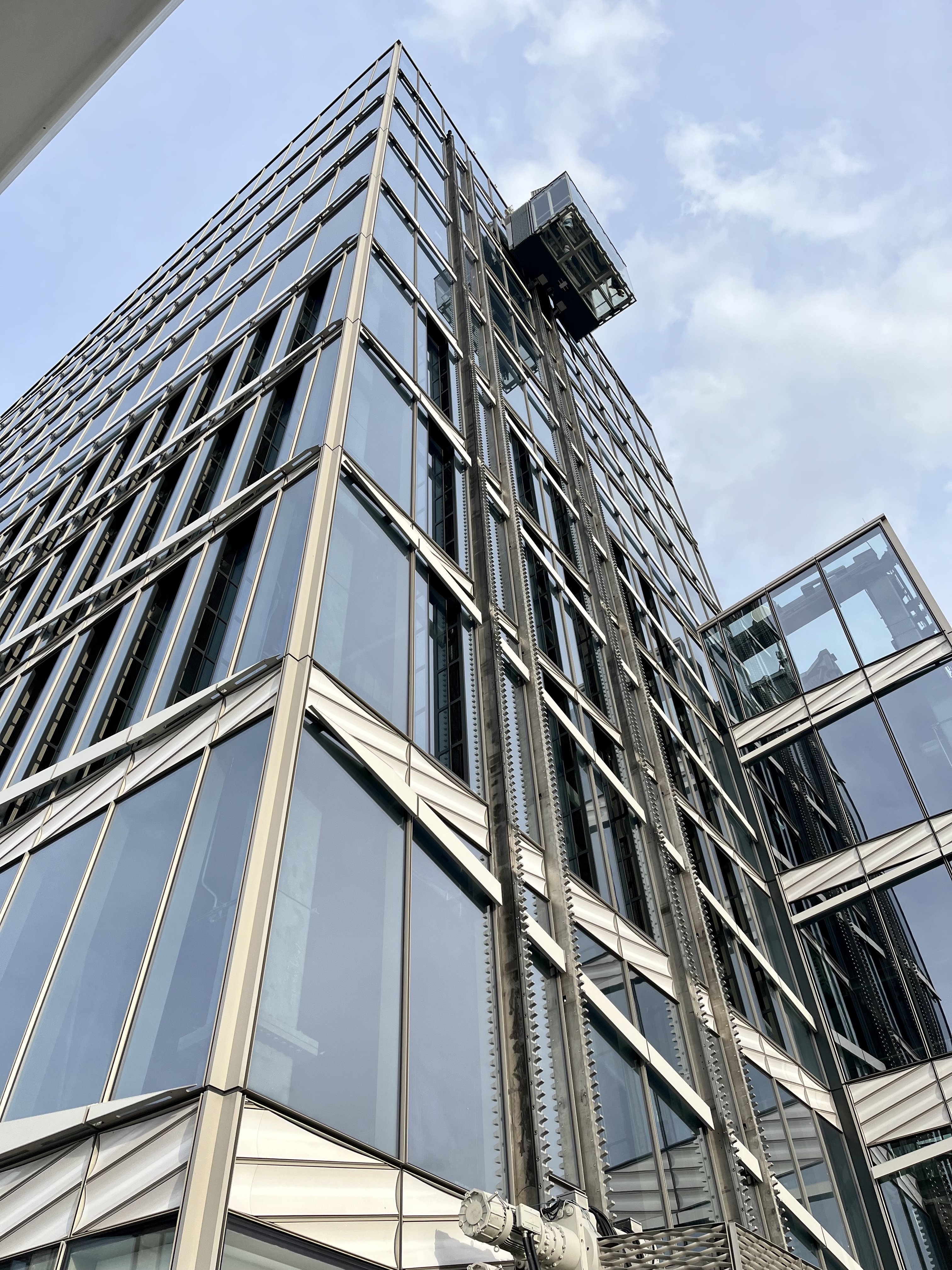
When One Vanderbilt, a commercial office building next to Grand Central Terminal in midtown Manhattan, was completed, it soared to 1,401 feet and became one of the tallest 30 buildings in the world. So – of course they had to create a public observation area! But, with the icons like the Empire State Building and Top of the Rock, and newer competitors like One World Trade and The Edge at Hudson Yards, certainly the developers realized they needed to do something a little different when they opened last month. Having been twice, once during daylight and once after sunset, I can affirm that they succeeded in doing just that with SUMMIT at One Vanderbilt.
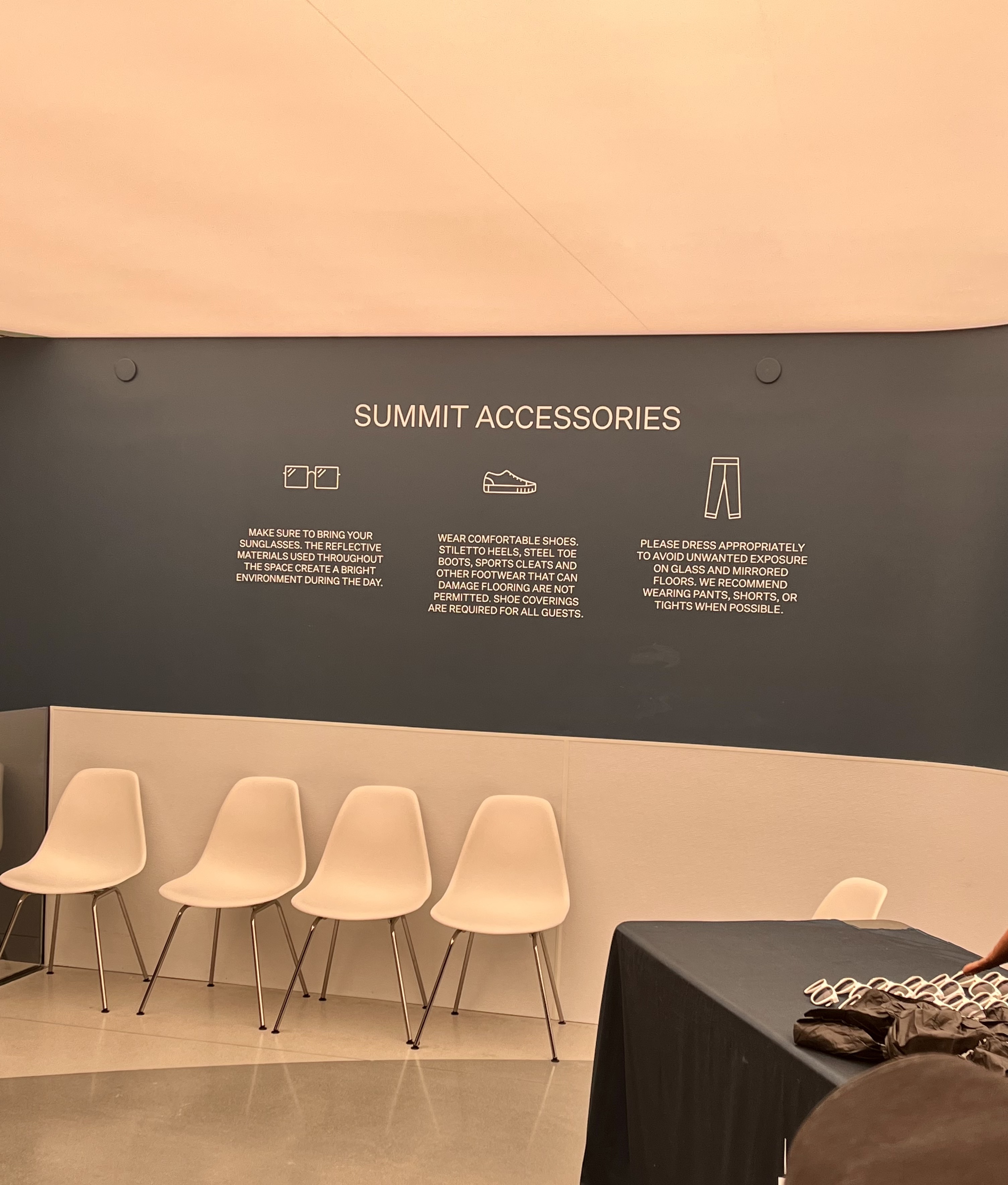
To get there, enter just to the east of the Grand Concourse at Grand Central Station. At this point (November 2021), there is a vaccination check before seeing a brief film and getting booties to cover your shoes (the reason for that becomes pretty clear once at the observation area). After scanning your tickets, you have two photos taken – one of your group as well as an individual photo of each. All digital photos are linked to a wristband with a QR code that you wear while experiencing SUMMIT.
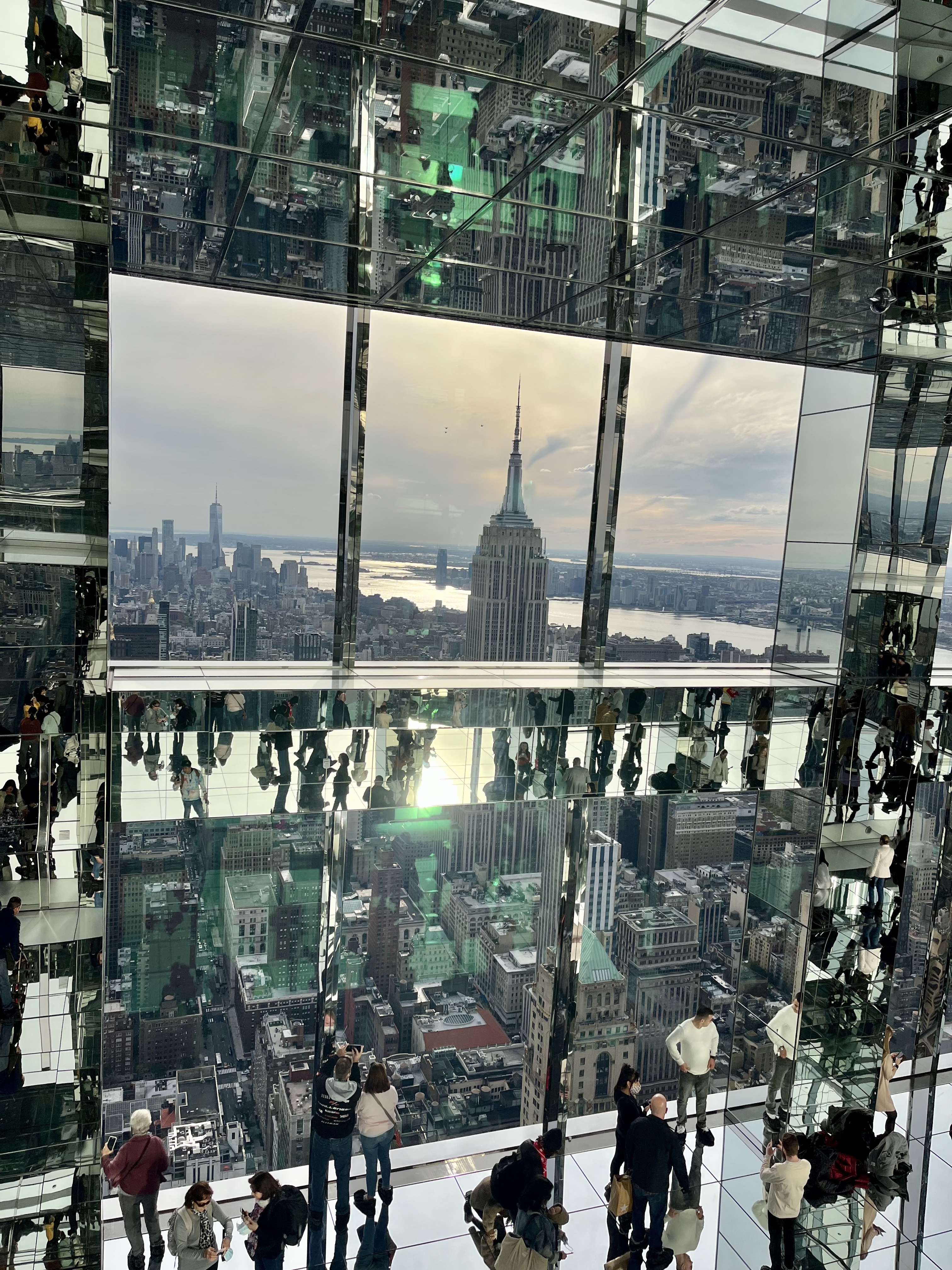
You go up to the 91st floor in a very fast elevator, and immediately see what is different about SUMMIT once you walk onto the first observation floor. There are floor to ceiling windows and you walk on mirrors (when you reserve, they do recommend that you not wear a skirt, for pretty obvious reasons!). The experience of seeing up and down, seemingly endlessly, is striking.
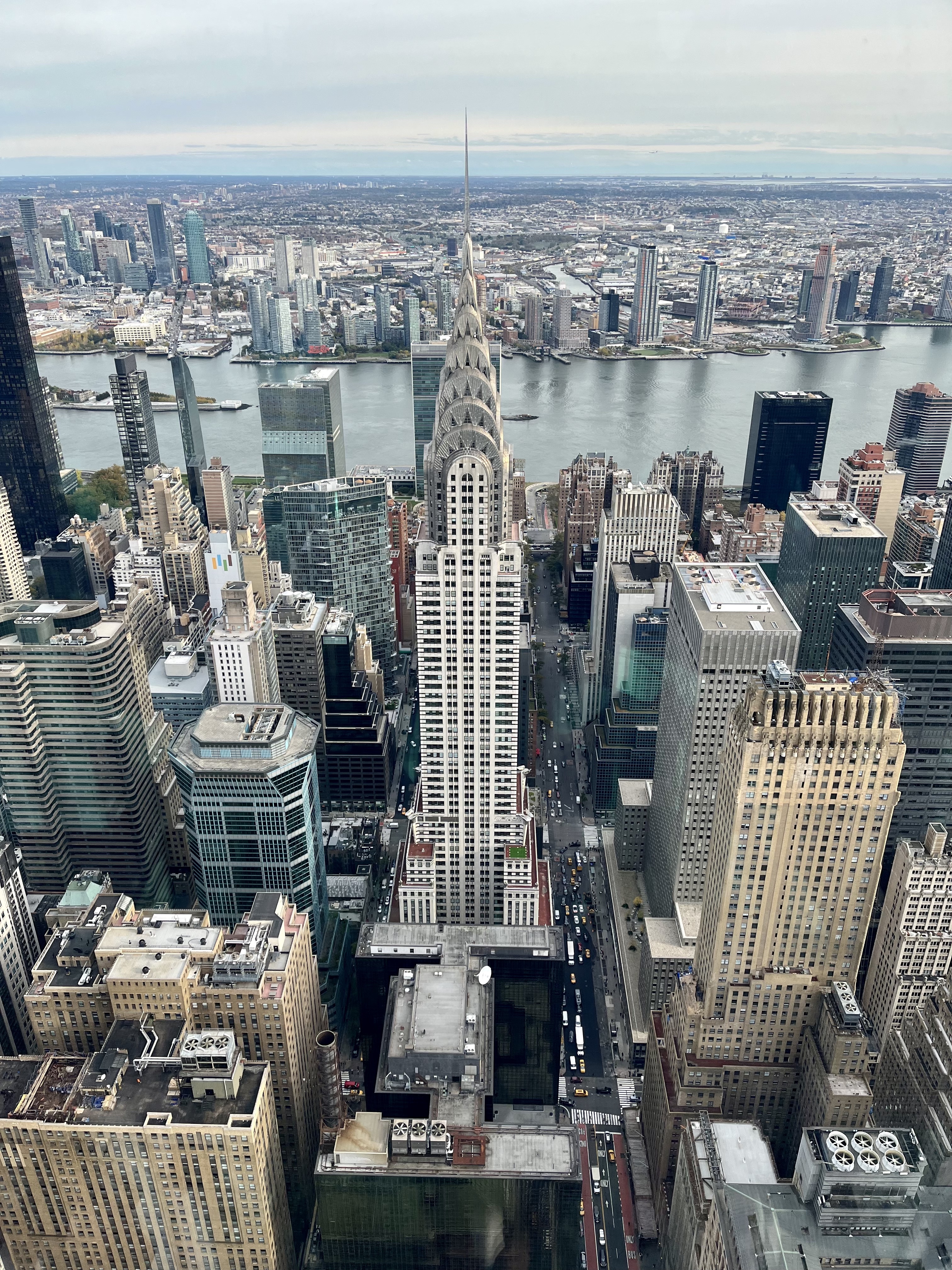
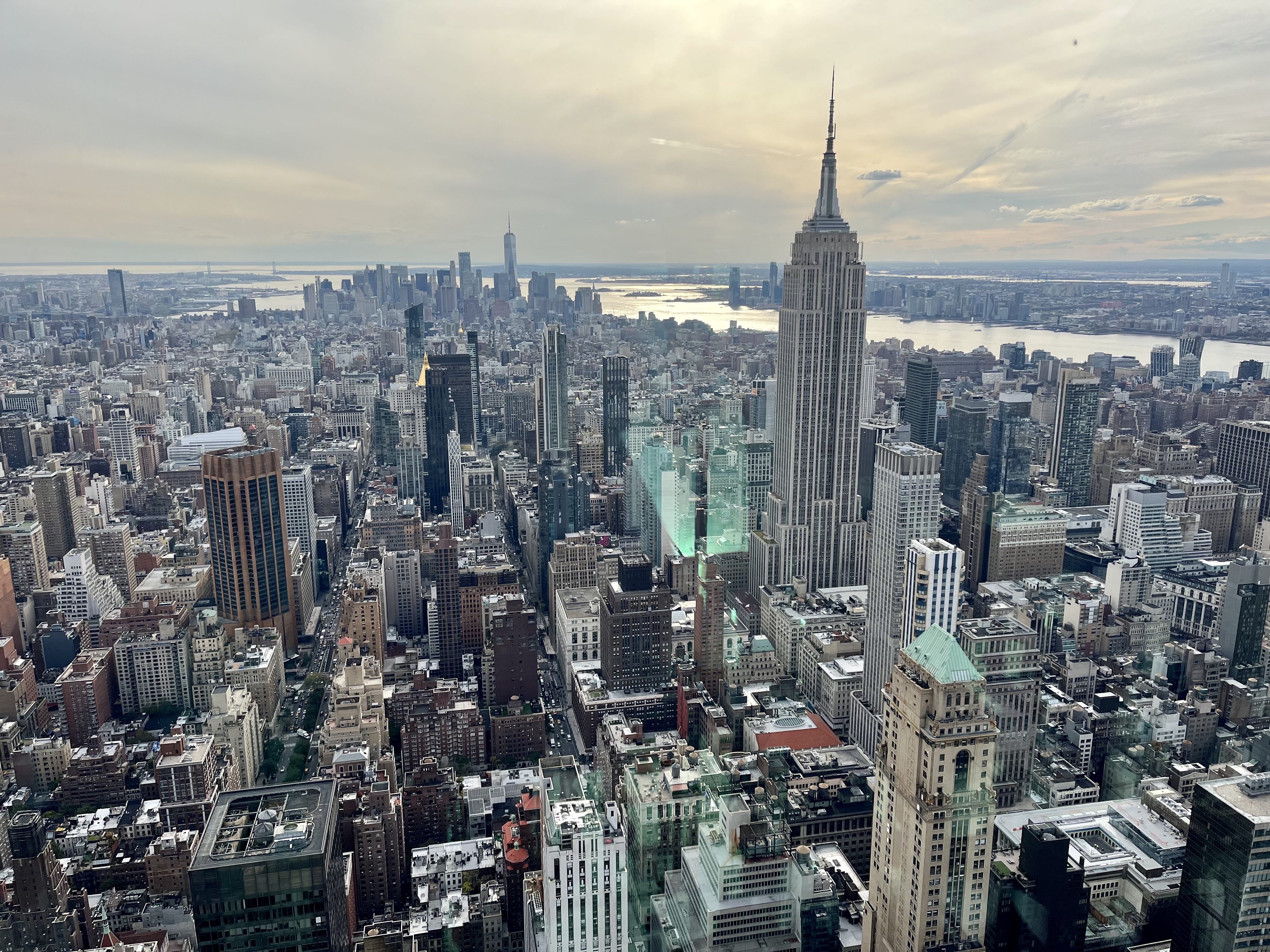
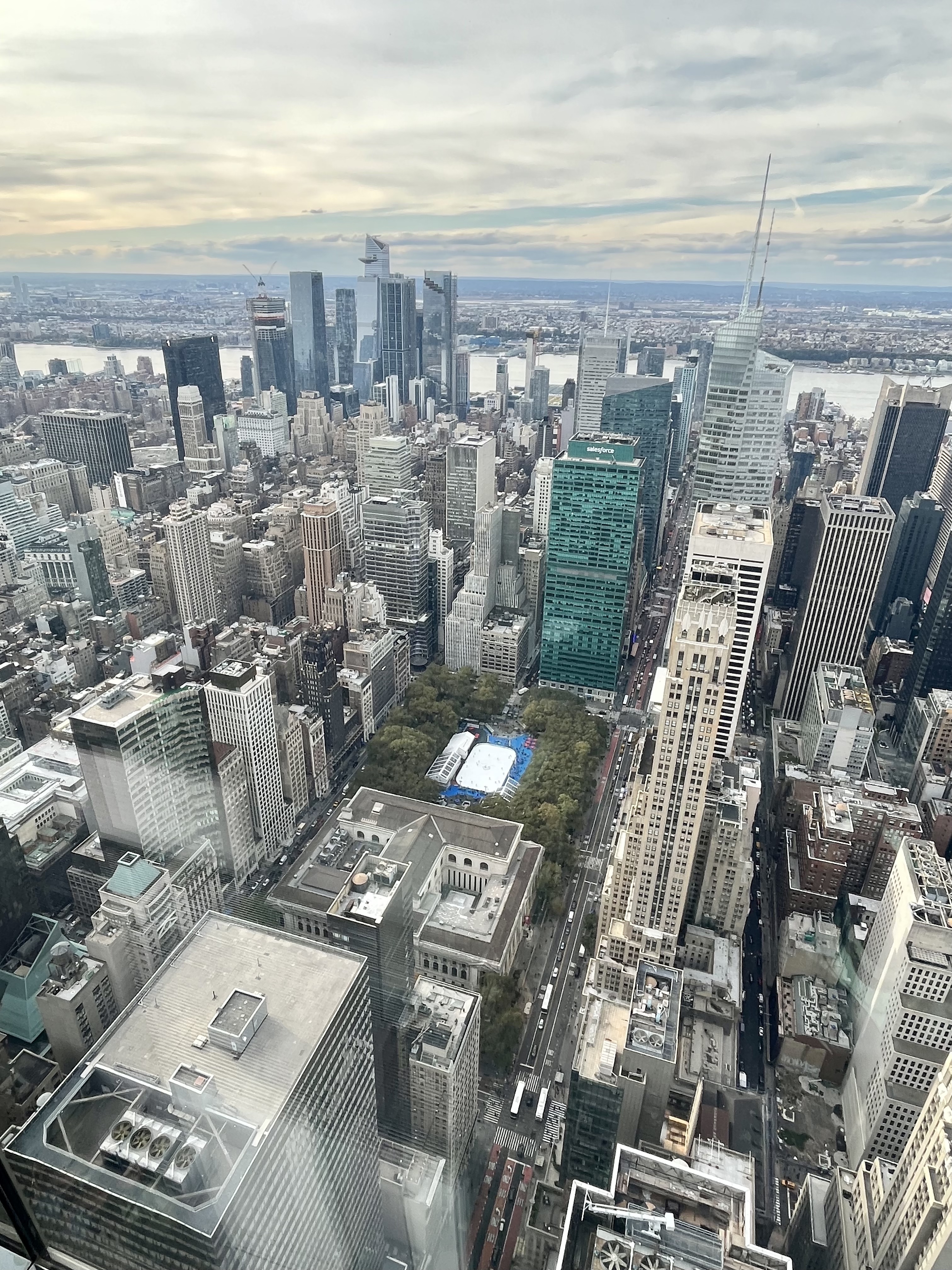
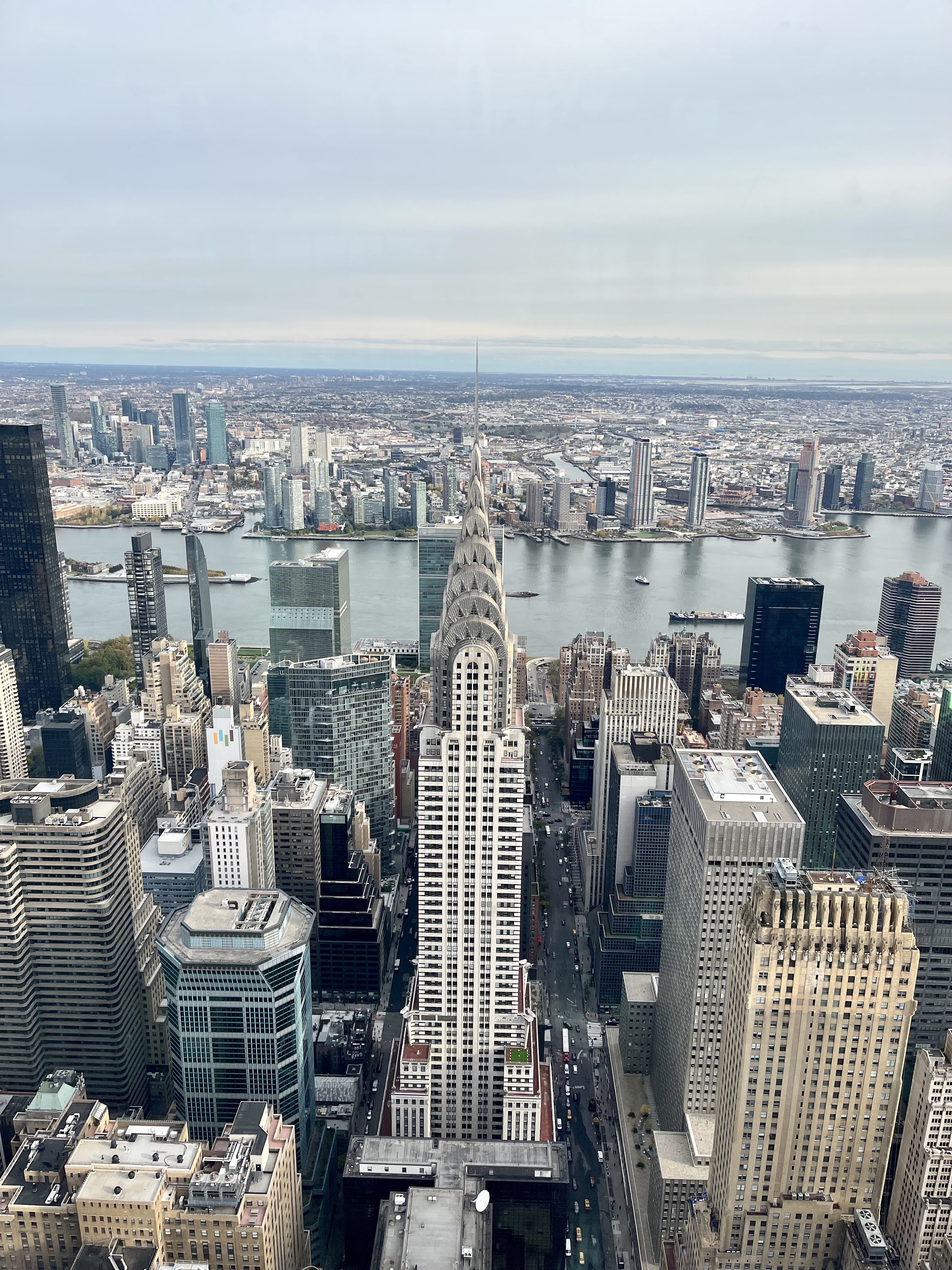
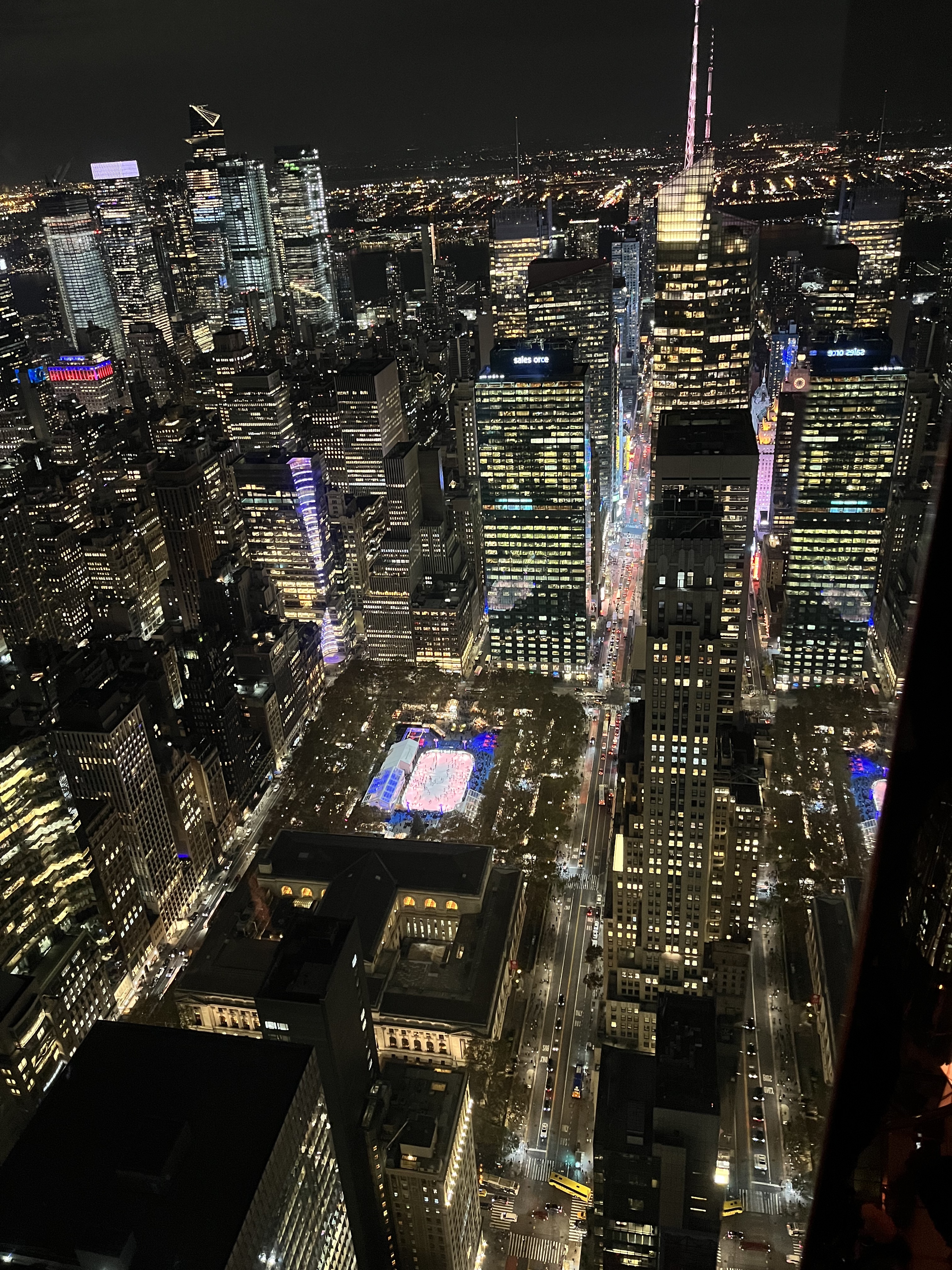
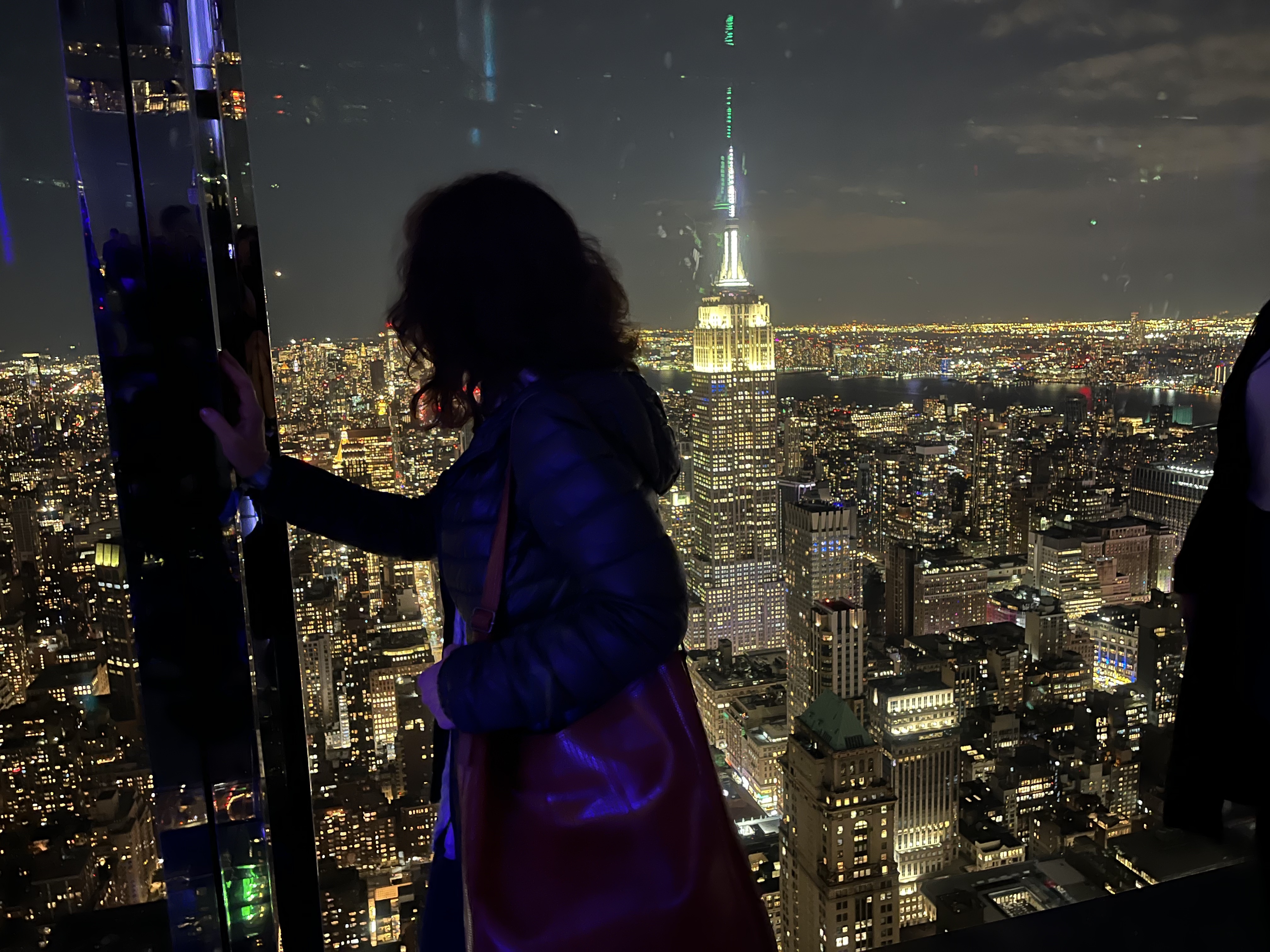
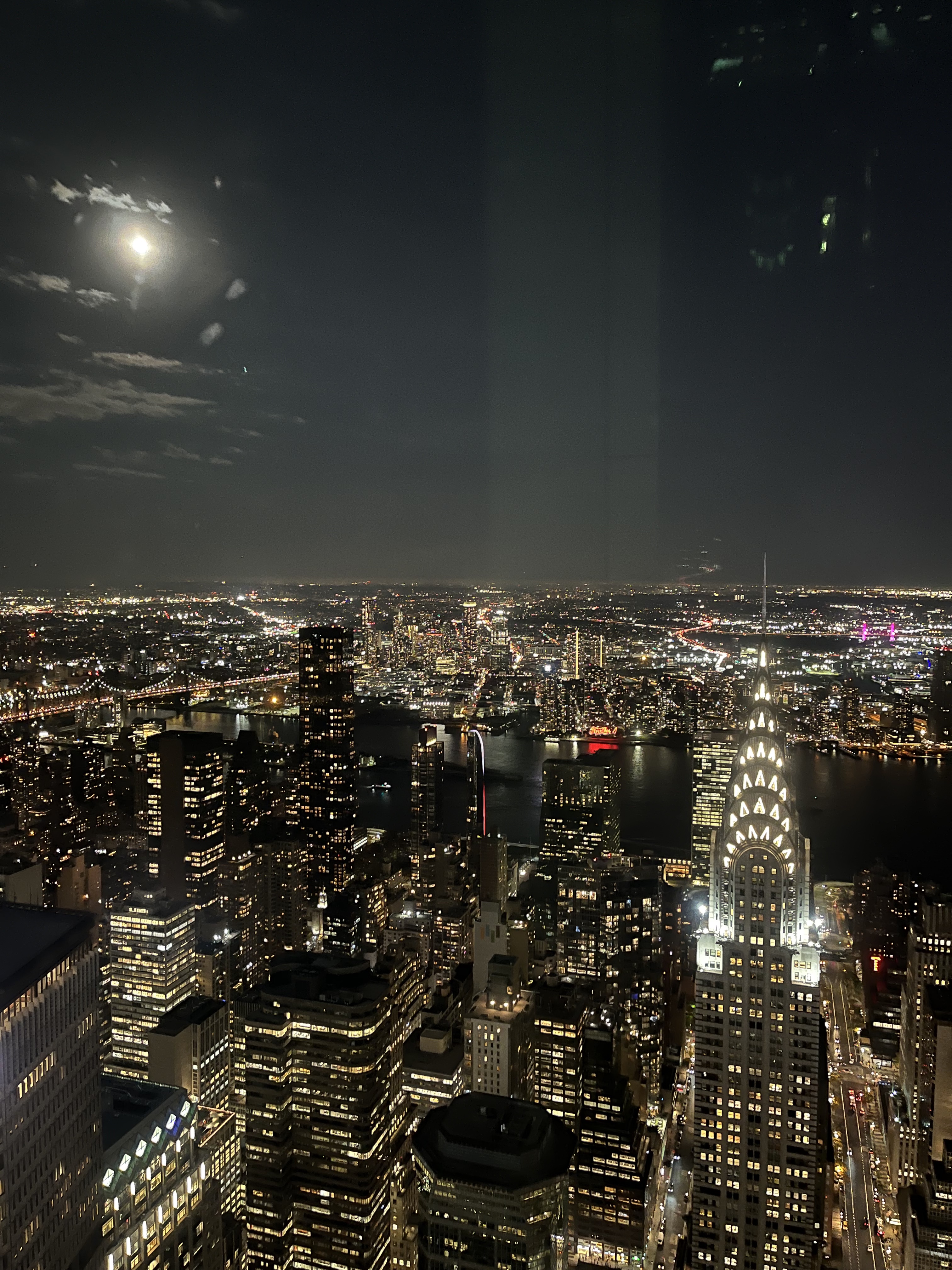
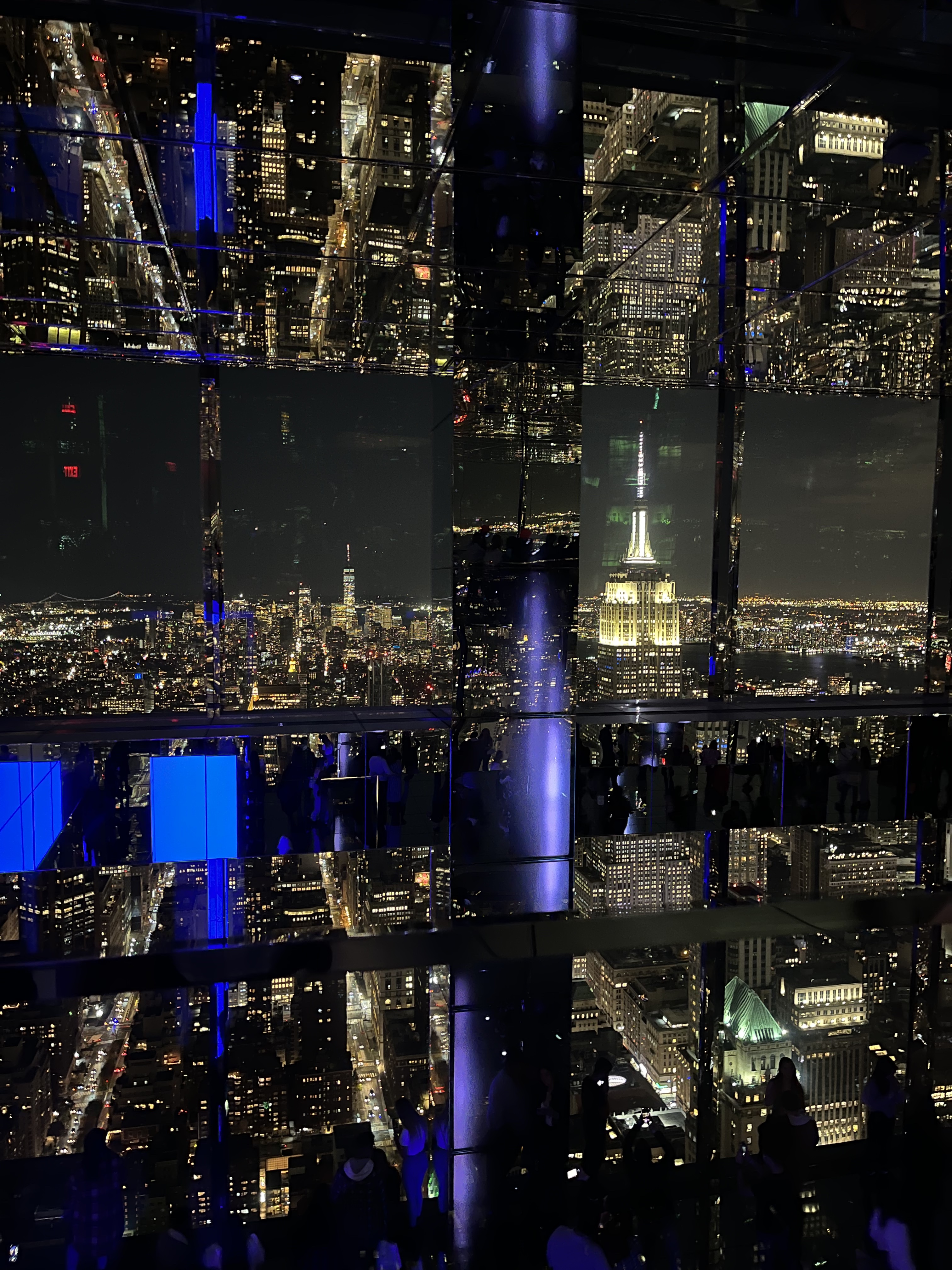
And what can you see? First is a picture-perfect view of the Empire State Building to the south, and much farther south, One World Trade at a distance. To the east, you look DOWN (a bit disconcerting!) onto the Chrysler Building, and to the west you can look down onto the New York Public Library and the skating rink in Bryant Park, over Times Square, and toward Hudson Yards. To the north, you see Central Park and the super-talls on Billionaire’s Row. You can see the Statue of Liberty, and every bridge, from the Verrazzano-Narrows to the George Washington.
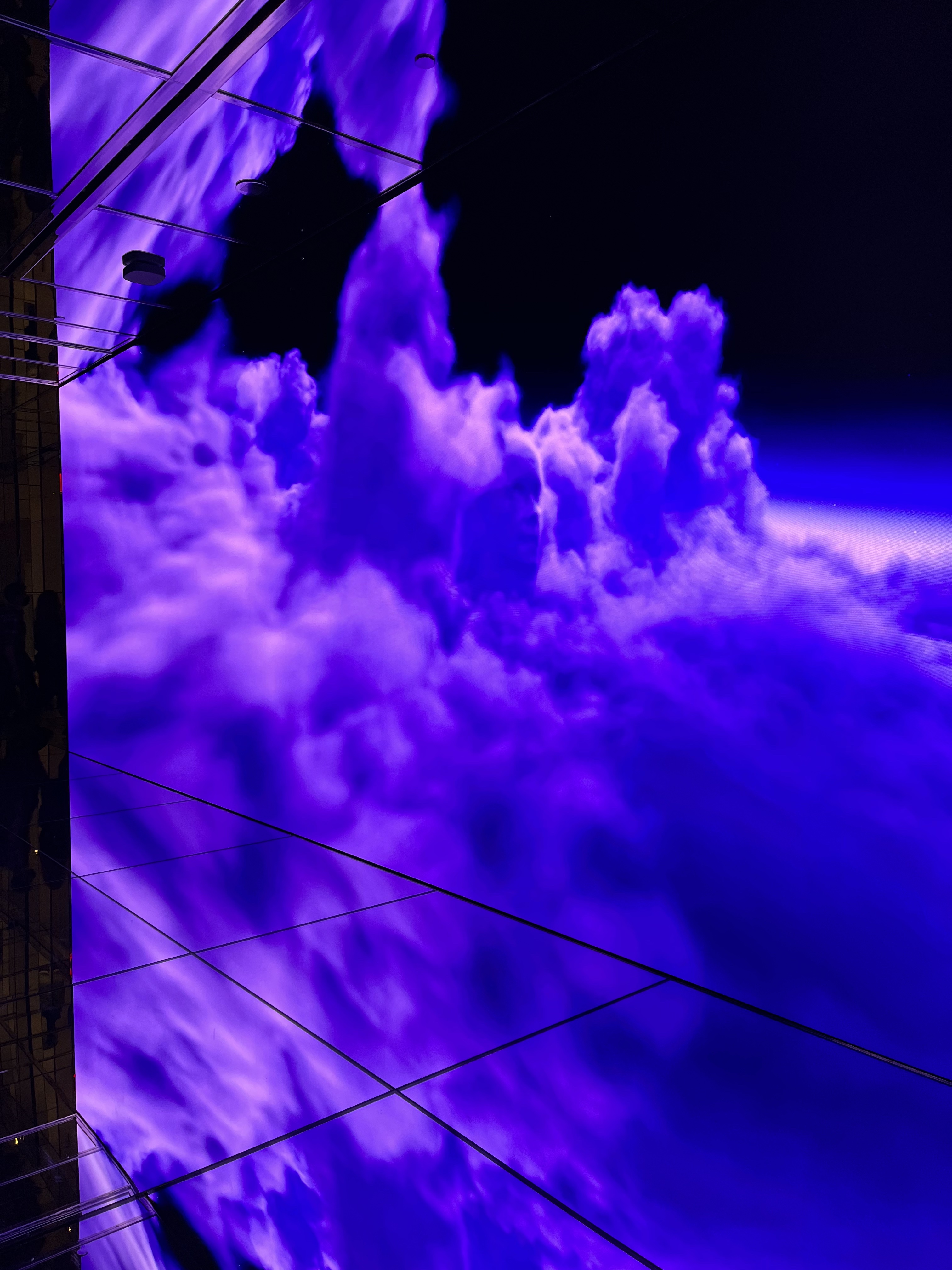
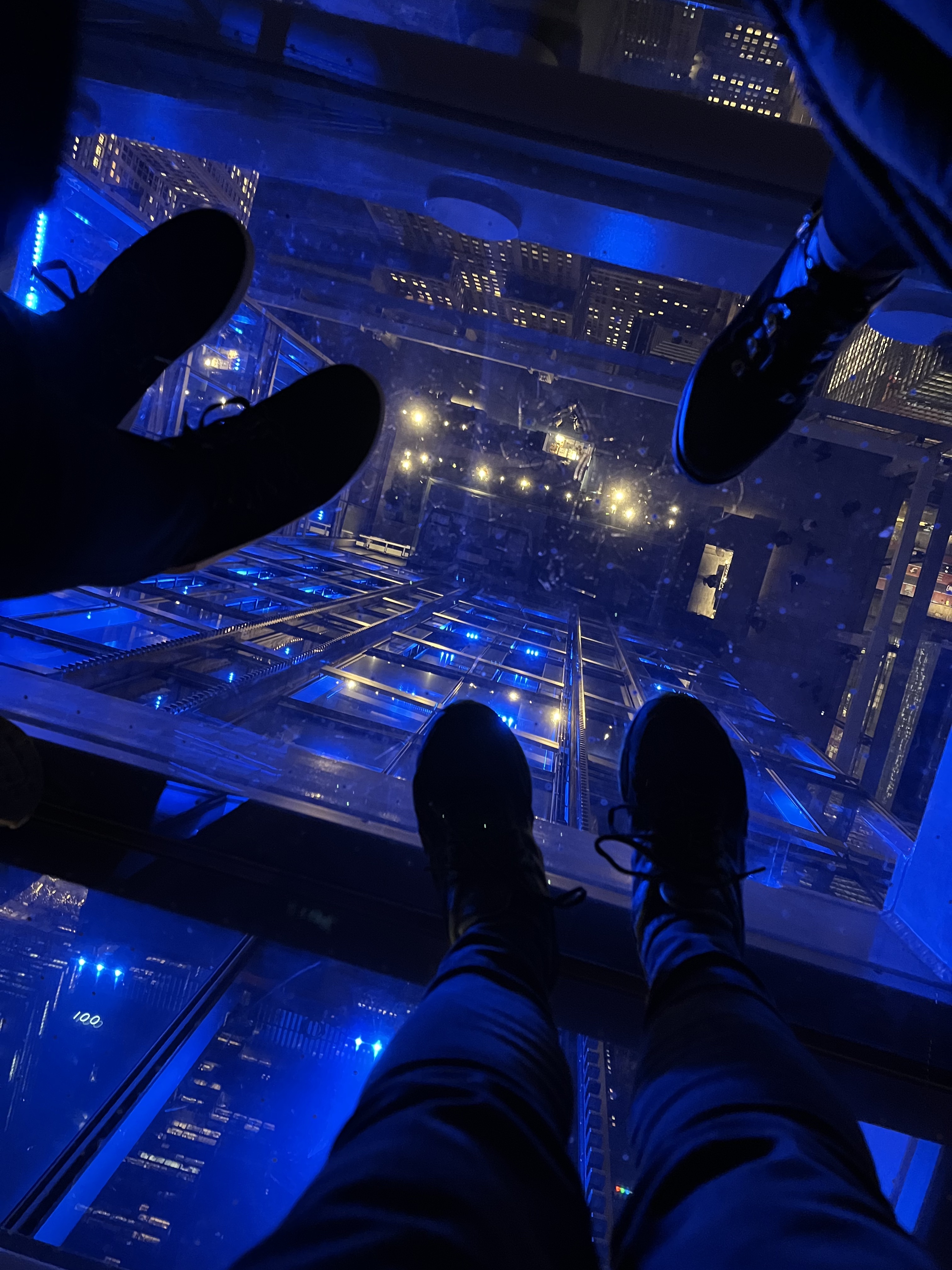
And for bonus activities, there is a room with Yayoi Kusana’s Clouds sculptures, a place to get your picture taken stepping out over the side of the building onto clear glass, with clear glass all around you (called, natch, Levitation), and a very trippy room filled with floating silver mylar globes called Air by Kenzo Digital (see some videos of what that is like here).
When you go up one more level, you can see down to the people entering on the mirrored floor in addition to seeing the views from one level up.
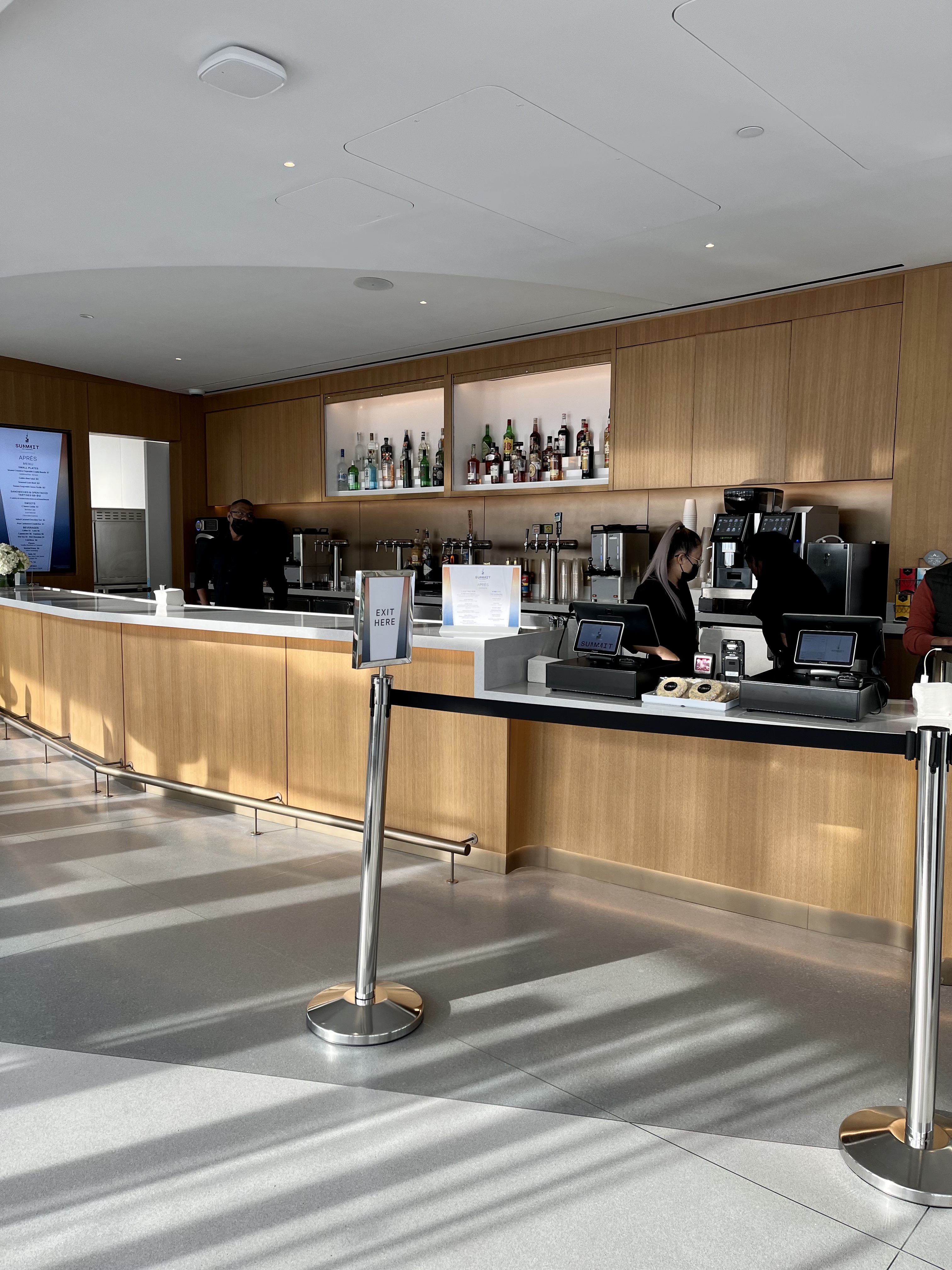
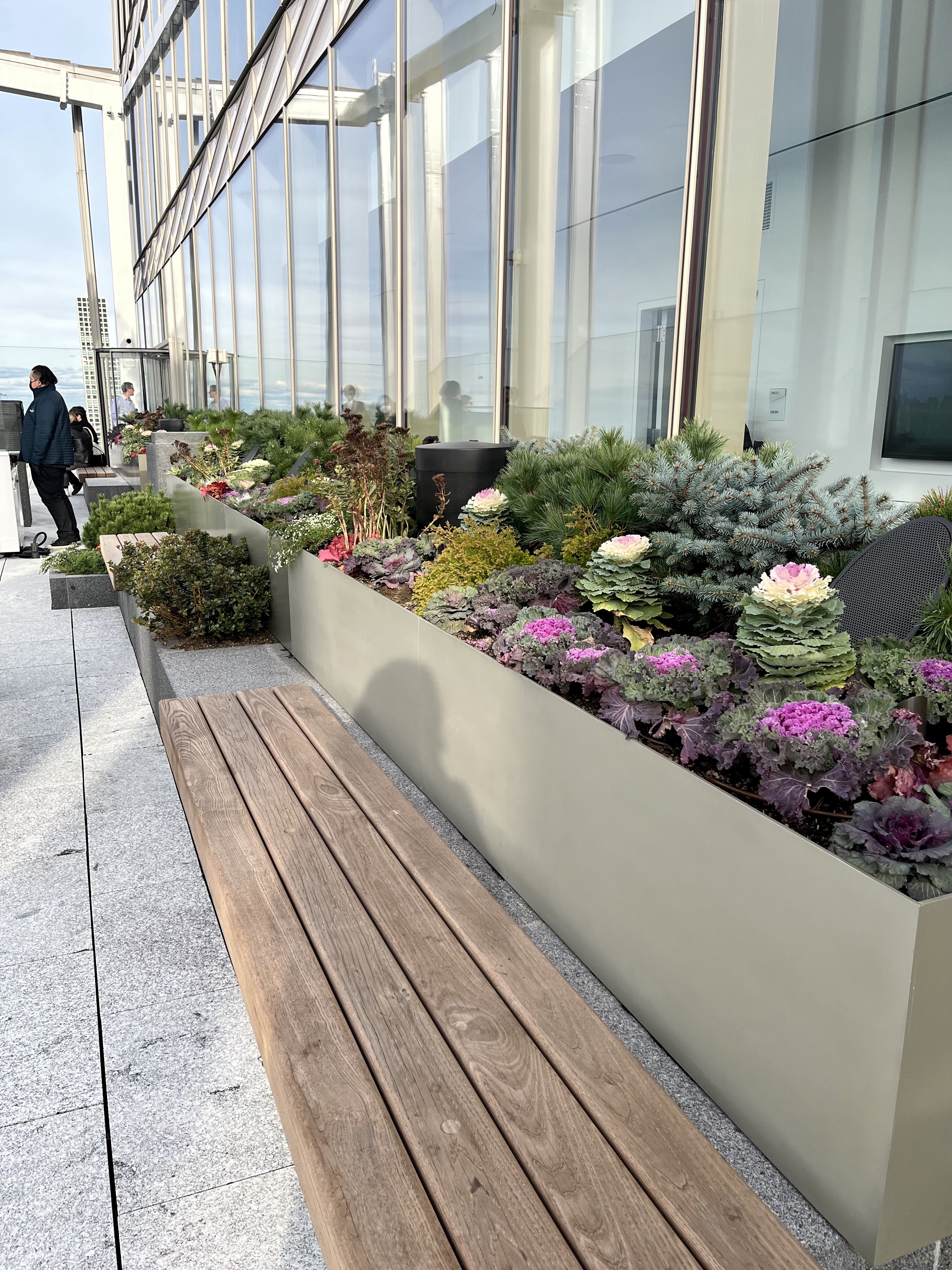
One more level up has a Danny Meyer cafe as well as an outdoor observation deck with clear barriers but open to the sky above.
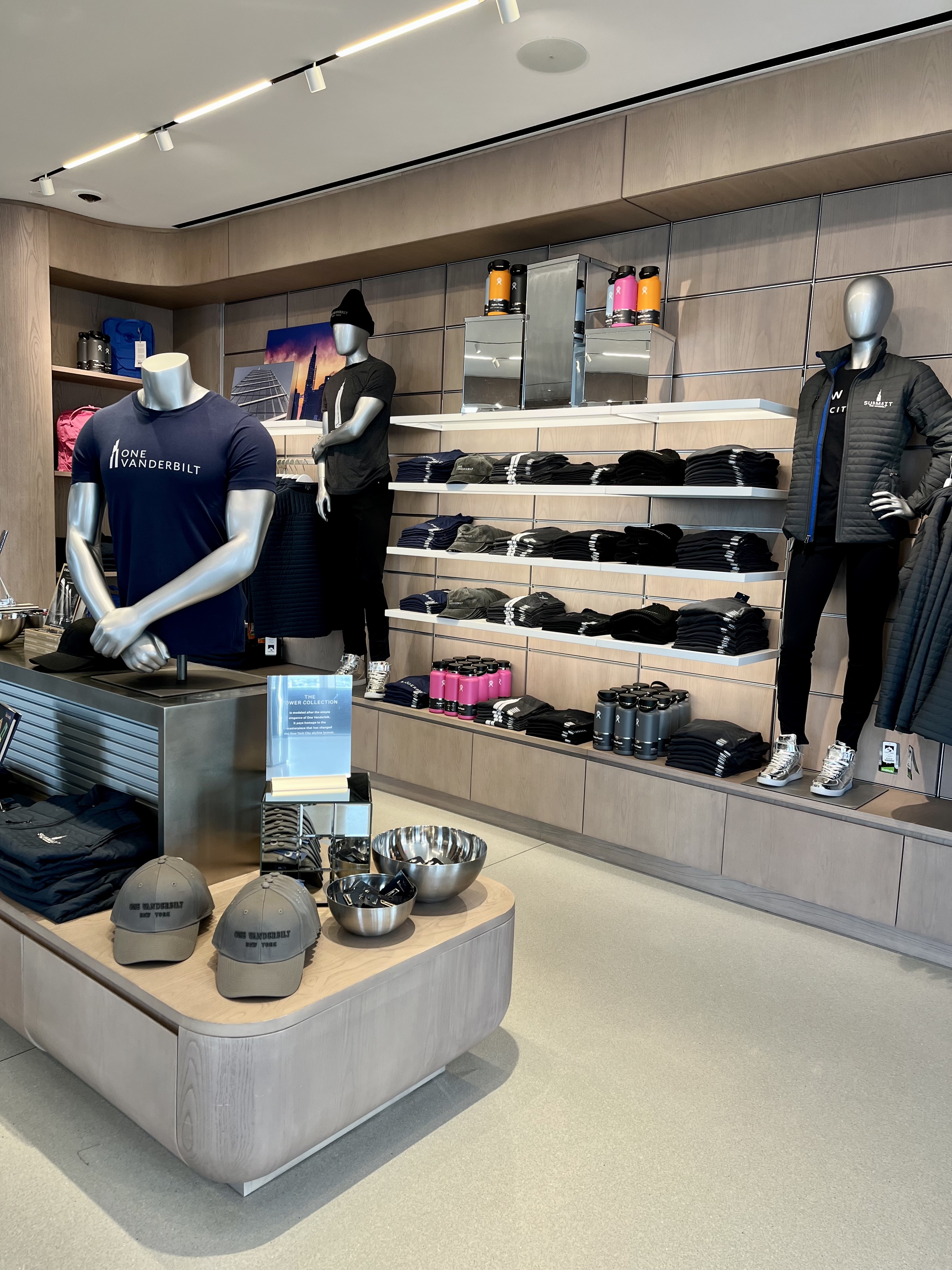
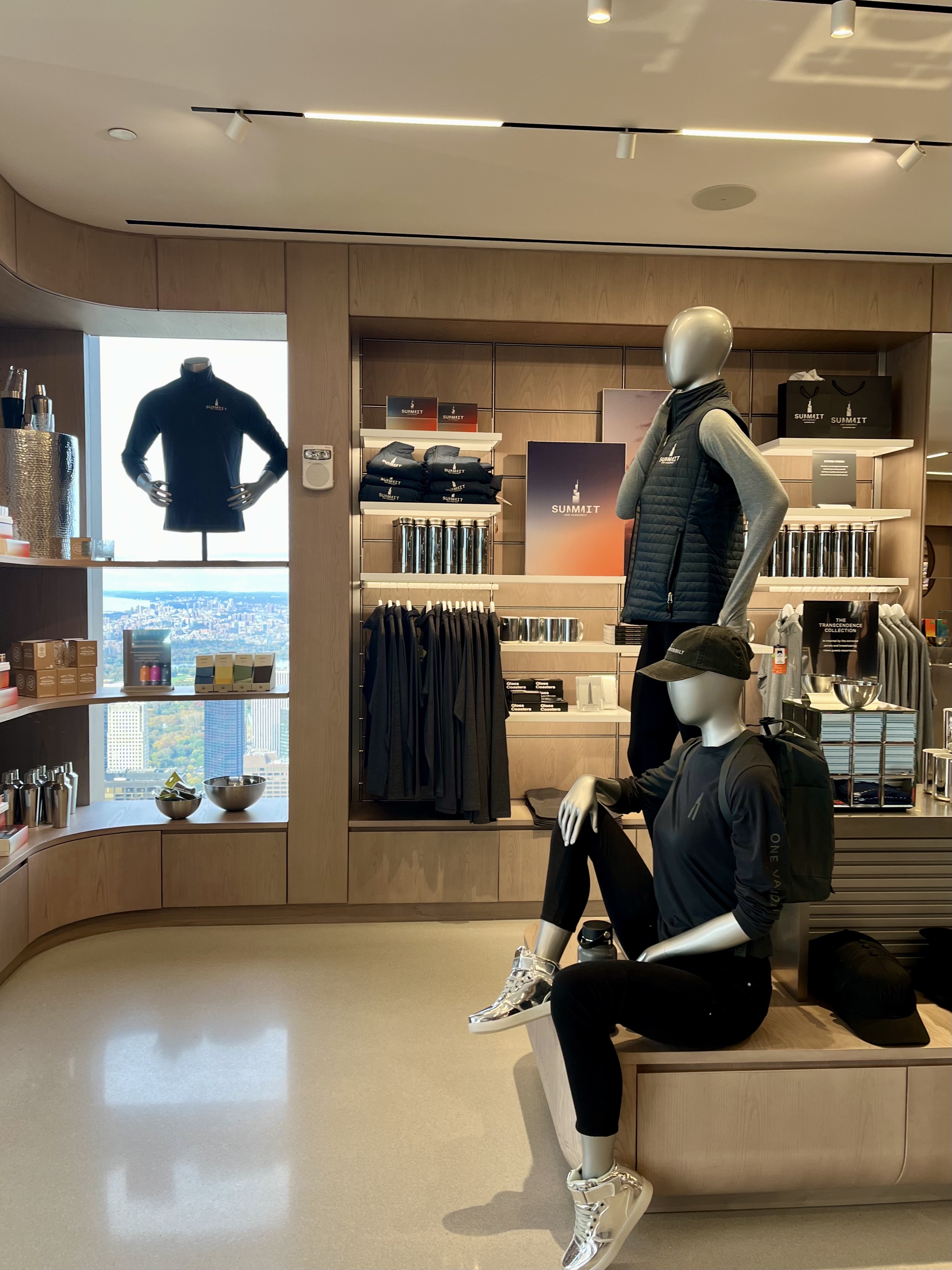
Of course there is a gift shop!
But what is it like at night, and with the Ascent elevator and enjoying a signature Danny Meyer cocktail? I was back two weeks later for the entire experience.
I found the experience to be much more exciting and beautiful at night, so much so that I feel just posting some full-sized photos is enough to make my point.
I mean, a full moon didn’t hurt! Also, this time I was able to catch my face in the clouds (below), triggered by scanning your wristband and linking the individual photo you took earlier to a moving cloudscape in one of the rooms.
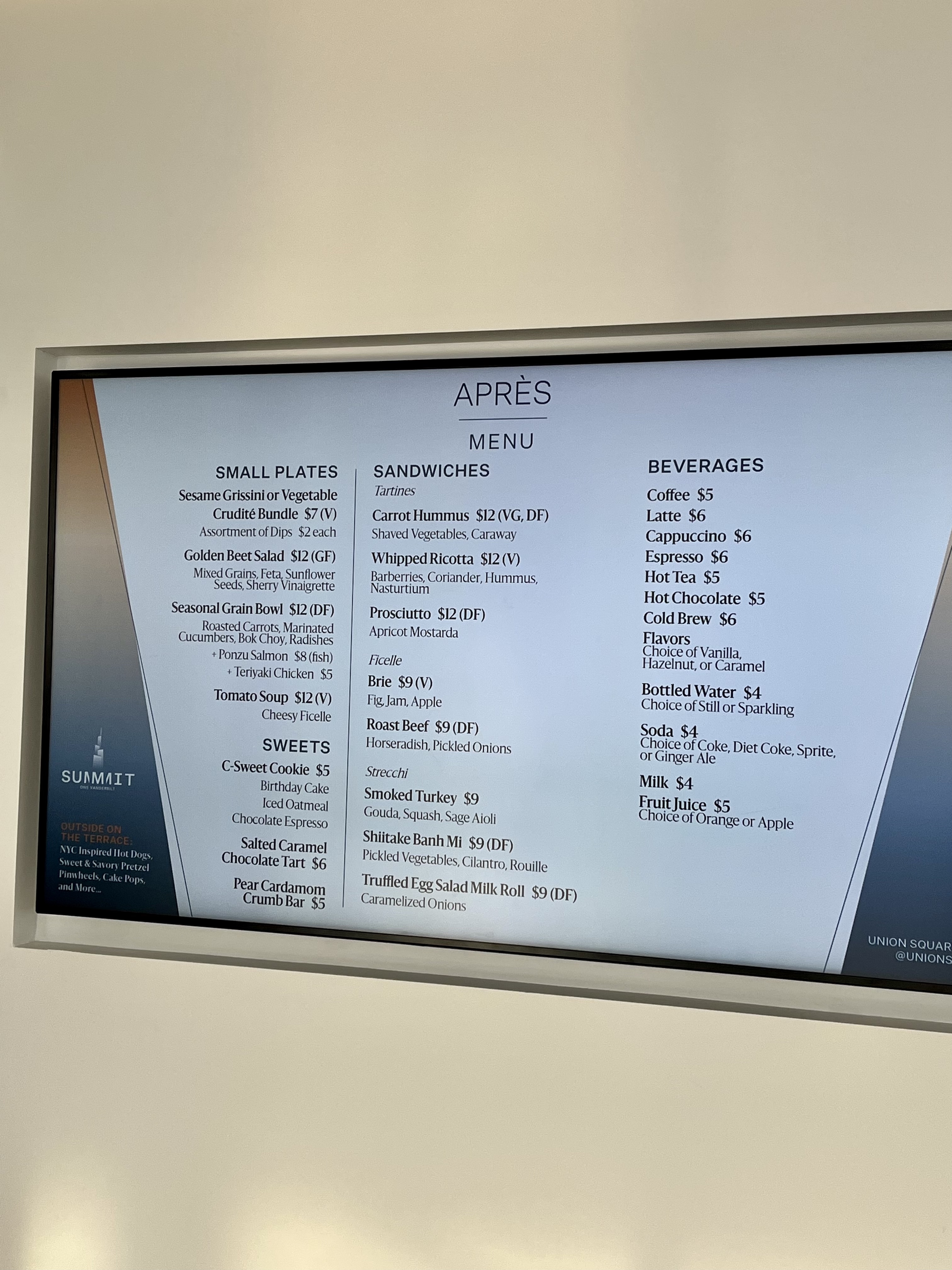
But what of the Ascent elevator? See above, for an extra price, you can stand in a clear glass elevator perched on the side of One Vanderbilt, go up even higher, have 90 seconds to take photos, and come back down. There is an enhanced ticket that you can get that includes the experience, the Ascent elevator, and a Danny Meyer cocktail (menu seen in a photo collage above). Did I enjoy the cocktail (I got the margarita) – of course, it was delicious! But do I think you necessarily need to pay for the Ascent plus cocktail to enjoy yourself? No – if you need to save a little money, just do Summit without any add-ons. Speaking of cost, tickets cost more at night than during daylight, with an extra surcharge for sunset times. There is a $5 per ticket discount for NYC residents. Find out more here.
I read a review of SUMMIT recently in Curbed (read it here) that called it “a ridiculous experience” and said it can’t replace enjoying NYC from ground level. Frankly, I think that misses the point. Of course the quintessential way to experience the city is to walk it (my first post was about just that). That doesn’t mean that it isn’t also tremendously enjoyable and exciting to see the city in a different way – and SUMMIT is a very different experience. Whether you are a New Yorker looking for a fun new sensory trip, or a visitor wanting to add to the ways NYC can wow you, I don’t think you will be disappointed if you decide to give SUMMIT a try.
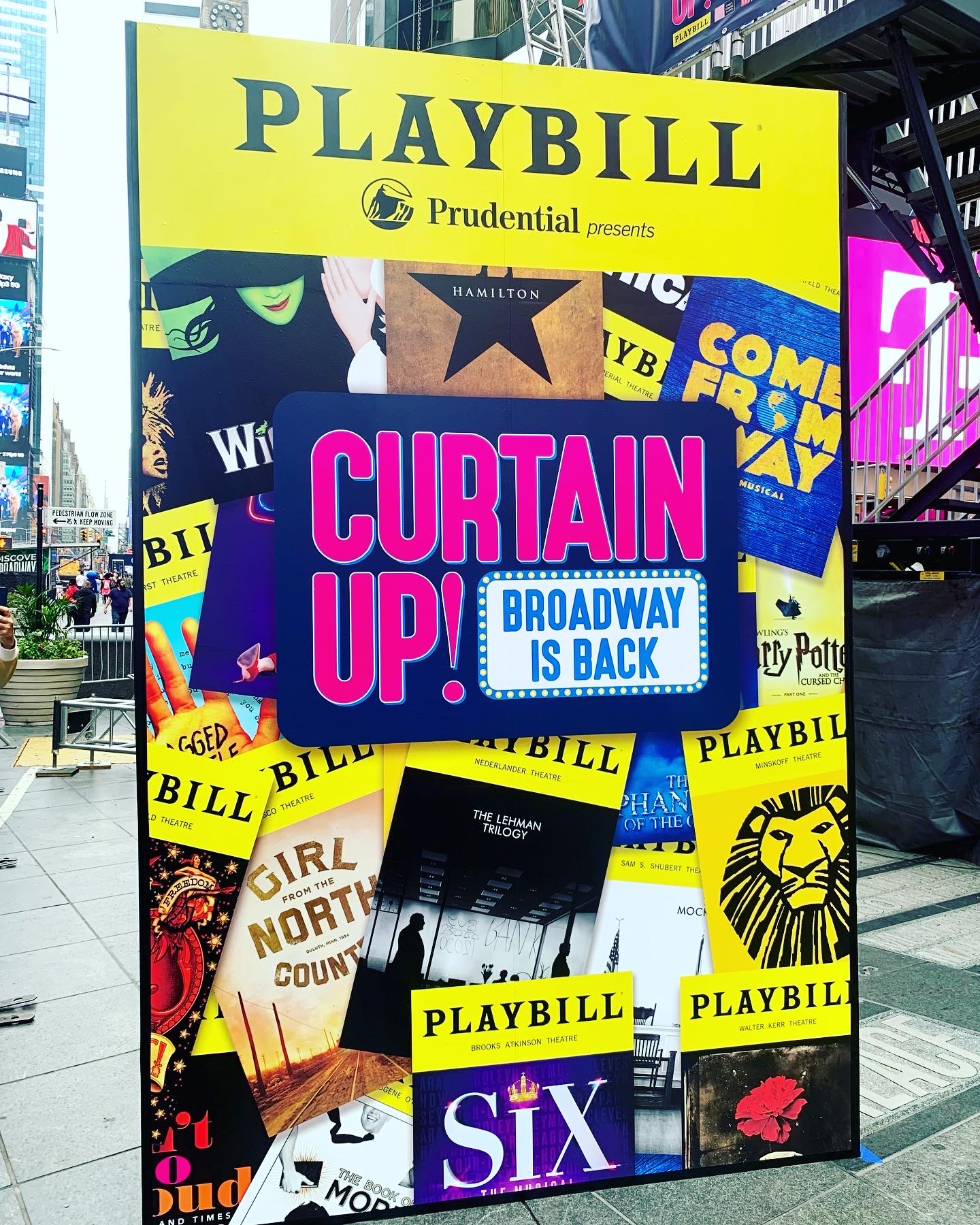
I’ll never forget hearing on March 12, 2020, that Broadway was going to be shut down until the week of April 13th. It seemed inconceivable to me that it could be true – after 9/11 it was shut for two days, and here and there a blizzard would shut down shows for a day. The idea that there would be no Broadway theatre for over a month was stunning. If someone had told me at that point, as I struggled to process this unprecedented shut down, that in reality Broadway theatres would be closed for at least 18 months, I would not have been able to believe it (or, perhaps, take it). Even when I was taking photos in an entirely empty Times Square that spring (the experience of which I wrote about in this blog post), it still seemed impossible to believe that Broadway, the heart of NYC’s pulsing vitality, would be shuttered for so long. But now the sleeping beauty is waking up, and it’s exhilarating. This is my perspective on Broadway’s reopening, as of the end of September, 2021.
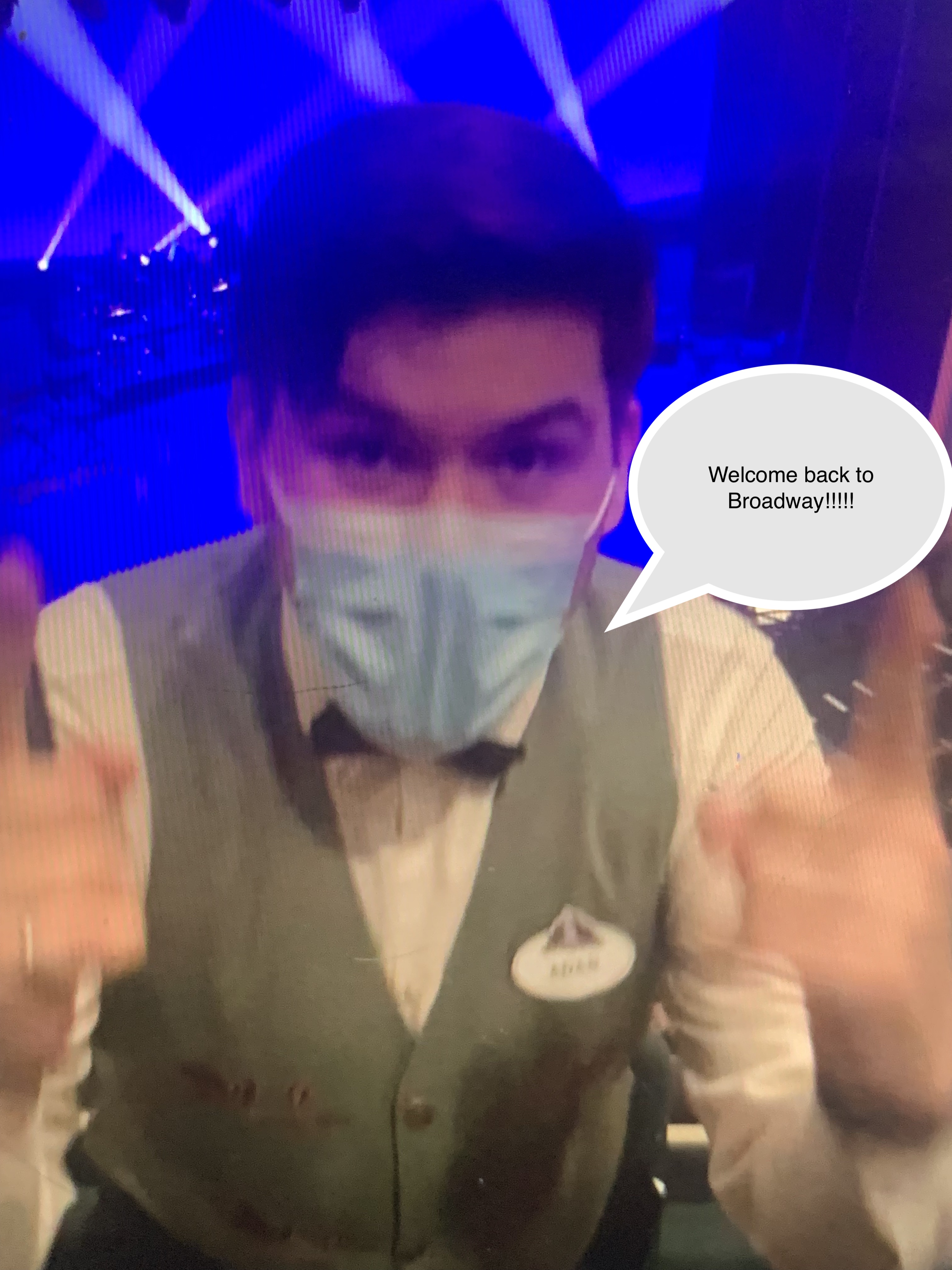
The first time I walked into a Broadway theatre was to see a Disney on Broadway concert (Live at the New Am) at the New Amsterdam theatre. Vaccination checks were in place before the normal security screen. To hear the sound of a ticket being scanned was a delight. When the usher (above) declared “Welcome back to Broadway!” it was almost too emotional. The concert was fantastic, and so many lyrics of Disney on Broadway songs took on new meaning and the performers and audience reacted (for instance, “In the First Time in Forever,” the following: There’ll be actual real live people/It’ll be totally strange/But wow, am I so ready for this change!/’Cause for the first time in forever/There’ll be music, there’ll be light.
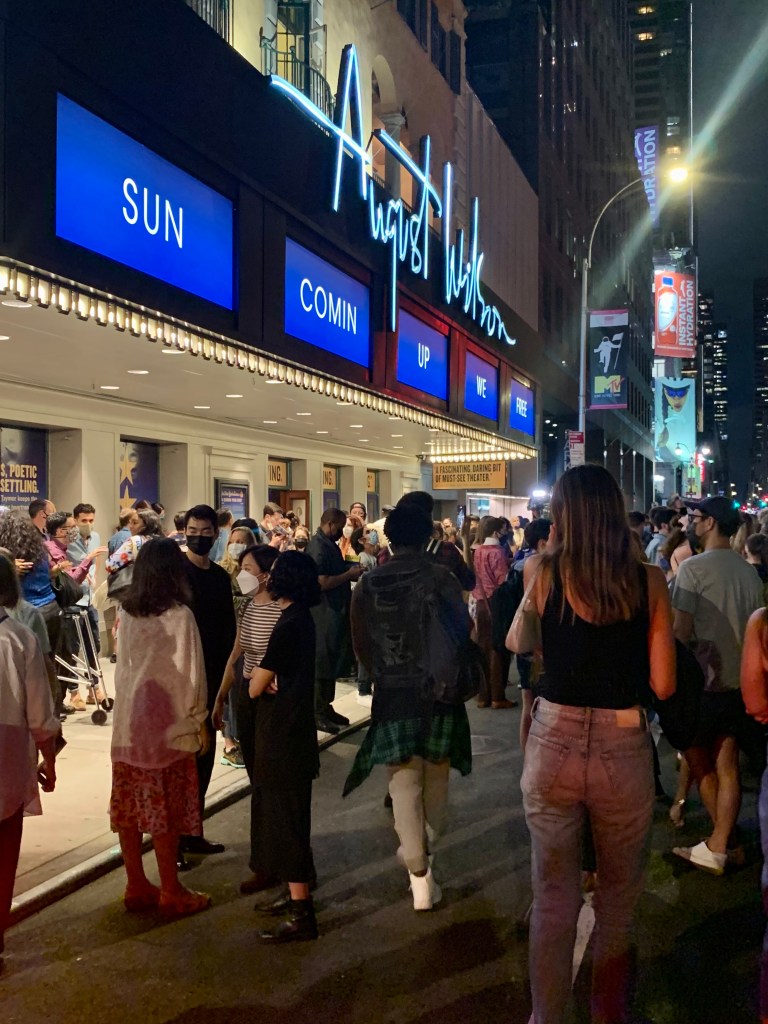
The first Broadway play to open after pandemic shutdown was the new play Pass Over, by Antoinette Nwandu. The opening night of previews, August 4, the crowd stood and applauded with stage manager Cody Renard Richards made the preshow announcements (you can see his experience here). After the first preview, the block of West 52nd between Broadway and Eighth was closed off and there was a jubilant block party with DJ.
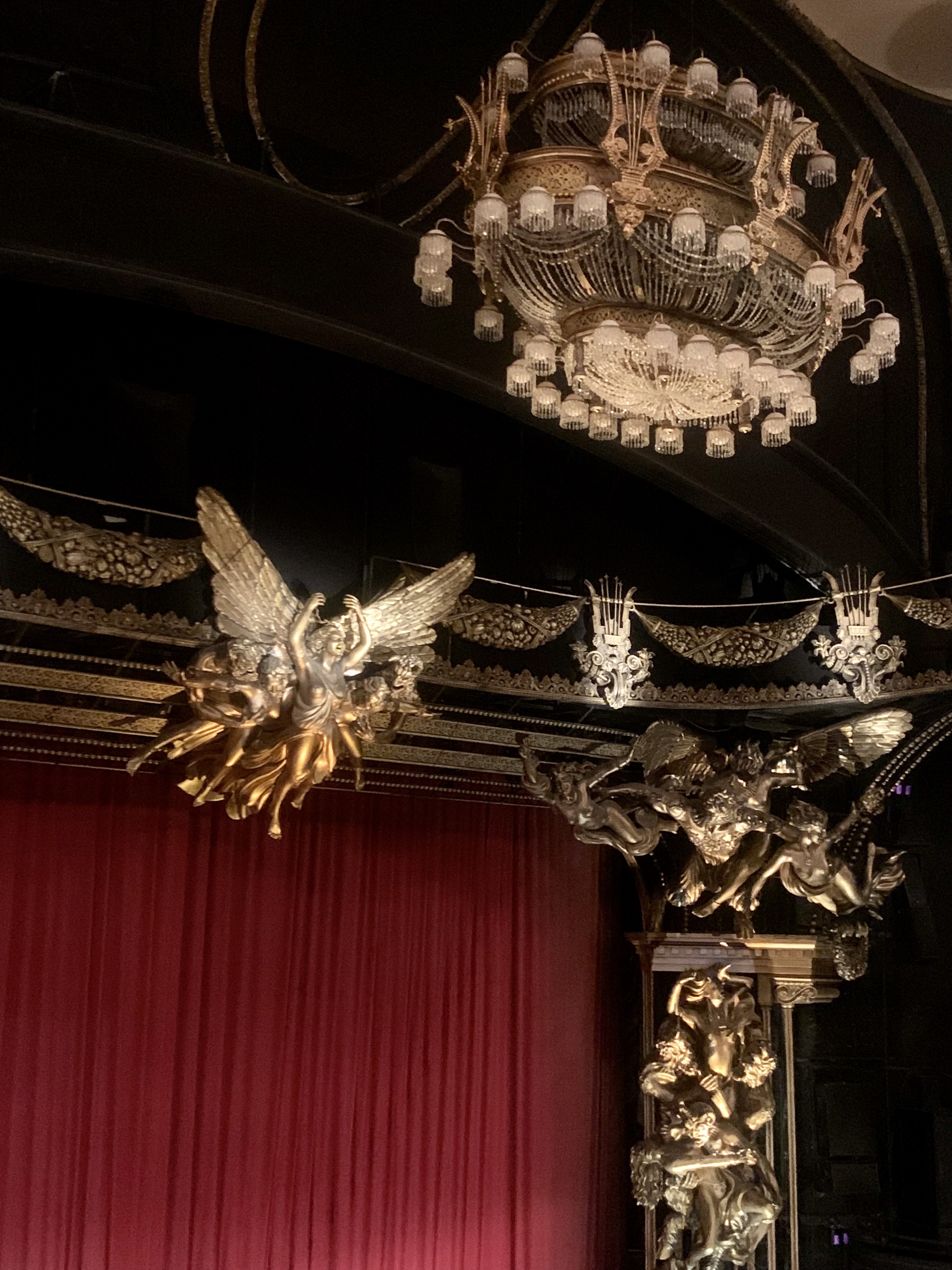
The next time I was in a Broadway theatre was the Majestic, to see the premiere of a documentary about the Broadway shutdown and a few touring companies that managed to stay open in South Korea. The entire experience was terrific, from being welcomed with Josh Groban singing “Can’t we start again please” (from Jesus Christ Superstar), though the film. But when the end credits were over, the screen rose to reveal the iconic Phantom’s lair, and a bevy of Broadway divas (including Adrienne Warren, Ariana Dubose, and Sierra Boggess) singing “As If We Never Said Goodbye” from Sunset Boulevard.
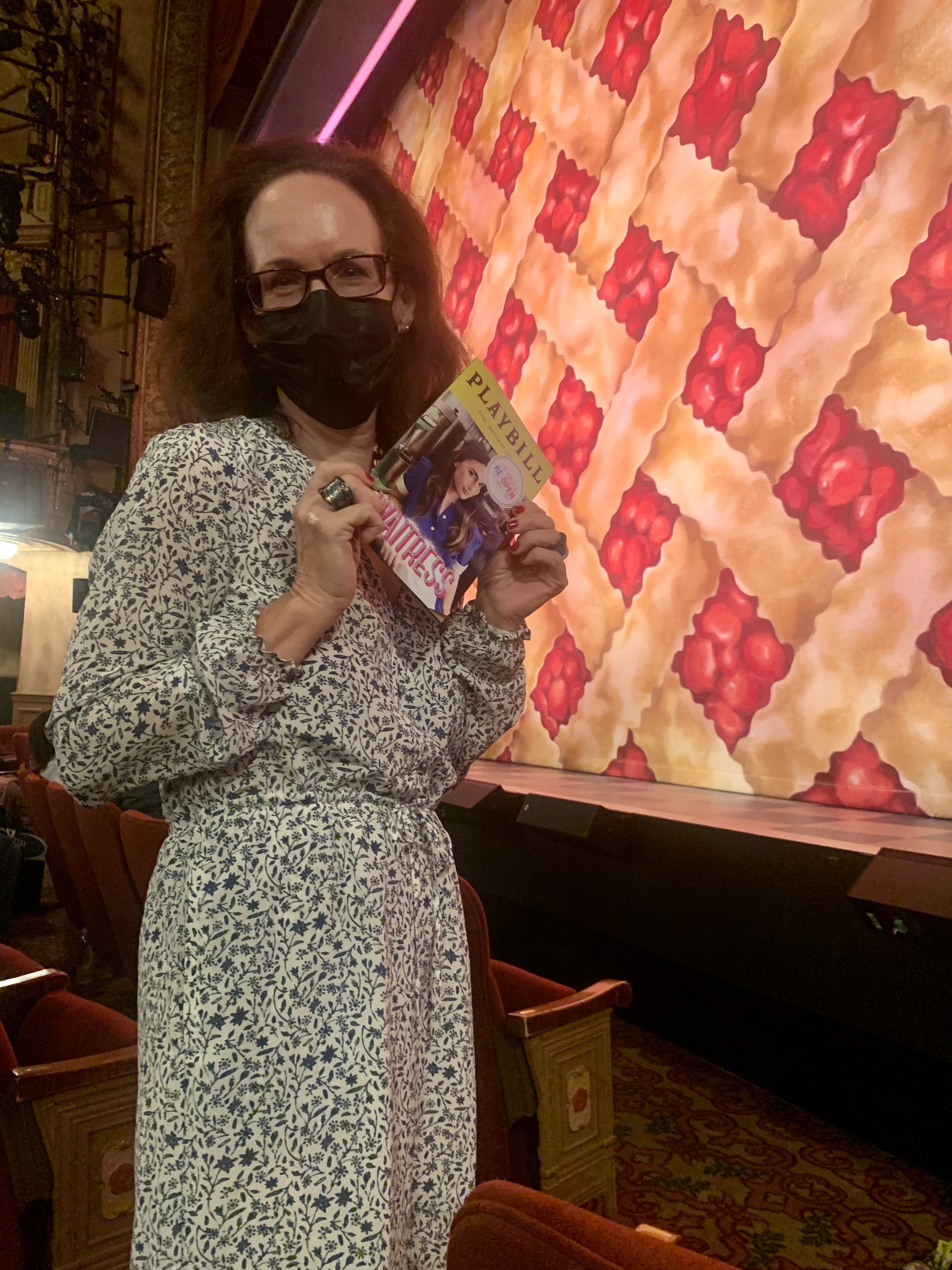
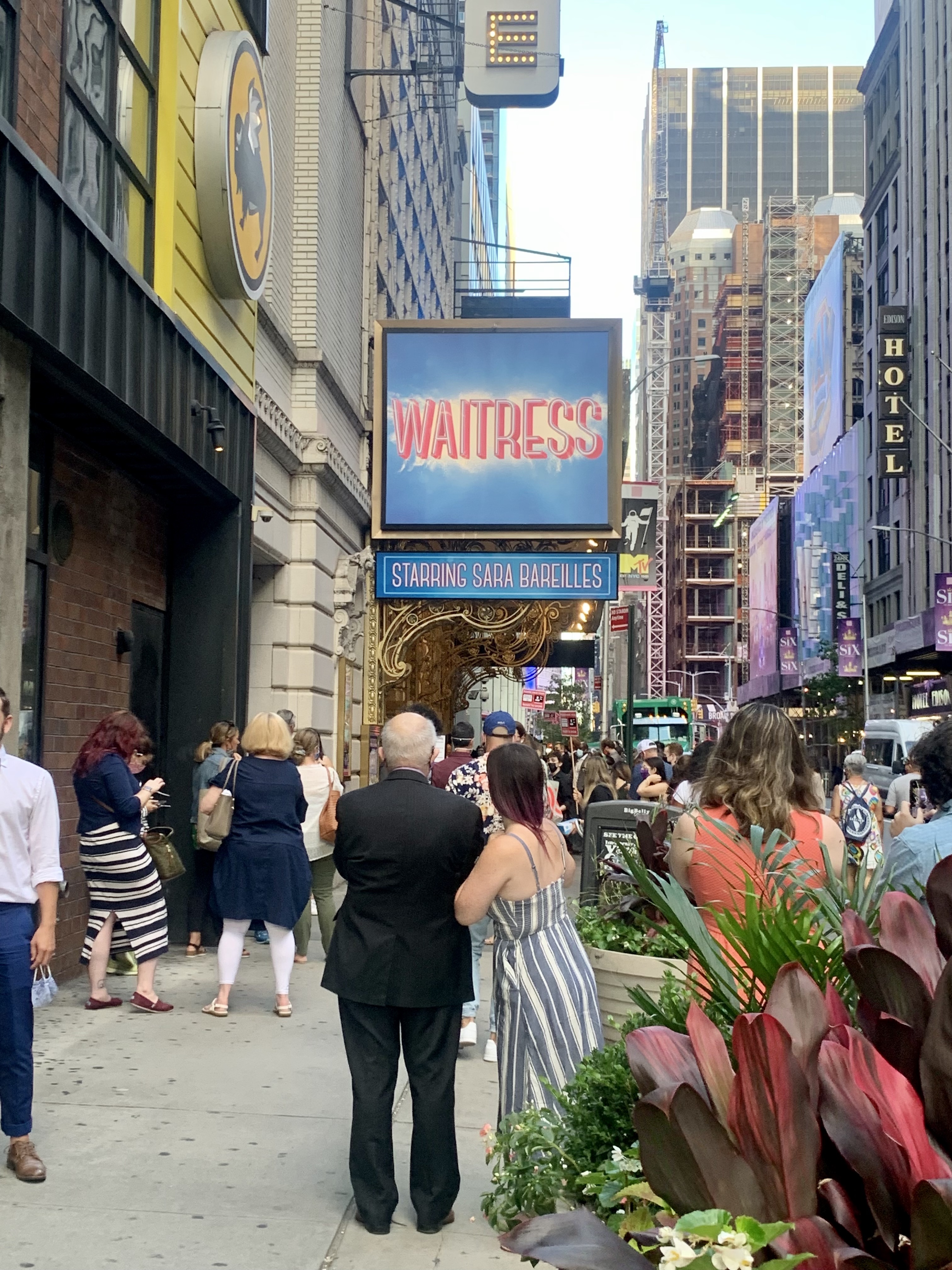
On September 2, the first Broadway musicals reopened: Waitress, with composer Sara Barielles stepping back into the lead for six weeks, and reigning Tony Best Musical Hadestown. I was at the first night for Waitress, and enjoyed the sticker on the front of the playbill saying “The Diner is Re-Open” along with the date. The audience gave a standing ovation (the first of perhaps 10 or 12 that evening) for the “turn off your cell phones” announcement – which at Waitress is a song. After initial bows, Amanda Kloots, the widow of original cast member Nick Cordero (who lost his battle with Covid-19 last year) came on the stage and everyone sang Nick’s song “Live Your Life.” His song is now also permanently included as one of the pies on the menu board on stage.
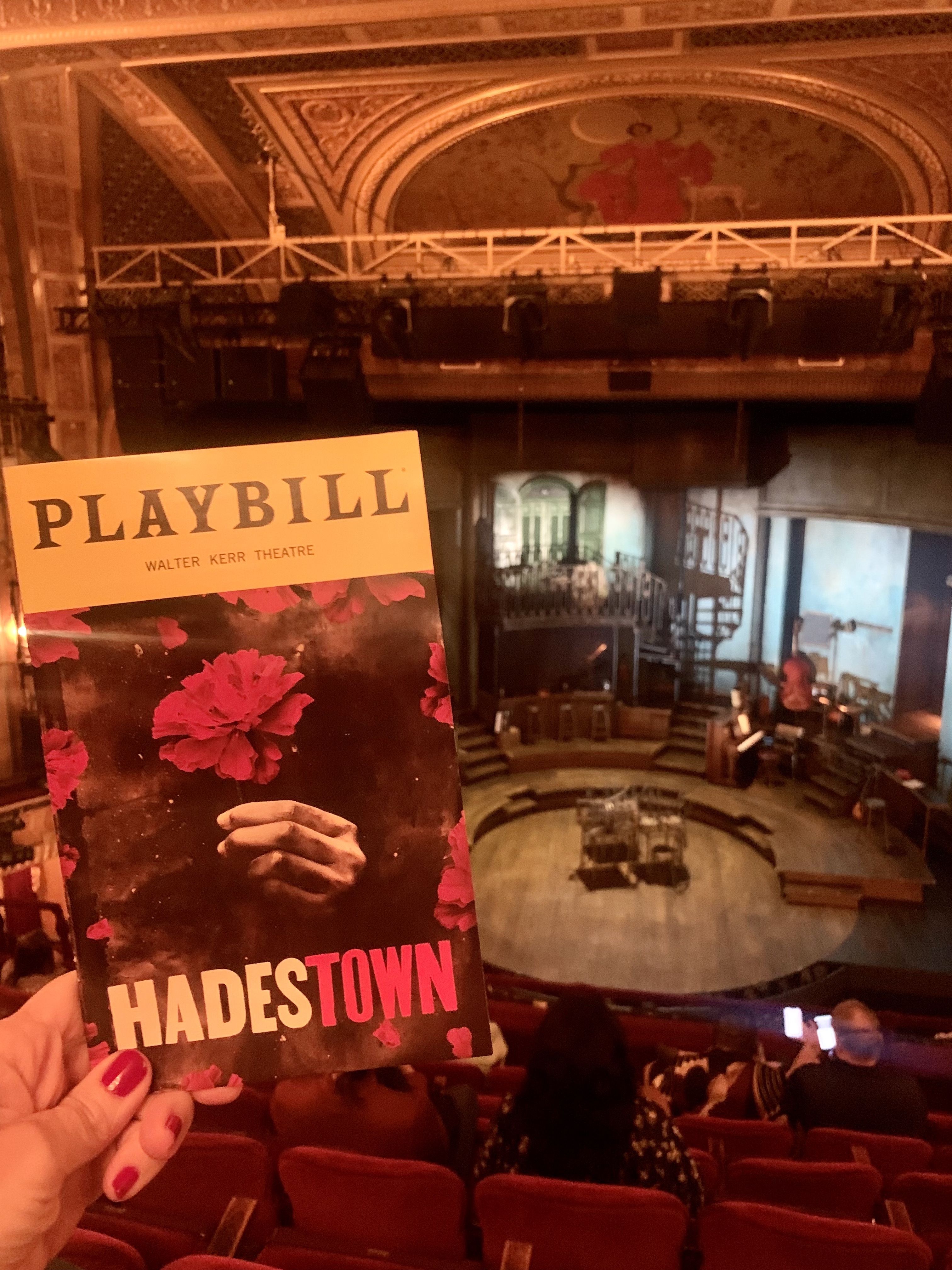
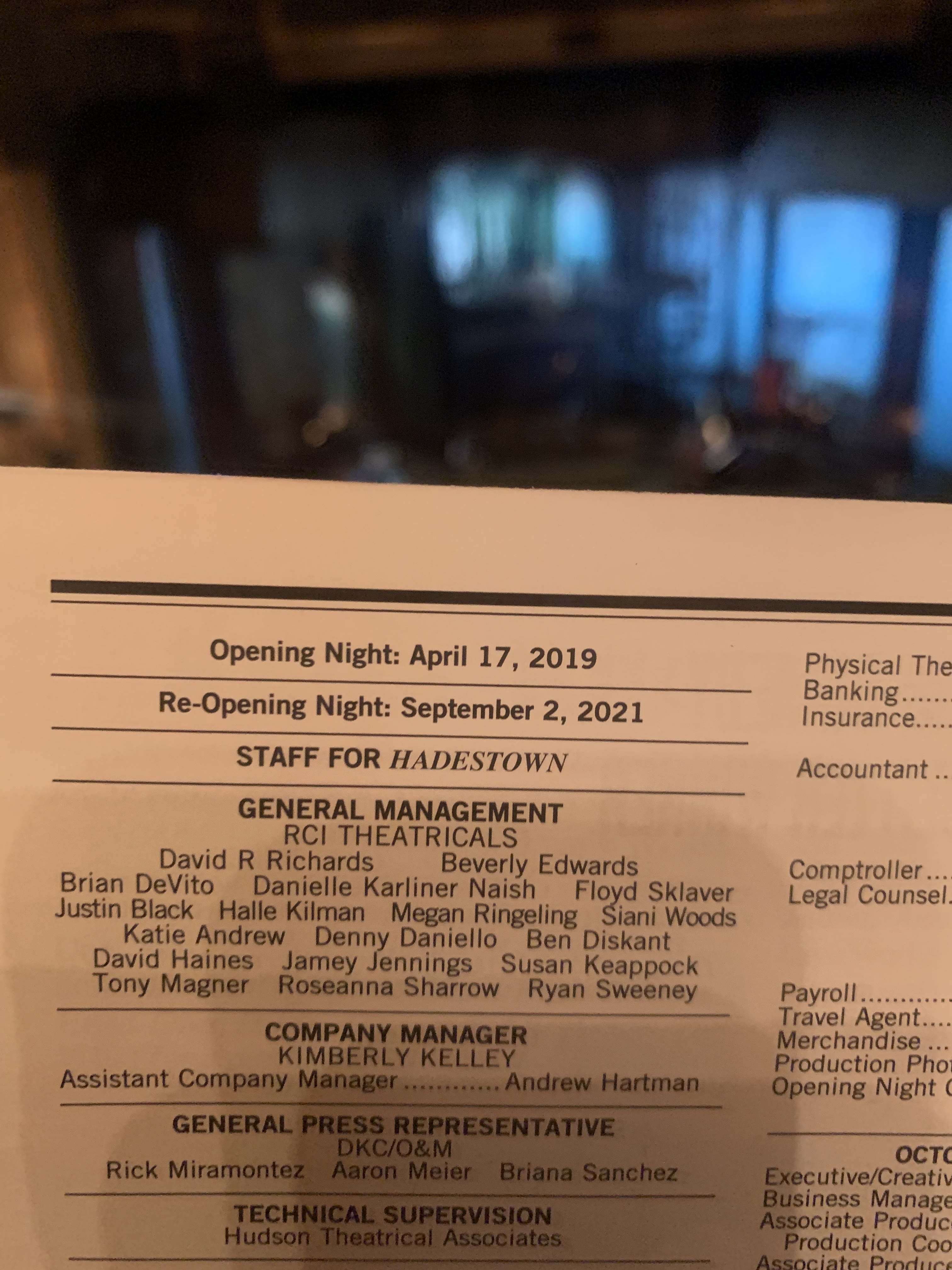
I was at the third reopening performance of Hadestown, and loved that their Playbill lists reopening night as well as opening night. The outside of the theatre is enrobed in the red flowers that feature so prominently in the production. Here they represent that “spring will come again” to Broadway as it returns and flourishes.
On September 14, Hamilton, The Lion King, Wicked, and Chicago all reopened. At 5PM that day, casts met in front of the Richard Rodgers Theatre and, led by Lin-Manuel Miranda, delivered a rousing version of “New York, New York.”
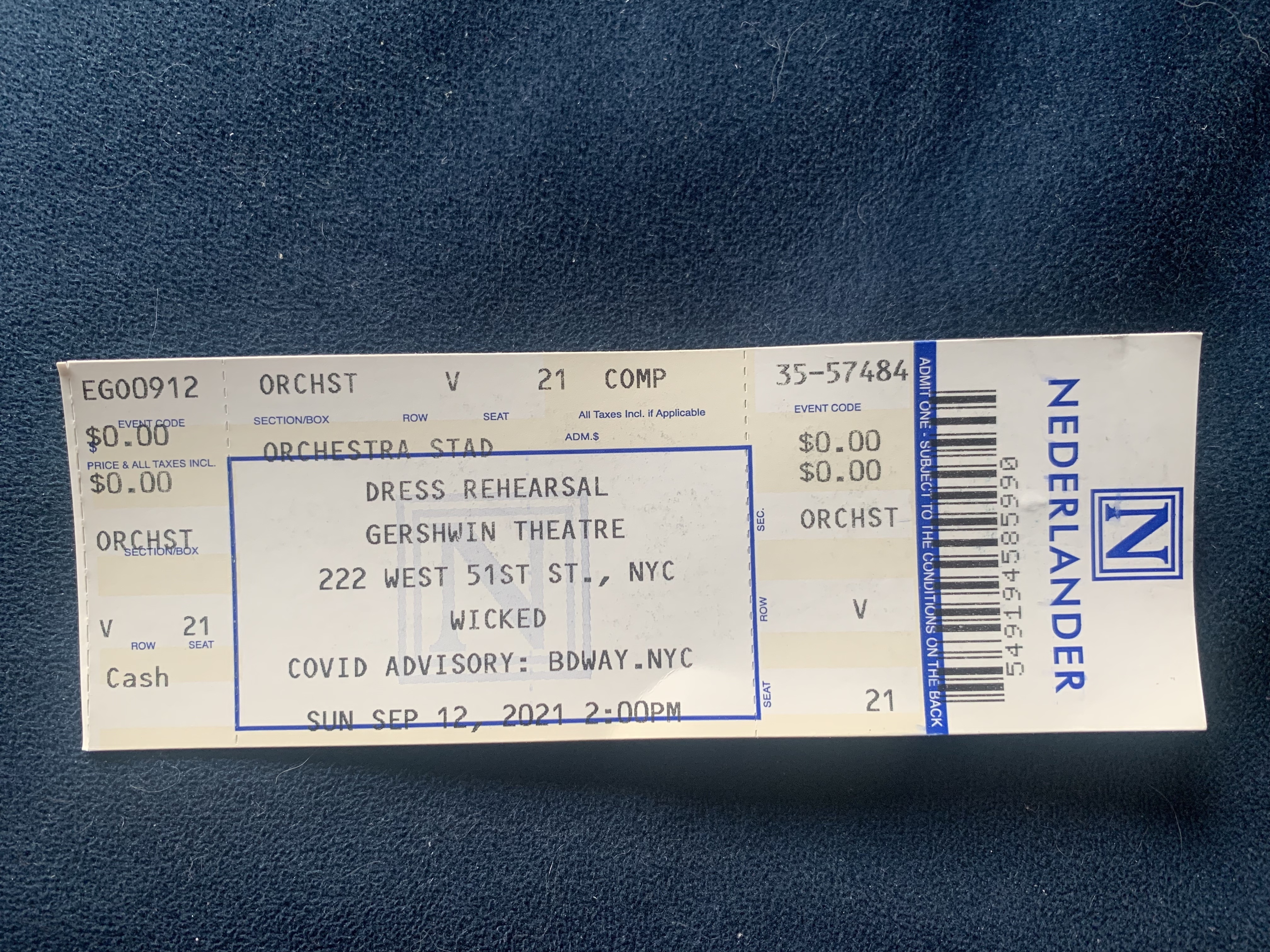
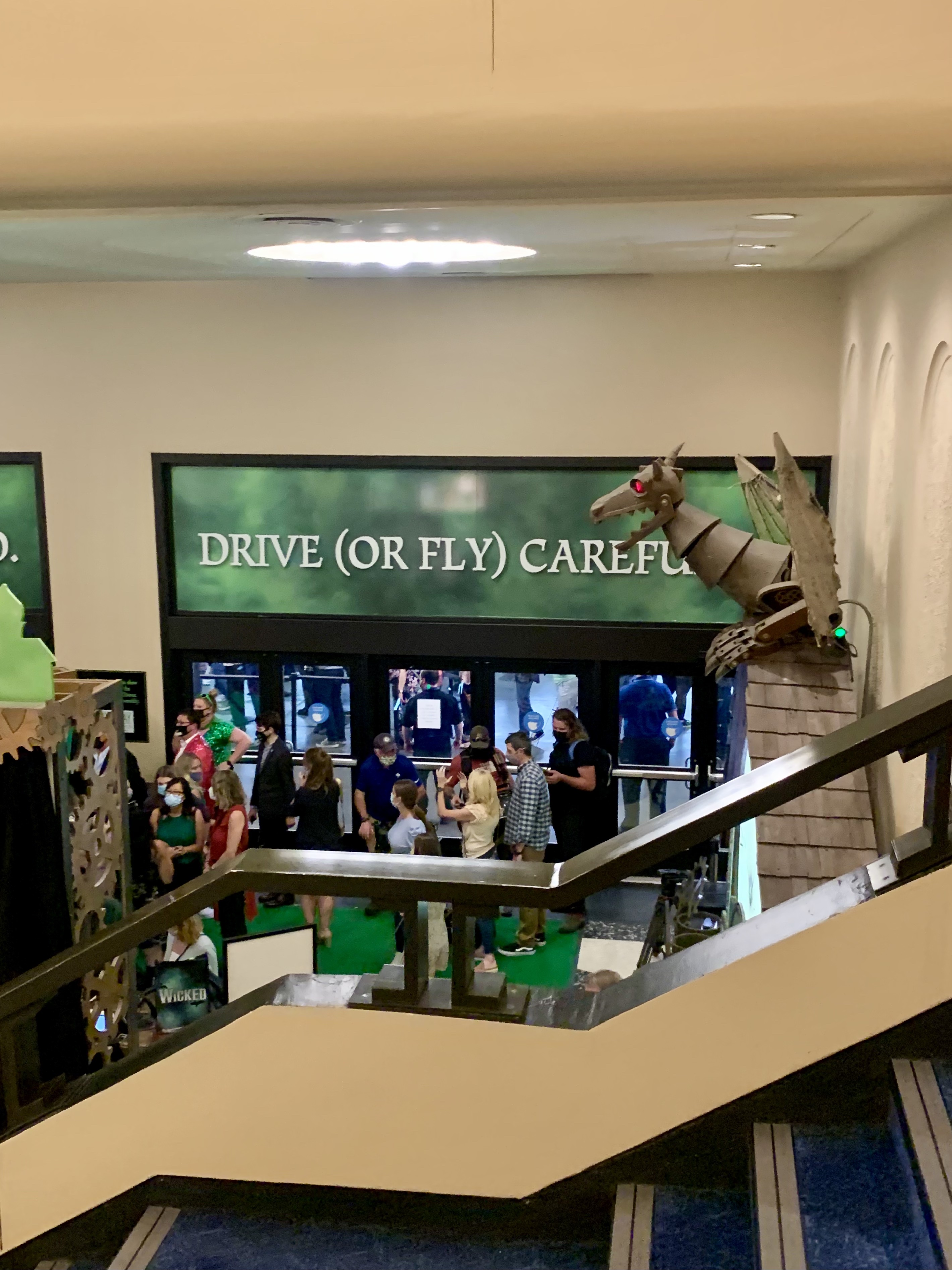
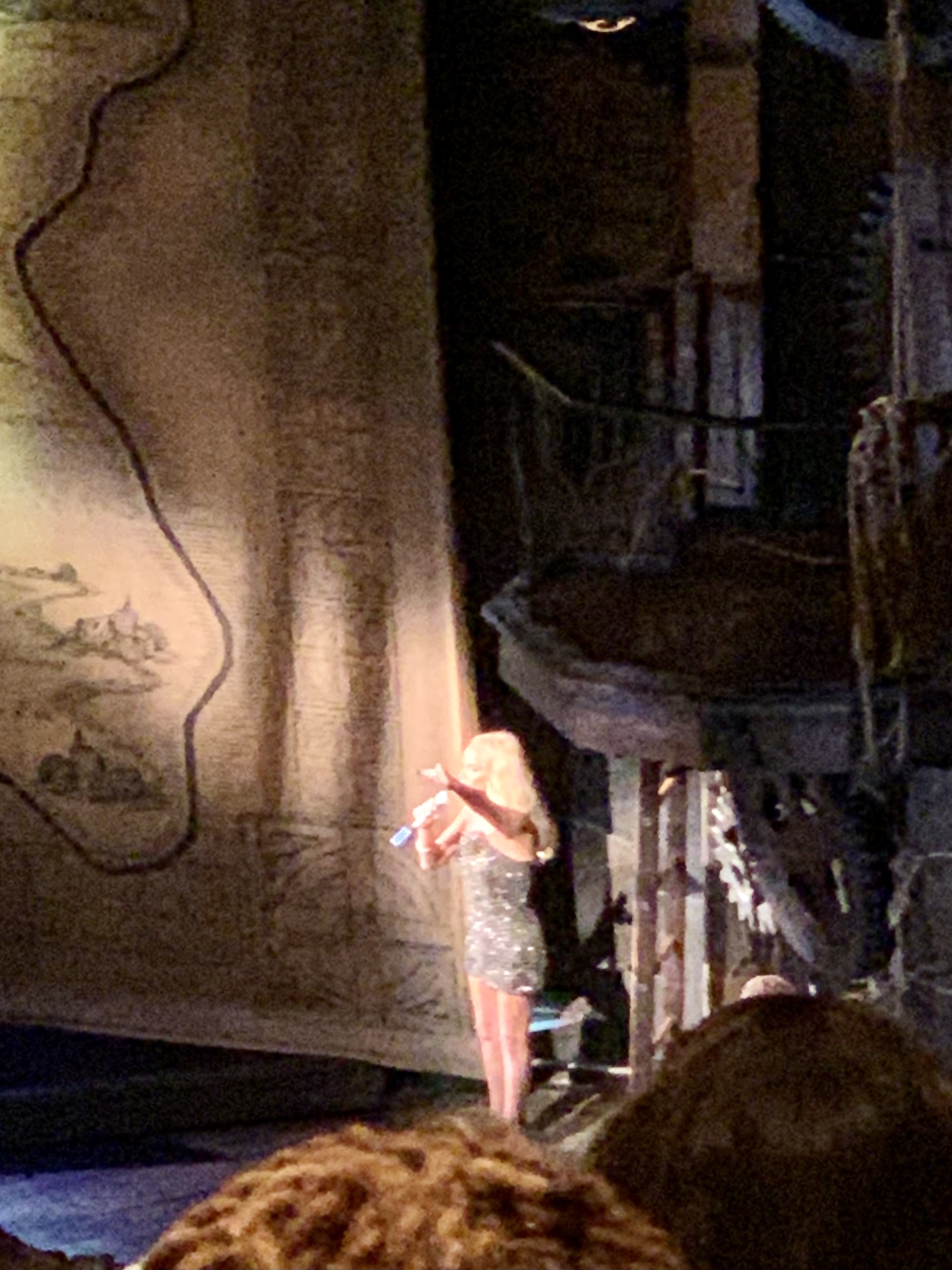
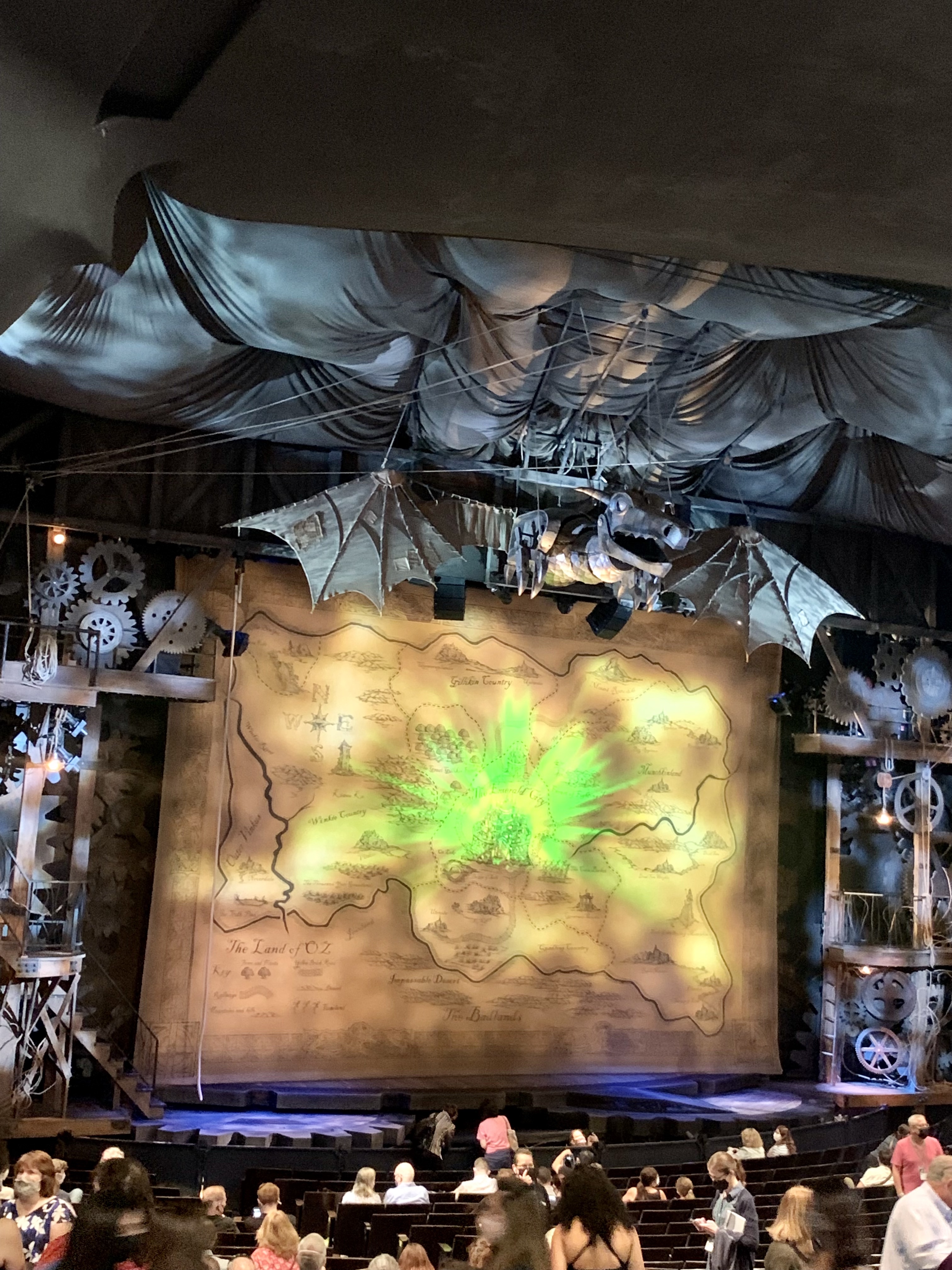
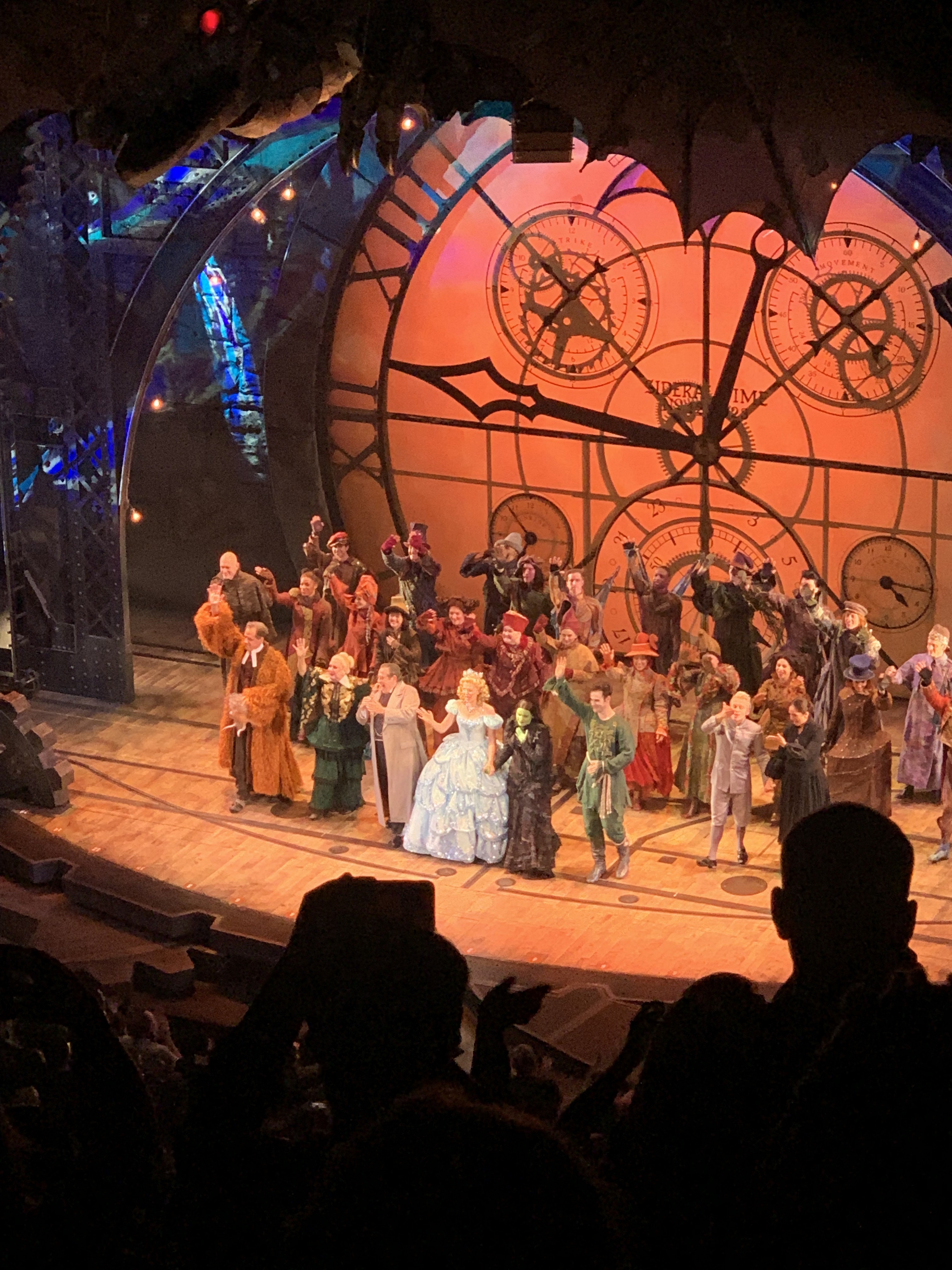
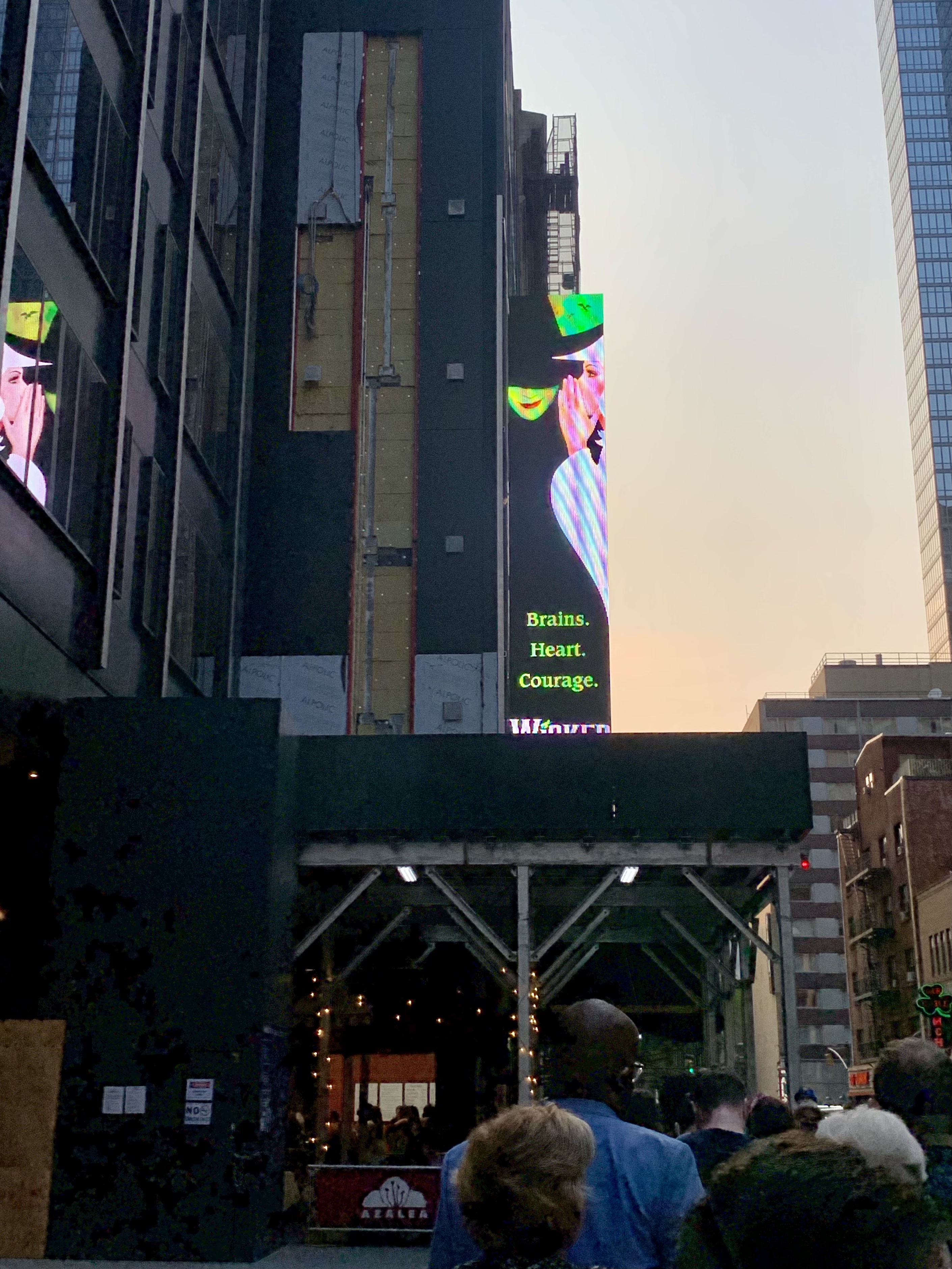
Two days before that, however, I had been very fortunate to be allowed to attend the final dress rehearsal of Wicked before reopening. These invited dress performances are not for purchase, and allow the show to run through with costumes, lighting, etc., with a crowd of friends and family. These are always special (I have been to a few) in part because what elicits applause is often very different for these crowds of insiders. I was able to compare that directly when I also attended the first reopening performance of Wicked on September 14. The audience for this was electric, from Kristin Chenowith’s welcome (including a witty “There’s no place like home!”) through bows. After the curtain came down and the lights went up, the audience refused to leave, however, applauding and standing for minutes until the curtain rose again. This time the cast was joined by composer Stephen Schwartz, who seemed unsure whether to say anything before finally stepping forward – almost to be hit by the curtain coming down!
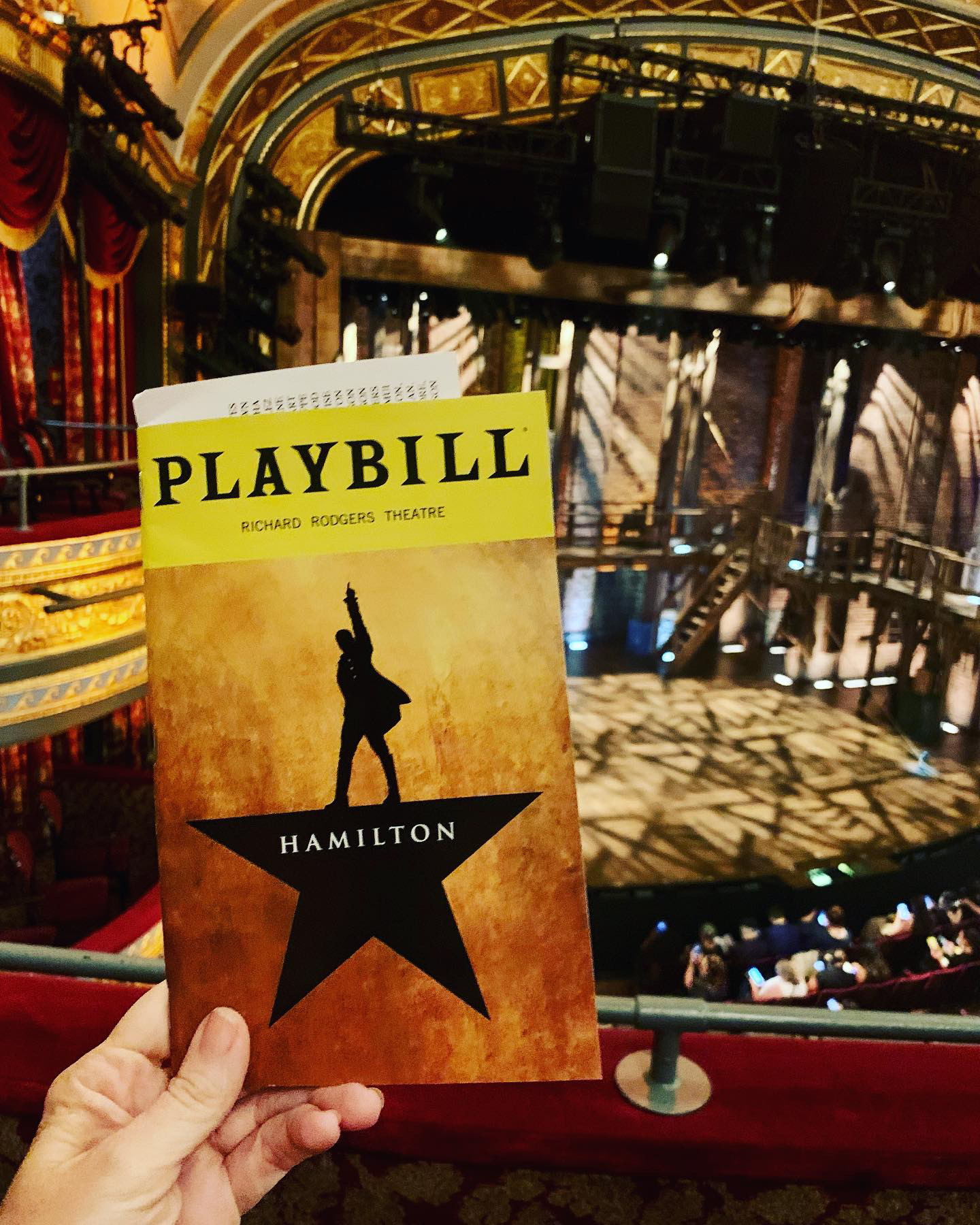
I was at Hamilton at the second reopening performance on September 15. The cast is tight, and the energy level high. I could tell that the conductor was trying to prevent protracted applause from drawing out the show, however, as we can’t keep having shows that go three hours or more when they should clock in at 2 hours, 40 minutes!
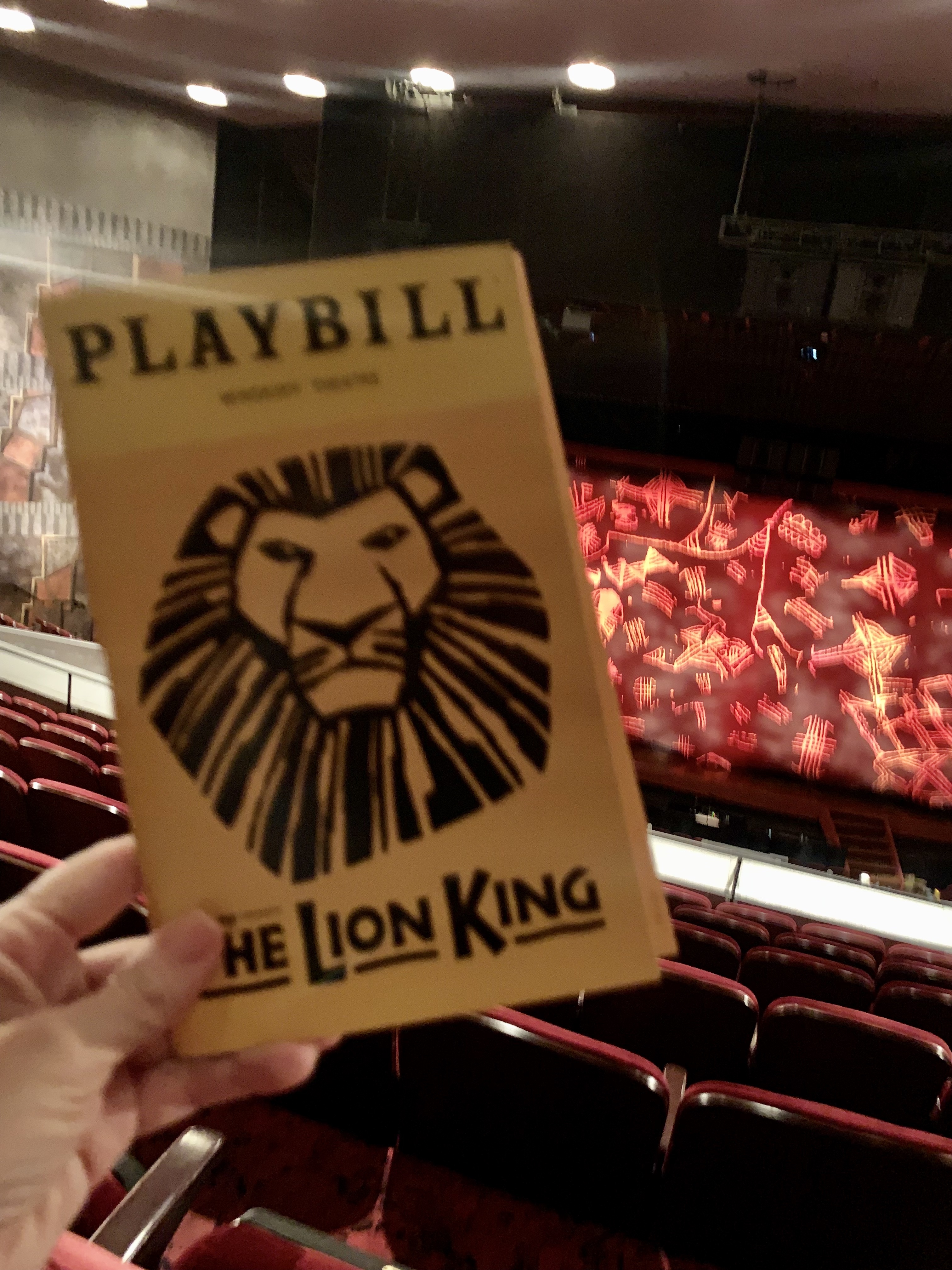
Then I was at the third reopening performance of The Lion King. The energy level was still very high, and I liked the Welcome Back insert with an invitation to give feedback.
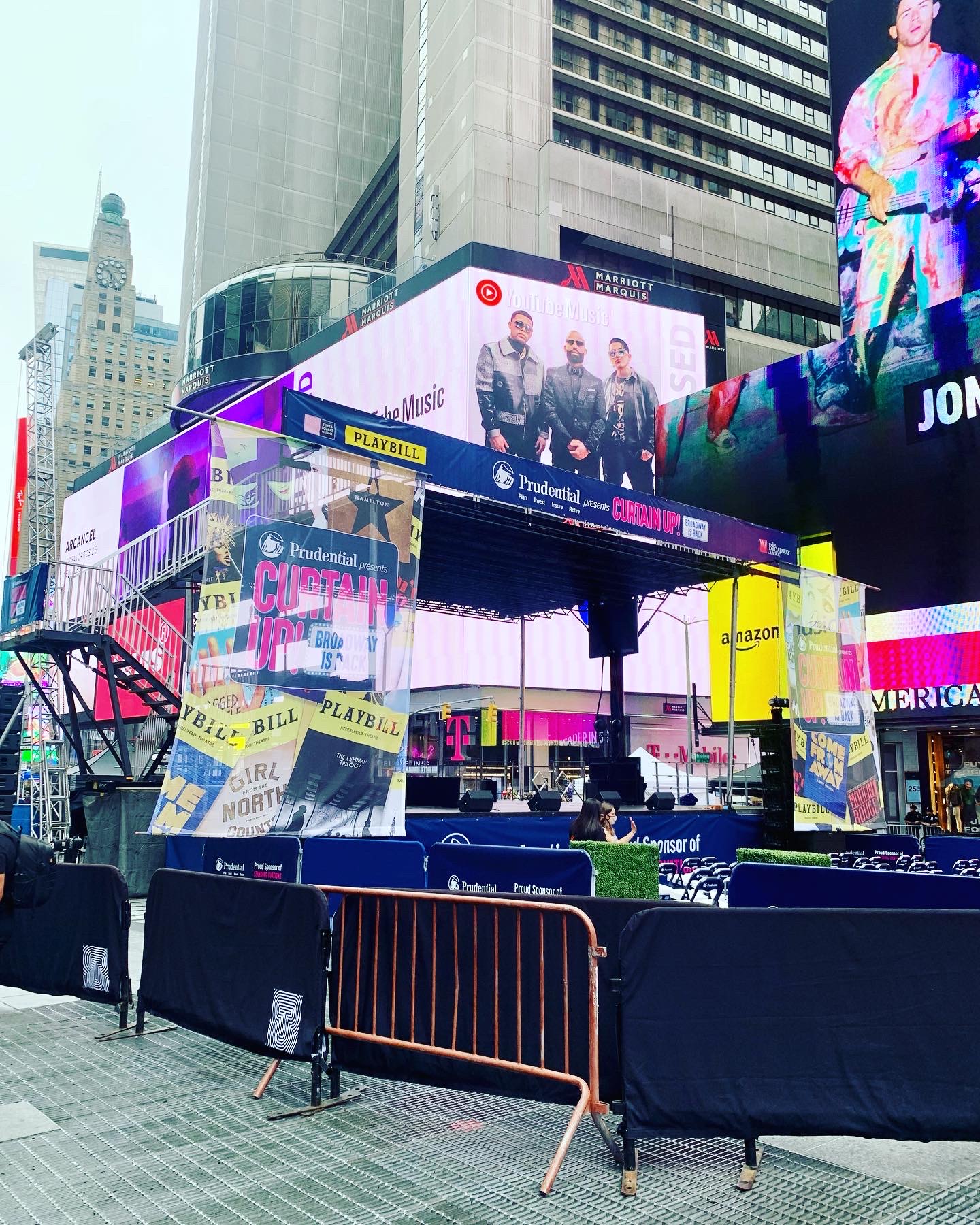
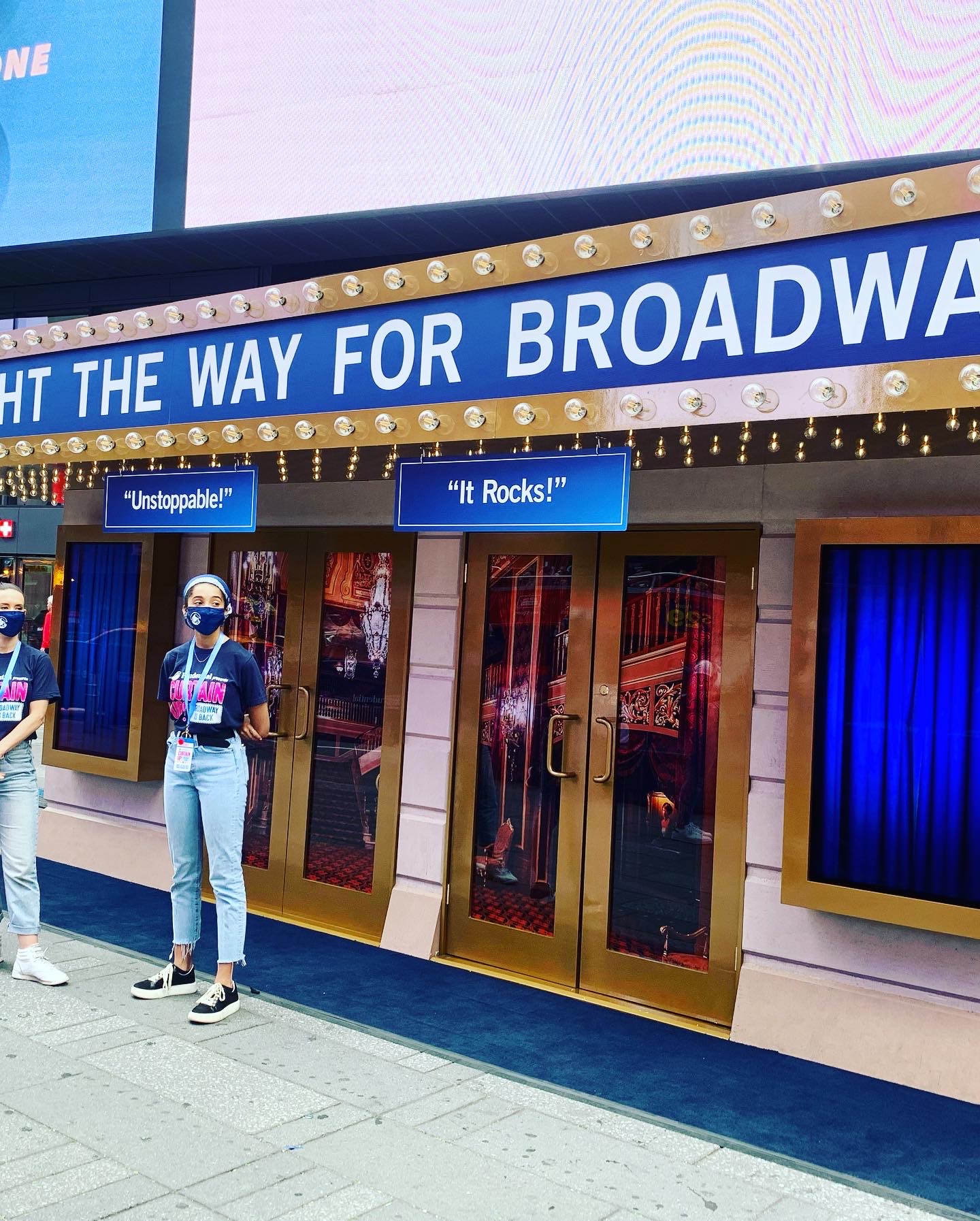
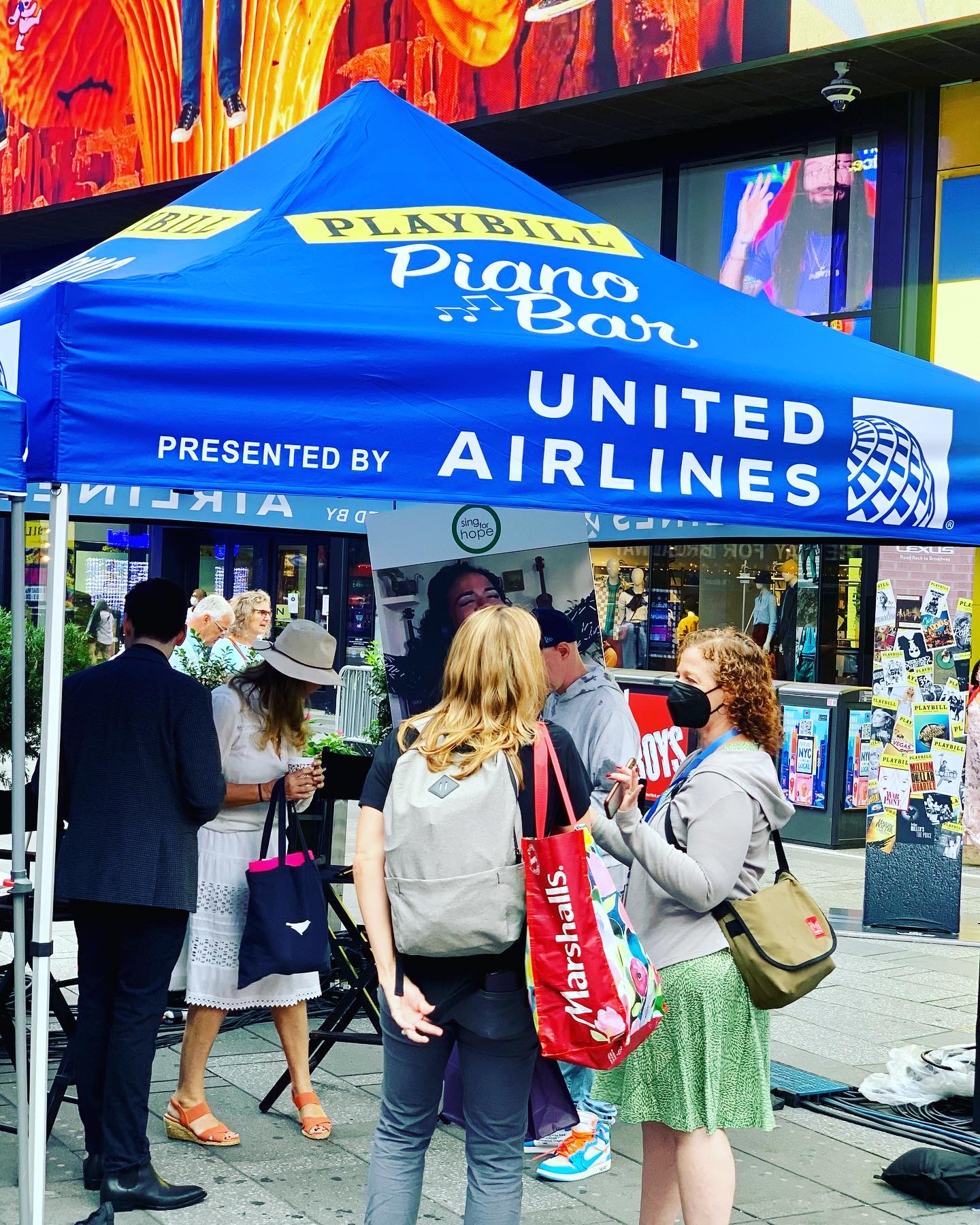
That weekend, September 17-19, Times Square hosted a huge outdoor welcome back to Broadway, with some performances at the large mainstage, and others at a more intimate outdoor cabaret space. The final two hour concert on September 19 featured most of the shows open or that will open this fall. A highlight was a performance of “Music of the Night” with the current Phantom as well as three previous ones.
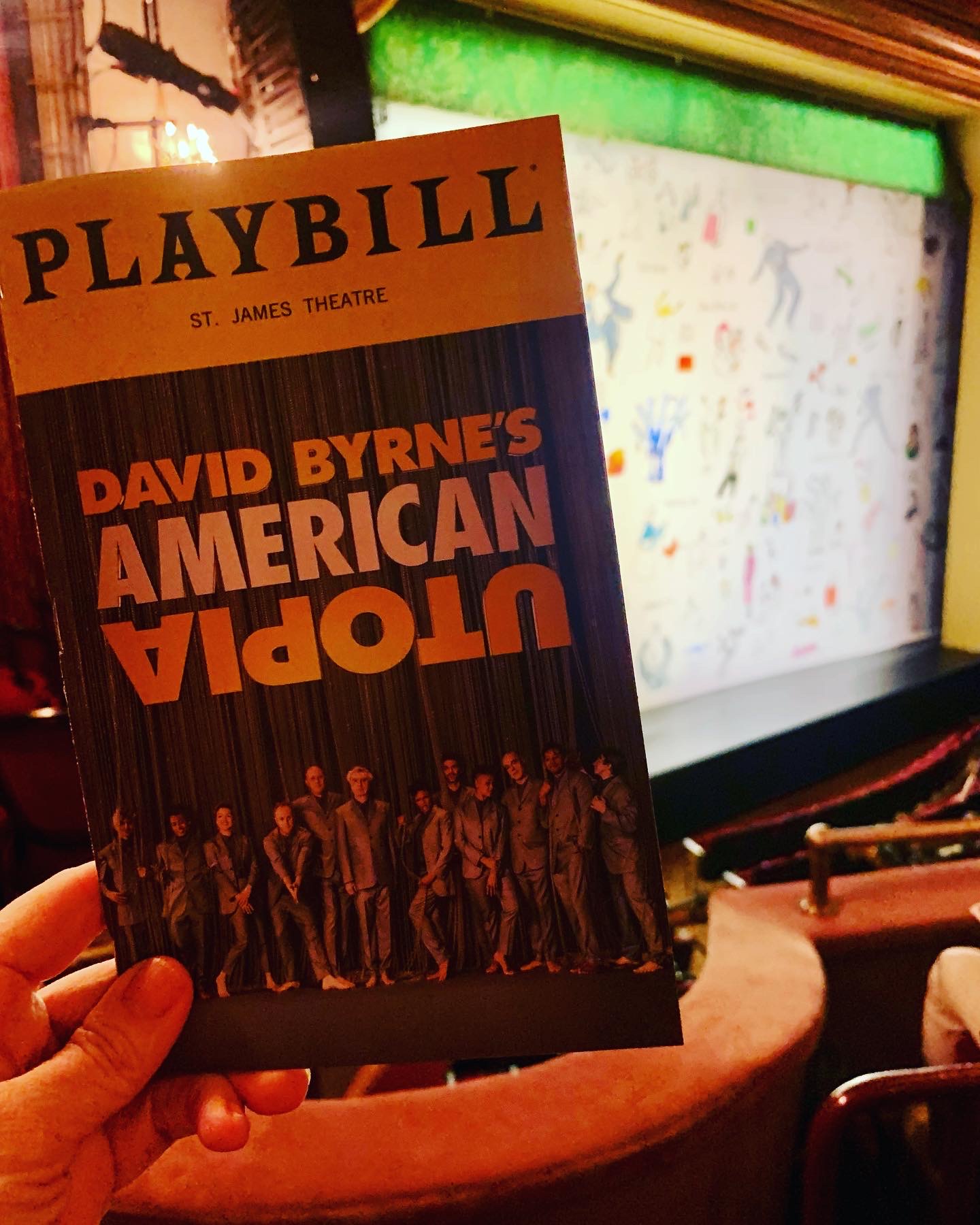
That same weekend I went to see David Byrne’s American Utopia, which I had seen four times pre-pandemic at the Hudson Theatre. Now at the St. James, some of the narration has changed to reflect our changed times (his words “Thank you for leaving your homes” has an entirely new significance now!) but the joy and uplifting message remain the same.
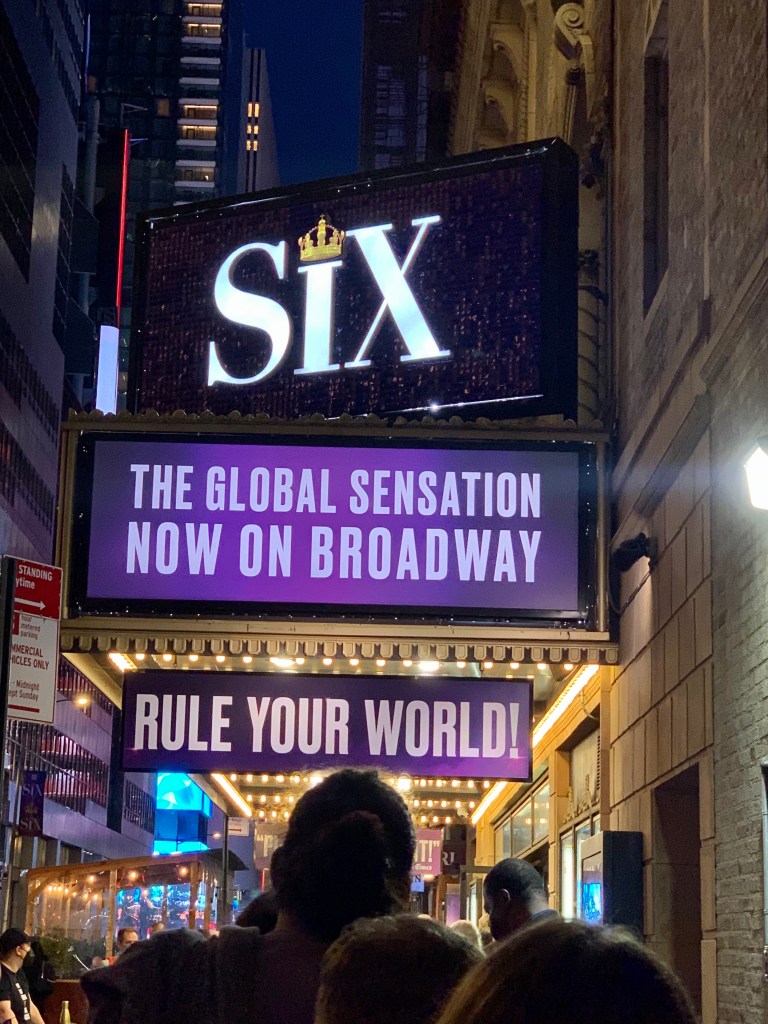
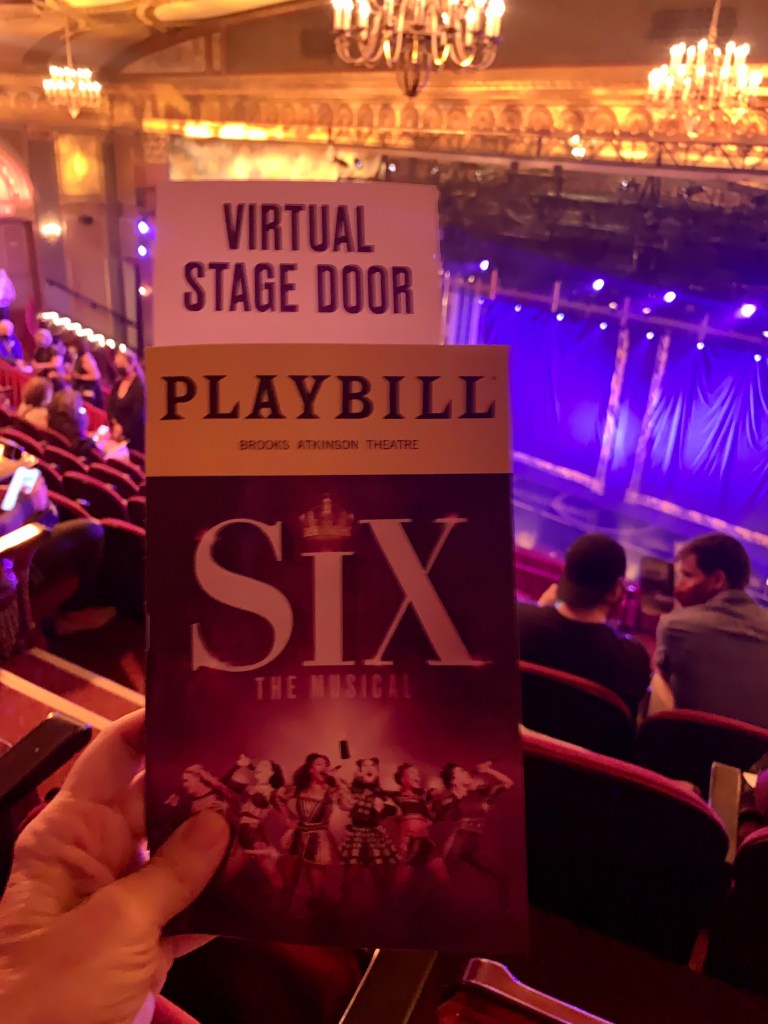
On September 21, I was back to see Six, which I had seen twice in previews – and which was hours from opening night when Broadway was shuttered. Now back in previews as of September 17, all six original Broadway queens are back, and the energy level is always high at this show! I loved that they had a “virtual stage door” QR code, since normal stage door interactions and signing of Playbills is not prudent in terms of Covid protocol.
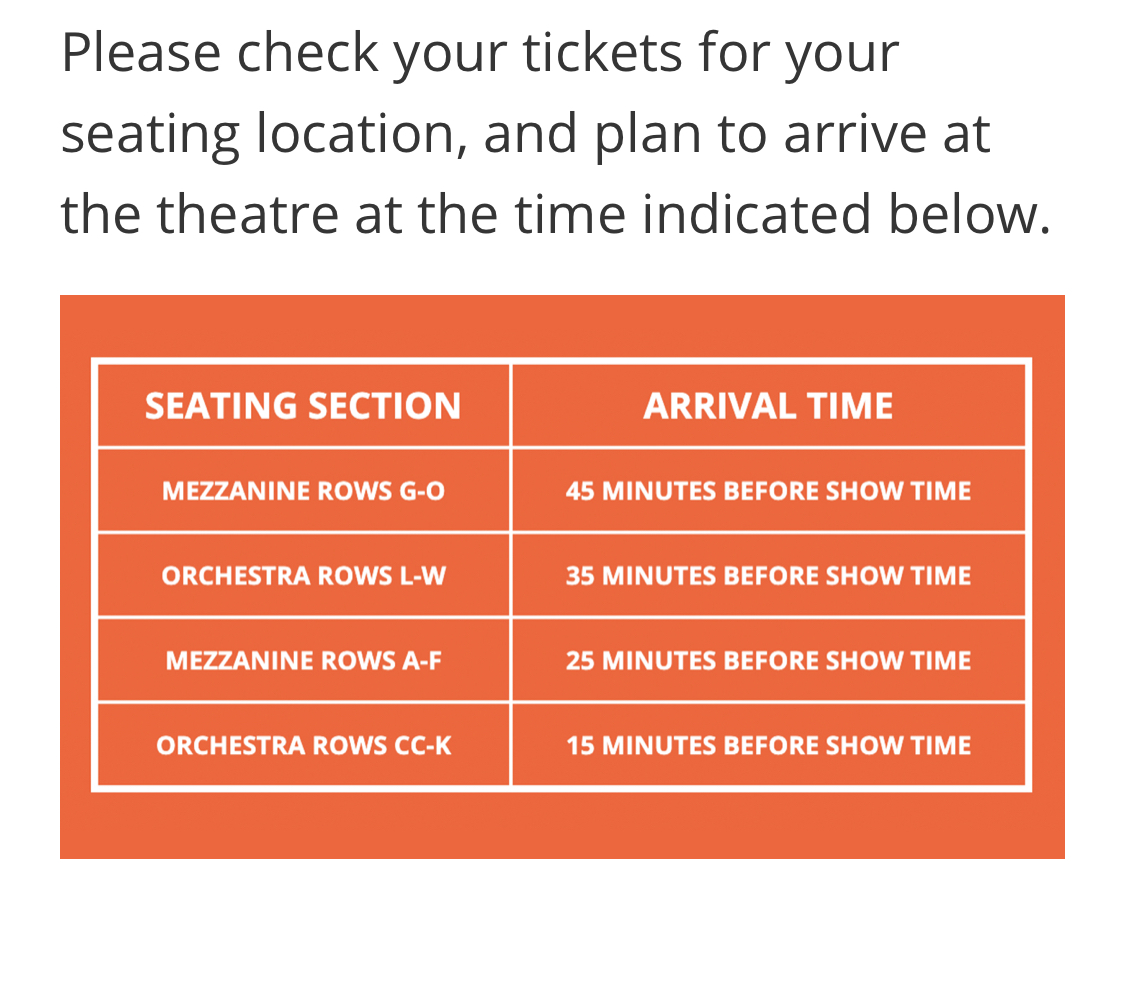
So, speaking of Covid, how is Broadway different due to the need to keep us as safe as possible? First of all, to attend a Broadway show you must show proof of full vaccination and a photo ID to match. Because of this, arrival times need to be earlier than usual. Doors always opened on Broadway about 30 minutes before showtime, but now are opening from 45 minutes to an hour early to allow for vaccine checks as well as the normal security screening. Then, you must wear a mask at all times while inside. Theatres I have been to so far all have “Covid safety teams” and I have seen them roaming the aisles to monitor and ask people to raise their mask when necessary. Meanwhile, every person on Broadway has to be vaccinated, wear masks when possible (obviously it’s not possible for performers on stage) and get tested regularly.
But isn’t any inconvenience worth it??? The exhilaration of being in an audience with other people, experiencing the live performance of these talented people, experiencing emotions together – this is unique and its absence left a huge void during those 18 months away. Even walking home after a show, I have had that thrill of having had somewhere to go, something to do, with other people, after so many nights watching “Bridgerton” or “Tiger King” and trying to set up zoom cocktail parties with friends. Please go and support live Broadway performances! We need it, as a city and as individuals – and they need us.
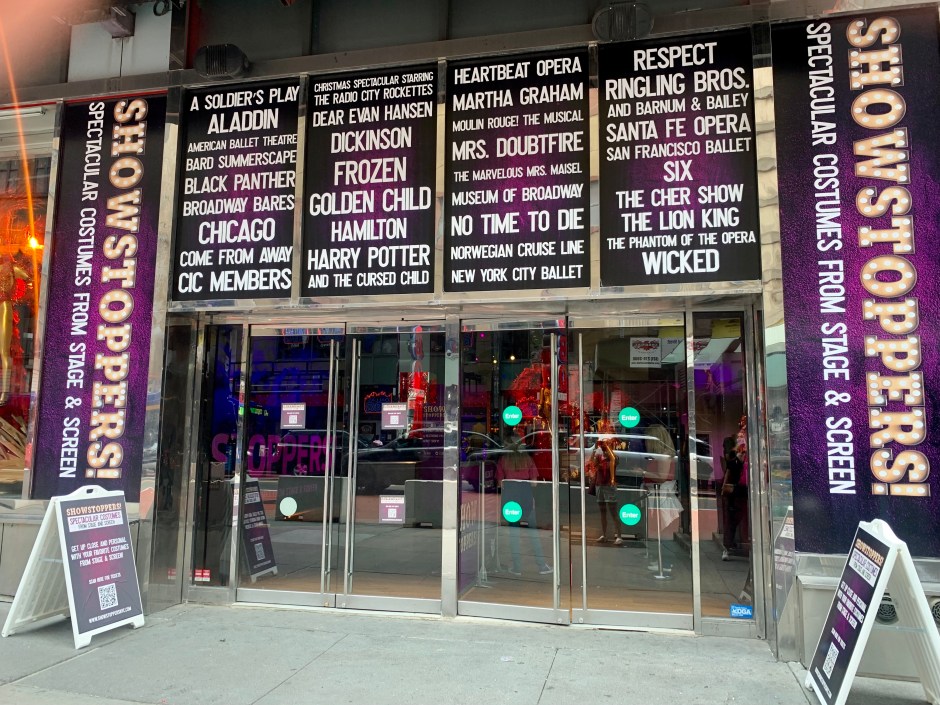
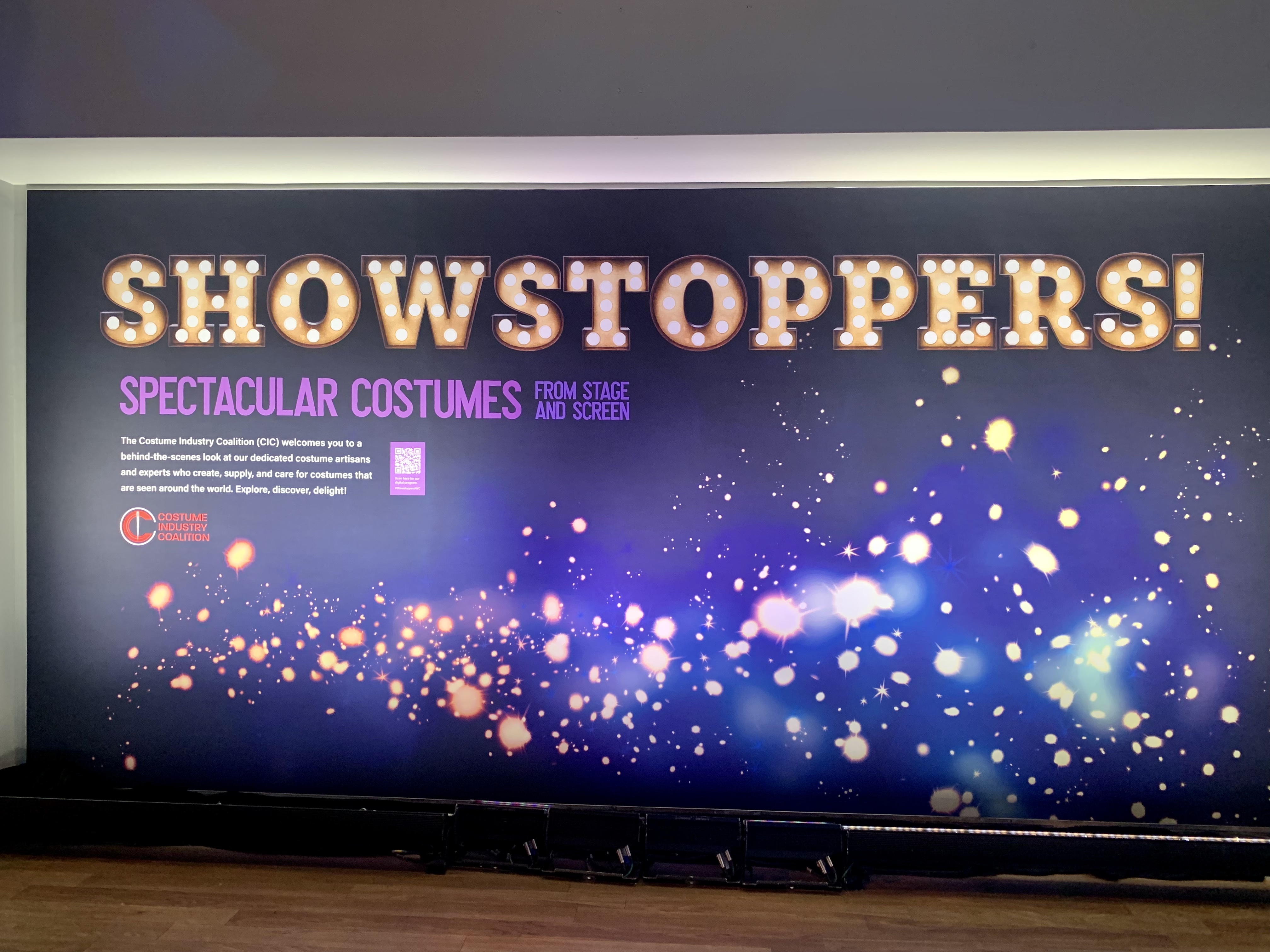
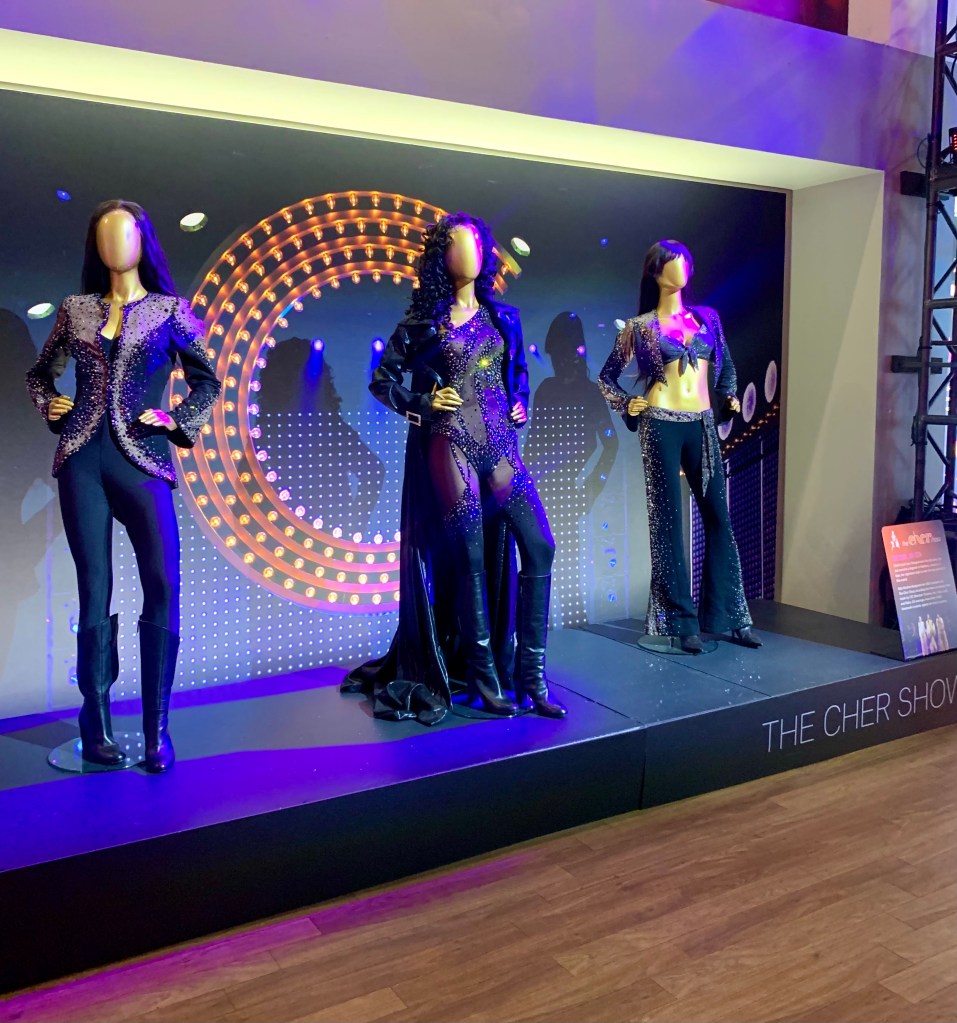
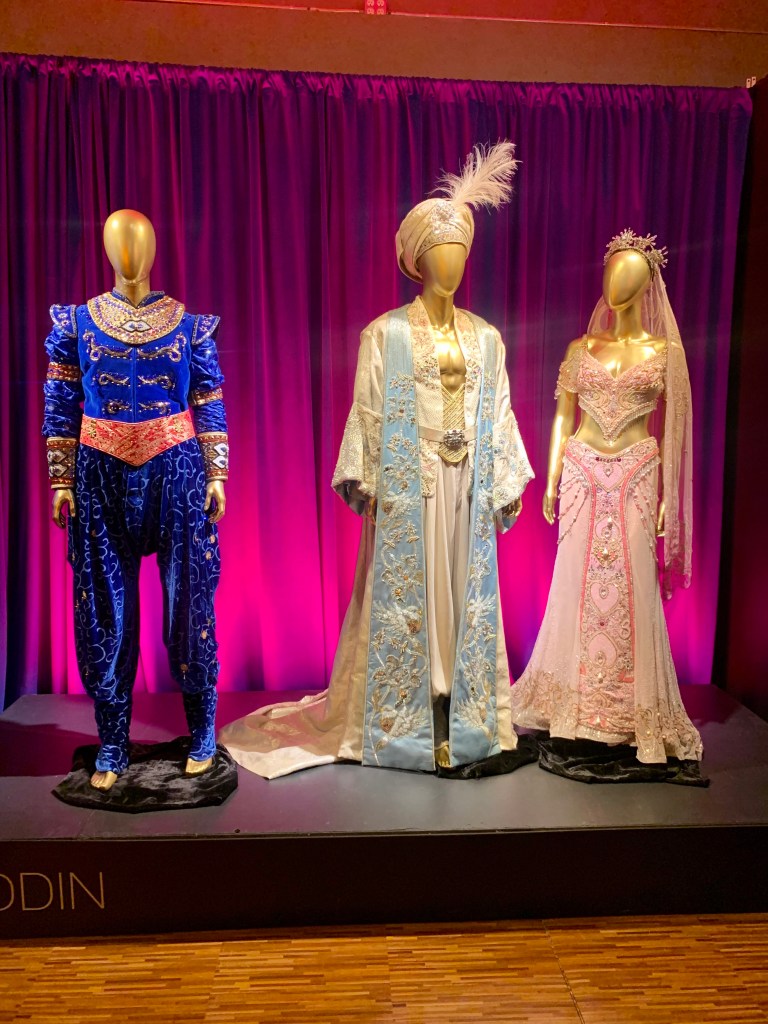
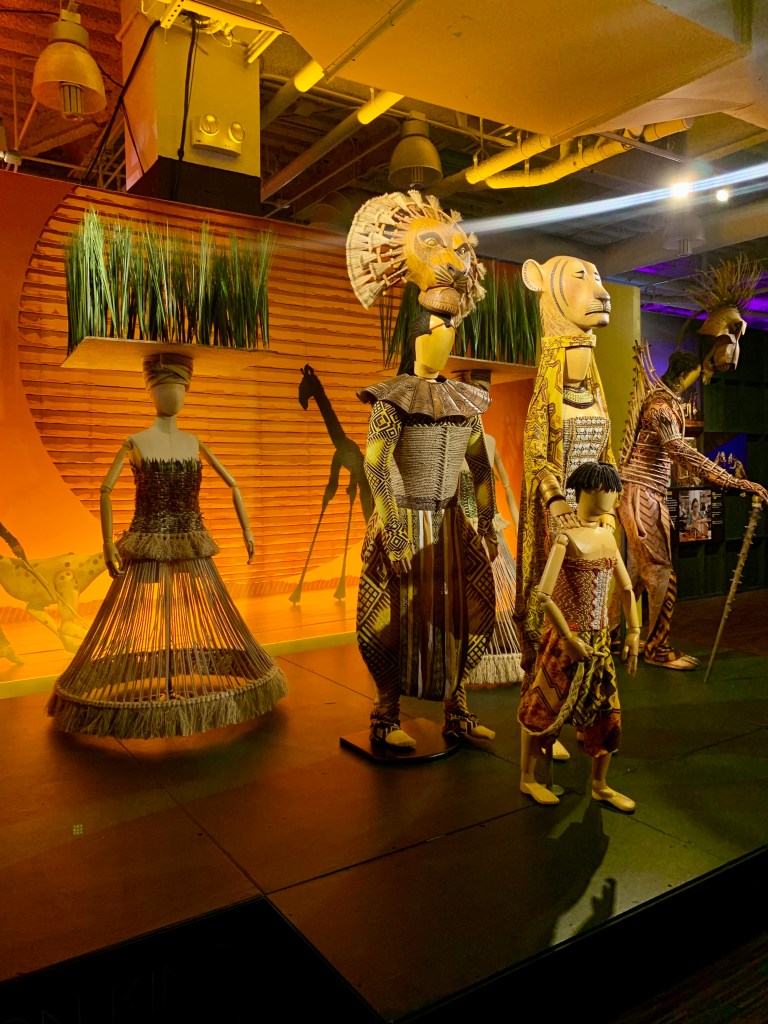
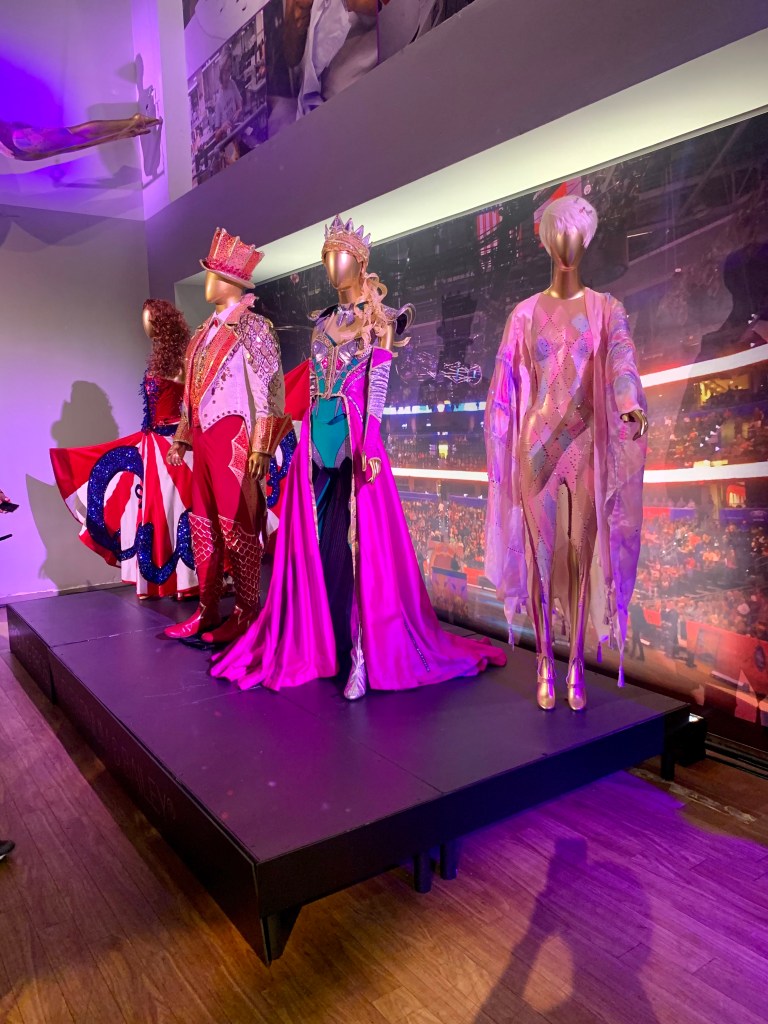
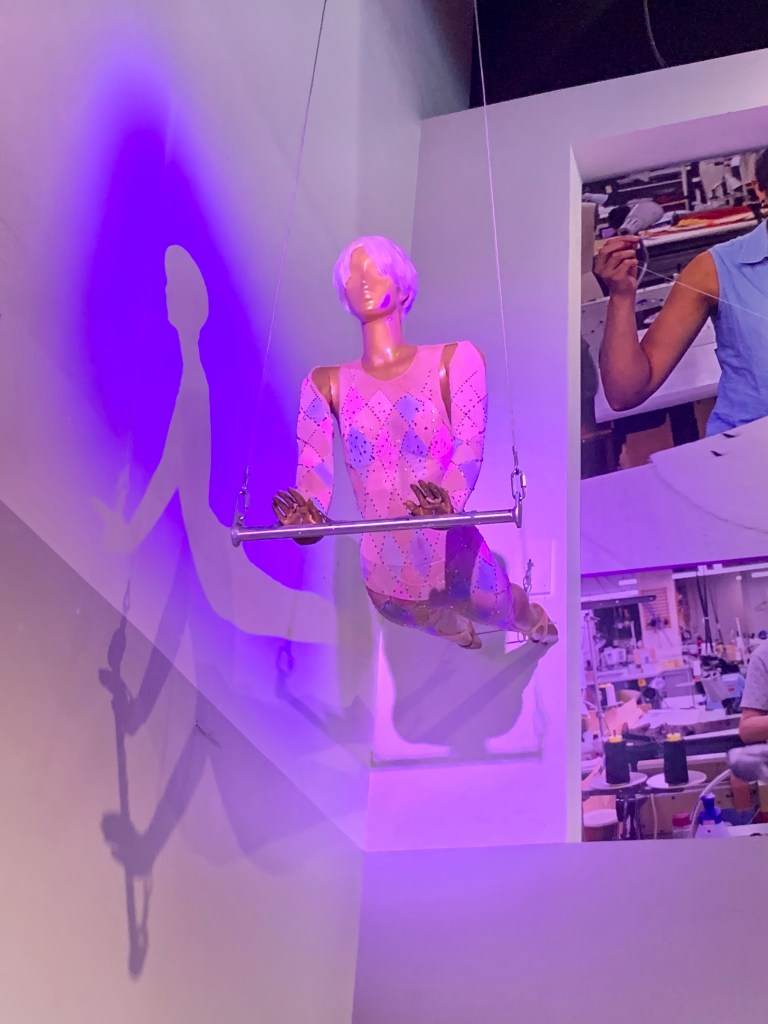
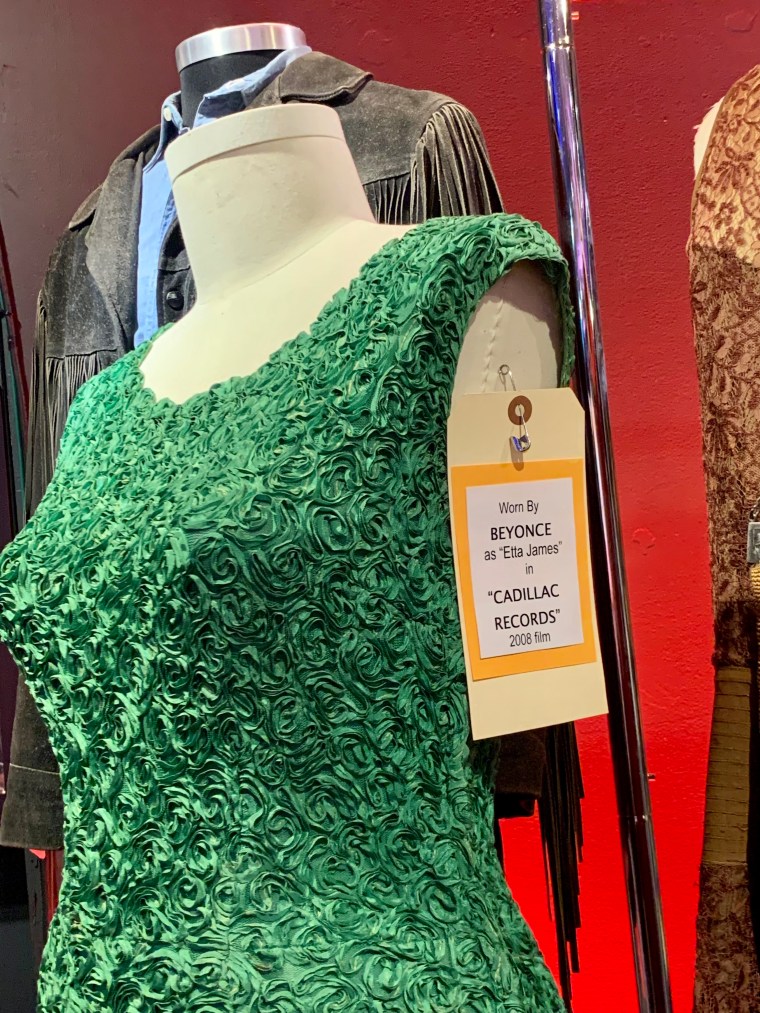
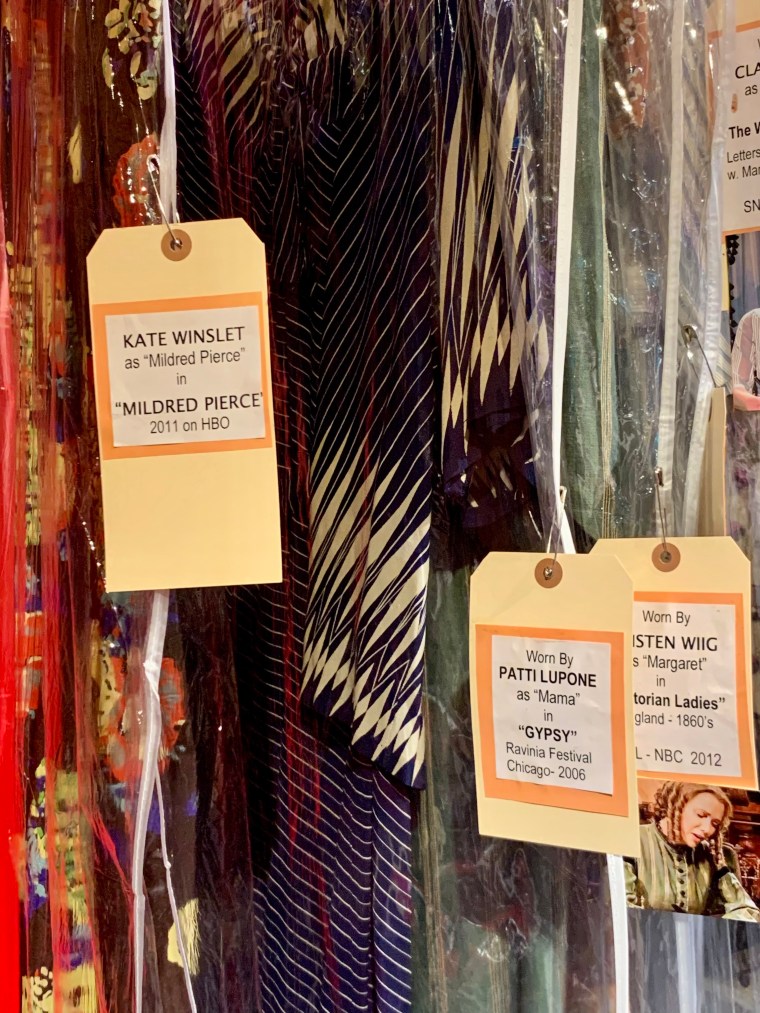
As Broadway reopens after 18 months of pandemic shutdown, there is an exhibit on West 42nd Street that highlights the incredible costumes that light up the stage (and screen). Open through September 26, tickets are required (go here for more information and to purchase) but proceeds go to help the talented people in the costume industry whose financial stability has been devastatingly impacted by the shuttering of the entertainment business. Here are my impressions from going a few weeks ago.
For a time-limited exhibition like this, I thought the layout and design was excellent. The exhibit aims to teach the observer about the work and design elements going behind these elaborate costumes, while giving the opportunity to see the details of the costumes up close.
Here you see costumes from the Broadway productions of The Cher Show (Bob Mackie), Side Show (a particularly challenging costume) and Six (which was going to have opening night on the very evening that Broadway was shuttered).
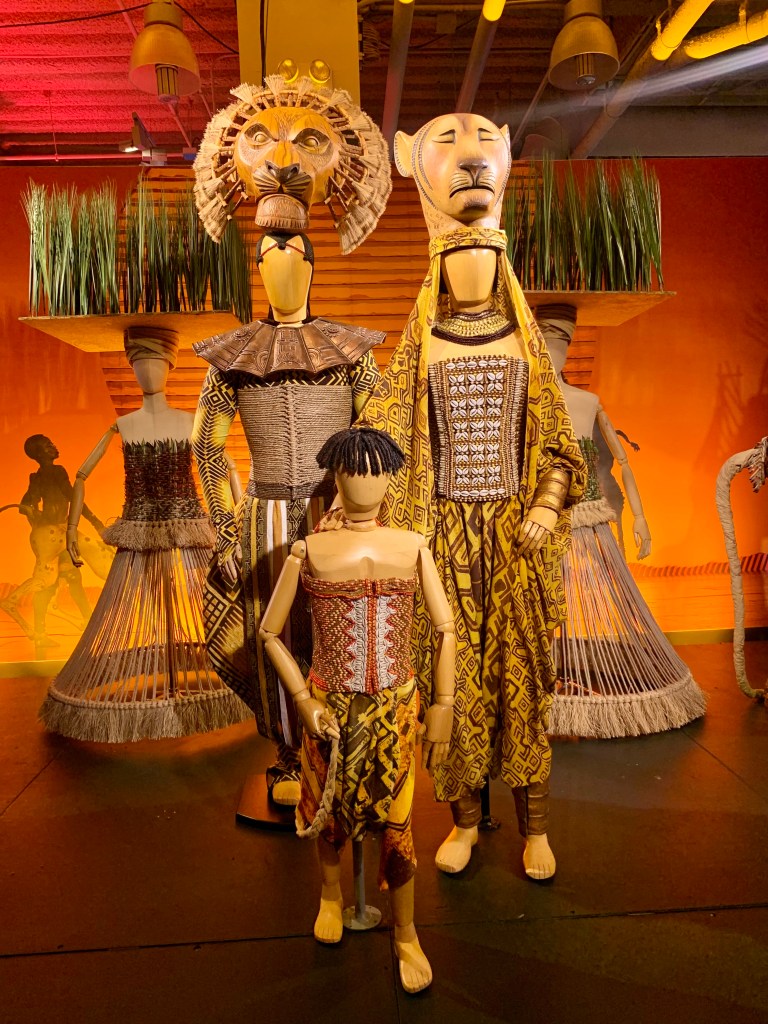
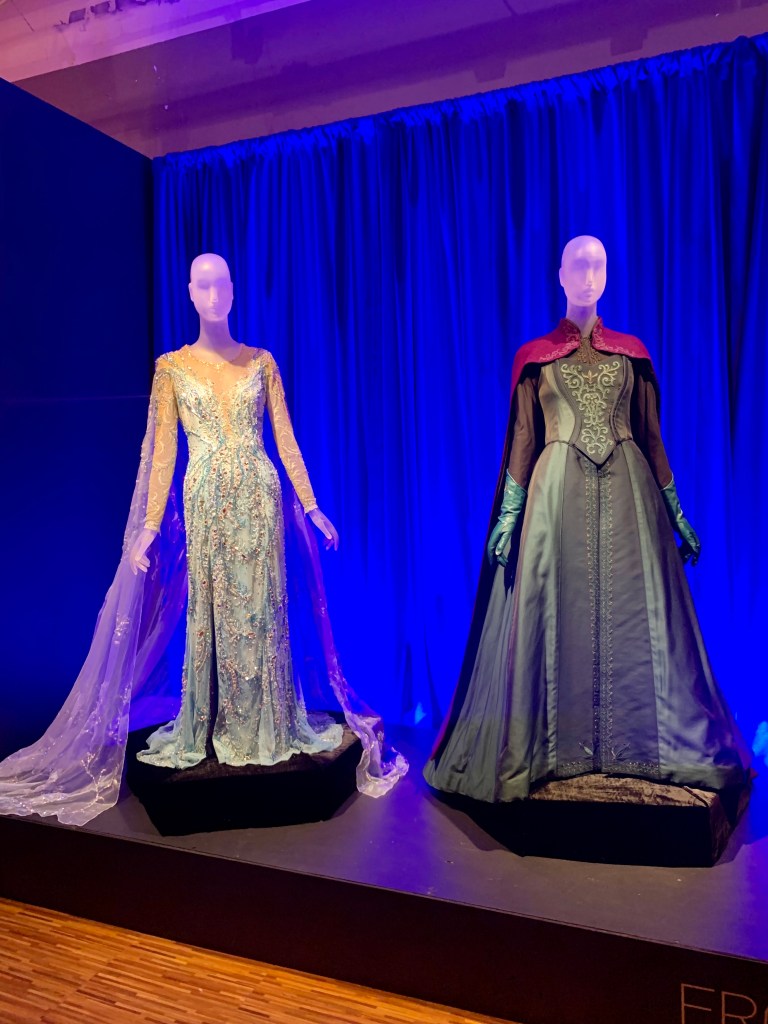
Disney productions are represented here: Aladdin, The Lion King, and Frozen.
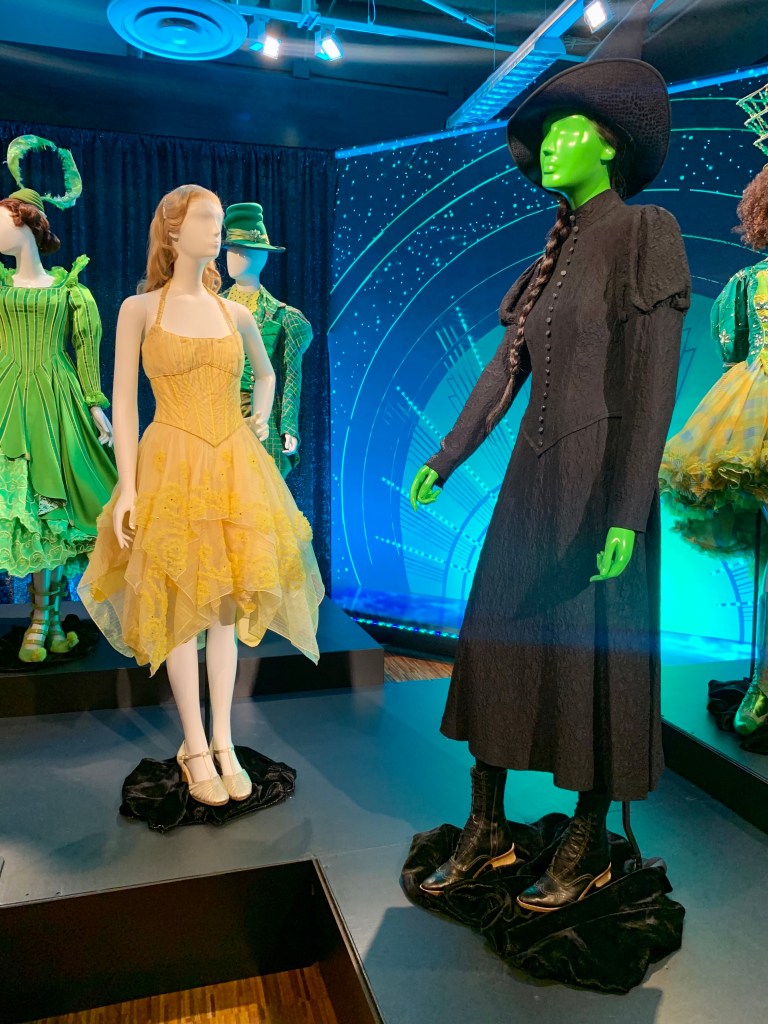
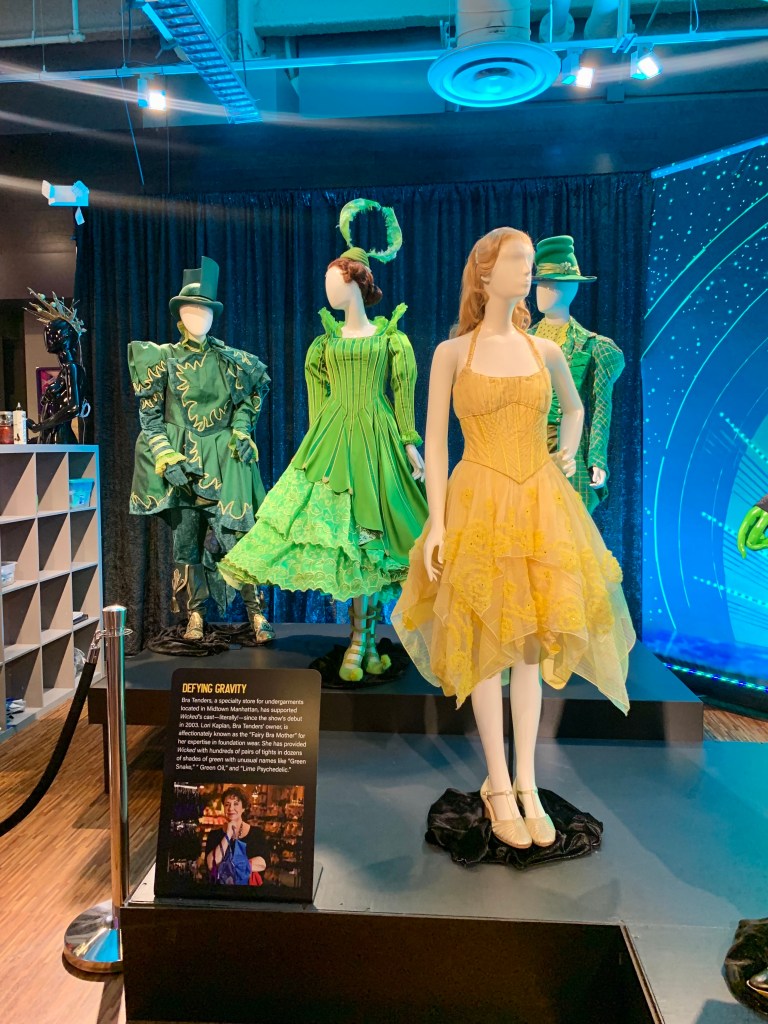
Wicked – it’s interesting to see Elphaba’s costume up close and see that it is not a matte black. Adding texture and some subtle color gives the dress depth on the stage.
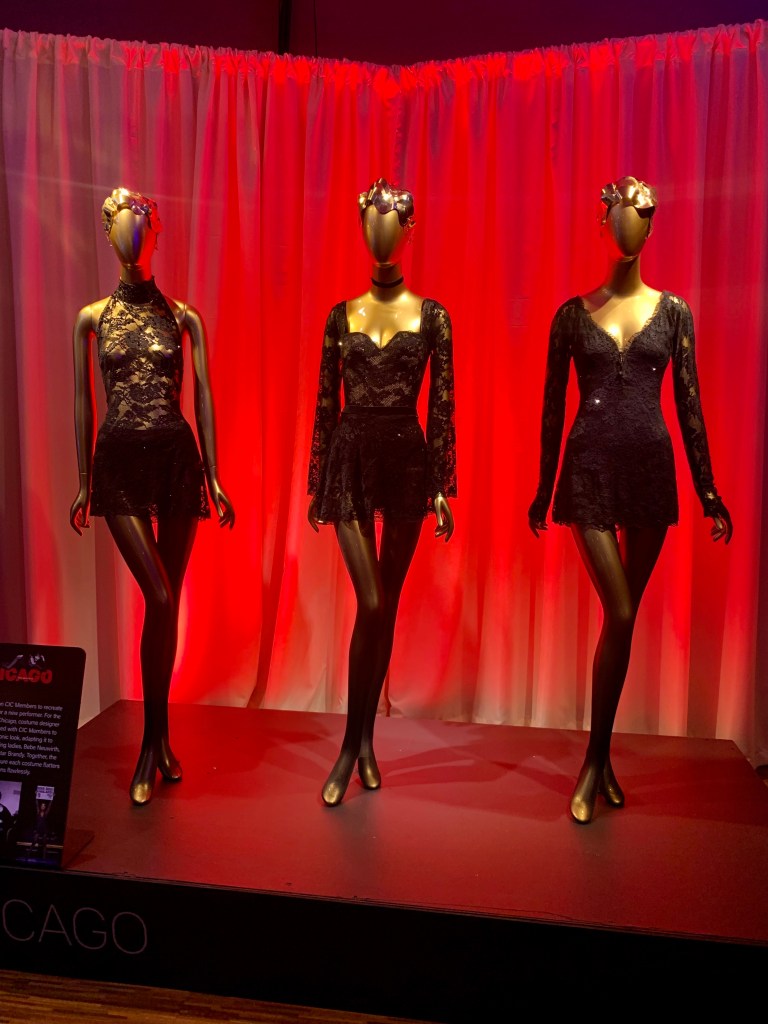
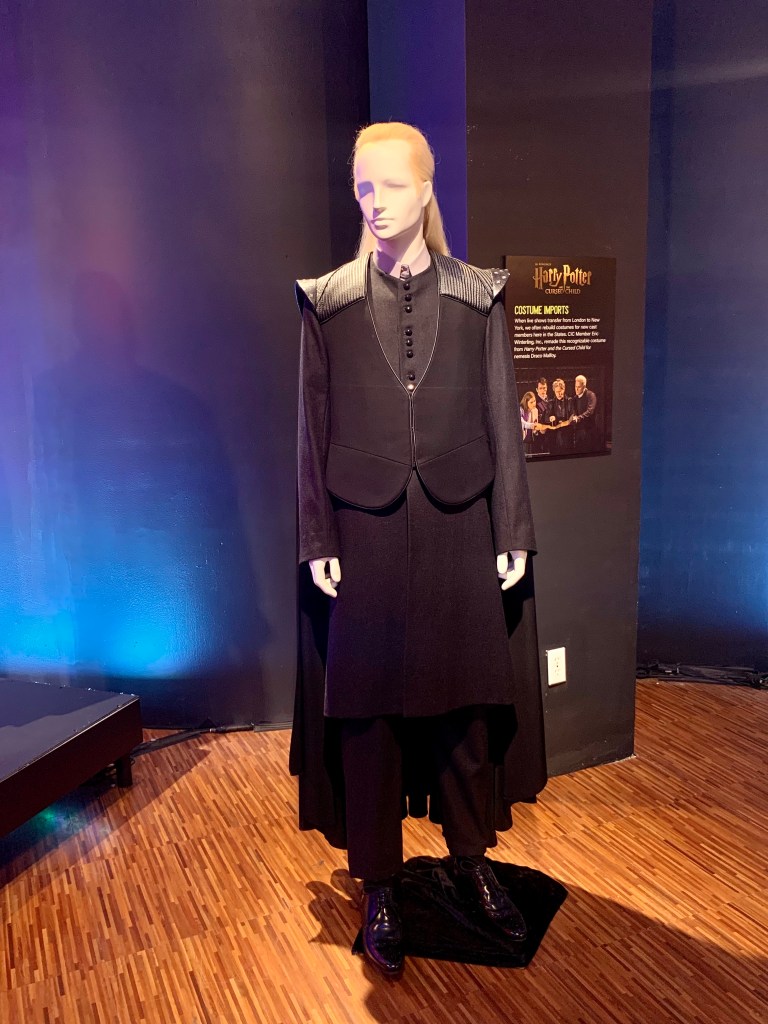
Costumes from Moulin Rouge, Chicago, and Cursed Child (Draco Malfoy).
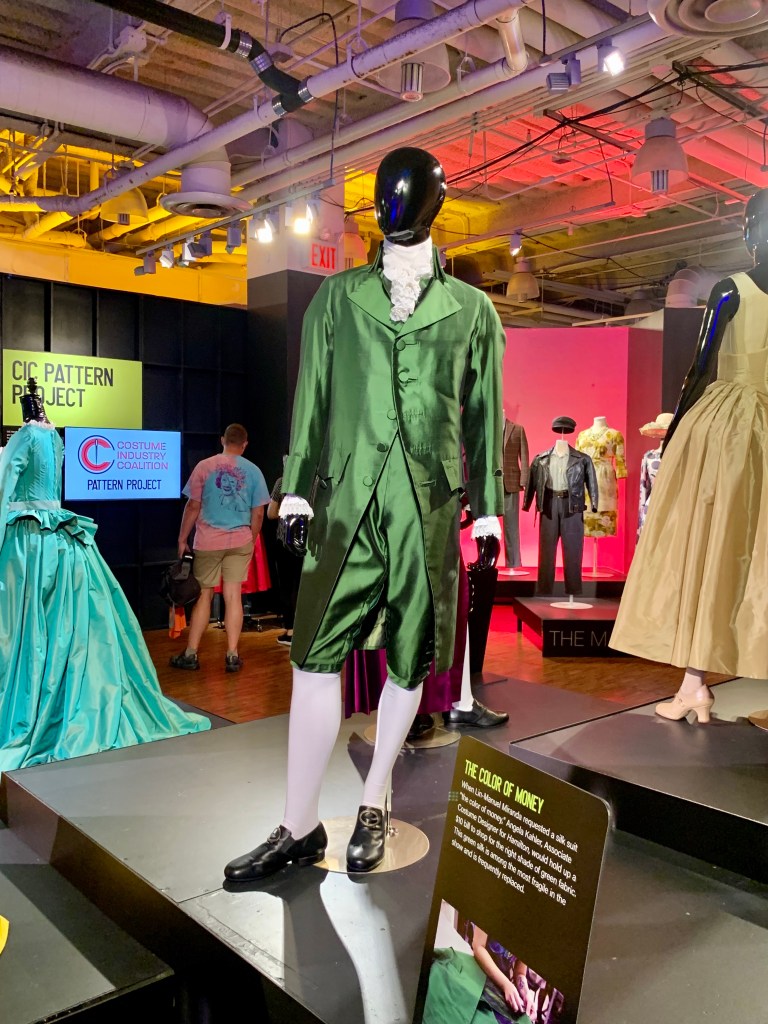
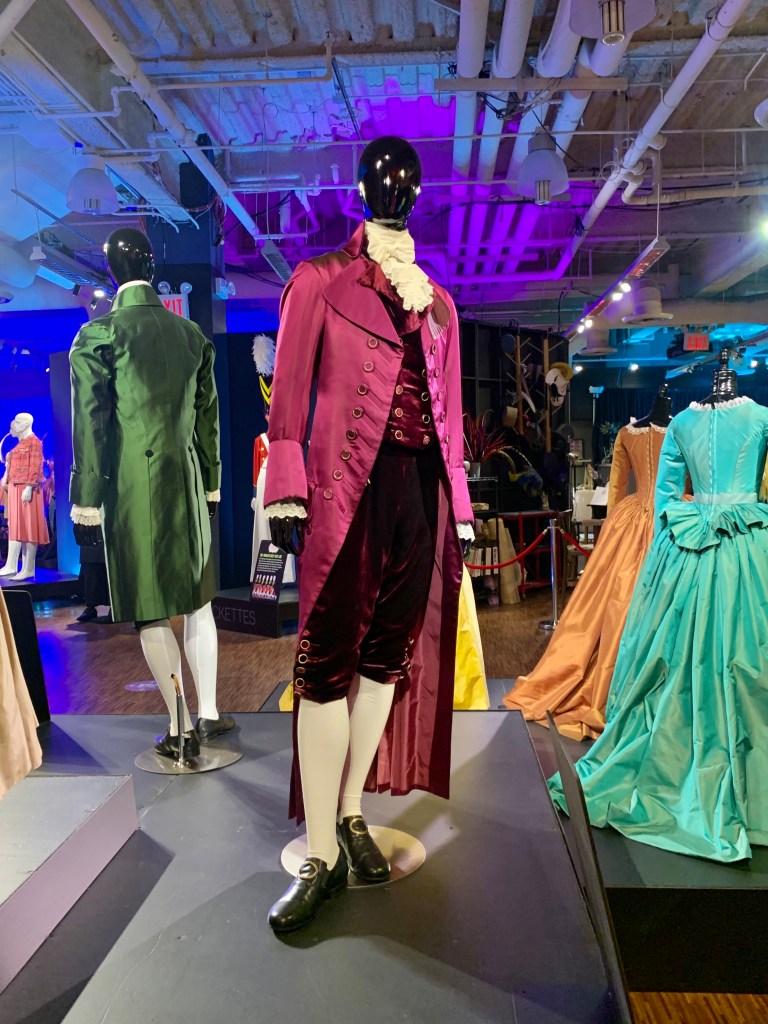
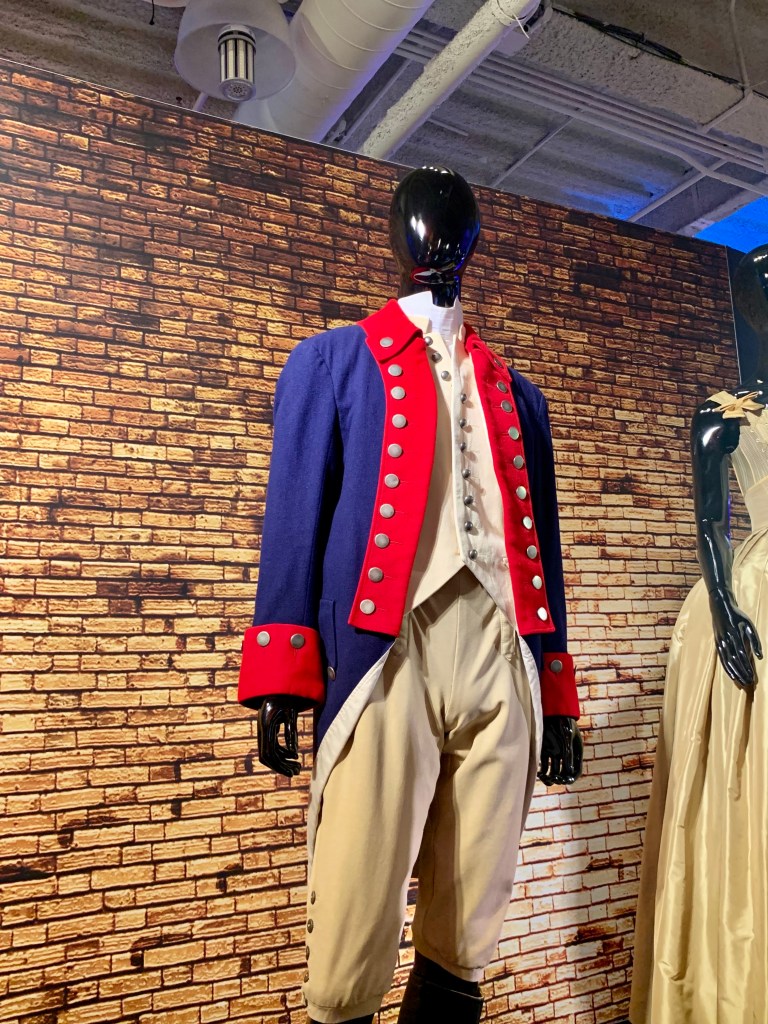
Hamilton! I was fortunate to be able to go backstage before pandemic and see some of these costumes up close then. Apparently Lin-Manuel Miranda asked for Alexander Hamilton’s costume to be “the color of money” and after several tries this iconic green silk was confirmed. Being able to make the ensemble’s costumes able to dance in – without looking like stretchy dance clothes -is a particular challenge for most Broadway costumers.
I have also been backstage at Phantom and seen the costumes at close range. For solid black or white costumes like these for the Phantom and Christine, texture and small variations in color are used to keep them from appearing flat from the audience.
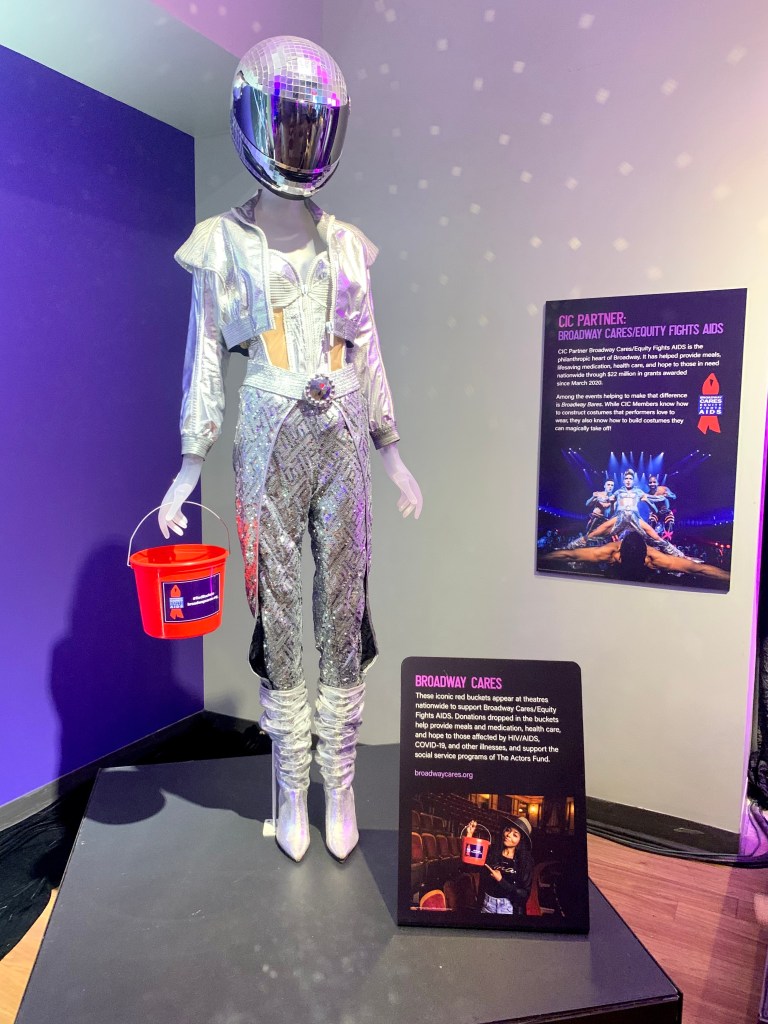
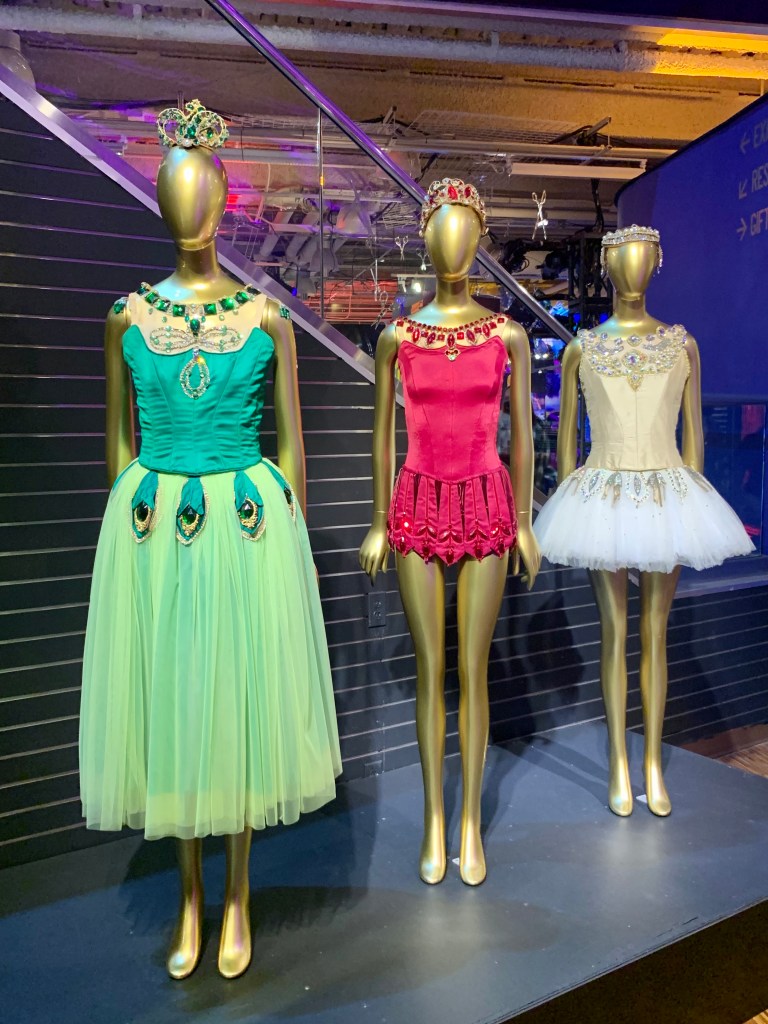
Costumes from non-Broadway productions were also highlighted. Here you see costumes from a cruise ship, from the circus, for a Broadway Cares production, from dance, and the iconic costume the Radio City Rockettes wear in the March of the Wooden Soldiers.
The exhibit also highlights the importance of cleaning and caring for costumes, with many from films being preserved since, unlike on Broadway where costumes wear through and are replaced constantly, a film is limited in time and requires fewer repairs or replacement of the costumes.
The exhibit ends on a positive note, with Broadway reopening happening on a rolling basis throughout the fall.If you are able to see the costume exhibit, it may improve your enjoyment of the costumes you see from your seat as you return to a Broadway theatre!
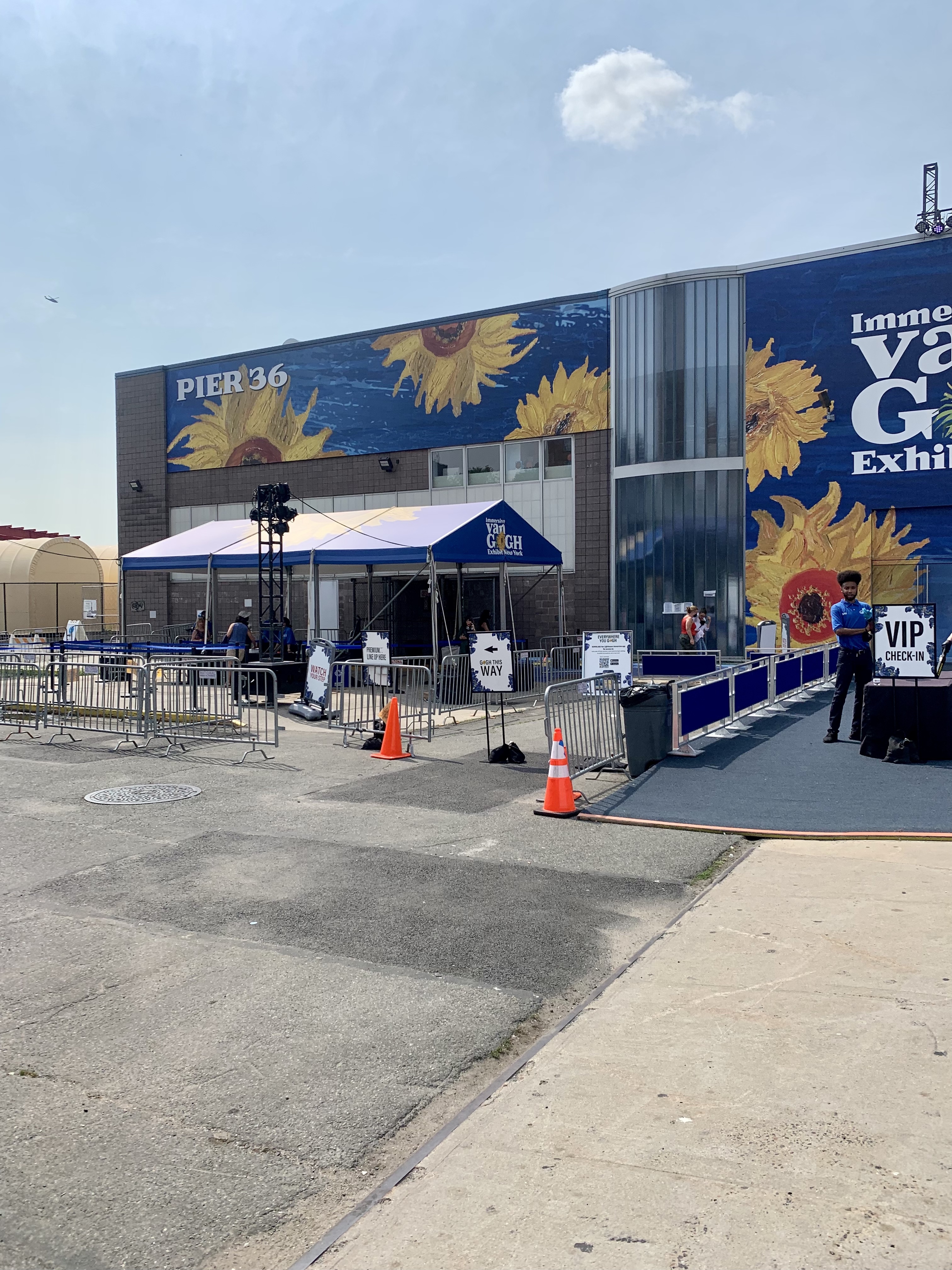
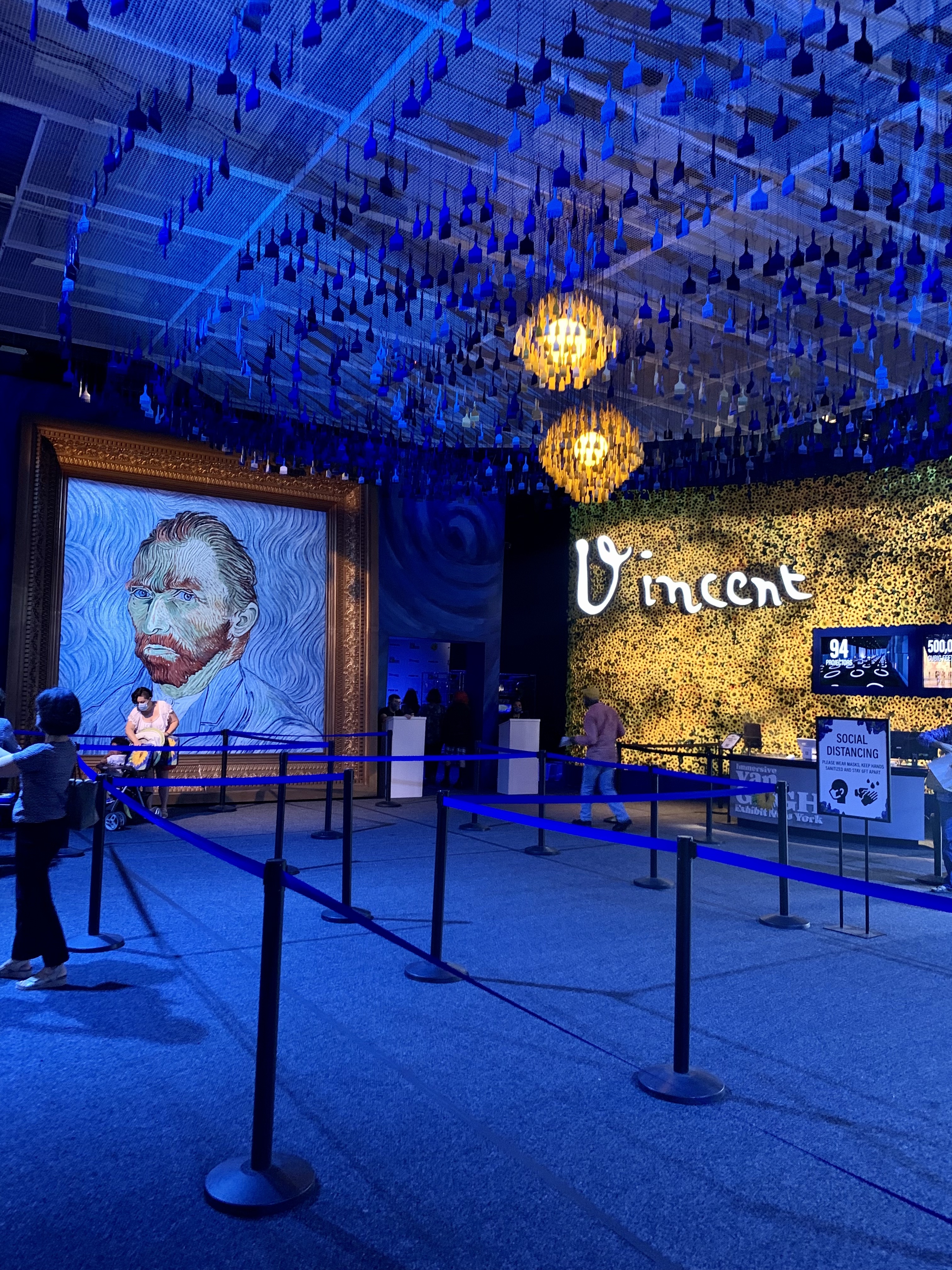
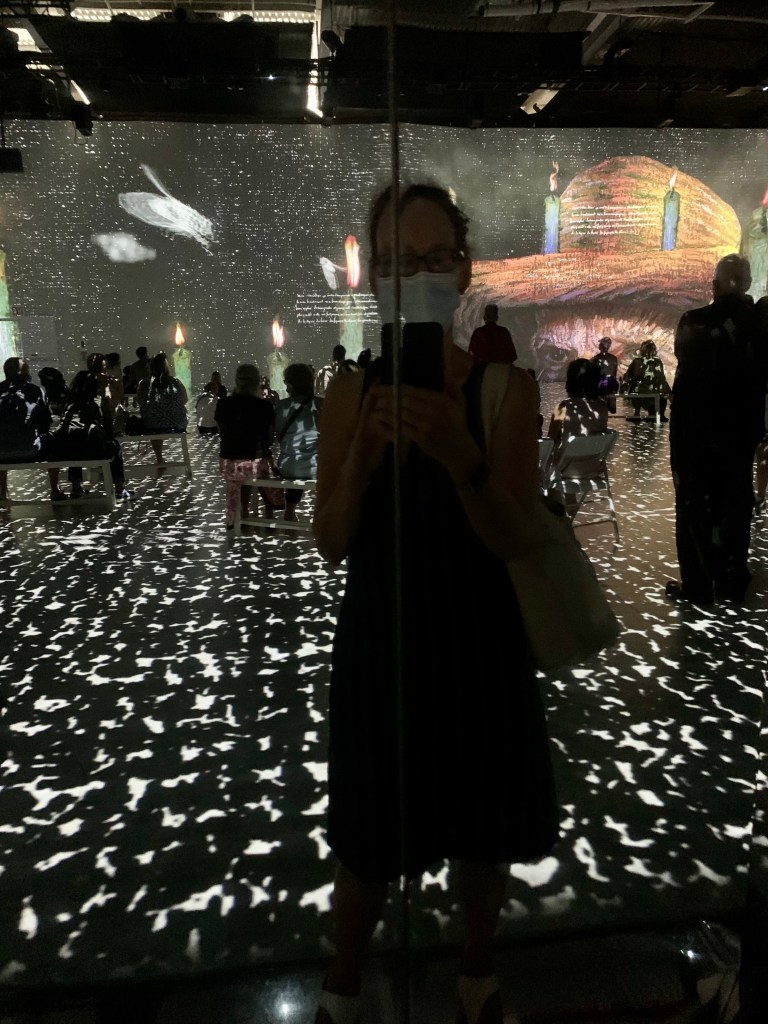
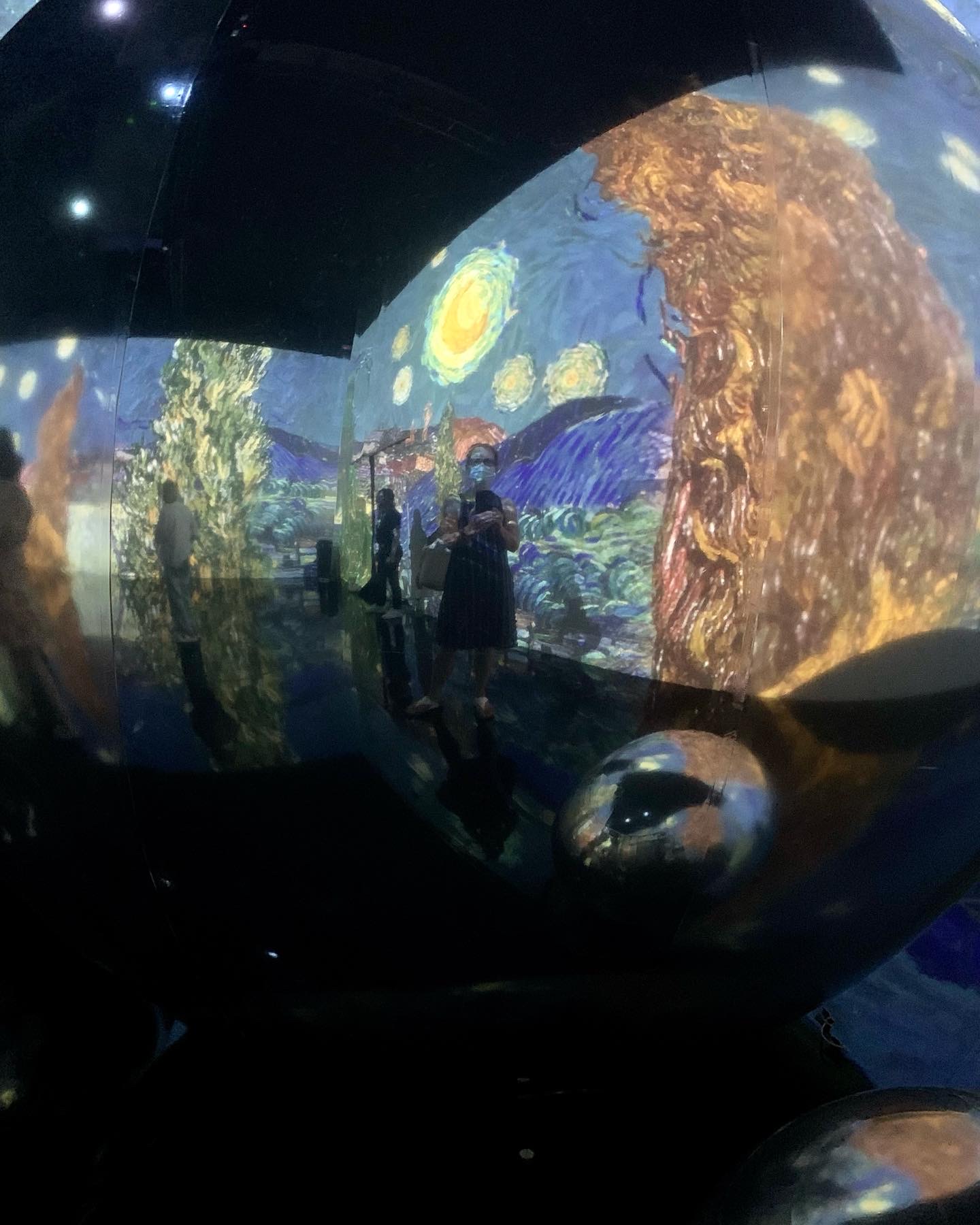
Imagine living inside the bold colors, textures, and images of a Van Gogh painting – music swelling as the lush visuals move around you. It can be experienced rather than imagined, by going to the Immersive Van Gogh Experience in NYC through September 6 (tickets are limited and it seems to be sold out the last weekend, so act quickly), and in cities all over the United States and Canada over the next year. I went to the exhibit on the East River here in Manhattan recently, and some of my tips about visiting will be specific to the NYC exhibit while others are more general and should apply to other locations.
The NYC experience is at Pier 36 on the East River, closest to Montgomery Street and South Street on the Lower East Side, between the Manhattan and Williamsburg Bridges. The 75,000 square foot interior space was designed by Broadway set designer David Korins (Hamilton, Dear Evan Hansen), a collaboration unique to New York.
Tickets can be – and should be – purchased in advance, and prices range from $39.99-$69.99 depending on the day of the week and the time of day. Masks are required, and the numbers are limited to keep the experience uncrowded as well as covid-safe.
Before entering the immersive area, there is a reminder of the basic facts of Vincent Van Gogh’s life – his production, lack of success during his lifetime, and posthumous spectacular fame. When MoMA first reopened last year, it was eerily uncrowded, and I posted a selfie of myself in front of his “Starry Night” in part because you normally can’t get ever close enough to see it properly.
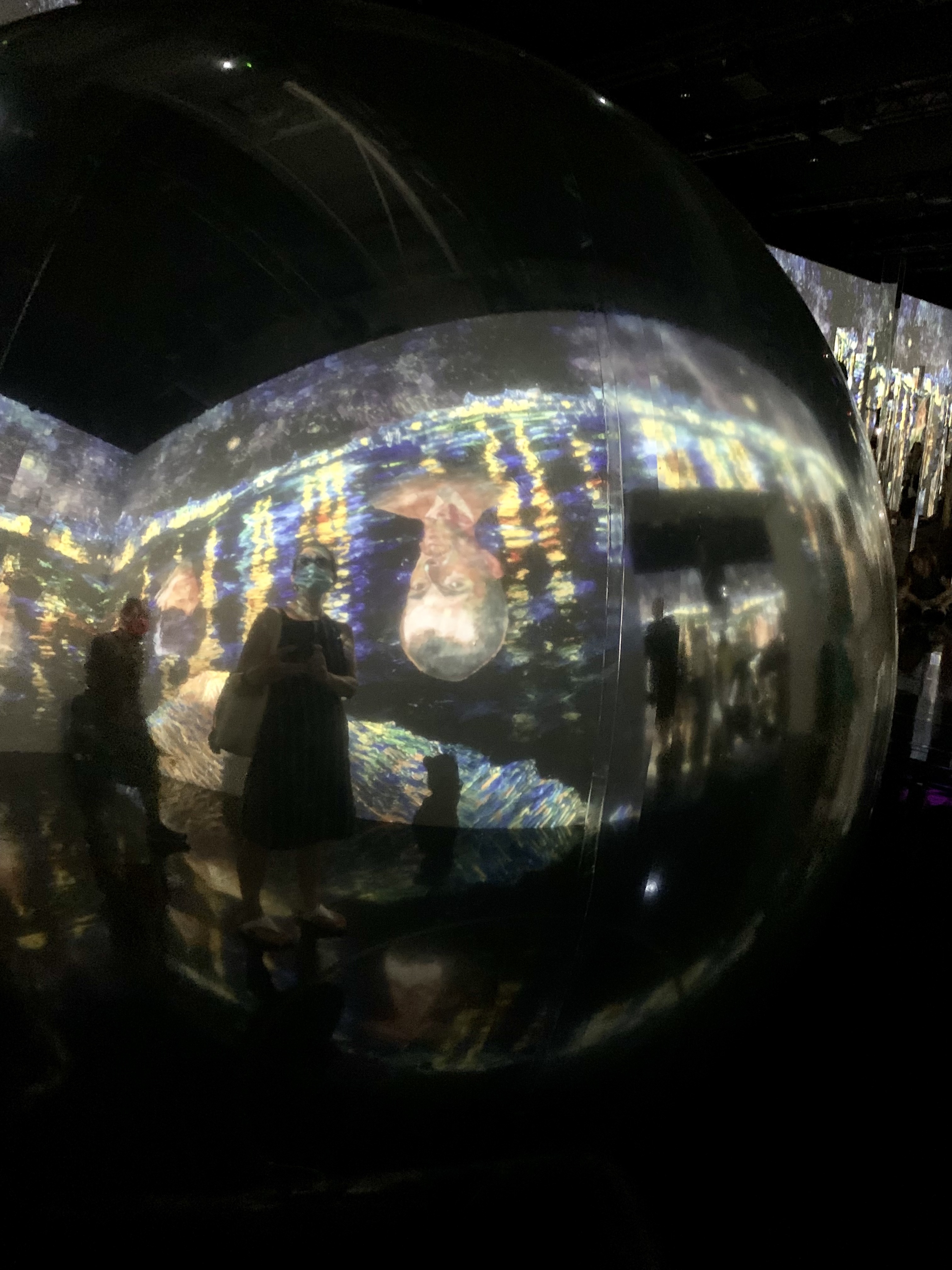
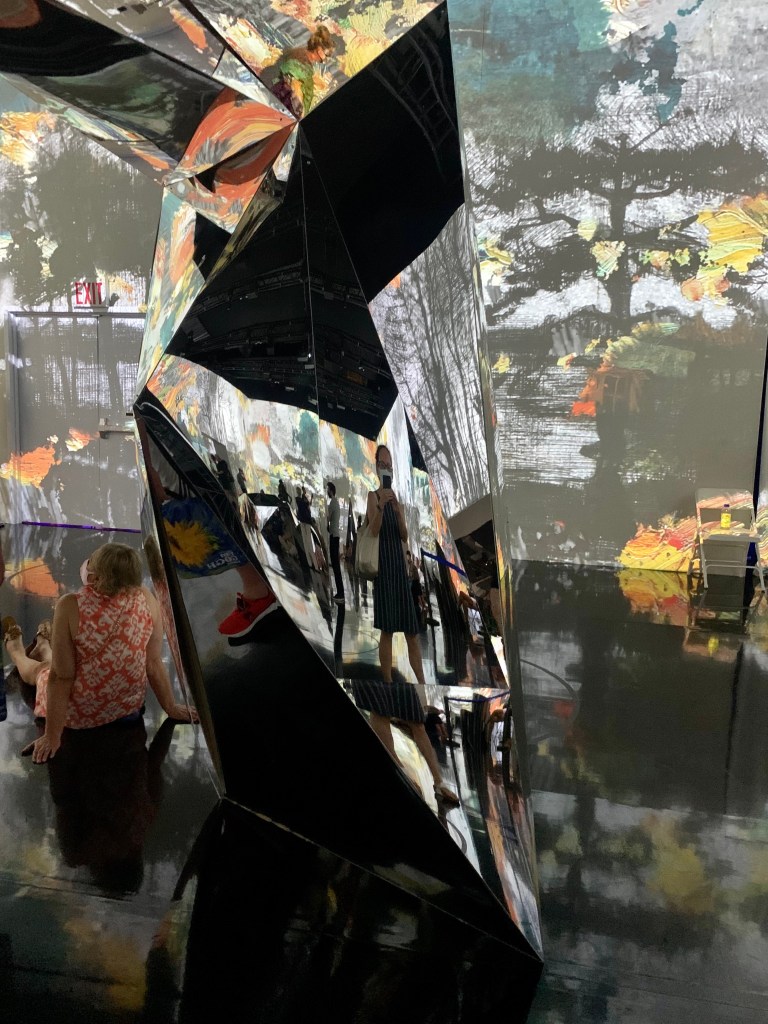
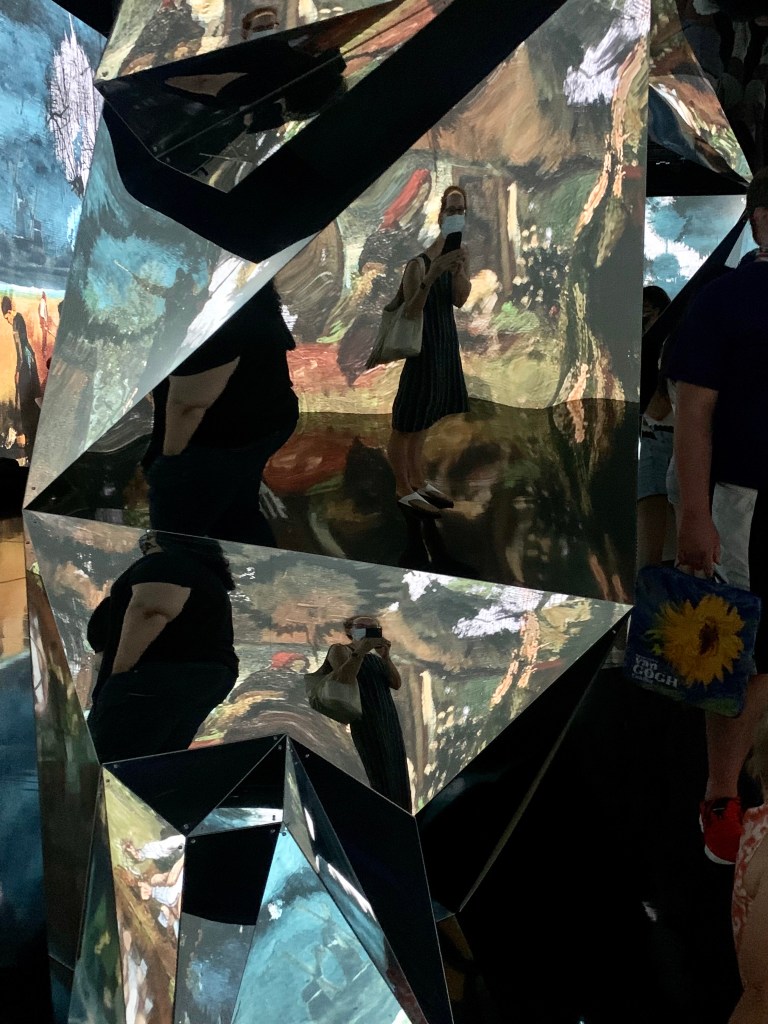
The first two rooms in the New York exhibit are smaller, and feature mirrored pieces designed by Korins to refract the larger projections on the walls and let you catch glimpses of yourself caught in the visuals. I noticed that many people got to the first room or two and stopped, and those rooms were more crowded as a result. My first tip would be that when you first enter, walk through the entire exhibit and see everything briefly before settling down to one spot. Also, visuals and music are on an about a 30 minute loop, so try to figure out where you are in the loop (if you see images from the asylum at Arles, with those crows of foreboding, you are near the end). Ideally you would see the entire “show” in one space, and in NYC the best space is the third gallery, which is enormous and has seating.
The third gallery in NYC also has an elevated platform, but my own personal experience was that being there felt less immersive that being on the floor. And what is the experience like? To me, I kept being reminded of an experience at the Rose Planetarium at the American Museum of Natural History (no longer offered, sadly) called “Sonic Vision.” That show featured music from Radiohead, Moby, and others, and the music at Immersive Van Gogh is mainly original music by creator Luca Longobardi, but ranges from Thom Yorke and Edith Piaf to Handel and Mussorgsky (see the Spotify playlist here).The somewhat overwhelming experience of being immersed in visuals with music is trippy – I used to say that going to Sonic Vision allowed me to go on a psychedelic trip safely without having to take drugs. There is an element of that here – but with somewhat of a storyline to the experience, and the knowledge of what Van Gogh’s life was like, there was an emotional depth to it as well. You can stay as long as you would like, but I would suggest you need at least an hour – the time you figure out the space before another loop of the experience begins, the entire (about 30 minute) presentation, and time to go back and take photos or see things you might have missed in the first walk through. You can go back and forth between the galleries.
There is an extensive gift shop as you exit, and not just Van Gogh related (not sure why “I’m glad you are as weird as me” candles were included), before you exit and find yourself right on the East River on Pier 36, walking along the back of the building to get back to reality. The real world is discernibly less vivid – but Van Gogh lived in the real world and was able to create gorgeous hyper-reality with his imagination, so the exhibit serves as a reminder to dream in color. I have no idea what Vincent himself would think of this exhibit, and I did wonder that a few times while there, but what would life be indeed, if we had the courage – as he did – to attempt anything?
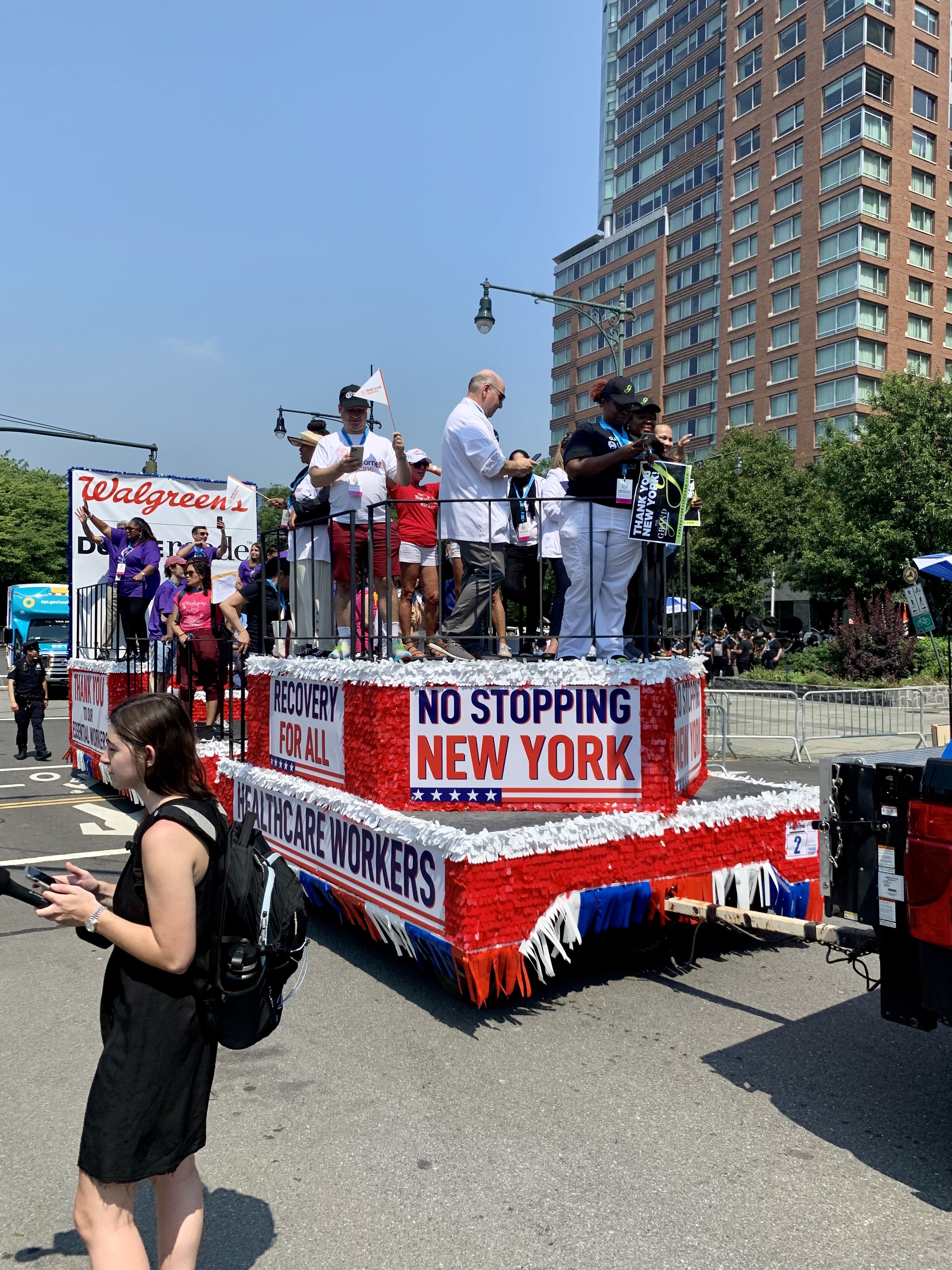
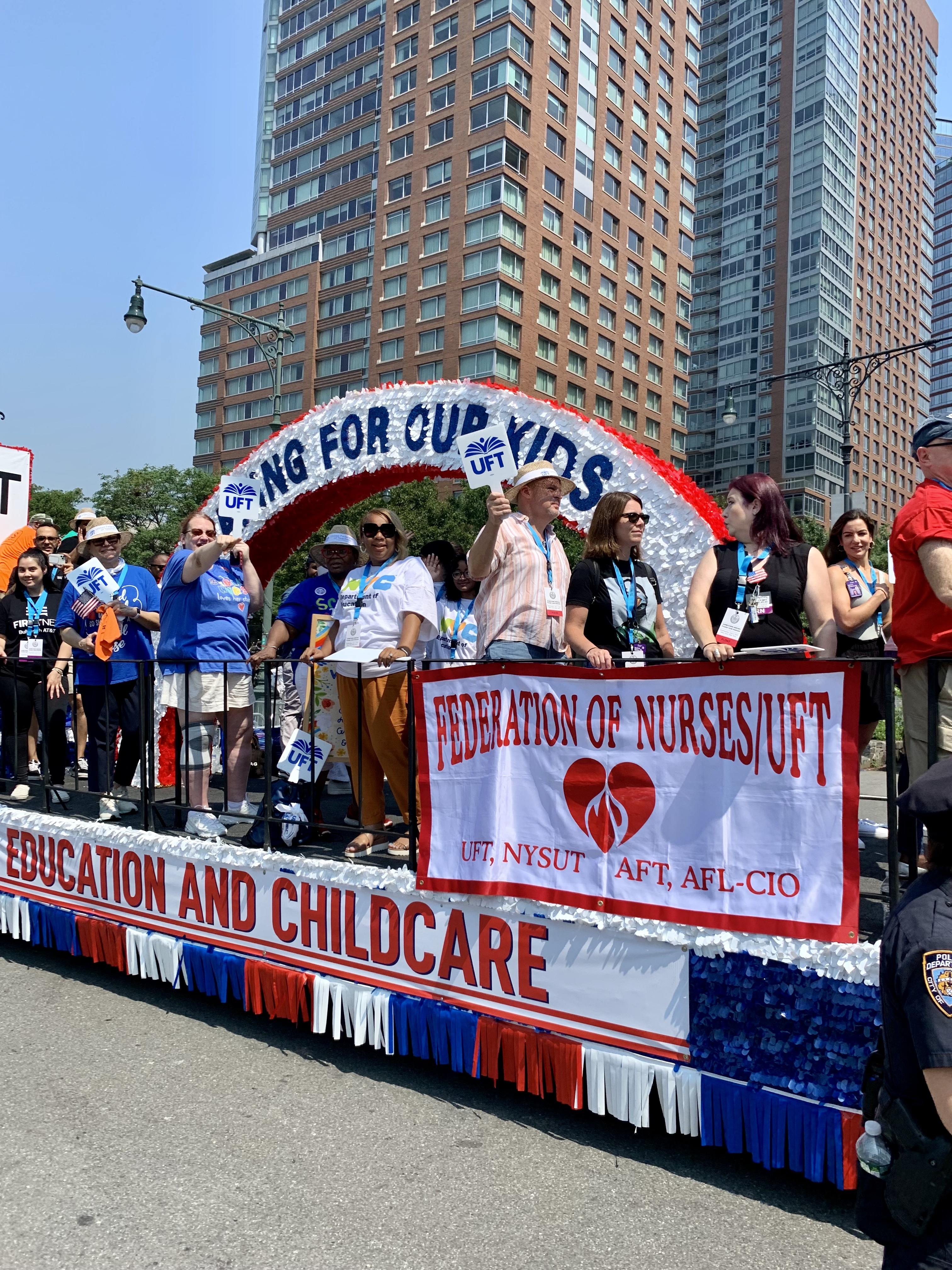
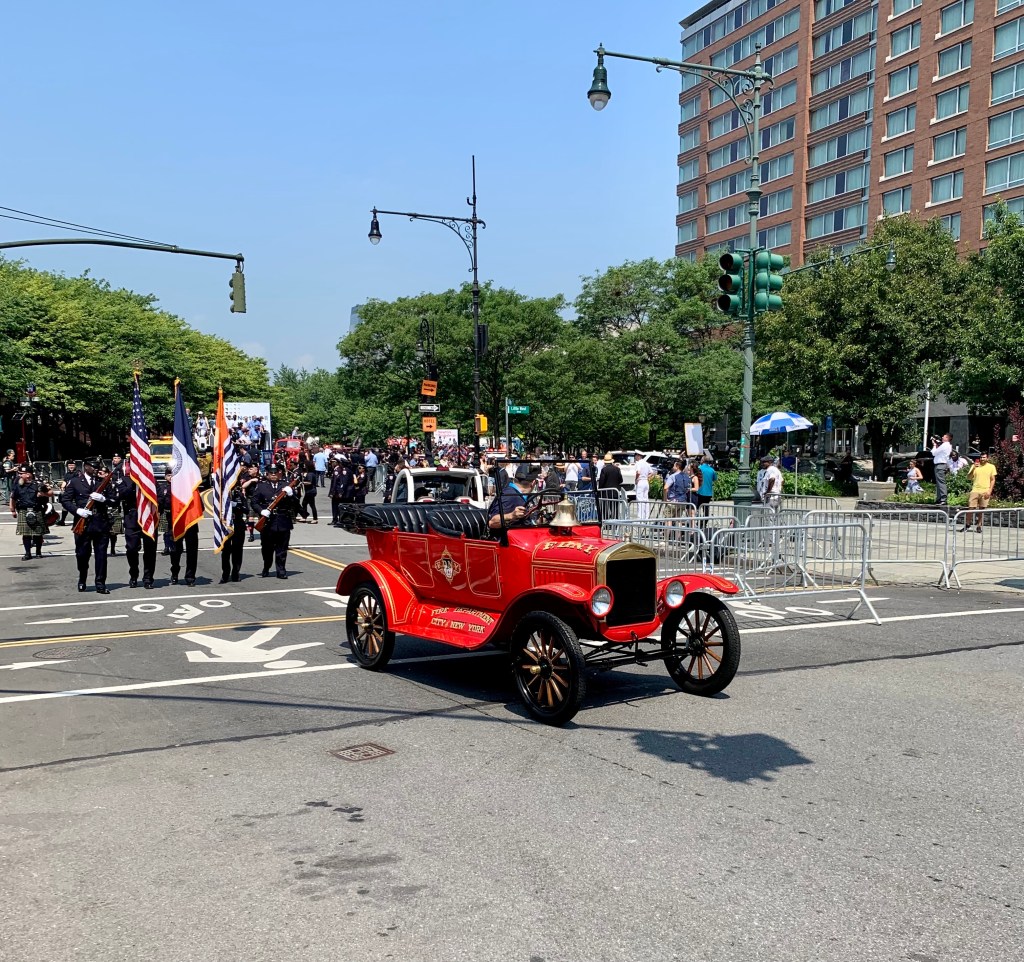
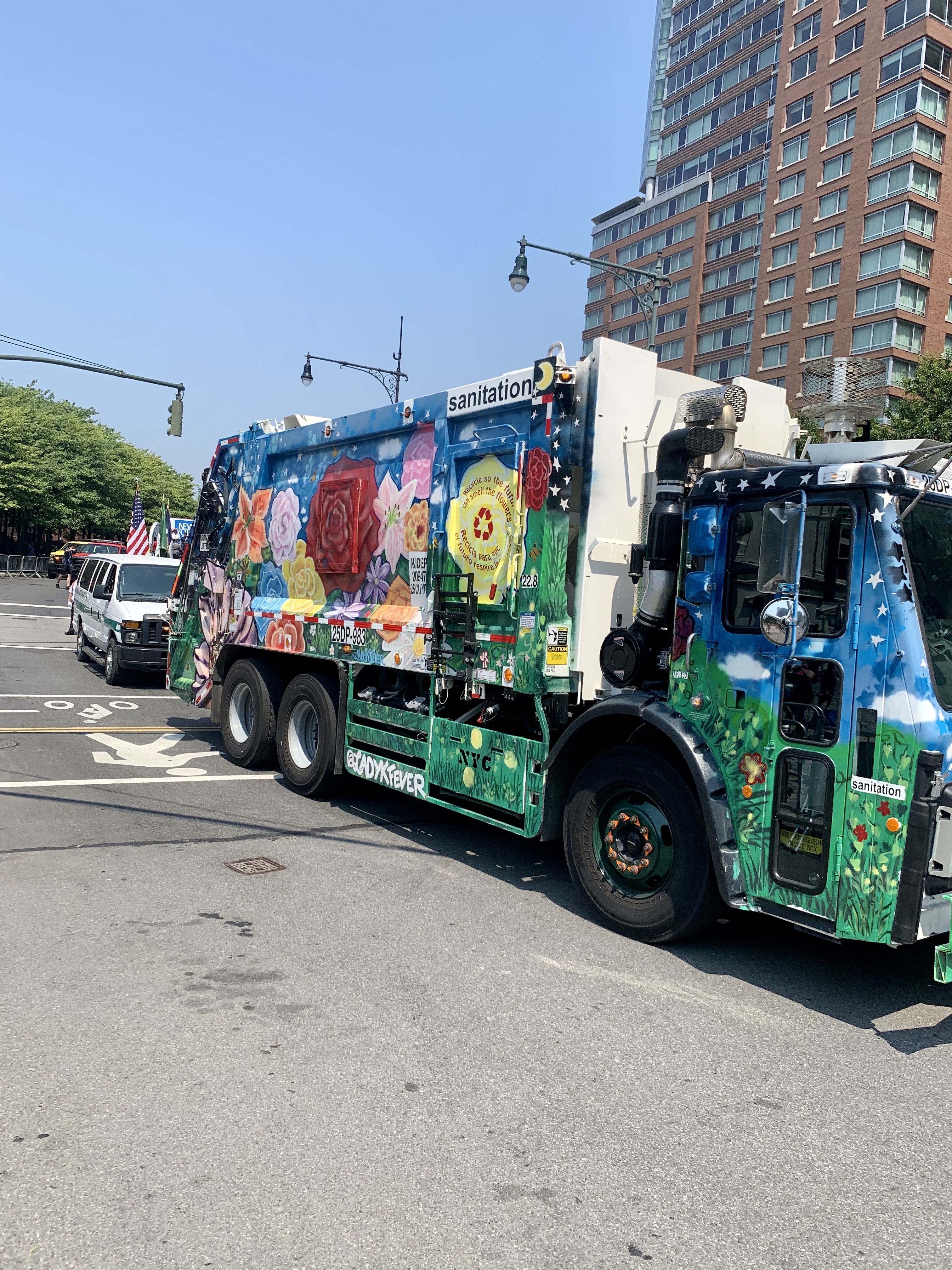
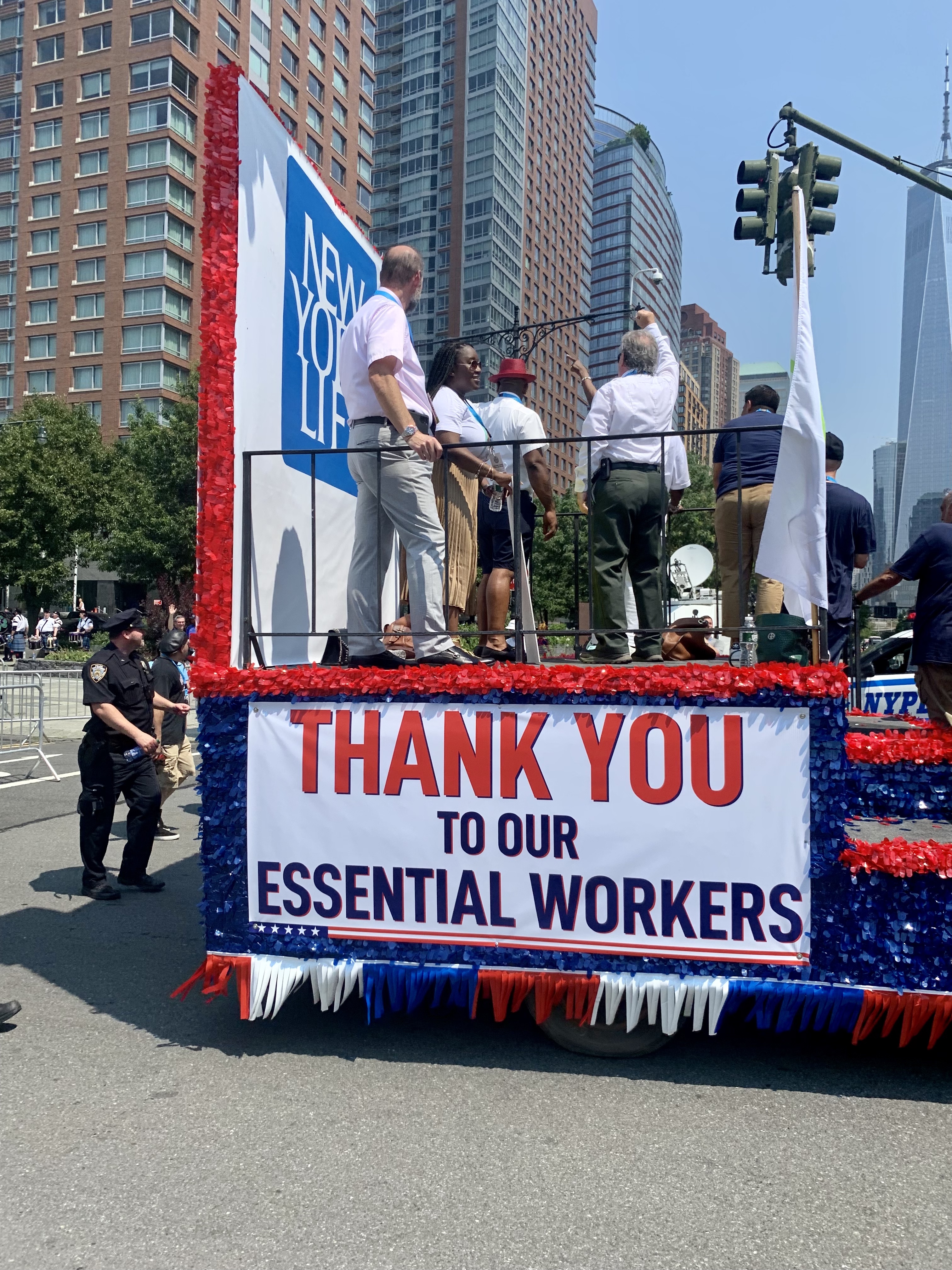
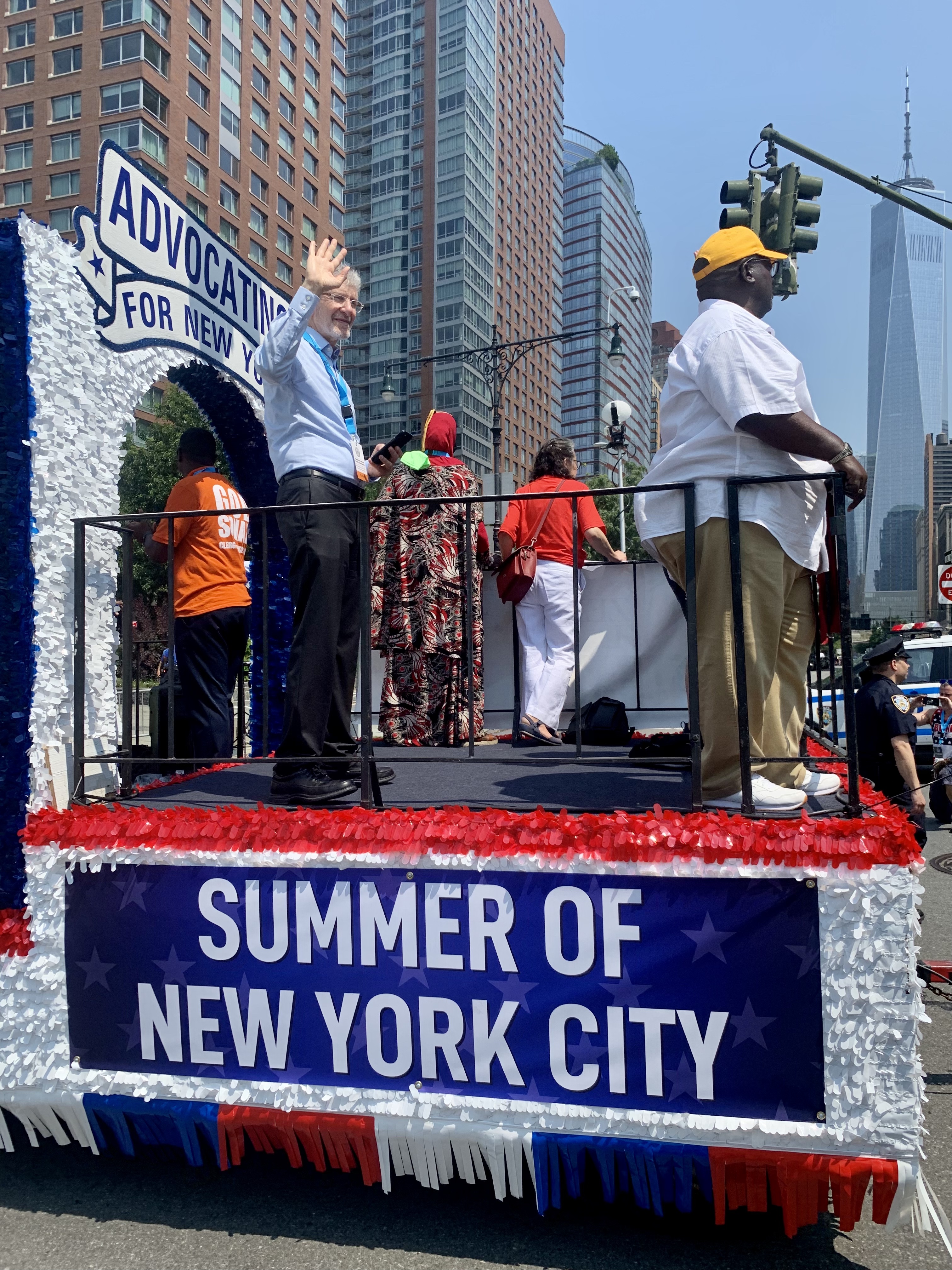
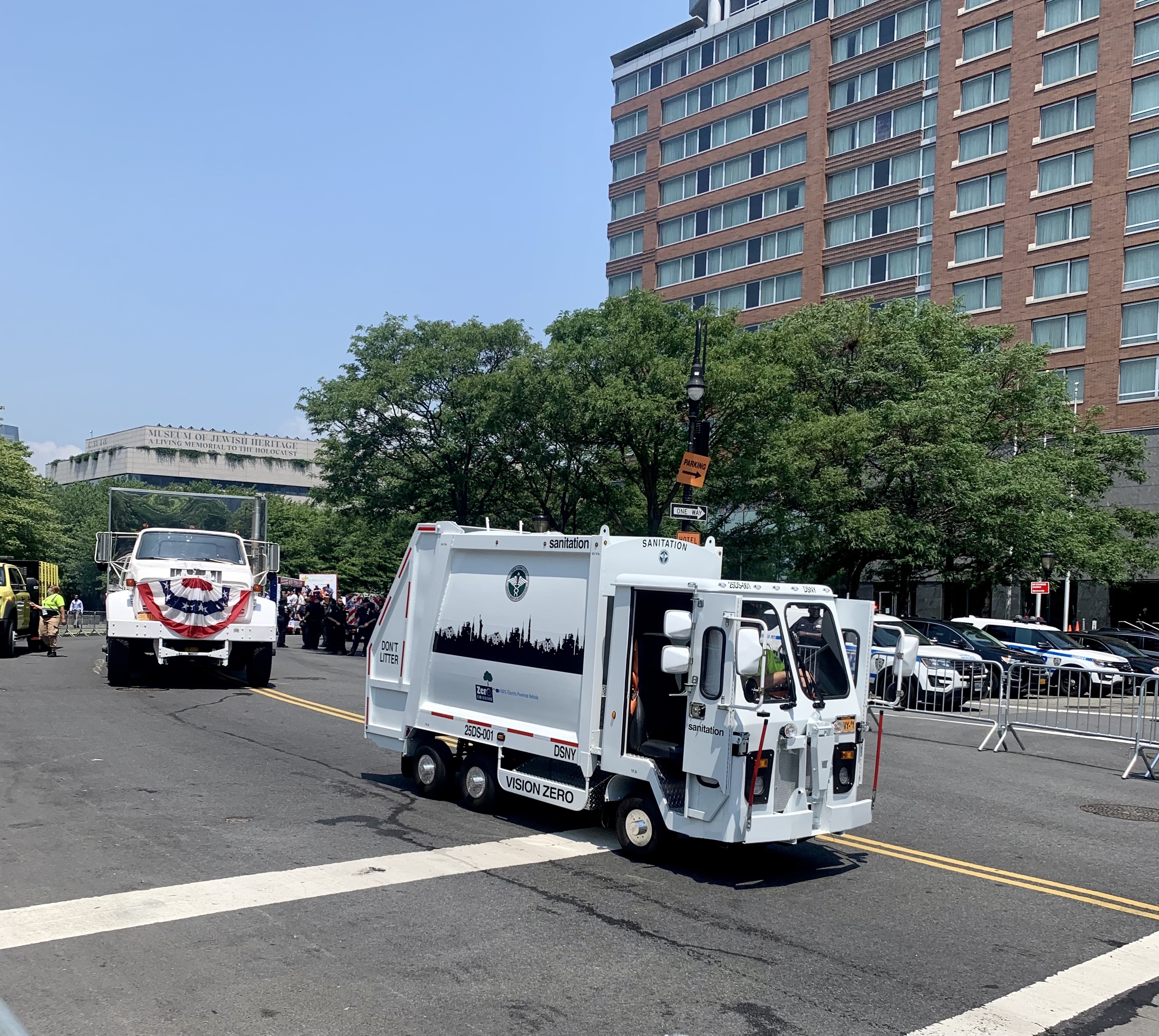
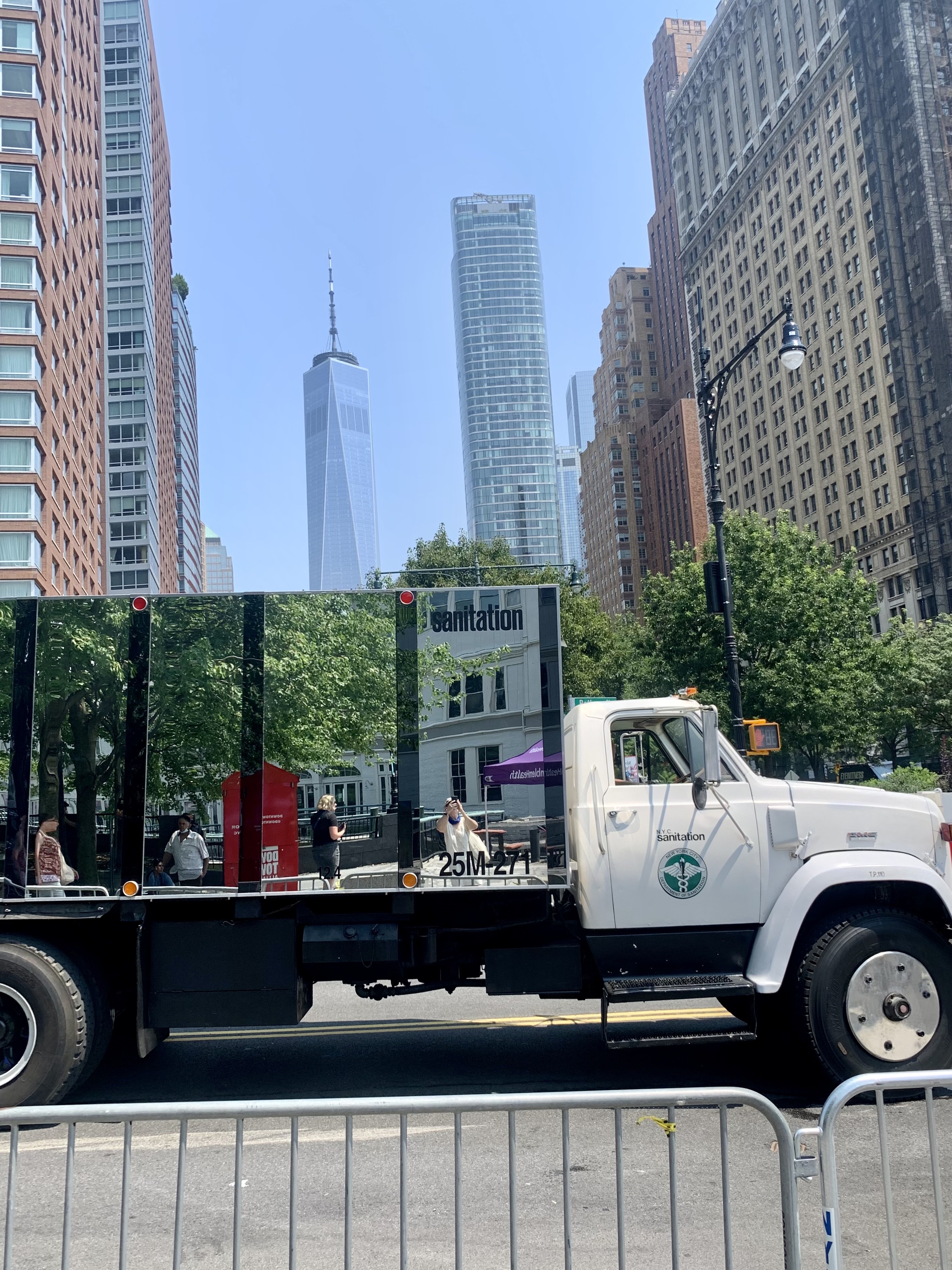
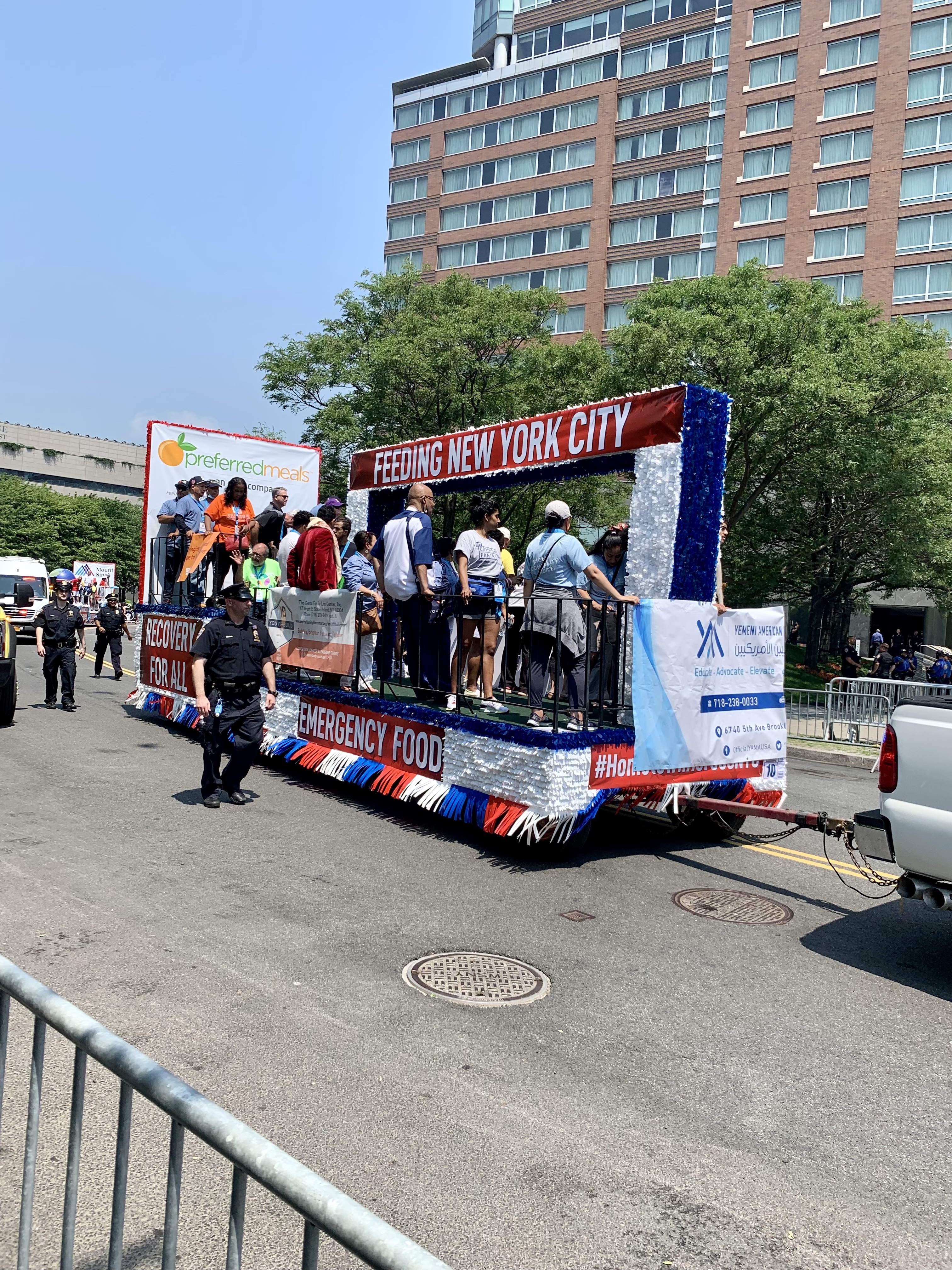
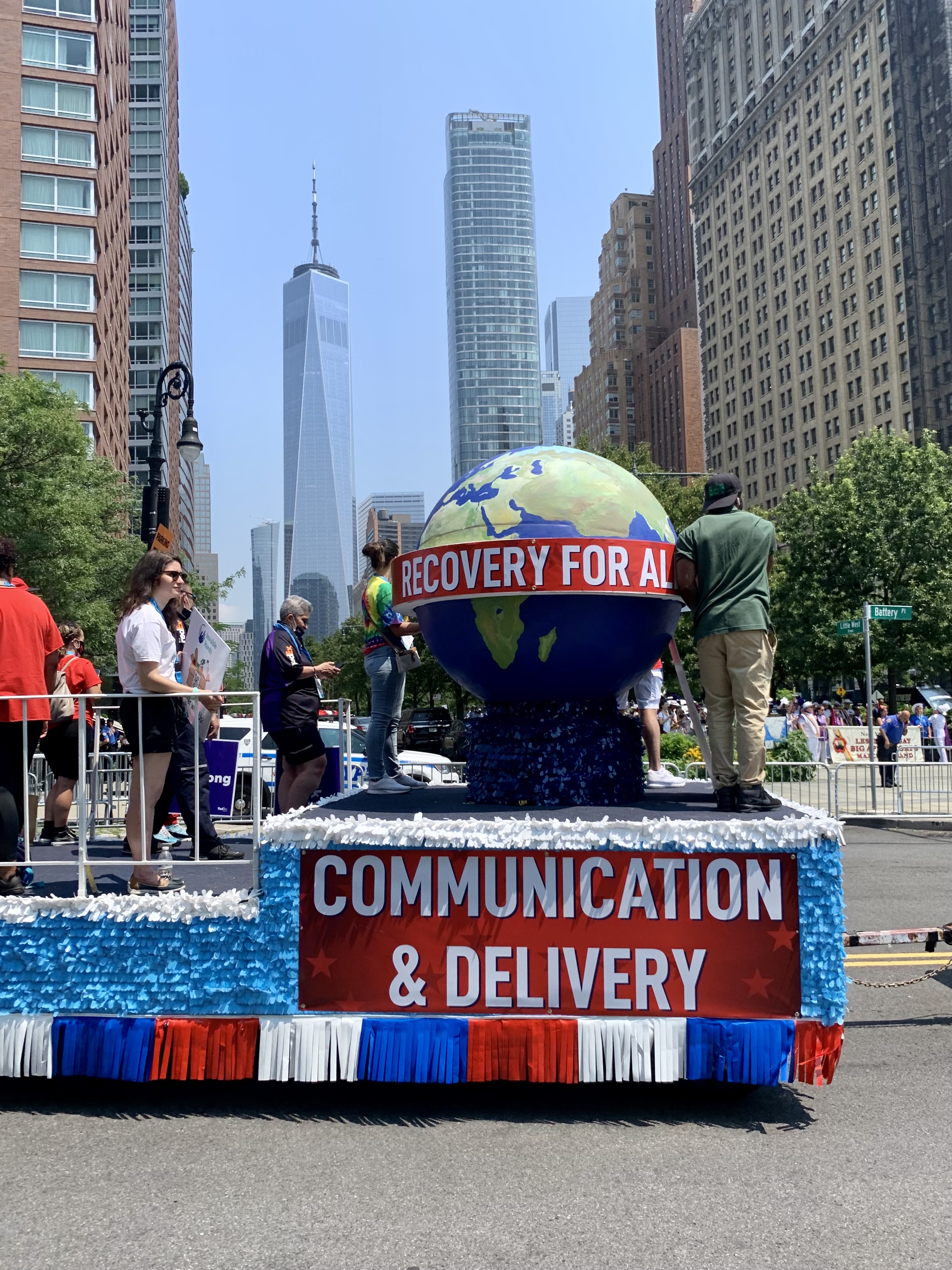
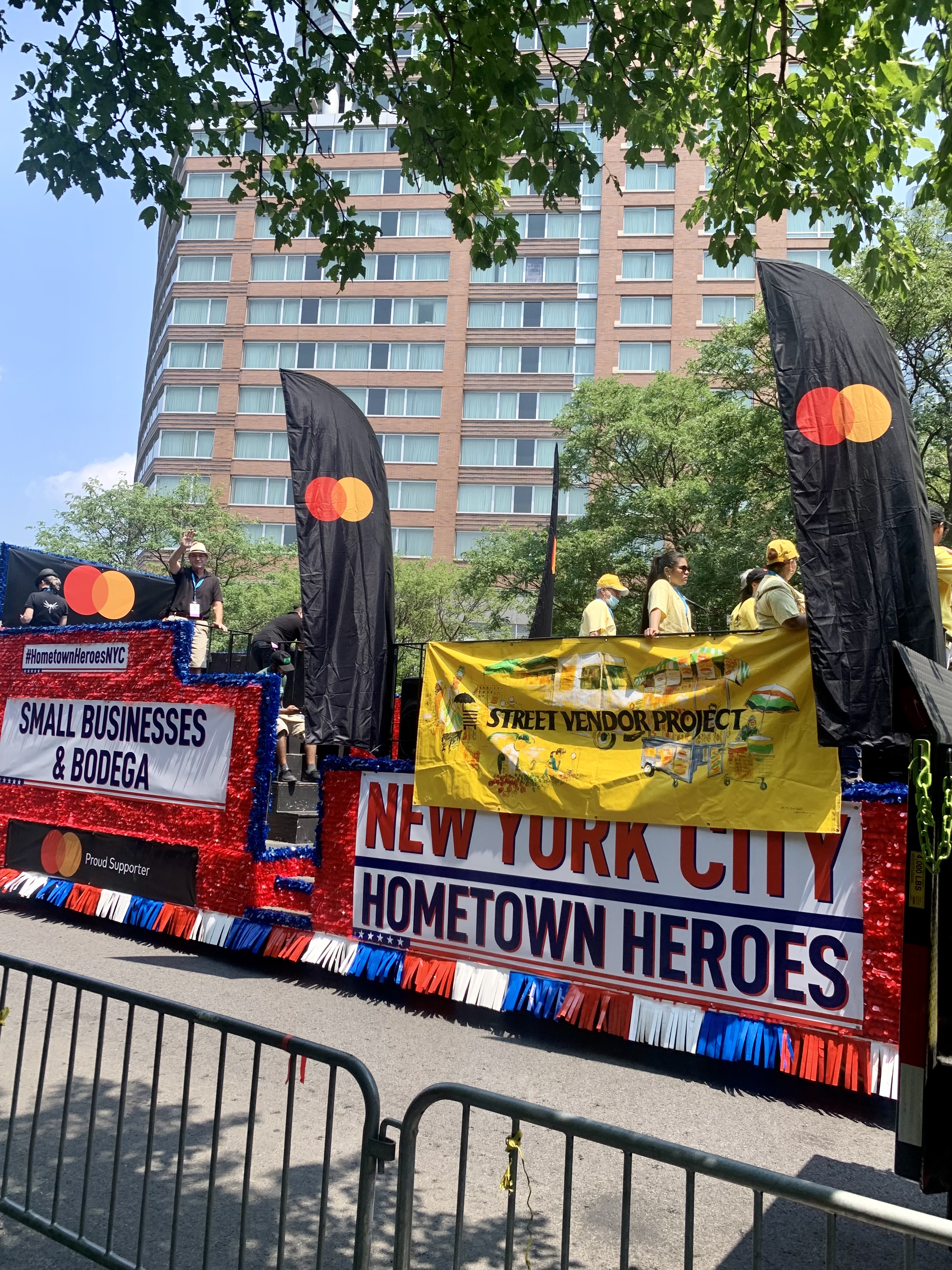
As I have posted before, I was in NYC during the entire Covid-19 pandemic lockdown, and have blogged about what that was like (“Missing my city while still in it,” here) as well as about how things slowly came back to life after being shut down (like NYC museums). Although it is impossible to pinpoint the exact moment that NYC is back – and in some ways, it still isn’t – the Hometown Heroes parade a few days ago was a celebration of those essential workers who kept the city going while most of us were sheltering in place. Having a parade like that (my favorite sign said simply “We Did It”) was certainly the most joyous indication that NYC is feeling more like itself again, thanks to high vaccination rates and very effective vaccines.
The first person to receive a Covid-19 vaccine in the United States, Sandra Lindsay, was the parade grand marshal.
One of the things that kept bringing up emotion to me during the parade was in part due to seeing it from its starting point in Battery Park. During the most extreme lockdown, when New Yorkers were asked to stay at home except for exercise, I began biking along the Hudson River bike path from Hell’s Kitchen to Battery Park, walking around, and biking back. It was so rare to see anyone else that if I did pass another biker we would generally wave and acknowledge each other. More often than not, I was completely alone walking in Battery Park, gazing out to the Statue of Liberty and seeing signs that once would have been baffling about wearing a mask and keeping six feet apart. To be back in Battery Park in a crowd of vaccinated and unmasked fellow New Yorkers, celebrating those who kept the city going, was especially meaningful to me.
NYC’s reawakening has been gradual, and many new parks (like the Pier 26 ecopark and Little Island Park) have opened during the pandemic while familiar places like Lincoln Center have found new ways to reimagine old spaces. For me, NYC will truly be back once I am in a Broadway theatre (I have so many tickets already!), and that day is coming soon. But on July 7, I remembered all the times we clapped for our essential workers in isolation, hearing our fellow New Yorkers do the same from their own isolation – but as we clapped and cheered as the parade passed by, we were finally able to do it together again.
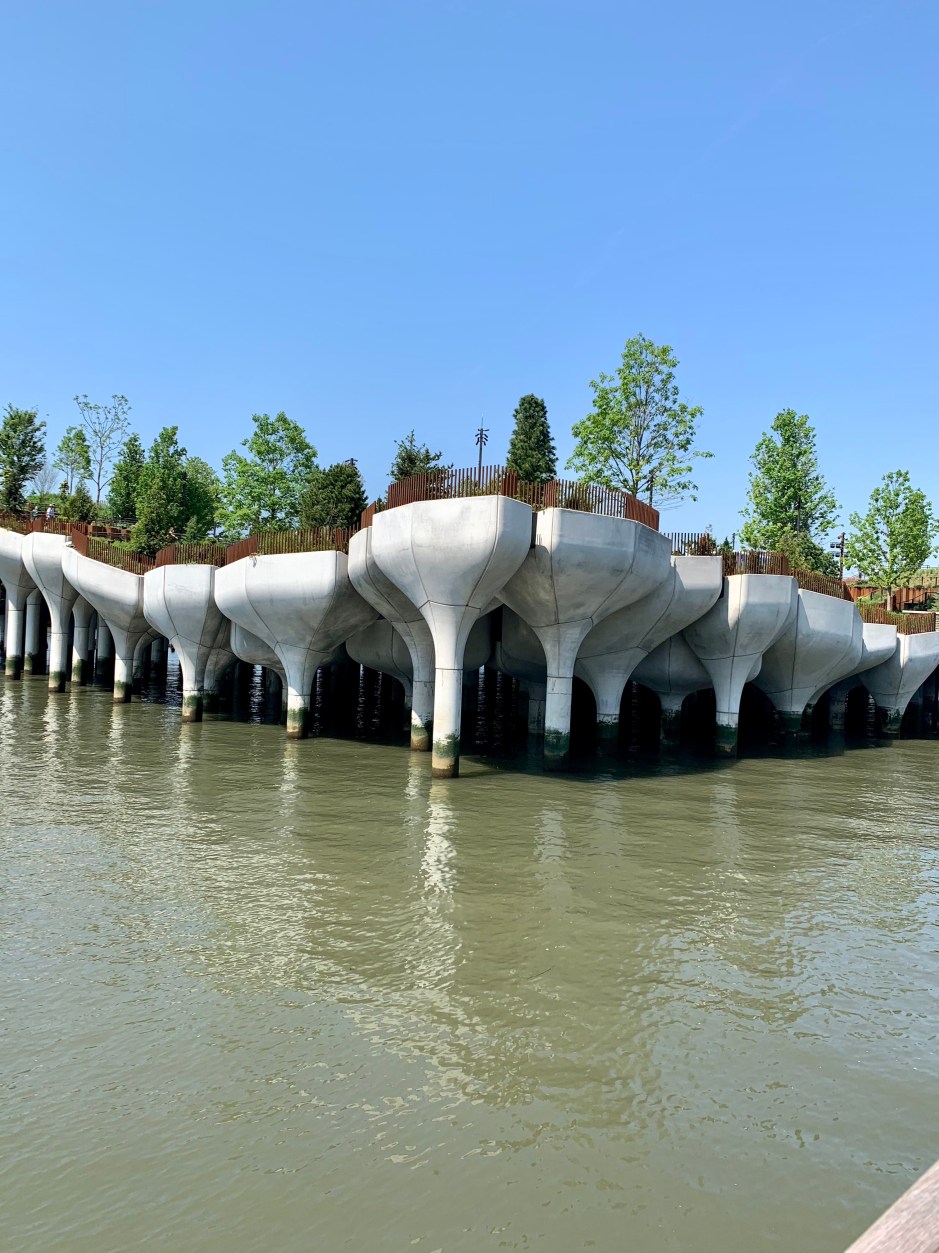
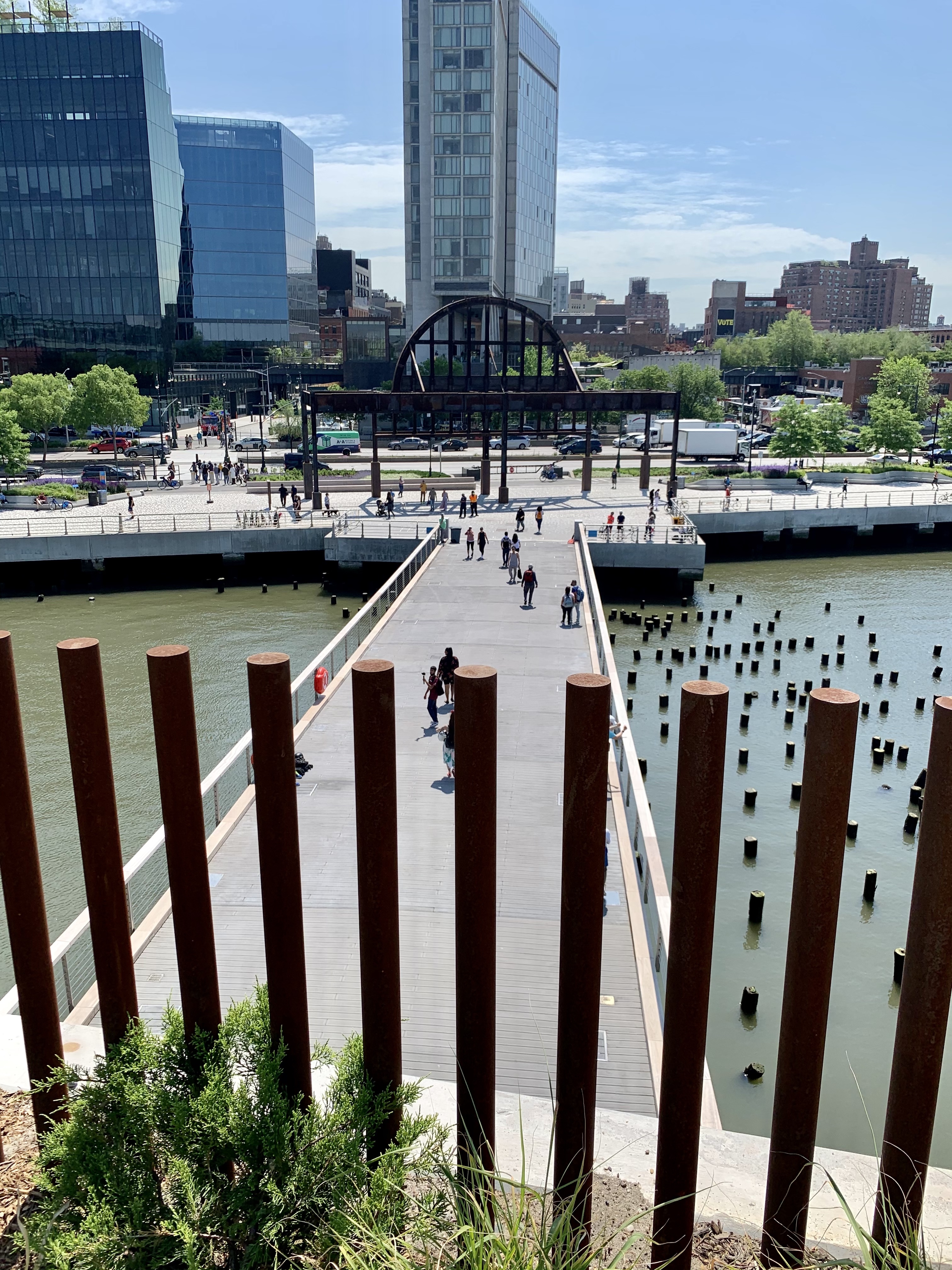
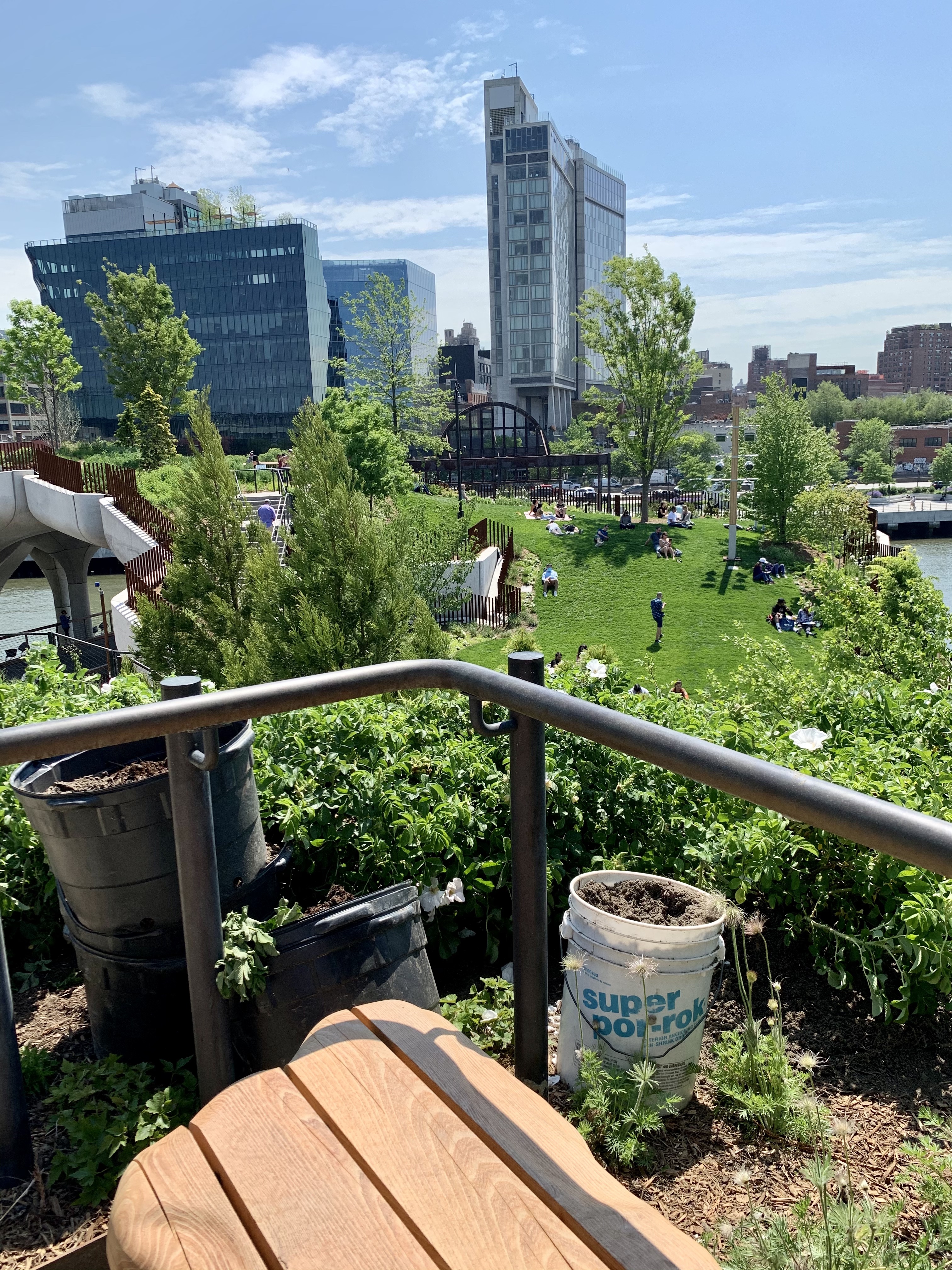
During New York City’s lockdown due to the Covid-19 pandemic in 2020, I took up bike riding, primarily along the Hudson River Greenway (see more detail about my perspective on biking in NYC here). Although I had previously noticed the odd constellation of what looked like concrete mushrooms blooming in the Hudson River just south of Chelsea Piers at Pier 55, on my nearly-daily rides past the construction area I watched with interest the development of the city’s newest park. I was thrilled to visit Little Island Park on its first day open to the public, May 21, have been back recently, and have another visit booked (more on the need to book timed tickets later).
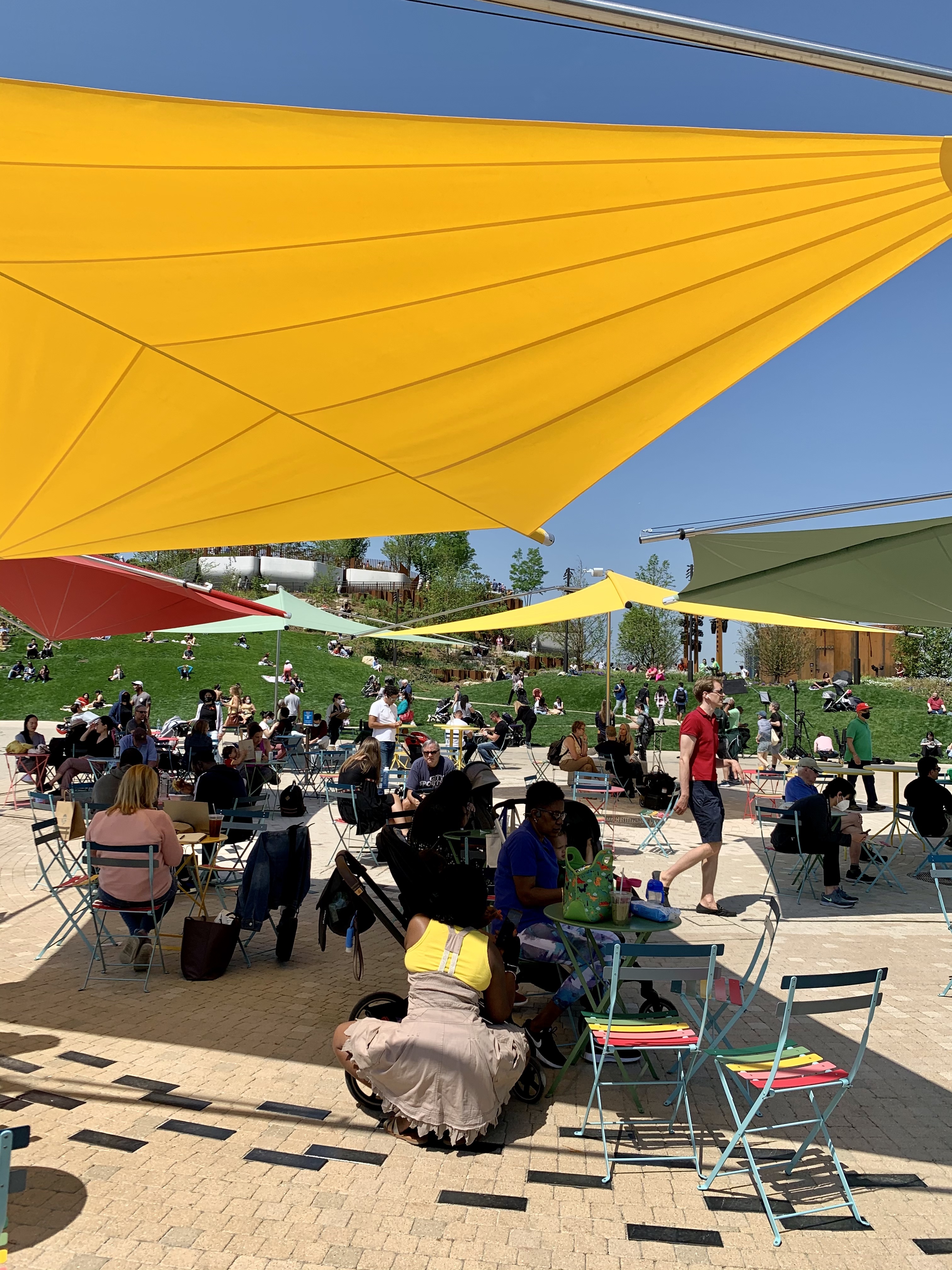
Enter where 13th Street meets the Hudson River, walking over a bridge to get to this park built over the water. One of the first things you see is a series of food trucks with an area to eat in the shade. There are a variety of wines, beers, and cocktails available in addition to food, coffee, pastries, and non-alcoholic beverages.
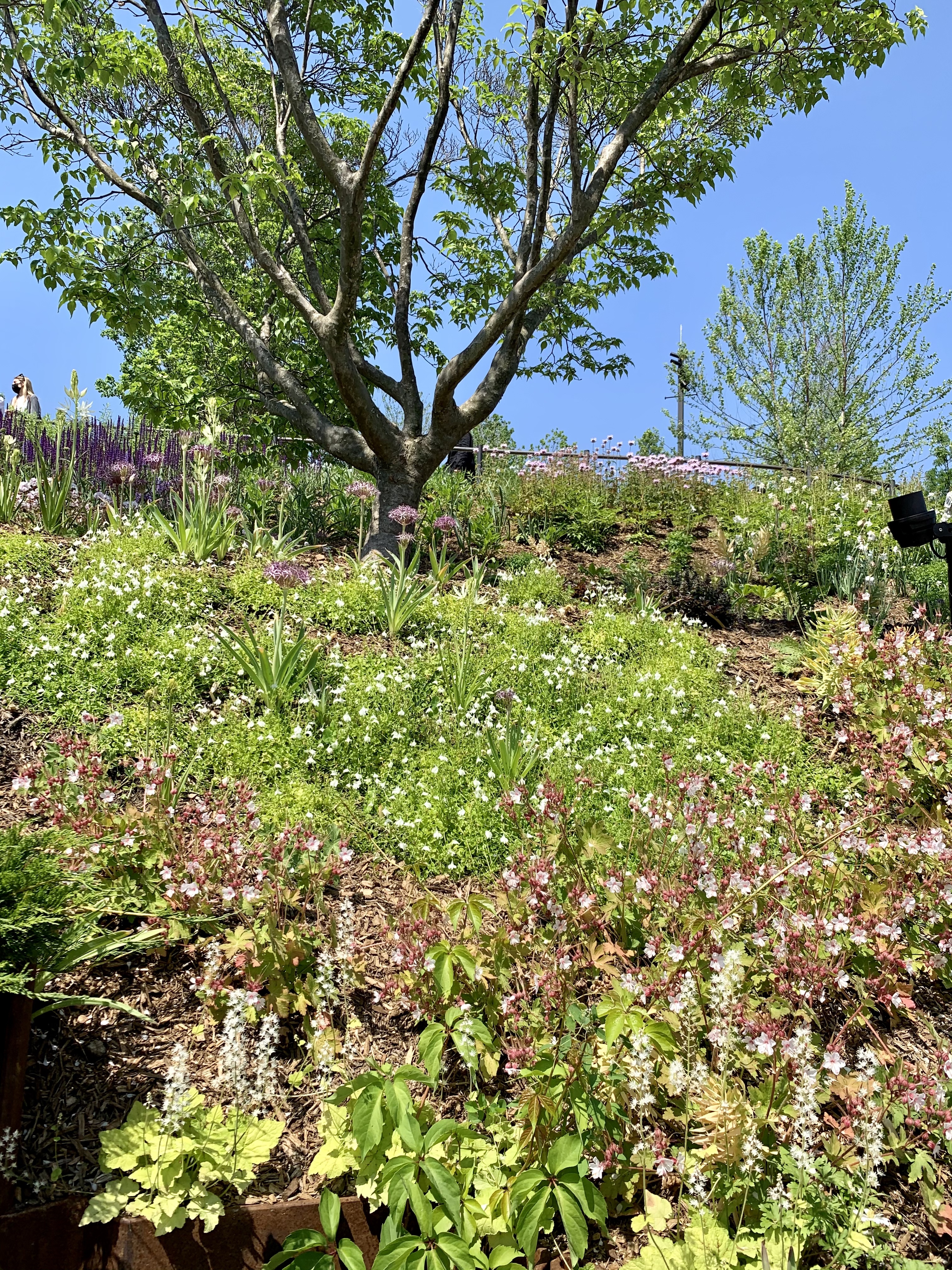
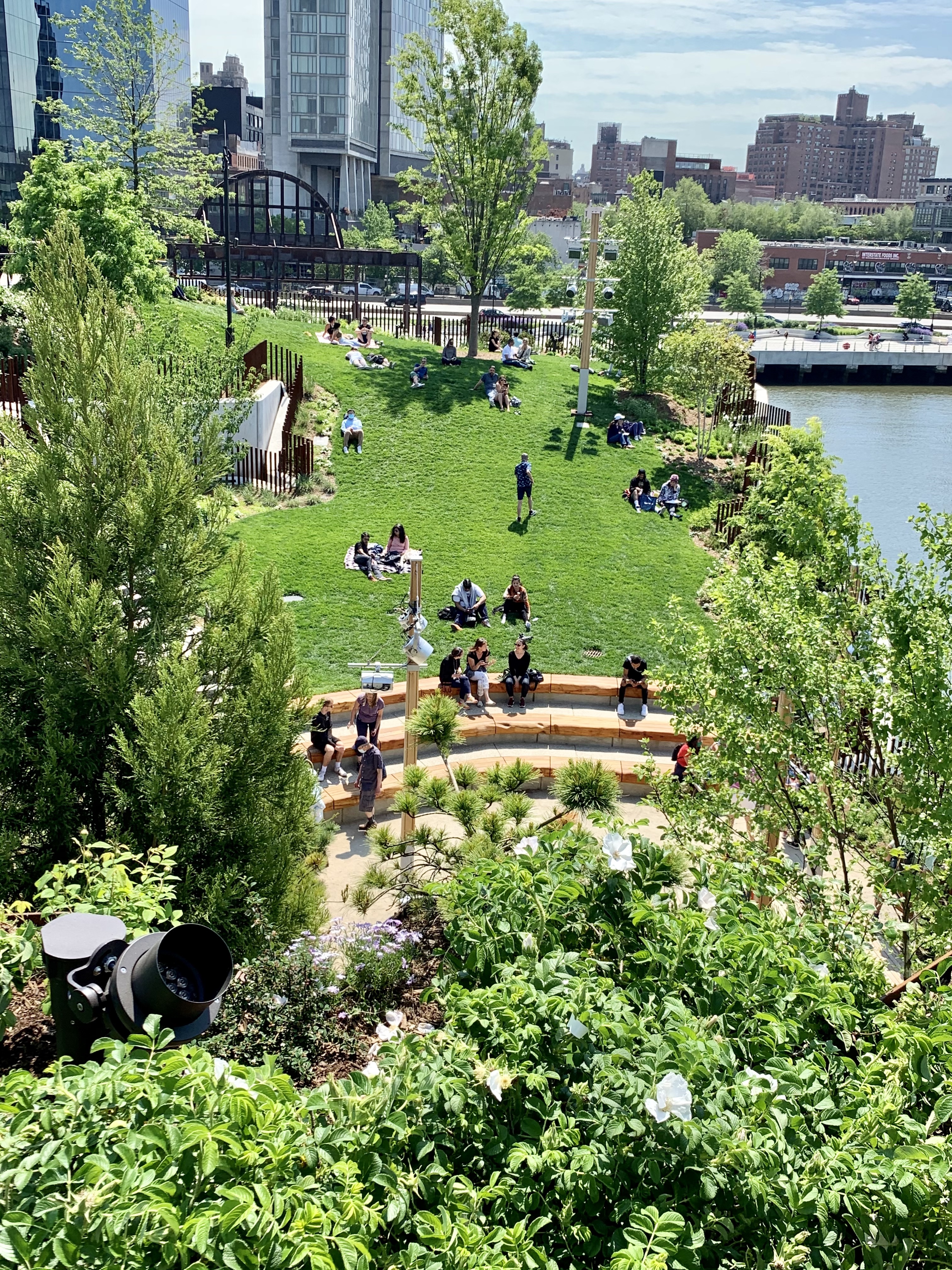
Flowers and other lush landscaping bloom atop the concrete petals. Once in the park, you barely notice the structure that is so striking from a distance – unless you happen to be walking under a few of them, as the park has many different elevations.
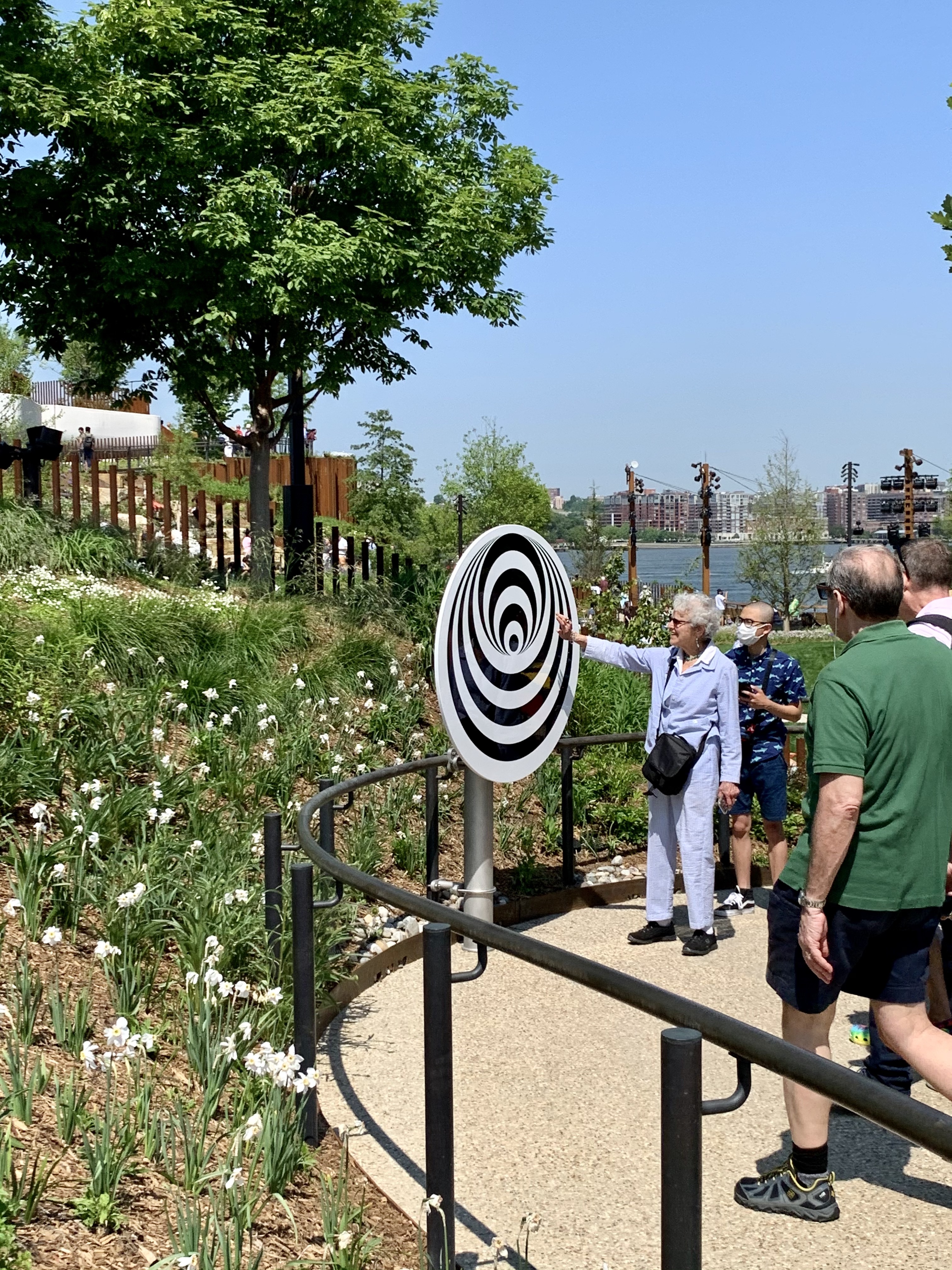
There are numerous whimsical touches – music you can create by jumping on tiles or pulling levers, and a few spinning devices for fun (or perhaps to hypnotize yourself or others).
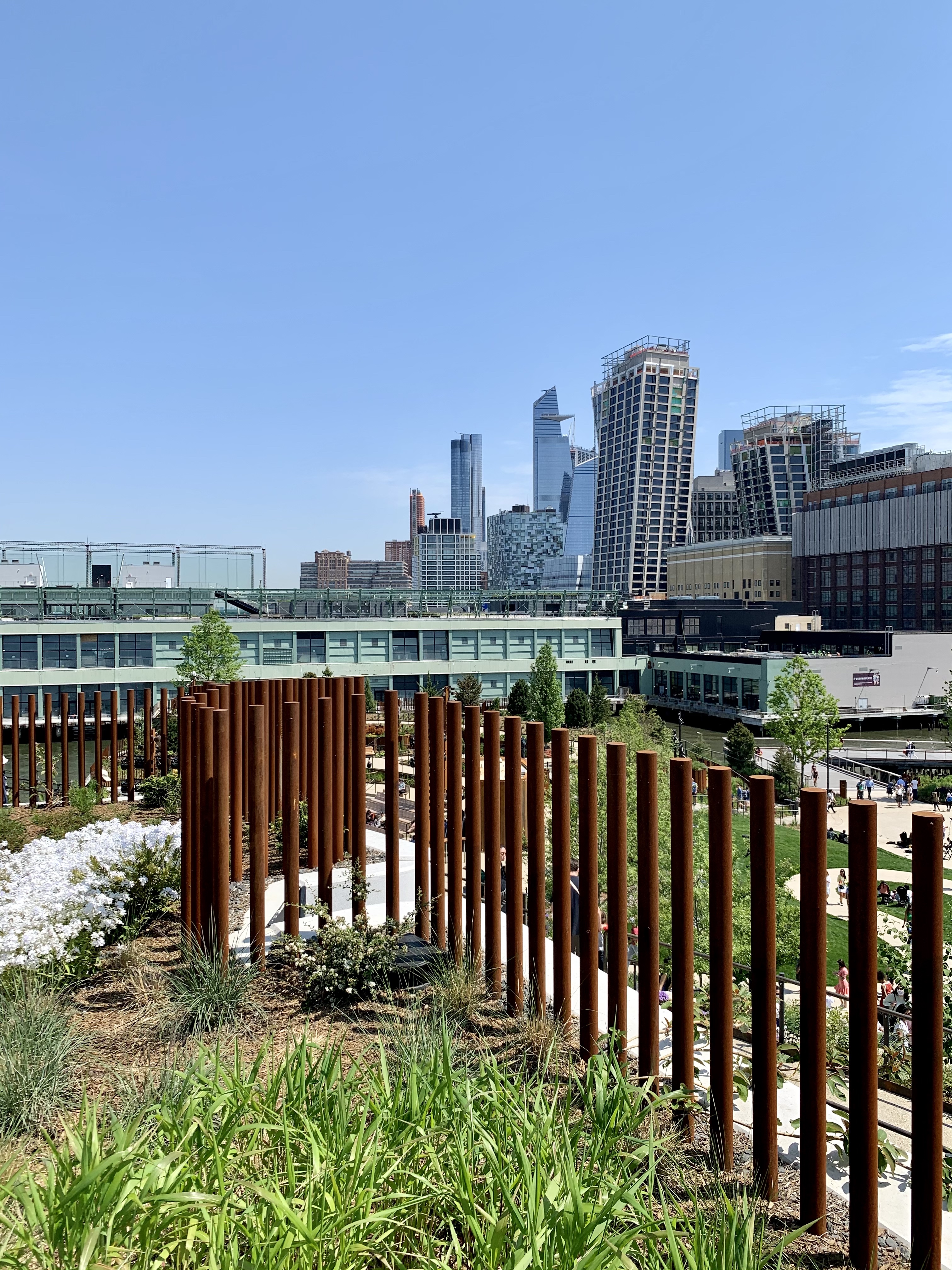
The views are spectacular as you wind your way around the park, and there are multiple places to sit – some intimate, and others grand (like the amphitheatre that will soon begin hosting performances).
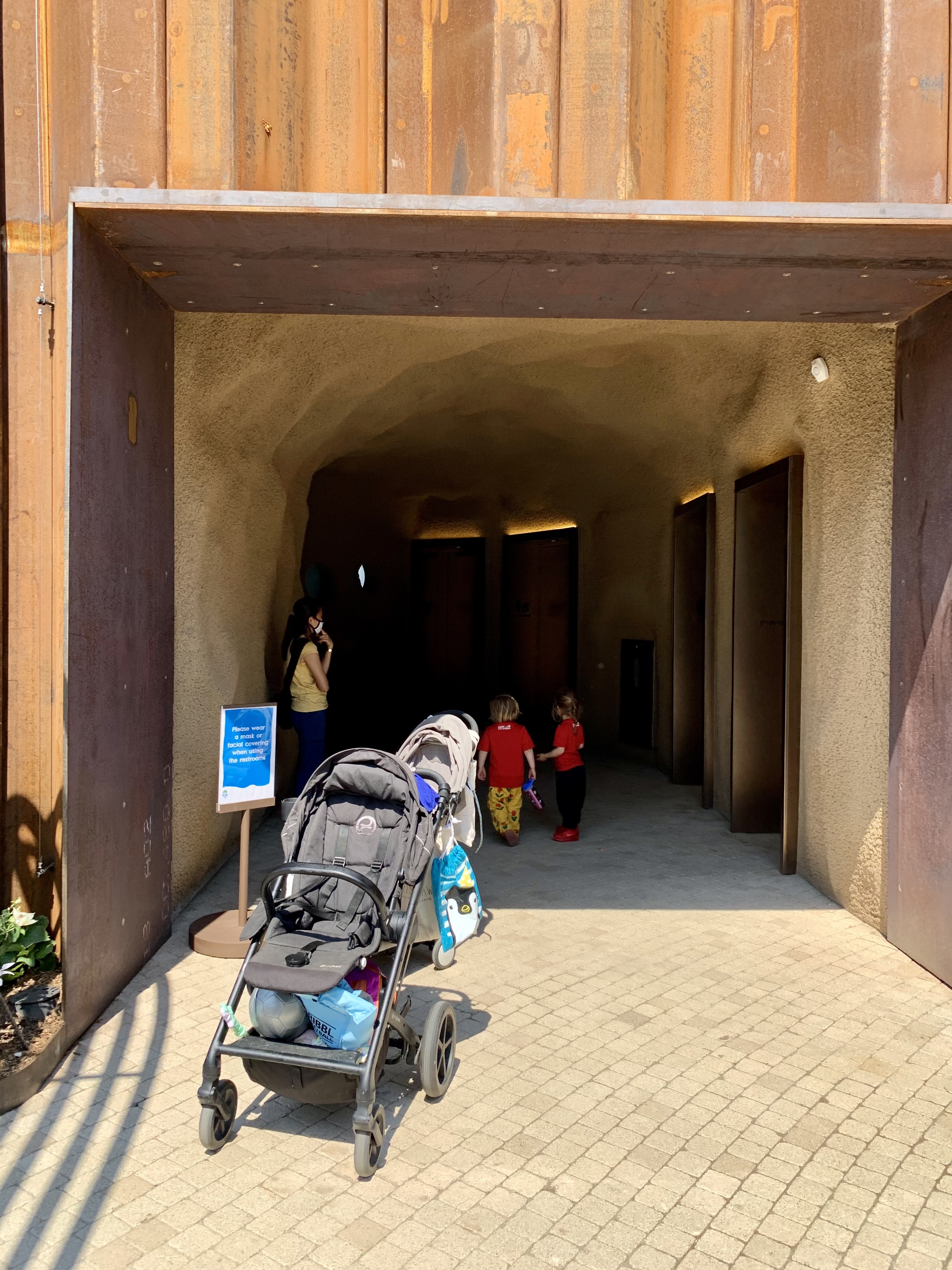
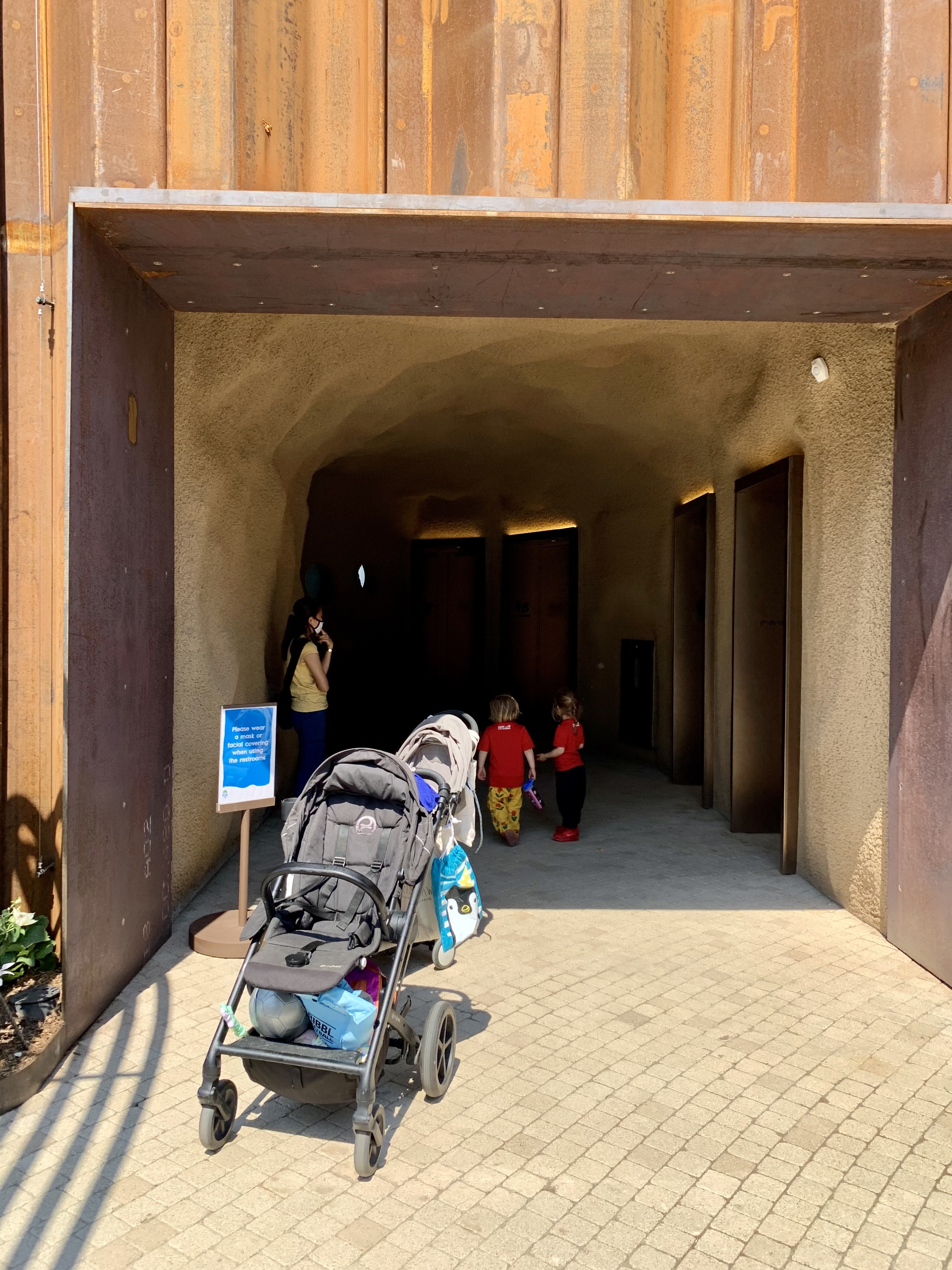
On opening day, they were giving out packets of seeds and colored pencils. Little Island also has large and very clean bathrooms, which is greatly appreciated.
When I went on opening day, I was there in the morning. At that point, they had a policy of requiring free timed tickets from 12-8 (reserve them here), but since then the park has been so popular that they require the tickets from noon until closing. Little Island is open every day from 6AM to 1AM, and if you can’t get a timed reservation, you could try going in the morning. I was just there on a timed ticket on a weekend afternoon, and the need for a reservation kept the park from feeling crowded. The next time I have planned, it will be to meet someone for lunch there (and we have reservations already). I think the park is still working out when they release reservations and for how long in advance, so keep checking if you are looking for a reservation and at first they are all sold out.
I will never forget my first time on the High Line Park (see an old blog post here and another when they expanded the park here). I was charmed, and also exhilarated with the feeling of experiencing something completely new. In our concrete jungle here in NYC, it is all the more important that we find these places to experience nature and feel a sense of integration between artificial and natural worlds that we strive to bridge. Going to Little Island Park has given me that same sense of wonder and appreciation. New York City is constantly evolving, and after a year or more of pandemic hardship and isolation, gathering together in this innovative new space feels like a wonderful way in which change can also heal.
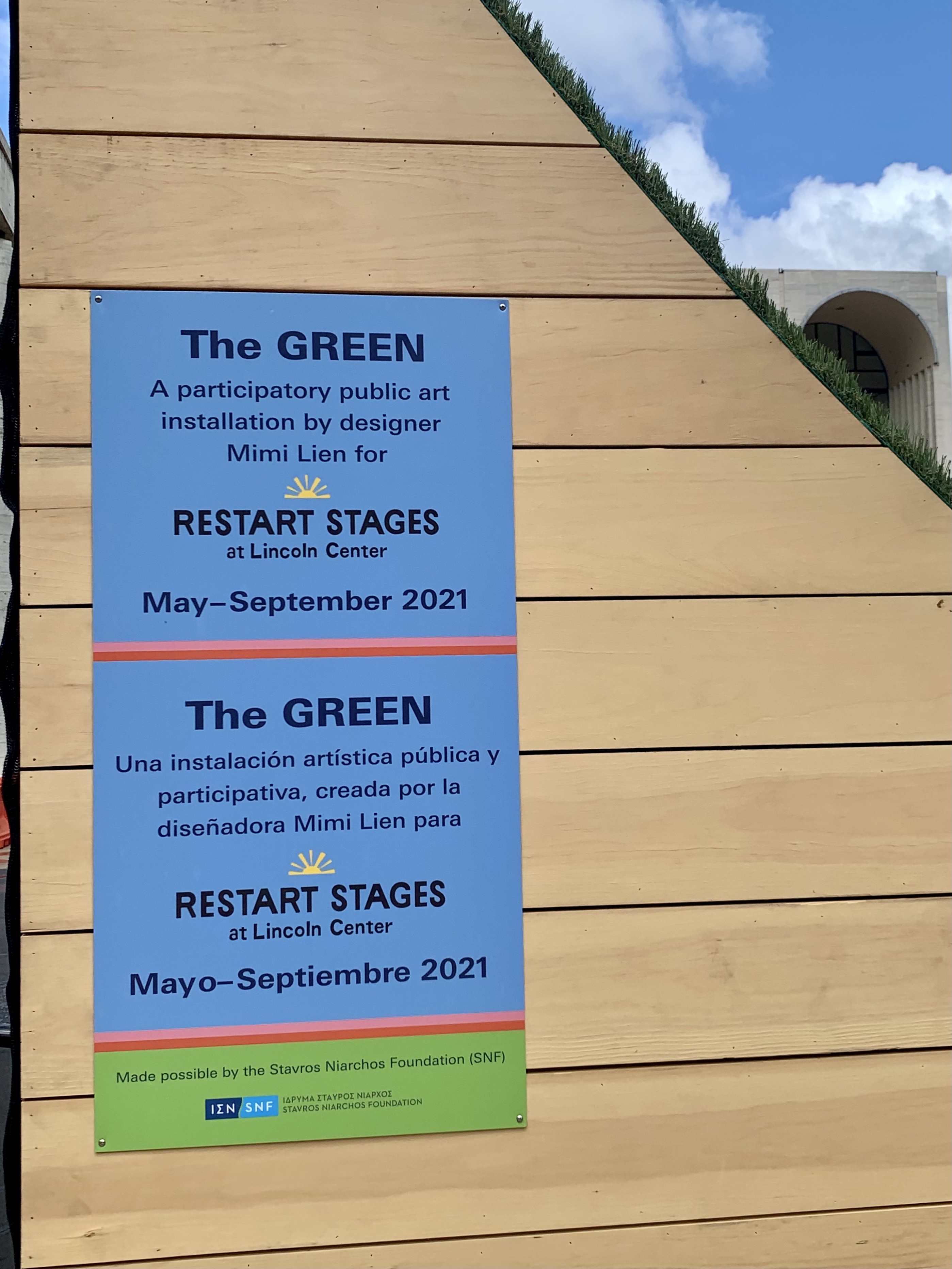
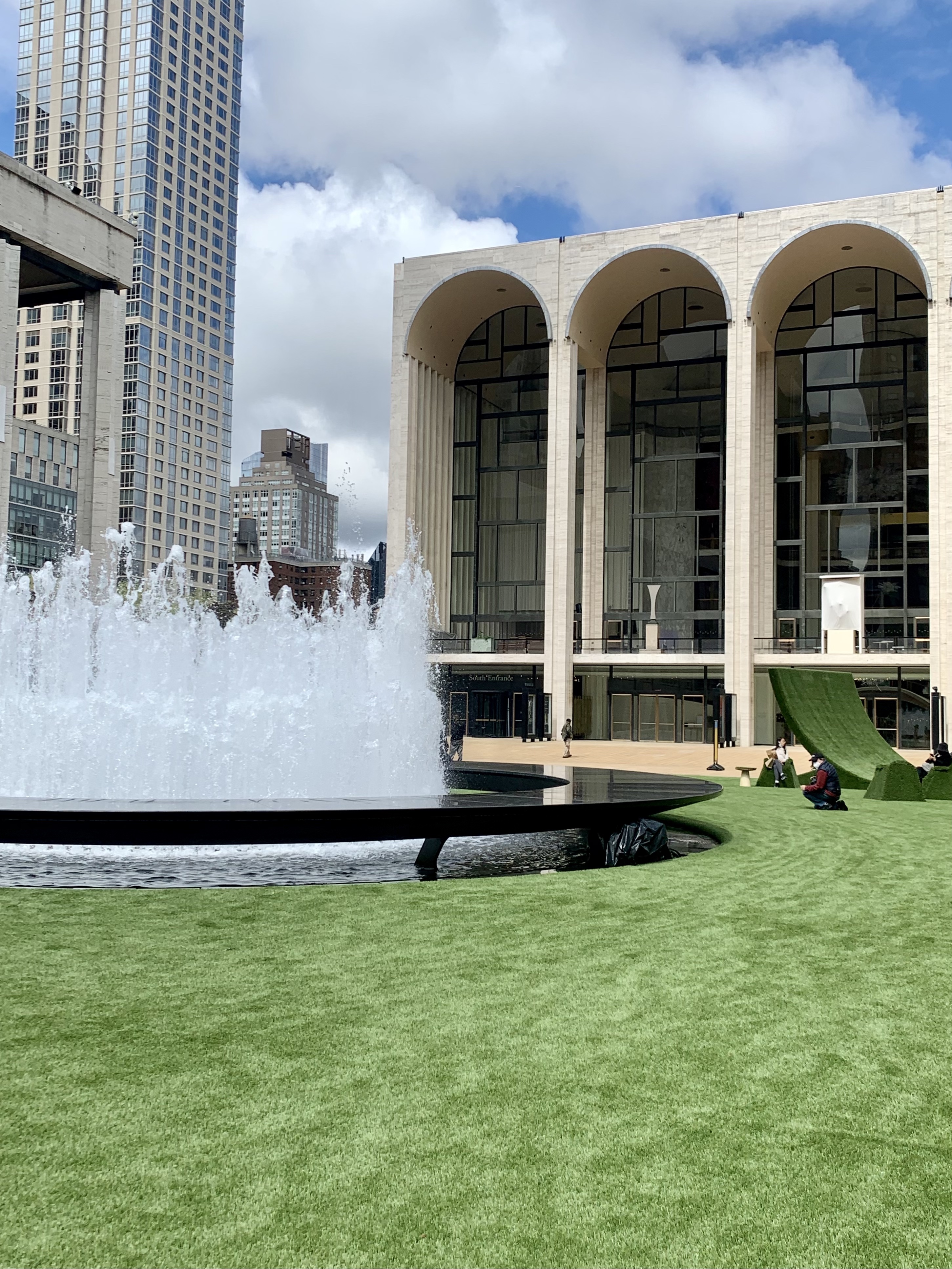
As of mid-May in New York City, we feel on the very brink of real reopening as our vaccination rate increases and our covid positivity level decreases. Many limitations will be lifted May 19th, and Broadway tickets are on sale now for performances beginning this September. Lincoln Center launches its “Restart Stages” performance schedule tonight (May 10) and will be offering multiple opportunities to enjoy the arts through September (check out the calendar here). In addition, they have transformed the iconic plaza into a lush green space with real grass, courtesy of MacArthur “Genius grant” recipient Mimi Lien. Here’s what it was like to be there on the first day it was open.
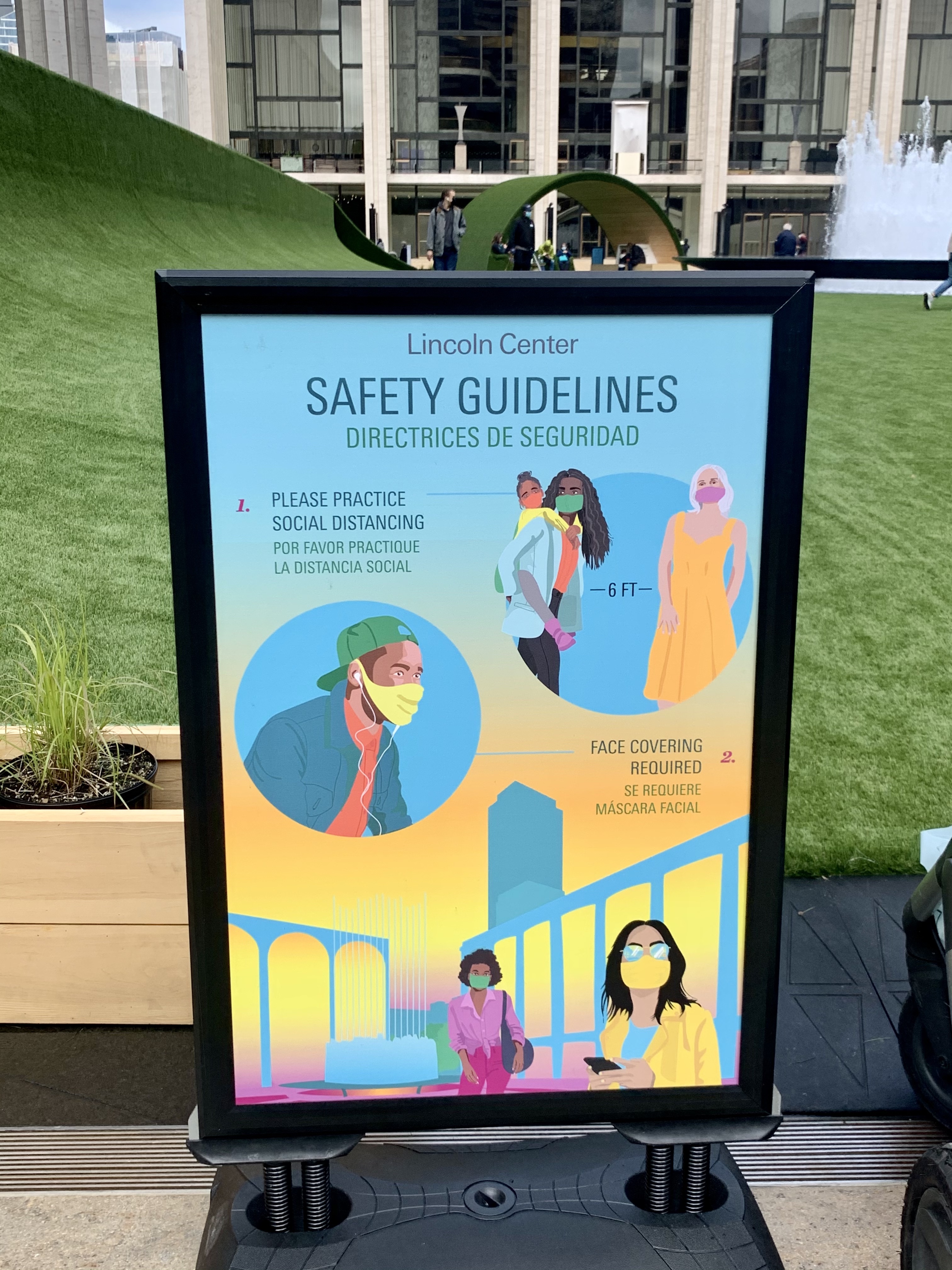
If you want to visit, you need your mask, and to keep distance from others.
The entire plaza is covered in lush green grass, and it swoops sinuously up on the north and south sides.
There are occasional swoops of green added for extra places to sit or relax.
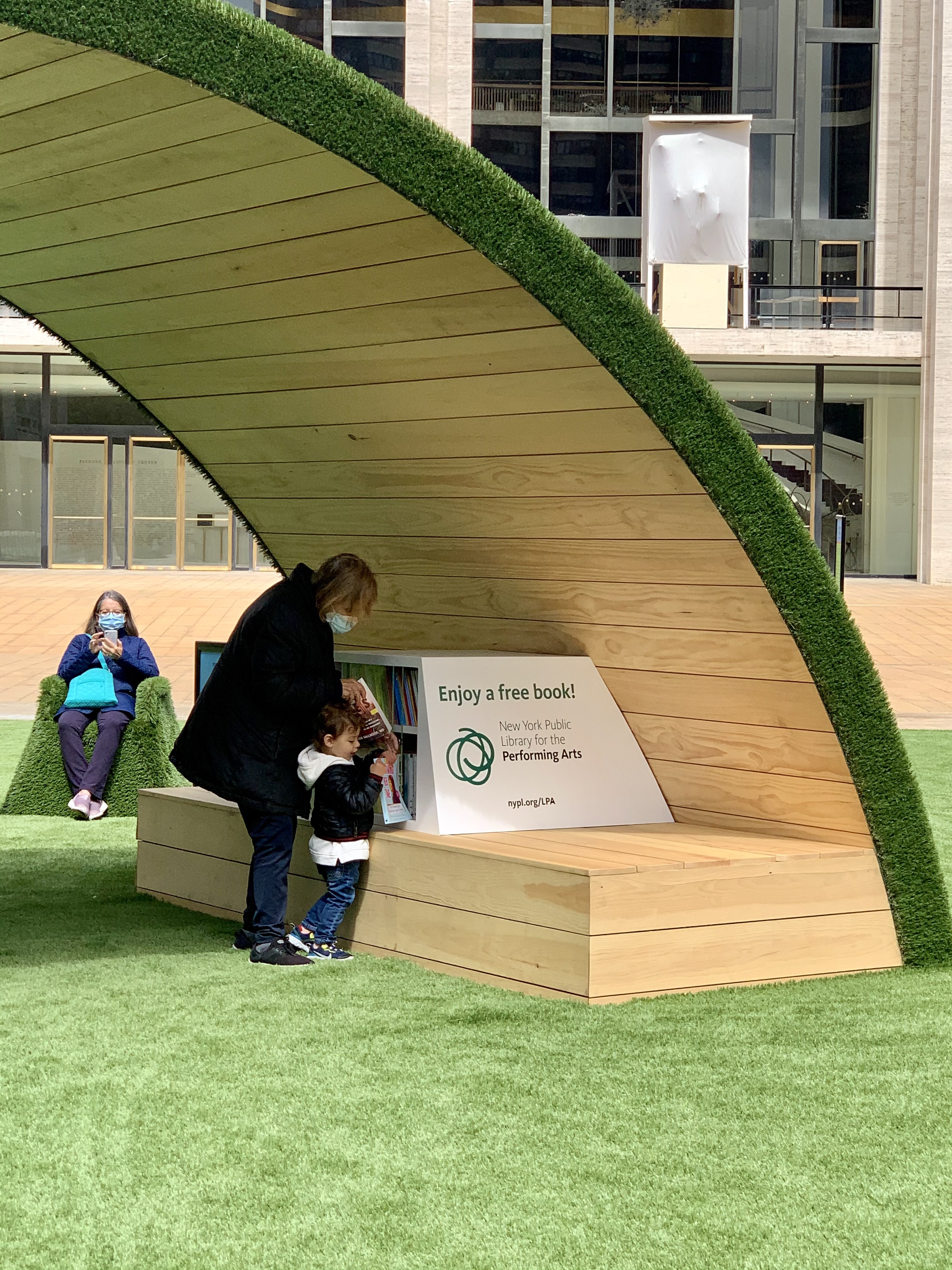
There’s even an upside-down swoop with free books and a shady reading space! There’s a pop-up sandwich shop for snacking as well.
My favorites were the grass-covered chairs and tables, though!
Elsewhere around the Lincoln Center campus, there are multiple outdoor performance spaces, some smaller and more intimate but others quite large like this one. Tickets are generally free, and can be won through an online lottery through the Today Tix app. Winners get a “pod” of two tickets – good luck and I hope to see you at Lincoln Center!
When New York City locked down last spring due to the Covid-19 pandemic, the normal ebb and flow (mostly flow!) of the lives of those staying in the city had to change radically – and I was one of those here during that strange and unmoored time. Like so many, I cleaned, learned to make sourdough bread, and had endless Zoom meetings and virtual cocktail hours. Some of these things have already faded as the city begins its reawakening, and others will as reopening continues. However, one of the changes that I as well as so many others also began during that time will continue in my life – biking in the city.
I grew up riding bicycles daily as a kid (not in NYC). When my daughters were small, we taught them to ride in Central Park, but walking the bikes to the park because of my strong feeling that riding a bike on city streets is highly unsafe was unwieldy and meant we didn’t ride regularly. Over the years, if on vacation in a place where it was easy to ride on a dedicated bike path (I’m looking at you, Huntington Beach, California!) I always took the opportunity to do so. But I never thought I would ride regularly in NYC until the fatigue with being home most of the day with only a daily walk outside overwhelmed me.
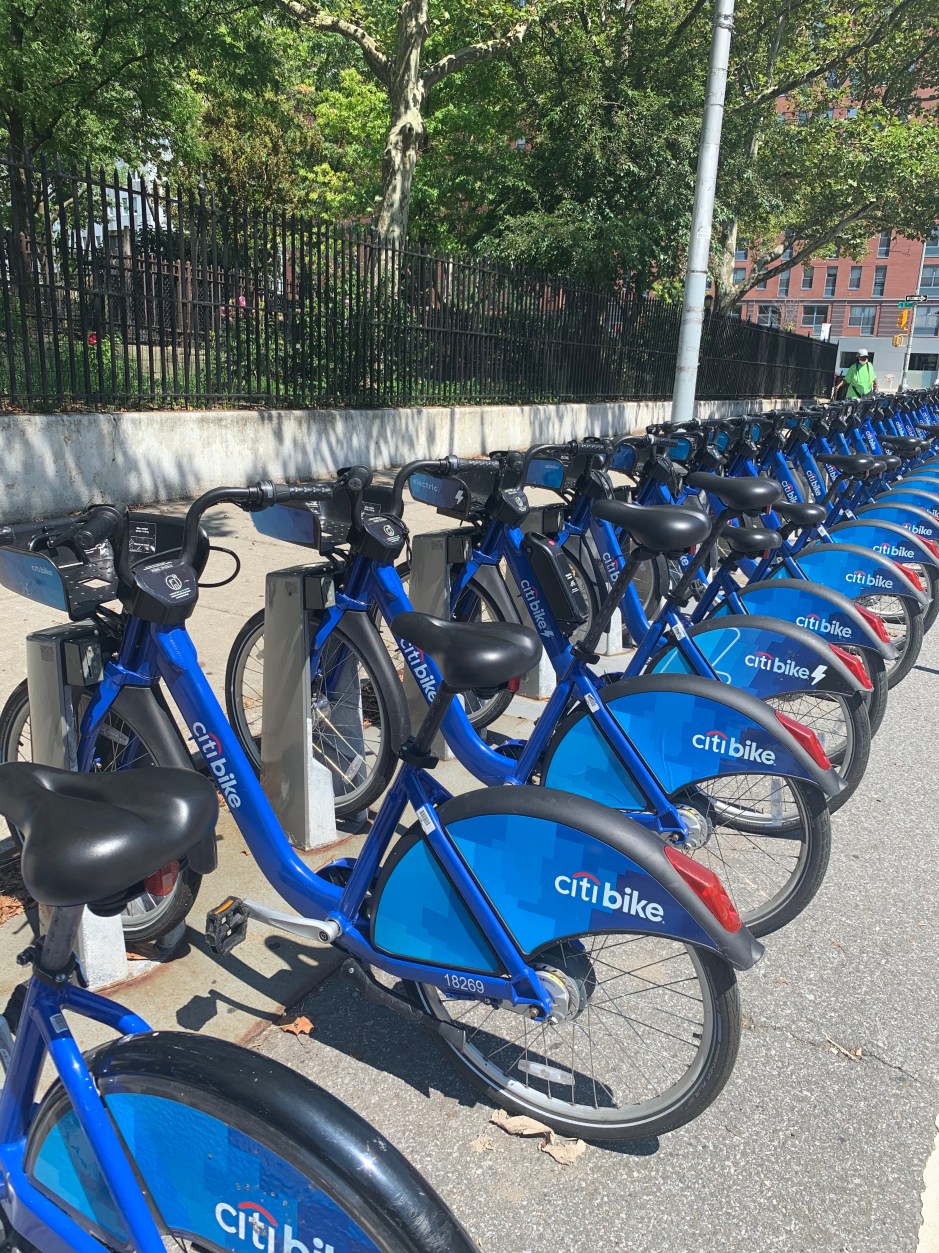
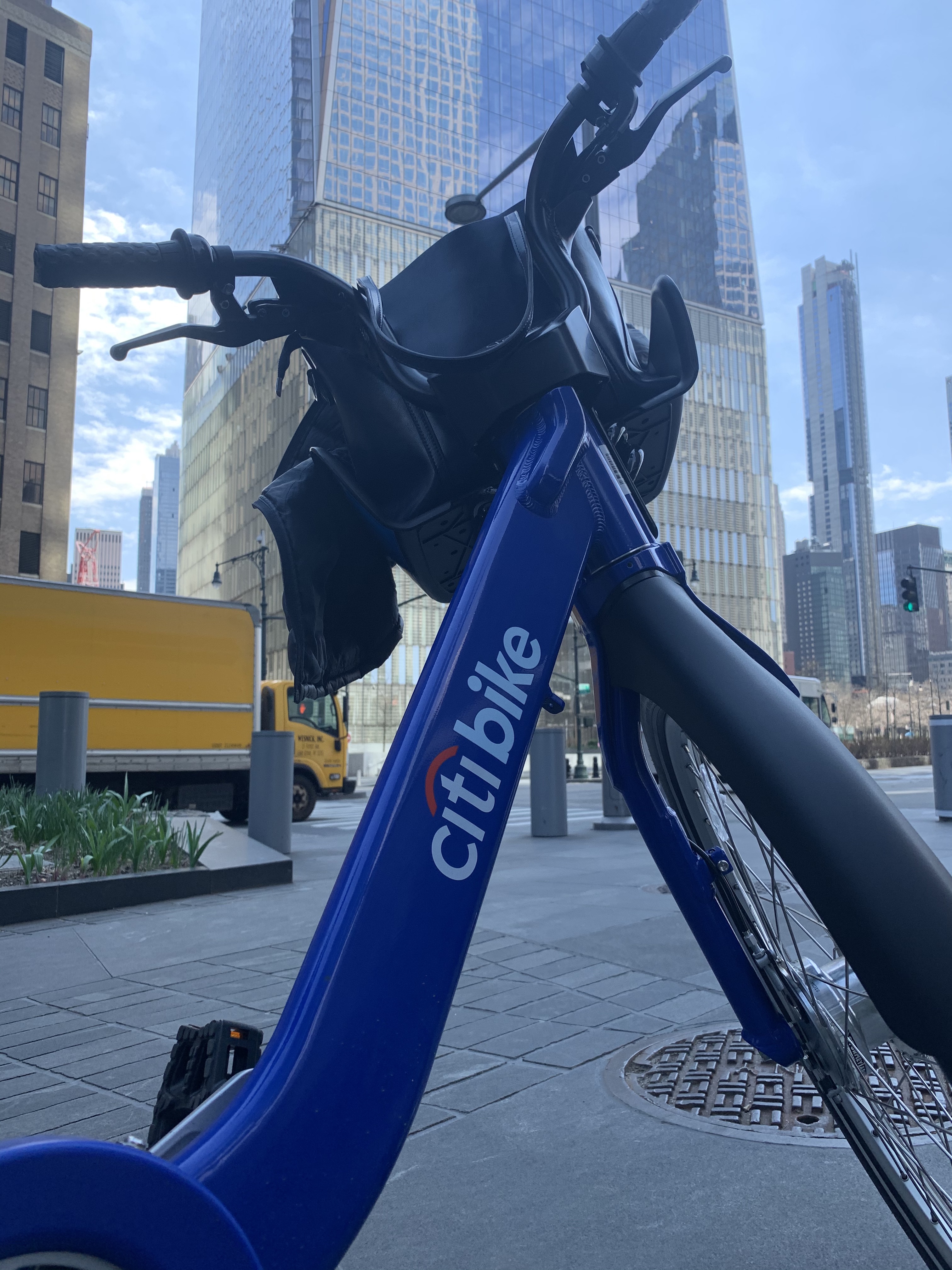
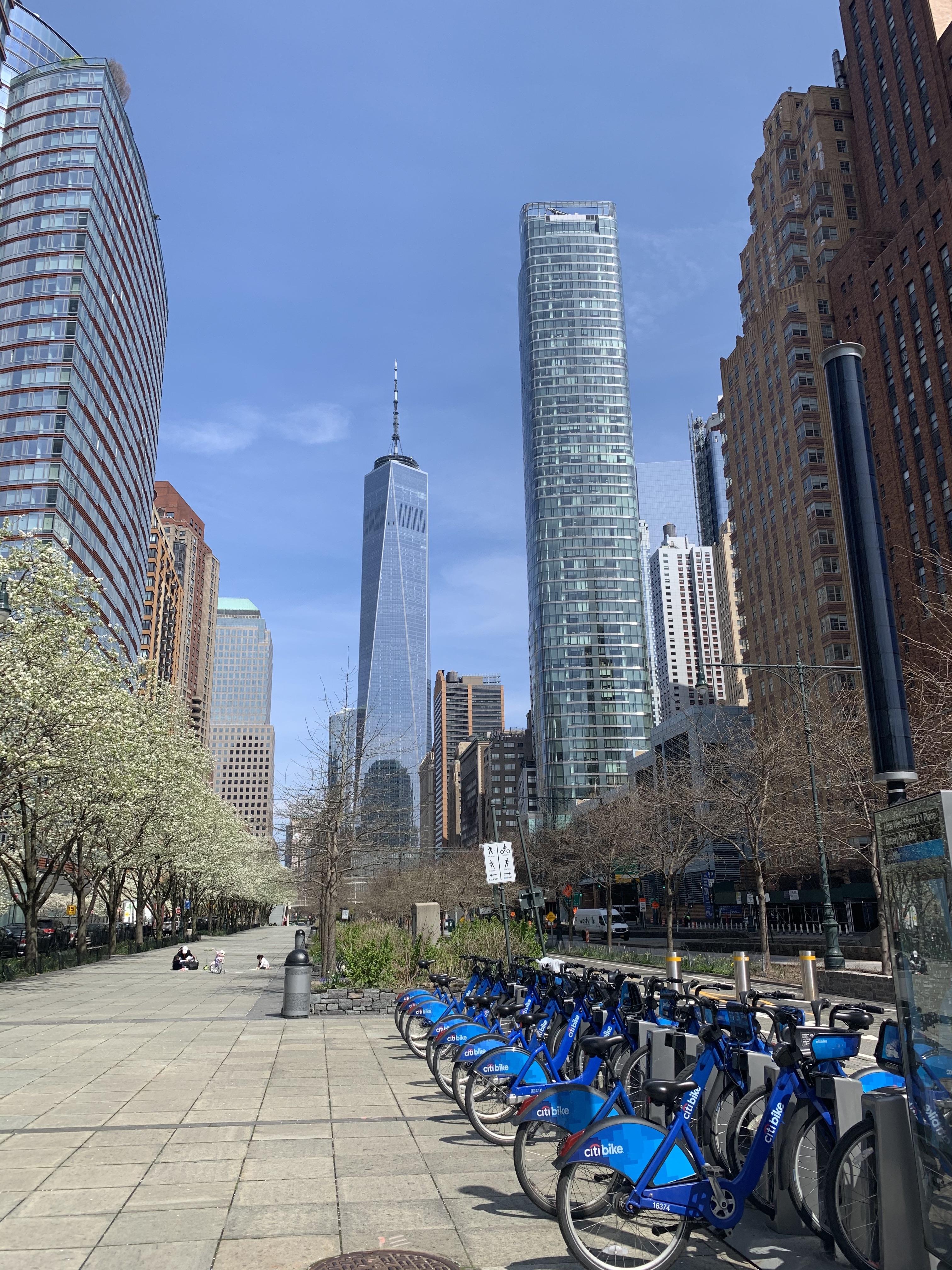
Hello, Citibike! I had seen them for years now, but always thought of them as being for those intrepid people who rode in the midst of traffic fearlessly. I had never really explored the system of bike paths that has been developed in the city over the past decade (and honestly, needs expansion). But in late March of 2020, I got on my first Citibike and there has been no looking back. From late March to Dec 31 of 2020, I rode 126 hours and 1313 miles on Citibikes, and am on a similar pace so far in 2021. So what changed? Am I now confident weaving in and out of automobile traffic? In a word – no. But I have discovered many enjoyable bike paths and have figured out some tips and tricks that might help you if you decide you would like to try biking in the city.
First – Citibike or your own bike? For your own bike, you need to know where you will store it, and how you will lock it up if you choose to go somewhere and then walk around. You are responsible of course for maintenance. But on the plus side, any bike you would purchase for yourself will be much lighter and easier to ride and maneuver than a Citibike. Citibikes are meant to be tough, and lock into the Citibike racks, and they are HEAVY. You will really notice this on a hill (and I will say that Central Park is much hillier on a bike than I ever noticed as a walker) or on a day with a lot of wind. However, Citibikes are easy to check out and check in if you are planning to bike somewhere else and then walk or go into a building. Citibikes are $15 for a day pass of unlimited 30 minute rides, but if you plan to ride regularly as I do, the yearly membership of $179 (billed annually) for unlimited 45 minute rides is the way to go. There are extra charges for an ebike (which gives you a little extra power on hills) and if you go over the time limit (but you can keep docking your bike and checking it back out for a longer ride without incurring extra costs), and of course a large charge if you don’t return the bike! Since I began riding last year, Citibike partnered with Lyft and you can now check out Citibikes or use your membership within the Lyft app. You scan the code on your bike with your camera phone and it unlocks automatically and starts timing your ride. When you dock the bike securely (look for the light to turn green, and enable notifications to see on your phone that the return was registered), the ride ends and you get a receipt.
There are many dedicated bike paths you can use to avoid the risk of riding in NYC traffic. My favorites are the Hudson River Bikeway along the west side, and the three different loops within Central Park. Some streets in the city have bike lanes next to the curb with parked cars between the bike lane and moving traffic, but if you use those, be aware that trucks are often double parked in the lane, and parked cars can open car doors into the lane. In addition, people can emerge between parked cars and may be hard to see in advance.
When first starting to bike in the city, I would suggest going on the dedicated bike paths, and either early in the morning or on a day where the weather is a little off. The bike paths can get quite crowded when the weather is excellent, and it will take you a while to get accustomed to the paths. Also, if you are using Citibike, pick a less hilly path (the Hudson River Bikeway is very flat; the Central Park lower loop that only goes up to 72nd is reasonably flat but the upper loops have some serious hills) and check the weather for wind. Early on, I often had the experience of biking four miles from midtown down to Battery Park and thinking what good shape I was in, only to realize when biking back that the wind was at my face and it had been helping me along on the first leg of the journey – and Citibikes never feel heavier than when riding into a stiff headwind!).
In terms of safety in general, biking in NYC is not without its risks (for that matter, neither is walking in the city). We have all seen the white bicycles installed in locations where a bicyclist has been struck my a motor vehicle and killed. Even Bono (from U2) a few years ago had a fairly serious bike accident inside Central Park. Helmets are not required, but of course are a good idea. I have a collapsible bike helmet that fits easily in my bag, that I bought at the MoMA design store (see it here). Practice defensive biking – just as good car drivers are constantly aware of their environment, a good bicyclist should always be looking out for pedestrians and other bikers (including electric scooters and rollerbladers, who also use bike lanes). Don’t stop suddenly or you might get rear-ended – I have seen that at crosswalks where one bicyclist stopped suddenly to allow a pedestrian to cross and another bicyclist was not expecting that and hit the stopped bike. Those crosswalks, by the way, are intended to remind bicyclists to yield to pedestrians already in the crosswalk, not an indication to stop. Look out for pedestrians ambling in the bike lane, and when you are a pedestrian, please stay out of the bike lane!
I even biked all last winter, and had never before biked in serious cold or snow. If it is cold, be sure to dress in layers, as biking makes you heat up and you may need to unzip some layers even on very cold days. Covering your face, ears, and hands is particularly important, and I found that mittens kept my hands much warmer when biking than gloves. Biking in snow is just like driving in snow – take your foot off the gas (stop pedaling) when you see ice or snow, and “pump” your brakes instead of stopping suddenly (squeezing and releasing the hand brakes quickly).
My final safety tip relates to the bike equivalent of “road rage.” If you bike enough, you will have people yell at you as they pass you. Don’t let them affect you, as they are clearly having a worse day by behaving in that way than you will letting them upset you. And obviously – don’t be that person! Don’t yell at pedestrians loitering in the bike lane, either – you can use the bell lightly if you are worried that they might step in front of you but that or a quick “on your left” should be done only as a safety signal and not as an intentional way to startle or scare them. I remember when first biking, there were so few people on the bike paths that we would routinely greet each other when we did pass. Now on a day with good weather, the crowds on the bike paths can be intense.
Getting upset while on a bicycle takes away from what I have found I love so much about biking – I find that it is not only a physically satisfying experience (that free feeling I had on a bike as a child, almost like flying!) but also a meditative and calming mental one. Starting as a way to get exercise during a time of lockdown and isolation, I have since found it to be as good for my mental as my physical health.
I was fortunate enough in February to work with videographer Mikey Pozarik and with Compass to create two videos that express my ethos as a real estate agent. The first one (see it here) features a quote by E.B. White, and reflects my love for New York City as someone who was born elsewhere but has chosen to live and work in the city. I hope every day that I am able to bring my passion to this city I love. The second one (see it here) is more of a manifesto. The quote is attributed to Steve Jobs, and I am drawn to the work ethic it expresses. I truly enjoyed making these videos – the locations were all areas of the city I have a particular relationship with, and selecting and recording the quotes was also a process I found artistically and creatively challenging in a very positive way. Even the process of deciding how to go about making these videos helped me think about and crystallize who I am in my role as a real estate agent. My thanks to Mikey and to Compass for helping these projects come to life.