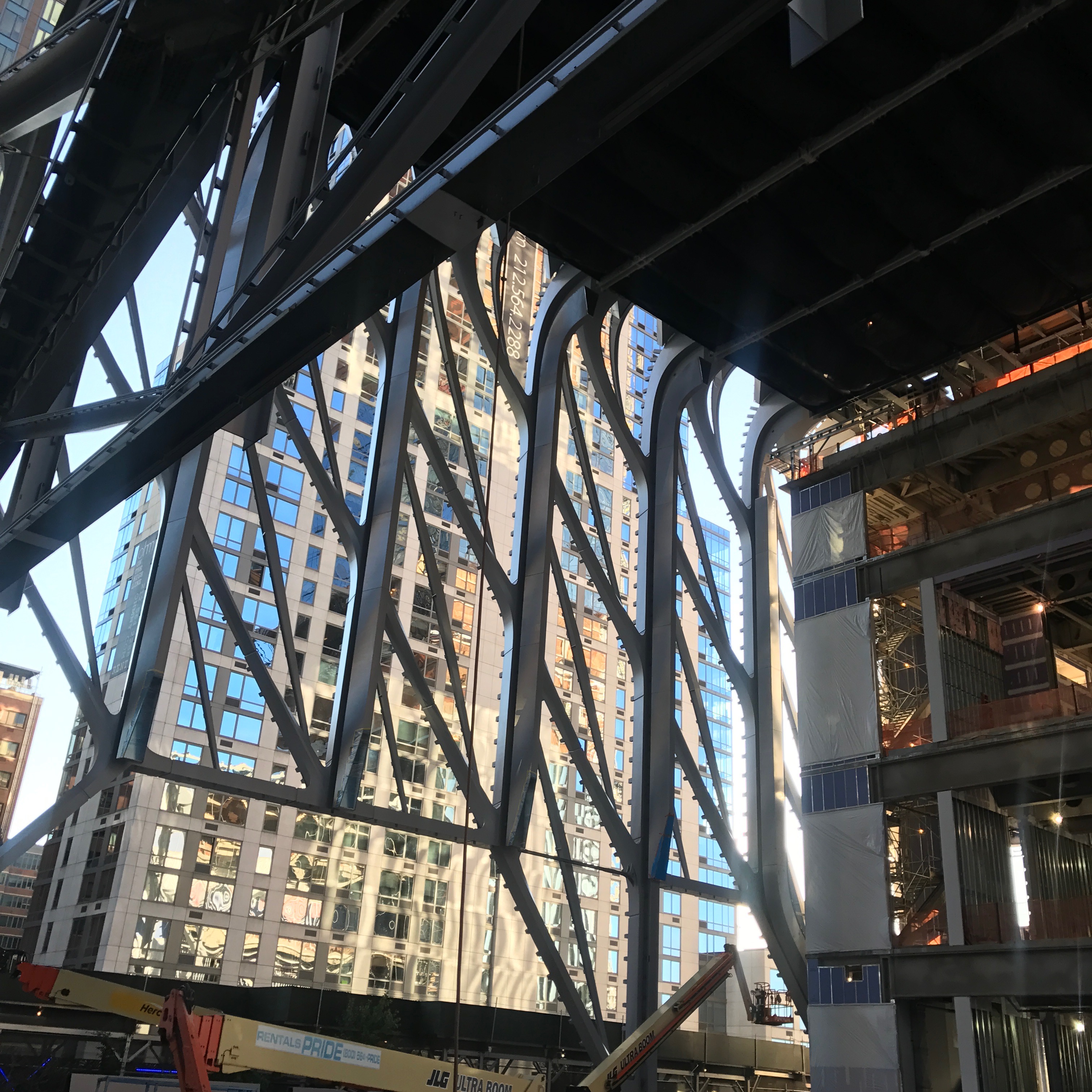
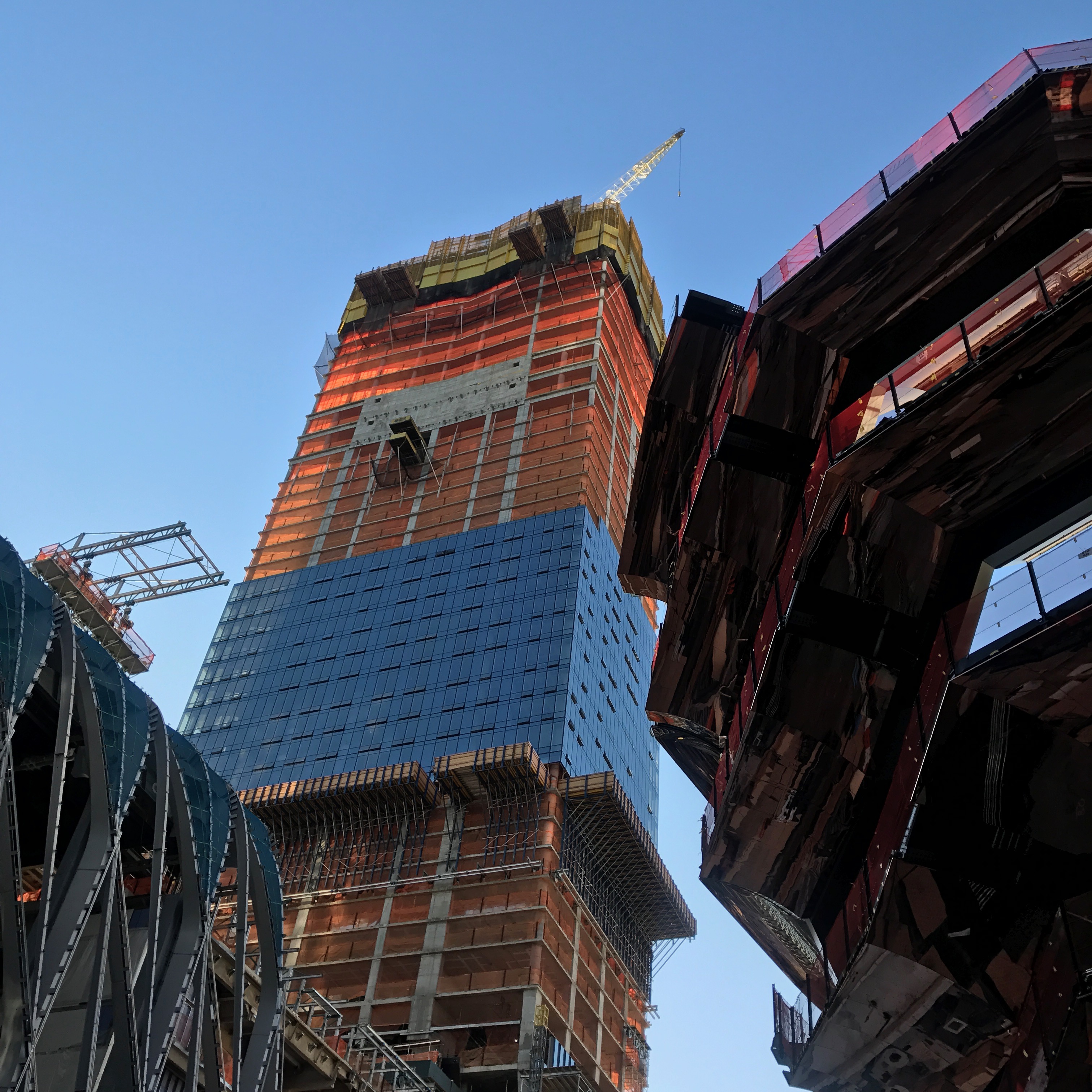
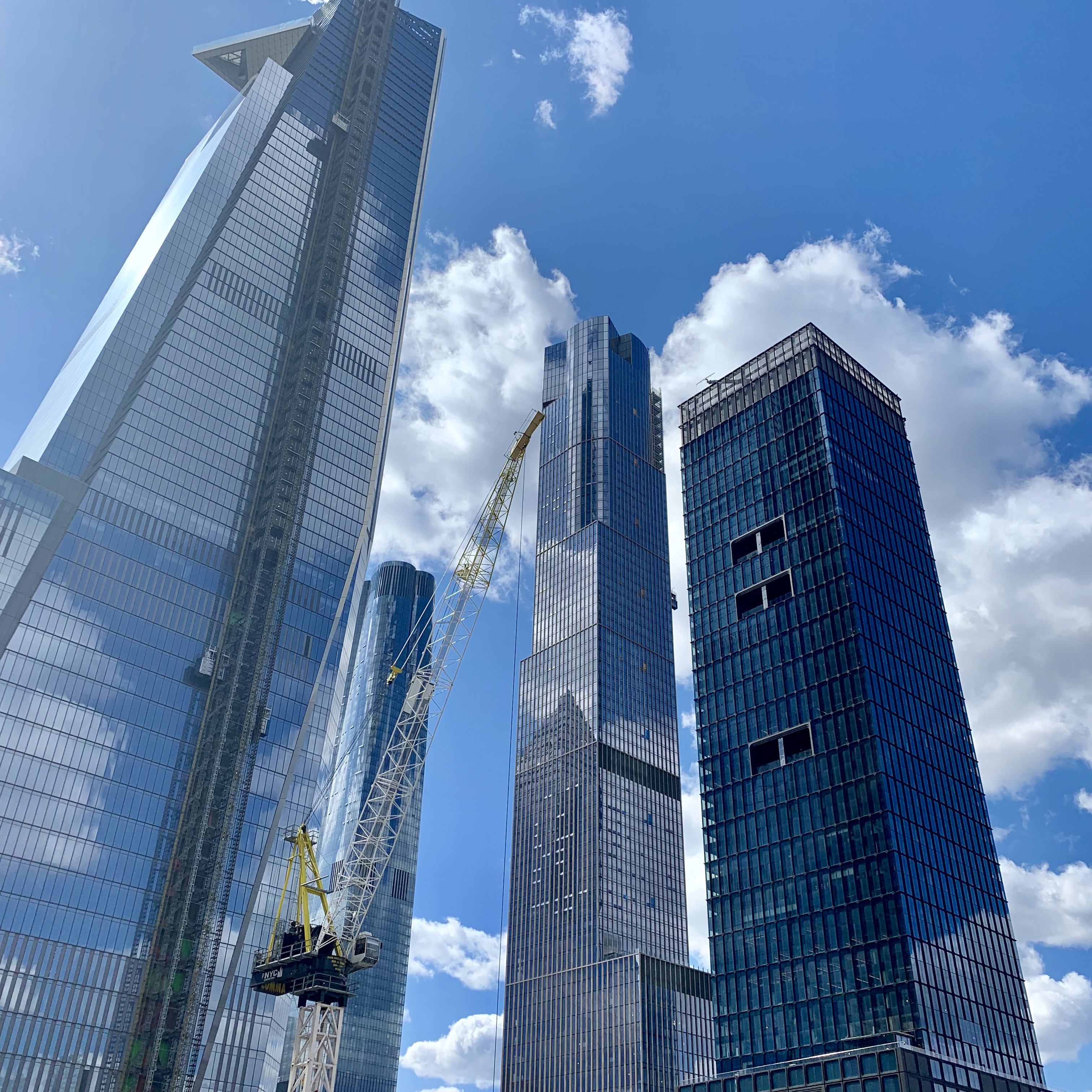
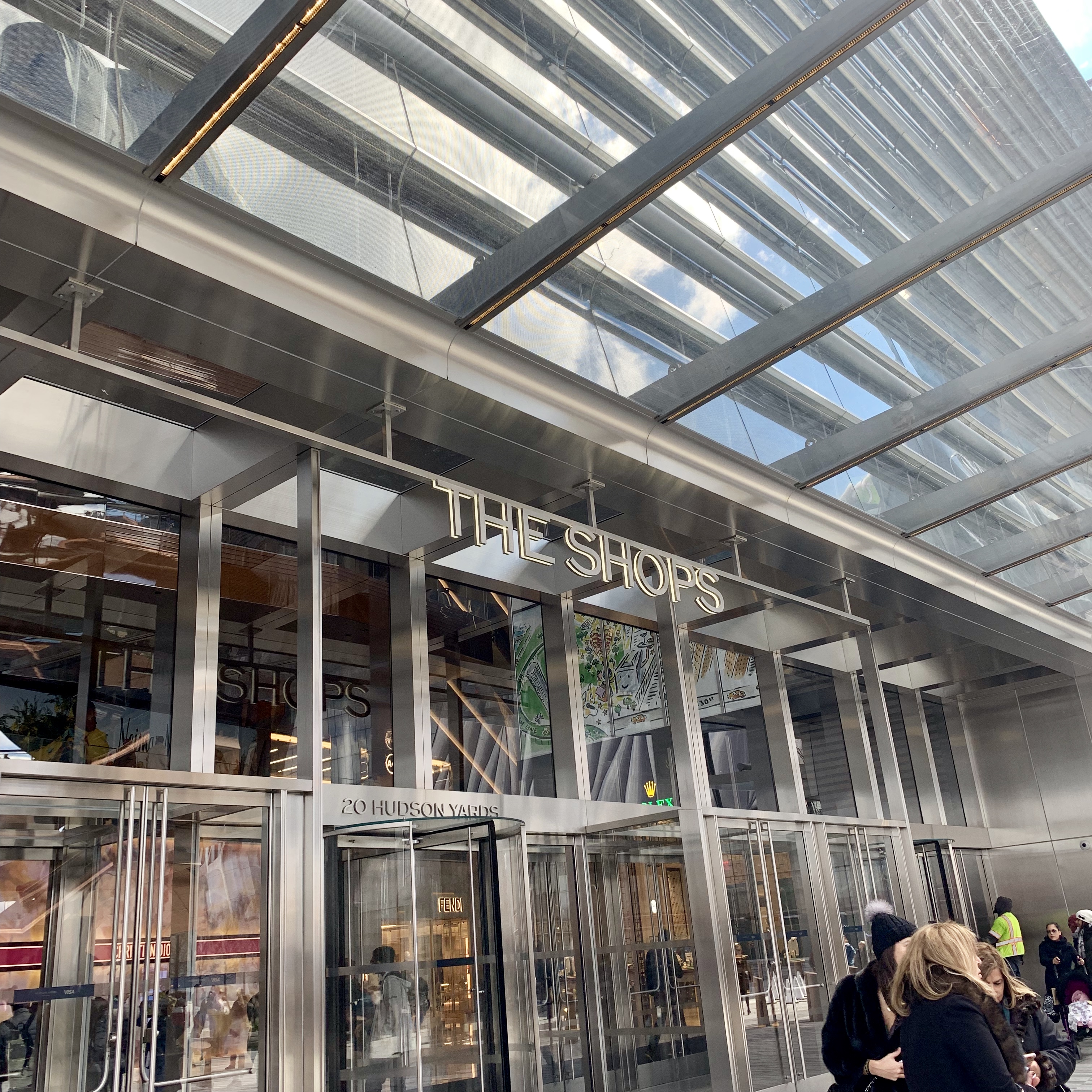
NYC/Julie Brannan videos 2021

I was fortunate enough in February to work with videographer Mikey Pozarik and with Compass to create two videos that express my ethos as a real estate agent. The first one (see it here) features a quote by E.B. White, and reflects my love for New York City as someone who was born elsewhere but has chosen to live and work in the city. I hope every day that I am able to bring my passion to this city I love. The second one (see it here) is more of a manifesto. The quote is attributed to Steve Jobs, and I am drawn to the work ethic it expresses. I truly enjoyed making these videos – the locations were all areas of the city I have a particular relationship with, and selecting and recording the quotes was also a process I found artistically and creatively challenging in a very positive way. Even the process of deciding how to go about making these videos helped me think about and crystallize who I am in my role as a real estate agent. My thanks to Mikey and to Compass for helping these projects come to life.

The Edge Outdoor Observatory at Hudson Yards

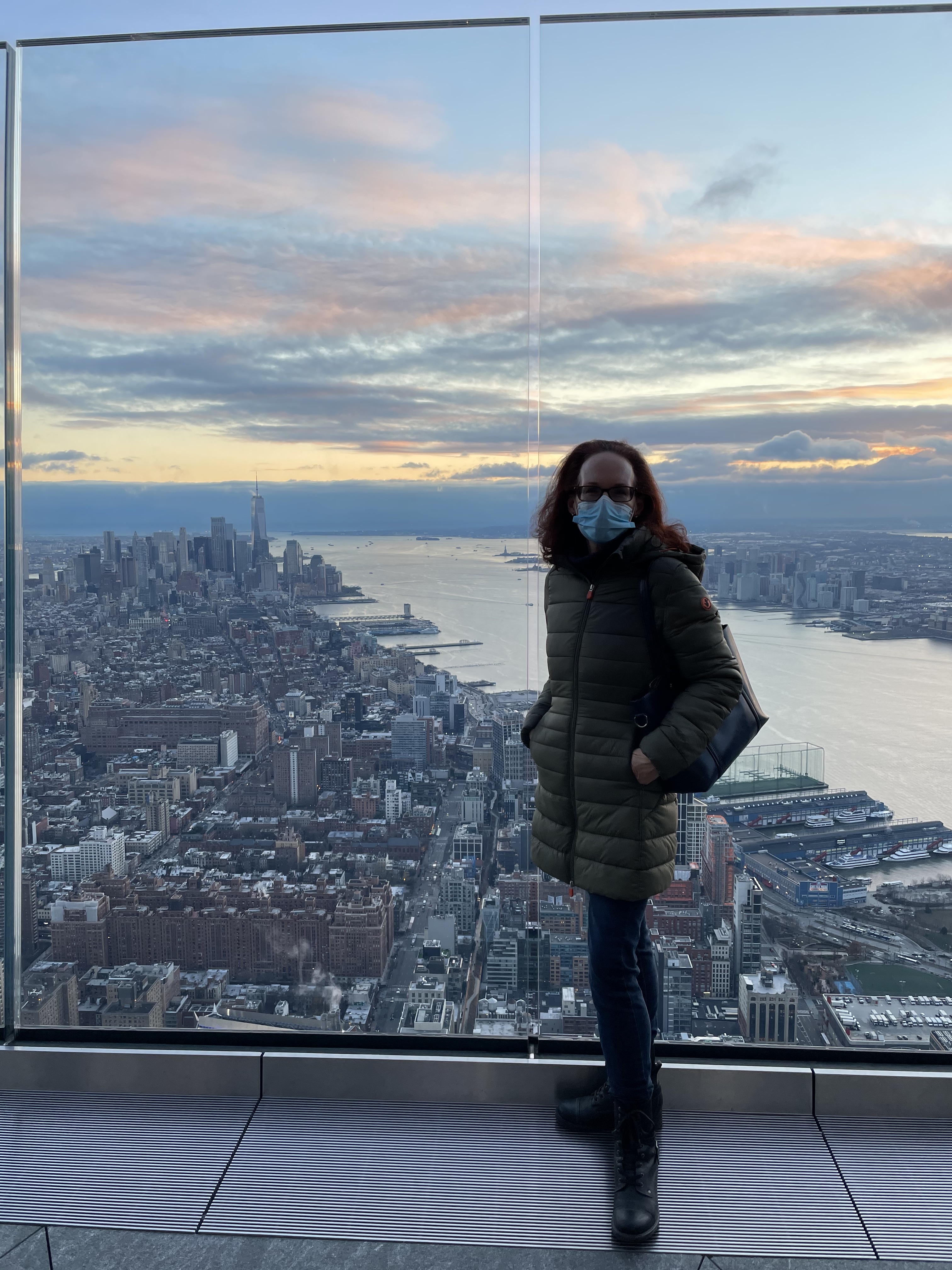
Always looking for another way to look at the New York City that I love so dearly, I was eagerly anticipating the opening of The Edge observatory in Hudson Yards last year. It opened on March 12, 2020 – and was shut down almost immediately by the pandemic. The Edge reopened in the fall with capacity restrictions, a mask requirement, and physical distancing, and I was able to experience it early in 2021. I had decided that it would be optimal to go for sunset, and those tickets sell out quickest (and have a surcharge). Given that going in inclement weather would reduce the view, I was looking for a time to buy tickets a day or so in advance when the weather was more predictable, and was able to once the holiday season increase in interest had passed.

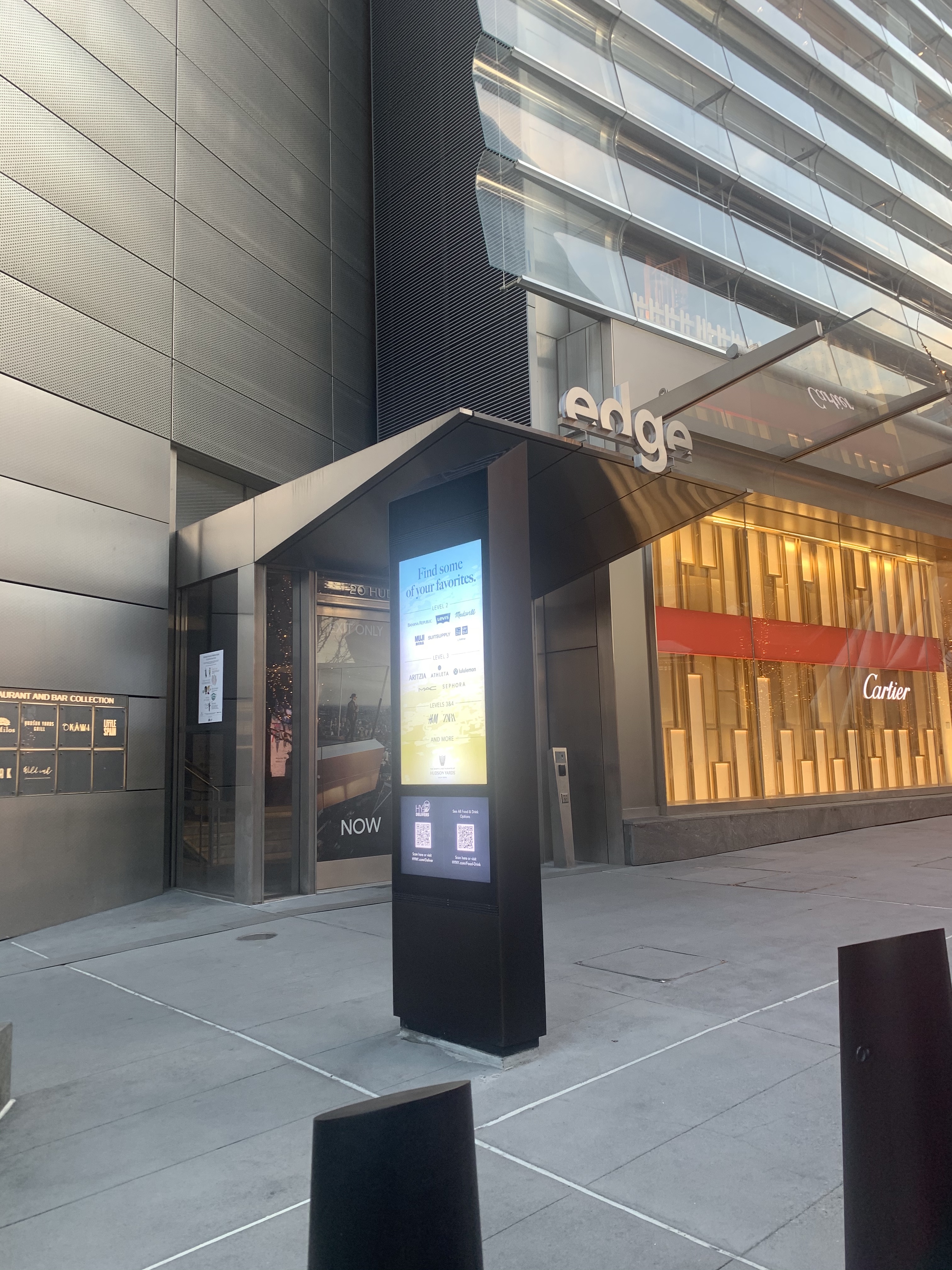
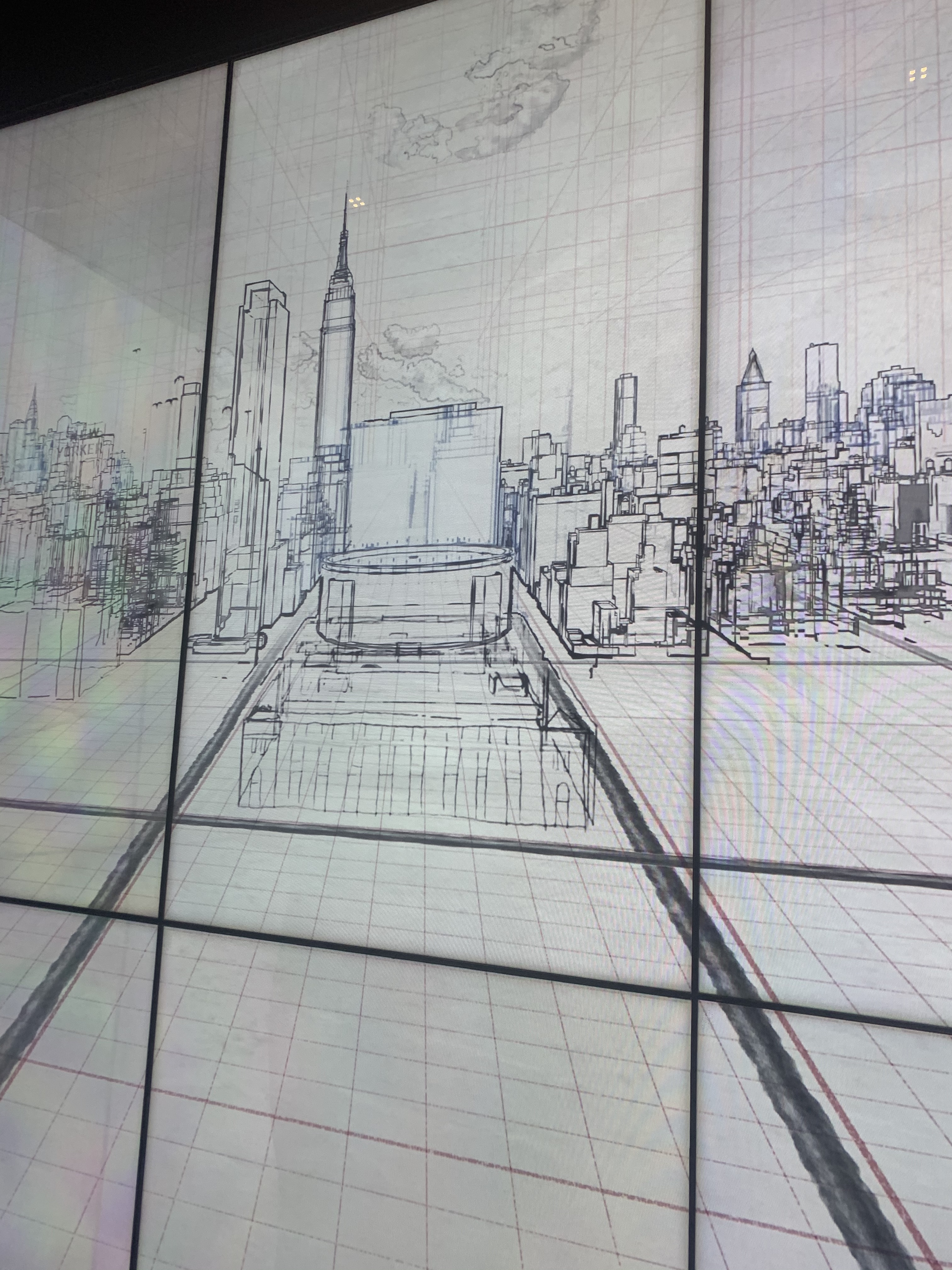
The entrance is just to the left of the shops at Hudson Yards, if you are standing with the Vessel behind you. Everything is clearly marked, and you will be unable to enter and have your ticket scanned until about ten minutes before the entry time listed on your ticket. After being scanned in, you walk through a high-tech display about the development of Hudson Yards (which is still only partially complete at this point), before entering an elevator to go up. A virtual display of the history of the area and the views plays as you ascend.

The time I had been able to get was 4:10, on a day when sunset would be just after 4:41. With the various procedures required to get up there, it was getting pretty close to sunset. We discovered that you needed to wait on line up in the inside area to get to the outside observatory, due to covid capacity limitations. Would we get out there in time?

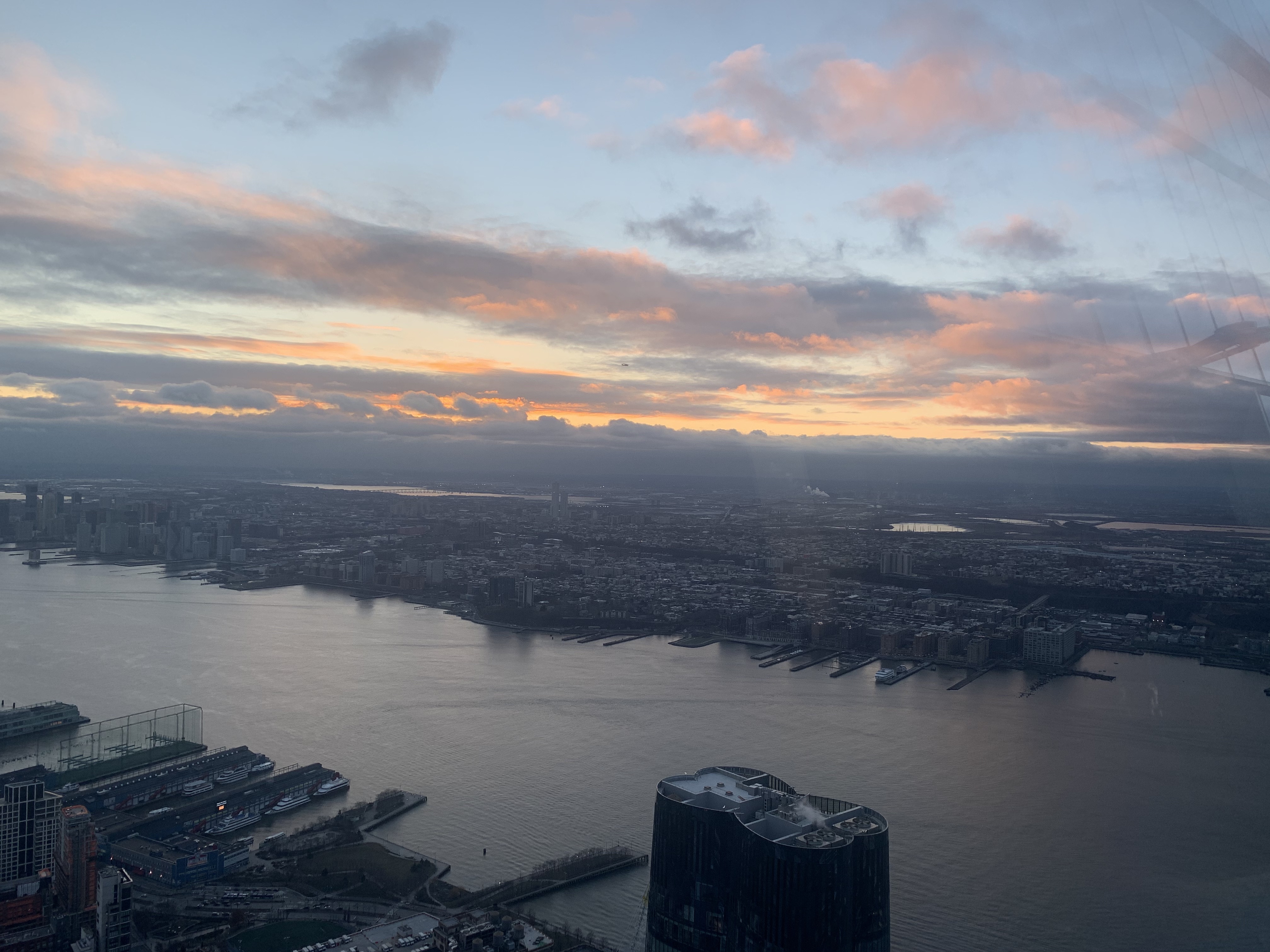
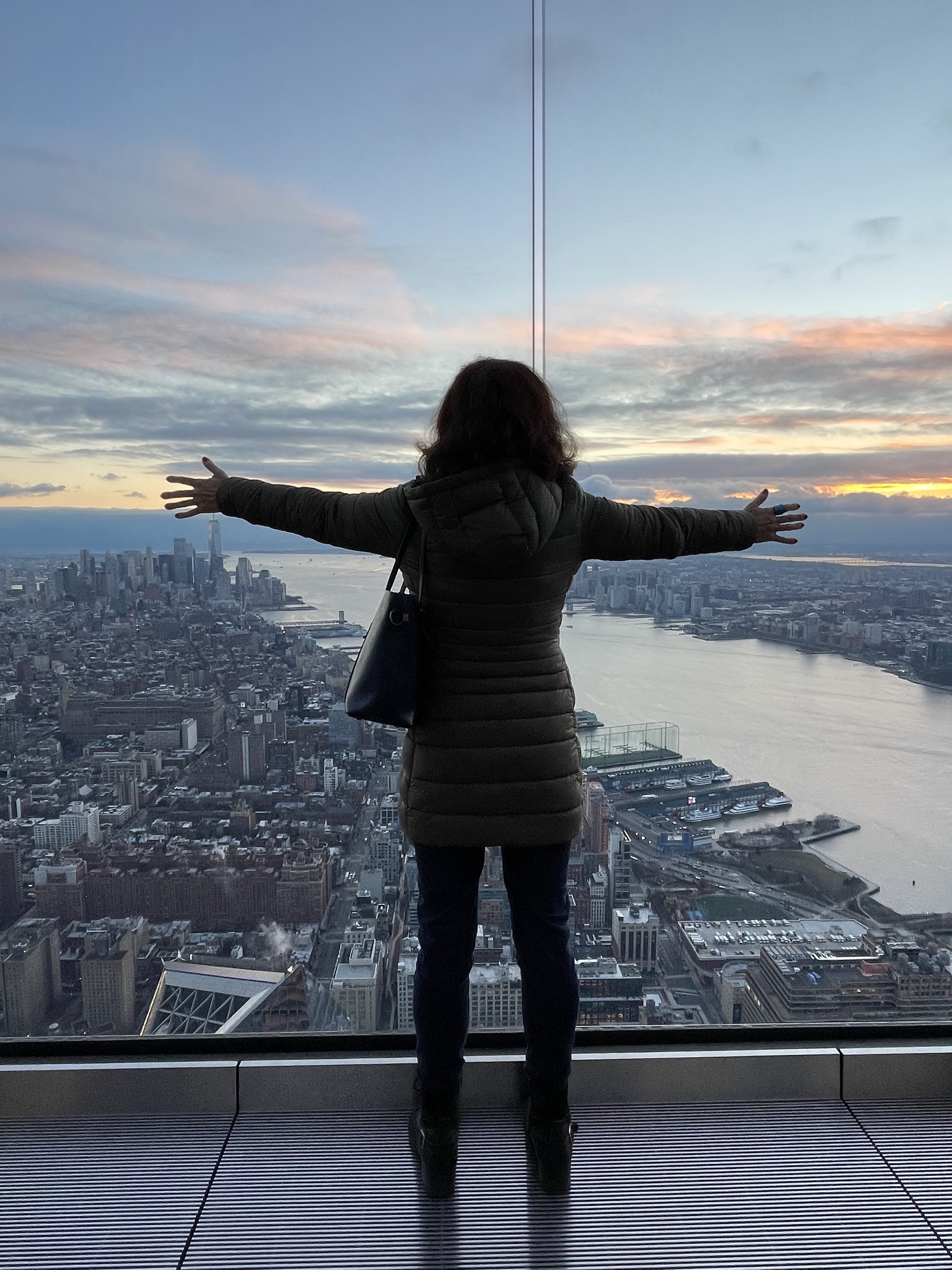
Luckily, things were run very smoothly, including limitations on time people could spend in the various corners outside, so we were able to get out before the sun had fully set. The Edge is the highest outdoor observatory in the Western Hemisphere, and with its unique design, you feel it. You are on a huge triangle protruding 80 feet out from the side of 20 Hudson Yards, 100 floors (or 1,131 feet) up. There are only glass walls surrounding you, and open air above.

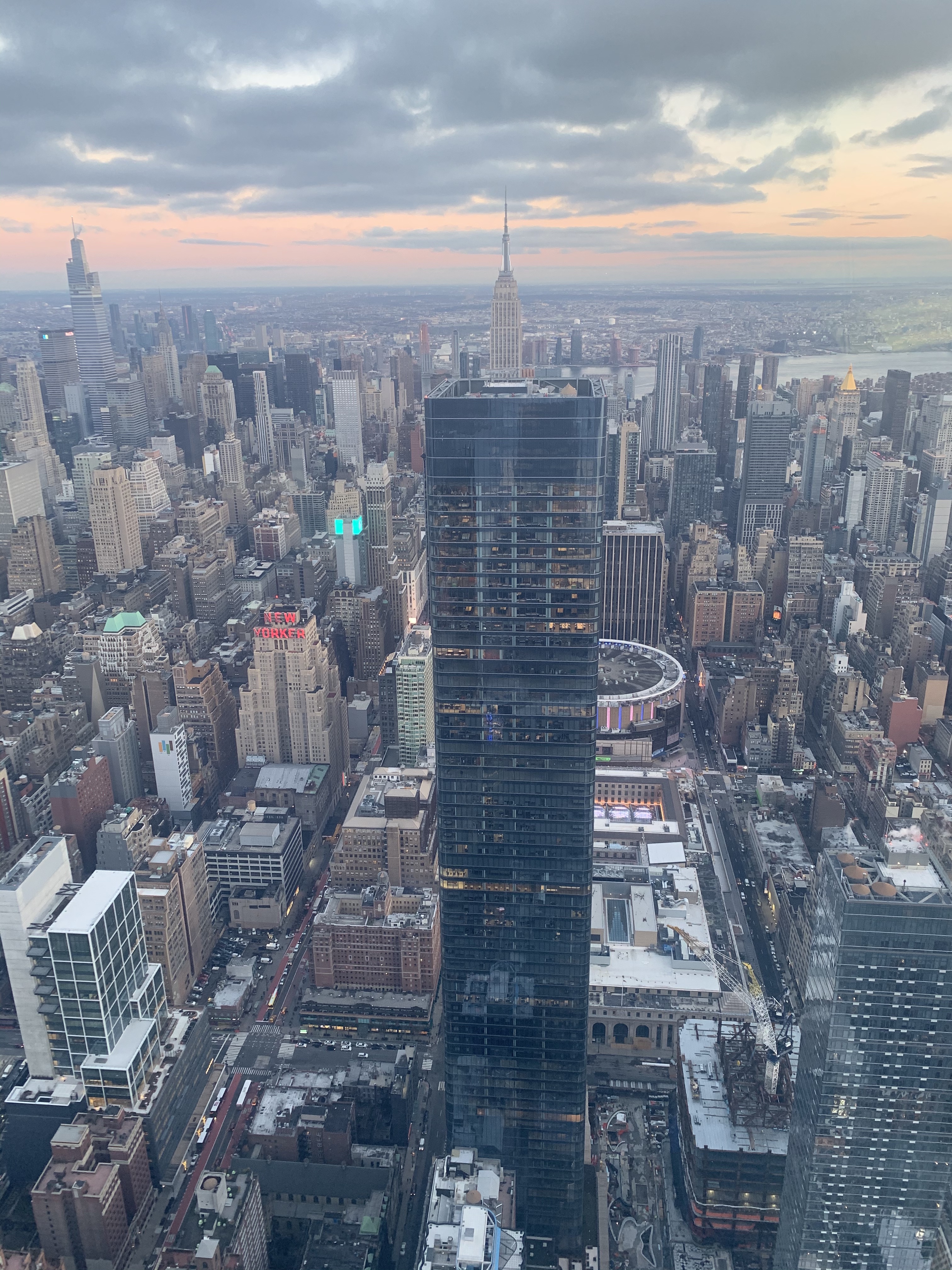
And the views! Just lovely, and a different perspective from midtown observatories like Top of the Rock or the Empire State building, or One World Trade downtown.

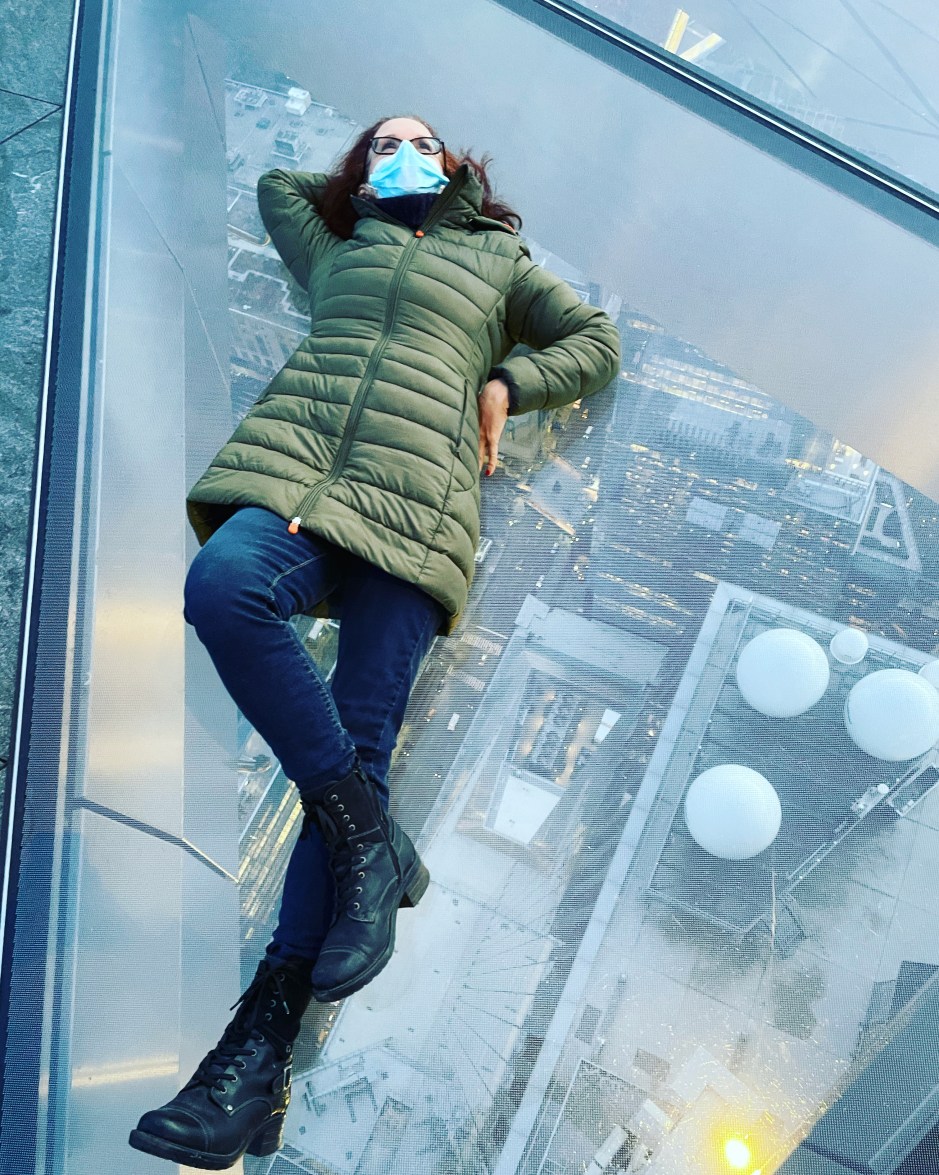
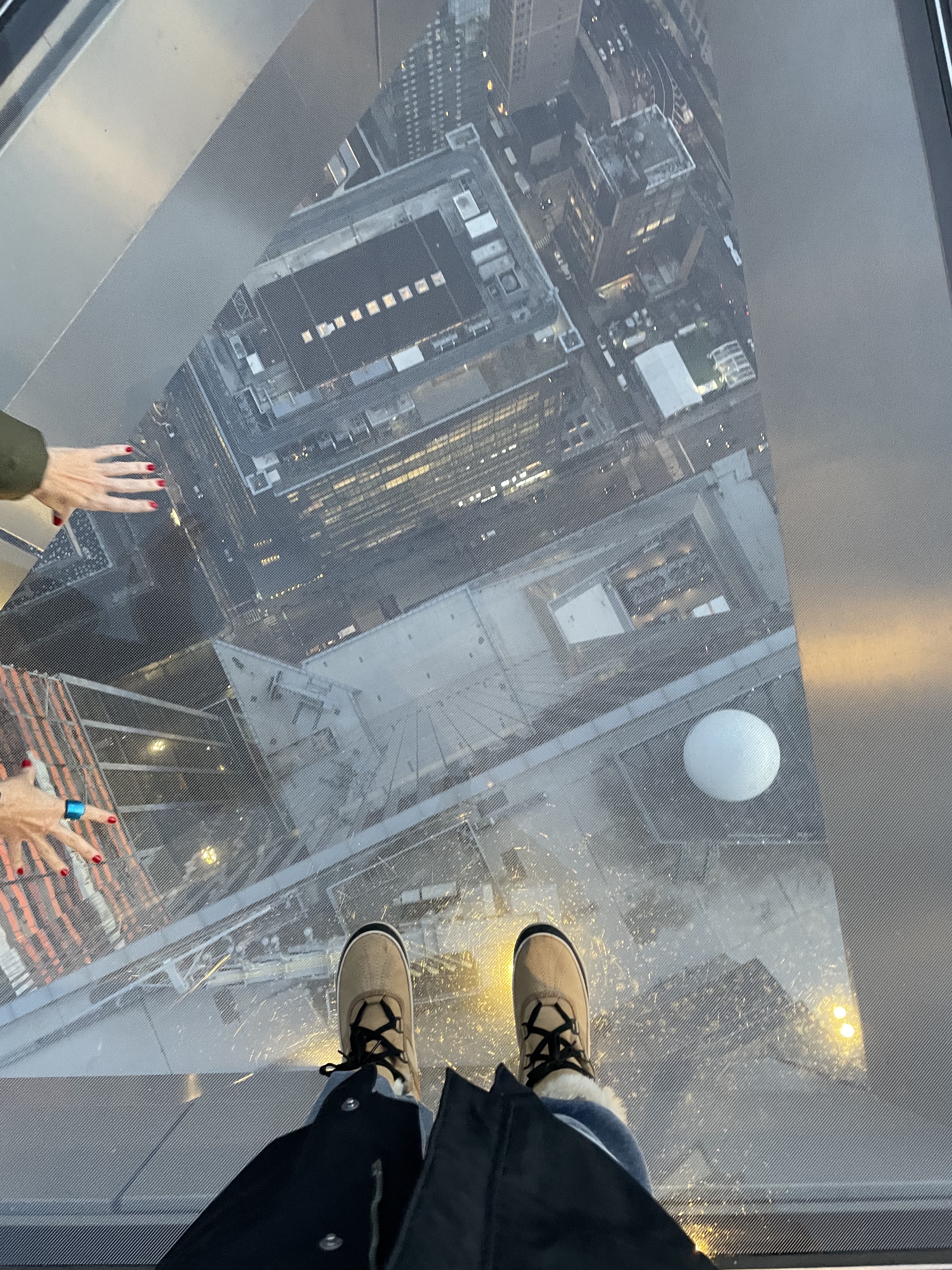
One of the most exciting things to do – if you can take it – is to go on top of the clear glass floor area that they have near the point of the triangle jutting off into space. It’s a long way down, and that distance is quite tangible! This is one of the places where they have staff monitoring your time, and you have one minute alone on the glass floor before you need to give someone else a turn. I found that the staff at The Edge were great at maintaining physical distance between visitors and monitoring time limits.

There are stairs with seating that are reserved for those who have ordered champagne or snacks from the bar. As sunset passed and the lights of the city began to sparkle, the experience transformed again from end of day to NYC night magic. Having been to several observatories in the city, I find this newcomer to the scene to be the “cool kid” of the bunch, and well worth your time. It’s not cheap, but there is a (small) discount if you are a NYC resident. If doing the sunset experience, try to get the earliest time you can within the sunset window, as it turns out they don’t limit your time while up there (just at a few of the photo opportunities) and I felt a little rushed getting out there for sunset with the timed ticket I had. While outside, we heard a cheer and caught the end of a successful marriage proposal . . . New York City, a little thrill, and romance – what more can you ask of an adventure these days?

NYC Holiday Decorations 2020

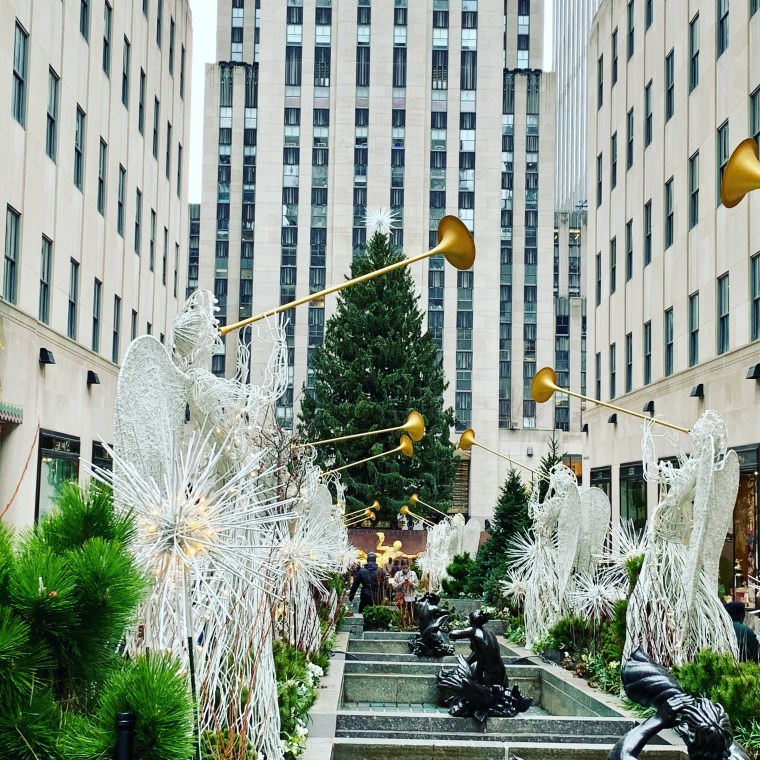
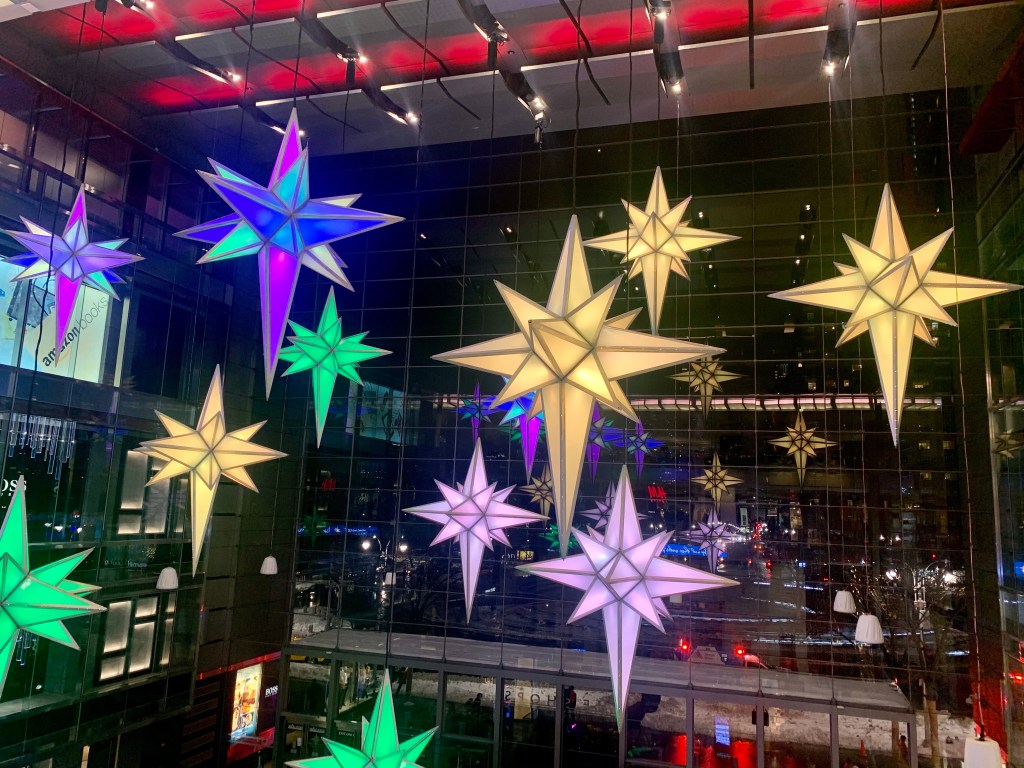
The year 2020 in New York City has certainly not turned out as we all would have hoped when they were clearing confetti from Times Square on January 1. This holiday season is unlike any other one – no Radio City Christmas Spectacular, or NYCB Nutcracker at Lincoln Center, or Santaland at Macy’s, just to name a few- but despite the pandemic, the city came through again with plenty of gorgeous lights and decorations.

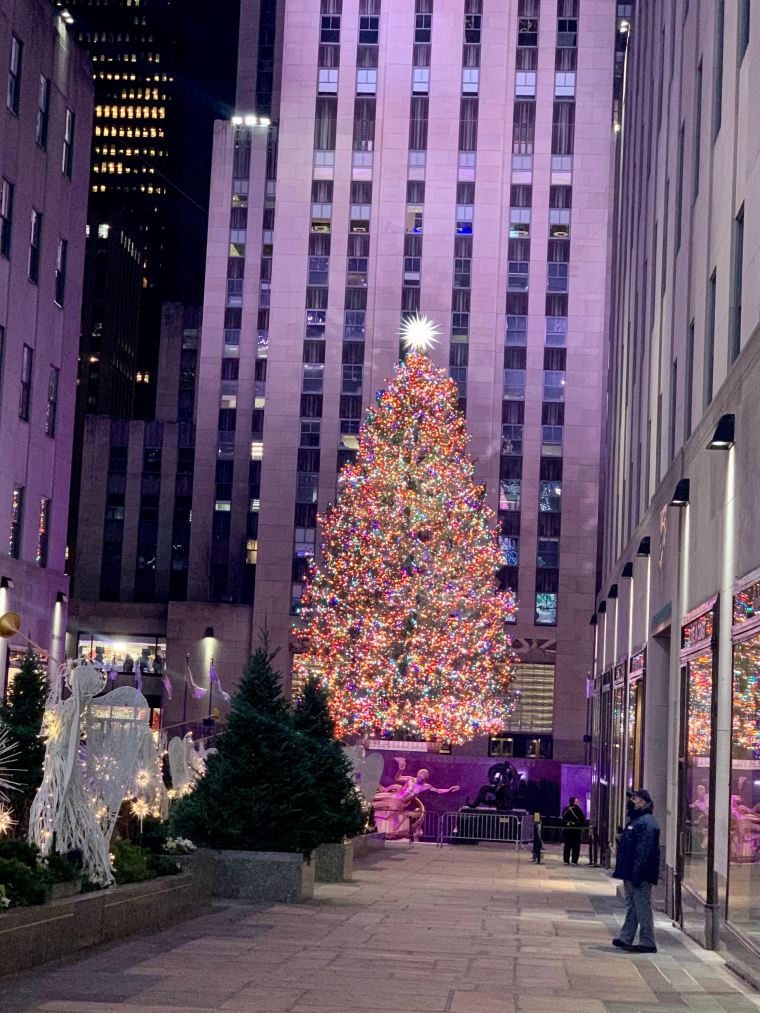
I was so relieved when I heard Rockefeller Center would have a tree again this year. They limited access so that crowds didn’t gather unsafely taking photos under the tree, but it was easy to see it from Fifth Avenue (actually easier than usual, with so few tourists here).

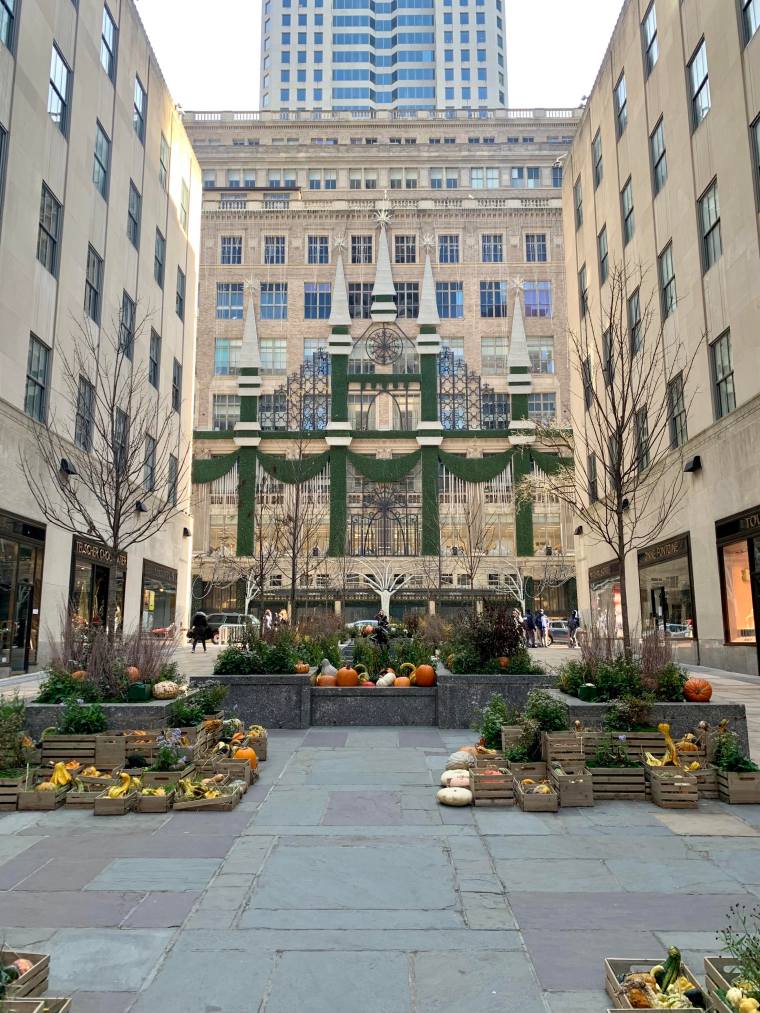
Similarly, it was great to see Saks continuing their tradition of decorating the facade of their building on Fifth Avenue (just across from the Rock Center tree) with a light/sound show every 15 minutes after dark. To see a video sample, check out my Instagram post here.

This display on Sixth Avenue is a favorite of mine. Again, if anything it is easier to appreciate this year with the crowds so light.

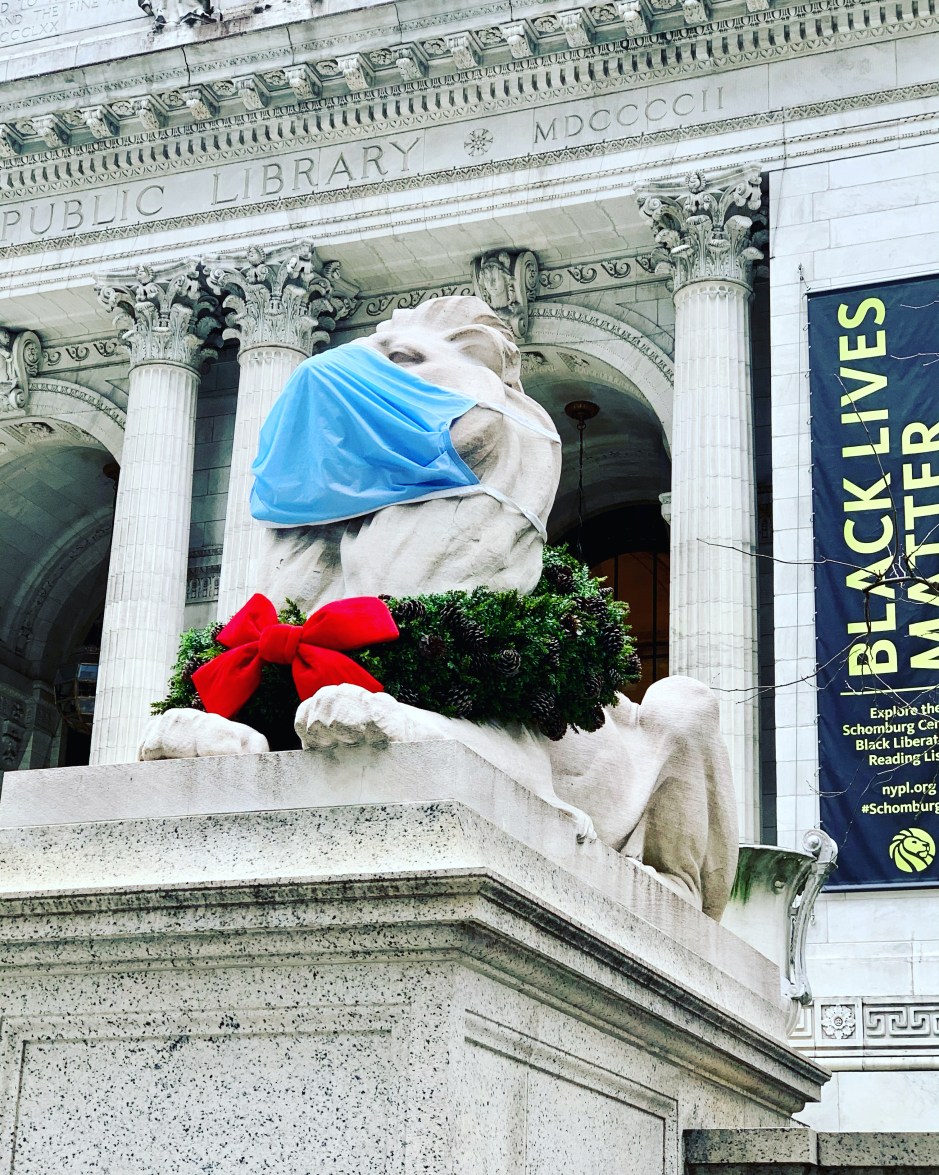
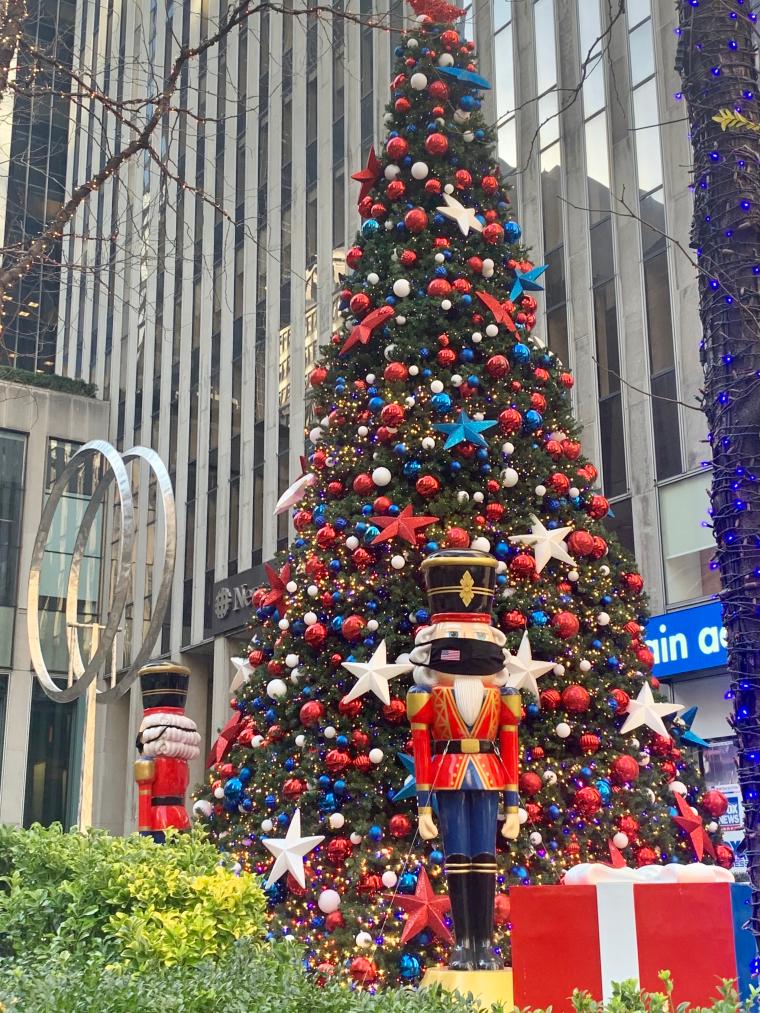
Many holiday displays this year managed to work proper modeling of mask wearing into their offerings, including the New York Public Library lions and this nutcracker on Sixth Avenue.

Walking along Fifth, you could mail a letter to Santa, or listen to holiday music played from the Cartier display.

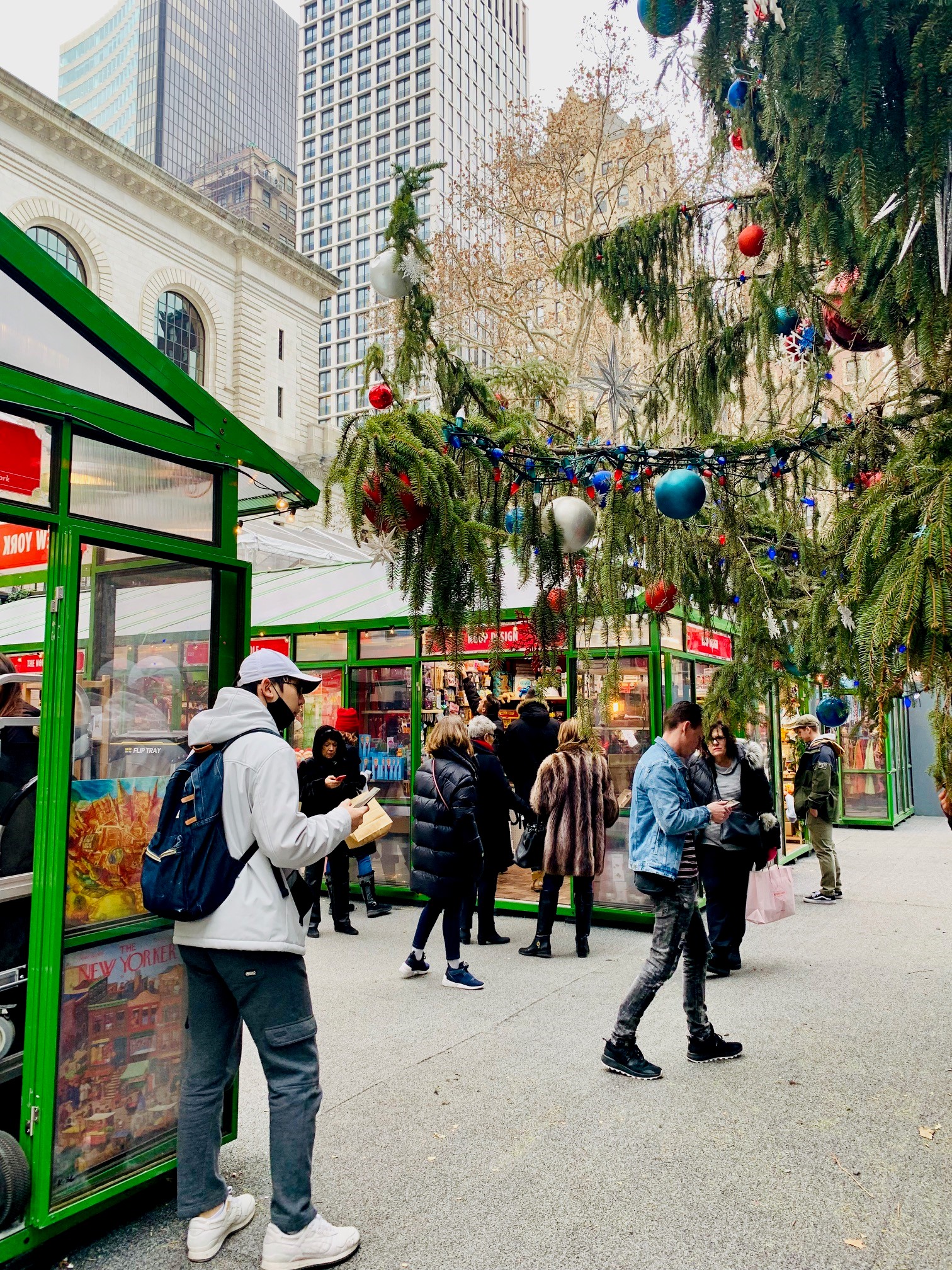
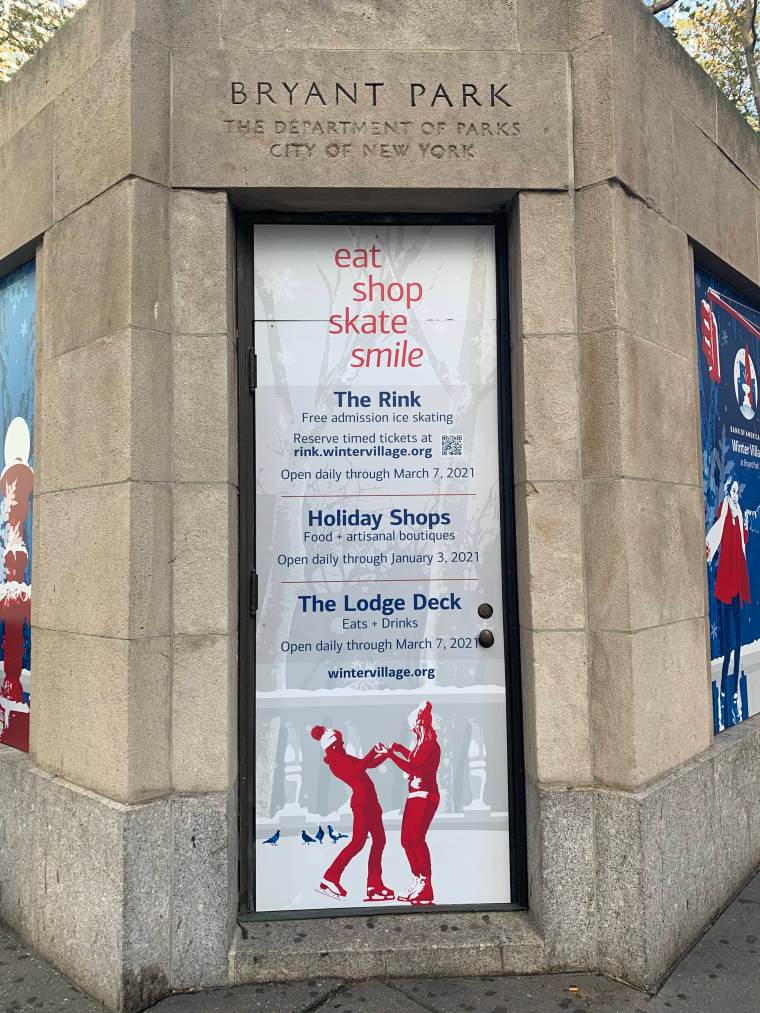
The Winter Village at Bryant Park and holiday market was back this year, just with more space between vendors and lighter crowds. Skating is going on as well, you can see a video of that here. To see this and many other holiday markets a few years ago, click here.

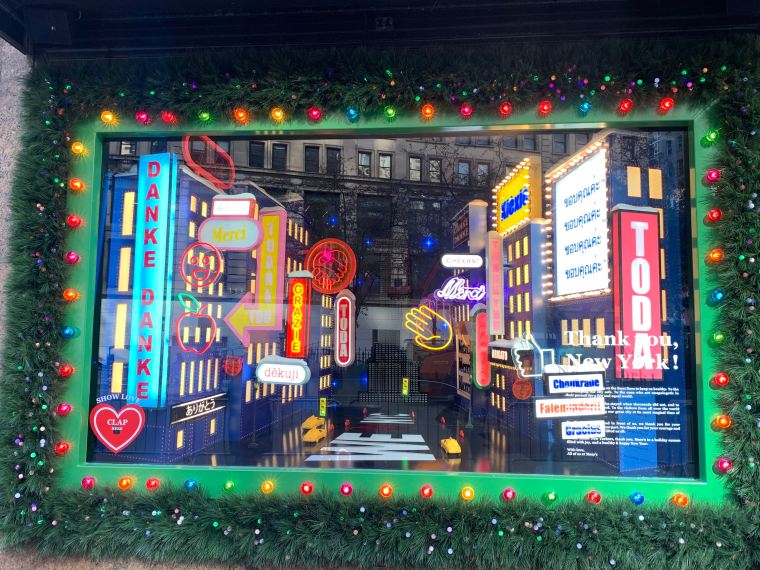
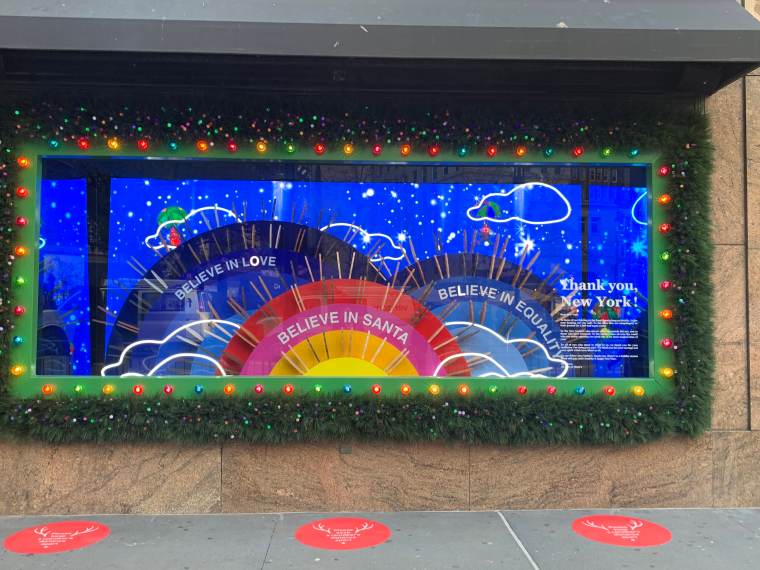
There was no Macy’s Thanksgiving Day parade winding through the streets of Manhattan this year, but the Macy’s windows remind us of the importance of gratitude this year – for our health care and essential workers (and for our health if we have been lucky enough to maintain it).

There’s nothing quite as magical as New York City at Christmas, and we needed that delight and joy more than ever this year.

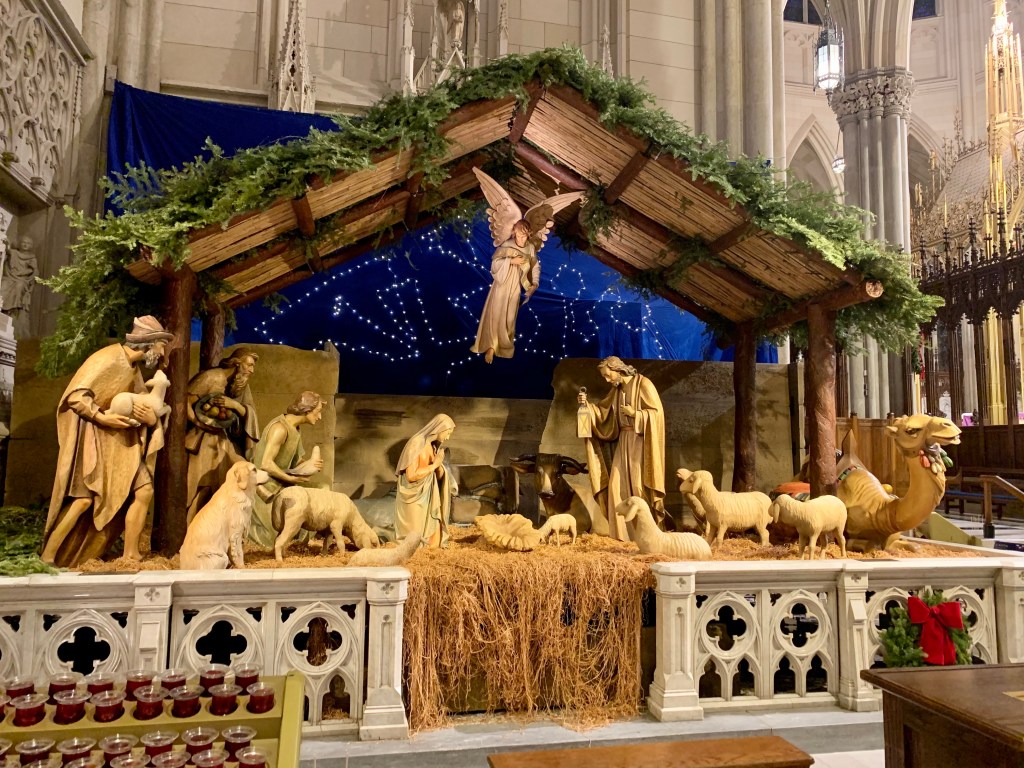
St. Patrick’s Cathedral was as majestic as ever this Christmas season.

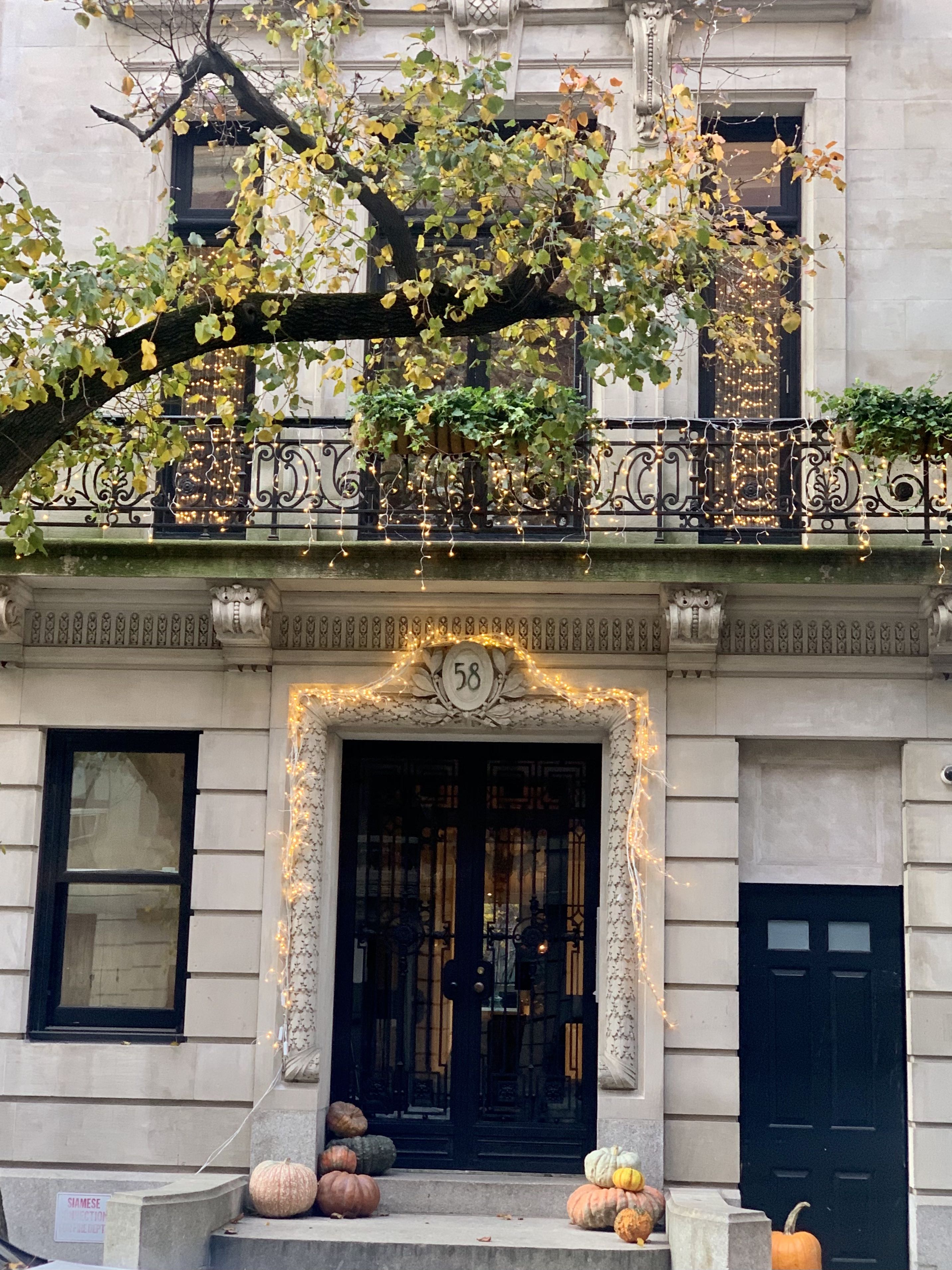
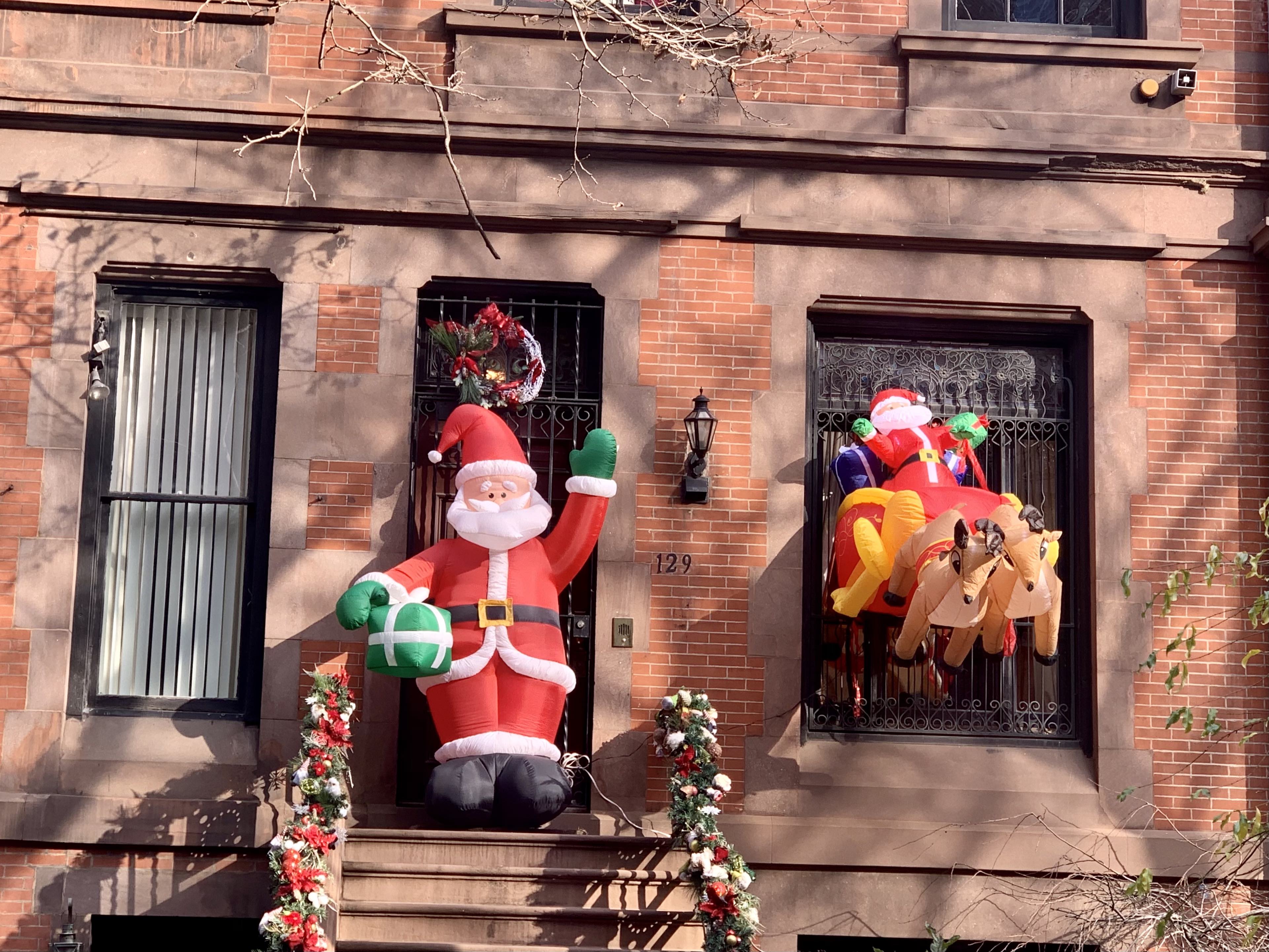
Once again, New Yorkers decorated their homes to celebrate this dark time of year – in a very dark year – with light, humor, and bright color. To see a previous blog post about residential holiday decorations, click here.

So the dropping of the Times Square ball will be televised this December 31, but will occur in an empty area gated to prevent people from gathering. Regardless, the rejoicing that will ensue as we welcome in 2021 will not be lessened in any way by celebrating at home. As I wrote on the piece of confetti that will fall as 2021 arrives in NYC, I have tremendous hope for health, love and prosperity in this new year ahead.

Pier 26 Park on the Hudson River

One of the things I have done during this strange year of pandemic and lockdown has been to really get to know Hudson River Park (and I do plan a blog post on it soon). Although I have always explored Central Park – and it’s magnificent, no one can deny – during lockdown I began riding a bike (yet another planned post) and soon discovered my favorite thing was to use the dedicated bike lanes along the Hudson River, then explore the park on foot. On September 30, 2020, a new section of the park at Pier 26 opened, dedicated to the exploration of our waterfront’s ecology. Having visited it, I can say that it is a unique and very worthwhile addition to New York City’s incomparable parks.

Pier 26 juts out from West Street on the far side of Tribeca, roughly between Hubert and N. Moore Streets. It is just north of Pier 25 and behind City Vineyard restaurant and wine bar (more about that later!). Also in the old section of Pier 26 is the location for free kayaking (temporarily halted during pandemic, but keep it in mind for the future) and two dog runs.

The park is organized so that you experience different native ecological environments – woodland forests, coastal grasslands, maritime scrub, rocky tidal zone and the Hudson River itself. However, you could not even know that this was the purpose of the park and just enjoy the multiple places to relax, and the spectacular views.

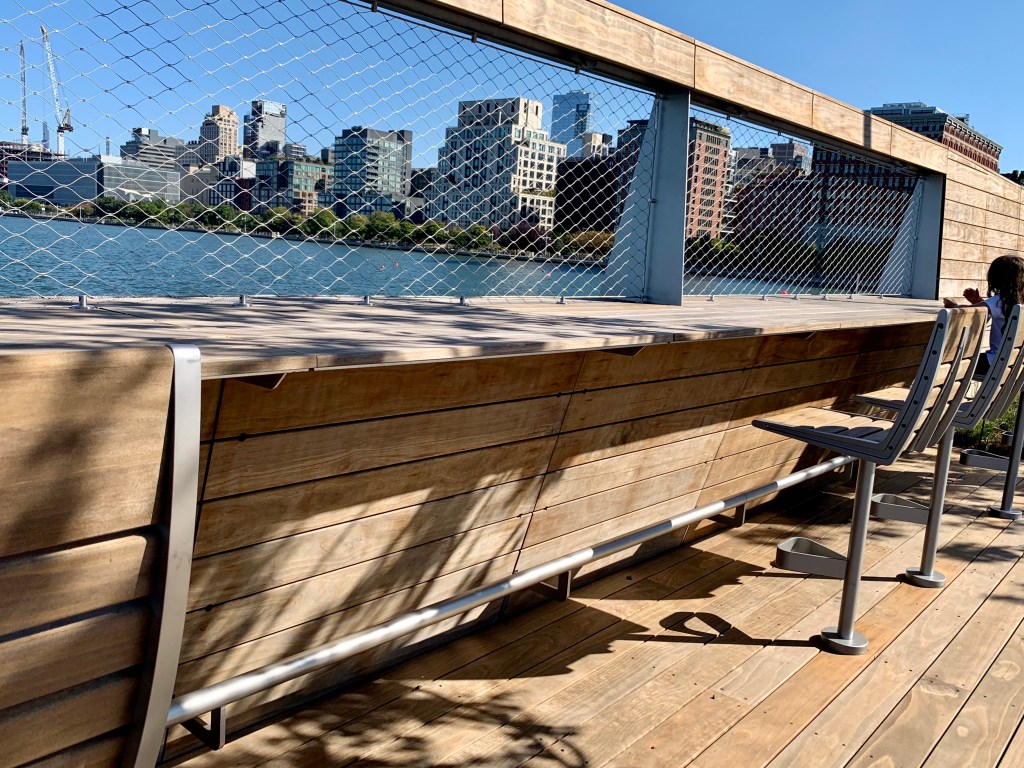
This part has a really unique variety of places to sit and relax – loungers, workspaces with a bar to place your laptop or food on while sitting at barstools, and even BENCH SWINGS.

As the pier reaches out to its westernmost point, you can see the lower section leading to the tide deck and the Hudson River. This section isn’t open at all times, but in the future there will be periodic tours for the public. This tidal marsh was created with native grasses and shrubs, and is submerged at high tide and visible at low tide. The hope is that over time the pier will become home to native species. The rocky tidal marsh is visible at all times from the elevated platform above.

In addition to places to relax, and places to learn, there is a sports play area, a sunning lawn, and my favorite – lovely walking paths. At. the end of the pier, you have the choice of looking south to the Statue of Liberty, or east toward the NYC skyline. You might see boats pass by, or jet skis.

With City Vineyard at the entry to the pier available for food and drink in the open air, it would be easy to spend a day at Pier 26. The wine garden and rooftop deck are both outside, and the deck has incredible views of New York Harbor. City Vineyard’s menu is locally sourced and inspired, and its wines are actually made in the city with grapes from some of the finest vineyards in the world.

While 2020 has been a very difficult year to be sure, one silver lining has been that we have learned to explore and appreciate what we can do outdoors. When walking the Hudson River Park, I have seen toddler movement and music classes, yoga classes, and personal training in progress outside. The bike paths are crowded with scooters, skateboards, and skaters as well as bicyclists. Parks host joggers, walkers, and babies being pushed in strollers. This turns out to be the perfect time for this new park to be unveiled, its importance now – not only as a refuge for New Yorkers escaping a pandemic but also for a reminder of what we need to do to heal our broken planet – unimaginable when planned in the early 2000s.

2019 Dyker Heights Holiday Lights

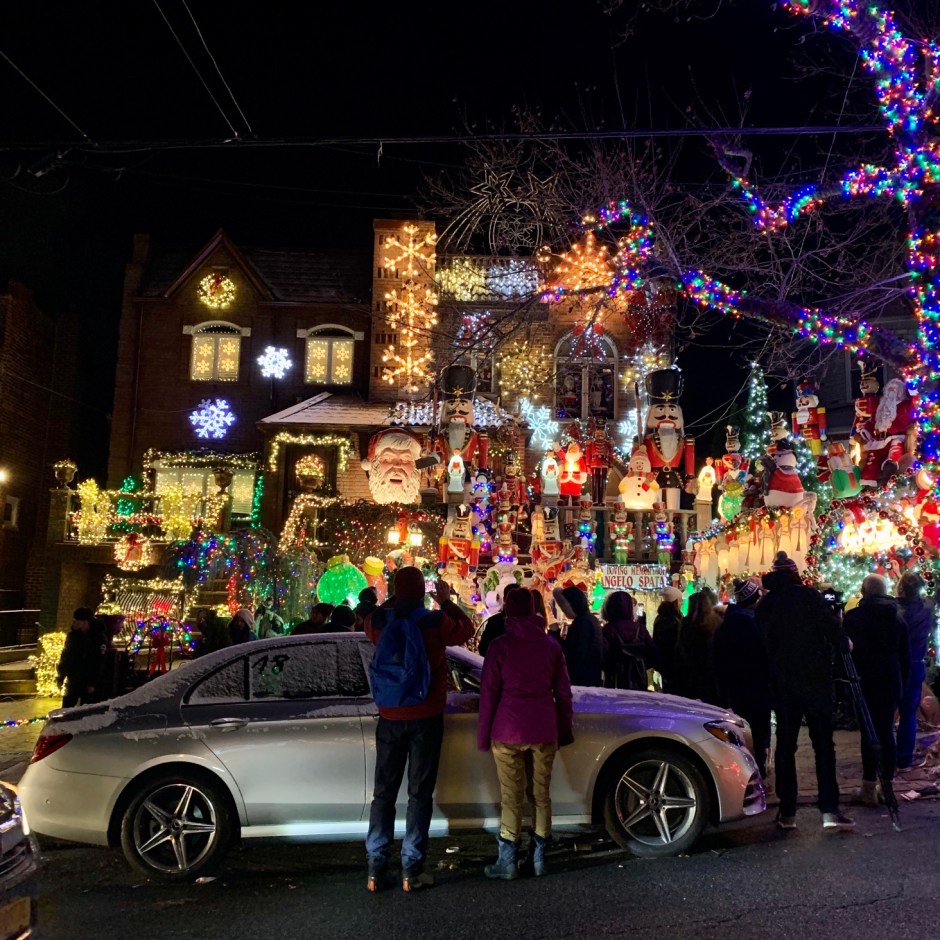
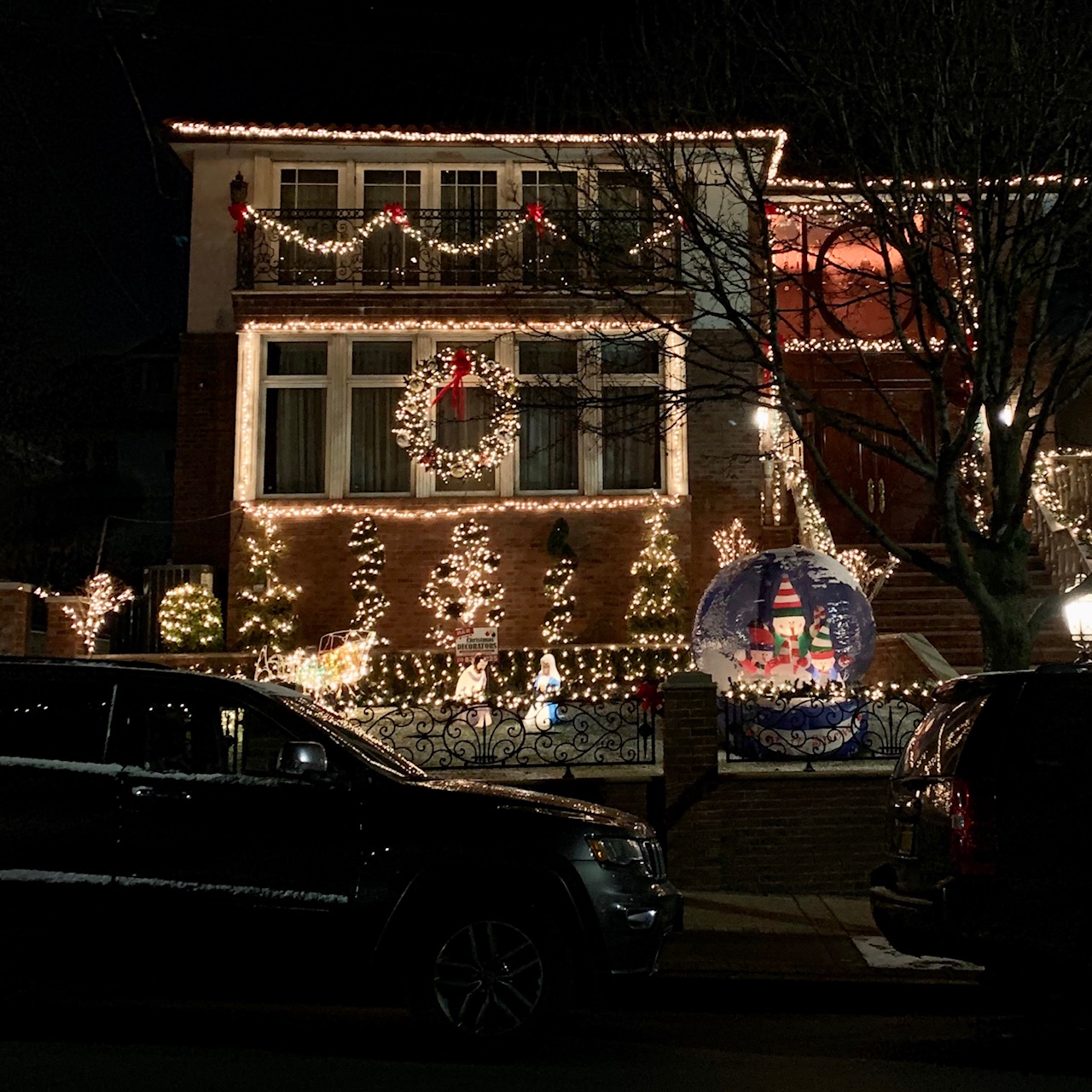
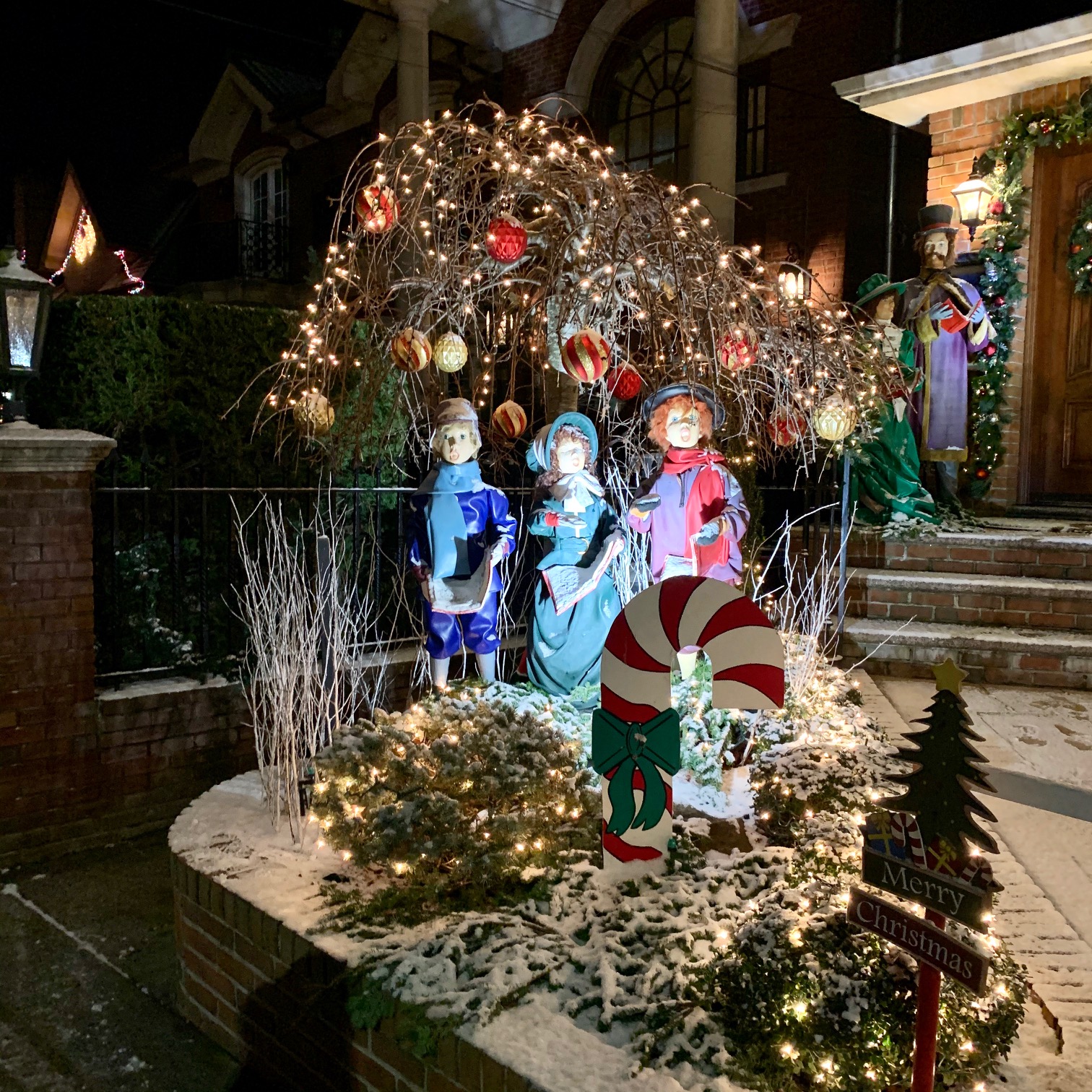
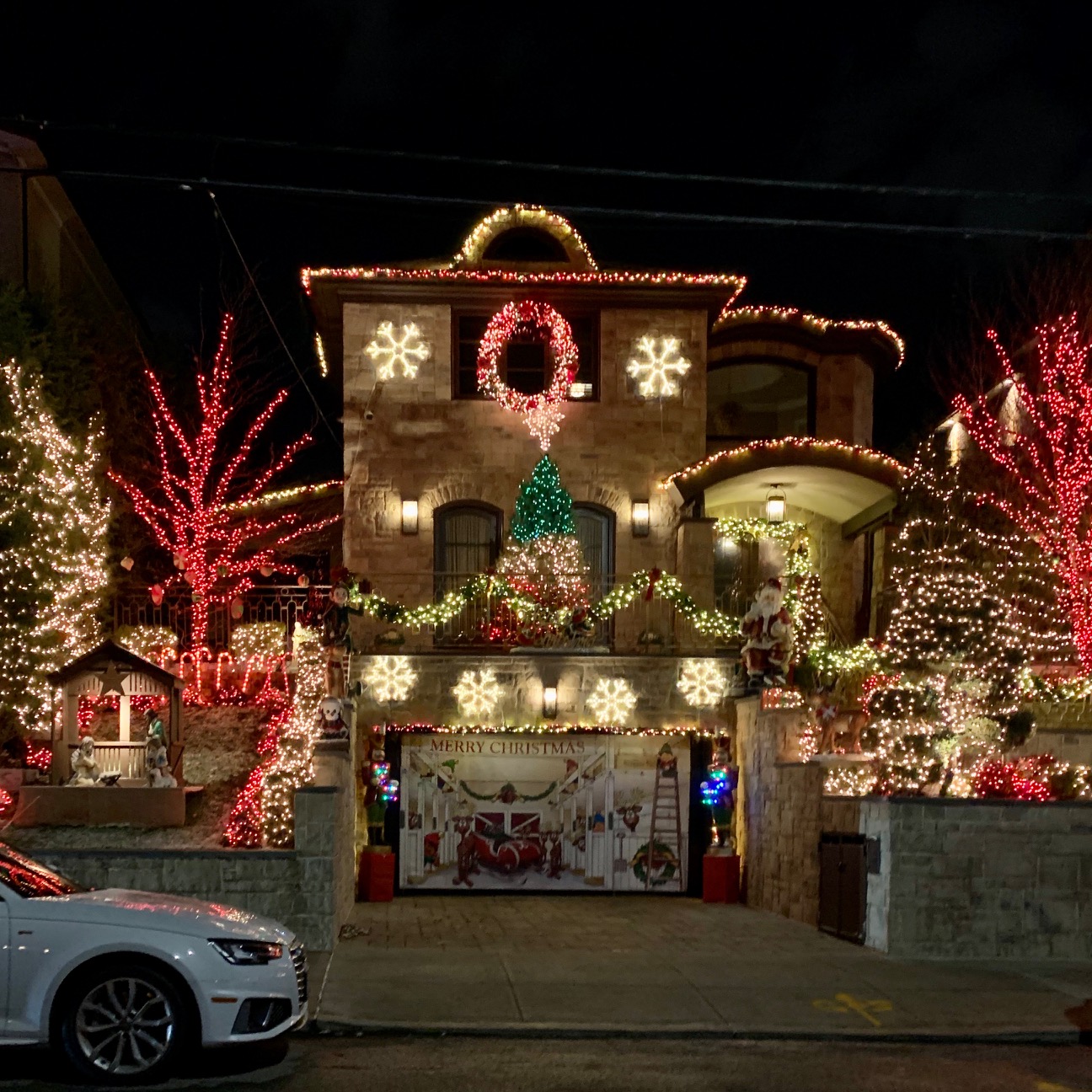
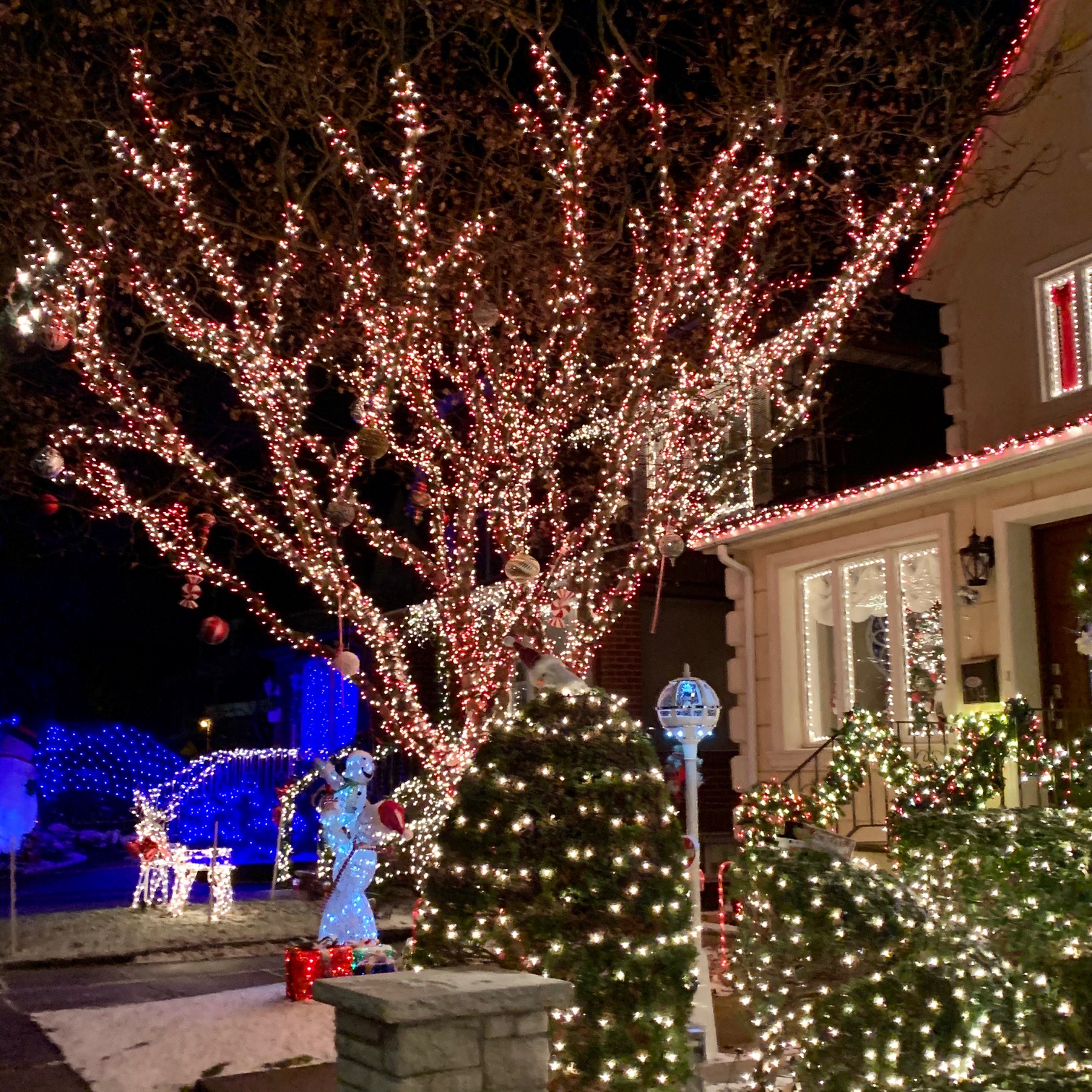
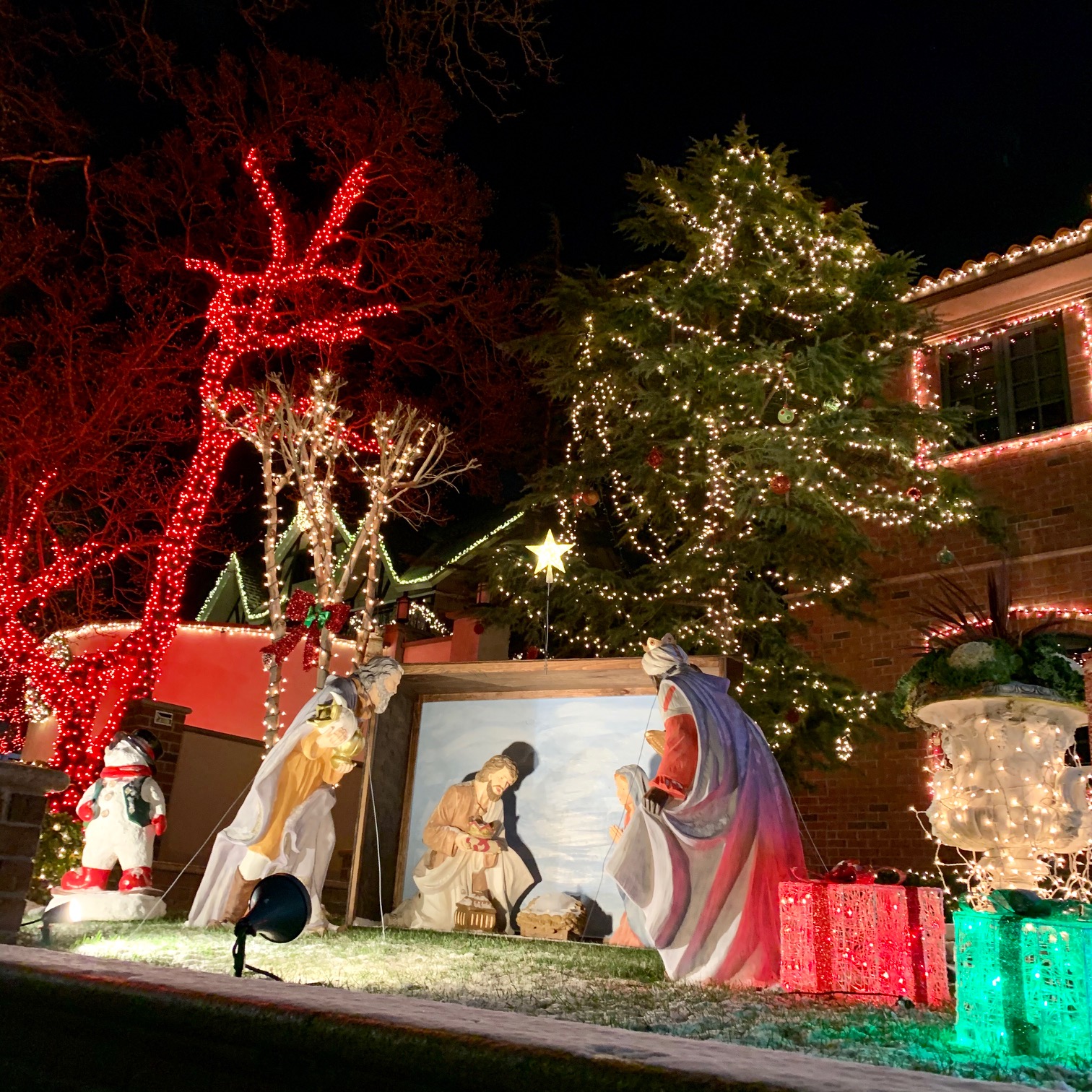
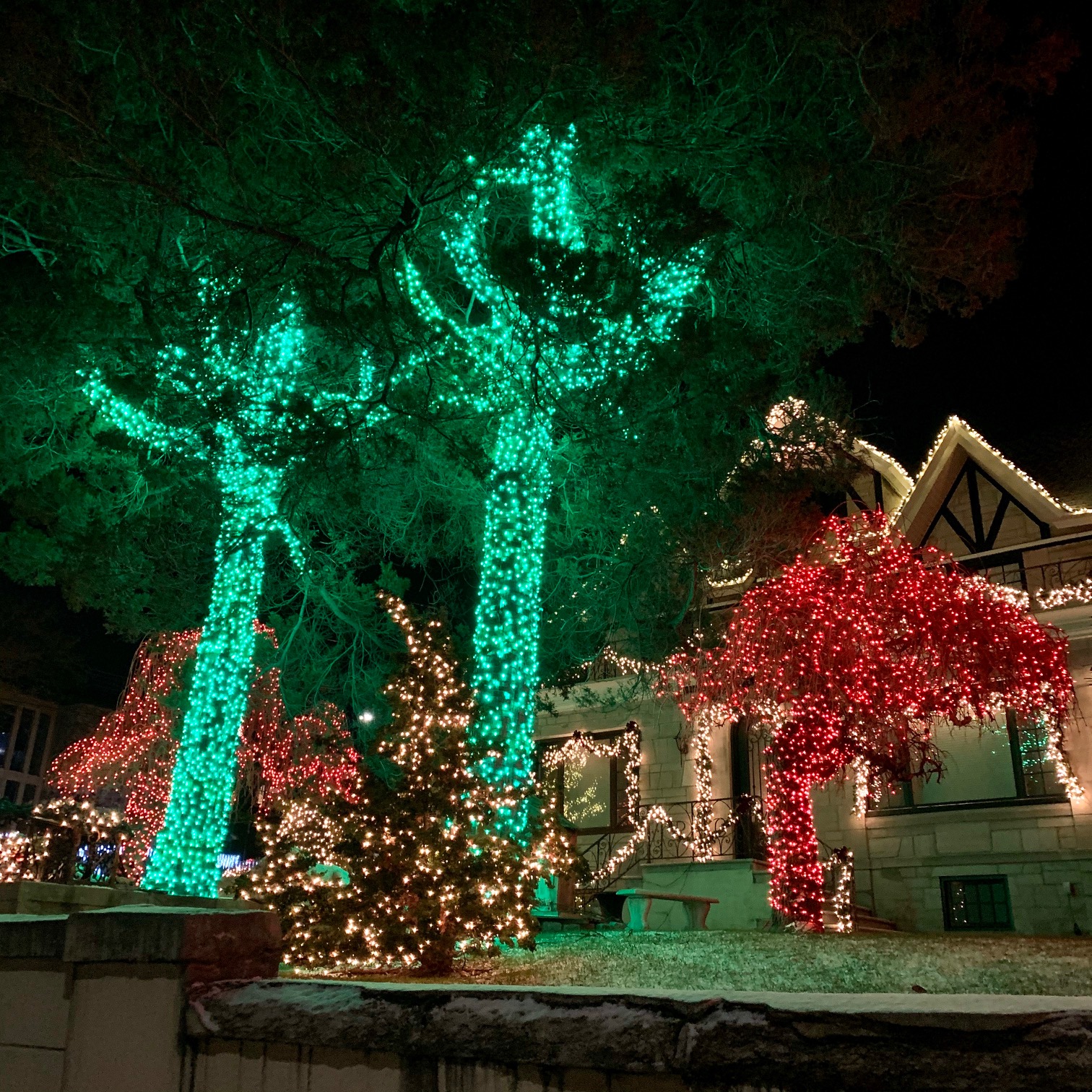
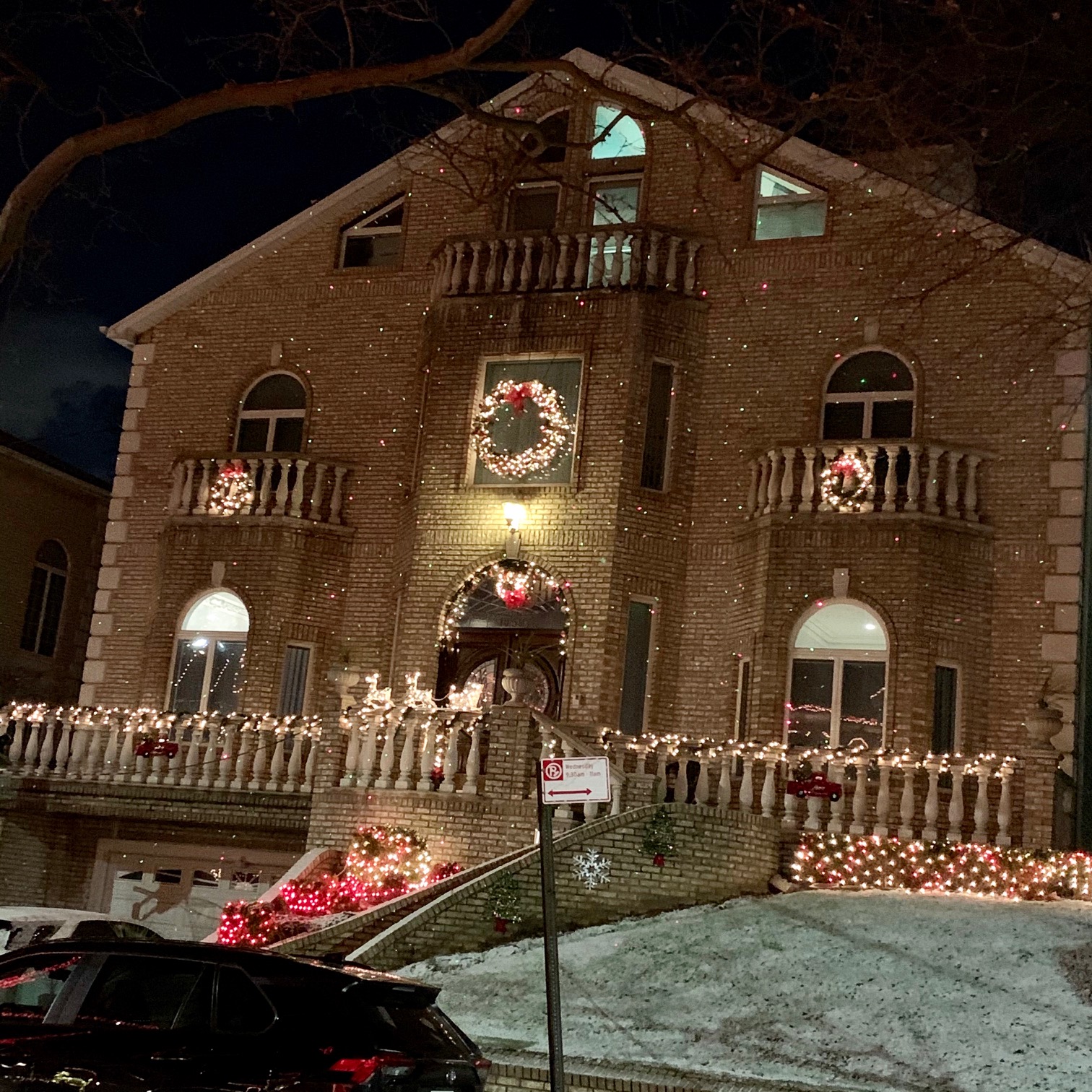
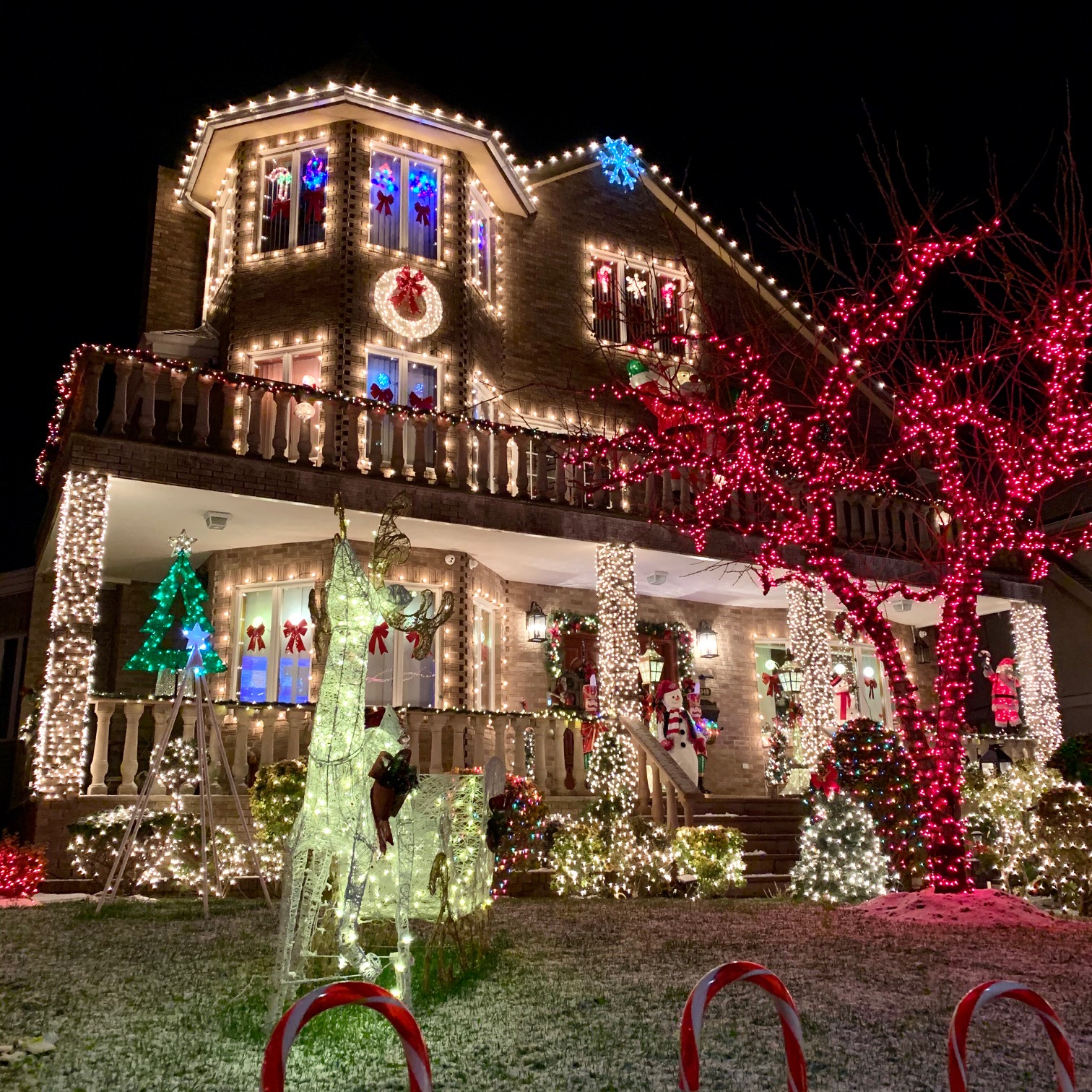
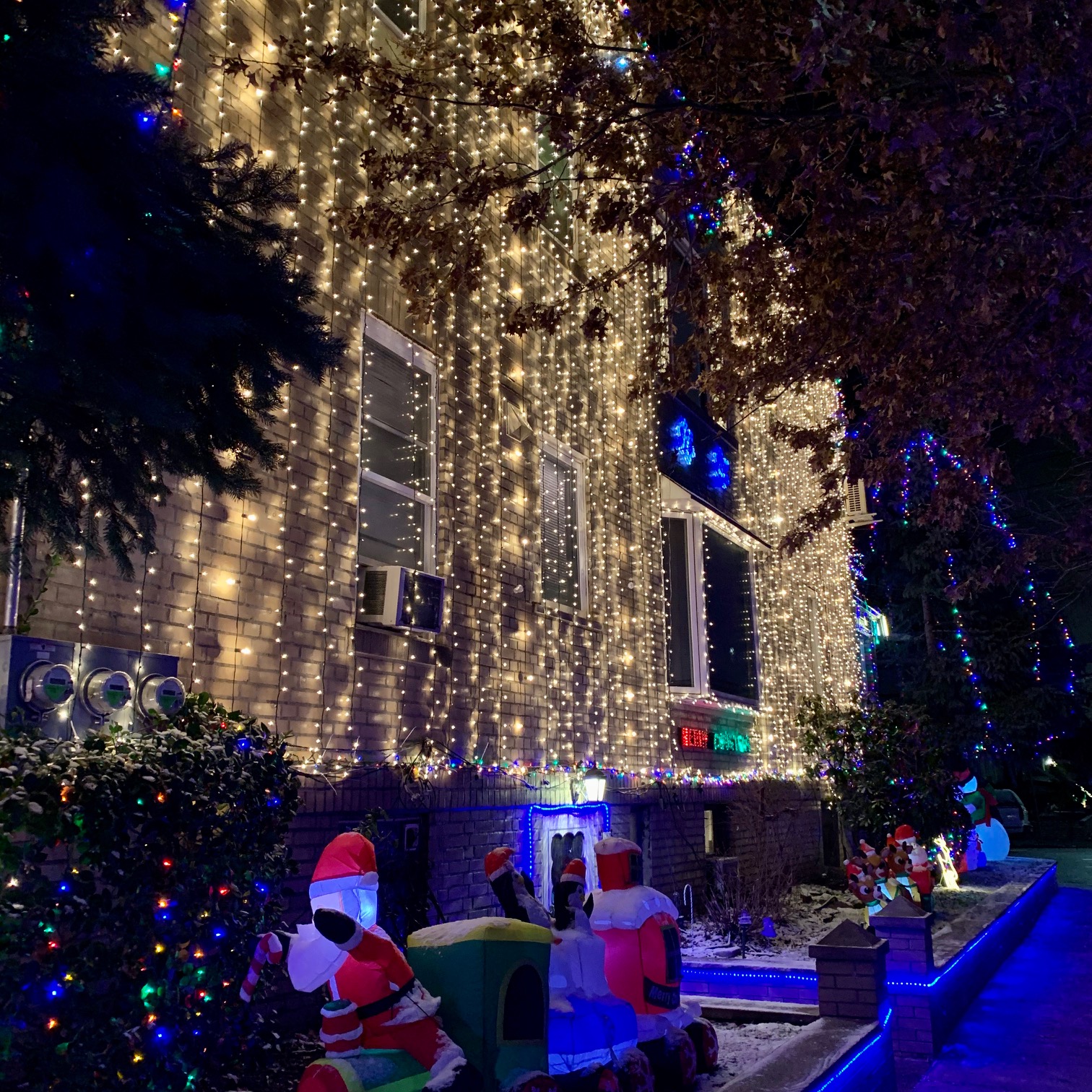
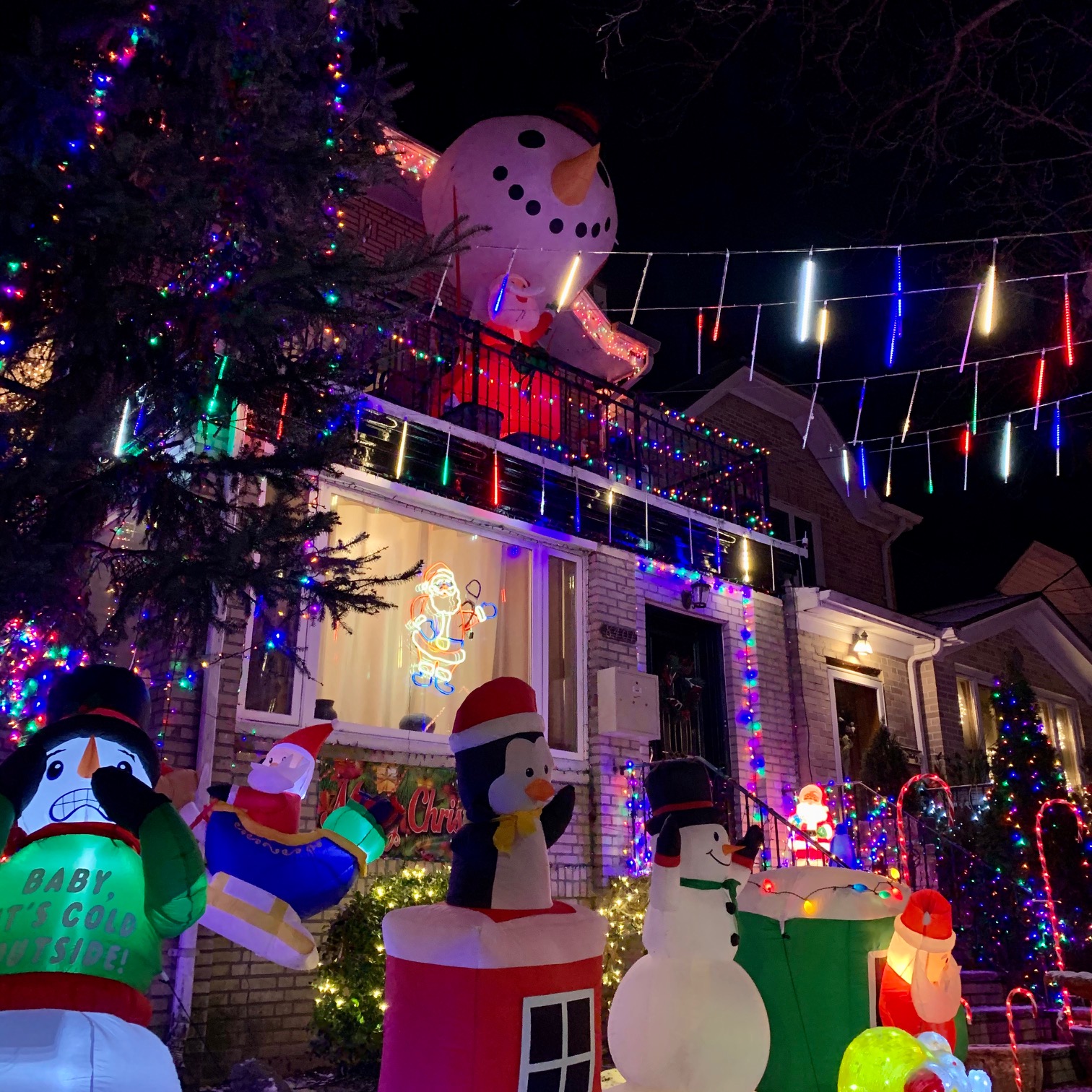
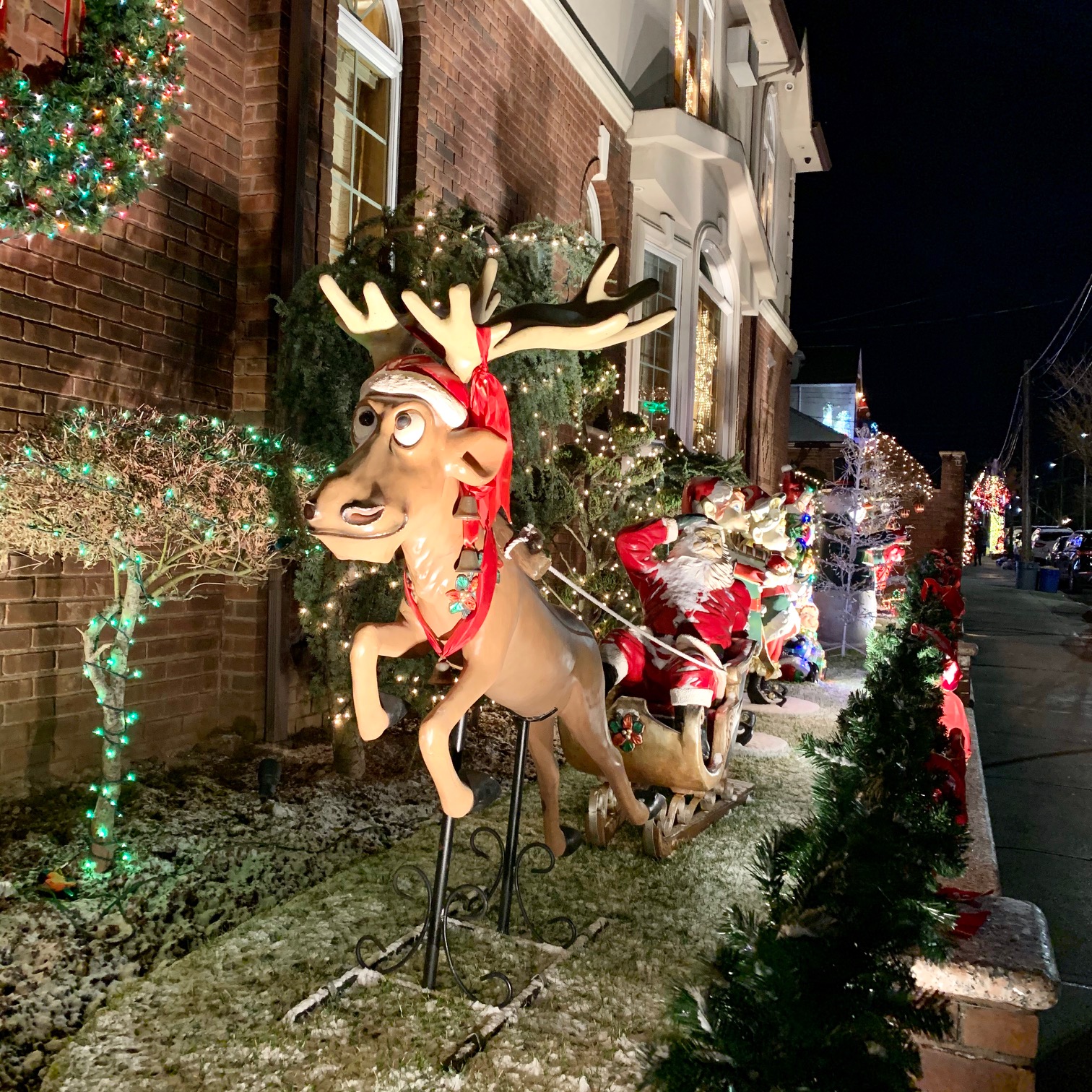
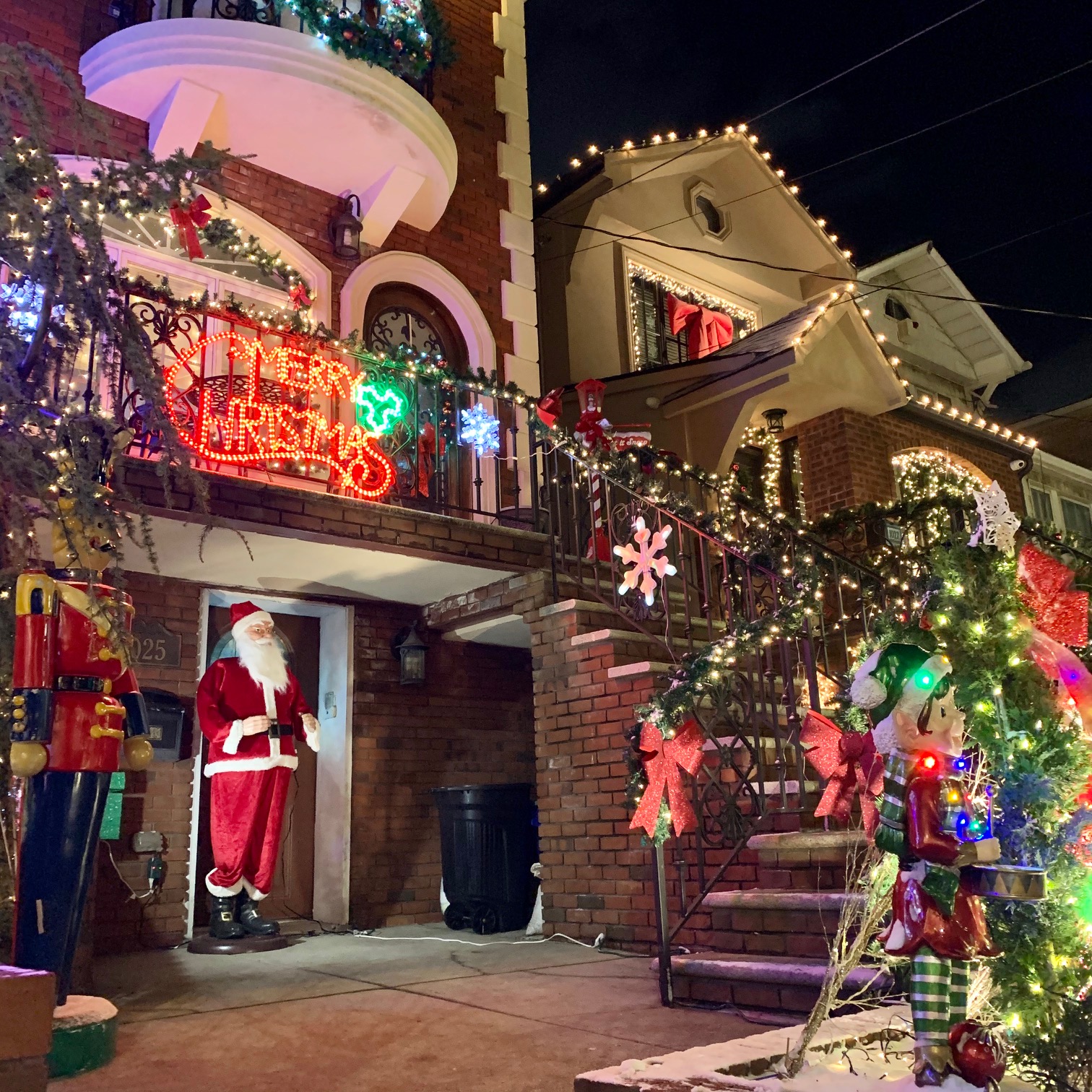
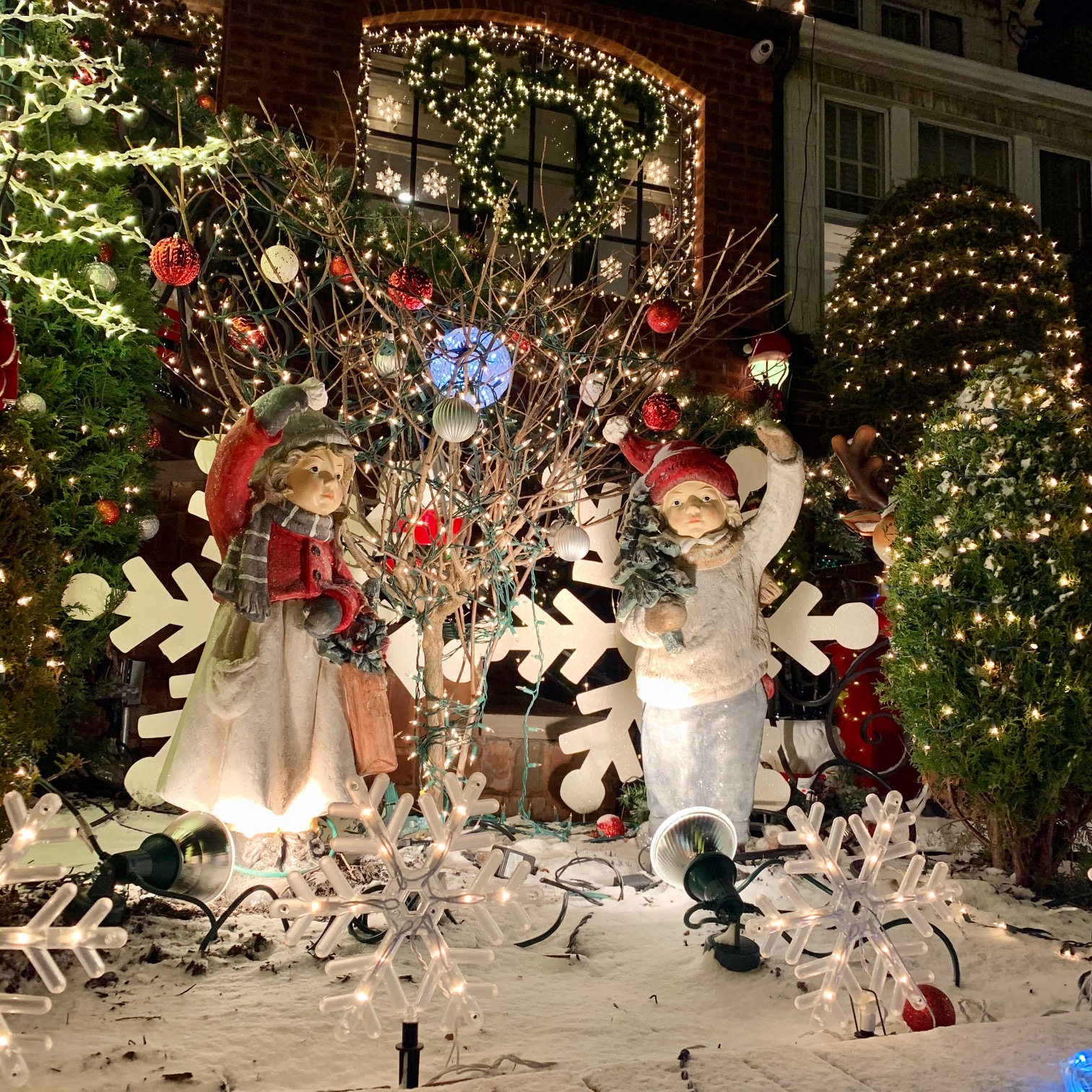
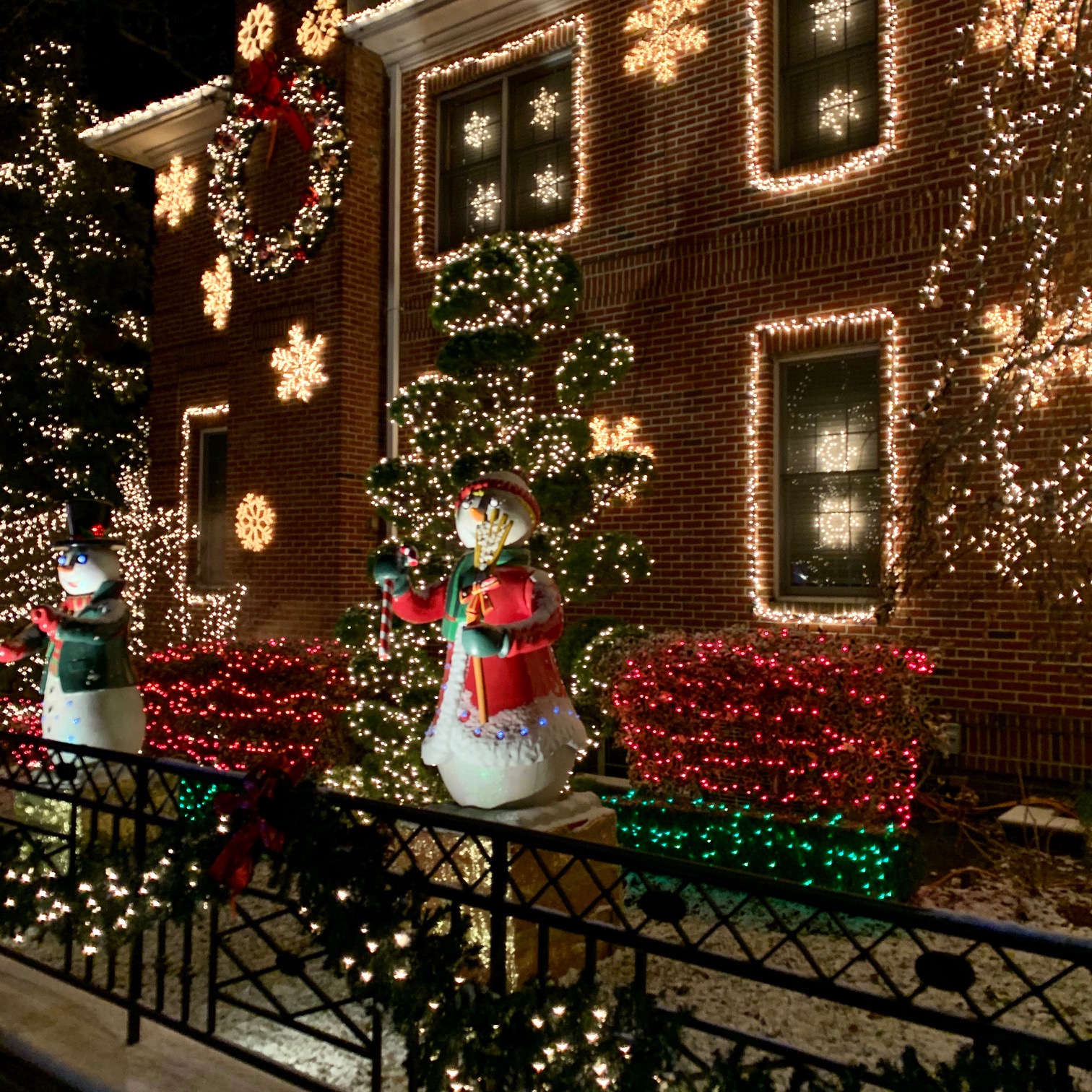
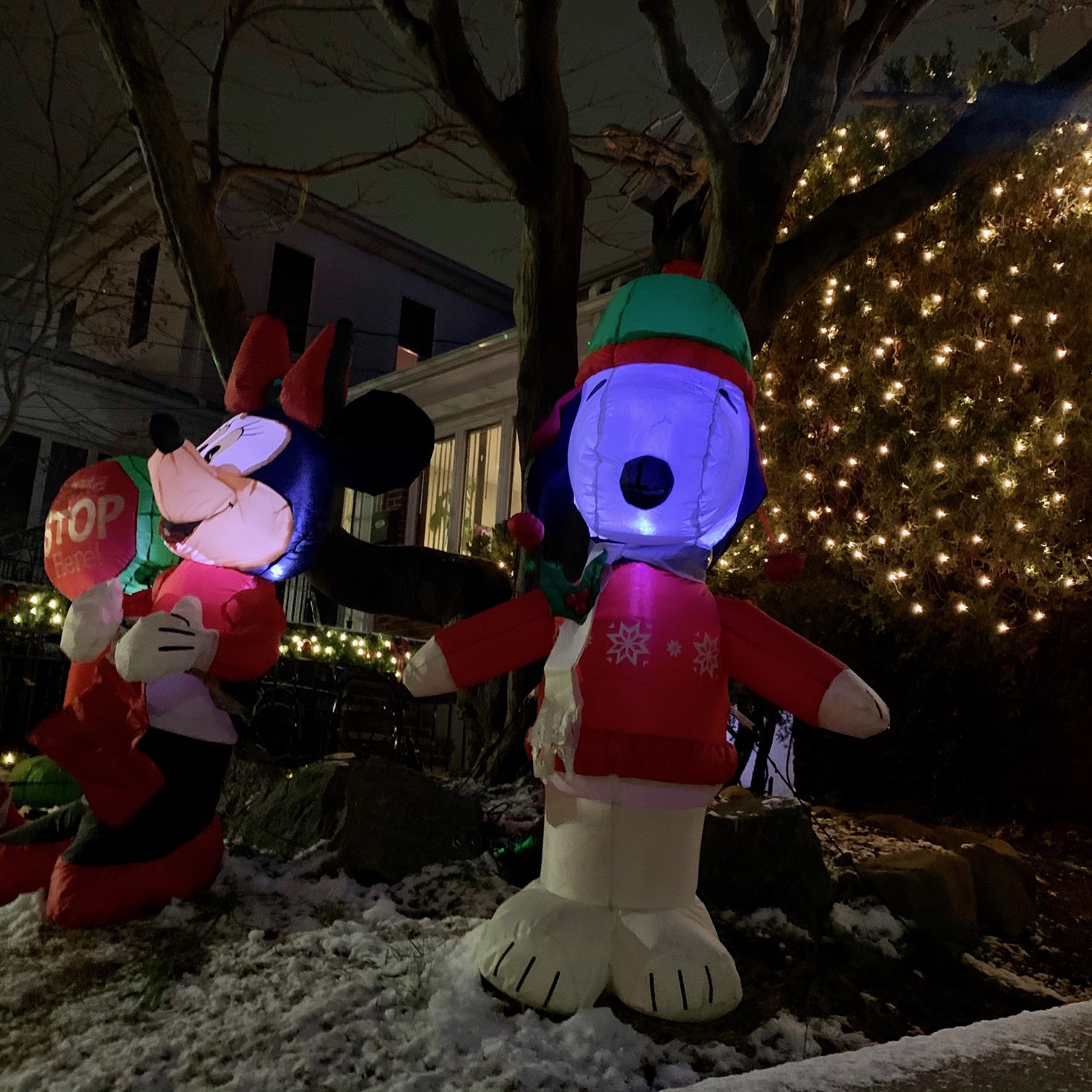
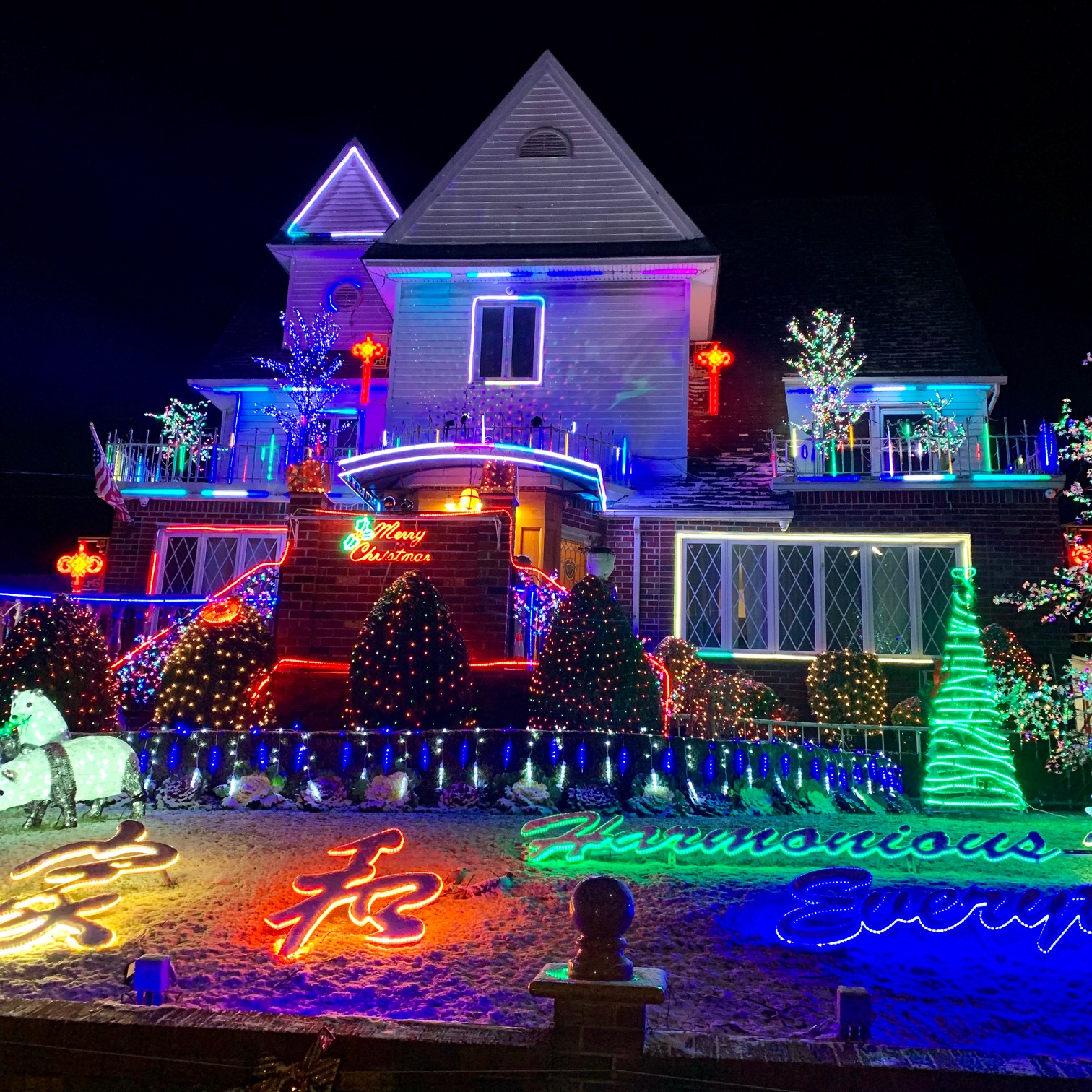
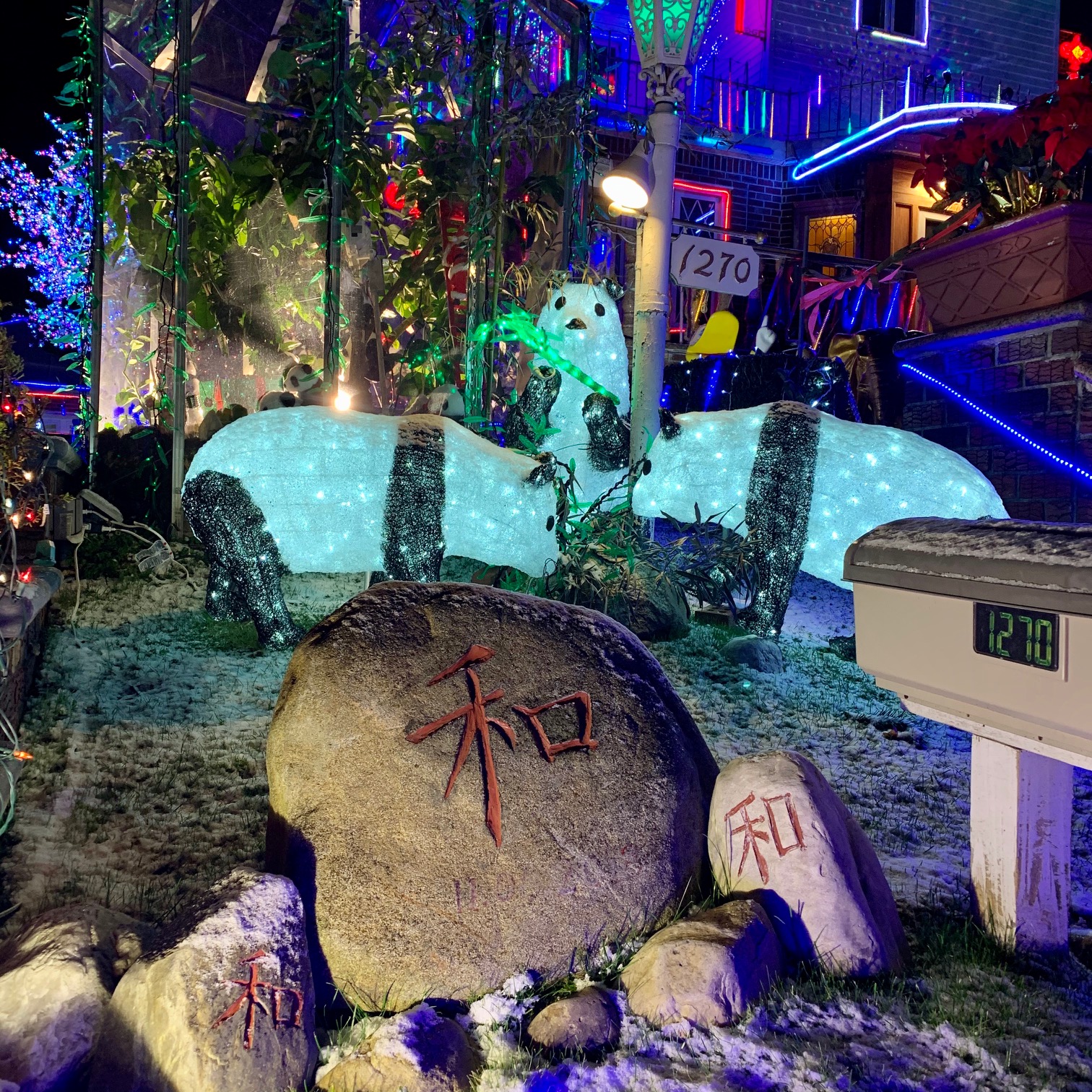
As we head into the shortest days of the year, we fight off the dark with celebrations of light. In previous years, I have written about how New York City celebrates publicly (see here for 2015 and here for 2016 posts, and here for last year’s post on holiday markets). Several years ago, I had access to a car regularly, and drove to Dyker Heights with my family to see the famed holiday lights (see that post here). This year, one of my daughters and I decided to take the subway (D train from midtown) and walk (about 20 minutes from the 18th Avenue stop in Brooklyn), and on a cold evening with some snow flurries, the lights once again did not disappoint – and I believe they have become more elaborate since the last time I was here in 2014. This tradition in Dyker Heights began in the 1980’s and since has increased every year, with many residents paying professionals $20K or more to deck out their homes. On weekends, traffic is bumper-to-bumper, and the sidewalks can be packed – so go on a weeknight if you can. The best viewing is roughly 11th Avenue to 13th Avenue, 83rd to 86th Streets. Here are some photos of what I saw this year:

IMG_5050IMG_5051IMG_5052IMG_5053IMG_5054IMG_5055IMG_5056IMG_5057IMG_5059IMG_5060

IMG_5061IMG_5062IMG_5063IMG_5065IMG_5066IMG_5067IMG_5068IMG_5070IMG_5071IMG_5072

IMG_5075IMG_5076IMG_5077IMG_5078IMG_5081IMG_5082IMG_5083IMG_5084IMG_5085IMG_5086

IMG_5087IMG_5088IMG_5090IMG_5091IMG_5093IMG_5094IMG_5097IMG_5098IMG_5099

IMG_5100IMG_5101IMG_5102IMG_5103IMG_5104IMG_5105IMG_5106IMG_5108IMG_5110

As we head into our own Roaring Twenties, I wish light and joy in the hearts of all!

Green-Wood Cemetery

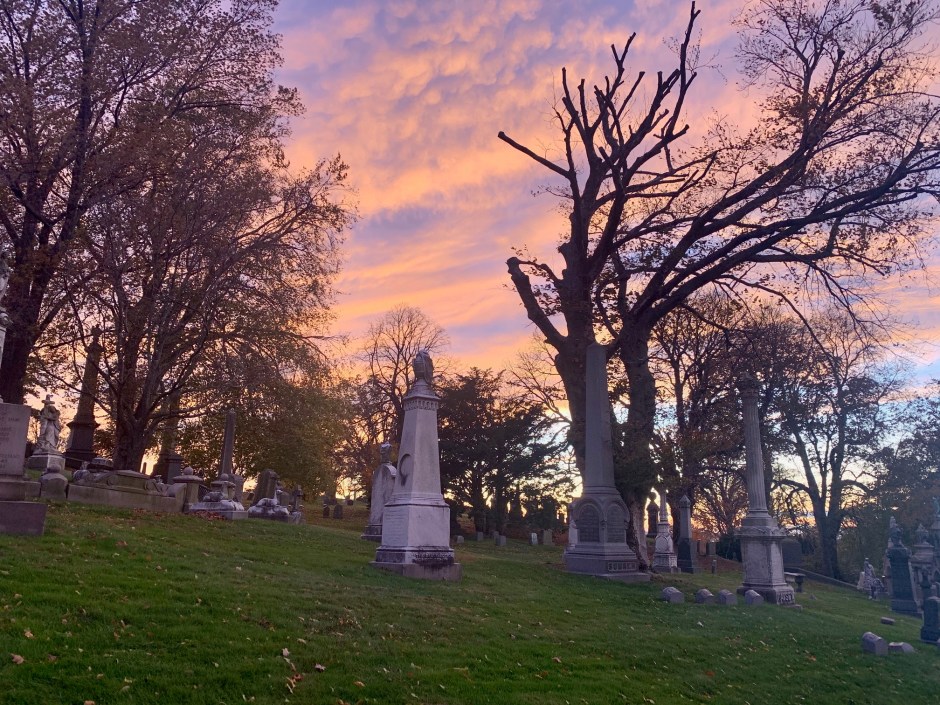
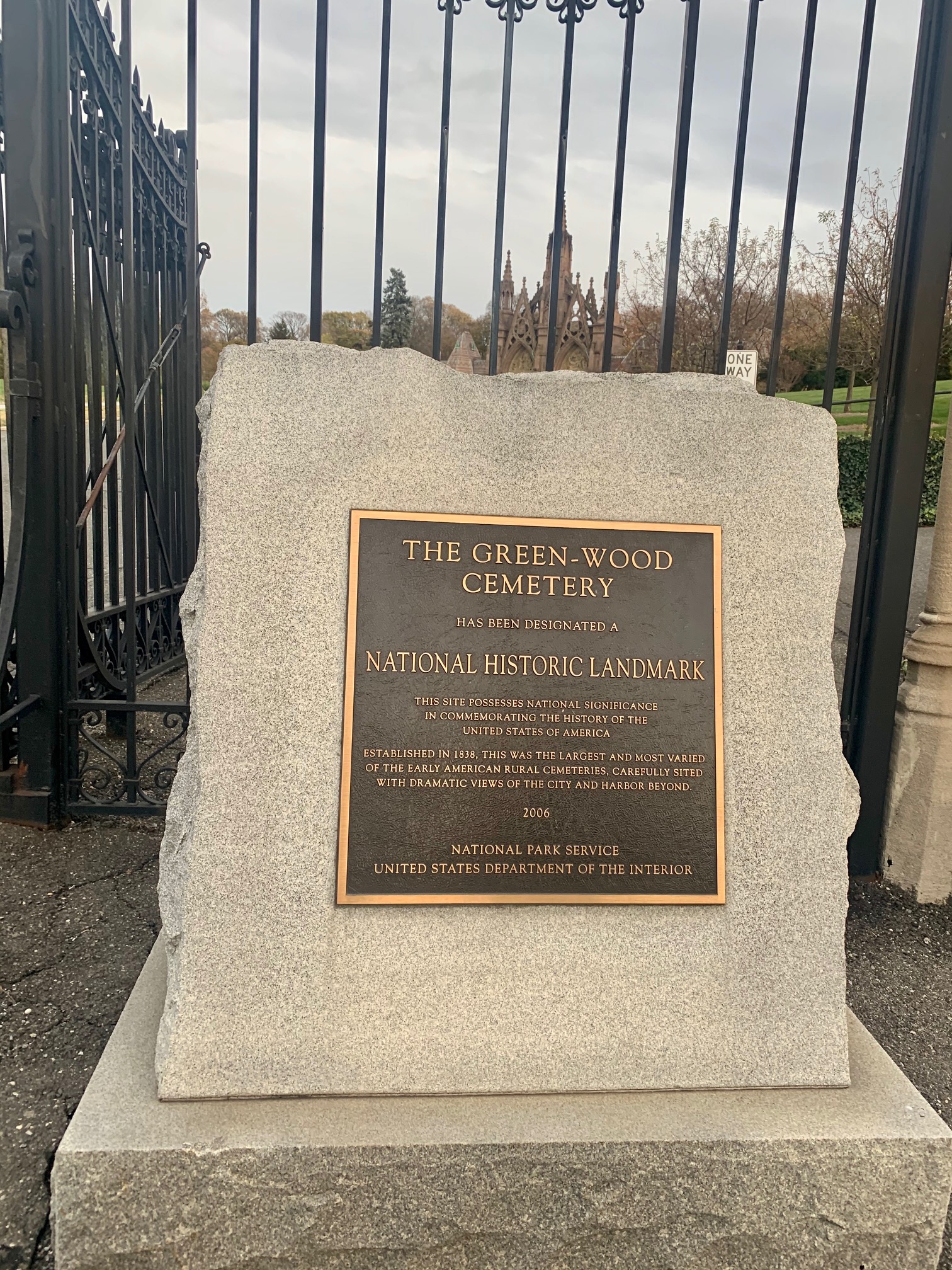
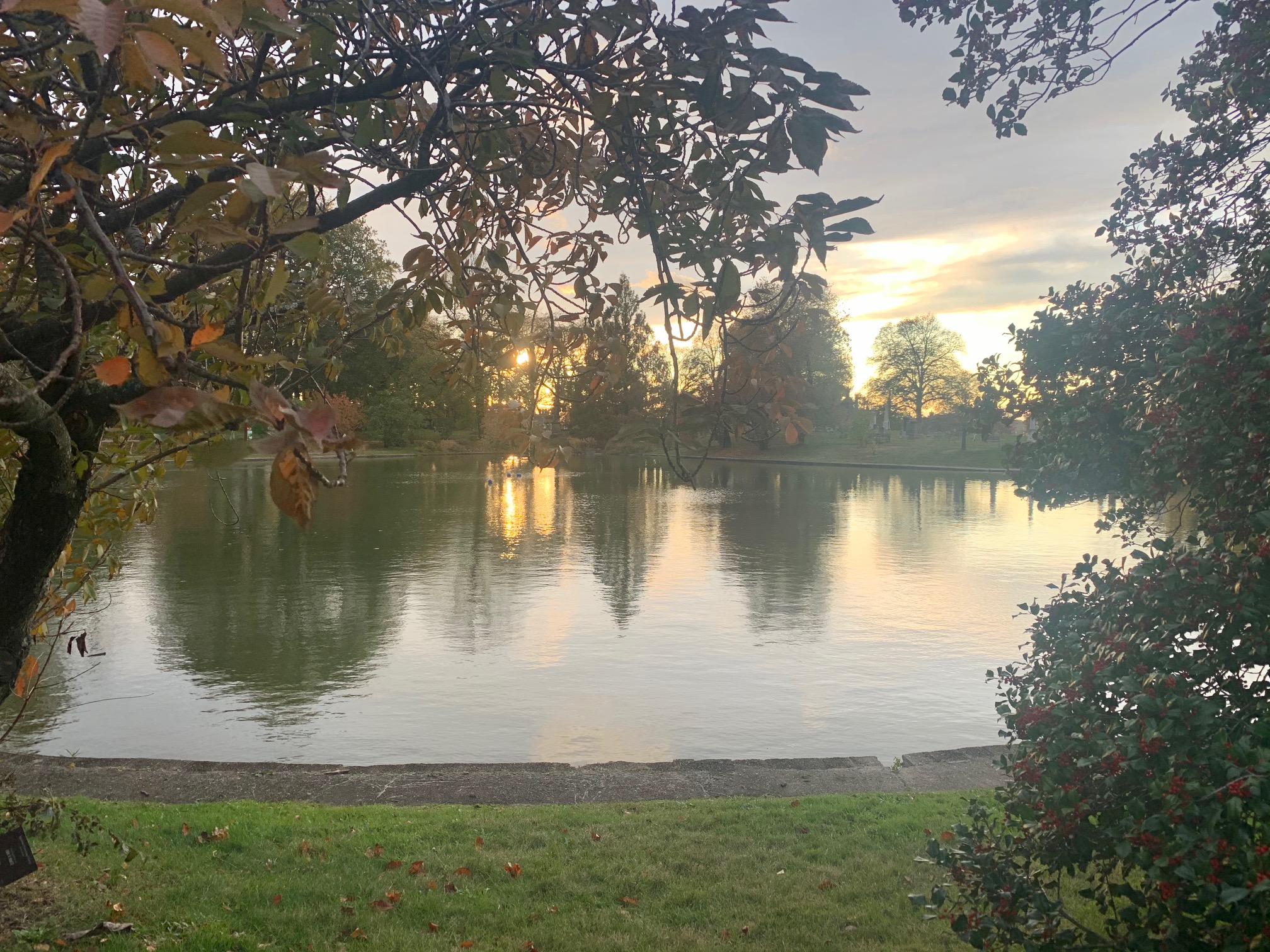
Green-Wood Cemetery in Brooklyn was founded in 1838, and by 1860 was the second most popular tourist attraction in New York State, with over half a million visitors per year (Niagara Falls was #1). Its popularity as a public park spurred on the creation of Prospect Park in Brooklyn as well as Manhattan’s Central Park. It was designated as a New York Landmark in 1966 and became a National Historic Landmark in 2006. Now with over 600,000 “permanent residents,” Green-Wood is still a wonderful place to visit, as I did recently near sunset.

IMG_4362

IMG_4411IMG_4407

It is easy to get to Green-Wood via subway (get off the R at 25th Street in Brooklyn, or get off the N at 36th Street and walk for about 15 minutes). Entering the main gate on 25th Street, it is impossible not to be impressed by the enormous brownstone gates. An escaped colony of monk parrots has lived in and around the gates since the 1970’s, but unfortunately I was not able to spot (or hear) any.

IMG_4373IMG_4374IMG_4401

The cemetery is huge, at 478 acres. It is also really gorgeous and peaceful. Like Prospect Park and Central Park, which it influenced, it is a beautiful place to explore on foot and experience nature while being surrounded by the city.

The monuments reflect a variety of styles. Many are very grand, suggesting that even if you can’t “take it with you,” you can still show “it” off after you are gone.

IMG_4384IMG_4387

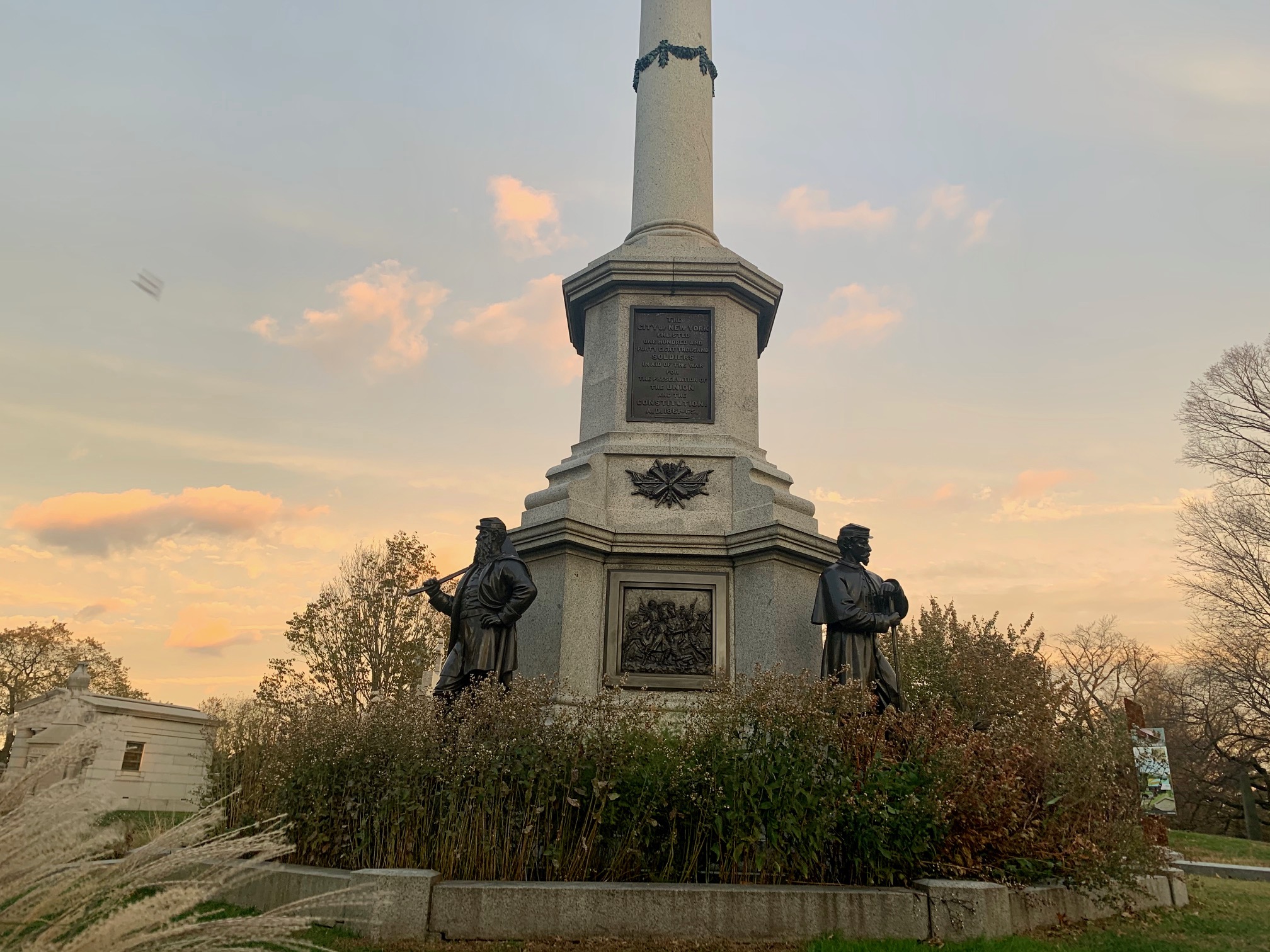
On the site of the Battle of Brooklyn, from the Revolutionary War, there is a memorial to the soldiers of the Civil War.

IMG_4389IMG_4391

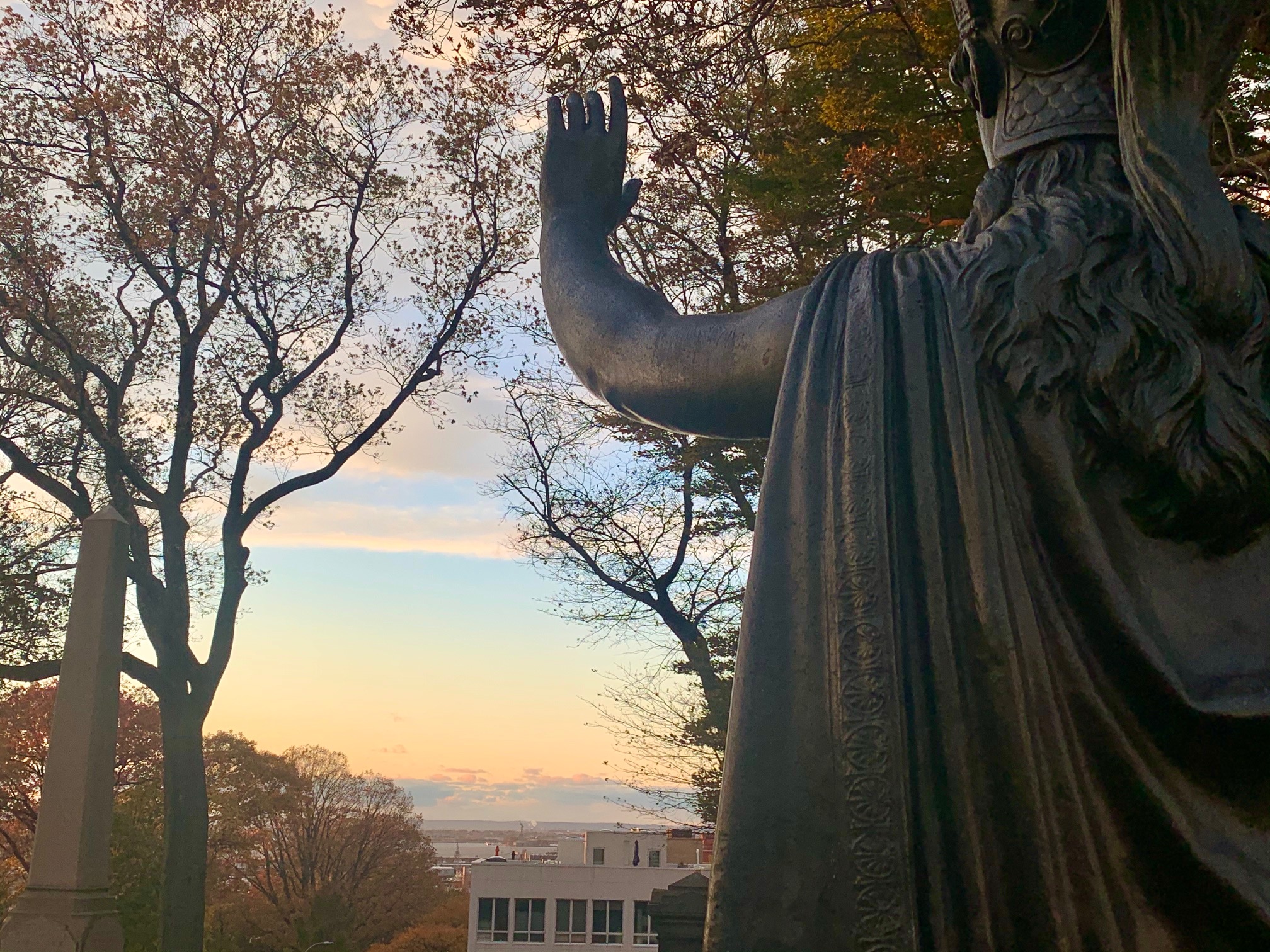
Near the Civil War memorial is a statue of Minerva, dedicated to the soldiers of the American Revolution. She waves out to the Statue of Liberty, which can be glimpsed off in the distance when you look from underneath her arm.

There are many famous residents of Green-Wood, including the artist Jean-Michel Basquiat; Samuel Morse, creator of the Morse Code; and Leonard Bernstein.

There is a public artwork by Sophie Calle in Green-Wood. Visitors to the cemetery are invited to write one of their secrets on a slip of paper and insert into a monument that is inscribed “Here lie the secrets of Green-Wood Cemetery.” As the grave becomes filled with the secrets, the artist returns to cremate them in a ceremonial bonfire. Yes, I put a secret in – and it is a surprisingly satisfying thing to do.

The sunset the evening I was there happened to be spectacular. And from higher vantage points, the skyscrapers of lower Manhattan shimmered in the last rays of the sun off in the distance.

The New York Times in 1866 remarked that “It is the ambition of the New Yorker to live on Fifth Avenue, to take his airings in [Central] Park, and to sleep with his fathers in Green-Wood.” This is certainly a statement of its time (even ignoring the gender specificity), in that many a New Yorker today would rather live in TriBeCa, take airings on the High Line, and be cremated and have their ashes scattered just off Montauk. That being said, Green-Wood still does have plots available if you are interested in becoming a “permanent resident” one day. And for now, it provides a beautiful place to appreciate the life we are currently fortunate enough to be enjoying in this splendid city.

Historic districts of the Upper East Side

In 1964, the original ornate Pennsylvania Station building was torn down to create Madison Square Garden (the fourth version of MSG, the first two being close to Madison Square Park, and the third on Eighth at 50th Street).  The loss of the building created an immediate outcry. (Architectural historian Vincent Scully noted: “One entered the city like a god. One scuttles in now as a rat.”) The next year the Landmarks Preservation Commission was created to prevent the continual loss of buildings of historical significance. Since then, many individual buildings have been landmarked, as well as entire sections of the city that have historical or architectural significance. The Upper East Side has several historic districts, some of which would surprise few (Metropolitan Museum Historic District) and some that are virtually secret to most not living there (Treadwell Farm Historic District, anyone?). I took a walk around these districts, taking photos and imagining what it would be like to live there! Later I will touch on what living in a historic district means to those owning a home there, as well as why even those not living in a historic district might be interested in knowing the boundaries.

Upper East Side Historic District

jM1JQm_jSWCaCsfKiq1Vhw

This is the area most people would think about if asked about a Historic District on the Upper East Side. It covers all of Fifth Avenue between East 59th and East 78th Streets, and extends out from there in an irregular pattern – as far east as almost to Third Avenue between East 70th and East 75th Street, very close to Fifth from East 59th to East 61st, and somewhere between Park Avenue and Lexington Avenue for most of the area. See below for a map of this district:

IMG_3828

On Fifth Avenue, there are a lot of stately limestone coop apartment buildings, and in the side streets, many lovely townhouse blocks.

1Q6lrGWVSAaaS25rNjktUg

This district also has many buildings that would be landmarked as single entities if not part of the larger historic district, like Temple Emanu-El or the Frick Mansion.

For a district to be considered worthy of landmarking, it must represent at least one historic period or architectural style, have a distinct “sense of place” and a “coherent streetscape.” Fifth Avenue is a good example of why this does not mean that every single building within the district would be individually worthy of landmarking. I find that in general the Upper West Side has a more consistent look and feel than the Upper East Side (and I will do a blog post on the Upper West Side historic districts at some point soon).

Metropolitan Museum Historic District

_MfOSGL6Sce7tBKFTwI2-w

Not surprisingly, this district lies in close proximity to the Metropolitan Museum, Fifth Avenue from East 87th to East 86th Street and most – but not all – of the blocks between Fifth and Madison on this stretch of Fifth.

IMG_3830

It has always bothered me that one of the buildings has a fake facade at the top where the supports can clearly be seen if looking from the side rather than from Central Park (see below):

IMG_3825

Carnegie Hill Historic District

442VWnl_RQizlxPY5UNDyQ

Named for the mansion Andrew Carnegie built at Fifth and East 91st (which had the first residential elevator, and now holds the Cooper-Hewitt National Design Museum), Carnegie Hill is a charming residential neighborhood. The historic district covers Fifth Avenue from East 86th to East 98th, and for some streets goes as far east as Lexington Avenue (see below):

IMG_3829

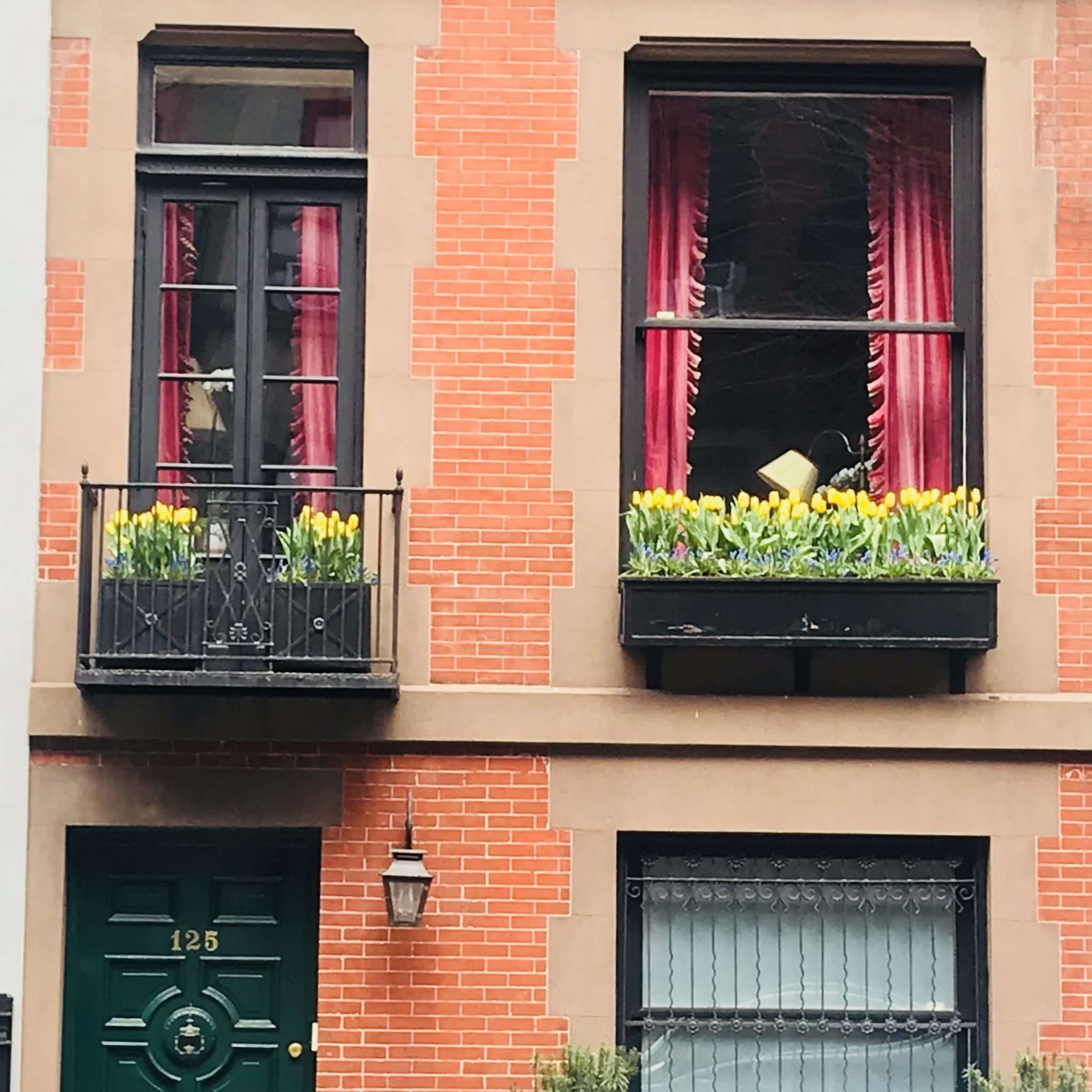
This district encompasses Frank Lloyd Wright’s Guggenheim Museum (where the architecture of the building is arguably the more important work showcased despite steep competition), the Jewish Museum, and buildings ranging from brick and brownstone townhouses to mansions, most constructed between the 1870s and the 1930s. I have a particular fondness for the townhouse blocks, many of which decorate elaborately for Halloween.
ctdo4rUWQx2Bl7vkT-pE4w

Hardenbergh/Rhinelander Historic District

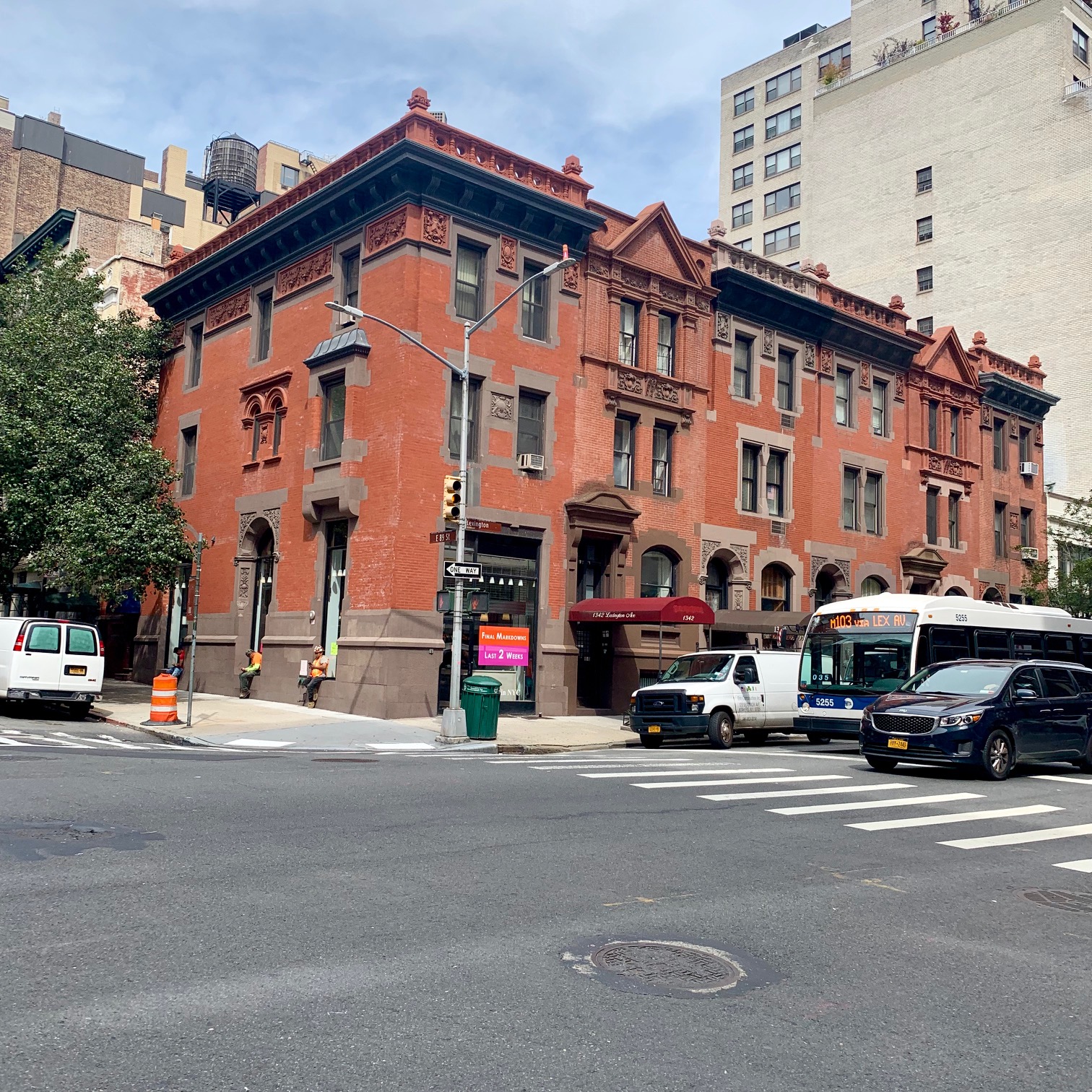
On Lexington between East 89th and 90th Streets, and part of the block between Lexington and Park on East 89th, there are seven houses all constructed in 1889 for William C. Rhinelander (a real estate developer!). The same architect who designed the Plaza Hotel and the Dakota apartment building on Central Park West, Henry Hardenbergh, is responsible for these houses.
IMG_3574IMG_3575

Treadwell Farm Historic District

Even people who live near this historic district, two short sections of blocks between Third and Second Avenues, and East 60th and East 62nd, may not know this exists. These Italianate row houses date between 1868 and 1875, and the region was named for the Treadwell family, who were landowners here between 1815 and the 1860s.

IMG_3550IMG_3552IMG_3553IMG_3554IMG_3555IMG_3556IMG_3557

Henderson Place Historic District

img_4492

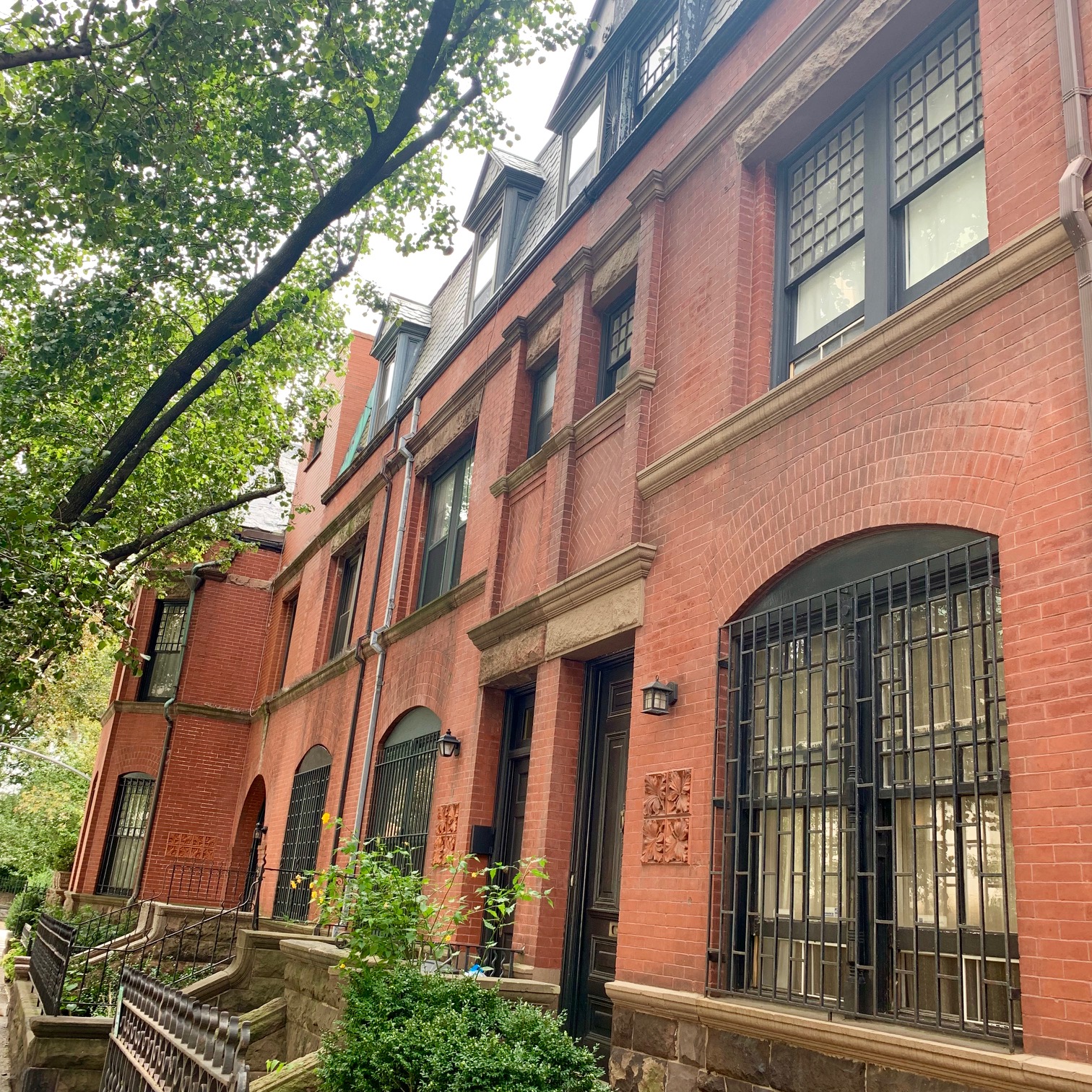
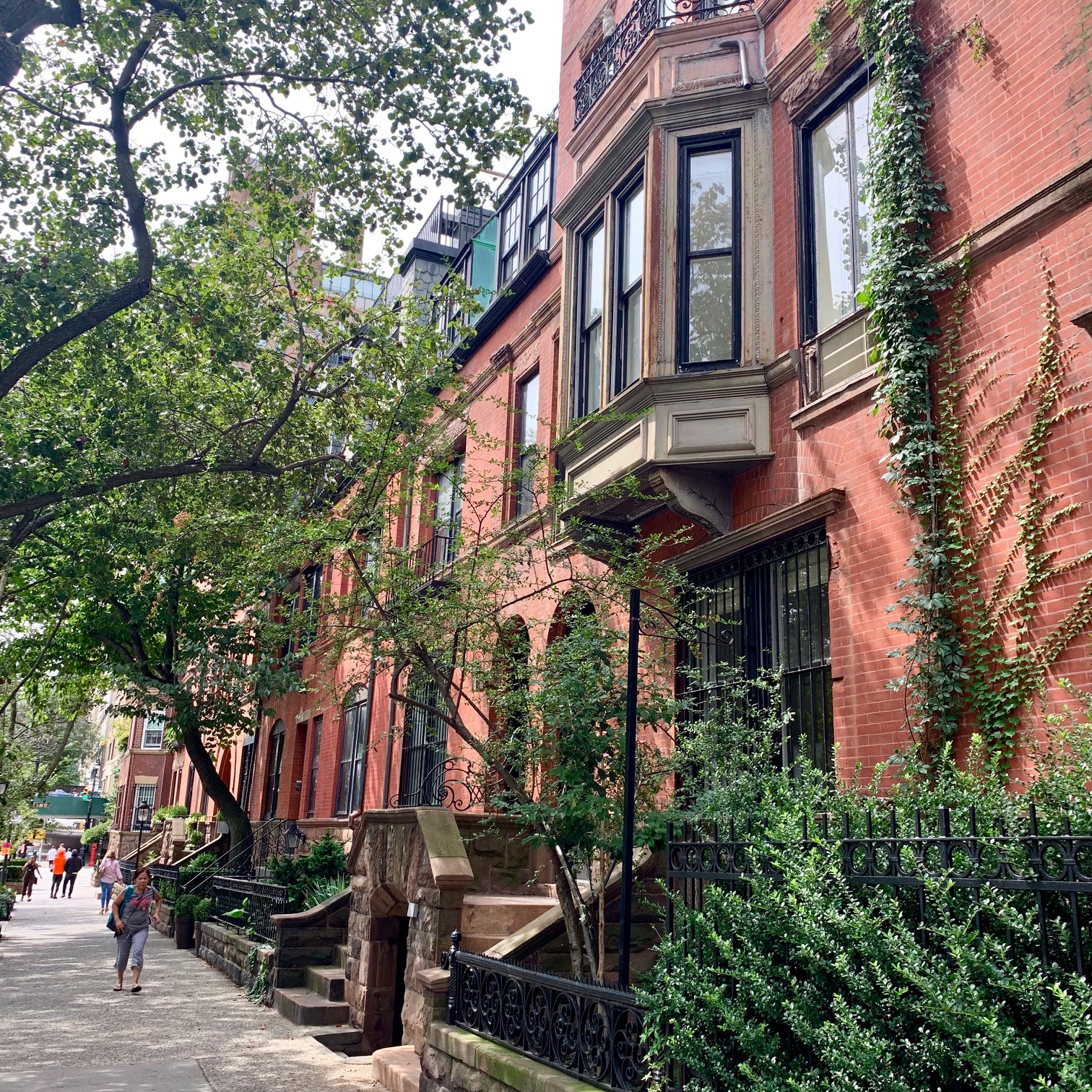
I have such a soft spot for the houses on Henderson Place, East End Avenue between E. 86th and E. 87th. When my daughters were going to a nearby school, I would walk them past these charming three story Queen Anne townhouses and dream of being able to live in one of them! That never happened, but I still contend these blocks are some of the most uniquely romantic and lovely in all of the city. They are across East End Avenue from Carl Schurz Park, the peaceful environment adding to the quiet magic of these homes. I mean, just look at them! (*swoon*) I once wrote a love letter to this part of town after a snowstorm (see here).
IMG_3576IMG_3577IMG_3578IMG_3579

ZOb7Q1_yQWOi1JIT3kkKyA

Landmarks outside of Historic Districts

You might be surprised at how many individually landmarked buildings there are on the Upper East Side apart from these districts – currently, there are 48! Invididual landmarks are judged by age, integrity, and significance. These range from apartment buildings like Manhattan House (200 E. 66th), the Bohemian National Hall (321 E. 73rd Street), the Astor House (now home to the Junior League, 130 E. 80th Street, see photo below), or individual townhomes like 160 East 92nd Street.

IMG_3716.jpg

So if you live in a historic district, what is the impact on your home? Data suggest that landmarked districts offer higher property values over time, insulation from extreme economic fluctuations, stabilization of residence, more community involvement, and possibly increased connections among neighbors. There are some restrictions as well – for instance, you need permission to do any exterior work on a building in a landmarked district, and to show that you are not changing the exterior in a way that negatively affects the overall look of the district. However, renovating a home in a historic district can make you eligible for a significant New York State Homeowner Tax Credit.

Even if you don’t live in a historic district, if you live near one (or near a landmark outside a historic district), it can be useful to know the restrictions. For instance, if you are near the Treadwell Farm Historic District in one of the highrise buildings with an eastern exposure, it is good to know that it is highly unlikely that anything will be built that will block your eastern light.

Generally speaking, I am a fan of New York City’s constant desire to change, and am more accepting of the constantly evolving skyline than some (see a previous blog post about this here). That being said, our city would be lessened without these (as Landmarks Preservation describes them) “areas of the city that possess architectural and historical significance and a distinct ‘sense of place.’” New York City is enriched by the old-world charm of Greenwich Village, the residential tranquillity of Park Slope, and the majestic towers of Central Park West – but also (at least in my opinion) by such new developments as Hudson Yards, Waterline Square, and the revitalized area around One World Trade. Just as our city populace is strengthened by all our differences, the architecture of our city is strengthened by our commitment to protect historic districts of importance while still encouraging new development and new opportunities.

Hello, Hudson Yards!

In October of 2014, 4 1/2 years ago, I wrote a blog post about a new neighborhood that was beginning to be built over rail yards west of Penn Station, Hudson Yards. In it, I concluded, “To walk in Hudson Yards is to be present at the birth of a new neighborhood, one that seems limitless in terms of how it will change the landscape of New York City.”  In October of 2017, I was able to take a hardhat tour of the site, well on its way but still with far to go before being open to the public (see below for a few photos from that visit).


image_36830970163_oimage_23647698718_o

A few days ago, in March of 2019, I was able to spend an afternoon in Hudson Yards only a few days after its official opening. Hudson Yards is not even midway to completion, and after following this development for so long, I thought there was a good chance I might be underwhelmed or (worse) disappointed. And yes, yes, yes, I read the NY Times review, and was told by the New Yorker that there is no good reason why any resident would visit Hudson Yards – but I would much rather experience something and make my own judgements! Spoiler alert – I enjoyed Hudson Yards far more than I had expected and see myself spending a lot of time here soon and in years to come. If you don’t understand Hudson Yards or dislike the constant change in NYC’s skyline and neighborhoods, check out my photos and experience – perhaps you will then also go and make your own decision. Like it or not, Hudson Yards is here and is going to be a major player in this city.

IMG_E1557

When approaching Hudson Yards, it’s hard to miss. Even this half, Hudson Yards East, of the total planned development is still partially under construction.

IMG_E1559

I walked to Hudson Yards from Midtown West, but an extension of the 7 subway line lets you off there if you are coming from elsewhere in the city.

IMG_E1561

The focal point of the development is the Vessel, a public sculpture created by Thomas Weatherwick. I will describe the process of exploring it later in this post. The building just behind the Vessel is the Shed, a performing arts venue that is being curated by Alex Poots, former Artistic Director of the Park Avenue Armory. The Shed is creatively designed so that it is a flexible space suitable for many different types of events.

IMG_E1563

The Shops at Hudson Yards are extremely welcoming, with high ceilings and wide walkways. I saw many restaurants I am interested in trying.

And so many shops, including smaller ones like Dylan’s Candy Bar and Li-Lac Chocolates:

The most famous retail tenant is the first Neiman Marcus in New York City:

The experience inside the Shops is very pleasant. There were lots of people (surprisingly so, just a few days after opening) but enough space not to feel crowded.

Eventually there will be the highest open-air observatory in the Western Hemisphere here, called the Edge. I will be there when it opens (likely next year)!

IMG_E1578

Leaving the Shops to climb the Vessel, I had a look at the Shed and can’t wait to start experiencing art here.

IMG_E1566

The Vessel (wisely, I believe) limits the number of people entering at any given time by requiring timed tickets, but they are free. I reserved mine in advance here but they do save some same-day tickets as well that can be picked up near the Vessel. However, if it’s a busy time, your ticket might be for a few hours from when you pick it up.

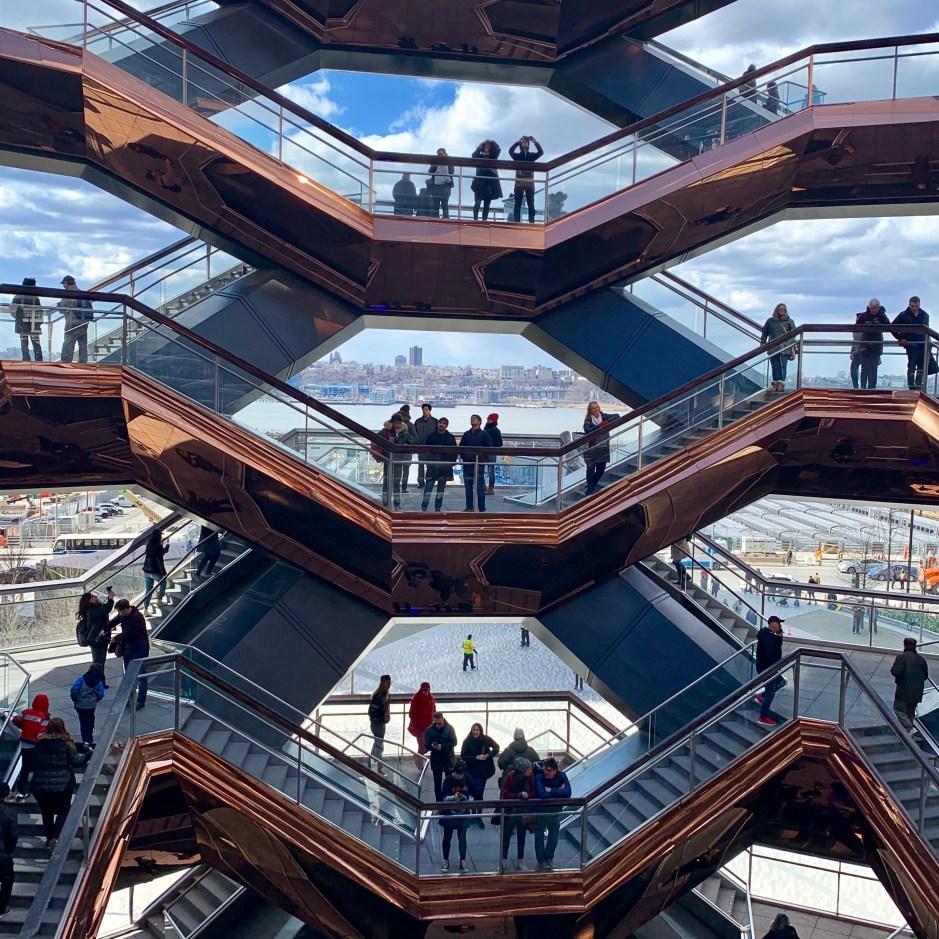
The Vessel is a concrete and copper outdoor sculpture with 2500 steps and 154 flights of stairs, eventually reaching a height of 16 stories. There is an elevator and ramps to make it accessible, but if you are able to explore it by foot, I recommend doing so. The stairs don’t seem too intense since they are short flights and you keep stopping to look at the views (however, you must wear comfortable shoes, and my calves were sore the next day despite not thinking it had been too bad while on the Vessel). It’s also not possible to do a direct trip, because the sections keep going up and down on each level. What I did was to go up (back and forth) on the Hudson River side to see those views, walk around the top to see all the views from there, and then walk back on the east side of the Vessel to see different views from that side.

The reflective quality of the copper led to some interesting photos. I predict that eventually everyone will be taking selfies of their reflection like you see people do in Anish Kapoor’s “Cloud Gate” in Chicago’s Millennium Park.

What I found most interesting was the way the pattern of the sculpture kept changing at different levels.

Even the pattern of people on the sculpture constantly changes so that your experience of what the Vessel looks like is fluid. I look forward to seeing it at different times of day (sunset or evening would be very interesting) or different weather patterns. The Vessel is open in all kinds of weather, and I noticed that the steps were rough concrete to make them safer during rain or snow.

IMG_E1635

Since I am a real estate agent, I have also been to the sales offices at Hudson Yards. which are amazing. There is a 360 degree movie inside a room that really gives you the feeling for the neighborhood as it develops, for instance. 15 Hudson Yards is already closing apartments, and 35 Hudson Yards has just begun selling (the developer of Hudson Yards likes this building so much he will be living in the penthouse when it is completed). There are also two rental buildings available, 1 Hudson Yards and Abington House. From Hudson Yards, you can walk the High Line to the Whitney Museum, one of my favorite strolls in all of the city. I thought when on the Vessel that the people-watching from some of these apartments will be a little like some of the apartments elsewhere on the High Line, like the fabulous Zaha Hadid 520 West 28th. From others you will have spectacular city views of the Empire State or One World Trade buildings, or Hudson River views (from the larger and higher apartments, you can have them all!). Reach out to me if you would like to check out apartments at Hudson Yards. My belief is that this entire part of town will appreciate in value due to this development, much as the creation of Lincoln Center transformed its neighborhood

So go to Hudson Yards and decide for yourself what you think. It’s often difficult for people to adjust to change, but the constant drive for metamorphosis is what has made, and continues to make, New York City the vibrant evolving place to live that it is.

New York City Holiday Markets

New York City has a different kind of beauty in every season, but it never shines as bright as during the holidays. Many other years I have posted about the yearly holiday decorations (see here and here and here and here for instance!) but this year I wanted to shine a light on the many holiday markets that spring up, roughly from Thanksgiving to New Year’s. While it is very easy to find gifts for your loved ones on Amazon, I guarantee that the array of small vendors with unusual gifts will enable you to find something unique for everyone on your list. And while there is a certain level of comfort in shopping online in your pajamas, shopping in a NYC holiday market is an experience that surrounds your senses with holiday spirit. I can’t loop the jaunty sounds of Vince Guaraldi’s “Linus and Lucy” theme, or provide the scents of hot cider and spruce candles, but I can show you some of the sights of the markets that brighten the city this time of year.

Columbus circle 1

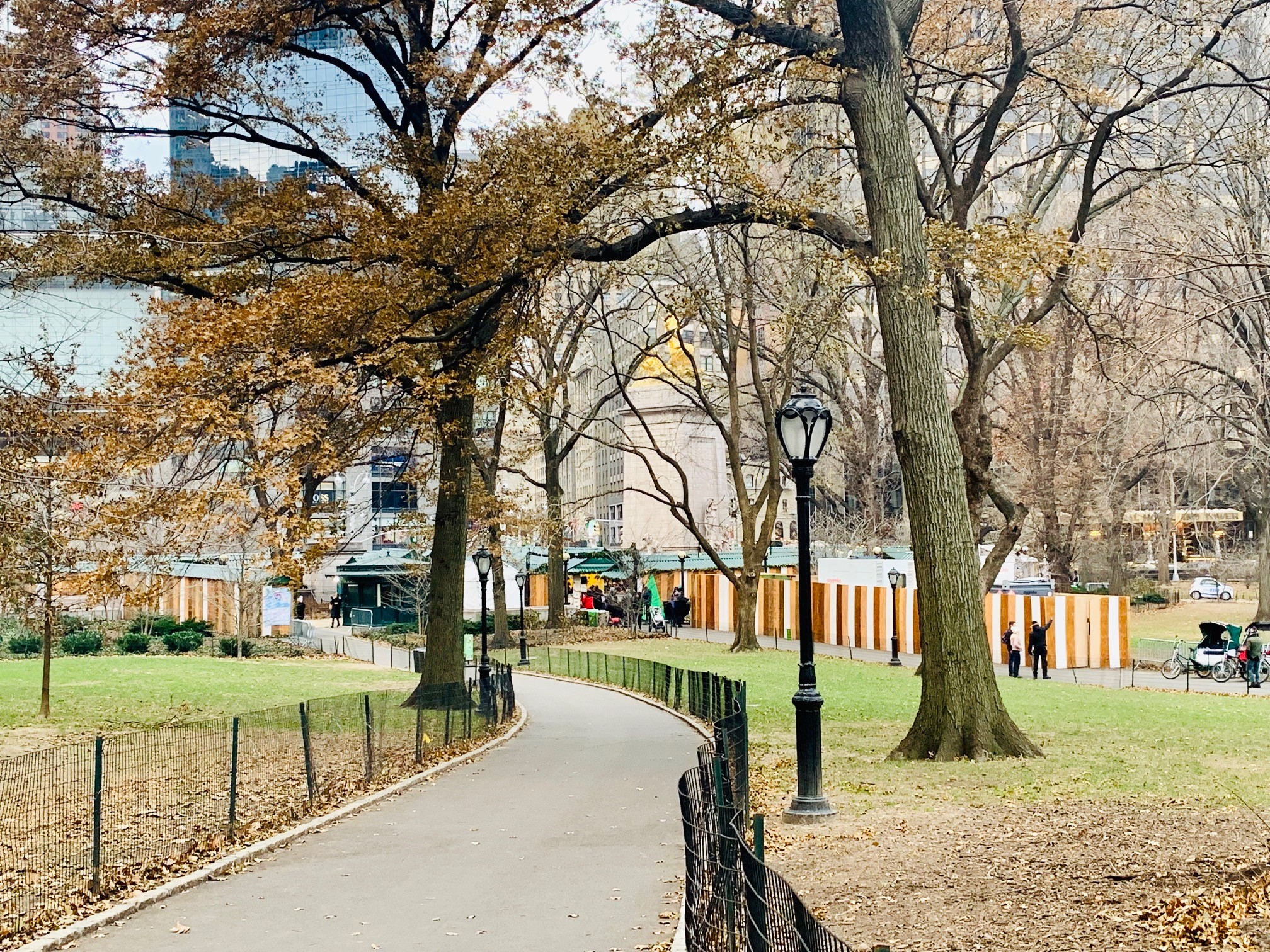
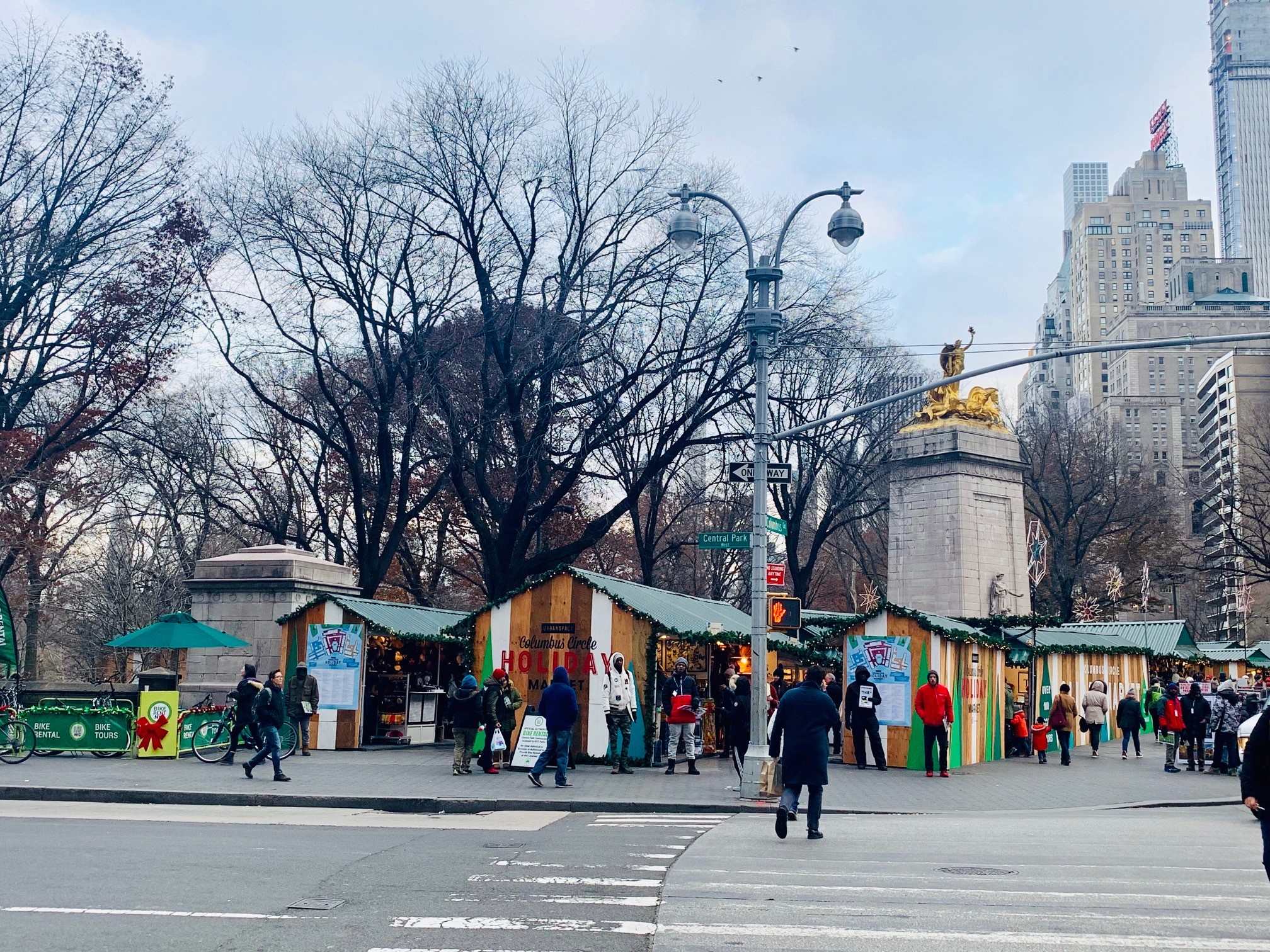
Central Park is without a doubt my favorite place in all of New York City (see a few previous love letters here and here and here and here!) and if you are walking out of the park in December toward the southwest corner, you begin to spy the stalls of the small but atmospheric Columbus Circle market.

CC5

Limited by its geography in size, this market is on the smaller side but has lots of interesting options.

CC4

The great thing about these markets is that you don’t go looking for a specific item, but as you browse, something may just catch your eye as a perfect gift for a particular person (a unique and beautiful wine stopper for the oenophile in your life?).

CC3

These ornaments make a terrific souvenir for visitors to the city,  but can also be personalized to give as a gift to the host or hostess of the holiday party you are heading to during this month.

CC2

It’s hard to beat the visual drama of this market, with Central Park on one side and the towers of the Time Warner building rising on the other.

GC 2

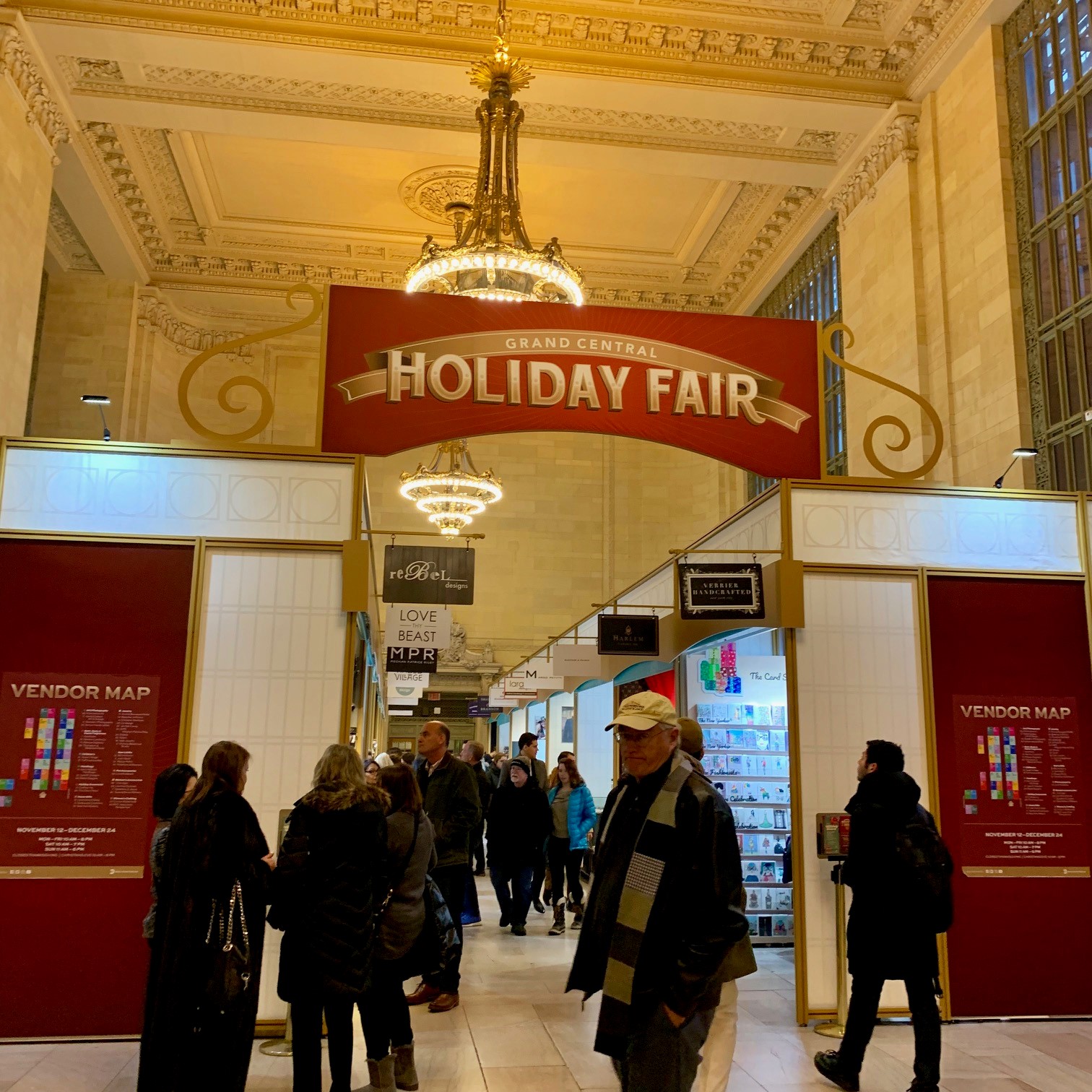
Another market limited in size by the constraints of its location is the one in Grand Central Terminal.

GC 1

This one is just off the 42nd Street side of Grand Central, or if you are inside the main hall, just off that towards 42nd Street.

GC 3

If you go to a lot of these markets, you will see a few repeating shops, but surprisingly the vast majority are one-of-a-kind. For example, the Harlem Candle Company, which I love, is only at the Grand Central market. For that matter, they have no storefront, so the only way to smell these candles based on the Harlem Renaissance is to find them at this market (most of the year they are online only).

Brooklyn3

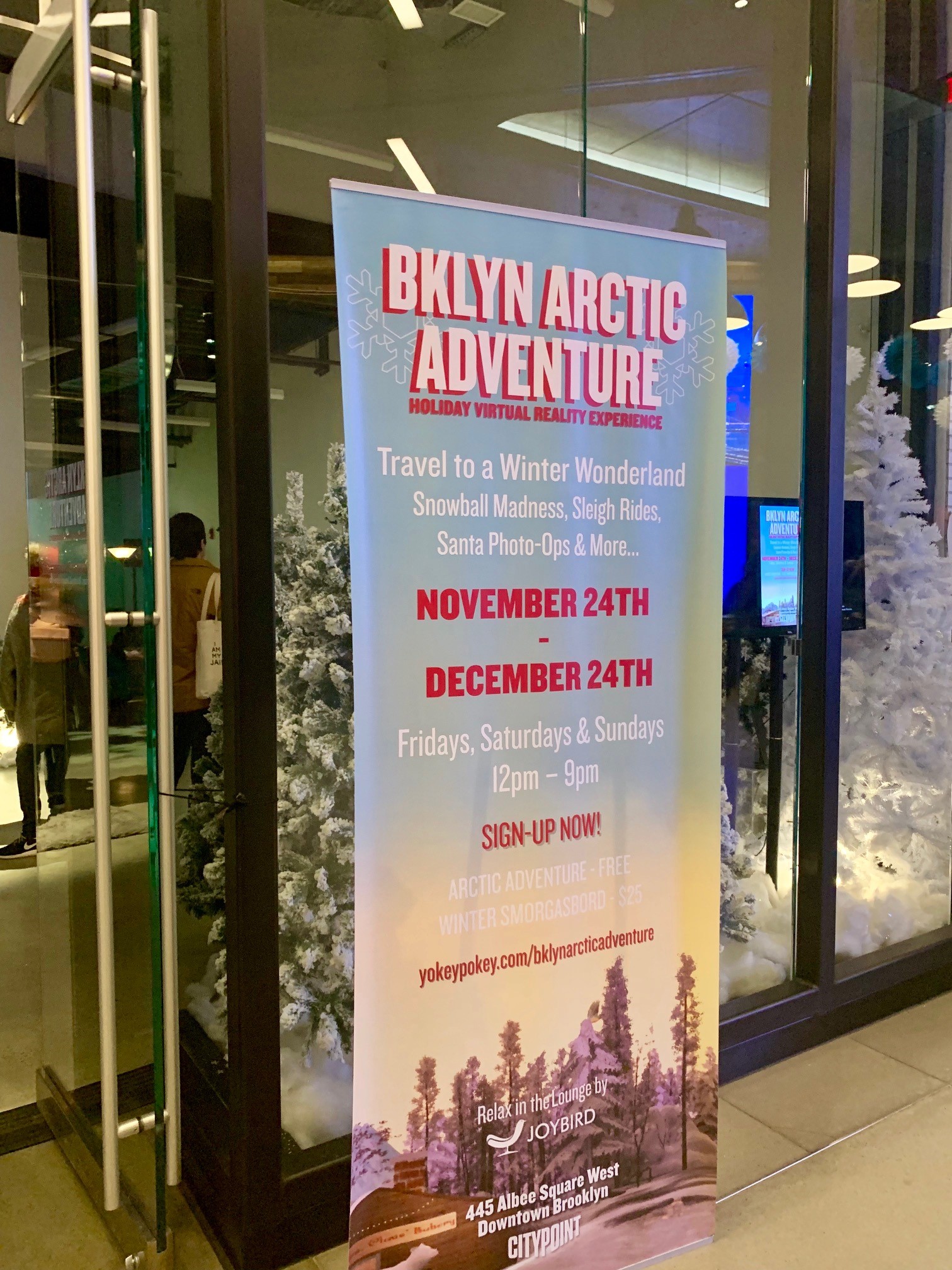
Some markets only run for a few weeks, like the market at CityPoint in Brooklyn. The Arctic Adventure popup is throughout the season, but for a few weekends there is also a crafts-based market.

Brooklyn 2

The market here has some vendors that are Brooklyn-based and only found at this market.

Brooklyn 1

An indoor market, while less scenic, is certainly potentially more comfortable (I was here on a cold and rainy day!). And if at CityPoint, be sure to head downstairs to the DeKalb Market for lunch or dinner.

US 1

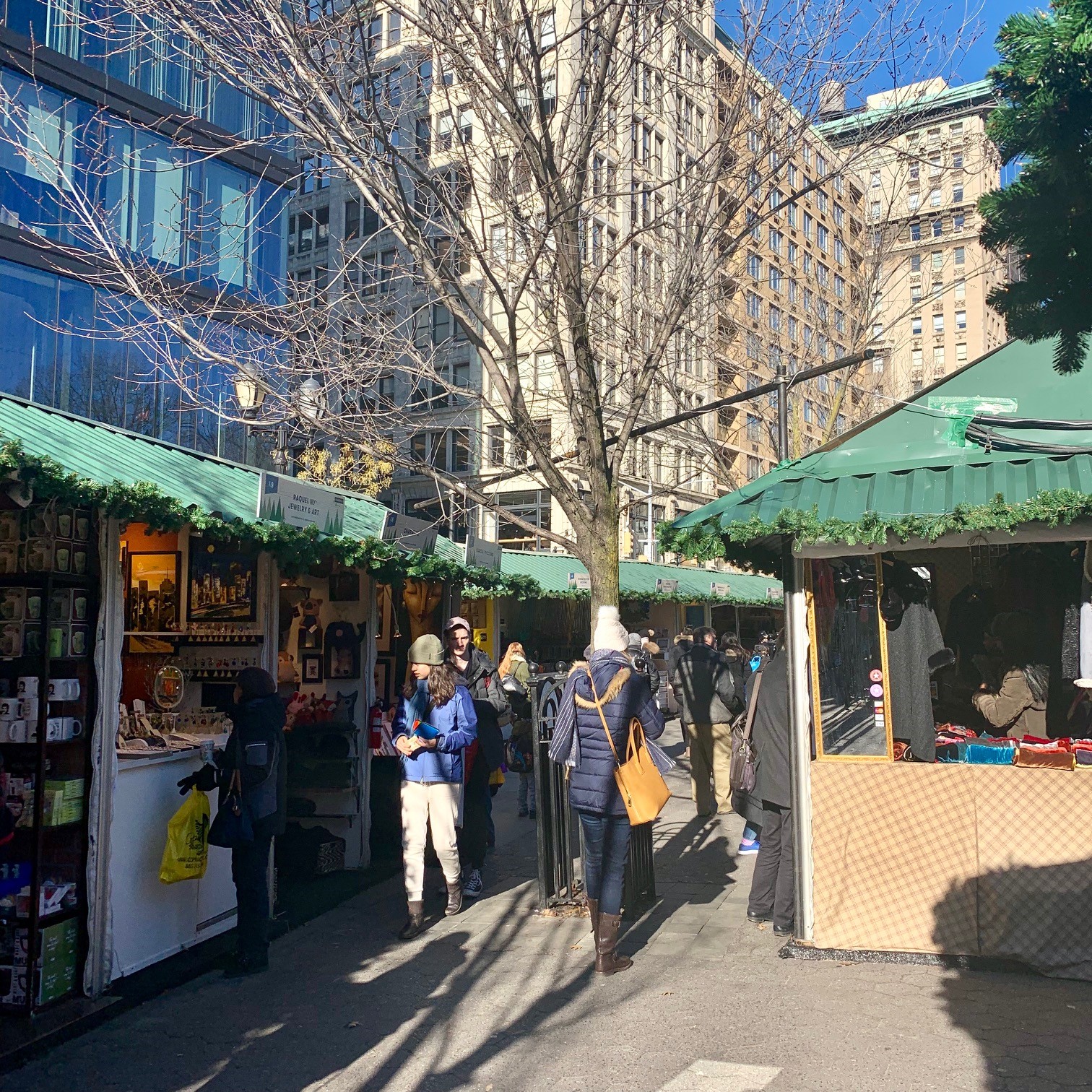
Now we are moving on to one of the larger holiday markets, the one in Union Square.

US 5

Easily accessible from multiple subway lines, this market is worth a few hours of your time, if you can spare it.

US 3

My recommendation for this market, if you can, is to go on a weekday. Seen here, it will still be busy but you will be able to get around without too many crowds.

US 2

Again, this is a place to wander and wait for the right gift to show itself. This stall sells kits for someone to make their own beer, or cheese, or sourdough pretzels.

US4US6

At all of the markets, there will be some vendors selling hot cider, or cocoa, or holiday treats to eat.

US7

I love seeing the Empire State Building off to the north through all the stalls.

BP6

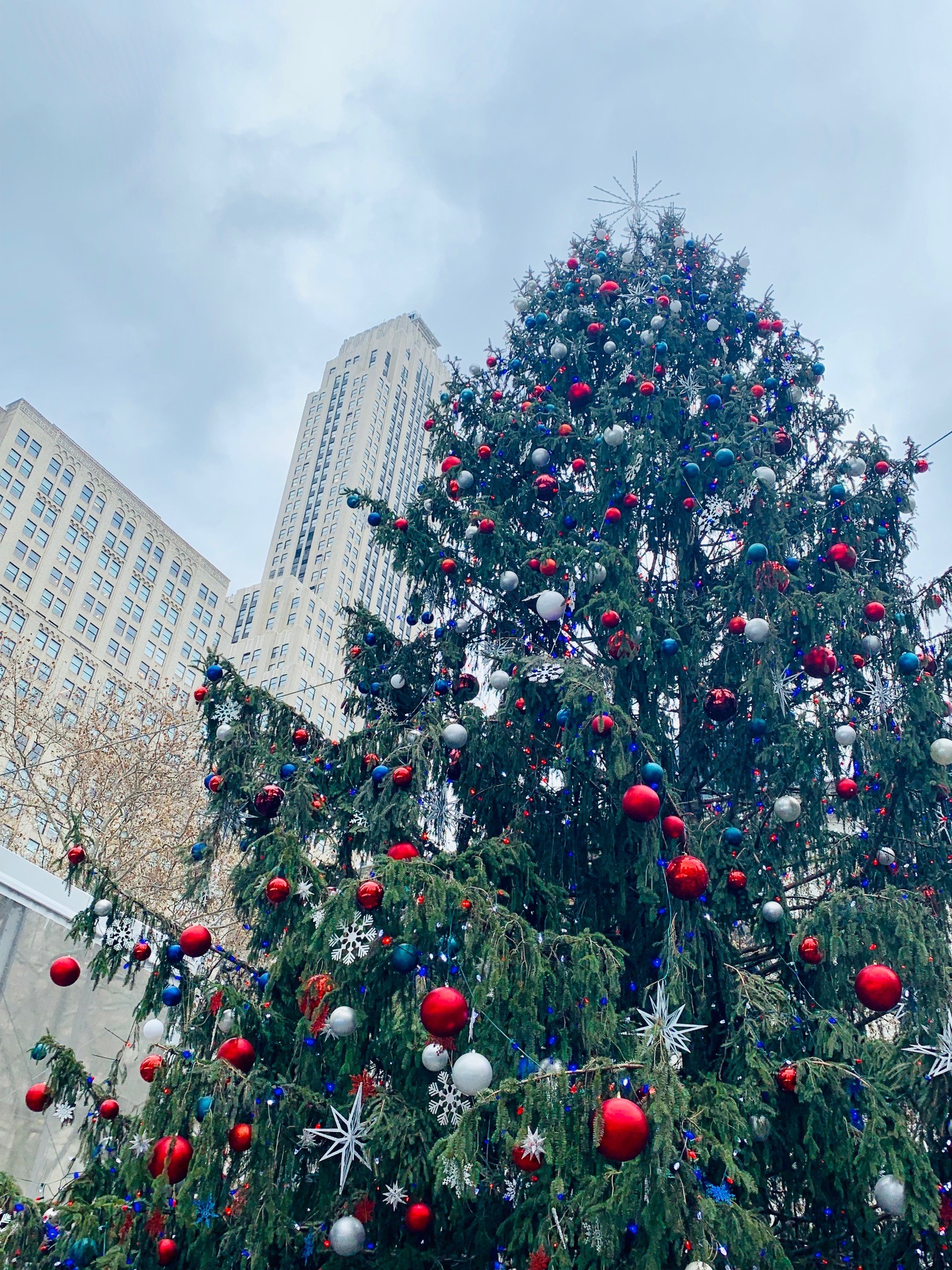
Finally, I come to the Bryant Park Winter Village, perhaps the largest and most elaborate of the markets. There’s an ice skating rink under a large Christmas tree. Skating itself is free although skate rental does involve a cost.

BP10

Just behind the NYPL on Fifth and 42nd Street, blocks from Times Square, this market is a small-scale delight surrounded by the heart of large-scale Manhattan.

BP9

There are some very unusual shops here – this is from a very luxurious resort and spa in Montauk.

BP8

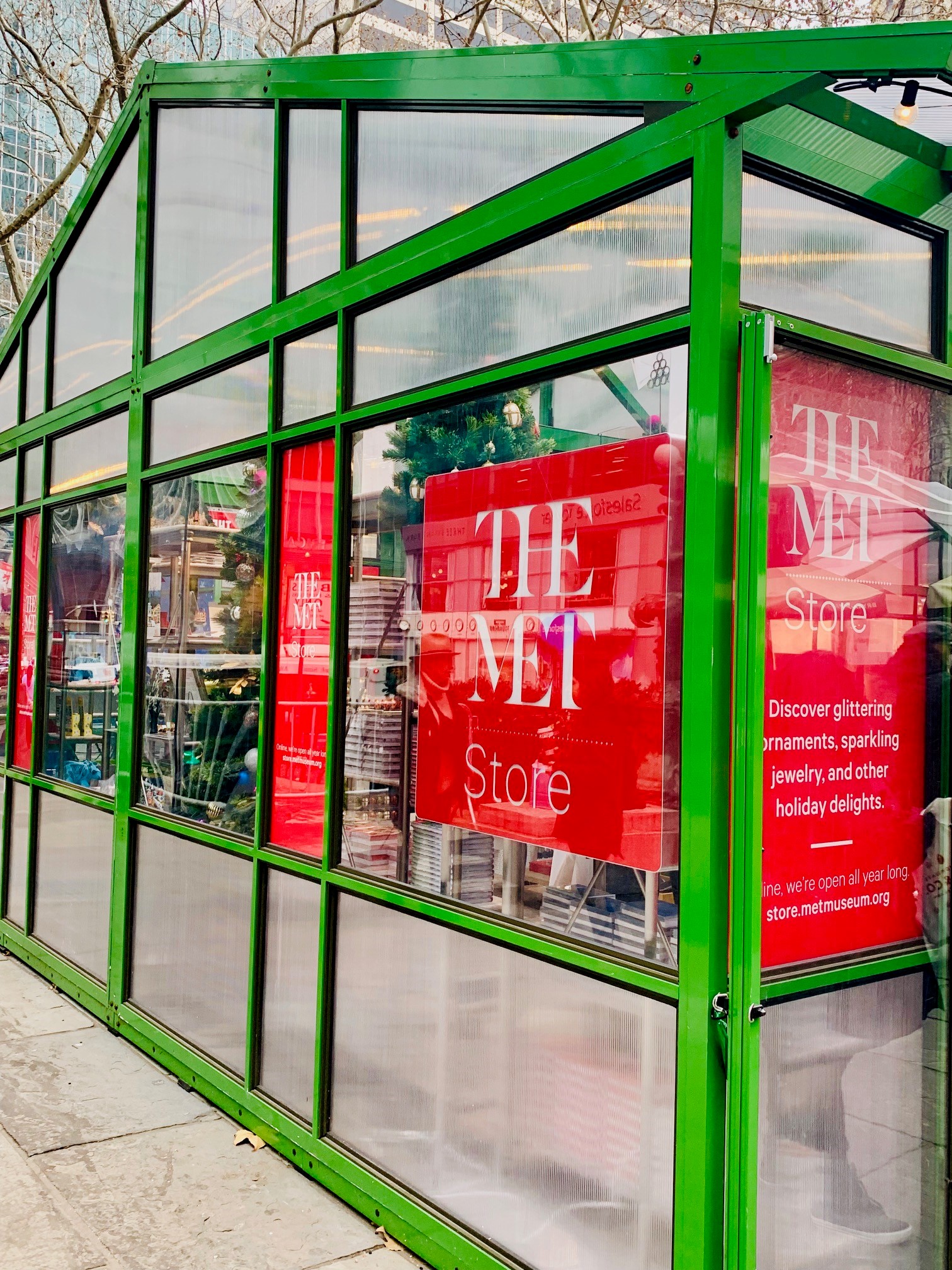
An actual outpost of the Metropolitan museum gift shop – the only one I’ve seen other than the ones in the museums.

BP5

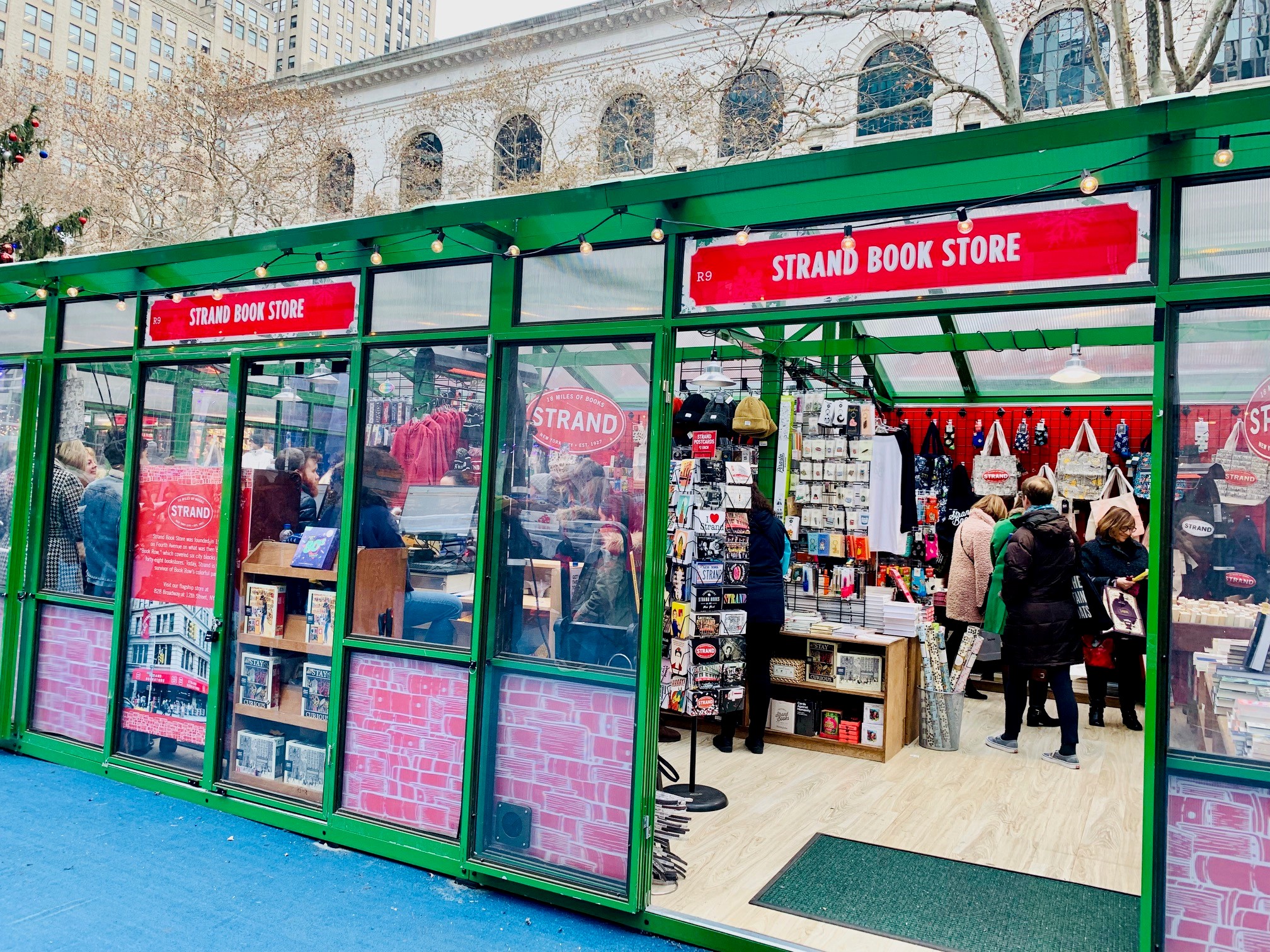
Similarly, to see an outpost of the famous Strand bookstore is a wonderful surprise.

BP4

It’s hard to resist a stop of the Santa Claus Cafe, although at Bryant Park there are multiple options for food and drink, including a bar area to warm up with something alcoholic.

BP3

Imagine, you can even visit the North Pole before taking in a Broadway show a few blocks away!

BP2

As with the Union Square market, going on a weekday, but not during lunch or after work hours, will net the most space to walk around. However, this market is so large and well laid out that even in a crowd it doesn’t seem as overwhelming as the meandering Union Square can.

BP 1

Aaah, New York City during the holiday season. In the immortal words of the sign seen at Bryant Park Winter Village, “this place does not suck.” I could not agree more.

BP7


Goodbye to Glaser’s Bake Shop, the heart of Yorkville

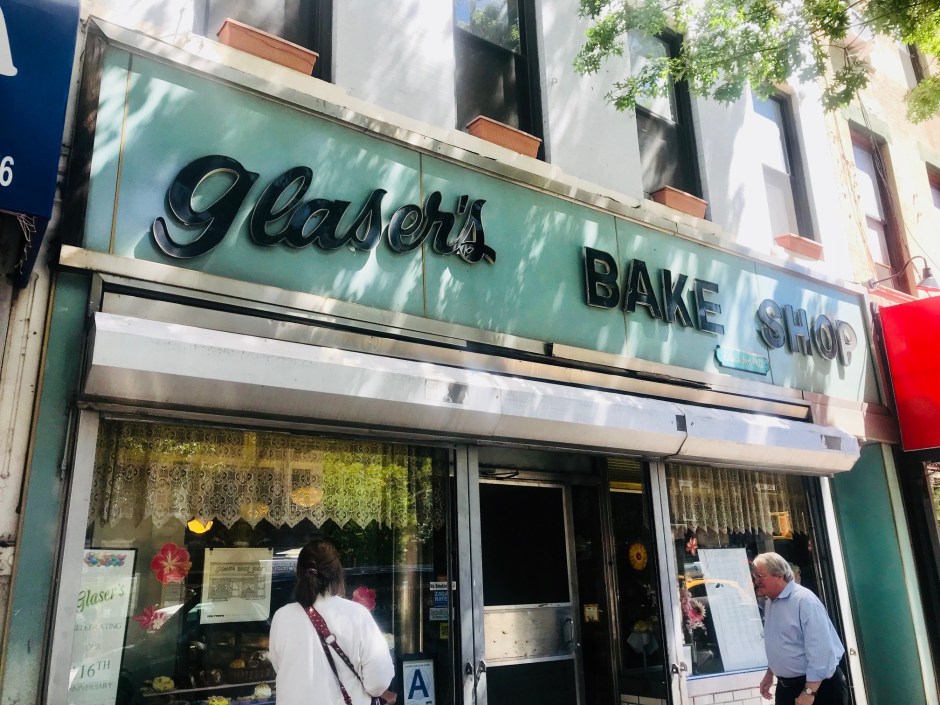
On Sunday, July 1, Glaser’s Bake Shop at First Avenue and 87th Street in Yorkville will close its doors for the final time. Opening on April 2, 1902, Yorkville was still a sleepy German-American enclave at that time, and the shop was primarily created to produce and sell bread. Over the years, as Manhattan evolved and Yorkville changed, Glaser’s adapted as well to be known throughout the city for its pastries, cookies, cakes, and pies. Living a block away for 13 years, my three daughters simply called it “the bakery.” When it ends, it is truly the end of an era in this neighborhood, and I pay tribute to it with this photo essay.

Glasers2

It was quite a shock when this sign appeared outside Glaser’s. Apparently the entire building the bakery is in is going to be sold and re-developed.

Glasers3

The display case facing First Avenue has always rotated for seasonal displays. Their gingerbread cookies in December will be missed, as well as their more unusual items such as bread with a colorful Easter egg in the center in the spring (Italian Pane di Pasqua) or King Cake for Mardi Gras. If you were looking for decorated cookies for Valentine’s Day, July 4th, Halloween, or Thanksgiving, Glaser’s always had a unique assortment.

Glasers4

The pastries offered varied day-to-day depending on what they had made and not sold out of. Everything was baked in house.

Glasers5

Displays inside the store reference its historic past.

Glasers6Glasers7

Glaser’s birthday cakes could be ordered and personalized in advance, and innumerable children growing up on the Upper East Side featured these at their parties.

Glasers8

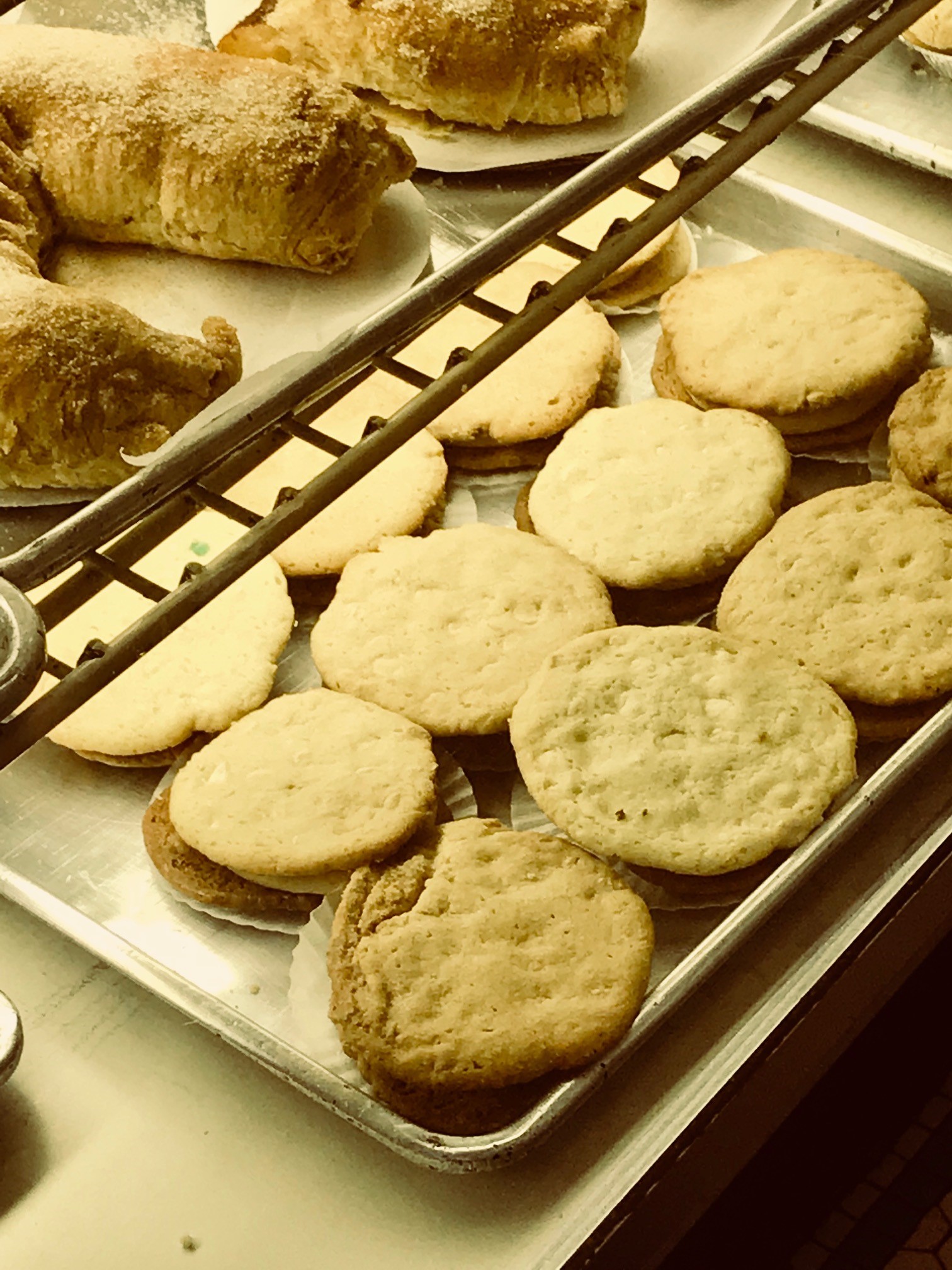
“Whoopie pies” were one of Glaser’s more unusual offerings. If you can’t decide between a cookie and a cupcake, why not try cookies with icing in the middle?

Glasers9Glasers10

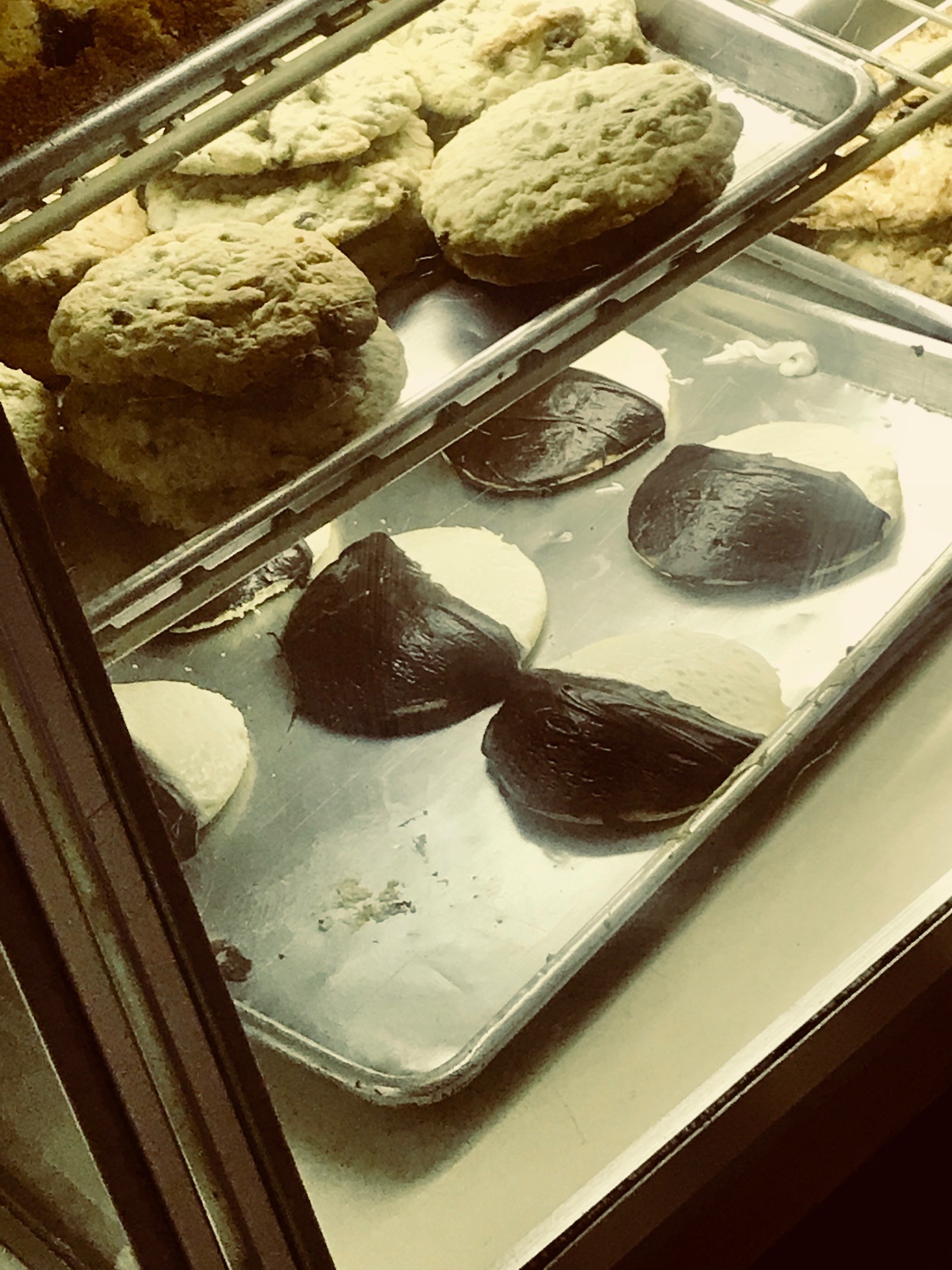
Glaser’s was perhaps most famous for it’s iconic NYC black-and-white cookies.
Glasers11

Cake donuts and danishes never disappointed.
Glasers12

The top row of this display shows the two kinds of brownies – with nuts or without (but with chocolate chips). If you happened to walk past Glaser’s when these were baking, the delicious chocolate scent would follow you for most of the block.

Glasers13

You could see past the displays right back to the baking area. An old clock reminds us, “The time is NOW!”

Glasers14

Glaser’s closes July 1, 2018. Get there before it closes if you can – Saturday mornings the line can be out the door. Closed Sundays and Mondays, cash only. When Glaser’s is gone, I feel that a lovely chapter in the history of Yorkville will be ending. Thanks for the memories, Glaser’s – and for delicious treats that were like traveling back in time.