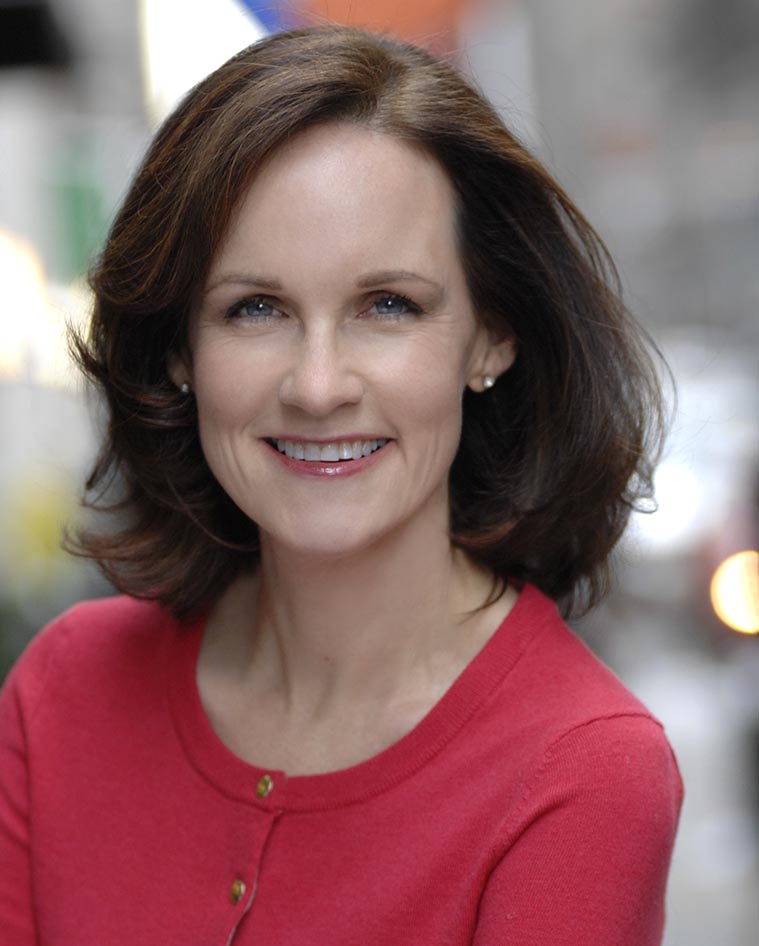
I was fortunate enough in February to work with videographer Mikey Pozarik and with Compass to create two videos that express my ethos as a real estate agent. The first one (see it here) features a quote by E.B. White, and reflects my love for New York City as someone who was born elsewhere but has chosen to live and work in the city. I hope every day that I am able to bring my passion to this city I love. The second one (see it here) is more of a manifesto. The quote is attributed to Steve Jobs, and I am drawn to the work ethic it expresses. I truly enjoyed making these videos – the locations were all areas of the city I have a particular relationship with, and selecting and recording the quotes was also a process I found artistically and creatively challenging in a very positive way. Even the process of deciding how to go about making these videos helped me think about and crystallize who I am in my role as a real estate agent. My thanks to Mikey and to Compass for helping these projects come to life.
Tag: NYC real estate
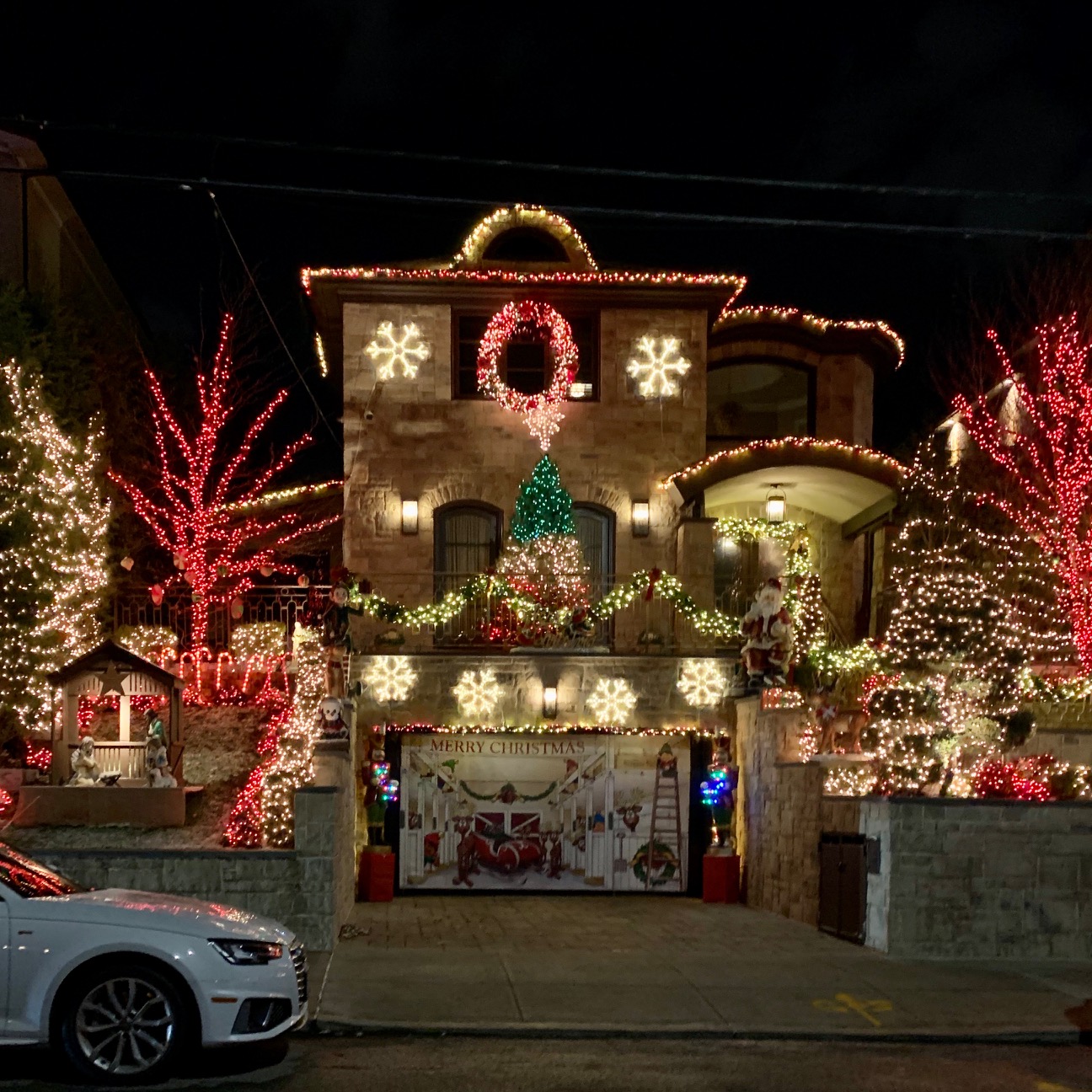
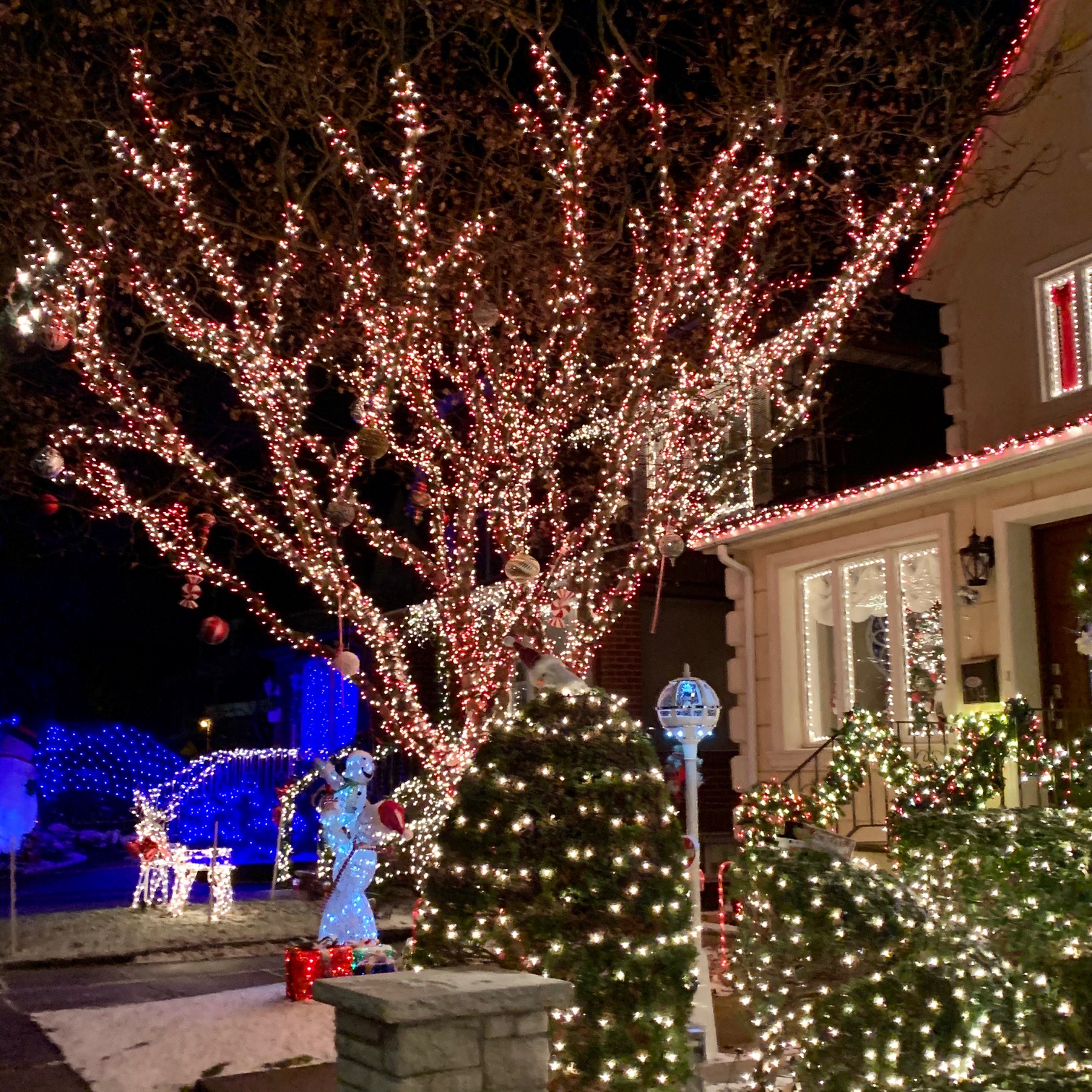
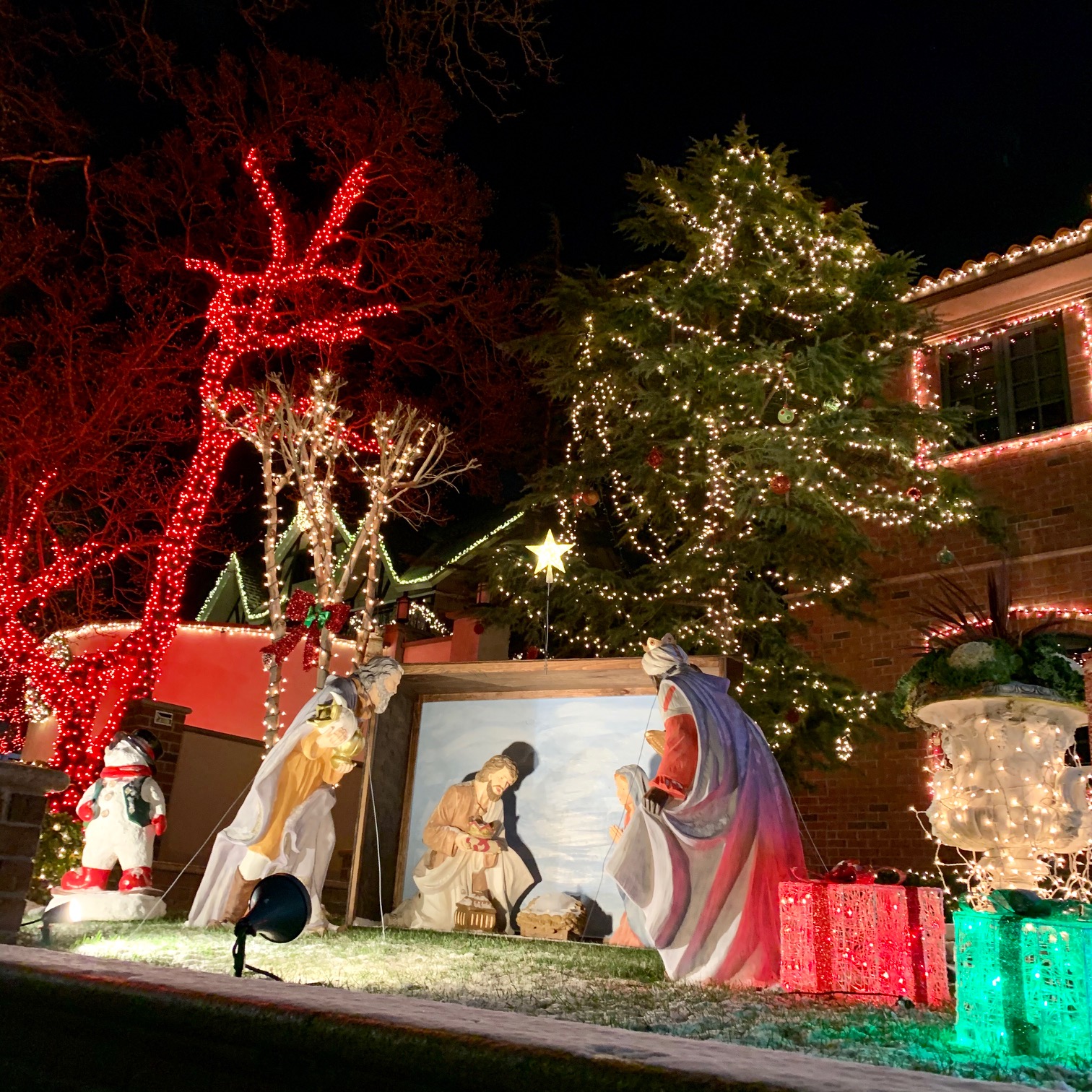
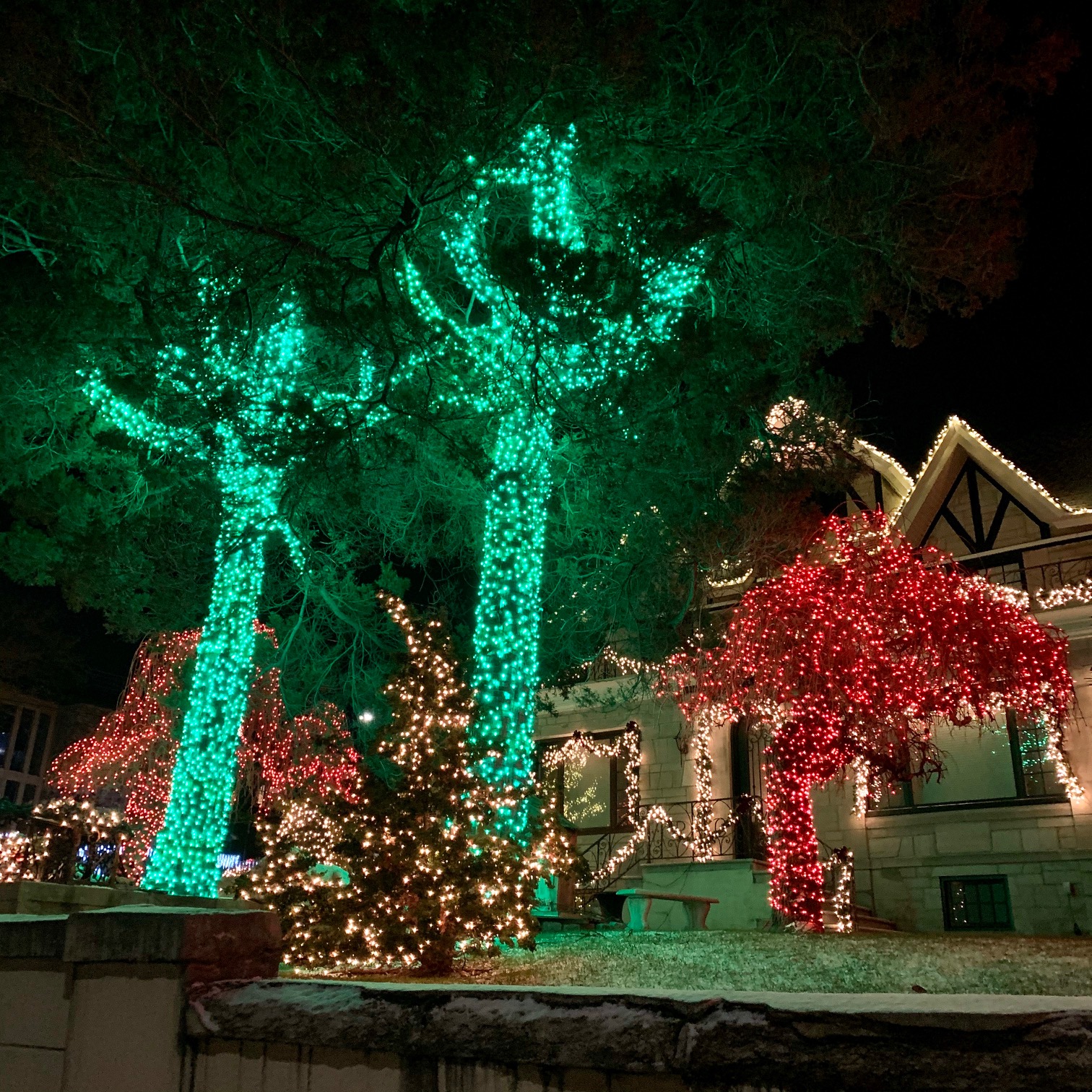
2019 Dyker Heights Holiday Lights
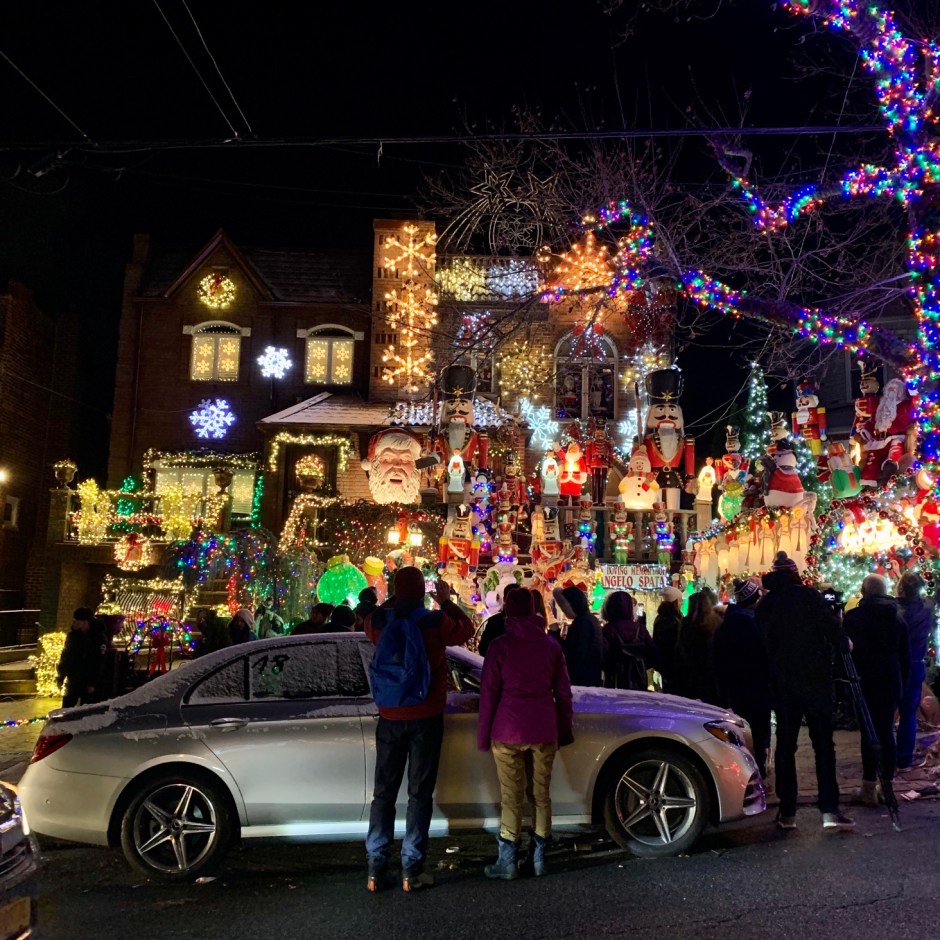
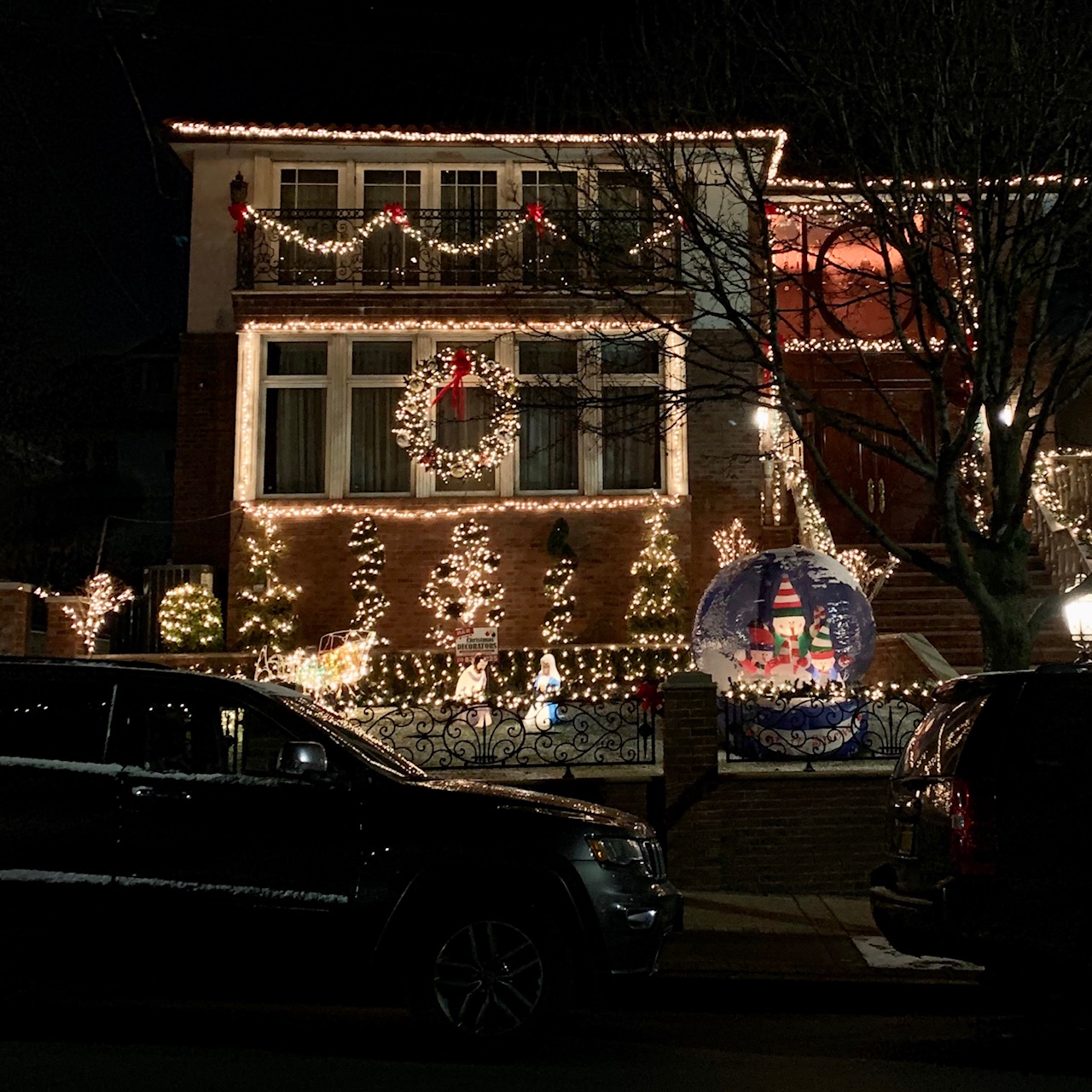
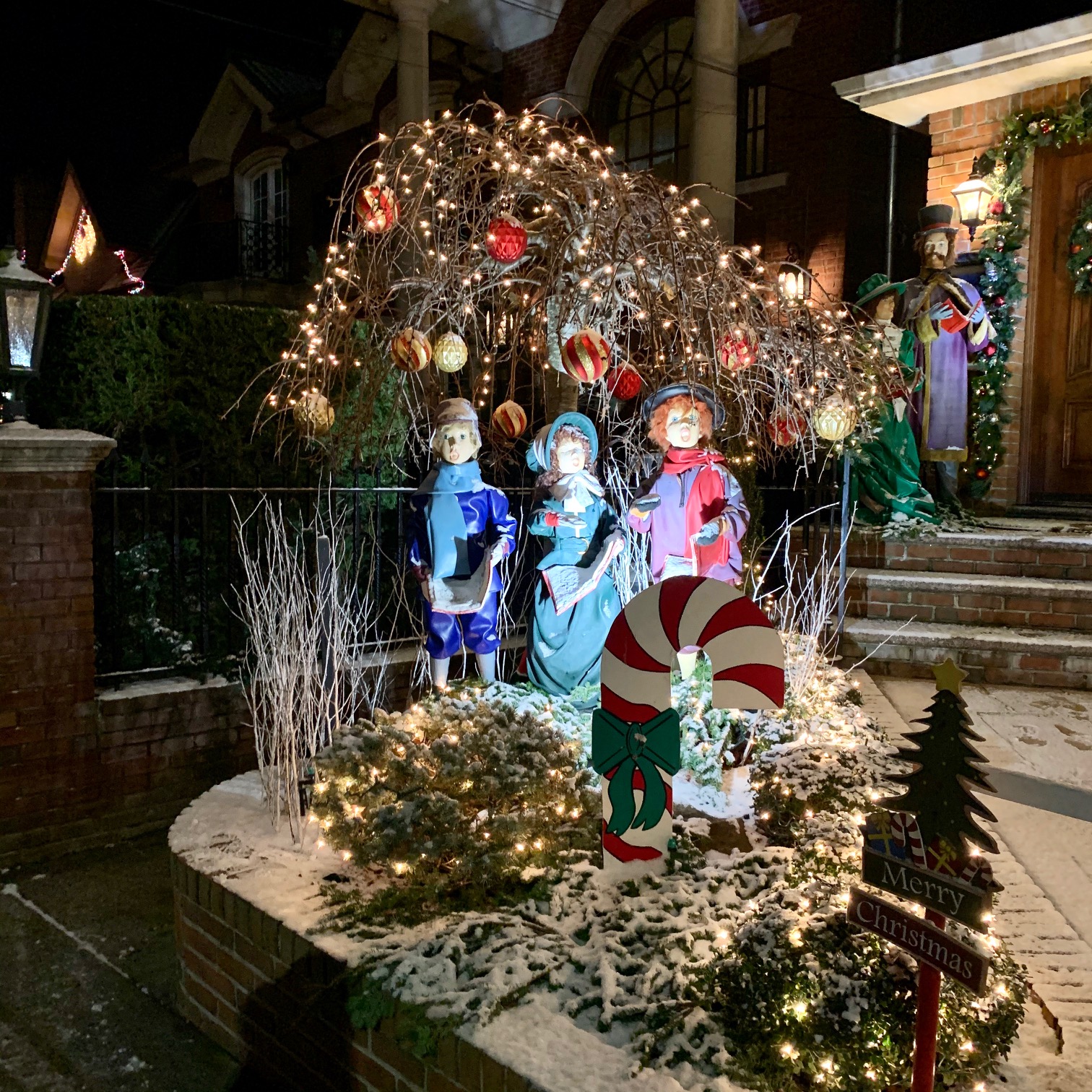
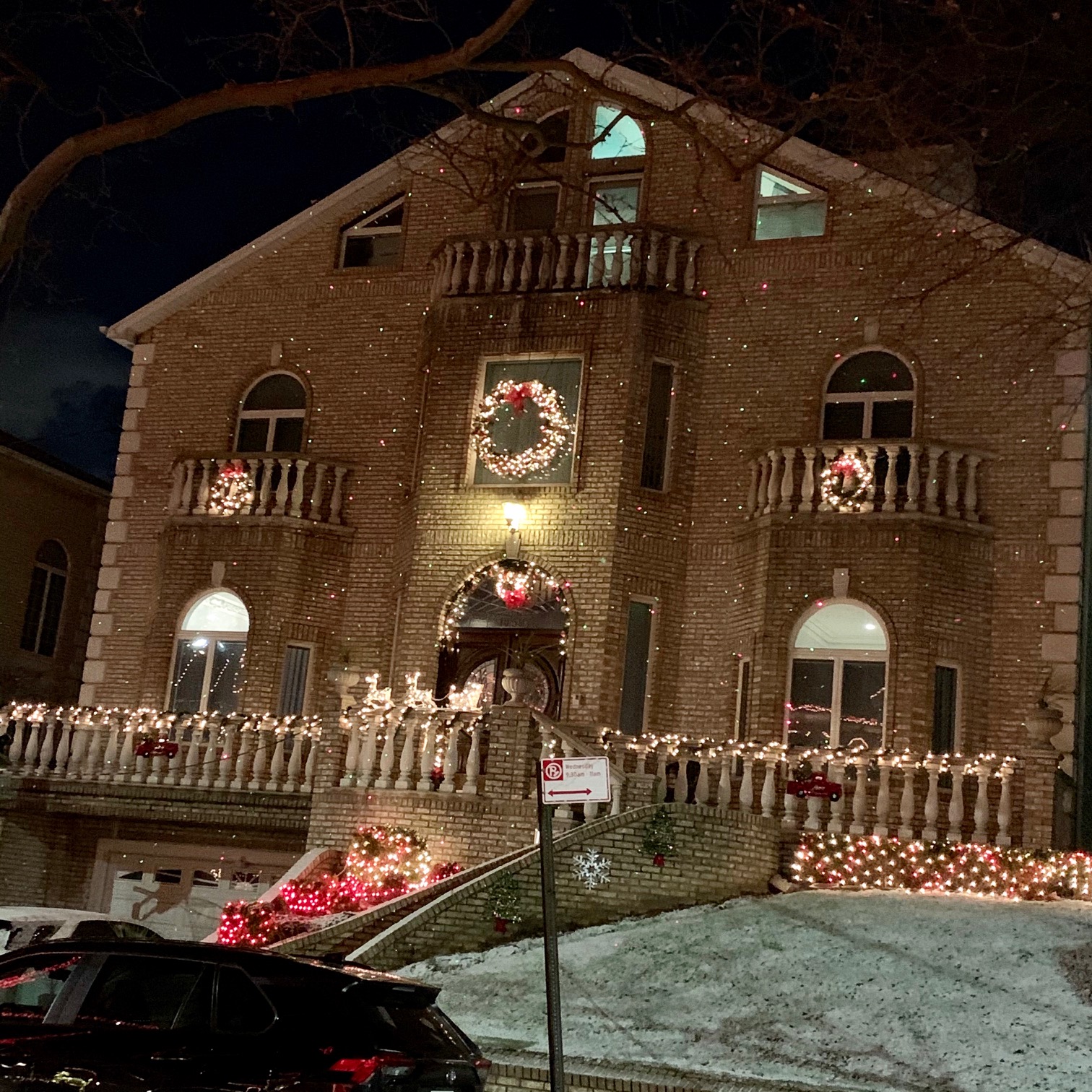
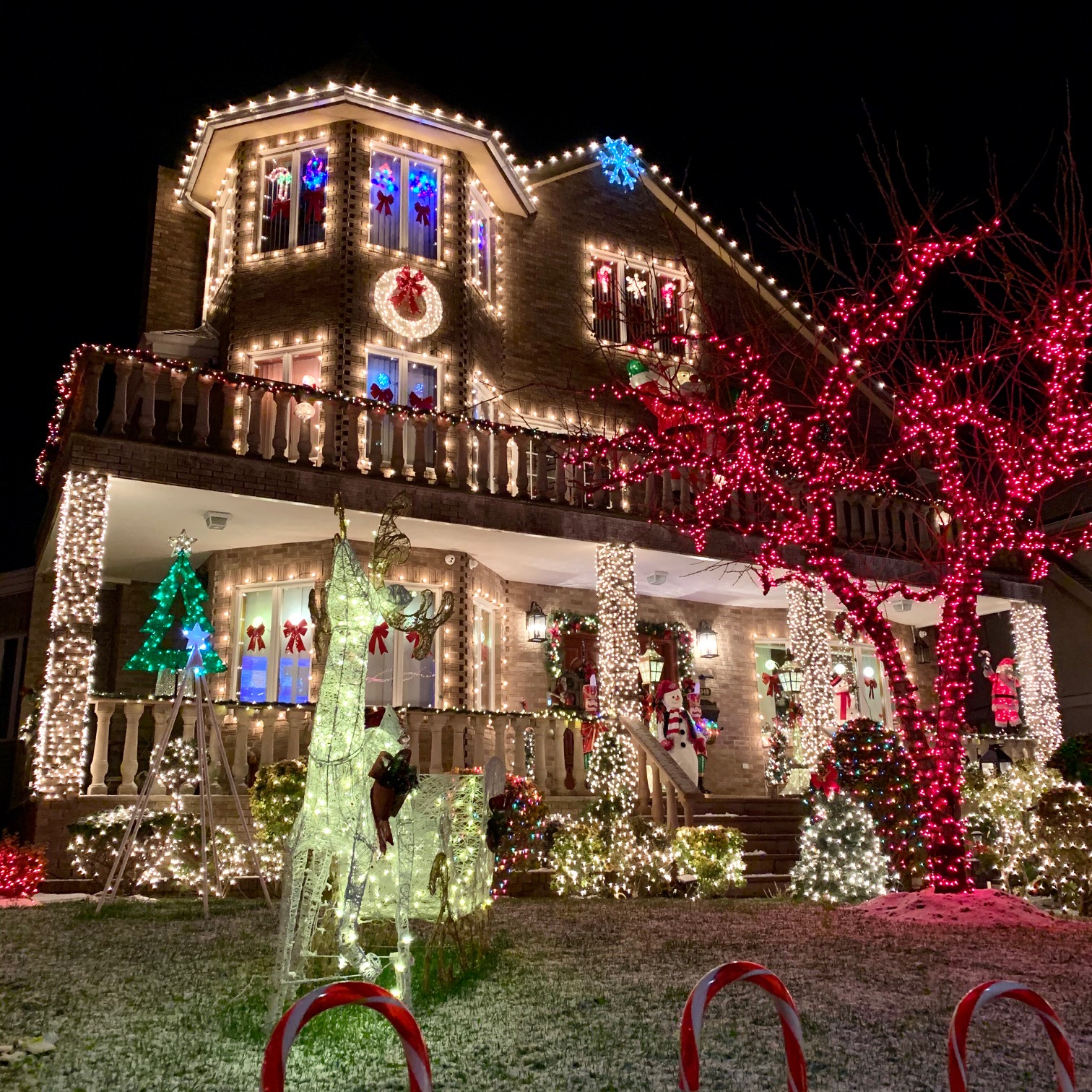
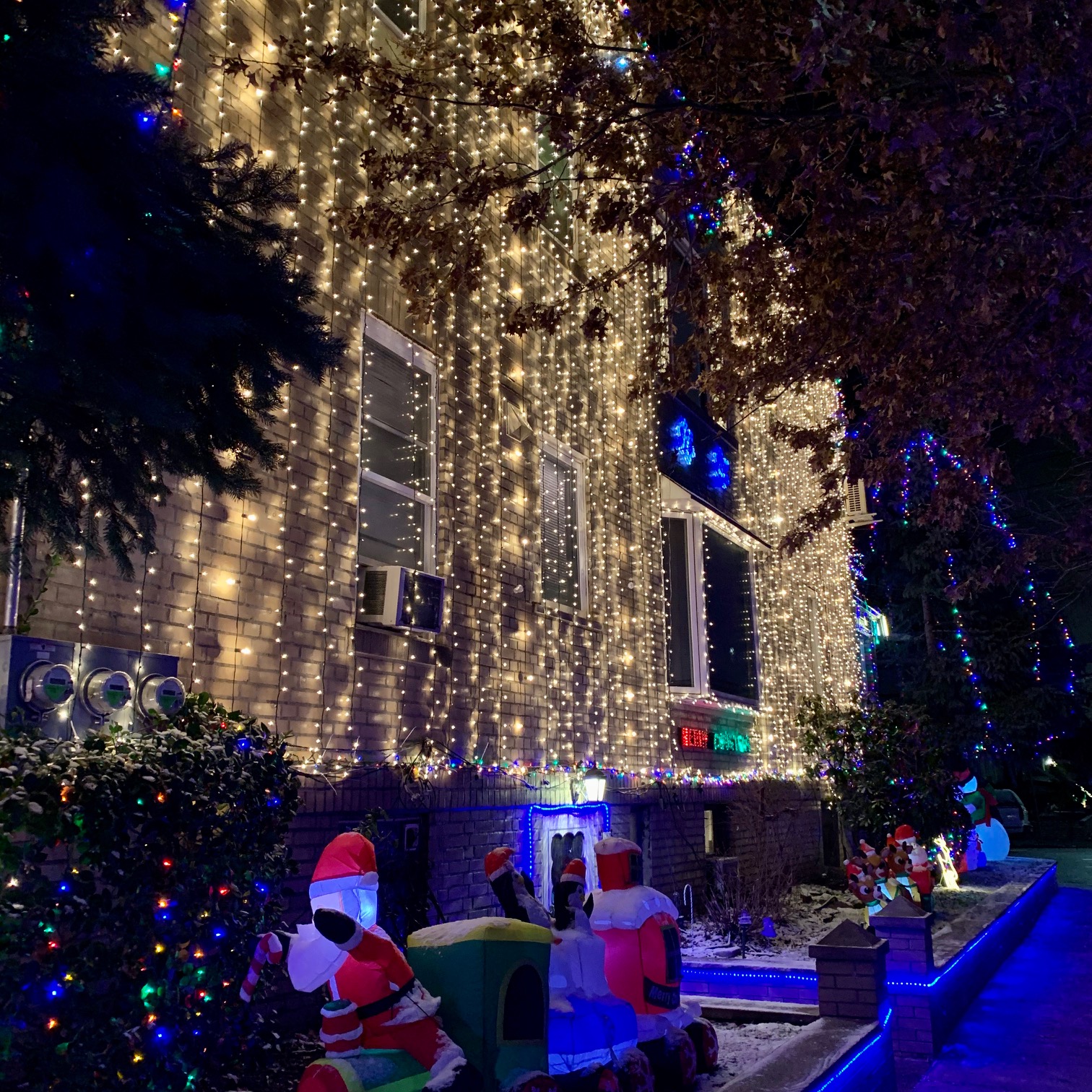
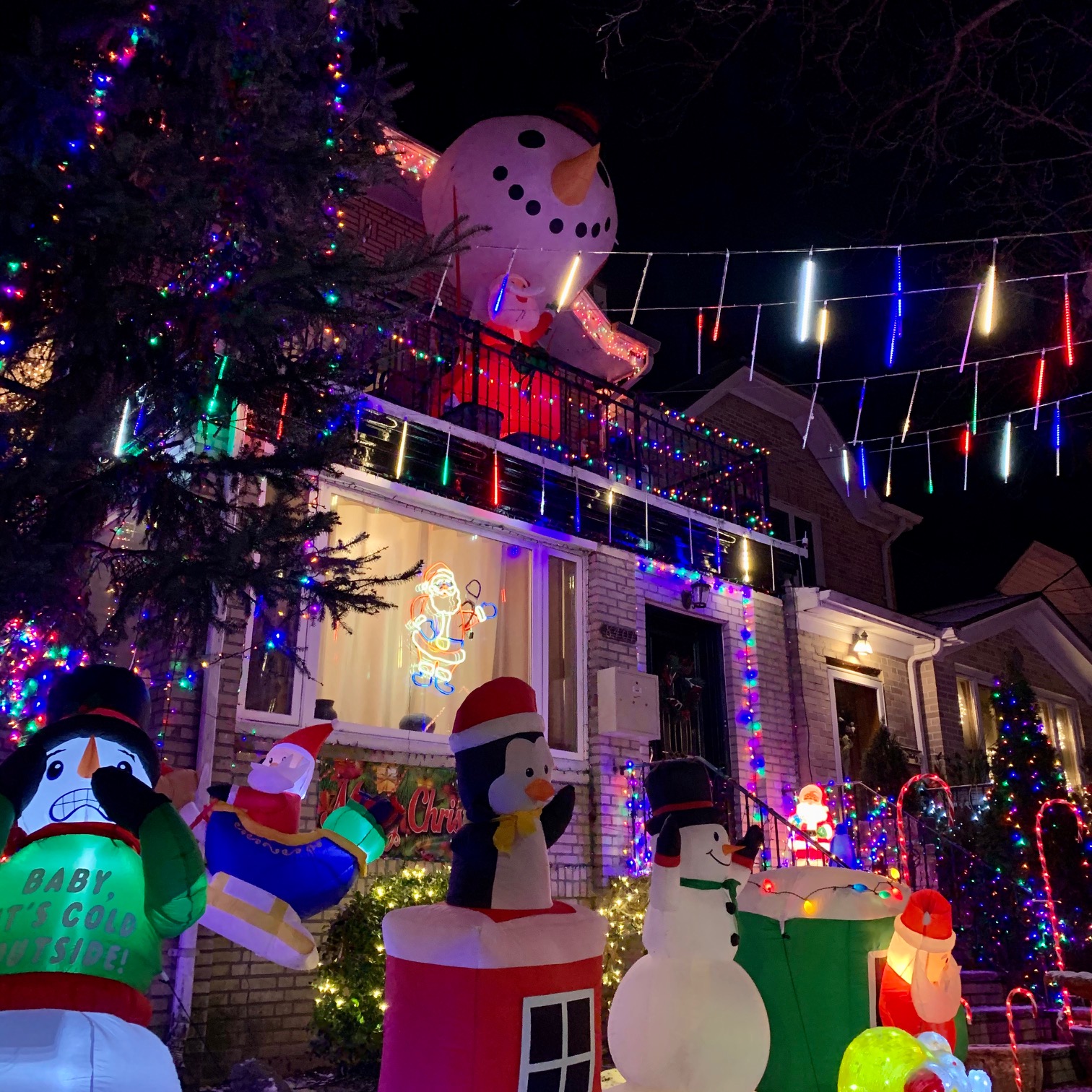
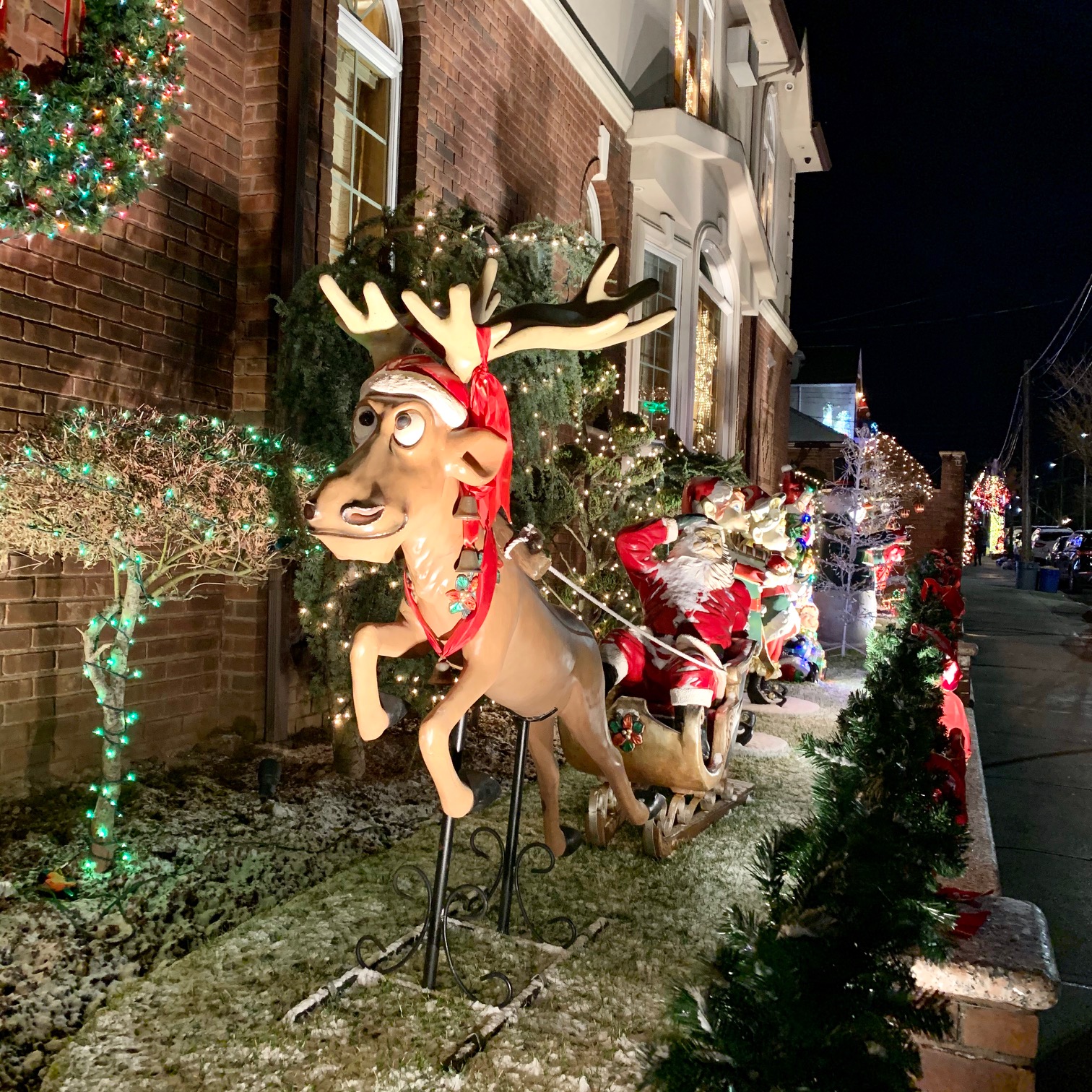
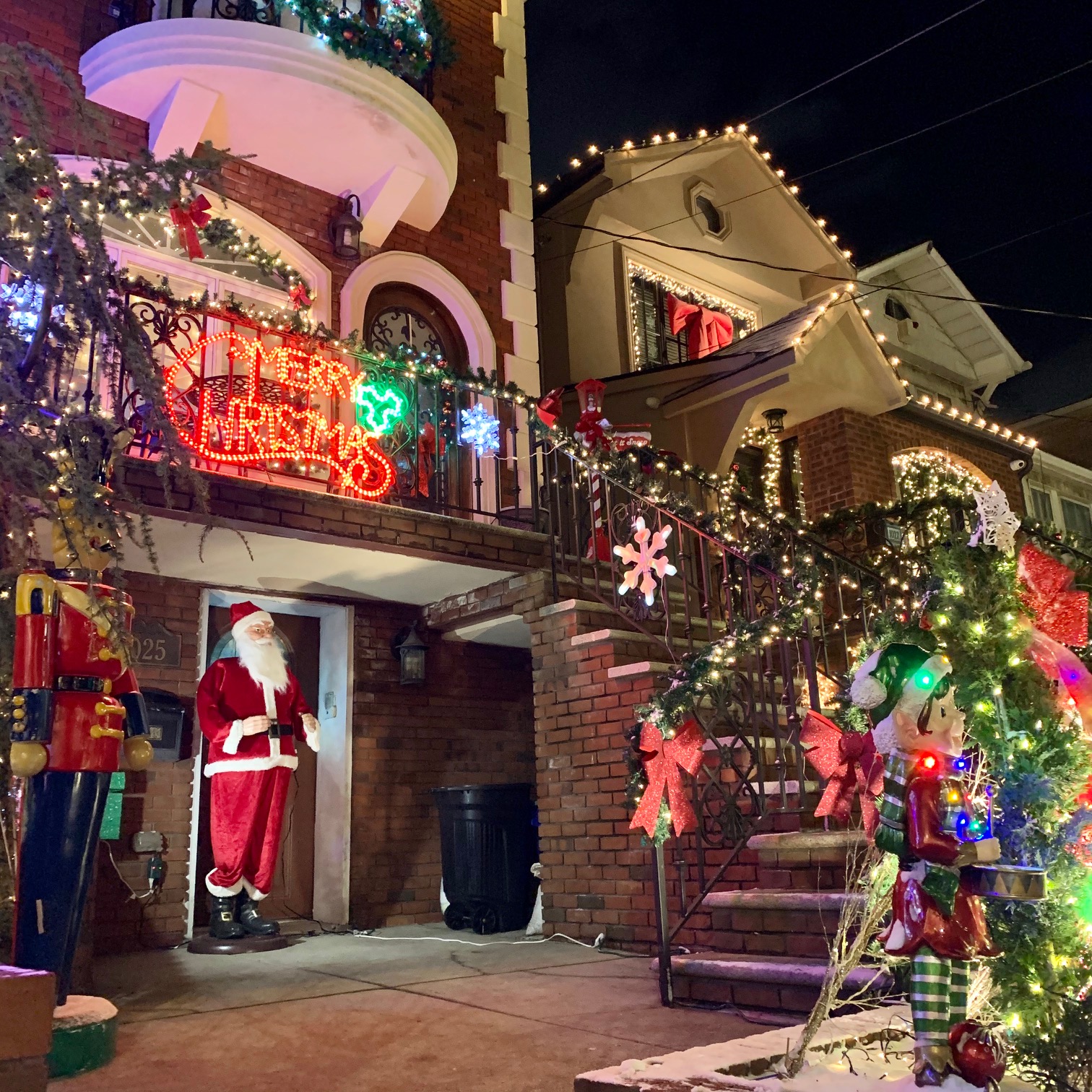
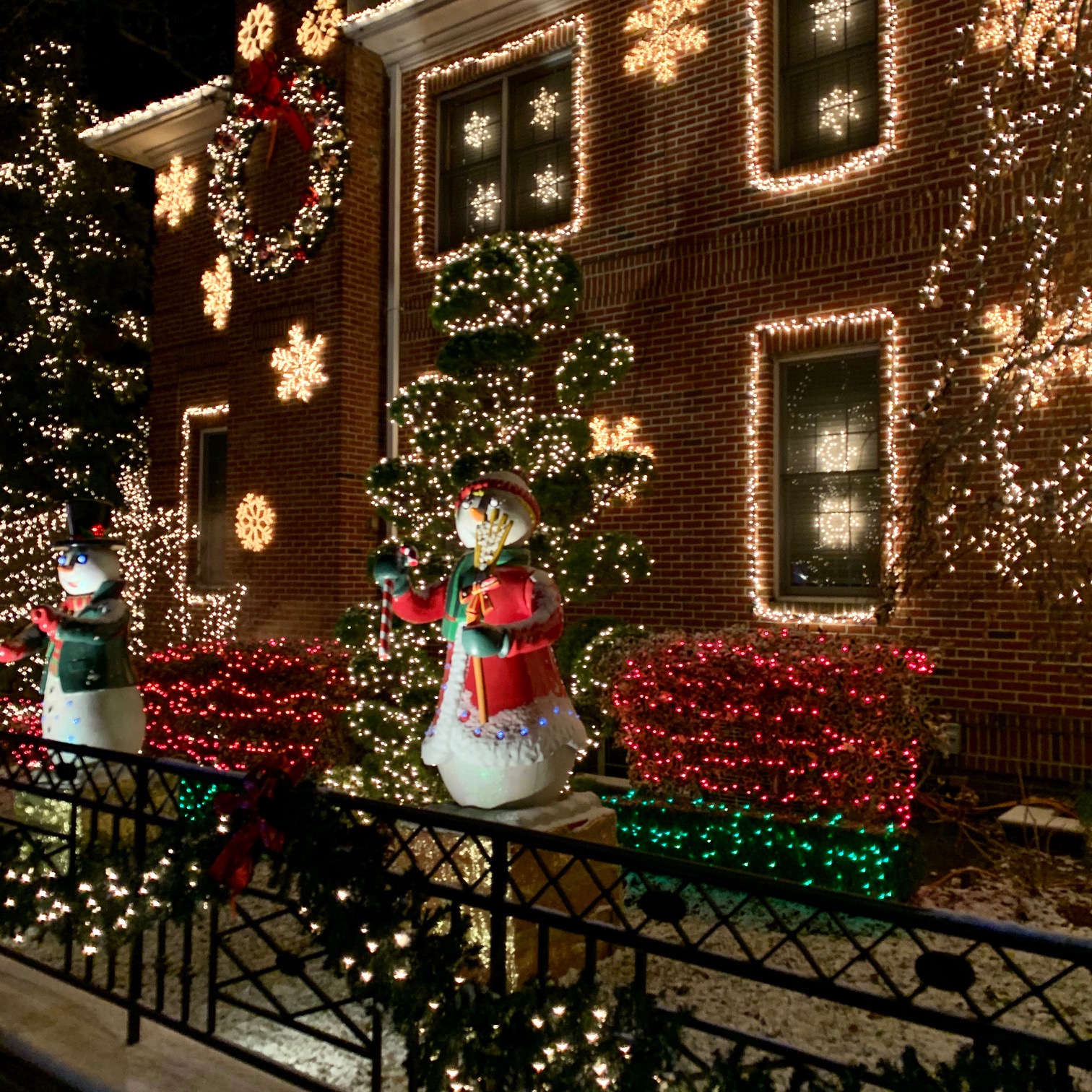
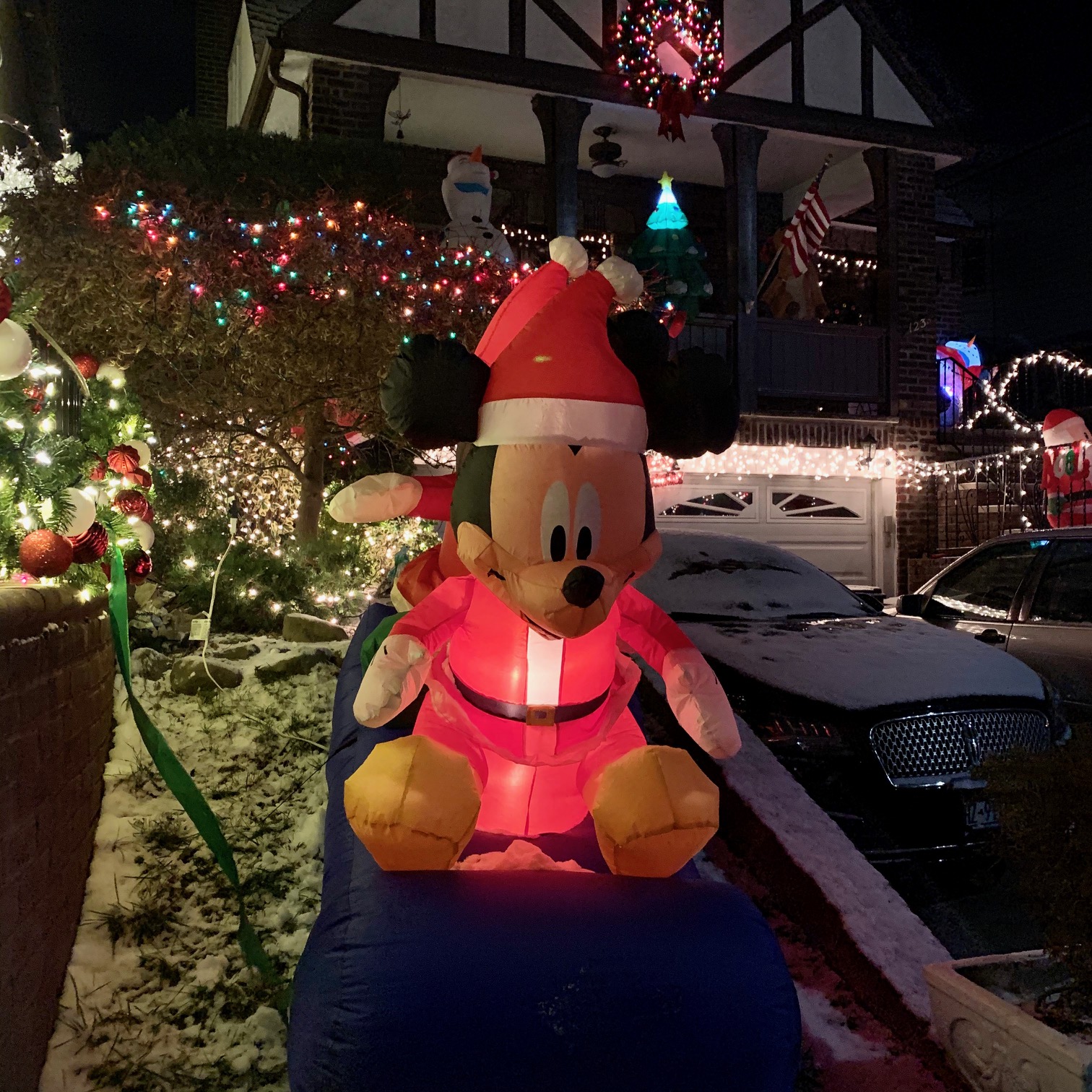
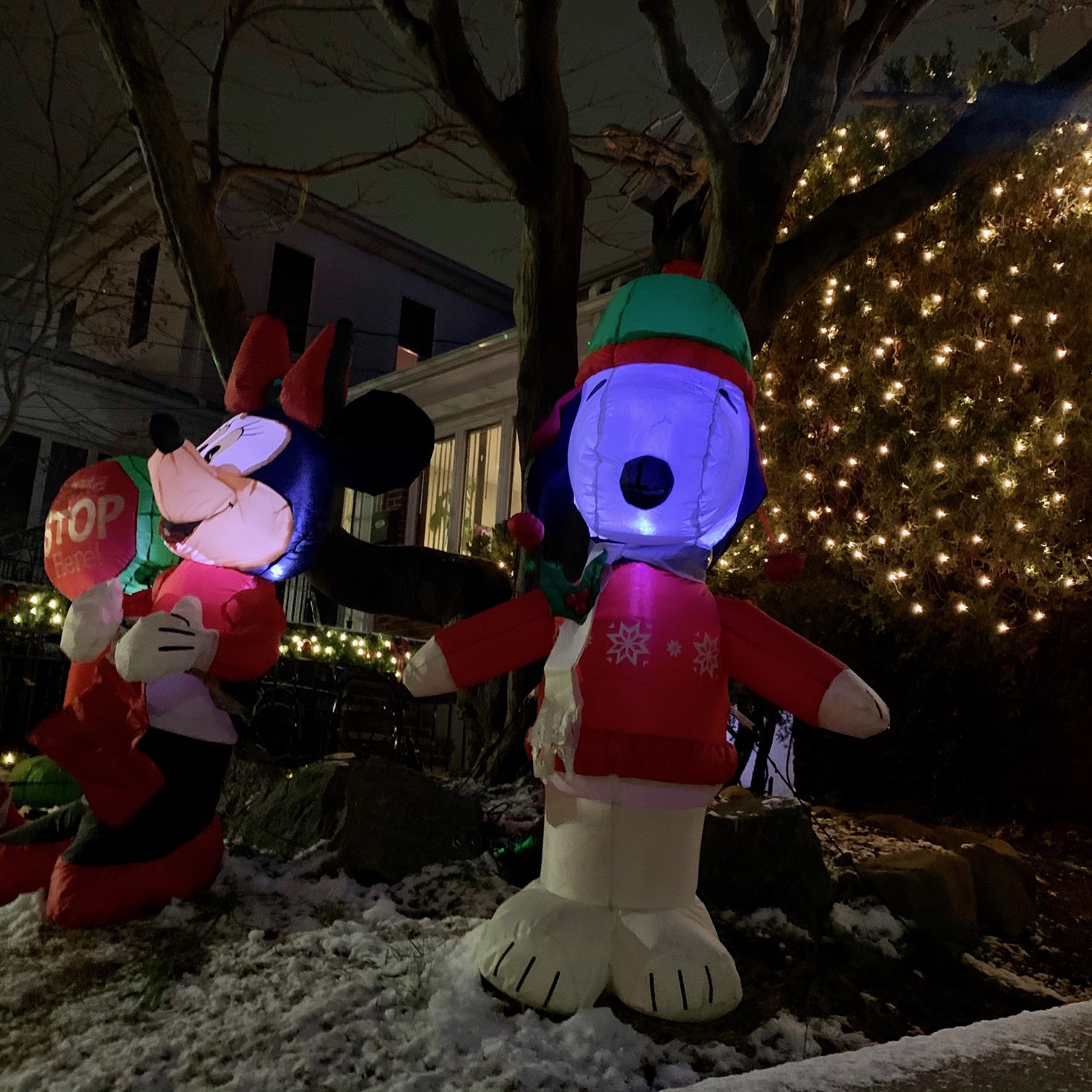
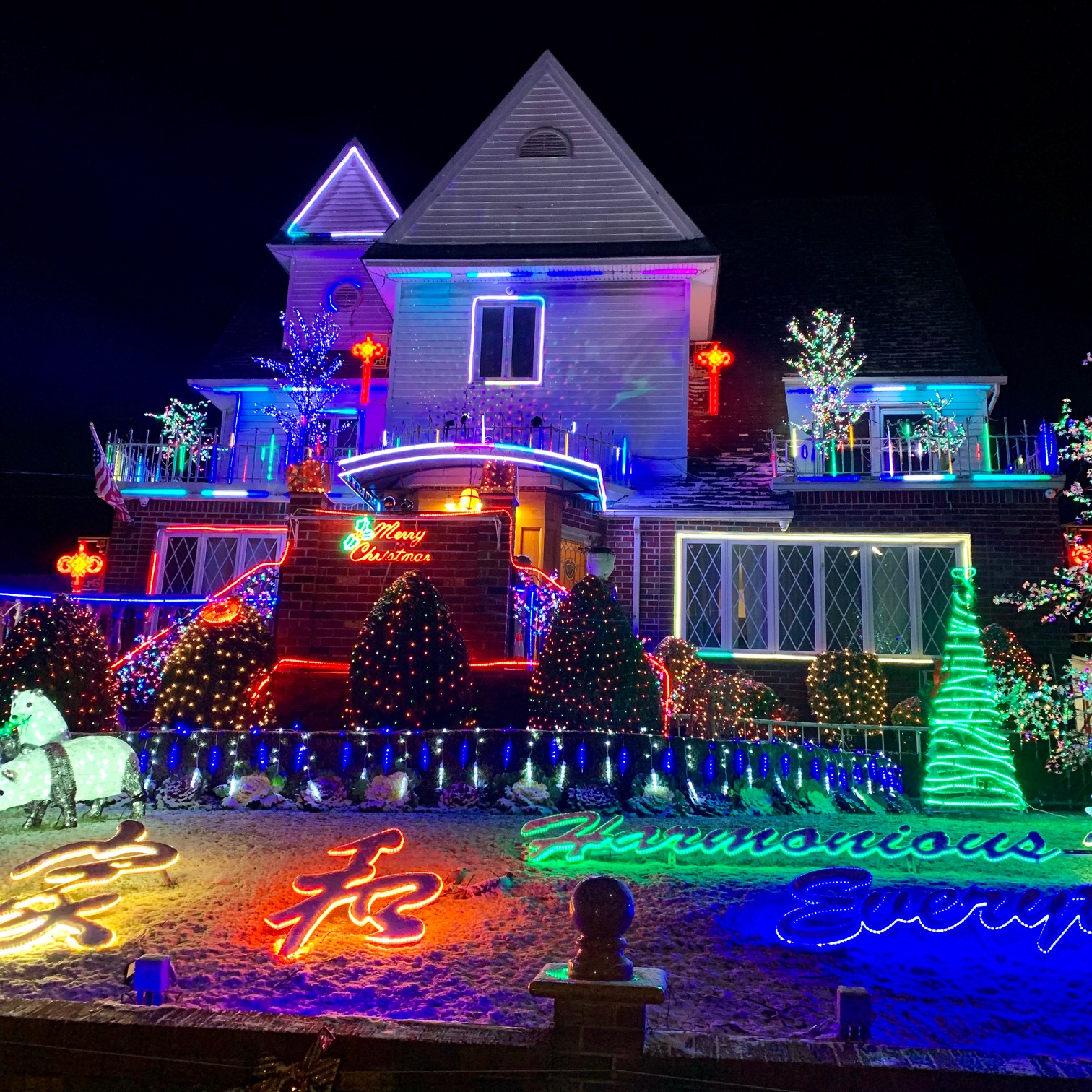
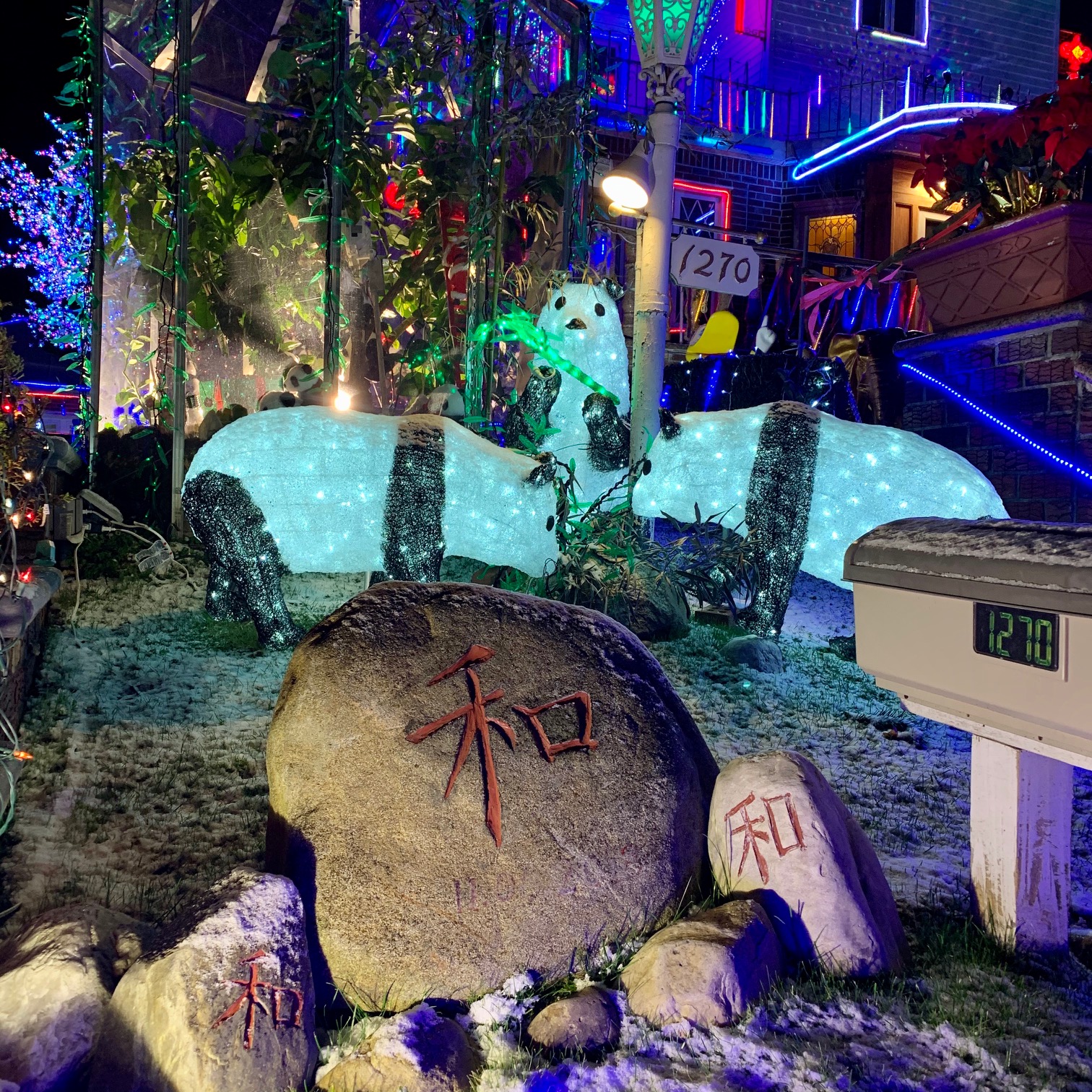
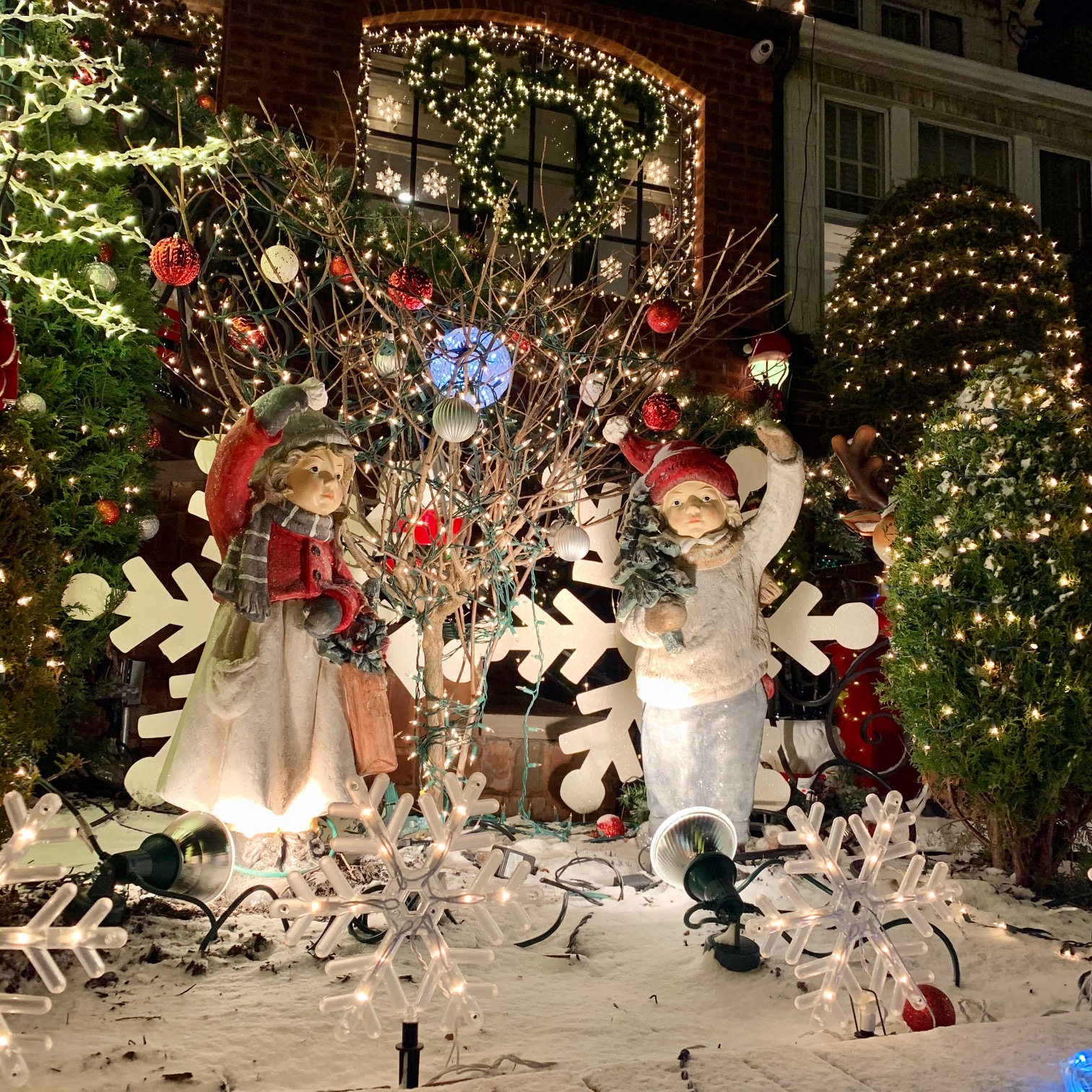
As we head into the shortest days of the year, we fight off the dark with celebrations of light. In previous years, I have written about how New York City celebrates publicly (see here for 2015 and here for 2016 posts, and here for last year’s post on holiday markets). Several years ago, I had access to a car regularly, and drove to Dyker Heights with my family to see the famed holiday lights (see that post here). This year, one of my daughters and I decided to take the subway (D train from midtown) and walk (about 20 minutes from the 18th Avenue stop in Brooklyn), and on a cold evening with some snow flurries, the lights once again did not disappoint – and I believe they have become more elaborate since the last time I was here in 2014. This tradition in Dyker Heights began in the 1980’s and since has increased every year, with many residents paying professionals $20K or more to deck out their homes. On weekends, traffic is bumper-to-bumper, and the sidewalks can be packed – so go on a weeknight if you can. The best viewing is roughly 11th Avenue to 13th Avenue, 83rd to 86th Streets. Here are some photos of what I saw this year:


As we head into our own Roaring Twenties, I wish light and joy in the hearts of all!
Historic districts of the Upper East Side
In 1964, the original ornate Pennsylvania Station building was torn down to create Madison Square Garden (the fourth version of MSG, the first two being close to Madison Square Park, and the third on Eighth at 50th Street). The loss of the building created an immediate outcry. (Architectural historian Vincent Scully noted: “One entered the city like a god. One scuttles in now as a rat.”) The next year the Landmarks Preservation Commission was created to prevent the continual loss of buildings of historical significance. Since then, many individual buildings have been landmarked, as well as entire sections of the city that have historical or architectural significance. The Upper East Side has several historic districts, some of which would surprise few (Metropolitan Museum Historic District) and some that are virtually secret to most not living there (Treadwell Farm Historic District, anyone?). I took a walk around these districts, taking photos and imagining what it would be like to live there! Later I will touch on what living in a historic district means to those owning a home there, as well as why even those not living in a historic district might be interested in knowing the boundaries.
Upper East Side Historic District

This is the area most people would think about if asked about a Historic District on the Upper East Side. It covers all of Fifth Avenue between East 59th and East 78th Streets, and extends out from there in an irregular pattern – as far east as almost to Third Avenue between East 70th and East 75th Street, very close to Fifth from East 59th to East 61st, and somewhere between Park Avenue and Lexington Avenue for most of the area. See below for a map of this district:

On Fifth Avenue, there are a lot of stately limestone coop apartment buildings, and in the side streets, many lovely townhouse blocks.

This district also has many buildings that would be landmarked as single entities if not part of the larger historic district, like Temple Emanu-El or the Frick Mansion.
For a district to be considered worthy of landmarking, it must represent at least one historic period or architectural style, have a distinct “sense of place” and a “coherent streetscape.” Fifth Avenue is a good example of why this does not mean that every single building within the district would be individually worthy of landmarking. I find that in general the Upper West Side has a more consistent look and feel than the Upper East Side (and I will do a blog post on the Upper West Side historic districts at some point soon).
Metropolitan Museum Historic District

Not surprisingly, this district lies in close proximity to the Metropolitan Museum, Fifth Avenue from East 87th to East 86th Street and most – but not all – of the blocks between Fifth and Madison on this stretch of Fifth.

It has always bothered me that one of the buildings has a fake facade at the top where the supports can clearly be seen if looking from the side rather than from Central Park (see below):

Carnegie Hill Historic District
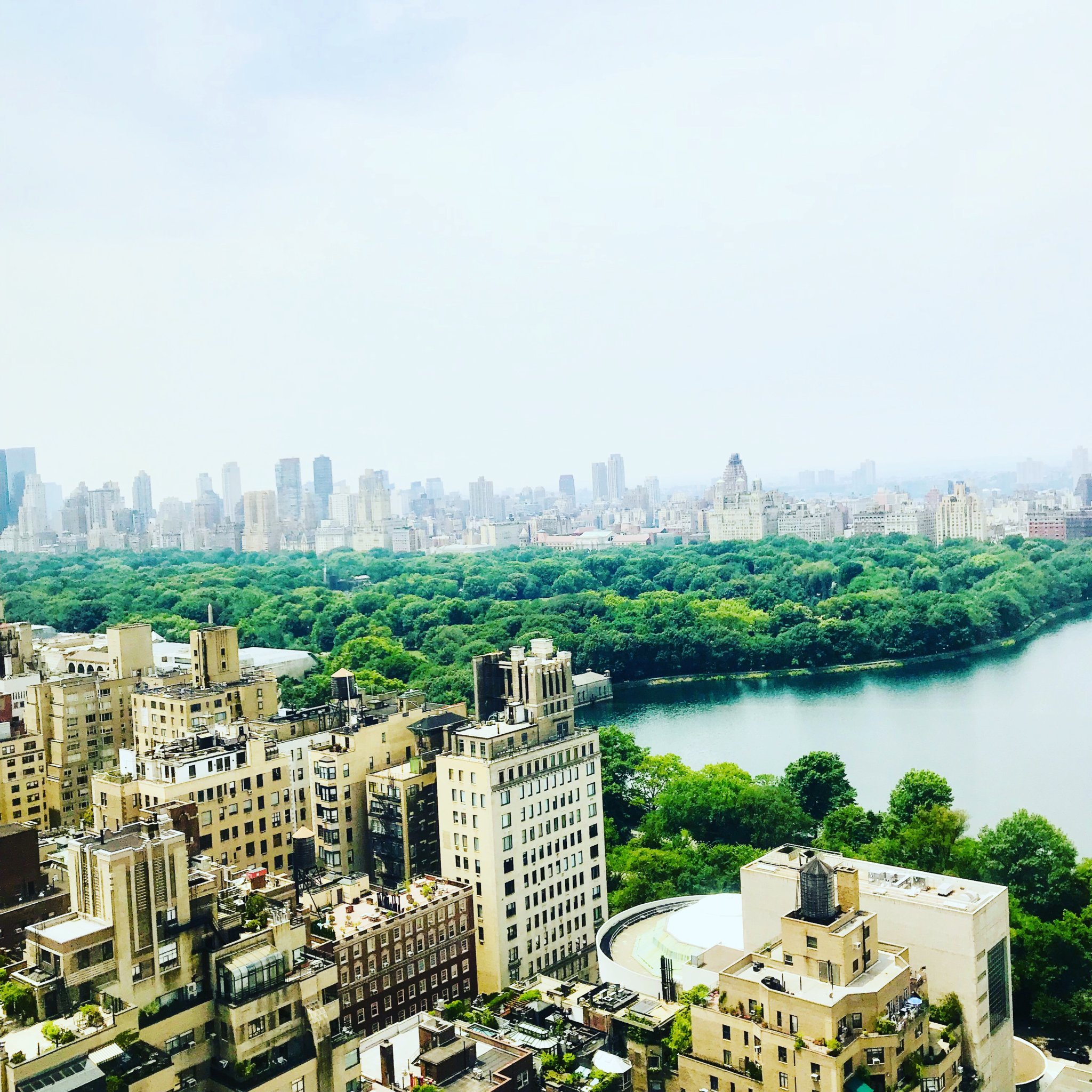
Named for the mansion Andrew Carnegie built at Fifth and East 91st (which had the first residential elevator, and now holds the Cooper-Hewitt National Design Museum), Carnegie Hill is a charming residential neighborhood. The historic district covers Fifth Avenue from East 86th to East 98th, and for some streets goes as far east as Lexington Avenue (see below):

This district encompasses Frank Lloyd Wright’s Guggenheim Museum (where the architecture of the building is arguably the more important work showcased despite steep competition), the Jewish Museum, and buildings ranging from brick and brownstone townhouses to mansions, most constructed between the 1870s and the 1930s. I have a particular fondness for the townhouse blocks, many of which decorate elaborately for Halloween.
Hardenbergh/Rhinelander Historic District
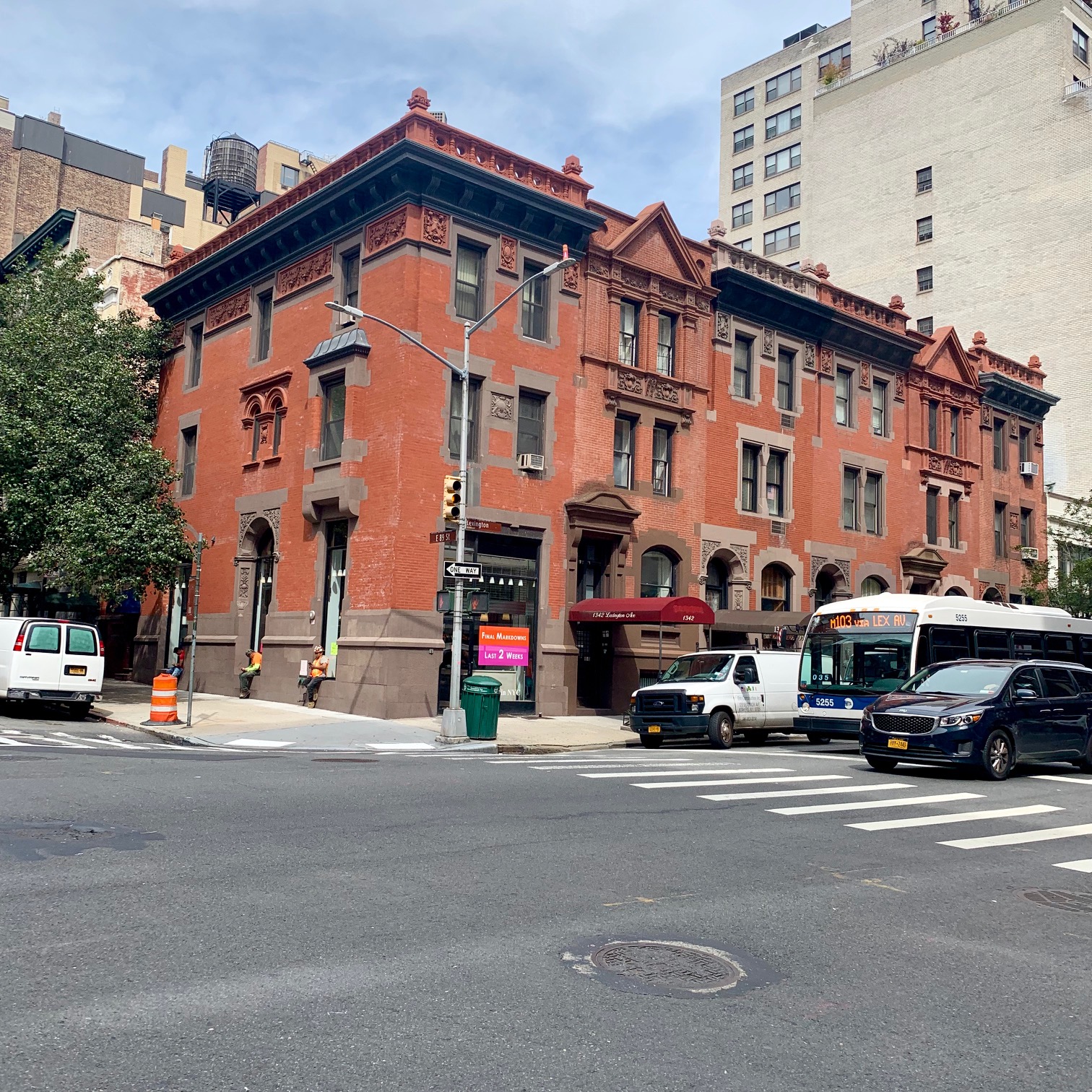
On Lexington between East 89th and 90th Streets, and part of the block between Lexington and Park on East 89th, there are seven houses all constructed in 1889 for William C. Rhinelander (a real estate developer!). The same architect who designed the Plaza Hotel and the Dakota apartment building on Central Park West, Henry Hardenbergh, is responsible for these houses.

Treadwell Farm Historic District
Even people who live near this historic district, two short sections of blocks between Third and Second Avenues, and East 60th and East 62nd, may not know this exists. These Italianate row houses date between 1868 and 1875, and the region was named for the Treadwell family, who were landowners here between 1815 and the 1860s.


Henderson Place Historic District

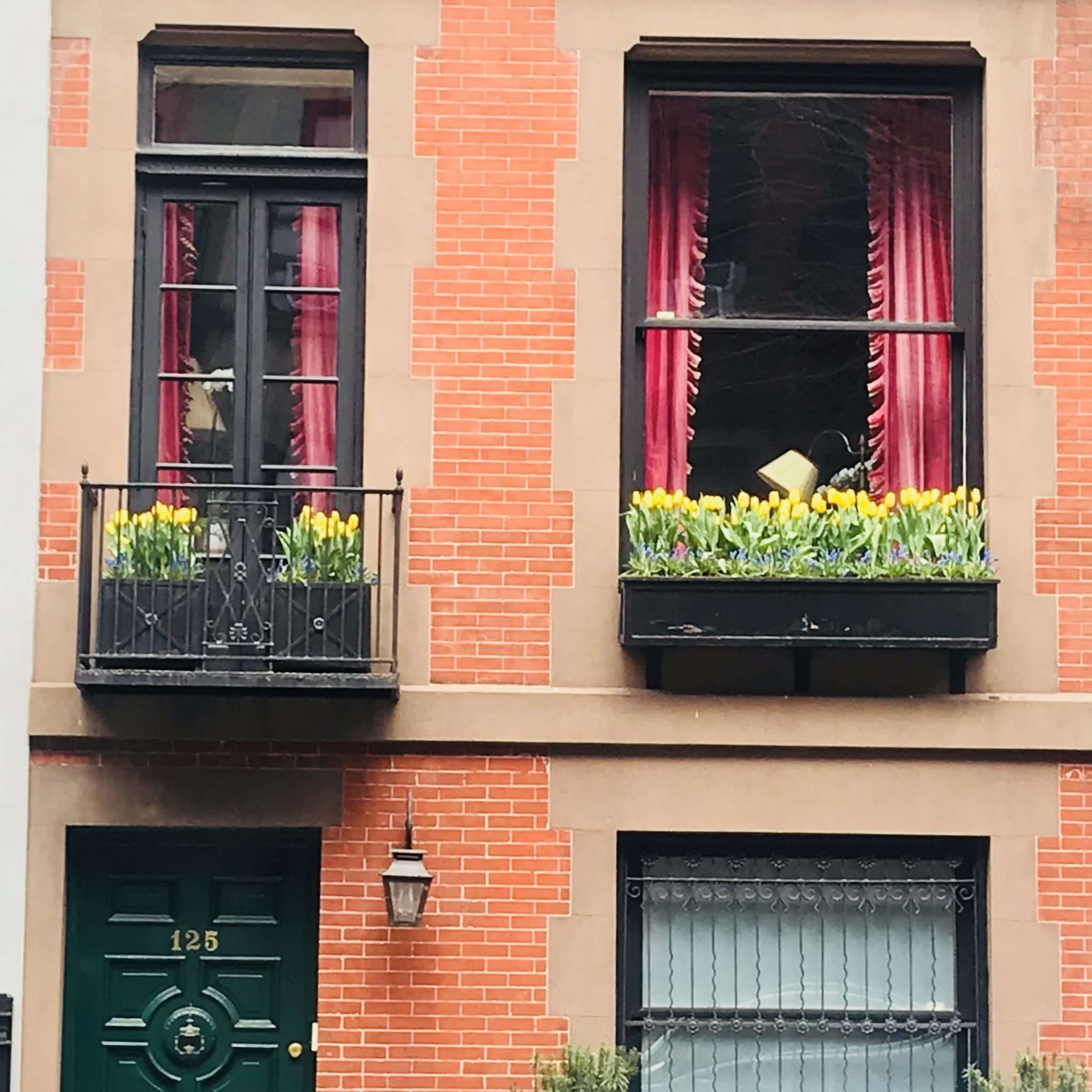
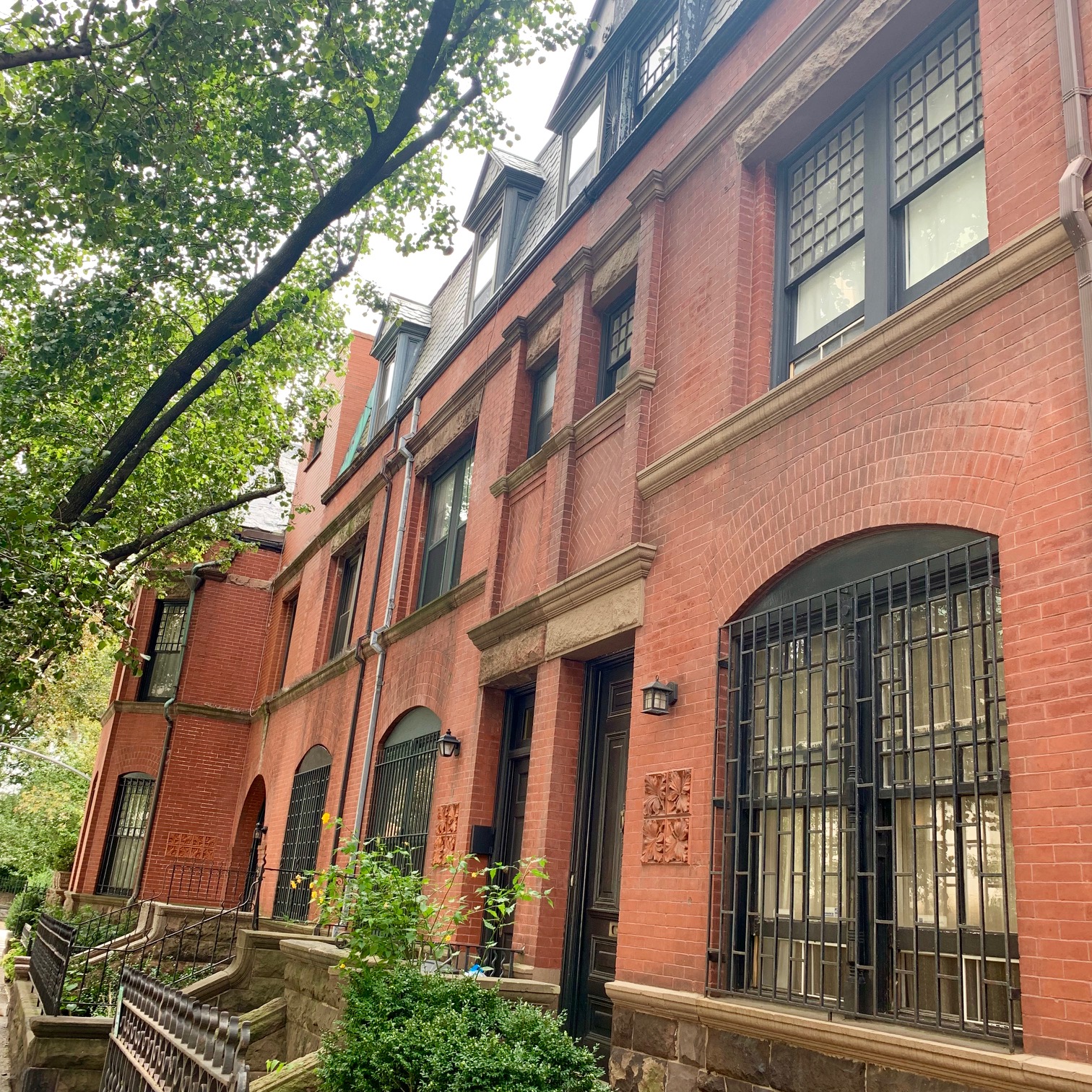
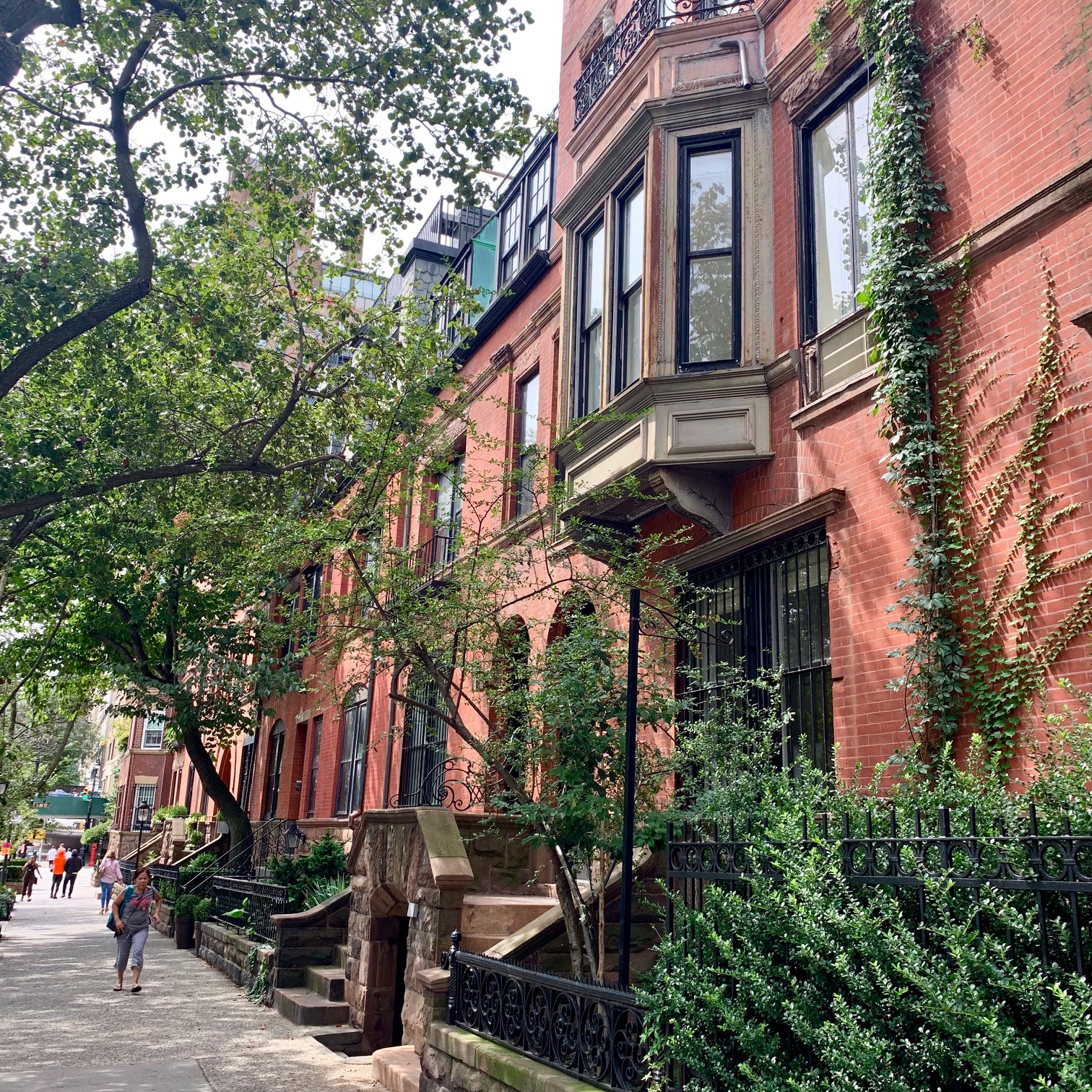
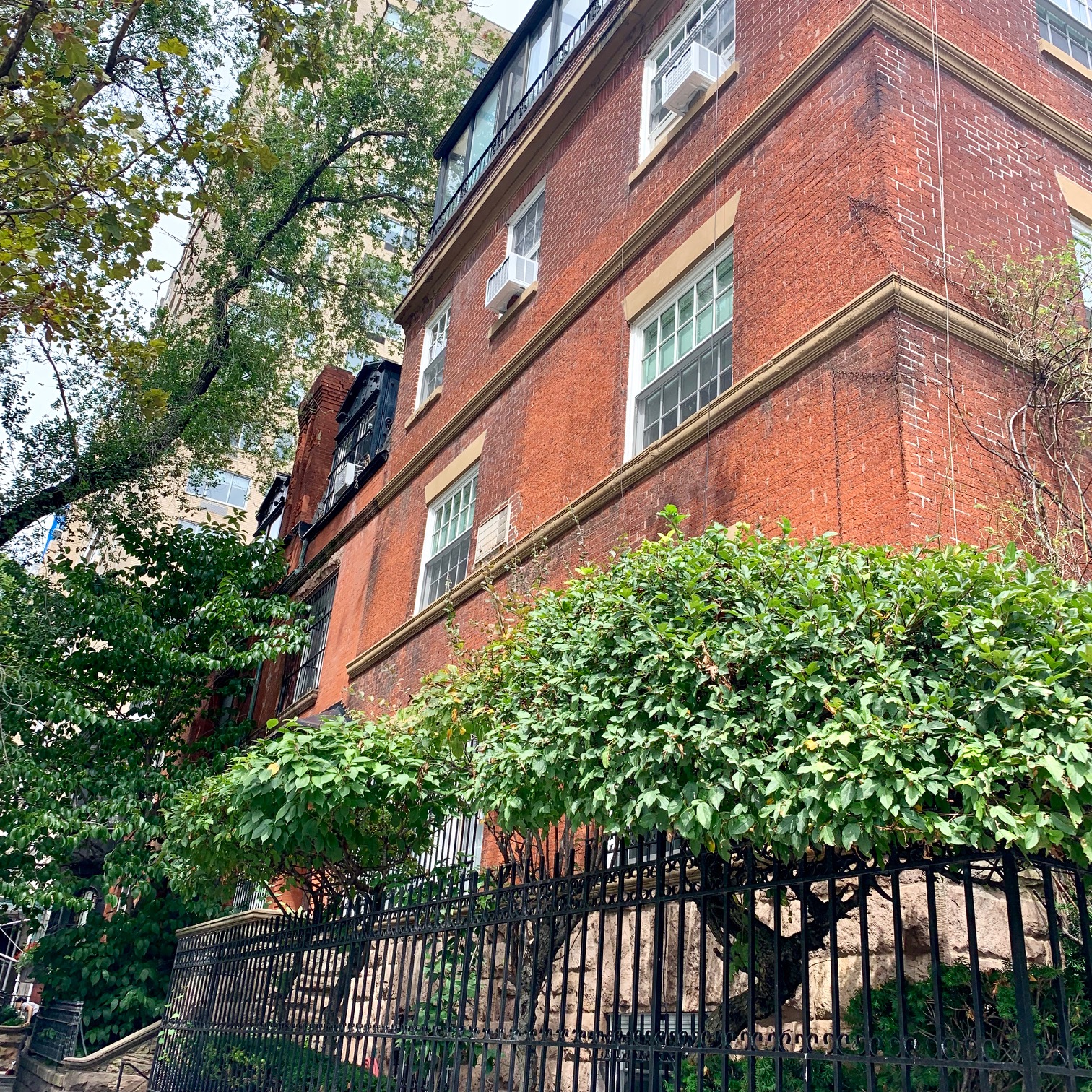
I have such a soft spot for the houses on Henderson Place, East End Avenue between E. 86th and E. 87th. When my daughters were going to a nearby school, I would walk them past these charming three story Queen Anne townhouses and dream of being able to live in one of them! That never happened, but I still contend these blocks are some of the most uniquely romantic and lovely in all of the city. They are across East End Avenue from Carl Schurz Park, the peaceful environment adding to the quiet magic of these homes. I mean, just look at them! (*swoon*) I once wrote a love letter to this part of town after a snowstorm (see here).


Landmarks outside of Historic Districts
You might be surprised at how many individually landmarked buildings there are on the Upper East Side apart from these districts – currently, there are 48! Invididual landmarks are judged by age, integrity, and significance. These range from apartment buildings like Manhattan House (200 E. 66th), the Bohemian National Hall (321 E. 73rd Street), the Astor House (now home to the Junior League, 130 E. 80th Street, see photo below), or individual townhomes like 160 East 92nd Street.

So if you live in a historic district, what is the impact on your home? Data suggest that landmarked districts offer higher property values over time, insulation from extreme economic fluctuations, stabilization of residence, more community involvement, and possibly increased connections among neighbors. There are some restrictions as well – for instance, you need permission to do any exterior work on a building in a landmarked district, and to show that you are not changing the exterior in a way that negatively affects the overall look of the district. However, renovating a home in a historic district can make you eligible for a significant New York State Homeowner Tax Credit.
Even if you don’t live in a historic district, if you live near one (or near a landmark outside a historic district), it can be useful to know the restrictions. For instance, if you are near the Treadwell Farm Historic District in one of the highrise buildings with an eastern exposure, it is good to know that it is highly unlikely that anything will be built that will block your eastern light.
Generally speaking, I am a fan of New York City’s constant desire to change, and am more accepting of the constantly evolving skyline than some (see a previous blog post about this here). That being said, our city would be lessened without these (as Landmarks Preservation describes them) “areas of the city that possess architectural and historical significance and a distinct ‘sense of place.’” New York City is enriched by the old-world charm of Greenwich Village, the residential tranquillity of Park Slope, and the majestic towers of Central Park West – but also (at least in my opinion) by such new developments as Hudson Yards, Waterline Square, and the revitalized area around One World Trade. Just as our city populace is strengthened by all our differences, the architecture of our city is strengthened by our commitment to protect historic districts of importance while still encouraging new development and new opportunities.
Hello, Hudson Yards!
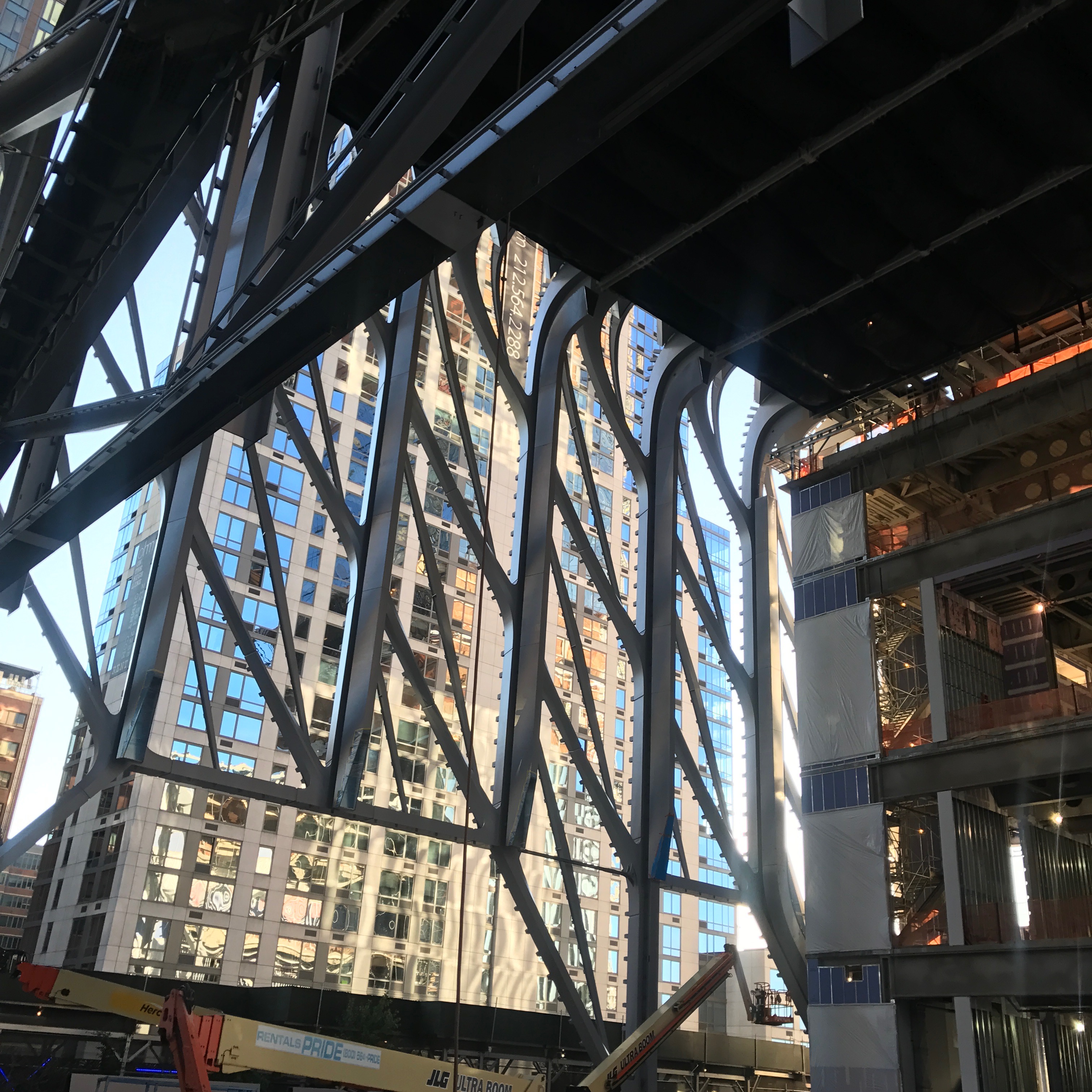
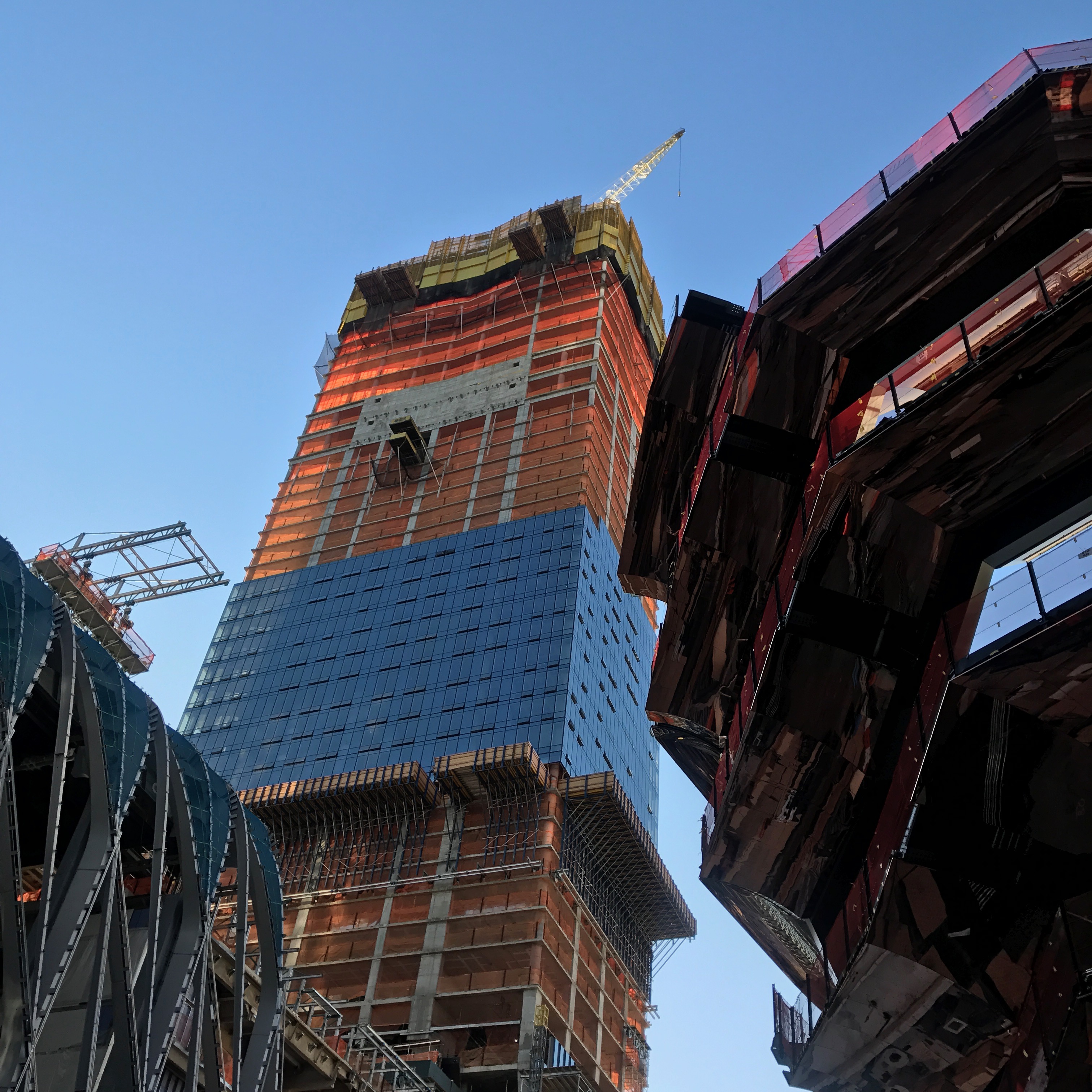
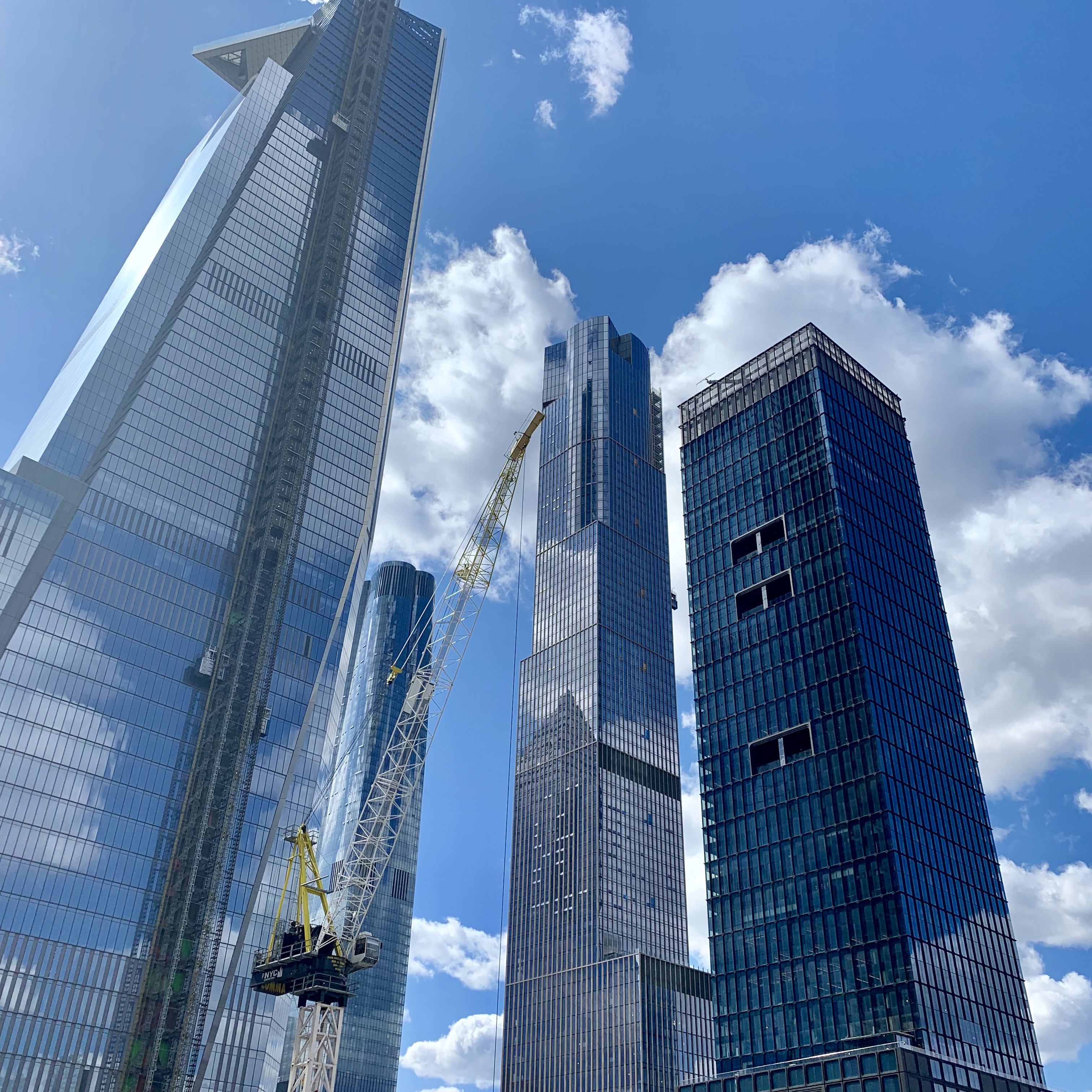
In October of 2014, 4 1/2 years ago, I wrote a blog post about a new neighborhood that was beginning to be built over rail yards west of Penn Station, Hudson Yards. In it, I concluded, “To walk in Hudson Yards is to be present at the birth of a new neighborhood, one that seems limitless in terms of how it will change the landscape of New York City.” In October of 2017, I was able to take a hardhat tour of the site, well on its way but still with far to go before being open to the public (see below for a few photos from that visit).


A few days ago, in March of 2019, I was able to spend an afternoon in Hudson Yards only a few days after its official opening. Hudson Yards is not even midway to completion, and after following this development for so long, I thought there was a good chance I might be underwhelmed or (worse) disappointed. And yes, yes, yes, I read the NY Times review, and was told by the New Yorker that there is no good reason why any resident would visit Hudson Yards – but I would much rather experience something and make my own judgements! Spoiler alert – I enjoyed Hudson Yards far more than I had expected and see myself spending a lot of time here soon and in years to come. If you don’t understand Hudson Yards or dislike the constant change in NYC’s skyline and neighborhoods, check out my photos and experience – perhaps you will then also go and make your own decision. Like it or not, Hudson Yards is here and is going to be a major player in this city.

When approaching Hudson Yards, it’s hard to miss. Even this half, Hudson Yards East, of the total planned development is still partially under construction.

I walked to Hudson Yards from Midtown West, but an extension of the 7 subway line lets you off there if you are coming from elsewhere in the city.

The focal point of the development is the Vessel, a public sculpture created by Thomas Weatherwick. I will describe the process of exploring it later in this post. The building just behind the Vessel is the Shed, a performing arts venue that is being curated by Alex Poots, former Artistic Director of the Park Avenue Armory. The Shed is creatively designed so that it is a flexible space suitable for many different types of events.

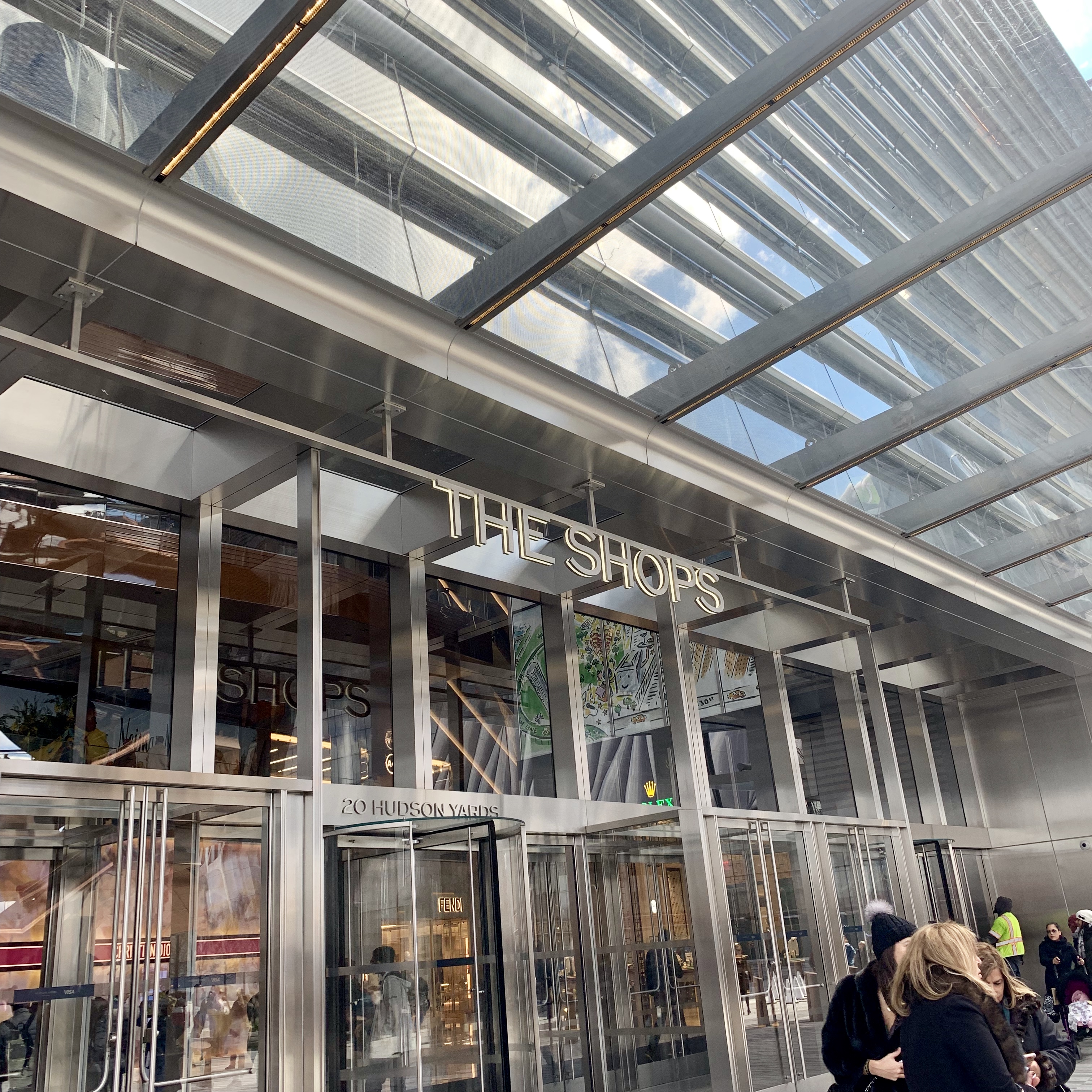
The Shops at Hudson Yards are extremely welcoming, with high ceilings and wide walkways. I saw many restaurants I am interested in trying.
And so many shops, including smaller ones like Dylan’s Candy Bar and Li-Lac Chocolates:
The most famous retail tenant is the first Neiman Marcus in New York City:
The experience inside the Shops is very pleasant. There were lots of people (surprisingly so, just a few days after opening) but enough space not to feel crowded.
Eventually there will be the highest open-air observatory in the Western Hemisphere here, called the Edge. I will be there when it opens (likely next year)!

Leaving the Shops to climb the Vessel, I had a look at the Shed and can’t wait to start experiencing art here.

The Vessel (wisely, I believe) limits the number of people entering at any given time by requiring timed tickets, but they are free. I reserved mine in advance here but they do save some same-day tickets as well that can be picked up near the Vessel. However, if it’s a busy time, your ticket might be for a few hours from when you pick it up.
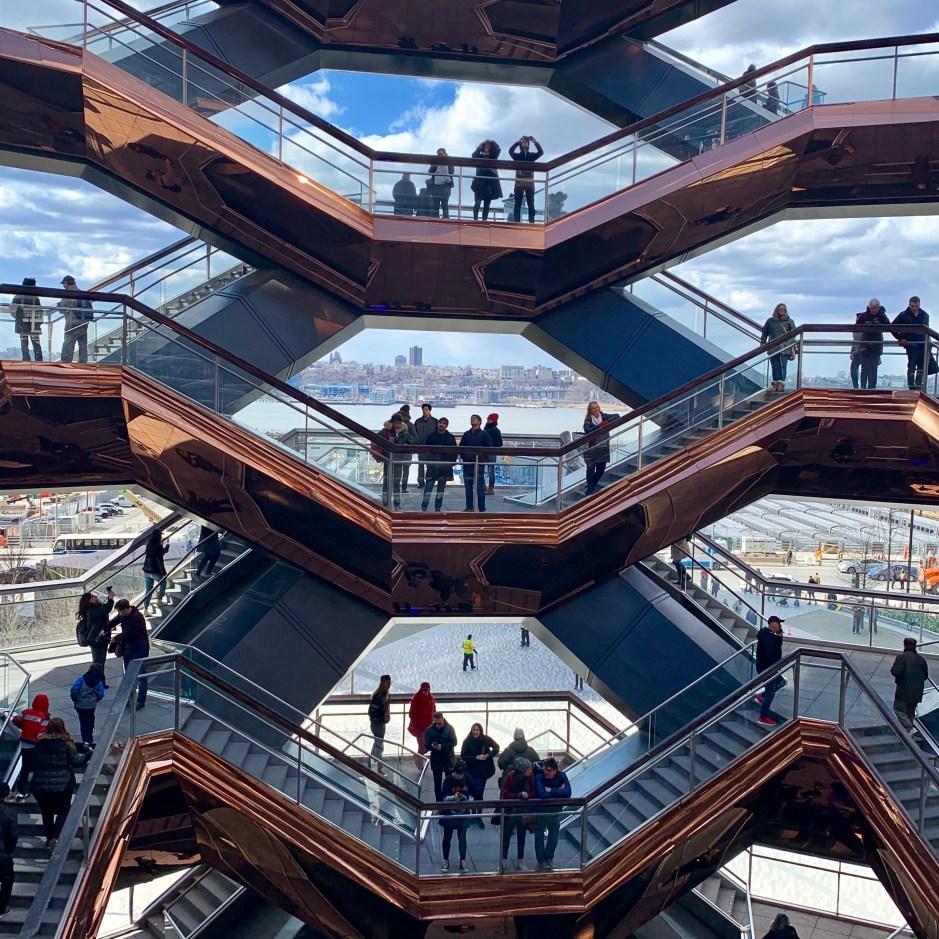
The Vessel is a concrete and copper outdoor sculpture with 2500 steps and 154 flights of stairs, eventually reaching a height of 16 stories. There is an elevator and ramps to make it accessible, but if you are able to explore it by foot, I recommend doing so. The stairs don’t seem too intense since they are short flights and you keep stopping to look at the views (however, you must wear comfortable shoes, and my calves were sore the next day despite not thinking it had been too bad while on the Vessel). It’s also not possible to do a direct trip, because the sections keep going up and down on each level. What I did was to go up (back and forth) on the Hudson River side to see those views, walk around the top to see all the views from there, and then walk back on the east side of the Vessel to see different views from that side.
The reflective quality of the copper led to some interesting photos. I predict that eventually everyone will be taking selfies of their reflection like you see people do in Anish Kapoor’s “Cloud Gate” in Chicago’s Millennium Park.
What I found most interesting was the way the pattern of the sculpture kept changing at different levels.
Even the pattern of people on the sculpture constantly changes so that your experience of what the Vessel looks like is fluid. I look forward to seeing it at different times of day (sunset or evening would be very interesting) or different weather patterns. The Vessel is open in all kinds of weather, and I noticed that the steps were rough concrete to make them safer during rain or snow.

Since I am a real estate agent, I have also been to the sales offices at Hudson Yards. which are amazing. There is a 360 degree movie inside a room that really gives you the feeling for the neighborhood as it develops, for instance. 15 Hudson Yards is already closing apartments, and 35 Hudson Yards has just begun selling (the developer of Hudson Yards likes this building so much he will be living in the penthouse when it is completed). There are also two rental buildings available, 1 Hudson Yards and Abington House. From Hudson Yards, you can walk the High Line to the Whitney Museum, one of my favorite strolls in all of the city. I thought when on the Vessel that the people-watching from some of these apartments will be a little like some of the apartments elsewhere on the High Line, like the fabulous Zaha Hadid 520 West 28th. From others you will have spectacular city views of the Empire State or One World Trade buildings, or Hudson River views (from the larger and higher apartments, you can have them all!). Reach out to me if you would like to check out apartments at Hudson Yards. My belief is that this entire part of town will appreciate in value due to this development, much as the creation of Lincoln Center transformed its neighborhood
So go to Hudson Yards and decide for yourself what you think. It’s often difficult for people to adjust to change, but the constant drive for metamorphosis is what has made, and continues to make, New York City the vibrant evolving place to live that it is.
A day (and evening) in Bushwick
When Peter Stuyvesant chartered the area he called Boswijck (“little town in the woods”) in 1661, it included the areas of Brooklyn now called Williamsburg, Greenpoint, and Bushwick. Like its neighbor Williamsburg a decade ago, Bushwick is transforming itself from an industrial working-class neighborhood to a haven for artists. Vogue magazine declared Bushwick #7 in its 2014 list of 15 coolest neighborhoods (one of only three in the US, and the only NYC area to make the list). Since I love unplanned walks in the city (see my initial post about the concept here) I recently spent a chilly March day exploring what Bushwick has to offer. I mean, already parodied by Saturday Night Live and in the title of an episode of “Girls,” what more could a neighborhood want?

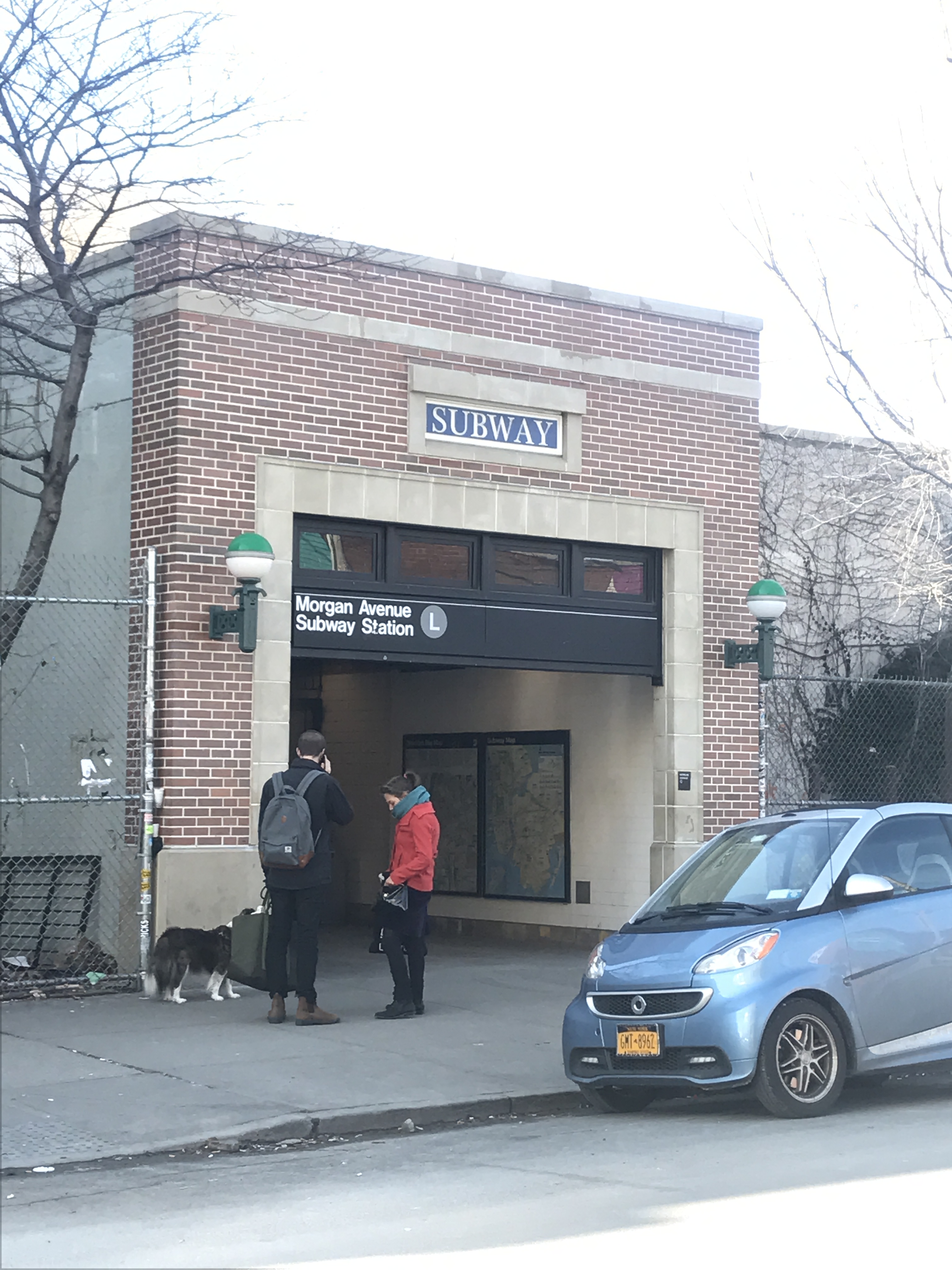
At least until they shut down the L for repairs, it is easy to get to Bushwick (and the J, Z, and M lines will do when the L does go down). I emerged from the Morgan Avenue stop and began to walk with a purpose to Roberta’s.
Roberta’s pizza is legend, and I intended to find out if all the hype was warranted. The wait for a table during peak times can exceed 2-3 hours, so I wanted to show up for brunch and get in before the crowds arrived. Roberta’s also makes fresh bread in the pizza oven every day before opening, and the bread with homemade salted butter was a fantastic appetizer. The pizza did not disappoint, and a green juice cocktail rounded out the brunch nicely.

Leaving Roberta’s full and happy, I was tempted to throw my shoes up to join the others.
Walking down any street in Bushwick was a visual treat. Street art is a big thing in Bushwick, especially since 2012 in the area now called The Bushwick Collective and curated by Joe Ficalora.
In an afternoon of wandering, I found spaces full of artists making and exhibiting their work, as well as a film and photo studio.
Maria Hernandez Park had playgrounds, basketball courts, and lawns, surrounded by rows of townhouses.
Housing in Bushwick is varied – lovely prewar townhomes, more modern single family homes with parking in front, converted industrial spaces, and new development condos. People priced out of Williamsburg have found Bushwick, and the rising prices here in turn are sending people to nearby Ridgewood, Queens. Costs are still lower in Bushwick than in Brooklyn as a whole (but who knows for how much longer?). For instance, median rental prices go from $1750/month for a studio to $3000/month for a three bedroom, while median sales prices go from $329K for a studio to $799K for a two bedroom, and there are still a few townhouses to be found for $1.5M.
As the evening approached, I had drinks and dinner at Sincerely Burger on Wilson Avenue.

The day ended with opera – Rossini’s Otello performed at LightSpace Studios in Bushwick by LoftOpera, a Brooklyn-based company bringing a fresh take on opera (and affordable prices) to younger and decidedly unstuffy audiences. Heading back to Manhattan from the Jefferson Street L station around 11:20, I heard music and laughter coming from many bars and restaurants, as well as from a few apartments. After an enjoyable day in Bushwick, I could see the allure of living here – still relatively affordable with an abundance of things to see and do.
Calatrava’s Oculus and the revitalized World Trade area
For over a decade after the events of 9/11/01, I avoided the area where the World Trade Center had once stood. The enormous gap in the lower Manhattan skyline, achingly obvious from any vantage point, was almost unbearably immediate when felt from street level while negotiating barriers set up for the clean up and eventual rebuilding of this area. Over time New Yorkers began to see One World Trade rise, just off to the side of that empty skyline space, and witness the completion of the 9/11 museum and memorial reflecting pools. In 2016, the area has blossomed fully into the revitalized part of the city that everyone had hoped it could become. As a person who loves to take an unplanned walk in an urban environment (see my initial blog post about the process here), I recently took the subway down to Fulton Street and began to wander.

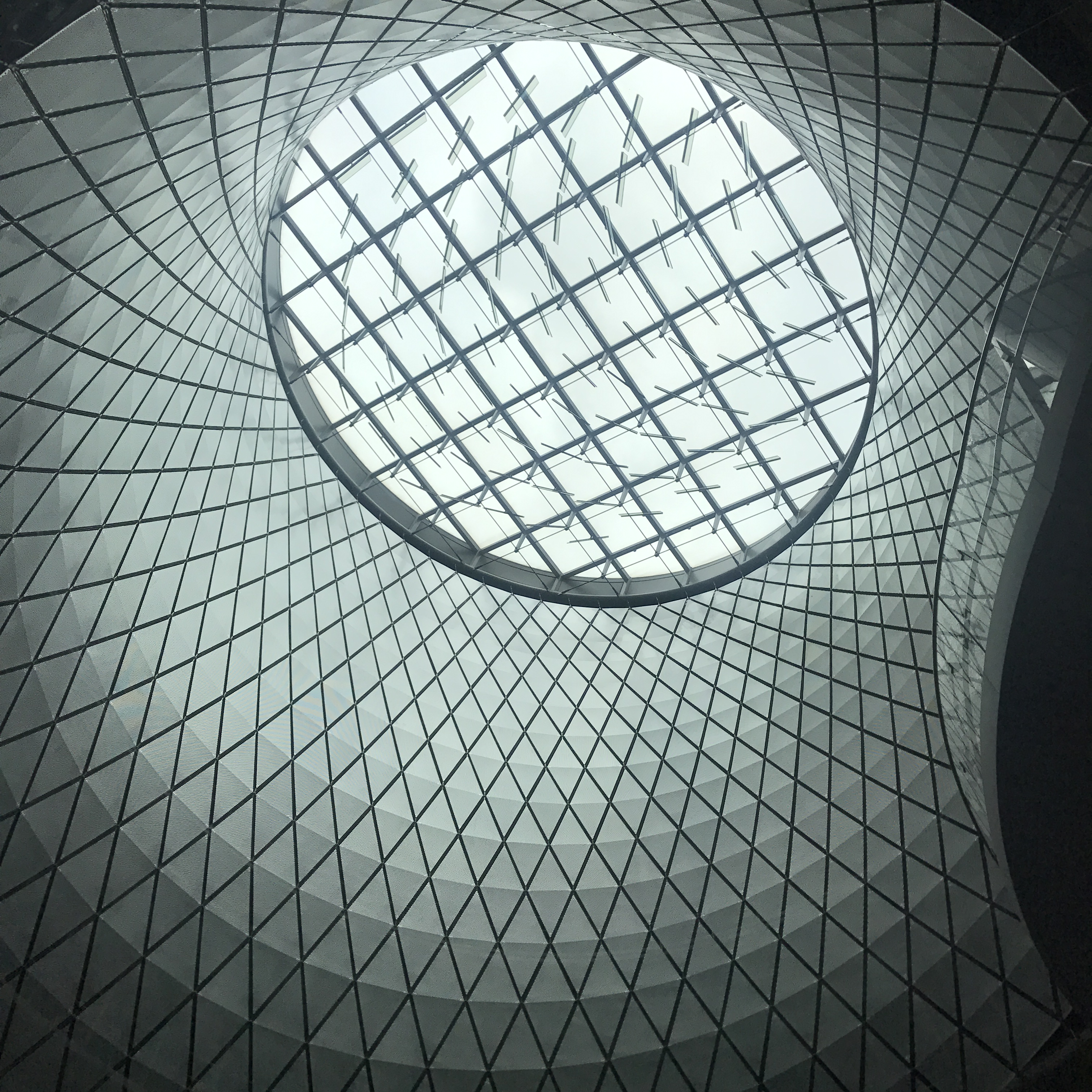
Almost any subway line can get you to Fulton (2 3 4 5 A C J Z N R W). The Fulton Center transit hub is gorgeous, with the Sky-Reflector Net as its focal point. Hundreds of mirrors reflect sunlight from a massive skylight down four stories to retail shopping areas below.

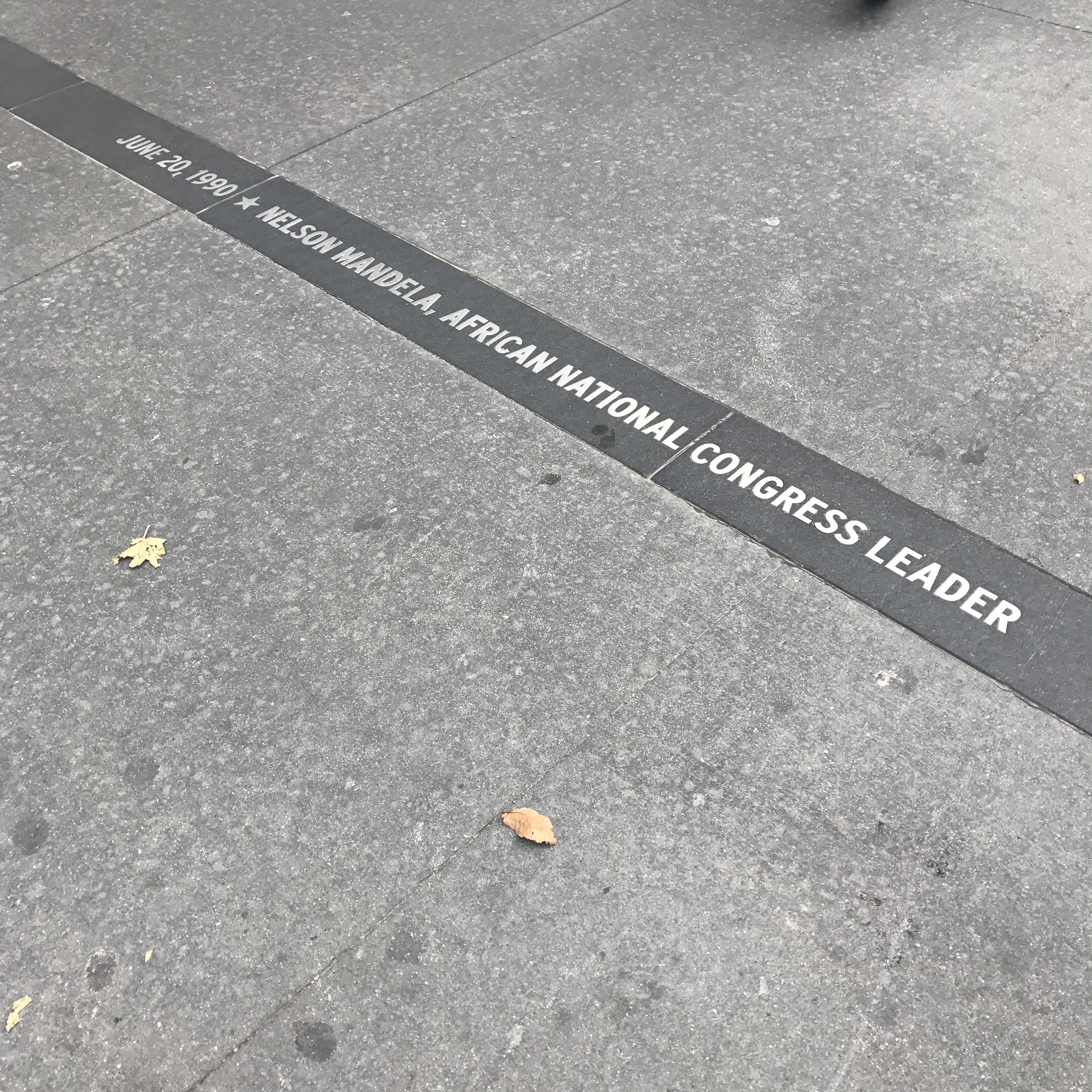
Emerging from Fulton onto Broadway, be sure to look down. This is the “Canyon of Heroes” where ticker tape parades have been held throughout the centuries, from celebration of the finishing of the Brooklyn Bridge to the safe return from the moon of the Apollo astronauts. Markers along the sidewalk note the various achievements celebrated in this way.

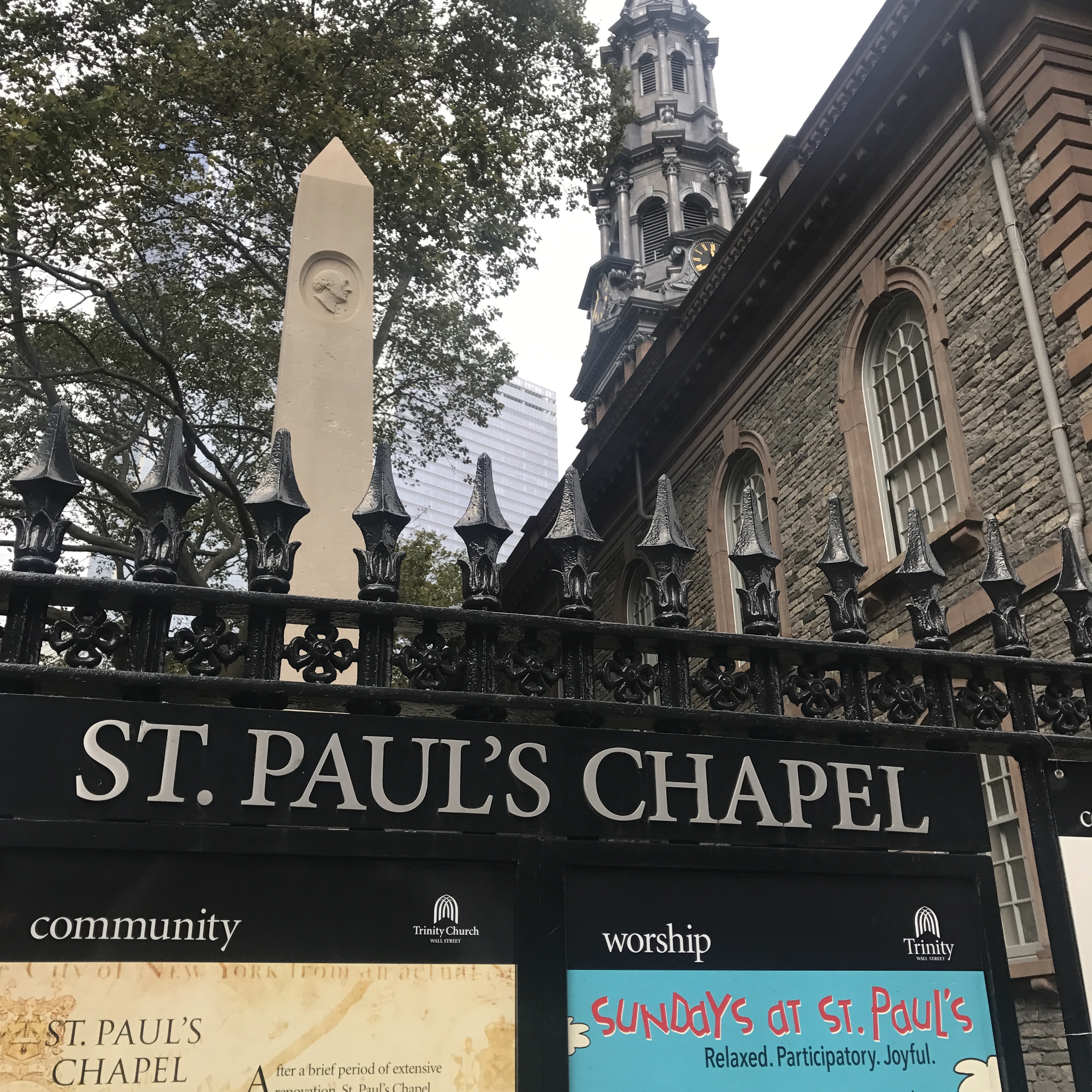
Almost immediately I came across St. Paul’s Chapel, built in 1766 and the oldest surviving church building in the United States. This gorgeous Georgian building was designed after London’s St-Martin-in-the-Fields, and is a National Historic Landmark. George Washington worshipped here on his Inauguration Day, and the church has survived not only the great fire of 1776 when a quarter of the city was destroyed by the British, but also was unscathed by the events of 9/11, becoming instead a place for recovery workers to rest and receive counseling.
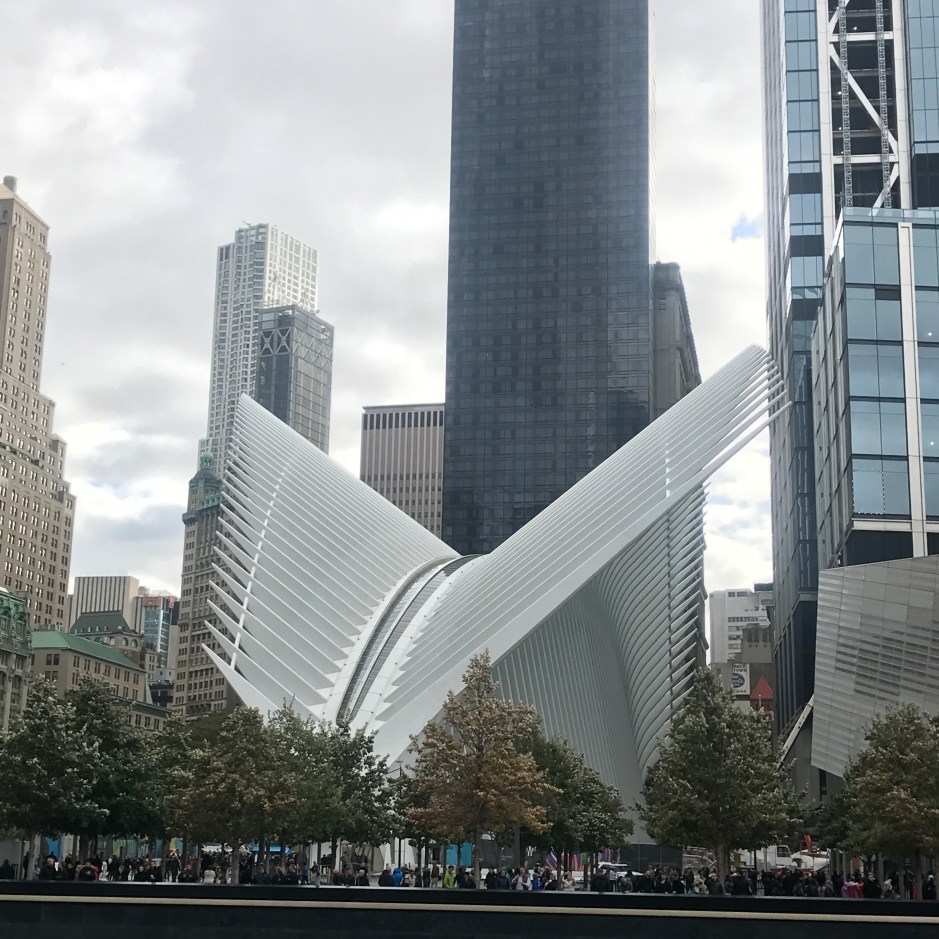
Turning west on Vesey Street, it is impossible to miss Santiago Calatrava’s World Trade Center Transportation Hub, now often just referred to as the Oculus. As a transportation center, it primarily serves New Jersey PATH commuter trains, and is filled with retail including an Apple Store. The striking architectural style is apparent both outside and within. The exposed bleached bones of the building seem to echo to me the vertical exterior girders of the original World Trade Center. From the strip of skylight running along the roof, you can catch glimpses of One World Trade, and on clear days, puffy clouds. In my opinion, it’s thrilling, and also spiritually uplifting, befitting its location.
From the lower levels of the Oculus, you can walk underground to reach the Winter Garden Atrium as well as all the shops at Brookfield Place, a major new shopping area (dare I say “mall”?). The Winter Garden holds various free public concerts and other art events throughout the year.
One of my favorite areas in this part of Brookfield Place is Le District, kind of a French version of Eataly (a second location of which is in the Oculus shopping area, by the way).

Continuing west out of Le District, the Hudson River awaits. During the warmer months there are areas to eat outside while watching boats go by (I highly recommend the P.J. Clarke’s there for that purpose).

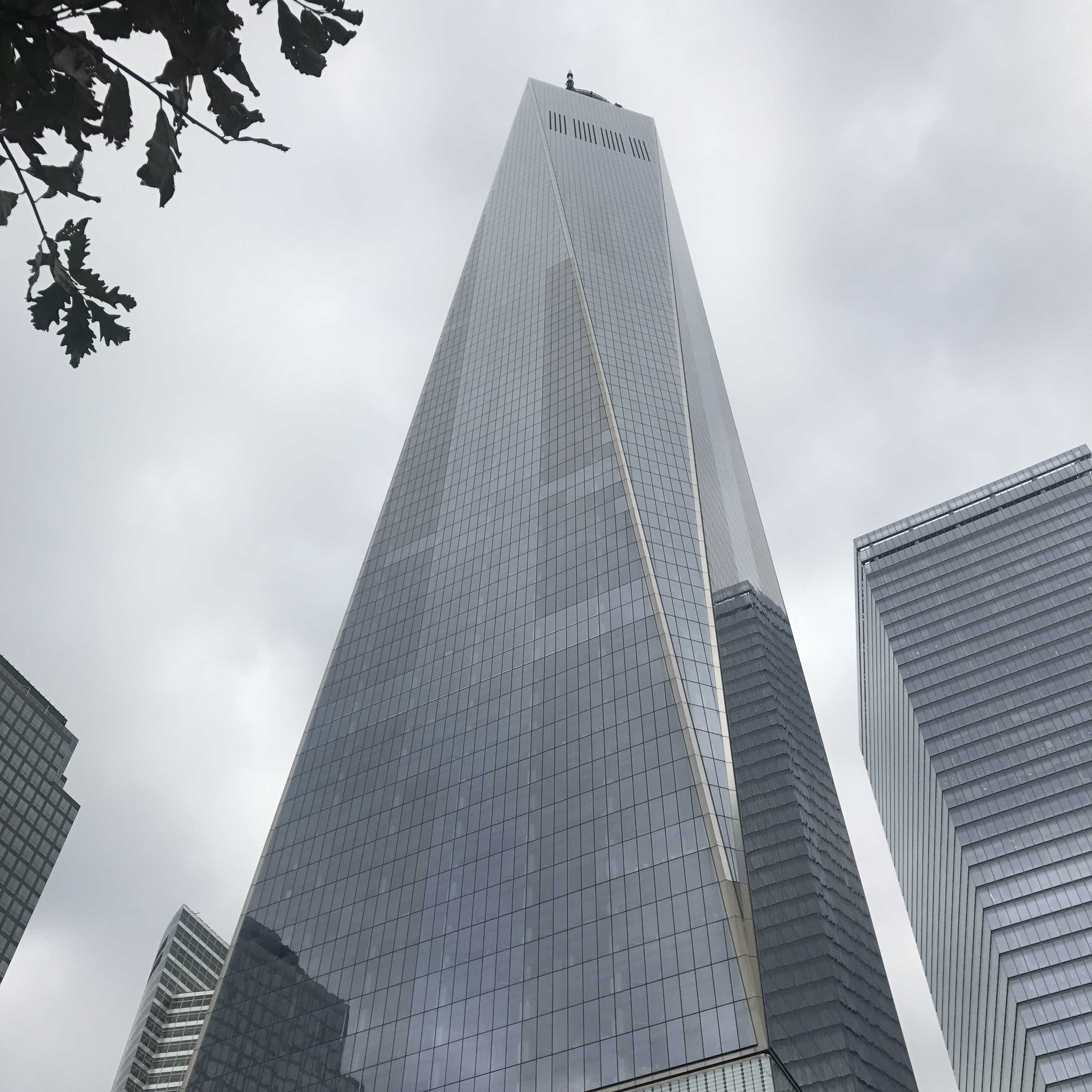
Heading east again, I stayed above ground. The area, of course, is dominated by One World Trade (once dubbed the Freedom Tower). Now bustling with business, and with an observatory in the top, it is the iconic symbol of this reborn area. This neighborhood is bursting with new real estate developments as well – I have recently viewed 100 Barclay and Thirty Park Place, for instance, both of which have direct close-up views of One World Trade. With all the new shopping and dining opportunities in the area, someone purchasing here no longer has to feel isolated from the bustle of the city.
Of course, One World Trade lies just to the north of where the World Trade Center once stood. The footprints of the giant towers are now reflecting pools surrounded by the names of those who lost their lives there. The National 9/11 Museum is next to the reflecting pools, and it is a worthy if sobering place to visit if you have not been (I went about two years ago with my father). If you see a flower stuck into one of the carved names, know that it is that person’s birthday – the site keeps track of birthdays and memorializes each person each year on that day.

To the east of the reflecting pools, Calatrava’s Oculus soars. It is said that it was meant to symbolize a dove of peace being released from a child’s hand. To me, it seems as if it is a great prehistoric bird, perhaps just landed or just taking off, guarding this most sacred space. Like a phoenix reborn from the ashes, this part of New York City suggests our tremendous resilience and our unbounded hope for the future.
Gramercy Park
Most neighborhoods in New York City have a story to tell – generally, it is a cyclical one, perhaps from farmland to residential, to tenements, and back to gentrification. There are however a few areas of New York City that have remained remarkably stable. One of these is the Gramercy Park neighborhood, which was created to be a fashionable residential location and has remained fashionable to the present. The neighborhood is roughly between Third and Park Avenue South, and between 18th and 22nd Streets. The Historic District encompasses some of this area, and nowadays the greater area might be considered to go all the way from 23rd to 14th Street, still between Third Avenue and Park Avenue South.
My favorite way to experience a neighborhood is to walk through it without a pre-planned route (a dérive). Emerging from the subway on Park Avenue South and 23rd Street, I immediately noticed that there are generally low lying buildings here. The Manhattan schist, or bedrock, is deeper in this part of the island, so generally there is nothing over 20 stories in height. Venturing farther from the subway stop, the quiet nature of this neighborhood becomes clear. Originally the area was swampy, but in 1831 the land was bought, and a plan for the area designed by, Samuel Ruggles. The most significant part of his plan included a private park, like the private garden squares popular then, and still found today, in London.
As you walk toward Gramercy Park, the tall and heavy fences with locked gates cannot be ignored. Gramercy Park is the only private park in Manhattan. It lies between 20th and 21st Streets (Gramercy Park South and North), and midblock streets called Gramercy Park East and West. As Lexington Avenue heads south, it hits a dead end at the park, and reemerges on its south side as Irving Place. Only the residents of the buildings facing the park have keyed access to the park and the value of an apartment that includes the right to a key is significantly increased compared to one close by but without access. Keys can be also checked out by members of the Player’s Club, and guests of the Gramercy Hotel can be escorted to the park by a hotel employee and let in, then picked up when they are ready to leave. The keys to these locks cannot be copied, the locks are changed every year, and hefty lost key fees insure that the park remains private. The keys are even individually numbered and coded.
The statue in the middle of the park is of Edwin Booth as Hamlet, one of the best Shakespearean actors of the 19th century (namesake of the Booth theatre – and brother to John Wilkes Booth, assassin of President Lincoln). He lived at 16 Gramercy South and eventually gave the building for the formation of the Player’s Club. Every Christmas eve the park is opened to the public for caroling, so if you’re dying to be inside those locked gates, this is your one opportunity (or, you could buy a place with a key).
Walking around the perimeter of the park (outside the gates, of course!) the Gramercy Park Hotel, built in 1925, dominates the northern edge, while the western edge features a line of immaculate townhouses. E.B. White’s Stuart Little takes place on Gramercy Park, presumably in one of these homes. Most of New York City has some kind of interesting history waiting to be uncovered, but Gramercy Park seems to have more than most neighborhoods; for instance, Thomas Alva Edison and John Steinbeck once lived on the park. Nearby, Teddy Roosevelt’s birthplace on E 20th Street is a National Historic Site.
While the idea of a gated private park in New York City does seem to go against our democratic ideals, it has certainly preserved the value of the residences facing Gramercy Park and stabilized the neighborhood. Of course, Central Park is open to all, and proximity to it can also significantly increase a home’s value. Gramercy is a quiet, pleasant neighborhood – on the cusp between midtown and downtown, but with some of the understated characteristics of streets in Carnegie Hill uptown.
Murray Hill
Have you ever watched an old movie or television program and heard someone’s phone number expressed as “Murray Hill” followed by five numbers (for instance, the Ricardos in I Love Lucy were at MH5-9975)? That telephone exchange once covered all of the east side of Manhattan, with an East 37th Street building serving as the hub. The Murray Hill neighborhood itself covers roughly the area between E. 34th and E. 40th Streets, between Madison and Third Avenues. After showing a customer a potential home recently, I took an unplanned walk (a dérive) to experience what it would be like to live or work in Murray Hill.
However, my first questions were: who was Murray and was there truly a hill (because I was unable to detect a significant one while walking the area)? In fact, Robert Murray was a Quaker, an Irish immigrant around the time of the American Revolution who became a successful shipping merchant and built a house on what would now be Park Avenue and 36th Street. The area would have been the limits of uptown Manhattan at that point, with farmland continuing north. At that point there was a hill (since leveled) and a reservoir existed where Bryant Park and the New York Public Library now sit. For a time in the 19th Century, Murray Hill was the destination for many of the industrial age’s titans to build their mansions and townhouses, before the birth of Millionaire’s Row further uptown on Fifth Avenue with views of the newly created Central Park.
Starting on Park Avenue and 40th Street, magnificent Grand Central Station looms just a few blocks north, the Chrysler Building emerging behind it and to the side – looking like a cross between a skyscraper and an Art Deco fairytale castle. One of the things I appreciated immediately was that the many shorter buildings in the area create multiple opportunities for iconic views of the Chrysler Building to the north and east, and the Empire State Building to the south and west. The high rise buildings, like the one I was showing to a customer, often have several apartments with perfectly framed views of these buildings. In fact, these views are made more spectacular by close proximity. Wandering the streets in no particular order, the sudden unexpected views of these iconic skyscrapers was a real delight.
While the avenues in this neighborhood are bustling and full of restaurants, bars, and shops, the streets tend to be surprisingly quiet. Many of the street blocks contain rows of townhouses or mid-rise buildings, with the high rise buildings tending to be on the Avenues. Eventually I came across the Morgan Library and Museum on Madison at 36th Street. I happened upon it from the side, on 36th Street, and first noticed the sculpted lionesses guarding this side entrance. I was not surprised to discover later that they were by the same artist who created the better-known lions at the front of the New York Public Library a few blocks away. The magnificent main building was created to house the manuscript collection of Pierpont Morgan, a prominent financier in the beginning of the 20th century. His son later gave his father’s collection and the building for the creation of the Morgan Library and Museum. Although best known for its illuminated manuscripts and sketches, it also houses original handwritten musical scores and lyrics, from Mozart to Bob Dylan (his first draft of “Blowin’ in the wind,” written on a scrap of paper).
Heading out of the neighborhood into Kips Bay to the east, I realized that the proximity to the Queens Midtown Tunnel could make this a very convenient neighborhood for those who regularly head to Long Island. With Grand Central Terminal only a few blocks away, it is also well situated for people who use Metro North to go to upstate or to Connecticut. Murray Hill struck me as an interesting midtown neighborhood, with options for high rise living with killer skyscraper views as well as peaceful townhouse living with a view of leafy trees.
The joy of a New York City dérive
I love living in New York City. There are so many reasons for this: the palpable energy level, the abundance of every kind of visual and performing arts, limitless food delivery options, yes, even “the city that never sleeps.” That final cliché can never be fully appreciated this until arriving at Southwark station with a large suitcase at 5 AM and realizing that the London tube, which closes overnight, has not even opened three hours before needing to get to Heathrow to make an international flight – trust me on this one. Who could imagine that a subway would ever shut down? However, when forced to think about what I love most about living in Manhattan, my mind keeps turning to the joys of walking. Given no time constraints, I would always choose to walk over taking a bus, subway, or taxi. Regardless of the weather, there is such a tangible connection to the city when striding down a sidewalk, a visceral bond that cannot be experienced from inside a glass and metal bubble. From the windows of a taxi, you are an observer of the city and its neighborhoods; when walking, you are a participant within it.
In my blog, I will write about various things I enjoy in New York City, but many posts will describe my personal experiences of walking around various neighborhoods. Despite living in Manhattan for over 25 years, I am constantly surprised by how much there is to learn and explore even in familiar surroundings. The neighborhoods themselves are almost like mini-cities of their own; the feeling of walking through the Upper West Side is very different from that of walking through the East Village, and that is part of the joy of the city – it is always changing and there is always more to discover. Although I am a licensed real estate professional with Warburg Realty, this blog will not be primarily about residential buildings, it will be about neighborhoods. While many of my daily walks involve getting from one place to another at the maximum walking speed possible, listening to music on my iPhone, and thinking about the next ten things I need to do, there is a special pleasure to be had in occasionally slowing down and really observing my surroundings. I will be writing about a specific kind of walking within a city neighborhood, called a dérive. Wikipedia defines a dérive as “an unplanned journey through a landscape, usually urban, on which the subtle aesthetic contours of the surrounding architecture and geography subconsciously direct the travellers, with the ultimate goal of encountering an entirely new and authentic experience.” My self-imposed rules for blogging a dérive (and, since these rules are self-imposed, I will feel free to break them on occasion) are that I will not set out with a set path within my chosen neighborhood, and that any photographs I show will be taken by me on my iPhone.
My hopes for this blog are that New Yorkers reading it will find a new perspective on their city, and that those not as familiar with the city will learn a little about why I find it such an exhilarating place to live and work. If you are thinking of moving to New York or relocating within the city, perhaps my blog will help you begin to find some neighborhoods that interest you to begin your search for a home. If I can help you find a home in New York City, please do contact me. My first dérive will be in an area of the Upper East Side called Yorkville, which happens to be my home turf.