Hello, Hudson Yards!

In October of 2014, 4 1/2 years ago, I wrote a blog post about a new neighborhood that was beginning to be built over rail yards west of Penn Station, Hudson Yards. In it, I concluded, “To walk in Hudson Yards is to be present at the birth of a new neighborhood, one that seems limitless in terms of how it will change the landscape of New York City.”  In October of 2017, I was able to take a hardhat tour of the site, well on its way but still with far to go before being open to the public (see below for a few photos from that visit).


image_36830970163_oimage_23647698718_o

A few days ago, in March of 2019, I was able to spend an afternoon in Hudson Yards only a few days after its official opening. Hudson Yards is not even midway to completion, and after following this development for so long, I thought there was a good chance I might be underwhelmed or (worse) disappointed. And yes, yes, yes, I read the NY Times review, and was told by the New Yorker that there is no good reason why any resident would visit Hudson Yards – but I would much rather experience something and make my own judgements! Spoiler alert – I enjoyed Hudson Yards far more than I had expected and see myself spending a lot of time here soon and in years to come. If you don’t understand Hudson Yards or dislike the constant change in NYC’s skyline and neighborhoods, check out my photos and experience – perhaps you will then also go and make your own decision. Like it or not, Hudson Yards is here and is going to be a major player in this city.

IMG_E1557

When approaching Hudson Yards, it’s hard to miss. Even this half, Hudson Yards East, of the total planned development is still partially under construction.

IMG_E1559

I walked to Hudson Yards from Midtown West, but an extension of the 7 subway line lets you off there if you are coming from elsewhere in the city.

IMG_E1561

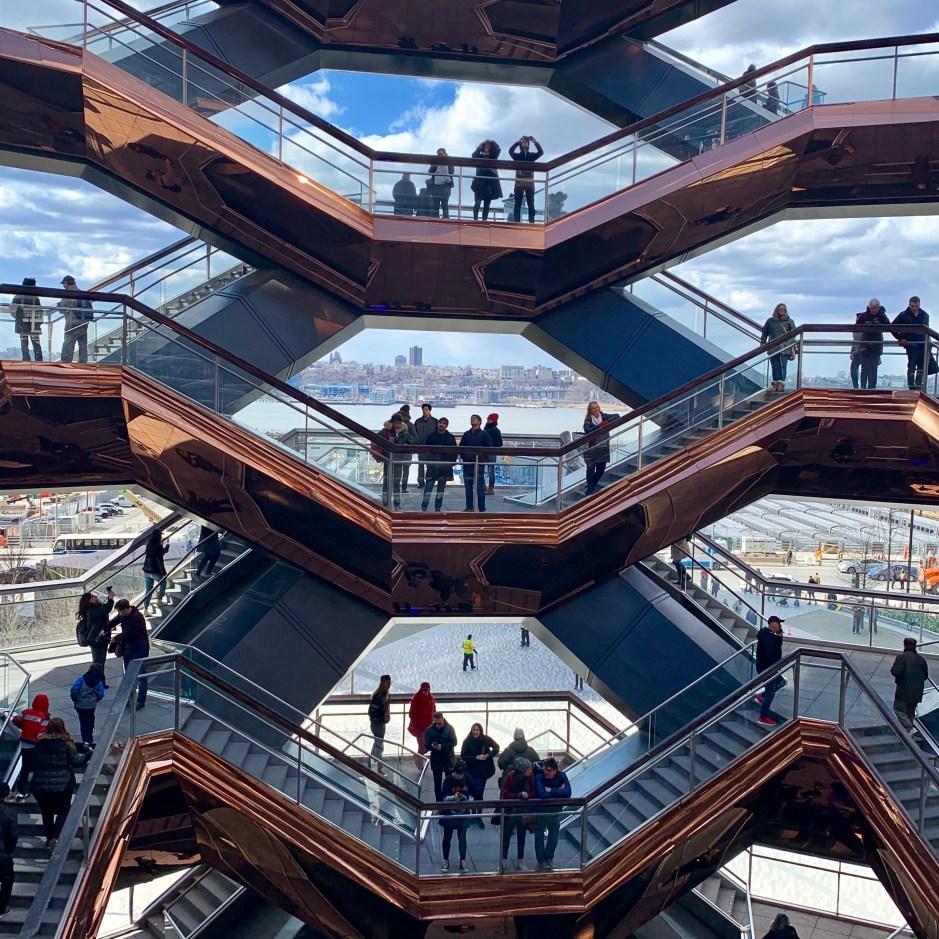
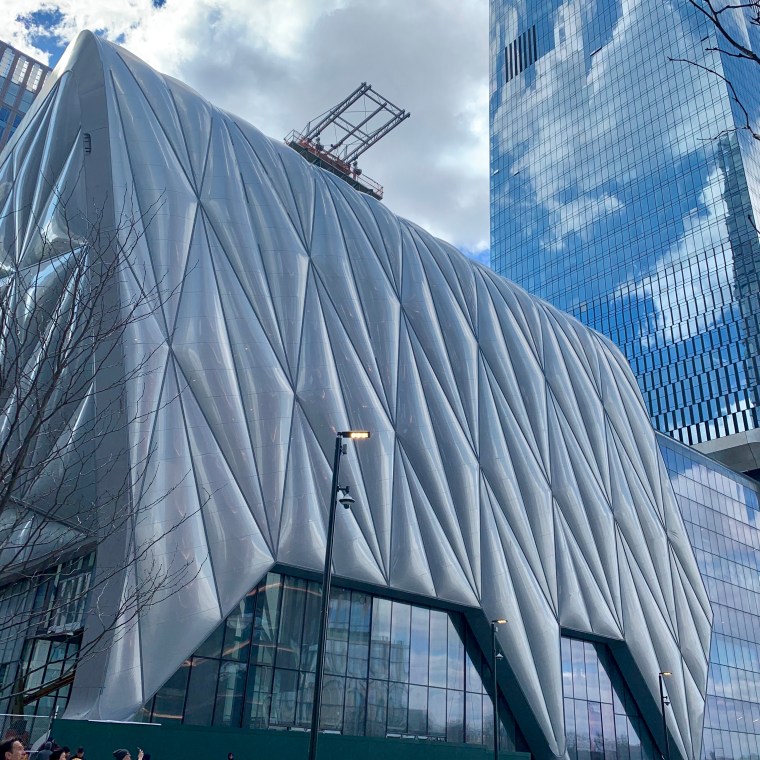
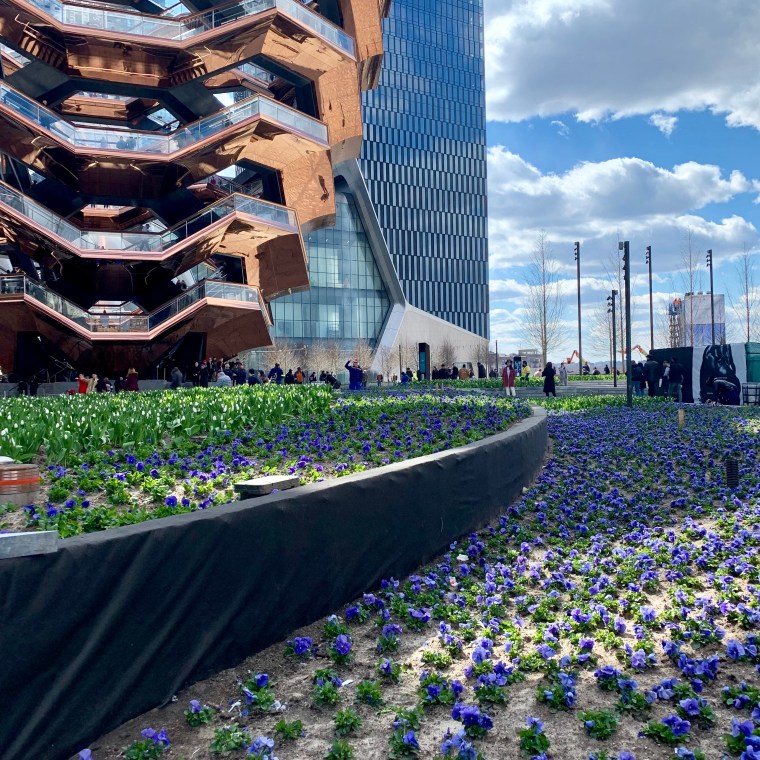
The focal point of the development is the Vessel, a public sculpture created by Thomas Weatherwick. I will describe the process of exploring it later in this post. The building just behind the Vessel is the Shed, a performing arts venue that is being curated by Alex Poots, former Artistic Director of the Park Avenue Armory. The Shed is creatively designed so that it is a flexible space suitable for many different types of events.
IMG_E1563

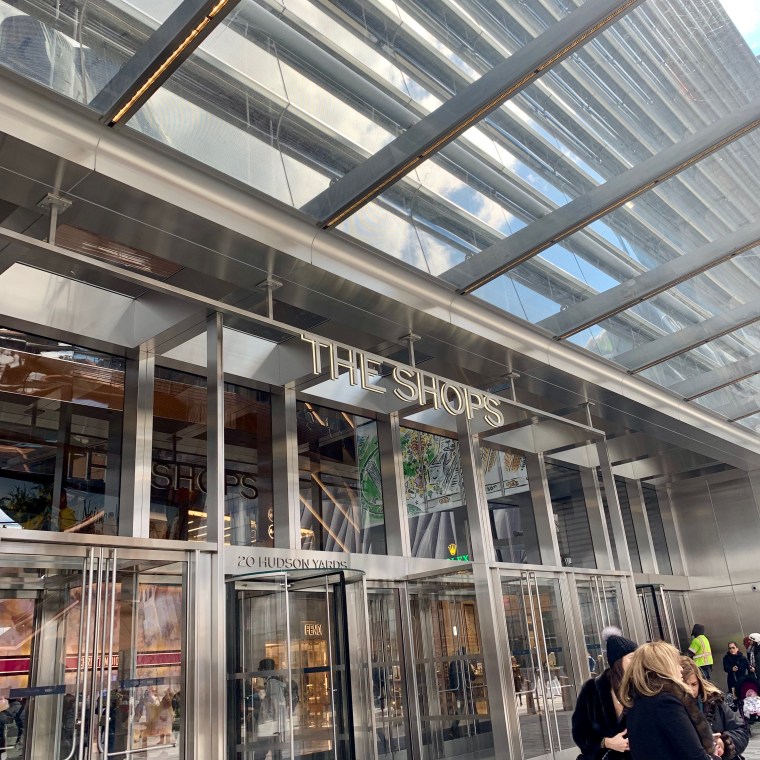
The Shops at Hudson Yards are extremely welcoming, with high ceilings and wide walkways. I saw many restaurants I am interested in trying.

And so many shops, including smaller ones like Dylan’s Candy Bar and Li-Lac Chocolates:

The most famous retail tenant is the first Neiman Marcus in New York City:

The experience inside the Shops is very pleasant. There were lots of people (surprisingly so, just a few days after opening) but enough space not to feel crowded.

Eventually there will be the highest open-air observatory in the Western Hemisphere here, called the Edge. I will be there when it opens (likely next year)!

IMG_E1578

Leaving the Shops to climb the Vessel, I had a look at the Shed and can’t wait to start experiencing art here.
IMG_E1566

The Vessel (wisely, I believe) limits the number of people entering at any given time by requiring timed tickets, but they are free. I reserved mine in advance here but they do save some same-day tickets as well that can be picked up near the Vessel. However, if it’s a busy time, your ticket might be for a few hours from when you pick it up.

The Vessel is a concrete and copper outdoor sculpture with 2500 steps and 154 flights of stairs, eventually reaching a height of 16 stories. There is an elevator and ramps to make it accessible, but if you are able to explore it by foot, I recommend doing so. The stairs don’t seem too intense since they are short flights and you keep stopping to look at the views (however, you must wear comfortable shoes, and my calves were sore the next day despite not thinking it had been too bad while on the Vessel). It’s also not possible to do a direct trip, because the sections keep going up and down on each level. What I did was to go up (back and forth) on the Hudson River side to see those views, walk around the top to see all the views from there, and then walk back on the east side of the Vessel to see different views from that side.

The reflective quality of the copper led to some interesting photos. I predict that eventually everyone will be taking selfies of their reflection like you see people do in Anish Kapoor’s “Cloud Gate” in Chicago’s Millennium Park.

What I found most interesting was the way the pattern of the sculpture kept changing at different levels.

Even the pattern of people on the sculpture constantly changes so that your experience of what the Vessel looks like is fluid. I look forward to seeing it at different times of day (sunset or evening would be very interesting) or different weather patterns. The Vessel is open in all kinds of weather, and I noticed that the steps were rough concrete to make them safer during rain or snow.
IMG_E1635

Since I am a real estate agent, I have also been to the sales offices at Hudson Yards. which are amazing. There is a 360 degree movie inside a room that really gives you the feeling for the neighborhood as it develops, for instance. 15 Hudson Yards is already closing apartments, and 35 Hudson Yards has just begun selling (the developer of Hudson Yards likes this building so much he will be living in the penthouse when it is completed). There are also two rental buildings available, 1 Hudson Yards and Abington House. From Hudson Yards, you can walk the High Line to the Whitney Museum, one of my favorite strolls in all of the city. I thought when on the Vessel that the people-watching from some of these apartments will be a little like some of the apartments elsewhere on the High Line, like the fabulous Zaha Hadid 520 West 28th. From others you will have spectacular city views of the Empire State or One World Trade buildings, or Hudson River views (from the larger and higher apartments, you can have them all!). Reach out to me if you would like to check out apartments at Hudson Yards. My belief is that this entire part of town will appreciate in value due to this development, much as the creation of Lincoln Center transformed its neighborhood

So go to Hudson Yards and decide for yourself what you think. It’s often difficult for people to adjust to change, but the constant drive for metamorphosis is what has made, and continues to make, New York City the vibrant evolving place to live that it is.

The Lower East Side

Lowereastside2

What’s the first word that pops into your mind when you think of the Lower East Side of Manhattan? Tenements? Immigration? Delis? Nightlife? All of those would be correct associations, but we can now add gastropubs, new development high-rises, and trendy hotels to the mix. For this dérive (an unplanned walk in an urban environment), I wandered this rapidly transforming neighborhood.

The Lower East Side once included the area now known as the East Village, but now is considered to be roughly between East Houston Street and Canal Street to the north and south, Bowery to the west, and the FDR Drive to the east. Before the Revolutionary War, the area was home to the Delancey farm, leaving only the names of Delancey and Orchard Streets as remnants of this pastoral history. A working class neighborhood for centuries, it hosted many different immigrant groups, but is perhaps best known for its Jewish population. When the American Girl doll company chose to add Rebecca Rubin – a Jewish girl growing up with an immigrant family in 1914 – to their roster of historical dolls, this fictional family was placed in the Lower East Side.

Lowereastside1

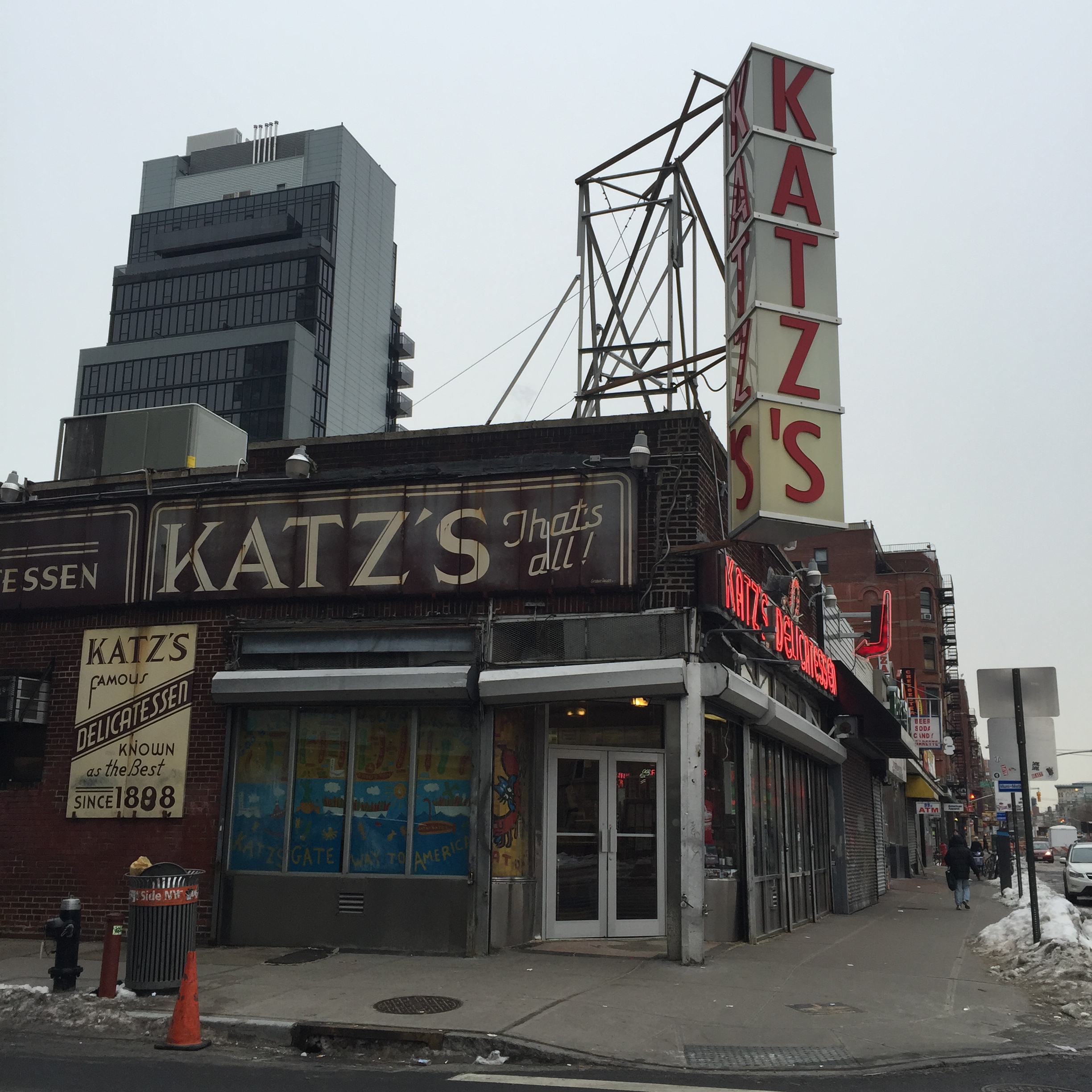
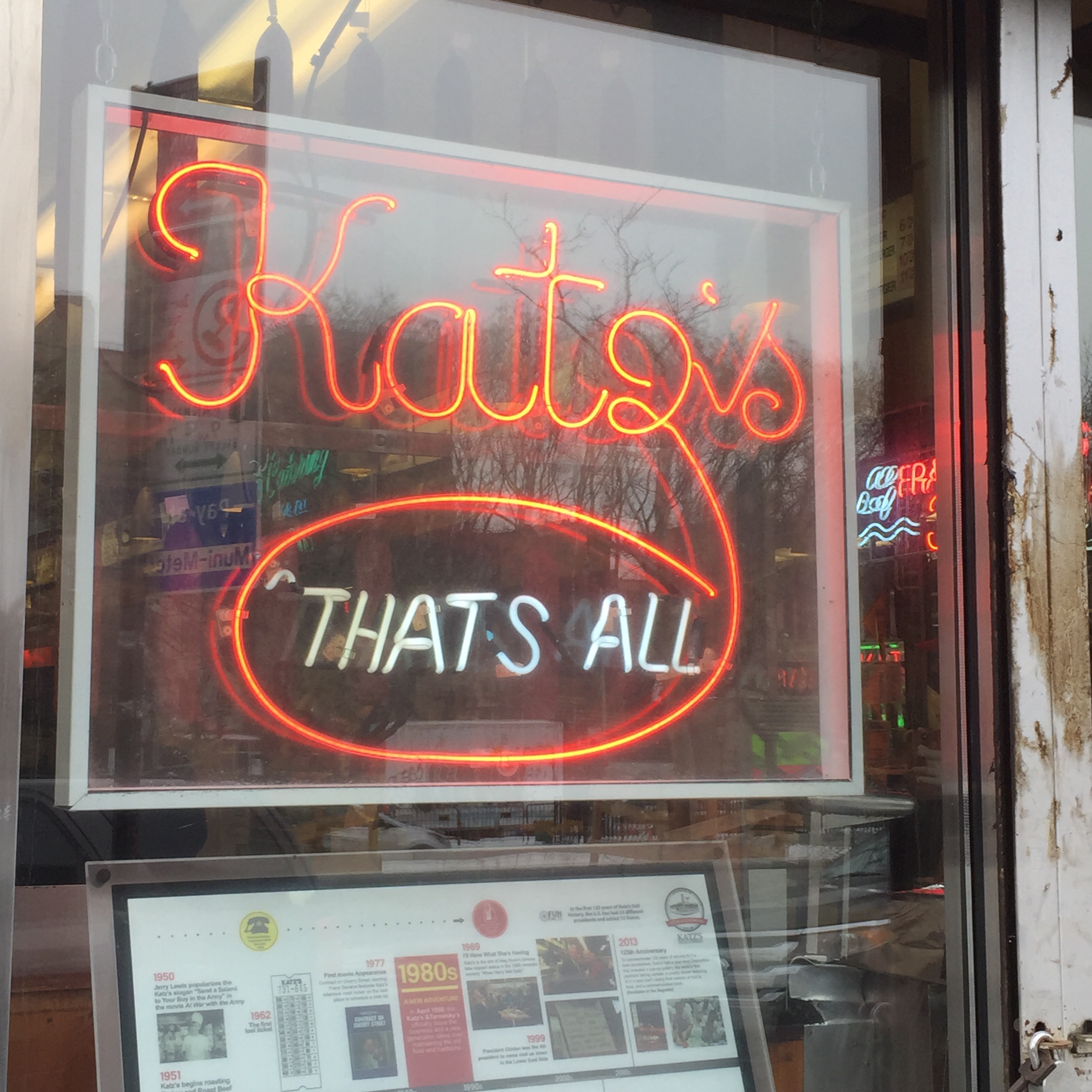
Starting on East Houston and Bowery, heading east, it doesn’t take long to find one of the iconic symbols of the area’s Jewish immigrant past – Katz’s deli on East Houston and Ludlow.  It’s hard to be in Katz’s without thinking of the famous scene from When Harry Met Sally (culminating in the famous line, “I’ll have what she’s having”) but it’s survived since 1888 based on the quality of its pastrami sandwiches. Bring cash – no credit cards accepted, but the attitude from your server is free.

Lowereastside6

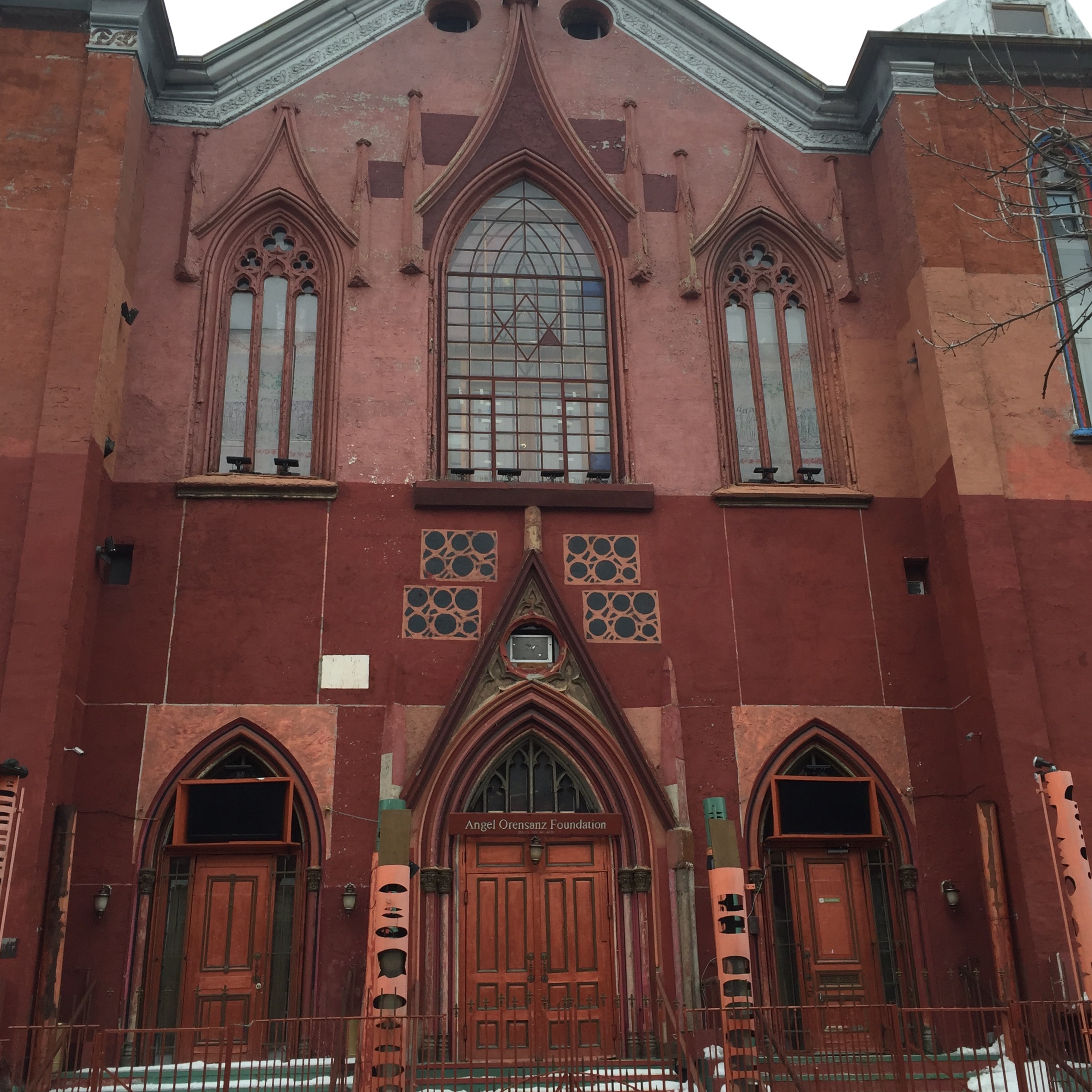
Continuing east on Houston and turning south on Norfolk Street, the fifth oldest synagogue building in the United States, now the home of the Angel Orensanz Foundation, is on the east side of the street. After the Jewish population had largely left the area in the 1970’s, the building was abandoned and left to disrepair before being purchased by Spanish sculptor Angel Orensanz for studio space. The gothic-revival architecture of the building has been restored and the building now functions as a center for the arts as well as an artist’s studio.

Lowereastside7

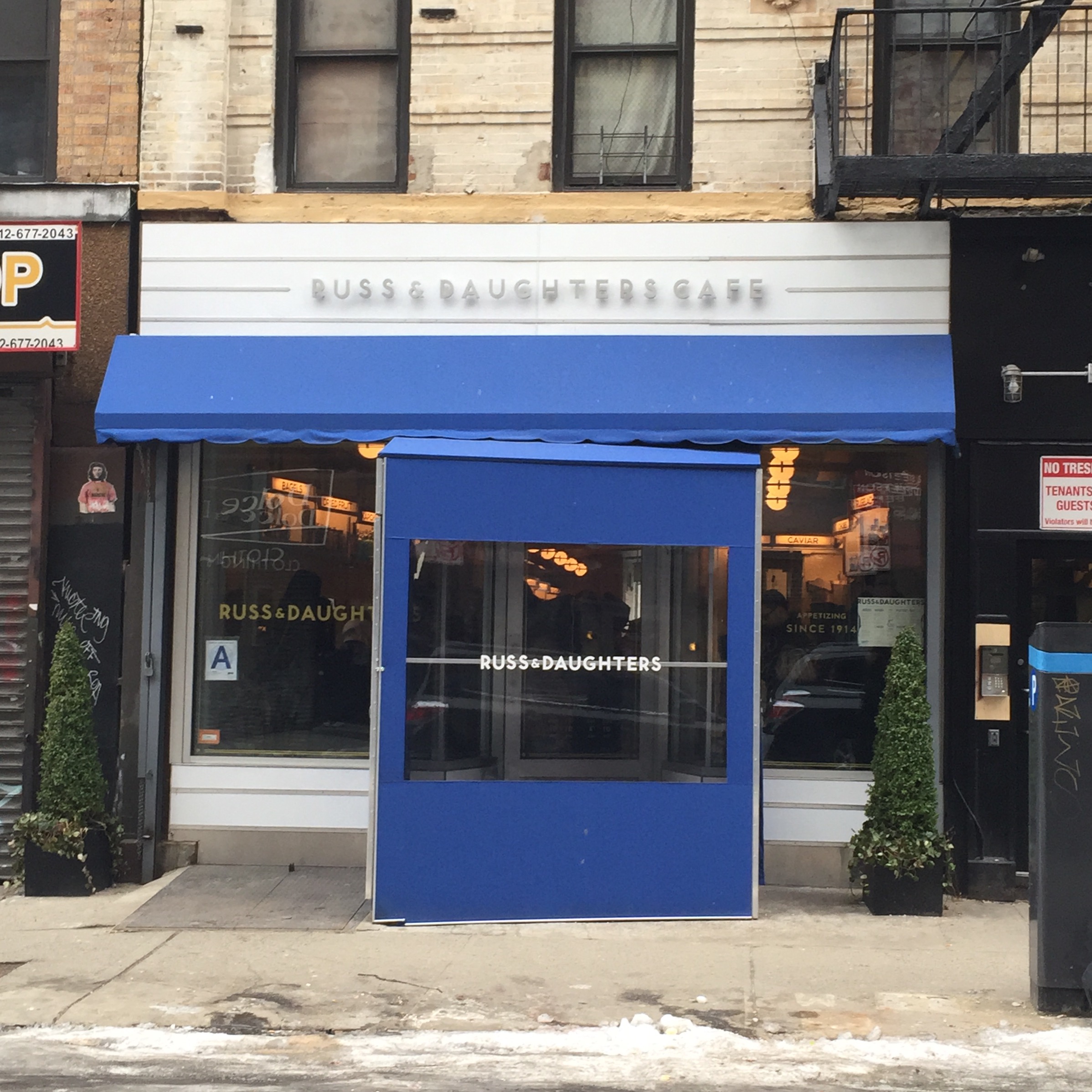
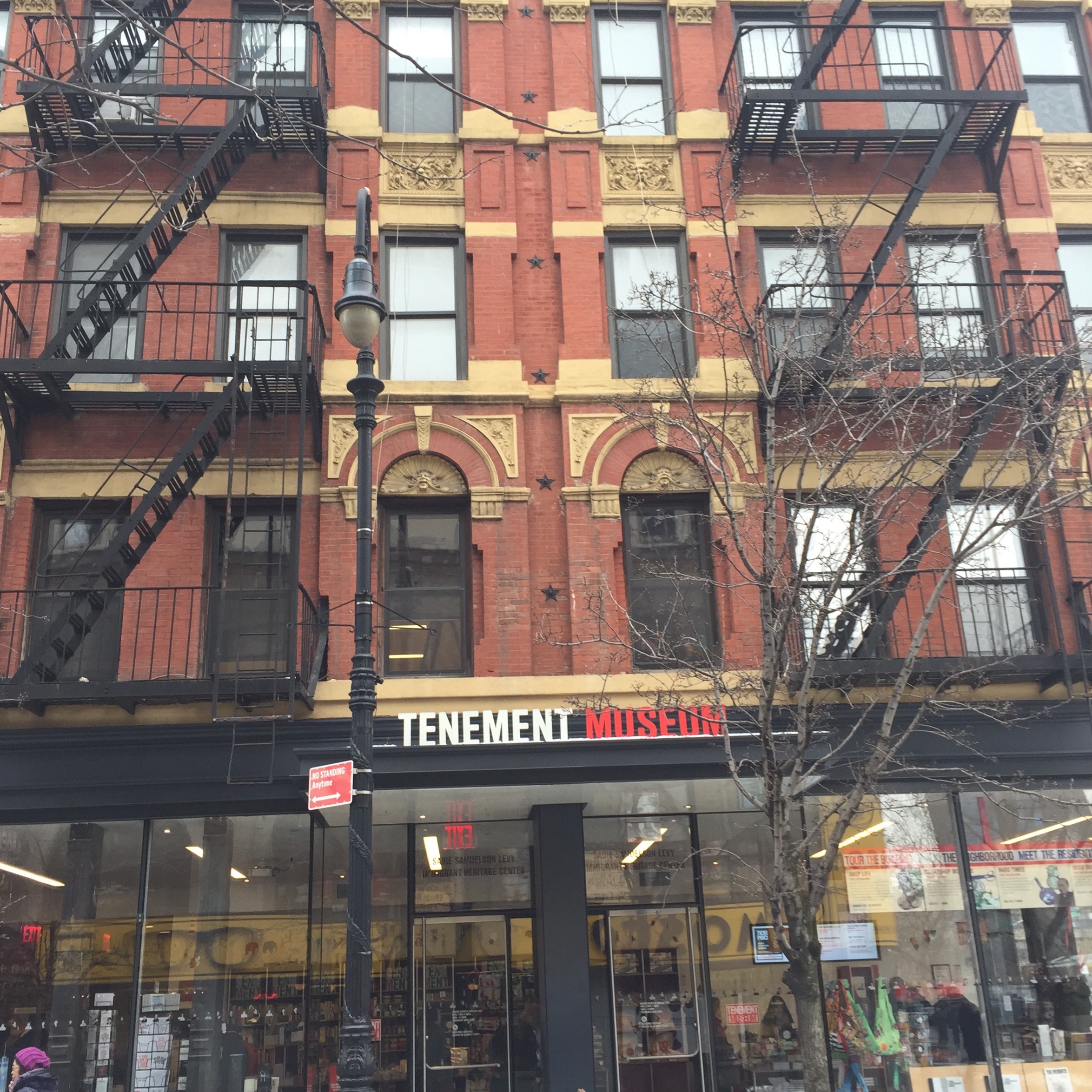
Walking along Orchard Street, several signs of the changes taking place in the neighborhood appear. Russ and Daughters (named back in 1914, so don’t think that going into business with your daughters is solely a modern trend) has had a storefront selling Jewish deli food on East Houston for a century, but now an upscale sit-down restaurant, Russ and Daughters Café, is on Orchard Street. Guss’ Pickles was once in a small store on Orchard and Broome, but now with the retail location  closed, jars can be found for purchase in Whole Foods and Fairway. Similarly, the Essex Street Market on Essex near Rivington reflects in some ways the small food shops that once populated the neighborhood, but now exists in a food hall, with prices the residents of the neighborhood even 15 or 20 years ago could not have believed. The Tenement Museum, on Orchard near Delancey, has preserved the way of life of immigrants to the area during the 19th and early 20th centuries. Given that quite often only the history of the wealthy is recorded for future generations, it’s significant and rather unique that this museum exists.

Lowereastside8

Turning back to head north again, when crossing Delancey, I looked east and saw the Williamsburg Bridge. When it was built, many Jewish residents moved from the Lower East Side to Williamsburg in Brooklyn. Now the rebirth of Williamsburg as a popular place for young people to live and go for nightlife is mirrored in the Lower East Side, part of the fascinating cycle of change seen all over New York City in all time periods.

Lowereastside9

Heading over to Ludlow Street, I could not help but notice the new developments being built in the neighborhood. Although still primarily low-rise tenement buildings, new high-rise condos with all the amenities you could find in a similar building in Soho or Nolita (for, at least for now, at a lower price point) are beginning to spring up. The Blue Condominium was the first – and to many, it failed to fit into its environment (being much larger than surrounding buildings and extremely blue) – and many more are now in various states of construction. The rapid gentrification of the area led the National Trust for Historic Places to put the Lower East Side on their list of America’s Most Endangered Places. While it seems to me that it benefits neither the city nor the neighborhood to leave it full of crumbling tenements, a increased sensitivity in ensuring that the new developments blend in better with their surroundings can only be a good thing. The Hotel on Rivington was built to show off and contrast with its neighbors, while the Blue Moon Hotel, equally new and trendy inside, kept the exterior appearance of the building it renovated, making it almost identical to surrounding buildings.

Lowereastside5

Julian Casablancas sings about the inevitable changes that have been transforming the area in his song, “Ludlow Street.” In a typical Lower East Side scene, heading out in the morning after an evening of drinking too much, he thinks about how the indigenous Lenape tribes were first to be pushed out in 1624. As he sings, “Faces are changing on Ludlow Street/Yuppies invading on Ludlow Street/Nightlife is invading on Ludlow Street/And it’s hard to just move along.”

West 57th Street

Image

So much of New York real estate press these days is about the flurry of enormous new development skyscrapers along 57th Street. Although some of the press is about how these buildings will change the skyline of Manhattan, particular from the viewpoint of Central Park, most is about the stratospheric prices many of the apartments in these buildings command. This has lead to this neighborhood being called “Billionaire’s Row”  – and with the average price of these new condo apartments approaching $20 million and the two apartments in One 57 selling for over $90 million each, being a billionaire couldn’t hurt. The term “Billionaire’s Row” is a throwback to the term “Millionaire’s Row” given to Fifth Avenue north of 50th Street, particularly those buildings along Central Park, in the late 19th and early 20th Century. Families like the Astors, Vanderbilts, Fricks, and Whitneys all jockeyed to built the most impressive homes along this stretch, and of course Andrew Carnegie’s mansion at 90th Street (written about in my previous blog post about Carnegie Hill) was perhaps the zenith of this activity.

I have written about the enjoyment of taking an unplanned walk through an urban environment (a dérive), and decided to walk around this part of town while imagining what it would be like to live there (as opposed to rushing through on the way to a Broadway show). Starting at Fifth and 57th Street, a powerhouse of a corner with Bergdorf’s, Tiffany’s, and Louis Vuitton trying to out-dazzle each other, I walked west and almost immediately noticed 9 West 57th Street – impossible to miss because of the enormous red sculpted “9” in front. Standing in front of this building and looking directly up, the curving slope of its façade is almost dizzying. In addition, its mirrored surface reflected, on the day I was there, the sky dotted with puffy clouds. Looking across the street at this point, I was surprised to see something I had never noticed when not  imagining I lived here: a supermarket (Morton Williams) on the south side of the street midway between Fifth and Sixth Avenues. It’s nice to know that the billionaires have this available (although one imagines most of them are eating out or catering).

Crossing Sixth and continuing west, I look south and realize that Le Parker-Meridien New York being in the neighborhood might make it easier to get to the Burger Joint at an odd time and avoid the huge line (and desperate search for a table). At this point, I also realized how close I was to one my favorite places to eat in the city, Todd English’s Food Hall in the Plaza (59th between Fifth and Sixth). On the north side of this block is elegant Steinway Hall, now closing as a showroom for fine concert pianos but soon to be part of a new skyscraper built primarily on the lot next to the hall, but with air rights over the Steinway building. The star of the block currently, of course, is One 57, at 157 W 57th Street. Nearing completion, and yet already close to sold out, currently it dominates the area, but with the other “tower power” buildings planned, it will eventually be simply a part of the reimagined Manhattan skyline. It will briefly be the city’s tallest residential building, at over 1000 feet, but will soon be overtaken by 432 Park (with a height of almost 1400 feet, when it is finished it will be the highest residential building in the Western hemisphere).

The southeast corner of Seventh and 57th Street is home to Carnegie Hall, reason enough to consider living here! On the north side of the block between Seventh and Eighth Avenues, you can glimpse trees in Central Park – for now – through the empty space soon to be another duo of tall residential buildings. It’s easy to forget how close you are to Central Park while walking along 57th Street, although the view of the Park that north-facing apartments in One 57 above 225 feet or so has certainly contributed to their value.

Crossing Eighth Avenue, look north to see Columbus Circle, the ending location of one of my recent blog posts. The look of the apartment buildings changes as you continue west. In the same period of time that Fifth was turning into “Millionaire’s Row,” 57th Street became the home of several large apartment buildings (like the Parc Vendome and Alwyn Court) designed to lure wealthier (if not quite in the league of those on Millionaire’s Row) New Yorkers away from their townhouses and into full service buildings with doormen and spacious apartment layouts. Looking at the Parc Vendome, one of four massive imposing apartment buildings on 57th near Ninth Avenue, I noticed the different feel these buildings have compared to the slender tall towers sprouting up along the street.

Turning north, I was struck with how quickly the tone of the neighborhood changes – within a few blocks, the midtown feeling is gone and you are clearly on the Upper West Side, and steps from Central Park as well as Lincoln Center. Thinking about it, this is the genius of 57th Street as a place for residential buildings, straddling Central Park and Upper West Side (or East, in the case of 432 Park) on one side and busy, bustling midtown on the other. London has a “Billionaire’s Row” as well, but it’s a series of mansions in a quiet part of North London (Bishop’s Row). This central location for New York’s strip of “power towers” is an advantage for anyone looking to live in the middle of the island. These new tower developments have been controversial, but so many architectural developments that were initially hated (The Eiffel Tower and original World Trade Center, for instance) became icons over time. Perhaps one day the new developments changing the skyline of Manhattan along 57th Street will become accepted and integrated into the look of New York City, a place that is always changing, and therefore, never boring.