Central Park Tower

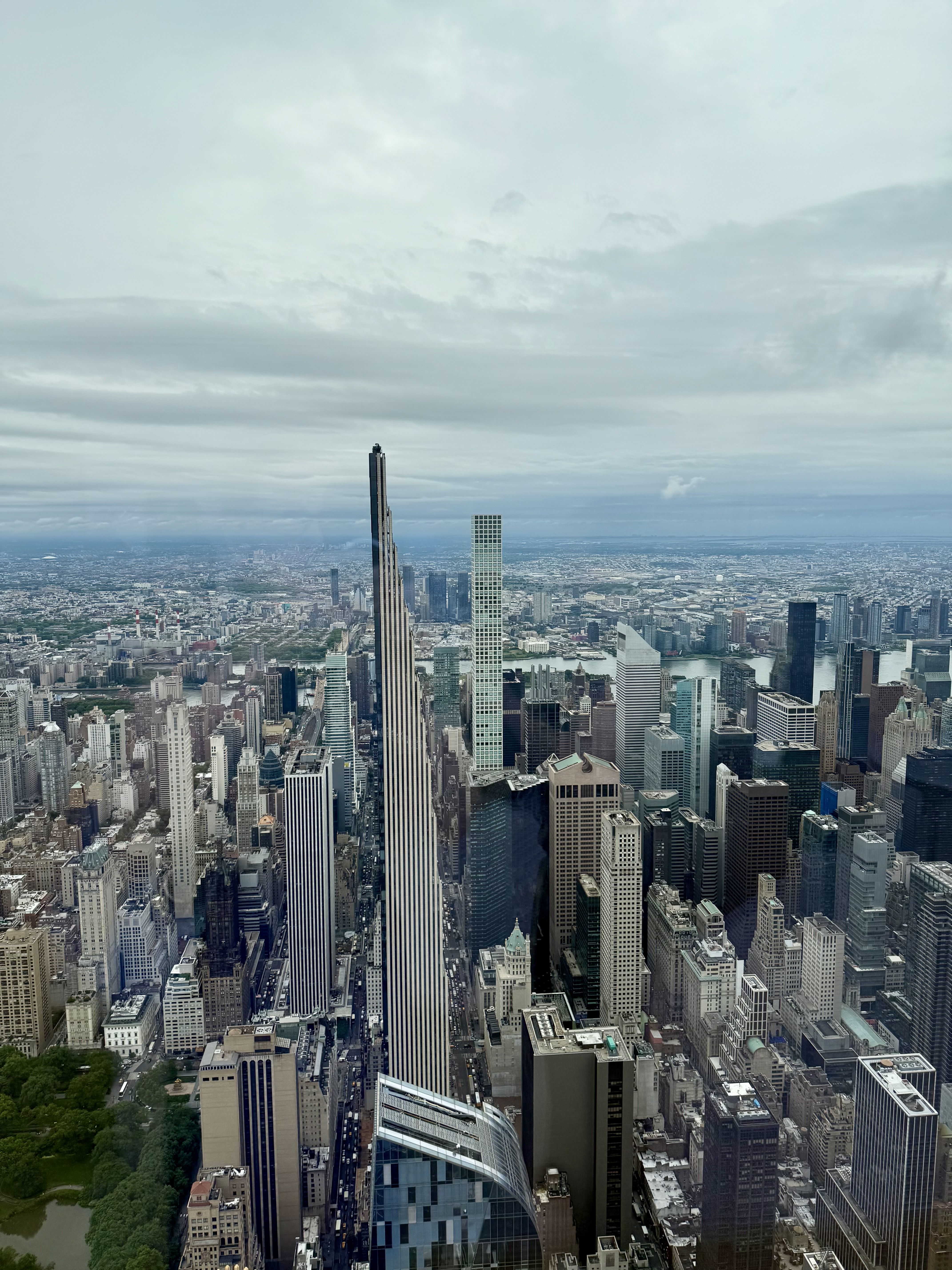
The skyline of Manhattan has been radically changed in the past decade with the addition of several “supertall” residential buildings along the 57th Street corridor. I wrote a few years ago about what it was like to be in Steinway Tower, aka 111 West 57th Street when it was being completed (read it HERE). Steinway Tower is the building that tapers dramatically at the top, and the views were astonishing. However, even at that time another building was reaching toward the sky, even higher – and recently I was able to visit Central Park Tower (217 West 57th Street). To my amazement, I was able to look down upon the top of Steinway Tower!
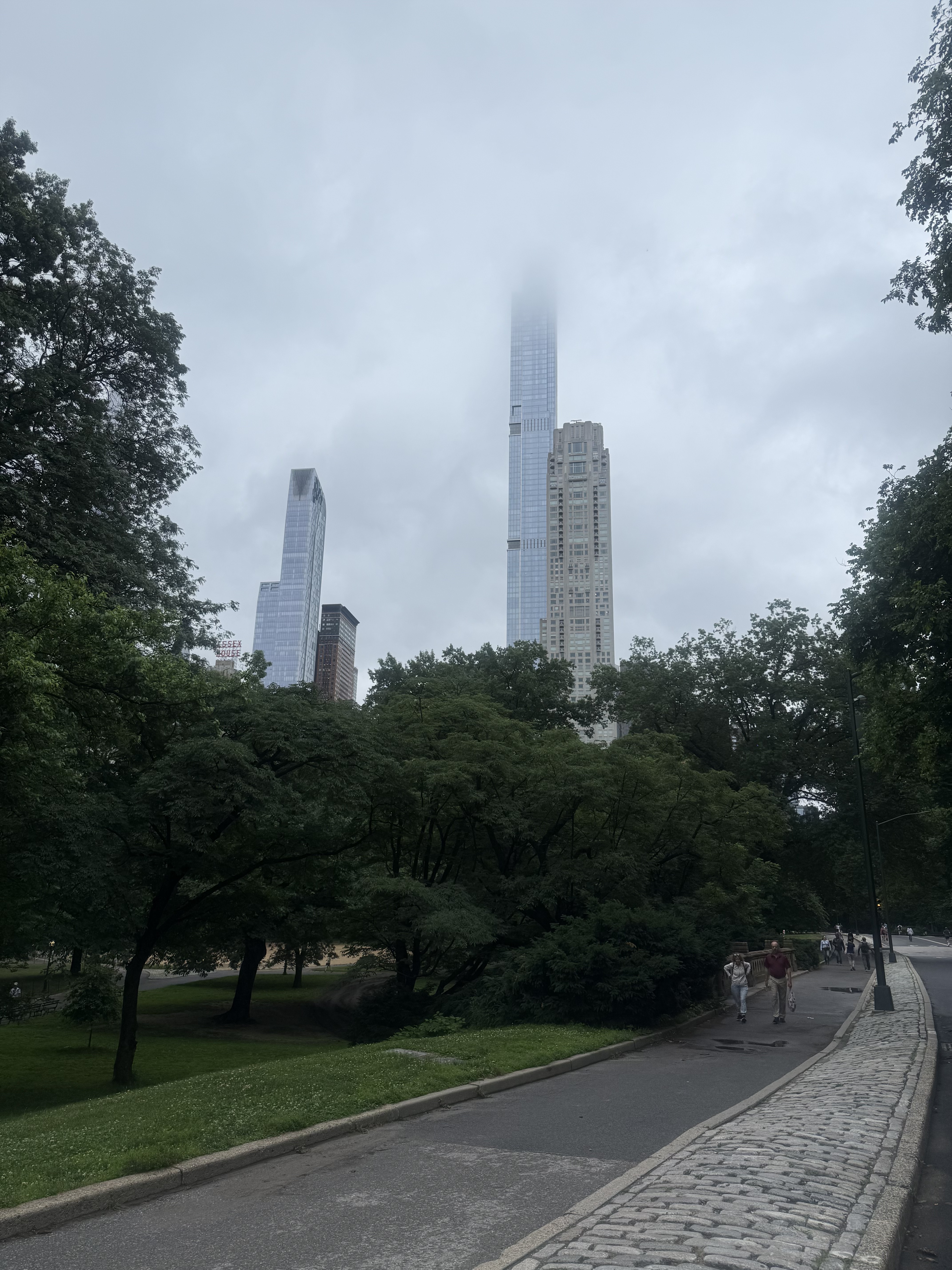
The day I was able to visit Central Park Tower started out foggy, and as I headed toward the building, through Central Park, I realized that I could not even see the top of the building (see above). Note in this picture that 157 West 57th (One 57), which was the first of the supertalls, looks practically diminutive with Central Park Tower looming to the right in the photo, disappearing into the clouds. Also note that Robert A.M. Stern’s 220 Central Park South, at 952 feet or 290 meters, stands just in front but significantly lower than Central Park Tower, but is of a more traditional limestone style (and 220 CPS stands in a league of its own in terms of price per square foot). Due to the use of a cantilever at Central Park Tower, the lower floors do not have views obstructed by 220 Central Park South.
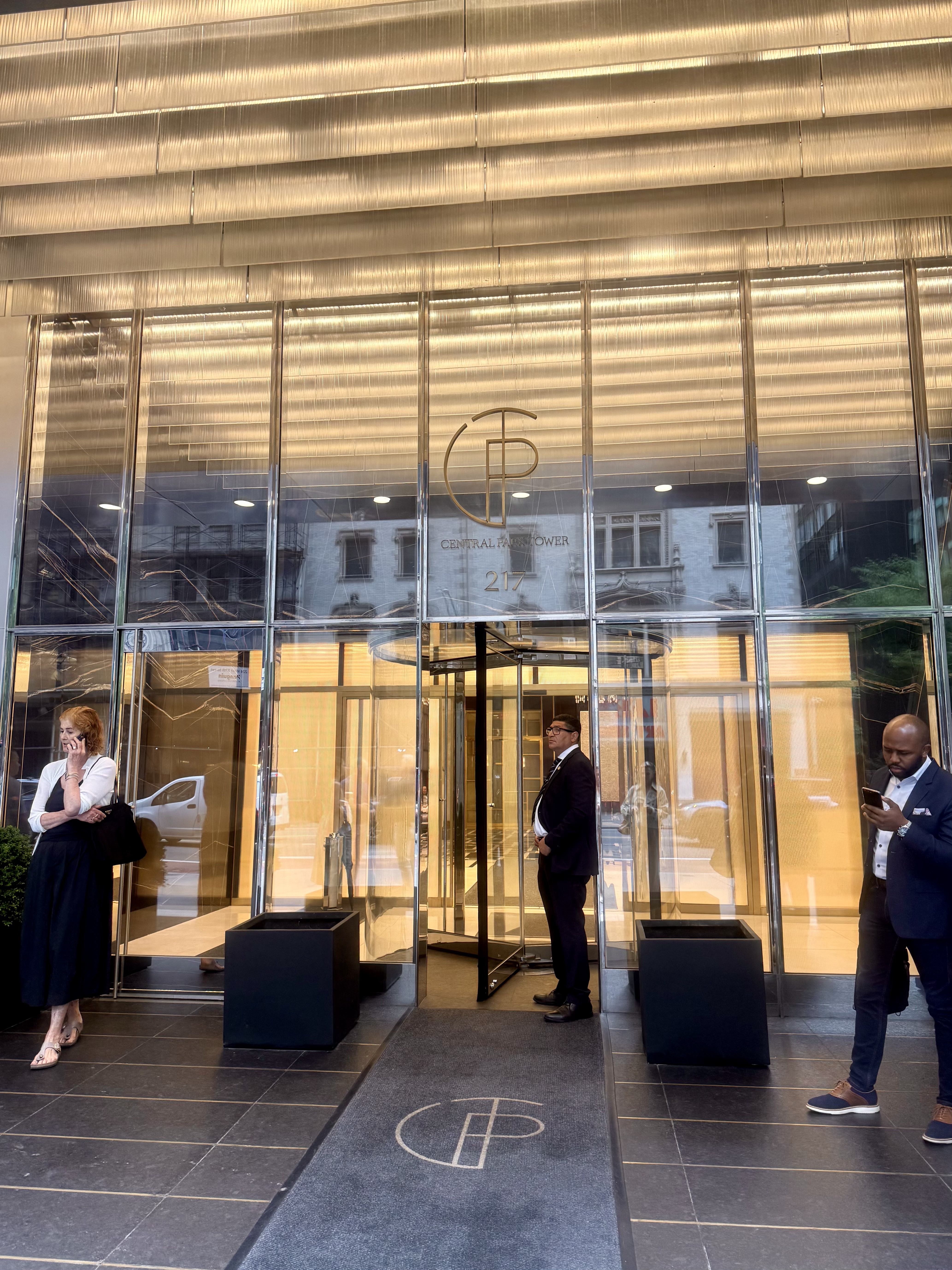
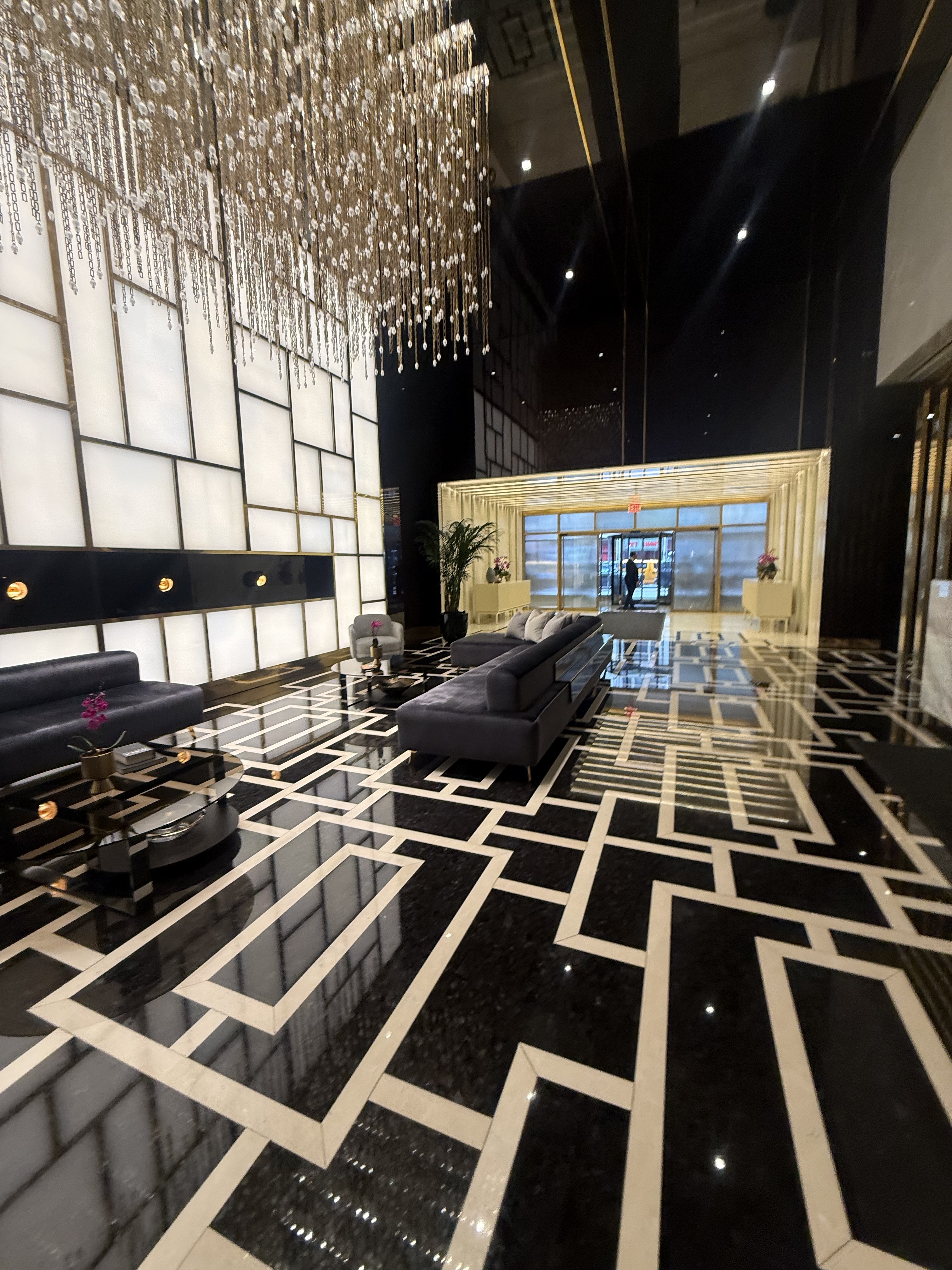
The entrance of the building on West 57th Street leads to a stylish lobby. The building was built partially on a cantilever to avoid demolition of the Arts Students League building, which is landmarked, and the Nordstrom department store sits just below it on West 57th (for this reason, early on the building was often called “Nordstrom Tower”). Central Park Tower holds the Guinness World Record for being the tallest cantilevered building in the world.
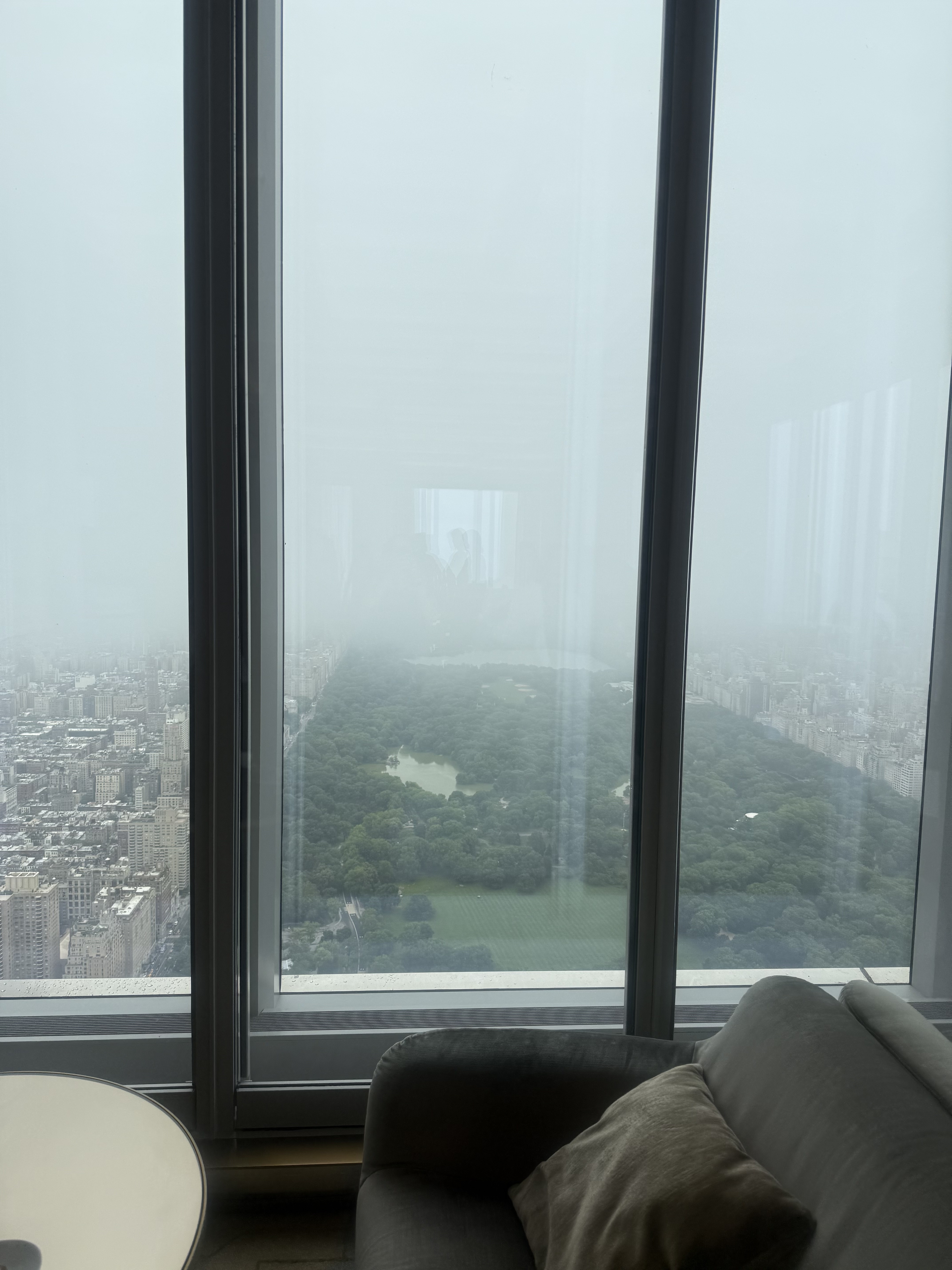
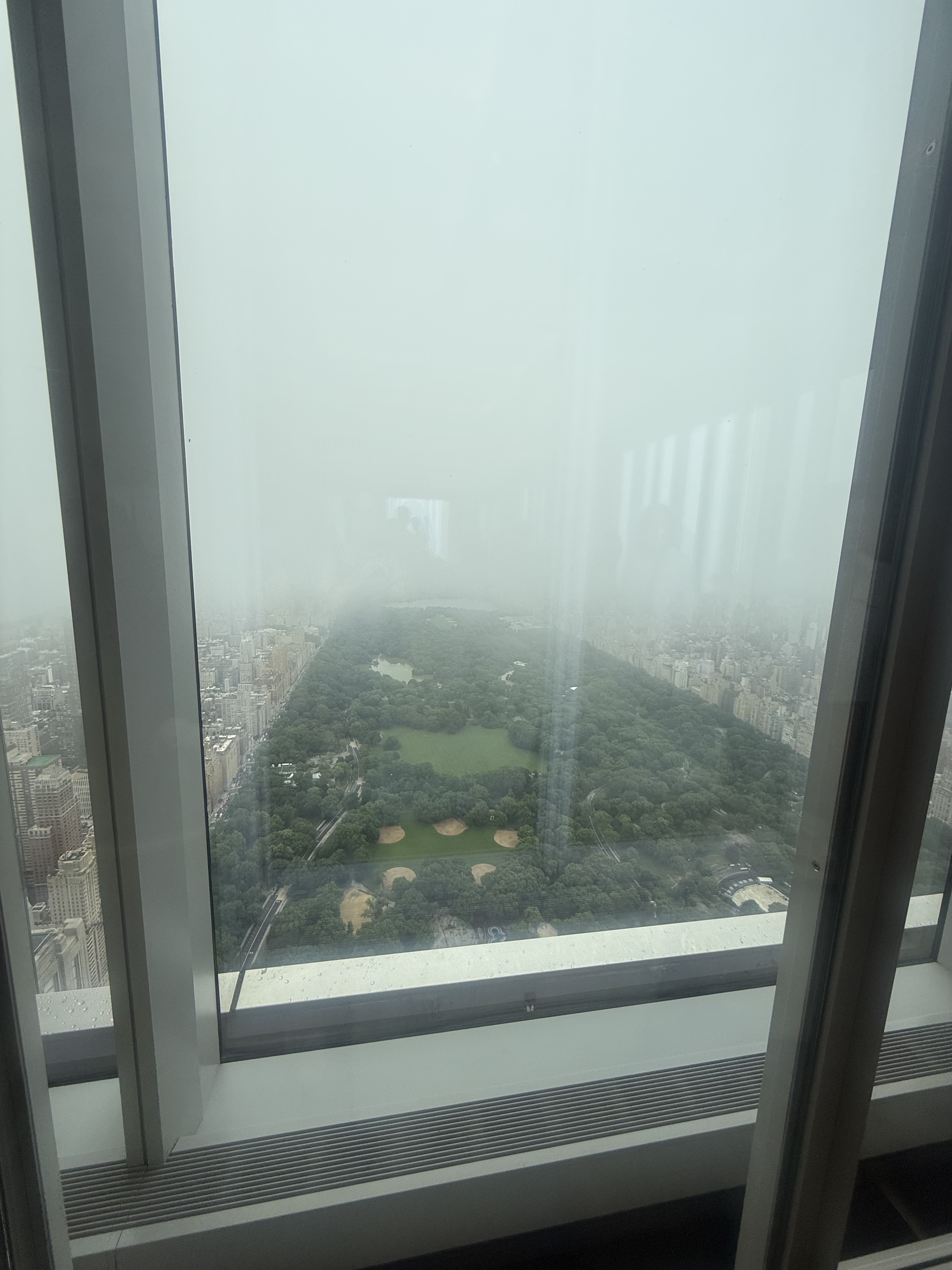
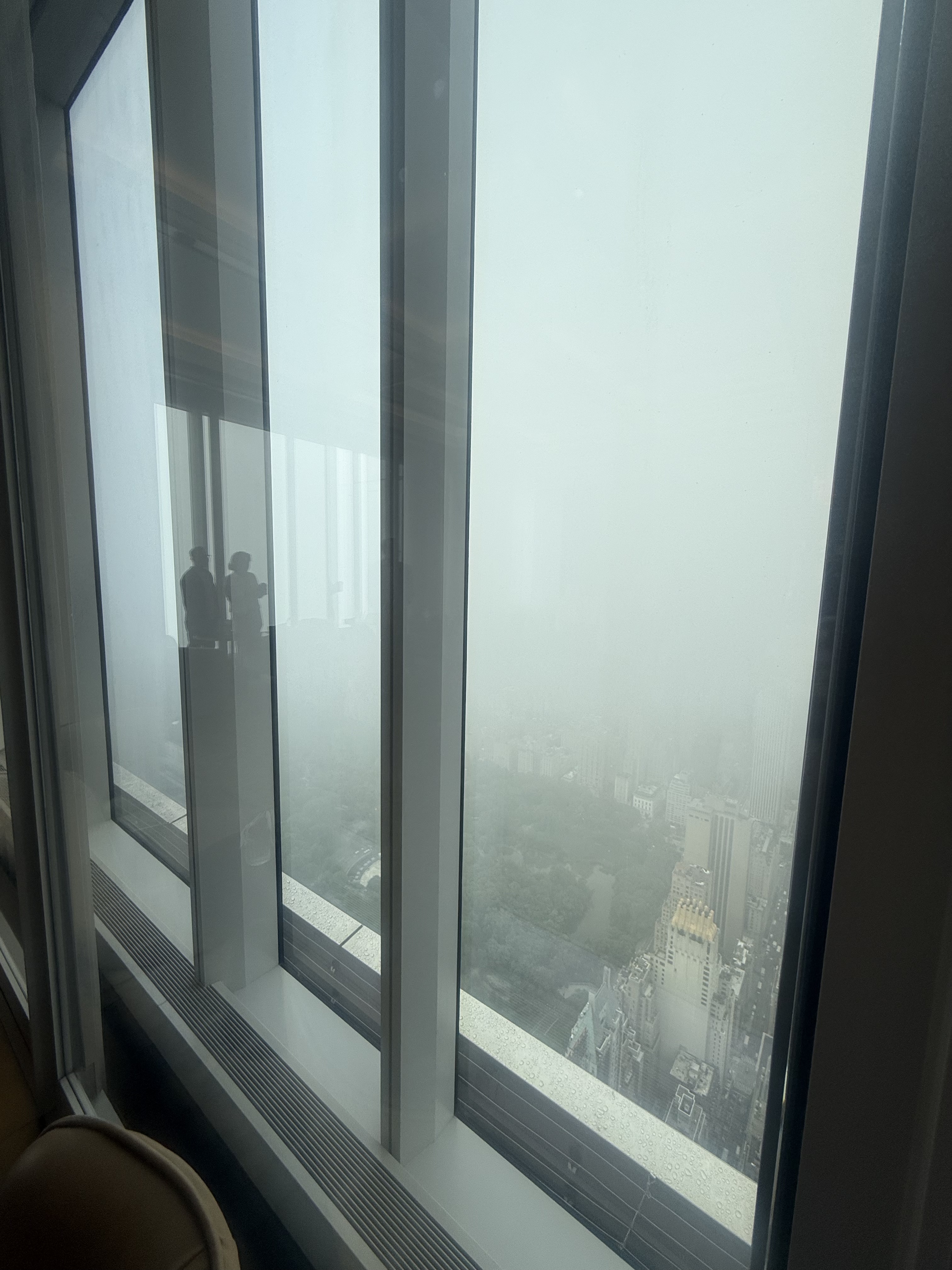
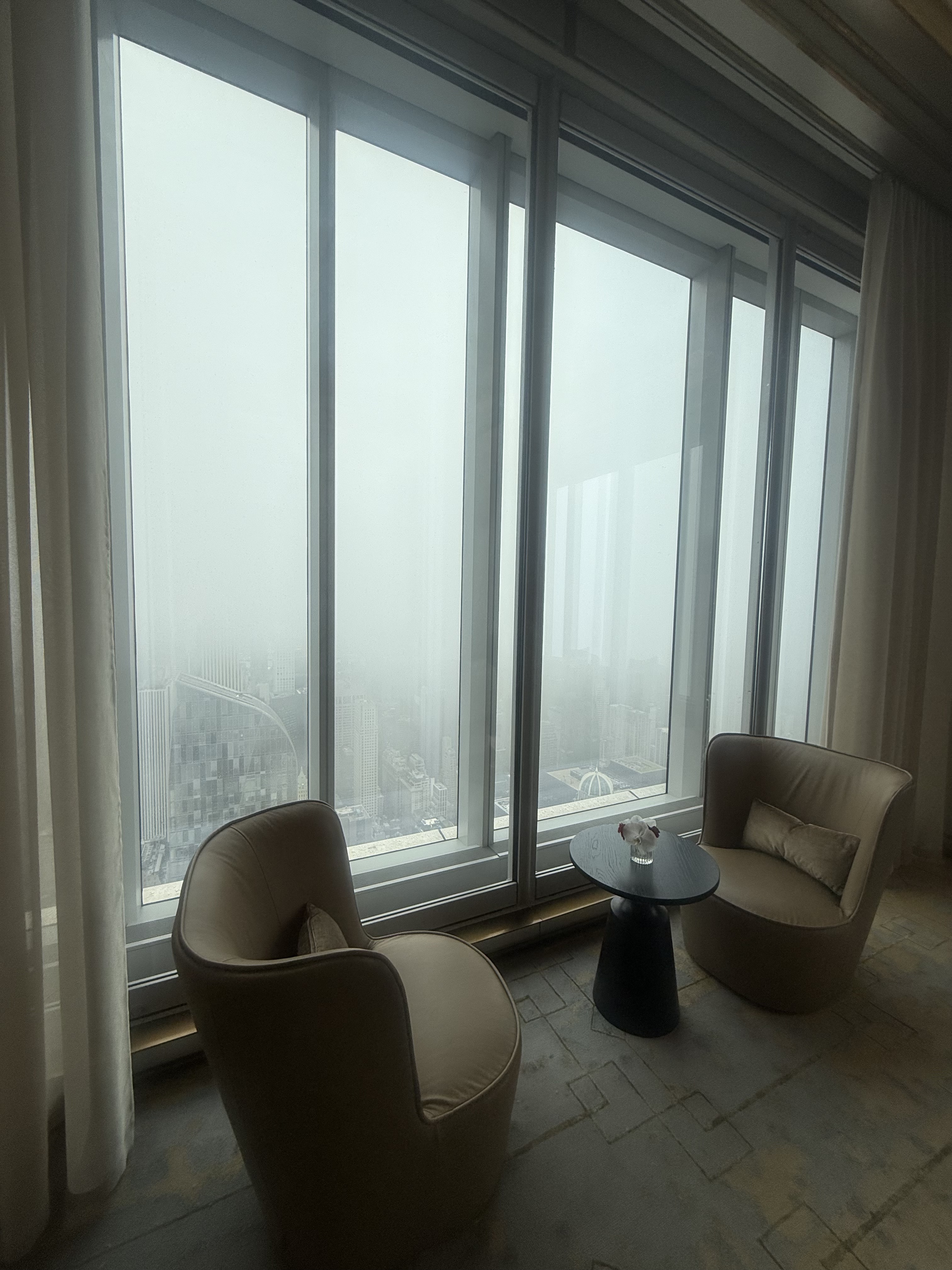
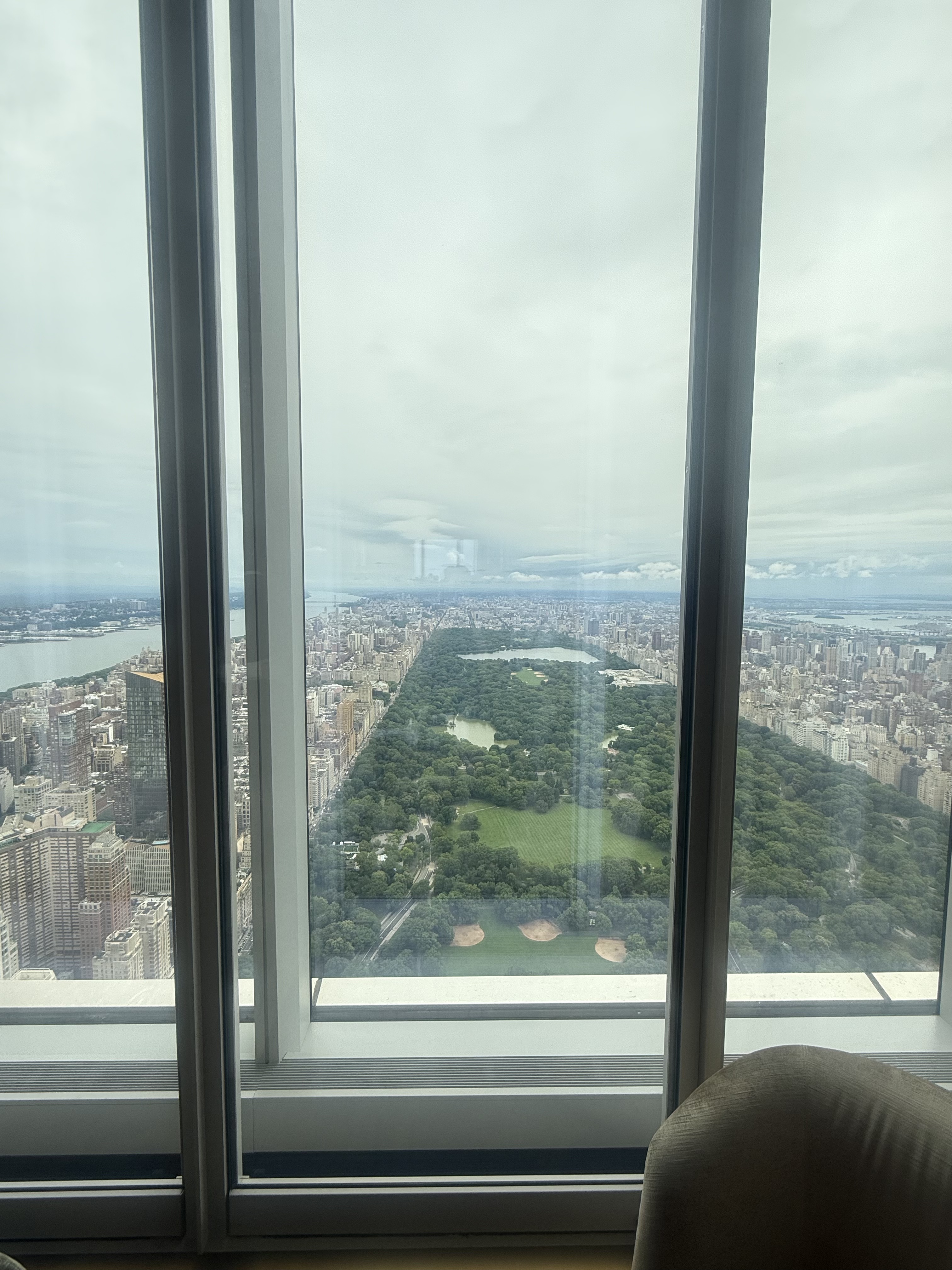
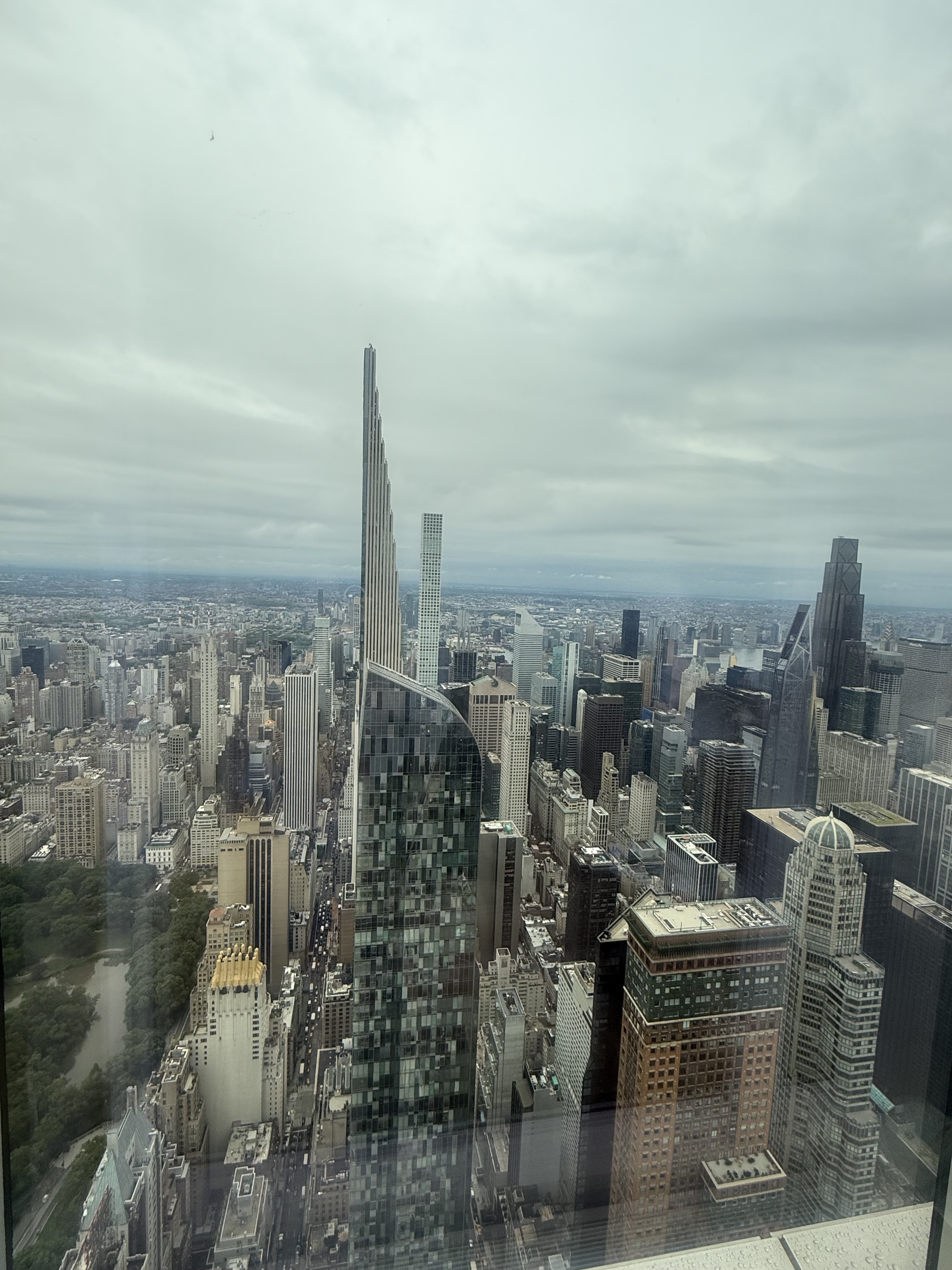
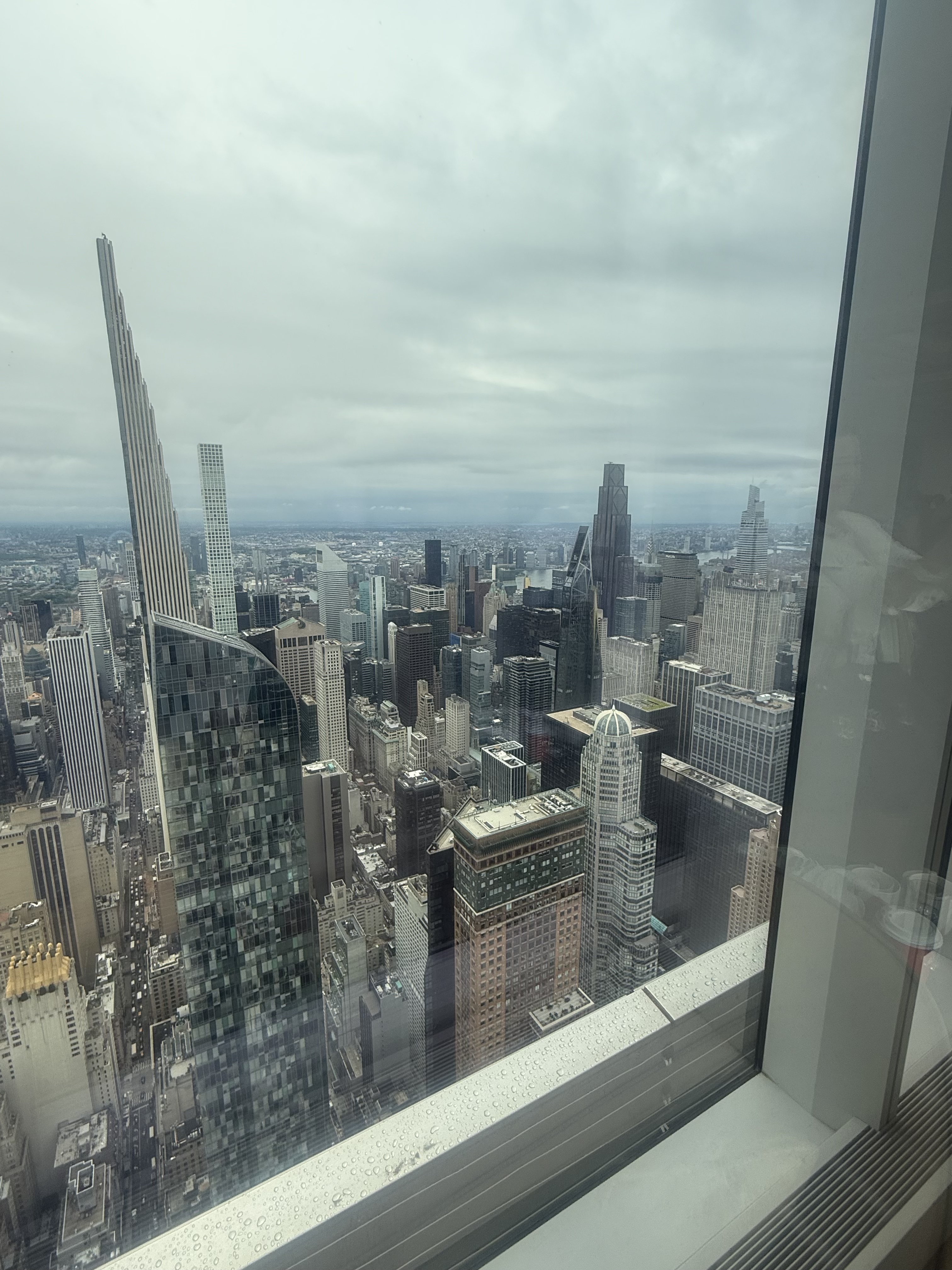
First stop was the residents’ club, on the 100th Floor! Marketed as the highest private club in the world, the club includes a 126-person ballroom, a private dining room, an Art Deco lounge, and a cigar bar. When first arriving there, we were still sitting in the clouds, but fortunately it began to clear up before I had a chance to visit the full-floor home on the 126th floor. Note that at the club you can see Steinway Tower to the east at about the same level as its top floors, and that the view of Central Park is also similar to that seen on the highest floors at Steinway Tower.
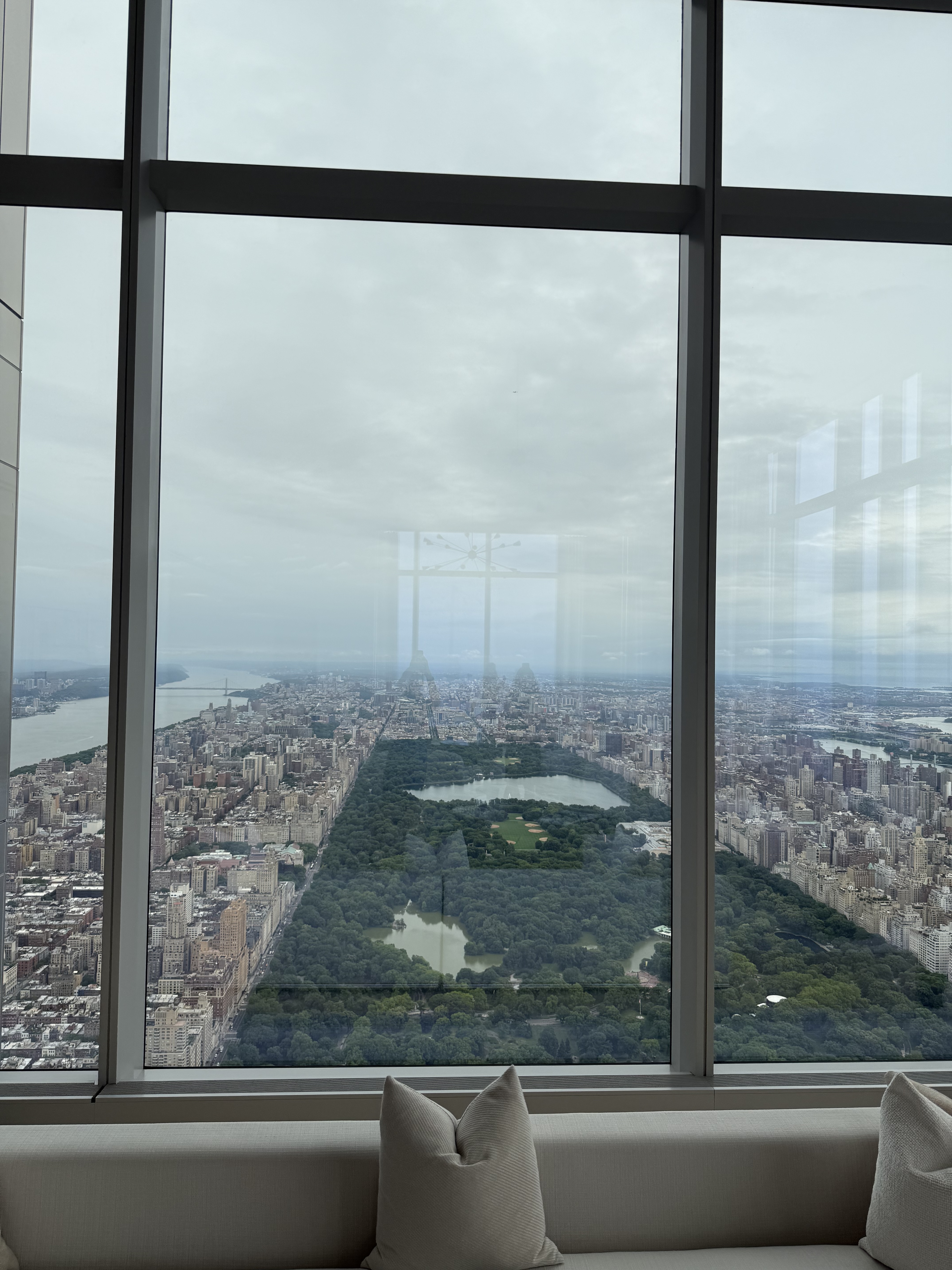
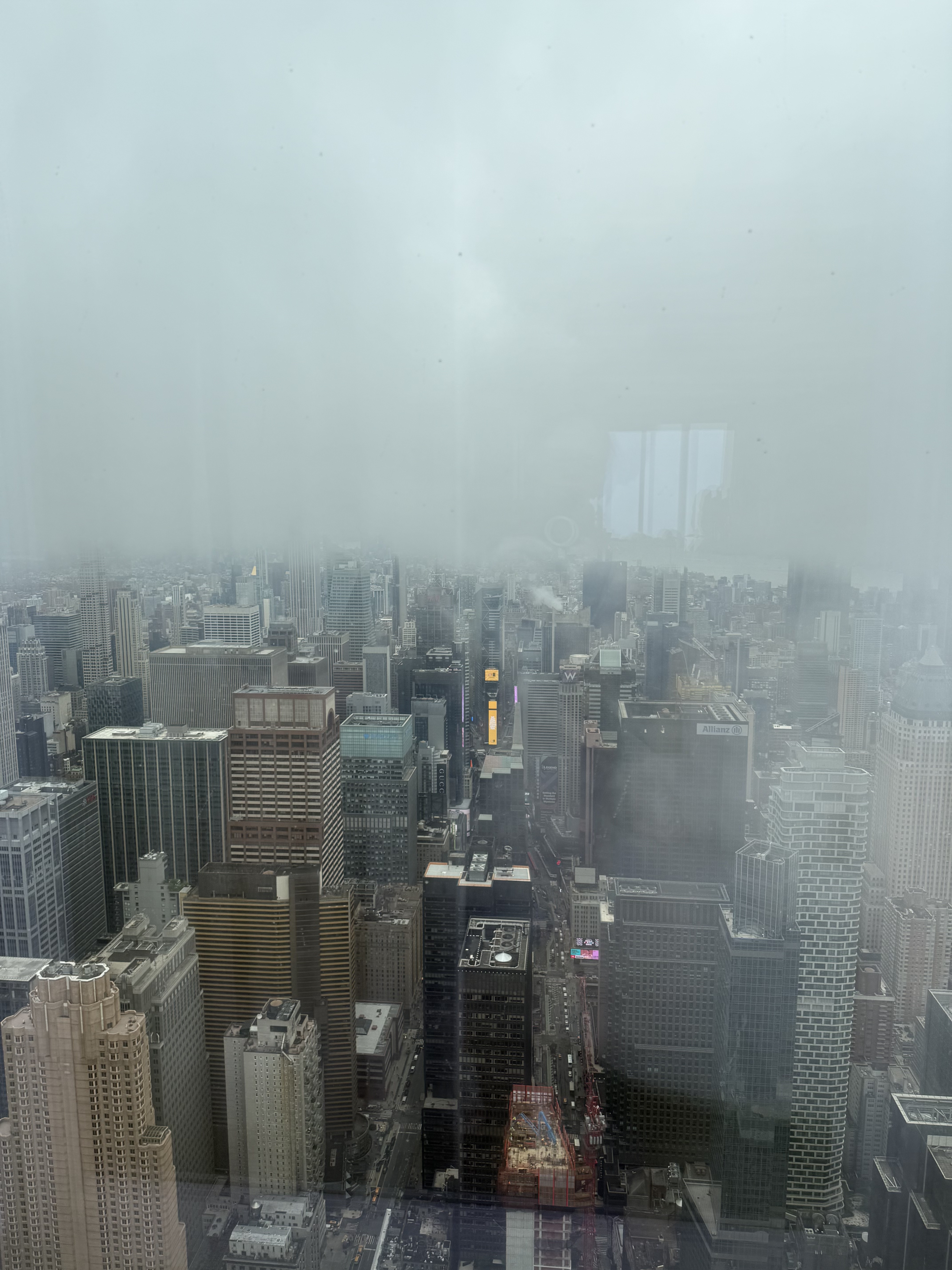
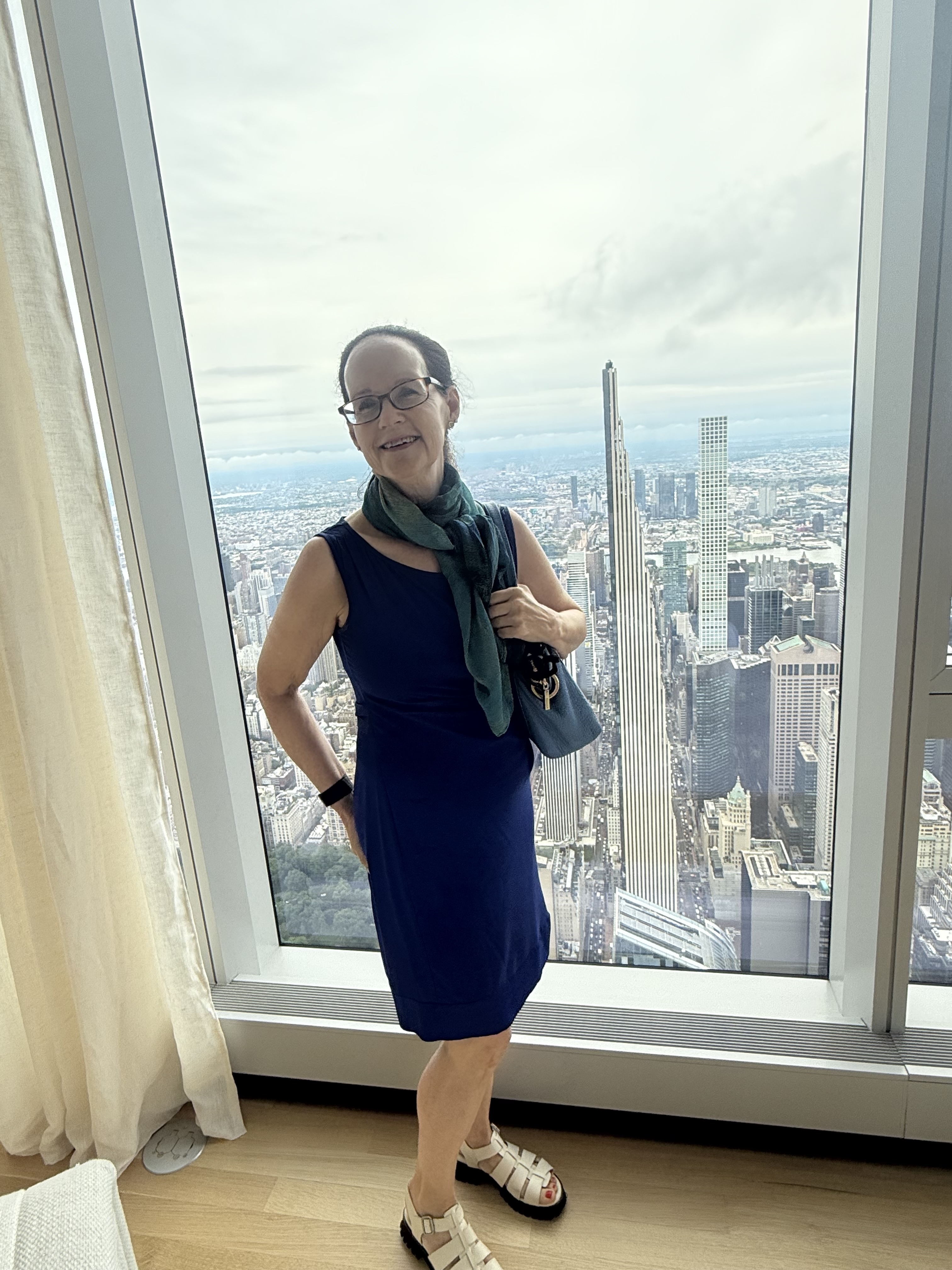
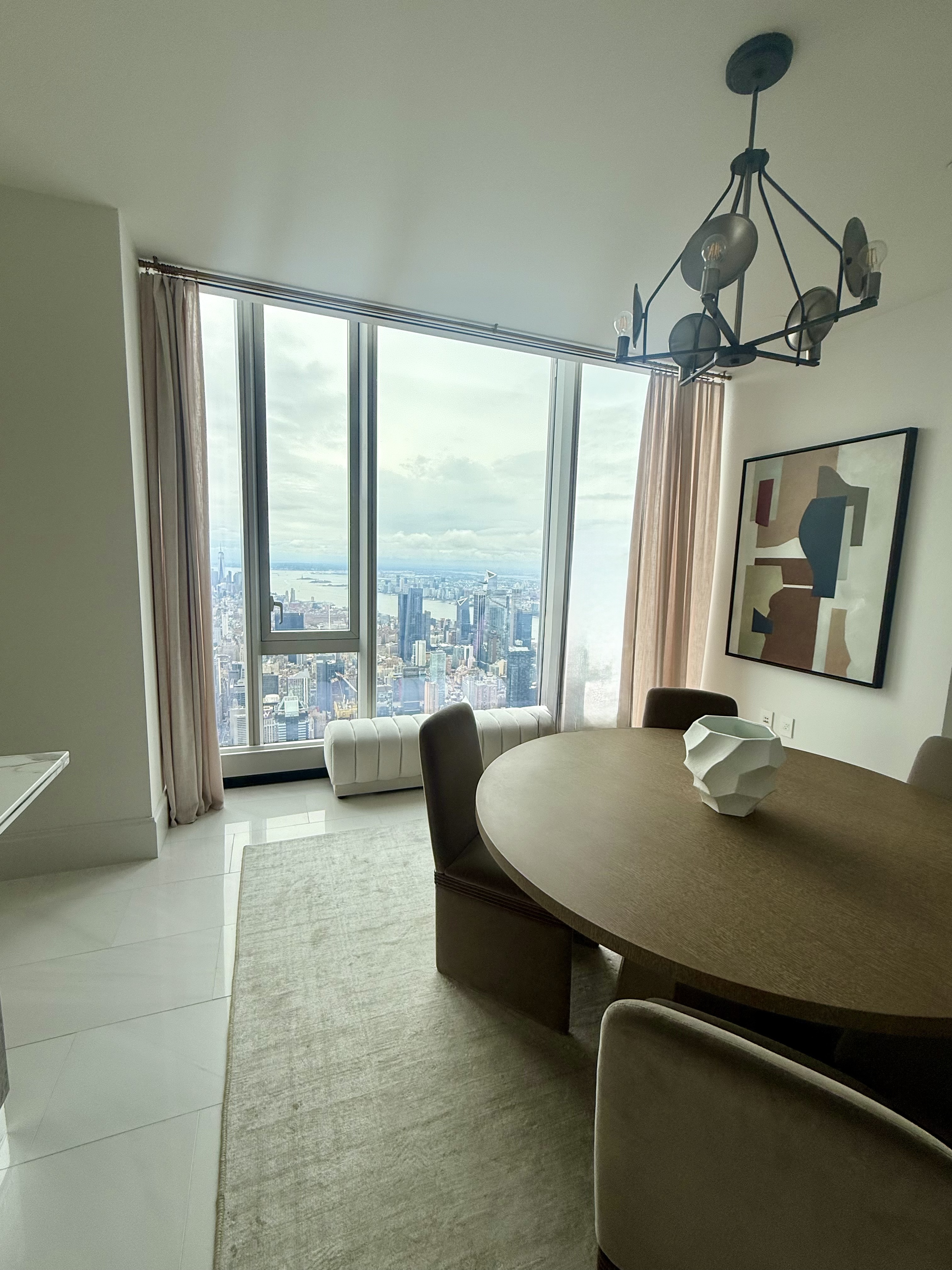
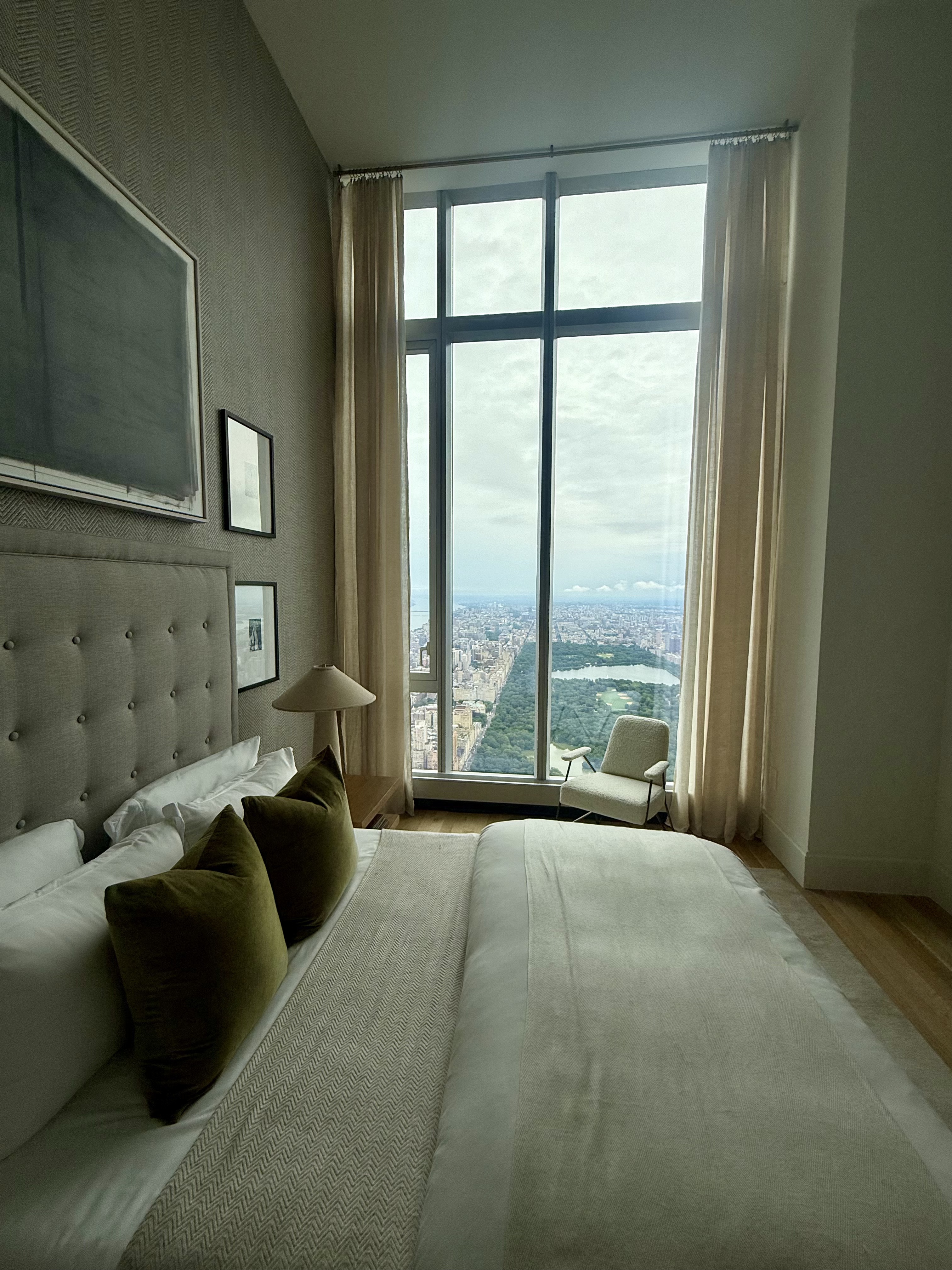
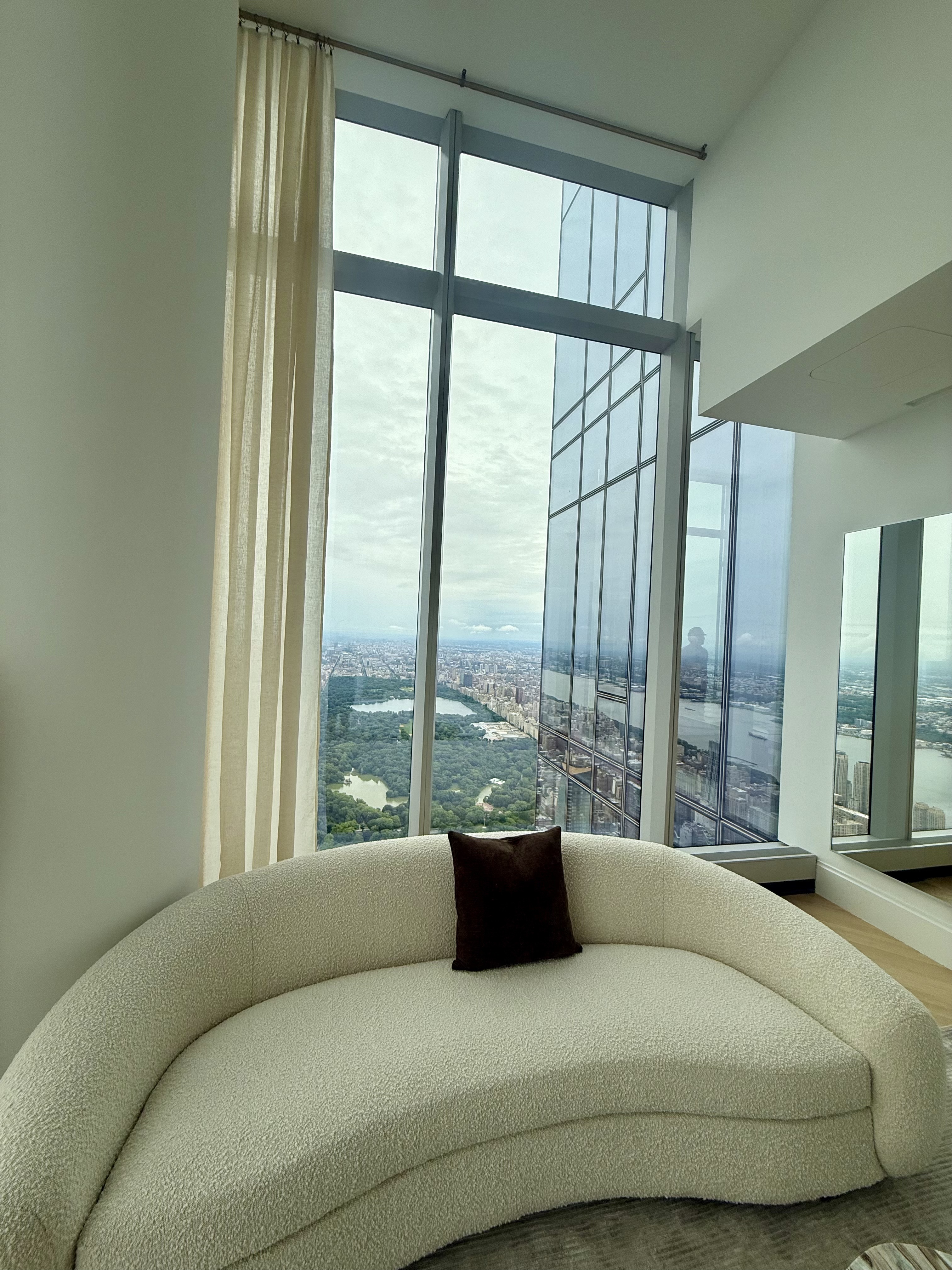
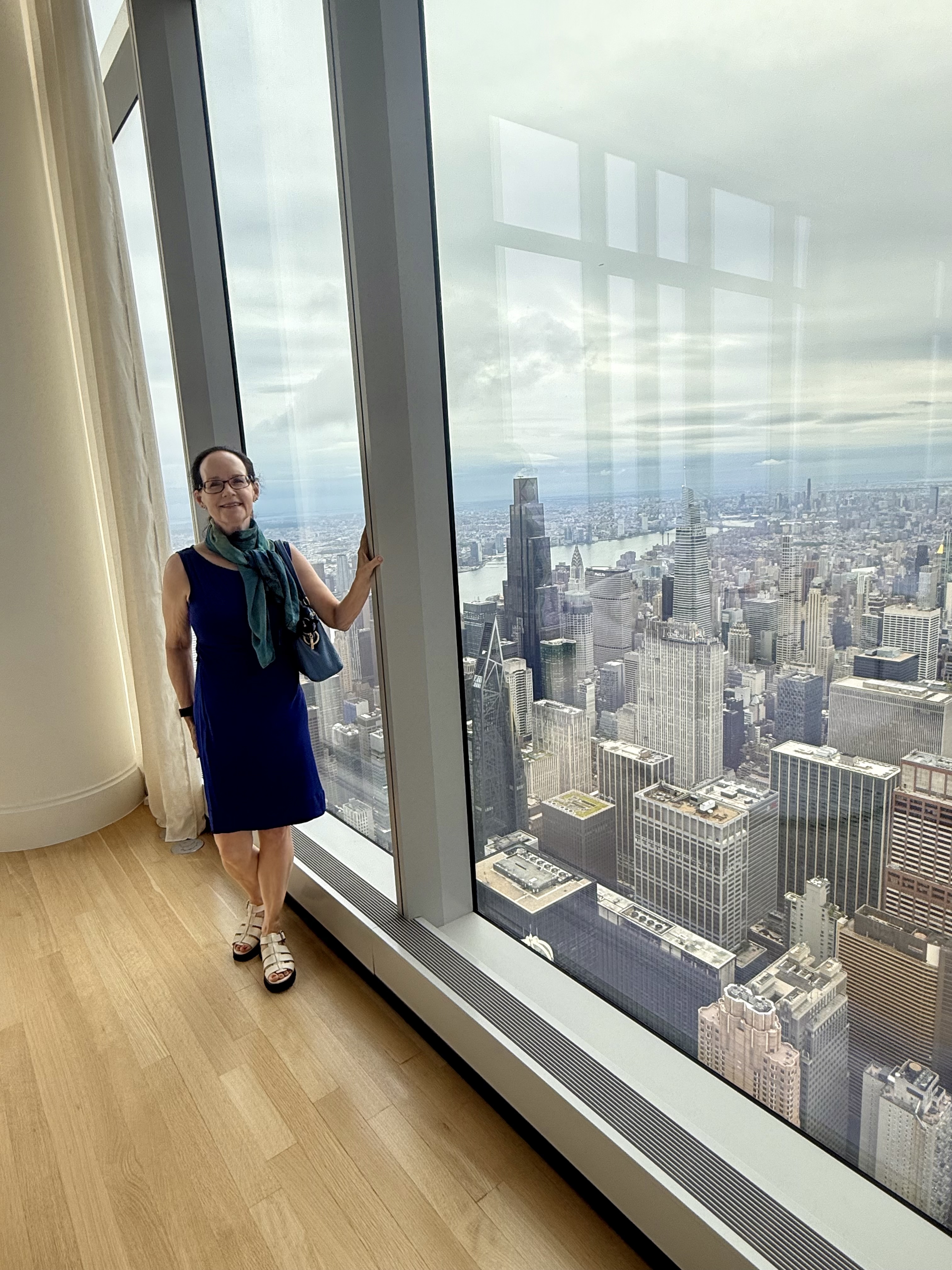
I was able to tour the apartment taking up the entire 126th floor, which is the highest full-floor home before getting to the two highest units: a duplex on floors 127-128, and the penthouse triplex on floors 129-131. These top two apartments have their own elevators, by the way! Let’s think about how tall this building actually is. It is the second tallest building in New York City at 1,550 feet or 472 meters, but the highest habitable floor (1,417 feet or 432 meters high) is actually higher than the observation deck at One World Trade, the tallest building. Central Park Tower is the highest fully residential building in the world (Burj Khalifa is taller, but is mixed-use). It is the second highest building not only in New York City, but in the entire Western Hemisphere. Being in 126, the feeling of experiencing views generally only experienced in an airplane is palpable. I definitely felt I was looking down on the top of Steinway Tower, and visualizing the entire span of Central Park was not only easy, but the park looked small from this height.
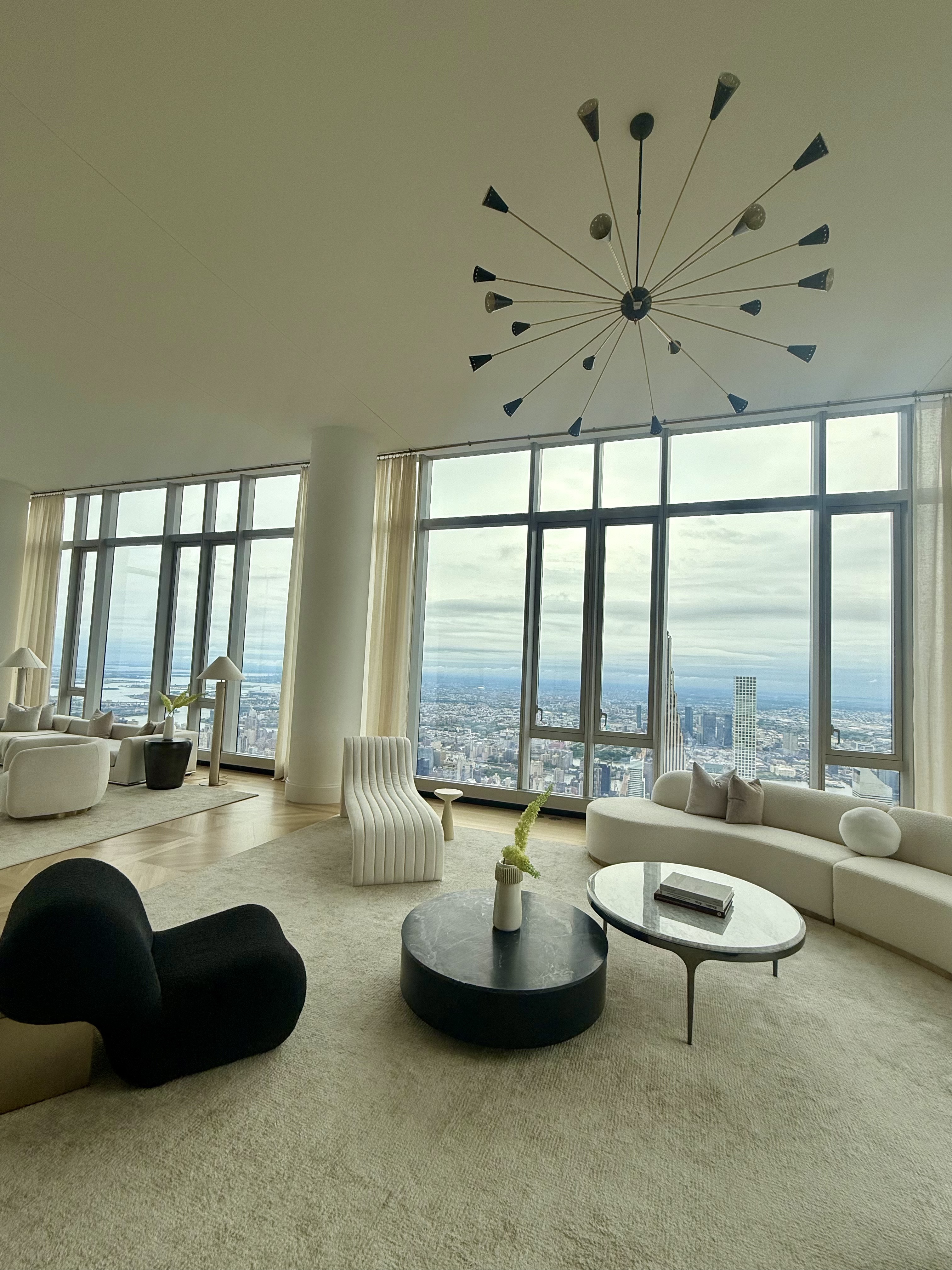
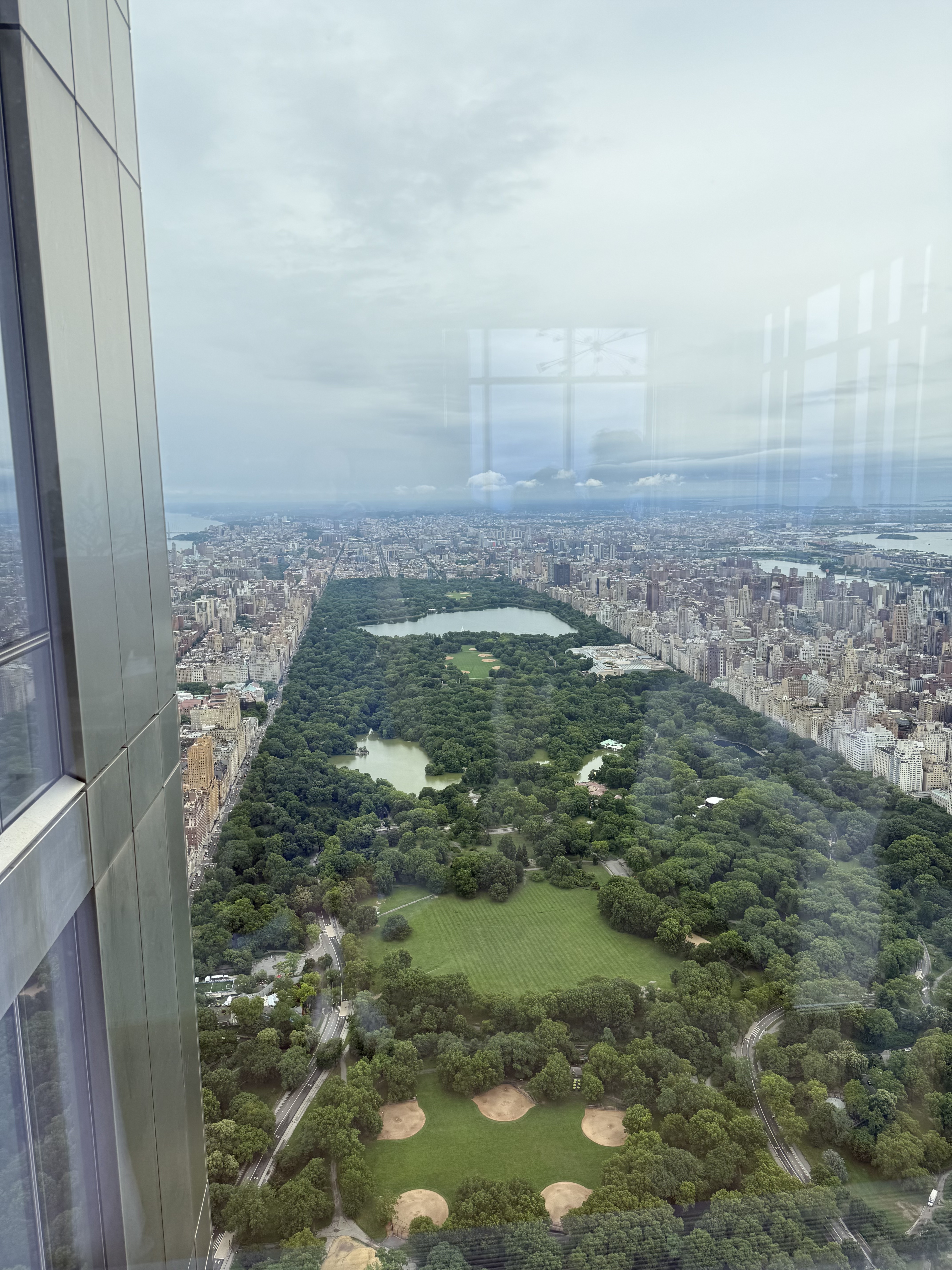
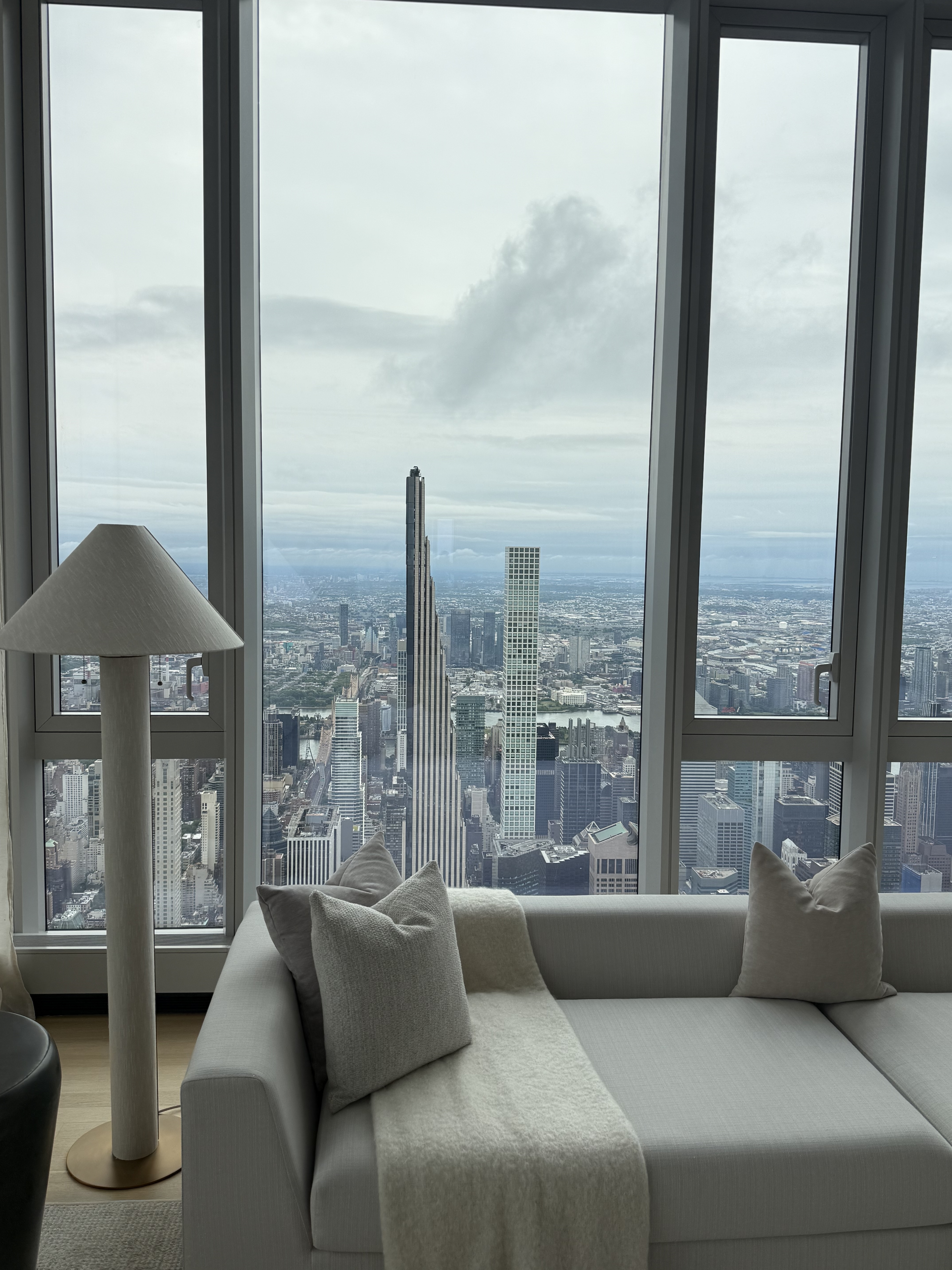
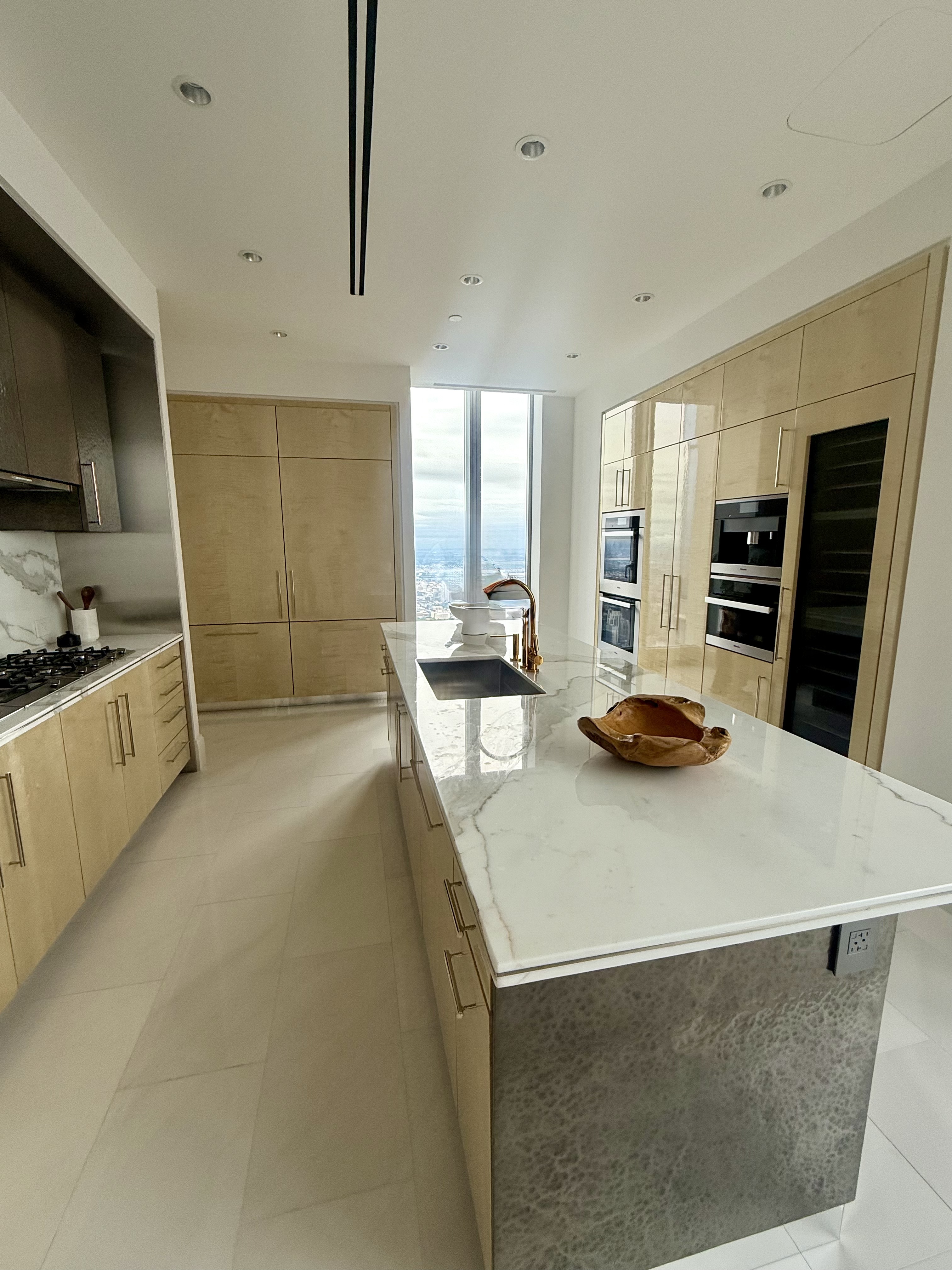
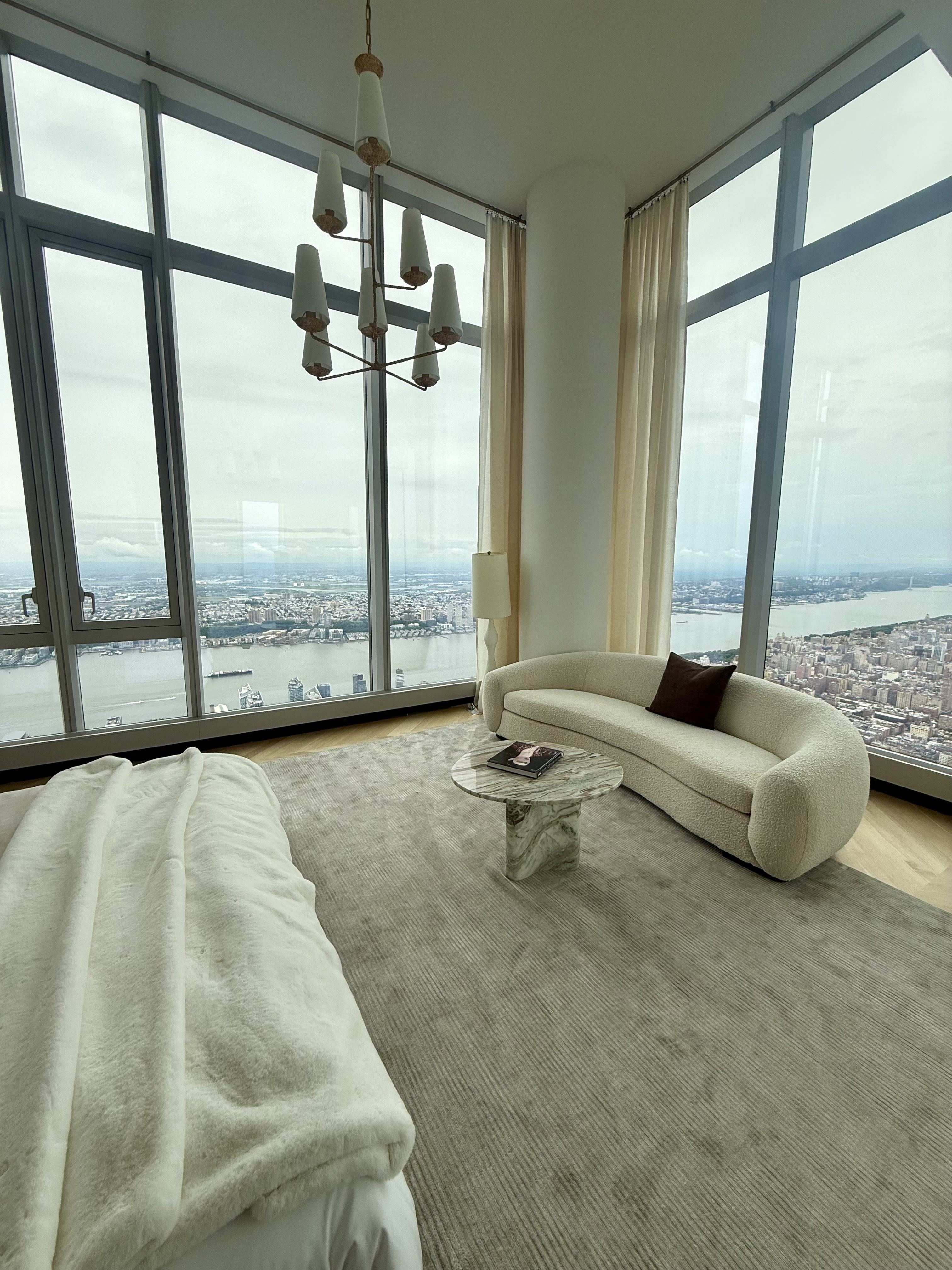
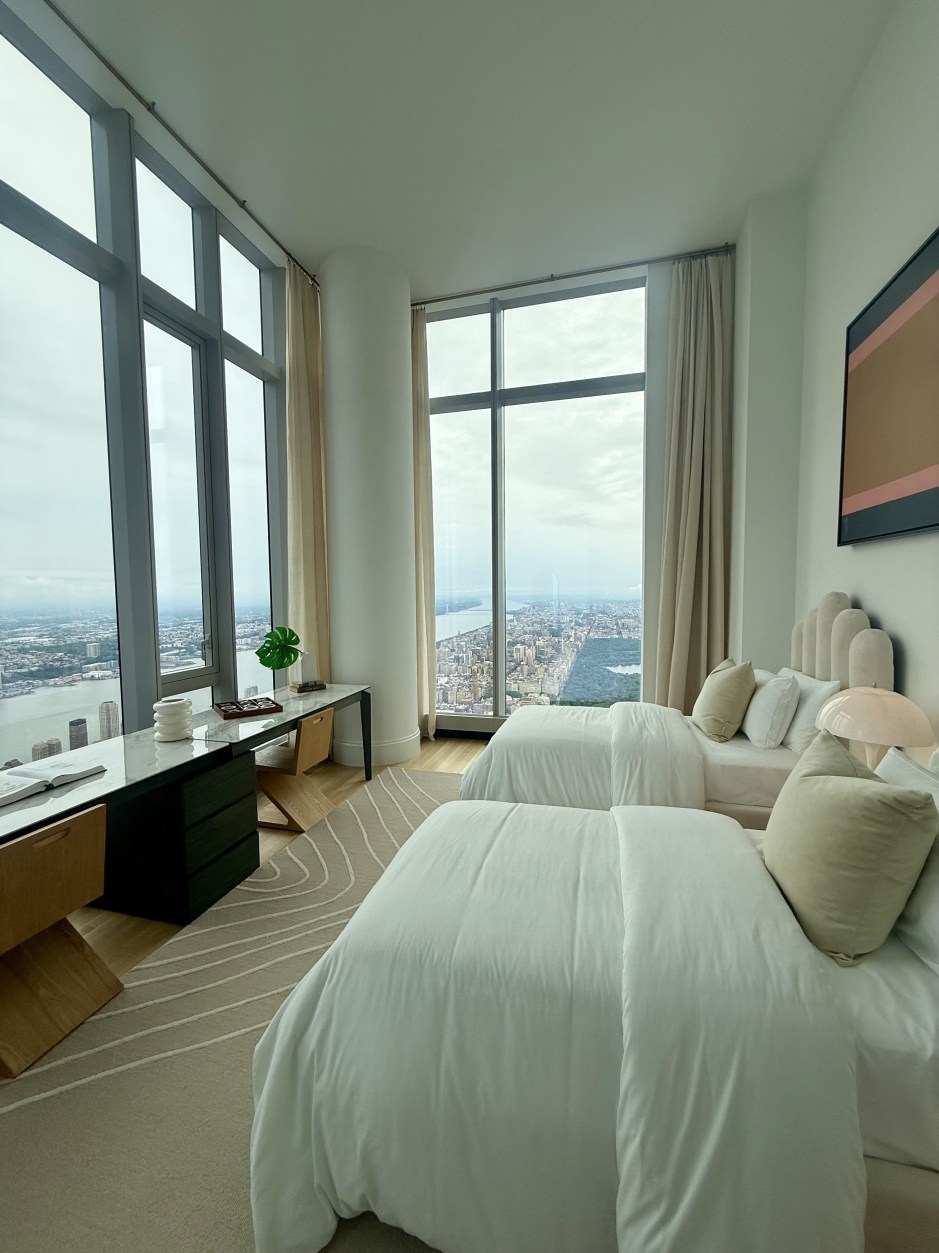
Apartment 126 had been staged, and has five bedrooms. Views stretch in every direction – north to see all of Central Park and beyond, west to the Hudson River and New Jersey, south over skyline views all the way to New York Harbor, and east over other supertalls and to the East River and on to Brooklyn and Queens.
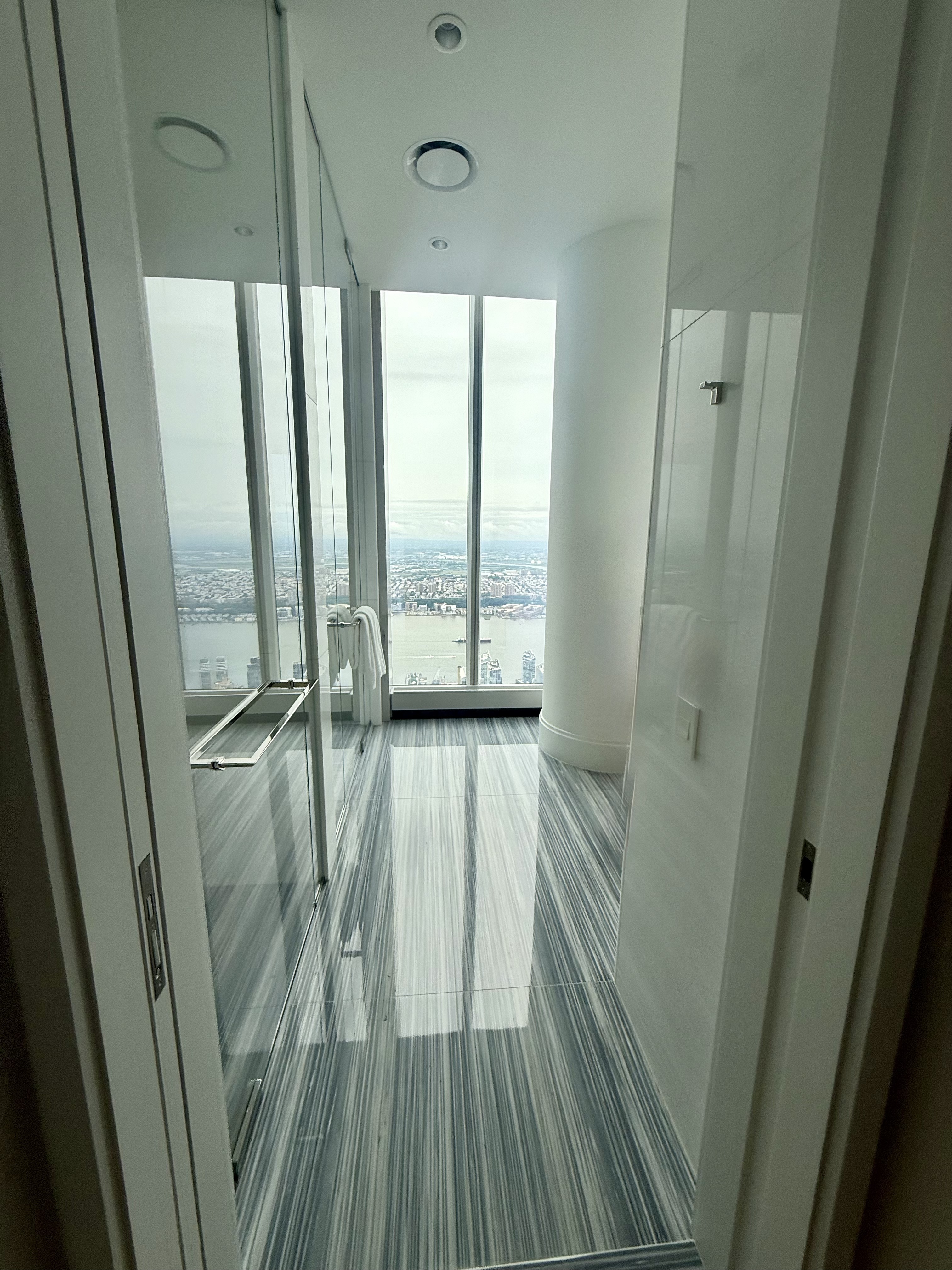
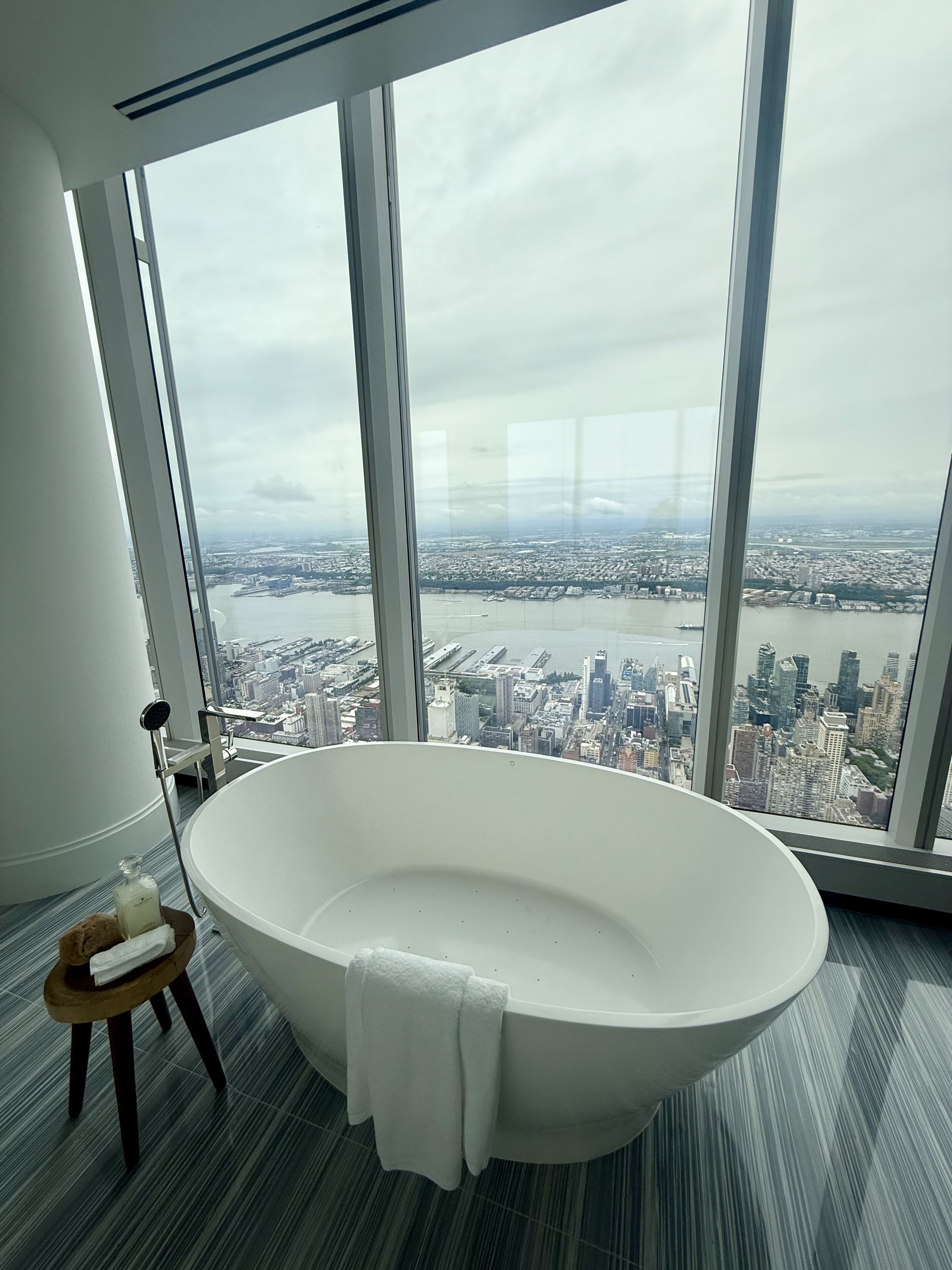
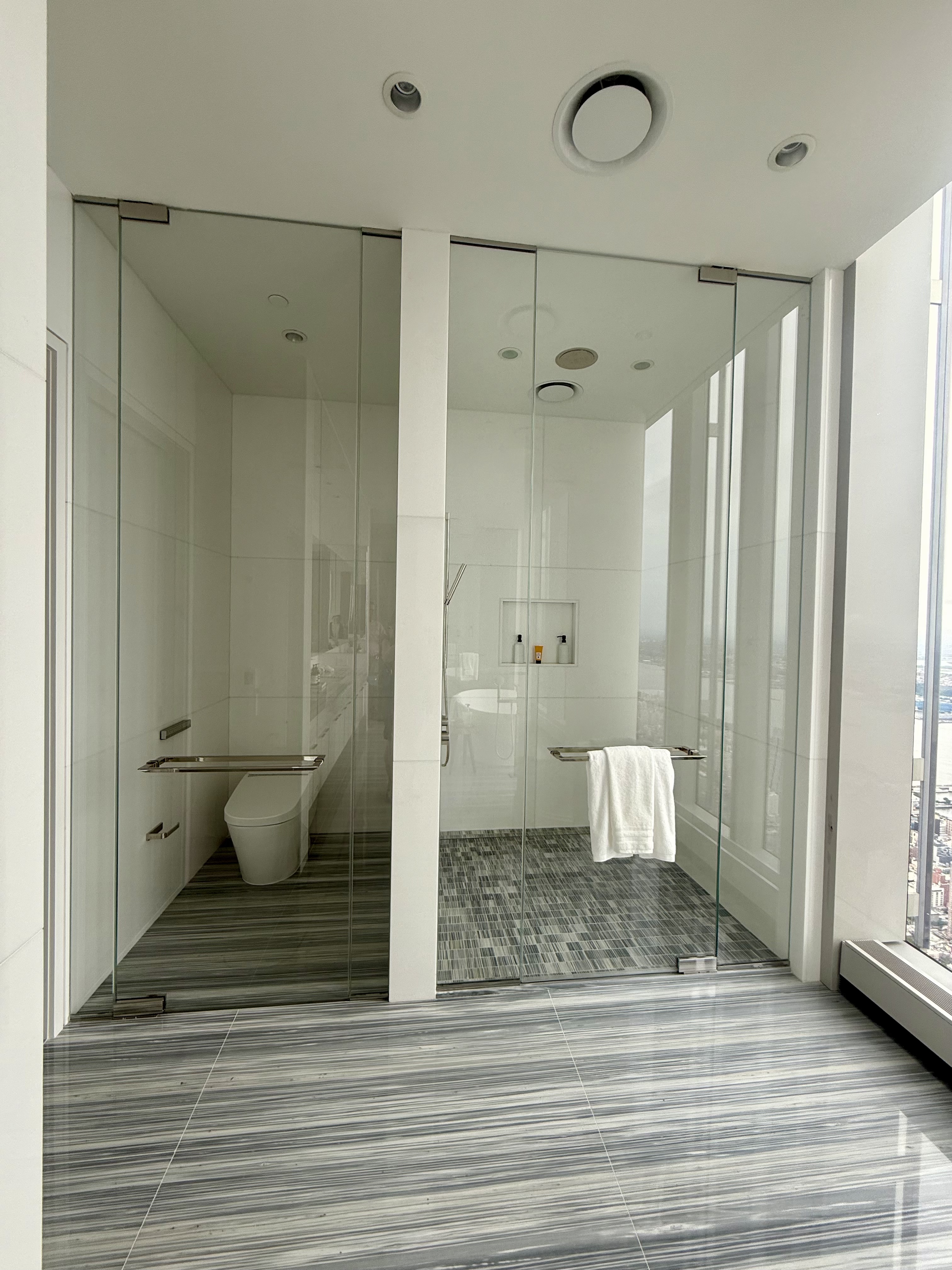
Bathrooms are extraordinary, including this tub overlooking the Hudson River.
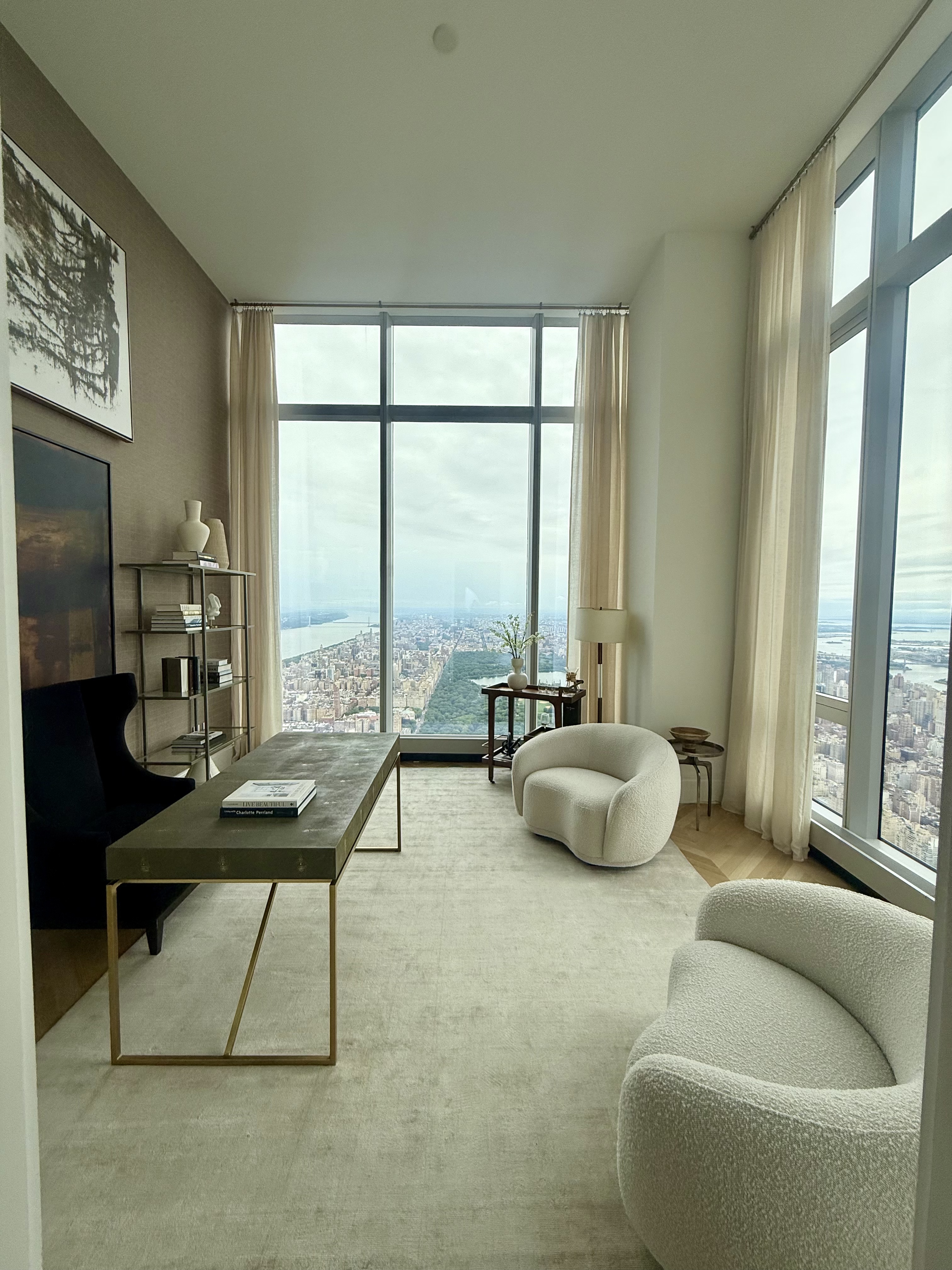
I want to point out how high the ceilings are, as well, giving even more emphasis to the overall impression of height. Having floor to ceiling windows allows for the spectacular views to dominate every room. On my Instagram, I posted a few videos of being in the space (see this one of the views from a home office, and this one of what it was like to ride down in the elevator!). The elevators go 2000 feet per second, and you can definitely feel it (and your ears feel the change in pressure).

These supertall buildings (many often called “:pencil skyscrapers” these days because of their slender shape and lofty height) are polarizing, to be sure. But I can’t imagine looking at them and not at least wondering what it is like to be at or near the top of them. Extraordinary views like this are why people pay to go to observation towers, and to imagine living at such a height is unimaginable for most. I feel privileged to be able to see the interiors of these singular buildings through my profession as a real estate agent, and to live and work in such an exceptional city.
West 57th Street

Image

So much of New York real estate press these days is about the flurry of enormous new development skyscrapers along 57th Street. Although some of the press is about how these buildings will change the skyline of Manhattan, particular from the viewpoint of Central Park, most is about the stratospheric prices many of the apartments in these buildings command. This has lead to this neighborhood being called “Billionaire’s Row”  – and with the average price of these new condo apartments approaching $20 million and the two apartments in One 57 selling for over $90 million each, being a billionaire couldn’t hurt. The term “Billionaire’s Row” is a throwback to the term “Millionaire’s Row” given to Fifth Avenue north of 50th Street, particularly those buildings along Central Park, in the late 19th and early 20th Century. Families like the Astors, Vanderbilts, Fricks, and Whitneys all jockeyed to built the most impressive homes along this stretch, and of course Andrew Carnegie’s mansion at 90th Street (written about in my previous blog post about Carnegie Hill) was perhaps the zenith of this activity.

I have written about the enjoyment of taking an unplanned walk through an urban environment (a dérive), and decided to walk around this part of town while imagining what it would be like to live there (as opposed to rushing through on the way to a Broadway show). Starting at Fifth and 57th Street, a powerhouse of a corner with Bergdorf’s, Tiffany’s, and Louis Vuitton trying to out-dazzle each other, I walked west and almost immediately noticed 9 West 57th Street – impossible to miss because of the enormous red sculpted “9” in front. Standing in front of this building and looking directly up, the curving slope of its façade is almost dizzying. In addition, its mirrored surface reflected, on the day I was there, the sky dotted with puffy clouds. Looking across the street at this point, I was surprised to see something I had never noticed when not  imagining I lived here: a supermarket (Morton Williams) on the south side of the street midway between Fifth and Sixth Avenues. It’s nice to know that the billionaires have this available (although one imagines most of them are eating out or catering).

Crossing Sixth and continuing west, I look south and realize that Le Parker-Meridien New York being in the neighborhood might make it easier to get to the Burger Joint at an odd time and avoid the huge line (and desperate search for a table). At this point, I also realized how close I was to one my favorite places to eat in the city, Todd English’s Food Hall in the Plaza (59th between Fifth and Sixth). On the north side of this block is elegant Steinway Hall, now closing as a showroom for fine concert pianos but soon to be part of a new skyscraper built primarily on the lot next to the hall, but with air rights over the Steinway building. The star of the block currently, of course, is One 57, at 157 W 57th Street. Nearing completion, and yet already close to sold out, currently it dominates the area, but with the other “tower power” buildings planned, it will eventually be simply a part of the reimagined Manhattan skyline. It will briefly be the city’s tallest residential building, at over 1000 feet, but will soon be overtaken by 432 Park (with a height of almost 1400 feet, when it is finished it will be the highest residential building in the Western hemisphere).

The southeast corner of Seventh and 57th Street is home to Carnegie Hall, reason enough to consider living here! On the north side of the block between Seventh and Eighth Avenues, you can glimpse trees in Central Park – for now – through the empty space soon to be another duo of tall residential buildings. It’s easy to forget how close you are to Central Park while walking along 57th Street, although the view of the Park that north-facing apartments in One 57 above 225 feet or so has certainly contributed to their value.

Crossing Eighth Avenue, look north to see Columbus Circle, the ending location of one of my recent blog posts. The look of the apartment buildings changes as you continue west. In the same period of time that Fifth was turning into “Millionaire’s Row,” 57th Street became the home of several large apartment buildings (like the Parc Vendome and Alwyn Court) designed to lure wealthier (if not quite in the league of those on Millionaire’s Row) New Yorkers away from their townhouses and into full service buildings with doormen and spacious apartment layouts. Looking at the Parc Vendome, one of four massive imposing apartment buildings on 57th near Ninth Avenue, I noticed the different feel these buildings have compared to the slender tall towers sprouting up along the street.

Turning north, I was struck with how quickly the tone of the neighborhood changes – within a few blocks, the midtown feeling is gone and you are clearly on the Upper West Side, and steps from Central Park as well as Lincoln Center. Thinking about it, this is the genius of 57th Street as a place for residential buildings, straddling Central Park and Upper West Side (or East, in the case of 432 Park) on one side and busy, bustling midtown on the other. London has a “Billionaire’s Row” as well, but it’s a series of mansions in a quiet part of North London (Bishop’s Row). This central location for New York’s strip of “power towers” is an advantage for anyone looking to live in the middle of the island. These new tower developments have been controversial, but so many architectural developments that were initially hated (The Eiffel Tower and original World Trade Center, for instance) became icons over time. Perhaps one day the new developments changing the skyline of Manhattan along 57th Street will become accepted and integrated into the look of New York City, a place that is always changing, and therefore, never boring.