Governors Island

image_28978583871_o

I wrote recently about Coney Island, and how easy it is to feel you are taking a mini-break from New York City without leaving the city itself. I recently spent a day on Governors Island, in some ways more disorienting (in a good way!) since you are simultaneously surrounded by nature and yet experiencing spectacular views of lower Manhattan, the Brooklyn Bridge, and the Statue of Liberty.

Governors Island sits a mere 800 yards away from Manhattan and is even closer to Brooklyn (400 yards). Originally reserved for the Governors of the New York Colony during British rule, the American Continental Army used it to their advantage and fired on the British from the island during the Revolutionary War. After American Independence, forts were built on the island for coastal protection, and Castle Williams (which is still standing) was later used to hold Confederate prisoners of war during the Civil War. When material dug out from Manhattan to create the first subway line was used to enlarge Governors Island, it became first an Army base and later one for the Coast Guard. By 1996, however, the Coast Guard had ceased to use the island, and it began to be redeveloped as a public park. Fort Jay and Castle Williams, as well as 22 acres of the island, have been declared a National Monument – the remaining 100 acres belong to the city and are in the middle of a ten year plan to revitalize Governors Island for use by the residents of New York.

Getting to Governors Island is somehow both easy and difficult. The ferry leaves from lower Manhattan (just north of the Staten Island Ferry terminal) on the hour starting at 10 AM, and leaves the island to return to Manhattan on the half hour. The cost is $2 roundtrip, but is free if you are a resident and have an idNYC card (if you are a resident and don’t have one, what are you waiting for? there are so many great discounts and benefits, check out the card here). The actual ferry ride is only seven minutes long, but if you miss one (as I did, slower than expected subway traffic on the 4 getting me there just a few minutes after the 10 AM ferry left) it’s a long wait.

image_28978572691_o

One entertaining thing to do in the area if you miss a ferry is to watch helicopters take off and land just north of the Battery Maritime Building.

image_28433961524_o

Once the ferry is ready to load, it only takes a few minutes before you are looking back at the Battery Maritime building as the ferry leaves lower Manhattan.

image_28949410722_o

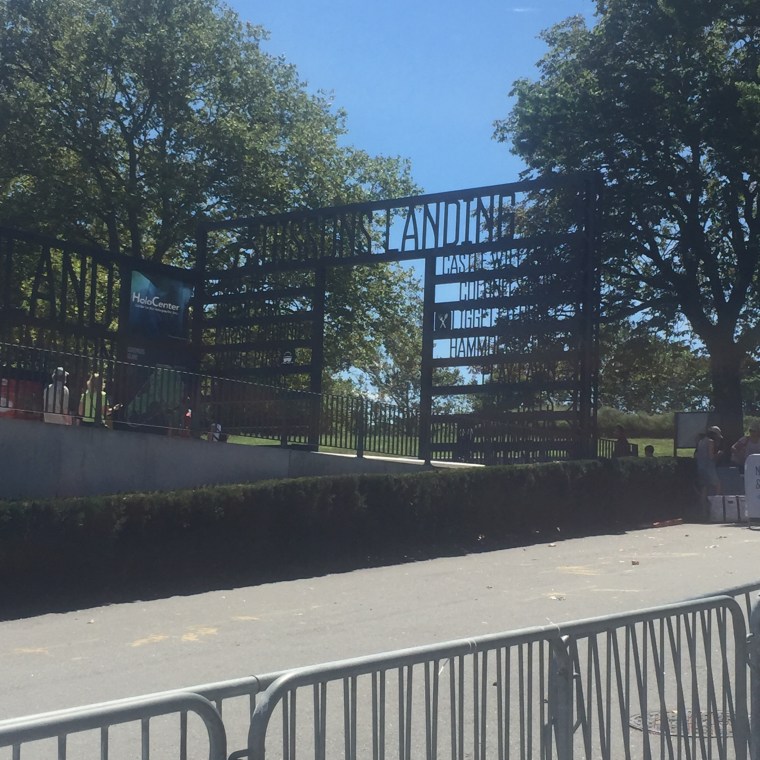
Within a few minutes you arrive on Governors Island at Soissons Landing.

image_28433963224_o

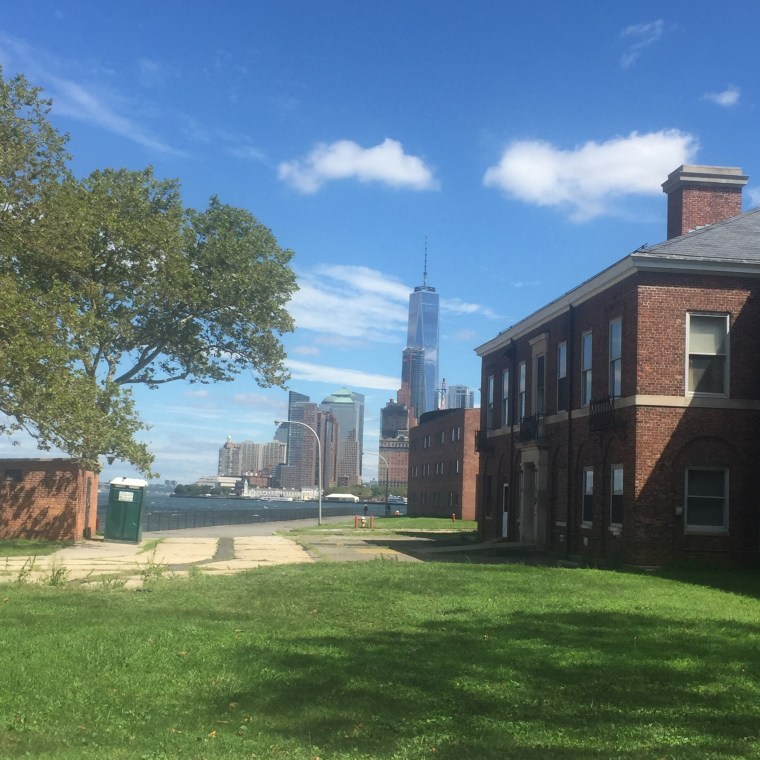
The constant odd juxtaposition of quaint old buildings, green lawn, and spectacular views of the skyscrapers of lower Manhattan is disorienting, but in an exciting way.

image_29054912765_o

One view of Castle Williams.

If you pass the old historic buildings and follow the signs for the newest part of Governors Island Park, The Hills, you can find the longest slide in NYC, three stories tall and 57 feet long. My advice on a sunny day is to be sure you are wearing long pants – that metal slide gets HOT!

The Hills was constructed using so much landfill it would require 1806 subway cars to transport it. Much of it came from the demolition of some buildings and parking lots elsewhere on Governors Island. Some of the actual hills were created using pumice, because any heavier material would push the existing landfill into the harbor.

image_29054911575_o

A plaque marking the National Park Service site, Castle Williams, with fantastic views of lower Manhattan, which is just a few hundred yards away.

image_28949426262_o

Wonderful views of the Statue of Liberty can also be seen from the western edge of Governors Island.

image_28949403712_o

Ferries return on  the half hour, with the last ferry back at 6 during the week and 7 on the weekend.

Returning back to Manhattan, you can feel as though you have taken a trip to another country, one where you gazed at the city as though it was a movie backdrop or a mirage. I highly recommend taking the journey.  I found I appreciate the city so much more when I have seen it through a different angle – even one that technically lies within the city limits.  Governors Island is open daily during the summer season, which lasts roughly the end of May through the end of September. For more information check out their website here.

A visit to Coney Island


image_27821405214_o

It’s summertime, and the livin’ in New York City is . . . hot and muggy. If you can’t make it out of town for a visit to the Hamptons, or the Caribbean, or the south of France, at least for the cost of one swipe of a MetroCard each way you can still get to a beach and not even leave the five boroughs. I think calling Coney Island “the playground of the world” (as the sign near the Wonder Wheel proclaims) is an over-statement, but it can be a fun day trip. I will note that the sea breeze is a real thing on these sticky August days, refreshing you even if all you do is walk along the water as the waves lap your ankles.

Coney Island was in fact once a barrier island, but became attached to the Brooklyn mainland via landfill. The source of the name “Coney” is uncertain – it could be due to a large number of wild rabbits, or coneys, but also could derive from someone’s name. Native Americans called it Narrioch, meaning “always in light” because of the abundant sunshine on the beach. After the Civil War, it became a popular seaside destination, and large piers were built. However, it was with the addition of rides that Coney Island began to take on the familiar persona of an amusement park at the beach. The United States’ first roller coaster, Switchback Gravity Railway (apparently they had yet to figure out how to create memorable names), opened in 1884. While the early 20th Century led to Coney Island’s heyday with the creation of Steeplechase Park, Luna Park, and Dreamland, it also began to develop a reputation as a somewhat seedier place as well – “Sodom by the Sea.” This didn’t keep it from becoming the #1 tourist attraction in the country (in fact, it could have helped), with 100,000 visitors a day, on average (to compare, Disney World’s Magic Kingdom averages about 56,000 a day, the most of any current theme park). Following World War II and some demolition (unsurprisingly, sponsored by Robert Moses) Coney Island began a steady decline that reached a nadir in the 1970s and ’80s. A steady revitalization began in the early years of the 21st Century, and despite serious damage from Hurricane Sandy in 2012, Coney Island is looking better these days than it has in a long time.

IMG_6096

Recently I spent a day at Coney Island, taking the 4 subway from the Upper East Side and transferring to the N at Union Square. It was a solid 90 minute journey, so bring a good book – or a good companion – if you plan to make the trek. Getting out of the Stillwell Avenue subway station, you can’t miss Nathan’s, the home of the famous (or nauseatingly infamous) hot dog eating contests every July 4th. My personal preference is for pizza (you can’t go wrong with either Grimaldi or Totonno) but my friends and family who like hot dogs love Nathan’s (just please don’t try to eat 70 of them in 10 minutes).

IMG_6095

Once you get to the boardwalk, there are many competing places to eat, but I’m personally more interested in the rides on one side of the boardwalk and the Atlantic ocean on the other.

image_28437984045_o

The Wonder Wheel is my favorite ride, built in 1920. It’s 120 feet tall and many of the cars are not fixed to the rim but swing back and forth as the wheel goes around -it’s thrilling.

image_28359365021_o

From the top of the Wonder Wheel, I noticed lower Manhattan shimmering off in the distance like a mirage.

image_28437987315_o

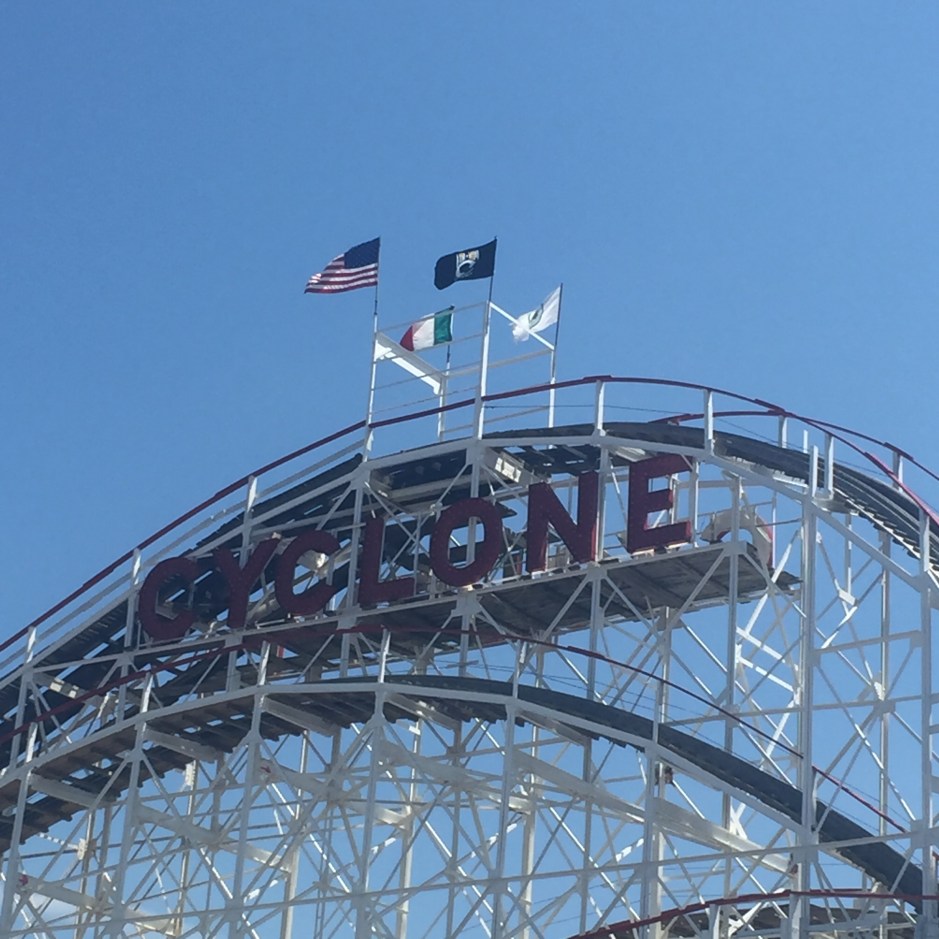
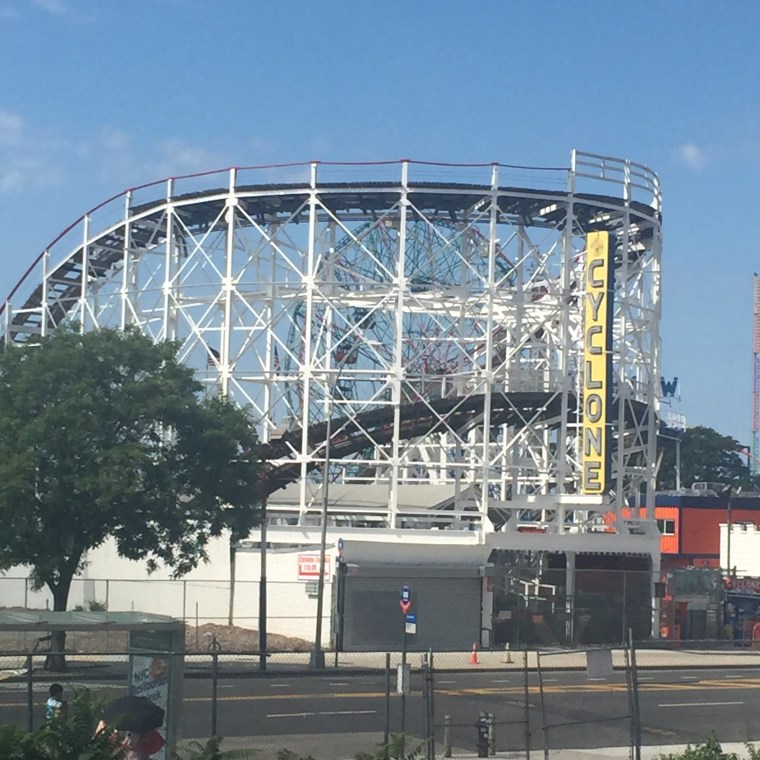
Of course the most famous ride in Coney Island is the Cyclone, a wooden coaster built in 1927 that is both a New York City landmark and on the national Register for Historic Places. I’ve ridden it a few times, and it still delivers plenty of excitement and the very real possibility of whiplash.

coneyisland beach

Walking back along the beach rather than the boardwalk, it is fun to walk along the ocean’s edge and feel the cool breeze. The beach can be packed, particularly on summer weekends, but it is kept clean and the sand raked, and there are lifeguards. On the day I was there, lifeguards were keeping people out of the water because both sharks and sting rays had been sighted!

If the idea of a seaside apartment to live in or use over weekends appeals, real estate values are beginning to improve in Coney Island – but still there are many apartments readily available to buy, averaging about $417/sq ft. Neighboring Brighton Beach has been rapidly increasing in value, with apartments there now at $665/sq ft, on average, and it is possible that Coney Island will follow this trend as more money is poured into its revitalization.

image_27821915753_o

There is much more to do on Coney Island (the NY Aquarium and the minor league baseball team the Brooklyn Cyclones, to name only two), but one of my favorite ways to end a day there is with a drink on the boardwalk. It’s hard to know which is more fun: people-watching on the boardwalk, or gazing past them to watch the ocean as the sun begins to set. A day at the beach combined with a day at the amusement park – and all without leaving New York City.

It’s terrace season!

IMG_0936
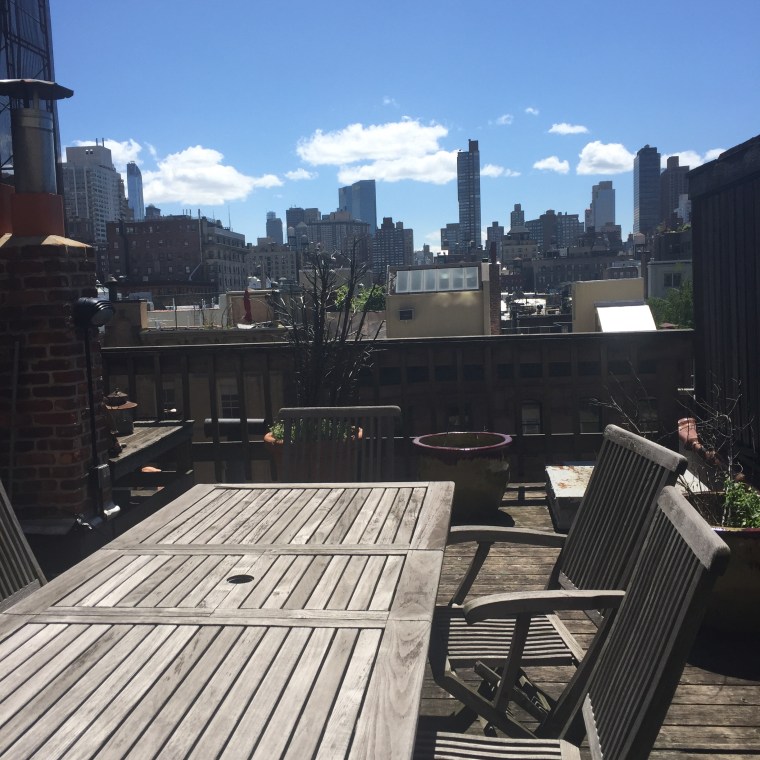
Gorgeous view of midtown Manhattan from a private rooftop terrace on the Upper West Side

I have recently been working with several buyers who either require private outdoor space, or have been lucky enough to find it included in an apartment they love for other reasons. Spring and summer are definitely “terrace season,” as outdoor space takes on a special appeal on sunny, warm days. In fact, one buyer I was working with lost out in a bidding war on an apartment with a large terrace directly facing Central Park, after months of little interest while it was listing during the winter. The listing broker even told me that we would have definitely gotten the apartment if we had been bidding the same amount back in the cold and gloomy months of January and February, but in late March/early April, the same apartment had a much broader appeal.

IMG_0847
A peek into a Beekman Place private terrace from a terrace at Southgate

Other buyers of mine, while not looking specifically for an apartment with outdoor space, found one with two large terraces, one with East River views, and fell in love. I have written before about the value of a view of nature from an apartment, as well as the value of a city view, and those intangible emotional benefits are heightened when the view is not contained behind glass, but rather experienced while also taking in the information obtained from other senses. To be on a terrace and seeing the East River, while also feeling a warm breeze, smelling the flowers you have placed in planters, and hearing the sounds of the city, is to be immersed in the experience.

IMG_0841
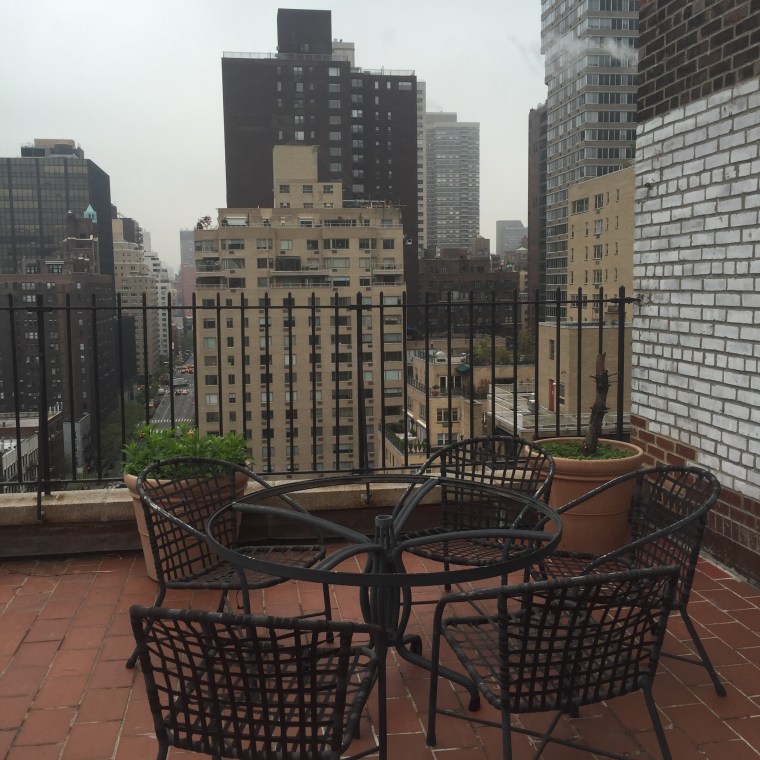
Ready for an al fresco dining experience in midtown Manhattan

There are multiple types of outdoor space, and some people have strong preferences for one type over the other, while others just want any opportunity to experience the outdoors from within their home. The least versatile is a Juliet balcony – enough to step outside and check the temperature or take in a few deep breaths of the summer air after a storm, but not enough to even place a chair. Larger than that are balconies, commonly boxy squares in postwar apartments, often with enough space for a few chairs and a table. The larger outdoor spaces tend to be true terraces (outdoor space with the building underneath it instead of something jutting from the building) or private gardens. Gardens tend to be most common in townhouses, or in the garden level apartments in converted townhomes or brownstones. Garden level apartments have the disadvantage of not being the sunniest apartments, with some exceptions, but for people who like the idea of children or pets playing in a ground-level garden, they can be highly valued. Large terraces are perhaps the most prized outdoor spaces, and relatively rare. A terrace with an iconic view – of Central Park, of a river, or a spectacular city view – can greatly increase the value of an apartment.

IMG_0846
A look at several of the terraces in the Beekman area with a view of the East River

So how much does outdoor space affect the value of an apartment, if you have one – or how much more do you have to pay to get a place if outdoor space is a priority to you? As with everything else in NYC real estate, it depends upon so many variables – the location, the apartment itself, whether the building is a condo or a coop, walk-up or elevator, etc., etc. However, the value of outdoor space is often about 25-50% of the apartment’s price per square foot – higher if the terrace has a great view or is attached to a spectacular apartment, lower if it is on a lower floor or attached to a small apartment.

IMG_0676
Even on an overcast day, it’s a killer view from this private terrace on Central Park South

The most valuable outdoor space is the very one my buyer lost out on this spring – unobstructed views of Central Park (enough to increase the value of an apartment by 50% even from park-facing windows with no outdoor space) from a large terrace. Is outdoor space worth such an increase in price? As with so many other aspects of NYC real estate, that is up to you – for some, they may feel that they wouldn’t really use outdoor space and don’t want to spend the extra money, while for others, outdoor space is the most important aspect of their home search and they won’t consider a place without it. What I have learned this spring, though, is that timing is extremely important. If I am representing a seller who has an apartment with outdoor space, I would strongly recommend trying to list during the warm weather months if at all possible. Conversely, if looking to purchase an apartment with outdoor space, jumping on something during the winter can lead to a relative bargain compared to getting into a bidding war when the outdoor space is showing at its best. If you are interested in buying a home in NYC with outdoor space, or if you have one to sell, feel free to contact me (with no obligation) at julie.brannan@compass.com.

A resource for real estate . . . and more

East 81

I was having lunch yesterday with customers with whom I have worked for over a year, and we are now happily in contract for an apartment that makes them feel good just spending time in it (even if the reason we are in it is to meet with contractors to plan a lengthy renovation!). While talking to them about our process (and about the course yet to come of selling their current apartment), they mentioned that they had been surprised at how many aspects of the journey I had been able to help them with, not just the obvious ones of sending them listings, making appointments to see apartments, negotiating the terms of their offer, etc. It occurred to me that I have never stated something that I feel strongly: I want to be your resource for real estate in NYC, and for so much more as well. There is never any obligation to ask me a question for yourself, or for a friend or family member, and I love doing it. Here are some examples of issues I have dealt with/ questions I have answered for people before, some of whom go on to become customers, and others who might become so in the future, but are not currently:

  1. Questions about the market: How’s the coop versus condo market? What are interest rates likely to do and how will that affect sales? What generally happens to the real estate market during an election year?
  2. Questions about value: What is my apartment worth? Can I get an apartment in another neighborhood with more space/light/quiet for the same price I am currently paying/for what my apartment is worth? Can I buy an apartment for approximately the same monthly costs as I am currently paying in rent?
  3. Questions about neighborhoods: What area of NYC is a possible value play these days? How is X neighborhood evolving?
  4. Questions about investing: What are the value neighborhoods where an apartment would be rented quickly and profitably? Does it makes sense for me to buy an apartment for my student or young adult to live in? What kind of appreciation might I get if I keep the apartment for X years?
  5. Questions about other professionals: Do you know a good real estate lawyer/accountant/insurance agent/mortgage broker/interior designer/contractor/stager/housekeeper/moving company/dog walker/pet groomer? (Answer:Yes!)
  6. Questions about new development: What’s going on in the super-luxury market? How do new development sales affect/relate to traditional coop sales? Are there any new developments in X neighborhood/for X price point?
  7. Questions about moving/relocation: Can I get a rental/buy a coop or condo if I don’t have a green card/visa? Can I use an out-of-town guarantor? How I can set up a bank account in the US before I move? Can I wire money to my lawyer and have her bring the funds for my condo at closing? How do I set up with Con Ed/Verizon/Time Warner?
  8. Questions about dealing with a landlord/coop or condo board: How can I go about getting an alteration agreement approved? Is my landlord required to get rid of the rats? (Note: this question came to me while on vacation from the panic-struck out-of-state friend of a customer, whose daughter was a new renter in the city!)
  9. Questions about timing: What is the best time to look for a rental? What is the best time to put my apartment on the market if I choose to do so? How does the outdoor space in my apartment affect when it might best sell?
  10. Questions about living in the city: How do you handle deliveries in a non-doorman building? Will Seamless/Fresh Direct/Ikea deliver to a fifth-floor walk-up? What are the recycling rules? How can I get tickets to Hamilton/discount tickets to other shows? How does Citibike work?

These are just samples of the many types of questions I have been able to answer in the past. Let me say again – none of these questions obligate you in any way! Of course, if you are looking to buy or sell, I would like you to give me a chance to explain what I can do for you, but I do genuinely love being a resource without any expectation in return. One more thing, when preparing a package of information to give potentials sellers last week (I do have the exclusive on their apartment now, and it will hit the market next month), I was struck again by the Corcoran mission statement (shown below) and how perfectly it dovetails with my own standard of behavior as a real estate agent. I have been told on more than one occasion that I “don’t seem like a real estate agent” to which I reply, “If I had to be the kind of real estate agent you are referring to, I wouldn’t be in this business.” Luckily for me, Corcoran supports my own desire to put the customer, not the payday, front and center of every decision, and to provide exceptional service.

julie.brannan@corcoran.com

Mission Statement

Walking in NYC, Paris, and London

Park Avenue

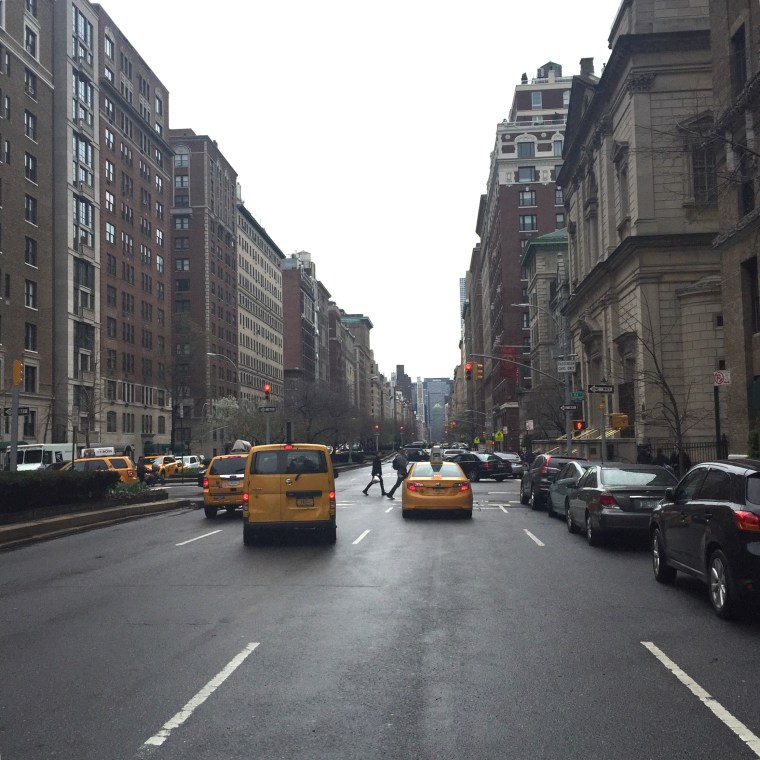
Recently I was fortunate enough to spend a few days each in Paris and London before returning to my beloved New York City (see above, the magnificent Manhattan grid, personified here on majestic Park Avenue). I was able to take several dérives (unplanned walks in an urban environment) as well as talk with New Yorkers currently living in each city. This experience led me to think about the similarities and differences of each of these great cities, and how living in each is unique. In addition, because I am a real estate agent in New York City, I will share what I learned from meeting with colleagues in the other two cities and compare all three markets.

IMG_0322

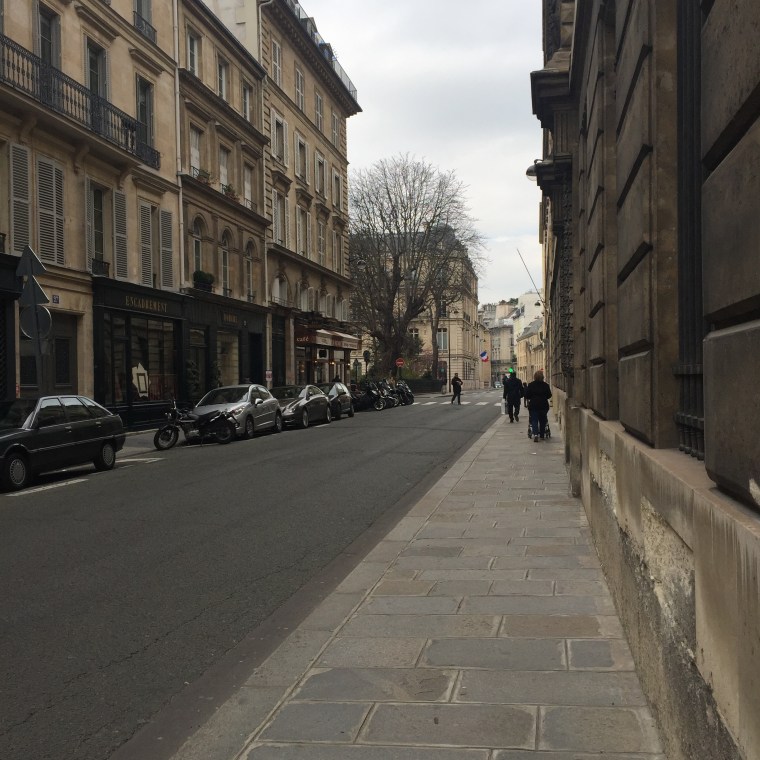
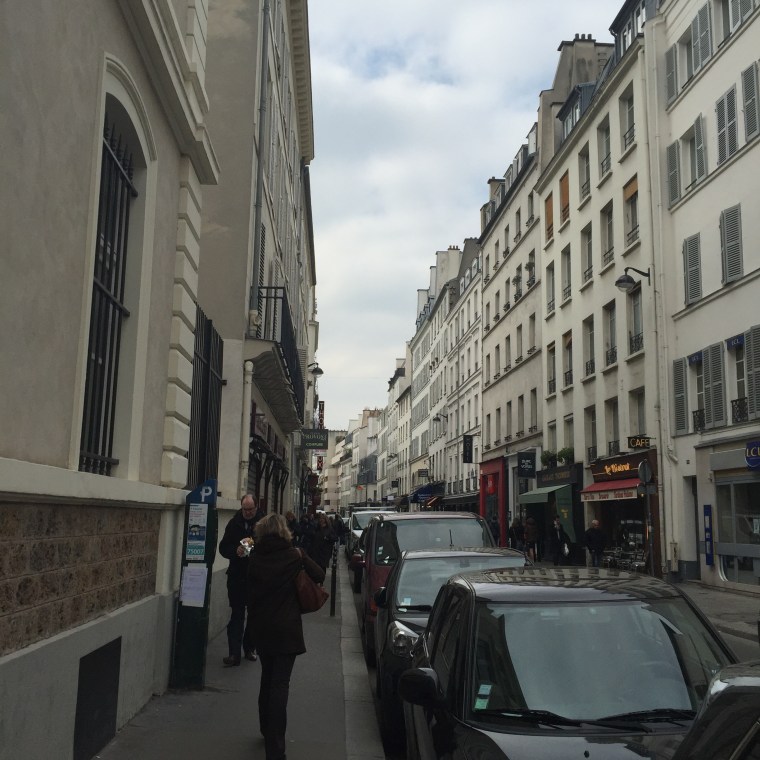
My first stop was Paris. It’s hard to find someone not charmed by this extremely elegant city. Oscar Wilde once quipped, “When good Americans die, they go to Paris.” Thomas Jefferson, after his years as Ambassador to France, noted that “a walk about Paris will provide lessons in history, beauty, and the point of Life.” I don’t know if I would agree to that extent (perhaps I missed my lesson on the point of life?) but I do agree with the filmmaker Wes Anderson, who said “Paris is a place where, for me, just walking down a street that I’ve never been down before is like going to a movie or something. Just wandering the city is entertainment.” I noted in a previous blog post about Dumbo in Brooklyn that I felt you couldn’t take a bad photo in Paris (and felt the same about Dumbo), because every new vista seemed to provide a perfectly framed gorgeous scene.

IMG_0334

Central Paris looks the way it does mainly due to the vast restructuring under the time of President Louis-Napoléon Bonaparte, the nephew of the more famous Napoléon, and the urban planner Georges Eugène Haussmann. Medieval Paris through the nineteenth century was filthy and unsanitary, with reeking sewers (Victor Hugo described it well in Les Misérables) and gorgeous buildings like the Louvre hidden behind crumbling tenements. Haussmann appropriated land and destroyed what he needed to in order to create a gigantic cross through the heart of the city made up from east to west along the Rue de Rivoli and Rue Saint-Antoine, and north-south along two new Boulevards, Strasbourg and Sébastopol. In later renovations, more boulevards were created, generally on the diagonal rather than a grid.

IMG_0335

The unusual aspect of all of this is that so much work was done within a relatively short period of time in the mid-nineteenth century. This is the more significant factor to the consistency of the look of Paris compared to most other cities.

IMG_0338

I asked a native New Yorker who now lives in Paris about how the layout of the two cities affects living there. She pointed out that, with most of Manhattan a grid, people refer to an address as an intersection of an Avenue and a Street. For example, if you were meeting someone at Carl Schurz Park in Yorkville you might agree to meet on the corner of East End Avenue and 84th Street. In Paris,  a meeting place is more likely to be described as what arrondissement it is in, what metro stop it is near, and then the actual address.

IMG_0339

The experience of walking in Paris is very different on the wide boulevards versus the much narrower streets. In addition, the boulevards keep cutting through on the diagonal, creating triangles. New York City has Broadway running on a huge diagonal along the entire length of Manhattan from northwest to southeast, creating such iconic “squares” as Times Square and Herald Square. However, most of Manhattan above 14th Street unfolds as a predictable series of streets intersecting at right angles with avenues.

IMG_0340

IMG_0337

After a very enjoyable and easy trip on the Eurostar train, my next stop was London.

IMG_0371

When looking up quotes to enliven this blog post, I was surprised to find so few really positive quotes about London compared to Paris. For instance, William Butler Yeats commented, “This melancholy London – I sometimes imagine that the souls of the lost are compelled to walk through its streets perpetually. One feels them passing like a whiff of air.” Hmmm. Worse, from G.K. Chesterton: “London is a riddle. Paris is an explanation.” And confusingly, from author Peter Shaffer: “If London is a watercolor, New York is an oil painting.” While I enjoy Paris and of course find it to be beautiful, I love London – second in my heart only to New York City. If only I could write a pithy quotable quote to express this feeling!

IMG_0374

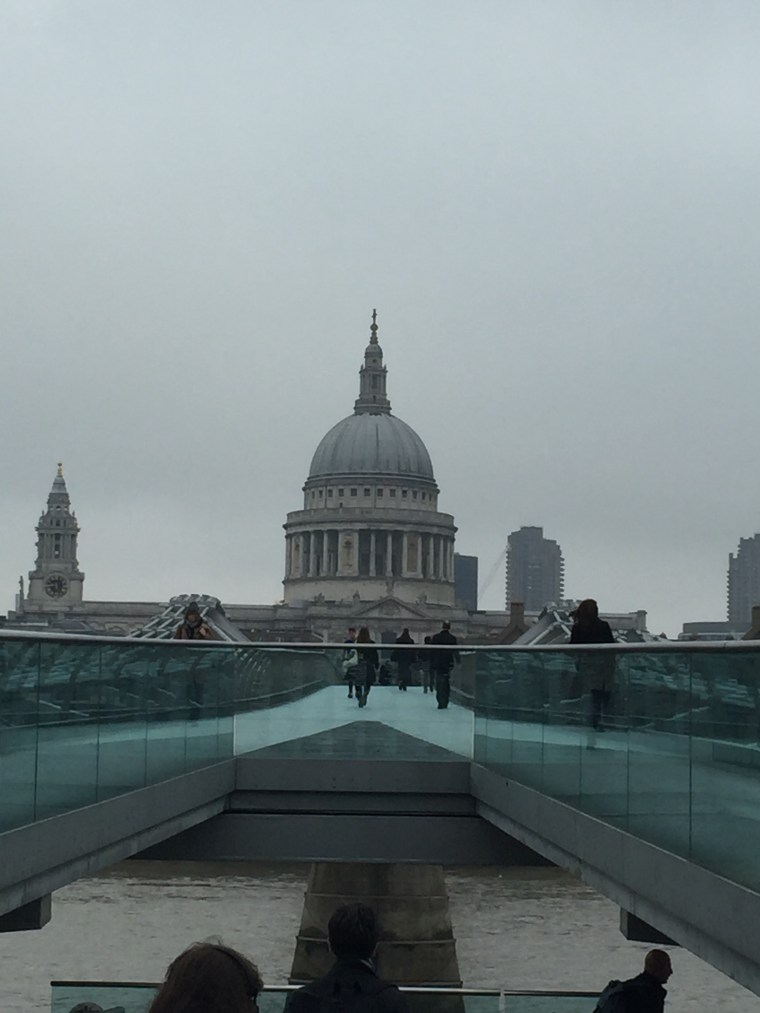
Walking across the Millennium Bridge, itself completed and opened in June 2000, you get part of why I love London – the juxtaposition of new and old, with St. Paul’s (completed in 1711) framed by this very modern structure.

IMG_0375

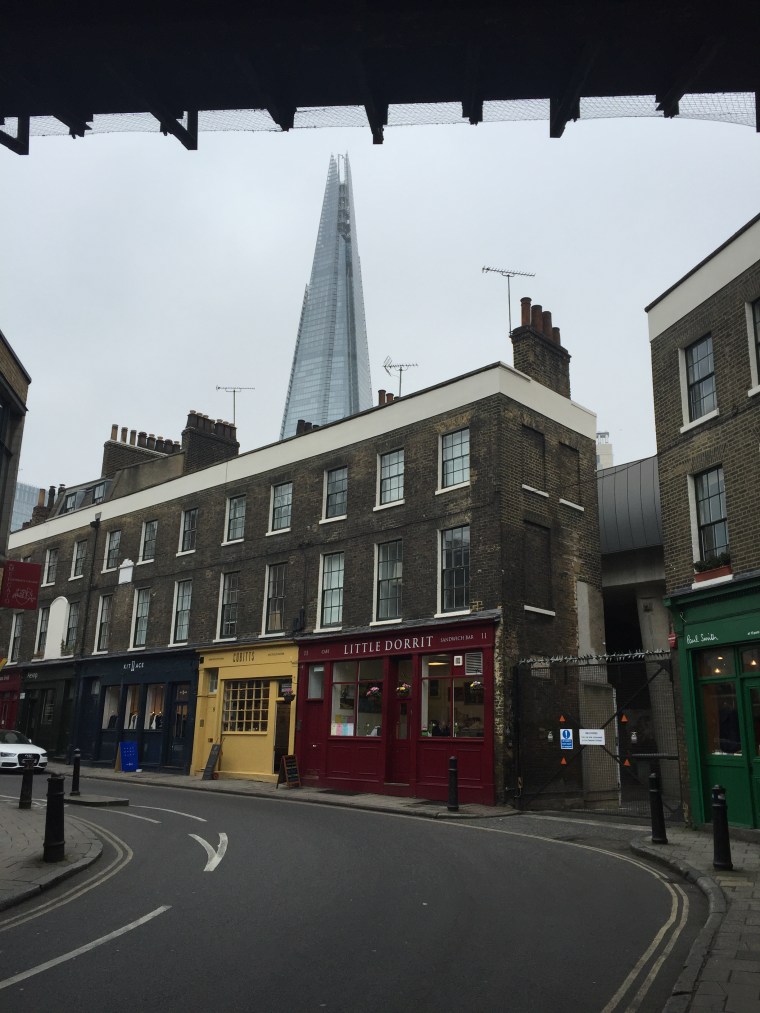
Another example of this is seen here, near Borough Market, with the hyper-modern Shard building visible above these tiny quaint buildings.

IMG_0377

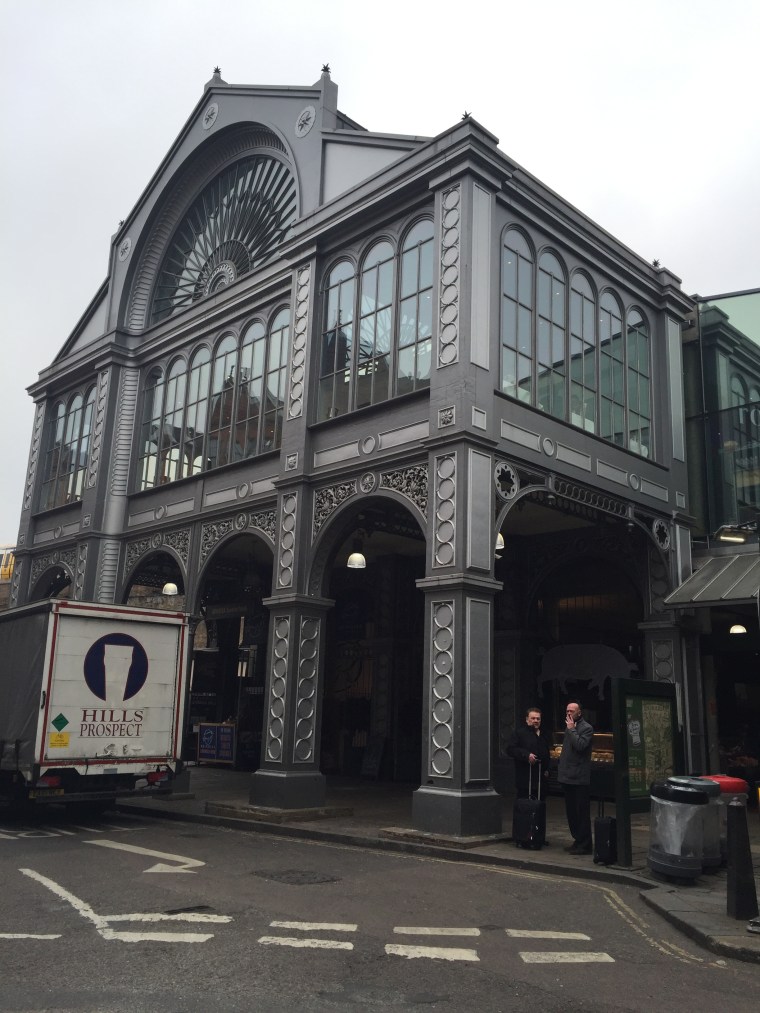
And speaking of Borough Market, it’s one of my favorite places in London. The Southwark neighborhood surrounding it is a delightful jumble of streets.

IMG_0392

London is not consistent in architectural style as Paris is – not only are neighborhoods (like the newly fashionable East End, depicted in a mural above) different, even within a neighborhood you can find a variety of styles and eras represented. This is in part due to the Great Fire of 1666, meaning that very little of medieval London still exists (the Tower being a notable exception), and in part due to the bombings during World War II and the rebuilding since then.

IMG_0418IMG_0419

Some neighborhoods, like Chelsea (above) and Mayfair (below) do keep more of a consistent architectural style, however.

IMG_0421IMG_0424IMG_0428IMG_0429

Walking in London can be confusing, since it is even less of a grid than Paris and certainly much less so than Manhattan above 14th Street. However, this labyrinth of twisting streets and sudden alleyways is what makes taking an unplanned walk (with few time constraints) so rewarding. James Geary, the American journalist, remarked, “London always reminds me of a brain. It is similarly convoluted and circuitous. A lot of cities, especially American ones like New York and Chicago, are laid out in straight lines. Like the circuits on computer chips, there are a lot of right angles in cities like this. But London is a glorious mess. It evolved from a score or so of distinct villages, that merged and meshed as their boundaries enlarged. As a result, London is a labyrinth, full of turnings and twistings just like a brain.” I don’t know that the brain analogy would have ever come to me (and I have a degree in neuroscience!) but I would agree that the twistings and turnings do make it a “glorious mess.” A native New Yorker now living in London pointed out how much larger in area central London is compared to Manhattan, while central Paris is much more compact. Of course the population of London was 8.539 million in 2014, while New York City (all five boroughs) was an equivalent 8.406 million at roughly the same time (Manhattan only 1.626 million, however). Paris, on the other hand, has a population of 2.244 million, a significantly smaller number.

IMG_0448

One last comparison between New York City and London. One of my favorite quotes about NYC is from O. Henry, who said (quite a long time ago, I will add), “It’ll be a great place if they ever finish it.” The constant construction and cranes seen in London (above) remind me very much of New York. I love how NYC is constantly changing, and while obviously historic preservation is important, the tearing down and building up of our city is part of what gives it the feeling of always being new, in the process of reinventing itself.

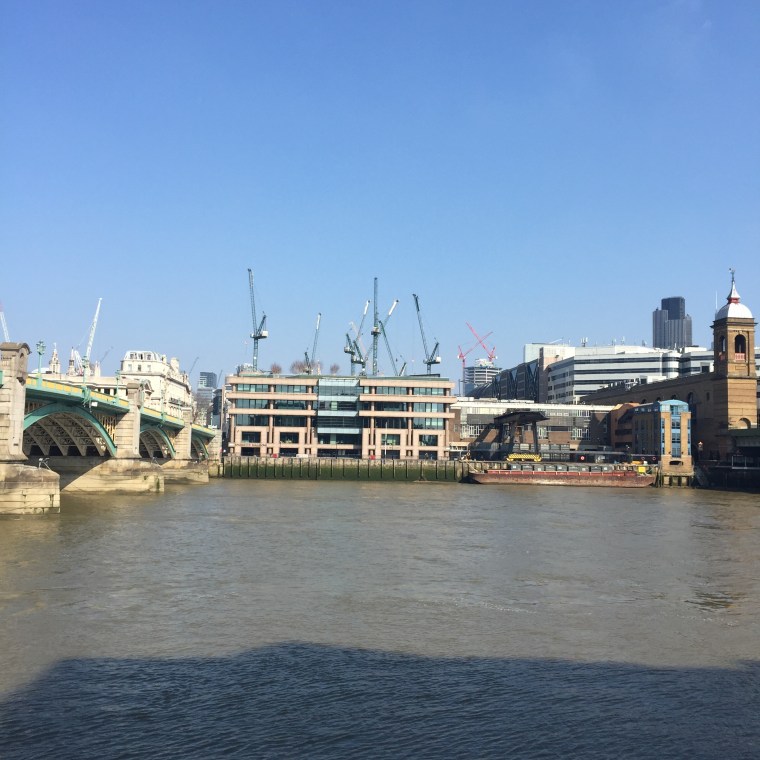
A significant similarity between Paris and London is that they each have rivers running through the heart of the city, with part of the joy of walking there involving crossing bridges to get from one side to the other. In Manhattan, you are surrounded by water, and there are enjoyable strolls both on the East River and the Hudson. You can also walk over the Brooklyn Bridge (see my photo tour of doing that here), highly recommended. However, I would say that the most similar feeling to crossing a bridge in Paris or London is to cross Central Park, not as long as a river but as significant for the large section of Manhattan it divides. The difference in feeling (and strong loyalty it inspires) among east siders and west siders is similar to the change between the north and south bank areas of the Thames, or Rive Gauche versus Rive Droit.

As far as real estate values in these three cities, despite all the recent concern over whether London’s housing prices could continue their meteoric rise despite new concerns over a possible Brexit and the additional tax on luxury properties, London housing prices increased 13.5% in the past year, compared to New York City’s 12% (still a large increase!). There is some indication, however, that the foreign investor is starting to see London as a less advantageous place to buy, since prime real estate in London at the highest price points declined 0.8% in the first three months of 2016. Meanwhile, in Paris, even before the November 2015 terrorist attacks, home values were down 2.8% and projected to fall another 3% in 2015. At this point in 2016, homes in Paris are down 9% from values in 2011.

Most people, of course, live in a particular city because their work brings them there, they have family there, or some other practical reason. Those who can afford to own places in more than one city may choose to do so in part for financial reasons, but often also because the city is an appealing place to visit. New York, London, and Paris all offer so much and uniquely so – although I would argue that they are equally suited for an individual like myself who loves to walk.

Lincoln Square

IMG_0118

Just as the larger neighborhood known as the Upper East Side has many smaller neighborhoods within it, such as Yorkville, Carnegie Hill, Lenox Hill (yes, lots of hills on the UES!), the Upper West Side – on the opposite side of Central Park – also has subdivisions. Recently I have had two customers interested in looking for homes in the area of the UWS known as Lincoln Square, the southeast corner of the neighborhood – roughly bounded by Central Park West and Amsterdam Avenue to the east and west, and 59th to 66th Streets to the south and north.  Interestingly enough, the area was characterized in 1940 as the “worst slum in New York City” by the New York Housing Authority, and the urban renewal efforts in the 1950’s and 1960’s led to the development of the Lincoln Center for the Performing Arts. This anchored the residential redevelopment of the area into the vibrant neighborhood it is now.

As I have written before, my favorite way to experience a neighborhood is by taking an unplanned walk within the area (a dérive), so on an overcast but not terribly cold February day, I started at Columbus Circle and began my stroll.

IMG_0108

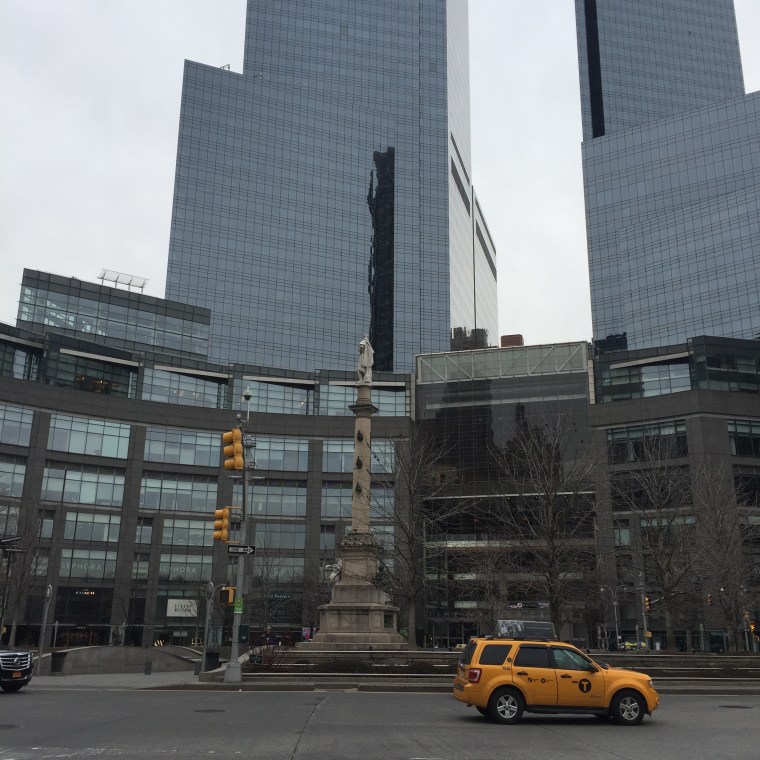
At Columbus Circle, you stand at the intersection of the Upper West Side, Central Park, and Midtown West. The shops at Columbus Circle house a Whole Foods as well as specialty stores and Jazz at Lincoln Center.

IMG_0109

Turning around to look at Central Park for a moment . . .

IMG_0110

Just north of the statue of Columbus, a subway hub that can get you quickly to virtually any location in the city.

IMG_0111

Walking north a few block on Central Park West, I can’t resist stopping to admire 15 Central Park West, a phenomenally successful building on so many different levels – a classic limestone two-towered building that looks as though it could have always been there, but simultaneously a new development from 2007 with prices per square foot averaging well over $5000 per square foot. I greatly enjoyed reading Michael Gross’s recent book about the development of the site, House of Outrageous Fortune.

IMG_0112

Walking west on W. 61st Street, you can see a side entrance to 15 CPW. On the W. 62nd Street side, there is a lovely garden.

IMG_0114

This part of the Upper West Side can be a little confusing, in that Broadway is the next Avenue you come to after Central Park West, while for much of the neighborhood the park block is between CPW and Columbus. Broadway, transecting the length of Manhattan on a diagonal, disrupts the orderly grid of most of Manhattan above 14th Street, creating “squares” – really triangles – as it cuts across the orderly boulevards. Union Square, Madison Square Park, Herald Square, and Times Square are all the result of Broadway’s slow progress from west to east as it heads south in Manhattan, and Lincoln Square is yet another. Walking up Broadway to W. 63rd, I headed west again to see Lincoln Square itself, namesake for this neighborhood.

IMG_0115

Just south of Lincoln Square is the Empire Hotel, whose sign is a local landmark, and P.J. Clarke’s, a cozy yet upscale place to sit and have a nice meal.

IMG_0116

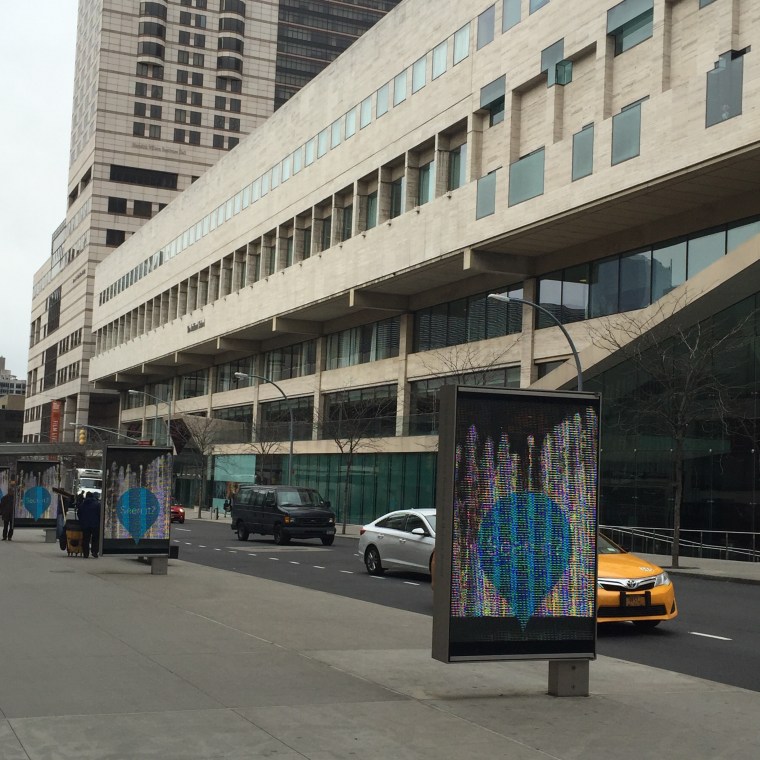
Obviously a strong selling point for the neighborhood is the proximity to Lincoln Center, and the ease of attending performances of  opera, music, ballet, theatre, and even the Big Apple Circus in the fall of each year.

IMG_0119

The Julliard School, just north of Lincoln Center, also offers high quality student performances.

IMG_0120

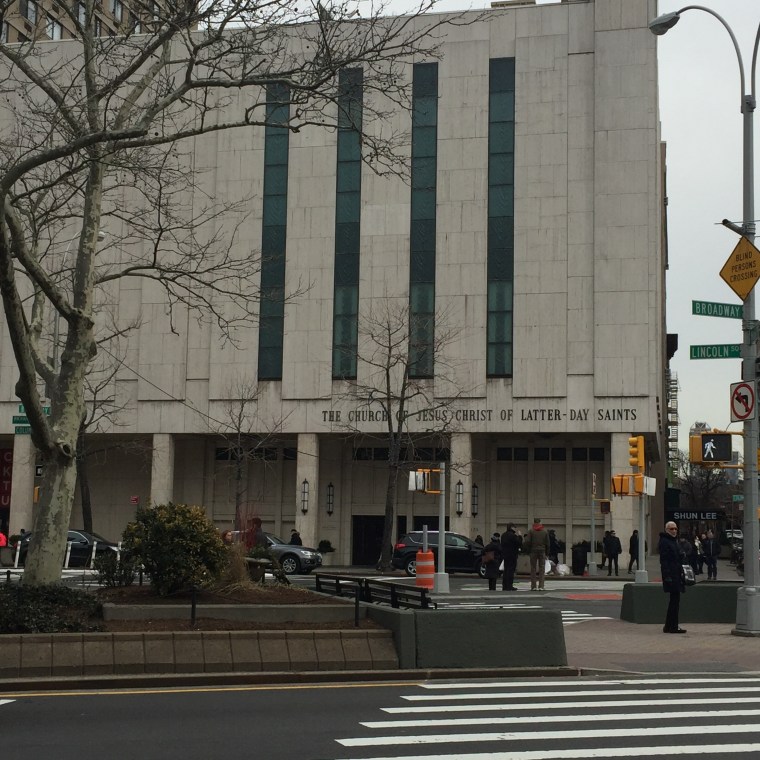
Looking east while standing in front of Julliard, I noticed the Mormon Visitor Center, best known to me as the place where Hannah and Harper volunteer in Tony Kushner’s epic play, “Angels in America.”

IMG_0121

Just north of Julliard is Alice Tully Hall, home to more intimate concerts than those in much larger Avery Fisher Hall (newly renamed David Geffen Hall).

IMG_0122

Turning east again on West 66th St., I walked past ABC studios on the way back to Central Park. Just a few blocks north of this intersection is the Loews Lincoln Square Cineplex. I really love this as an option for seeing popular movies, as each individual theatre has the name and style of an old-time movie palace, making the experience there have a little more personality than many multiplexes.

IMG_0123

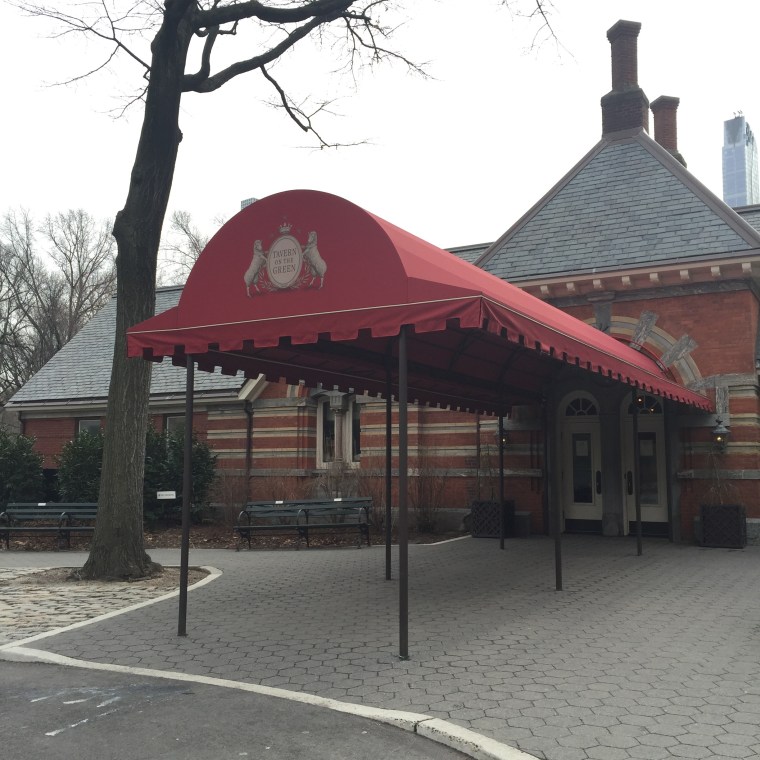
Ending up in Central Park at 66th, yet another advantage to this neighborhood is its proximity to Tavern on the Green, renovated a few years ago but with the twinkling outside fairy lights remaining.

IMG_0125

So what does it cost to live in Lincoln Square? As with any neighborhood, it varies greatly depending on the building, but average prices are just under $3000/square foot, compared to just over $2000/square foot for all of the Upper West Side (averaging prices of the far northern sections of the UWS with those to the south, of course). Central Park South, just to the south and east of Lincoln Square averages $5000/square foot, in part because of the premium associated with apartments with views of the park. Lincoln Square tends to be newer buildings, mostly condos, compared to the largely prewar coop inventory of most of the UWS.

In my opinion, the location of Lincoln Square is unparalleled – at the intersection of the Upper West Side, Midtown West, and with Central Park as a virtual front yard.


NYC holiday decorations 2015

One of my favorite things about being a real estate agent in New York City is being able to move around all neighborhoods within the city. For so many people, we spend time around our place of work and around our home – but for me, the entire city is my place of work! NYC is endlessly changing and never boring, but I believe that at no point during the calendar year does it shine as brightly as December. We humans have been so clever, creating repetitive rituals that specifically call for light just as we hit the darkest time of the year. This December we have had unusually warm weather, and no snow, but the holiday decorations have proceeded full force. The following is a selection of some of 2015’s holiday decorations, taken in various neighborhoods in the city.

The grand dame of the city’s holiday scene is certainly the tree at Rockefeller Center. Although they manage to find an impressively large and full tree every year, to my mind the tree itself is not what makes this such an iconic spot – it’s the framing device. Towering 30 Rock behind the tree, Prometheus and skaters beneath it, wind-whipped flags surrounding it, and heralding angels leading the viewer from Fifth Avenue toward the tree – it just doesn’t get better than that. I would advise you go early in the season or very early or late at night to avoid intense crowds that take away the awe and replace it with claustrophobia.

Saks

If in the Rockefeller Center area, the light and music display on the front of Saks Fifth Avenue just across the street is worth waiting a bit for. Every 10 minutes from about 4-11 PM, the building is transformed into “The Winter Palace” using over 225,000 lights and a synchronized soundtrack.

Radio city wreath

If you are fortunate enough to be able to catch the Radio City show, expect to be overwhelmed with Art Deco holiday lusciousness. Even if outside the Music Hall, you can appreciate the elaborate decorations.

I particularly enjoyed the Peanuts-themed decorations outside Macy’s this year.

Macy squirrel

Inside Macy’s, they have created a beautiful but somewhat whimsical lighted forest, including animatronic squirrels.

Barneys is continuing to develop upon its ice theme from last year (live ice skaters performed on ice in the windows in 2014) with ice sculptures being created in real time in one of its windows (starting around noon every day). I found it amusing that, rather than carols, Foreigner’s “Cold as Ice” plays regularly as the artist works his magic in the chilled chamber.

UnionSquareHolidayMarket

The holiday markets that spring up all over the city every year are wonderful – food, crafts, and atmosphere. A particular favorite of mine is in Union Square.

bryant park skating
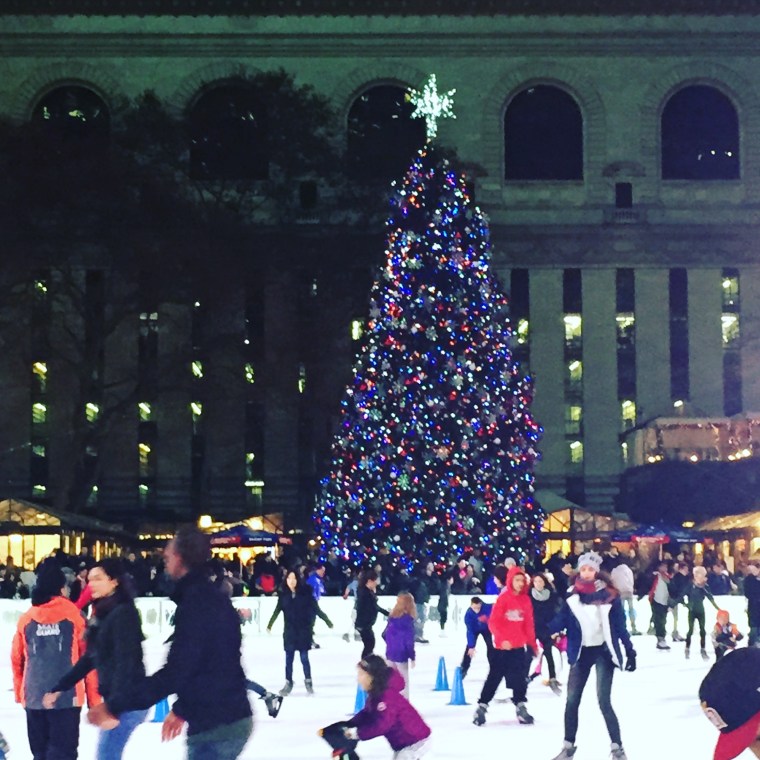
The Bryant Park holiday market has the advantage of surrounding the tree and ice skating rink (free!), with the additional possibility of heading around the front of the NY Public Library to see the great stone lions Patience and Fortitude, majestic and wreathed.

holiday markets
The holiday market at Columbus Circle puts you right at the Southwest corner of Central Park.

ColumbusCircleholiday

Across the street from that holiday market at the shops at Columbus Circle, with a beautiful snowflake light and sound show running almost continually.

AMNHHolidayDino

The city’s museums share in the holiday spirit, with the American Museum of Natural History presenting topiary dinosaurs with wreaths and tiny white lights. Inside, they have a tree covered in origami art.

Mettree

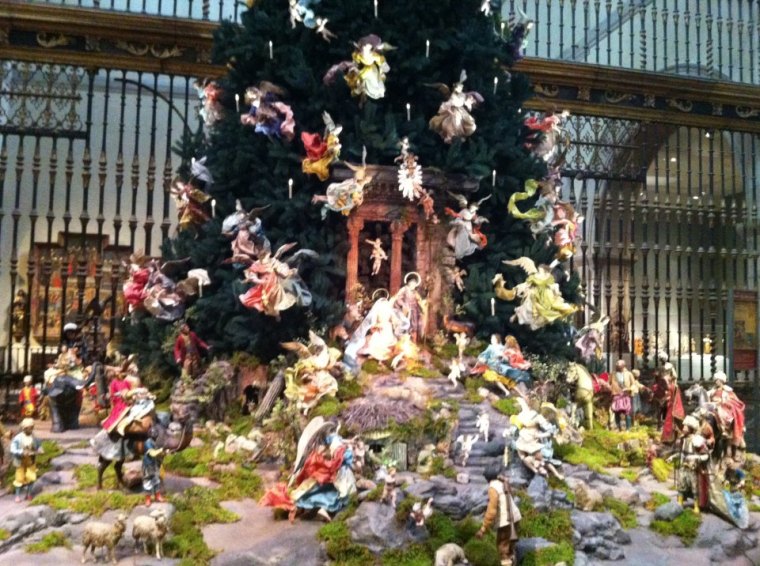
Somewhat more seriously, the Metropolitan Museum of Art across the park presents the Neopolitan tree inside the Medieval Sculpture Hall with exquisitely carved figures, angels ascending, and seasonal music.

ParkAvenuetree

While on the Upper East Side, be sure to see the Park Avenue mall with its majestic line of trees from the base of the MetLife building all the way up to 96th Street.

santa upper east side

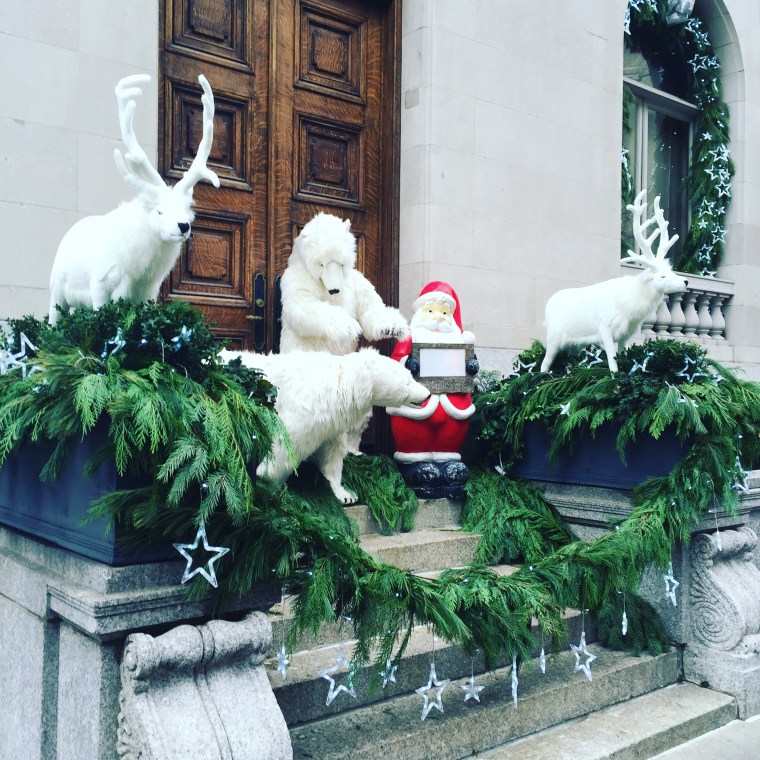
Some of my favorite decorations are those you come across while walking through different neighborhoods. From a simple menorah or tree glimpsed in a window to elaborate townhouse decorations like those pictured above, even familiar blocks can reveal surprises at this time of the year. When I see personal decorations, for one moment I feel a connection with the person who took the time to send some light into this dark time of the year (often dark for some personally or for the world, in addition to the shortening days), my neighbors in this wonderful city.
For previous blog posts about this season, click here and here .

“The greatest city in the world” – a real estate perspective

Bust of Alexander Hamilton, flanked by portraits of Aaron and Theodosia Burr, in the New York Historical Society

In the incomparable new American musical, Hamilton, currently the hottest ticket on Broadway in New York City at the Richard Rodgers theatre, the Schuyler sisters are introduced to the audience as they sing joyfully about living in the “greatest city in the world.” This is my own bias as well, and I do consider myself to be “so lucky to be alive right now” and living in NYC. However, as a real estate agent, I know that being able to live in the city is often a struggle – quite often financially in terms of being able to afford living here, and even for those with the means, difficult in terms of limited inventory. Because of my love for the city, and my day-to-day immersion in the city’s residential real estate market, I have found myself thinking about the different neighborhoods mentioned in Hamilton in terms of real estate availability and value. I have already blogged about many of these areas in terms of taking a dérive, or an unplanned walk in an urban environment (see my initial explanation about this idea here), and I will link to those posts when possible.

Before getting into the fun stuff, a few technical notes about price per square foot measures mentioned below: All stats on sales price per square foot are from the Real Estate Board of New York’s third quarter 2015 report here. Condos and coops are listed separately, as the comparative ease of buying a condo versus a coop is reflected in generally higher prices for condos (20-25% more per square foot). Also, higher prices for condos often reflect differences in types of housing – newer developments tend to be condos. For reference, I will also mention current average listing prices found on streeteasy.com for the different neighborhoods, but keep in mind that listing price averages are always higher than closed sales averages, since half or more of all listings end up selling for less than asking price. Also, I am focusing on sales, although I may mention rentals in each neighborhood as well.

Financial District

Financial district 3

When the Schuyler sisters sing about living in “Manhattan,” the area we now know as the Financial District (see my previous blog post here) was almost entirely the area considered to be the city at that time. This is quite fitting, since the Financial District as a business center and home to Wall Street owes a great deal to Alexander Hamilton, who as first Secretary of the Treasury provided much of the foundation for NYC as the financial powerhouse it is today. However, over time, the fashionable residential areas spread north, and this area as a residential neighborhood has only returned in force over the past 10-12 years. Walking these streets is an exciting mix between reminders of our colonial and revolutionary past, and the very new and modern development that is occurring now and transforming the neighborhood.

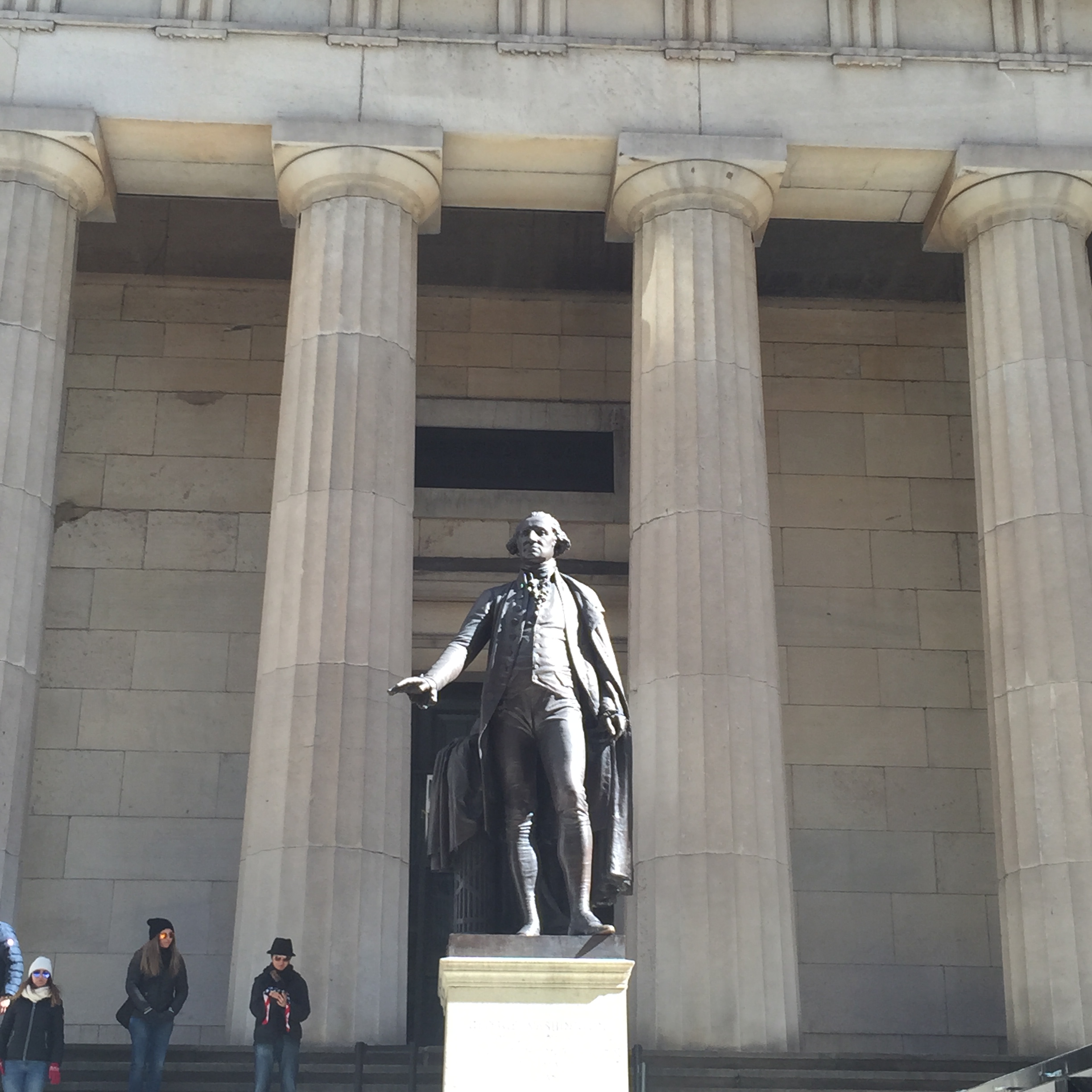
When Hamilton, Laurens, Lafayette, and Mulligan sing “The Story of Tonight” while drinking in a pub, it might well have been the Fraunces Tavern, since the Sons of Liberty (of which Hercules Mulligan was a member) met there and it was a popular pub at the time. George Washington gave his farewell address to his officers at Fraunces Tavern in 1783. From there, you are a short walk to New York Harbor where Hamilton stole the British cannons at the Battery (as described in “Right Hand Man”), or Trinity Church, where Alexander and Eliza Hamilton are buried near Eliza’s sister Angelica.

Financial district 5

How affordable is the Financial District (F.D.)? All city prices would seem unbelievable to those living here at the time of the American Revolution, but for downtown Manhattan, it is relatively affordable. The most recent REBNY numbers showed condos in the F.D. averaging $1207 per square foot (compared to $1593 overall for all of Manhattan, and nearby areas Soho at $2021 and the West Village at $2323 much higher per square foot). Coops average $906 per square foot in the F.D. (compared to $1218 for all of Manhattan, $1509 for Soho, and $1629 for the West Village). I recently did a rental search for a friend wanting to move from Tribeca, and showed her that she could either save about a third in rent if she kept the same size and quality of apartment, or get another bedroom for about the same price or even a little less.

Hell’s Kitchen

19707290382_262abb03b1_o

Yes, you can call it Clinton if you like, but I think the name “Hell’s Kitchen” is one of the coolest in all of New York City and when I move there I will state the name proudly. No, this area is not mentioned in the musical Hamilton and in fact would not have been populated much at all at the time, but it is very near the Richard Rodgers theatre, currently the home to the musical. The proximity to the theatre district keeps prices down a bit, but would be a plus to me (see my previous blog post about Times Square and Hell’s Kitchen here). There are blocks in Hell’s Kitchen that look just like quiet leafy Chelsea blocks – but at a fraction of the cost – as well as new condo high rises with every amenity and the prices to match.

The REBNY report is for Midtown West, which encompasses a bit more than just Hell’s Kitchen, but lists the average price per square foot at $1734 for condos and $1230 for coops.

Stage door at the Richard Rodgers

The Upper East Side

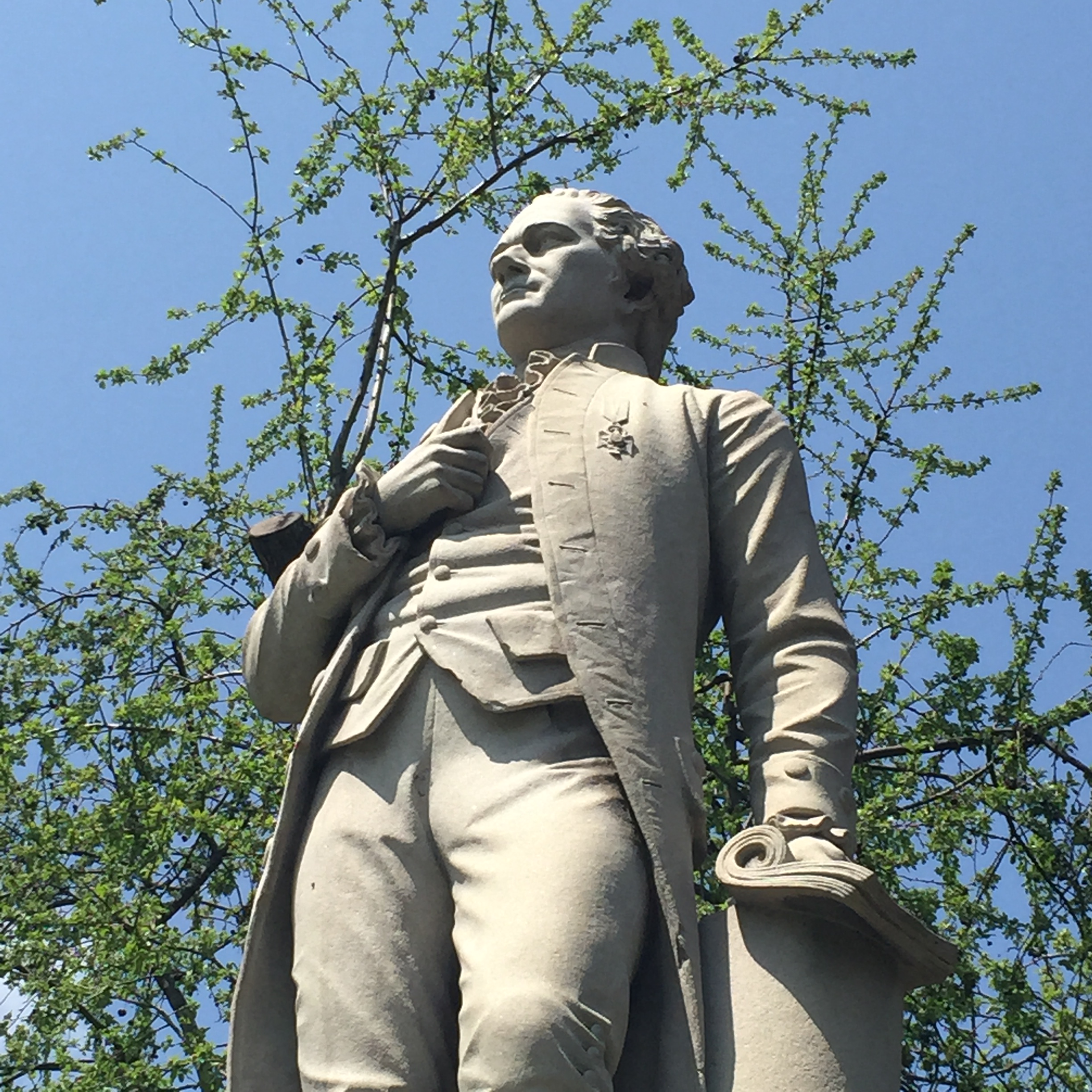
Statue of Alexander Hamilton in Central Park

Again, not mentioned in Hamilton (although a family with the wealth and connections of the Schuylers would have certainly moved to Fifth Avenue along with the robber barons in the early 20th century), but mentioned because of the statue of Alexander Hamilton standing proudly among the trees behind the Metropolitan Museum of Art, in our beloved Central Park (not created until long after Revolutionary times).

The Upper East Side has long been a bastion of wealth, and areas to the west of Lexington Avenue still command a premium due to proximity to Central Park (see one of my many blog posts about the park here, and another about the value of a park view here). However, the far east side (east of Second Avenue, particularly the area called Yorkville, see my post here) still has value, in part because of its perceived remoteness and the construction mess due to the building of the Second Avenue Subway. While overall the Upper East Side averages $1764 per square foot for condos and $1234 for coops, Streeteasy listings show the difference in listing prices for Yorkville ($1693 per square foot, all types) versus Lenox Hill near the park ($2667 per square foot, all types). Rentals in Yorkville are particularly well priced compared to other areas of Manhattan, except for areas of upper Manhattan that will be discussed next.

Harlem and Upper Manhattan

HamiltonHeights1

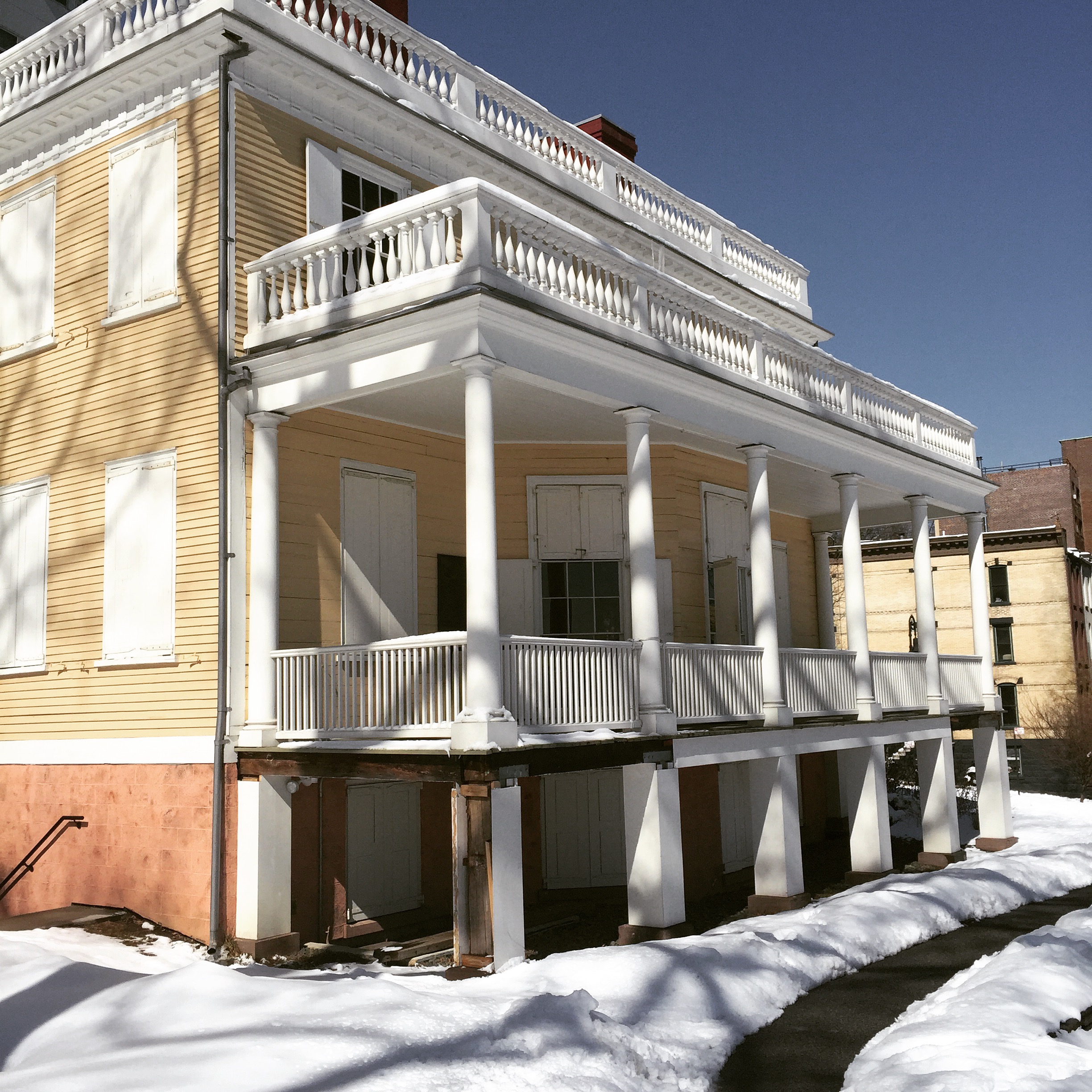
There are plenty of references to Harlem in Hamilton, from Washington’s “run to Harlem quick” in “Right Hand Man, ” Hamilton’s wooing of Eliza with a plan to “get a little place in Harlem and we’ll figure it out” in “Helpless,” and “the Hamiltons move uptown” in “It’s Quiet Uptown.” Moving to Harlem in those days before motorized vehicles and the subway was the equivalent to moving to the remote countryside, and even King’s College (later renamed Columbia, sorry again, King George) was at that time in lower Manhattan, not in its current spot in Morningside Heights (see a previous blog post here). Hamilton Heights, an area of Harlem I wrote about in this blog post, is named for the location of Hamilton Grange, and the Hamilton home can still be seen there (although not in the exact location, still within the farmland owned by the Hamiltons). Even farther north than Harlem is Washington Heights (see previous blog post here), home of the Morris-Jumel mansion – once Washington’s headquarters (and then the British government’s), later the home of Aaron Burr, and most recently the site used by Lin-Manuel Miranda to work on composing Hamilton. This historic home hosted many other notable figures who also live on in the musical by reference or as characters – John Adams, Thomas Jefferson, and yes, Alexander Hamilton.

Harlem and much of upper Manhattan is rapidly appreciating in value, but still represents a relative bargain in Manhattan. The REBNY numbers separate Harlem only by East ($748 per square foot for condos, no figures for coops) and West ($713 for condos, $996 for coops), not a very practical demarcation. Streeteasy listings show average prices as $829 per square foot for trendy Central Harlem (all types), $667 for East Harlem, $661 for Hamilton Heights, $721 for Morningside Heights (the Columbia effect), and $638 for Washington Heights.

There are other areas in NYC mentioned in Hamilton, some vague (“British take Brooklyn” in “Right Hand Man” – likely Brooklyn Heights) and others specific (“abandoning Kips’ Bay,” also in “Right Hand Man”) and those will be future places for my dérives and the subsequent blog posts.

At a recent social event, a friend and I were talking about getting together more often, and I said, “Well, you know how to find me.” Her husband responded, “Yes, at the Hamilton lottery!” (clearly he is following my Facebook posts) and my friend asked what the show was about. After explaining that it is a hip-hop musical based on the life of Alexander Hamilton, and she replied, “You know, that sounds like the craziest thing I have ever heard!” Well, crazy good . . . Yes, finding a place to live in New York City is frustrating, you will always end up spending more than you hoped (even those with more financial resources but especially those with fewer), and it will likely take longer than you want and you will end up compromising, but how lucky we are to be alive right now, in a city filled with creativity and the arts – truly, the greatest city in the world.

Turtle Bay

Turtle Bay 3

Walking to show two apartments in the 400 block of East 52nd (not in the actual building Greta Garbo lived in for decades, but the same block), I was struck by the nomenclature “Turtle Bay” for the area (roughly from 42nd Street to 53rd Street, from Lexington Avenue to the East River) and vowed to find out whether there had in fact been turtles in a bay here a long time ago. What I discovered was one of those funny mistranslations that sometimes occurs: the Dutch called this area “Deutal” (Knife) Bay after a sharp turn in the East River (the reason why York Avenue/Sutton Place disappears at 54th Street) but the English-speaking later settlers misheard it as “Turtle.” My interest piqued, I decided to take my next dérive (an unplanned walk in an urban environment) in this area.

Turtle Bay 2

Initially farmland (including that of the Beekman family, who gave their name to Beekman Place), Turtle Bay evolved into an industrial neighborhood, noted particularly for its slaughterhouses. In the early 20th Century, Charlotte Hunnewell Sorchan bought and renovated a series of houses in the area, and sold to friends, including Maria Bowen Chapin, who founded the Chapin School. This began the evolution of Turtle Bay into a residential neighborhood, which was cemented when the last of the slaughterhouses was torn down to make way for the United Nations building.

MurrayHillChrysler

I began my dérive at my favorite skyscraper in New York City, the Chrysler Building. Finished in 1930, it was the world’s tallest skyscraper for 11 months before being ousted by the Empire State Building, and is still the world’s tallest brick building (although it does have a steel skeleton). An Art Deco masterpiece, to me it has an airy fairy-castle quality that contrasts markedly with the more aggressive forms of most NYC skyscrapers.

Turtle Bay 1

Walking east on 42nd Street, the distinctive Tudor City sign dominates the eastern view. The first residential skyscraper complex in the world, it was built in the 1920’s by a real estate developer with dreams of keeping middle-class people in the city rather than taking flight to the suburbs. Despite the name “Tudor,” the architecture is neo-Gothic in style. Most of the apartments face away from the East River, since when they were built the slaughterhouses, and their accompanying smell, still operated along the river. Many Tudor City apartments have wonderful views of the Chrysler and Empire State Buildings, but few face the United Nations for this reason.

Turtle Bay 4

Taking a set of steps down from Tudor City to First Avenue, the United Nations (as well as multiple diplomatic missions) now dominates the area of Turtle Bay between First Avenue and the East River. Established after World War II to promote cooperation between the nations of the world and winner of the Nobel Peace Prize in 2001, the organization is imperfect but the quote across the street from the UN from Isaiah (“ . . . neither shall they learn war any more”) reveals the hope behind creating such an assembly. On a lighter note, I remember my young daughters once asking where aliens would land on earth if they were to try to reach the “leader” and I said it would have to be Manhattan because of the UN. Whether this was good news or bad news to them, I will have to ask and find out.

Turtle Bay 5

Continuing north on First from the UN, I passed Mitchell Place, one of New York’s micro-streets (comprising just one block between First and Beekman Place, next to E. 49th Street). Turning west on 49th Street, I thought of E.B. White writing Charlotte’s Web in this neighborhood (he was living on E. 48th at the time) and stopped to admire the signage for “Katharine Hepburn Place” on the corner of Second and 49th). She lived in a beautiful townhouse between Third and Second on 49th Street for most of her adult life, and that block is a gracious quiet row of townhouses.

Turtle Bay 6

Turtle Bay, unlike some more cohesive neighborhoods in NYC, has a wide variety of experiences represented: from the bustle of the shops and restaurants along the Avenues, to the quiet of Beekman Place, or from the gardens of Tudor City surrounded by neo-Gothic residences, to the international nexus of the United Nations. It is, however, a place where it is possible to find an apartment on a dead-end block with little to no traffic noise, but only a few blocks from everything midtown Manhattan has to offer.

Turtle Bay 7

Real estate and the human creative spirit

Dakota

Recently I was at the Association for International Photography Art Dealers (AIPAD) show at the Park Avenue Armory. The abundance, diversity, and quality of the art shown in one space almost created a feeling of sensory overload, and I started to think about how thrilling it is to be in any place where the creative impulse is expressed by people, whether it be visual art, theater, dance, music, or architecture and design. The need for creative expression is fundamental to how we see ourselves as humans – the recognition we feel when we view the cave paintings from Paleolithic people living 40,000 years ago in Lascaux, France, emotionally spans the gap in time between us and them.

After leaving AIPAD, my thoughts turned to how we express our creativity when it comes to where we live. It might be a more efficient use of valuable real estate space to have every building in Manhattan exactly the same, with apartments only differing in how much space and how many rooms someone needed (and perhaps whether or not you felt the need for a doorman). The gables, terracotta ornaments, and decorative gargoyles at the Dakota (seen above) have no practical purpose. However, we all instinctively recoil when imagining Manhattan as a series of uniform buildings, neighborhoods identifiable only by street names as boundaries, not because you see the San Remo or a series of cast iron buildings. Rather than selecting an apartment near our workplace, many of us choose to live instead in neighborhoods farther away that express who we are as a human being. A person walking through the Art Deco lobby of the Century on Central Park West on the way to their apartment is surrounded by an esthetic that fits their own, and that is different but no less personally valid than that of someone entering their loft in Metal Shutter Houses in West Chelsea.

Real estate involves money and can be thought of as an investment, but unless you are buying solely to invest, the choice of what apartment you decide to live in speaks to so much more than a rational financial decision. We as humans need to express ourselves creatively, and we do so when we decide only to look at pre-war apartments with working fireplaces and moldings, or only on the Upper West Side park block with a terrace, or only downtown in a modern building with a view of the High Line. A good real estate agent will listen to what you want in the way that a search engine cannot. You can run a search for a two bedroom/ two bathroom apartment in a certain price range in a certain neighborhood and come up with some possibilities, or a good agent can listen to the creative desires being expressed and select apartments that are an excellent place to start looking. Sometimes you may even be introduced to a new neighborhood that you didn’t initially consider but that the agent thought you might like, based on what kind of apartment, and building, and neighborhood, you are looking for.

Pablo Picasso once said, “The purpose of art is washing the dust of our daily lives off our souls.”  I can’t imagine a better way to wash this daily life debris off our souls than returning at the end of our day to a home that reflects our own sense of what is beautiful, from the external architecture of our building to the layout and décor of our personal space.