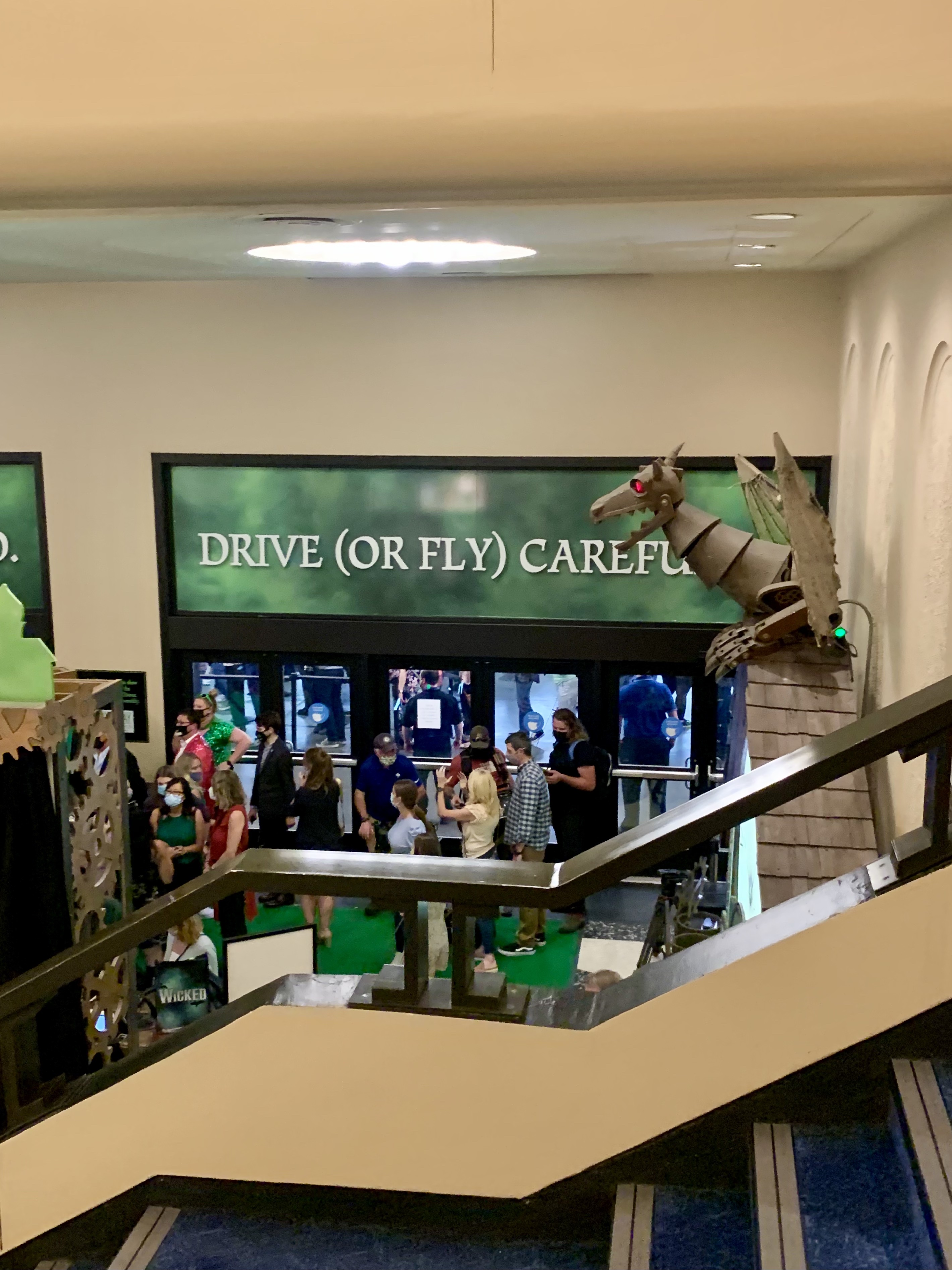
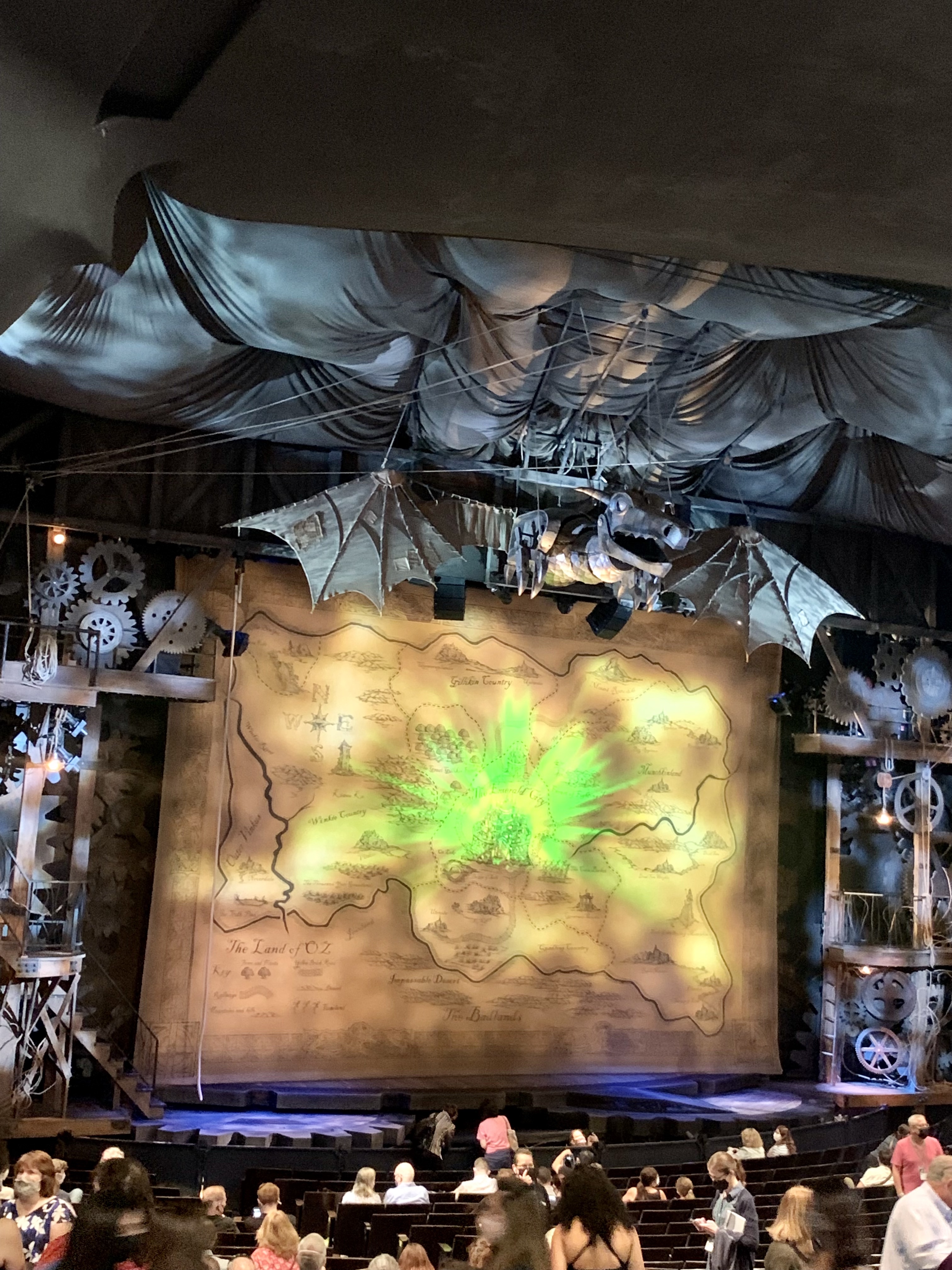
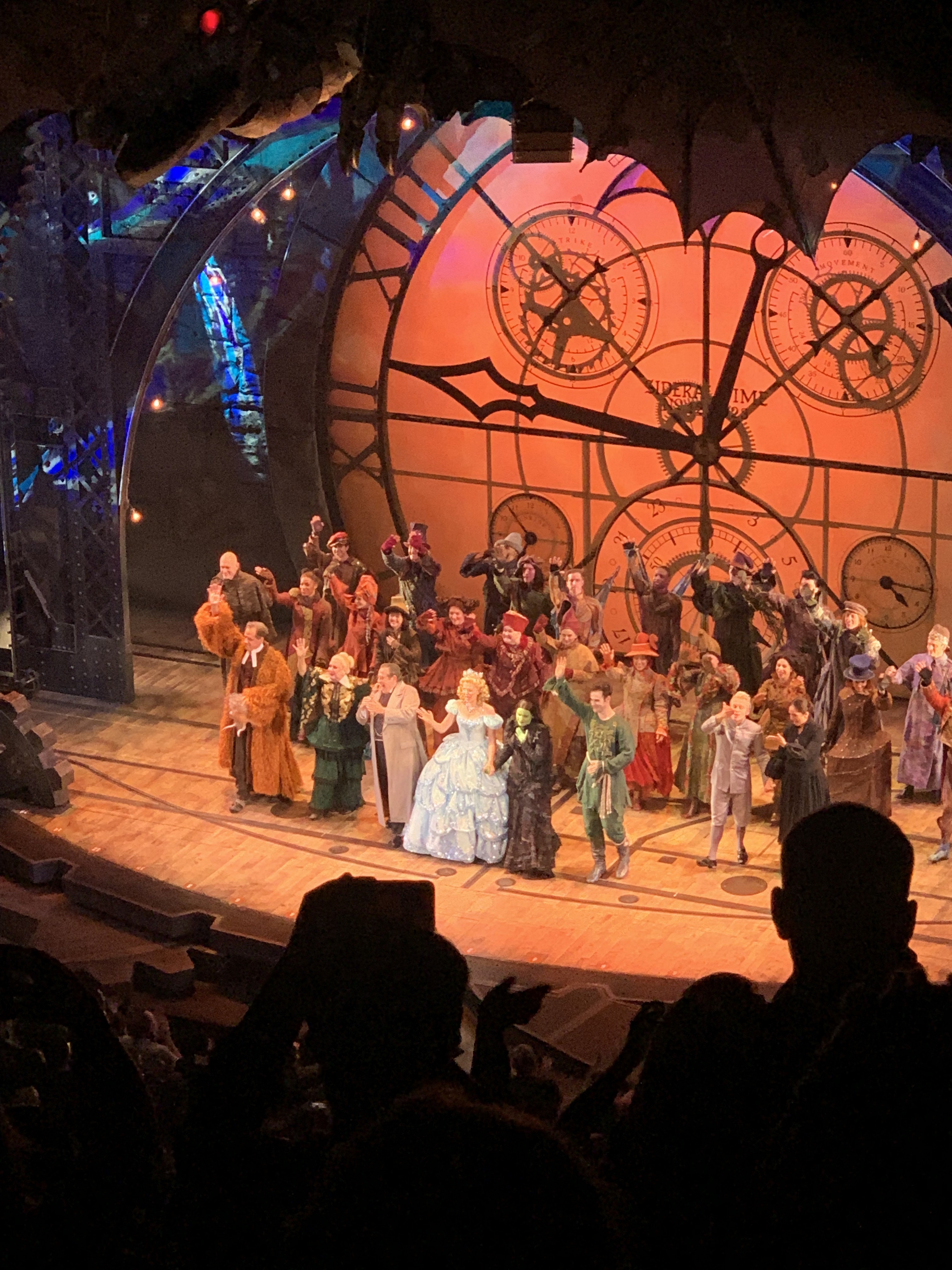
Showstoppers! Broadway Costumes Exhibit

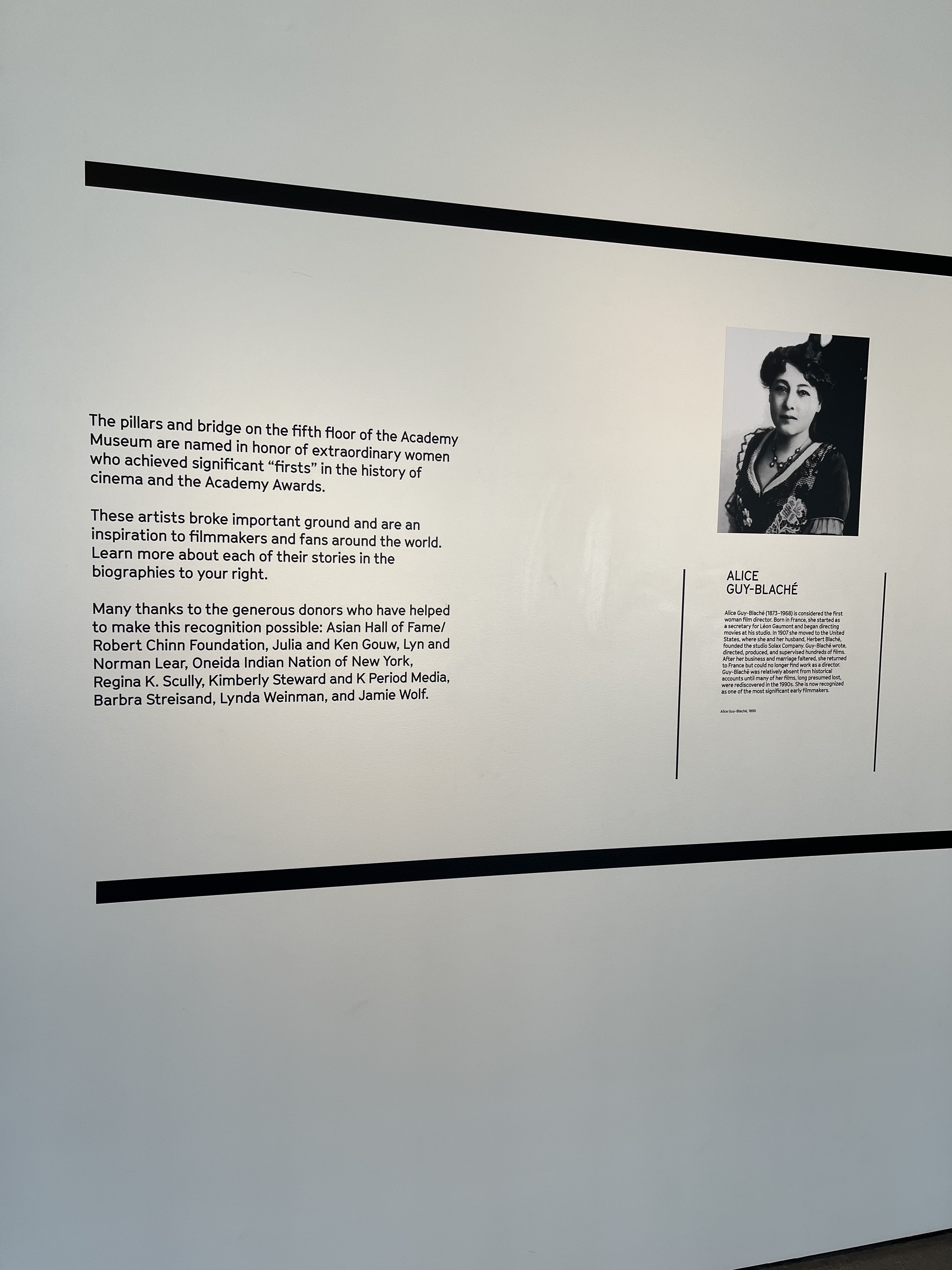
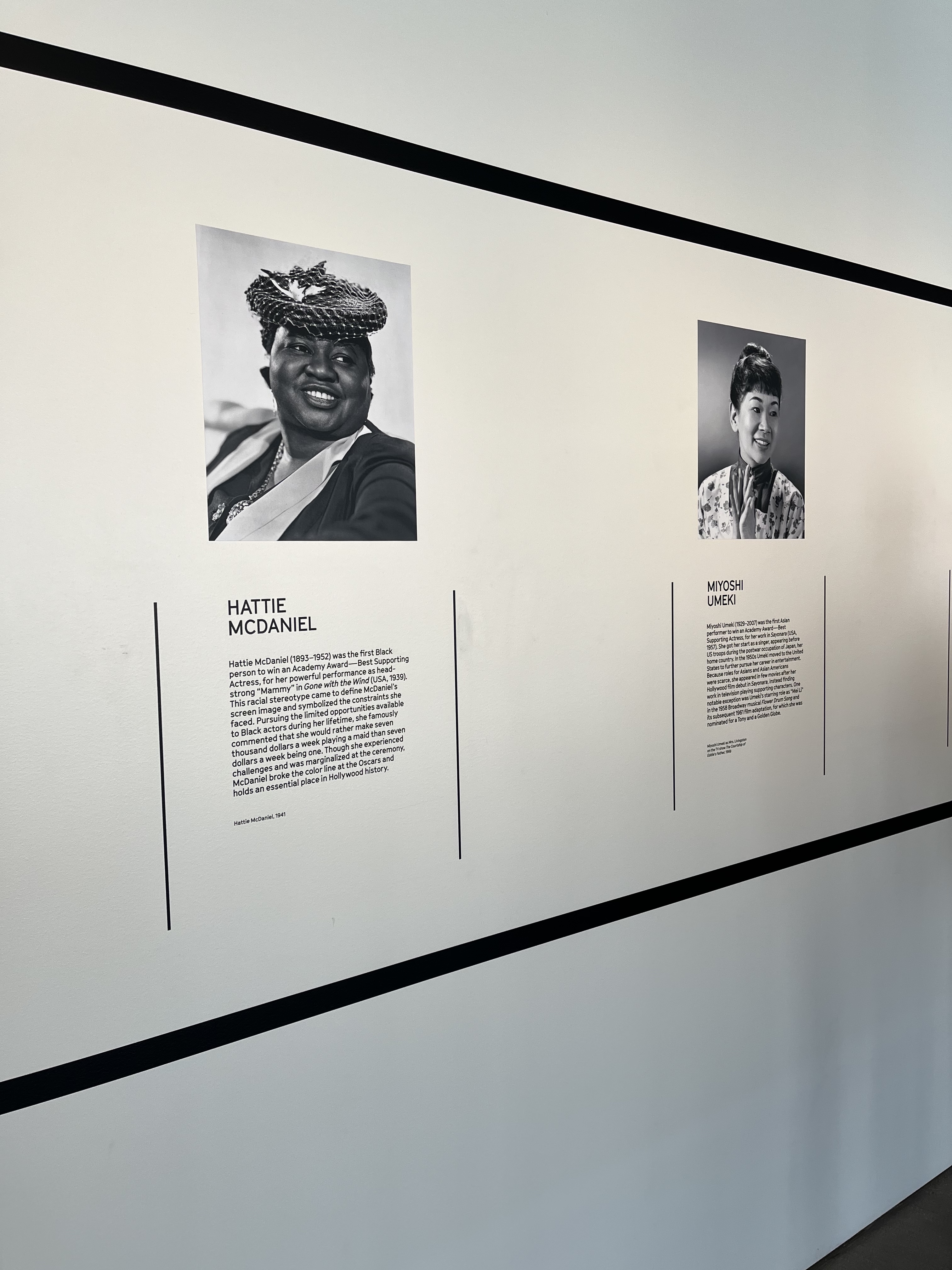
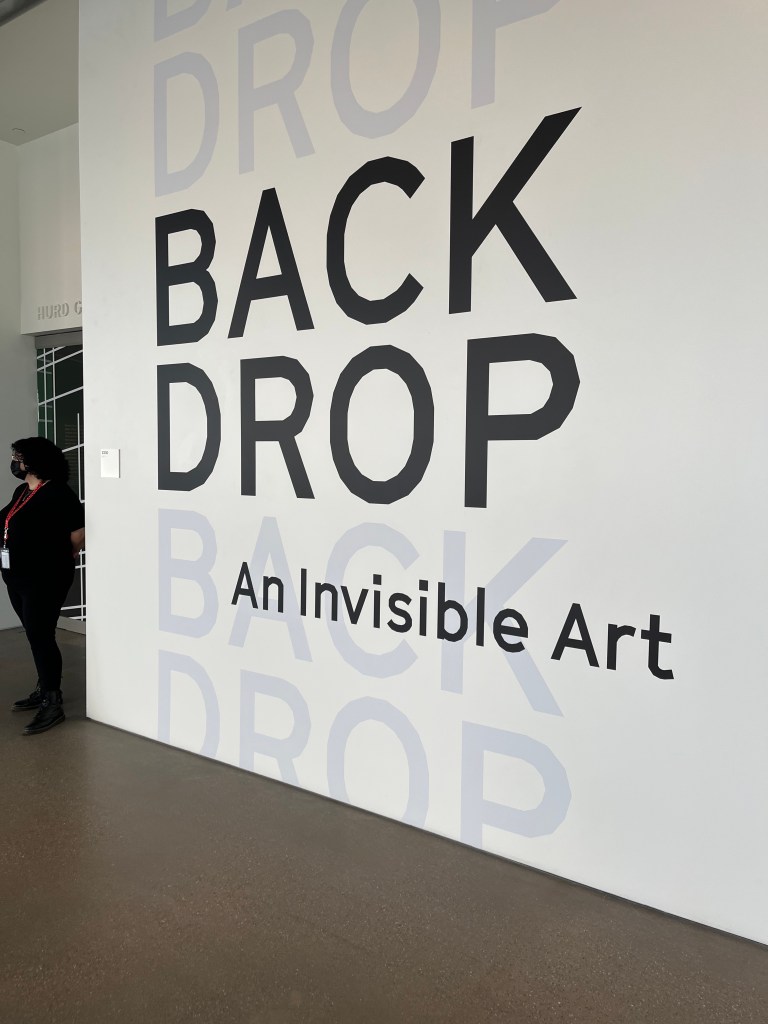
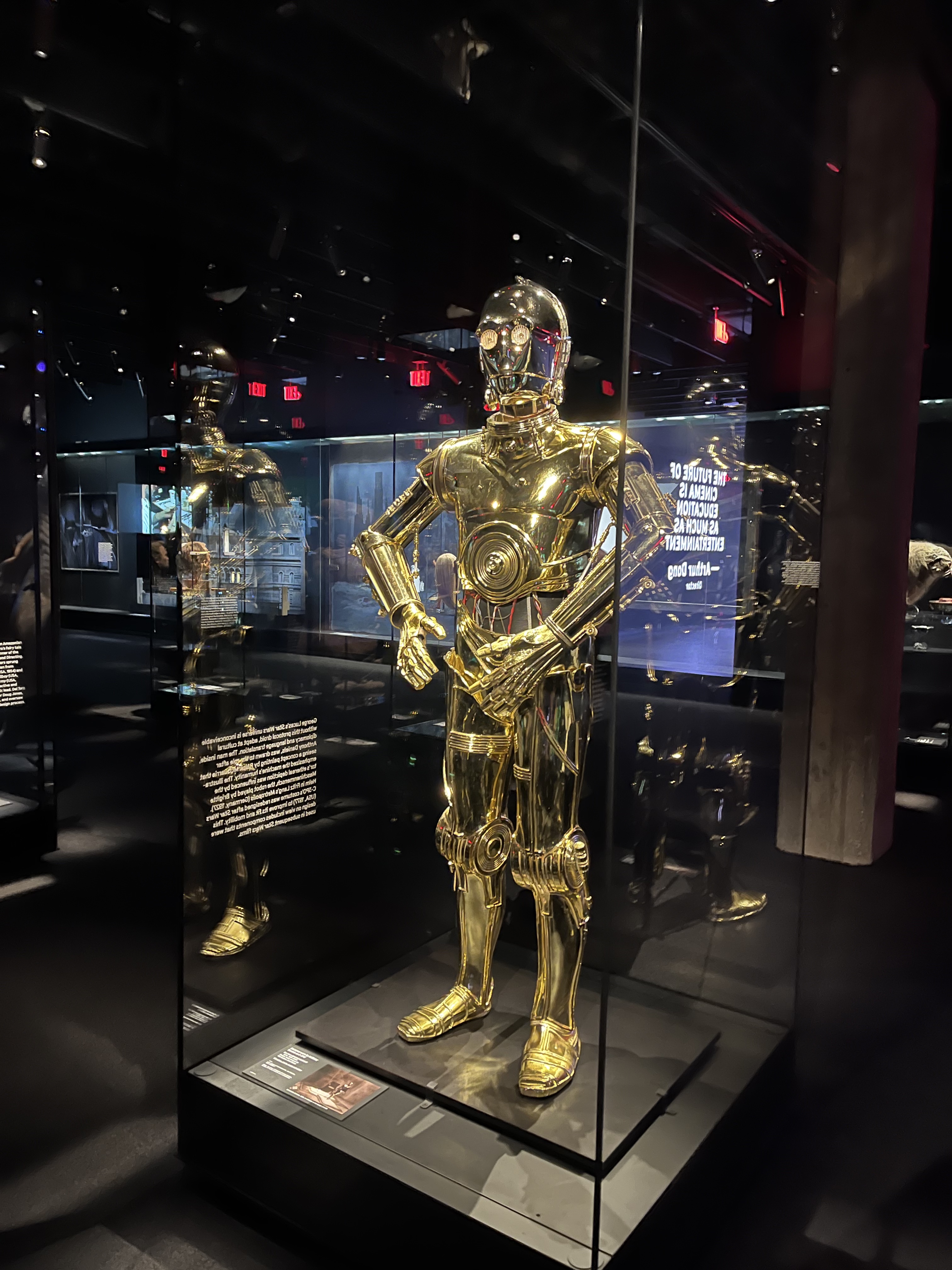
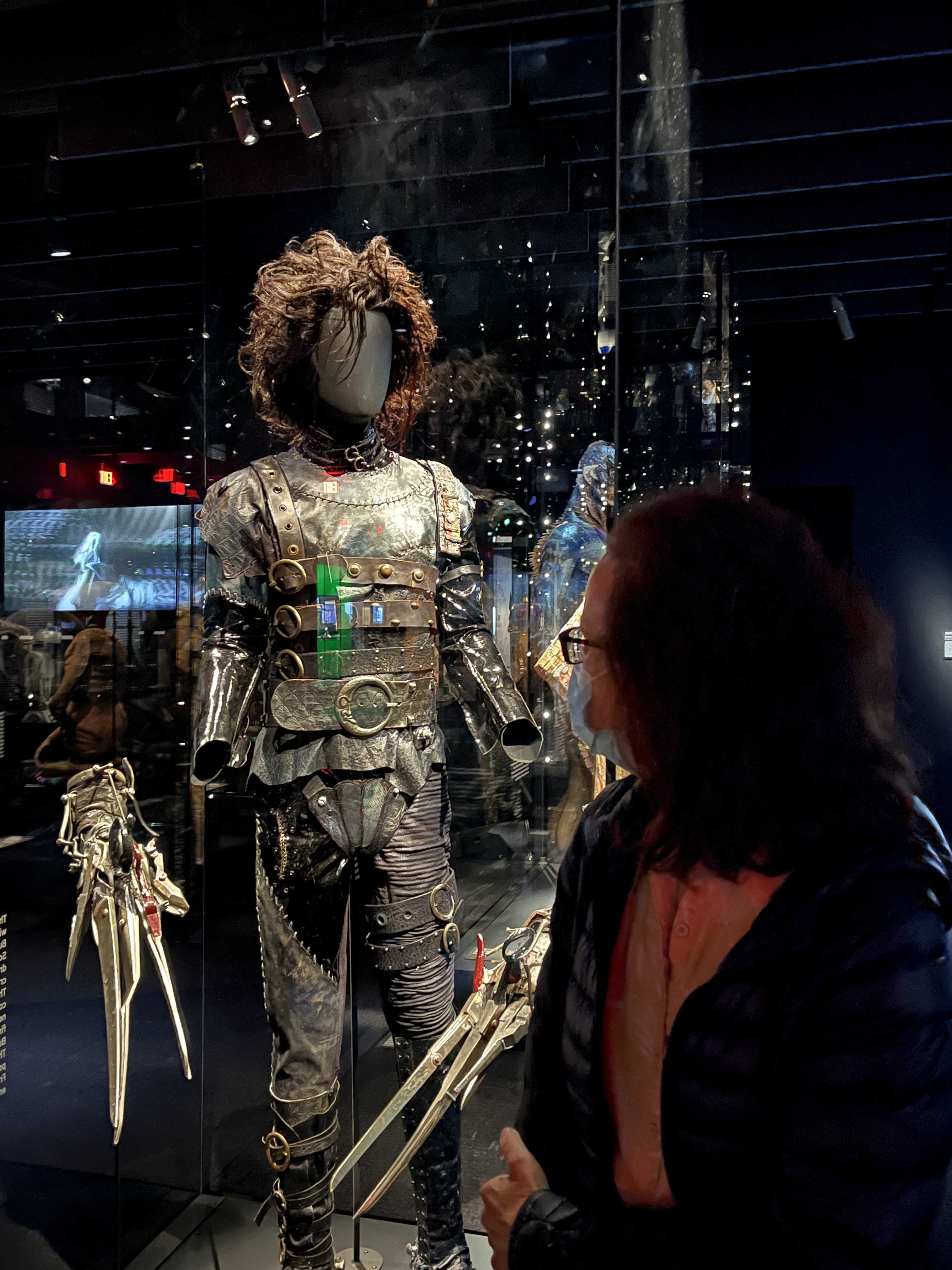
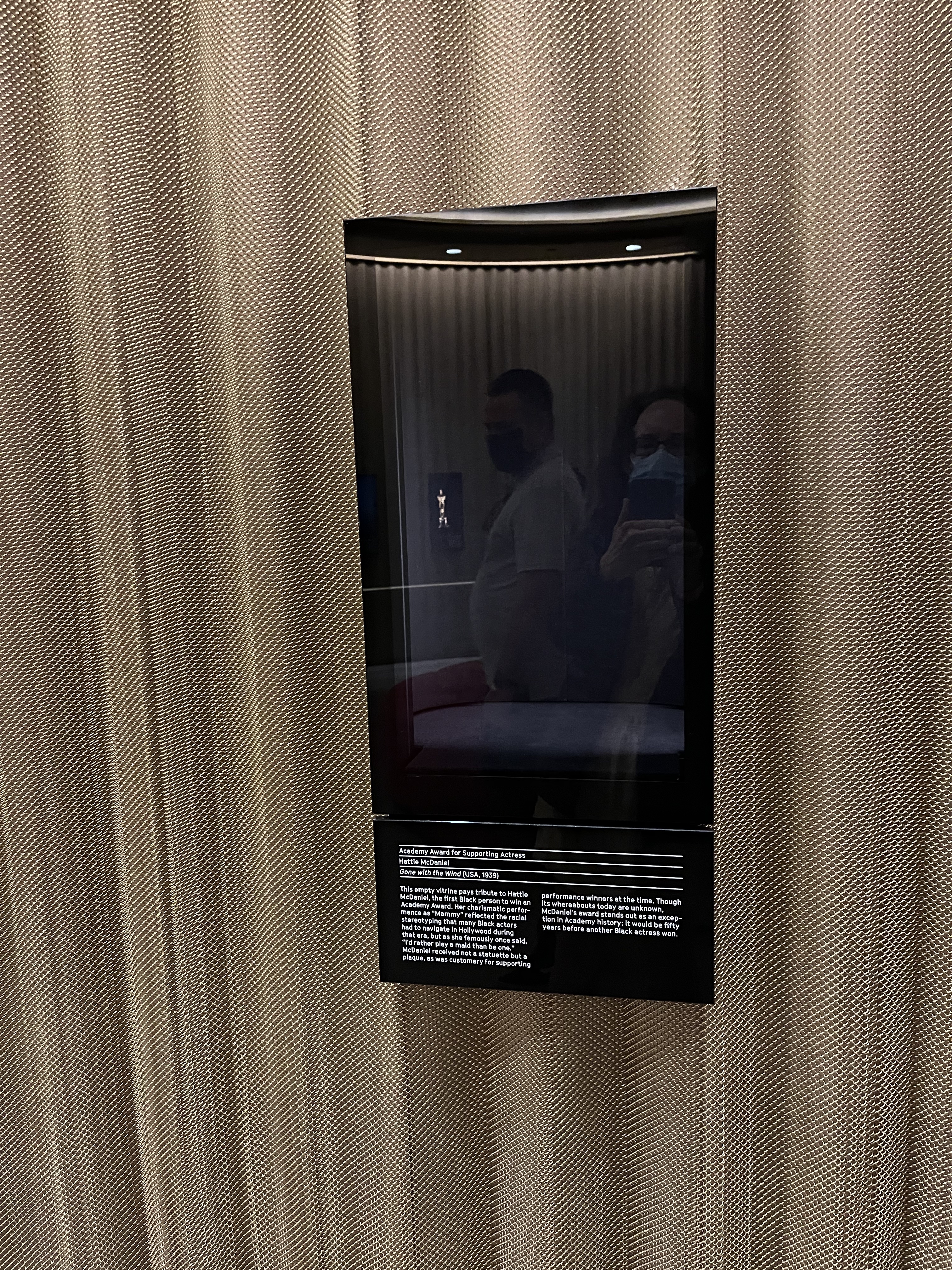
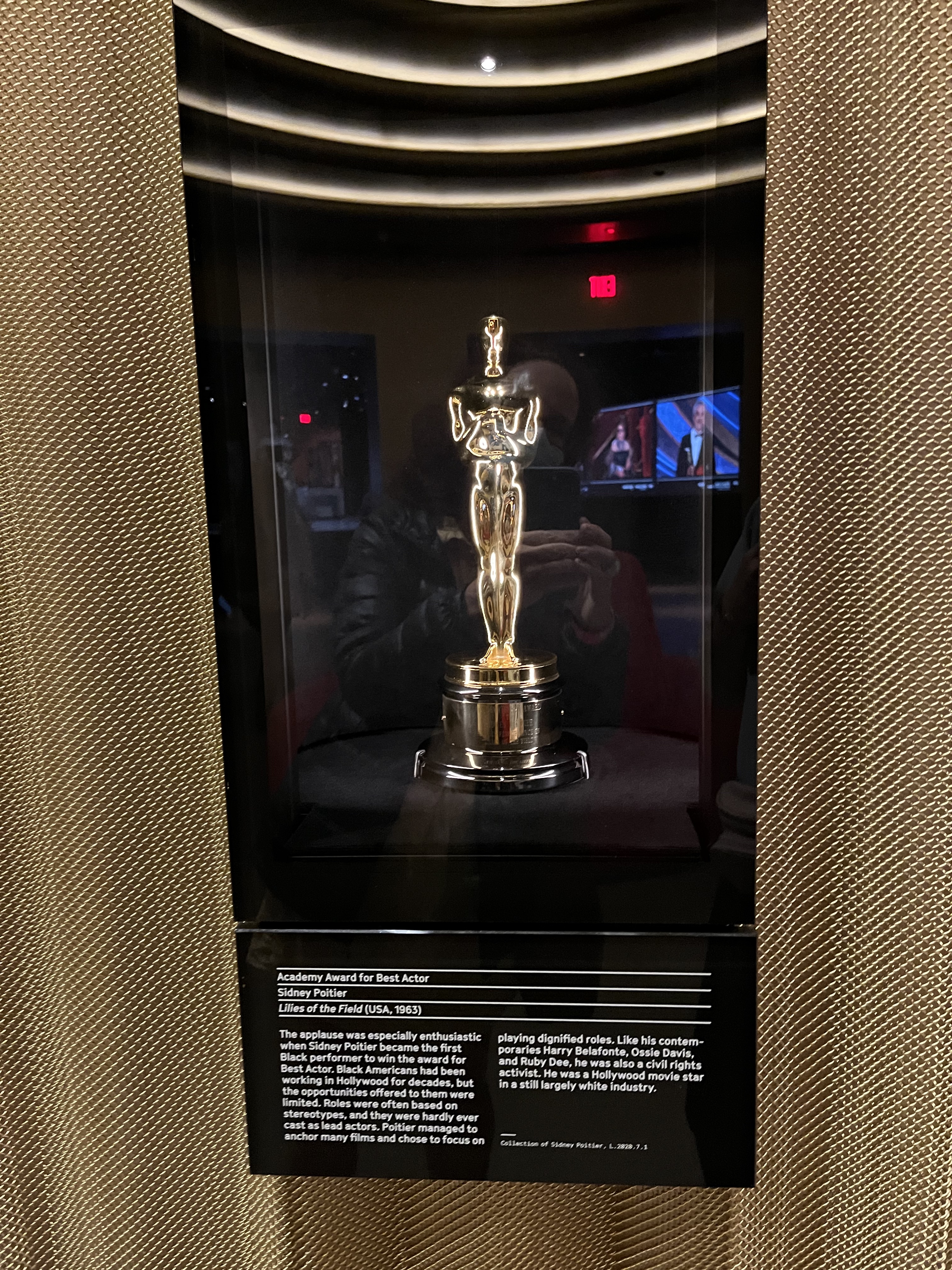
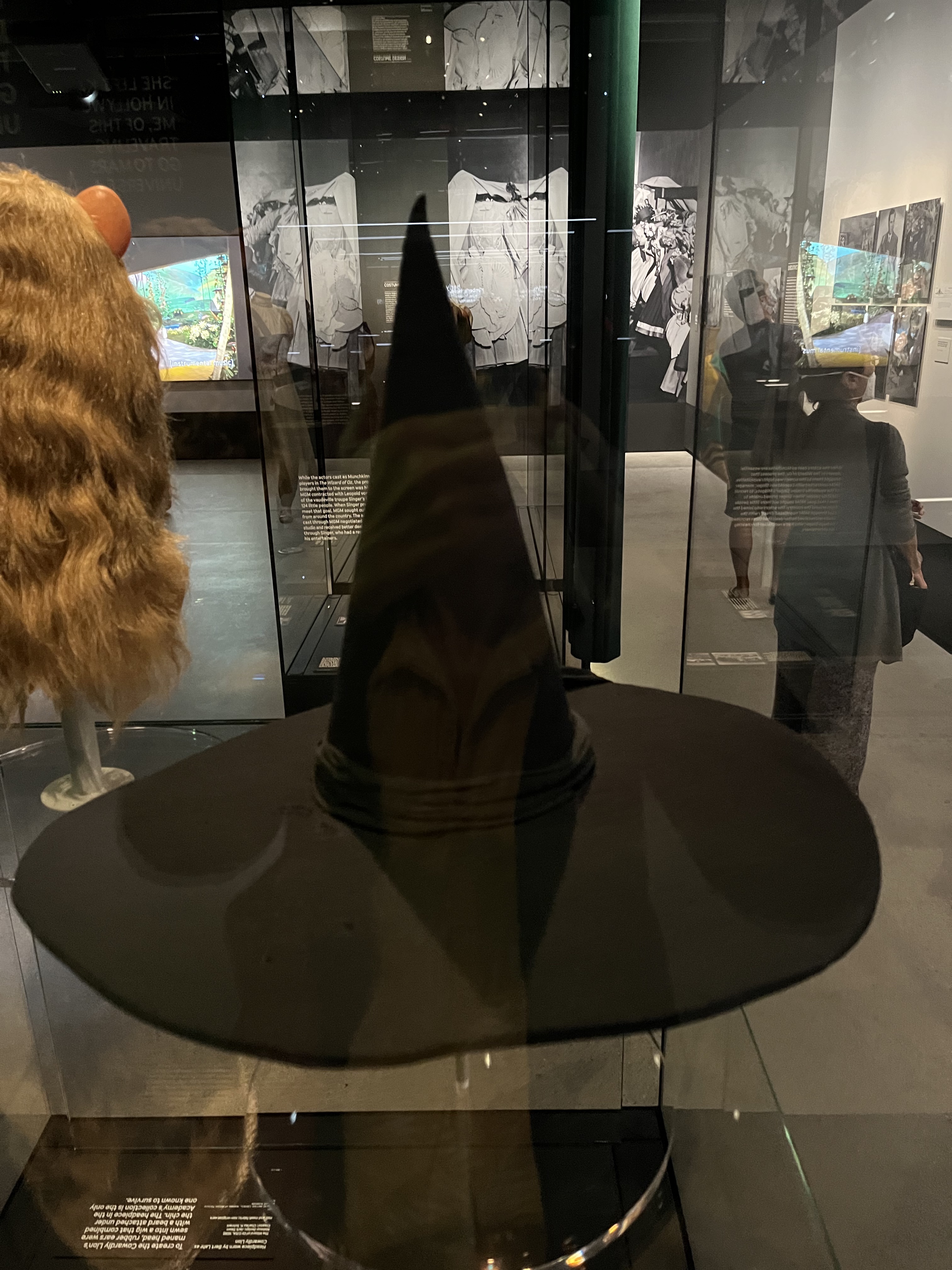
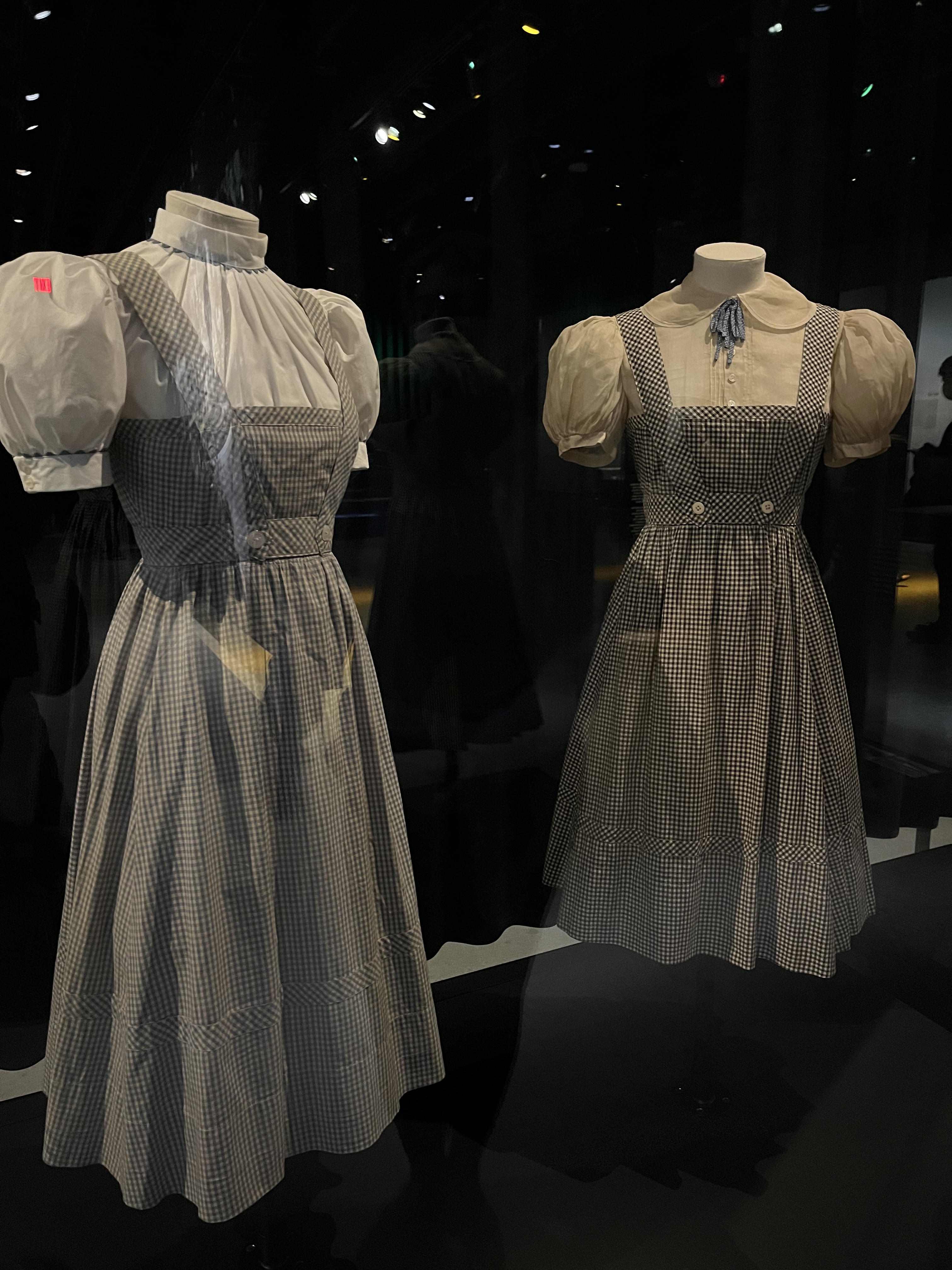
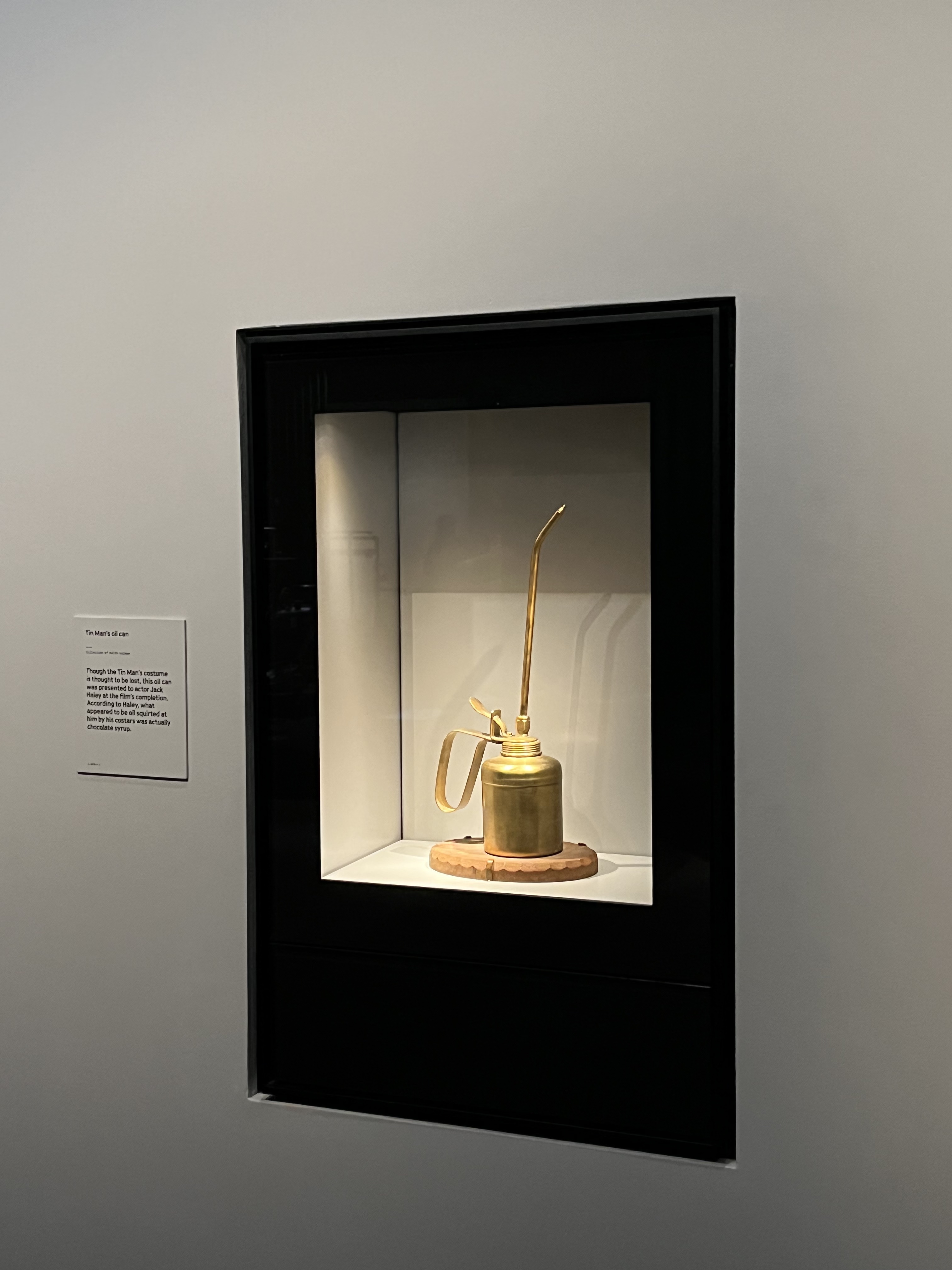
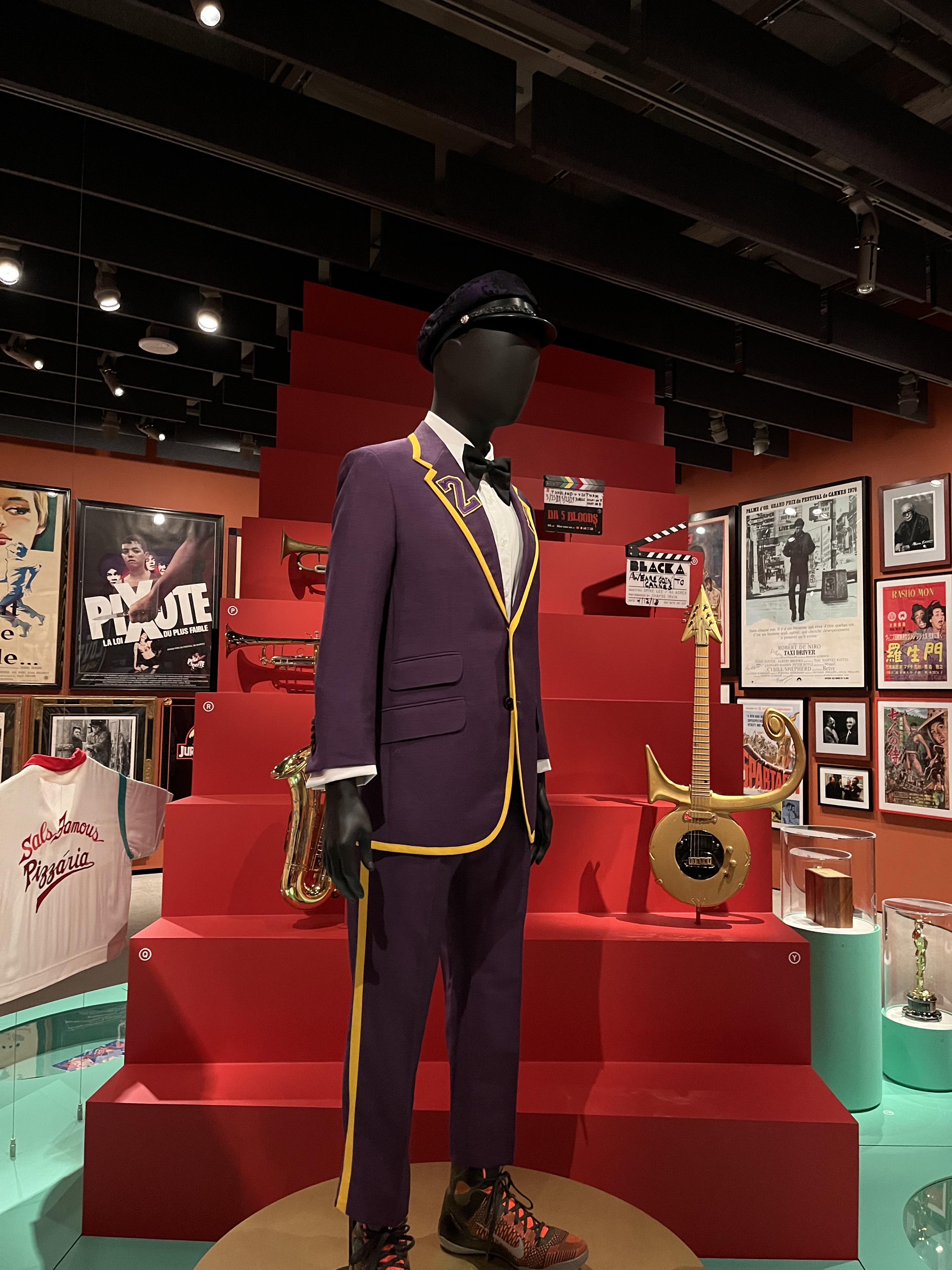
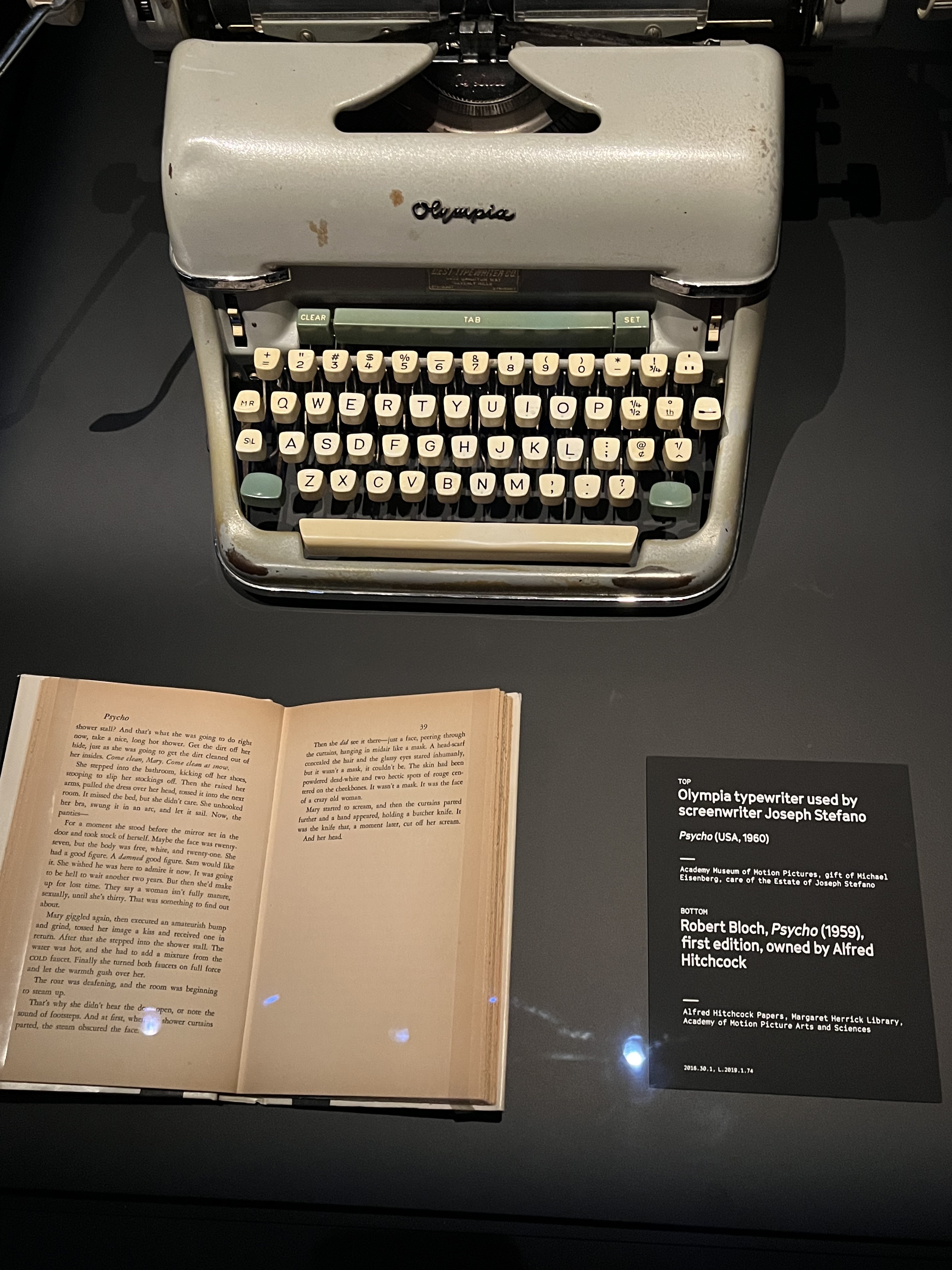
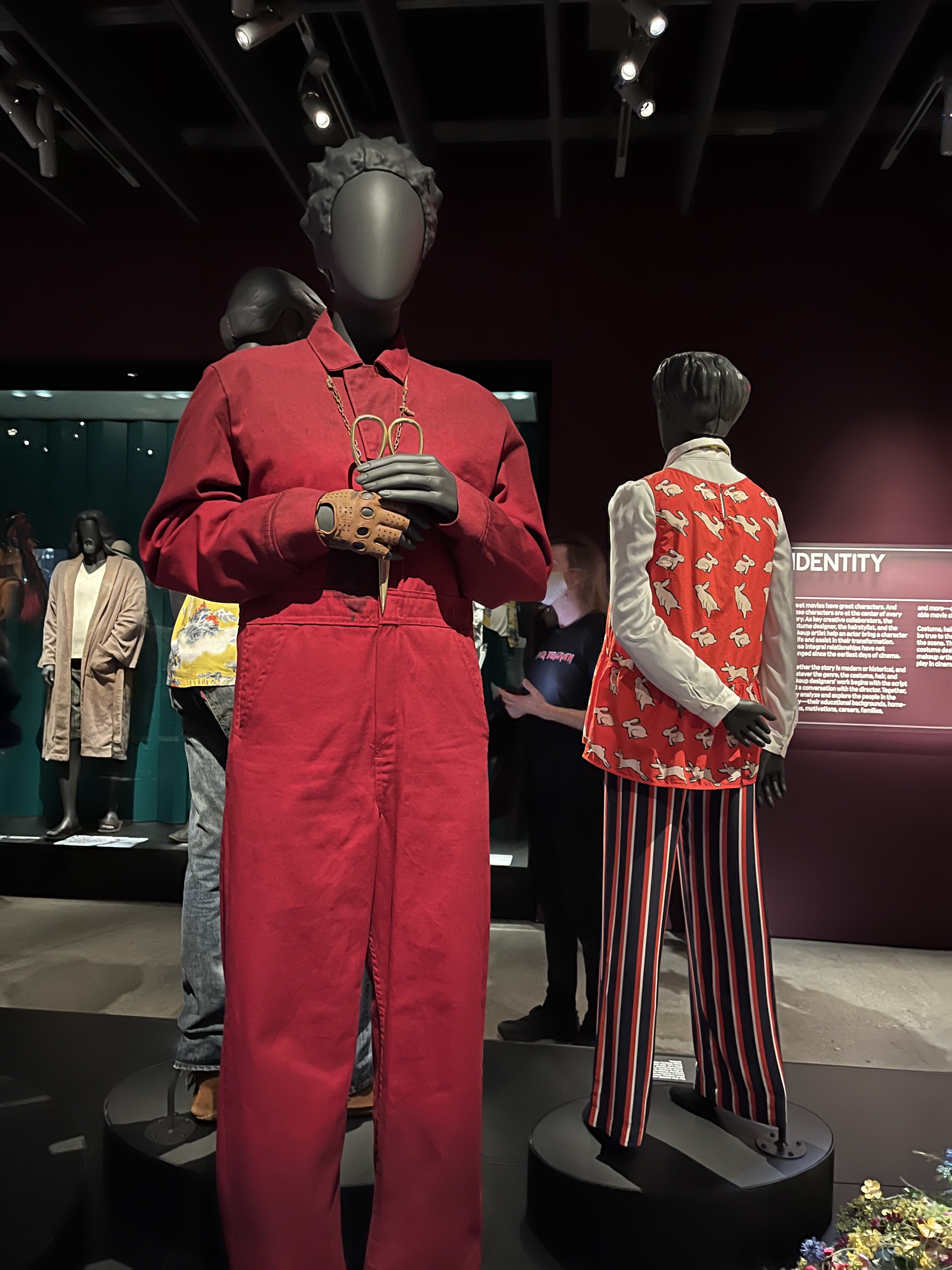
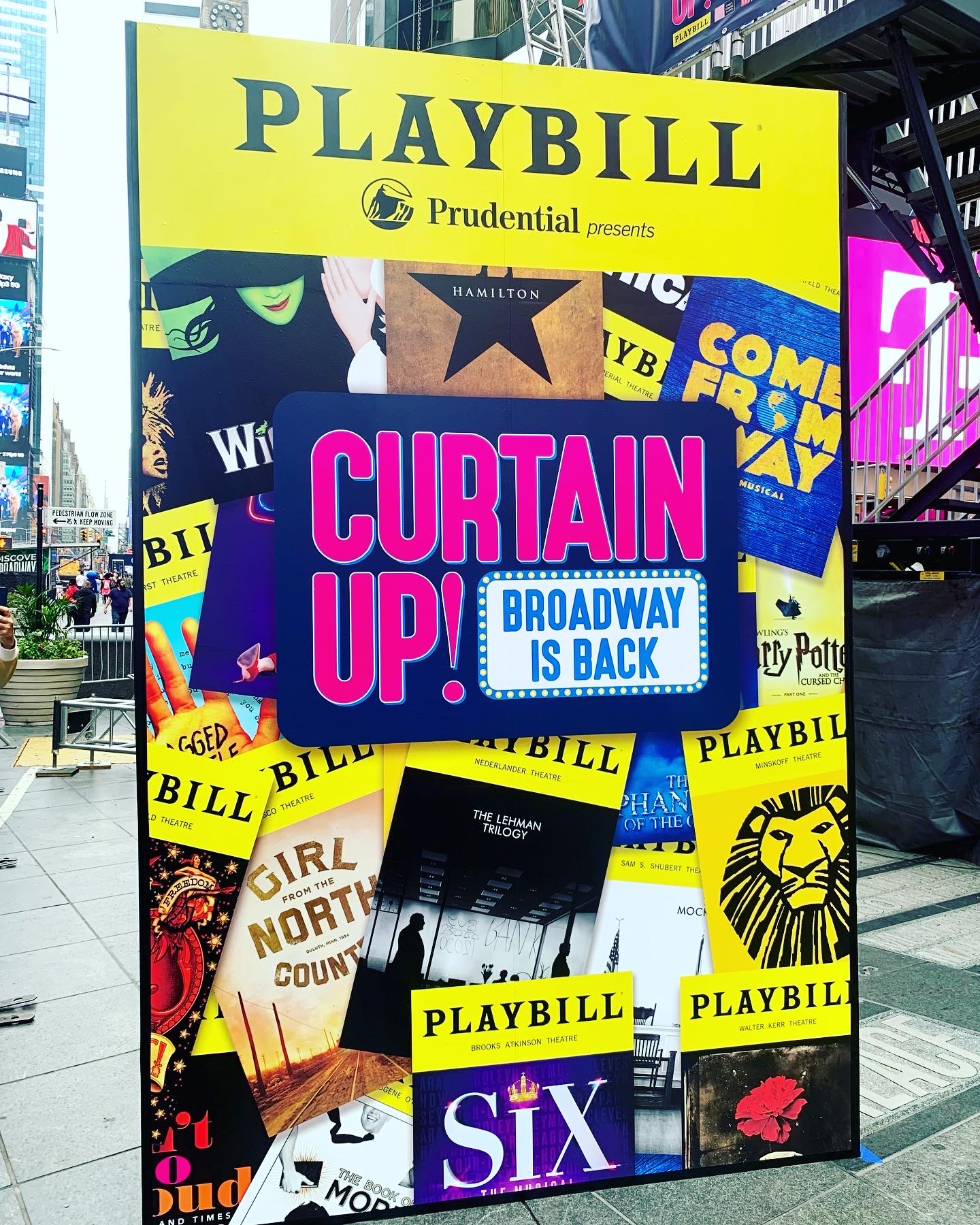
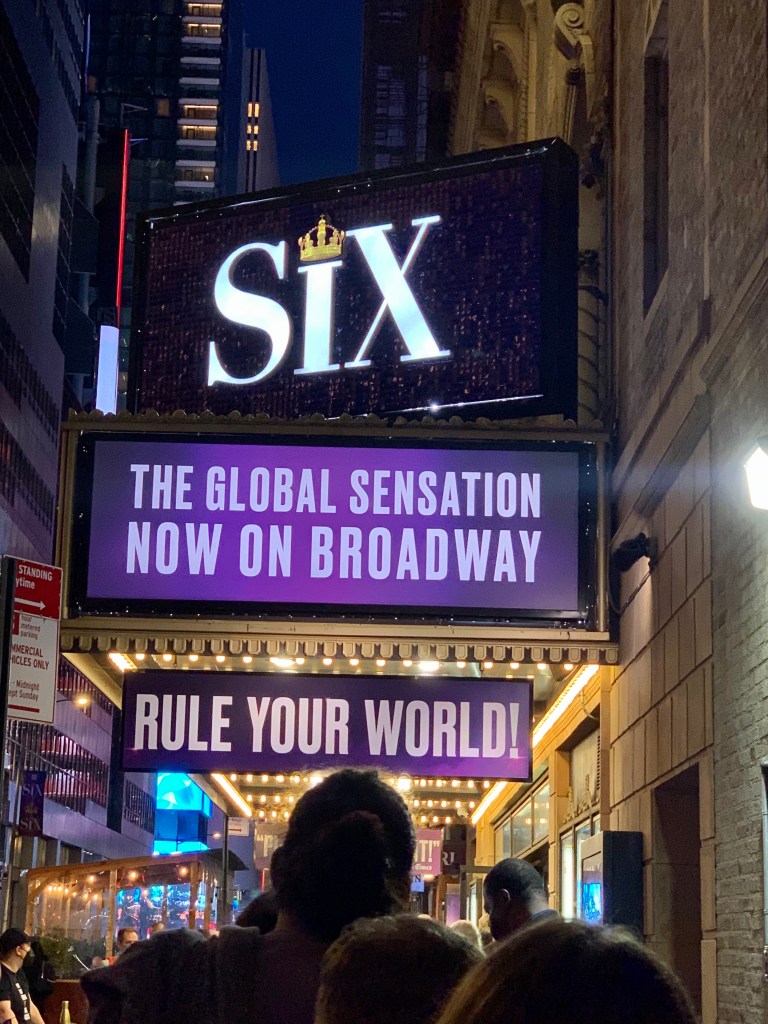
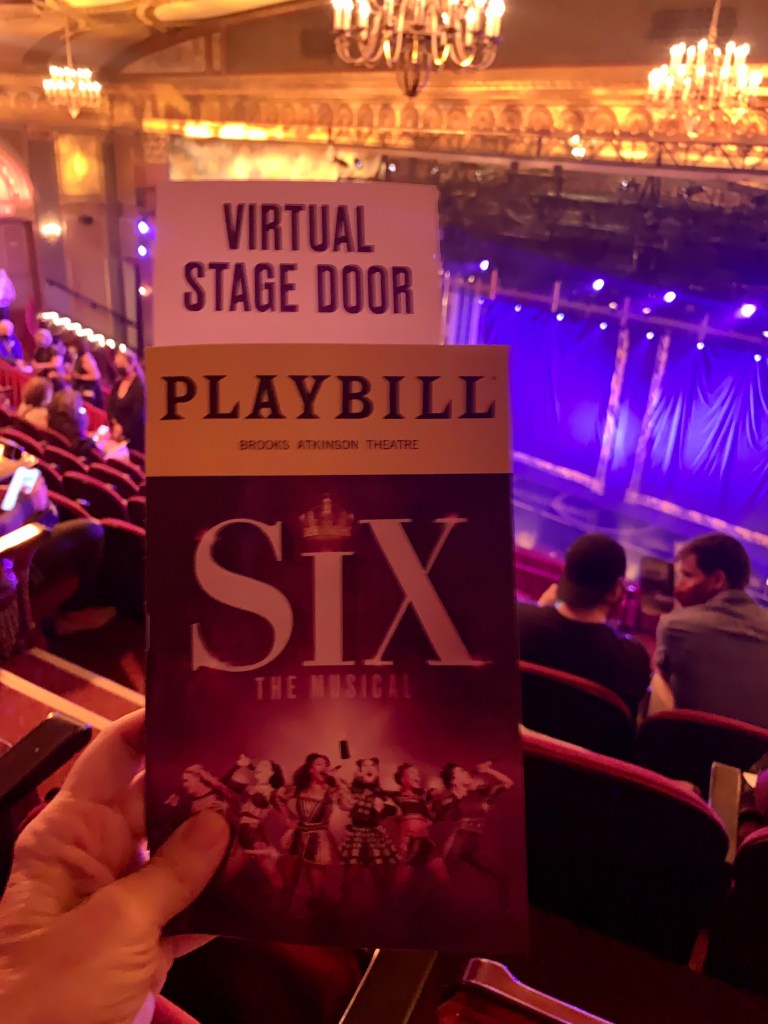
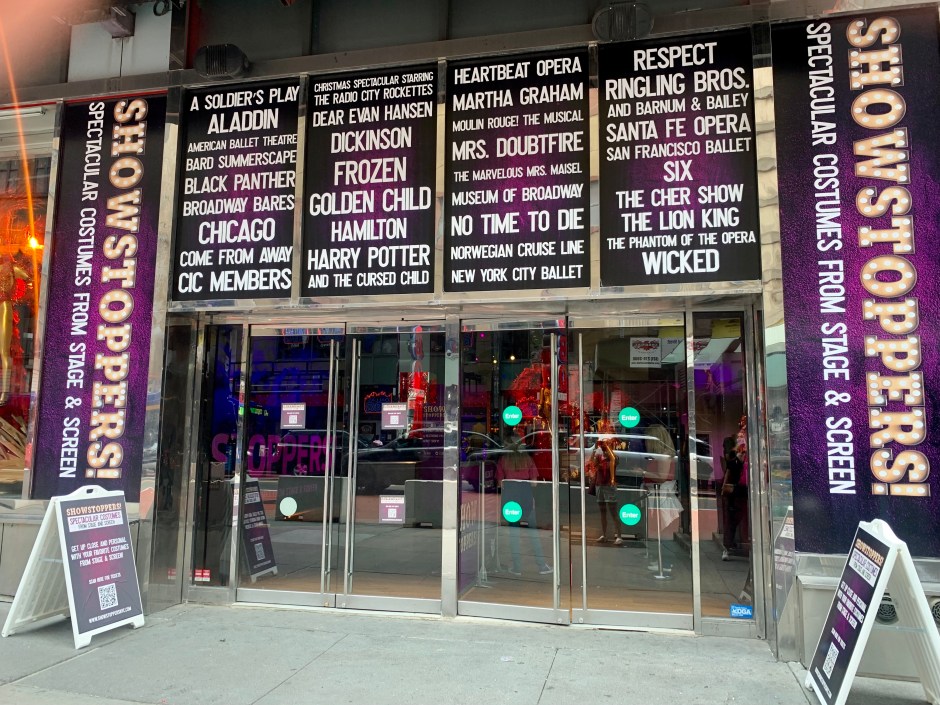
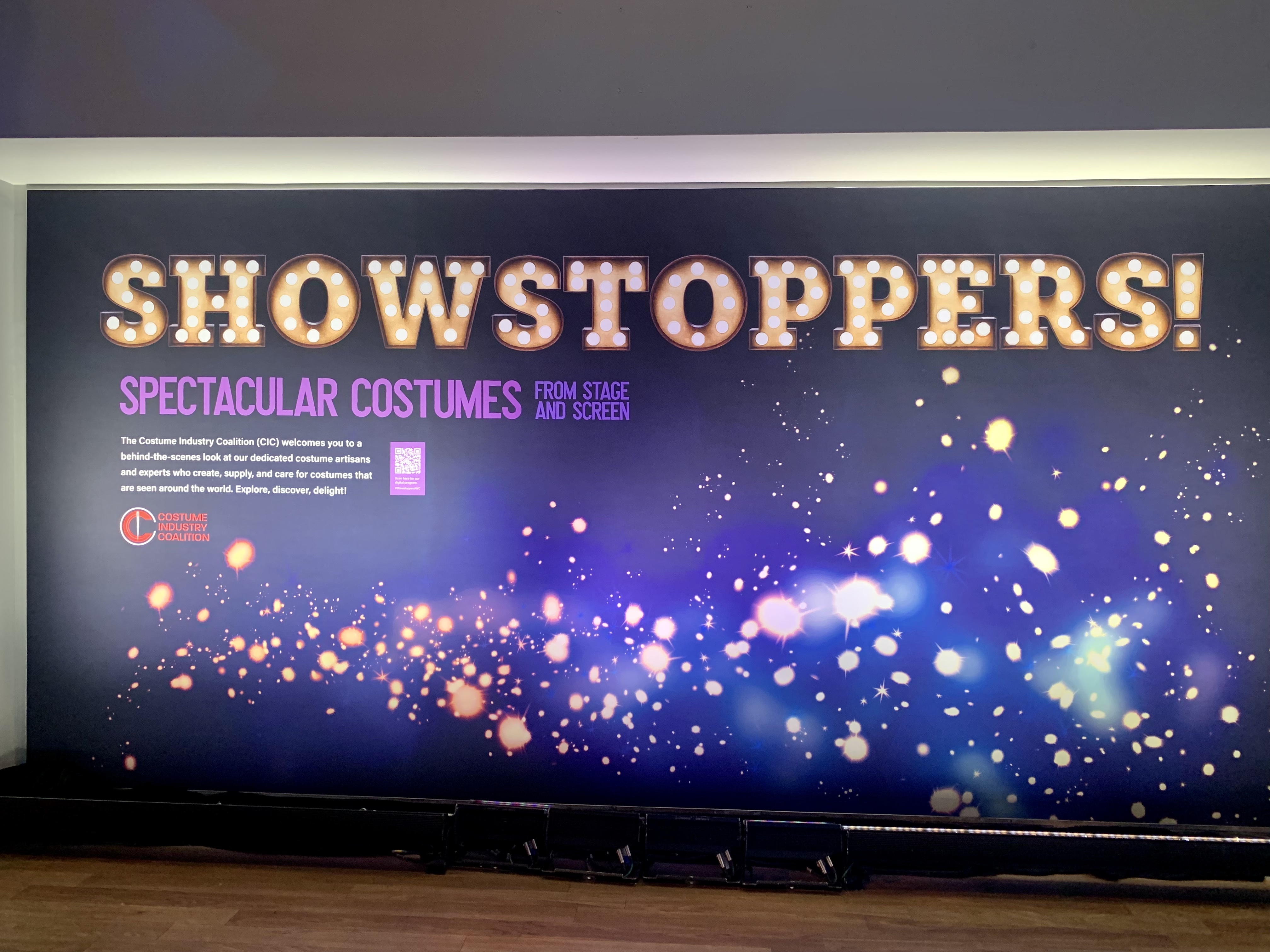
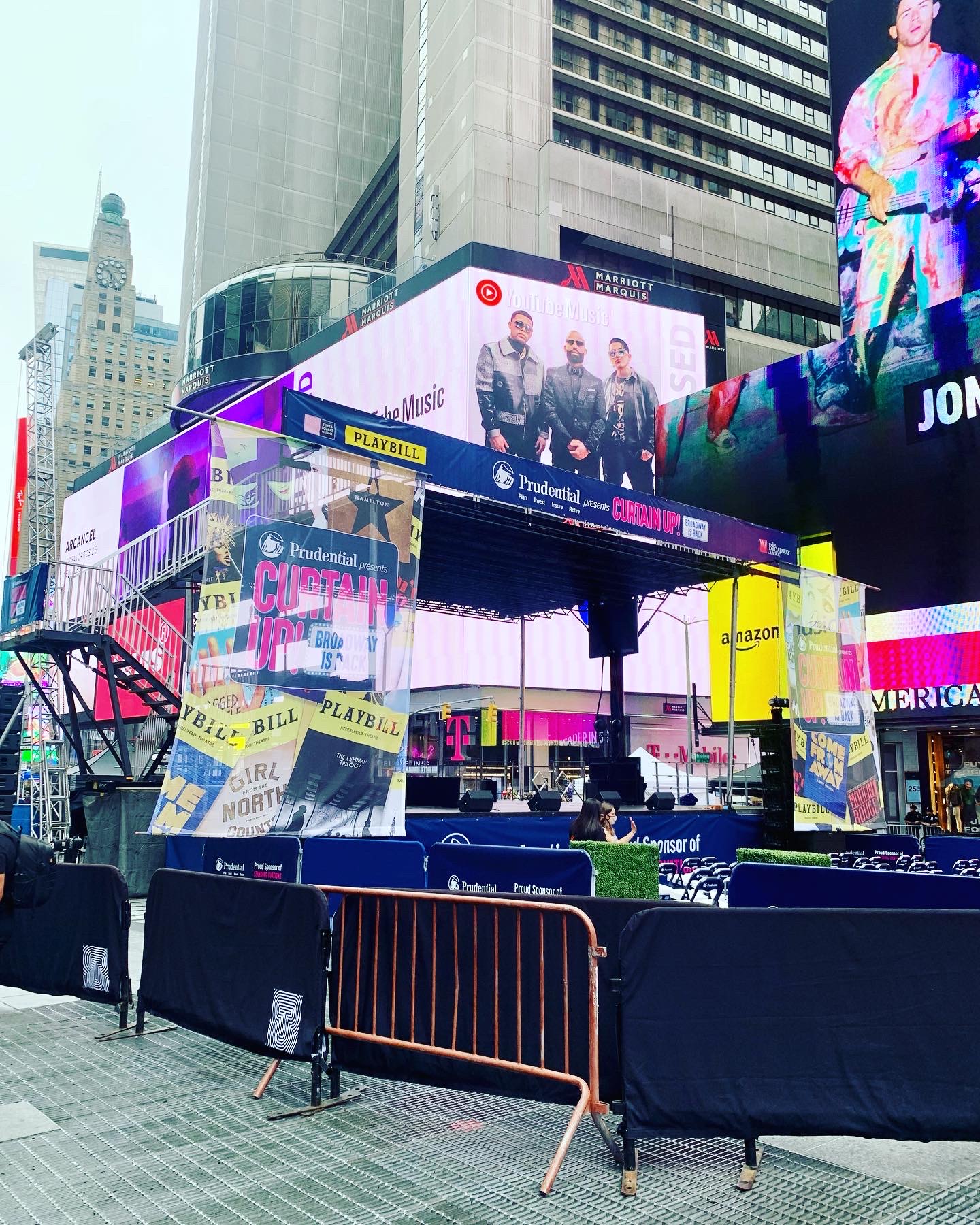
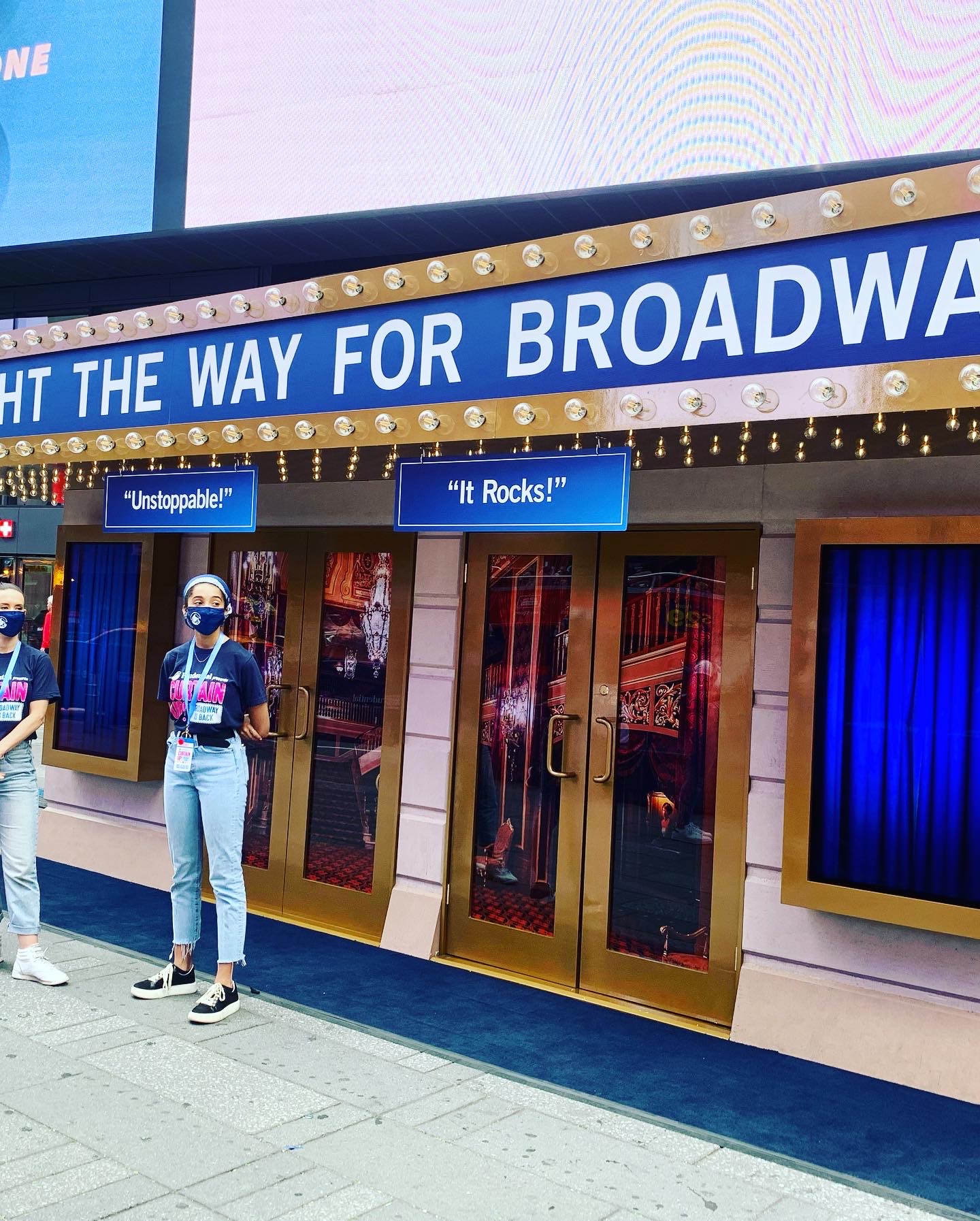
As Broadway reopens after 18 months of pandemic shutdown, there is an exhibit on West 42nd Street that highlights the incredible costumes that light up the stage (and screen). Open through September 26, tickets are required (go here for more information and to purchase) but proceeds go to help the talented people in the costume industry whose financial stability has been devastatingly impacted by the shuttering of the entertainment business. Here are my impressions from going a few weeks ago.

For a time-limited exhibition like this, I thought the layout and design was excellent. The exhibit aims to teach the observer about the work and design elements going behind these elaborate costumes, while giving the opportunity to see the details of the costumes up close.

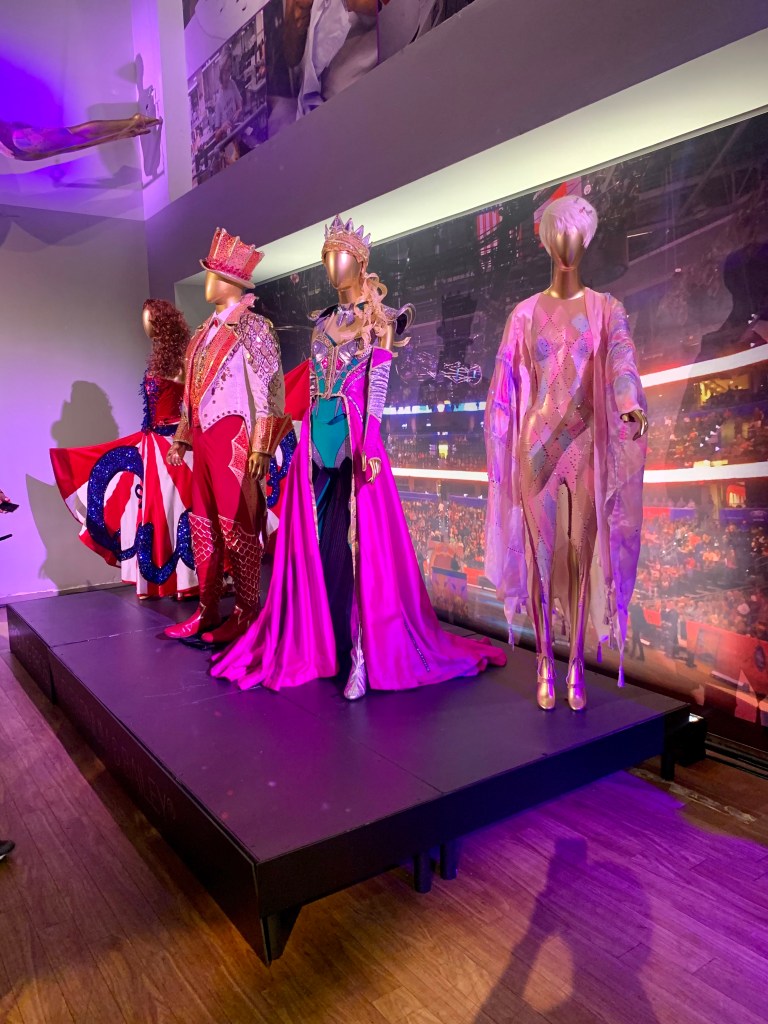
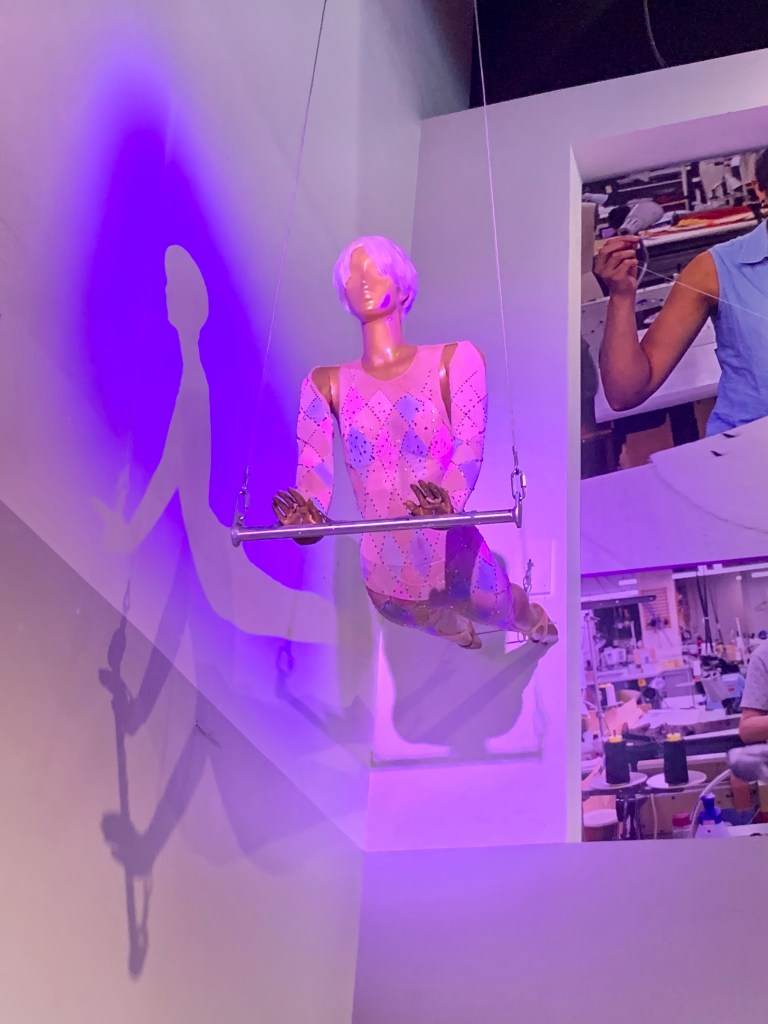
Here you see costumes from the Broadway productions of The Cher Show (Bob Mackie), Side Show (a particularly challenging costume) and Six (which was going to have opening night on the very evening that Broadway was shuttered).

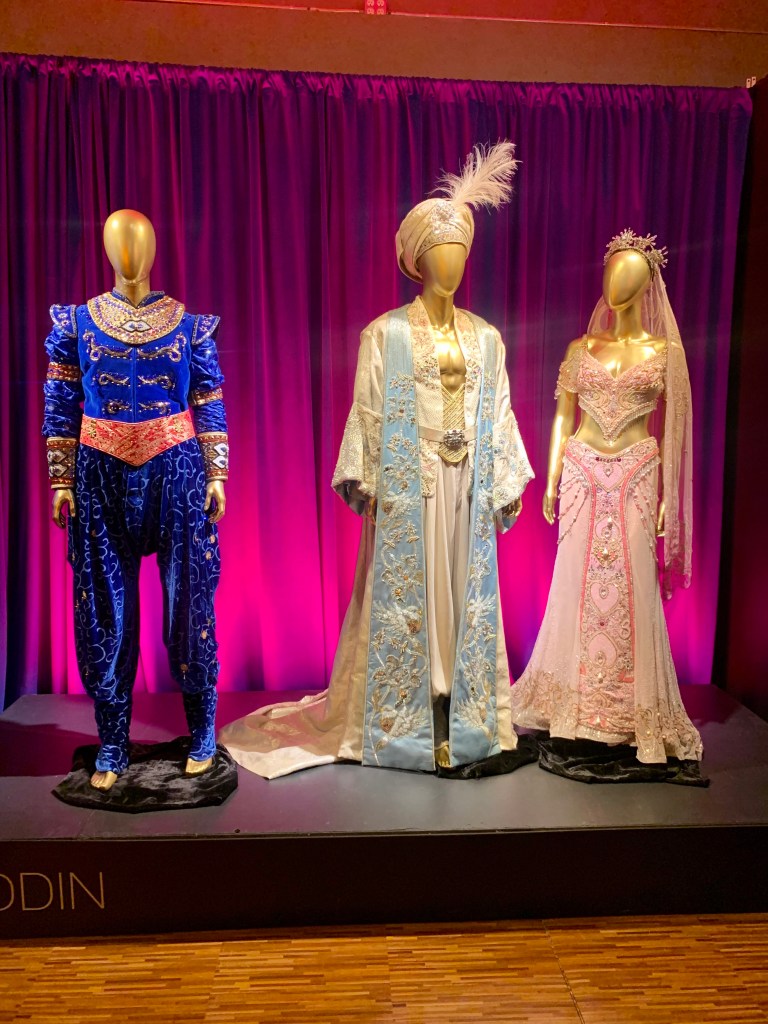
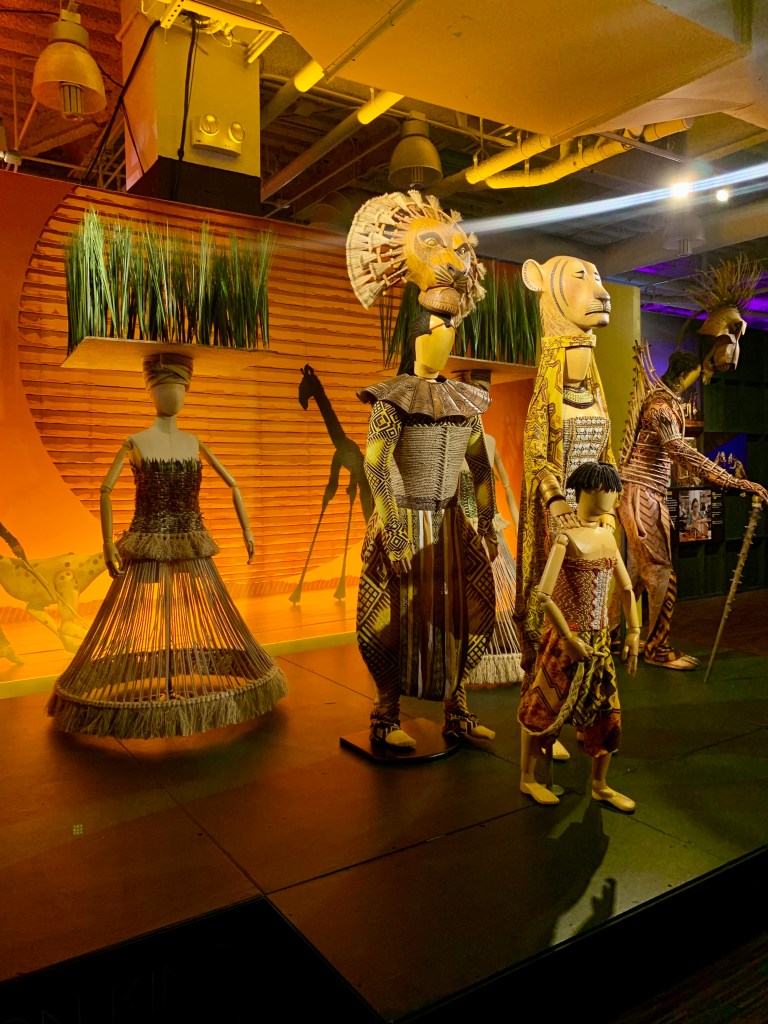
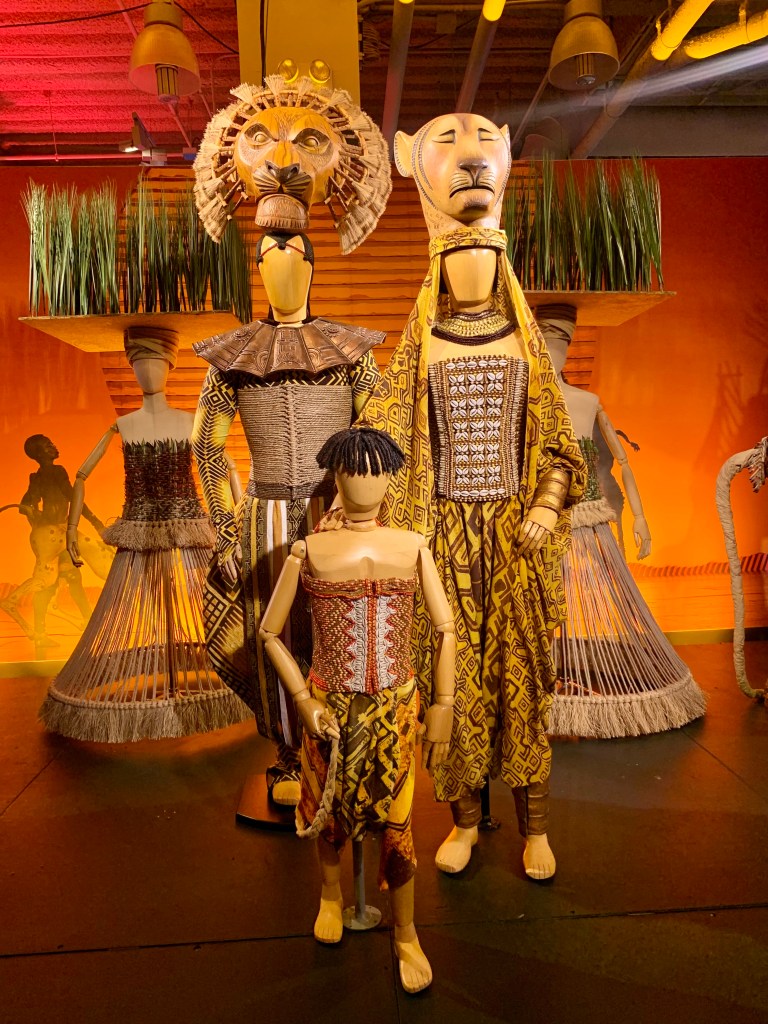
Disney productions are represented here: Aladdin, The Lion King, and Frozen.

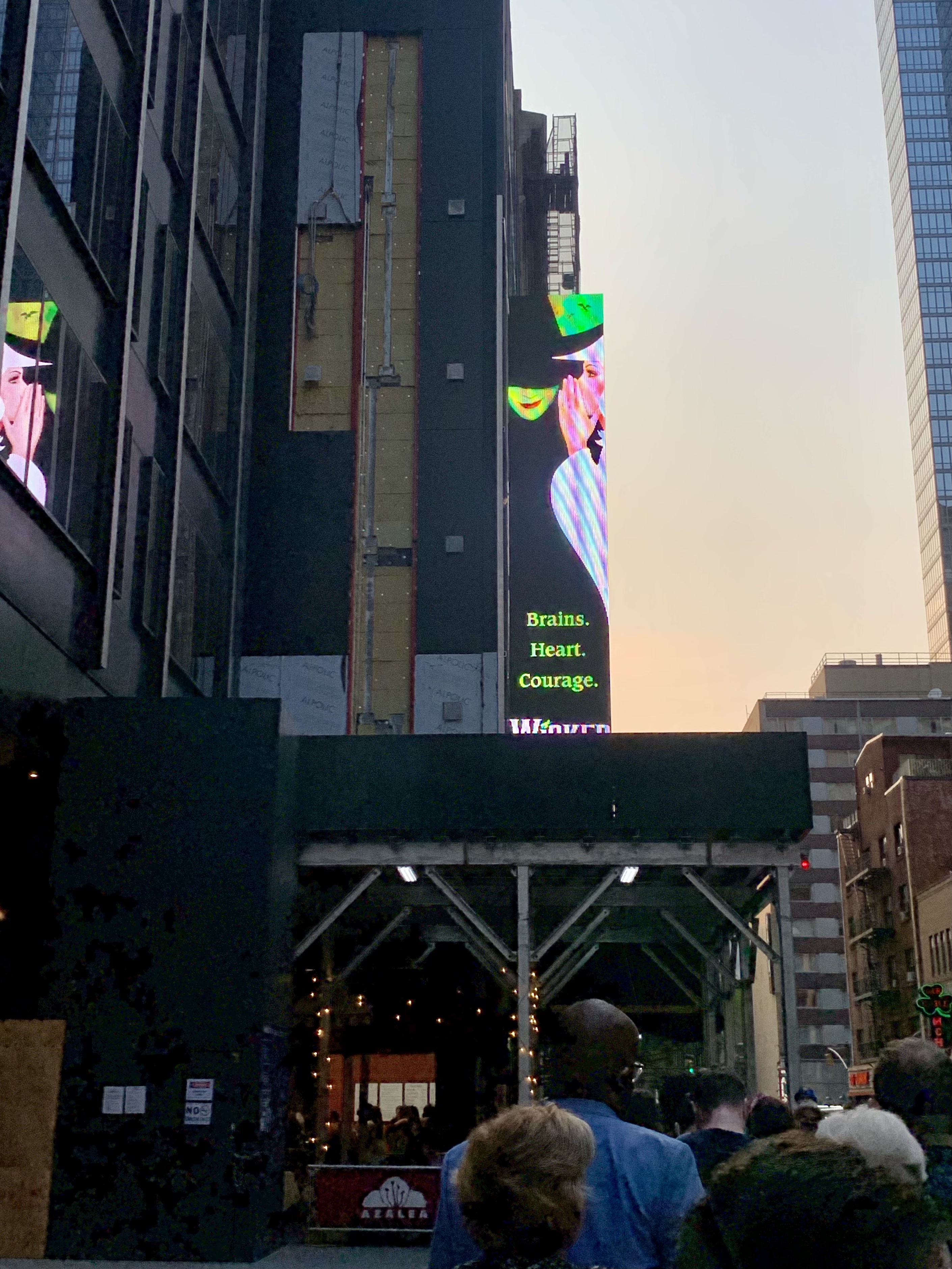
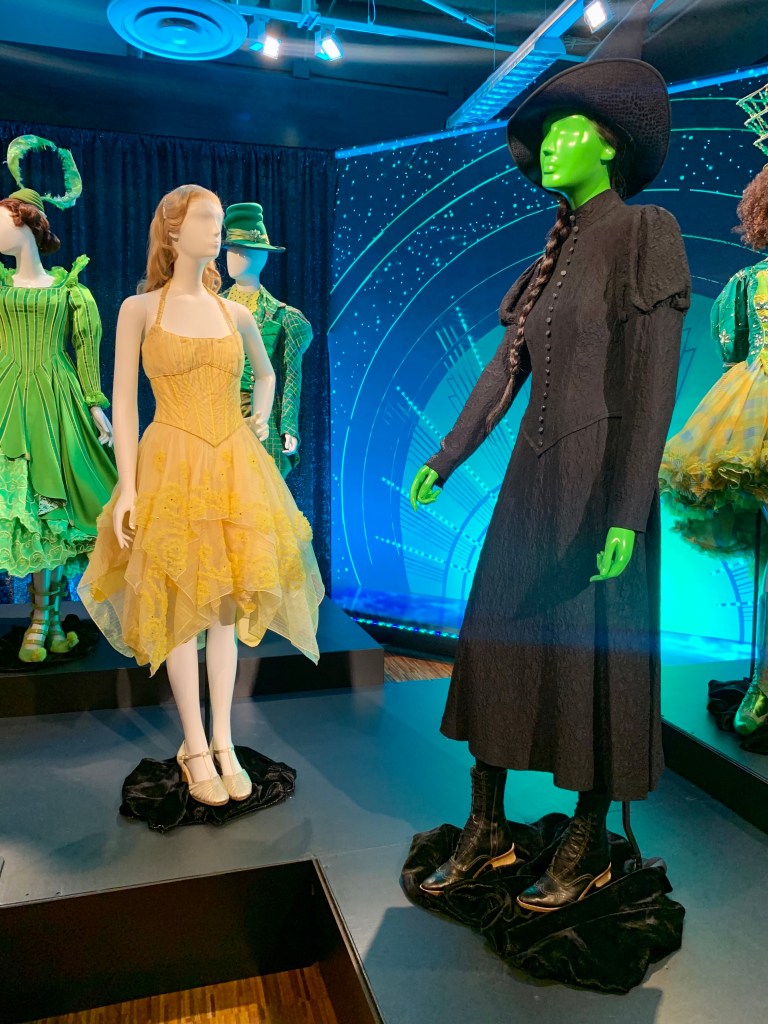
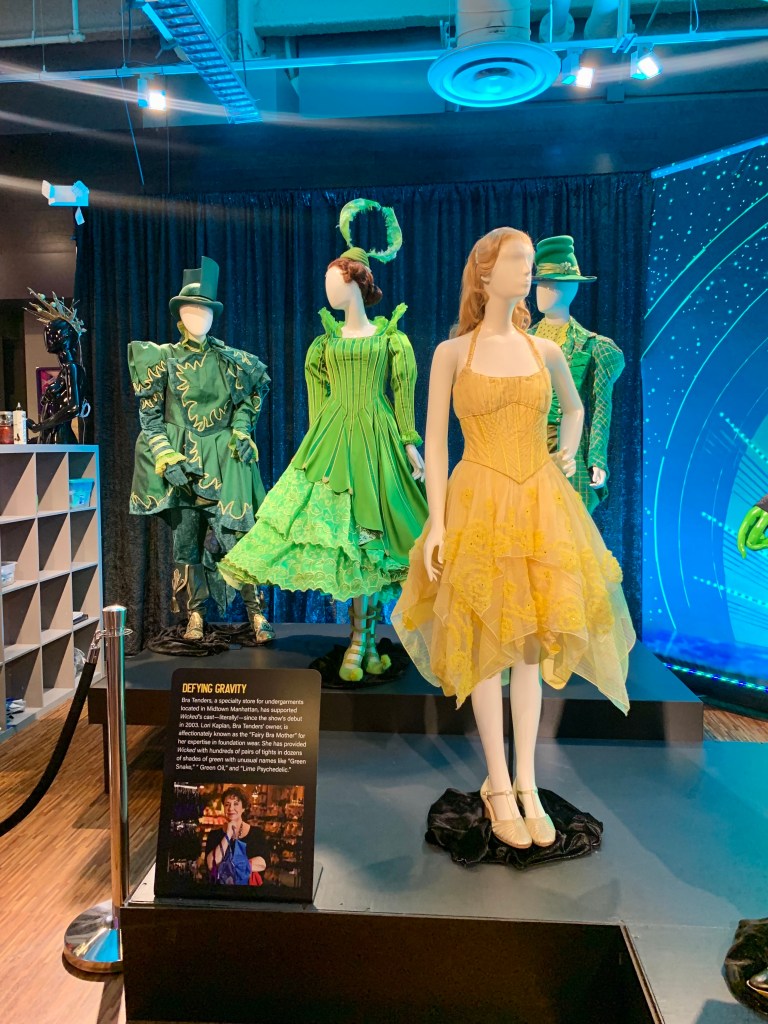
Wicked – it’s interesting to see Elphaba’s costume up close and see that it is not a matte black. Adding texture and some subtle color gives the dress depth on the stage.

Costumes from Moulin Rouge, Chicago, and Cursed Child (Draco Malfoy).

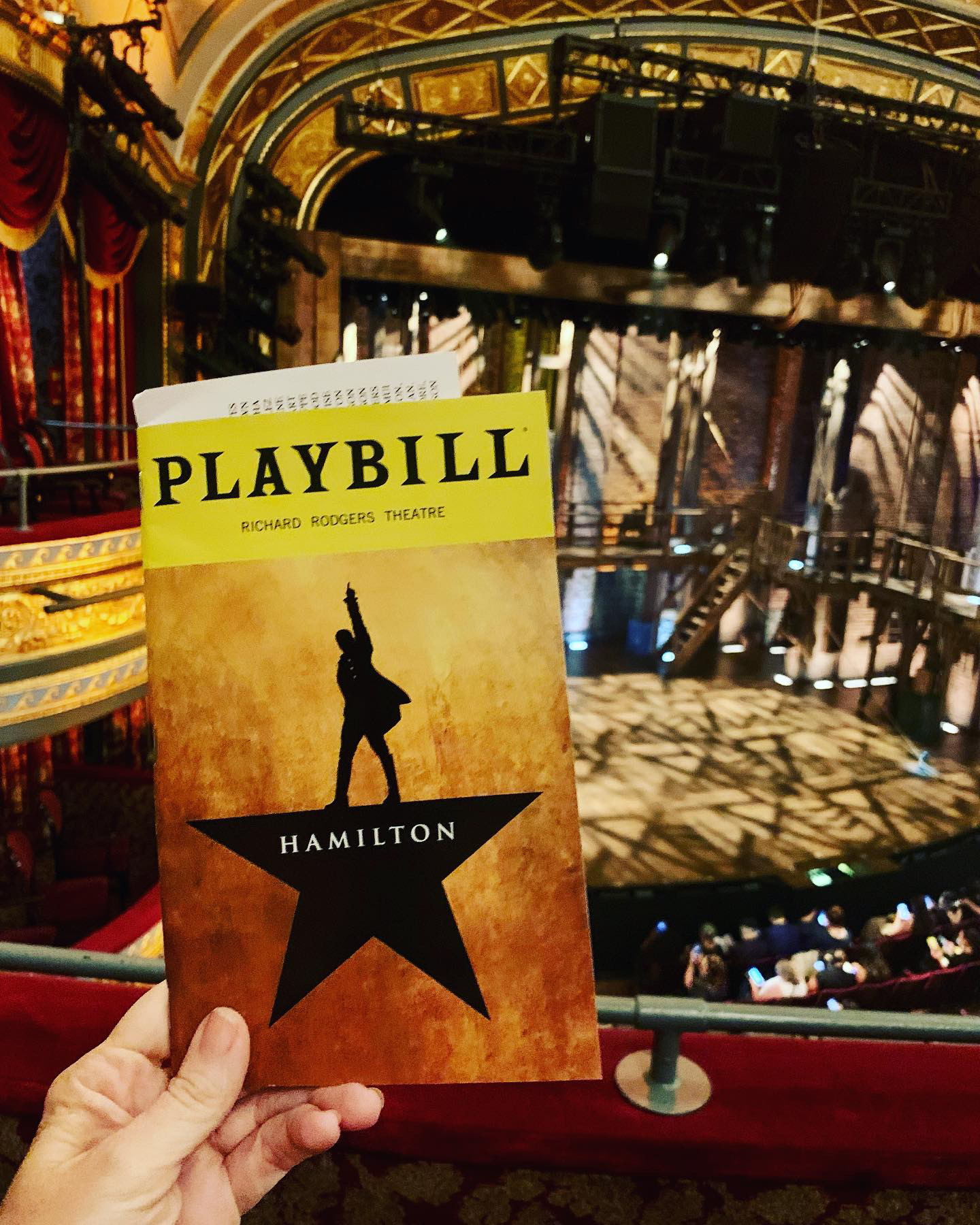
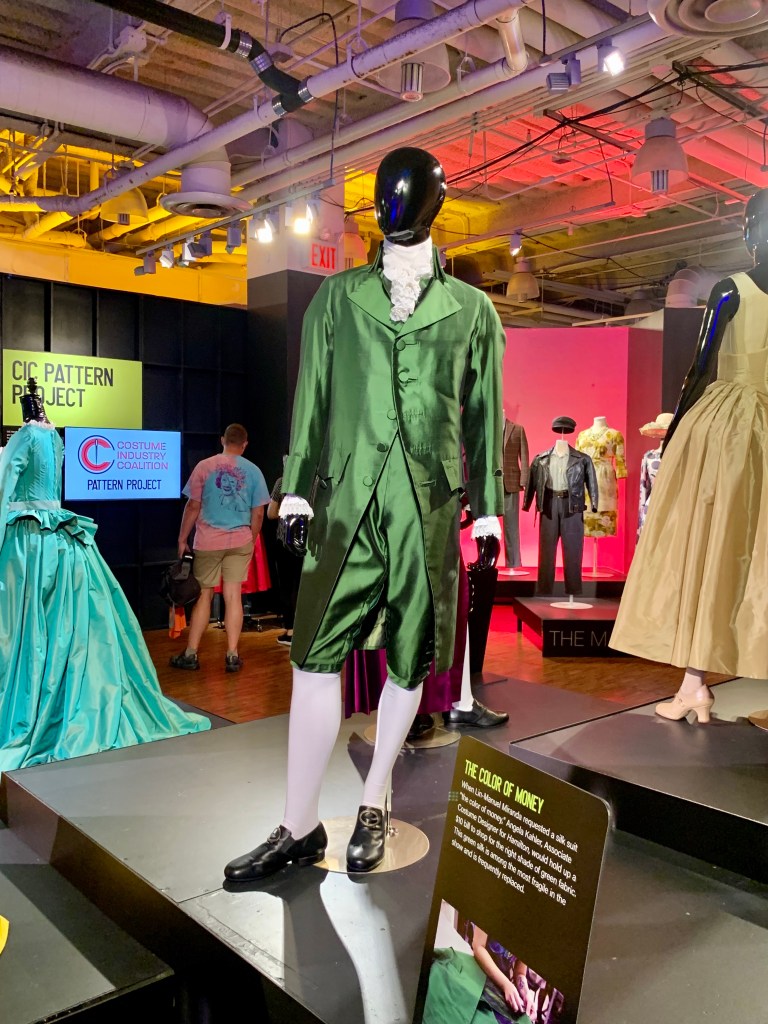
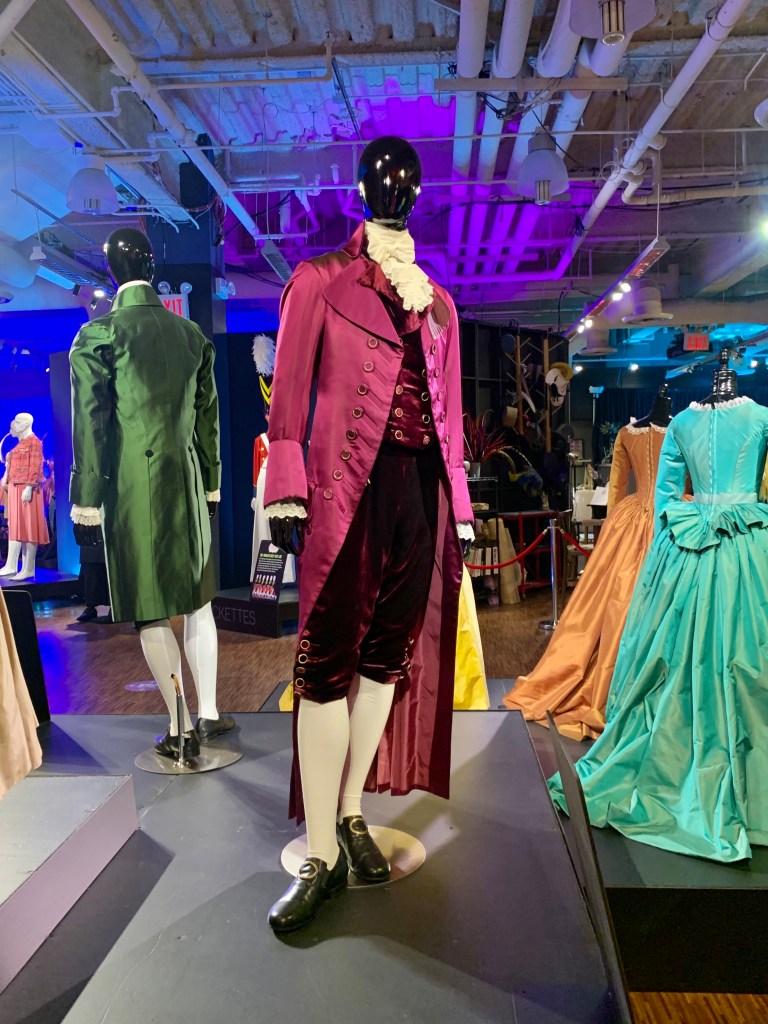
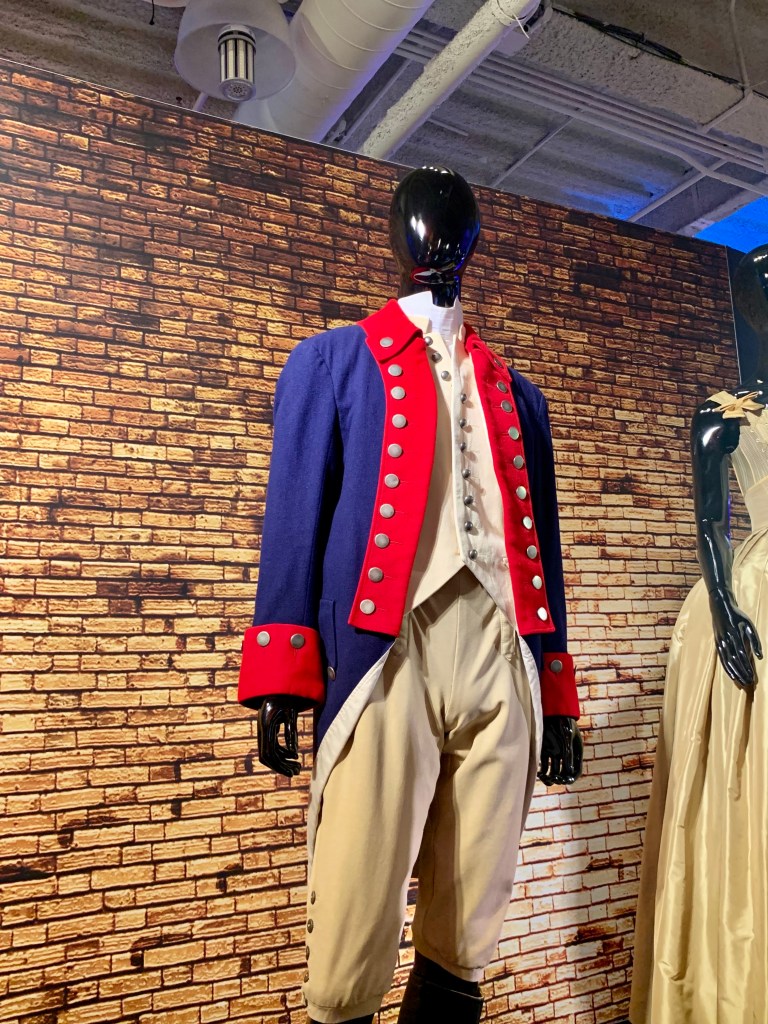
Hamilton! I was fortunate to be able to go backstage before pandemic and see some of these costumes up close then. Apparently Lin-Manuel Miranda asked for Alexander Hamilton’s costume to be “the color of money” and after several tries this iconic green silk was confirmed. Being able to make the ensemble’s costumes able to dance in – without looking like stretchy dance clothes -is a particular challenge for most Broadway costumers.

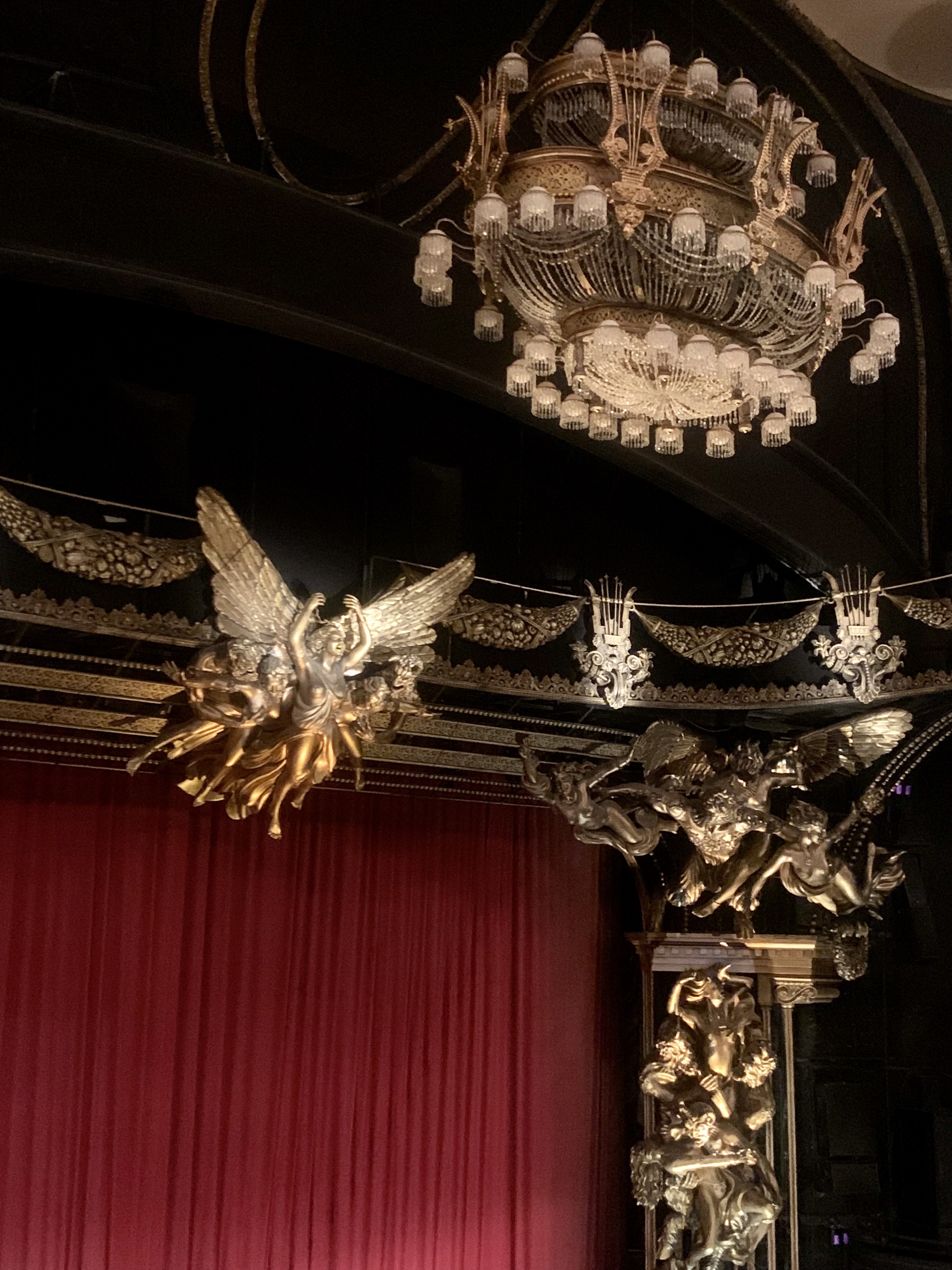
I have also been backstage at Phantom and seen the costumes at close range. For solid black or white costumes like these for the Phantom and Christine, texture and small variations in color are used to keep them from appearing flat from the audience.

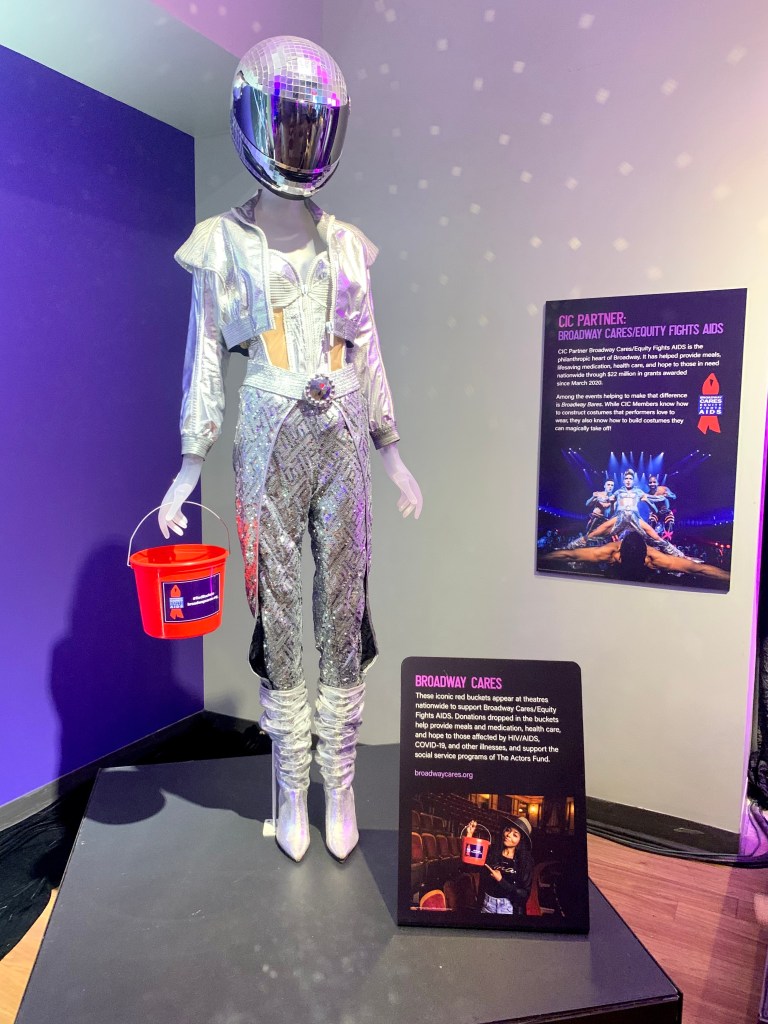
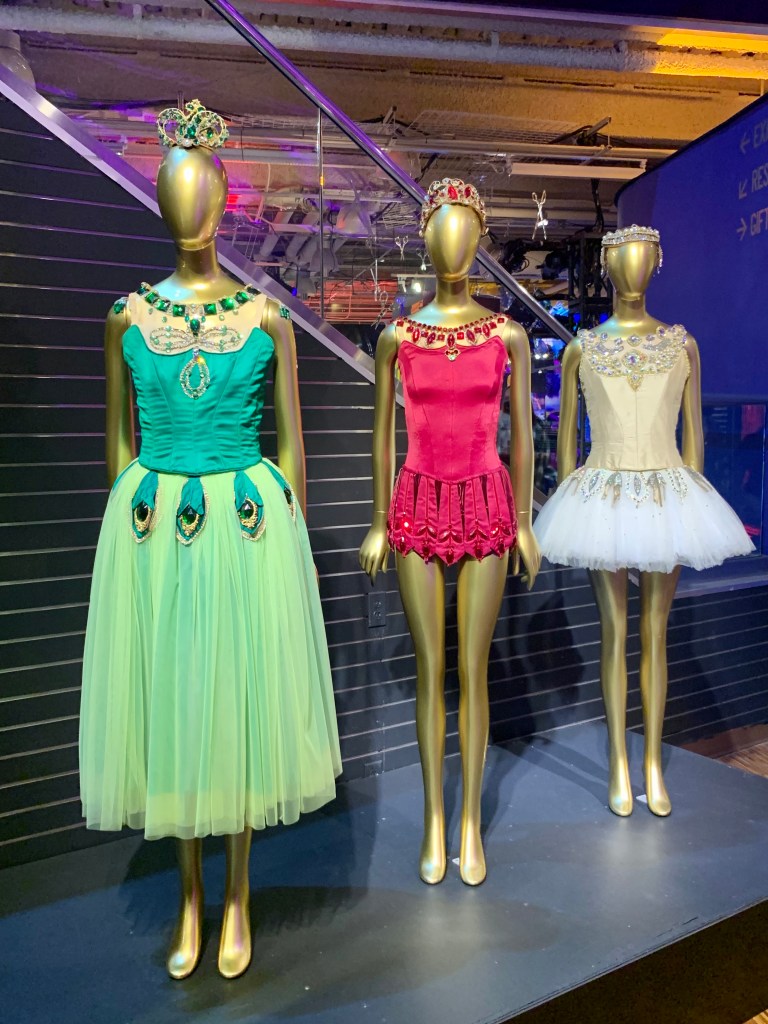
Costumes from non-Broadway productions were also highlighted. Here you see costumes from a cruise ship, from the circus, for a Broadway Cares production, from dance, and the iconic costume the Radio City Rockettes wear in the March of the Wooden Soldiers.

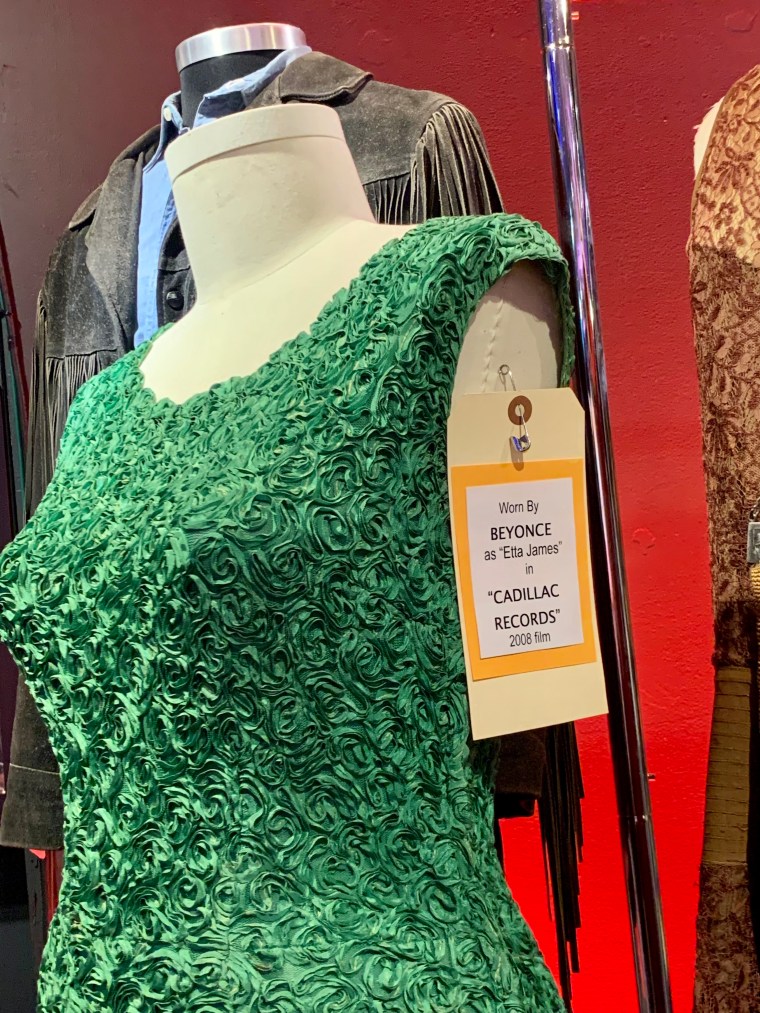
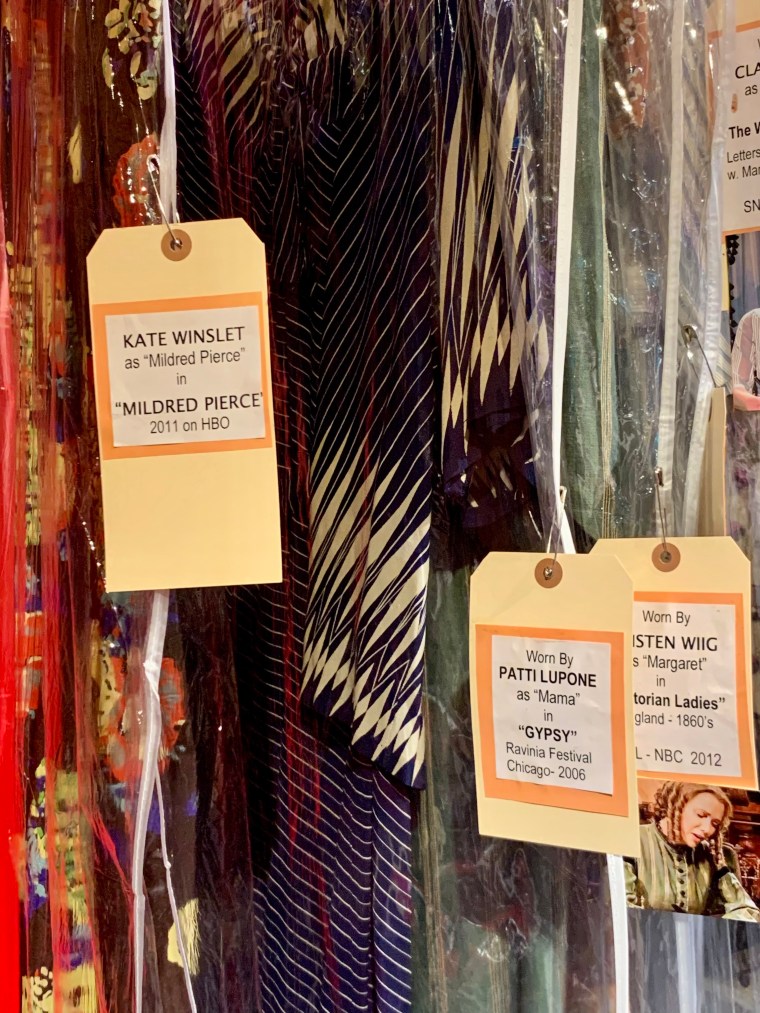
The exhibit also highlights the importance of cleaning and caring for costumes, with many from films being preserved since, unlike on Broadway where costumes wear through and are replaced constantly, a film is limited in time and requires fewer repairs or replacement of the costumes.

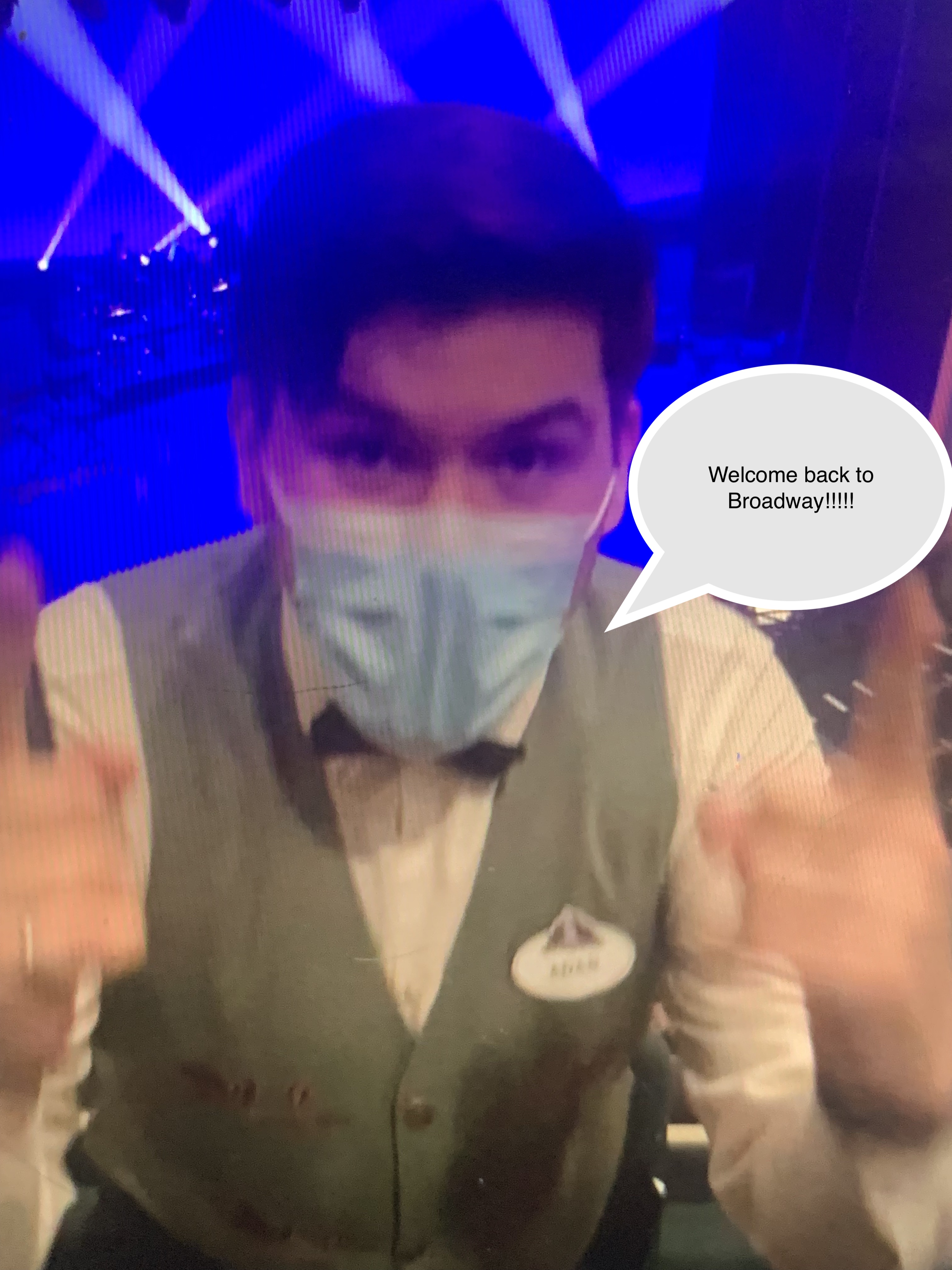
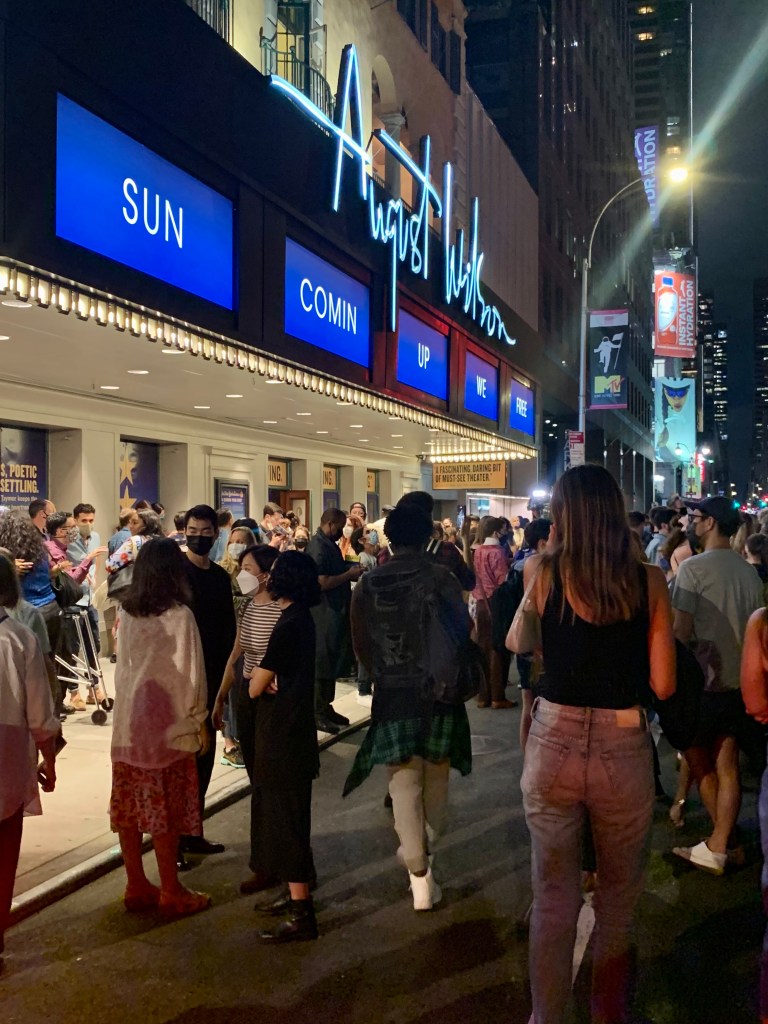
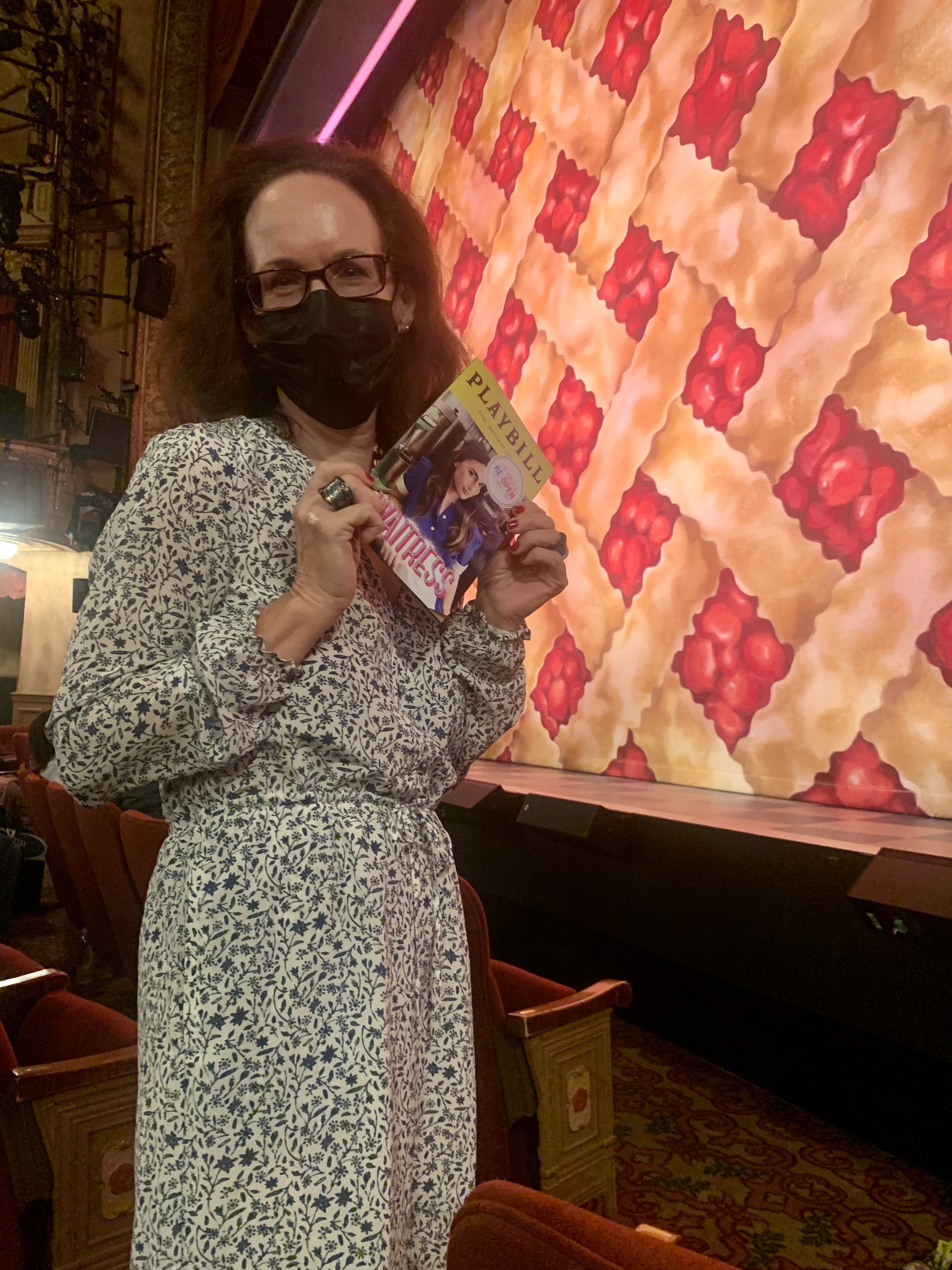
The exhibit ends on a positive note, with Broadway reopening happening on a rolling basis throughout the fall.If you are able to see the costume exhibit, it may improve your enjoyment of the costumes you see from your seat as you return to a Broadway theatre!

Immersing Yourself in Van Gogh

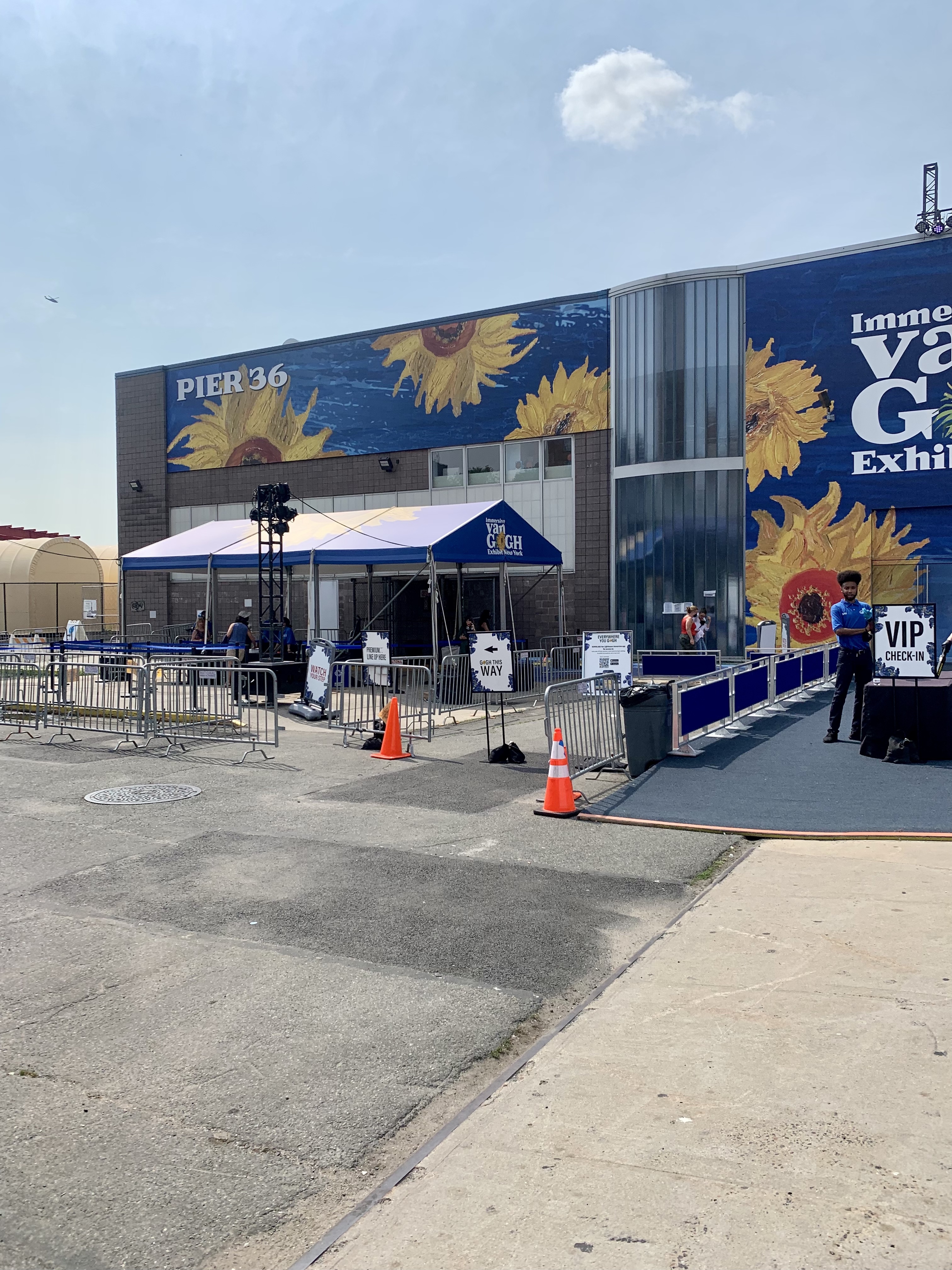
Imagine living inside the bold colors, textures, and images of a Van Gogh painting – music swelling as the lush visuals move around you. It can be experienced rather than imagined, by going to the Immersive Van Gogh Experience in NYC through September 6 (tickets are limited and it seems to be sold out the last weekend, so act quickly), and in cities all over the United States and Canada over the next year. I went to the exhibit on the East River here in Manhattan recently, and some of my tips about visiting will be specific to the NYC exhibit while others are more general and should apply to other locations.

The NYC experience is at Pier 36 on the East River, closest to Montgomery Street and South Street on the Lower East Side, between the Manhattan and Williamsburg Bridges. The 75,000 square foot interior space was designed by Broadway set designer David Korins (Hamilton, Dear Evan Hansen), a collaboration unique to New York.

Tickets can be – and should be – purchased in advance, and prices range from $39.99-$69.99 depending on the day of the week and the time of day. Masks are required, and the numbers are limited to keep the experience uncrowded as well as covid-safe.

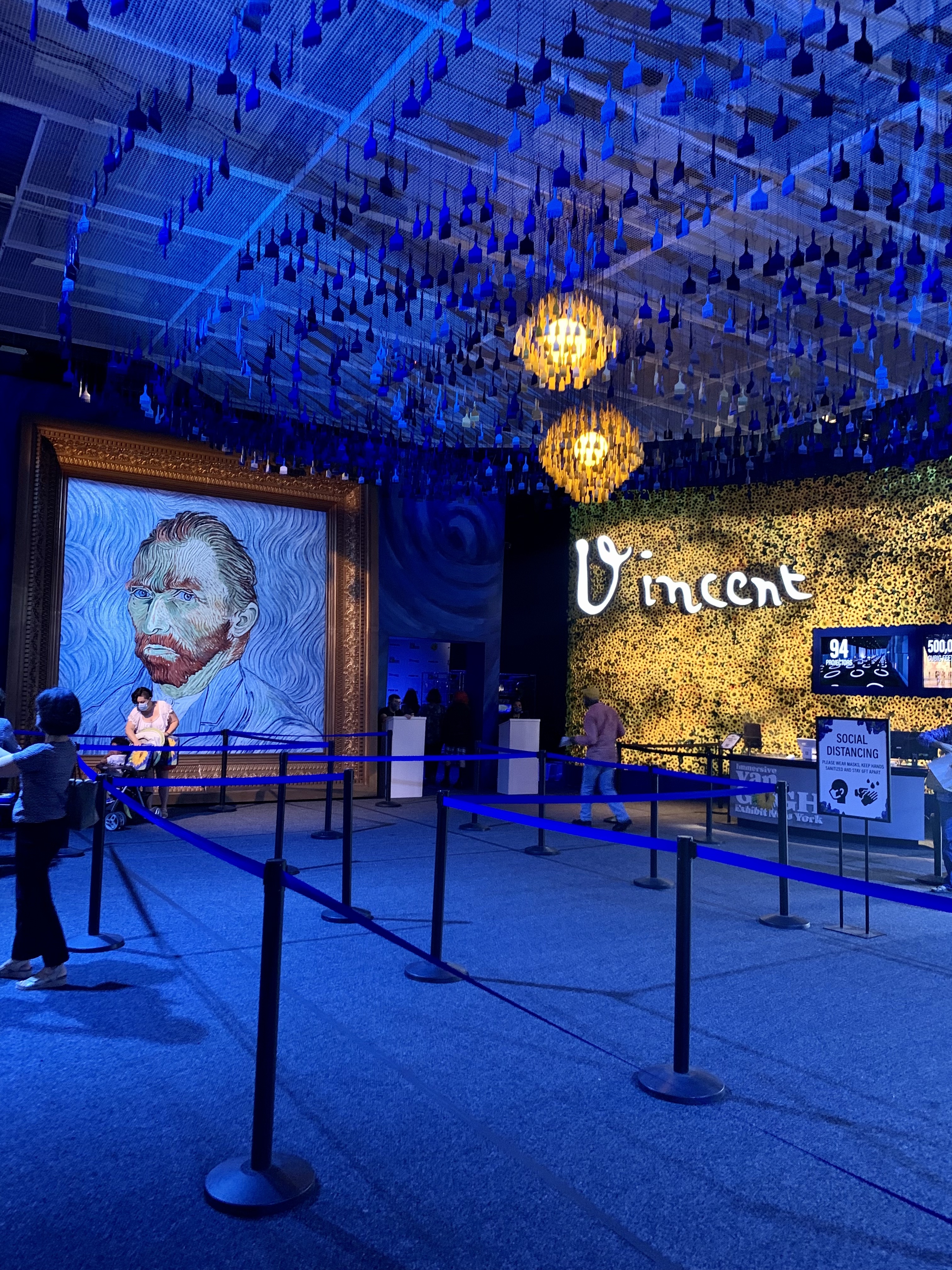
Before entering the immersive area, there is a reminder of the basic facts of Vincent Van Gogh’s life – his production, lack of success during his lifetime, and posthumous spectacular fame. When MoMA first reopened last year, it was eerily uncrowded, and I posted a selfie of myself in front of his “Starry Night” in part because you normally can’t get ever close enough to see it properly.

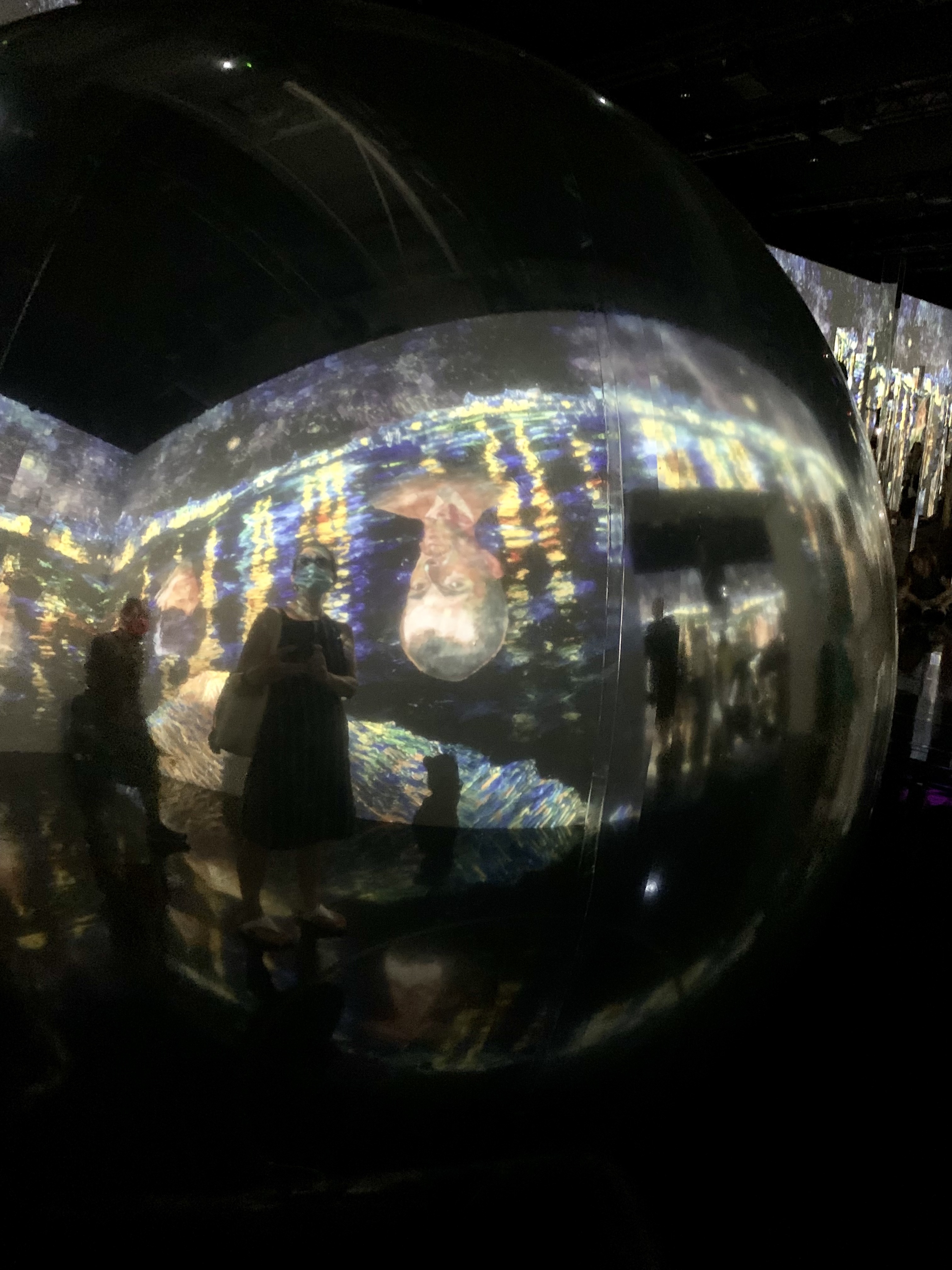
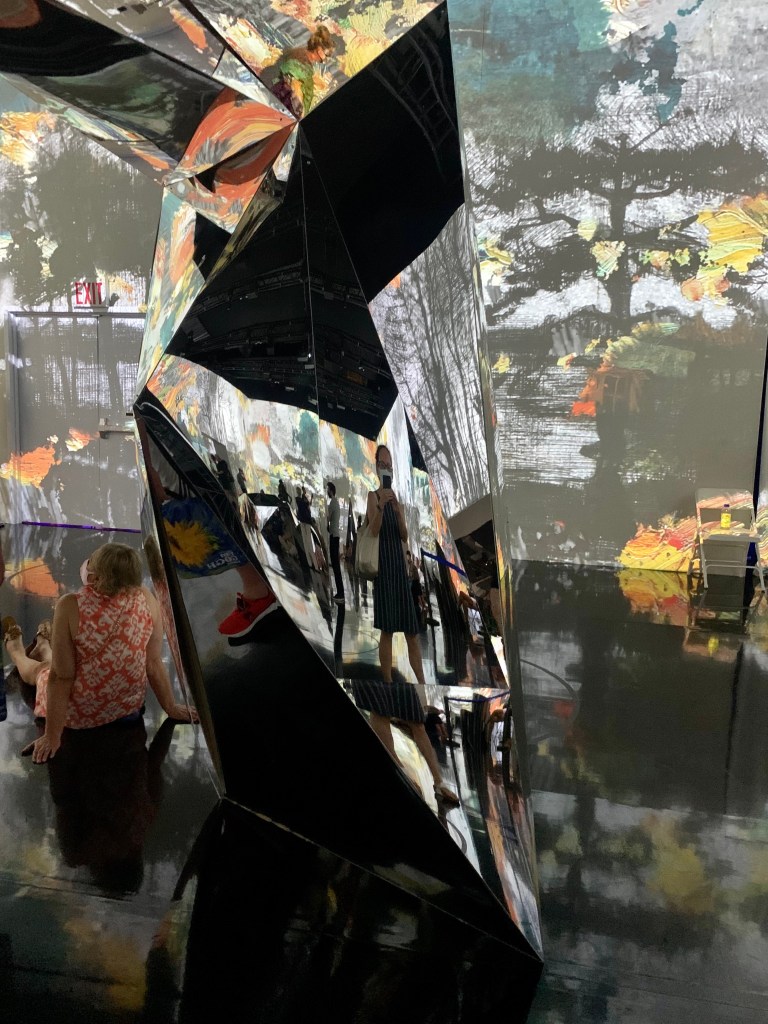
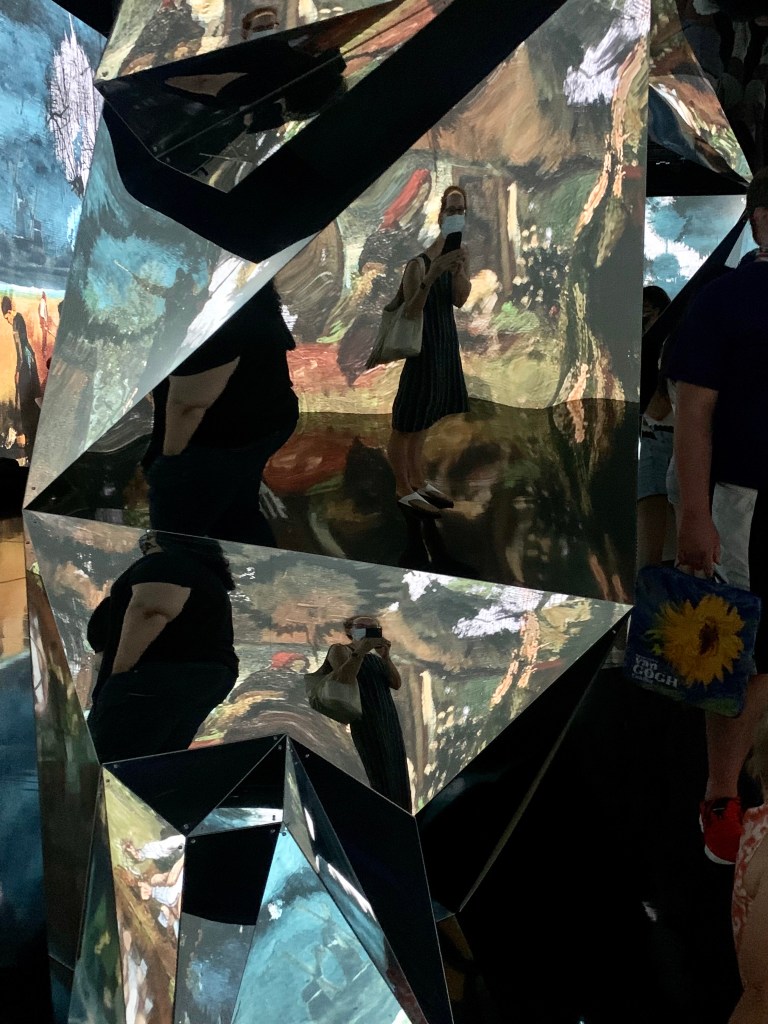
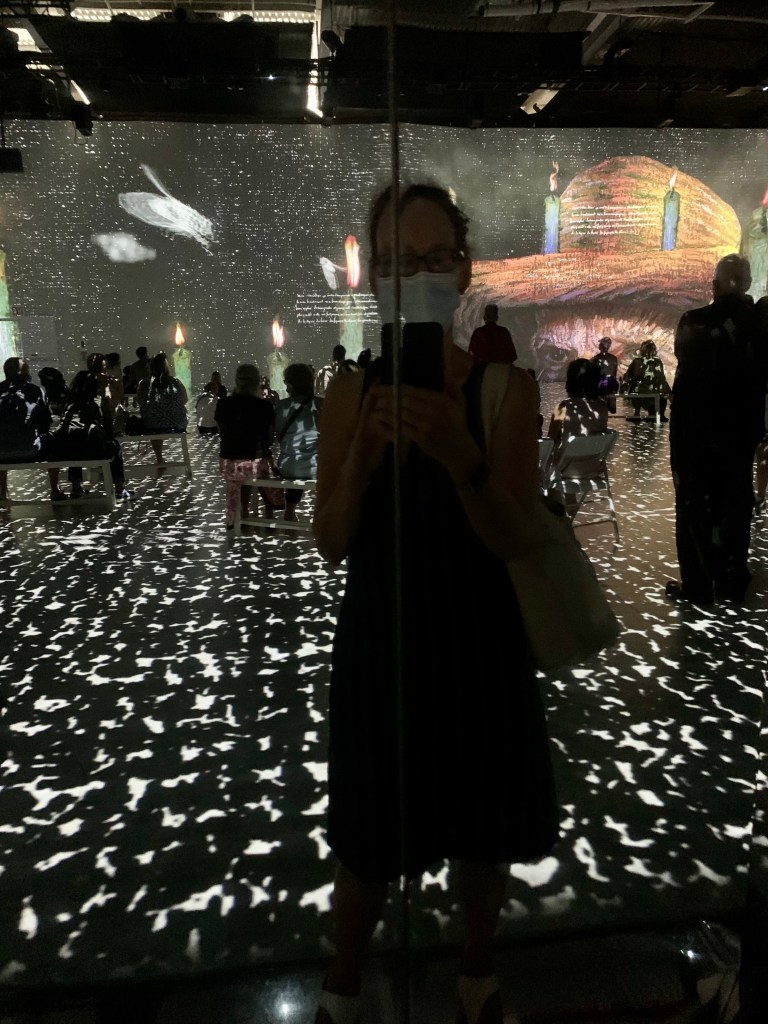
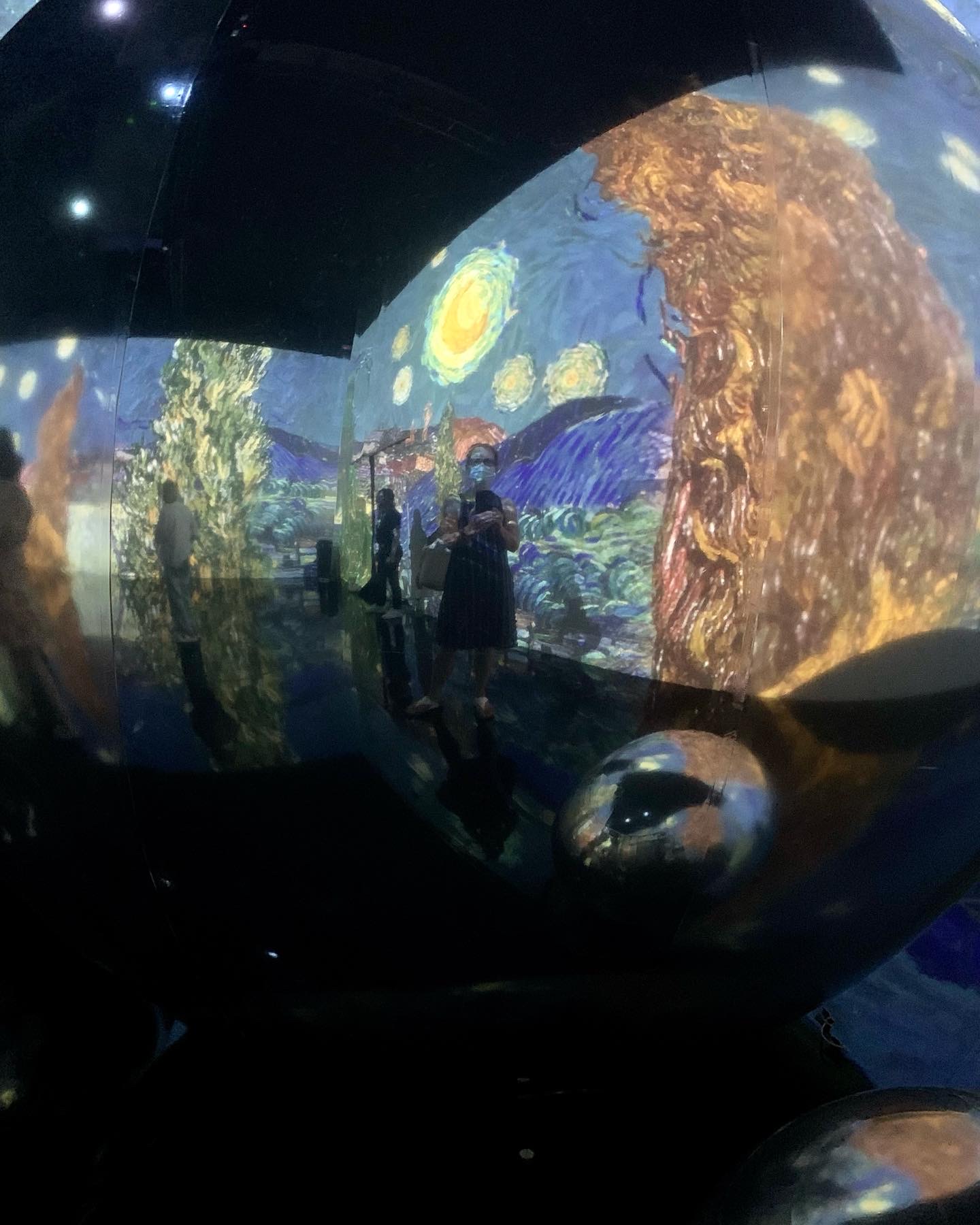
The first two rooms in the New York exhibit are smaller, and feature mirrored pieces designed by Korins to refract the larger projections on the walls and let you catch glimpses of yourself caught in the visuals. I noticed that many people got to the first room or two and stopped, and those rooms were more crowded as a result. My first tip would be that when you first enter, walk through the entire exhibit and see everything briefly before settling down to one spot. Also, visuals and music are on an about a 30 minute loop, so try to figure out where you are in the loop (if you see images from the asylum at Arles, with those crows of foreboding, you are near the end). Ideally you would see the entire “show” in one space, and in NYC the best space is the third gallery, which is enormous and has seating.

The third gallery in NYC also has an elevated platform, but my own personal experience was that being there felt less immersive that being on the floor. And what is the experience like? To me, I kept being reminded of an experience at the Rose Planetarium at the American Museum of Natural History (no longer offered, sadly) called “Sonic Vision.” That show featured music from Radiohead, Moby, and others, and the music at Immersive Van Gogh is mainly original music by creator Luca Longobardi, but ranges from Thom Yorke and Edith Piaf to Handel and Mussorgsky (see the Spotify playlist here).The somewhat overwhelming experience of being immersed in visuals with music is trippy – I used to say that going to Sonic Vision allowed me to go on a psychedelic trip safely without having to take drugs. There is an element of that here – but with somewhat of a storyline to the experience, and the knowledge of what Van Gogh’s life was like, there was an emotional depth to it as well. You can stay as long as you would like, but I would suggest you need at least an hour – the time you figure out the space before another loop of the experience begins, the entire (about 30 minute) presentation, and time to go back and take photos or see things you might have missed in the first walk through. You can go back and forth between the galleries.

There is an extensive gift shop as you exit, and not just Van Gogh related (not sure why “I’m glad you are as weird as me” candles were included), before you exit and find yourself right on the East River on Pier 36, walking along the back of the building to get back to reality. The real world is discernibly less vivid – but Van Gogh lived in the real world and was able to create gorgeous hyper-reality with his imagination, so the exhibit serves as a reminder to dream in color. I have no idea what Vincent himself would think of this exhibit, and I did wonder that a few times while there, but what would life be indeed, if we had the courage – as he did – to attempt anything?

Little Island Park

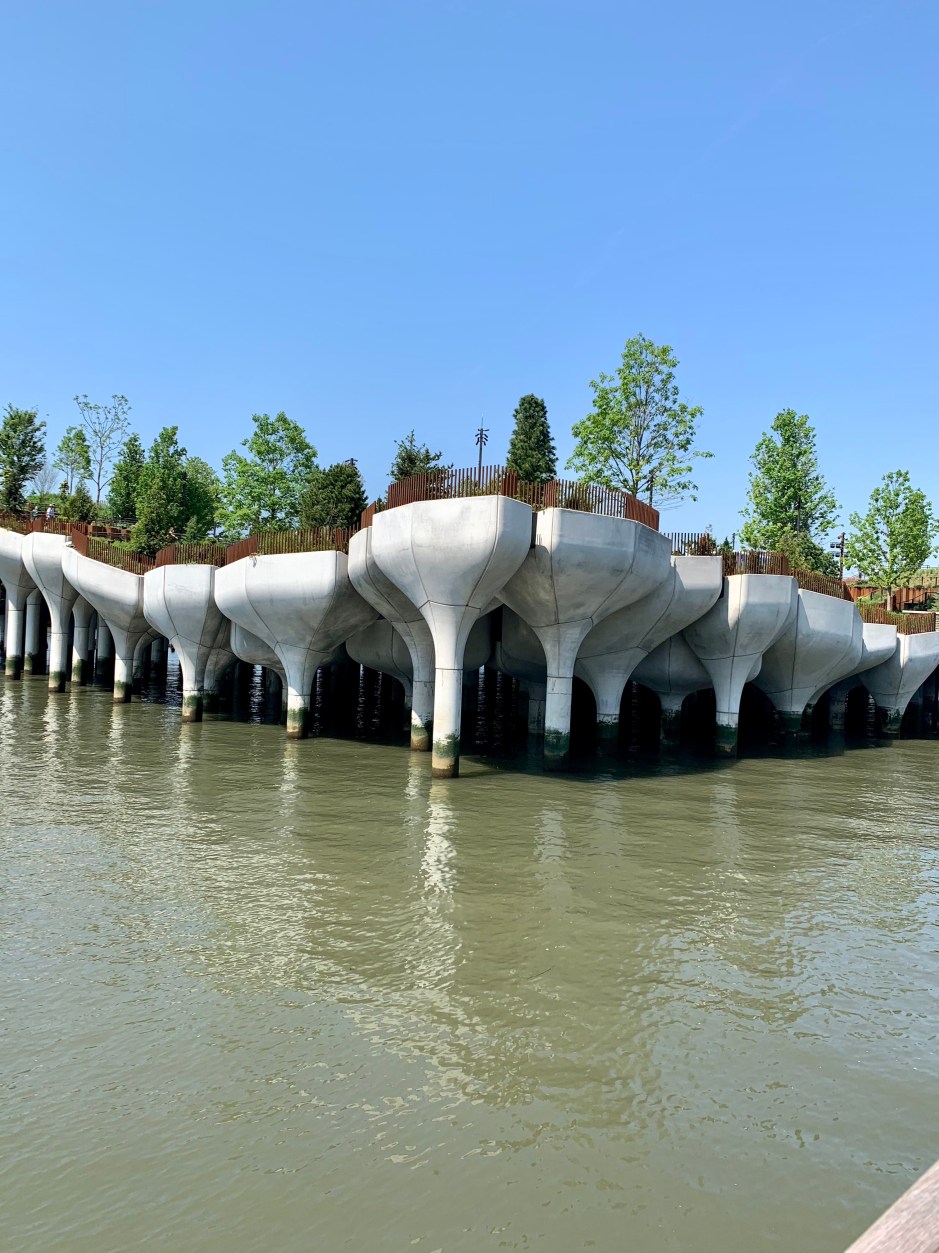
During New York City’s lockdown due to the Covid-19 pandemic in 2020, I took up bike riding, primarily along the Hudson River Greenway (see more detail about my perspective on biking in NYC here). Although I had previously noticed the odd constellation of what looked like concrete mushrooms blooming in the Hudson River just south of Chelsea Piers at Pier 55, on my nearly-daily rides past the construction area I watched with interest the development of the city’s newest park. I was thrilled to visit Little Island Park on its first day open to the public, May 21, have been back recently, and have another visit booked (more on the need to book timed tickets later).

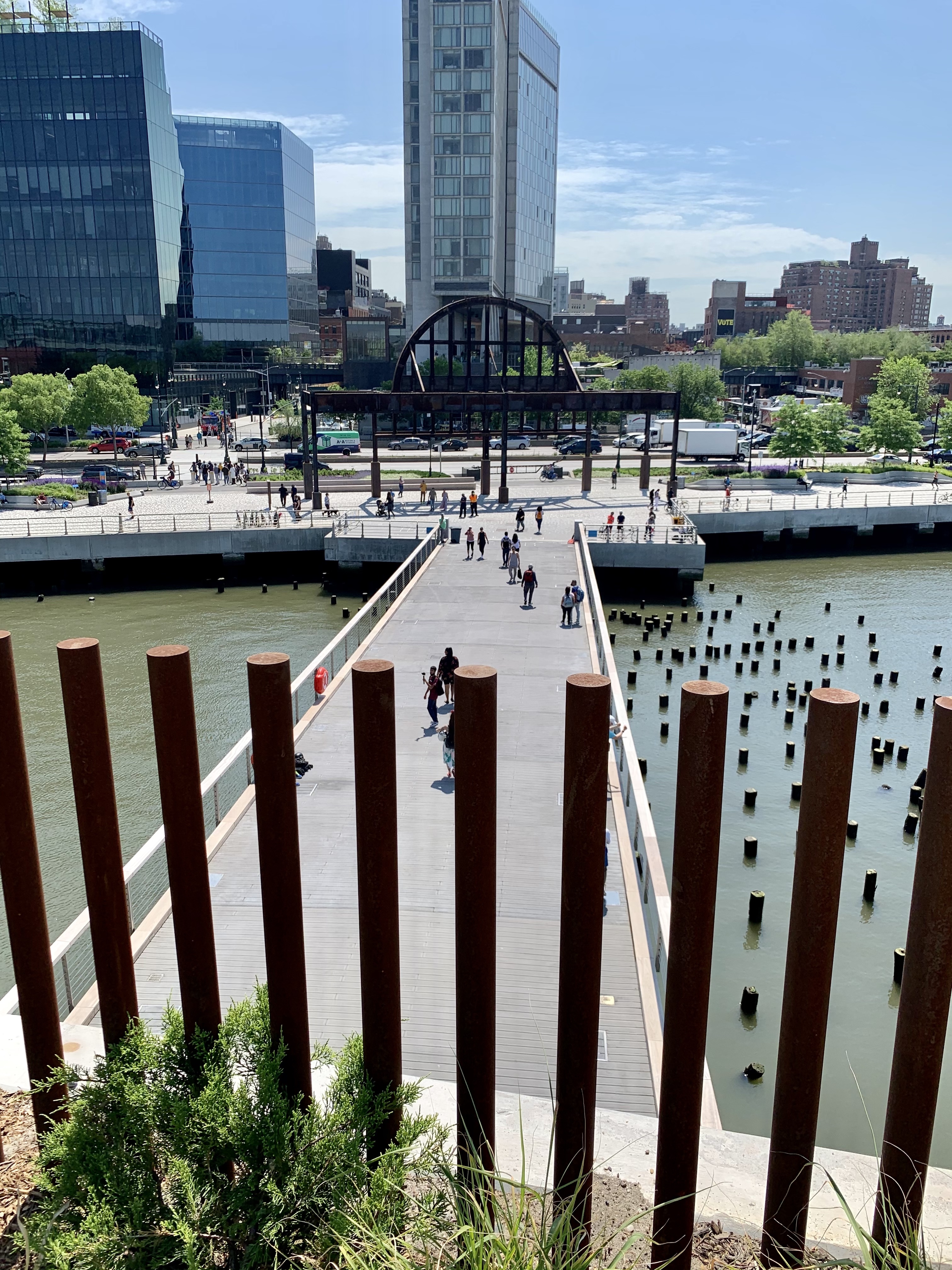
Enter where 13th Street meets the Hudson River, walking over a bridge to get to this park built over the water. One of the first things you see is a series of food trucks with an area to eat in the shade. There are a variety of wines, beers, and cocktails available in addition to food, coffee, pastries, and non-alcoholic beverages.

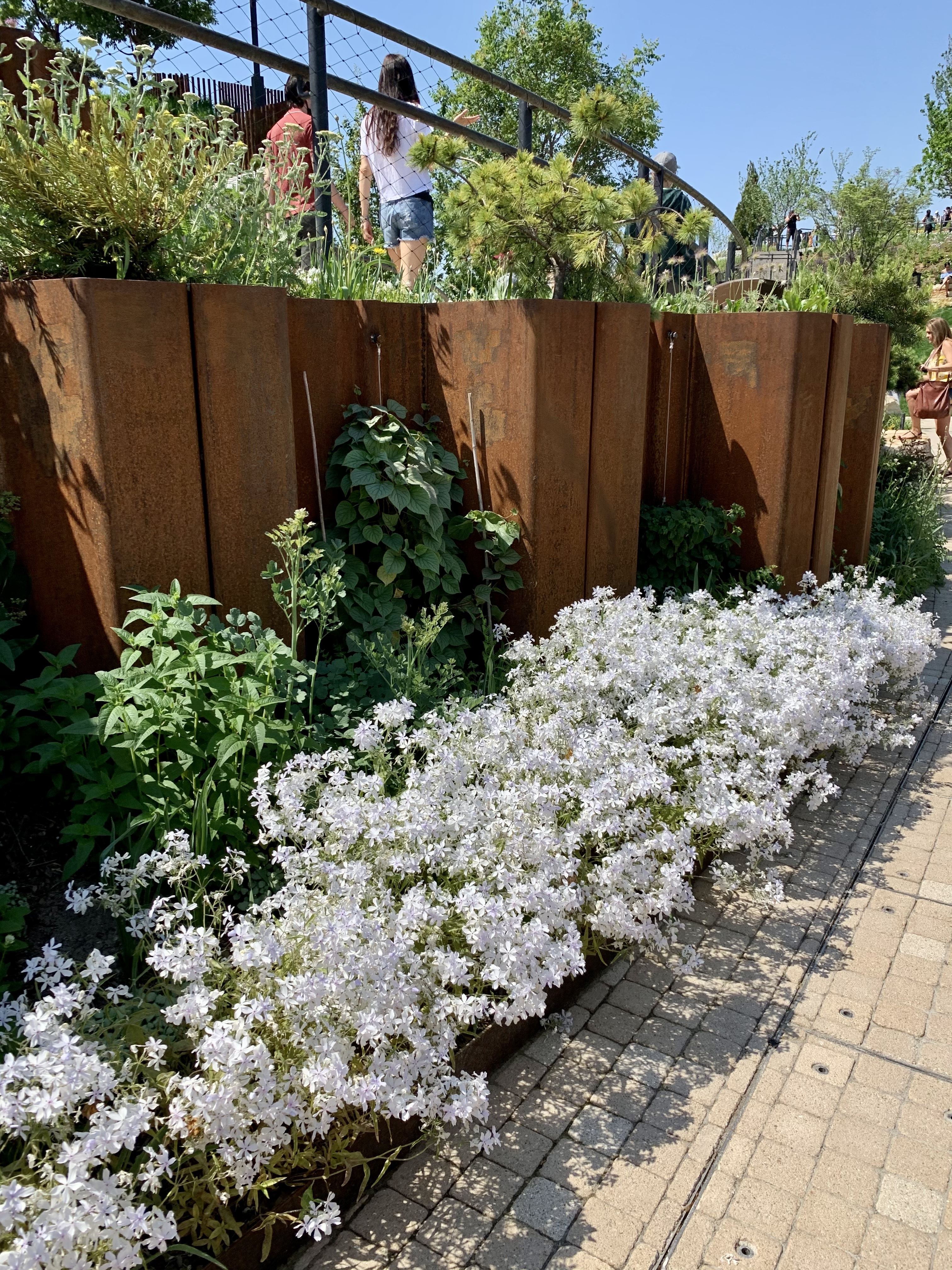
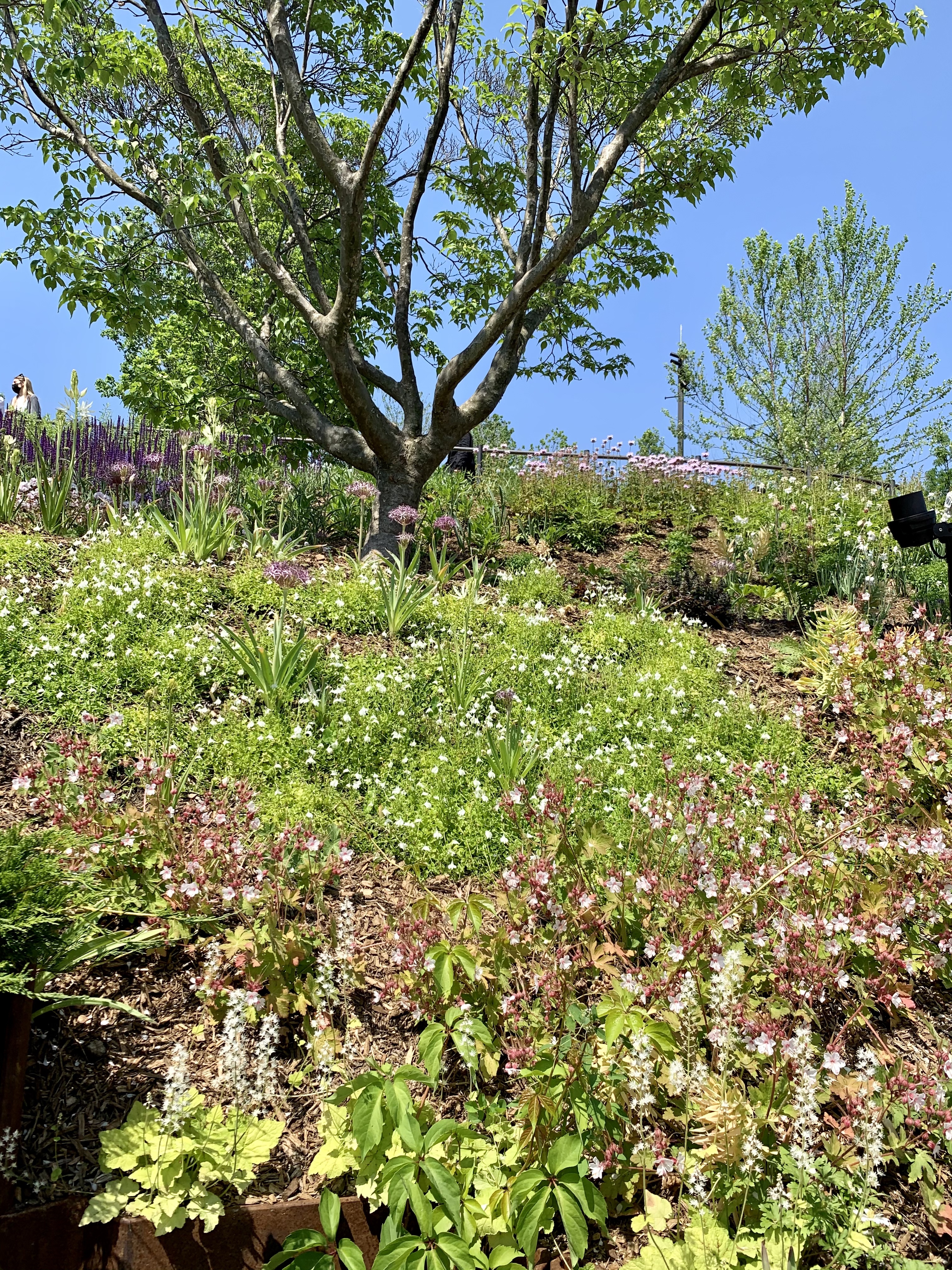
Flowers and other lush landscaping bloom atop the concrete petals. Once in the park, you barely notice the structure that is so striking from a distance – unless you happen to be walking under a few of them, as the park has many different elevations.

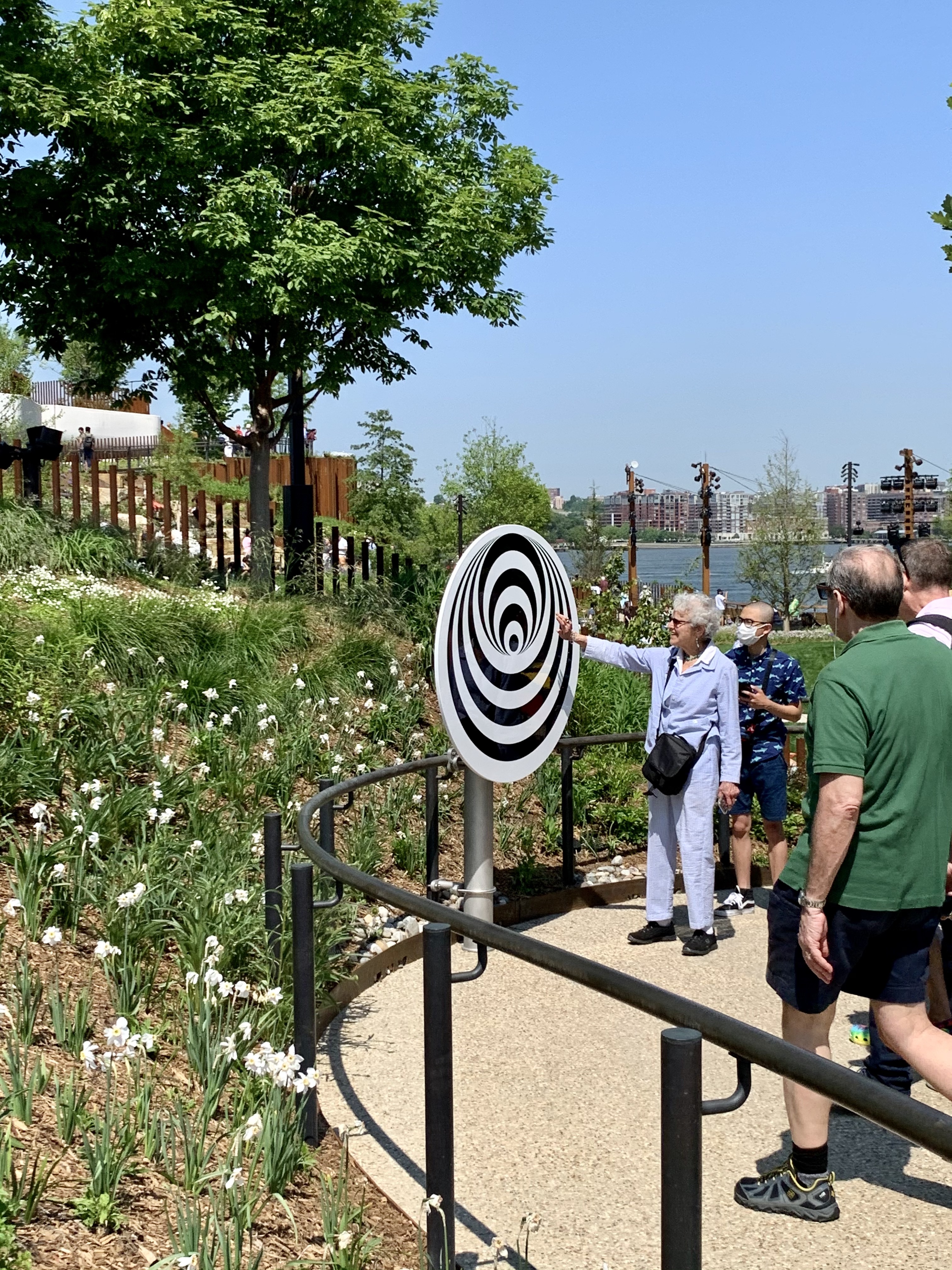
There are numerous whimsical touches – music you can create by jumping on tiles or pulling levers, and a few spinning devices for fun (or perhaps to hypnotize yourself or others).

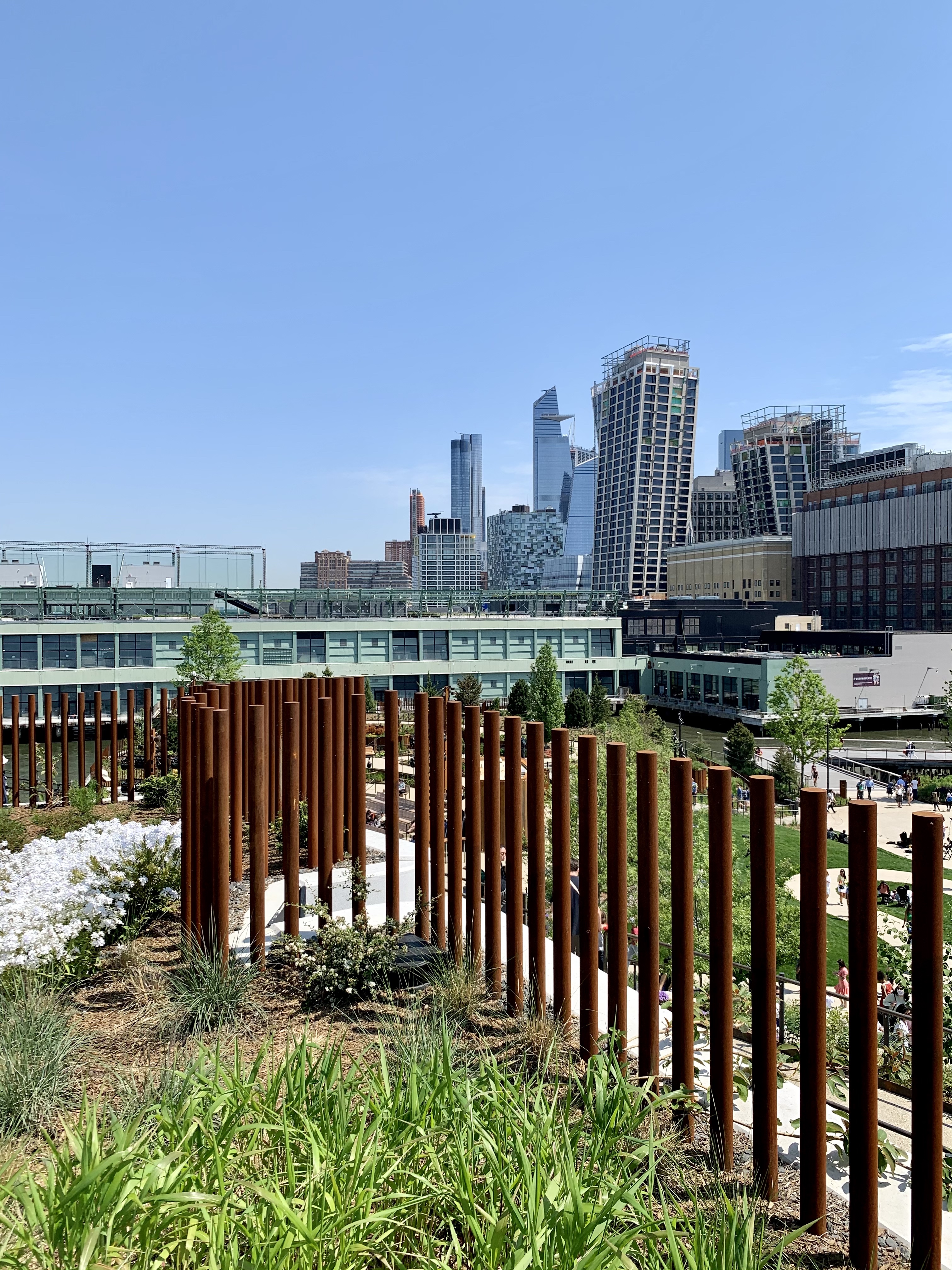
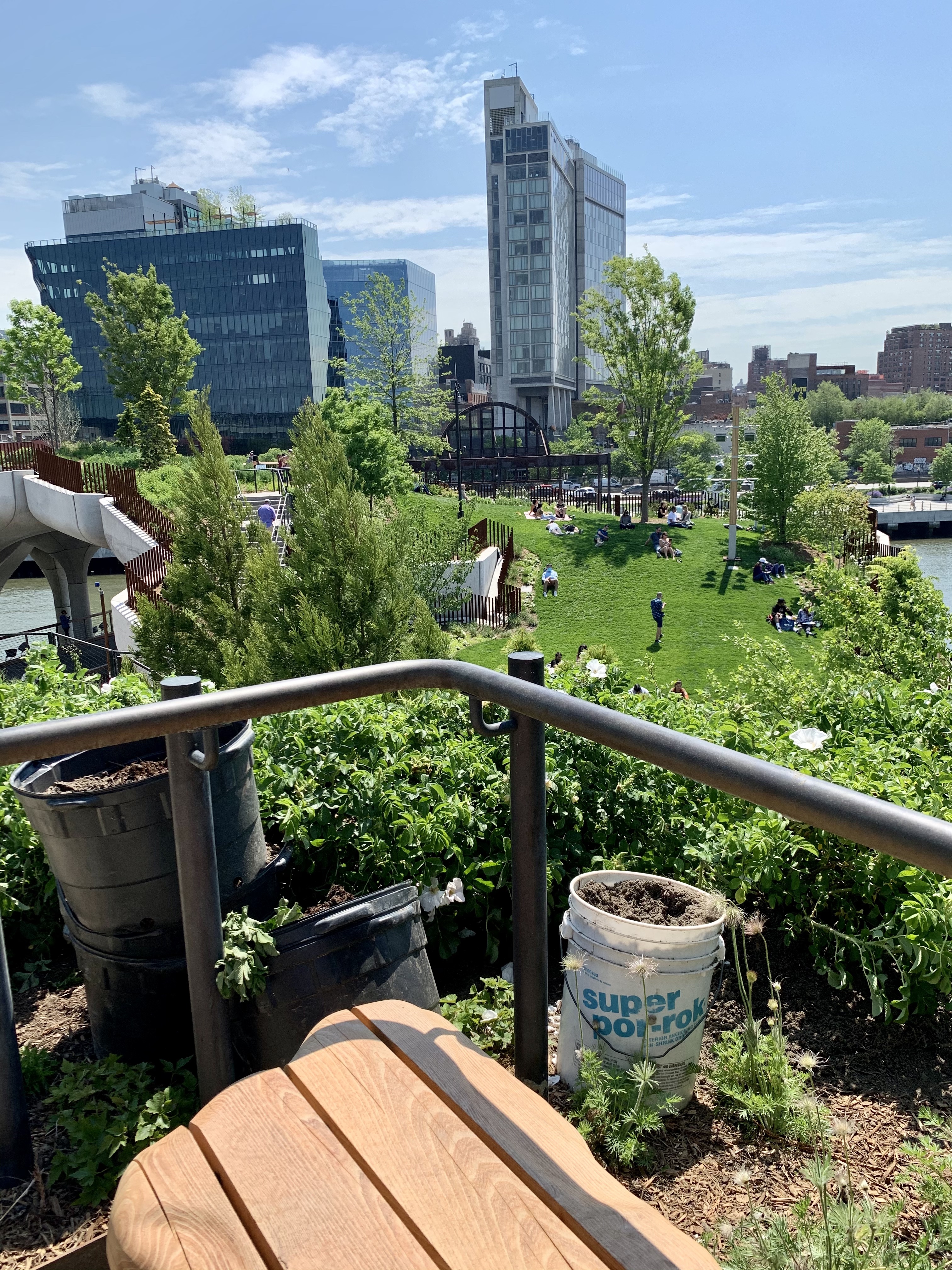
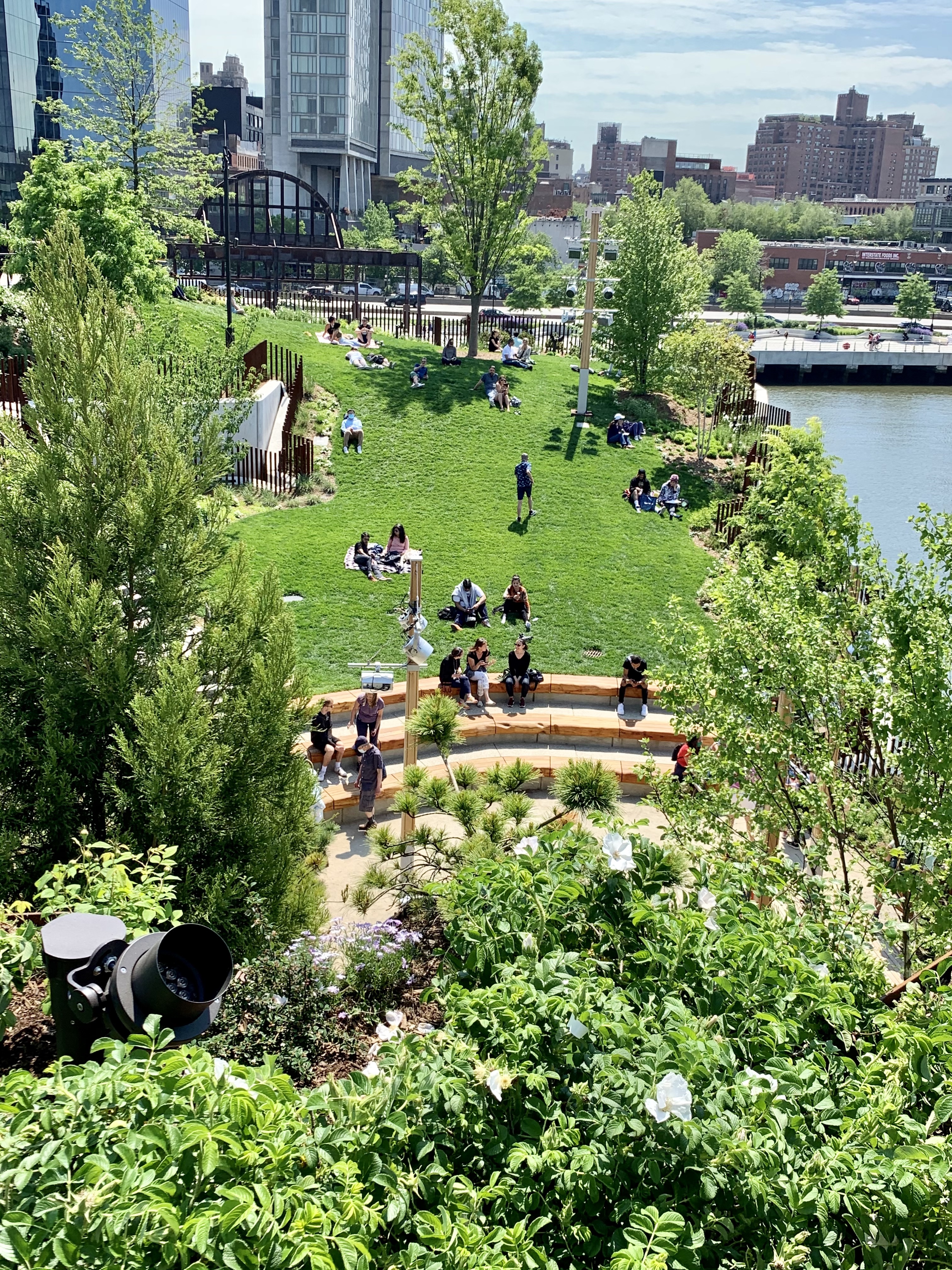
The views are spectacular as you wind your way around the park, and there are multiple places to sit – some intimate, and others grand (like the amphitheatre that will soon begin hosting performances).

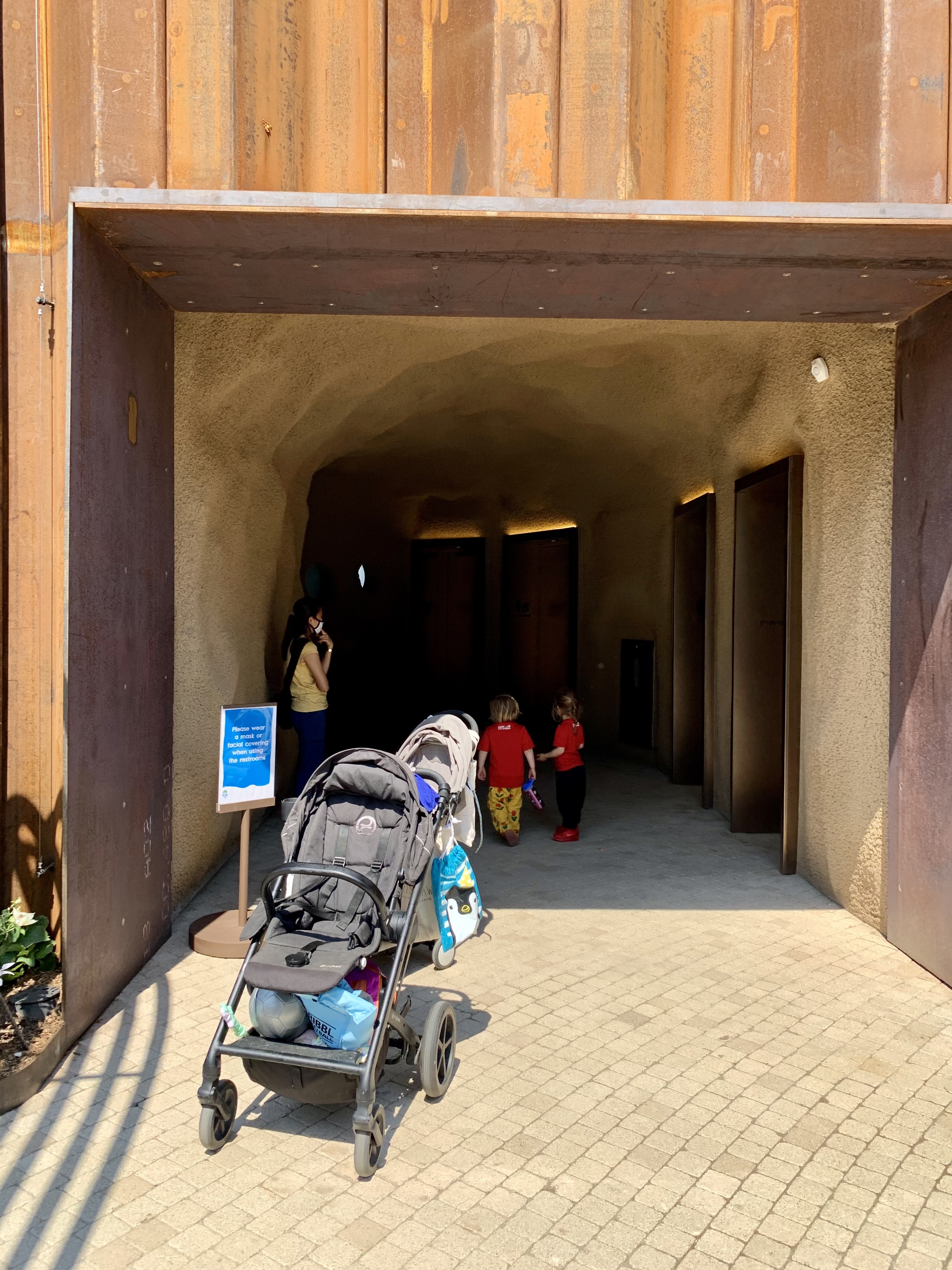
On opening day, they were giving out packets of seeds and colored pencils. Little Island also has large and very clean bathrooms, which is greatly appreciated.

When I went on opening day, I was there in the morning. At that point, they had a policy of requiring free timed tickets from 12-8 (reserve them here), but since then the park has been so popular that they require the tickets from noon until closing. Little Island is open every day from 6AM to 1AM, and if you can’t get a timed reservation, you could try going in the morning. I was just there on a timed ticket on a weekend afternoon, and the need for a reservation kept the park from feeling crowded. The next time I have planned, it will be to meet someone for lunch there (and we have reservations already). I think the park is still working out when they release reservations and for how long in advance, so keep checking if you are looking for a reservation and at first they are all sold out.

I will never forget my first time on the High Line Park (see an old blog post here and another when they expanded the park here). I was charmed, and also exhilarated with the feeling of experiencing something completely new. In our concrete jungle here in NYC, it is all the more important that we find these places to experience nature and feel a sense of integration between artificial and natural worlds that we strive to bridge. Going to Little Island Park has given me that same sense of wonder and appreciation. New York City is constantly evolving, and after a year or more of pandemic hardship and isolation, gathering together in this innovative new space feels like a wonderful way in which change can also heal.

NYC/Julie Brannan videos 2021

I was fortunate enough in February to work with videographer Mikey Pozarik and with Compass to create two videos that express my ethos as a real estate agent. The first one (see it here) features a quote by E.B. White, and reflects my love for New York City as someone who was born elsewhere but has chosen to live and work in the city. I hope every day that I am able to bring my passion to this city I love. The second one (see it here) is more of a manifesto. The quote is attributed to Steve Jobs, and I am drawn to the work ethic it expresses. I truly enjoyed making these videos – the locations were all areas of the city I have a particular relationship with, and selecting and recording the quotes was also a process I found artistically and creatively challenging in a very positive way. Even the process of deciding how to go about making these videos helped me think about and crystallize who I am in my role as a real estate agent. My thanks to Mikey and to Compass for helping these projects come to life.

The Edge Outdoor Observatory at Hudson Yards

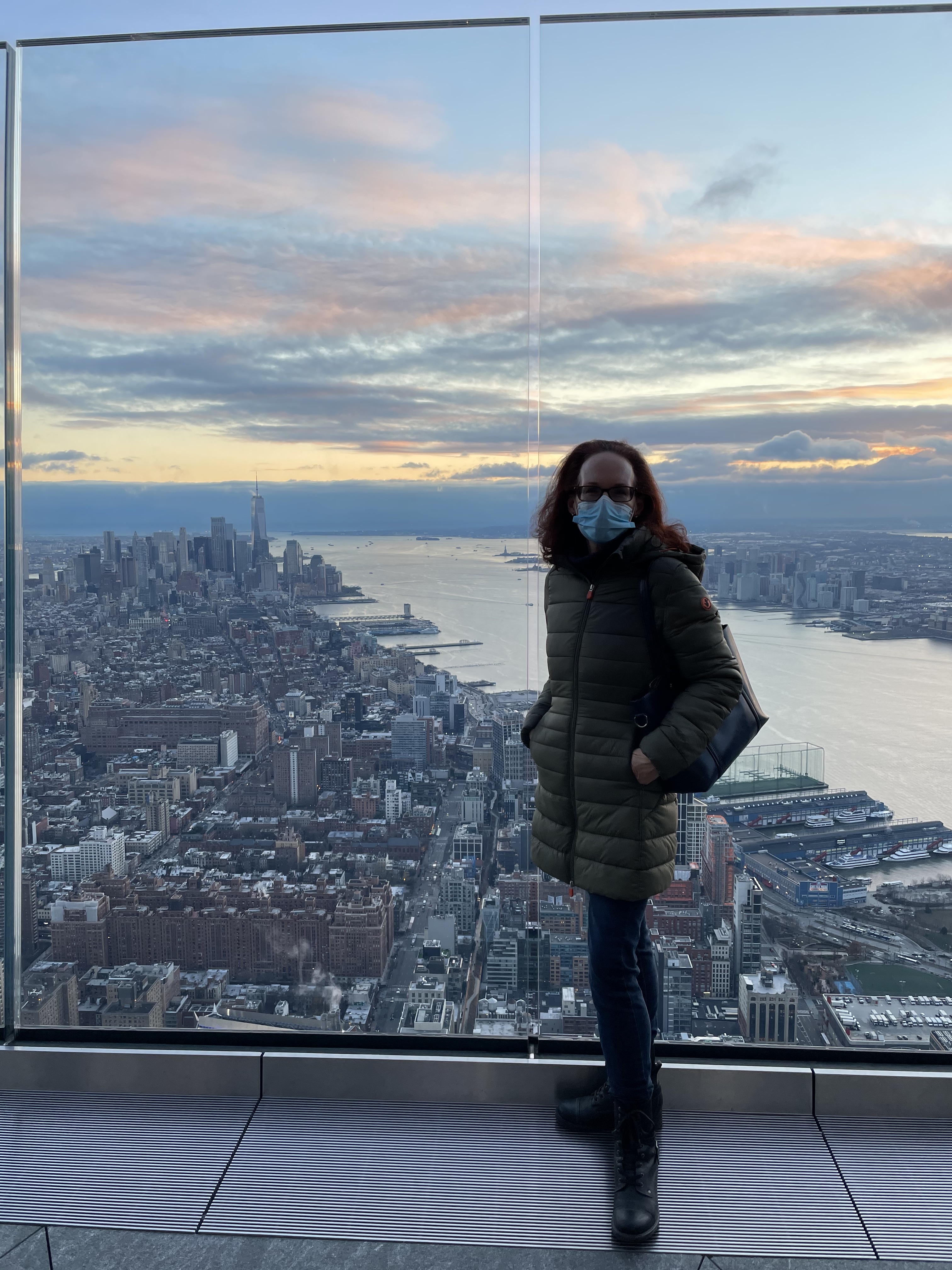
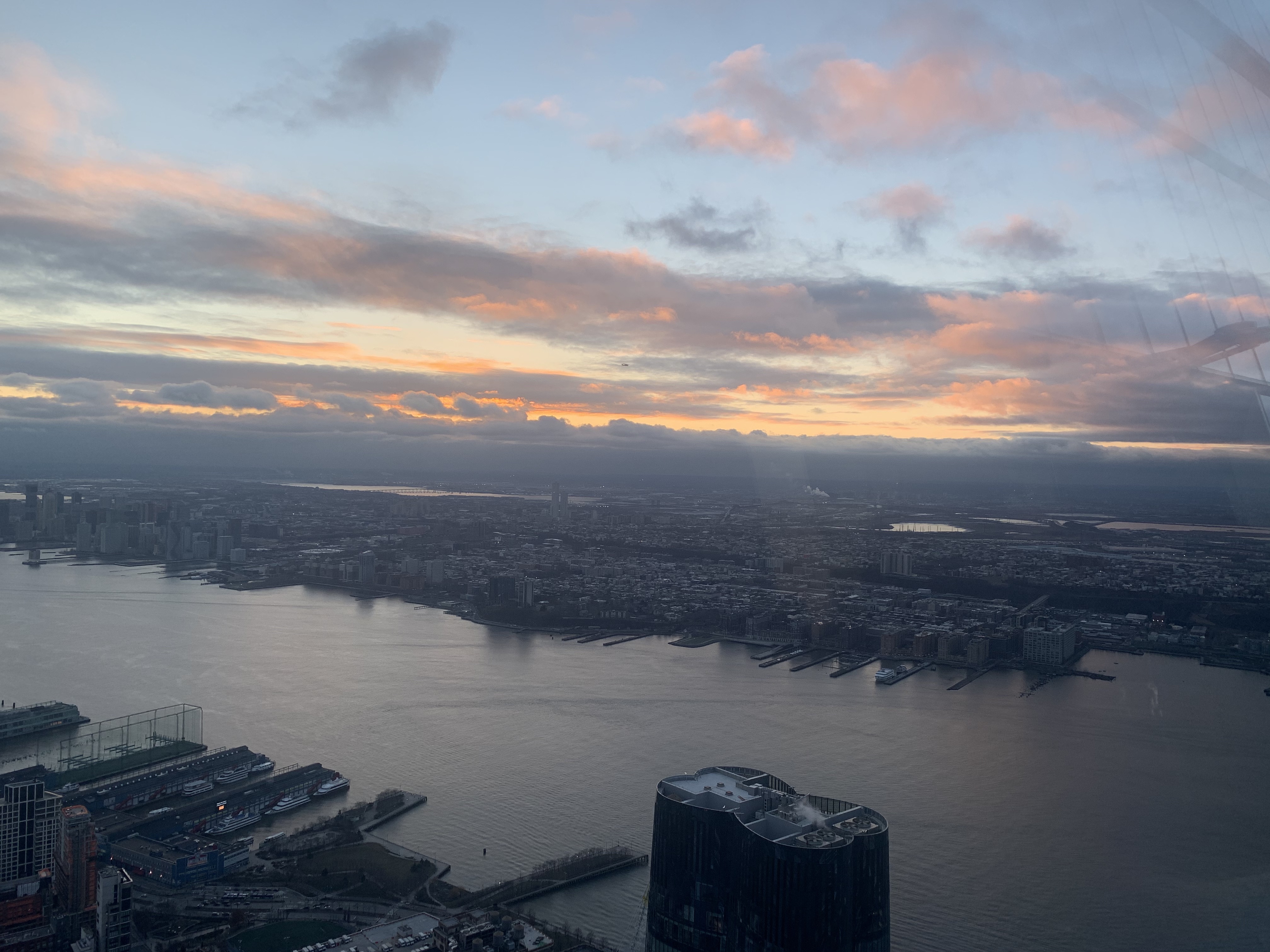
Always looking for another way to look at the New York City that I love so dearly, I was eagerly anticipating the opening of The Edge observatory in Hudson Yards last year. It opened on March 12, 2020 – and was shut down almost immediately by the pandemic. The Edge reopened in the fall with capacity restrictions, a mask requirement, and physical distancing, and I was able to experience it early in 2021. I had decided that it would be optimal to go for sunset, and those tickets sell out quickest (and have a surcharge). Given that going in inclement weather would reduce the view, I was looking for a time to buy tickets a day or so in advance when the weather was more predictable, and was able to once the holiday season increase in interest had passed.

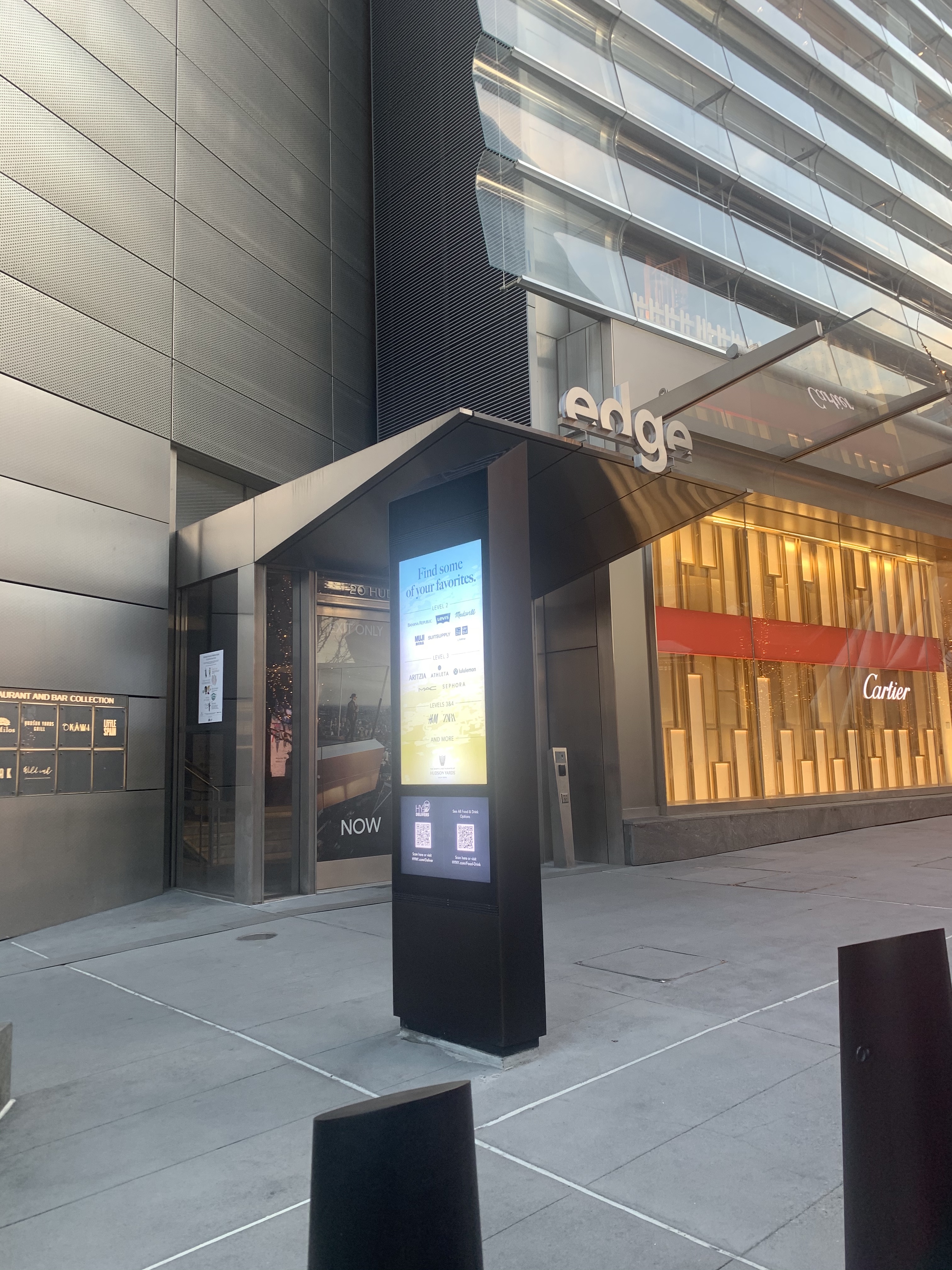
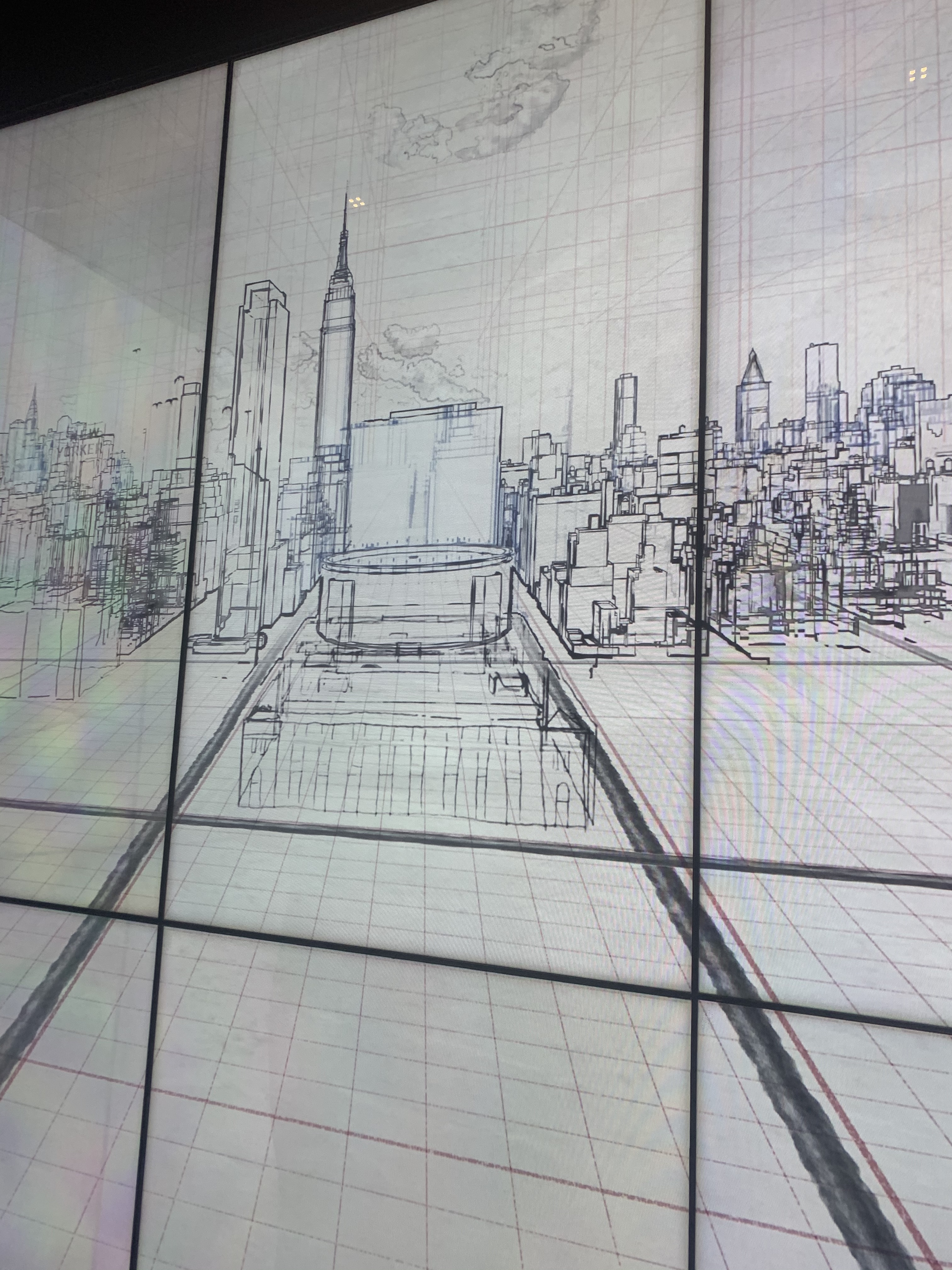
The entrance is just to the left of the shops at Hudson Yards, if you are standing with the Vessel behind you. Everything is clearly marked, and you will be unable to enter and have your ticket scanned until about ten minutes before the entry time listed on your ticket. After being scanned in, you walk through a high-tech display about the development of Hudson Yards (which is still only partially complete at this point), before entering an elevator to go up. A virtual display of the history of the area and the views plays as you ascend.

The time I had been able to get was 4:10, on a day when sunset would be just after 4:41. With the various procedures required to get up there, it was getting pretty close to sunset. We discovered that you needed to wait on line up in the inside area to get to the outside observatory, due to covid capacity limitations. Would we get out there in time?

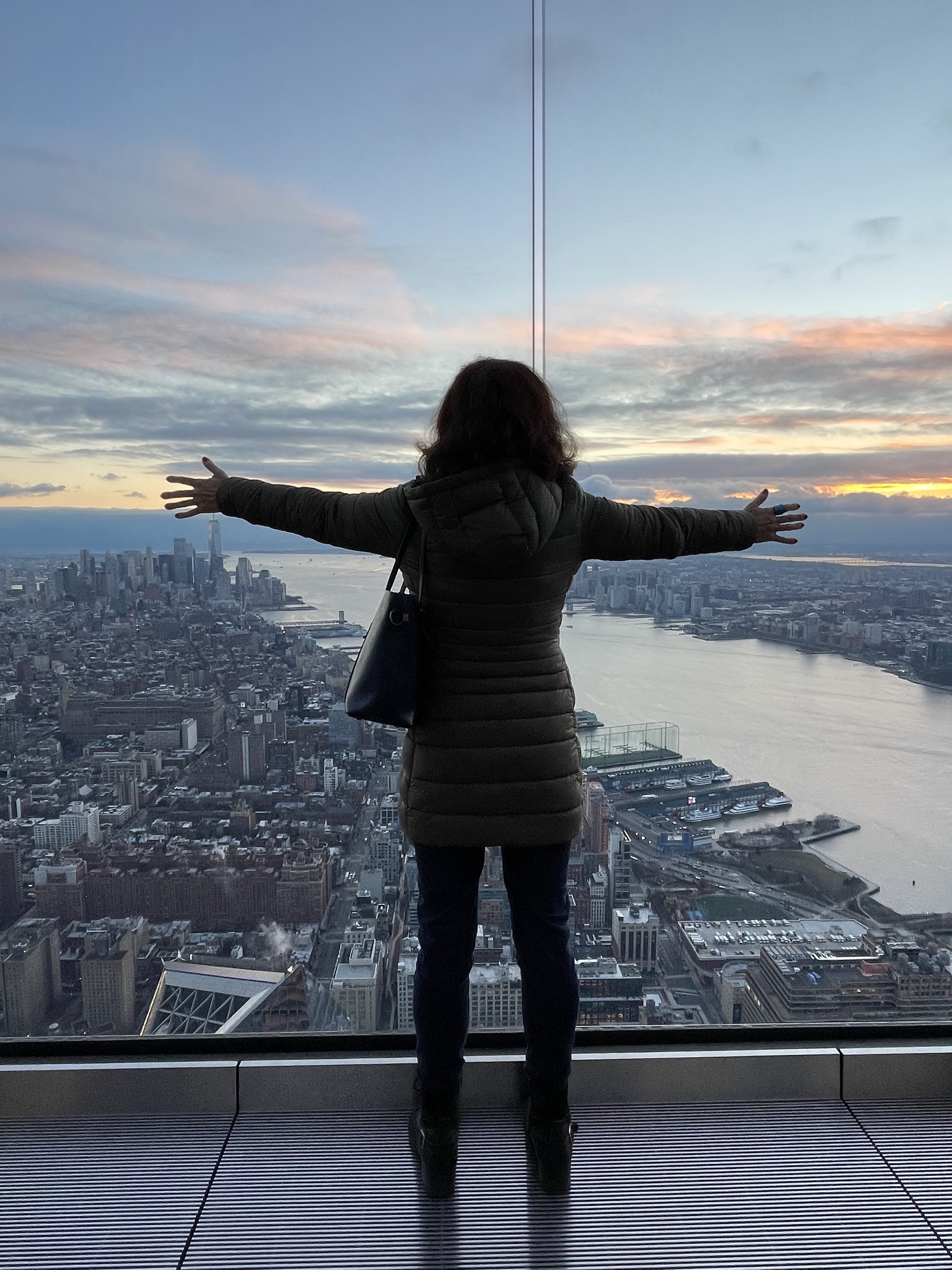
Luckily, things were run very smoothly, including limitations on time people could spend in the various corners outside, so we were able to get out before the sun had fully set. The Edge is the highest outdoor observatory in the Western Hemisphere, and with its unique design, you feel it. You are on a huge triangle protruding 80 feet out from the side of 20 Hudson Yards, 100 floors (or 1,131 feet) up. There are only glass walls surrounding you, and open air above.

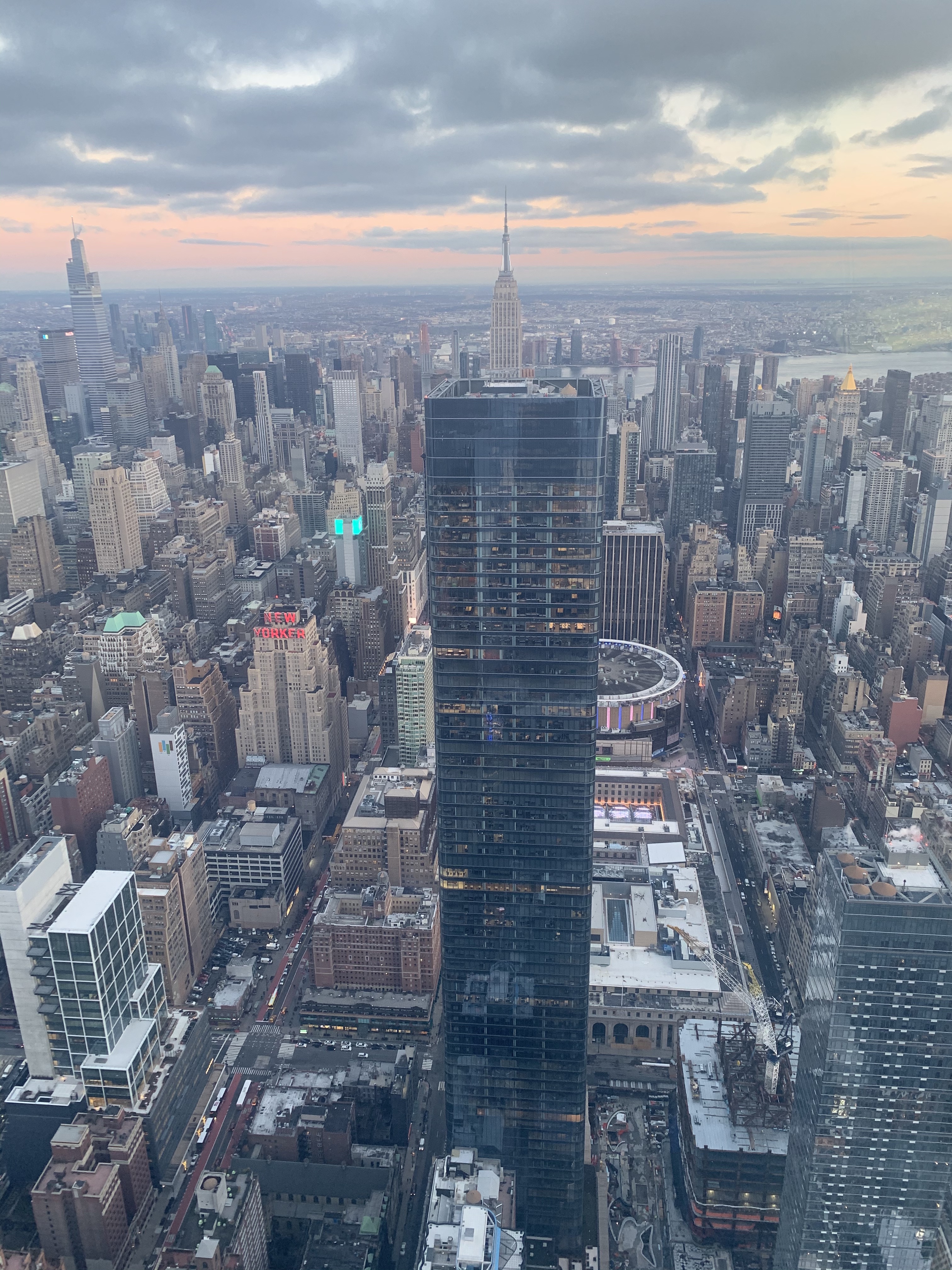
And the views! Just lovely, and a different perspective from midtown observatories like Top of the Rock or the Empire State building, or One World Trade downtown.

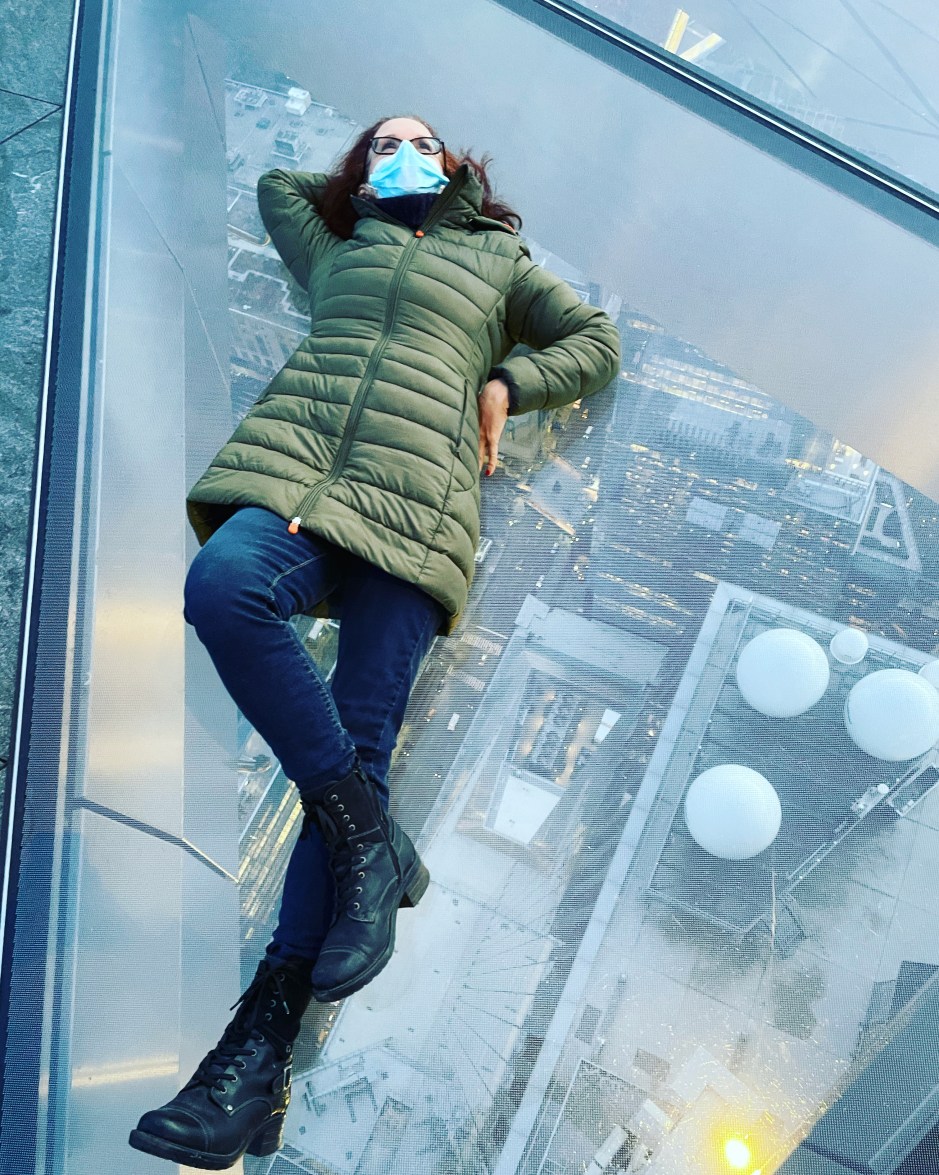
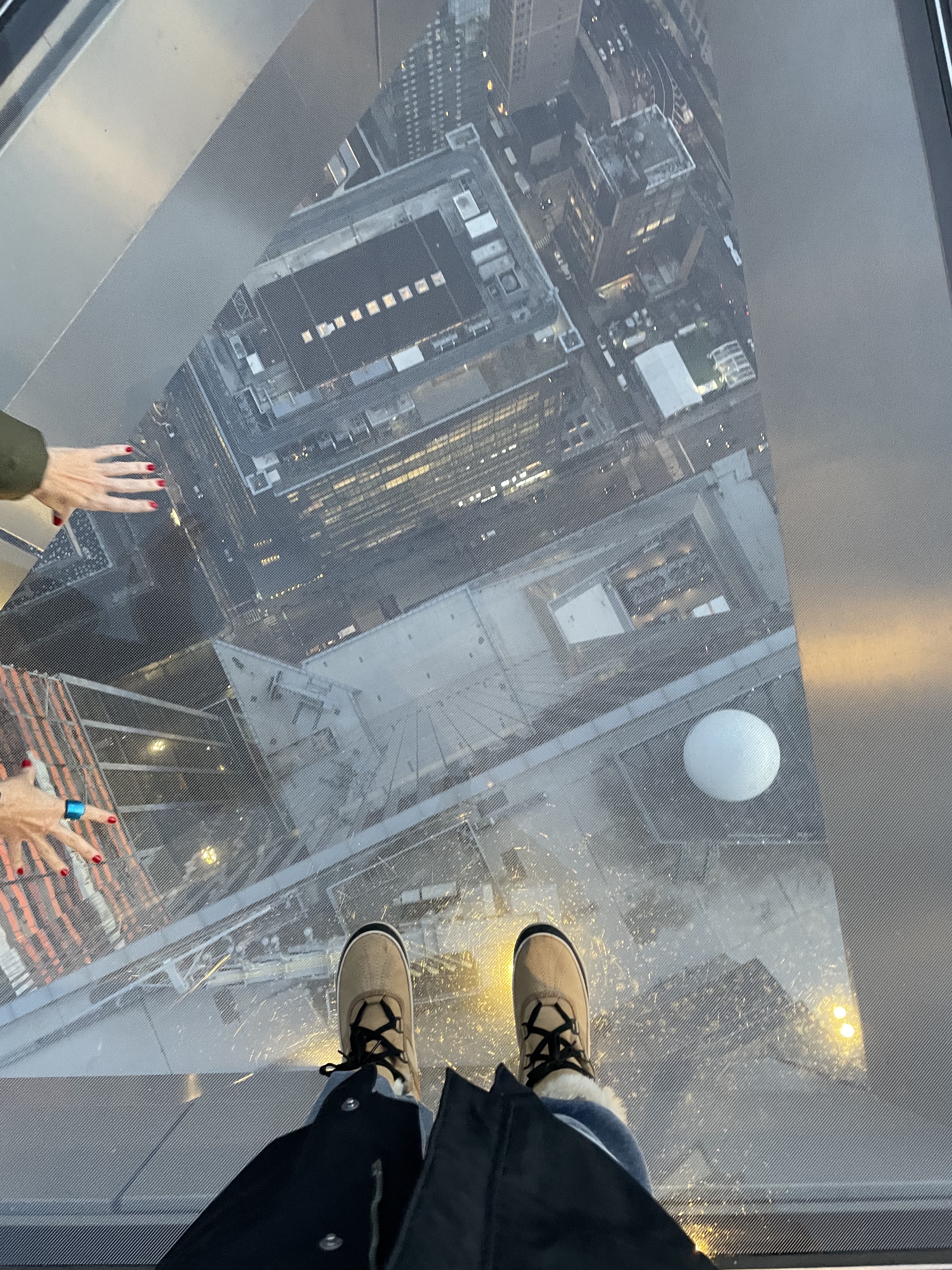
One of the most exciting things to do – if you can take it – is to go on top of the clear glass floor area that they have near the point of the triangle jutting off into space. It’s a long way down, and that distance is quite tangible! This is one of the places where they have staff monitoring your time, and you have one minute alone on the glass floor before you need to give someone else a turn. I found that the staff at The Edge were great at maintaining physical distance between visitors and monitoring time limits.

There are stairs with seating that are reserved for those who have ordered champagne or snacks from the bar. As sunset passed and the lights of the city began to sparkle, the experience transformed again from end of day to NYC night magic. Having been to several observatories in the city, I find this newcomer to the scene to be the “cool kid” of the bunch, and well worth your time. It’s not cheap, but there is a (small) discount if you are a NYC resident. If doing the sunset experience, try to get the earliest time you can within the sunset window, as it turns out they don’t limit your time while up there (just at a few of the photo opportunities) and I felt a little rushed getting out there for sunset with the timed ticket I had. While outside, we heard a cheer and caught the end of a successful marriage proposal . . . New York City, a little thrill, and romance – what more can you ask of an adventure these days?

NYC Holiday Decorations 2020

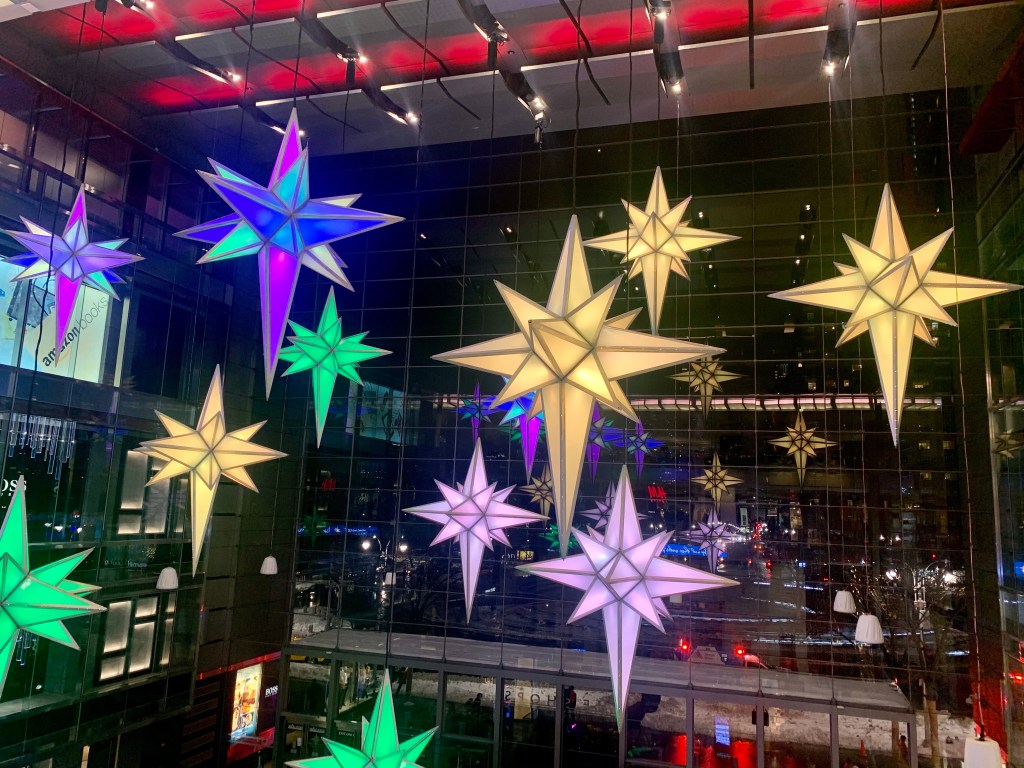
The year 2020 in New York City has certainly not turned out as we all would have hoped when they were clearing confetti from Times Square on January 1. This holiday season is unlike any other one – no Radio City Christmas Spectacular, or NYCB Nutcracker at Lincoln Center, or Santaland at Macy’s, just to name a few- but despite the pandemic, the city came through again with plenty of gorgeous lights and decorations.

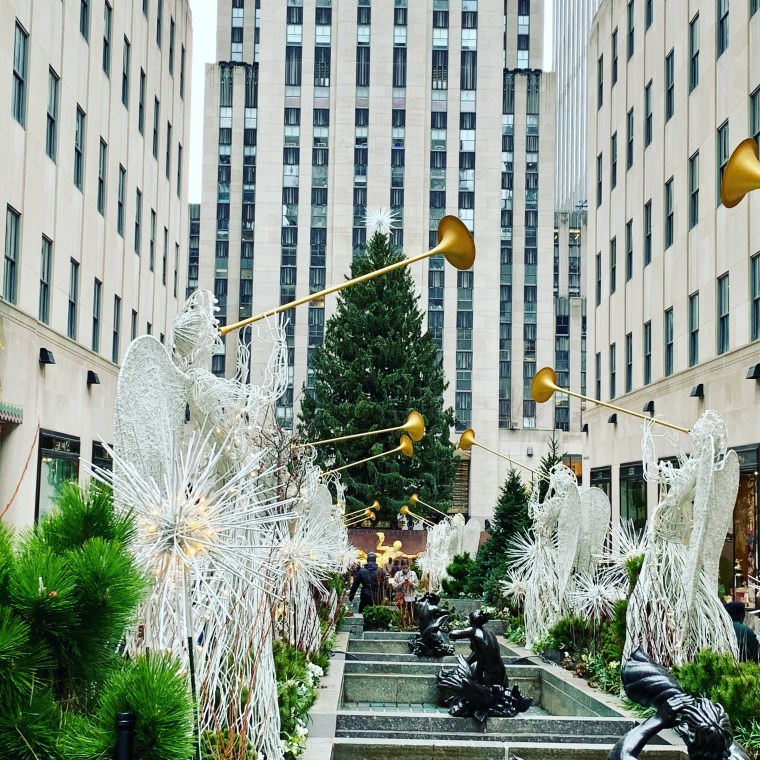
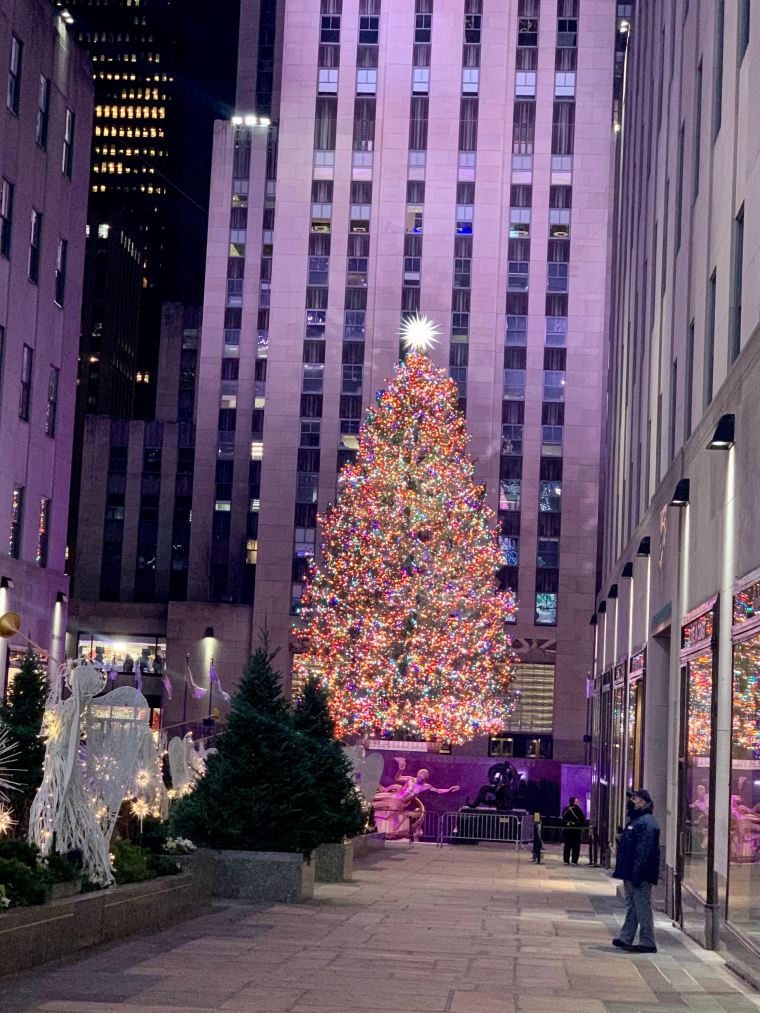
I was so relieved when I heard Rockefeller Center would have a tree again this year. They limited access so that crowds didn’t gather unsafely taking photos under the tree, but it was easy to see it from Fifth Avenue (actually easier than usual, with so few tourists here).

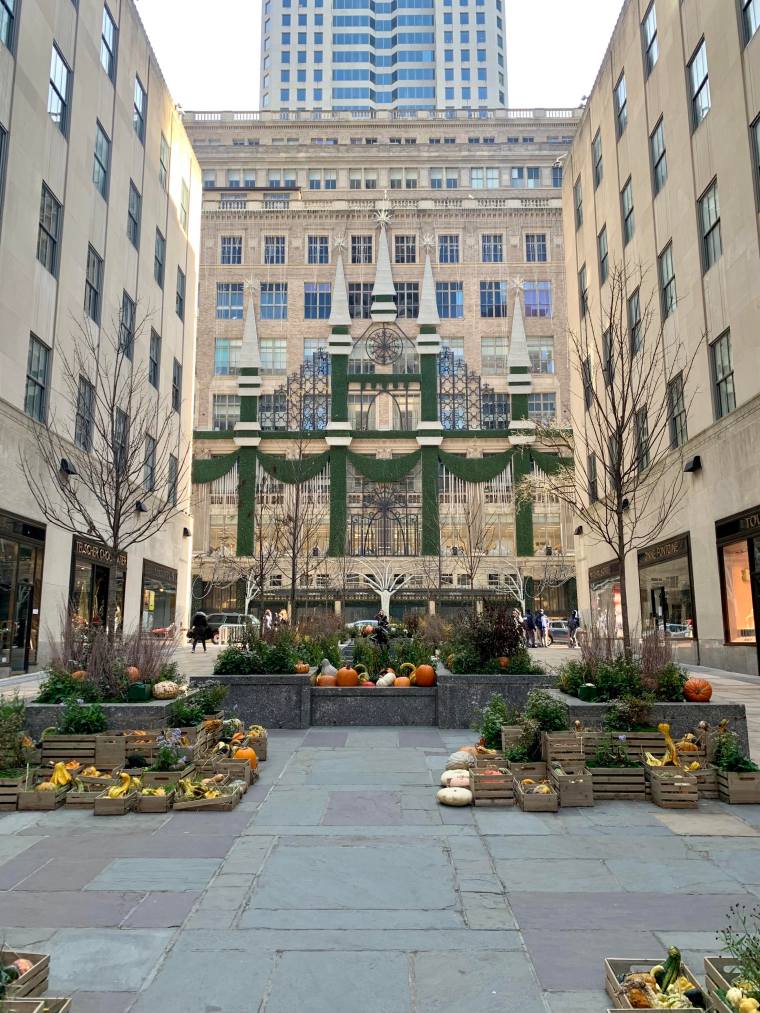
Similarly, it was great to see Saks continuing their tradition of decorating the facade of their building on Fifth Avenue (just across from the Rock Center tree) with a light/sound show every 15 minutes after dark. To see a video sample, check out my Instagram post here.
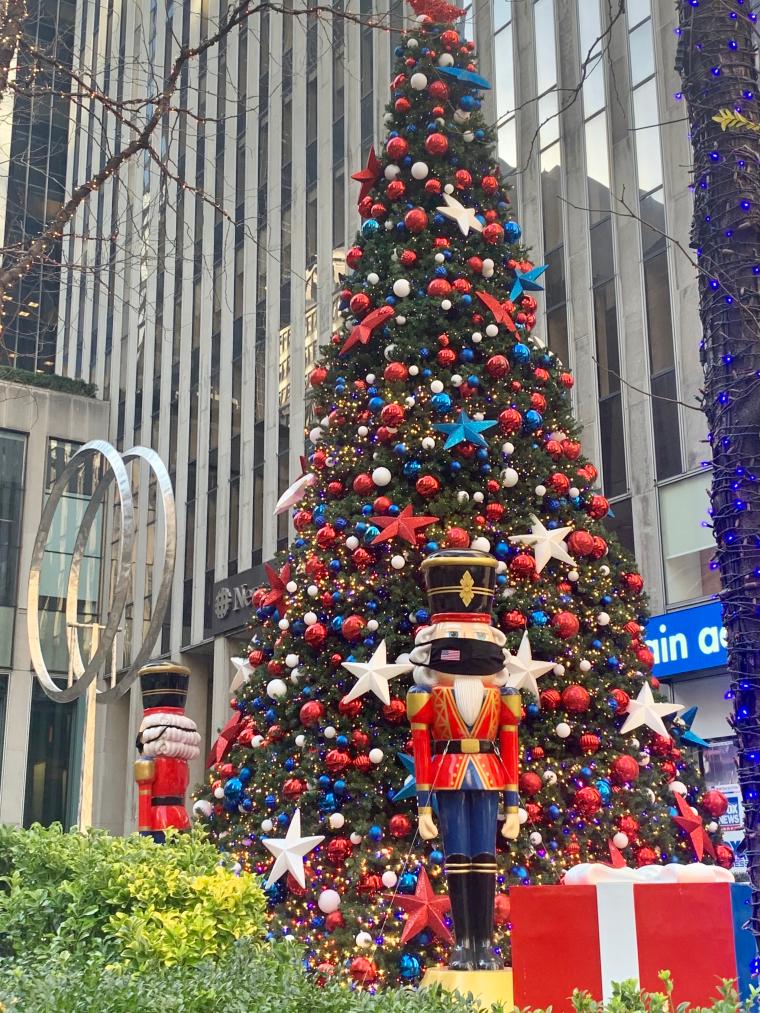
This display on Sixth Avenue is a favorite of mine. Again, if anything it is easier to appreciate this year with the crowds so light.

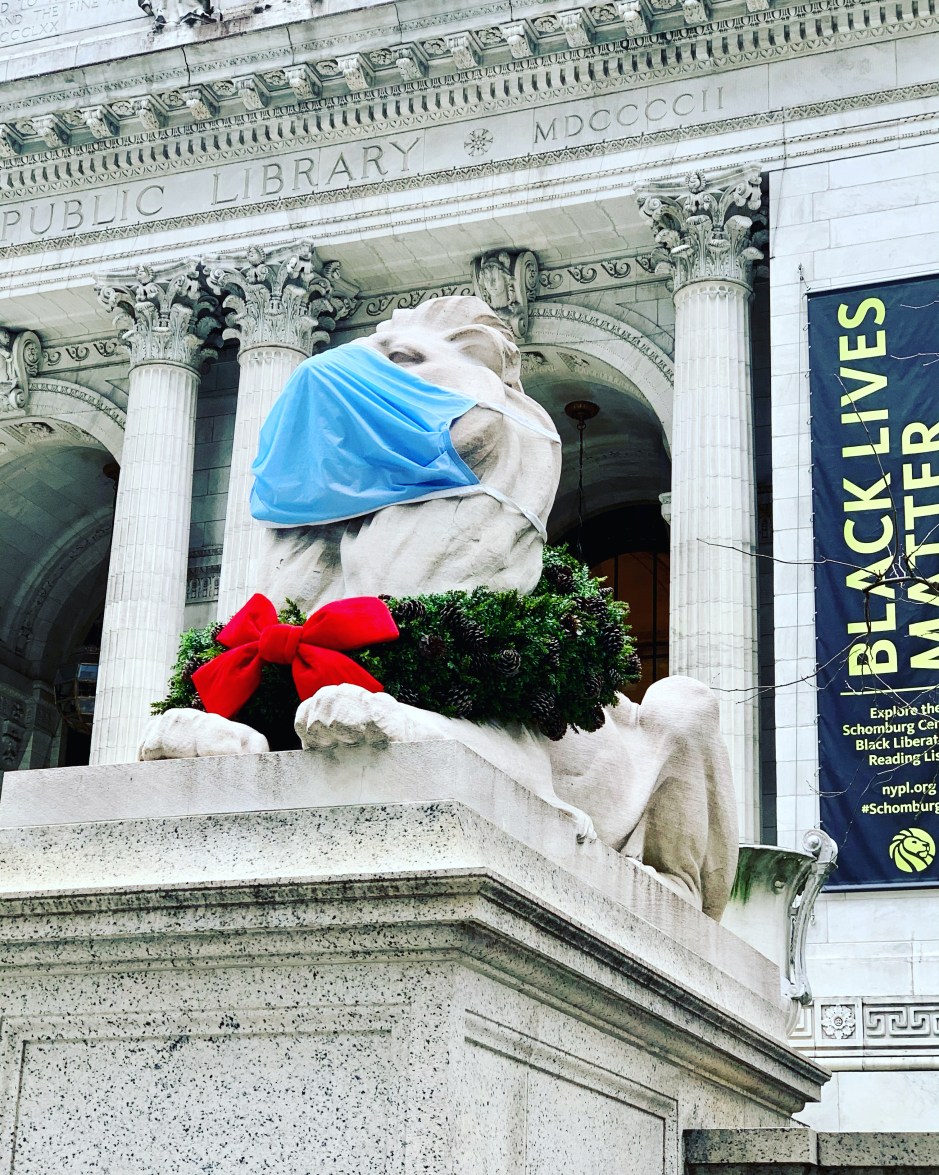
Many holiday displays this year managed to work proper modeling of mask wearing into their offerings, including the New York Public Library lions and this nutcracker on Sixth Avenue.

Walking along Fifth, you could mail a letter to Santa, or listen to holiday music played from the Cartier display.

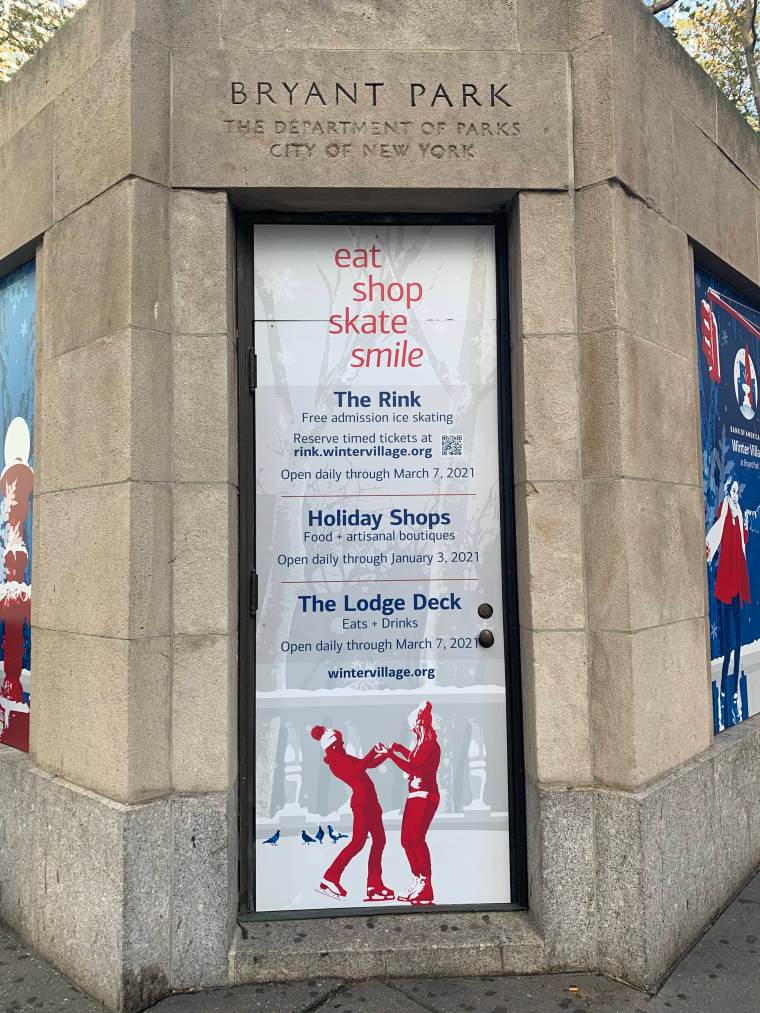
The Winter Village at Bryant Park and holiday market was back this year, just with more space between vendors and lighter crowds. Skating is going on as well, you can see a video of that here. To see this and many other holiday markets a few years ago, click here.
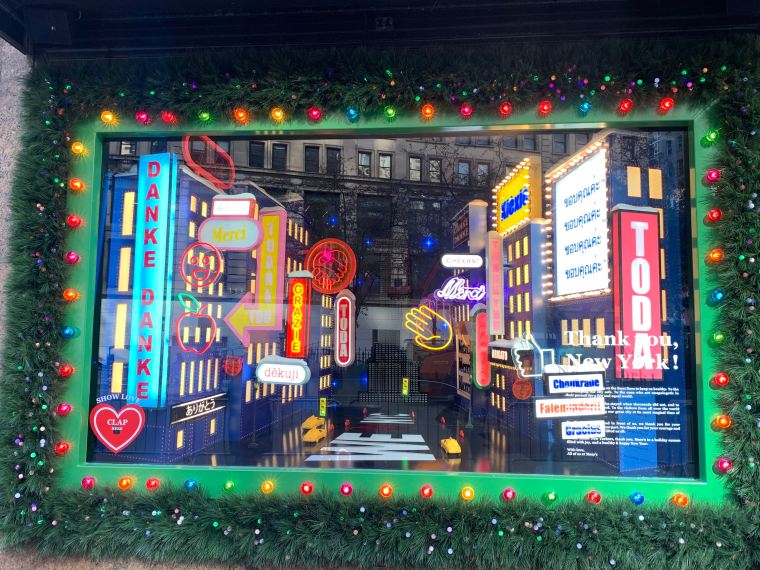
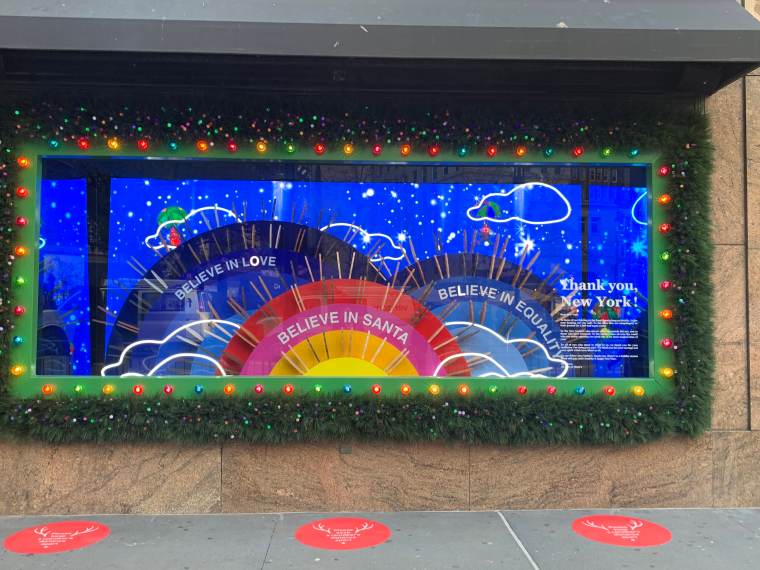
There was no Macy’s Thanksgiving Day parade winding through the streets of Manhattan this year, but the Macy’s windows remind us of the importance of gratitude this year – for our health care and essential workers (and for our health if we have been lucky enough to maintain it).

There’s nothing quite as magical as New York City at Christmas, and we needed that delight and joy more than ever this year.

St. Patrick’s Cathedral was as majestic as ever this Christmas season.

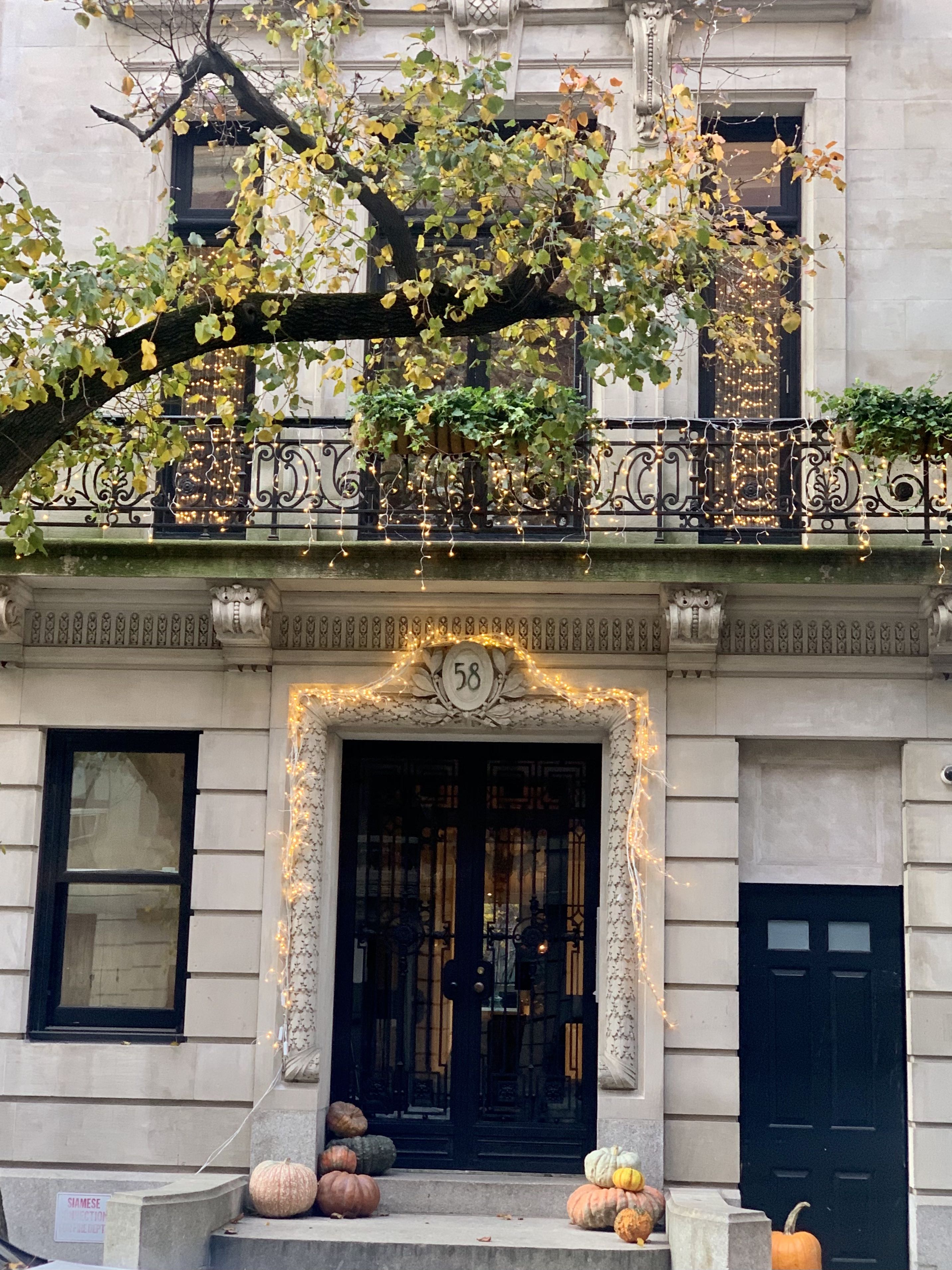
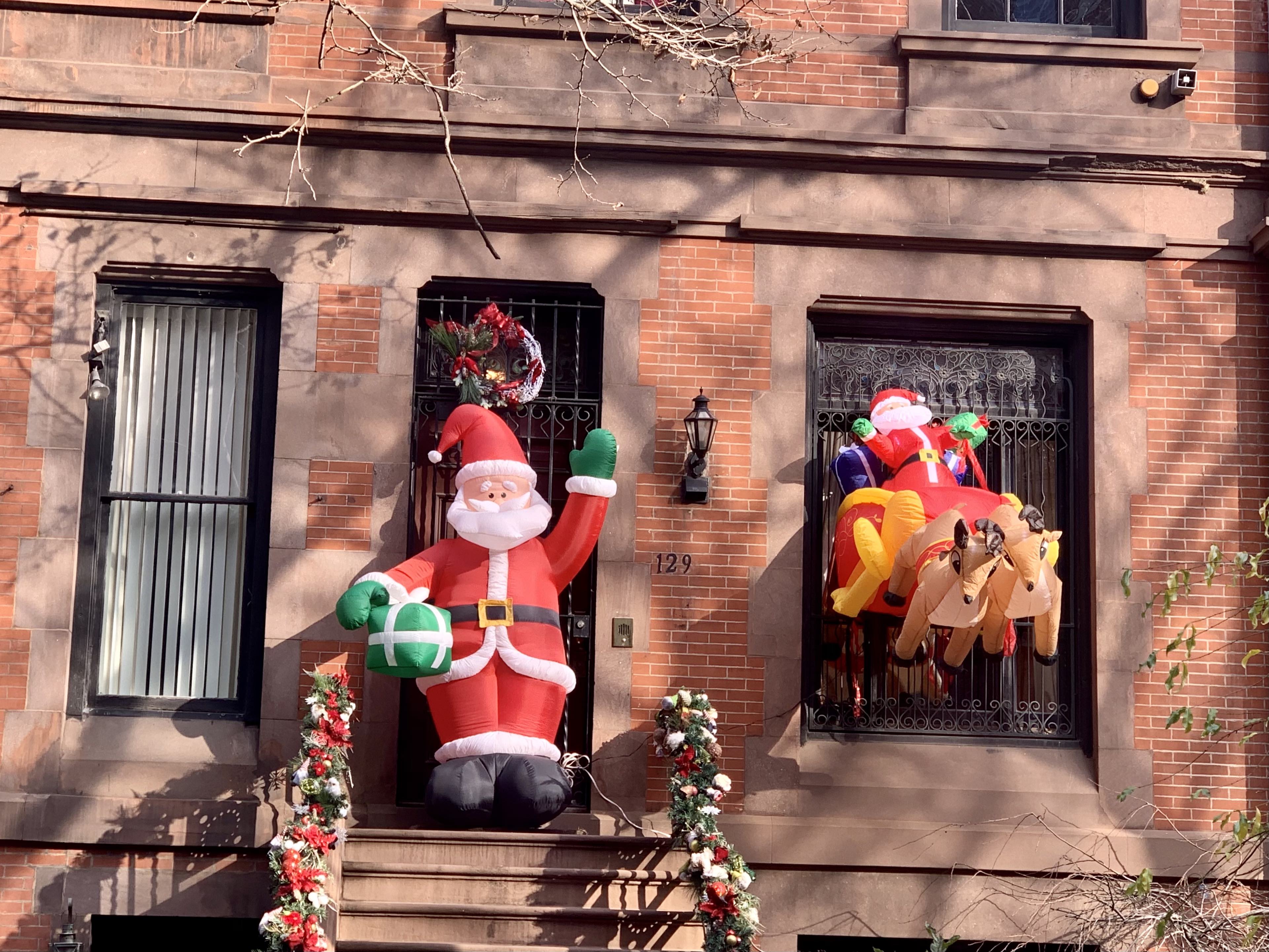
Once again, New Yorkers decorated their homes to celebrate this dark time of year – in a very dark year – with light, humor, and bright color. To see a previous blog post about residential holiday decorations, click here.

So the dropping of the Times Square ball will be televised this December 31, but will occur in an empty area gated to prevent people from gathering. Regardless, the rejoicing that will ensue as we welcome in 2021 will not be lessened in any way by celebrating at home. As I wrote on the piece of confetti that will fall as 2021 arrives in NYC, I have tremendous hope for health, love and prosperity in this new year ahead.
2019 Dyker Heights Holiday Lights

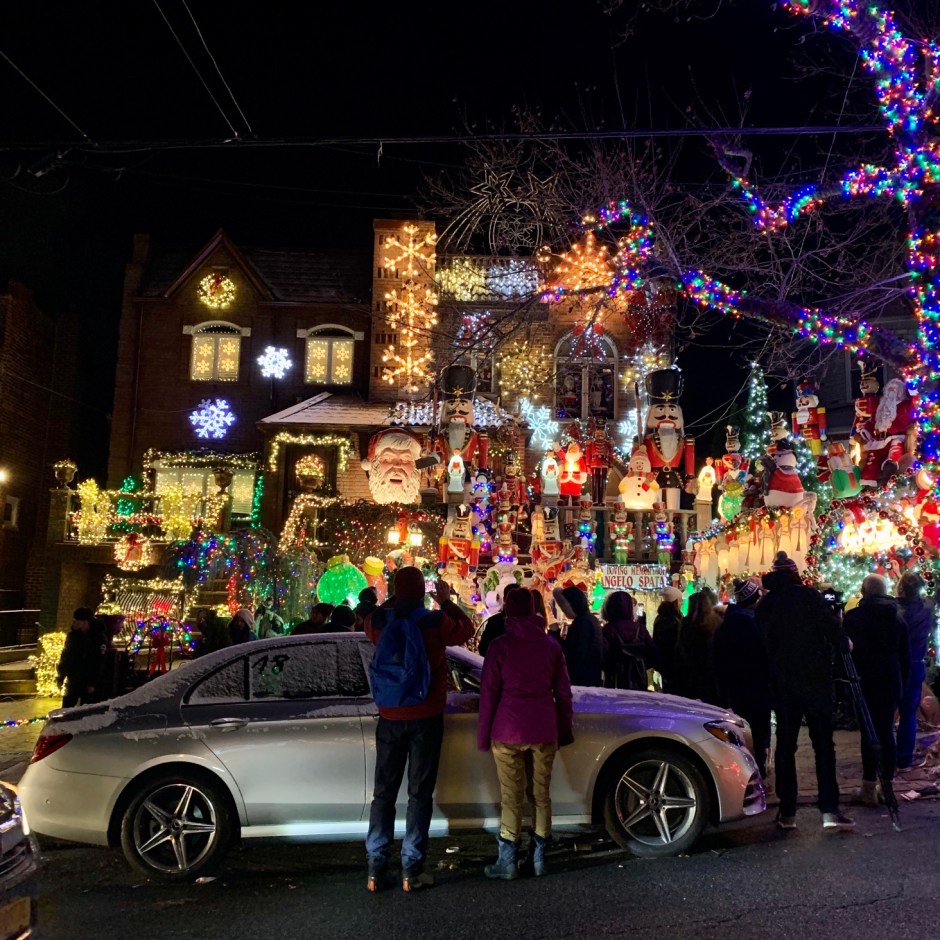
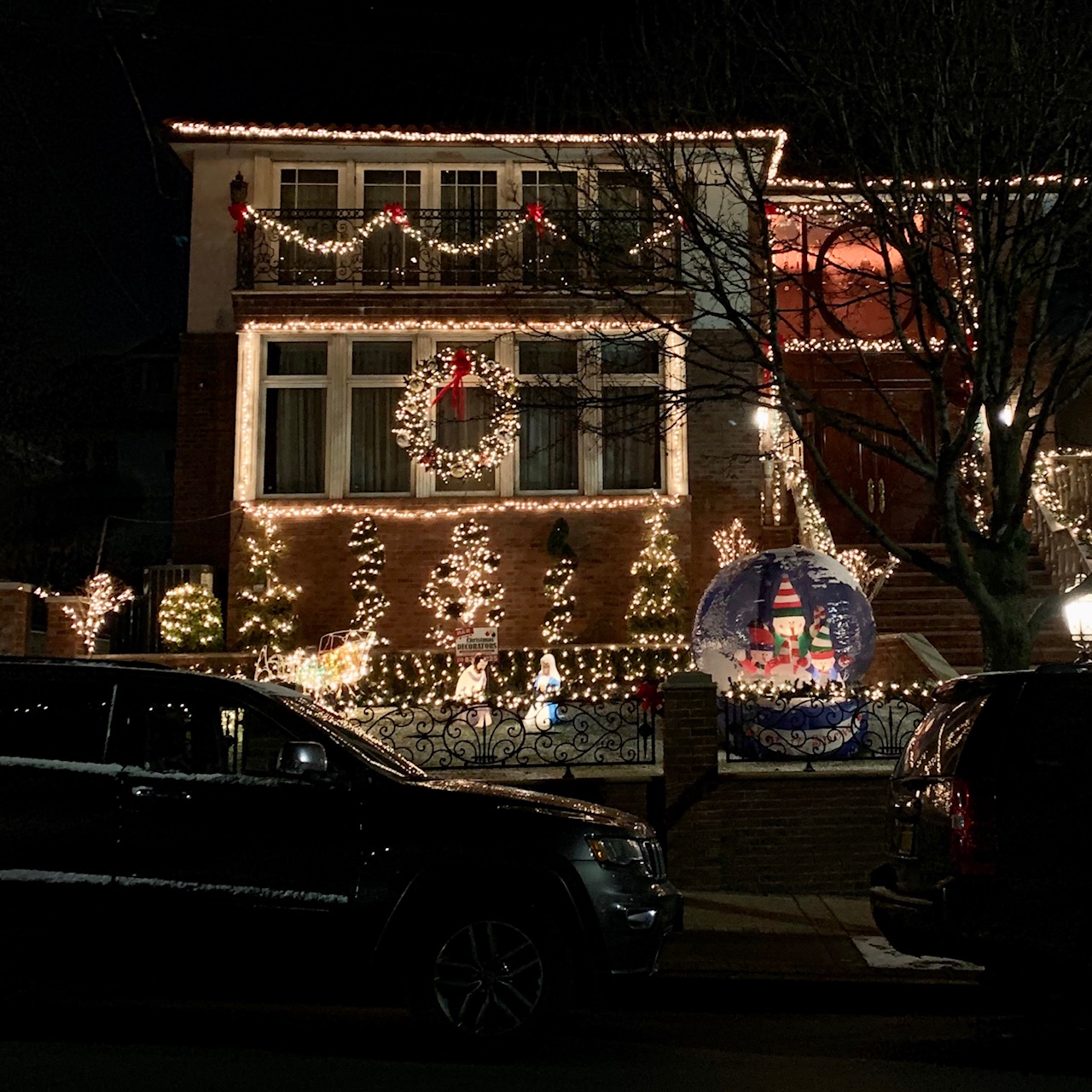
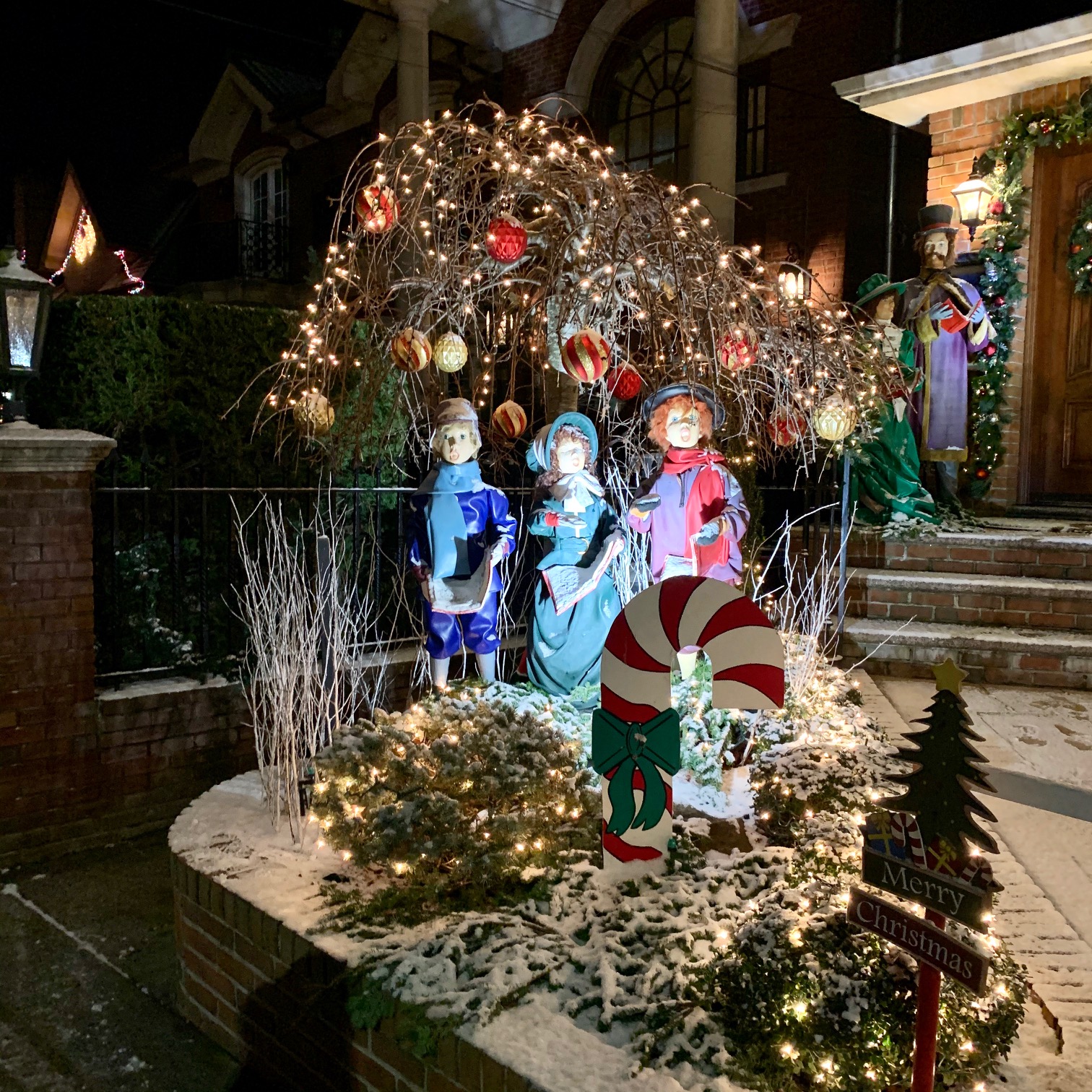
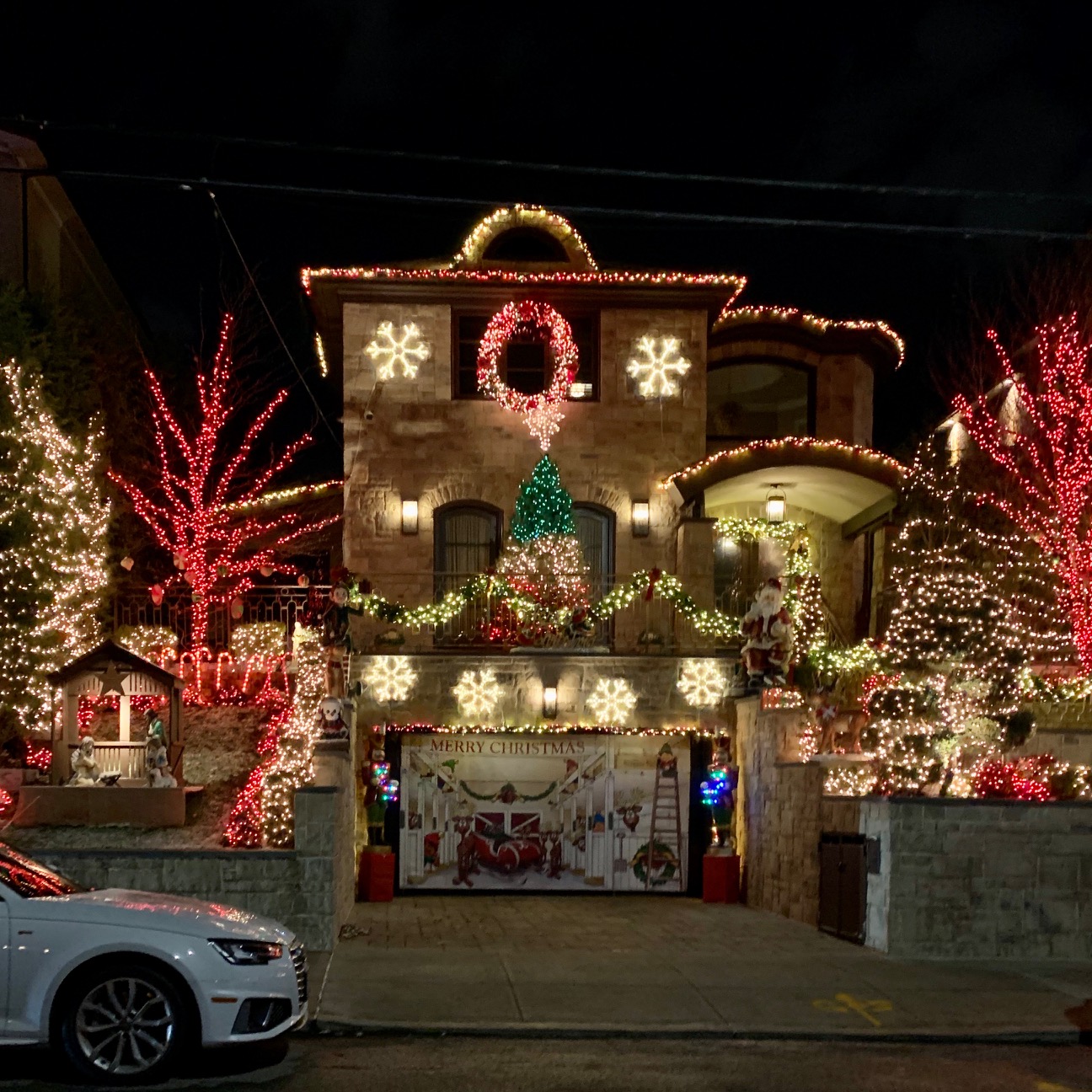
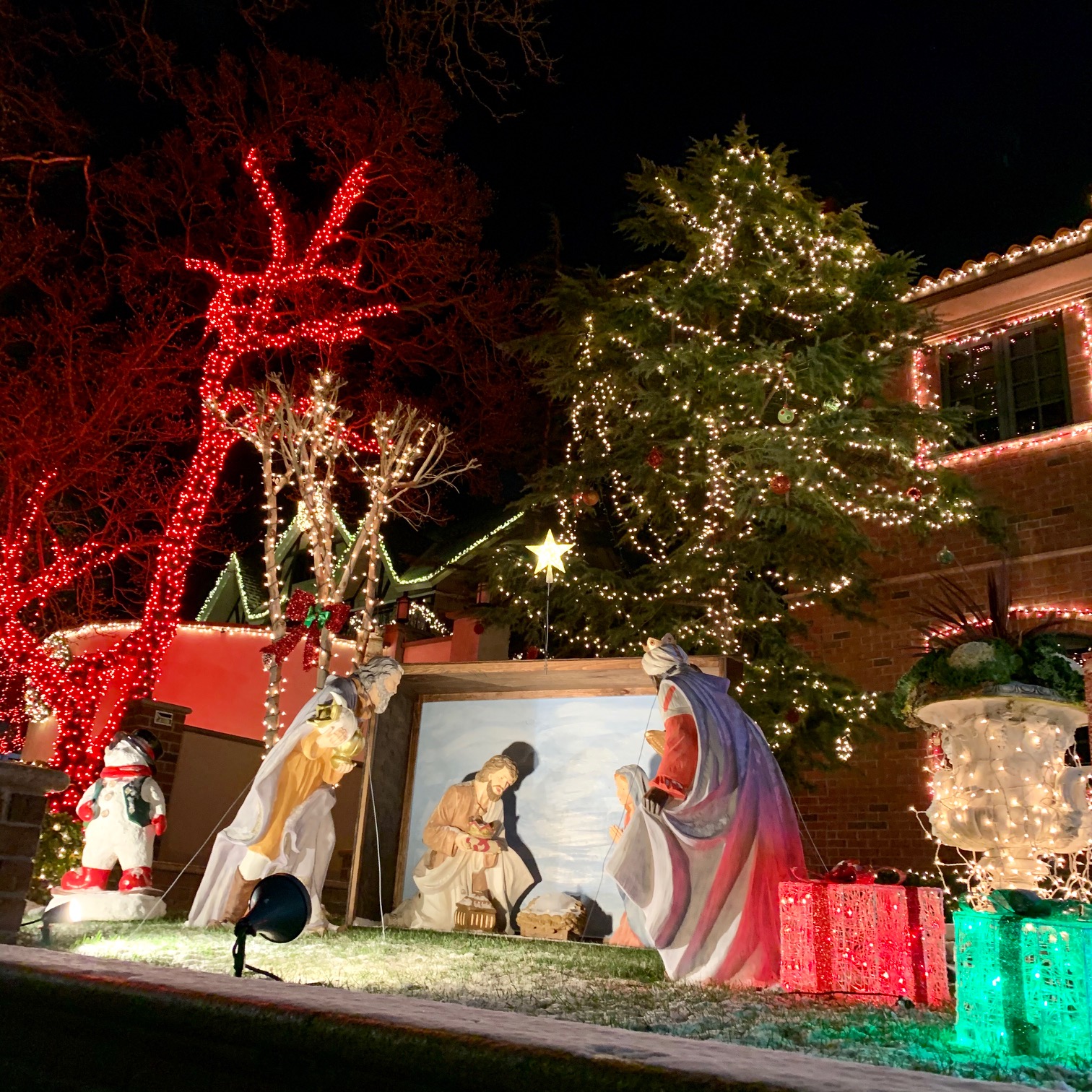
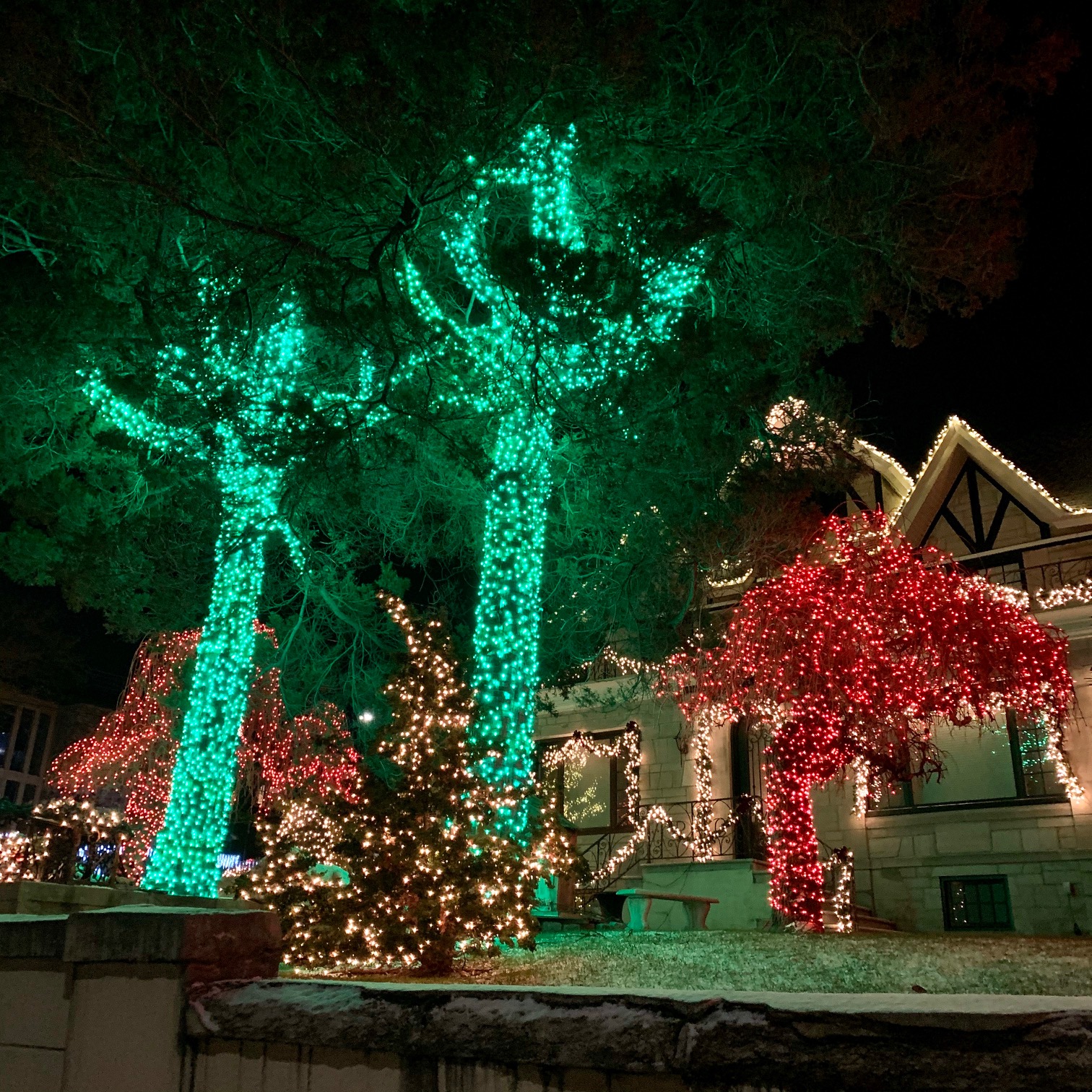
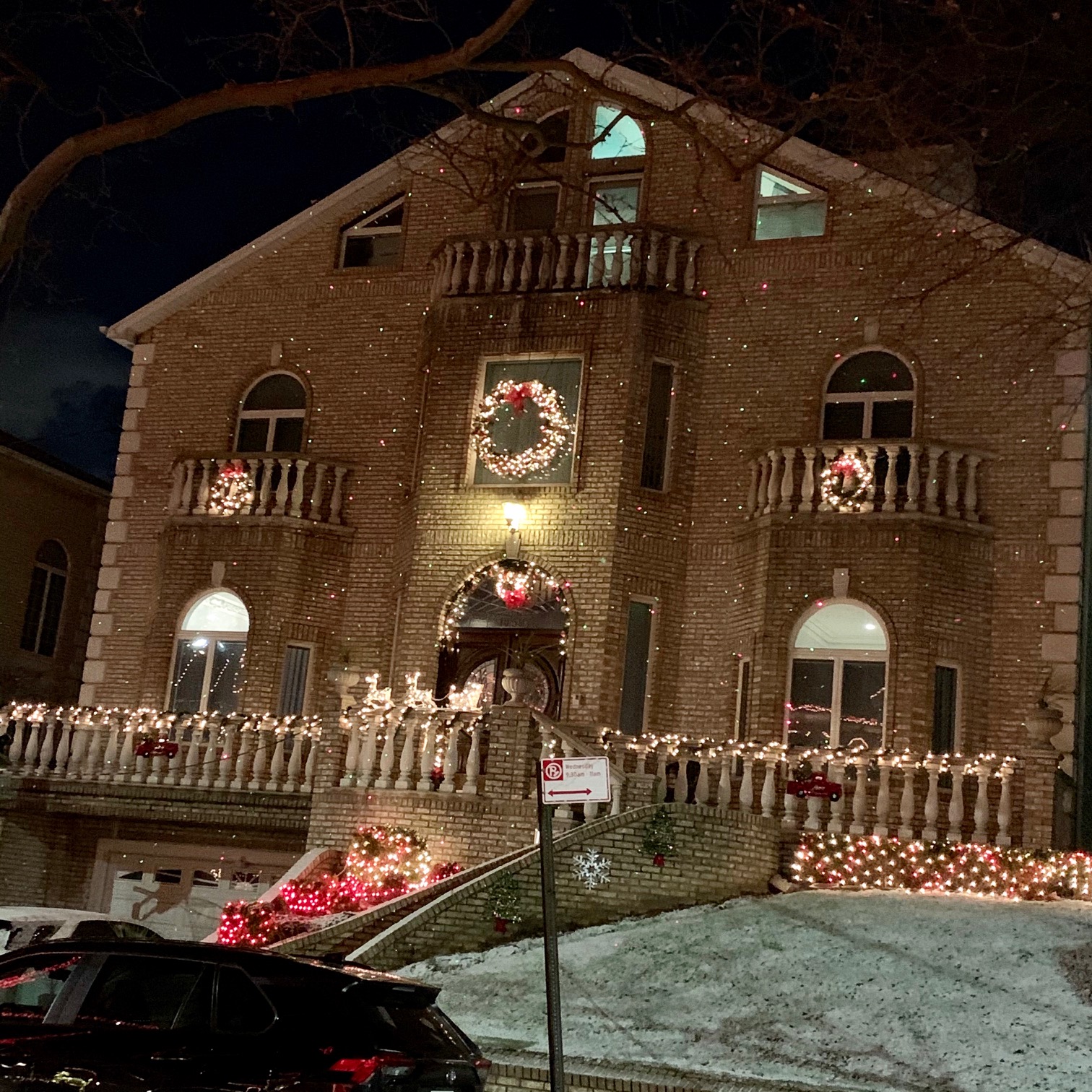
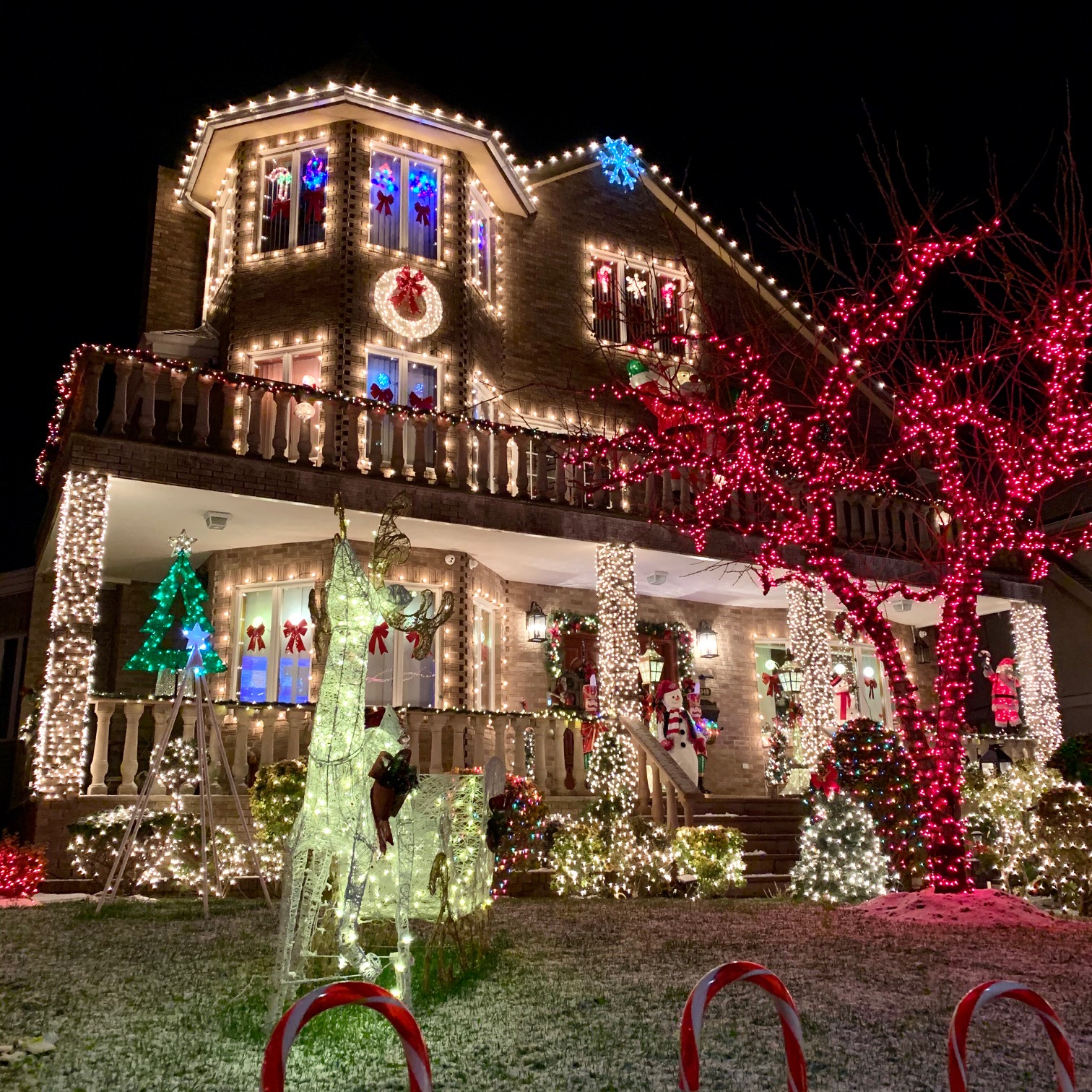
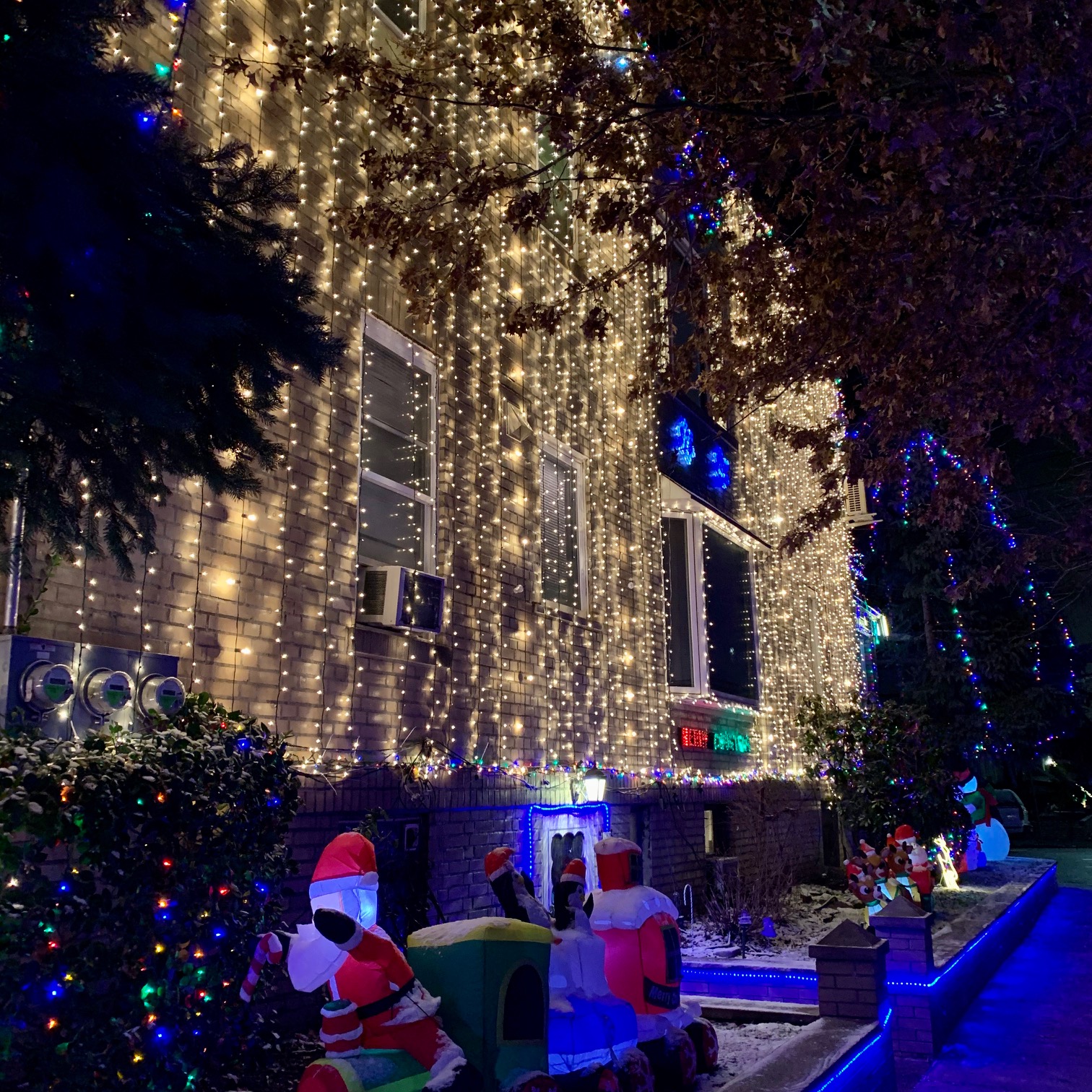
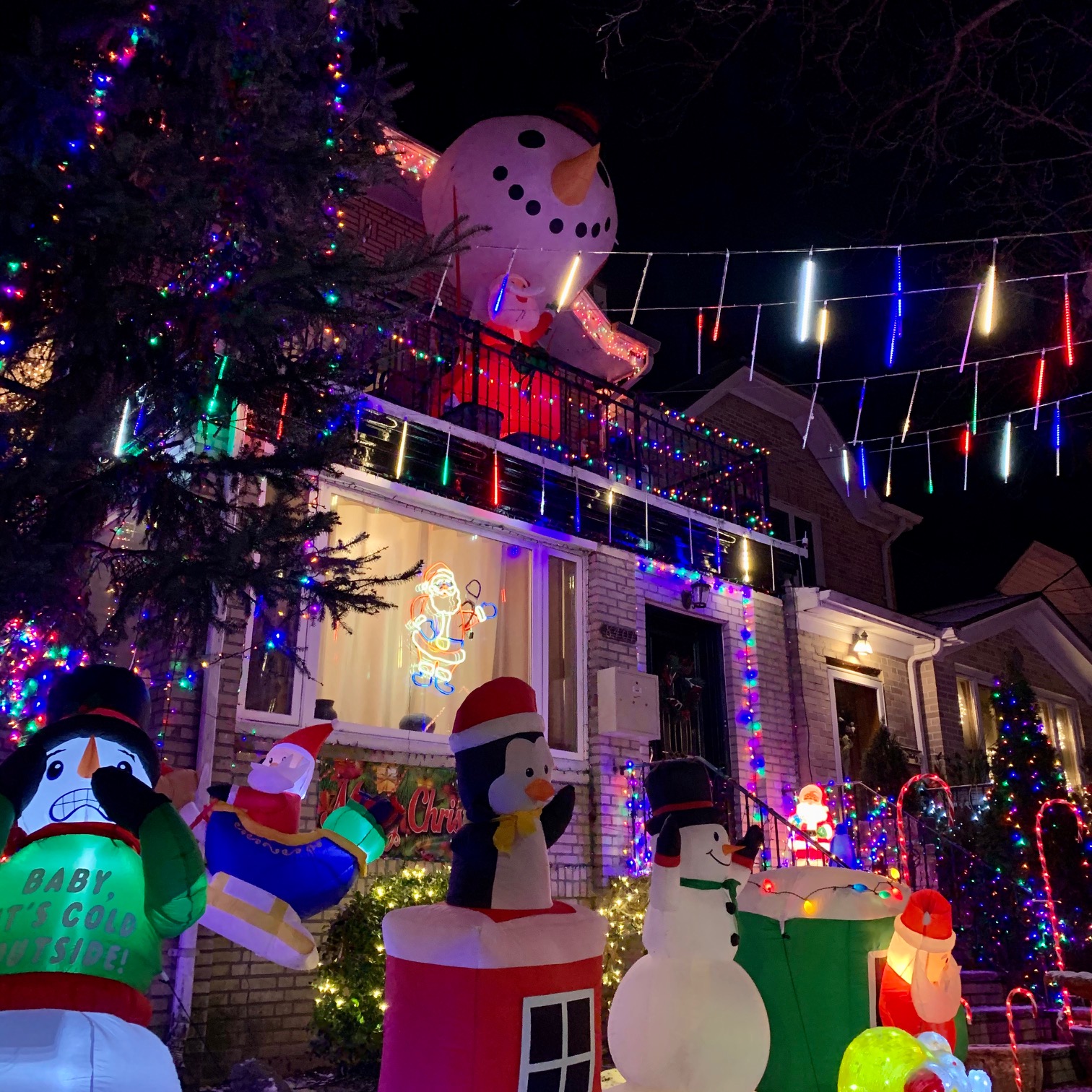
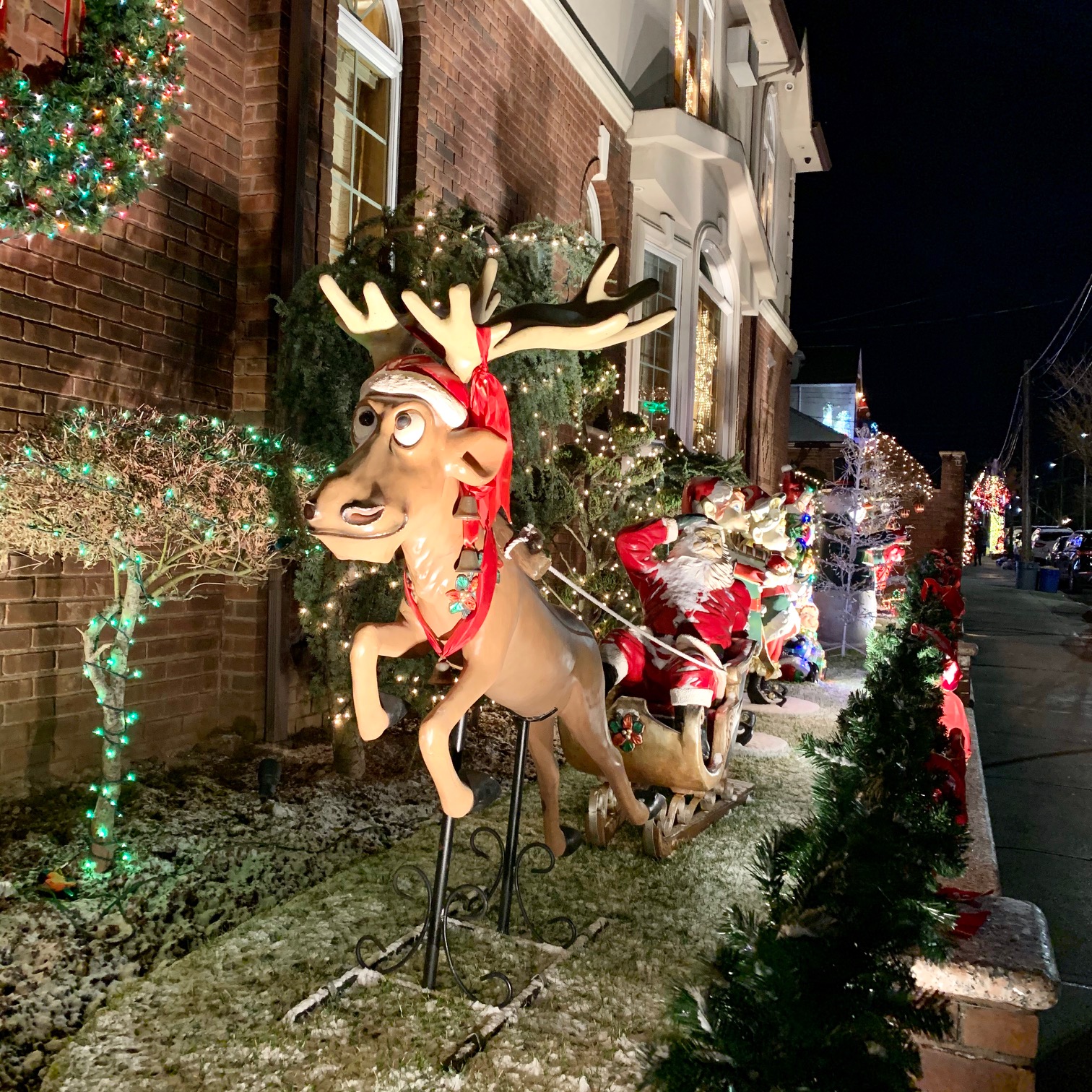
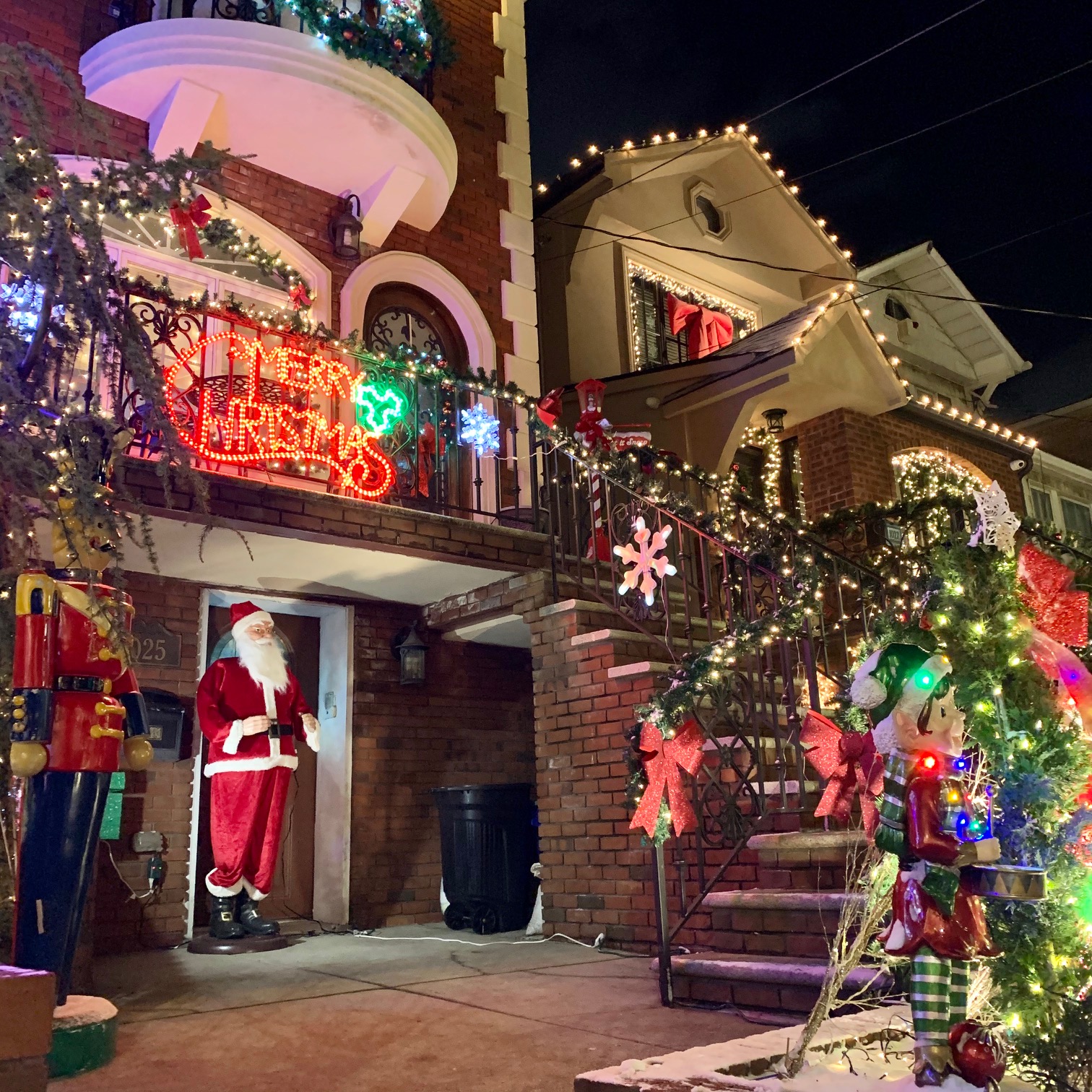
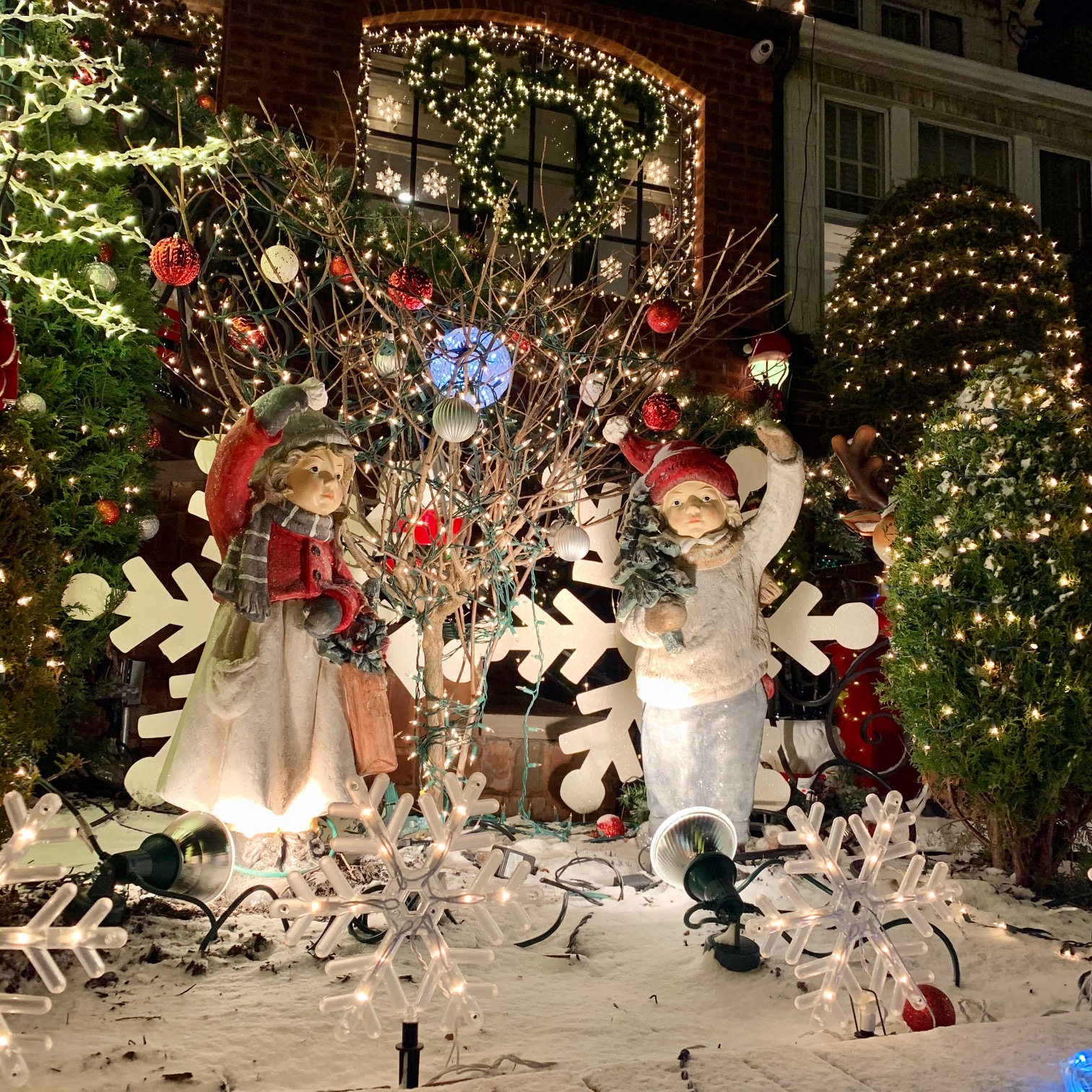
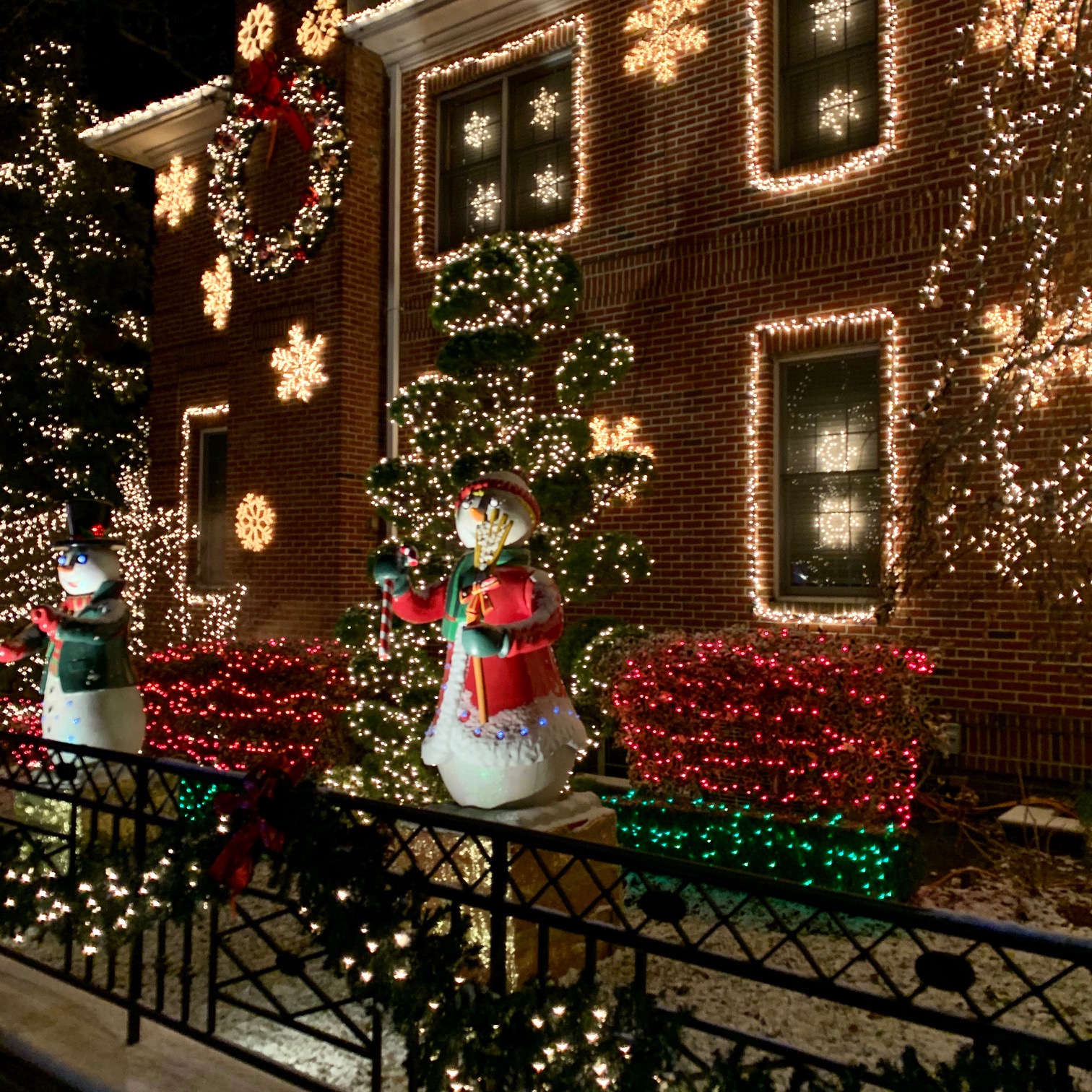
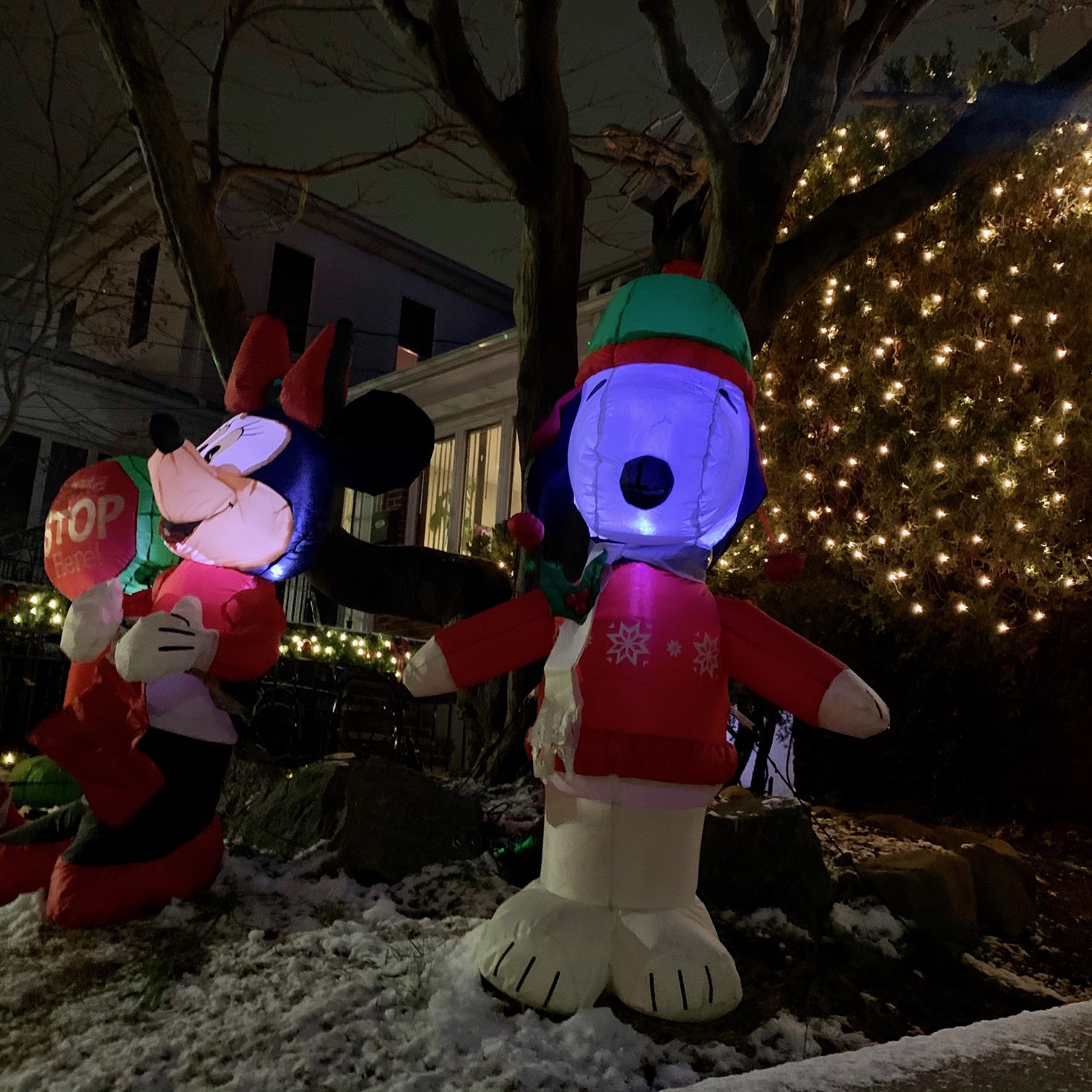
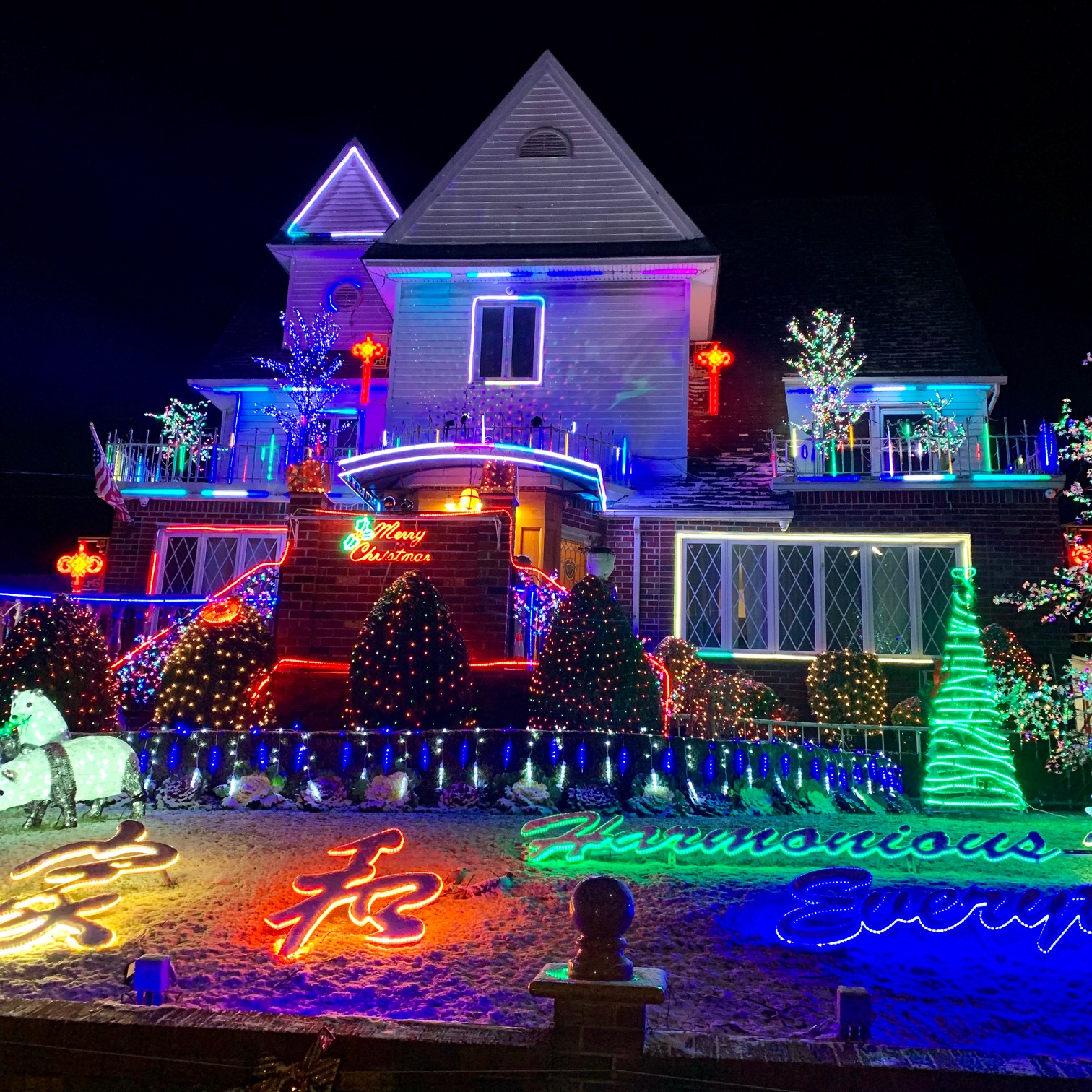
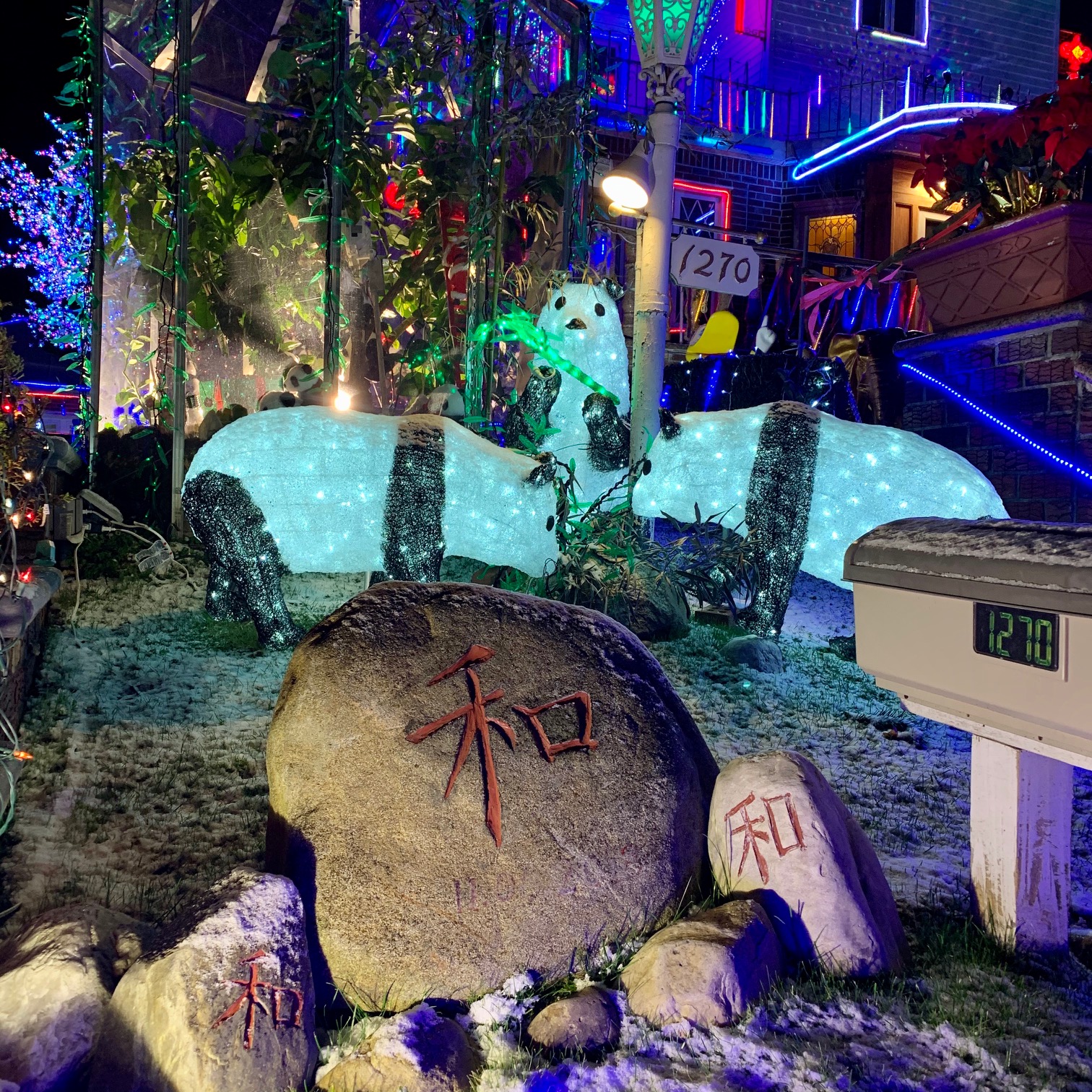
As we head into the shortest days of the year, we fight off the dark with celebrations of light. In previous years, I have written about how New York City celebrates publicly (see here for 2015 and here for 2016 posts, and here for last year’s post on holiday markets). Several years ago, I had access to a car regularly, and drove to Dyker Heights with my family to see the famed holiday lights (see that post here). This year, one of my daughters and I decided to take the subway (D train from midtown) and walk (about 20 minutes from the 18th Avenue stop in Brooklyn), and on a cold evening with some snow flurries, the lights once again did not disappoint – and I believe they have become more elaborate since the last time I was here in 2014. This tradition in Dyker Heights began in the 1980’s and since has increased every year, with many residents paying professionals $20K or more to deck out their homes. On weekends, traffic is bumper-to-bumper, and the sidewalks can be packed – so go on a weeknight if you can. The best viewing is roughly 11th Avenue to 13th Avenue, 83rd to 86th Streets. Here are some photos of what I saw this year:

IMG_5050IMG_5051IMG_5052IMG_5053IMG_5054IMG_5055IMG_5056IMG_5057IMG_5059IMG_5060

IMG_5061IMG_5062IMG_5063IMG_5065IMG_5066IMG_5067IMG_5068IMG_5070IMG_5071IMG_5072

IMG_5075IMG_5076IMG_5077IMG_5078IMG_5081IMG_5082IMG_5083IMG_5084IMG_5085IMG_5086

IMG_5087IMG_5088IMG_5090IMG_5091IMG_5093IMG_5094IMG_5097IMG_5098IMG_5099

IMG_5100IMG_5101IMG_5102IMG_5103IMG_5104IMG_5105IMG_5106IMG_5108IMG_5110

As we head into our own Roaring Twenties, I wish light and joy in the hearts of all!

Green-Wood Cemetery

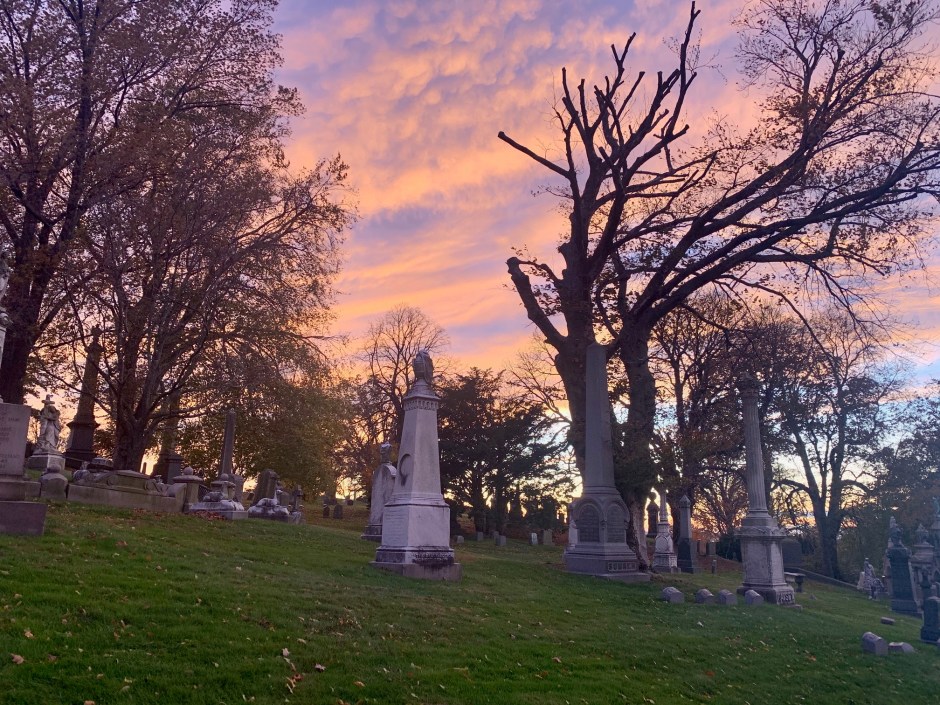
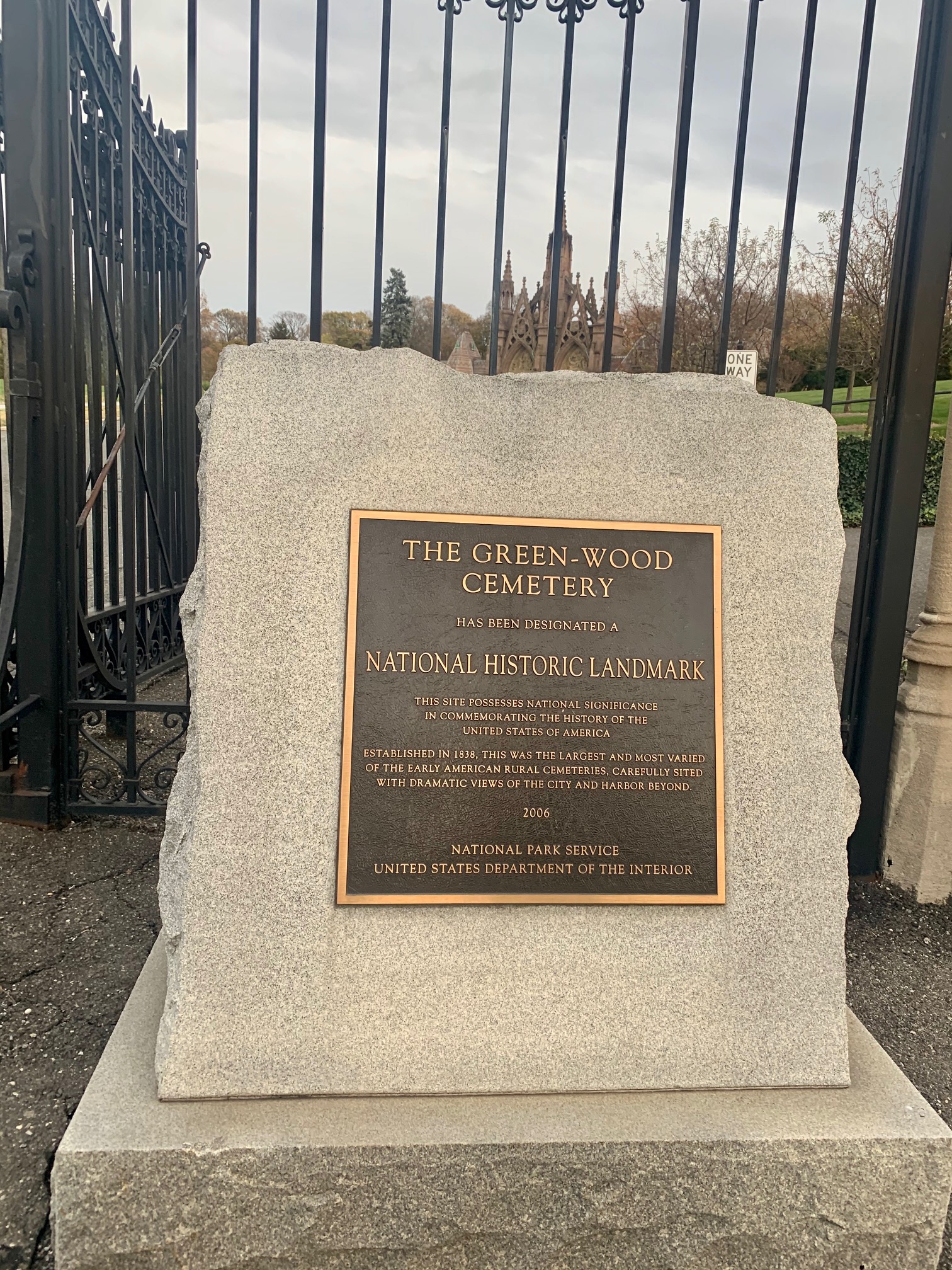
Green-Wood Cemetery in Brooklyn was founded in 1838, and by 1860 was the second most popular tourist attraction in New York State, with over half a million visitors per year (Niagara Falls was #1). Its popularity as a public park spurred on the creation of Prospect Park in Brooklyn as well as Manhattan’s Central Park. It was designated as a New York Landmark in 1966 and became a National Historic Landmark in 2006. Now with over 600,000 “permanent residents,” Green-Wood is still a wonderful place to visit, as I did recently near sunset.

IMG_4362

IMG_4411IMG_4407

It is easy to get to Green-Wood via subway (get off the R at 25th Street in Brooklyn, or get off the N at 36th Street and walk for about 15 minutes). Entering the main gate on 25th Street, it is impossible not to be impressed by the enormous brownstone gates. An escaped colony of monk parrots has lived in and around the gates since the 1970’s, but unfortunately I was not able to spot (or hear) any.

IMG_4373IMG_4374IMG_4401

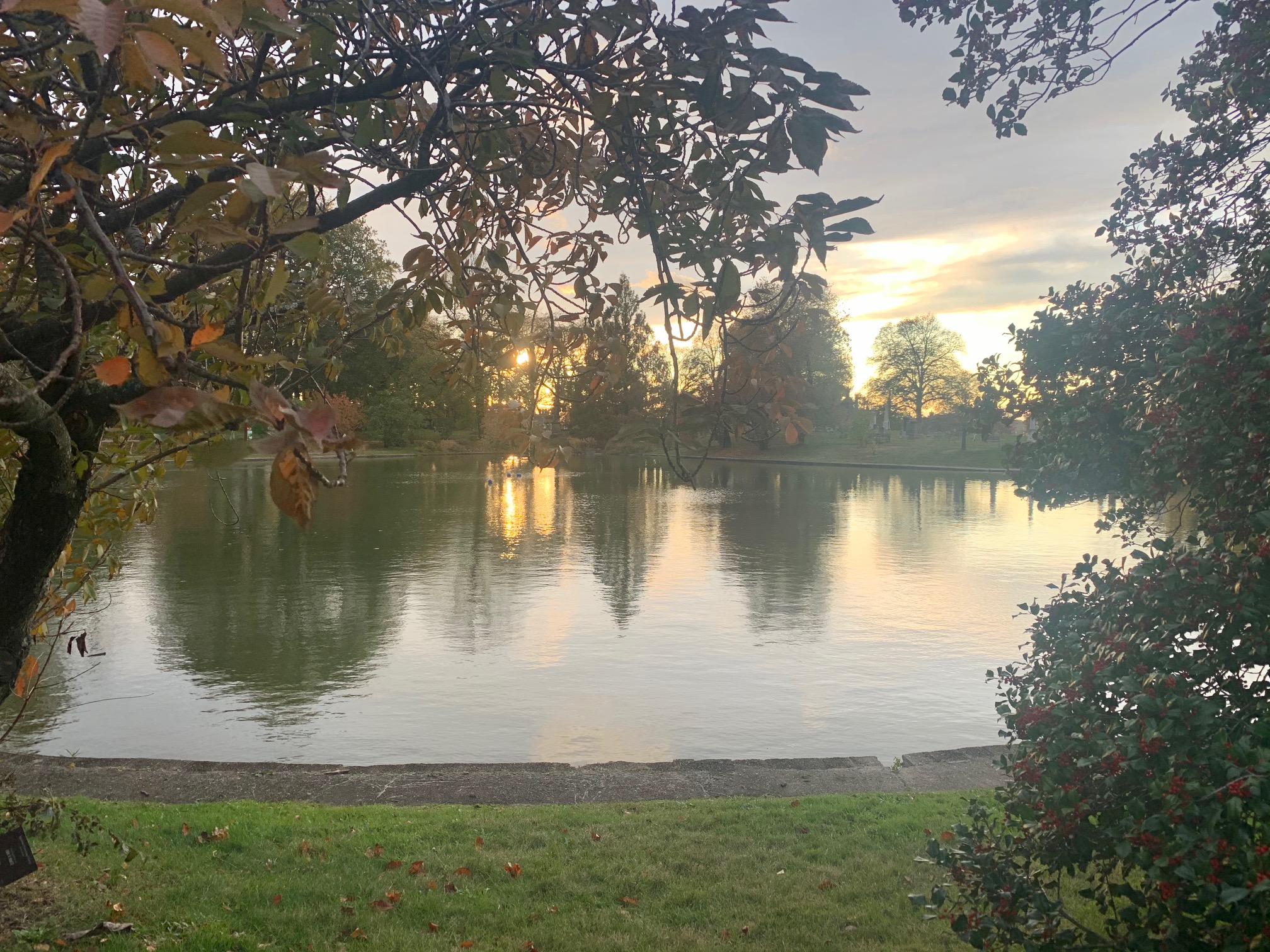
The cemetery is huge, at 478 acres. It is also really gorgeous and peaceful. Like Prospect Park and Central Park, which it influenced, it is a beautiful place to explore on foot and experience nature while being surrounded by the city.

The monuments reflect a variety of styles. Many are very grand, suggesting that even if you can’t “take it with you,” you can still show “it” off after you are gone.

IMG_4384IMG_4387

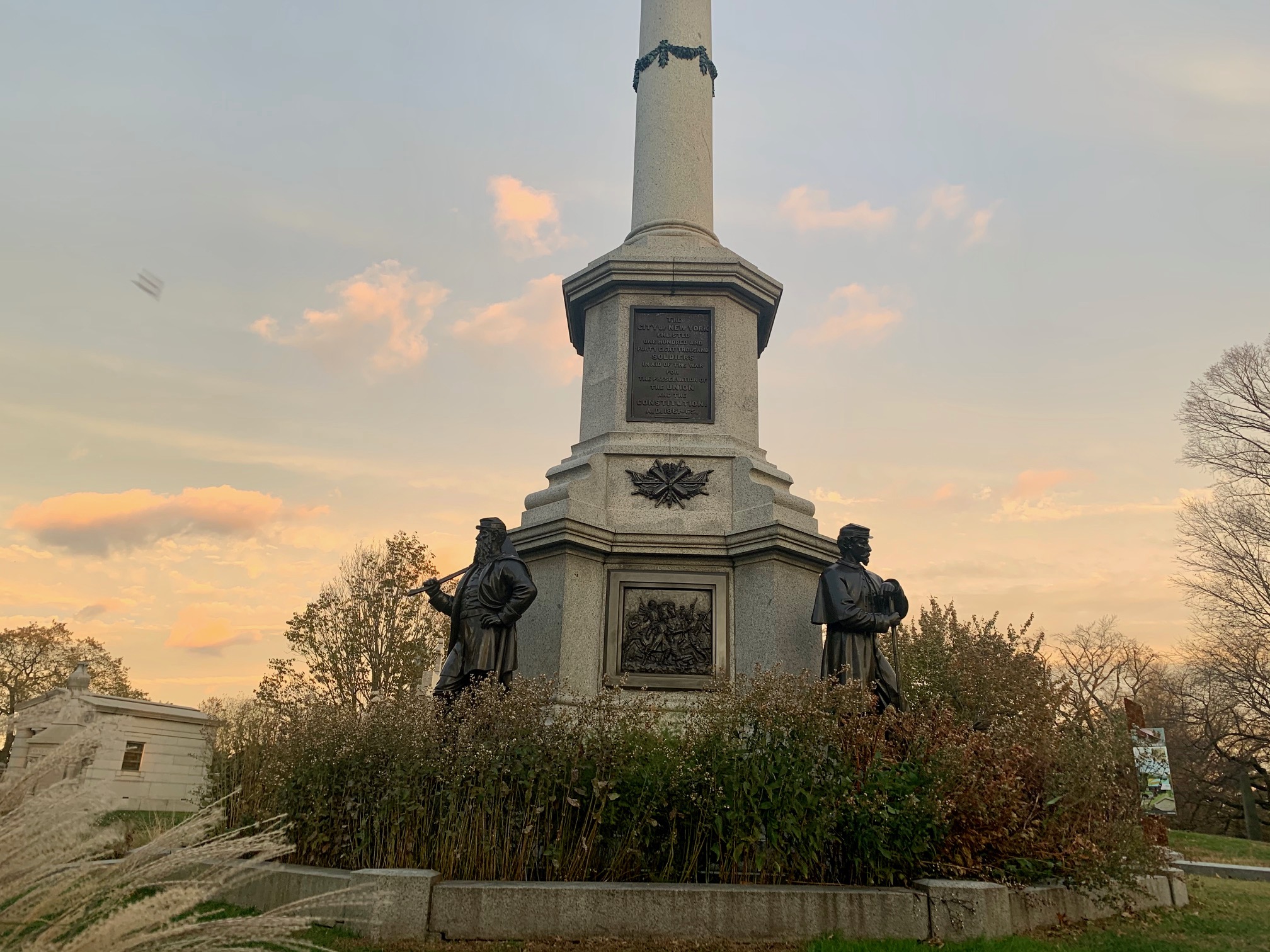
On the site of the Battle of Brooklyn, from the Revolutionary War, there is a memorial to the soldiers of the Civil War.

IMG_4389IMG_4391

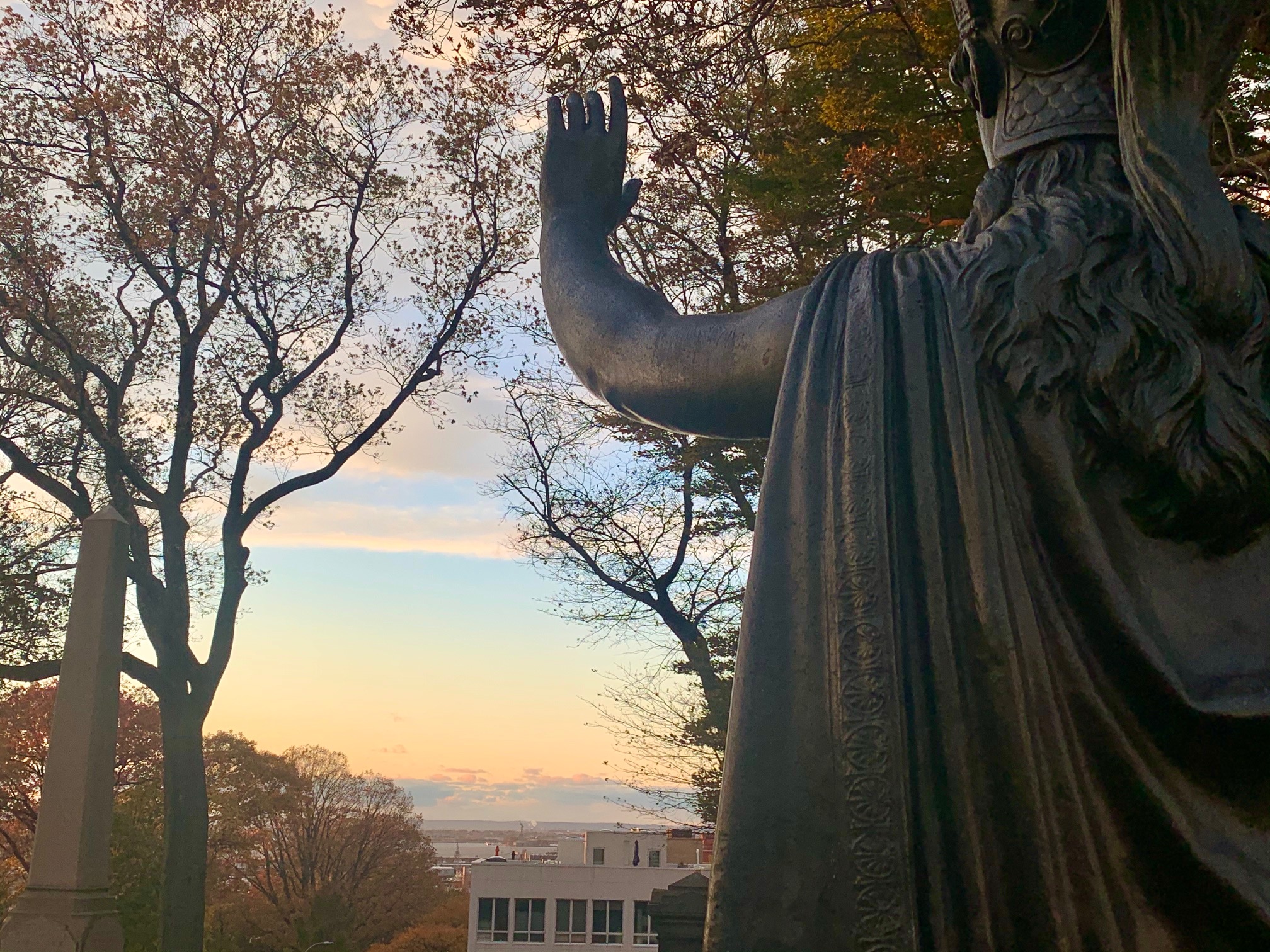
Near the Civil War memorial is a statue of Minerva, dedicated to the soldiers of the American Revolution. She waves out to the Statue of Liberty, which can be glimpsed off in the distance when you look from underneath her arm.

There are many famous residents of Green-Wood, including the artist Jean-Michel Basquiat; Samuel Morse, creator of the Morse Code; and Leonard Bernstein.

There is a public artwork by Sophie Calle in Green-Wood. Visitors to the cemetery are invited to write one of their secrets on a slip of paper and insert into a monument that is inscribed “Here lie the secrets of Green-Wood Cemetery.” As the grave becomes filled with the secrets, the artist returns to cremate them in a ceremonial bonfire. Yes, I put a secret in – and it is a surprisingly satisfying thing to do.

The sunset the evening I was there happened to be spectacular. And from higher vantage points, the skyscrapers of lower Manhattan shimmered in the last rays of the sun off in the distance.

The New York Times in 1866 remarked that “It is the ambition of the New Yorker to live on Fifth Avenue, to take his airings in [Central] Park, and to sleep with his fathers in Green-Wood.” This is certainly a statement of its time (even ignoring the gender specificity), in that many a New Yorker today would rather live in TriBeCa, take airings on the High Line, and be cremated and have their ashes scattered just off Montauk. That being said, Green-Wood still does have plots available if you are interested in becoming a “permanent resident” one day. And for now, it provides a beautiful place to appreciate the life we are currently fortunate enough to be enjoying in this splendid city.
Historic districts of the Upper East Side

In 1964, the original ornate Pennsylvania Station building was torn down to create Madison Square Garden (the fourth version of MSG, the first two being close to Madison Square Park, and the third on Eighth at 50th Street).  The loss of the building created an immediate outcry. (Architectural historian Vincent Scully noted: “One entered the city like a god. One scuttles in now as a rat.”) The next year the Landmarks Preservation Commission was created to prevent the continual loss of buildings of historical significance. Since then, many individual buildings have been landmarked, as well as entire sections of the city that have historical or architectural significance. The Upper East Side has several historic districts, some of which would surprise few (Metropolitan Museum Historic District) and some that are virtually secret to most not living there (Treadwell Farm Historic District, anyone?). I took a walk around these districts, taking photos and imagining what it would be like to live there! Later I will touch on what living in a historic district means to those owning a home there, as well as why even those not living in a historic district might be interested in knowing the boundaries.

Upper East Side Historic District

jM1JQm_jSWCaCsfKiq1Vhw

This is the area most people would think about if asked about a Historic District on the Upper East Side. It covers all of Fifth Avenue between East 59th and East 78th Streets, and extends out from there in an irregular pattern – as far east as almost to Third Avenue between East 70th and East 75th Street, very close to Fifth from East 59th to East 61st, and somewhere between Park Avenue and Lexington Avenue for most of the area. See below for a map of this district:

IMG_3828

On Fifth Avenue, there are a lot of stately limestone coop apartment buildings, and in the side streets, many lovely townhouse blocks.

1Q6lrGWVSAaaS25rNjktUg

This district also has many buildings that would be landmarked as single entities if not part of the larger historic district, like Temple Emanu-El or the Frick Mansion.

For a district to be considered worthy of landmarking, it must represent at least one historic period or architectural style, have a distinct “sense of place” and a “coherent streetscape.” Fifth Avenue is a good example of why this does not mean that every single building within the district would be individually worthy of landmarking. I find that in general the Upper West Side has a more consistent look and feel than the Upper East Side (and I will do a blog post on the Upper West Side historic districts at some point soon).

Metropolitan Museum Historic District

_MfOSGL6Sce7tBKFTwI2-w

Not surprisingly, this district lies in close proximity to the Metropolitan Museum, Fifth Avenue from East 87th to East 86th Street and most – but not all – of the blocks between Fifth and Madison on this stretch of Fifth.

IMG_3830

It has always bothered me that one of the buildings has a fake facade at the top where the supports can clearly be seen if looking from the side rather than from Central Park (see below):

IMG_3825

Carnegie Hill Historic District

442VWnl_RQizlxPY5UNDyQ

Named for the mansion Andrew Carnegie built at Fifth and East 91st (which had the first residential elevator, and now holds the Cooper-Hewitt National Design Museum), Carnegie Hill is a charming residential neighborhood. The historic district covers Fifth Avenue from East 86th to East 98th, and for some streets goes as far east as Lexington Avenue (see below):

IMG_3829

This district encompasses Frank Lloyd Wright’s Guggenheim Museum (where the architecture of the building is arguably the more important work showcased despite steep competition), the Jewish Museum, and buildings ranging from brick and brownstone townhouses to mansions, most constructed between the 1870s and the 1930s. I have a particular fondness for the townhouse blocks, many of which decorate elaborately for Halloween.

ctdo4rUWQx2Bl7vkT-pE4w

Hardenbergh/Rhinelander Historic District

On Lexington between East 89th and 90th Streets, and part of the block between Lexington and Park on East 89th, there are seven houses all constructed in 1889 for William C. Rhinelander (a real estate developer!). The same architect who designed the Plaza Hotel and the Dakota apartment building on Central Park West, Henry Hardenbergh, is responsible for these houses.

IMG_3574IMG_3575

Treadwell Farm Historic District

Even people who live near this historic district, two short sections of blocks between Third and Second Avenues, and East 60th and East 62nd, may not know this exists. These Italianate row houses date between 1868 and 1875, and the region was named for the Treadwell family, who were landowners here between 1815 and the 1860s.

IMG_3550IMG_3552IMG_3553IMG_3554IMG_3555IMG_3556IMG_3557

Henderson Place Historic District

img_4492

I have such a soft spot for the houses on Henderson Place, East End Avenue between E. 86th and E. 87th. When my daughters were going to a nearby school, I would walk them past these charming three story Queen Anne townhouses and dream of being able to live in one of them! That never happened, but I still contend these blocks are some of the most uniquely romantic and lovely in all of the city. They are across East End Avenue from Carl Schurz Park, the peaceful environment adding to the quiet magic of these homes. I mean, just look at them! (*swoon*) I once wrote a love letter to this part of town after a snowstorm (see here).

IMG_3576IMG_3577IMG_3578IMG_3579

ZOb7Q1_yQWOi1JIT3kkKyA

Landmarks outside of Historic Districts

You might be surprised at how many individually landmarked buildings there are on the Upper East Side apart from these districts – currently, there are 48! Invididual landmarks are judged by age, integrity, and significance. These range from apartment buildings like Manhattan House (200 E. 66th), the Bohemian National Hall (321 E. 73rd Street), the Astor House (now home to the Junior League, 130 E. 80th Street, see photo below), or individual townhomes like 160 East 92nd Street.

IMG_3716.jpg

So if you live in a historic district, what is the impact on your home? Data suggest that landmarked districts offer higher property values over time, insulation from extreme economic fluctuations, stabilization of residence, more community involvement, and possibly increased connections among neighbors. There are some restrictions as well – for instance, you need permission to do any exterior work on a building in a landmarked district, and to show that you are not changing the exterior in a way that negatively affects the overall look of the district. However, renovating a home in a historic district can make you eligible for a significant New York State Homeowner Tax Credit.

Even if you don’t live in a historic district, if you live near one (or near a landmark outside a historic district), it can be useful to know the restrictions. For instance, if you are near the Treadwell Farm Historic District in one of the highrise buildings with an eastern exposure, it is good to know that it is highly unlikely that anything will be built that will block your eastern light.

Generally speaking, I am a fan of New York City’s constant desire to change, and am more accepting of the constantly evolving skyline than some (see a previous blog post about this here). That being said, our city would be lessened without these (as Landmarks Preservation describes them) “areas of the city that possess architectural and historical significance and a distinct ‘sense of place.’” New York City is enriched by the old-world charm of Greenwich Village, the residential tranquillity of Park Slope, and the majestic towers of Central Park West – but also (at least in my opinion) by such new developments as Hudson Yards, Waterline Square, and the revitalized area around One World Trade. Just as our city populace is strengthened by all our differences, the architecture of our city is strengthened by our commitment to protect historic districts of importance while still encouraging new development and new opportunities.

Up to the crown of the Statue of Liberty

The Statue of Liberty, given to the United States by France as a gift for our Centennial (statue only – we had to raise funds for a pedestal to put it on), is such an icon that it is easy to become casual about it when you live in New York City. As we approach Independence Day, I will share what it was like recently to go all the way up to the crown of the Statue. Personally, I don’t think it is possible to be unimpressed when up close and personal with this magnificent symbol.

Before launching into a description of what it was like, let me first explain that going up to the crown is not the standard trip to Liberty Island.  The basic concept is explained here on the National Parks Services site: tickets must be bought in advance on the Statue Cruises website, limit four tickets, must show ID when checking in that matches names given at time of booking, all bags must be put in a locker before going up, and must be able to handle 162 small and tight steps on a spiral staircase. I will add that this isn’t a last minute decision – looking at the reservation system now at the end of June, the first ticket available is for midweek end of September, and to get a weekend ticket you would need to wait until November.


Checking in at Battery Park was a fairly simple process, although there is airport-style security that adds some time. You are recommended to check in and get your tickets no later than 45 minutes before the time listed on your reservation, since you need to get the ticket, go through security, and get to Liberty Island via boat. If you have the crown access, you are given a special wristband.


Once on Liberty Island, it is easy to find your way to access to the pedestal (included with crown access, of course, and what most visitors have). Before entering the Statue, you need to put everything except your camera/phone in a locker (25 cents to rent, and there is a change machine there).

IMG_1696IMG_1700

Once you have passed the pedestal, there are guards to check that you have the crown access wristband. The number of tickets is limited so that it shouldn’t be crowded, but my advice is that if you see a small group go in, wait a few minutes before starting the climb yourself so that you don’t end up feeling you are just looking at the people in front of you. The stairs are metal, worn with plenty of character, and a very tight spiral. Going up, I was so interested in getting to the crown that I didn’t spend too much time looking at the inside of the statue. I didn’t think it was that strenuous to get to the crown; my anticipation had been that it was going to be harder. In fact, I was less sore the next day than I had been when visiting the Vessel at Hudson Yards.

IMG_1705IMG_1708IMG_1709IMG_1713

Once you are in the crown, it is immediately apparent why this is something worth doing! The crown area is quite small, and there are two park rangers (remember, the Statue of Liberty is a National Park) there to answer your questions. When I was up there, most of the time it was just my daughter and myself plus the two park rangers, but eventually a family with two small children came – and that was about the maximum comfortable capacity. The views are hard to comprehend – that is her arm raised to hold the torch, folds of fabric sculpted in copper; that is lower Manhattan including One World Trade; these windows are the curves of her crown and those are the points of it, etc. To think of what the view from this crown would have been a century or more ago and all the changes in these views over time, and yet the experience of looking out from inside her crown is the same as what people have experienced for over 100 years – it’s sobering and thrilling at the same time.

IMG_1754

There is no air conditioning in the crown or inside the statue while climbing the steps. I went in the spring on a cool day, and even then it got a little hot and stuffy. The park rangers said the heat of the summer, intensified by sun baking the copper statue, can be even dangerous – people have passed out. I asked about views when the weather is bad, because that is one of the disadvantages of having to book your tickets so far out – what if it is raining, or foggy (I lucked out and it was a very clear day). The rangers, being there all throughout the year and in all kinds of weather, said there are interesting experiences to be had regardless. In the rain, the sound inside the statue is apparently not unlike being in a house with a tin roof. Heavy snow, they said, makes a soft pounding sound inside the statue. When the wind is high, you can feel the statue sway and hear the whistles and moans made by the air rushing in all the little holes and gaps in the statue. And while you might not be able to see over to lower Manhattan if it’s fogged in, they noted that there is a ghostly beauty involved in sitting inside a cloud inside the crown of the Statue of Liberty! Summer time is peak tourist time, as well as having the worst heating danger, so if you decide to do this and have flexibility, pick another time of the year.

IMG_1717

Heading down, you can see the steps that lead up to the torch, inaccessible to anyone other than maintenance workers on occasion.

IMG_1718IMG_1721IMG_1724

Going down, I took more time to really look at the inside of the statue, the folds of her robe, the rivets and metal supports that hold her together. There was a place where the steps were very close to the inside of the statue, and I reached out and touched the copper (only two pennies thick!) of the statue itself.


Going down, we did get out and go around the pedestal, which gives some great views of the statue.


When I went in the spring, it was just before the new museum on Liberty Island had opened, so there was only a smaller display about the history of the statue than is now available at the museum.

IMG_1742

On the way back, the Statue Cruises vessel stops at Ellis Island.

IMG_1743

The views of lower Manhattan when heading back are lovely (on the way there, you tend to focus on the statue!).

IMG_1744

Since going, I have found myself getting philosophical about my time inside the statue, looking out. Like the United States, the Statue of Liberty appears to be unified and all of one piece from a distance but once closer, you can see that she is made of many pieces, joined together. There are gaps between some of the pieces, but these make her stronger –  so that she can sway under the stress of heavy wind rather than break. The thinness of her skin and the piecing together of her structure actually make her tougher, not weaker. Similarly, I think about this country, made completely of immigrants other than the native descendants still here; one nation seen from a distance, yet made up of so many pieces. In these days when immigration is seen as a political issue of “us versus them” rather than as a fundamental part of what makes this country what it is, let’s hope we can find a way to sway in the turbulent political winds that are blowing, rather than toppling.