New York City real estate for the foreign purchaser

Just last week, I was fortunate enough to be in London, a city I truly love and have been able to get to know over numerous visits. As an agent in New York City, I wanted to meet with the team at W.A. Ellis and learn about the similarities and differences between our markets. In the process of our conversation, Lucy Morton, Senior Partner at W. A. Ellis, invited me to write a guest article about the process of structuring a real estate transaction for foreign purchasers in New York City. I am happy to do so, and also pleased to note that the United States taxation and capital gains laws are quite favorable for foreign purchasers. The New York City real estate market is unique, however, and a little knowledge in advance of beginning the process of purchasing can be very helpful.

The rules for taxation and capital gains are the same for foreign nationals as they are for citizens or resident aliens. If a property produces rental income, foreign nationals are only required to file and pay income taxes on U.S. source income. Foreign nationals are similarly subject to estate taxes and gift taxes only on their U.S. assets. When selling a U.S. property, foreign nationals are held to the same capital gains taxation as citizens or resident aliens. The only difference is that foreign nationals selling their property are subject to FIRPTA (Foreign Investment in Real Estate Act), in which the purchaser withholds 10% of the gross sales price and either sends it to the IRS places it in an attorney’s escrow account until the capital gains tax has been paid, at which point the seller receives a refund of the remaining funds minus the capital gains tax.

So what to do if you have decided to take the plunge and purchase a home in New York City, whether to live in, use as a pied-a-terre, or as an investment? The first step I would recommend is to assemble a team of professionals to help you in the process. A real estate agent is the logical first member of the team, and can also help you assemble the other key members – a real estate attorney (required to deal with a contract, and useful if you want to consider buying as a limited liability corporation, or LLC), an accountant to help with matters of taxation and estate planning, and perhaps a bank loan officer (although, for reasons discussed later, most transactions with foreign nationals are all-cash). A good real estate agent will be able to provide the names of recommended professionals who are familiar with the nuances of a transaction with a foreign purchaser. Let me also note that I am a real estate agent, not an attorney or an accountant, so all legal or accounting information in this article is subject to review by those more qualified members of your team.

The next step would be in deciding whether you are looking for a townhouse, condominium, or a cooperative apartment. A townhouse is real property, solely owned by one entity (either an individual or an LLC), and you are personally responsible for the payment of all maintenance, utilities, real estate taxes, and insurance for the home. Although townhouses are relatively rare in New York City, they can be an excellent choice for foreign nationals since there is no application package, and no limits on renting out the property for income.

A condominium is also real property, and the purchaser owns the interior space of the apartment as well as a share of the building’s common areas. Real estate taxes are paid directly based on the assessed value of the apartment, and in addition, there are monthly common charges that pay for the upkeep of the common areas. There is an application process, but rejection is generally limited to the board’s right of first refusal. Condominiums traditionally have been less restrictive regarding the application process and rules regarding renting out the apartment, but today some condominiums can have an extensive board package and stringent rules. A good real estate agent can let you know in advance how difficult a particular condominium building can be, particularly important if you plan to rent out the apartment for income. A sponsor apartment in a new development can be particularly attractive to foreign investors, since there is no board package required in this situation. Closing costs can be higher in sponsor apartments, however, since transfer taxes are generally paid by the seller but are paid by the purchaser in a sponsor apartment.

Cooperative apartments are very common in New York City, but rare elsewhere. In a coop, the entire building is owned by a corporation, and purchasers receive shares of stock equal to the value of their apartment. In addition, the buyer receives a proprietary lease that allows residency in the apartment. Real estate taxes are paid by the corporation, and the shareholder pays a monthly maintenance that includes their share of real estate taxes, interest on any underlying mortgages on the building, and the cost of running the building (a percentage of this is tax deductible). Coops are run by an elected board from within the pool of shareholders, and most have lengthy board applications and require an interview. A potential buyer can be turned down by a coop board without being given a reason, and many coops (but not all) are less likely to approve a foreign purchaser because of the difficulty in verifying income and assets. Coops generally do not allow subleasing for rental income, or have restrictions on doing so.

Is it difficult for foreign purchasers to move money into the United States? Generally not – many experienced attorneys have escrow accounts and allow the buyers to wire the deposit, purchase price, and closing costs to this account and write the checks for the buyer. Getting a mortgage as a foreign purchaser can be less easy – often there is a maximum loan amount of $1.5 million, a requirement of a 12-24 month cash reserve and large deposit held at the bank, and it can be difficult to verify employment and assets. For these reasons, most foreign purchases of real estate are all-cash.

The intellectual reasons for owning property in New York City as a foreign national are real: favorable tax treatment, and a historically strong appreciation of value. However, as a resident of New York City, I would like to add that there are a multitude of intangible reasons to own a part of this vibrant city as well. If you are interested in finding out more about purchasing real estate in New York City, feel free to contact me.

Alphabet City

AlphabetCity

In a recent blog post about taking a dérive (an unplanned walk through an urban environment) on Sutton Place, I mentioned that, because of the geography of Manhattan, there are occasionally Avenues east of First. I was recently in one of these areas; a subdivision of the East Village informally called “Alphabet City.” Avenues A, B, C, and D stretch between Houston Street to the south and 14th Street to the north, between First Avenue and the East River. Avenue A later reemerges as Beekman Place, Sutton Place, York Avenue, and Pleasant Avenue at various points to the north, while Avenue B reappears briefly as East End Avenue between 79th Street and 92nd Street – Avenues C and D are the easternmost parts of the island of Manhattan and only exist in Alphabet City.

Interestingly enough, the area was originally a saltwater marsh, but was drained and developed in the early 1800’s. In the mid-19th century, it became a hub for German immigrants, but after they decamped for Yorkville in the 1880’s, the neighborhood grew into one of the most densely populated areas of Manhattan. By the 1980’s Alphabet City was home to many struggling artists (immortalized in Jonathan Larson’s Rent), but since then, has been increasingly gentrified (with the increased housing prices to prove it).

For this dérive, I began by walking from Second Avenue and 3rd Street in the East Village, until hitting Avenue A. Just on the east side of Avenue A is the entrance to Upright Citizen’s Brigade East. One of three theaters run by UCB (the other two are in Chelsea and in Los Angeles); UCBEast showcases improv and sketch comedy seven days a week – at very affordable prices. The streets in Alphabet City are surprisingly quiet and tree-lined, although many garage doors and brick walls have become the canvas for expressionistic and colorful murals. This street art is such a part of the character of this neighborhood that there is even a children’s book called Alphabet City –Out on the Streets (by Michael de Feo) that illustrates the alphabet with the backdrop of street scenes in the neighborhood.

Continuing past Avenue B, turn north on Avenue C to experience the most bustling ambiance of the avenues in Alphabet City, every block showcasing trendy boutiques, restaurants, or bars. At Avenue C and 10th Street, stop inside the Museum of Reclaimed Urban Space (MoRUS) for a reminder of the community activism that has long been a part of this neighborhood’s character. MoRUS also holds exhibitions relating to the historical implications of housing cycles within different urban neighborhoods. Closed Monday and Wednesday, but open other days from 11-7, there is a $5 suggested donation for admission, well worth it to support a volunteer organization that promotes ecologically-sound urban environments. MoRUS also supports the network of community gardens that flourish throughout the Lower East Side. These community gardens sum up the feeling of Alphabet City today – a community with an abundance of opportunities for entertainment but also with pockets of quiet. Street art, nightlife, and gardens – all part of the complicated mix that makes Alphabet City another unique place to live in New York City. Viva la vie bohème!

Washington Square Park

Washington Square Park>
On a beautiful early summer weekend afternoon, I decided to take a dérive (an unplanned walk through an urban environment) in Greenwich Village. Getting off the 4 at Union Square meant being immediately immersed in a hub of activity – on this day, an extensive pet adoption event, but on other days, Greenmarkets, or a rally for political or social justice causes. Passing by the usual assortment of street performers (of note on this day was a group of older men performing 1950’s doo wop songs), I headed down University Place. Originally part of Wooster Street, this short stretch (from Washington Square to 14th Street) was renamed University Place a year after New York University was founded in 1838. Although the street is packed with places to eat and drink, I found myself magnetically drawn to Washington Square Park, beckoning to me a few blocks to the south.

Although all the surrounding blocks are named after the Square itself (Washington Square North, South, East and West), it is more helpful to think of the park as being bordered by Waverly Place and 4th Street to the north and south, and University Place and MacDougal Street to the east and west. Once a cemetery, and in fact the place that yellow fever victims were buried in the early 1800’s to contain the spread of the disease, in 1826 the square was leveled and turned into a militia parade ground. By the 1830’s, the city’s populace had begun to expand from the southernmost tip of Manhattan, and the Georgian revival homes along Washington Square North date from these times.

In 1889, a temporary arch was constructed in the park to commemorate the centennial of George Washington’s inauguration, followed in 1892 by the permanent Stanford White-designed arch that dominates the north end of the park today. Clearly inspired by the Arc d’Triomphe in Paris, it stands 77 feet tall. The two statues of George Washington visible on the north side were added later, in 1918. On the day I was there, a man played a grand piano (in hopes of tips, of course) just under the arch – I wish now I had asked him how he gets the piano to that spot and away again (and are the tips sufficient to be worth it?).

Washington Square Park is not truly a park that glorifies nature (most of it is paved over), but is more an urban park that encourages people to gather. On most days, but particularly on weekend days in warmer months, it is impossible to be in the park without experiencing several street performers. On this day, a woman was creating enormous bubble displays to the delight of several children, and in the drained fountain in the center of the park, a group of acrobats performed an elaborate show along with crowd participation. It is certainly possible to relax here and imagine Mark Twain and Robert Louis Stevenson discussing the joys of fame (as they did, according to Twain), but I find that Washington Square Park is more energizing that relaxing. Greenwich Village deserves several different dérives, since it varies dramatically from the surreal small town quiet of Washington Mews just one block north of the square, to bustling Bleecker Street, and runs the gamut between. Washington Square Park is certainly Greenwich Village’s hub, however, and always an entertaining way for residents and visitors alike to spend time and feel a part of this vibrant neighborhood.

A peek at the Puck Penthouses

IMG_1731

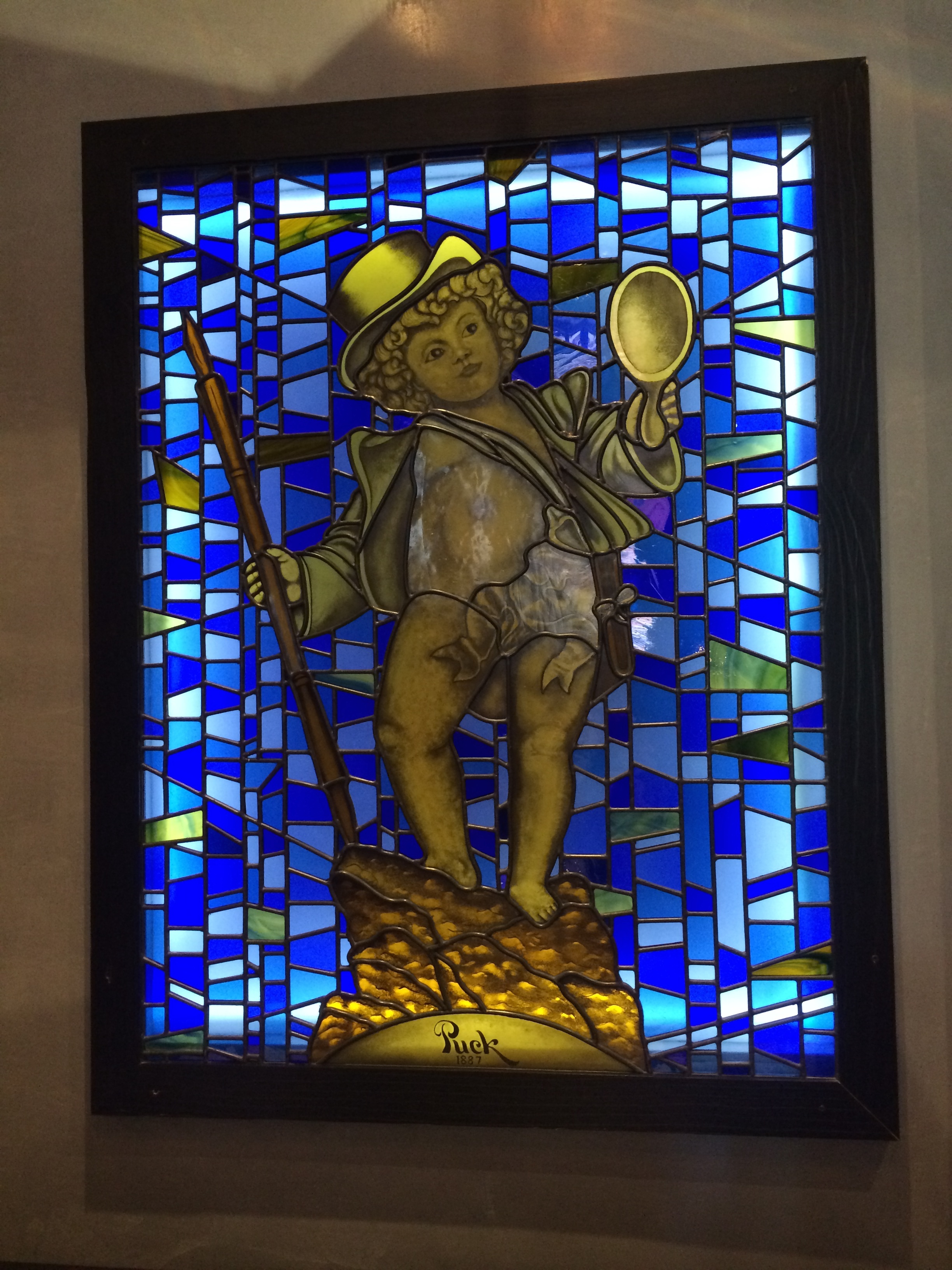
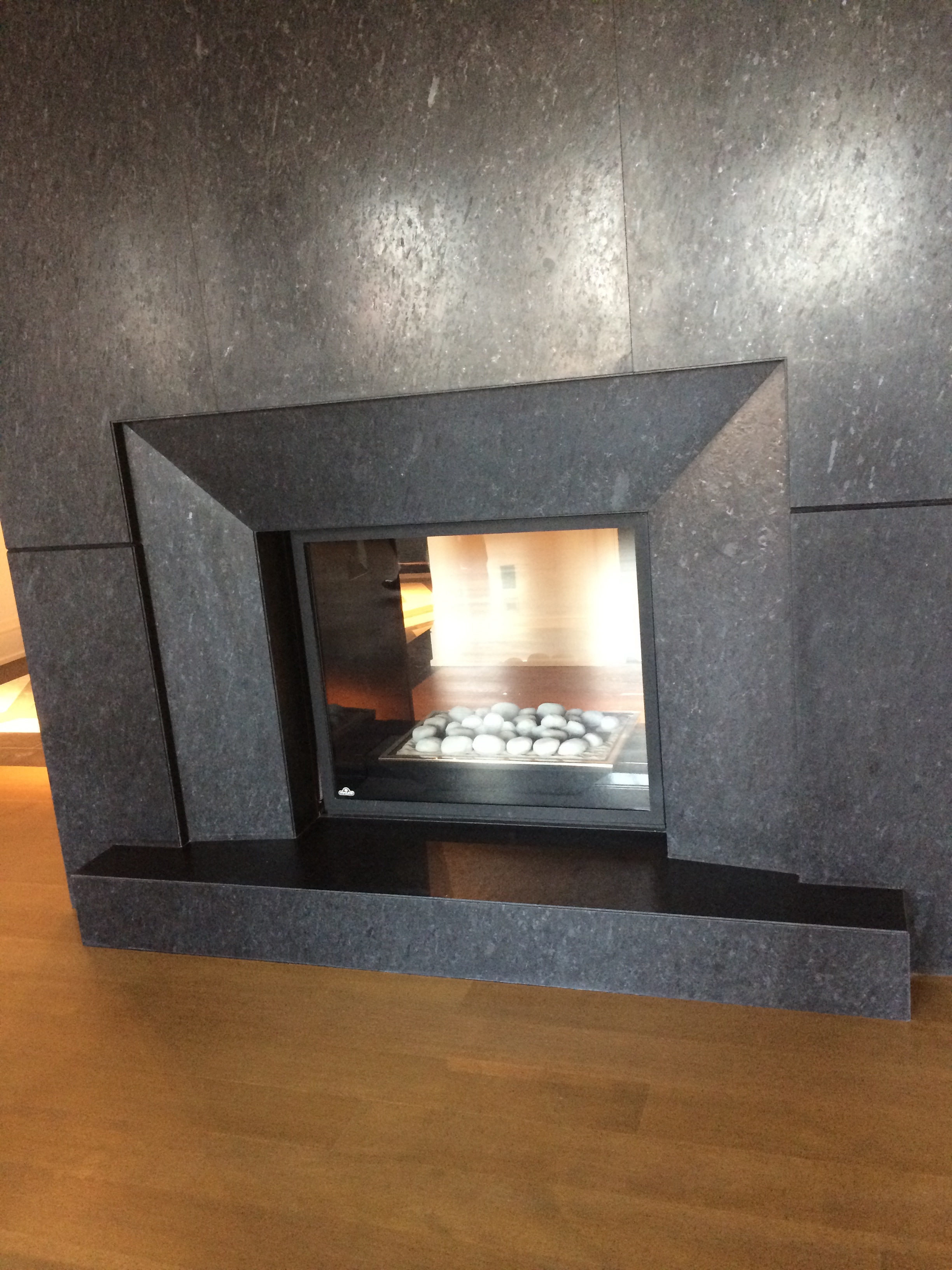
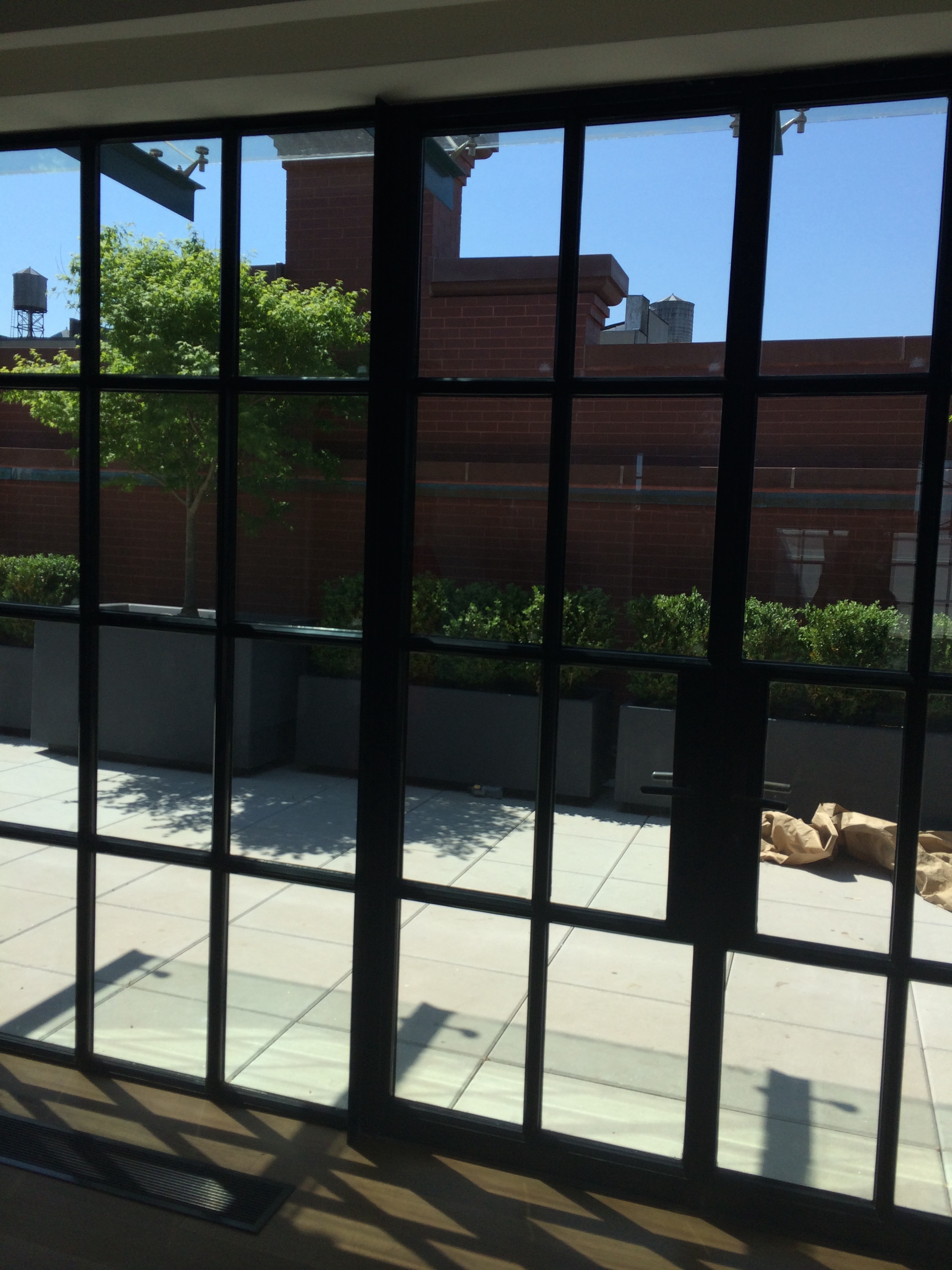
A few days ago, I was fortunate enough to be part of a group of agents who were given a tour of the extraordinary new Puck building penthouses. The Puck building, built beginning in 1885 by Albert Wagner in the Nolita/Soho neighborhood of lower Manhattan, is adorned by two statues of Shakespeare’s character Puck from A Midsummer Night’s Dream, and was once the home of Puck magazine. The penthouses (there are only six) have their own entrance, 295 Lafayette Street. When waiting for the elevator, a charming stained-glass portrait of Puck sets the tone for these penthouses – a blend of old-world, artisanal, and modern.

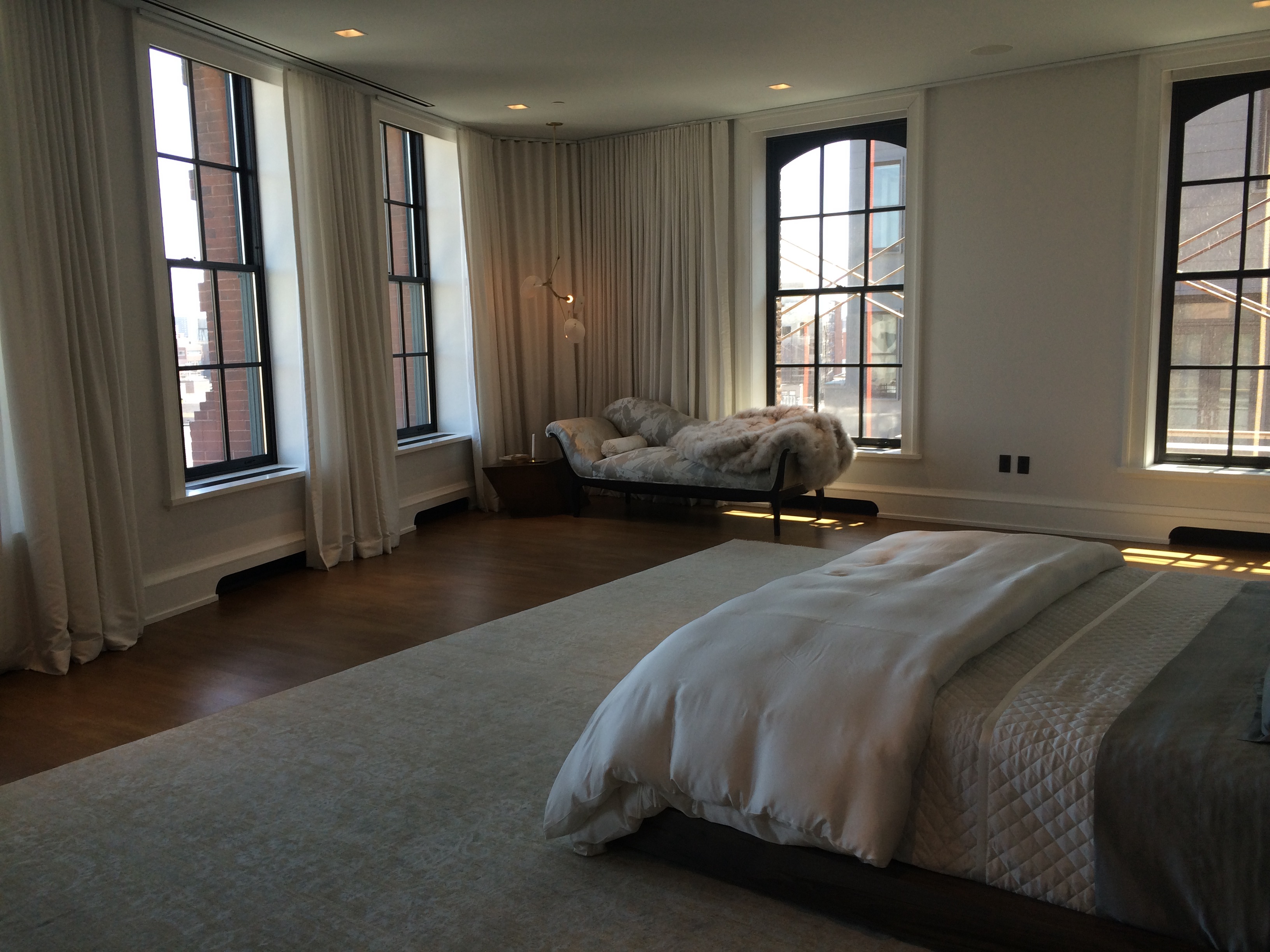
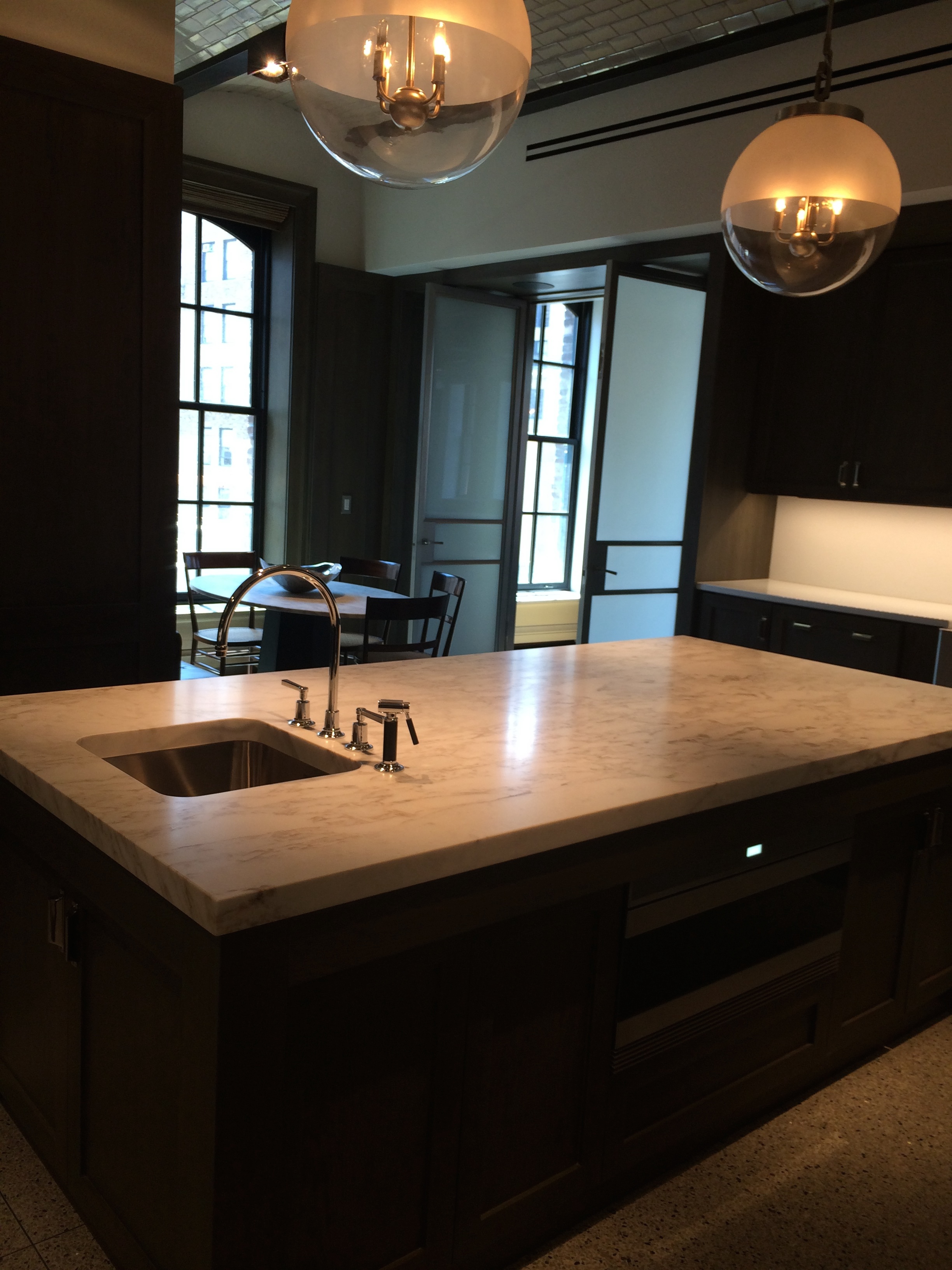
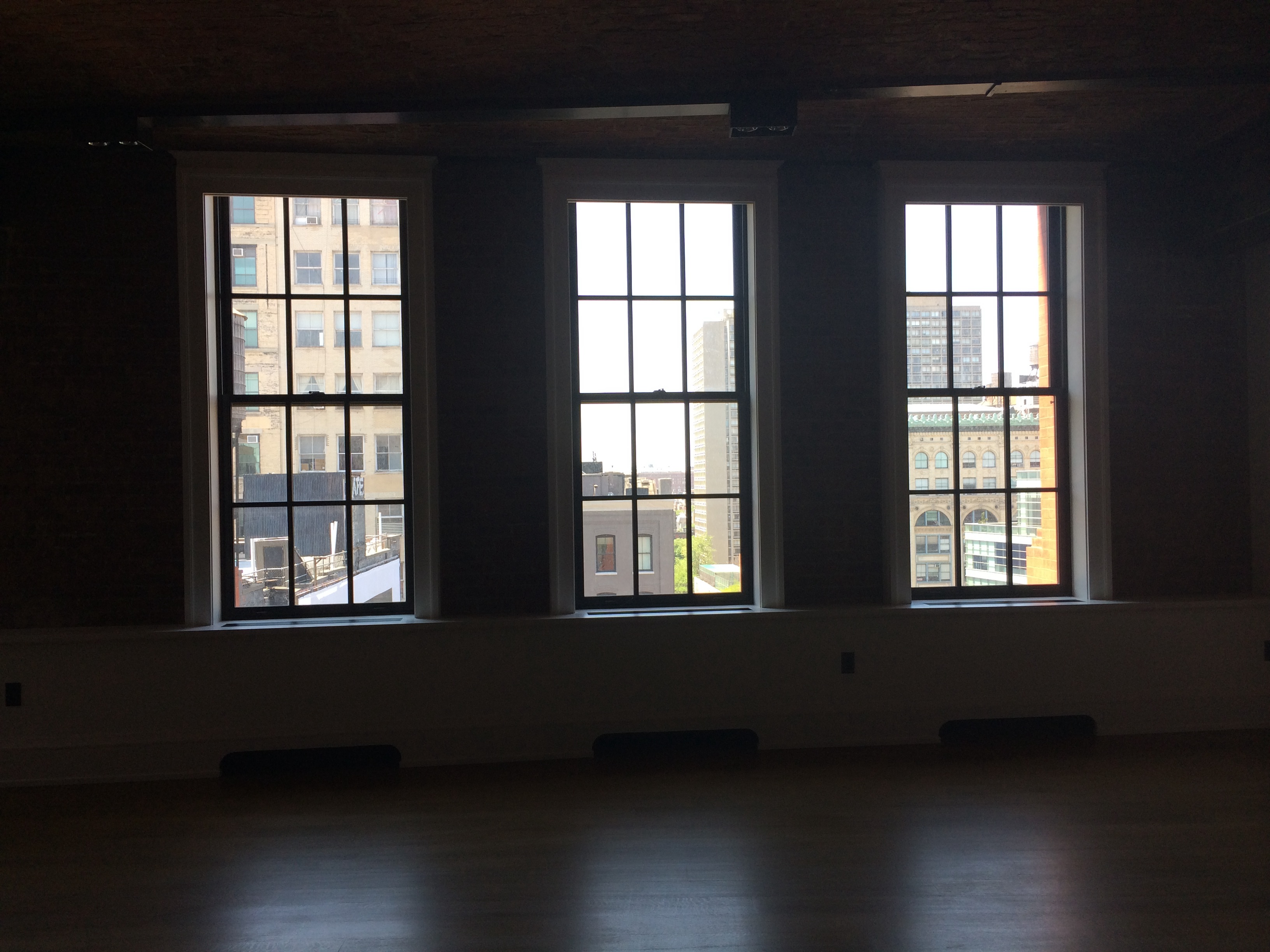
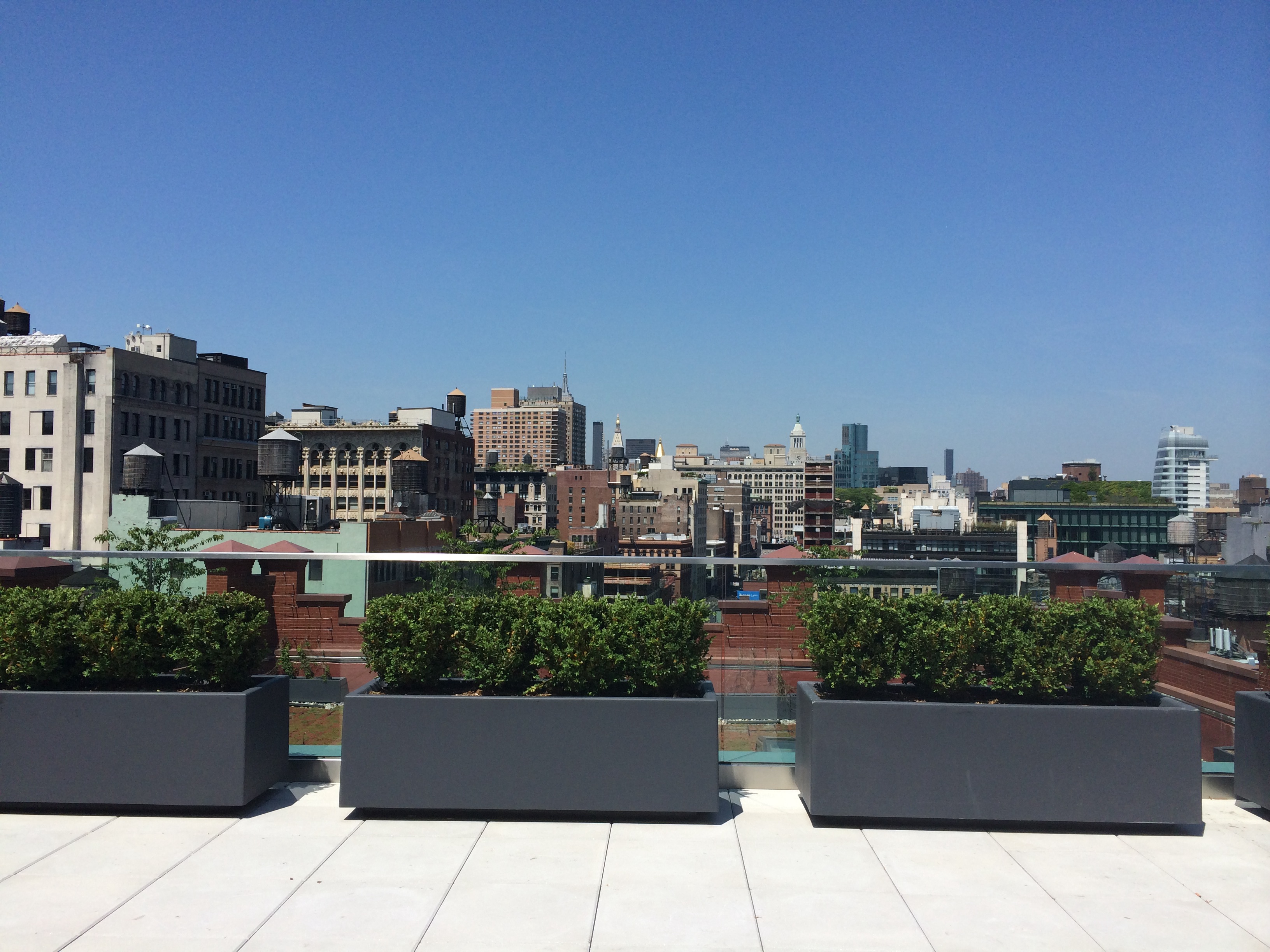
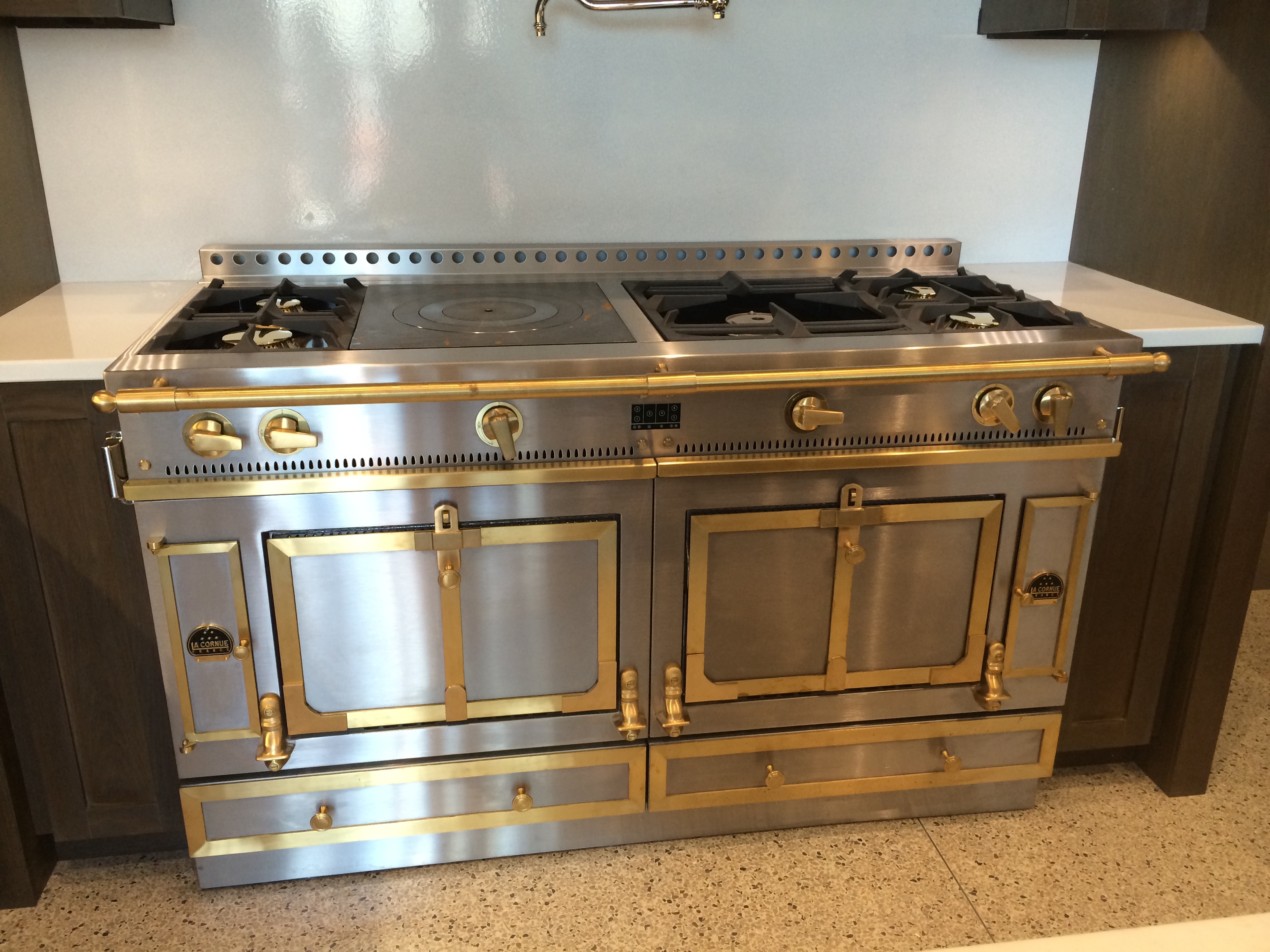
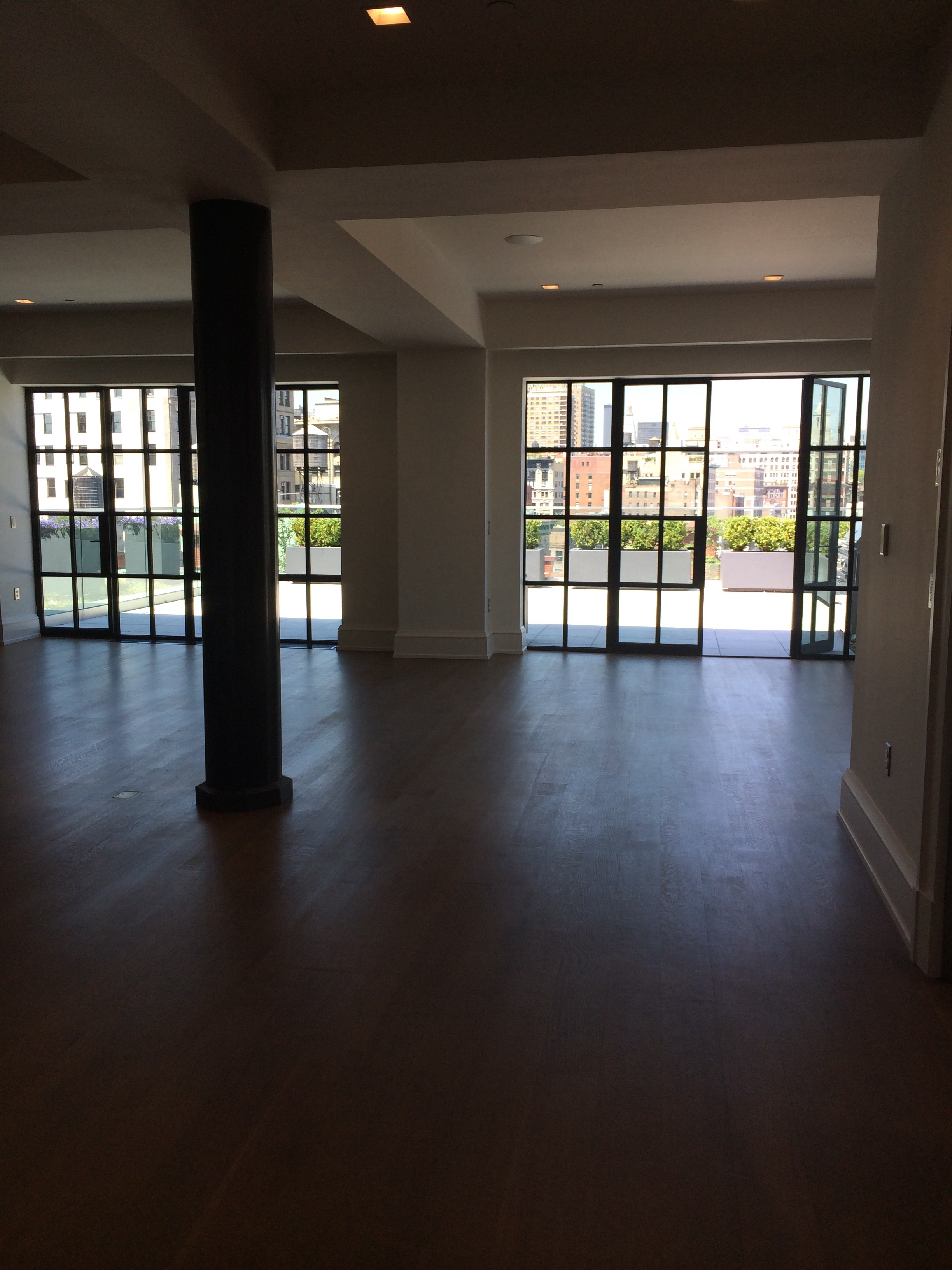
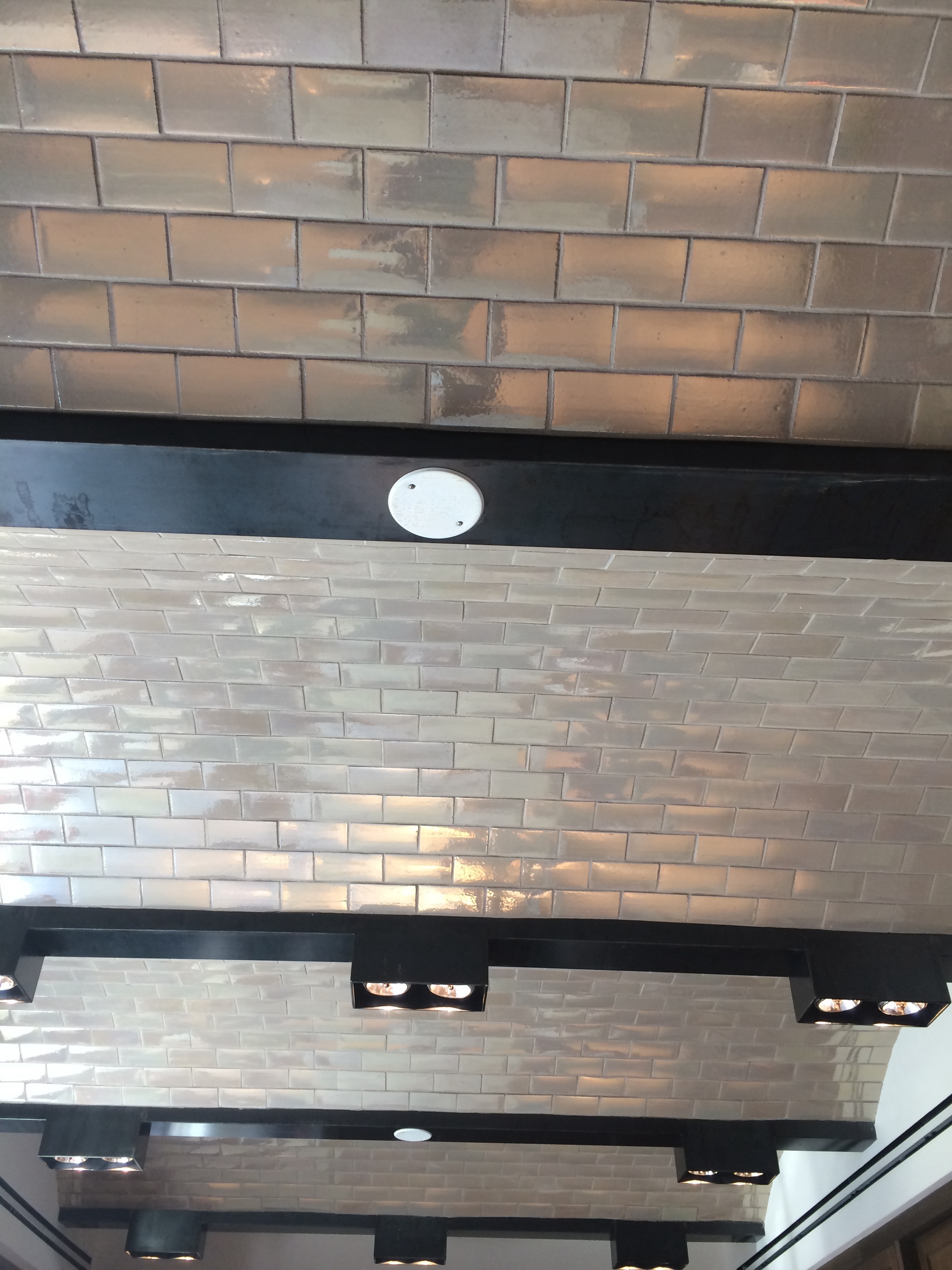
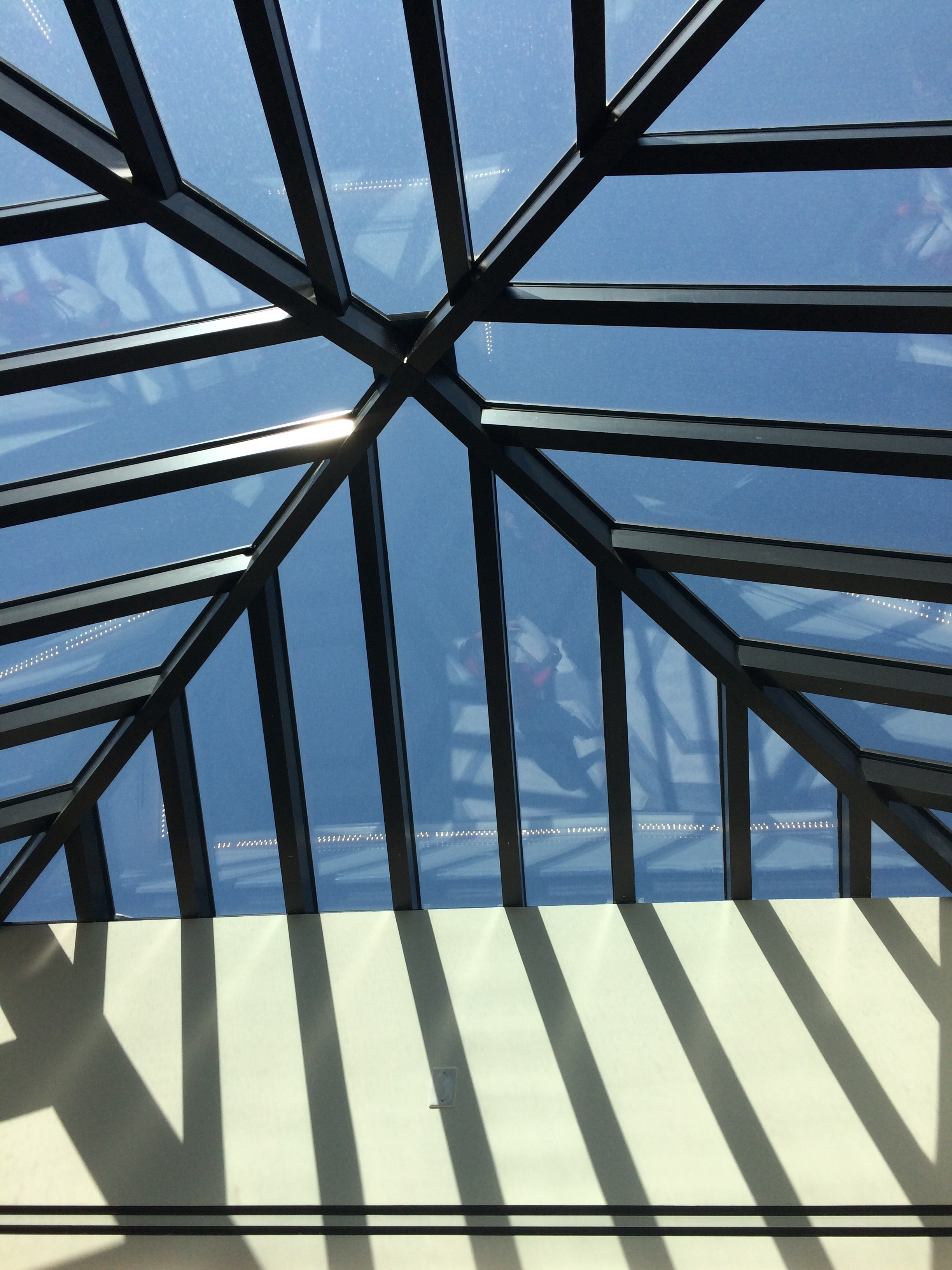
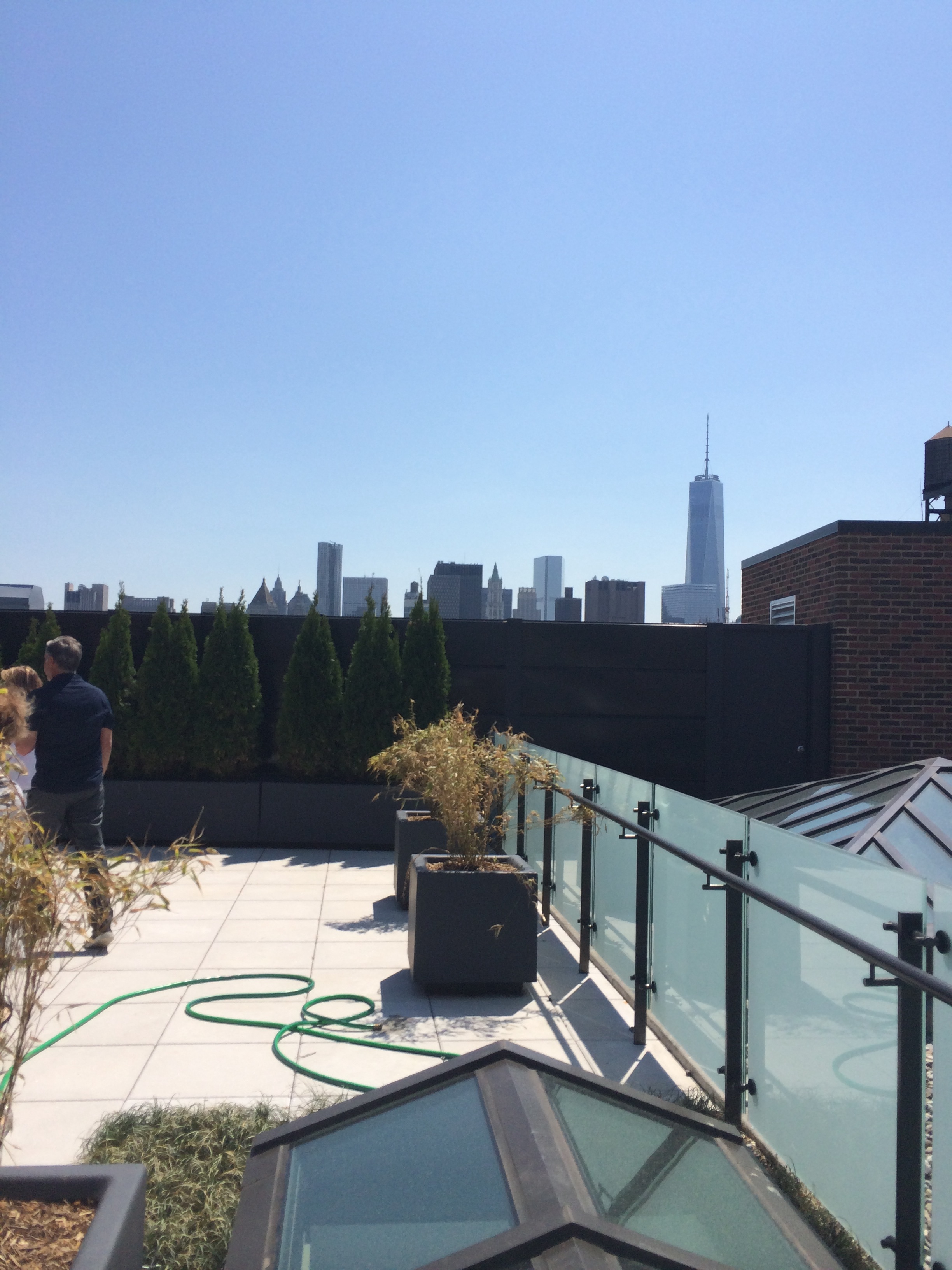
Of the six penthouses, we were originally told we would see three of them, including one fully staged, but during the tour we saw the duplex roof penthouse, with enormous terrace space (including a hot tub outdoors with a view downtown of One World Trade and the Woolworth Building). Although they are still putting the finishing touches on this one, it is simply spectacular (and could be yours for less than $60 million; contact me if you are interested). All of the penthouses have delightful architectural details (such as brick barrel-vault ceilings and fluted iron columns) that respect the historic nature of the building, juxtaposed with the most modern amenities possible. I was impressed with the level of care and detail that had clearly been a constant in the development of these homes.

I snapped some photos while on the tour, and while they are not of the quality that the marketing materials for these penthouses have, they will give you an idea of the feel of these stunning residences.

DISCLAIMER: I do not represent the seller of these properties, and all views expressed are my personal opinion.

IMG_1708

IMG_1709

IMG_1710

IMG_1711

IMG_1712

IMG_1713

IMG_1714

IMG_1715

IMG_1716

IMG_1717

IMG_1718

IMG_1719

IMG_1720

IMG_1721

IMG_1722

IMG_1723

IMG_1724

IMG_1725

IMG_1726

IMG_1727

IMG_1728

IMG_1729

IMG_1730

Early morning in Central Park – from the Metropolitan museum to the Shakespeare Garden

Shakespeare garden

On the first day that New York City felt like spring, I was compelled to take a dérive (an unplanned walk through an urban environment) through Central Park and I wrote about it earlier this year. Yesterday, on the first morning that it truly felt like summer, I was drawn to the park yet again, this time beginning on Fifth and 84th Street, entering the park to the north of the Metropolitan Museum of Art. On this very warm morning, it was hard to imagine the winter days I have been sledding on the sloping grounds next to the museum! Looking through the glassed in enclosure to the Temple of Dendur within the museum is most impressive at night, when there is no glare to prevent the surprising view of a temple built to Isis (and others) around 15 BC, framed by views of grand apartment buildings to the east and skyscrapers off to the south.

Dogs are allowed off leash in Central Park before 9 AM, and if you visit the park during the early morning hours, you are likely to encounter many in the Arthur Ross Pinetum, mid-park between 84th and 86th Streets. Although pine trees were an original part of Olmstead and Vaux’s plan for Central Park, they were eventually replaced by deciduous trees before being reintroduced into the park in the 1970’s. There are 17 different species of trees in the Pinetum, including some from Japan, Macedonia, and the Himalayas.

Continuing west, it is impossible to miss the Great Lawn, a 55-acre green expanse almost exactly in the geographic center of the park. Originally the site of a reservoir, it was filled in using the ground excavated from the construction of Rockefeller Center and opened in 1937 in its present form. Although there are some baseball diamonds around the edge, and a few concerts are still held on the Lawn, it is primarily an open space to relax and enjoy the park during the warmer months.

Heading south around the Great Lawn, to the east is something even older than the Temple of Dendur – Cleopatra’s Needle. An Egyptian obelisk from 1450 BC, it is one of three obelisks (the others are in London and Paris) all similarly named, and all with dubious links to Cleopatra. Our Cleopatra’s Needle is currently covered in scaffolding and is being cleaned of the grime that has accumulated since 1881 from its location in New York City’s open air.

Continuing around the Great Lawn, Turtle Pond appears on your left. A small remnant of the reservoir that once covered the Great Lawn, it does in fact house turtles, believed to be descendants of house pets that outgrew their city accommodations and were sent to the Park to live. Belvedere Castle is visible behind Turtle Pond, and is one of the original buildings created in the park by Calvert Vaux. Its name translates as “beautiful view” and a visit to the castle will in fact reward you with wonderful vistas in all four directions. The National Weather Service official temperature and rainfall amounts for New York City are measured from equipment in and around the castle.

Next to Turtle Pond, on the southwest edge of the Great Lawn, sits the Delacorte Theater, home to Shakespeare in the Park. The Public Theater has been putting on free performances of Shakespeare for over 60 years, and is known for its innovation and stellar casting. I can say personally that the summer nights I have spent in this theater seeing excellent performances as varied as “Hair” and “The Merchant of Venice” have made me feel truly immersed in this wonderful city and its unparalleled artistic offerings. This summer, “Much Ado About Nothing” will run from June 3- July 6, and “King Lear” from July 22- August 17. To get free tickets, line up in the park early or try the virtual lottery on the Public’s website. Financial supporters are given tickets without having to wait, but the Public actually limits the number of supporter tickets available to ensure that free Shakespeare in the Park is available to as many as possible.

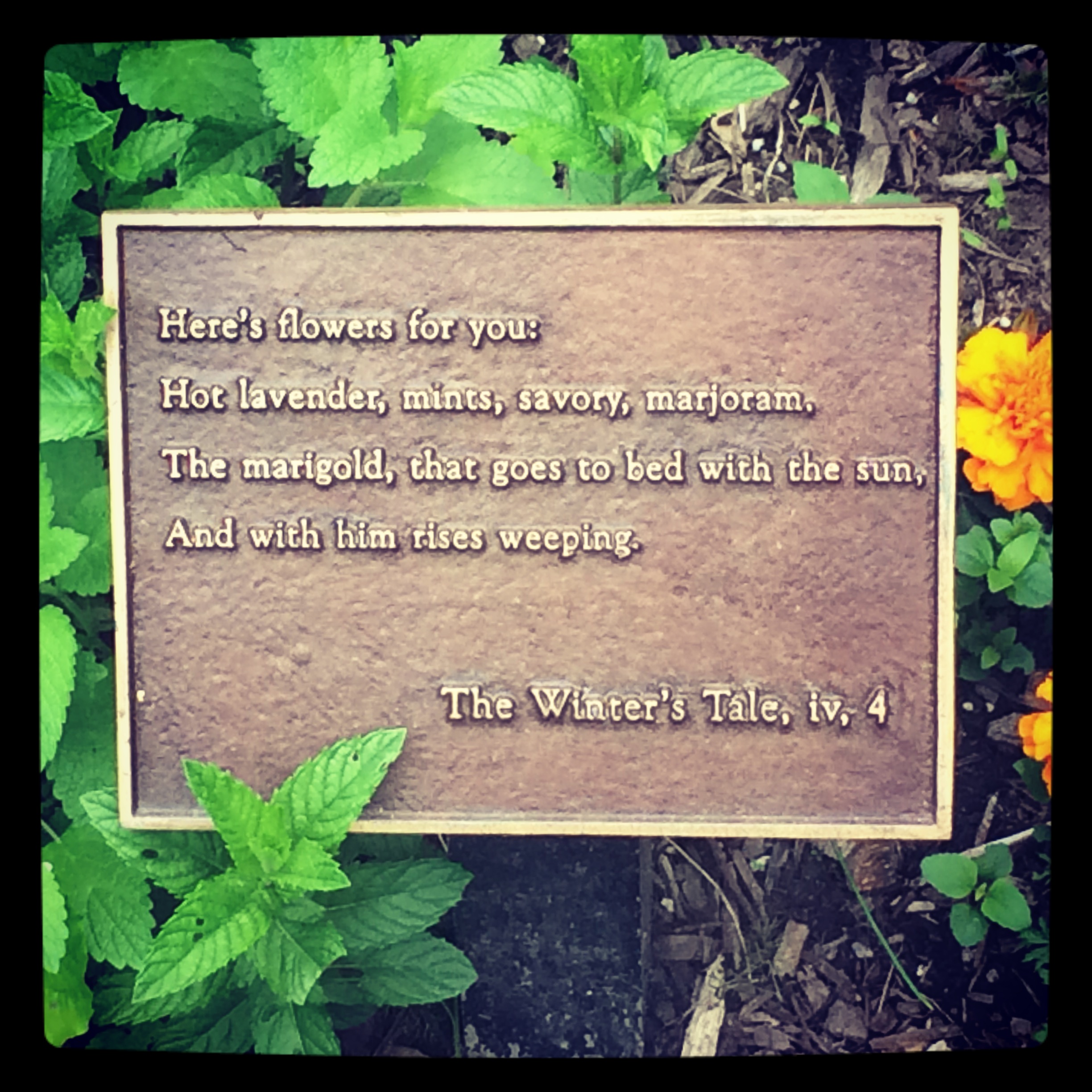
Just north of the Delacorte are large outcroppings of Manhattan schist, the bedrock formed during the ice age and the foundation for many of our skyscrapers.  Behind the Delacorte is the Shakespeare Garden, a four-acre beautiful tranquil space with lovely plantings featuring plants and flowers mentioned in Shakespeare’s works, interspersed with small bronze plaques with quotations from Shakespeare. It’s a rare spot in New York City that allows one to connect with nature and feed your intellect simultaneously, making this one of my favorite hidden spots within the park.

Tucked behind the Shakespeare Garden is the park’s Marionette Theater, a delightfully old-fashioned place to take children during the warmer months. Walking out of Central Park to the west, you find yourself on Central Park West and 81st Street, facing the Beresford apartment building and the Rose Center of the American Museum of Natural History. This dérive ends here, less than a mile from where it began, and illustrates once again the rich variety of experiences packed within the relatively small island of Manhattan.

West 57th Street

Image

So much of New York real estate press these days is about the flurry of enormous new development skyscrapers along 57th Street. Although some of the press is about how these buildings will change the skyline of Manhattan, particular from the viewpoint of Central Park, most is about the stratospheric prices many of the apartments in these buildings command. This has lead to this neighborhood being called “Billionaire’s Row”  – and with the average price of these new condo apartments approaching $20 million and the two apartments in One 57 selling for over $90 million each, being a billionaire couldn’t hurt. The term “Billionaire’s Row” is a throwback to the term “Millionaire’s Row” given to Fifth Avenue north of 50th Street, particularly those buildings along Central Park, in the late 19th and early 20th Century. Families like the Astors, Vanderbilts, Fricks, and Whitneys all jockeyed to built the most impressive homes along this stretch, and of course Andrew Carnegie’s mansion at 90th Street (written about in my previous blog post about Carnegie Hill) was perhaps the zenith of this activity.

I have written about the enjoyment of taking an unplanned walk through an urban environment (a dérive), and decided to walk around this part of town while imagining what it would be like to live there (as opposed to rushing through on the way to a Broadway show). Starting at Fifth and 57th Street, a powerhouse of a corner with Bergdorf’s, Tiffany’s, and Louis Vuitton trying to out-dazzle each other, I walked west and almost immediately noticed 9 West 57th Street – impossible to miss because of the enormous red sculpted “9” in front. Standing in front of this building and looking directly up, the curving slope of its façade is almost dizzying. In addition, its mirrored surface reflected, on the day I was there, the sky dotted with puffy clouds. Looking across the street at this point, I was surprised to see something I had never noticed when not  imagining I lived here: a supermarket (Morton Williams) on the south side of the street midway between Fifth and Sixth Avenues. It’s nice to know that the billionaires have this available (although one imagines most of them are eating out or catering).

Crossing Sixth and continuing west, I look south and realize that Le Parker-Meridien New York being in the neighborhood might make it easier to get to the Burger Joint at an odd time and avoid the huge line (and desperate search for a table). At this point, I also realized how close I was to one my favorite places to eat in the city, Todd English’s Food Hall in the Plaza (59th between Fifth and Sixth). On the north side of this block is elegant Steinway Hall, now closing as a showroom for fine concert pianos but soon to be part of a new skyscraper built primarily on the lot next to the hall, but with air rights over the Steinway building. The star of the block currently, of course, is One 57, at 157 W 57th Street. Nearing completion, and yet already close to sold out, currently it dominates the area, but with the other “tower power” buildings planned, it will eventually be simply a part of the reimagined Manhattan skyline. It will briefly be the city’s tallest residential building, at over 1000 feet, but will soon be overtaken by 432 Park (with a height of almost 1400 feet, when it is finished it will be the highest residential building in the Western hemisphere).

The southeast corner of Seventh and 57th Street is home to Carnegie Hall, reason enough to consider living here! On the north side of the block between Seventh and Eighth Avenues, you can glimpse trees in Central Park – for now – through the empty space soon to be another duo of tall residential buildings. It’s easy to forget how close you are to Central Park while walking along 57th Street, although the view of the Park that north-facing apartments in One 57 above 225 feet or so has certainly contributed to their value.

Crossing Eighth Avenue, look north to see Columbus Circle, the ending location of one of my recent blog posts. The look of the apartment buildings changes as you continue west. In the same period of time that Fifth was turning into “Millionaire’s Row,” 57th Street became the home of several large apartment buildings (like the Parc Vendome and Alwyn Court) designed to lure wealthier (if not quite in the league of those on Millionaire’s Row) New Yorkers away from their townhouses and into full service buildings with doormen and spacious apartment layouts. Looking at the Parc Vendome, one of four massive imposing apartment buildings on 57th near Ninth Avenue, I noticed the different feel these buildings have compared to the slender tall towers sprouting up along the street.

Turning north, I was struck with how quickly the tone of the neighborhood changes – within a few blocks, the midtown feeling is gone and you are clearly on the Upper West Side, and steps from Central Park as well as Lincoln Center. Thinking about it, this is the genius of 57th Street as a place for residential buildings, straddling Central Park and Upper West Side (or East, in the case of 432 Park) on one side and busy, bustling midtown on the other. London has a “Billionaire’s Row” as well, but it’s a series of mansions in a quiet part of North London (Bishop’s Row). This central location for New York’s strip of “power towers” is an advantage for anyone looking to live in the middle of the island. These new tower developments have been controversial, but so many architectural developments that were initially hated (The Eiffel Tower and original World Trade Center, for instance) became icons over time. Perhaps one day the new developments changing the skyline of Manhattan along 57th Street will become accepted and integrated into the look of New York City, a place that is always changing, and therefore, never boring.

Tribeca

Image

Today’s dérive (an unplanned walk in an urban environment) is in the neighborhood of Manhattan that is both the wealthiest and has the lowest crime rate – Tribeca. The first part of the city to expand beyond the colonial boundaries, it was an industrial center for the city in the mid-19th Century, but lost many of those businesses and slowly fell into disrepair by the 1960’s. Artists were attracted to the large empty commercial spaces, eventually leading to the area’s transformation into the upscale residential enclave it is today.

Although the acronym stands for “TRIangle BElow CAnal” it is not shaped like a triangle, and in fact its eastern and southern boundaries are not clear-cut. The northern edge is Canal Street, and the western edge the Hudson River, but the east boundary bleeds into Chinatown, with some maps showing Broadway and others showing Centre Street as the edge. To the south, it is even more confusing, with the boundary between the Financial District and Tribeca being shown as Vesey Street, Chambers Street, or Duane or Reade Streets (yes, the first Duane Reade drugstore was here). From my recent walk, I can say that making the area smaller (Broadway to the east and Duane Street to the south) results in the area seeming more cohesive. In particular, the area to the south of Reade Street begins to seem much more like the financial district or Battery Park City to me.

Wandering from the Canal Street 6 subway station and heading west, turning south on Sixth Avenue (AKA Avenue of the Americas), the character of the neighborhood becomes immediately apparent. Many of the buildings are former industrial buildings that have been converted into lofts and apartments, with some corporate use (32 Avenue of the Americas, a gorgeous Art Deco skyscraper, once held AT&T and now houses a variety of financial and technical companies). On many of the side streets, you can see the original cobblestone construction, and now that Tribeca is a historic district, as these streets need resurfacing, they will have to undergo cobblestone repair rather than being paved with asphalt. Although beautiful, cobblestone streets are a good way to twist your ankle if not careful, or break off the heel of your new Christian Louboutins!

North Moore Street is an excellent example of a quiet Tribeca Street, home of expensive condos and a few small boutiques. It’s also the home (14 N. Moore) to Hook and Ladder No. 8, the firehouse used to film “Ghostbusters.” As you walk around Tribeca, views of One World Trade Center come in and out of view, much as the original World Trade Center towers did before 9/11/01. It’s not a surprise, then that the firefighters at No. 8 were some of the first responders on that day.. Out of the ashes of this terrible loss was created the Tribeca Film Festival, envisioned as a way to rebuild the neighborhood and now part of its spectacular success. Generally held in April, the Film Festival now attracts up to 3 million people and brings in approximately $600 million to the city.

While on this walk, I heard one tourist say to another, “This looks so much like New York!” Despite the humor inherent in that remark, I do know what they mean – there is a characteristic look in Tribeca that is quintessentially Manhattan. However, the fantastic thing about this city is that I could name a multitude of other neighborhoods that also look “so New York” and all are different. This is what makes living in New York, or walking around it, so rewarding – such rich variety within a relatively small space.

A walk in the East Village

The fabulous Public Theater on Lafayette Street

I have written before about the pleasure of taking a dérive, an unplanned walk in an urban environment with the intention of encountering something new. New York City is the perfect place for such an experience, since its multitude of neighborhoods results in endless possibilities. For today’s derive, I took the 6 subway to Astor Place and began to walk.

The Astor Place subway station is one of the original 28 subway stations, and has been open since 1904. The mosaics on the wall of the subway platform feature beavers, a tribute to the beaver pelt business that built the Astor fortune (John Jacob Astor, who died in 1848, was once the wealthiest person in the United States). Emerging from the subway station, you are in Astor Place, only about two blocks long, and the site of the Astor Opera House in the 19th century. The Astor Place Riot in 1849 was theoretically a fight over the relative skill of two rival actors who were playing Macbeth in nearby theaters (!), but the underlying tension had to do with anti-British sentiment among Irish-Americans at the time of the potato famine.

Turning onto Lafayette Street and heading south, on the left is the magnificent Public Theater, housed in what once was the Astor Library (they have a wonderful place for drinks and nibbles within the Public, called The Library as an homage to the building’s history). Home to five different theaters as well as the singular Joe’s Pub, this is where “Hair” was born, and continues to surprise theatergoers today with “Here Lies Love,” a musical based on the Imelda Marcos story with music by David Byrne. The Public is truly a New York institution, presenting Shakespeare in the Park performances every summer – for free! – in the Delacorte Theater within Central Park.

Walking down Lafayette, I was struck by the different feeling you get in this part of town, where most buildings are shorter and you can see more sky as you walk down a wide street like Lafayette. The Manhattan Schist (the bedrock that allows skyscrapers to be built in midtown with a strong foundation) dips several hundred feet lower in the Greenwich Village/East Village region, so fewer tall buildings were built in this area. (As a comparison, the schist is only 12 feet below Times Square.) The shorter buildings do give the area a more open, less imposing, air. Turning east on 4th Street, you soon see the Cooper Union – a school for art, architecture, and engineering founded by Peter Cooper in 1859. Abraham Lincoln gave his famous Cooper Union Address in the Great Hall while running for President in 1860, the address that turned the tide positively for his winning his party’s nomination.

Crossing Bowery (which immediately north of 4th Street is briefly Cooper Square before becoming Third Avenue), you find yourself on a block known for the support and incubation of new work. On the south side of the block is LaMaMa, founded by Ellen Stewart in 1961 to give free space and support for artists. On the north side is New York Theatre Workshop, founded Stephen Graham in 1979 to encourage innovative new works for the theater. “Rent” was born here in 1996 before moving to Broadway, and more recently “Peter and the Starcatcher” did the same.

Crossing Second Avenue and continuing east, is a building (85 E 4th) that I particularly love. It’s home to the New York Neo-Futurists “Too Much Light Makes The Baby Go Blind” every Friday and Saturday night at 10:30. The show is never the same, and involves trying to complete 30 two-minute plays (written by the performers) before the hour-long timer goes off. I’ve seen this feat many times and never fail to laugh, be inspired, and given something to contemplate within the array of short plays performed. Most nights of the week there are literary readings above the Kraine Theater at KGB Bar, and even if there is not, it is a fun place to relax and enjoy the authentic Soviet-era décor.

Hitting First Avenue and turning north, within a few blocks you will find St. Mark’s Place, a few blocks of 8th Street with a distinct character. There are certainly other places within the city to get a tattoo or elaborate piercings, but you could do considerable comparison shopping here within a few blocks. I chose to get a quick bite to eat at Mark on St. Mark’s between Second and Third for some great sliders and a shake. Continuing along St. Mark’s Place gets you back to Astor Place and its distinctive sculpture that I always thought was called (descriptively) “The Cube” but I found out is named “Alamo.” This cube turned on a point is balanced so that one person can, with effort, spin it around, while two can do it easily. This interaction of art and playfulness, to me, sums up the appeal of this creative, stimulating neighborhood.

Central Park West from 72nd to 59th Street

Image

For this dérive (an unplanned walk within an urban landscape), a portion of the Upper West Side beckons. Emerging from Central Park, passing the guy who will tell a joke for $1 (money returned if you don’t laugh, according to the sign, but I’ve never personally tested it), and with the sounds of the ever-present guitarist singing Beatles songs to the throngs of tourists in Strawberry Fields fading away, Central Park West welcomes you at 72nd Street with a visual treat: the facades of two iconic buildings, the Dakota and the Majestic. Central Park West, like Fifth Avenue, features an unbroken line of residential apartment buildings from 59th Street to 110th Street. While the buildings on CPW and Fifth gaze (or perhaps glare?) across Central Park at each other, they do differ quite a bit from each other in style. The buildings on Central Park West are more elaborate and ornate, while those on Fifth tend to appear more stately and reserved. The west side buildings are often named, while those on the east side are called by their street address.

The Dakota, on the northwest corner of Central Park West and 72nd Street, was built between 1880 and 1884, and seemed as distant from the city and alone as the Dakota Territories (whether that was in fact the origin of the name, which is unclear, it was certainly true – it is bizarre to see photographs of the building in 1890 with just a scattering of short rowhouses in the far background, with nothing on either side or behind). The Dakota was the beginning of a building boom on the Upper West Side from 1885 to 1910, in part because of the creation of the city’s first subway line, the Broadway/Seventh Avenue line, making the area less remote from downtown. Being featured in the opening credits of “Rosemary’s Baby” certainly has not adversely impacted the value of the apartments in the Dakota, demonstrating that it takes a lot more than the prospect of living next to a group of Satanists to keep people away from a fabulous apartment in New York City.

The Majestic, built long after the Dakota in 1930-31, is a splendid example of minimalist Art Deco design, inside and out. The spare and square two towers were a result of the Multiple Dwelling Act of 1929, which restricted how tall a building could be immediately above street level, but allowed towers if the building would house a large number of people. The west side of the building has curved ornamentation that looks like the side of a jukebox. Take a peek in the lobby to enjoy the elaborate geometric designs that decorate the entrance.

Although I was walking along Central Park West, I was unable to resist turning into the park at W. 67th Street to look at the exterior of the newly renovated Tavern on the Green. Originally the location of a building to house the sheep that grazed (and kept the grass mowed to a civilized length) on Sheep’s Meadow in Central Park, it was converted to a restaurant as part of Robert Moses’ 1934 renovation of the park. Closed since December 31, 2009, it has just reopened. I will be interested to see how it has transformed; the Tavern I knew was certainly unique! The photographs I have seen from inside the renovated space look more understated and the menu seems promising. As I snapped a photo of the exterior of the building, I couldn’t help but notice One 57 looming in the background. The transformation of West 57th Street into “Billionaire’s Row” was certainly in some developer’s minds when Tavern shuttered in 2009, but was not yet cocktail party conversation, which it is now.

Walking along CPW, just a block or so west you can catch glimpses of Lincoln Center, a triumph of urban development that meant that the tenements shown in some of the beginning scenes of West Side story on the current site of Lincoln Center would be torn down immediately after filming. The people who lived in this area at that point would scarcely be able to believe the creation of a super-luxury building like 15 CPW (at 62nd Street), “the world’s most powerful address,” as a recent book declares.

Central Park West dead ends at Columbus Circle and the Time Warner Center. A mix between residential homes, office space, CNN studios, performance spaces (Jazz at Lincoln Center is there) and shopping areas, it signifies the transition from Upper West Side to Midtown. The statue of Columbus seems to turn his back with distain on Central Park West, instead looking south toward midtown. I can never see this statue without remembering the Public Art Works Project from 2012, where Tatzu Nishi created a living room in the air surrounding Columbus. Despite Columbus’ arrogant upthrust chin, hand on his hip, once you have climbed several flights of stairs to see him within a completely furnished living room with pink wallpaper and a large television, he never quite commands the same level of intimidation. Such is the power of art, and the joy of living in a city that values art enough to support innovative projects at no cost to the public.

Sutton Place

Image

A few weeks ago I took a dérive (an unplanned walk in an urban environment) in the Hell’s Kitchen area. If you were at the north edge of Hell’s Kitchen and walked all the way east until you reached the East River, you would realize how quickly Manhattan neighborhoods can change; from gritty Hell’s Kitchen, you would walk through rapidly evolving “Billionaire’s Row” along 57th Street in Midtown, and then eventually into quiet, laid-back Sutton Place. Because of the geography of Manhattan, it is often confusing to some to find that there are often areas east of “First” Avenue, despite its name. In lower Manhattan, you find Alphabet City – Avenue A, B, etc. Avenue A eventually becomes Sutton Place briefly in midtown, before changing its name to York Avenue on the Upper East Side and disappearing at 96th Street.

So how did Avenue A come to be called Sutton Place between 53rd and 59th Streets? In 1987, the delightfully named Effingham B. Sutton constructed a group of brownstones between 58th and 59th Streets, lending the area his last name, if unfortunately not the first. Even tiny Sutton Place is subdivided again into Sutton Place South (from 53rd to 57th) and Sutton Place North (from 57th to 59th). The area, quiet and seemingly removed from busy midtown just a few blocks away, has been home to residents as diverse as Marilyn Monroe and Arthur Miller, Aristotle Onassis, I.M. Pei, and Freddie Mercury (lead singer of Queen).

This dérive will begin at First Avenue and 59th Street, at the Bridgemarket development tucked under the Ed Koch (AKA the Queensboro, or 59th Street) bridge, home to a T.J. Maxx and a Food Emporium, as well as a Starbucks. Despite the pedestrian nature of those businesses, the Bridgemarket building is gorgeous inside, designed by Rafael Guastavino, who also did work on Grand Central Terminal and Grant’s Tomb (an interesting article on Guastavino and his son was recently on Curbed). Walking east, the bridge looms to your left; on the sunny early spring day when I did this walk, I found myself being unable to resist thinking of Simon and Garfunkel’s “59th Street Bridge Song.” This neighborhood does tend to make you agree with the sentiment, ”Slow down, you move too fast/Got to make the morning last” (even if no one has thought that they were “feeling groovy” for several decades now!).

Turning south to Sutton Place North, the buildings are post-war, except for a block of townhouses on the east side of the street. Crossing 59th Street, two imposing grand dames of Sutton Place South face each other, One and Two Sutton Place South. I tend to think that when Holden Caulfield refers to a “swanky party” on Sutton Place in Salinger’s The Catcher in the Rye, it must have taken place at one of these two buildings. Before you know it, Sutton Place South has ended in a turn west on 53rd Street.

I recently attended a broker’s open house for several large apartments on Sutton Place, and was struck at the value of some apartments in this area compared to similar ones on Park Avenue. Of course, you are farther east, but in addition to the Second Avenue subway being completed in the next several years, there is also the M31 bus that travels the length of 57th Street before turning north and going all the way up York Avenue to 91st Street. There are some apartments with wonderful views, too; the East River across to Queens and the iconic Pepsi sign, and even the bridge looming to the north. Manhattan is truly a series of neighborhoods as diverse as cities, and that is one major reason that I never tire of walking around this city