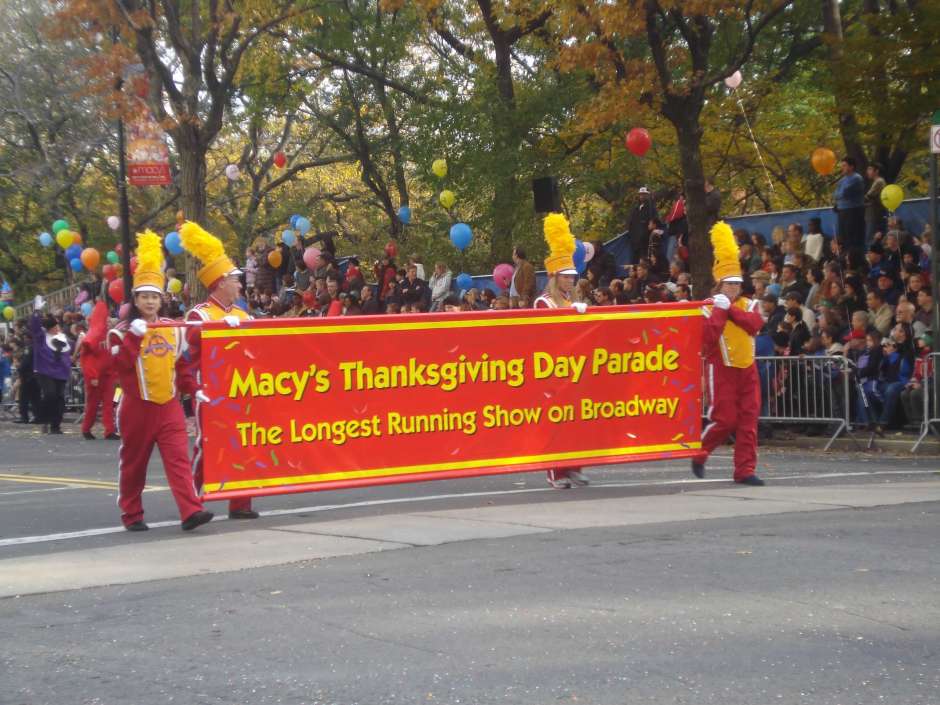
Macy’s Thanksgiving Day Parade

I truly believe some of my earliest memories are of watching the Macy’s Thanksgiving Day Parade and waiting to see the Snoopy balloon. My mother would be in the kitchen preparing Thanksgiving dinner and I would race in to make her come in and see when Snoopy finally arrived! Because I was not fortunate enough to be born in New York City, I watched it as most people do, on television. When I moved to NYC, the very first Thanksgiving I was lined up early on Central Park West to see the parade, and have seen it most years since then. I thought it might be fun to go into different ways to watch the parade, other than on TV. I was going to get photos this year (2024) but it was raining all morning and I knew the photos would not turn out. However, I have hundreds of photos from previous years, and had fun looking through them.

The parade starts on CPW and W 77th Street, and ends in front of the Macy’s department store, on W 34 between Broadway and Seventh Avenue. It heads south along CPW, turns at Columbus Circle for a few blocks along Central Park South, then heads south on Sixth until it turns on 34th Street. The blocks around the end of the parade, where the live performances in front of Macy’s are performed for the television audience and a few lucky people, are not accessible to the public.
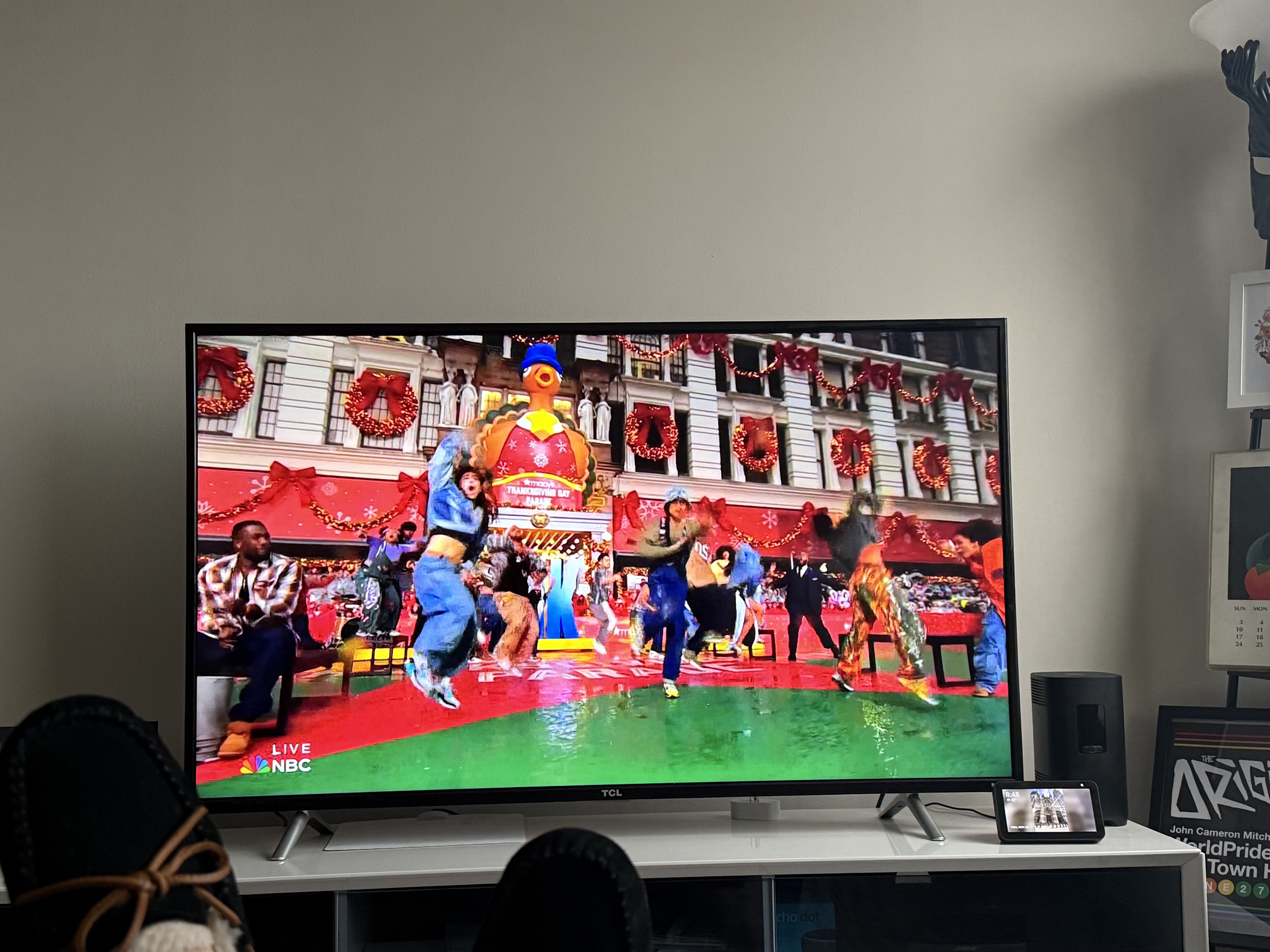
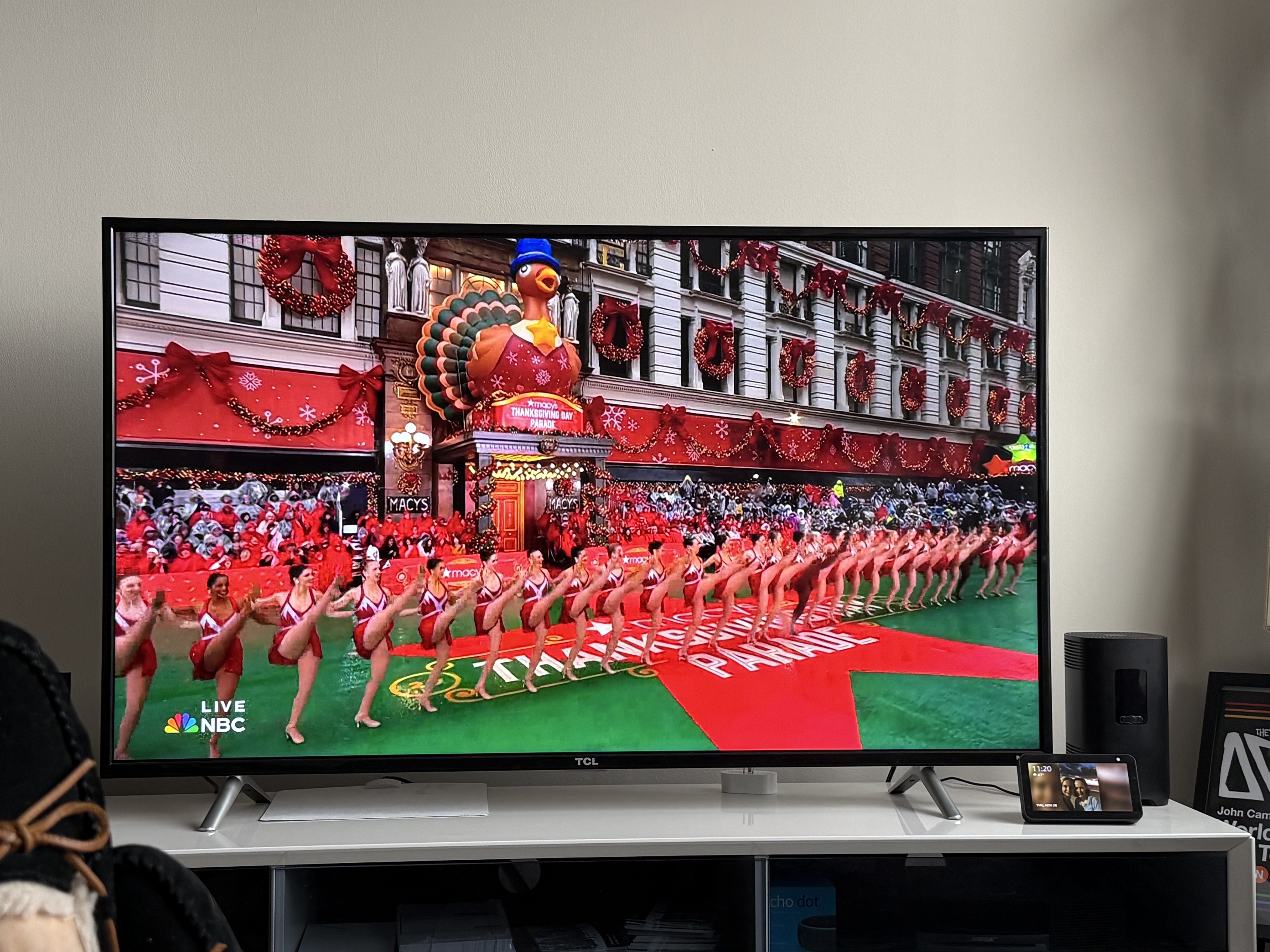
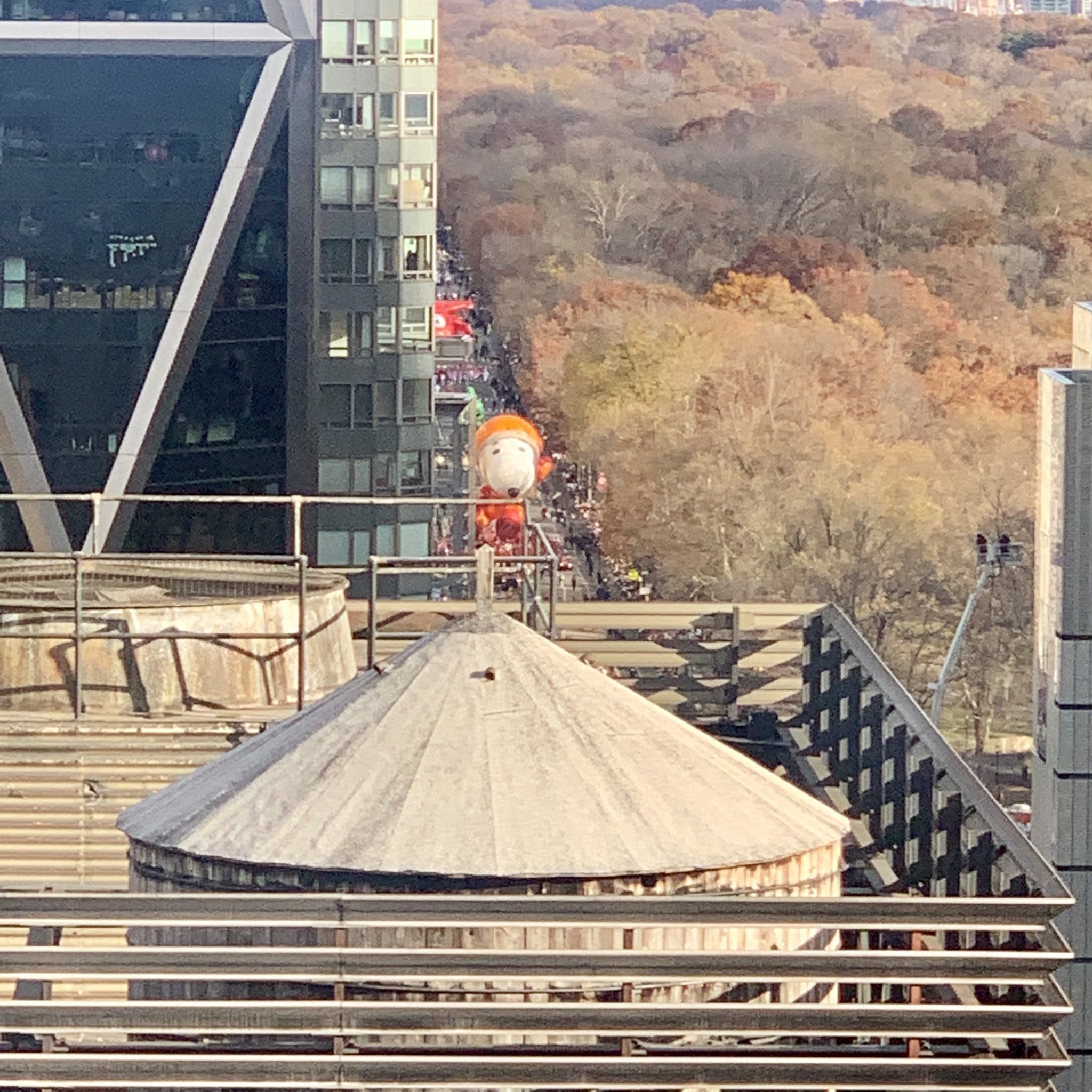
So the photos above (from 2024, of Hells Kitchen the musical, and the Rockettes) show the typical TV experience, and also show the parts you cannot see if you decide to watch the parade yourself in the city (Broadway and other live performances). If lucky enough to live in a building with a roof deck, you might be able to see the parade from a distance. The photos below are from the roof of an apartment building on Eighth Avenue and W 53rd Street. It’s fun to see the parade like that (and hey, there’s Snoopy!) but it can be distant.

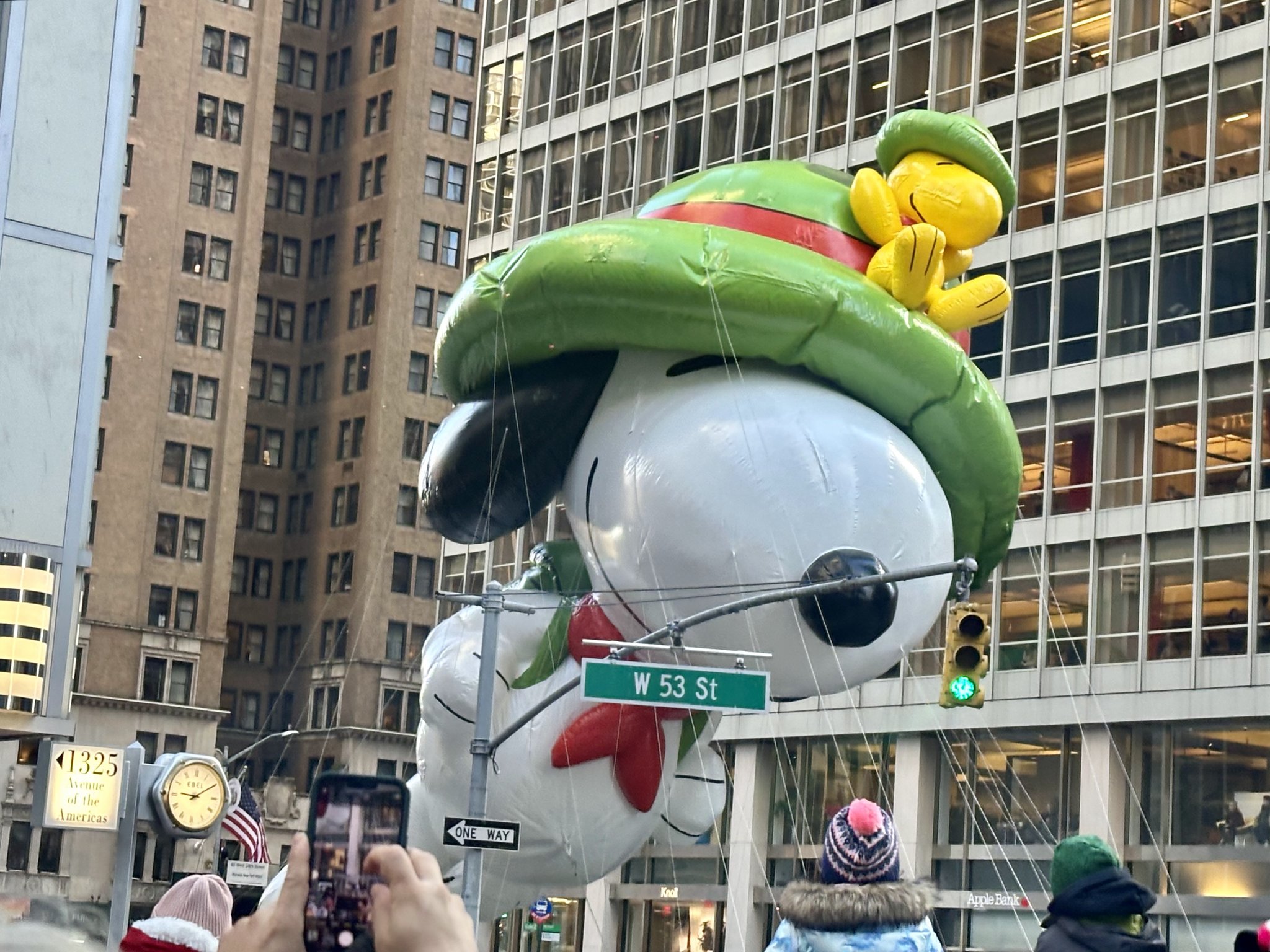
Midtown along Sixth Avenue can be an easier place to see the parade. There may be lots of people around, but the sidewalks and streets are wide enough that you will see the balloons easily even if you don’t get there early. The photos below are from midtown from a few different years (note that although there is always a Snoopy balloon, it changes out from time to time in terms of the design). The disadvantage to this area is that you may be too far away to really see the floats and clowns, etc., but you won’t need to get there early to be able to see the balloons.

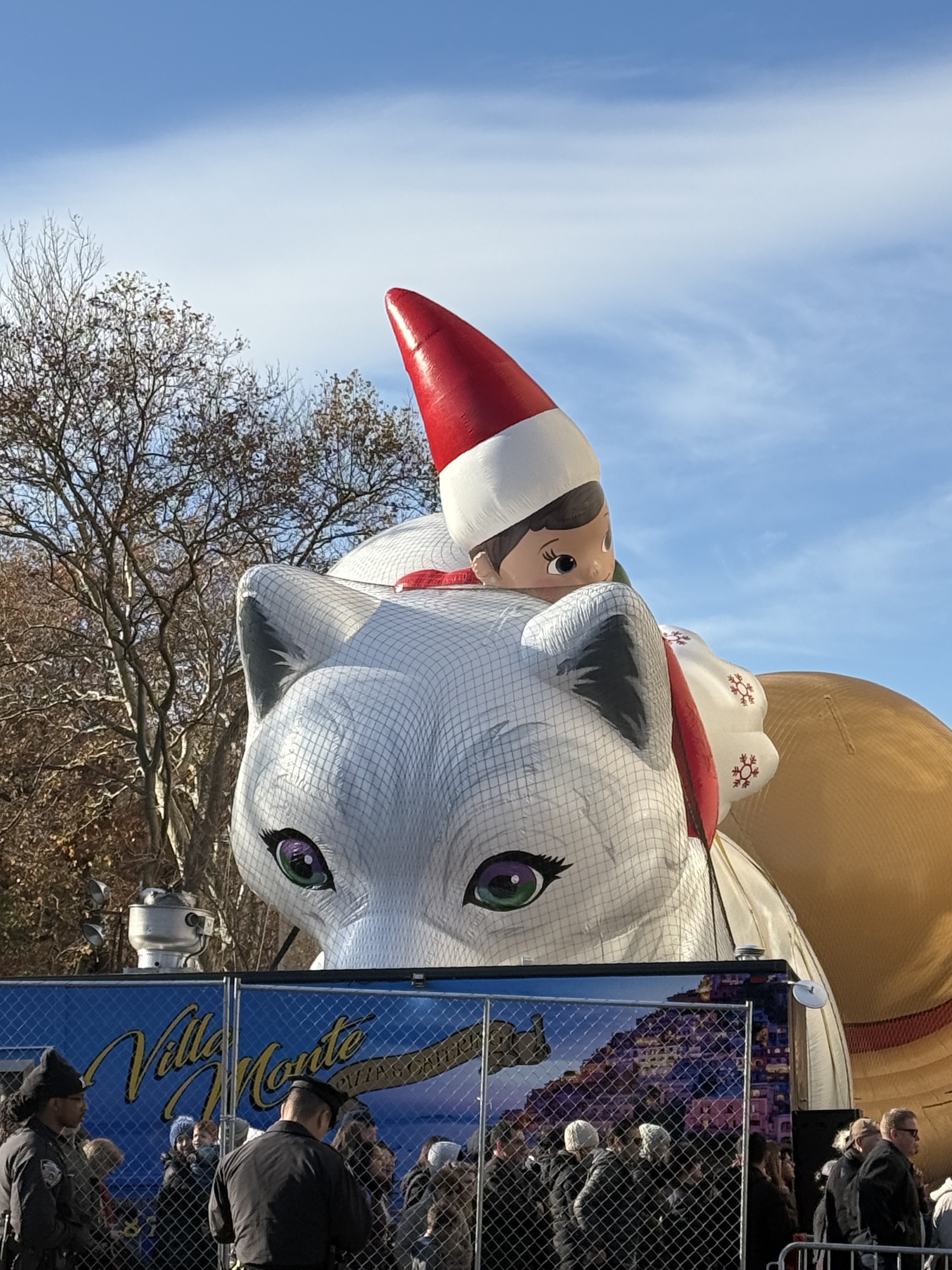
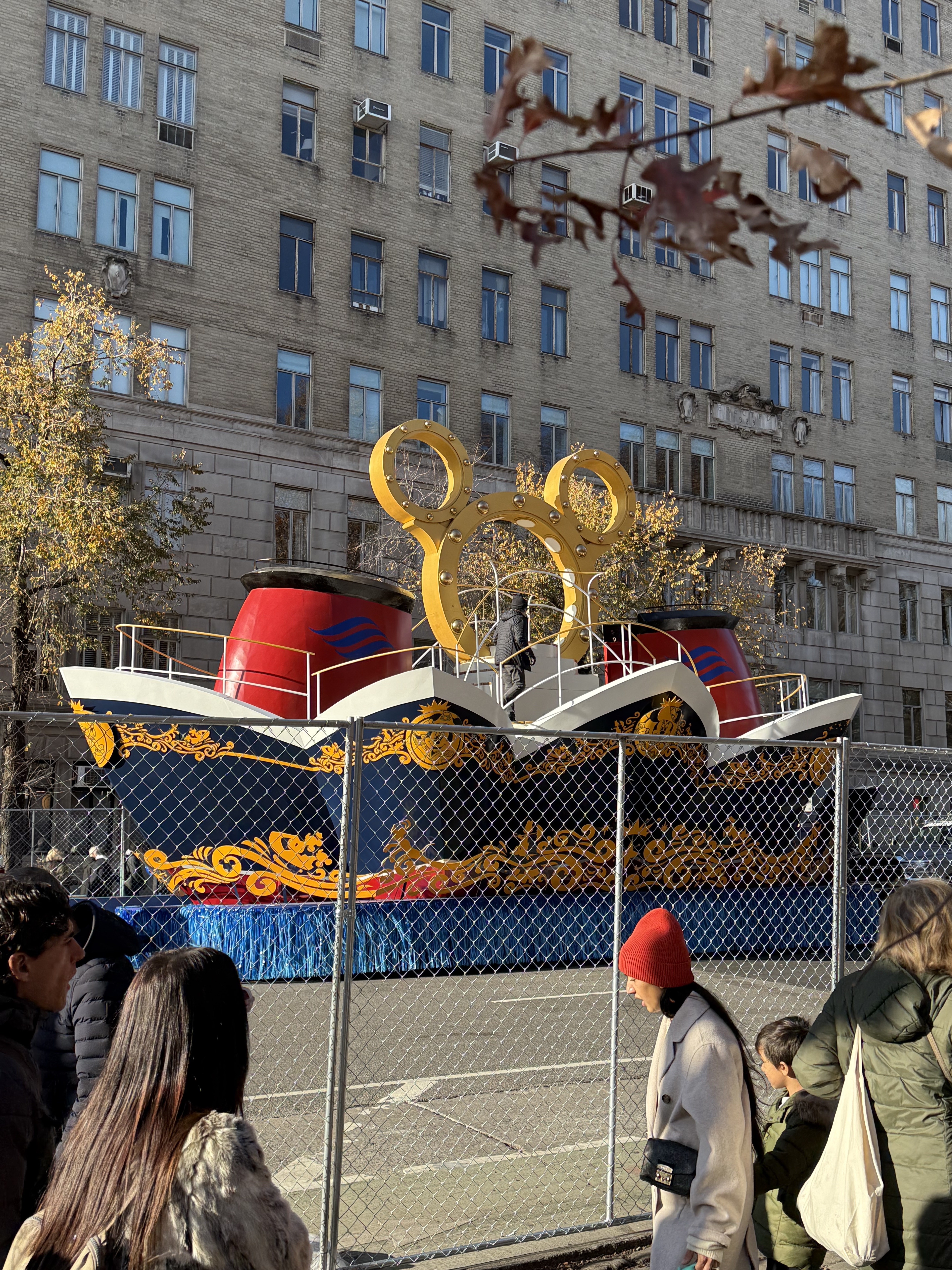
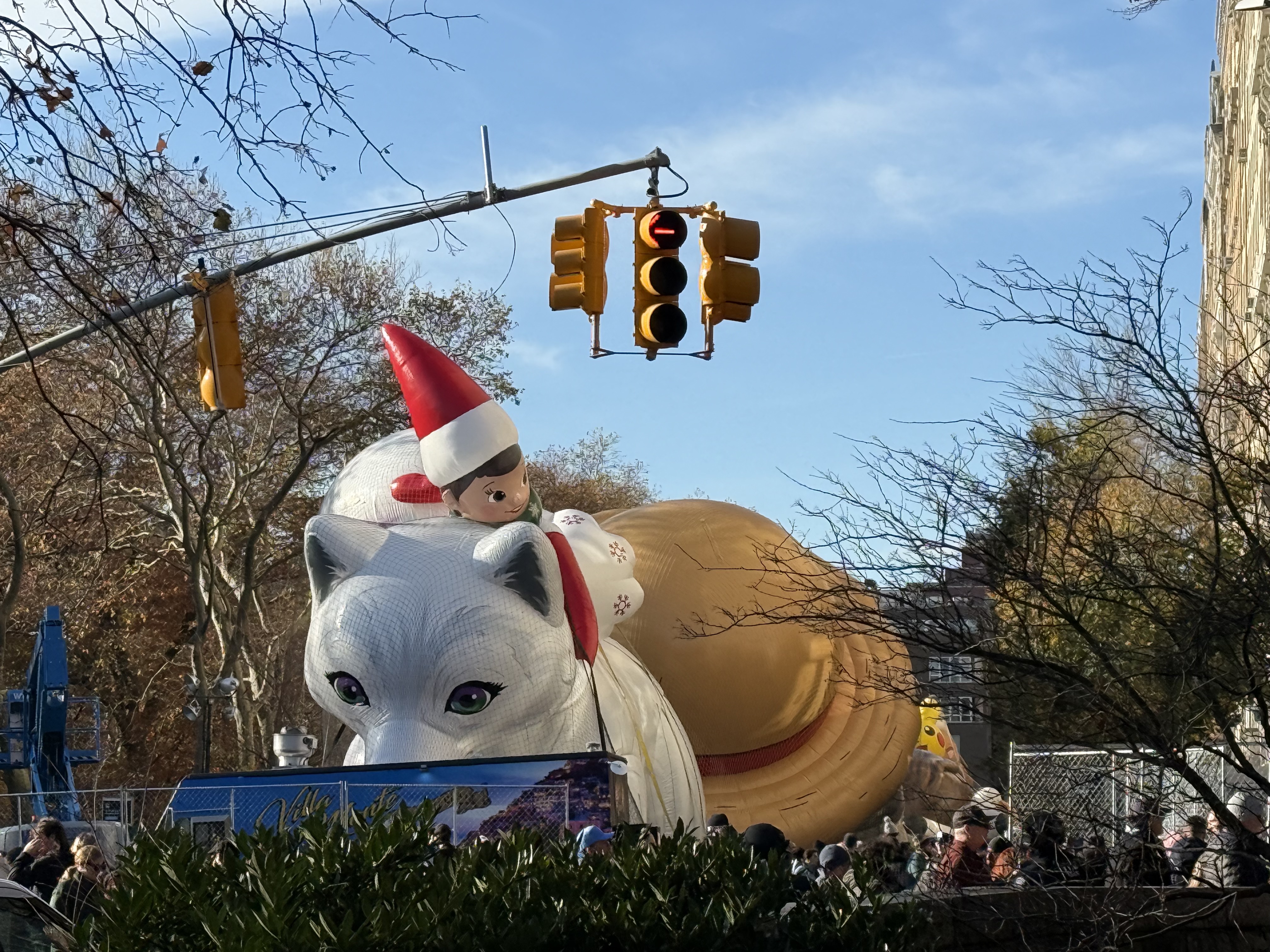
Another way to get up close and personal with the balloons is to go to the balloon inflation the day before Thanksgiving. The official area to walk around where the balloons are being inflated (and held under nets until the next morning) has an entrance at Columbus Avenue and W 72nd Street, and there is airport-style security. The hours are usually 1-6PM and it can get crowded. You can also see some of the balloons and floats, with no waiting and no crowds, from the west side of Central Park. The photos below were taken in the park just off the intersection of CPW and W 81st Street.
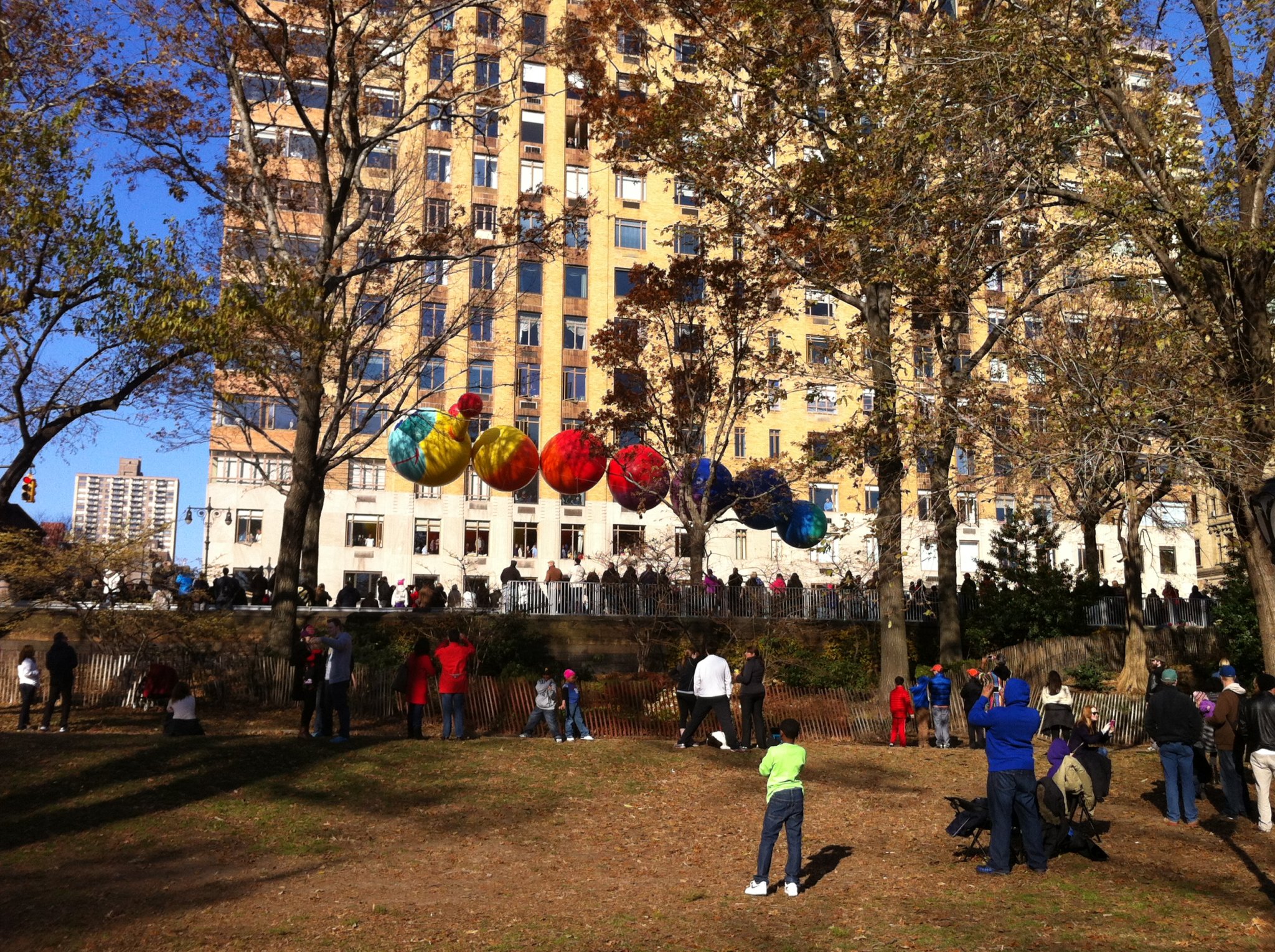
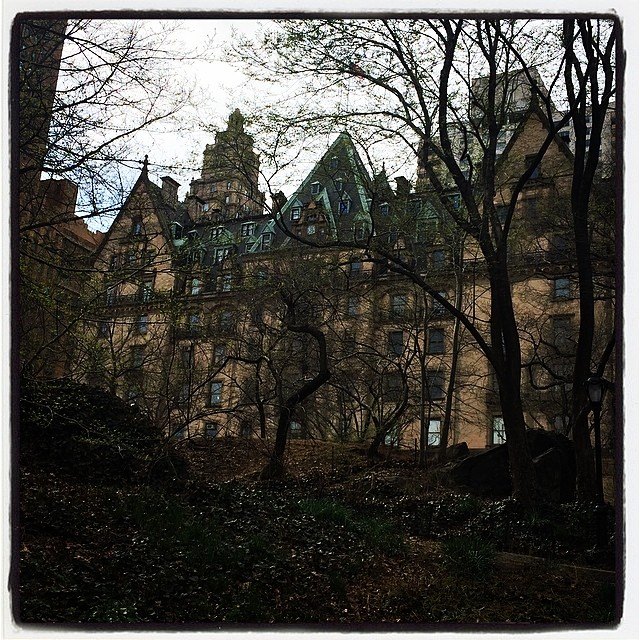
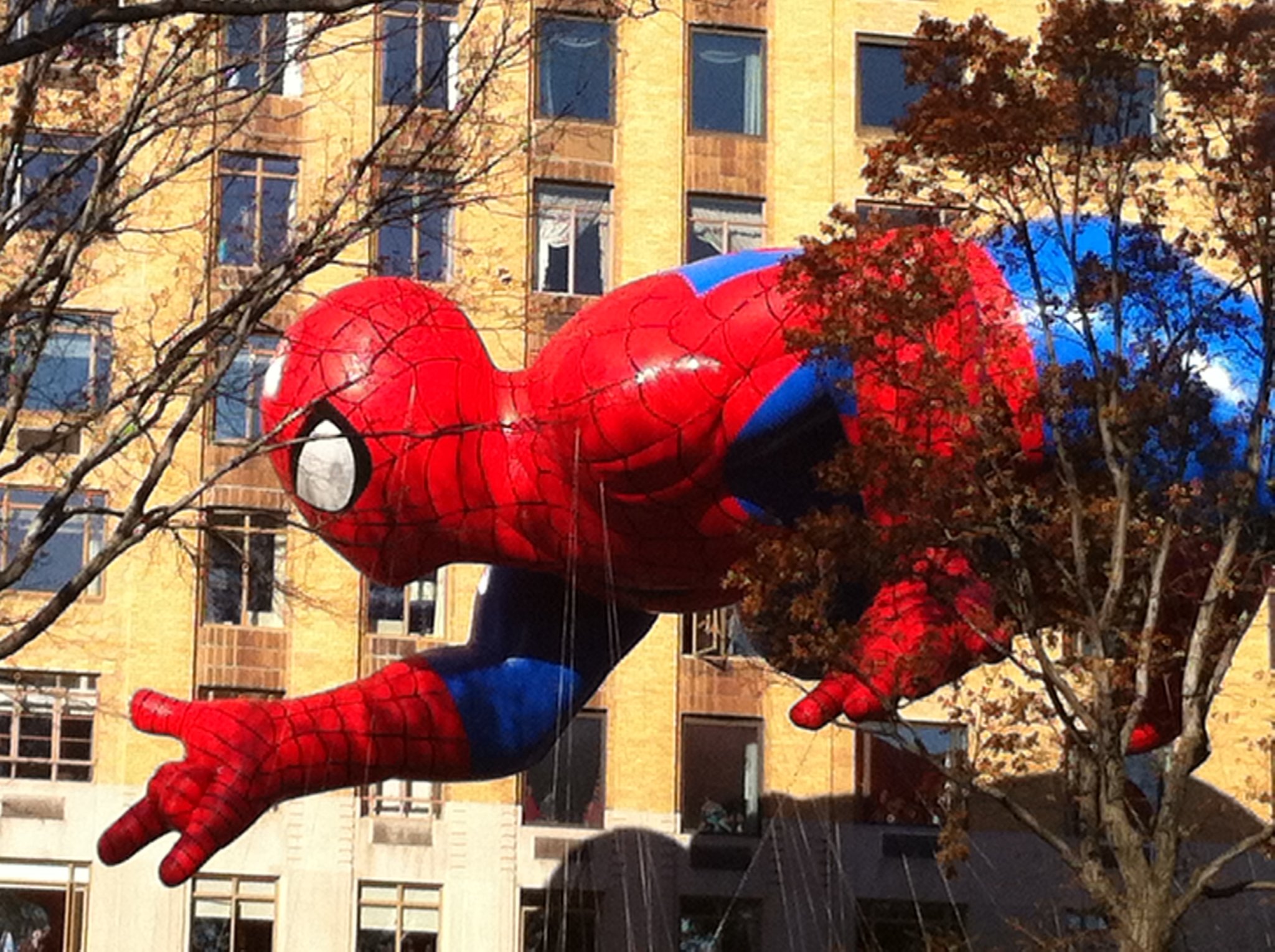
An insider tip that I rarely hear people mention is that you can get a surprisingly good view of the balloons (if not the floats) from inside Central Park during the parade, without waiting and with few crowds. The photos below were taken from inside the park on the west side at about W 72nd Street (note the Dakota as a backdrop for some of these). This is a really easy and fun way to see the balloons – and was what I was going to do this year (2024) until the rain descended and I decided TV was fine for this year!
The gold standard of seeing the parade – and the thing I did for years and years when my daughters were young – involves waiting on CPW to get a front row view of the parade. You have to get there early (some people sleep overnight in their spots), weather can be tough (I’ve been there in snow and on years when it was below freezing), but the view is impeccable. You can see everything, and clowns will come right up to you (fun clowns, not scary ones!).

There are always people walking behind any horses in the parade, and everyone along the parade route gives the pooper scooper people a huge round of applause, without fail. It’s always a fun moment.

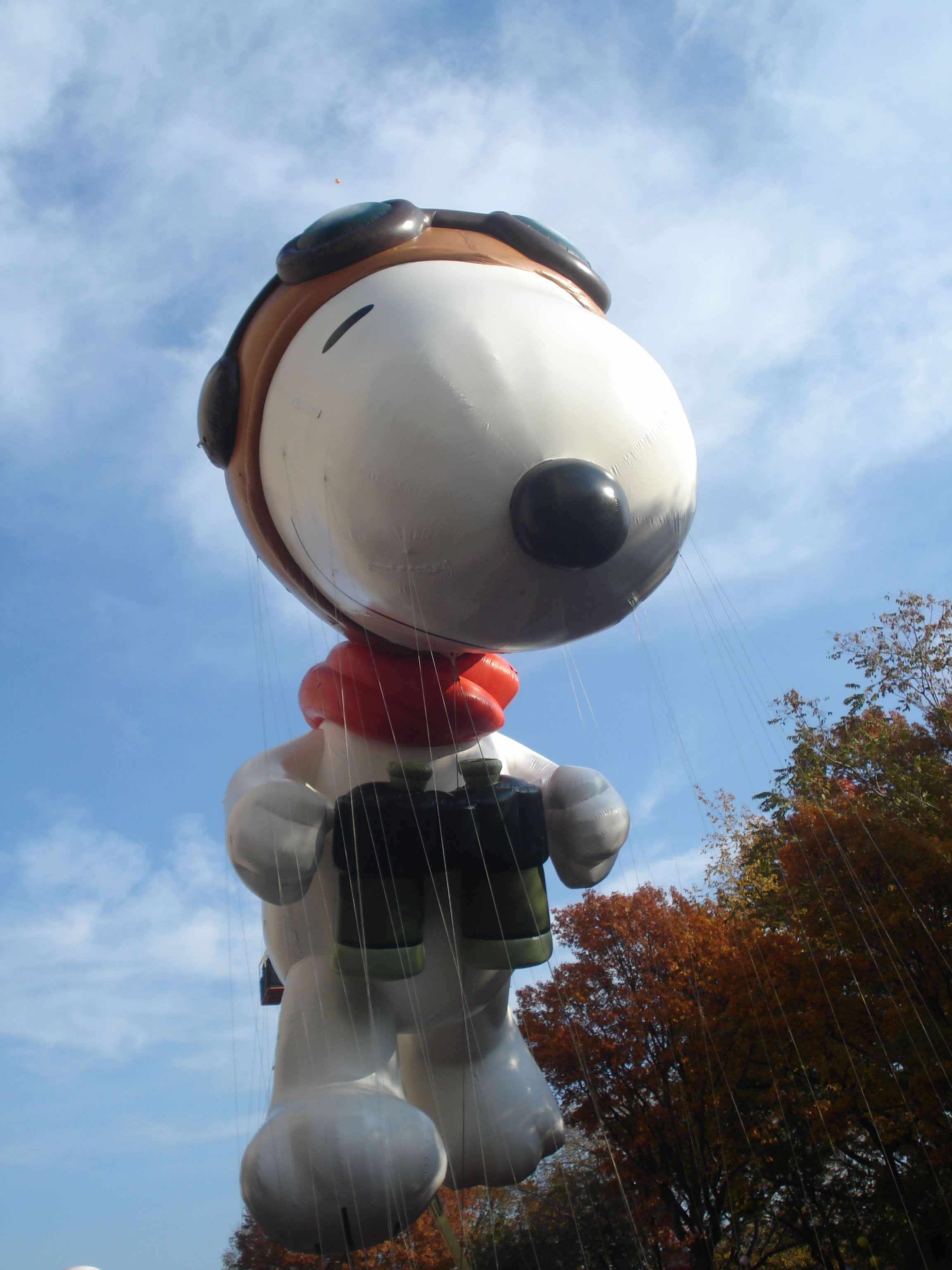
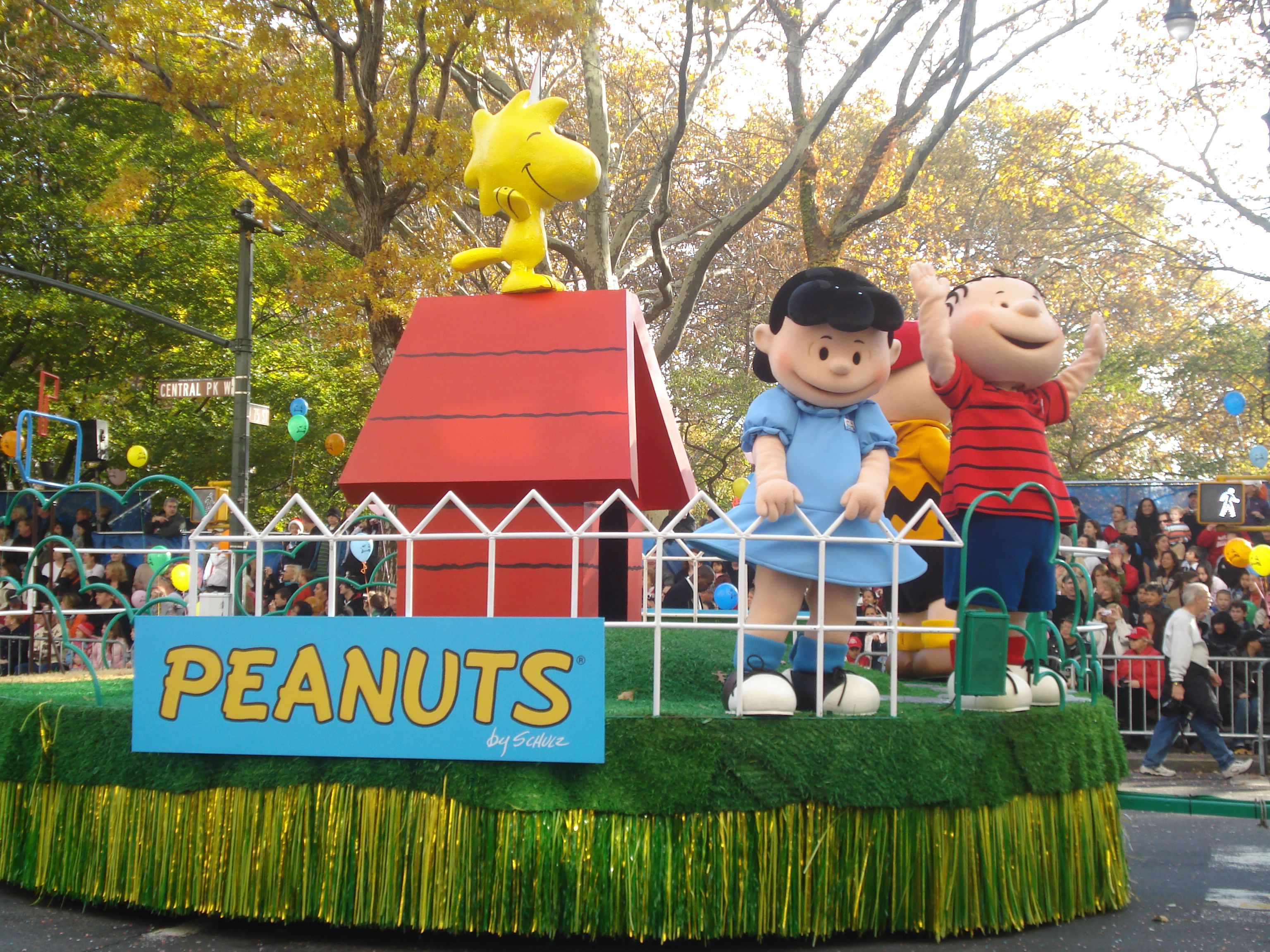
OK, back to Snoopy. There is simply no view like the one you get on the ground right on CPW. He (like all the other balloons) towers over you. And there is always a float with the other Peanut characters (see below for one year where they had a live beagle with them too!). Snoopy is the balloon character to have been in the most Macy’s parades, so I can’t be the only person obsessed . . .
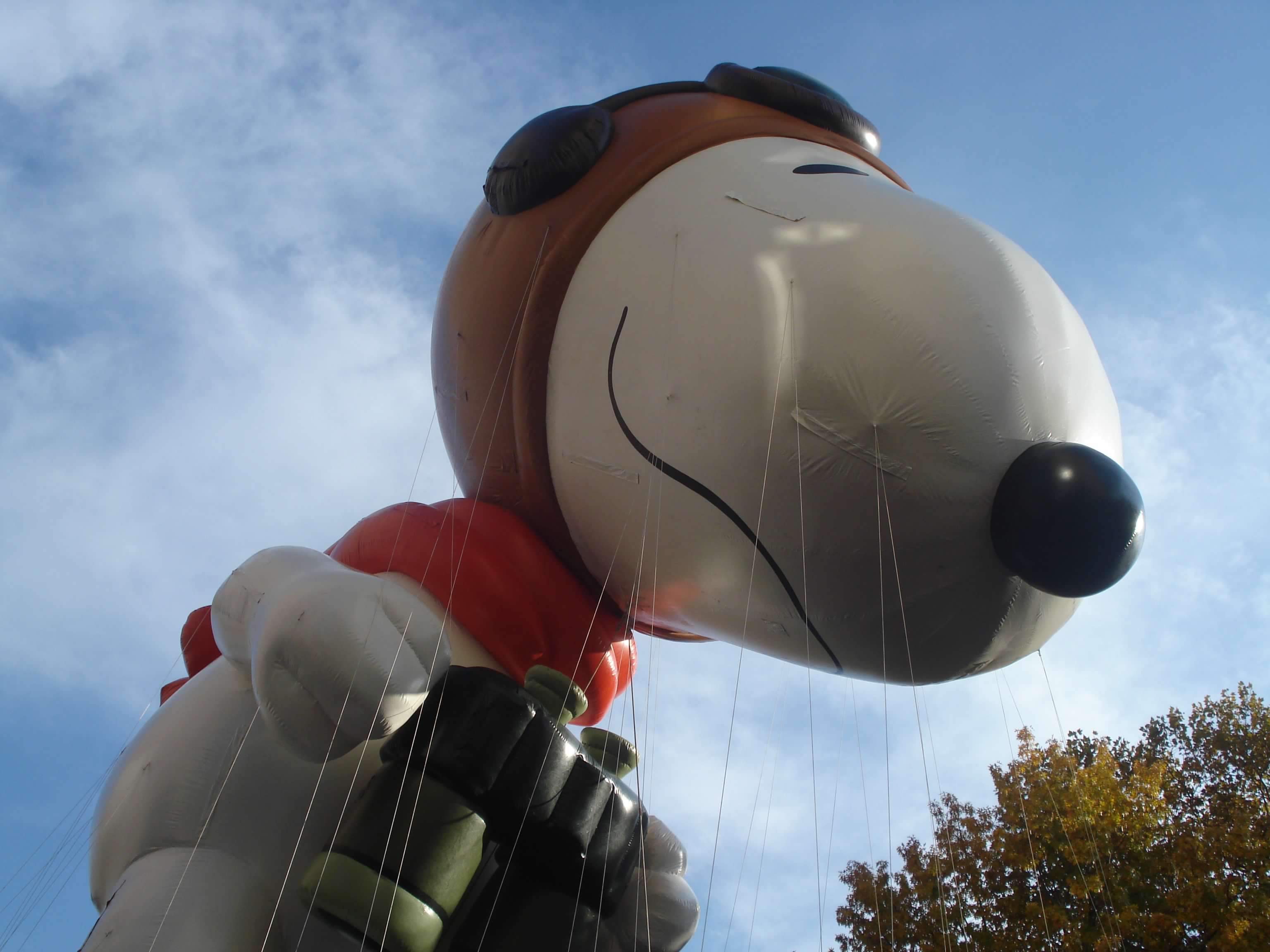
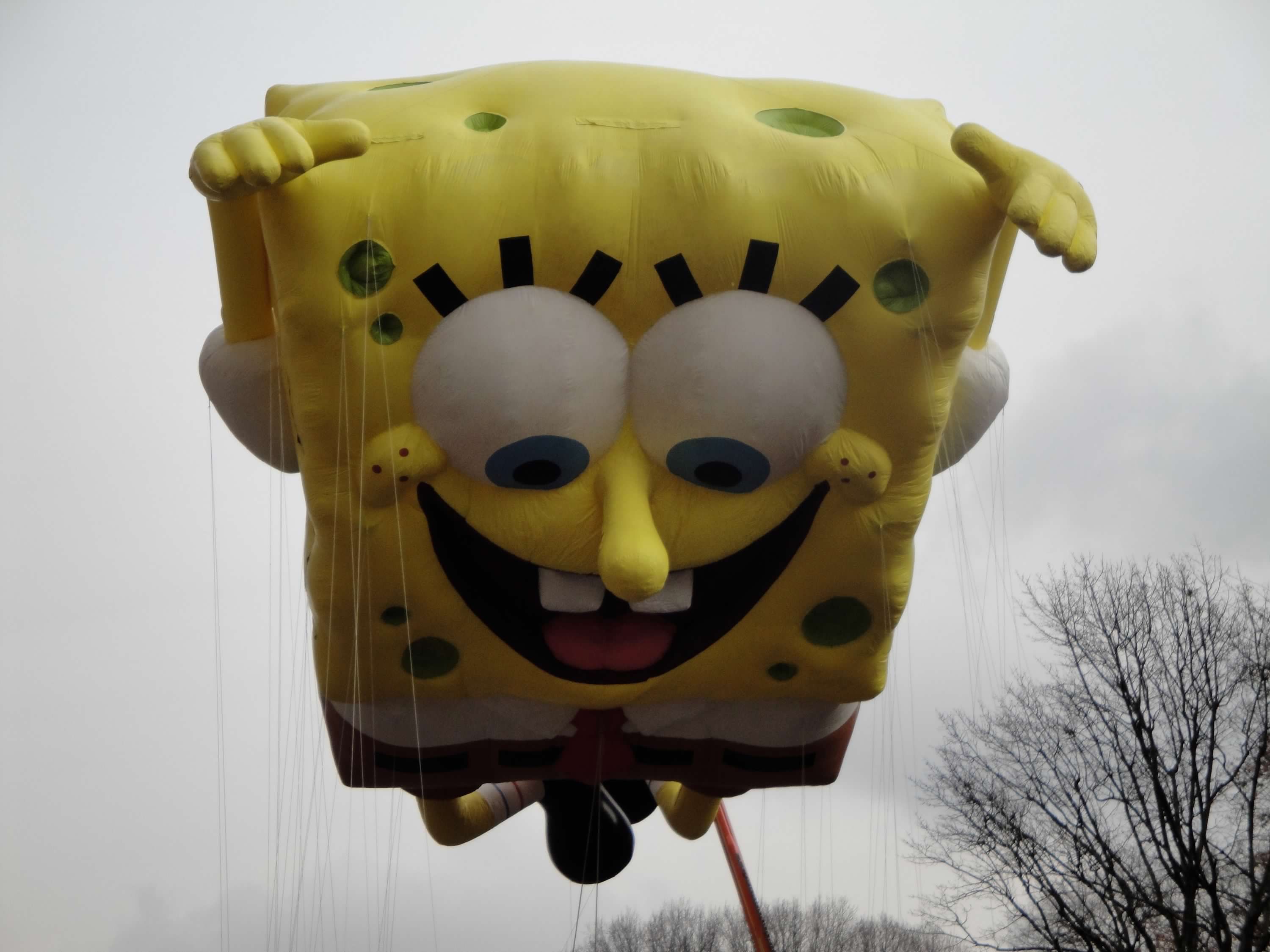
Here are some more photos of the balloons looming over you if you are standing at the front on Central Park West:
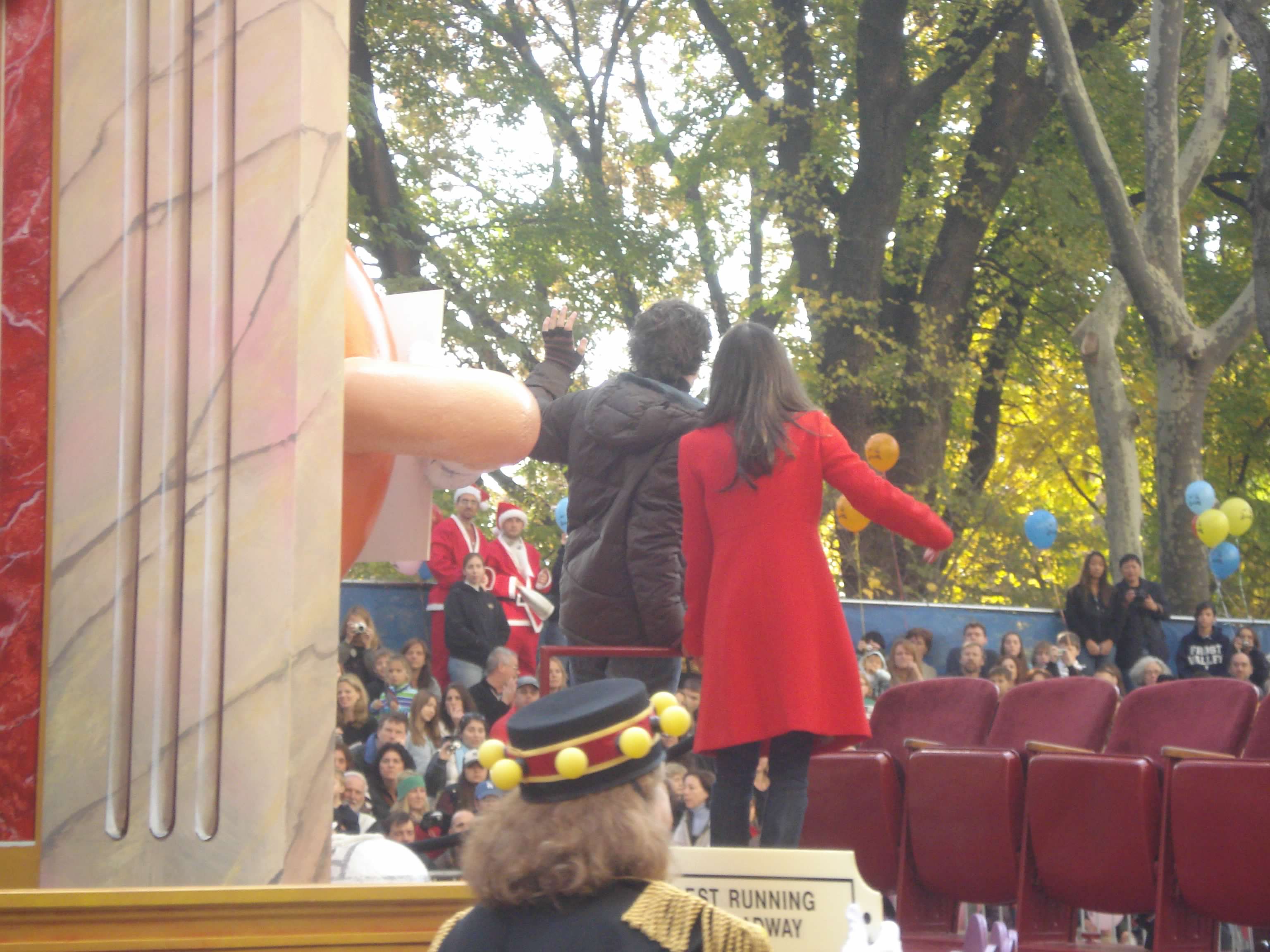
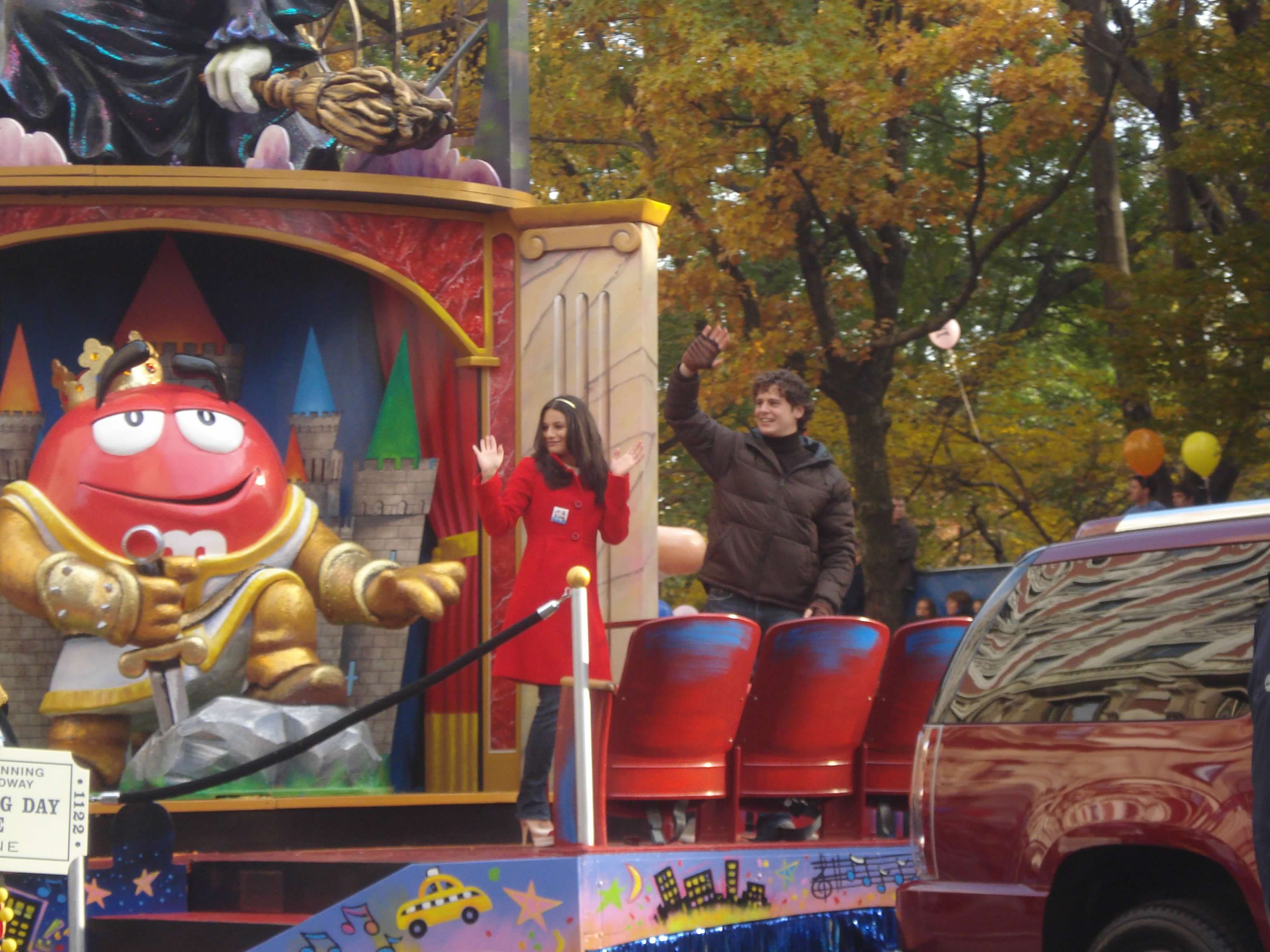
If you are right at the front, you can easily see the performers on the floats. They won’t sing (if they are going to at all) until they get to Macy’s but they will wave and it’s fun to see people. See below from 2007 when Jonathan Groff and Lea Michele were in Spring Awakening on Broadway and on a float, and for Corbin Bleu that same year.
I will say that the BEST way to see the parade is the hardest way – and I have only been fortunate enough to experience it this way once. This way is to have, or know someone with, an apartment with windows facing the parade route. When one of my daughters was in preschool, the grandparents of one of her classmates invited all the families from the class to their apartment on CPW to see the apartment and it was magical. If you have seen the movie Maestro, about Leonard Bernstein, you will have seen the balloons go right past the windows of the Bernstein apartment in the Dakota on Thanksgiving morning, and it is just that amazing to experience (as long as you aren’t having an argument as was happening in that scene). You also get to stay warm, protected from the elements, and eat and go to the bathroom when you need to. My dream is to have such an apartment but it hasn’t happened – yet.

The end of the parade always heralds the beginning of the holiday season, with Santa (yes, the real one, since it’s Macy’s that is in Miracle on 34th Street after all) as the final float. I have blogged before about Santaland at Macy’s, and it opens the day after Thanksgiving so I guess in theory this is the big reveal before he gets to work meeting children at Macy’s.
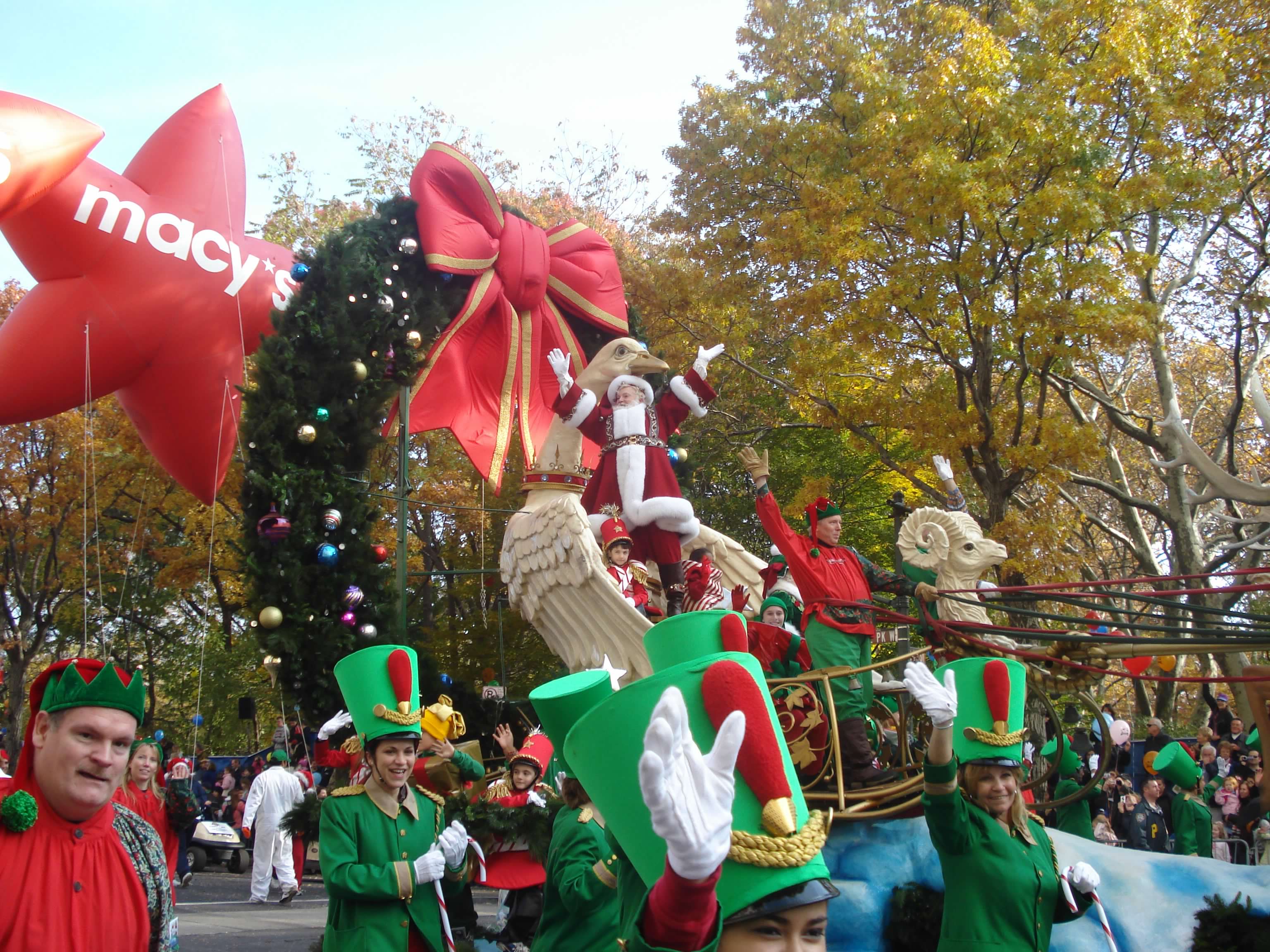
Other ways to see the parade, that I have not experienced: know someone at Macy’s and get seats on the grandstand (that would be great!) or pay for a hotel room with a view of the parade (expensive to be sure but worth it if you can afford it, I guess).

A few facts about the parade, courtesy of Macy’s, that highlight what a big production this is:

-Years of the Macy’s Thanksgiving Day Parade – 98 (est. 1924)
-Years on NBC, official national broadcast partner – 72 (since 1952)
-Years of Al Roker as co-host- 30
-Featured character helium balloons – 17
-Heritage and novelty balloons – 15
-Height of tallest balloon – 60 ft (Disney Minnie Mouse by The Walt Disney Company) and Length of longest balloon – 77.5ft (Spider-Man by Marvel)
-Width of widest balloon – 66.5 ft (Gabby by Universal Studios’ Dreamworks Animation)
-Gallons of Paint – 2,000
-Pounds of Glitter – 300
-Pounds of Confetti – 200
-Costumes – 4,500+

Apparently they get to work planning the next year’s parade the day after Thanksgiving – it’s a big production with a standard of excellence, and it shows. I recently also read that the ratings for the Macy’s parade now beat out the Academy Awards, and advertising costs are only slightly less. I’m a fan, and would say that if you are in NYC and get a chance to see it in person (however you choose to do it), take that opportunity! Maybe I’ll wave to you there next year from the windows of my new apartment on Central Park West . . .

It’s terrace season!

IMG_0936
Gorgeous view of midtown Manhattan from a private rooftop terrace on the Upper West Side

I have recently been working with several buyers who either require private outdoor space, or have been lucky enough to find it included in an apartment they love for other reasons. Spring and summer are definitely “terrace season,” as outdoor space takes on a special appeal on sunny, warm days. In fact, one buyer I was working with lost out in a bidding war on an apartment with a large terrace directly facing Central Park, after months of little interest while it was listing during the winter. The listing broker even told me that we would have definitely gotten the apartment if we had been bidding the same amount back in the cold and gloomy months of January and February, but in late March/early April, the same apartment had a much broader appeal.

IMG_0847
A peek into a Beekman Place private terrace from a terrace at Southgate

Other buyers of mine, while not looking specifically for an apartment with outdoor space, found one with two large terraces, one with East River views, and fell in love. I have written before about the value of a view of nature from an apartment, as well as the value of a city view, and those intangible emotional benefits are heightened when the view is not contained behind glass, but rather experienced while also taking in the information obtained from other senses. To be on a terrace and seeing the East River, while also feeling a warm breeze, smelling the flowers you have placed in planters, and hearing the sounds of the city, is to be immersed in the experience.

IMG_0841
Ready for an al fresco dining experience in midtown Manhattan

There are multiple types of outdoor space, and some people have strong preferences for one type over the other, while others just want any opportunity to experience the outdoors from within their home. The least versatile is a Juliet balcony – enough to step outside and check the temperature or take in a few deep breaths of the summer air after a storm, but not enough to even place a chair. Larger than that are balconies, commonly boxy squares in postwar apartments, often with enough space for a few chairs and a table. The larger outdoor spaces tend to be true terraces (outdoor space with the building underneath it instead of something jutting from the building) or private gardens. Gardens tend to be most common in townhouses, or in the garden level apartments in converted townhomes or brownstones. Garden level apartments have the disadvantage of not being the sunniest apartments, with some exceptions, but for people who like the idea of children or pets playing in a ground-level garden, they can be highly valued. Large terraces are perhaps the most prized outdoor spaces, and relatively rare. A terrace with an iconic view – of Central Park, of a river, or a spectacular city view – can greatly increase the value of an apartment.

IMG_0846
A look at several of the terraces in the Beekman area with a view of the East River

So how much does outdoor space affect the value of an apartment, if you have one – or how much more do you have to pay to get a place if outdoor space is a priority to you? As with everything else in NYC real estate, it depends upon so many variables – the location, the apartment itself, whether the building is a condo or a coop, walk-up or elevator, etc., etc. However, the value of outdoor space is often about 25-50% of the apartment’s price per square foot – higher if the terrace has a great view or is attached to a spectacular apartment, lower if it is on a lower floor or attached to a small apartment.

IMG_0676
Even on an overcast day, it’s a killer view from this private terrace on Central Park South

The most valuable outdoor space is the very one my buyer lost out on this spring – unobstructed views of Central Park (enough to increase the value of an apartment by 50% even from park-facing windows with no outdoor space) from a large terrace. Is outdoor space worth such an increase in price? As with so many other aspects of NYC real estate, that is up to you – for some, they may feel that they wouldn’t really use outdoor space and don’t want to spend the extra money, while for others, outdoor space is the most important aspect of their home search and they won’t consider a place without it. What I have learned this spring, though, is that timing is extremely important. If I am representing a seller who has an apartment with outdoor space, I would strongly recommend trying to list during the warm weather months if at all possible. Conversely, if looking to purchase an apartment with outdoor space, jumping on something during the winter can lead to a relative bargain compared to getting into a bidding war when the outdoor space is showing at its best. If you are interested in buying a home in NYC with outdoor space, or if you have one to sell, feel free to contact me (with no obligation) at julie.brannan@compass.com.

Lincoln Square

IMG_0118

Just as the larger neighborhood known as the Upper East Side has many smaller neighborhoods within it, such as Yorkville, Carnegie Hill, Lenox Hill (yes, lots of hills on the UES!), the Upper West Side – on the opposite side of Central Park – also has subdivisions. Recently I have had two customers interested in looking for homes in the area of the UWS known as Lincoln Square, the southeast corner of the neighborhood – roughly bounded by Central Park West and Amsterdam Avenue to the east and west, and 59th to 66th Streets to the south and north.  Interestingly enough, the area was characterized in 1940 as the “worst slum in New York City” by the New York Housing Authority, and the urban renewal efforts in the 1950’s and 1960’s led to the development of the Lincoln Center for the Performing Arts. This anchored the residential redevelopment of the area into the vibrant neighborhood it is now.

As I have written before, my favorite way to experience a neighborhood is by taking an unplanned walk within the area (a dérive), so on an overcast but not terribly cold February day, I started at Columbus Circle and began my stroll.

IMG_0108

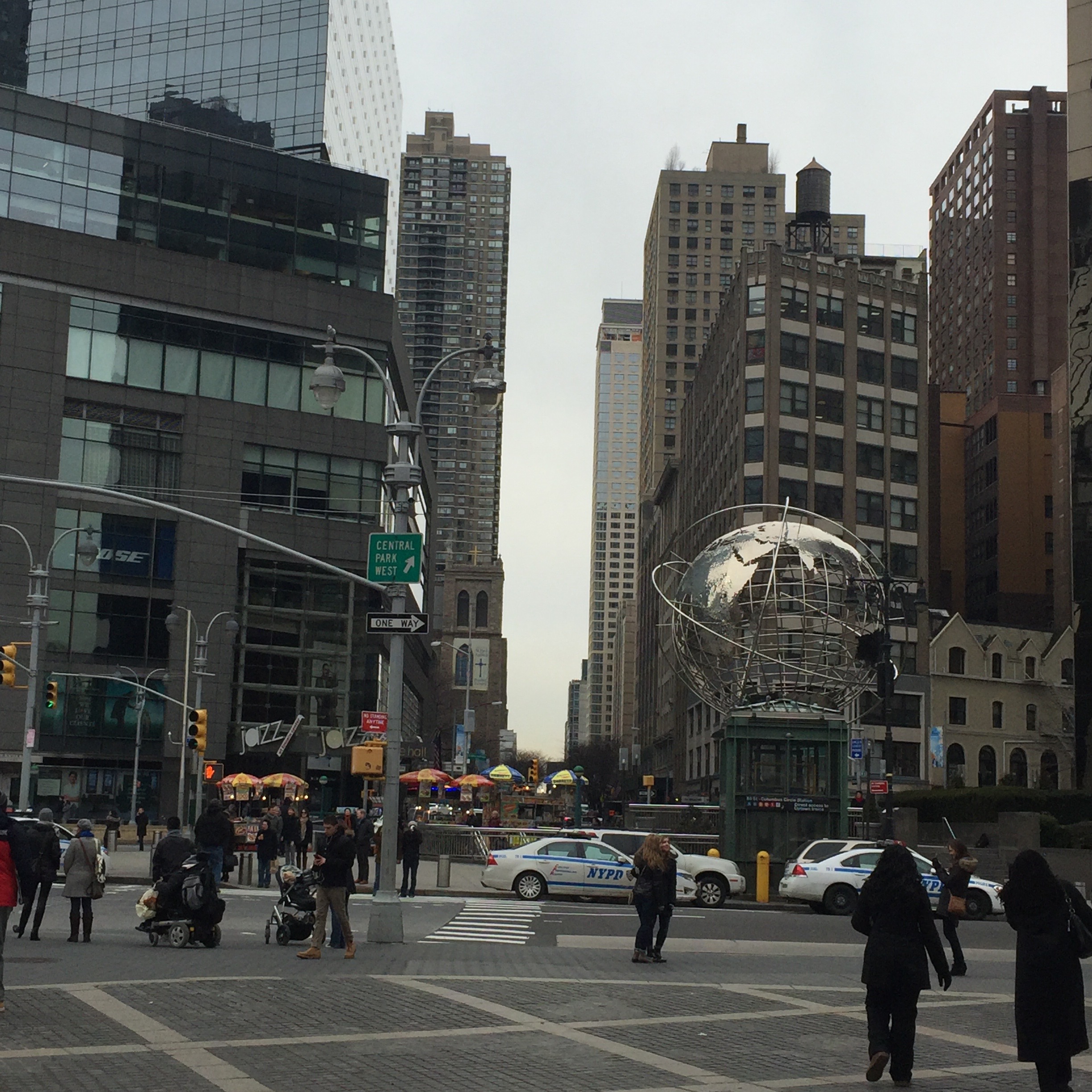
At Columbus Circle, you stand at the intersection of the Upper West Side, Central Park, and Midtown West. The shops at Columbus Circle house a Whole Foods as well as specialty stores and Jazz at Lincoln Center.

IMG_0109

Turning around to look at Central Park for a moment . . .

IMG_0110

Just north of the statue of Columbus, a subway hub that can get you quickly to virtually any location in the city.

IMG_0111

Walking north a few block on Central Park West, I can’t resist stopping to admire 15 Central Park West, a phenomenally successful building on so many different levels – a classic limestone two-towered building that looks as though it could have always been there, but simultaneously a new development from 2007 with prices per square foot averaging well over $5000 per square foot. I greatly enjoyed reading Michael Gross’s recent book about the development of the site, House of Outrageous Fortune.

IMG_0112

Walking west on W. 61st Street, you can see a side entrance to 15 CPW. On the W. 62nd Street side, there is a lovely garden.

IMG_0114

This part of the Upper West Side can be a little confusing, in that Broadway is the next Avenue you come to after Central Park West, while for much of the neighborhood the park block is between CPW and Columbus. Broadway, transecting the length of Manhattan on a diagonal, disrupts the orderly grid of most of Manhattan above 14th Street, creating “squares” – really triangles – as it cuts across the orderly boulevards. Union Square, Madison Square Park, Herald Square, and Times Square are all the result of Broadway’s slow progress from west to east as it heads south in Manhattan, and Lincoln Square is yet another. Walking up Broadway to W. 63rd, I headed west again to see Lincoln Square itself, namesake for this neighborhood.

IMG_0115

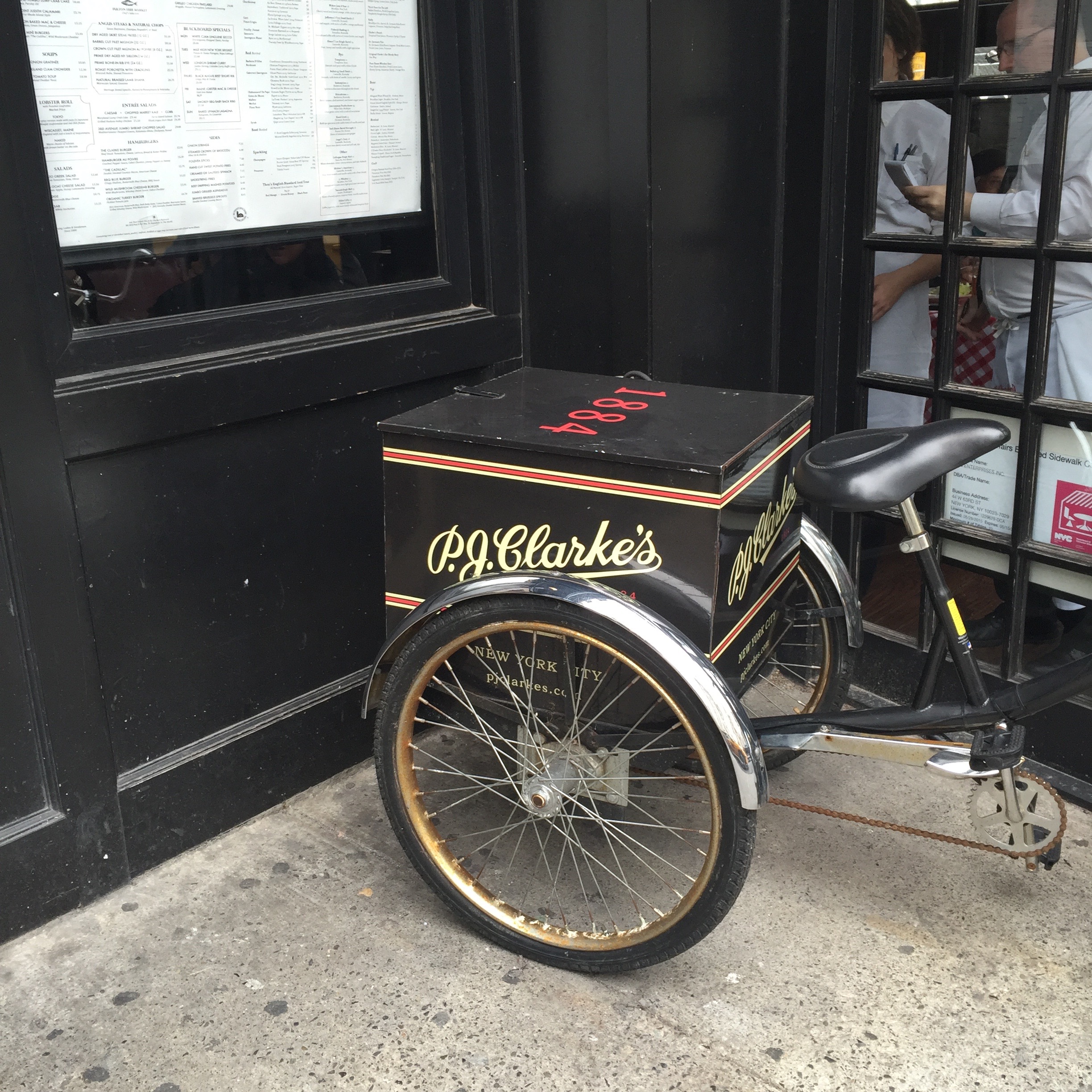
Just south of Lincoln Square is the Empire Hotel, whose sign is a local landmark, and P.J. Clarke’s, a cozy yet upscale place to sit and have a nice meal.

IMG_0116

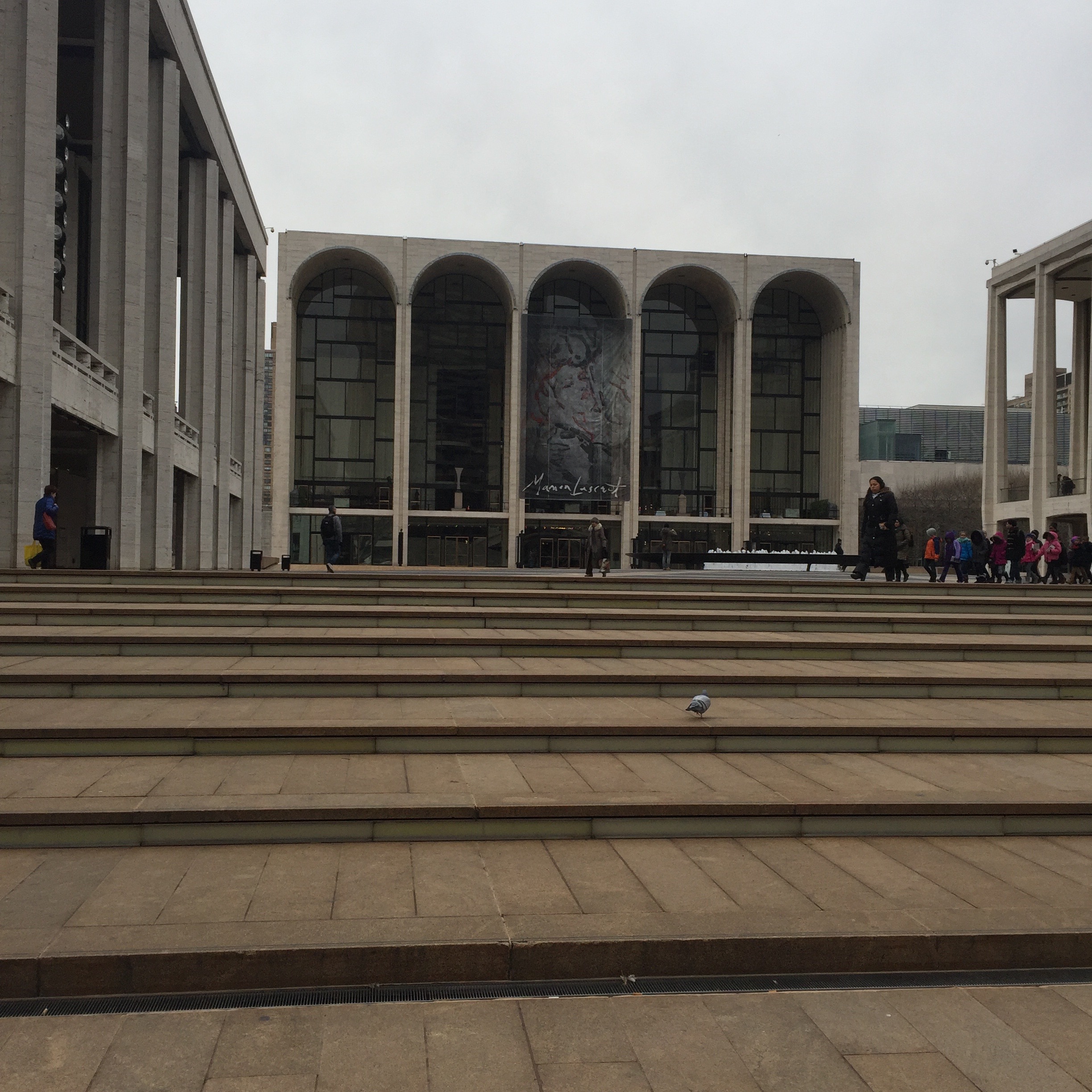
Obviously a strong selling point for the neighborhood is the proximity to Lincoln Center, and the ease of attending performances of  opera, music, ballet, theatre, and even the Big Apple Circus in the fall of each year.

IMG_0119

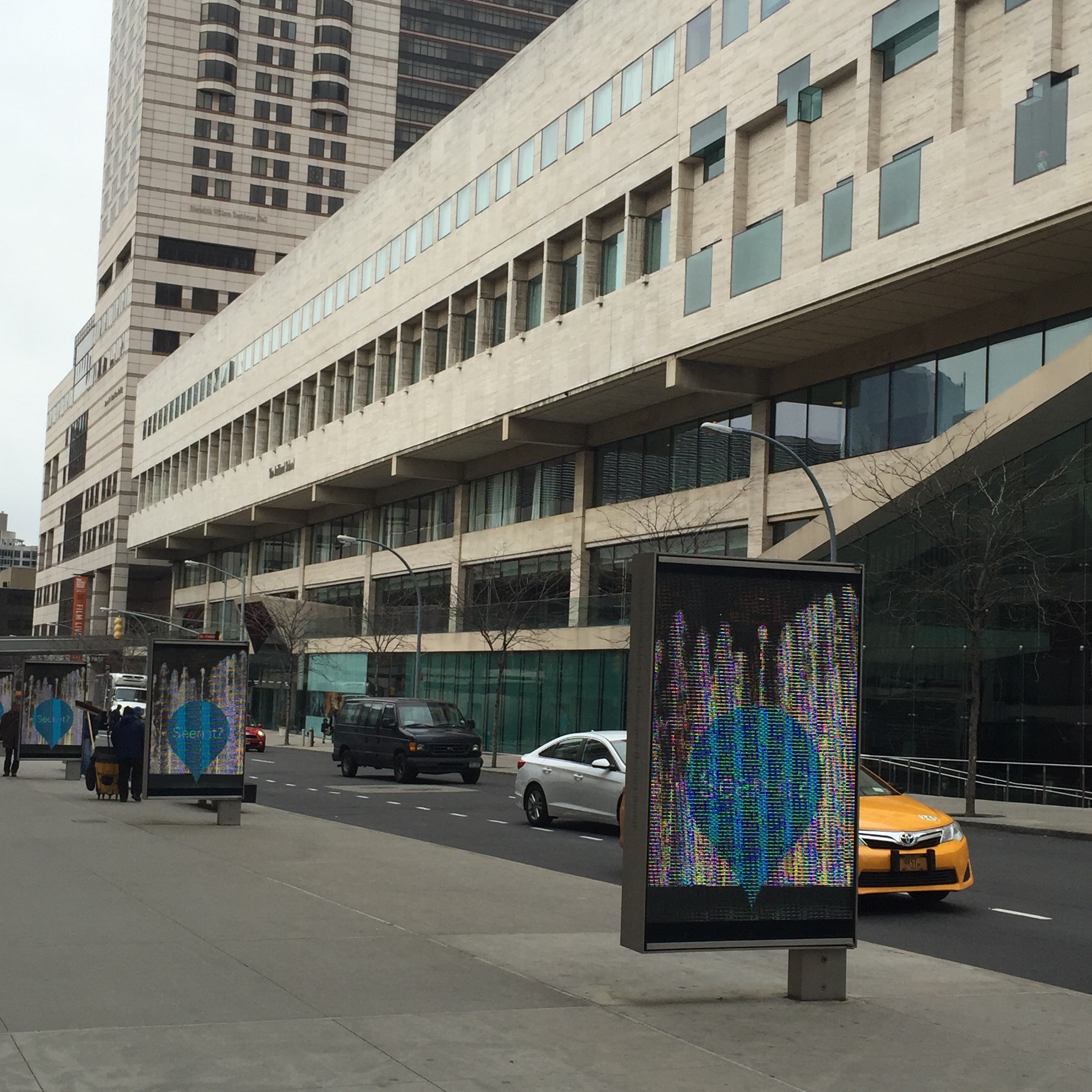
The Julliard School, just north of Lincoln Center, also offers high quality student performances.

IMG_0120

Looking east while standing in front of Julliard, I noticed the Mormon Visitor Center, best known to me as the place where Hannah and Harper volunteer in Tony Kushner’s epic play, “Angels in America.”

IMG_0121

Just north of Julliard is Alice Tully Hall, home to more intimate concerts than those in much larger Avery Fisher Hall (newly renamed David Geffen Hall).

IMG_0122

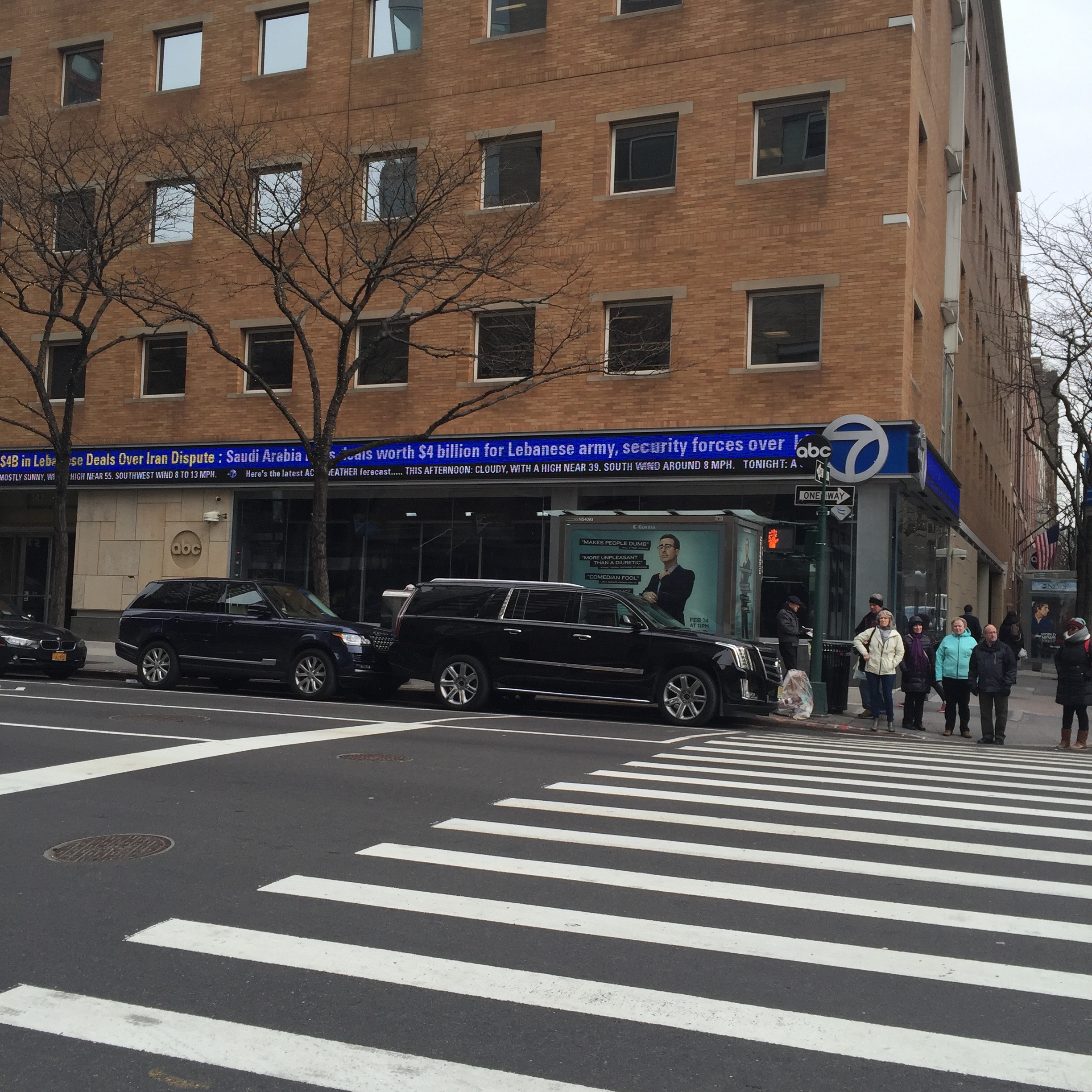
Turning east again on West 66th St., I walked past ABC studios on the way back to Central Park. Just a few blocks north of this intersection is the Loews Lincoln Square Cineplex. I really love this as an option for seeing popular movies, as each individual theatre has the name and style of an old-time movie palace, making the experience there have a little more personality than many multiplexes.

IMG_0123

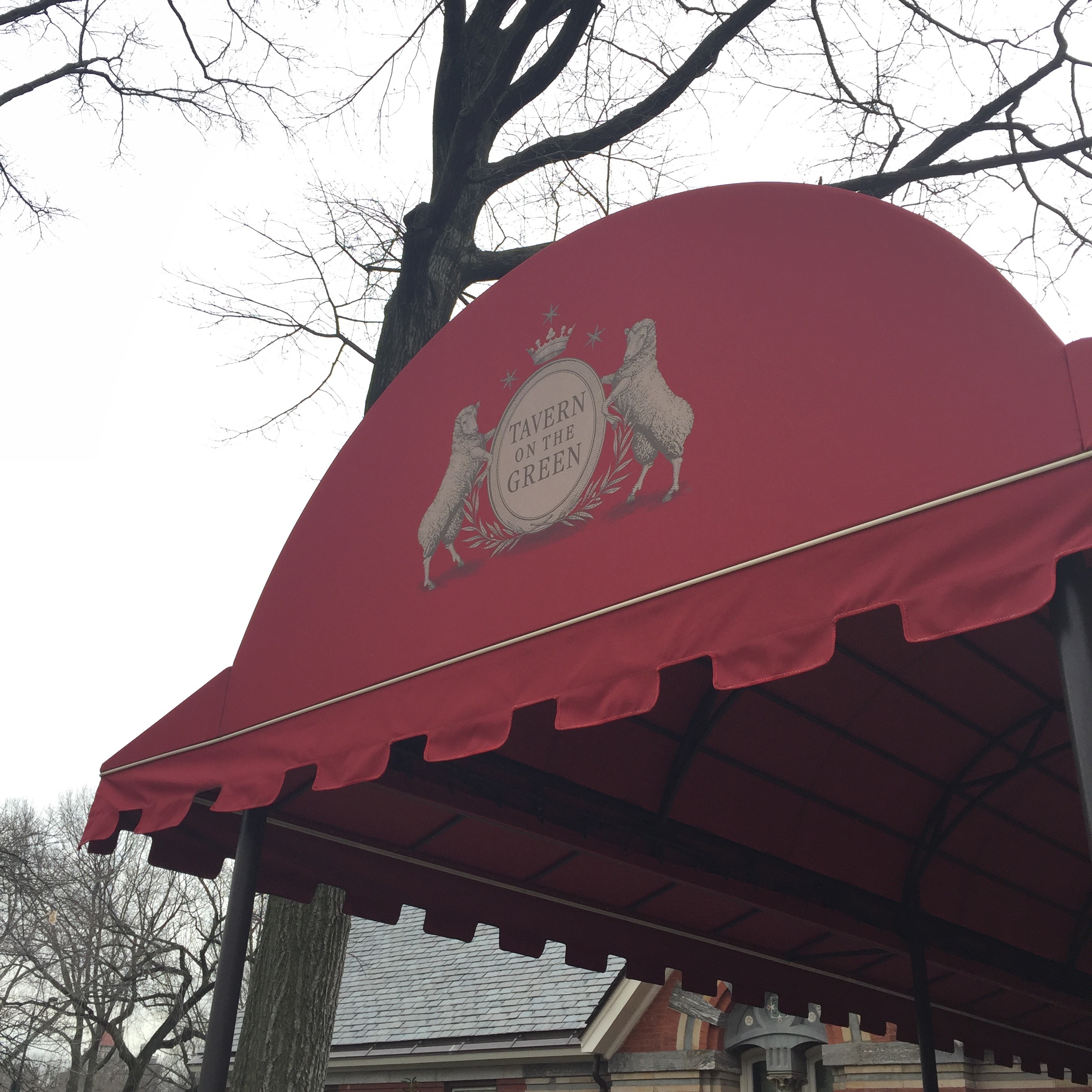
Ending up in Central Park at 66th, yet another advantage to this neighborhood is its proximity to Tavern on the Green, renovated a few years ago but with the twinkling outside fairy lights remaining.

IMG_0125

So what does it cost to live in Lincoln Square? As with any neighborhood, it varies greatly depending on the building, but average prices are just under $3000/square foot, compared to just over $2000/square foot for all of the Upper West Side (averaging prices of the far northern sections of the UWS with those to the south, of course). Central Park South, just to the south and east of Lincoln Square averages $5000/square foot, in part because of the premium associated with apartments with views of the park. Lincoln Square tends to be newer buildings, mostly condos, compared to the largely prewar coop inventory of most of the UWS.

In my opinion, the location of Lincoln Square is unparalleled – at the intersection of the Upper West Side, Midtown West, and with Central Park as a virtual front yard.


Gramercy Park

Gramercy Park 3

Most neighborhoods in New York City have a story to tell – generally, it is a cyclical one, perhaps from farmland to residential, to tenements, and back to gentrification. There are however a few areas of New York City that have remained remarkably stable. One of these is the Gramercy Park neighborhood, which was created to be a fashionable residential location and has remained fashionable to the present. The neighborhood is roughly between Third and Park Avenue South, and between 18th and 22nd Streets. The Historic District encompasses some of this area, and nowadays the greater area might be considered to go all the way from 23rd to 14th Street, still between Third Avenue and Park Avenue South.

My favorite way to experience a neighborhood is to walk through it without a pre-planned route (a dérive). Emerging from the subway on Park Avenue South and 23rd Street, I immediately noticed that there are generally low lying buildings here. The Manhattan schist, or bedrock, is deeper in this part of the island, so generally there is nothing over 20 stories in height. Venturing farther from the subway stop, the quiet nature of this neighborhood becomes clear. Originally the area was swampy, but in 1831 the land was bought, and a plan for the area designed by, Samuel Ruggles. The most significant part of his plan included a private park, like the private garden squares popular then, and still found today, in London.

As you walk toward Gramercy Park, the tall and heavy fences with locked gates cannot be ignored. Gramercy Park is the only private park in Manhattan. It lies between 20th and 21st Streets (Gramercy Park South and North), and midblock streets called Gramercy Park East and West. As Lexington Avenue heads south, it hits a dead end at the park, and reemerges on its south side as Irving Place. Only the residents of the buildings facing the park have keyed access to the park and the value of an apartment that includes the right to a key is significantly increased compared to one close by but without access. Keys can be also checked out by members of the Player’s Club, and guests of the Gramercy Hotel can be escorted to the park by a hotel employee and let in, then picked up when they are ready to leave. The keys to these locks cannot be copied, the locks are changed every year, and hefty lost key fees insure that the park remains private. The keys are even individually numbered and coded.

The statue in the middle of the park is of Edwin Booth as Hamlet, one of the best Shakespearean actors of the 19th century (namesake of the Booth theatre – and brother to John Wilkes Booth, assassin of President Lincoln). He lived at 16 Gramercy South and eventually gave the building for the formation of the Player’s Club. Every Christmas eve the park is opened to the public for caroling, so if you’re dying to be inside those locked gates, this is your one opportunity (or, you could buy a place with a key).

Walking around the perimeter of the park (outside the gates, of course!) the Gramercy Park Hotel, built in 1925, dominates the northern edge, while the western edge features a line of immaculate townhouses. E.B. White’s Stuart Little takes place on Gramercy Park, presumably in one of these homes. Most of New York City has some kind of interesting history waiting to be uncovered, but Gramercy Park seems to have more than most neighborhoods; for instance, Thomas Alva Edison and John Steinbeck once lived on the park. Nearby, Teddy Roosevelt’s birthplace on E 20th Street is a National Historic Site.

While the idea of a gated private park in New York City does seem to go against our democratic ideals, it has certainly preserved the value of the residences facing Gramercy Park and stabilized the neighborhood. Of course, Central Park is open to all, and proximity to it can also significantly increase a home’s value. Gramercy is a quiet, pleasant neighborhood – on the cusp between midtown and downtown, but with some of the understated characteristics of streets in Carnegie Hill uptown.

Central Park North

Harlem Meer

I have written previously about the value of a view of nature – how our animal selves need to connect to plants or animals even within New York City’s urban jungle. While not NYC’s largest park (that would be Pelham Bay Park in the Bronx), Central Park is an amazingly large green space within the relatively small island of Manhattan. The increase in value a view of Central Park, or even proximity to it without a view, delivers to an apartment in New York City is well established. Most tourists only see, or even think about, the south end of the park, closest to Midtown, However, the northern third of the park is equally beautiful, and the price of an apartment on Central Park North (110th Street) is a fraction of that on Central Park South (59th Street). I enjoy taking unplanned walks around the city (dérives) and decided to walk along the edge of Central Park, starting on Central Park West and 86th Street, crossing the top of the park at Central Park North, and then heading south along Fifth Avenue, stopping at 86th Street.

At the corner of Central Park West and 86th Street, you stand flanked by Central Park to the east, facing a row of Central Park West’s grand prewar apartment buildings to the west. Many of the east-facing apartments in these buildings in the upper 80’s/low 90’s have wonderful views of the Jacqueline Onassis reservoir (living on Fifth Avenue, she was well known for using the jogging path around the reservoir). Continuing north, large outcroppings of ice age Manhattan schist can be seen, forming a natural cliff at the edge of the park. I was struck along this section by the Eldorado, the most northern of the several “twin towered” buildings along CPW (the San Remo, the Majestic, and the Century being farther south).

When you walk to the Northwest corner of CPW and 110th Street (which is called Central Park North for obvious reasons between Central Park West and Fifth Avenue), a statue of Frederick Douglass can be seen, gazing up the Avenue bearing his name. His is a fairly new statue, only being revealed in 2010. Turning east on Central Park North, it is clear that this section of park-facing apartments is a mixture of older tenement-styled buildings, and a few spectacular new development properties. It seem that this is only the beginning of the development of this stretch of real estate, with the potential for views south encompassing the entire length of Central Park as well as the Manhattan skyline. I have seen the spectacular view that apartments facing north on Central Park South have, but so far can only imagine how amazing those same views are from the north with the Empire State Building, Chrysler Building, and new icons like One57 and 432 Park rising up behind the park.

Within the north section of Central Park, beautiful and serene Harlem Meer (“meer” is simply a “lake” in Dutch, New York City’s first language) anchors the recreational possibilities for this area. Catch-and-release fishing are available (yes, people can actually fish in Central Park), and Lasker Rink provides ice skating in the winter but is transformed into a swimming pool in the summer. There is a Harlem Meer performance festival every summer, well worth visiting regardless of where you live in the city.

At the Northeast corner of Central Park North and Fifth Avenue, a statue of Duke Ellington (complete with piano) honors his importance in the Harlem Renaissance of the 1920’s, 30’s, and 40’s. A committee led by cabaret singer Bobby Short raised the money for this statue in the 1980’s. Turning onto Fifth and heading south,  One Museum Mile, a new residential development designed by Robert A.M. Stern Architects signals the change to what some call “Upper Carnegie Hill.” Passing the lush and elegant Conservancy Gardens, the Carnegie Mansion (home to the Cooper-Hewitt Museum), and the Guggenheim, Fifth Avenue slowly evolves into the street we imagine, stately apartment buildings side-by-side facing the park.

What I have learned from exploring Central Park and the streets facing it is that the Park is truly a kind of miracle – such an oasis of multi-layered nature surrounded by our great city. Living in close proximity to the park is a gift, and one with a price. However, the price is lessened on the north section of the park, and offers great value for those looking to live near this green jewel within the island of Manhattan.

Central Park West from 72nd to 59th Street

Image

For this dérive (an unplanned walk within an urban landscape), a portion of the Upper West Side beckons. Emerging from Central Park, passing the guy who will tell a joke for $1 (money returned if you don’t laugh, according to the sign, but I’ve never personally tested it), and with the sounds of the ever-present guitarist singing Beatles songs to the throngs of tourists in Strawberry Fields fading away, Central Park West welcomes you at 72nd Street with a visual treat: the facades of two iconic buildings, the Dakota and the Majestic. Central Park West, like Fifth Avenue, features an unbroken line of residential apartment buildings from 59th Street to 110th Street. While the buildings on CPW and Fifth gaze (or perhaps glare?) across Central Park at each other, they do differ quite a bit from each other in style. The buildings on Central Park West are more elaborate and ornate, while those on Fifth tend to appear more stately and reserved. The west side buildings are often named, while those on the east side are called by their street address.

The Dakota, on the northwest corner of Central Park West and 72nd Street, was built between 1880 and 1884, and seemed as distant from the city and alone as the Dakota Territories (whether that was in fact the origin of the name, which is unclear, it was certainly true – it is bizarre to see photographs of the building in 1890 with just a scattering of short rowhouses in the far background, with nothing on either side or behind). The Dakota was the beginning of a building boom on the Upper West Side from 1885 to 1910, in part because of the creation of the city’s first subway line, the Broadway/Seventh Avenue line, making the area less remote from downtown. Being featured in the opening credits of “Rosemary’s Baby” certainly has not adversely impacted the value of the apartments in the Dakota, demonstrating that it takes a lot more than the prospect of living next to a group of Satanists to keep people away from a fabulous apartment in New York City.

The Majestic, built long after the Dakota in 1930-31, is a splendid example of minimalist Art Deco design, inside and out. The spare and square two towers were a result of the Multiple Dwelling Act of 1929, which restricted how tall a building could be immediately above street level, but allowed towers if the building would house a large number of people. The west side of the building has curved ornamentation that looks like the side of a jukebox. Take a peek in the lobby to enjoy the elaborate geometric designs that decorate the entrance.

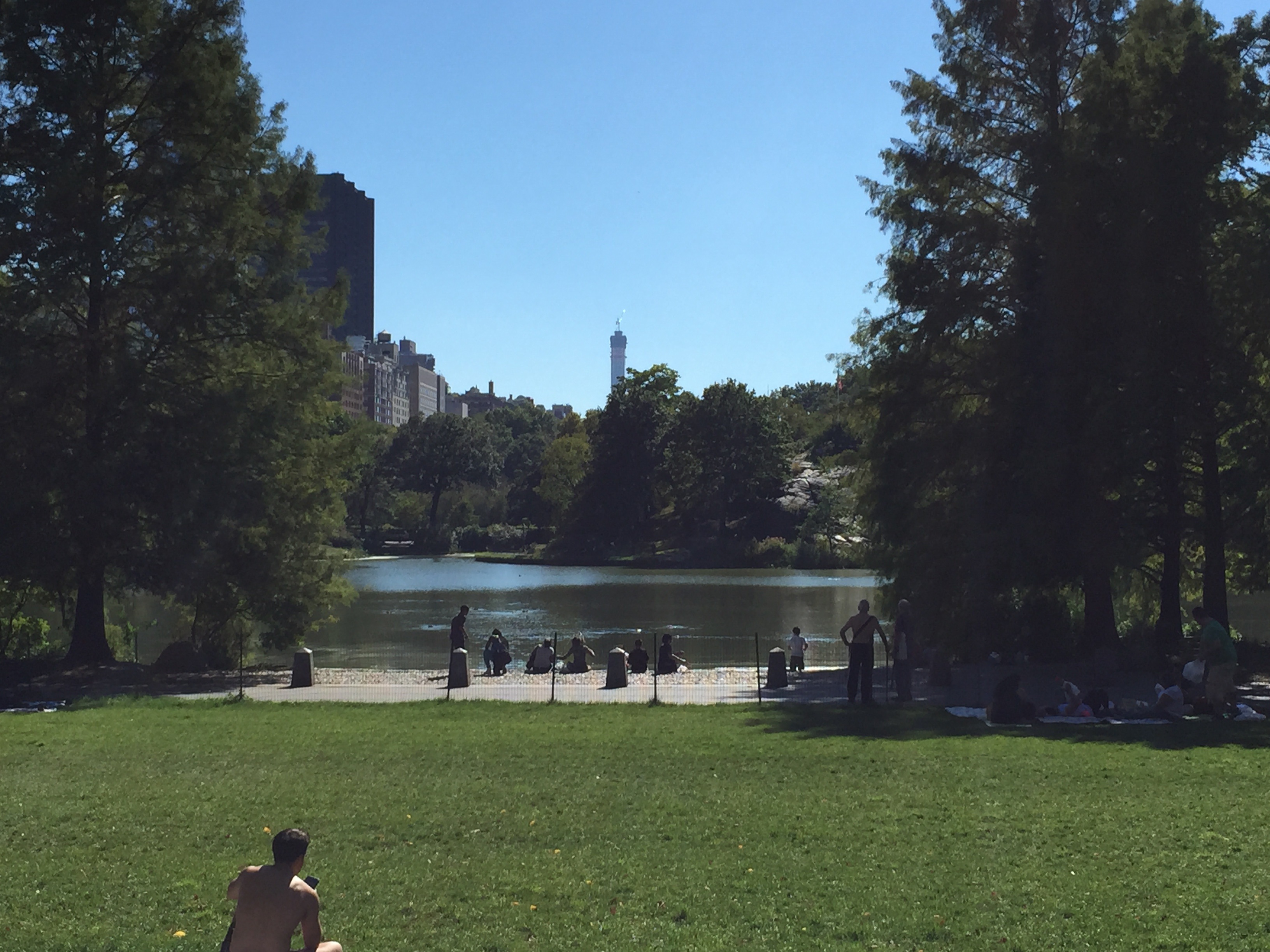
Although I was walking along Central Park West, I was unable to resist turning into the park at W. 67th Street to look at the exterior of the newly renovated Tavern on the Green. Originally the location of a building to house the sheep that grazed (and kept the grass mowed to a civilized length) on Sheep’s Meadow in Central Park, it was converted to a restaurant as part of Robert Moses’ 1934 renovation of the park. Closed since December 31, 2009, it has just reopened. I will be interested to see how it has transformed; the Tavern I knew was certainly unique! The photographs I have seen from inside the renovated space look more understated and the menu seems promising. As I snapped a photo of the exterior of the building, I couldn’t help but notice One 57 looming in the background. The transformation of West 57th Street into “Billionaire’s Row” was certainly in some developer’s minds when Tavern shuttered in 2009, but was not yet cocktail party conversation, which it is now.

Walking along CPW, just a block or so west you can catch glimpses of Lincoln Center, a triumph of urban development that meant that the tenements shown in some of the beginning scenes of West Side story on the current site of Lincoln Center would be torn down immediately after filming. The people who lived in this area at that point would scarcely be able to believe the creation of a super-luxury building like 15 CPW (at 62nd Street), “the world’s most powerful address,” as a recent book declares.

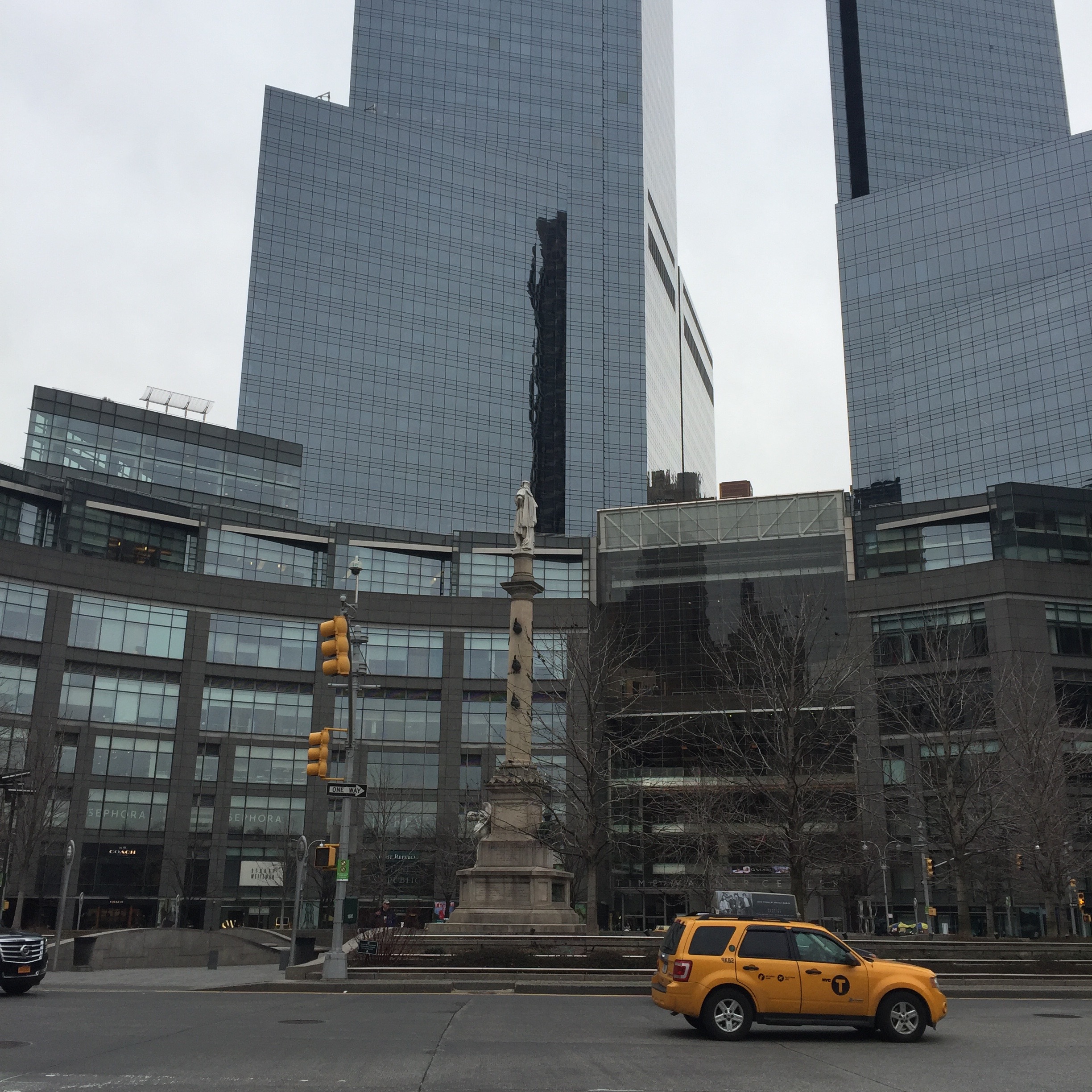
Central Park West dead ends at Columbus Circle and the Time Warner Center. A mix between residential homes, office space, CNN studios, performance spaces (Jazz at Lincoln Center is there) and shopping areas, it signifies the transition from Upper West Side to Midtown. The statue of Columbus seems to turn his back with distain on Central Park West, instead looking south toward midtown. I can never see this statue without remembering the Public Art Works Project from 2012, where Tatzu Nishi created a living room in the air surrounding Columbus. Despite Columbus’ arrogant upthrust chin, hand on his hip, once you have climbed several flights of stairs to see him within a completely furnished living room with pink wallpaper and a large television, he never quite commands the same level of intimidation. Such is the power of art, and the joy of living in a city that values art enough to support innovative projects at no cost to the public.