It’s terrace season!

IMG_0936
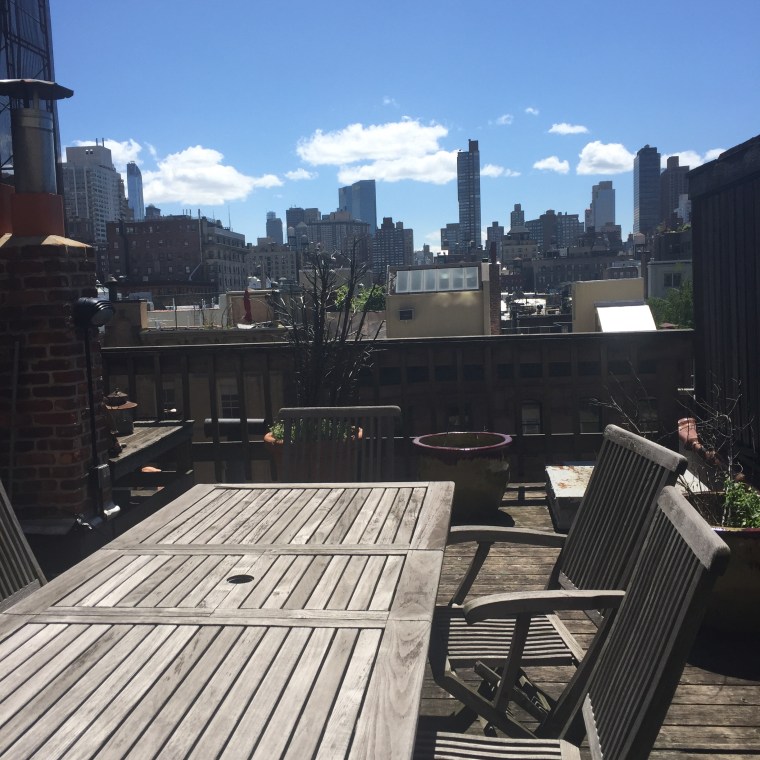
Gorgeous view of midtown Manhattan from a private rooftop terrace on the Upper West Side

I have recently been working with several buyers who either require private outdoor space, or have been lucky enough to find it included in an apartment they love for other reasons. Spring and summer are definitely “terrace season,” as outdoor space takes on a special appeal on sunny, warm days. In fact, one buyer I was working with lost out in a bidding war on an apartment with a large terrace directly facing Central Park, after months of little interest while it was listing during the winter. The listing broker even told me that we would have definitely gotten the apartment if we had been bidding the same amount back in the cold and gloomy months of January and February, but in late March/early April, the same apartment had a much broader appeal.

IMG_0847
A peek into a Beekman Place private terrace from a terrace at Southgate

Other buyers of mine, while not looking specifically for an apartment with outdoor space, found one with two large terraces, one with East River views, and fell in love. I have written before about the value of a view of nature from an apartment, as well as the value of a city view, and those intangible emotional benefits are heightened when the view is not contained behind glass, but rather experienced while also taking in the information obtained from other senses. To be on a terrace and seeing the East River, while also feeling a warm breeze, smelling the flowers you have placed in planters, and hearing the sounds of the city, is to be immersed in the experience.
IMG_0841
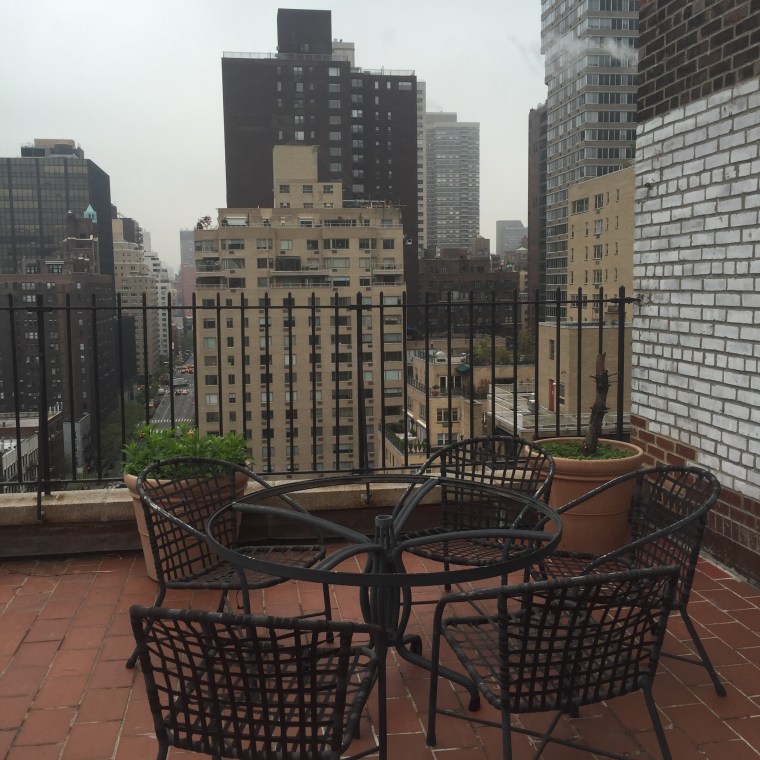
Ready for an al fresco dining experience in midtown Manhattan

There are multiple types of outdoor space, and some people have strong preferences for one type over the other, while others just want any opportunity to experience the outdoors from within their home. The least versatile is a Juliet balcony – enough to step outside and check the temperature or take in a few deep breaths of the summer air after a storm, but not enough to even place a chair. Larger than that are balconies, commonly boxy squares in postwar apartments, often with enough space for a few chairs and a table. The larger outdoor spaces tend to be true terraces (outdoor space with the building underneath it instead of something jutting from the building) or private gardens. Gardens tend to be most common in townhouses, or in the garden level apartments in converted townhomes or brownstones. Garden level apartments have the disadvantage of not being the sunniest apartments, with some exceptions, but for people who like the idea of children or pets playing in a ground-level garden, they can be highly valued. Large terraces are perhaps the most prized outdoor spaces, and relatively rare. A terrace with an iconic view – of Central Park, of a river, or a spectacular city view – can greatly increase the value of an apartment.

IMG_0846
A look at several of the terraces in the Beekman area with a view of the East River

So how much does outdoor space affect the value of an apartment, if you have one – or how much more do you have to pay to get a place if outdoor space is a priority to you? As with everything else in NYC real estate, it depends upon so many variables – the location, the apartment itself, whether the building is a condo or a coop, walk-up or elevator, etc., etc. However, the value of outdoor space is often about 25-50% of the apartment’s price per square foot – higher if the terrace has a great view or is attached to a spectacular apartment, lower if it is on a lower floor or attached to a small apartment.

IMG_0676
Even on an overcast day, it’s a killer view from this private terrace on Central Park South

The most valuable outdoor space is the very one my buyer lost out on this spring – unobstructed views of Central Park (enough to increase the value of an apartment by 50% even from park-facing windows with no outdoor space) from a large terrace. Is outdoor space worth such an increase in price? As with so many other aspects of NYC real estate, that is up to you – for some, they may feel that they wouldn’t really use outdoor space and don’t want to spend the extra money, while for others, outdoor space is the most important aspect of their home search and they won’t consider a place without it. What I have learned this spring, though, is that timing is extremely important. If I am representing a seller who has an apartment with outdoor space, I would strongly recommend trying to list during the warm weather months if at all possible. Conversely, if looking to purchase an apartment with outdoor space, jumping on something during the winter can lead to a relative bargain compared to getting into a bidding war when the outdoor space is showing at its best. If you are interested in buying a home in NYC with outdoor space, or if you have one to sell, feel free to contact me (with no obligation) at julie.brannan@compass.com.
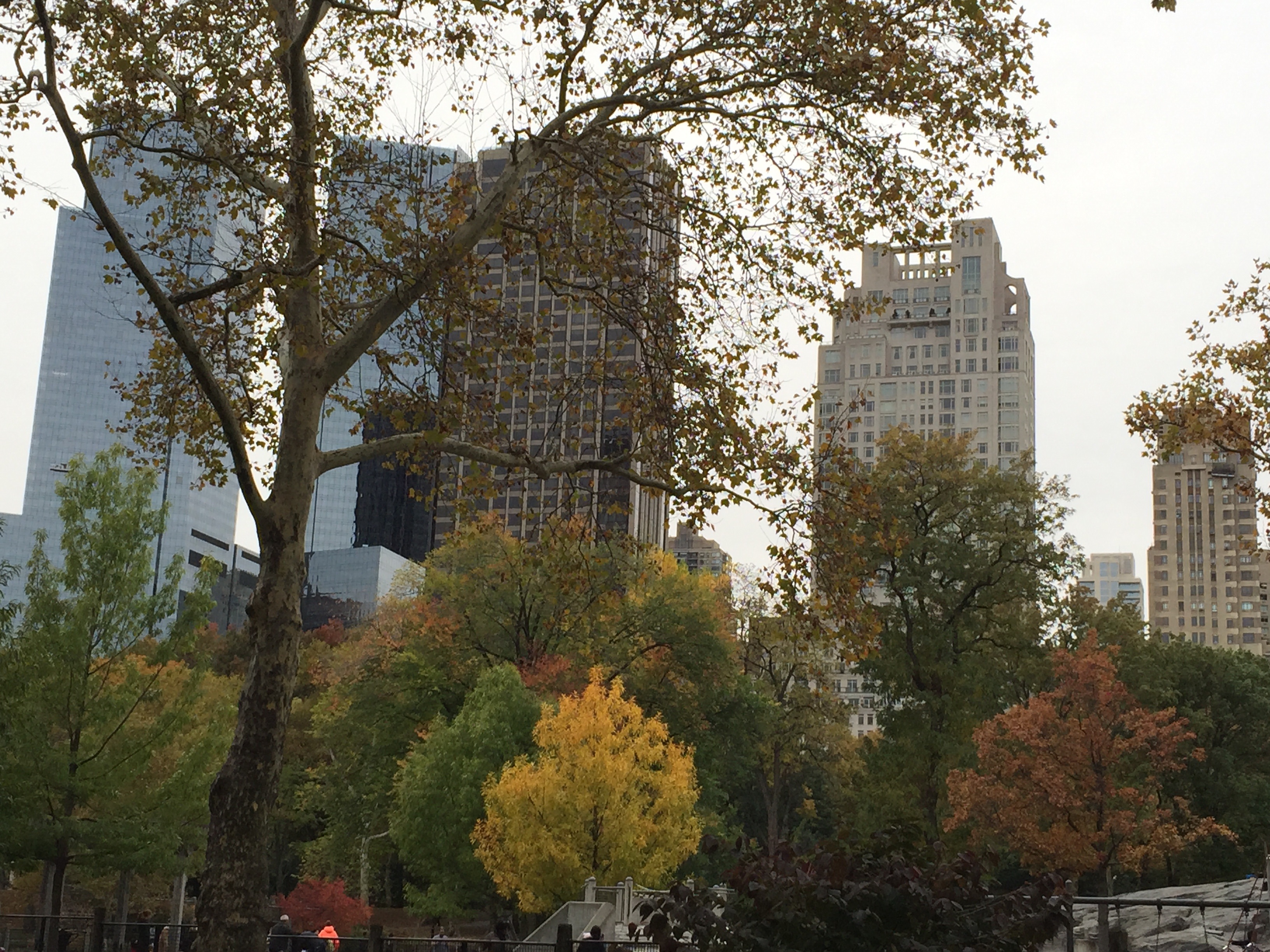
Central Park in Autumn

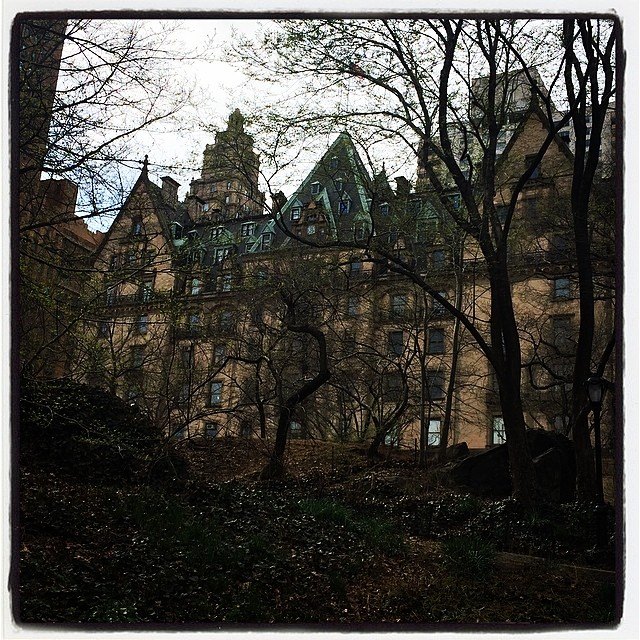
CP - city and trees

It’s no secret to anyone who has read my blog posts that I adore Central Park. New York City’s jewel, it occupies a surprisingly large rectangle in the center of Manhattan. Its geometric edges belie the diverse topography within the park itself – pick a different entrance and a different segment of the park each time you enter and you might think you were in an entirely new place. Not only does the park change within its sections, it changes dramatically with each season, and depending on the weather, even within each season. For this dérive (an unplanned walk within an urban environment), I entered the park at its southwest corner on a cool late-Autumn day.

This corner of Central Park is surrounded by the hectic confusion of Columbus Circle, with the budding skyscrapers of Billionaire’s Row along the south end, and Time Warner Center and 15 Central Park South along the west. Walking into the park here (once you have passed the horde of bicycle rental peddlers) is an immediate escape from the traffic and crowds. It takes longer for the trees to change to their autumn colors in the city compared to areas right outside – or even those farther south – because of the “heat island” effect of all the concrete. Once the trees in Central Park begin to turn, however, they really show off. The experience was walking through the park this time of the year is uniquely engaging. The crunching of leaves beneath your feet is an auditory reminder of the season (as long as you take off your ear buds).  The burst of yellow, orange, and red leaves in the foreground is a visual treat, highlighted by the stately apartment buildings in the background.

Wandering through the lower end of the park, I heard the Central Park Carousel before I saw it. There has been a carousel in this spot in the park since 1871, this fourth one having been there since 1951. It was built in 1908, and lived in Coney Island before being moved to Central Park. It has 57 hand-carved horses and two chariots. The Carousel is open every day of the year, weather permitting. The Carousel has to be ridden to be experienced – like the rest of New York City, it is fast!

Just east of the Carousel is the Central Park Dairy, a fanciful building that looks like it was taken from a fairy tale, once a source of fresh milk for city kids. Now it’s one of five information centers and gift shops in the park. Just past the Dairy, still heading east, is one of my favorite statues in the park – Balto the husky. Balto led a pack of sled dogs to carry diphtheria medication 1000 miles between Nome and Anchorage when a serious epidemic broke out among children in Alaska. The heroic dogs became famous, and this statue was installed only 10 months after the event. Appropriately, the patina on this inviting bronze statue is worn from legions of children sitting on his back.

Continuing east but curving a bit south again, I was once again charmed by the sound of a park icon before seeing it – the Delacorte Clock near the Central Park Zoo. Given to the Park by George Delacorte (who also donated the Alice in Wonderland statue and the incomparable Delacorte Theater, home of Shakespeare in the Park) in 1965, this clock with a moveable animal sculpture carousel can be experienced every day on the hour and half hour from 8 AM to 6 PM. It plays nursery tunes most of the year, while a penguin, hippo, elephant, kangaroo, bear, and goat dance around with musical instruments and two monkeys strike the bell. During the end of the year, the music switches over to holiday tunes.

In my opinion, a person could spend several lifetimes in New York City, and never grow tired of Central Park. Always changing, it provides a way to stay in touch with our animal nature while surrounded by the buildings and endless activities that humans have created – allowing those of us who live in New York City to be stimulated or calmed, depending on what we need at any particular moment.

The value of a view

Recently I had the opportunity to attend a broker’s open house tour, featuring Upper East Side penthouses with terraces. All the apartments included gorgeous interiors, large functional kitchens, and comfortable bedrooms – and yet I found myself constantly drawn to the windows with a view of Central Park. Even walking into another room adjacent to one I had just walked through enjoying the view, I would be unable to resist walking over to the windows to gaze once again at the spectacular scenery. For me, the highlight of each apartment tour was a trip outside to walk along a spacious terrace – even though on that particular day, the temperature was unseasonably cold. Many people think of a park view or terrace as a status symbol, and yet I was drawn to each simply as an observer, with no one there to be impressed (or not). As I finished up a few enjoyable hours at several wonderful buildings, I found myself wondering: what is the value of a view?

Since the apartments I was touring all had Central Park views, with trees, rolling hills, and a large body of water (the reservoir), my mind turned to the work of Diane Ackerman (author of The Natural History of the Senses, among many other works).  I heard her speak many years ago, and was struck by her observation that, as the human animal moves into increasingly artificial environments, we crave adding nature back into our habitats. This could be through cultivating plants in our tiny apartments, keeping companion animals, or spending a premium to see nature unfurl through our windows (or on our terrace). Human-made objects tend to be linear and three dimensional; natural objects tend to be more serpentine and of fractional (fractal) dimensions. The world we have created is fairly static and unchanging, while nature is constantly chaotic and fluctuating. Ackerman proposes that people need nature; we evolved as a part of the natural world and our industrial, mechanical world is too recent a development to completely remove this primal need.

So, is paying a higher price for an apartment with a view worth it? Of course, this is a personal decision for everyone looking to buy a home. For me, I can say that it does have value, and the only way you can be sure if it is worth it to you is to include a few options with views and see how you respond.

While these concepts apply to view of nature (whether Central Park, some other park, or a river), in another post I will discuss the different value of a city view. In my next blog post I will be back with another dérive (an unplanned walk around Manhattan).

Image