Macy’s Thanksgiving Day Parade

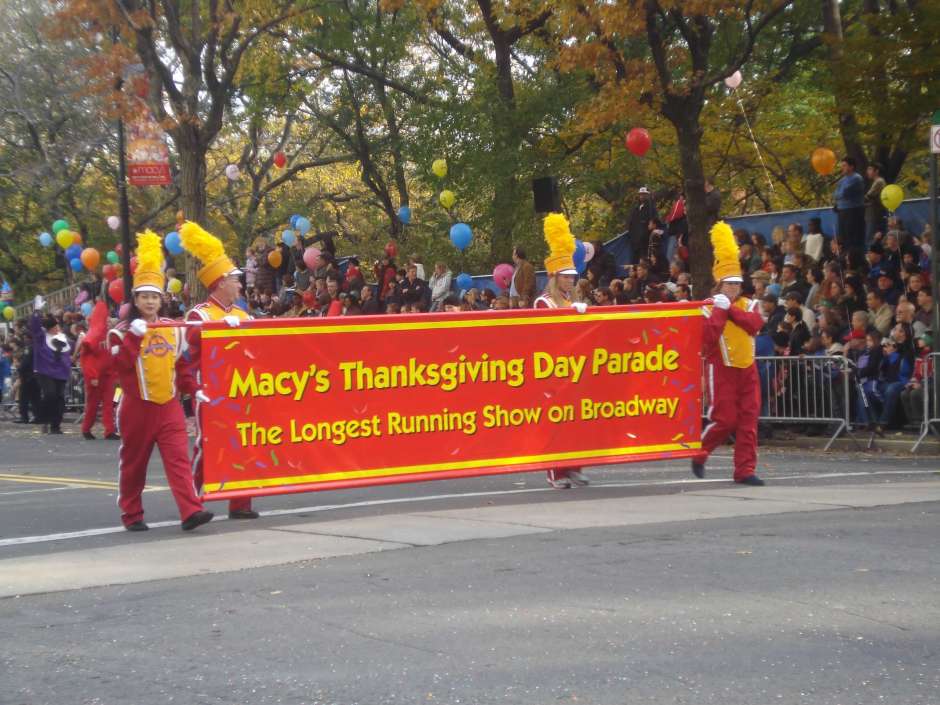
I truly believe some of my earliest memories are of watching the Macy’s Thanksgiving Day Parade and waiting to see the Snoopy balloon. My mother would be in the kitchen preparing Thanksgiving dinner and I would race in to make her come in and see when Snoopy finally arrived! Because I was not fortunate enough to be born in New York City, I watched it as most people do, on television. When I moved to NYC, the very first Thanksgiving I was lined up early on Central Park West to see the parade, and have seen it most years since then. I thought it might be fun to go into different ways to watch the parade, other than on TV. I was going to get photos this year (2024) but it was raining all morning and I knew the photos would not turn out. However, I have hundreds of photos from previous years, and had fun looking through them.

The parade starts on CPW and W 77th Street, and ends in front of the Macy’s department store, on W 34 between Broadway and Seventh Avenue. It heads south along CPW, turns at Columbus Circle for a few blocks along Central Park South, then heads south on Sixth until it turns on 34th Street. The blocks around the end of the parade, where the live performances in front of Macy’s are performed for the television audience and a few lucky people, are not accessible to the public.

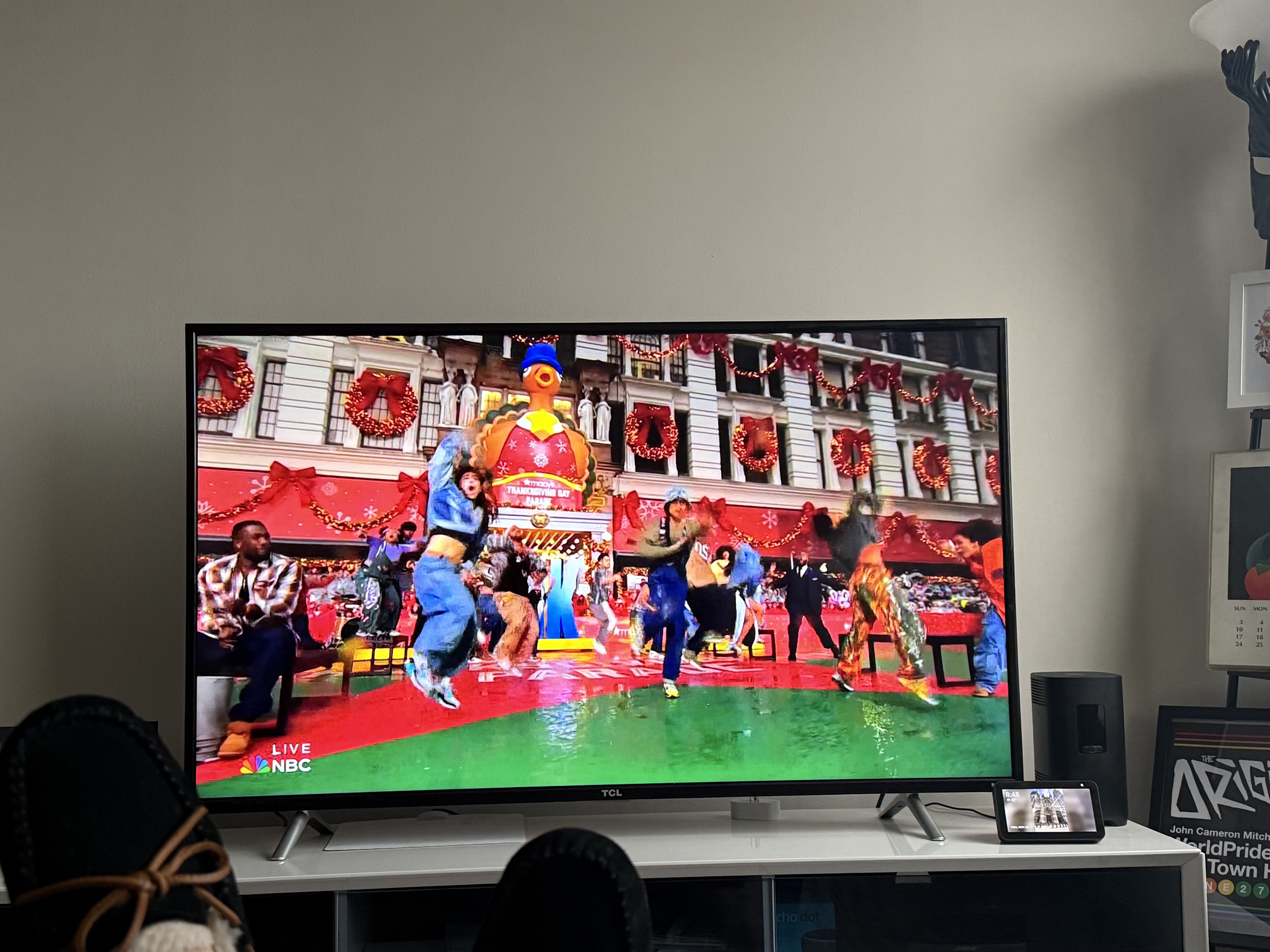
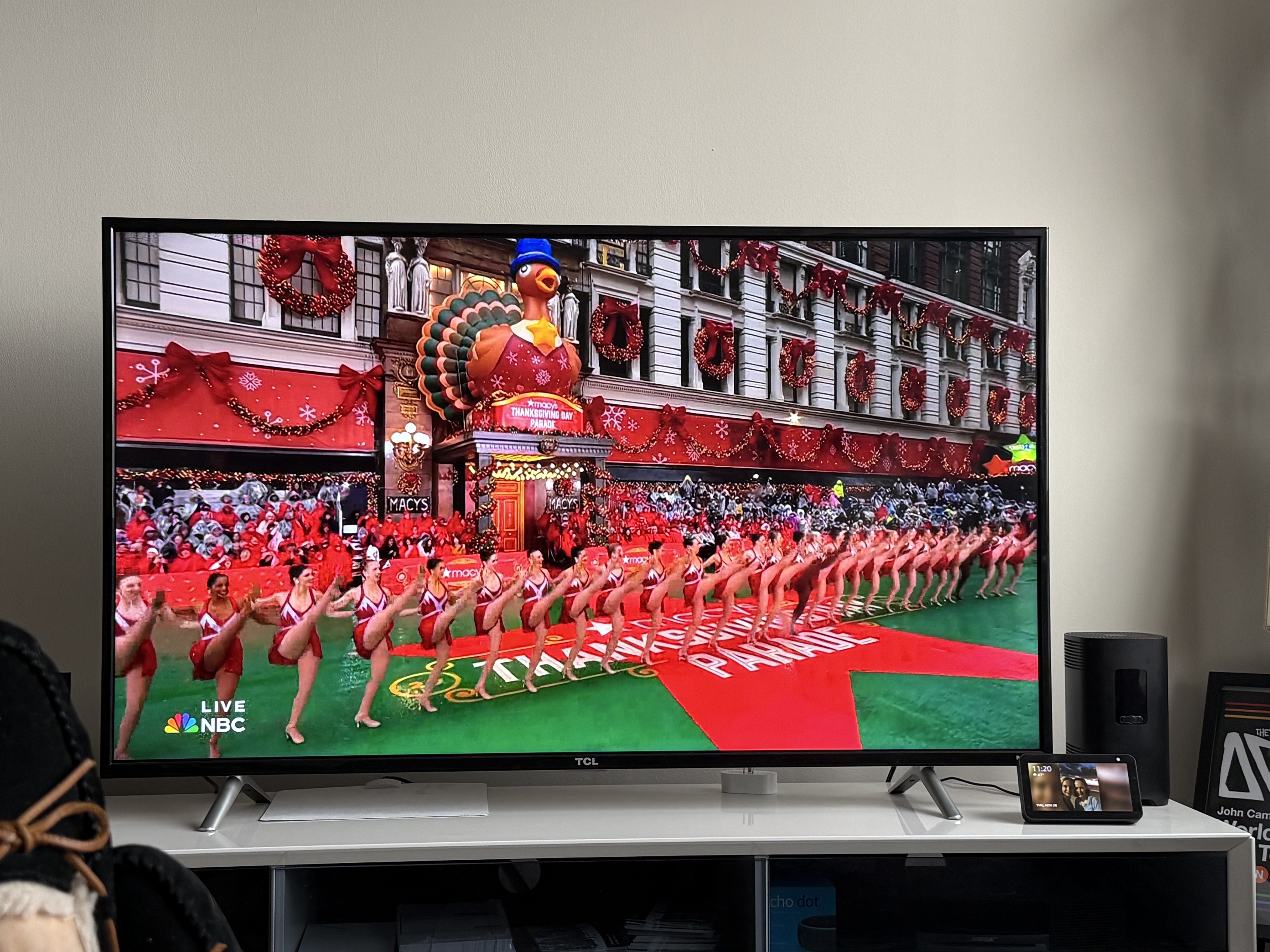
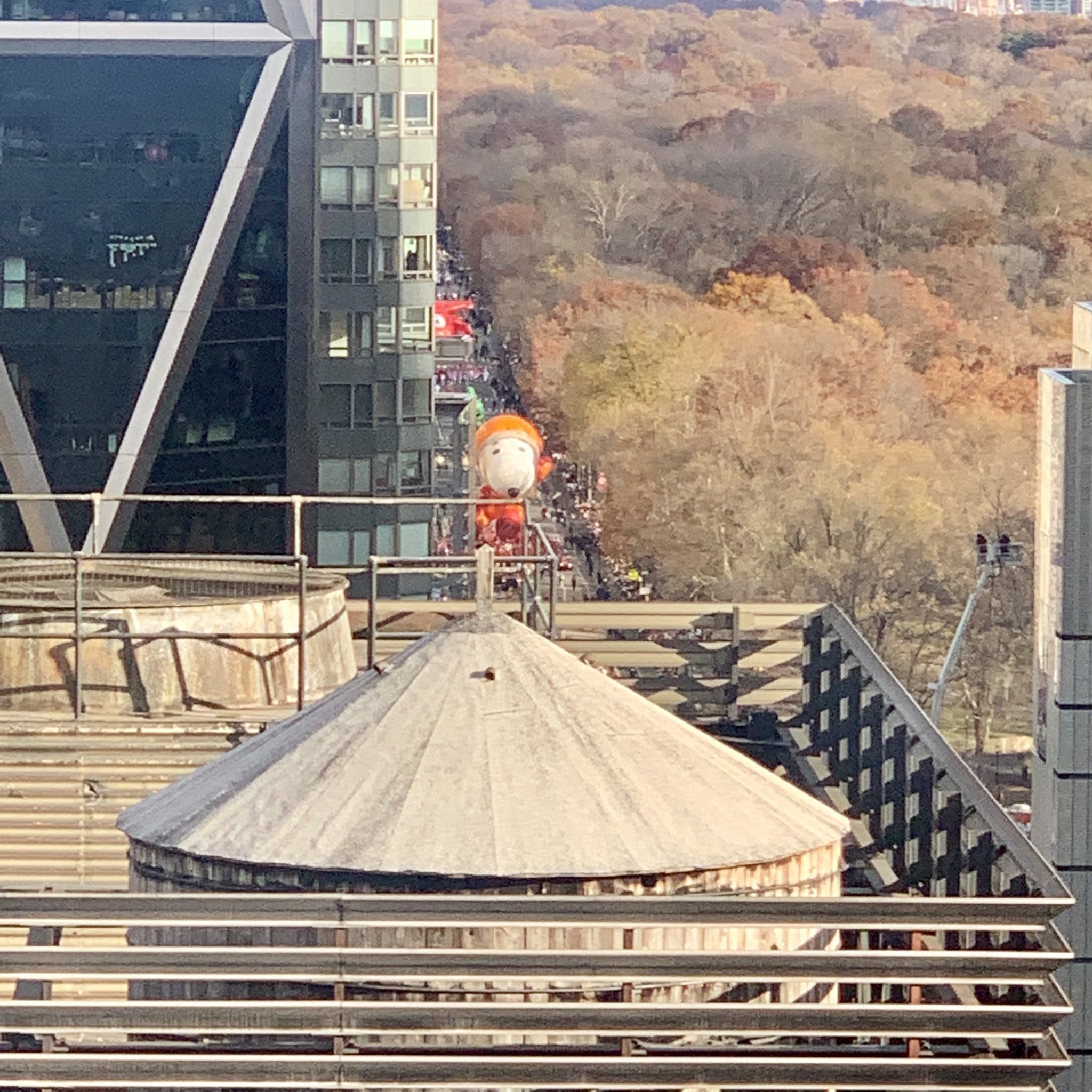
So the photos above (from 2024, of Hells Kitchen the musical, and the Rockettes) show the typical TV experience, and also show the parts you cannot see if you decide to watch the parade yourself in the city (Broadway and other live performances). If lucky enough to live in a building with a roof deck, you might be able to see the parade from a distance. The photos below are from the roof of an apartment building on Eighth Avenue and W 53rd Street. It’s fun to see the parade like that (and hey, there’s Snoopy!) but it can be distant.

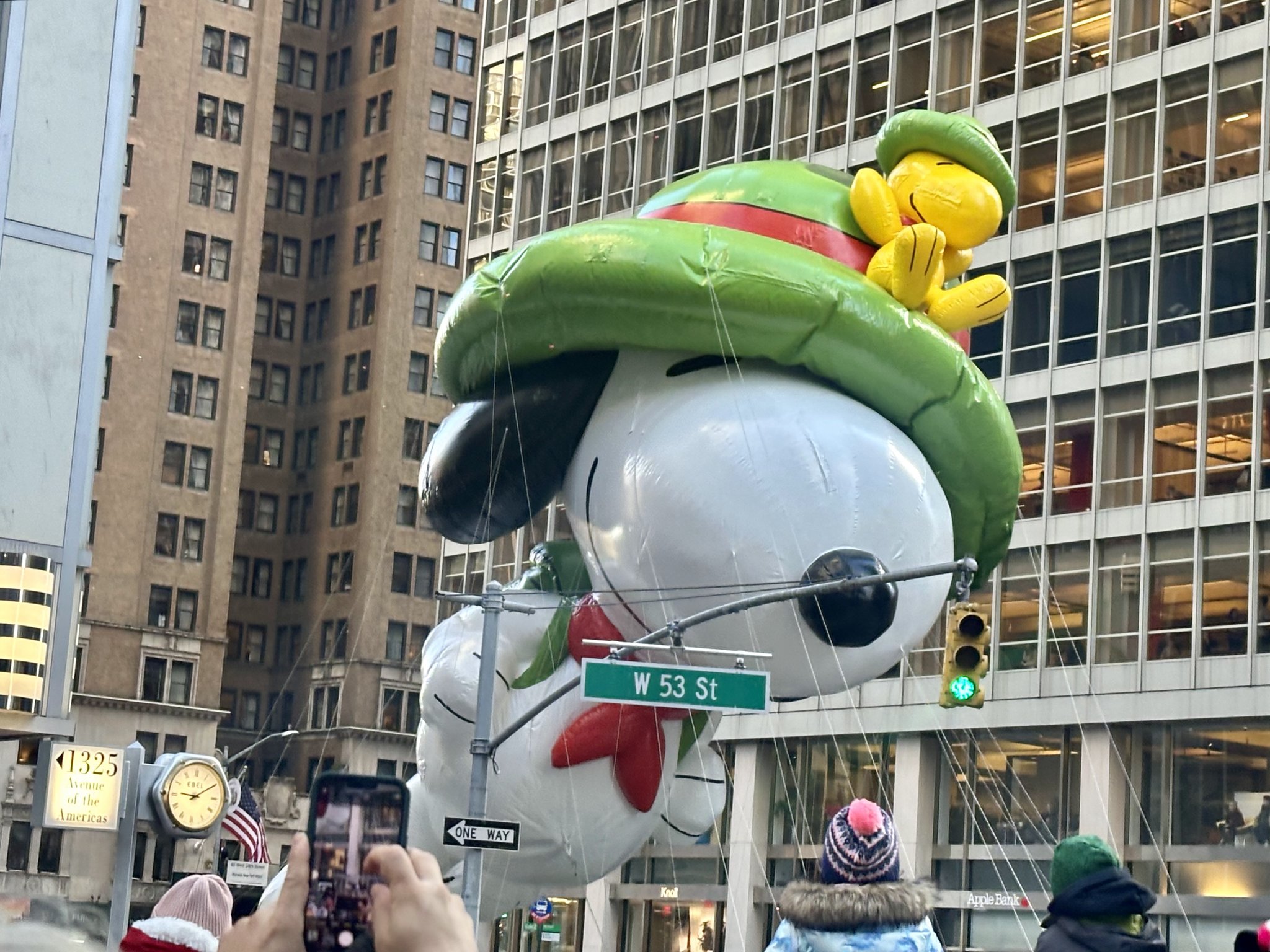
Midtown along Sixth Avenue can be an easier place to see the parade. There may be lots of people around, but the sidewalks and streets are wide enough that you will see the balloons easily even if you don’t get there early. The photos below are from midtown from a few different years (note that although there is always a Snoopy balloon, it changes out from time to time in terms of the design). The disadvantage to this area is that you may be too far away to really see the floats and clowns, etc., but you won’t need to get there early to be able to see the balloons.

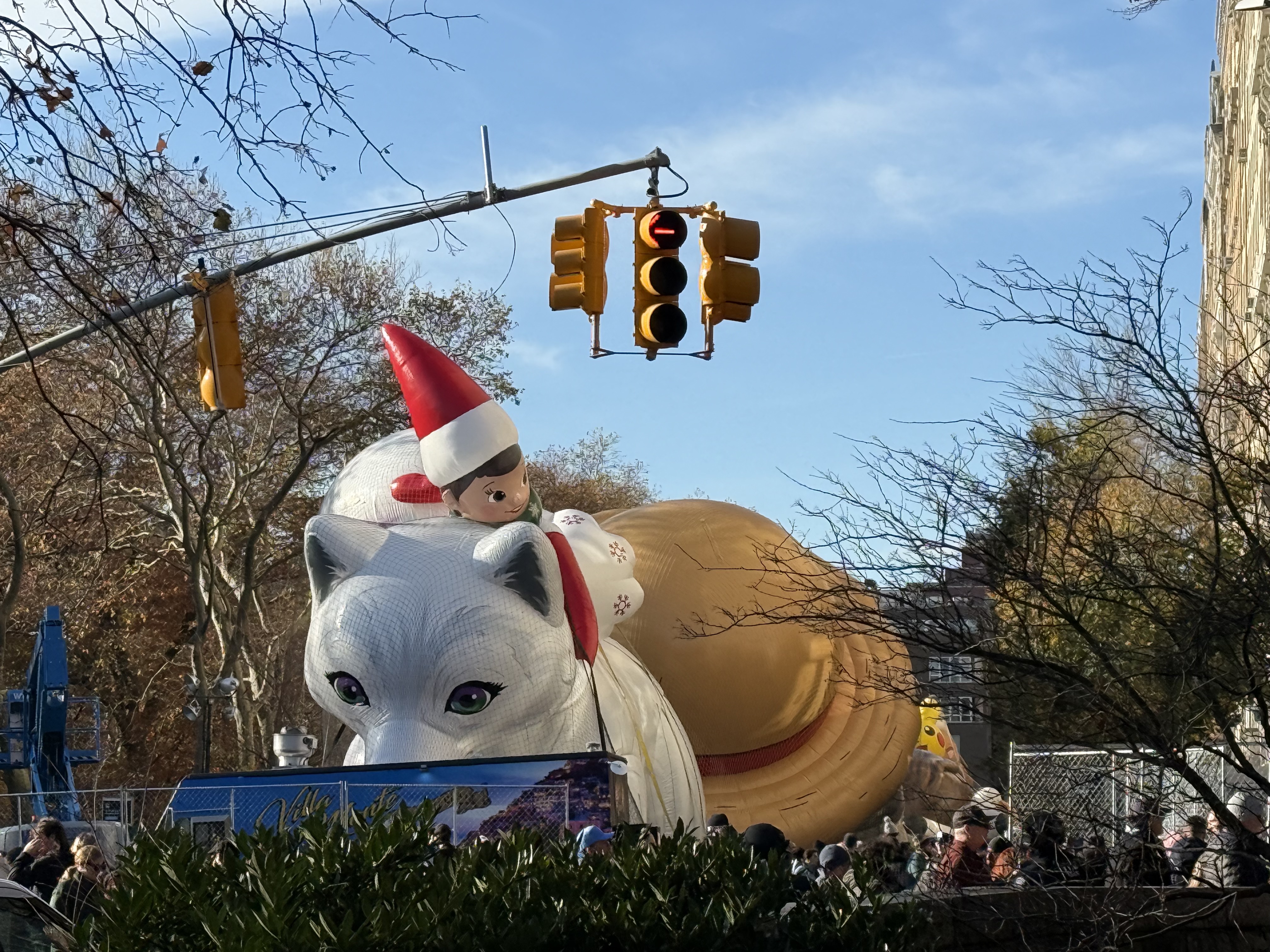
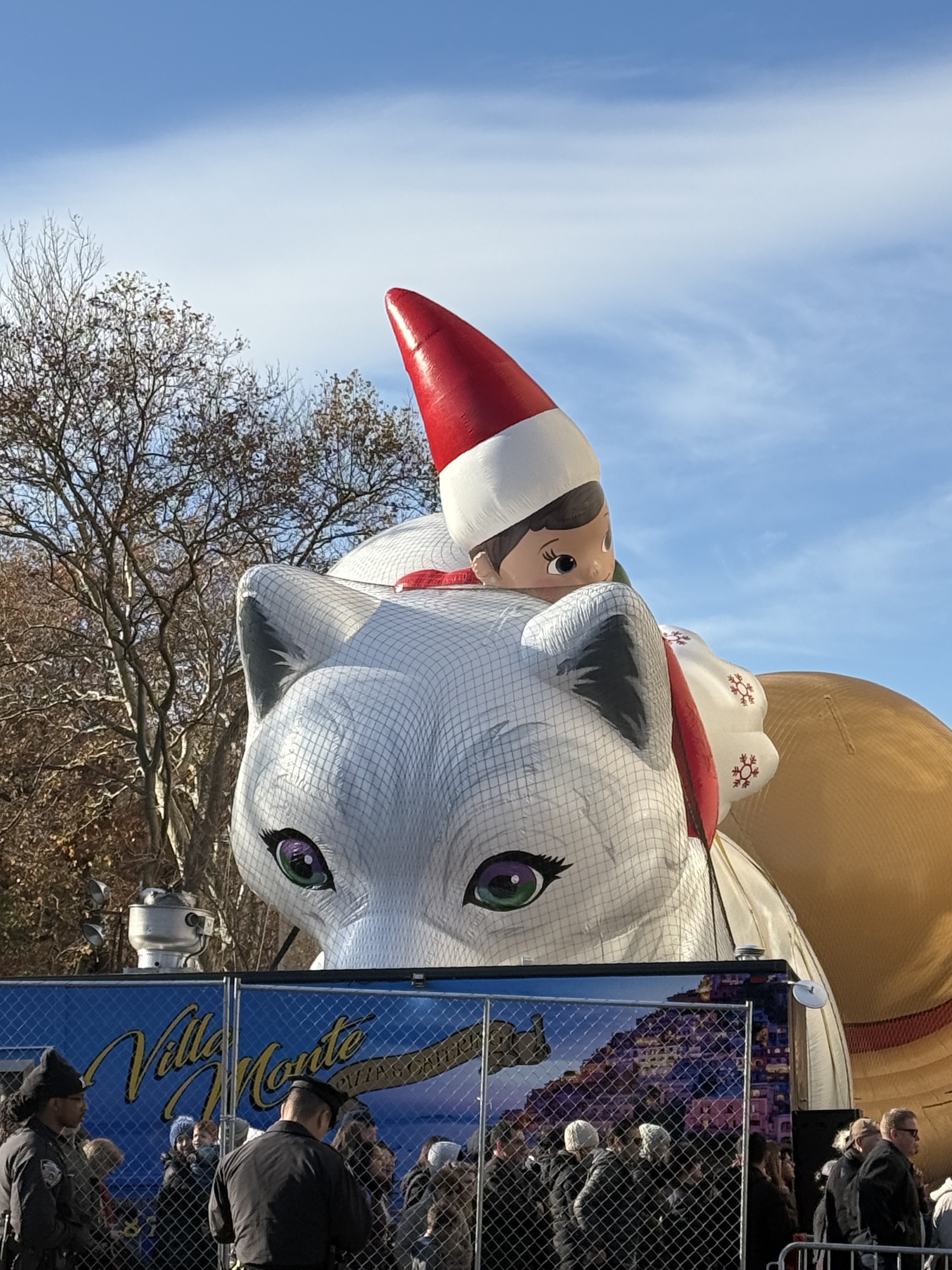
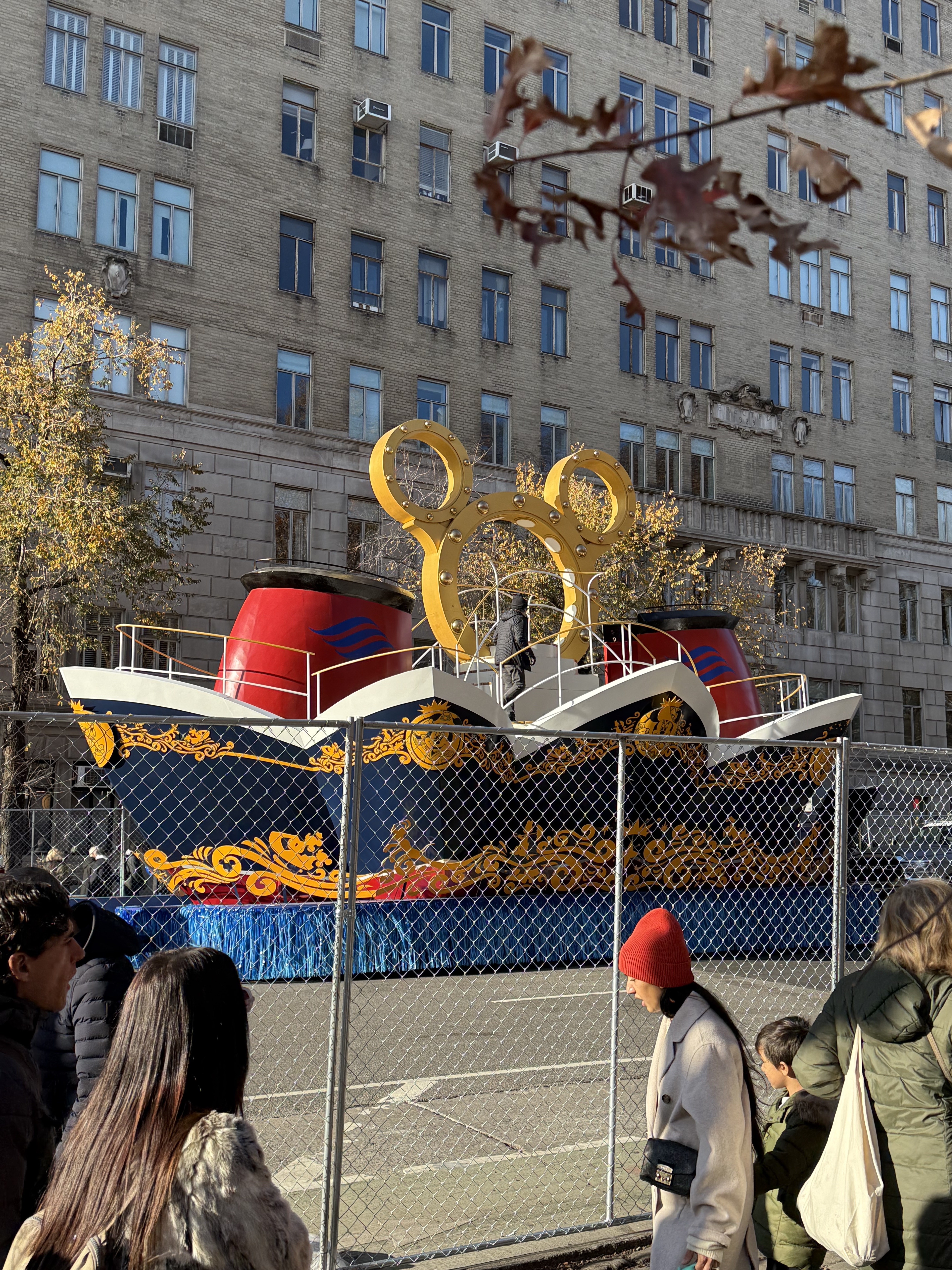
Another way to get up close and personal with the balloons is to go to the balloon inflation the day before Thanksgiving. The official area to walk around where the balloons are being inflated (and held under nets until the next morning) has an entrance at Columbus Avenue and W 72nd Street, and there is airport-style security. The hours are usually 1-6PM and it can get crowded. You can also see some of the balloons and floats, with no waiting and no crowds, from the west side of Central Park. The photos below were taken in the park just off the intersection of CPW and W 81st Street.

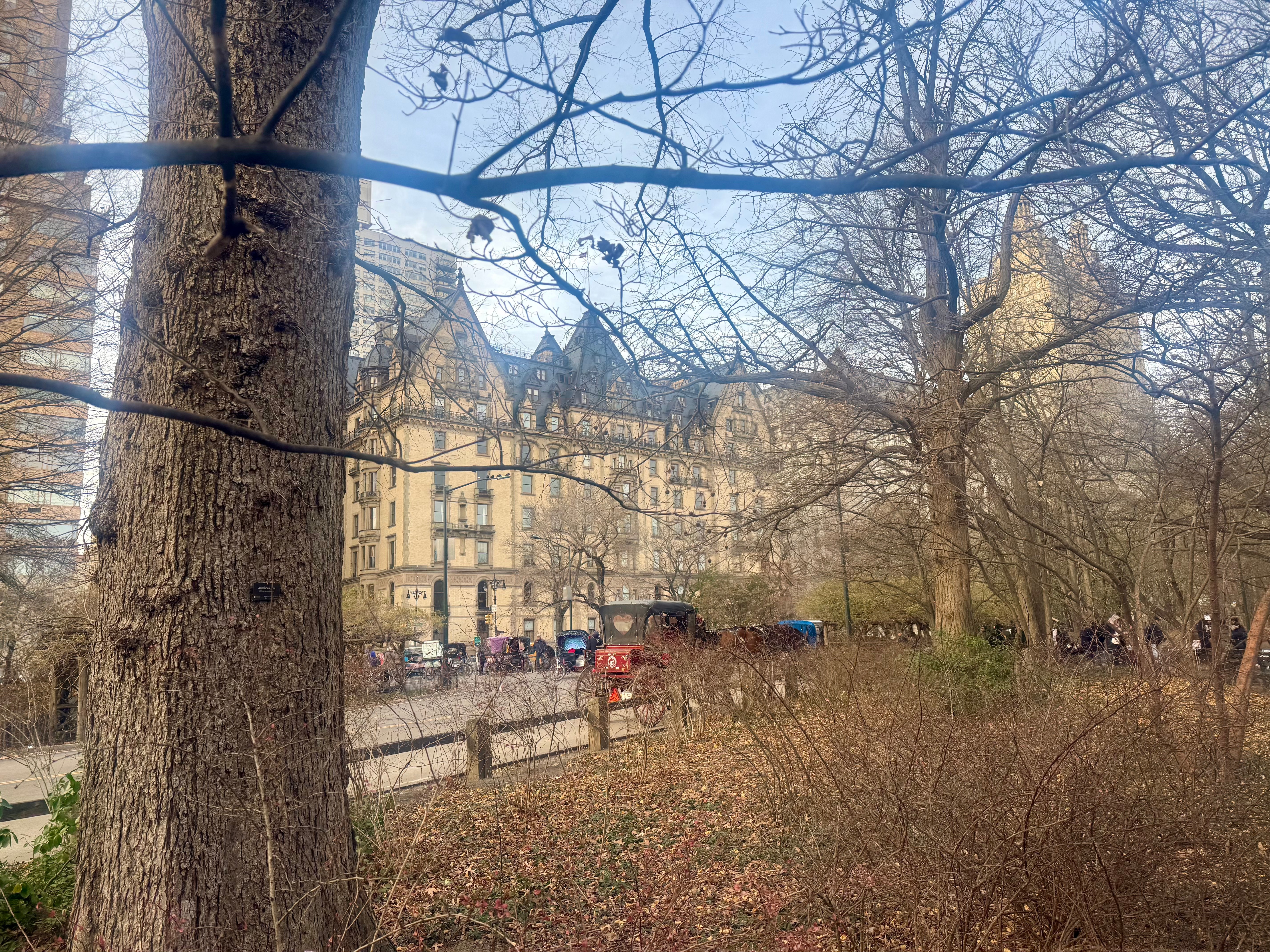
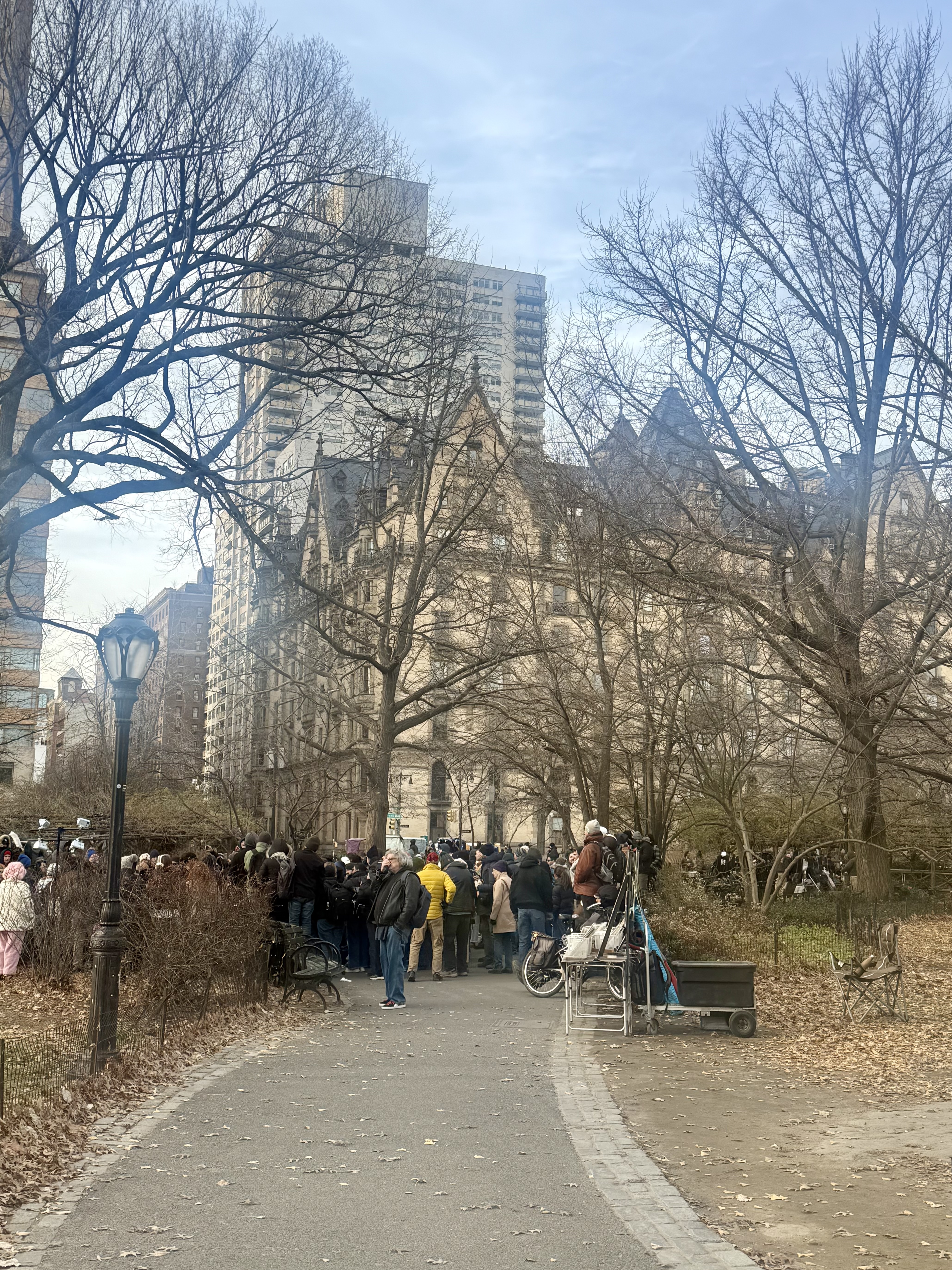
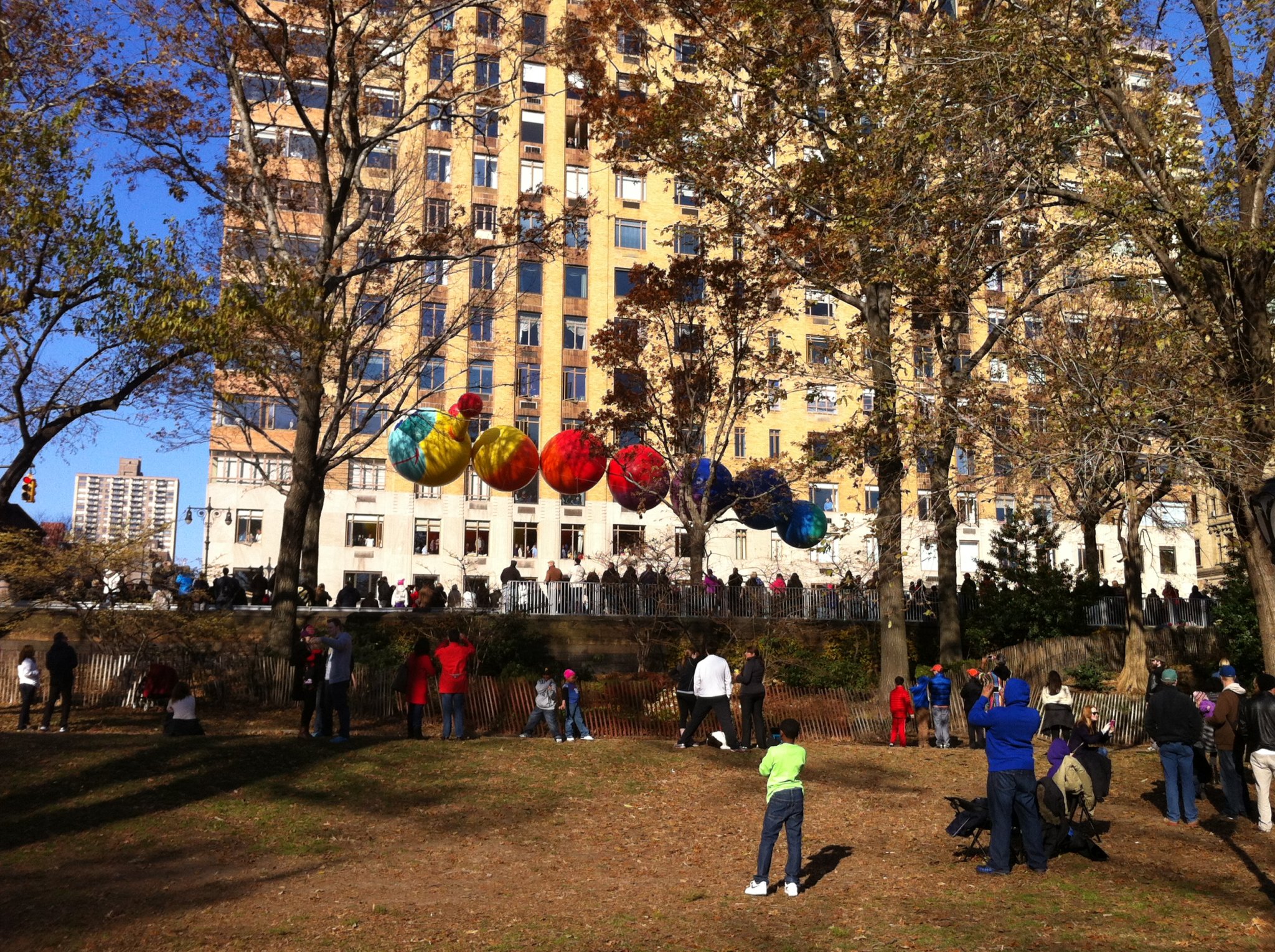
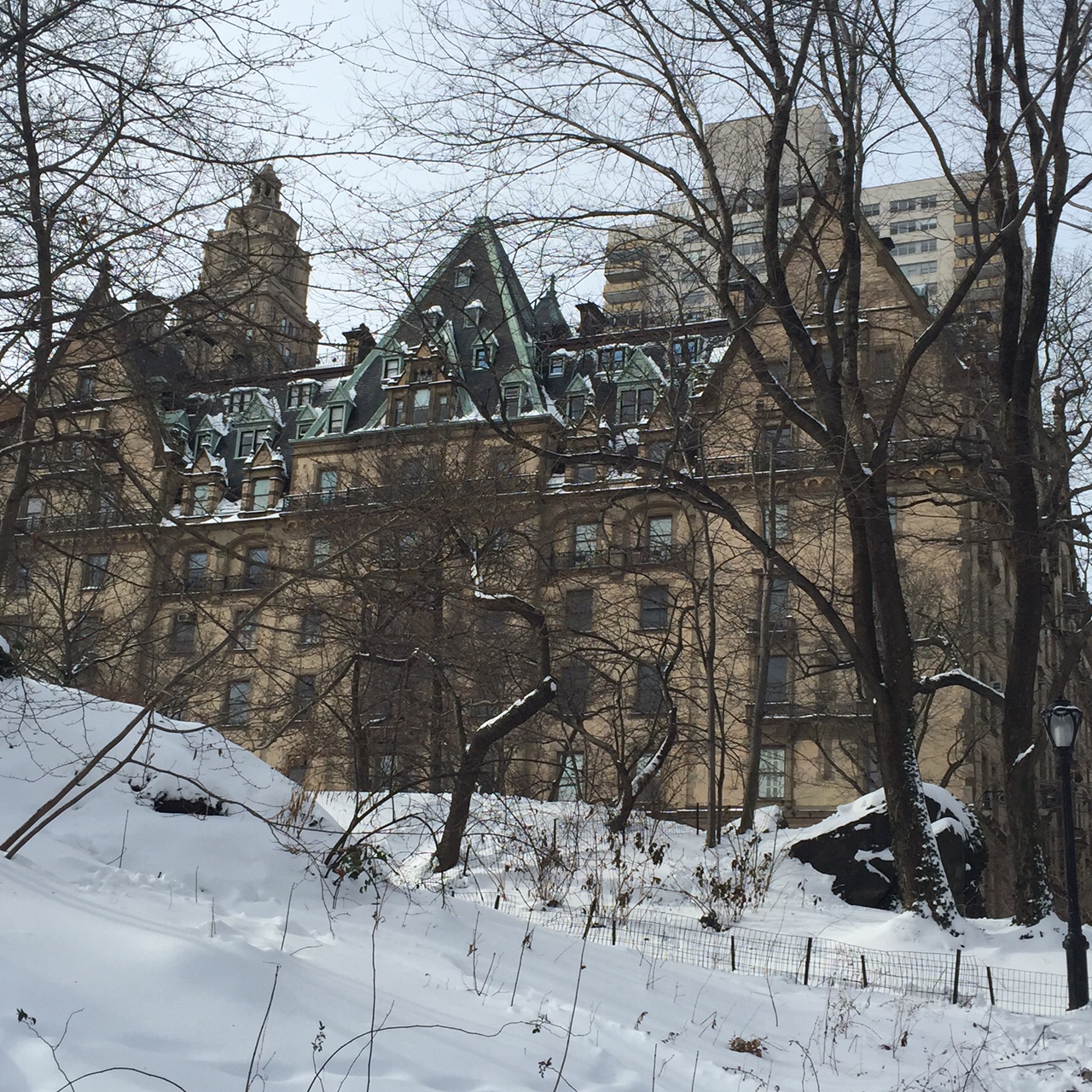
An insider tip that I rarely hear people mention is that you can get a surprisingly good view of the balloons (if not the floats) from inside Central Park during the parade, without waiting and with few crowds. The photos below were taken from inside the park on the west side at about W 72nd Street (note the Dakota as a backdrop for some of these). This is a really easy and fun way to see the balloons – and was what I was going to do this year (2024) until the rain descended and I decided TV was fine for this year!

The gold standard of seeing the parade – and the thing I did for years and years when my daughters were young – involves waiting on CPW to get a front row view of the parade. You have to get there early (some people sleep overnight in their spots), weather can be tough (I’ve been there in snow and on years when it was below freezing), but the view is impeccable. You can see everything, and clowns will come right up to you (fun clowns, not scary ones!).

There are always people walking behind any horses in the parade, and everyone along the parade route gives the pooper scooper people a huge round of applause, without fail. It’s always a fun moment.

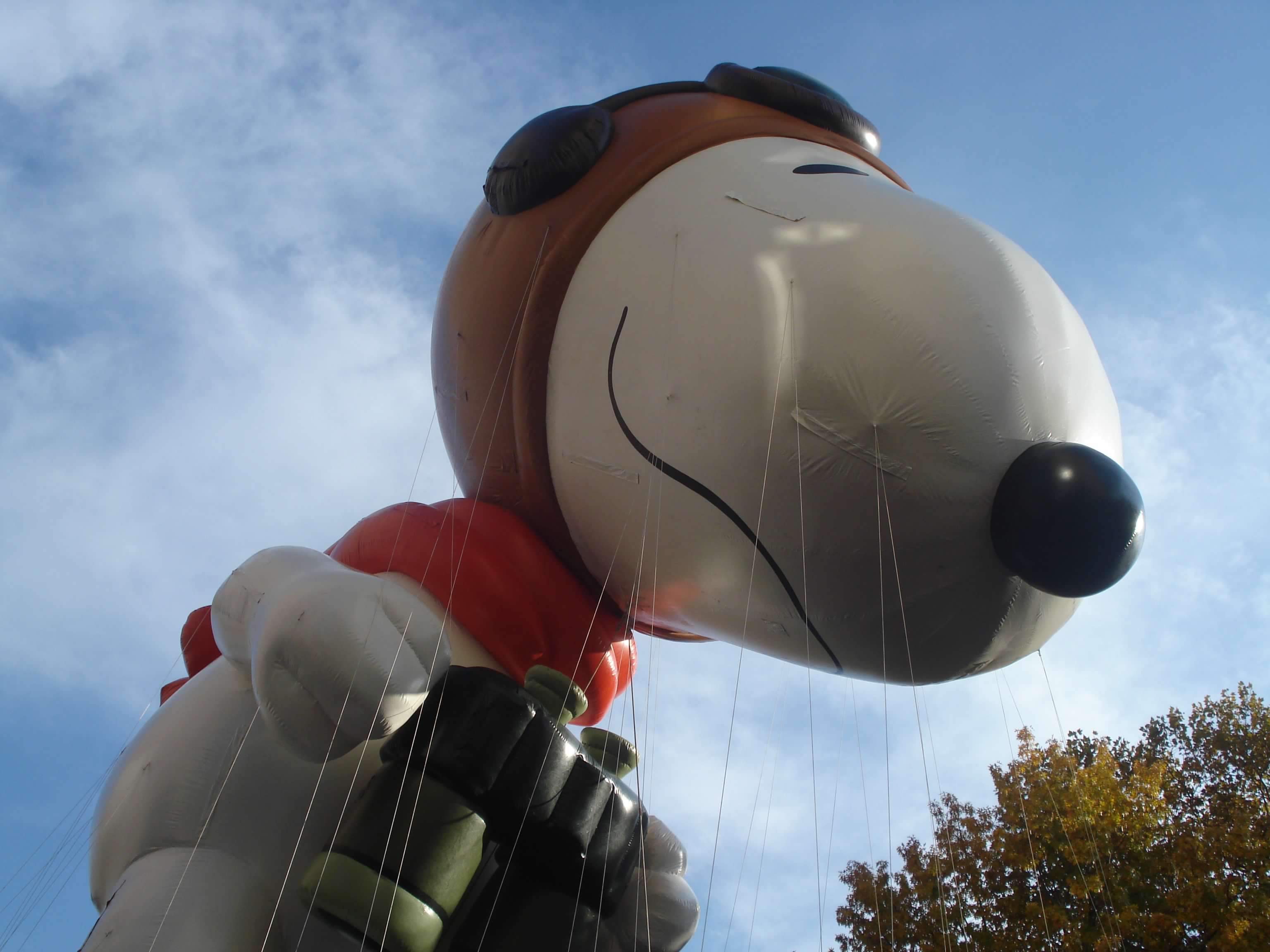
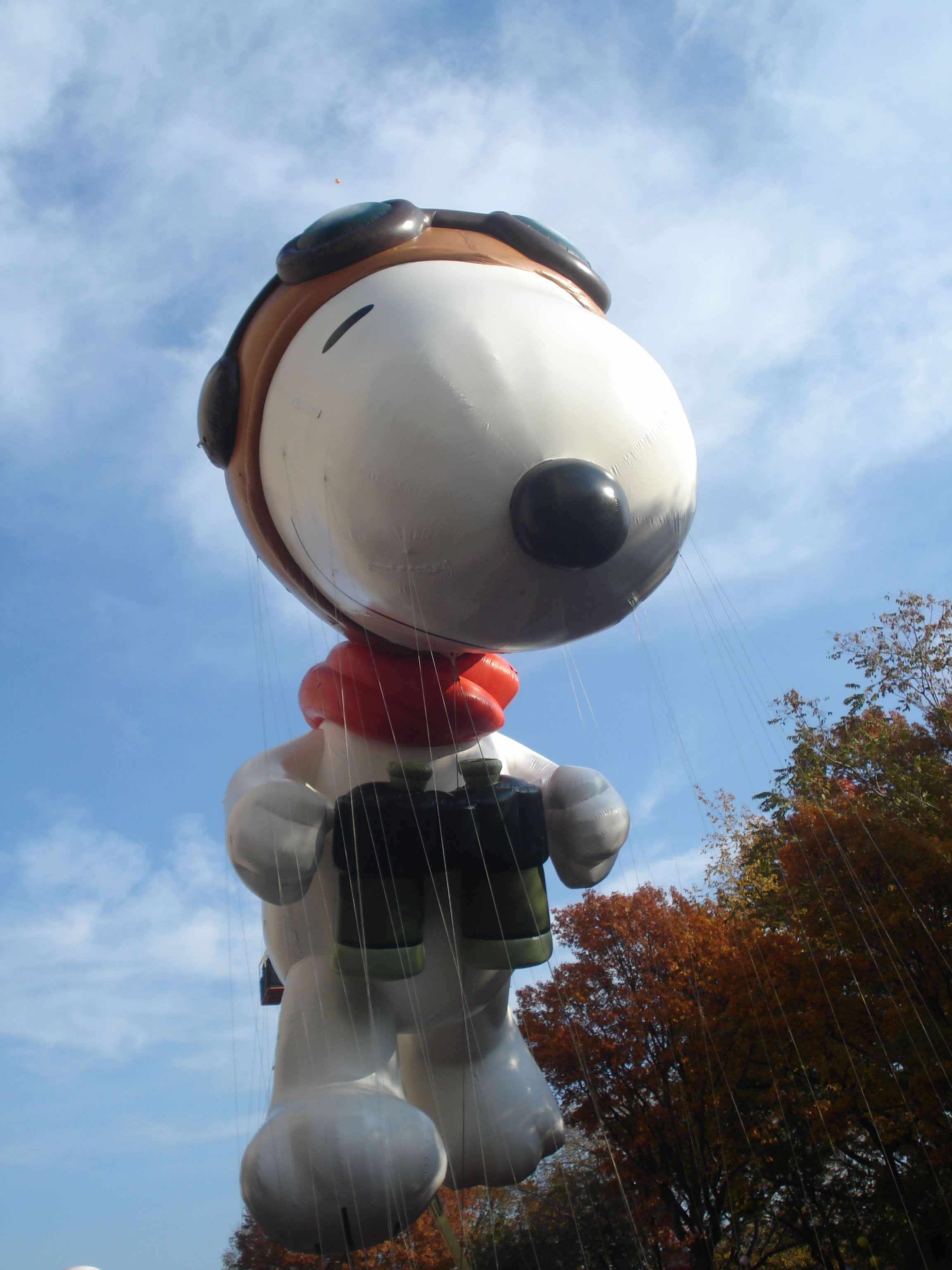
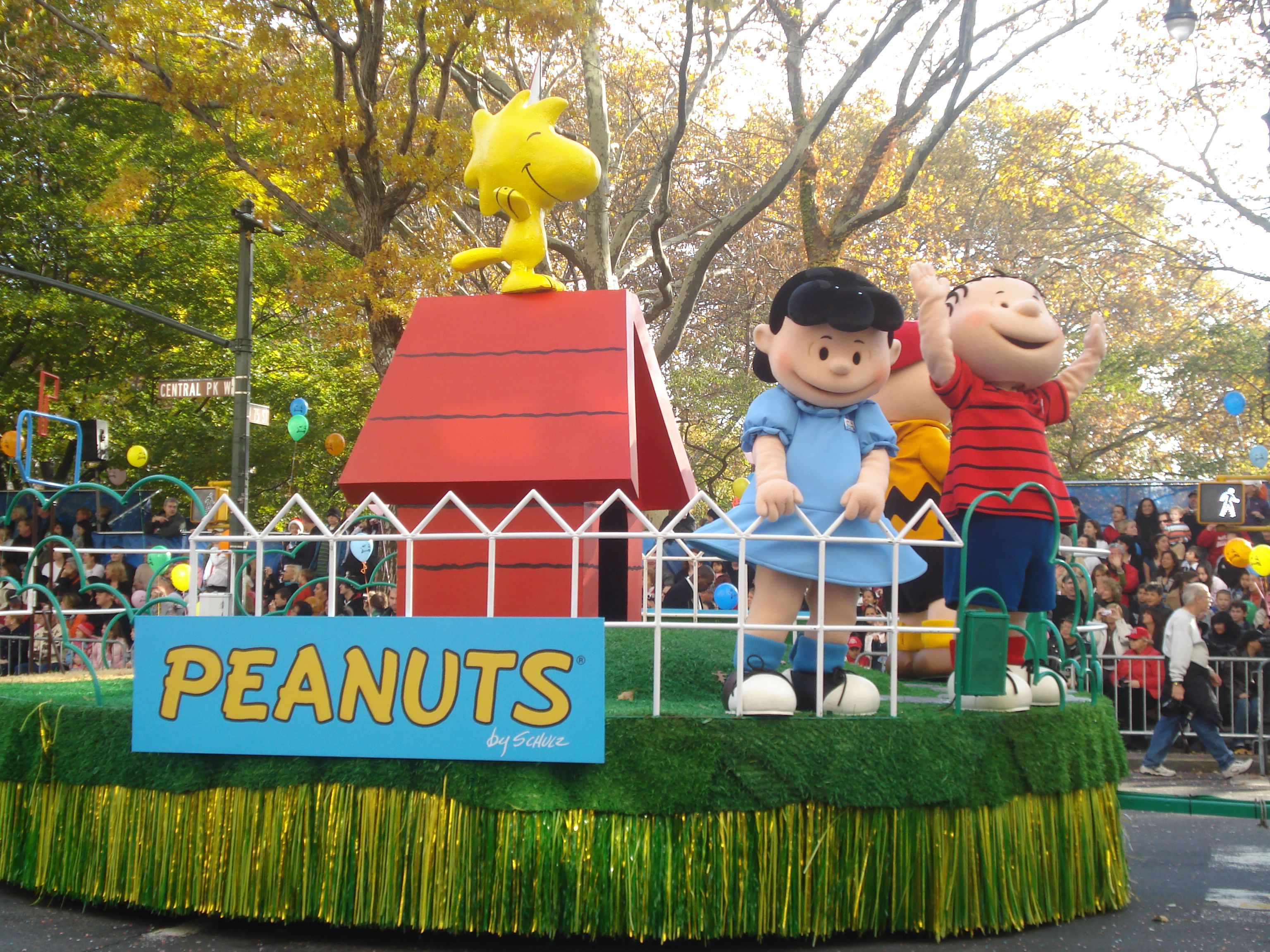
OK, back to Snoopy. There is simply no view like the one you get on the ground right on CPW. He (like all the other balloons) towers over you. And there is always a float with the other Peanut characters (see below for one year where they had a live beagle with them too!). Snoopy is the balloon character to have been in the most Macy’s parades, so I can’t be the only person obsessed . . .

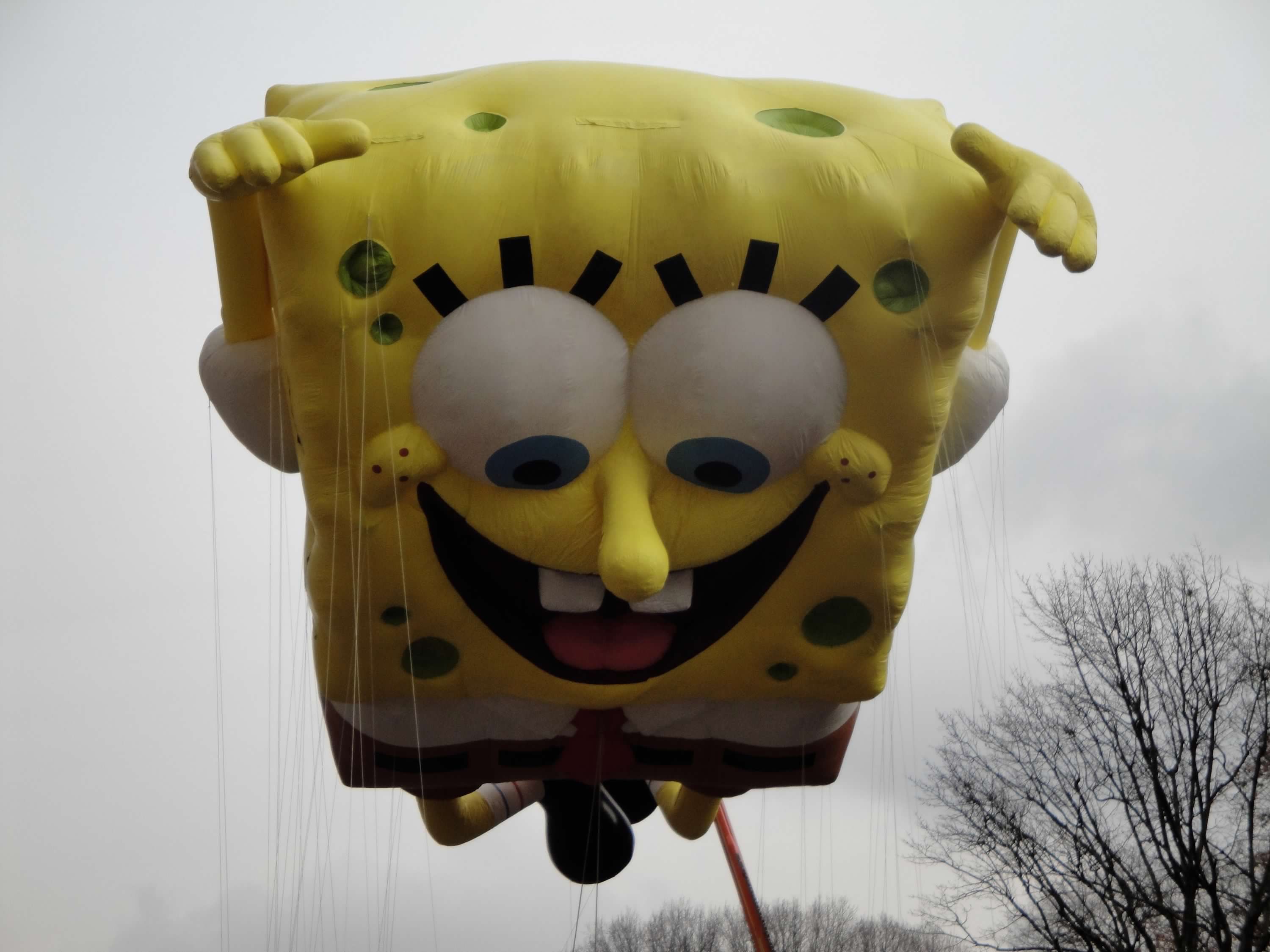
Here are some more photos of the balloons looming over you if you are standing at the front on Central Park West:

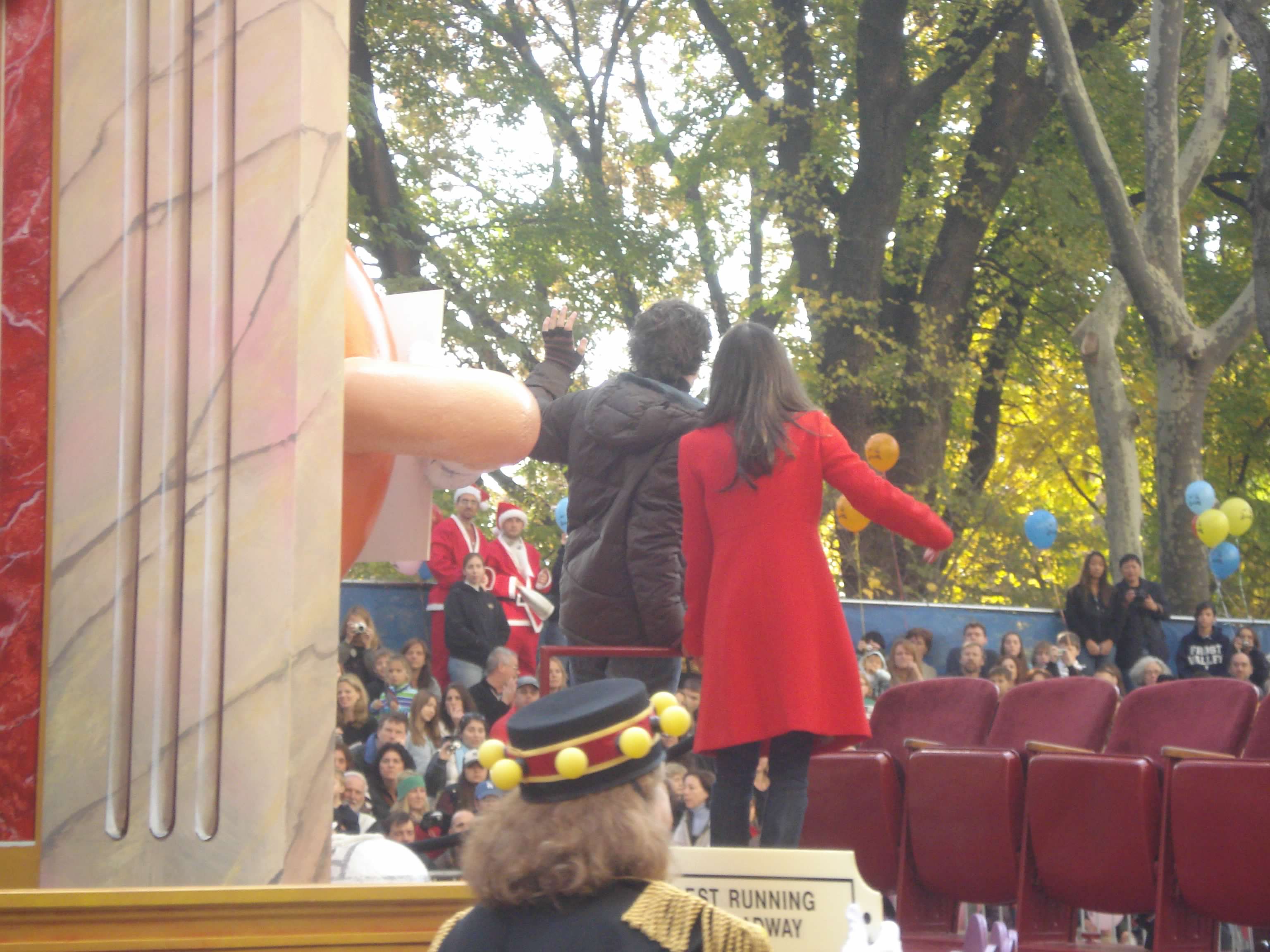
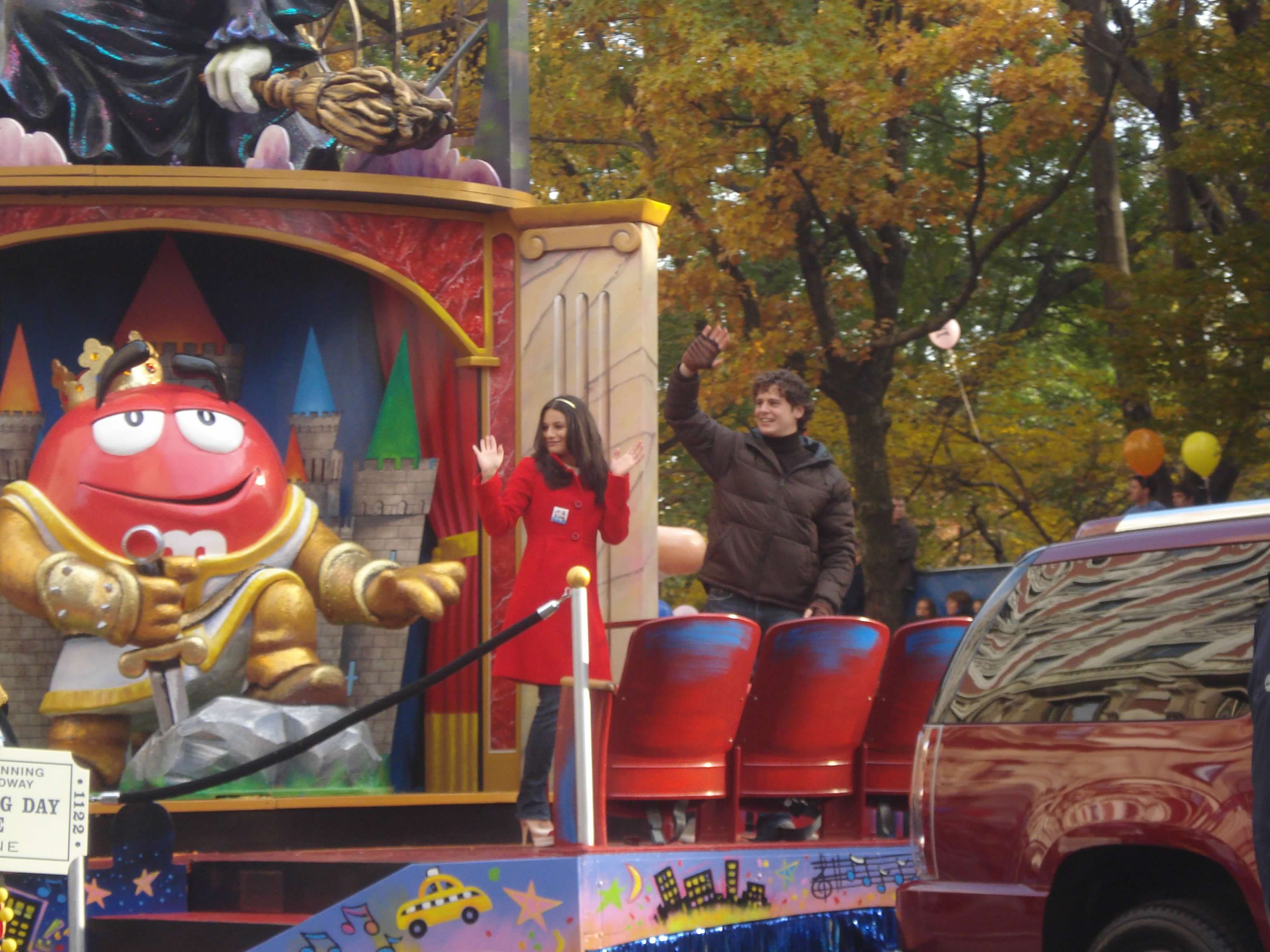
If you are right at the front, you can easily see the performers on the floats. They won’t sing (if they are going to at all) until they get to Macy’s but they will wave and it’s fun to see people. See below from 2007 when Jonathan Groff and Lea Michele were in Spring Awakening on Broadway and on a float, and for Corbin Bleu that same year.

I will say that the BEST way to see the parade is the hardest way – and I have only been fortunate enough to experience it this way once. This way is to have, or know someone with, an apartment with windows facing the parade route. When one of my daughters was in preschool, the grandparents of one of her classmates invited all the families from the class to their apartment on CPW to see the apartment and it was magical. If you have seen the movie Maestro, about Leonard Bernstein, you will have seen the balloons go right past the windows of the Bernstein apartment in the Dakota on Thanksgiving morning, and it is just that amazing to experience (as long as you aren’t having an argument as was happening in that scene). You also get to stay warm, protected from the elements, and eat and go to the bathroom when you need to. My dream is to have such an apartment but it hasn’t happened – yet.

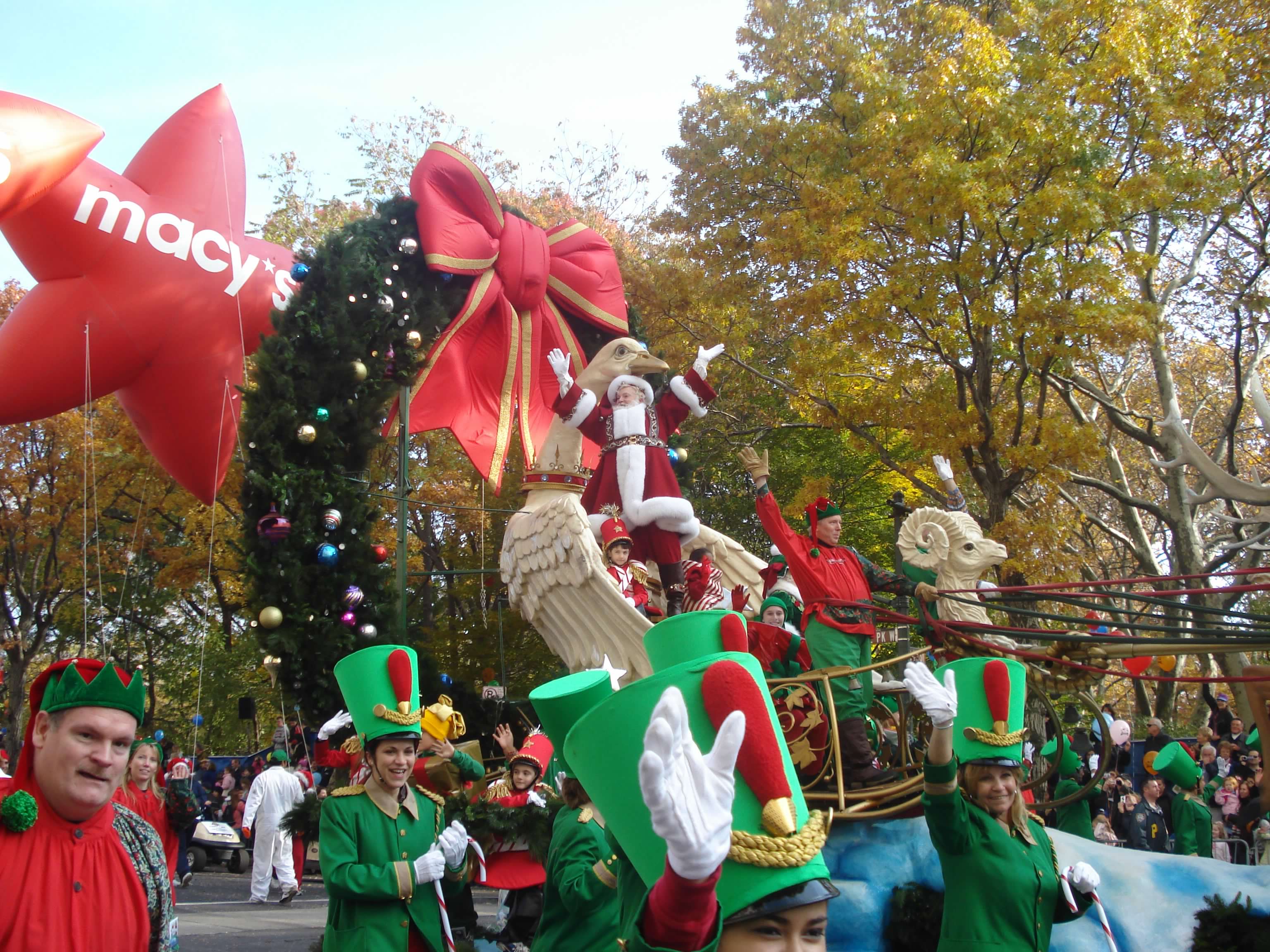
The end of the parade always heralds the beginning of the holiday season, with Santa (yes, the real one, since it’s Macy’s that is in Miracle on 34th Street after all) as the final float. I have blogged before about Santaland at Macy’s, and it opens the day after Thanksgiving so I guess in theory this is the big reveal before he gets to work meeting children at Macy’s.

Other ways to see the parade, that I have not experienced: know someone at Macy’s and get seats on the grandstand (that would be great!) or pay for a hotel room with a view of the parade (expensive to be sure but worth it if you can afford it, I guess).

A few facts about the parade, courtesy of Macy’s, that highlight what a big production this is:

-Years of the Macy’s Thanksgiving Day Parade – 98 (est. 1924)
-Years on NBC, official national broadcast partner – 72 (since 1952)
-Years of Al Roker as co-host- 30
-Featured character helium balloons – 17
-Heritage and novelty balloons – 15
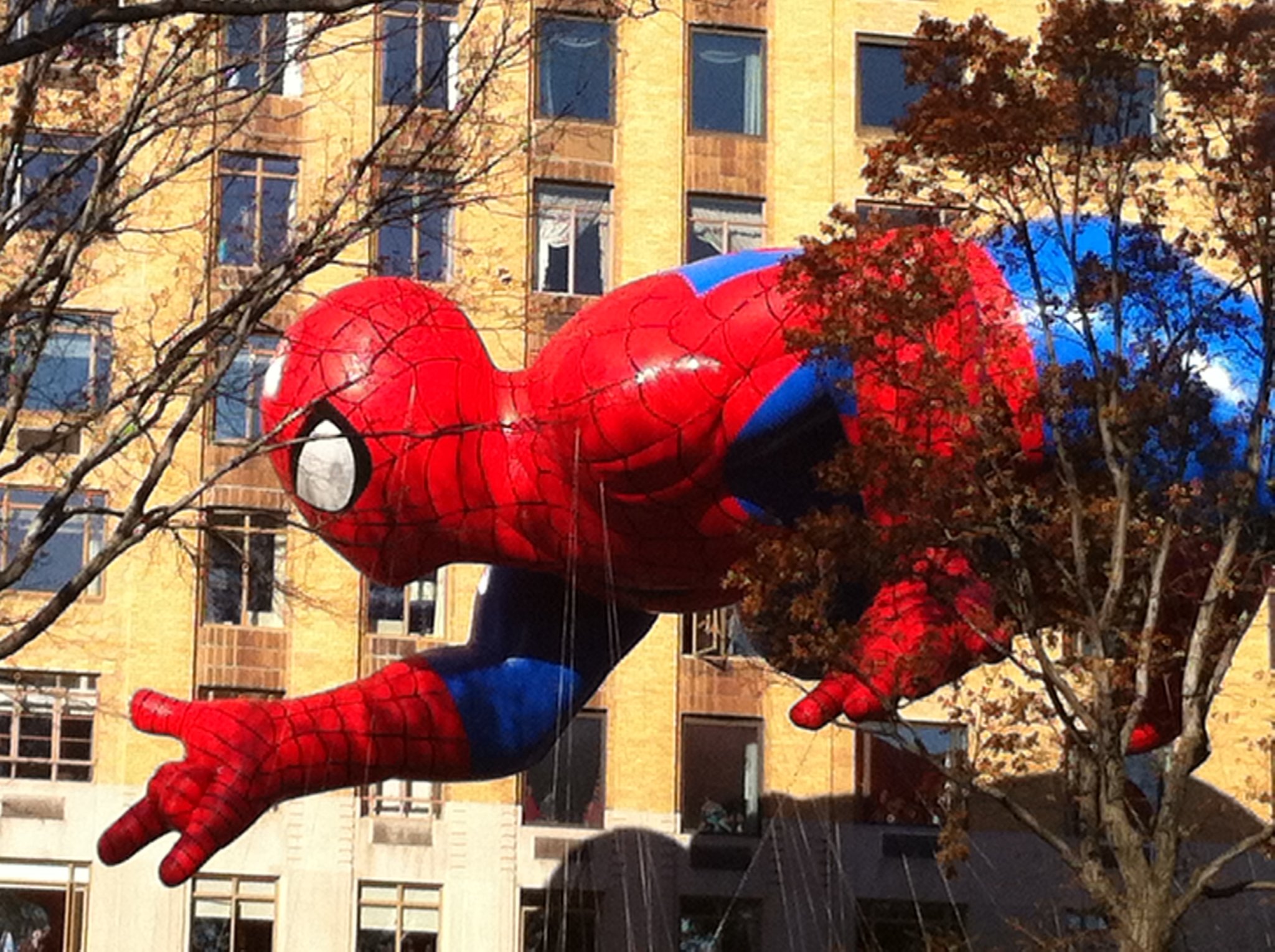
-Height of tallest balloon – 60 ft (Disney Minnie Mouse by The Walt Disney Company) and Length of longest balloon – 77.5ft (Spider-Man by Marvel)
-Width of widest balloon – 66.5 ft (Gabby by Universal Studios’ Dreamworks Animation)
-Gallons of Paint – 2,000
-Pounds of Glitter – 300
-Pounds of Confetti – 200
-Costumes – 4,500+

Apparently they get to work planning the next year’s parade the day after Thanksgiving – it’s a big production with a standard of excellence, and it shows. I recently also read that the ratings for the Macy’s parade now beat out the Academy Awards, and advertising costs are only slightly less. I’m a fan, and would say that if you are in NYC and get a chance to see it in person (however you choose to do it), take that opportunity! Maybe I’ll wave to you there next year from the windows of my new apartment on Central Park West . . .

Ice skating in NYC

Winter in New York City has its challenges – while not incessantly freezing cold or snowy like some other cities (hey, I lived in Chicago), it certainly can be. The wind amplifies as it whips around our skyscrapers, making wind chill a real trial some days. The days are shorter, and once the festive lights of the holiday season are over, a gloomy grey day can make you feel that you are enduring rather than exuberantly enjoying walking around the city bundled in your warmest parka, hat, and gloves (I recommend mittens!). However, when my sister lived in Vermont, she told me that there you just have to figure out a way to make your peace with winter, and people would take up cross-country skiing or other outdoor sports to get out and find a way to enjoy the season. I think that is true of NYC as well, and one thing that is fun to do – and with few exceptions, only available during the winter – is to go ice skating. While the iconic Rockefeller Center rink immediately comes to mind, there are many places to go ice skating in NYC. Let’s look into our options . . .

Rockefeller Center

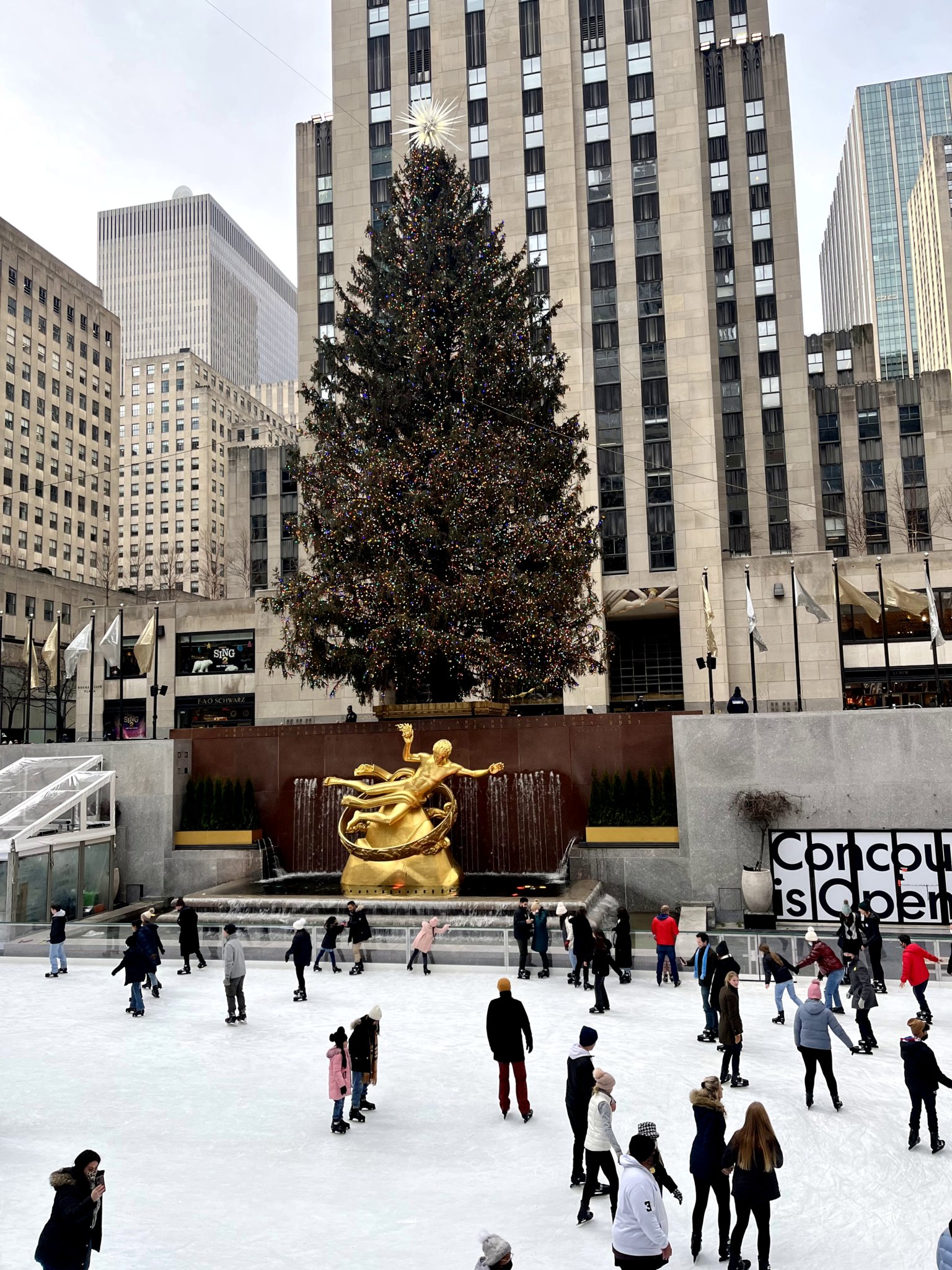
When the Rockefeller Center Christmas tree is up, it’s impossible to resist skating under it – at least once (the rink has capacity limitations, is small, and when the tree is up everyone has the same idea!). But keep in mind that the rink is open much longer than the tree is up (it opened October 21st in 2023 for this season, and will stay open until late March or early April, depending on weather). Cost for an adult to skate ranges from $21-79 (pricing is flexible and based on demand) without skate rental and for only 40-60 minutes (your time could be shorter than an hour if the Zamboni is used during your hour), so it’s not inexpensive. If you wanted to skate a lot, there is a season pass, starting at $250. It’s hard to beat this skating rink for photo opportunities (see a video I took here), but it’s not most locals’ first choice. You can find out more about the Rockefeller Center skating rink here.

Bryant Park

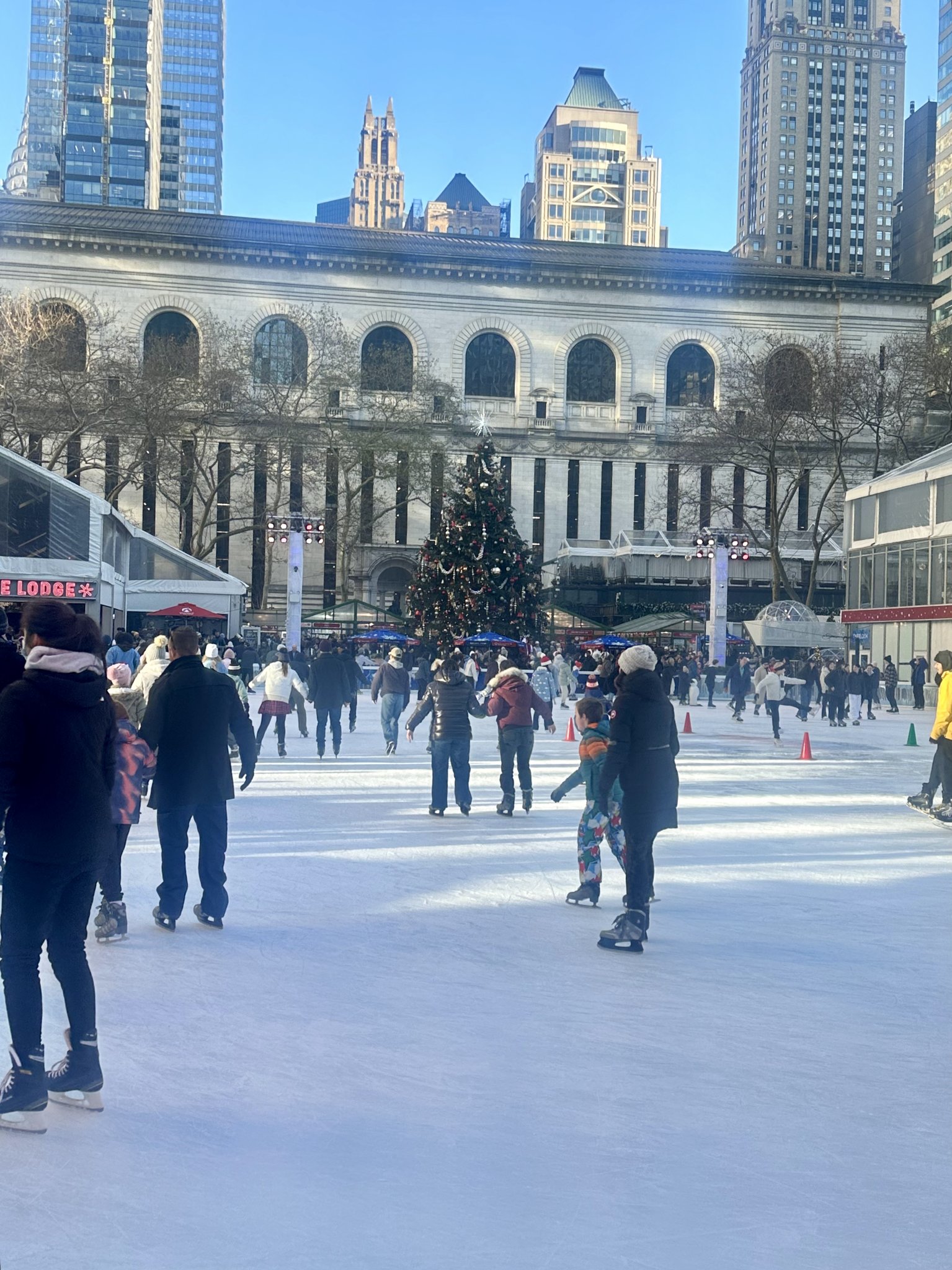
Not too far from Rockefeller Center, behind the iconic main branch of the New York Public Library, you can find the Bryant Park Winter Village. Skating here is FREE (this is not a misprint!), and you can reserve tickets (the reservations open up a week in advance). If you need to rent skates, they are available – if you have your own skates, there is no charge at all to skate here. See here for a video I took at the rink once when a skating performance surprised me. The Holiday Market here was recently voted the world’s best, and there are other fun things to do (rent a private igloo for dining, eat at the Lodge, have a drink at the L’OR Porch, even go curling!). Perhaps the most fun is BUMPER CARS ON ICE, where you sit in a big tube and basically slide around and bounce into others. Trust me, it is crazy fun. Bumper cars on ice is not free, but I think well worth it. Find out more about skating and other things to do at Bryant Park in the winter here.

Wollman Rink

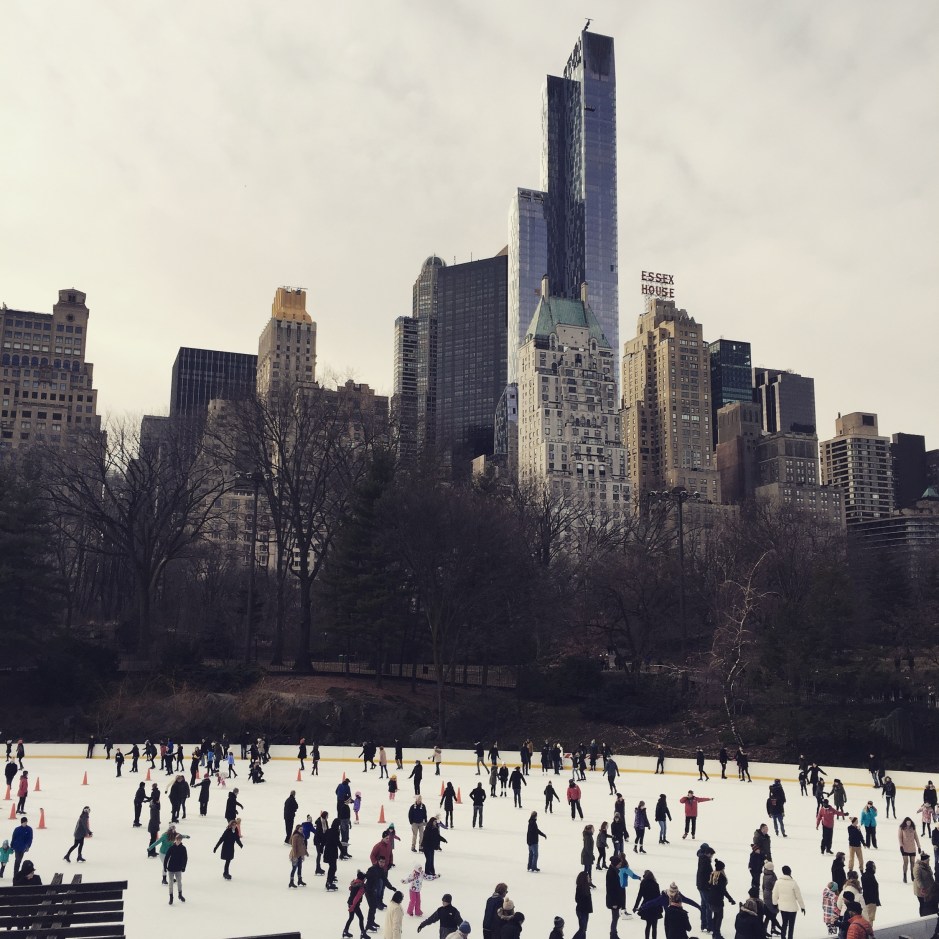
I will put my own bias out right away – I think ice skating at Wollman Rink, surrounded by Central Park and looking at the skyscrapers ringing the park is the most beautiful and enjoyable skating experience in NYC (see a video I took while walking past on Christmas Eve in 2023 here). Tickets can be reserved in advance (around $15) and they also have skate rentals available. Tip to New Yorkers with a library card: Culture Pass, with which you can get free admission to museums and such, often has a pass for four available during the week at no charge. Wollman Rink is more exposed than many of the other urban skating rinks, so check the weather before you go. Find out more about skating at Wollman Rink here.

The Rink at Brookfield Place

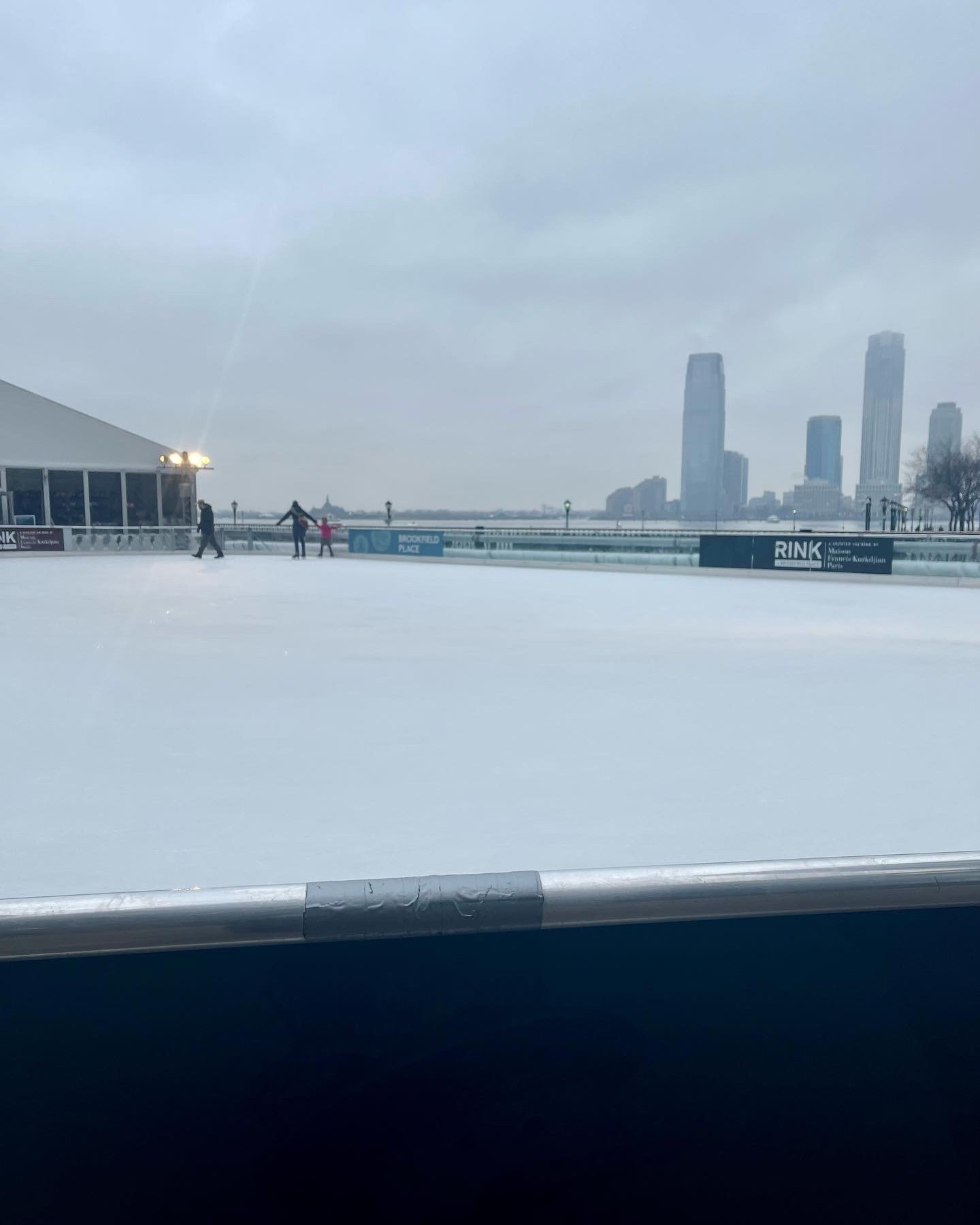
Brookfield Place, near One World Trade and Battery Park at the southern tip of Manhattan, has a nice rink that I find usually not too crowded. You have distant views of the Statue of Liberty and you are skating right next to the Hudson River. Pricing is reasonable – $15 weekdays and $17 weekends, with skate rentals only $5-7. Find out more about skating at Brookfield Place here.

Manhattan West

Manhattan West is a hidden gem – if you haven’t been to this area in Midtown near Hudson Yards, check it out. They have skating sessions mid-November through March, and the cost is about $20 (plus $5 for skate rental). Find out more about skating at Manhattan West here.

Glide at Brooklyn Bridge Park

There’s a new skating rink in NYC, and I really want to try it but haven’t yet! It’s called Glide, at Brooklyn Bridge Park right under the Brooklyn Bridge (one of my favorite pics from walking over the Brooklyn bridge is above), and is open until March 1. A skating session starts at $15, with skate rental at $5, and from what I can tell the views are incredible. Find out more about skating at Glide here.

Chelsea Piers Sky Rink

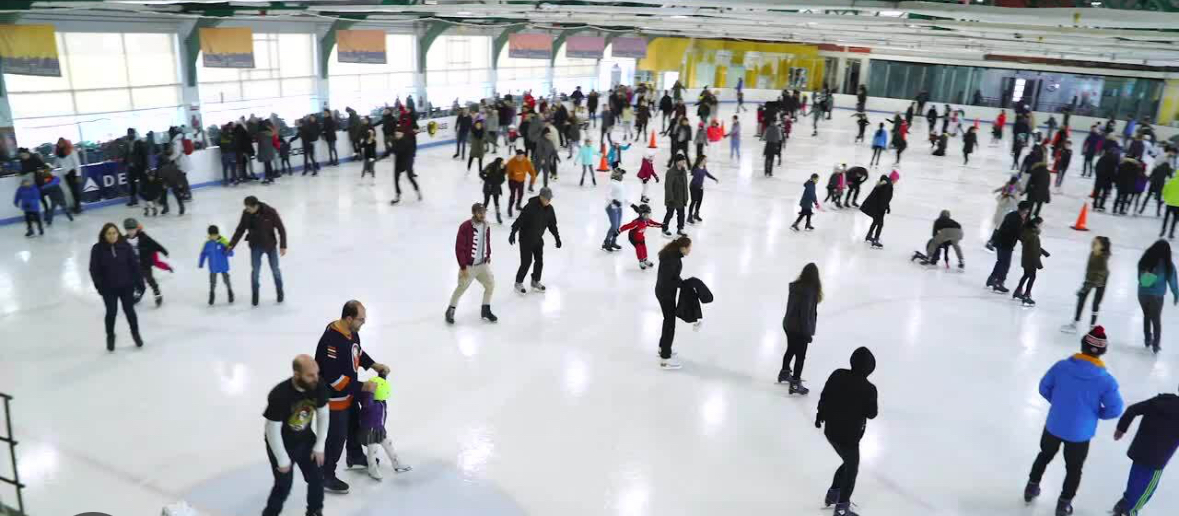
I mentioned before that most but not all ice skating rinks in NYC are outdoors, and the Sky Rink at Chelsea Piers is the big exception. Completely indoors, enormous (there are two full-sized rinks), and open year-round, this is where I took my daughters to learn to skate. Find out more about Chelsea Piers skating here.

And more!

I have not personally been to the following rinks but there is ice skating at least part of the year at Industry City in Brooklyn, Prospect Park, and Riverbank State Park.

One thing I was definitely reminded of when I summited Mount Kilimanjaro this summer in freezing cold and wind: there is no bad weather, only weather for which you have not dressed properly. (OK, not entirely true, it was still cold on Kili, and certainly at times my face has become completely numb by the cold and wind here in the city during a frigid snap – but still, proper gear makes all the difference!). So let’s get out and appreciate winter here in NYC . . . for after all, would we appreciate spring and cherry blossoms quite so much if we hadn’t just lived through our austere and challenging winter?

Central Park in Spring

A highlight of the current Lincoln Center Theatre production of Camelot comes at the beginning of the second act, when Lancelot (a magnificent Jordan Donica) sings “If ever I would leave you.” When walking through Central Park lately, I have been singing (inside my head, not aloud!):

If ever I would leave you
How could it be in springtime?
Knowing how in spring I’m bewitched by you so?

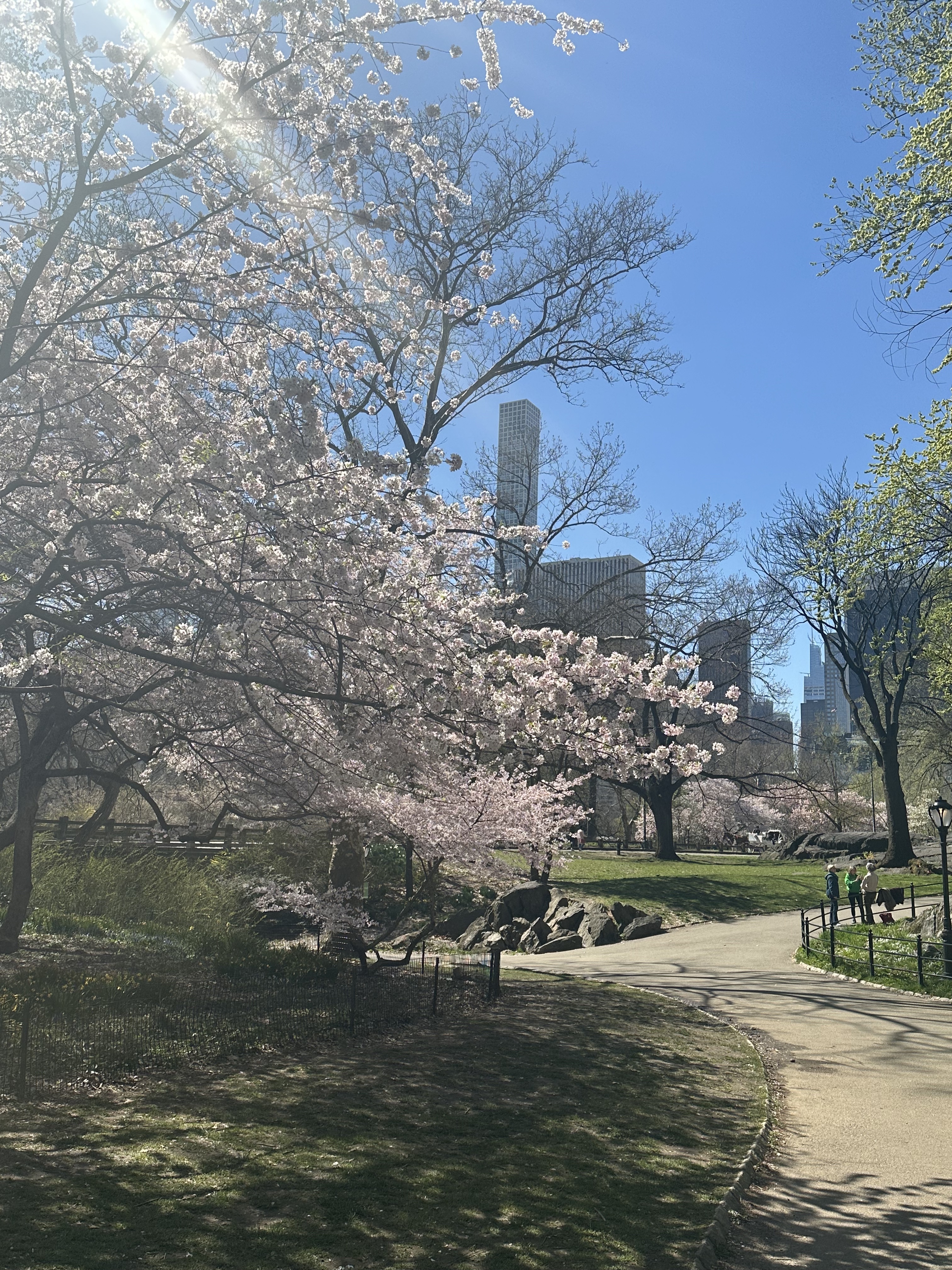
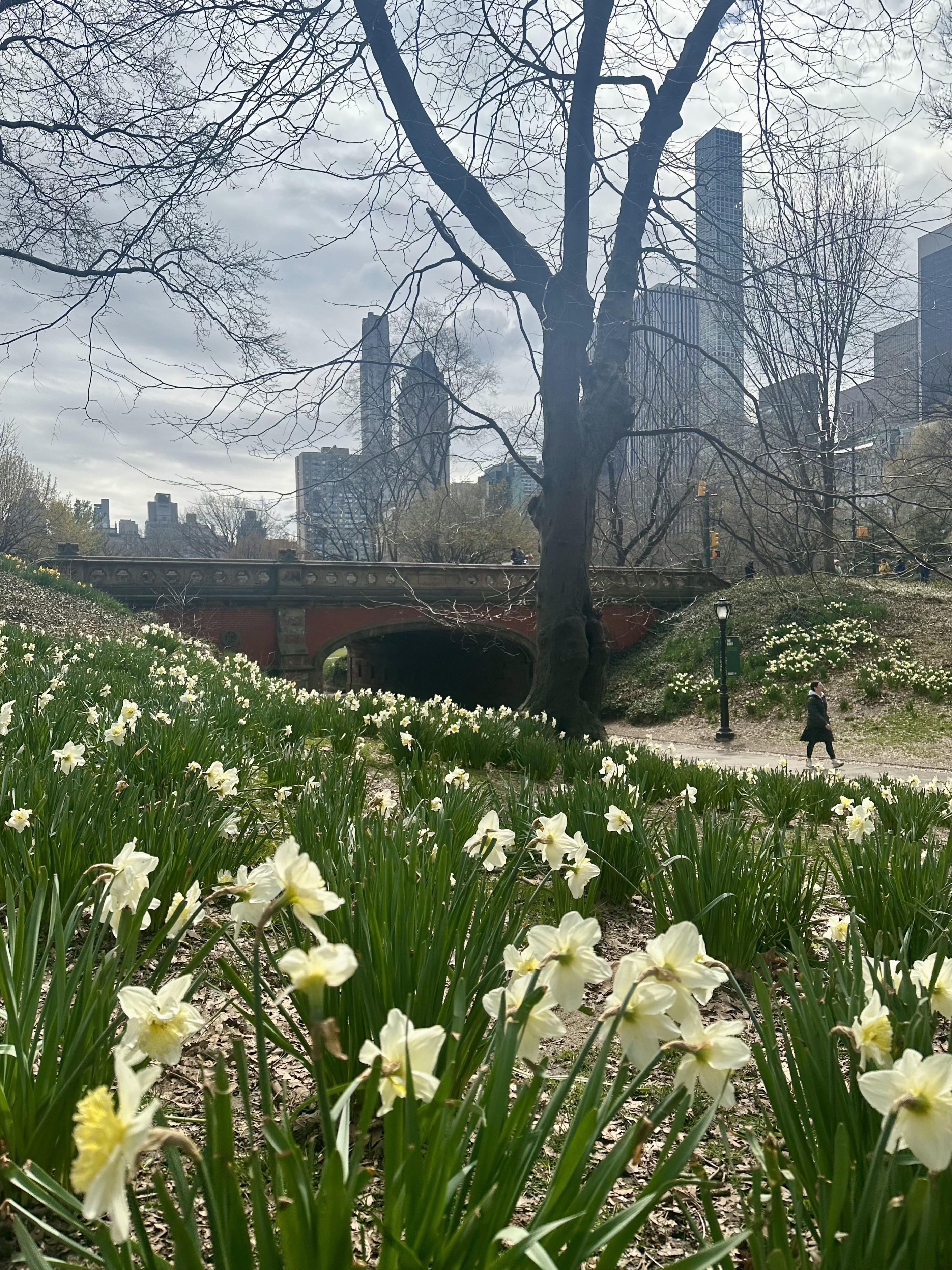
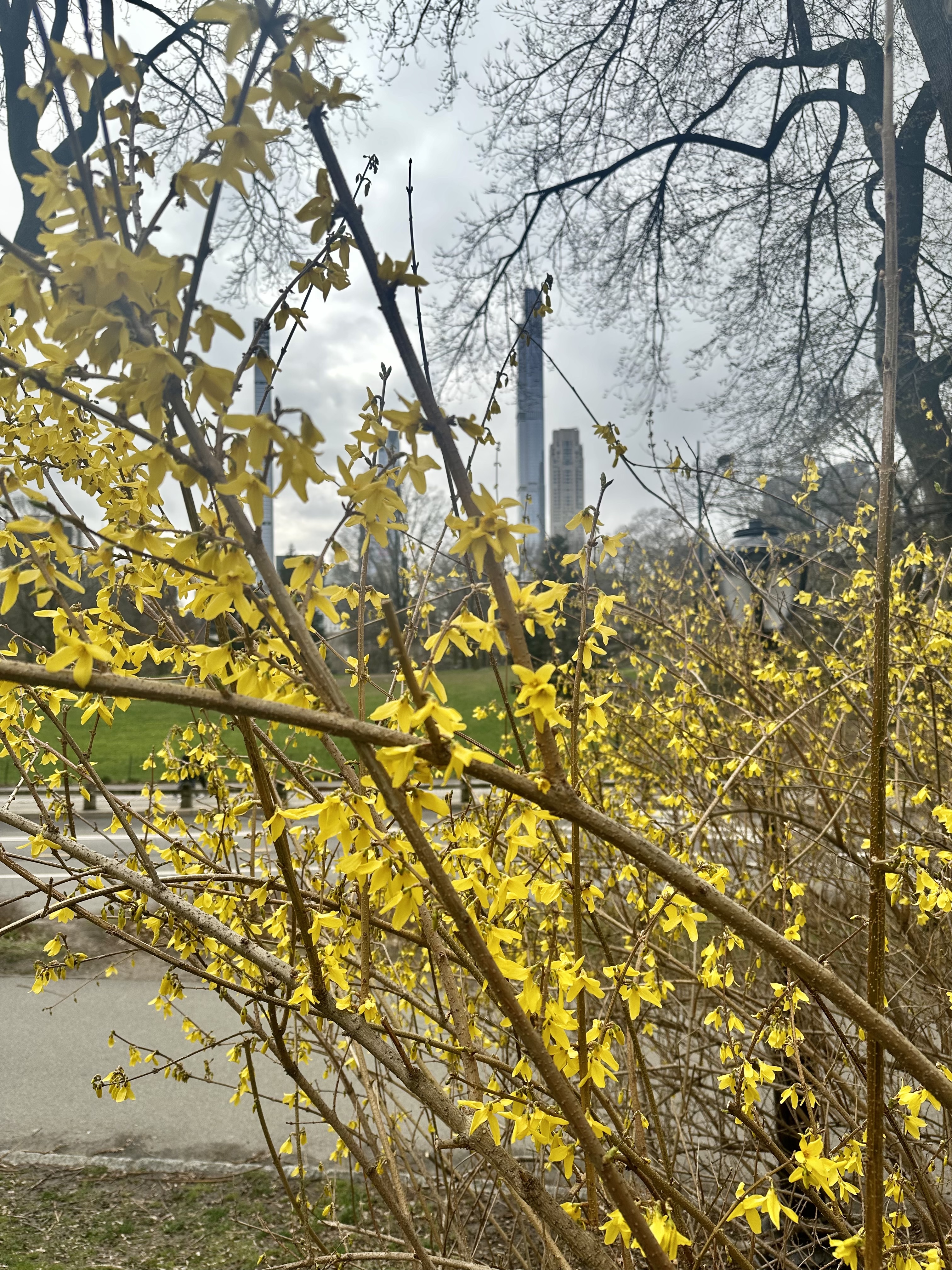
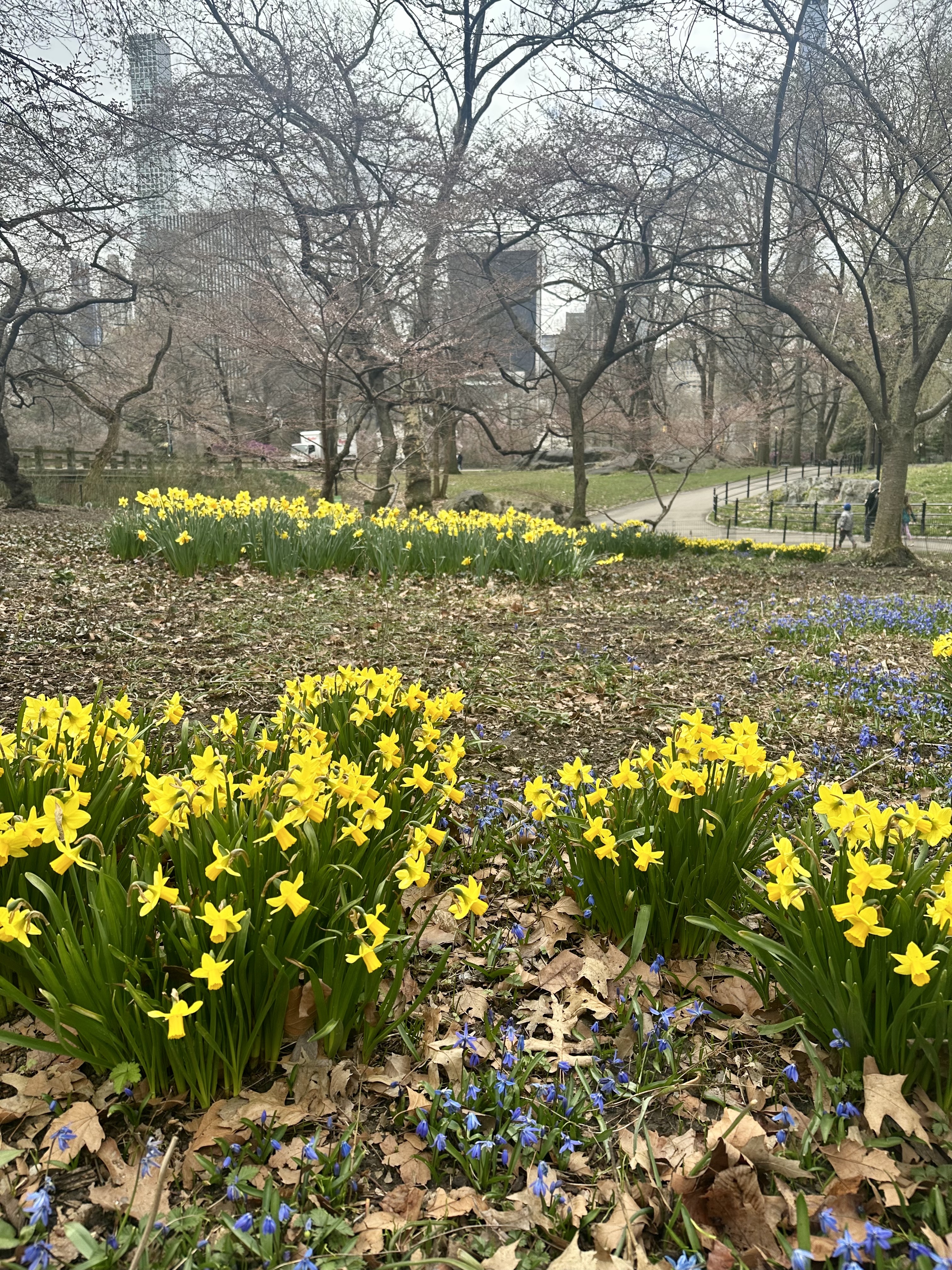
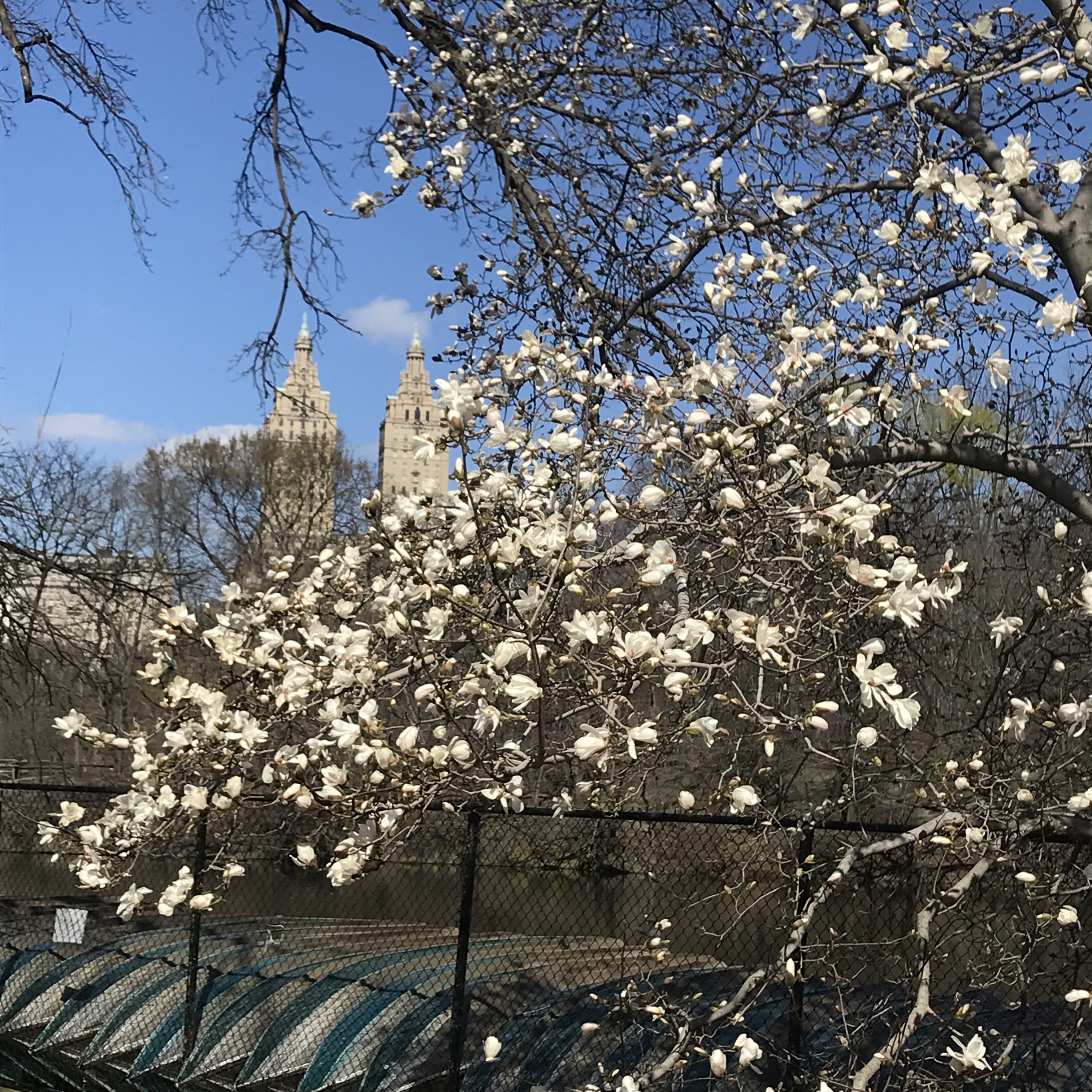
Spring in Central Park is bewitching, indeed. After the austere beauty of bare tree branches creating stark contrast with the greyish winter sky, against hard brown soil, it seems that in mid-March and through April into early May, the park becomes vibrant seemingly overnight with carpets of flowers and spectacular flowering trees. The juxtaposition of the glories of nature with the iconic Manhattan skyscrapers and stately apartment buildings is truly unique and makes Central Park a very special place to experience in spring.

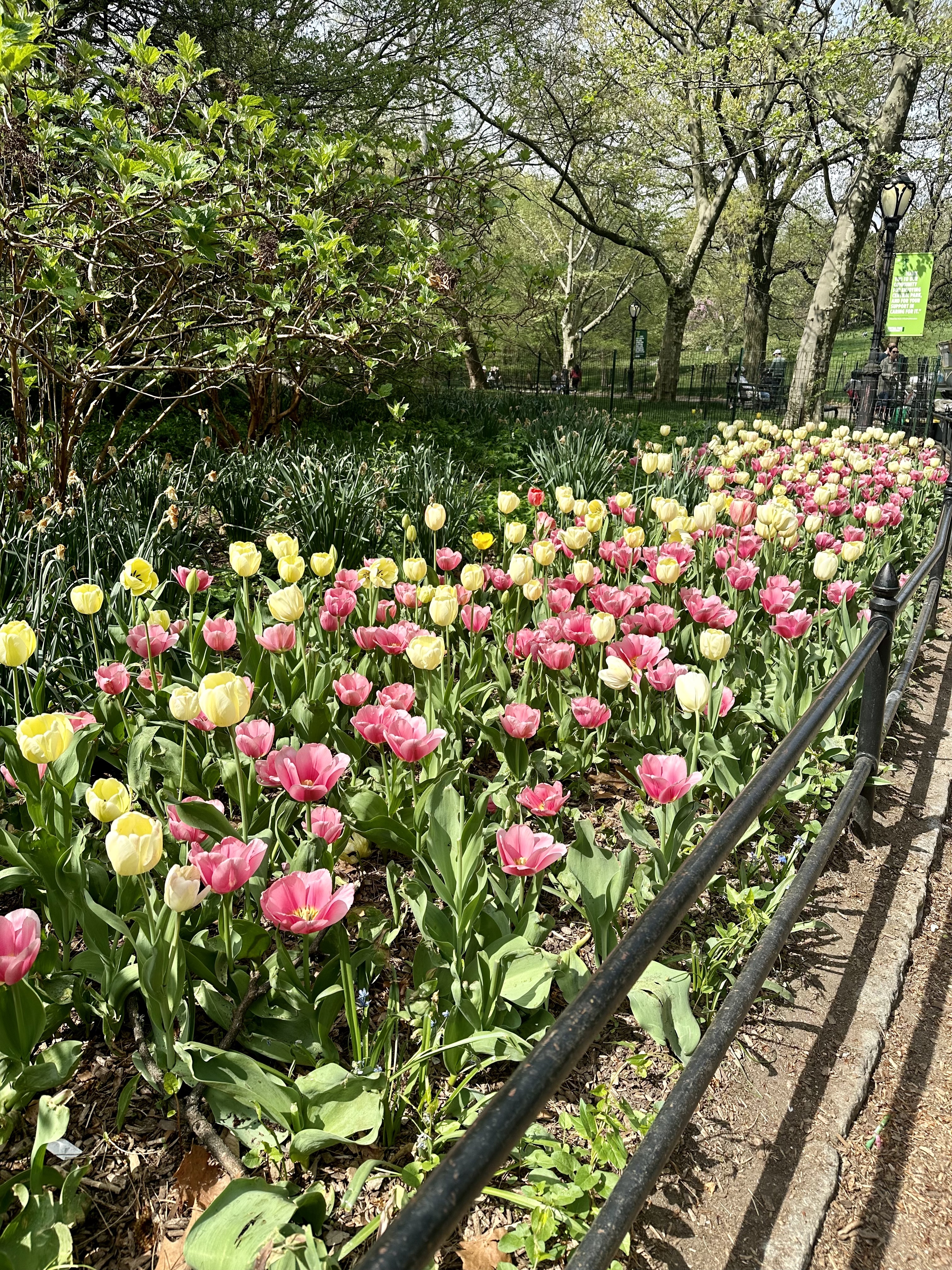
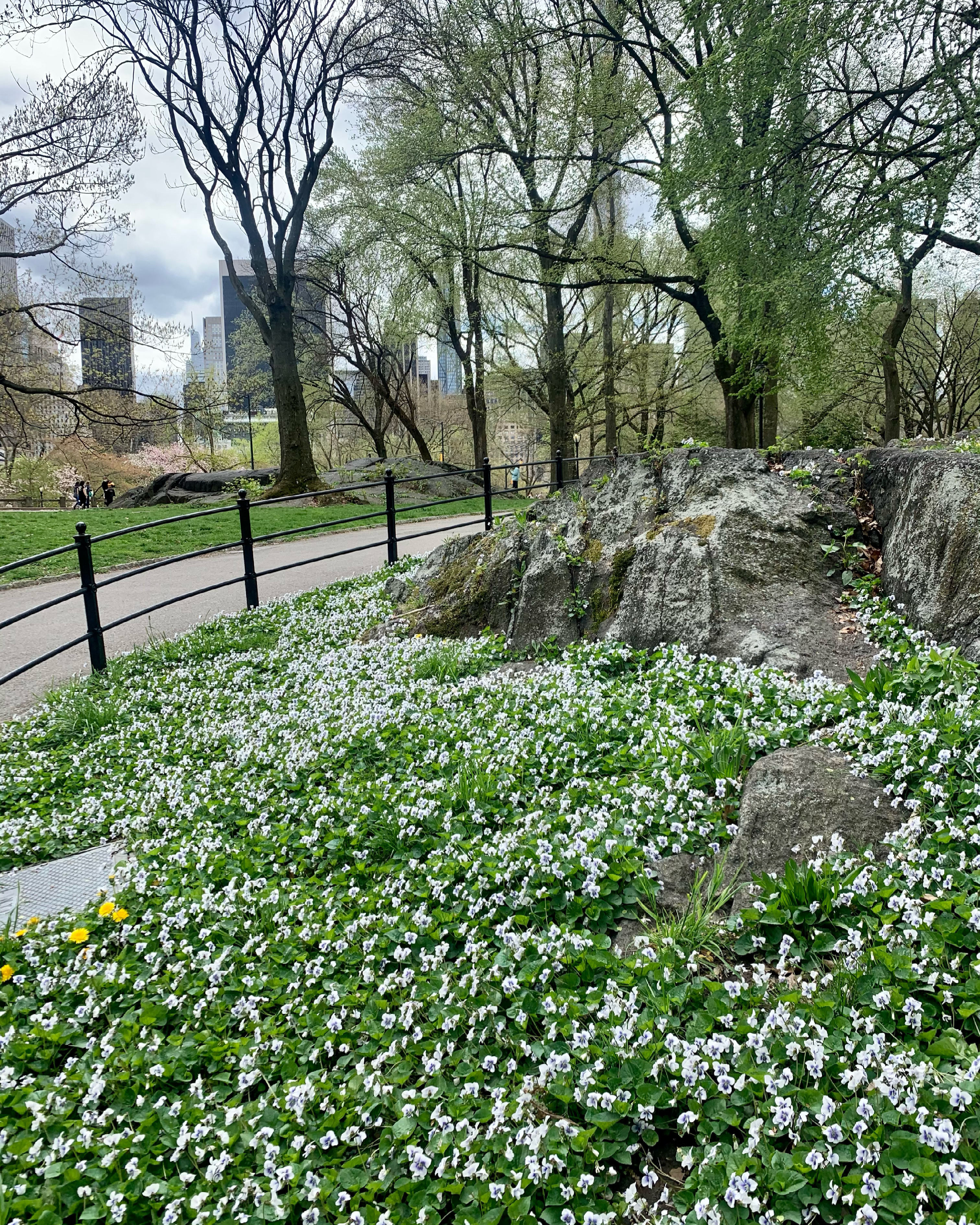
Flowers that grow from bulbs show up first – generally cheery daffodils are the harbinger of the spring blooming, followed later by tulips. Later you can find black-eyed Susans, violets, and bluebells.

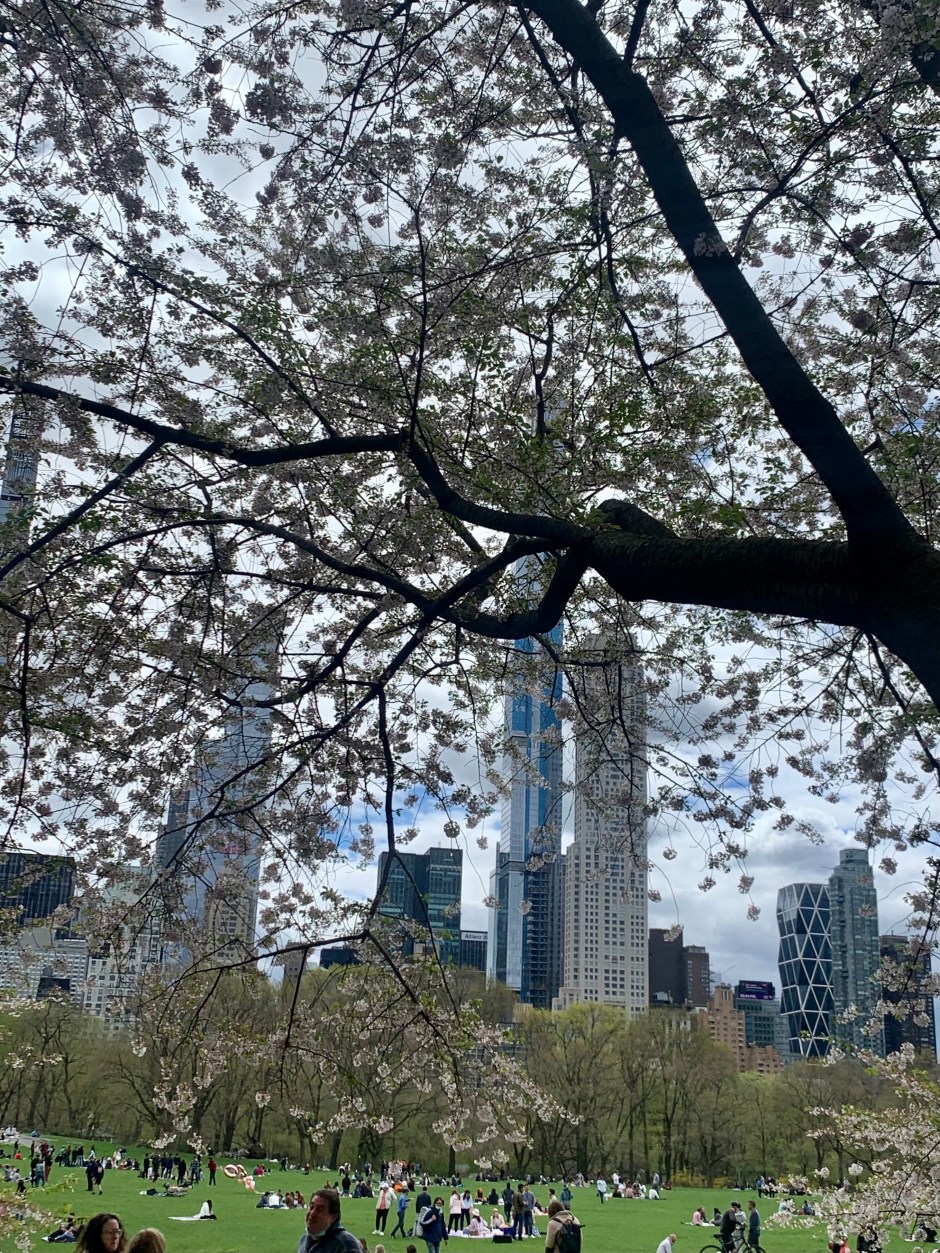
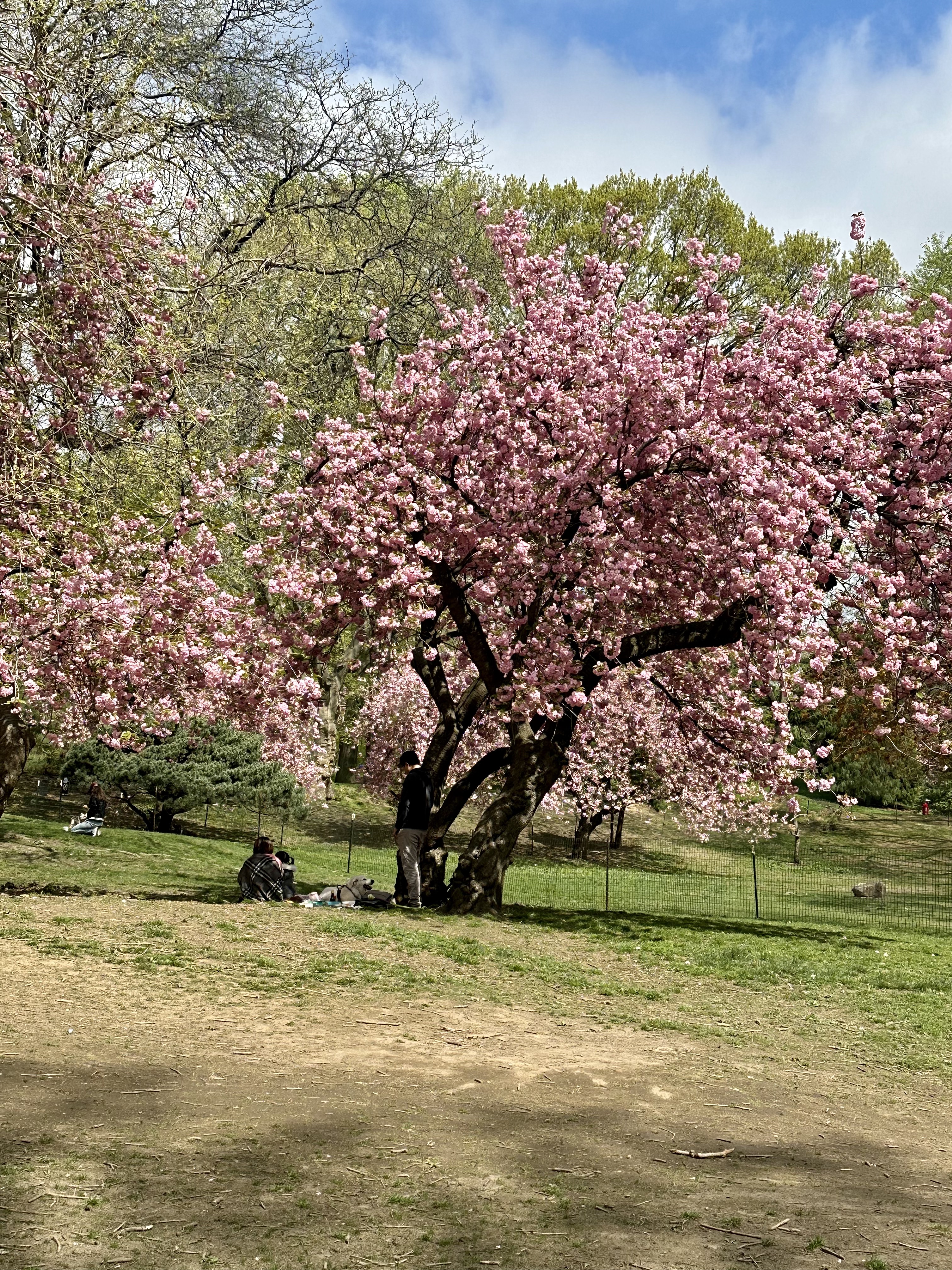
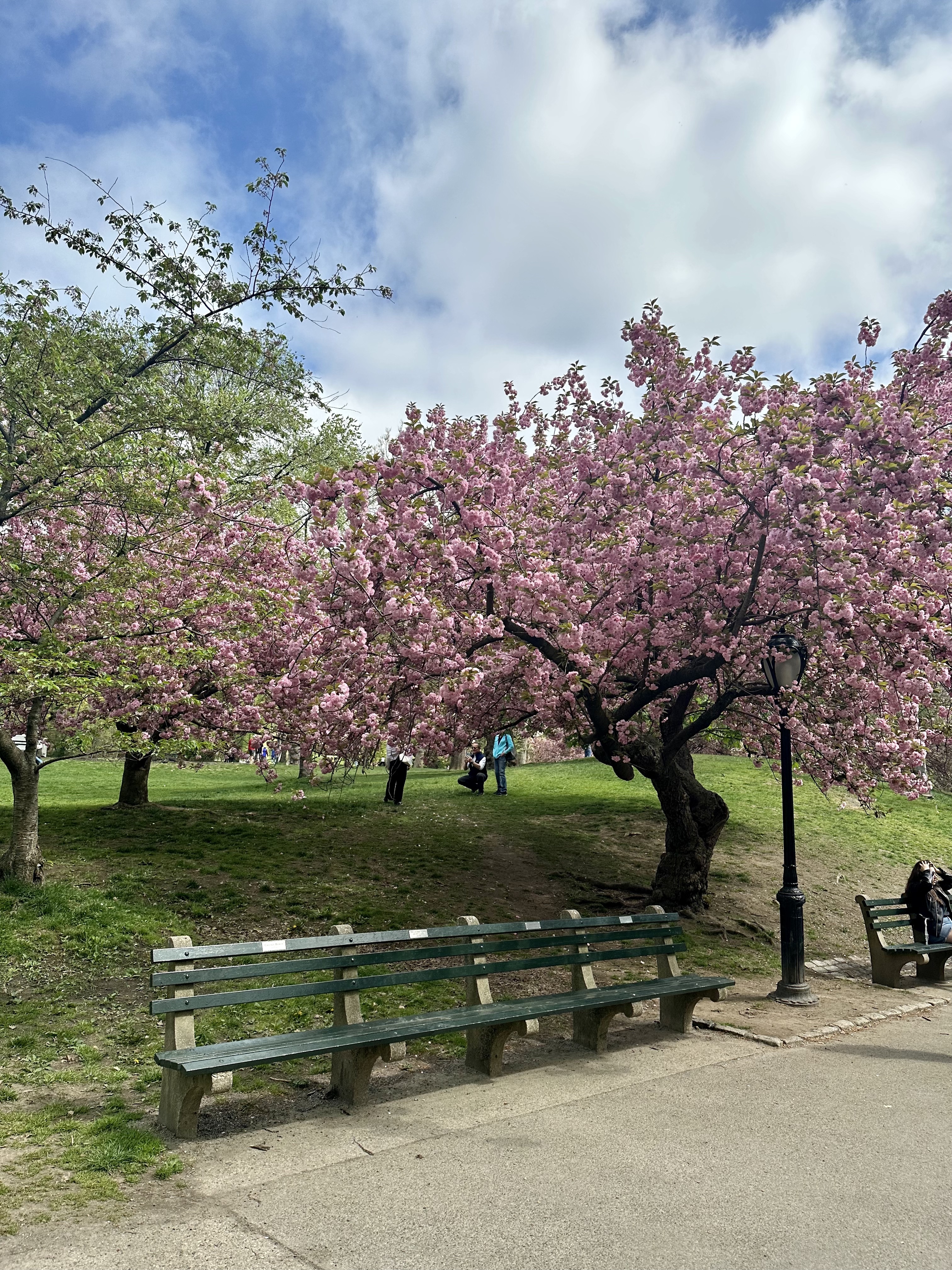
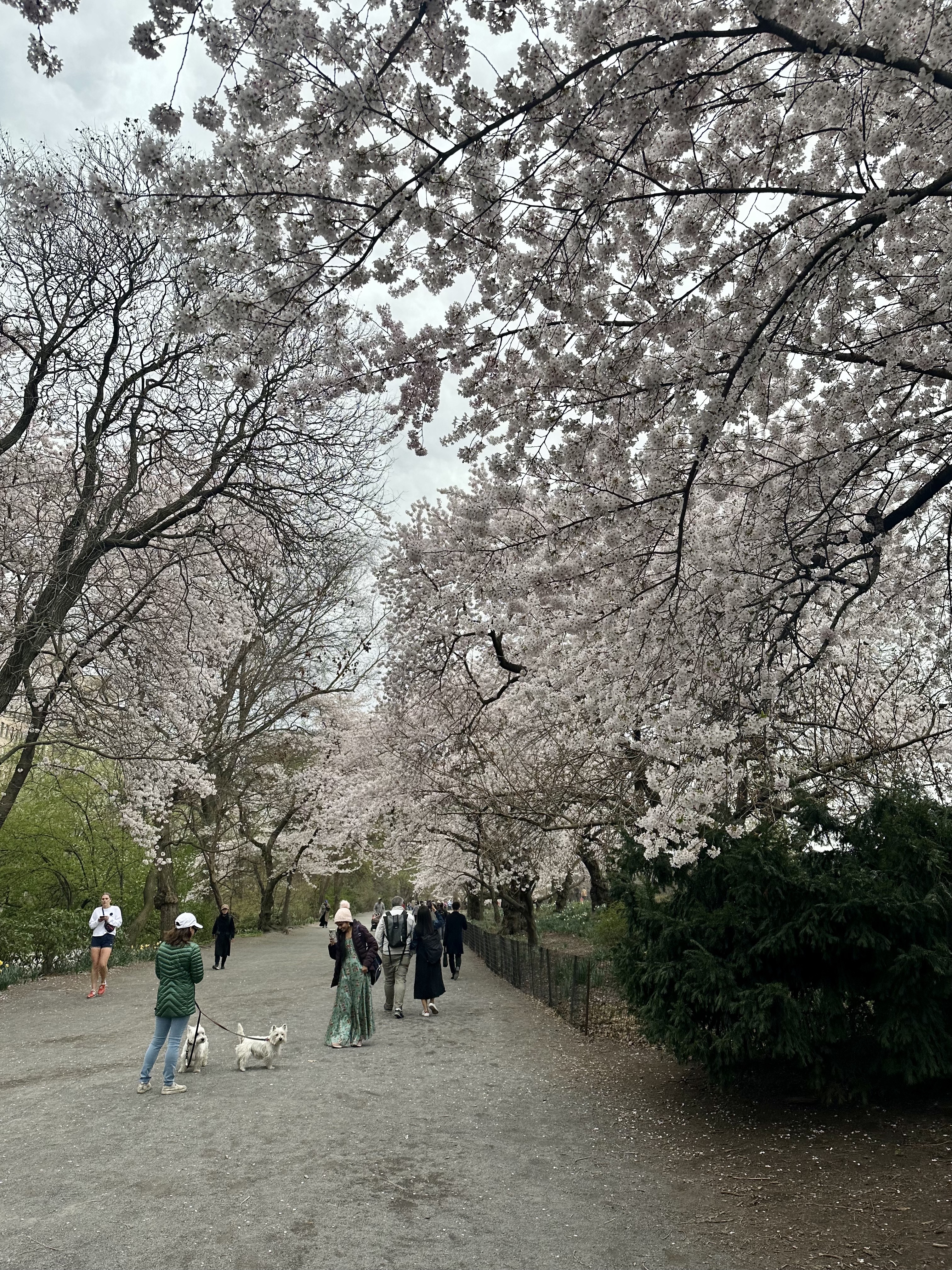
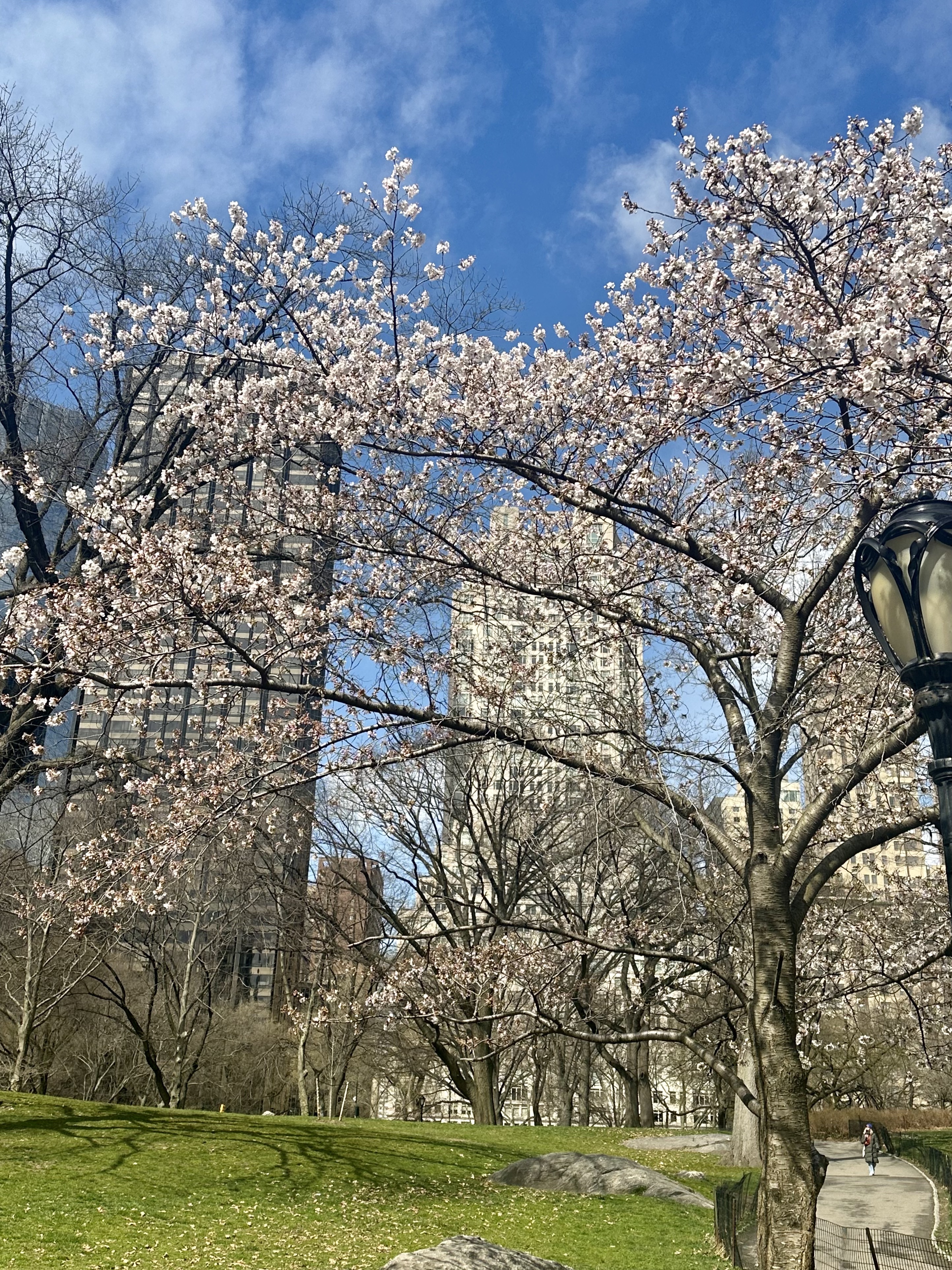
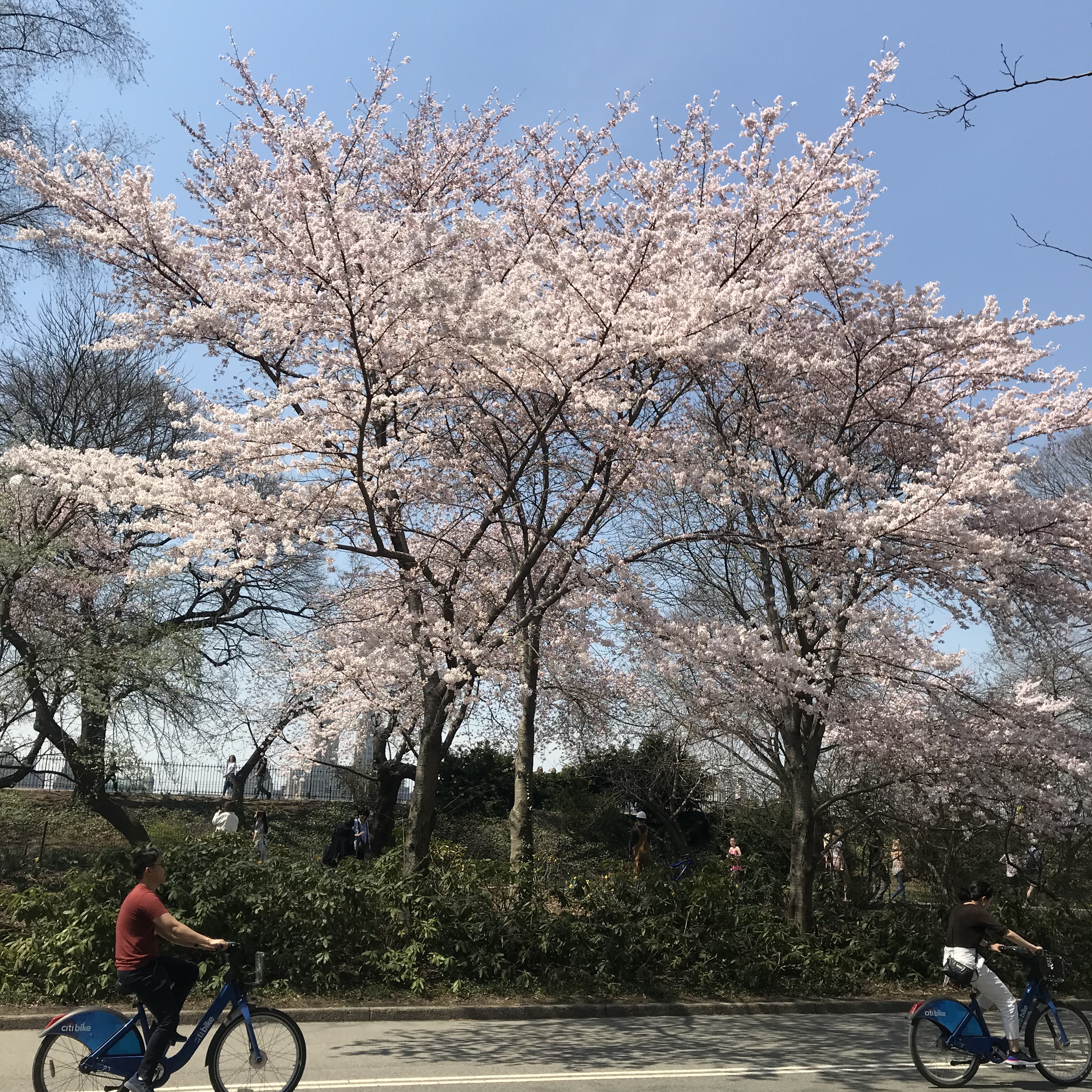
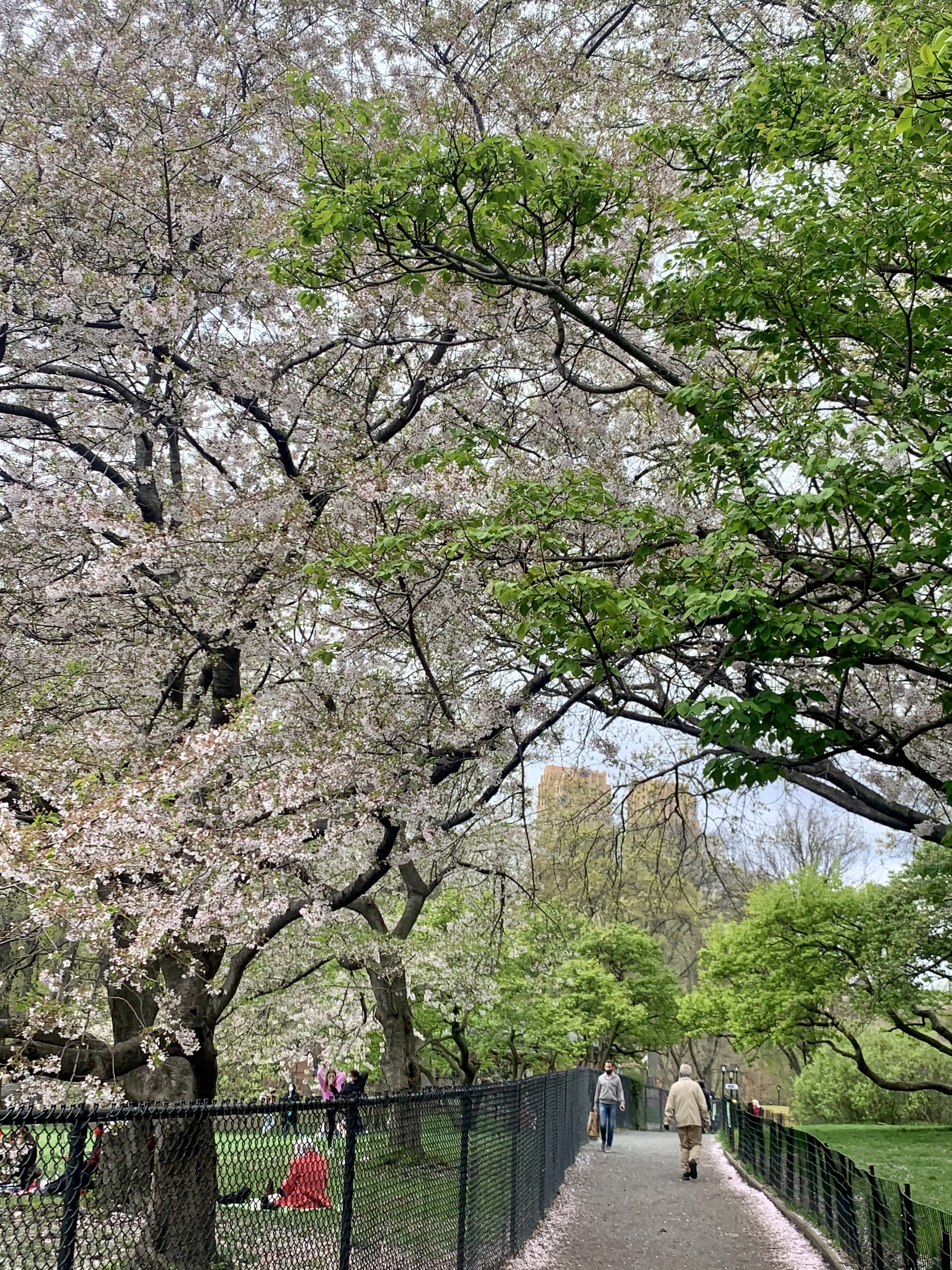
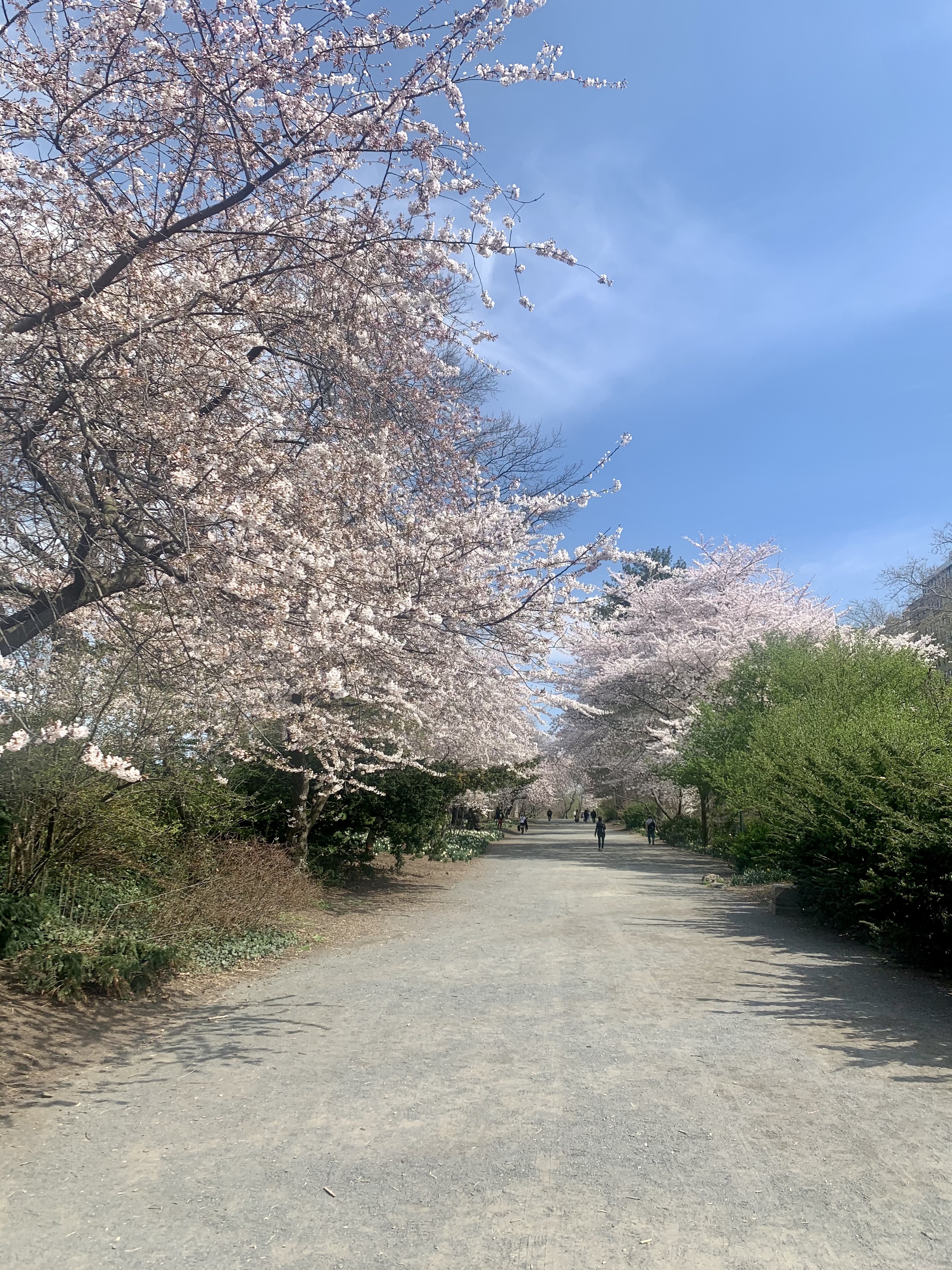
Cherry blossom season is famous in Japan and in Washington DC, and there are terrific cherry blossoms in both the Bronx and Brooklyn Botanical Gardens. But Central Park is underrated, I think – cherry blossom season in the park is unforgettable! Most of the cherry trees in the park were a gift from Japan in the early 1900s, and there are three main types: Okame, Yoshino, and Kwanzan. For instance, look for Kwanzan on the east side of the Reservoir, Yoshino near Pilgrim Hill on the east side near 73rd Street, and Okame on the west side of the Reservoir. Okame are the first to bloom and are deep pink. Yoshino bloom next and are so pale they are almost white (I have been walking beneath these when the blossoms are being blown off by the wind and it looks like you are in a warm weather blizzard!). Kwanzan bloom latest and are thicker clusters of bright pink. The timing varies each year depending on the temperature and precipitation, but once a tree has bloomed, the blooms are only on the tree for 7-10 days (and can come off all at once if there is a rainstorm or high winds). The transience of this beauty makes the experience of being around it even more magical and meaningful. When the cherry blossoms first begin to bloom, the branches of most trees are still bare, but by the time the last of the cherry blossoms fall, the park has greened with pale new leaves and bright spring grass everywhere you look.

Most years there is little or no overlap between the timeline of the three types of cherry blossoms, so use this as a general guide:

Okame Cherry Blossom Dates: Mid March (most already gone as I post this)

Yoshino Cherry Blossom Dates: Beginning / Mid April (ending now)

Kwanzan Cherry Blossom Dates: End of April / Early May (coming soon)

To see a few videos I have posted of cherry blossoms in the Park, check out this one, this one just behind the Met Museum, or this one next to the Reservoir. Also, for a more formal garden experience, the Central Park Conservatory Garden at Fifth between 104th and 106th Streets is particularly stunning in spring.

If it sounds like spring is my favorite season in Central Park, it is – at least right now! On a sultry summer evening coming back from Shakespeare in the Park, a spectacular autumn day with the fall foliage ablaze, or after a gorgeous fresh winter snowfall, those seasons will then be my favorites. As the song eventually decides, I agree that in my love for Central Park:

Oh, no! Not in springtime!
Summer, winter or fall!
No, never could I leave you at all!

It’s terrace season!

IMG_0936
Gorgeous view of midtown Manhattan from a private rooftop terrace on the Upper West Side

I have recently been working with several buyers who either require private outdoor space, or have been lucky enough to find it included in an apartment they love for other reasons. Spring and summer are definitely “terrace season,” as outdoor space takes on a special appeal on sunny, warm days. In fact, one buyer I was working with lost out in a bidding war on an apartment with a large terrace directly facing Central Park, after months of little interest while it was listing during the winter. The listing broker even told me that we would have definitely gotten the apartment if we had been bidding the same amount back in the cold and gloomy months of January and February, but in late March/early April, the same apartment had a much broader appeal.

IMG_0847
A peek into a Beekman Place private terrace from a terrace at Southgate

Other buyers of mine, while not looking specifically for an apartment with outdoor space, found one with two large terraces, one with East River views, and fell in love. I have written before about the value of a view of nature from an apartment, as well as the value of a city view, and those intangible emotional benefits are heightened when the view is not contained behind glass, but rather experienced while also taking in the information obtained from other senses. To be on a terrace and seeing the East River, while also feeling a warm breeze, smelling the flowers you have placed in planters, and hearing the sounds of the city, is to be immersed in the experience.

IMG_0841
Ready for an al fresco dining experience in midtown Manhattan

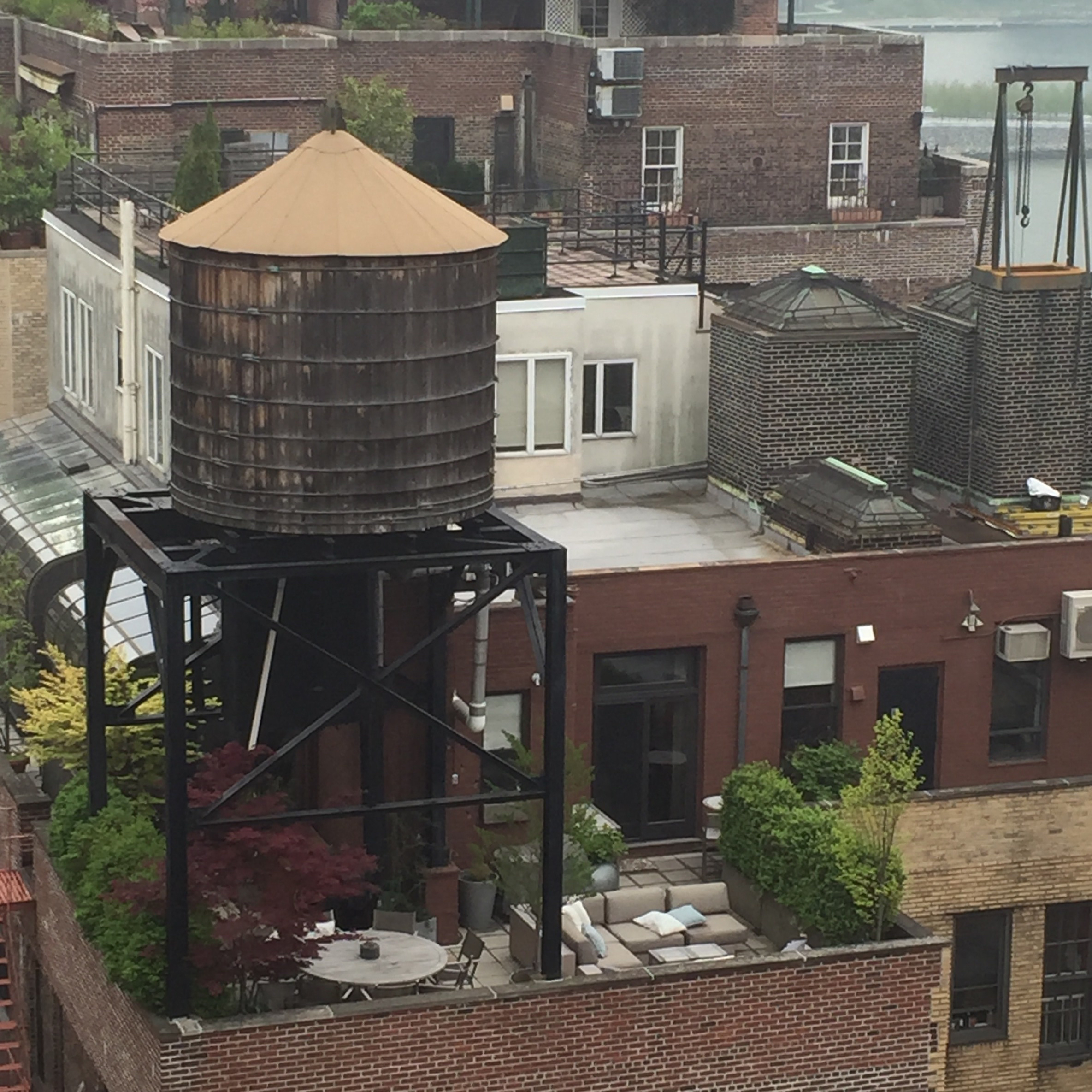
There are multiple types of outdoor space, and some people have strong preferences for one type over the other, while others just want any opportunity to experience the outdoors from within their home. The least versatile is a Juliet balcony – enough to step outside and check the temperature or take in a few deep breaths of the summer air after a storm, but not enough to even place a chair. Larger than that are balconies, commonly boxy squares in postwar apartments, often with enough space for a few chairs and a table. The larger outdoor spaces tend to be true terraces (outdoor space with the building underneath it instead of something jutting from the building) or private gardens. Gardens tend to be most common in townhouses, or in the garden level apartments in converted townhomes or brownstones. Garden level apartments have the disadvantage of not being the sunniest apartments, with some exceptions, but for people who like the idea of children or pets playing in a ground-level garden, they can be highly valued. Large terraces are perhaps the most prized outdoor spaces, and relatively rare. A terrace with an iconic view – of Central Park, of a river, or a spectacular city view – can greatly increase the value of an apartment.

IMG_0846
A look at several of the terraces in the Beekman area with a view of the East River

So how much does outdoor space affect the value of an apartment, if you have one – or how much more do you have to pay to get a place if outdoor space is a priority to you? As with everything else in NYC real estate, it depends upon so many variables – the location, the apartment itself, whether the building is a condo or a coop, walk-up or elevator, etc., etc. However, the value of outdoor space is often about 25-50% of the apartment’s price per square foot – higher if the terrace has a great view or is attached to a spectacular apartment, lower if it is on a lower floor or attached to a small apartment.

IMG_0676
Even on an overcast day, it’s a killer view from this private terrace on Central Park South

The most valuable outdoor space is the very one my buyer lost out on this spring – unobstructed views of Central Park (enough to increase the value of an apartment by 50% even from park-facing windows with no outdoor space) from a large terrace. Is outdoor space worth such an increase in price? As with so many other aspects of NYC real estate, that is up to you – for some, they may feel that they wouldn’t really use outdoor space and don’t want to spend the extra money, while for others, outdoor space is the most important aspect of their home search and they won’t consider a place without it. What I have learned this spring, though, is that timing is extremely important. If I am representing a seller who has an apartment with outdoor space, I would strongly recommend trying to list during the warm weather months if at all possible. Conversely, if looking to purchase an apartment with outdoor space, jumping on something during the winter can lead to a relative bargain compared to getting into a bidding war when the outdoor space is showing at its best. If you are interested in buying a home in NYC with outdoor space, or if you have one to sell, feel free to contact me (with no obligation) at julie.brannan@compass.com.

Lincoln Square

IMG_0118

Just as the larger neighborhood known as the Upper East Side has many smaller neighborhoods within it, such as Yorkville, Carnegie Hill, Lenox Hill (yes, lots of hills on the UES!), the Upper West Side – on the opposite side of Central Park – also has subdivisions. Recently I have had two customers interested in looking for homes in the area of the UWS known as Lincoln Square, the southeast corner of the neighborhood – roughly bounded by Central Park West and Amsterdam Avenue to the east and west, and 59th to 66th Streets to the south and north.  Interestingly enough, the area was characterized in 1940 as the “worst slum in New York City” by the New York Housing Authority, and the urban renewal efforts in the 1950’s and 1960’s led to the development of the Lincoln Center for the Performing Arts. This anchored the residential redevelopment of the area into the vibrant neighborhood it is now.

As I have written before, my favorite way to experience a neighborhood is by taking an unplanned walk within the area (a dérive), so on an overcast but not terribly cold February day, I started at Columbus Circle and began my stroll.

IMG_0108

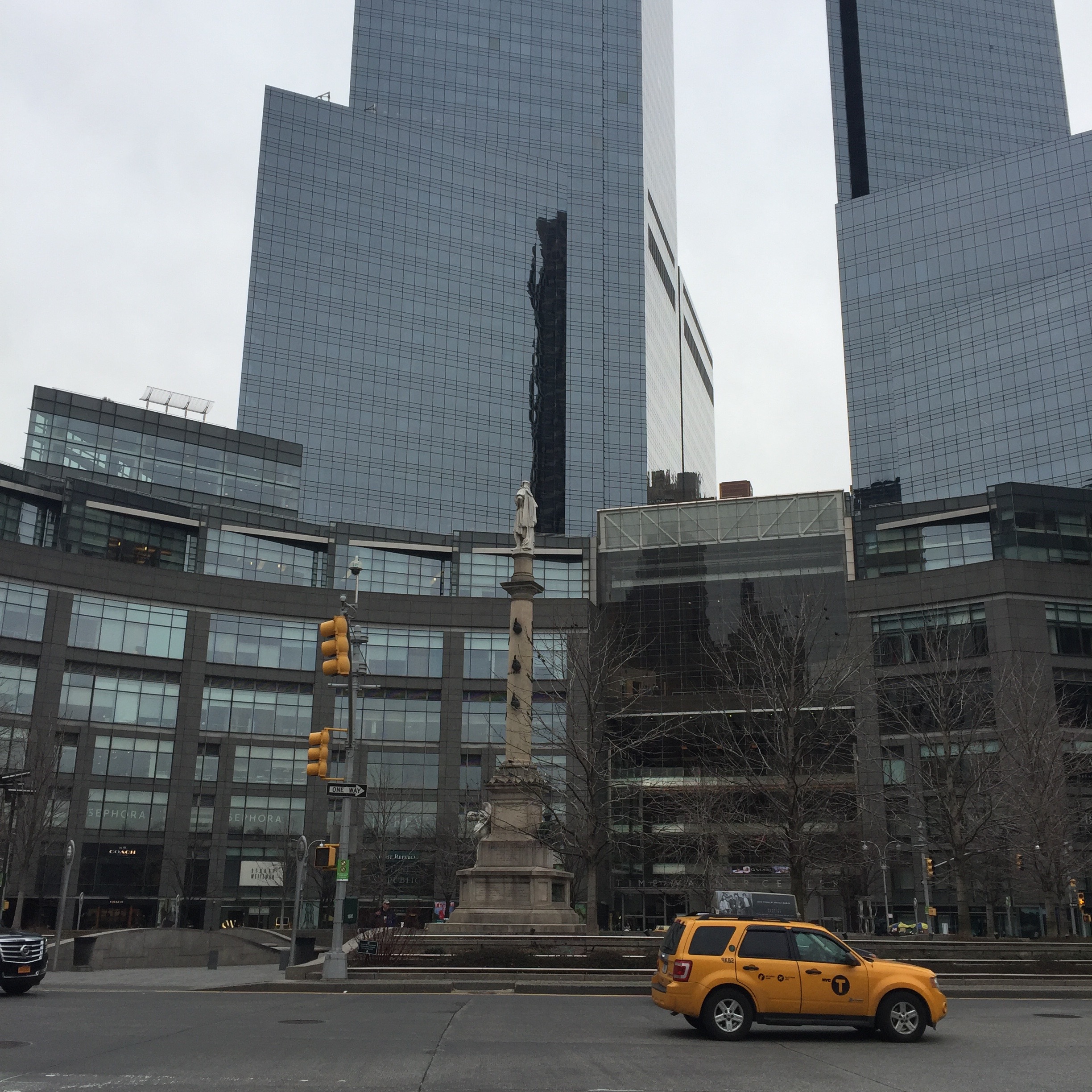
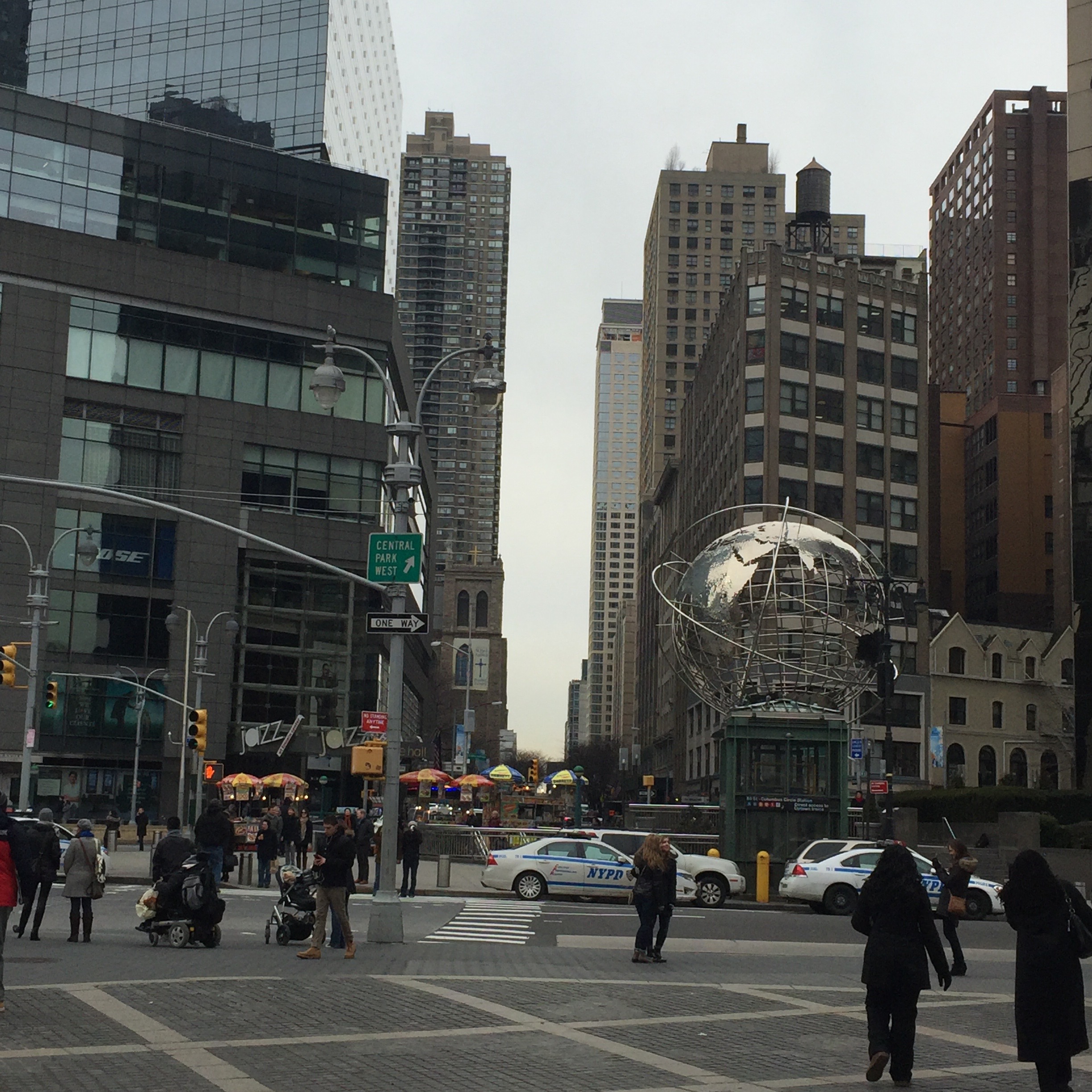
At Columbus Circle, you stand at the intersection of the Upper West Side, Central Park, and Midtown West. The shops at Columbus Circle house a Whole Foods as well as specialty stores and Jazz at Lincoln Center.

IMG_0109

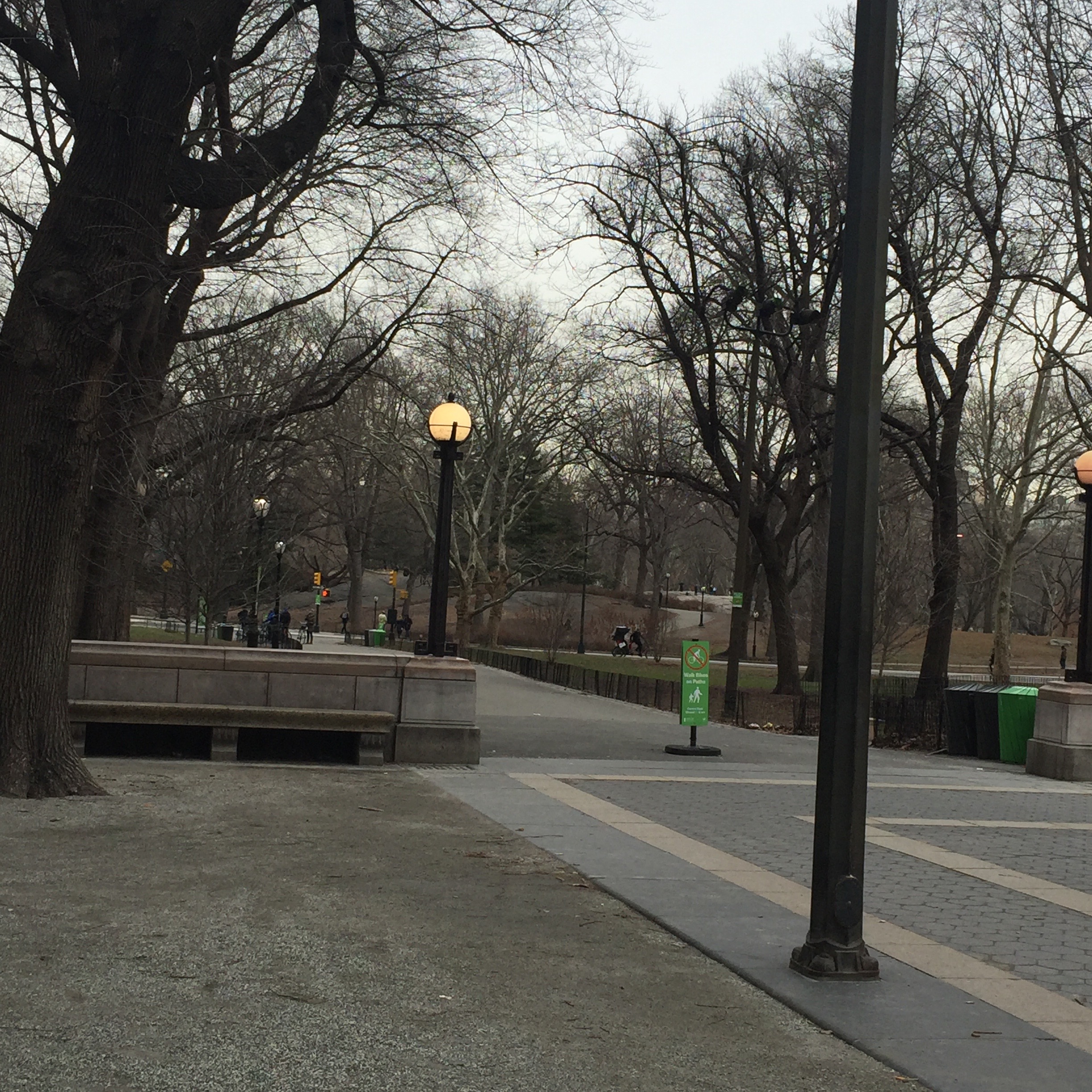
Turning around to look at Central Park for a moment . . .

IMG_0110

Just north of the statue of Columbus, a subway hub that can get you quickly to virtually any location in the city.

IMG_0111

Walking north a few block on Central Park West, I can’t resist stopping to admire 15 Central Park West, a phenomenally successful building on so many different levels – a classic limestone two-towered building that looks as though it could have always been there, but simultaneously a new development from 2007 with prices per square foot averaging well over $5000 per square foot. I greatly enjoyed reading Michael Gross’s recent book about the development of the site, House of Outrageous Fortune.

IMG_0112

Walking west on W. 61st Street, you can see a side entrance to 15 CPW. On the W. 62nd Street side, there is a lovely garden.

IMG_0114

This part of the Upper West Side can be a little confusing, in that Broadway is the next Avenue you come to after Central Park West, while for much of the neighborhood the park block is between CPW and Columbus. Broadway, transecting the length of Manhattan on a diagonal, disrupts the orderly grid of most of Manhattan above 14th Street, creating “squares” – really triangles – as it cuts across the orderly boulevards. Union Square, Madison Square Park, Herald Square, and Times Square are all the result of Broadway’s slow progress from west to east as it heads south in Manhattan, and Lincoln Square is yet another. Walking up Broadway to W. 63rd, I headed west again to see Lincoln Square itself, namesake for this neighborhood.

IMG_0115

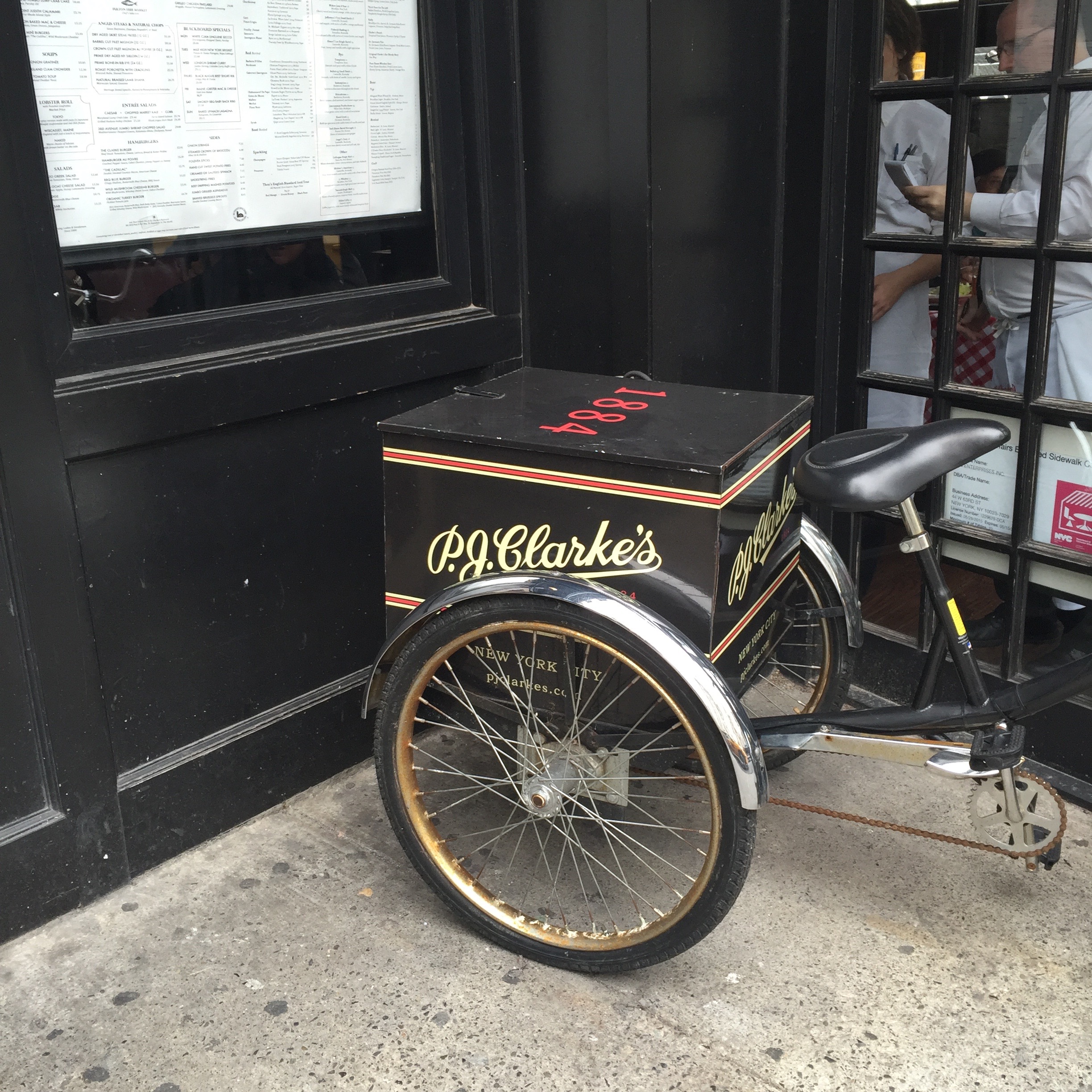
Just south of Lincoln Square is the Empire Hotel, whose sign is a local landmark, and P.J. Clarke’s, a cozy yet upscale place to sit and have a nice meal.

IMG_0116

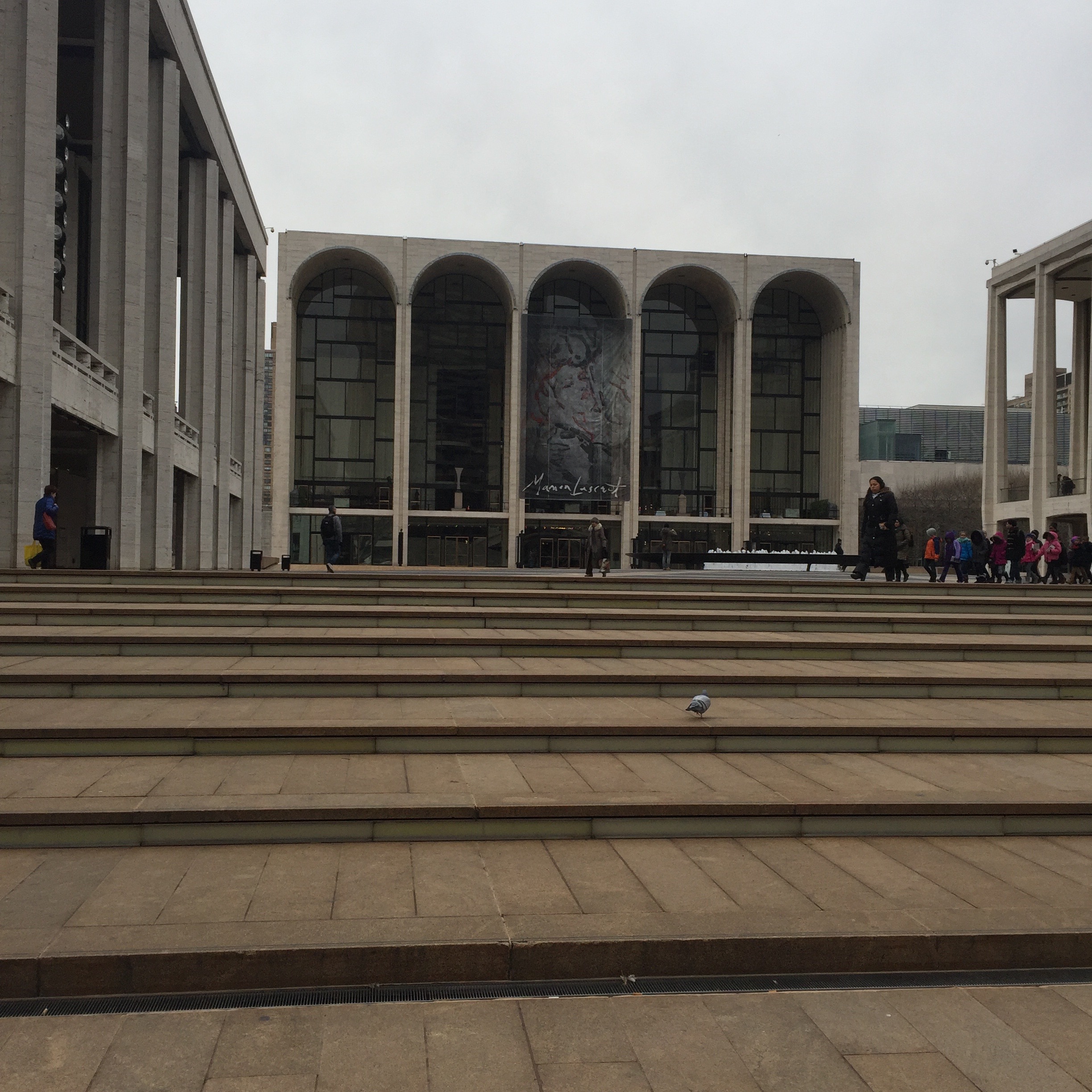
Obviously a strong selling point for the neighborhood is the proximity to Lincoln Center, and the ease of attending performances of  opera, music, ballet, theatre, and even the Big Apple Circus in the fall of each year.

IMG_0119

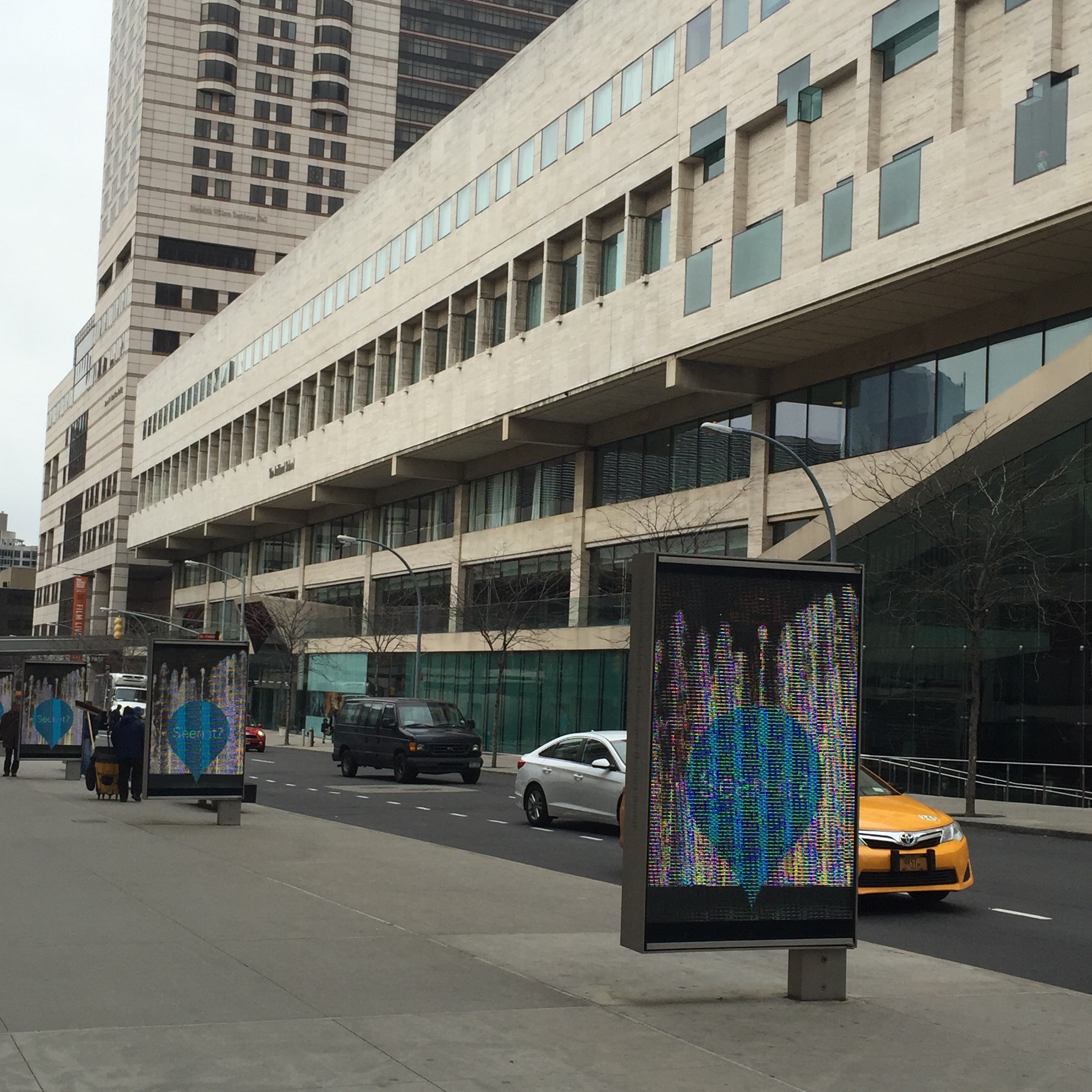
The Julliard School, just north of Lincoln Center, also offers high quality student performances.

IMG_0120

Looking east while standing in front of Julliard, I noticed the Mormon Visitor Center, best known to me as the place where Hannah and Harper volunteer in Tony Kushner’s epic play, “Angels in America.”

IMG_0121

Just north of Julliard is Alice Tully Hall, home to more intimate concerts than those in much larger Avery Fisher Hall (newly renamed David Geffen Hall).

IMG_0122

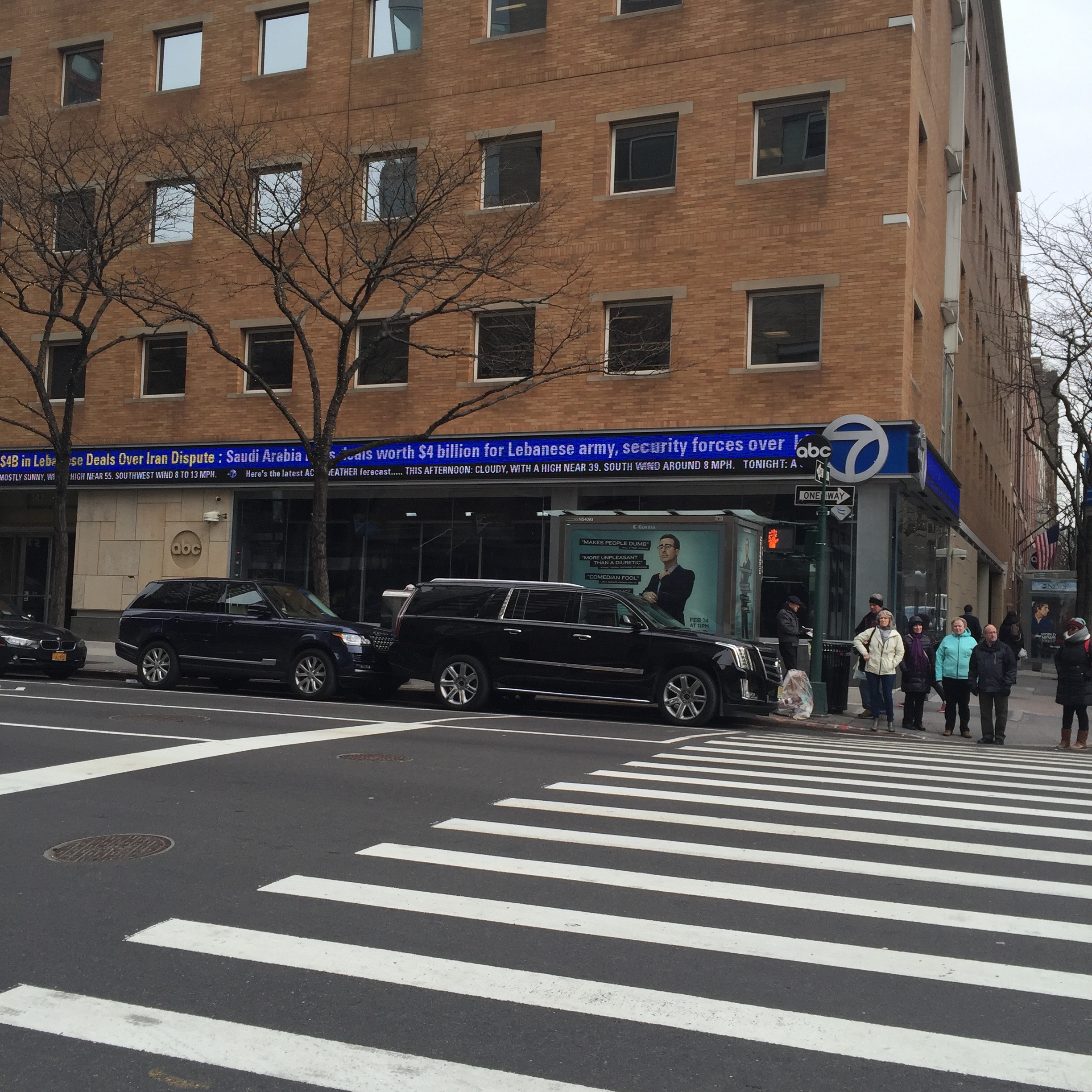
Turning east again on West 66th St., I walked past ABC studios on the way back to Central Park. Just a few blocks north of this intersection is the Loews Lincoln Square Cineplex. I really love this as an option for seeing popular movies, as each individual theatre has the name and style of an old-time movie palace, making the experience there have a little more personality than many multiplexes.

IMG_0123

Ending up in Central Park at 66th, yet another advantage to this neighborhood is its proximity to Tavern on the Green, renovated a few years ago but with the twinkling outside fairy lights remaining.

IMG_0125

So what does it cost to live in Lincoln Square? As with any neighborhood, it varies greatly depending on the building, but average prices are just under $3000/square foot, compared to just over $2000/square foot for all of the Upper West Side (averaging prices of the far northern sections of the UWS with those to the south, of course). Central Park South, just to the south and east of Lincoln Square averages $5000/square foot, in part because of the premium associated with apartments with views of the park. Lincoln Square tends to be newer buildings, mostly condos, compared to the largely prewar coop inventory of most of the UWS.

In my opinion, the location of Lincoln Square is unparalleled – at the intersection of the Upper West Side, Midtown West, and with Central Park as a virtual front yard.


Central Park in winter (with photos)

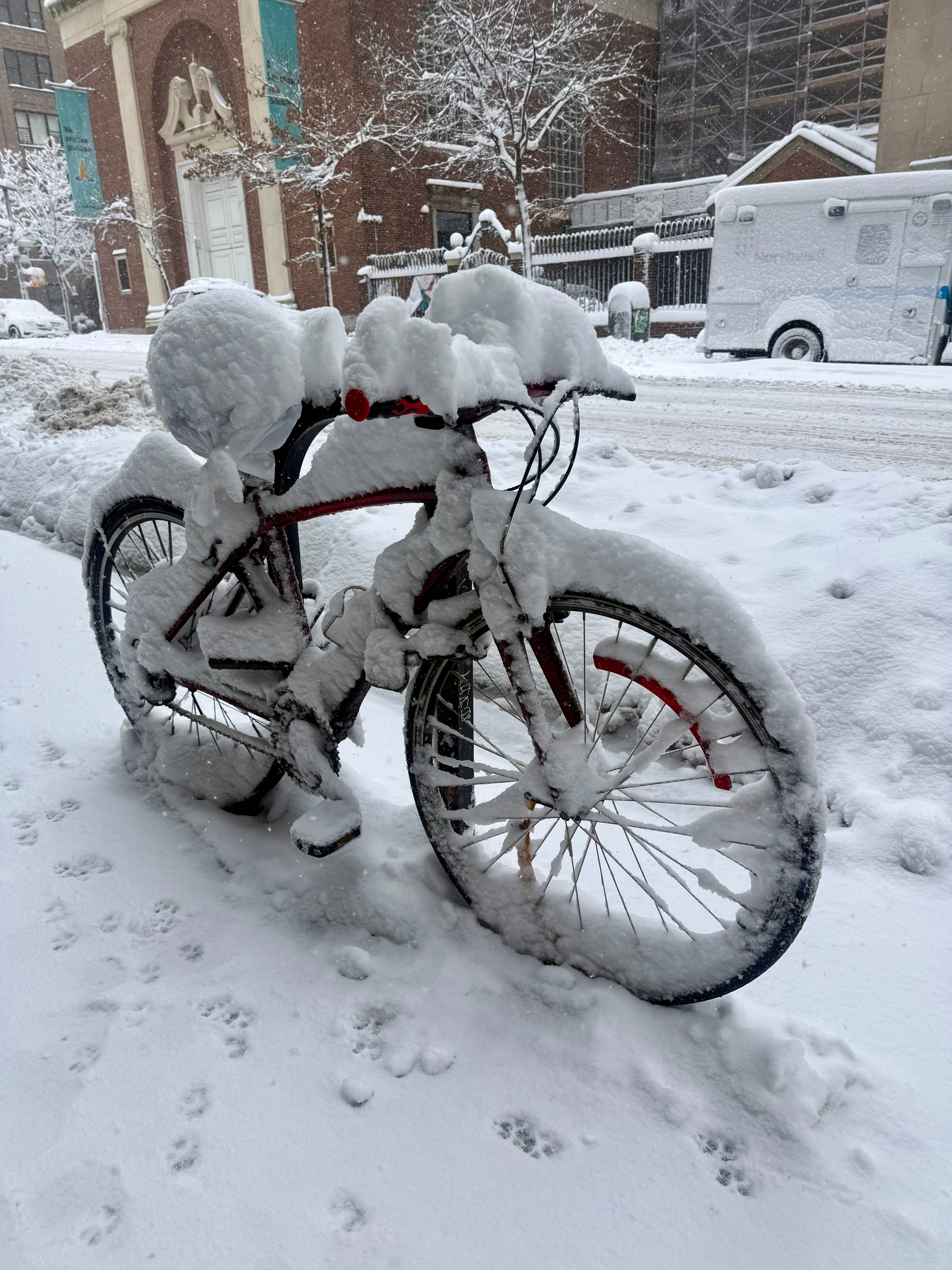
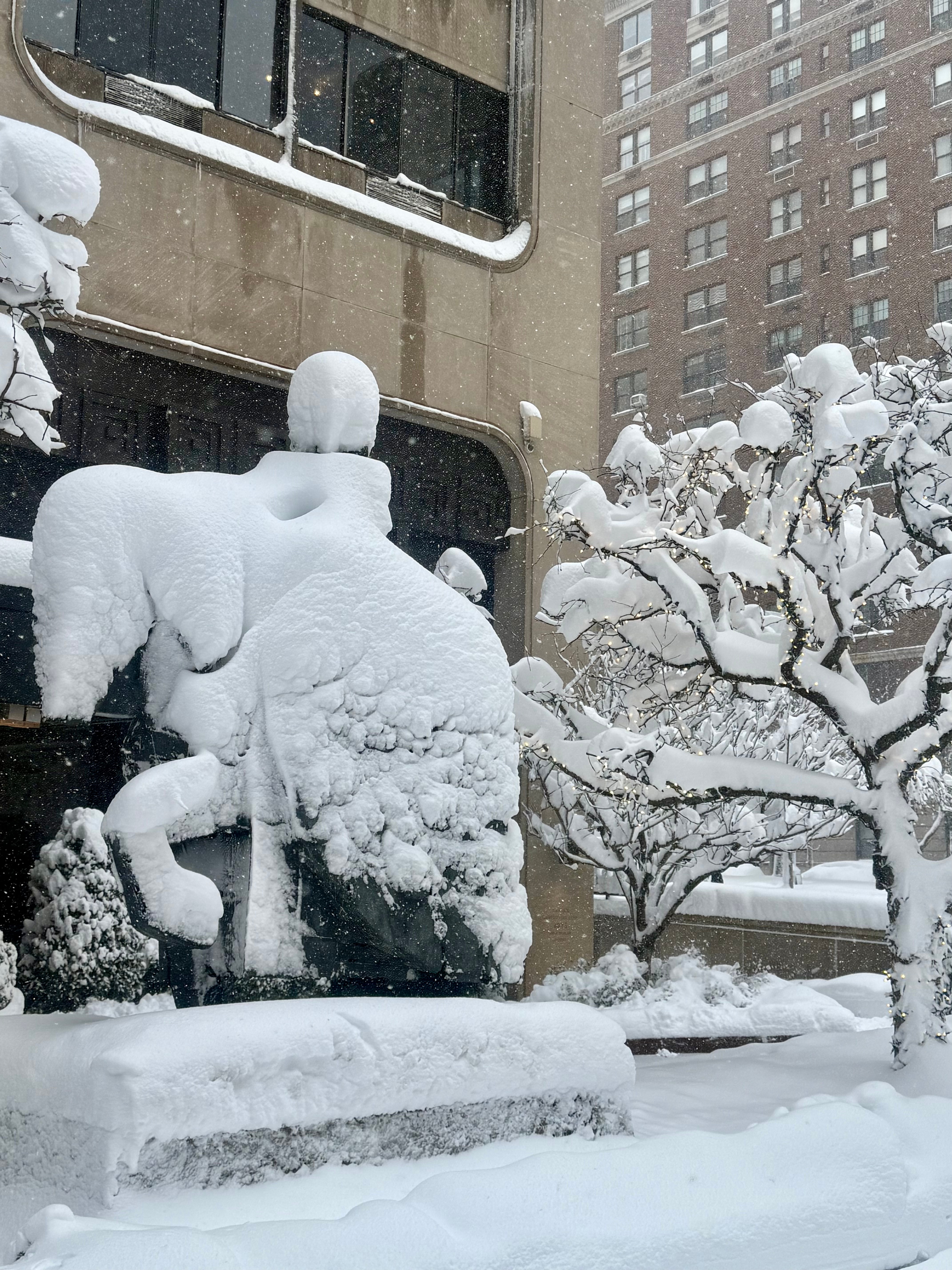
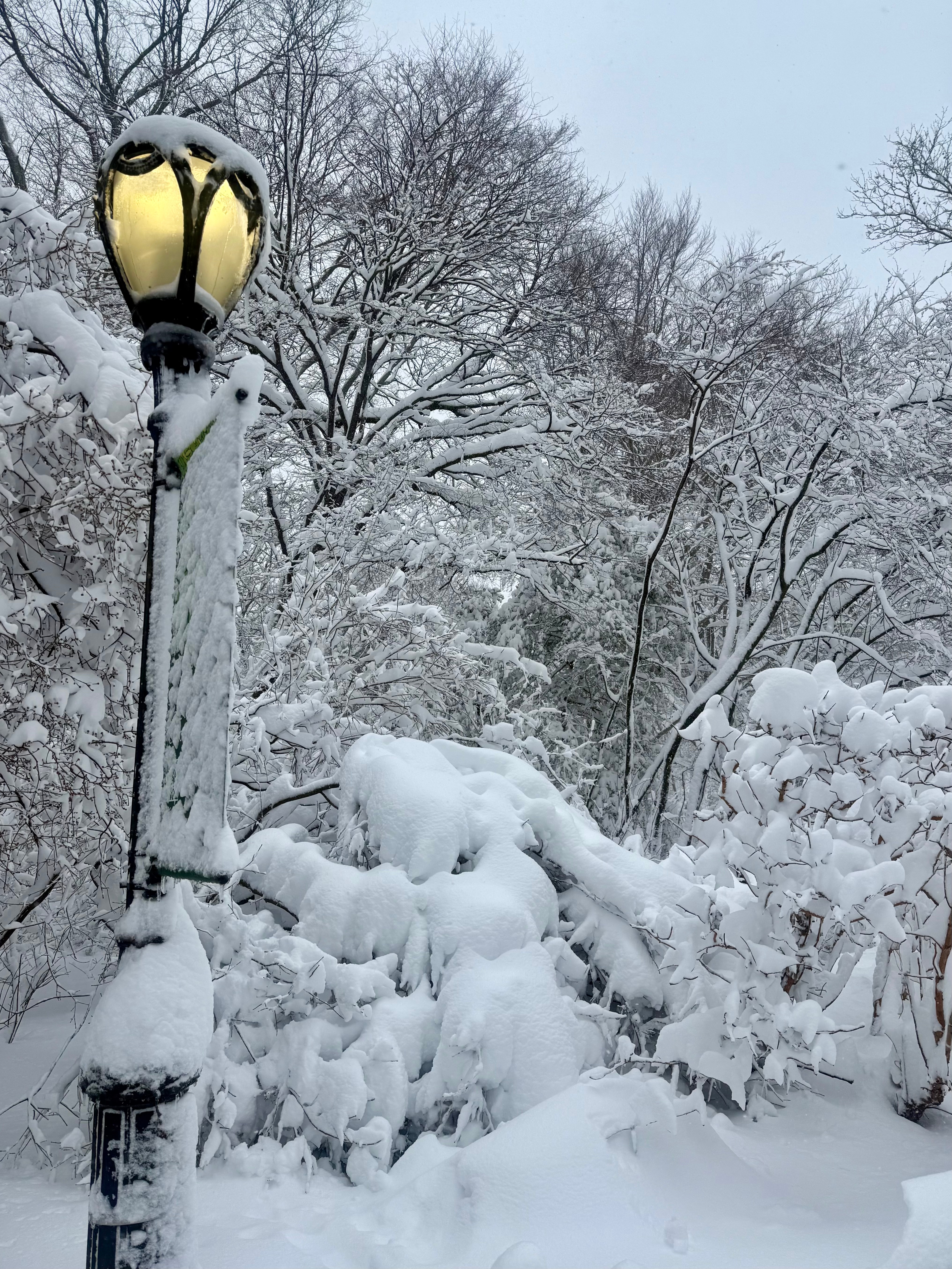
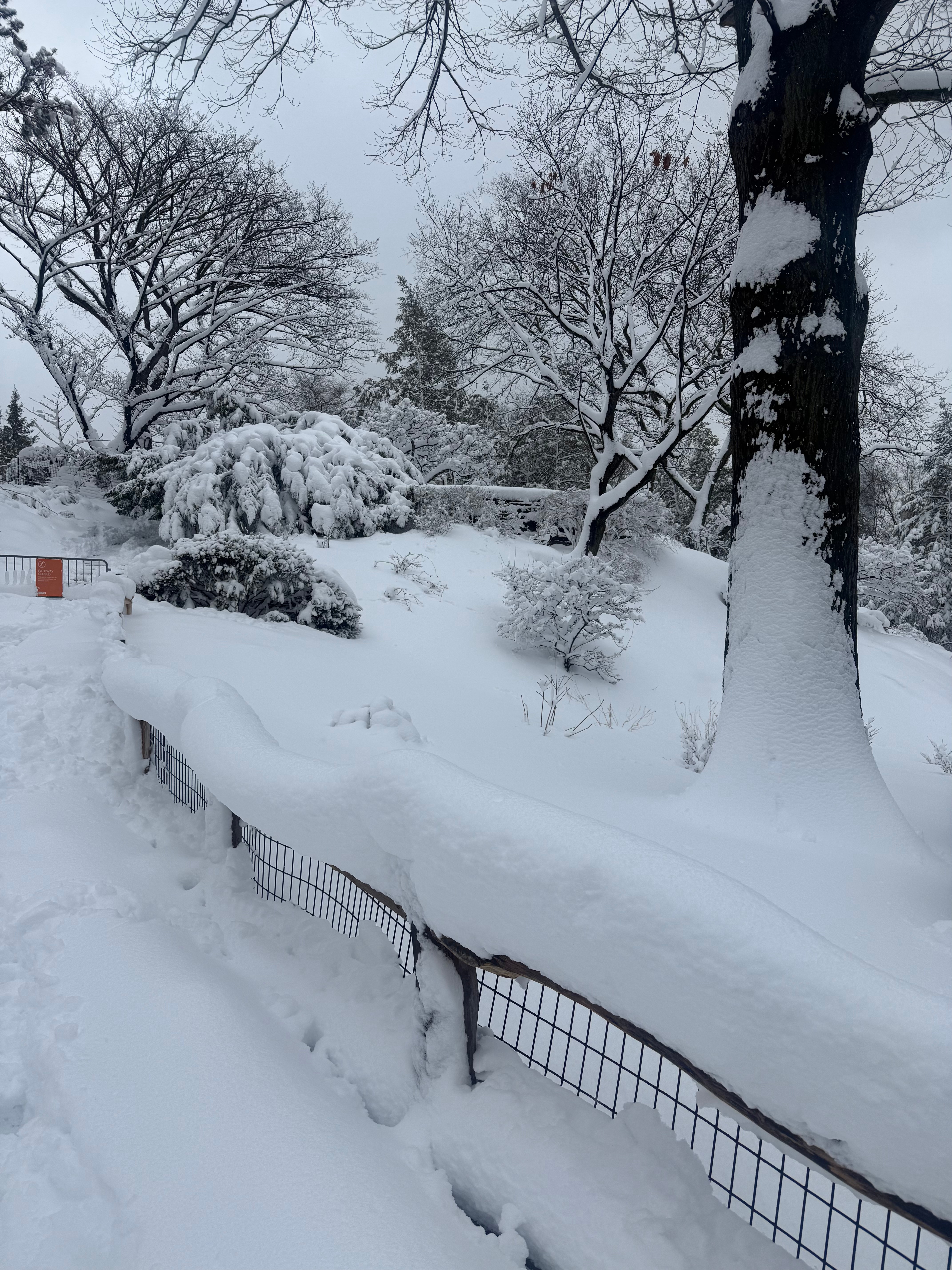
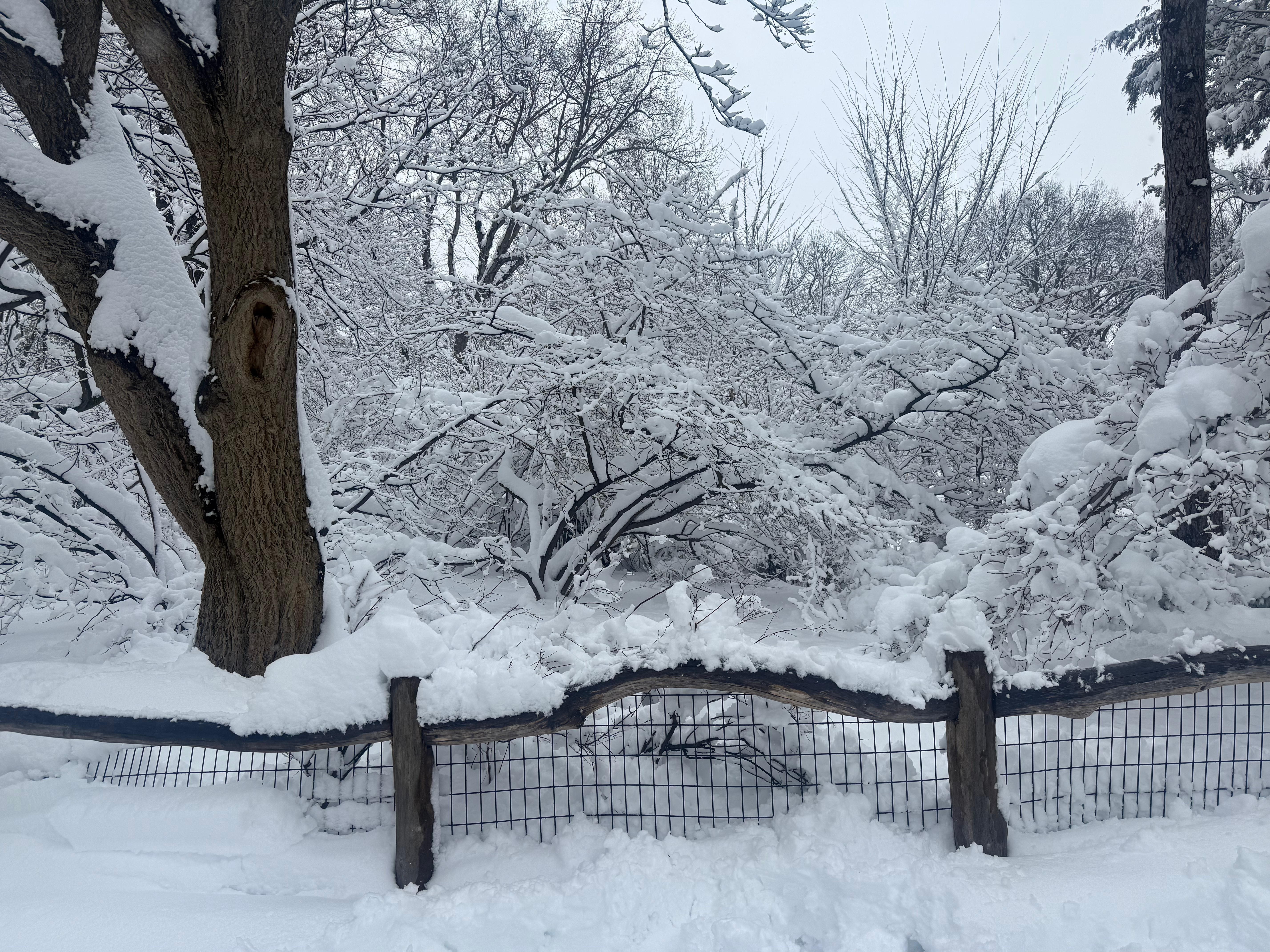
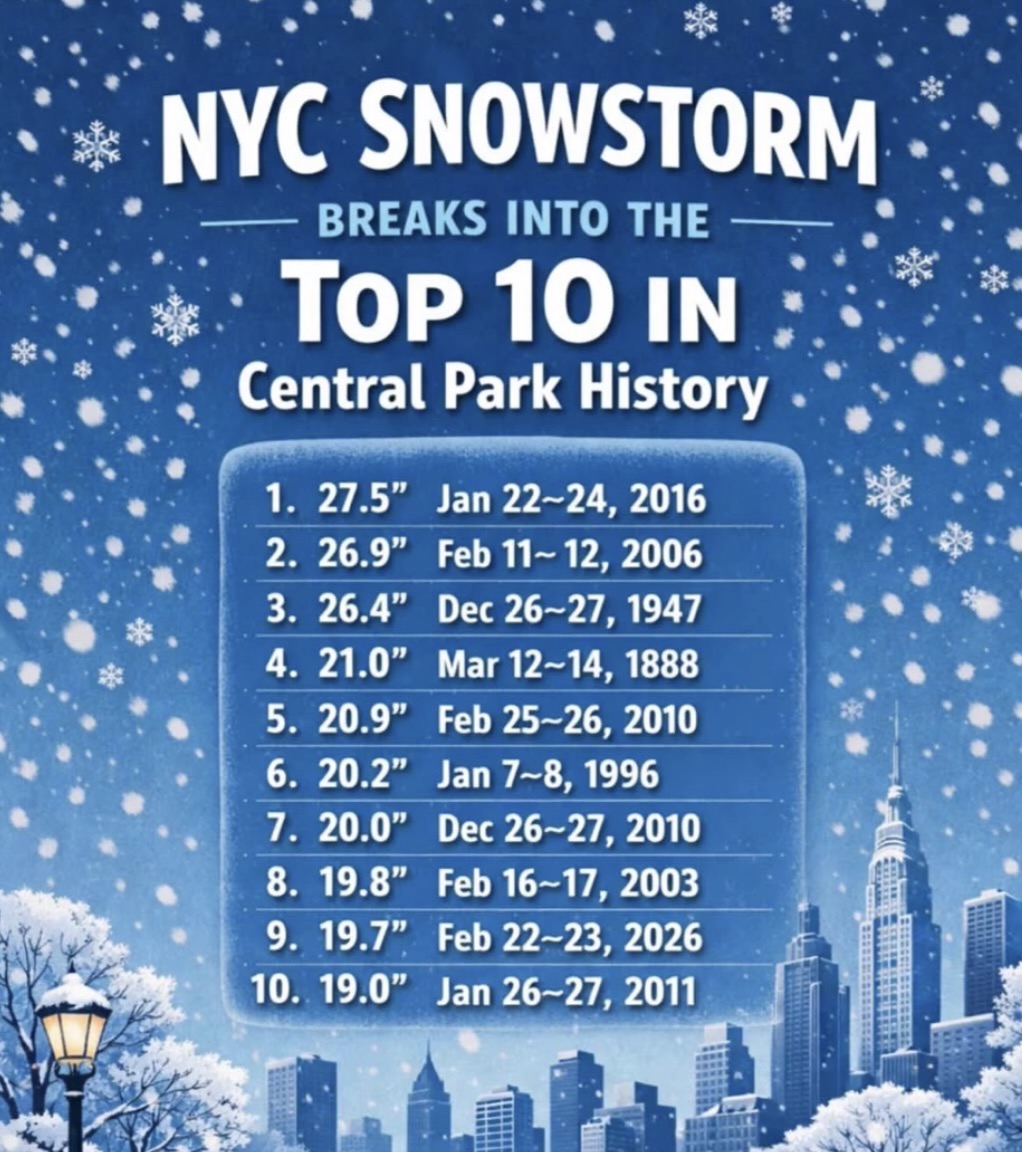
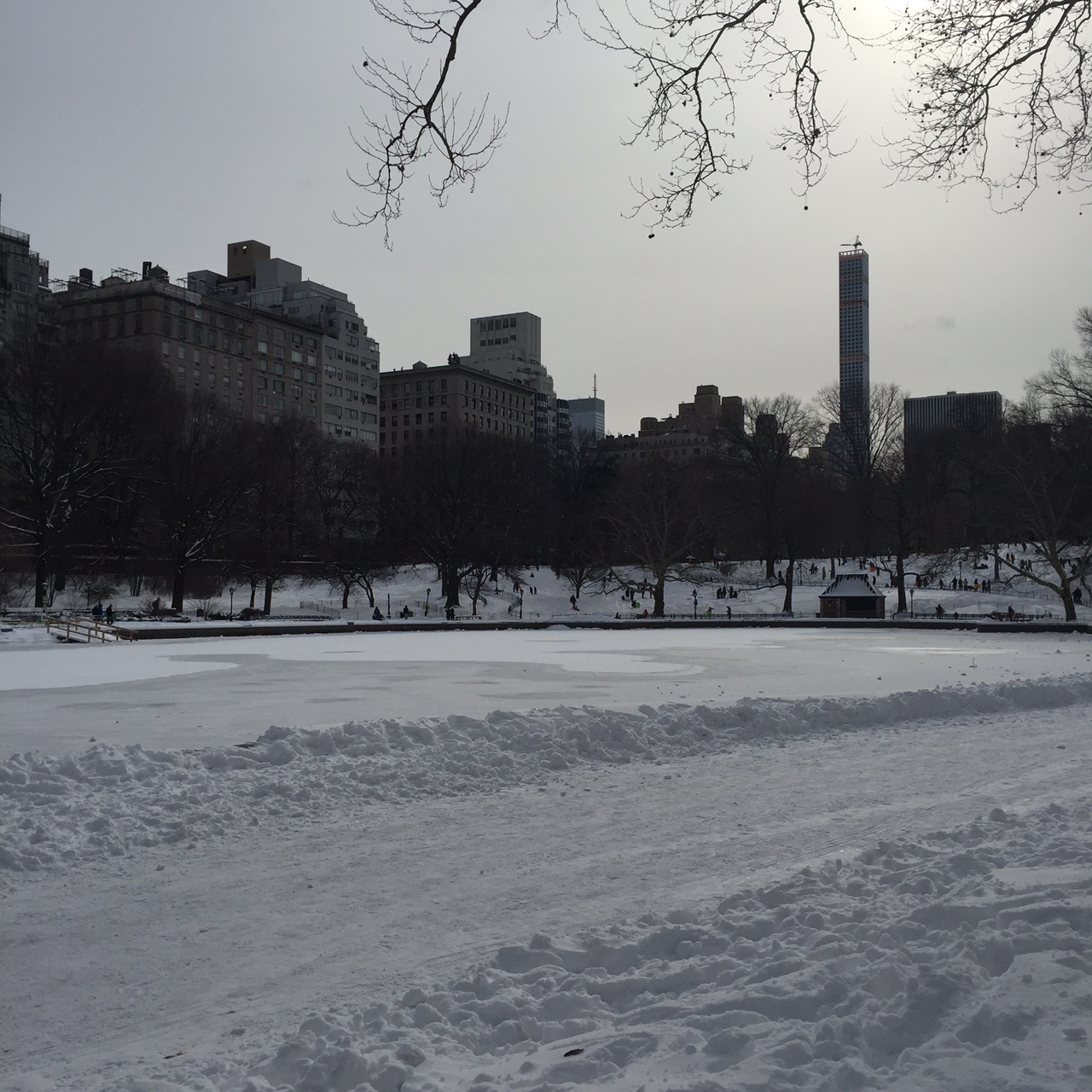
Last week we missed having three feet of snow in the city as the storm veered east by about 50 miles, but we still had enough snow to make Central Park a winter wonderland. This made me think about the advantages of living near the park, and that they are not limited to warm weather months. My sister, who lives in Vermont, says that it’s important to find a winter weather sport to enjoy there so that one doesn’t get too much cabin fever during the long winter. There are far too many things to do in New York City for anyone to get cabin fever (although most cabins are larger than the average NYC apartment, I would speculate!), but it is important to be able to enjoy the outdoors and commune with nature year-round even in the city with so many indoor things to do.

There are two outdoor skating rinks in Central Park: Wollman Rink (now Trump Rink) in the southern part of the park, and Lasker Rink near the Harlem Meer in the northern part. Both rent skates and have a fee to enter, but Lasker Rink is less expensive and often less crowded. However, the views of the skyscrapers looming over the edges of the southern part of the park do make the views a little more picturesque at Wollman (Trump).

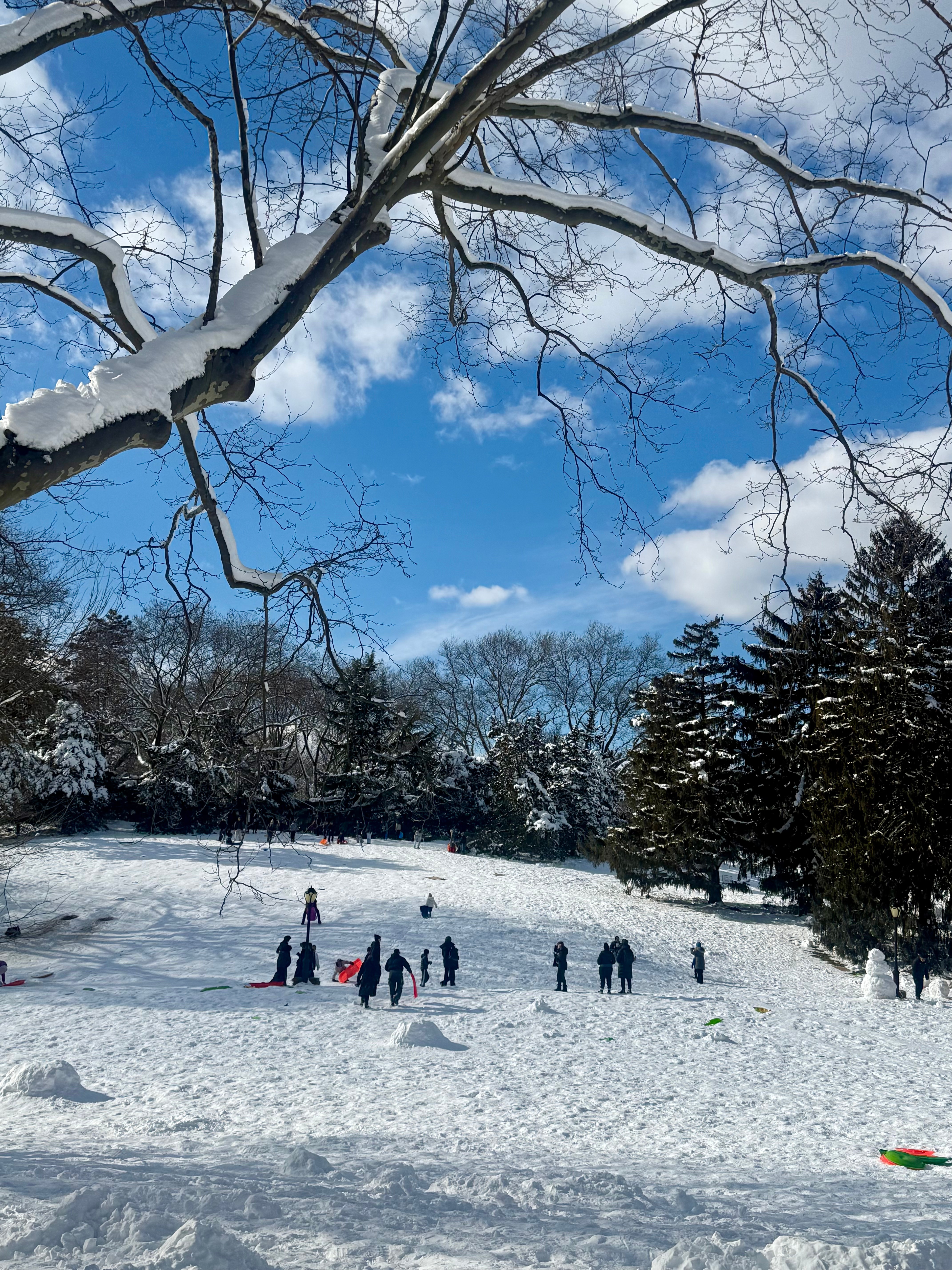
Every time it snows, certain areas of the park are well known as prime sledding spots. The best are both mid-park on the east side, Pilgrim Hill (enter at Fifth and 72nd) and Cedar Hill (enter at Fifth and 76th). Pilgrim Hill is steeper and Cedar Hill a little more gentle, but both get very crowded on a snow day. Bring your own sled, of course (or use a garbage bag or an empty pizza box in a pinch).

Every year, Central Park hosts a Winter Jam one weekend, mid-park near the Bandshell. Snow machines are brought in to create (or augment) snow and there are opportunities to learn snowshoeing, skiing, and kicksledding (equipment provided for all of these but lines can be long). There are also snowman building contests and a chance to sled, as well as pop-up food vendors.

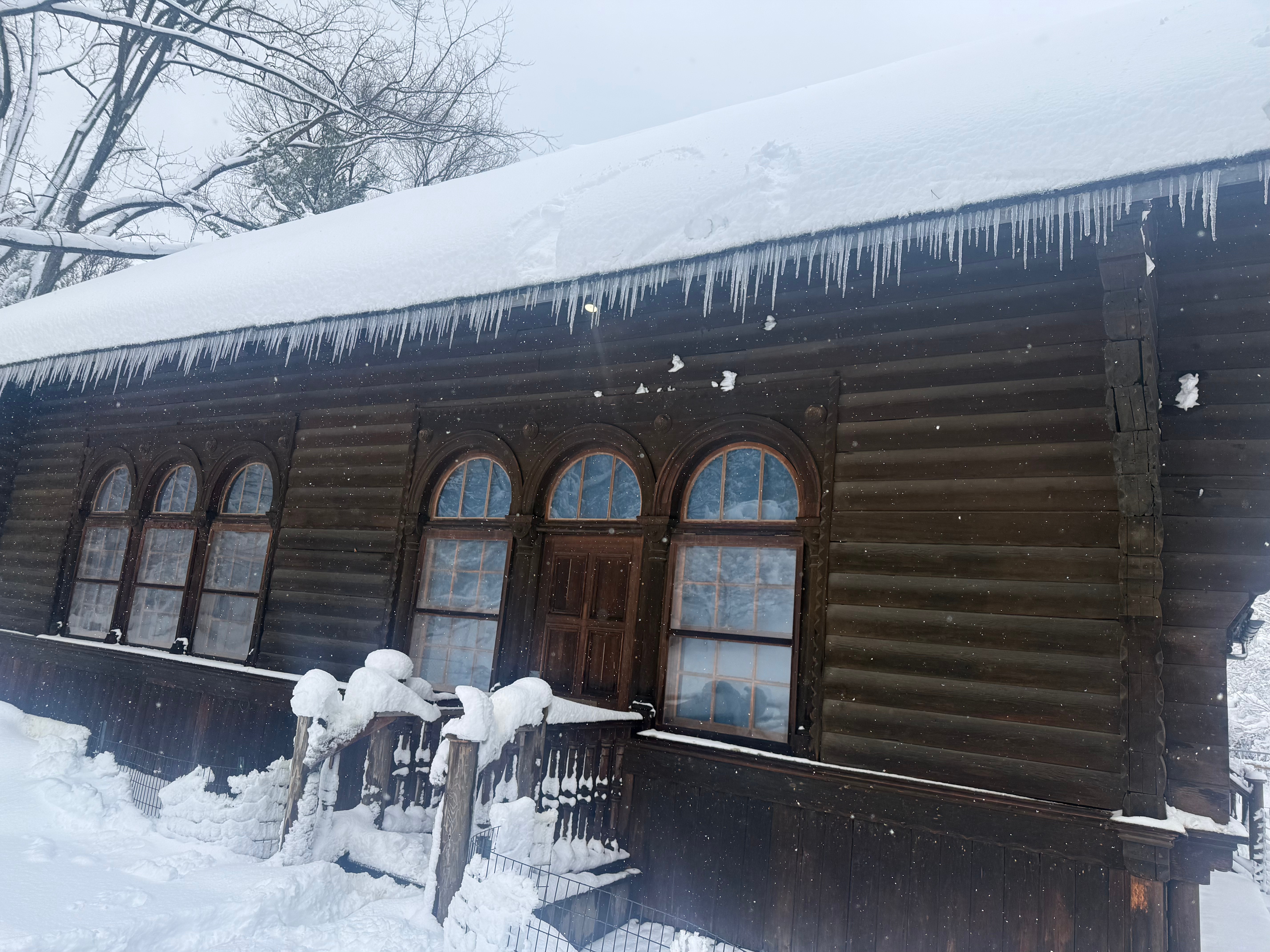
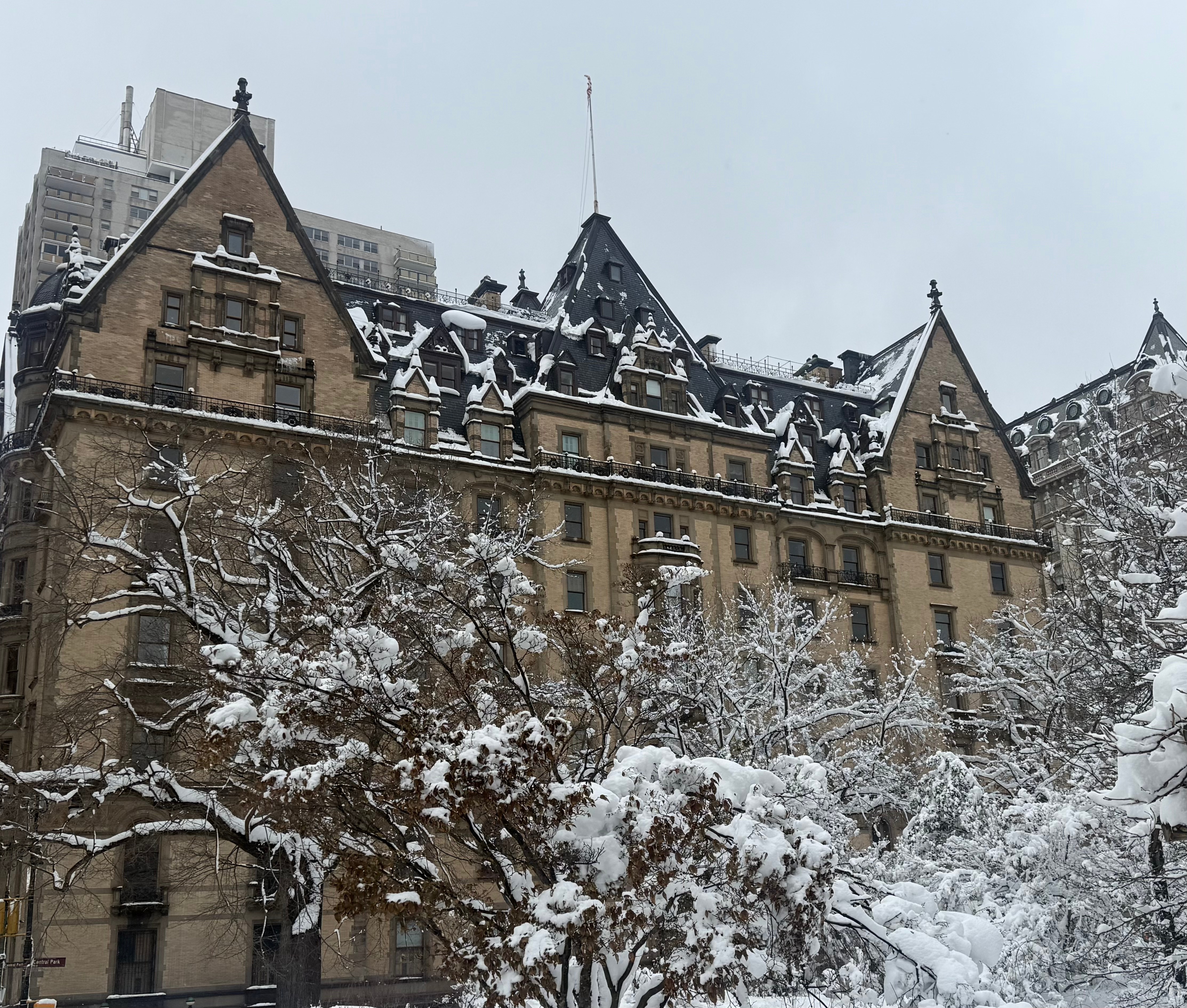
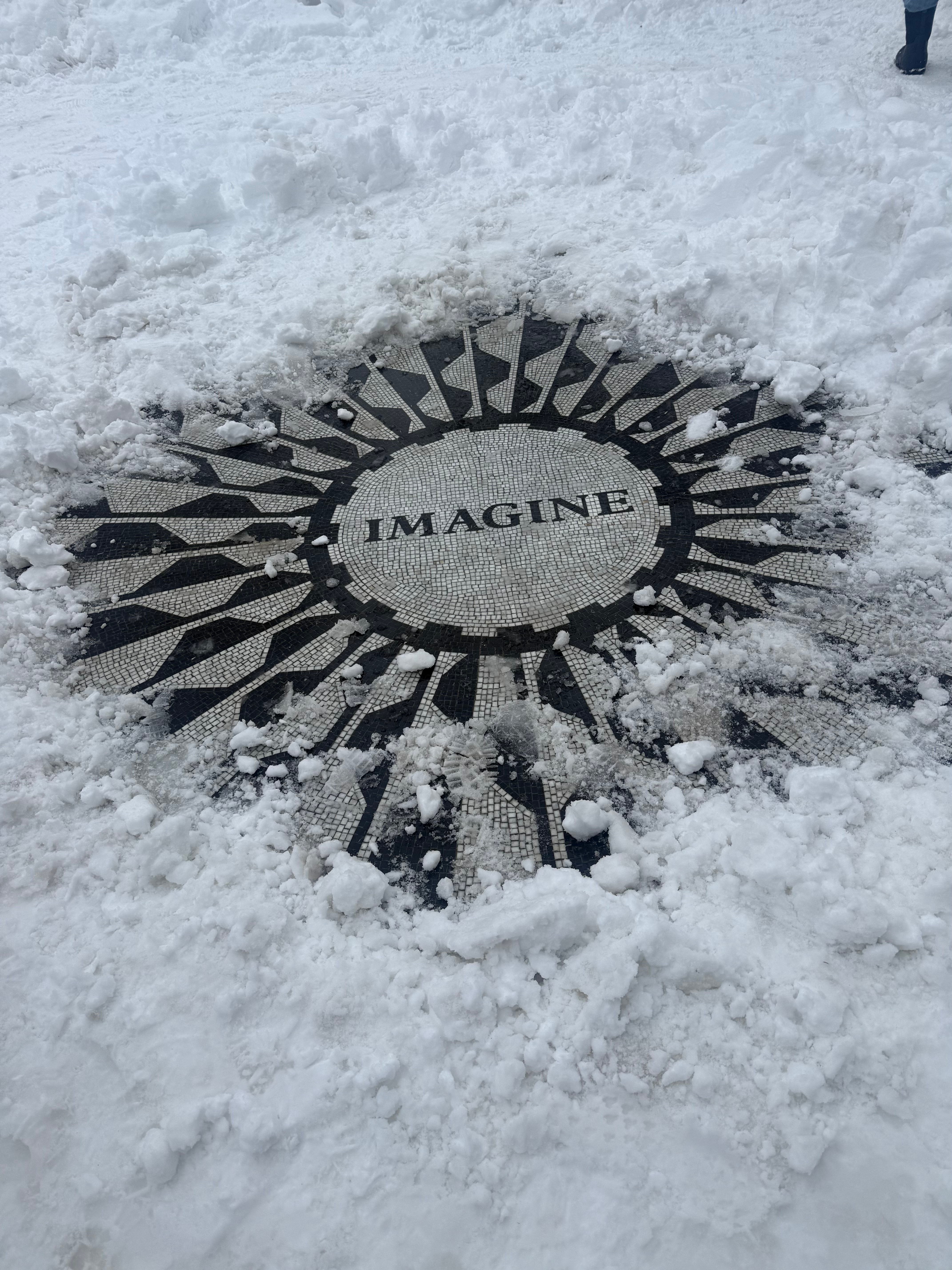
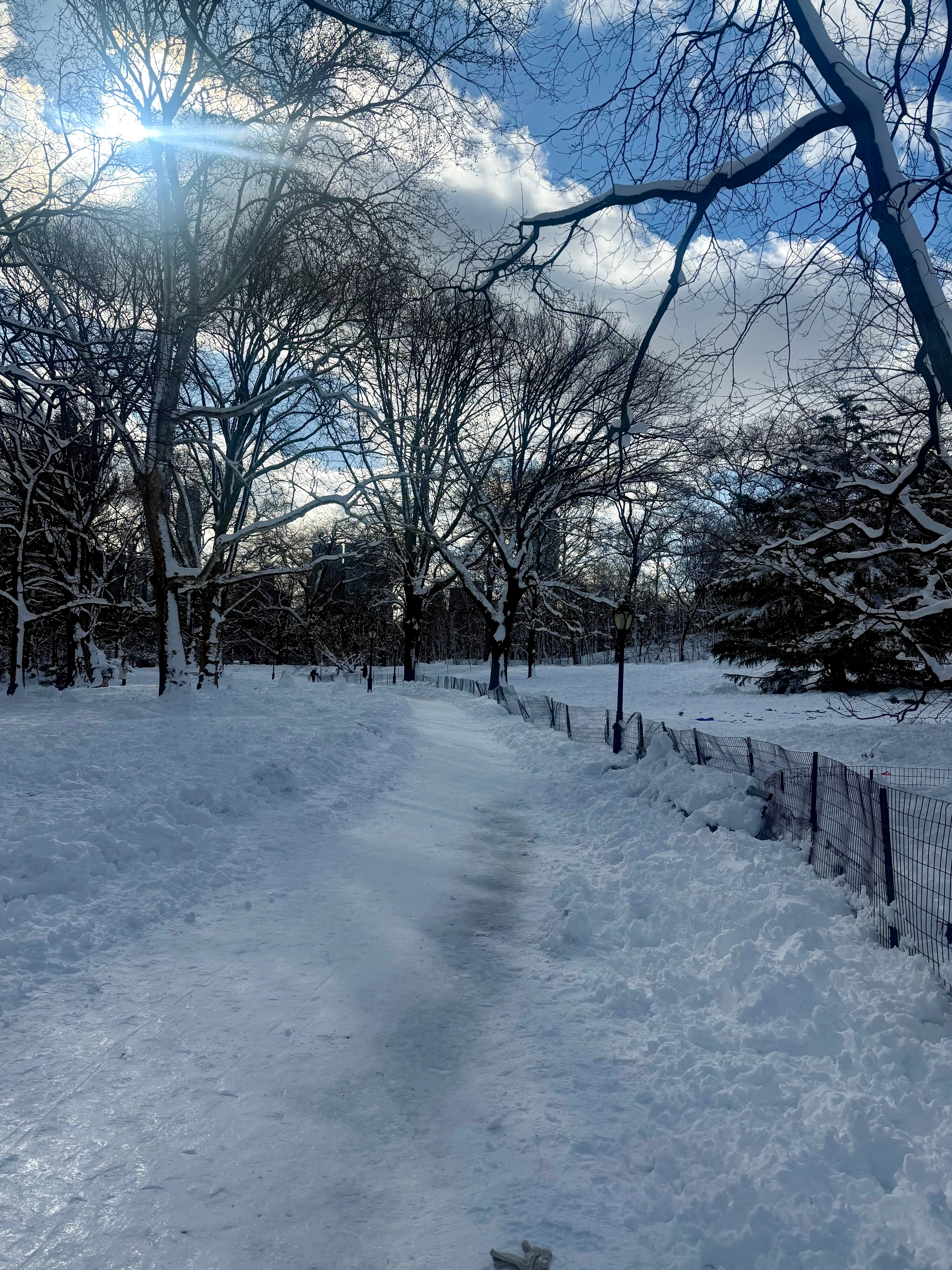
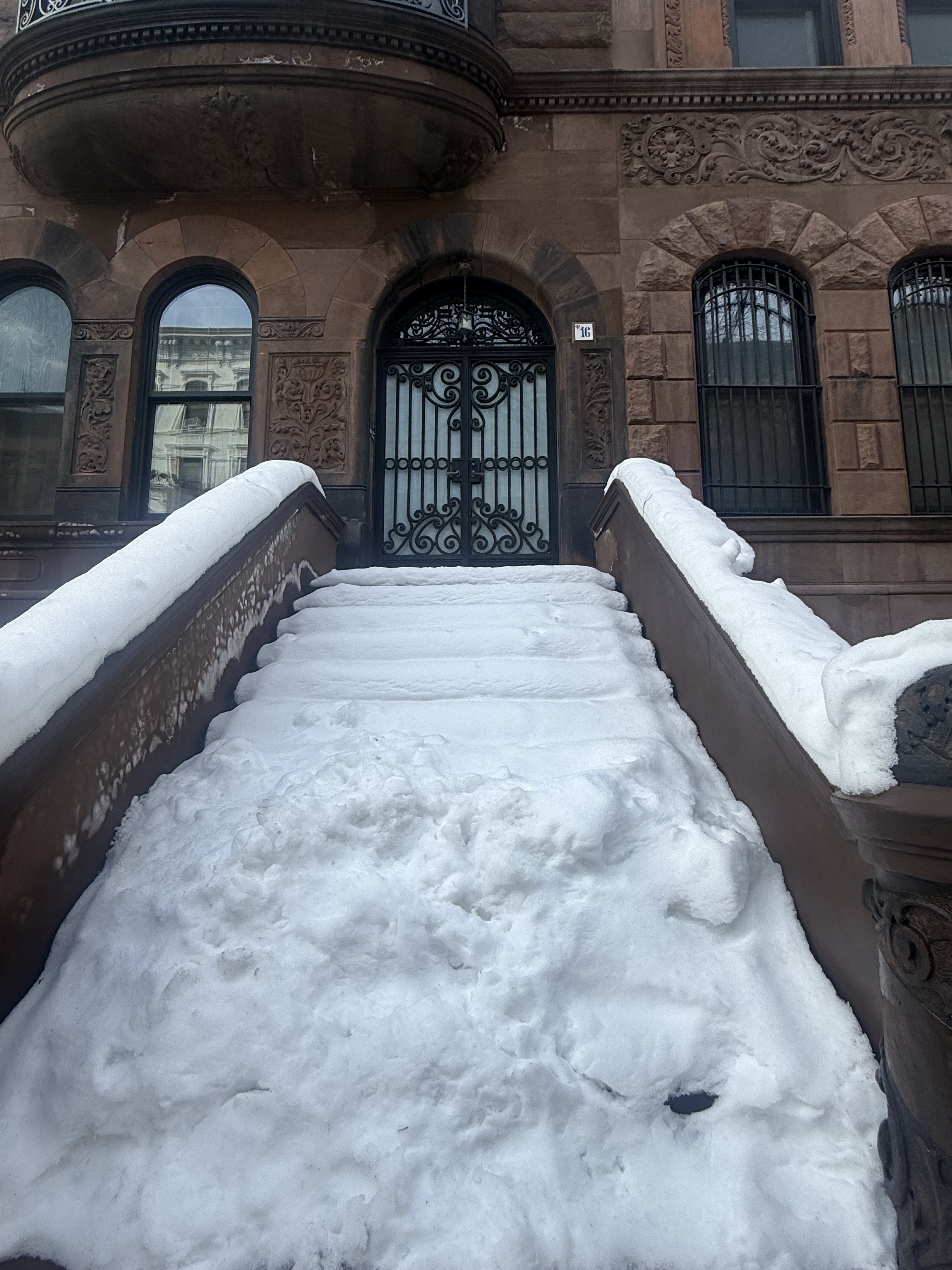
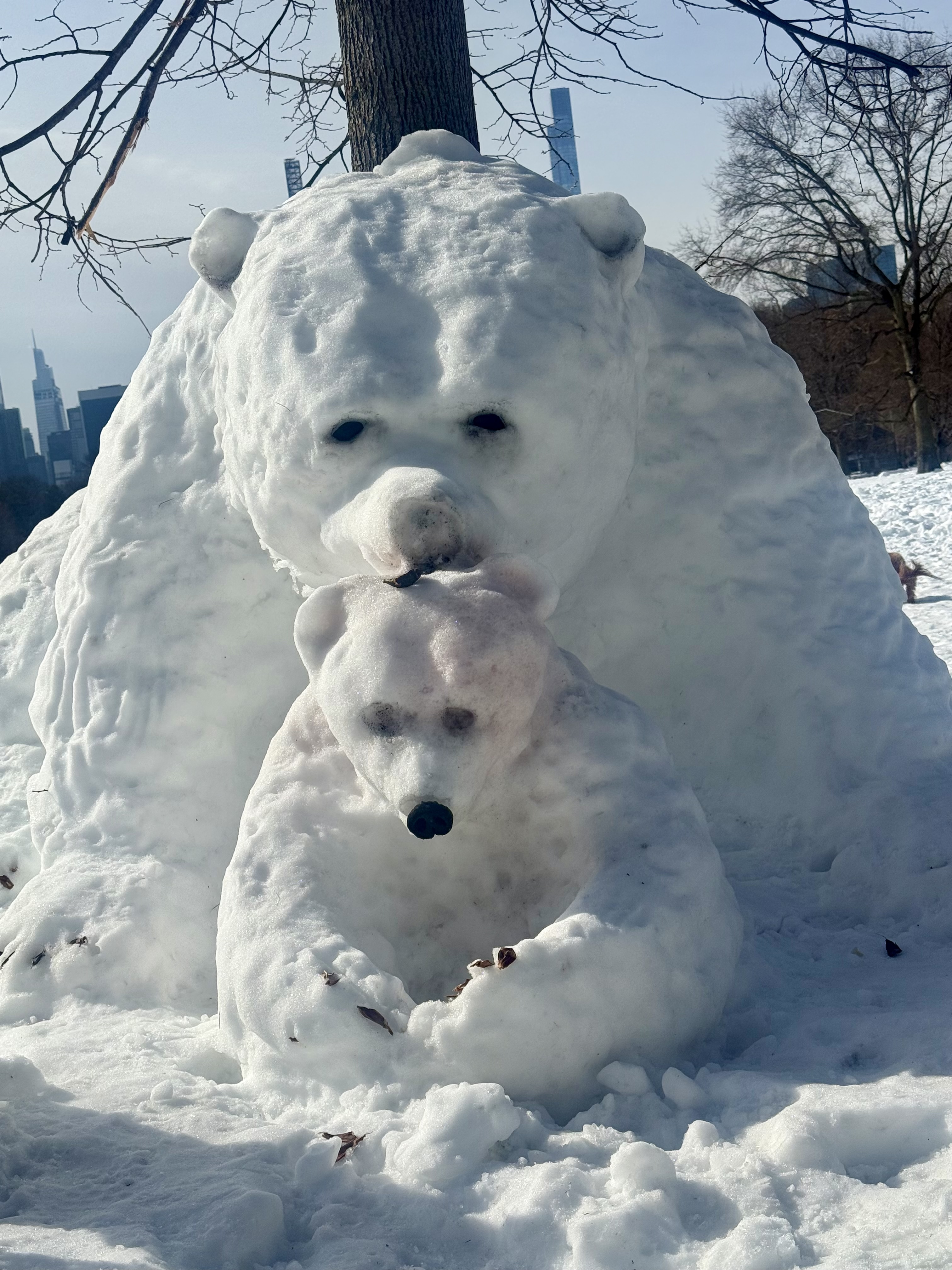
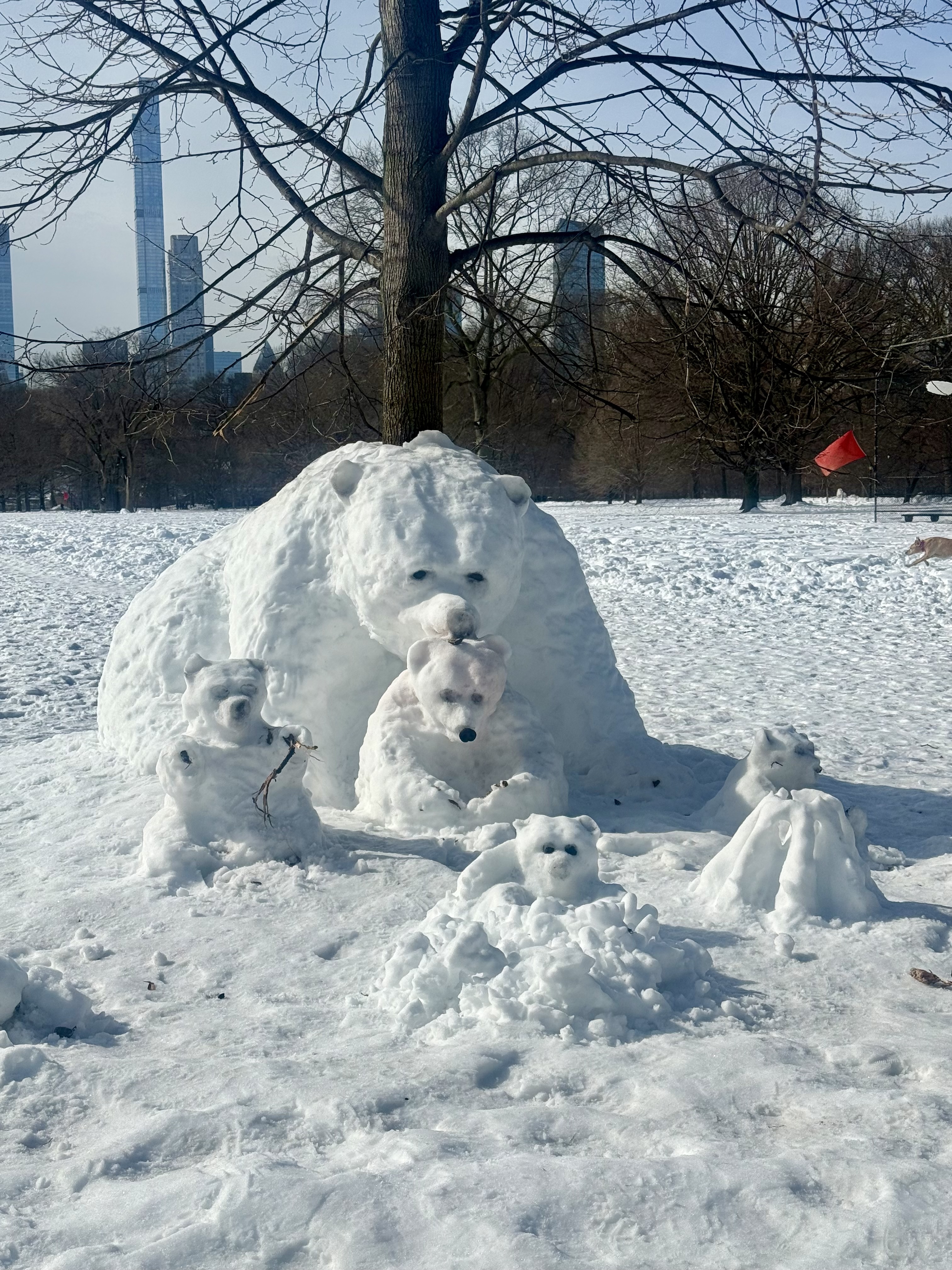
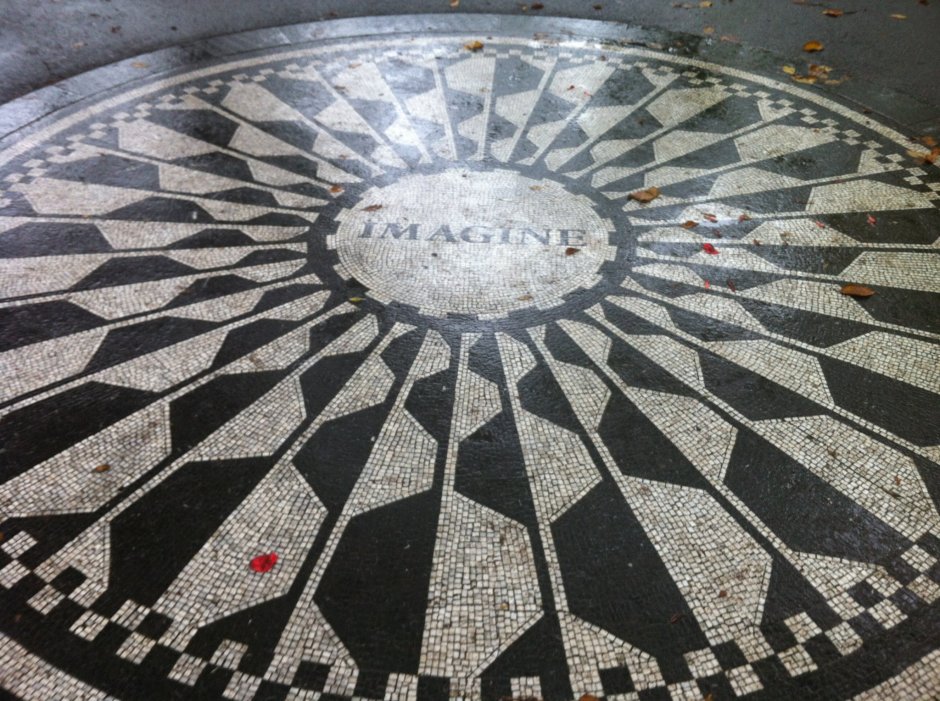
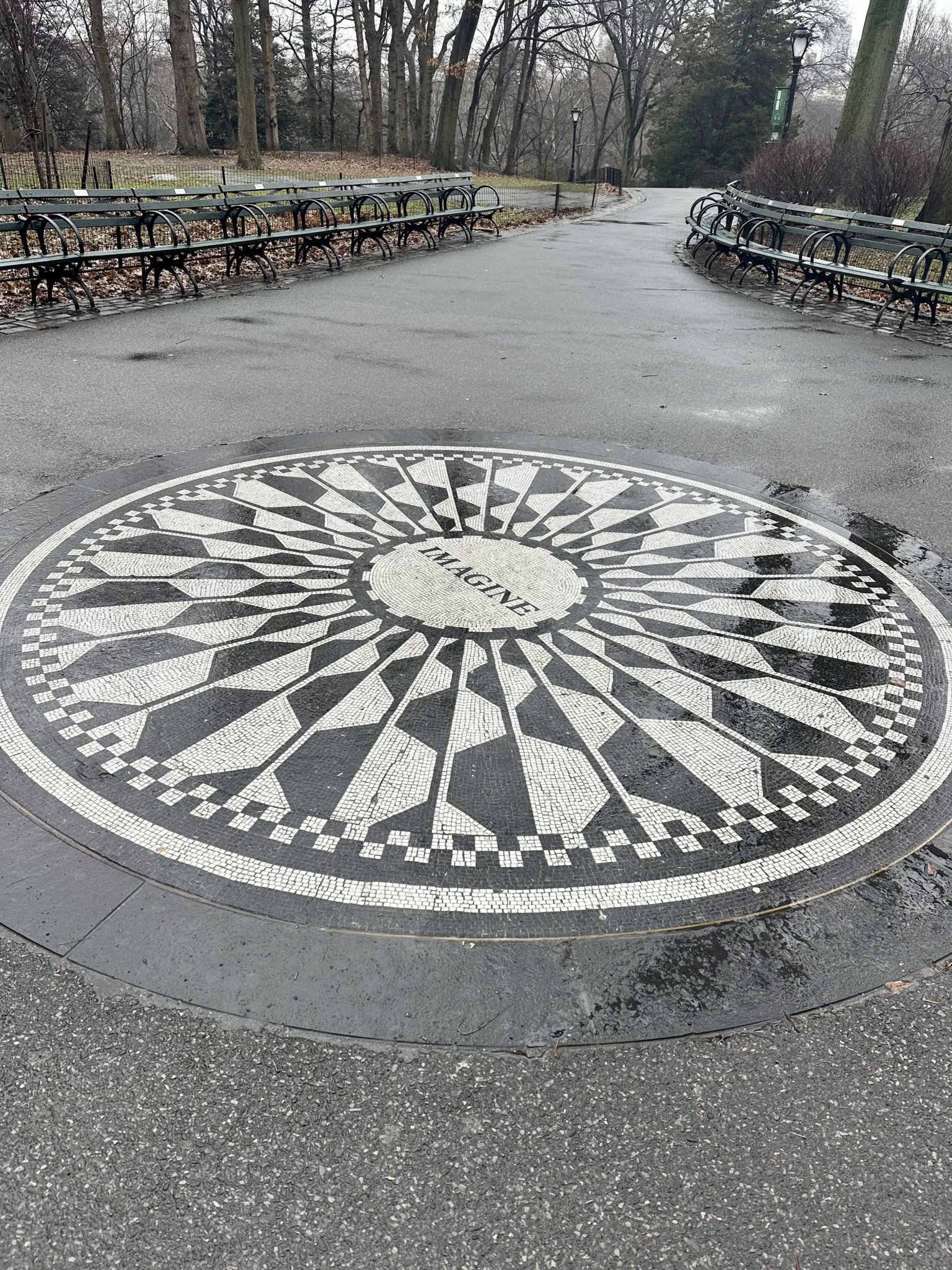
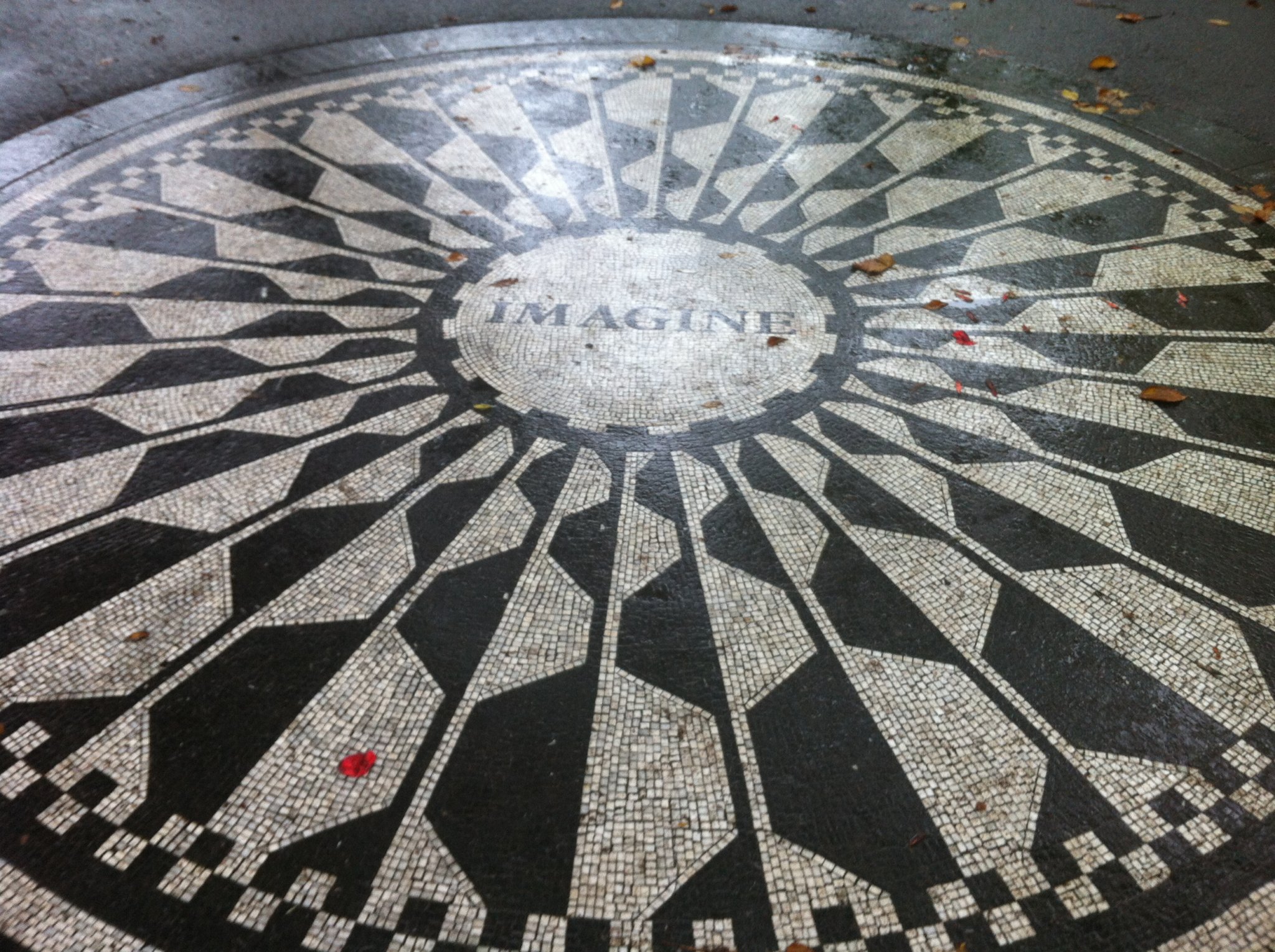
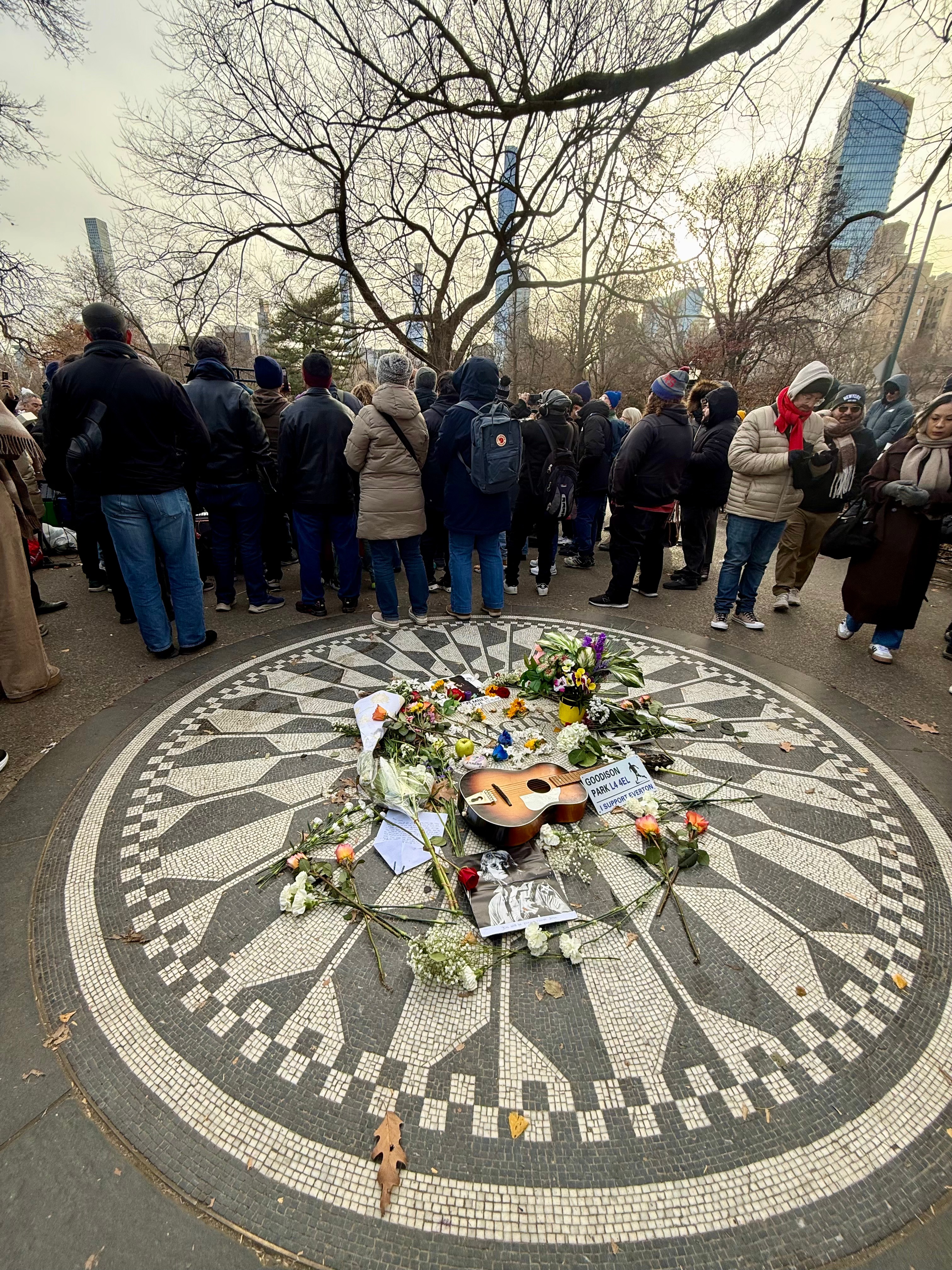
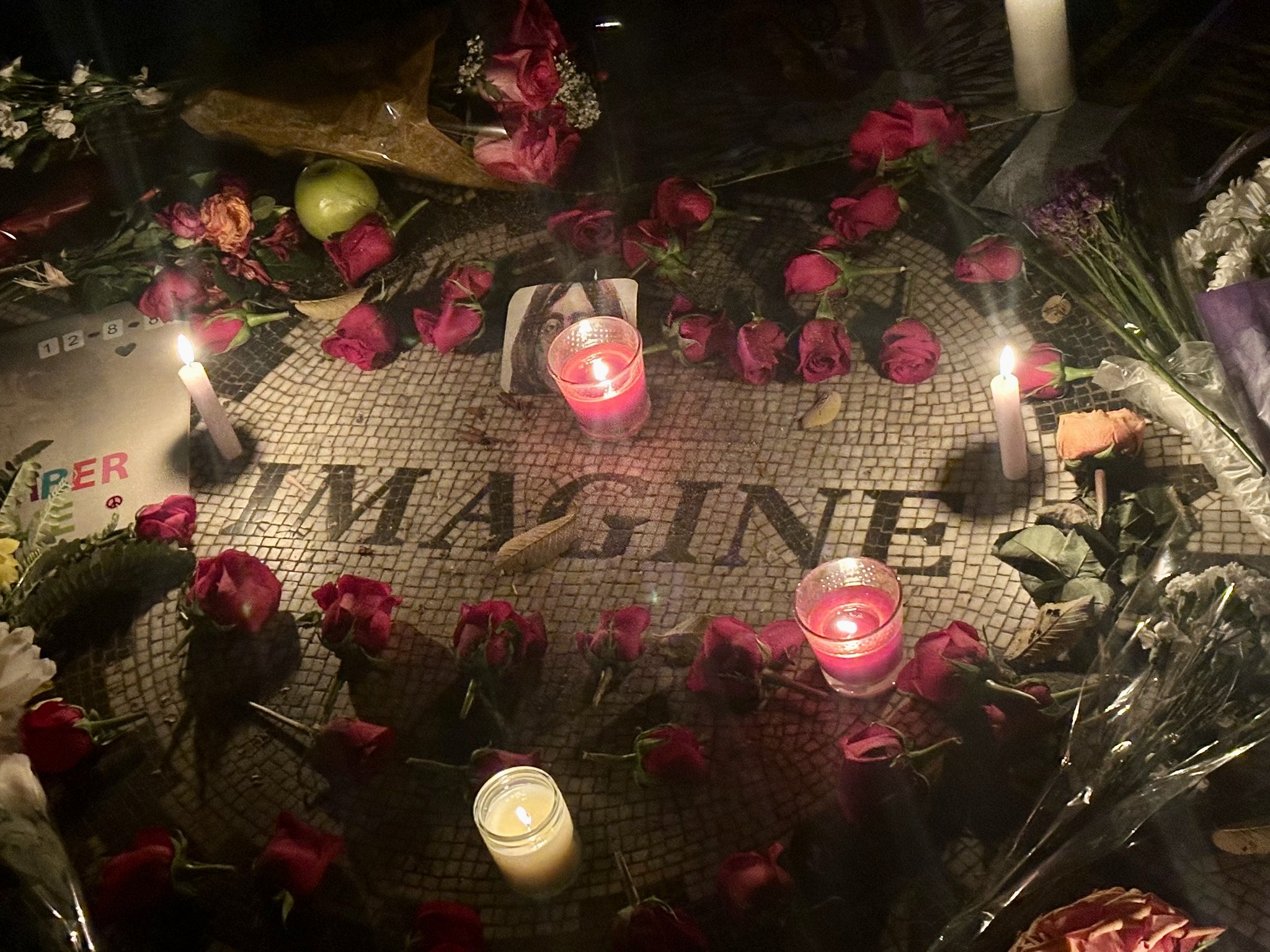
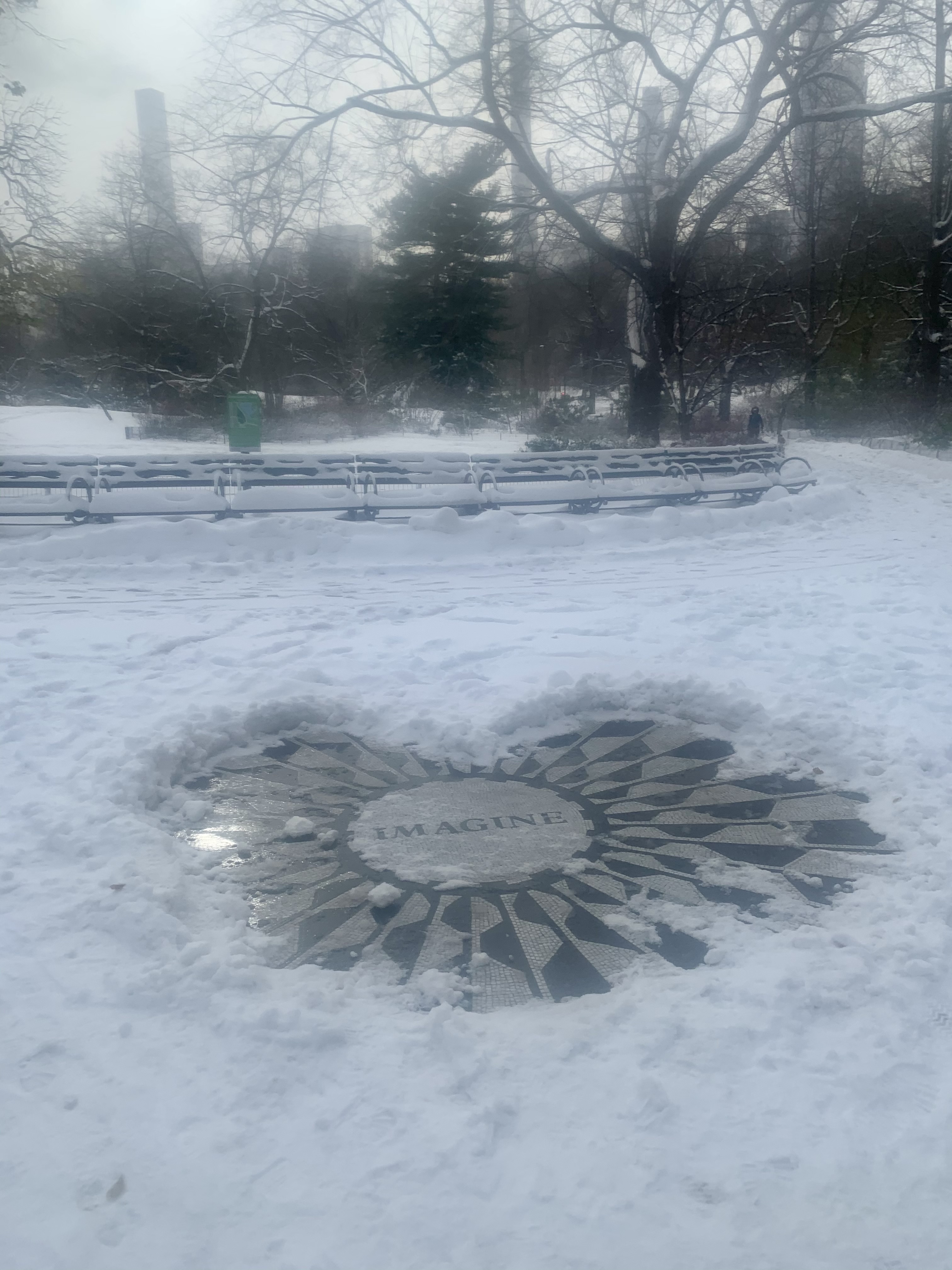
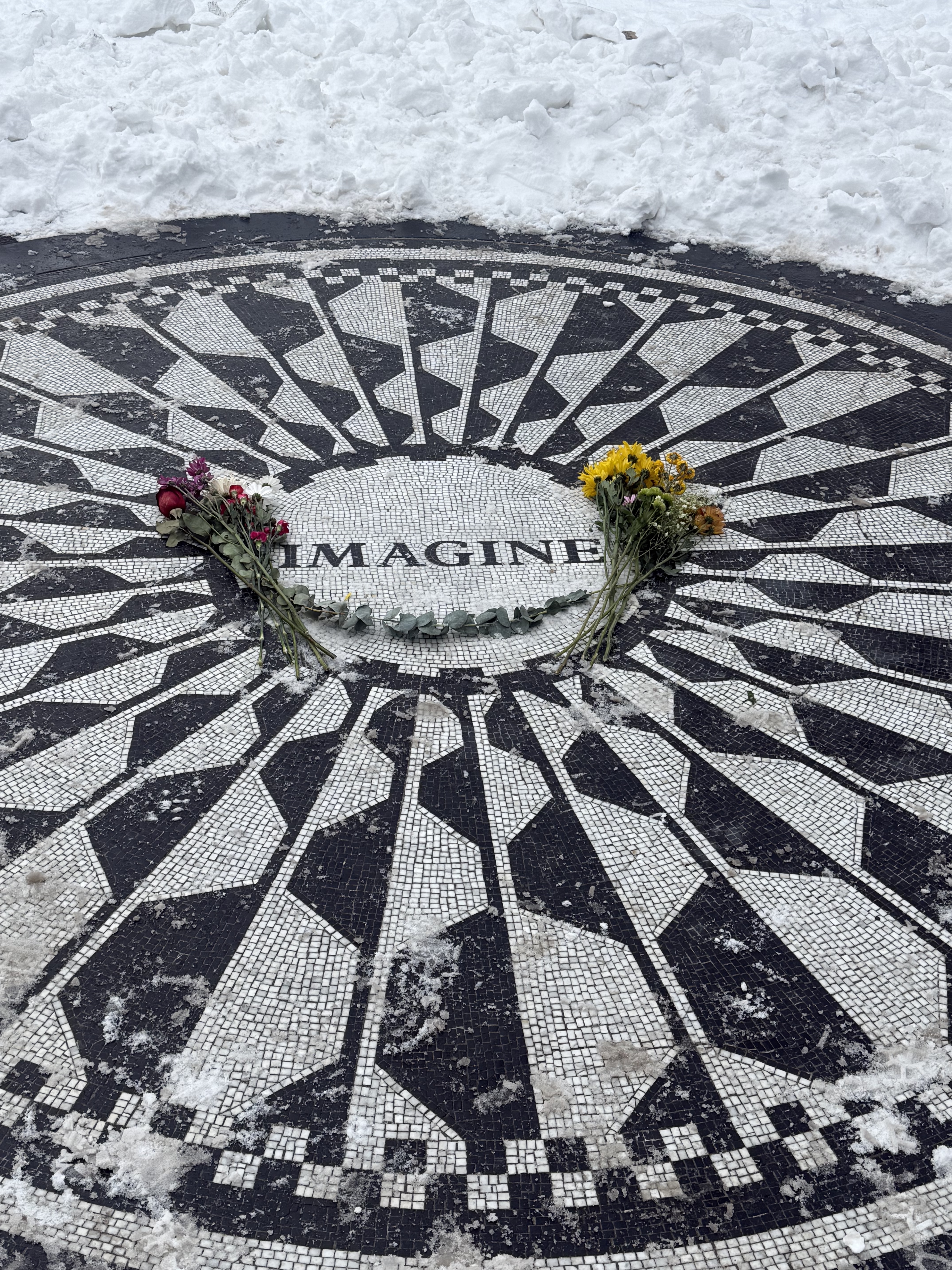
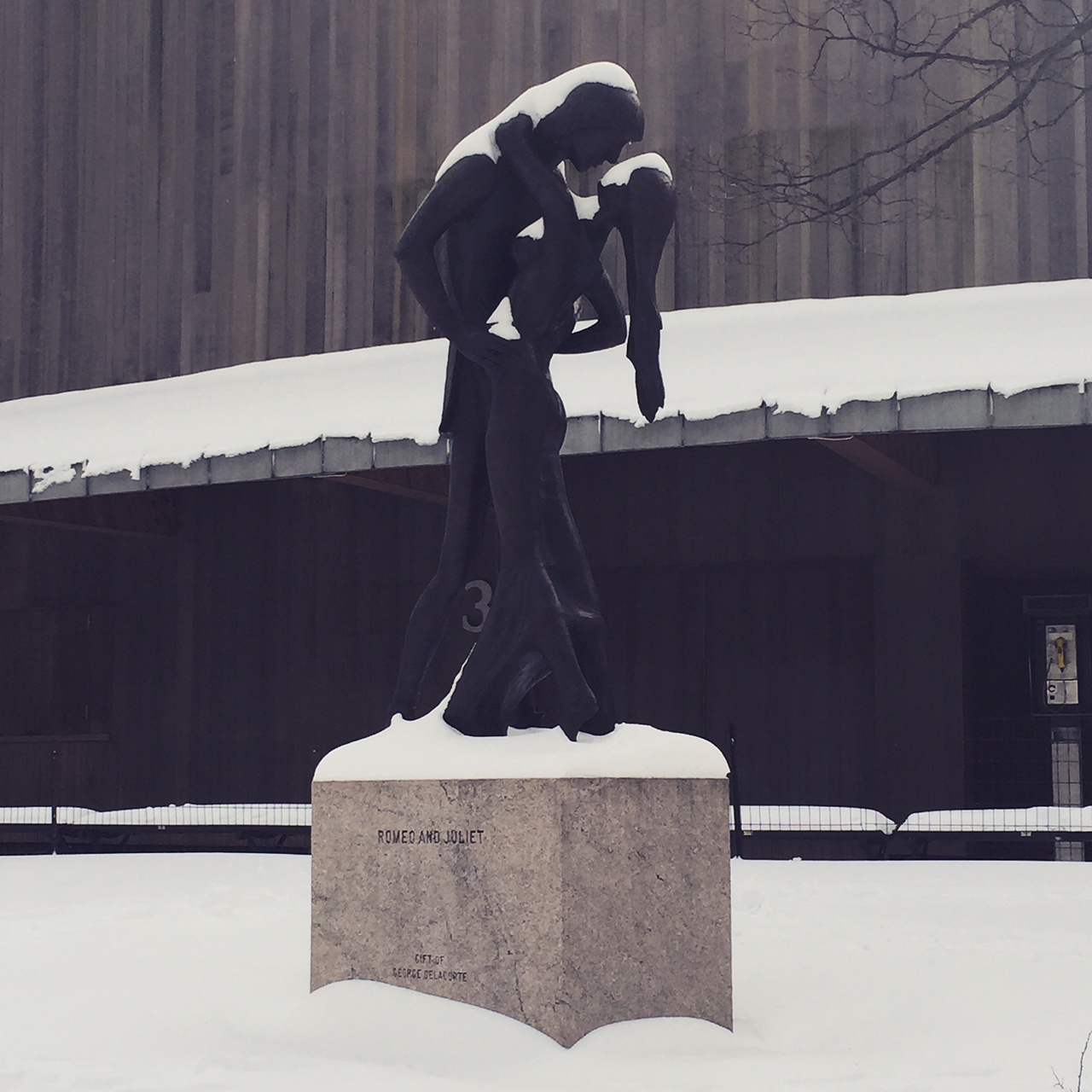
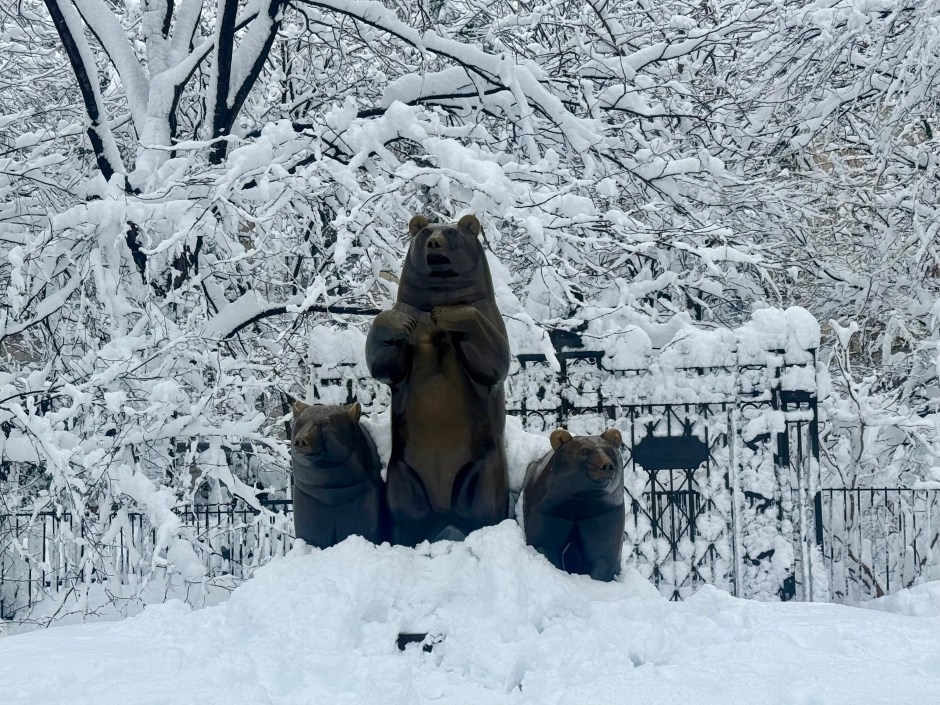
After the park has received enough snow, you will see cross-country skiers and snowshoers in the park, but you don’t even need special equipment to truly enjoy the spectacular beauty of Central Park covered in white. Whether appreciating the permanent residents of the park (statuary) with a new layer of frosting to upgrade their look, seeing that someone has already cleared the Imagine mosaic in Strawberry Fields (do it yourself if no one else has), or appreciating a fresh look at the contrast of the stately buildings surrounding the park with the dazzling white of the park itself, Central Park in winter shows that the value of living in New York City within walking distance of the park is a year-round benefit.

Winter 5 Winter 7 Winter 8 Winter 9 Winter1 Winter2 Winter3 Winter4 Winter6 Winter10

Central Park in Autumn

CP - city and trees

It’s no secret to anyone who has read my blog posts that I adore Central Park. New York City’s jewel, it occupies a surprisingly large rectangle in the center of Manhattan. Its geometric edges belie the diverse topography within the park itself – pick a different entrance and a different segment of the park each time you enter and you might think you were in an entirely new place. Not only does the park change within its sections, it changes dramatically with each season, and depending on the weather, even within each season. For this dérive (an unplanned walk within an urban environment), I entered the park at its southwest corner on a cool late-Autumn day.

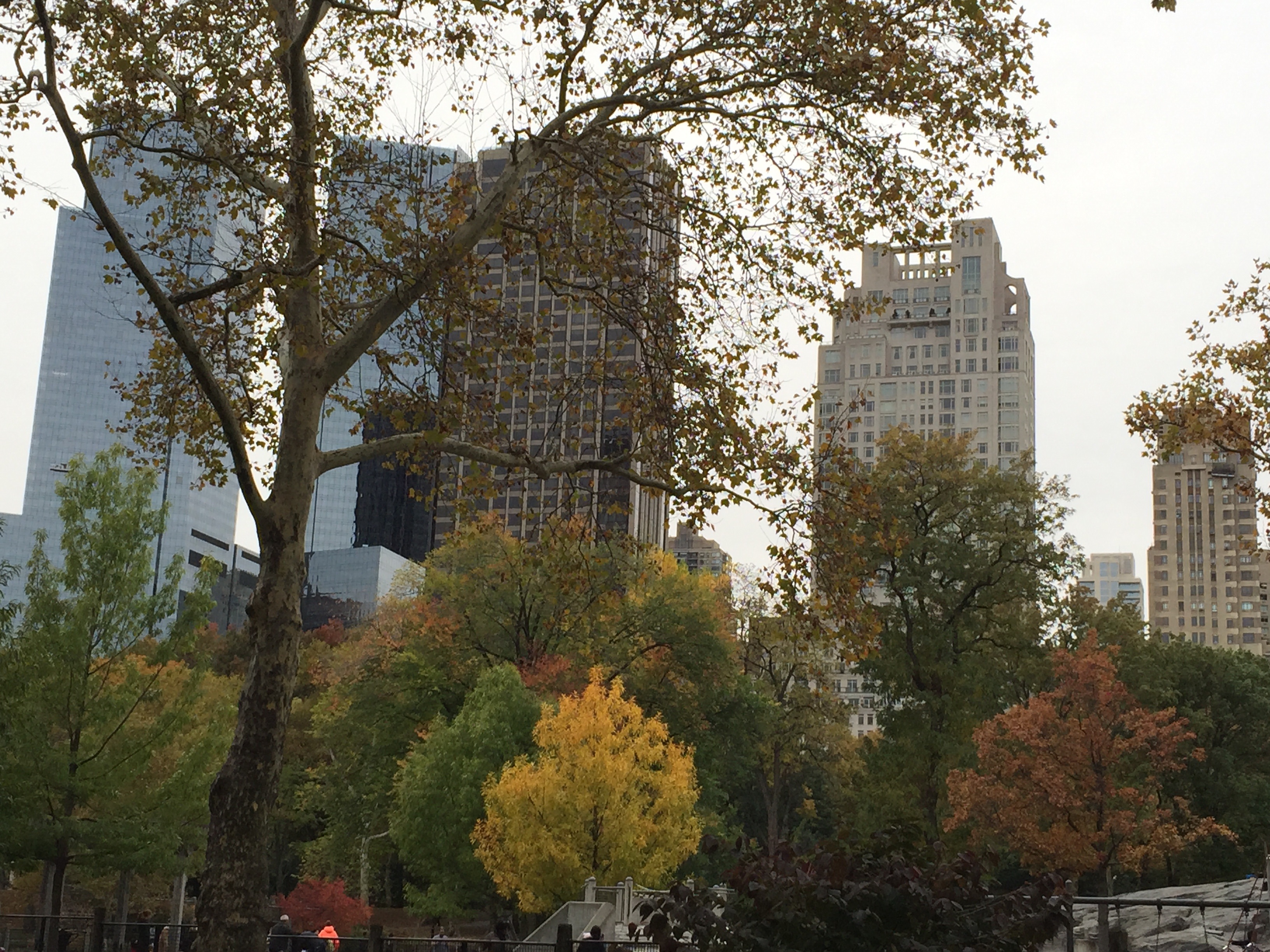
This corner of Central Park is surrounded by the hectic confusion of Columbus Circle, with the budding skyscrapers of Billionaire’s Row along the south end, and Time Warner Center and 15 Central Park South along the west. Walking into the park here (once you have passed the horde of bicycle rental peddlers) is an immediate escape from the traffic and crowds. It takes longer for the trees to change to their autumn colors in the city compared to areas right outside – or even those farther south – because of the “heat island” effect of all the concrete. Once the trees in Central Park begin to turn, however, they really show off. The experience was walking through the park this time of the year is uniquely engaging. The crunching of leaves beneath your feet is an auditory reminder of the season (as long as you take off your ear buds).  The burst of yellow, orange, and red leaves in the foreground is a visual treat, highlighted by the stately apartment buildings in the background.

Wandering through the lower end of the park, I heard the Central Park Carousel before I saw it. There has been a carousel in this spot in the park since 1871, this fourth one having been there since 1951. It was built in 1908, and lived in Coney Island before being moved to Central Park. It has 57 hand-carved horses and two chariots. The Carousel is open every day of the year, weather permitting. The Carousel has to be ridden to be experienced – like the rest of New York City, it is fast!

Just east of the Carousel is the Central Park Dairy, a fanciful building that looks like it was taken from a fairy tale, once a source of fresh milk for city kids. Now it’s one of five information centers and gift shops in the park. Just past the Dairy, still heading east, is one of my favorite statues in the park – Balto the husky. Balto led a pack of sled dogs to carry diphtheria medication 1000 miles between Nome and Anchorage when a serious epidemic broke out among children in Alaska. The heroic dogs became famous, and this statue was installed only 10 months after the event. Appropriately, the patina on this inviting bronze statue is worn from legions of children sitting on his back.

Continuing east but curving a bit south again, I was once again charmed by the sound of a park icon before seeing it – the Delacorte Clock near the Central Park Zoo. Given to the Park by George Delacorte (who also donated the Alice in Wonderland statue and the incomparable Delacorte Theater, home of Shakespeare in the Park) in 1965, this clock with a moveable animal sculpture carousel can be experienced every day on the hour and half hour from 8 AM to 6 PM. It plays nursery tunes most of the year, while a penguin, hippo, elephant, kangaroo, bear, and goat dance around with musical instruments and two monkeys strike the bell. During the end of the year, the music switches over to holiday tunes.

In my opinion, a person could spend several lifetimes in New York City, and never grow tired of Central Park. Always changing, it provides a way to stay in touch with our animal nature while surrounded by the buildings and endless activities that humans have created – allowing those of us who live in New York City to be stimulated or calmed, depending on what we need at any particular moment.

Manhattan Valley

455 CPW

Recently I was looking for a townhouse for a customer, and came across one on Manhattan Avenue and 105th Street. While I suppose I would have thought of this address as being either “Upper-Upper West Side” or “Lower Morningside Heights” before spending some time there, I have since learned that the area bounded by 110th Street and 96th Street to the north and south, and Central Park West and Broadway to the east and west is actually called Manhattan Valley. This part of town was known as the Bloomindale District in the past, for a Bloomingdale Street previously in the area (long since gone). There is a natural valley here, caused by what was once the path of a small stream leading from the Harlem Meer to the Hudson River. Between the price for the townhouse I was viewing in the area, and the price of a 2 bedroom co-op recently listed by a colleague on West 100th just off Central Park West, I quickly realized that this area, while very close to the Upper West Side in both location and atmosphere, offers opportunities for excellent value in real estate.

As I have written before, I find that the best way to get the feeling of what it would be like to live in an area is to take a dérive (an unplanned walk in an urban setting). For this one, I started at Broadway and 96th Street. 96th Street, like 86th on the east side, is a busy major two-way thoroughfare, often packed with cars on their way to the Henry Hudson and on to the George Washington Bridge. I walked east to Columbus, and headed north. The Columbus Square mega-residential development between Columbus and Amsterdam and between 97th and 100th Streets, has brought in a series of high-end shopping destinations along this stretch of Columbus. In addition to the Whole Foods, Sephora, Petco, and Starbucks already there, Crumbs cupcakes will be reopening here within a month.

Turning east on 100th, I walked to the beginning of Manhattan Avenue. The topography of the island of Manhattan is not a perfect rectangle, although we have imposed a grid of streets on most of it. This disparity occasionally leads to extra streets in some areas, and Manhattan Avenue appears between Central Park West and Columbus beginning at W. 100th Street, and continuing well into Harlem. The super block developments created by Park West Village and the Frederick Douglass Houses prevent cars from using this area as a way to cut crosstown, making it noticeably quiet. The blocks between 104th and 106th are simply gorgeous rows of townhouses, reminding me strongly of the beautiful peaceful townhouse blocks near Prospect Park in Brooklyn.
Turning east again on 106th, I walked to Central Park West, appreciating the view of 455 Central Park West. Formerly the New York Cancer Hospital, this property has quite an interesting history. This was the first cancer treatment facility in the country, created with money raised by John Jacob Astor and others after former president Ulysses S. Grant discovered he had throat cancer. They built a beautiful chateau, which looked more like a museum of art than a hospital (the rounded towers were created as a state-of-the-art medical feature to prevent germs building up in sharp corners), and it continued on this site until the mid-20th Century. The developers of this property restored the chateau into condominium apartments, and added a modern tower behind it with unimpeded Central Park views. Walking north on Central Park West to 110th, and turning west, I was now on Cathedral Parkway and had to finish this derive with a nod to our spectacular Cathedral of St. John the Divine, which I will discuss in more depth in a future derive in Morningside Heights.

I loved spending time in this neighborhood. For someone looking for a home with the feel of the Upper West Side or near New York’s jewel, Central Park, this area offers significant value.

Central Park North

Harlem Meer

I have written previously about the value of a view of nature – how our animal selves need to connect to plants or animals even within New York City’s urban jungle. While not NYC’s largest park (that would be Pelham Bay Park in the Bronx), Central Park is an amazingly large green space within the relatively small island of Manhattan. The increase in value a view of Central Park, or even proximity to it without a view, delivers to an apartment in New York City is well established. Most tourists only see, or even think about, the south end of the park, closest to Midtown, However, the northern third of the park is equally beautiful, and the price of an apartment on Central Park North (110th Street) is a fraction of that on Central Park South (59th Street). I enjoy taking unplanned walks around the city (dérives) and decided to walk along the edge of Central Park, starting on Central Park West and 86th Street, crossing the top of the park at Central Park North, and then heading south along Fifth Avenue, stopping at 86th Street.

At the corner of Central Park West and 86th Street, you stand flanked by Central Park to the east, facing a row of Central Park West’s grand prewar apartment buildings to the west. Many of the east-facing apartments in these buildings in the upper 80’s/low 90’s have wonderful views of the Jacqueline Onassis reservoir (living on Fifth Avenue, she was well known for using the jogging path around the reservoir). Continuing north, large outcroppings of ice age Manhattan schist can be seen, forming a natural cliff at the edge of the park. I was struck along this section by the Eldorado, the most northern of the several “twin towered” buildings along CPW (the San Remo, the Majestic, and the Century being farther south).

When you walk to the Northwest corner of CPW and 110th Street (which is called Central Park North for obvious reasons between Central Park West and Fifth Avenue), a statue of Frederick Douglass can be seen, gazing up the Avenue bearing his name. His is a fairly new statue, only being revealed in 2010. Turning east on Central Park North, it is clear that this section of park-facing apartments is a mixture of older tenement-styled buildings, and a few spectacular new development properties. It seem that this is only the beginning of the development of this stretch of real estate, with the potential for views south encompassing the entire length of Central Park as well as the Manhattan skyline. I have seen the spectacular view that apartments facing north on Central Park South have, but so far can only imagine how amazing those same views are from the north with the Empire State Building, Chrysler Building, and new icons like One57 and 432 Park rising up behind the park.

Within the north section of Central Park, beautiful and serene Harlem Meer (“meer” is simply a “lake” in Dutch, New York City’s first language) anchors the recreational possibilities for this area. Catch-and-release fishing are available (yes, people can actually fish in Central Park), and Lasker Rink provides ice skating in the winter but is transformed into a swimming pool in the summer. There is a Harlem Meer performance festival every summer, well worth visiting regardless of where you live in the city.

At the Northeast corner of Central Park North and Fifth Avenue, a statue of Duke Ellington (complete with piano) honors his importance in the Harlem Renaissance of the 1920’s, 30’s, and 40’s. A committee led by cabaret singer Bobby Short raised the money for this statue in the 1980’s. Turning onto Fifth and heading south,  One Museum Mile, a new residential development designed by Robert A.M. Stern Architects signals the change to what some call “Upper Carnegie Hill.” Passing the lush and elegant Conservancy Gardens, the Carnegie Mansion (home to the Cooper-Hewitt Museum), and the Guggenheim, Fifth Avenue slowly evolves into the street we imagine, stately apartment buildings side-by-side facing the park.

What I have learned from exploring Central Park and the streets facing it is that the Park is truly a kind of miracle – such an oasis of multi-layered nature surrounded by our great city. Living in close proximity to the park is a gift, and one with a price. However, the price is lessened on the north section of the park, and offers great value for those looking to live near this green jewel within the island of Manhattan.

The Upper West Side: from Central Park to Riverside Park

UpperWest

In a past dérive (an unplanned walk through an urban environment), I started at the corner of Central Park West and 81st Street, and walked south on CPW to Columbus Circle. For this dérive, the starting location is the same, but this walk goes from one great park to another: from incomparable Central Park west to the delightful Riverside Park, on the Hudson River. This walk illustrates why the Upper West Side continues to be a top location for residential real estate in Manhattan – it’s a primarily residential neighborhood, with a variety of different types of homes, and with all the neighborhood amenities one needs to enjoy life.

Starting at Central Park West and W. 81st Street, the Museum of Natural History dominates to the south. Founded in 1869 by a group including Theodore Roosevelt, Senior (father of President Teddy) to increase knowledge of the natural world in a time when zoos were relatively rare and limited in scope, and travel to see many of the wildlife shown was impossible for nearly everyone, it is a classic – but it can be a bit jarring to modern eyes to see stuffed and preserved animals, many of which are now endangered. Teddy Roosevelt became an iconic part of the museum, donating two elephants from one of his expeditions and eventually being honored by his image in the towering statue that welcomes visitors to the main building. Walking along W. 81st, however, eventually the Rose Center for Earth and Space, housing the Hayden Planetarium as well as many interactive educational displays, can be seen through the thick August foliage. It’s quite a change from the winter, when the glowing blue globe within a transparent cube can be seen from many directions through the leafless tree branches.

Behind the museum, on this Sunday afternoon, there is a greenmarket set up, with locally grown produce, honey, cheese, and bread. These greenmarkets are a wonderful addition to New York City life, and you can find out their locations and times at http://www.grownyc.org/greenmarket.

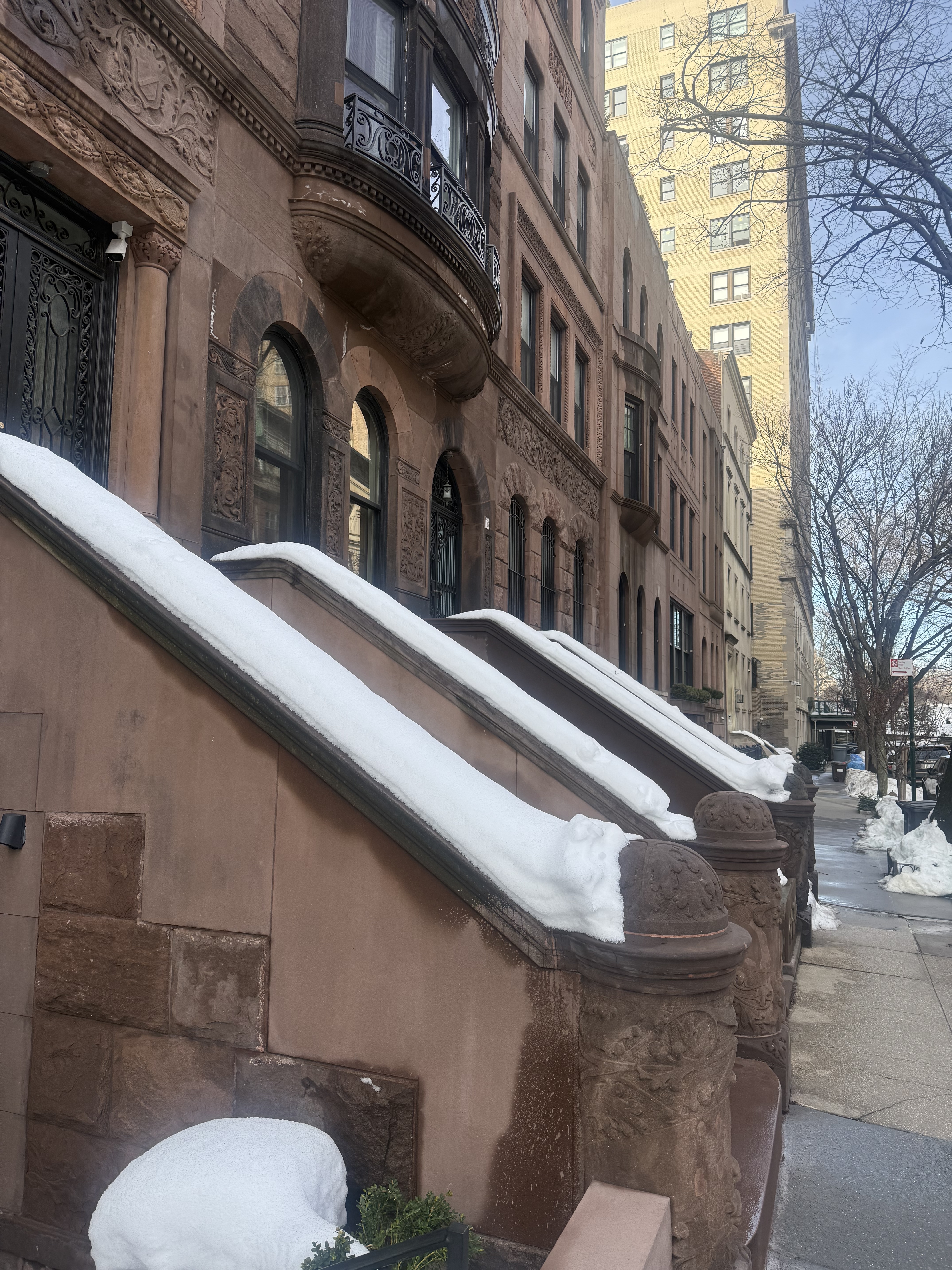
Turning west on W. 82nd, the characteristic nature of this neighborhood becomes apparent: larger stately apartment buildings on the Avenues and on the corners, and charming brownstones filling in the cross streets. The material covering brownstones is a type of sandstone from the Jurassic or Triassic eras, so having an abundance of brownstones so near the dinosaur skeletons at the American Museum of Natural History seems only fitting.

Passing Broadway, and then West End Avenue, I smile as I remember a recent conversation with an Australian looking for an apartment near Riverside Park. He wondered where all the theatres were, and eventually I had to explain that Broadway was only “Broadway” as he thought of it in the 40’s and 50’s, and that “West End” bore no resemblance to the same area in London! In fact, as you get closer to Riverside Park, the neighborhood becomes more peaceful and residential, eventually leading to the pastoral beauty of Riverside Park.

The Upper West Side holds a variety of choices for someone looking for a home – running the gamut from the stately views of Central Park or Riverside Park in the majestic buildings on Central Park West and Riverside Drive, to the quiet and sometimes quirky floor-through apartments in brownstones on quiet cross streets. I recently helped a customer find a pet-friendly home near Riverside Park (with its off-leash hours and dog runs), and was delighted when she saw the 500 square feet of outdoor space in a certain brownstone garden apartment and knew that she and her dog had found their perfect home. Everyone looking for a home in New York City deserves the same result, and with the abundance of different neighborhoods and types of residences, with patience and the help of a good broker, it should be possible.