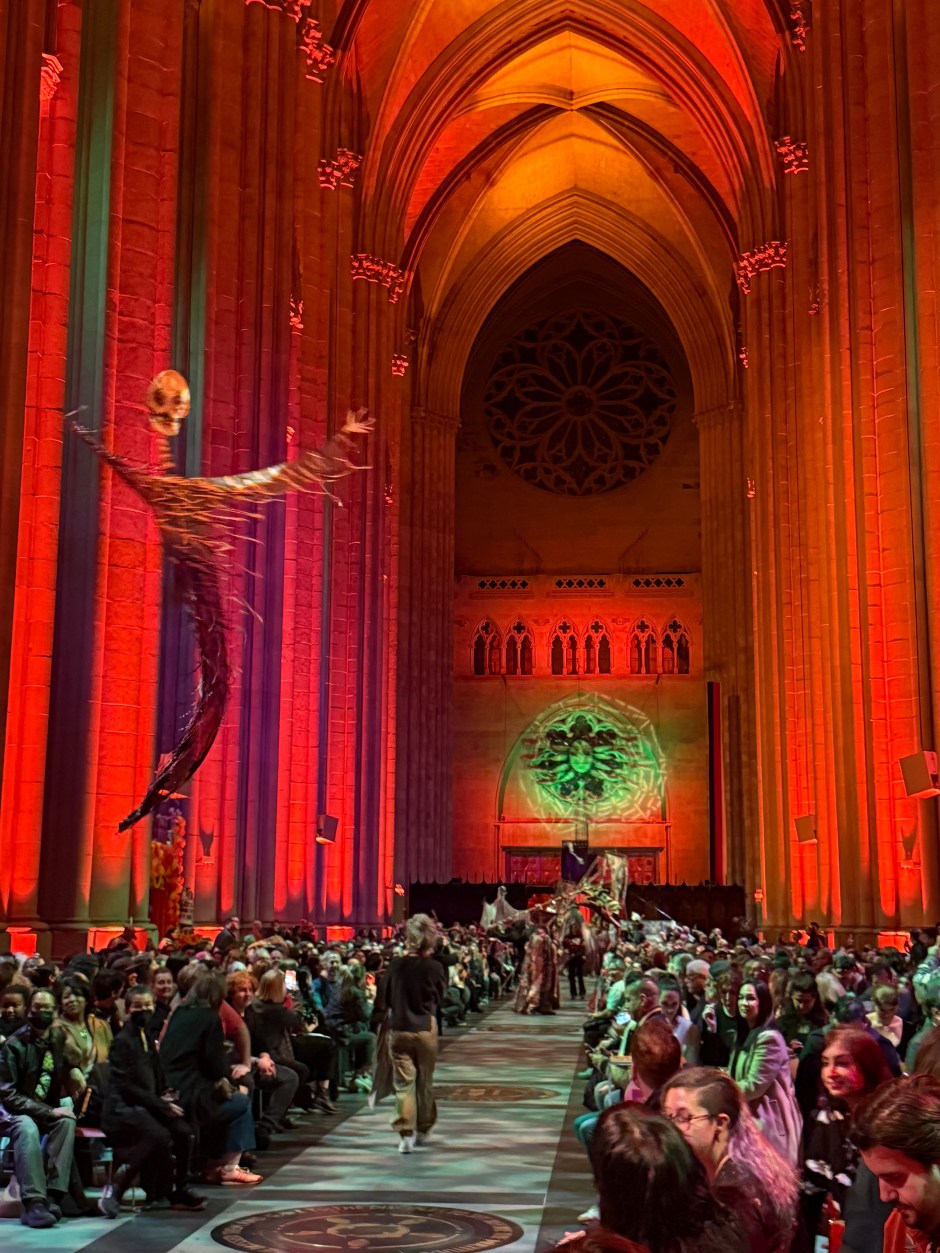
Halloween Extravaganza at St. John the Divine

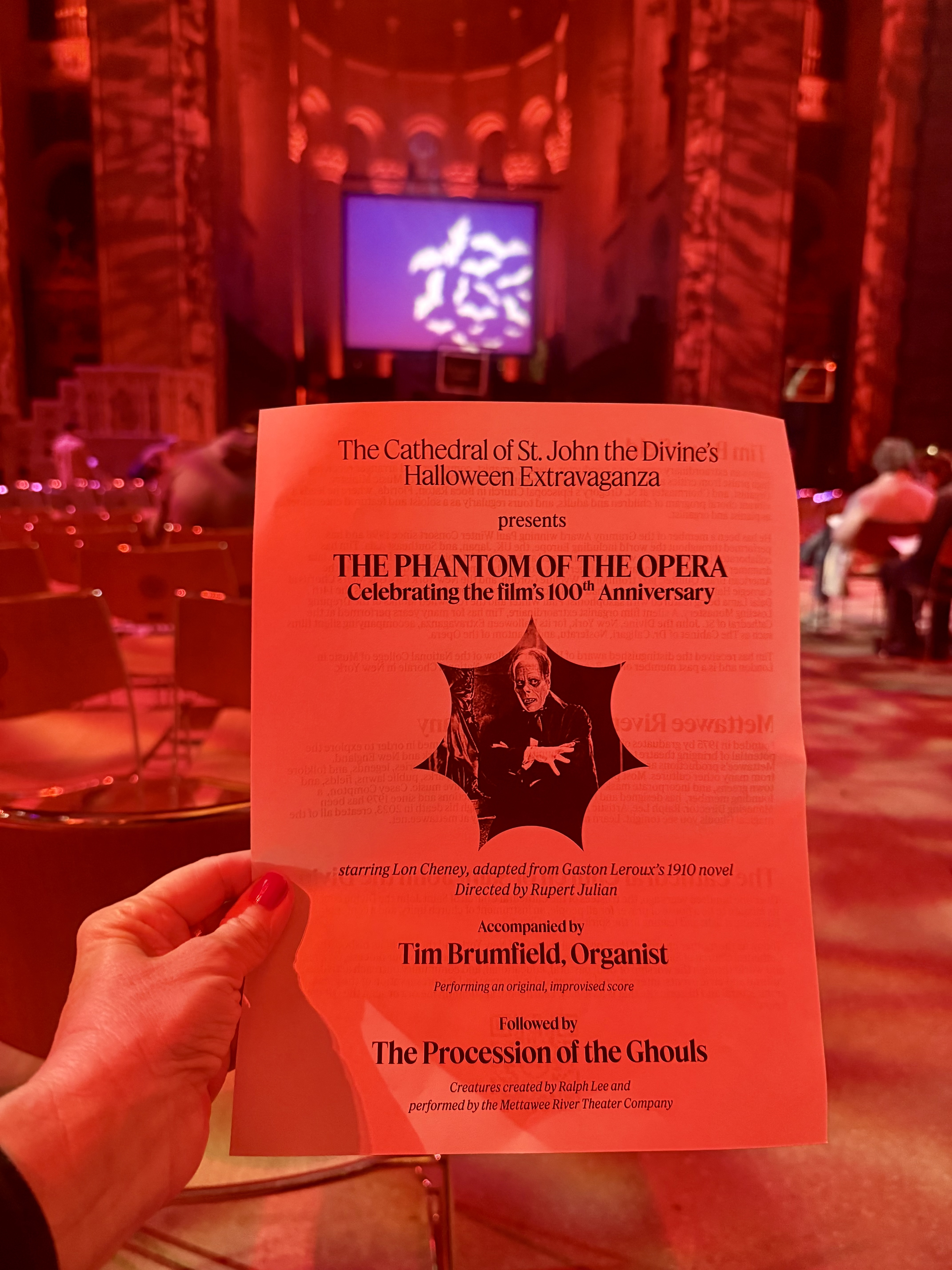
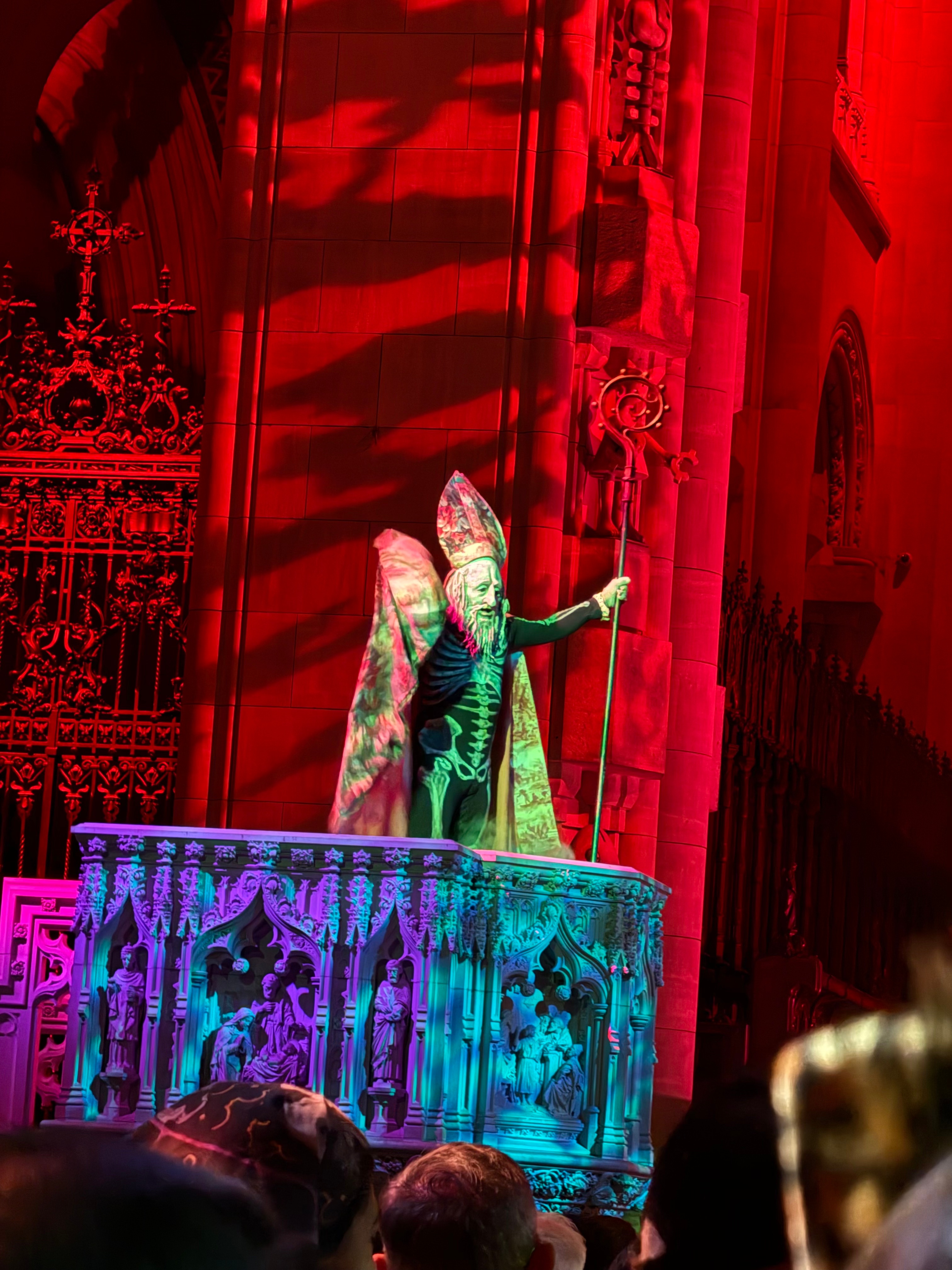
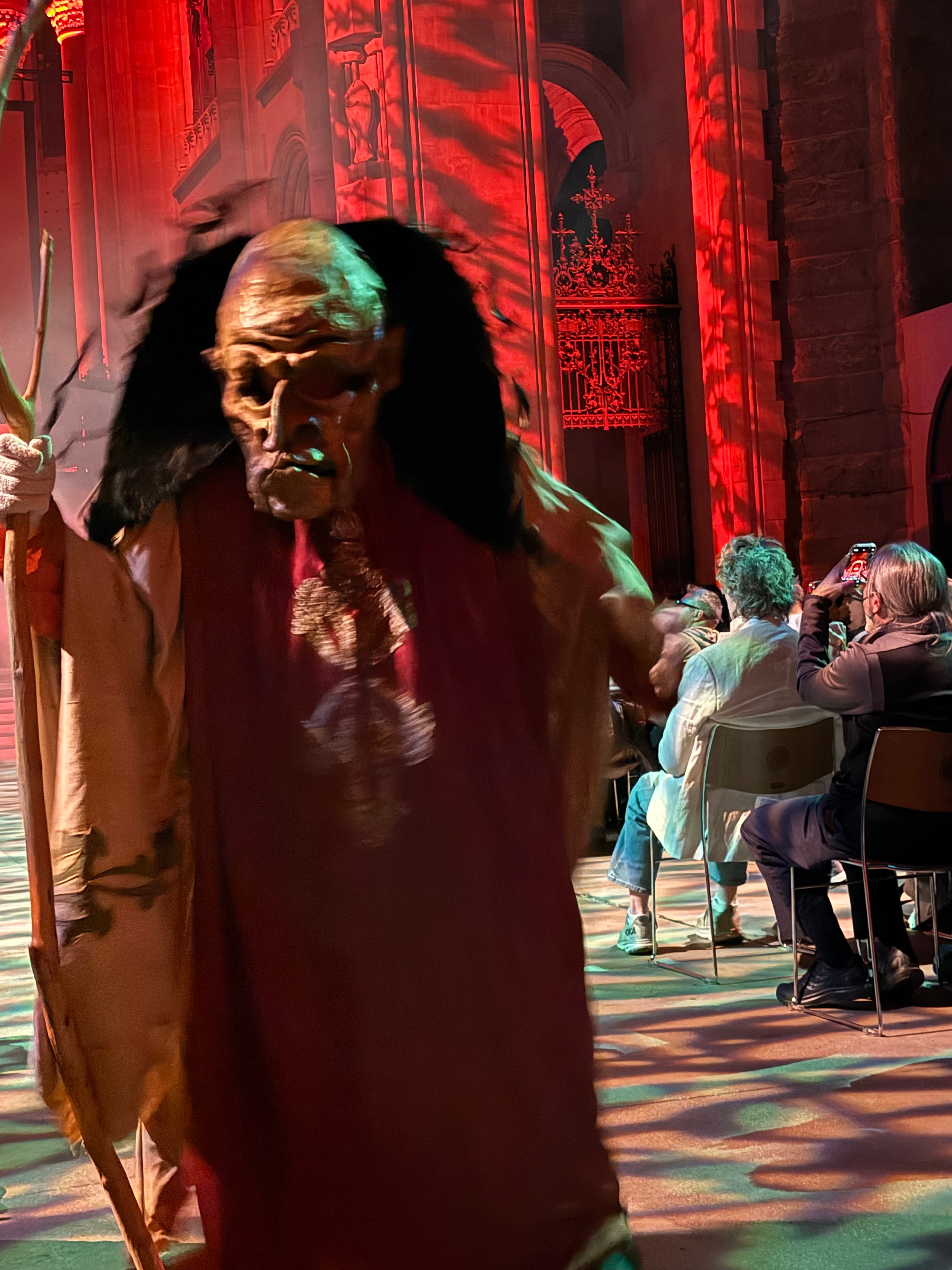
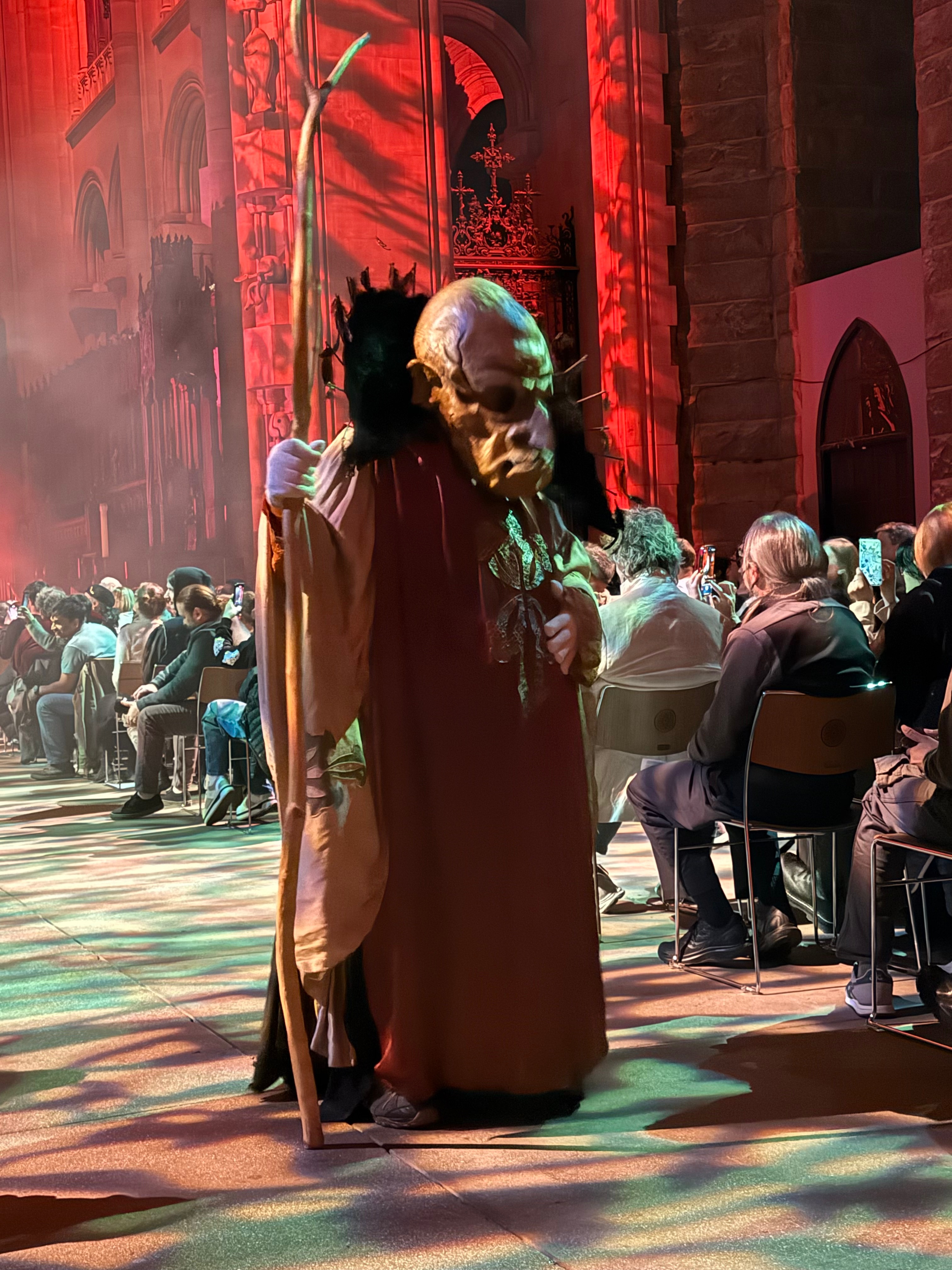
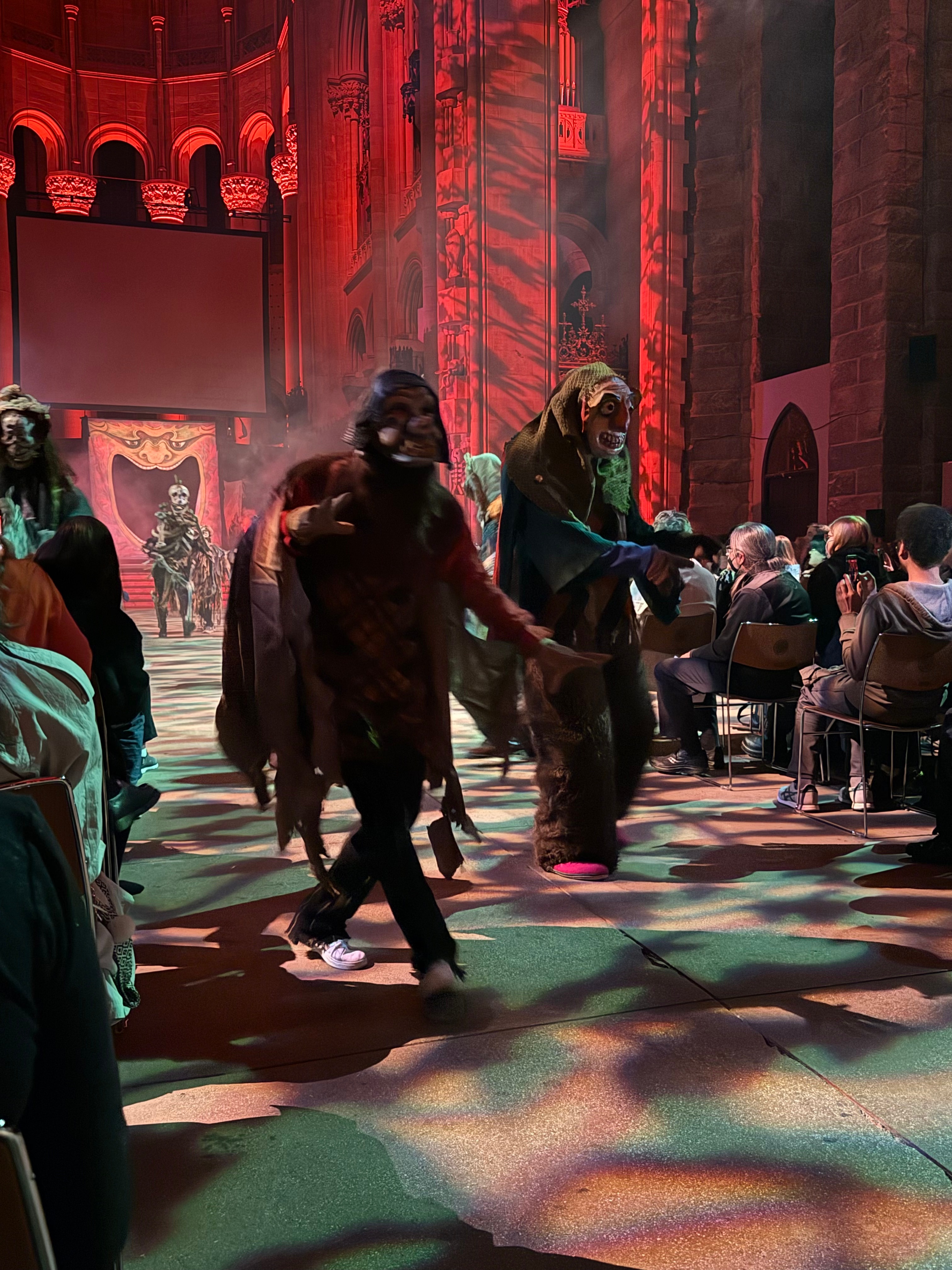
There are many wonderful Halloween experiences in New York City – in previous years, I have posted about the experience of walking around and seeing Halloween townhouse decor (see here and here), Halloween on Governors Island, Halloween at Chelsea Market, Halloween events at Carl Schurz Park, and the Halloween event at the Bronx Zoo. One very special Halloween event that I have attended many times is the Halloween Extravanganza at the Cathedral of St. John the Divine. It’s coming up later this month on October 23 and 24, but unfortunately, as per usual, is sold out. Keep an eye on their website next September to be sure to get tickets. But to give you an idea of what makes it such a worthwhile experience, this is what it was like last year (2025).
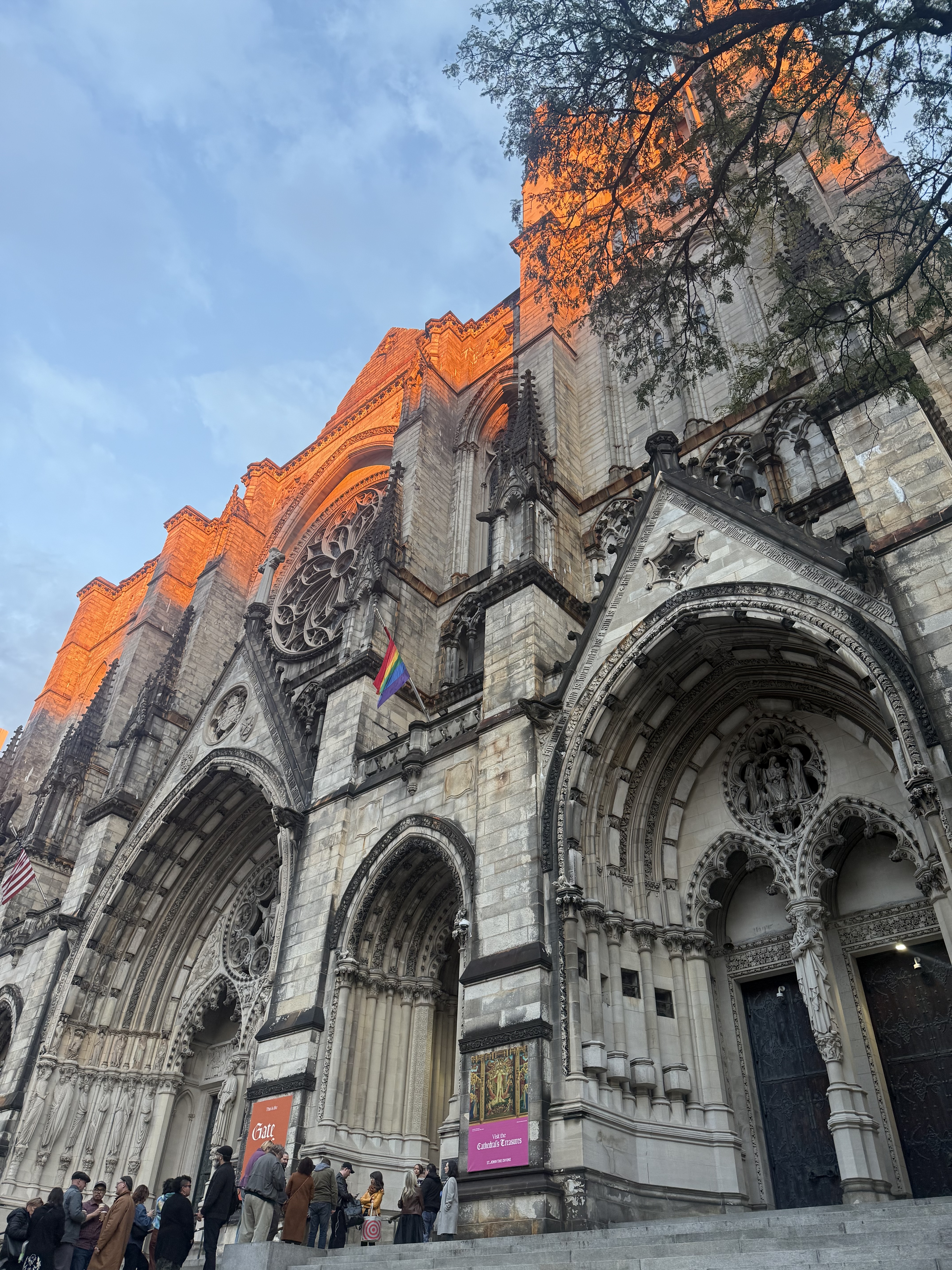
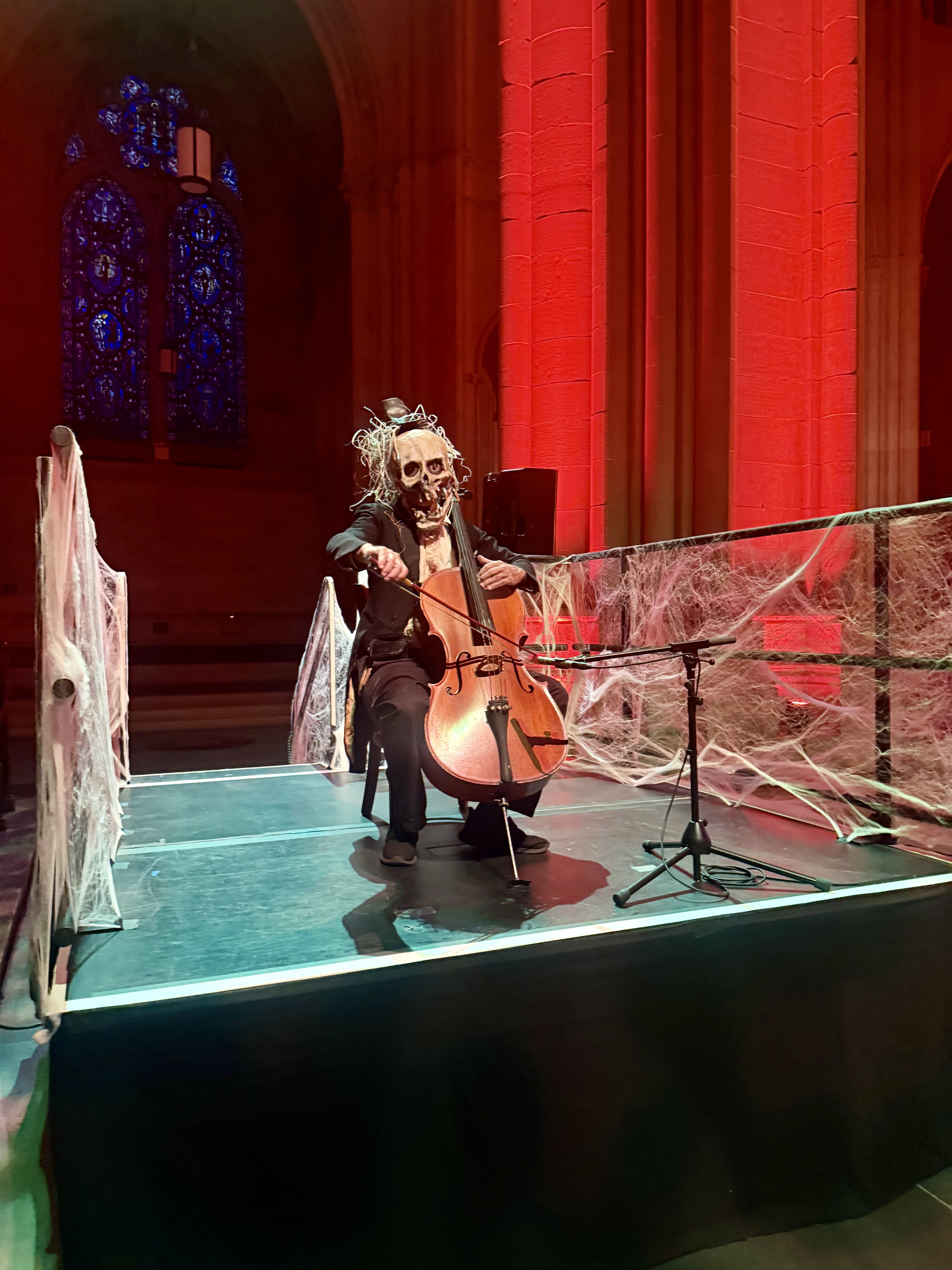
The Cathedral of St. John the Divine is the seat of the Episcopal Diocese of New York, and is located in Morningside Heights on Amsterdam Avenue between West 110 Street (AKA Cathedral Parkway) and West 113th Street. Entering the building, you are greeted by a cello-playing ghoul – see my video here. The mood is instantly set! The cathedral is enormous. I recommend getting to the event early, as early as an hour or more early, to get a prime spot (which, in my opinion, is close to the front but not so close that you are craning your neck to see the screen – and most importantly, on the middle aisle).
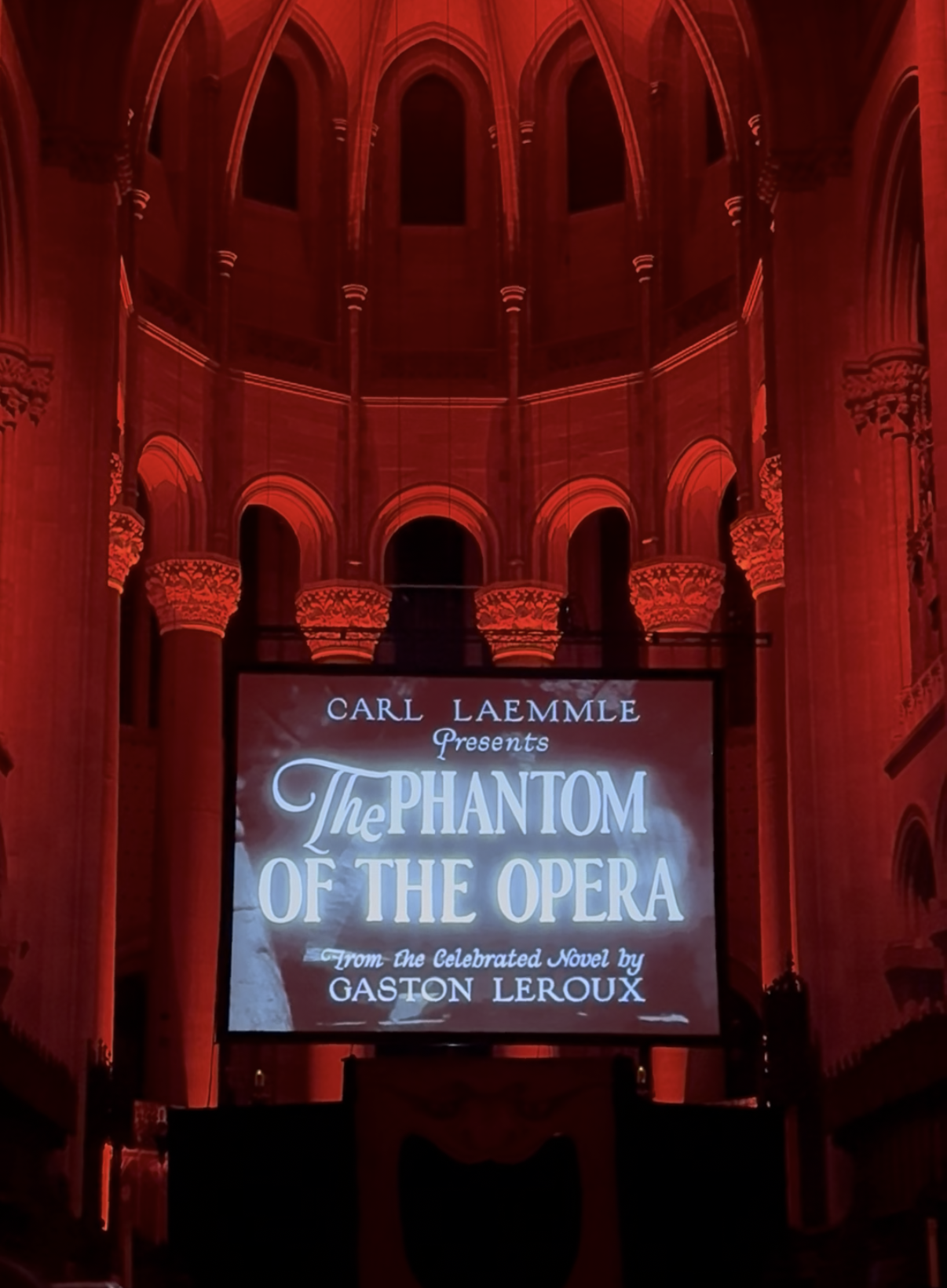
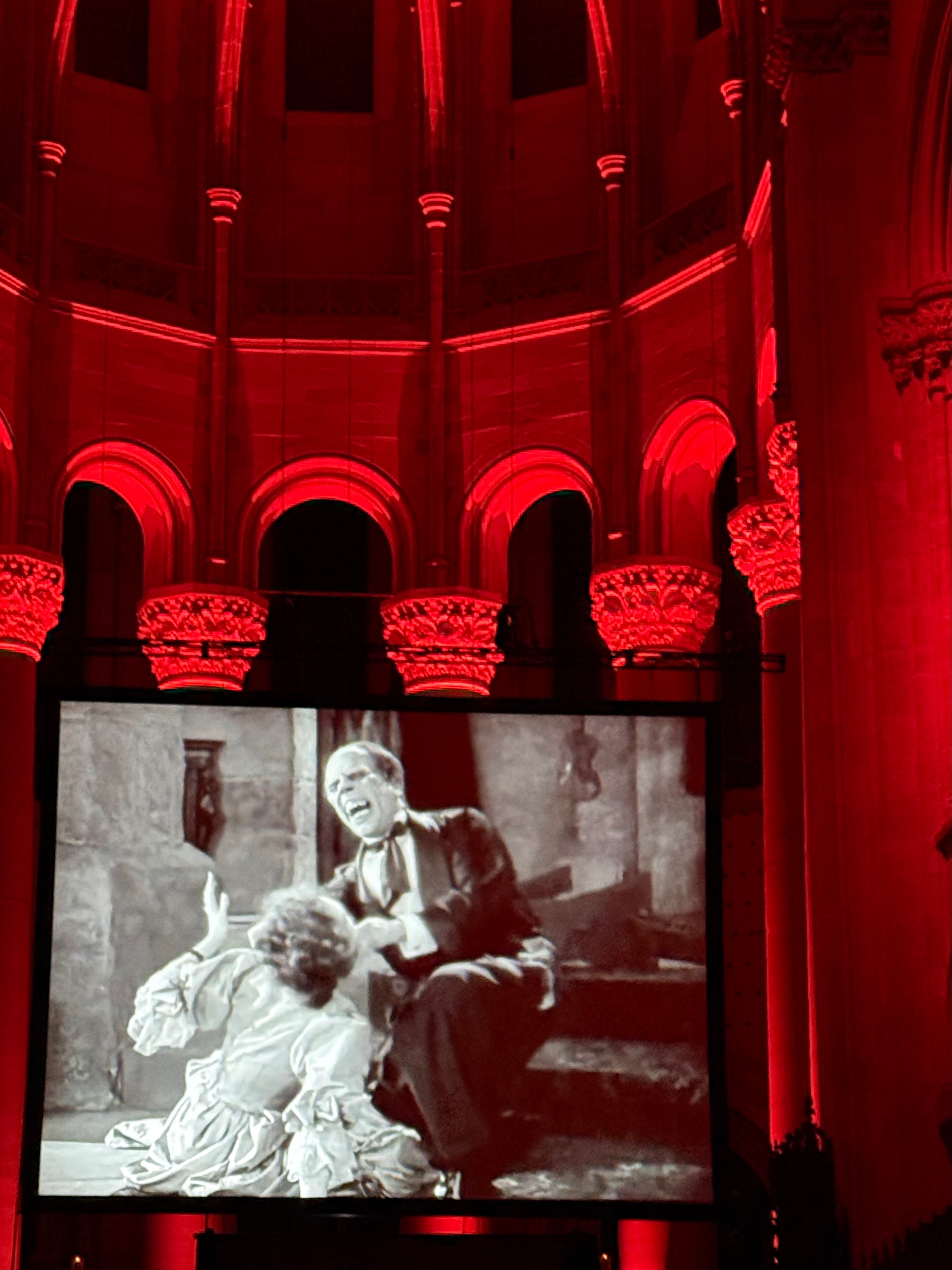
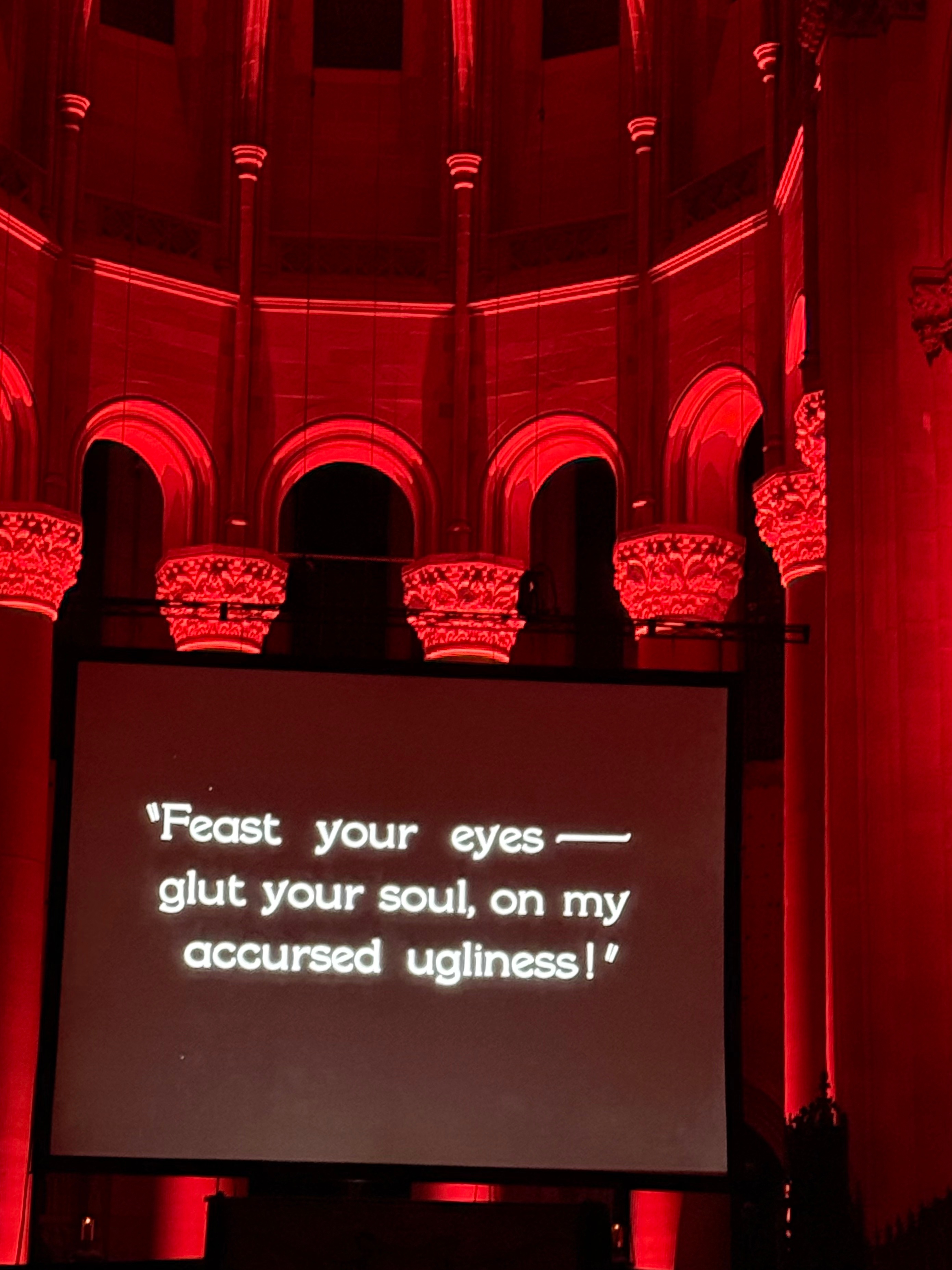
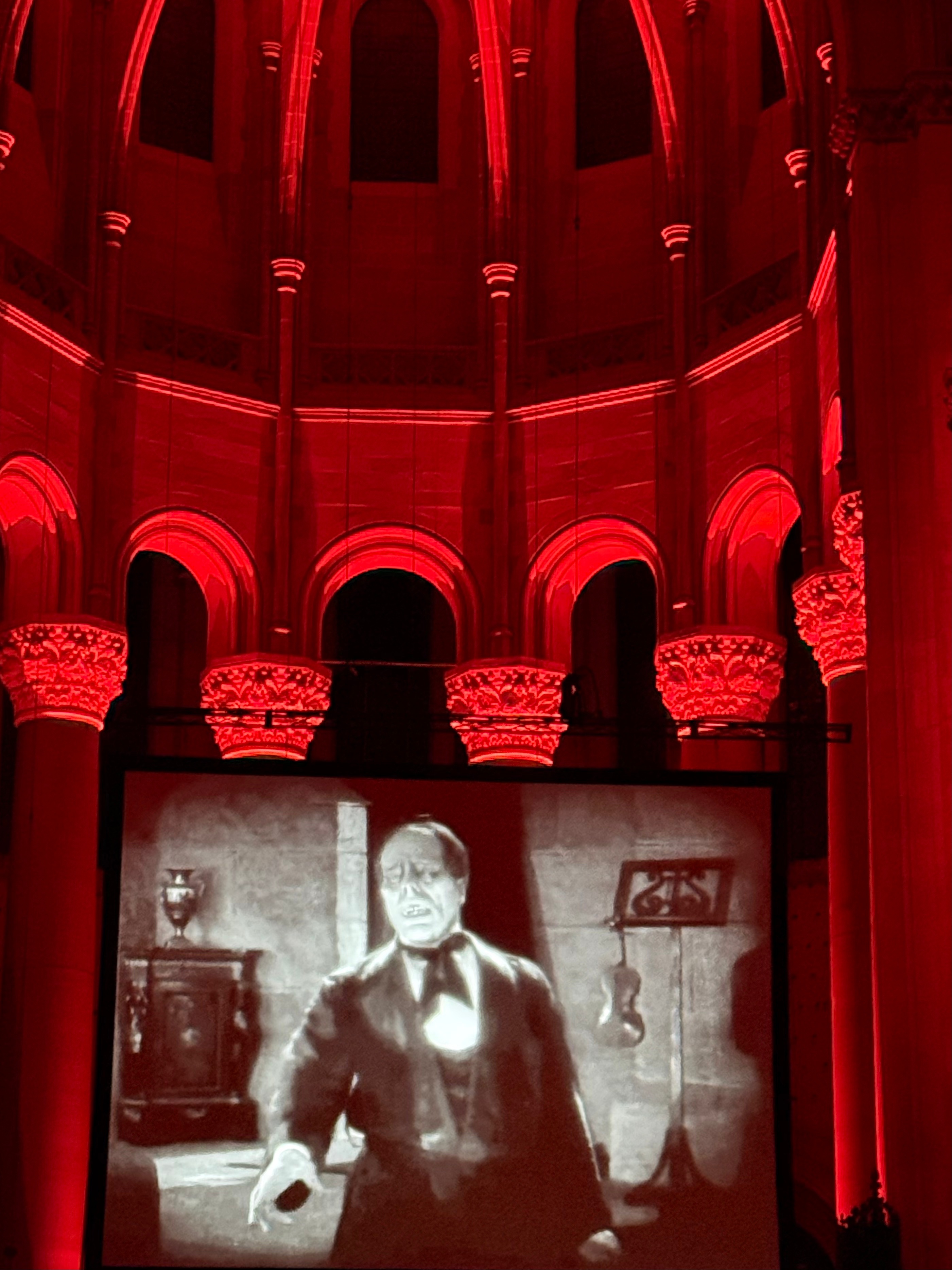
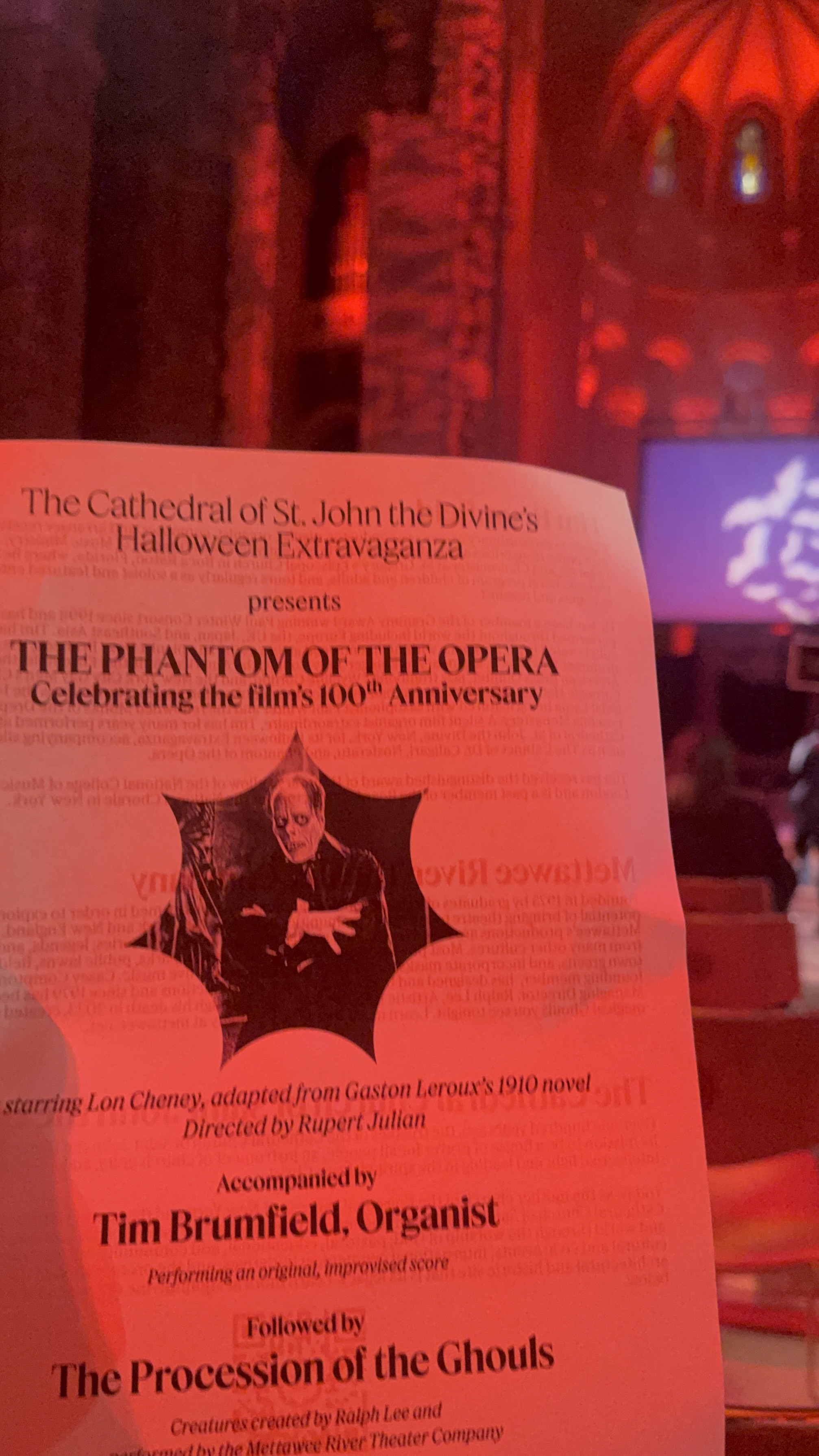
Each year they select an old silent horror film to show, accompanied by live improvised organ music performed by Tim Brumfield. In my experience, they rotate through The Cabinet of Dr. Caligari, Nosferatu, and The Phantom of the Opera, and I have seen all three (I noticed that this year, 2026, they are doing Dr Jekyll and Mr. Hyde.) . Last year was the 100th anniversary of the Phantom movie starring Lon Chaney, and that was the movie being shown. It’s really enjoyable to watch the silent film in a group setting, sharing the mood with so many others. And it is really amazing to listen to how the organist fits the mood of the scene with appropriate music. The prelude to the film is always Bach’s Toccata and Fugue in D minor, and then the beginning credits start as the Bach concludes and the improvisation begins.
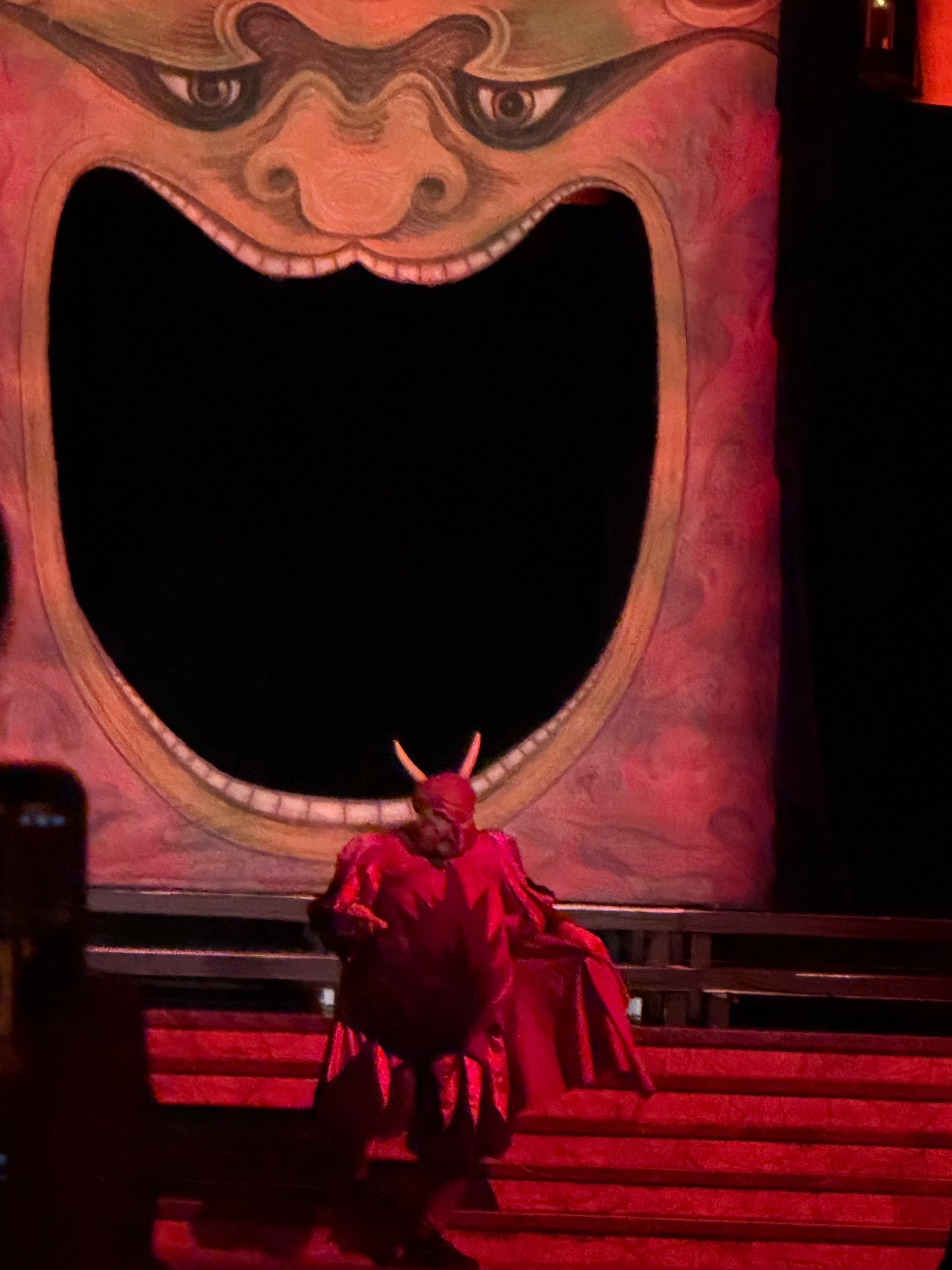
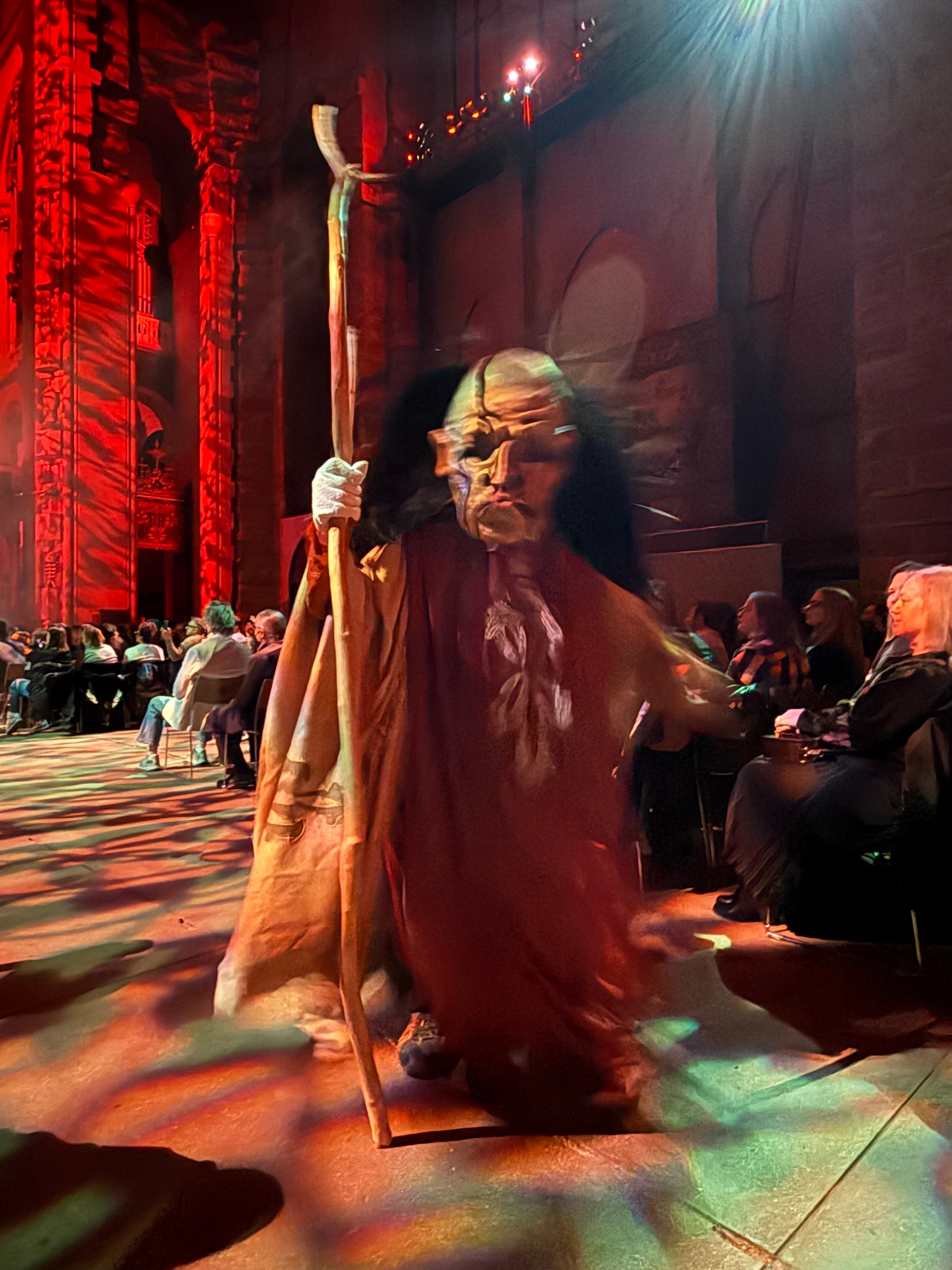
As the end credits conclude for the film, the Processing of the Ghouls begins. Created by Ralph Lee and featuring his original costumes, the procession is presented by the Mettawee River Theater company. It is artistic, creepy, atmospheric, and immersive. You can see my video of the procession here.
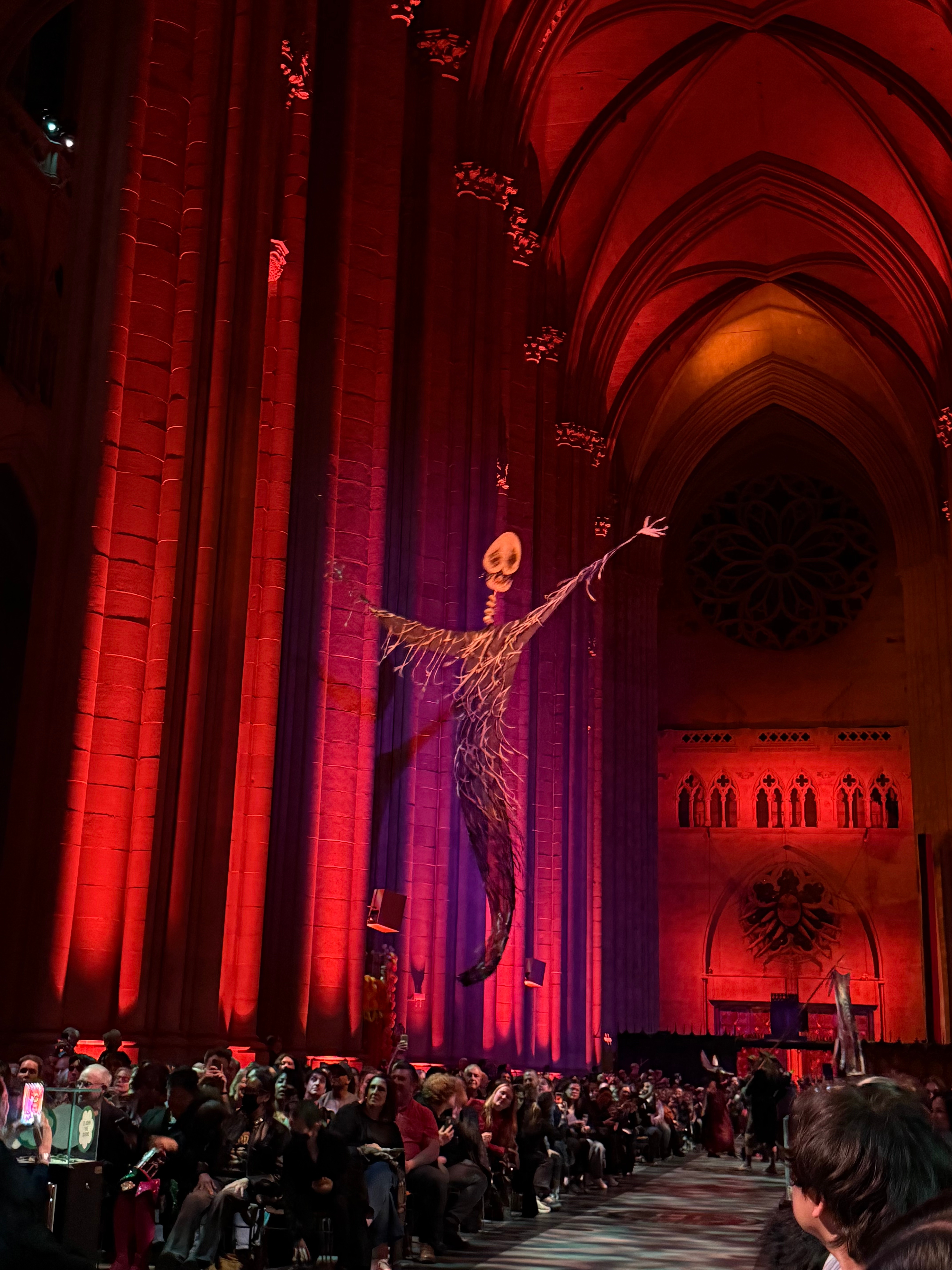
Going to the Halloween Extravaganza, I am reminded of the rich array of experiences we are fortunate enough to have available to us here in New York City. There are a variety of things to experience, year-round. For Halloween, some of the events are more kid-friendly than others (I would include this one as more appropriate for older kids and teens, and most attendees are adults). I happen to love Halloween, and New York City is a particularly fun place to live in October!

Morningside Heights

Morningside 1

Bounded by Manhattan Valley to the south, Harlem to the north, Morningside Park to the east, and Riverside Park and the Hudson River to the West, Morningside Heights is an area with a long history (an important Revolutionary War battle was fought here) and many illustrious former residents (F. Scott Fitzgerald, George Gershwin, Cecil B. deMille, Fiona Apple, Thurgood Marshall, and Barack Obama among them). Recently I have heard of a trend to call the area “SoHa” or “south of Harlem” – but other than the names of a few places in the neighborhood, have not actually heard anyone use this term! Recently I took a winter stroll through the area to get a feel for what Morningside Heights has to offer.

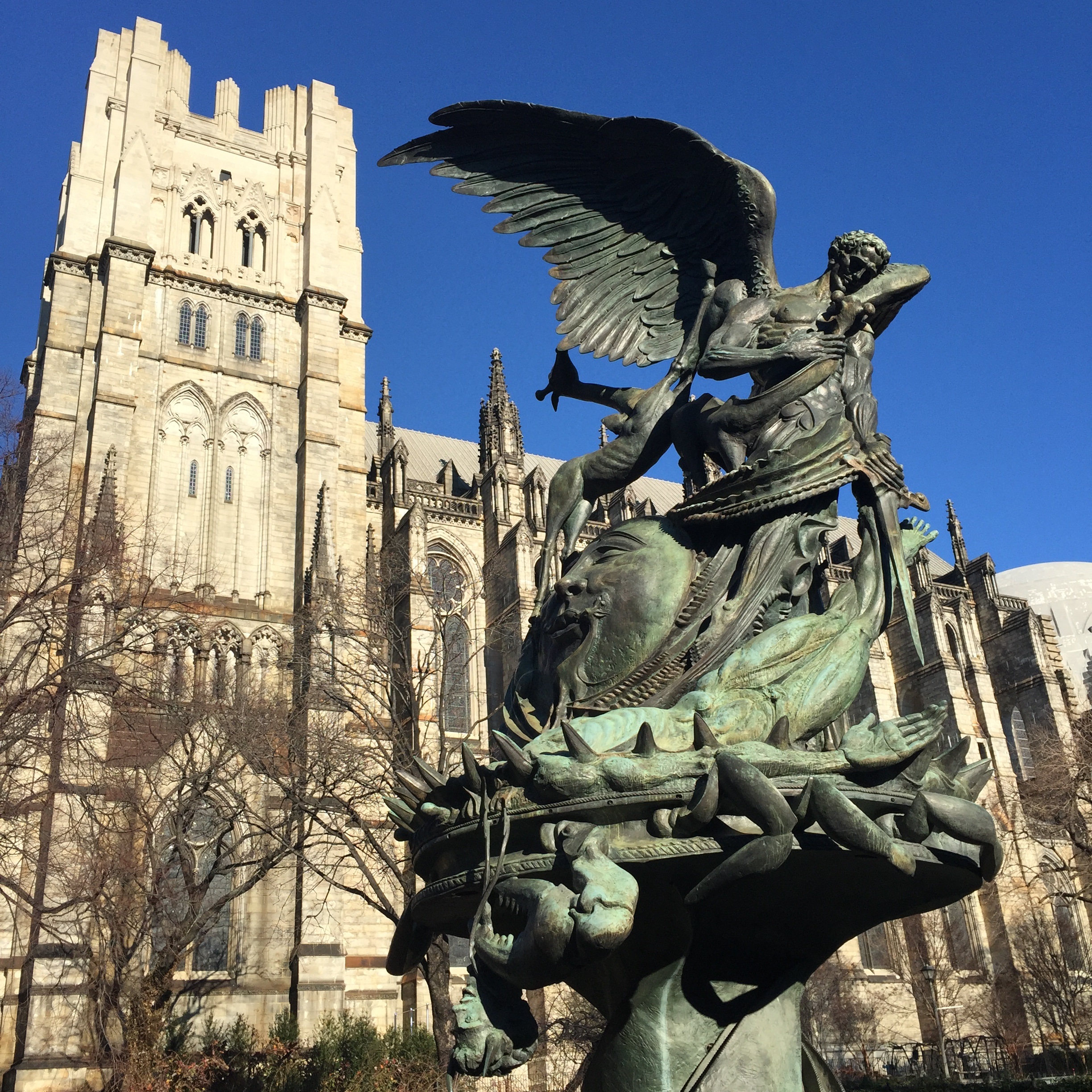
To begin my dérive (an unplanned walk in an urban environment), I walked along Central Park West until I hit 110th Street, and turned west. Dominating the horizon almost immediately is the fourth largest Christian church in the world, the Episcopal Cathedral of St. John the Divine. Also known as “St. John the Unfinished,” it was designed in 1888 and begun in 1892, but was interrupted by two world wars and is still being fully completed. The Cathedral takes up a huge swath of land on Amsterdam Avenue between 110th and 113th Streets. A pleasant mix of secular and religious, the interior features sculptures of figures representing great thinkers of different centuries: representing the 17th, 18th and 19th centuries are William Shakespeare, George Washington, and Abraham Lincoln. In 2001 the 20th century representatives were completed with a group of four: Martin Luther King, Albert Einstein, Susan B. Anthony, and Mohandas Gandhi. A center for the arts, Philippe Petit (the French high-wire walker who was the subject of Man on Wire) is the Artist in Residence.

When I stopped by on this dérive in late December of 2014, one of the largest pieces of sculpture ever exhibited in the US, Phoenix (by Chinese artist Xu Bing) dominated the nave, two enormous birds suspended in air, looking at the Rose Window. The Cathedral’s Halloween celebration is a “don’t miss” (unless you fail to get your tickets early enough and are shut out) – a screening of an old silent horror movie accompanied by live organ music, followed by the Procession of the Ghouls, a parade of costumed performers and enormous spooky puppets. There are so many reasons to visit the Cathedral – the Feast of St. Francis procession that could include animals as diverse as a kangaroo, a camel, or a yak; the wild and wonderful Winter Solstice celebration – that living in proximity to it would be sufficient to make someone want to be a resident of this neighborhood, in my opinion.

However, walking west from the Cathedral along 113th Street, the quiet nature of these side streets provides yet another reason to live here. Although Broadway is bustling with places to eat and shop, the side streets are largely residential. Continuing west, I ran into Riverside Park, gorgeous year-round. Walking north, I treasured the magnificent buildings along Riverside Drive that face the Hudson River and the park, and their wonderful old-world elegance.

Turning to walk east along 116th Street, I appreciated the banners representing Barnard College – Transforming women and the world for 125 years. One thing people don’t generally think of when they think of New York City is that in fact it is a “college town.” There are over 600,000 students enrolled in the city’s 120 colleges and universities – more than any other city in the United States (yes, more than Boston!). Continuing up 116th Street to Broadway, I entered the campus of NYC’s own member of the Ivy League, Columbia University. It is the fifth oldest institute of higher learning in the US, and one of only nine “Colonial Colleges” founded before the American Revolution. Originally named King’s College and located at Trinity Church in lower Manhattan, it moved (under its post-Revolution name, Columbia College) to midtown for about 50 years in the 1800’s and then to its current spot (as Columbia University) in Morningside Heights in 1896. Although the campus was designed along Beaux-Arts principles, neo-classical styles abound, including its grand library, named one of the most beautiful in the United States.

Columbia’s presence remains a stabilizing force in Morningside Heights, but doesn’t dominate the neighborhood. Residential prices in the area are more reasonable than the Upper West Side, but with abundant public transportation it’s still an easy trip into midtown or downtown. Where else can you confirm who is buried in Grant’s Tomb (Riverside at W. 122nd) or search for peacocks wandering in a garden behind a grand unfinished cathedral? Morningside Heights is a wonderful destination, whether you are an occasional visitor or decide to become a resident.