The new Penn Station

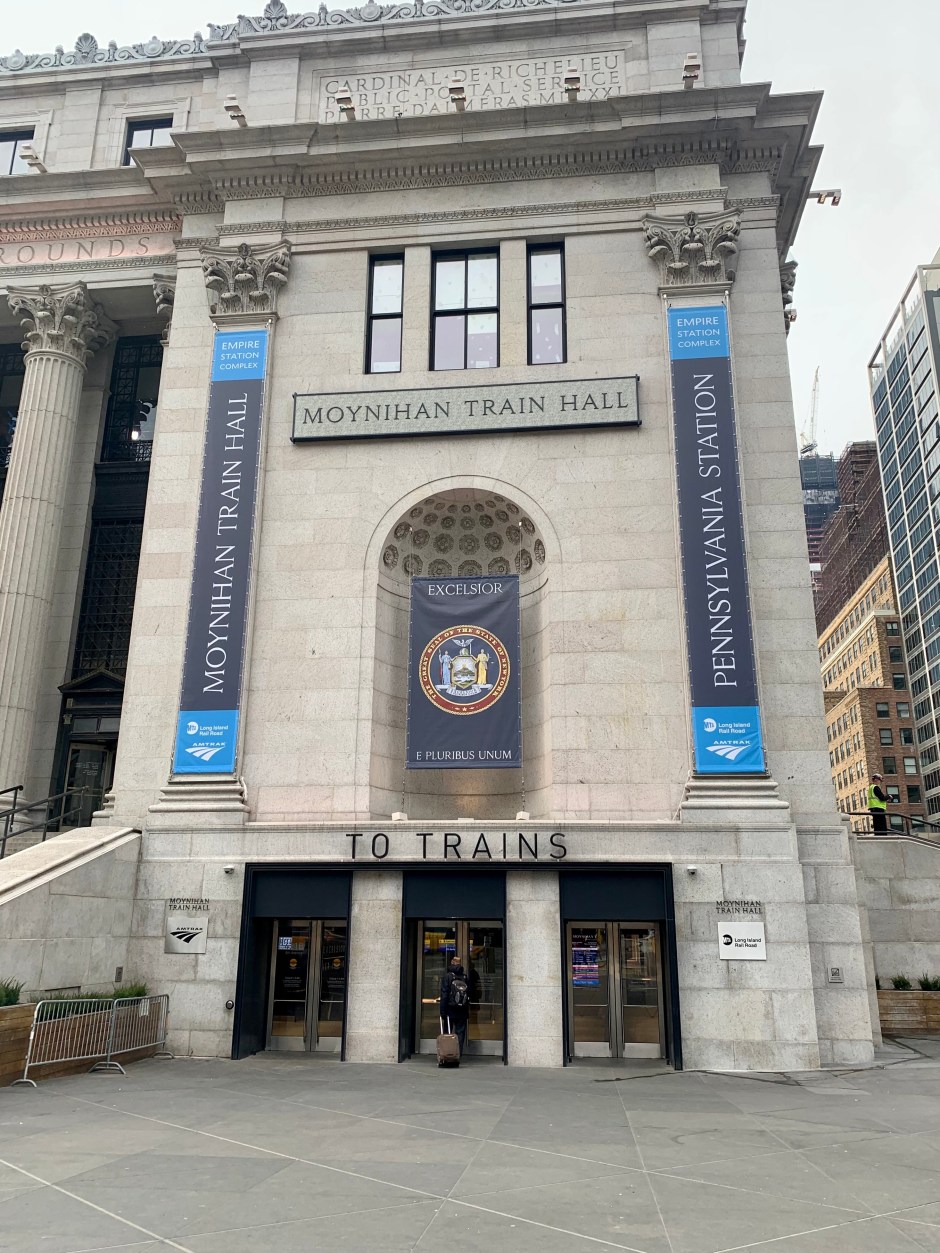
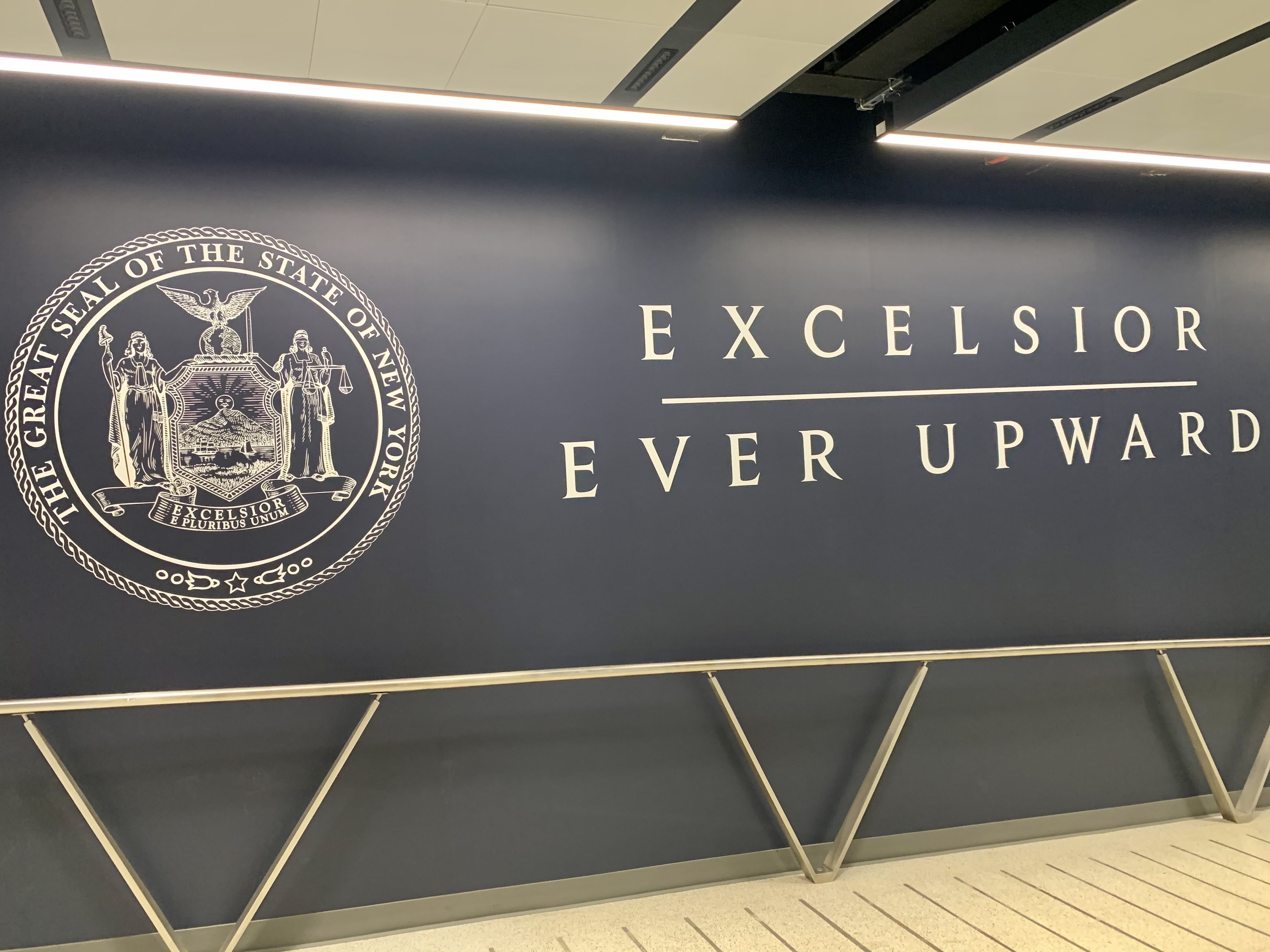
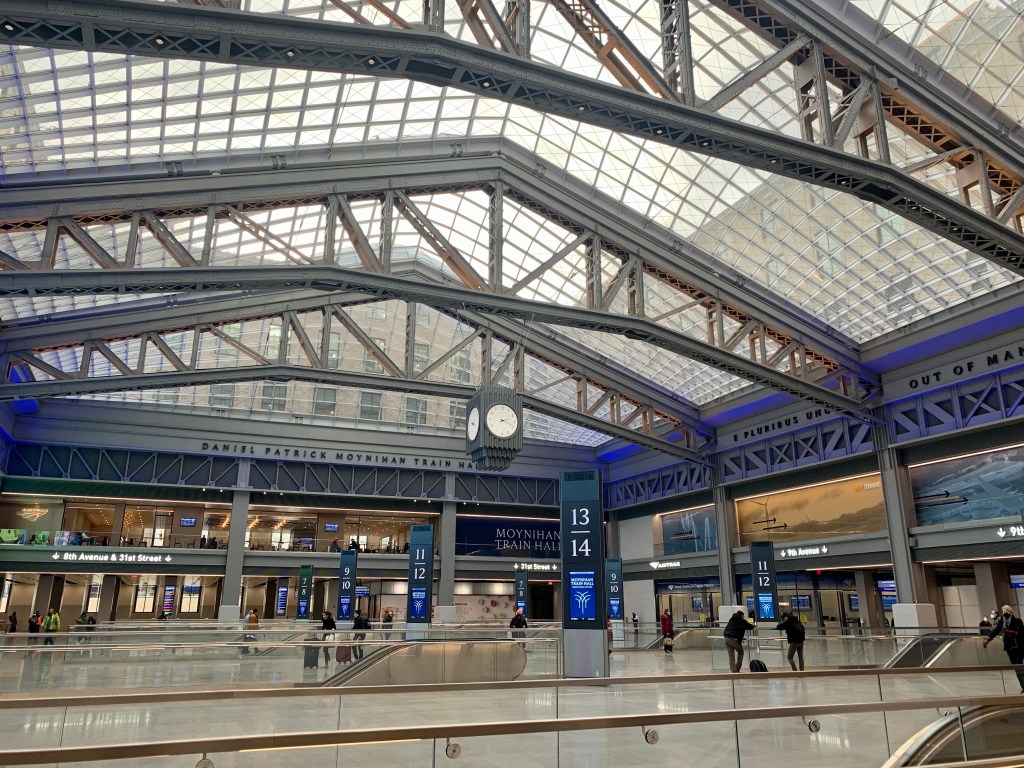
OK, who has had to take a train out of Penn Station? Now, who liked being in Penn Station? I don’t need to be able to see you to know that the answer to the second question is NO ONE. However, NYC has converted the old midtown post office building (once the only place you could mail your tax return late on April 15th to get the correct postmark before midnight!) into a magnificent new Penn Station. Enter on Eighth Avenue between 31th and 33rd Streets, and find yourself in a modern yet classic new station for LIRR and Amtrak trains (sorry, New Jersey Transit – you are still in the old Penn Station).

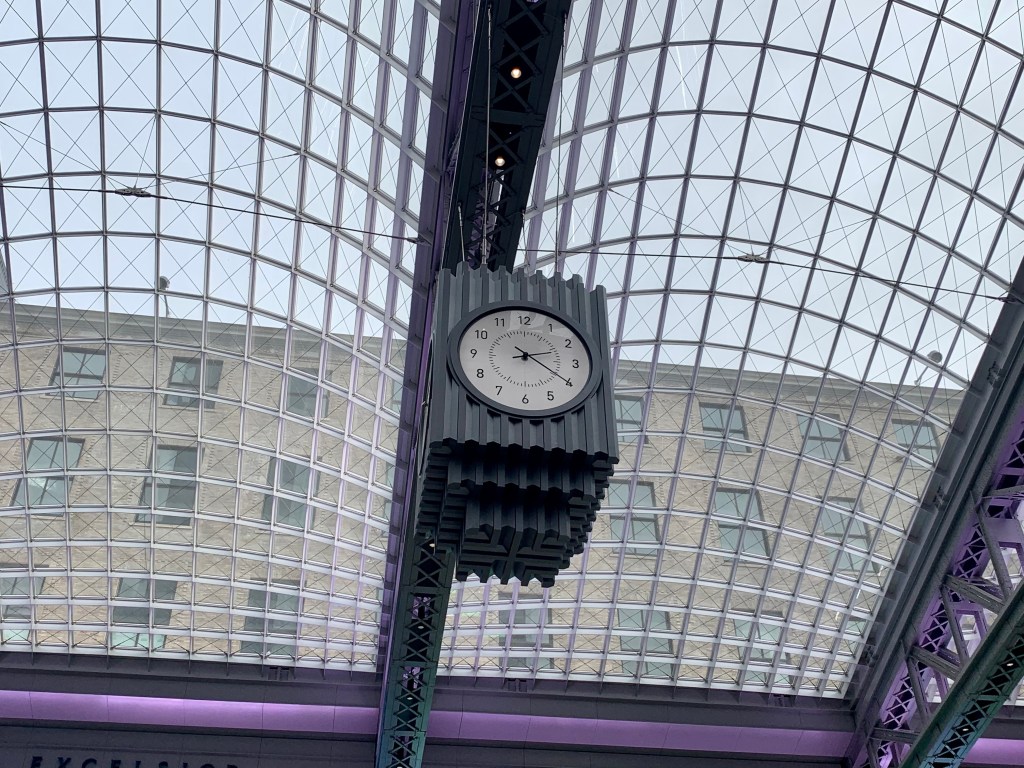
The station reminds me of the Upper East Side Q subway stations in the modern feel, wide passageways, and clean design. Then when you get to the main hall, it is airy, light and inviting.

Well done, NYC. And with the announcements recently of the High Line being extended to meet this train station, as well as the removal of the ugly tow lot on Pier 76 (at 40th Street) for the development of an additional park along the Hudson as well as the opening this year of the floating island park (yes, you read that correctly) called Little Island at Pier 55, the improvement of the far west side continues promisingly. I just wrote last year about the new eco-park at Pier 26. Investors take note: between Hudson Yards and the continual development of the Hudson River Park all the way along the river, this area will become more and more attractive to people looking to live in this once-barren area. I am a regular user of the dedicated bike lane from the upper 50’s to Battery Park, and am watching the area change before my eyes. New York City is always changing, and it’s wonderful when it becomes more beautiful and functional as it does.

NYC Holiday Decorations 2020

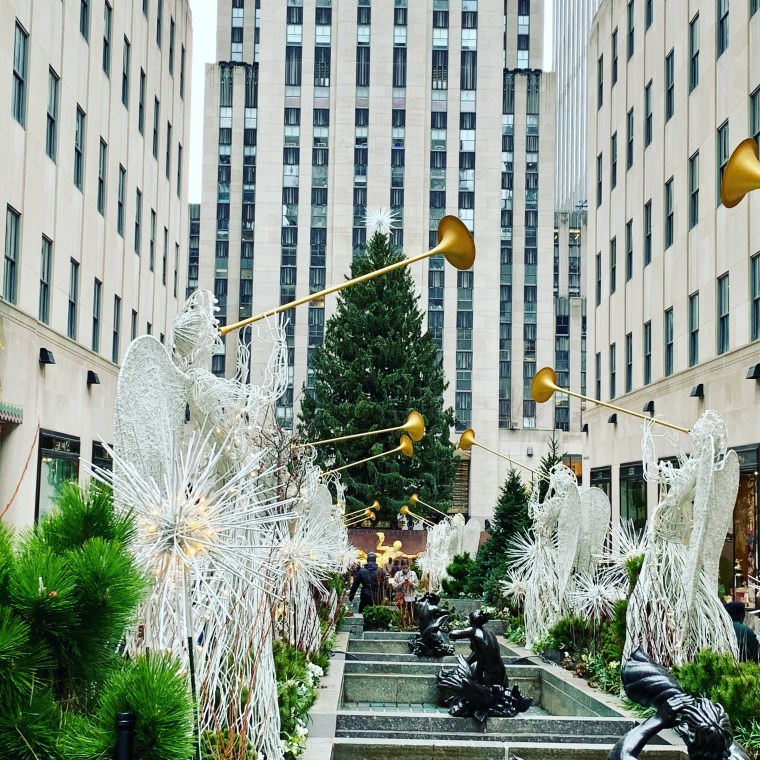
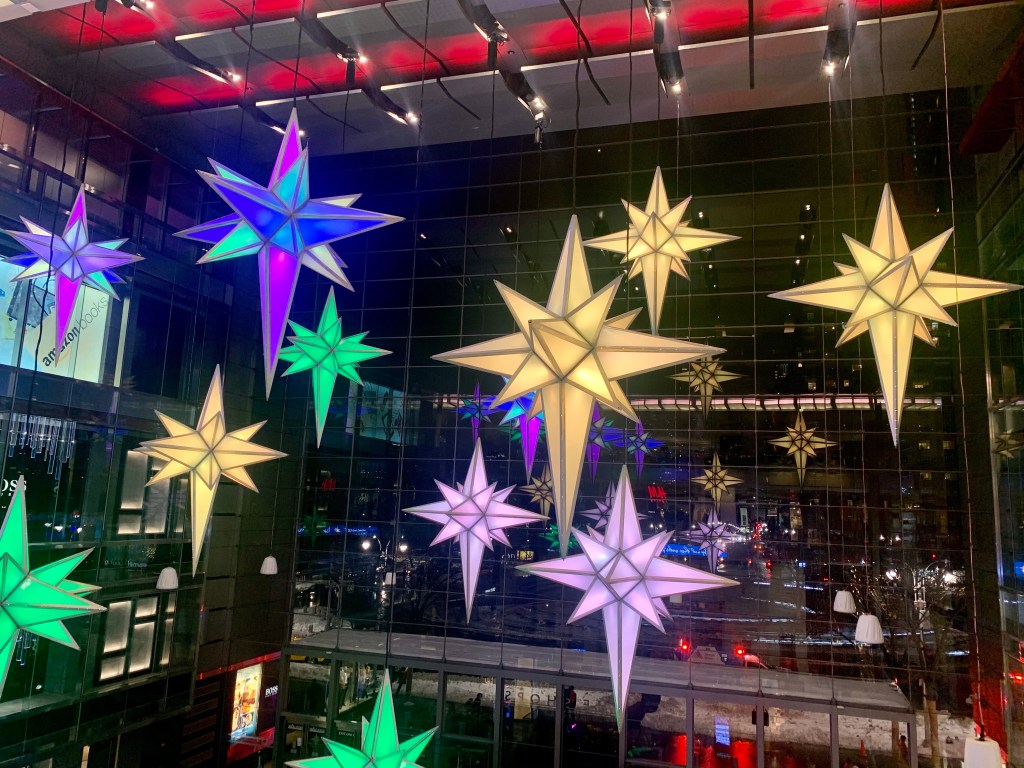
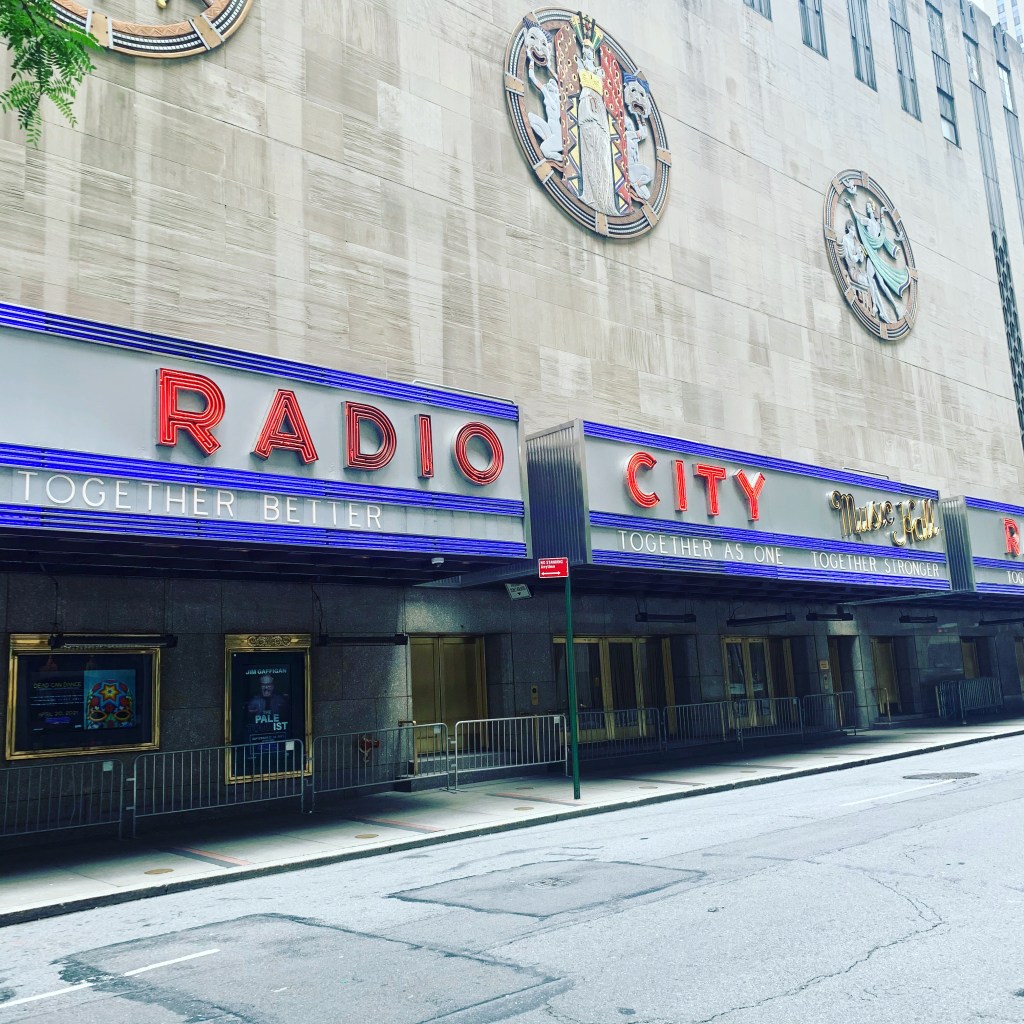
The year 2020 in New York City has certainly not turned out as we all would have hoped when they were clearing confetti from Times Square on January 1. This holiday season is unlike any other one – no Radio City Christmas Spectacular, or NYCB Nutcracker at Lincoln Center, or Santaland at Macy’s, just to name a few- but despite the pandemic, the city came through again with plenty of gorgeous lights and decorations.

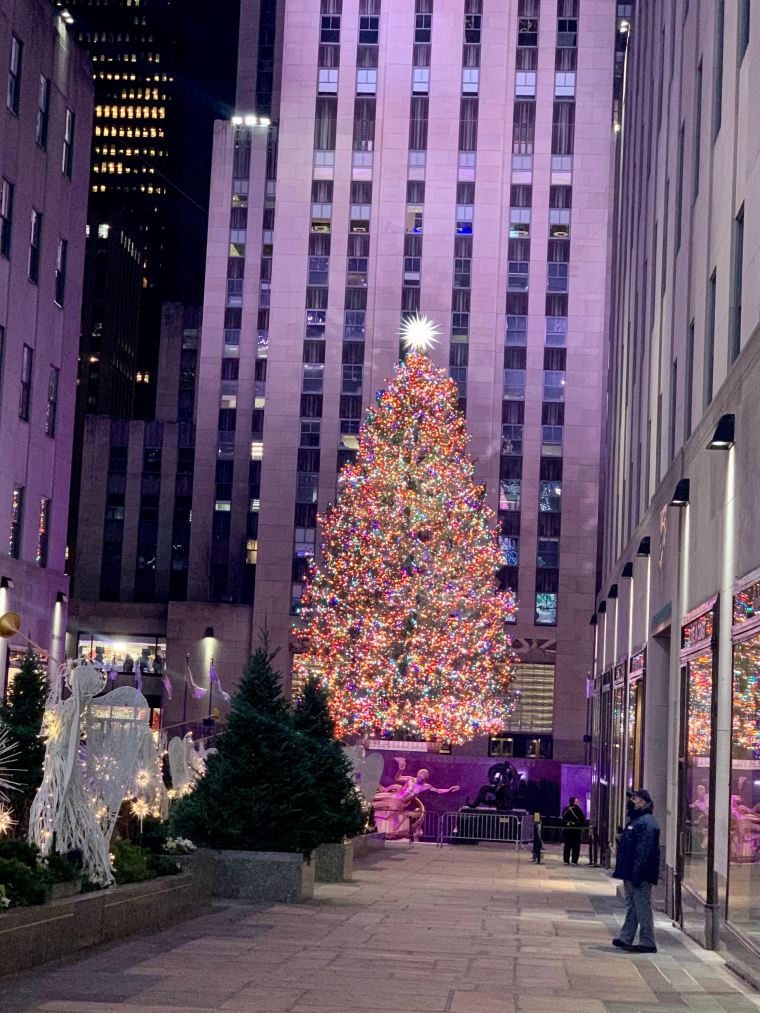
I was so relieved when I heard Rockefeller Center would have a tree again this year. They limited access so that crowds didn’t gather unsafely taking photos under the tree, but it was easy to see it from Fifth Avenue (actually easier than usual, with so few tourists here).

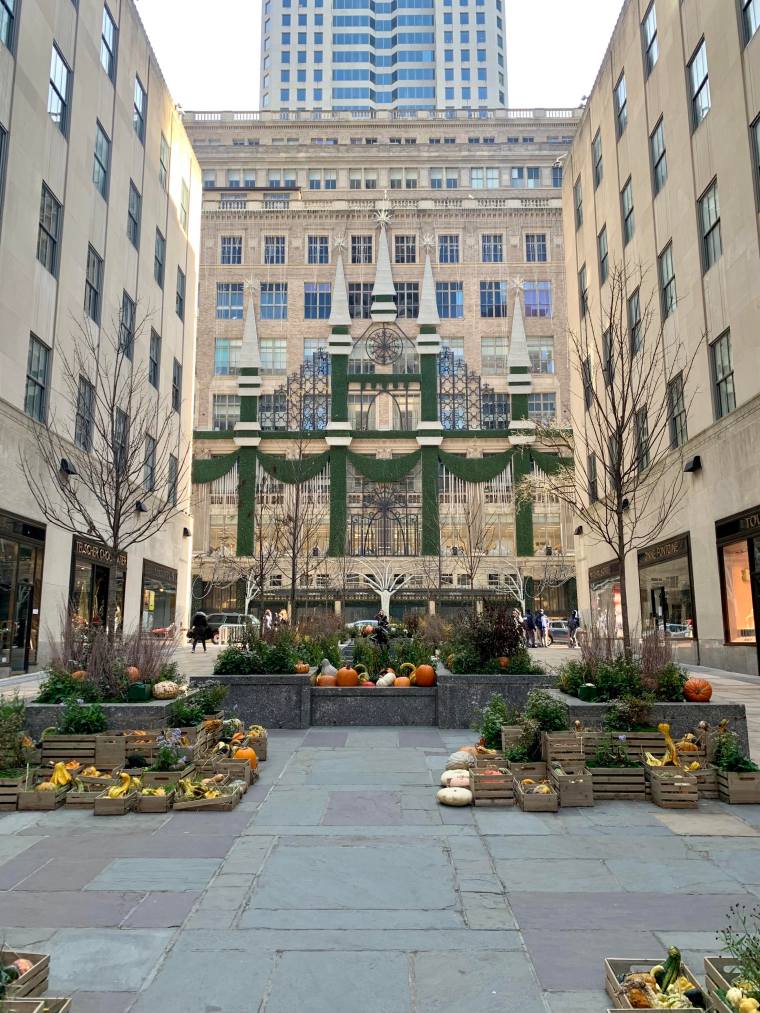
Similarly, it was great to see Saks continuing their tradition of decorating the facade of their building on Fifth Avenue (just across from the Rock Center tree) with a light/sound show every 15 minutes after dark. To see a video sample, check out my Instagram post here.

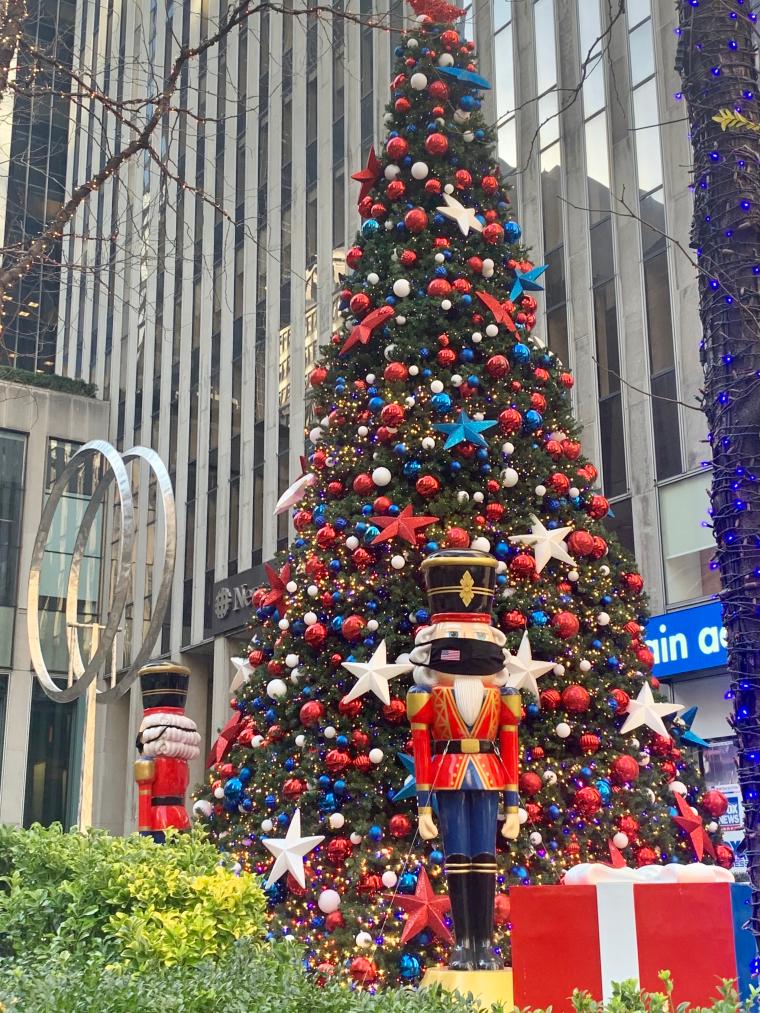
This display on Sixth Avenue is a favorite of mine. Again, if anything it is easier to appreciate this year with the crowds so light.

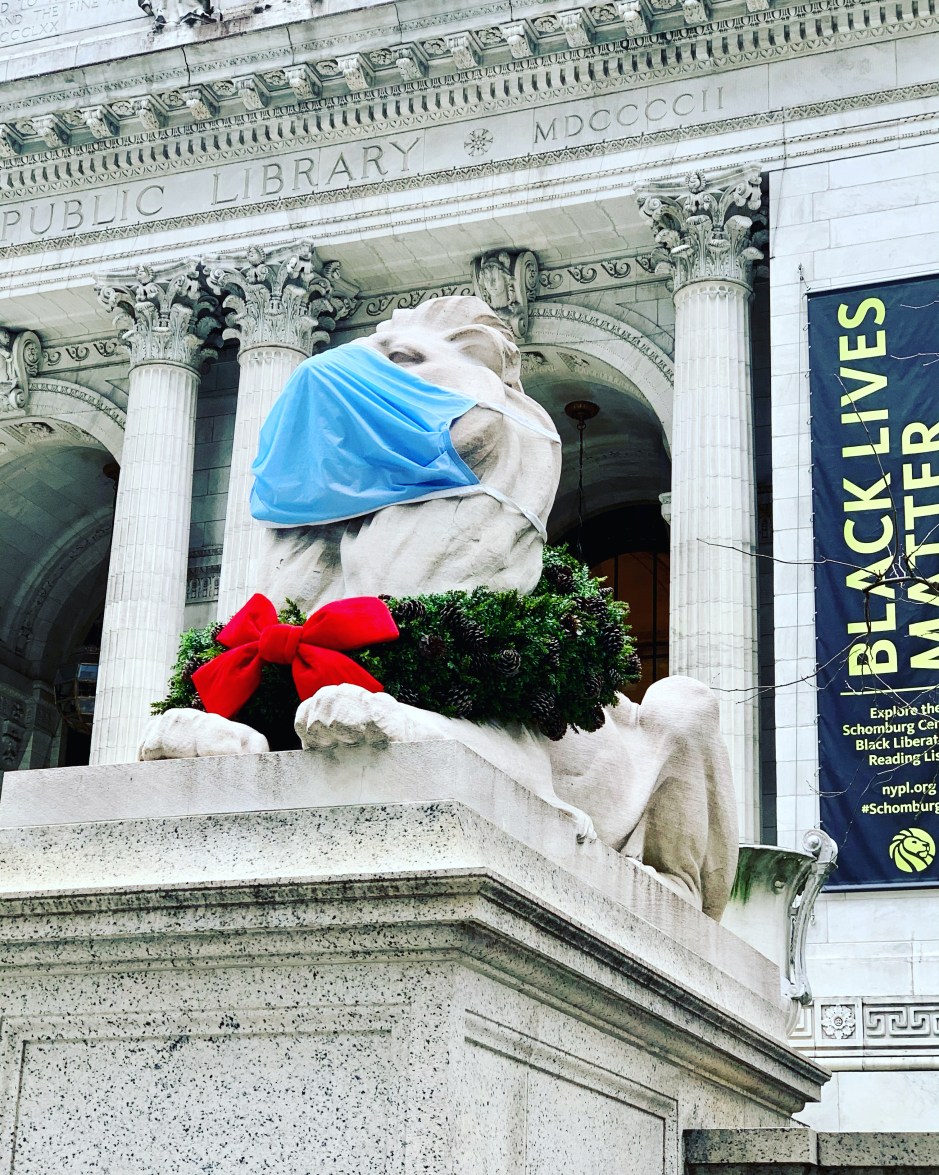
Many holiday displays this year managed to work proper modeling of mask wearing into their offerings, including the New York Public Library lions and this nutcracker on Sixth Avenue.

Walking along Fifth, you could mail a letter to Santa, or listen to holiday music played from the Cartier display.

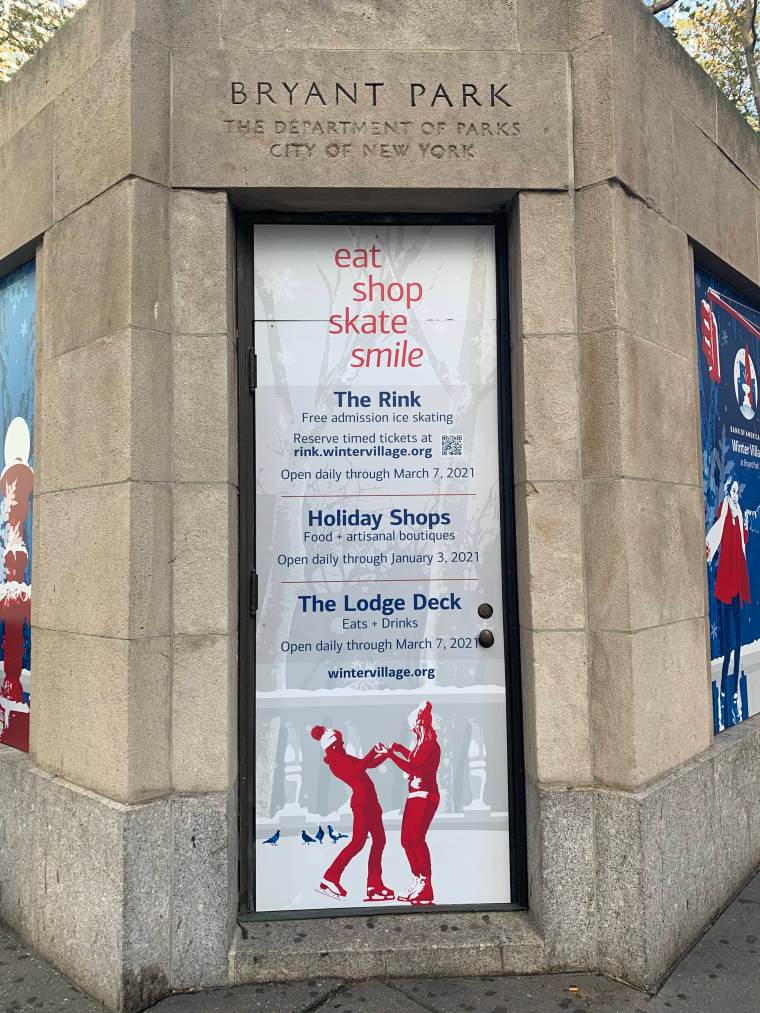
The Winter Village at Bryant Park and holiday market was back this year, just with more space between vendors and lighter crowds. Skating is going on as well, you can see a video of that here. To see this and many other holiday markets a few years ago, click here.

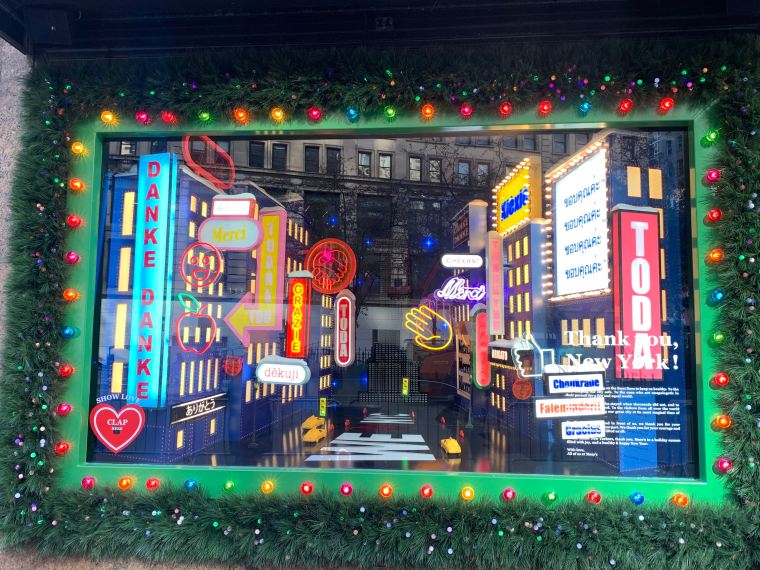
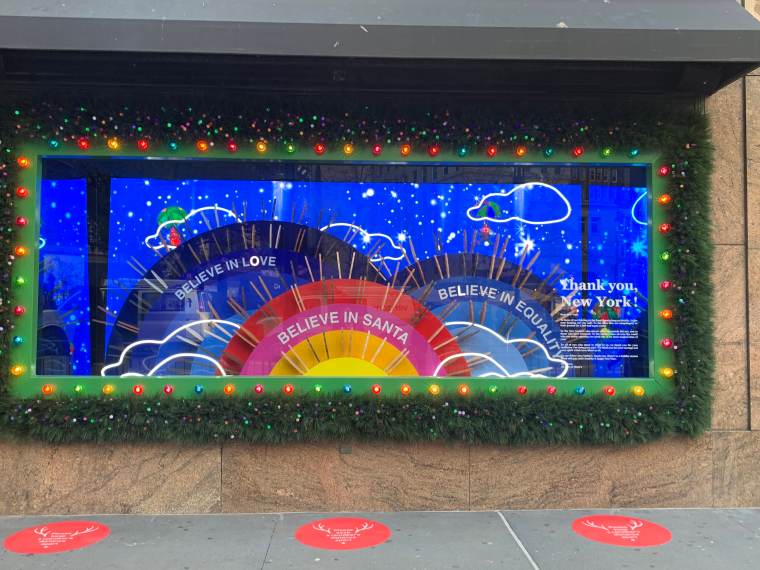
There was no Macy’s Thanksgiving Day parade winding through the streets of Manhattan this year, but the Macy’s windows remind us of the importance of gratitude this year – for our health care and essential workers (and for our health if we have been lucky enough to maintain it).

There’s nothing quite as magical as New York City at Christmas, and we needed that delight and joy more than ever this year.

St. Patrick’s Cathedral was as majestic as ever this Christmas season.

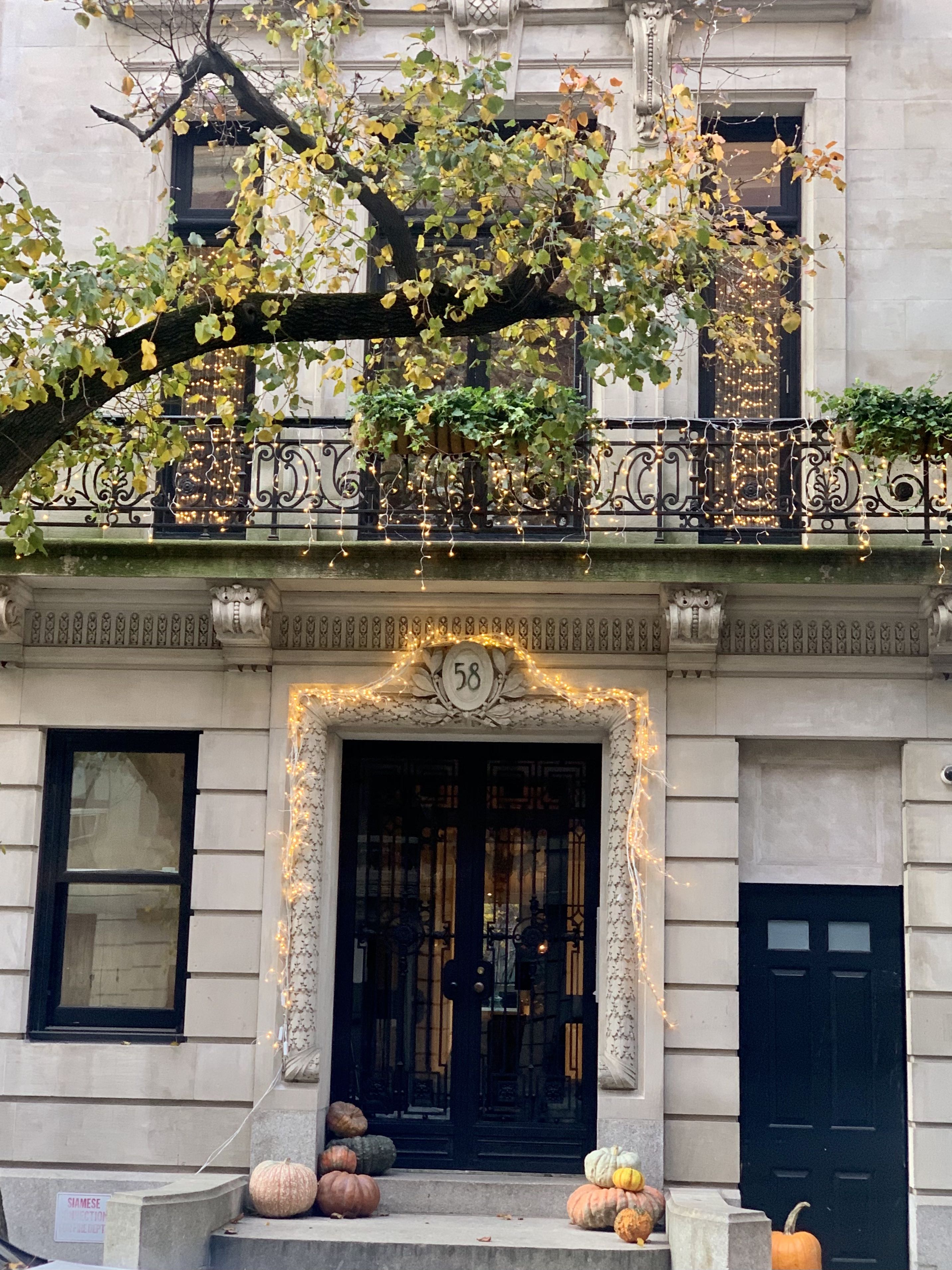
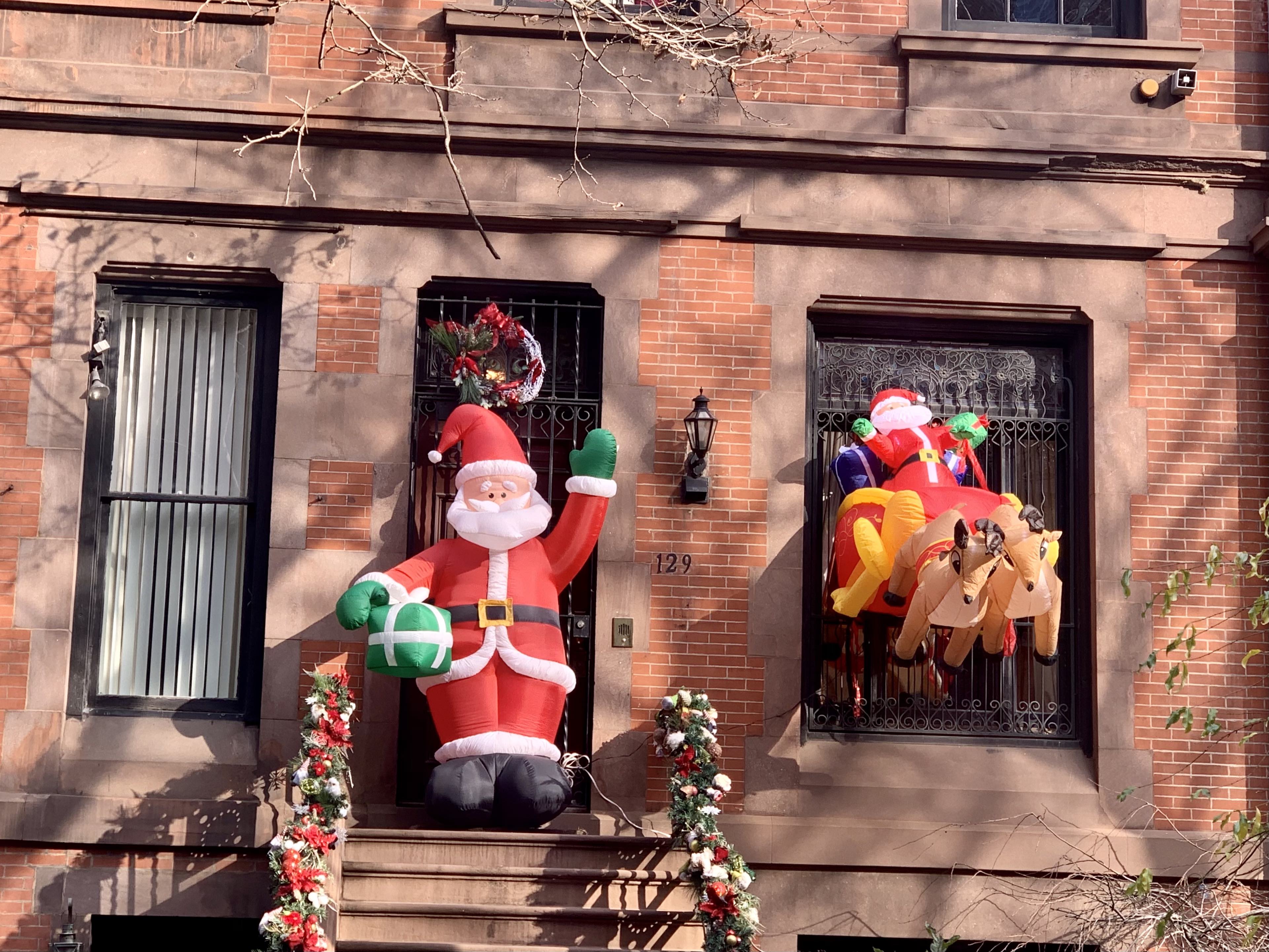
Once again, New Yorkers decorated their homes to celebrate this dark time of year – in a very dark year – with light, humor, and bright color. To see a previous blog post about residential holiday decorations, click here.

So the dropping of the Times Square ball will be televised this December 31, but will occur in an empty area gated to prevent people from gathering. Regardless, the rejoicing that will ensue as we welcome in 2021 will not be lessened in any way by celebrating at home. As I wrote on the piece of confetti that will fall as 2021 arrives in NYC, I have tremendous hope for health, love and prosperity in this new year ahead.

Pier 26 Park on the Hudson River

One of the things I have done during this strange year of pandemic and lockdown has been to really get to know Hudson River Park (and I do plan a blog post on it soon). Although I have always explored Central Park – and it’s magnificent, no one can deny – during lockdown I began riding a bike (yet another planned post) and soon discovered my favorite thing was to use the dedicated bike lanes along the Hudson River, then explore the park on foot. On September 30, 2020, a new section of the park at Pier 26 opened, dedicated to the exploration of our waterfront’s ecology. Having visited it, I can say that it is a unique and very worthwhile addition to New York City’s incomparable parks.

Pier 26 juts out from West Street on the far side of Tribeca, roughly between Hubert and N. Moore Streets. It is just north of Pier 25 and behind City Vineyard restaurant and wine bar (more about that later!). Also in the old section of Pier 26 is the location for free kayaking (temporarily halted during pandemic, but keep it in mind for the future) and two dog runs.

The park is organized so that you experience different native ecological environments – woodland forests, coastal grasslands, maritime scrub, rocky tidal zone and the Hudson River itself. However, you could not even know that this was the purpose of the park and just enjoy the multiple places to relax, and the spectacular views.

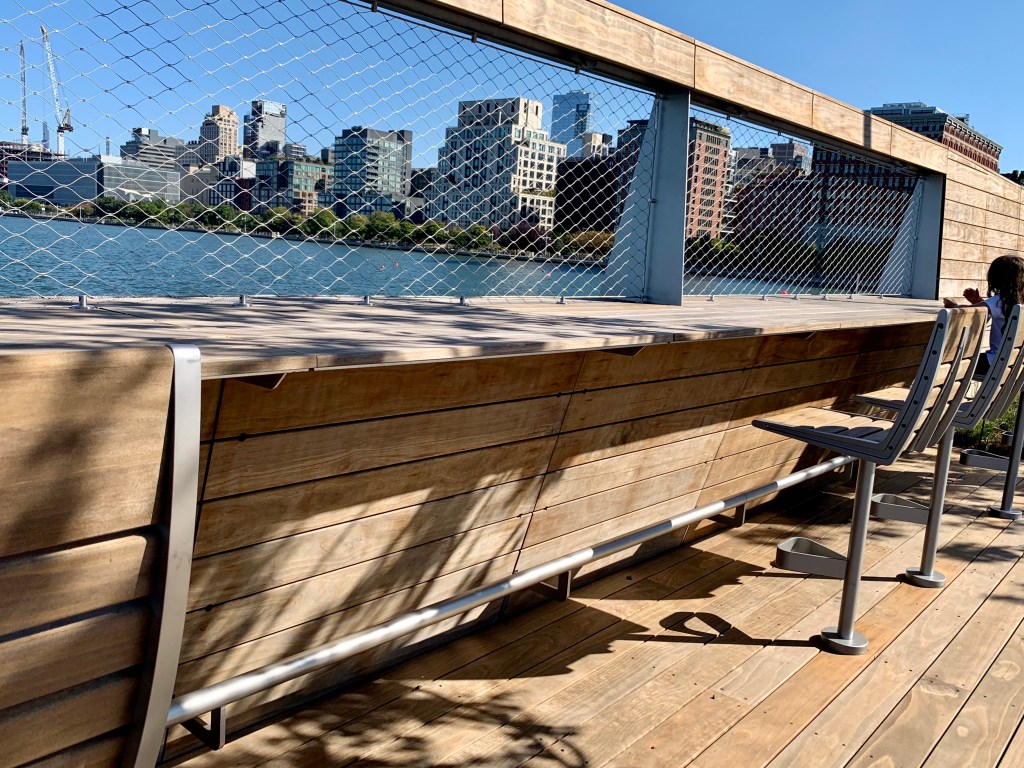
This part has a really unique variety of places to sit and relax – loungers, workspaces with a bar to place your laptop or food on while sitting at barstools, and even BENCH SWINGS.

As the pier reaches out to its westernmost point, you can see the lower section leading to the tide deck and the Hudson River. This section isn’t open at all times, but in the future there will be periodic tours for the public. This tidal marsh was created with native grasses and shrubs, and is submerged at high tide and visible at low tide. The hope is that over time the pier will become home to native species. The rocky tidal marsh is visible at all times from the elevated platform above.

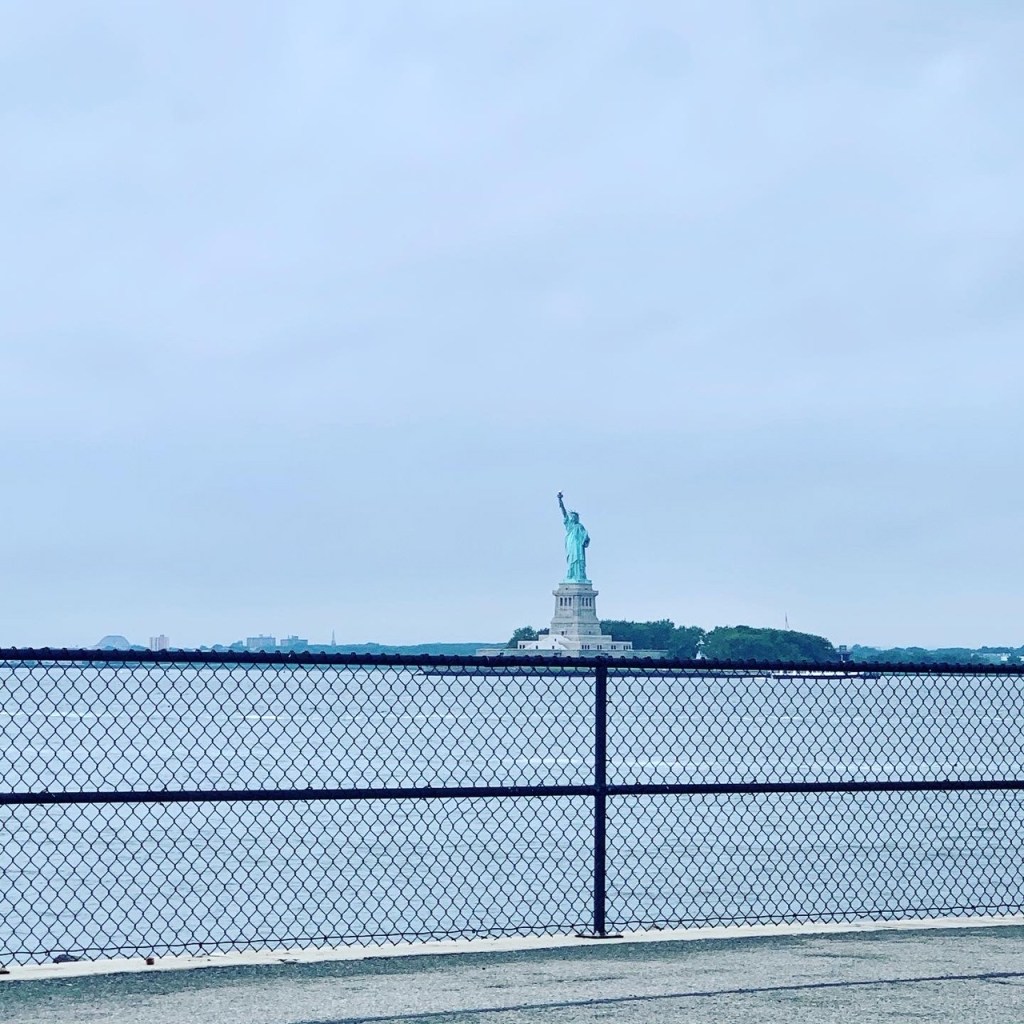
In addition to places to relax, and places to learn, there is a sports play area, a sunning lawn, and my favorite – lovely walking paths. At. the end of the pier, you have the choice of looking south to the Statue of Liberty, or east toward the NYC skyline. You might see boats pass by, or jet skis.

With City Vineyard at the entry to the pier available for food and drink in the open air, it would be easy to spend a day at Pier 26. The wine garden and rooftop deck are both outside, and the deck has incredible views of New York Harbor. City Vineyard’s menu is locally sourced and inspired, and its wines are actually made in the city with grapes from some of the finest vineyards in the world.

While 2020 has been a very difficult year to be sure, one silver lining has been that we have learned to explore and appreciate what we can do outdoors. When walking the Hudson River Park, I have seen toddler movement and music classes, yoga classes, and personal training in progress outside. The bike paths are crowded with scooters, skateboards, and skaters as well as bicyclists. Parks host joggers, walkers, and babies being pushed in strollers. This turns out to be the perfect time for this new park to be unveiled, its importance now – not only as a refuge for New Yorkers escaping a pandemic but also for a reminder of what we need to do to heal our broken planet – unimaginable when planned in the early 2000s.

Museums reopening in NYC, September 2020

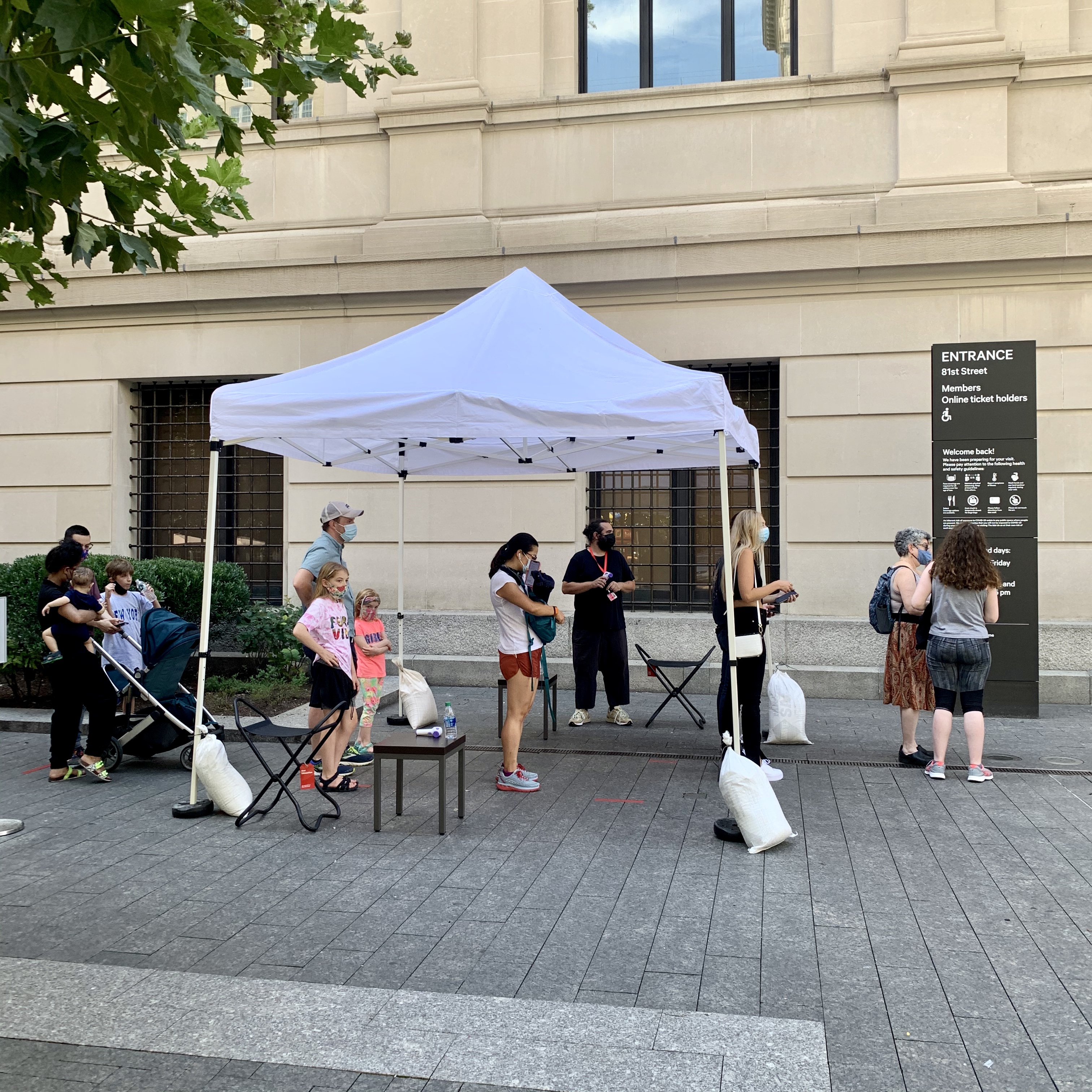
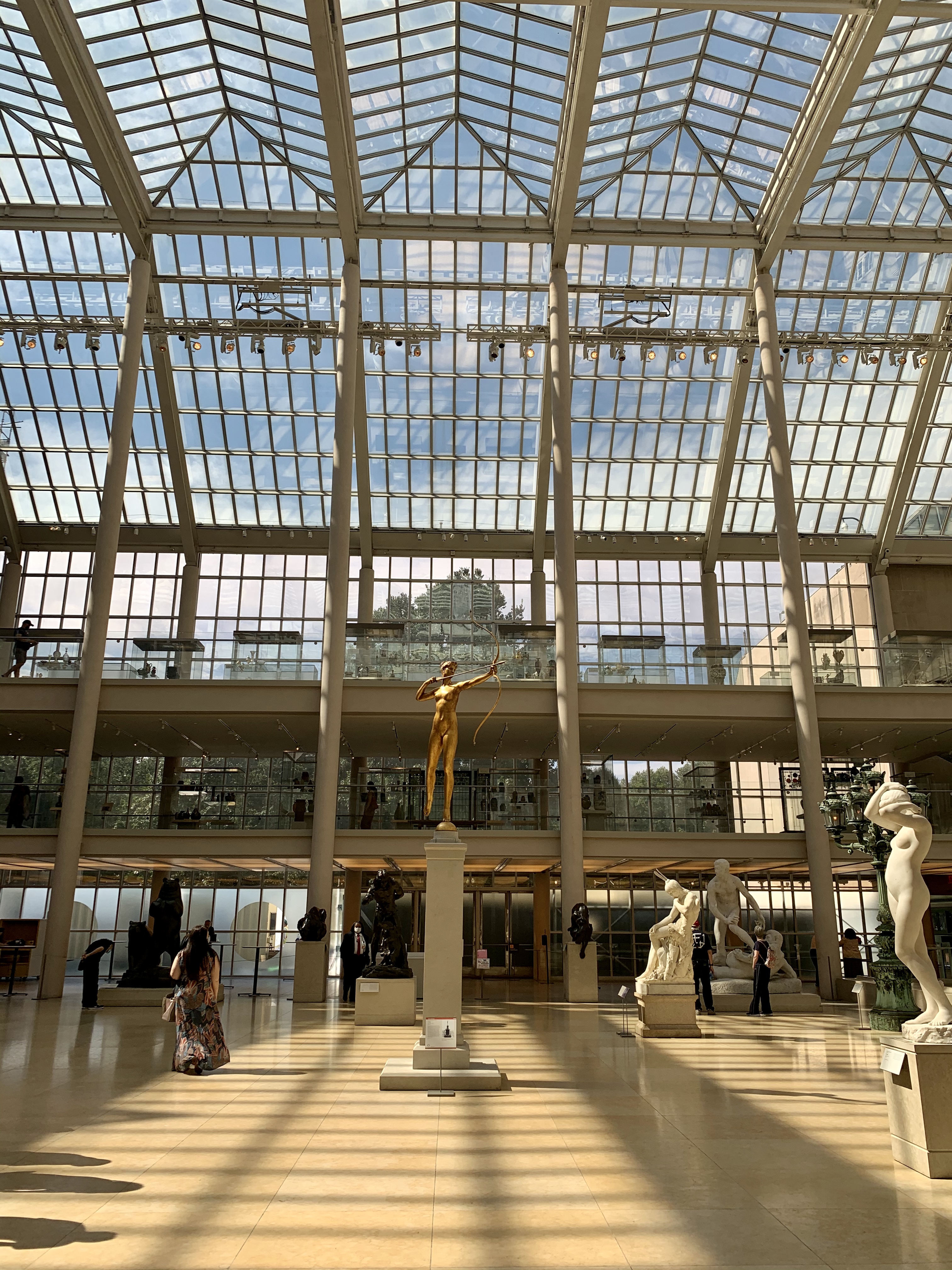
For almost six months of 2020, New York City’s magnificent museums sat empty. After months of strict lockdown, and a very cautious and careful tiered reopening, the Covid-19 numbers in NYC came down and remained down to the point where museums were allowed to reopen in September. Capacity is limited, masks are required, and social distancing is enforced. This month, thirsty for the experience of once again being inside these magnificent buildings, I visited the Metropolitan Museum of Art, the American Museum of Natural History, the Museum of Modern Art, and the Whitney Museum of American Art. I ended up having experiences unlike any I have had before, and ended up figuratively discovering a kind of silver lining to all the clouds we have dealt with this year. I am aware that not everyone feels safe visiting museums, and everyone has their own calculus of risk when deciding what to do and what not to do. For anyone who is considering going to a museum in the next few months, however, I hope that this account will help you decide whether it is safe enough, and if it is worth it.

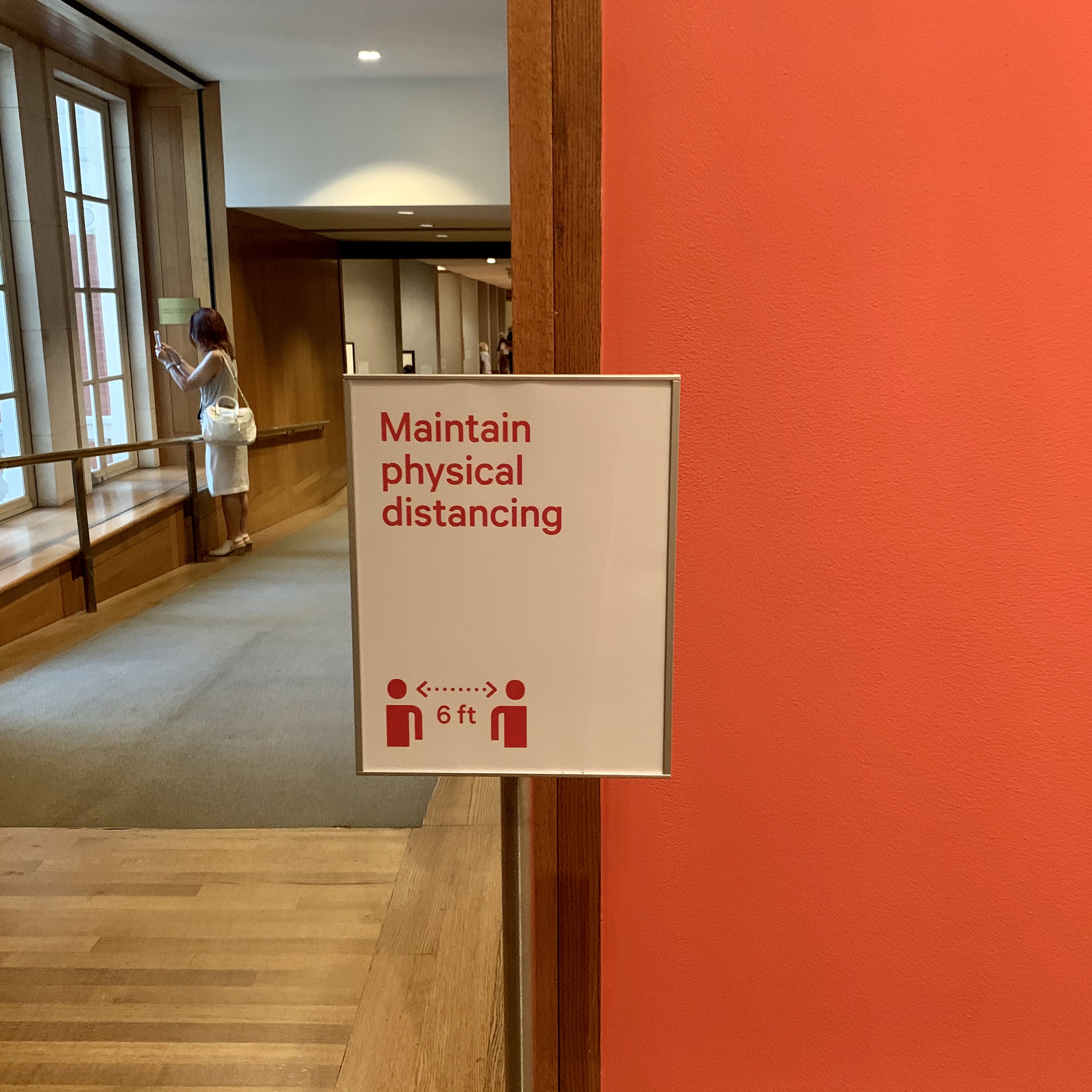
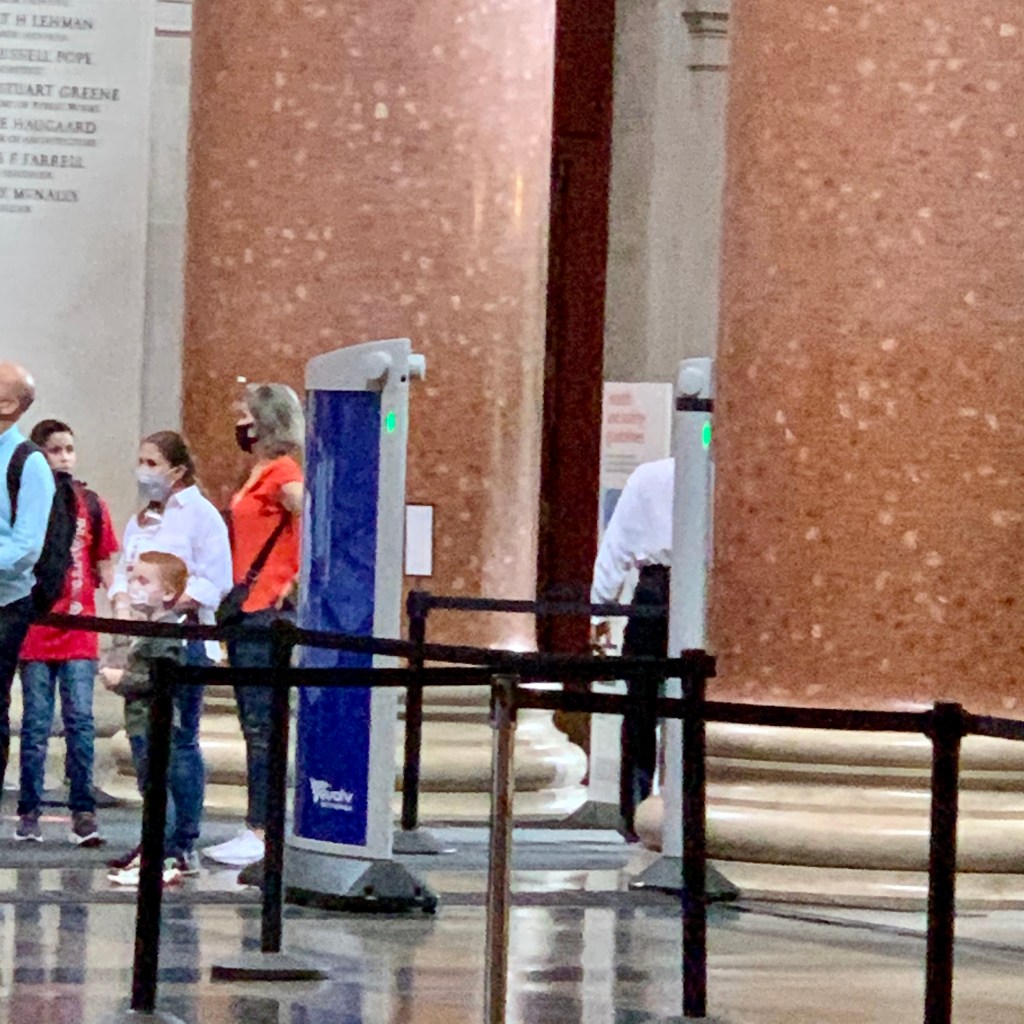
First, the Metropolitan Museum of Art – a museum so vast and all-encompassing that it can be overwhelming, especially when there are crowds. You have to make a timed reservation online in advance (here), your temperature is checked upon entrance, masks are required, hand sanitizer is easy to find, and there are social distancing signs everywhere. I didn’t ride in an elevator, but when I passed them there were long lines, in part because people were keeping six feet of distance even while waiting, but also because only two people were allowed in the elevator at the same time.

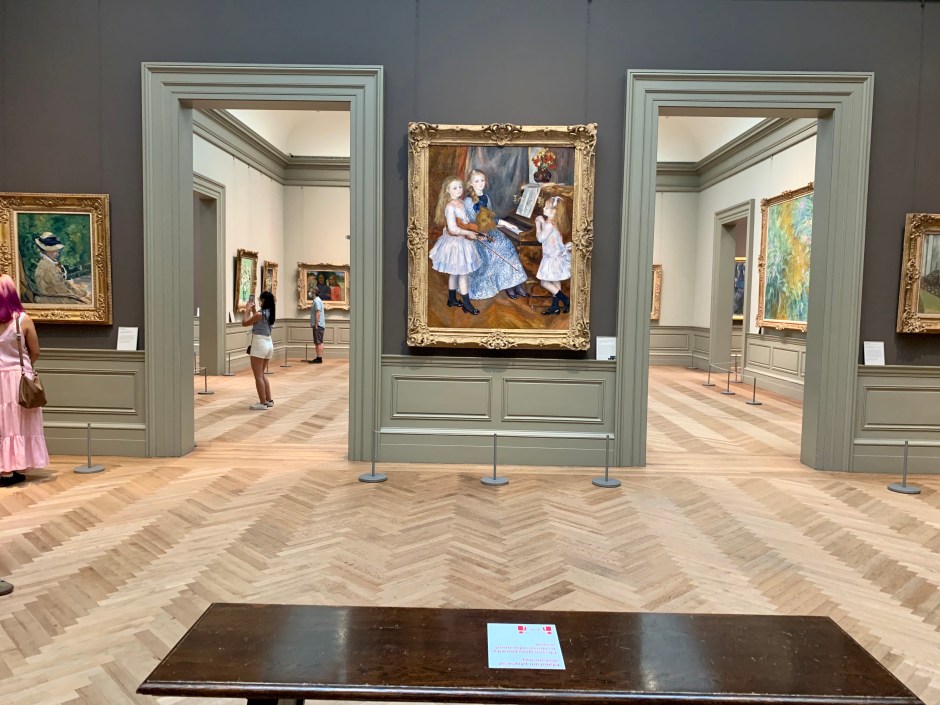
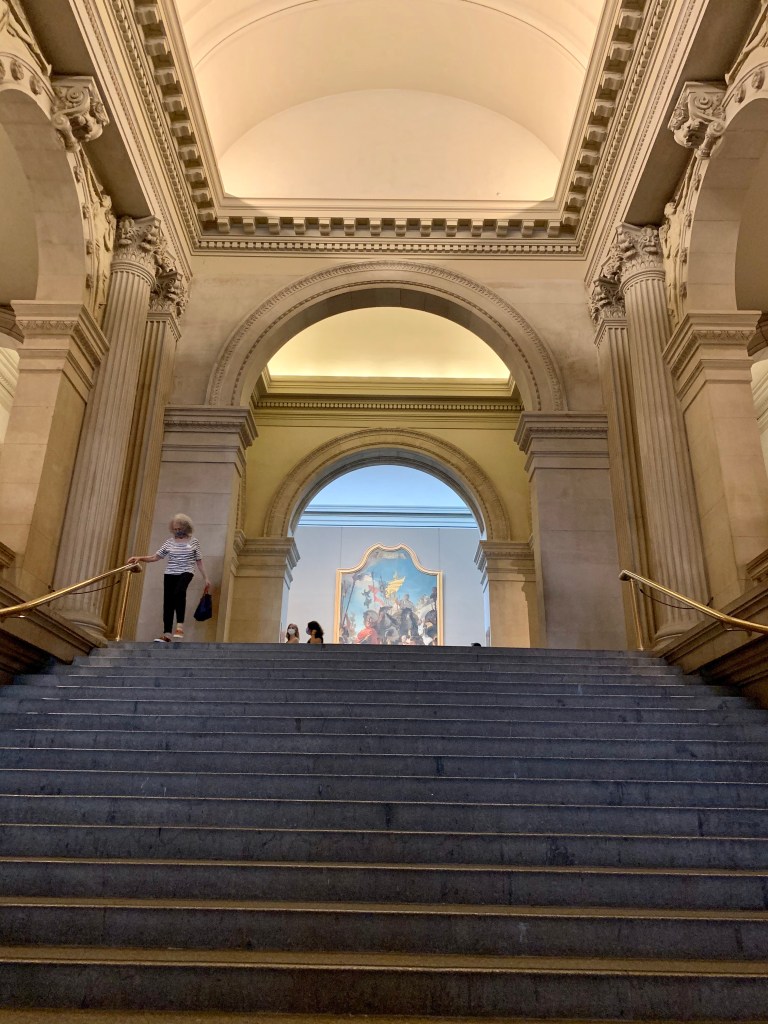
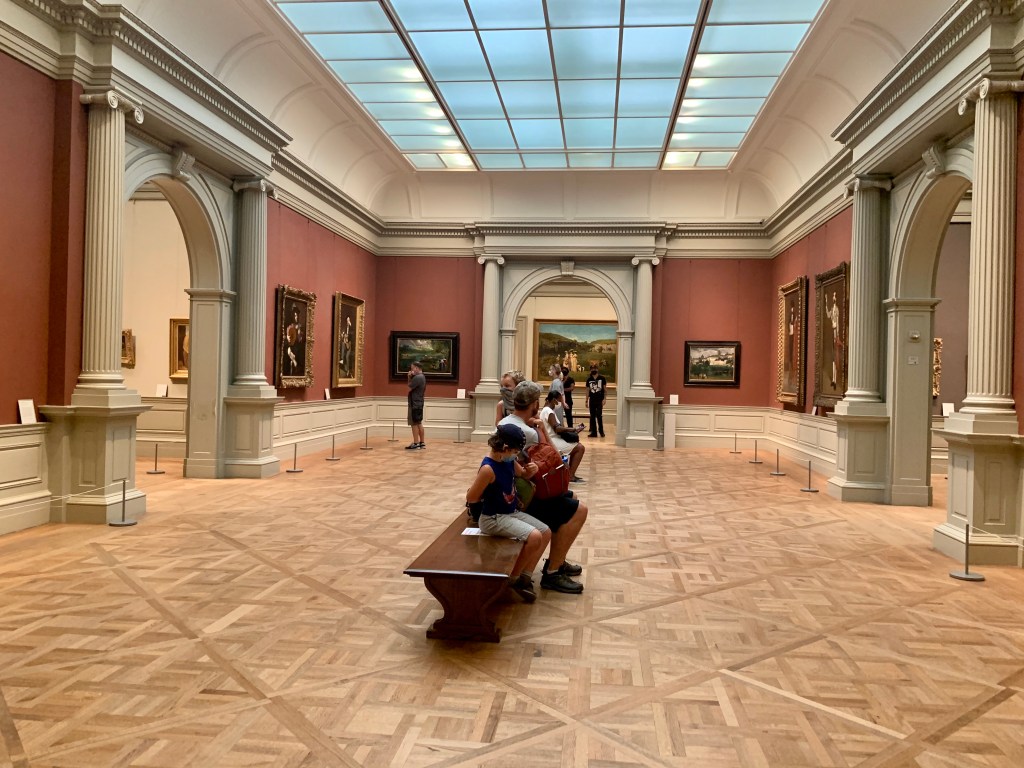
I didn’t have any trouble keeping physical distance, and in fact it was a little shocking (but wonderful) to be able to look at Van Gogh’s famous Irises without having to peer around a huge group of people. They have an ongoing project to reopen skylights in the galleries housing 17th and 18th Century European Painting, so I was unable to see my personal favorite Met painting (El Greco’s View of Toledo) but made do with another favorite shown above, a Renoir with three young girls that often reminds me of my own daughters when they were younger.

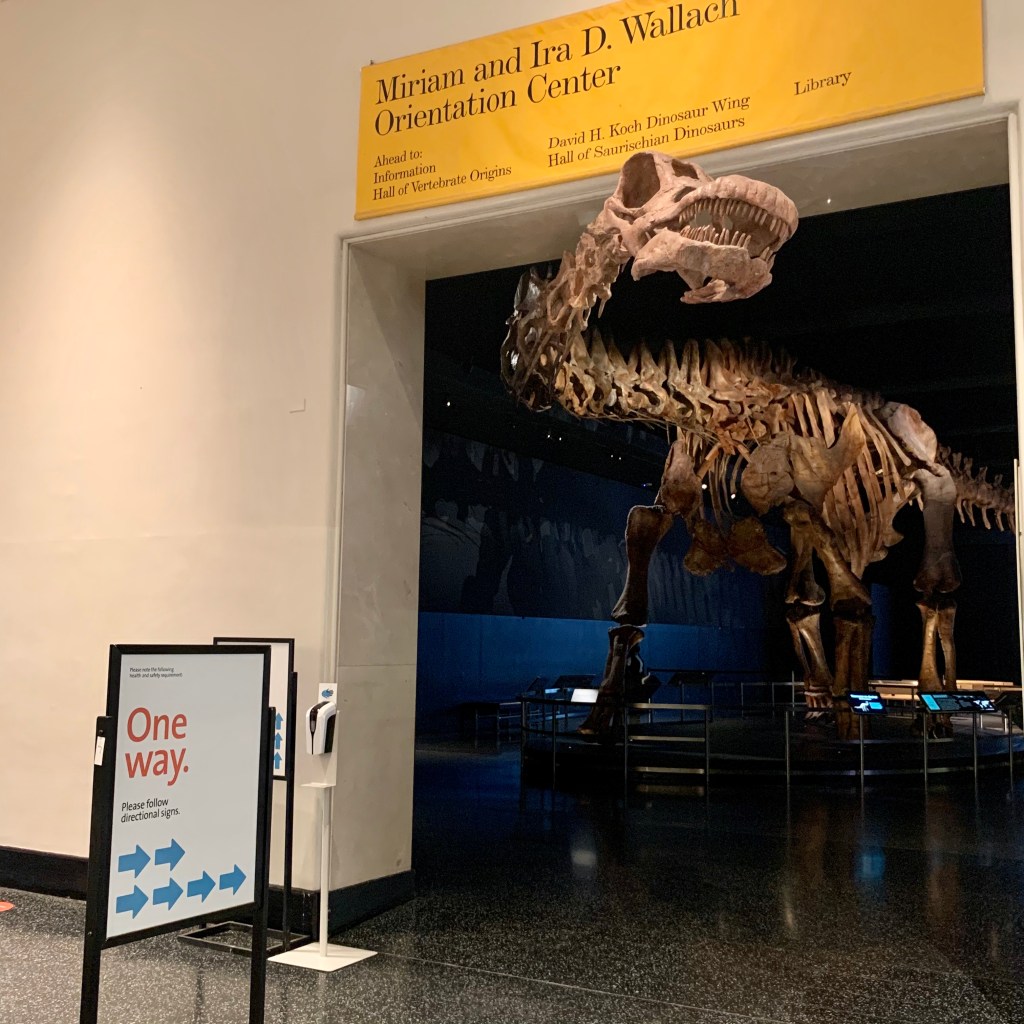
My next visit was to the American Museum of Natural History. Without realizing it, I went on the first day that it was open to the public (after a members’ preview) and they were giving out souvenir casts of a t-rex tooth as a welcome gift. This was surprisingly thrilling! Reservations were required in advance (here), masks required, temperature was checked as you entered, hand sanitizer was abundant, and I found the signage more explicit and clear here than in any other museum. This makes sense, as their demographic includes many younger visitors. Even the restrooms blocked off every other stall and every other sink to encourage distance – although when I was in there, I was alone so that wasn’t an issue.

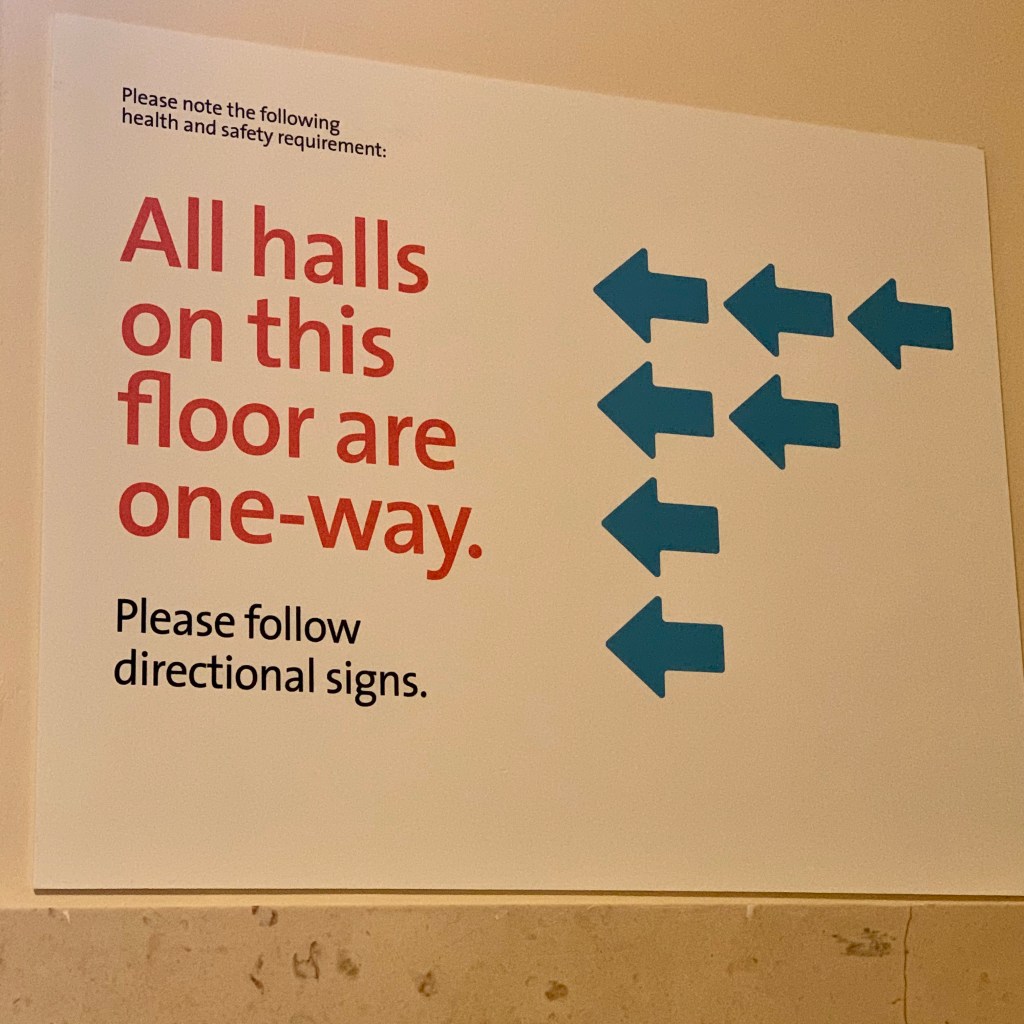
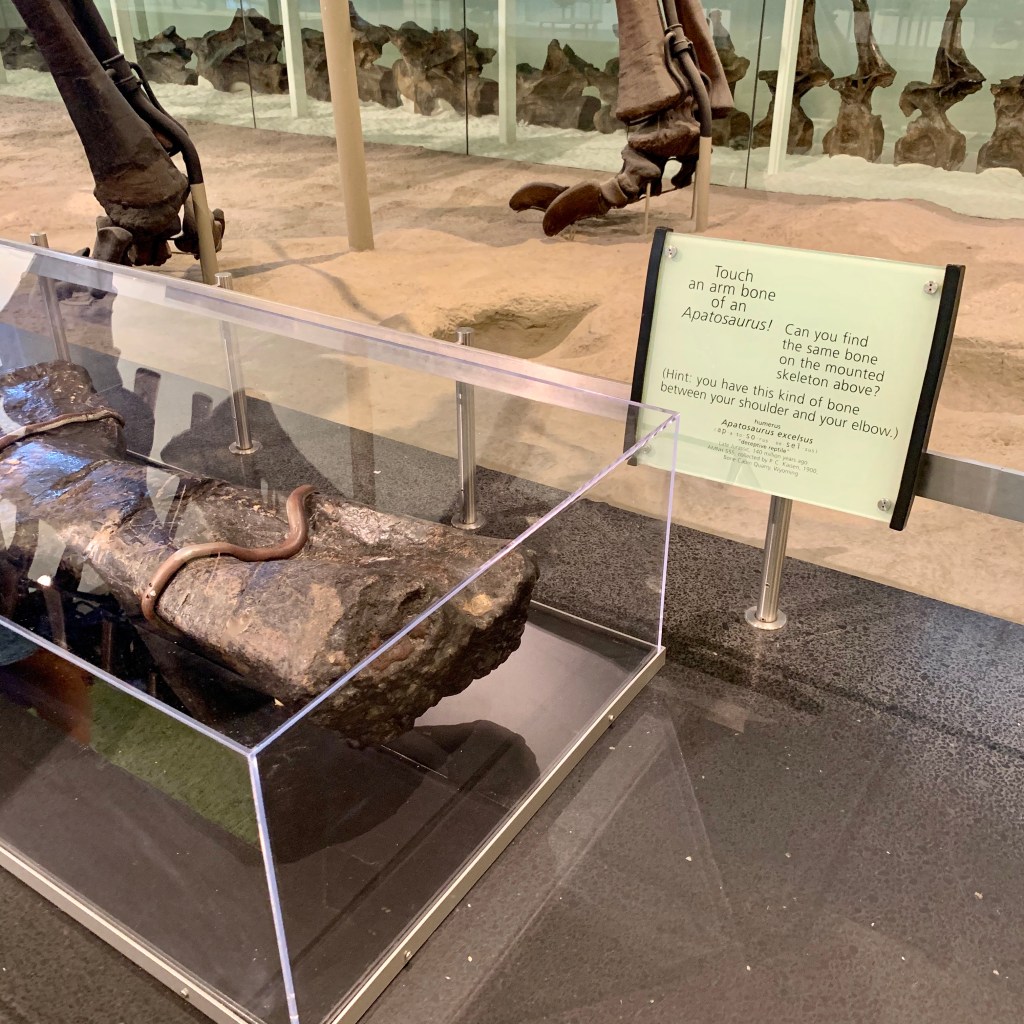
The museum was decidedly empty. In the popular dinosaur hall, all traffic was clearly marked as one way, the arm bone of the apatosaurus that usually you can touch was covered, and touchscreens were no longer active as such. All the staff seemed very welcoming – I was thanked for coming repeatedly while here.

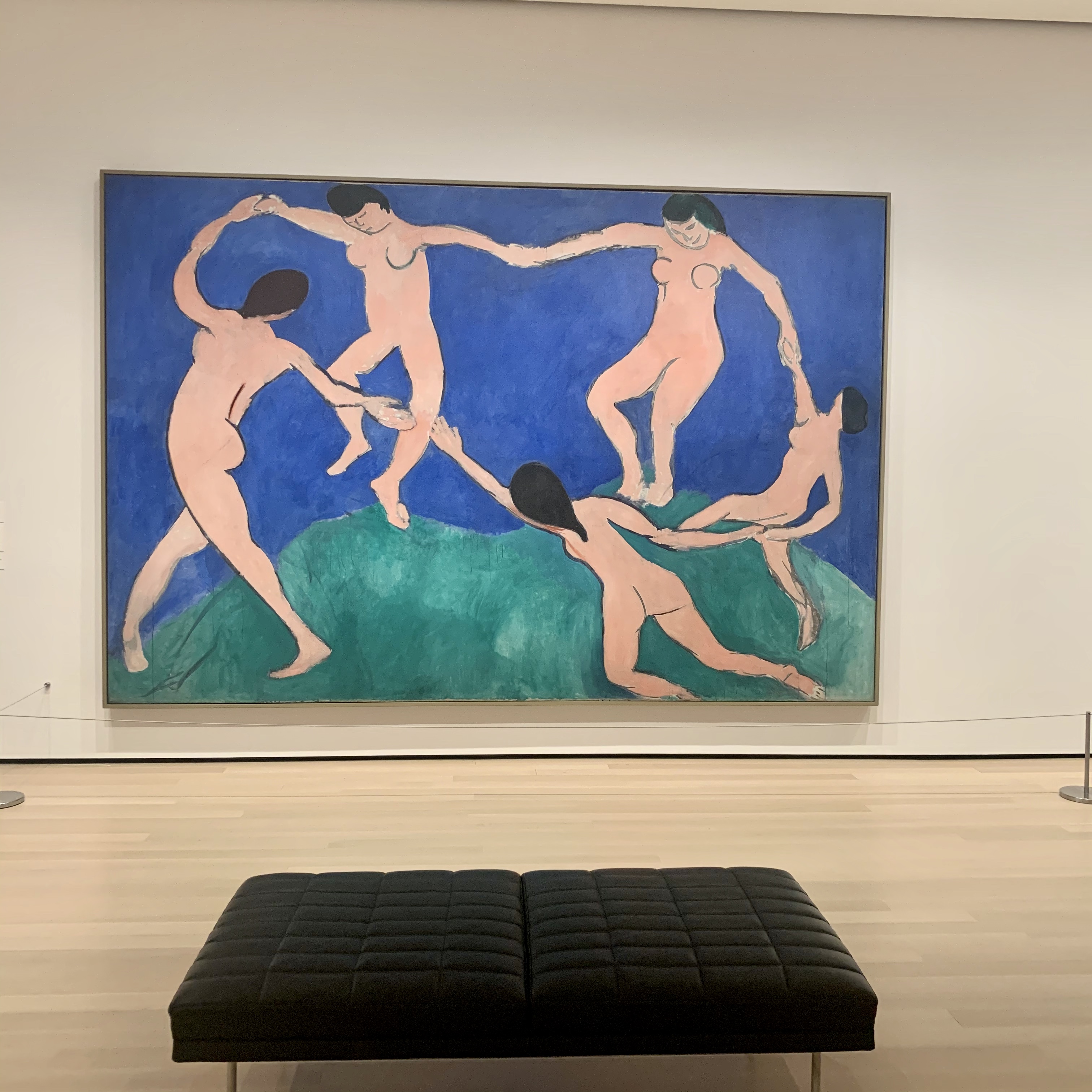
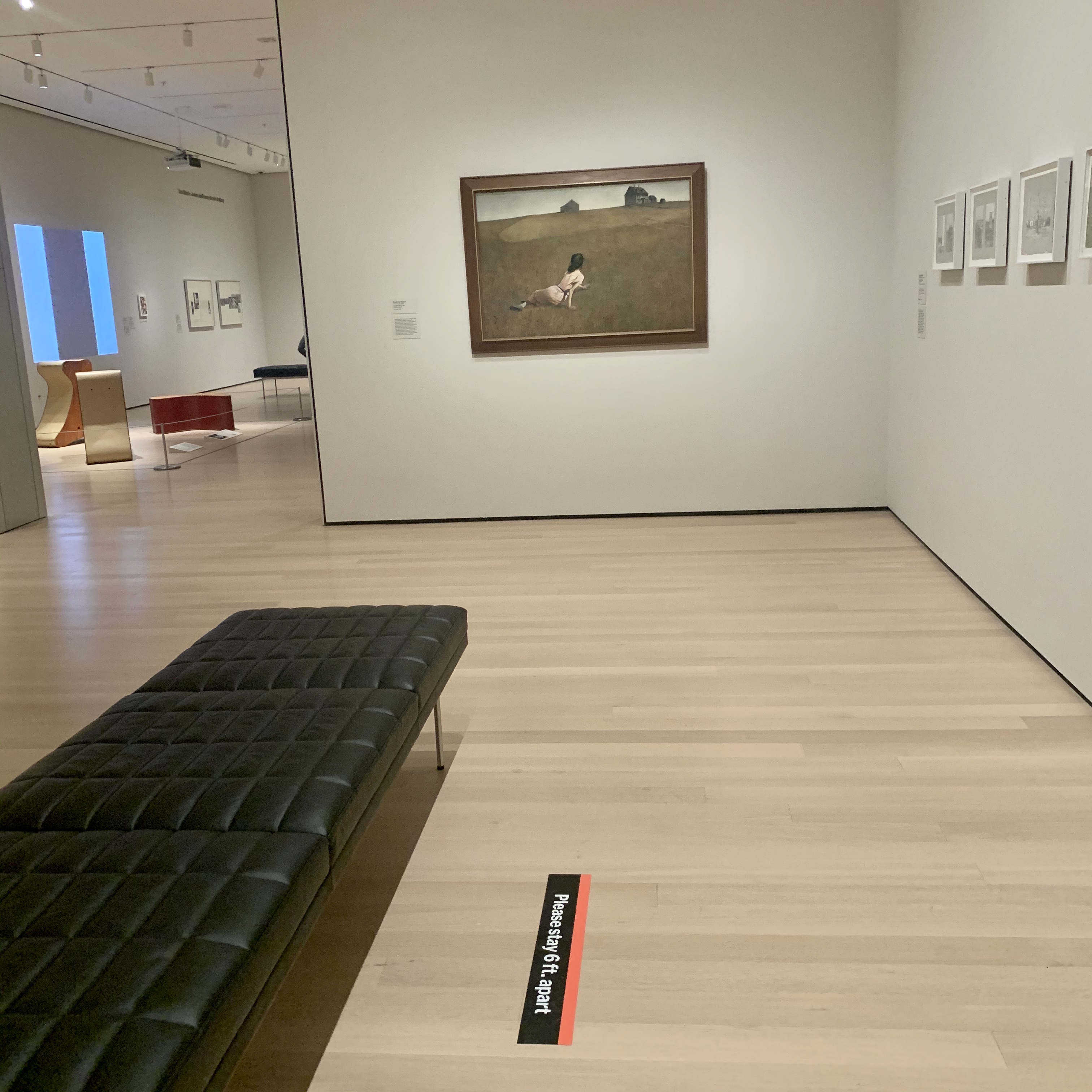
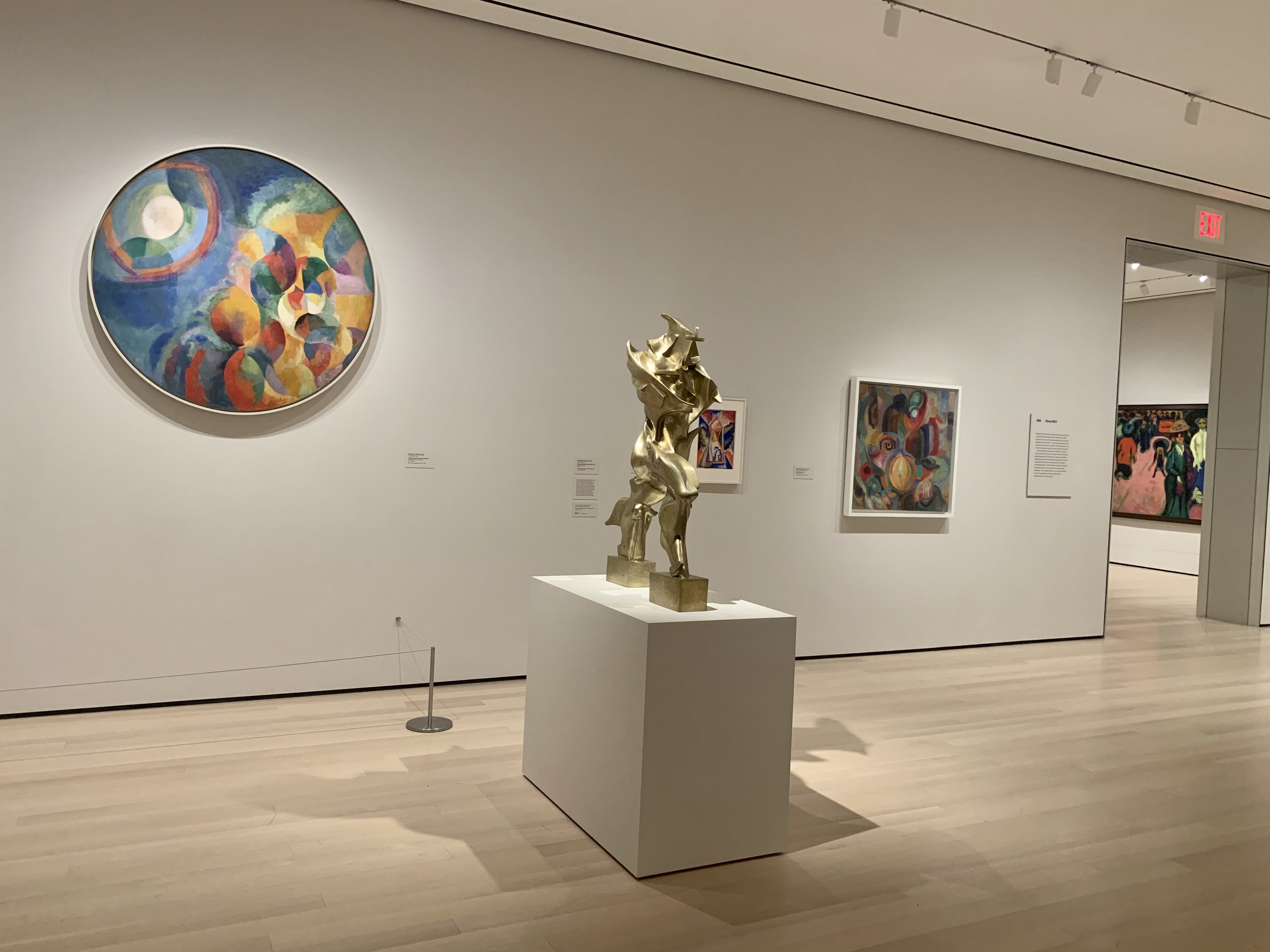
Next was MoMA, a personal favorite and only a few blocks from my home. Reservations were required in advance (here), as were masks and social distancing. Temperature was checked on arrival. Many galleries were one way, which makes navigating from the old wing to the new wing more challenging than usual. However, any inconvenience this caused was more than offset by the lack of crowds. I have never had a more enjoyable experience at MoMA. I felt at times as if I had the museum to myself, and it was magical.

Seriously. I rarely take selfies, but I did in front of Van Gogh’s Starry Night and Monet’s Water Lilies, because I was alone in the room with them instead of peering over a crowd. It was surreal.

My final museum of this month’s adventures was the Whitney. Again, reservations were required in advance (here), mask-wearing required, there were distancing reminders, and I saw staff members cleaning the stair railings. I saw someone with a thermometer to take temperatures upon entry, but I was not asked to stop for that, and as I left I saw people going in without being checked.

Crowds were very low, although not as empty as MoMA. I didn’t take an elevator, but they seemed to be taking four people at a time. Stairwells were only up or down and were clearly marked.

Overall, I felt safe visiting all four museums, and savored the experiences very much after not being able to for so long. In some ways, these were perhaps the most enjoyable times I have been to museums, because of the low crowds. This reminds me of walking the High Line Park now, which is often marred by enormous crowds but now requires timed reservations (easy to get online, and walk up is also possible if they are under the new limited capacity). I have gone three times since it reopened, and absolutely love the feeling of having the park to myself, and even being able to get one of the coveted loungers and relax – usually almost impossible. However, there is also a sadness in the same lack of crowds, and emptiness. We know that this is not how NYC should be. For all that we complain about the bustle and the throngs of tourists, they are also part of our DNA as a city and we thrive on it. So while I will continue to enjoy the singular solitude of communing alone in a gallery with Van Gogh, I also look forward to the time when I look back on this unusual time (what would we call it? the partially reopened era?) with fondness because our city has come roaring back to life. It always has before, and it will again.

Missing my city while still in it: NYC, Spring of 2020

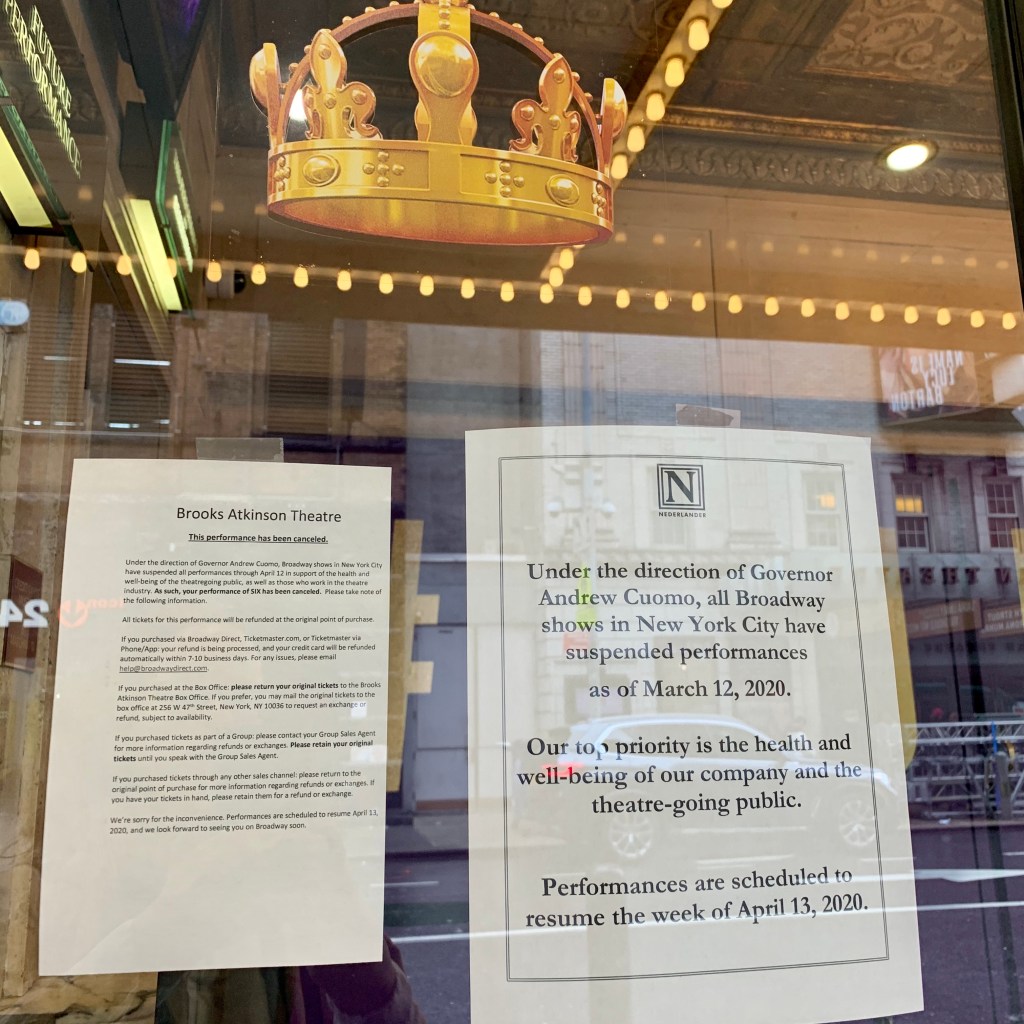
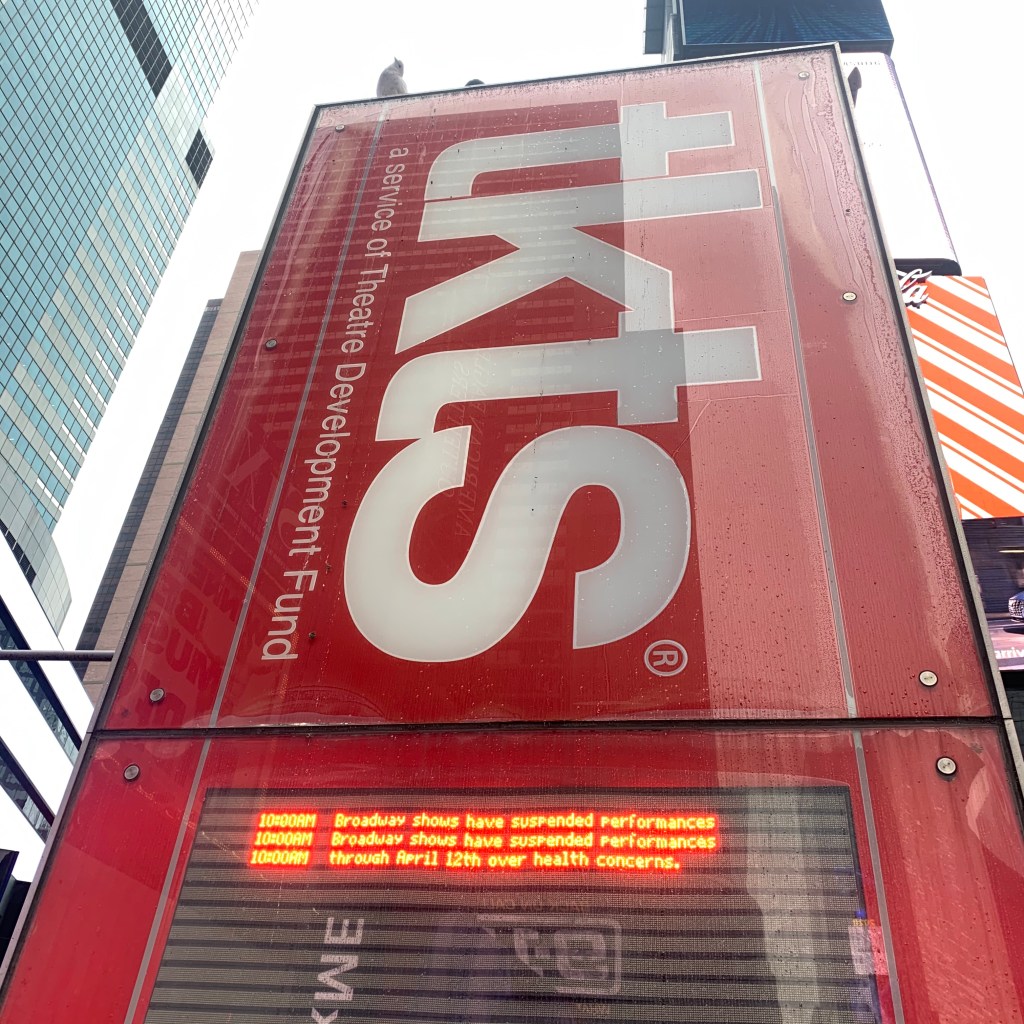
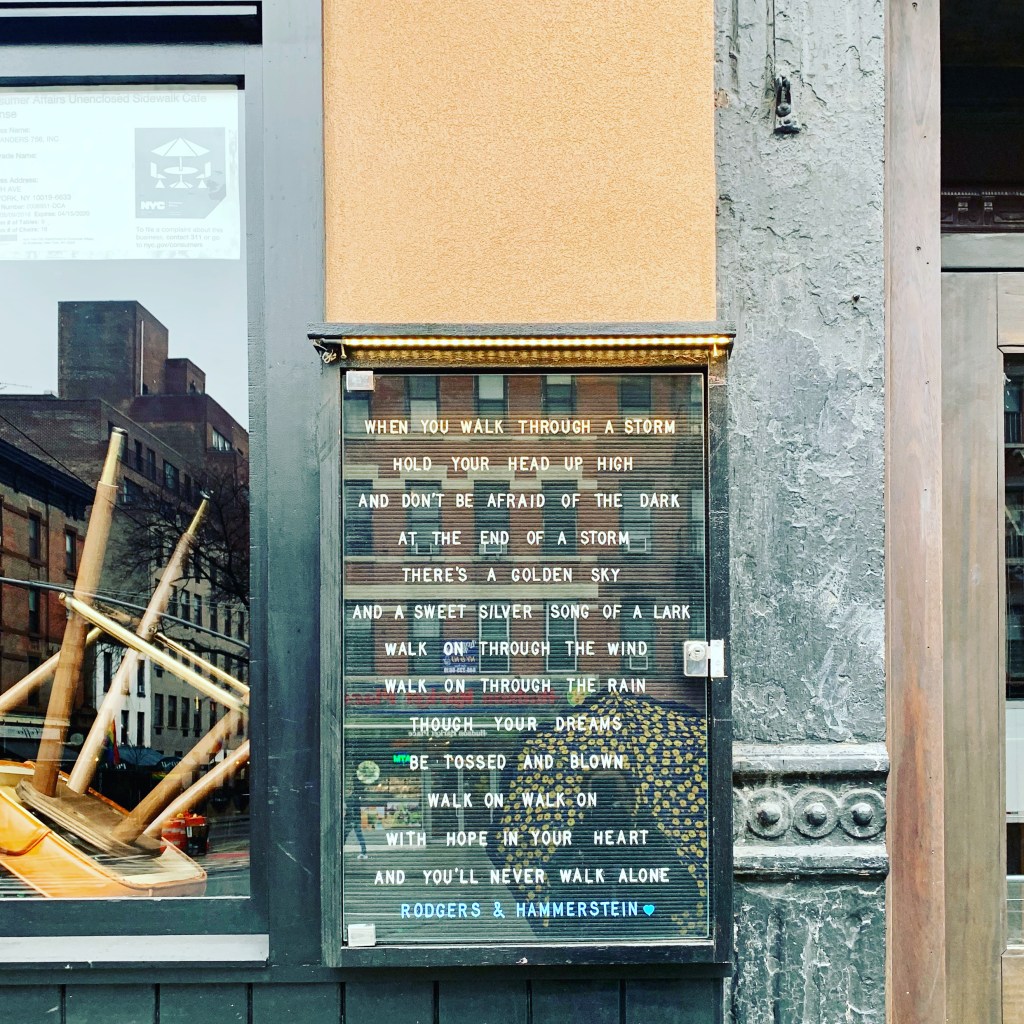
January and February of 2020 were just another winter in NYC: cold, punctuated with occasional extreme cold, but not that much snow this year. I showed apartments, went to sales meetings and my office, and enjoyed the city as I always did: experiencing the performing arts multiple times per week, trying out bumper cars on ice at Bryant Park, and a public art installation just south of Times Square that involved giant seesaws in the middle of Broadway. There were reports on the news of a new virus in Wuhan, China. By the first week of March the alarms were beginning to sound louder. On March 6 (two days after I enjoyed a preview performance of Company with Patti Lupone), Compass, where I am an Associate Broker, suggested that agents work from home when possible. On March 7 I attended an all-day board retreat at the Larchmont Yacht Club, where one topic of conversation was contingency plans around the virus. Just a few days later, Thursday, March 12, Broadway and all performing arts in NYC were shut down for a month “resuming the week of April 13.”

By March 16, NY Governor Andrew Cuomo had placed our state on “pause.” Real estate showings were not allowed, and everything was shut down except for grocery stores, pharmacies, and other essential businesses (which included bike and liquor stores). People were encouraged to stay home at all times except for getting essential items like food, or for exercise outdoors.

The city quickly became a ghost of itself. Many who had another place to go left the city, and the rest of us spent most of our time inside our apartments. We all began to hear of friends who were sick, or even very sick.

As March crept into April, it became clear that we were far from the peak of infection, despite weeks of lockdown. As we headed toward the second week of April, when we did hit our peak, most of us learned that someone we knew had died, or was close to it.

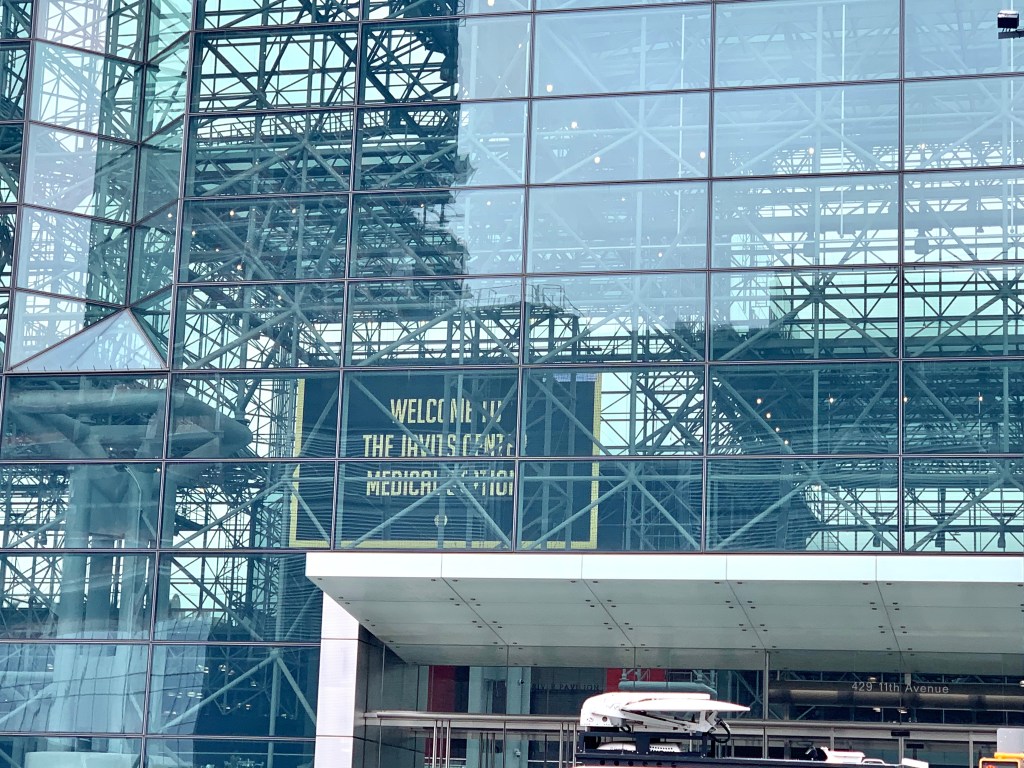
In April, we began to see refrigerated trucks outside hospitals. The US Comfort docked a few blocks from my apartment, and the Javits Convention Center was set up for hospital overflow (although neither of these turned out to be heavily used). There were hospital tents in Central Park across from Mount Sinai Medical Center.

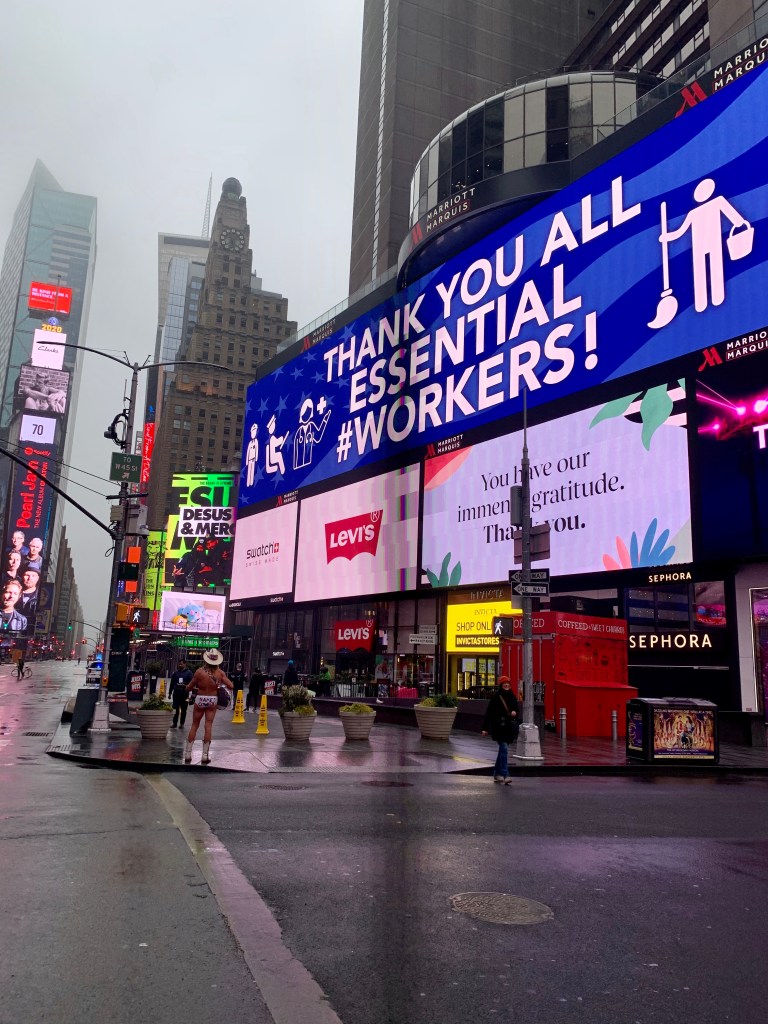
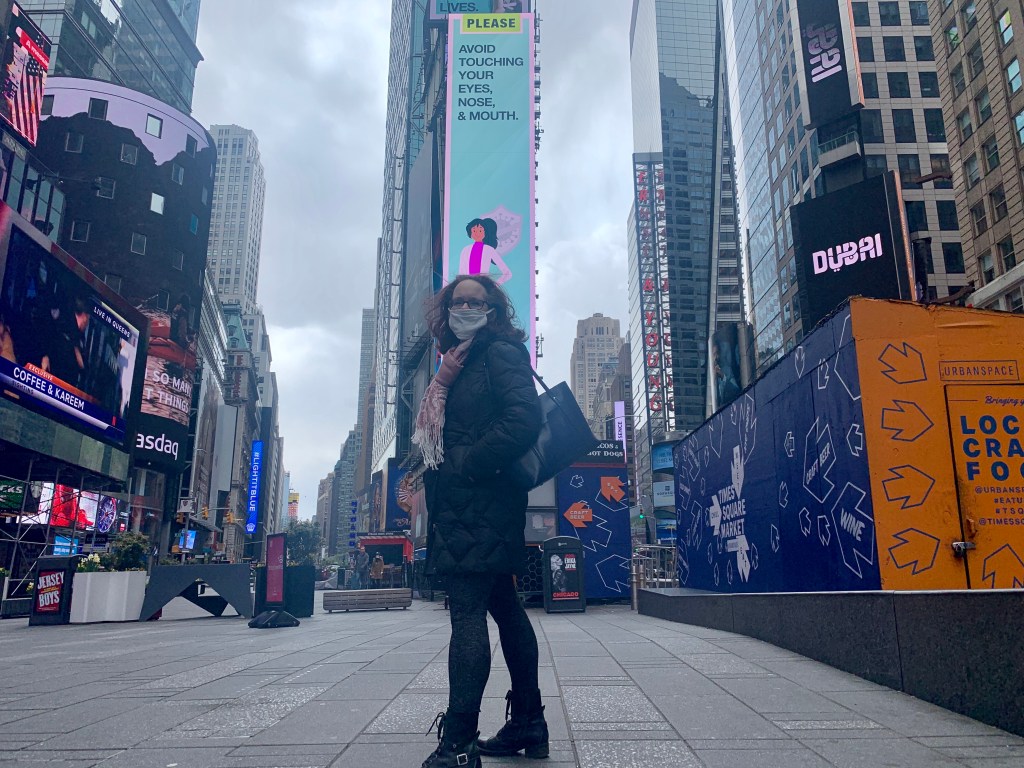
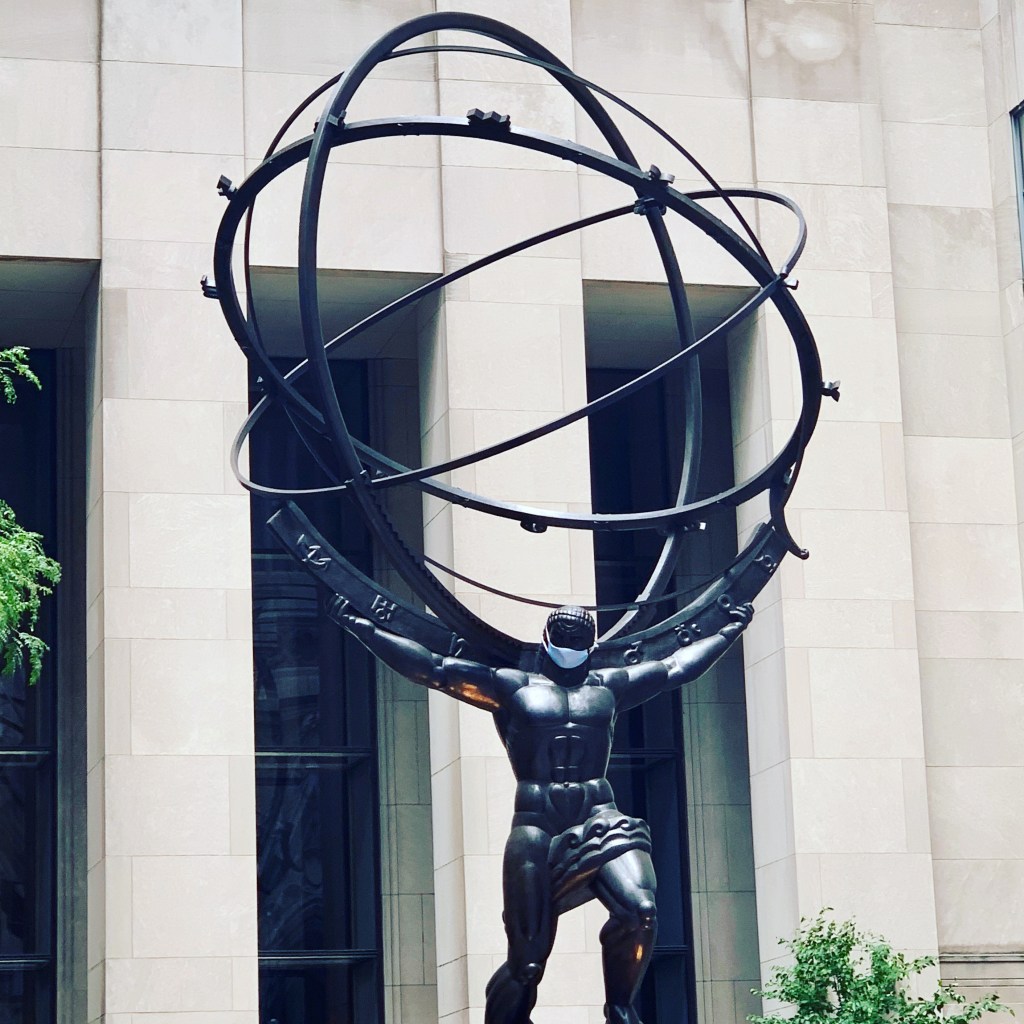
At first we were advised not to wear masks; but then we were. This is the way science works with a new phenomenon: educated guesses are made until more data come in that suggest alternate approaches. Going out for a walk every day for exercise and fresh air was eerie at times. Where were all the people? To stand in Times Square in the middle of the day and have no one else in your photos was previously not something I could have even imagined.

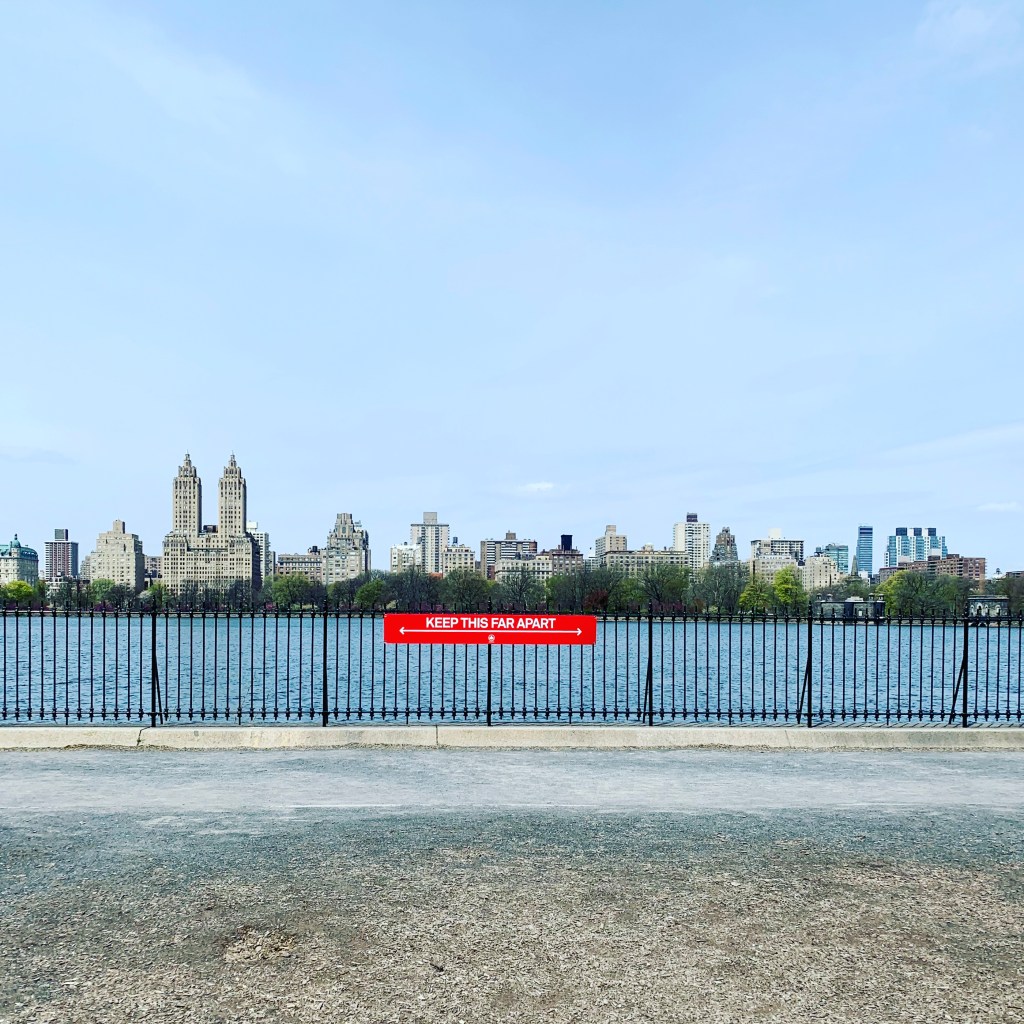
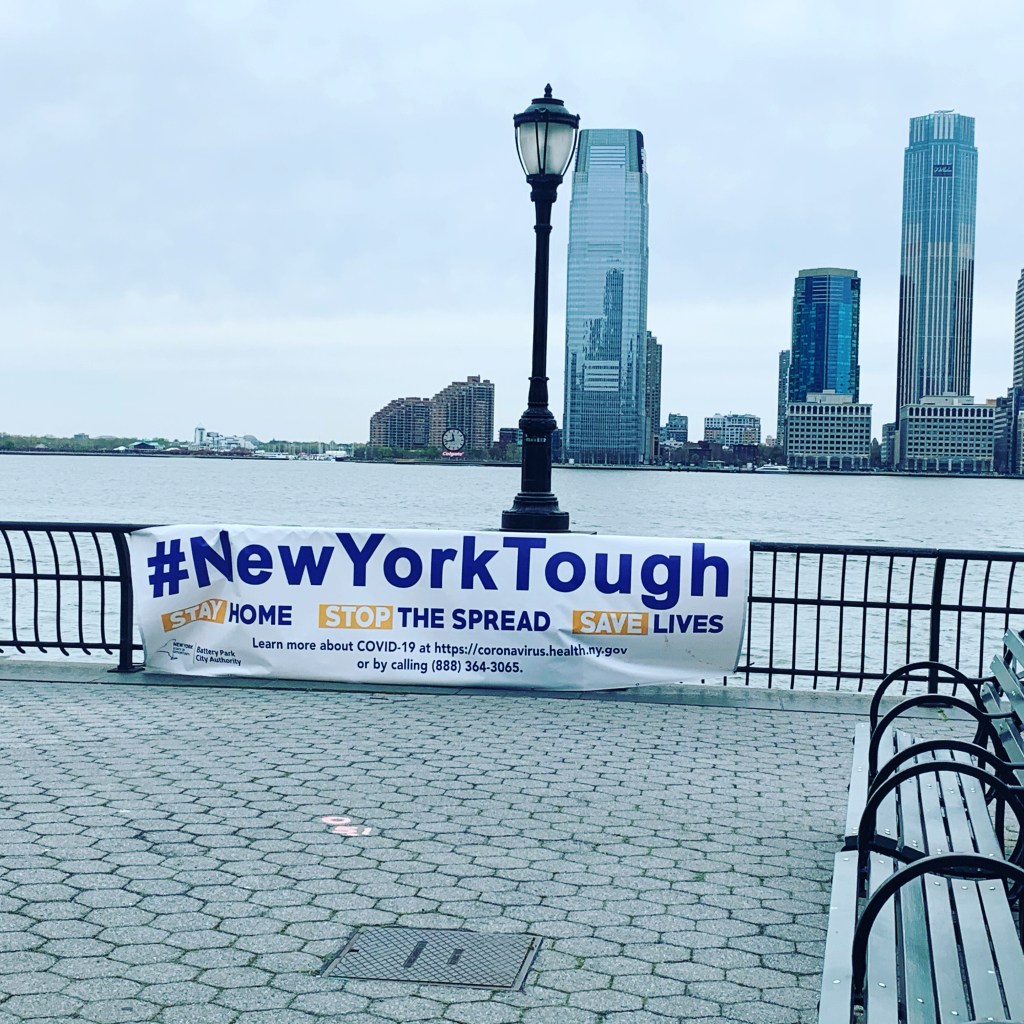
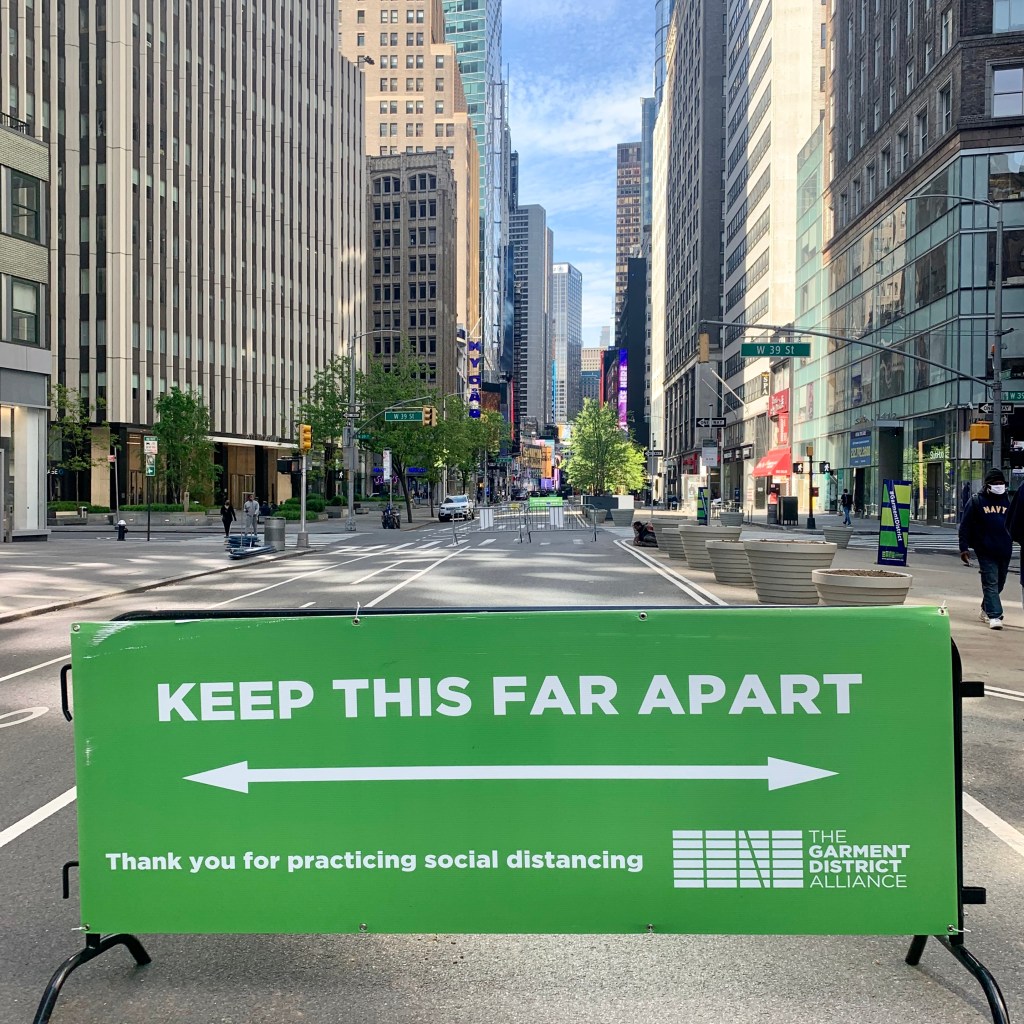
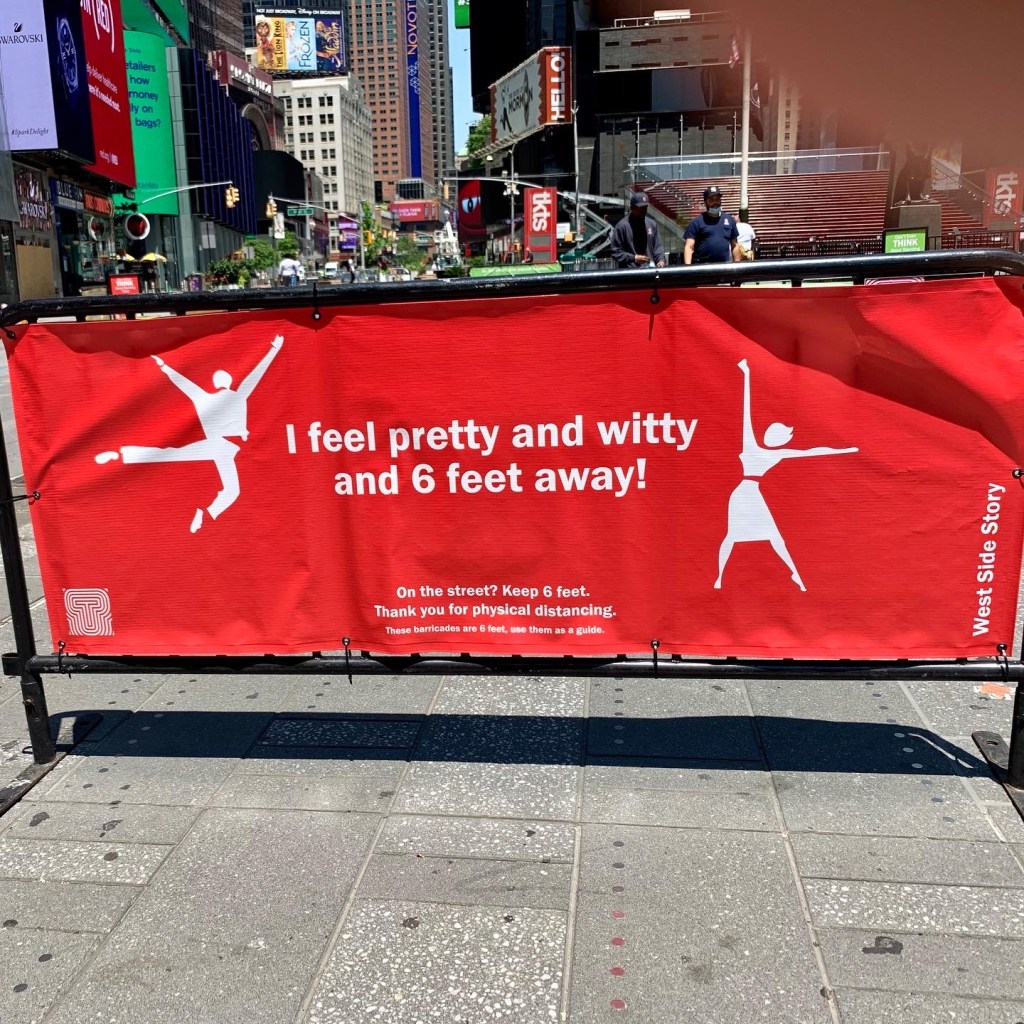
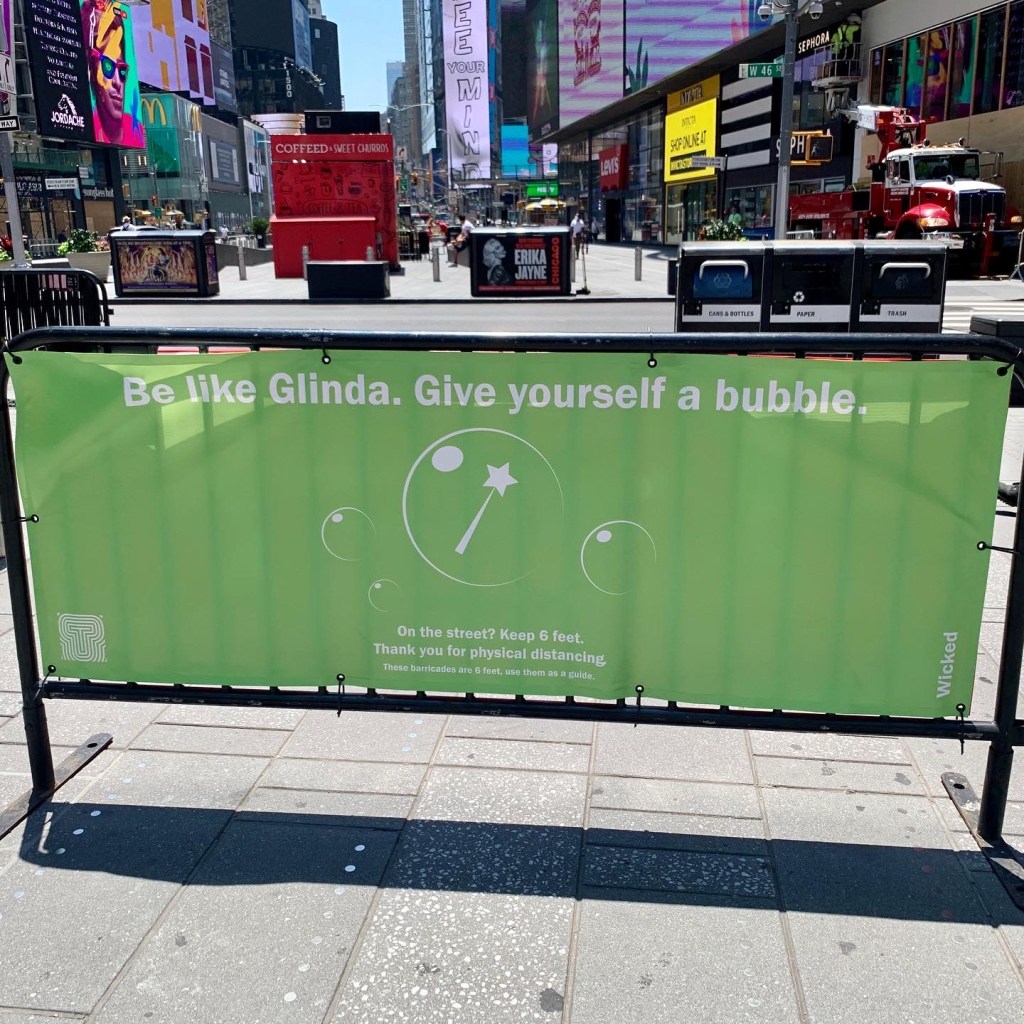
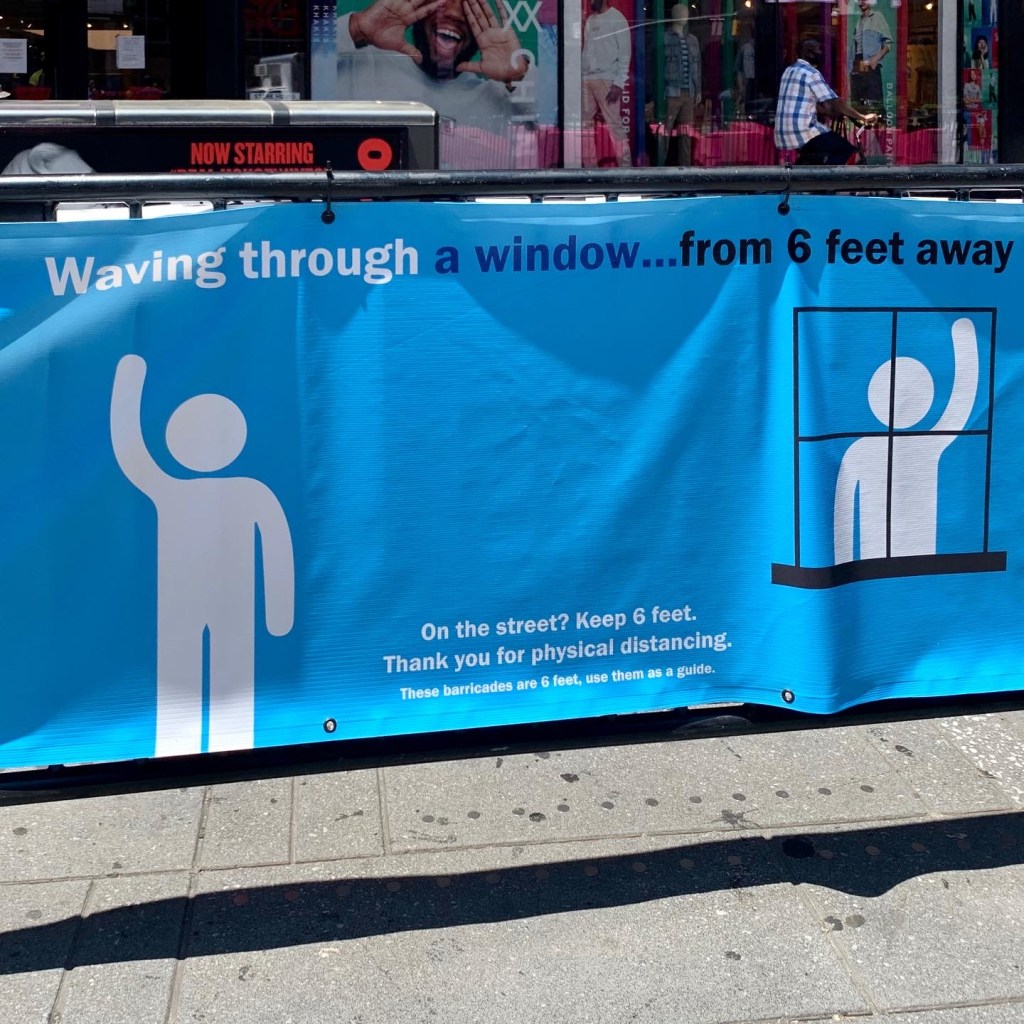
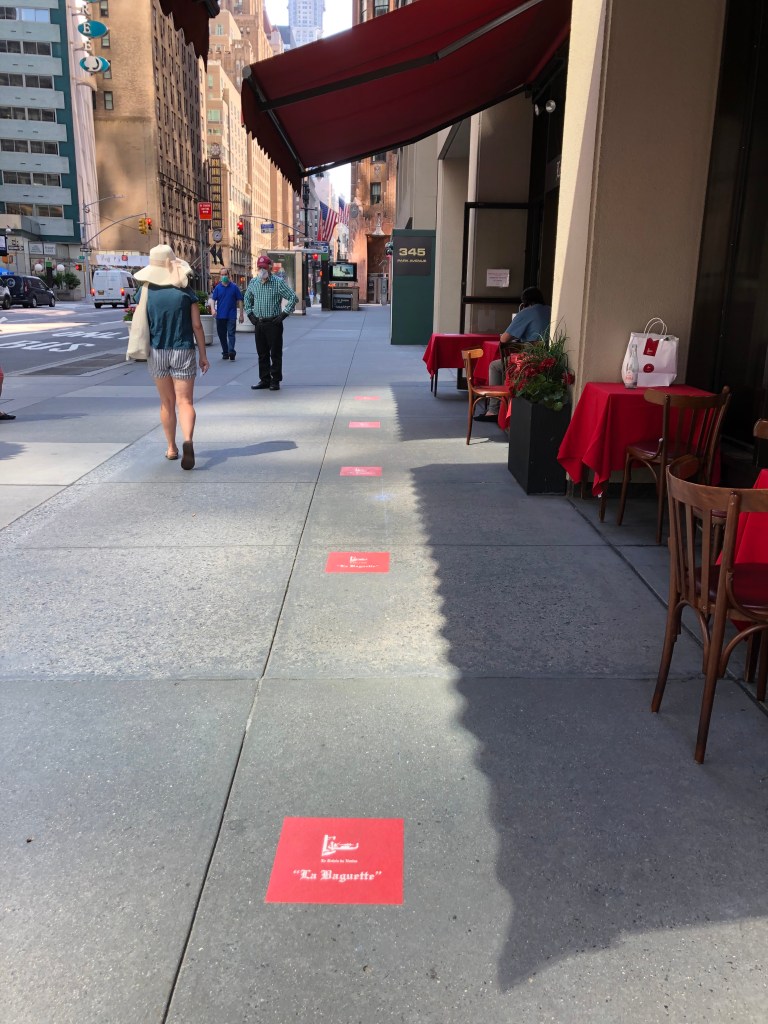
As April came to a close, it became clear that what we were doing – isolating, distancing, wearing masks – was working and our numbers began to improve. Signs began to appear everywhere showing what 6 feet of distance looked like, and reminding us that we are “New York Tough.”

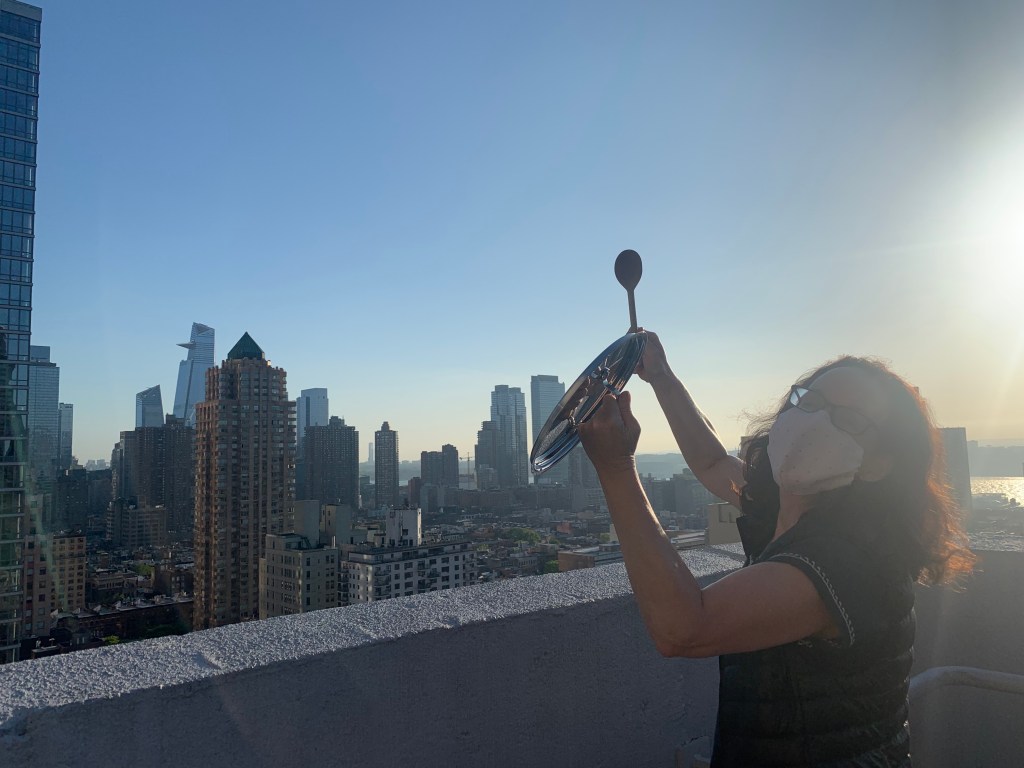
Meanwhile, the entire city seemed to lean out of their windows, go up to their roofs, or out to their balconies or terraces, to applaud and make noise to thank the essential workers every evening at 7PM. It was incredibly touching that so many people did this, night after night, and it also served as a way to feel less isolated. As we applauded with others, we also signaled to each other “I’m still here, and I’m glad you’re still here, too.”

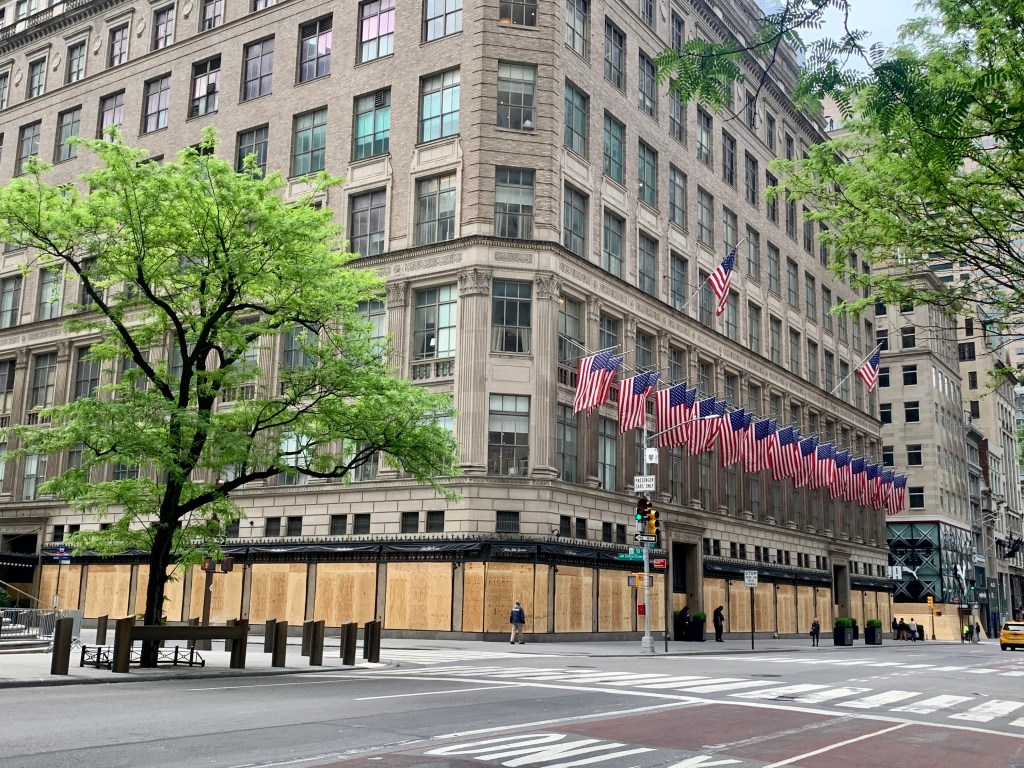
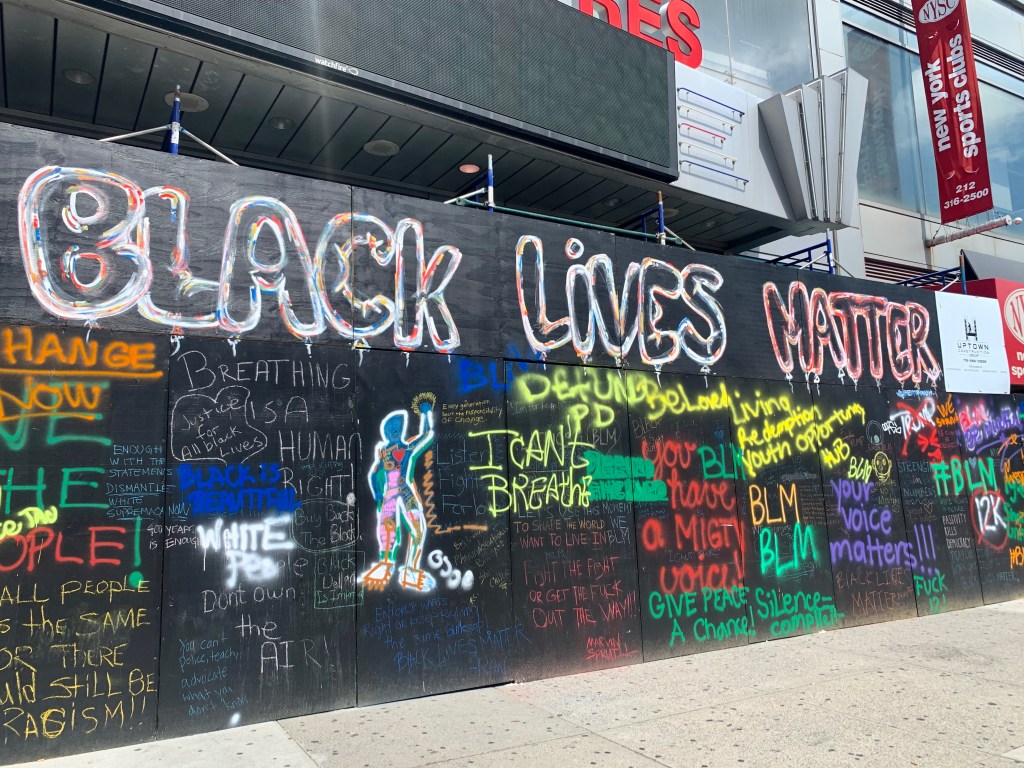
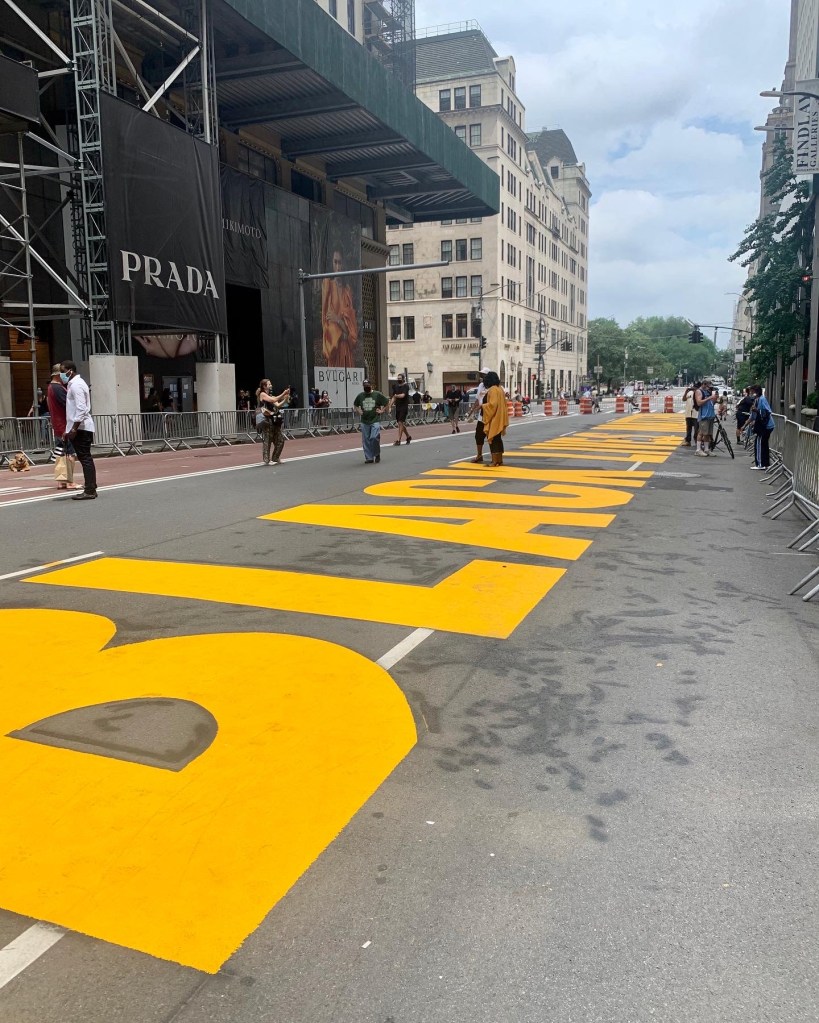
As May turned toward June, our numbers were under control enough that we began hearing about the future of phased reopening. Simultaneously, protests over the death of George Floyd swept the city. Although the vast majority of these were peaceful, some of the unrest led to the city having a curfew for several nights.

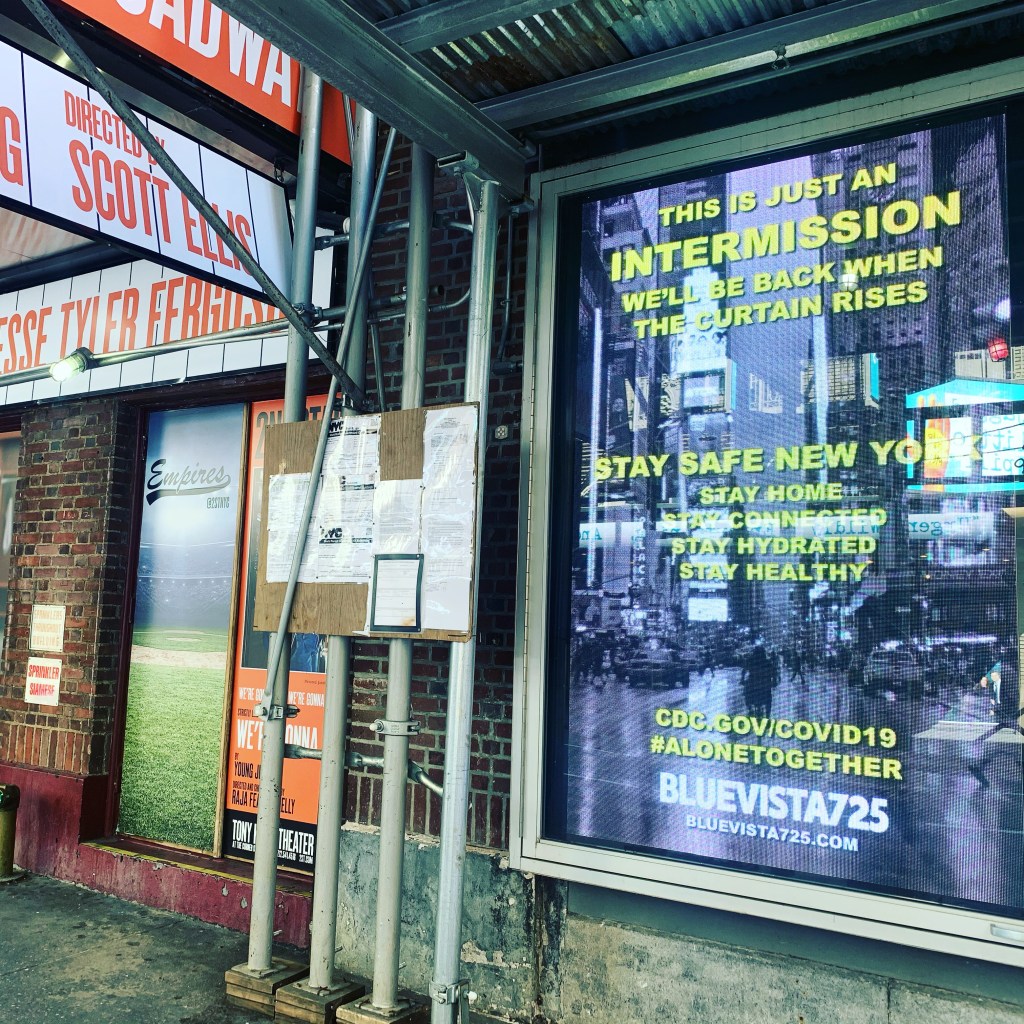
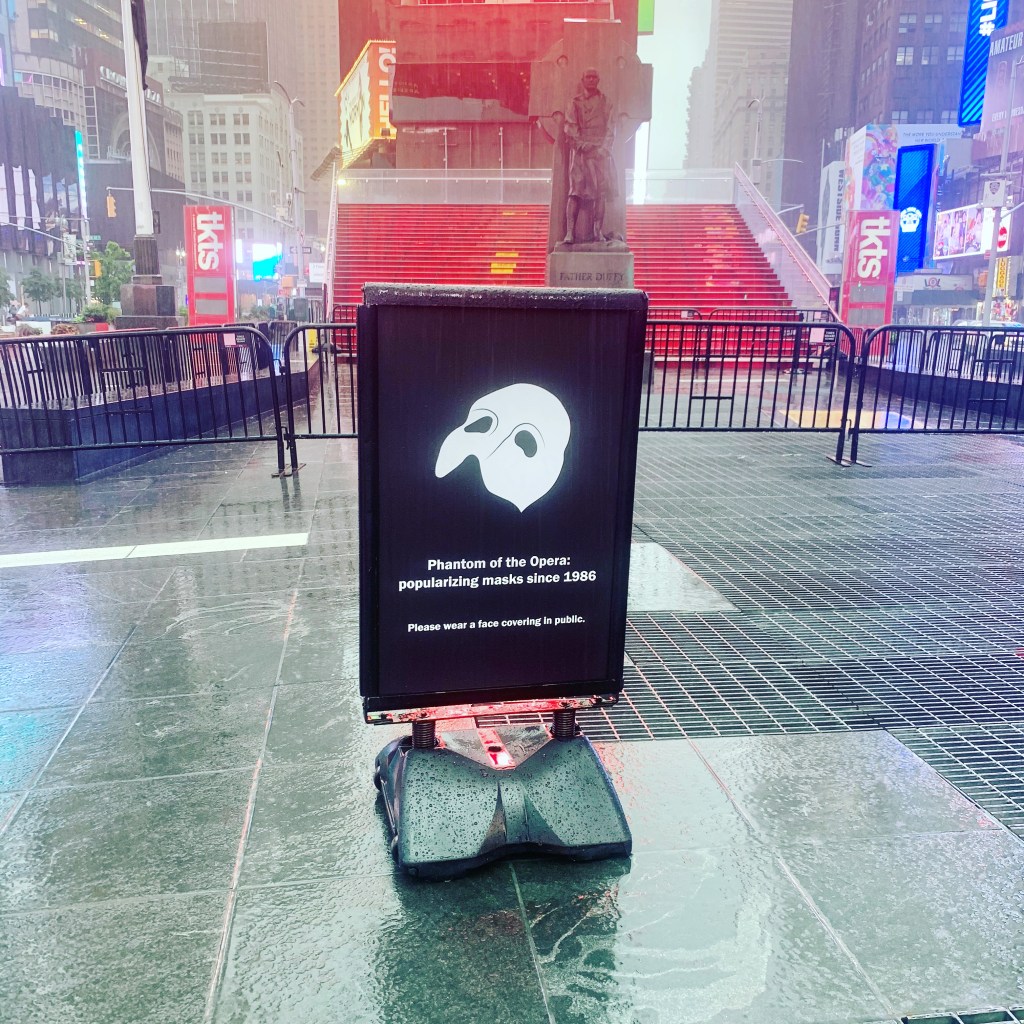
In June, the city began to slowly reawaken. Times Square was still quite empty, but clever signs were put up to remind people of safe distance and mask wearing, with hat tips to beloved Broadway shows.

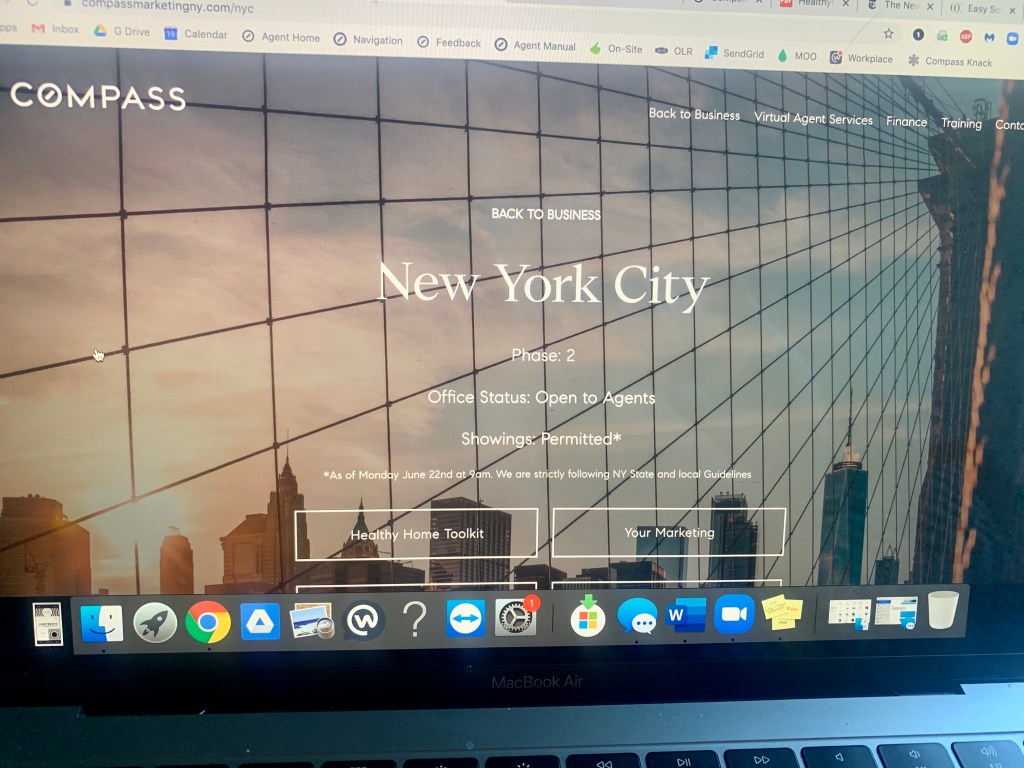
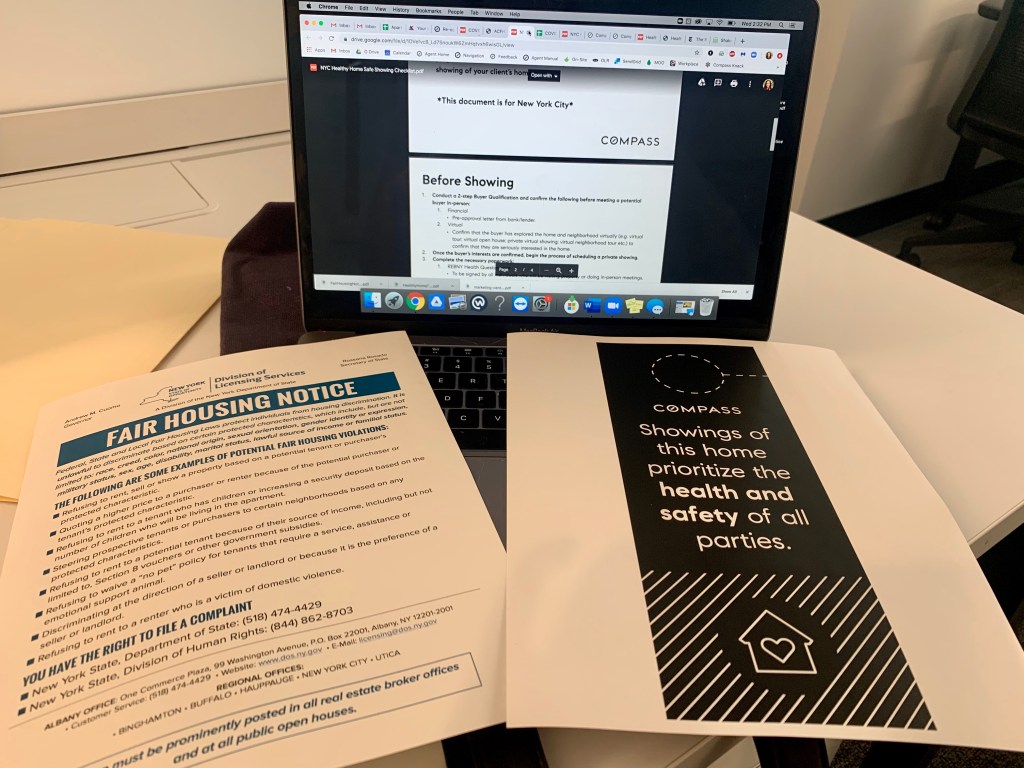
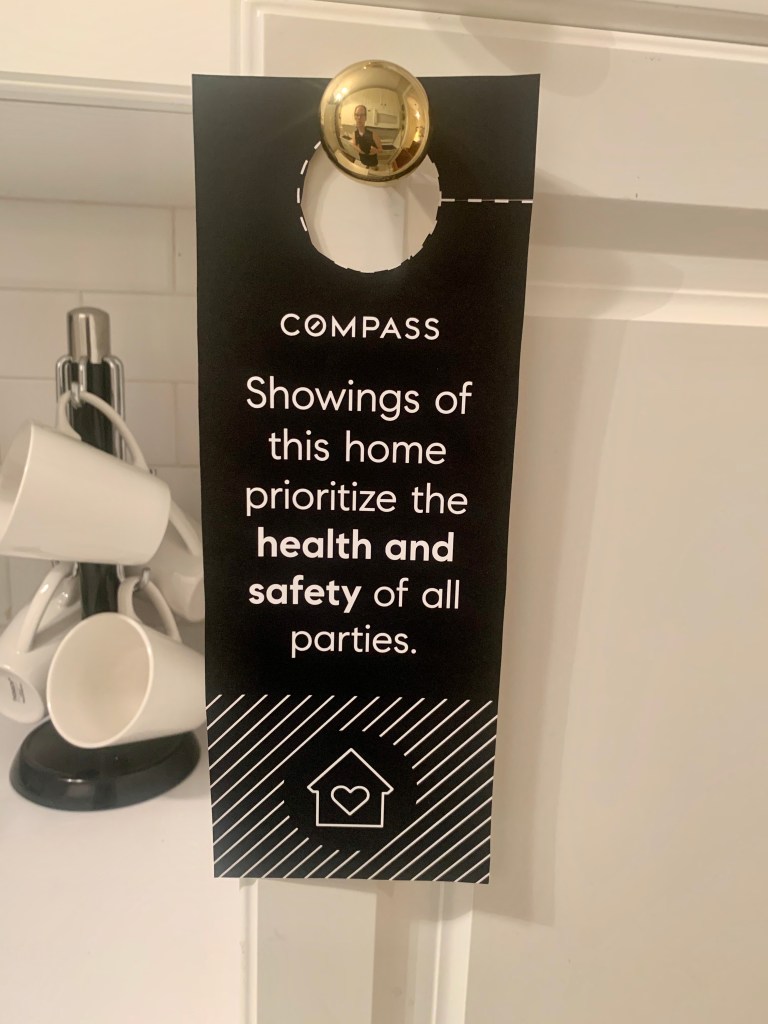
On June 22, Phase 2 reopening meant the return of real estate showings – with extensive safety measures in place. Appropriately, new Fair Housing disclosures and notices also became a part of our new normal, along with the Covid-19 health questionnaires and liability forms.

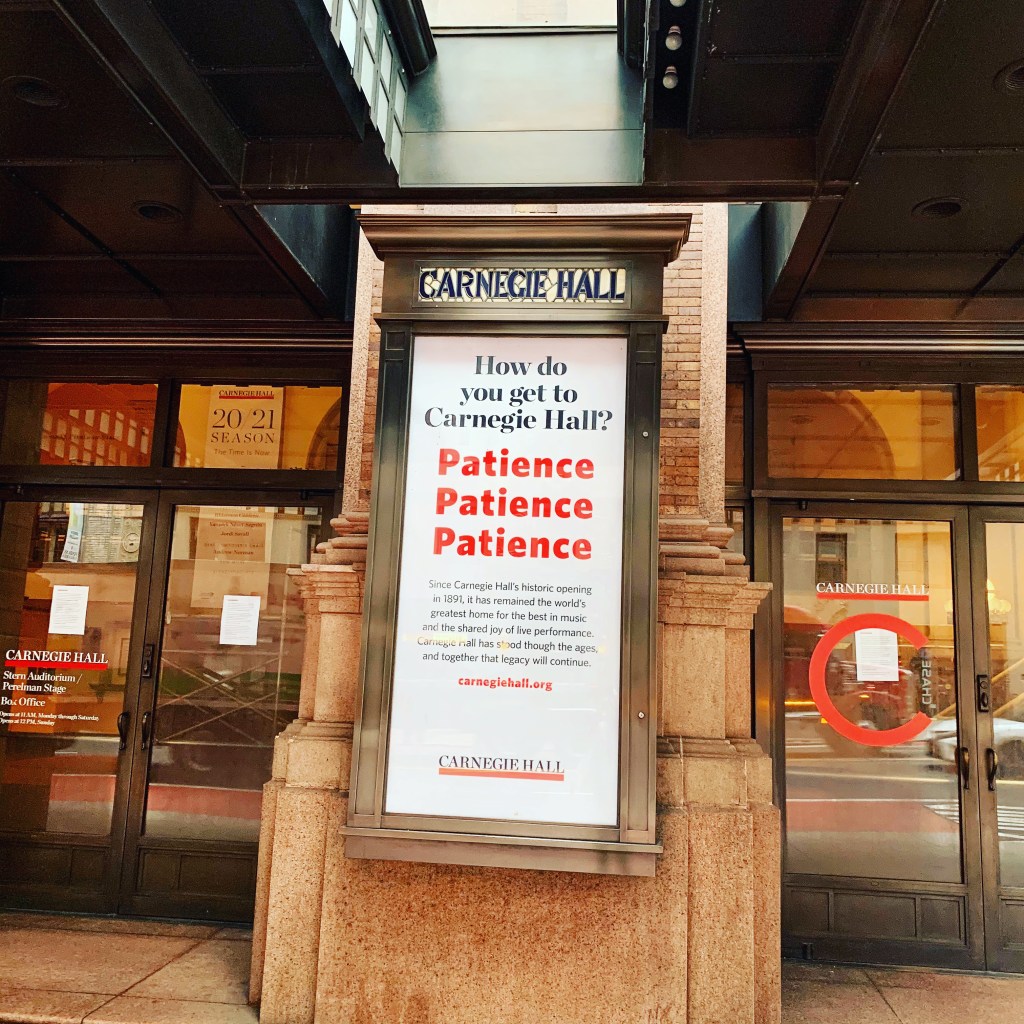
Now in August, it is clear that it will be a long time before New York City can reopen performing arts, indoor dining, and so many aspects of life that make living here such a rich and enjoyable experience. This pandemic has taken NYC’s super powers – so many people from so many places, all crowded together and often experiencing things together in crowds indoors – and turned them against us. But there is more to New York City than these experiences, although of course I can’t wait to be able to have our city back to normal again. We have shown that we could do the difficult things and make the difficult choices to save as many lives as possible, led by data and science, and beat back a virus that had taken hold before we realized it. If we can continue to do so, we can stave off this enemy until we can declare it vanquished and return safely to the activities we love. To meet a group of friends and hug them, to sit in a darkened Broadway theatre and be transported, to eat and drink and laugh and sing together – I believe we will do these things again. Many times before people have counted NYC out, and yet we always rise again like a phoenix. Being patient is hard, but we will rise again.

Outdoor activities in NYC, Summer of 2020

Since March of 2020, New York City has been fighting a war against Covid-19, and we have had to adjust many of the details of our daily lives. I am working on a post about what I witnessed during the months of lockdown (see it here), but this post focuses on what summer activities we can now do safely. Of course, our parks remain a respite from the city, as they were even during lockdown, but with so many indoor activities understandably closed now for safety reasons, what are other outdoor adventures we can still experience? In the past few weeks I have taken the ferry to Rockaway Beach, visited Governors Island, and walked the High Line park. All three experiences, while very worthwhile, are different from what they were in the past, and all have prioritized safety and continuing to keep New York’s infection rate under control.

I have written before about traveling to Rockaway Beach (see that post here). For the trip this month, I used Citibike to get to the Wall Street ferry station and back. The ferry now has an app and you can load tickets on the app before boarding, eliminating touching paper tickets or handing them to others (find the app and instructions here). Riders keep six feet apart from each other while lining up to board, and masks are required at all times. In fact, even on the top deck with the wind blowing, mask wearing was constantly enforced by the ferry staff. When you get off the ferry, you are a few blocks’ walk to the beach. While I did see people take off masks at the ocean, mask wearing was required on the boardwalk. There are a few places to eat open on the boardwalk, and although I didn’t try any, I did see social distancing was being enforced while waiting on line. The trip back involved a walk back to the ferry, a very pleasant ferry ride back to Manhattan, and then a Citibike home. For $2.75 each way, it’s a relatively easy way to get out of the city during these days when traveling is not recommended.

High Line Park, blissfully uncrowded

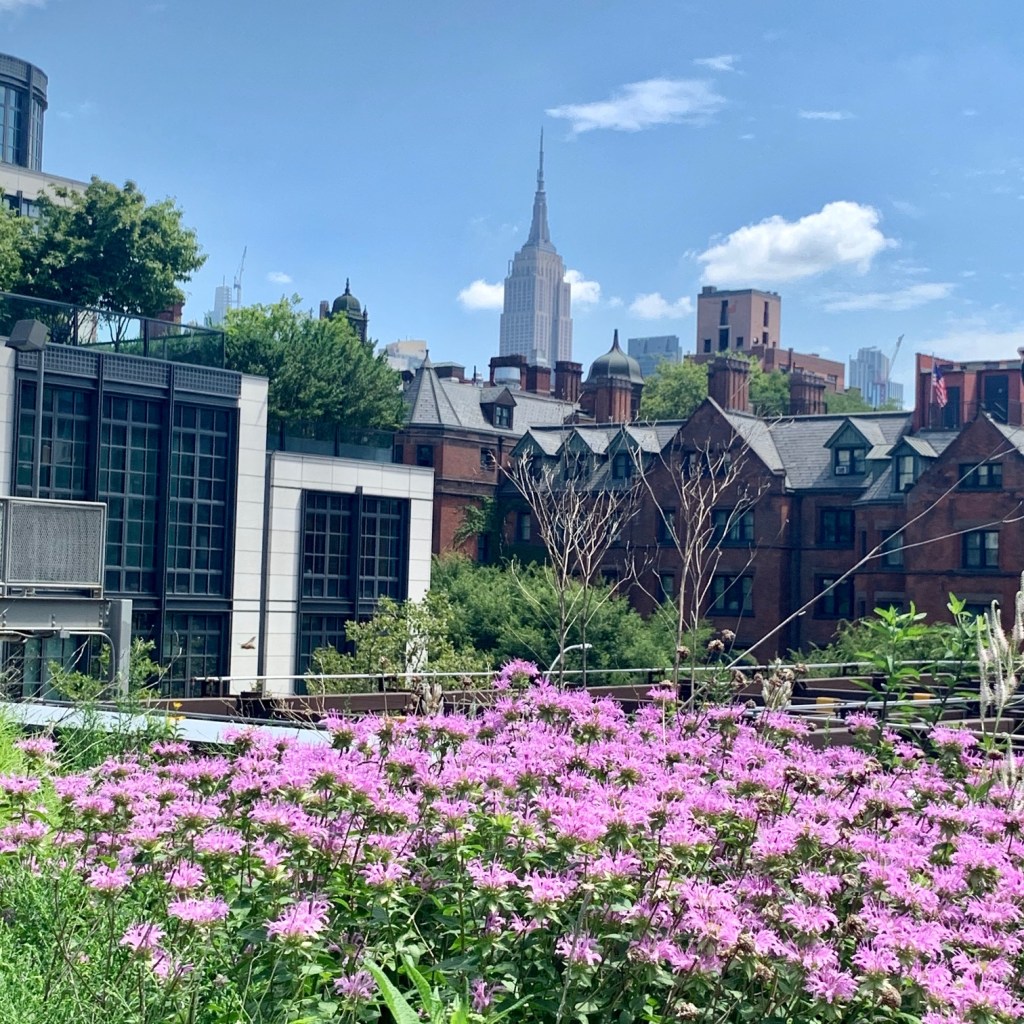
For months, the High Line Park was closed. Anyone who had been on it before the pandemic knew why – the park, while exceptionally lovely and unique, was always crowded. You can see a post from when the High Line had recently opened here. The park is only open now from Gansevoort Street to 23rd Street, reservations are required (get yours here), the park is only open from noon to 8 PM, and attendance is kept very low. That last difference is what makes it possible now to walk the High Line and almost experience it as a solitary stroll, delightful and unheard of before!

The sign above sums it up: masks are required, you only walk the park in one direction, and you should keep 6 feet of distance from others. There are dots everywhere demonstrating what six feet is. However, I had no problem keeping many multiples of six feet away from others. As you will see in the photos below, quite often it felt as though I had the High Line to myself.

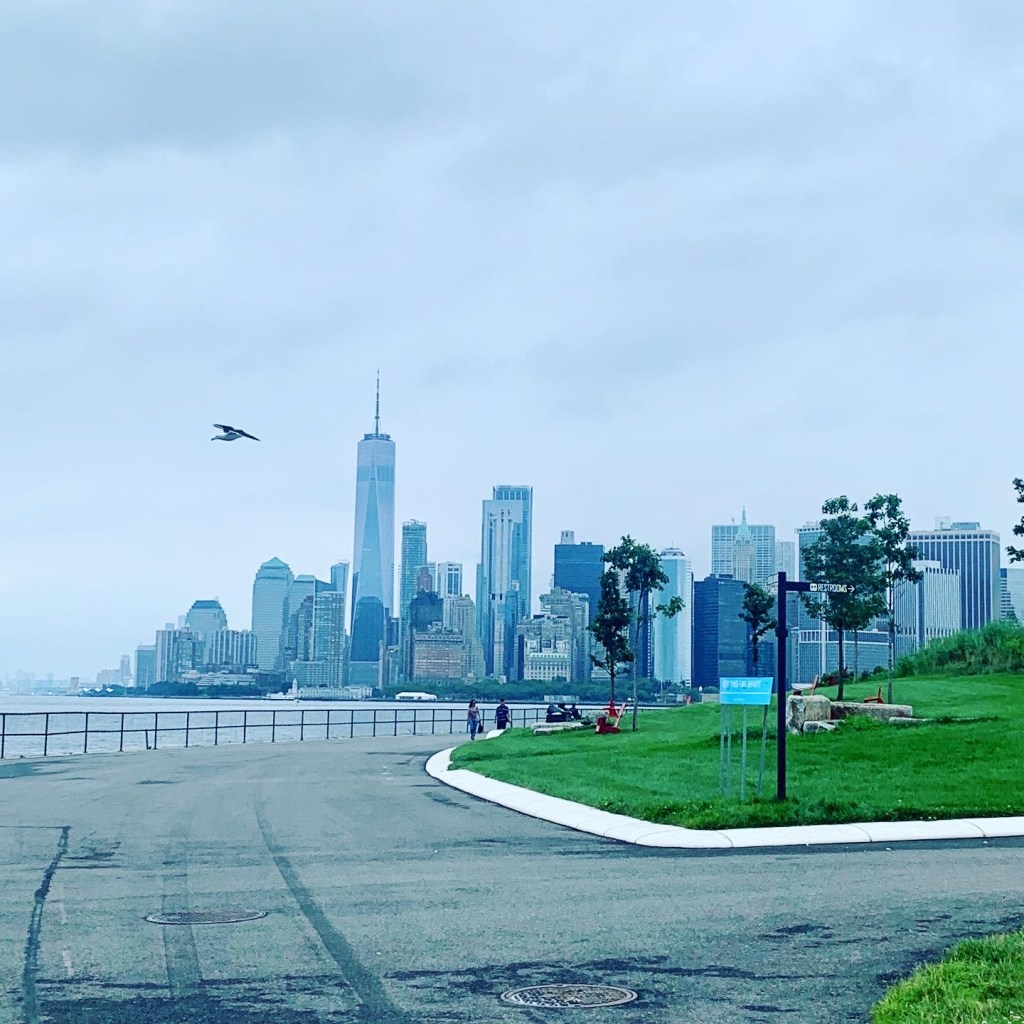
Finally, I also went to Governors Island this month, which I have enjoyed many times before and blogged about here. Again, I took a Citibike to the ferry terminal. Reservations are required in advance and tickets were loaded to my phone (find out how to reserve here). If you are an IDNYC holder, the ferry is absolutely free. Reservations are limited to prevent crowding on the ferry, and you are required to reserve both your time to leave and your time to return. We waited for the ferry in designated circles six feet apart, and masks were required at all times. The ferry ride is short (unlike the one to the Rockaways). Once you get there, the island is huge compared to how many people they are allowing to visit at this point. Citibike stations exist at three places on the island, including one very close to the ferry terminal, so it is easy to bike to different places on the island as well as walk. When there, you truly feel as if you have gone far out of the city, even as you see extraordinary views of Lower Manhattan and the Statue of Liberty.

New York City has gone to extraordinary lengths to control this novel coronavirus – and to keep ourselves safe, we will likely need to adapt for some time yet. However, it is important to remember that while we miss so many things about our city, there are also many delightful summertime experiences that still beckon to us.

2019 Dyker Heights Holiday Lights

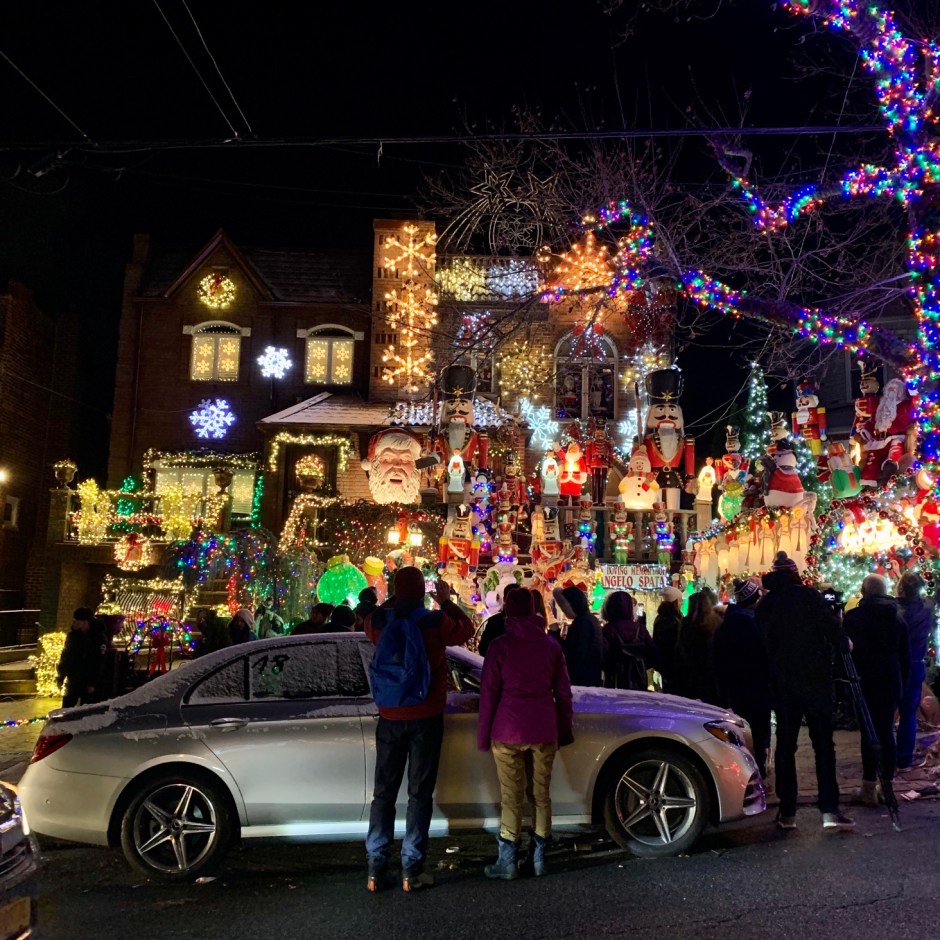
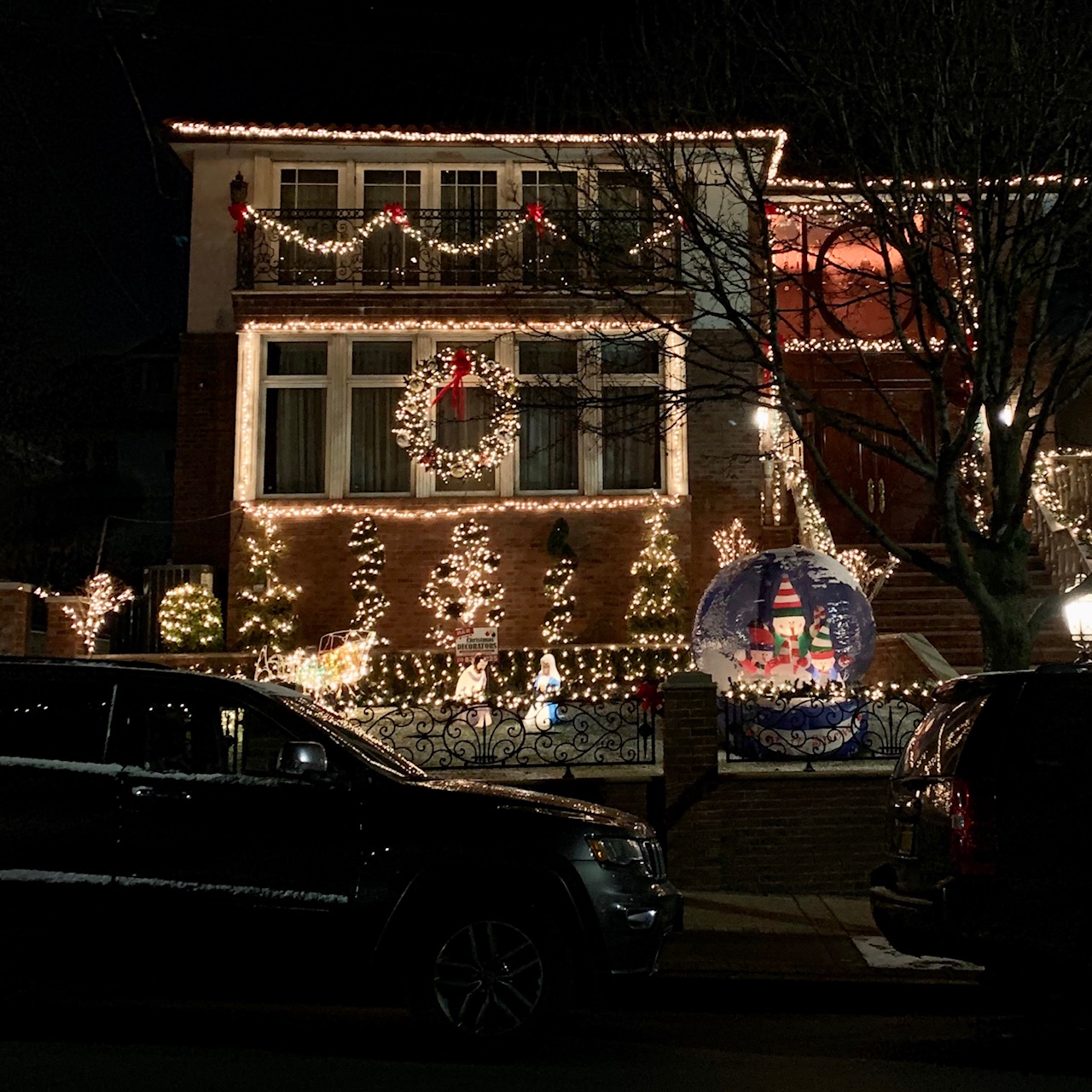
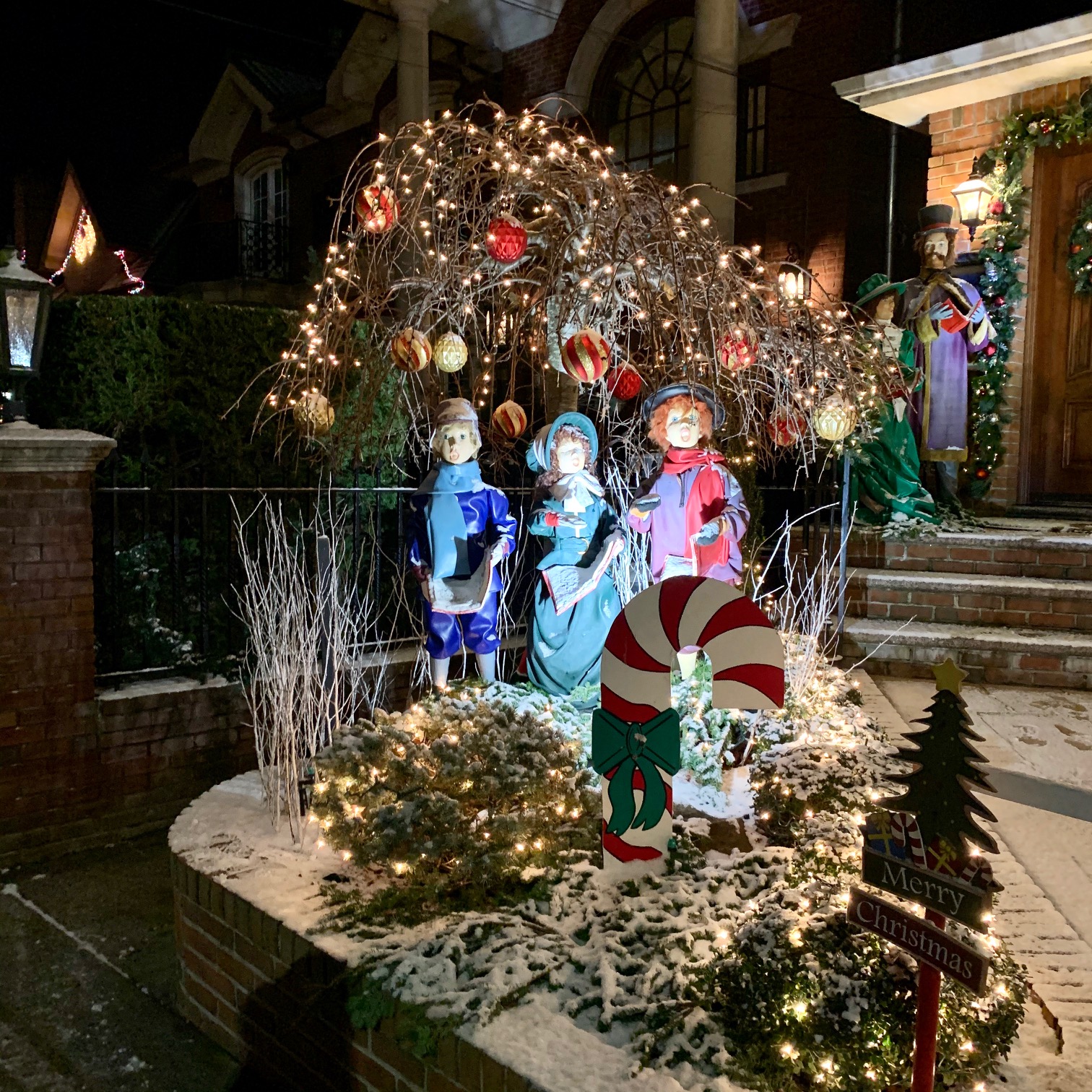
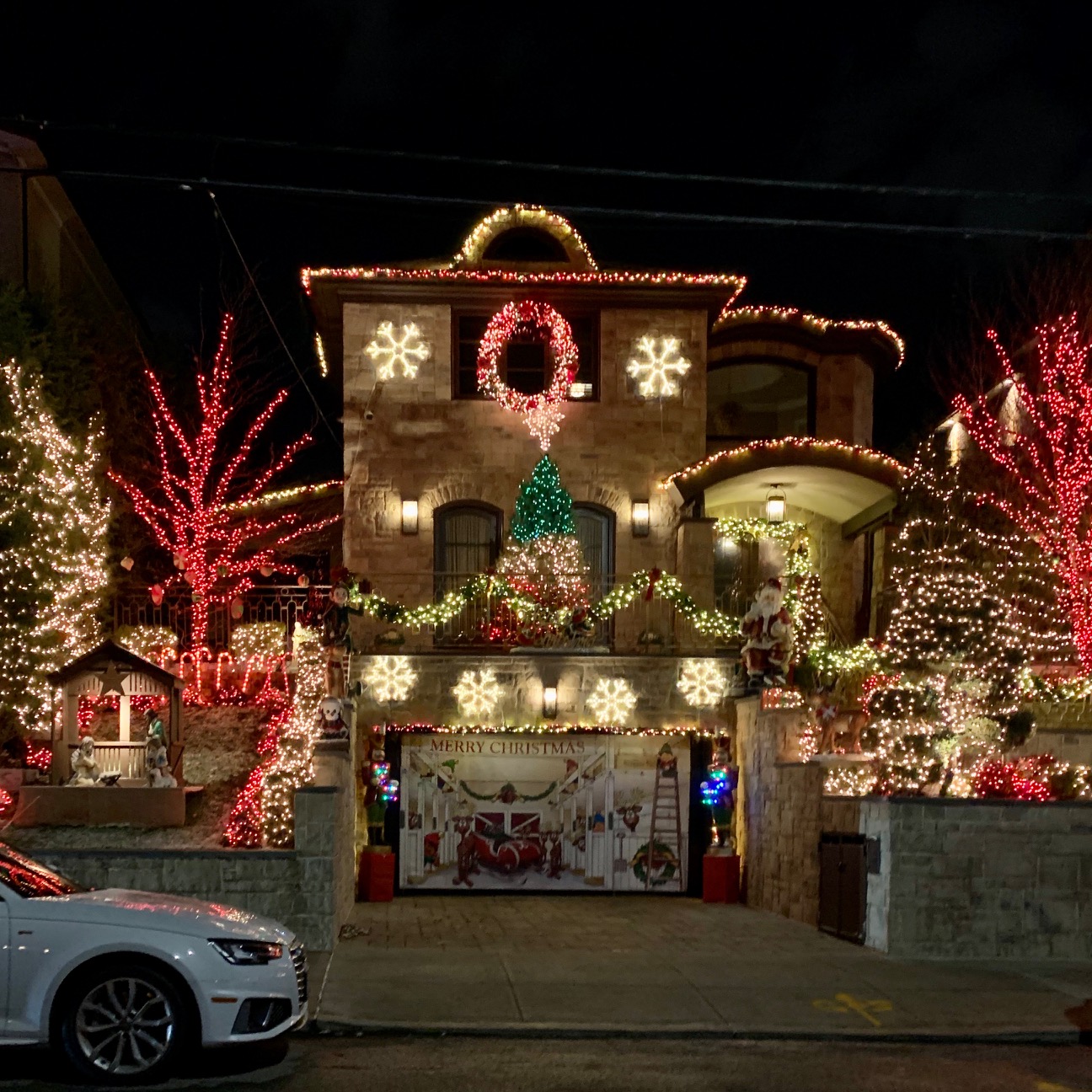
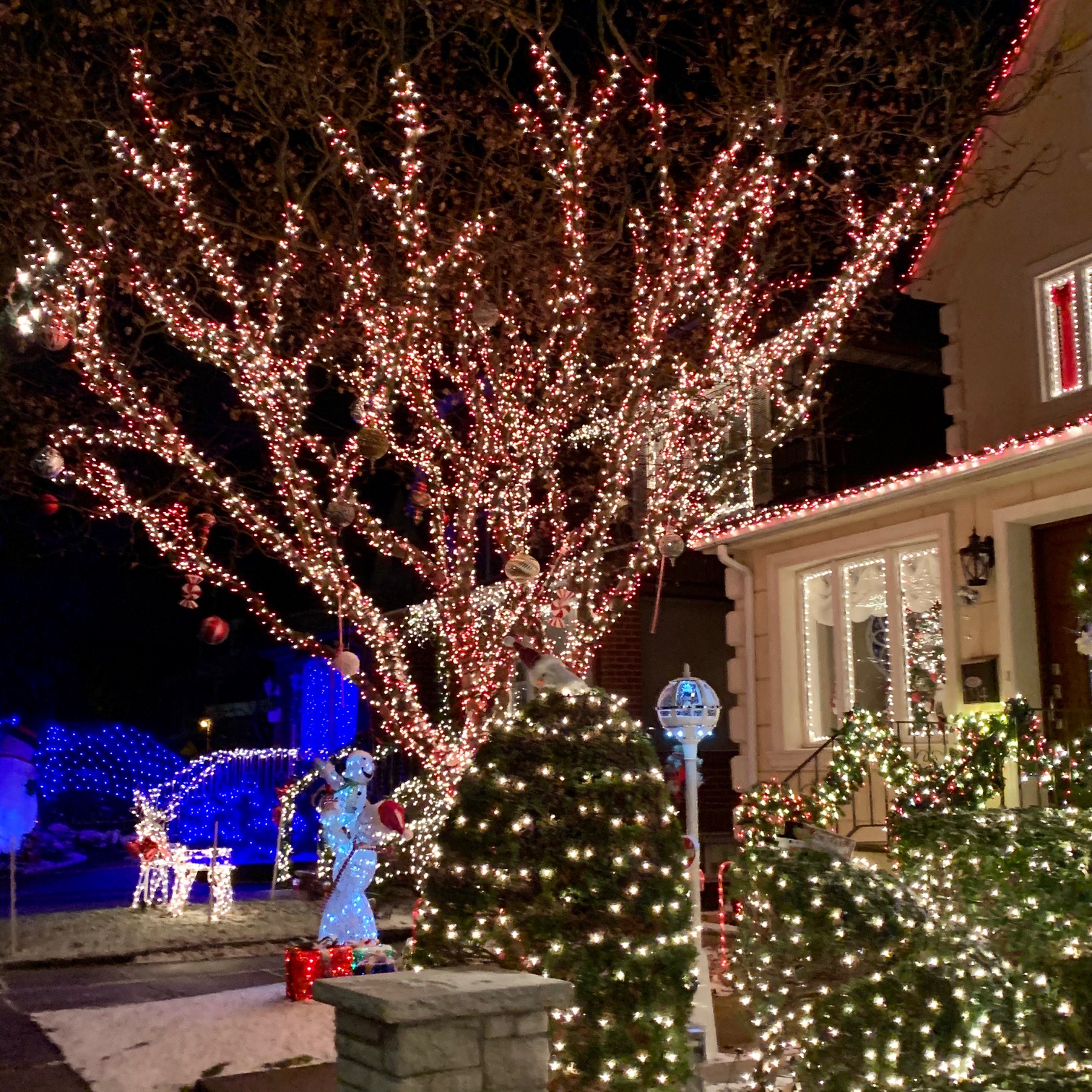
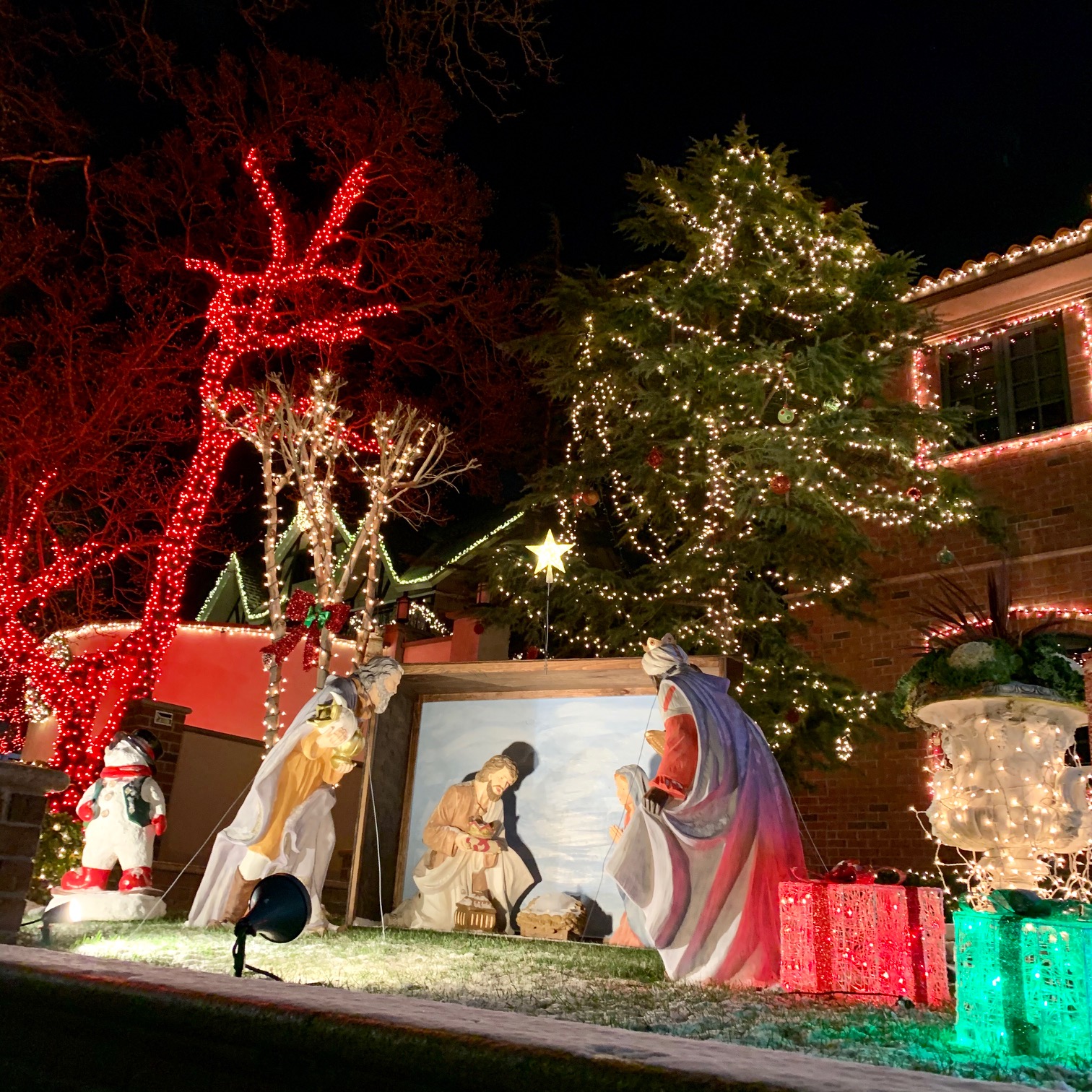
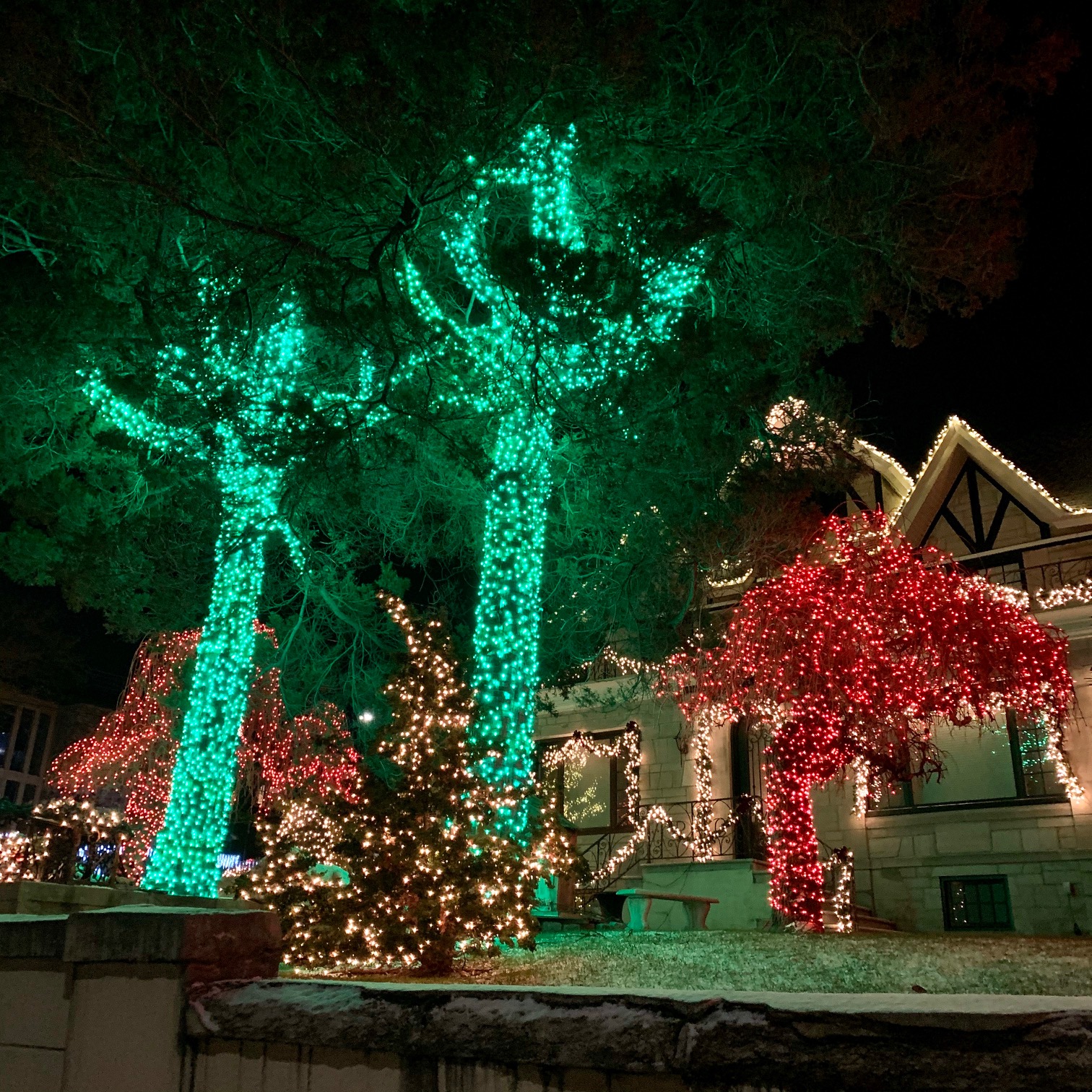
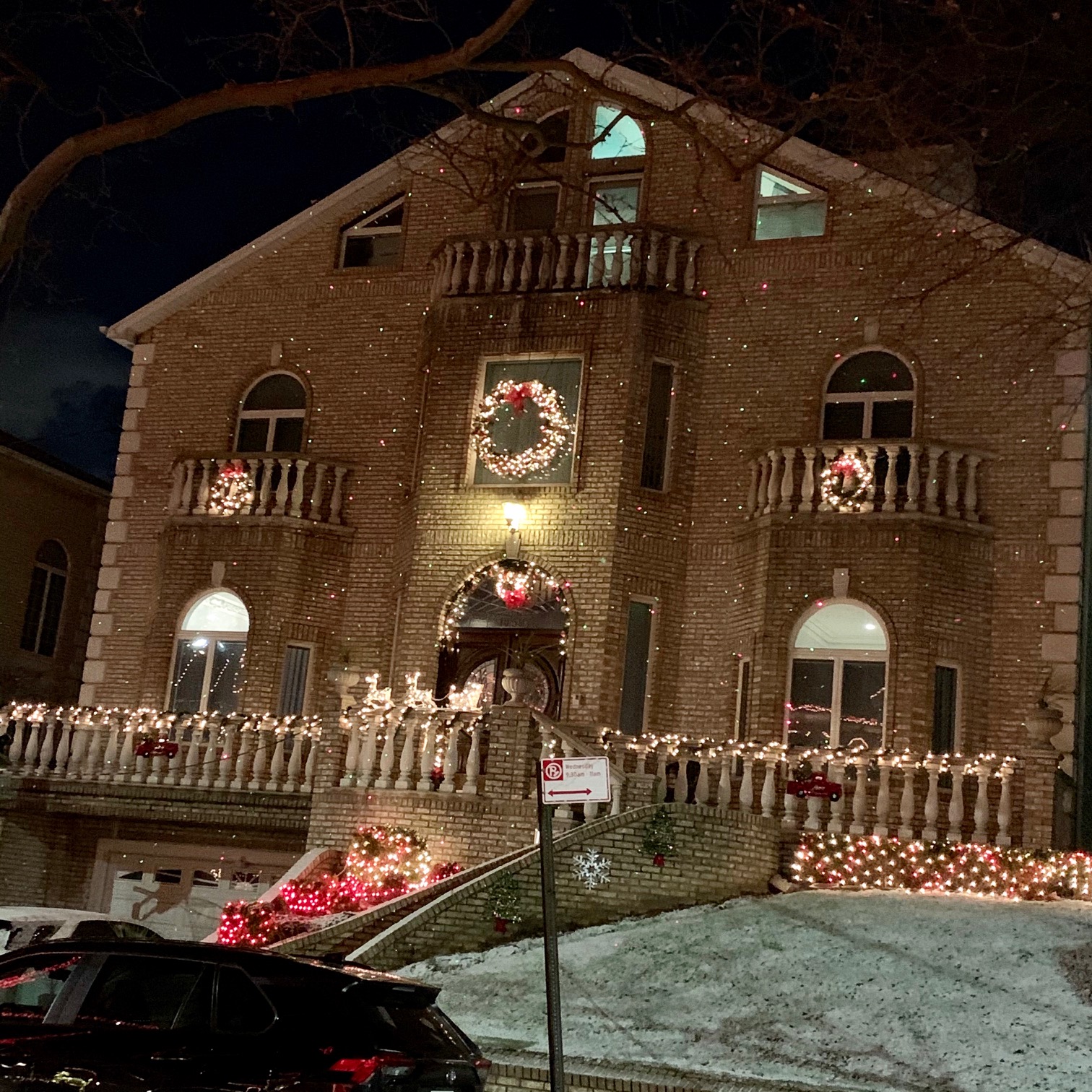
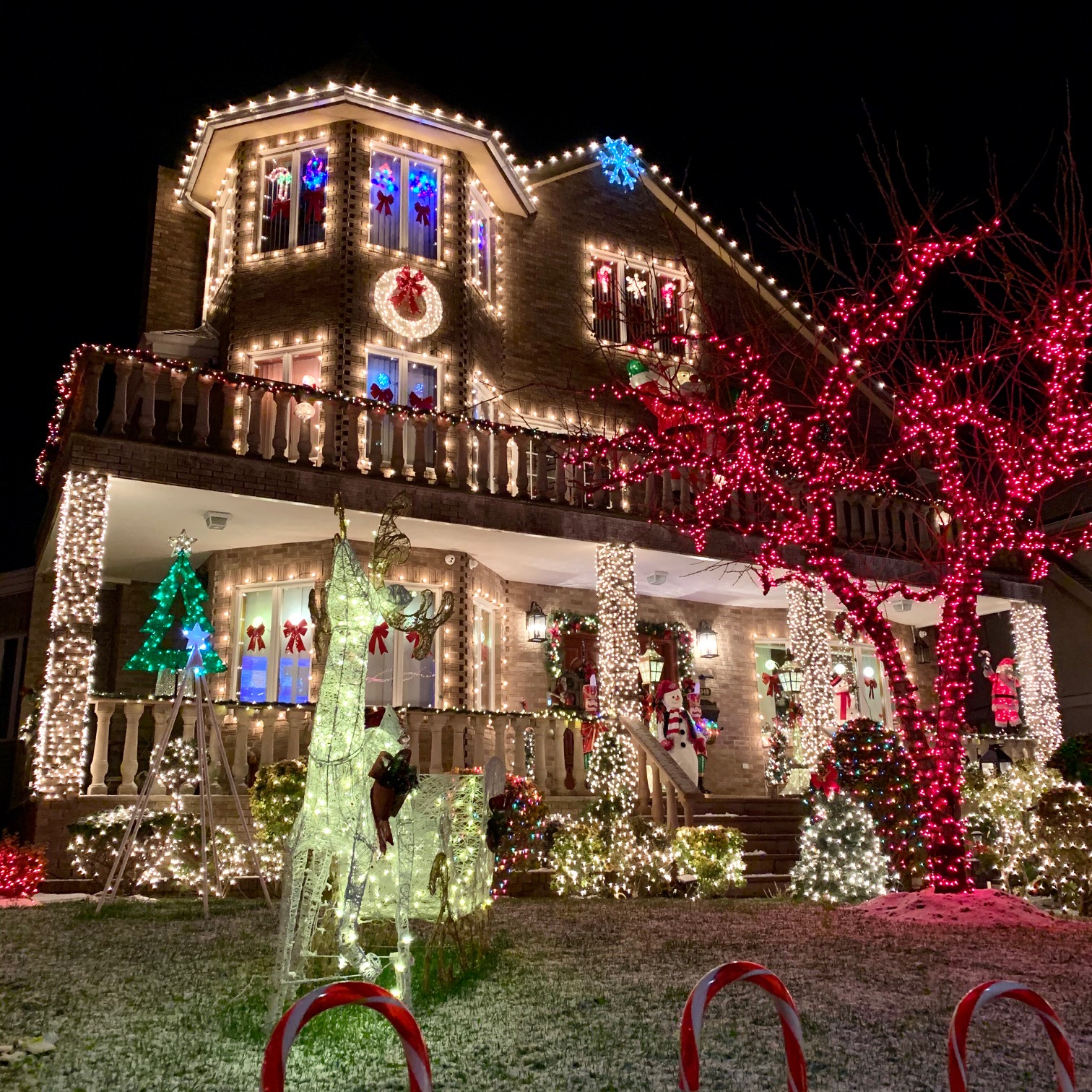
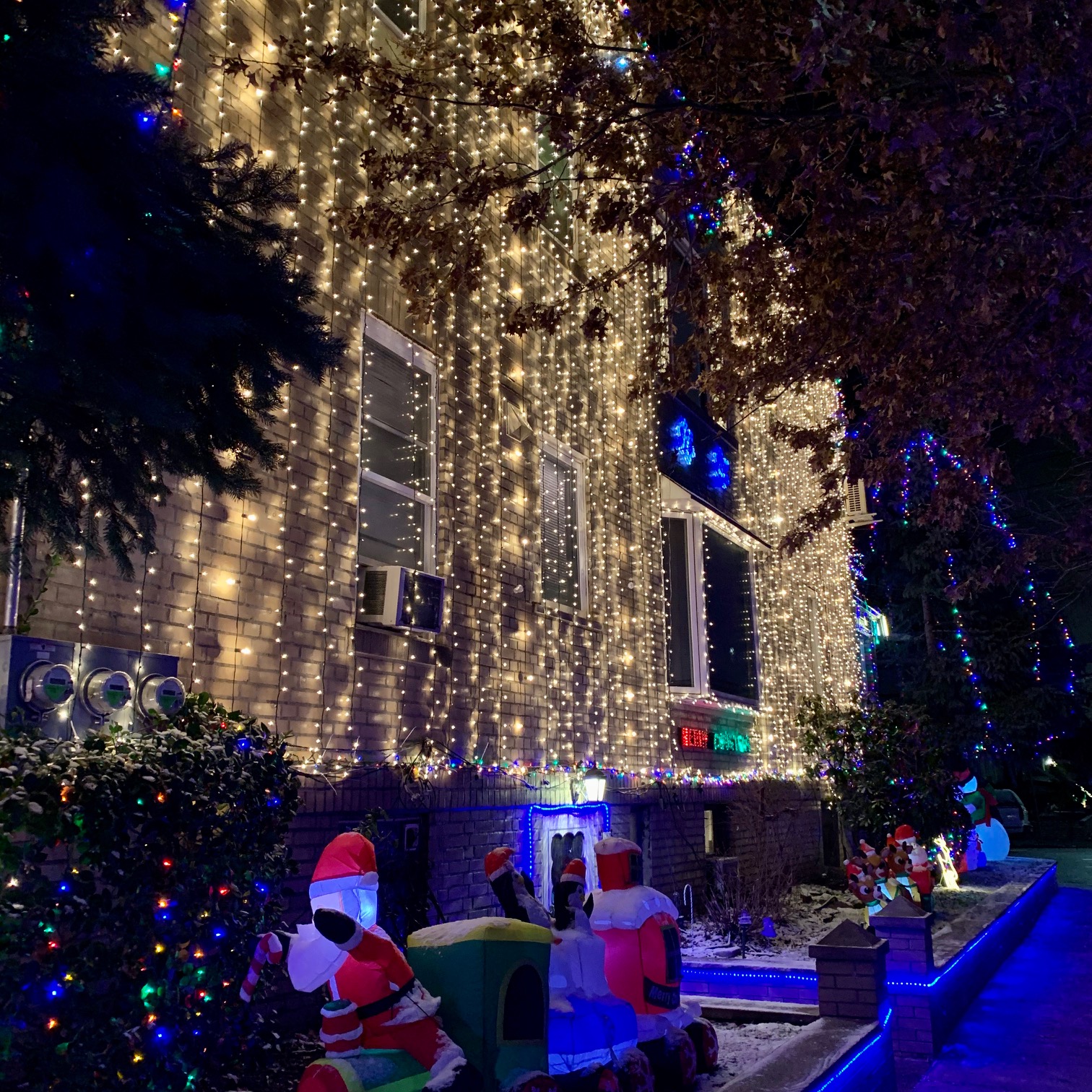
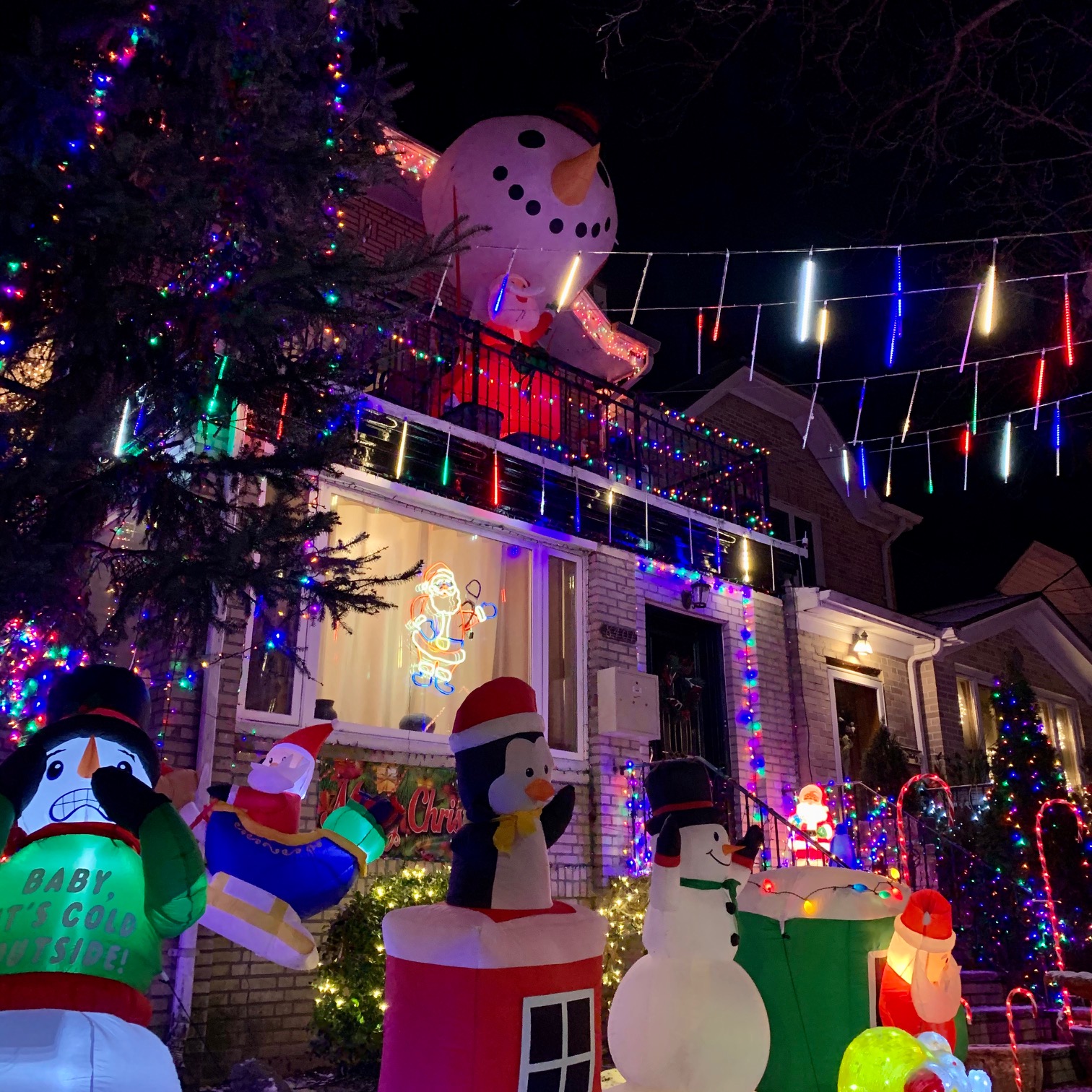
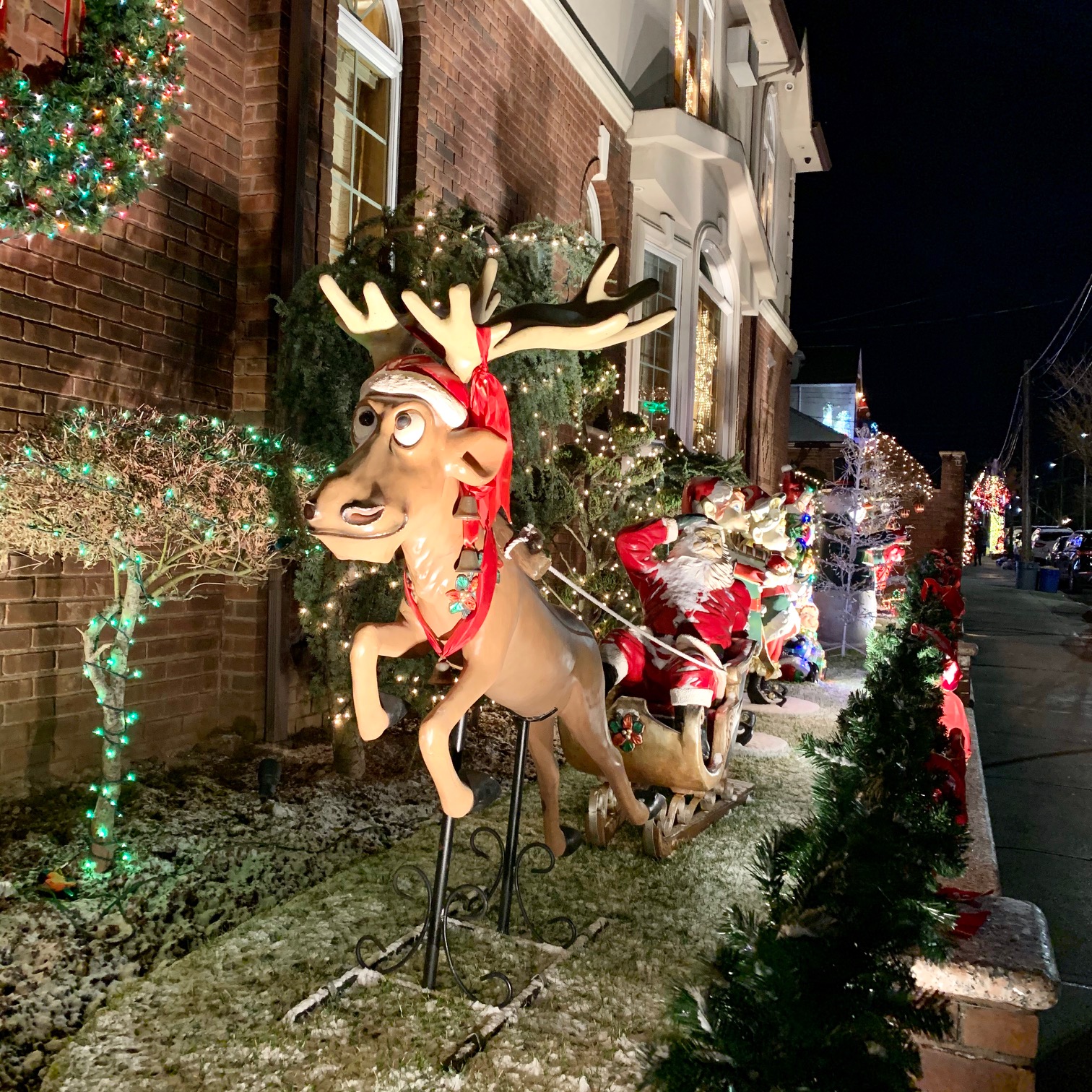
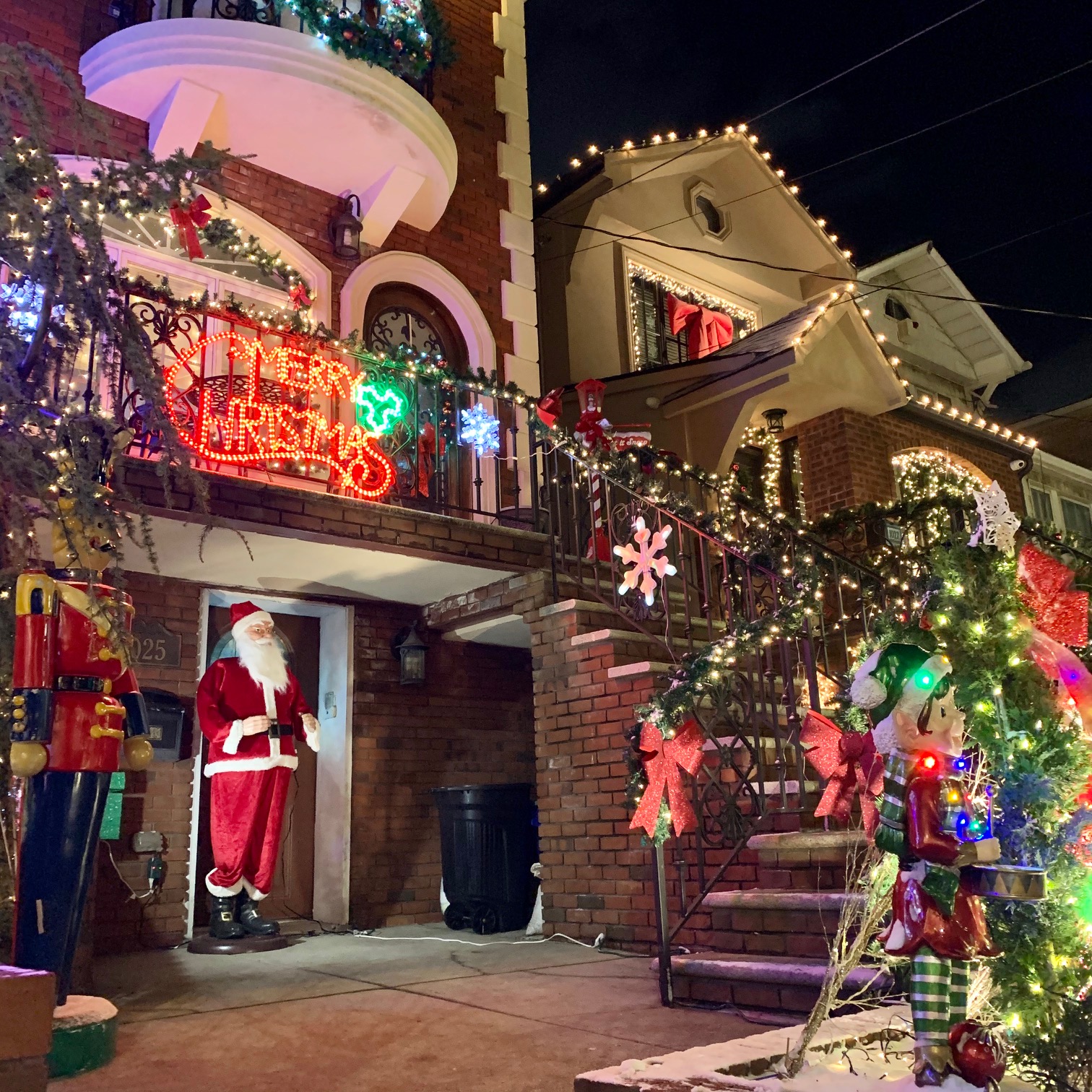
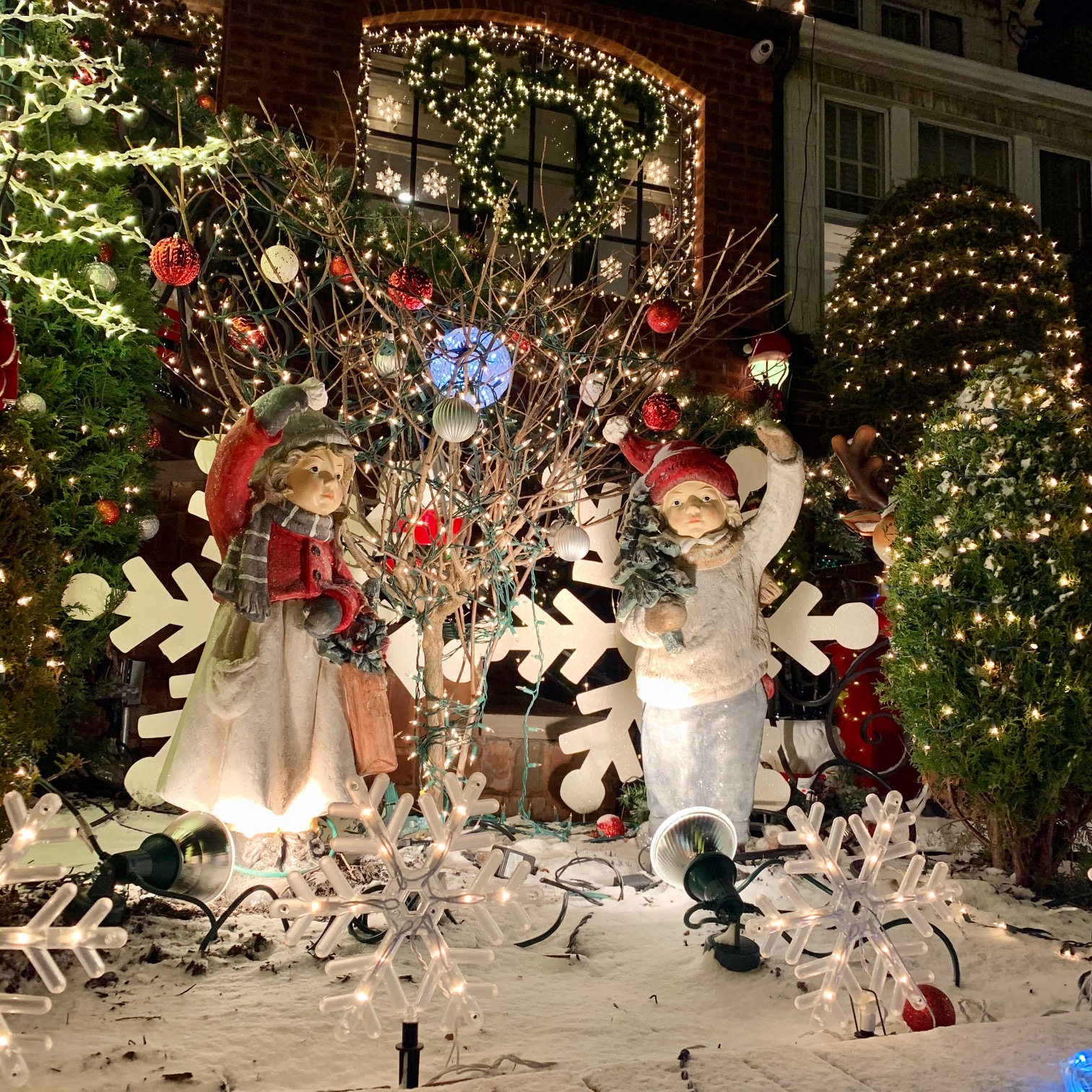
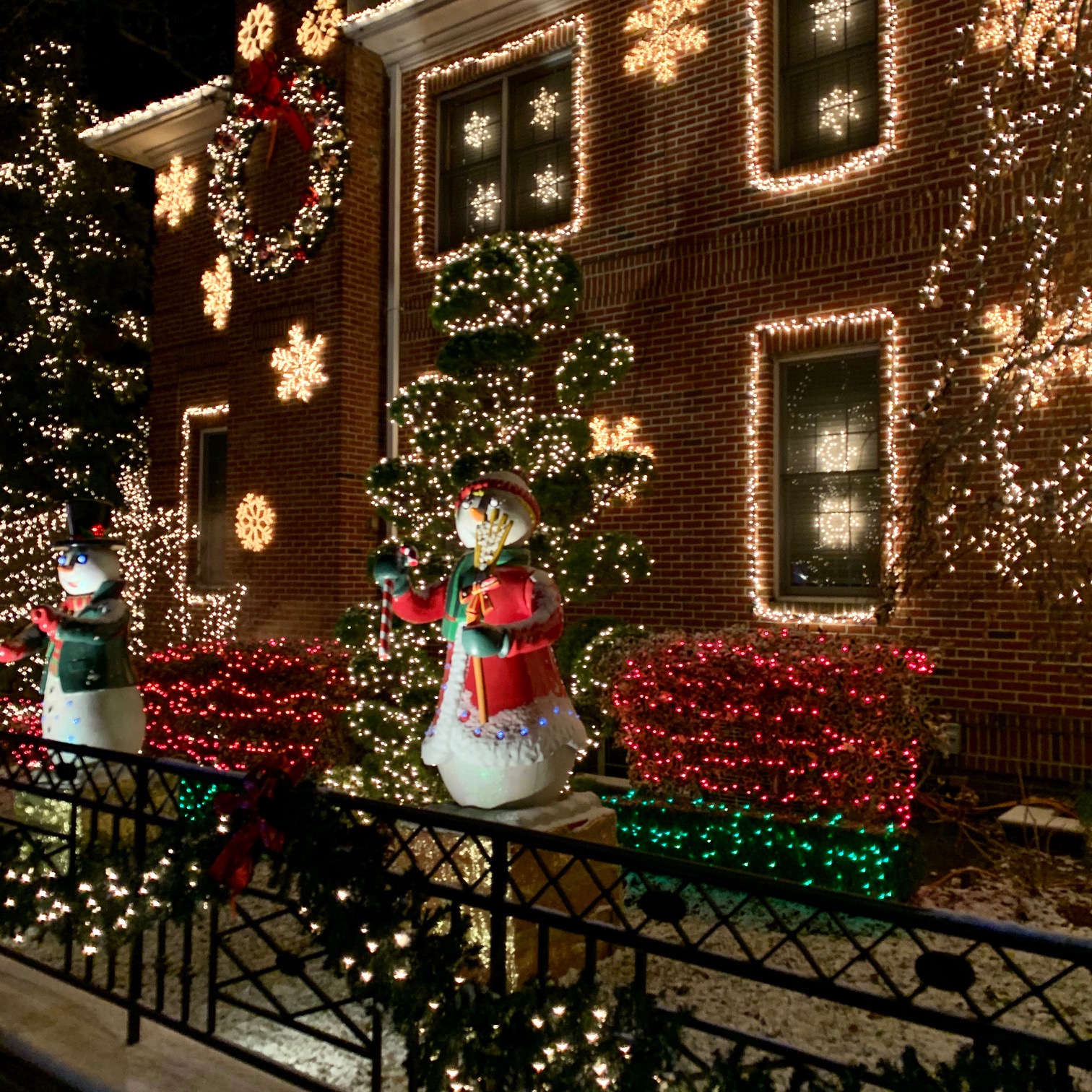
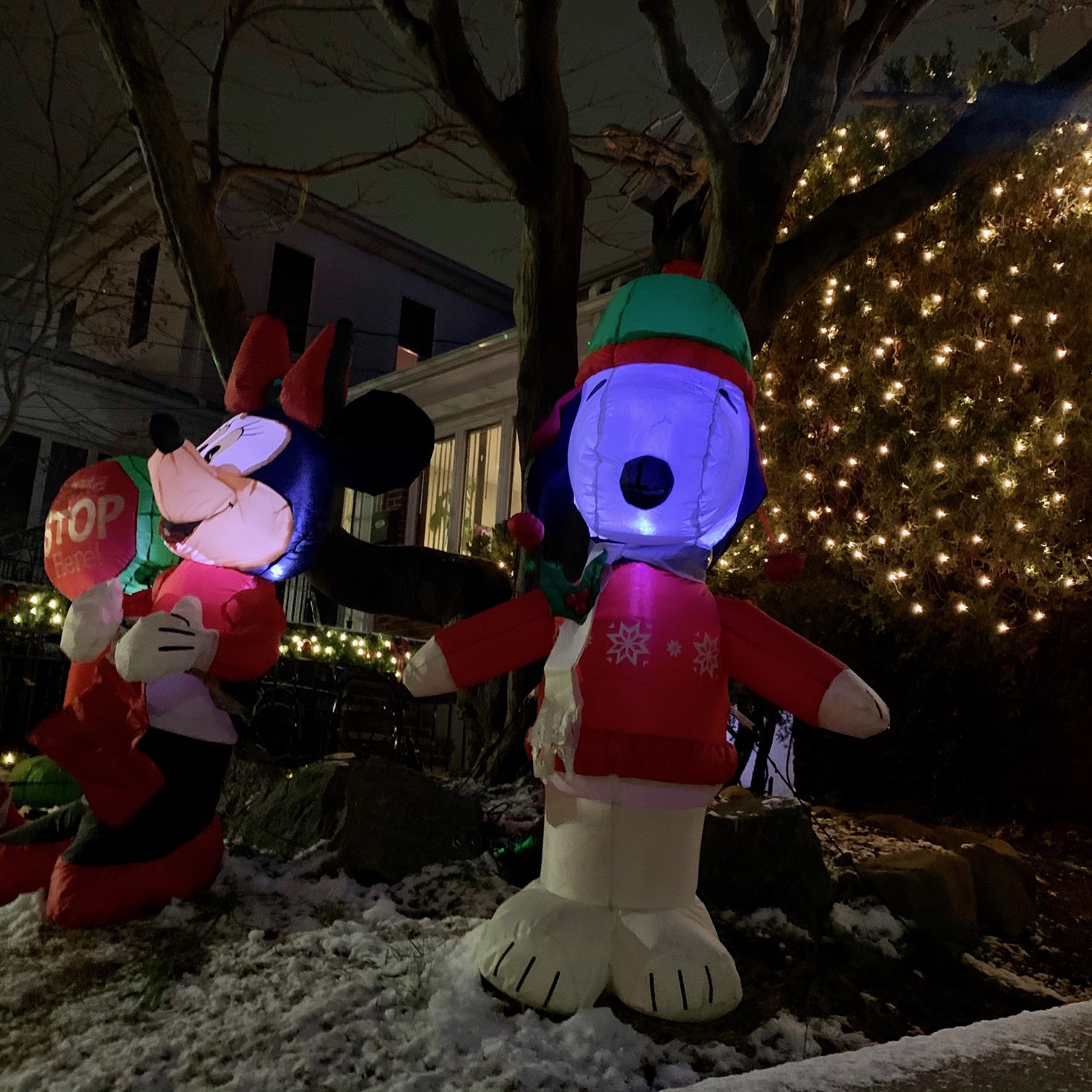
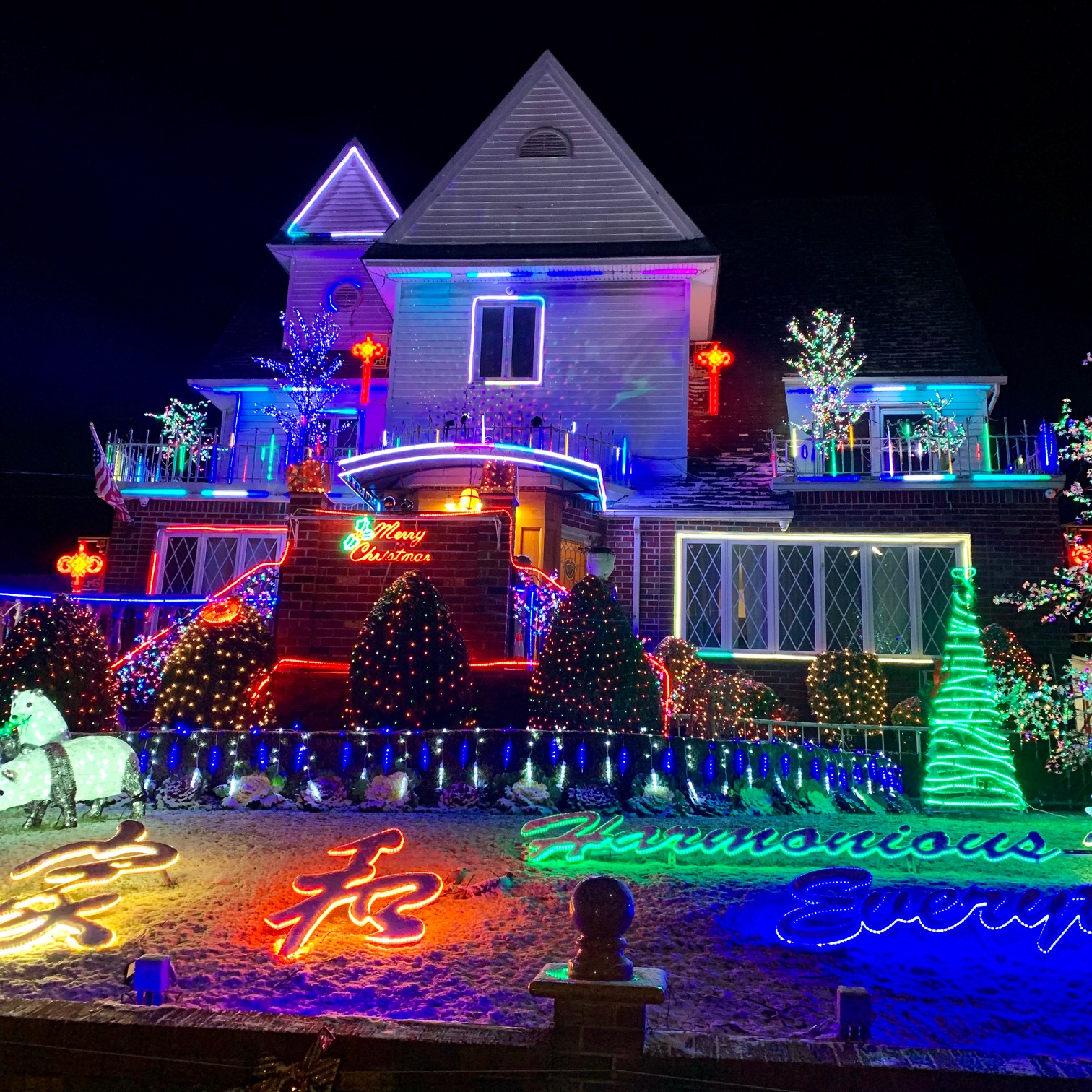
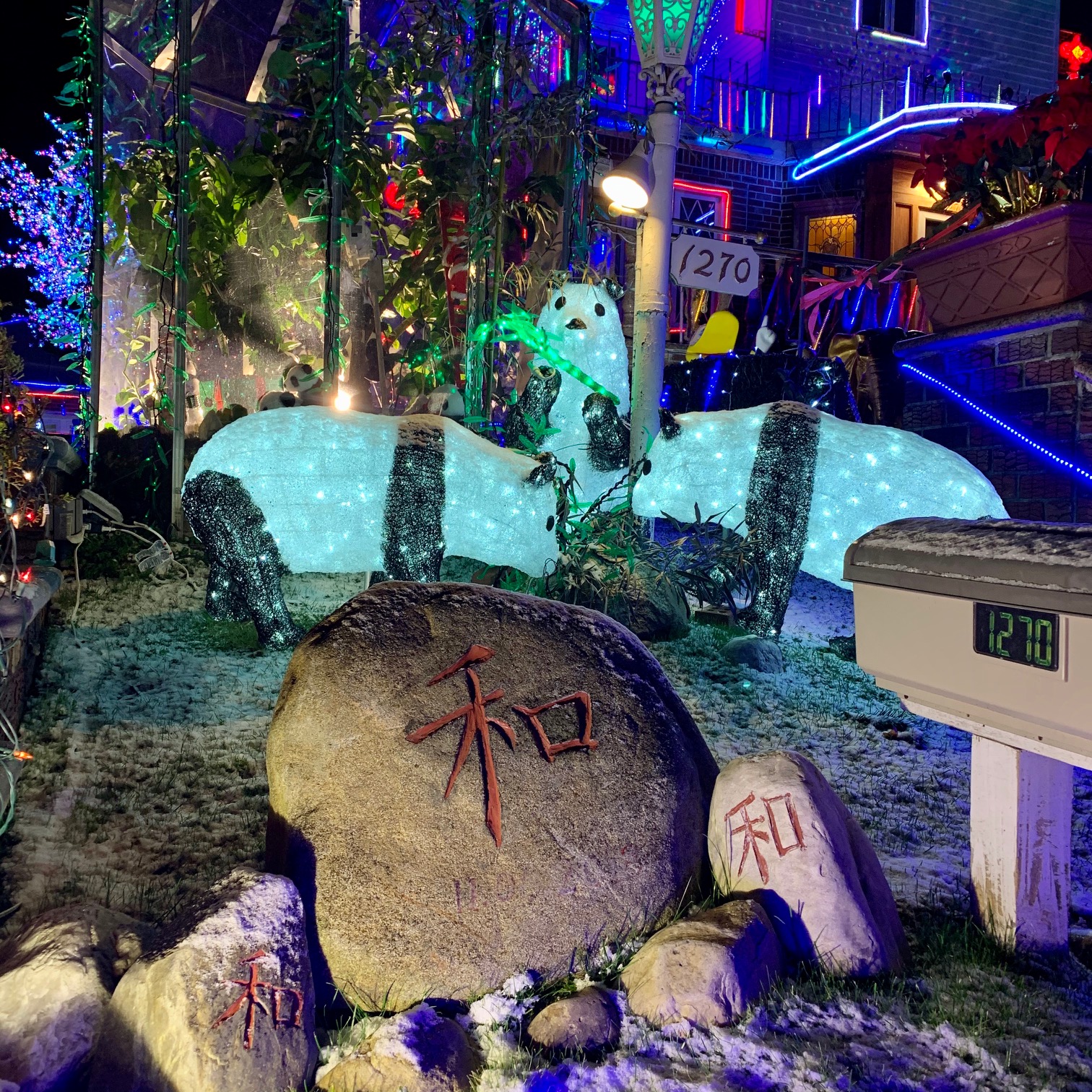
As we head into the shortest days of the year, we fight off the dark with celebrations of light. In previous years, I have written about how New York City celebrates publicly (see here for 2015 and here for 2016 posts, and here for last year’s post on holiday markets). Several years ago, I had access to a car regularly, and drove to Dyker Heights with my family to see the famed holiday lights (see that post here). This year, one of my daughters and I decided to take the subway (D train from midtown) and walk (about 20 minutes from the 18th Avenue stop in Brooklyn), and on a cold evening with some snow flurries, the lights once again did not disappoint – and I believe they have become more elaborate since the last time I was here in 2014. This tradition in Dyker Heights began in the 1980’s and since has increased every year, with many residents paying professionals $20K or more to deck out their homes. On weekends, traffic is bumper-to-bumper, and the sidewalks can be packed – so go on a weeknight if you can. The best viewing is roughly 11th Avenue to 13th Avenue, 83rd to 86th Streets. Here are some photos of what I saw this year:

IMG_5050IMG_5051IMG_5052IMG_5053IMG_5054IMG_5055IMG_5056IMG_5057IMG_5059IMG_5060

IMG_5061IMG_5062IMG_5063IMG_5065IMG_5066IMG_5067IMG_5068IMG_5070IMG_5071IMG_5072

IMG_5075IMG_5076IMG_5077IMG_5078IMG_5081IMG_5082IMG_5083IMG_5084IMG_5085IMG_5086

IMG_5087IMG_5088IMG_5090IMG_5091IMG_5093IMG_5094IMG_5097IMG_5098IMG_5099

IMG_5100IMG_5101IMG_5102IMG_5103IMG_5104IMG_5105IMG_5106IMG_5108IMG_5110

As we head into our own Roaring Twenties, I wish light and joy in the hearts of all!

Green-Wood Cemetery

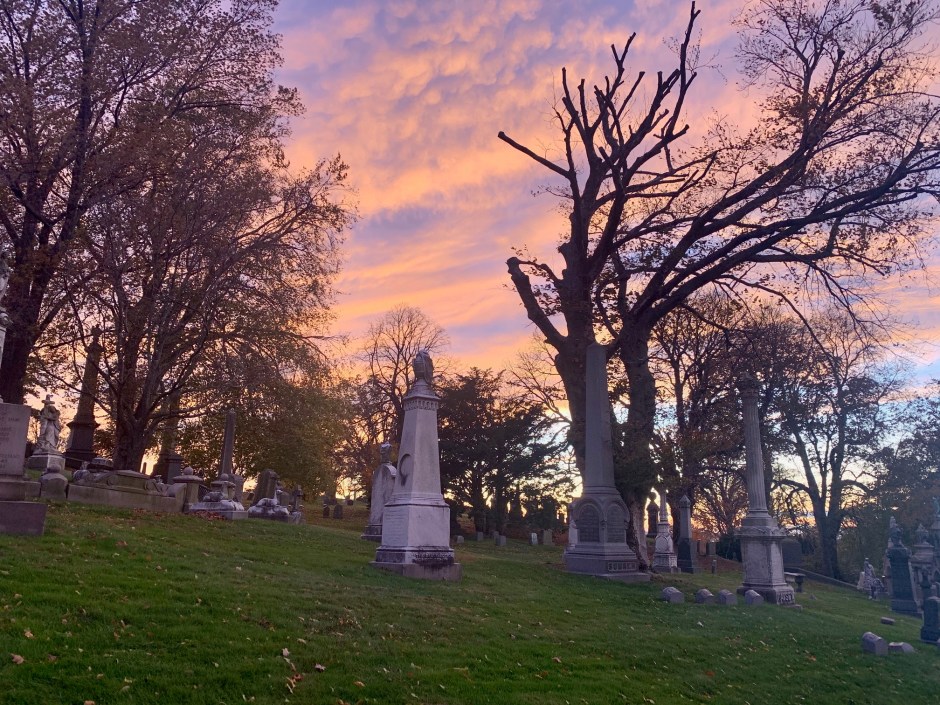
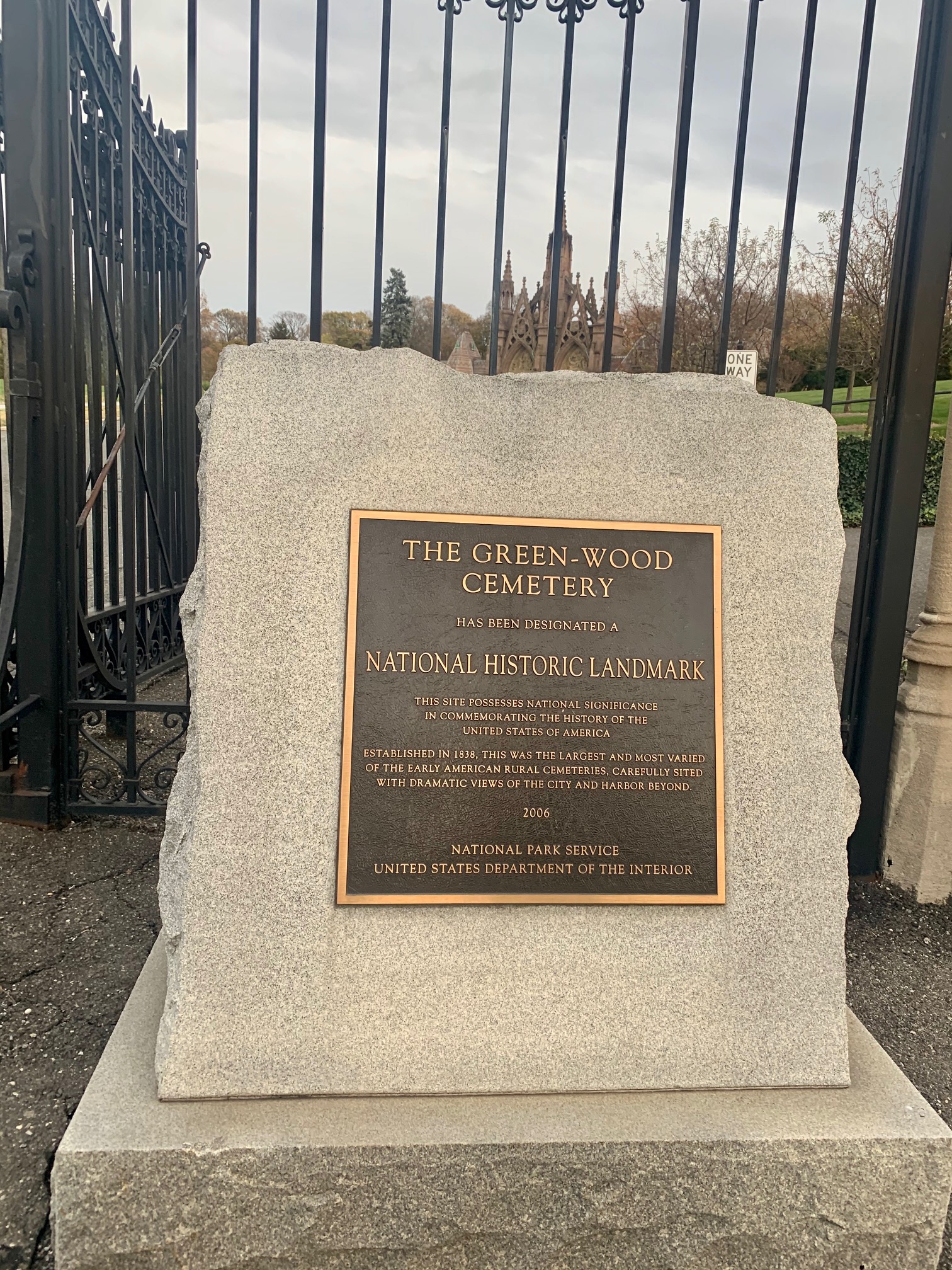
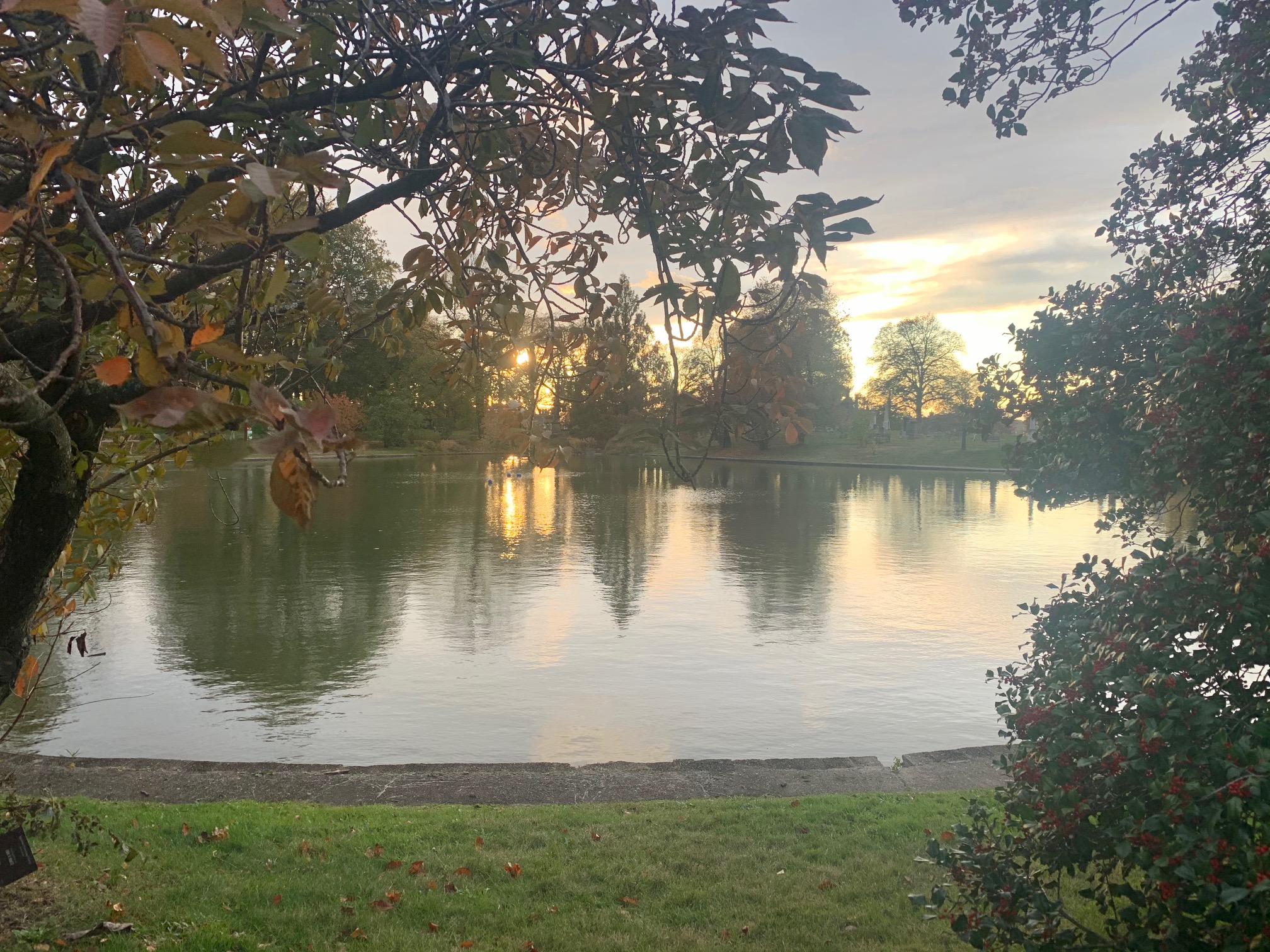
Green-Wood Cemetery in Brooklyn was founded in 1838, and by 1860 was the second most popular tourist attraction in New York State, with over half a million visitors per year (Niagara Falls was #1). Its popularity as a public park spurred on the creation of Prospect Park in Brooklyn as well as Manhattan’s Central Park. It was designated as a New York Landmark in 1966 and became a National Historic Landmark in 2006. Now with over 600,000 “permanent residents,” Green-Wood is still a wonderful place to visit, as I did recently near sunset.

IMG_4362

IMG_4411IMG_4407

It is easy to get to Green-Wood via subway (get off the R at 25th Street in Brooklyn, or get off the N at 36th Street and walk for about 15 minutes). Entering the main gate on 25th Street, it is impossible not to be impressed by the enormous brownstone gates. An escaped colony of monk parrots has lived in and around the gates since the 1970’s, but unfortunately I was not able to spot (or hear) any.

IMG_4373IMG_4374IMG_4401

The cemetery is huge, at 478 acres. It is also really gorgeous and peaceful. Like Prospect Park and Central Park, which it influenced, it is a beautiful place to explore on foot and experience nature while being surrounded by the city.

The monuments reflect a variety of styles. Many are very grand, suggesting that even if you can’t “take it with you,” you can still show “it” off after you are gone.

IMG_4384IMG_4387

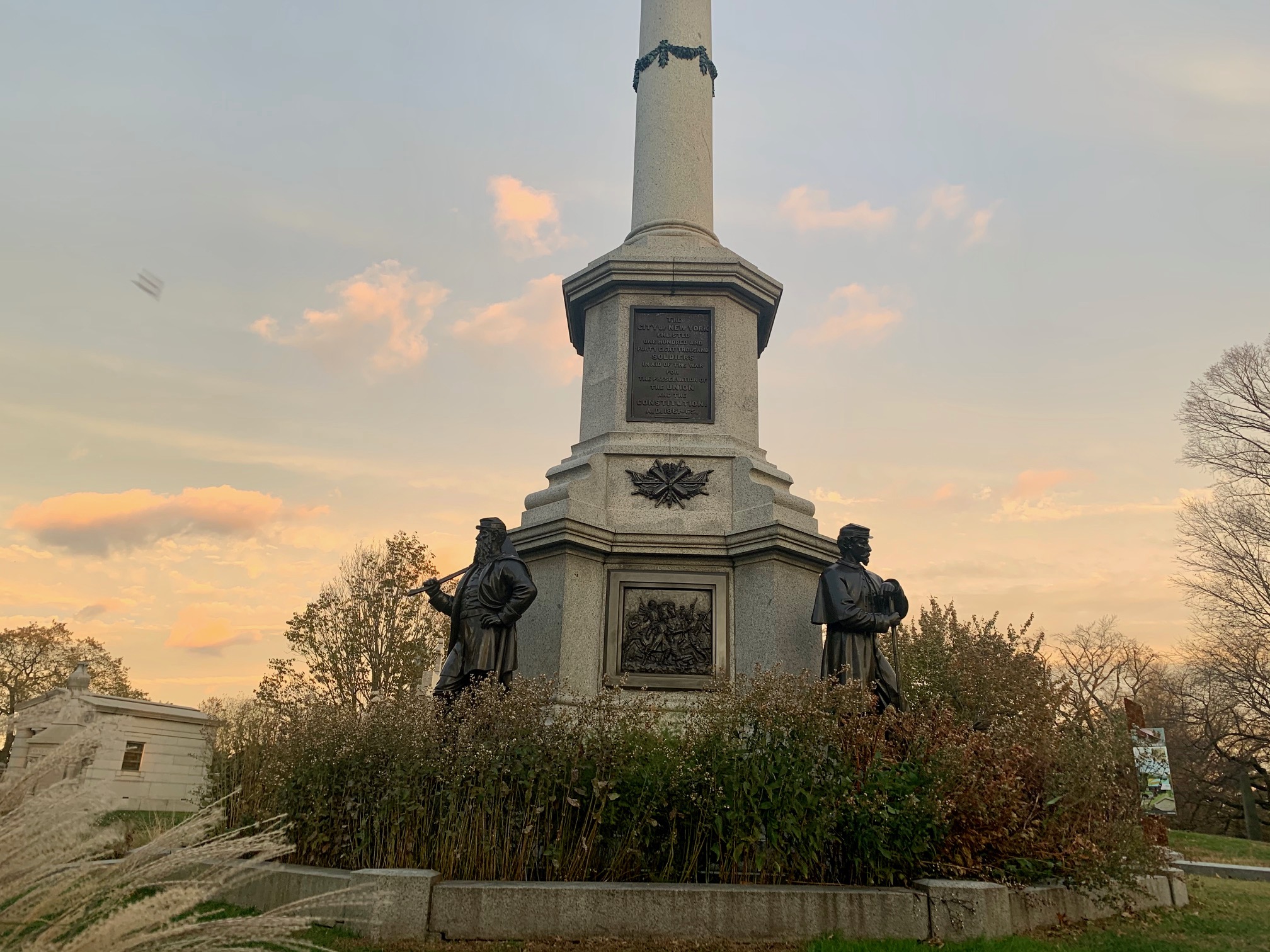
On the site of the Battle of Brooklyn, from the Revolutionary War, there is a memorial to the soldiers of the Civil War.

IMG_4389IMG_4391

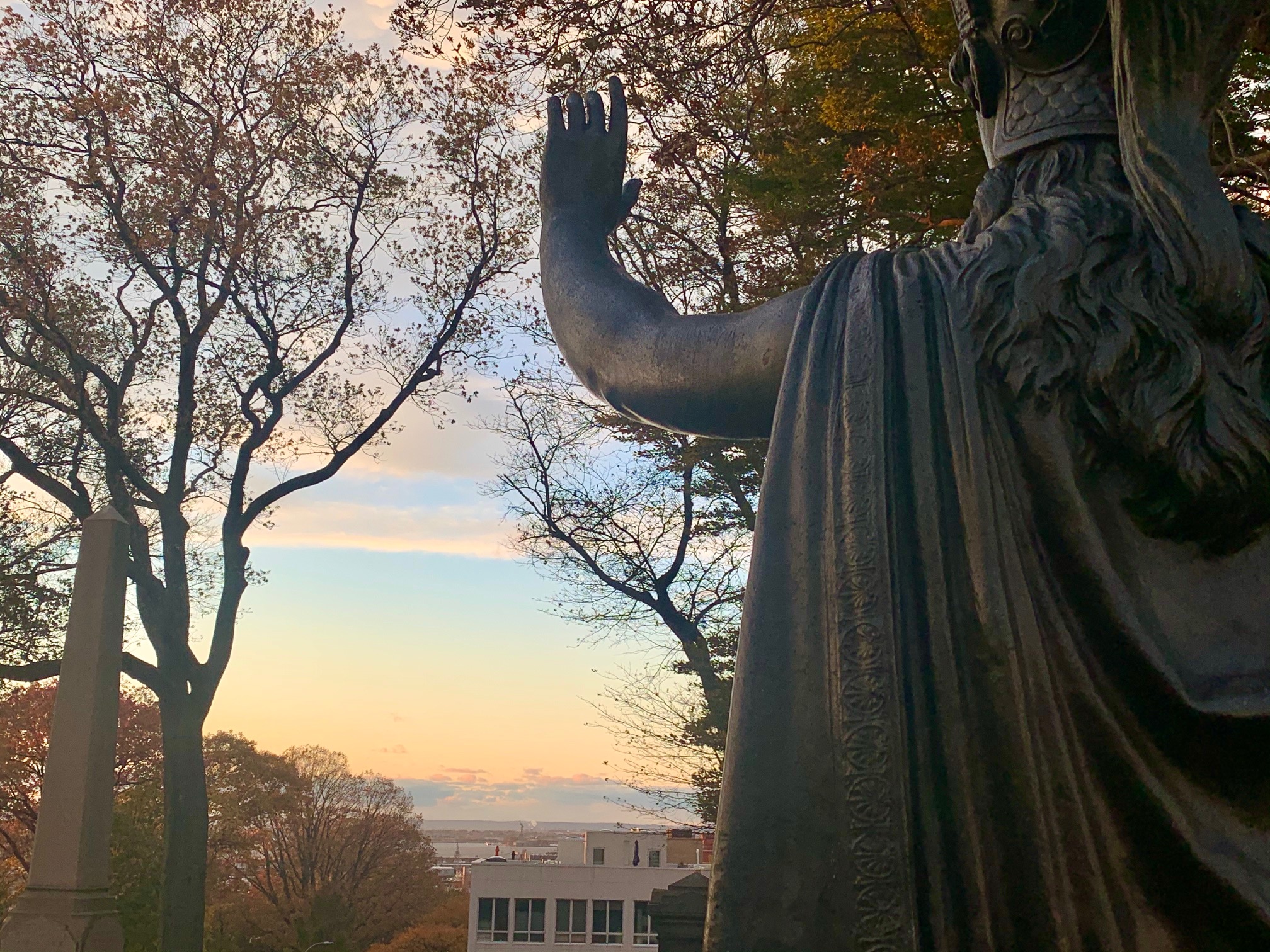
Near the Civil War memorial is a statue of Minerva, dedicated to the soldiers of the American Revolution. She waves out to the Statue of Liberty, which can be glimpsed off in the distance when you look from underneath her arm.

There are many famous residents of Green-Wood, including the artist Jean-Michel Basquiat; Samuel Morse, creator of the Morse Code; and Leonard Bernstein.

There is a public artwork by Sophie Calle in Green-Wood. Visitors to the cemetery are invited to write one of their secrets on a slip of paper and insert into a monument that is inscribed “Here lie the secrets of Green-Wood Cemetery.” As the grave becomes filled with the secrets, the artist returns to cremate them in a ceremonial bonfire. Yes, I put a secret in – and it is a surprisingly satisfying thing to do.

The sunset the evening I was there happened to be spectacular. And from higher vantage points, the skyscrapers of lower Manhattan shimmered in the last rays of the sun off in the distance.

The New York Times in 1866 remarked that “It is the ambition of the New Yorker to live on Fifth Avenue, to take his airings in [Central] Park, and to sleep with his fathers in Green-Wood.” This is certainly a statement of its time (even ignoring the gender specificity), in that many a New Yorker today would rather live in TriBeCa, take airings on the High Line, and be cremated and have their ashes scattered just off Montauk. That being said, Green-Wood still does have plots available if you are interested in becoming a “permanent resident” one day. And for now, it provides a beautiful place to appreciate the life we are currently fortunate enough to be enjoying in this splendid city.

Halloween on Governors Island

I have written before about the experience of taking a short ferry ride from lower Manhattan and ending up on Governors Island, walking and biking around a little bit of country with killer views of iconic skyscrapers (read my previous report here). In addition, for years I have taken the drive up to the Historic Hudson Valley to see the Blaze, a massive display of carved illuminated jack o’ lanterns. This year I discovered, to my delight, that there is a Halloween ticketed event on Governors Island called Rise of the Jack O’ Lanterns (also held in other locations outside NYC) so of course I needed to check it out.

IMG_4110

This year the experience started October 18-20, and will conclude later this week (October 24-27). The ticket is timed for the ferry you will take over, and you aren’t allowed to get on an earlier or later ferry, so be on time! The earliest time slot is 6 PM, and the latest is 10:40. There tend to be discounts for later times, and of course some time slots are already sold out. The ferry leaves from the Battery Maritime Terminal, the same one that is used for regular ferries to Governors Island.

IMG_4087

At least in my opinion, some of the old houses left on Governors Island are a little creepy even during daylight hours, so being around them at night with mysterious music playing and thousands of illuminated jack o’ lanterns around is certainly enough to put you in the Halloween mood. I will say, though, that it is not particularly “scary,” so is appropriate for all ages.

All the jack o’ lanterns are hand-carved by artists out of real pumpkins, and the night I was there an artist was on site demonstrating the elaborate technique needed for such detailed compositions. Many are traditional spooky themes, but others reflect popular culture.

There were several in memoriam (see Luke Perry, above), plenty of Disney princesses and Game of Thrones tributes, as well as Harry Potter.

I loved the jack o’ lanterns themed to artists.

IMG_4116

I kept looking for a “She said yes!” jack o’ lantern near this one, but couldn’t find it. Erika, did you make it to the RISE and were you impressed?

The jack o’ lanterns are mostly on pillars raised up so that you can easily observe the details.

IMG_4109IMG_4113IMG_4094

One of the more surreal experiences on Governors Island is when you suddenly see the towers of lower Manhattan while immersed in this rural setting. Every now and then while viewing jack o’ lanterns I would glimpse One World Trade.

On the way back to the ferry there is an opportunity for unimpeded views of Lower Manhattan.  The views are terrific when seeing during the day on Governors Island, but the night time view is simply magical.

Those who don’t live in New York City might think that it’s difficult to experience a festive Halloween, but I definitely disagree! In addition to the RISE, Governors Island has trick-or-treating for children on October 26 (see details here). There are Halloween decorations all over the city, especially on townhouses (see a previous blog post on this topic here). The Cathedral of St. John the Divine has a marvelous Halloween Extravaganza every year that includes a scary silent movie accompanied by live organ music. And of course the famous Halloween parade takes over Greenwich Village the night of October 31.

I know I’m biased, but I do believe that New York City is the best and most fun place to live – any time of year!

Historic districts of the Upper East Side

In 1964, the original ornate Pennsylvania Station building was torn down to create Madison Square Garden (the fourth version of MSG, the first two being close to Madison Square Park, and the third on Eighth at 50th Street).  The loss of the building created an immediate outcry. (Architectural historian Vincent Scully noted: “One entered the city like a god. One scuttles in now as a rat.”) The next year the Landmarks Preservation Commission was created to prevent the continual loss of buildings of historical significance. Since then, many individual buildings have been landmarked, as well as entire sections of the city that have historical or architectural significance. The Upper East Side has several historic districts, some of which would surprise few (Metropolitan Museum Historic District) and some that are virtually secret to most not living there (Treadwell Farm Historic District, anyone?). I took a walk around these districts, taking photos and imagining what it would be like to live there! Later I will touch on what living in a historic district means to those owning a home there, as well as why even those not living in a historic district might be interested in knowing the boundaries.

Upper East Side Historic District

jM1JQm_jSWCaCsfKiq1Vhw

This is the area most people would think about if asked about a Historic District on the Upper East Side. It covers all of Fifth Avenue between East 59th and East 78th Streets, and extends out from there in an irregular pattern – as far east as almost to Third Avenue between East 70th and East 75th Street, very close to Fifth from East 59th to East 61st, and somewhere between Park Avenue and Lexington Avenue for most of the area. See below for a map of this district:

IMG_3828

On Fifth Avenue, there are a lot of stately limestone coop apartment buildings, and in the side streets, many lovely townhouse blocks.

1Q6lrGWVSAaaS25rNjktUg

This district also has many buildings that would be landmarked as single entities if not part of the larger historic district, like Temple Emanu-El or the Frick Mansion.

For a district to be considered worthy of landmarking, it must represent at least one historic period or architectural style, have a distinct “sense of place” and a “coherent streetscape.” Fifth Avenue is a good example of why this does not mean that every single building within the district would be individually worthy of landmarking. I find that in general the Upper West Side has a more consistent look and feel than the Upper East Side (and I will do a blog post on the Upper West Side historic districts at some point soon).

Metropolitan Museum Historic District

_MfOSGL6Sce7tBKFTwI2-w

Not surprisingly, this district lies in close proximity to the Metropolitan Museum, Fifth Avenue from East 87th to East 86th Street and most – but not all – of the blocks between Fifth and Madison on this stretch of Fifth.

IMG_3830

It has always bothered me that one of the buildings has a fake facade at the top where the supports can clearly be seen if looking from the side rather than from Central Park (see below):

IMG_3825

Carnegie Hill Historic District

442VWnl_RQizlxPY5UNDyQ

Named for the mansion Andrew Carnegie built at Fifth and East 91st (which had the first residential elevator, and now holds the Cooper-Hewitt National Design Museum), Carnegie Hill is a charming residential neighborhood. The historic district covers Fifth Avenue from East 86th to East 98th, and for some streets goes as far east as Lexington Avenue (see below):

IMG_3829

This district encompasses Frank Lloyd Wright’s Guggenheim Museum (where the architecture of the building is arguably the more important work showcased despite steep competition), the Jewish Museum, and buildings ranging from brick and brownstone townhouses to mansions, most constructed between the 1870s and the 1930s. I have a particular fondness for the townhouse blocks, many of which decorate elaborately for Halloween.

ctdo4rUWQx2Bl7vkT-pE4w

Hardenbergh/Rhinelander Historic District

On Lexington between East 89th and 90th Streets, and part of the block between Lexington and Park on East 89th, there are seven houses all constructed in 1889 for William C. Rhinelander (a real estate developer!). The same architect who designed the Plaza Hotel and the Dakota apartment building on Central Park West, Henry Hardenbergh, is responsible for these houses.

IMG_3574IMG_3575

Treadwell Farm Historic District

Even people who live near this historic district, two short sections of blocks between Third and Second Avenues, and East 60th and East 62nd, may not know this exists. These Italianate row houses date between 1868 and 1875, and the region was named for the Treadwell family, who were landowners here between 1815 and the 1860s.

IMG_3550IMG_3552IMG_3553IMG_3554IMG_3555IMG_3556IMG_3557

Henderson Place Historic District

img_4492

I have such a soft spot for the houses on Henderson Place, East End Avenue between E. 86th and E. 87th. When my daughters were going to a nearby school, I would walk them past these charming three story Queen Anne townhouses and dream of being able to live in one of them! That never happened, but I still contend these blocks are some of the most uniquely romantic and lovely in all of the city. They are across East End Avenue from Carl Schurz Park, the peaceful environment adding to the quiet magic of these homes. I mean, just look at them! (*swoon*) I once wrote a love letter to this part of town after a snowstorm (see here).

IMG_3576IMG_3577IMG_3578IMG_3579

ZOb7Q1_yQWOi1JIT3kkKyA

Landmarks outside of Historic Districts

You might be surprised at how many individually landmarked buildings there are on the Upper East Side apart from these districts – currently, there are 48! Invididual landmarks are judged by age, integrity, and significance. These range from apartment buildings like Manhattan House (200 E. 66th), the Bohemian National Hall (321 E. 73rd Street), the Astor House (now home to the Junior League, 130 E. 80th Street, see photo below), or individual townhomes like 160 East 92nd Street.

IMG_3716.jpg

So if you live in a historic district, what is the impact on your home? Data suggest that landmarked districts offer higher property values over time, insulation from extreme economic fluctuations, stabilization of residence, more community involvement, and possibly increased connections among neighbors. There are some restrictions as well – for instance, you need permission to do any exterior work on a building in a landmarked district, and to show that you are not changing the exterior in a way that negatively affects the overall look of the district. However, renovating a home in a historic district can make you eligible for a significant New York State Homeowner Tax Credit.

Even if you don’t live in a historic district, if you live near one (or near a landmark outside a historic district), it can be useful to know the restrictions. For instance, if you are near the Treadwell Farm Historic District in one of the highrise buildings with an eastern exposure, it is good to know that it is highly unlikely that anything will be built that will block your eastern light.

Generally speaking, I am a fan of New York City’s constant desire to change, and am more accepting of the constantly evolving skyline than some (see a previous blog post about this here). That being said, our city would be lessened without these (as Landmarks Preservation describes them) “areas of the city that possess architectural and historical significance and a distinct ‘sense of place.’” New York City is enriched by the old-world charm of Greenwich Village, the residential tranquillity of Park Slope, and the majestic towers of Central Park West – but also (at least in my opinion) by such new developments as Hudson Yards, Waterline Square, and the revitalized area around One World Trade. Just as our city populace is strengthened by all our differences, the architecture of our city is strengthened by our commitment to protect historic districts of importance while still encouraging new development and new opportunities.