Lincoln Square

IMG_0118

Just as the larger neighborhood known as the Upper East Side has many smaller neighborhoods within it, such as Yorkville, Carnegie Hill, Lenox Hill (yes, lots of hills on the UES!), the Upper West Side – on the opposite side of Central Park – also has subdivisions. Recently I have had two customers interested in looking for homes in the area of the UWS known as Lincoln Square, the southeast corner of the neighborhood – roughly bounded by Central Park West and Amsterdam Avenue to the east and west, and 59th to 66th Streets to the south and north.  Interestingly enough, the area was characterized in 1940 as the “worst slum in New York City” by the New York Housing Authority, and the urban renewal efforts in the 1950’s and 1960’s led to the development of the Lincoln Center for the Performing Arts. This anchored the residential redevelopment of the area into the vibrant neighborhood it is now.

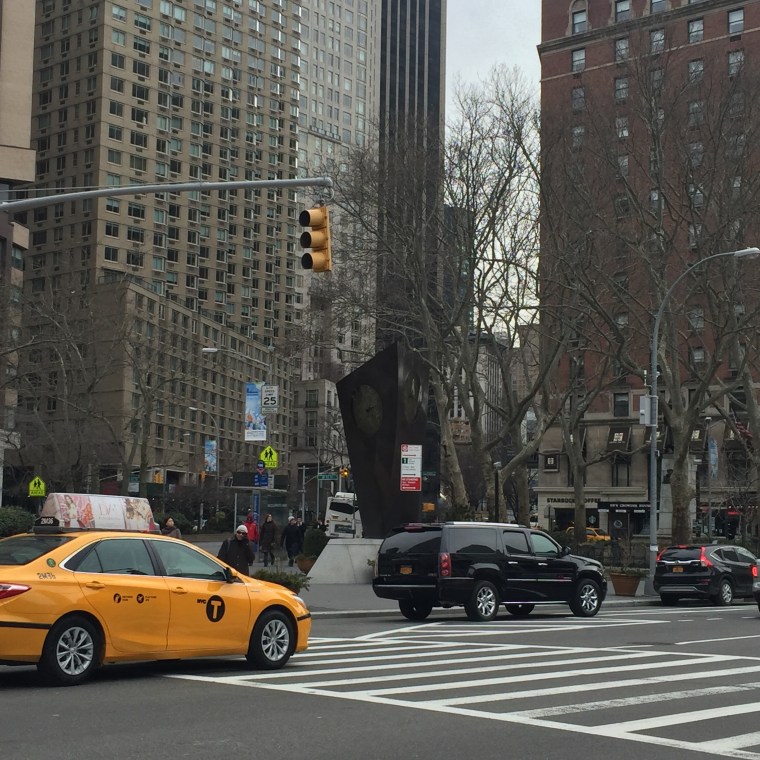
As I have written before, my favorite way to experience a neighborhood is by taking an unplanned walk within the area (a dérive), so on an overcast but not terribly cold February day, I started at Columbus Circle and began my stroll.
IMG_0108

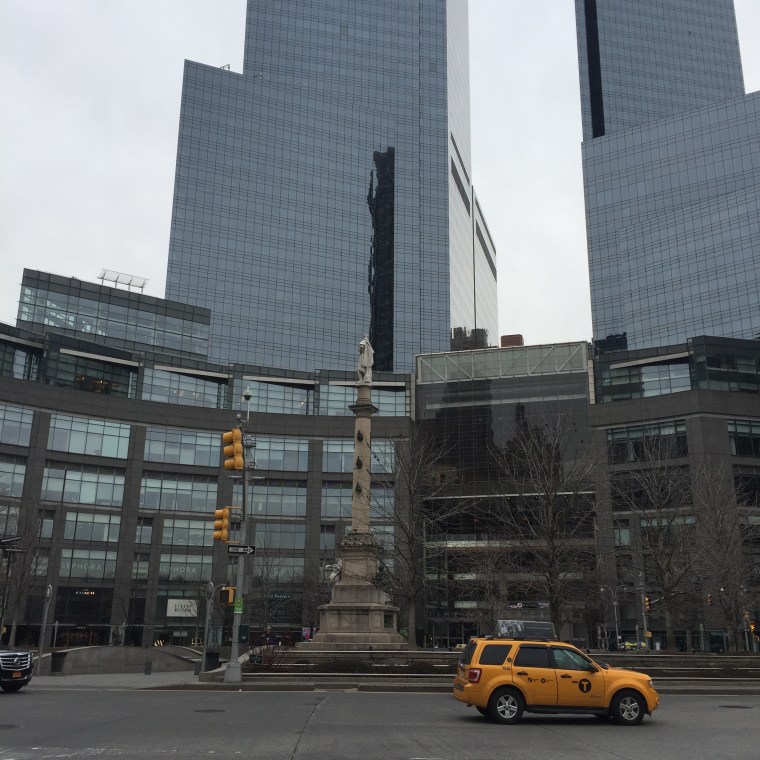
At Columbus Circle, you stand at the intersection of the Upper West Side, Central Park, and Midtown West. The shops at Columbus Circle house a Whole Foods as well as specialty stores and Jazz at Lincoln Center.

IMG_0109

Turning around to look at Central Park for a moment . . .

IMG_0110

Just north of the statue of Columbus, a subway hub that can get you quickly to virtually any location in the city.
IMG_0111

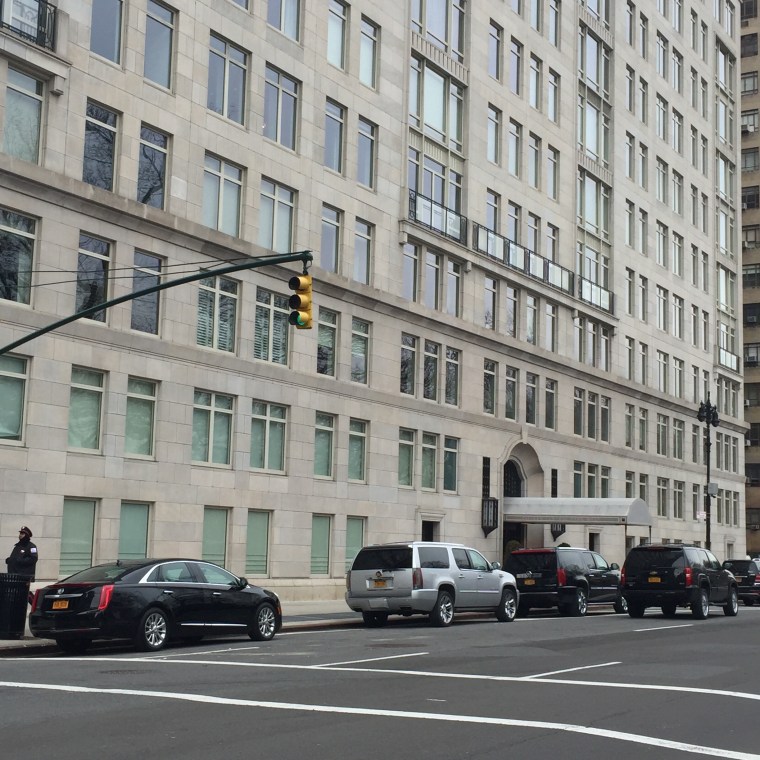
Walking north a few block on Central Park West, I can’t resist stopping to admire 15 Central Park West, a phenomenally successful building on so many different levels – a classic limestone two-towered building that looks as though it could have always been there, but simultaneously a new development from 2007 with prices per square foot averaging well over $5000 per square foot. I greatly enjoyed reading Michael Gross’s recent book about the development of the site, House of Outrageous Fortune.

IMG_0112

Walking west on W. 61st Street, you can see a side entrance to 15 CPW. On the W. 62nd Street side, there is a lovely garden.

IMG_0114

This part of the Upper West Side can be a little confusing, in that Broadway is the next Avenue you come to after Central Park West, while for much of the neighborhood the park block is between CPW and Columbus. Broadway, transecting the length of Manhattan on a diagonal, disrupts the orderly grid of most of Manhattan above 14th Street, creating “squares” – really triangles – as it cuts across the orderly boulevards. Union Square, Madison Square Park, Herald Square, and Times Square are all the result of Broadway’s slow progress from west to east as it heads south in Manhattan, and Lincoln Square is yet another. Walking up Broadway to W. 63rd, I headed west again to see Lincoln Square itself, namesake for this neighborhood.

IMG_0115

Just south of Lincoln Square is the Empire Hotel, whose sign is a local landmark, and P.J. Clarke’s, a cozy yet upscale place to sit and have a nice meal.

IMG_0116

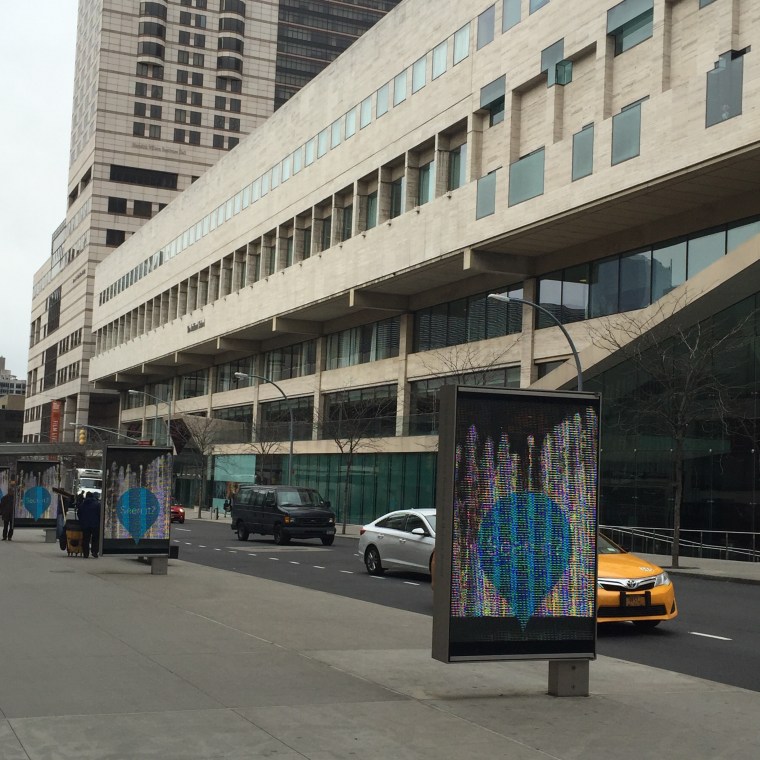
Obviously a strong selling point for the neighborhood is the proximity to Lincoln Center, and the ease of attending performances of  opera, music, ballet, theatre, and even the Big Apple Circus in the fall of each year.
IMG_0119

The Julliard School, just north of Lincoln Center, also offers high quality student performances.
IMG_0120

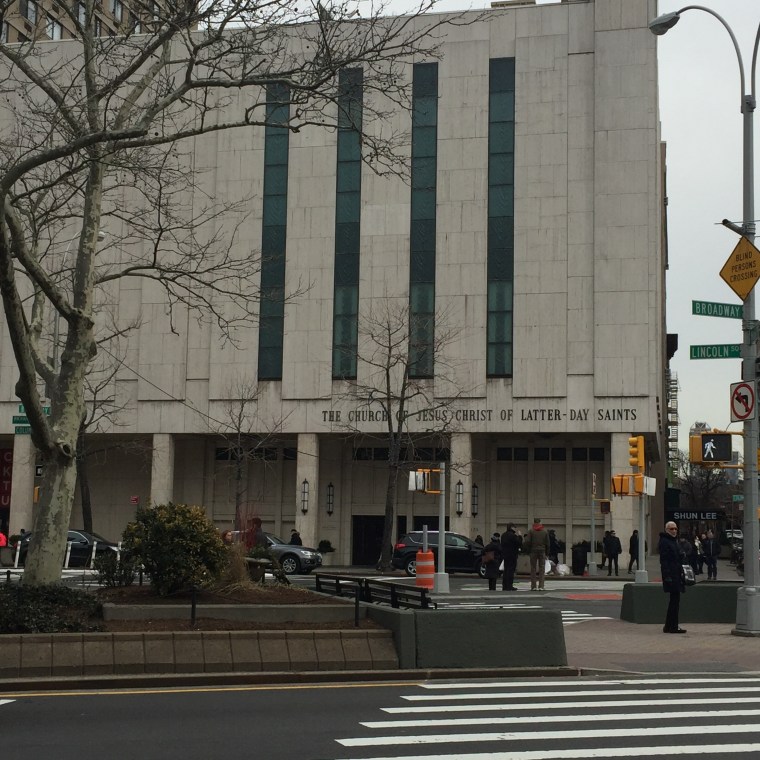
Looking east while standing in front of Julliard, I noticed the Mormon Visitor Center, best known to me as the place where Hannah and Harper volunteer in Tony Kushner’s epic play, “Angels in America.”

IMG_0121

Just north of Julliard is Alice Tully Hall, home to more intimate concerts than those in much larger Avery Fisher Hall (newly renamed David Geffen Hall).

IMG_0122

Turning east again on West 66th St., I walked past ABC studios on the way back to Central Park. Just a few blocks north of this intersection is the Loews Lincoln Square Cineplex. I really love this as an option for seeing popular movies, as each individual theatre has the name and style of an old-time movie palace, making the experience there have a little more personality than many multiplexes.
IMG_0123

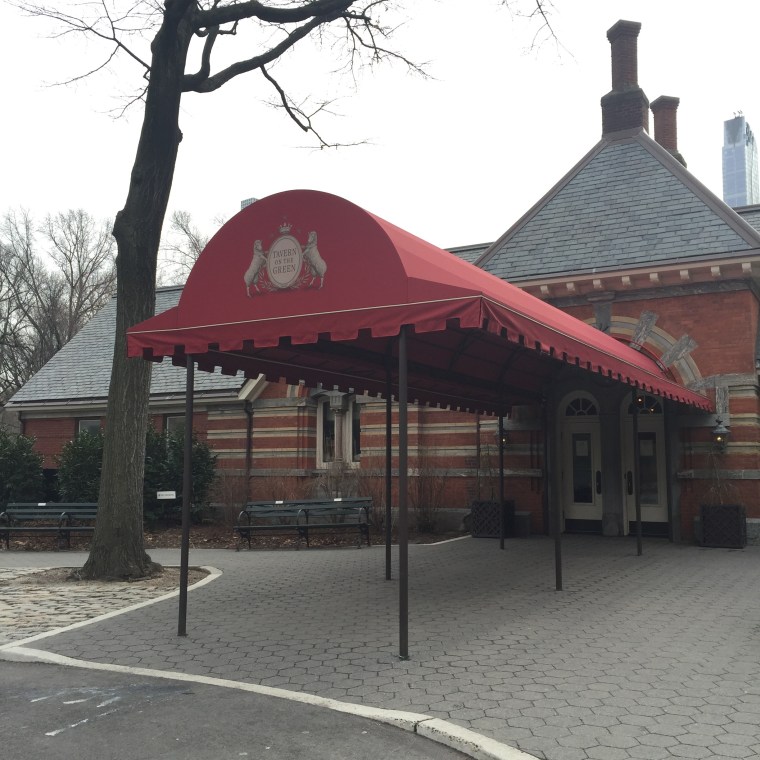
Ending up in Central Park at 66th, yet another advantage to this neighborhood is its proximity to Tavern on the Green, renovated a few years ago but with the twinkling outside fairy lights remaining.

IMG_0125

So what does it cost to live in Lincoln Square? As with any neighborhood, it varies greatly depending on the building, but average prices are just under $3000/square foot, compared to just over $2000/square foot for all of the Upper West Side (averaging prices of the far northern sections of the UWS with those to the south, of course). Central Park South, just to the south and east of Lincoln Square averages $5000/square foot, in part because of the premium associated with apartments with views of the park. Lincoln Square tends to be newer buildings, mostly condos, compared to the largely prewar coop inventory of most of the UWS.

In my opinion, the location of Lincoln Square is unparalleled – at the intersection of the Upper West Side, Midtown West, and with Central Park as a virtual front yard.


Manhattan Valley

455 CPW

Recently I was looking for a townhouse for a customer, and came across one on Manhattan Avenue and 105th Street. While I suppose I would have thought of this address as being either “Upper-Upper West Side” or “Lower Morningside Heights” before spending some time there, I have since learned that the area bounded by 110th Street and 96th Street to the north and south, and Central Park West and Broadway to the east and west is actually called Manhattan Valley. This part of town was known as the Bloomindale District in the past, for a Bloomingdale Street previously in the area (long since gone). There is a natural valley here, caused by what was once the path of a small stream leading from the Harlem Meer to the Hudson River. Between the price for the townhouse I was viewing in the area, and the price of a 2 bedroom co-op recently listed by a colleague on West 100th just off Central Park West, I quickly realized that this area, while very close to the Upper West Side in both location and atmosphere, offers opportunities for excellent value in real estate.

As I have written before, I find that the best way to get the feeling of what it would be like to live in an area is to take a dérive (an unplanned walk in an urban setting). For this one, I started at Broadway and 96th Street. 96th Street, like 86th on the east side, is a busy major two-way thoroughfare, often packed with cars on their way to the Henry Hudson and on to the George Washington Bridge. I walked east to Columbus, and headed north. The Columbus Square mega-residential development between Columbus and Amsterdam and between 97th and 100th Streets, has brought in a series of high-end shopping destinations along this stretch of Columbus. In addition to the Whole Foods, Sephora, Petco, and Starbucks already there, Crumbs cupcakes will be reopening here within a month.

Turning east on 100th, I walked to the beginning of Manhattan Avenue. The topography of the island of Manhattan is not a perfect rectangle, although we have imposed a grid of streets on most of it. This disparity occasionally leads to extra streets in some areas, and Manhattan Avenue appears between Central Park West and Columbus beginning at W. 100th Street, and continuing well into Harlem. The super block developments created by Park West Village and the Frederick Douglass Houses prevent cars from using this area as a way to cut crosstown, making it noticeably quiet. The blocks between 104th and 106th are simply gorgeous rows of townhouses, reminding me strongly of the beautiful peaceful townhouse blocks near Prospect Park in Brooklyn.

Turning east again on 106th, I walked to Central Park West, appreciating the view of 455 Central Park West. Formerly the New York Cancer Hospital, this property has quite an interesting history. This was the first cancer treatment facility in the country, created with money raised by John Jacob Astor and others after former president Ulysses S. Grant discovered he had throat cancer. They built a beautiful chateau, which looked more like a museum of art than a hospital (the rounded towers were created as a state-of-the-art medical feature to prevent germs building up in sharp corners), and it continued on this site until the mid-20th Century. The developers of this property restored the chateau into condominium apartments, and added a modern tower behind it with unimpeded Central Park views. Walking north on Central Park West to 110th, and turning west, I was now on Cathedral Parkway and had to finish this derive with a nod to our spectacular Cathedral of St. John the Divine, which I will discuss in more depth in a future derive in Morningside Heights.

I loved spending time in this neighborhood. For someone looking for a home with the feel of the Upper West Side or near New York’s jewel, Central Park, this area offers significant value.

The Upper West Side: from Central Park to Riverside Park

UpperWest

In a past dérive (an unplanned walk through an urban environment), I started at the corner of Central Park West and 81st Street, and walked south on CPW to Columbus Circle. For this dérive, the starting location is the same, but this walk goes from one great park to another: from incomparable Central Park west to the delightful Riverside Park, on the Hudson River. This walk illustrates why the Upper West Side continues to be a top location for residential real estate in Manhattan – it’s a primarily residential neighborhood, with a variety of different types of homes, and with all the neighborhood amenities one needs to enjoy life.

Starting at Central Park West and W. 81st Street, the Museum of Natural History dominates to the south. Founded in 1869 by a group including Theodore Roosevelt, Senior (father of President Teddy) to increase knowledge of the natural world in a time when zoos were relatively rare and limited in scope, and travel to see many of the wildlife shown was impossible for nearly everyone, it is a classic – but it can be a bit jarring to modern eyes to see stuffed and preserved animals, many of which are now endangered. Teddy Roosevelt became an iconic part of the museum, donating two elephants from one of his expeditions and eventually being honored by his image in the towering statue that welcomes visitors to the main building. Walking along W. 81st, however, eventually the Rose Center for Earth and Space, housing the Hayden Planetarium as well as many interactive educational displays, can be seen through the thick August foliage. It’s quite a change from the winter, when the glowing blue globe within a transparent cube can be seen from many directions through the leafless tree branches.

Behind the museum, on this Sunday afternoon, there is a greenmarket set up, with locally grown produce, honey, cheese, and bread. These greenmarkets are a wonderful addition to New York City life, and you can find out their locations and times at http://www.grownyc.org/greenmarket.

Turning west on W. 82nd, the characteristic nature of this neighborhood becomes apparent: larger stately apartment buildings on the Avenues and on the corners, and charming brownstones filling in the cross streets. The material covering brownstones is a type of sandstone from the Jurassic or Triassic eras, so having an abundance of brownstones so near the dinosaur skeletons at the American Museum of Natural History seems only fitting.

Passing Broadway, and then West End Avenue, I smile as I remember a recent conversation with an Australian looking for an apartment near Riverside Park. He wondered where all the theatres were, and eventually I had to explain that Broadway was only “Broadway” as he thought of it in the 40’s and 50’s, and that “West End” bore no resemblance to the same area in London! In fact, as you get closer to Riverside Park, the neighborhood becomes more peaceful and residential, eventually leading to the pastoral beauty of Riverside Park.

The Upper West Side holds a variety of choices for someone looking for a home – running the gamut from the stately views of Central Park or Riverside Park in the majestic buildings on Central Park West and Riverside Drive, to the quiet and sometimes quirky floor-through apartments in brownstones on quiet cross streets. I recently helped a customer find a pet-friendly home near Riverside Park (with its off-leash hours and dog runs), and was delighted when she saw the 500 square feet of outdoor space in a certain brownstone garden apartment and knew that she and her dog had found their perfect home. Everyone looking for a home in New York City deserves the same result, and with the abundance of different neighborhoods and types of residences, with patience and the help of a good broker, it should be possible.

In the Heights

WashingtonHeights

This week’s dérive (an unplanned walk through an urban environment) takes place in a Manhattan neighborhood that holds Manhattan’s oldest surviving mansion, has a safer crime rate than Greenwich Village, is only 20 minutes from Times Square via express subway, and was the subject of a recent Tony Award winning musical – Washington Heights. Surprised? It’s time to take a closer look at this northern Manhattan neighborhood while there is still value to be had in this rapidly-evolving area.

Washington Heights lies just above Harlem, just below Inwood (the very top of Manhattan), and between the Hudson and Harlem Rivers. It is in named for Fort Washington, the highest spot in Manhattan and the site of a major battle with the British during the American Revolution (we lost that battle, but of course won the war). Currently the area has a large Dominican population (who descriptively call the neighborhood, “El Alto” for its hills and elevation), and the conflict between the existing residents and the process of gentrification was one of the themes of Lin-Manuel Miranda’s award winning musical, “In the Heights.” New developments are beginning to be built in the area – I recently sold such an apartment to investors and will be renting it out for them. After taking photographs of the apartment, it was time to take an unplanned walk in the neighborhood and discover its personality.

Starting at W. 168th Street and St. Nicholas Avenue, I will note that Washington Heights is actually easier to get to than some neighborhoods closer to midtown but without as many public transportation options. The A train (express) can get you to midtown in 20 minutes, and the C (local) and the 1 makes several stops along the Broadway line in the Heights. Dominating the area at the 168th Street stop is Columbia Medical Center. Surprisingly, the land it sits on was once the home of Hilltop Park, the home of the New York Highlanders baseball team from 1903-1912. They eventually moved their ballpark to the Bronx and changed their name – to the New York Yankees.

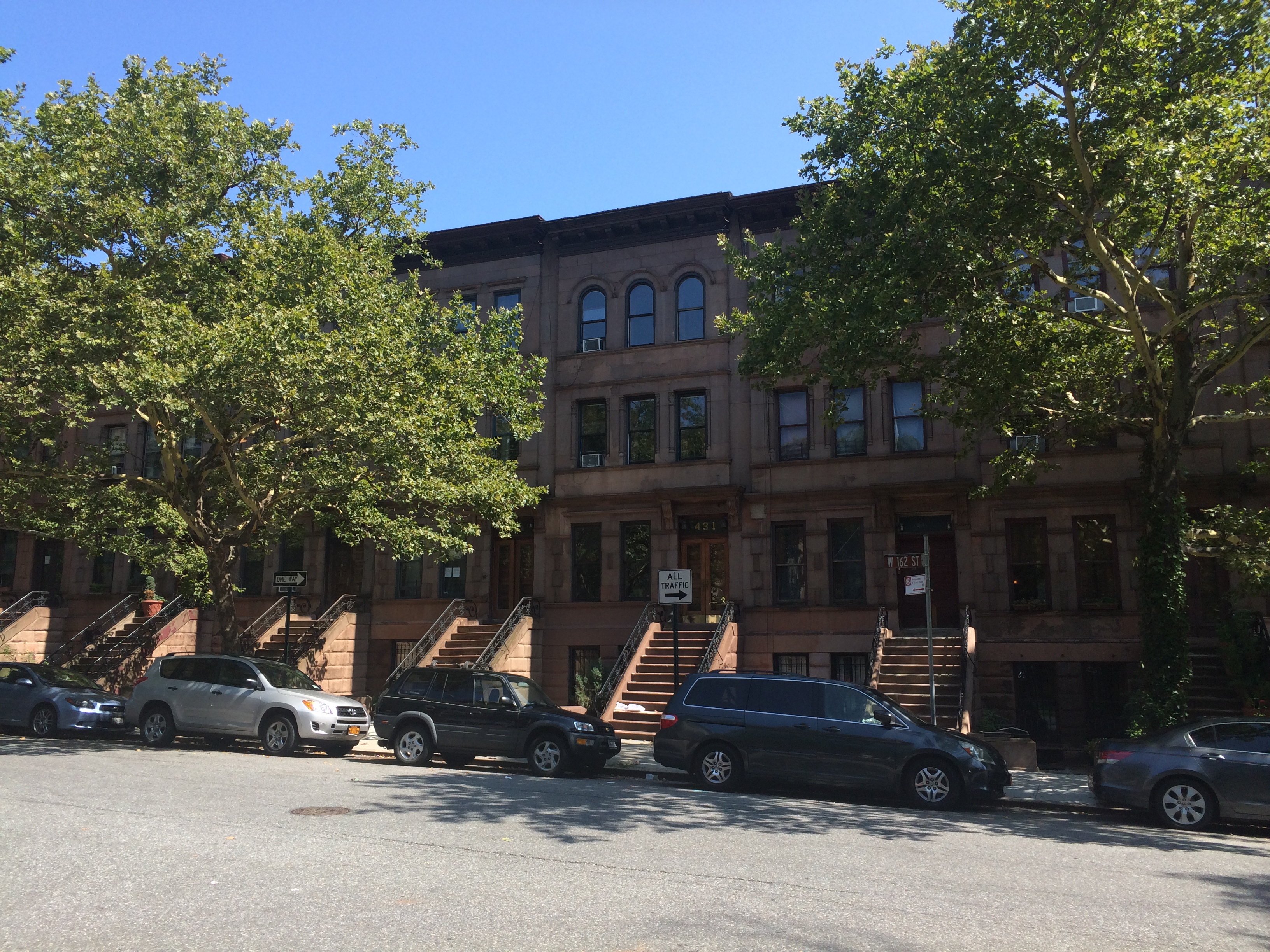
Walking east along W. 167 Street to Edgecombe Avenue, you dead end at a surprisingly pastoral park along a high bluff. Huge sections of the Manhattan schist left over from when the ice age receded form the edge, and tower to your left as you walk south along Edgecombe. At 162 Street, I was intrigued by a sign to the right for the Morris-Jumel Mansion, and walked along 162nd before turning onto Jumel Terrace to see a large white mansion with pillars. Built in 1765, it was used by George Washington for his headquarters for a few months in 1776, and at various times hosted guests as illustrious as Thomas Jefferson, John Adams, and Alexander Hamilton. A National Historic Landmark since 1961, it is now a museum decorated entirely in the Georgian style, with a bed that supposedly belonged to Napoleon.

Continuing along W. 160th Street after turning from Jumel Terrace, there are beautiful rows of townhouses as well as a few large prewar apartment buildings. Turning south on Broadway, a bustling, but not overly crowded, thoroughfare awaits with plenty of shopping and restaurants. At W. 155th Street, the southern edge of Washington Heights, I was surprised to see a large (over two full blocks) cemetery, part of Trinity Church Wall Street but created in 1842 because they had run out of space in their downtown location. Still in use (recent additions were Mayor Ed Koch and Jerry Orbach), it has a large monument for John James Audubon, the famed naturalist best known for his detailed illustrations of birds. His name graces a nearby micro-neighborhood within Washington Heights – Audubon Terrace, a series of eight Beaux-Arts buildings in what was once his land. The nearby apartment buildings on Riverside where it makes a sharp eastward turn between 155th and 158th Streets represent a hidden gem within Manhattan real estate, a C train stop to get you to the rest of the city, but seemingly quiet and removed from it.

Taking the C back downtown, I reflect on the surprising variety of experiences available in this less-known (and perhaps misunderstood) area of Manhattan. Regardless of how long a person has been living in New York City, the richness and uniqueness of its many neighborhoods always allows for fresh discoveries – and in this case, the potential for great value in real estate.