The Frick Collection: Reopening after Renovation

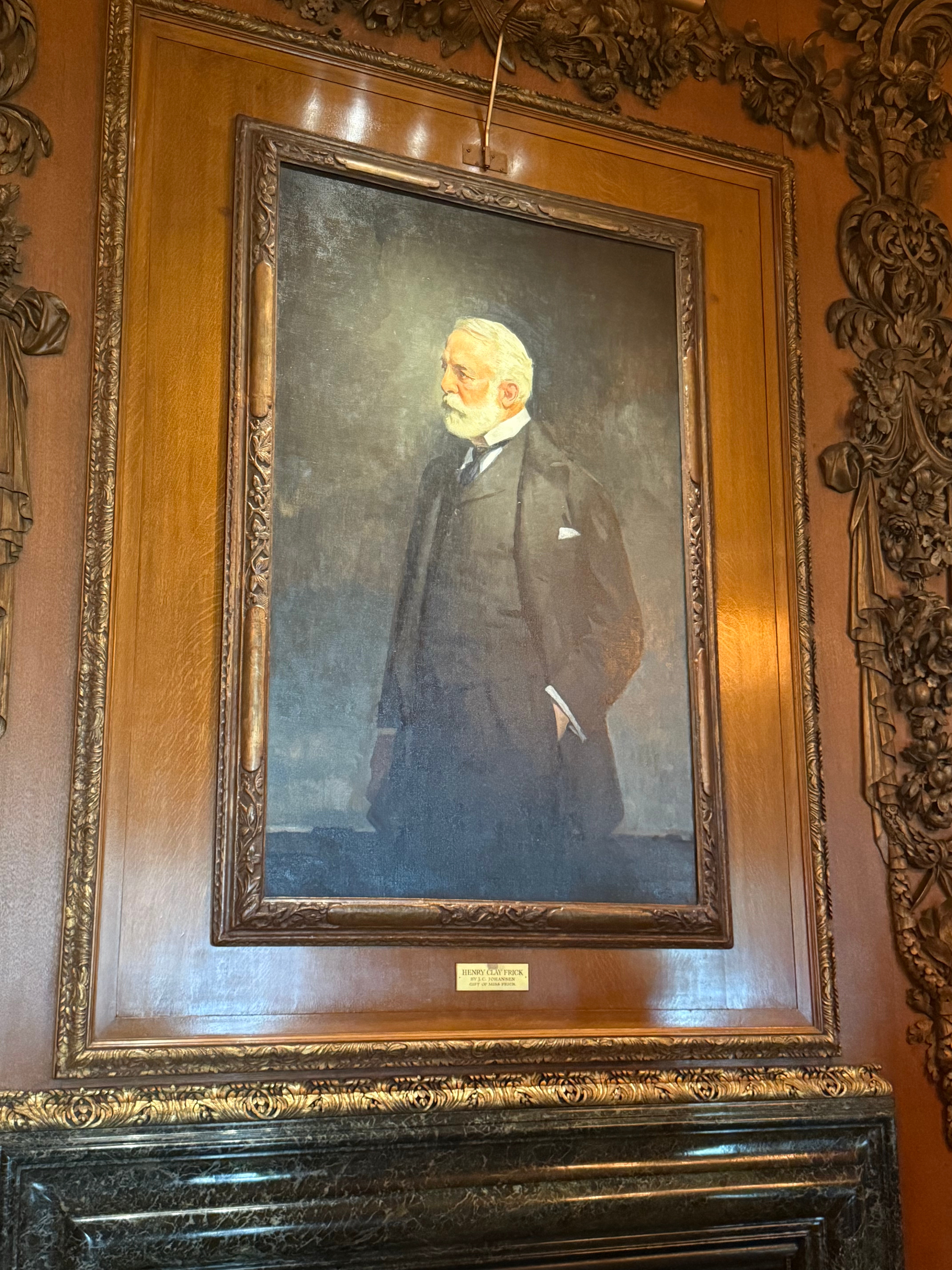
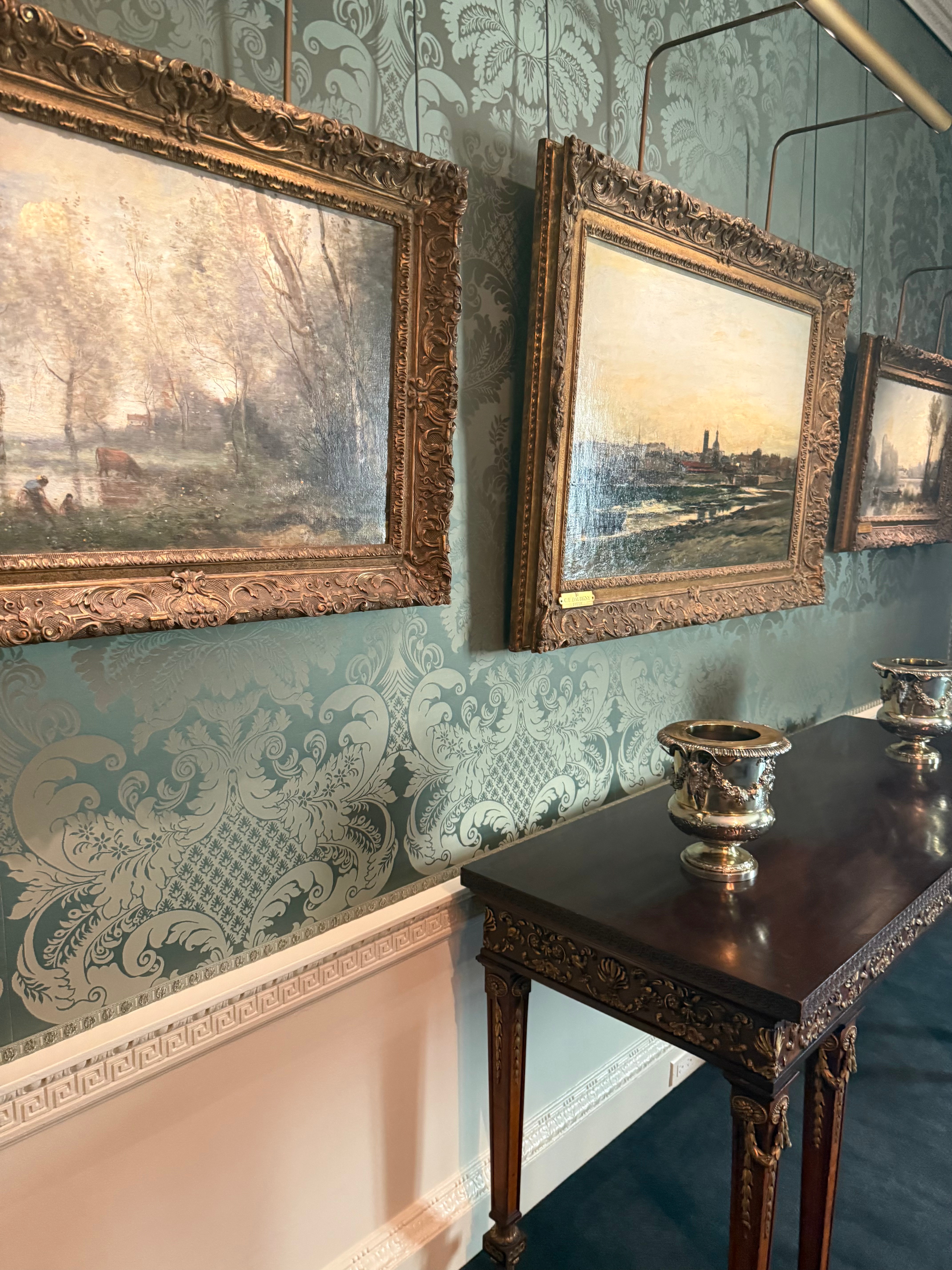
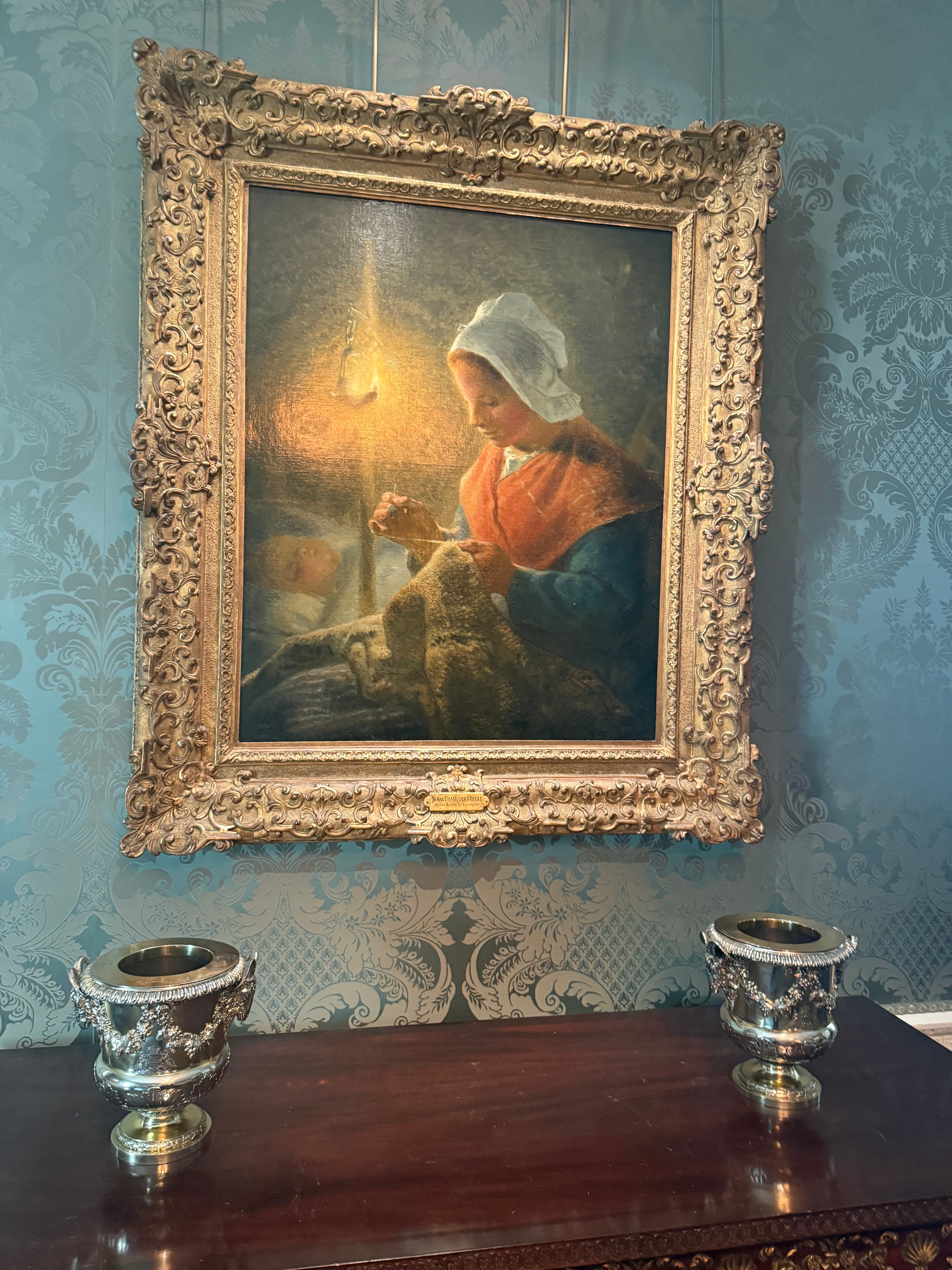
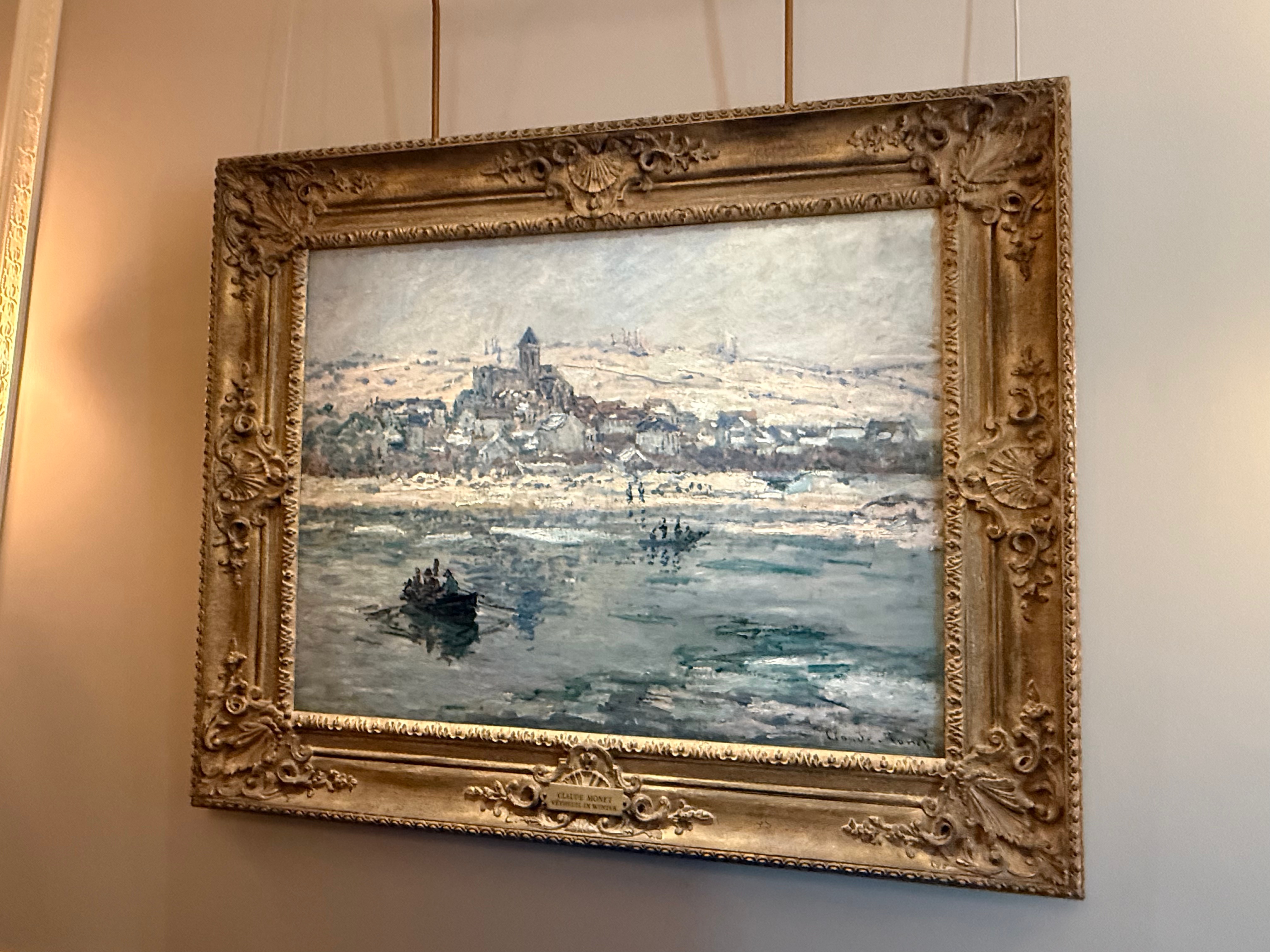
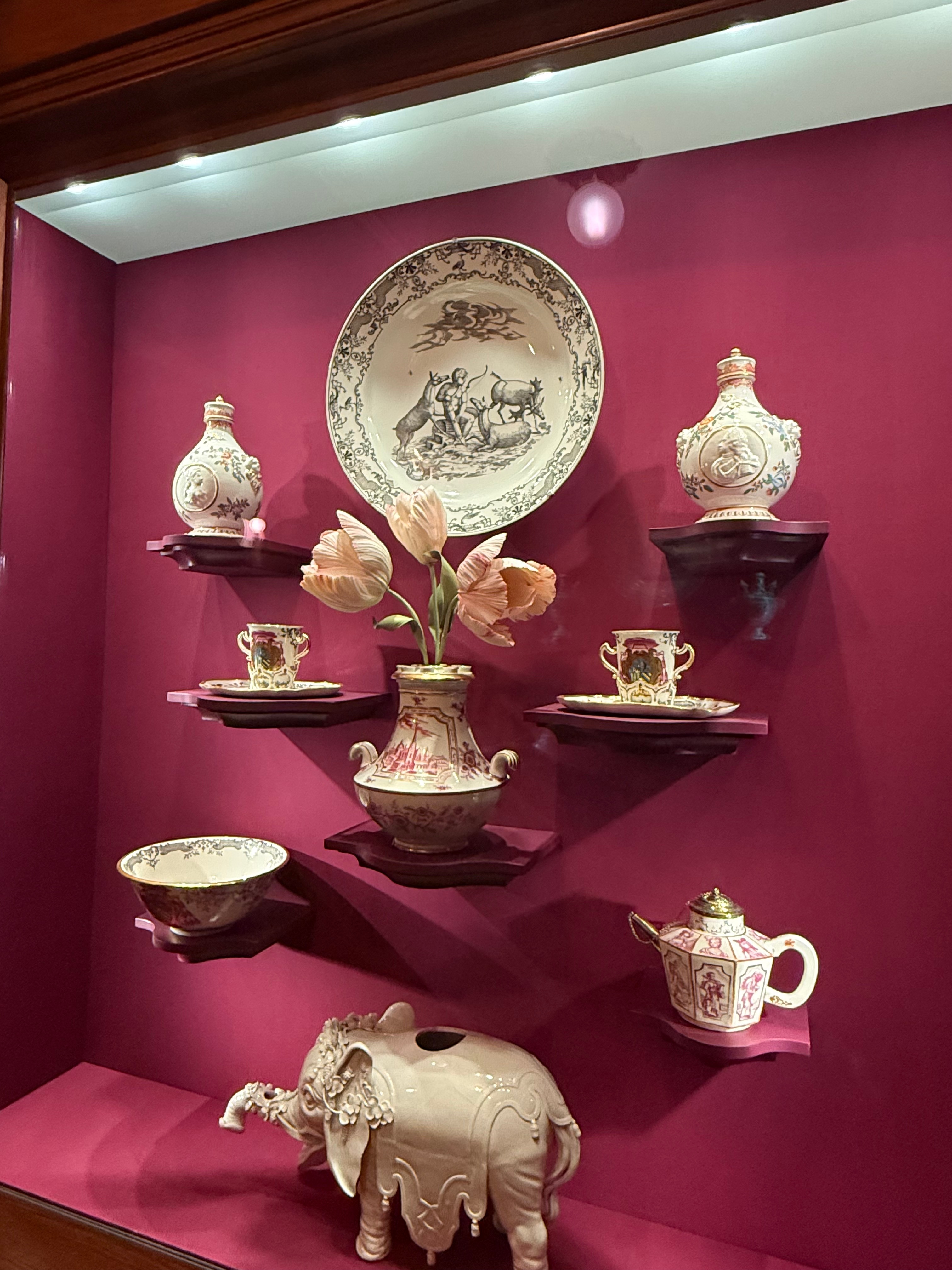
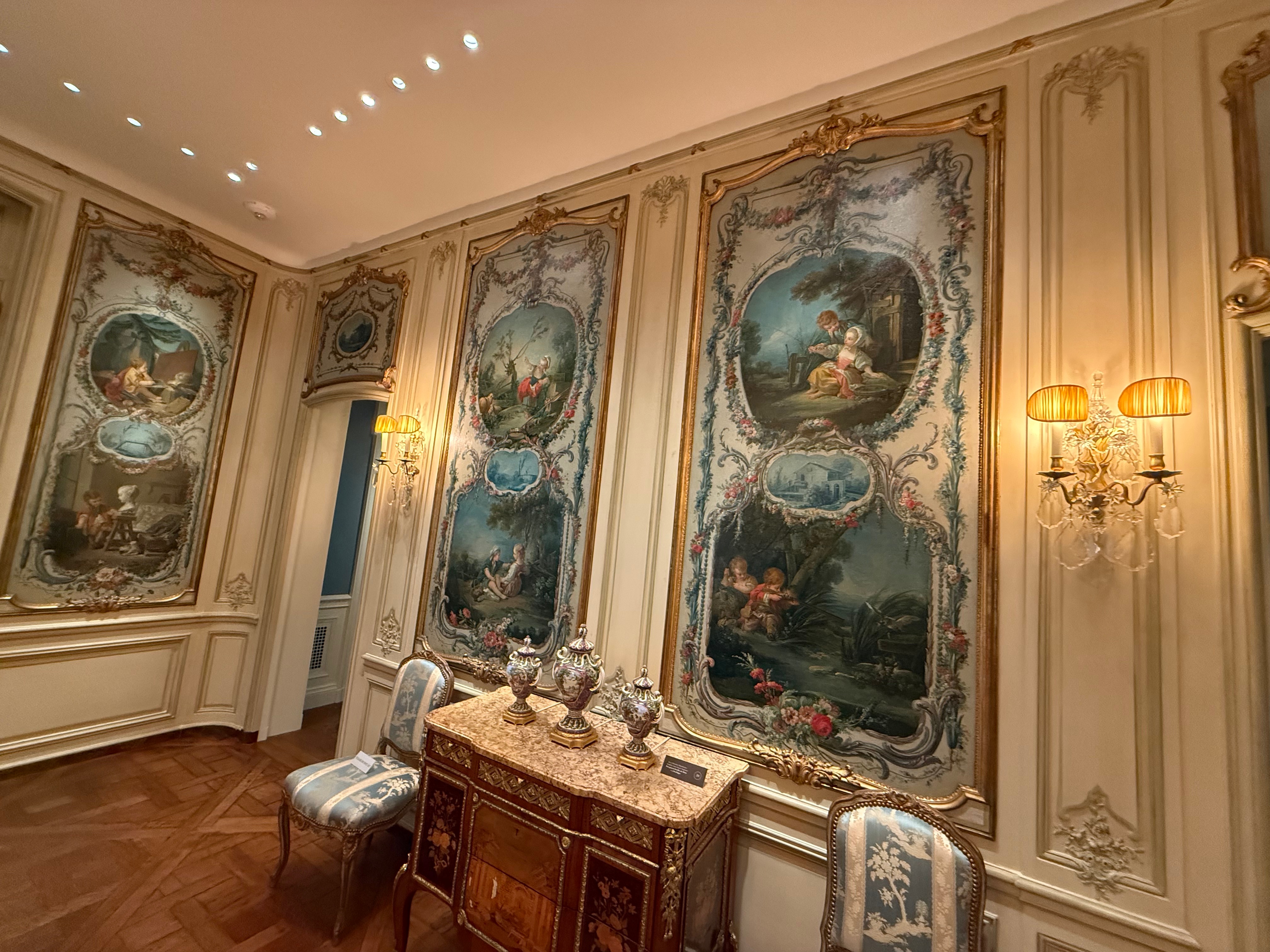
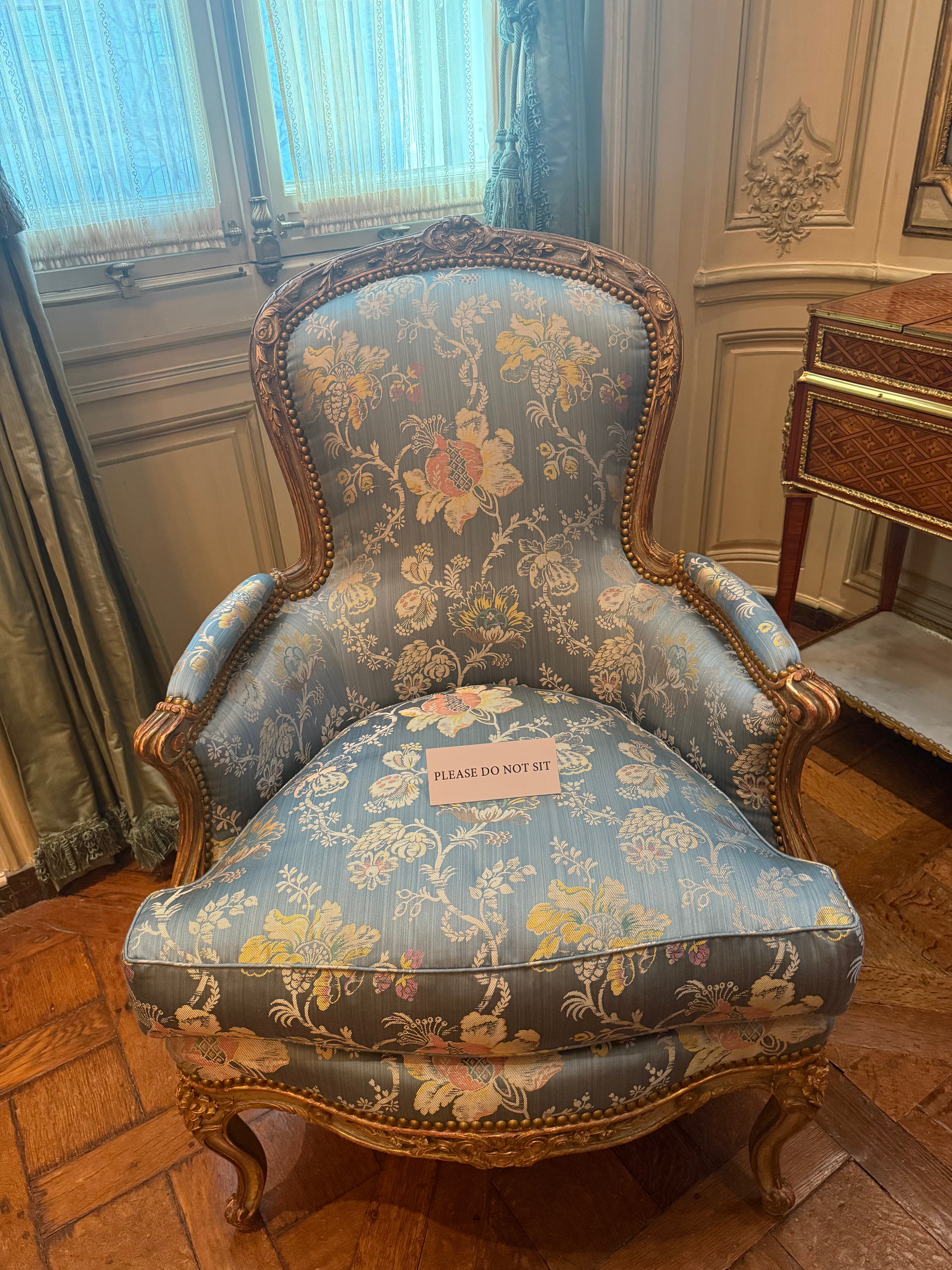
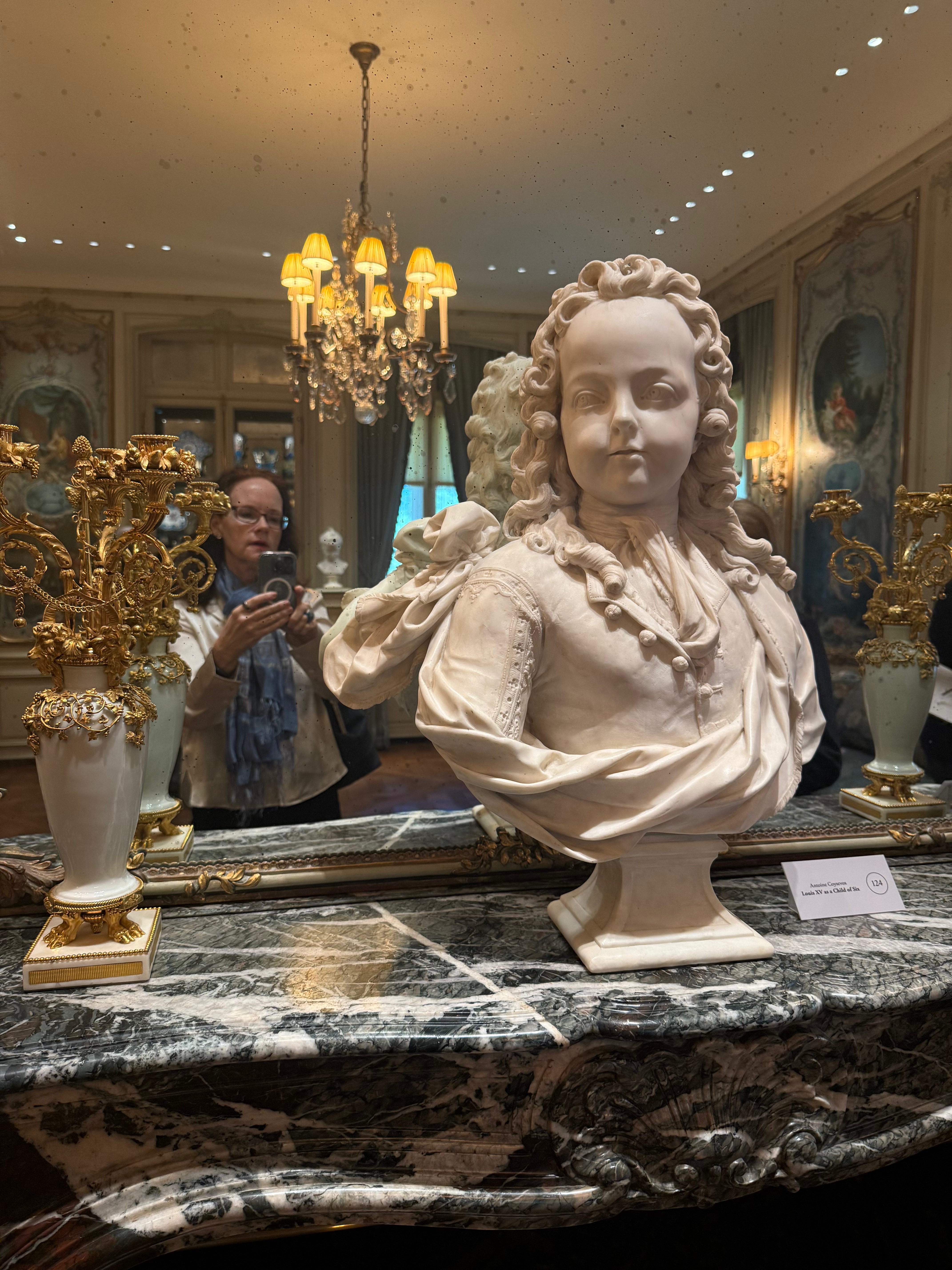
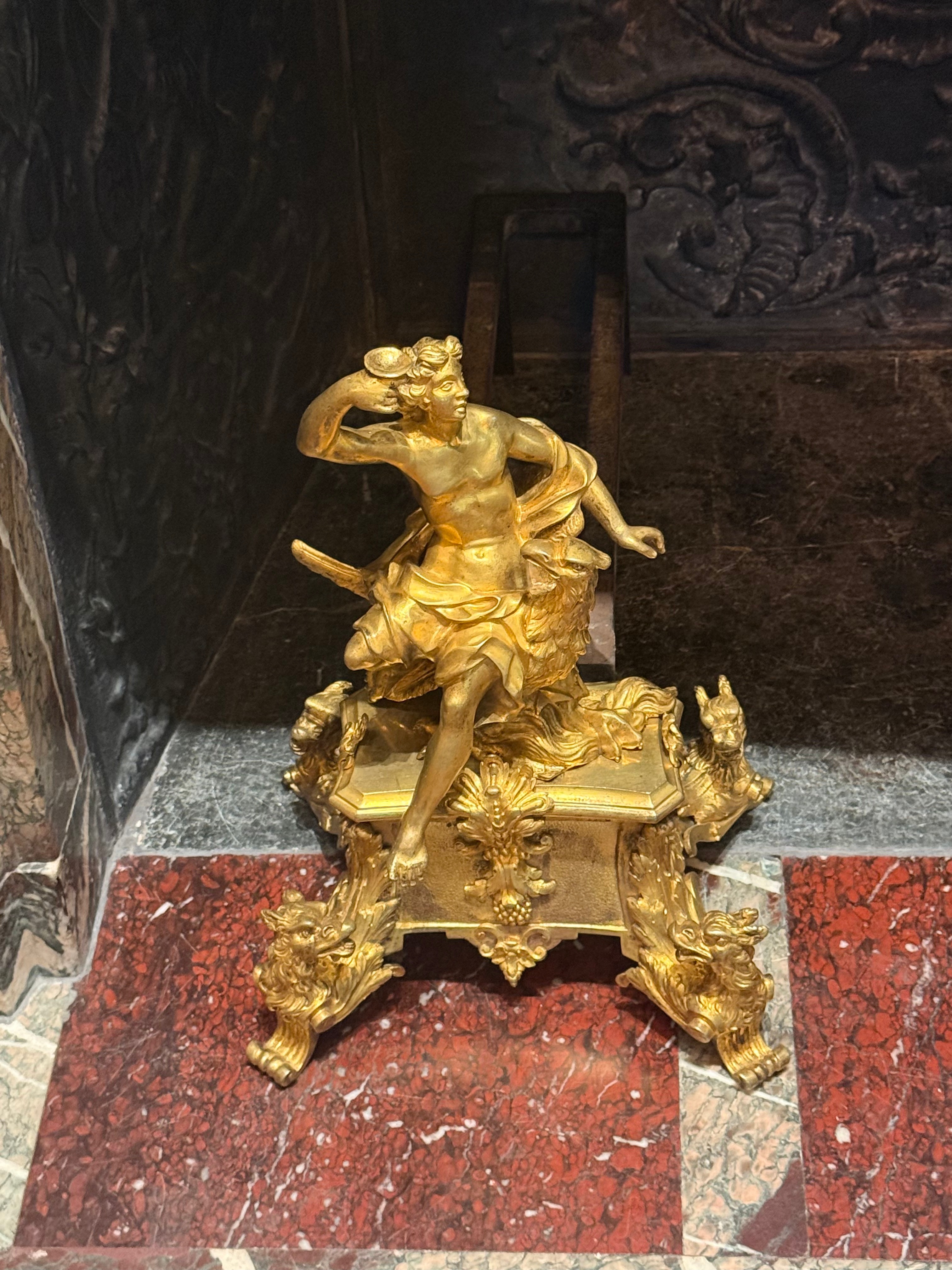
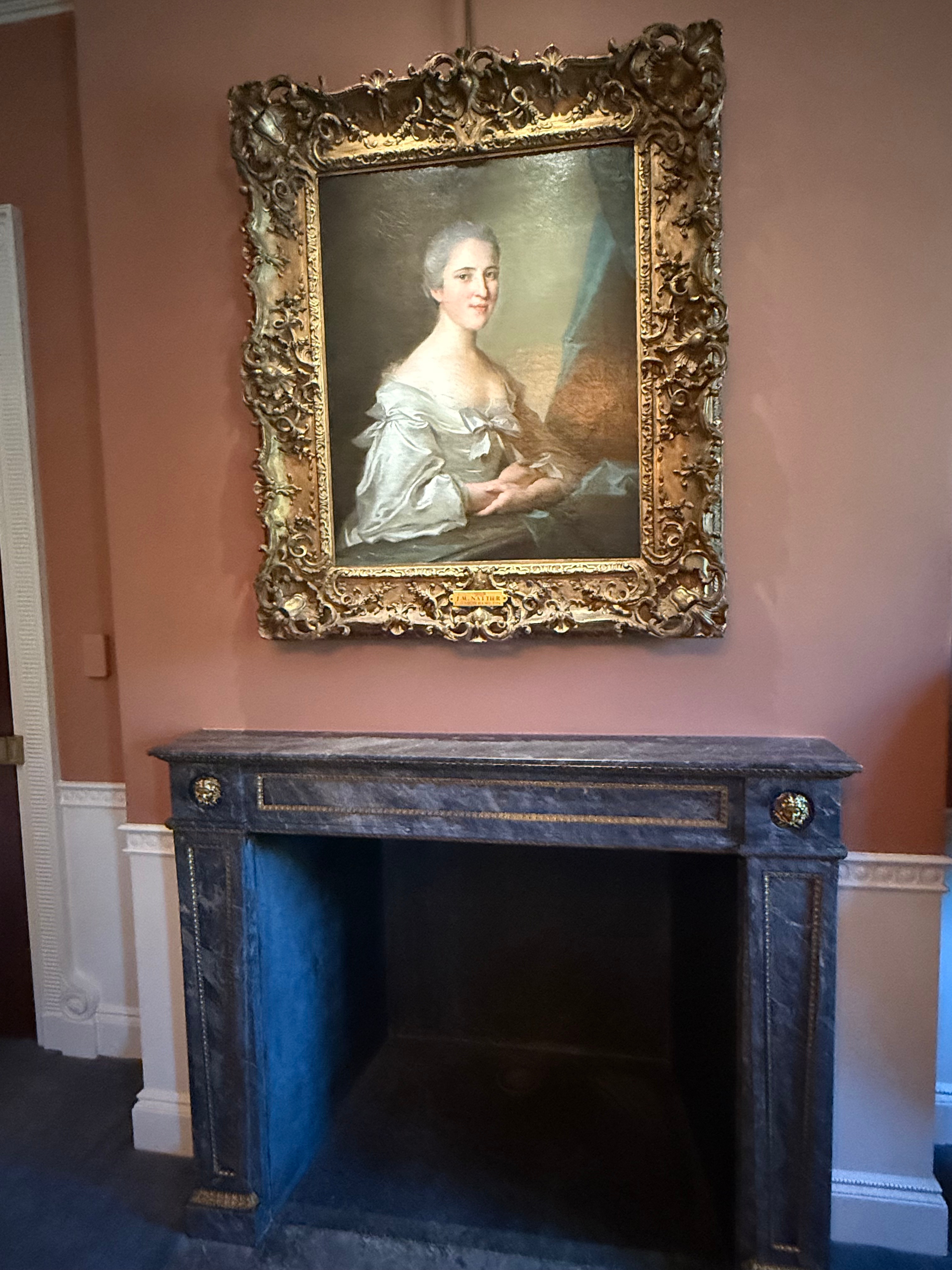
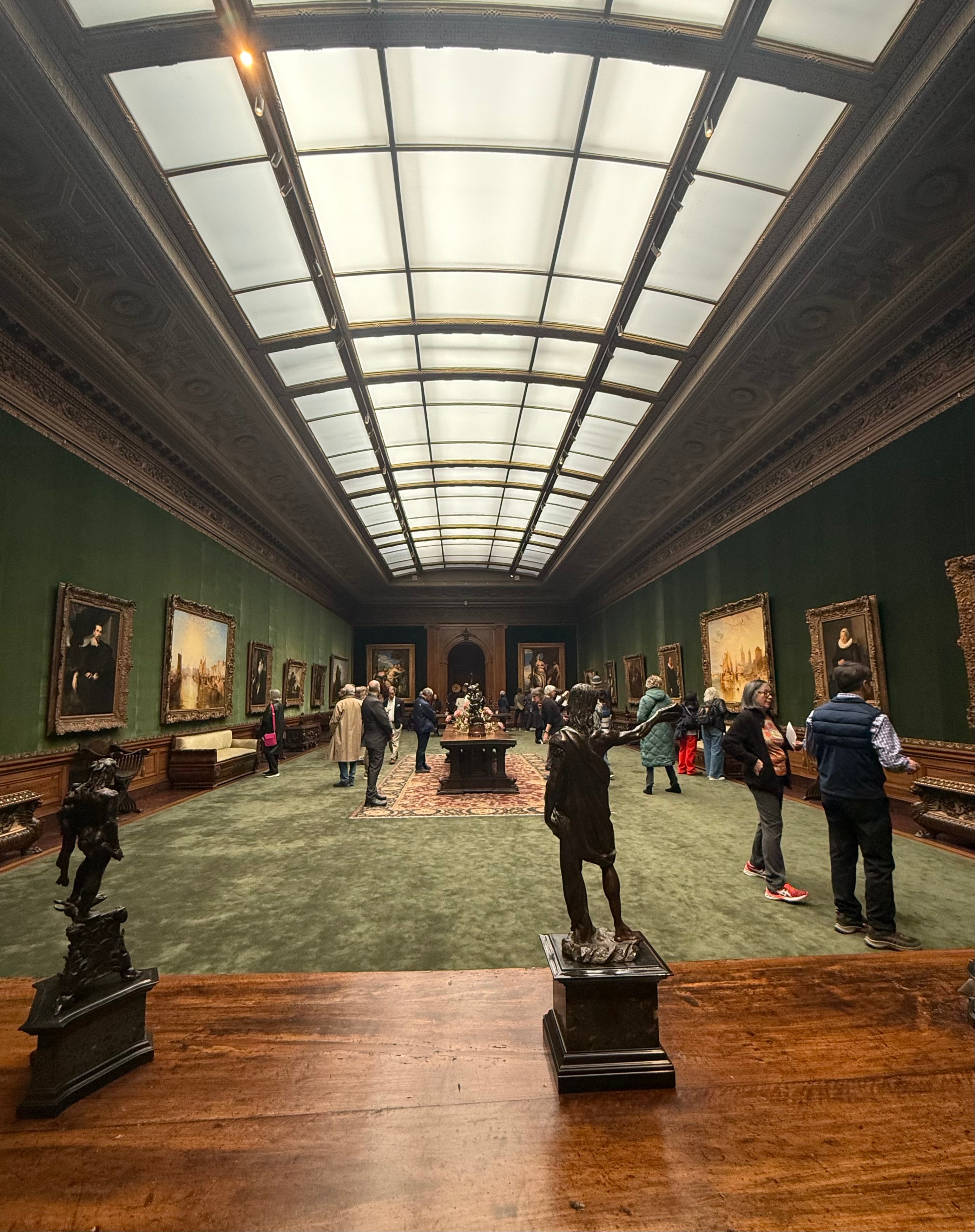
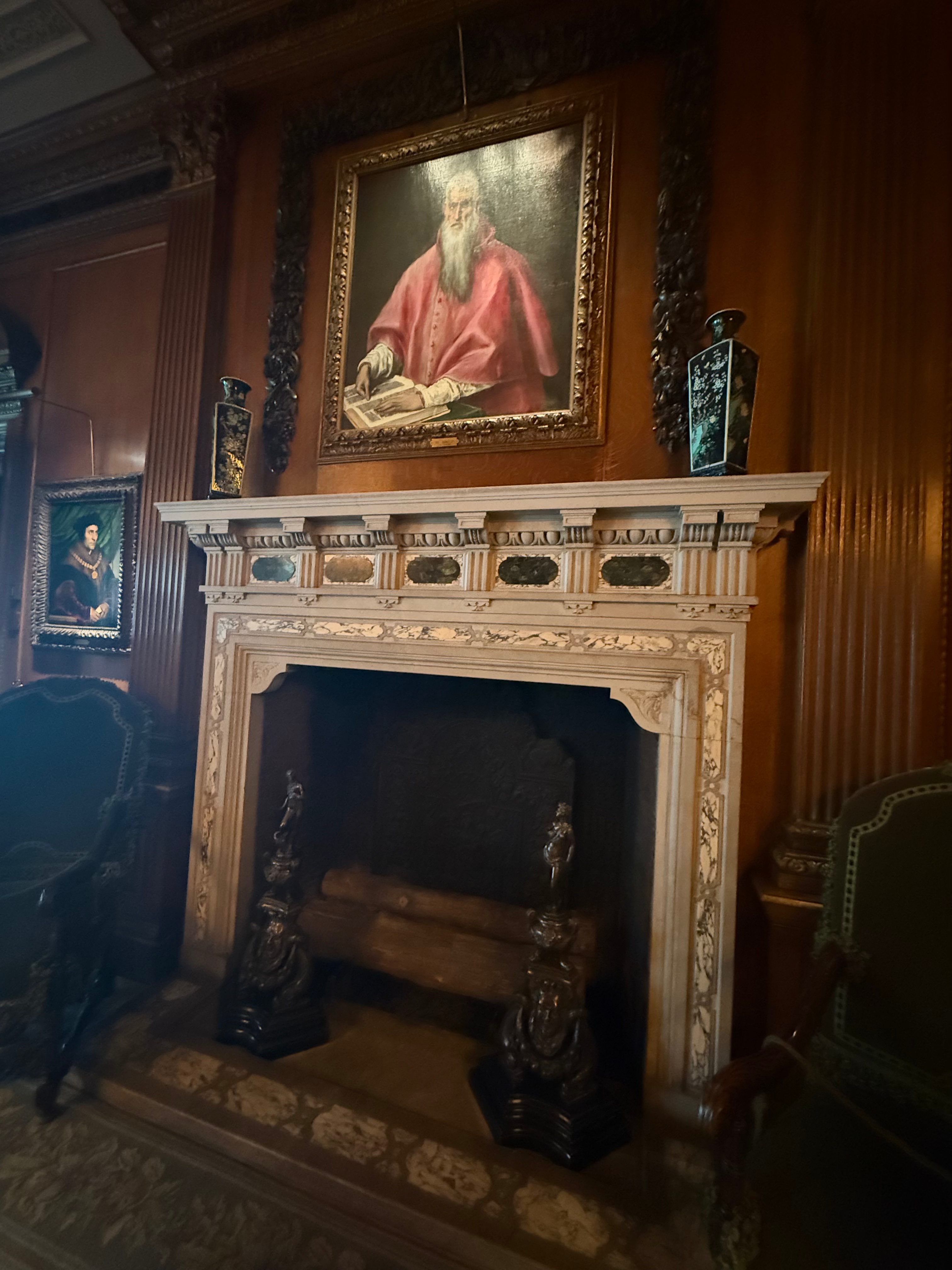
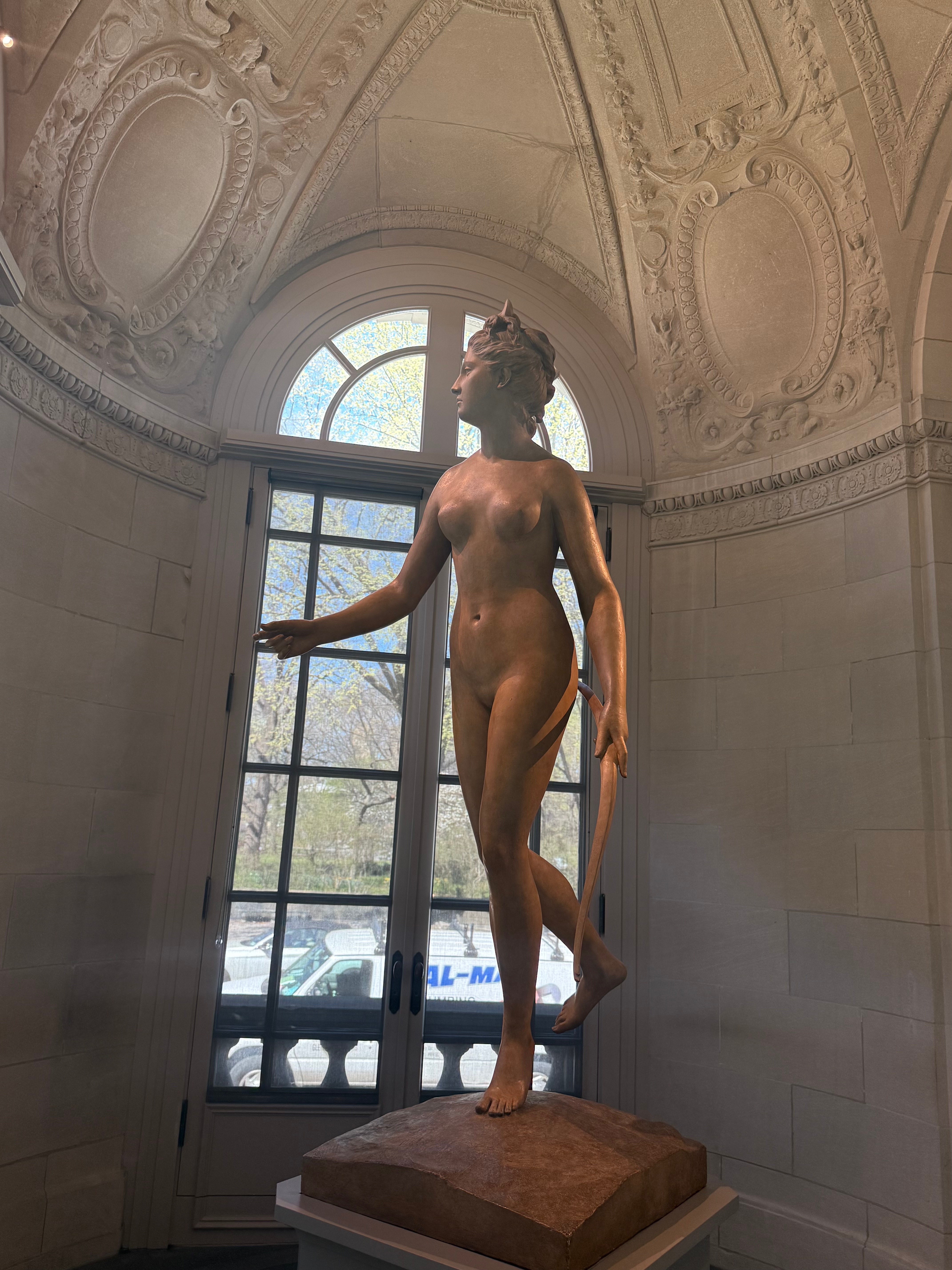
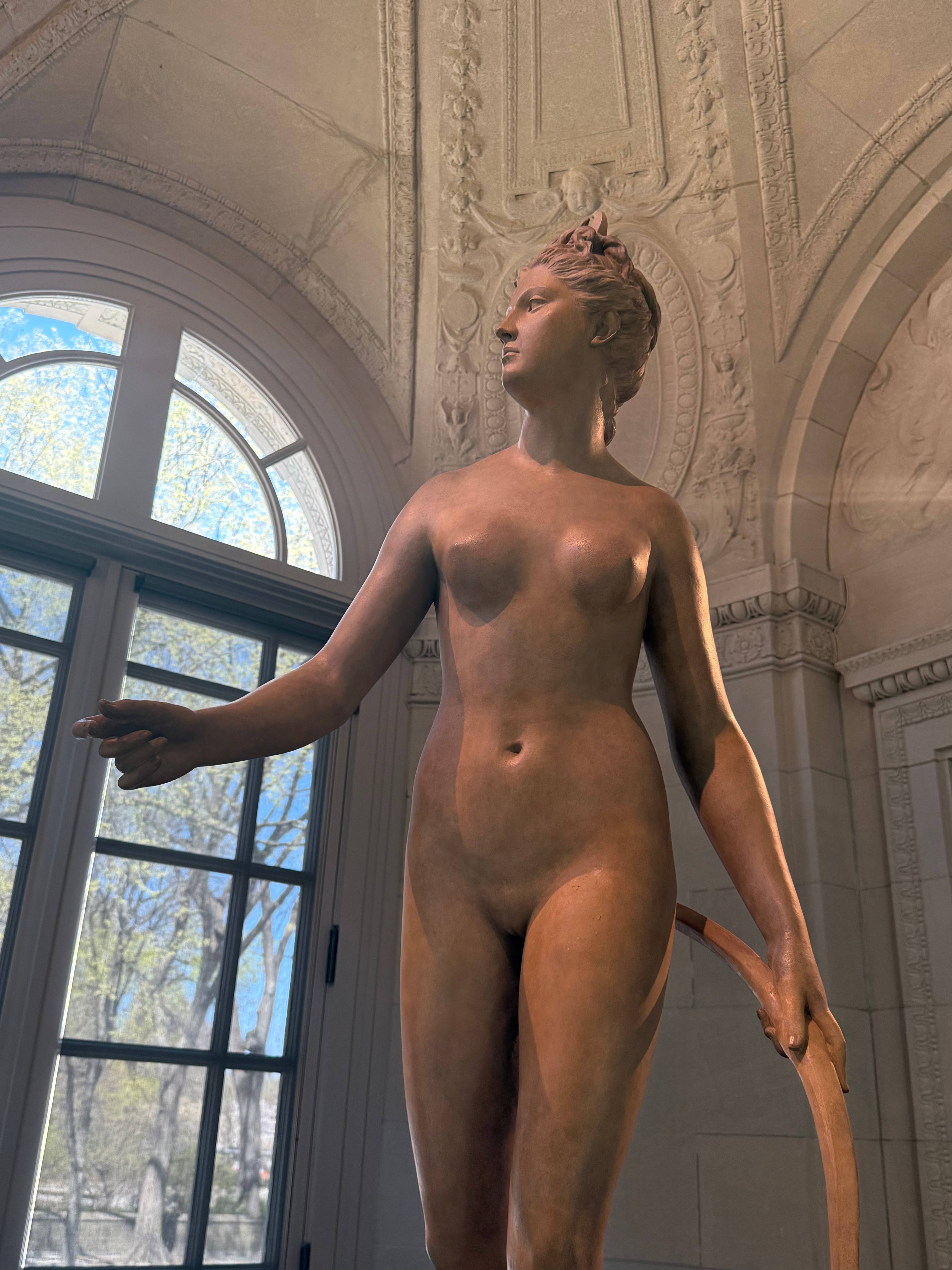
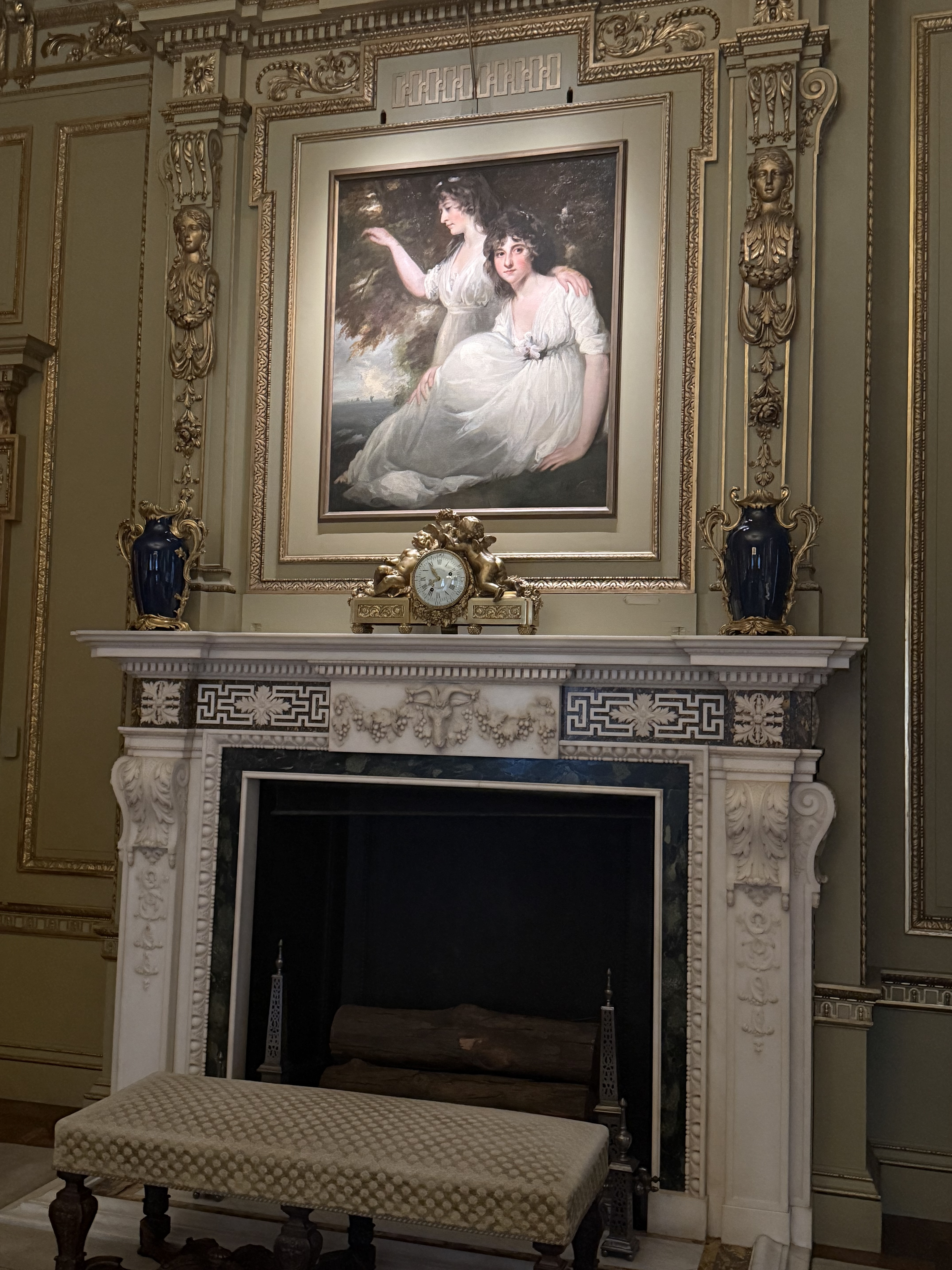
The Frick Collection, on Fifth Avenue between 70th and 71st Streets on the Upper East Side of Manhattan, is a special jewel box of a museum in a city rich with fabulous places to appreciate art. The Henry Clay Frick mansion, designed in 1914 by Carrère and Hastings in the Beaux-Arts style, was converted to a museum to house Frick’s art collection in 1920 after his death. Henry Frick had personally collected a vast array of art, including works by artists as renowned and diverse as Bellini, Degas, Fragonard, Gainsborough, Goya, El Greco, Holbein, Rembrandt, Titian, Turner, Velázquez, Vermeer, and Whistler. What is truly unique, though, is the display of the art within the cohesive and lush interiors of the mansion. The Frick Collection recently underwent an extensive renovation by Annabelle Selldorf and her team at Selldorf Architects, and has added an auditorium, education room, and cafe, while leaving the essential nature of this unique experience intact. I was fortunate enough to be invited to Member Preview Days by a patron (the museum opens for all April 17, 2025, check for tickets here) and was thoroughly transported by my visit.

I was fortunate enough to be able to go the first day the museum held member previews (April 9) thanks to this patron, and we went first thing upon opening to avoid crowds. I would recommend this strategy if you are able. The entrance area was open and easy to navigate thanks to the renovation. There is a coat check and bathrooms downstairs (and quite some stairs! a new grand cantilevered staircase made of veined Breccia Aurora marble), and the new cafe and gift shop above. The second floor rooms in the mansion, once bedrooms, are smaller and I recommend going to them first before the museum gets more crowded if you are first in.

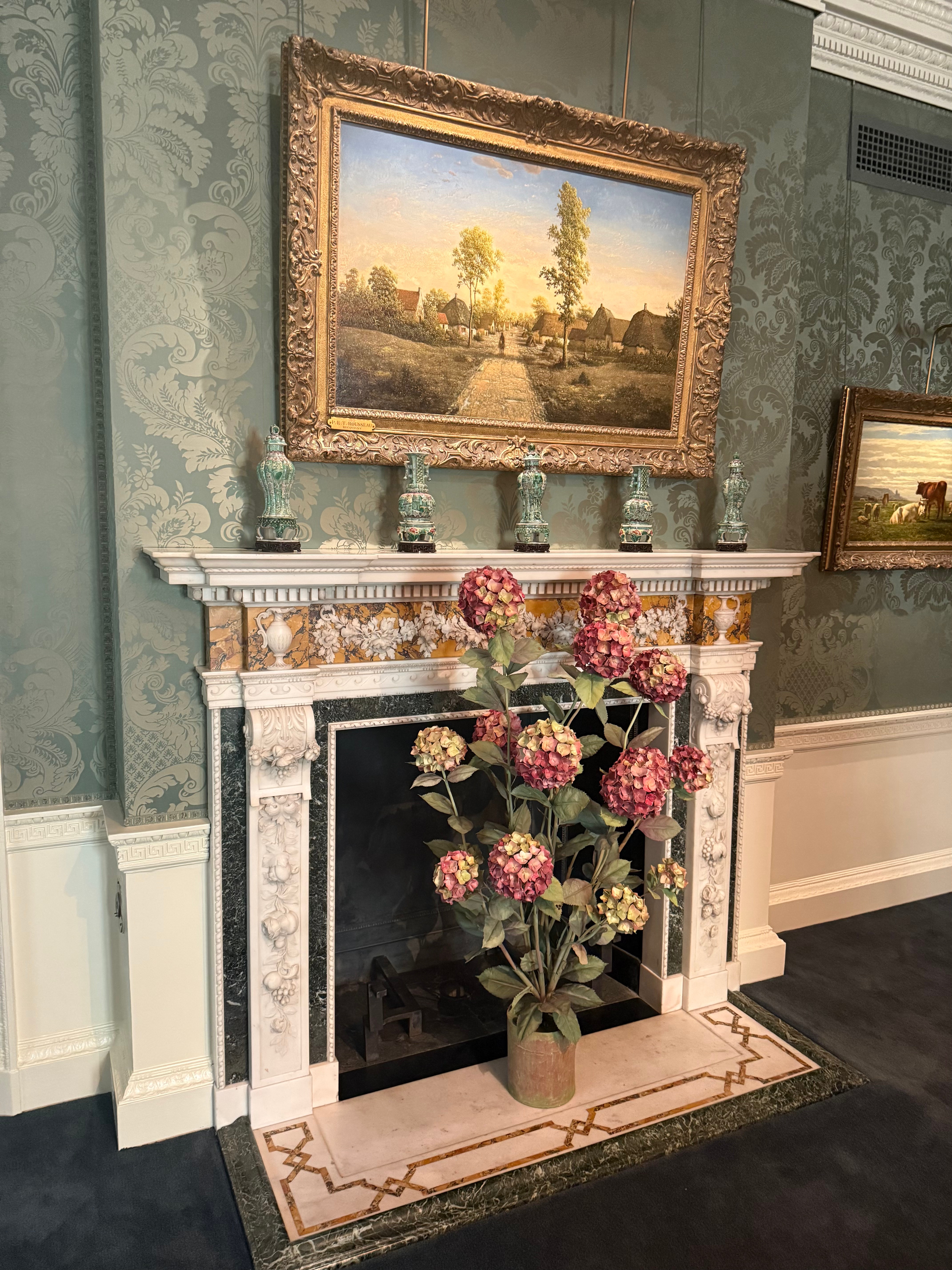
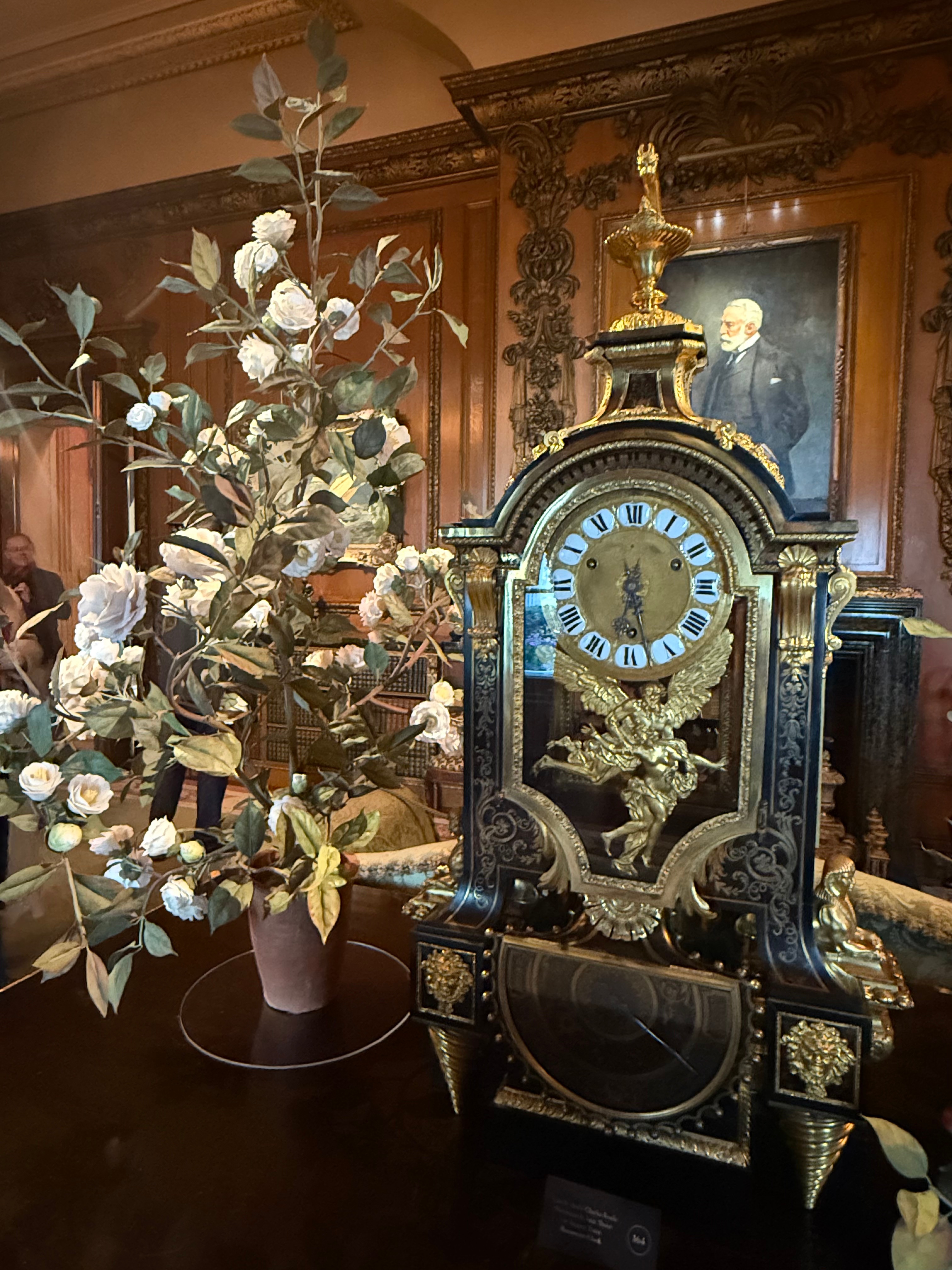
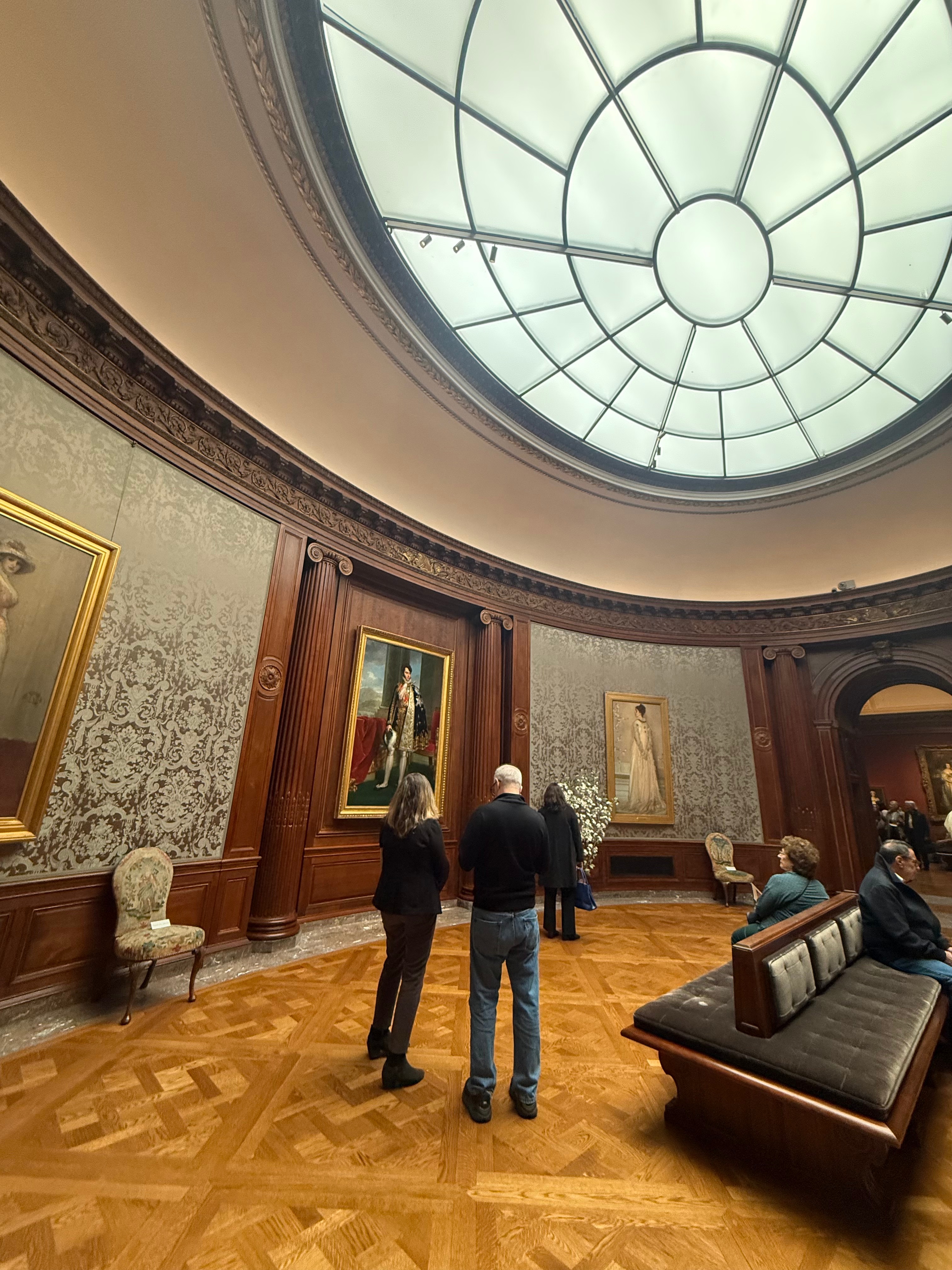
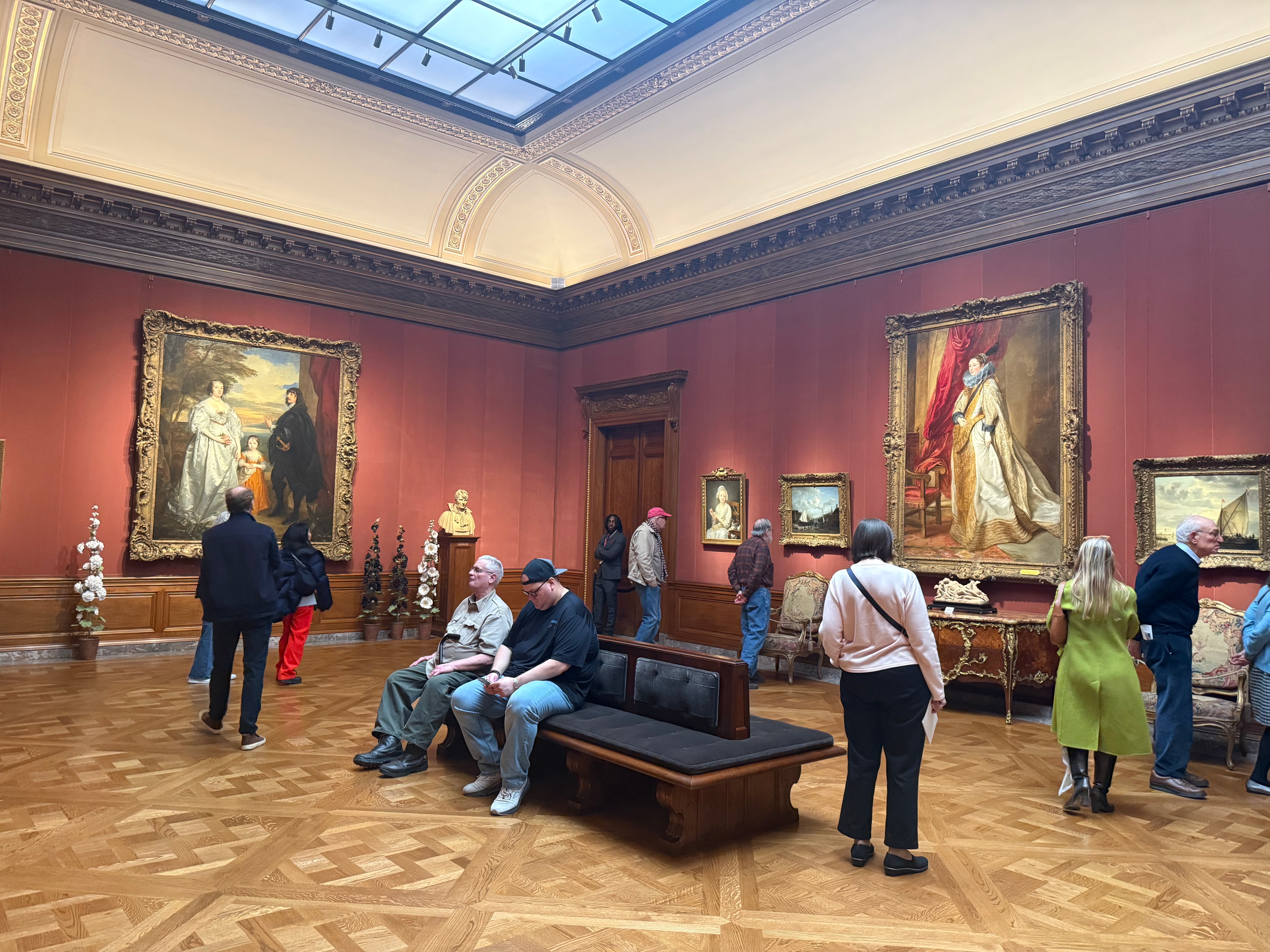
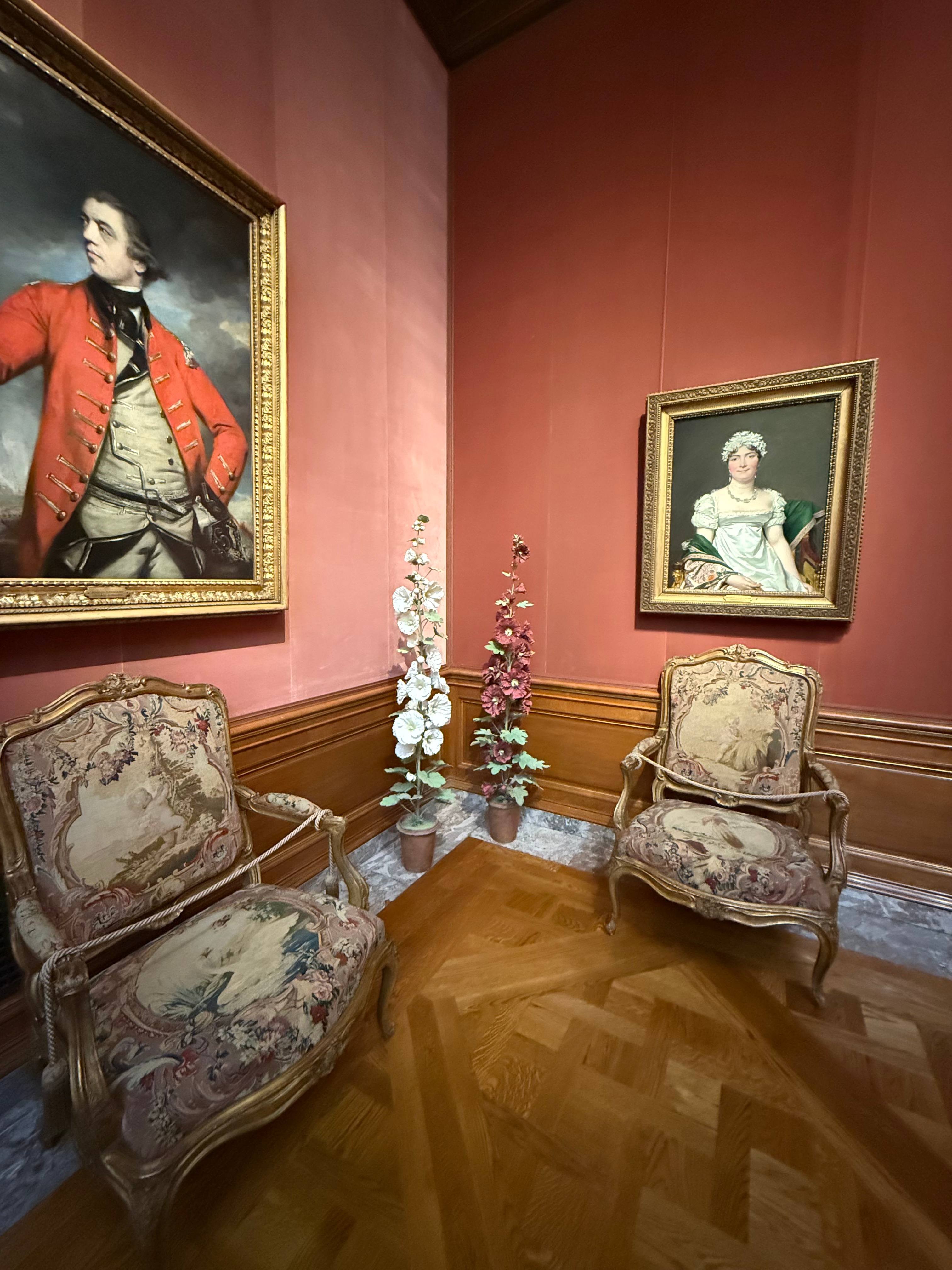
The experience of being in the mansion and the way art is displayed (rather than white plain backgrounds, the walls are covered in hand-woven French silk damask and velvet in sumptuous colors) makes entering each room like becoming part of a new little immersive world.

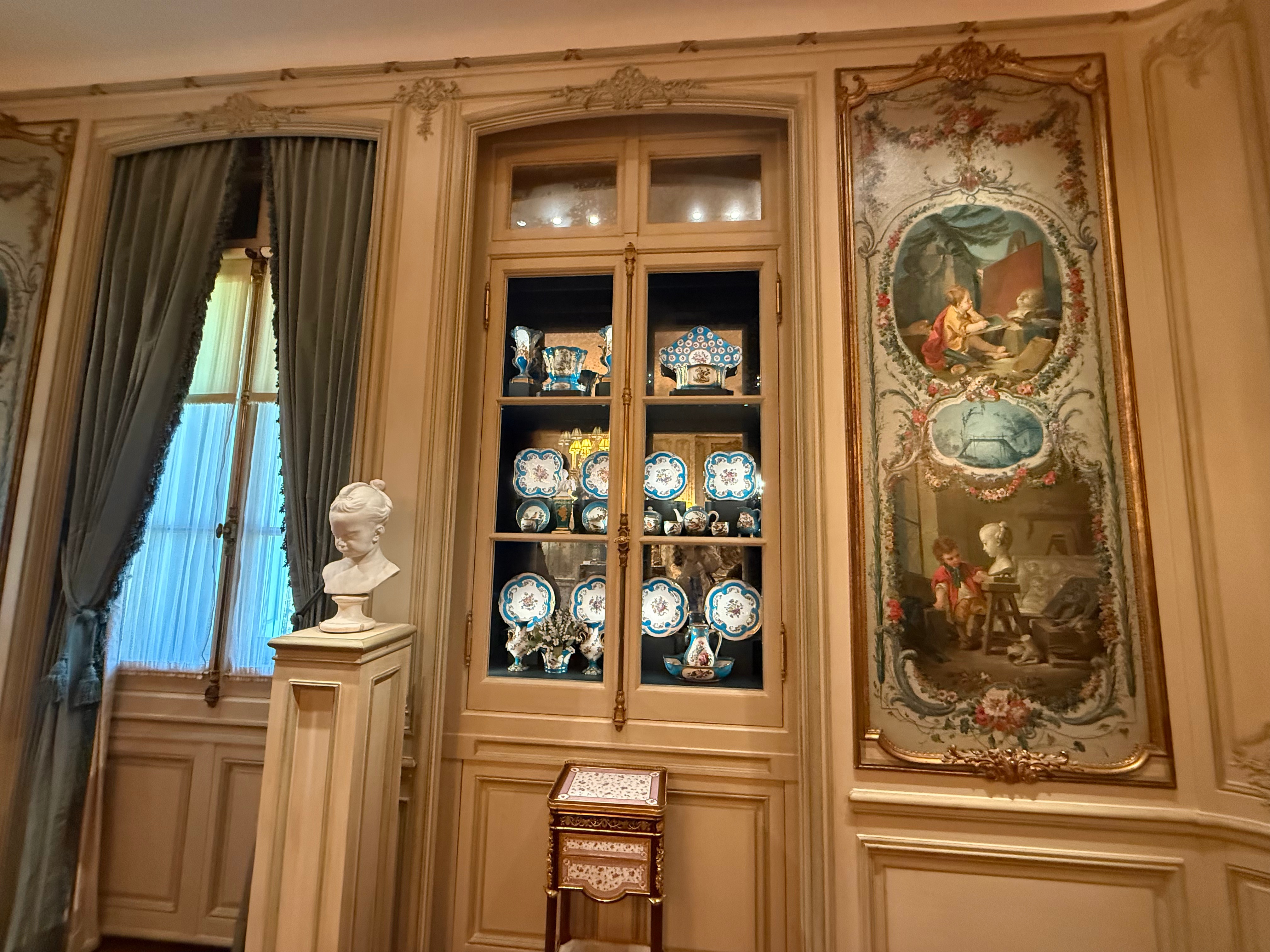
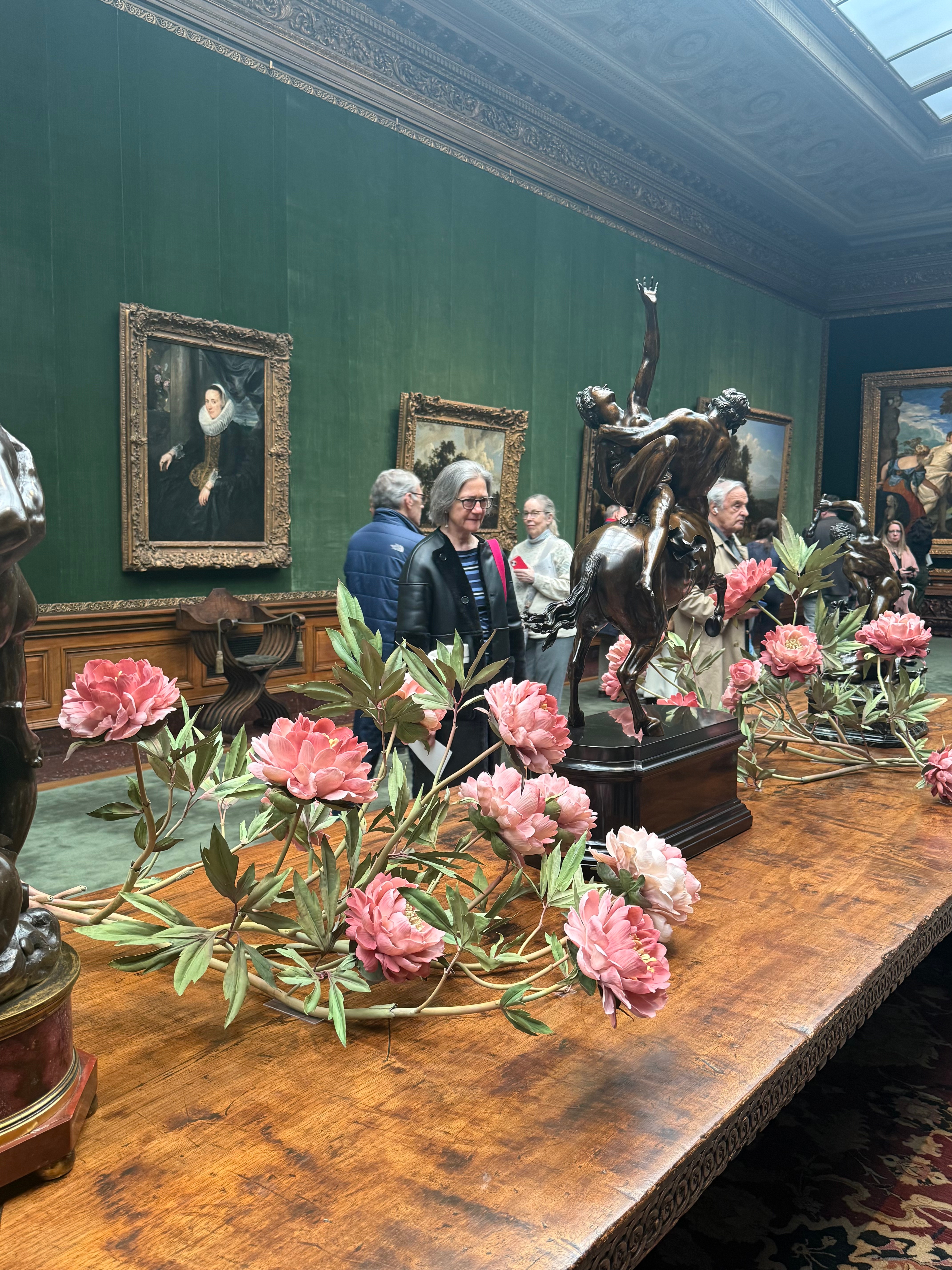
In almost every room there were lifelike porcelain flowers by contemporary artist Vladimir Kanevsky. Designed to look like real floral displays set up in the collection when it first opened to the public in the 1930s, these flowers are on display through October 6.
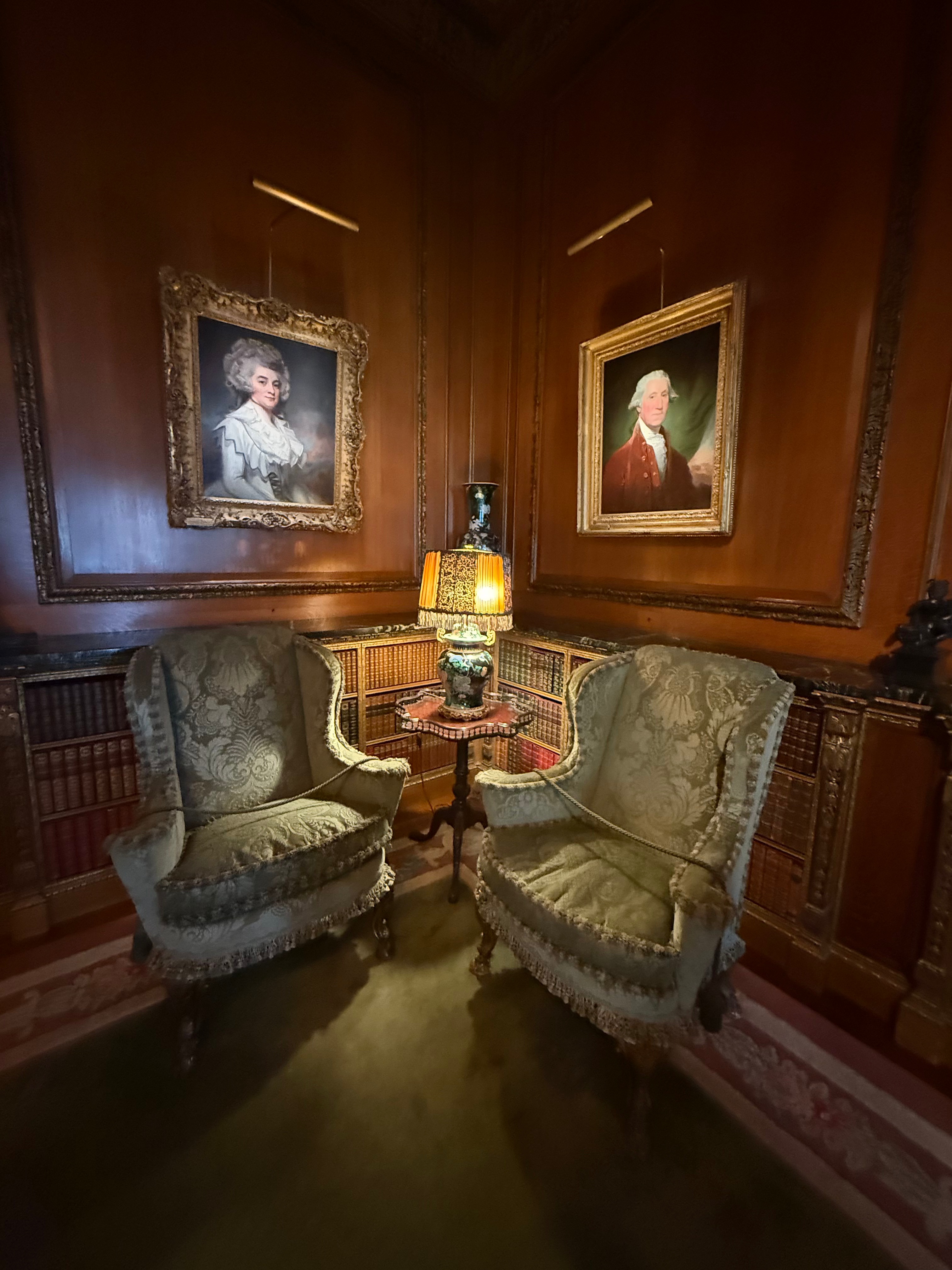
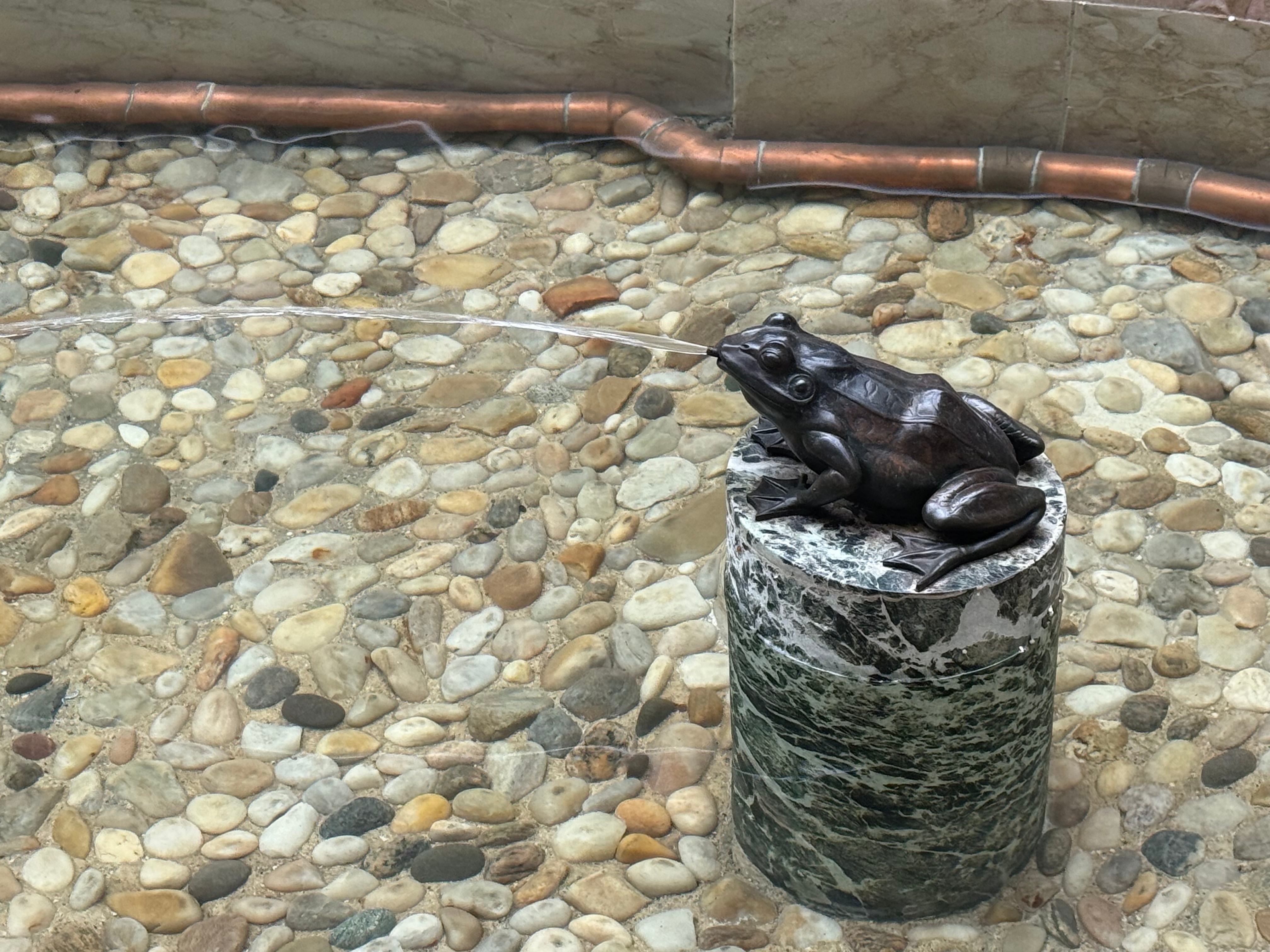
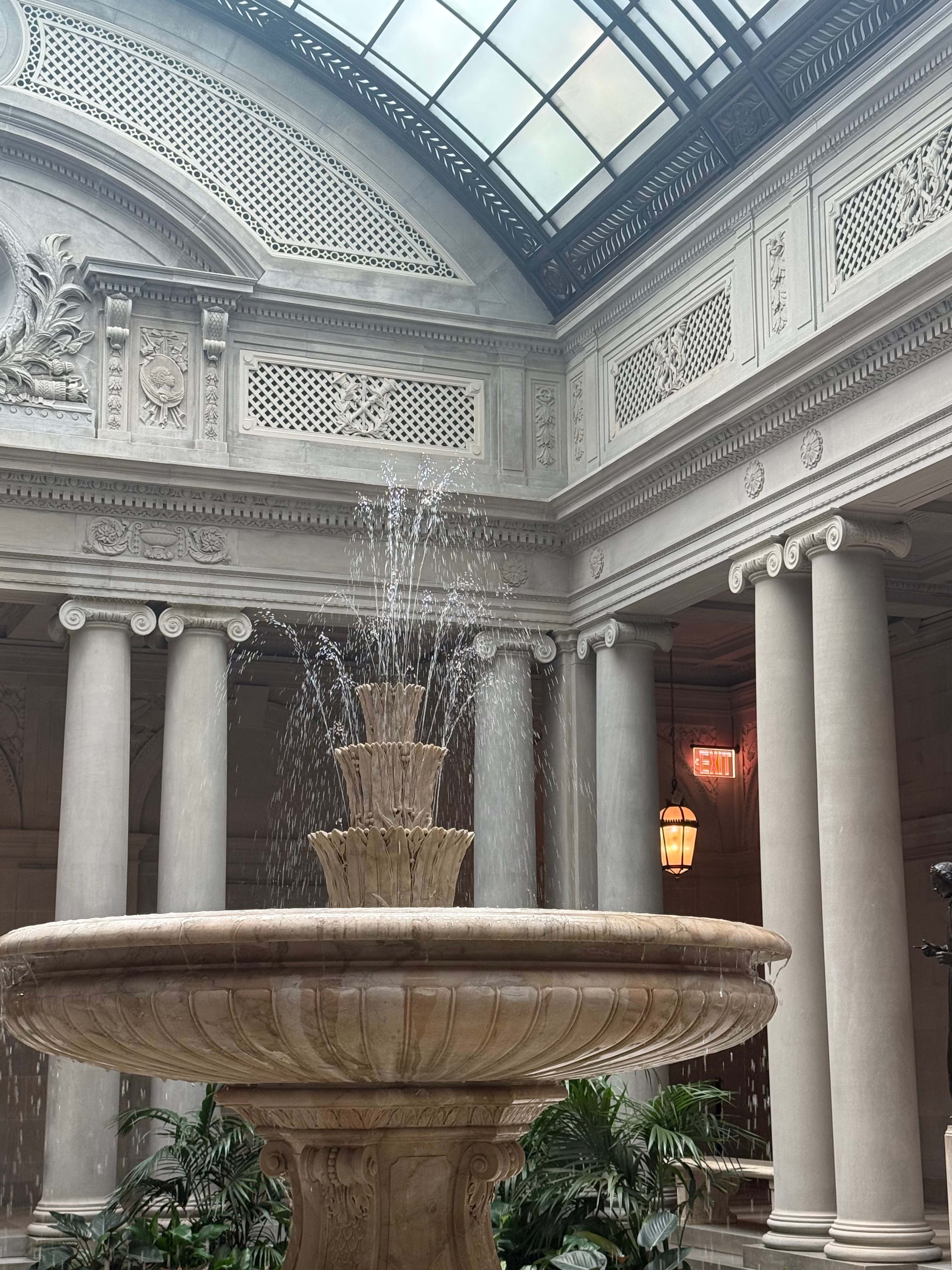
Downstairs rooms are larger, as they were public rooms and many specifically designed to display Frick’s art. The beautiful central courtyard has been restored so that the fountain once again works as designed.
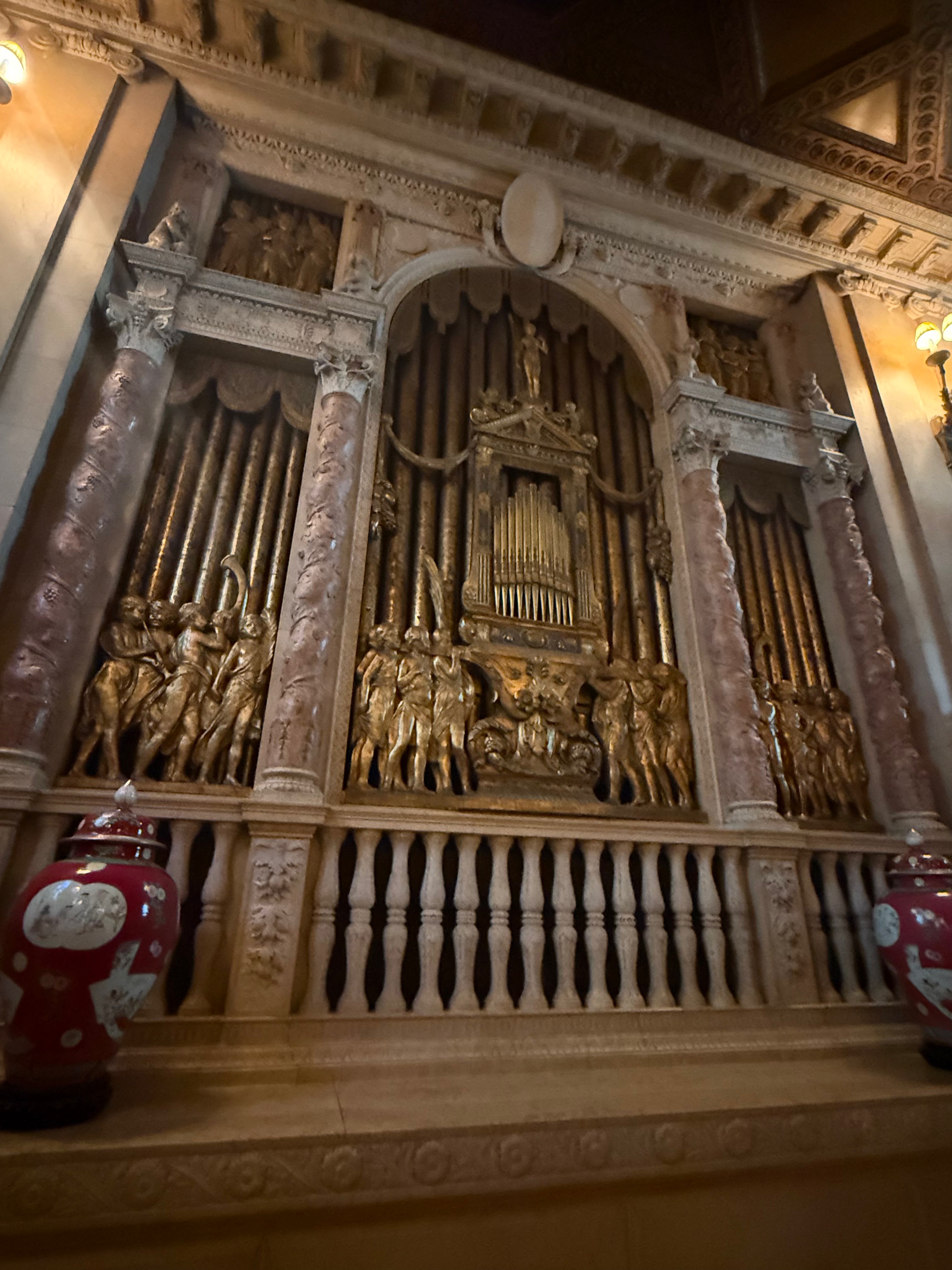
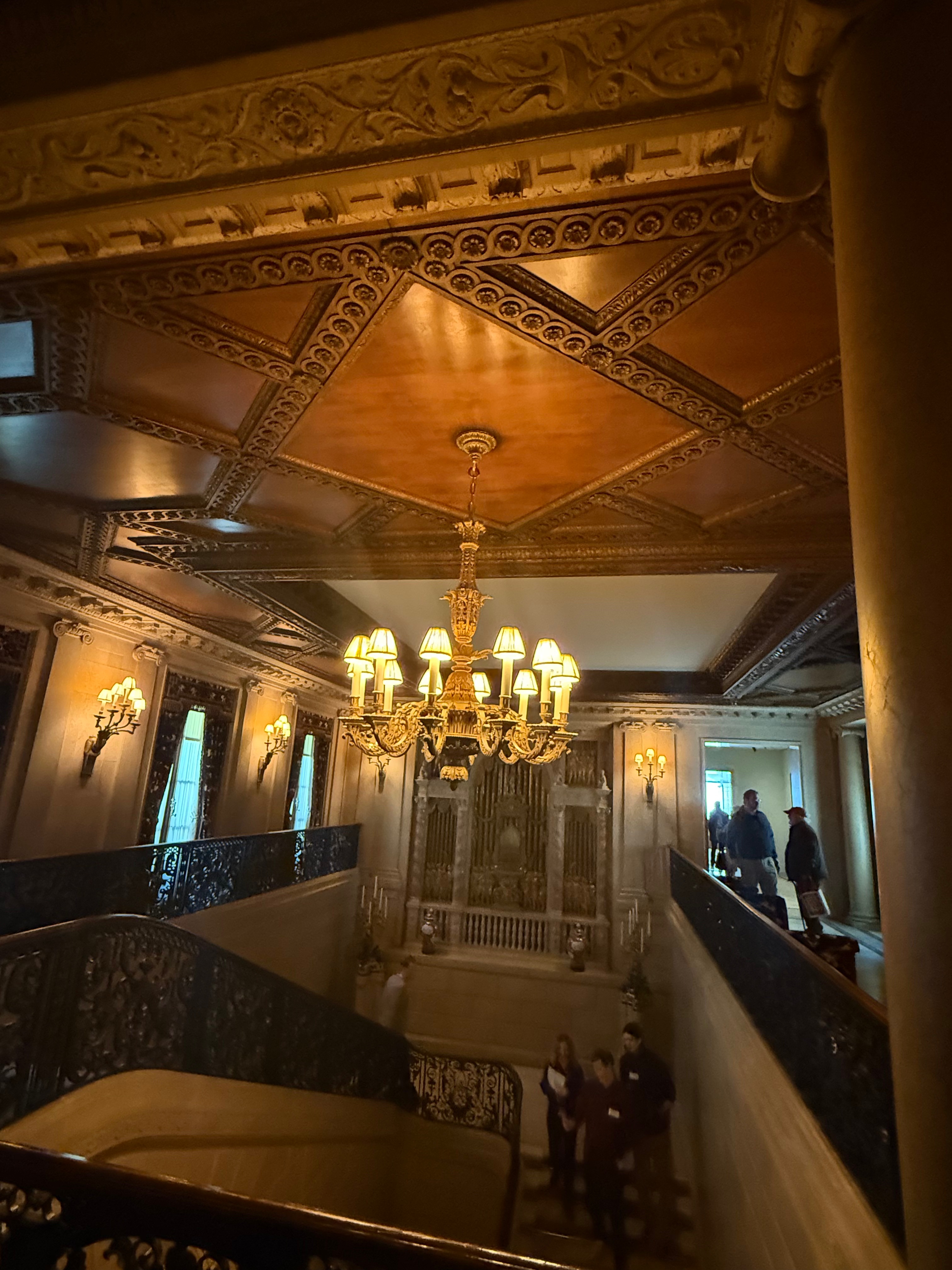
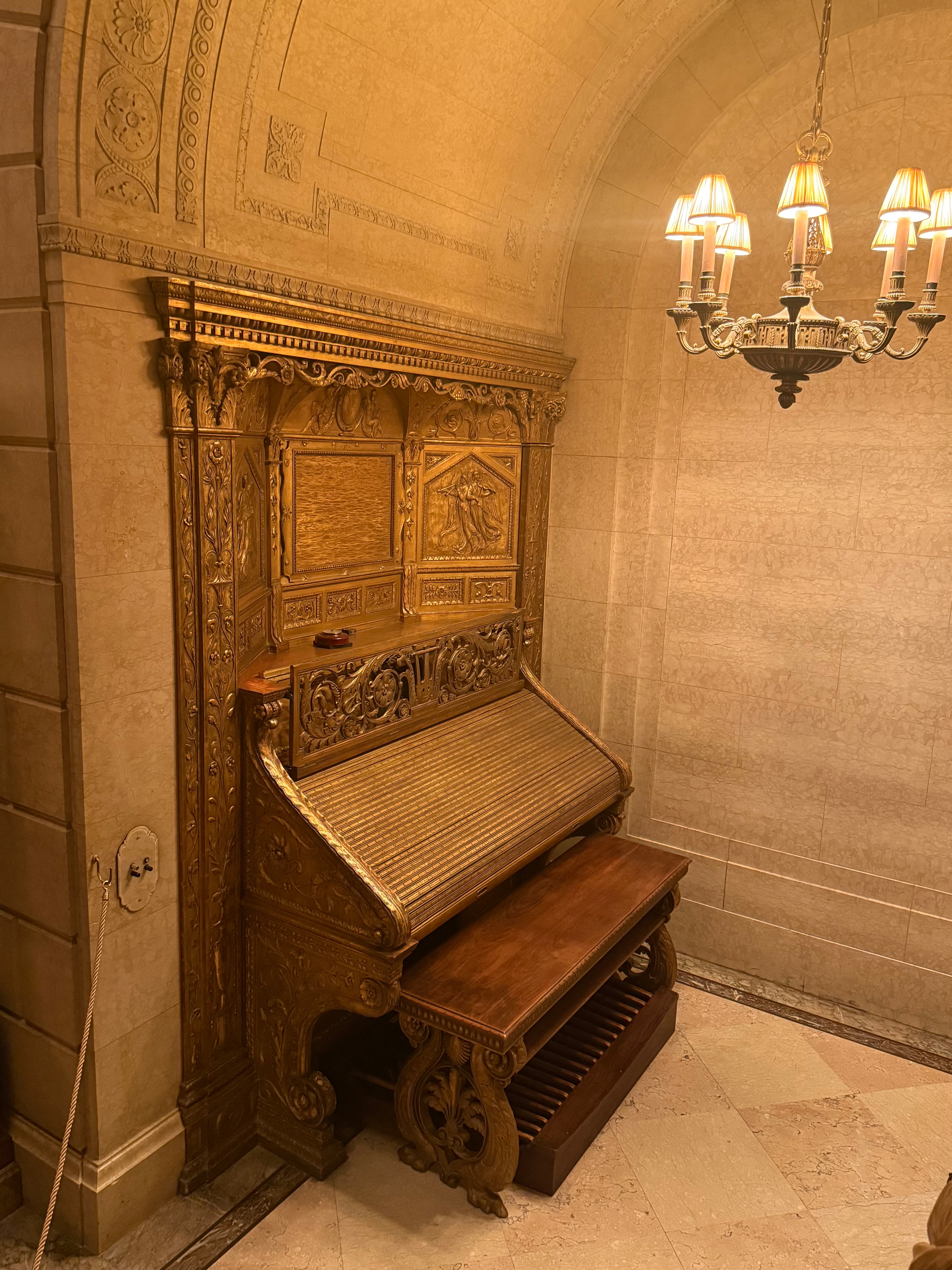
In the center of the mansion, the original grand staircase showcases the ornate organ installed.

The location of the Frick Collection right across from Central Park, means that views from the rooms often highlight stunning views of nature to complement the interior art. Seeing the Collection as spring trees extravagantly bloom made many views out of the windows rival that of the stunning art within.

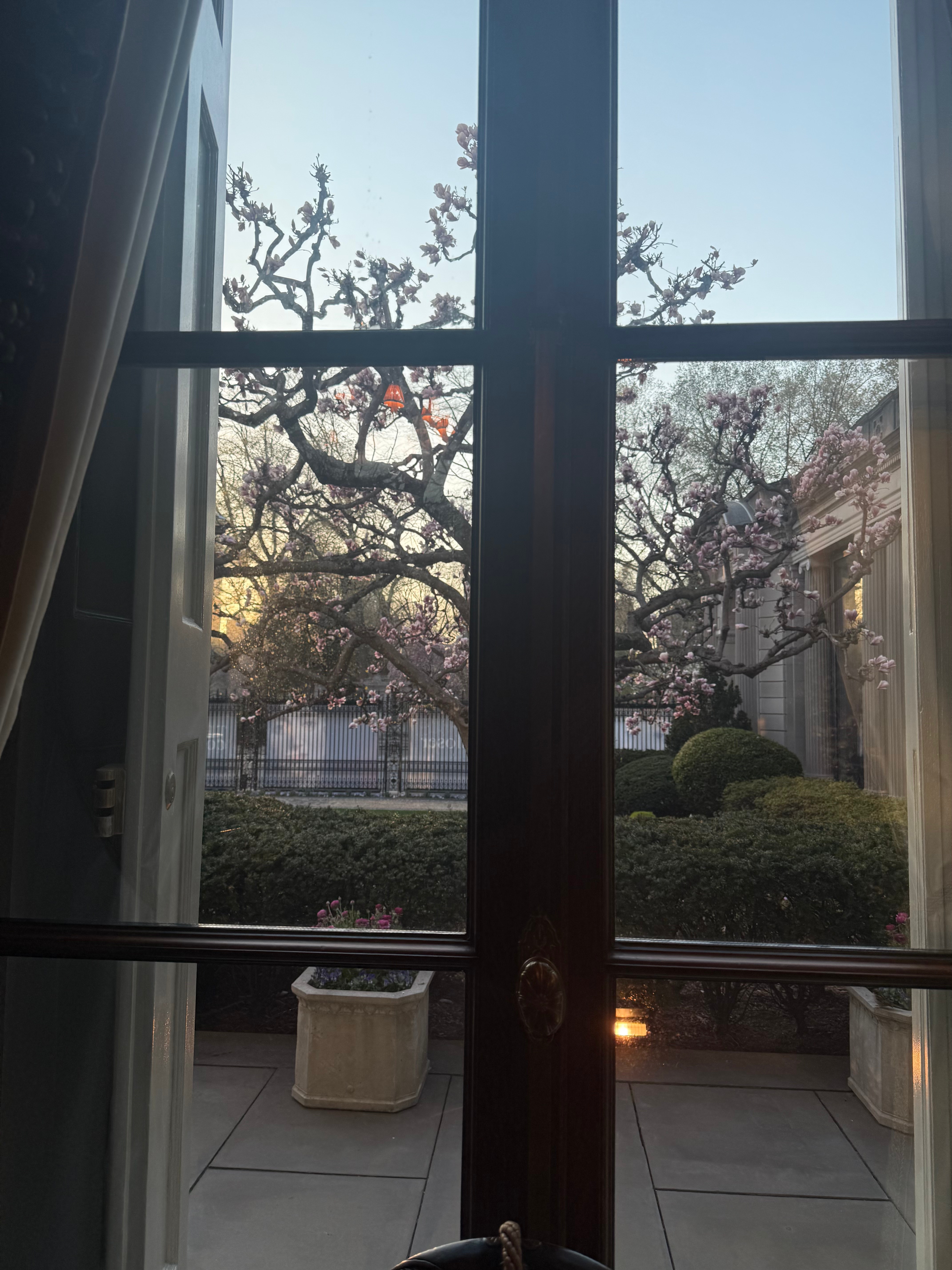
In the evening, I was fortunate enough to attend a member’s reception through the generosity of the same patron. It was much more crowded in the evening, so I preferred the morning experience overall. I was struck, however, with how the quality of the light at sunset changed the look of some rooms in the mansion. To truly appreciate the collection, I think it is important to come multiple times, and at different times of day, as this museum is a part of its urban environment, not insulated from it.

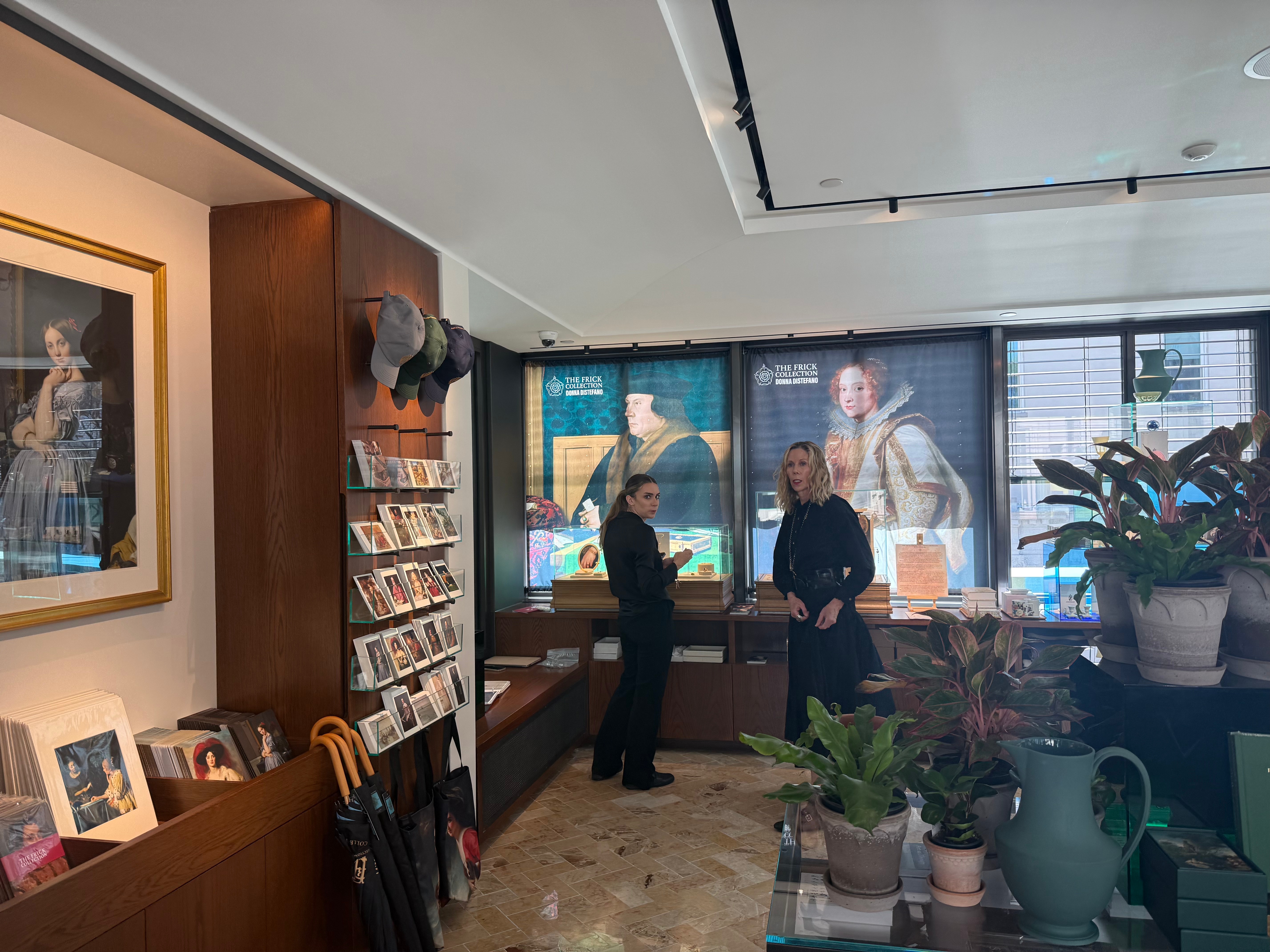
The new gift shop was tempting (see photos above).

To live in New York City is to enjoy almost an embarrassment of riches when it comes to experiencing art – visual art, music, theatre, and dance. The Frick Collection stands alone with its singular blend of the exceptional quality of the art itself, and the immersive environment enabling you to see this art within such splendid surroundings. Make a pilgrimage there when you can to feed your soul – and go back as often as you are able to see it change with the time of day and the seasons. Thanks to this renovation, the Frick Collection will be ready to welcome us for decades to come.

October happenings at Carl Schurz Park

The Yorkville neighborhood on the Upper East Side is a real hidden gem in Manhattan, and I have blogged about it often (Yorkville in the snow: A love letter, Goodbye to Glaser’s Bake Shop, the heart of Yorkville, Yorkville: From Lexington and 86th Street to the East River Promenade, for instance). The heart of this neighborhood is Carl Schurz Park, between East End Avenue and the East River, from 89th to 84th Street. The Carl Schurz Park Conservancy maintains and improves the park, and also holds special events throughout the year. In October, two extremely enjoyable (and entirely free!) events take over the park on two different Sundays: Harvest Festival, and the Halloween Howl. I went to both this year (2024), had a fantastic time, and took a lot of photos.

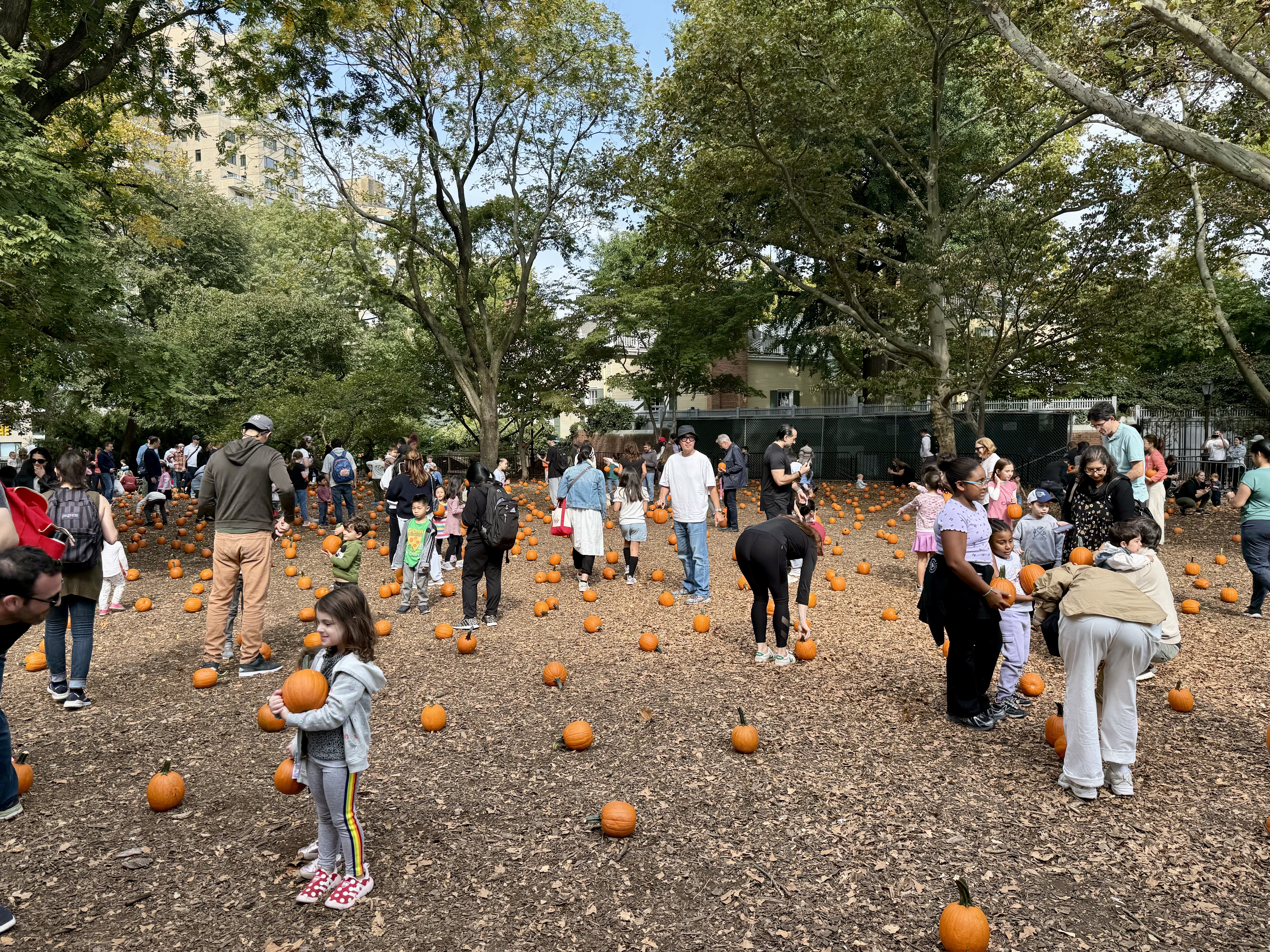
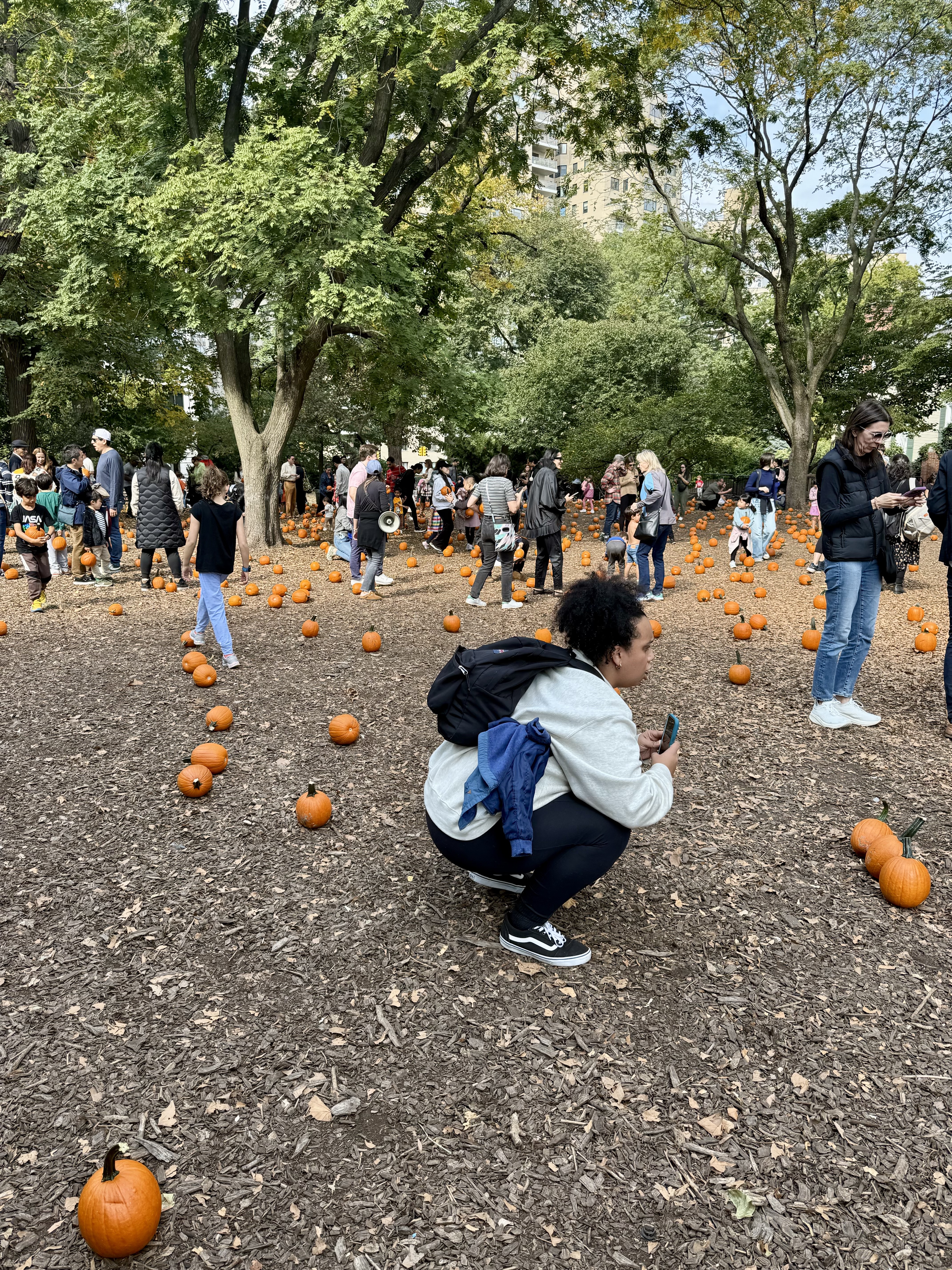
The highlight of the Harvest Festival is a gigantic pumpkin patch created on the lawn next to Gracie Mansion. Every child that attends can select a pumpkin and take it home at no cost.

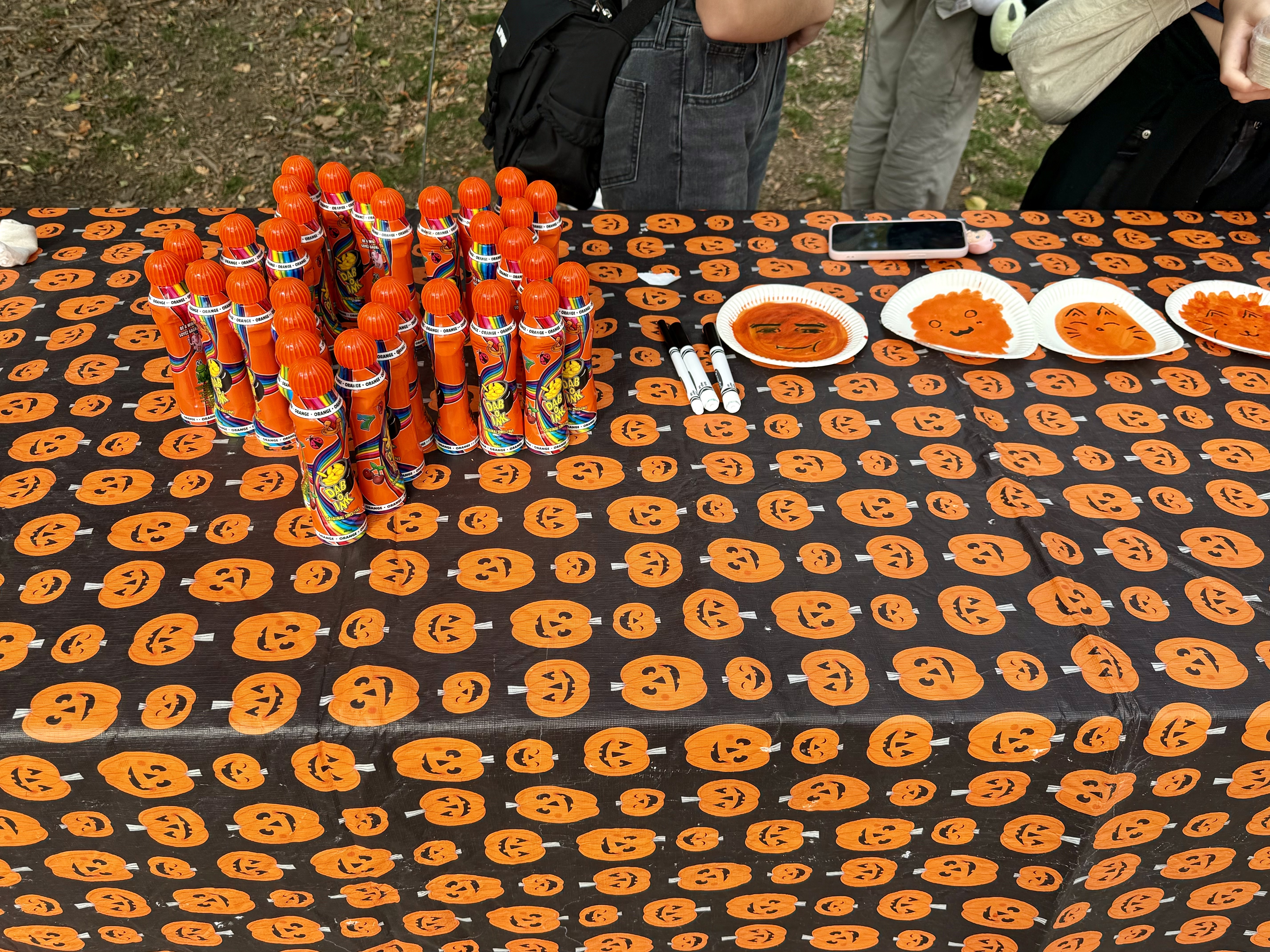
Surrounding the temporary pumpkin patch, multiple tables are set up with various ways for children to decorate their pumpkin once they select it.

When the ropes are dropped (this year, at 1PM), there is a bit of enjoyable chaos and mayhem, but even toddlers seemed to be able to go in and select a pumpkin without being trampled by larger kids.

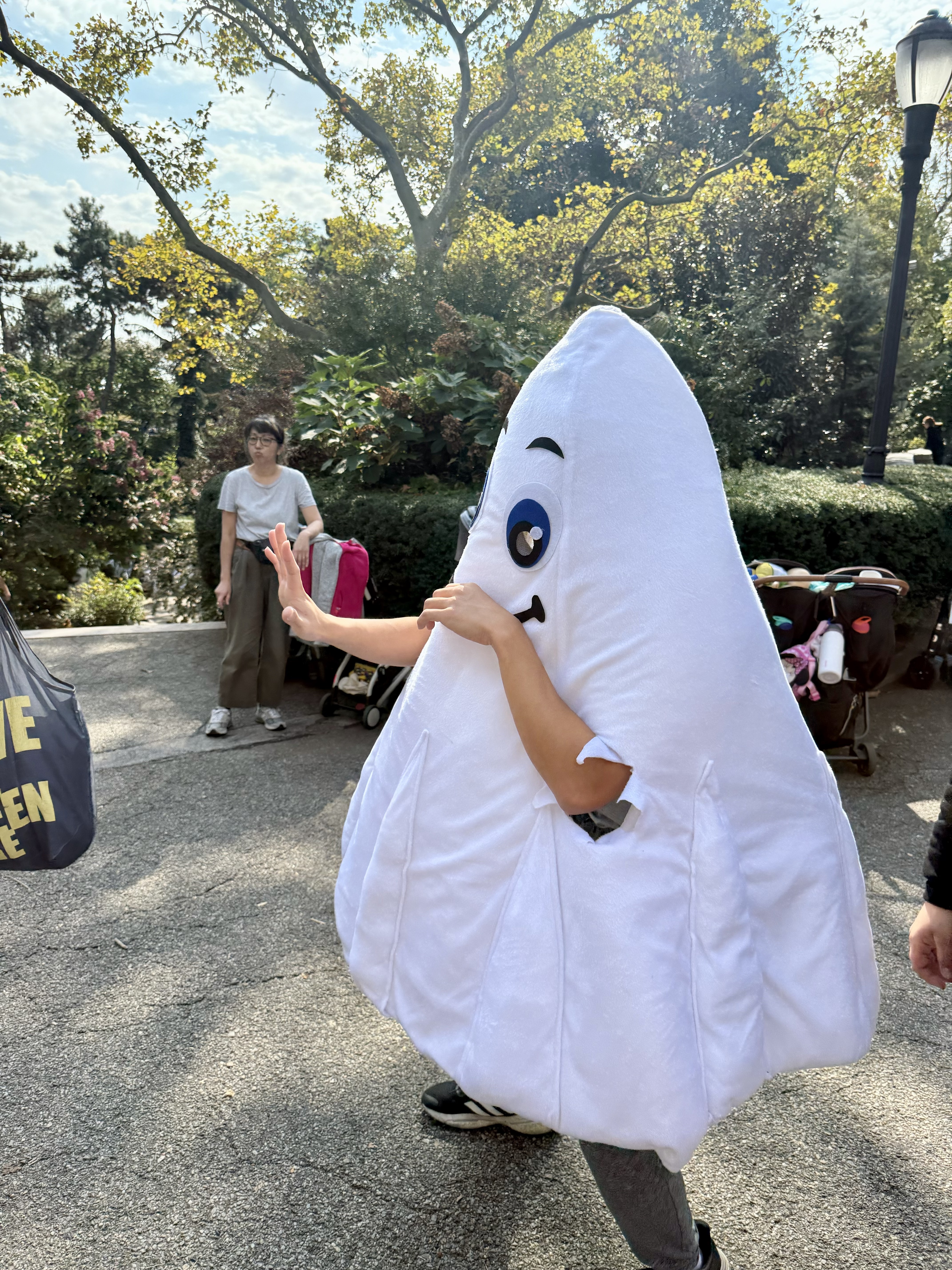
Near the pumpkin patch and decorating tables, there were friendly costumed characters and live music (Nice Brass, see a short video of them playing at the event here).

A really nice touch is that the scarier decorations are all located in a nearby area but one that you can’t see unless you choose to go there – perfect for those with young or easily frightened children (or adults, for that matter!). For my video montage of the entire event, see my Instagram reel here.

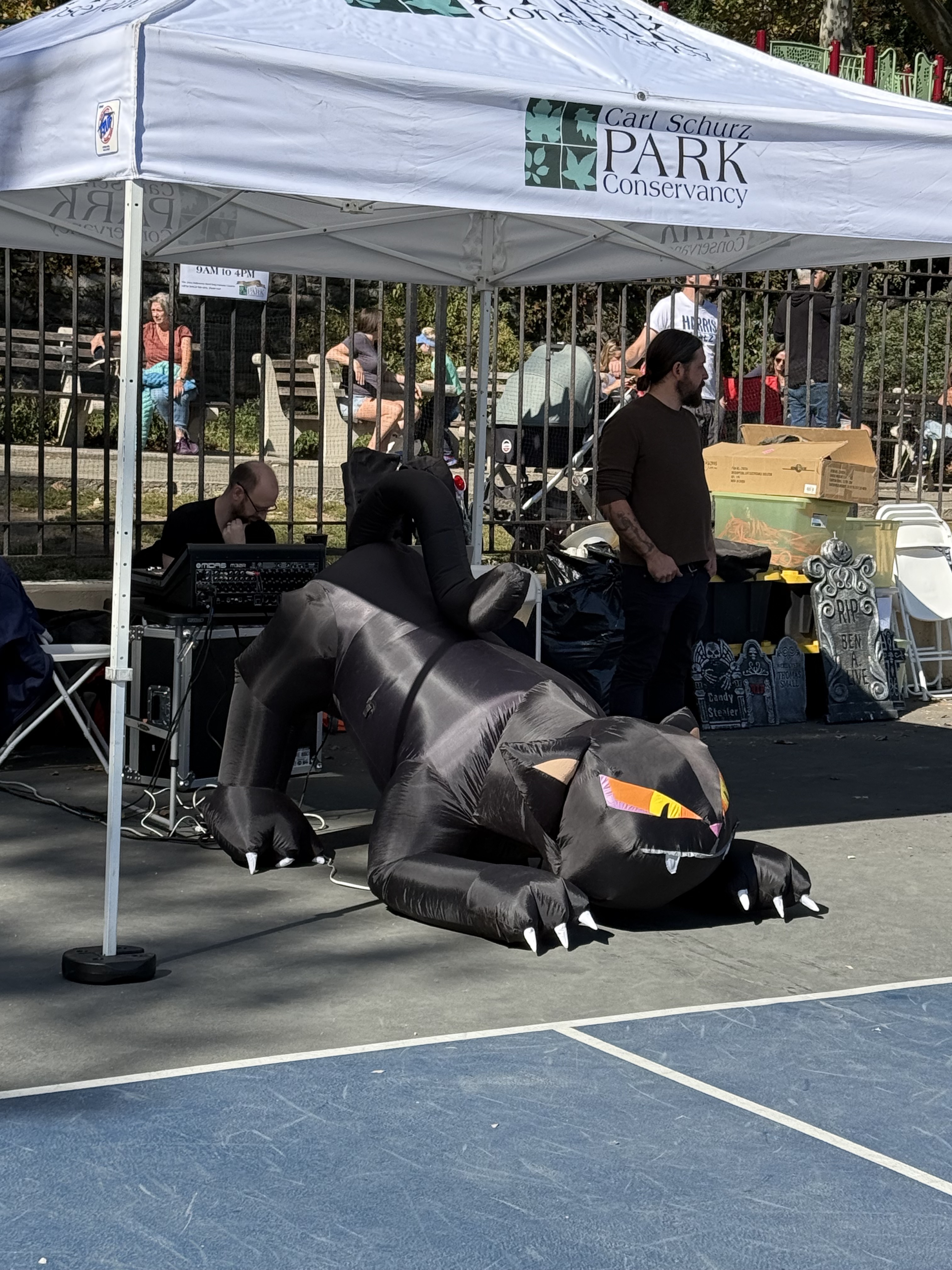
The following Sunday, Carl Schurz Park hosted the Halloween Howl.

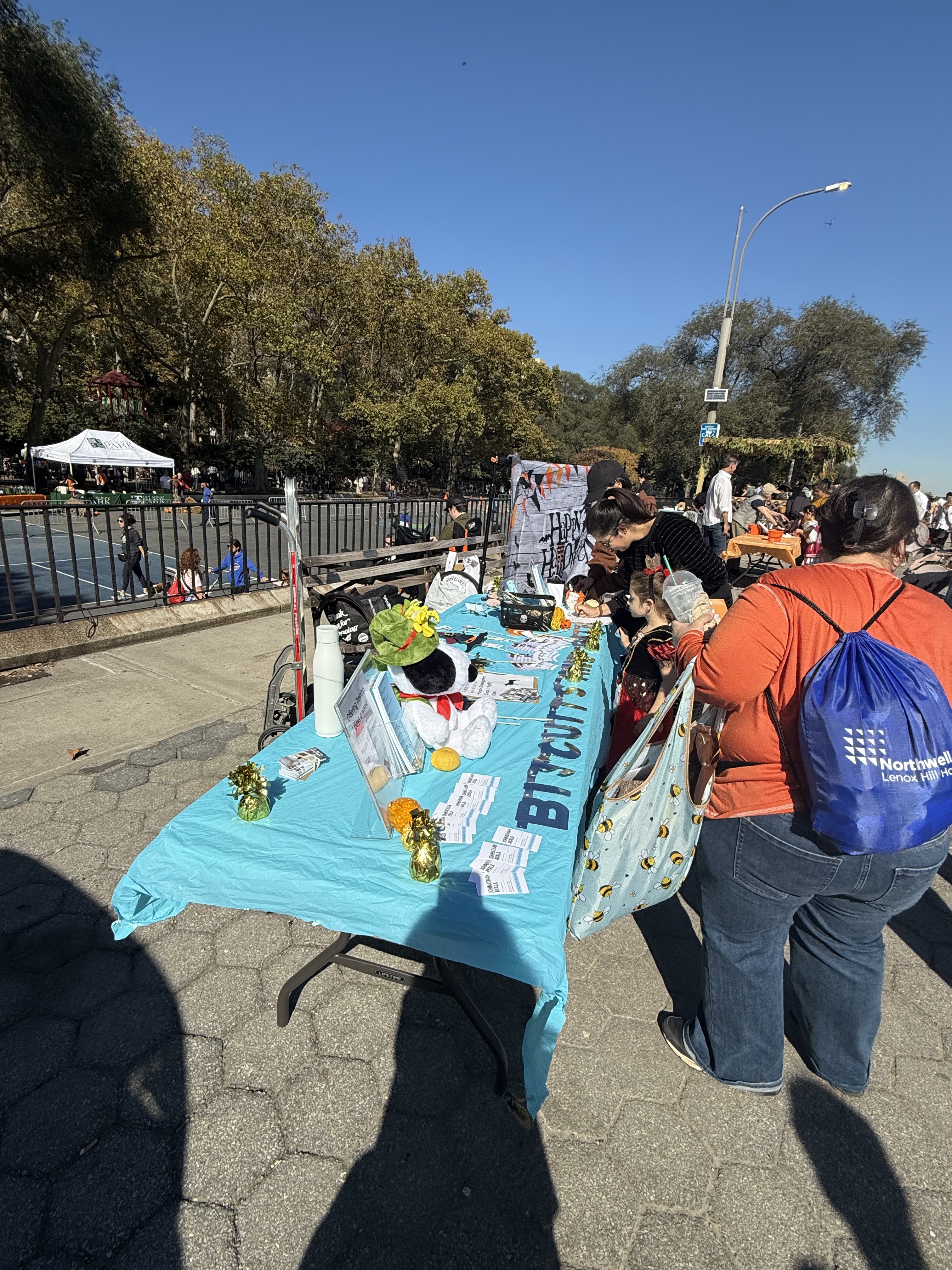
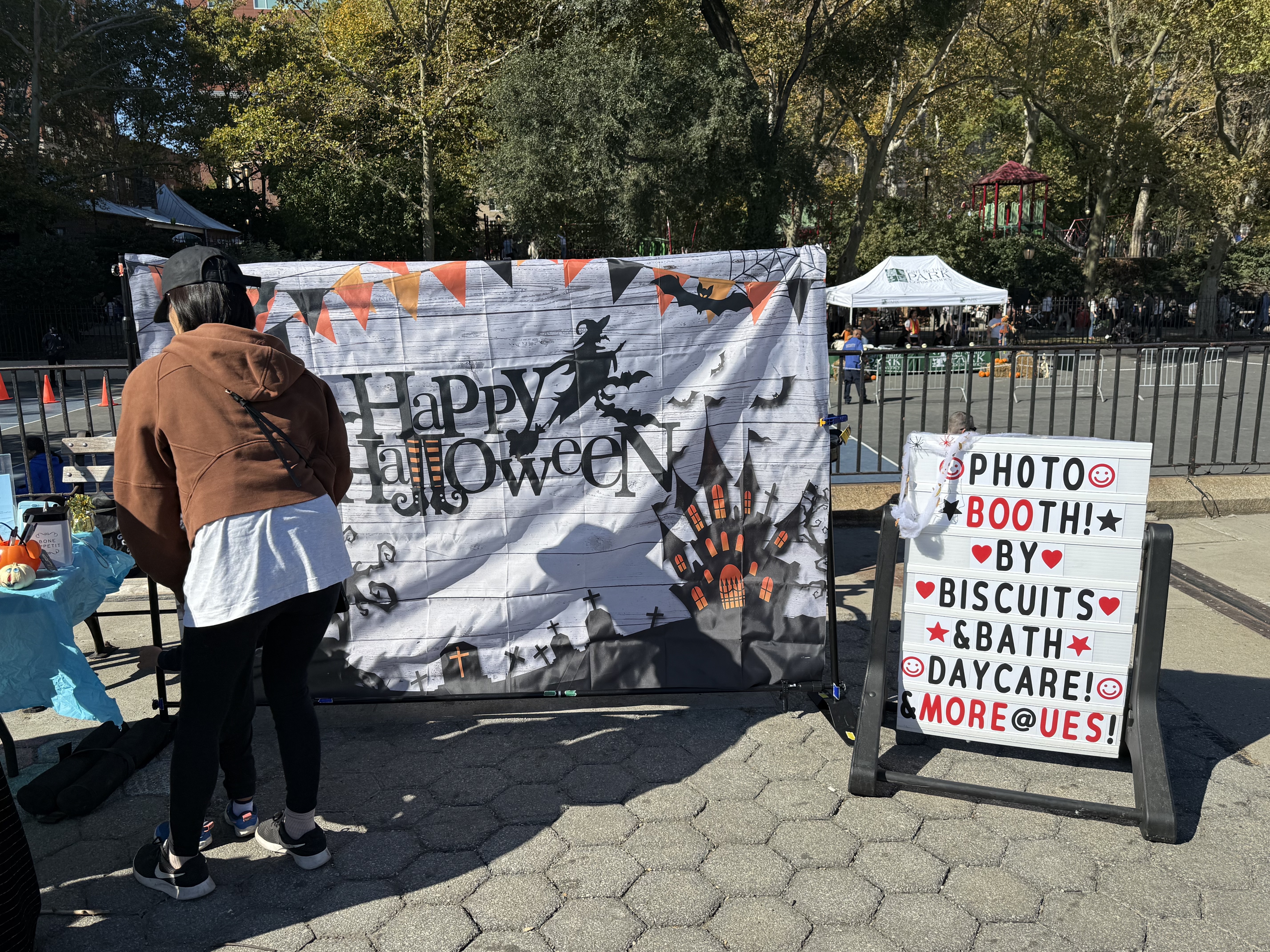
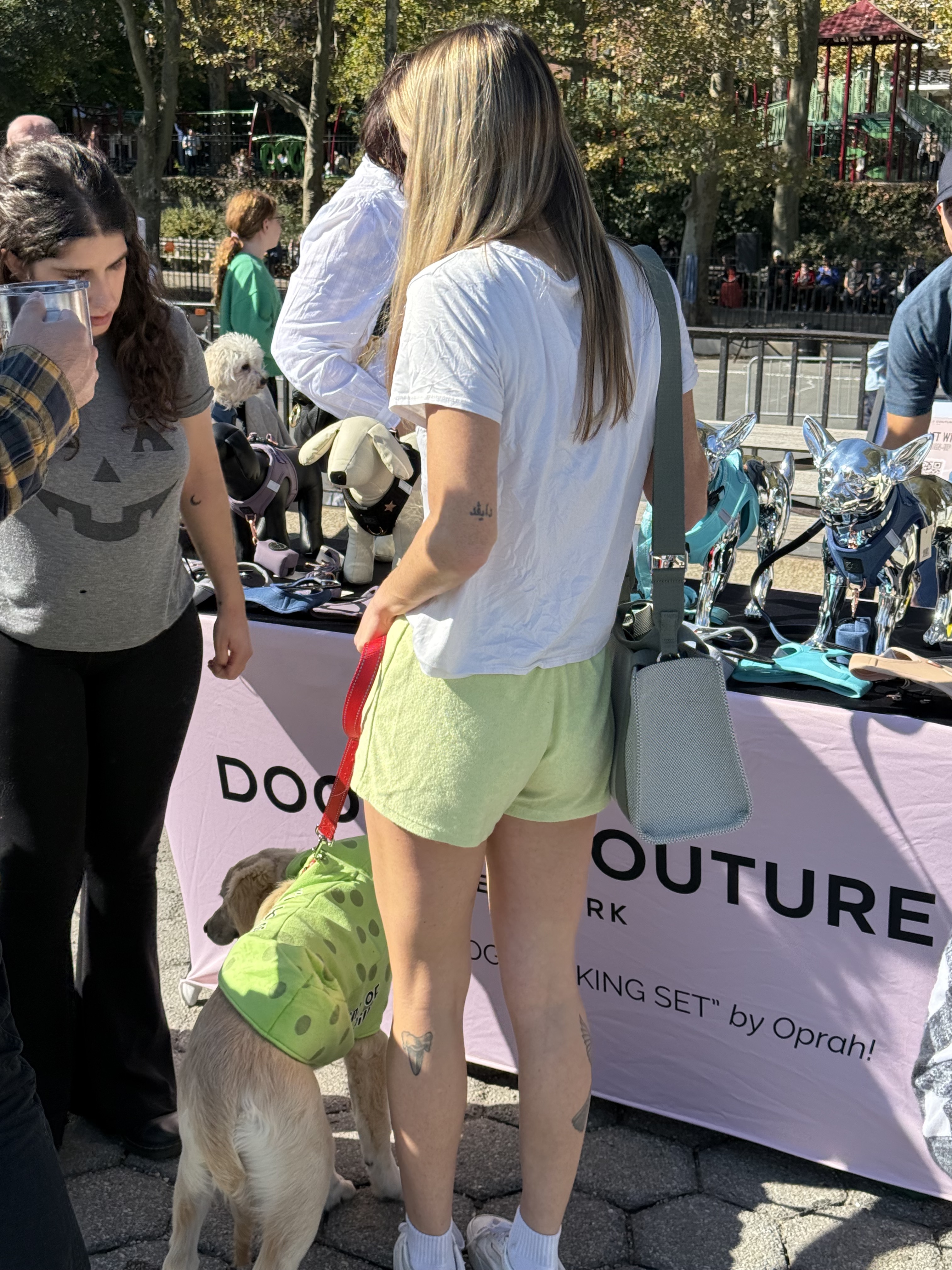
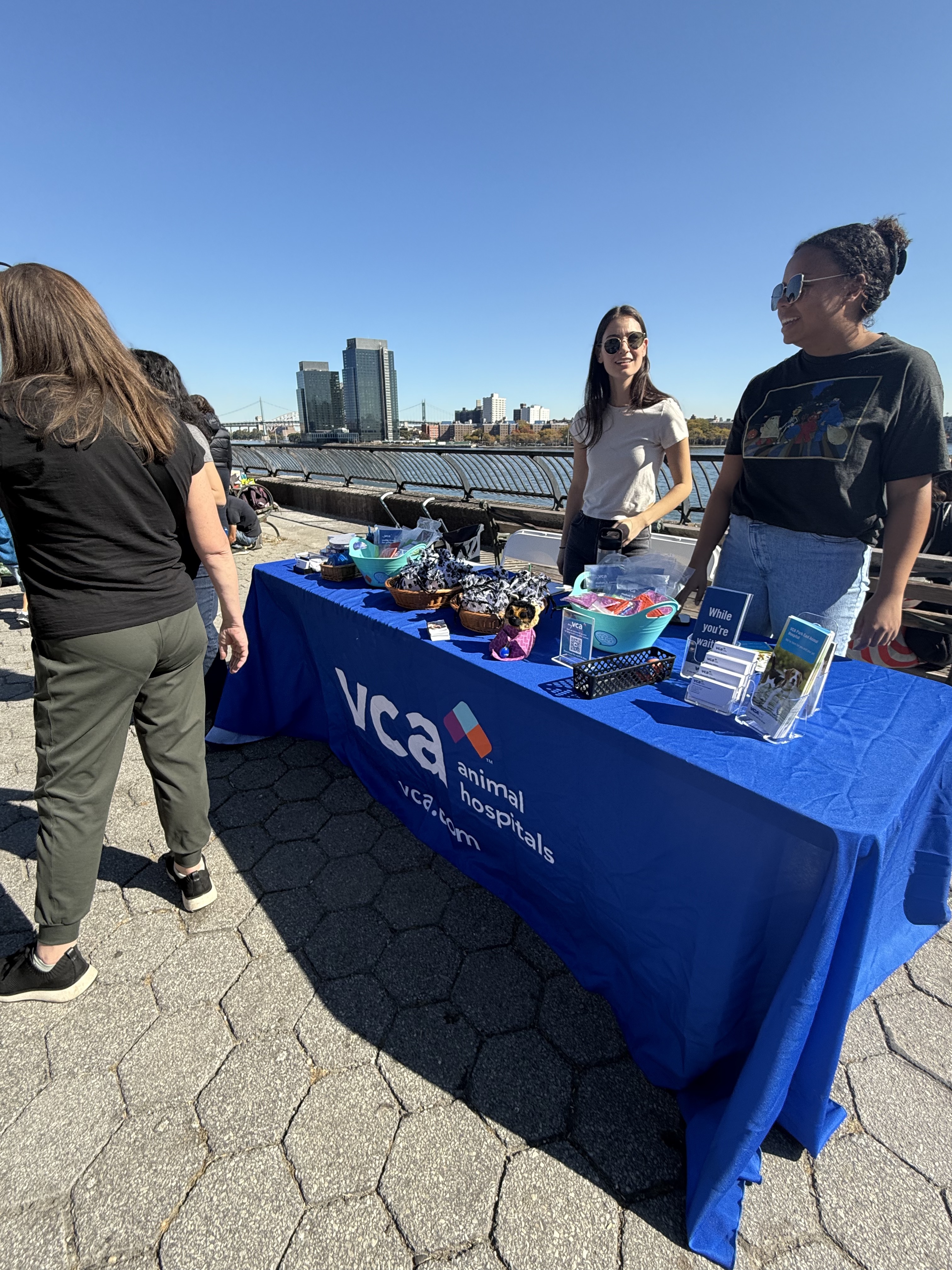
The Healthy Hound Vendor Fair started at 11AM, and was set up all along John Finley Walk next to the East River.

Text

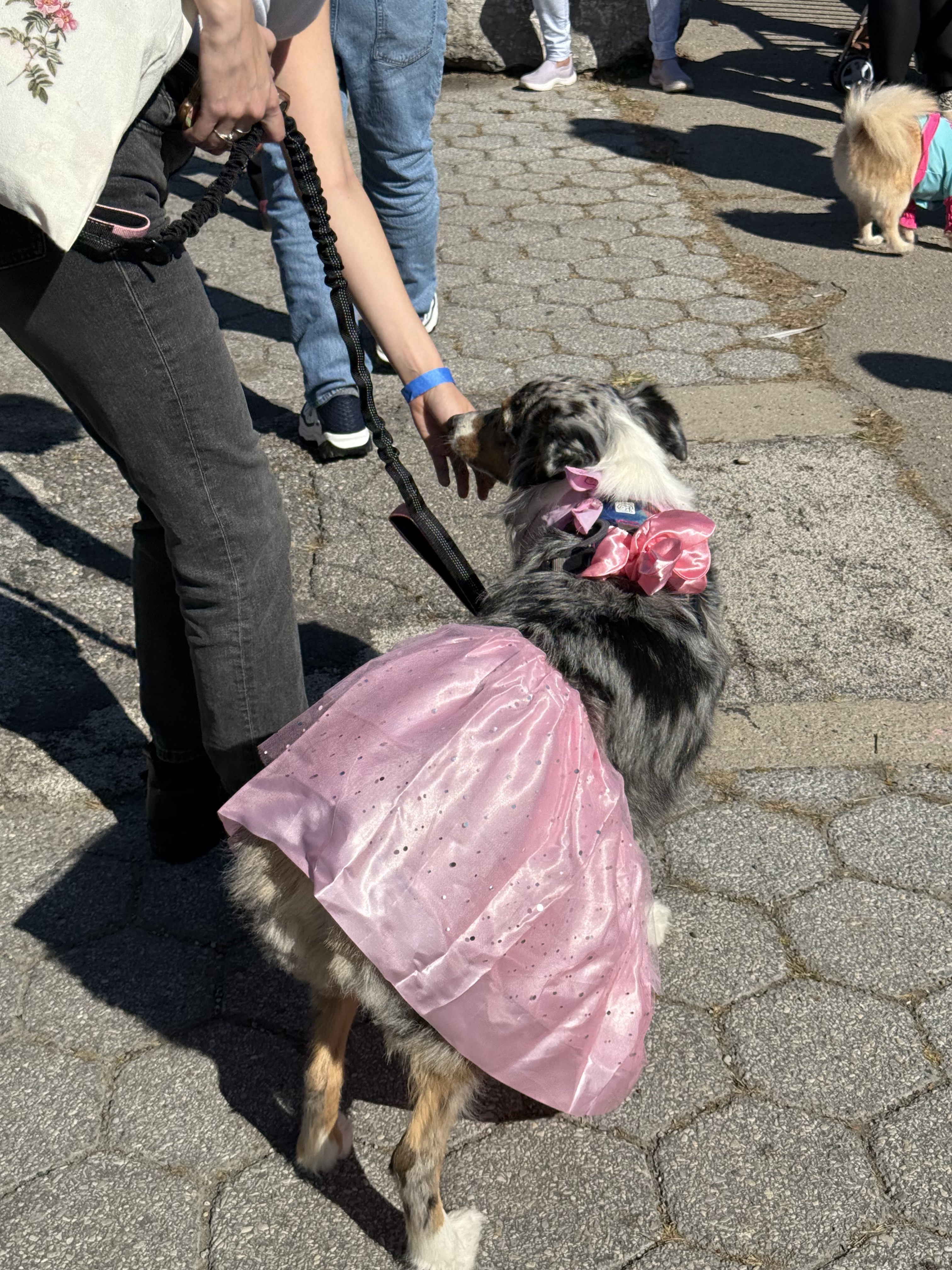
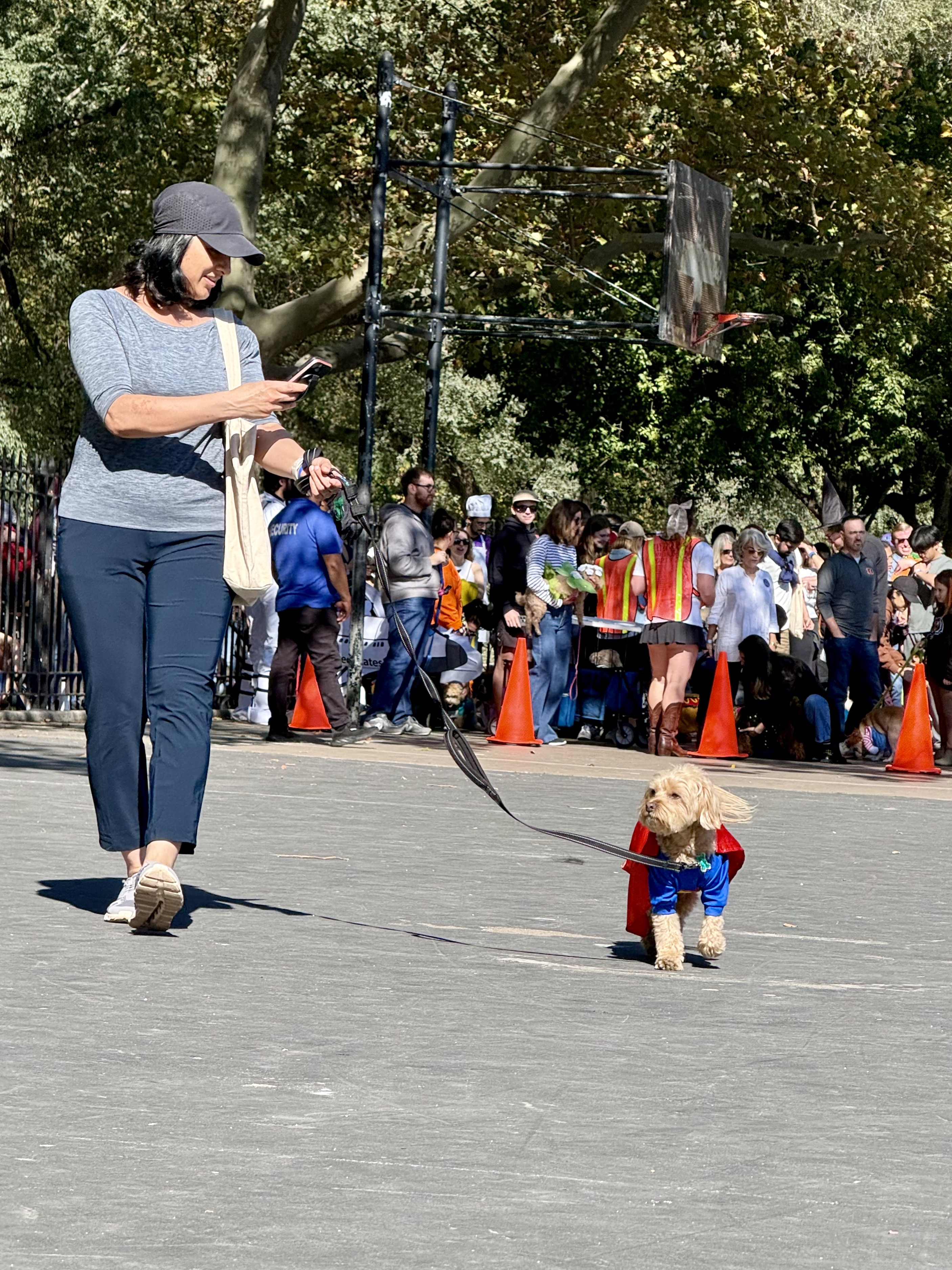
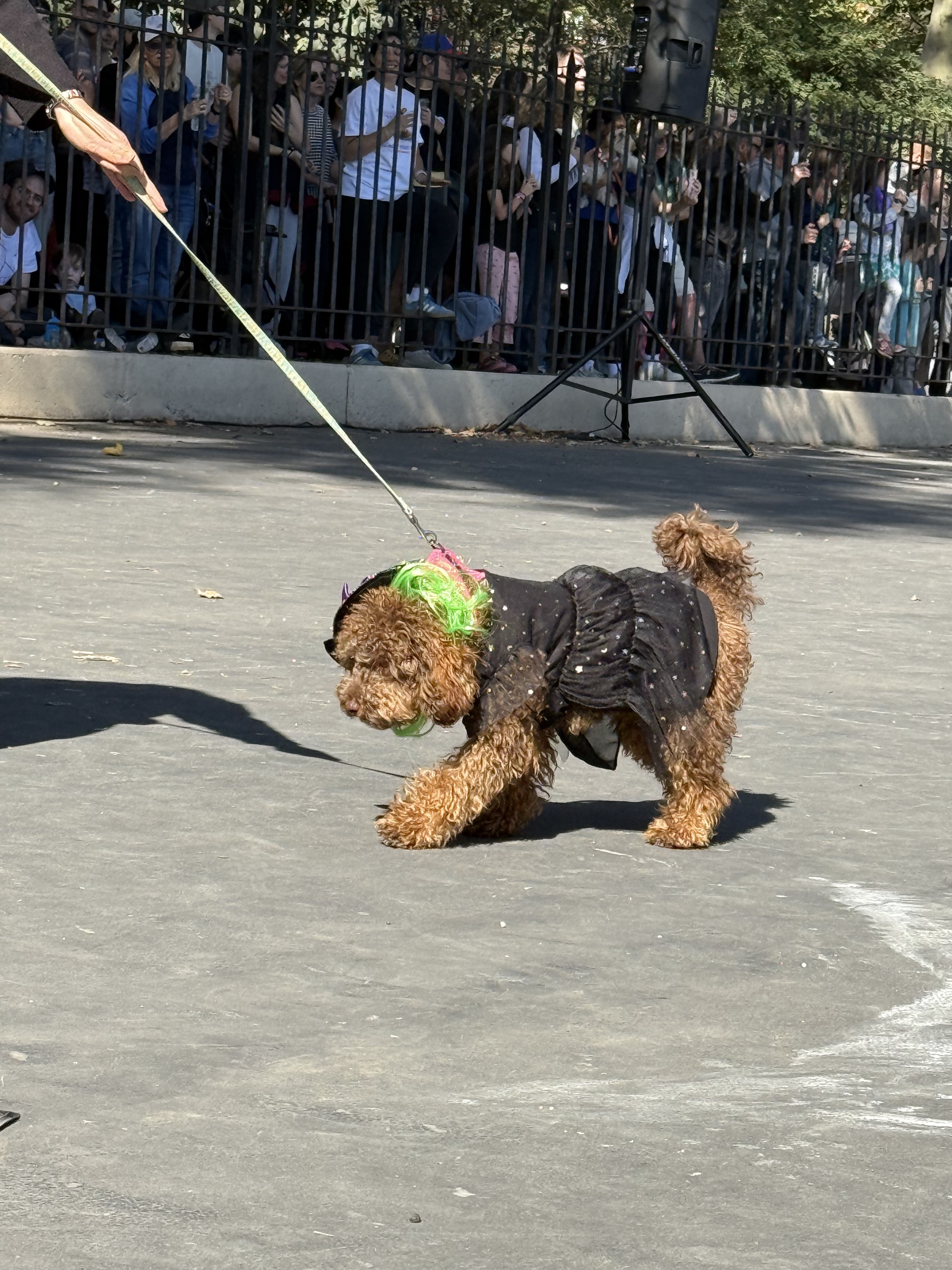
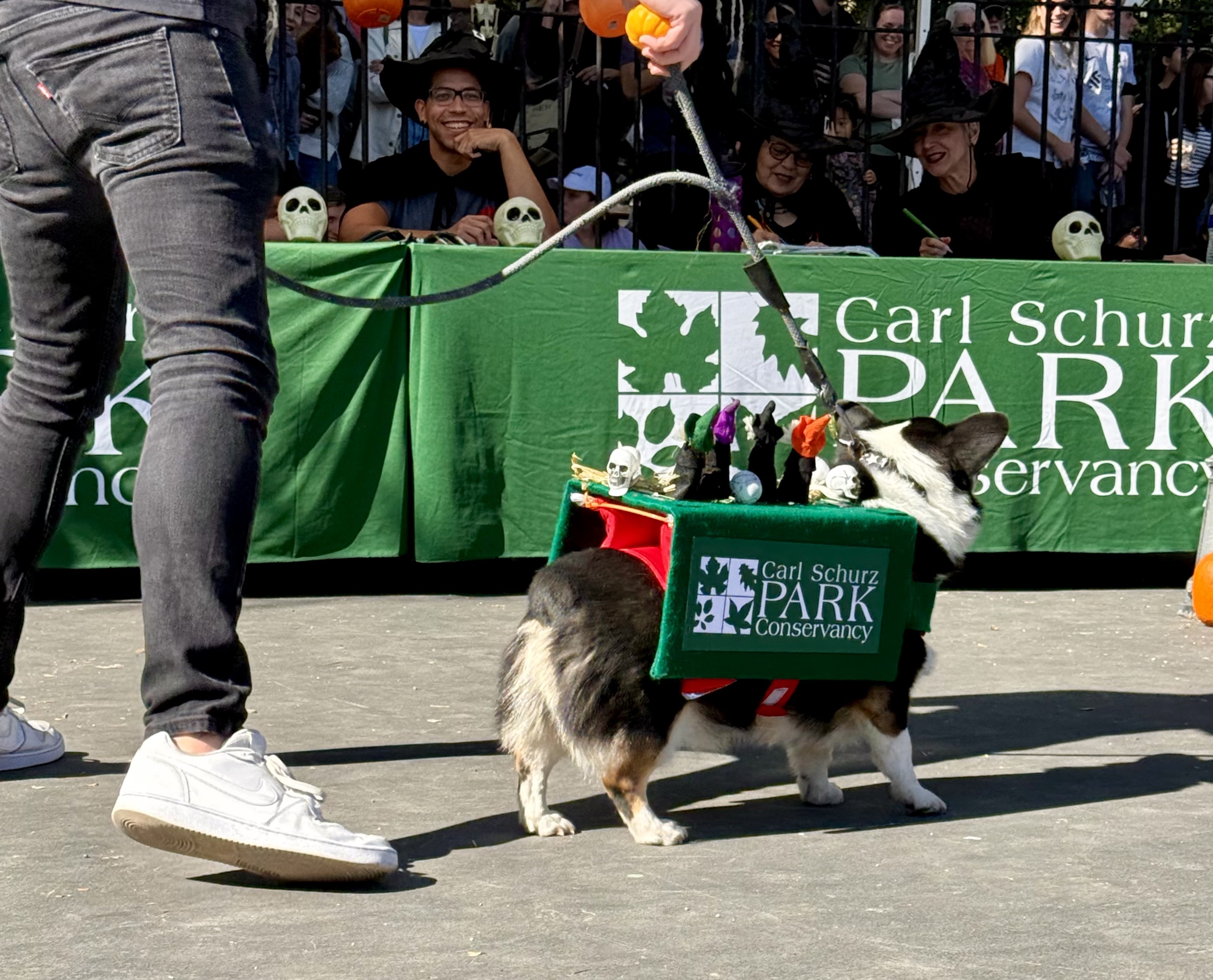
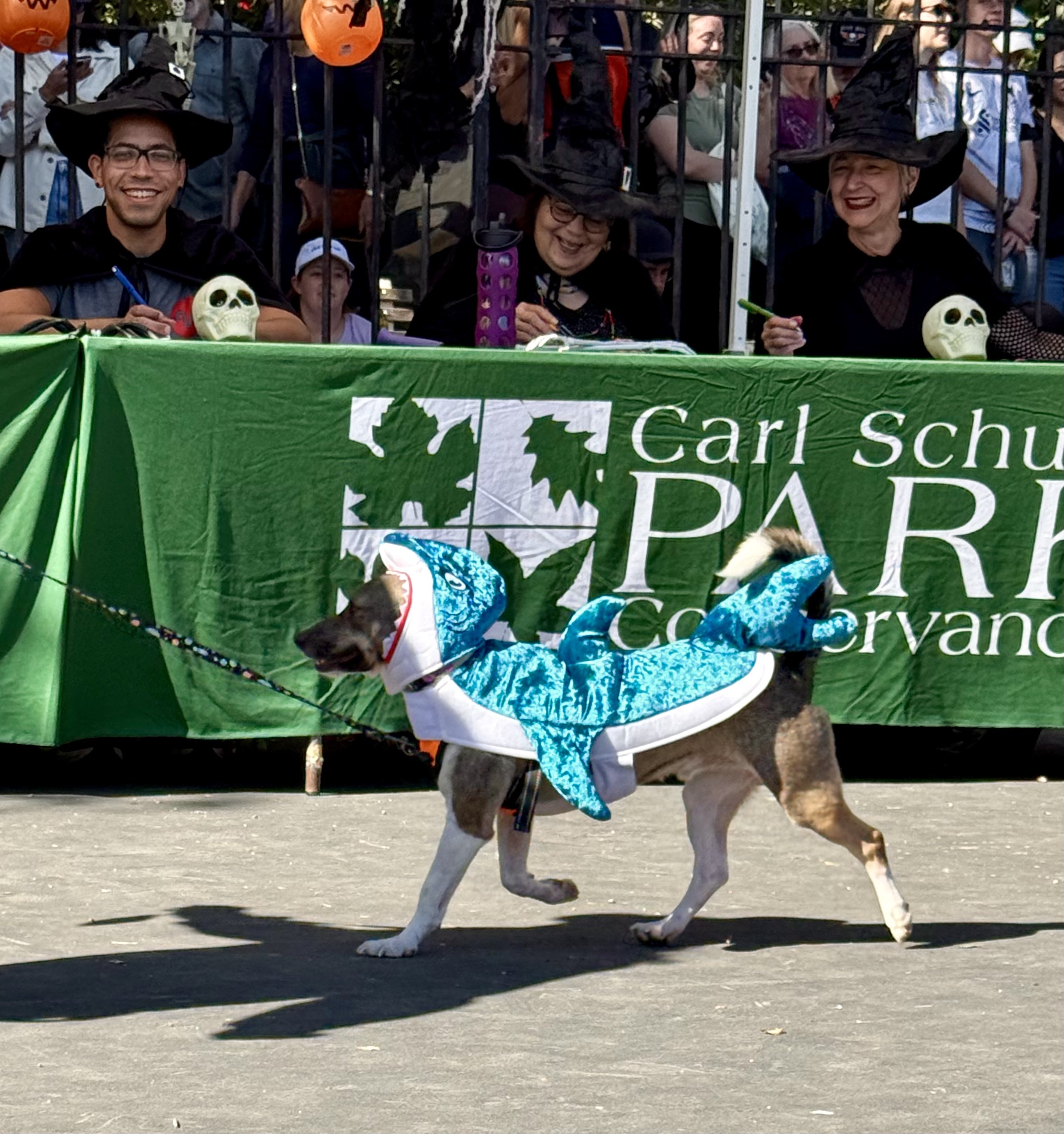
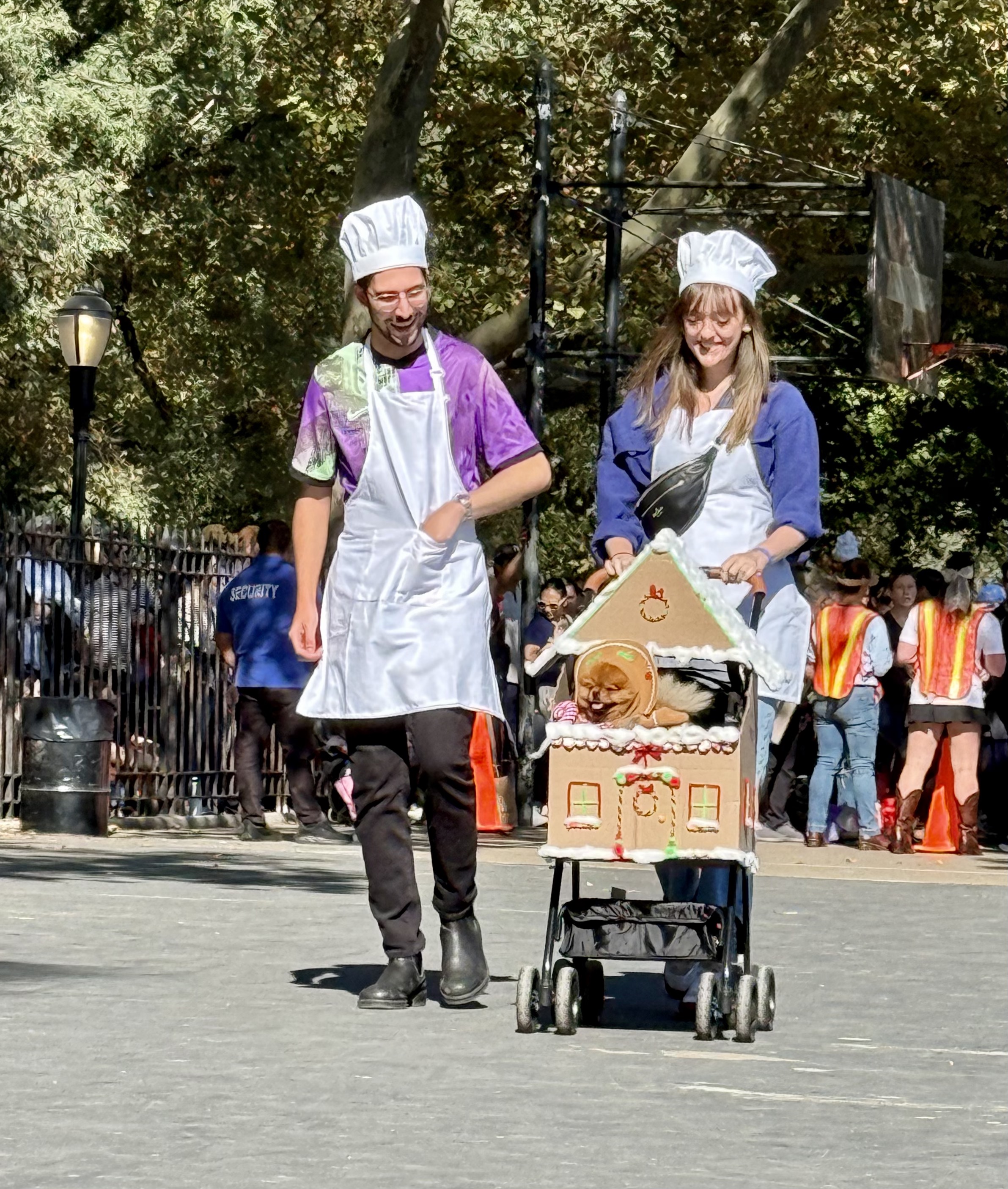
The canine Halloween costume contest was set up In the basketball court, and began at 1PM.

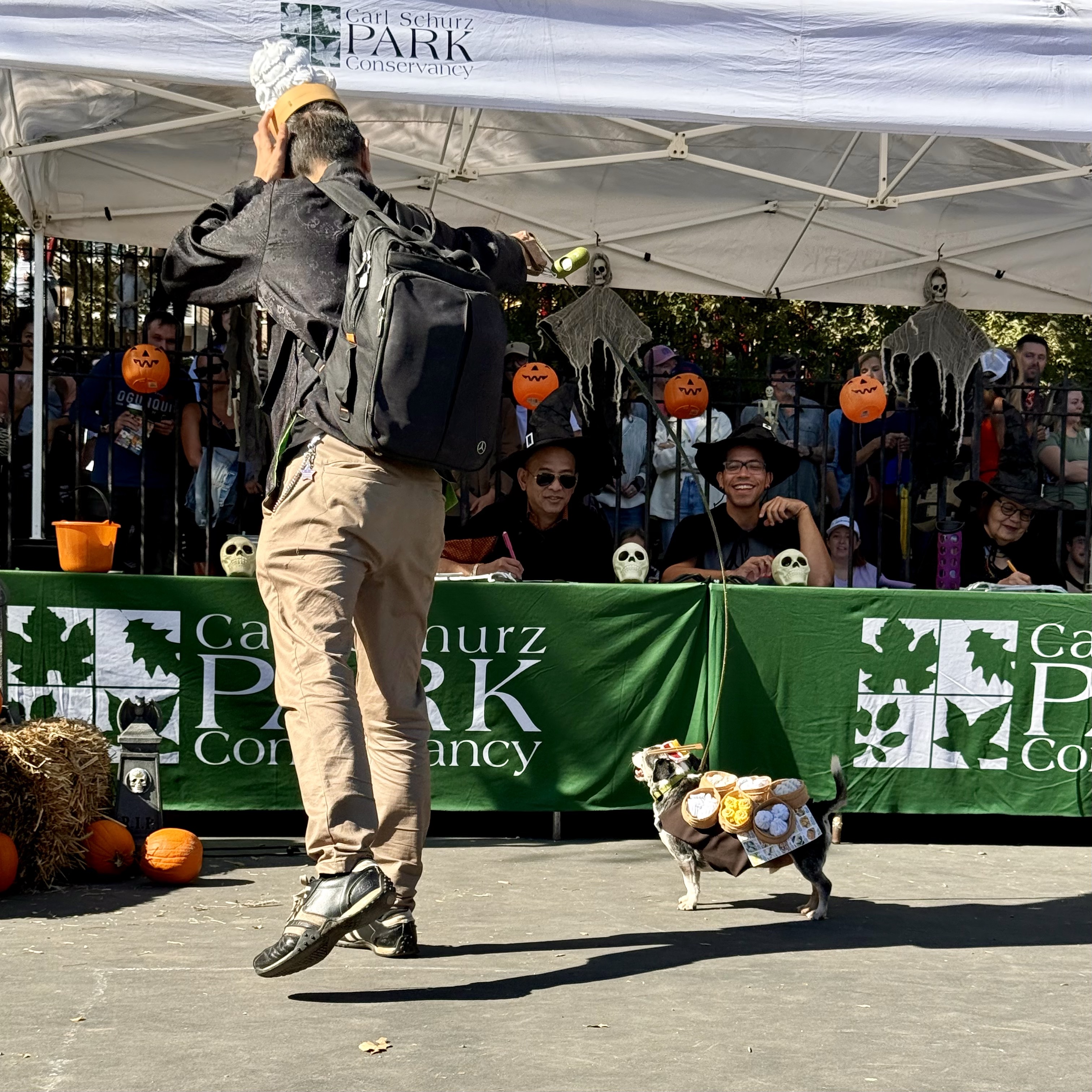
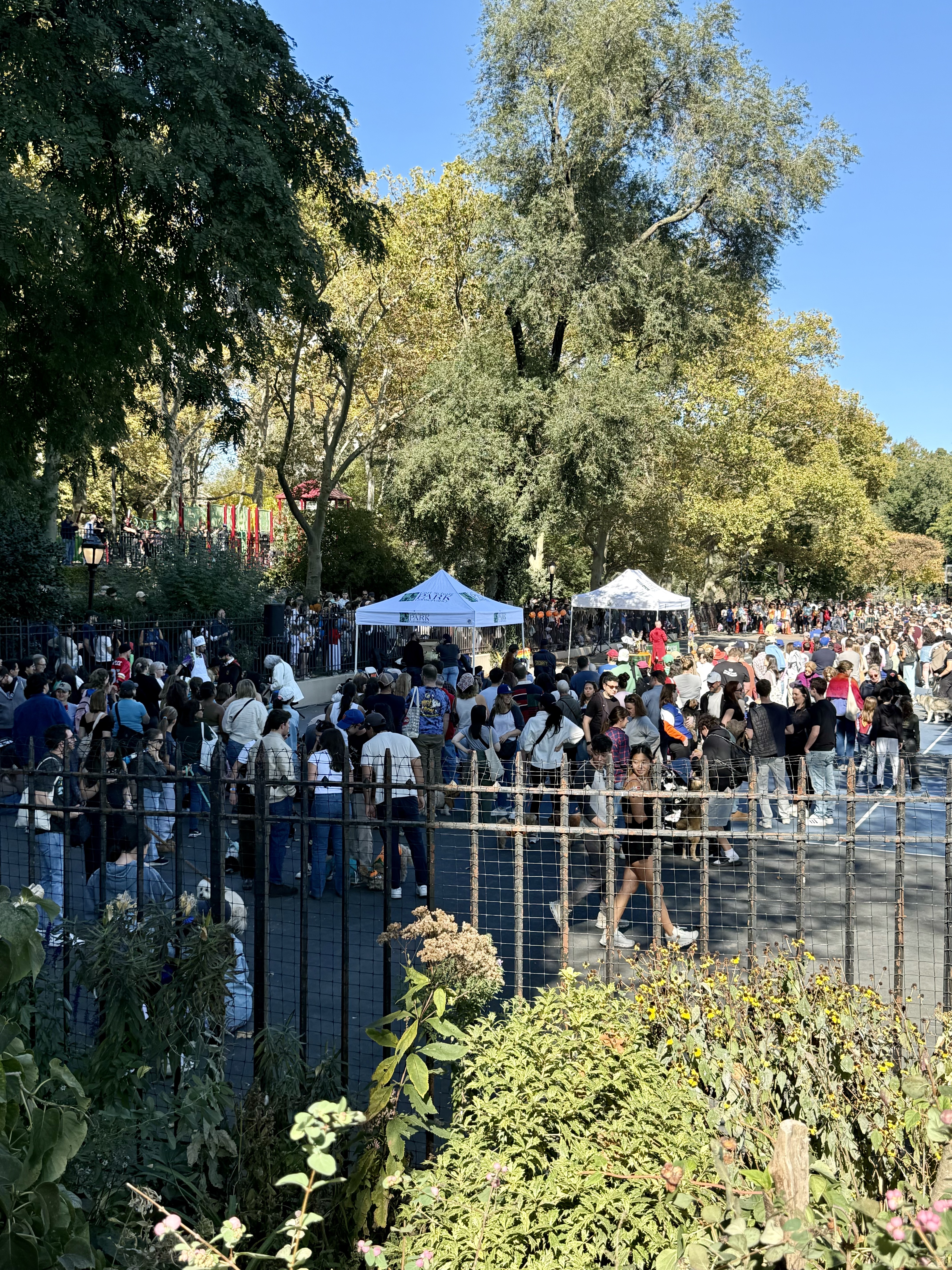
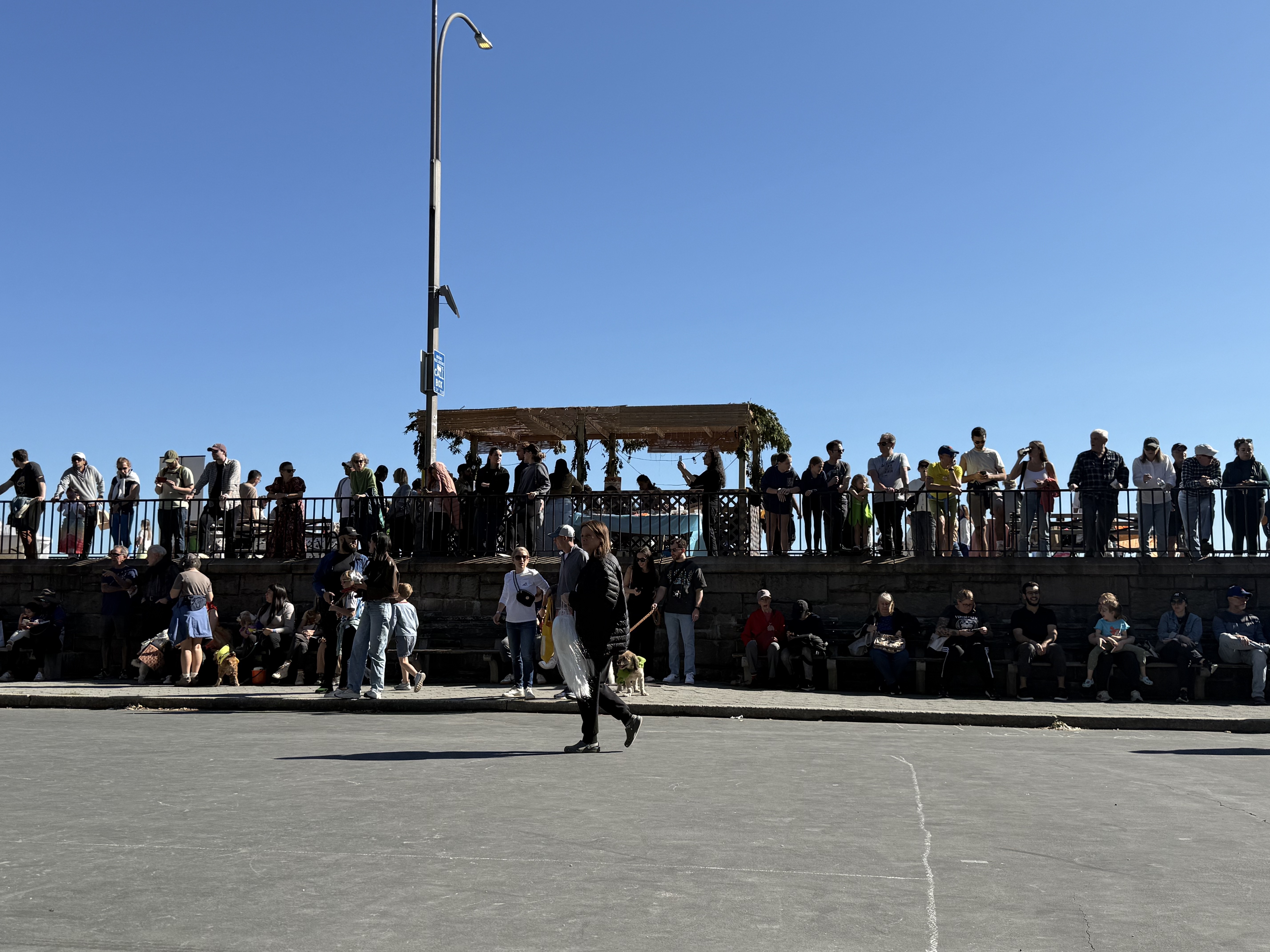
There were four categories: for small dogs, large dogs, children with their dogs, and groups. Judges were business owners from the Yorkville area, and spectators crowded all around the perimeter of the contest. You can see the video I made of the Halloween Howl here.

There are other events in Carl Schurz Park during the year – opportunities to help with planting, movies under the stars during the summer, a tree lighting in December – and these two October extravaganzas were delightful. But I would recommend visiting this little jewel of a park any time of the year. Hang out and watch the dogs play in either the big dog run or the little dog run. Stroll along the Promenade next to the East River and watch barges or even sailboats go past. You can continue south and connect eventually to the East Midtown Greenway. There’s a wonderful playground for little kids. I love Central Park, of course, but it’s not the only show in town! Check out Carl Schurz Park and let me know what you think.

The Upper East Side of Manhattan in October

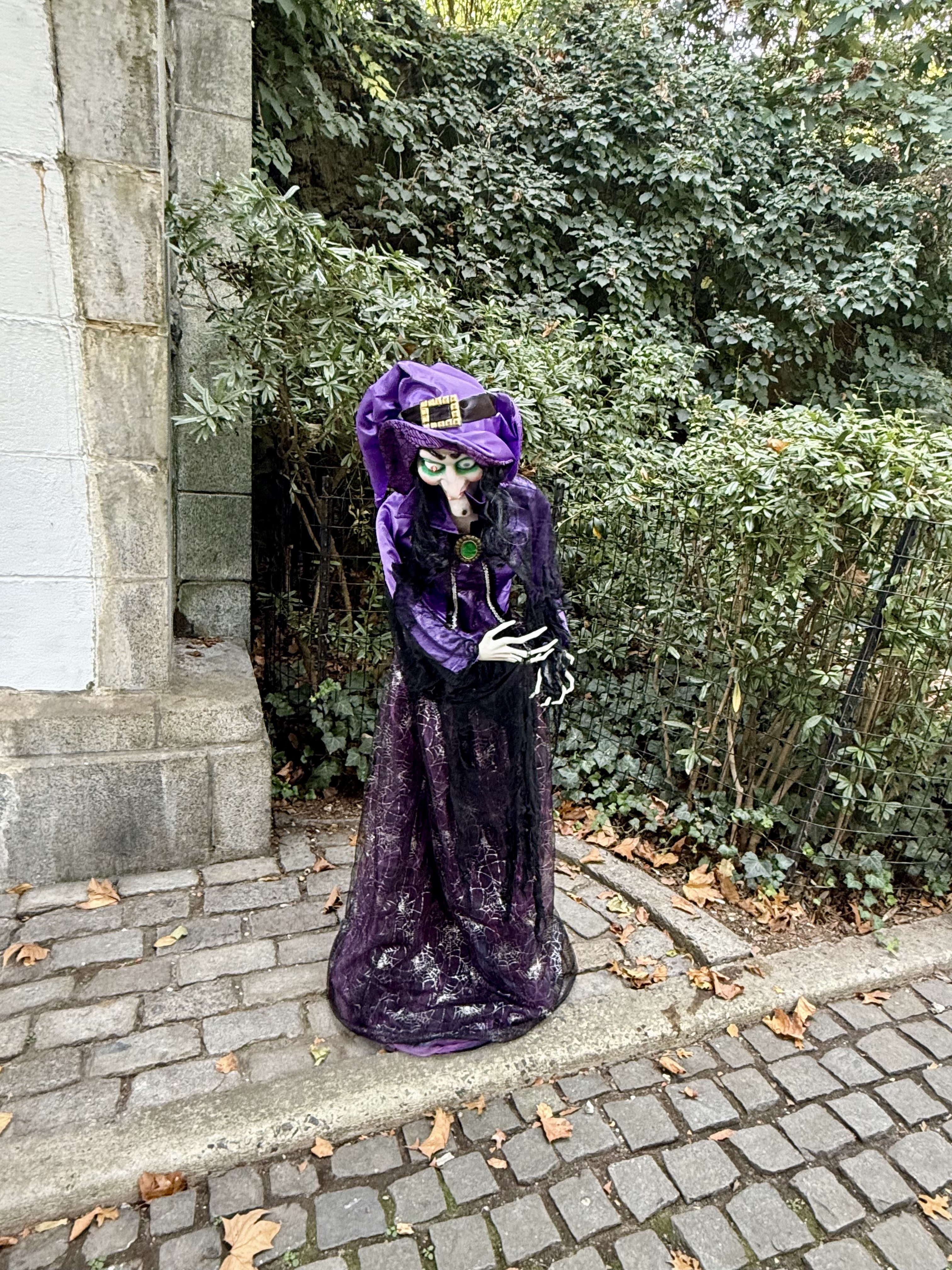
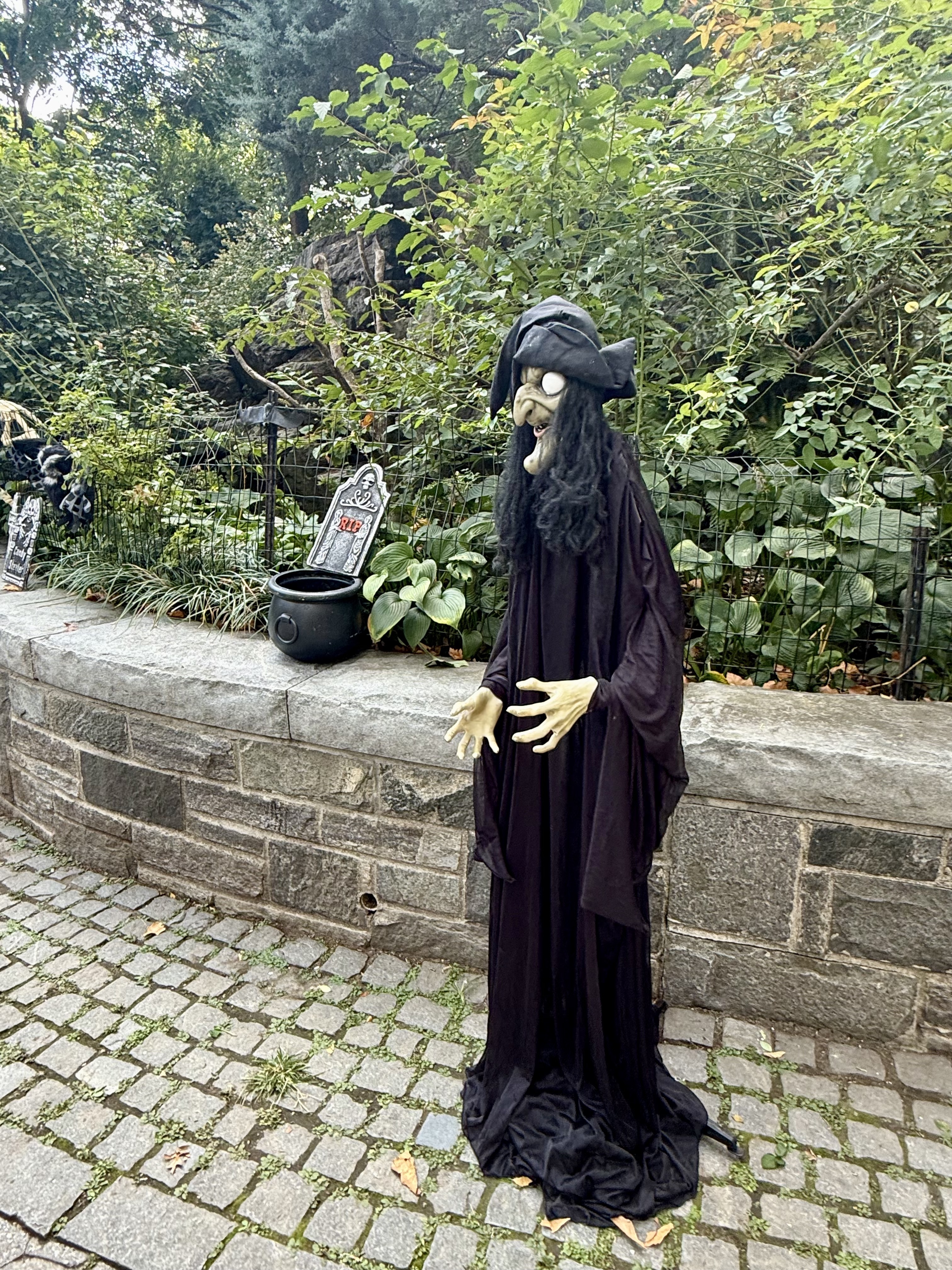
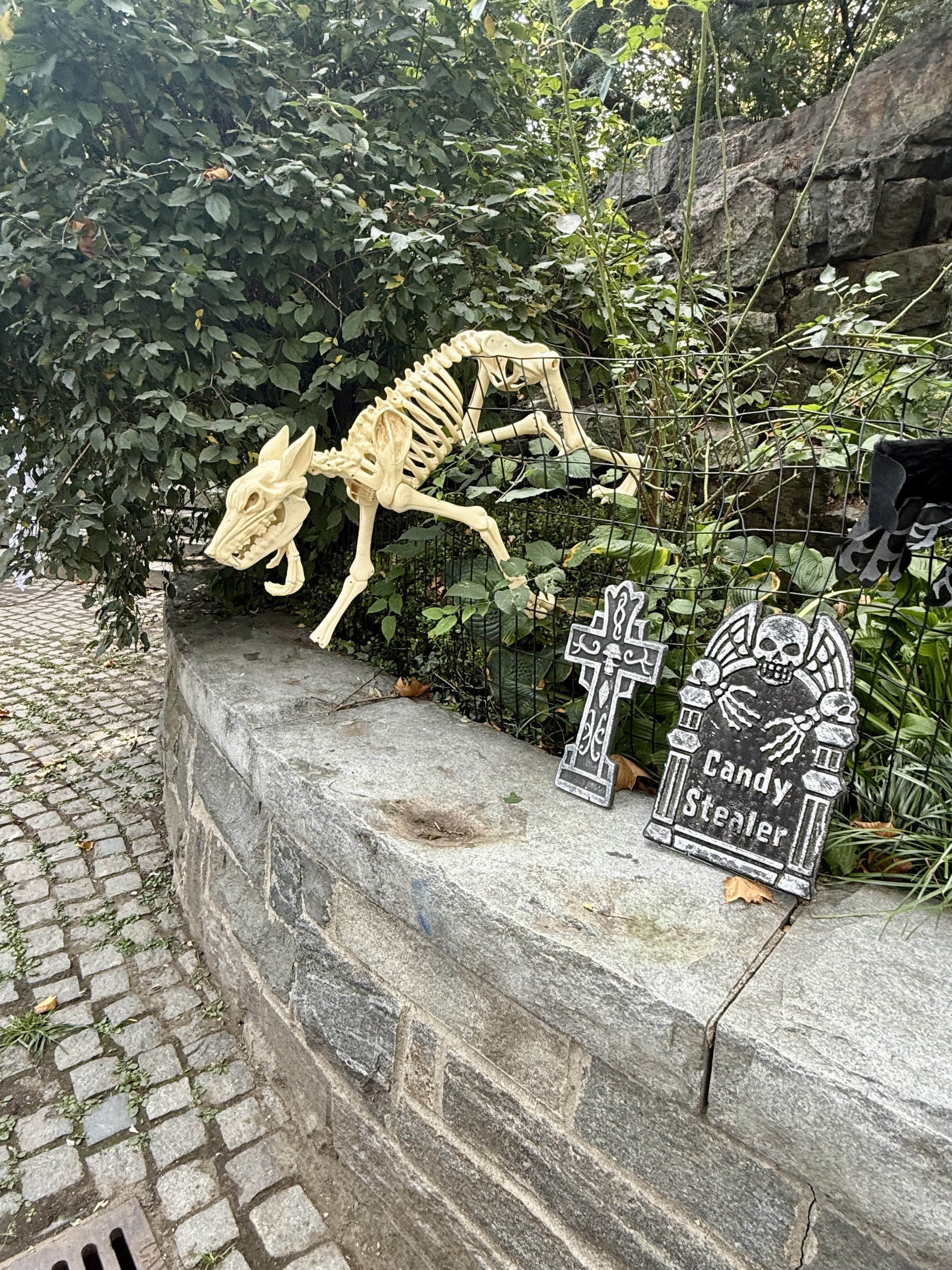
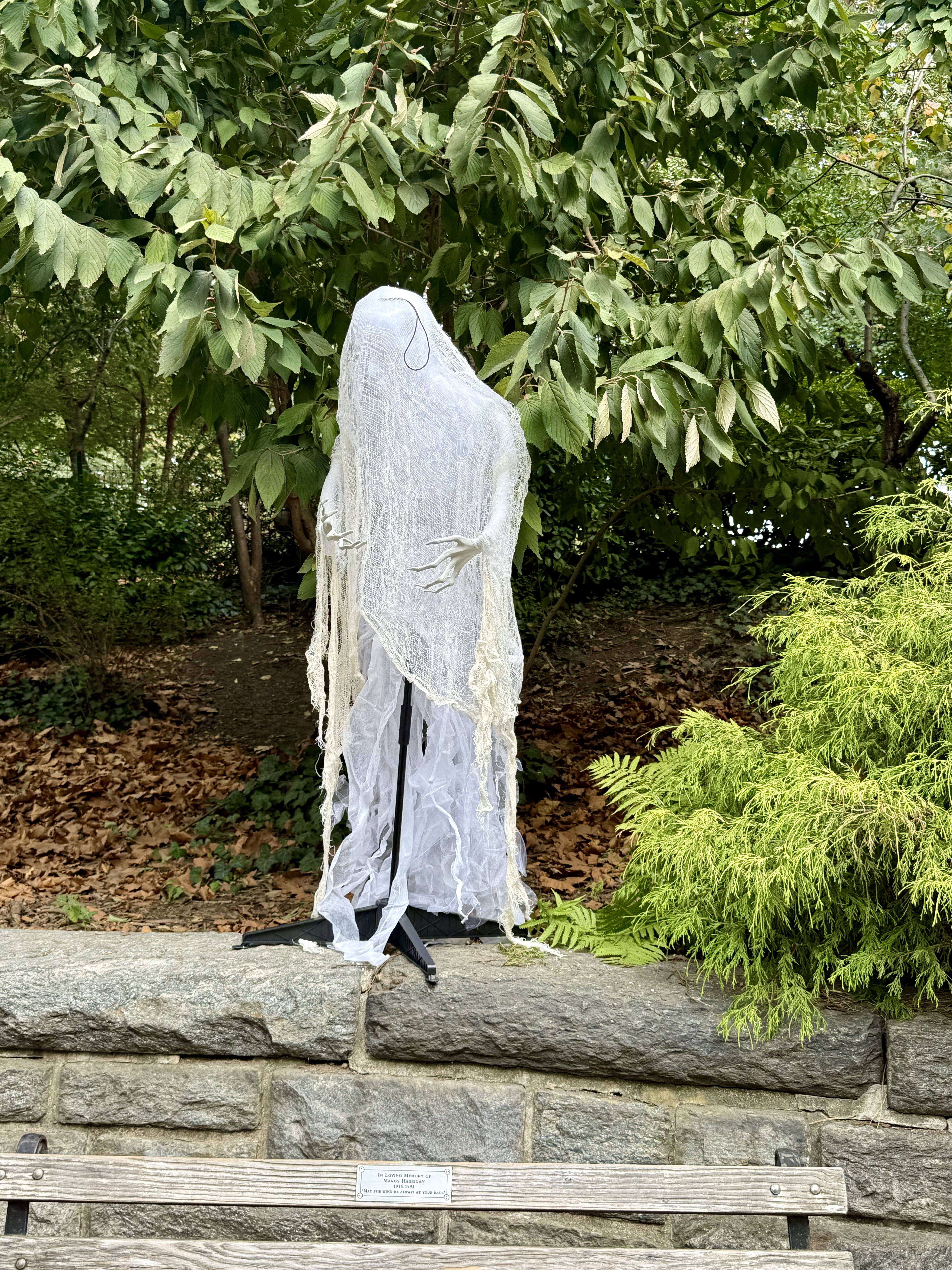
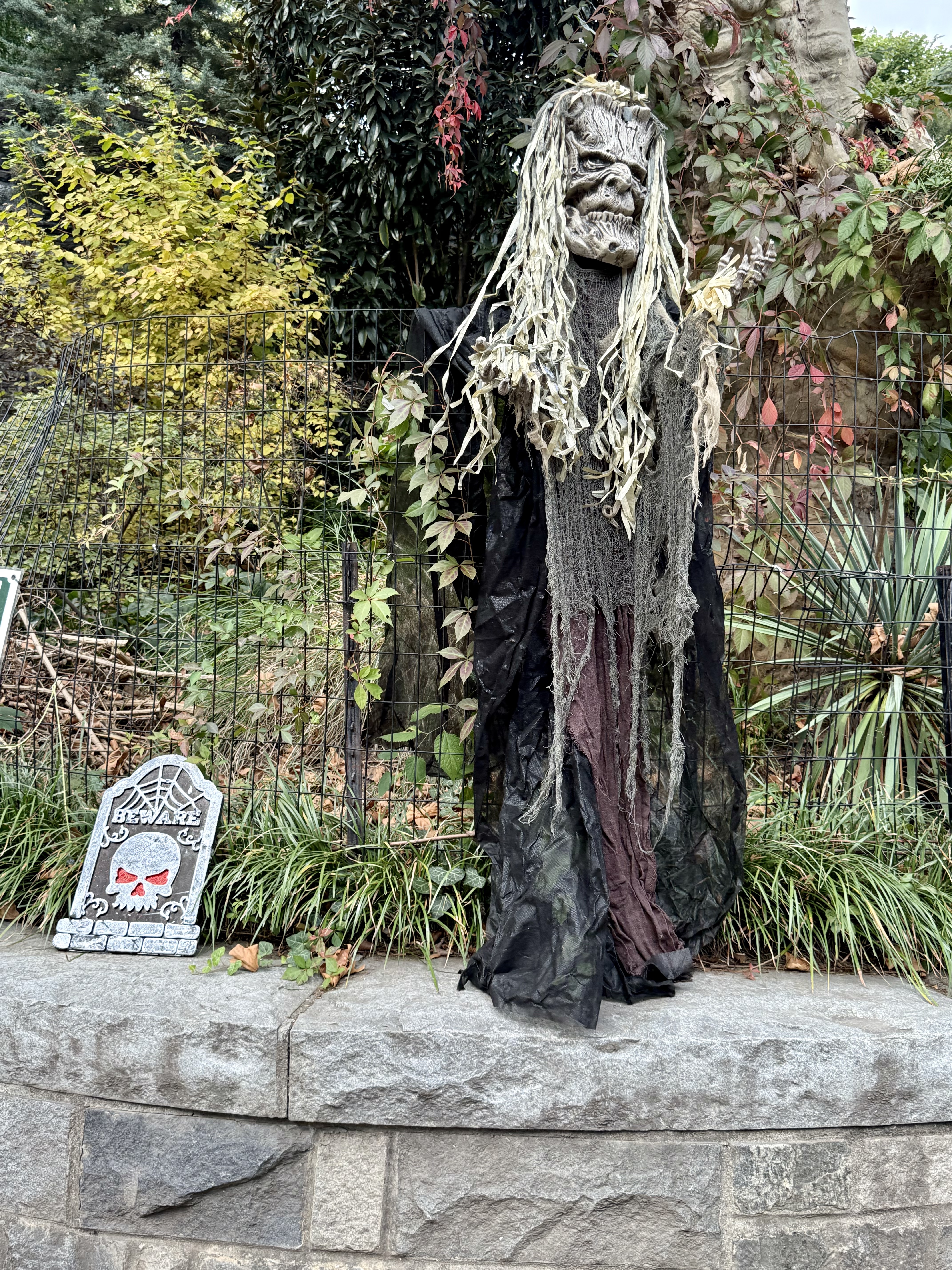
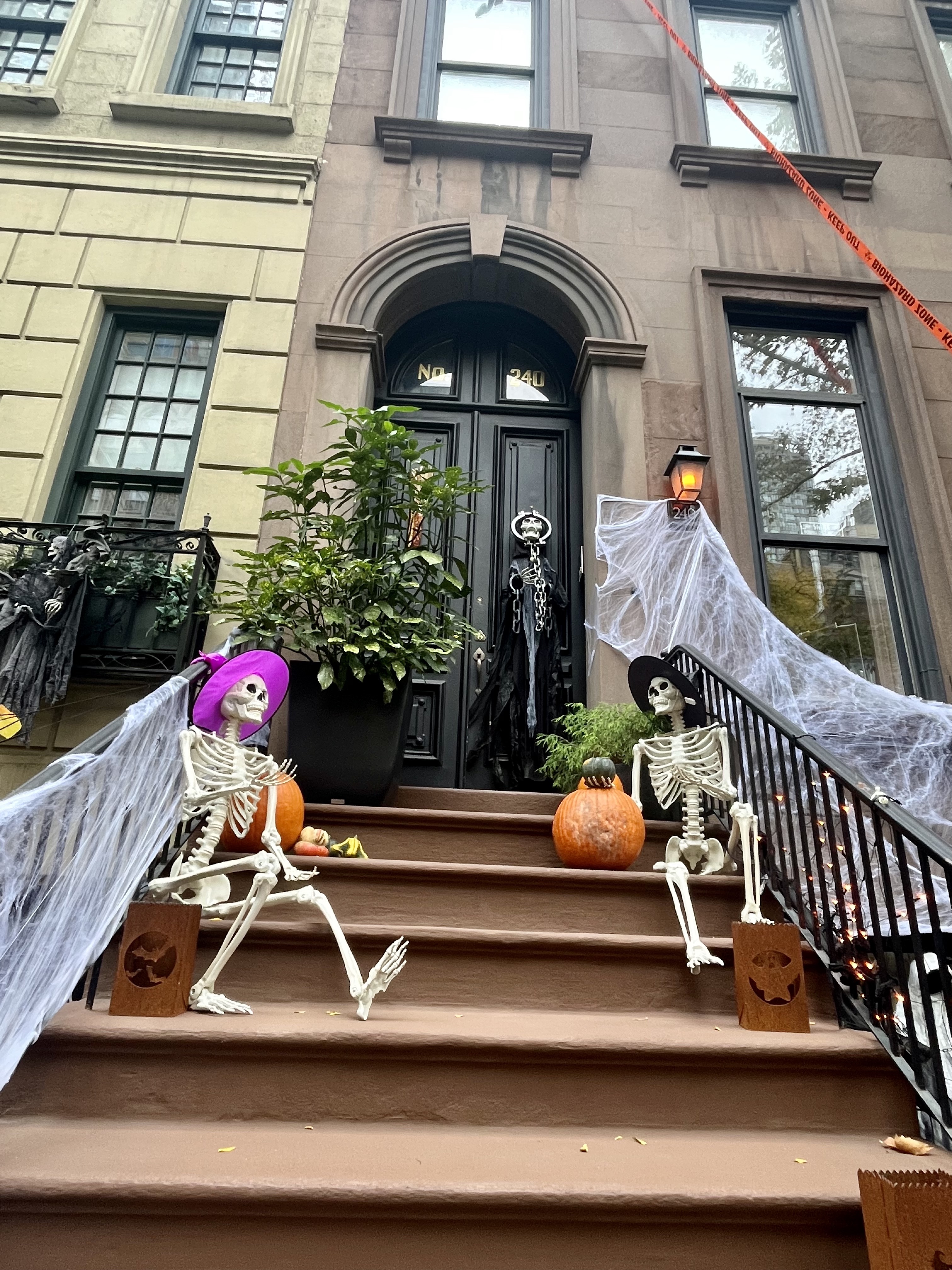
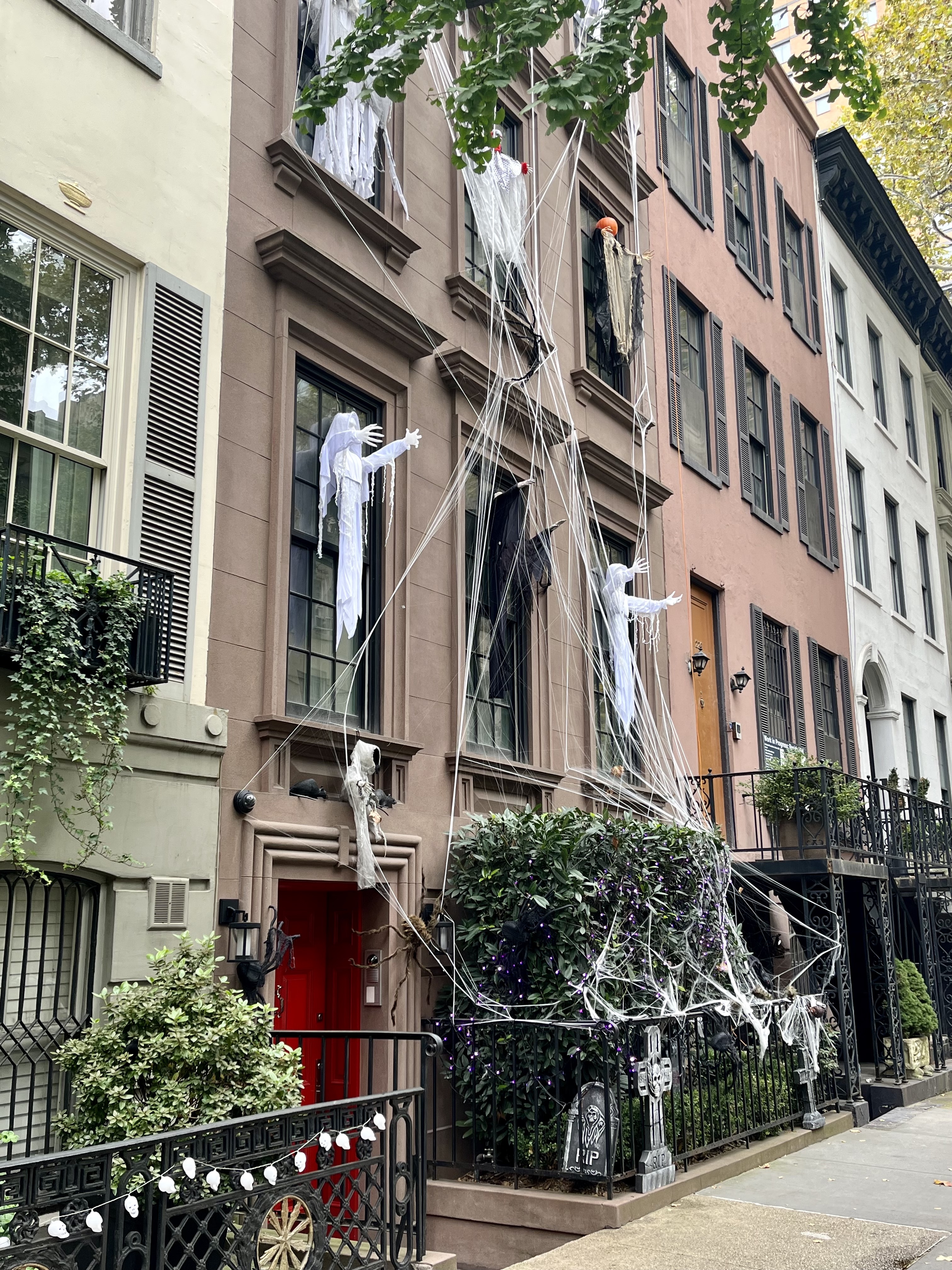
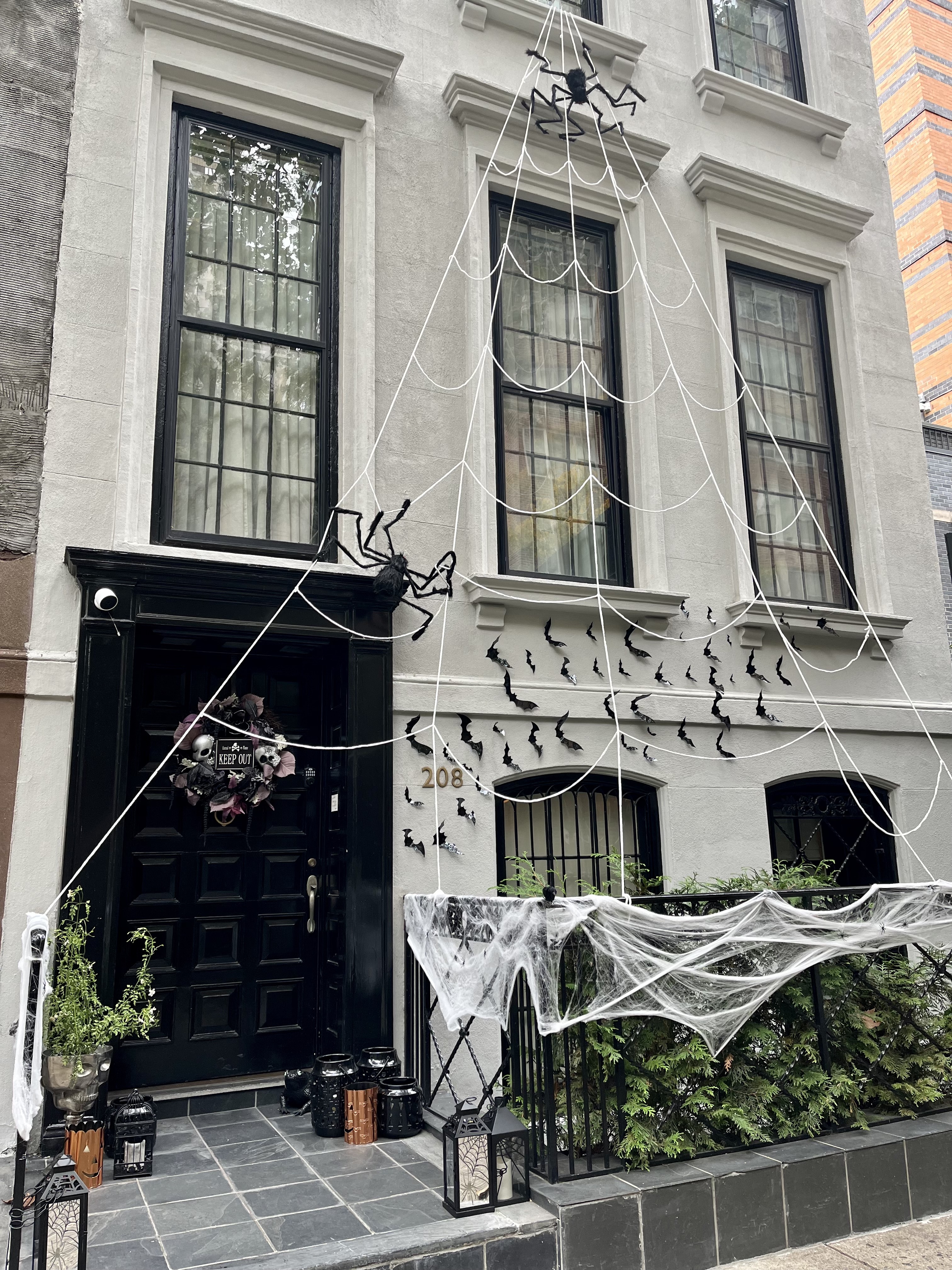
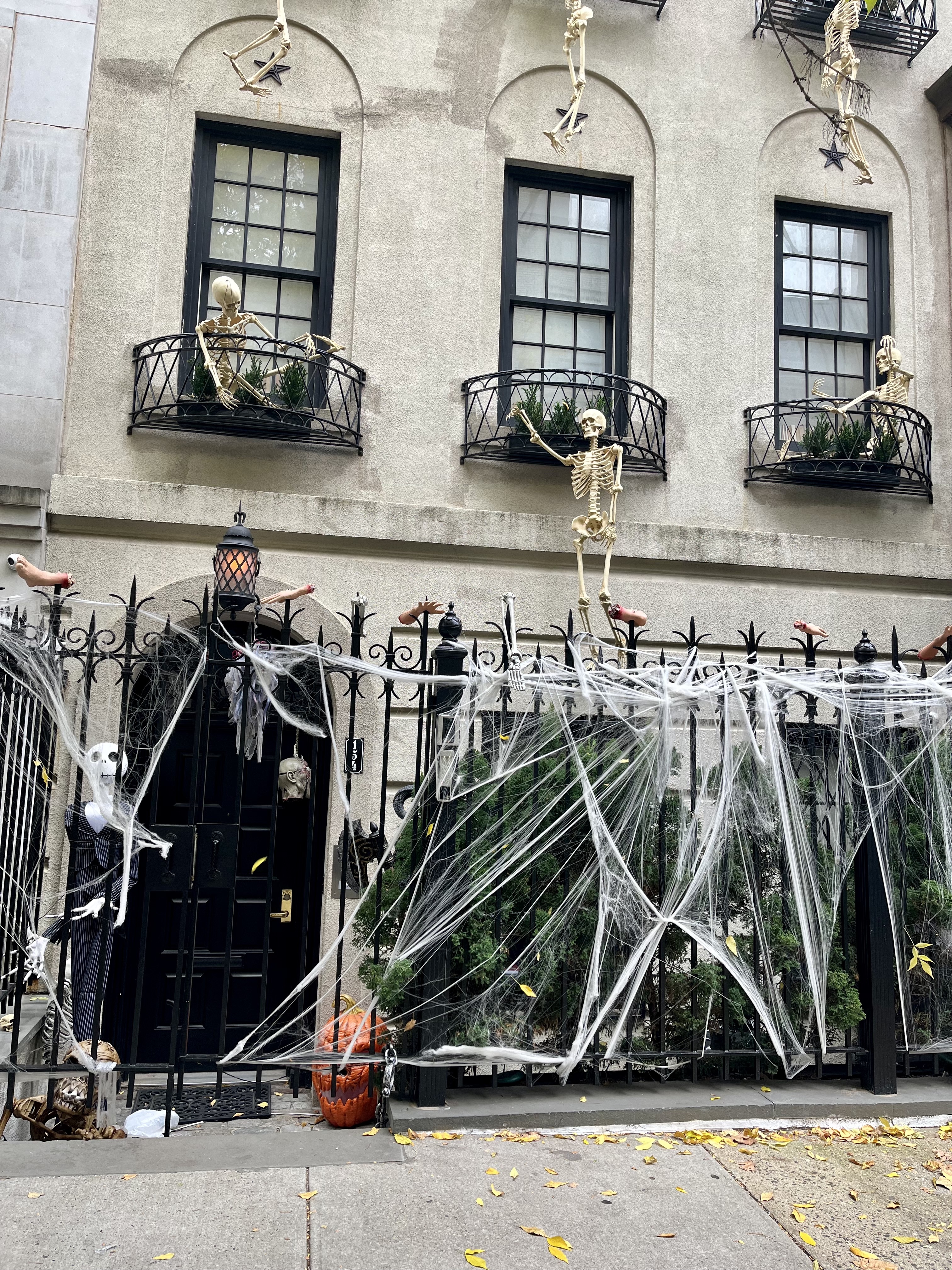
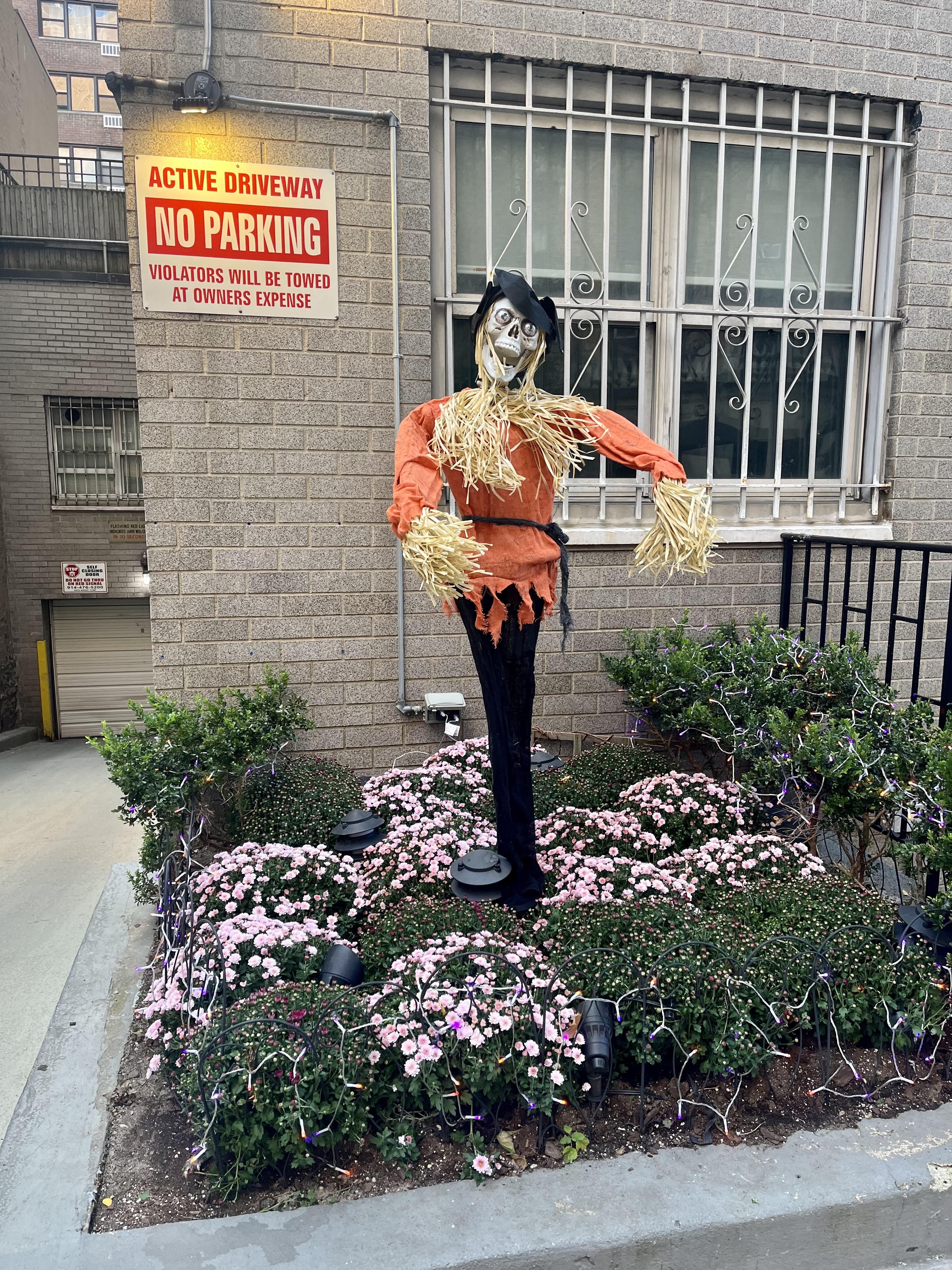
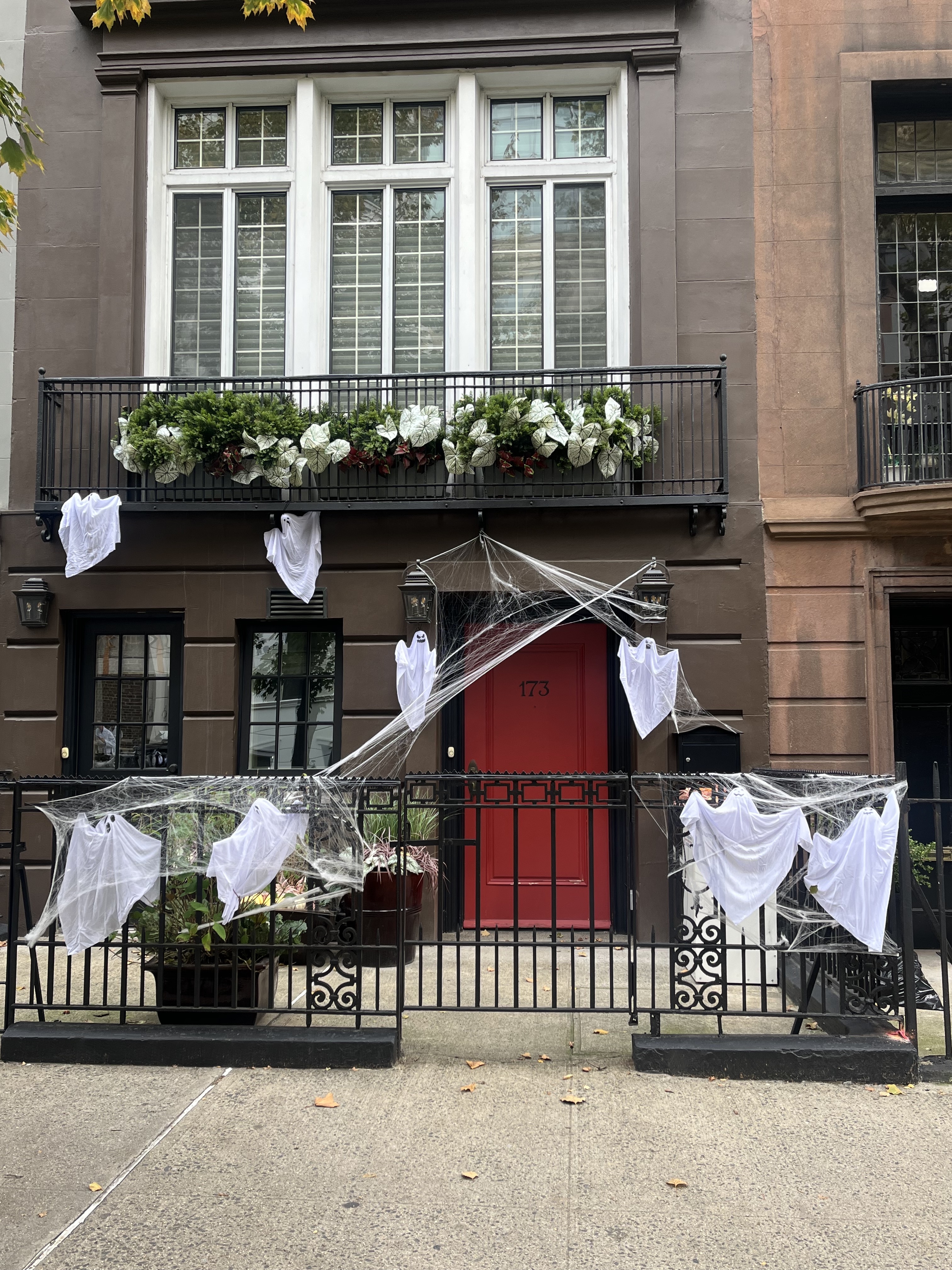
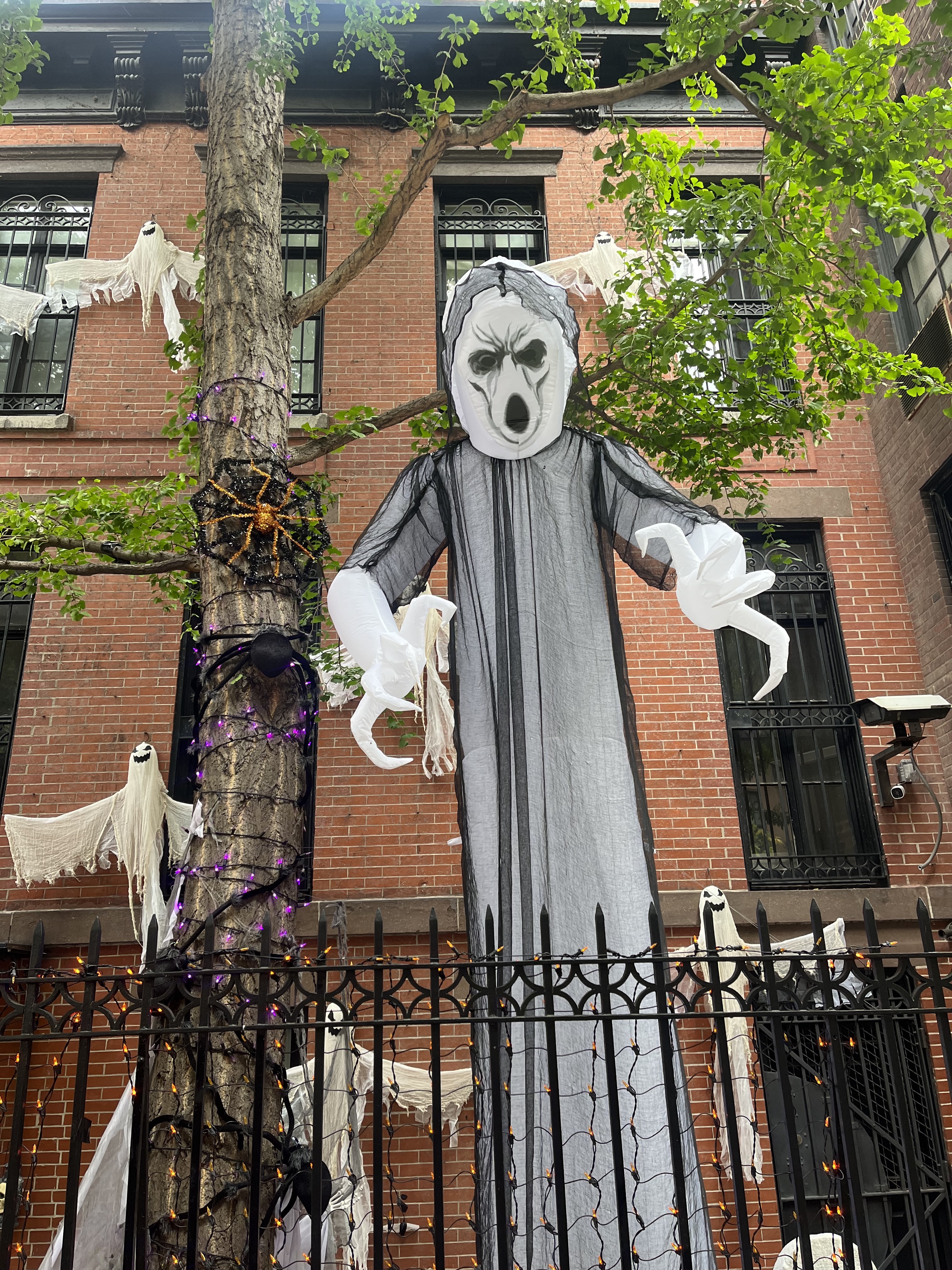
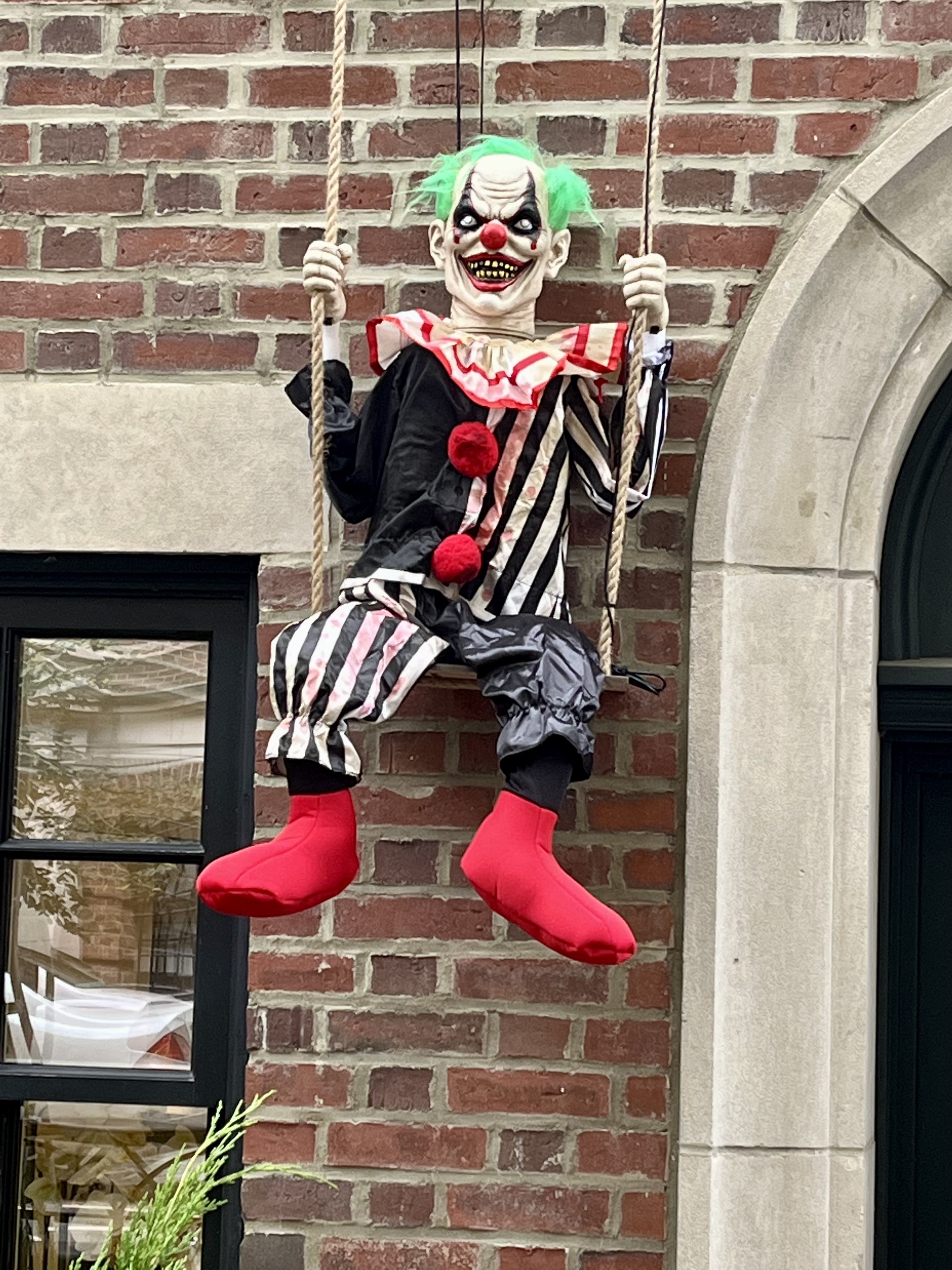
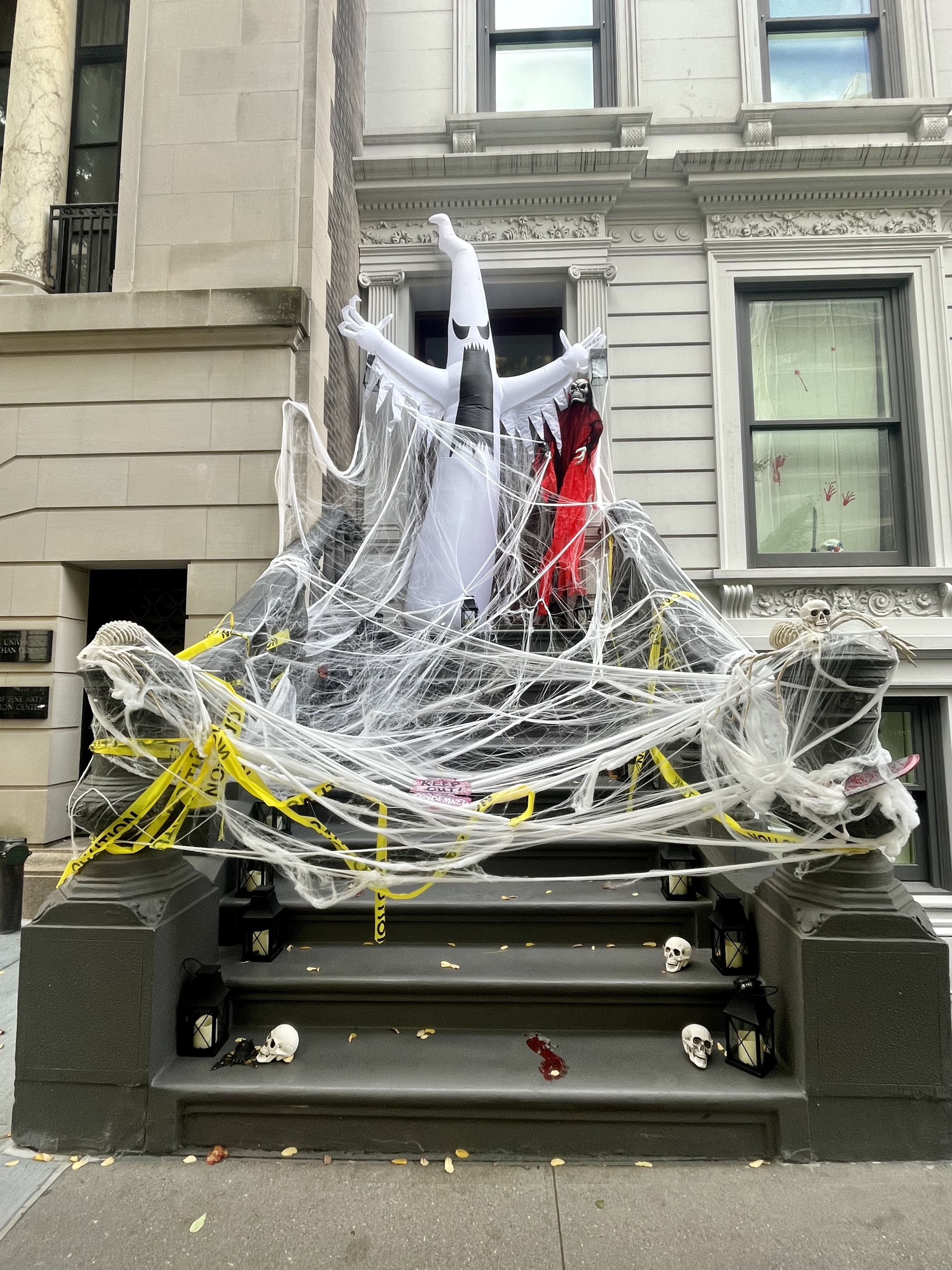
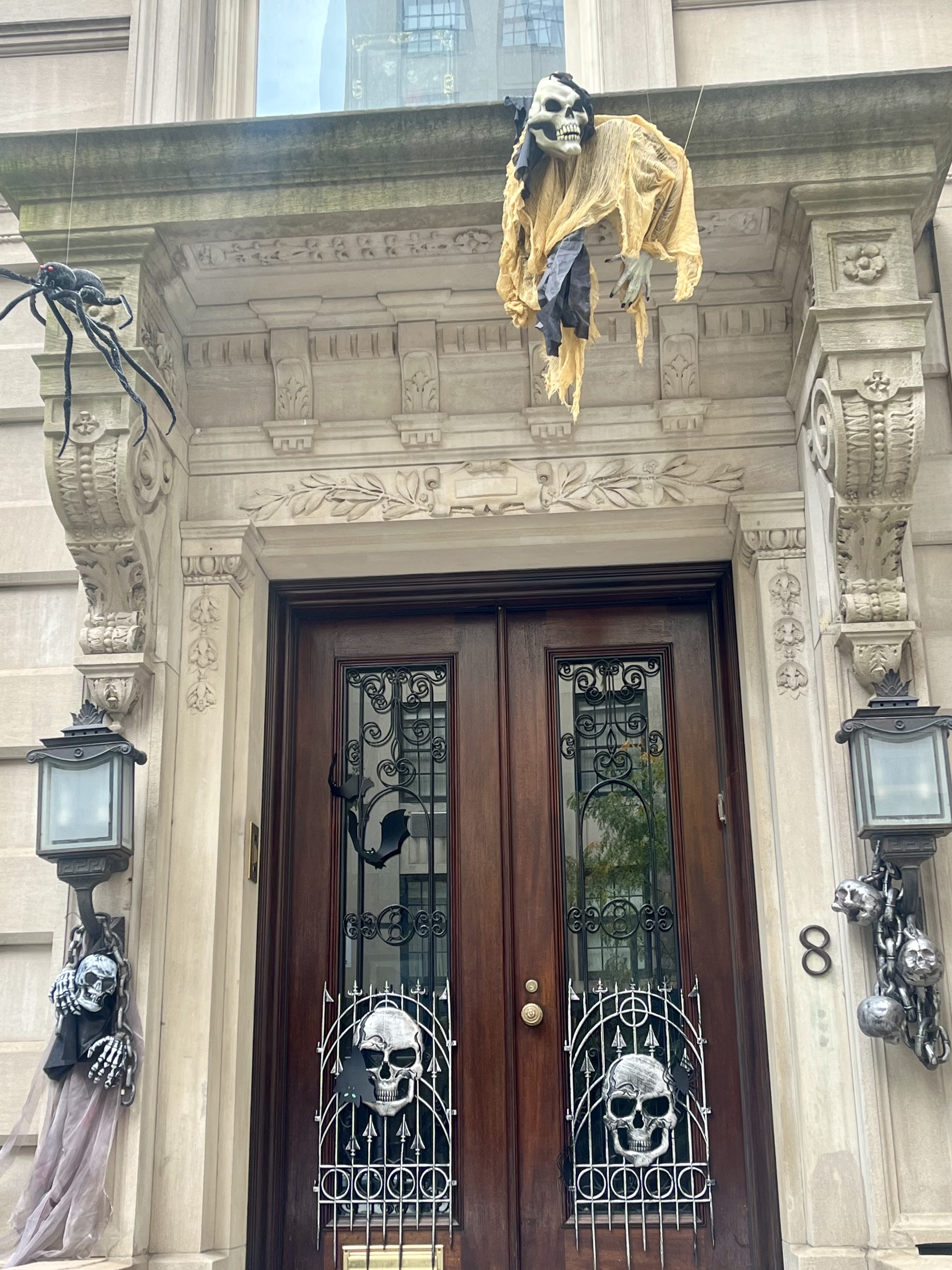
When one thinks of the Upper East Side of Manhattan, you often imagine rows of elegant townhouses and apartment buildings, interspersed with high-end shops, elegant restaurants, and schools with children in tidy uniforms. All those things are true, but they aren’t the entire story. The idea of the Upper East Side as a stuffy, reserved neighborhood is negated every October when walking through the gauntlet of Halloween decorations that adorn block after block in the neighborhood. Some decor is indeed elegant but much of it – much more than you would expect – ranges from spooky to terrifying. I have posted before about Halloween decor in NYC (here and here for instance) but this post is specifically about the Upper East Side this year, with a bonus of a dog costume contest held yearly in Carl Schurz Park!

I have posted a few videos on Instagram, too – here’s an example.

Here’s another video that I posted on Instagram. This was one of the more terrifying displays, and the sound was triggered by someone walking by.

Another Instagram video, just to give more of the flavor of being in front of one of these houses.

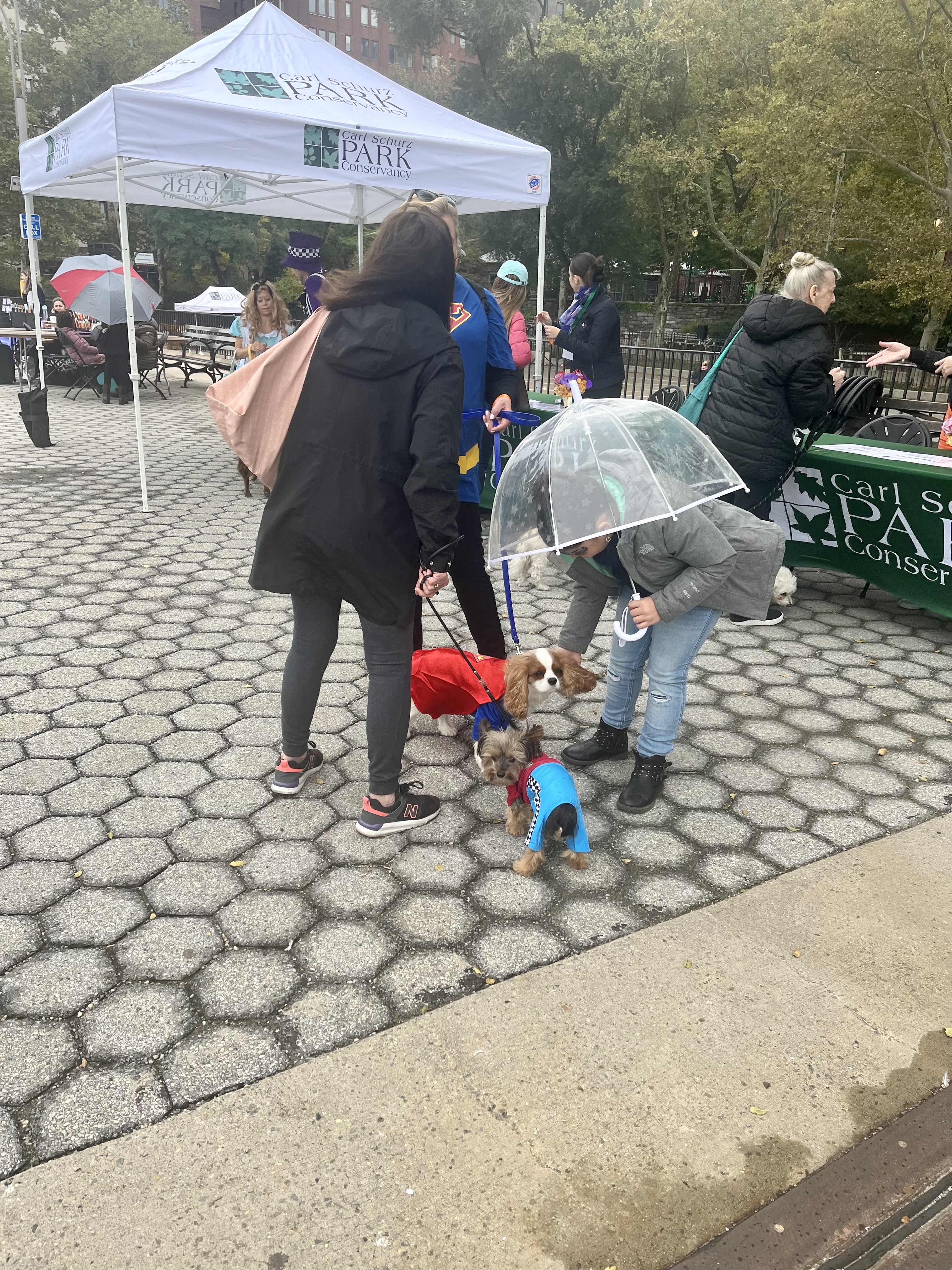
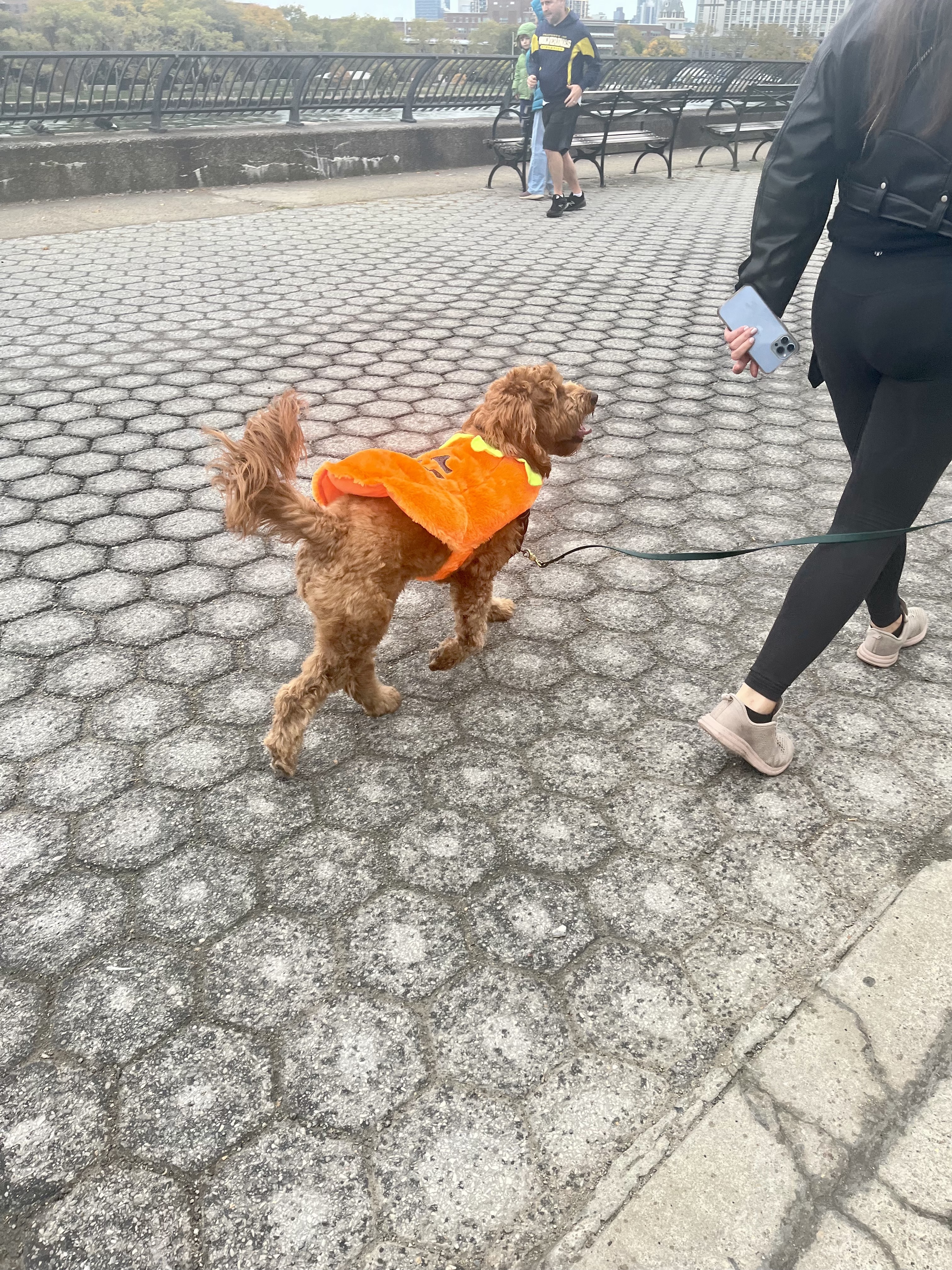
Although a lot of those photos may make the Upper East Side seem like a terrifying place in October, there are more light-hearted things to enjoy as well! One of the best is the yearly “Halloween Howl” dog costume contest held in that well-kept secret treasure of NYC, Carl Schurz Park in the Yorkville neighborhood of the Upper East Side (I’ve blogged about it before, in general and after a snowstorm). Here are a few photos from this year:

Now, a lot of these same townhouses decorate for the December holidays as well, but there is nothing quite like the gothic excess of so many of these decorations! Walking to an appointment on the Upper East Side in October, with the first touches of chill in the air, and taking in the sights of what my fellow New Yorkers have done to celebrate the season in the city – and share it with others – I am reminded once again of how fortunate I am to live and work in this vibrant city.

Historic districts of the Upper East Side

In 1964, the original ornate Pennsylvania Station building was torn down to create Madison Square Garden (the fourth version of MSG, the first two being close to Madison Square Park, and the third on Eighth at 50th Street).  The loss of the building created an immediate outcry. (Architectural historian Vincent Scully noted: “One entered the city like a god. One scuttles in now as a rat.”) The next year the Landmarks Preservation Commission was created to prevent the continual loss of buildings of historical significance. Since then, many individual buildings have been landmarked, as well as entire sections of the city that have historical or architectural significance. The Upper East Side has several historic districts, some of which would surprise few (Metropolitan Museum Historic District) and some that are virtually secret to most not living there (Treadwell Farm Historic District, anyone?). I took a walk around these districts, taking photos and imagining what it would be like to live there! Later I will touch on what living in a historic district means to those owning a home there, as well as why even those not living in a historic district might be interested in knowing the boundaries.

Upper East Side Historic District

jM1JQm_jSWCaCsfKiq1Vhw

This is the area most people would think about if asked about a Historic District on the Upper East Side. It covers all of Fifth Avenue between East 59th and East 78th Streets, and extends out from there in an irregular pattern – as far east as almost to Third Avenue between East 70th and East 75th Street, very close to Fifth from East 59th to East 61st, and somewhere between Park Avenue and Lexington Avenue for most of the area. See below for a map of this district:

IMG_3828

On Fifth Avenue, there are a lot of stately limestone coop apartment buildings, and in the side streets, many lovely townhouse blocks.

1Q6lrGWVSAaaS25rNjktUg

This district also has many buildings that would be landmarked as single entities if not part of the larger historic district, like Temple Emanu-El or the Frick Mansion.

For a district to be considered worthy of landmarking, it must represent at least one historic period or architectural style, have a distinct “sense of place” and a “coherent streetscape.” Fifth Avenue is a good example of why this does not mean that every single building within the district would be individually worthy of landmarking. I find that in general the Upper West Side has a more consistent look and feel than the Upper East Side (and I will do a blog post on the Upper West Side historic districts at some point soon).

Metropolitan Museum Historic District

_MfOSGL6Sce7tBKFTwI2-w

Not surprisingly, this district lies in close proximity to the Metropolitan Museum, Fifth Avenue from East 87th to East 86th Street and most – but not all – of the blocks between Fifth and Madison on this stretch of Fifth.

IMG_3830

It has always bothered me that one of the buildings has a fake facade at the top where the supports can clearly be seen if looking from the side rather than from Central Park (see below):

IMG_3825

Carnegie Hill Historic District

442VWnl_RQizlxPY5UNDyQ

Named for the mansion Andrew Carnegie built at Fifth and East 91st (which had the first residential elevator, and now holds the Cooper-Hewitt National Design Museum), Carnegie Hill is a charming residential neighborhood. The historic district covers Fifth Avenue from East 86th to East 98th, and for some streets goes as far east as Lexington Avenue (see below):

IMG_3829

This district encompasses Frank Lloyd Wright’s Guggenheim Museum (where the architecture of the building is arguably the more important work showcased despite steep competition), the Jewish Museum, and buildings ranging from brick and brownstone townhouses to mansions, most constructed between the 1870s and the 1930s. I have a particular fondness for the townhouse blocks, many of which decorate elaborately for Halloween.

ctdo4rUWQx2Bl7vkT-pE4w

Hardenbergh/Rhinelander Historic District

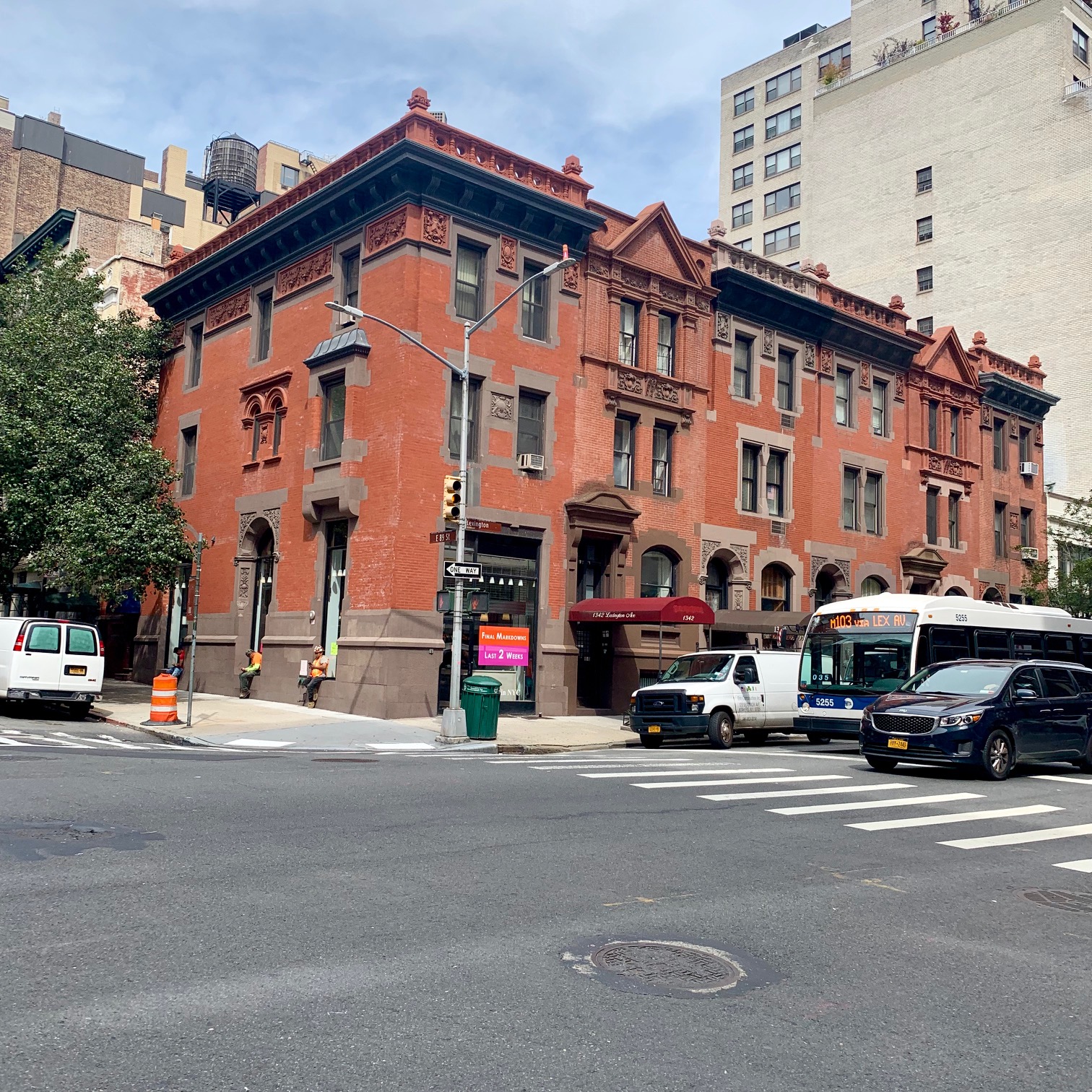
On Lexington between East 89th and 90th Streets, and part of the block between Lexington and Park on East 89th, there are seven houses all constructed in 1889 for William C. Rhinelander (a real estate developer!). The same architect who designed the Plaza Hotel and the Dakota apartment building on Central Park West, Henry Hardenbergh, is responsible for these houses.

IMG_3574IMG_3575

Treadwell Farm Historic District

Even people who live near this historic district, two short sections of blocks between Third and Second Avenues, and East 60th and East 62nd, may not know this exists. These Italianate row houses date between 1868 and 1875, and the region was named for the Treadwell family, who were landowners here between 1815 and the 1860s.

IMG_3550IMG_3552IMG_3553IMG_3554IMG_3555IMG_3556IMG_3557

Henderson Place Historic District

img_4492

I have such a soft spot for the houses on Henderson Place, East End Avenue between E. 86th and E. 87th. When my daughters were going to a nearby school, I would walk them past these charming three story Queen Anne townhouses and dream of being able to live in one of them! That never happened, but I still contend these blocks are some of the most uniquely romantic and lovely in all of the city. They are across East End Avenue from Carl Schurz Park, the peaceful environment adding to the quiet magic of these homes. I mean, just look at them! (*swoon*) I once wrote a love letter to this part of town after a snowstorm (see here).

IMG_3576IMG_3577IMG_3578IMG_3579

ZOb7Q1_yQWOi1JIT3kkKyA

Landmarks outside of Historic Districts

You might be surprised at how many individually landmarked buildings there are on the Upper East Side apart from these districts – currently, there are 48! Invididual landmarks are judged by age, integrity, and significance. These range from apartment buildings like Manhattan House (200 E. 66th), the Bohemian National Hall (321 E. 73rd Street), the Astor House (now home to the Junior League, 130 E. 80th Street, see photo below), or individual townhomes like 160 East 92nd Street.

IMG_3716.jpg

So if you live in a historic district, what is the impact on your home? Data suggest that landmarked districts offer higher property values over time, insulation from extreme economic fluctuations, stabilization of residence, more community involvement, and possibly increased connections among neighbors. There are some restrictions as well – for instance, you need permission to do any exterior work on a building in a landmarked district, and to show that you are not changing the exterior in a way that negatively affects the overall look of the district. However, renovating a home in a historic district can make you eligible for a significant New York State Homeowner Tax Credit.

Even if you don’t live in a historic district, if you live near one (or near a landmark outside a historic district), it can be useful to know the restrictions. For instance, if you are near the Treadwell Farm Historic District in one of the highrise buildings with an eastern exposure, it is good to know that it is highly unlikely that anything will be built that will block your eastern light.

Generally speaking, I am a fan of New York City’s constant desire to change, and am more accepting of the constantly evolving skyline than some (see a previous blog post about this here). That being said, our city would be lessened without these (as Landmarks Preservation describes them) “areas of the city that possess architectural and historical significance and a distinct ‘sense of place.’” New York City is enriched by the old-world charm of Greenwich Village, the residential tranquillity of Park Slope, and the majestic towers of Central Park West – but also (at least in my opinion) by such new developments as Hudson Yards, Waterline Square, and the revitalized area around One World Trade. Just as our city populace is strengthened by all our differences, the architecture of our city is strengthened by our commitment to protect historic districts of importance while still encouraging new development and new opportunities.

Goodbye to Glaser’s Bake Shop, the heart of Yorkville

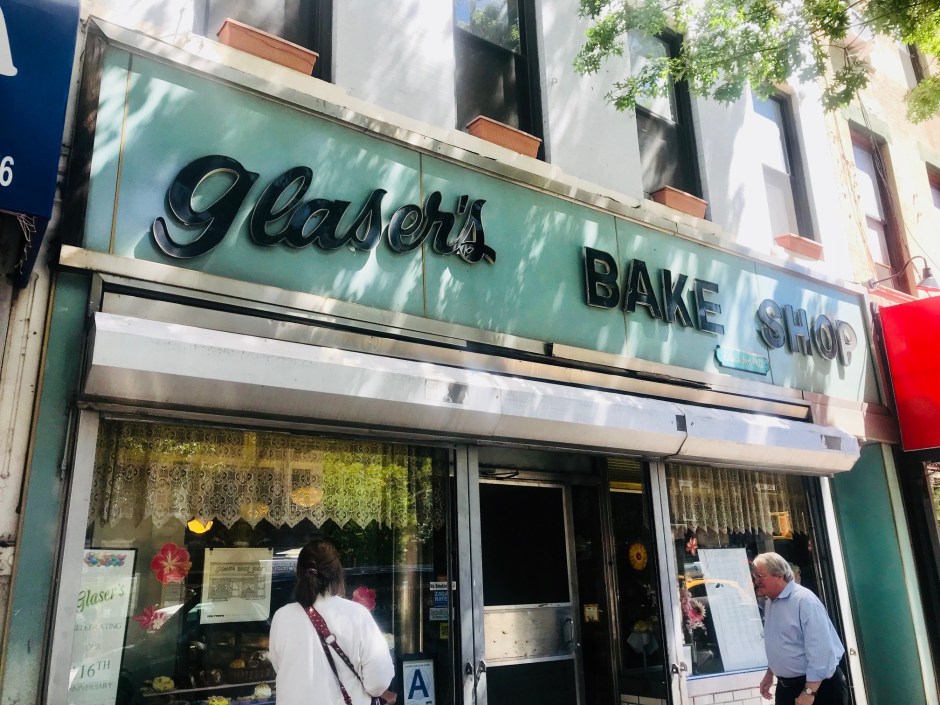
On Sunday, July 1, Glaser’s Bake Shop at First Avenue and 87th Street in Yorkville will close its doors for the final time. Opening on April 2, 1902, Yorkville was still a sleepy German-American enclave at that time, and the shop was primarily created to produce and sell bread. Over the years, as Manhattan evolved and Yorkville changed, Glaser’s adapted as well to be known throughout the city for its pastries, cookies, cakes, and pies. Living a block away for 13 years, my three daughters simply called it “the bakery.” When it ends, it is truly the end of an era in this neighborhood, and I pay tribute to it with this photo essay.

Glasers2

It was quite a shock when this sign appeared outside Glaser’s. Apparently the entire building the bakery is in is going to be sold and re-developed.

Glasers3

The display case facing First Avenue has always rotated for seasonal displays. Their gingerbread cookies in December will be missed, as well as their more unusual items such as bread with a colorful Easter egg in the center in the spring (Italian Pane di Pasqua) or King Cake for Mardi Gras. If you were looking for decorated cookies for Valentine’s Day, July 4th, Halloween, or Thanksgiving, Glaser’s always had a unique assortment.

Glasers4

The pastries offered varied day-to-day depending on what they had made and not sold out of. Everything was baked in house.
Glasers5

Displays inside the store reference its historic past.

Glasers6Glasers7

Glaser’s birthday cakes could be ordered and personalized in advance, and innumerable children growing up on the Upper East Side featured these at their parties.

Glasers8

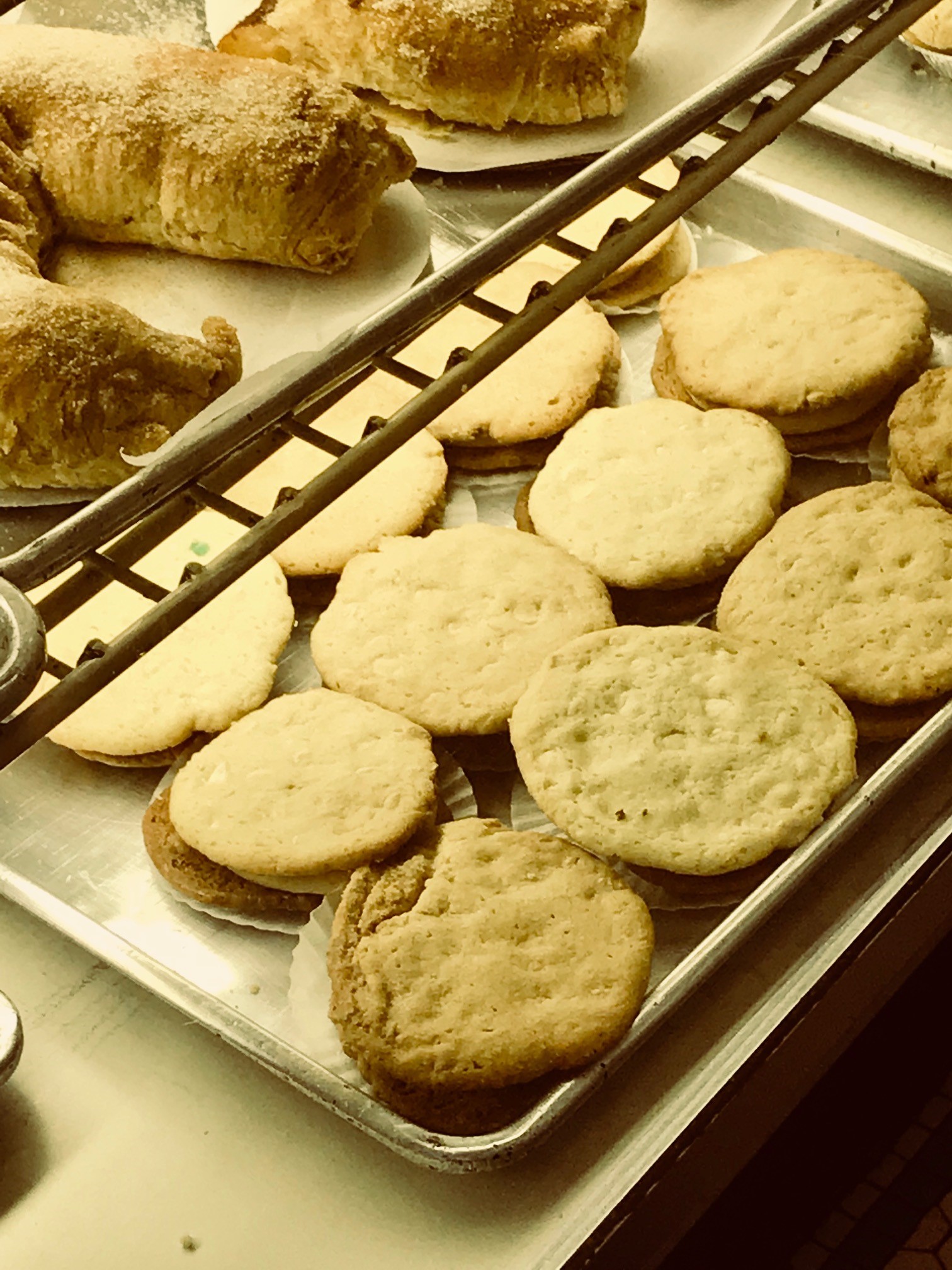
“Whoopie pies” were one of Glaser’s more unusual offerings. If you can’t decide between a cookie and a cupcake, why not try cookies with icing in the middle?

Glasers9Glasers10

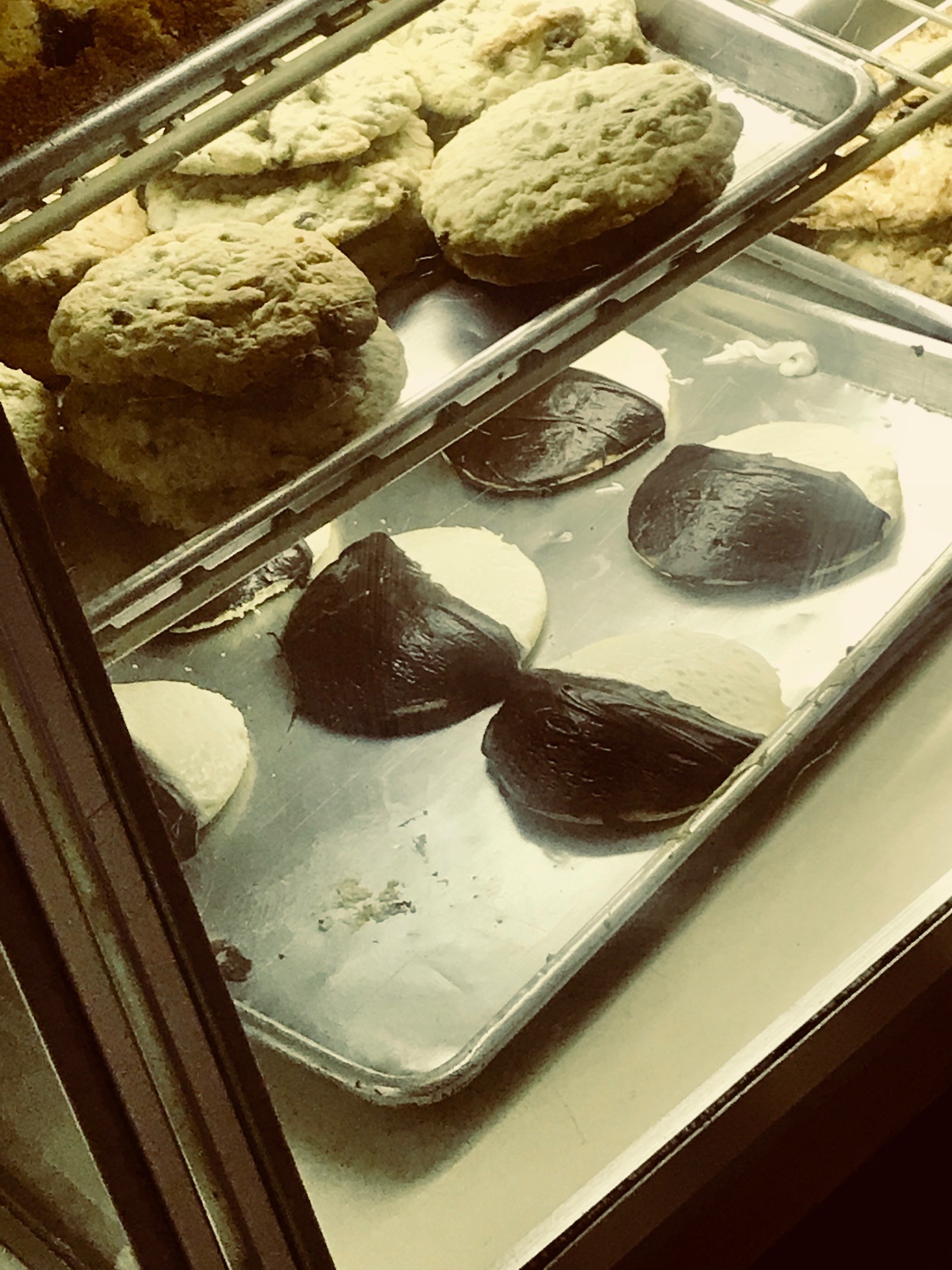
Glaser’s was perhaps most famous for it’s iconic NYC black-and-white cookies.

Glasers11

Cake donuts and danishes never disappointed.

Glasers12

The top row of this display shows the two kinds of brownies – with nuts or without (but with chocolate chips). If you happened to walk past Glaser’s when these were baking, the delicious chocolate scent would follow you for most of the block.

Glasers13

You could see past the displays right back to the baking area. An old clock reminds us, “The time is NOW!”

Glasers14

Glaser’s closes July 1, 2018. Get there before it closes if you can – Saturday mornings the line can be out the door. Closed Sundays and Mondays, cash only. When Glaser’s is gone, I feel that a lovely chapter in the history of Yorkville will be ending. Thanks for the memories, Glaser’s – and for delicious treats that were like traveling back in time.

The totally real, not imaginary, Second Avenue Subway

For most of the past decade, I lived east of Second Avenue on the Upper East Side, meaning that virtually every day I had to run the gauntlet of construction barricades and debris to get elsewhere in the city. Discussion of creating a second subway line of the Upper East Side to equal the two that run along the Upper West Side had begun shortly after the elevated line had been torn down along Second Avenue in 1919, and any of us who rode the most crowded lines in NYC (the 4-5-6) could see the need. Preliminary work began in 1972, but was suspended due to budgetary constraints until 2007. Ten years later, service began on January 1, 2017, and I couldn’t wait to ride on the first day the Q train ran.

img_3809

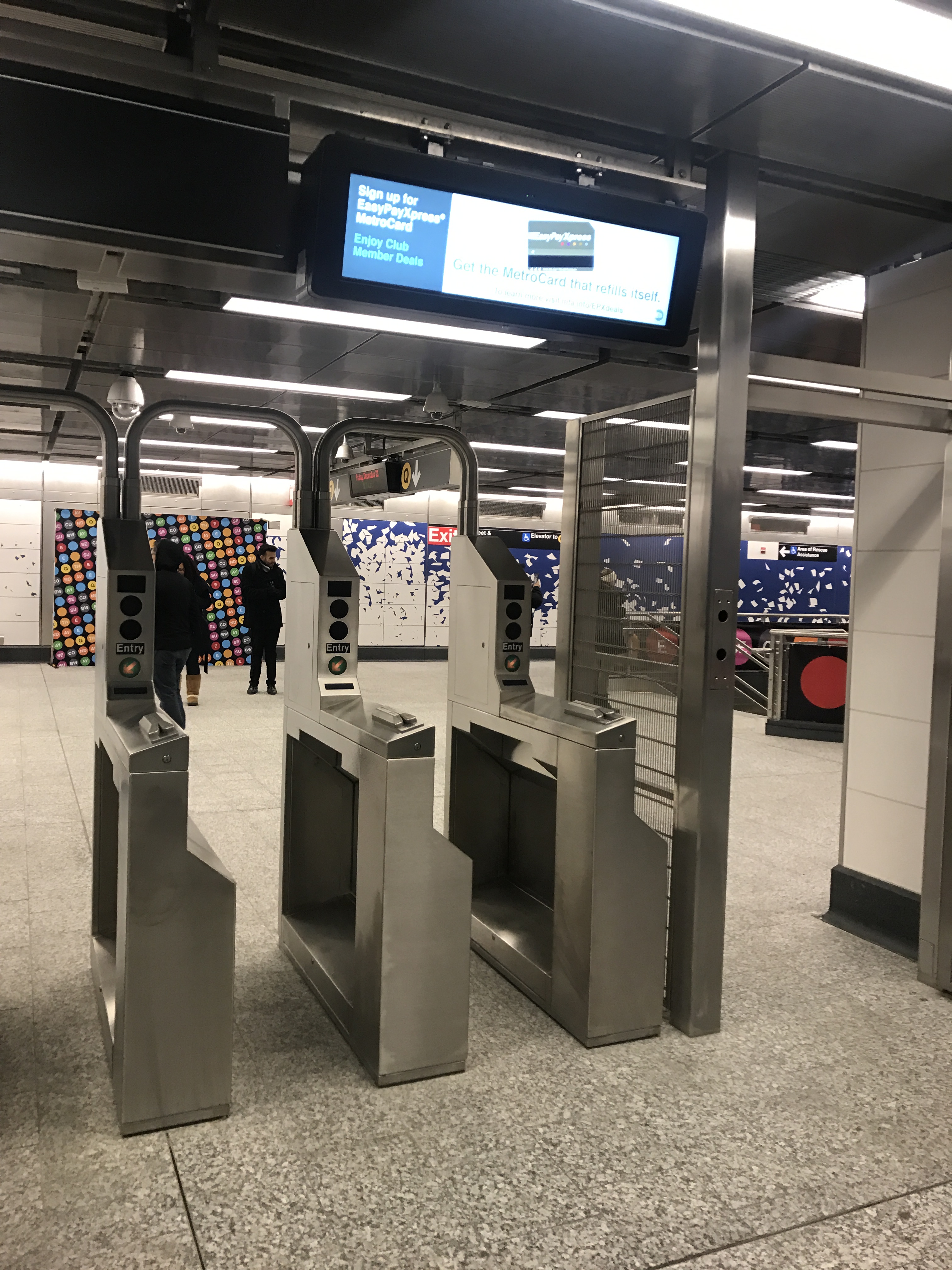
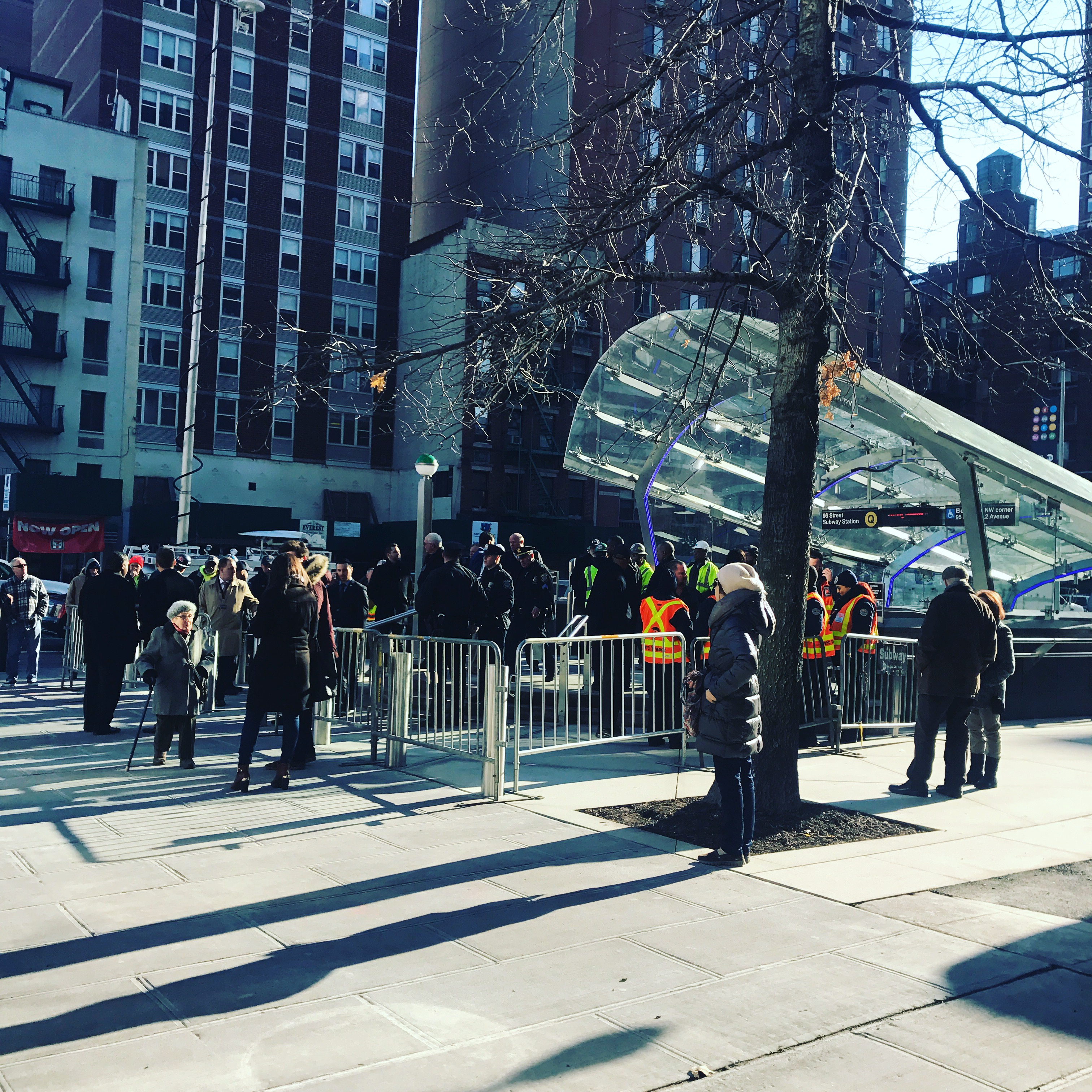
More than a week prior to the trains running, the neighborhood was invited to visit the 96th Street subway stop to see the station. It was surprisingly thrilling to walk into the new station. All the new stations are expansive, clean, and filled with art. I appreciate the entrances as well.

img_3792

A few more photos from the community preview:

img_3811

img_3810

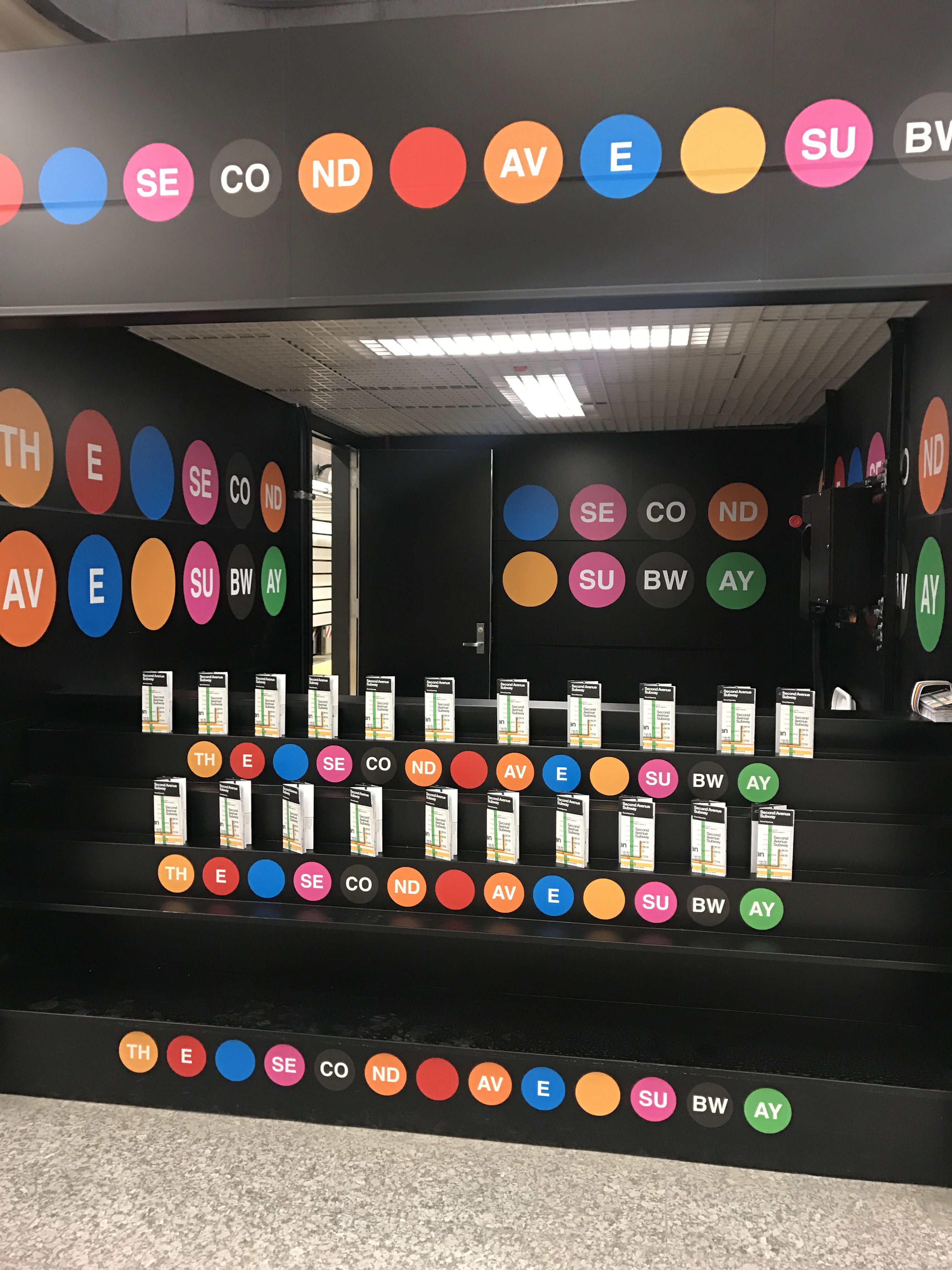
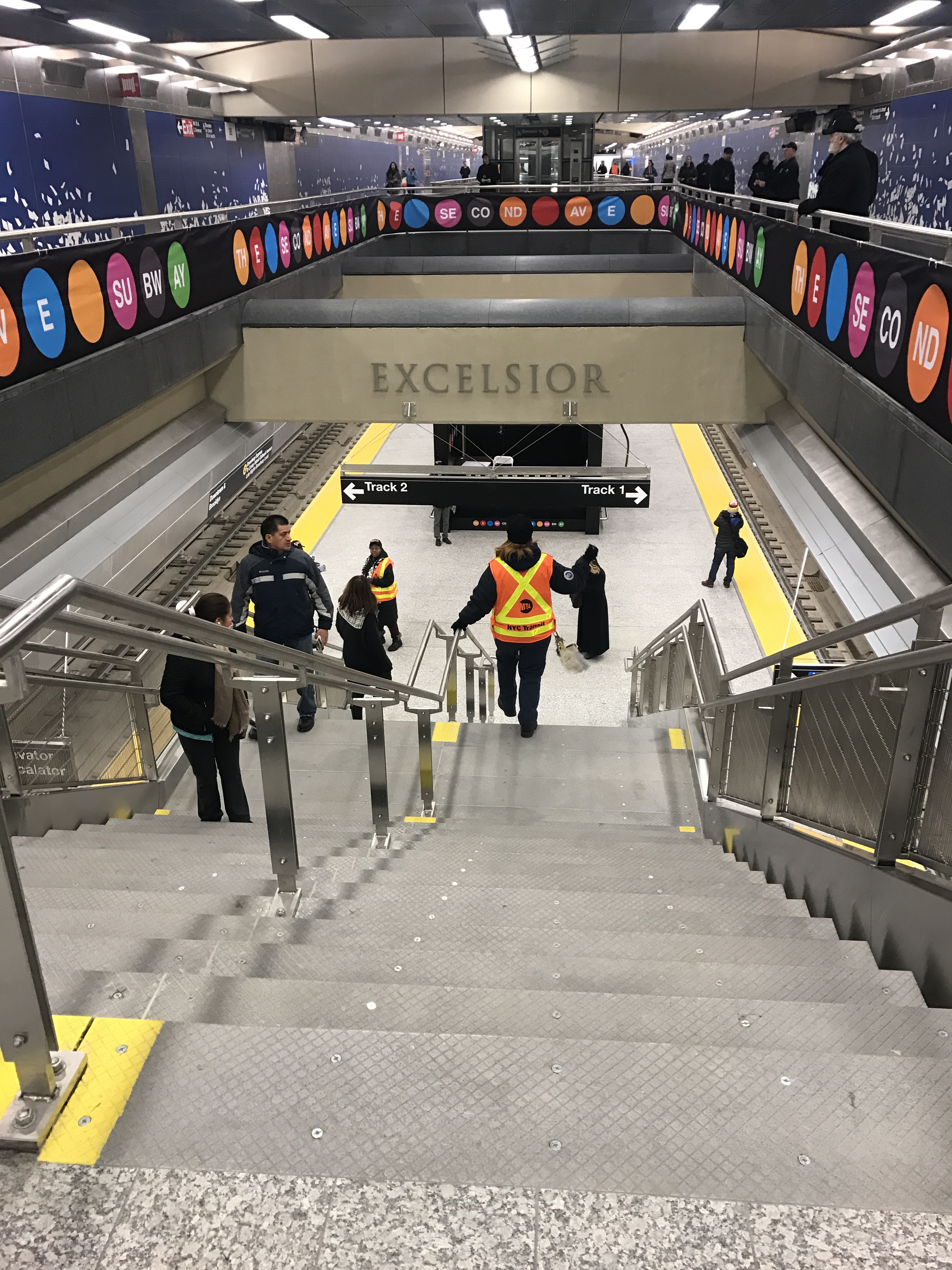
“Excelsior” is the New York State motto, and means “still higher” or “ever upward” (a little ironic as you descend lower into the ground, but I know, it’s about the meaning rather than to be taken literally).

img_3812

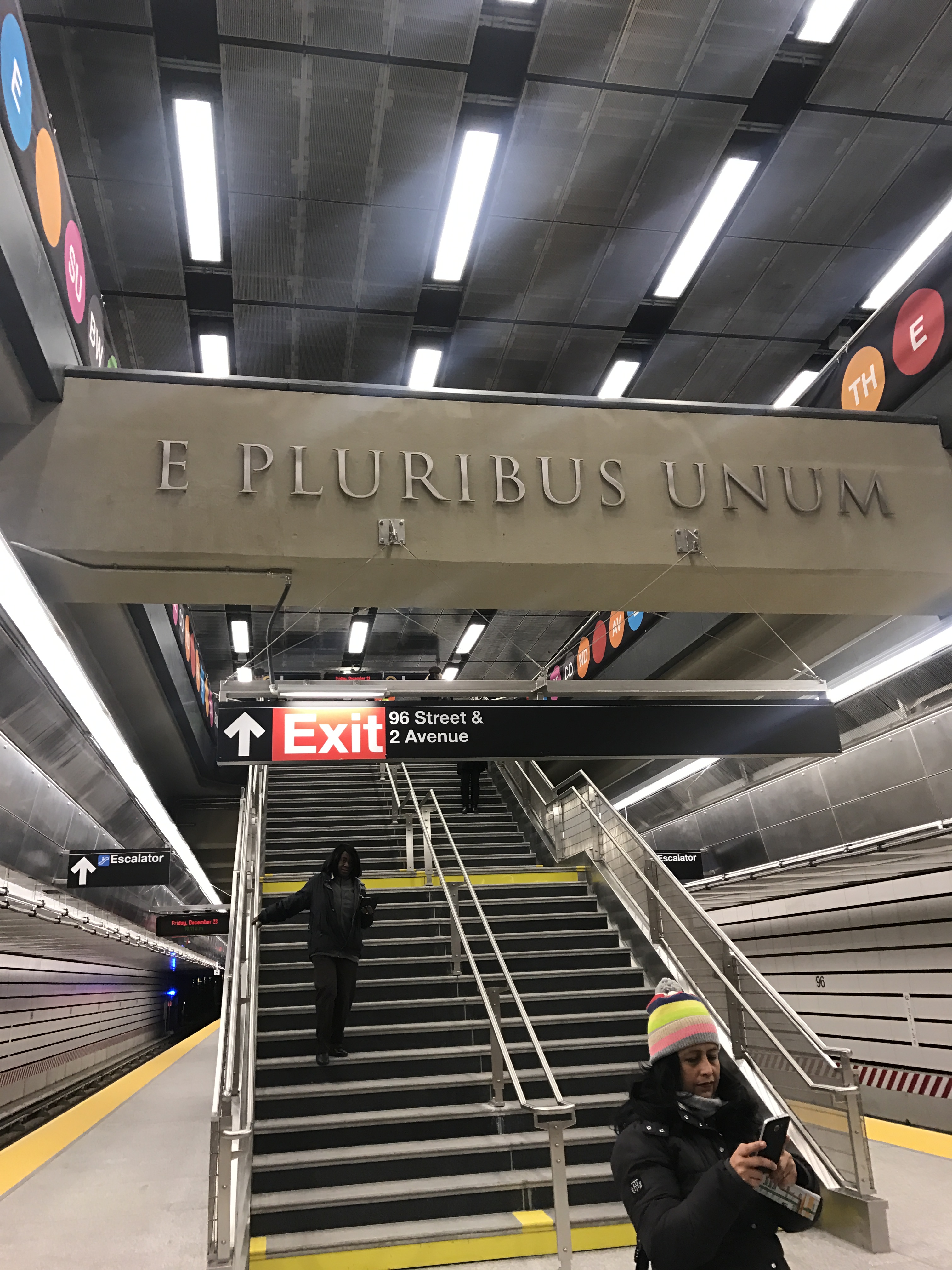
And of course, the United States motto “E pluribus unum,” meaning “Out of many, one” – fitting for New Yorkers who despite their many differences are united as citizens of the city.

img_3822

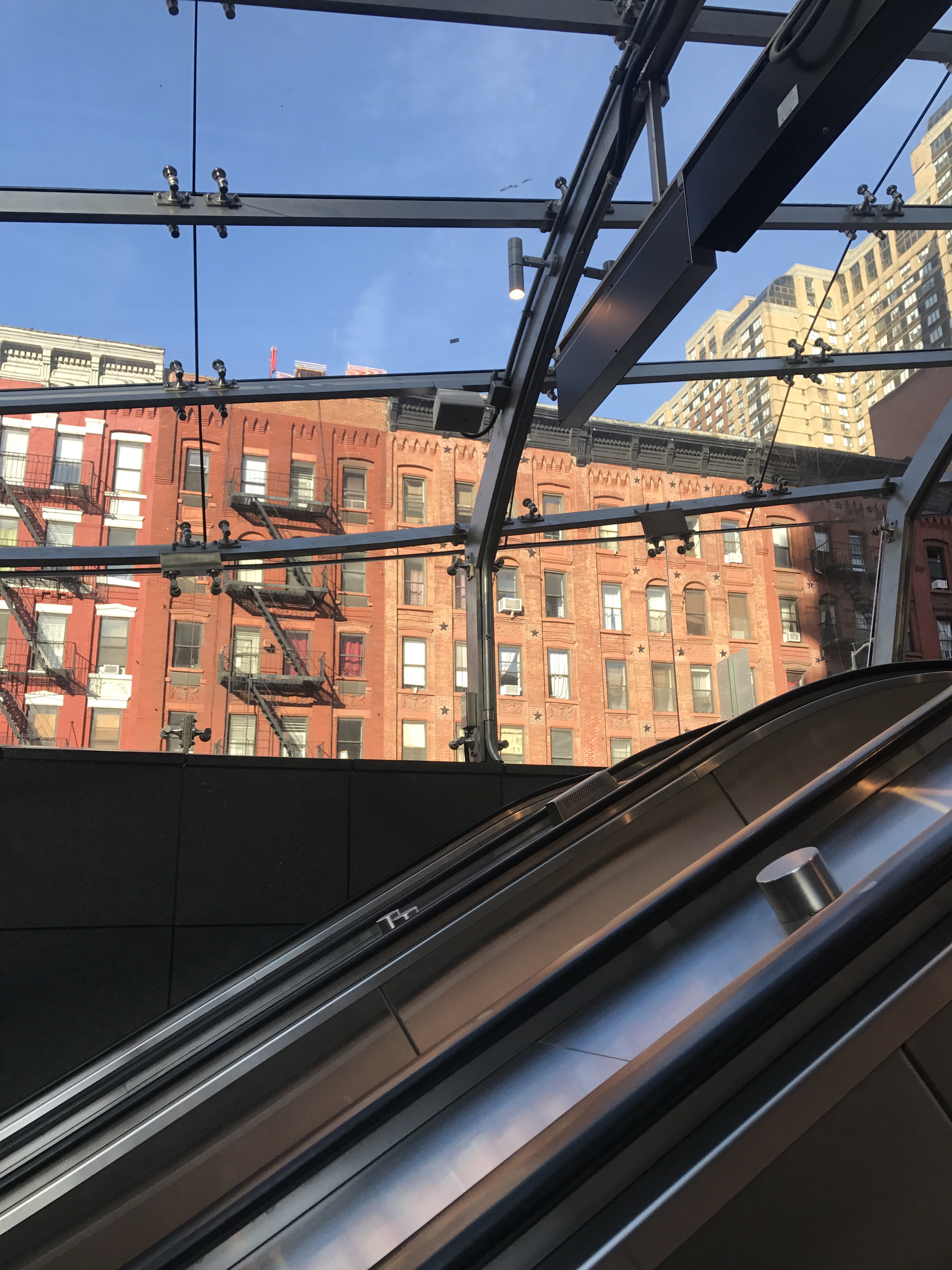
I love how the tenement buildings on Second Avenue can be glimpsed through the glass entrance when leaving the station.

img_3978

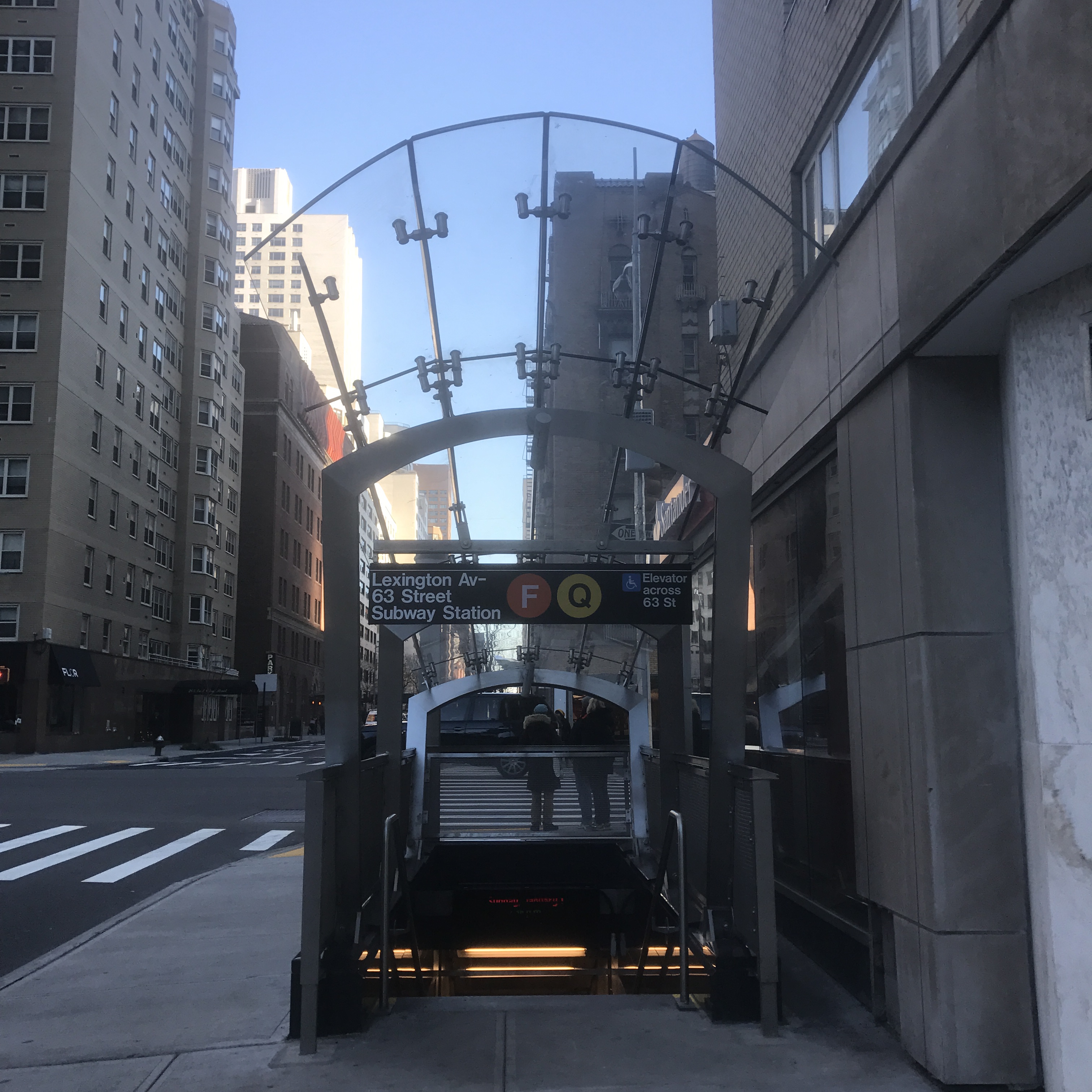
On January 1, about 2PM, I entered the station at Lexington and 63rd (but actually on Third and 63rd!) to ride the Q from 63rd to 96th on its first day of operation.

It was actually thrilling to see the train come into the station.

At 63rd Street, the art is by Jean Shin.

Pulling into the 72nd Street Station.

img_4010

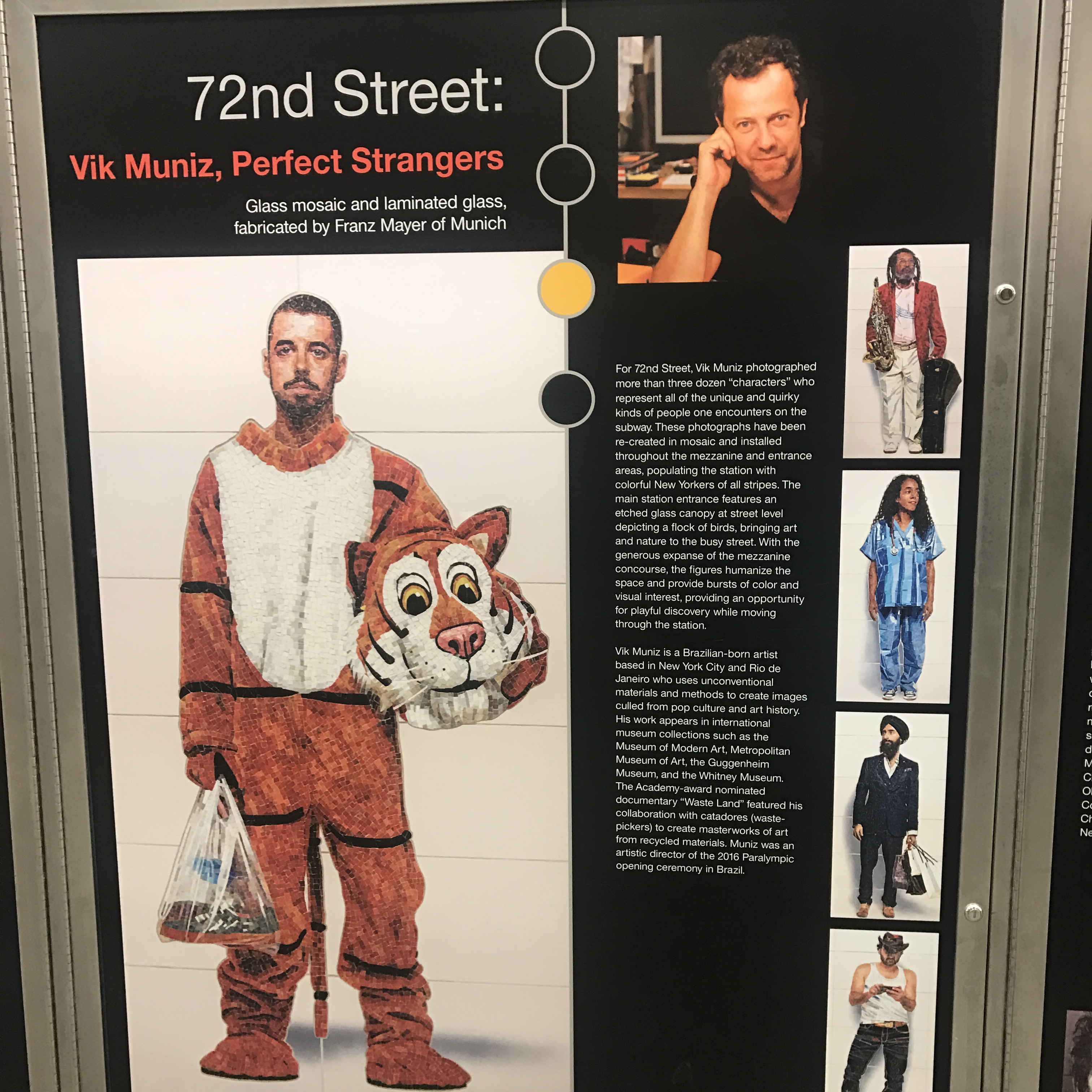
At 72nd Street, the art is by Vik Muniz.

Pulling into 86th Street.

img_4009

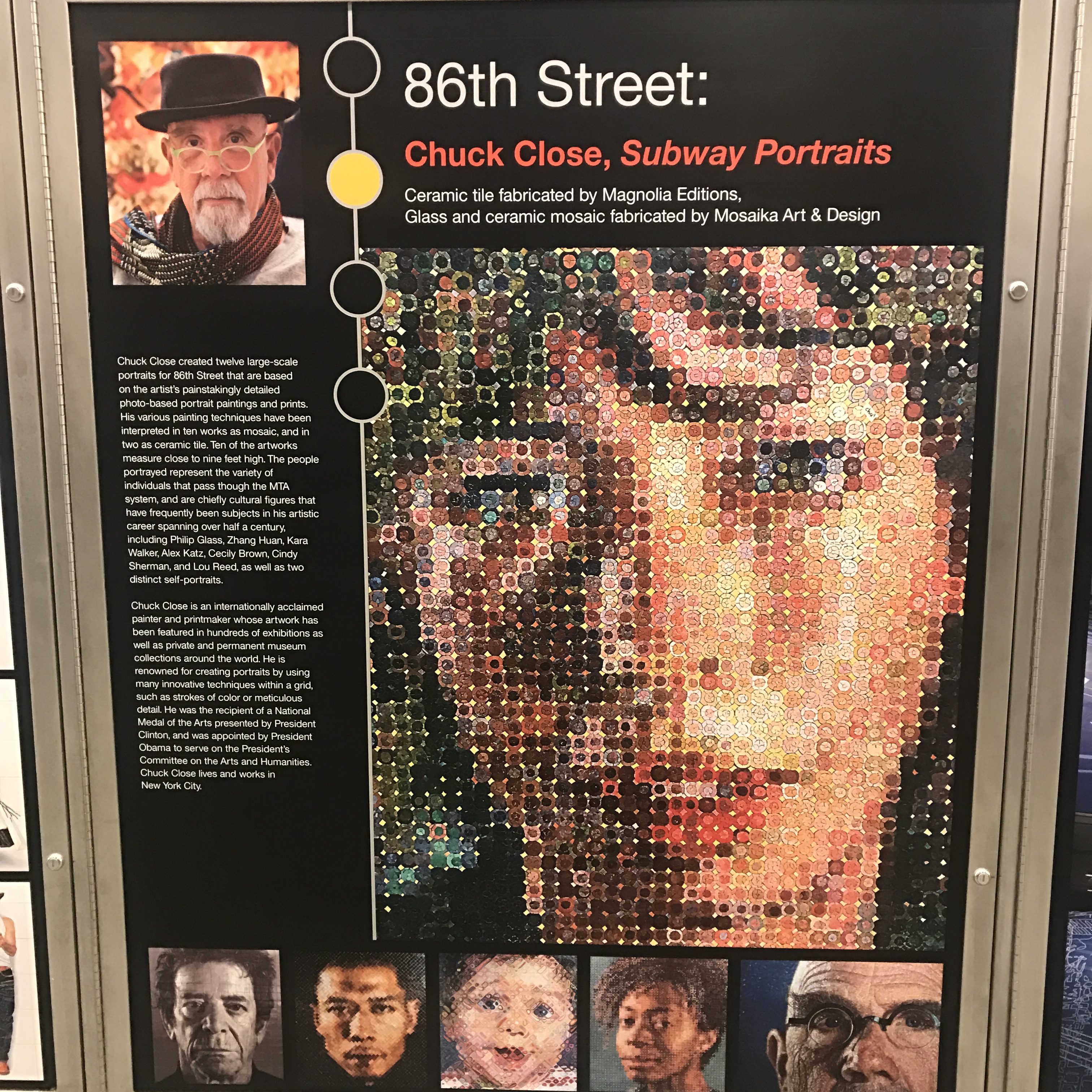
At 86th Street, the art is by Chuck Close, using tiled mosaics to create his familiar portraits.

“Our next and last stop – 96th Street.”

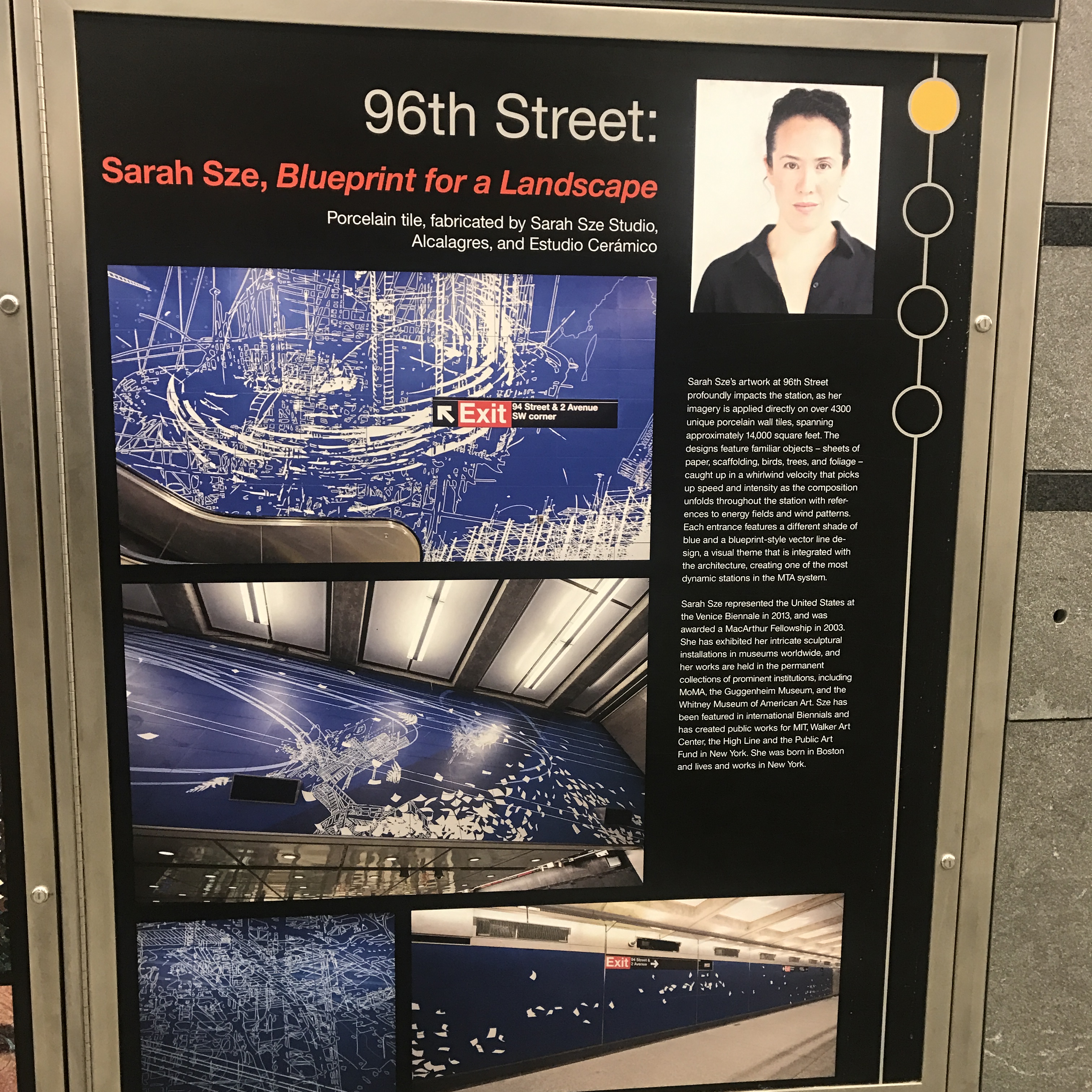
The artist represented at 96th Street is Sarah Sze.

img_4008

Some of the trains have special decorations:

In the few days since the Second Avenue subway has opened, I have ridden it multiple times, and have been impressed by the convenience and efficiency of the line. I have been telling customers for years that real estate on the Upper East Side east of Third has been a value play and that prices will likely go up with the completion of the subway, and I think that will prove itself true over the next few years. The flip side of this, of course, is that Yorkville may find itself less of a bargain for renters or first time buyers, but this is inevitably the cost of improvements in any neighborhood – they benefit those who bought at lower prices and are ready to sell, but may force some renters out or lead some to be priced out of the area.

In the far distant future, they may extend the line through East Harlem up to 125th Street, and that, along with recently announced redevelopment plans along Second, Lexington, and Madison Avenues in East Harlem, could completely transform that area as well.  New York City is constantly changing, and the successful completion of the Second Avenue subway shows that even developments that seemed like a mirage shimmering in the distance can become real – and, eventually, even routine.

img_3977

Lenox Hill

Image

Although there are many wonderful parts of New York City, and I plan to be walking through many in upcoming posts, after describing parts of Yorkville, Carnegie Hill, and Upper Carnegie Hill into El Barrio (see previous blog entries), it made sense to complete my tour of the Upper East Side with a dérive in Lenox Hill. As a reminder, Wikipedia defines a dérive as “an unplanned journey through a landscape, usually urban, on which the subtle aesthetic contours of the surrounding architecture and geography subconsciously direct the travellers, with the ultimate goal of encountering an entirely new and authentic experience.” As mentioned in earlier posts, I find that walking through a neighborhood gives me the best instinct for what it would be like as a place to live .In addition, it allows me to connect with the city in a more tangible way, as a part of it rather than as an observer of it.

Lenox Hill is an area of the Upper East Side of Manhattan between 77th Street and 60th Street, and between Lexington and Fifth Avenues. Lenox Hill itself was at what is now Park Avenue and 70th Street, and named for Robert Lenox, who owned much of the land in this area in the early 19th century (interesting fact: he was the executor of Archibald Gracie’s will, the same Gracie who built the mansion now used as the New York City mayor’s residence in Carl Schurz Park).

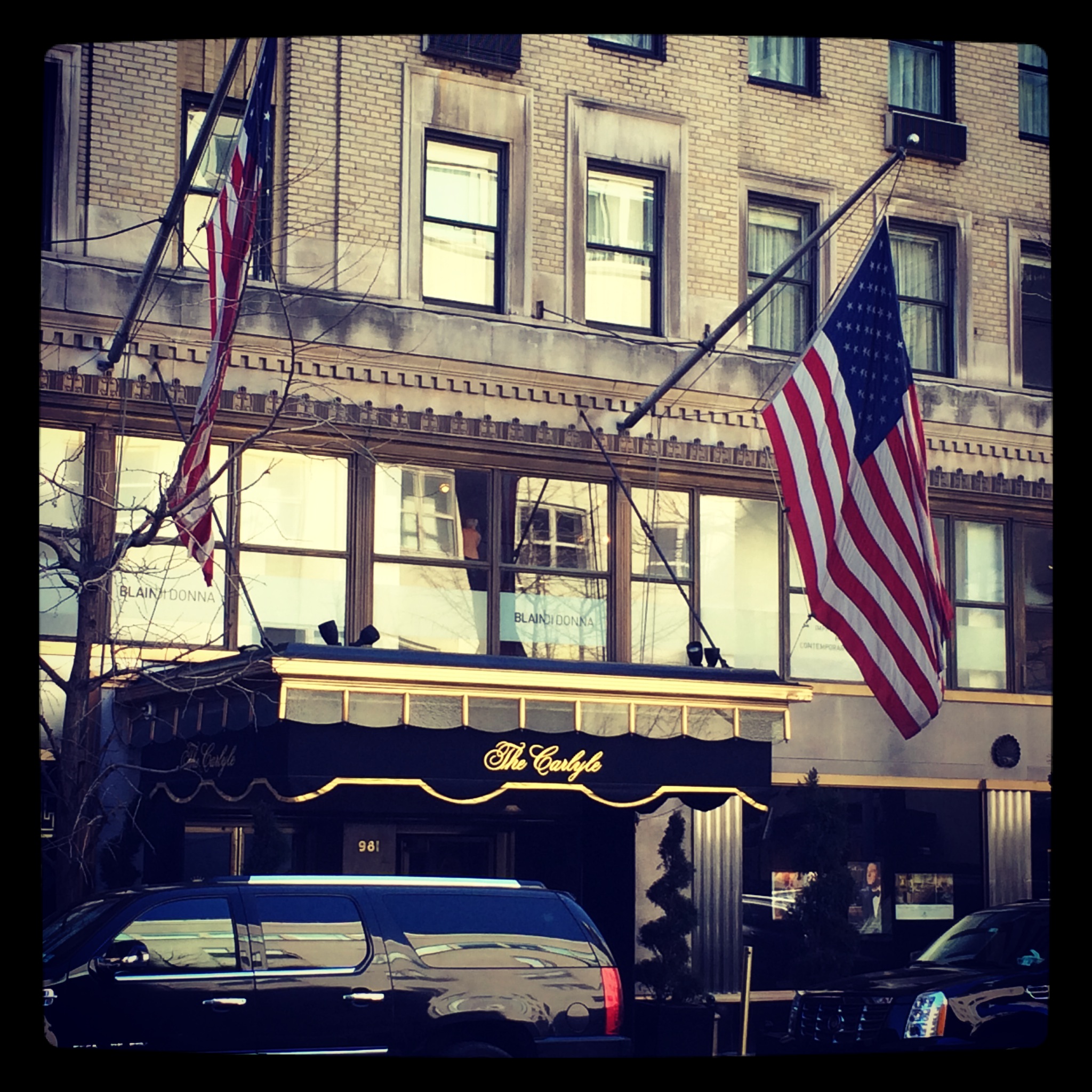
Starting on Madison and 77th, you can see two classic Upper East Side hotels – the Mark on 77th between Fifth and Madison, and the Carlyle (known as “The New York White House” during President Kennedy’s term) on Madison between 77th and 76th Streets. Both have a few residences as well as hotel rooms, if a home with maid and room service is what you have always wanted!  The Carlyle is also the home of Café Carlyle, the famous supper club where you can have dinner while hearing live cabaret or jazz performances. Walking south on Madison, you also run across two unique pharmacies: Zitomer’s, on Madison between 76th and 65th, and Clyde’s on Madison and 74th. Both are a far cry from the chain pharmacies that proliferate every few blocks –  if you are looking for an obscure European skin care product or a scented candle from Santa Maria Novella in Italy, try one of these distinctive shops.

At Madison and 75th Street is the new home of the modern art collection of the Metropolitan Museum, in the brutalist building once occupied by the Whitney Museum before its move to the Meatpacking District at the southern end of the High Line Park.

Continuing south on Madison is an enjoyable stroll, with the window displays of the designer shops themselves providing an artistic experience. Looking right while heading south on Madison, you can see beautiful rows of townhouses lining the blocks, and Central Park beckoning just on the other side of Fifth Avenue. Looking left, you see quiet residential blocks and, just one block over, the majestic expanse of Park Avenue. Fairly unique to this neighborhood is the contrast between the densely packed shops and restaurants all along Madison and Lexington Avenues, and the primarily residential expanses on the cross streets and along Fifth and Park Avenues.