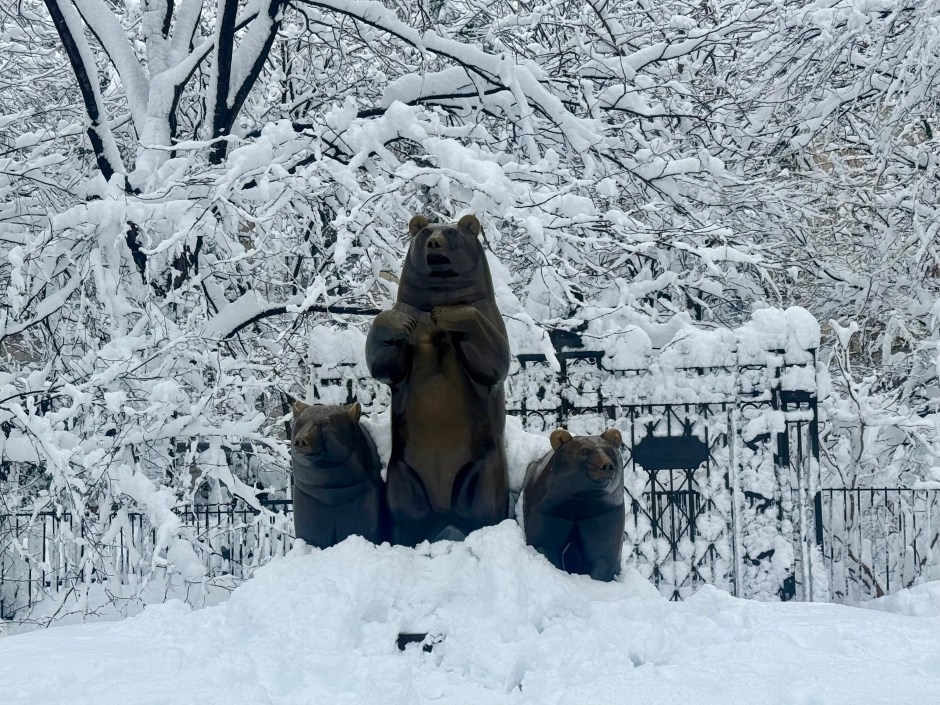
The Blizzard of 2026 in NYC

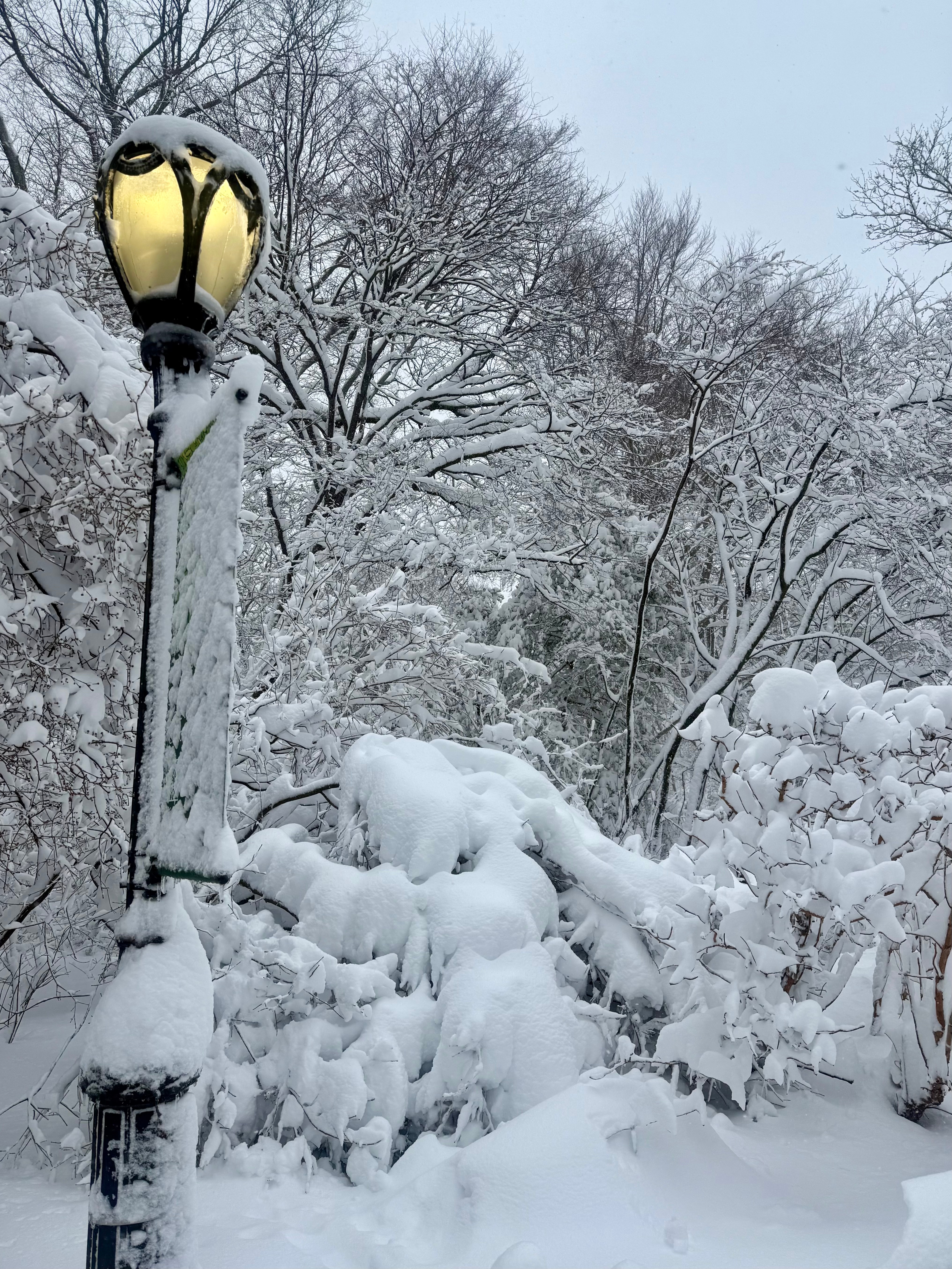
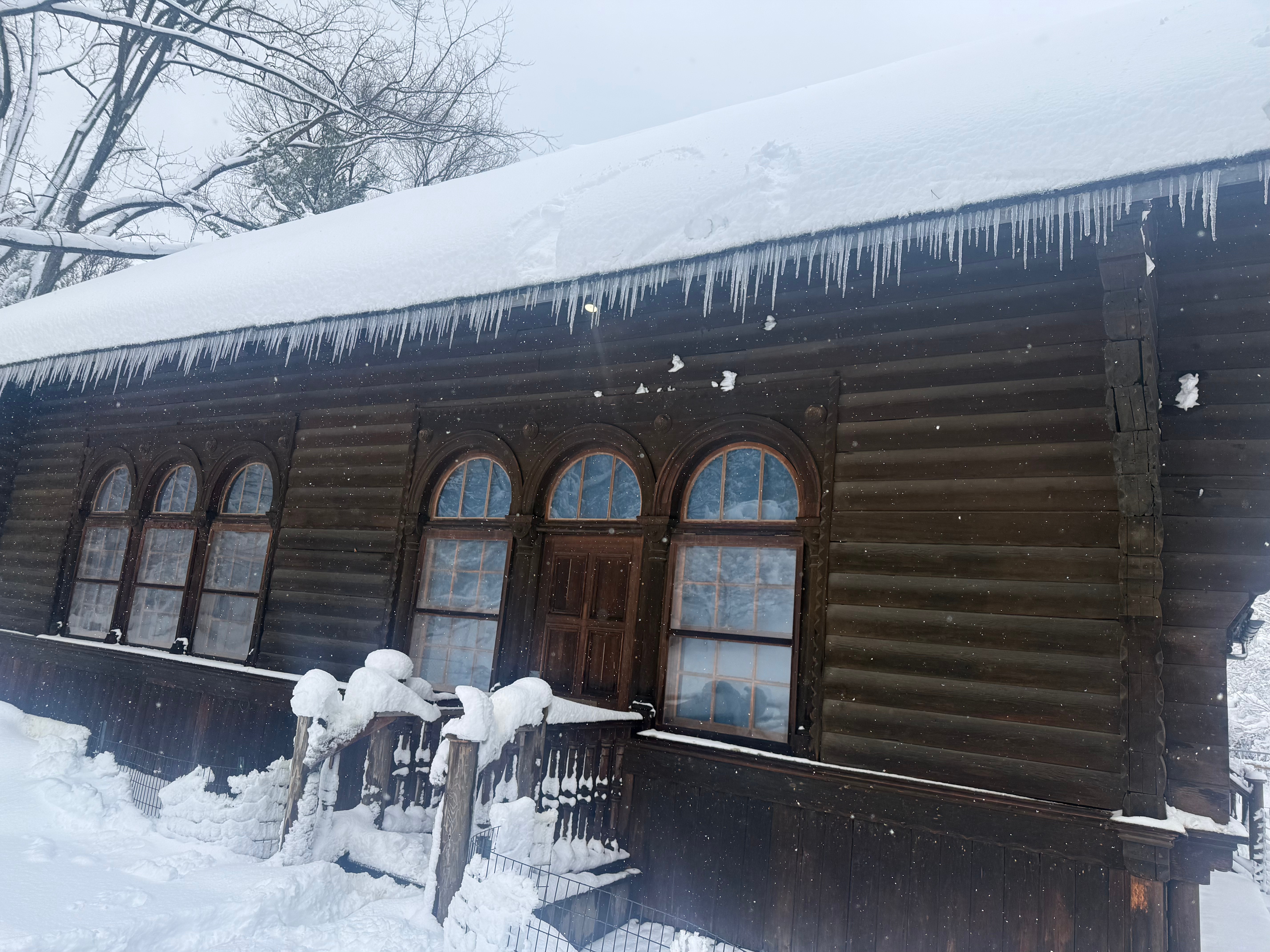
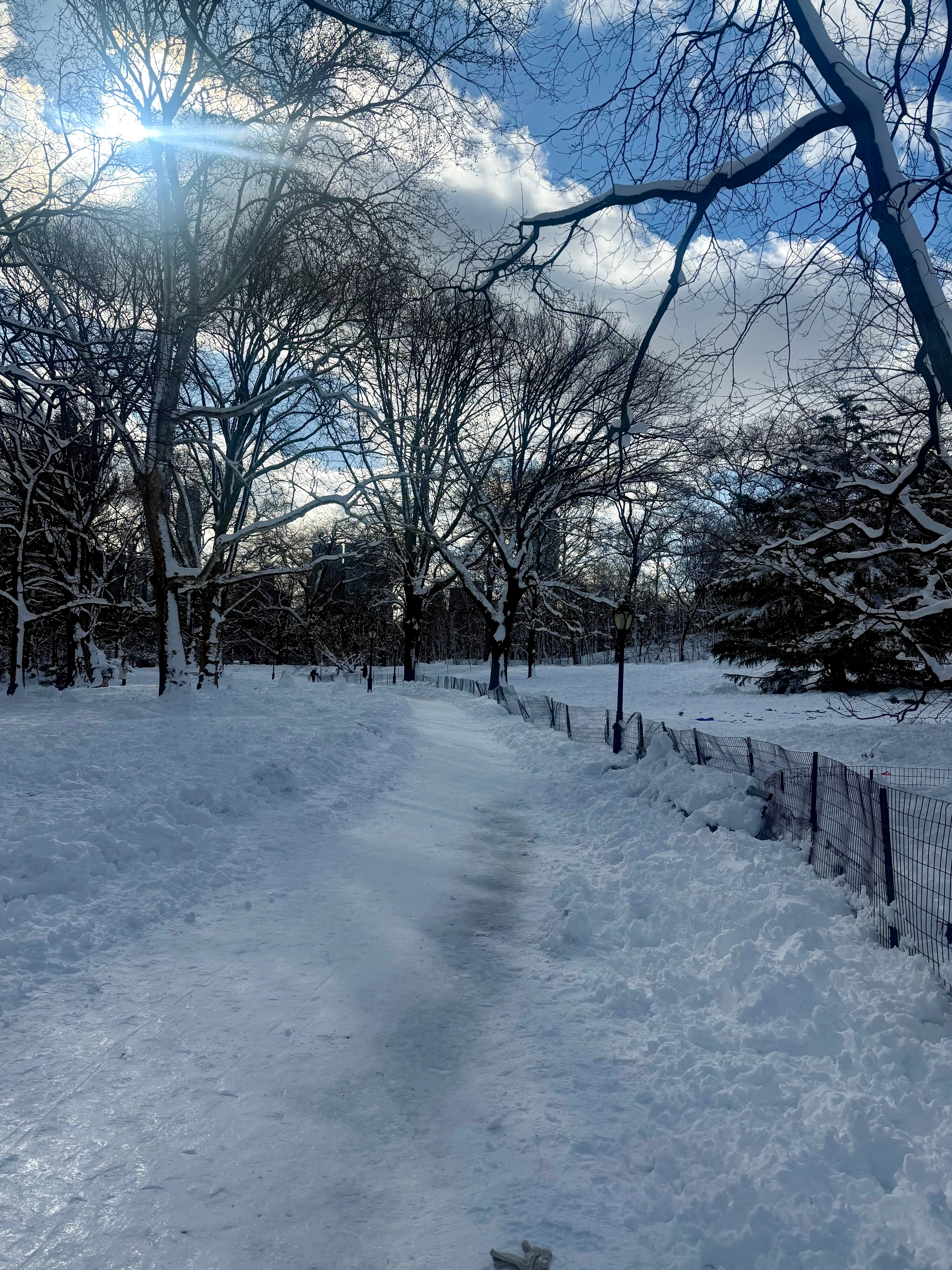
In January of 2026, New York City experienced a significant snowfall followed by weeks of temperatures much below average. You can see a few videos I made on Instagram from this snowstorm of the morning of the snow, snow removal in Central Park, a dog being carried down snow steps at the Bethesda Fountain, and of sledders in Central Park the day after the storm. Because of the frigid temps, the mountains of snow that formed where plows had pushed the snow off the roads hardened into ice. Citibikes were basically unusable for weeks, cemented into huge drifts of snow. Things had just begun to improve (although there was still snow around) in mid-February when there began to be murmurings of a possible big storm ahead. By February 20, they were predicting a blizzard (the definition of a blizzard has to do with low visibility due to high winds) with significant snowfall. The Blizzard of 2026 began on Sunday, February 22, and ended late afternoon on the 23rd, and this is what it was like in New York City – at least it’s my experience.
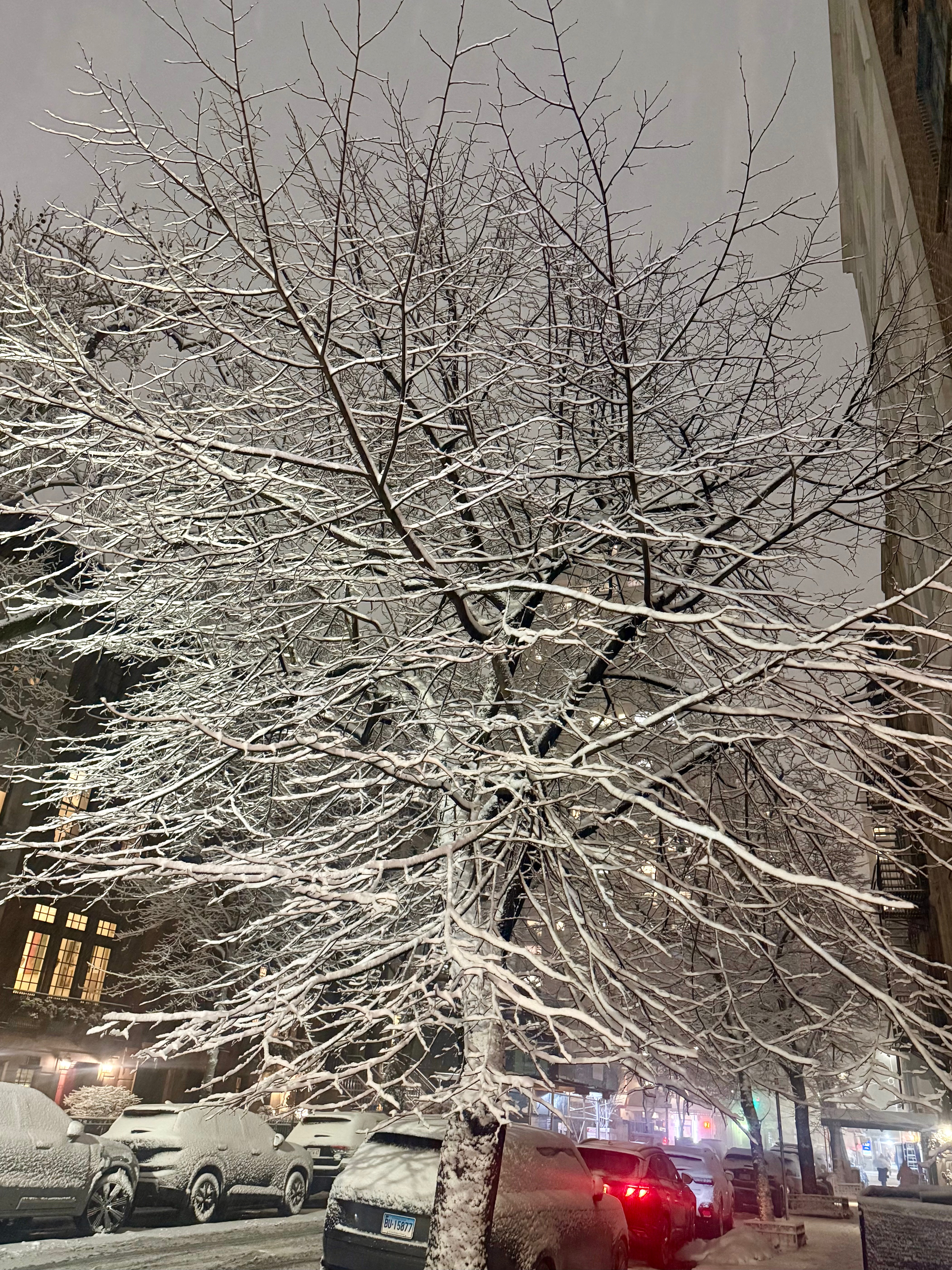
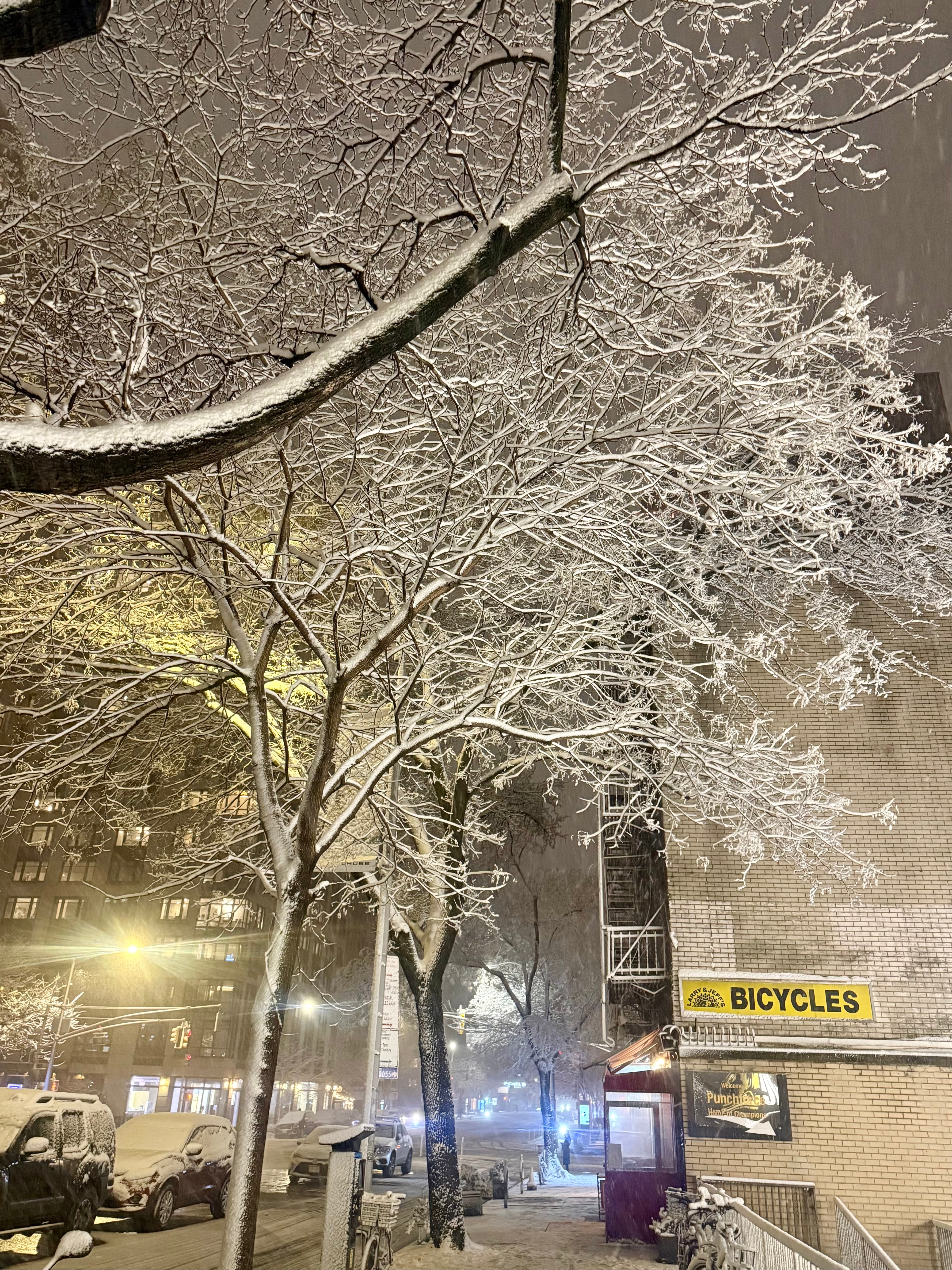
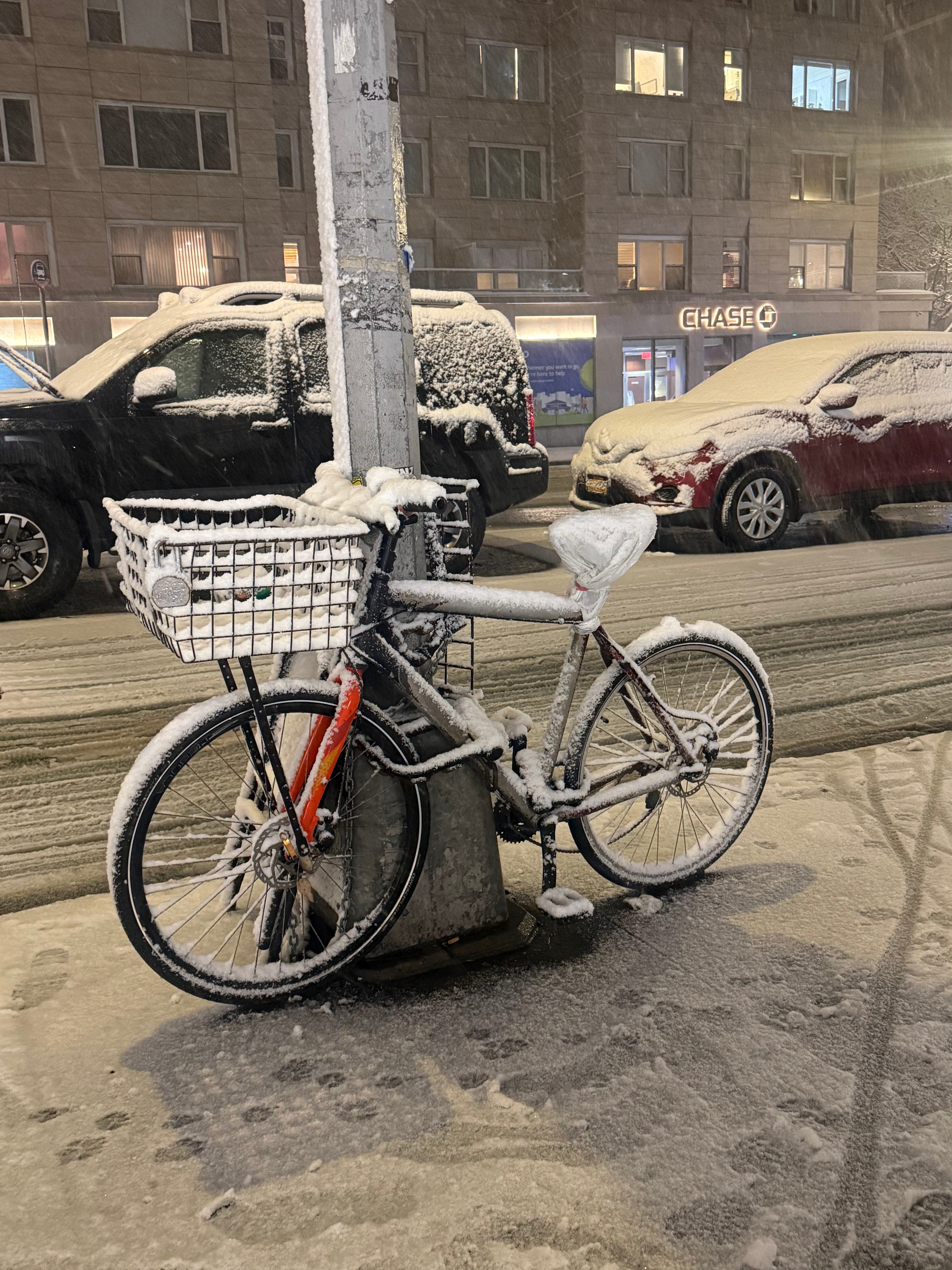
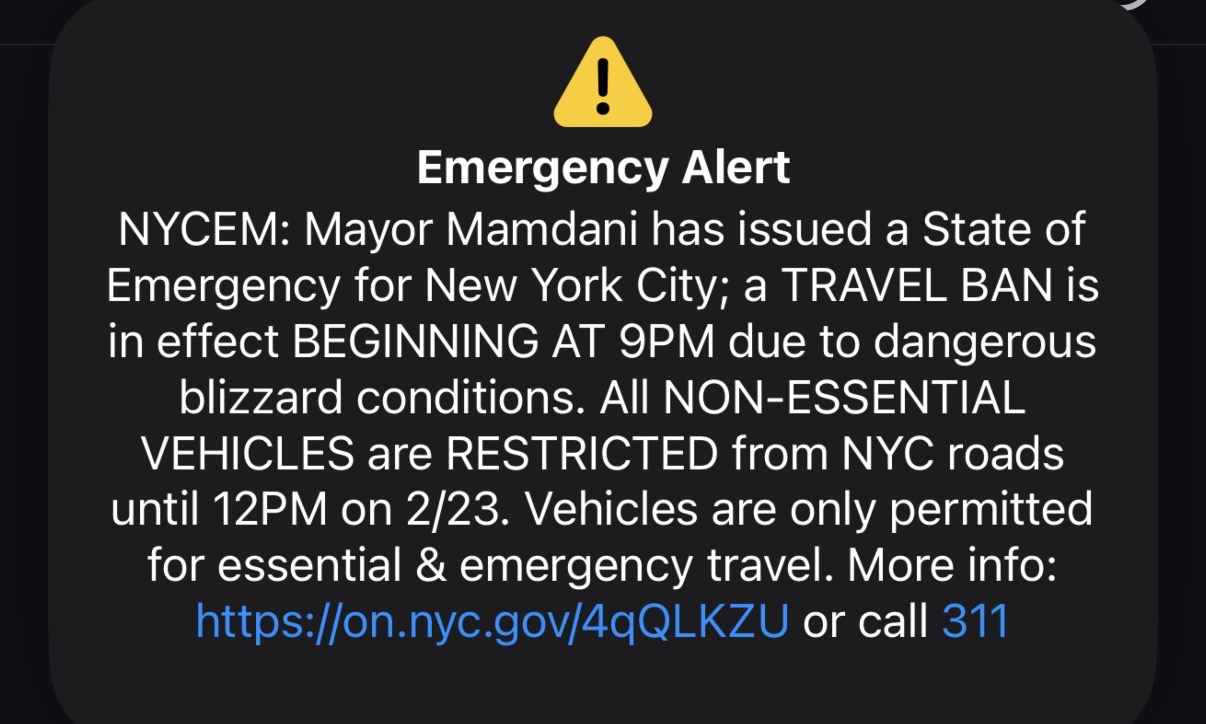
It started snowing lightly Sunday morning, but was really barely sticking until late afternoon. By 7PM, however, the snow was coming down and the wind was blowing. The photos above were taken on the Upper East Side in the evening. Around 8PM the emergency alert (photo above but thankfully I am not including the siren!) for NYC went off, startling everyone. There was a travel ban starting in the city at 9PM, lasting through noon on Monday. The snow and the wind increased overnight. I tried to take photos out my windows on Monday morning, but just captured whiteness.
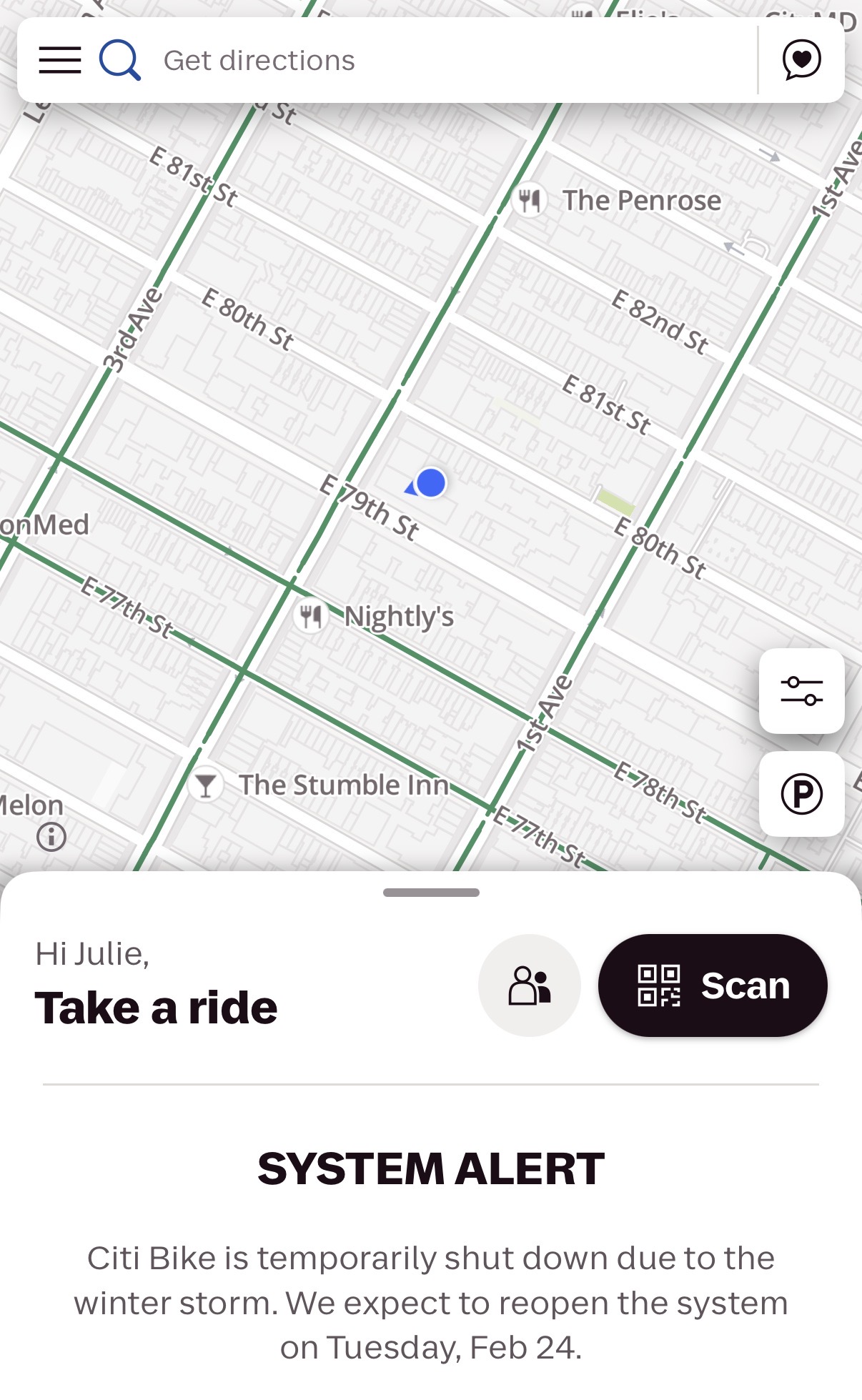
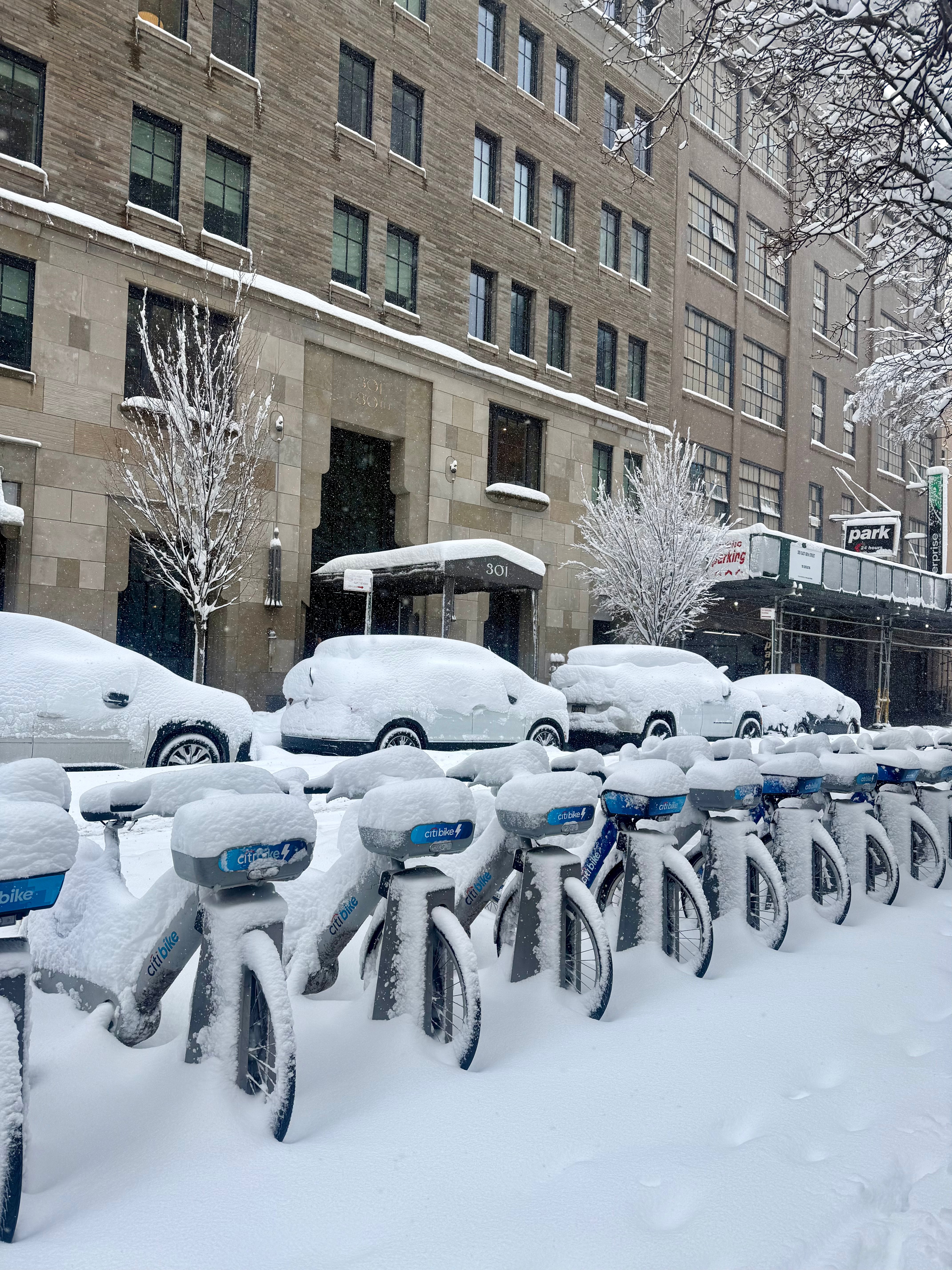
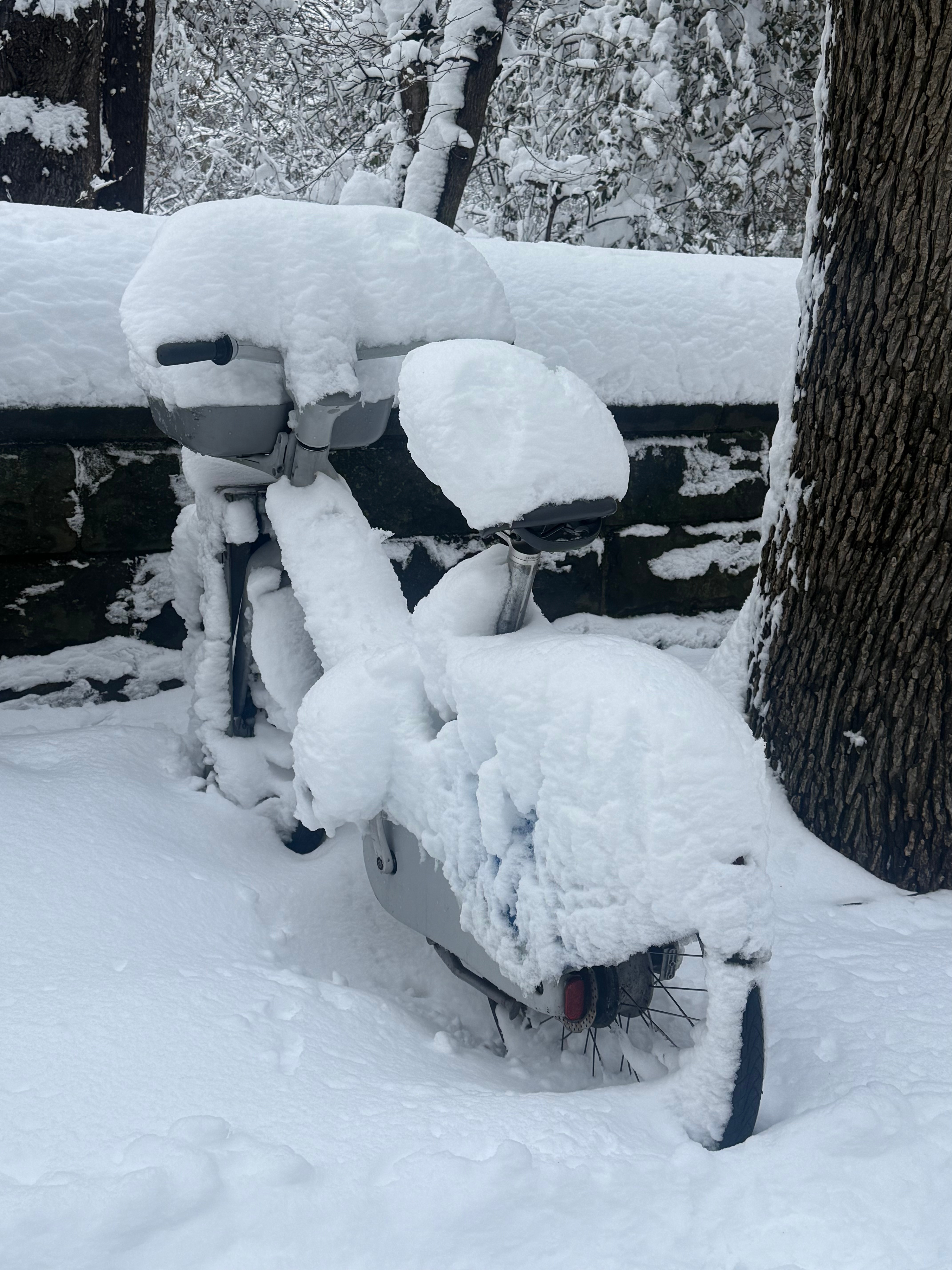
Needless to say, my annual Citibike membership has been challenging to use this winter! I can always bundle up enough to ride even in the cold in the winter, but there is nothing that can be done when the bikes themselves are snowed in.
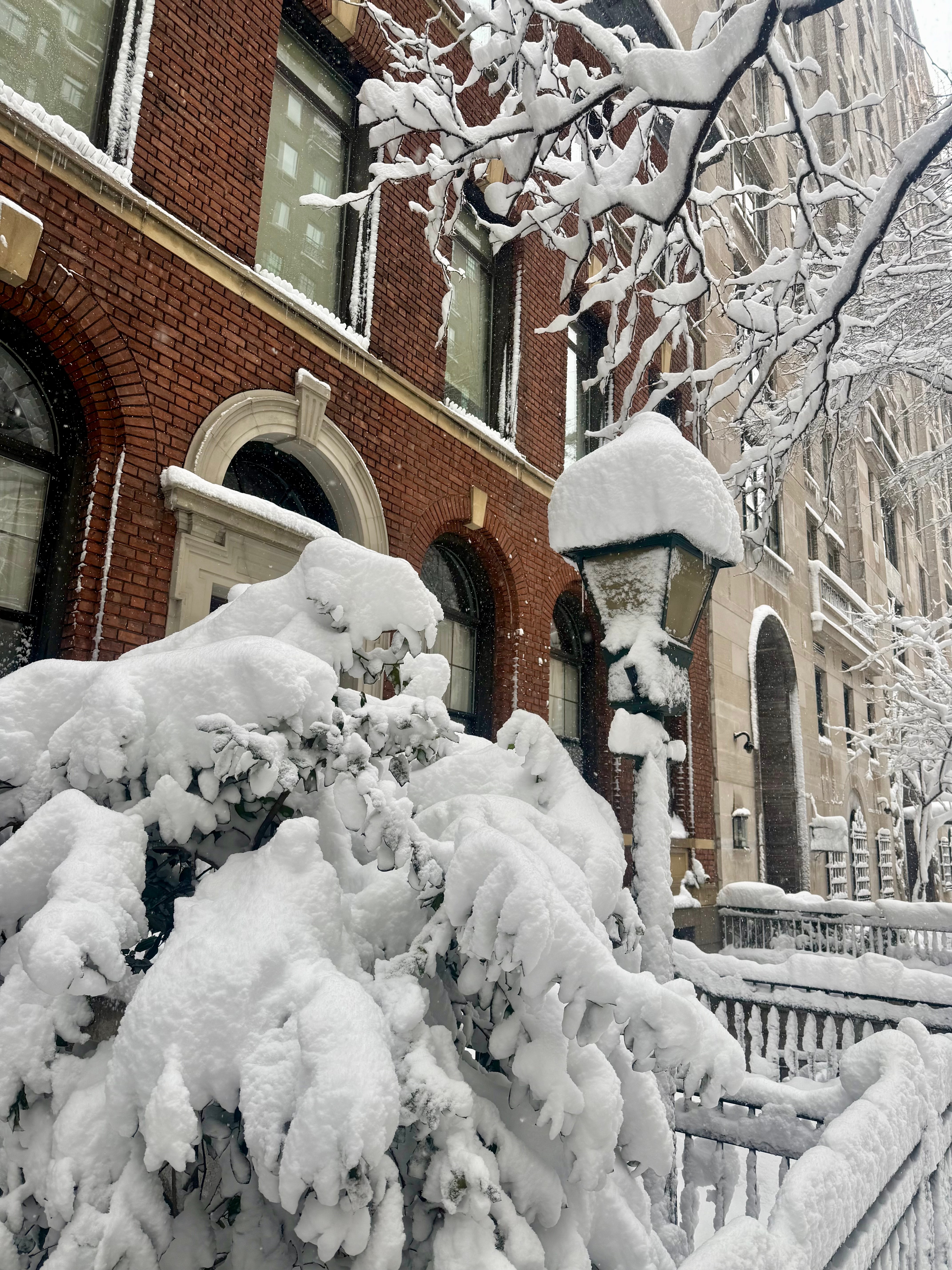
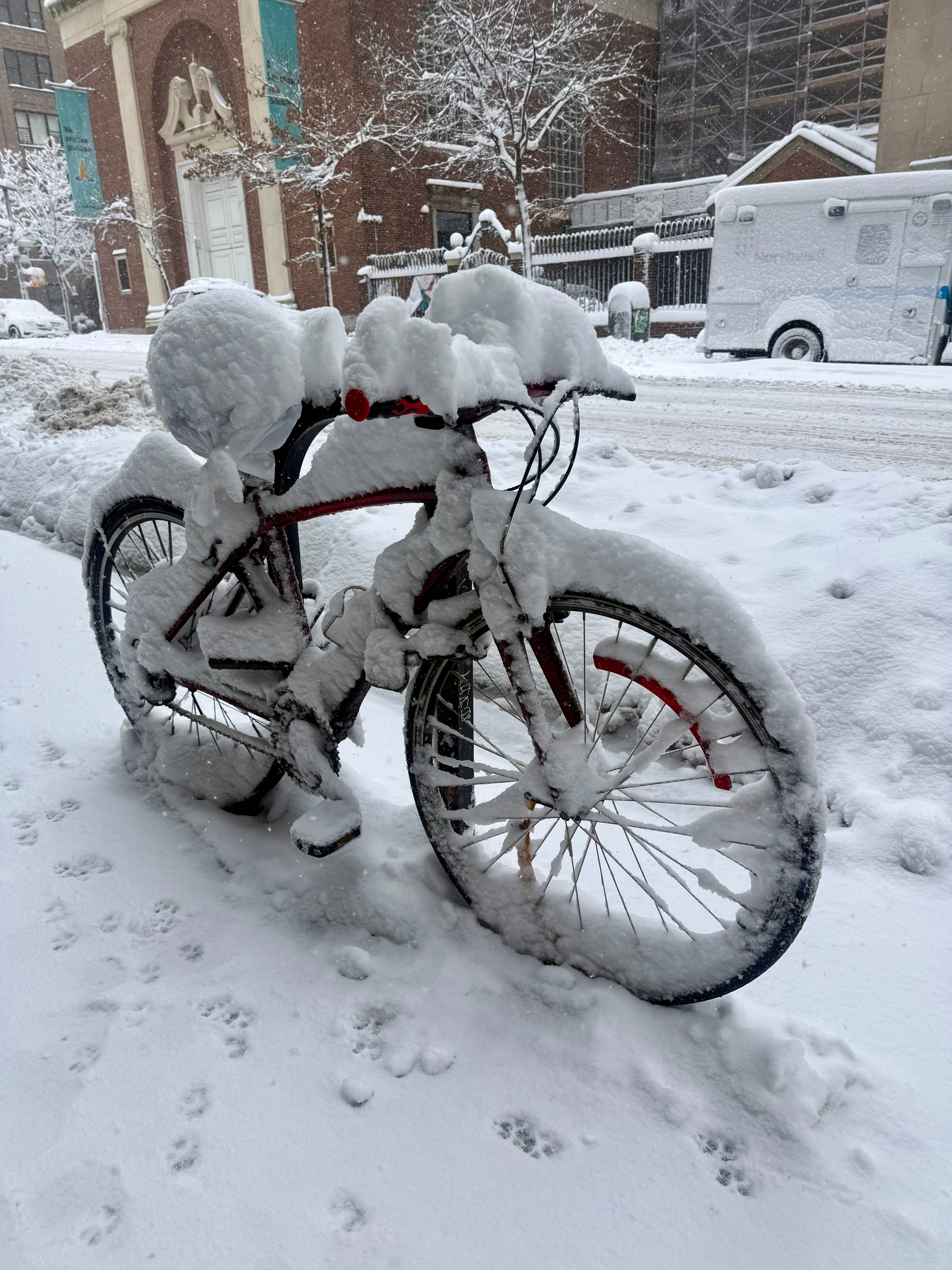
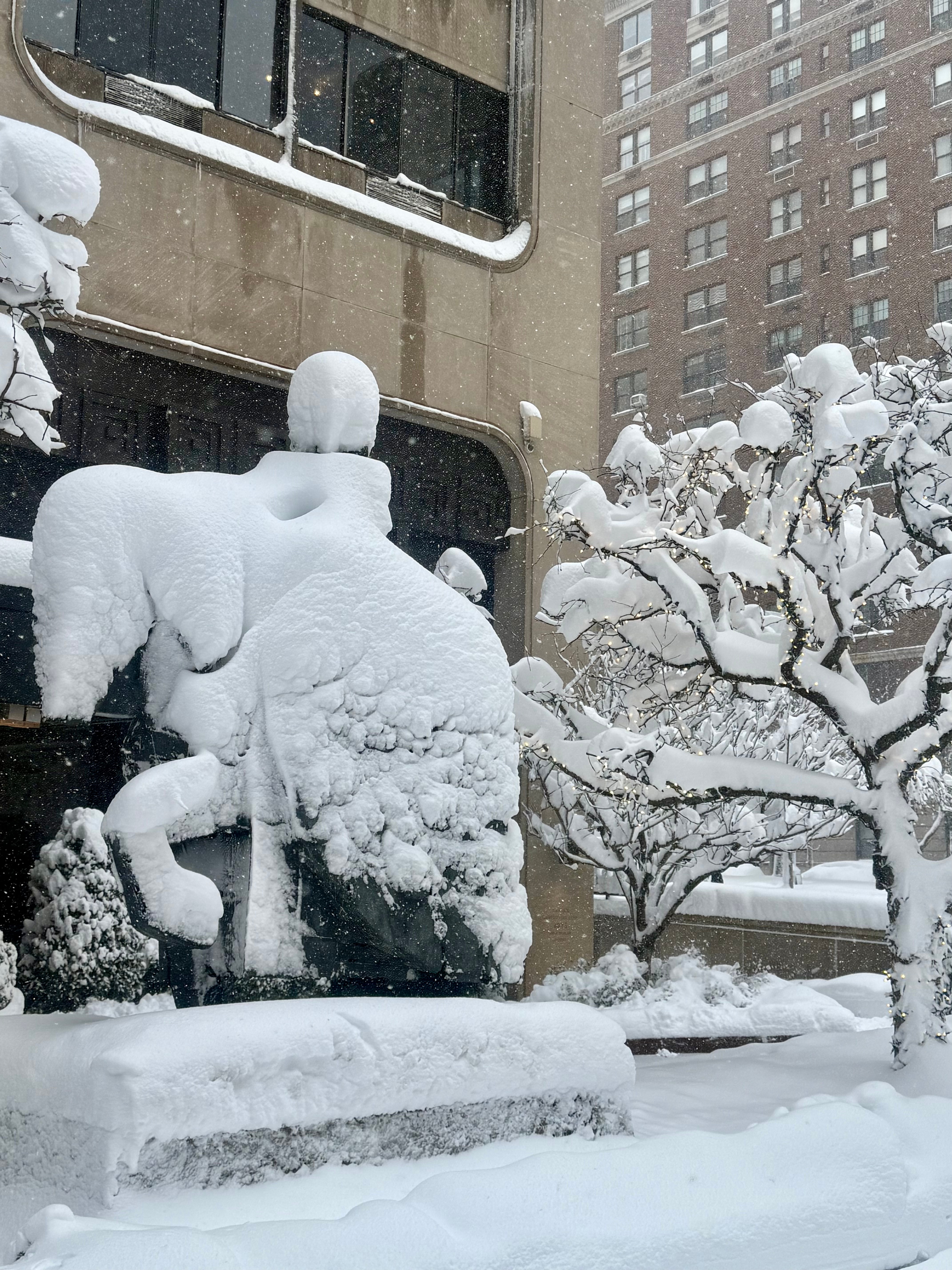
I went out Monday morning when it was still snowing – I think at this point we had 15 inches or so, and we ended up with just under 20. There were plenty of people out, and honestly, it was gorgeous (see my Instagram reel from that morning).
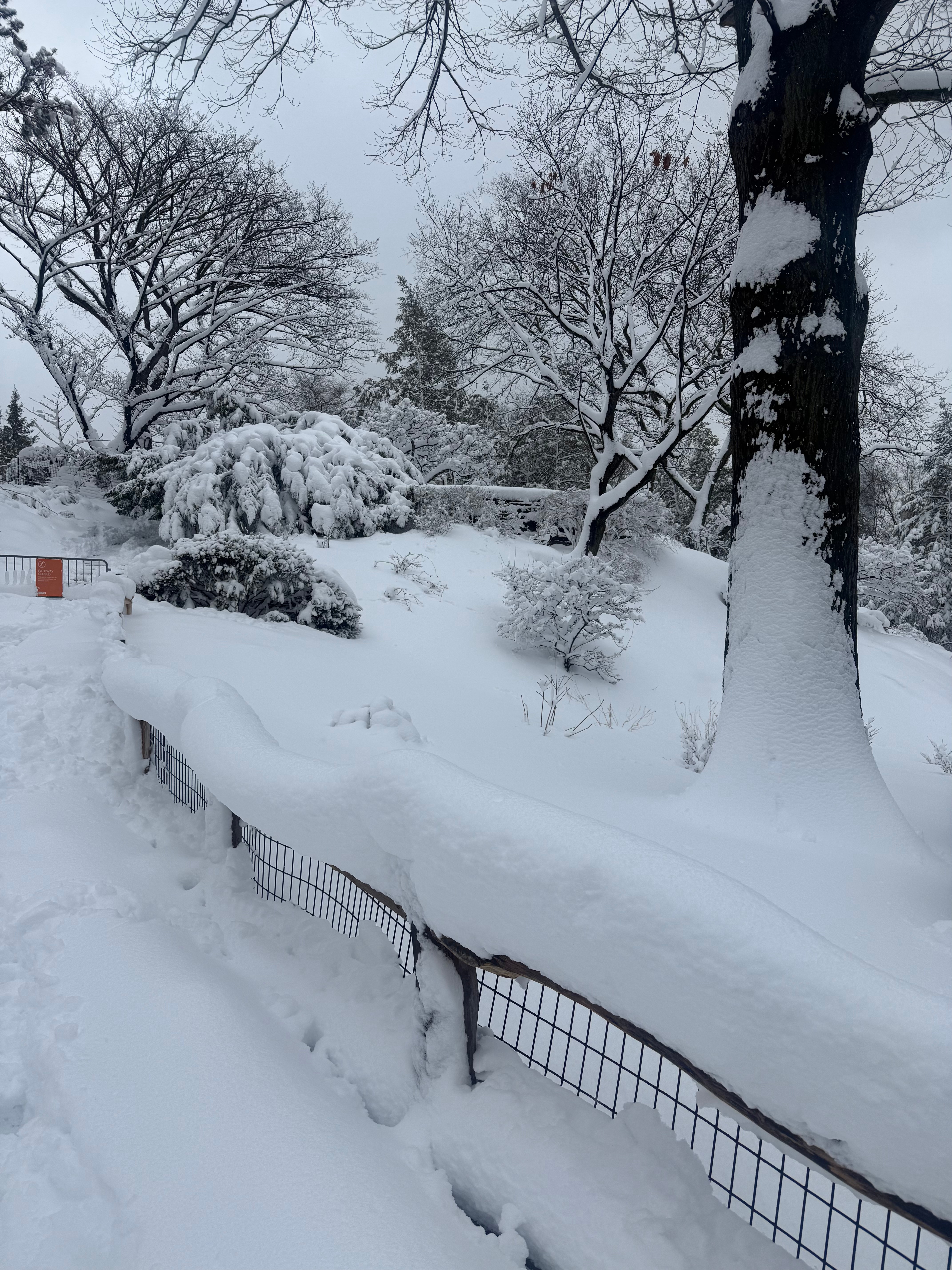
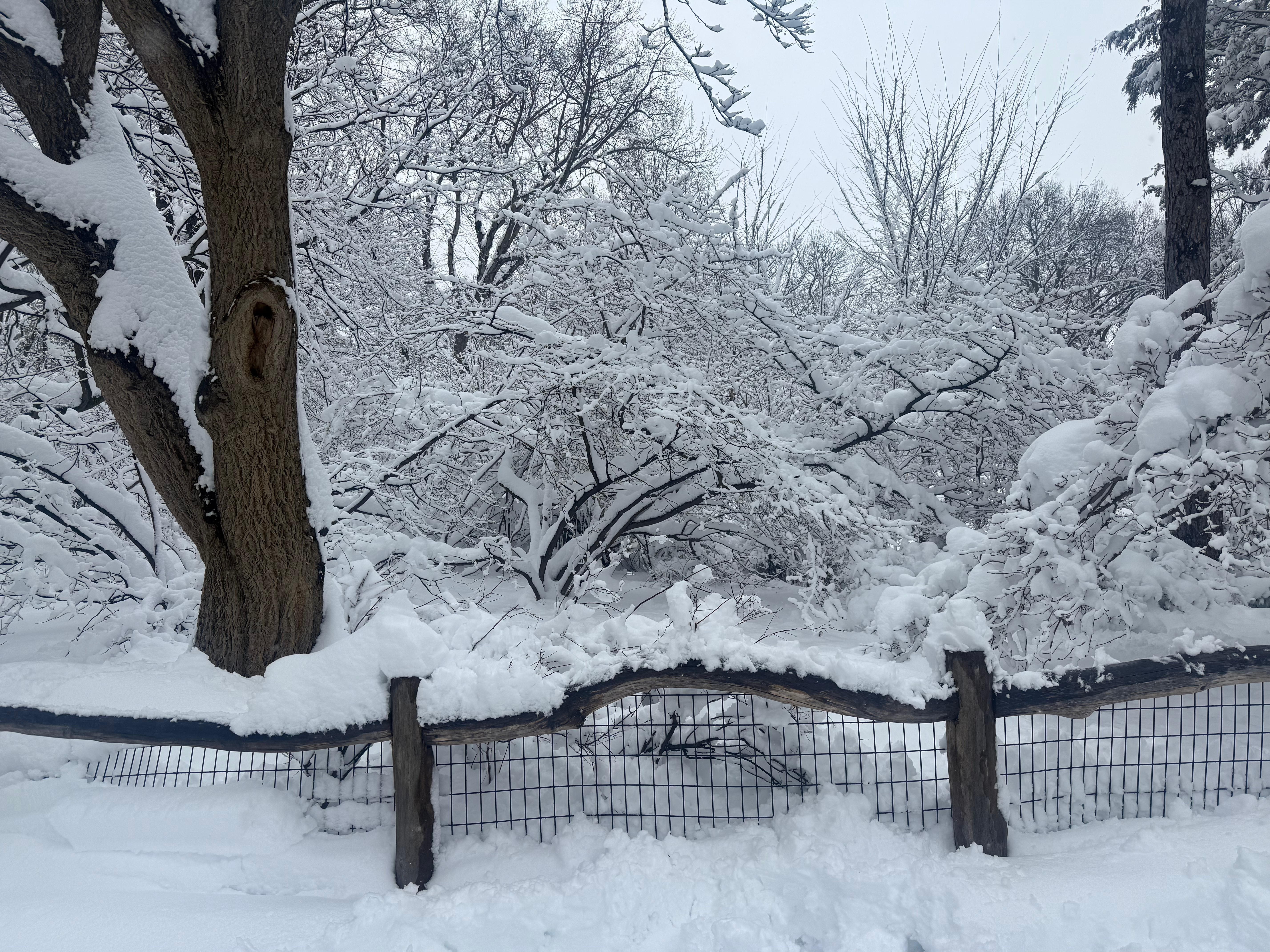
It was still lightly snowing when I went back mid-afternoon, but much of the accumulated snowfall had already occurred.
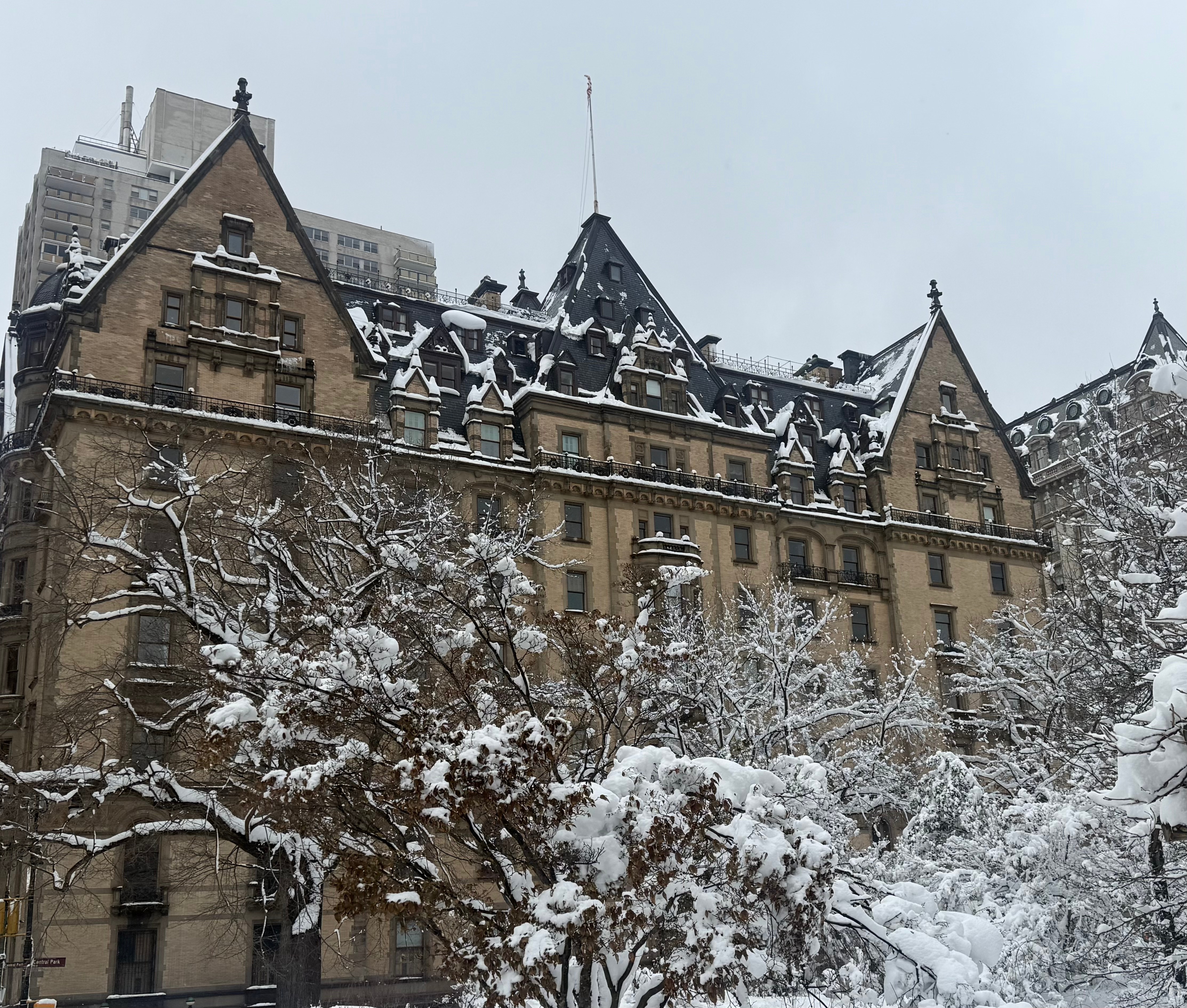
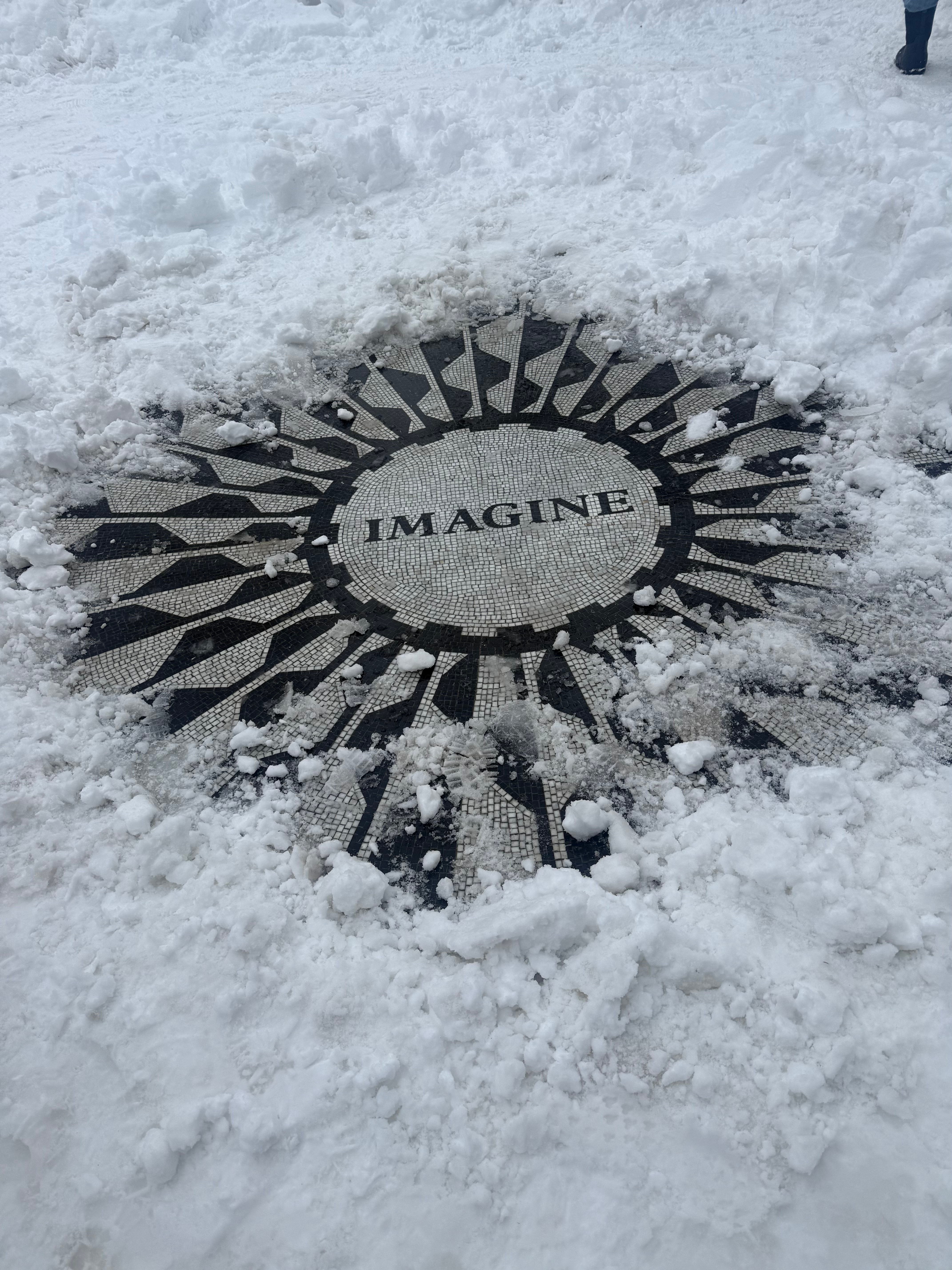
The Dakota looked stately as always, frosted with snow. And someone always keeps the Imagine mosaic honoring John Lennon in Strawberry Fields uncovered. The most entertaining and surprising thing I came across that Monday afternoon was winter sports at the Bethesda Fountain! Brave souls were skiing or skateboarding down the snow covered steps leading down to the fountain (see the video here).
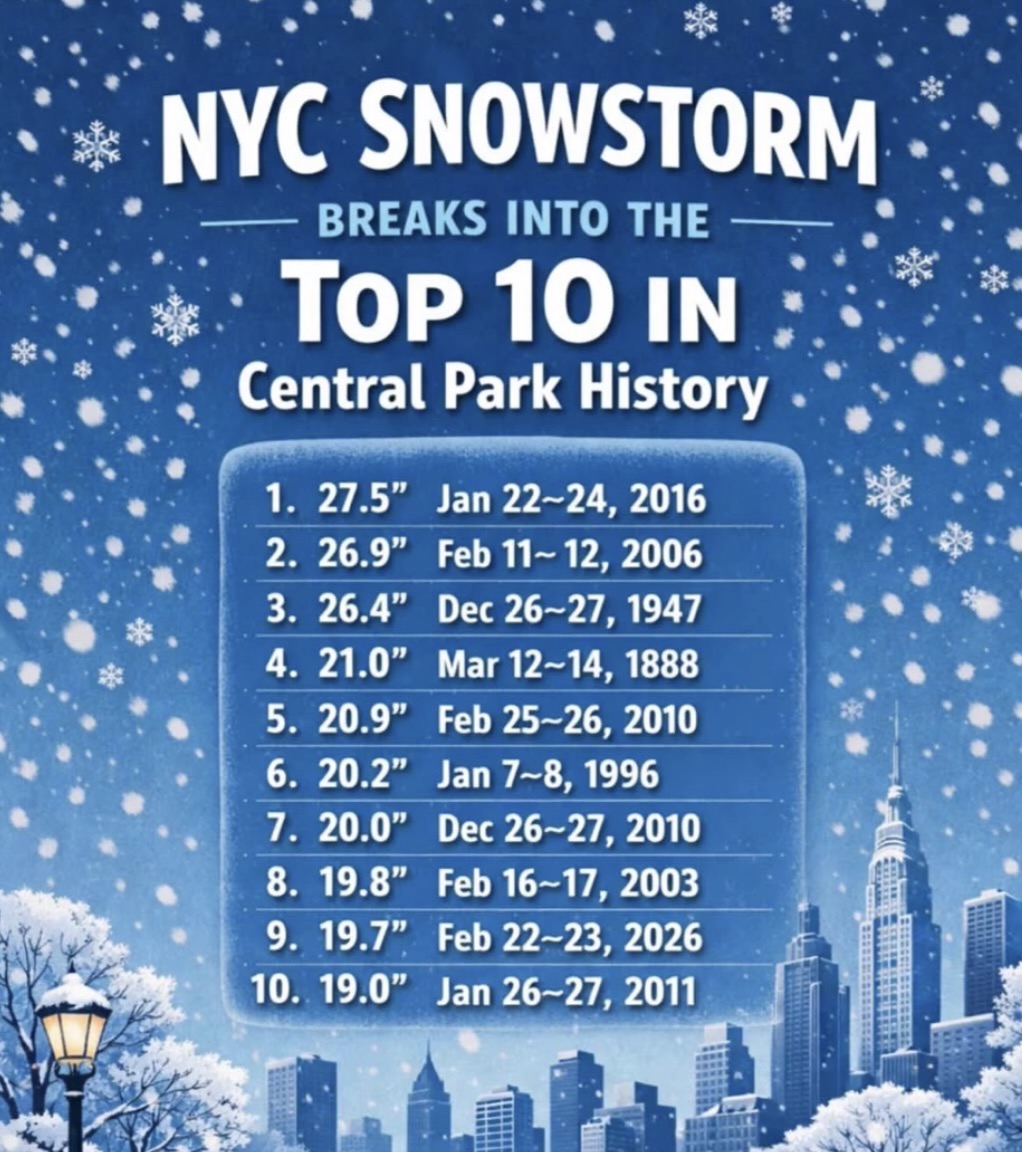
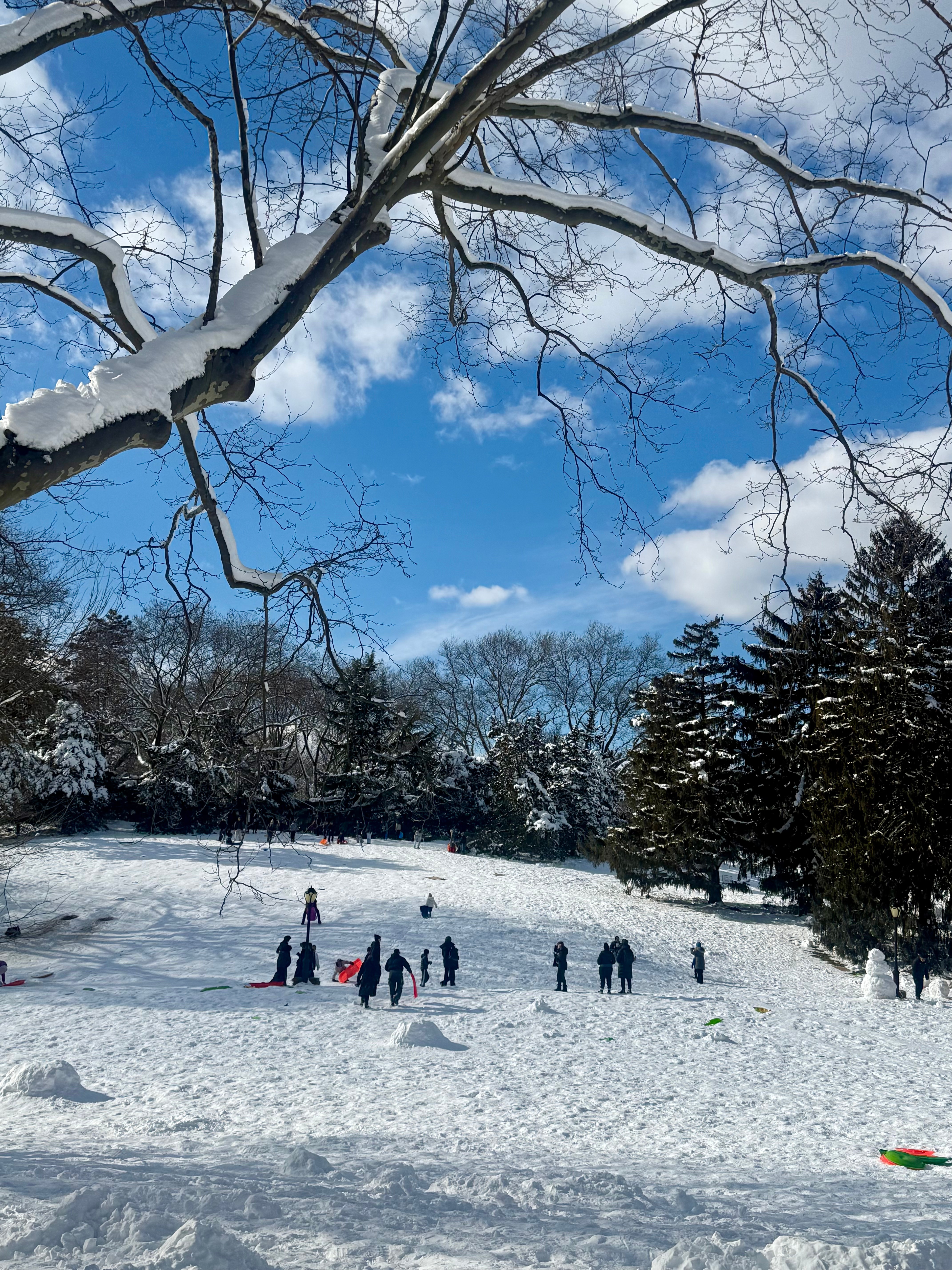
In the end, we barely squeaked into the top ten snowstorms (I am amazed that I have personally experienced all but two of the top ten – I was not alive for the 1947 or the 1888 ones!). The major impact of this storm was the blizzard conditions, and travel was certainly unsafe for a few days. In general, though, I found that snow removal was better than last time. With temperatures less arctic, it made snow removal easier than the storm with less accumulation the previous month. The packed down snow in Central Park that had turned to ice overnight was treacherous for walking, but great for sledding.
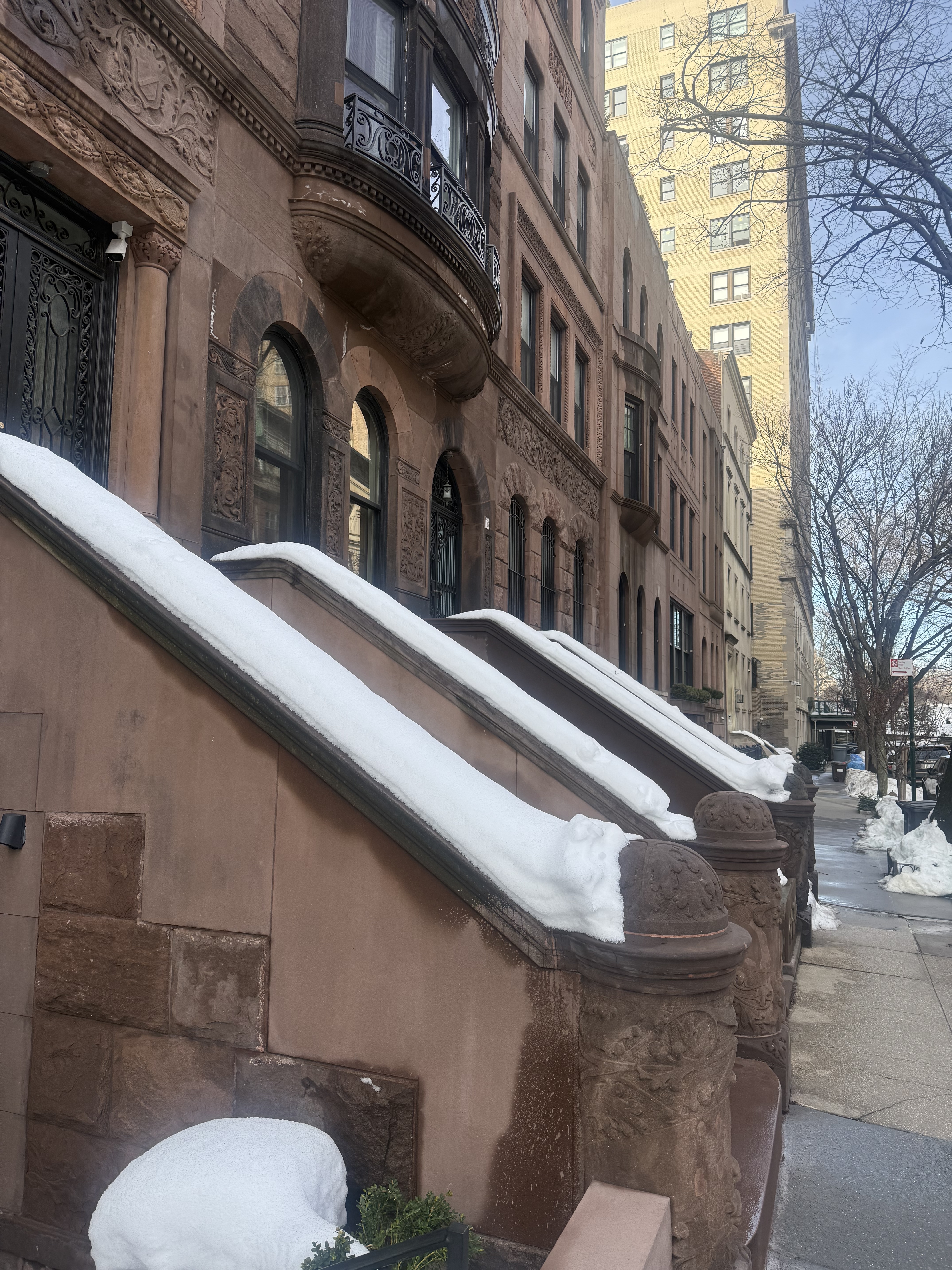
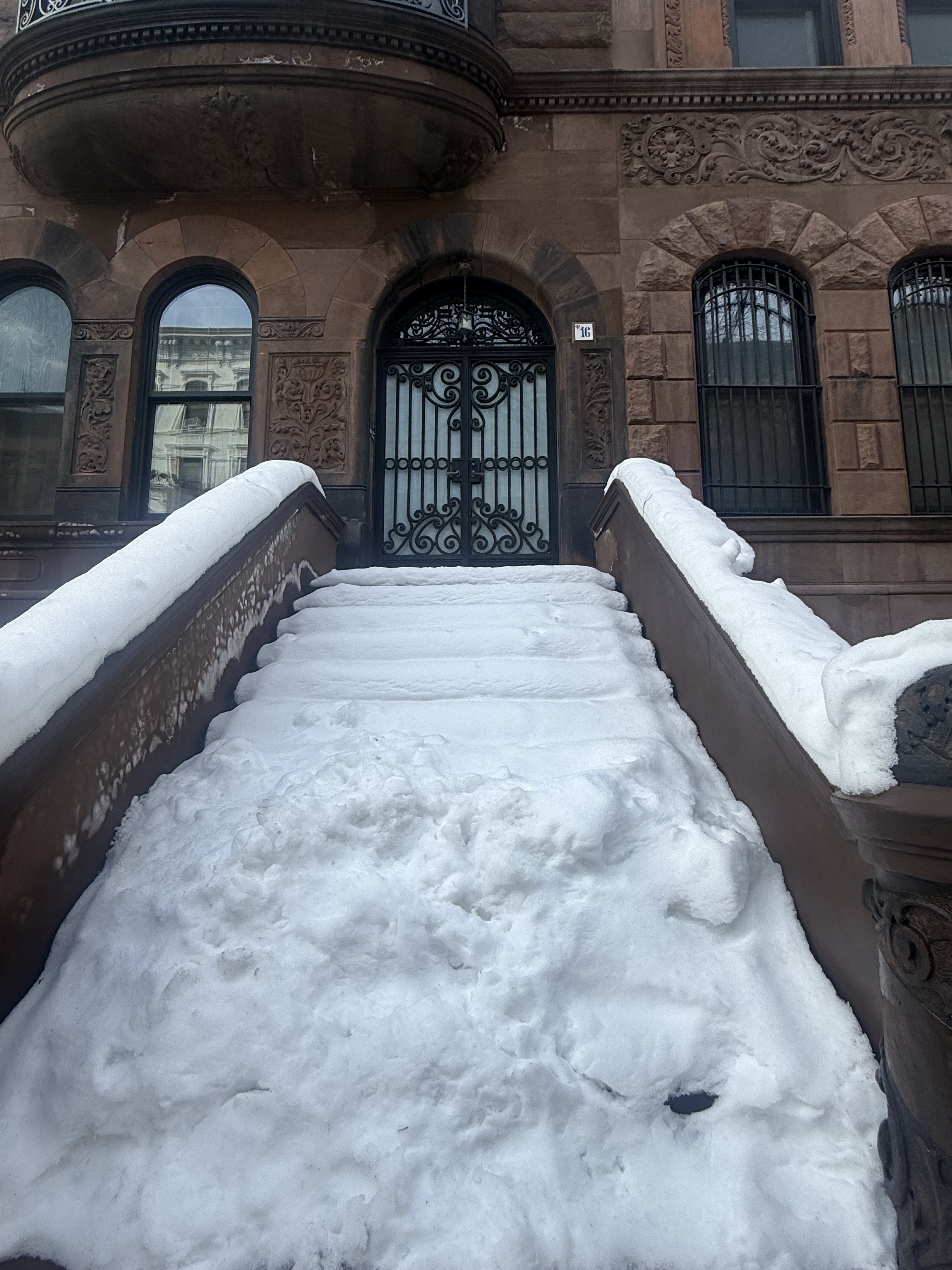
Three days after the snowstorm, there were still townhouses that had not cleared out their snow, and large drifts of snow remained.

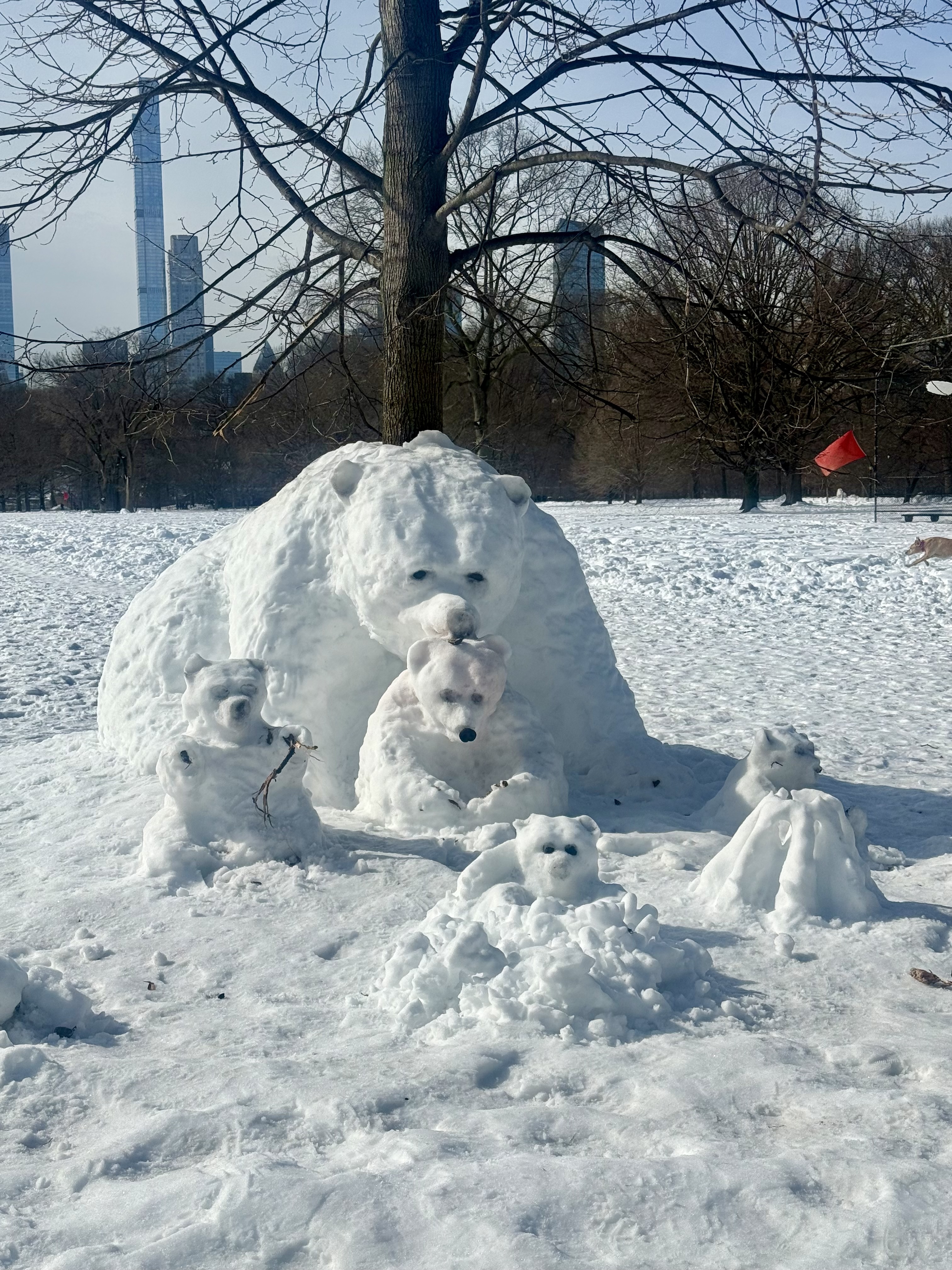
Polar Bear Fest is an event that takes place on the Great Lawn in Central Park after every significant snow fall. Subtitled, “Don’t let the earth melt,” this is a creative demonstration, meant to remind us of the dangers of greenhouse gases and climate change. Just noticing that eight of the top ten snowfall amounts in New York City have occurred since 1996, in just the past 30 years, is alarming. In the midst of all the beauty that New York City has to offer when covered in white, the polar bears on the Great Lawn remind us of the fragility of our environment, hopefully rekindling our desire to help make meaningful change for the benefit of our beloved Mother Earth.

Real estate and the human creative spirit

Dakota

Recently I was at the Association for International Photography Art Dealers (AIPAD) show at the Park Avenue Armory. The abundance, diversity, and quality of the art shown in one space almost created a feeling of sensory overload, and I started to think about how thrilling it is to be in any place where the creative impulse is expressed by people, whether it be visual art, theater, dance, music, or architecture and design. The need for creative expression is fundamental to how we see ourselves as humans – the recognition we feel when we view the cave paintings from Paleolithic people living 40,000 years ago in Lascaux, France, emotionally spans the gap in time between us and them.

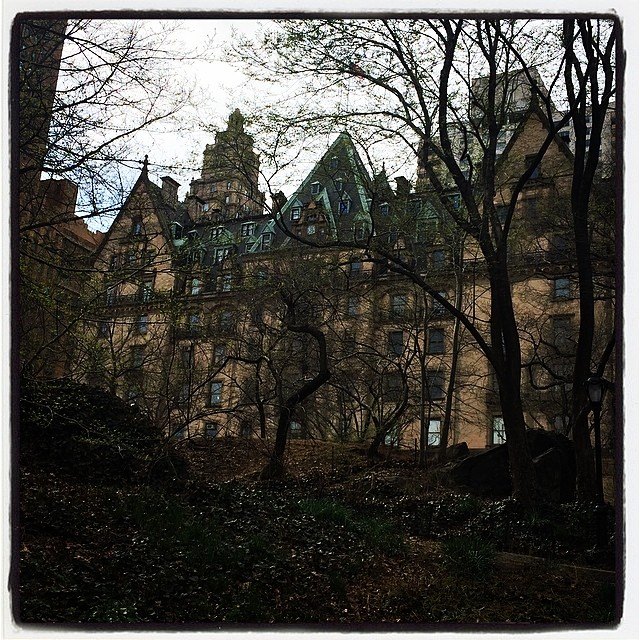
After leaving AIPAD, my thoughts turned to how we express our creativity when it comes to where we live. It might be a more efficient use of valuable real estate space to have every building in Manhattan exactly the same, with apartments only differing in how much space and how many rooms someone needed (and perhaps whether or not you felt the need for a doorman). The gables, terracotta ornaments, and decorative gargoyles at the Dakota (seen above) have no practical purpose. However, we all instinctively recoil when imagining Manhattan as a series of uniform buildings, neighborhoods identifiable only by street names as boundaries, not because you see the San Remo or a series of cast iron buildings. Rather than selecting an apartment near our workplace, many of us choose to live instead in neighborhoods farther away that express who we are as a human being. A person walking through the Art Deco lobby of the Century on Central Park West on the way to their apartment is surrounded by an esthetic that fits their own, and that is different but no less personally valid than that of someone entering their loft in Metal Shutter Houses in West Chelsea.

Real estate involves money and can be thought of as an investment, but unless you are buying solely to invest, the choice of what apartment you decide to live in speaks to so much more than a rational financial decision. We as humans need to express ourselves creatively, and we do so when we decide only to look at pre-war apartments with working fireplaces and moldings, or only on the Upper West Side park block with a terrace, or only downtown in a modern building with a view of the High Line. A good real estate agent will listen to what you want in the way that a search engine cannot. You can run a search for a two bedroom/ two bathroom apartment in a certain price range in a certain neighborhood and come up with some possibilities, or a good agent can listen to the creative desires being expressed and select apartments that are an excellent place to start looking. Sometimes you may even be introduced to a new neighborhood that you didn’t initially consider but that the agent thought you might like, based on what kind of apartment, and building, and neighborhood, you are looking for.

Pablo Picasso once said, “The purpose of art is washing the dust of our daily lives off our souls.”  I can’t imagine a better way to wash this daily life debris off our souls than returning at the end of our day to a home that reflects our own sense of what is beautiful, from the external architecture of our building to the layout and décor of our personal space.

Central Park West from 72nd to 59th Street

Image

For this dérive (an unplanned walk within an urban landscape), a portion of the Upper West Side beckons. Emerging from Central Park, passing the guy who will tell a joke for $1 (money returned if you don’t laugh, according to the sign, but I’ve never personally tested it), and with the sounds of the ever-present guitarist singing Beatles songs to the throngs of tourists in Strawberry Fields fading away, Central Park West welcomes you at 72nd Street with a visual treat: the facades of two iconic buildings, the Dakota and the Majestic. Central Park West, like Fifth Avenue, features an unbroken line of residential apartment buildings from 59th Street to 110th Street. While the buildings on CPW and Fifth gaze (or perhaps glare?) across Central Park at each other, they do differ quite a bit from each other in style. The buildings on Central Park West are more elaborate and ornate, while those on Fifth tend to appear more stately and reserved. The west side buildings are often named, while those on the east side are called by their street address.

The Dakota, on the northwest corner of Central Park West and 72nd Street, was built between 1880 and 1884, and seemed as distant from the city and alone as the Dakota Territories (whether that was in fact the origin of the name, which is unclear, it was certainly true – it is bizarre to see photographs of the building in 1890 with just a scattering of short rowhouses in the far background, with nothing on either side or behind). The Dakota was the beginning of a building boom on the Upper West Side from 1885 to 1910, in part because of the creation of the city’s first subway line, the Broadway/Seventh Avenue line, making the area less remote from downtown. Being featured in the opening credits of “Rosemary’s Baby” certainly has not adversely impacted the value of the apartments in the Dakota, demonstrating that it takes a lot more than the prospect of living next to a group of Satanists to keep people away from a fabulous apartment in New York City.

The Majestic, built long after the Dakota in 1930-31, is a splendid example of minimalist Art Deco design, inside and out. The spare and square two towers were a result of the Multiple Dwelling Act of 1929, which restricted how tall a building could be immediately above street level, but allowed towers if the building would house a large number of people. The west side of the building has curved ornamentation that looks like the side of a jukebox. Take a peek in the lobby to enjoy the elaborate geometric designs that decorate the entrance.

Although I was walking along Central Park West, I was unable to resist turning into the park at W. 67th Street to look at the exterior of the newly renovated Tavern on the Green. Originally the location of a building to house the sheep that grazed (and kept the grass mowed to a civilized length) on Sheep’s Meadow in Central Park, it was converted to a restaurant as part of Robert Moses’ 1934 renovation of the park. Closed since December 31, 2009, it has just reopened. I will be interested to see how it has transformed; the Tavern I knew was certainly unique! The photographs I have seen from inside the renovated space look more understated and the menu seems promising. As I snapped a photo of the exterior of the building, I couldn’t help but notice One 57 looming in the background. The transformation of West 57th Street into “Billionaire’s Row” was certainly in some developer’s minds when Tavern shuttered in 2009, but was not yet cocktail party conversation, which it is now.

Walking along CPW, just a block or so west you can catch glimpses of Lincoln Center, a triumph of urban development that meant that the tenements shown in some of the beginning scenes of West Side story on the current site of Lincoln Center would be torn down immediately after filming. The people who lived in this area at that point would scarcely be able to believe the creation of a super-luxury building like 15 CPW (at 62nd Street), “the world’s most powerful address,” as a recent book declares.

Central Park West dead ends at Columbus Circle and the Time Warner Center. A mix between residential homes, office space, CNN studios, performance spaces (Jazz at Lincoln Center is there) and shopping areas, it signifies the transition from Upper West Side to Midtown. The statue of Columbus seems to turn his back with distain on Central Park West, instead looking south toward midtown. I can never see this statue without remembering the Public Art Works Project from 2012, where Tatzu Nishi created a living room in the air surrounding Columbus. Despite Columbus’ arrogant upthrust chin, hand on his hip, once you have climbed several flights of stairs to see him within a completely furnished living room with pink wallpaper and a large television, he never quite commands the same level of intimidation. Such is the power of art, and the joy of living in a city that values art enough to support innovative projects at no cost to the public.