
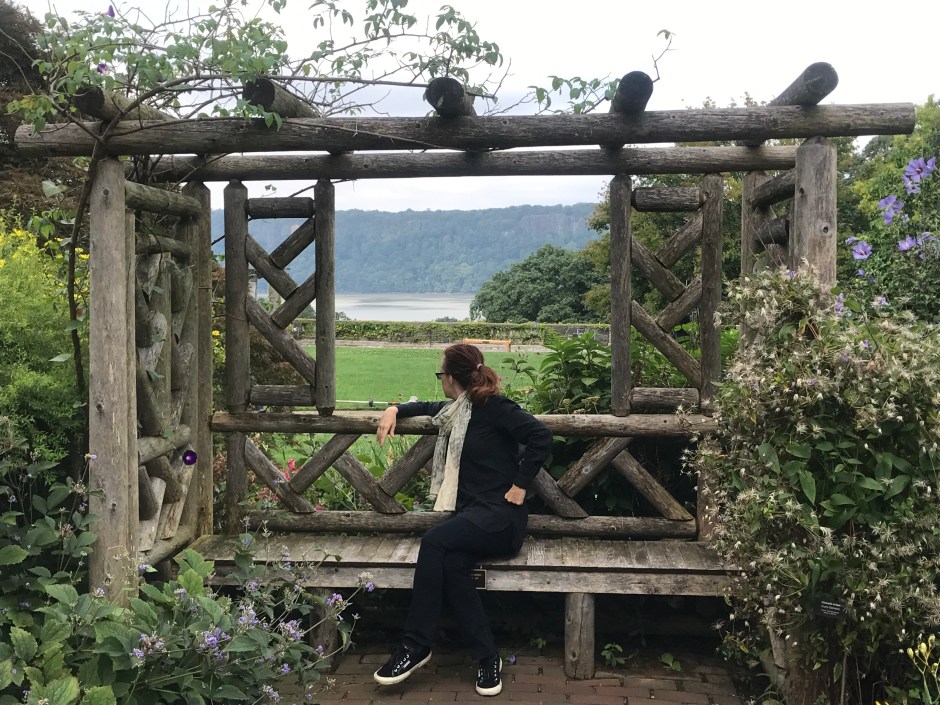
New York City is so much more than the skyscrapers of Manhattan (although I do love them). I recently found it is possible to get to a place in the upper reaches of the Bronx via subway, and feel as if I had taken a trip out of the city to upstate New York for the day. Wave Hill is a public garden overlooking the Hudson River (and across the river to the Palisades of New Jersey) in Riverdale. I visited there this autumn, taking the #1 train to the end of the line (West 242 Street) and being transported to Wave Hill by a free shuttle van that picks up near the subway at 10 minutes past the hour. You can also get there via Metro North, taking the Hudson Line to Riverdale and being picked up by a free shuttle bus.


Wave Hill was built in 1843 as the country home of a NYC attorney. Teddy Roosevelt’s family rented the estate during the summers of 1870 and 1871, and the city boy’s exposure to such beautiful natural scenes no doubt inspired his later love for the outdoors, leading to the creating of the National Park system. Mark Twain later leased the estate from 1900-1903, and conductor Arturo Toscanini lived there from 1942-1945. In 1960, the family who owned the estate gave it to the city of New York, and Wave Hill was incorporated as an non-profit organization. It is now open year-round, except for holidays, with shorter hours during the colder months and longer ones during the summer ones.
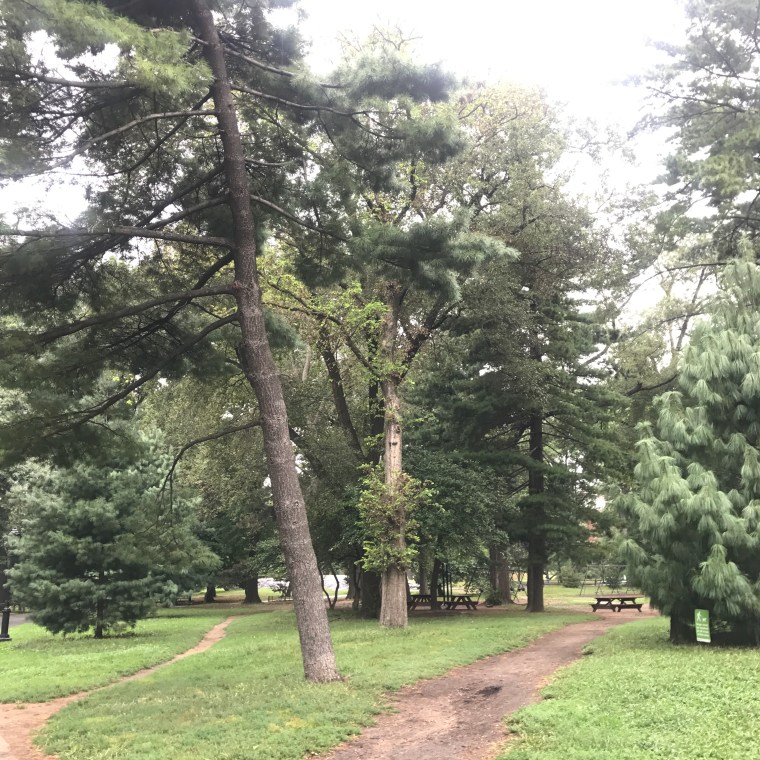


Walking to the welcome center, it is hard to believe you are still within the five boroughs of New York City.


The Visitor’s Center has local items (like honey of different colors depending on which flowers the bees were supping from) for sale, and a very upscale restroom (I was impressed by the golden sinks and fancy wallpaper!).


You can go into the various greenhouses as well as exploring the vast landscaped gardens.


There are many different places to sit and enjoy the quiet and the scenery.


There were lily ponds, and several cats roaming the grounds.


The feeling, the sounds, and even the scent of the air, varied from area to area within the large estate.


The most spectacular viewpoints, of course, are those overlooking the mighty Hudson.


They have a lovely cafe on the grounds, featuring local farm-to-table fare (on the right above is avocado toast with lovely radish slices on top).


After several hours at Wave Hill, I was reminded of the concept of “forest bathing” – the idea of walking among trees and nature as a health practice like going to a spa. (Learn more here.) I certainly felt cleansed, mentally and physically, after strolling through all the gorgeous dense trees and gardens.
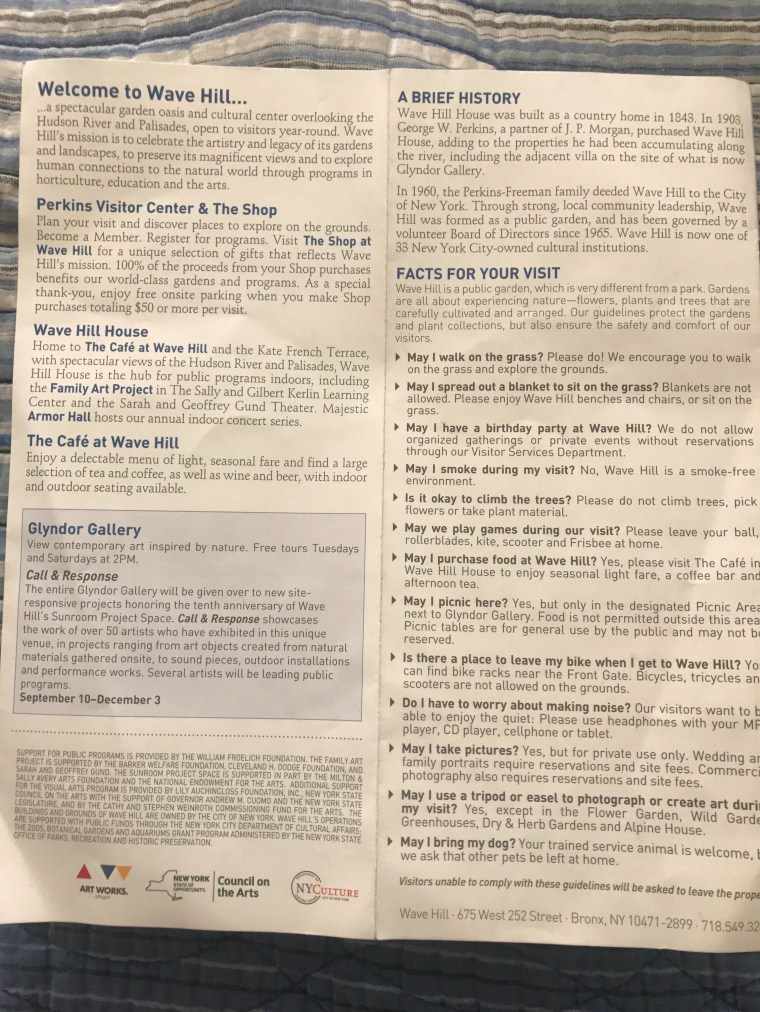
I’m sure they change these maps out seasonally, but here is the autumn one to give you an idea of the layout of Wave Hill and some of the details. You can also find plenty of information to plan your trip at their website.





 Julie Brannan, NYC residential real estate