Hello, Hudson Yards!

In October of 2014, 4 1/2 years ago, I wrote a blog post about a new neighborhood that was beginning to be built over rail yards west of Penn Station, Hudson Yards. In it, I concluded, “To walk in Hudson Yards is to be present at the birth of a new neighborhood, one that seems limitless in terms of how it will change the landscape of New York City.”  In October of 2017, I was able to take a hardhat tour of the site, well on its way but still with far to go before being open to the public (see below for a few photos from that visit).


image_36830970163_oimage_23647698718_o

A few days ago, in March of 2019, I was able to spend an afternoon in Hudson Yards only a few days after its official opening. Hudson Yards is not even midway to completion, and after following this development for so long, I thought there was a good chance I might be underwhelmed or (worse) disappointed. And yes, yes, yes, I read the NY Times review, and was told by the New Yorker that there is no good reason why any resident would visit Hudson Yards – but I would much rather experience something and make my own judgements! Spoiler alert – I enjoyed Hudson Yards far more than I had expected and see myself spending a lot of time here soon and in years to come. If you don’t understand Hudson Yards or dislike the constant change in NYC’s skyline and neighborhoods, check out my photos and experience – perhaps you will then also go and make your own decision. Like it or not, Hudson Yards is here and is going to be a major player in this city.

IMG_E1557

When approaching Hudson Yards, it’s hard to miss. Even this half, Hudson Yards East, of the total planned development is still partially under construction.

IMG_E1559

I walked to Hudson Yards from Midtown West, but an extension of the 7 subway line lets you off there if you are coming from elsewhere in the city.

IMG_E1561

The focal point of the development is the Vessel, a public sculpture created by Thomas Weatherwick. I will describe the process of exploring it later in this post. The building just behind the Vessel is the Shed, a performing arts venue that is being curated by Alex Poots, former Artistic Director of the Park Avenue Armory. The Shed is creatively designed so that it is a flexible space suitable for many different types of events.
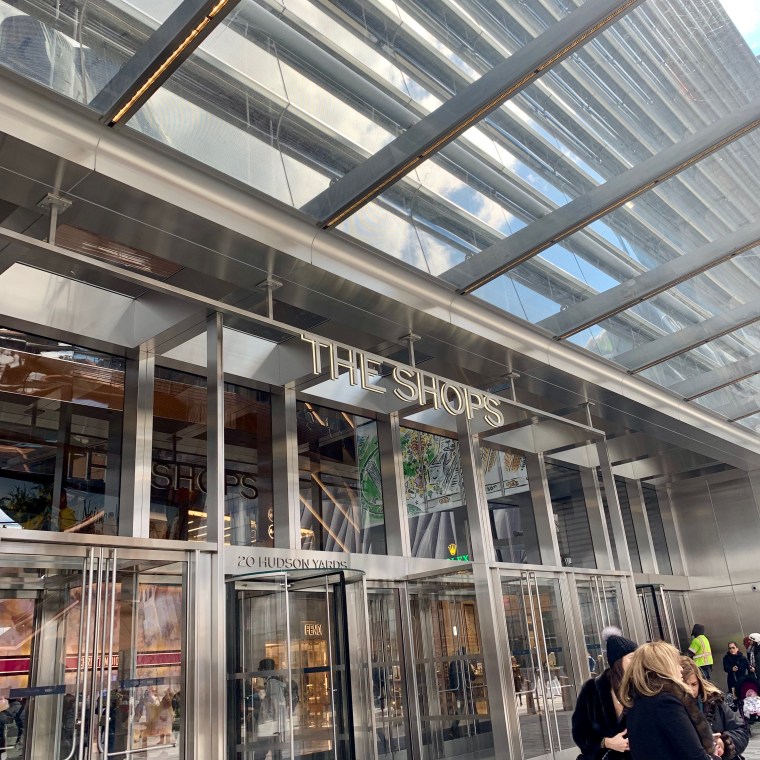
IMG_E1563

The Shops at Hudson Yards are extremely welcoming, with high ceilings and wide walkways. I saw many restaurants I am interested in trying.

And so many shops, including smaller ones like Dylan’s Candy Bar and Li-Lac Chocolates:

The most famous retail tenant is the first Neiman Marcus in New York City:

The experience inside the Shops is very pleasant. There were lots of people (surprisingly so, just a few days after opening) but enough space not to feel crowded.

Eventually there will be the highest open-air observatory in the Western Hemisphere here, called the Edge. I will be there when it opens (likely next year)!

IMG_E1578

Leaving the Shops to climb the Vessel, I had a look at the Shed and can’t wait to start experiencing art here.
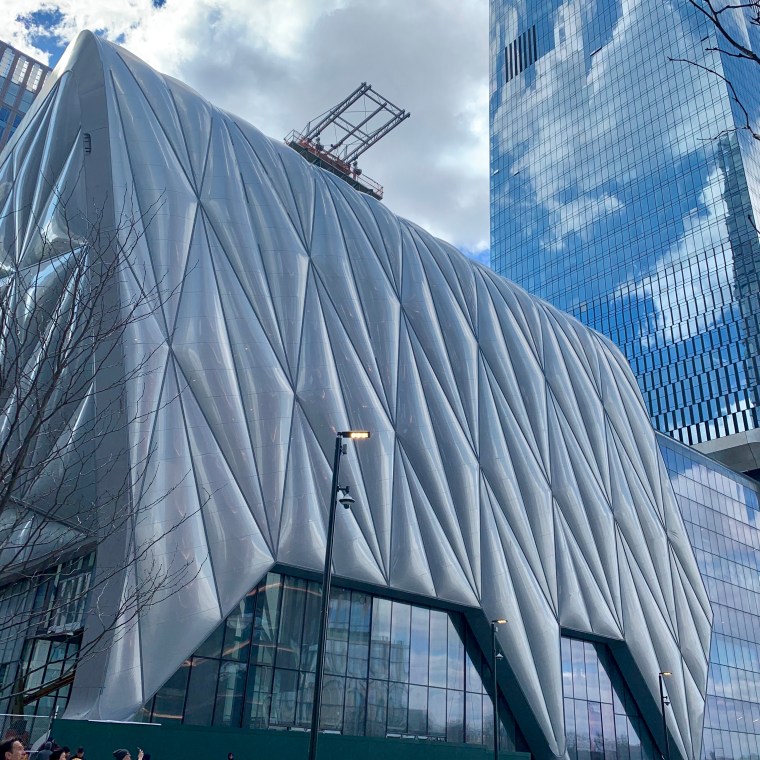
IMG_E1566

The Vessel (wisely, I believe) limits the number of people entering at any given time by requiring timed tickets, but they are free. I reserved mine in advance here but they do save some same-day tickets as well that can be picked up near the Vessel. However, if it’s a busy time, your ticket might be for a few hours from when you pick it up.

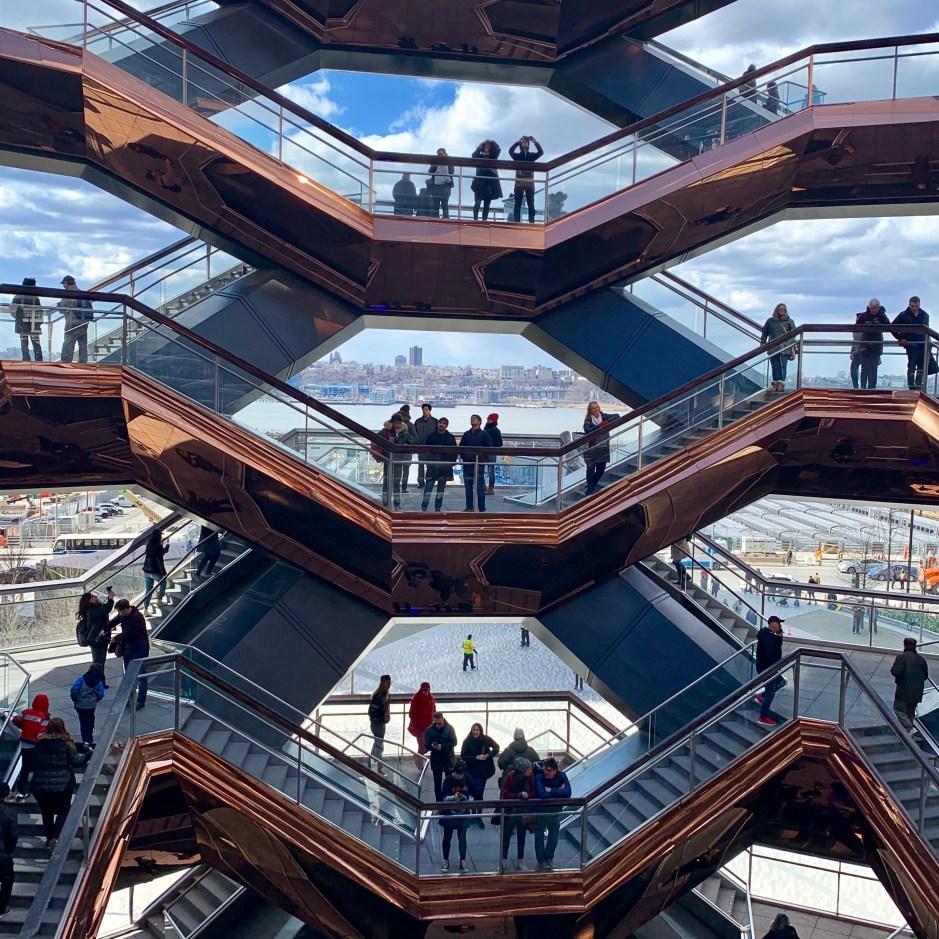
The Vessel is a concrete and copper outdoor sculpture with 2500 steps and 154 flights of stairs, eventually reaching a height of 16 stories. There is an elevator and ramps to make it accessible, but if you are able to explore it by foot, I recommend doing so. The stairs don’t seem too intense since they are short flights and you keep stopping to look at the views (however, you must wear comfortable shoes, and my calves were sore the next day despite not thinking it had been too bad while on the Vessel). It’s also not possible to do a direct trip, because the sections keep going up and down on each level. What I did was to go up (back and forth) on the Hudson River side to see those views, walk around the top to see all the views from there, and then walk back on the east side of the Vessel to see different views from that side.

The reflective quality of the copper led to some interesting photos. I predict that eventually everyone will be taking selfies of their reflection like you see people do in Anish Kapoor’s “Cloud Gate” in Chicago’s Millennium Park.

What I found most interesting was the way the pattern of the sculpture kept changing at different levels.

Even the pattern of people on the sculpture constantly changes so that your experience of what the Vessel looks like is fluid. I look forward to seeing it at different times of day (sunset or evening would be very interesting) or different weather patterns. The Vessel is open in all kinds of weather, and I noticed that the steps were rough concrete to make them safer during rain or snow.
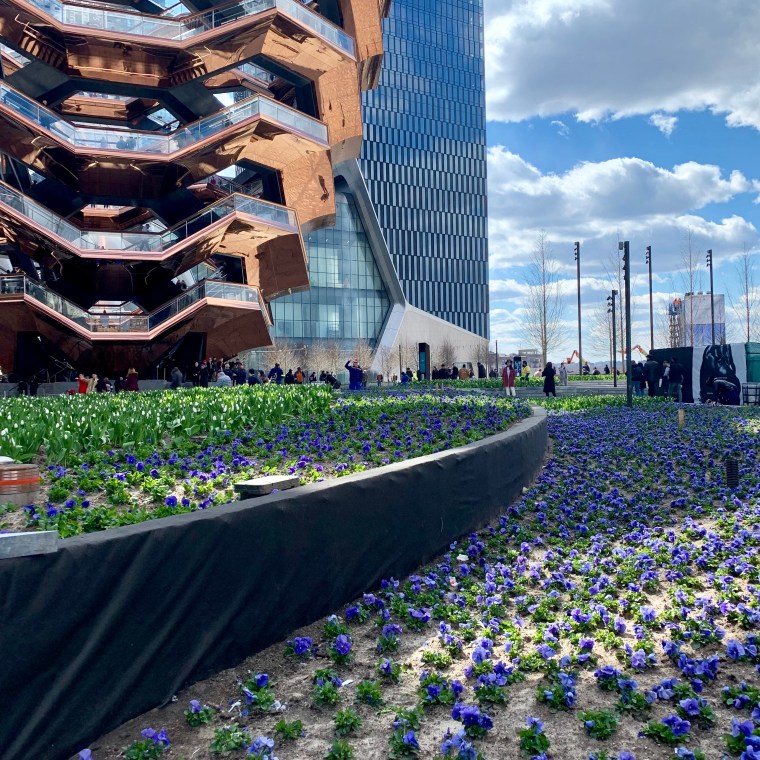
IMG_E1635

Since I am a real estate agent, I have also been to the sales offices at Hudson Yards. which are amazing. There is a 360 degree movie inside a room that really gives you the feeling for the neighborhood as it develops, for instance. 15 Hudson Yards is already closing apartments, and 35 Hudson Yards has just begun selling (the developer of Hudson Yards likes this building so much he will be living in the penthouse when it is completed). There are also two rental buildings available, 1 Hudson Yards and Abington House. From Hudson Yards, you can walk the High Line to the Whitney Museum, one of my favorite strolls in all of the city. I thought when on the Vessel that the people-watching from some of these apartments will be a little like some of the apartments elsewhere on the High Line, like the fabulous Zaha Hadid 520 West 28th. From others you will have spectacular city views of the Empire State or One World Trade buildings, or Hudson River views (from the larger and higher apartments, you can have them all!). Reach out to me if you would like to check out apartments at Hudson Yards. My belief is that this entire part of town will appreciate in value due to this development, much as the creation of Lincoln Center transformed its neighborhood

So go to Hudson Yards and decide for yourself what you think. It’s often difficult for people to adjust to change, but the constant drive for metamorphosis is what has made, and continues to make, New York City the vibrant evolving place to live that it is.

Hard hat tour of Three Waterline Square

One of my favorite things about being a real estate agent in New York City is the occasional opportunity to see a residential building early in its development. A real treat is to be able to have a tour of the building while still under construction, and I was recently able to experience this at Three Waterline Square –  including a very special opportunity to meet and hear from its architect, Rafael Viñoly. Having any hard hat tour is different from visiting a new development showroom, or touring a completed building, and this is clear from the outset, as you are required to sign a release from liability before you are allowed on the site! The hard hat is also mandatory (and in this case, we were able to keep them, so my Hudson Yards hard hat now has a companion).

Walking through the Waterline Square site, you can see that all three buildings are well underway. The development, when completed, will feature the three residential towers surrounding a three acre park, on the Hudson River between 59th and 62nd Streets. The towers will share the Waterline Club, with pools, an indoor tennis court, squash and basketball courts, fitness center, rock climbing wall, screening room, and numerous other amenities for residents. Open to the public will be a food hall, market, restaurant and bar by Cipriani.

After passing through the construction site, I entered a construction elevator attached to Three Waterline Square. If you have never been in one of these, they are completely different from a standard passenger elevator. They are more like a giant metal box attached to the outside of the building, and generally used to transport construction materials.

IMG_E0160

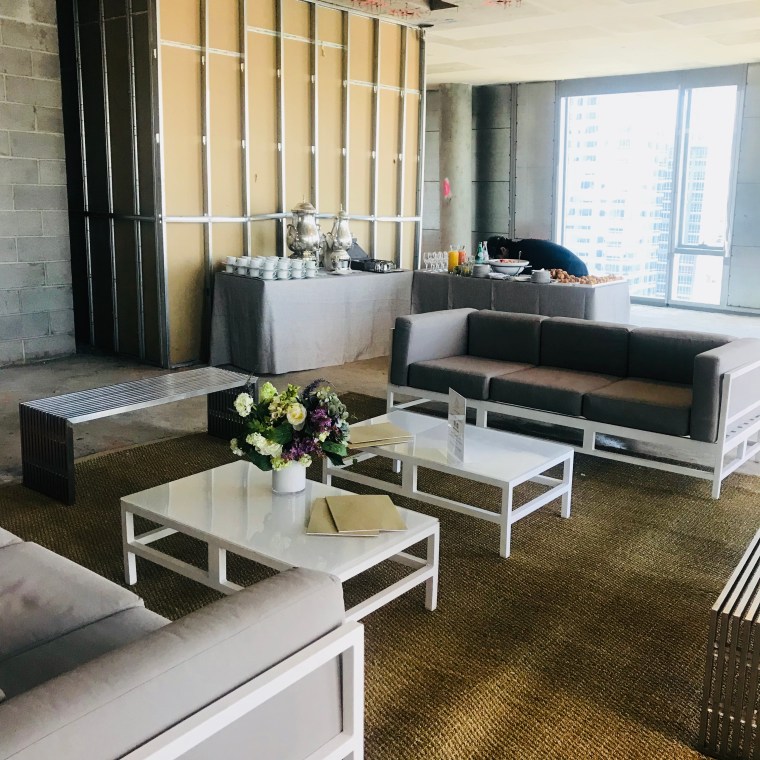
Despite the fact that we were walking on a concrete slab on the 24th floor, a small lounge had been set up for us, with breakfast and places to sit. This was a special treat, as generally a hard hat tour is a no frills experience.

The light and views are lovely through the expansive windows. Apartments on the west side of the building can have Hudson River views.

One of the amusing things about being on a construction site are the reminders that you are not in a completed building. For instance, the areas marked “Hole” (and there were plenty) are just wood placed over an opening in the concrete slab (for later placement of pipes). Needless to say, you are warned not to step on them. Standing next to the edge of the slab near the windows, you can see open space all the way down to ground level.

Apartments on the east side of the building will have city views – southeast apartments can have a view of the Empire State Building.

When the architect, Rafael Viñoly, spoke he gave some very interesting insights on how the location of Three Waterline Square informed his design of the building. He pointed out that the windows on this building (the design of which, to me, will eventually conclude in a very cool looking tower that reminds me of a crystal, or even of Kryptonite!) have all been designed to maximize the view, but specifically a view that is framed by the city. I wrote once on the value of a city view (you can read it here) and how a great iconic city view can remind you that you are in the center of it all, as well as giving an almost cinematic experience. Even the Hudson River views at Three Waterline Square are framed by glimpses of the surrounding buildings – while a full river view can give you the feeling of being on a cruise ship, these views are clearly rooted in the city.

IMG_0192

I wrote a post several years ago about the controversy regarding all the new development in NYC residential real estate (you can read it here). I don’t generally agree with the idea that people can be divided into two categories regarding any topic, as people’s opinions are generally more nuanced than that, but it can be a useful way to think about an issue. I do find that most people I speak to about new development in NYC are either critical of it (especially the changes in Manhattan’s skyline) or excited by it. In my previous post, I pointed out that New York City is constantly evolving – that’s part of its ever-youthful charm – and that we have historic preservation in place not to prevent development, but to be sure that we don’t completely erase the city’s past in our excitement about its future. Between the massive development at Hudson Yards and this  at Waterline Square, I believe that the far West Side of Manhattan will be completely transformed over the next decade – and I find that very exciting. As I walk around the green parkland surrounded by gleaming towers one day, I will always be able to remember walking on a concrete slab when this area was caught halfway between the dream of what the area could become, and its reality.

Celebrating the Year of the Dog in Chinatown

Several years ago I posted a walk around Chinatown, ending by expressing delight in how a walk of a few blocks in New York City can lead to an environment just as new as you might get by taking a lengthy plane ride. However, in all my time in the city, I had somehow never managed to make it to the Lunar New Year celebration until recently when I went to Chinatown to celebrate the the beginning of the Year of the Dog. My daughter and I arrived about an hour ahead of the parade start on a cold and drizzly day, and were able to be right up against the barricade. By the time the parade started, though, the crowd was packed for at least a block, so I do recommend getting there early if you choose to go.

IMG_9661

Traditions for the Lunar New Year include the color red (symbolizing joy as well as virtue, prosperity, and truth), giving money or presents in small envelopes, and making noise to scare off evil spirits. Dragon or lion dances also represent a way to scare off bad things and welcome in a safe and prosperous new year. All of these are represented at Chinatown’s parade. Being at the front of the crowd, my pockets were stuffed by the end with small envelopes filled with tea or candy, fortune cookies, and even a red folding reusable shopping bag with the year of the dog on it. People watching the parade had bought small popping firecrackers that were set off by throwing them against the ground, and huge tubes that shot confetti for 10 or 20 feet.

IMG_9667

The parade started out with the NYC police and fire departments, including (incongruously, to me at least) firefighters in kilts with bagpipes playing “76 Trombones.” The rest of the parade was much more what I had expected, however.

The Dragon/Lion dances were my favorite parts of the parade. My daughter pointed out that at times the dance seemed to be very similar to twerking!


IMG_9695

The Year of the Dog was prominently celebrated, including a few actual dogs. People born in the Year of the Dog are said to share characteristics with dogs, such as loyalty and exuberance.


I loved this dog made up entirely of balloons.


This group held a series of cut outs of various breeds of dogs.


Another dog, this time a person in costume.

I was interested to find out that this Year of the Dog (a Brown Earth Dog year) is predicted to be a good year, but an exhausting one. The antidote to a stressful year is apparently to wear at least some red every day. I tend to do that already, so here’s to a good Year of the Dog!

One World Trade Observatory

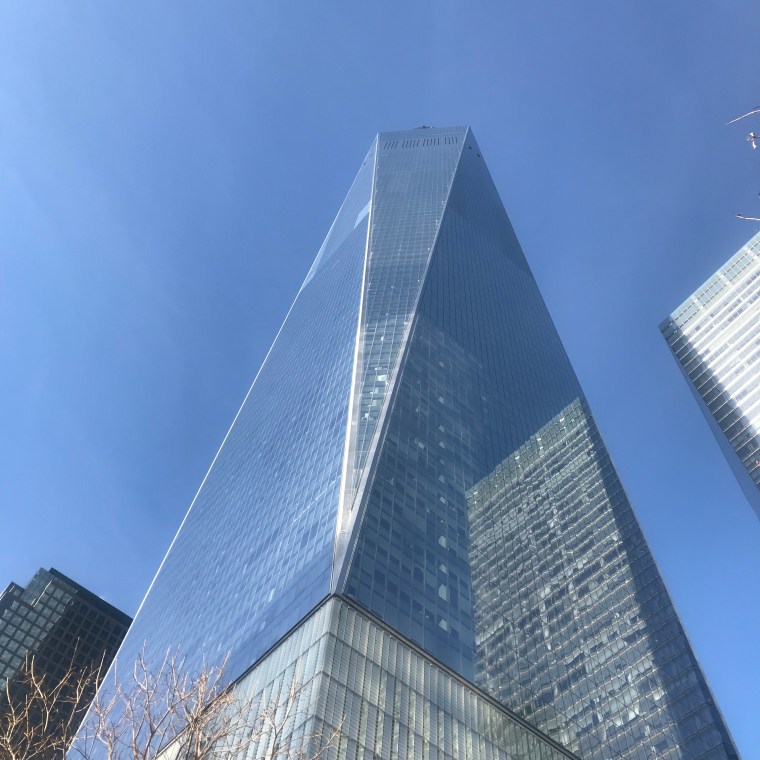
As a New Yorker, it was thrilling to watch One World Trade rise for about a decade before its official opening in 2015. I have written before about this revitalized area of the city, now including the Oculus, Westfield and Brookfield shopping areas, and One World Trade, in addition to the reflecting pools on the footprints of the original towers of One World Trade and Two World Trade and the National September 11 Memorial and Museum.

IMG_9435

On a recent cold and clear January day, I visited the One World Trade Observatory and found that it really does provide an enjoyable perspective on the city for those who live here or know it well, in addition to the traditional role of being an attraction for tourists. The entrance to the Observatory is well signed, and can be found either by entering the building from street level on the West Street side or by coming through the Oculus and traveling underground through the Westfield Mall, coming from the east. Tickets can be purchased in advance (which I recommend to save time) or at the ticket office. Tickets are scanned, and then you go through airport-level security. Not only is this not surprising, but it is what we should want security to be, entering such an iconic building. If they find something they don’t allow in the Observatory (my companion had a bottle opener/corkscrew) it is kept until you return, at which time you produce the claim ticket and get it back. As you enter the queue for the elevators, they have done a wonderful job of immersing you in the process of building One World Trade with video interviews from those who helped design and build it. You walk through an example of the Manhattan schist that forms the foundation of this and other skyscrapers in the city. Finally, it is time to enter an elevator.

IMG_9434

In the elevator, the walls are full length video screens, which start out showing Manhattan island around the time of the first Dutch settlement, and proceed forward in time as you ascend the building. The elevators are fast – 102 floors in 47 seconds! – and my ears popped both going up and coming back down later. When you exit the elevator, you are in a room with a long horizontal video screen. When everyone is in the room, it plays a short film about everyday life in New York. The real drama, though, occurs at the end when the screen rolls up to reveal the actual view from the top of the building – it was truly thrilling and a great way to present the panoramic view.

IMG_9406
The view to the west


So how high up are you? One World Trade is the tallest building in the Western Hemisphere, standing 1776 feet tall (that height was no coincidence!) but counting the spire, so your height is a little over 1300 feet from the ground. When you are in the Observatory, you are let out on the 102nd floor, which primarily serves as a place to offer iPad guides for rent. Walking down one flight to the 101st floor, there is a restaurant, bar, cafe, and of course the obligatory photo session (you don’t have to participate, and don’t have to buy any photos even if you do).

IMG_9433

The 100th floor is the main viewing area. There is also a gift shop – of course – and a presentation geared mainly toward helping visitors to the city figure it out, called City Pulse.

There is also an area that makes it seem as if you are standing on glass looking all the way down to the ground, but it’s simulated.

IMG_9382

The real joy of being on the observation level for those who already know and love New York City is to experience an entirely new perspective on the city. If you have ever flown into LaGuardia passing by Manhattan, you get an idea of what the views look like, but unlike peering from a plane, you can spend as much time as you like figuring out all the details of the view in each direction.

IMG_9389

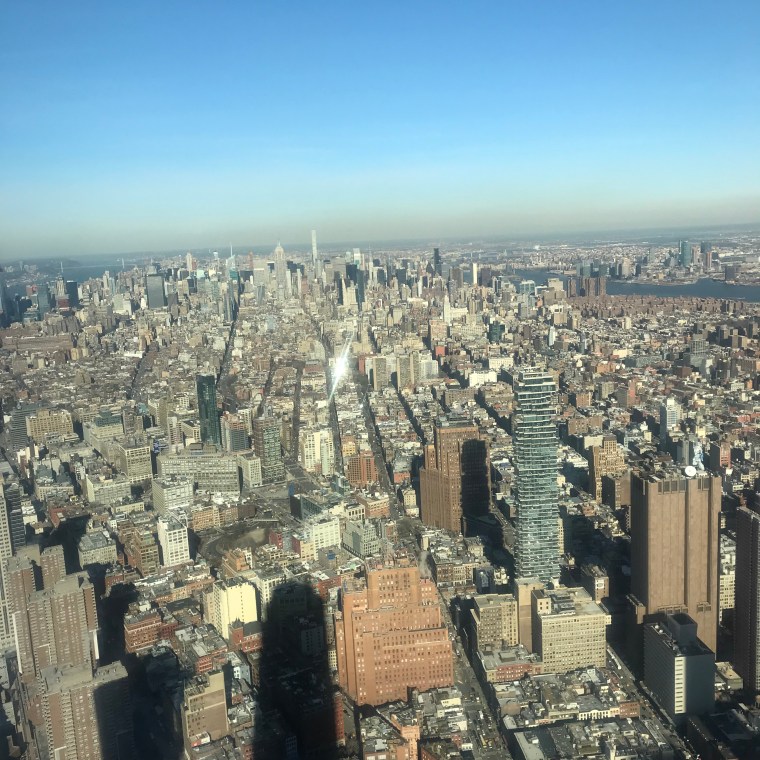
Because of the location of One World Trade all the way at the southern tip of Manhattan, some of the most spectacular views are looking north. That is what they show you when the screen is initially lifted on the 102nd floor to reveal the view.


IMG_9394

Looking due north, you can see many iconic buildings – the Empire State Building, Chrysler Building, 432 Park – but also can witness the topography of Manhattan Island. Due to how far below the surface the Manhattan schist gets from a little north of the financial district until midtown, you can see the shorter buildings covering SoHo, Greenwich Village, and Chelsea before taller buildings blossom again. It was fun to see Broadway angling across all the street grids, and to find the Washington Square arch and Times Square. To the east you can see Long Island City in Queens.

IMG_9407

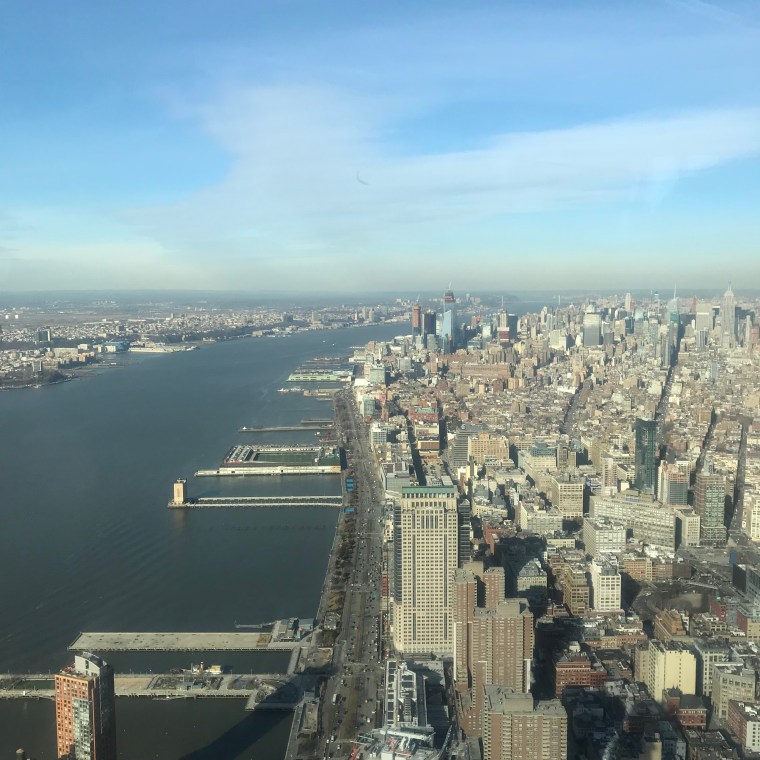
North and to the west you see the Hudson River, the piers along the river, and then the massive construction at Hudson Yards in Midtown West. The impact of this development on the city once it is completed can’t be overstated. Across the river to the west, you can see New Jersey.

IMG_9441

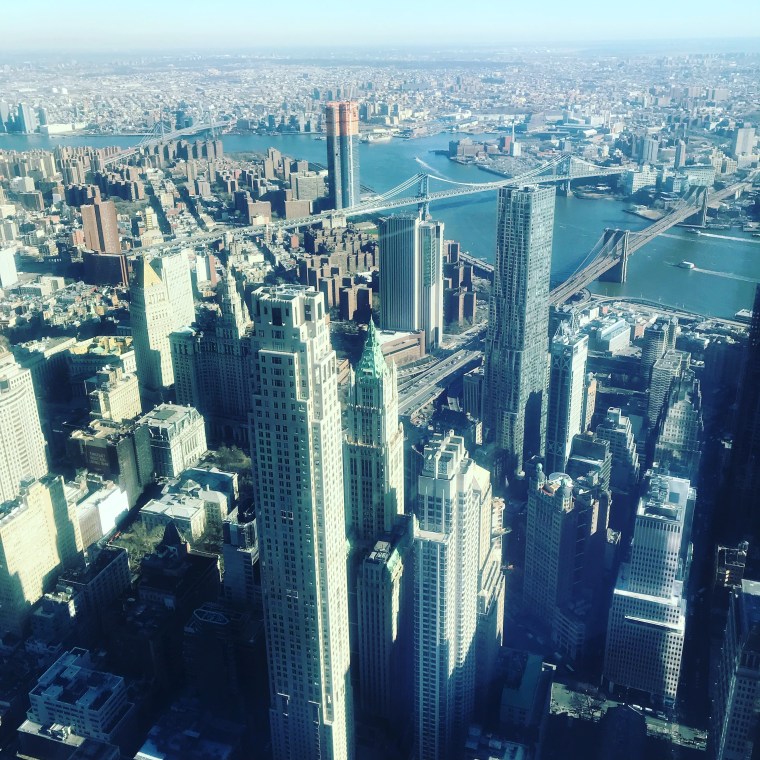
Looking east, you can see over other tall buildings in lower Manhattan to view the Brooklyn Bridge, and then north of that, the Manhattan and Williamsburg Bridges, and much of Brooklyn.

IMG_9404


The Southern exposure leads to a lovely view of the Statue of Liberty and Ellis Island in New York harbor, with more of New Jersey stretching out behind them to the west.

I spent about an hour enjoying the views on the 100th floor. I would recommend going around once slowly, orienting yourself to the different views, and the circling back again even more slowly to look for details. I think many times we who call New York City home only experience certain attractions if we have visitors from out of town to show around. This experience, however, I found to be much more than a tourist attraction, deepening my understanding and enjoyment of the multifaceted architecture and topography of this magnificent city.

Roosevelt Island

Once home to an insane asylum, prisons, and a smallpox hospital, Roosevelt Island was originally called Hog Island and later Welfare Island before being renamed for President Franklin Delano Roosevelt in 1971 (a decision that certainly helped make it seem a more palatable choice to those considering living there!). Only 2 miles long and 800 feet or less wide, this island, lying between Manhattan’s Midtown and Upper East Side and Queens, is owned by the city of New York but now has numerous rental buildings, one coop, and one condo (all landlease buildings, leasing the space from the city on a 99 year lease negotiated in 1969). Accessible via subway (the F line) but more famously by the Roosevelt Island tram, it is simultaneously very close to Manhattan and also a little isolated and remote. As I enjoy exploring a neighborhood by taking an unplanned walk (a dérive), I headed to Roosevelt Island this spring to see what living here might be like.

IMG_4819IMG_4822IMG_4826IMG_4832

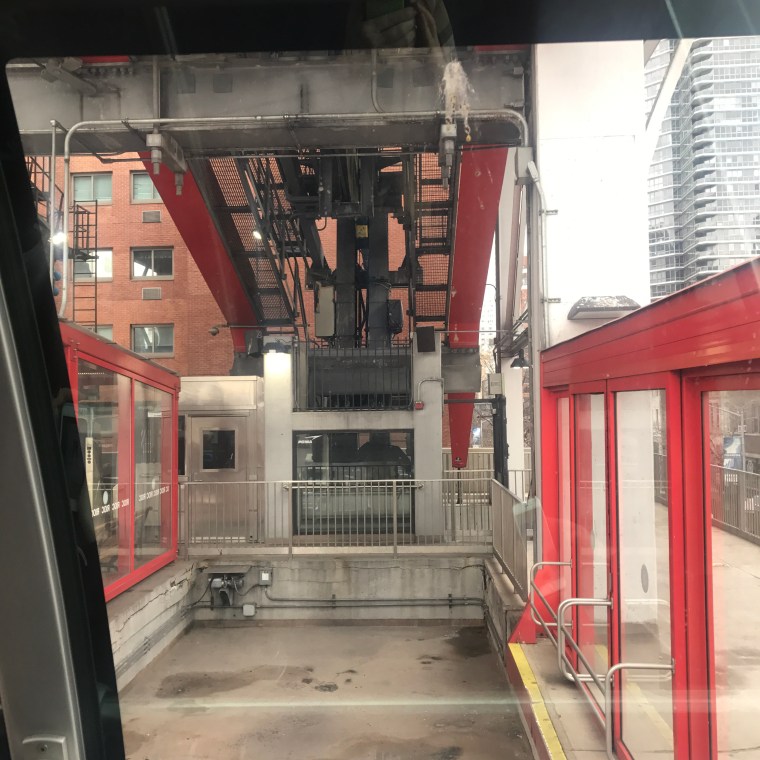
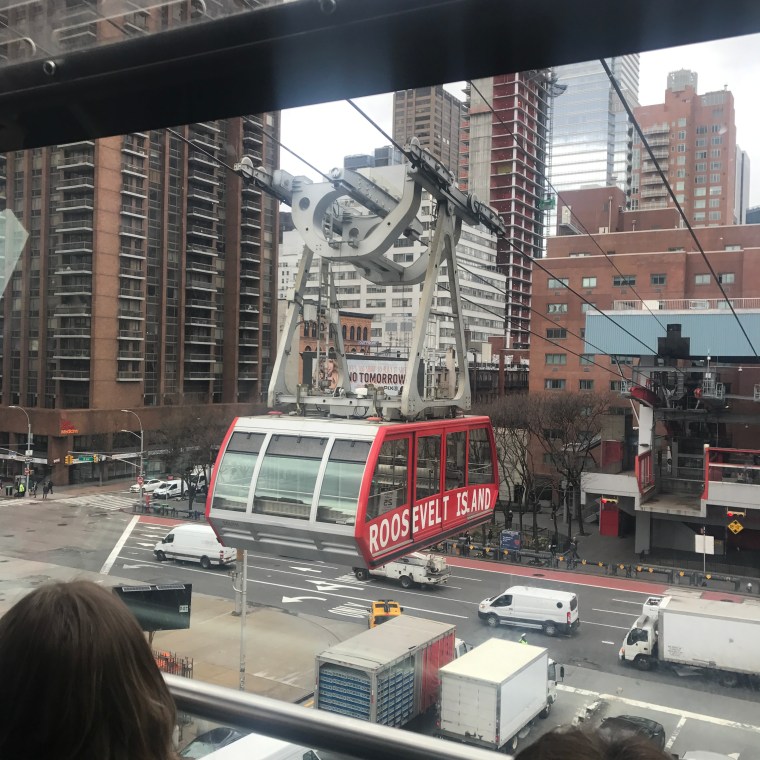
The Roosevelt Island Tramway was intended to be a temporary way to entice residents to the neighborhood during its residential development. Opened in 1976, it makes over 100 trips per day, between the hours of 6 AM and 2 AM (every 15 minutes most of the day, but continuously during rush hours). Although not operated by the MTA, it uses the MetroCard and offers free transfers to the MTA system.

IMG_4845

When on the tram, you can’t help to imagine what it would like if the tram were to stop mid-journey (or something worse, thanks to the 2002 Spider Man film!). There has never been a Green Goblin attack, or anything similar, but the tram has been stuck before. The worst instance of this was in 2006 when two trams were stopped midair for seven hours due to an electrical outage. Rescue baskets were sent to the trams, but each could hold only 15 people, so the evacuation of the trams took a very long time. Following an extensive 2010 overhaul, there have been no similar incidents on the trams.

IMG_4841

The large (unphotogenic) construction site just south of the tram is the new Cornell University Tech Campus, due to open in 2017.

IMG_4965

Walking along the river, cherry trees blossom and frame a view west to Sutton Place in midtown Manhattan.

It is impossible to miss the creepy ruins of the old Smallpox Hospital on the way to the Four Freedoms Park on the southern tip of Roosevelt Island. Opened in 1854, and closed a century later, the Gothic Revival building fell into disrepair. Now added to the National Register of Historic Places, a stabilization project is underway and it will one day be open to the public (hopefully only in daylight hours).

Opened in 2012, the Franklin Delano Roosevelt Four Freedoms Park celebrates the former president as well as his famous 1941 speech about freedom of speech, freedom of religion, freedom from want, and freedom from fear. Designed by the renowned architect Louis Kahn, it is a beautiful and spare park with spectacular views of Manhattan, including a direct view of the United Nations.

IMG_5041

Heading back north and past the tram station, Roosevelt’s Island Main Street unfolds.

Built in 1798, Blackwell House is the sixth oldest surviving home in New York City.

IMG_4889

1888 Chapel of the Good Shepherd, on the National Register of Historic Places.

IMG_4893

There is a free red bus around the island, and it was easy to return via the F subway, one stop to Lexington and 63rd.

As of the 2010 U.S. Census, Roosevelt Island had a population of 11,661. Roosevelt Island has relatively affordable rents and prices compared to midtown Manhattan, and the buildings are largely full-service buildings with amenities such as swimming pools and gyms. Many apartments feature the kind of spectacular view of Manhattan found in red-hot Long Island City, Queens. I found the small town atmosphere of Roosevelt Island to be very unique. Along Main Street was everything a person would need – an apartment, groceries, a library, public school, and so on. Just a few hundred feet from midtown Manhattan, it felt like being in a small town anywhere in the United States. Less distant in terms of a commute from central Manhattan than many parts of the five boroughs, it still feels a world away – the skyscrapers of Manhattan a bit like a mirage just across the East River.

IMG_4906

Beautiful Brooklyn Heights

It might surprise you to learn that the first neighborhood to be protected under the 1965 Landmarks Preservation Law in New York City was not in Manhattan – it was Brooklyn Heights. I have had the pleasure of being in the area several times in the past few months, and regardless of the time of day, I find it to be an extraordinarily beautiful and gracious neighborhood. Since I love to take an unplanned walk in the city (a dérive, see my initial post about it here), one of my daughters and I took off on a beautiful warm early spring day to enjoy a walk in Brooklyn Heights.

Brooklyn Heights

Surrounded by Dumbo (see my love letter to this neighborhood here) , Cobble Hill, Boerum Hill, and Downtown Brooklyn, getting to Brooklyn Heights is quite easy via public transportation. You can take the 2-3-4-5-N-R-W to Court Street-Borough Hall in downtown Brooklyn, the A-C-F-N-R-W to Jay Street-MetroTech, or the 2-3 to Clark Street.  Before setting off on our walk, we had wood fired pizza at Dellarocco’s, which I highly recommend (214 Hick’s Street, off Montague Street). On the way there we walked past block after block of beautiful townhouses.

IMG_4591

I always find myself drawn to the water, and was unable to stay away from the gorgeous Brooklyn Heights Promenade. One of the more recent additions to Brooklyn Heights, the promenade was completed in the 1950’s.

IMG_4592

Rows of of lovely townhouses and apartment buildings face the promenade and gaze toward lower Manhattan.

IMG_4596

The promenade ends at the Brooklyn Bridge (for instructions of how to walk across the bridge from Brooklyn, see this post). John A. Roebling, the 19th Century engineer and designer of the Brooklyn Bridge, lived in Brooklyn Heights.

IMG_4618

The views from the Brooklyn Heights can be incredible. Here is a view toward the Statue of Liberty at sunset.

IMG_4586

Benches line the promenade for relaxing while strollers, both pedestrians and those containing children, move along the pathway.

IMG_4738

The view of lower Manhattan from Brooklyn Heights is extraordinary.

IMG_4616

The Brooklyn Heights Promenade eventually merges into Brooklyn Bridge Park.  Jane’s Carousel, dating from 1922, invites all to stop and take a ride on a hand painted wooden horse, to the sound of authentic calliope music.

IMG_4623

Brooklyn Heights has attracted writers and artists since its inception, and walking around the neighborhood it is easy to see why. Benjamin Britten to W.H. Auden, Walt Whitman to W.E.B. DuBois, Arthur Miller to Lena Dunham – all have found inspiration in the quiet beauty of Brooklyn Heights. Truman Capote, another resident, wrote Brooklyn Heights:  A Personal Memoir, in which he famously states, “I live in Brooklyn. By choice.” More and more people have made this choice over the past two decades. which has made this one of the most expensive neighborhoods in New York City.  The average price for a two bedroom apartment is $1,712,000 (compared to $1,149,000 for Brooklyn on the whole), and for a three bedroom it is just under $4,000,000. Townhouses can go for considerably more than that, but most people who live here consider the neighborhood well worth the cost. Brooklyn Heights has come a long way from Capote’s 1950’s description of street gangs and alley cats, but the allure of the area endures.

A day (and evening) in Bushwick

When Peter Stuyvesant chartered the area he called Boswijck (“little town in the woods”) in 1661, it included the areas of Brooklyn now called Williamsburg, Greenpoint, and Bushwick. Like its neighbor Williamsburg a decade ago, Bushwick is transforming itself from an industrial working-class neighborhood to a haven for artists. Vogue magazine declared Bushwick #7 in its 2014 list of 15 coolest neighborhoods (one of only three in the US, and the only NYC area to make the list). Since I love unplanned walks in the city (see my initial post about the concept here) I recently spent a chilly March day exploring what Bushwick has to offer. I mean, already parodied by Saturday Night Live and in the title of an episode of “Girls,” what more could a neighborhood want?

img_4104

At least until they shut down the L for repairs, it is easy to get to Bushwick (and the J, Z, and M lines will do when the L does go down). I emerged from the Morgan Avenue stop and began to walk with a purpose to Roberta’s.

Roberta’s pizza is legend, and I intended to find out if all the hype was warranted. The wait for a table during peak times can exceed 2-3 hours, so I wanted to show up for brunch and get in before the crowds arrived. Roberta’s also makes fresh bread in the pizza oven every day before opening, and the bread with homemade salted butter was a fantastic appetizer. The pizza did not disappoint, and a green juice cocktail rounded out the brunch nicely.

img_4178

Leaving Roberta’s full and happy, I was tempted to throw my shoes up to join the others.


Walking down any street in Bushwick was a visual treat. Street art is a big thing in Bushwick, especially since 2012 in the area now called The Bushwick Collective and curated by Joe Ficalora.

In an afternoon of wandering, I found spaces full of artists making and exhibiting their work, as well as a film and photo studio.

Maria Hernandez Park had playgrounds, basketball courts, and lawns, surrounded by rows of townhouses.

Housing in Bushwick is varied – lovely prewar townhomes, more modern single family homes with parking in front, converted industrial spaces, and new development condos. People priced out of Williamsburg have found Bushwick, and the rising prices here in turn are sending people to nearby Ridgewood, Queens. Costs are still lower in Bushwick than in Brooklyn as a whole (but who knows for how much longer?). For instance, median rental prices go from $1750/month for a studio to $3000/month for a three bedroom, while median sales prices go from $329K for a studio to $799K for a two bedroom, and there are still a few townhouses to be found for $1.5M.

As the evening approached, I had drinks and dinner at Sincerely Burger on Wilson Avenue.

IMG_4736.JPG

The day ended with opera – Rossini’s Otello performed at LightSpace Studios in Bushwick by LoftOpera, a Brooklyn-based company bringing a fresh take on opera (and affordable prices) to younger and decidedly unstuffy audiences. Heading back to Manhattan from the Jefferson Street L station around 11:20, I heard music and laughter coming from many bars and restaurants, as well as from a few apartments. After an enjoyable day in Bushwick, I could see the allure of living here – still relatively affordable with an abundance of things to see and do.

Walking in Los Angeles (really?)

The rivalry between the great US city on the East Coast (New York) and the one on the West Coast (Los Angeles) is, in my opinion, partially true but largely fabricated. You can find great restaurants, nightlife, and art in either. New York has snow; Los Angeles has smog. Los Angeles clearly wins for beaches and weather; New York is the victor in the live theater domain and has Central Park. While in general the cost of renting or purchasing a home in Los Angeles is less than in NYC, there is a variety of housing choices at price ranges from moderate to extravagant in both cities (you will nearly always get more space in Los Angeles, though, since NYC is severely physically restricted in how it can expand, especially Manhattan island). However, there is one giant difference that completely shapes the experience of living or visiting each city: NYC is the quintessential walking city (and the experience of walking in it was my motivation to begin this blog), while LA has the ultimate car culture. On my numerous visits to LA, I have often commented that the one thing that would prevent me from ever living there is that I hate having to drive everywhere. On a recent trip, however, I decided to take a few walks and see if a quality walking experience could be found in the city of angels.

img_2740

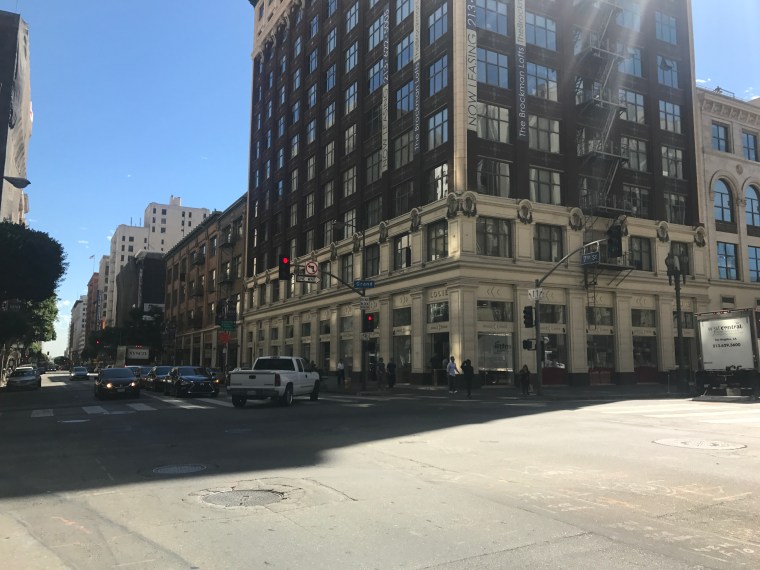
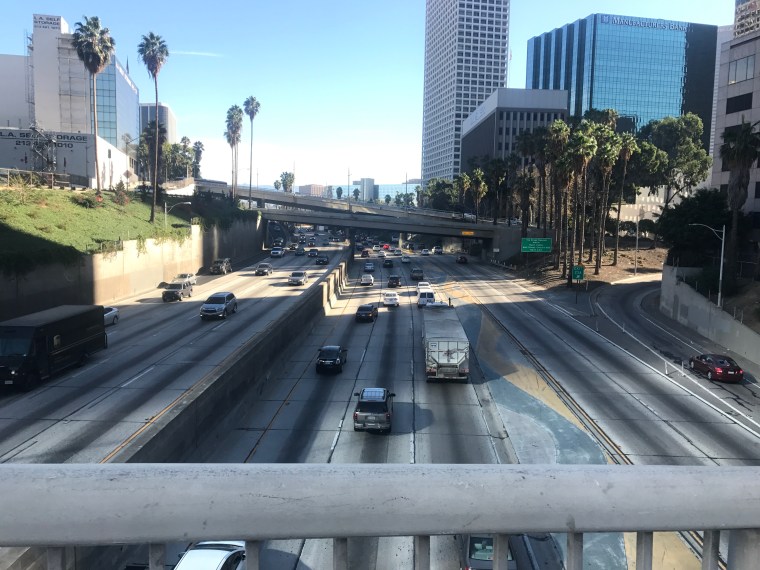
I was staying downtown at 7th and Grand, and decided to walk to Wi Spa, on Wilshire and S. Rampart. According to Google maps, this is a walk of just under 2 miles, and I routinely walk 5 miles or more per day in NYC. This route was a fairly direct one since Wilshire was just a block parallel to 7th, but almost immediately I noticed the difference between walking in NYC vs. LA. This route had me walking next to and in close proximity to heavy traffic most of the time.

img_2728

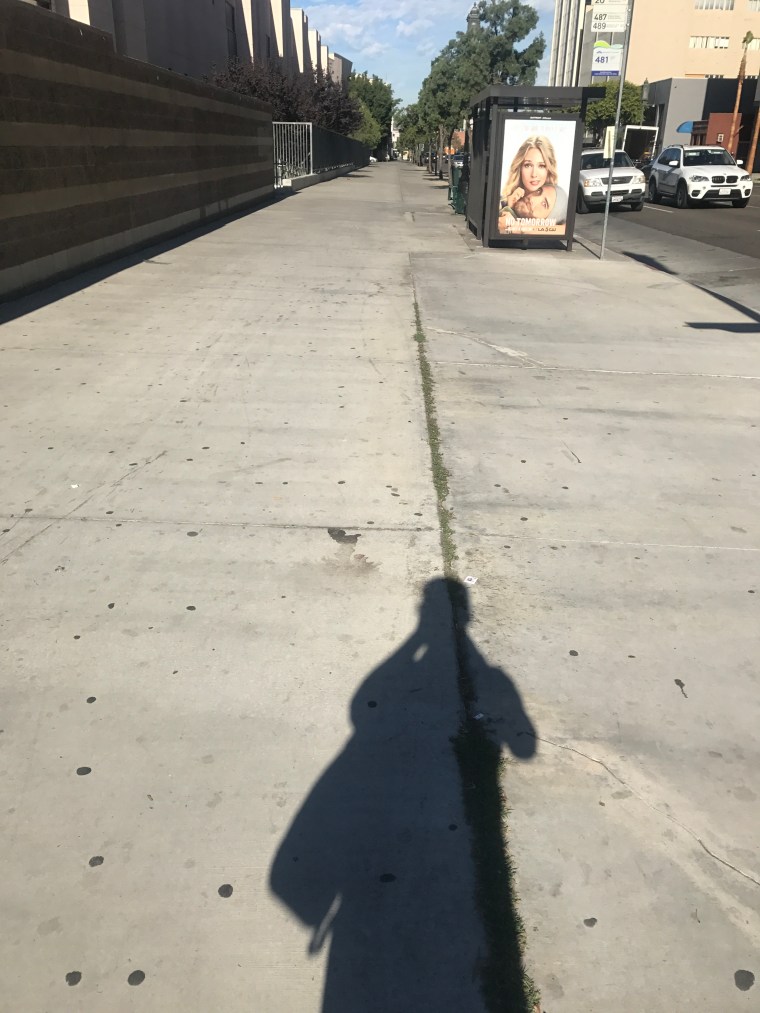
In addition, unlike virtually anywhere I walk in NYC, I was alone on the sidewalk for most of the time despite being surrounded by people in cars. I recalled Ray Bradbury’s story, “The Pedestrian,” set in the future where a lone walker in the evening was so unusual that the protagonist of the story ended up being carted off by the police for a psychiatric evaluation. Although born in Illinois, Bradbury was an Angeleno for most of his life, and I wonder if a similar solitary experience walking in the city inspired him to think of this story.

img_2733

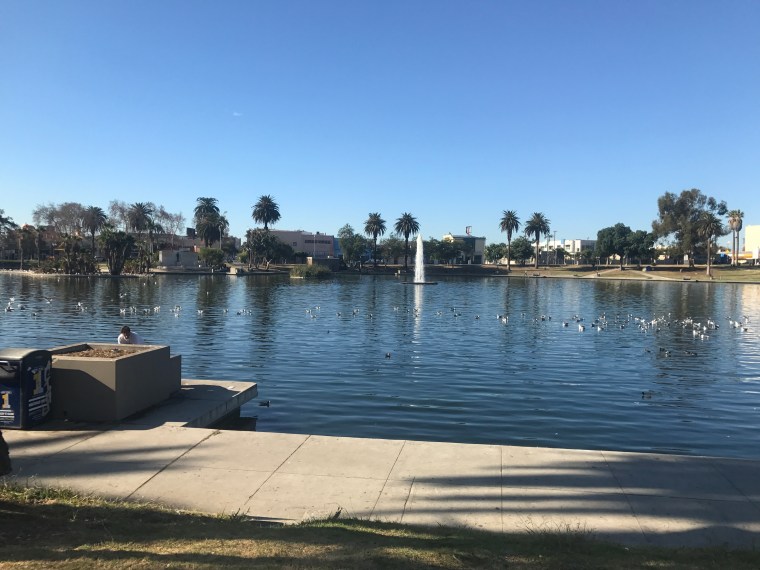
Eventually I went by MacArthur Park (yes, the inspiration for what has been called “the worst song ever written,” although I have a fondness for it since I recall enjoying the number in “Priscilla, Queen of the Desert” on Broadway). Although it had some lovely areas, the only people I saw also enjoying it were living in a sort of tent city there.

img_2737

Shortly after MacArthur Park, I was at Wi Spa. If you are in Los Angeles and would enjoy an authentic Korean spa experience, this one can’t be beat (I have never been so clean as after a scrub there).

img_2739

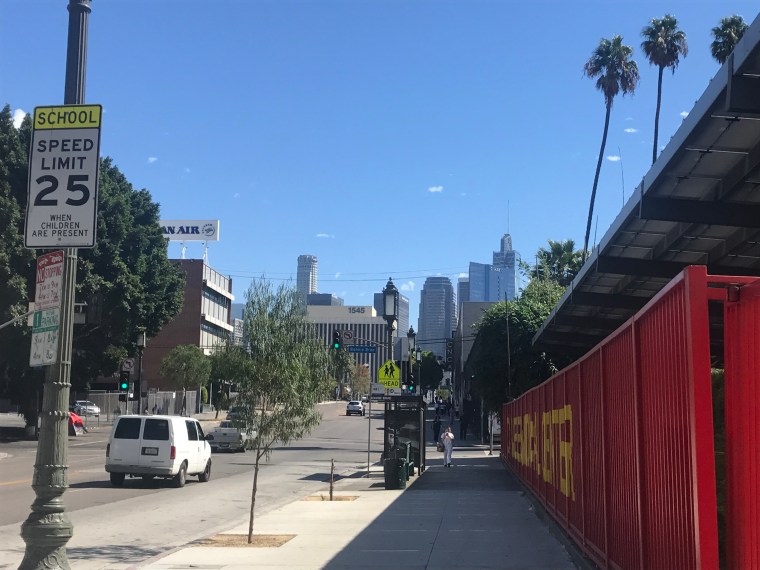
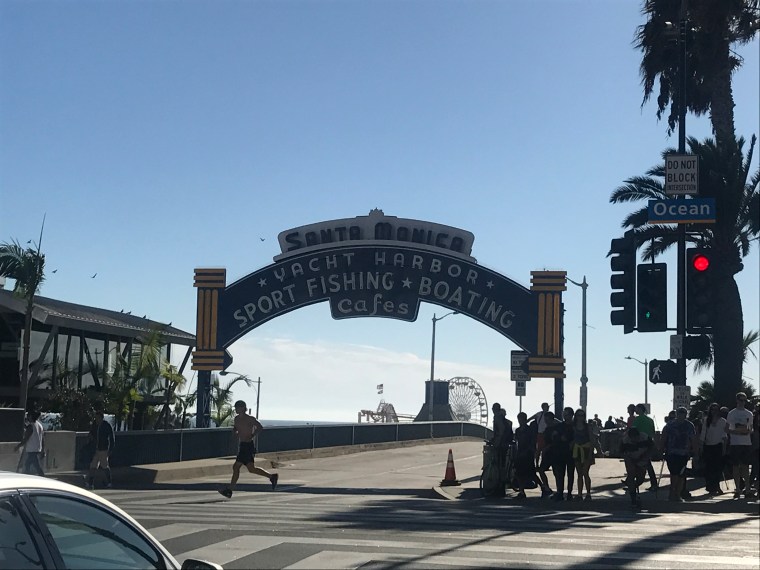
The view of downtown Los Angeles walking back was pleasant, but it did occur to me that just as Los Angeles has widely varied neighborhoods, the experience of walking would also vary from place to place. For my next dérive, I went to Santa Monica. I drove there, but the Metro Expo line can also take you there as of this past spring.

img_2759

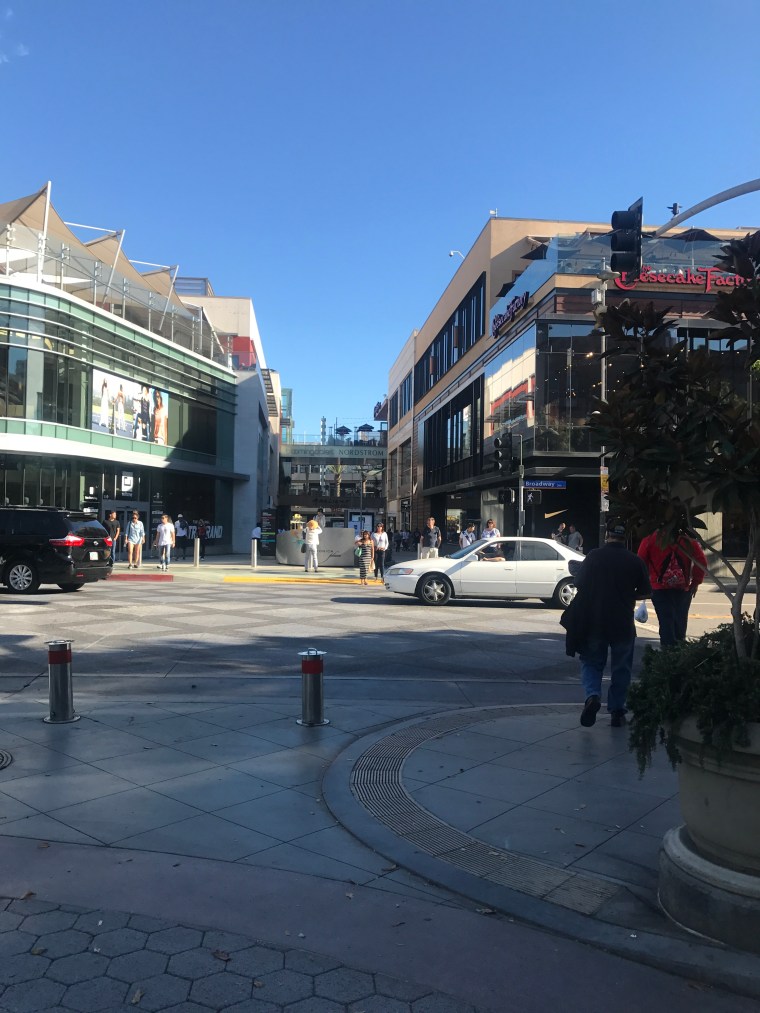
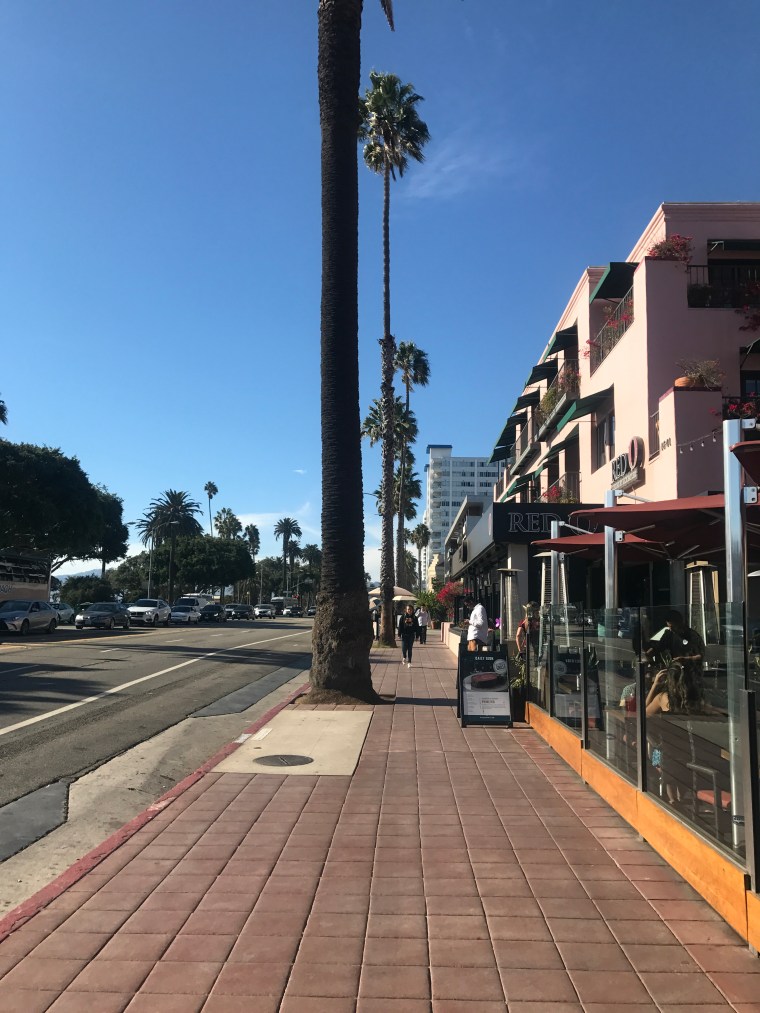
It occurred to me while in Santa Monica that perhaps no one was walking on Wilshire because there wasn’t much to see! There were plenty of people walking in Santa Monica.

img_2762

The Third Street promenade is just east of the Santa Monica pier, and has shopping, dining, and street entertainers (my favorite to date were the skateboarding bulldogs I stayed to watch one time – very talented).

img_2761

Walking back from a stroll along the Promenade and back, I turned along Ocean Avenue.

img_2760

Again, plenty of walkers, plenty of places to eat and shop. The ocean just across the street, and the sun warm. Not bad!

img_2763

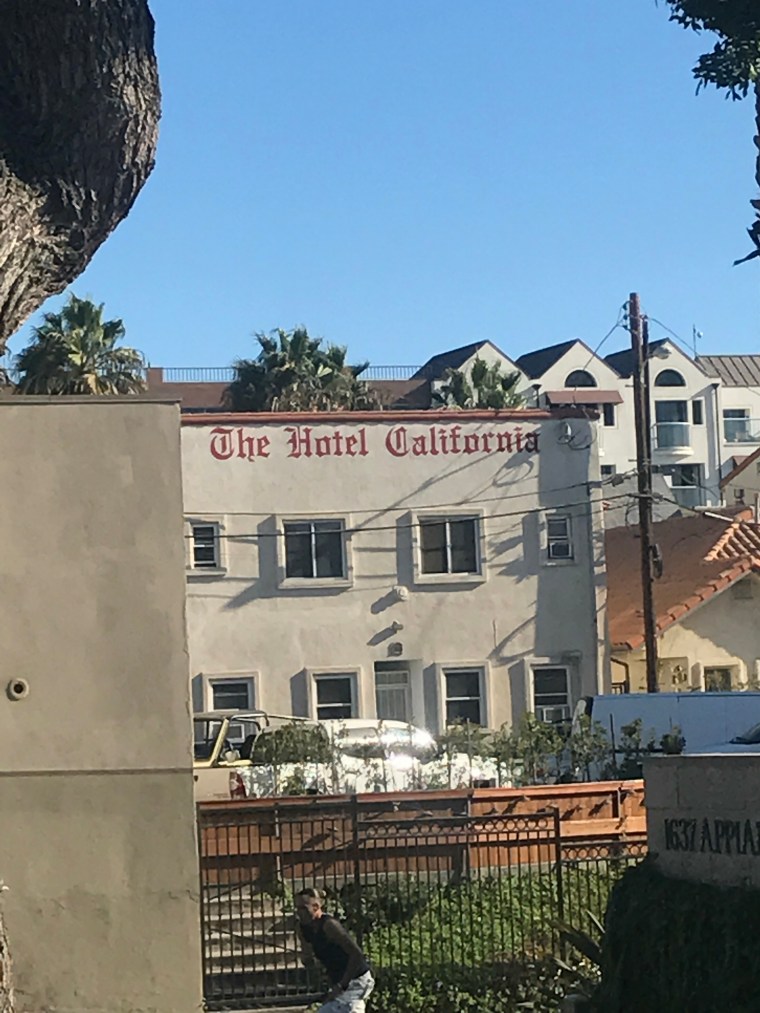
Heading over one block west, I found the Hotel California . . . somehow smaller than I had imagined for a place filled with people who can “check out, but can never leave.”

img_2764

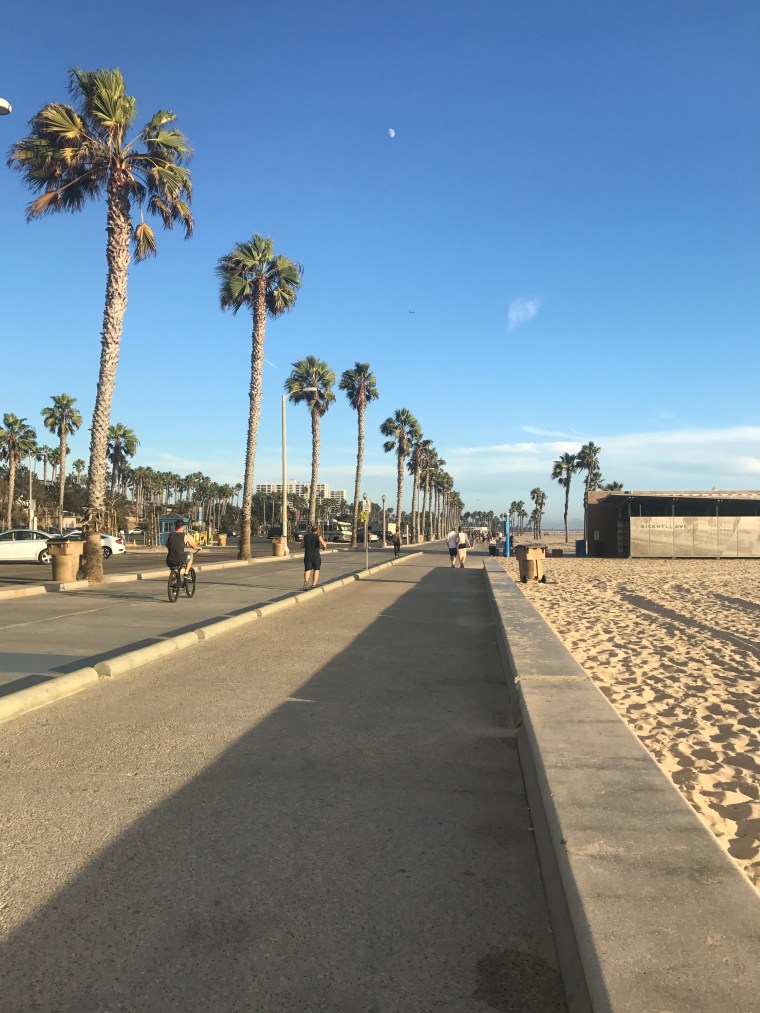
The ocean front walk, even on a week day, was busy with walkers, bicyclists, and skateboarders.

img_2781

Walking back, I took the sandy stretch at the edge of the Pacific Ocean, heading back toward the pier. A very different experience than the walks I routinely enjoy in NYC, but there was something magical about the sounds and textures of this walk (I would never dream of talking off my shoes to walk in the city, not even in my beloved Central Park). Los Angeles is vast, and sprawling, so while it is not practical to walk to get from place to place as it can be in New York City, there are wonderful places to walk – you just have to drive to get there.

A resource for real estate . . . and more

East 81

I was having lunch yesterday with customers with whom I have worked for over a year, and we are now happily in contract for an apartment that makes them feel good just spending time in it (even if the reason we are in it is to meet with contractors to plan a lengthy renovation!). While talking to them about our process (and about the course yet to come of selling their current apartment), they mentioned that they had been surprised at how many aspects of the journey I had been able to help them with, not just the obvious ones of sending them listings, making appointments to see apartments, negotiating the terms of their offer, etc. It occurred to me that I have never stated something that I feel strongly: I want to be your resource for real estate in NYC, and for so much more as well. There is never any obligation to ask me a question for yourself, or for a friend or family member, and I love doing it. Here are some examples of issues I have dealt with/ questions I have answered for people before, some of whom go on to become customers, and others who might become so in the future, but are not currently:

  1. Questions about the market: How’s the coop versus condo market? What are interest rates likely to do and how will that affect sales? What generally happens to the real estate market during an election year?
  2. Questions about value: What is my apartment worth? Can I get an apartment in another neighborhood with more space/light/quiet for the same price I am currently paying/for what my apartment is worth? Can I buy an apartment for approximately the same monthly costs as I am currently paying in rent?
  3. Questions about neighborhoods: What area of NYC is a possible value play these days? How is X neighborhood evolving?
  4. Questions about investing: What are the value neighborhoods where an apartment would be rented quickly and profitably? Does it makes sense for me to buy an apartment for my student or young adult to live in? What kind of appreciation might I get if I keep the apartment for X years?
  5. Questions about other professionals: Do you know a good real estate lawyer/accountant/insurance agent/mortgage broker/interior designer/contractor/stager/housekeeper/moving company/dog walker/pet groomer? (Answer:Yes!)
  6. Questions about new development: What’s going on in the super-luxury market? How do new development sales affect/relate to traditional coop sales? Are there any new developments in X neighborhood/for X price point?
  7. Questions about moving/relocation: Can I get a rental/buy a coop or condo if I don’t have a green card/visa? Can I use an out-of-town guarantor? How I can set up a bank account in the US before I move? Can I wire money to my lawyer and have her bring the funds for my condo at closing? How do I set up with Con Ed/Verizon/Time Warner?
  8. Questions about dealing with a landlord/coop or condo board: How can I go about getting an alteration agreement approved? Is my landlord required to get rid of the rats? (Note: this question came to me while on vacation from the panic-struck out-of-state friend of a customer, whose daughter was a new renter in the city!)
  9. Questions about timing: What is the best time to look for a rental? What is the best time to put my apartment on the market if I choose to do so? How does the outdoor space in my apartment affect when it might best sell?
  10. Questions about living in the city: How do you handle deliveries in a non-doorman building? Will Seamless/Fresh Direct/Ikea deliver to a fifth-floor walk-up? What are the recycling rules? How can I get tickets to Hamilton/discount tickets to other shows? How does Citibike work?

These are just samples of the many types of questions I have been able to answer in the past. Let me say again – none of these questions obligate you in any way! Of course, if you are looking to buy or sell, I would like you to give me a chance to explain what I can do for you, but I do genuinely love being a resource without any expectation in return. One more thing, when preparing a package of information to give potentials sellers last week (I do have the exclusive on their apartment now, and it will hit the market next month), I was struck again by the Corcoran mission statement (shown below) and how perfectly it dovetails with my own standard of behavior as a real estate agent. I have been told on more than one occasion that I “don’t seem like a real estate agent” to which I reply, “If I had to be the kind of real estate agent you are referring to, I wouldn’t be in this business.” Luckily for me, Corcoran supports my own desire to put the customer, not the payday, front and center of every decision, and to provide exceptional service.

julie.brannan@corcoran.com

Mission Statement

Real estate and the human creative spirit

Dakota

Recently I was at the Association for International Photography Art Dealers (AIPAD) show at the Park Avenue Armory. The abundance, diversity, and quality of the art shown in one space almost created a feeling of sensory overload, and I started to think about how thrilling it is to be in any place where the creative impulse is expressed by people, whether it be visual art, theater, dance, music, or architecture and design. The need for creative expression is fundamental to how we see ourselves as humans – the recognition we feel when we view the cave paintings from Paleolithic people living 40,000 years ago in Lascaux, France, emotionally spans the gap in time between us and them.

After leaving AIPAD, my thoughts turned to how we express our creativity when it comes to where we live. It might be a more efficient use of valuable real estate space to have every building in Manhattan exactly the same, with apartments only differing in how much space and how many rooms someone needed (and perhaps whether or not you felt the need for a doorman). The gables, terracotta ornaments, and decorative gargoyles at the Dakota (seen above) have no practical purpose. However, we all instinctively recoil when imagining Manhattan as a series of uniform buildings, neighborhoods identifiable only by street names as boundaries, not because you see the San Remo or a series of cast iron buildings. Rather than selecting an apartment near our workplace, many of us choose to live instead in neighborhoods farther away that express who we are as a human being. A person walking through the Art Deco lobby of the Century on Central Park West on the way to their apartment is surrounded by an esthetic that fits their own, and that is different but no less personally valid than that of someone entering their loft in Metal Shutter Houses in West Chelsea.

Real estate involves money and can be thought of as an investment, but unless you are buying solely to invest, the choice of what apartment you decide to live in speaks to so much more than a rational financial decision. We as humans need to express ourselves creatively, and we do so when we decide only to look at pre-war apartments with working fireplaces and moldings, or only on the Upper West Side park block with a terrace, or only downtown in a modern building with a view of the High Line. A good real estate agent will listen to what you want in the way that a search engine cannot. You can run a search for a two bedroom/ two bathroom apartment in a certain price range in a certain neighborhood and come up with some possibilities, or a good agent can listen to the creative desires being expressed and select apartments that are an excellent place to start looking. Sometimes you may even be introduced to a new neighborhood that you didn’t initially consider but that the agent thought you might like, based on what kind of apartment, and building, and neighborhood, you are looking for.

Pablo Picasso once said, “The purpose of art is washing the dust of our daily lives off our souls.”  I can’t imagine a better way to wash this daily life debris off our souls than returning at the end of our day to a home that reflects our own sense of what is beautiful, from the external architecture of our building to the layout and décor of our personal space.