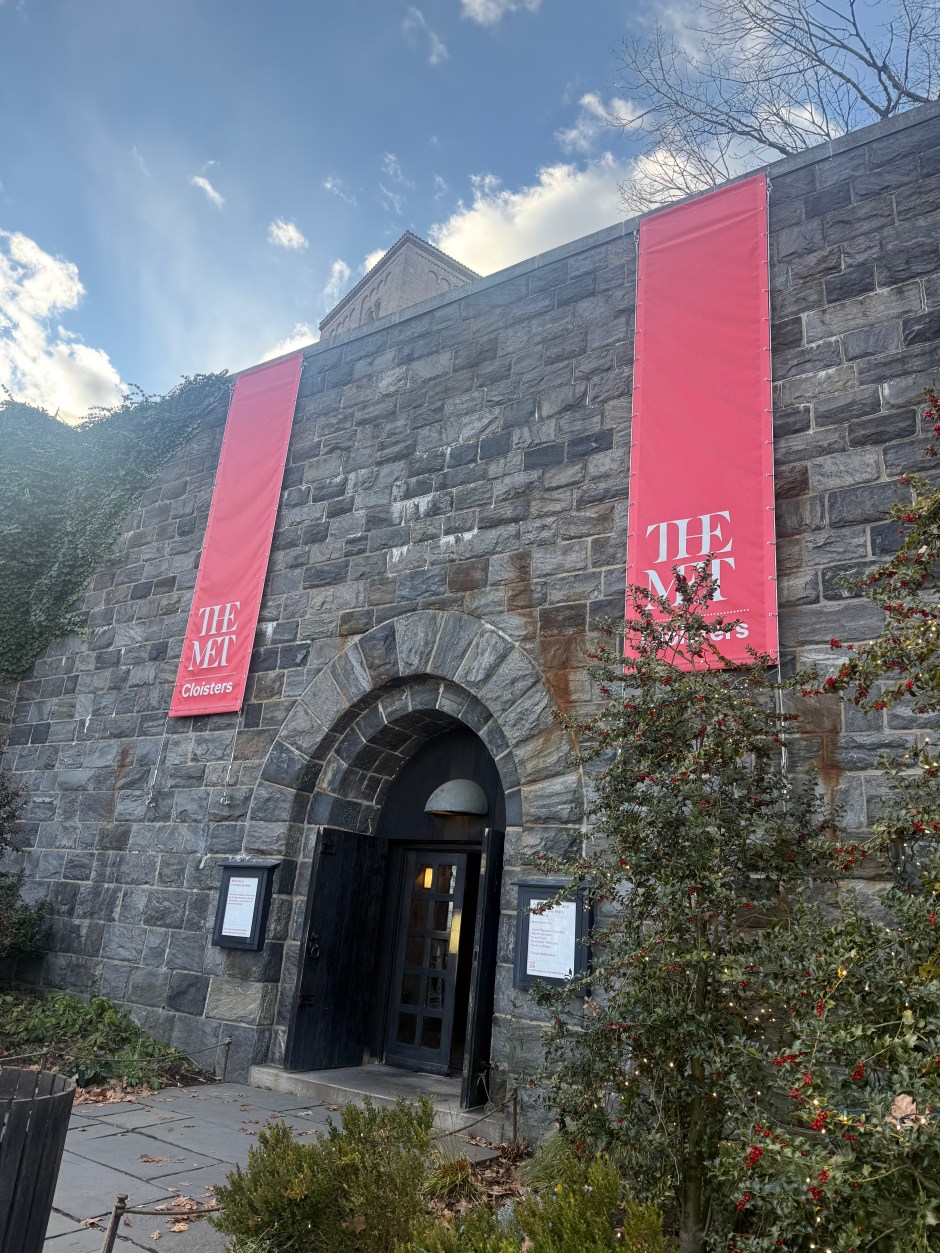
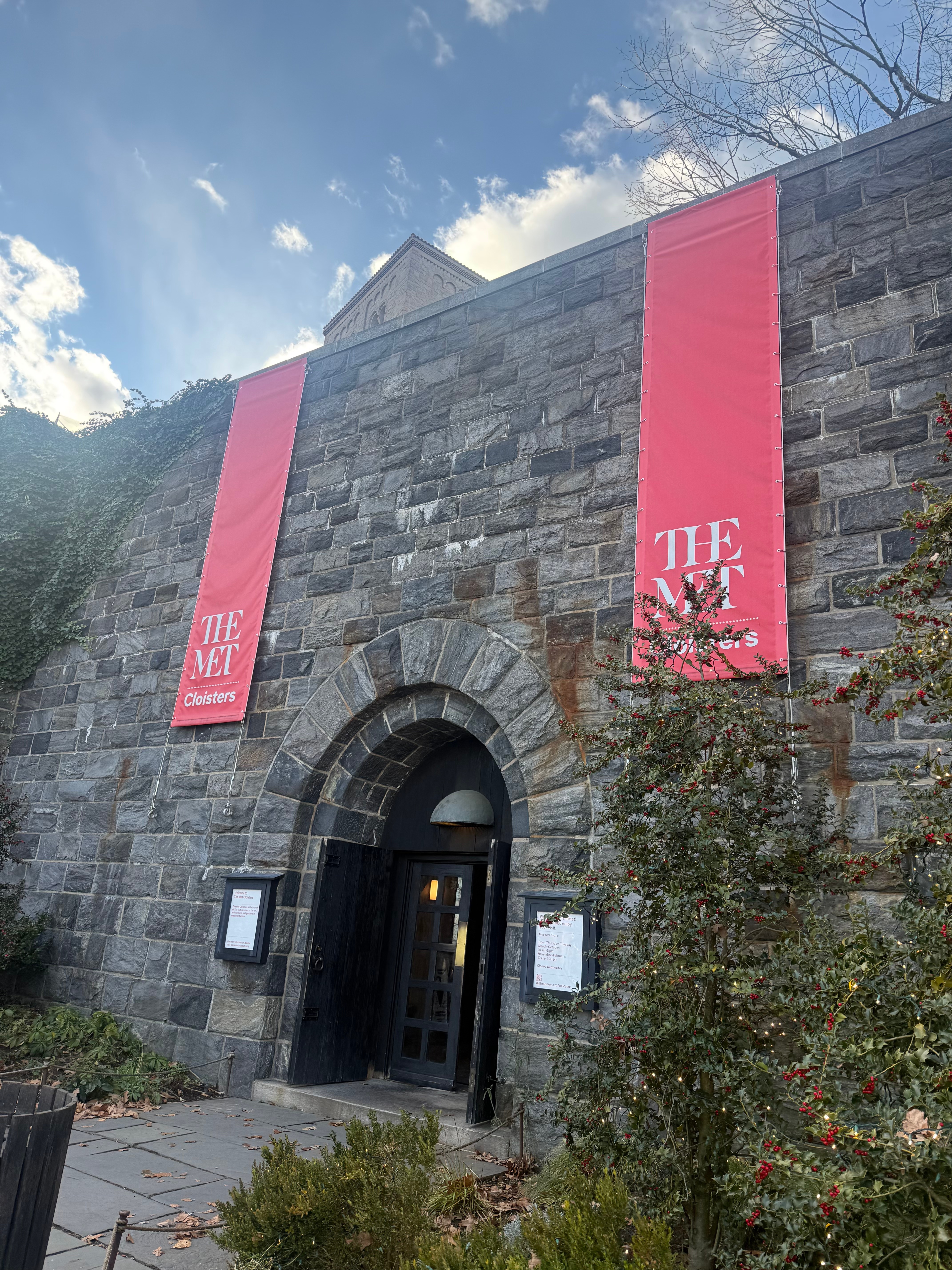
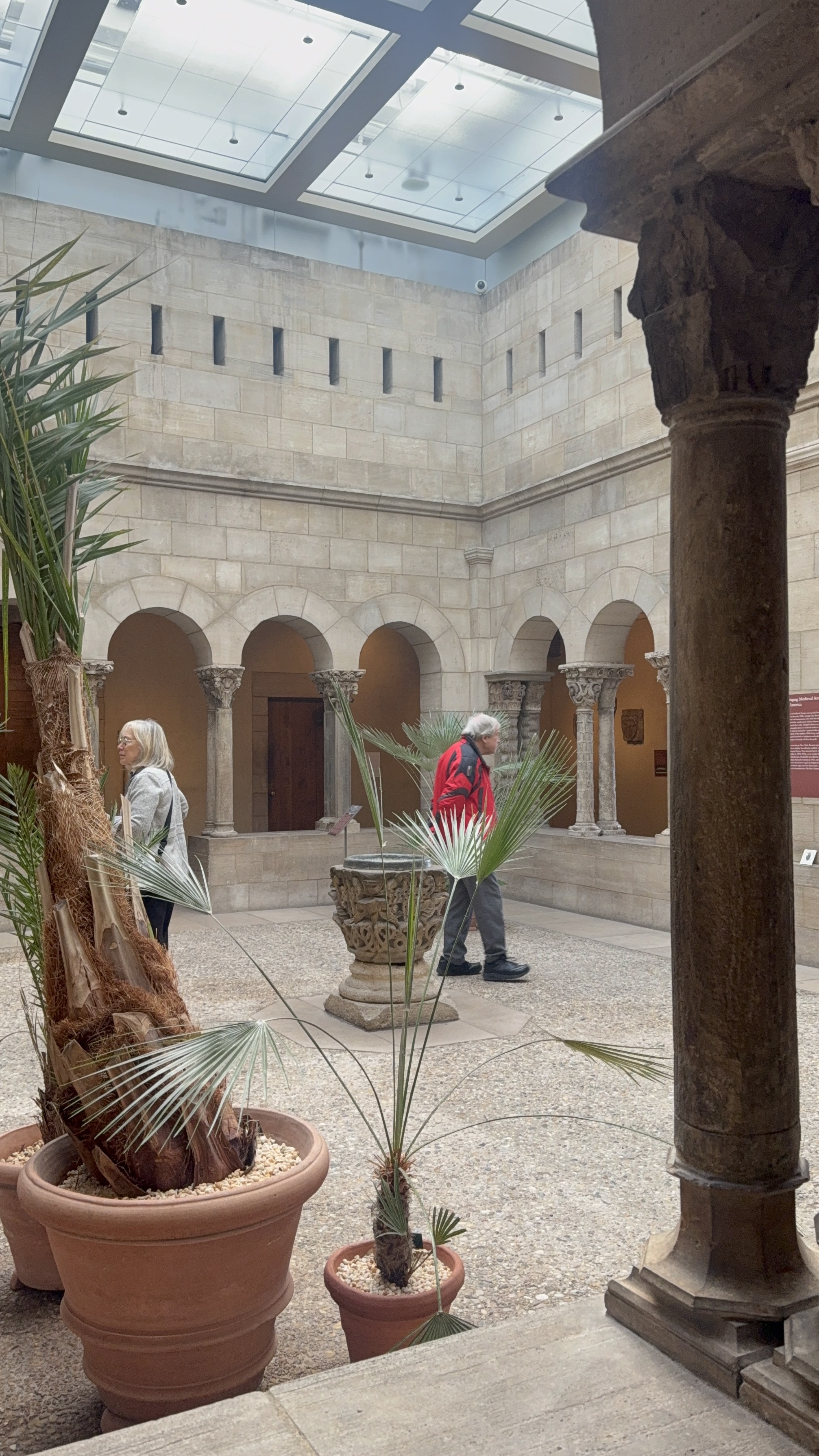
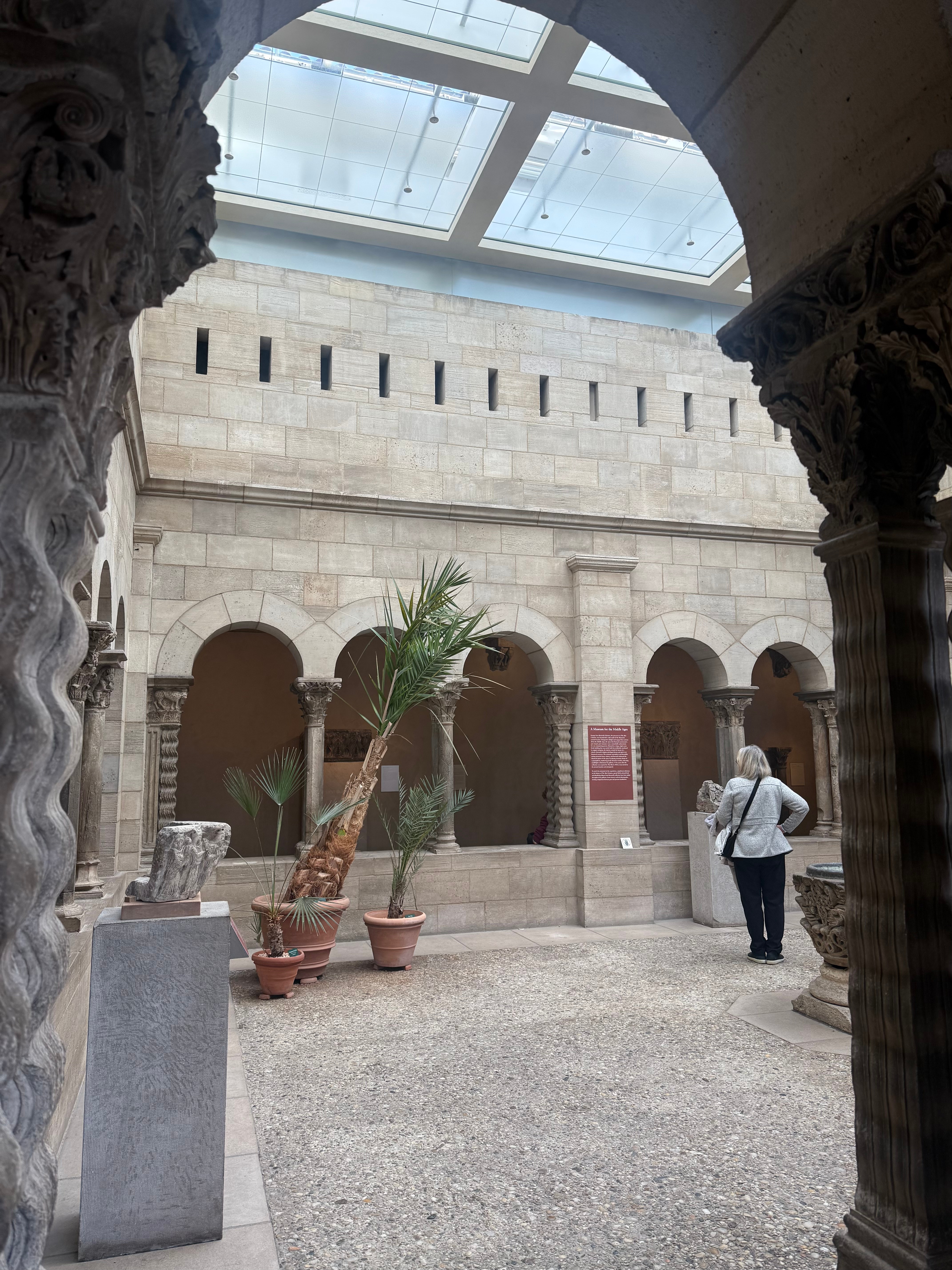
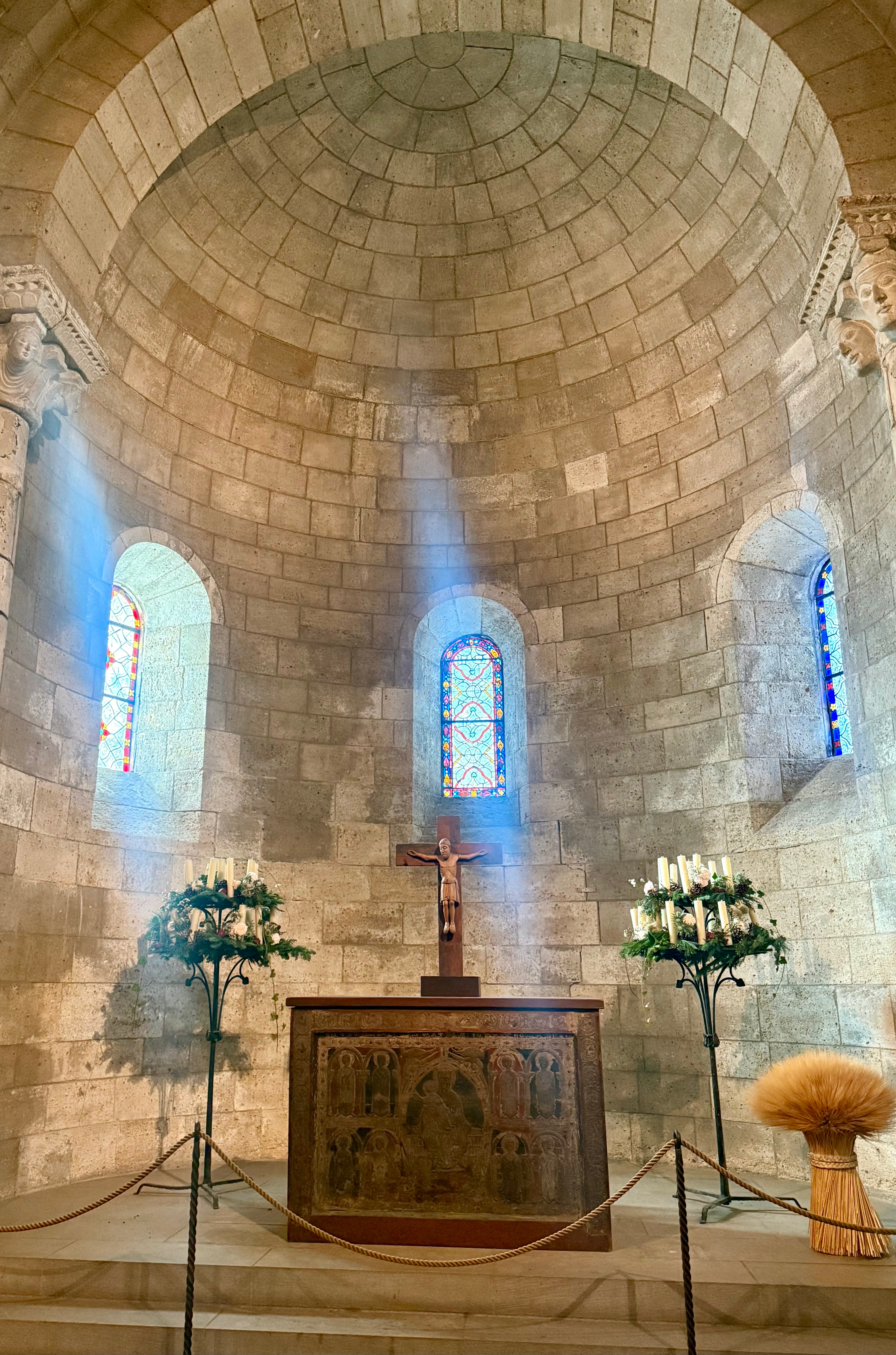
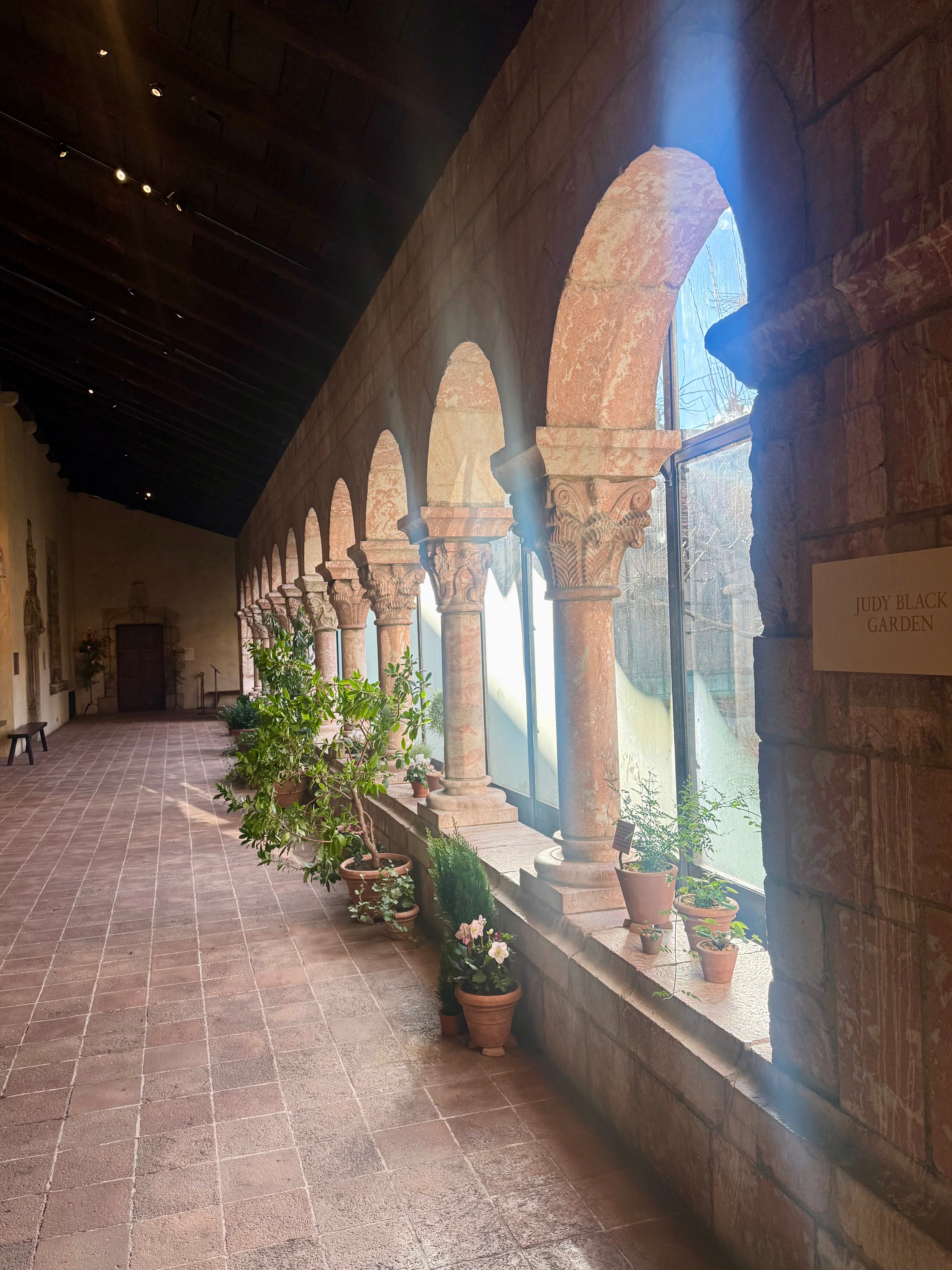
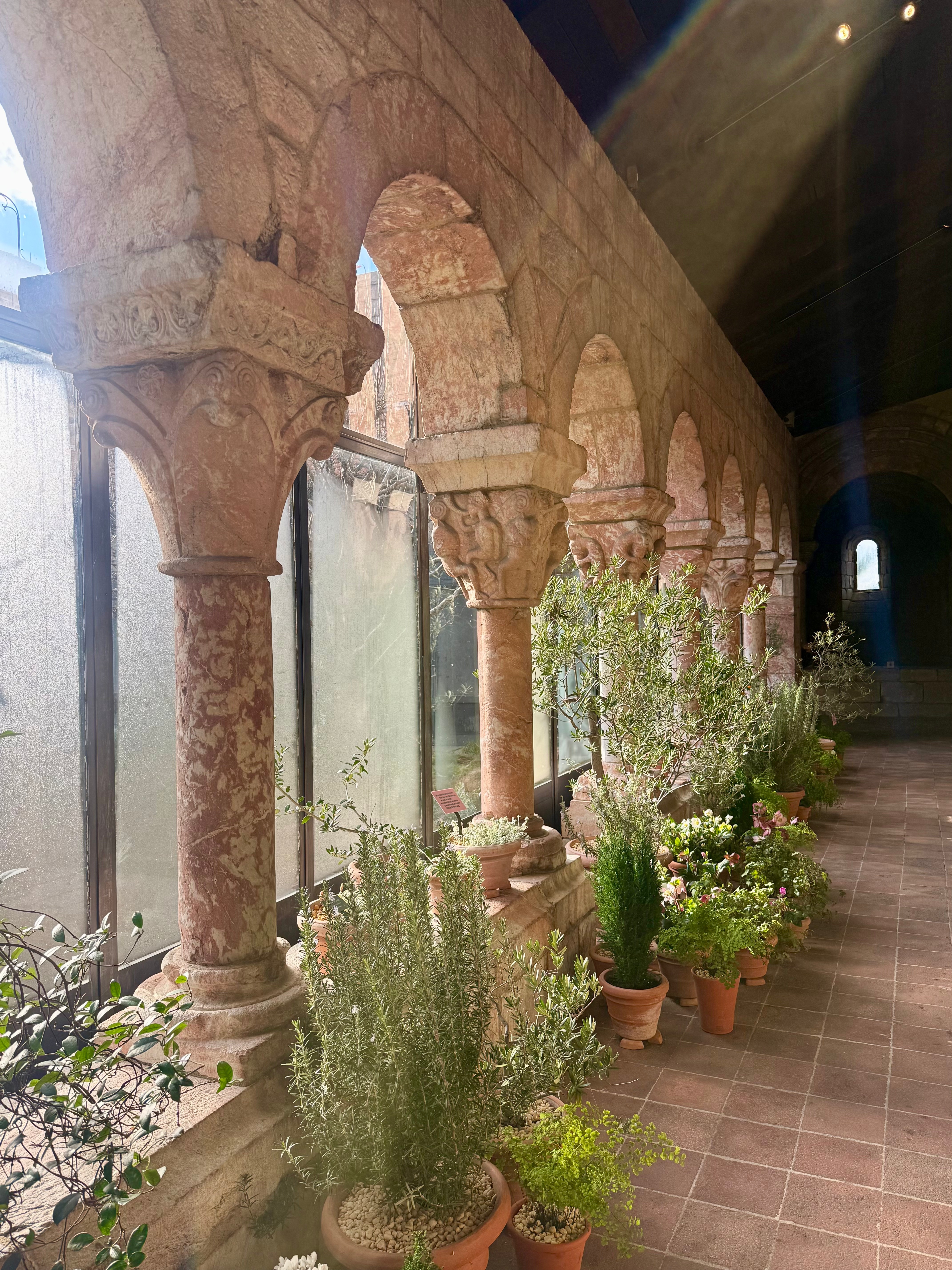
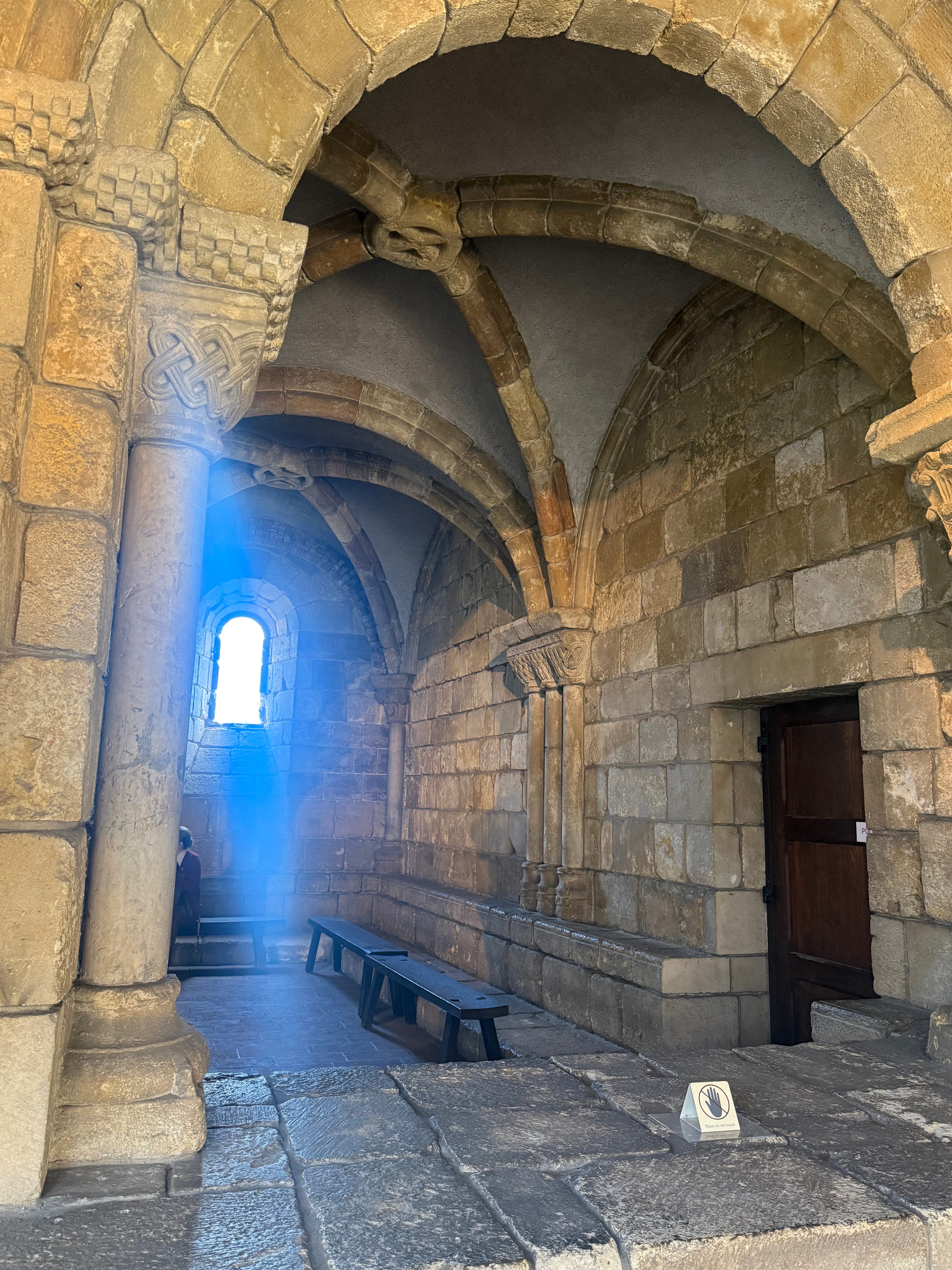
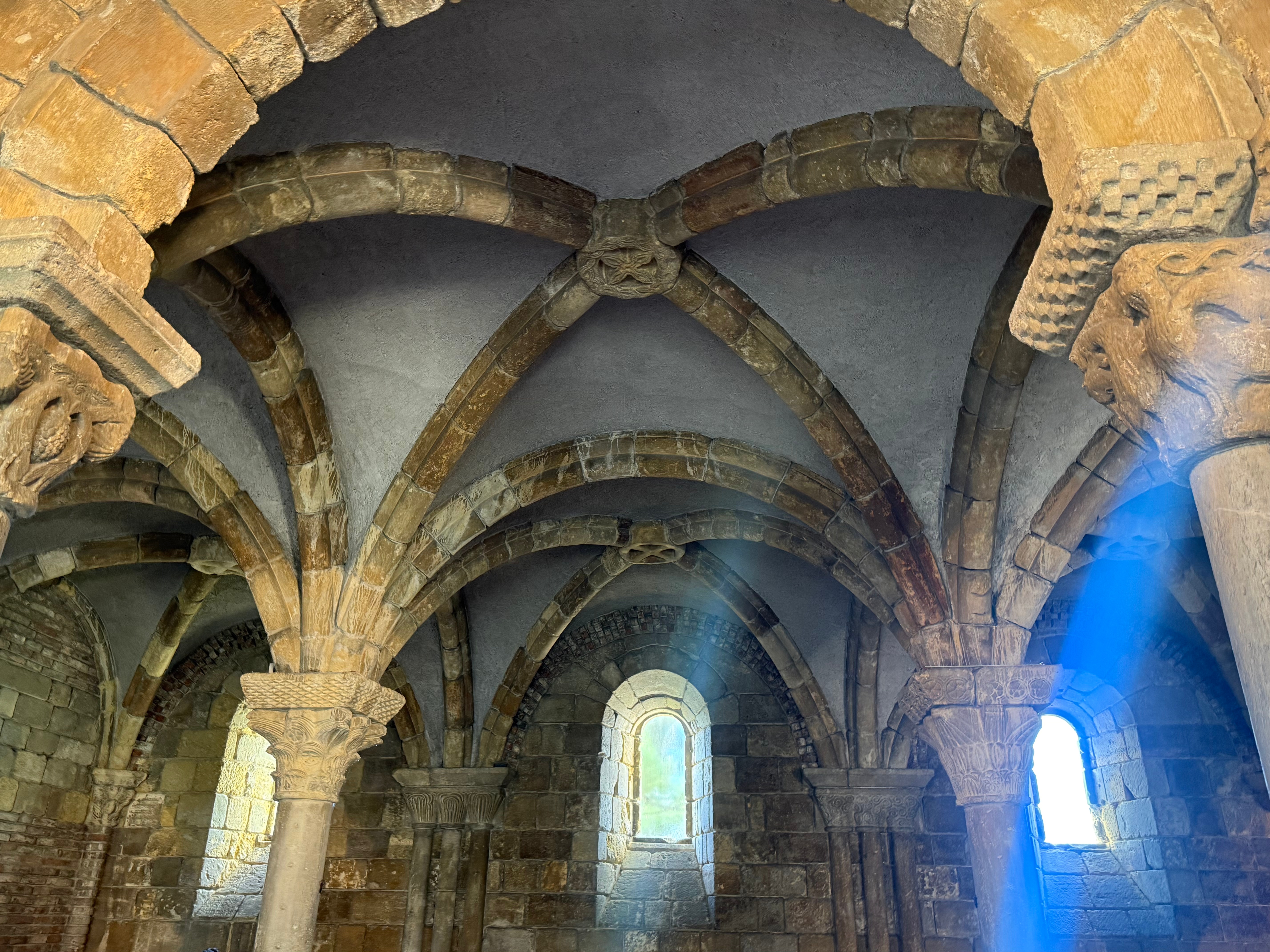
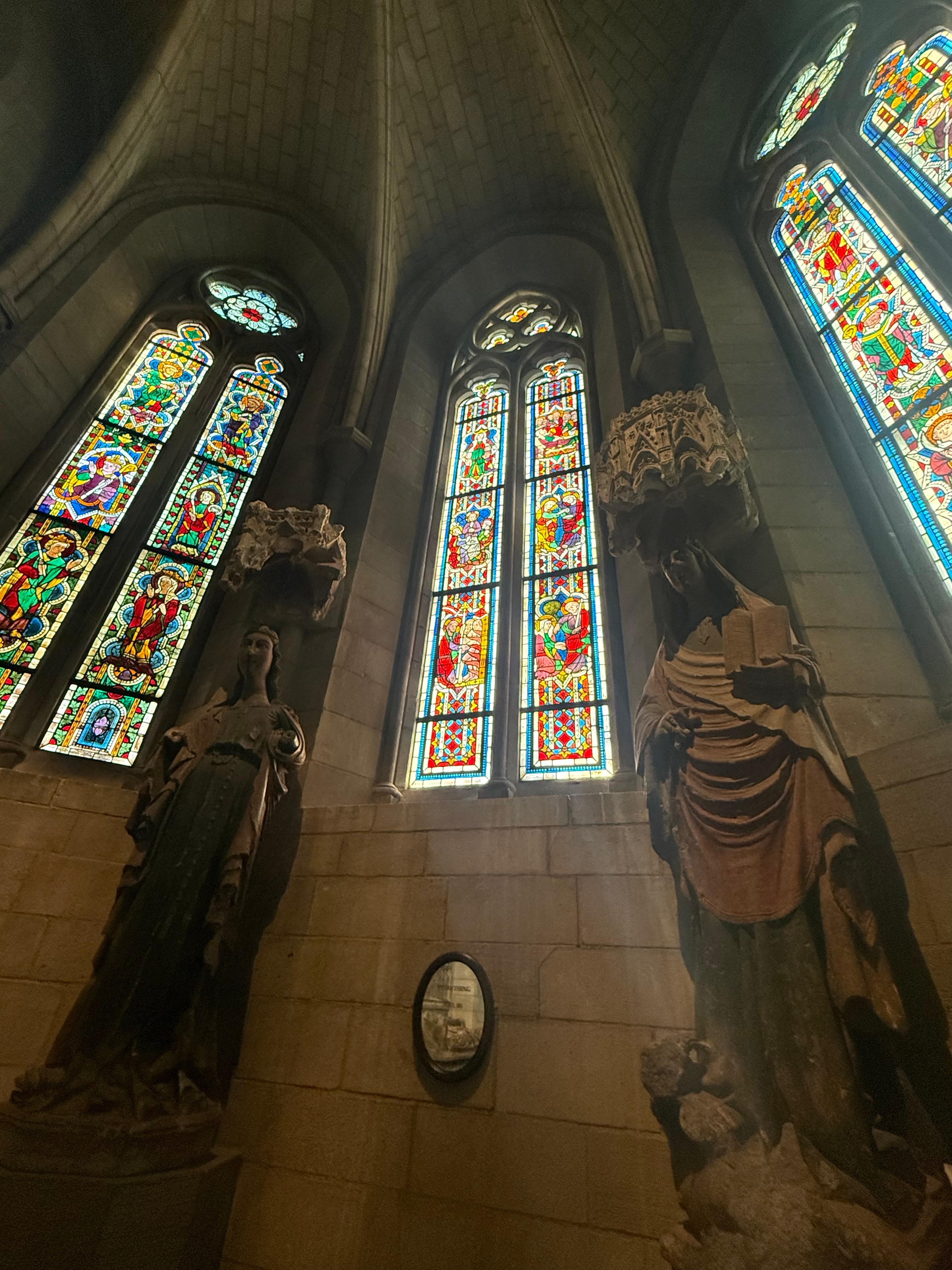
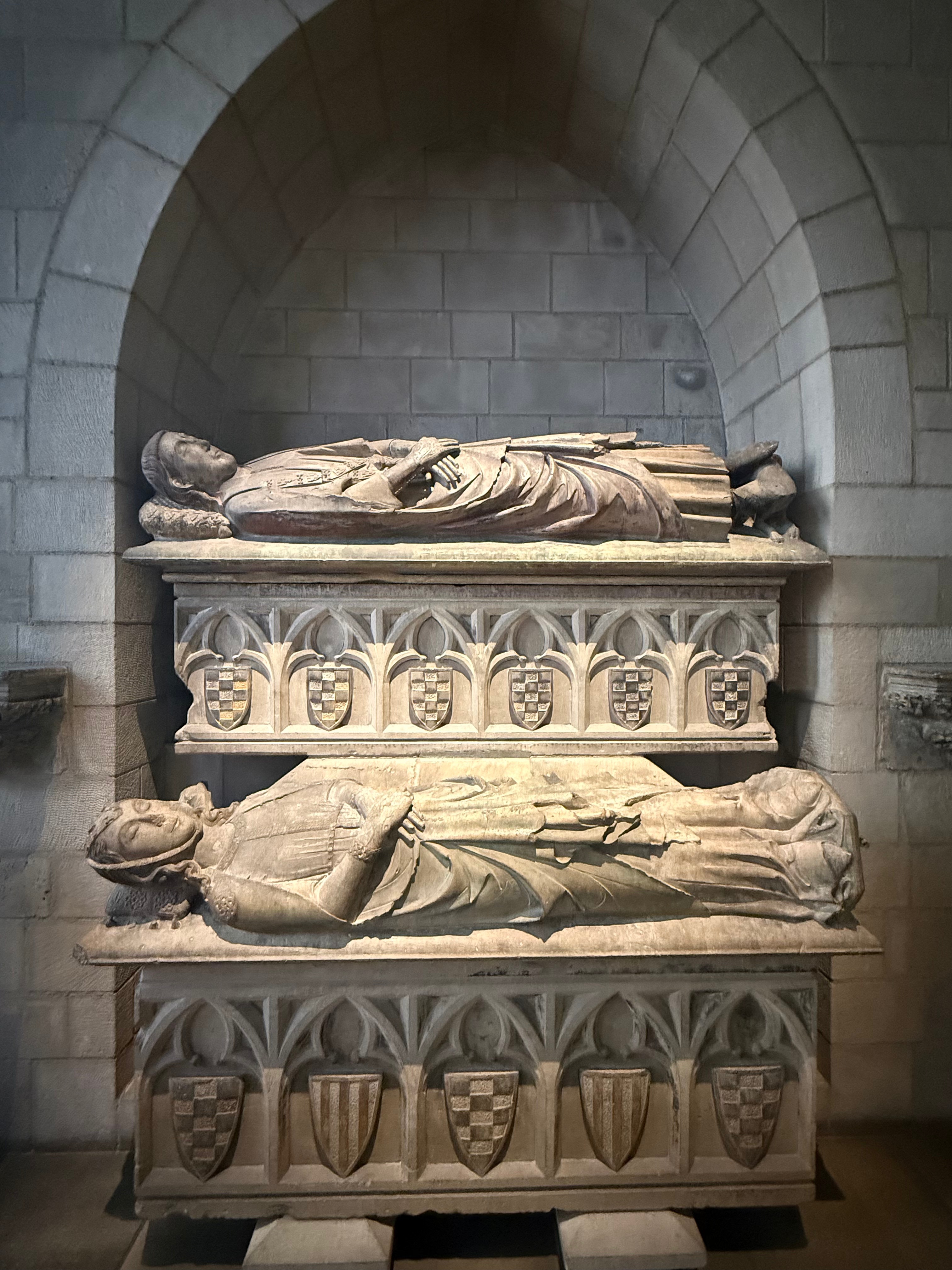
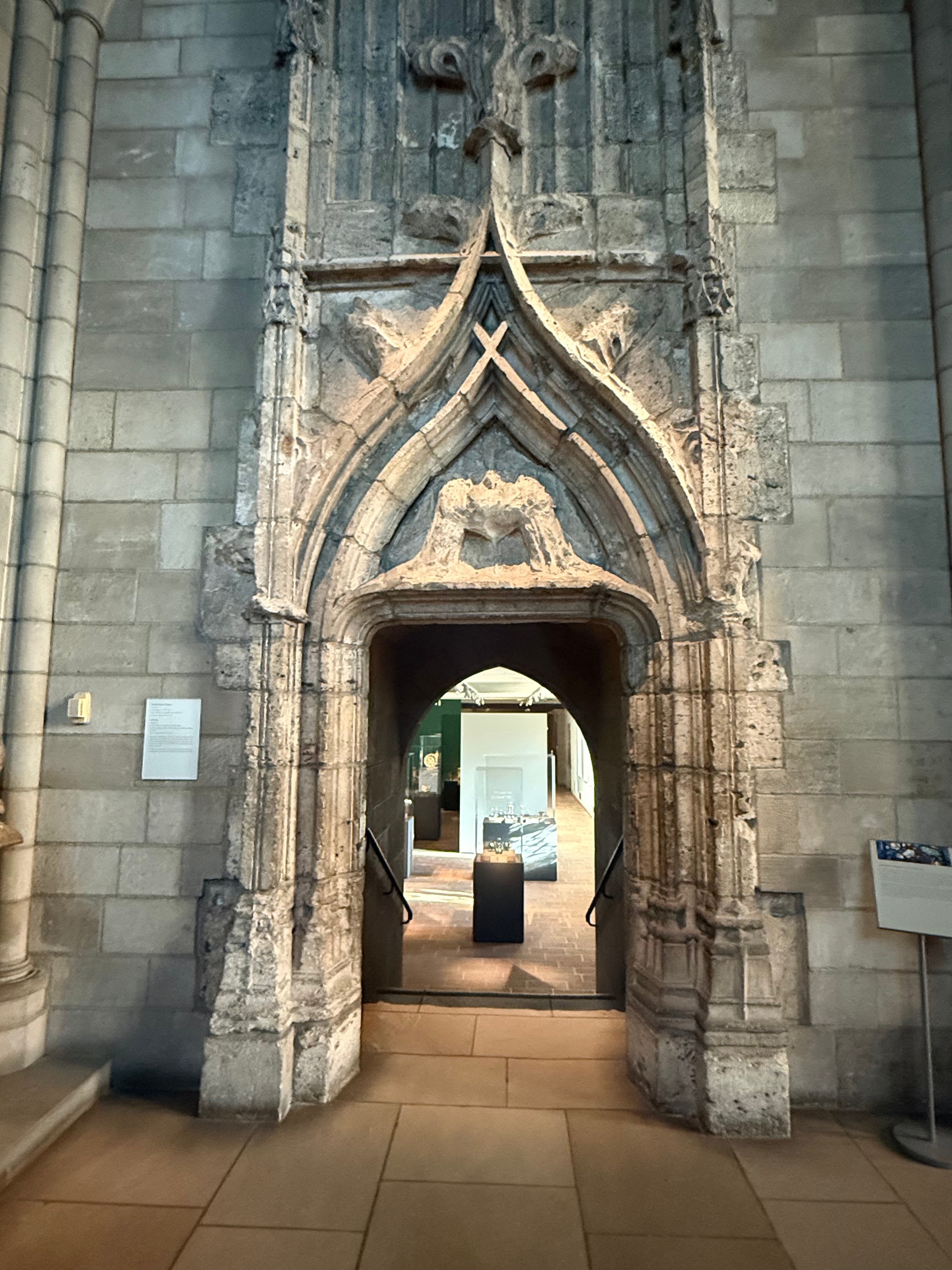
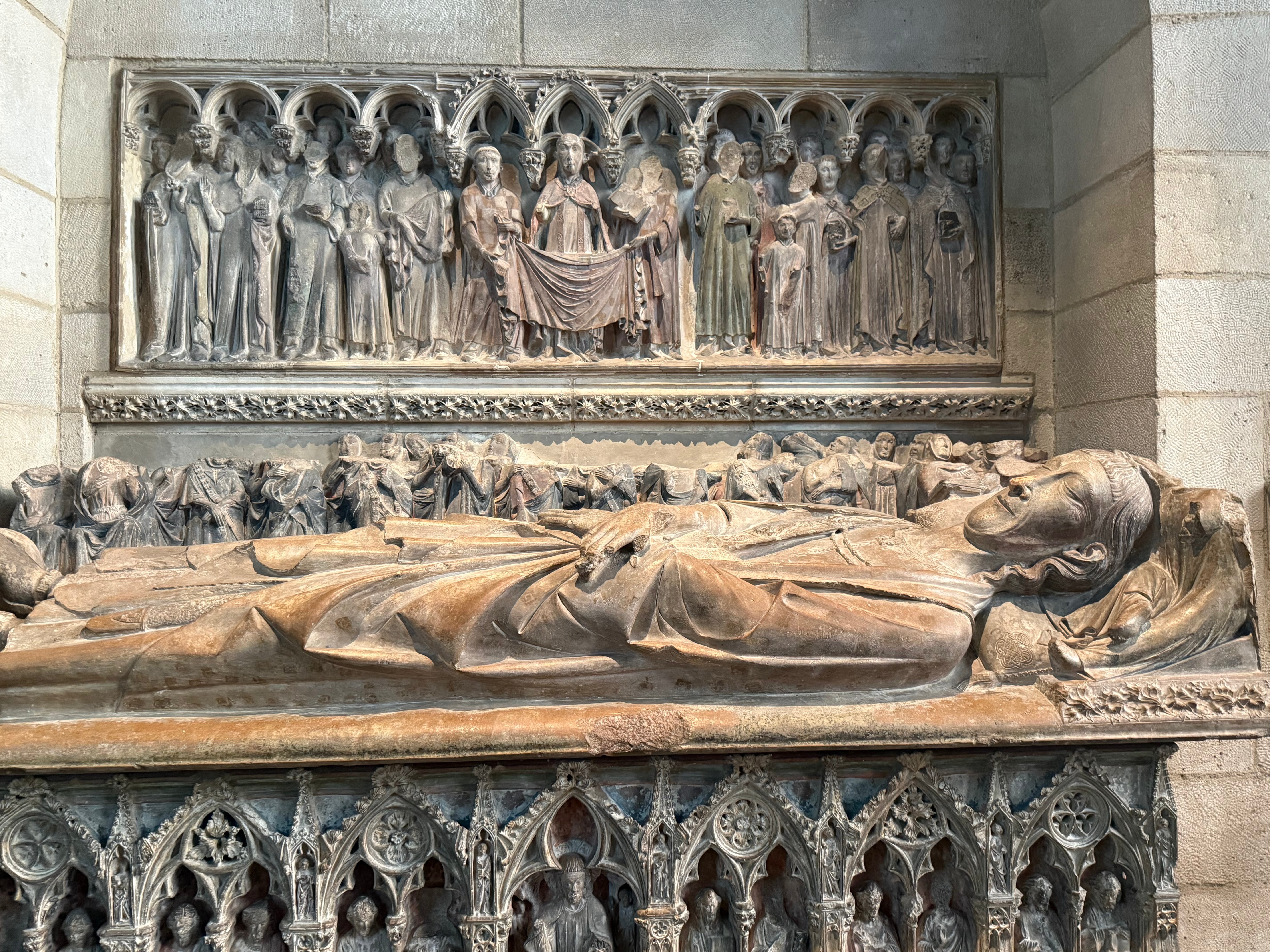
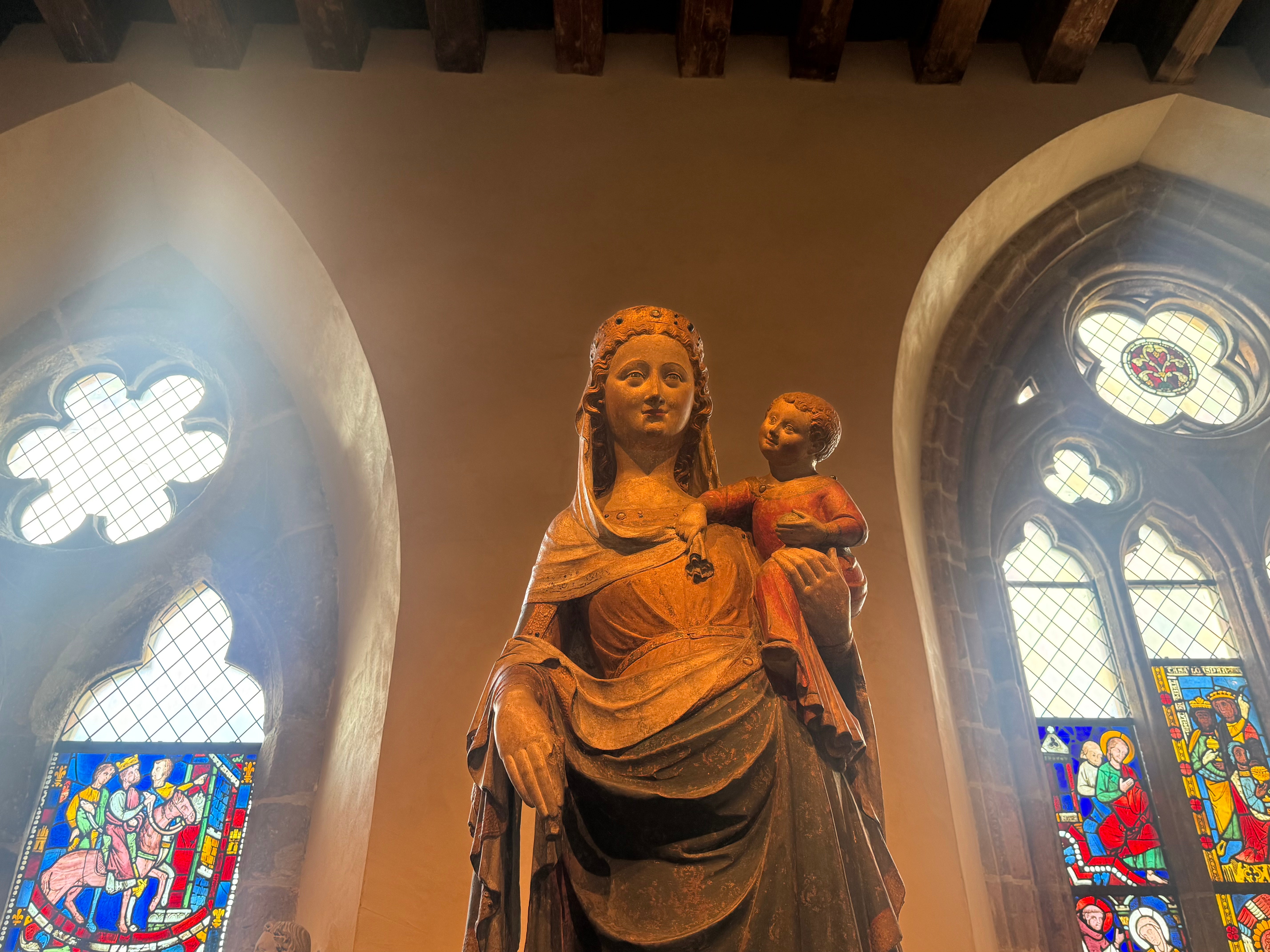
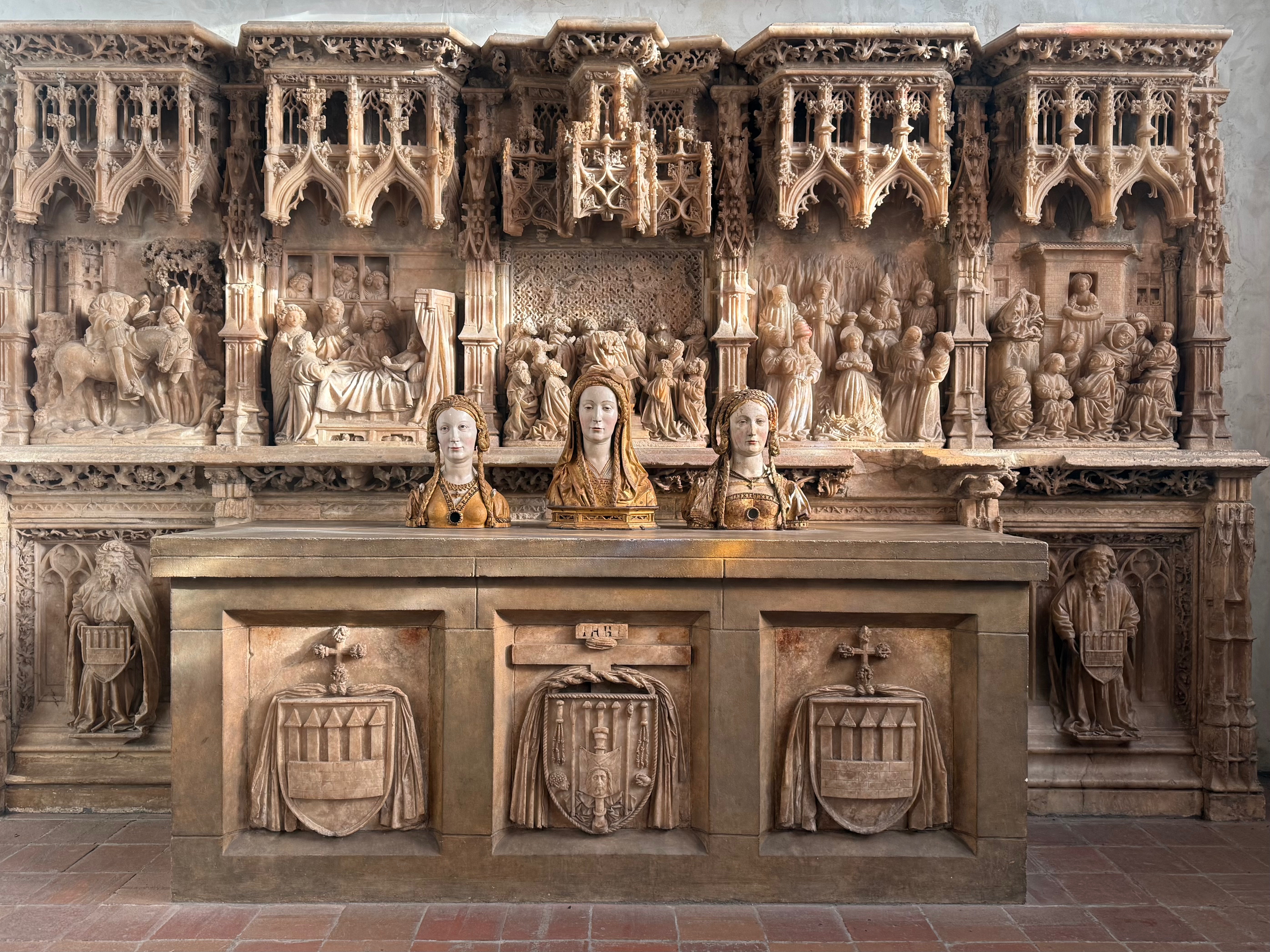
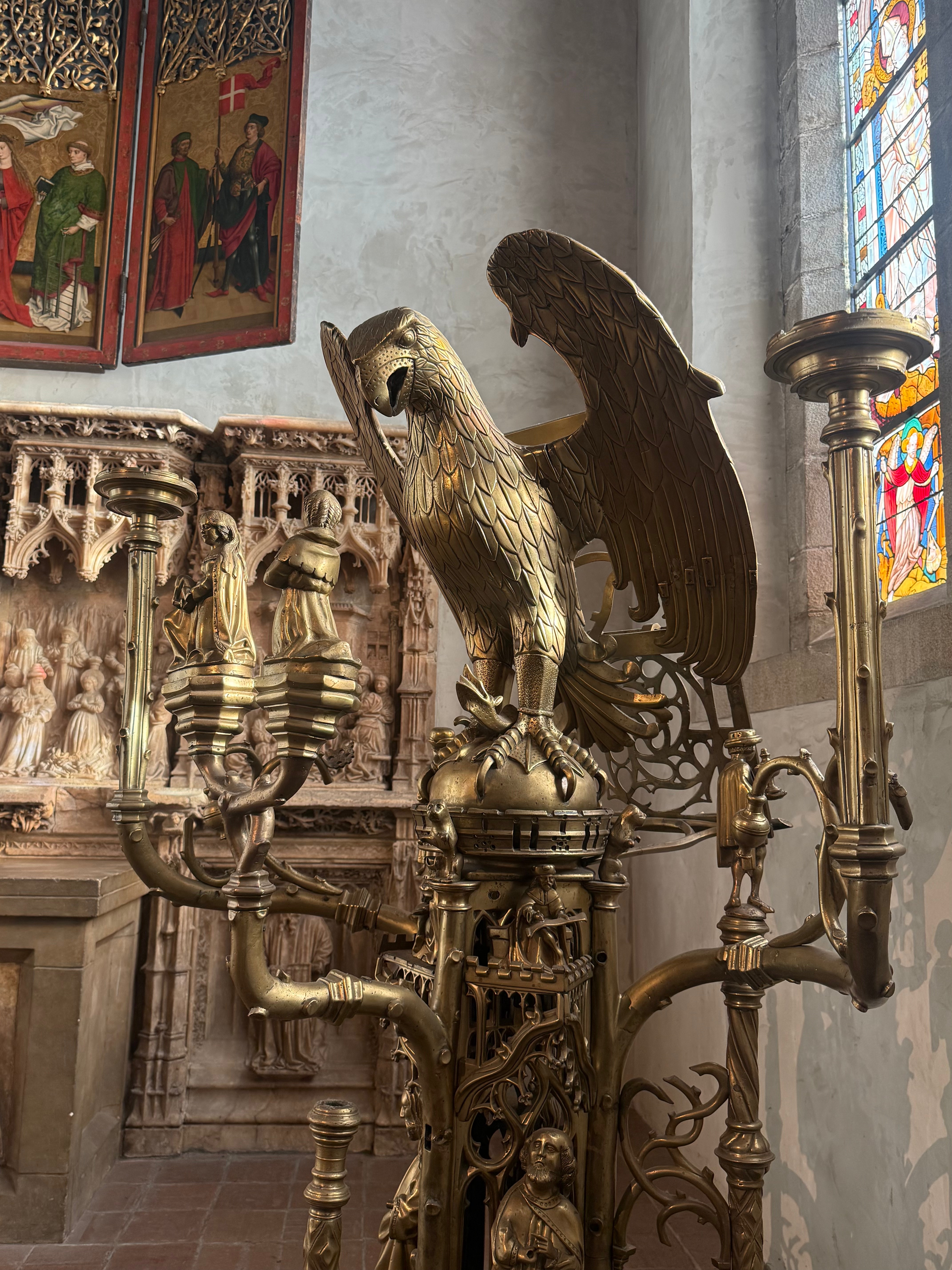
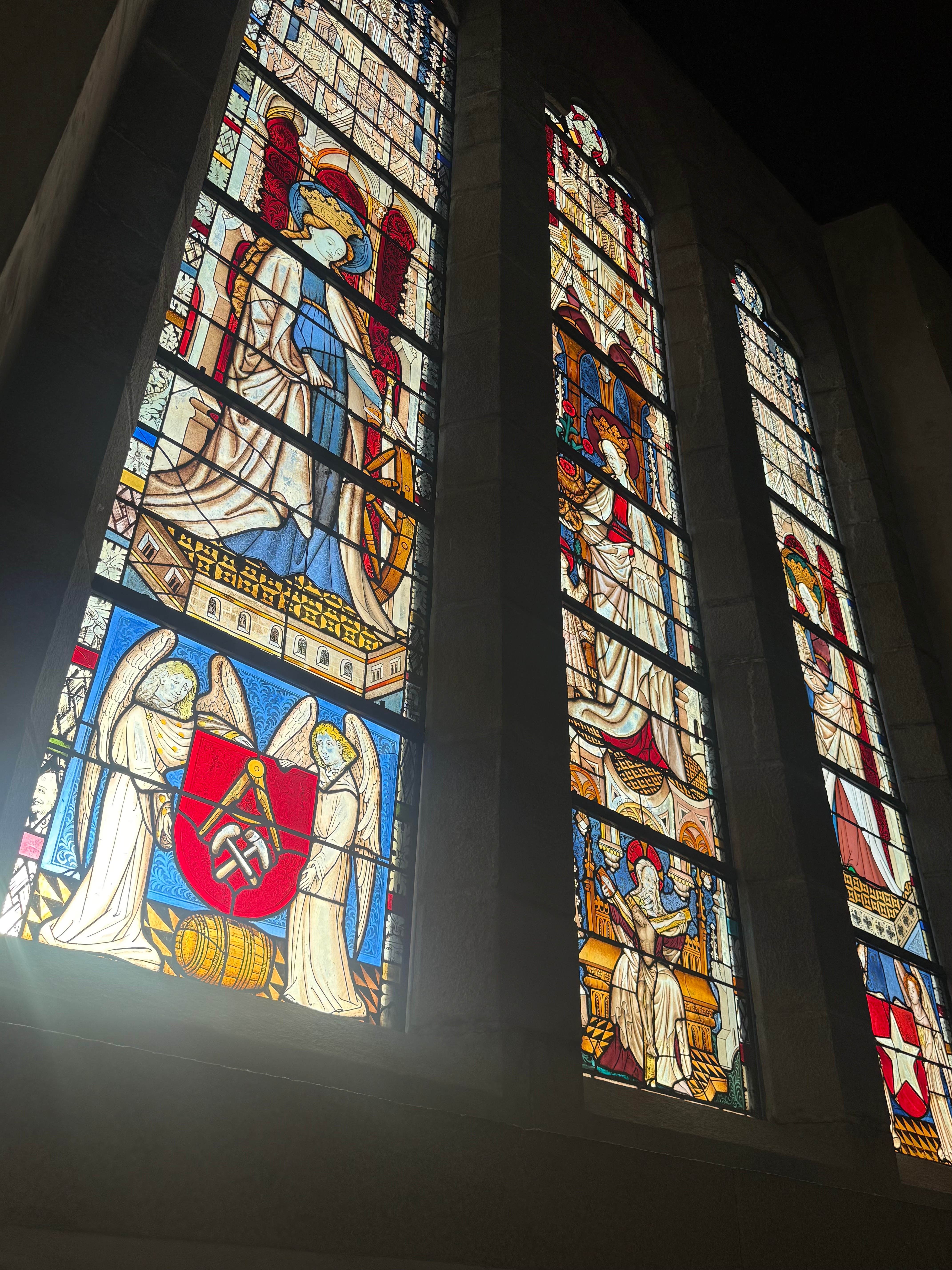
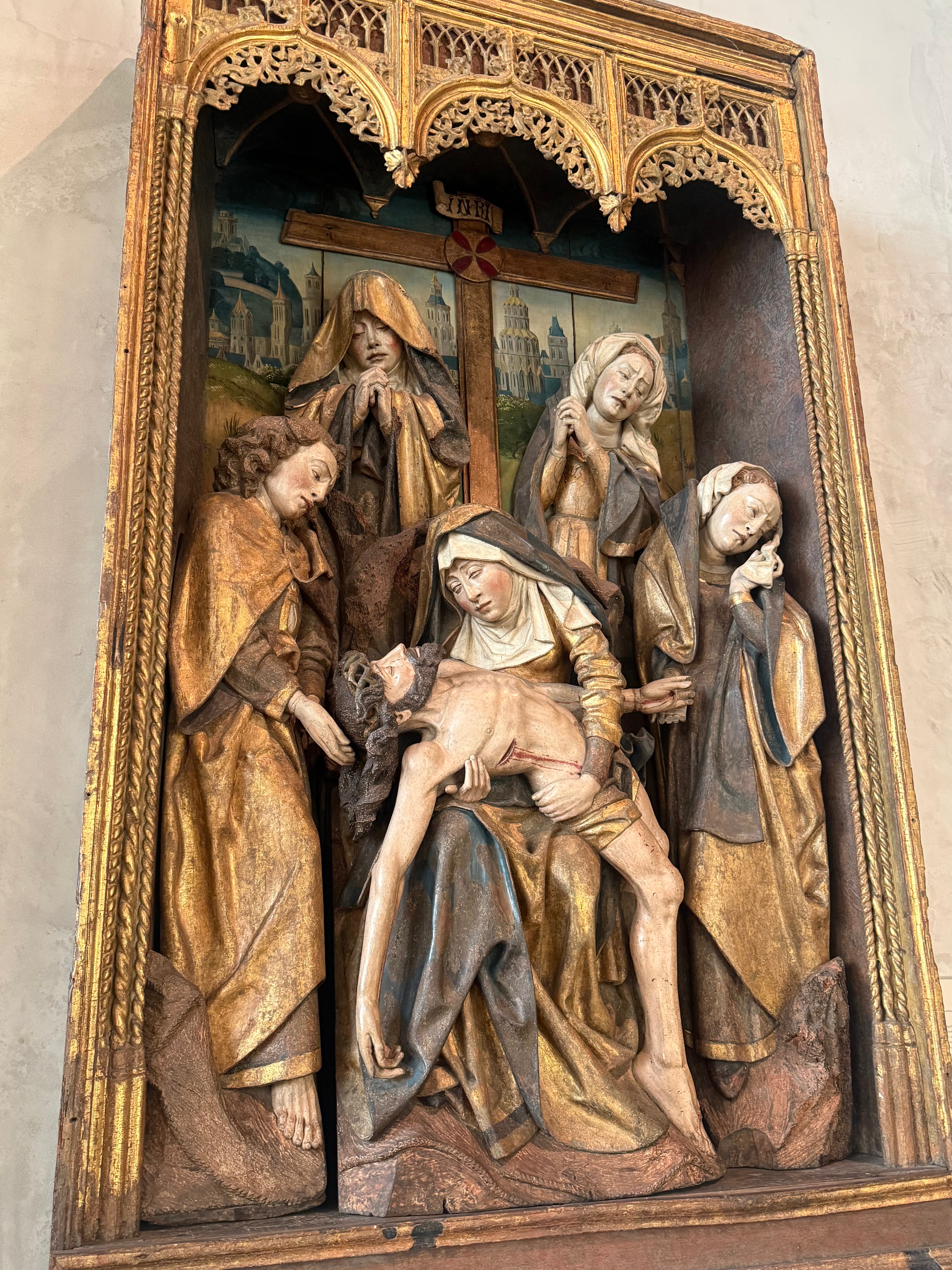
One of the wonderful things about traveling in Europe is the ability to explore ancient cathedrals and monasteries, experiencing extraordinary art and architecture from long ago. New York City is fortunate in that we can have that experience just a short subway ride, or express bus, away. The Cloisters is a part of the Metropolitan Museum of Art, and provides immersion into the art, architecture, and gardens of medieval Europe.
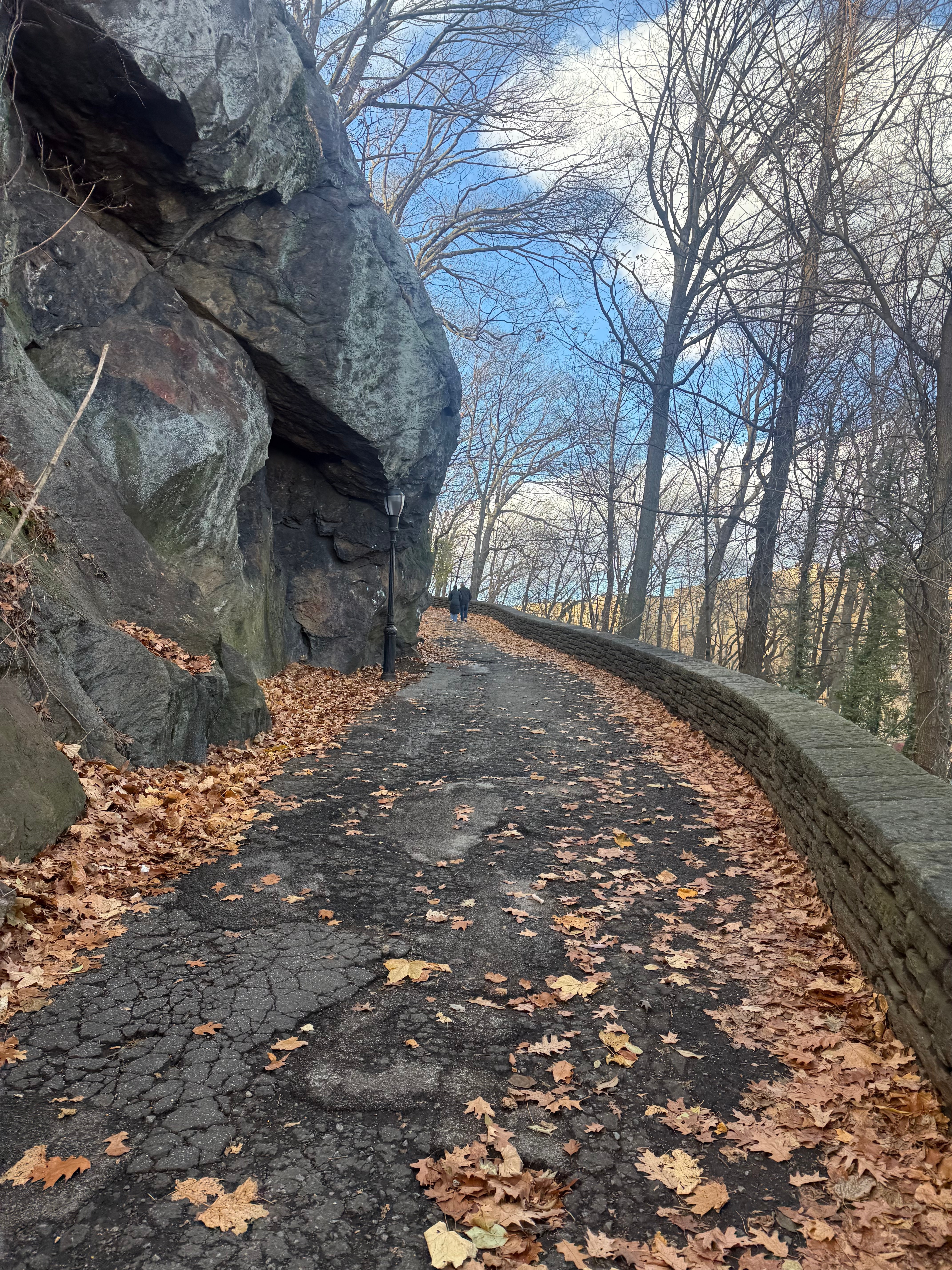
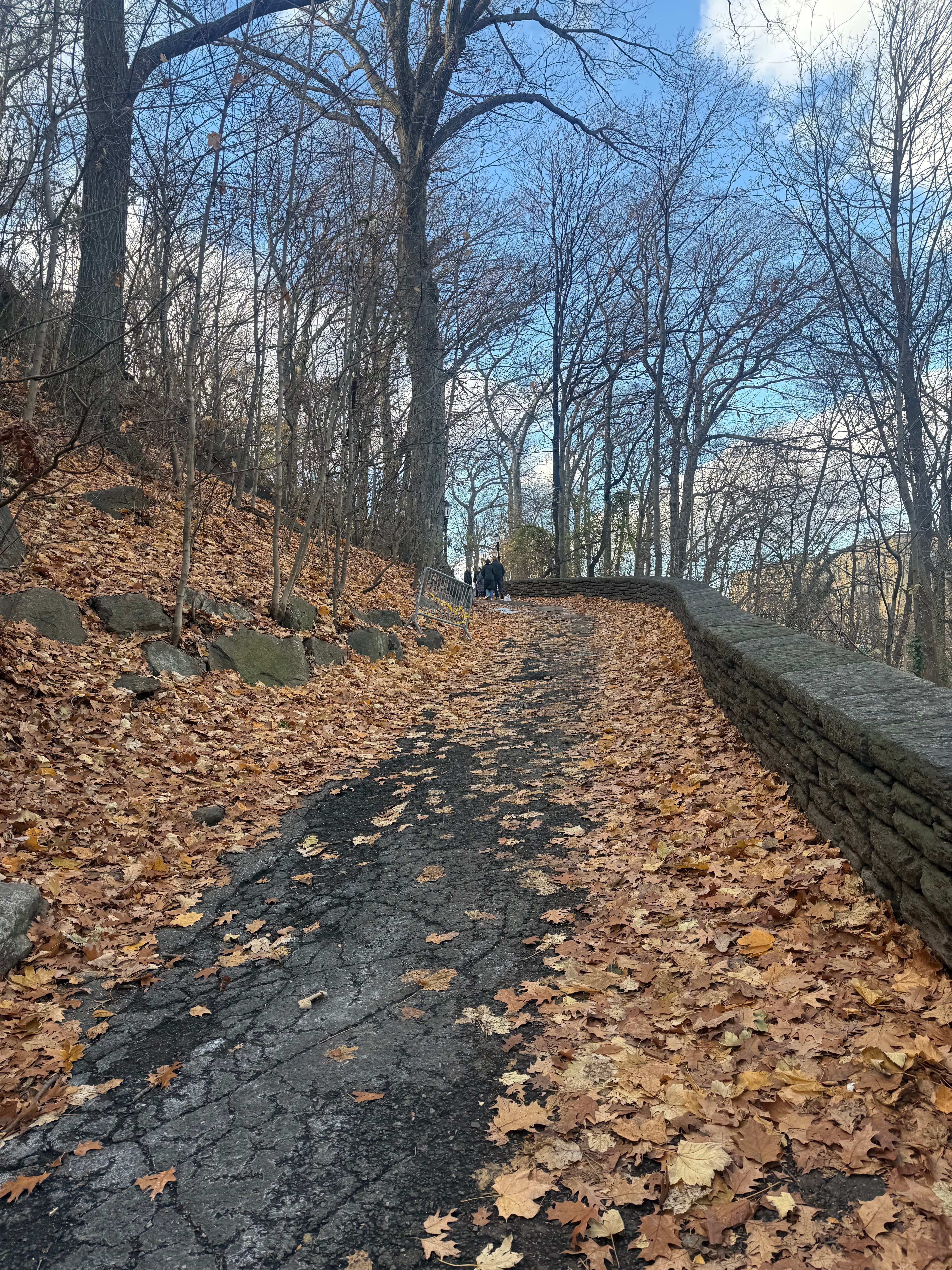
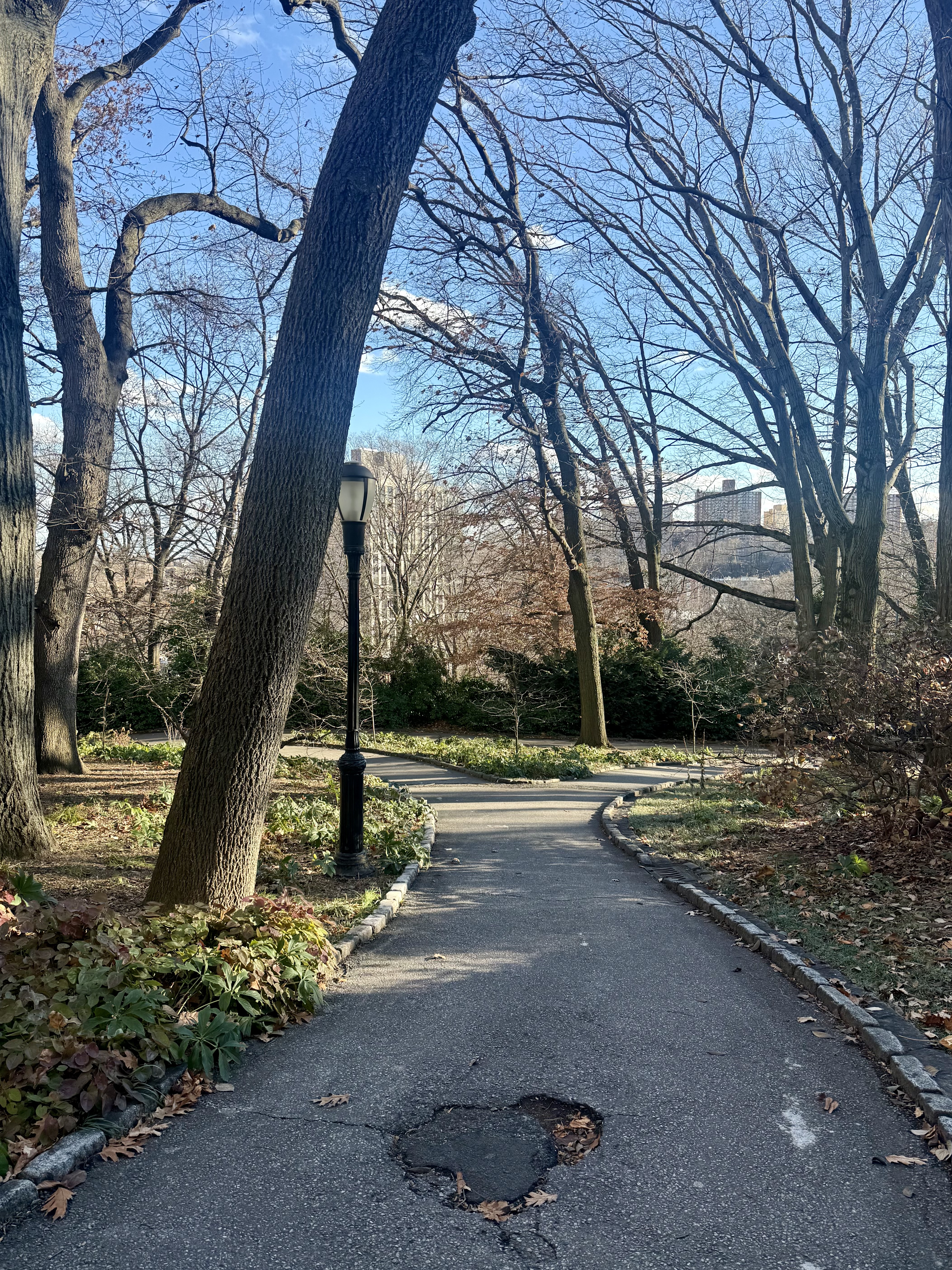
The Cloisters is in upper Manhattan, between Washington Heights and Inwood. If you have a car, you can drive there, and there is parking available. However, you can also get there via subway on the A train -getting off at Dyckman – on on the express bus BxM1 – getting off at Dyckman and Sherman – or by taking the regular M4 bus to the last stop. For all of these options except the M4 bus, you will face a ten minute hike up a winding path to get to the museum, which sits on the top of quite a steep hill. The M4 bus lets you off at the top of the hill, and the Met does have a shuttle bus to get people up the hill who can’t handle the hike; you just might need to wait a bit. The walk, if you are able, is pleasant and provides some lovely views of the Hudson river.
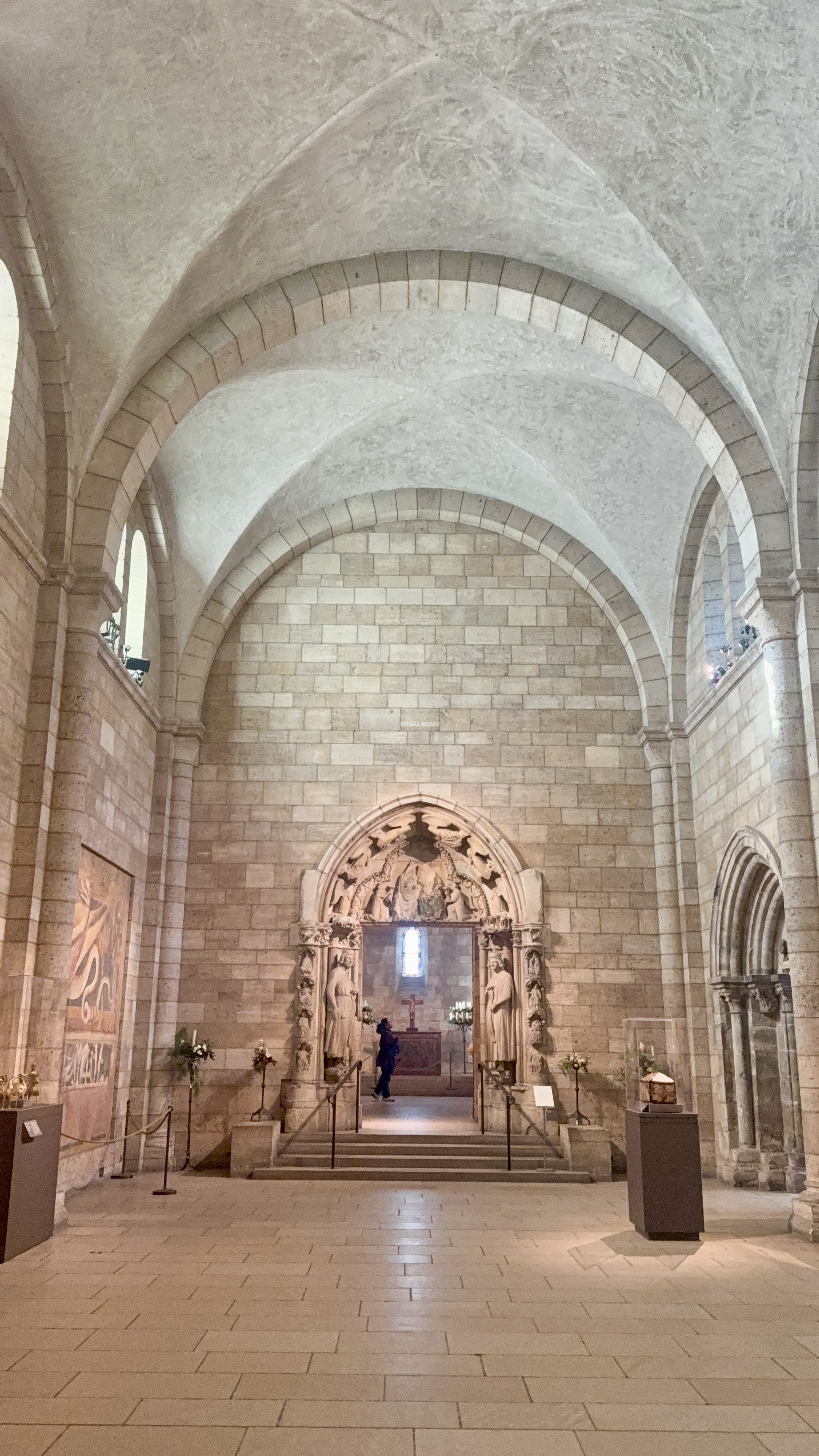
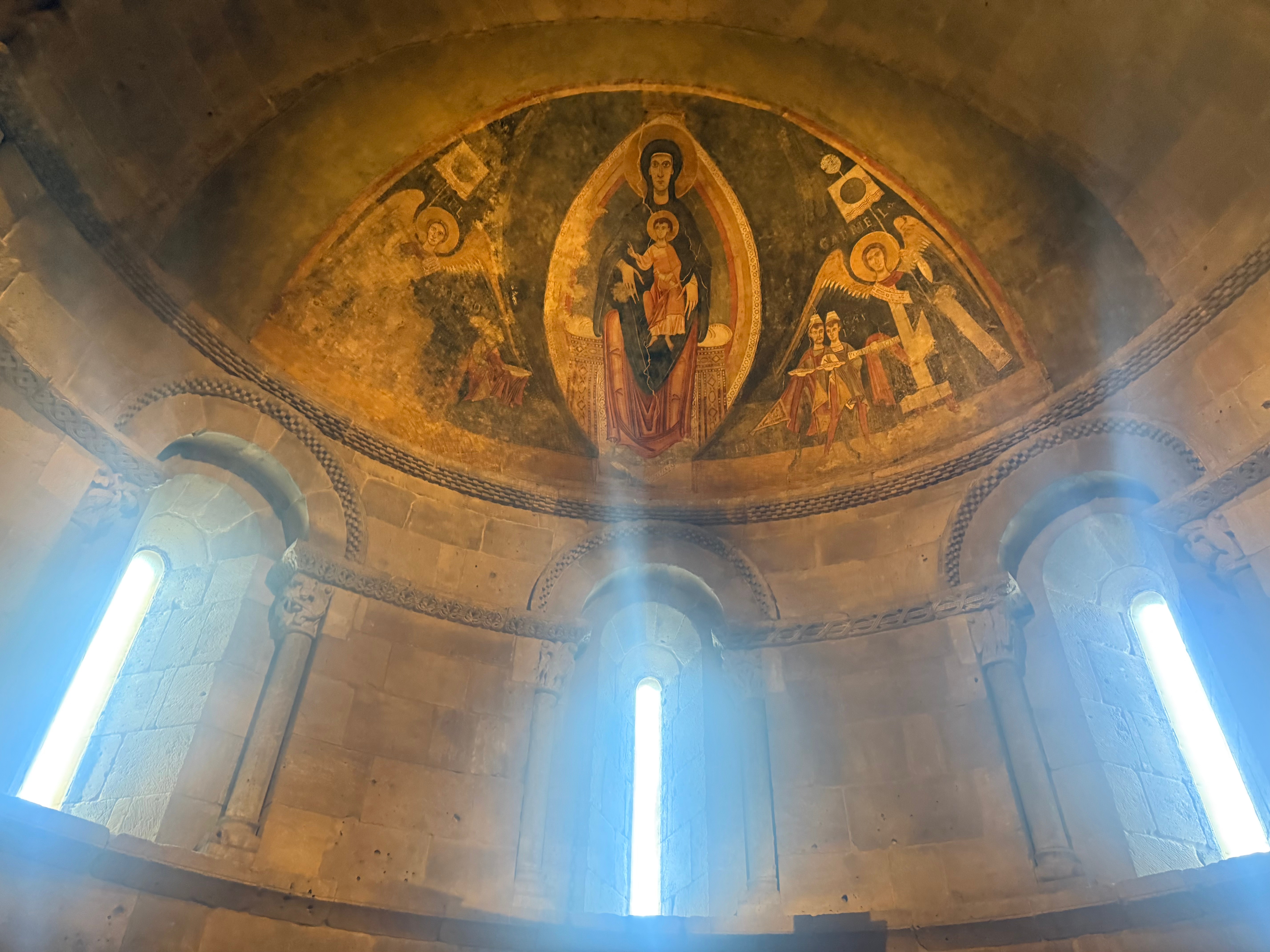
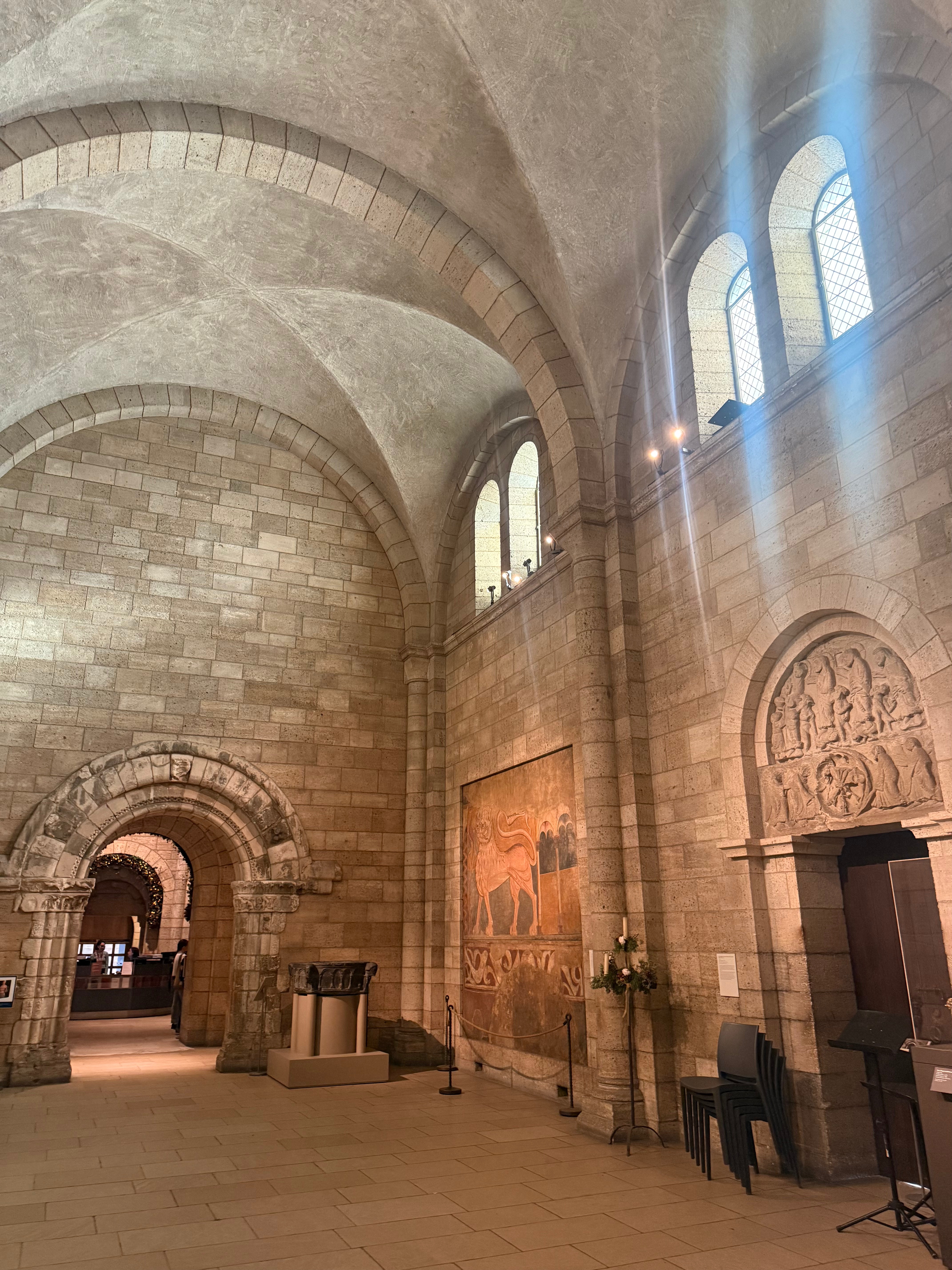
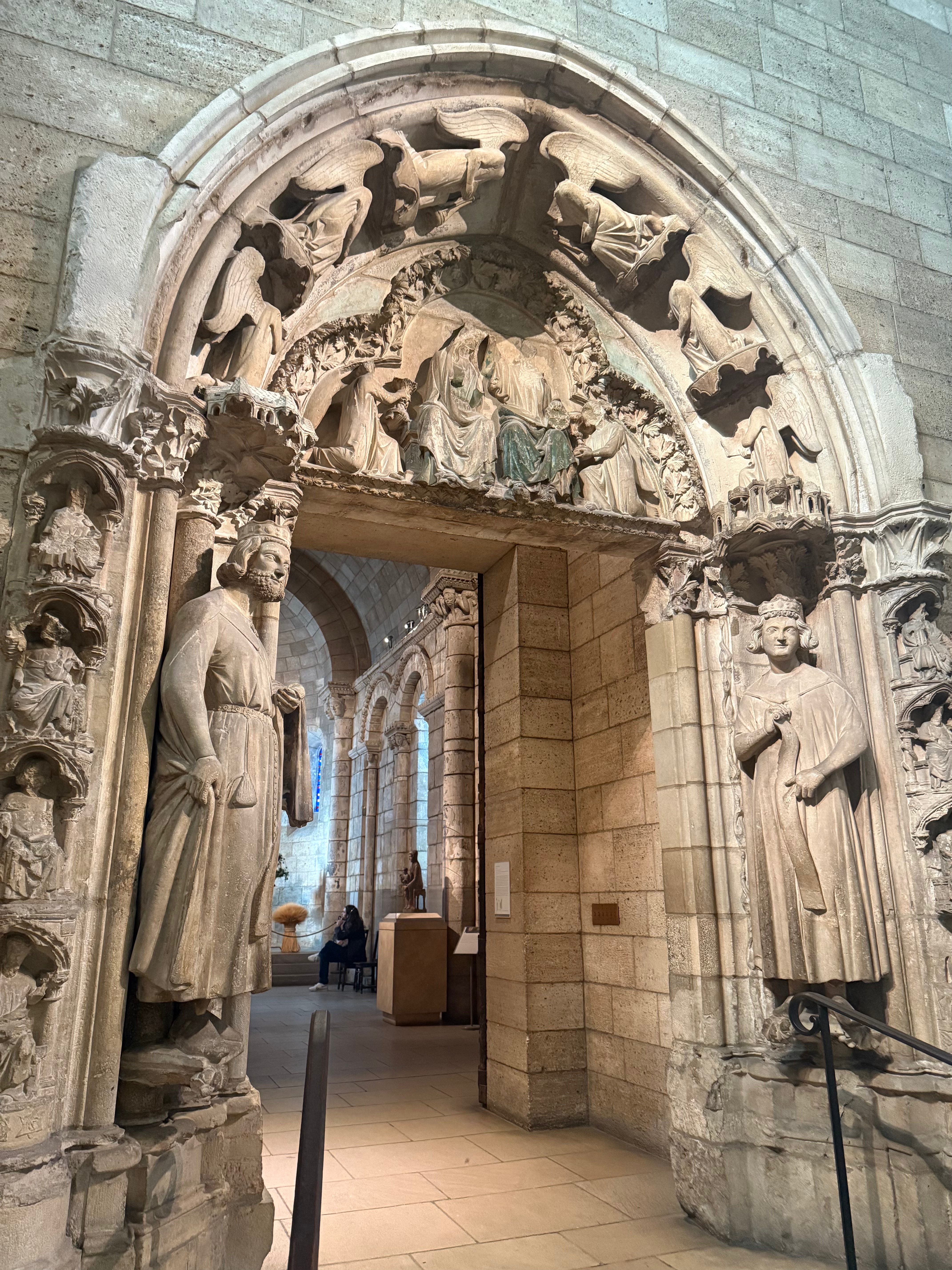
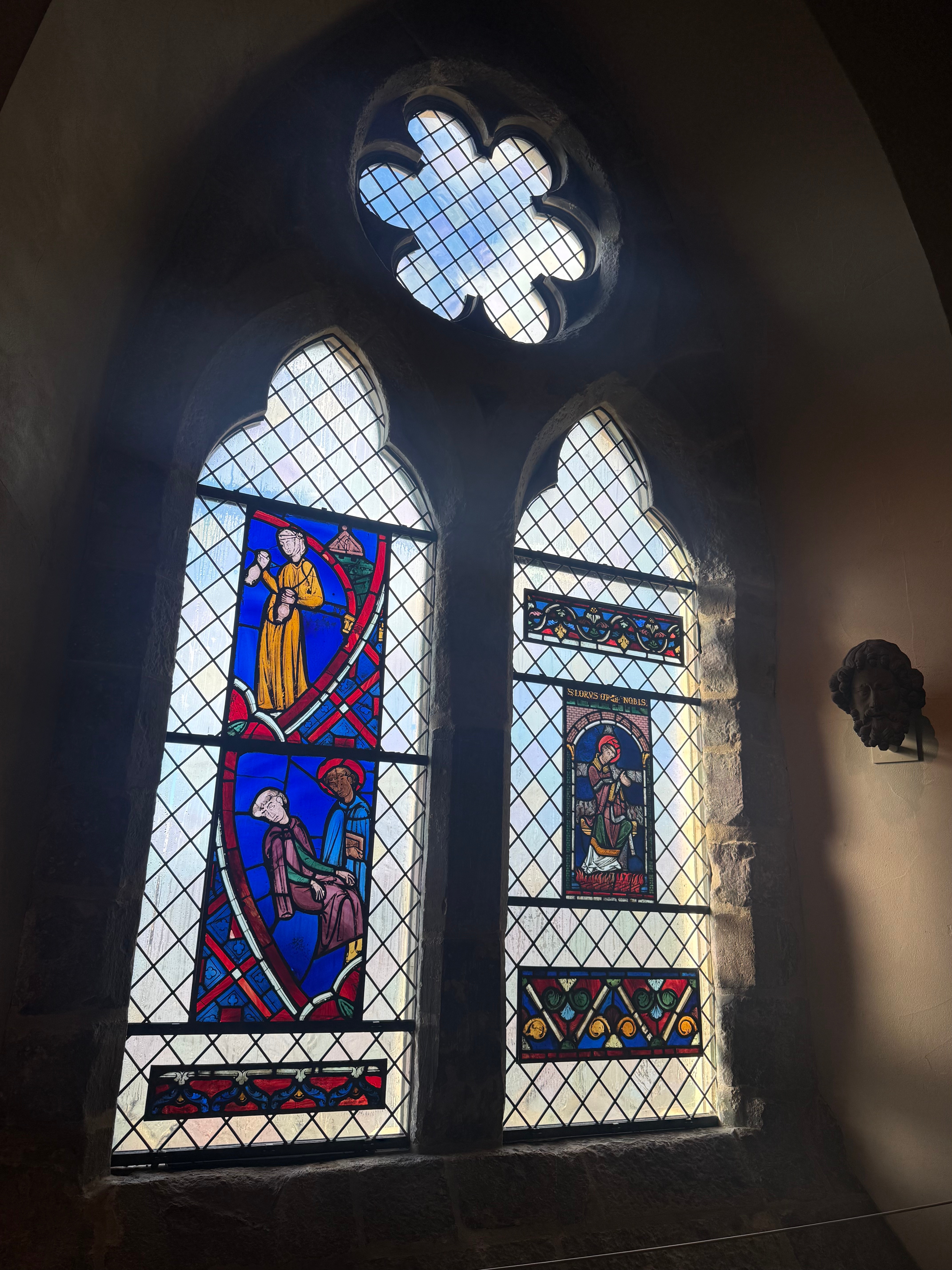
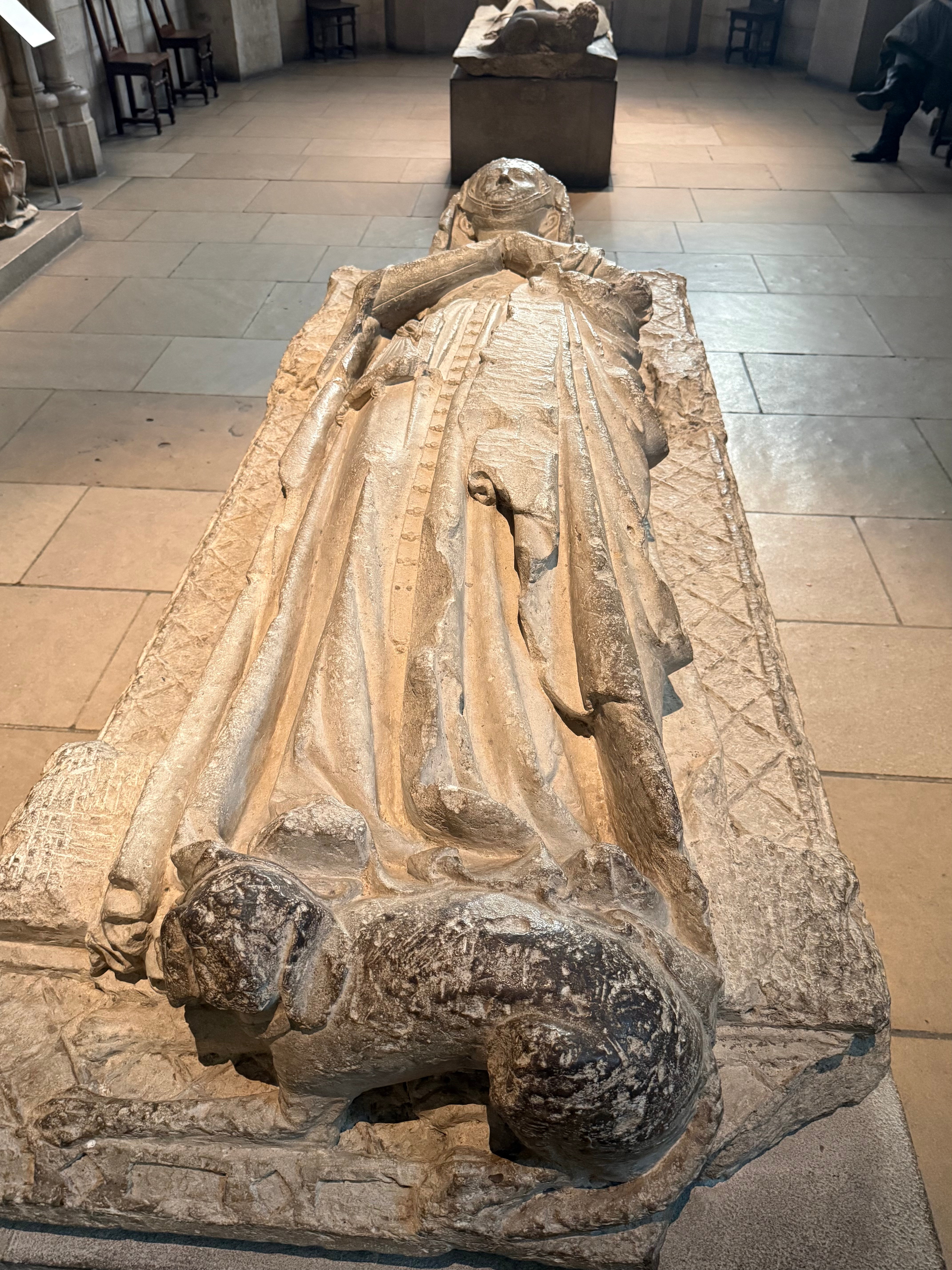
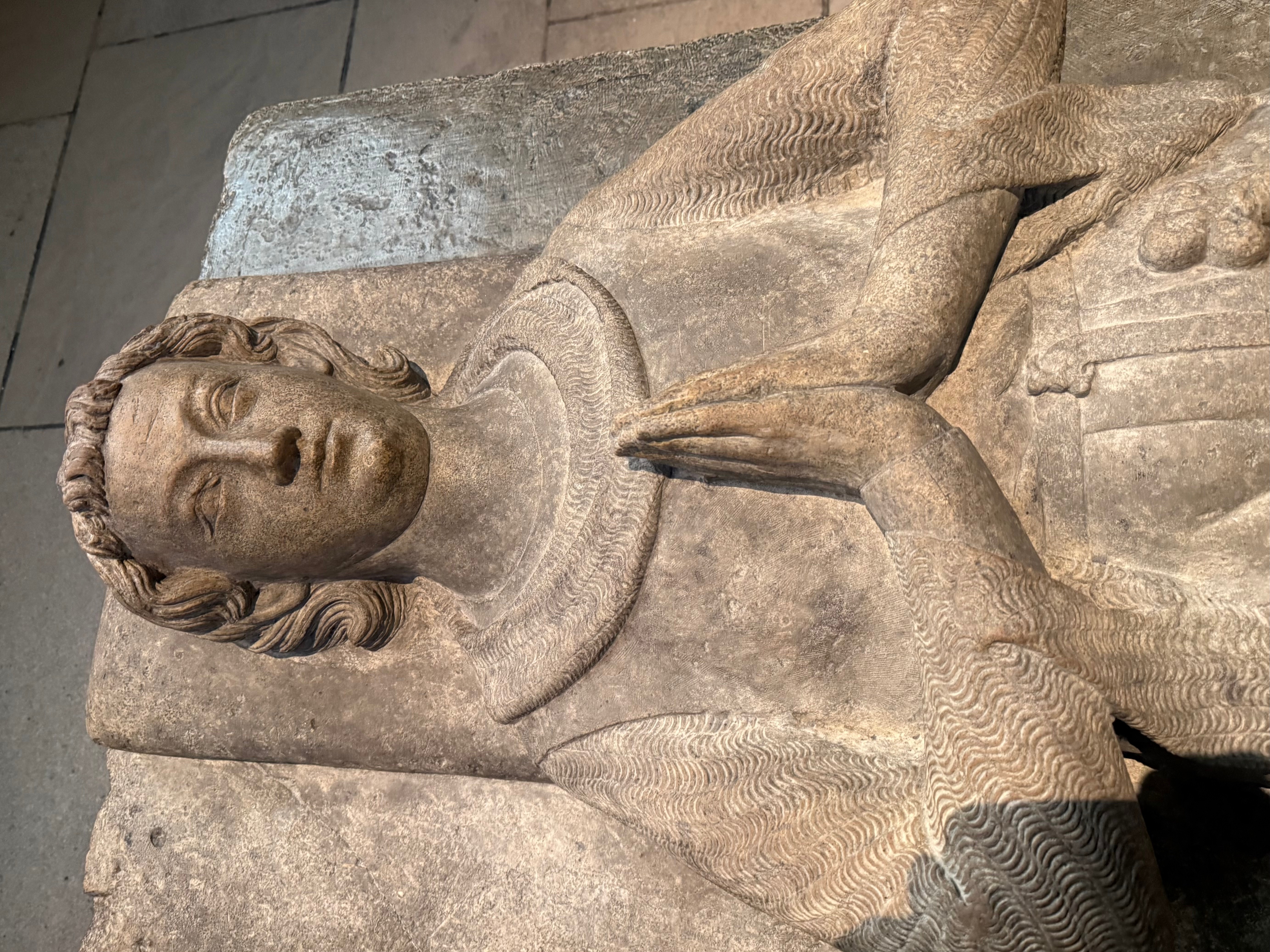
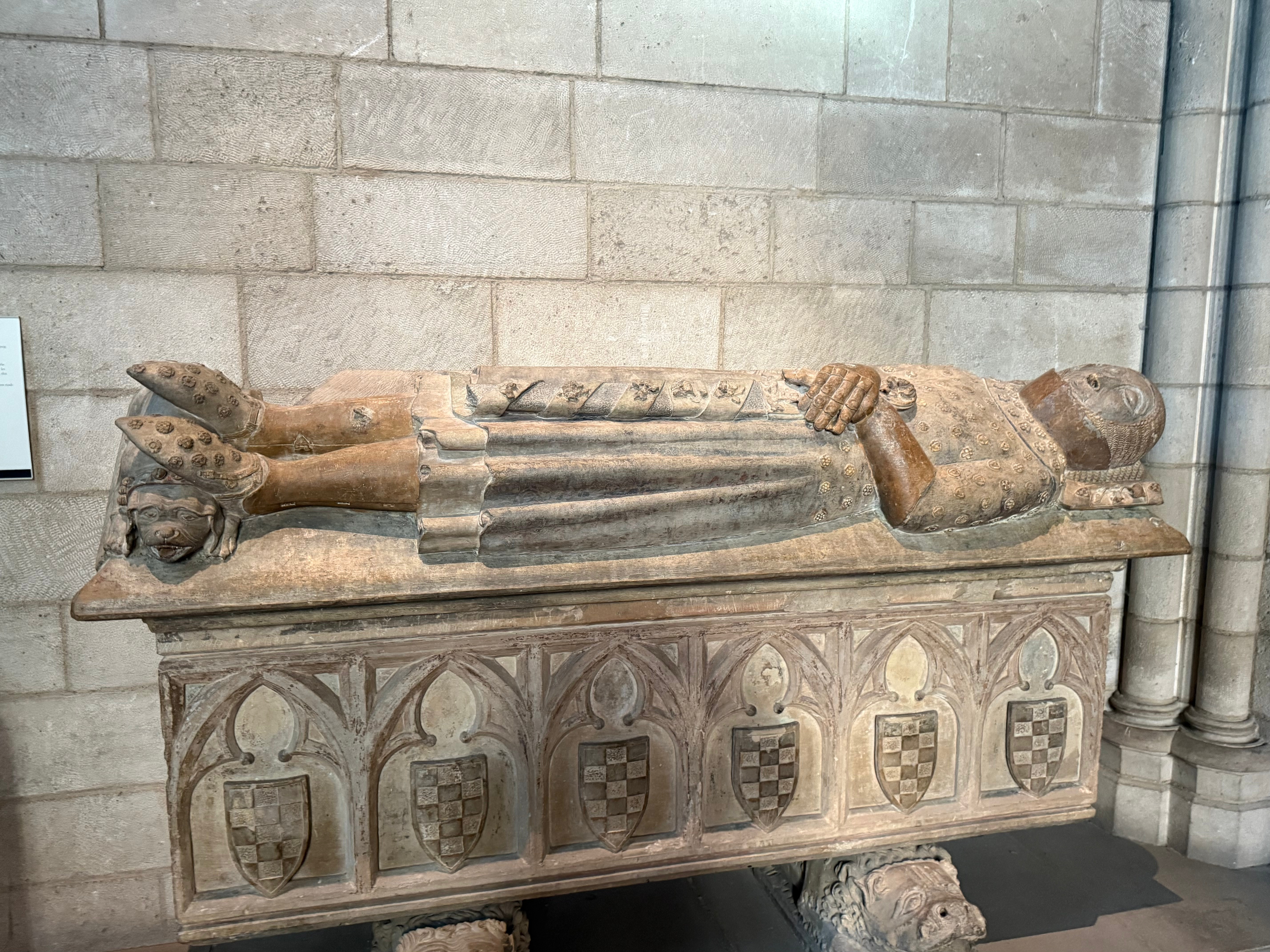
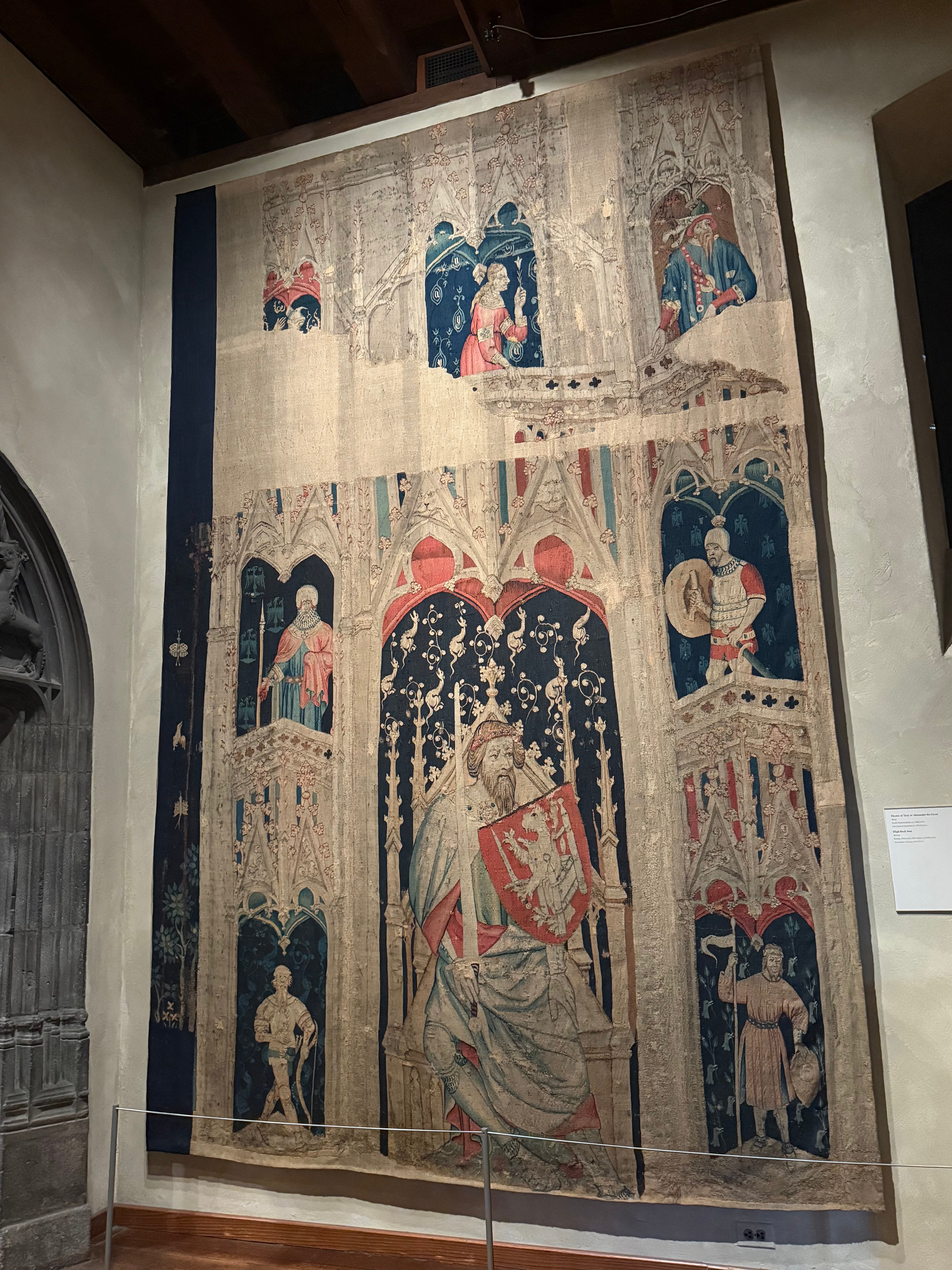
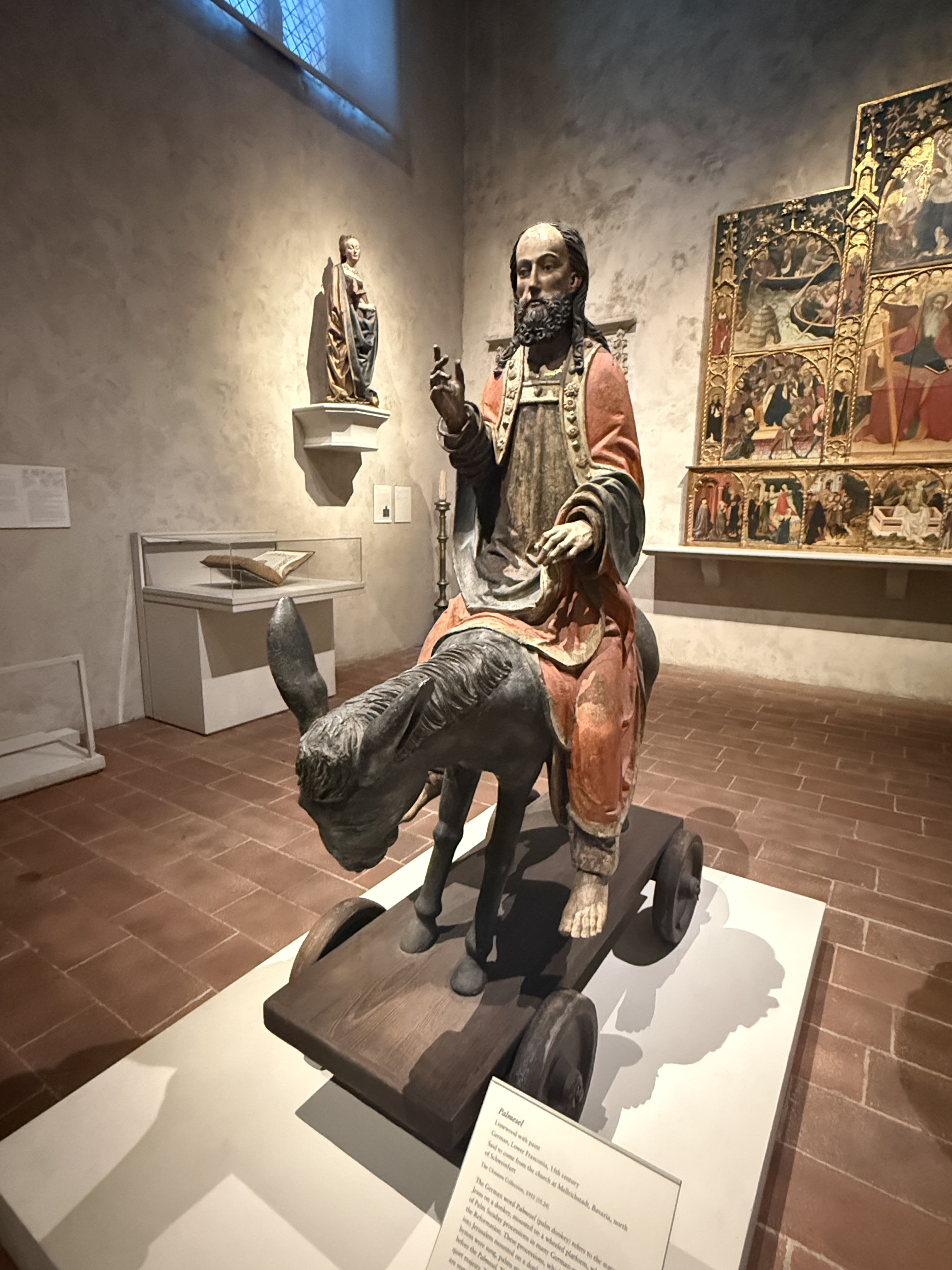
If you have already visited the main Met location that day, you can use the same ticket to visit the Cloisters at no extra cost. If you are only planning to visit the Cloisters, ticket prices can be found here, and note that New York State residents with valid ID can pay what you wish. The idea that “time in this place does not obey an order’ is immediately apparent – as soon as you enter the building, you are immersed in the past. The museum specializes in European medieval art and architecture, with a focus on the Romanesque and Gothic periods. Its large collection of medieval artworks are displayed within the architectural settings of French monasteries and abbeys. The building is centered around four medieval cloisters—the Cuxa, Saint-Guilhem, Bonnefont, and Trie-sur-Baïse—that were acquired by American sculptor and art dealer George Grey Barnard in France before 1913 and moved to New York. Barnard’s collection was bought for the museum by John D. Rockefeller Jr., while additional major sources of objects came from the collections of J. P. Morgan and Joseph Brummer.
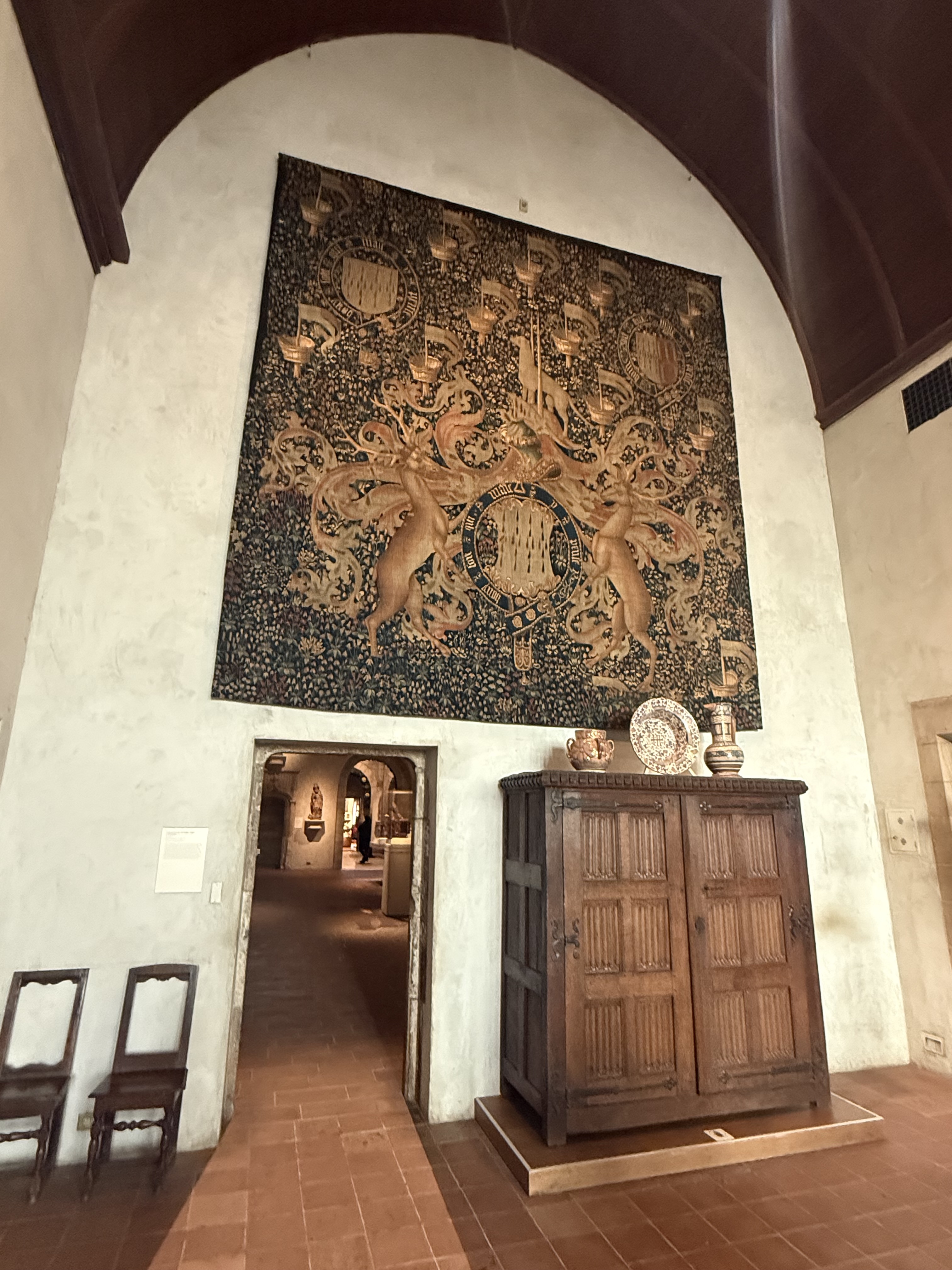
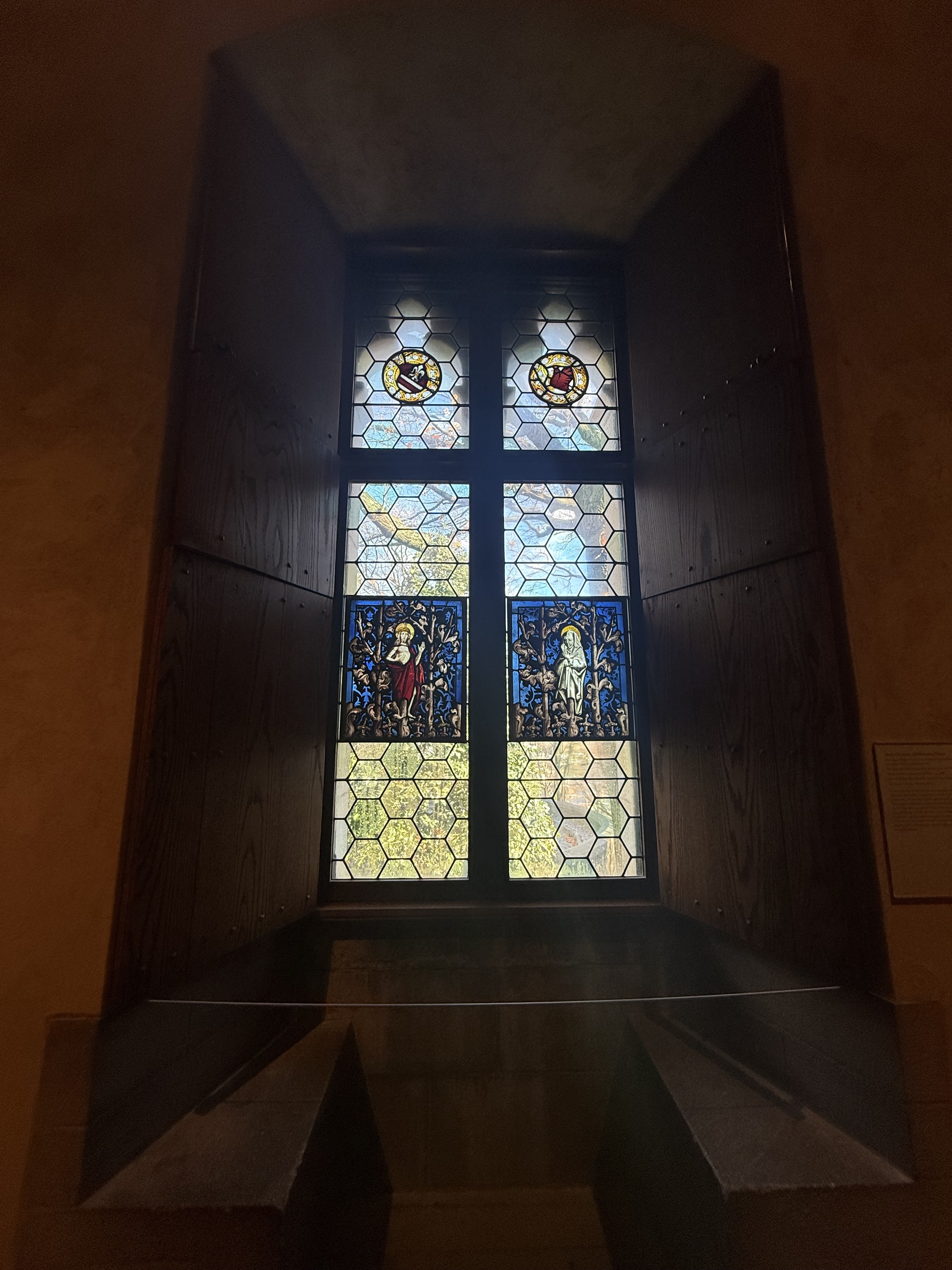
The museum’s building was designed by the architect Charles Collens, and has upper and lower levels. It contains medieval gardens at the center, and a series of chapels and themed galleries, including the Romanesque, Fuentidueña, Unicorn, Spanish, and Gothic rooms. The design, layout, and ambiance of the building are intended to evoke a sense of medieval European monastic life.
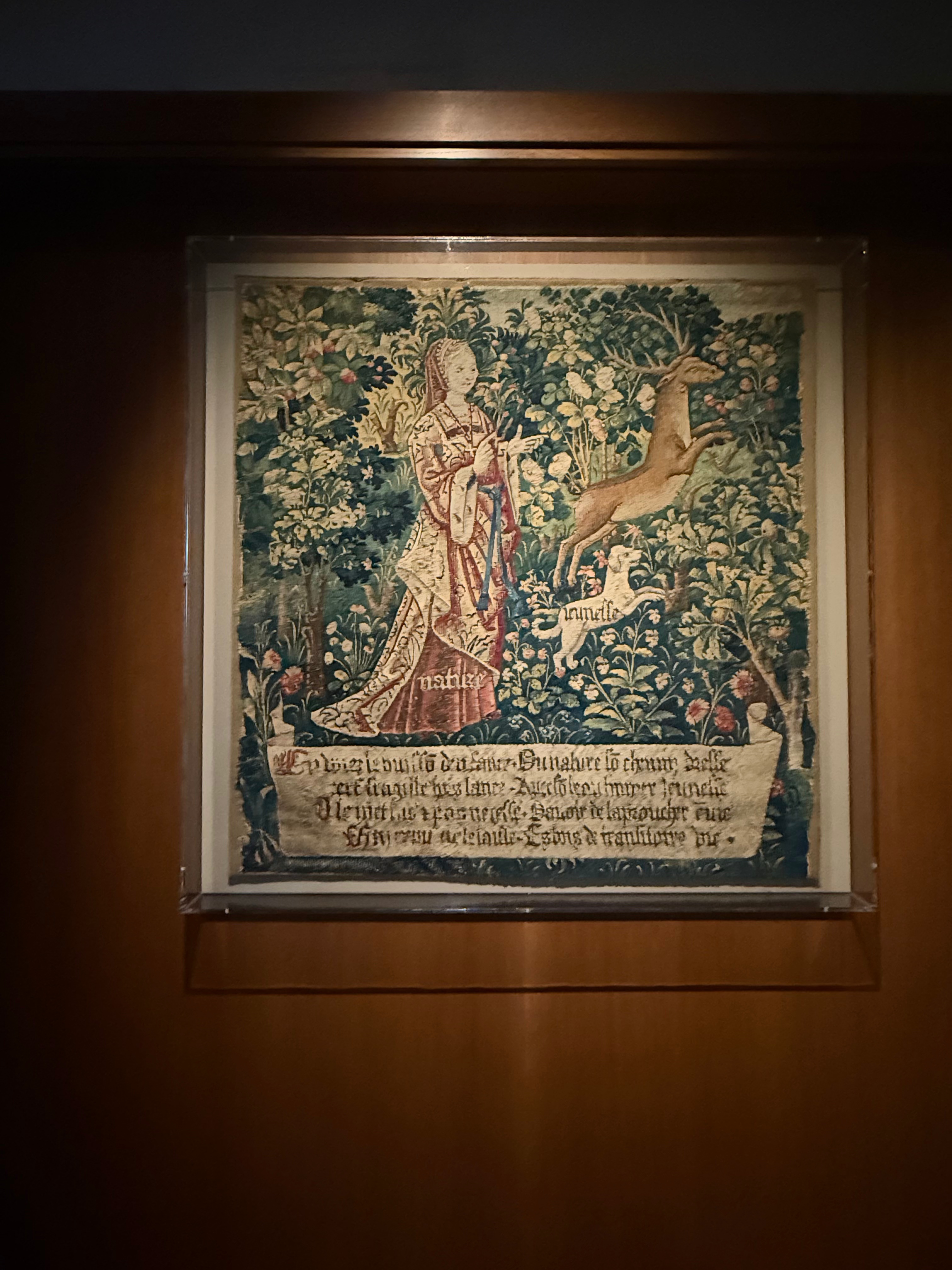
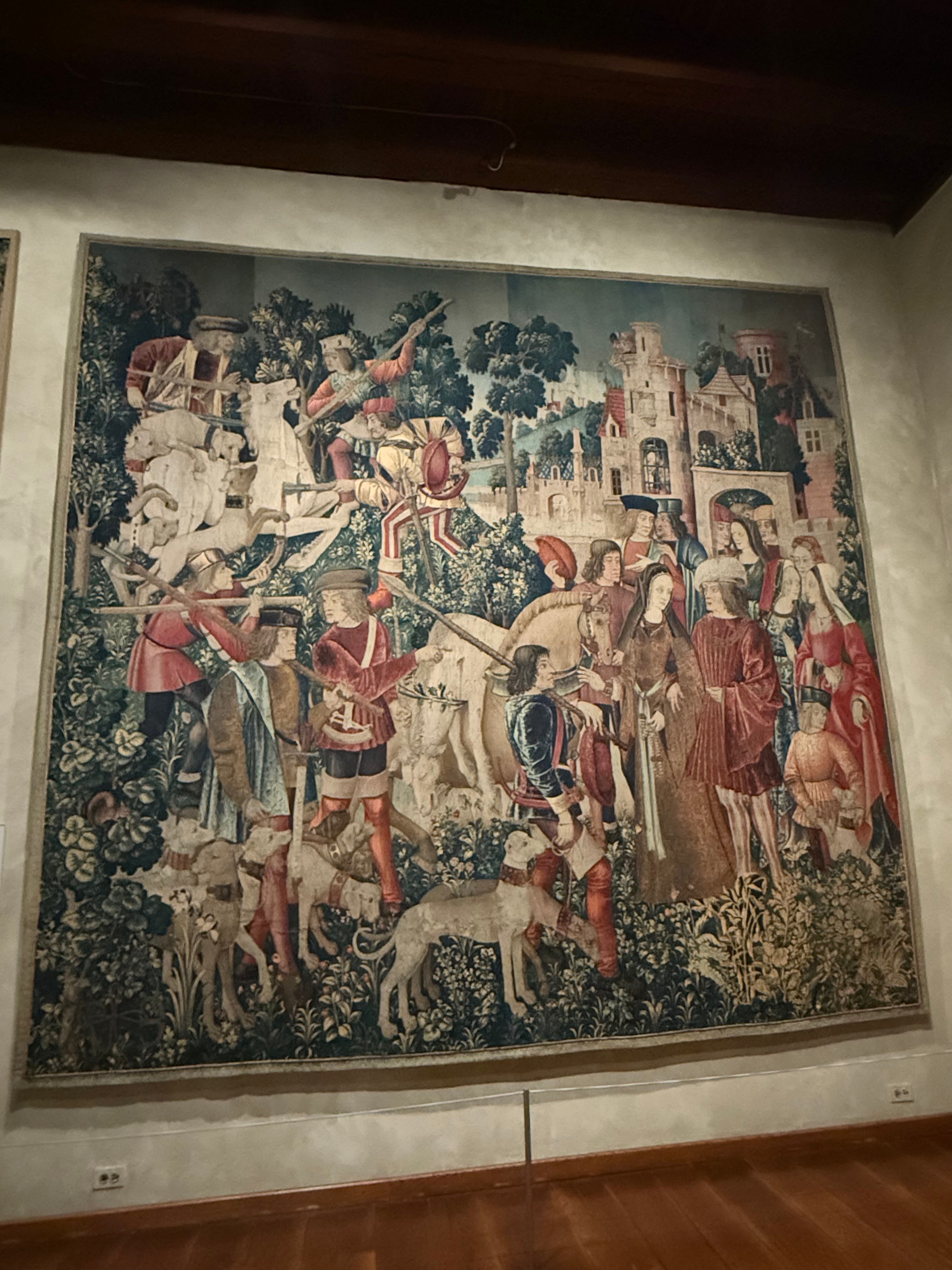
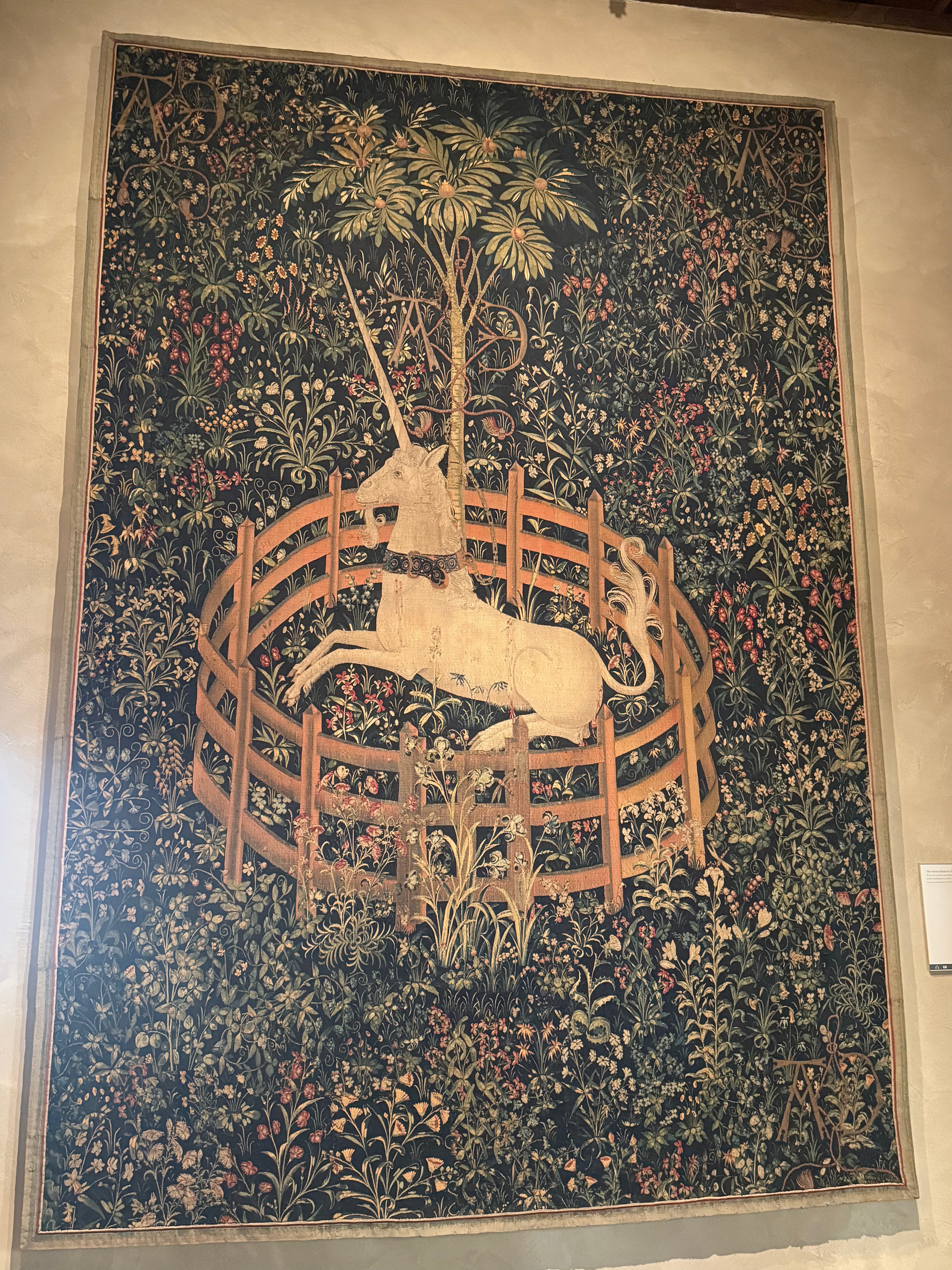
The best known works include the Early Netherlandish Mérode Altarpiece from about 1422 AD and the Flemish The Unicorn Tapestries (c. 1495–1505).
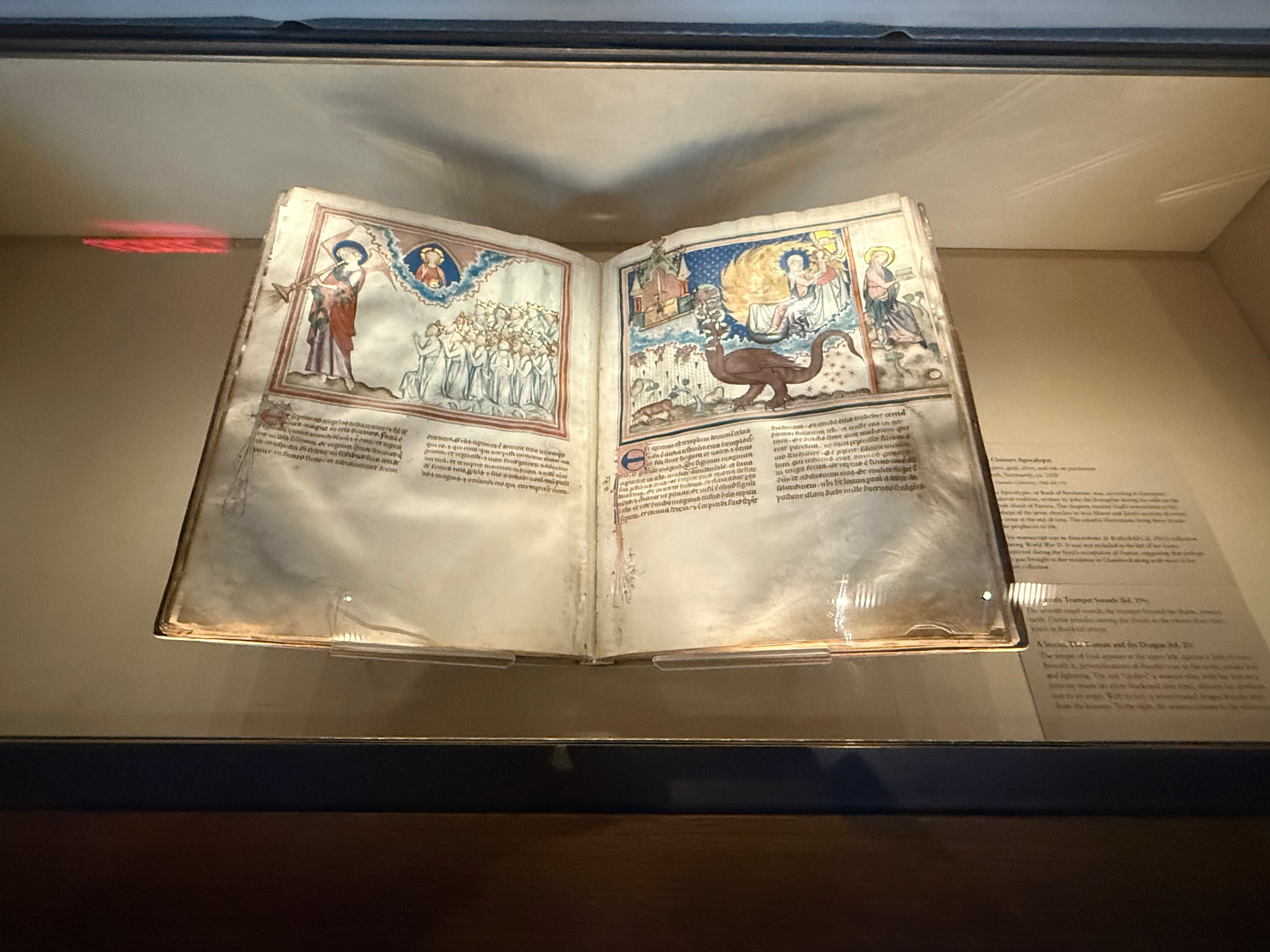
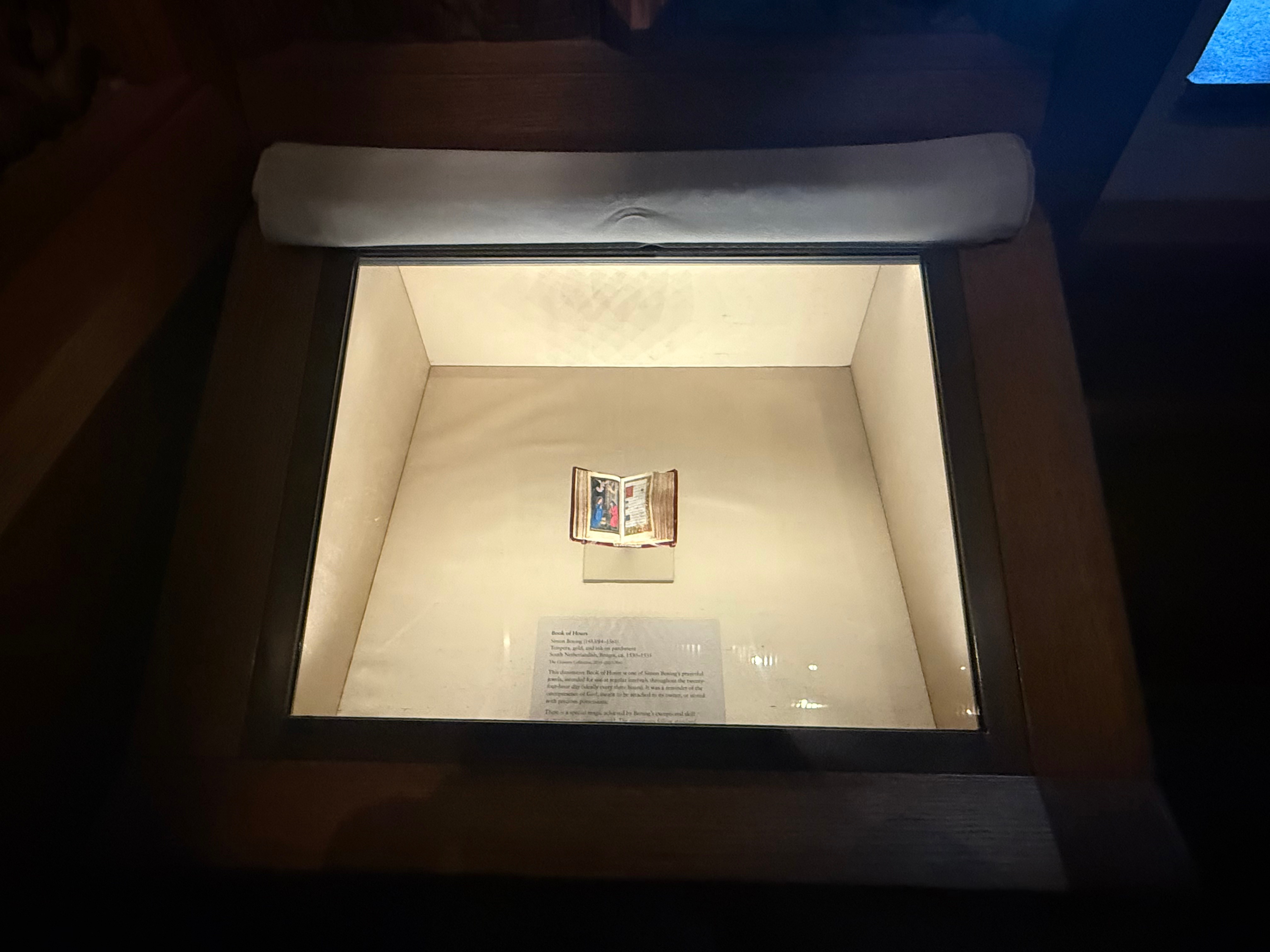
The museum’s collection of illuminated books is small but of exceptional quality. J.P. Morgan, a major early donor whose taste leaned heavily towards rare printed and illuminated books, donated most of his collection to the Morgan Library in midtown. However, there are some remarkable illuminated manuscripts at the Cloisters.
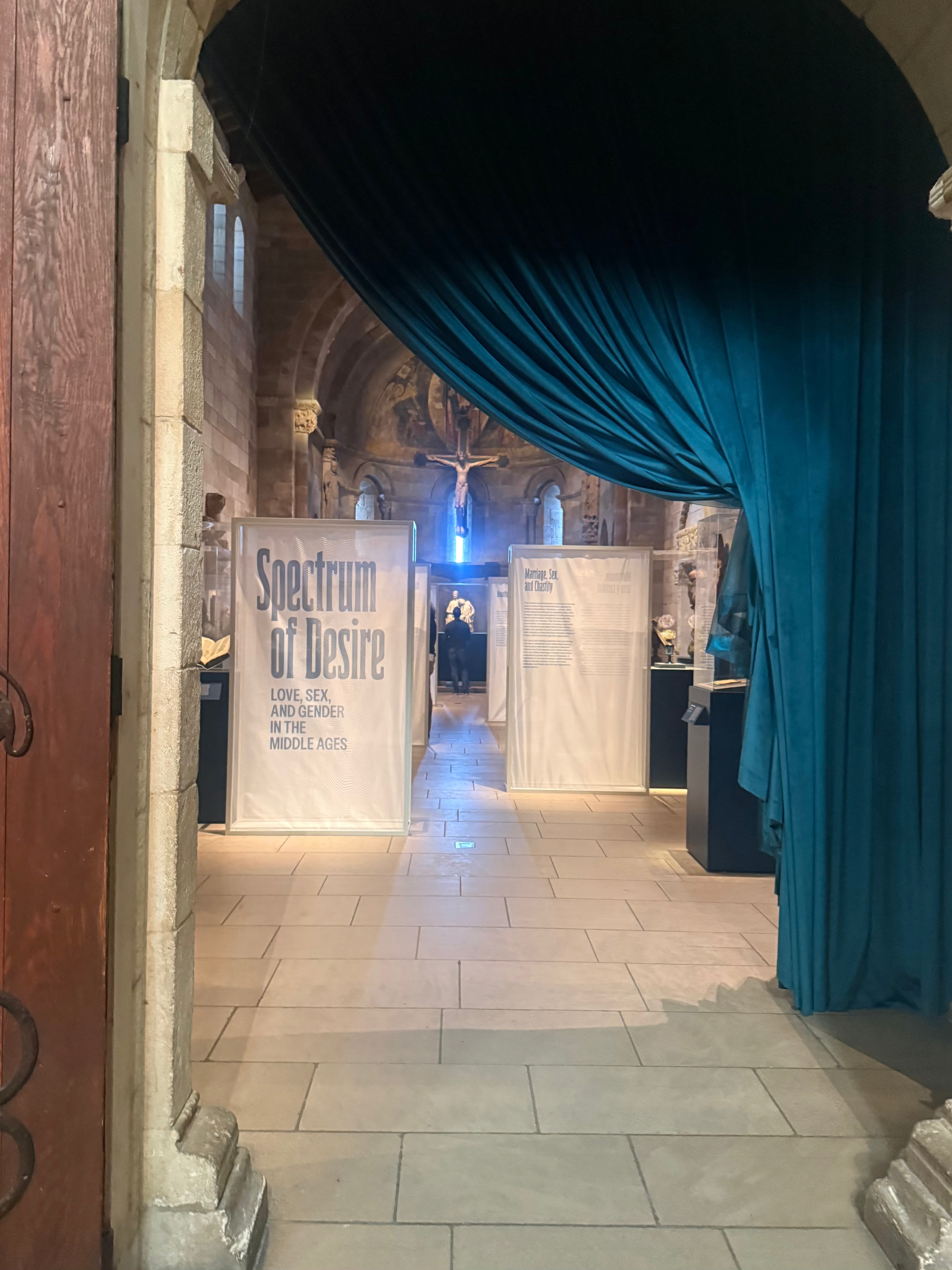
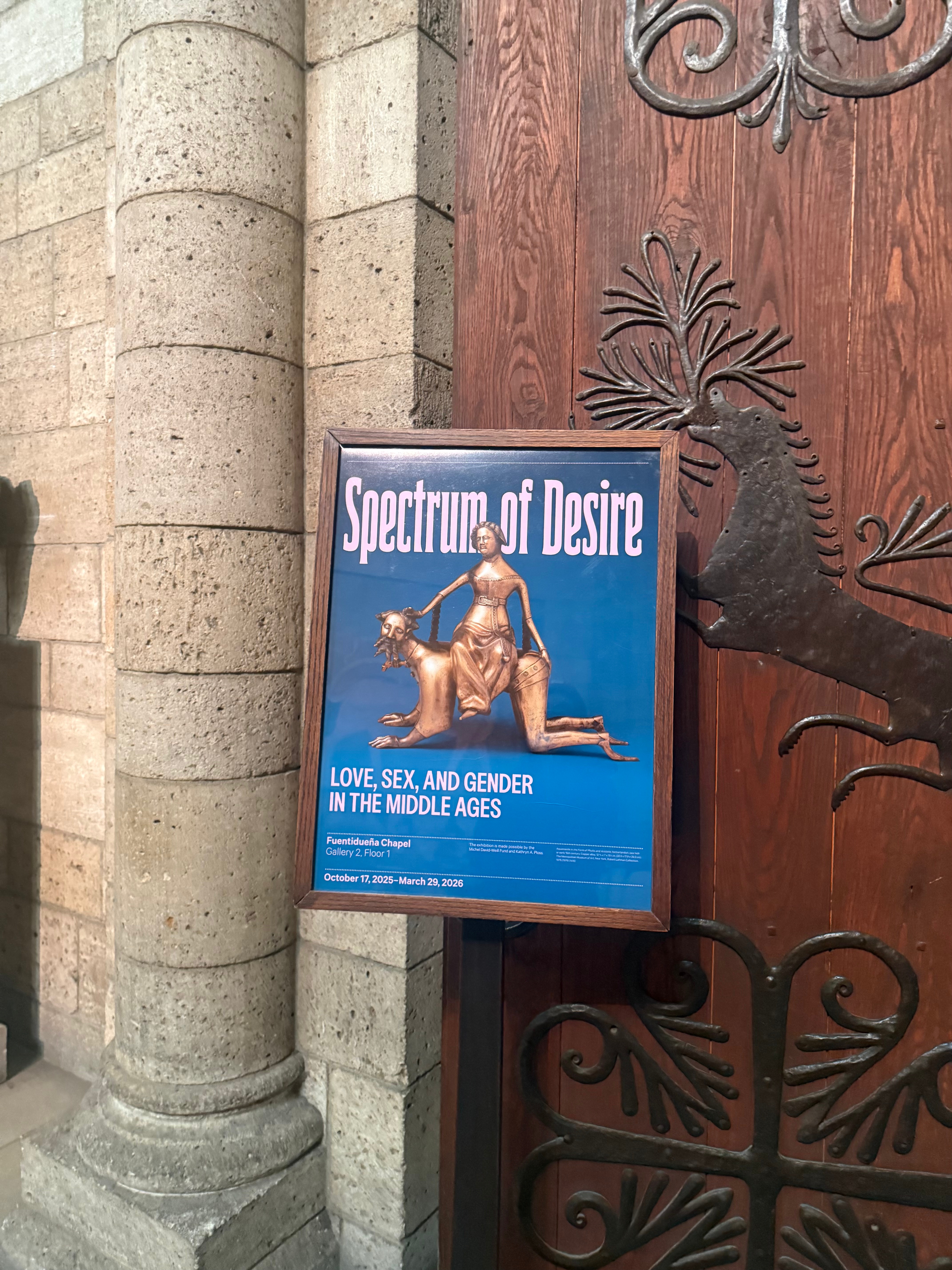
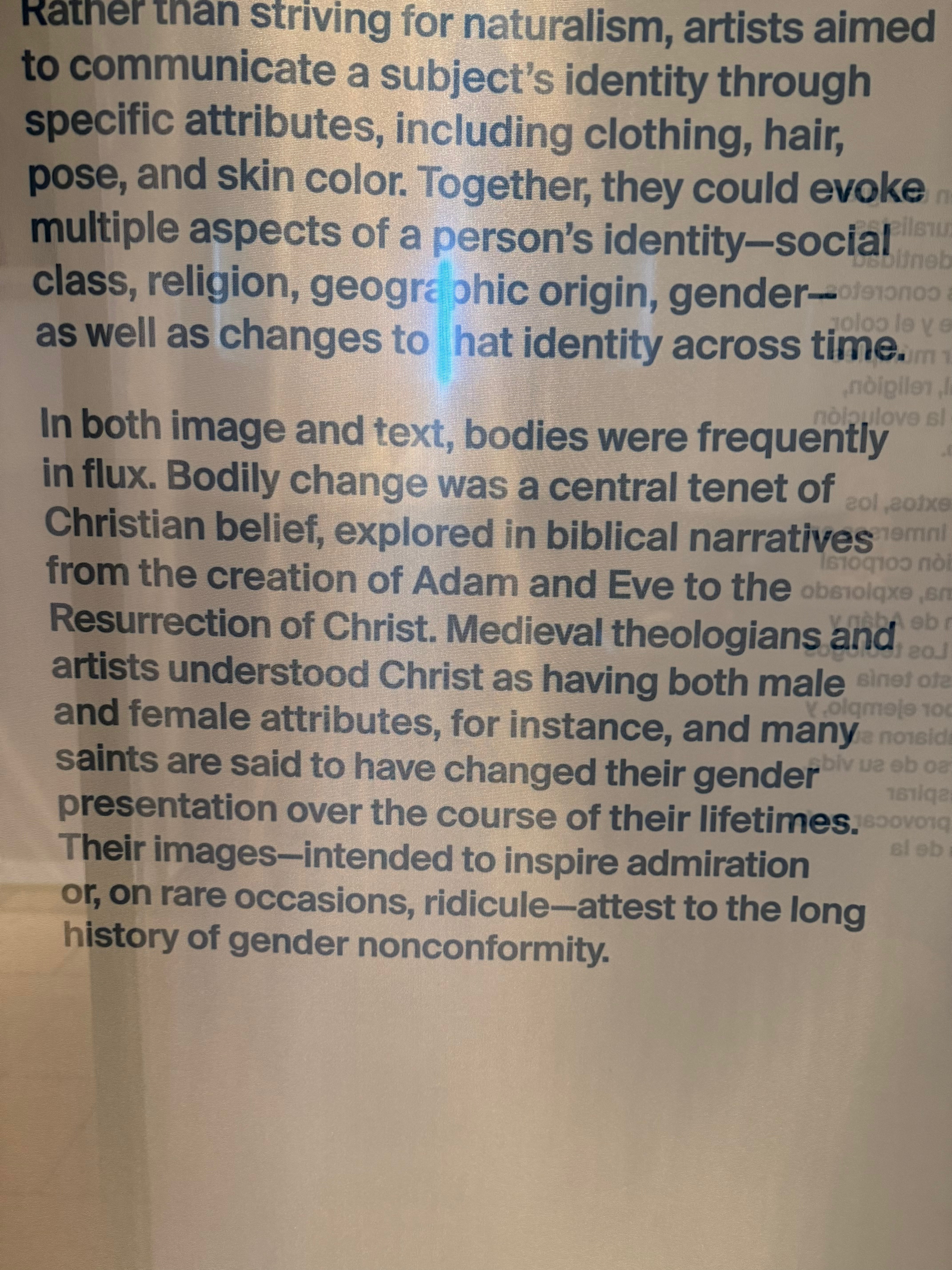
The Cloisters often has special exhibitions, and when I visited they had a very thought-provoking one called Spectrum of Desire, about love, sex, and gender in the Middle Ages. However, it’s about to close as I publish this post at the end of March of 2026.
Upon its opening on May 10, 1938, the Cloisters was described as a collection “shown informally in a picturesque setting, which stimulates imagination and creates a receptive mood for enjoyment.” Almost a century later, I would say that this description remains true. I highly recommend a trip to the Cloisters as a way to escape the noise and overstimulation that NYC can often provide, with the unique environment enabling moments of quiet reflection.
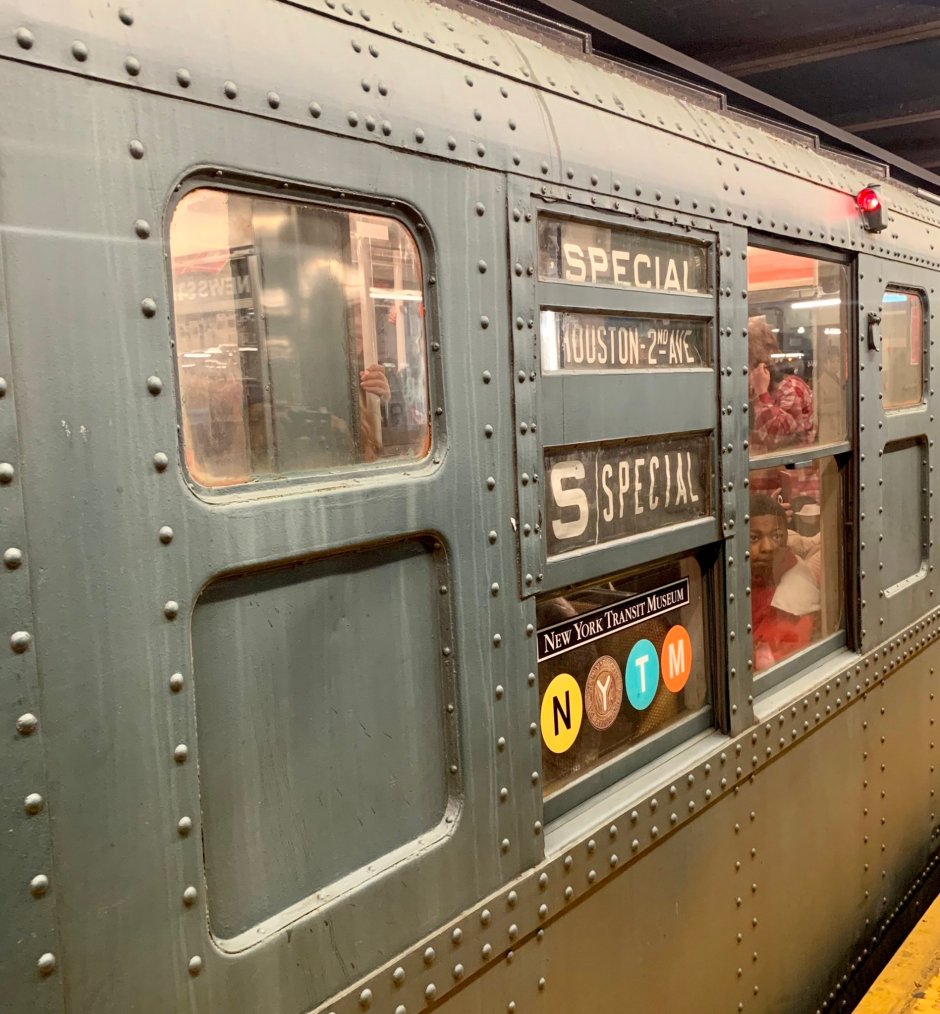
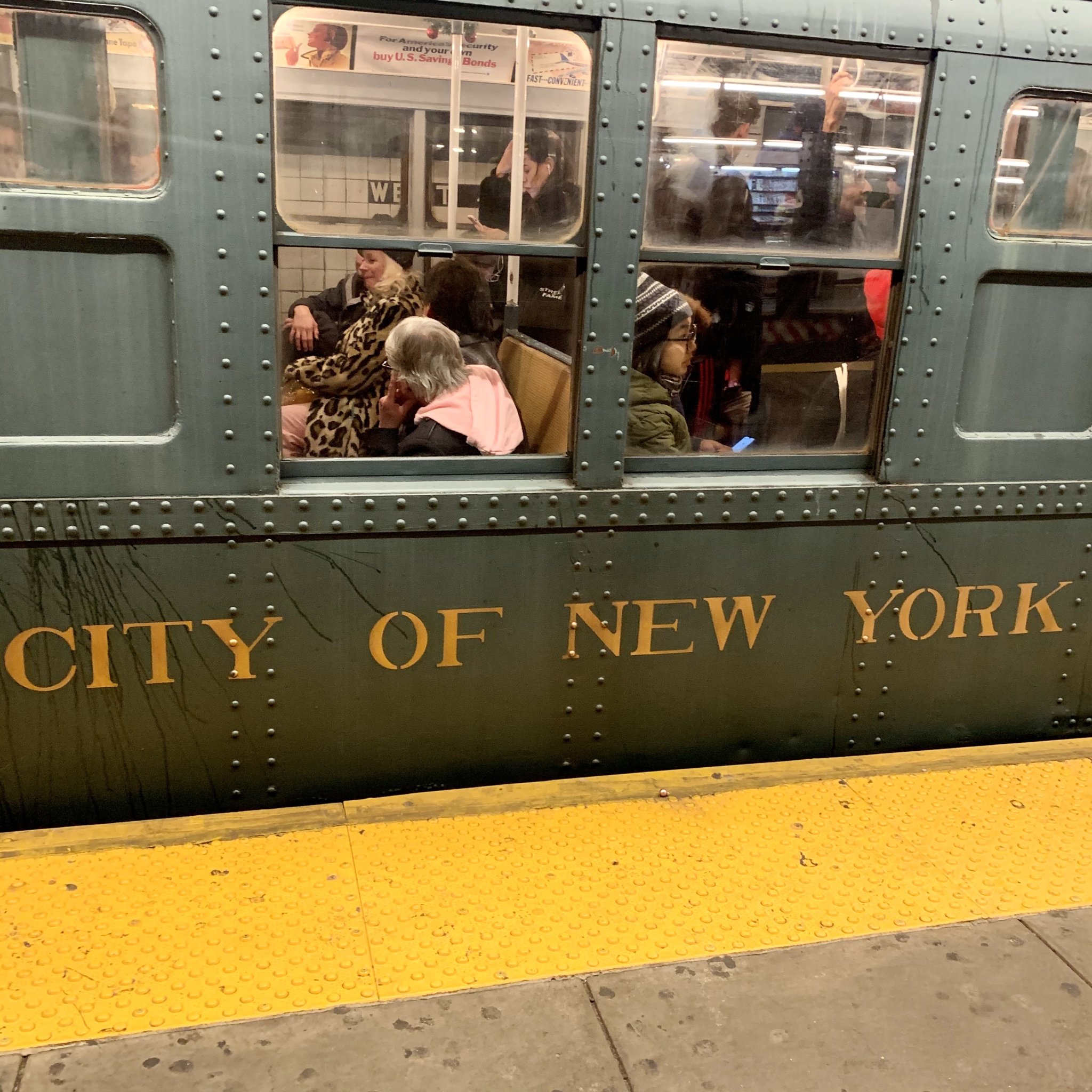
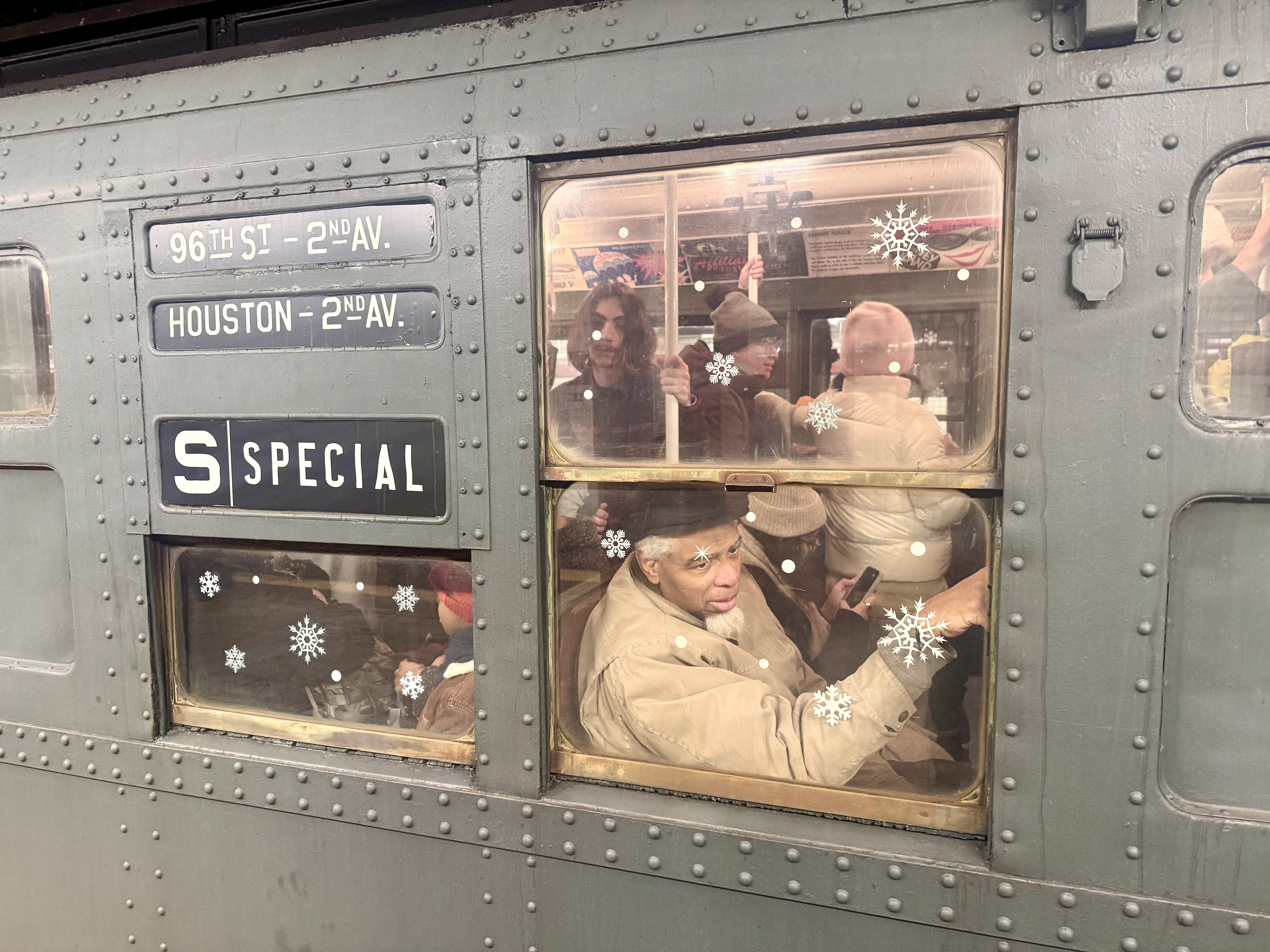
In December, there are so many wonderful things to do in New York City that it’s impossible to work them all in every year. But a special December event that can be enjoyed while you get to another of the festive displays or activities in the city, is the running of the holiday nostalgia trains by the MTA. The New York Transit Museum in collaboration with the MTA, runs Art Deco 1930’s subway trains on Sundays in December, and this is definitely the most delightful way to travel around the city! Eight subway cars from the 1930’s are brought back into service on a limited basis, and were considered state-of-the-art in their day.
These are the very trains said to have inspired Billy Strayhorn’s classic “Take the A Train.”
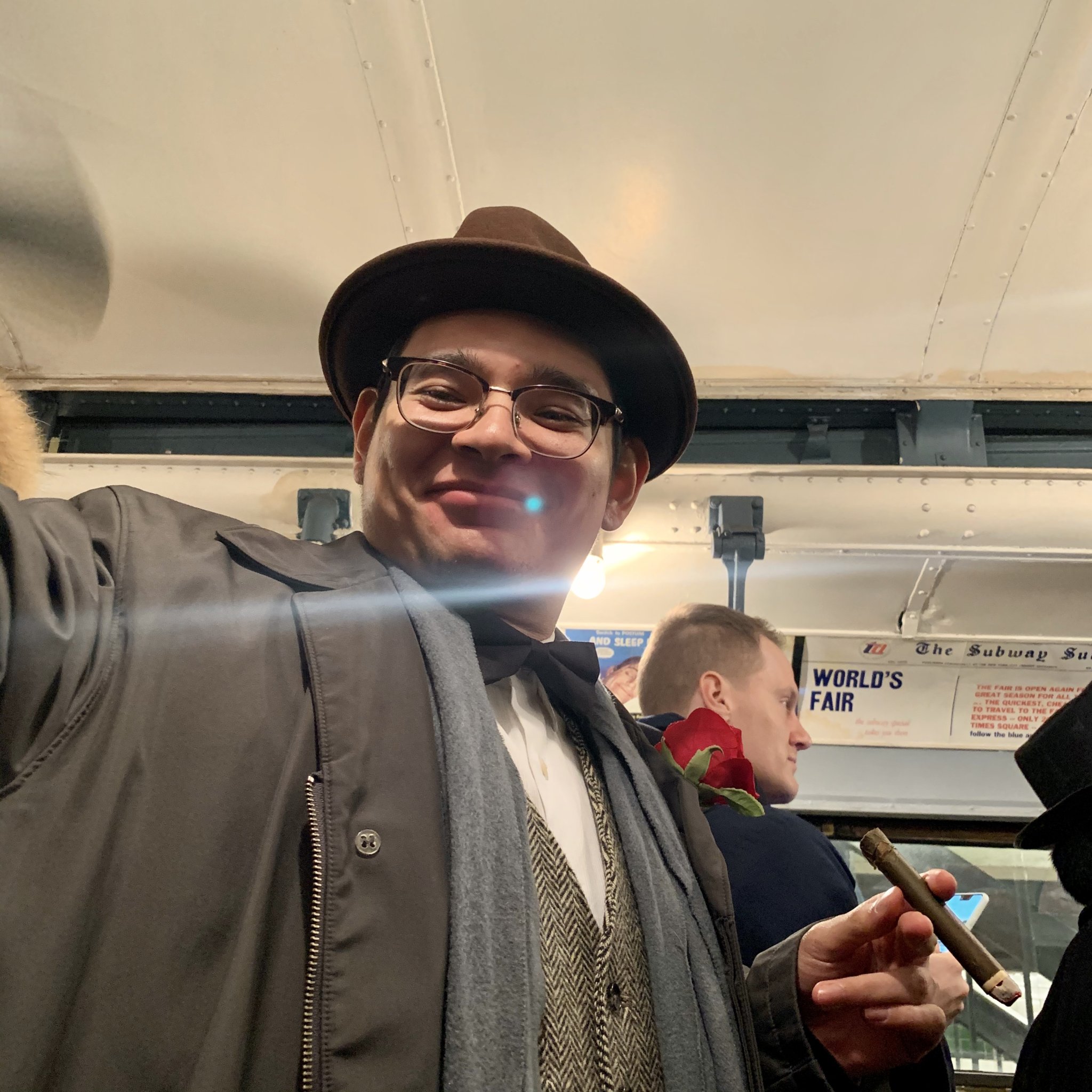
One of the fun aspects of this is that some people actually dress in period clothing to ride the trains!
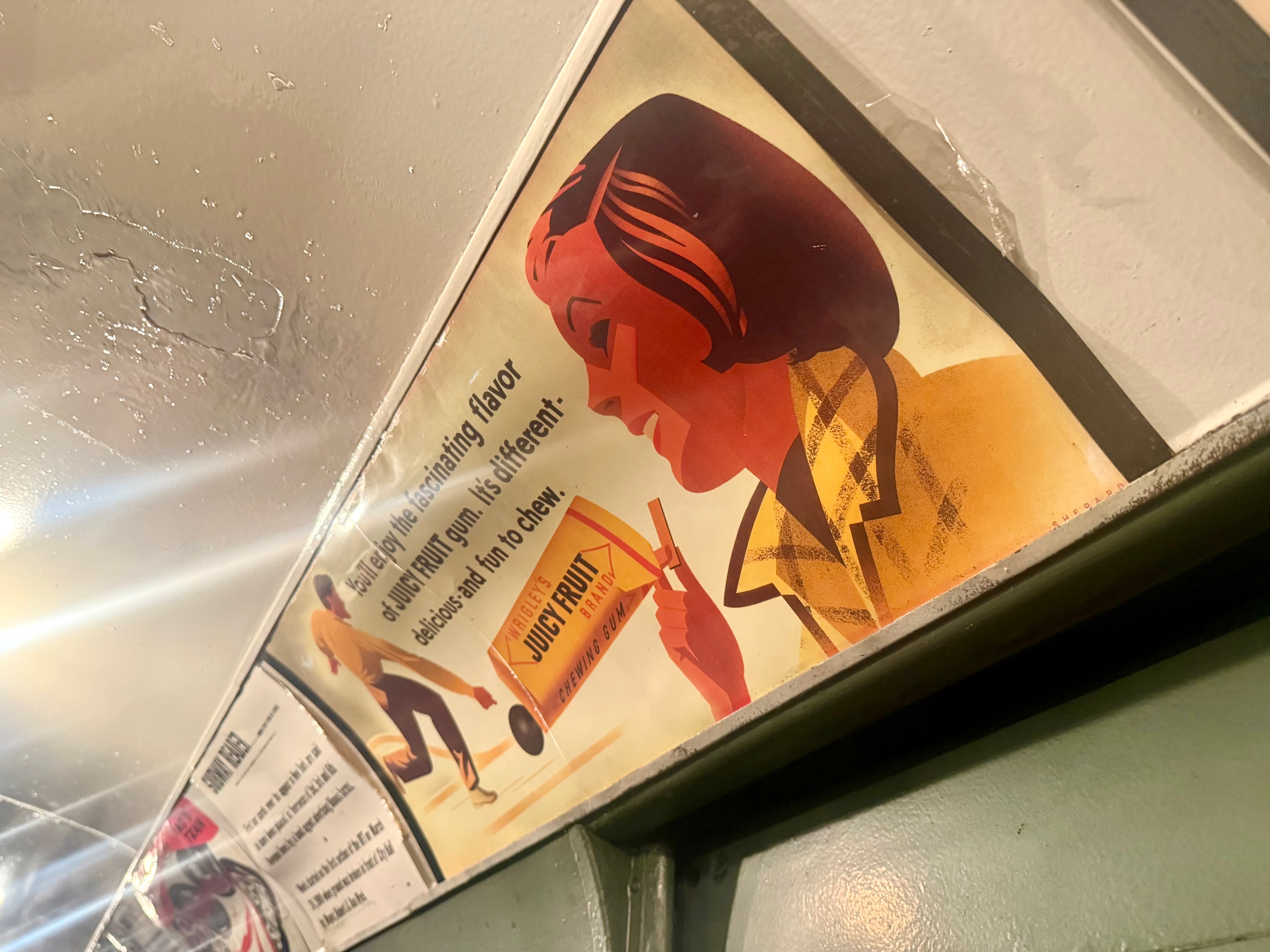
The vintage signs are fun to see as well – and apparently subway crime has existed for quite a long time!
Here are the details for this year (2025). For future years, check the New York Transit Museum’s website.
The rides run every Sunday in December from 10am to 5pm,
The train depart from 2 Av–Houston St on the uptown F line and 96 St–2 Av on the Q line.
The rides can be accessed via a standard Subway fare using either OMNY or Metrocard
For stops between 2 Av–Houston St and Lexington Av–63 St, board on the F line platform.
For stops between Lexington Av–63 St and 96 St–2 Av, board on the Q line platform.
Accessible stations along the route include: Broadway–Lafayette St (D, 6), West 4 St–Washington Sq (A/C/E, D/F), 34 St–Herald Sq (D/F, N/Q/R) , 47–50 St–Rockefeller Center (D/F), Lexington Av–63 St (F, Q), 72 St–2 Av (Q), 86 St–2 Av (Q) and 96 St–2 Av (Q).
Here’s the schedule:
The train departs from 2 Av–Houston St on the uptown F line in lower Manhattan at 10am, 12pm, 2pm and 4pm.
The train departs from 96 St– 2 Av on the Q line at 11am, 1pm, 3pm and 5pm.
Other times of the year there may be other ticketed special events using nostalgia trains (for instance, trips to Green-Wood Cemetery in Brooklyn in October), but I highly recommend trying to experience the holiday trains in December for just the cost of a subway fare. This is the best time of the year in New York City, in my opinion, and if you plan it correctly even a subway ride can enhance the joy of the season.
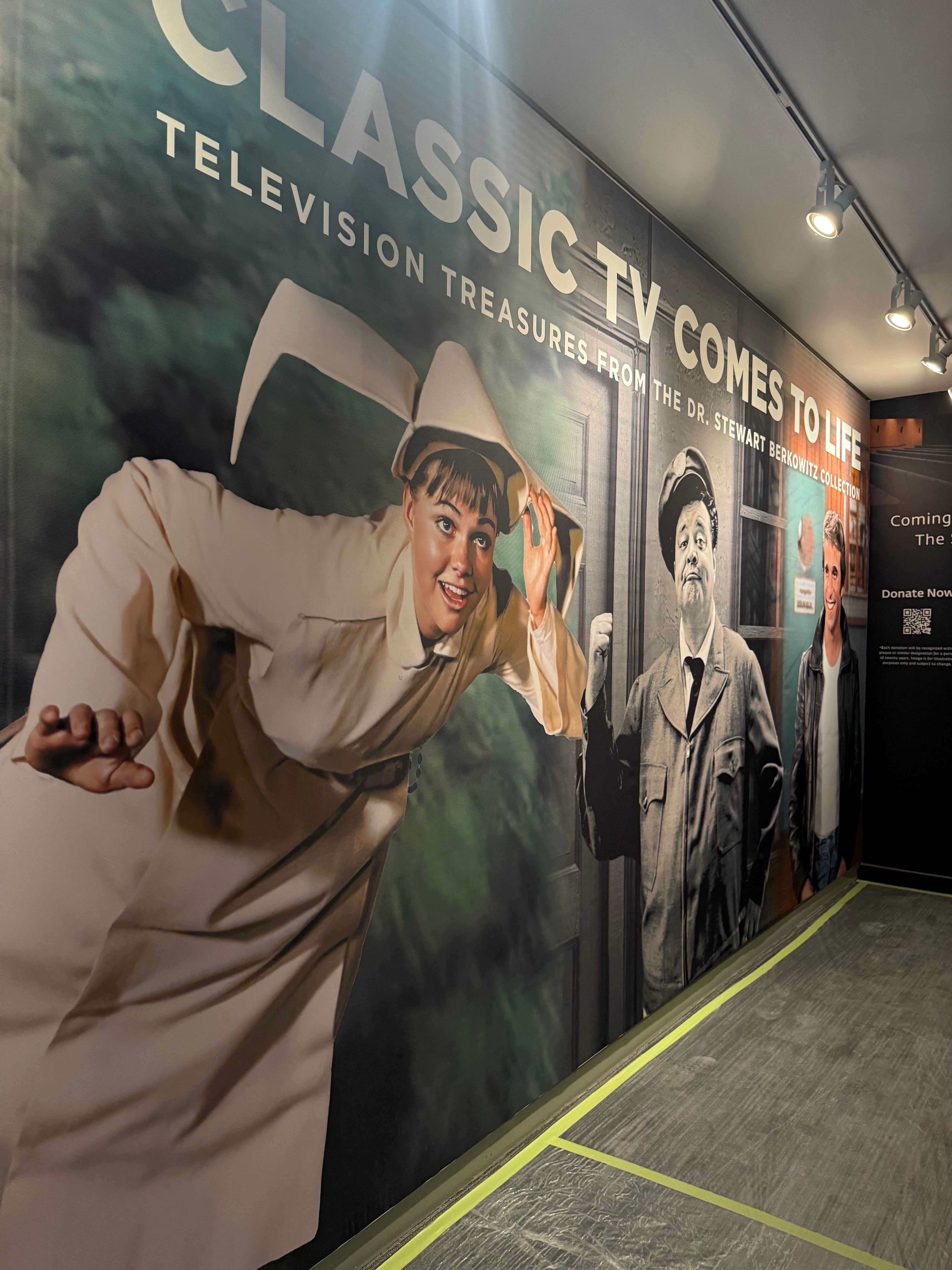
The Museum of Radio and Television was founded by William S. Paley, who had built CBS up from a small radio station to a powerhouse TV network. In 2007, it was renamed The Paley Center for Media, to better reflect changes in their mission from only radio and TV history to multiple media and their effects on culture and society. The Paley Museum at 25 W 52nd Street in Midtown Manhattan features exhibitions still primarily related to television shows, and also allows access to view vast archives of virtually anything that has been televised, and an entire floor with classic and virtual reality games. Despite having walked past it for decades, I checked the museum out for the first time recently! Spoiler alert, I enjoyed my visit and there is a lot there to do.
There are Paley Archives in Beverly Hills, inside the Beverly Hills Public Library, but the Paley Center in Midtown Manhattan fills multiple floors of a large office building on West 52nd St. You can find out how to become a member on their website (and I will weigh in later on whether I think this might be a good option if you live in NYC), but for one visit you can purchase timed tickets for a 30 minute entry period on a specific day. Once you are in the museum, you can stay until the center closes, so an early time slot is obviously preferable.
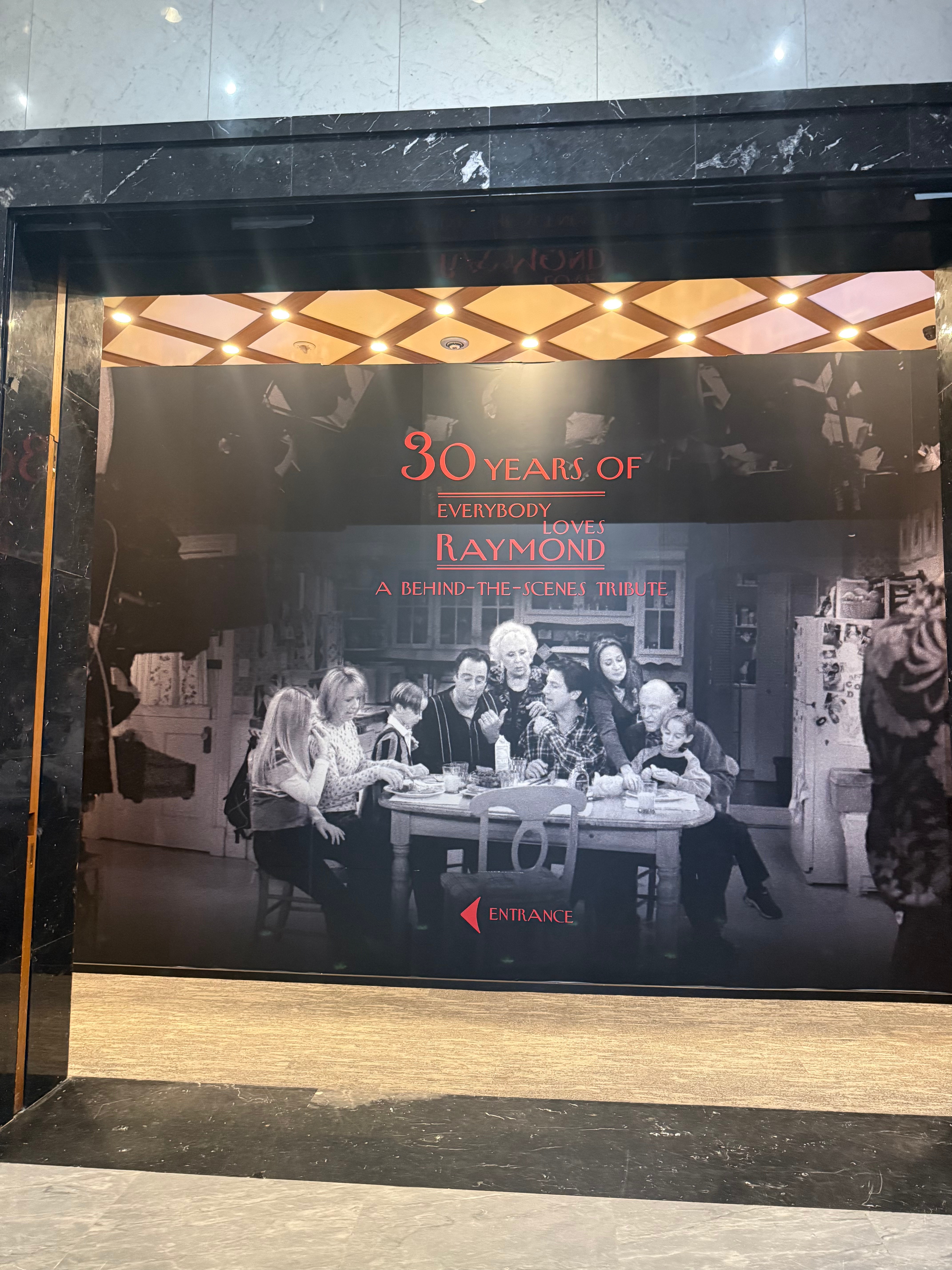
The big exhibition on the ground floor when I went was about the show Everybody Loves Raymond (it is just being replaced by a new exhibit on The Office). I have actually never seen ELR, but I was very impressed with the detail. You could sit on their sofa (photo opportunity!), see an Emmy, look at scripts and costumes, and watch videos from behind the scenes. This was as elaborate as pop-up exhibits about individual shows (which often charge as much as more for one exhibit than the Paley Museum does for the entire experience), and more detailed than what you could see on a Studio Tour in Los Angeles (I’ve done many of those).
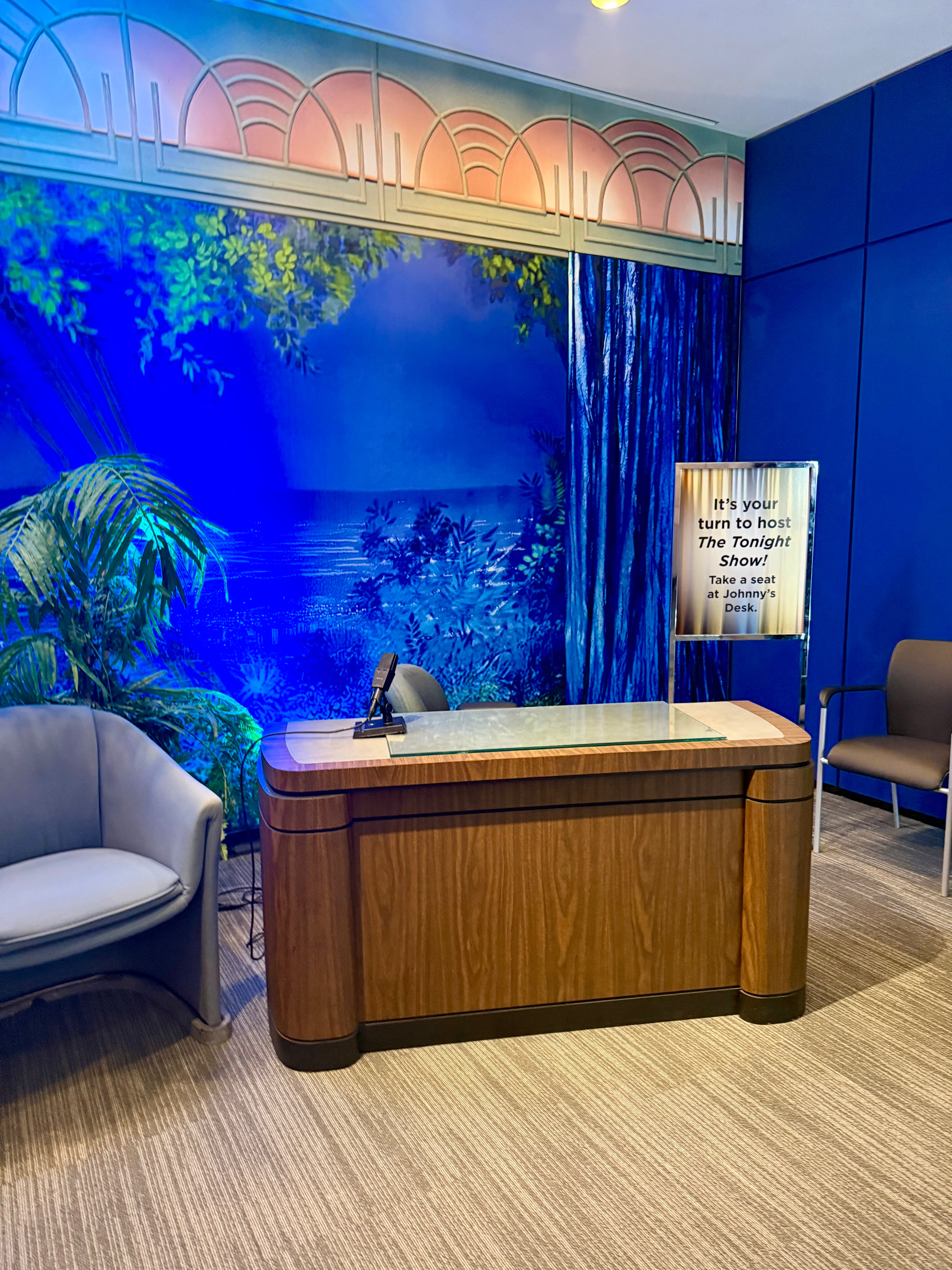
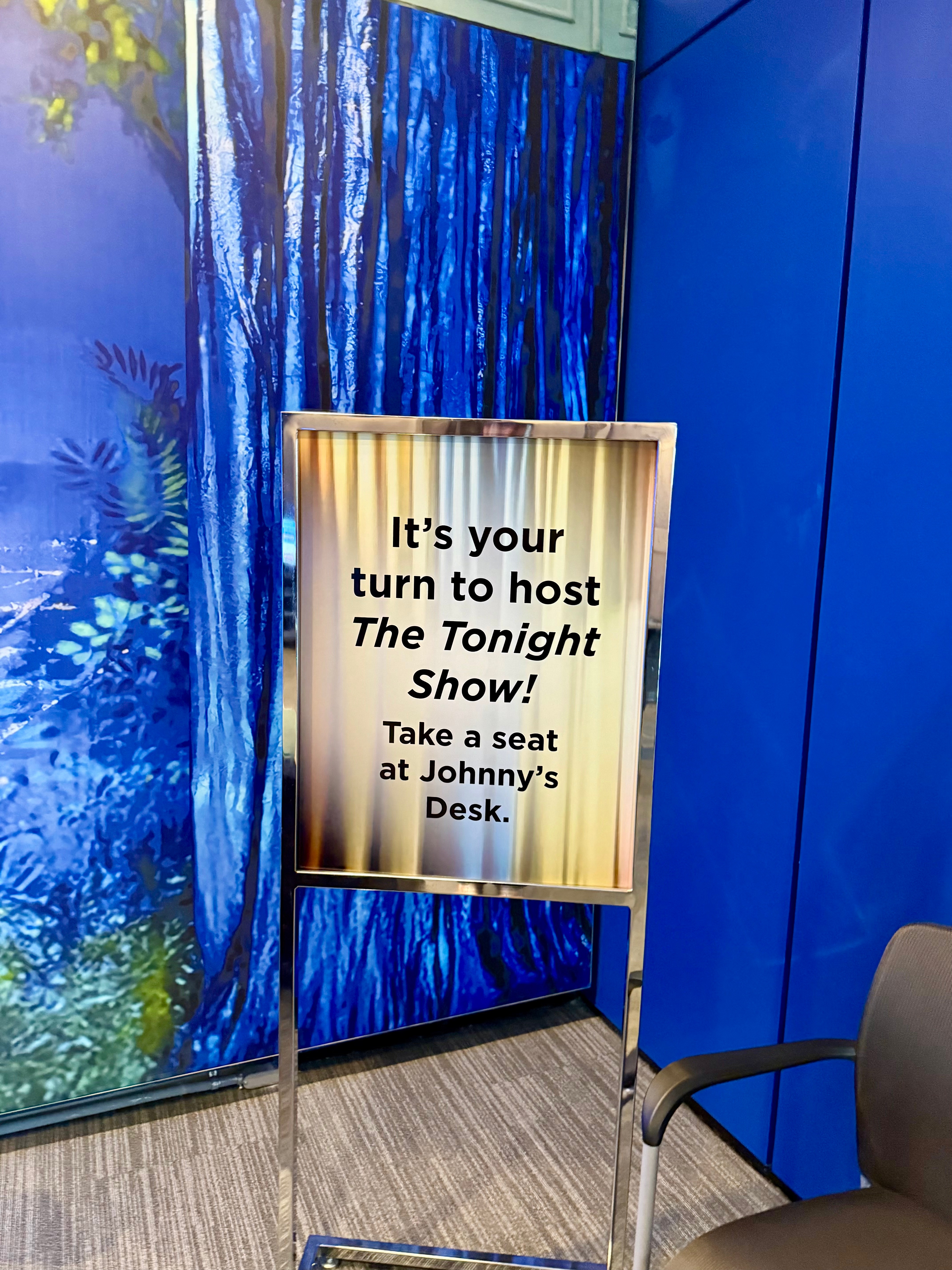
Heading up (there is an elevator), there is an exhibit about Johnny Carson’s The Tonight Show (which ran from 1972-1992, taped in Burbank, California). They were playing the last episode he ever aired, and you could sit at his desk (another photo op!), or on the sofa where so many famous guests sat, or in seats from the studio audience.
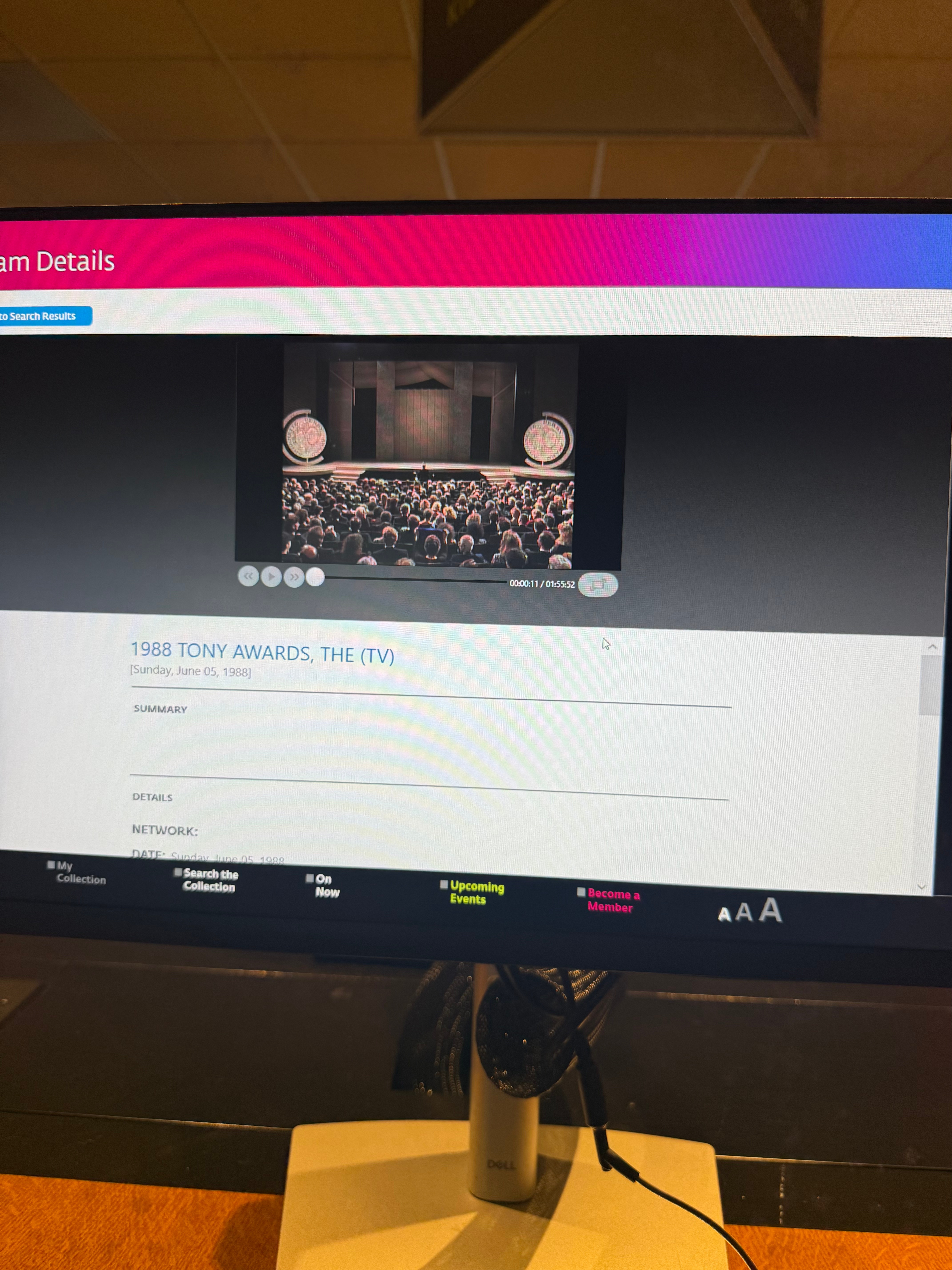
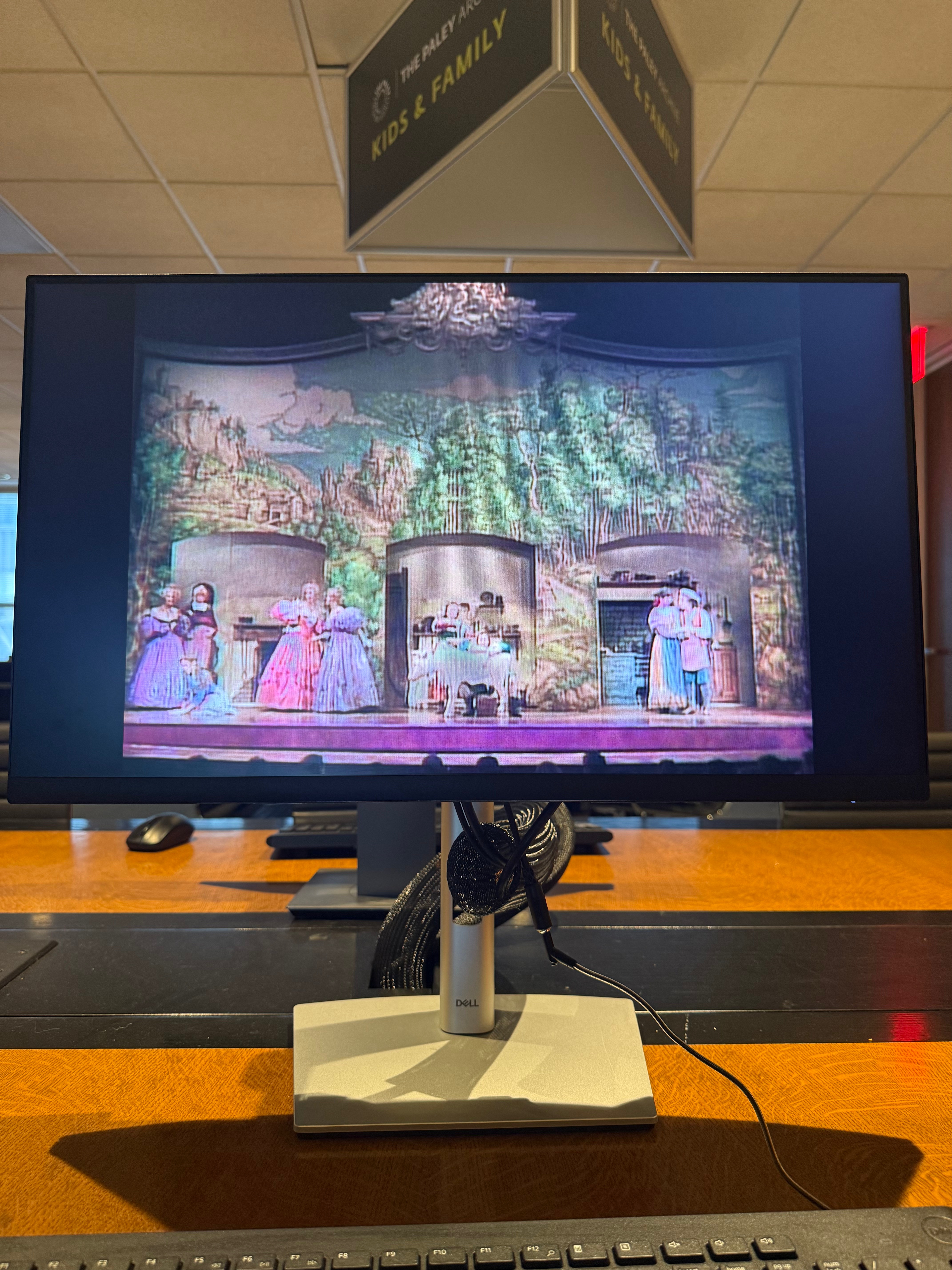
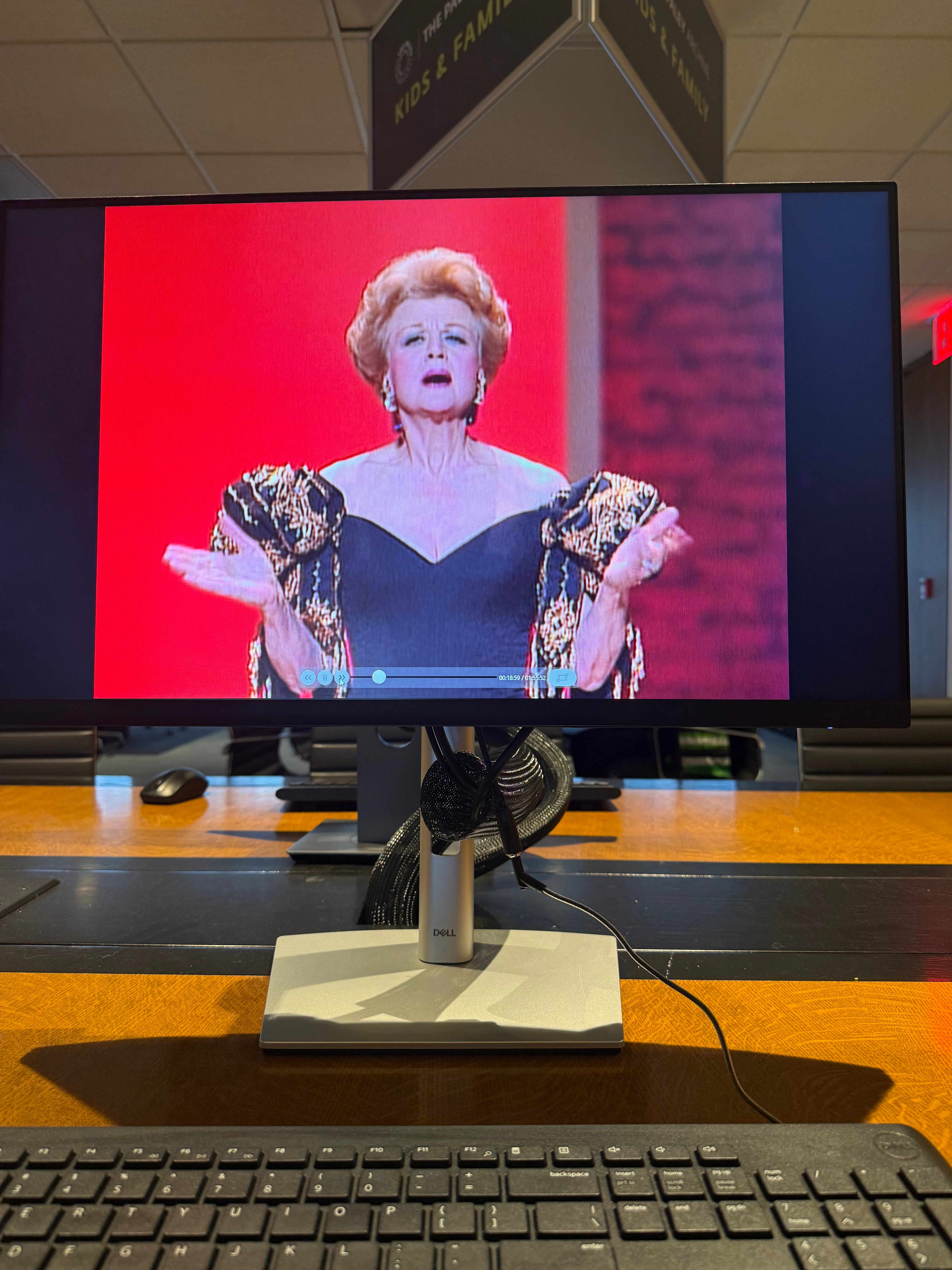
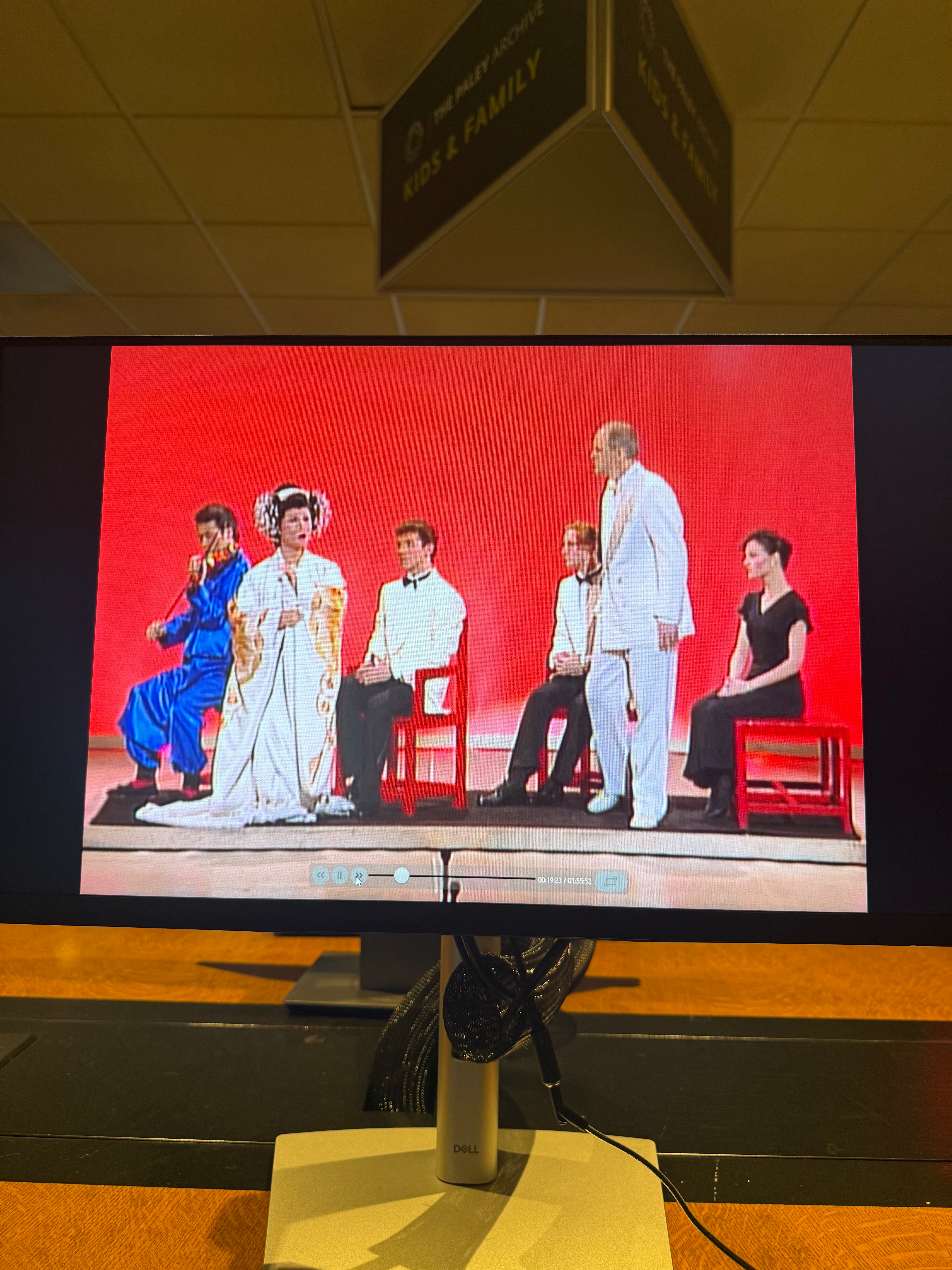
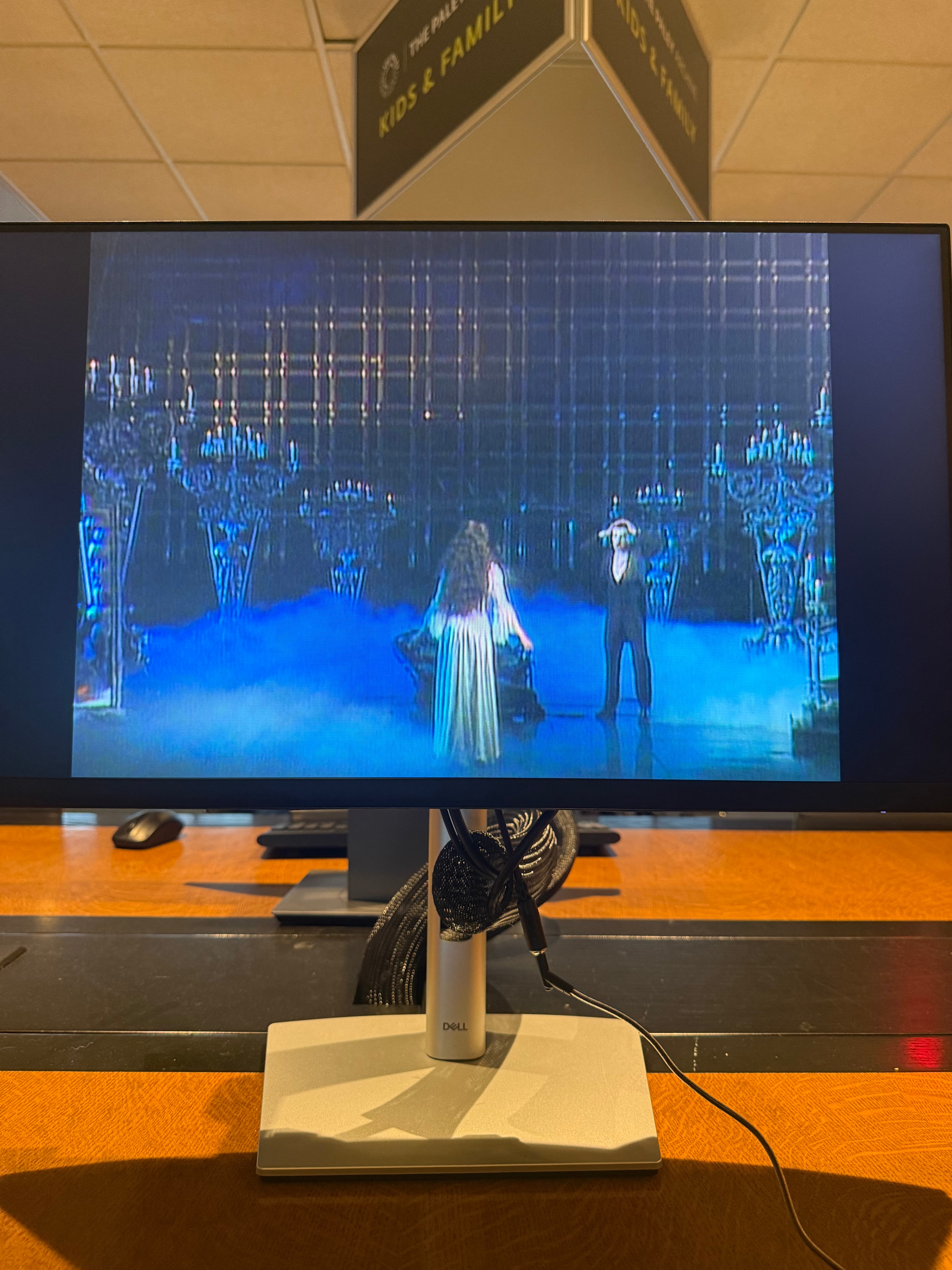
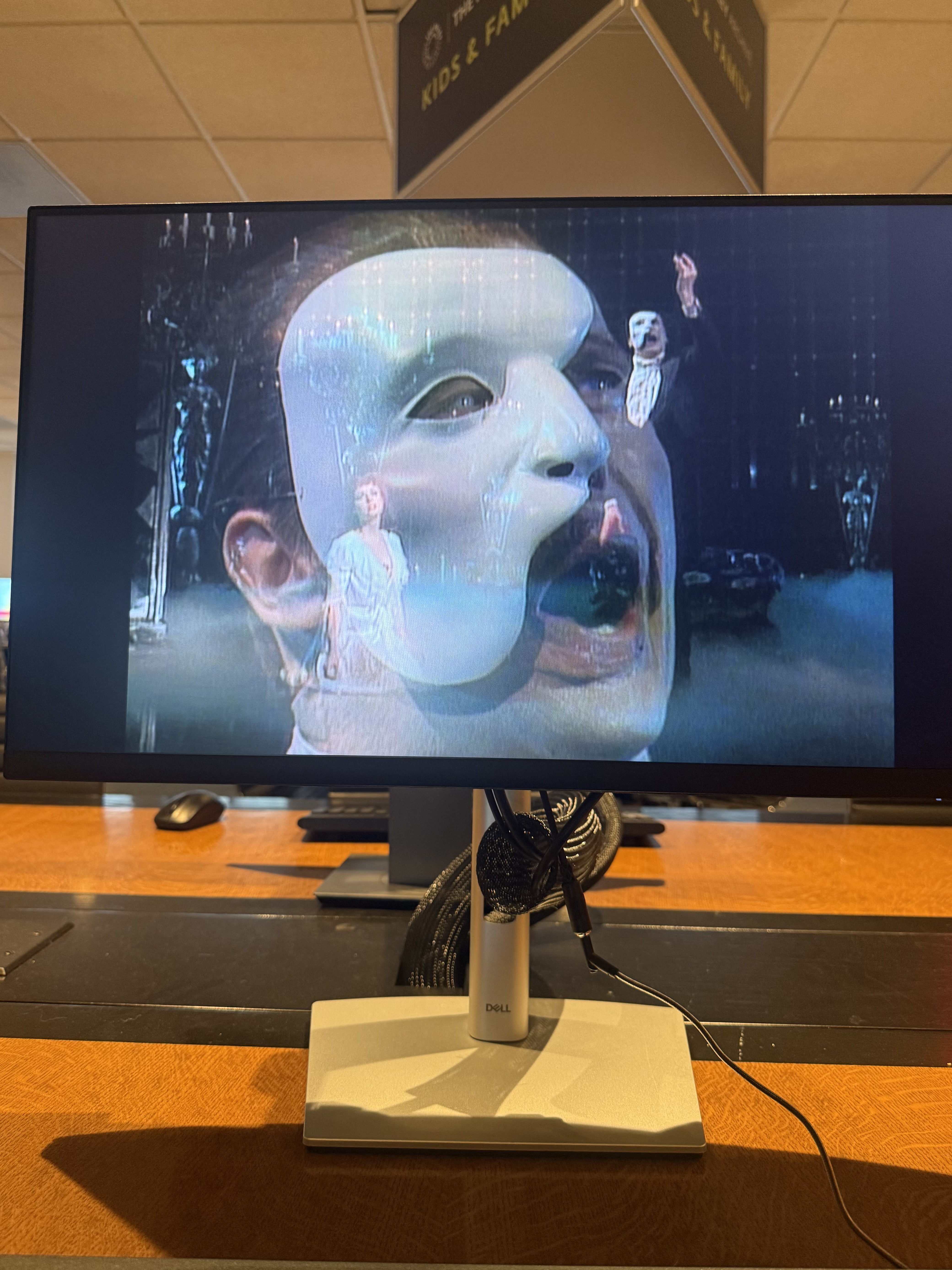
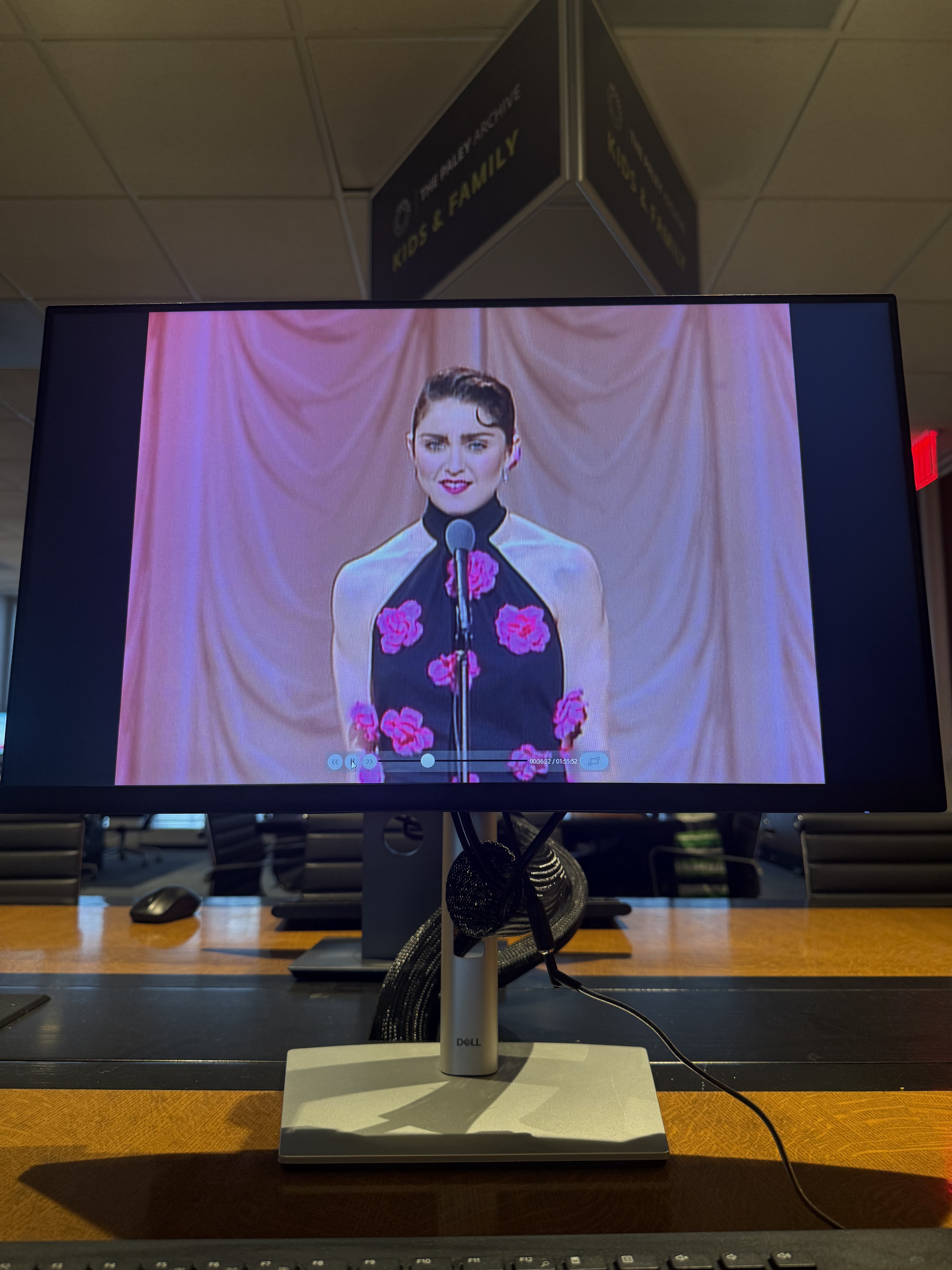
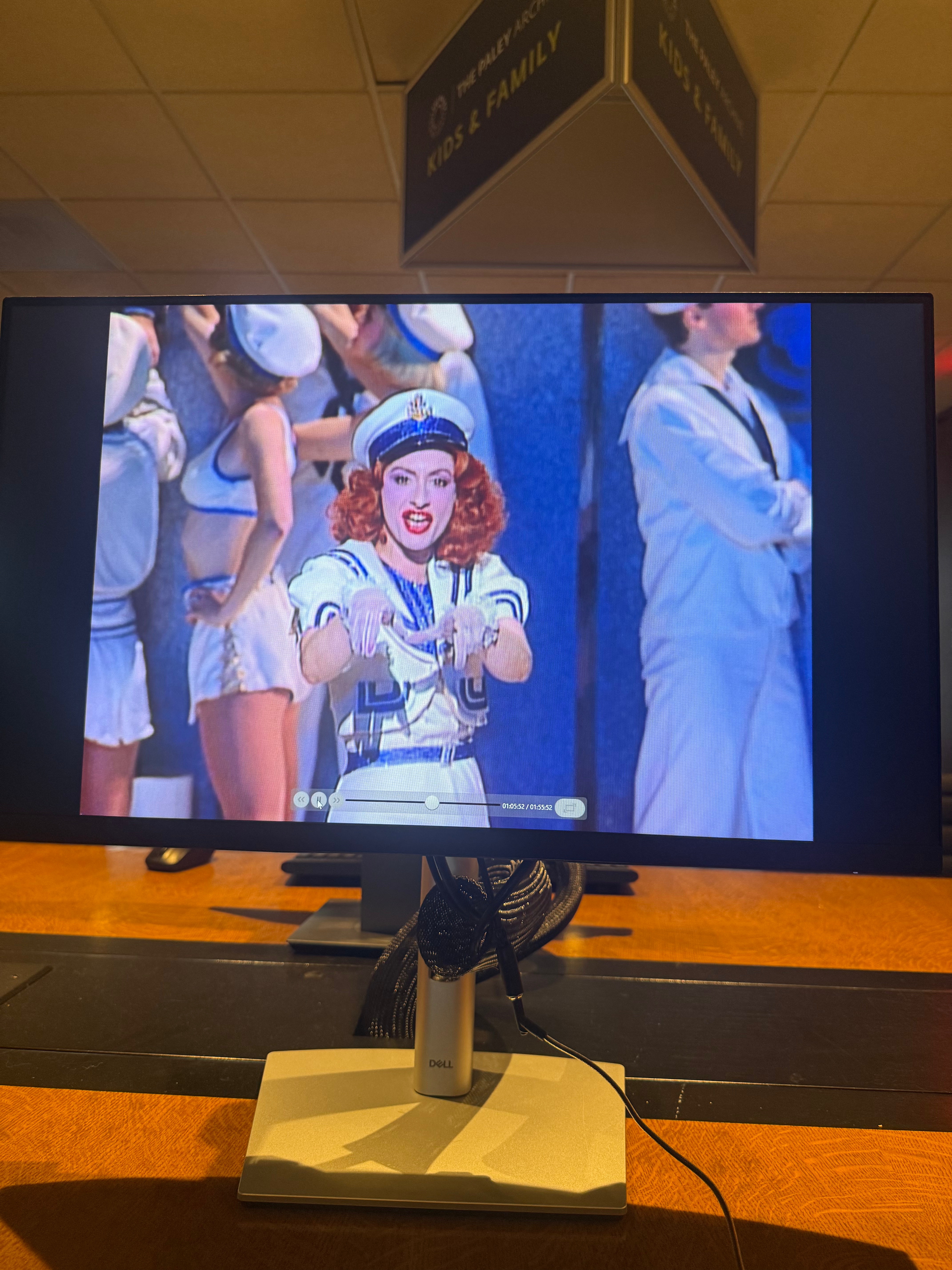
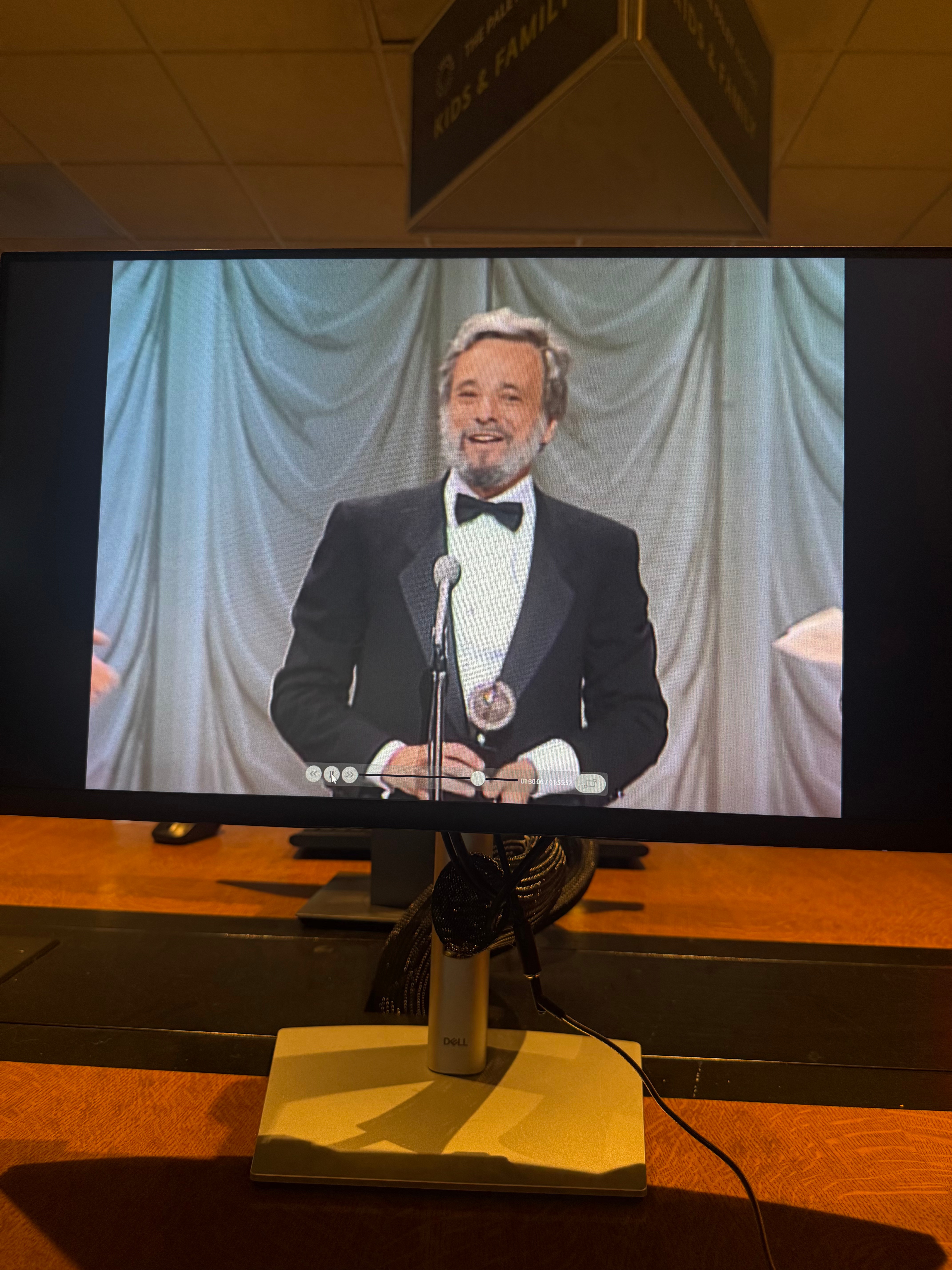
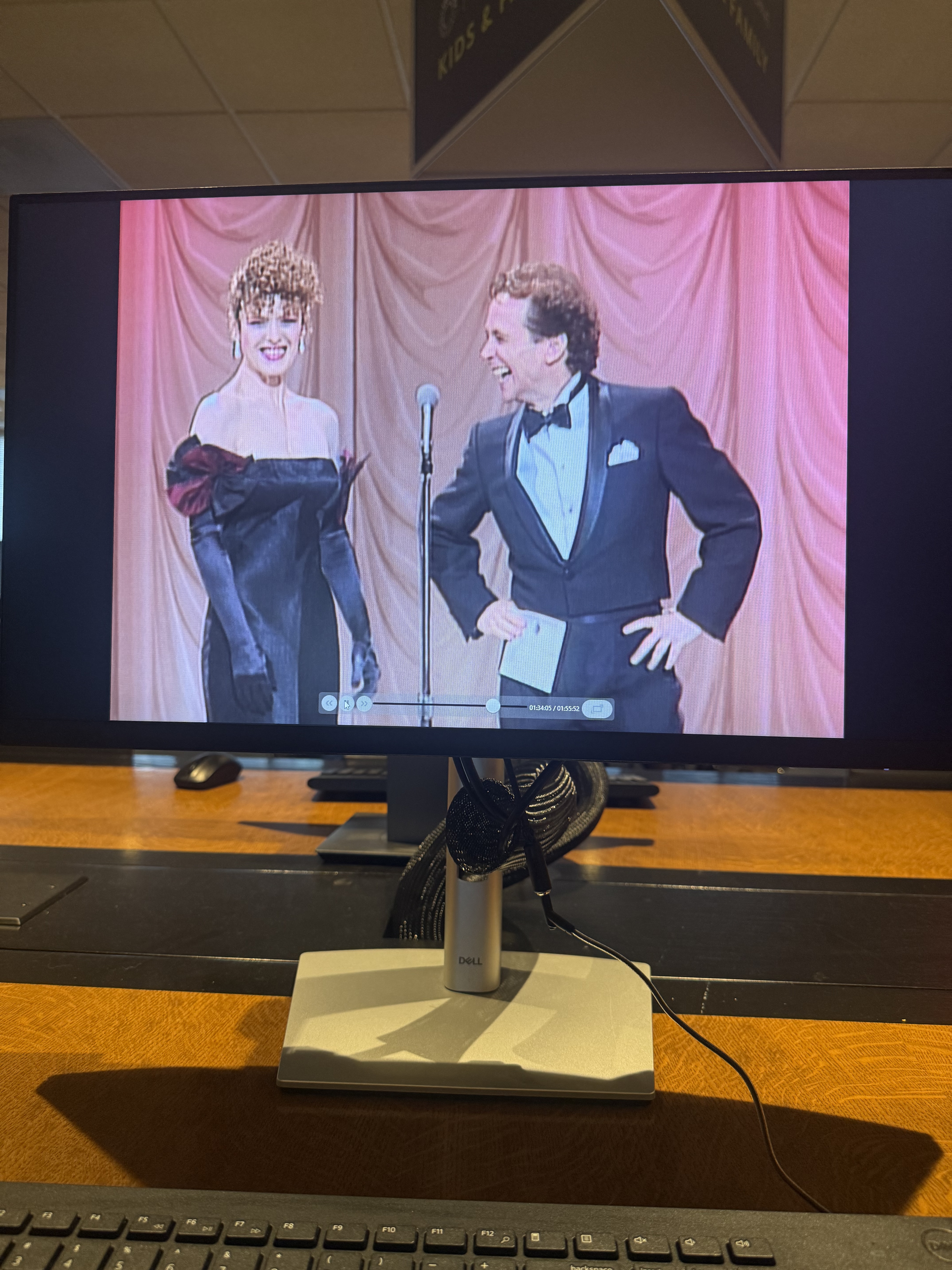
Heading up again, I visited the Paley archives. If you are a Paley member, you can visit them as often as you would like, but if you are on a one-day ticket, you get 90 minutes. They have over 160,000 television and radio programs and advertisements, covering more than 100 years of television and radio history. The collection spans all genres: comedy, drama, news, public affairs, performing arts, children’s, sports, reality, animation, and documentary, and includes a significant international presence, with 70 countries represented. You sit at a large desk with no one on either side of you, with comfortable headphones. You could watch Jacqueline Kennedy give a tour of The White House, or watch David Bowie be the musical guest on Saturday Night Live, there are almost limitless options. I had decided in advance to pull up the 1988 Tony Awards, which I had watched at home in Chicago about two months before I moved to New York City. What a treat! The quality of what you view in the archives is significantly better than videos you can find on YouTube. I had to scrub through a few things to make it in 90 minutes, but Into the Woods and Phantom of the Opera traded off awards, and M Butterfly won Best Play (and I liked the short live excerpts from plays they performed in addition to the musical numbers). There was a tribute to Michael Bennett (who had died in the previous year from AIDS), Patti LuPone sang and danced in Anything Goes, Angela Lansbury hosted, and Bernadette Peters and Joel Grey presented. A delight!
On the top floor, there is a gaming room with over 65 video games and over 25 virtual reality games. I saw on the website that this has been voted the best birthday party venue in NYC, and I can see why! If you enjoy video games or someone in your family does, I could also see a day pass or even a yearly membership being worth it just for this area of the Center.
The Paley Center has continuous screenings in their basement floor theater. The day I went, it was episodes of Everybody Loves Raymond, with one episode of Downtown Abbey thrown in (because the new movie was being released). They also have regular in-person events with television creatives, usually around either an exhibition on display, or around an anniversary of a certain show (the 40th anniversary of The Golden Girls is an upcoming event, for example). There is PaleyFest yearly in October – last year there were moderated talks with creatives and performers from Outlander, Blue Bloods, What We Do in the Shadows, and The Diplomat, among others. PaleyFest 2025 participants should be announced soon.
I enjoyed my visit to the Paley Museum and found the price for a one day pass reasonable. I could see that if you were planning to see a few of the different exhibitions throughout the year, enjoyed visiting the archive, or loved playing video games, that a membership could make a lot of sense. With so many opportunities in NYC, it’s easy to overlook some like the Paley Center – but keep it in mind!
I wrote quite a while ago (2014, 11 years ago!) about immersive theatre in general. At the time, Sleep No More was going strong, as was The Drowned Man (also by Punchdrunk, the OG of immersive theatre – and to be clear, I mean original GOAT, not Opera Ghost) in London, Then She Fell in Brooklyn, and Queen of the Night in midtown. The two Punchdrunk shows were what I think of as “choose your own adventure” shows, where you wander a space freely and in effect direct your own version of the theatrical experience. Then She Fell was controlled, with viewers ushered into a series of rooms to experience a story. And Queen of the Night had some opportunities to be taken off into different rooms (“one-on-ones”) but the bulk of the evening involved sitting at tables watching a show, and perhaps bartering with other tables for better food.
What a difference a decade (plus) has made! Sleep No More closed at the very beginning of 2025, having struggled after covid lock down (a free-flowing experience like that was even harder to adapt to early covid restrictions once theatre began to re-emerge in September of 2021), and being unable to pay rising rents. (Sleep No More does still have productions currently running in Shanghai and Seoul, who wants to go with me?) The Drowned Man closed (the space it was in near Piccadilly was redeveloped) and Punchdrunk purchased their own space in Woolwich (easily accessible from central London on the new Elizabeth line). Since then they had one traditional show, based loosely on stories in ancient Greece, The Burnt City – which has now also closed (but I was able to see it twice). They have since pivoted to trying one more controlled immersive theatrical experience (Viola’s Room – which is now in NYC, more about that later), and just announced Lander 23, which will merge video gaming with immersive theater.
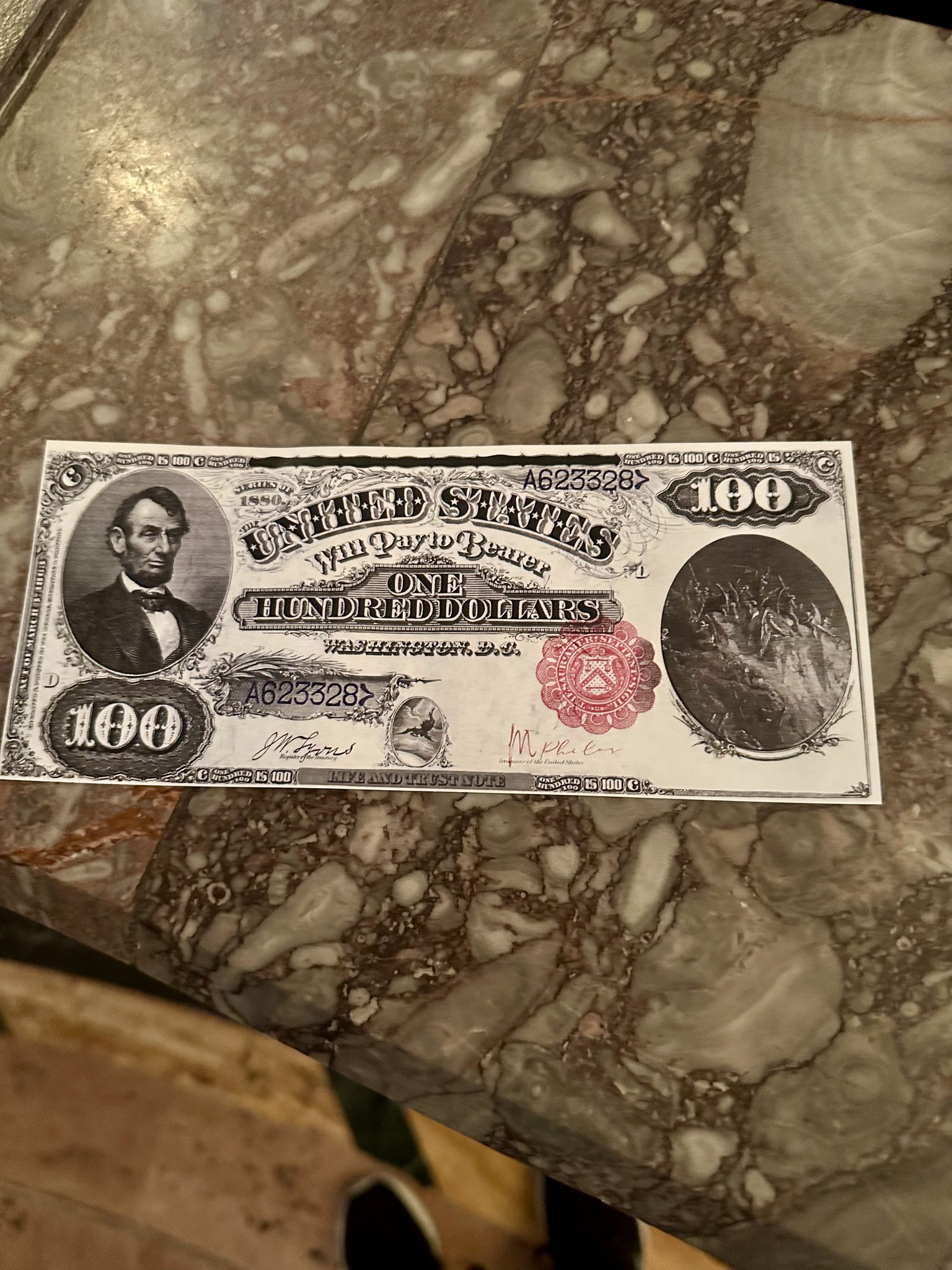
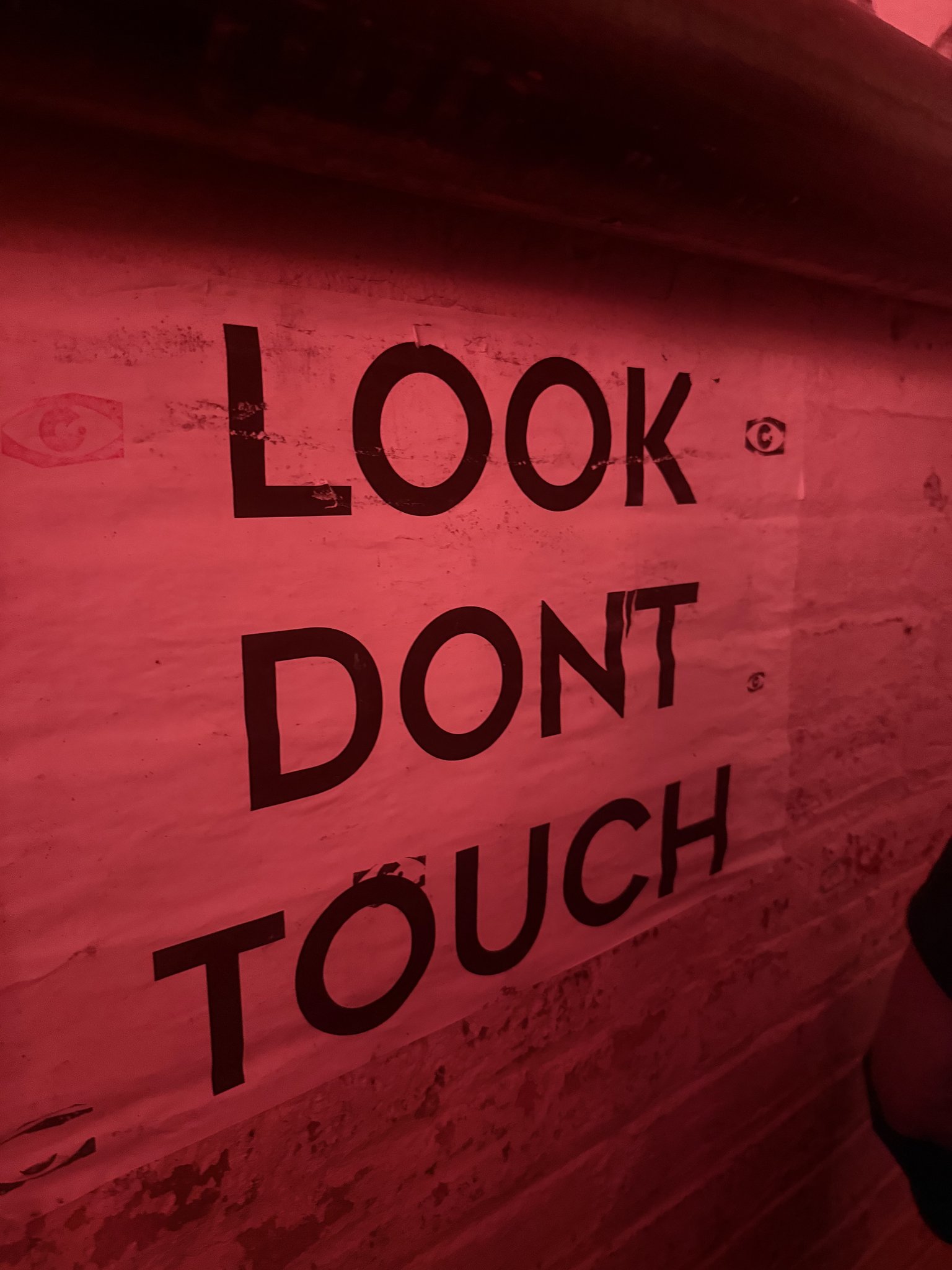
Meanwhile, here in NYC Emursive (the producer but not the creator of Sleep No More) launched an ambitious “choose your own adventure” immersive experience in lower Manhattan last summer. Titled Life and Trust, it was loosely based on the story of Faust, but set just as the great stock market crash of 1929 was about to put an end to the roaring twenties. The set was enormous and detailed, and the story took place on five different levels. In addition to the Faust story (in this case, Conwell vs Mephisto), there were storylines for Oscar Wilde’s Dorian Gray, Evelyn Nesbit, and a host of new characters. There were many extraordinary scenes – two that took place in a boxing ring – and the finale was fantastic. It opened last summer and closed abruptly earlier this year. And I mean really suddenly! They had a show on Saturday night as usual and Sunday morning they took away all social media other than an announcement that they had closed. They certainly were having a hard time making this work financially, but the sudden closing also had me wondering if there was something else going on (because if you are losing money, announcing a closing can spur interest and increase sales, sometimes repeatedly). The people in charge have not made a statement about the closing (that I have heard) but many of the performers are holding a one night event on the Upper West Side next month to discuss the experience of developing and being in the show and I will be there. After this, I wonder if NYC will not see another large-scale traditional immersive theater experience for some time.
Some Broadway musicals have had an immersive element. In my post from 2014, I mention the musical Here Lies Love, with music by David Byrne (see above, he was on the floor for one of the shows I saw in 2023) and Fatboy Slim, about the life of Imelda Marcos. At that point it was a huge hit at the Public Theater, and in 2023 it moved to the Broadway Theatre. Staged with a dance floor where you could move around with performers within an innovative set, becoming part of the crowd in Manila, I loved it and experienced it multiple times. If you were on the floor the show was quite immersive, but there were also fixed seats where there was little immersion. It was not a financial success, closing after 33 previews and 149 regular performances. Currently on Broadway there is an semi-immersive version of Cabaret, which transferred from the West End last spring but has not been received as well here. It is closing in October (if not sooner). Staged in the round, there are cabaret seats at tables where you may have interactions with the actors. The most immersive part of this production of Cabaret occurs before the performance, when musical and dance shows take place all around the public areas of the theater.
One could argue that the famous outside walk taken by the actor playing Joe Gillis in the recent Tony-winning revival of Sunset BLVD, directed by Jamie Lloyd, had an interactive quality. I experienced it multiple times from W 44th Street or Shubert Alley (see below, and here for a photo montage, and here and here for video), as well as seeing the livestream during the several times I attended the musical. Lloyd’s current revival of Evita, almost certain to arrive on Broadway in the next few years, has a similar immersive element, when people outside the theatre become the people of Argentina listening to Eva Peron sing her most famous song.
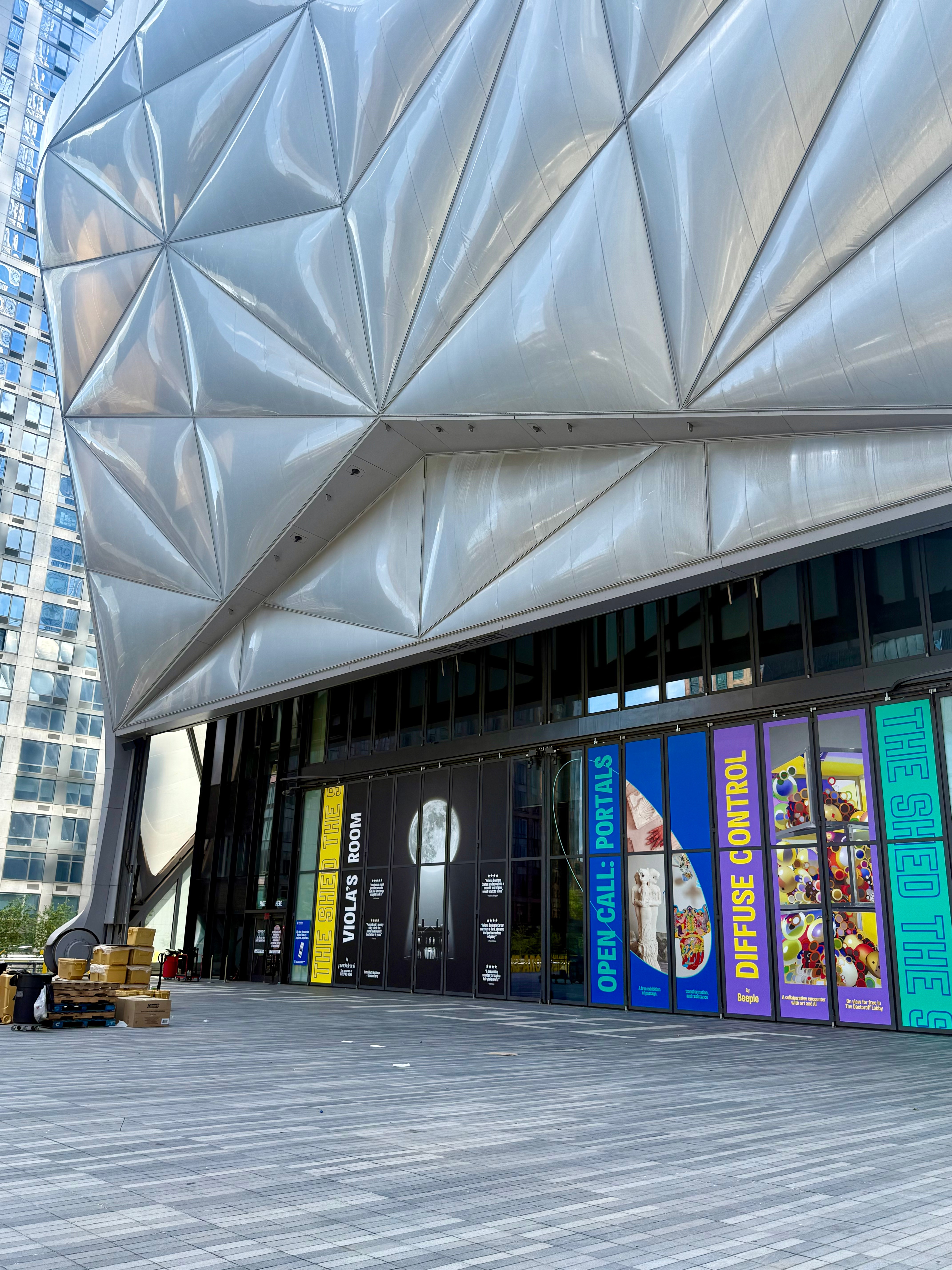
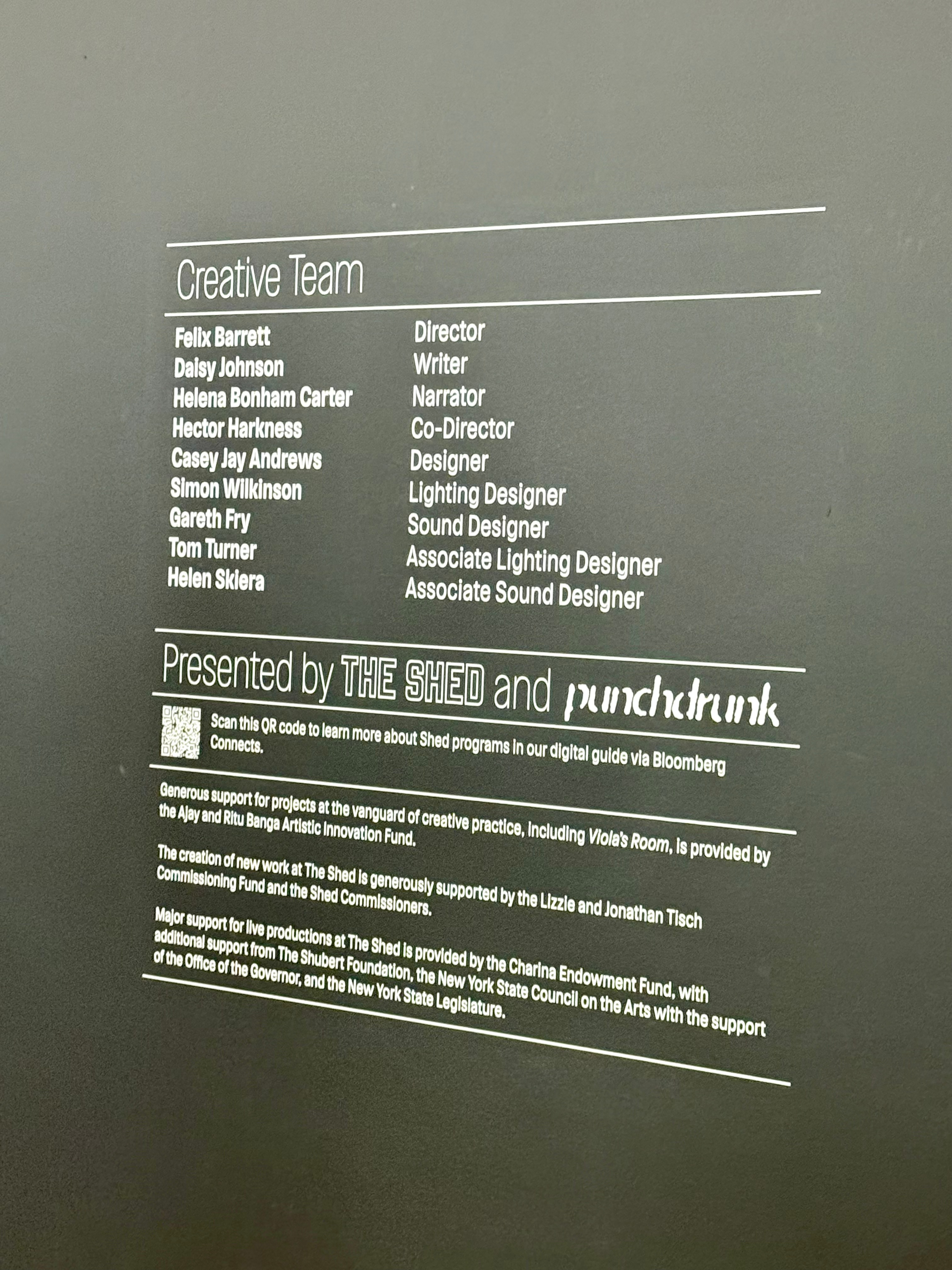
As I mentioned before, Punchdrunk (the OG creator of true classic immersive theatrical experiences, such as Sleep No More) has a current show at the Shed, Viola’s Room. a smaller-scale work by Punchdrunk founder Felix Barrett that invites audience members to move through a labyrinthine installation inspired by Barry Pain’s 1901 gothic short story “The Moon-Slave,” as adapted by the British writer Daisy Johnson. Participants wear headphones and are guided through the 50-minute experience at the Shed via narration in the voice of Helena Bonham Carter.
One of the more unusual things about Viola’s Room is that you experience it barefoot. There are places to clean and sanitize your feet before and after the experience. They will take your shoes and bags and put them in a box in your first room, and they are waiting for you when you enter the last room. In that first room, you will get headphones and test them out. You are with a small group of people, and instructions are to “follow the light” so you are led by light cues through a series of elaborate rooms that deepen the story being whispered in our ears by Helena Bonham Carter. There are some moments of total darkness, some areas that might bother people with claustrophobia, one instance of crawling (although we were asked in advance if that was doable so there must be an alternate route if it is not), and extremely varied floor surfaces. Like the larger scale Punchdrunk shows, there are scents that change between environments, to immerse multiple senses. Viola’s Room will be at The Shed until October 19th.
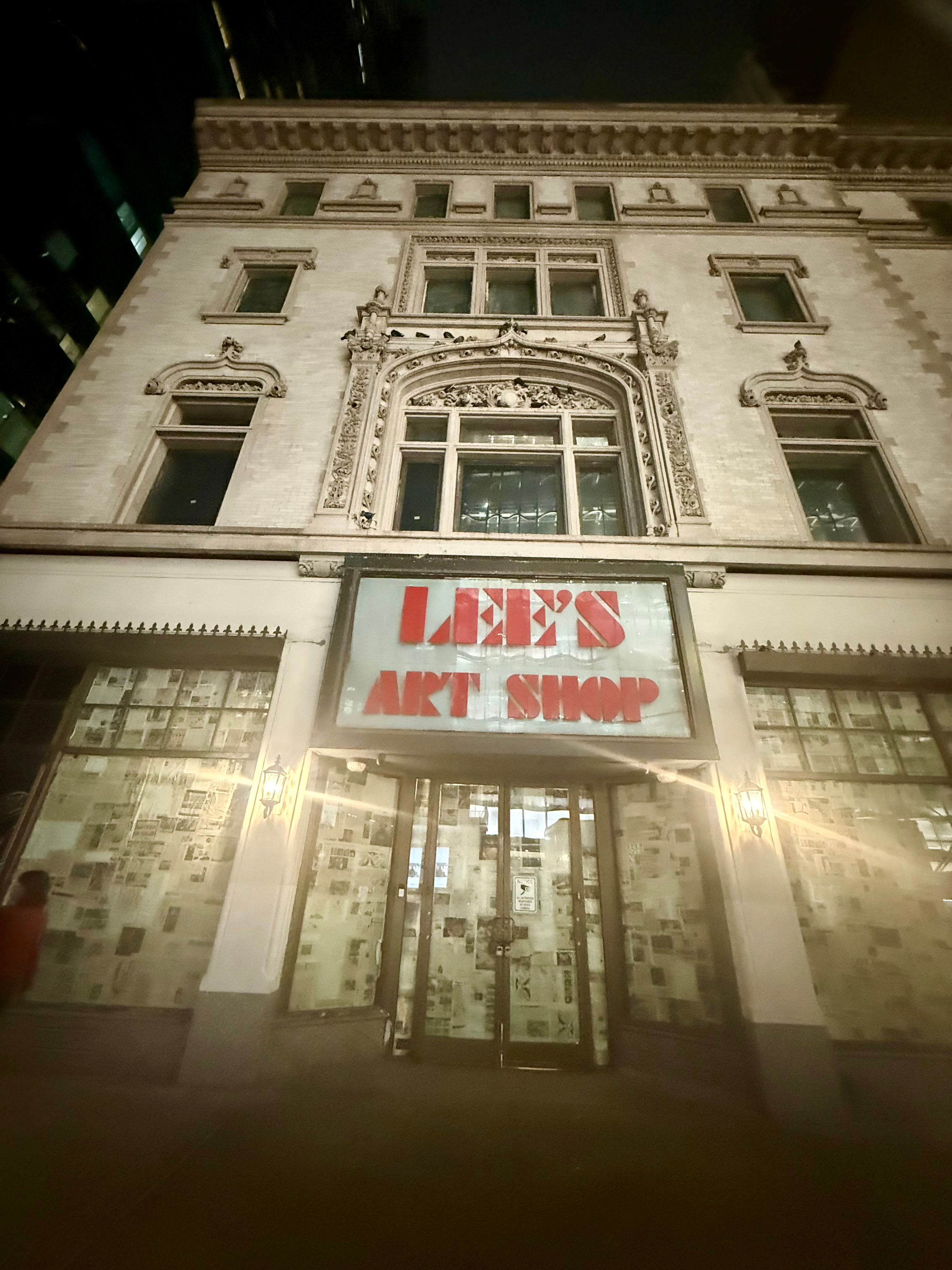
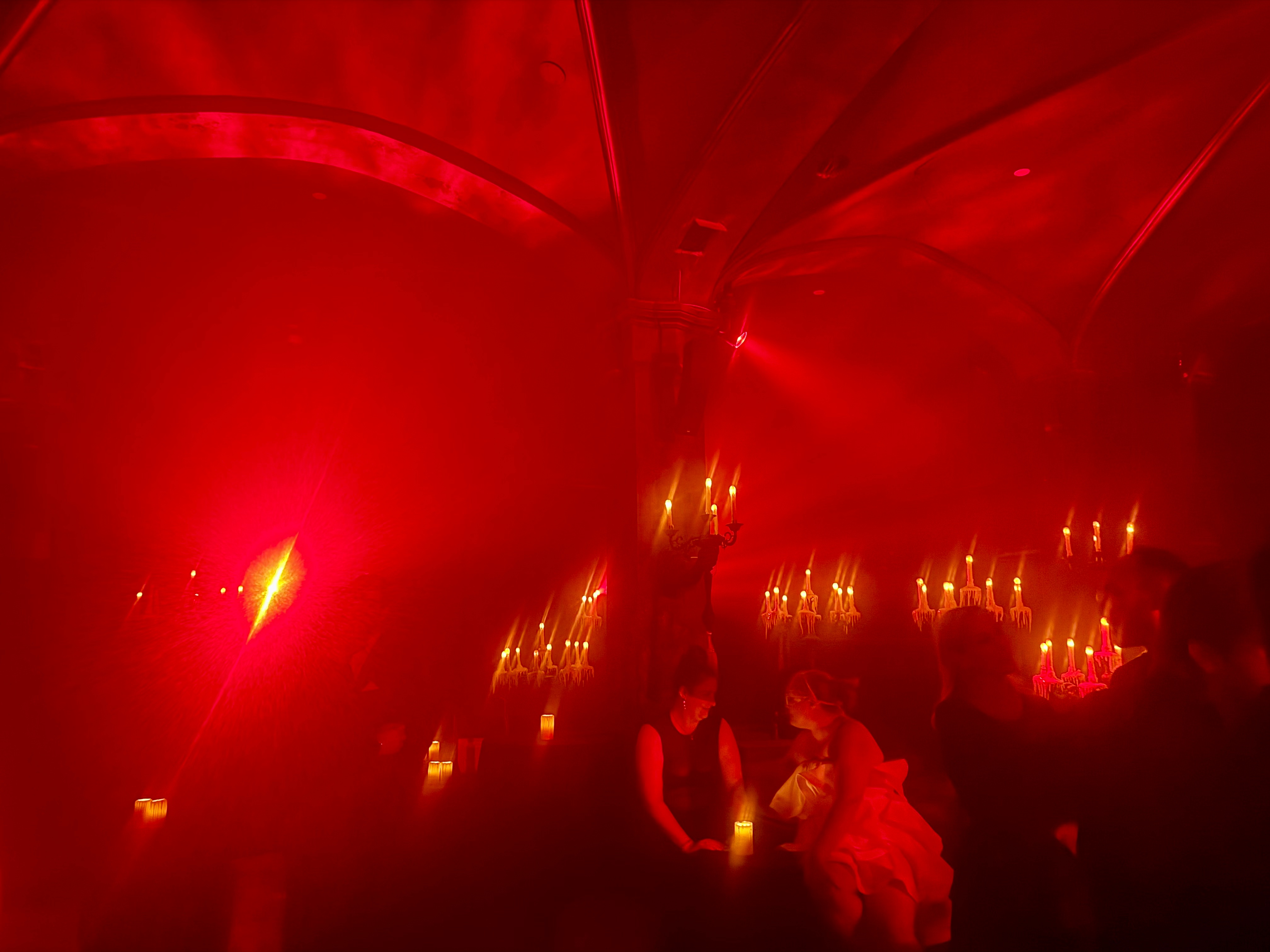
Perhaps the most buzzed about immersive theater taking place in New York City right now is Masquerade, a new immersive version of Andrew Lloyd Webber’s Phantom of the Opera. Set in a completely transformed building that once was Lee’s Art Shop on West 57th Street, this is not a “choose your own adventure” wander but rather a guided experience through the story and songs, in small groups of 50-60 people per 15 minute “pulse.” There are six “pulses” or showtimes for every evening (and matinees on Saturday and Sunday), with different actors playing Phantom and Christine for each time slot.
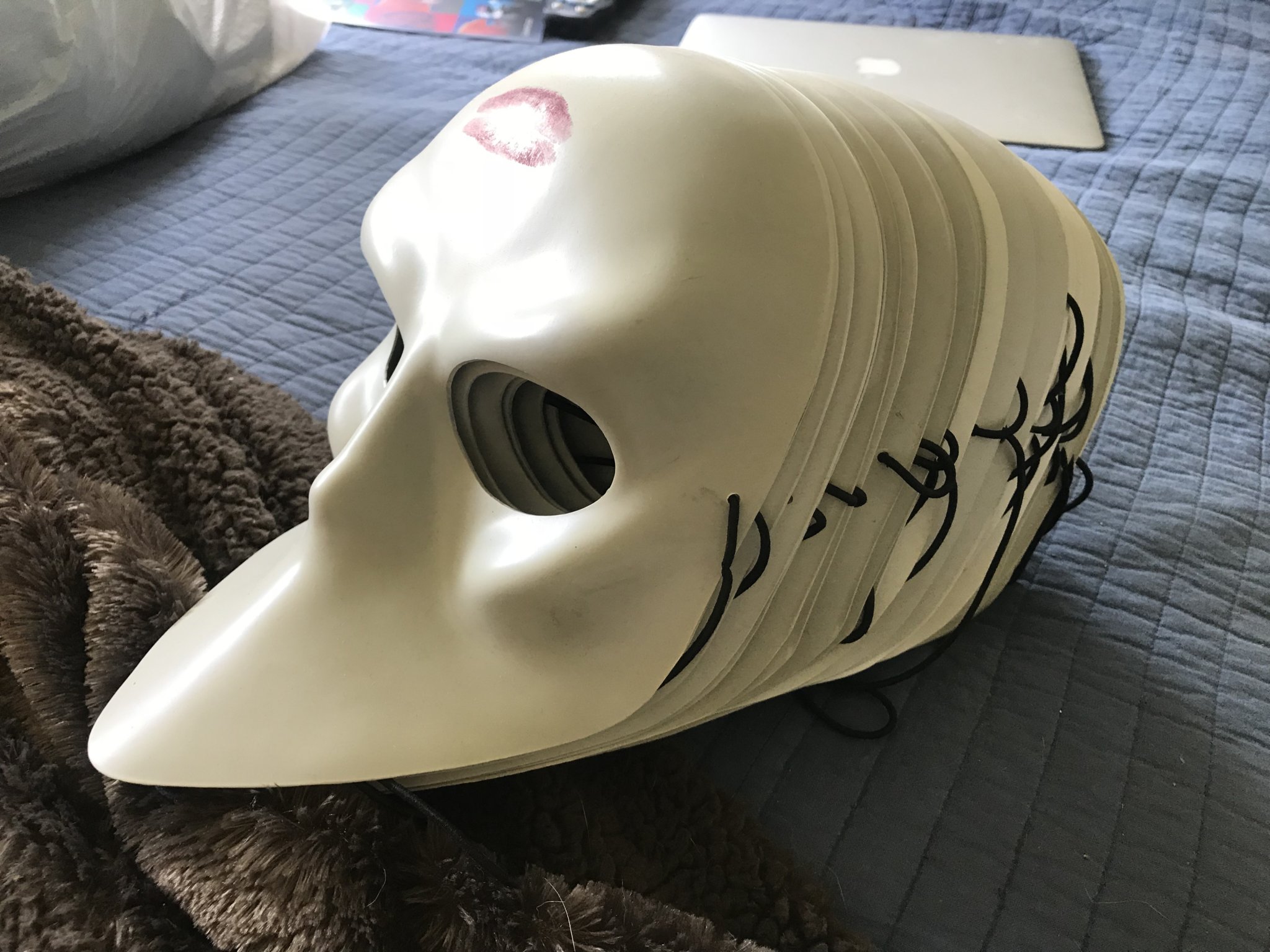
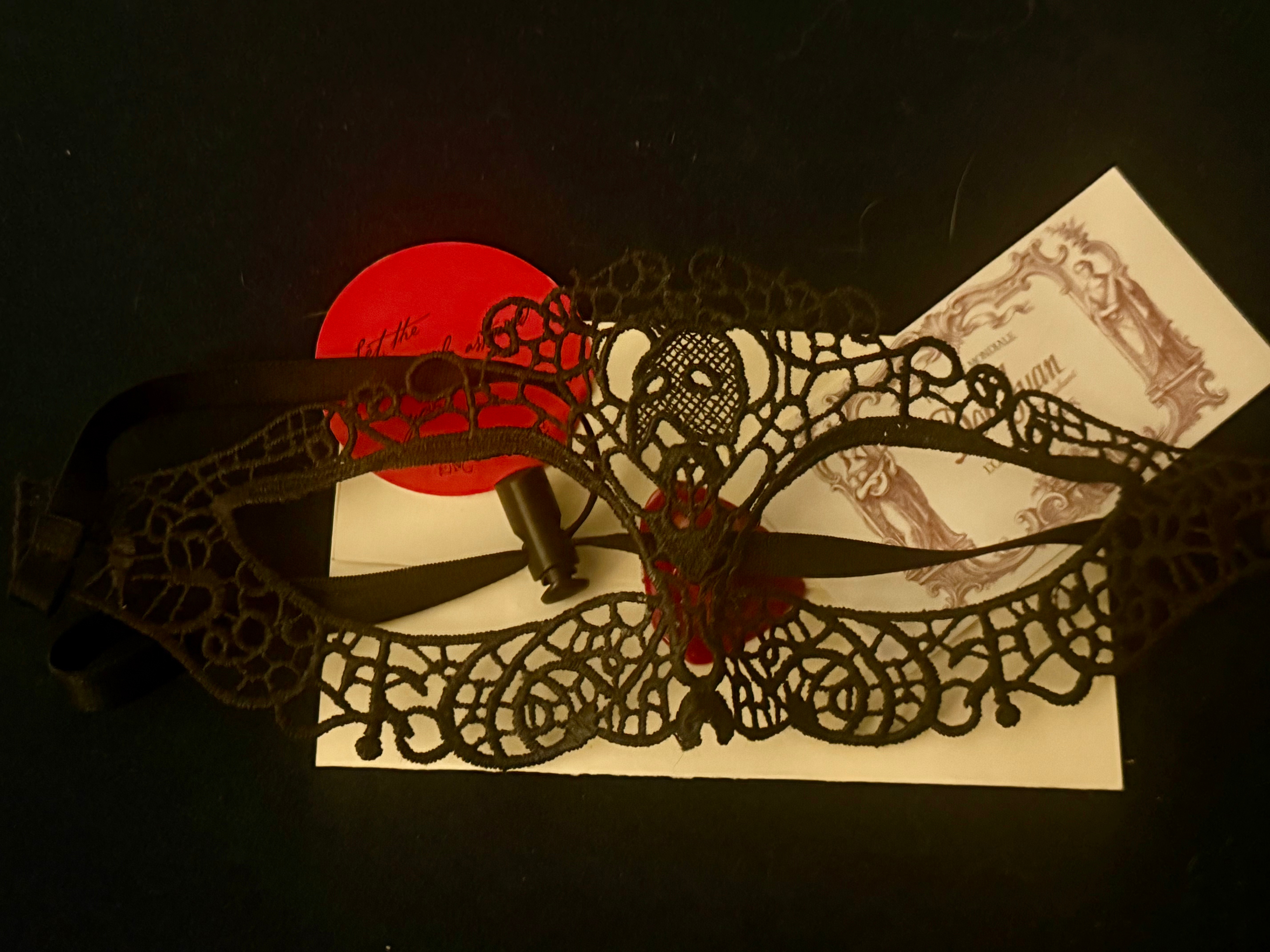
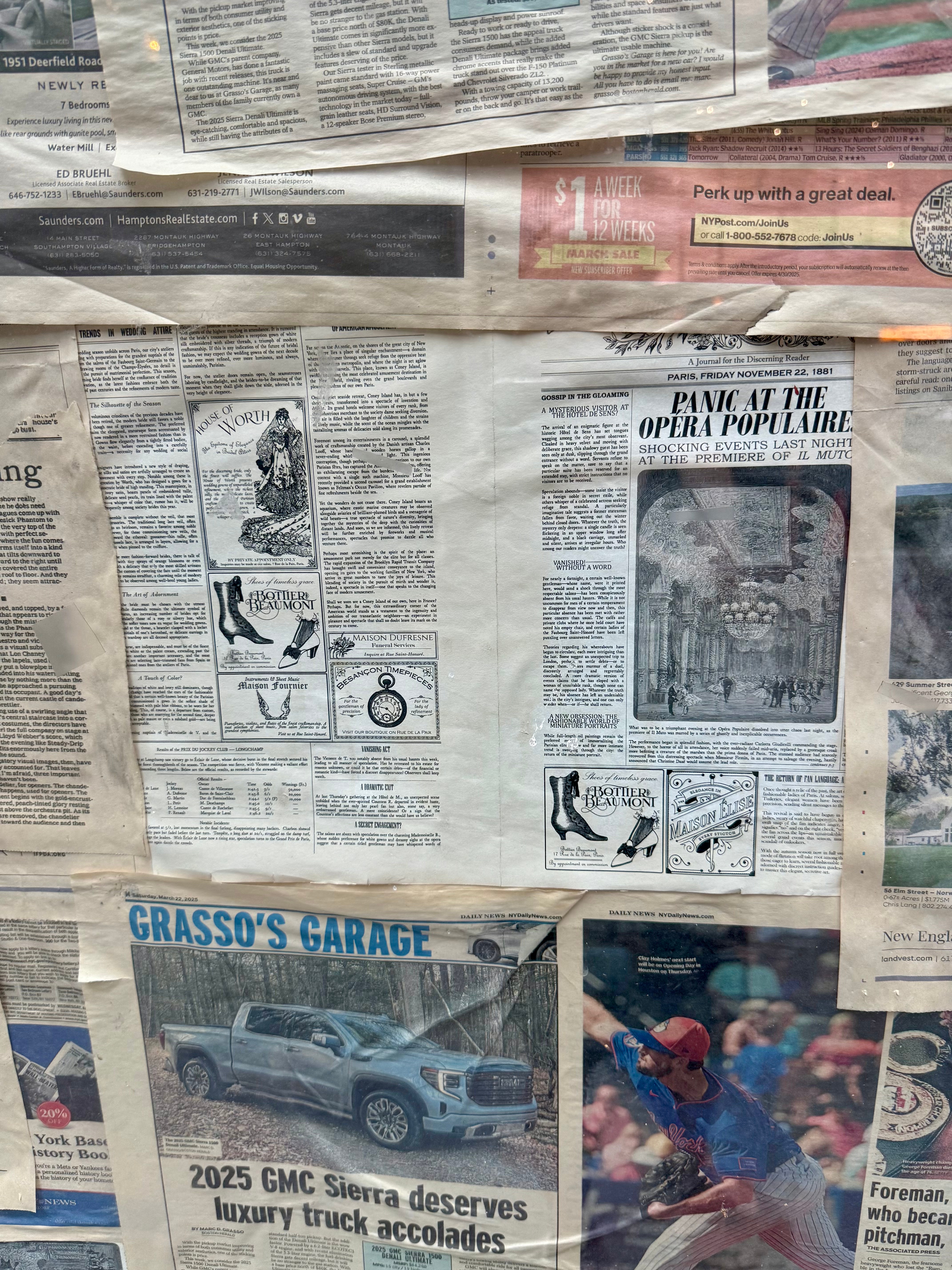
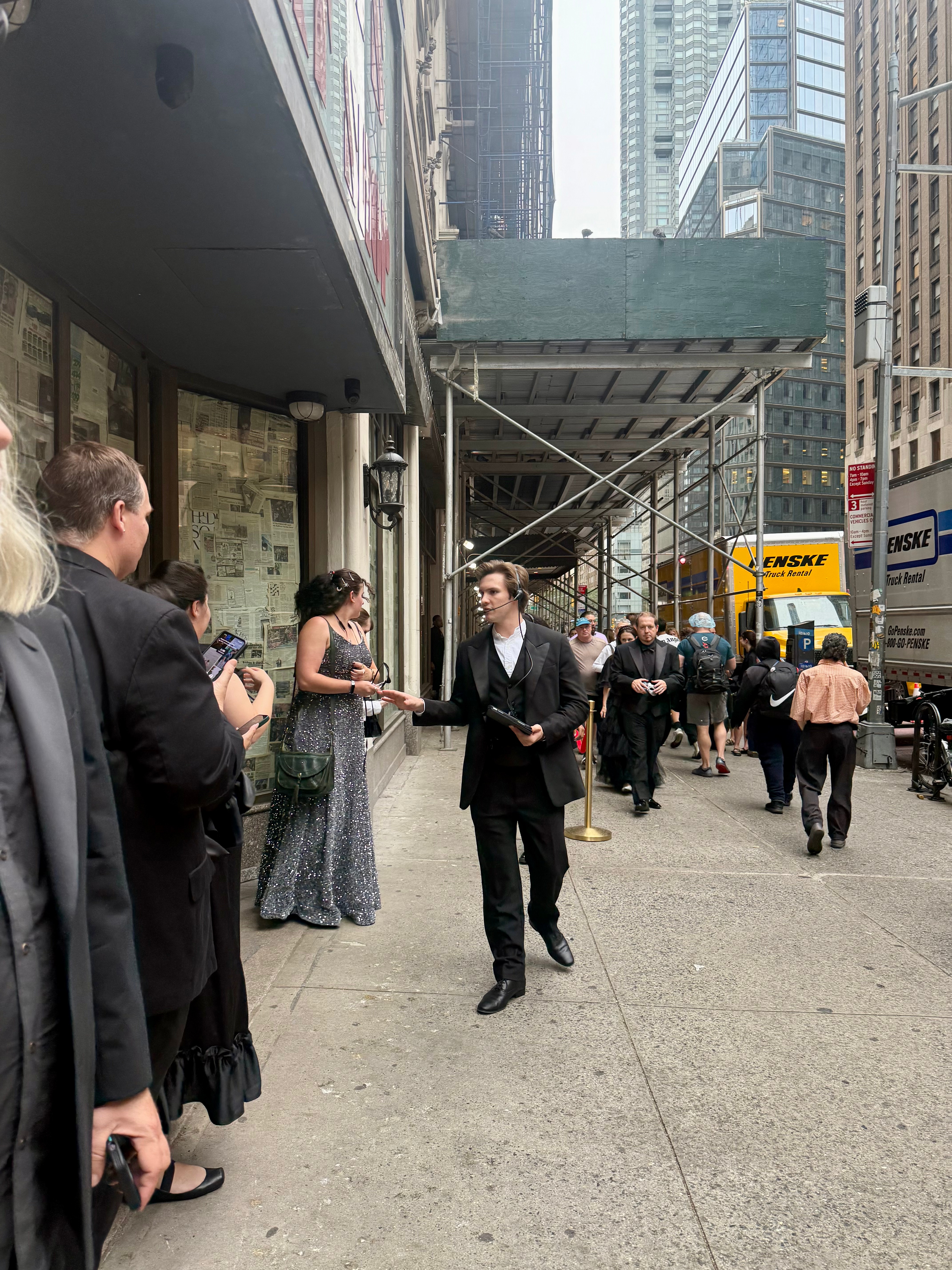
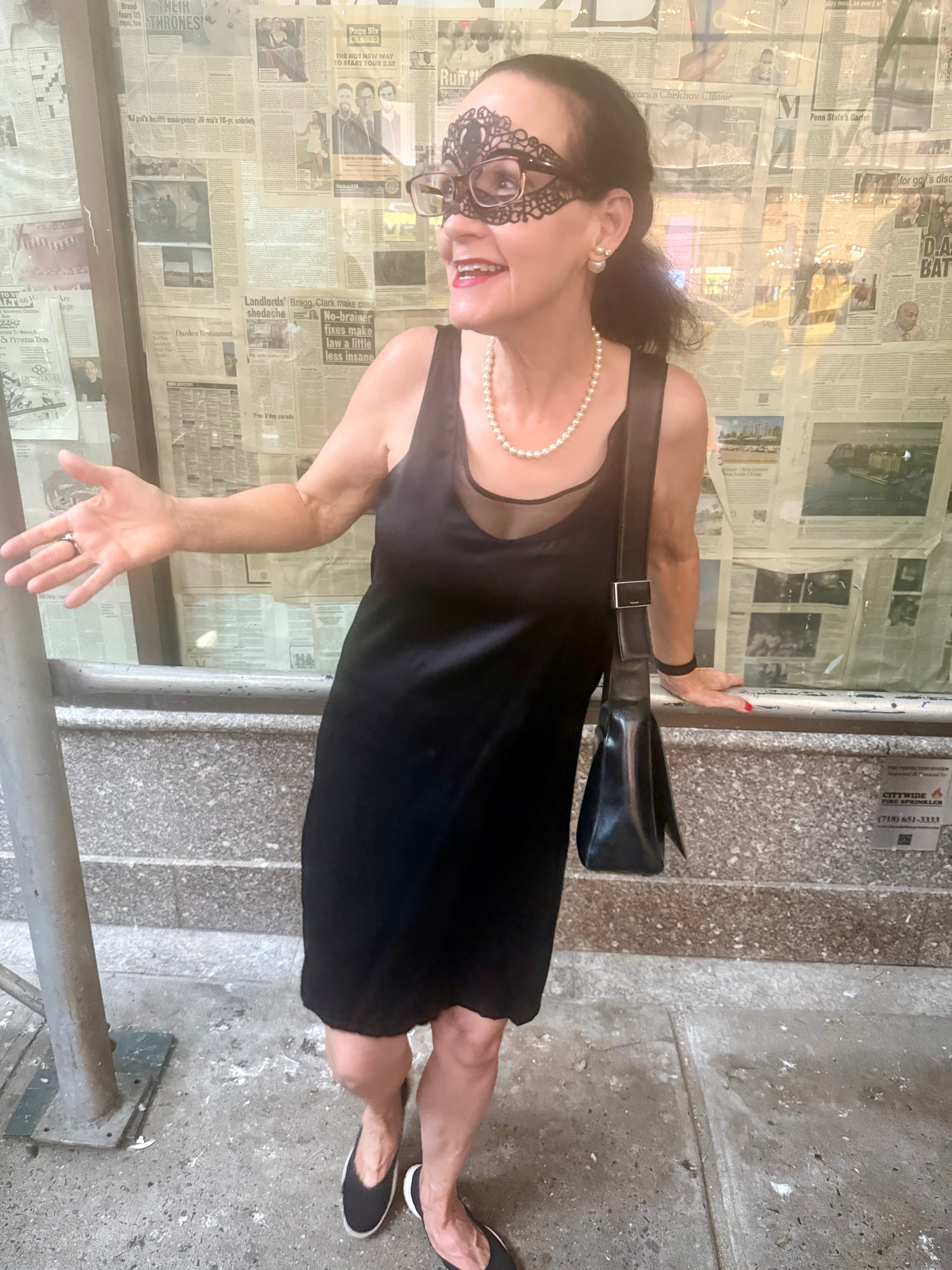
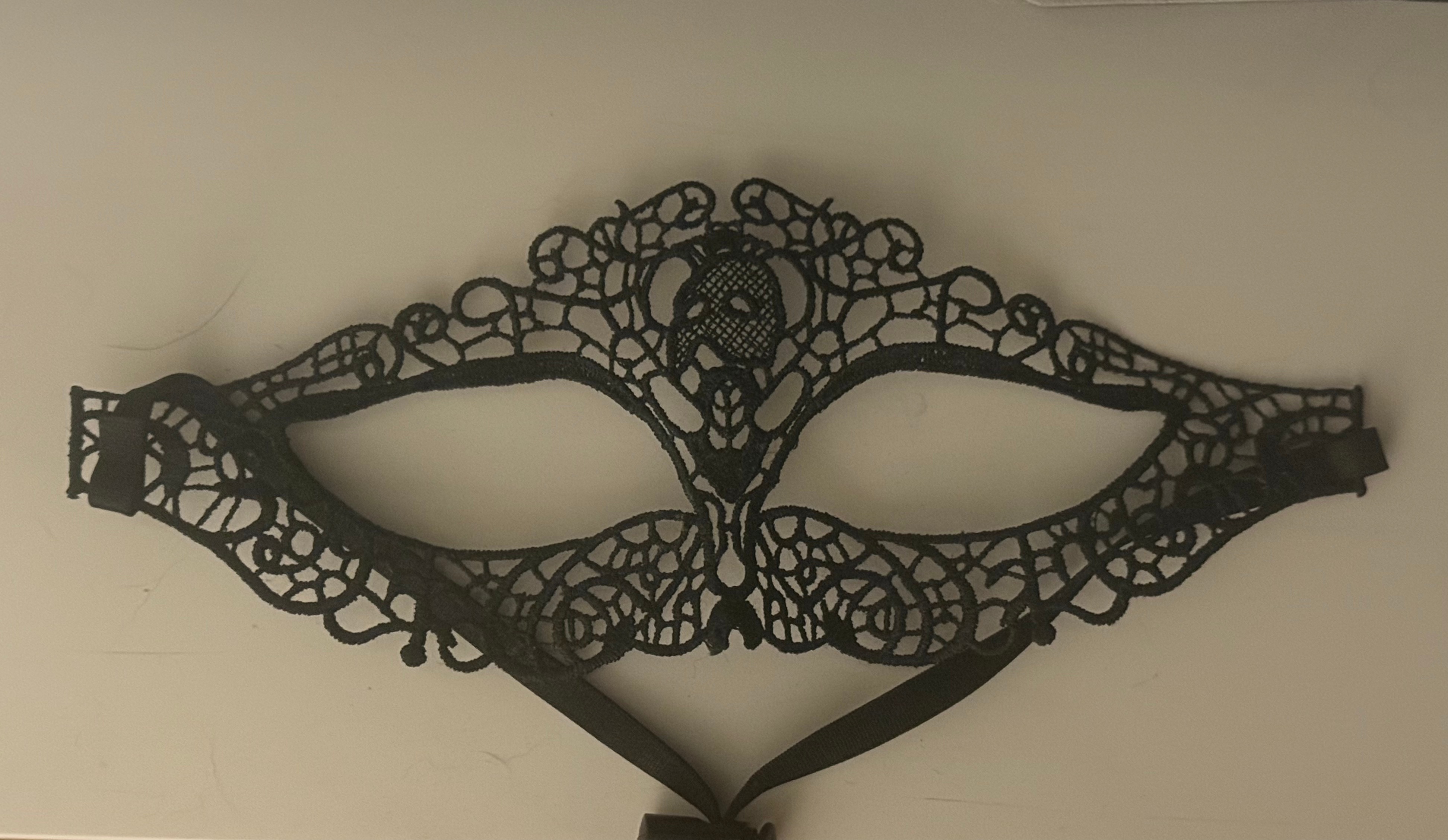
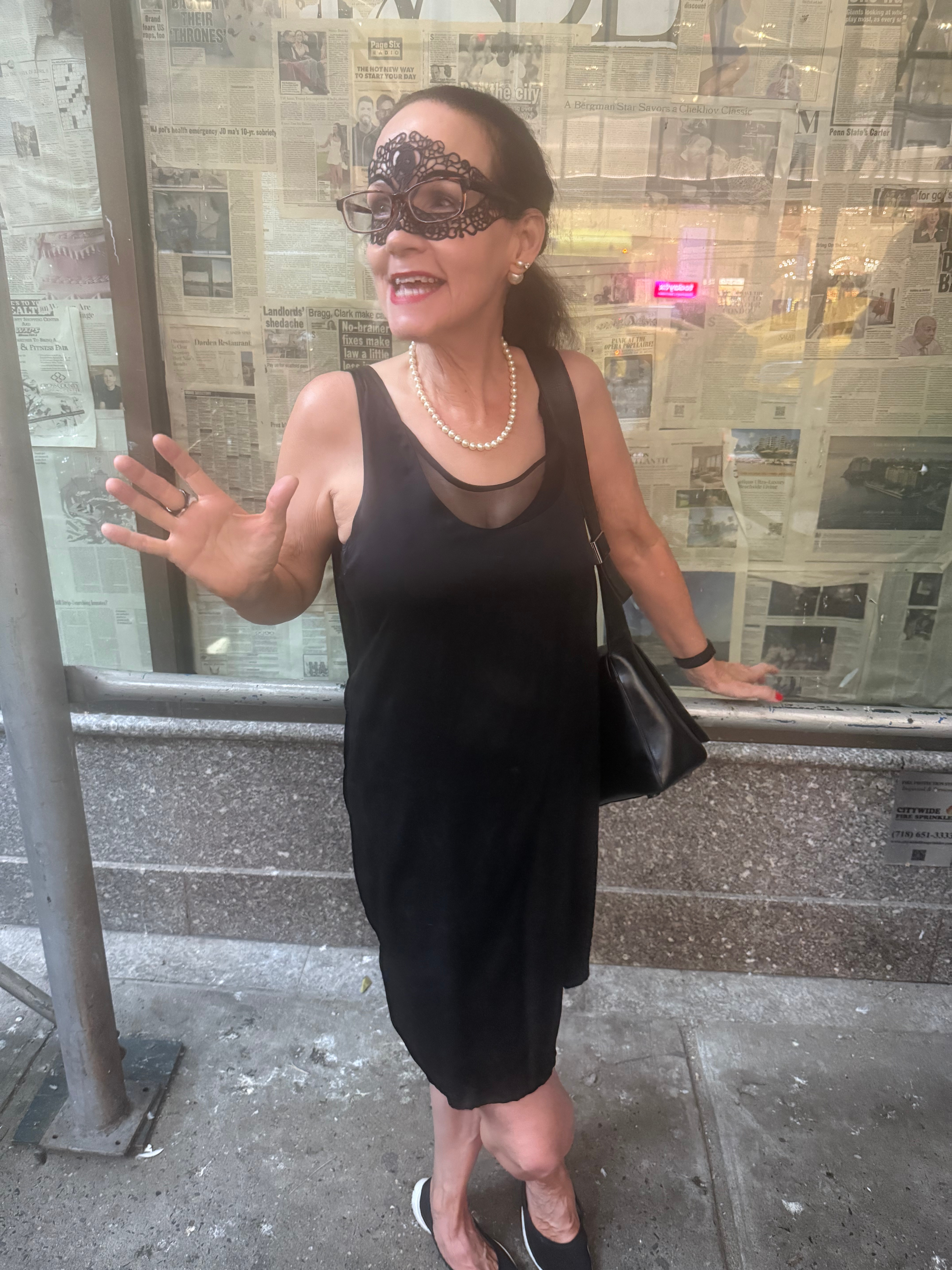
The outside of the building has the windows covered in newspaper, and if you look closer you will see some articles about the original Broadway production of Phantom, and others reporting on the fictionalized goings on at the Opera Populaire that occur during the musical. You line up outside, and if you don’t already have a mask, you can be given one. I quite liked the provided one, it was comfortable, even under glasses, and has a little Phantom mask motif. At least for now, you are asked to dress up and wear black, white, or silver, and you will likely see some people extremely dressed up and wearing their own masks. It does make the entire experience a little more like an “event” to have most people dressed in cocktail (or even ballroom) attire, with the rest at least fairly nondescript in clothing. An important aspect, though, is footwear – stilettos and kitten heels are not allowed, and I recommend flats or even sneakers. This does lead to a certain feeling of disconnect, to be dressed up but wearing “sensible shoes” but the differing floor surfaces (including grates and escalators), sometimes in low light, really do require it. There are also times when you need to rush – more or less – from one room to the next, in a small crowd, and you really don’t need to be worrying about your footing at the same time.
Each time slot or pulse is let in at all at once, and there is no early or late entry, as another group will be experiencing the show just after you. Also, tickets are not resalable, in part because there are no tickets – you show ID that matches the name on the ticket purchase, and in addition you are sent a password the day before to the email used for purchase. While waiting outside, you might have a photographer come by (I did, but have heard of other dates that did not), and if so, you will receive an email later that is password protected by the same password you used for entry. You can download any photo they take at no charge (see mine below).
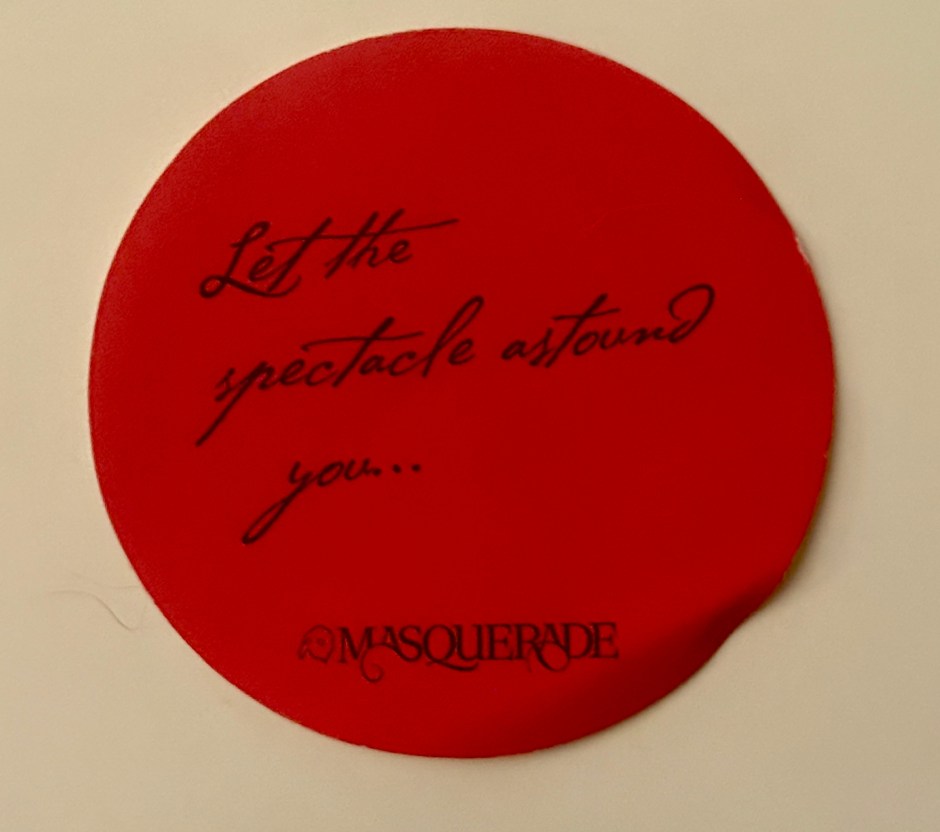
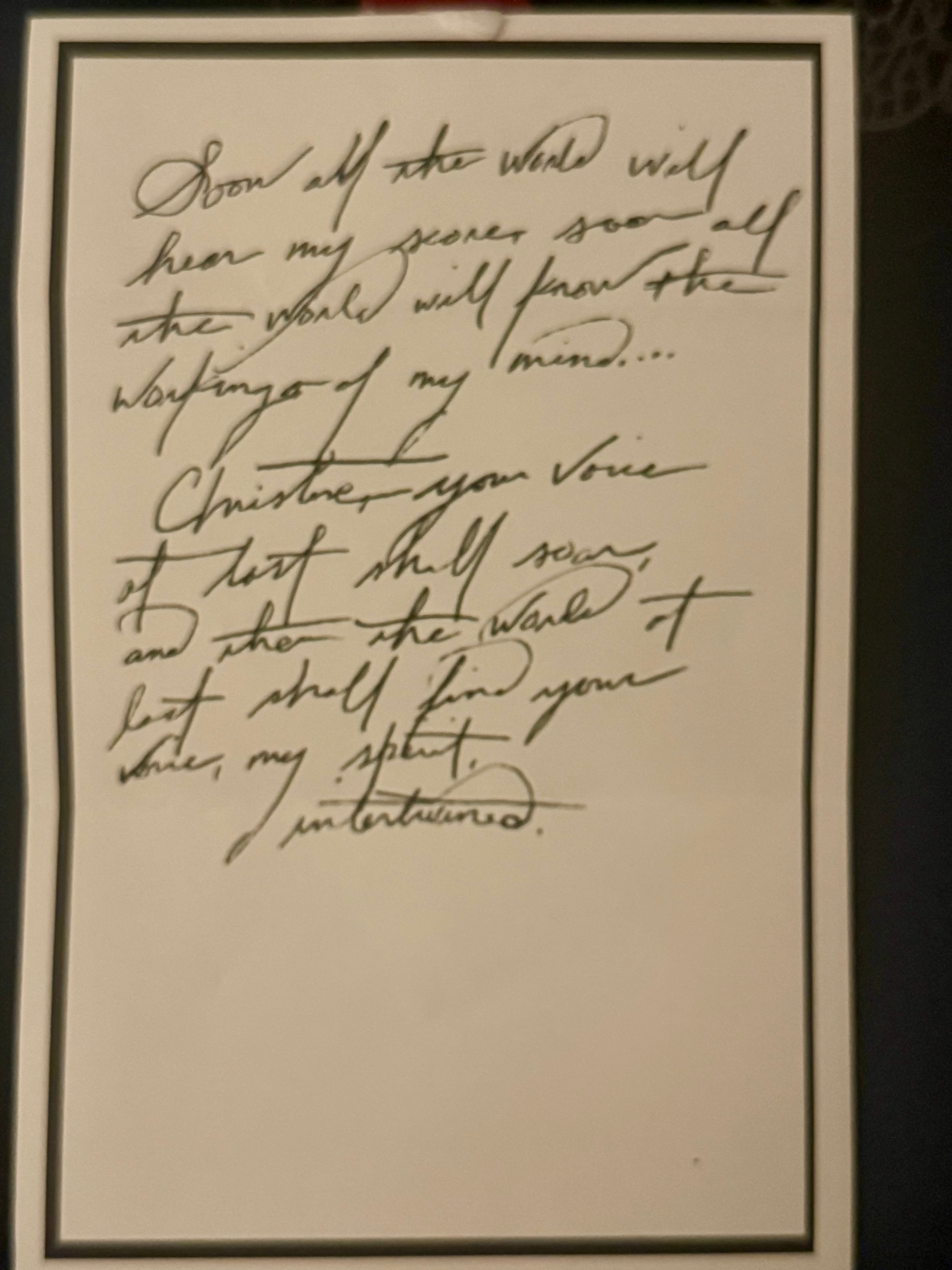
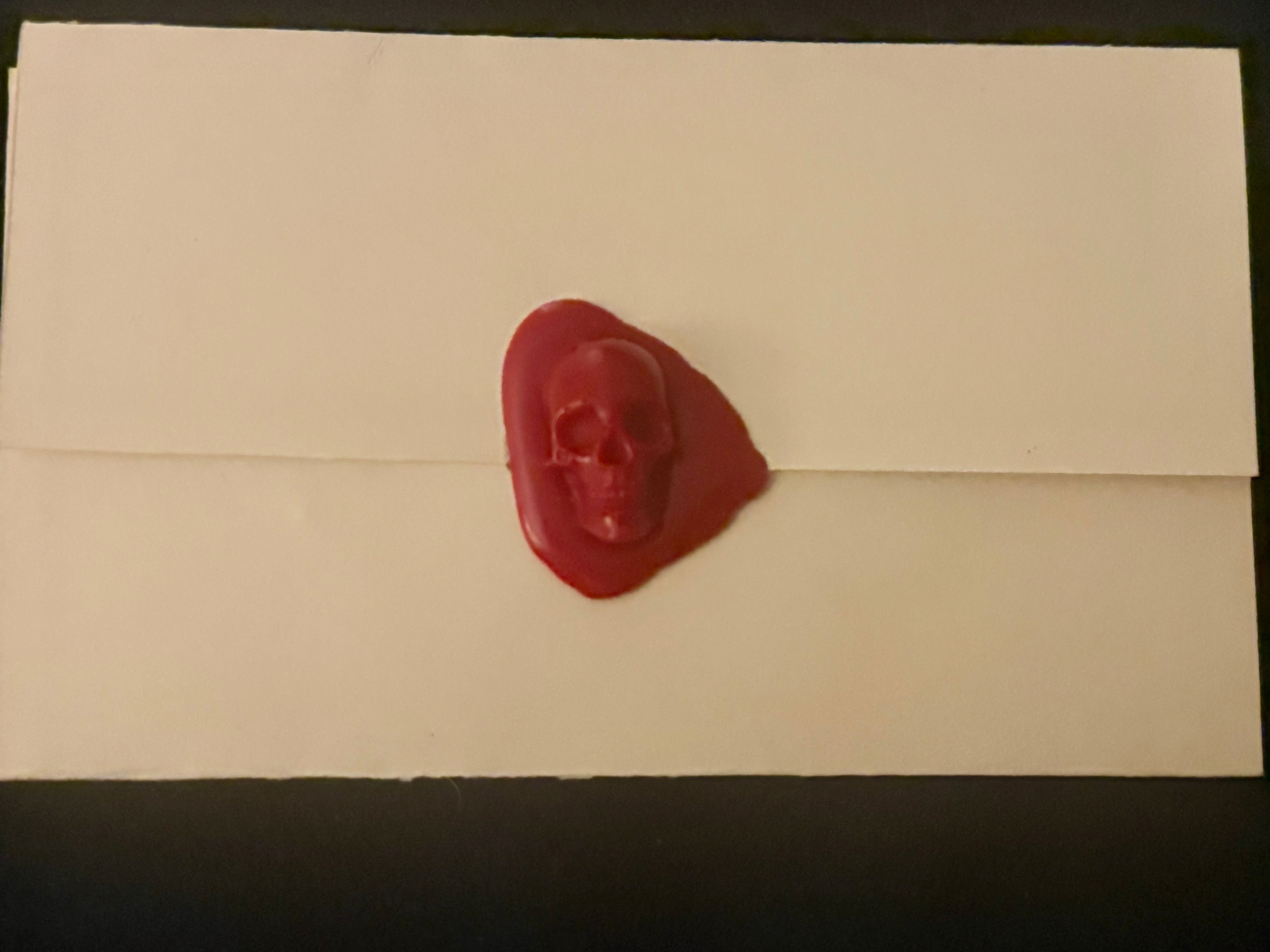
I don’t want to give too many details about the actual experience of being inside Masquerade, and no photos are allowed inside (all bags/coats need to be checked, which is at no charge, and a sticker is put over your phone camera if you have that on you). But I will say that it is the actual Andrew Lloyd Webber music, sung live with a prerecorded instrumental track. The musical has been cut a little, and a few things/songs from the Phantom movie musical added. The order of the story and some of the backstory are different from the original Broadway musical production. Sets and costumes are lavish, and it was thrilling for me to be in the middle of some of these iconic scenes. You are led from space to space, and no loitering or self-exploration is allowed. In terms of interactions, you might have a character address you, ask you to do something, dance with you, or become a supporting character (at one point Carlotta addressed me as Michaela, asked where I had been, and reminded me that I needed to follow her around with throat spray so that I could moisturize her vocal cords now and again – which I did for the rest of that scene). You might even be handed one of the Opera Ghost’s letters after someone had read it – Christine gave hers to me and the seal was thick red wax in the shape of a skull.
More practical issues: 1) You are less likely to be split up from anyone you have come with than in traditional immersive theatre. There is one time when your pulse gets divided up into three groups who each see all three scenes, but just in a different order. But the “butlers” there to move the crowd along seemed sensitive to keeping people from the same party together. 2) In most rooms there are at least some seats, and the butlers will direct people into seats until they are full. If you are the first in one room with a seat, you may be last out of that room and not get a seat. So plan on standing and moving a lot within the two hours. 3) The show is ADA compliant, and you need to contact the show in advance if accommodations are needed. From what I hear, there will be a butler assigned to help you get from place to place, using elevators, and will ensure that you don’t miss anything. 4) There is champagne when you first enter the space (and pro tip – if you drink your glass in that first room, they will refill it in the next room where it is needed for a toast), and you may be offered shots of something (whiskey? brandy?) in a later room, but there are also non-alcoholic options in both instances. 5) If the weather permits, there will be some scenes outside on the roof of the building, but there are alternate places to hold these scenes if the weather is inclement.
As you leave, there is an elaborately decorated bar space, and you are welcome to stay as long as you would like. You can go back to get your bags if needed and then return to the bar. There is also merch – of course! I found it useful to recap the show and process it a bit in the bar. I thoroughly enjoyed myself, and for me it worked both as someone who enjoys innovative and immersive experiences, and someone for whom the original POTO has a lot of nostalgic positive emotional valence.
As I started to write this post, inspired by exploring Viola’s Room and Masquerade this summer, I started to think more and more about what “immersive theatre” really even means. Certainly the classic Punchdrunk idea of wandering through an immense, richly detailed space, and coming in contact with performers you can choose to follow or not, is exceptionally immersive. Making your way through Viola’s Room while being guided by Helena Bonham Carter’s voice is very different, yet does immerse you into its storytelling world. So does Masquerade, even though your movement through the space and story is tightly controlled. I suppose the areas that are less clear involve a production spilling out into public areas, or having performers break the fourth wall by speaking to attendees. In the end, the definition matters less to me than the experience – and whenever I experience a sense of flow by losing myself in a story, I am immersed in it. This can happen even while sitting in a traditional theatre seat watching something on a proscenium stage. However it presents, I enjoy experiencing complete immersion into a story, and I seek it out in whatever form it happens to take!
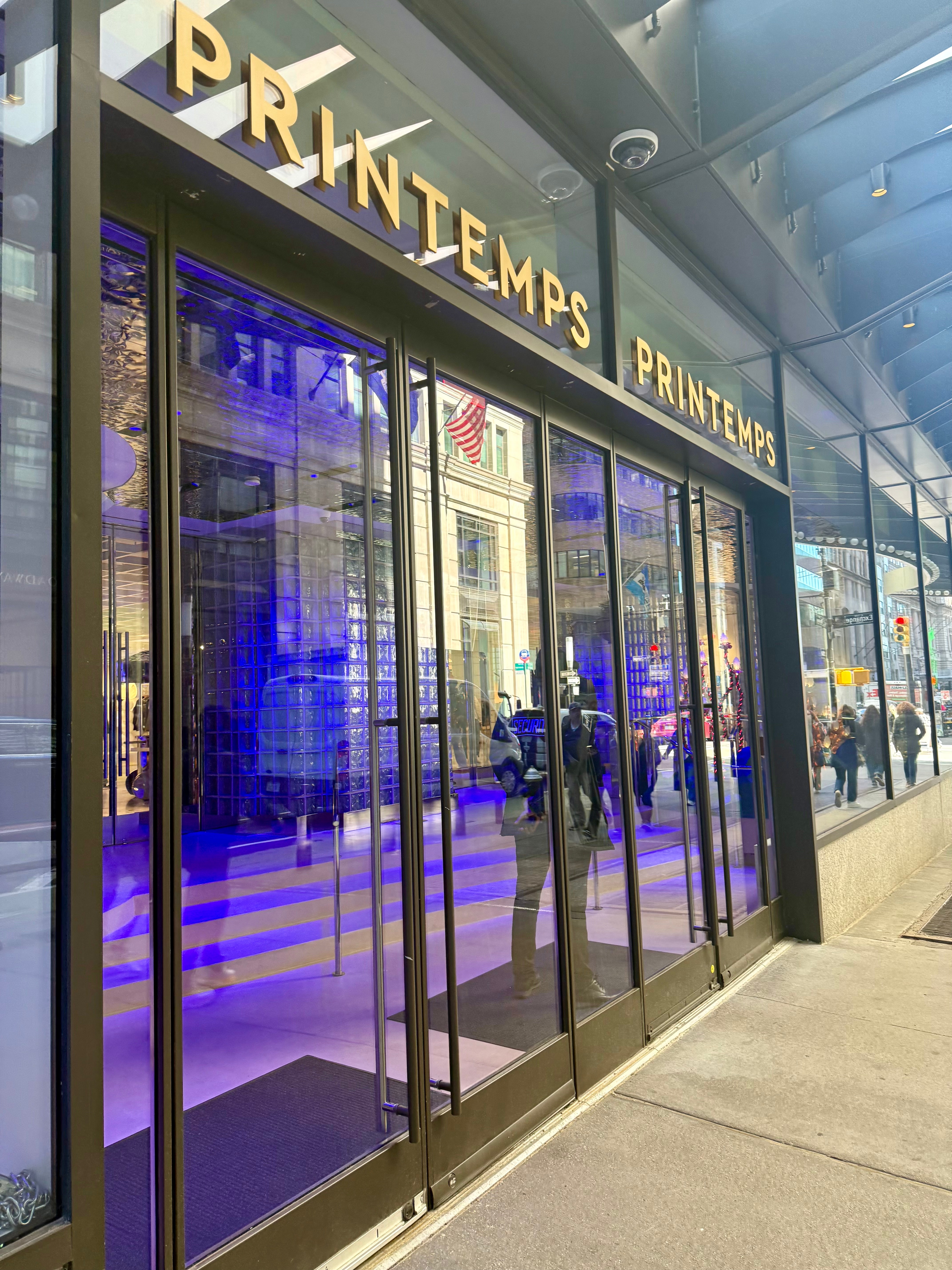
The Art Deco masterpiece One Wall Street, at Wall Street and Broadway in the Financial District, was designed by Ralph Walker and built between 1929 and 1931. First the headquarters of Irving Trust, and later Bank of New York and BNY Mellon, it was sold for residential development in 2015 and converted to condominiums between 2018 and 2023. Commercial space on the lower floors now hosts a Whole Foods, fitness center, and as of late March of 2025, an outpost of famed Parisian department store Printemps.
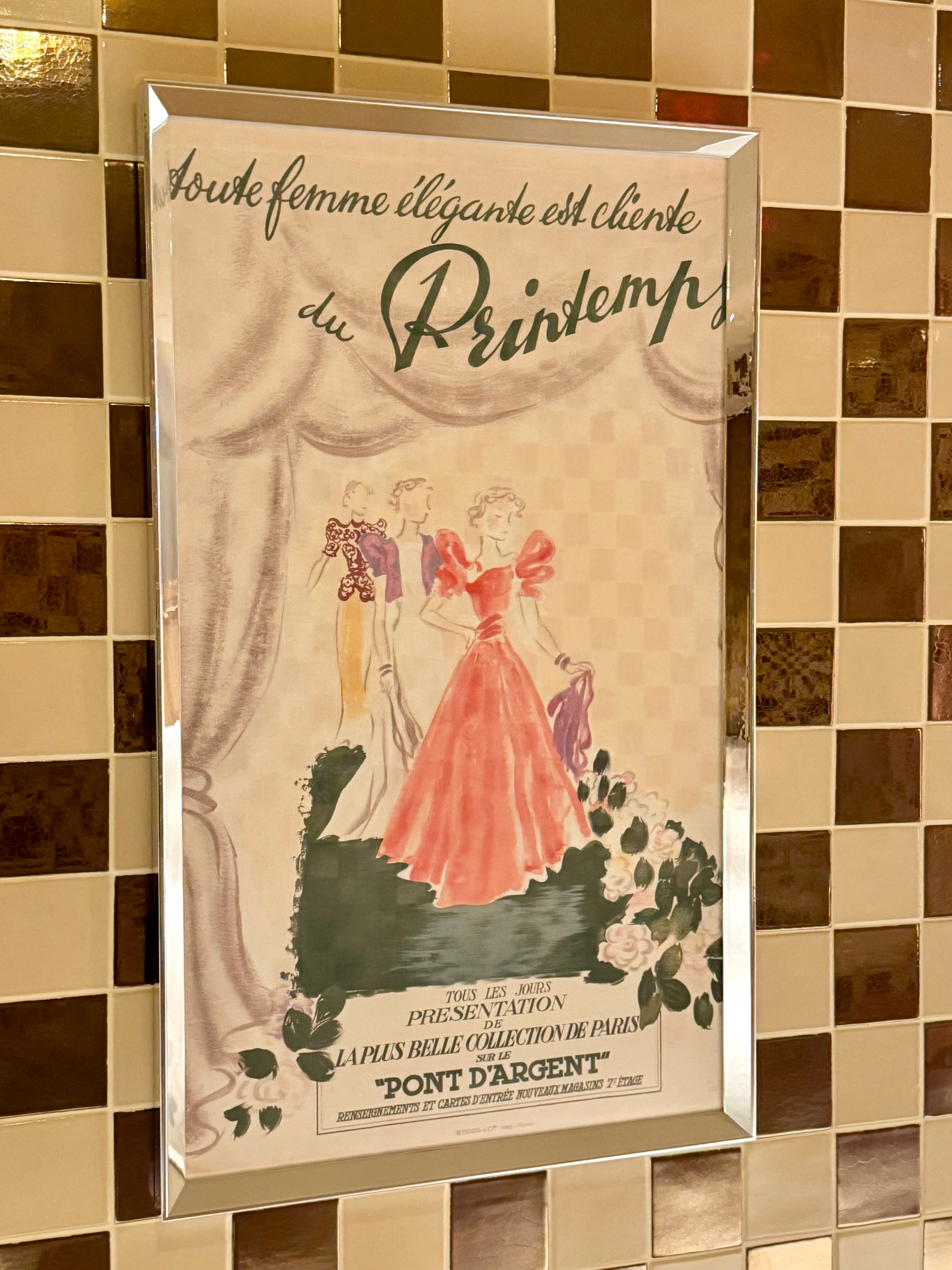
Printemps is a celebrated French department store chain (with 21 stores in France as well as one in Doha), and its flagship store on Boulevard Haussman in the 9th arrondissement in Paris is an Art Nouveau masterpiece. Sitting next to rival Galeries Lafayette, near the Palais Garnier, it was built in 1865, and was the first public building in Paris to have electrical power installed. For its only store in the United States, it would be important for any Printemps here to be in a building similarly important and beautiful, so One Wall Street was an ideal location.
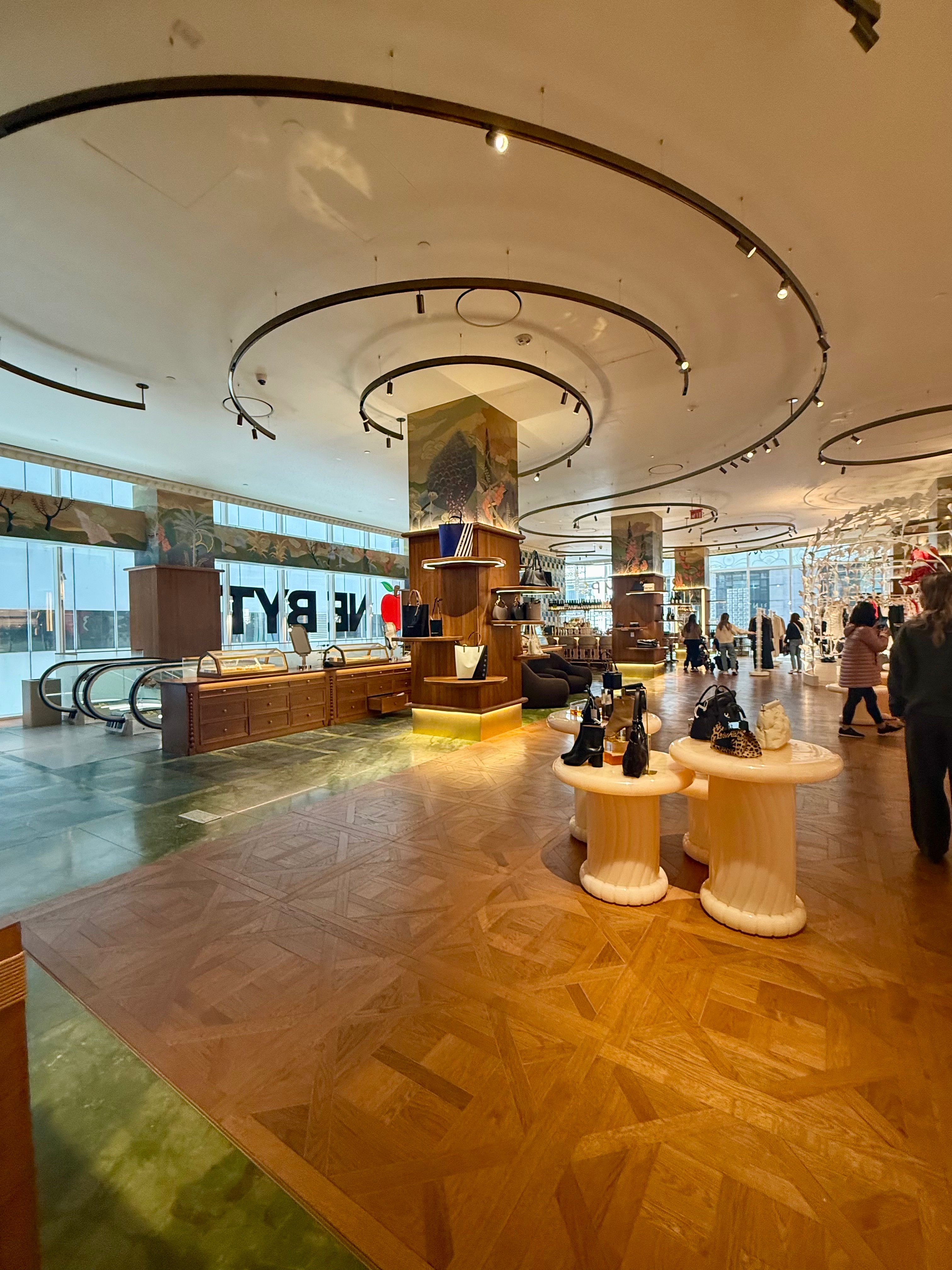
There are two entrances, but I highly recommend for your first visit to enter on Broadway rather than the side entrance on Wall Street (you will see why later). The NYC Printemps is much smaller than the Haussman flagship, but every design detail is exquisite.
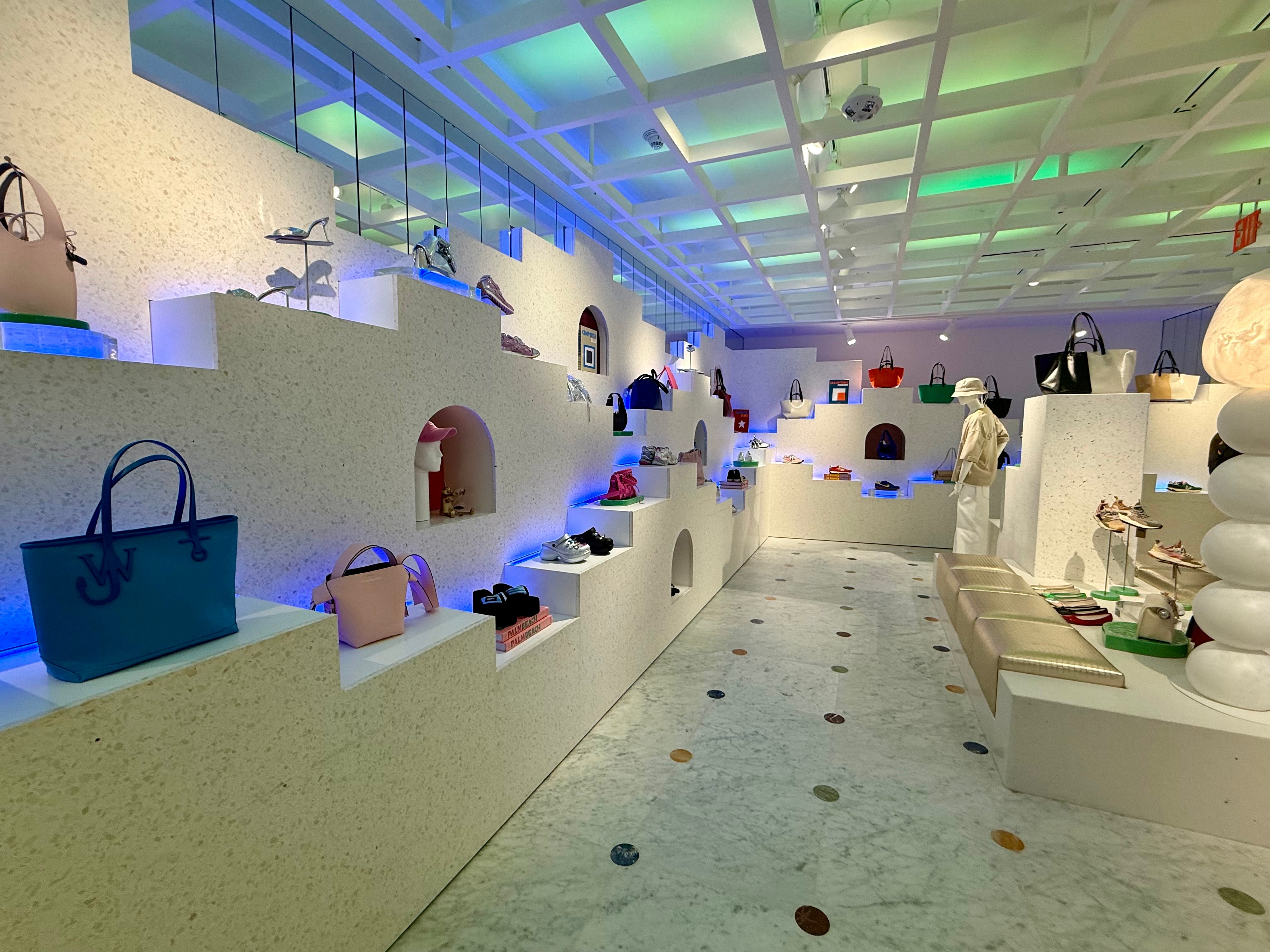
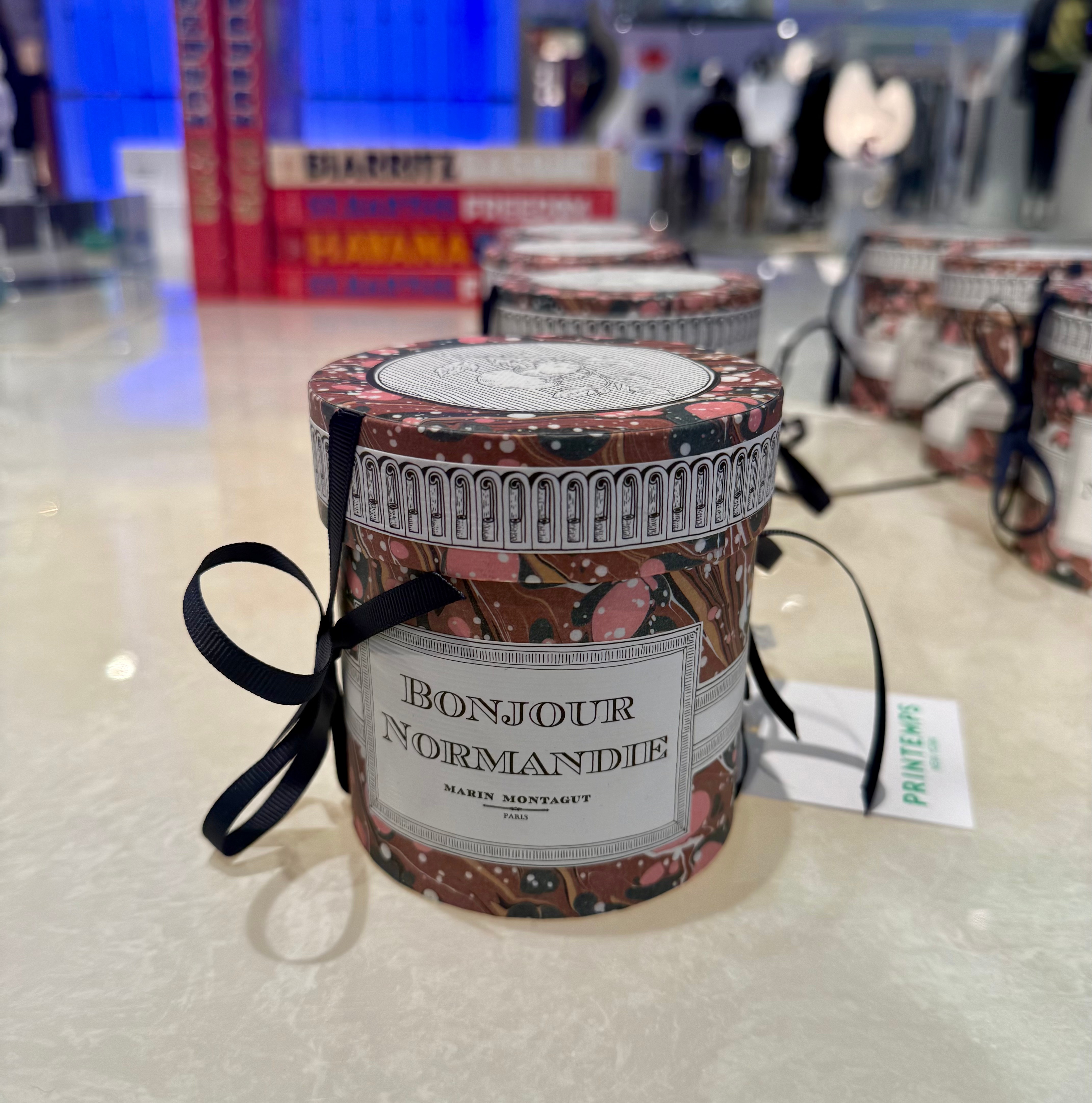
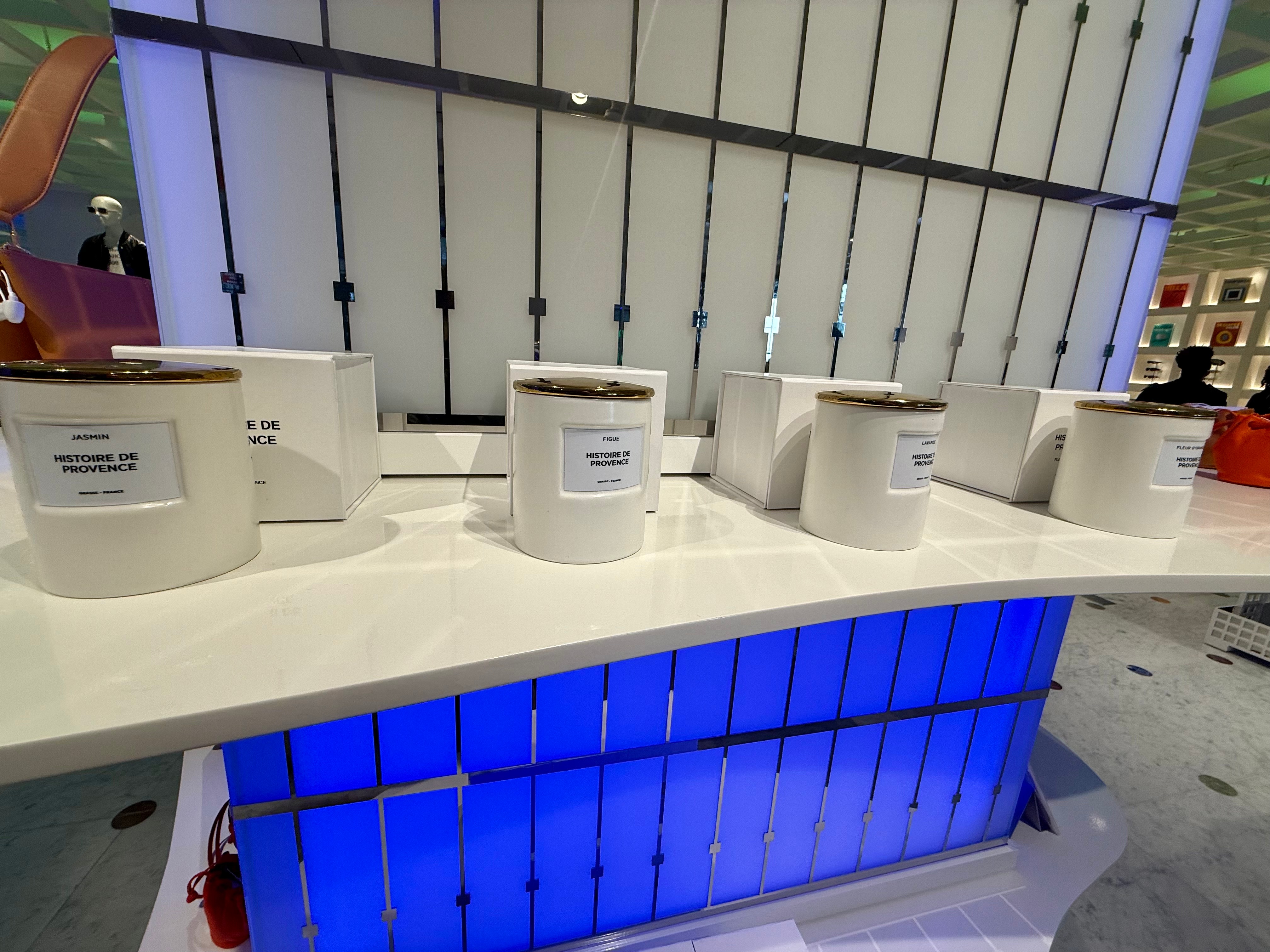
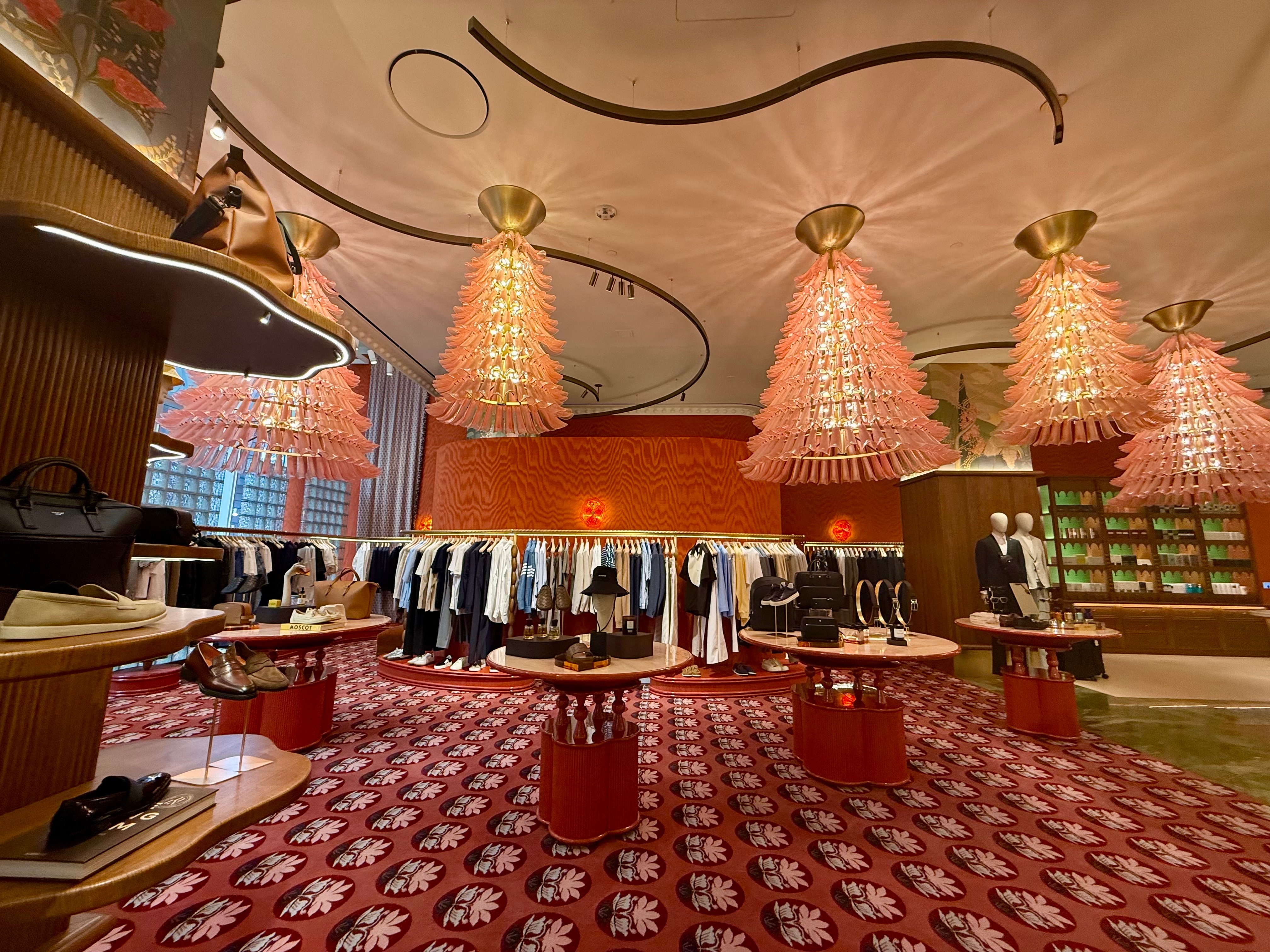
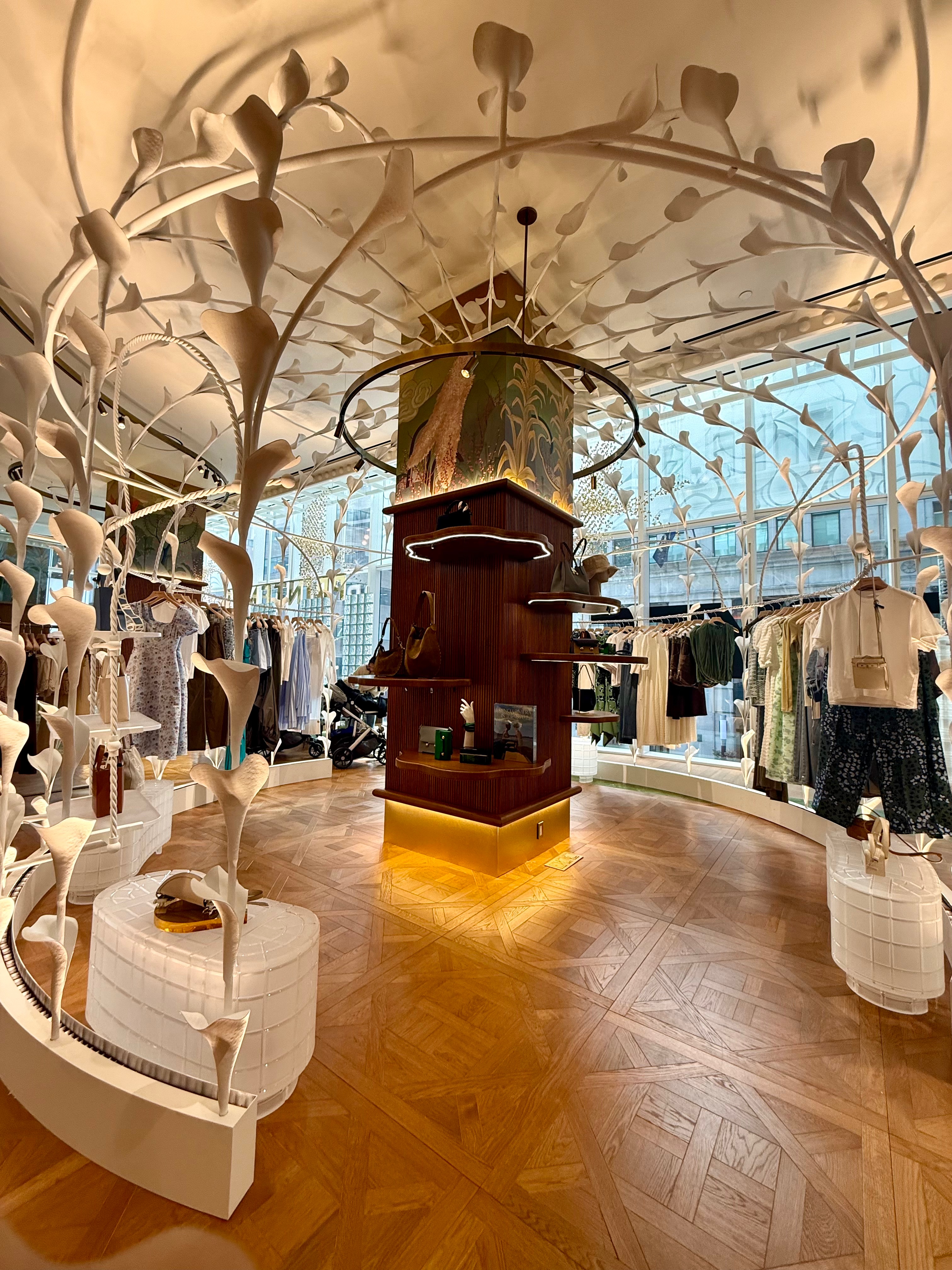
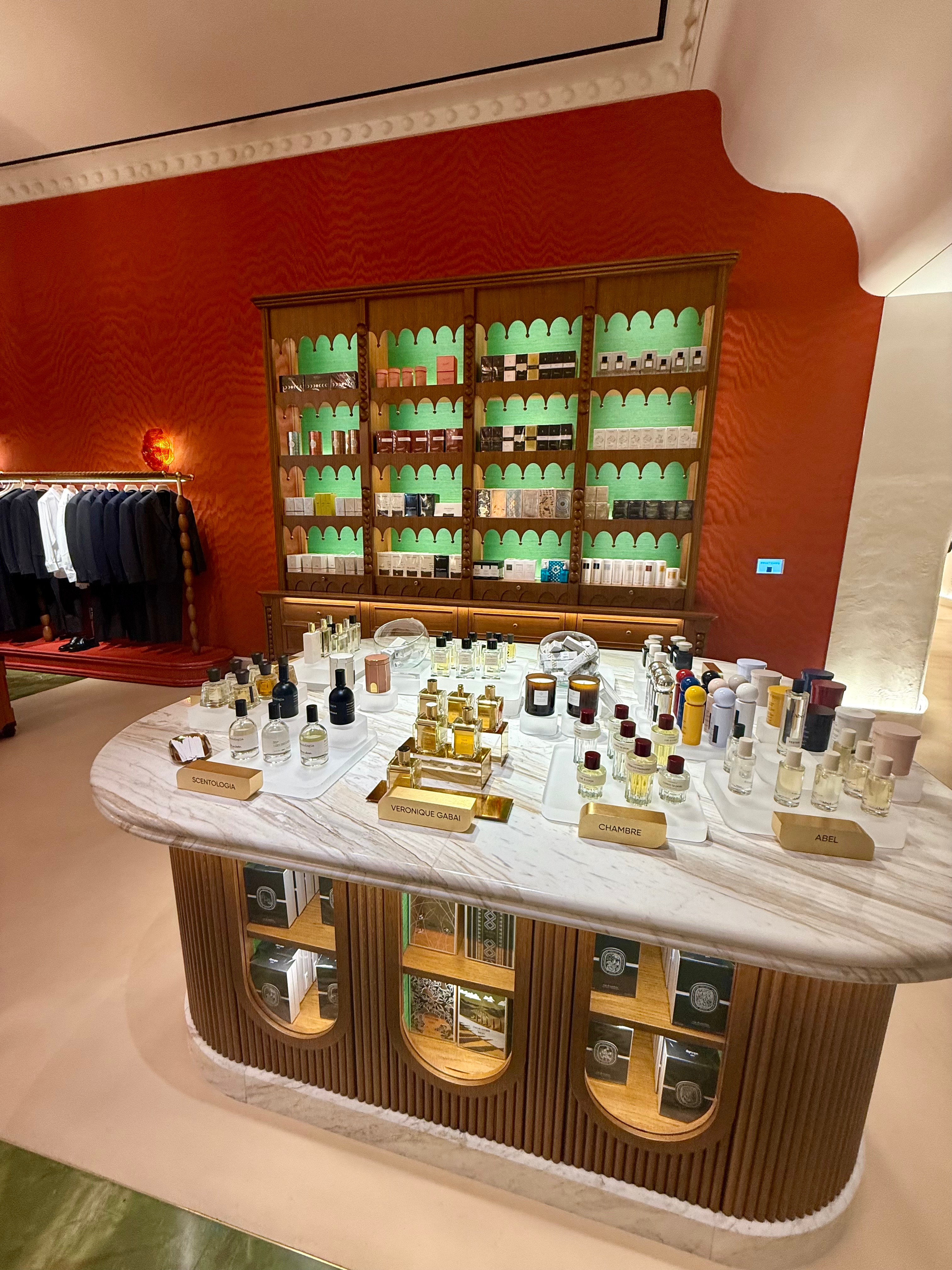
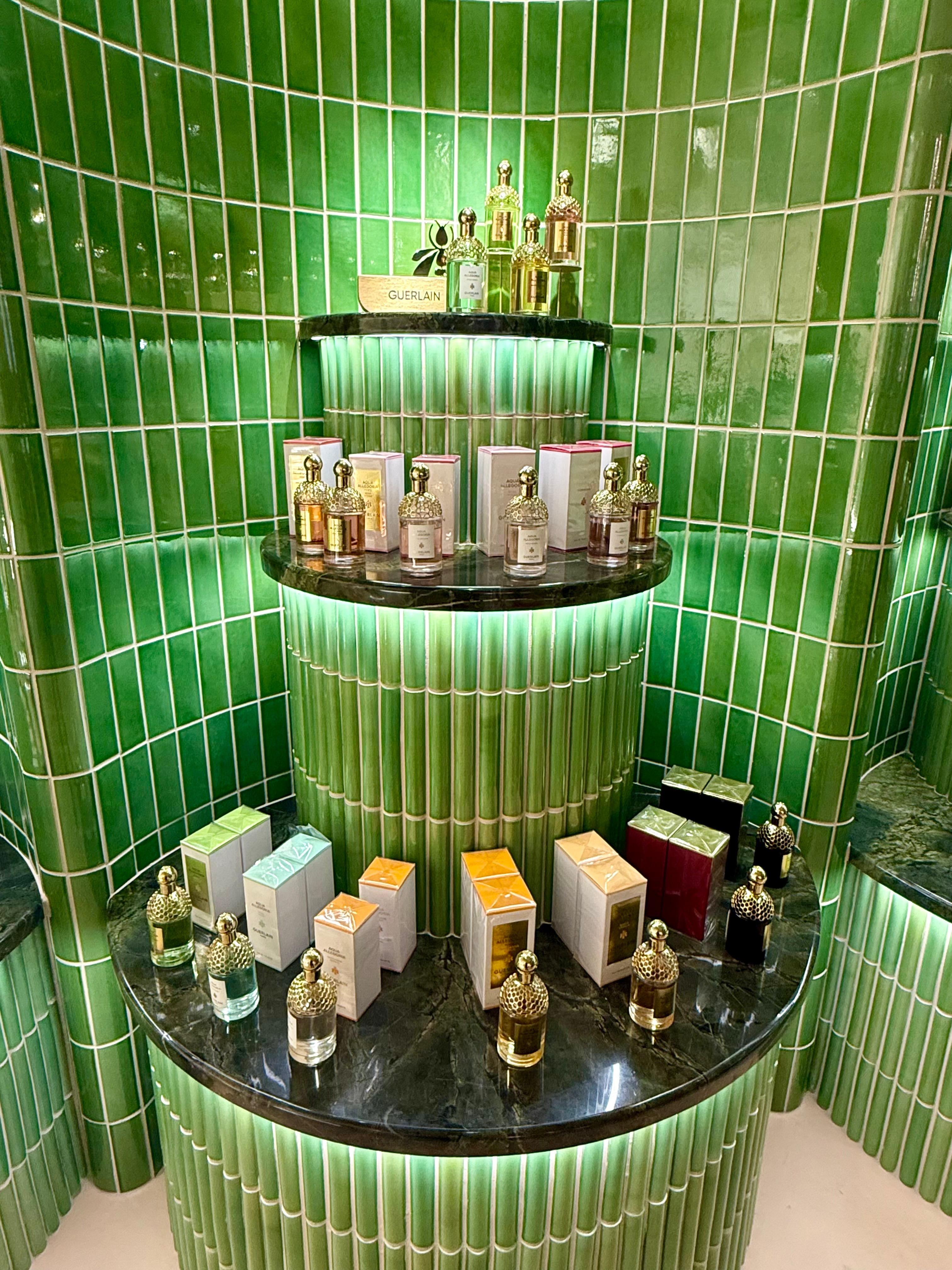
Every item you find as you stroll through the store is French, unique, and presented in a beautiful way.
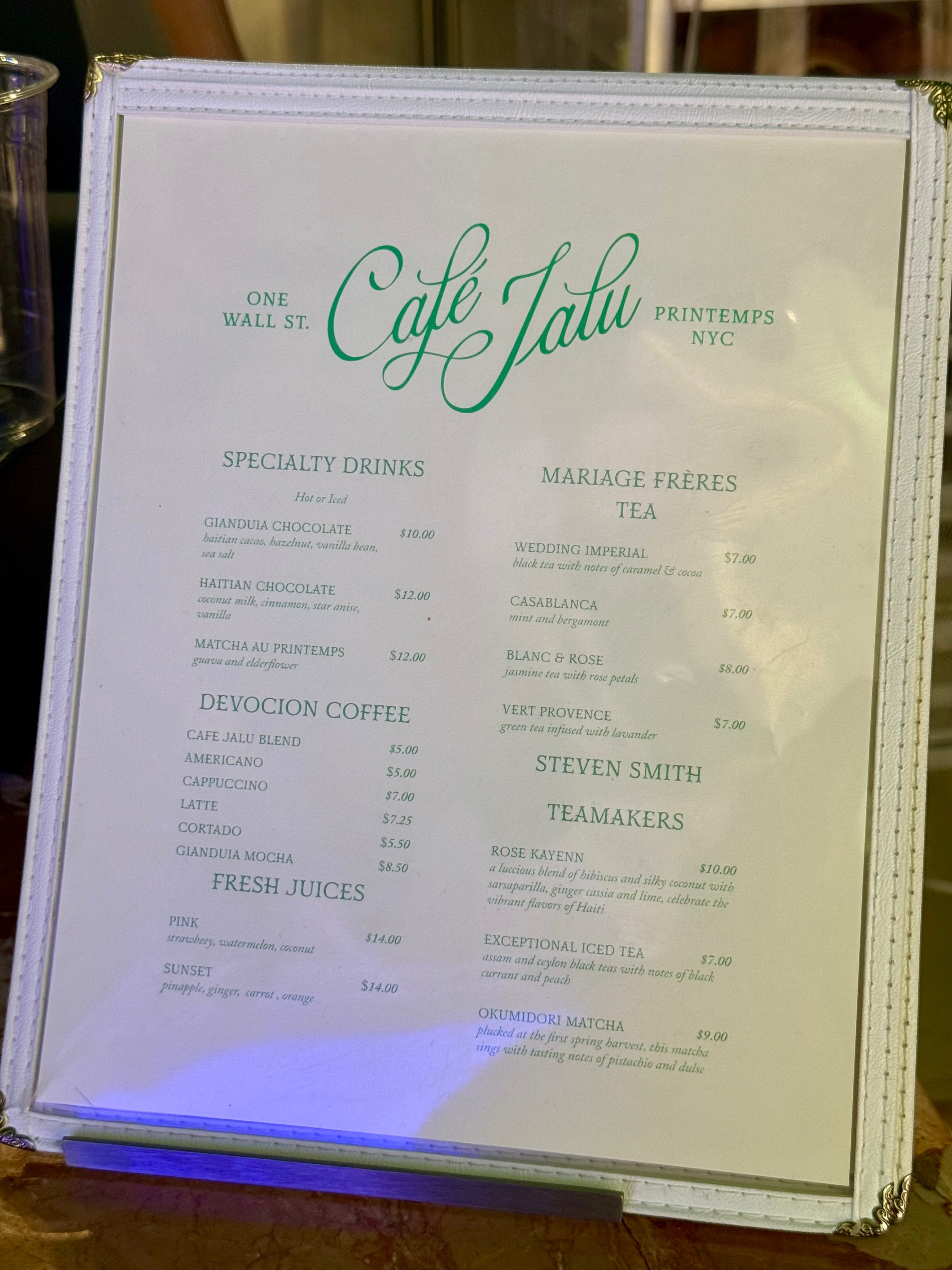
On the ground floor just to the left as you enter off Broadway, there is a lovely cafe with seating.
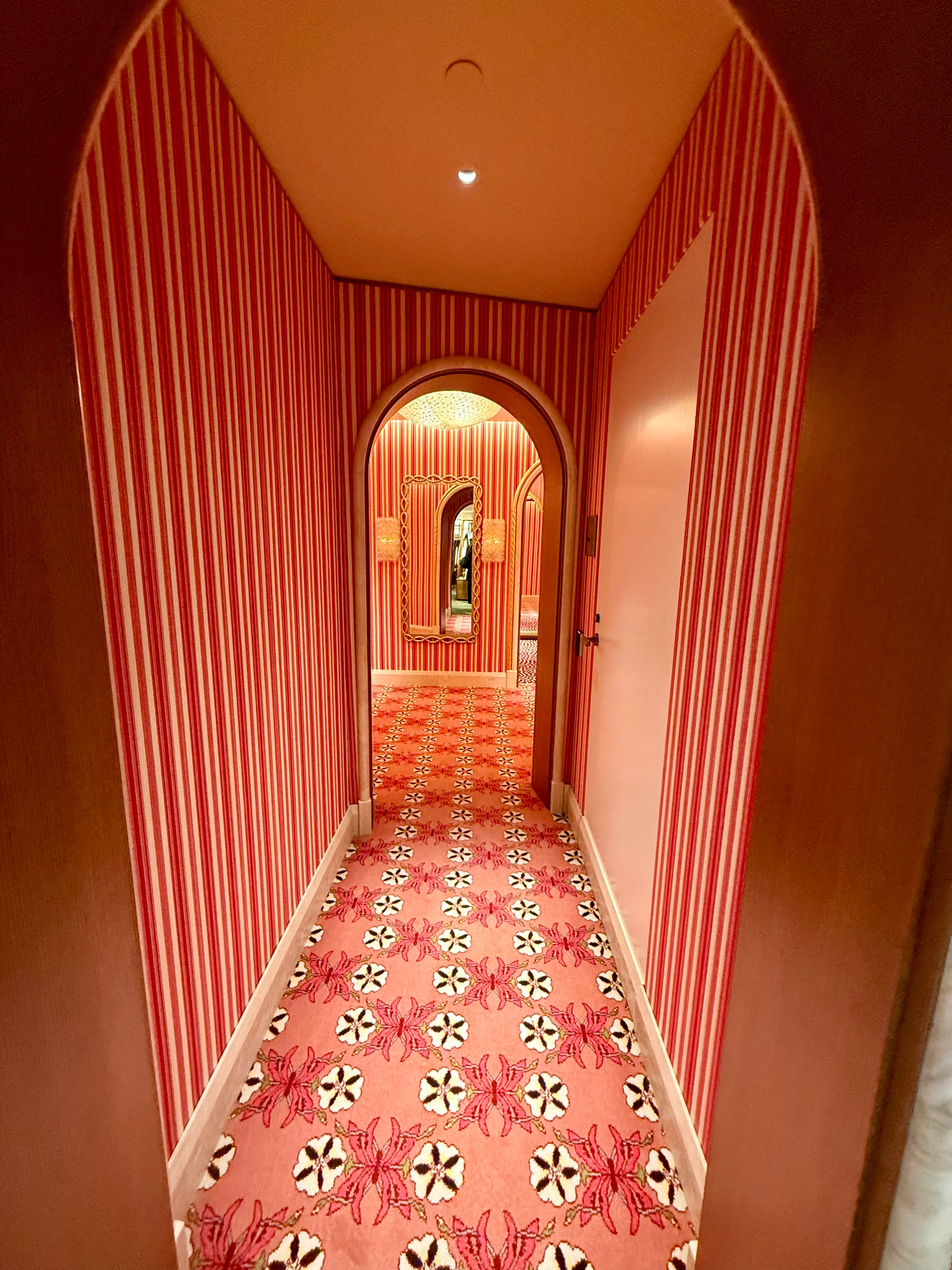
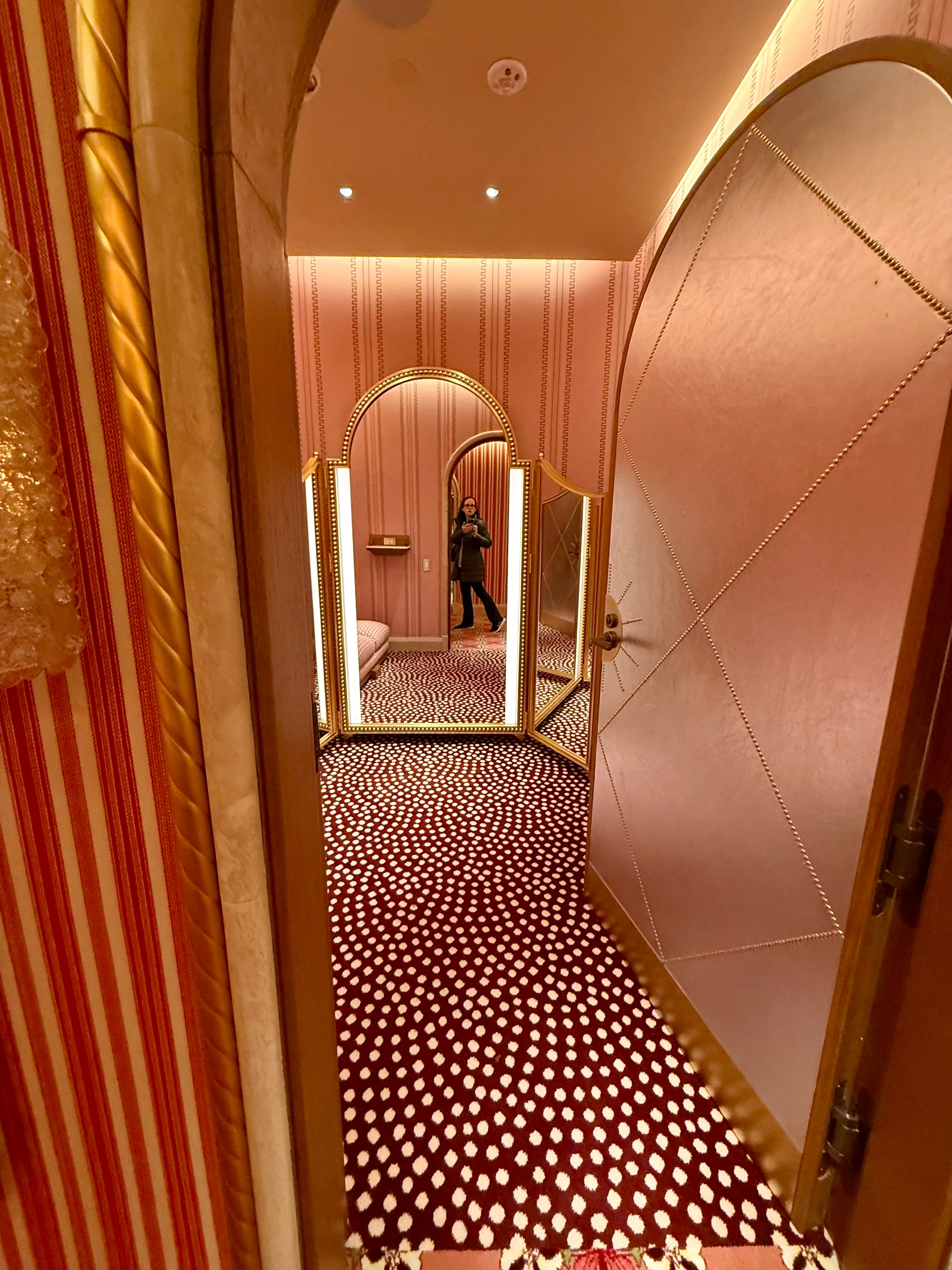
The dressing rooms are lushly and immersively decorated.
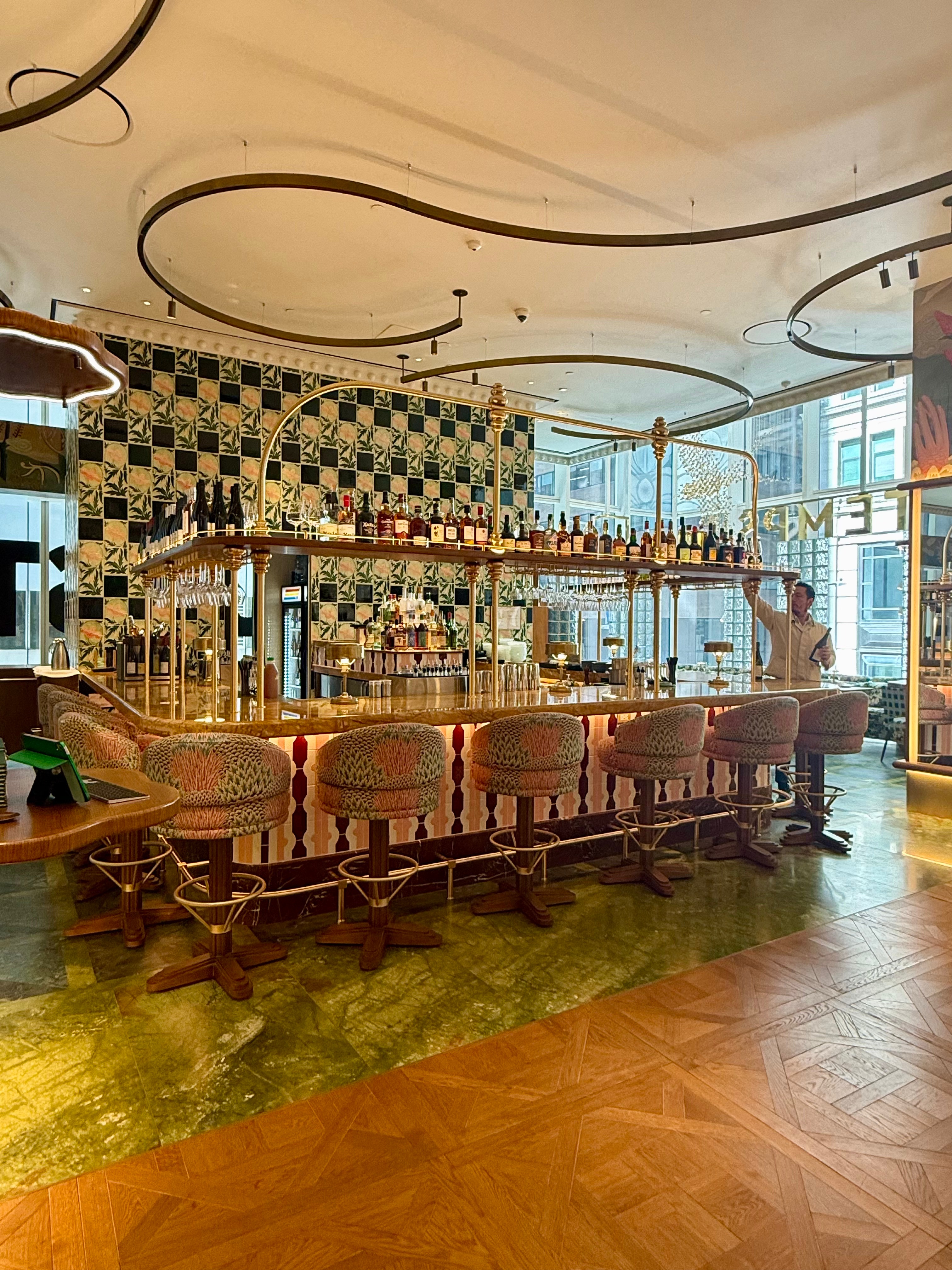
There are multiple bars within the space, this one is just on the second level above the entrance on Broadway.
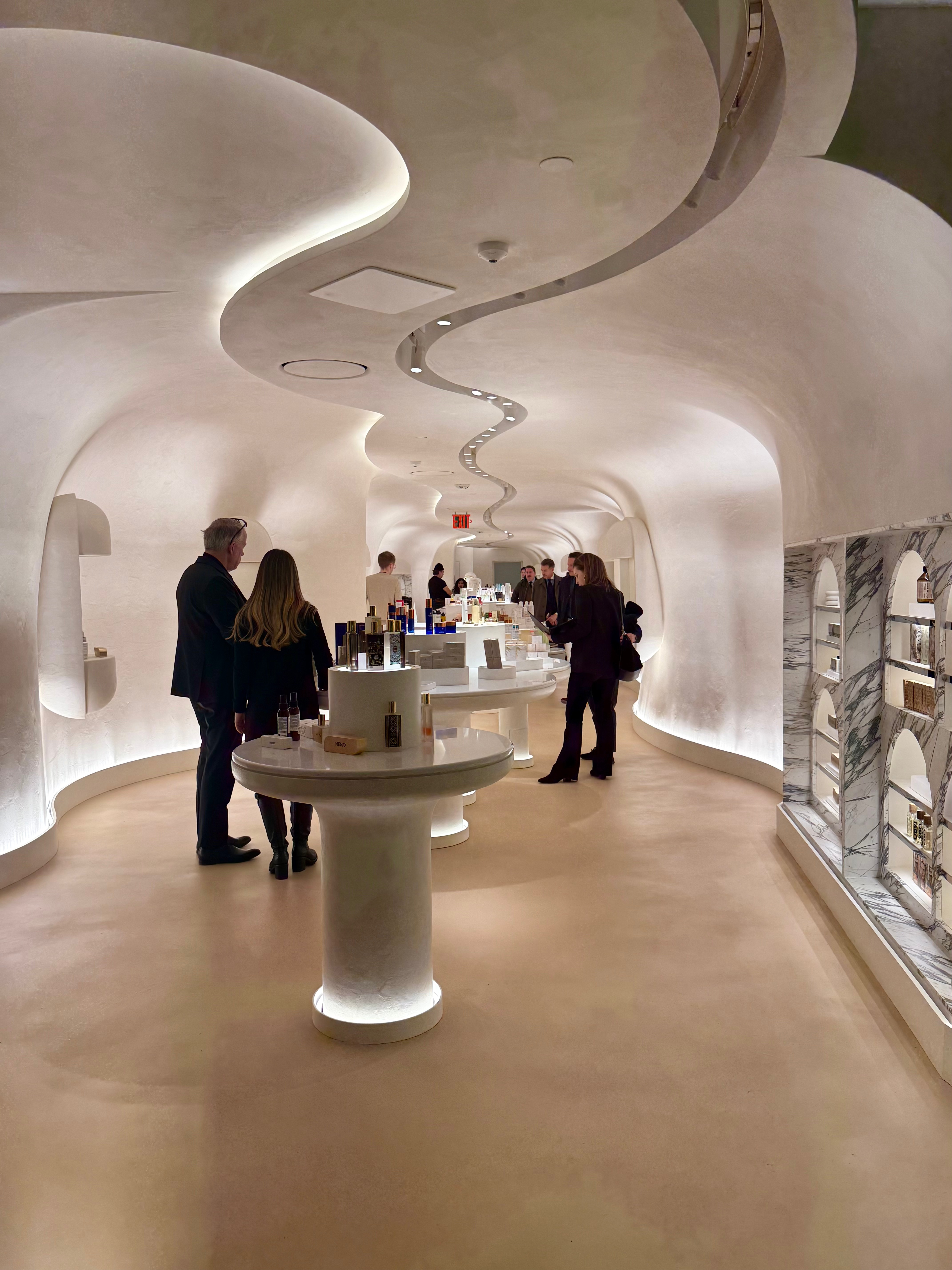
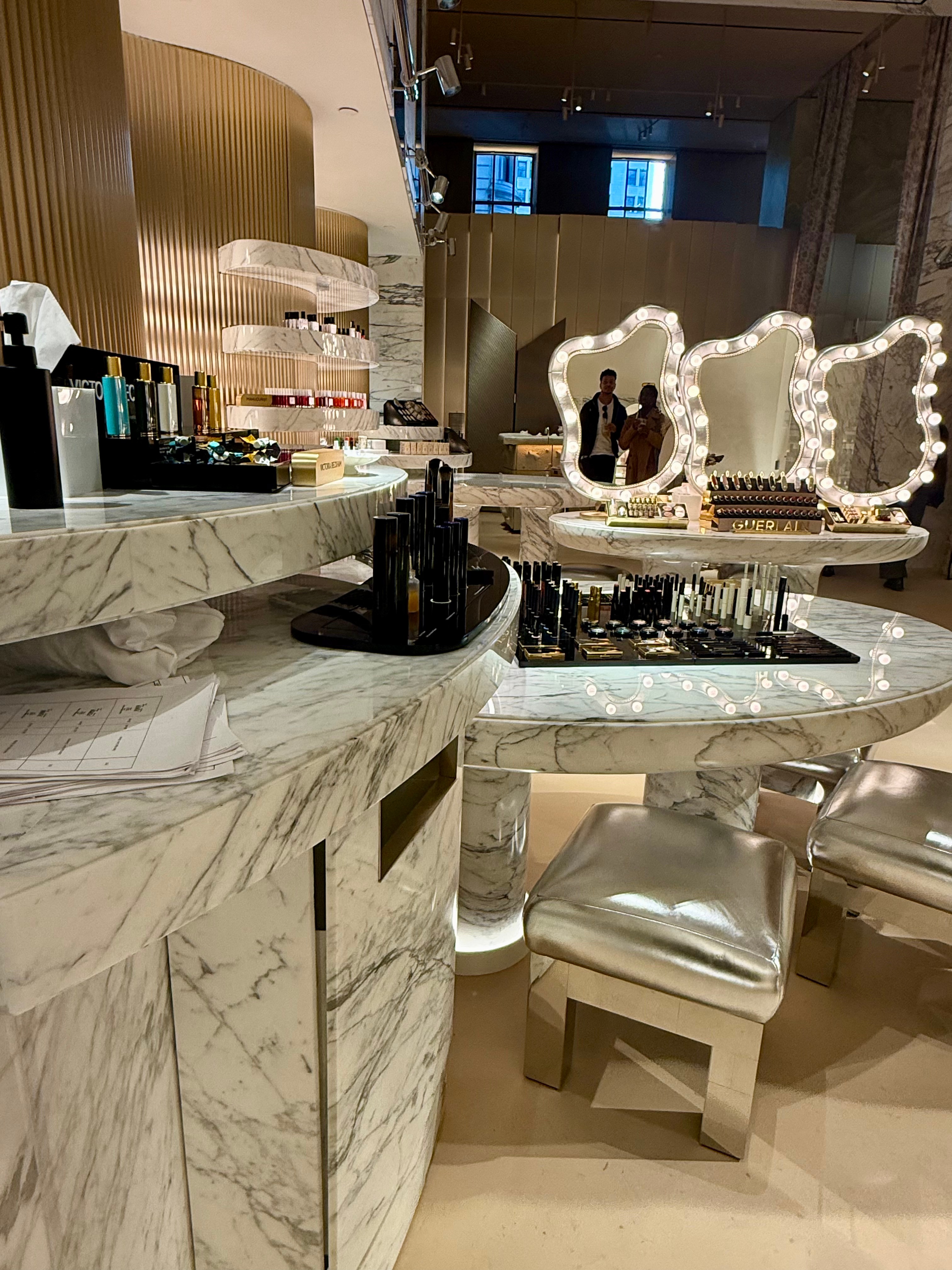
Continuing along on the second level, there is a passageway to get to the part of the store that faces Wall Street. It is set up as the beauty section, including some treatment areas, and a champagne bar.
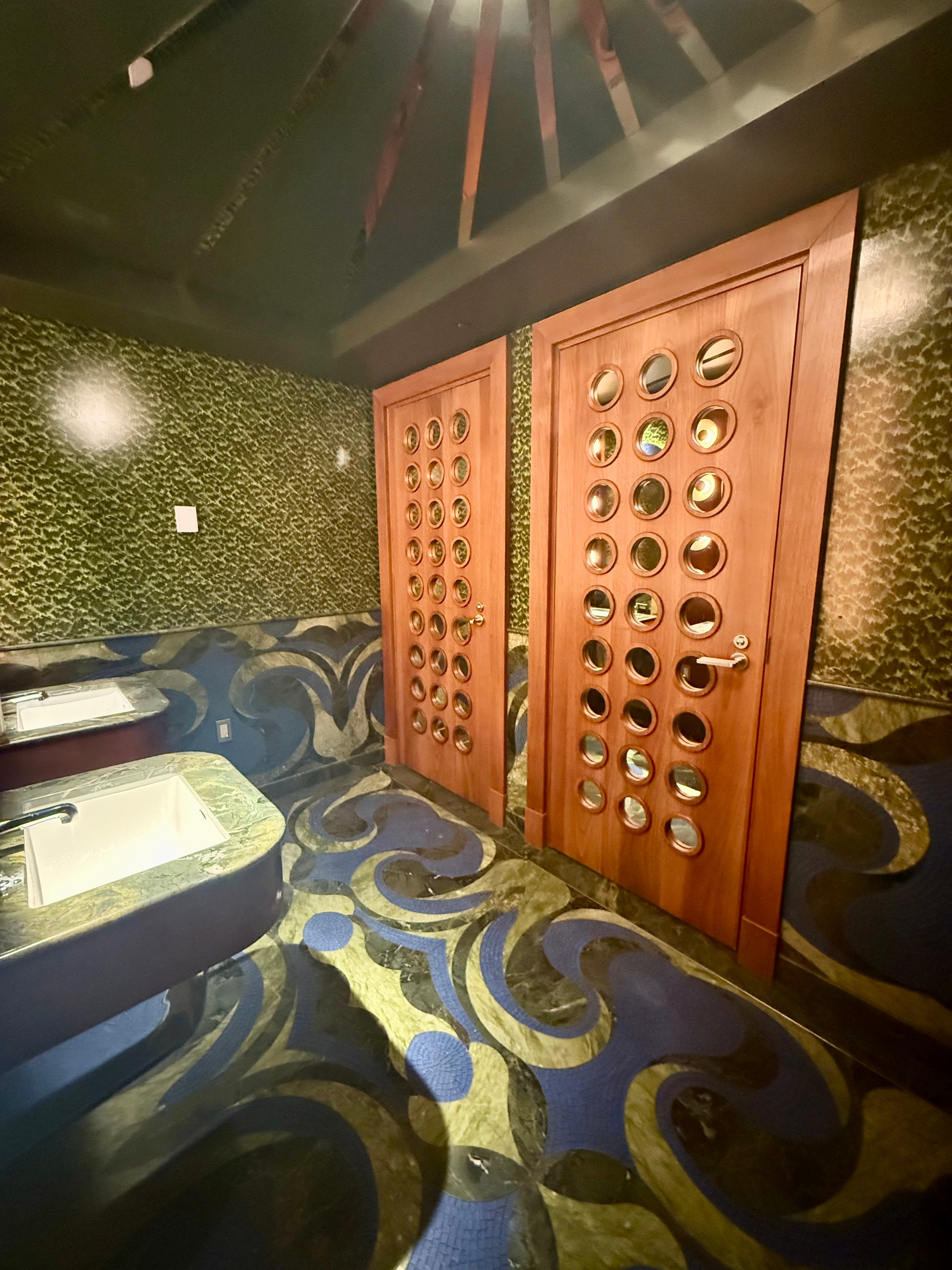
Near the beauty area, you can find the bathrooms. I have never been in such beautiful public bathrooms! Who needs a Maurizio Cattelan golden toilet when you can just visit Printemps?
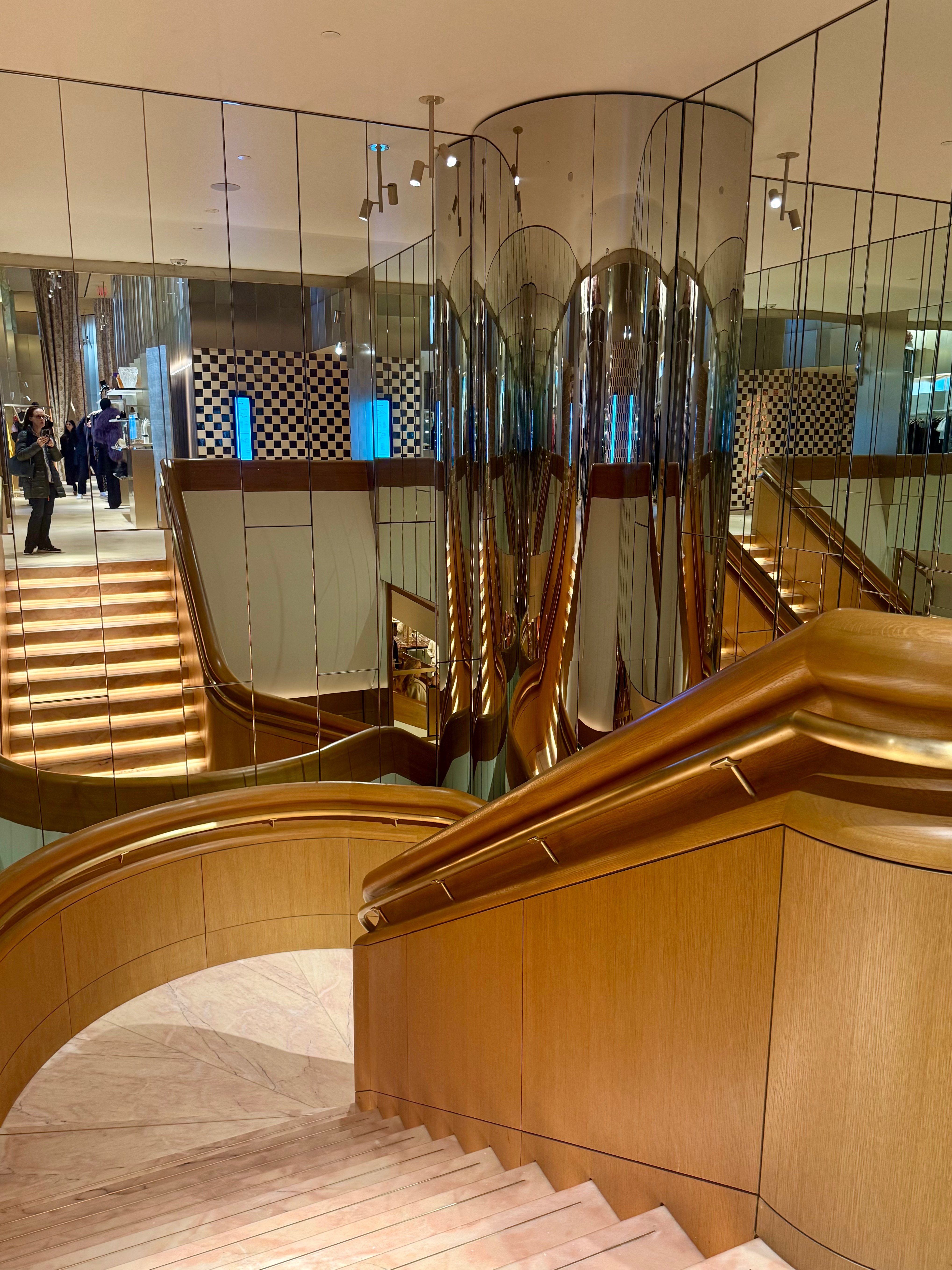
Past the bathrooms, you find a grand staircase to lead down to the most incredible area of Printemps NYC – the famed Red Room.
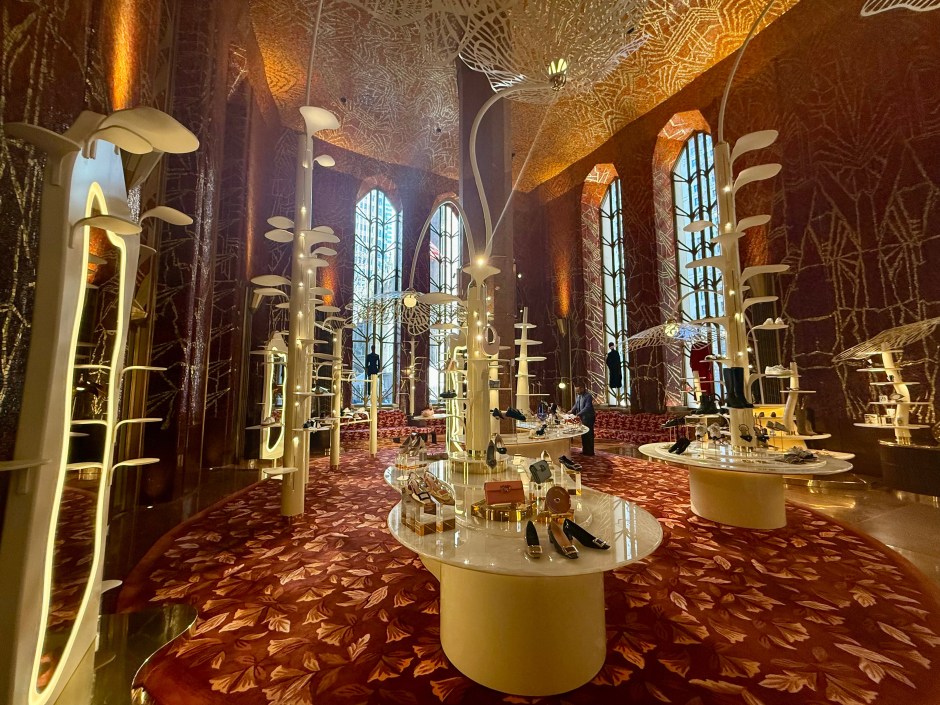
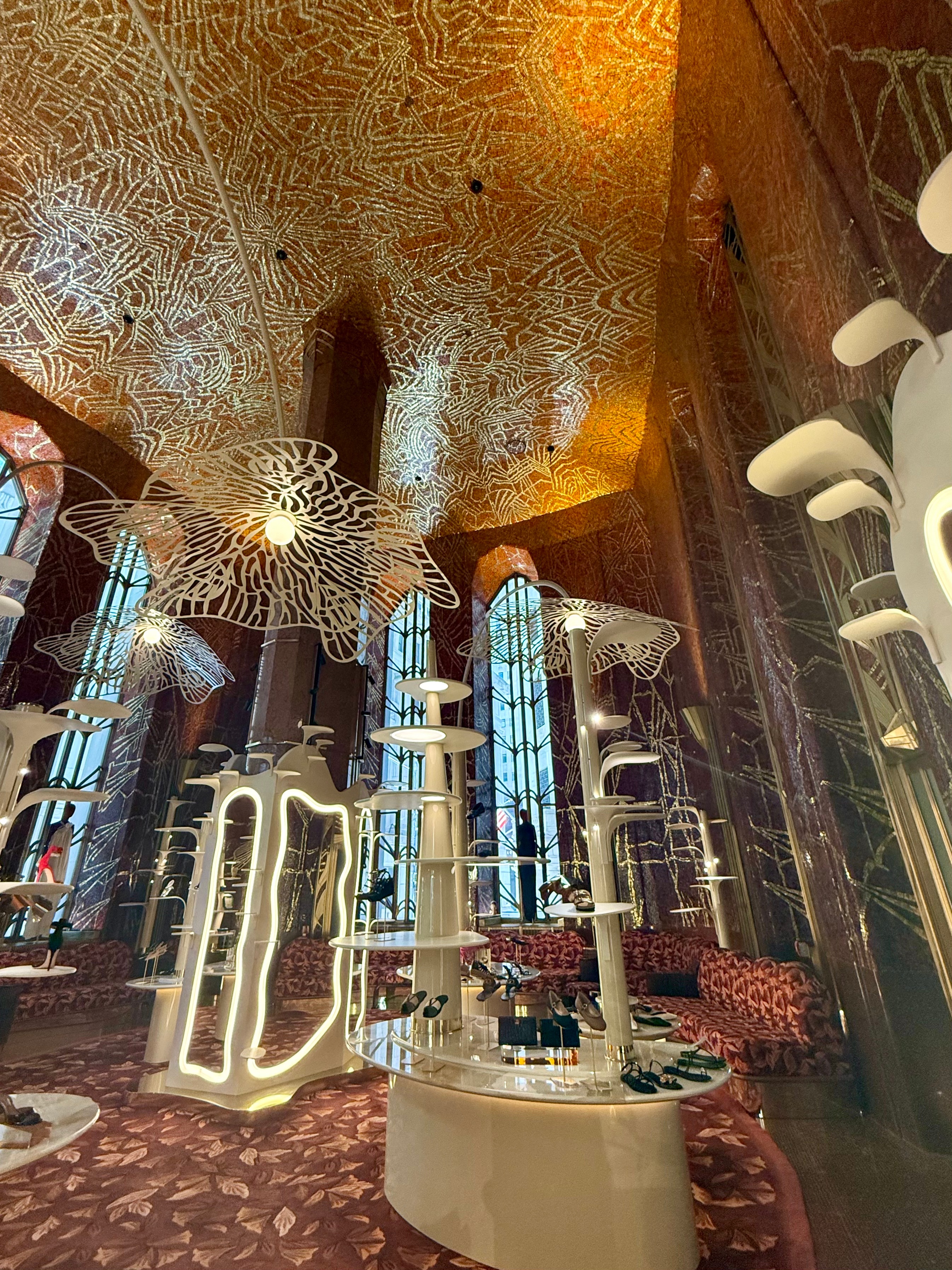
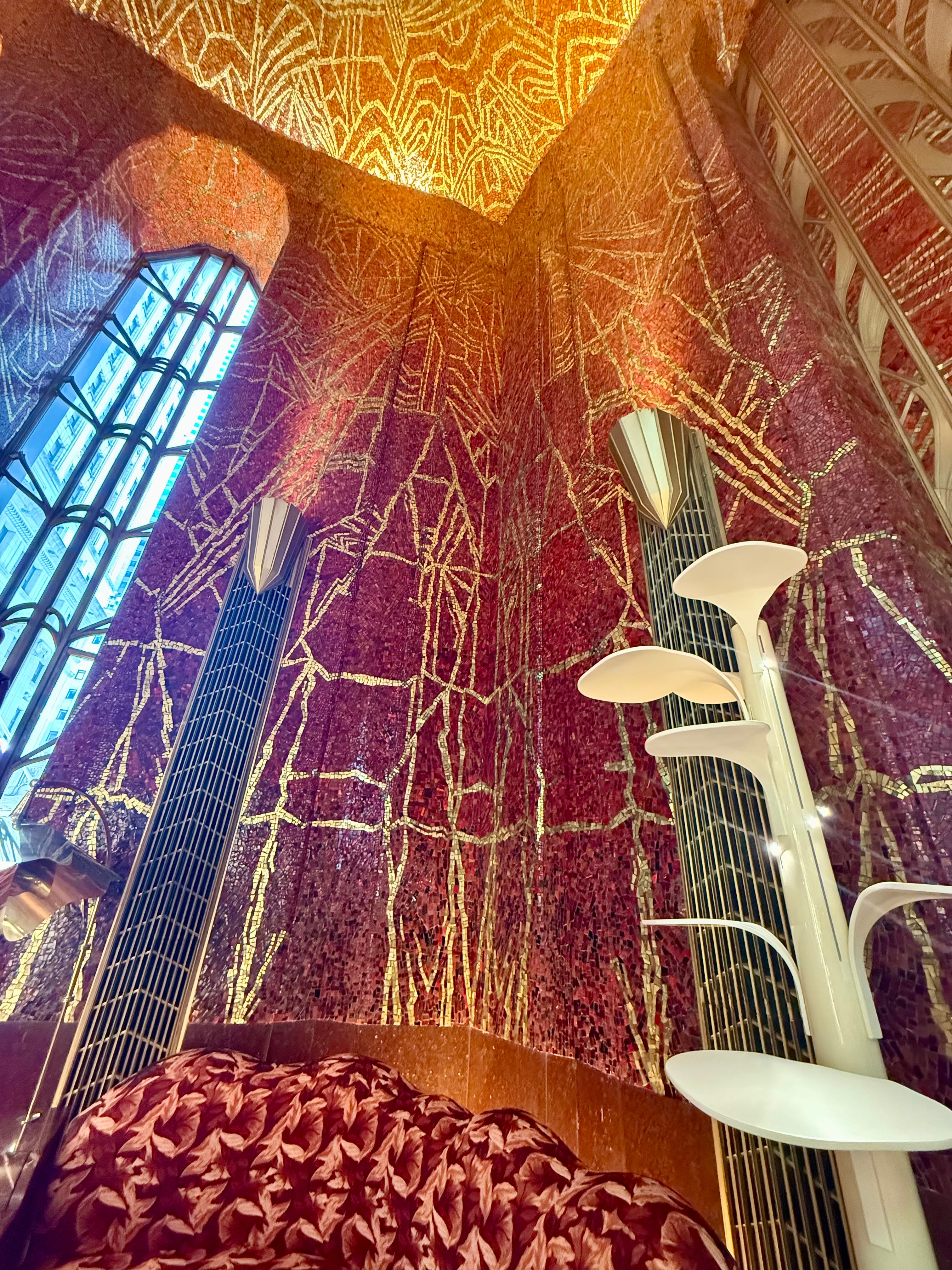
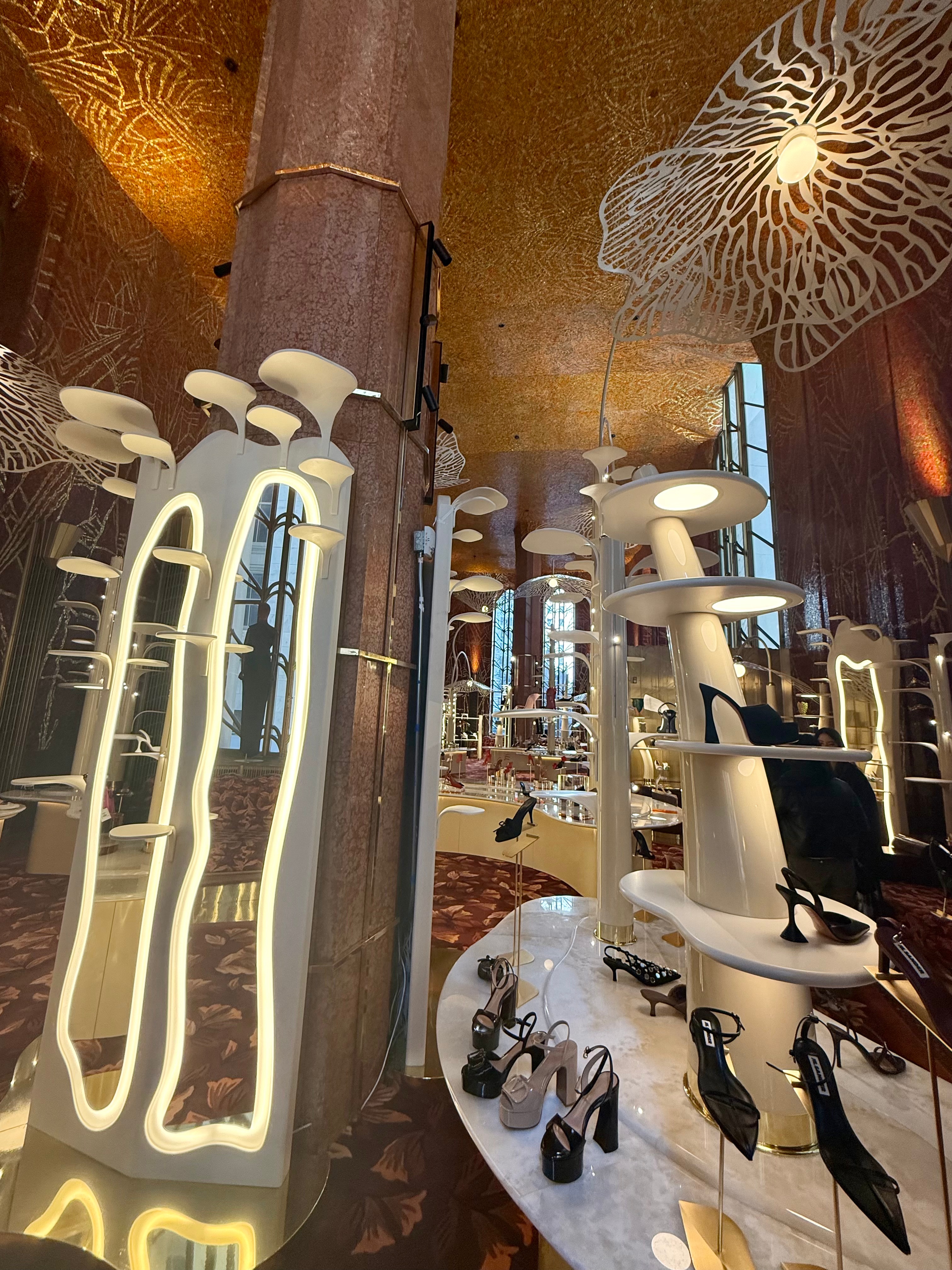
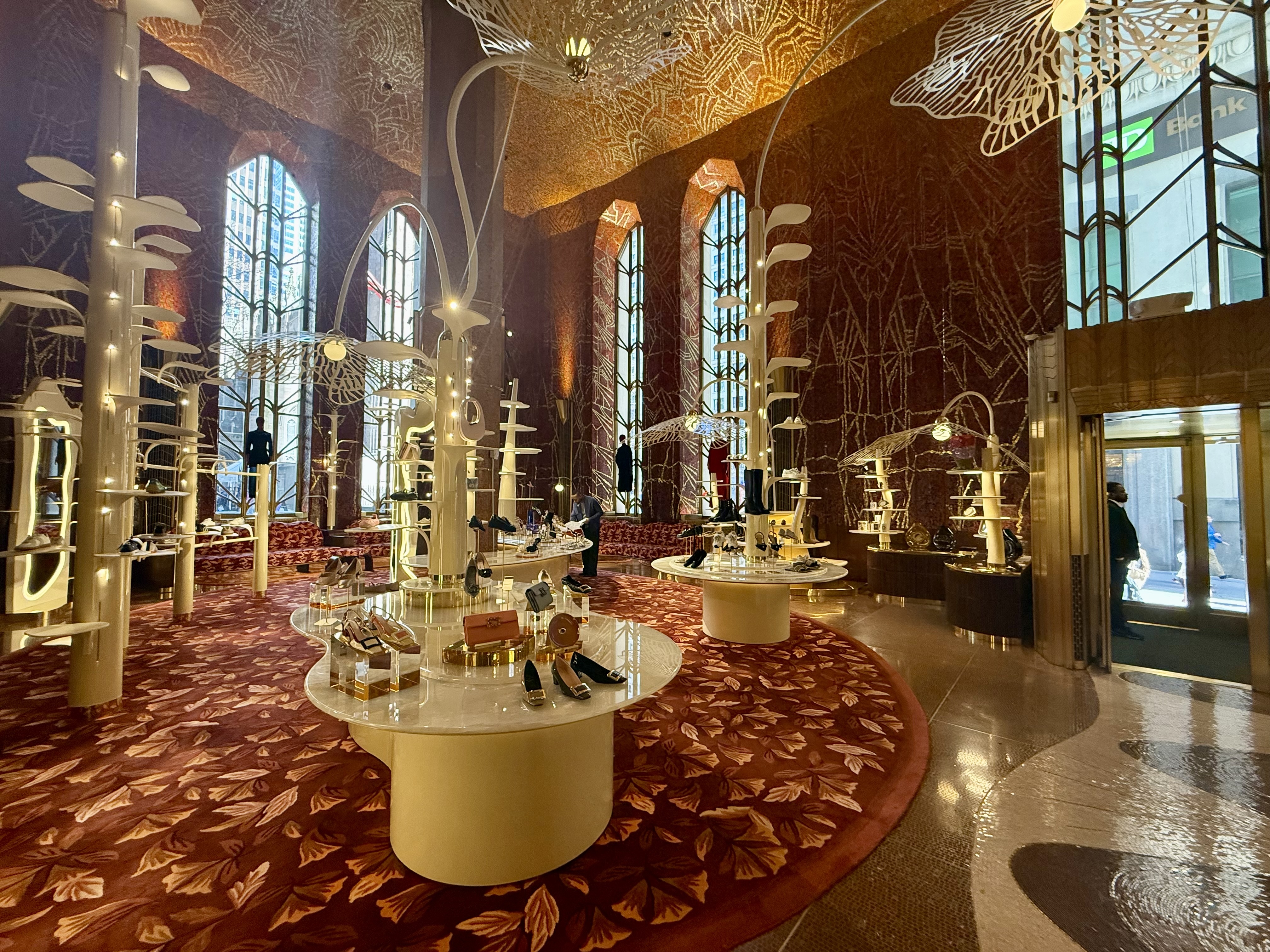
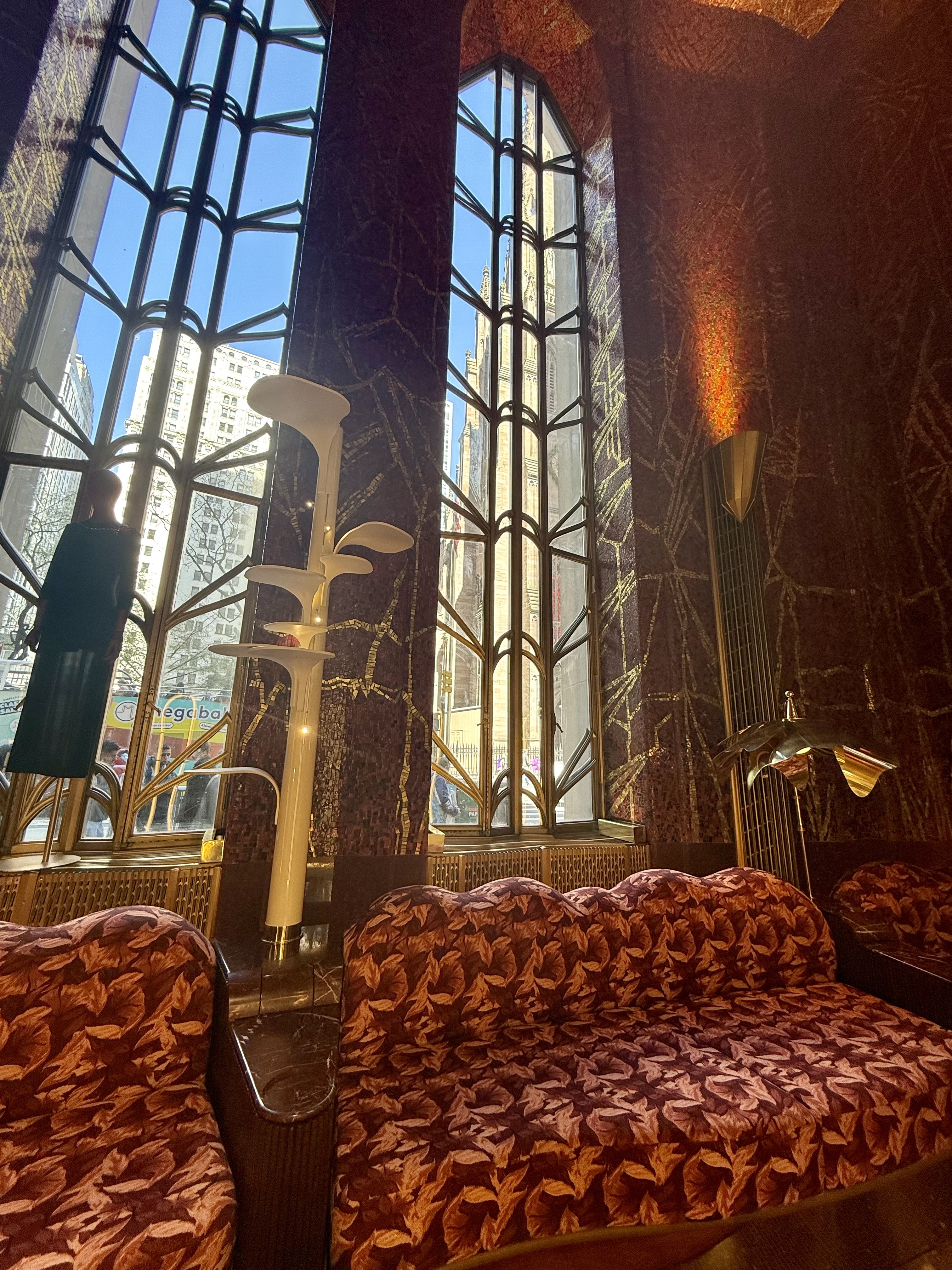
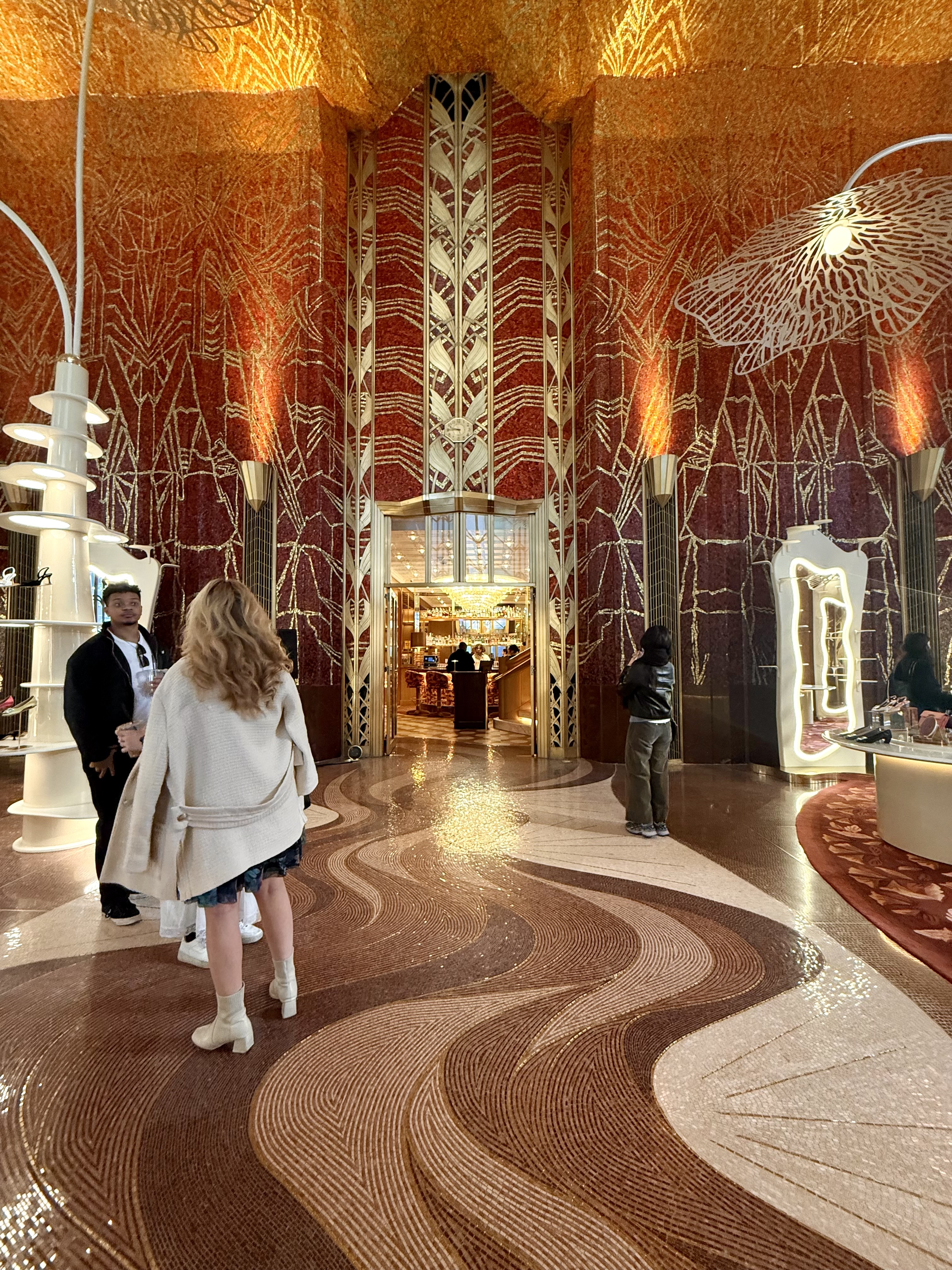
The Red Room, the interior of which is now a New York City Historic Landmark (in addition to the entire exterior of One Wall Street), was once a reception area for the Irving Trust customers. Because this was a private bank, most people would not have been able to enter, and the room was designed to impress its wealthy customers. There would have been no tellers, just some chairs and desks. The Red Room has ceiling heights varying from 30 to 37 feet, and the entire room is 100 by 40 feet. Walker and his associate Perry Coke Smith planned the decor of the room, with artist Hildreth Meière hired as a color consultant. The floor is covered in red terrazzo tiles created in Berlin under the supervision of Walker and Smith. The color scheme of the wall mosaic is red-on-blue which gradually gets lighter as it goes up to draw the eye to the gold-on-black on the ceiling.
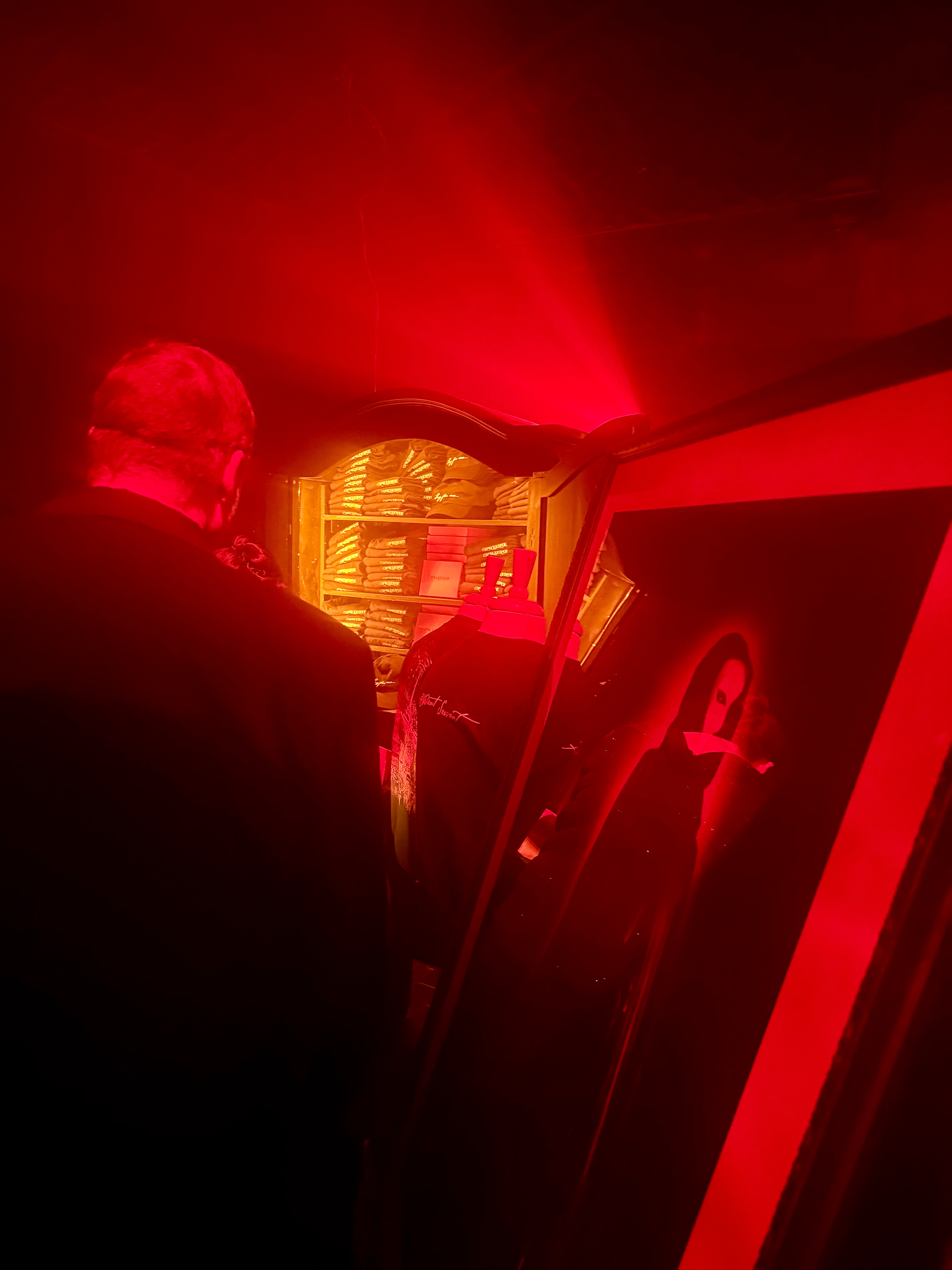
The Red Room at Printemps is a functioning shoe store, and I dare you to find a more extraordinary one. Photographs truly don’t do it justice. If you entered Printemps NYC from Wall Street and experienced the Red Room first, the rest of the store – while gorgeous – would be anticlimactic after such opulence. If you visit on a weekend or later in the day, you might actually have to wait on a line to get in and you will see plenty of people taking photos and posing in the entire store, but particularly in the Red Room. My recommendation, if you possibly can, is to get there very soon after opening (hours are 10am-7pm daily) on a week day to avoid crowds. If you go early, it will be easier to enjoy the cafe as well (the cafe opens earlier most days, at 8am). Going later in the day would be an alternate plan, and enjoy a drink at one of the bars for the most elegant happy hour. The Red Room bar is open later, until 11:00pm, and the restaurant Maison Passerelle is open 5pm-10:30pm.
As anyone who has been to Paris knows, there is a particular quality to walking through the city – every turn seems to bring another view more charming than the one before. I found wandering Printemps NYC to be a similar experience – an immersive escape to Paris just off the bustling streets of my beloved NYC.
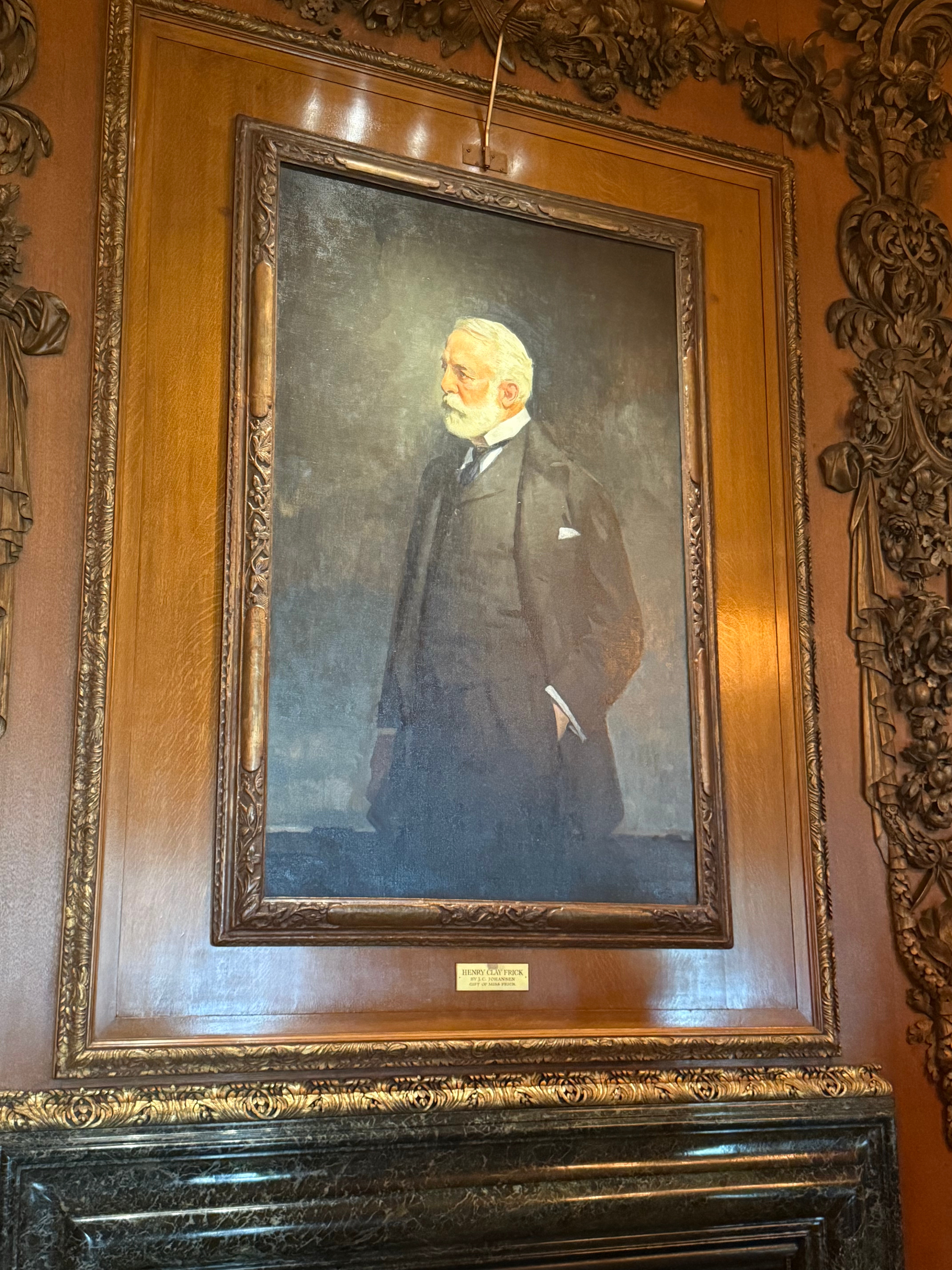
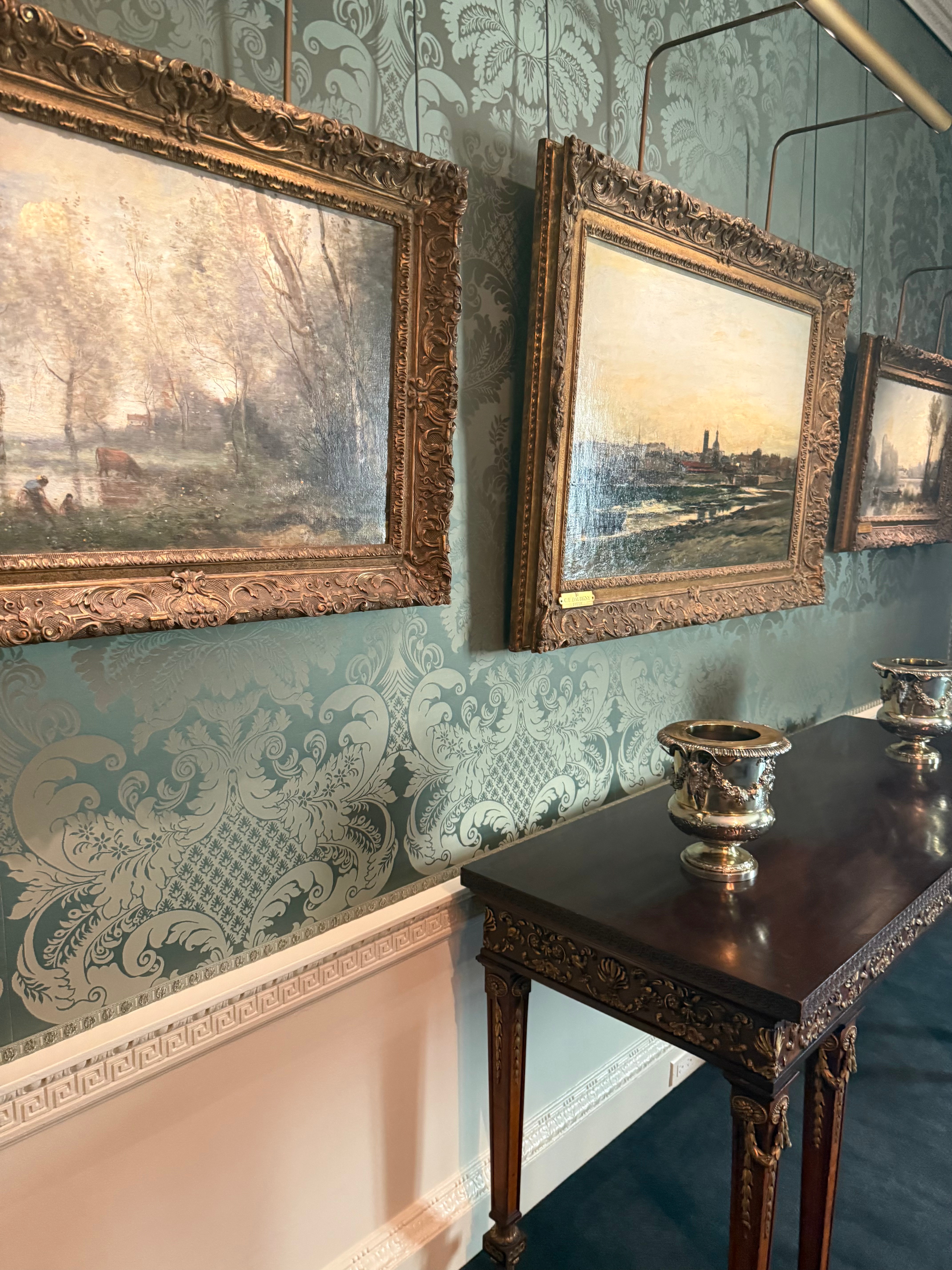
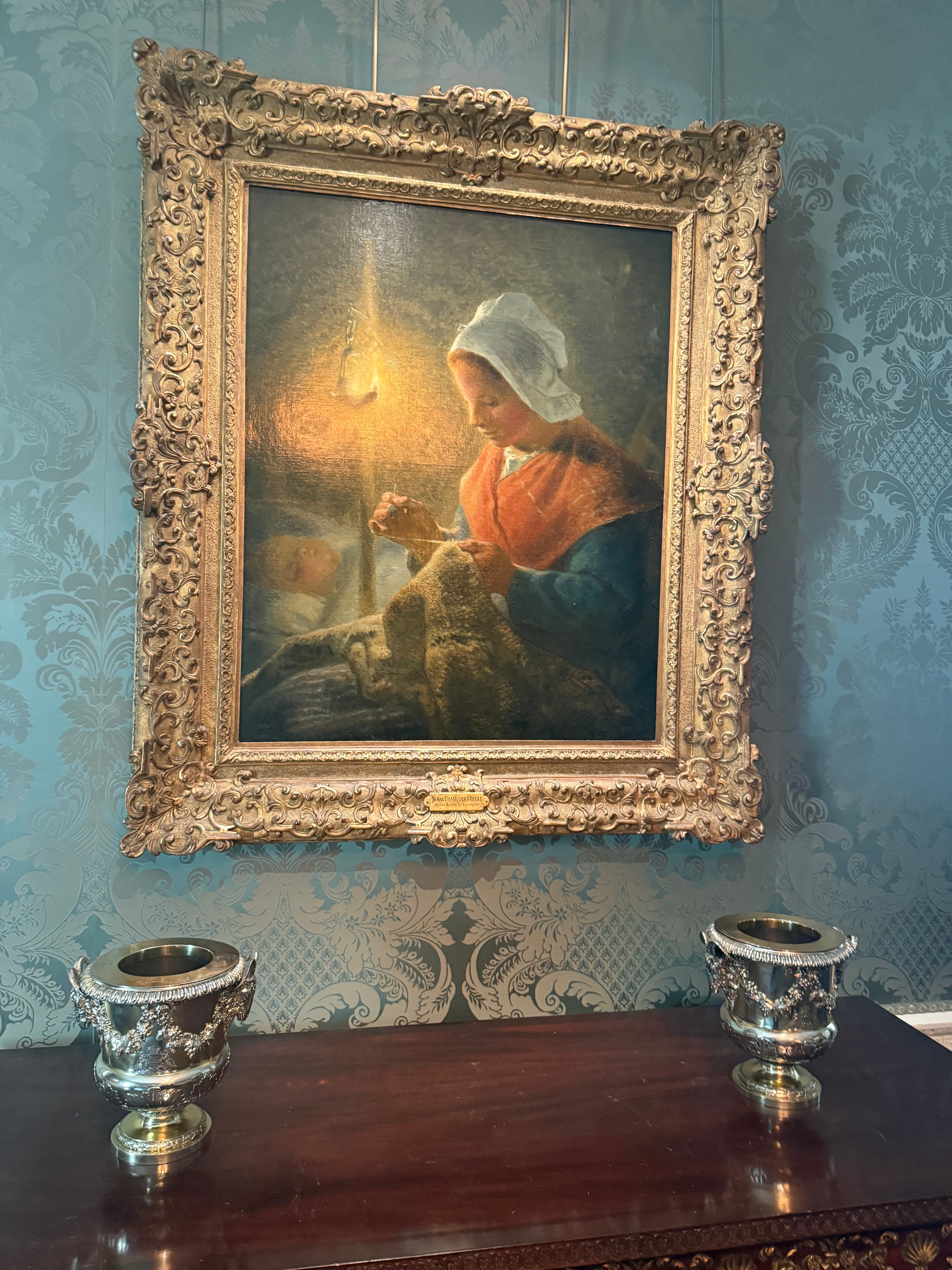
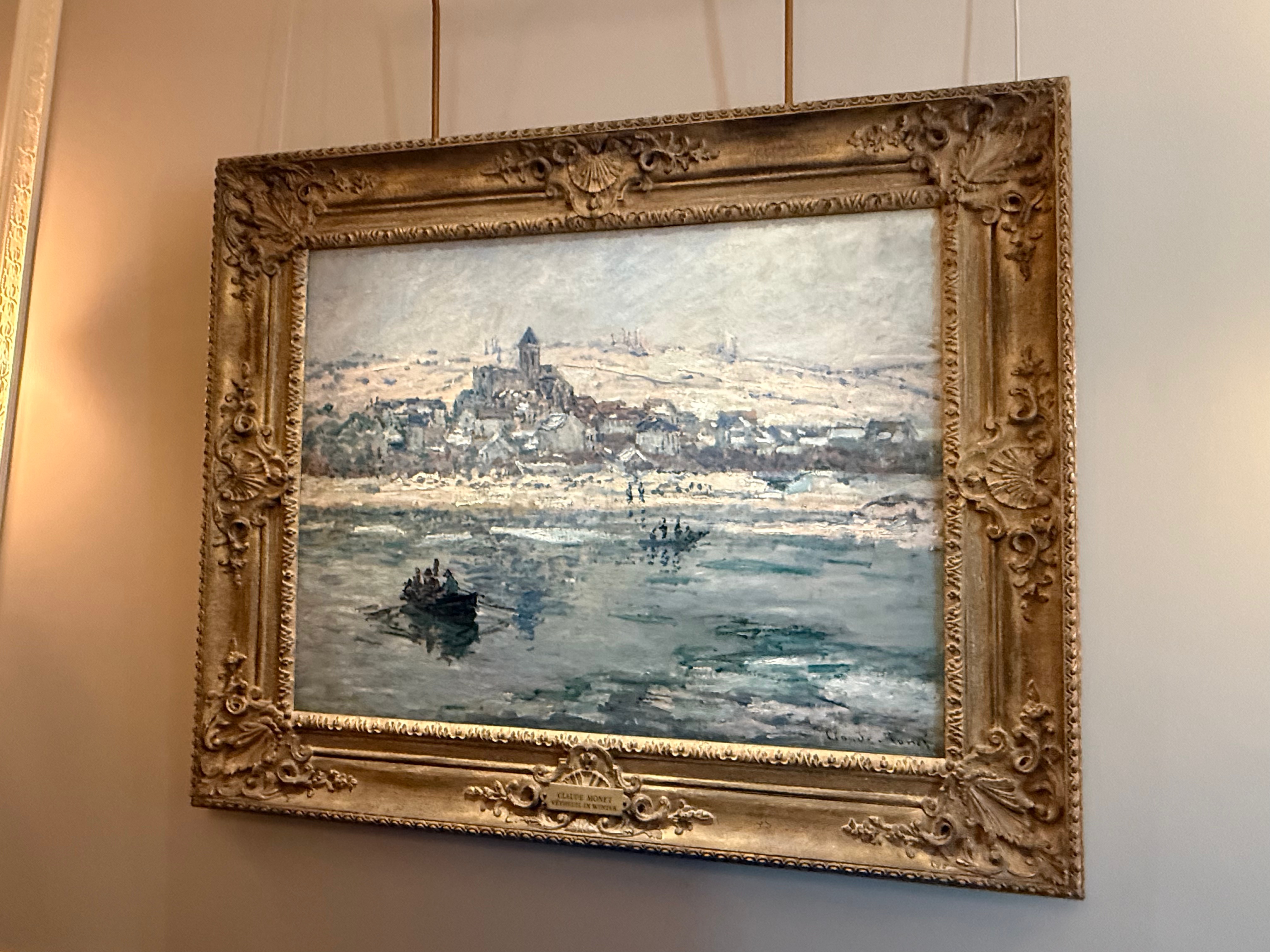
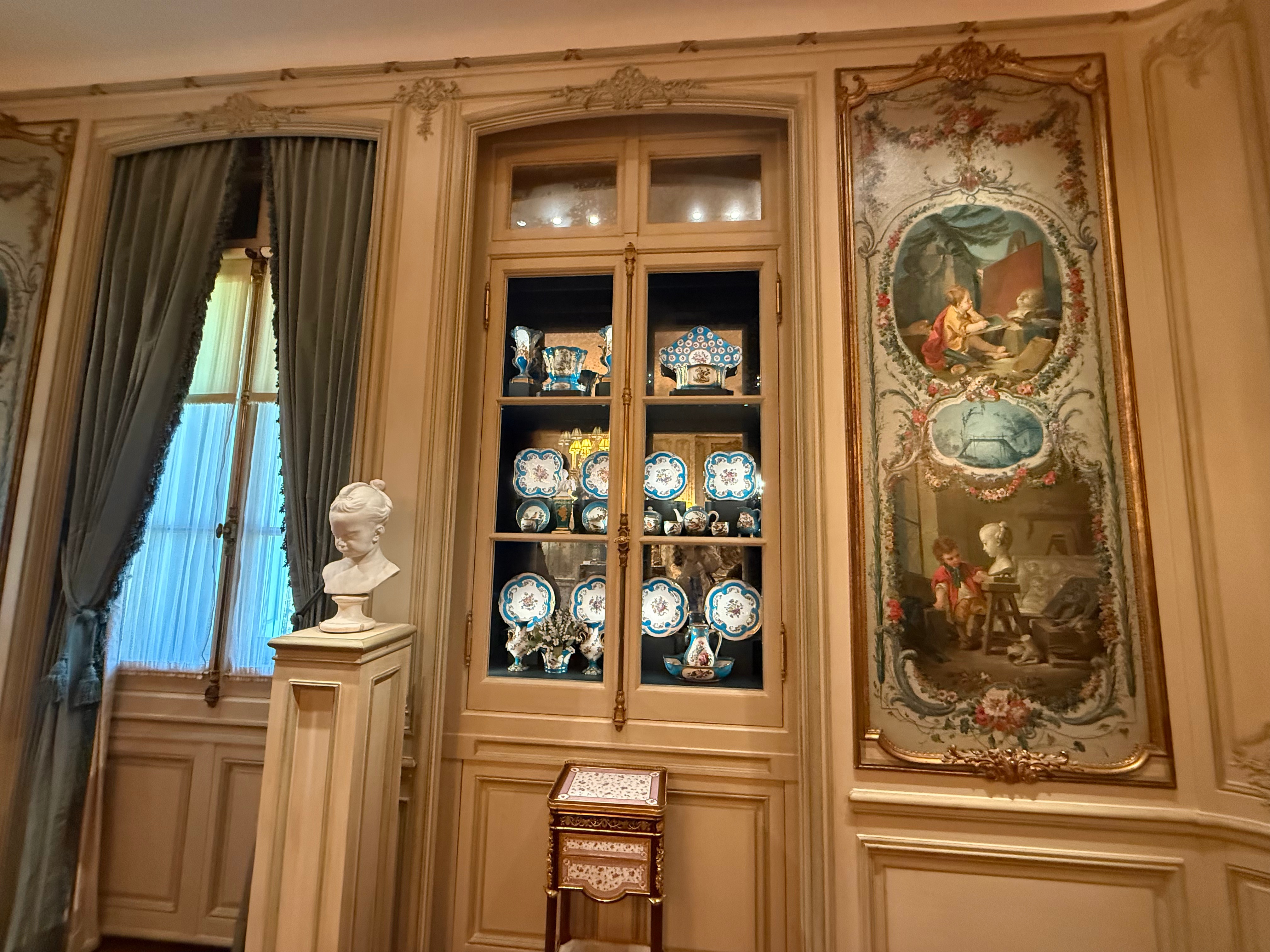
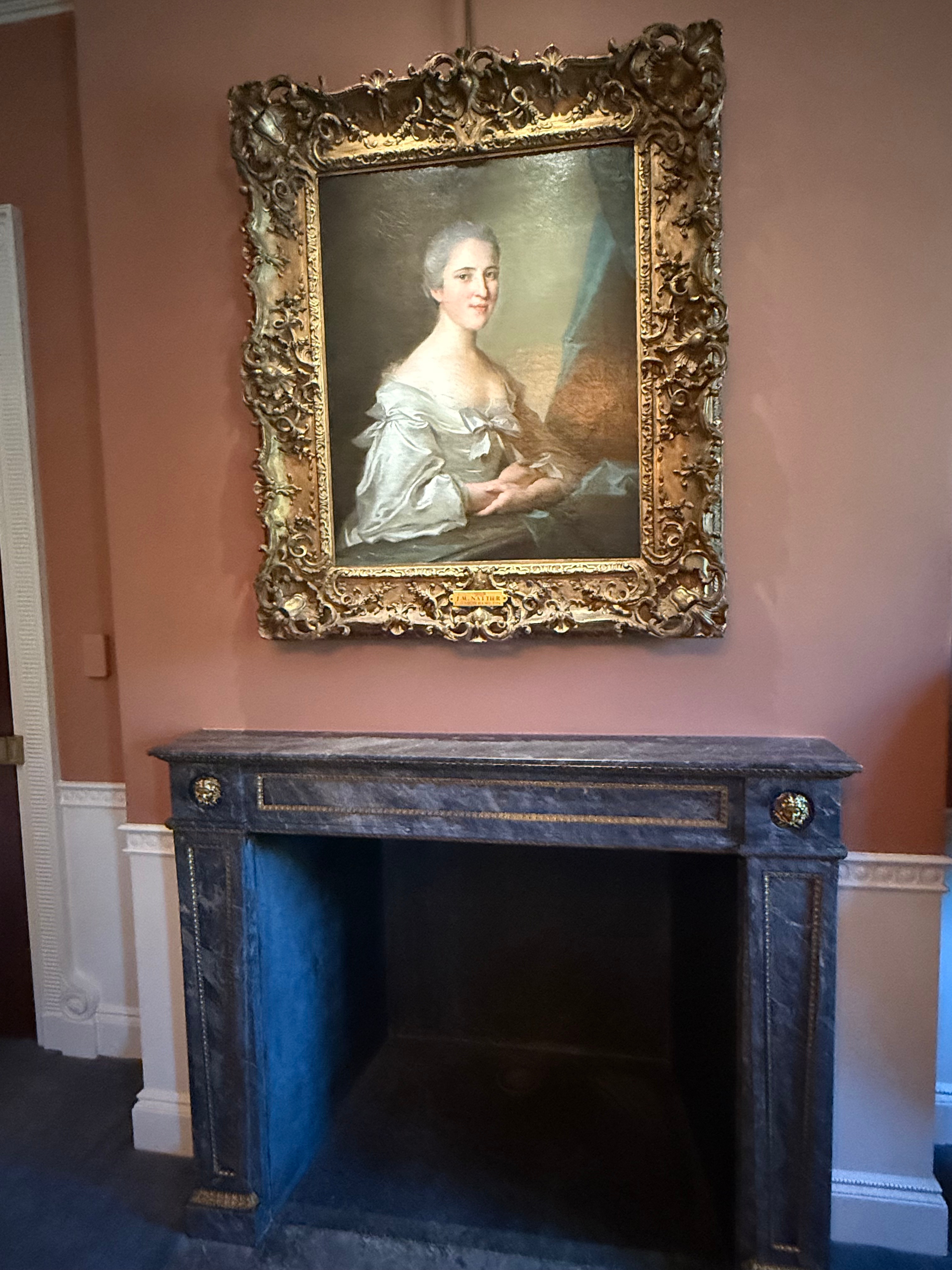
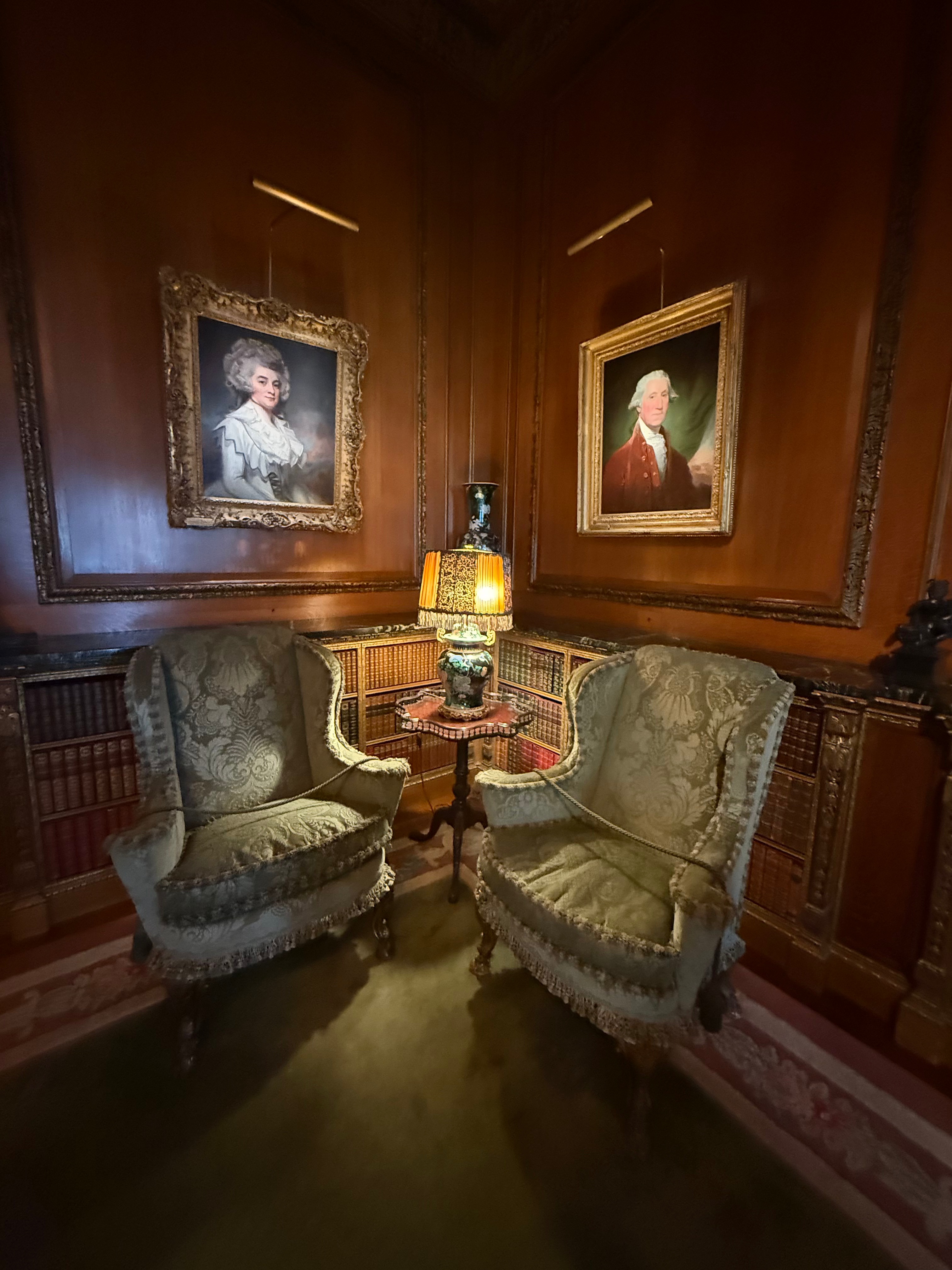
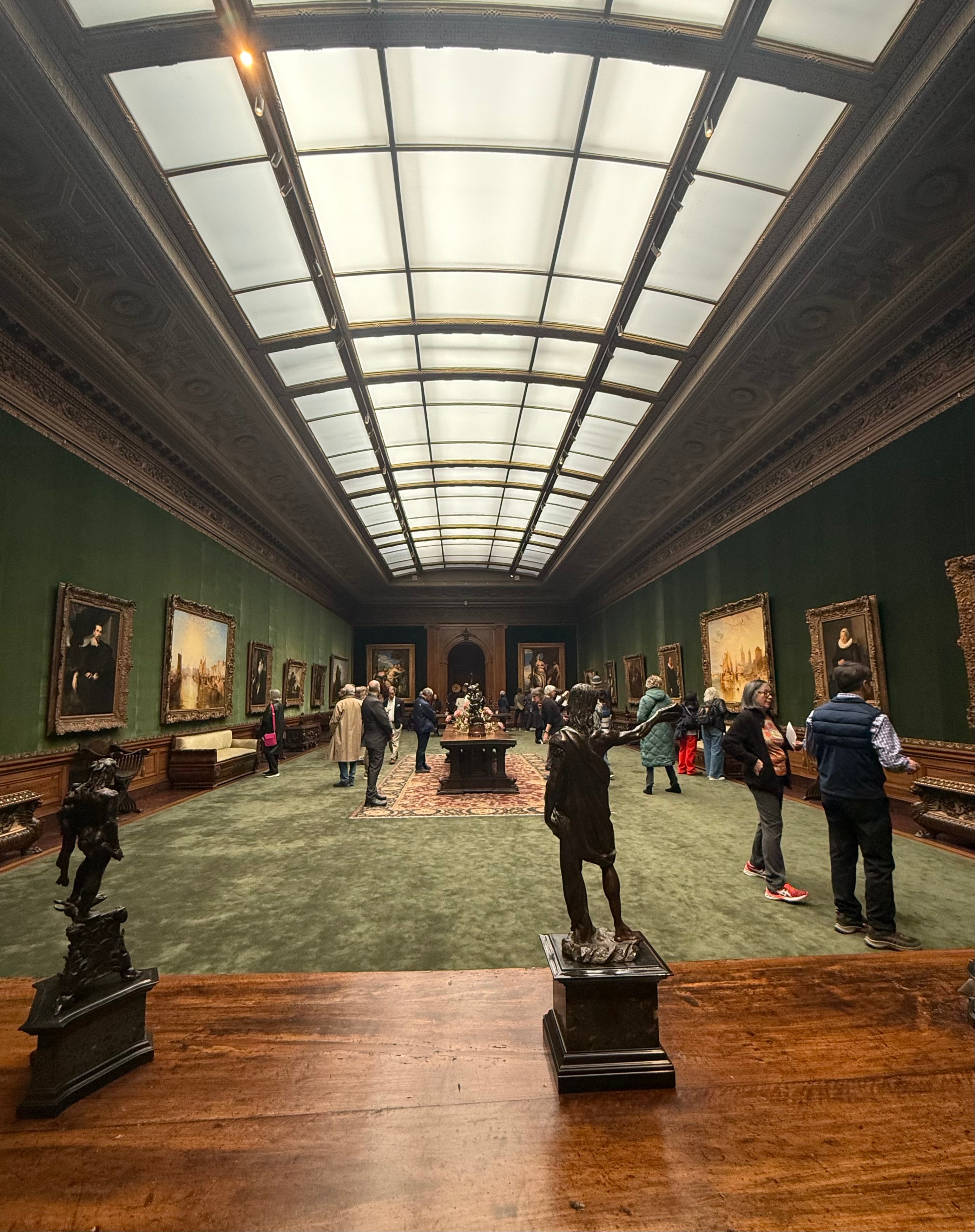
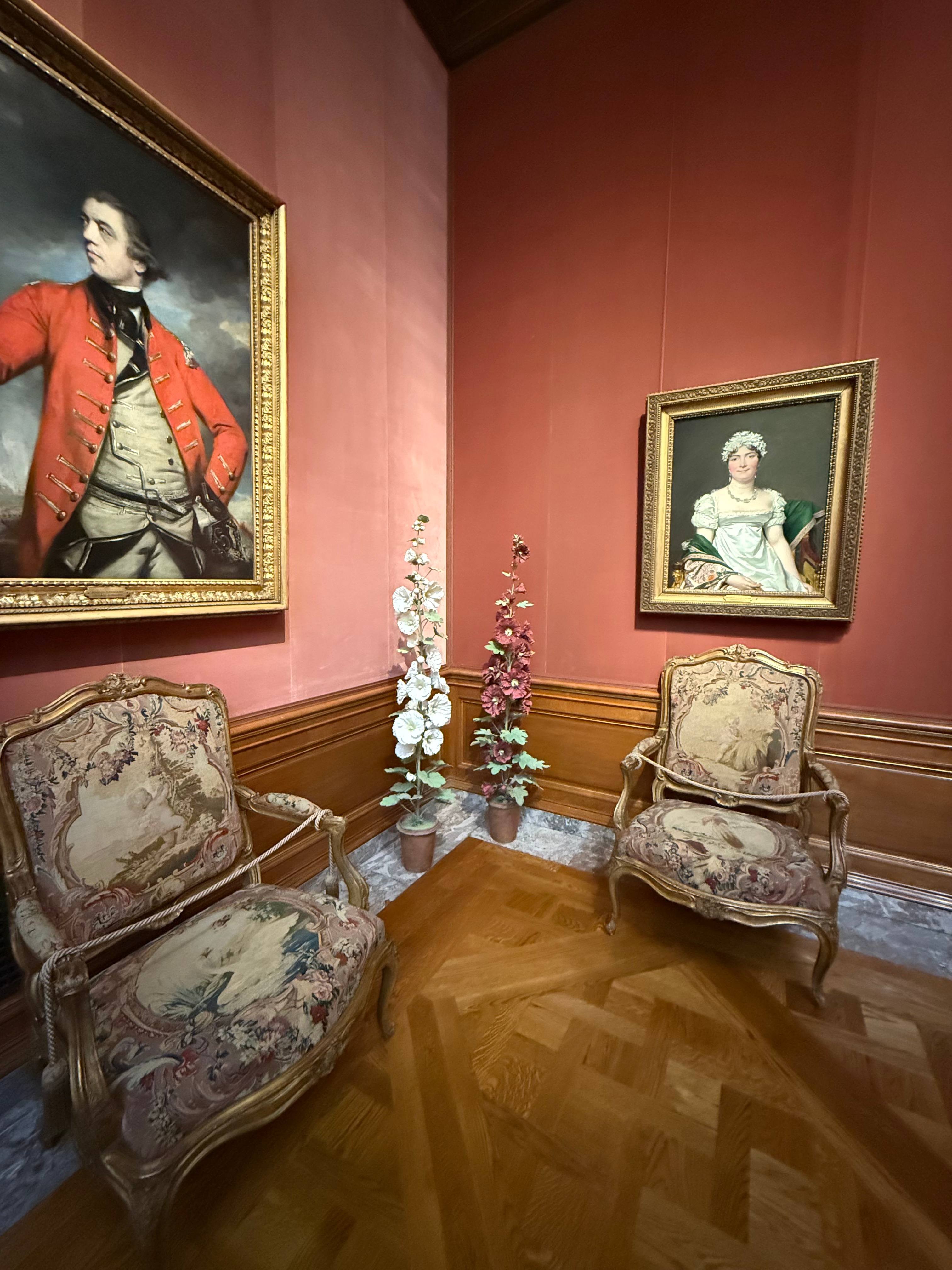
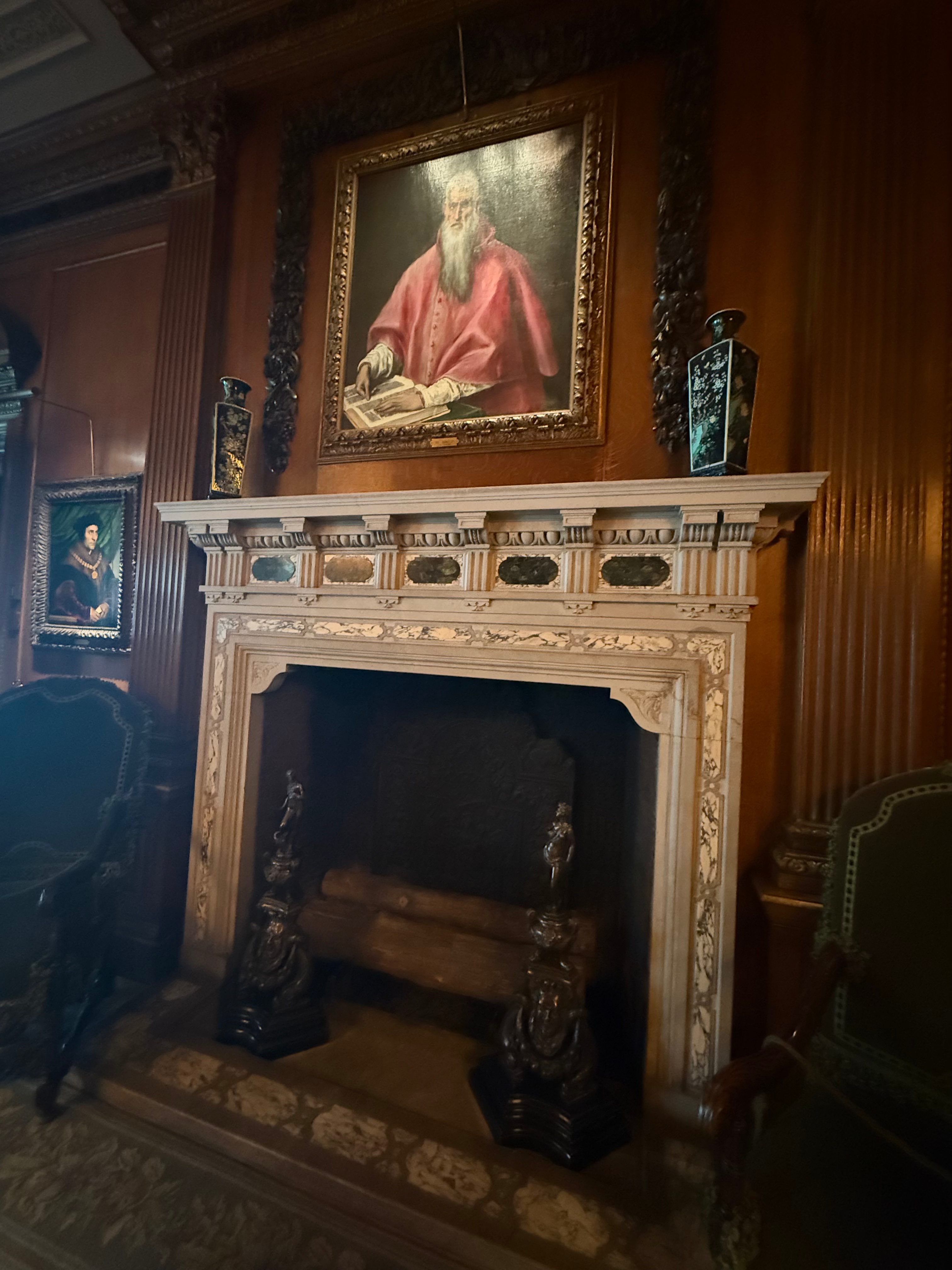
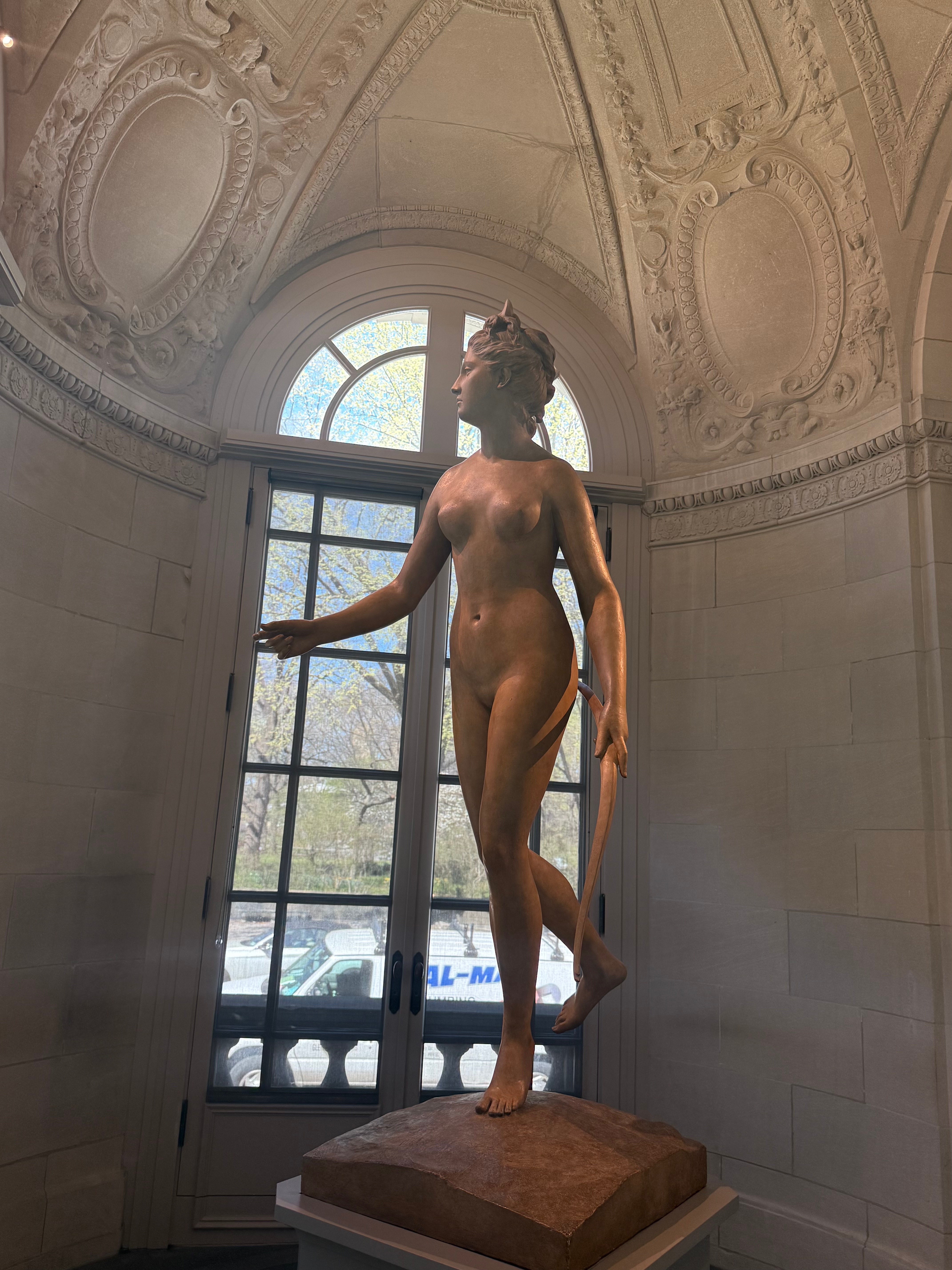
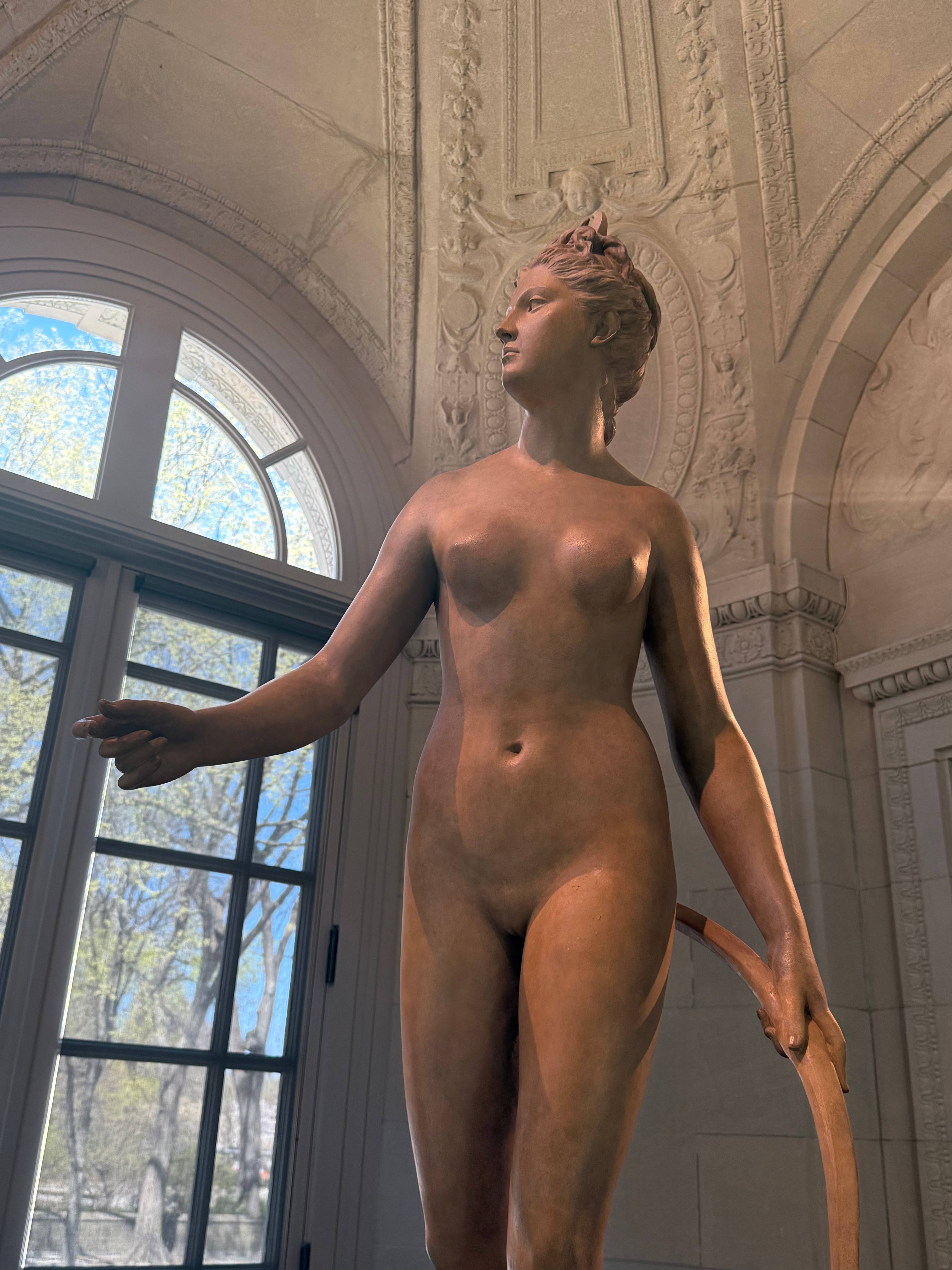
The Frick Collection, on Fifth Avenue between 70th and 71st Streets on the Upper East Side of Manhattan, is a special jewel box of a museum in a city rich with fabulous places to appreciate art. The Henry Clay Frick mansion, designed in 1914 by Carrère and Hastings in the Beaux-Arts style, was converted to a museum to house Frick’s art collection in 1920 after his death. Henry Frick had personally collected a vast array of art, including works by artists as renowned and diverse as Bellini, Degas, Fragonard, Gainsborough, Goya, El Greco, Holbein, Rembrandt, Titian, Turner, Velázquez, Vermeer, and Whistler. What is truly unique, though, is the display of the art within the cohesive and lush interiors of the mansion. The Frick Collection recently underwent an extensive renovation by Annabelle Selldorf and her team at Selldorf Architects, and has added an auditorium, education room, and cafe, while leaving the essential nature of this unique experience intact. I was fortunate enough to be invited to Member Preview Days by a patron (the museum opens for all April 17, 2025, check for tickets here) and was thoroughly transported by my visit.
I was fortunate enough to be able to go the first day the museum held member previews (April 9) thanks to this patron, and we went first thing upon opening to avoid crowds. I would recommend this strategy if you are able. The entrance area was open and easy to navigate thanks to the renovation. There is a coat check and bathrooms downstairs (and quite some stairs! a new grand cantilevered staircase made of veined Breccia Aurora marble), and the new cafe and gift shop above. The second floor rooms in the mansion, once bedrooms, are smaller and I recommend going to them first before the museum gets more crowded if you are first in.
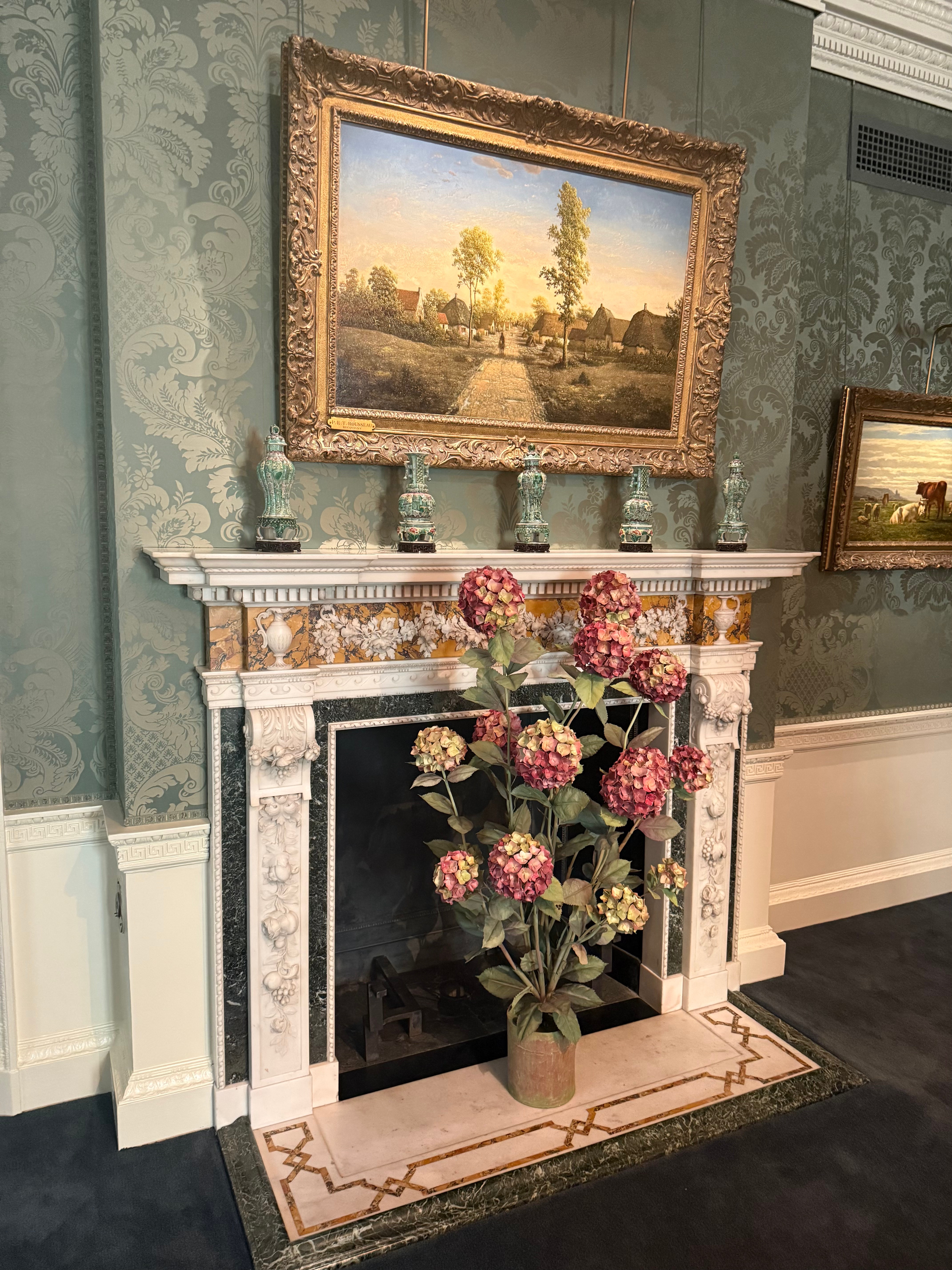
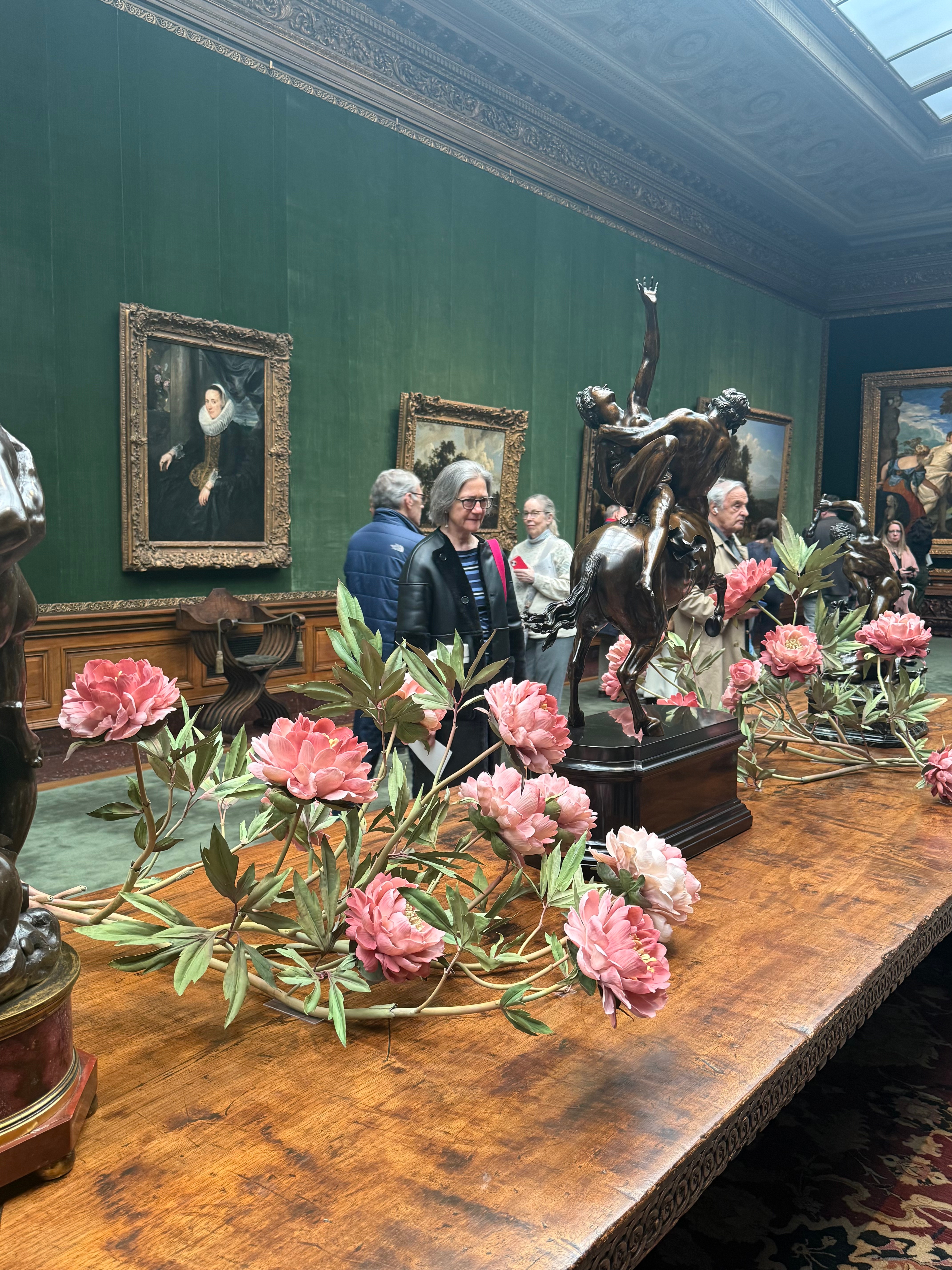
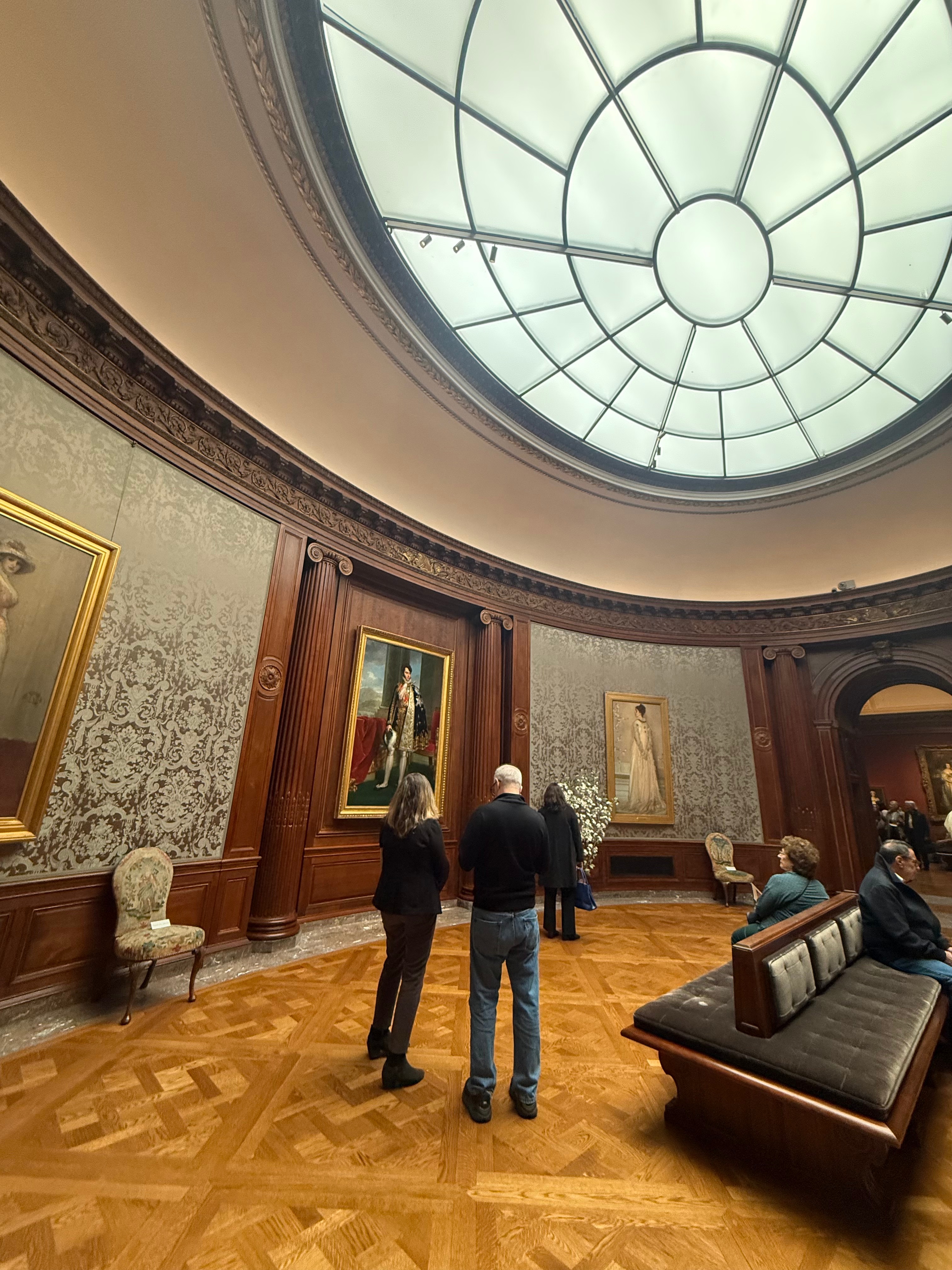
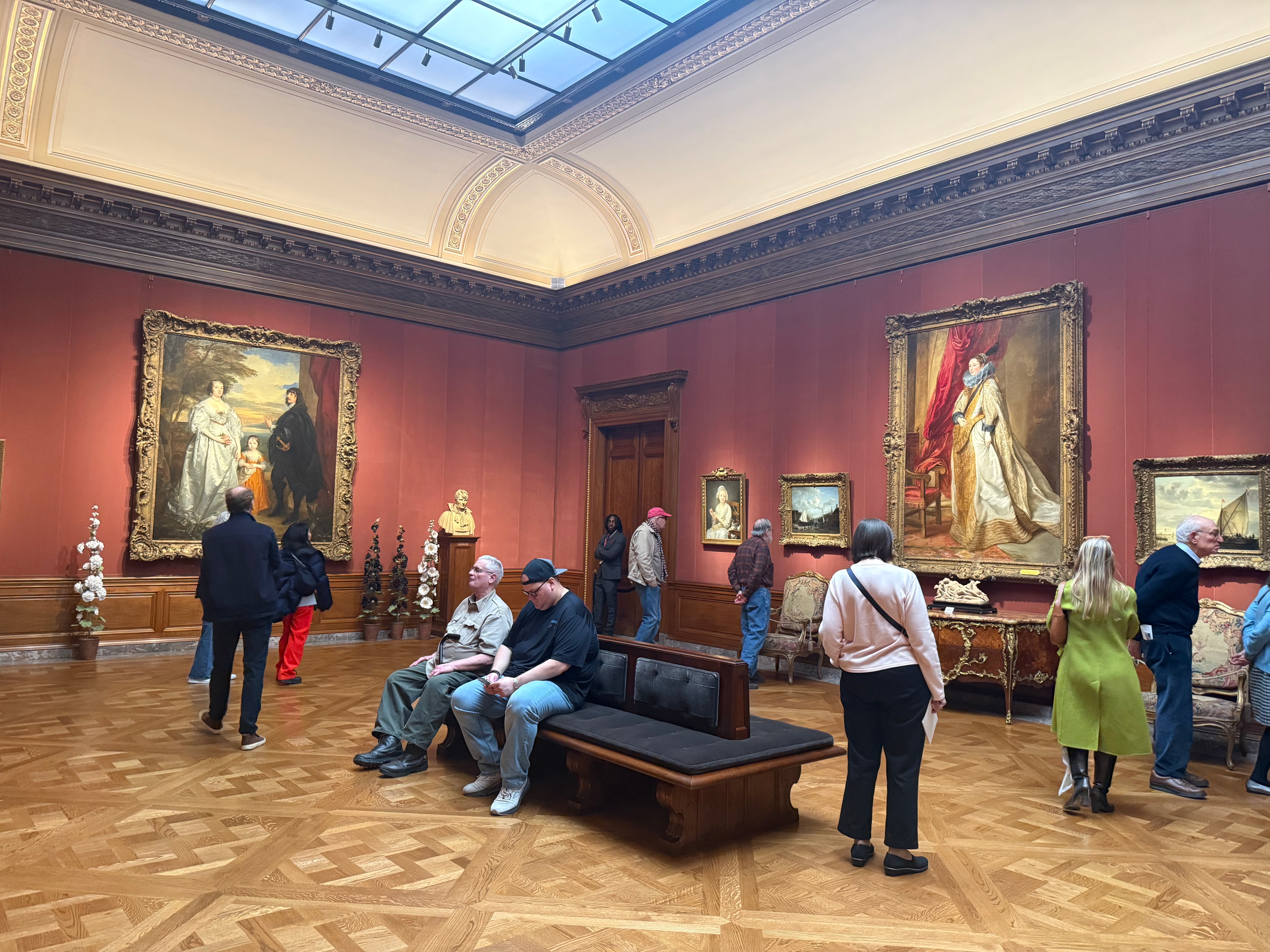
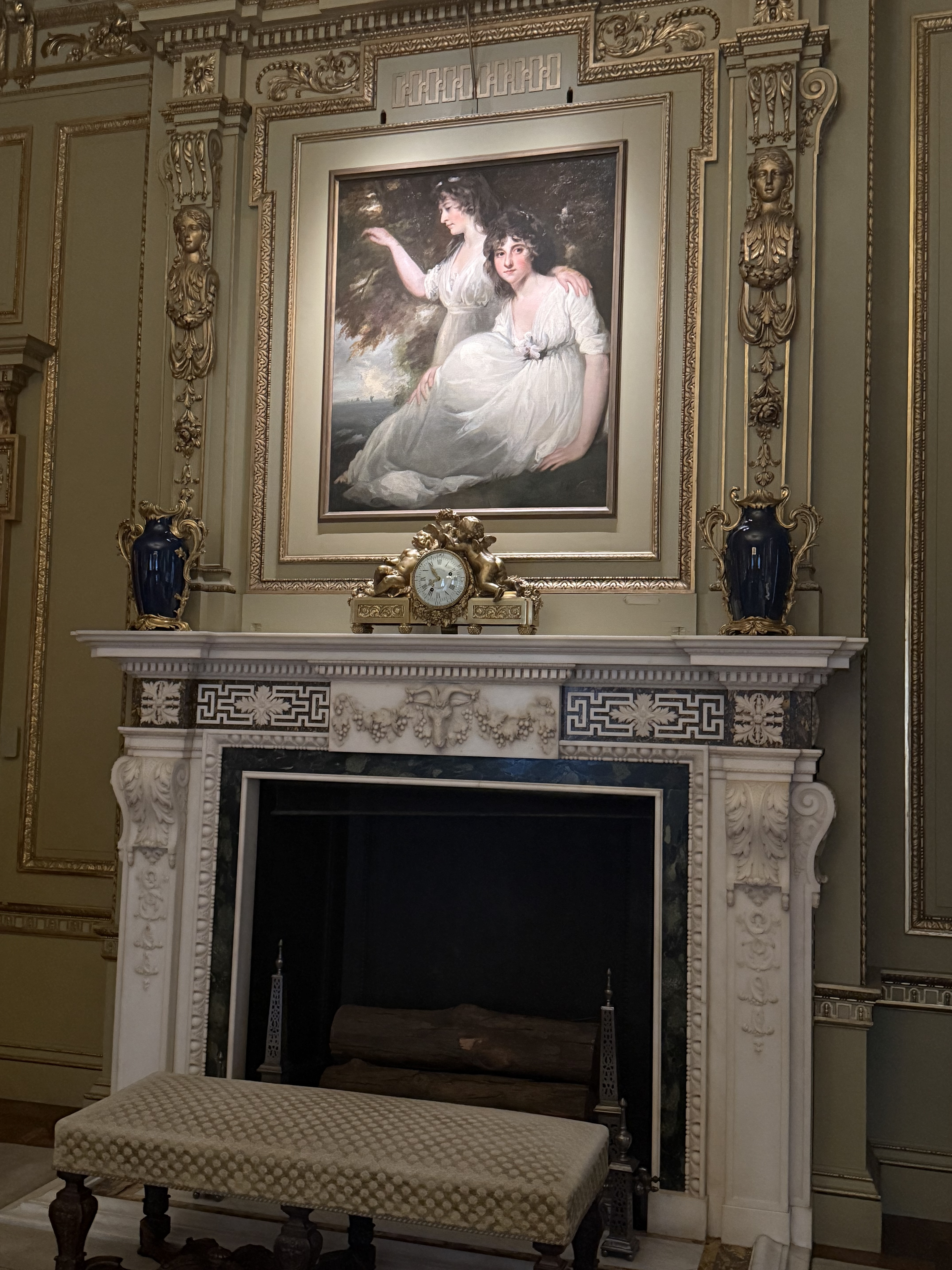
The experience of being in the mansion and the way art is displayed (rather than white plain backgrounds, the walls are covered in hand-woven French silk damask and velvet in sumptuous colors) makes entering each room like becoming part of a new little immersive world.
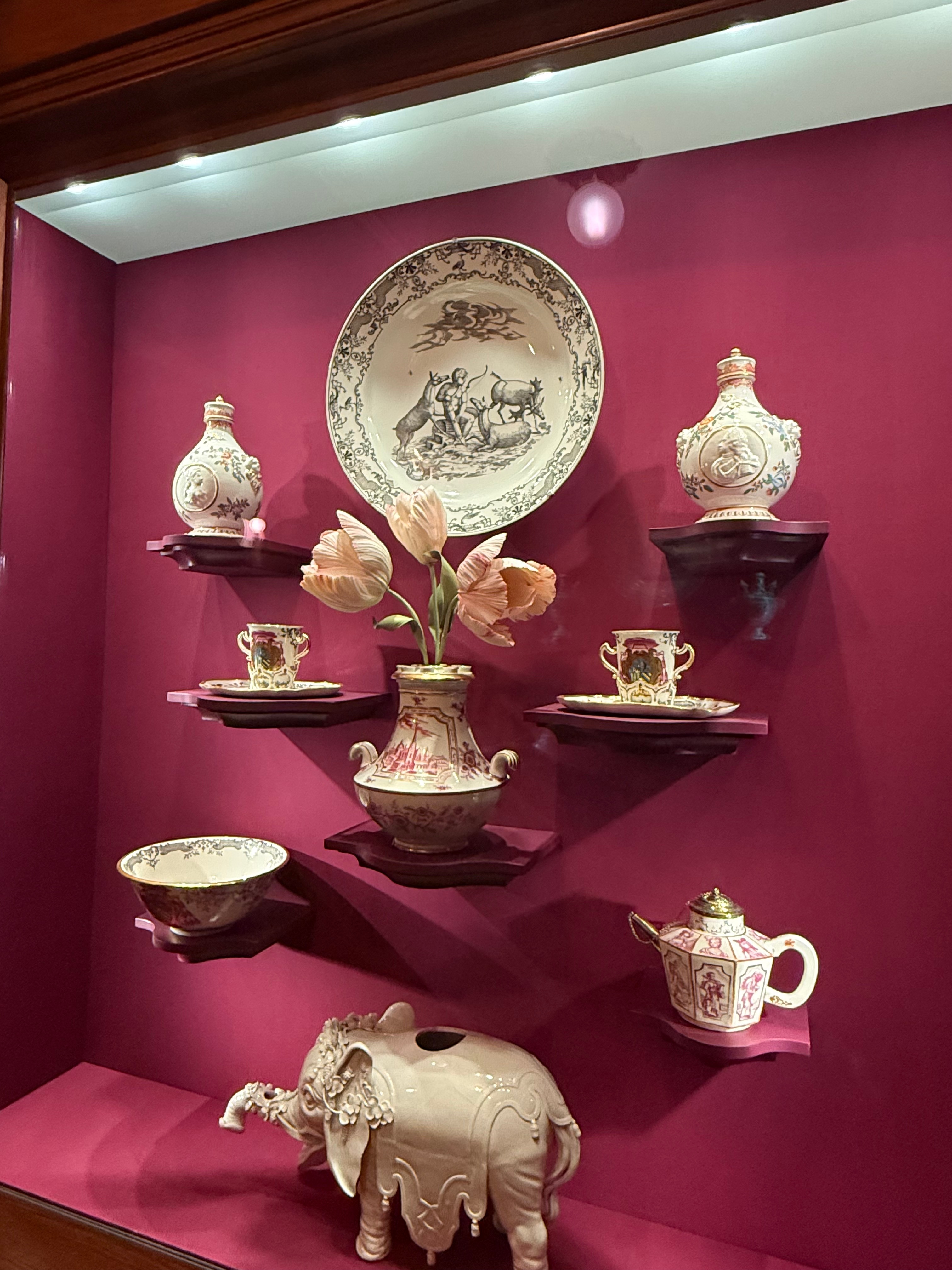
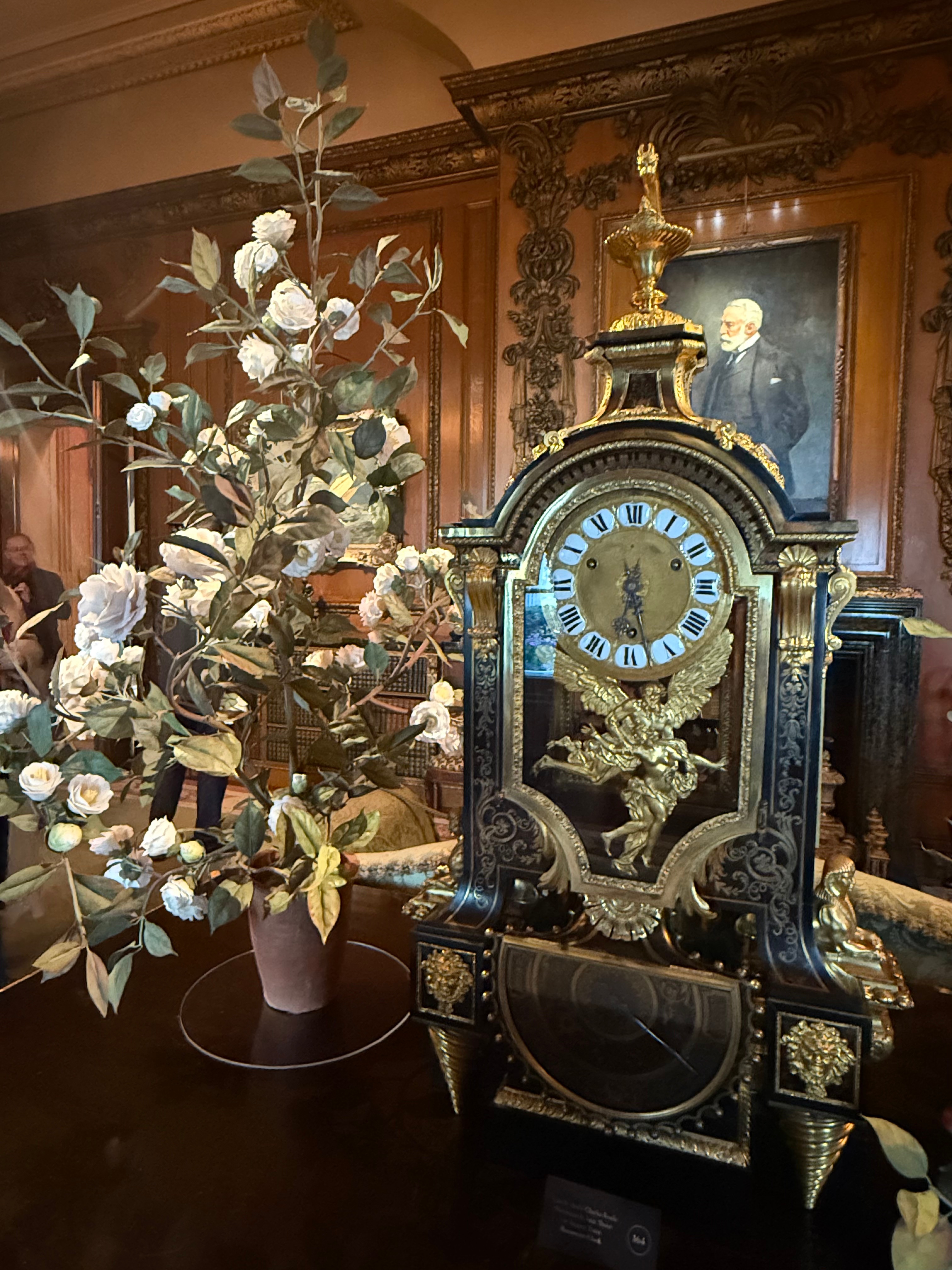
In almost every room there were lifelike porcelain flowers by contemporary artist Vladimir Kanevsky. Designed to look like real floral displays set up in the collection when it first opened to the public in the 1930s, these flowers are on display through October 6.
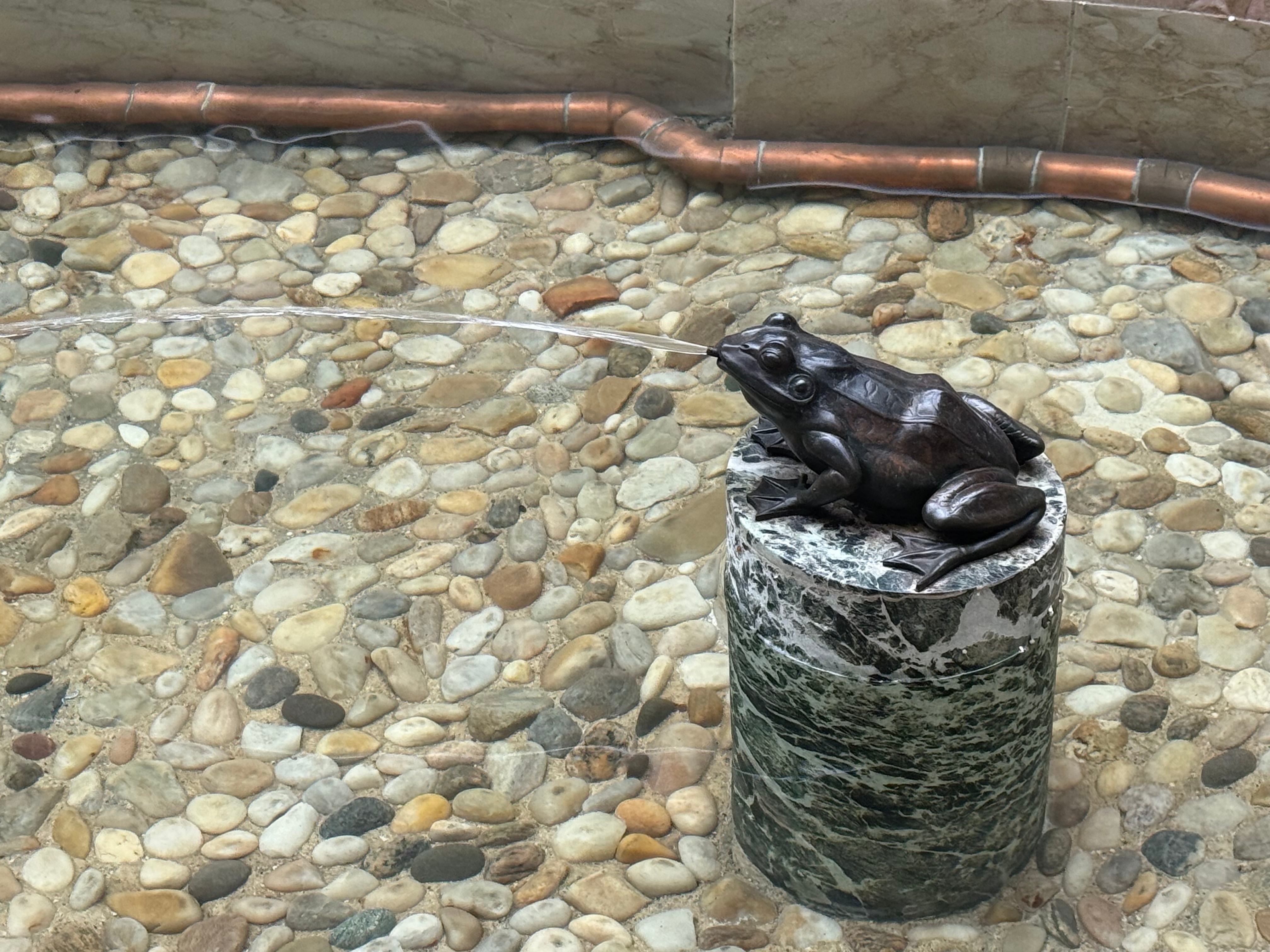
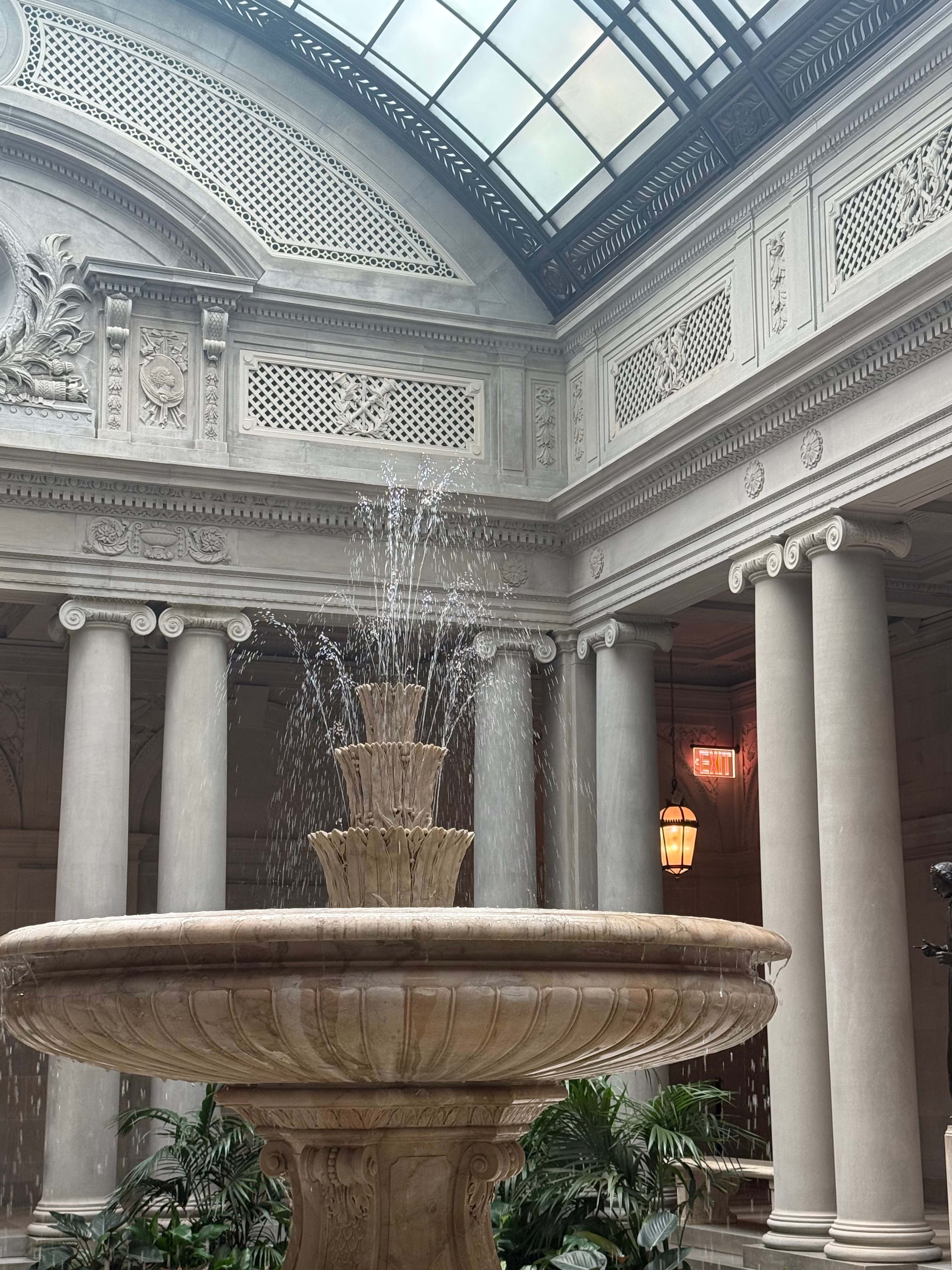
Downstairs rooms are larger, as they were public rooms and many specifically designed to display Frick’s art. The beautiful central courtyard has been restored so that the fountain once again works as designed.
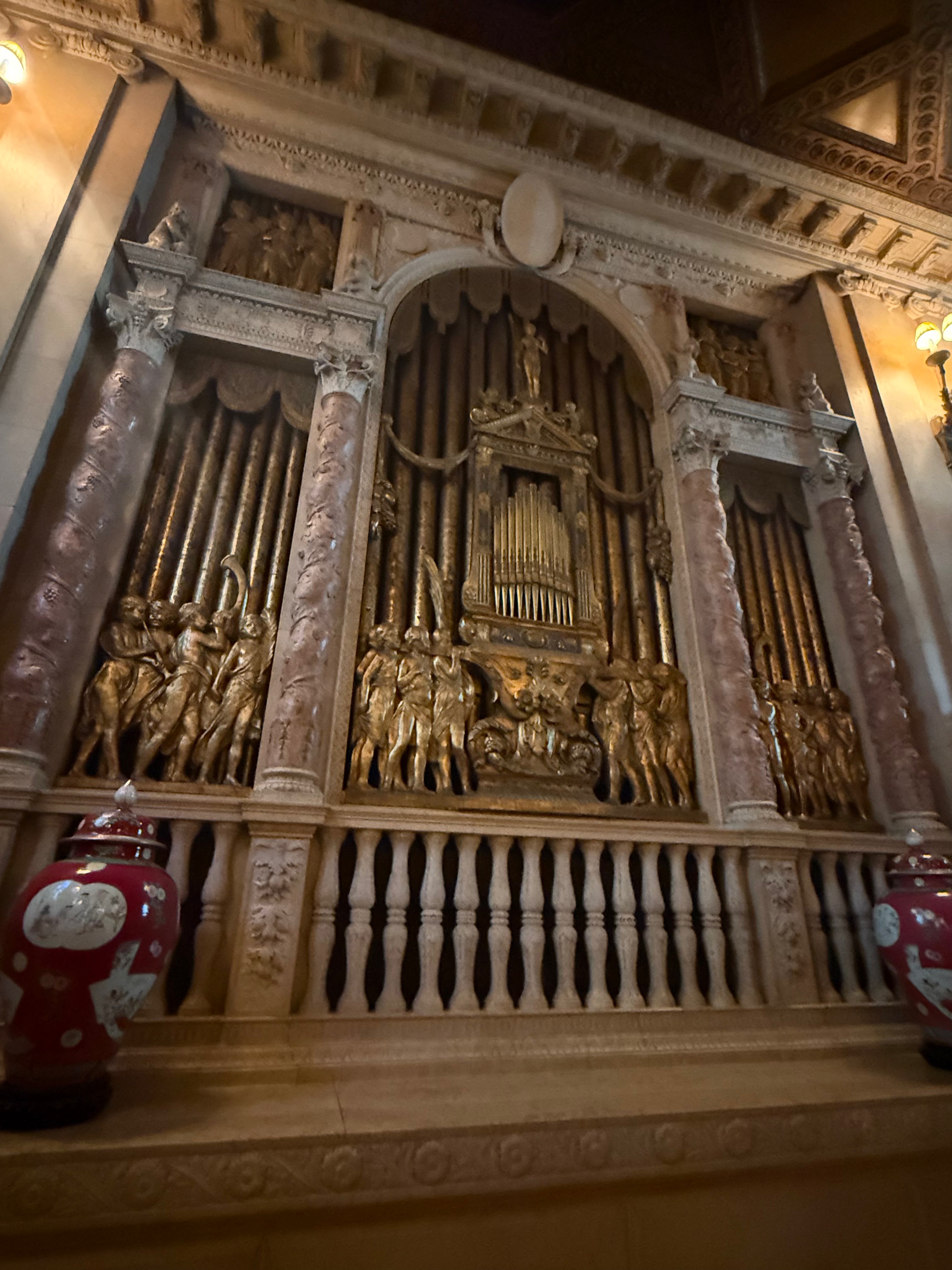
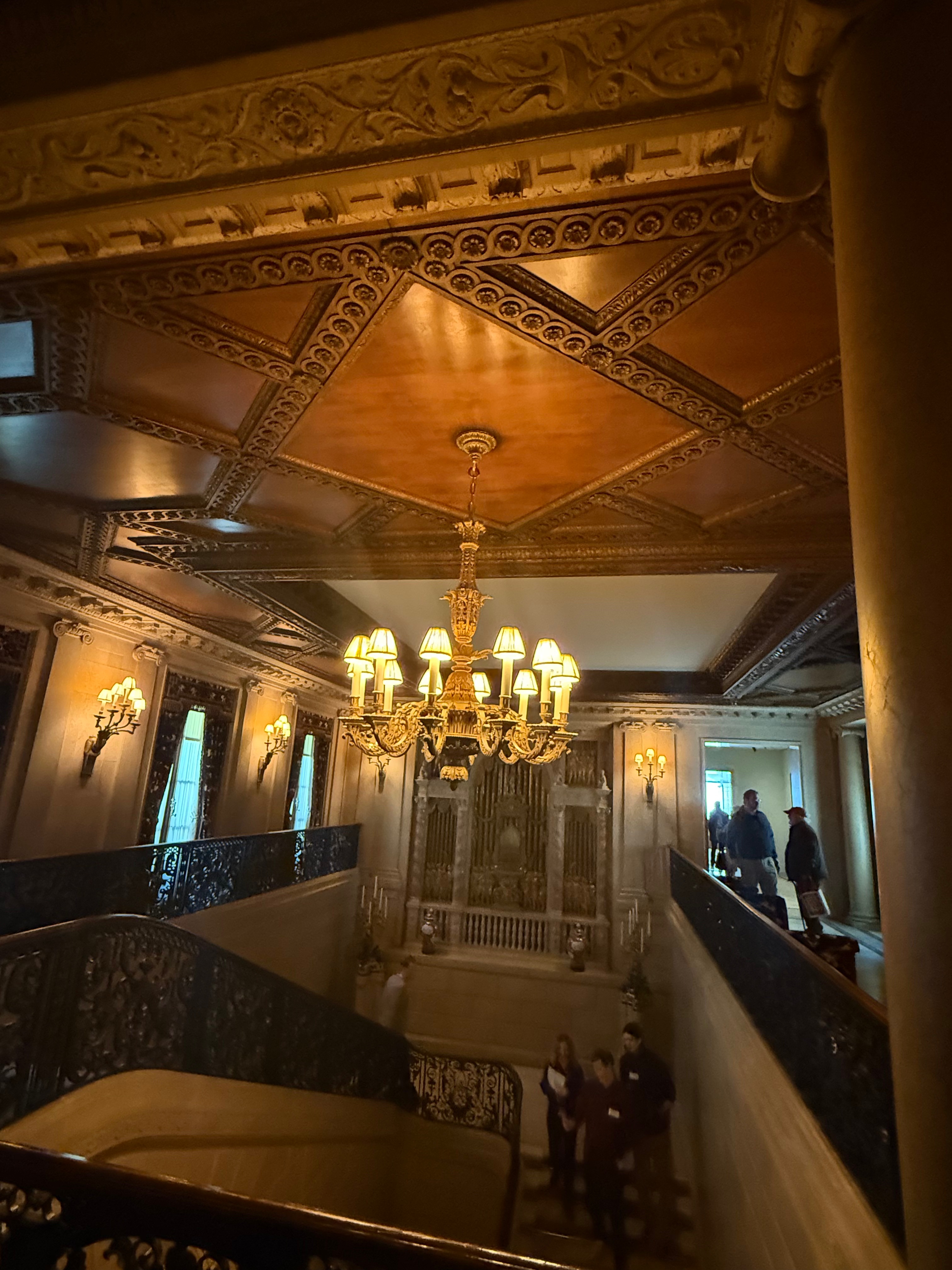
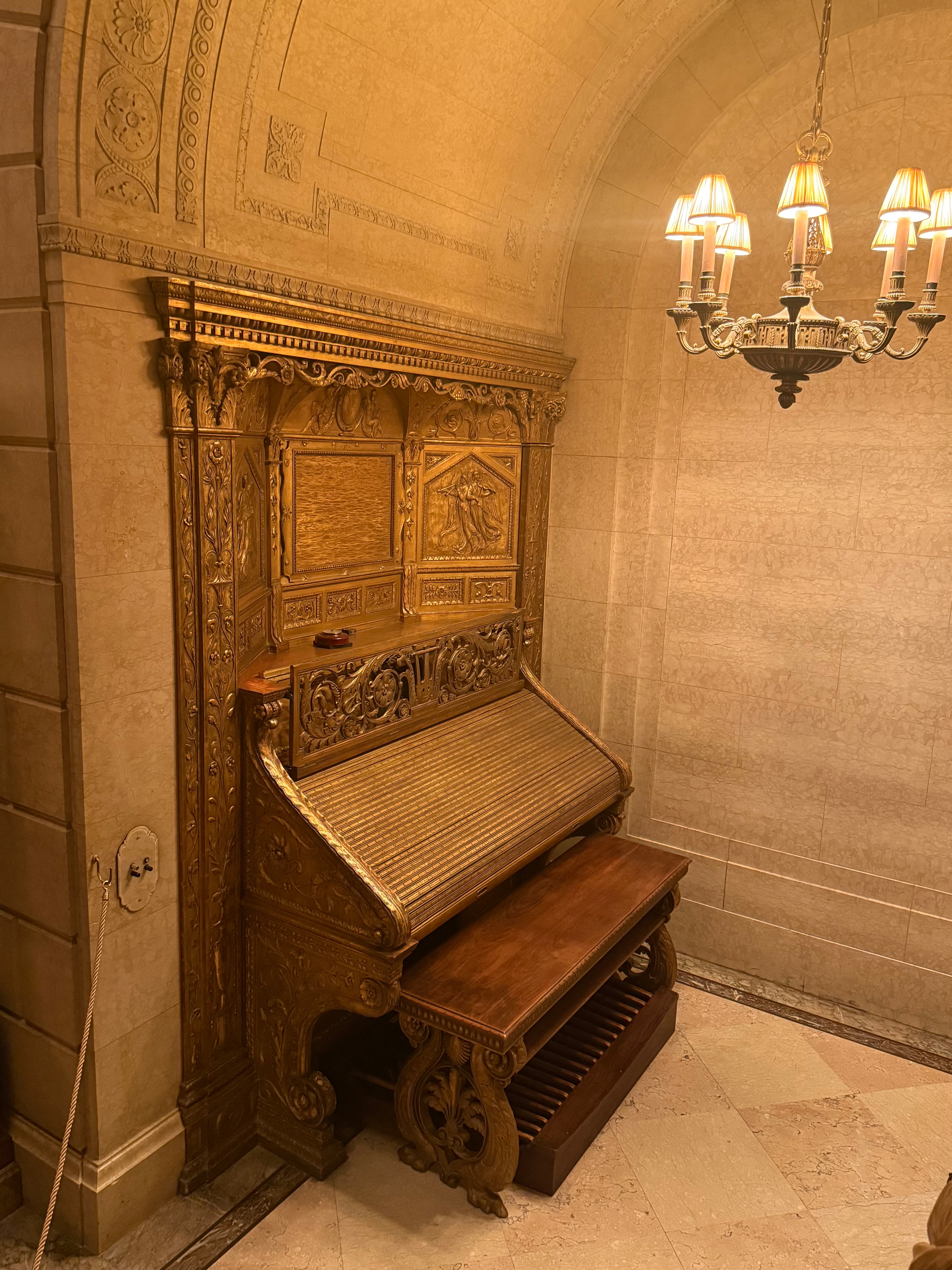
In the center of the mansion, the original grand staircase showcases the ornate organ installed.
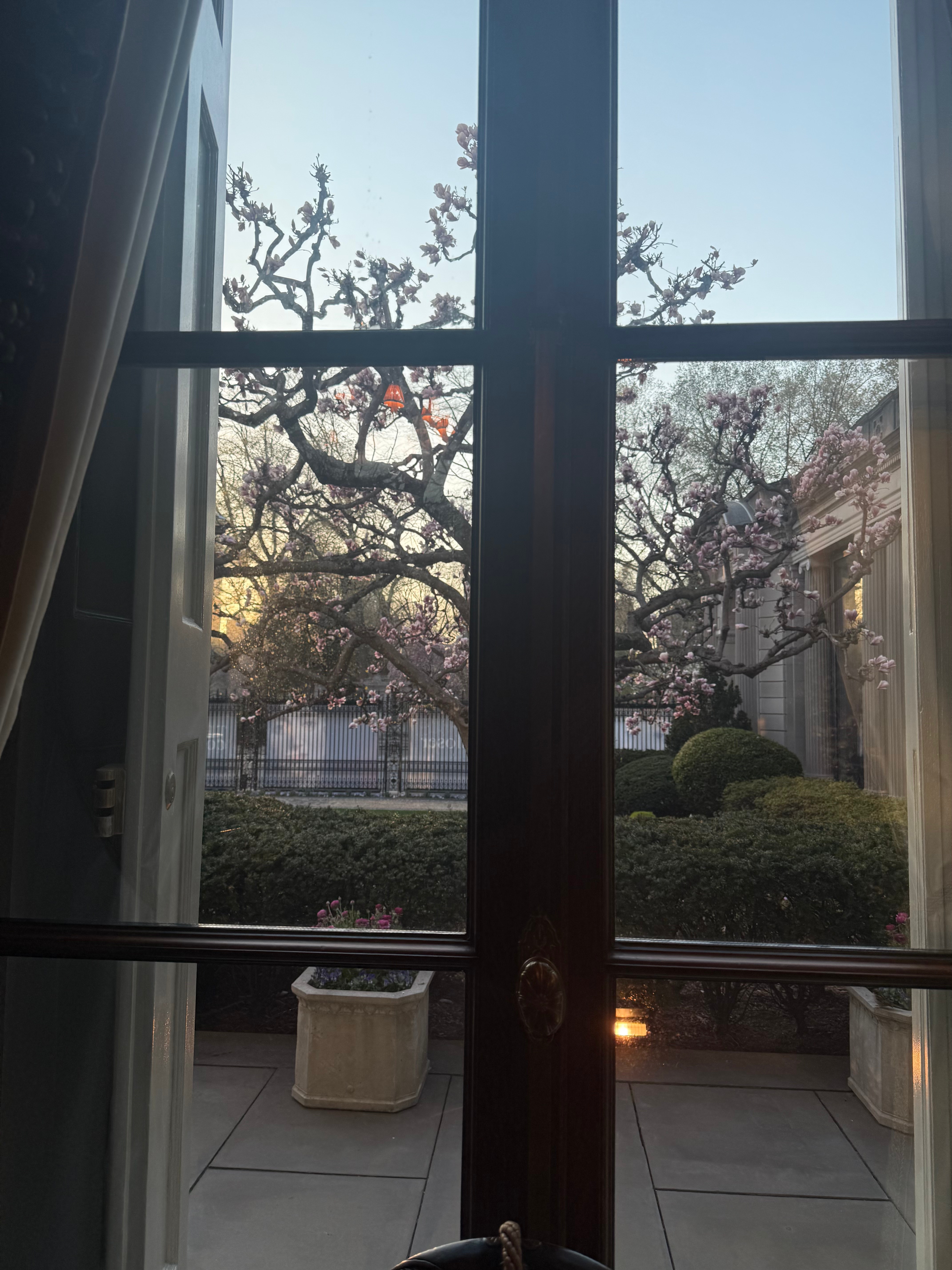
The location of the Frick Collection right across from Central Park, means that views from the rooms often highlight stunning views of nature to complement the interior art. Seeing the Collection as spring trees extravagantly bloom made many views out of the windows rival that of the stunning art within.
In the evening, I was fortunate enough to attend a member’s reception through the generosity of the same patron. It was much more crowded in the evening, so I preferred the morning experience overall. I was struck, however, with how the quality of the light at sunset changed the look of some rooms in the mansion. To truly appreciate the collection, I think it is important to come multiple times, and at different times of day, as this museum is a part of its urban environment, not insulated from it.
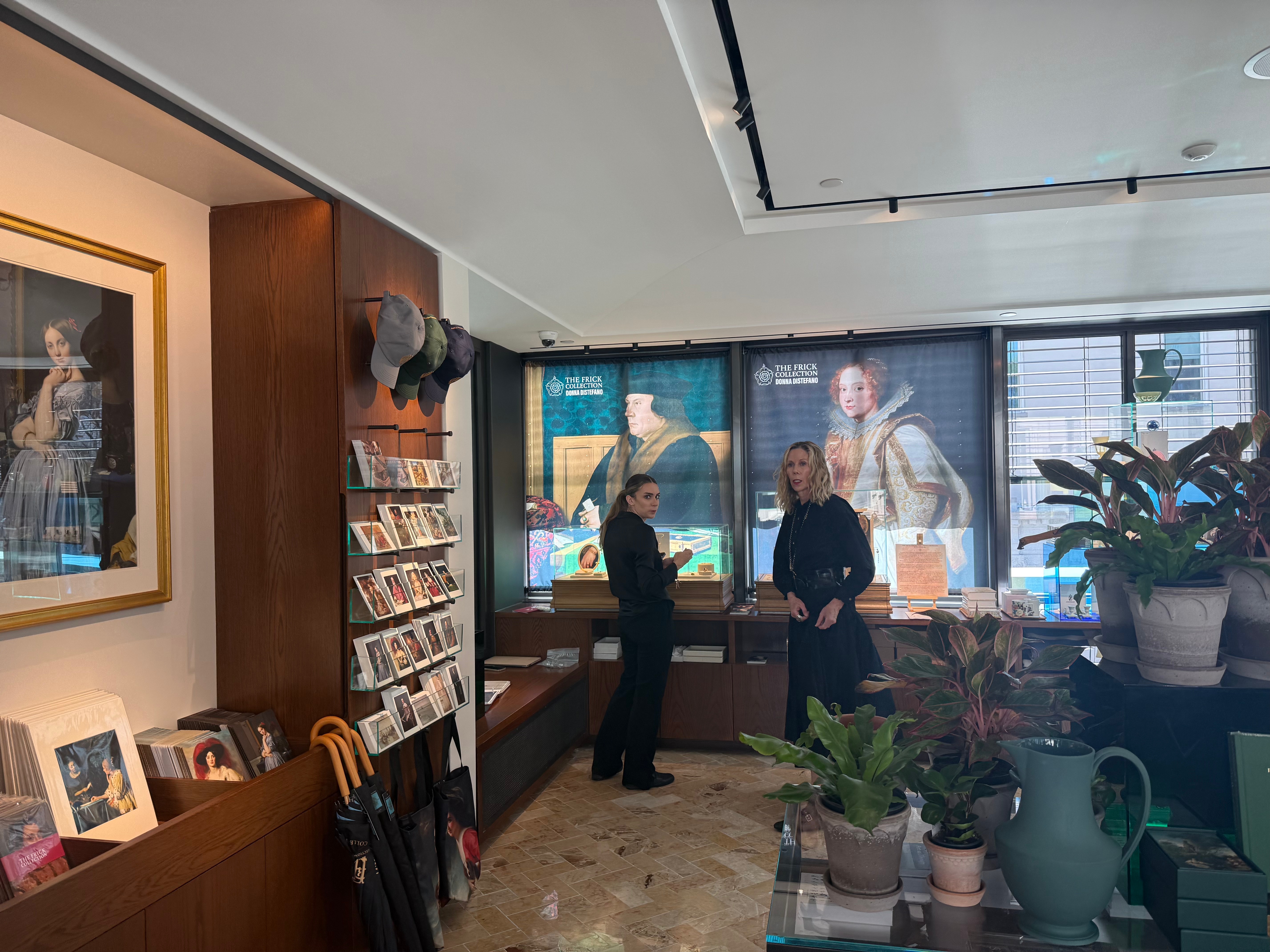
The new gift shop was tempting (see photos above).
To live in New York City is to enjoy almost an embarrassment of riches when it comes to experiencing art – visual art, music, theatre, and dance. The Frick Collection stands alone with its singular blend of the exceptional quality of the art itself, and the immersive environment enabling you to see this art within such splendid surroundings. Make a pilgrimage there when you can to feed your soul – and go back as often as you are able to see it change with the time of day and the seasons. Thanks to this renovation, the Frick Collection will be ready to welcome us for decades to come.
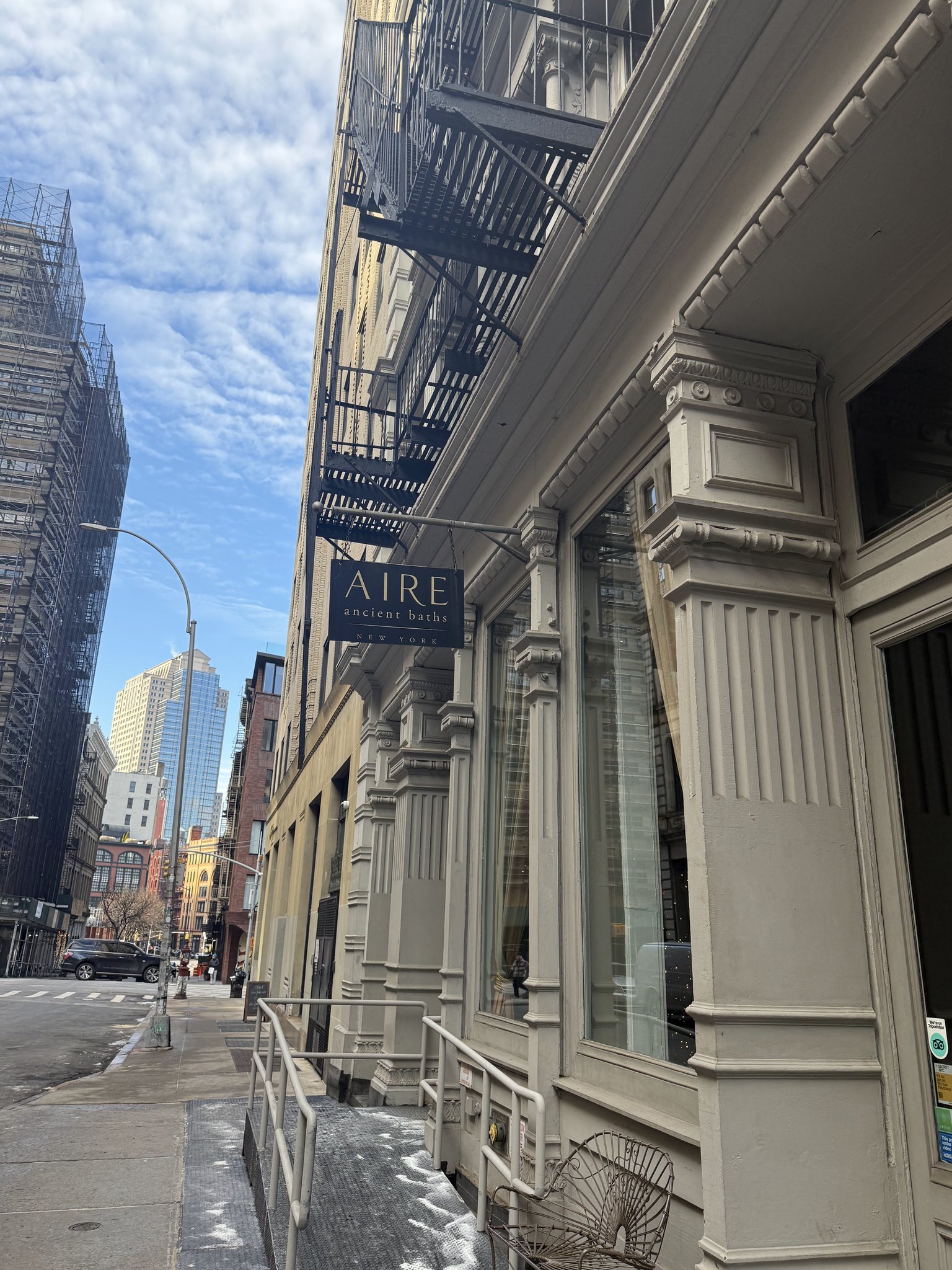
I do enjoy a great spa experience, and there are plenty to enjoy in New York City. Previously I have written about a day at the QC NY spa on Governors Island and just recently about having a Aescape robot massage at iLy Only Spa at the New York Lotte Hotel. But my daughters know that the the one gift that I am always thrilled to get is a massage plus baths experience at Aire Ancient Baths. I first went to Aire many years ago (maybe 2017?) and have been at least once or twice a year since then. It was my first massage experience when things started reopening after covid lockdown (we were still wearing masks). But I have never blogged about it because you are not allowed to take any photos whatsoever and your phone is locked up. The only photos I have are of the outside of the building. The original Aire in NYC is in Tribeca, and that was the only one I had experienced until one opened walking distance from me, on the Upper East Side, this month (March of 2025). They are not identical, and I kept comparing the two locations while in the new space. This made me think that even without my own photos I might be able to help others wanting to go but unsure of what location to select. All photos from inside the spas are taken from the Aire website.
The Tribeca location is the OG, and obviously the one I have been to the most. I see that the Tribeca location is closed temporarily for renovations, but should reopen in May. It’s located on Franklin Street, in a restored 1883 building that was once a textile factory. As with all Aire locations, it is inspired by baths of the ancient Roman, Greek and Ottoman traditions. When you enter, you immediately note the luxe and relaxing vibe – dimmed lights, nice scents, big sofas with comfy throw pillows, infused water and warm mint tea to sip. They always send an email to check in the day before, and if you have done that, you will just need to show an ID and take a rubber bracelet or bracelets to wear (these let the staff know how long you will stay in the baths and if you are having additional treatments like a massage). Shortly you go back to the changing room (separate for men and women), where you are given a locker (you lock and unlock with a code you set), robe, little black neoprene booties to wear to prevent slipping, and a towel for afterwards. You wear your own swimsuit, and put the robe over it. You are required to leave everything behind in the locker – especially your phone.
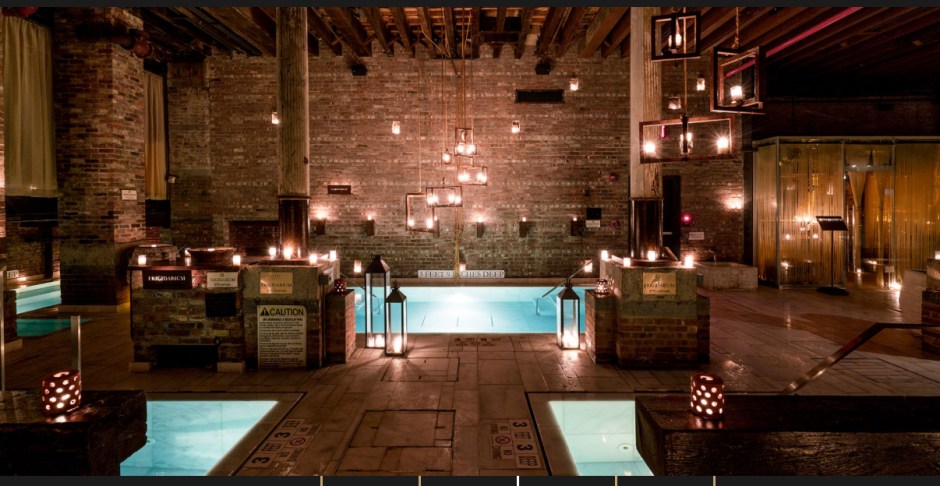
The ambiance inside is magical. It is lit with thousands of flickering votive candles (more, I think, at Tribeca than at Upper East Side), and there are multiple pools to experience. If you have not been before, an attendant will show you around the different options. There is a steam room, a vigorous whirlpool, a very hot pool, a cold plunge pool, a “tepid” pool which is roughly body temperature, and (my favorite) a floating salt pool. Before you get into the salt pool, there is a shower and you can scrub with a gigantic pile of salt for exfoliation. Then in the “floatarium” you can literally float, weightless. I find it possible to anchor my head along the rails at water level and just float. With your eyes closed, it approximates a sensory deprivation experience. I generally start out in the steam room, go to the whirlpool, alternate hot and cold pools, then relax in the tepid area (there are multiple semi-private nooks to relax in), but spend most of my time in the salt pool. There are also heated stone loungers where you can enjoy infused water or mint tea.
If you have a massage or other experience (scrub, etc) booked, they will find you when it is time to go and have that. The first time I was at Aire, I was slightly anxious about “missing” it and not knowing what time I will be taken to that, but now I can completely relax and know they will come to me when it is time for my massage. There is a second level area at Tribeca that holds the massage rooms, and I have never had anything other than an exceptional massage at Aire. When done with that, they will let you know if you have more time to relax in the pools. You generally have 90 minutes or more in the pools, whether you have the pools-only experience (which I have only done a handful of times) or if you have a massage (your overall time will just be longer). They come around with singing bowls to chime every hour and you will be told when your time is up (on the second chime, for instance)
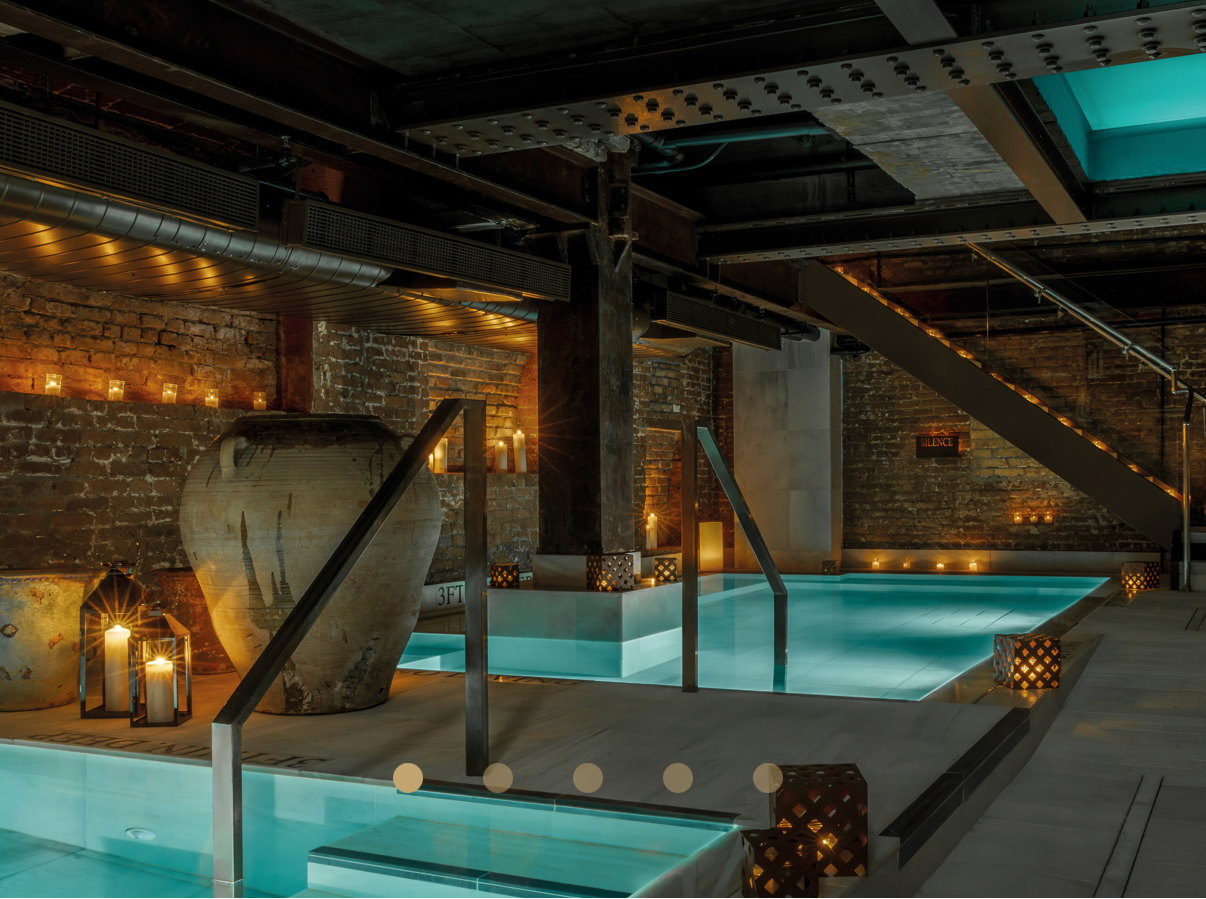
Now some details about the Upper East Side new location before concluding with some thoughts that apply to both locations. The new Aire is on E 61st Street, in a 120-year-old building that most recently was a storage facility for artwork MoMA did not have on display. This location is on multiple floors, while the Tribeca location is generally on one level (except for the massage area). It has the same pools, but things are laid out quite differently. The vigorous whirlpool was more enjoyable to me at this location because it has slots big enough for one person to rest in and almost recline, leading to why the attendant called this one a “aqua massage.” The tepid area doesn’t have the semi-private nooks to relax in, so I prefer the Tribeca one. The steam room and hot and cold plunge areas are relatively equivalent at the two locations. The biggest different is in the salt pool, which on the Upper East Side is a level up from most of the other pools and has a clear floor so that it appears to be suspended from the air. However, the pool is not as deep (perhaps the weight of the water was too much to suspend if it were deeper) which to me makes the floating a little more difficult. The Tribeca salt pool is probably 3 feet deep and I would guess the UES location is 12-18 inches deep at most. While this pool looks cooler, I prefer the Tribeca pool. Like Tribeca, they also have heated stone loungers and infused water/mint tea at the UES location near the pools.
The massage at the UES location was just as excellent as every one I have had at Tribeca. Areas where I would say Aire excels in both locations are: customer service (the staff is extremely helpful and pleasant, from the locker room attendants to those checking you in to those in the bath area – the last time I was there someone accidentally took my robe from where I had it hanging up near the steam room and someone had a new one for me within minutes), getting it as a gift experience (tip is included, so if you are given a gift box, it is all-in), and the locker room experience and inclusions to help you get cleaned up and ready to leave (there are showers with L’Occitane shampoo, conditioner, and shower gel; a machine to dry off your swimsuit before putting into a waterproof bag to take home; hair dryers, etc.). Both locations are wonderful about keeping the experience tranquil by making sure people are quiet if they are with someone (large signs note “Silence” and I have seen staff gently shush people who are talking too loudly). The one issue I would note is that often they book up way in advance, so there are times I am given a gift experience and it might be a few months before I can enjoy it. On the other hand, I appreciate that they limit numbers so that it never feels crowded at all while enjoying the baths.
So which location is better? Both are excellent! For me, it is going to be hard to beat the location of the Upper East Side spa as I can walk to and from my experience. I do prefer the salt pool at Tribeca, but prefer the aqua massage pool on the UES. If you want to try one, go to the one more convenient for you – or better, yet, try them both!
I didn’t grow up in New York City, and like so many others, when I was a child seeing the ball drop in Times Square on television was a normal part of my routine as one year passed into the next. I have now been fortunate enough to live in NYC for over 30 years now, for many of them just a few blocks from Times Square itself. Have I ever waited all day in Times Square to see the ball drop live on New Year’s Eve? No, I have not! But due to the pandemic I was able to get quite close to the ball as it dropped in 2020 without waiting, and there are many other events in Times Square at the end of each year that have now become a regular part of how I process the year past, and anticipate the year to come. Here’s my take on how you can be a part of the Times Square NYE celebration, with even a few ways to participate if you aren’t in the city.
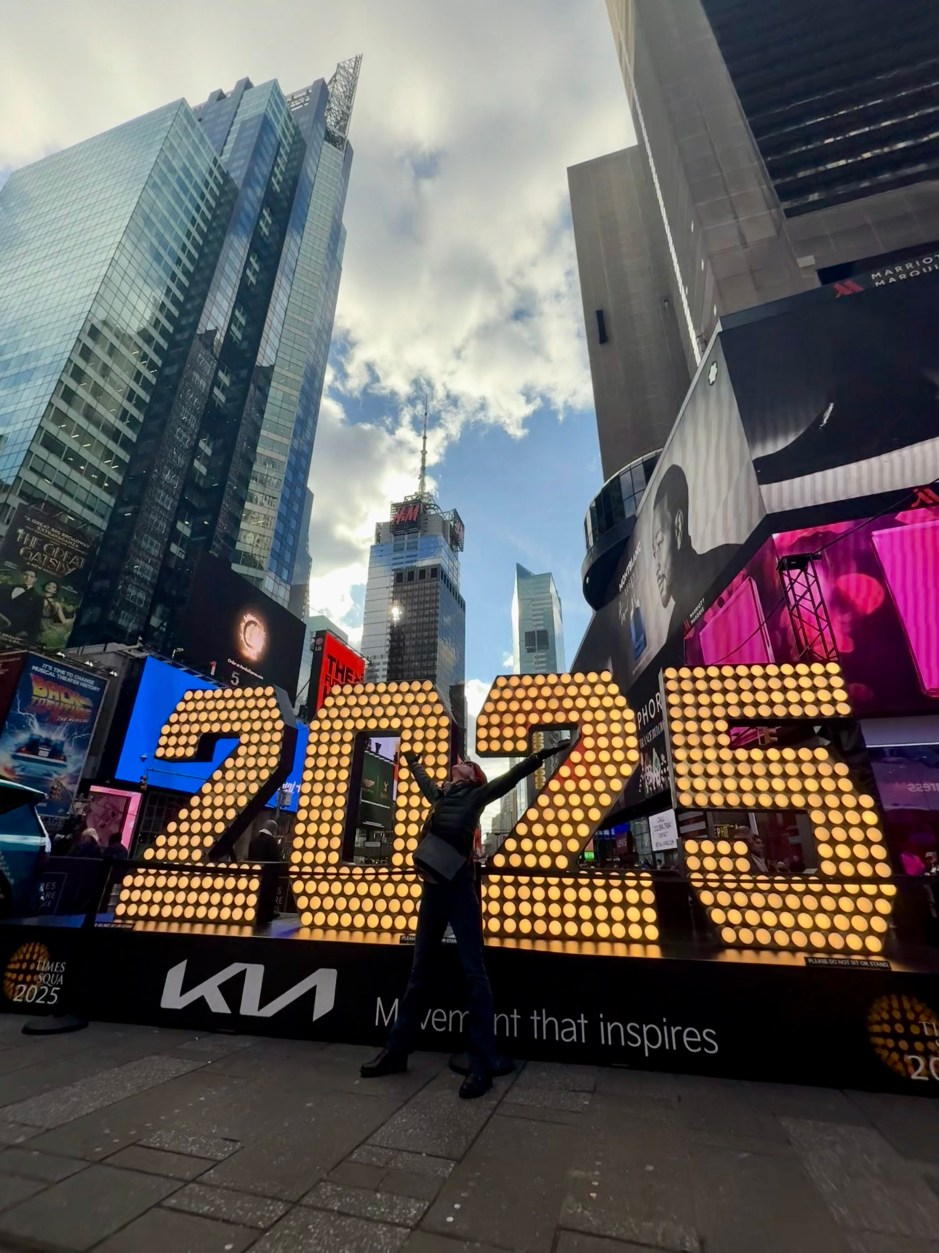
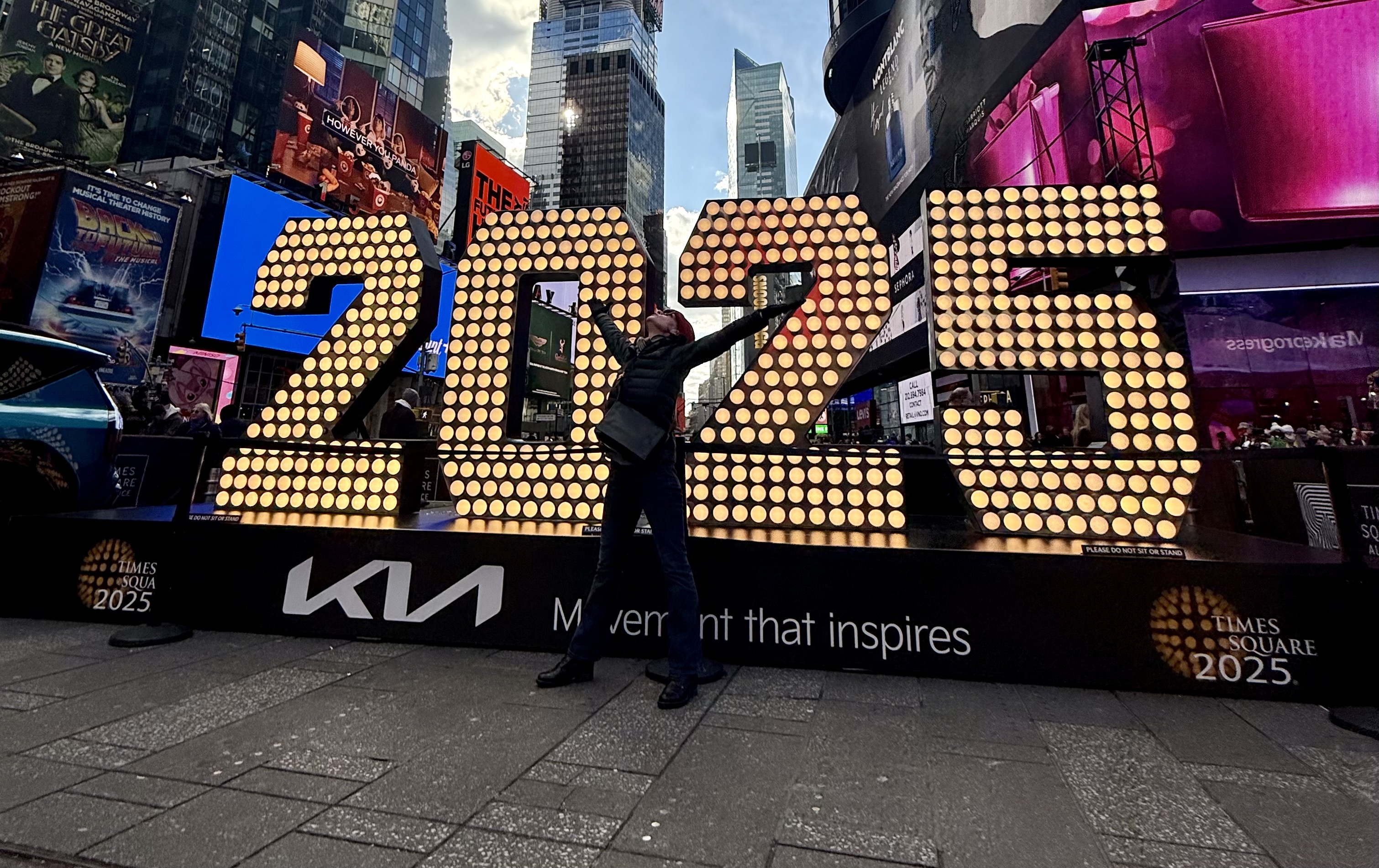
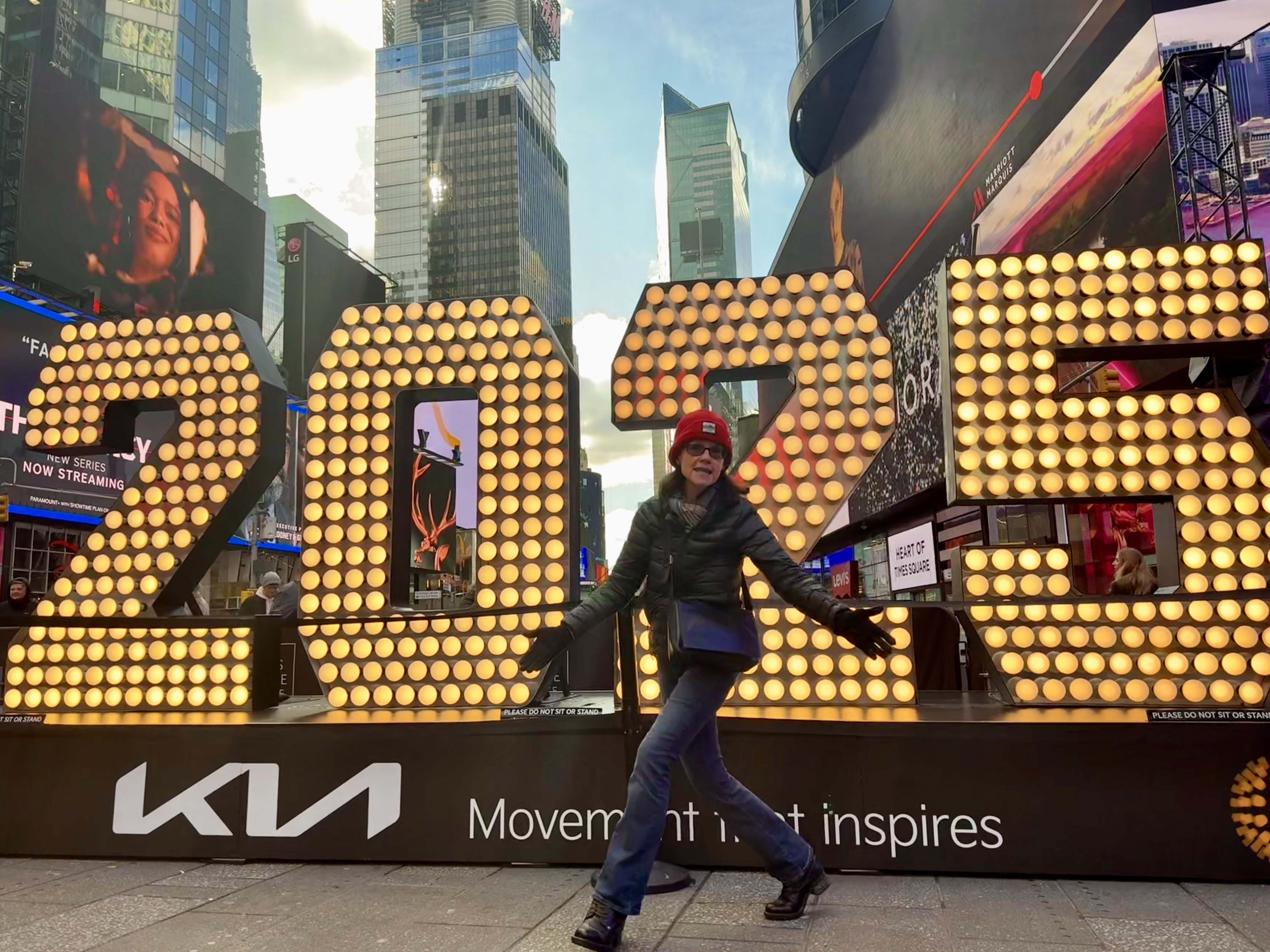
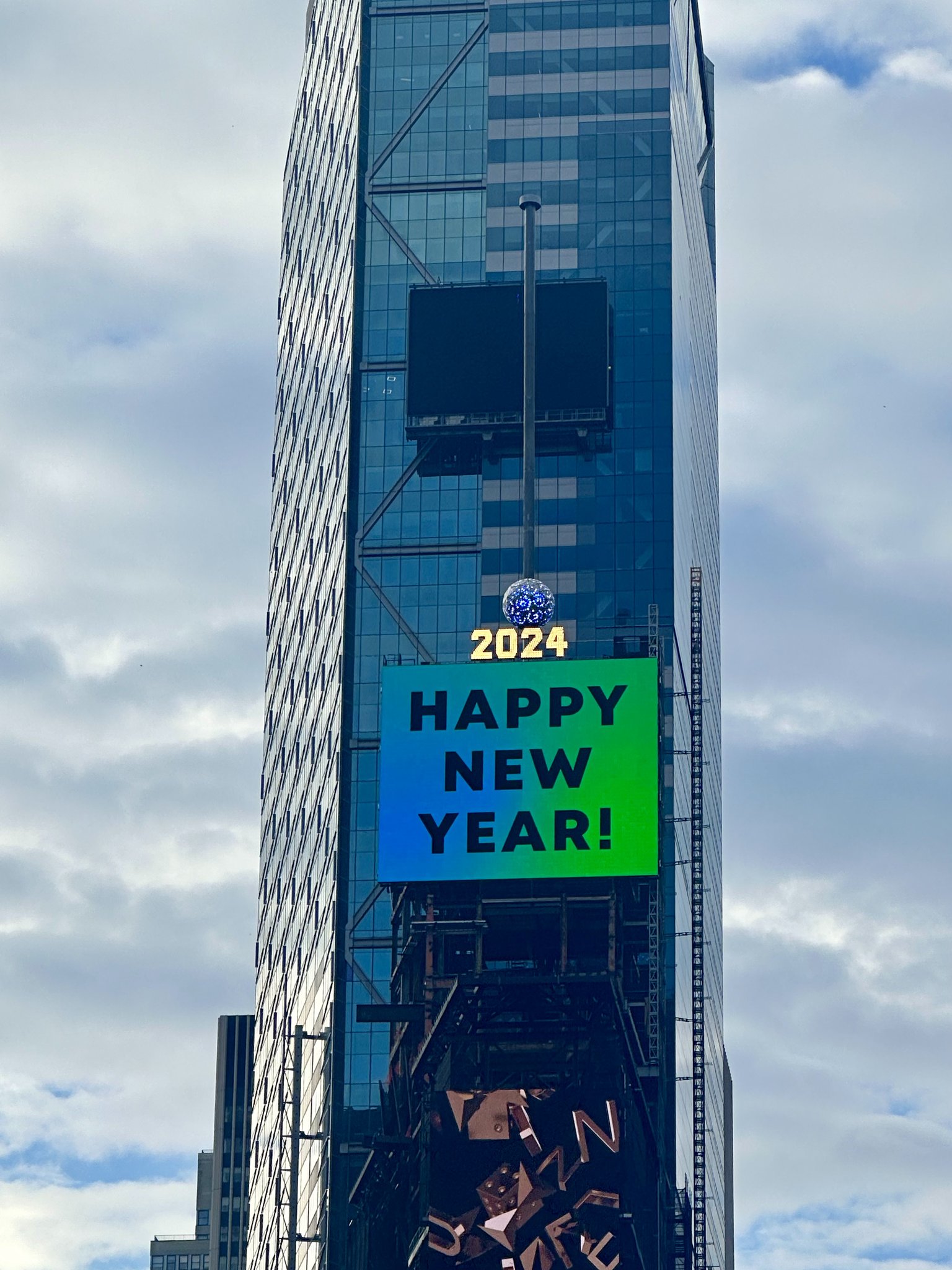
My favorite year-end event in Times Square is the arrival of the numerals that will replace the previous year’s numbers. They sit on the ground in Times Square for just a few days, and you can take your photo with them. You can find out when they will be available each year on the official Times Square website, but they are generally there for four or five days, and around the middle of the month (for 2024, they were there December 18-22). You might have to wait a bit for your turn at a photo, but if you can be there earlier in the day the area is much less crowded.
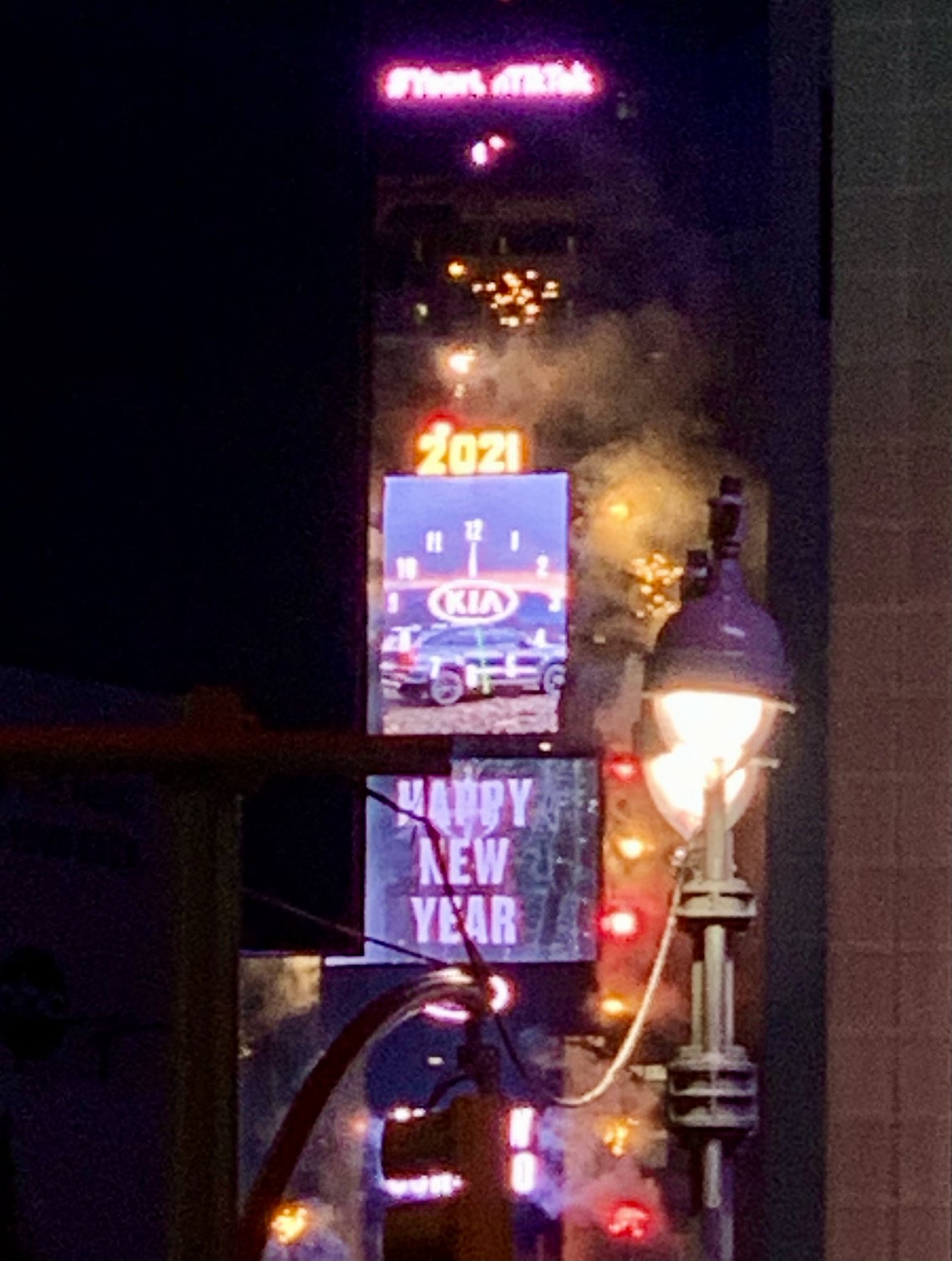
I think this is a relatively recent event, and the first year I remember seeing it (2018, to see the 2019 numbers) they only had the last two digits there (see above). Now the full year is on display for these few days.
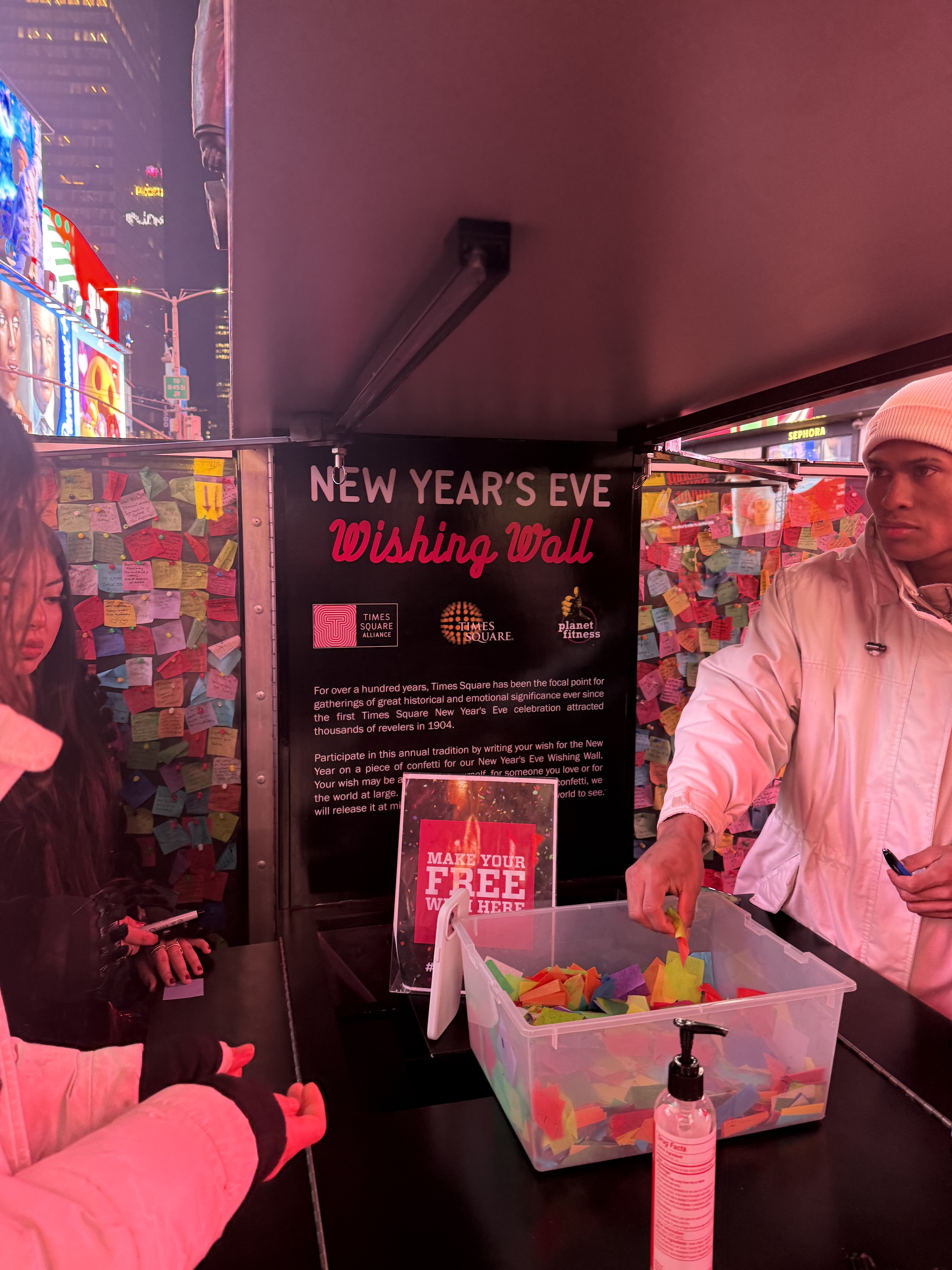
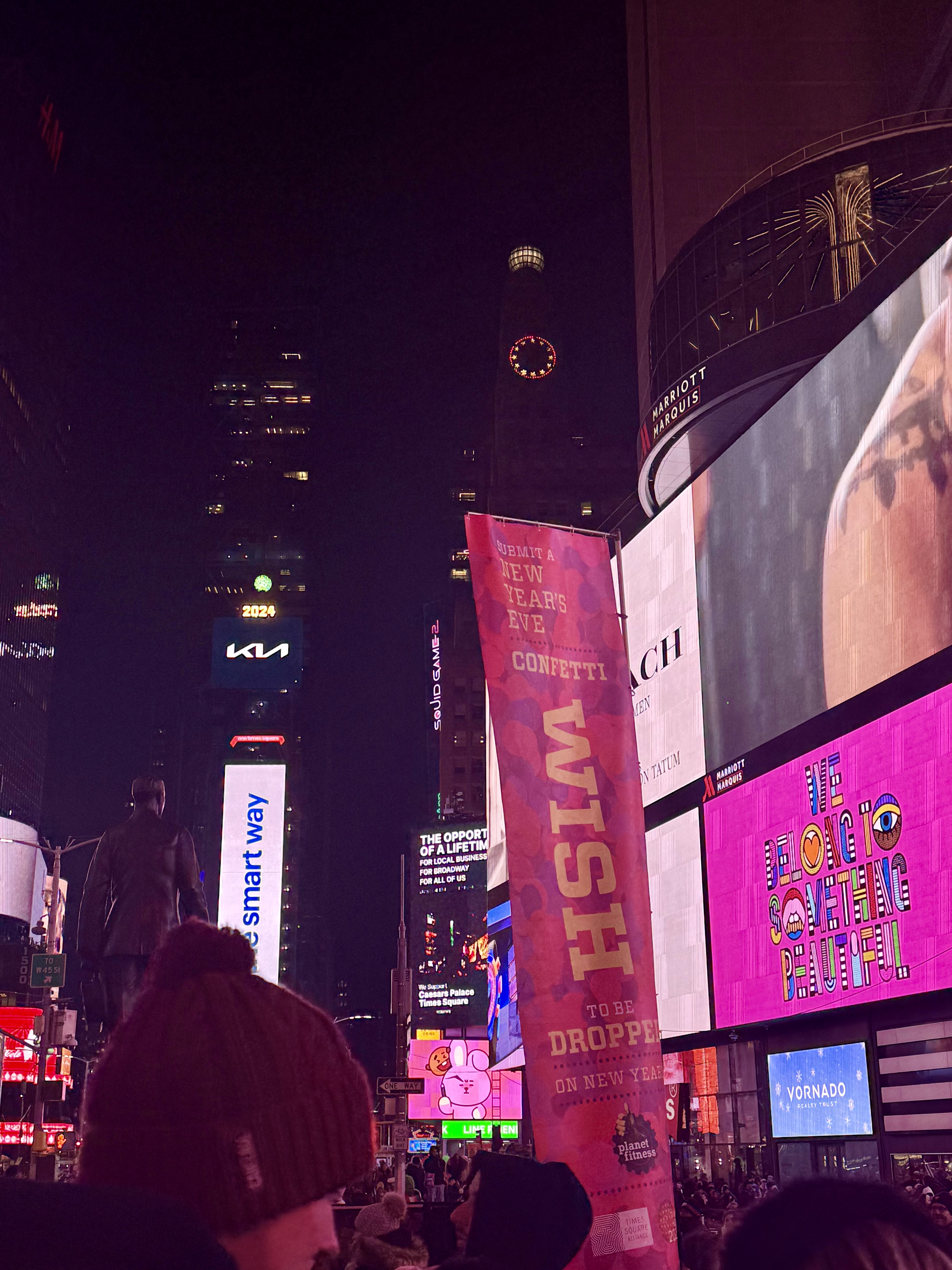
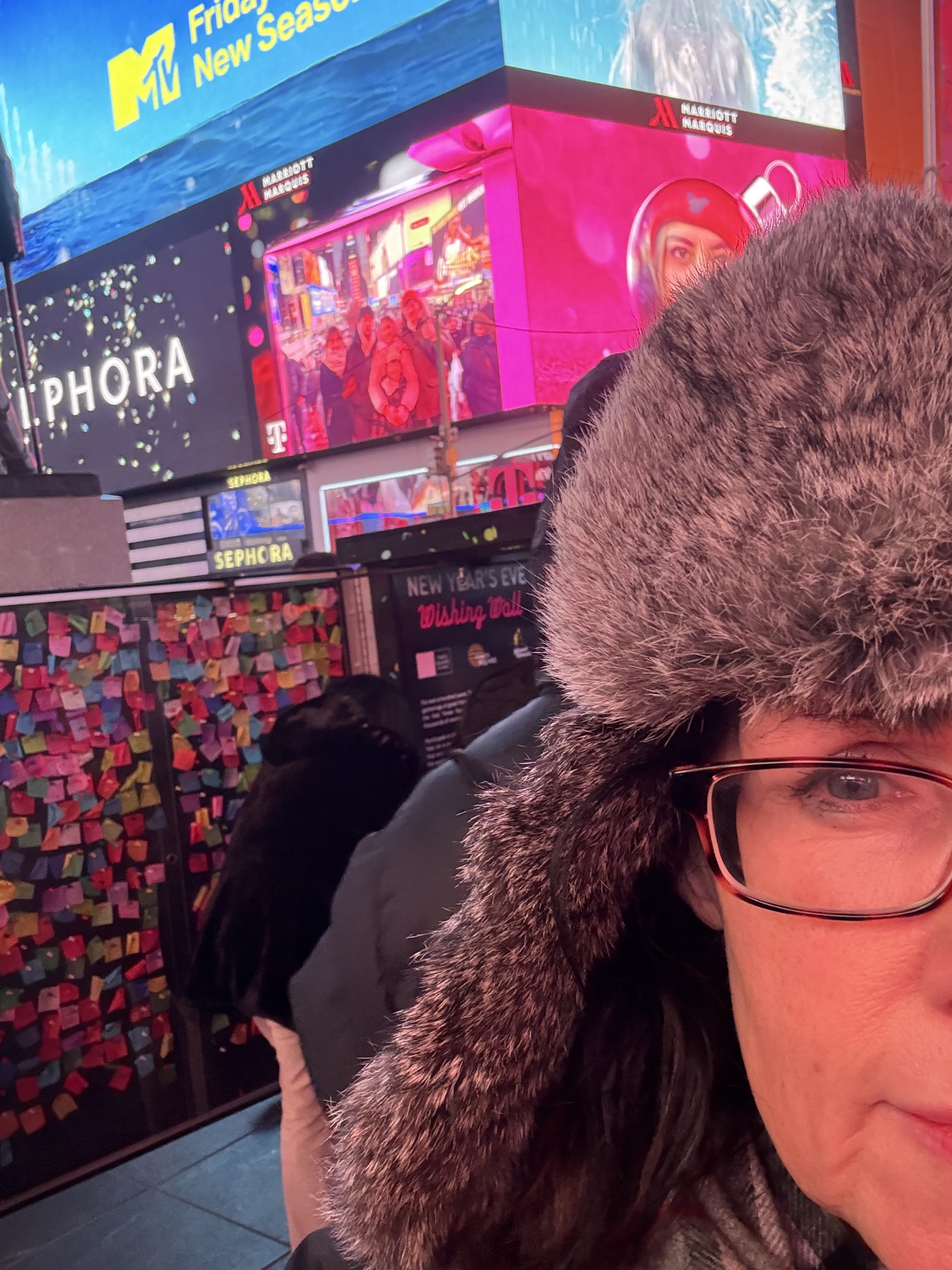
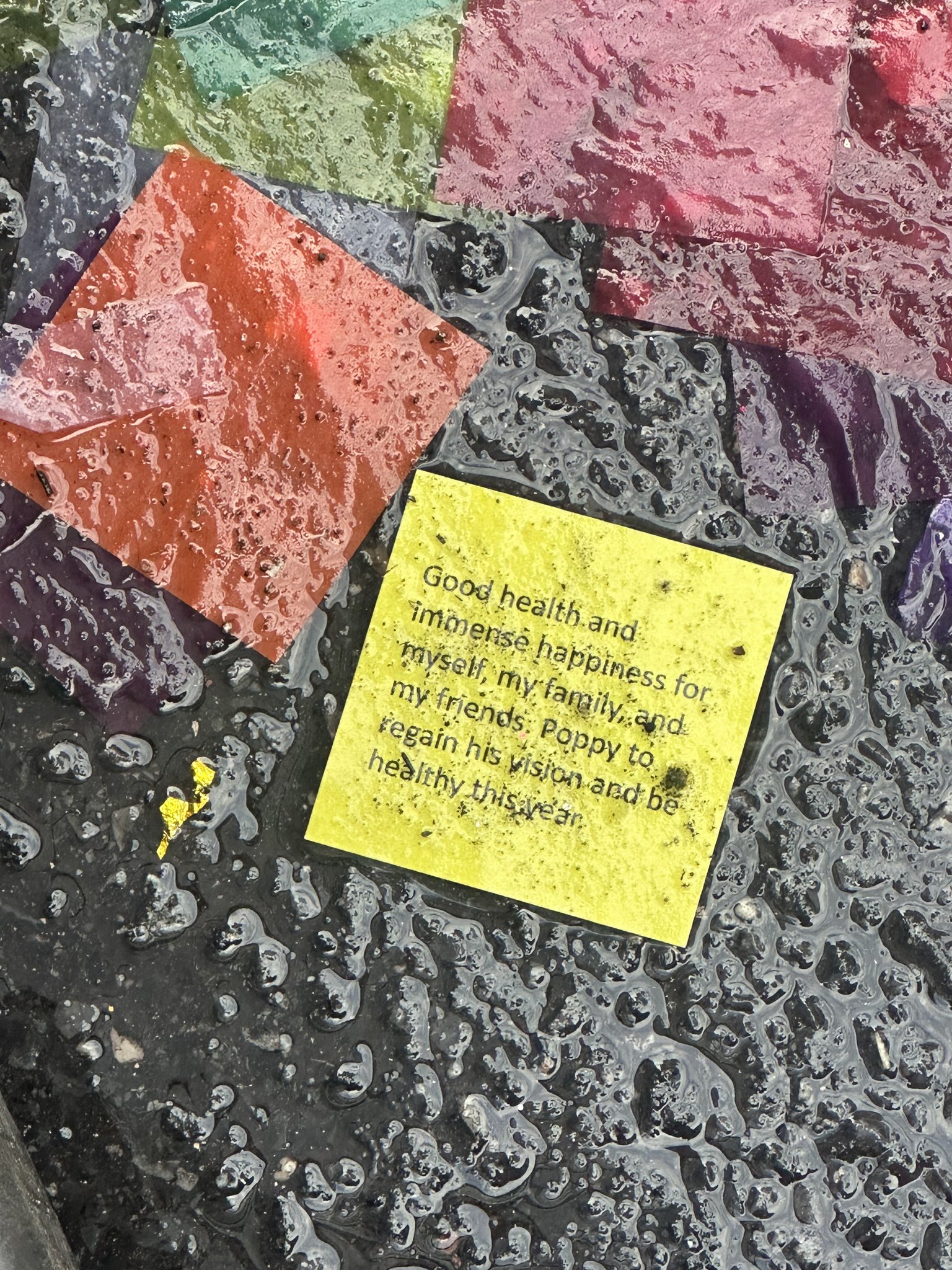
Another activity in Times Square that I really love is the New Year’s Eve Wishing Wall. For most of the month of December (for 2024, December 2-29) you can write wishes on little slips of tissue paper, and they are saved to throw among all the confetti (over one ton is dropped!) that is released at midnight on New Year’s Eve onto Times Square. I find this to be a wonderful way to crystallize my hopes as I enter a new year. This is fun to do in person, of course, but the Times Square Website also allows you to type in wishes from anywhere and they will also be part of the confetti (find it here).
Another fun event is Good Riddance Day (usually December 28, but you can check the Times Square Instagram each year to confirm). More or less in opposition to the cheerful Wishing Wall (haha), for this you write down things you want to leave behind in 2024 and not take with you to the new year. And they shred or even BURN THEM for you . . . good riddance!
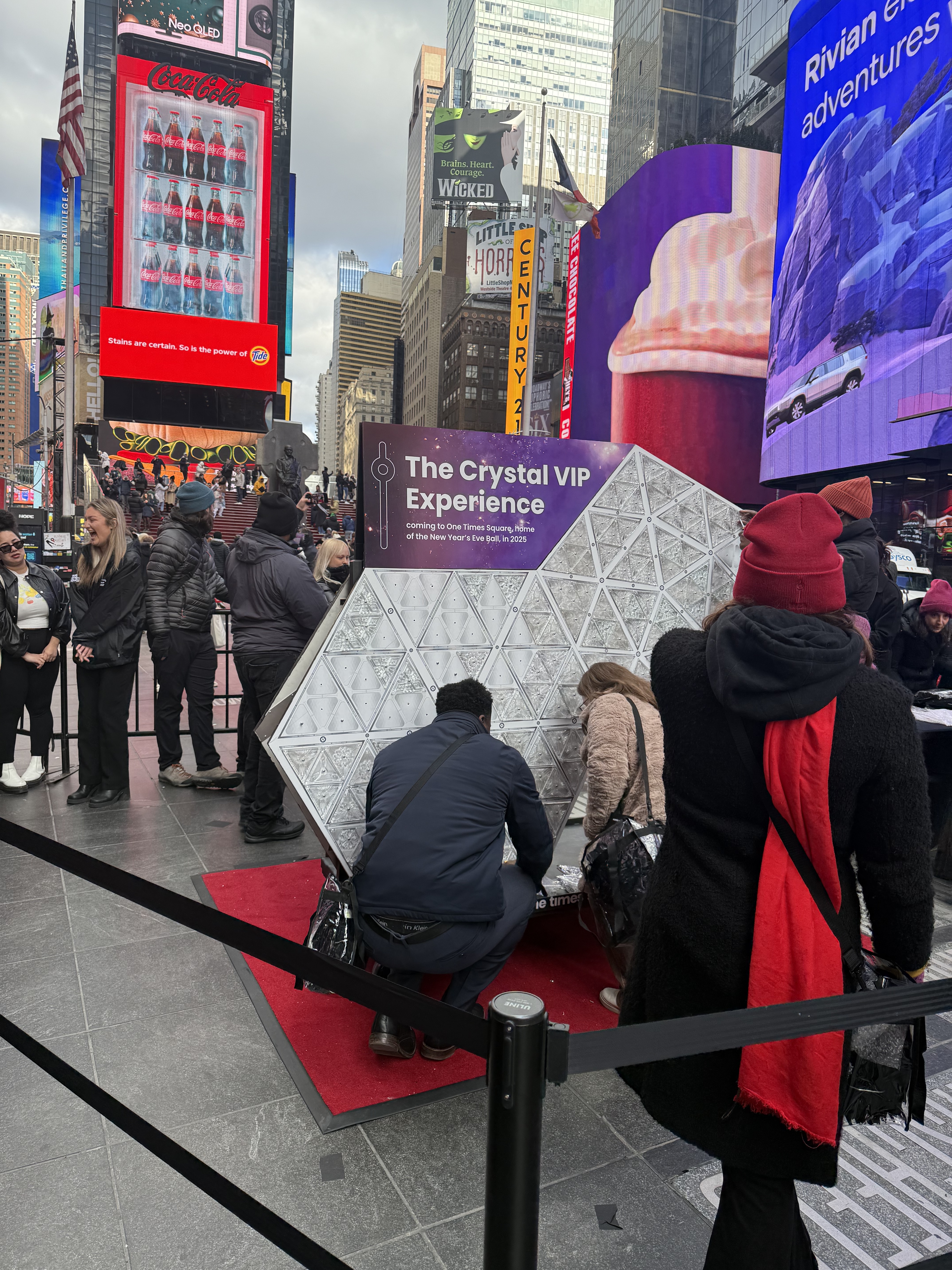
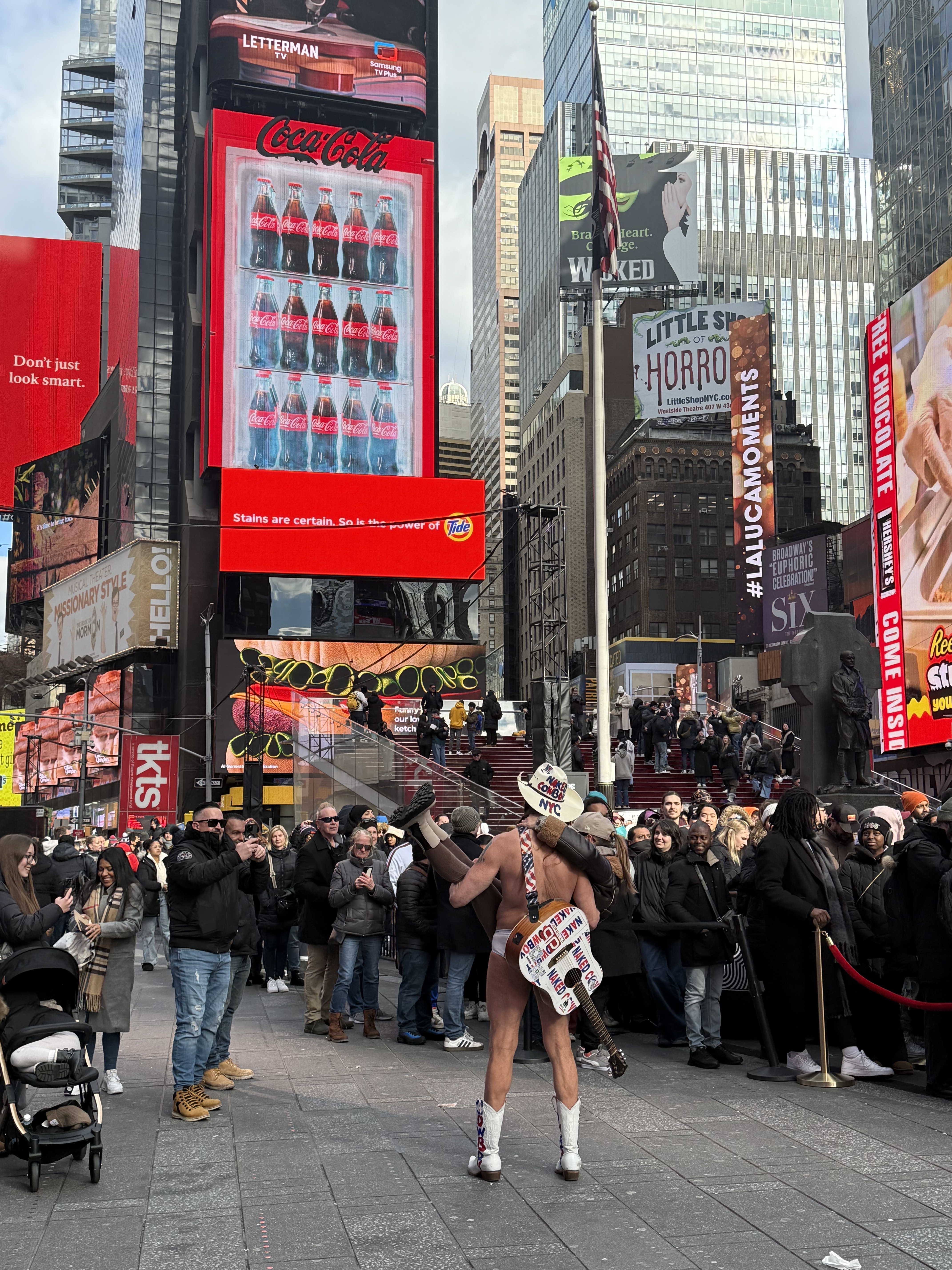
No guarantees that they will do this every year, but in 2024 on December 19 you could swap out old crystals on the actual Times Square ball for new ones, and you could keep the old crystal as a keepsake. Lines were long, but hey, at least the Naked Cowboy was there for entertainment.
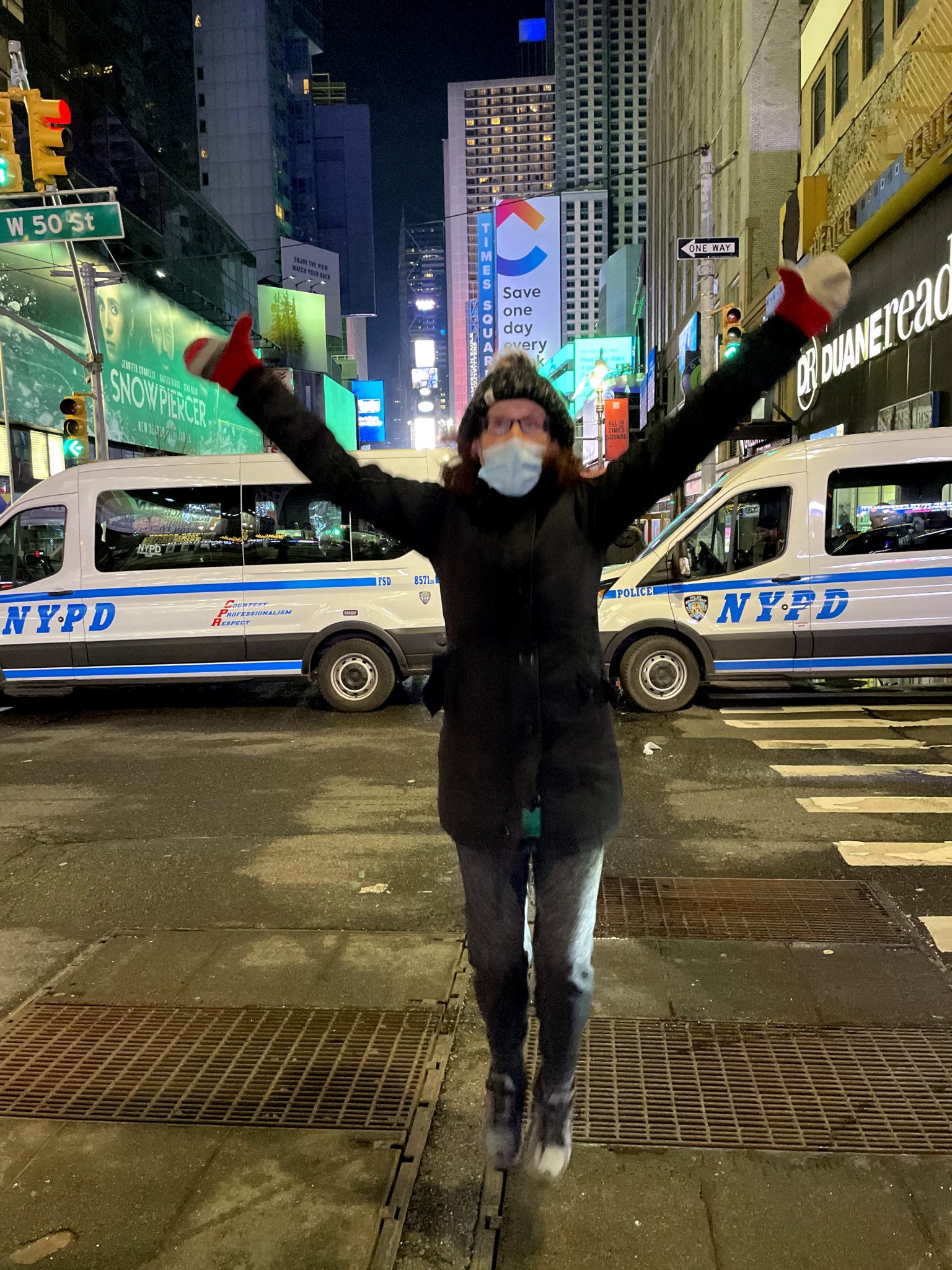
The big event of course is the actual ball drop on New Year’s Eve. The area around Times Square becomes entirely blocked off earlier in the day and everyone who enters this area (roughly 40th to 59th Streets, from Sixth to Eighth Avenues) goes through airport-style security. If you are interested in going, all your questions can be answered in the FAQ section of the official Times Square website, but I will answer the most important question here: no, there are no bathroom facilities. During the height of the covid pandemic in 2020, only a few blocks were cordoned off and there was no official viewing area. That year I was able to get just a few blocks away, and with no wait, and I saw the actual ball drop from a few blocks away on 50th and Broadway.
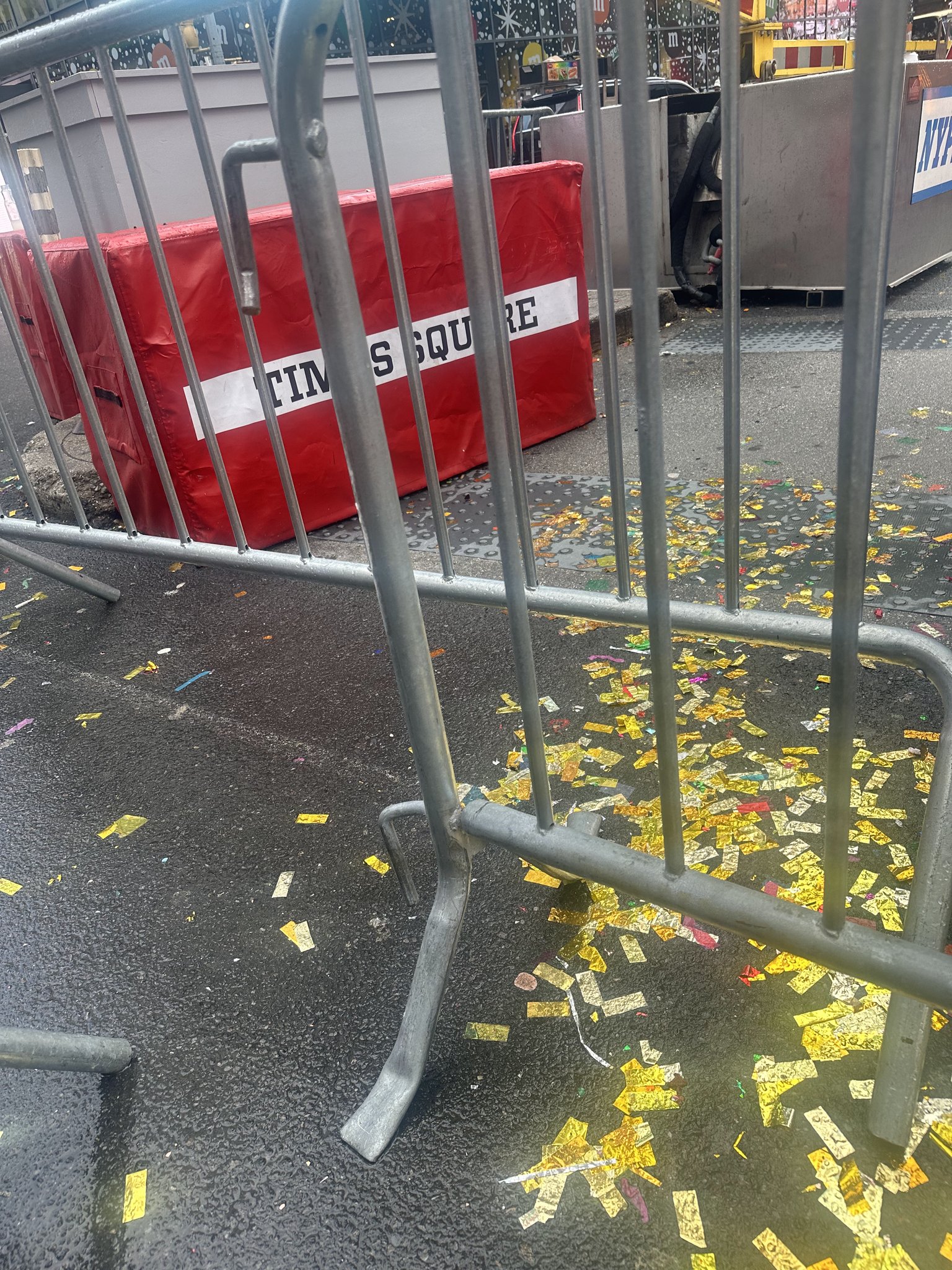
I enjoy going to Times Square the morning of New Year’s Day. It’s eerily quiet, and although the clean up is fast and efficient, you can still see remnants of the confetti drop the night before. I know it’s not cool to like Times Square, and there are certainly times I try to avoid it. But that little girl inside of me who looked longingly at the ball drop on television is still there, on some level, and I love that I have been able to find a way to make the reality of Times Square a part of my end-of-year routine.
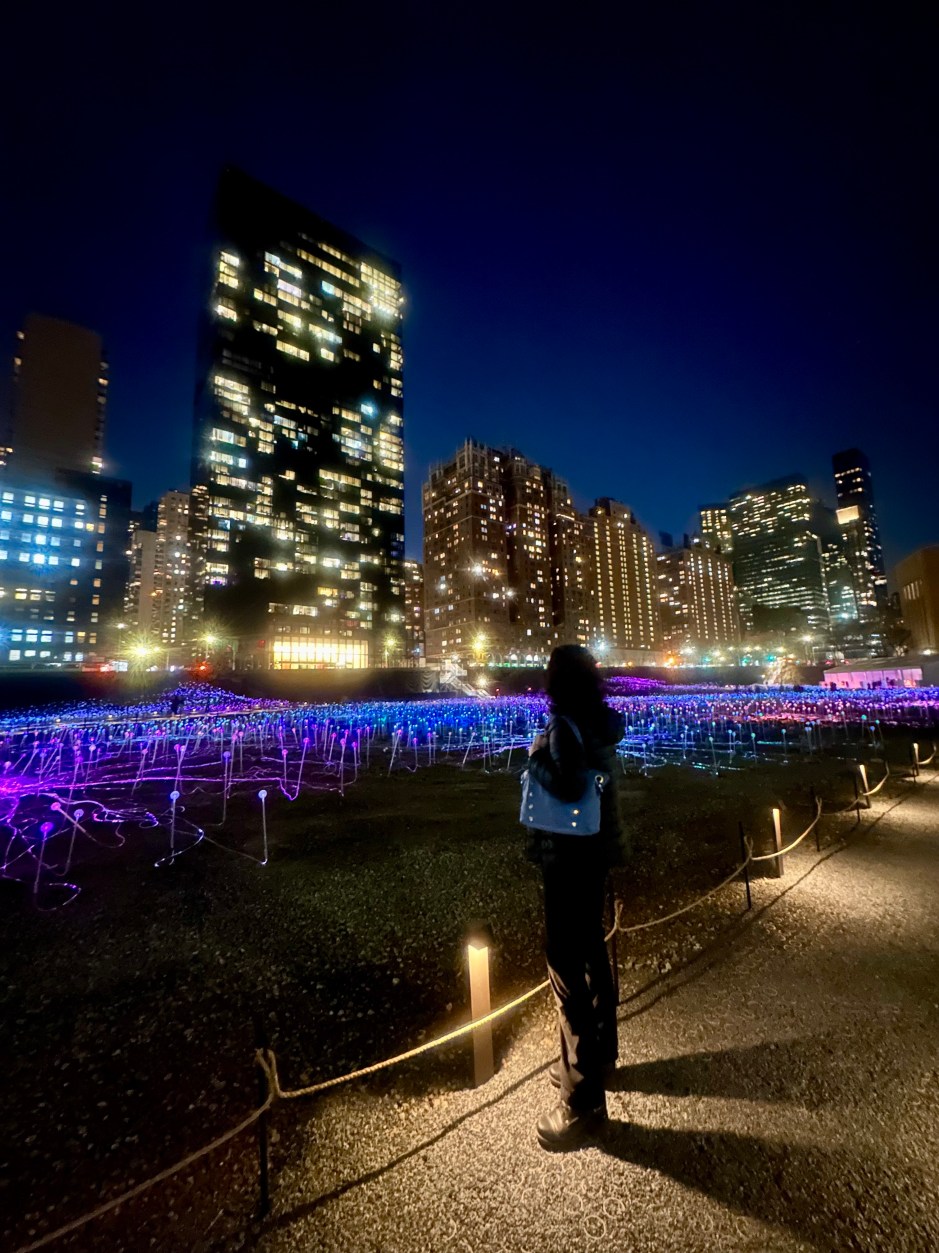
Walking around Manhattan’s East Side near the United Nations, there has always been a huge empty undeveloped (more about that later!) lot between E 38th and 41st Streets, from First Avenue to the East River. Beginning earlier this year, an enormous light installation has filled that space, Field of Light. I have been there twice and it is an unusual and charming experience.
The installation is free to enter, but you need to either have timed tickets or wait in a standby line. All of the procedures are pretty clear on their website. I have not seen long lines for standby, so even if you don’t have tickets I think your wait would be relatively short. You go through airport-style security, and then a few posters to set up the idea behind the installation and give information about the artist.
The artist, Bruce Munro, is drawn to creating large light installations, and this one in NYC is his largest to date. He notes that with buildings on three sides and the East River (and FDR Drive) on the other, the field is almost like a box filled with light.
From inside the installation, you can see the Chrysler Building, while the apartment buildings and the United Nations building surround the field, adding their own element of light.
Each bulb and stalk of light is interconnected to others in complicated tangles. The lights slowly change color over time as well.
There is a spider-web quality to the way the lighted strands snake around the bulbs on stalks.
This installation is sponsored by the Bjarke Ingels Group, which upon a little investigation, has plans for a megadevelopment in this space along the East River. A lot of it sounds good – affordable housing, a public park roughly the size of Bryant Park (the park behind the main branch of the New York Public Library), a museum (no idea what its focus would be), a dog run, play areas for children – but also a hotel … and an underground casino. See here for more details about the proposed development, which has to receive approval and licensing and hopes to by next year. The idea for the area shows a few tall buildings which would definitely impact views (and values) in Tudor City. Along with the proposed Times Square Caesar’s Palace Casino (see more about this here), and the question of whether a casino will be allowed in Hudson Yards, this casino raise the question of what NYC wants to be going forward. Proponents note the possibility of increased tourism and tax revenue, while opponents note that tourism based on gambling in places like Las Vegas and Atlantic City potentially creates a different atmosphere and clientele in those neighborhoods with a casino.
New York City is constantly changing, and there is a casino near JFK airport. I do wonder though what allowing casinos in Manhattan will change about the city. At this point New York State as announced that it will grant three licenses for NYC and/or it’s suburbs, and there is significant pushback against having a casino in a residential neighberhood. But . . . stay tuned! I enjoyed Field of Light but feel we need a little illumination (haha) about whether Manhattan wants casinos.
The Hudson River Greenway along the Hudson River on Manhattan’s West Side is accessible for walking and biking from Battery Park all the way north to Inwood Hill Park at the top of the island. It keeps being expanded and is a destination for residents and visitors alike with recent additions like Little Island Park, Pier 26, and Pier 57. On the other hand, while the riverfront area along the East River has some lovely patches (like the John Finlay Walk next to Carl Schurz Park in Yorkville), there are also stretches where there is no waterfront access. There is a new plan to connect all of the East River waterfront, similarly to that seen on the Hudson River, and a new section of this was recently opened, beginning at East 54th Street and continuing up to connect an existing path at East 61st Street.
Entering the new stretch at East 54th Street, the views are instantly gorgeous. You can see south along the East River, as well as east to Long Island City.
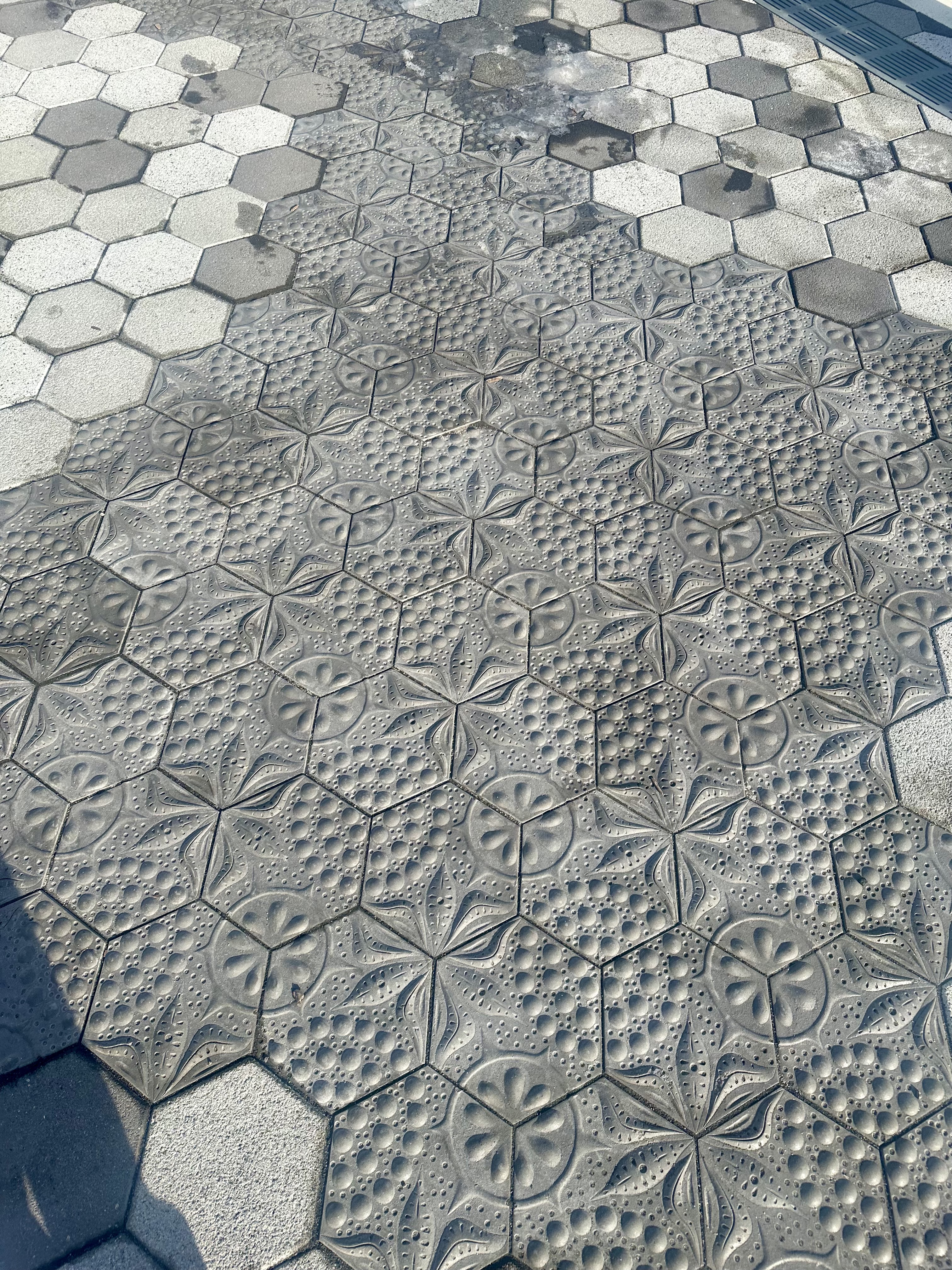
The tiling on the walkway is inspired by diatoms, single-celled microscopic algae. They are the base of the food chain in the river, and convert sunlight into energy. There can be hundreds or even thousands of diatoms in one spoonful of East River water. For more details about the use of these diatom-patterned pavers, check out the description from the artist who was involved, Stacy Levy.
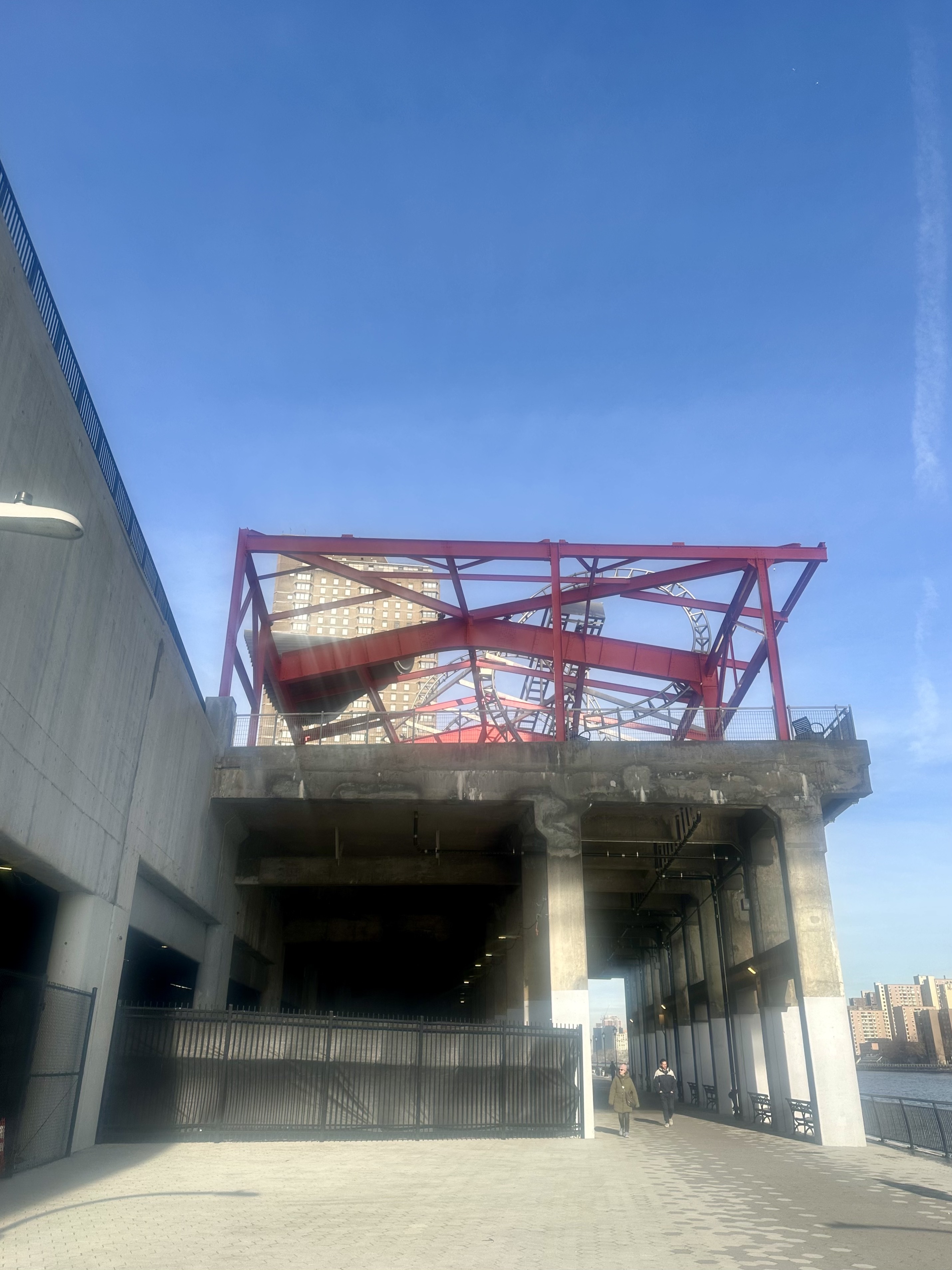
As you start to connect to Andrew Haswell Green Park at East 61st, you can’t help but notice the thing that looks like an abandoned steel roller coaster track. In fact, it is an artwork by artist Alice Aycock, called The Roundabout. A little more about that as we exit the new walkway next to it!
You get some thrilling views of the Ed Koch/Queensboro/59th Street Bridge, especially as you walk under it.
If you choose to exit at East 61st rather than continuing north to the existing Andrew Haswell Green park, you get an up close look at Roundabout. It covers the roof of a defunct Department of Sanitation Building, and was inspired by the weightlessness of Fred Astaire’s dancing! You can read more about this artwork here.
The eventual goal of the East River Waterfront project is to have a continuous loop around all of Manhattan next to the waterfront. It will likely help the livability (and hence the value) of the far east side of midtown Manhattan to have a waterfront park, and one that connects all waterfront areas in Manhattan will be even more appreciated. I look forward to seeing the East River waterway in Manhattan continue to develop and enrich the experience of New Yorkers and visitors to the city alike.













































































































 Julie Brannan, NYC residential real estate