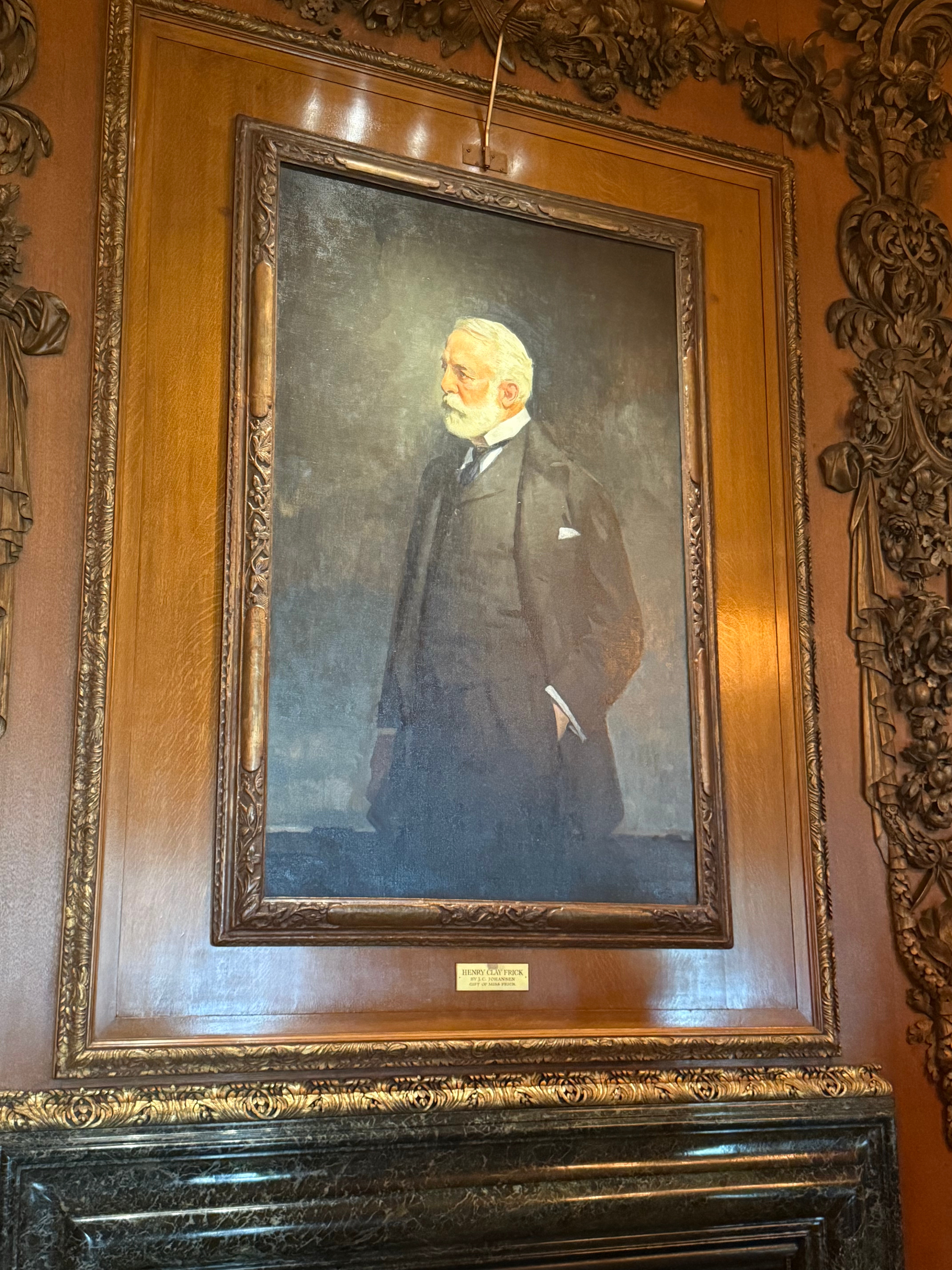
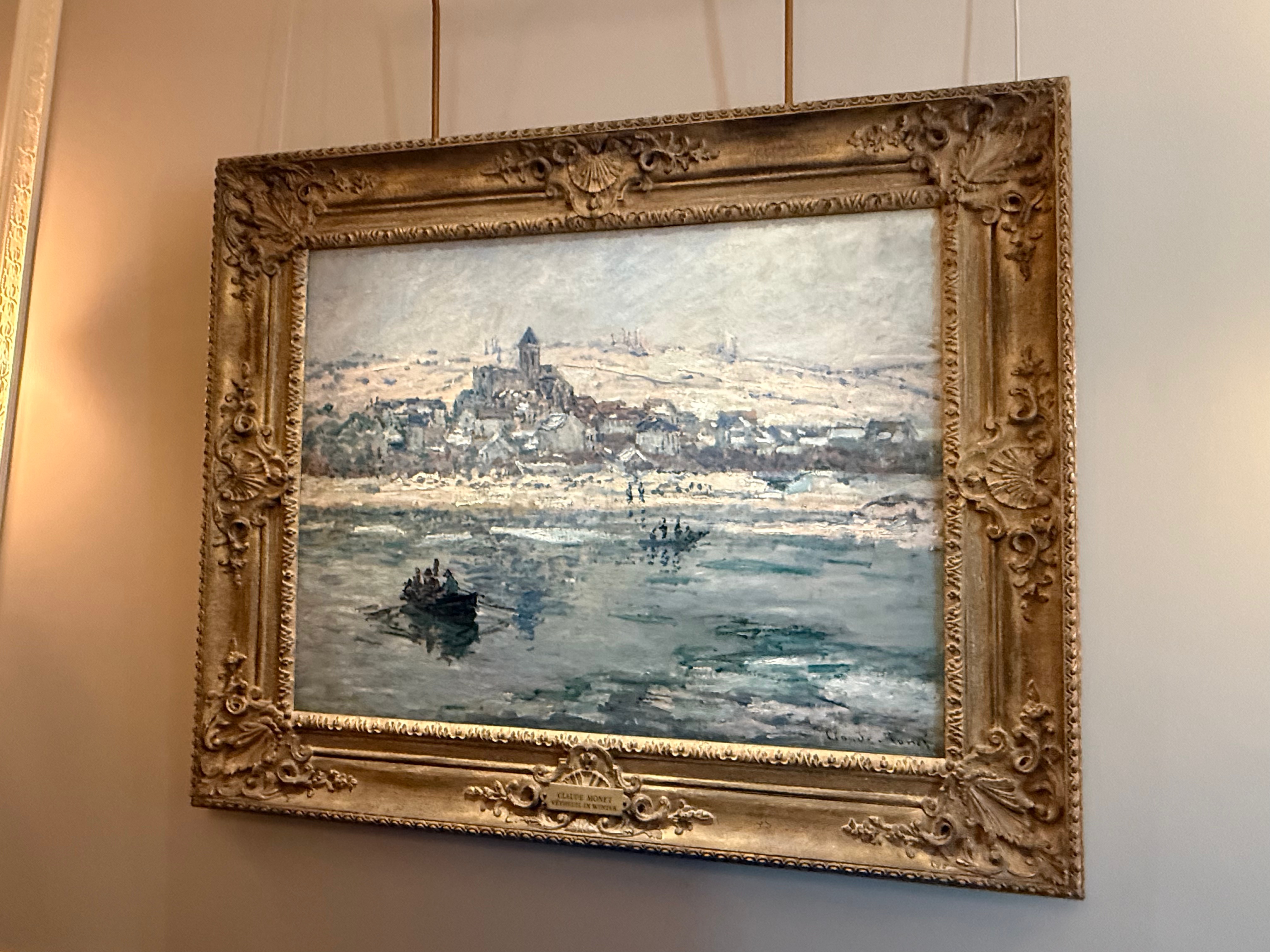
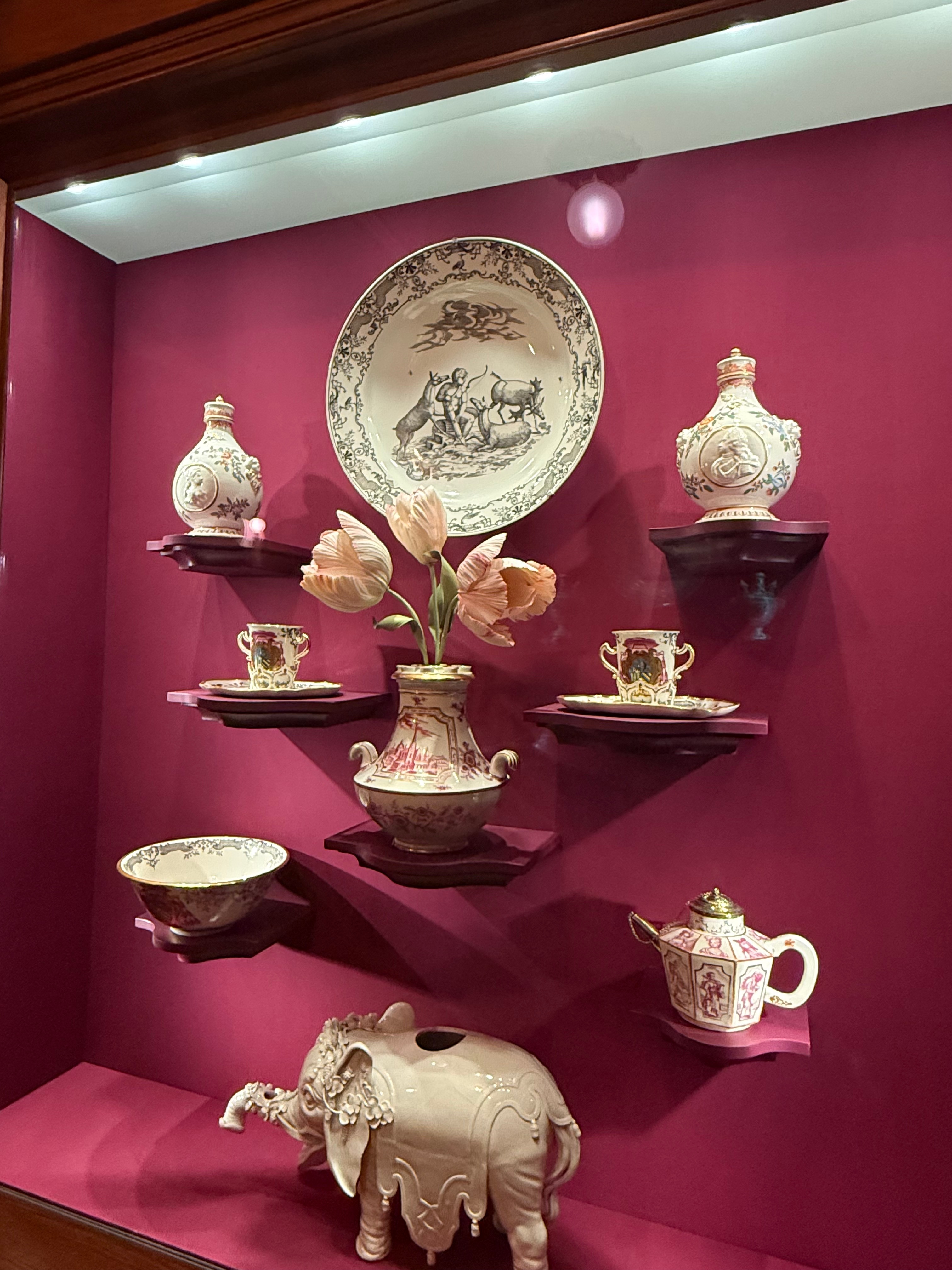
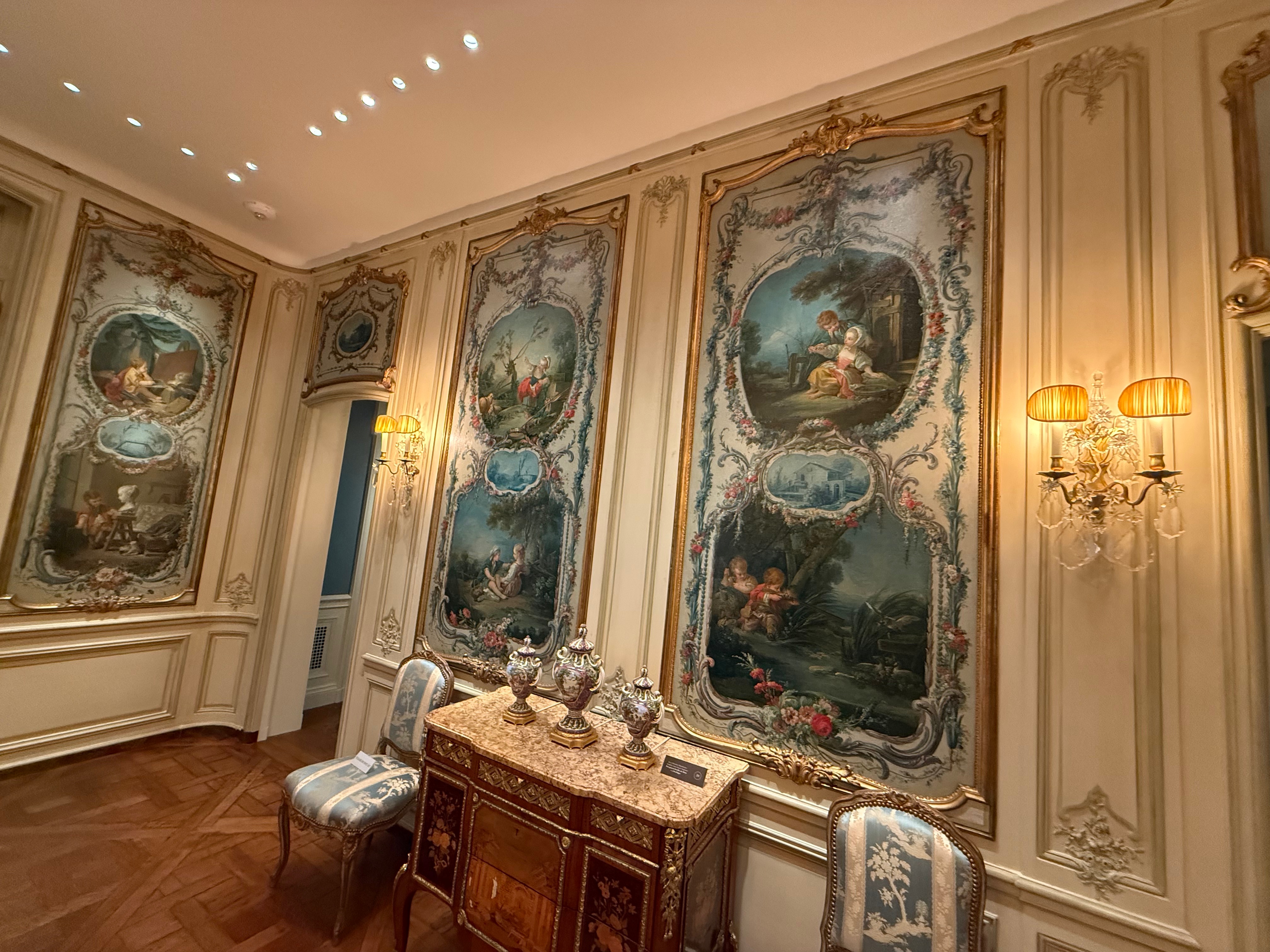
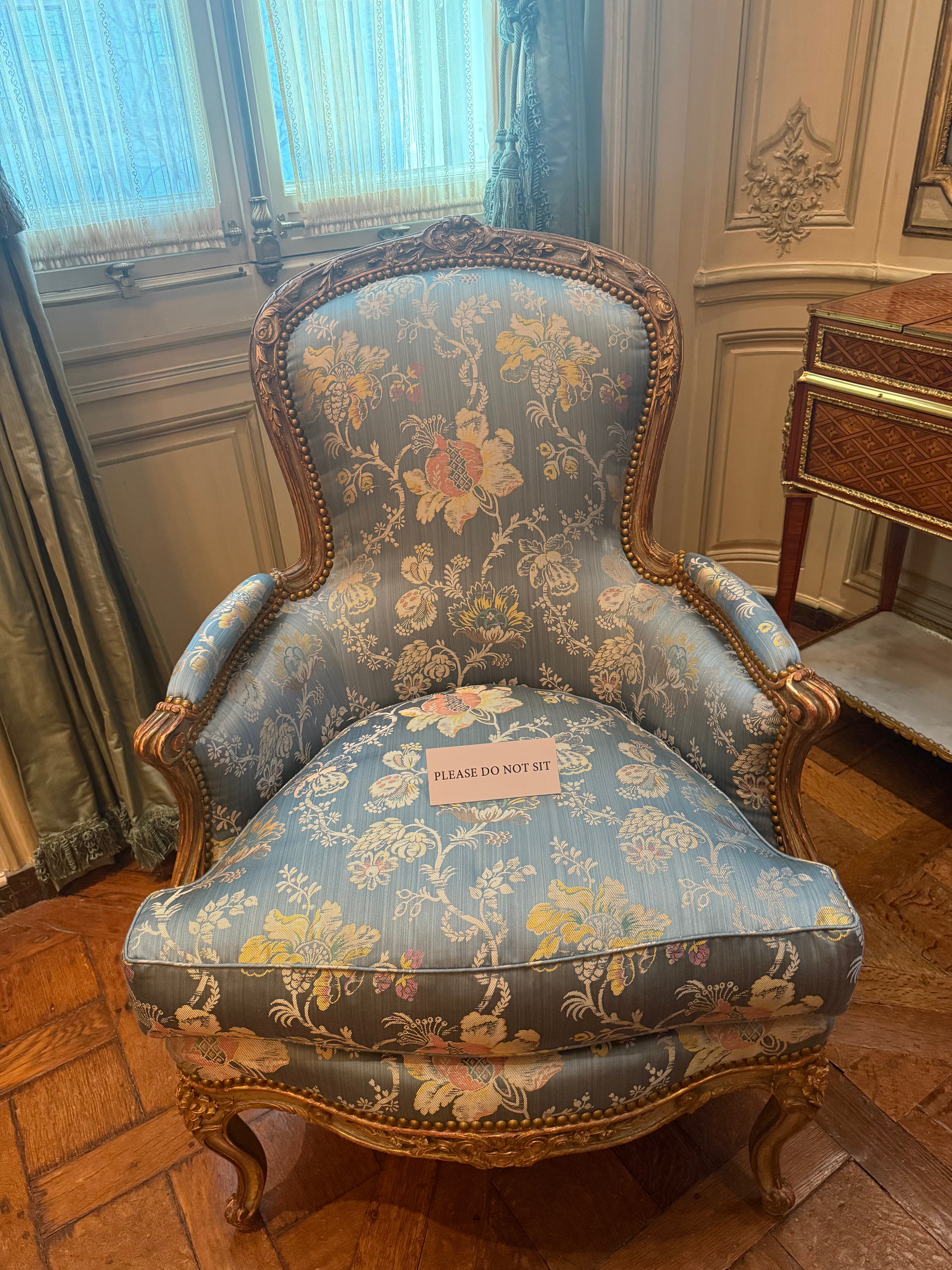
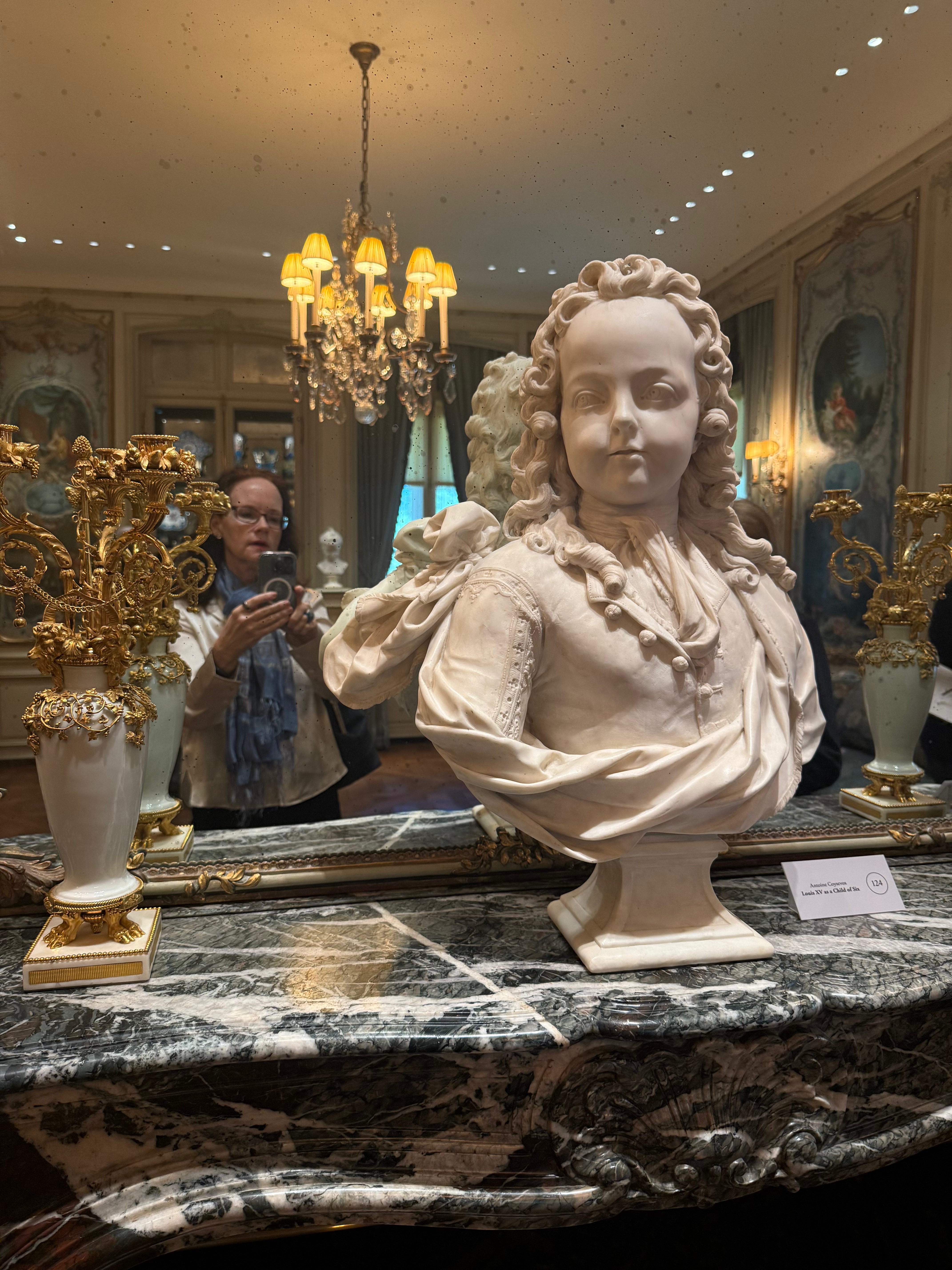
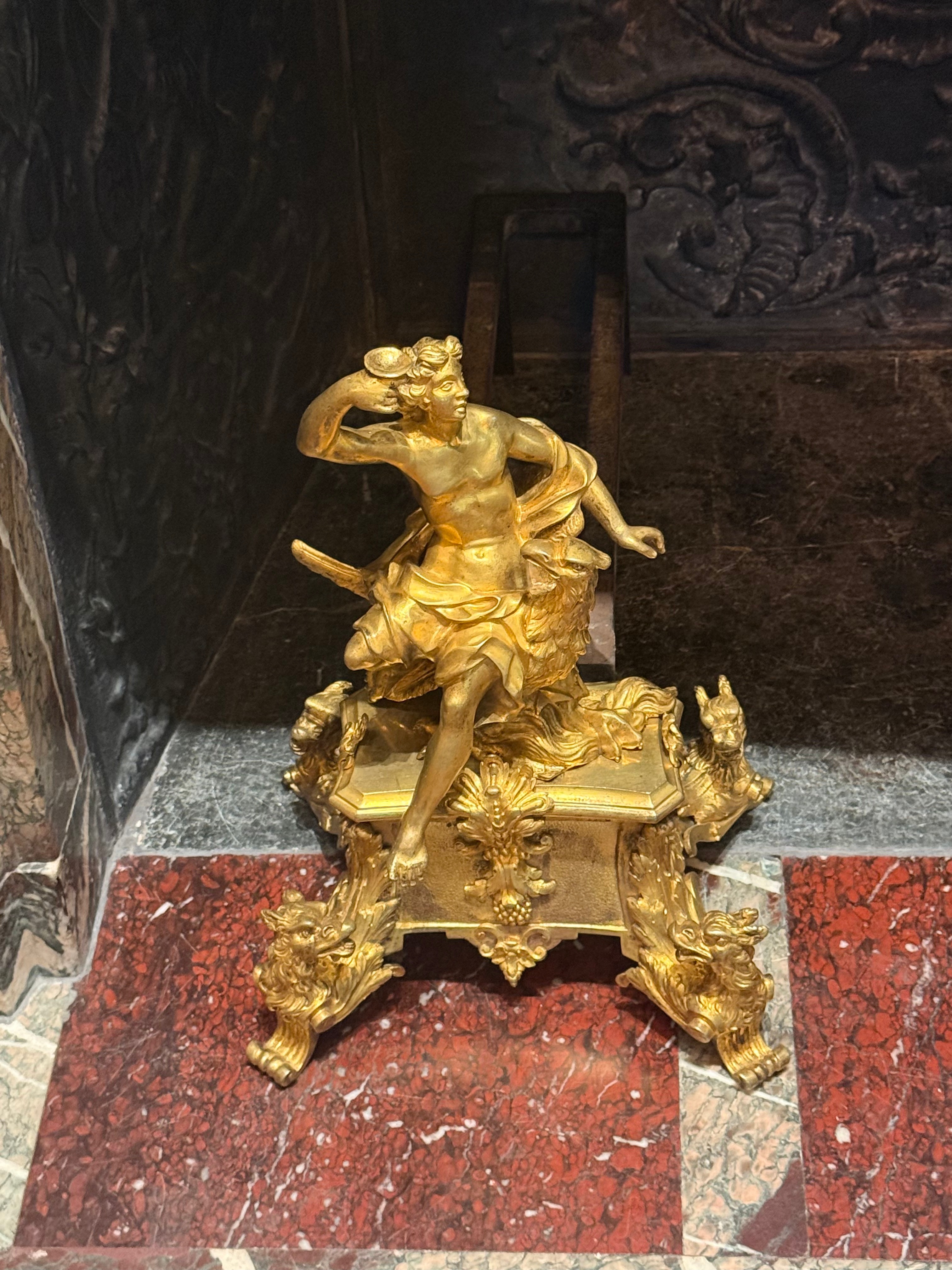
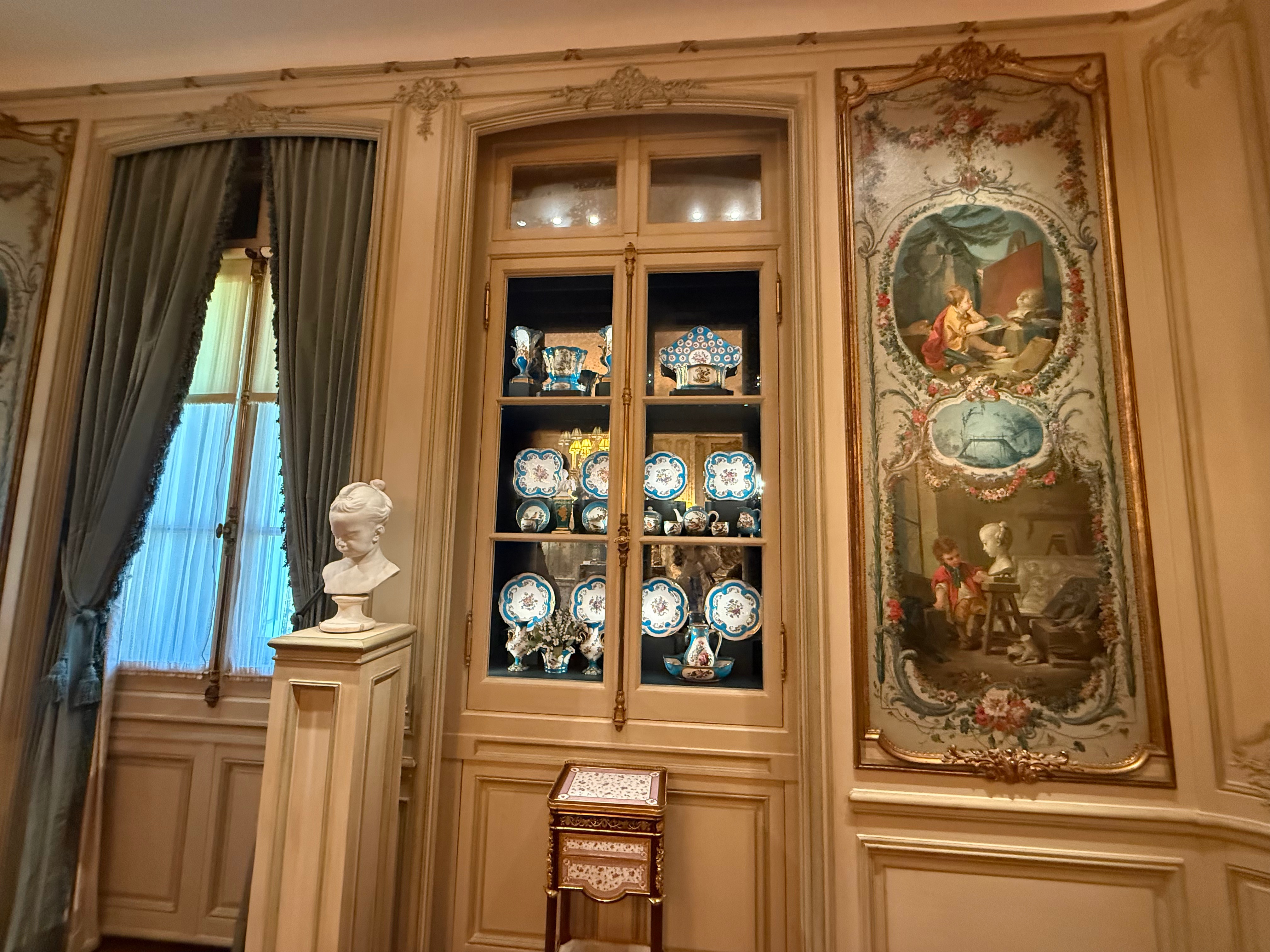
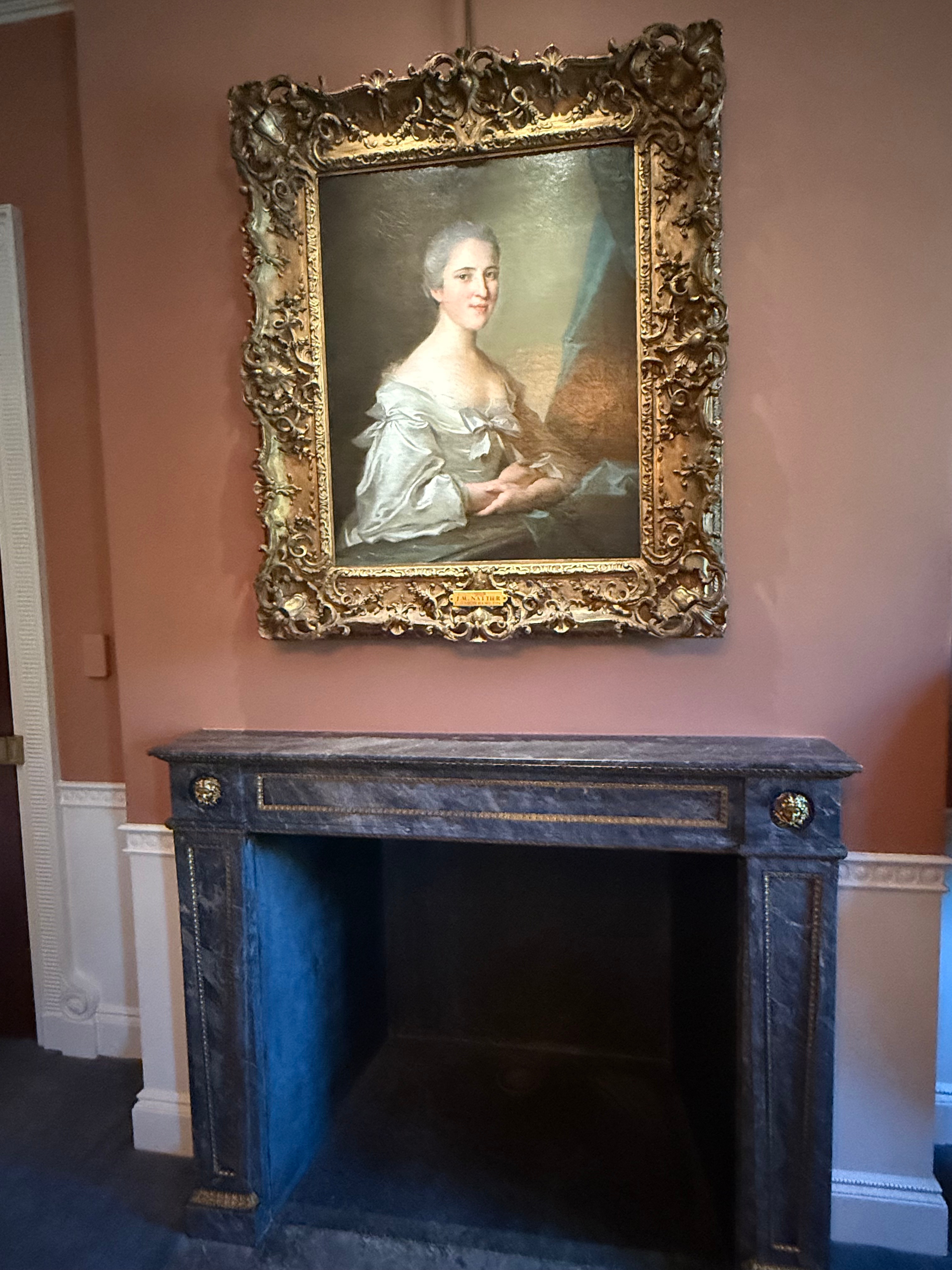
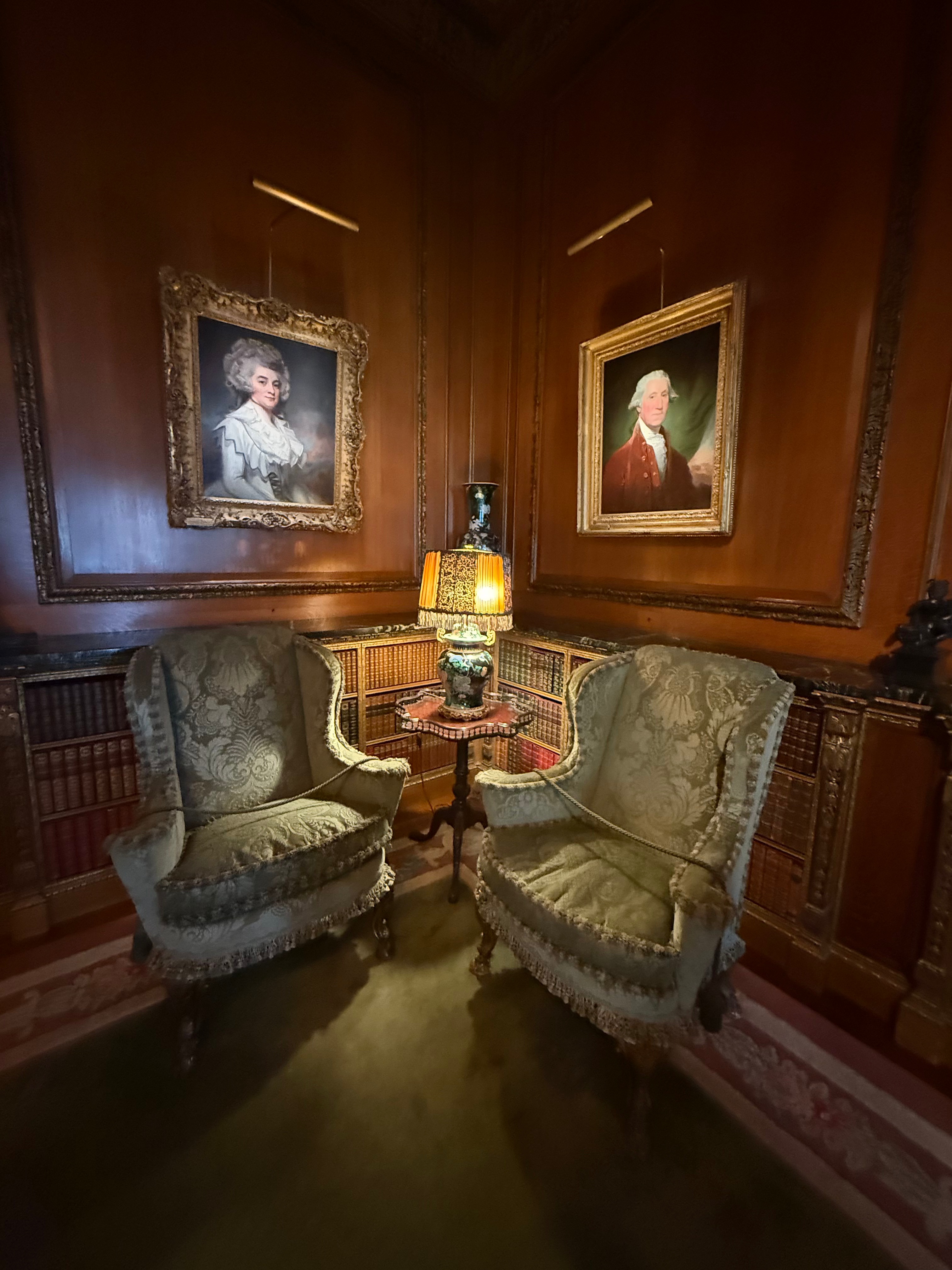
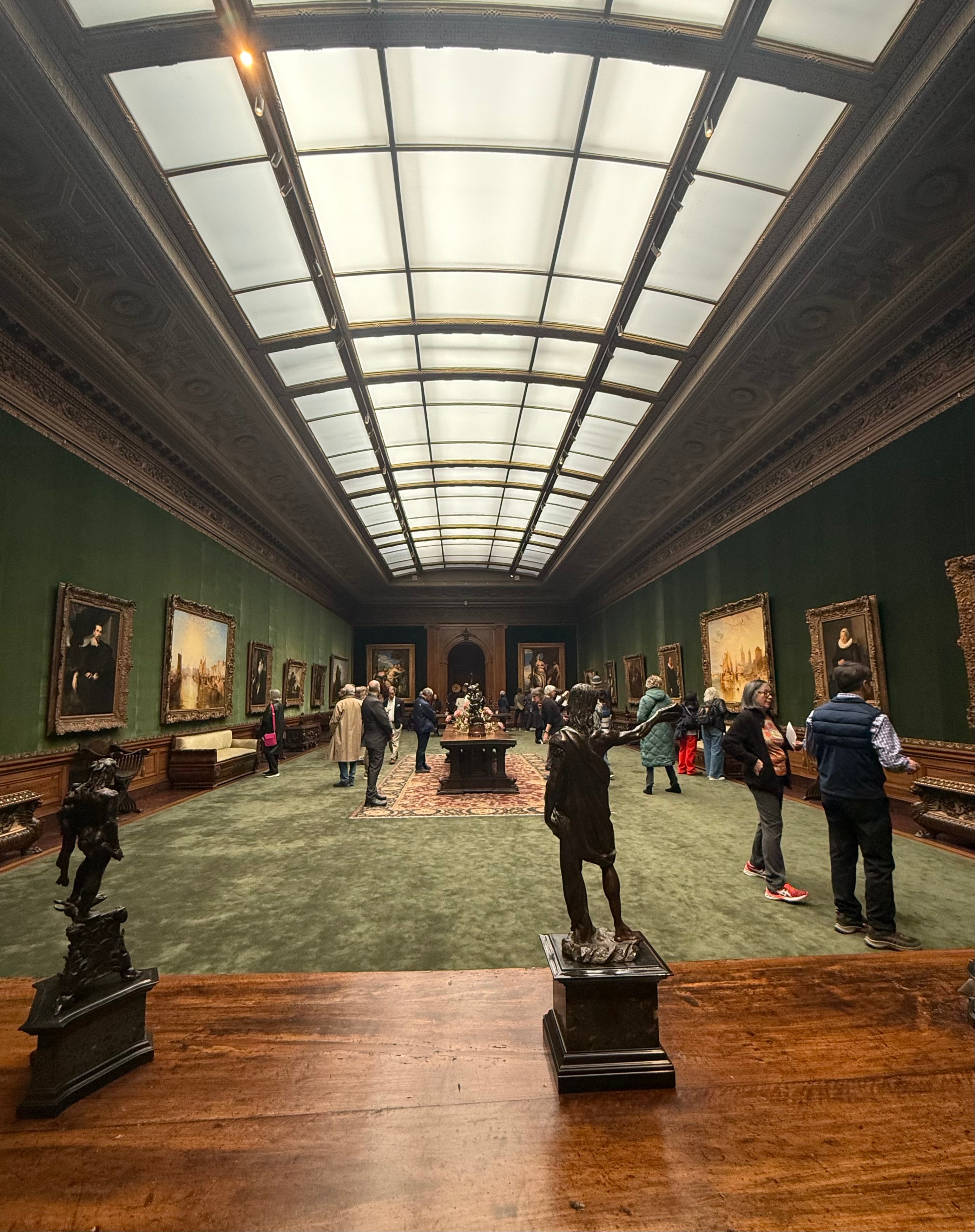
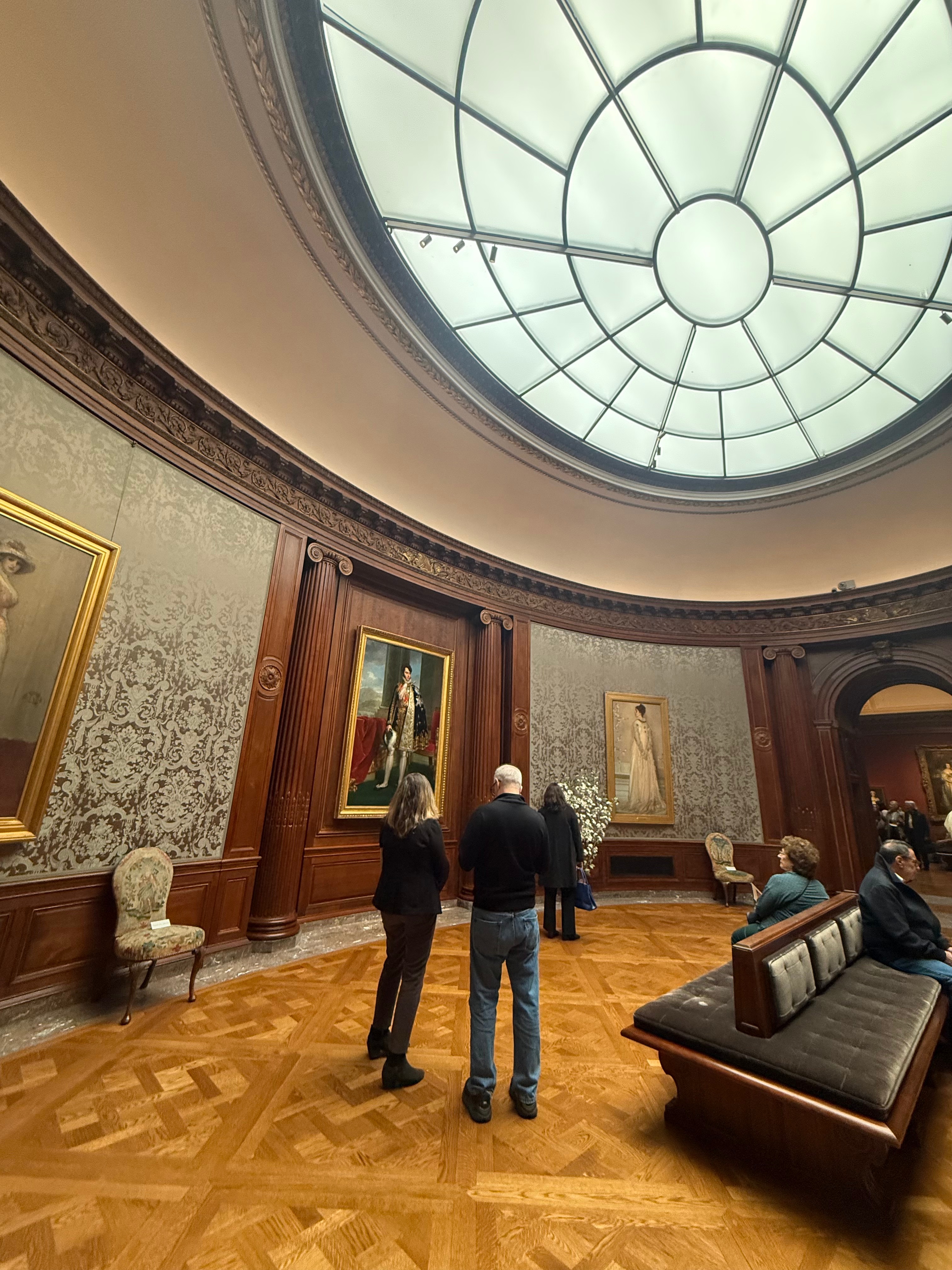
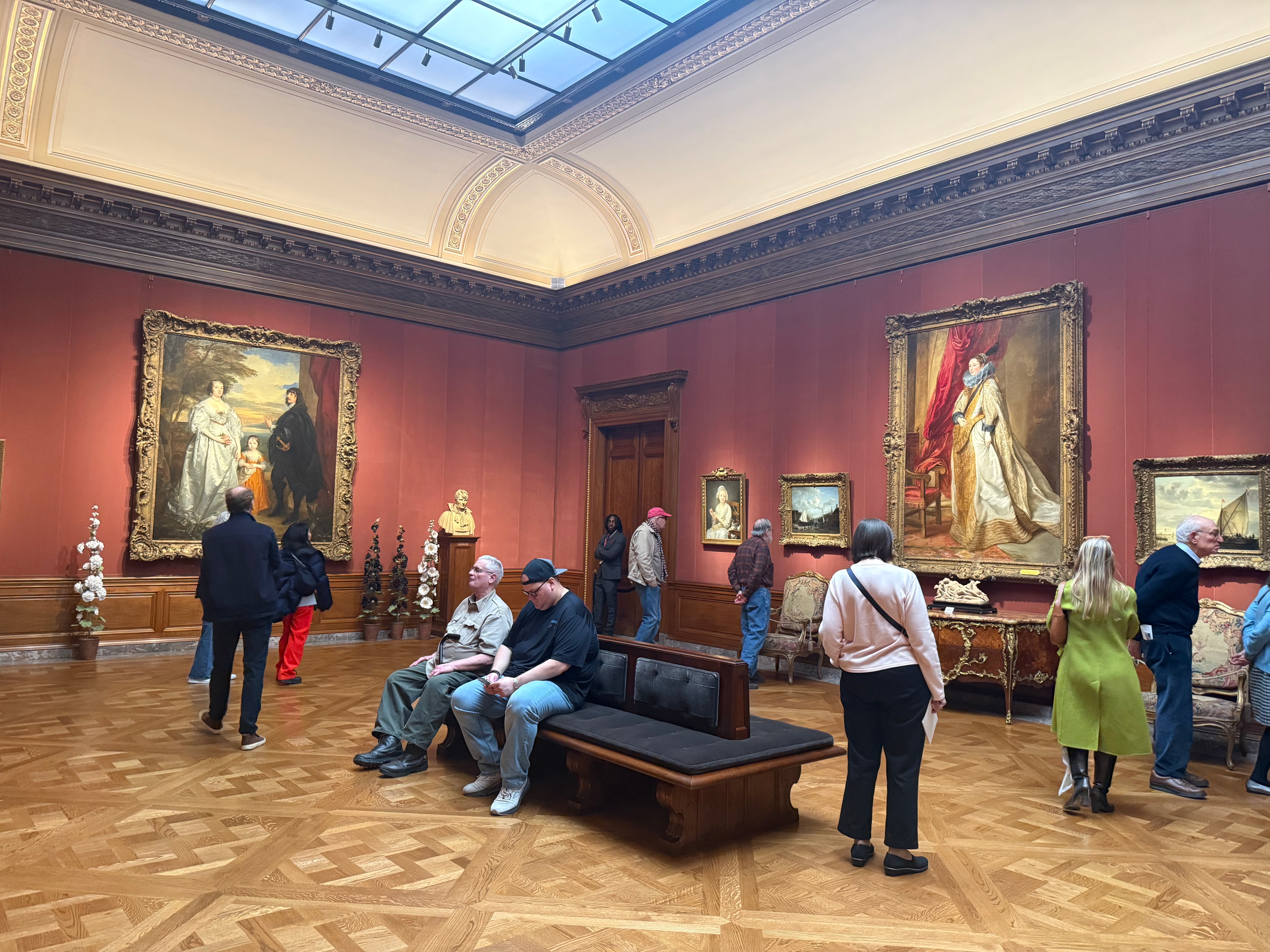
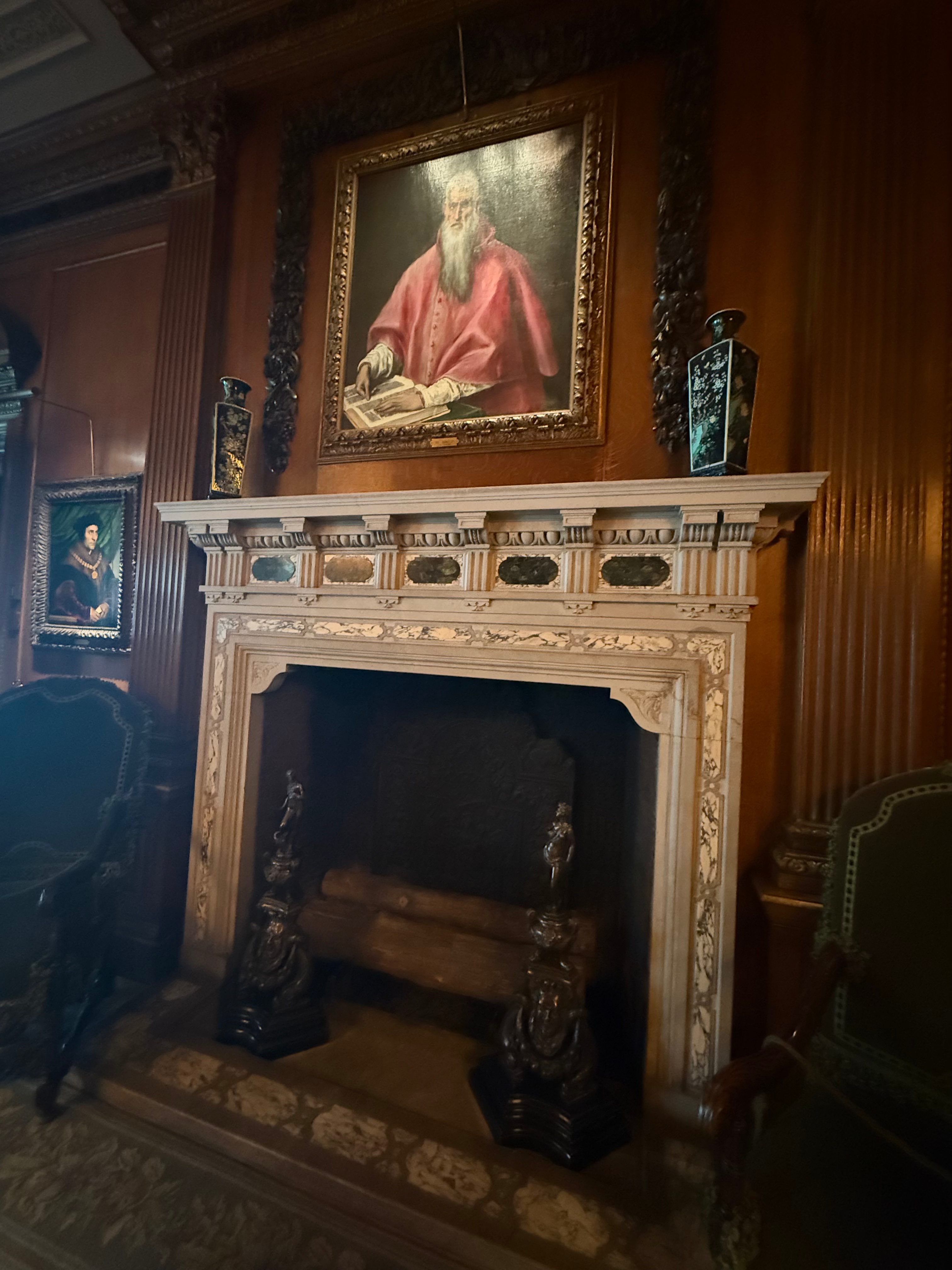
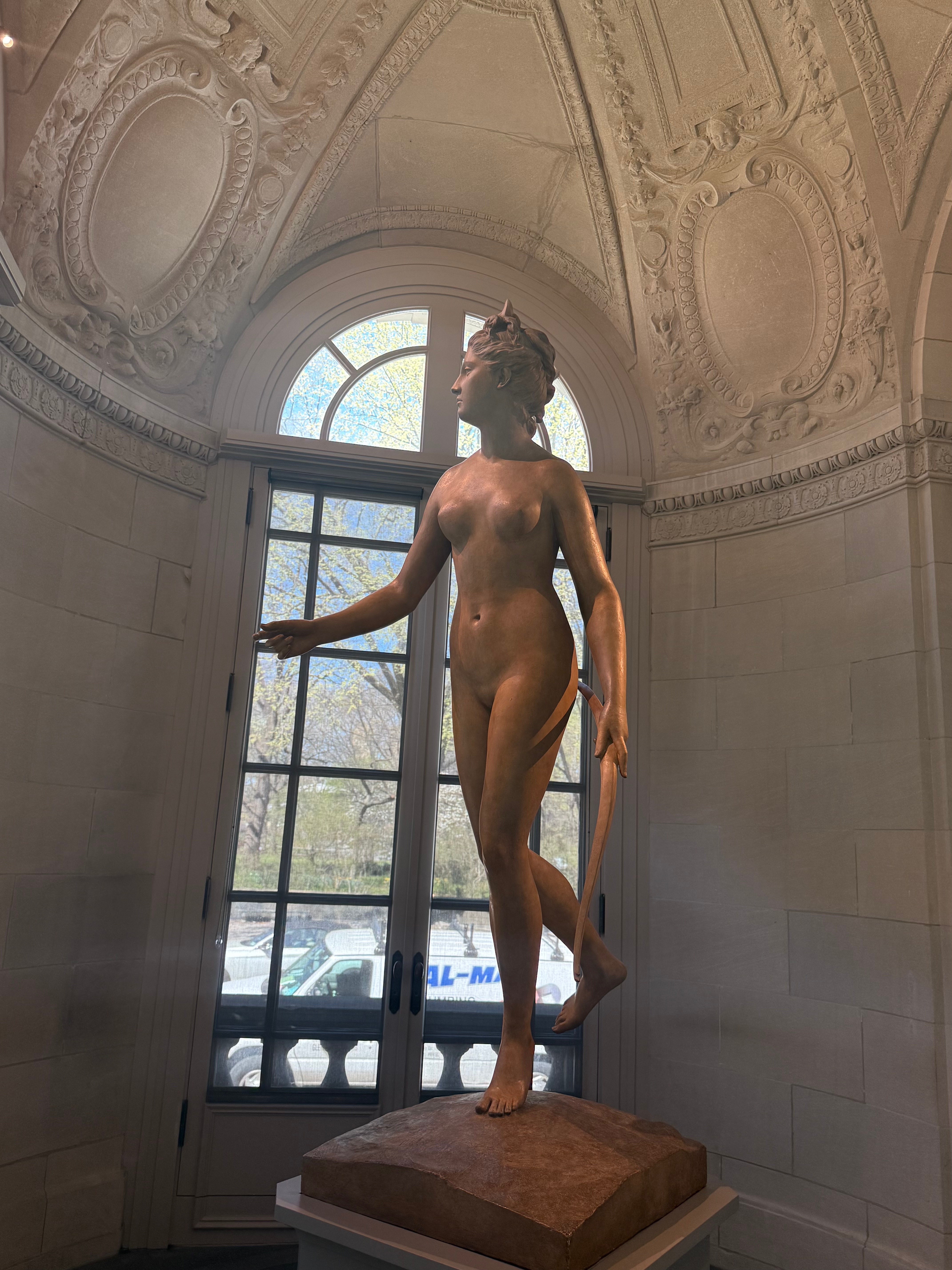
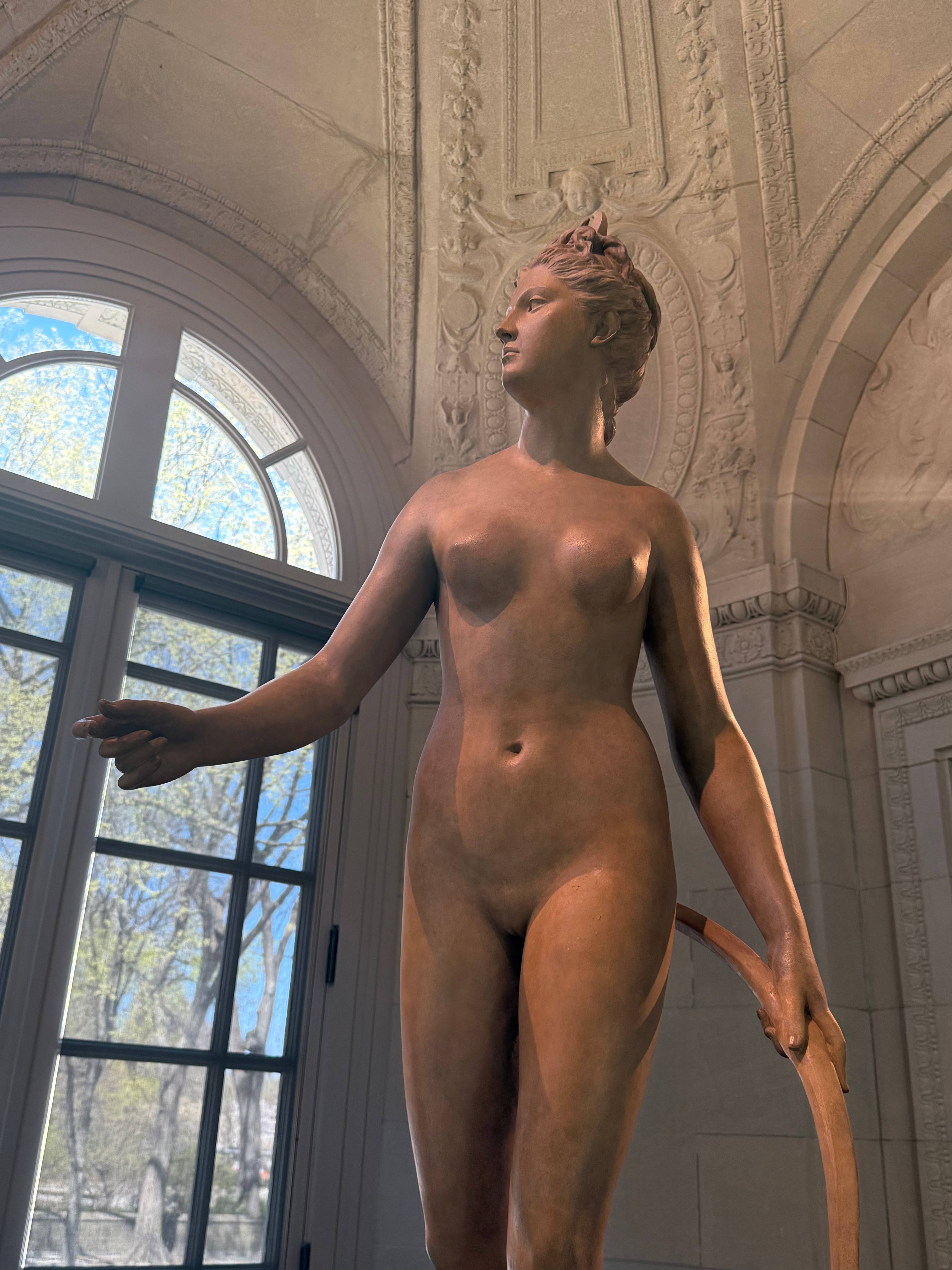
The Frick Collection, on Fifth Avenue between 70th and 71st Streets on the Upper East Side of Manhattan, is a special jewel box of a museum in a city rich with fabulous places to appreciate art. The Henry Clay Frick mansion, designed in 1914 by Carrère and Hastings in the Beaux-Arts style, was converted to a museum to house Frick’s art collection in 1920 after his death. Henry Frick had personally collected a vast array of art, including works by artists as renowned and diverse as Bellini, Degas, Fragonard, Gainsborough, Goya, El Greco, Holbein, Rembrandt, Titian, Turner, Velázquez, Vermeer, and Whistler. What is truly unique, though, is the display of the art within the cohesive and lush interiors of the mansion. The Frick Collection recently underwent an extensive renovation by Annabelle Selldorf and her team at Selldorf Architects, and has added an auditorium, education room, and cafe, while leaving the essential nature of this unique experience intact. I was fortunate enough to be invited to Member Preview Days by a patron (the museum opens for all April 17, 2025, check for tickets here) and was thoroughly transported by my visit.
I was fortunate enough to be able to go the first day the museum held member previews (April 9) thanks to this patron, and we went first thing upon opening to avoid crowds. I would recommend this strategy if you are able. The entrance area was open and easy to navigate thanks to the renovation. There is a coat check and bathrooms downstairs (and quite some stairs! a new grand cantilevered staircase made of veined Breccia Aurora marble), and the new cafe and gift shop above. The second floor rooms in the mansion, once bedrooms, are smaller and I recommend going to them first before the museum gets more crowded if you are first in.
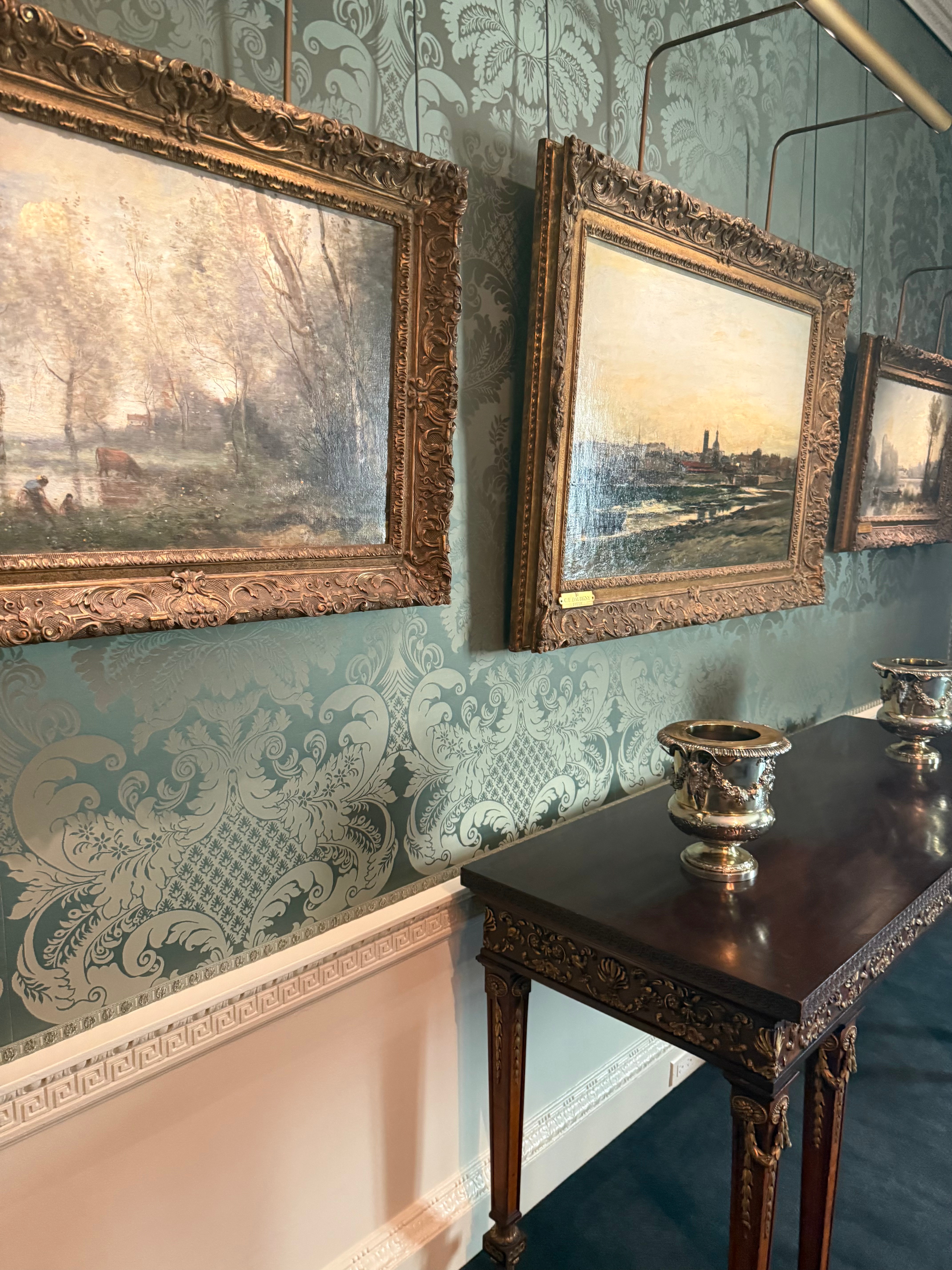
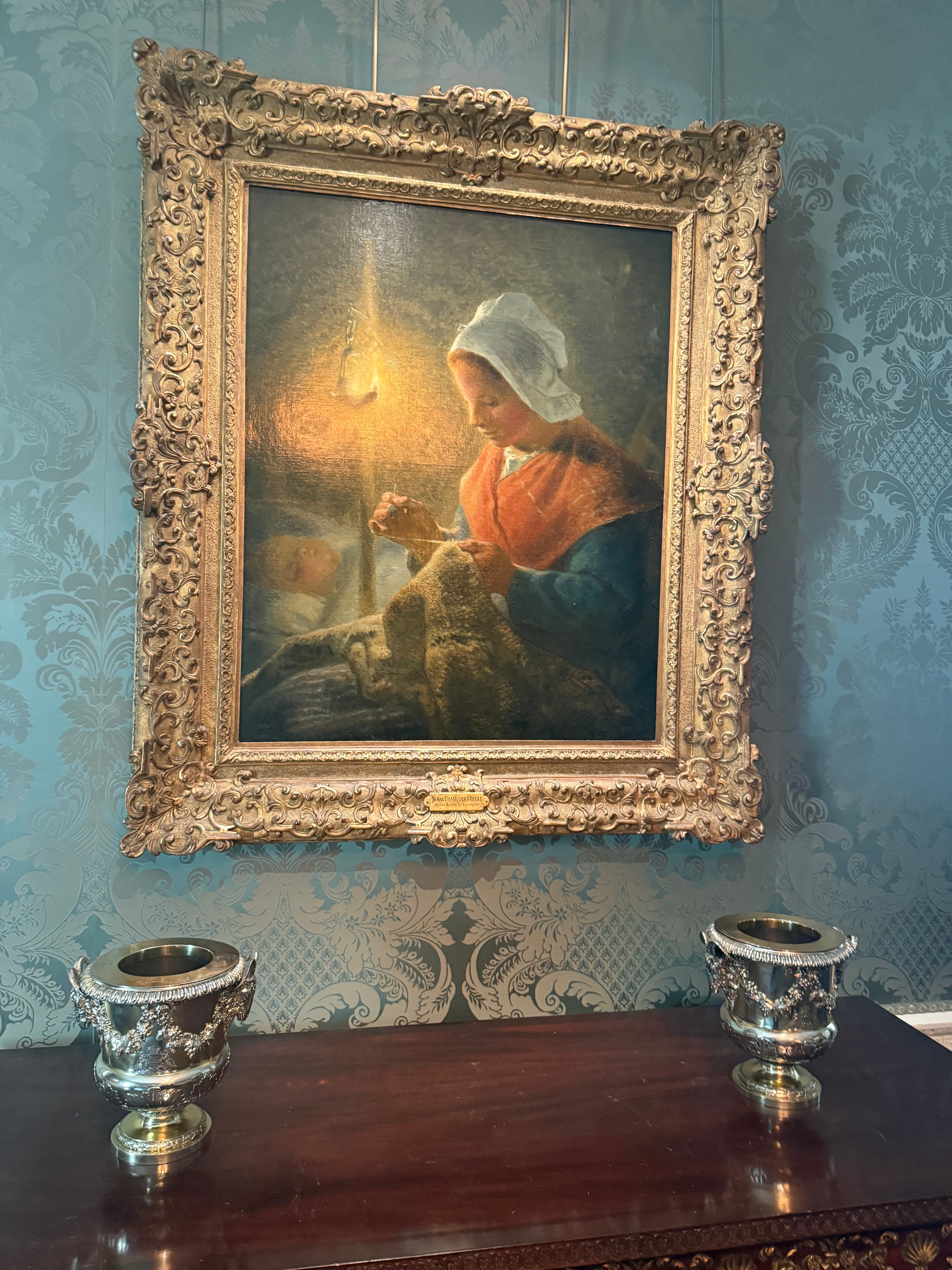
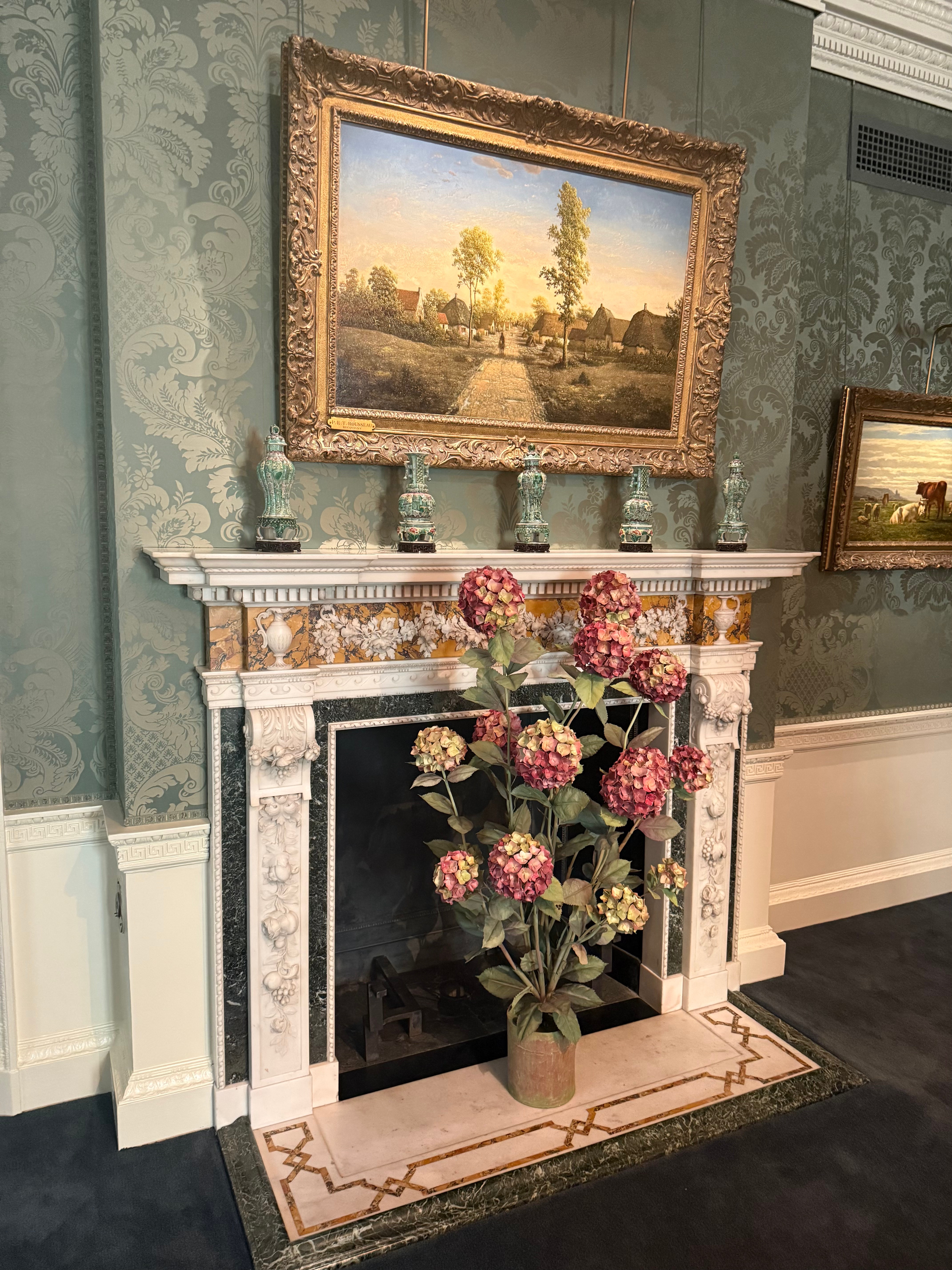
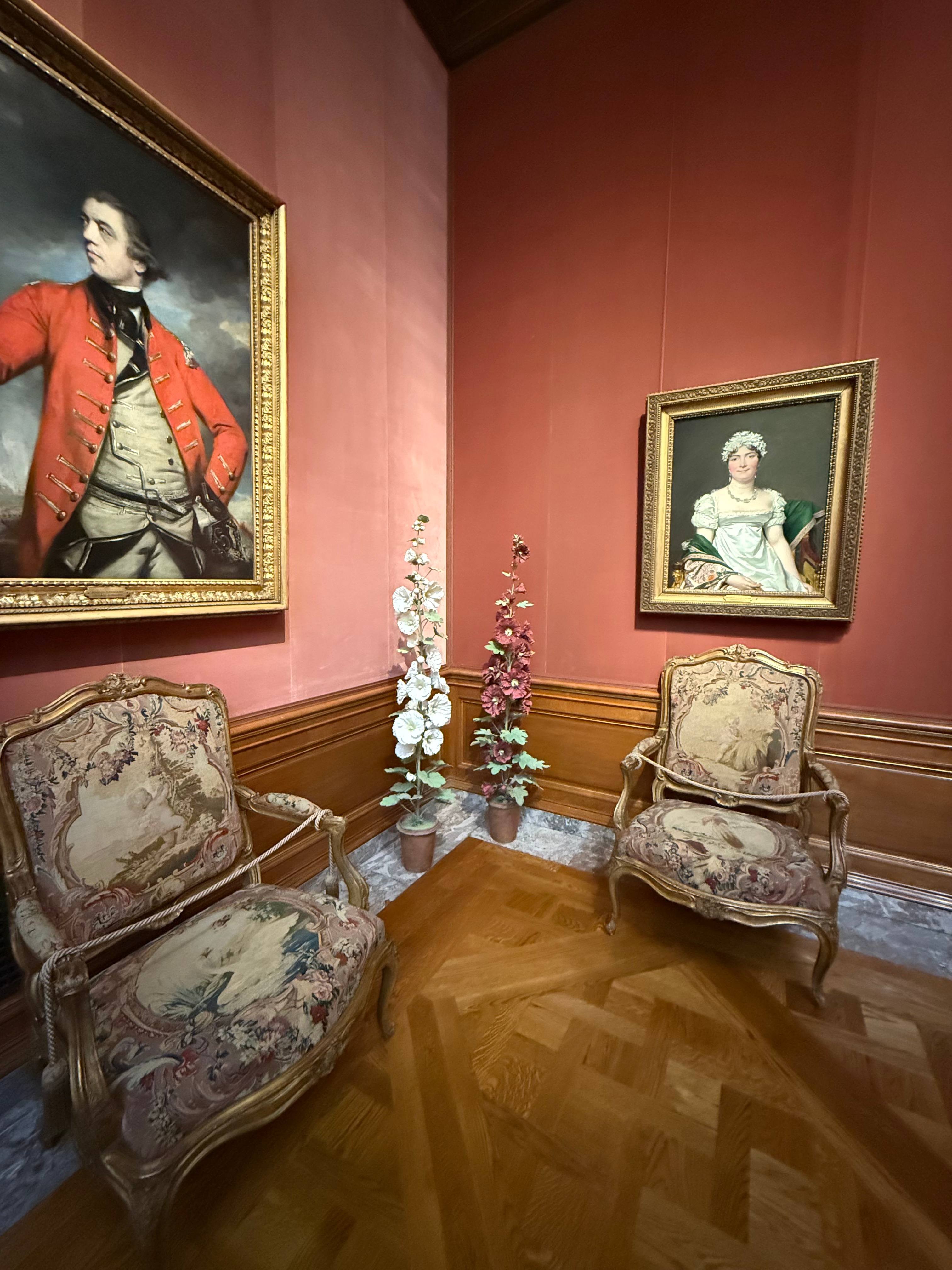
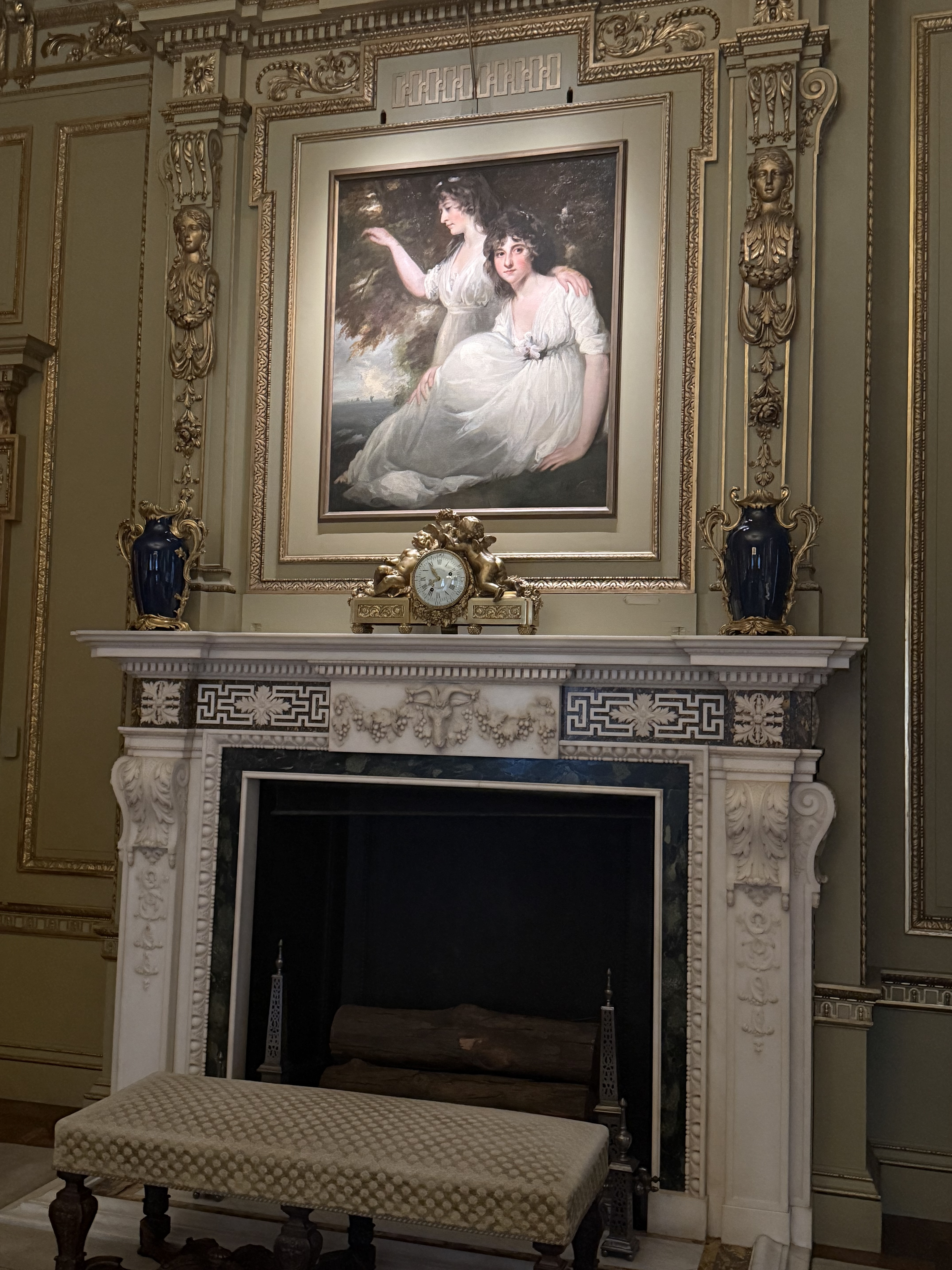
The experience of being in the mansion and the way art is displayed (rather than white plain backgrounds, the walls are covered in hand-woven French silk damask and velvet in sumptuous colors) makes entering each room like becoming part of a new little immersive world.
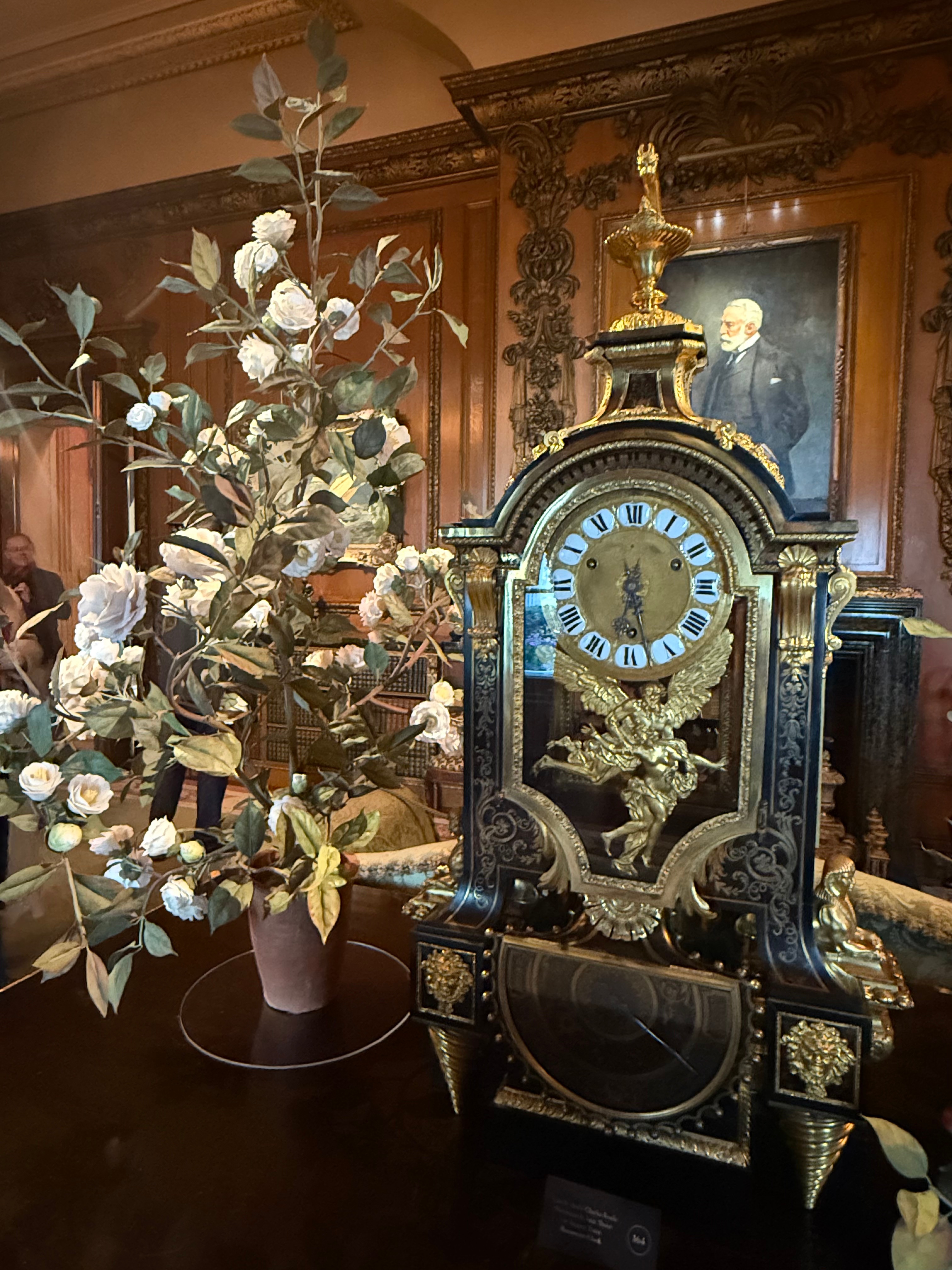
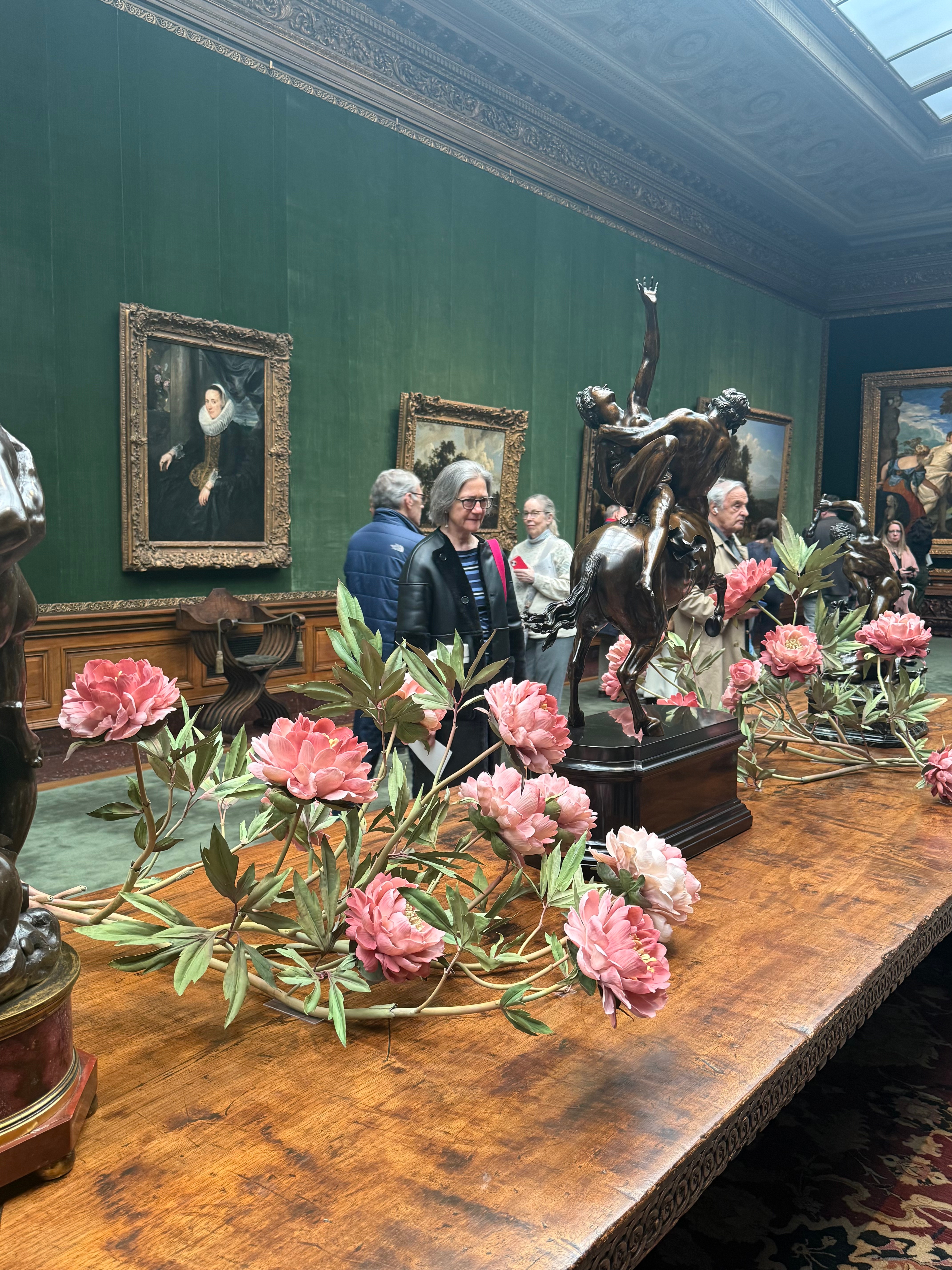
In almost every room there were lifelike porcelain flowers by contemporary artist Vladimir Kanevsky. Designed to look like real floral displays set up in the collection when it first opened to the public in the 1930s, these flowers are on display through October 6.
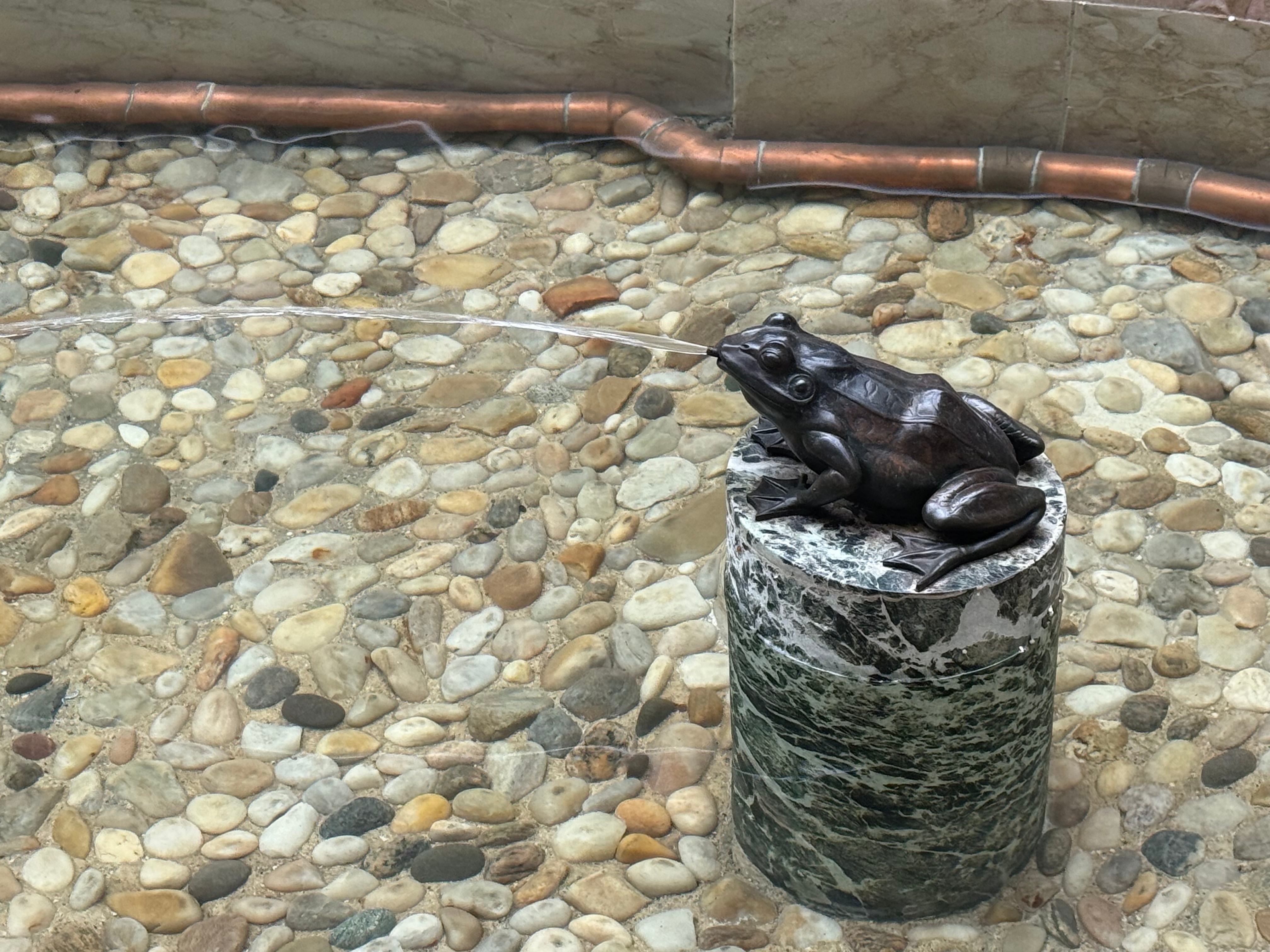
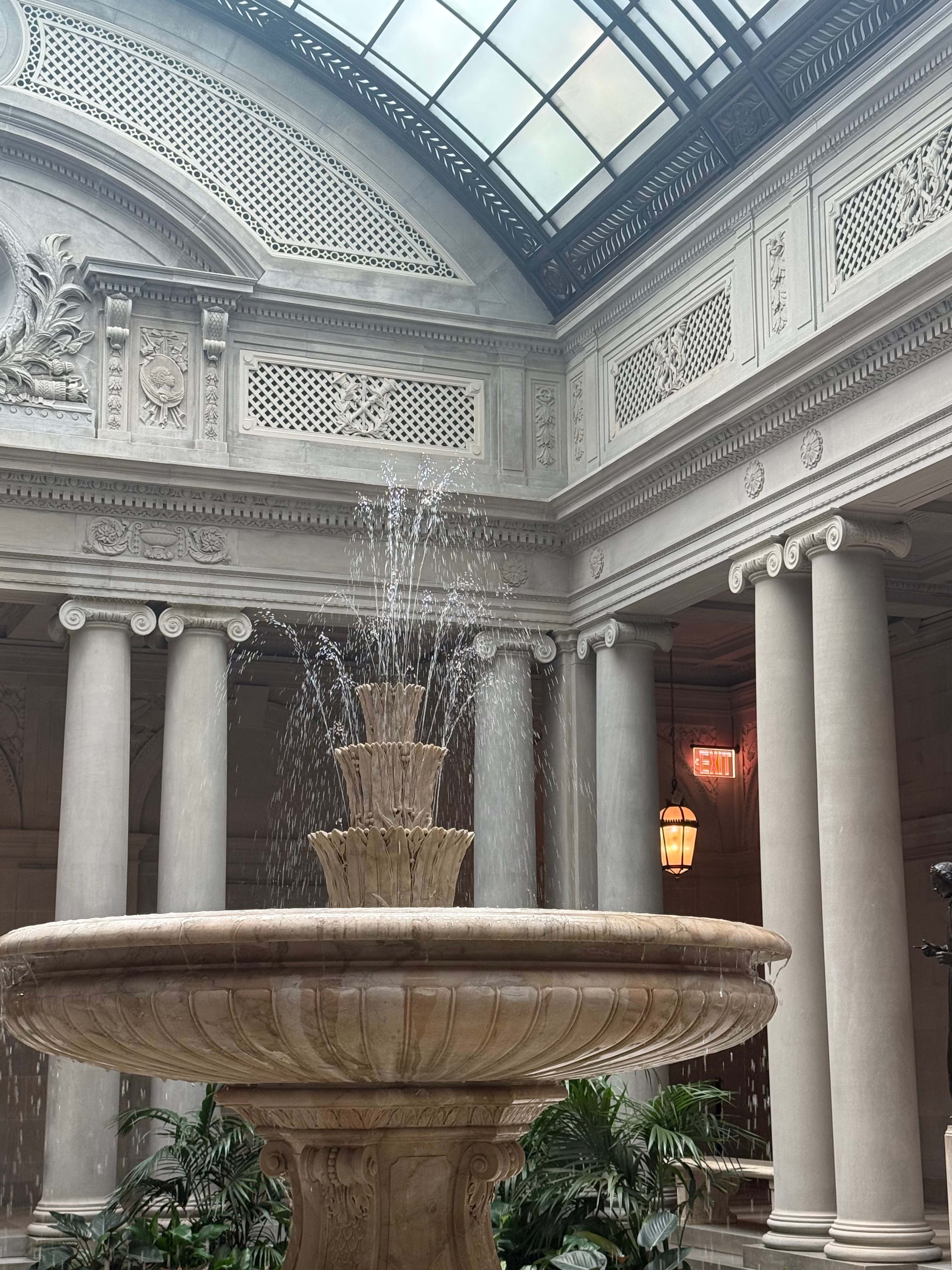
Downstairs rooms are larger, as they were public rooms and many specifically designed to display Frick’s art. The beautiful central courtyard has been restored so that the fountain once again works as designed.
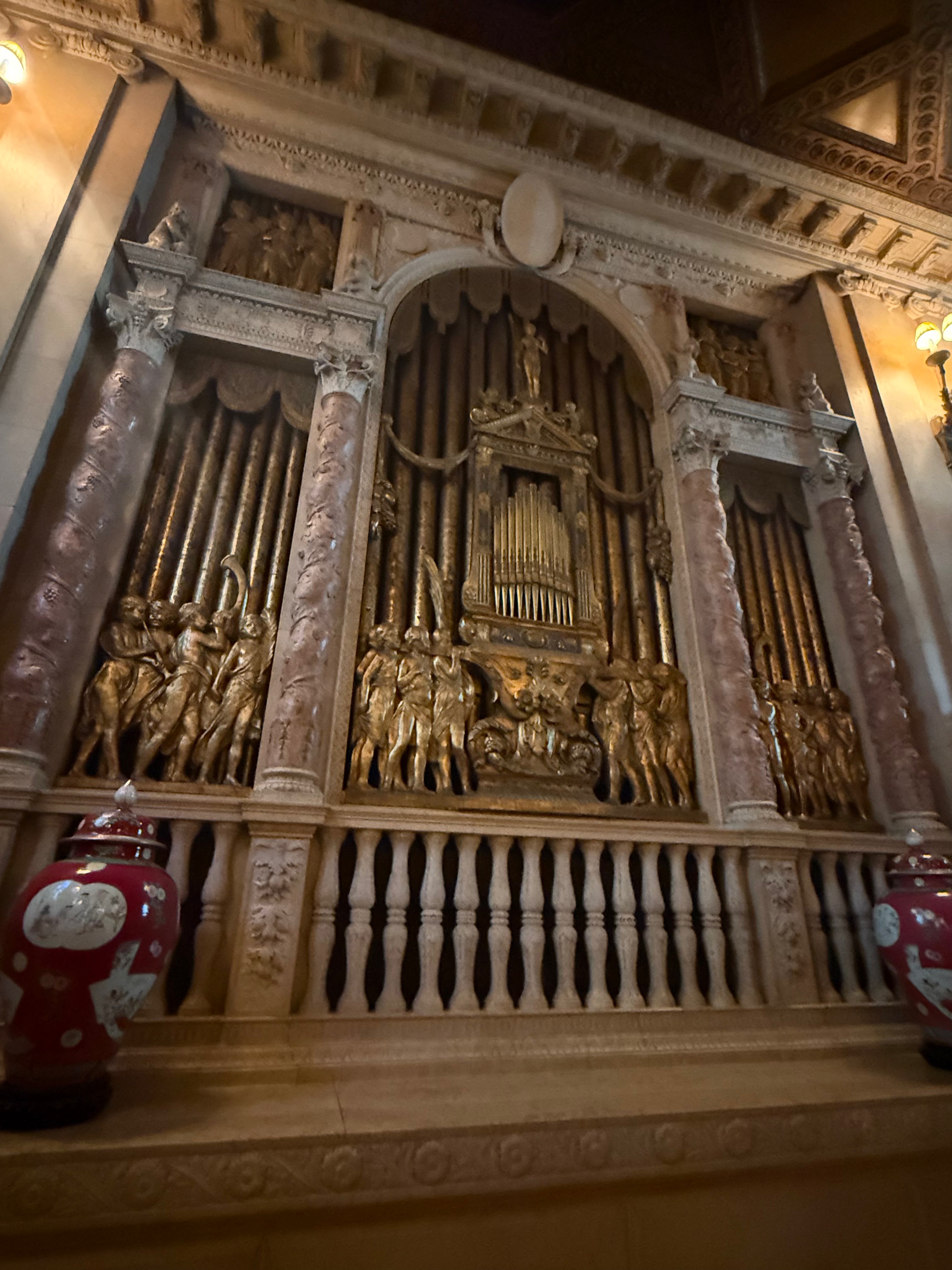
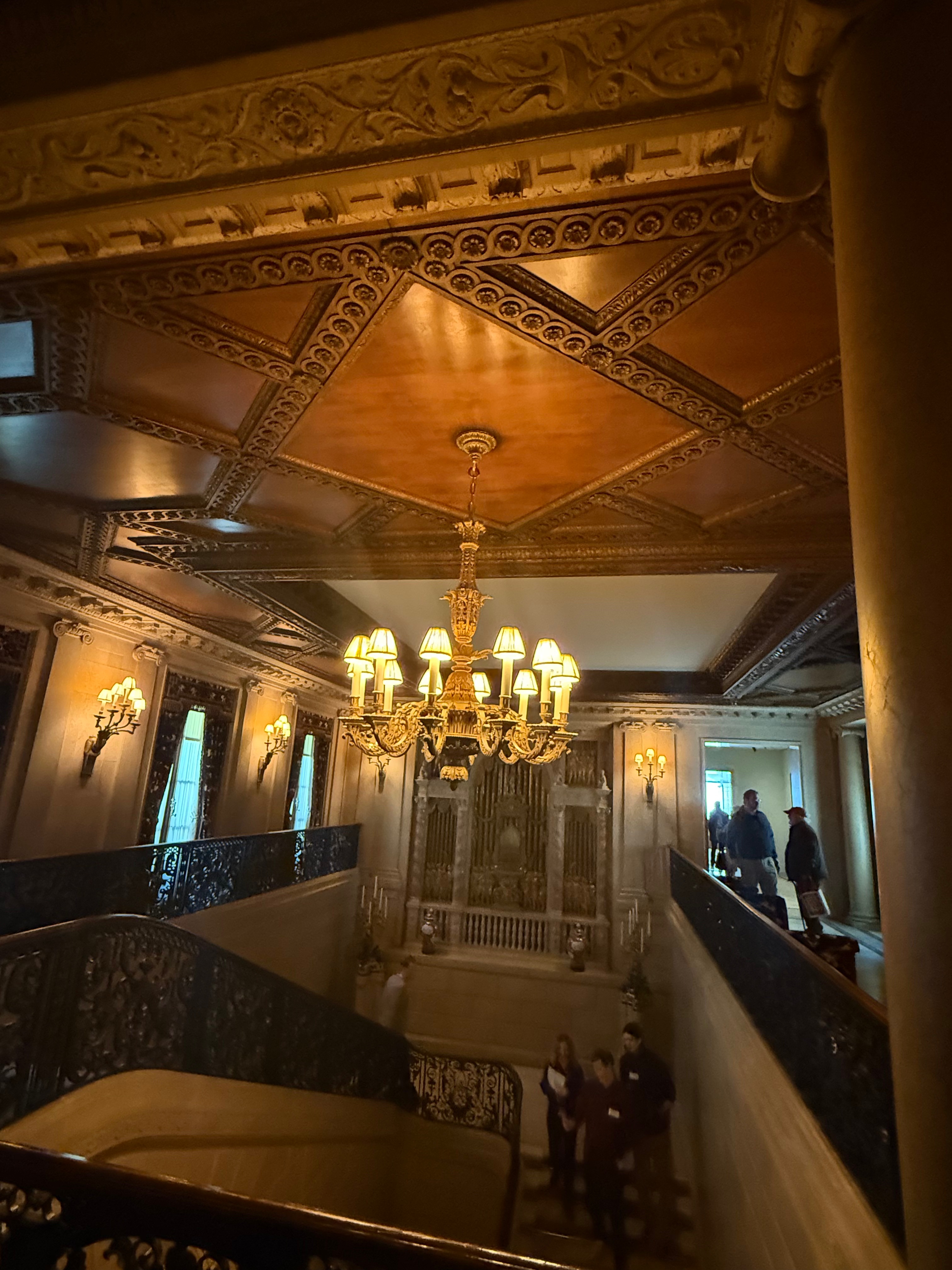
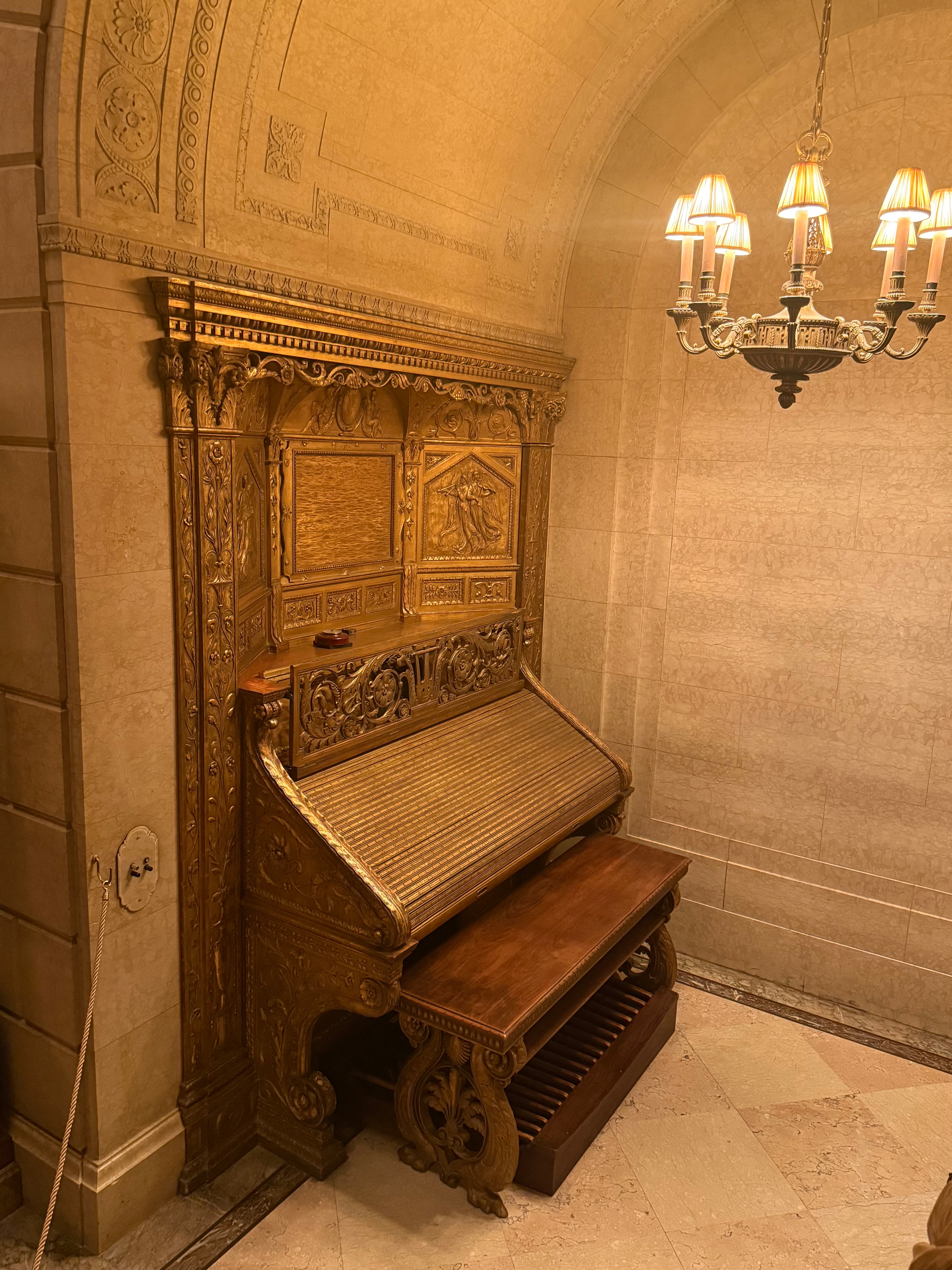
In the center of the mansion, the original grand staircase showcases the ornate organ installed.
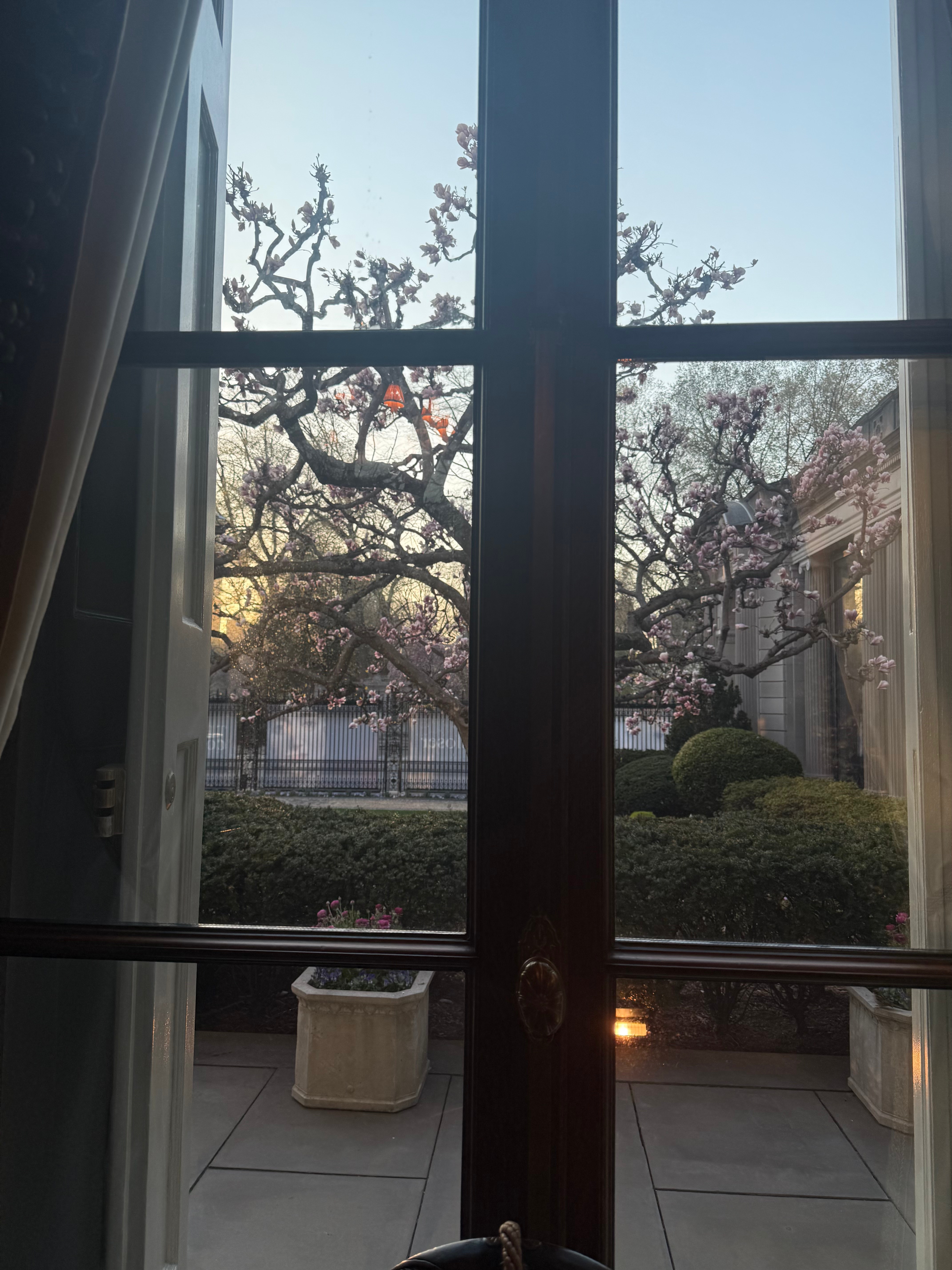
The location of the Frick Collection right across from Central Park, means that views from the rooms often highlight stunning views of nature to complement the interior art. Seeing the Collection as spring trees extravagantly bloom made many views out of the windows rival that of the stunning art within.
In the evening, I was fortunate enough to attend a member’s reception through the generosity of the same patron. It was much more crowded in the evening, so I preferred the morning experience overall. I was struck, however, with how the quality of the light at sunset changed the look of some rooms in the mansion. To truly appreciate the collection, I think it is important to come multiple times, and at different times of day, as this museum is a part of its urban environment, not insulated from it.
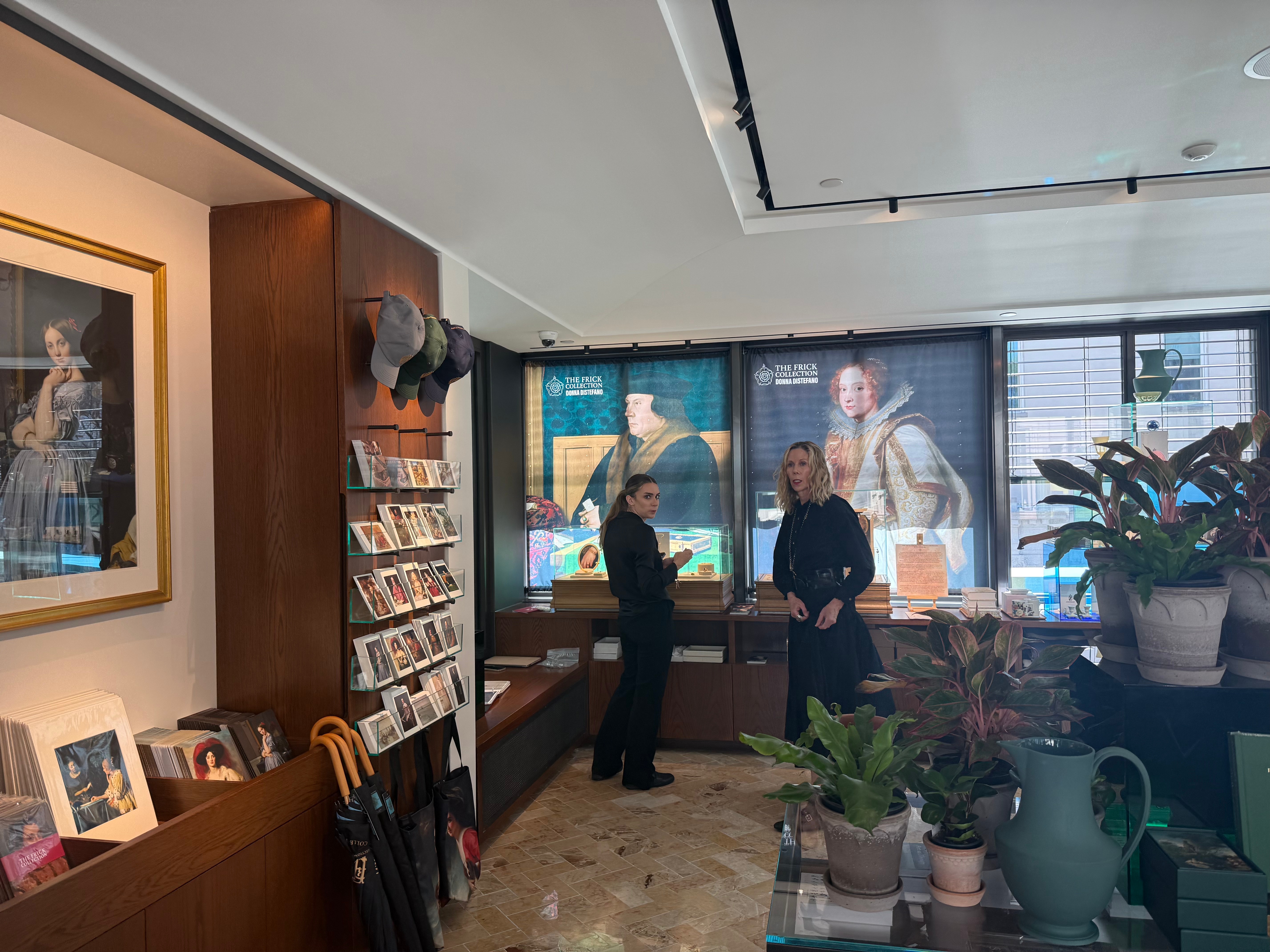
The new gift shop was tempting (see photos above).
To live in New York City is to enjoy almost an embarrassment of riches when it comes to experiencing art – visual art, music, theatre, and dance. The Frick Collection stands alone with its singular blend of the exceptional quality of the art itself, and the immersive environment enabling you to see this art within such splendid surroundings. Make a pilgrimage there when you can to feed your soul – and go back as often as you are able to see it change with the time of day and the seasons. Thanks to this renovation, the Frick Collection will be ready to welcome us for decades to come.
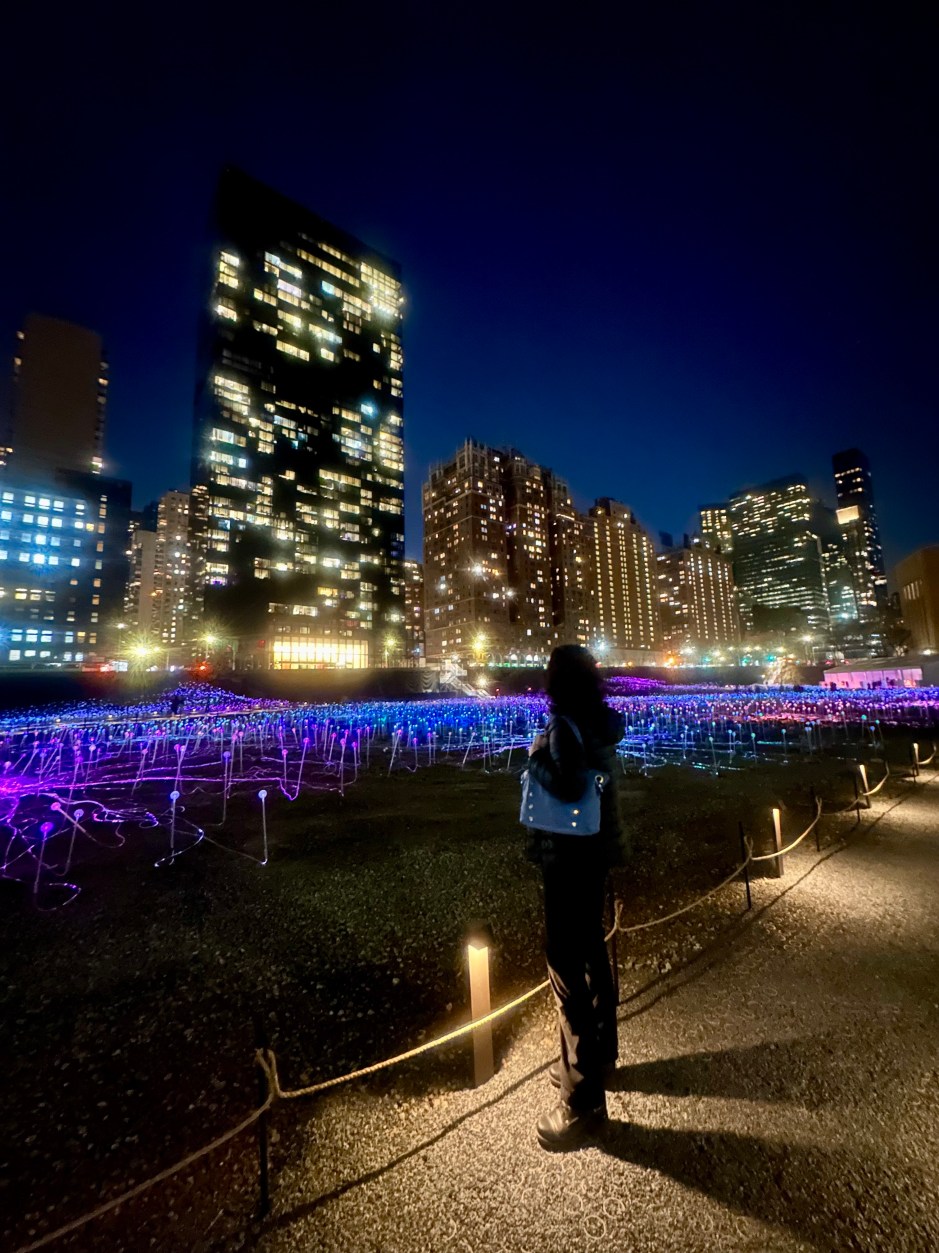
Walking around Manhattan’s East Side near the United Nations, there has always been a huge empty undeveloped (more about that later!) lot between E 38th and 41st Streets, from First Avenue to the East River. Beginning earlier this year, an enormous light installation has filled that space, Field of Light. I have been there twice and it is an unusual and charming experience.
The installation is free to enter, but you need to either have timed tickets or wait in a standby line. All of the procedures are pretty clear on their website. I have not seen long lines for standby, so even if you don’t have tickets I think your wait would be relatively short. You go through airport-style security, and then a few posters to set up the idea behind the installation and give information about the artist.
The artist, Bruce Munro, is drawn to creating large light installations, and this one in NYC is his largest to date. He notes that with buildings on three sides and the East River (and FDR Drive) on the other, the field is almost like a box filled with light.
From inside the installation, you can see the Chrysler Building, while the apartment buildings and the United Nations building surround the field, adding their own element of light.
Each bulb and stalk of light is interconnected to others in complicated tangles. The lights slowly change color over time as well.
There is a spider-web quality to the way the lighted strands snake around the bulbs on stalks.
This installation is sponsored by the Bjarke Ingels Group, which upon a little investigation, has plans for a megadevelopment in this space along the East River. A lot of it sounds good – affordable housing, a public park roughly the size of Bryant Park (the park behind the main branch of the New York Public Library), a museum (no idea what its focus would be), a dog run, play areas for children – but also a hotel … and an underground casino. See here for more details about the proposed development, which has to receive approval and licensing and hopes to by next year. The idea for the area shows a few tall buildings which would definitely impact views (and values) in Tudor City. Along with the proposed Times Square Caesar’s Palace Casino (see more about this here), and the question of whether a casino will be allowed in Hudson Yards, this casino raise the question of what NYC wants to be going forward. Proponents note the possibility of increased tourism and tax revenue, while opponents note that tourism based on gambling in places like Las Vegas and Atlantic City potentially creates a different atmosphere and clientele in those neighborhoods with a casino.
New York City is constantly changing, and there is a casino near JFK airport. I do wonder though what allowing casinos in Manhattan will change about the city. At this point New York State as announced that it will grant three licenses for NYC and/or it’s suburbs, and there is significant pushback against having a casino in a residential neighberhood. But . . . stay tuned! I enjoyed Field of Light but feel we need a little illumination (haha) about whether Manhattan wants casinos.
I love walking, and especially walking in New York City, and have written about it often (see old posts here, here, here, and here – among many), and have even compared walking in NYC to walking in London and Paris (see it here) and described walking in the ultimate car city, Los Angeles (see it here). Soon I will be going on a very long walk – I plan to hike Mount Kilimanjaro in Tanzania with a family member (and will be writing about the preparation for that as well as – hopefully – an account of the trip afterwards). (POSTSCRIPT: read about the Kili Climb here, about preparation for it here, and the safari afterward here.) As part of my training as I headed into the final weeks before leaving, I recently did something I have wanted to do for a while – I walked the entire length of Broadway from Battery Park to the tip of Inwood, about 13 miles, with my fully loaded daypack for Kili (including 4 liters of water), wearing my hiking boots, etc. Here’s what my day was like!
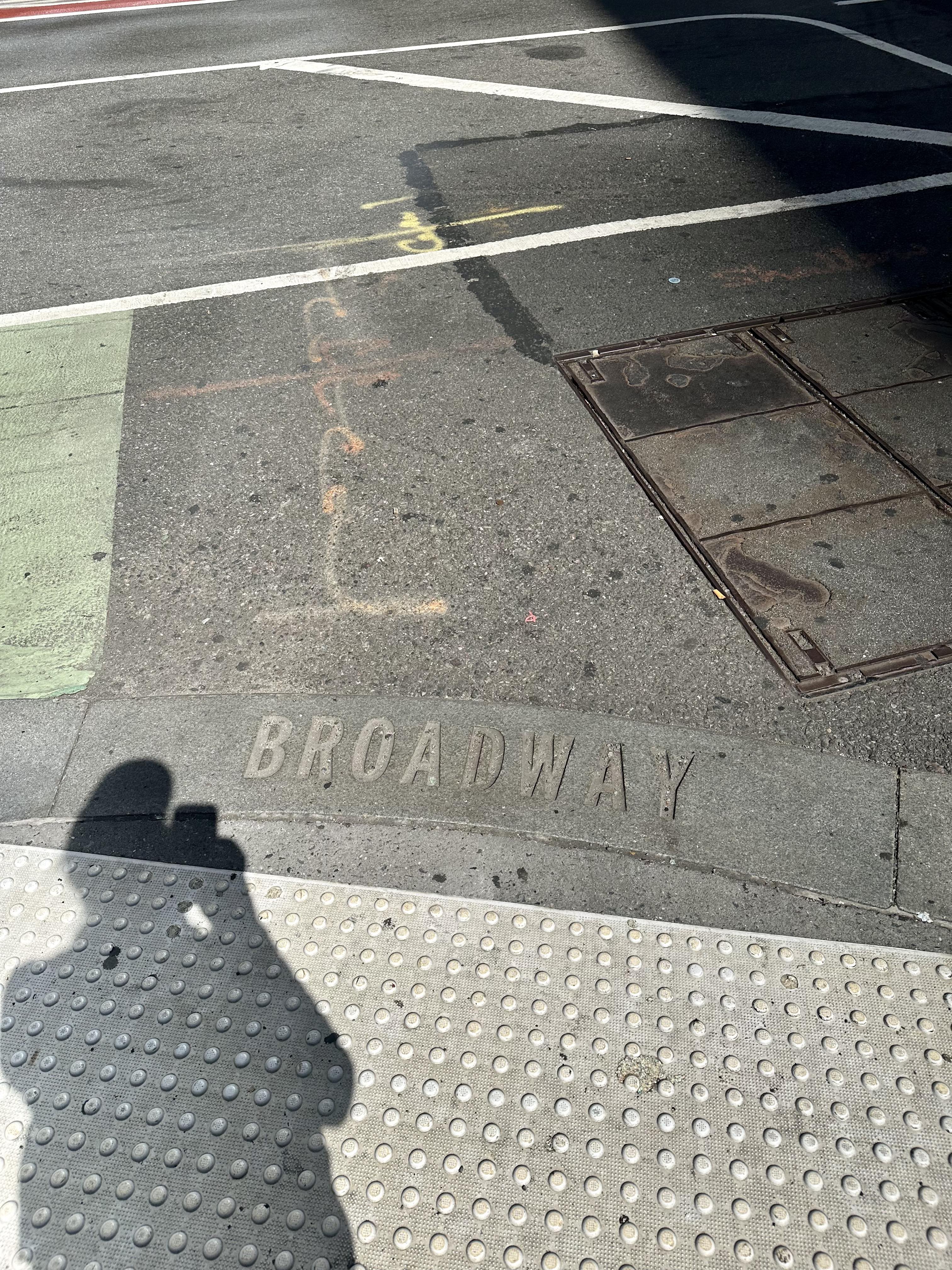
Broadway is the only avenue in Manhattan that runs its entire length (and in fact, continues north for two miles into The Bronx and then runs for 18 miles through Westchester County, through the towns of Yonkers, Hastings-On-Hudson, Dobbs Ferry, Irvington, and Tarrytown). It is also a street that does not follow the grid in Manhattan above 14th Street. Much of it follows the Weckquaesgeek trail, a major thoroughfare long before Europeans arrived. It was then widened by the Dutch, and named the “High Way.” When the British took over it was renamed Broadway because of its unusual width. In the 18th Century, Broadway ended just north of Wall Street, and the section below that was Great George Street, but since 1899 Broadway has begun just north of Battery Park, so that is where I began my walk, on a Saturday in late July that was finally not too hot or humid to contemplate such a long walk.
I took the subway to South Ferry (I had thought about biking down but decided not to test my endurance too much!), and began my walk at One Broadway, just north of the Museum of the American Indian. Before too long I encountered the famous Wall Street bull at Broadway’s intersection with Wall and watched people line up to take photos.
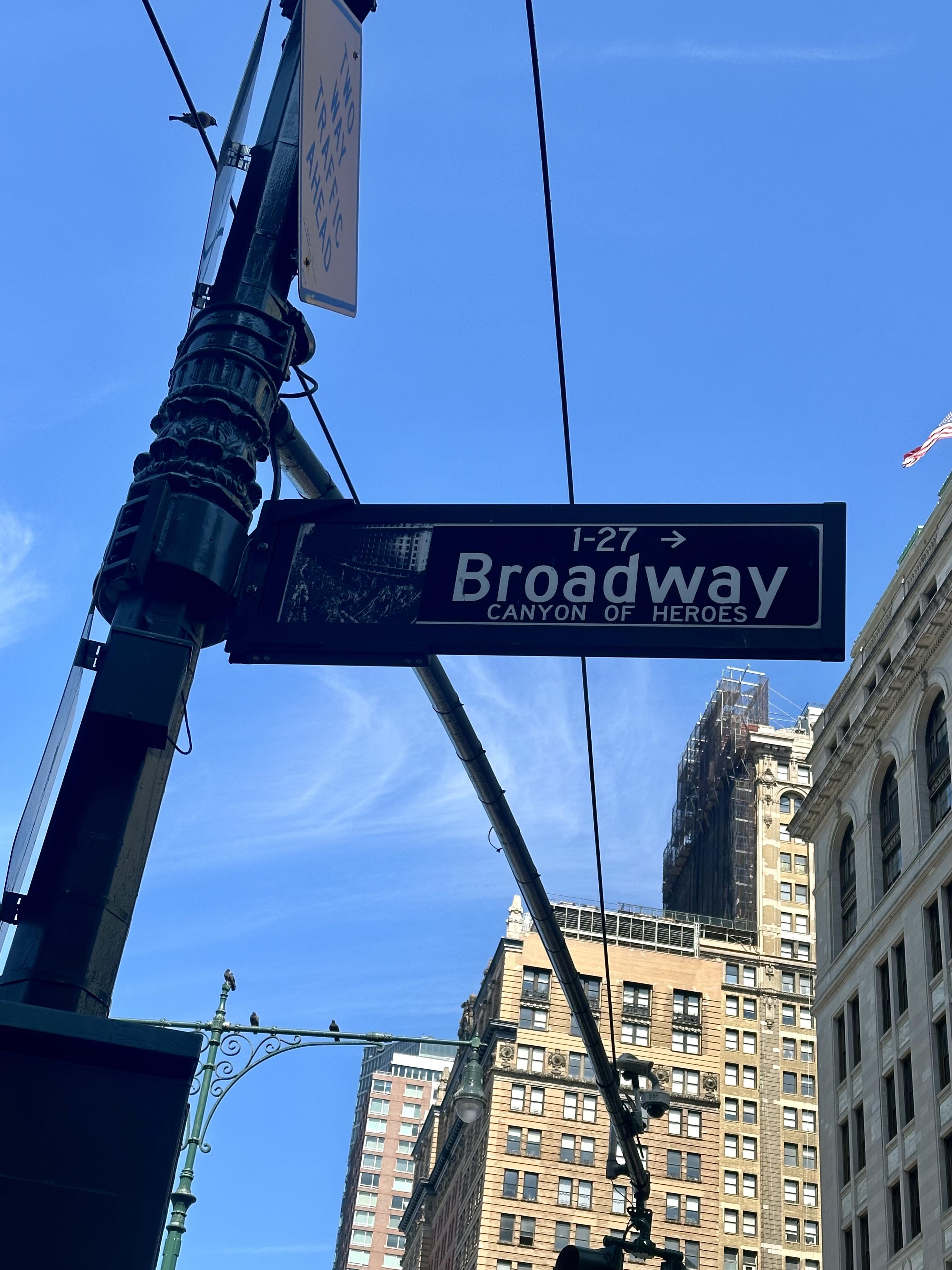
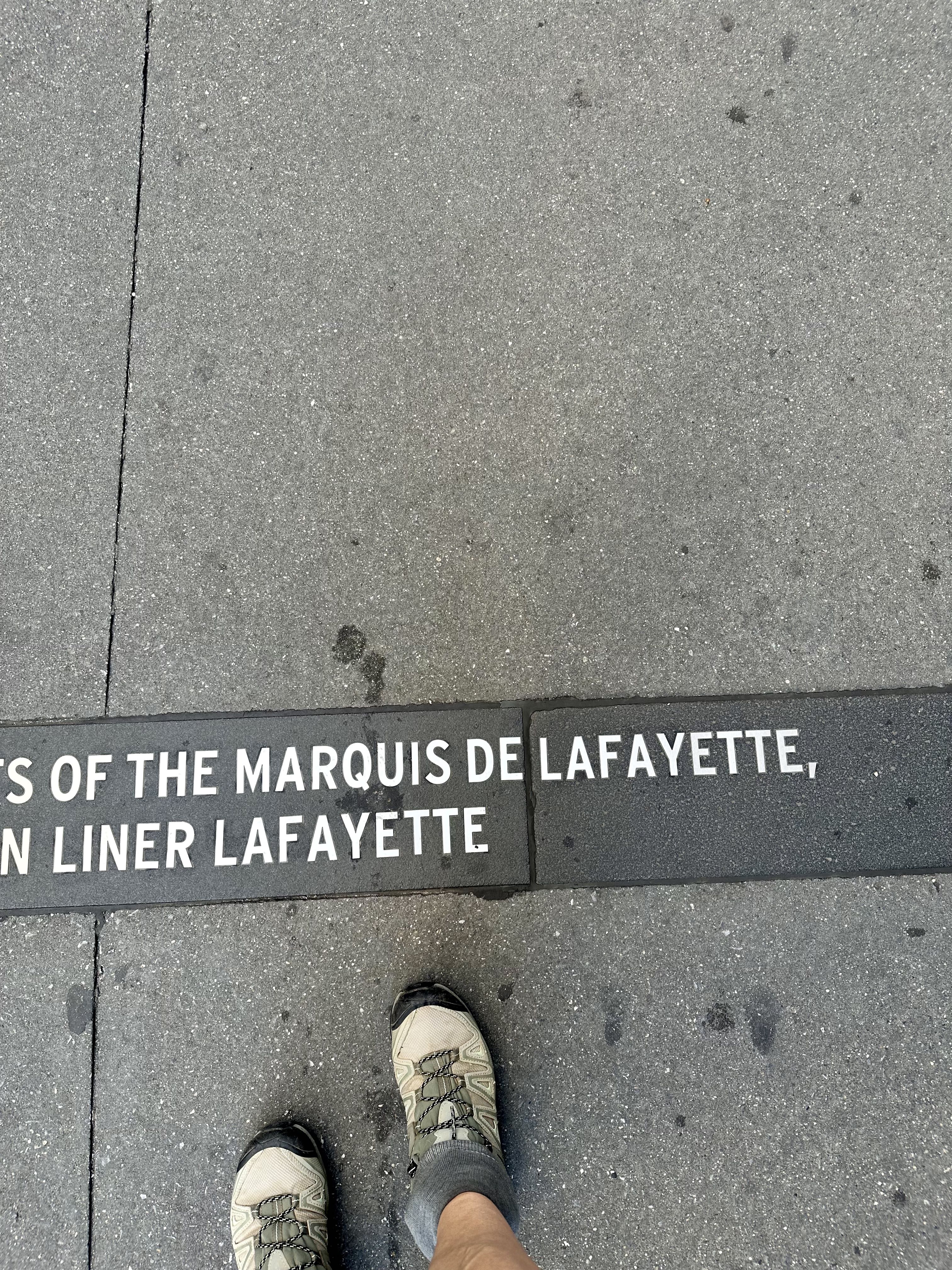
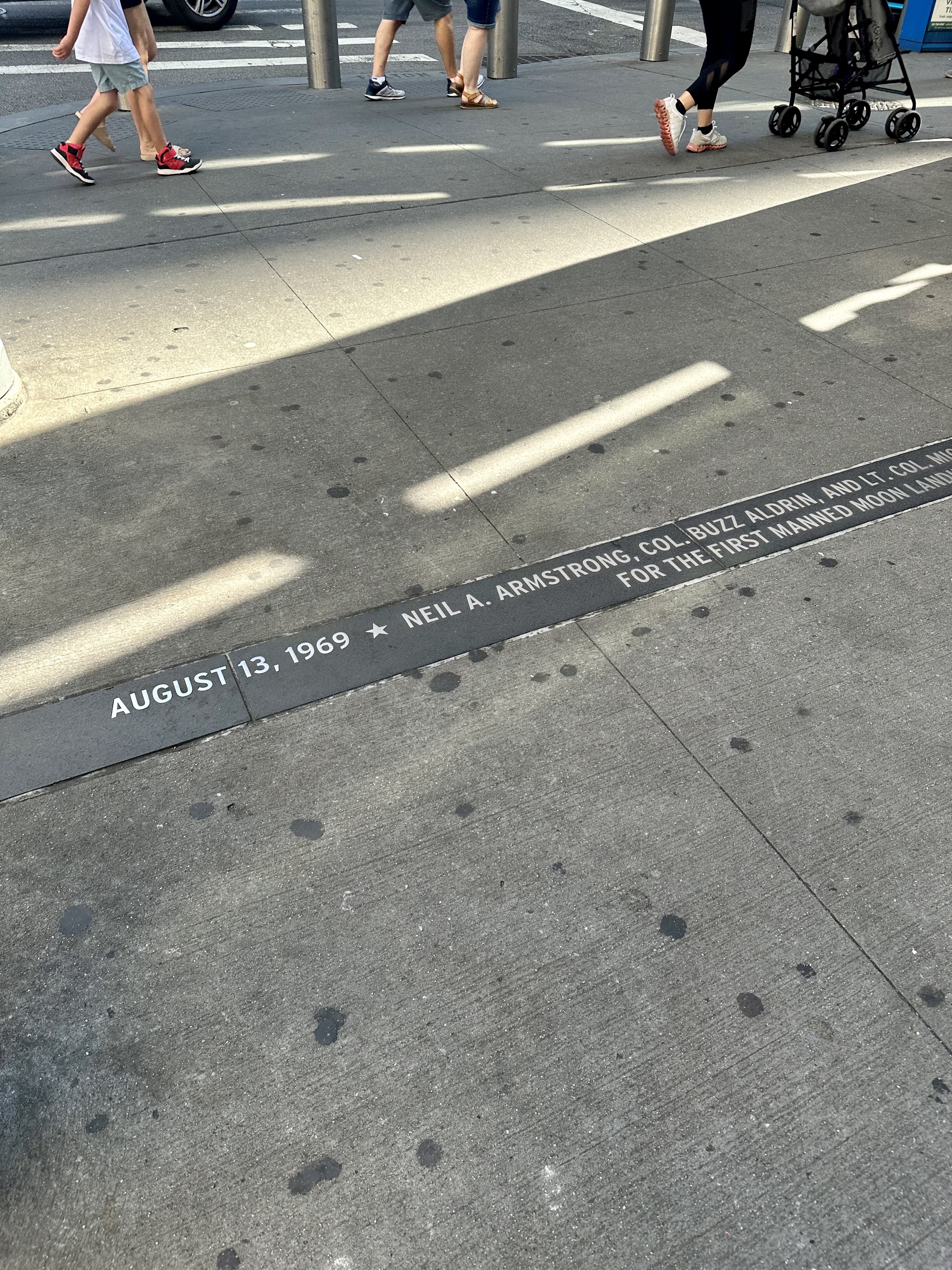
Not too far north from there I began reading the markers for the Canyon of Heroes. This is the section of Broadway where ticker tape (from when the financial district had tons of ticker tape paper as a side effect of doing business) parades have celebrated heads of state, winning local sports teams, and special occasions like the end of World War II or the return of Americans who first walked on the moon. It is fun to read these although you will only read those on one side of Broadway if you are trying to make good time. I stayed on the east side of the street for much of the day to take advantage of shade. I also started from the southern end of Broadway and walked north, rather than starting from the north and walking south (I found out later there is a “Broad City” challenge that starts at the northern tip of Manhattan because it was done in an episode of the show). If you do start from the south, you can read the Canyon of Heroes markers more clearly because they aren’t upside-down, and the sun will be more behind you near the middle of the day rather than in your eyes. On the other hand, as I will describe later, the Inwood section of the hike is much more hilly so you might want to get that over with earlier in the day.
Still in the Canyon of Heroes, be sure to appreciate Trinity Church to your left. Trinity’s first church in Manhattan was built in 1698 and was destroyed in the Great Fire of 1776. There was a second building on Wall Street until Trinity Church as we see it now was built in 1846. It was the tallest building in the United States until 1869, and the tallest in NYC until 1890.
Continuing north, if you look to your left, you can catch a glimpse of the Oculus, first on its own and a block later, with One World Trade rising behind it. (I have written before about the Oculus and about One World Trade.) They aren’t actually on Broadway, but St. Paul’s Chapel, which somehow survived 9/11 and was used as a staging area for helping rescue and recovery workers after 9/11, is on Broadway at Fulton. After George Washington was sworn in as President, he went to St. Paul’s for services and the pew he sat on has a plaque noting this.
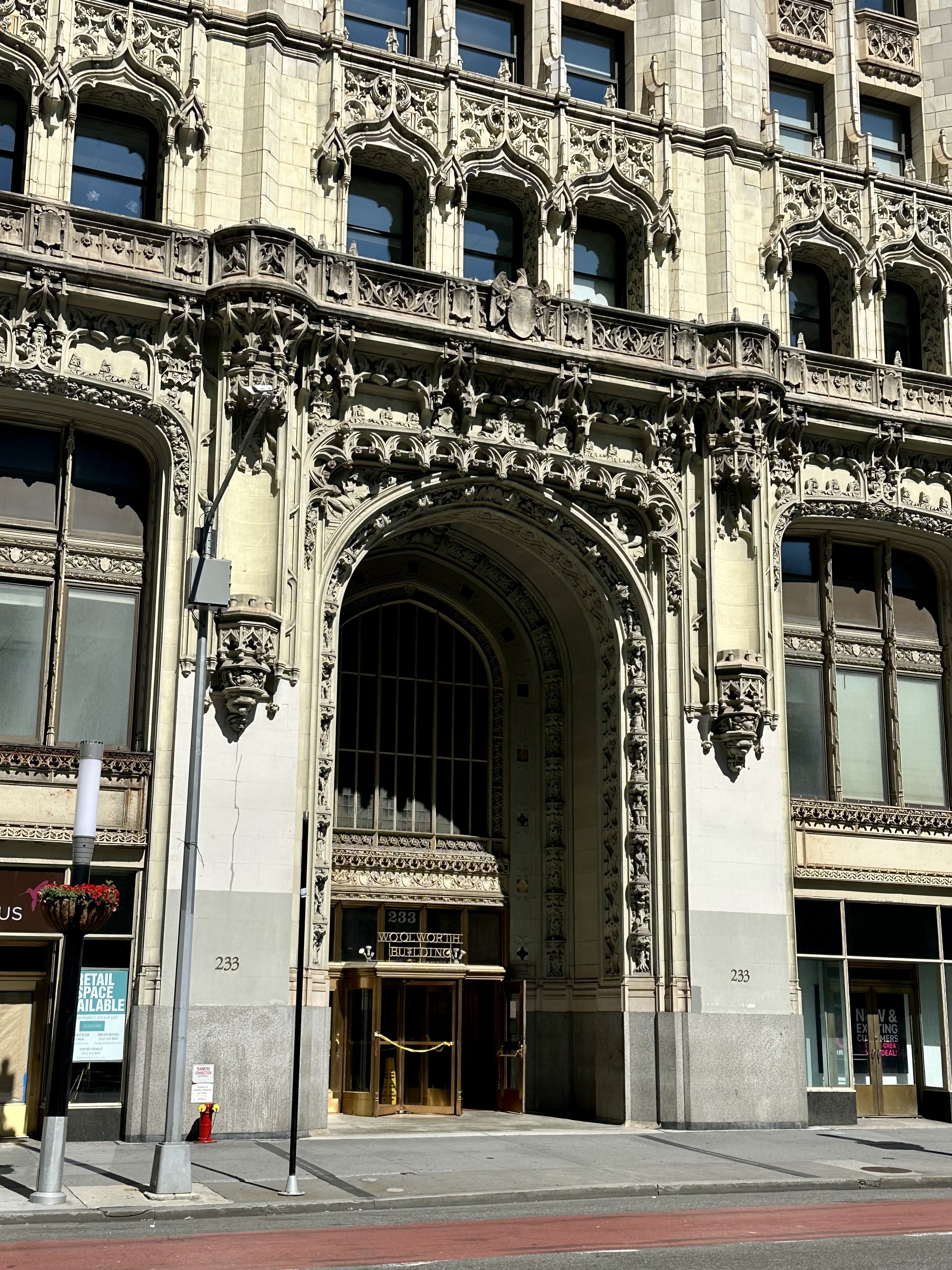
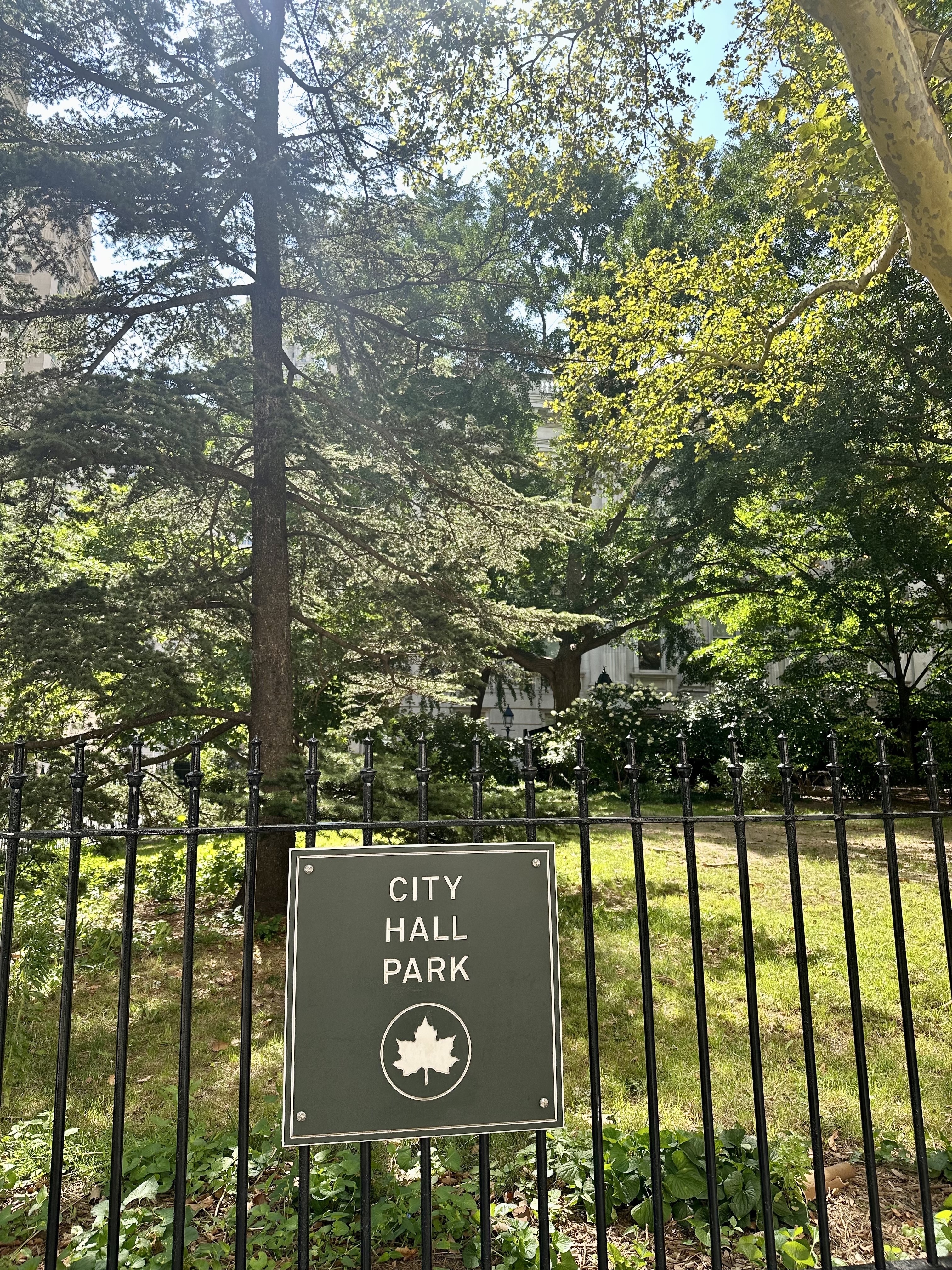
Continuing north, I passed the Woolworth Building, which was the tallest building in the world from 1913 to 1930, with a height of 792 feet. Perhaps more impressively, over 100 years after it was built, it is still one of the 100 tallest buildings in the United States. It has been converted to residential condos, and the penthouse – which is pretty spectacular, to say the least – recently sold for only $30M (down from over $100M when first listed!) in “white box” state, ready for finishing out to the buyer’s taste and use, but is a very unique space. After passing City Hall (which, built in 1812, is the oldest city hall in the US still used for its original governmental functions) and City Hall Park, I couldn’t resist a smile as I passed Zero Bond. This was the location of my work as a background actor for the final season (as it turned out, the final episode) of Succession, and I had scarfed down some craft services for lunch just outside that building standing next to Matthew Macfadyen (“Tom”). You can read more about that experience here.
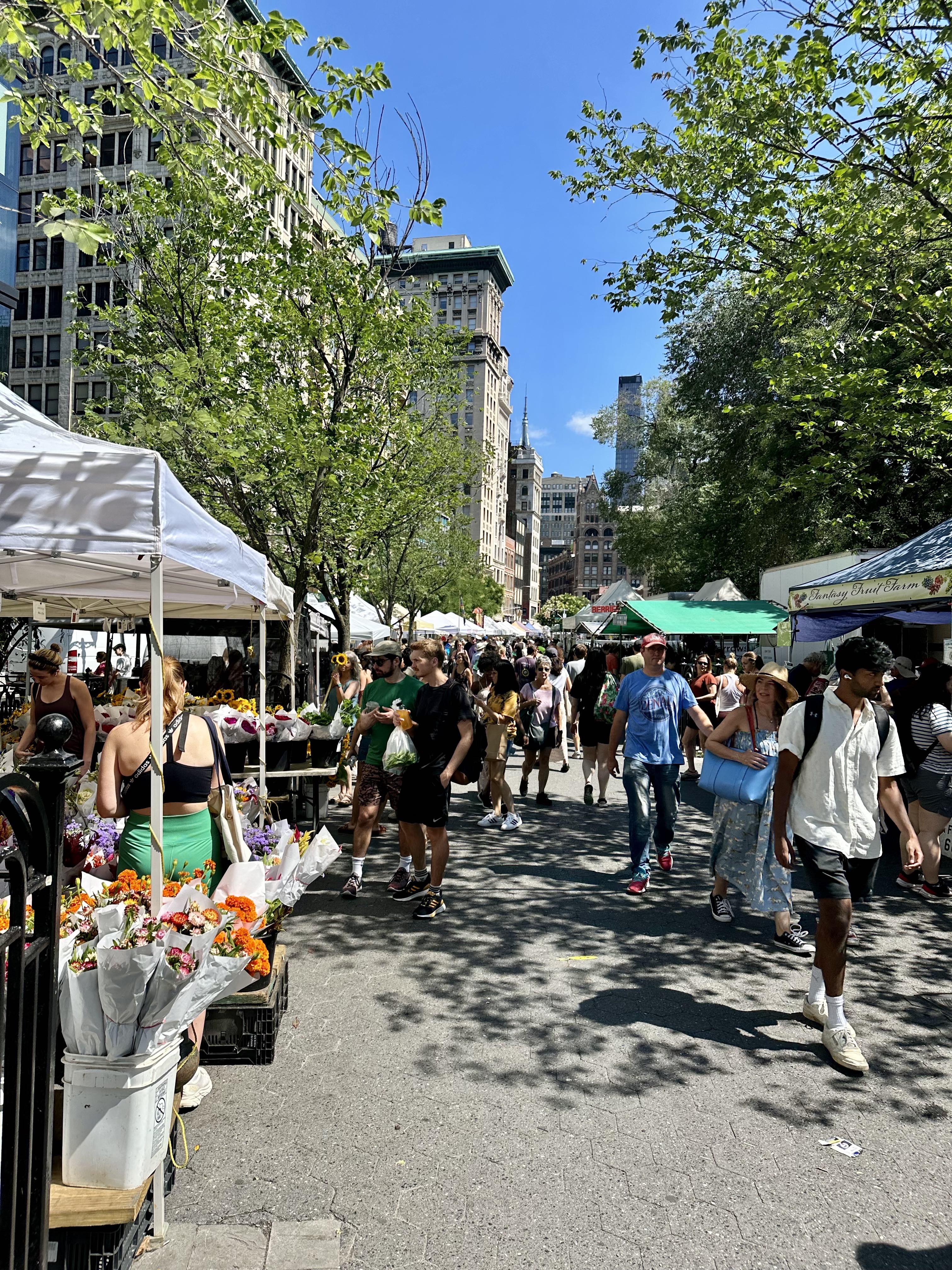
After walking through Greenwich Village, the next big event is Union Square, where Broadway begins to cut across the Manhattan grid, creating interesting little parks or “squares.” I was doing this on a Saturday, so the excellent Green Market was in full swing. I had been hydrating up to this point, but decided to buy some fruit and enjoy it (raspberries and red currants) for my first snack of the day.
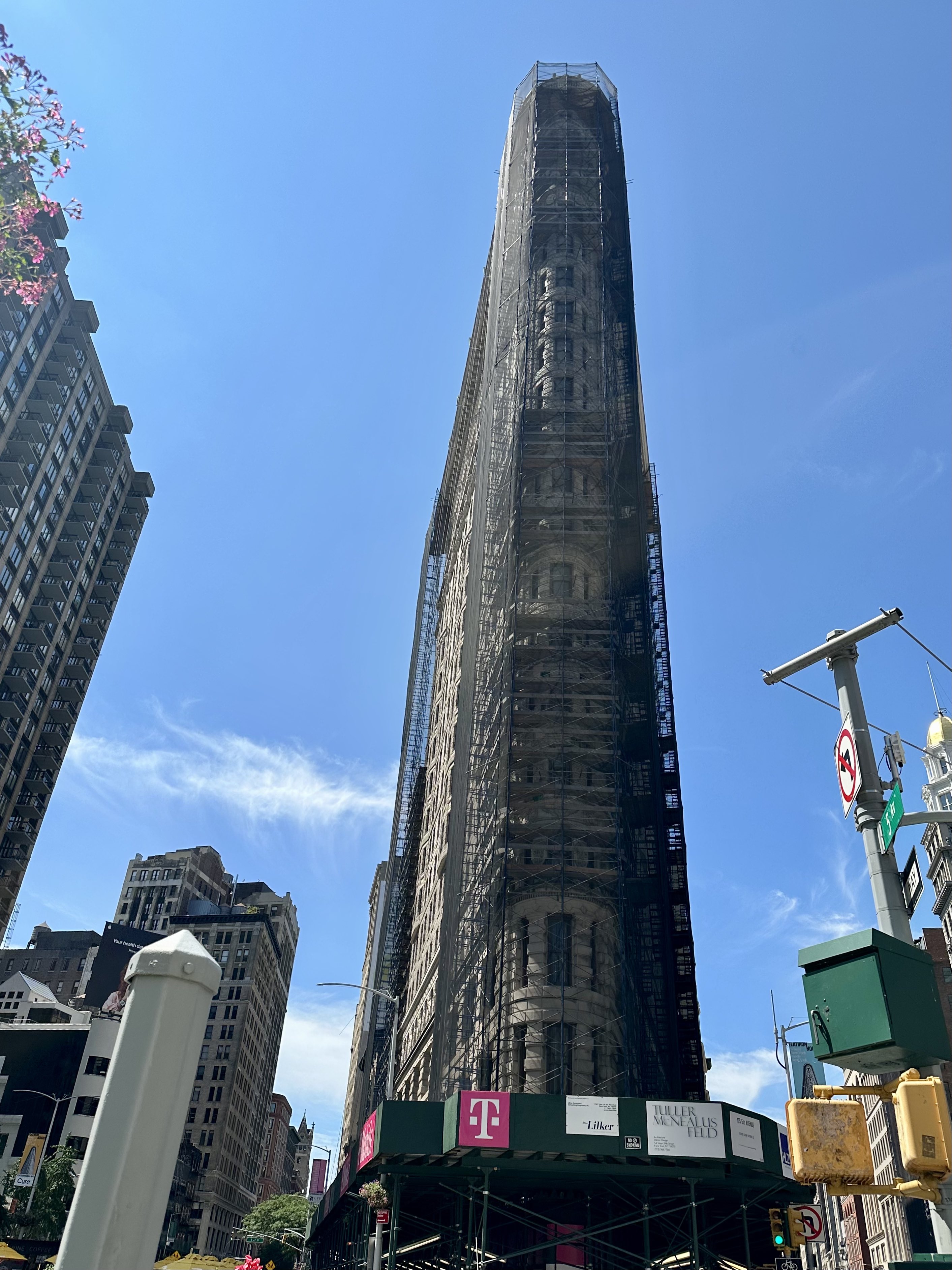
At 23rd Street, Broadway intersects with Fifth Avenue, and you get a great view of the Flatiron Building (unfortunately scaffolded right now for some facade repair). Completed in 1902, at 20 stories it was considered dangerous and a “folly” for the builder. A National Historic Landmark, The Flatiron Building is now universally adored – it was the fourth most loved building in the United States in a survey in 2019 (behind Falling Water, the Empire State Building, and Coit Tower in San Francisco).
Broadway intersects with Seventh Avenue at 34th Street, home of Macy’s flagship store. The real Santa (of course! come on, watch Miracle on 34th Street) hangs out in Santaland every holiday season, and the Thanksgiving Day Parade ends in front of the store. This building was completed in 1902 and is a National Historic Landmark.
When Broadway crosses 42nd Street, you are at the “Crossroads of the World,” Times Square. Full of screens, neon, costumed performers, street theatre, hordes of confused tourists, and surrounded by Broadway theaters, Times Square is a lot, no question. There’s also no place like it. I actually successfully timed my day to avoid the pre-matinee crowds.
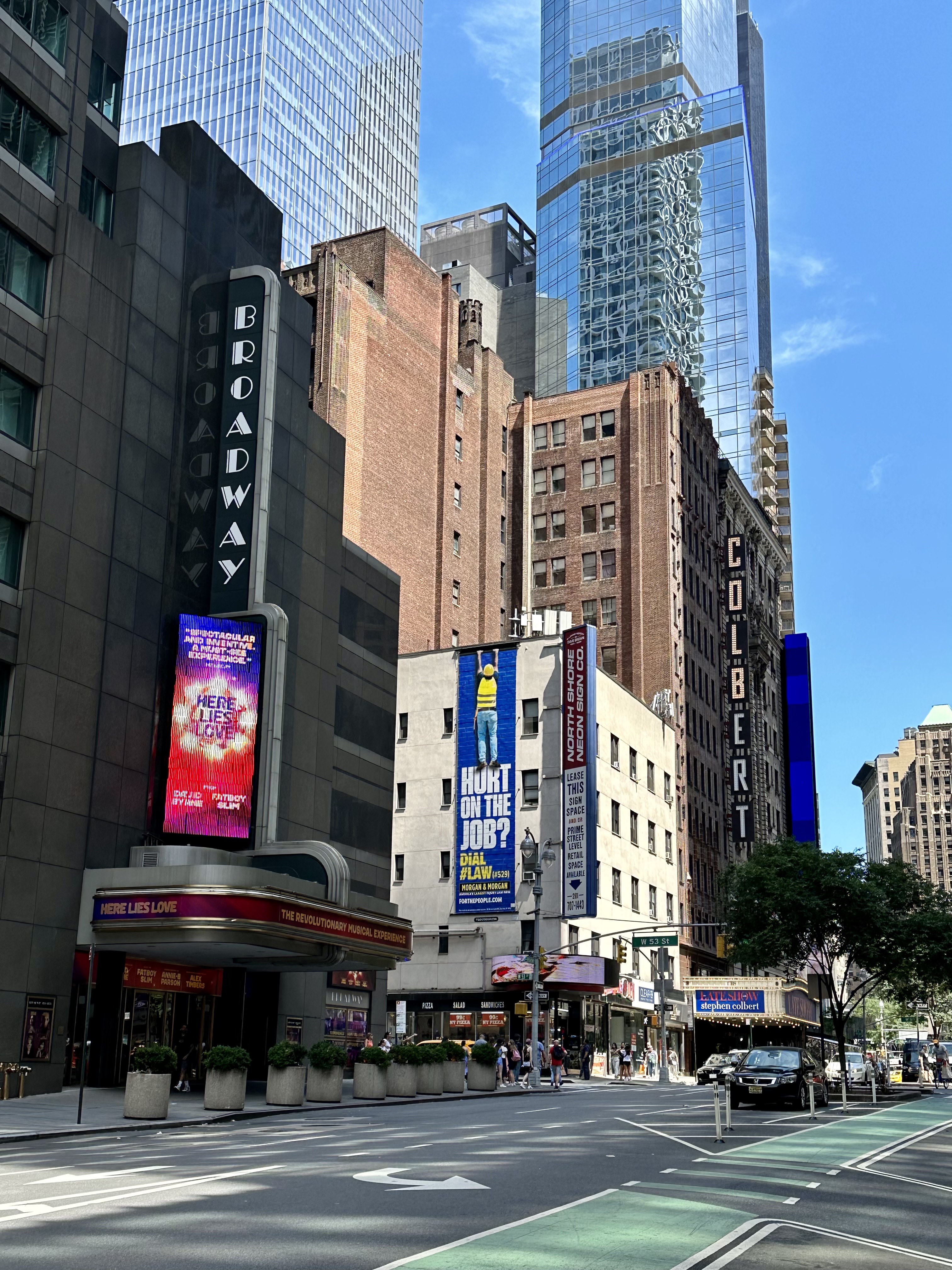
Speaking of Broadway theaters, a few blocks north of Times Square you can see the simply named Broadway Theater, currently the home of Here Lies Love, and the Ed Sullivan Theater, currently home to the Colbert Show. Did you know that most Broadway theaters are not actually on Broadway? There are 41 Broadway theaters (theaters with 500 or more seats, generally between 41st and 54th Streets, with the exception of the Vivian Beaumont a bit north in Lincoln Center at W 65th) but only the Broadway, Winter Garden, and Palace (currently undergoing a multi-year renovation) have addresses on Broadway itself.
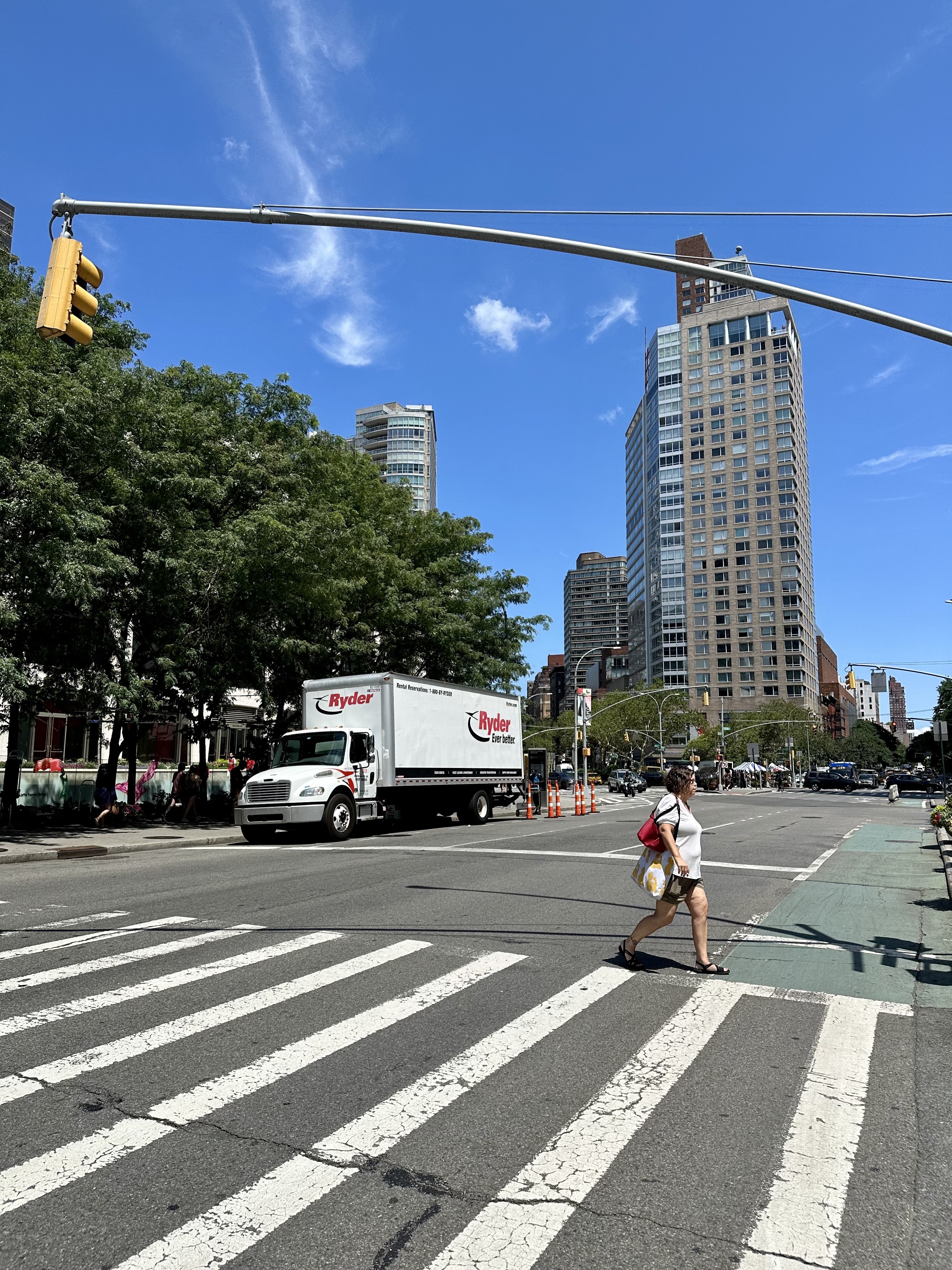
When Broadway crosses Eighth at 59th Street, you are at Columbus Circle, looking to your right at the Southwest corner of Central Park. Broadway will continue to move west on the diagonal, intersecting W 66 (at Lincoln Center), and heading through the relative quiet and residential nature of the Upper West Side.
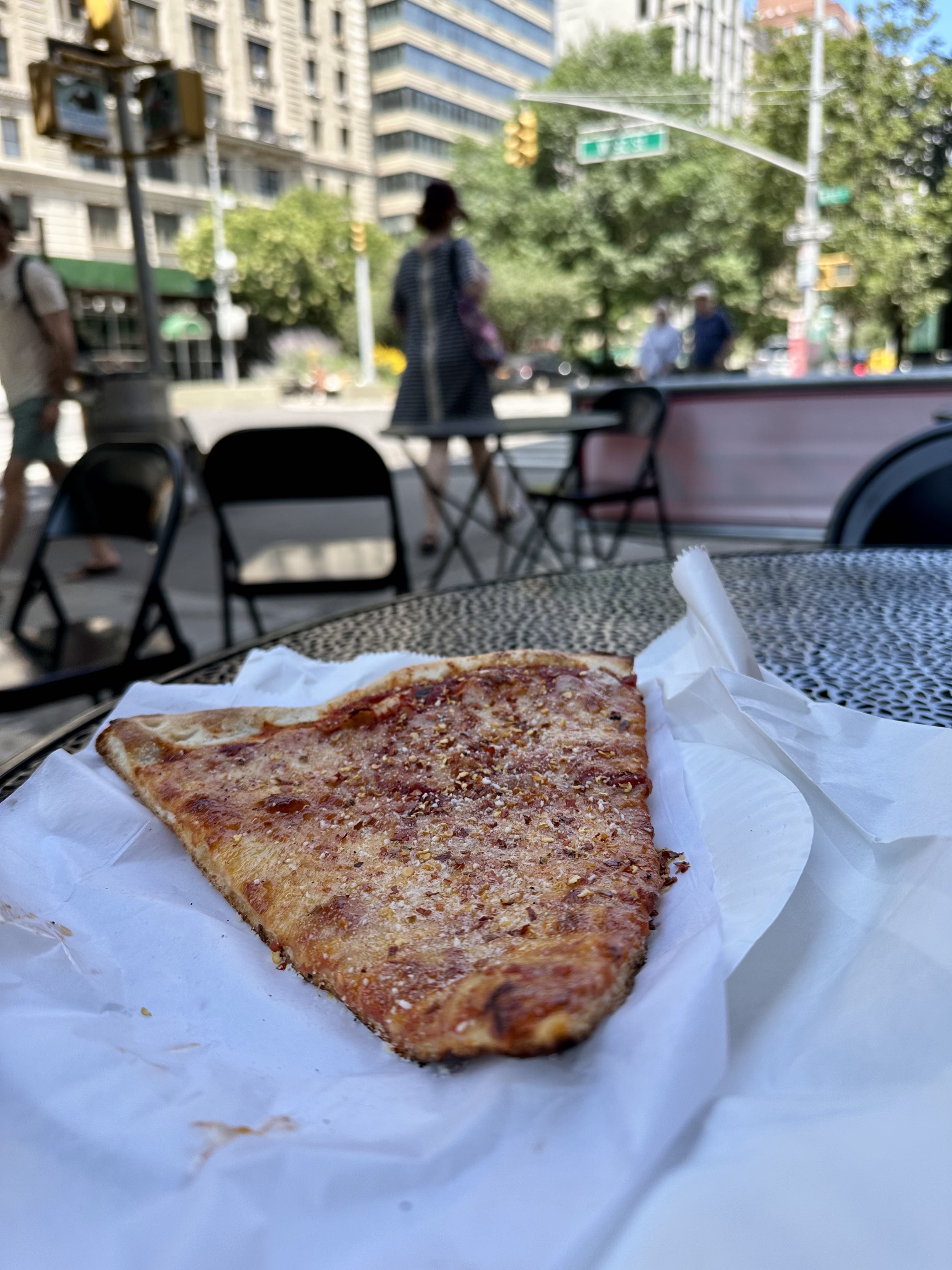
At some point in the W 90s, I stopped in at a random pizza place for a classic NY slice. Around this point I was beginning to tire a bit, but the pizza helped. Later on I stopped at a Mister Softee truck, but as you will see from the rest of this blog post, as I became more tired I took fewer photos.
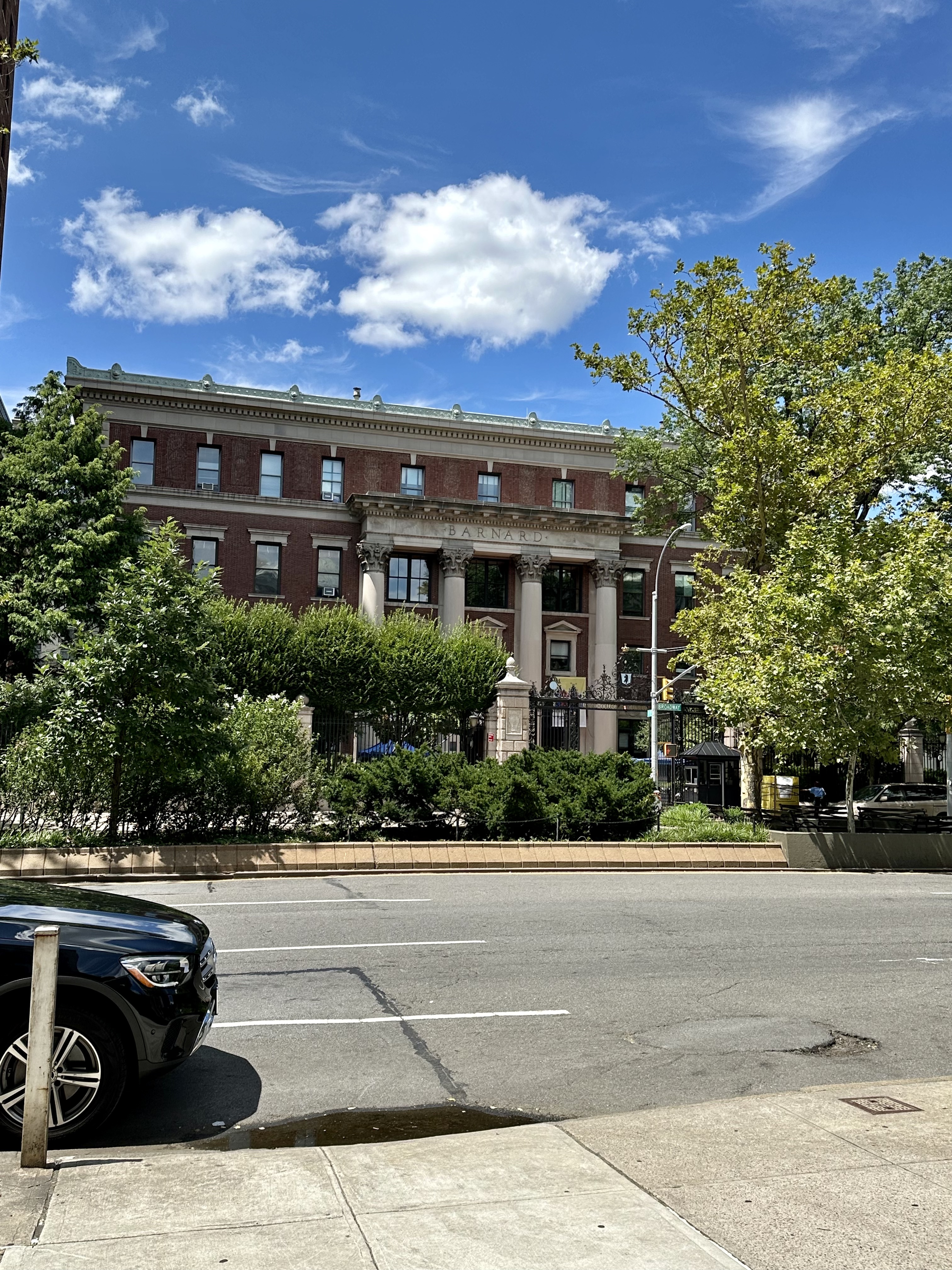
Continuing north along Broadway into Morningside Heights, I passed Columbia University on my right and Barnard College on my left. Columbia was established as King’s College in 1754 on the grounds of Trinity Church in lower Manhattan, and moved to the current campus in 1896. Columbia is the 5th oldest institution of higher learning in the United States (after Harvard, William & Mary, Yale, and Princeton).
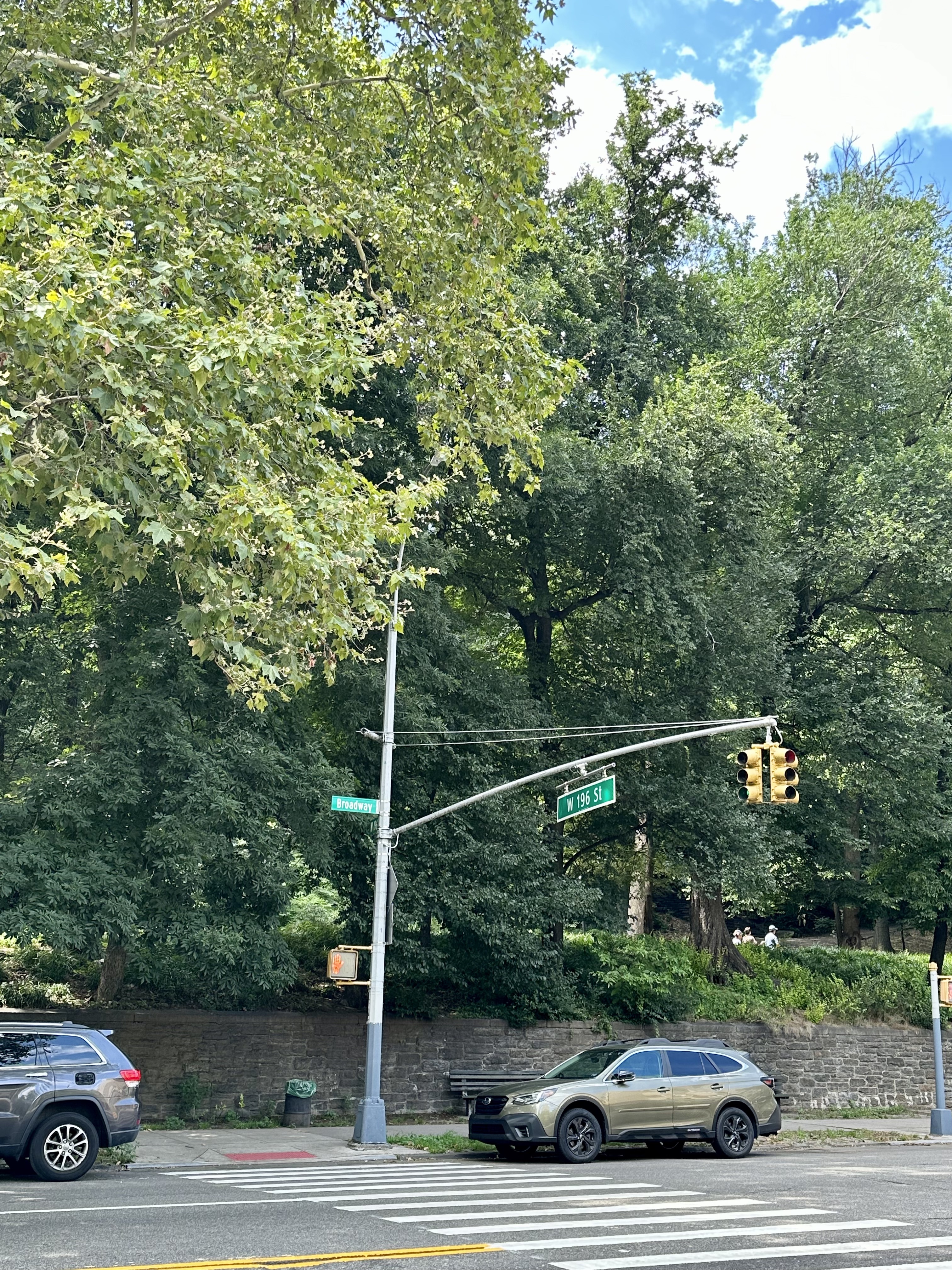
After Morningside Heights, Broadway seemed to get very hilly, and although there are plenty of lovely things to see – Inwood Park deserves its own blog post – I began to get more interested in finishing the trip than in taking pictures.
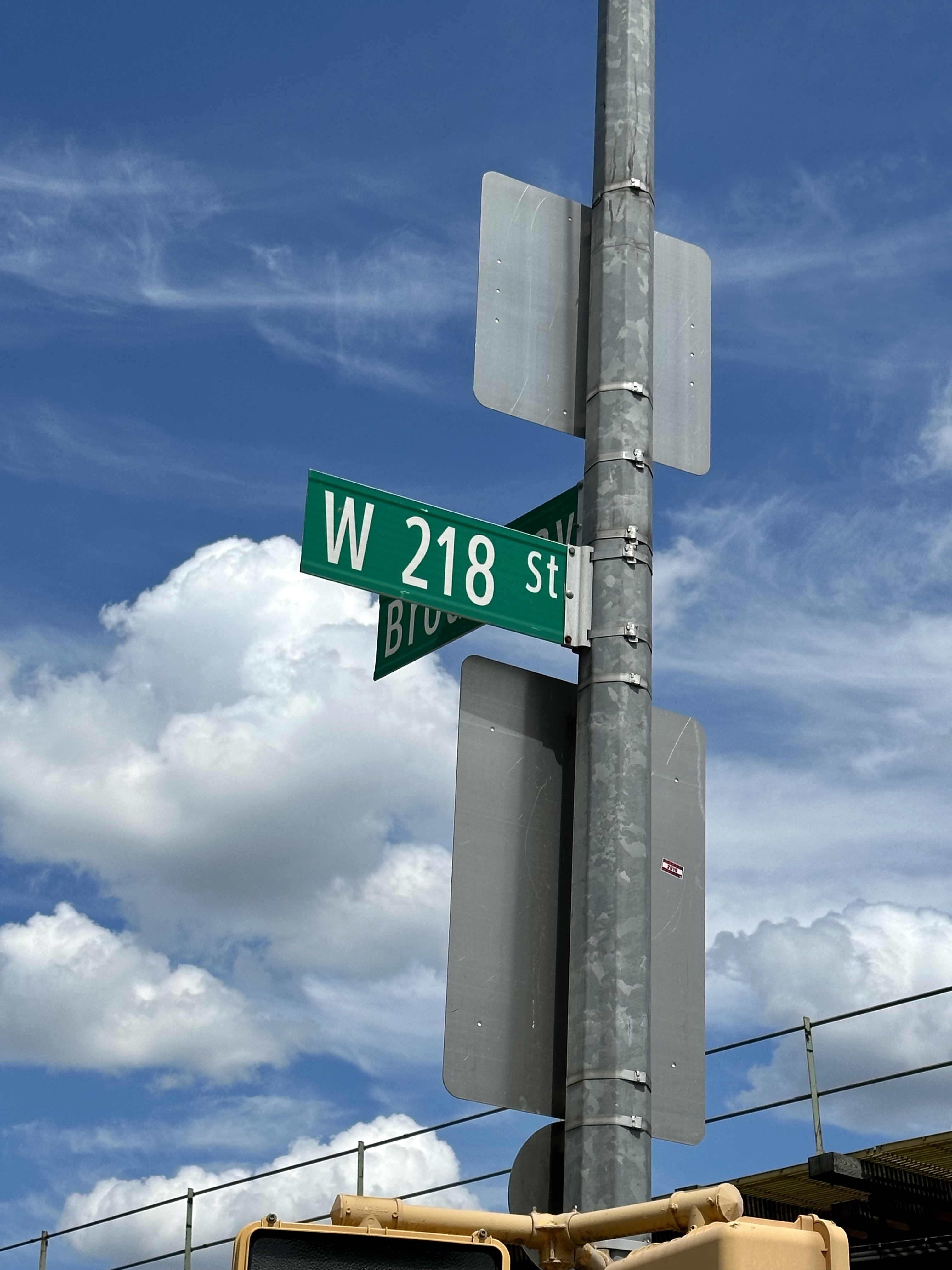
At the very tip of Manhattan Broadway swung east again, preparing to continue into The Bronx after a bridge over the Harlem River. After trudging to 218th Street, not wanting to go across the bridge, I considered myself to have done the walk, and backtracked to the 215th Street MTA station to catch the 1 train. I felt strong the next day, with no sore muscles, so felt good about the trek in terms of trying out my Kili gear on a long hike. The entire trip, including stops here and there for food, or bathroom breaks, took just under 6 hours. I feel the day would be more fun if you did it with someone over the course of an entire day, took more breaks, didn’t mind veering off Broadway now and then, and considered stopping at 125th Street (or starting there if you want to do the trip heading south instead of north). The most interesting thing to me was how different Broadway is in all its varying incarnations and neighborhoods. Walking it was like a microcosm of Manhattan itself; constantly different, never boring, not a city but more like a series of cities. The length and many-sidedness of Broadway illustrates the thing I love most about New York City – its constant variety and reinvention. Samuel Johnson once famously remarked that if you are bored with London you are bored with life – and to me that is true (I would say, even more true!) of my beloved New York City.
Although there are many wonderful parts of New York City, and I plan to be walking through many in upcoming posts, after describing parts of Yorkville, Carnegie Hill, and Upper Carnegie Hill into El Barrio (see previous blog entries), it made sense to complete my tour of the Upper East Side with a dérive in Lenox Hill. As a reminder, Wikipedia defines a dérive as “an unplanned journey through a landscape, usually urban, on which the subtle aesthetic contours of the surrounding architecture and geography subconsciously direct the travellers, with the ultimate goal of encountering an entirely new and authentic experience.” As mentioned in earlier posts, I find that walking through a neighborhood gives me the best instinct for what it would be like as a place to live .In addition, it allows me to connect with the city in a more tangible way, as a part of it rather than as an observer of it.
Lenox Hill is an area of the Upper East Side of Manhattan between 77th Street and 60th Street, and between Lexington and Fifth Avenues. Lenox Hill itself was at what is now Park Avenue and 70th Street, and named for Robert Lenox, who owned much of the land in this area in the early 19th century (interesting fact: he was the executor of Archibald Gracie’s will, the same Gracie who built the mansion now used as the New York City mayor’s residence in Carl Schurz Park).
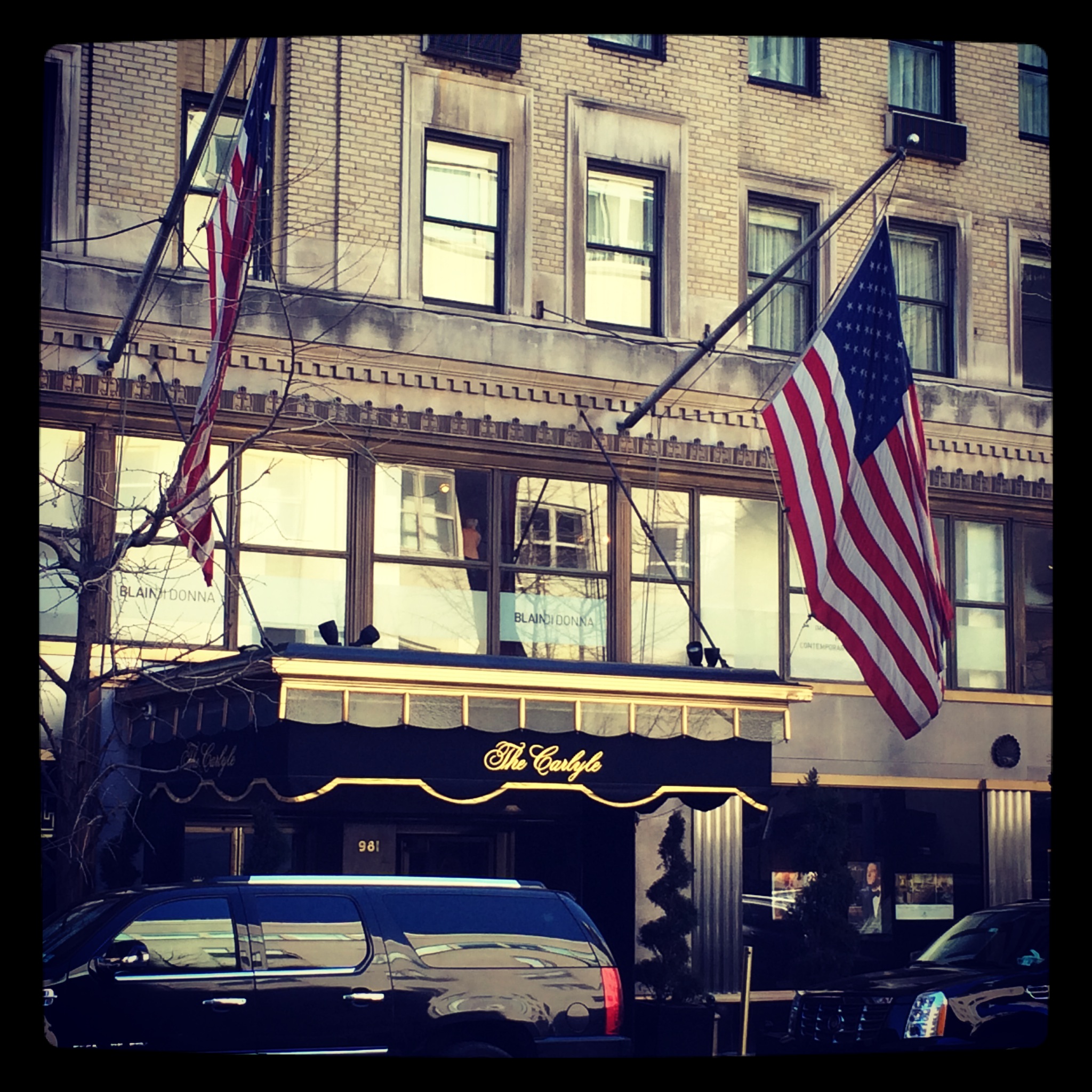
Starting on Madison and 77th, you can see two classic Upper East Side hotels – the Mark on 77th between Fifth and Madison, and the Carlyle (known as “The New York White House” during President Kennedy’s term) on Madison between 77th and 76th Streets. Both have a few residences as well as hotel rooms, if a home with maid and room service is what you have always wanted! The Carlyle is also the home of Café Carlyle, the famous supper club where you can have dinner while hearing live cabaret or jazz performances. Walking south on Madison, you also run across two unique pharmacies: Zitomer’s, on Madison between 76th and 65th, and Clyde’s on Madison and 74th. Both are a far cry from the chain pharmacies that proliferate every few blocks – if you are looking for an obscure European skin care product or a scented candle from Santa Maria Novella in Italy, try one of these distinctive shops.
At Madison and 75th Street is the new home of the modern art collection of the Metropolitan Museum, in the brutalist building once occupied by the Whitney Museum before its move to the Meatpacking District at the southern end of the High Line Park.
Continuing south on Madison is an enjoyable stroll, with the window displays of the designer shops themselves providing an artistic experience. Looking right while heading south on Madison, you can see beautiful rows of townhouses lining the blocks, and Central Park beckoning just on the other side of Fifth Avenue. Looking left, you see quiet residential blocks and, just one block over, the majestic expanse of Park Avenue. Fairly unique to this neighborhood is the contrast between the densely packed shops and restaurants all along Madison and Lexington Avenues, and the primarily residential expanses on the cross streets and along Fifth and Park Avenues.


















































 Julie Brannan, NYC residential real estate