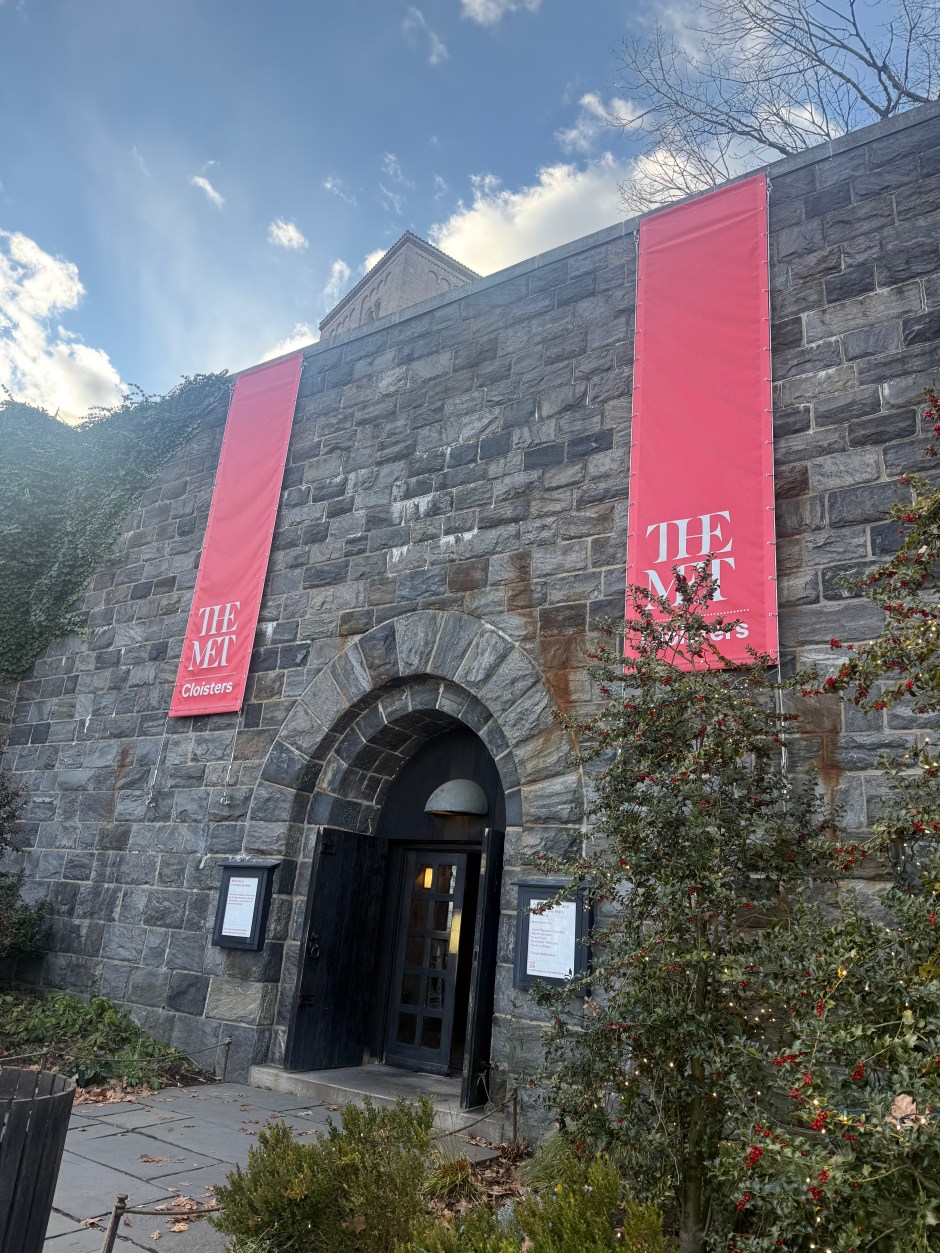
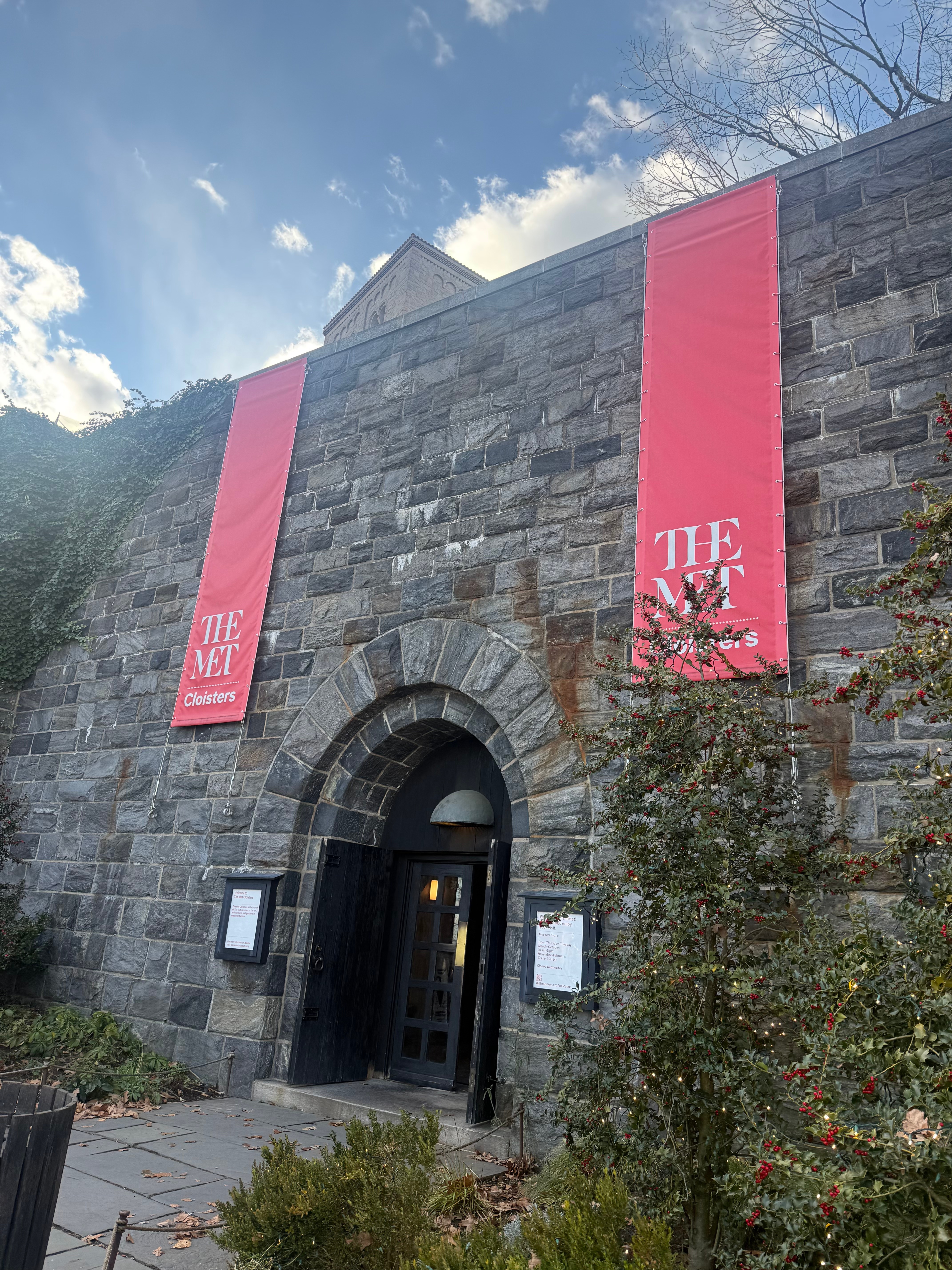
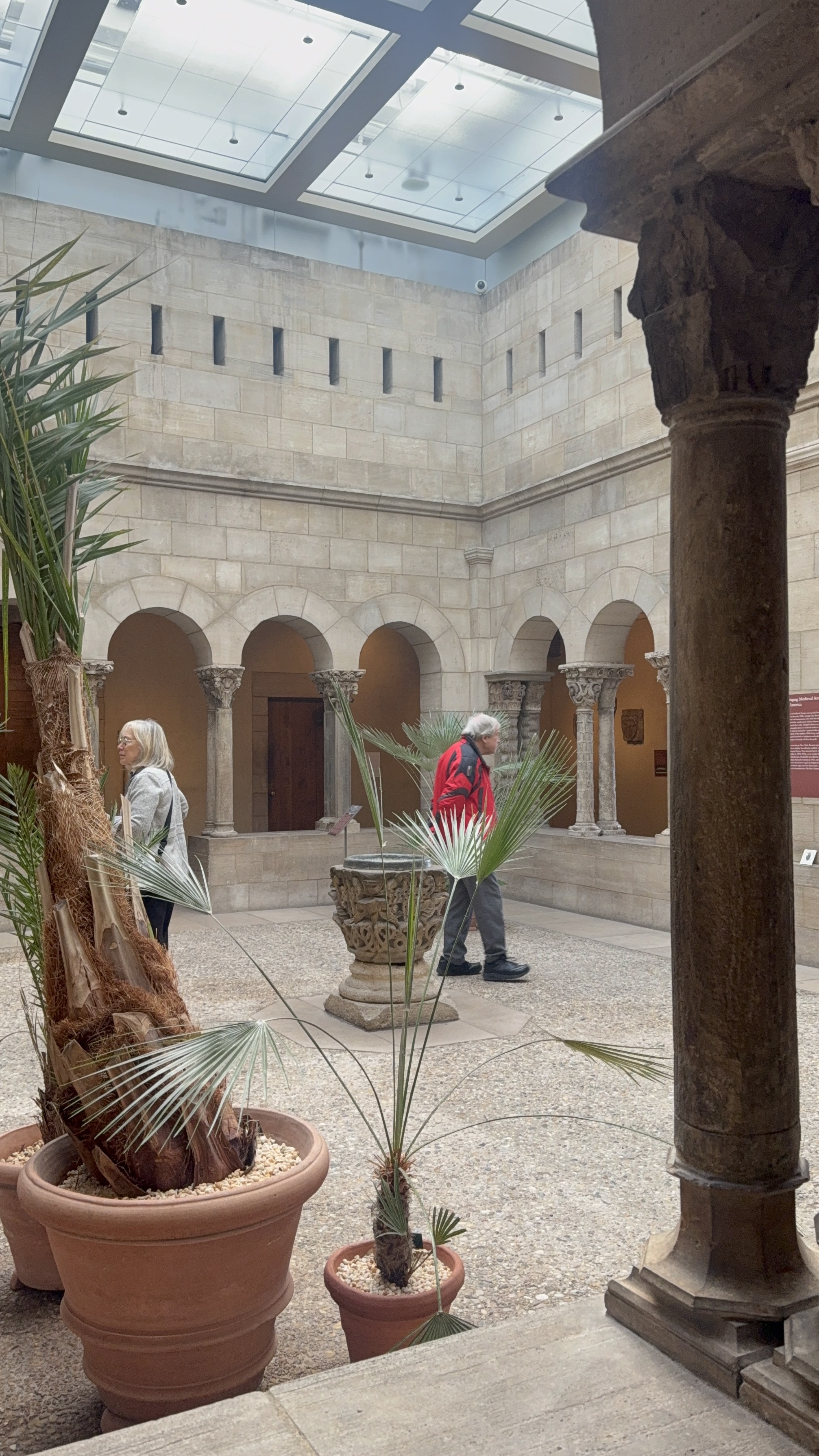
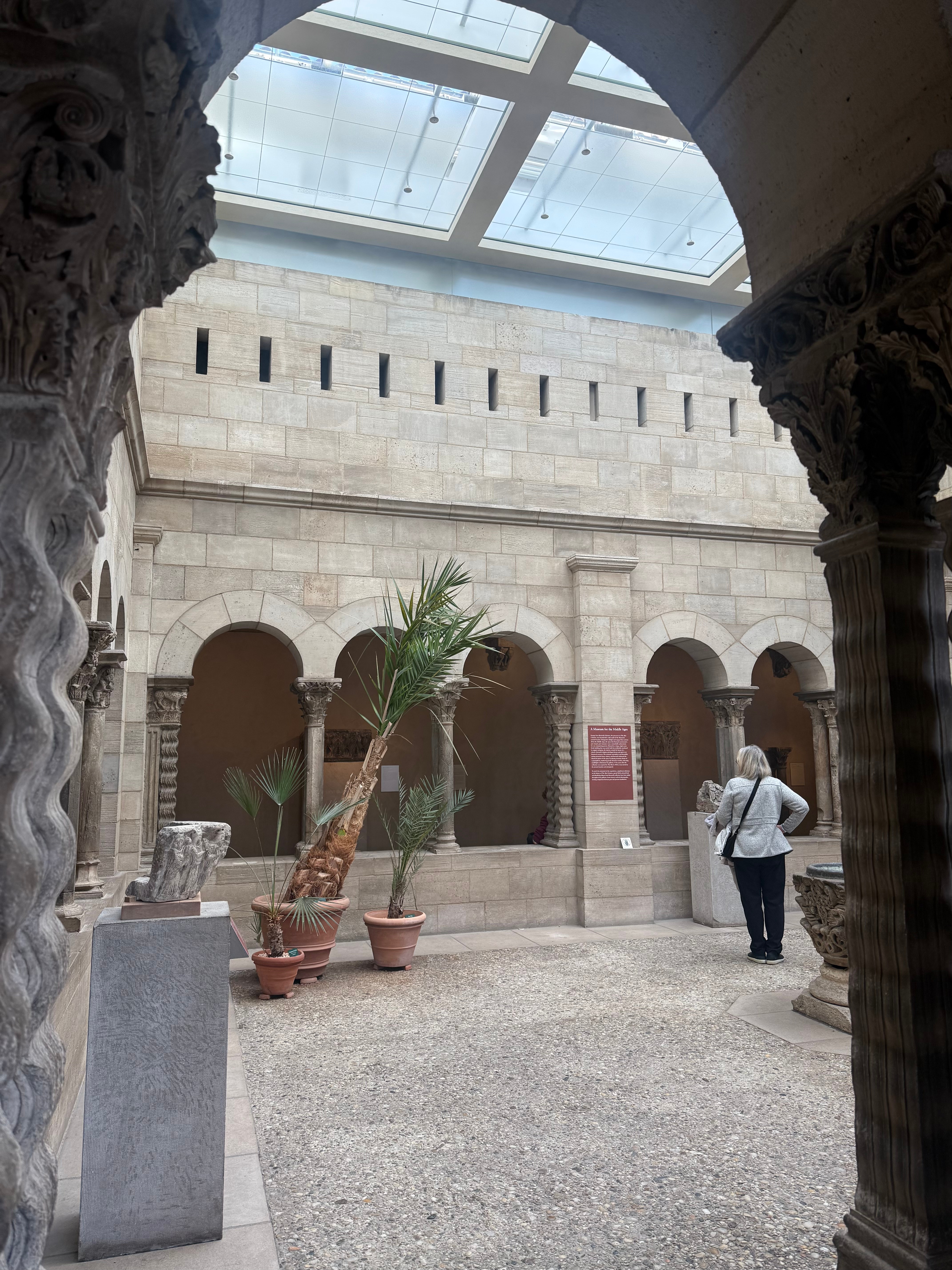
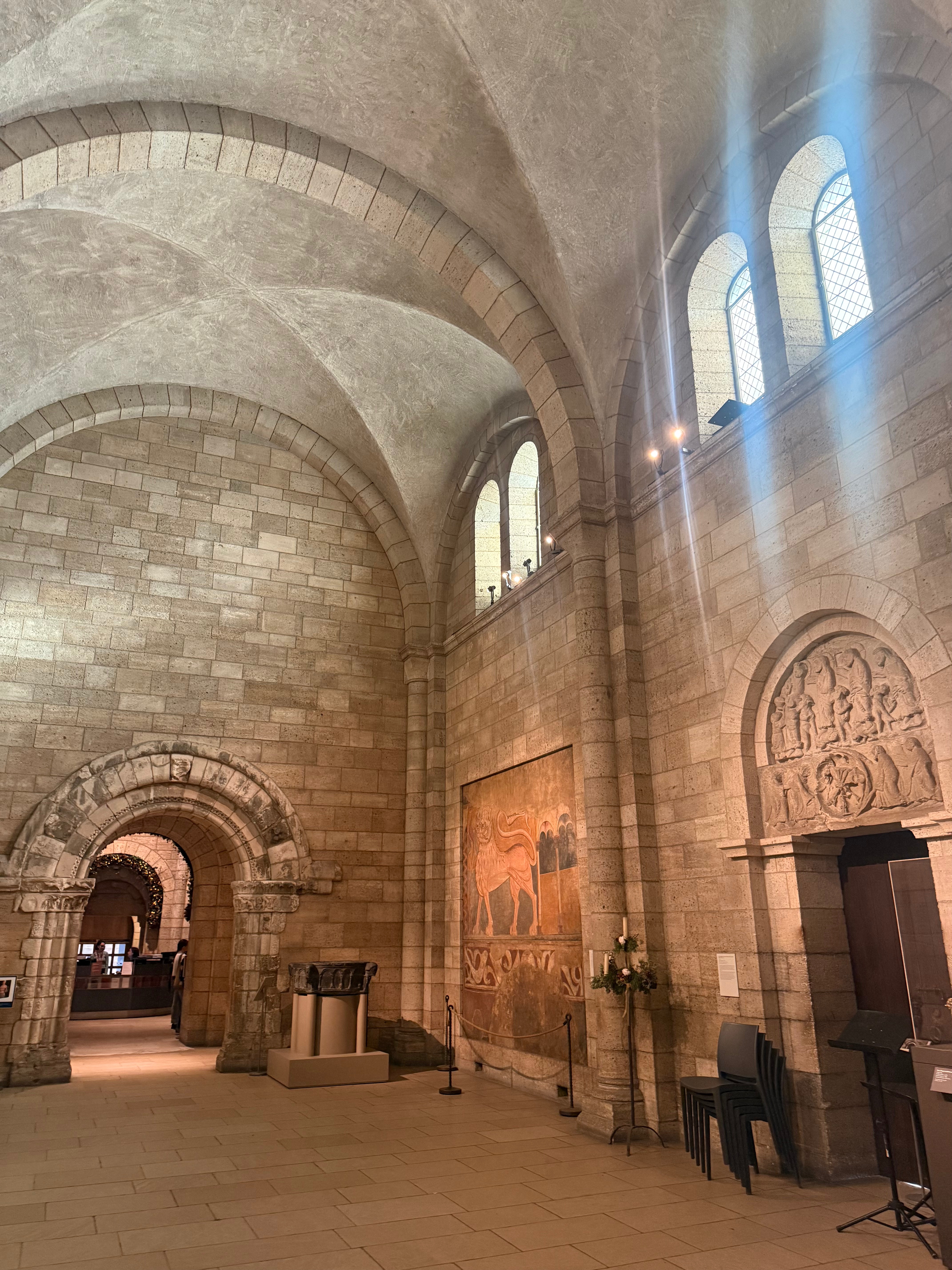
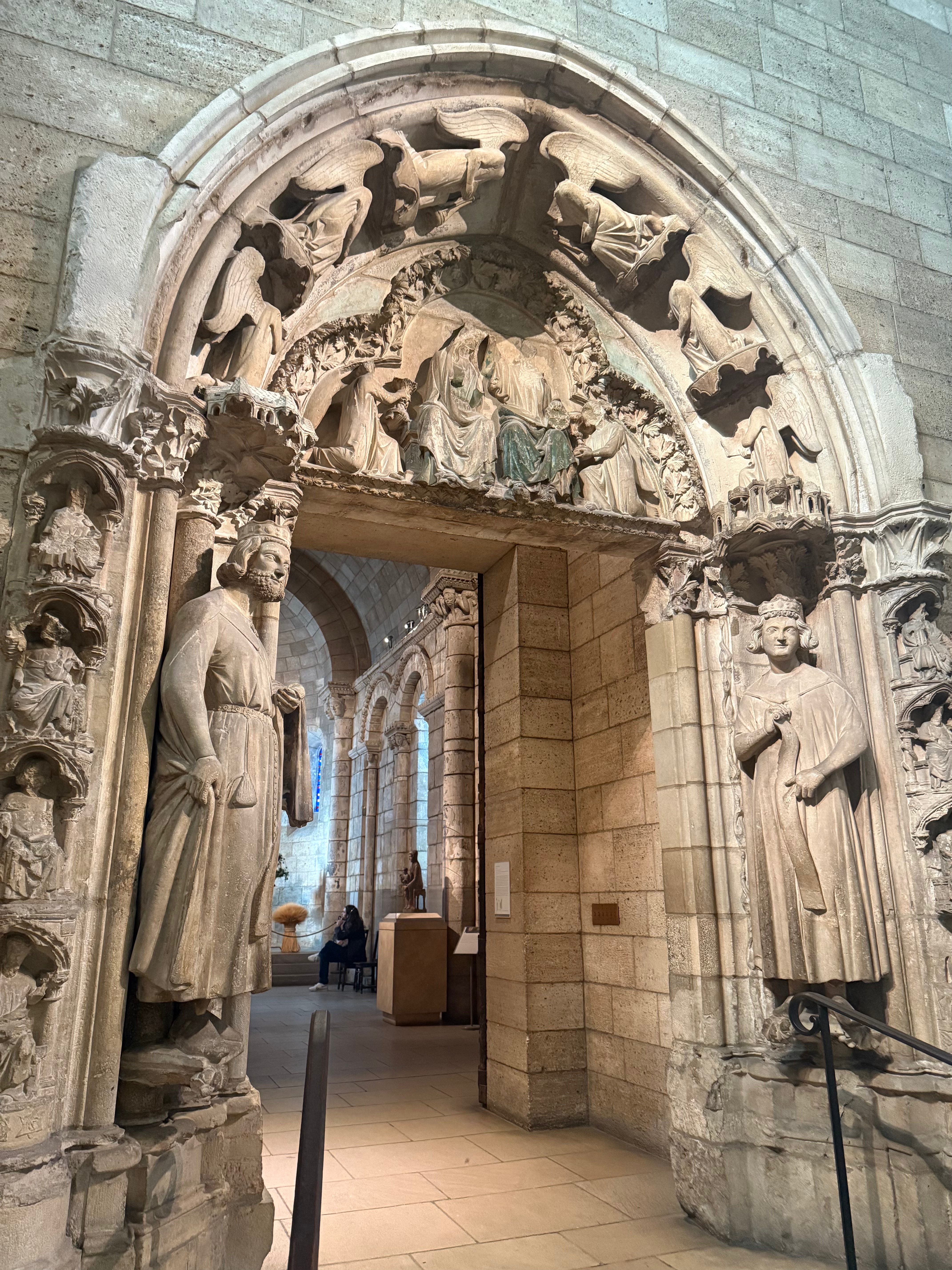
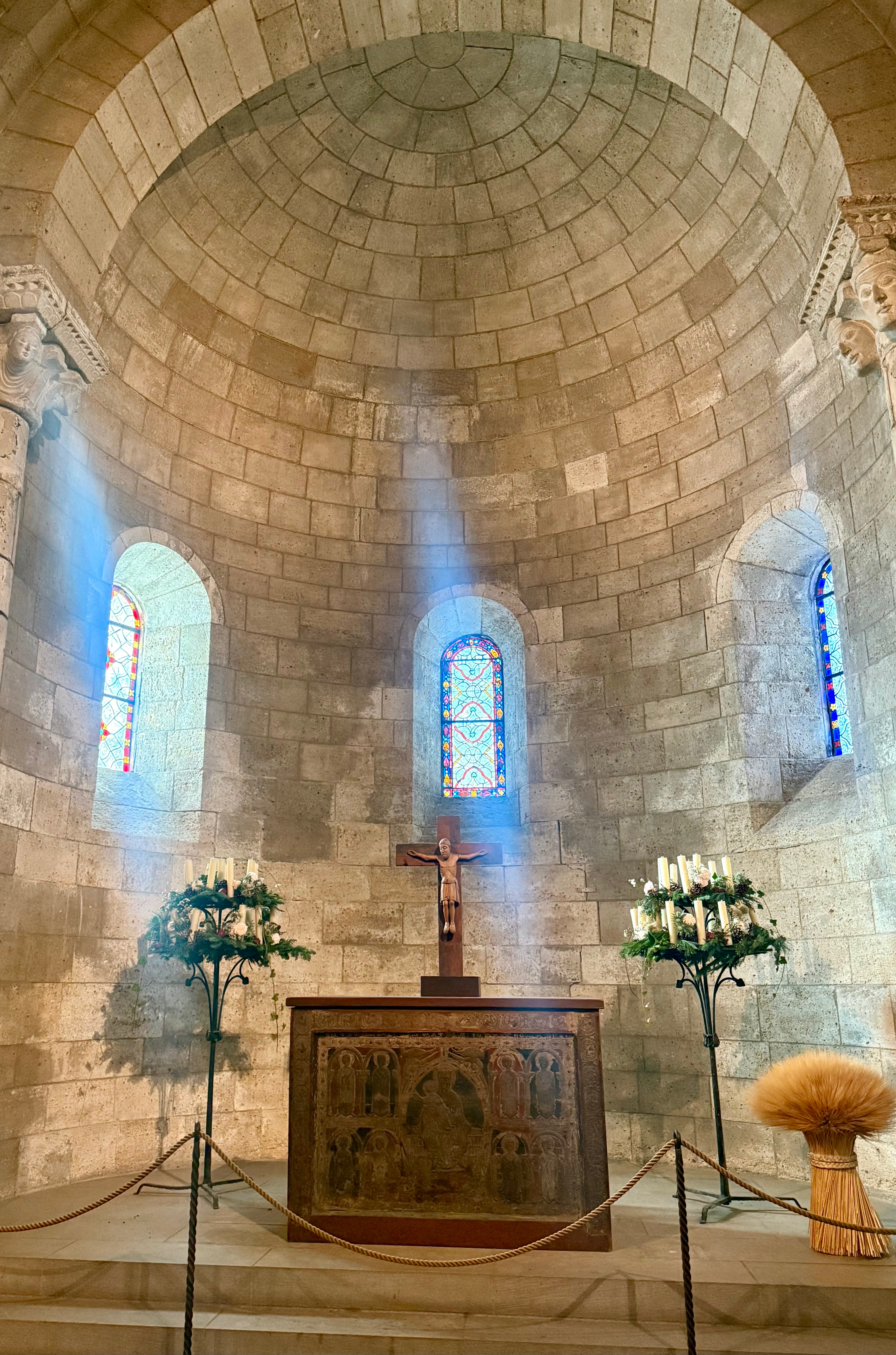
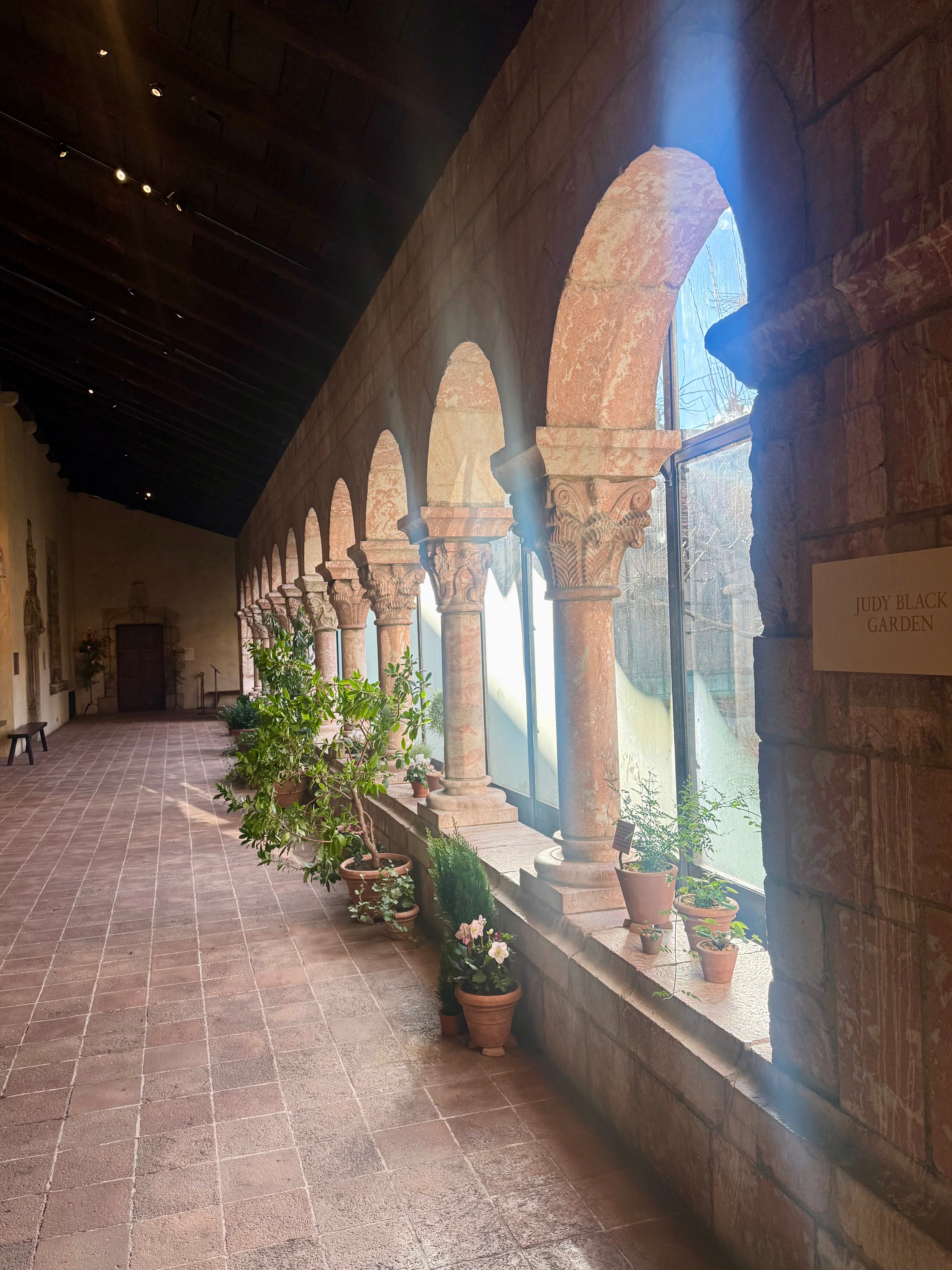
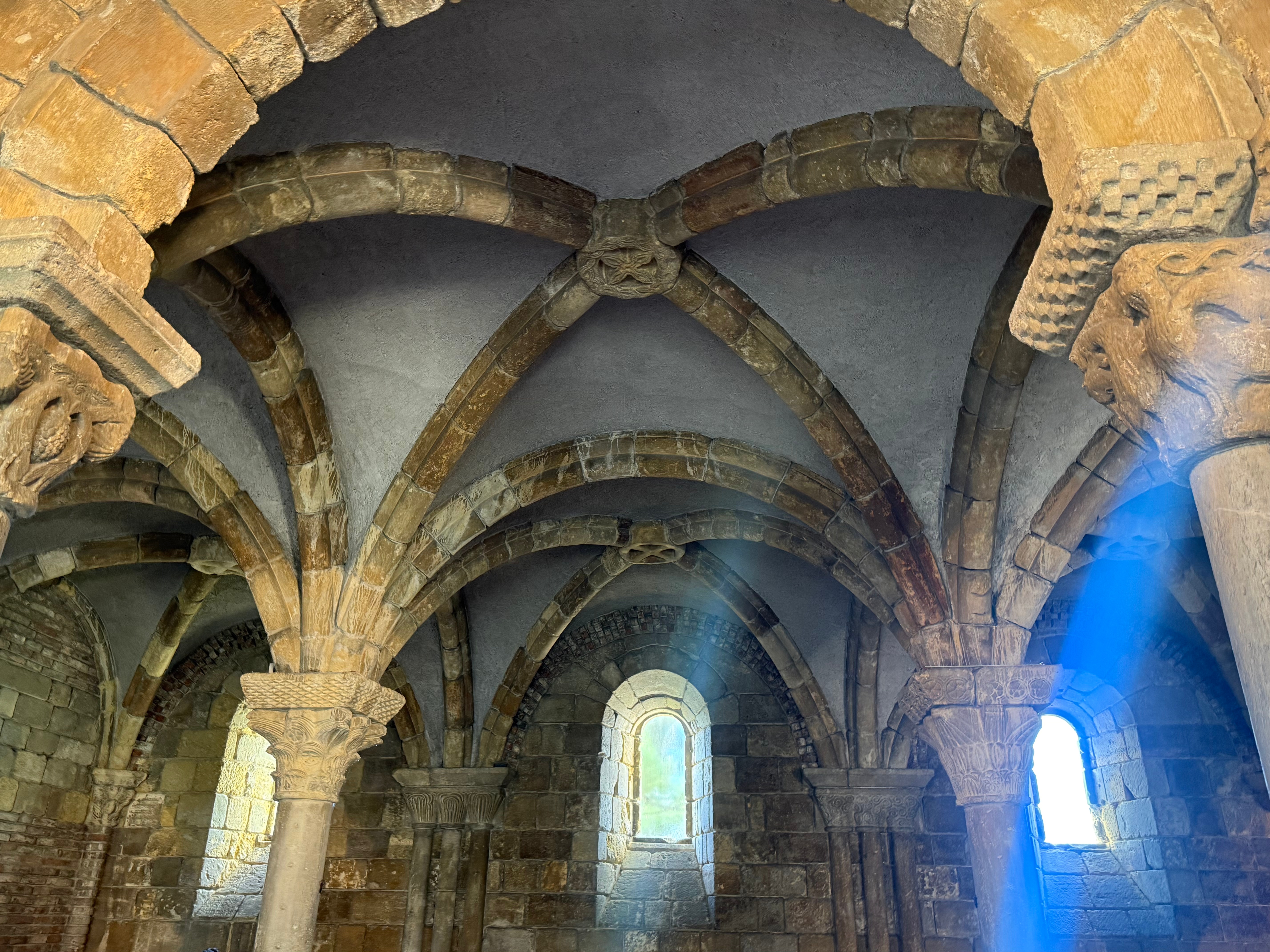
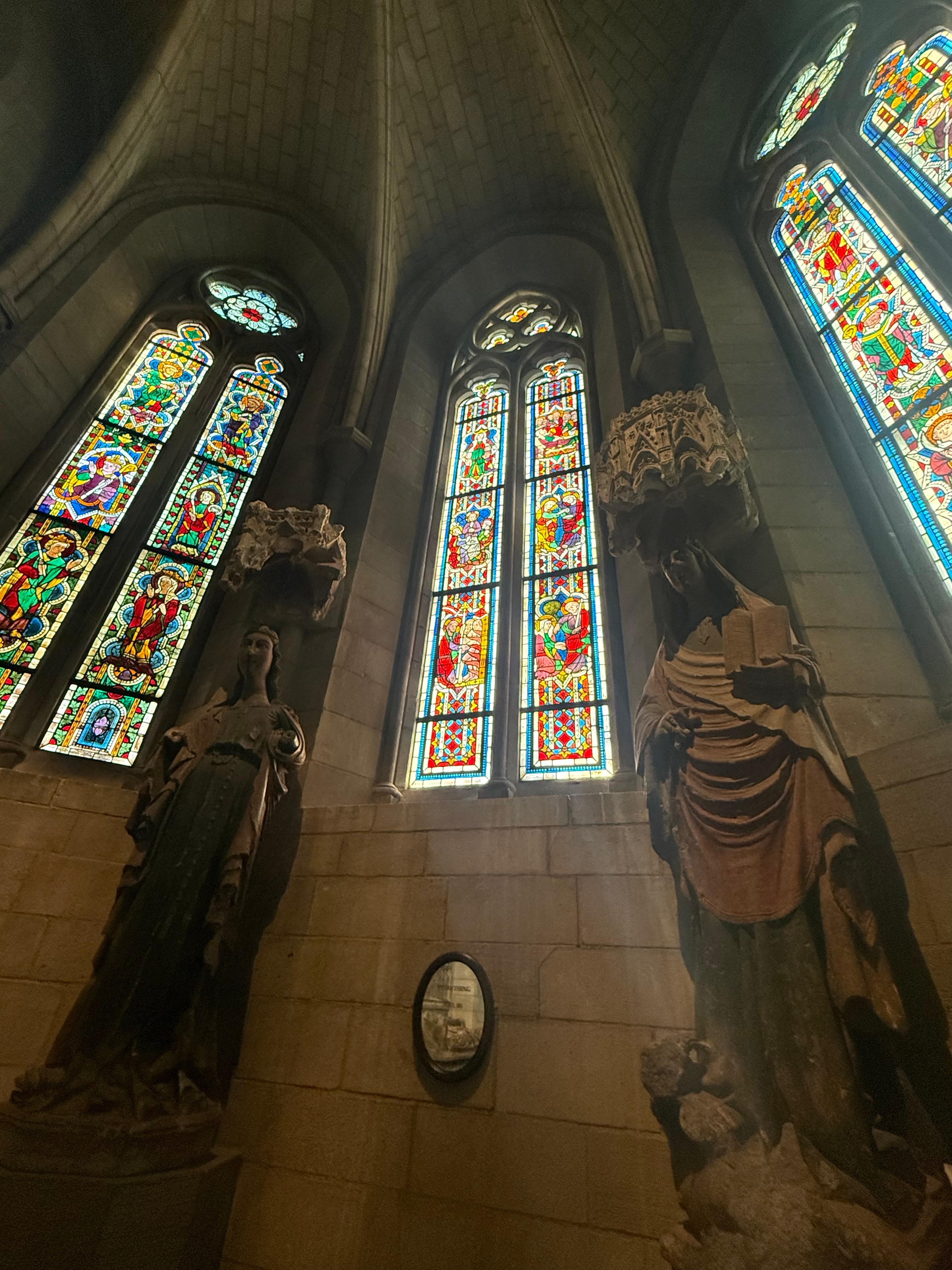
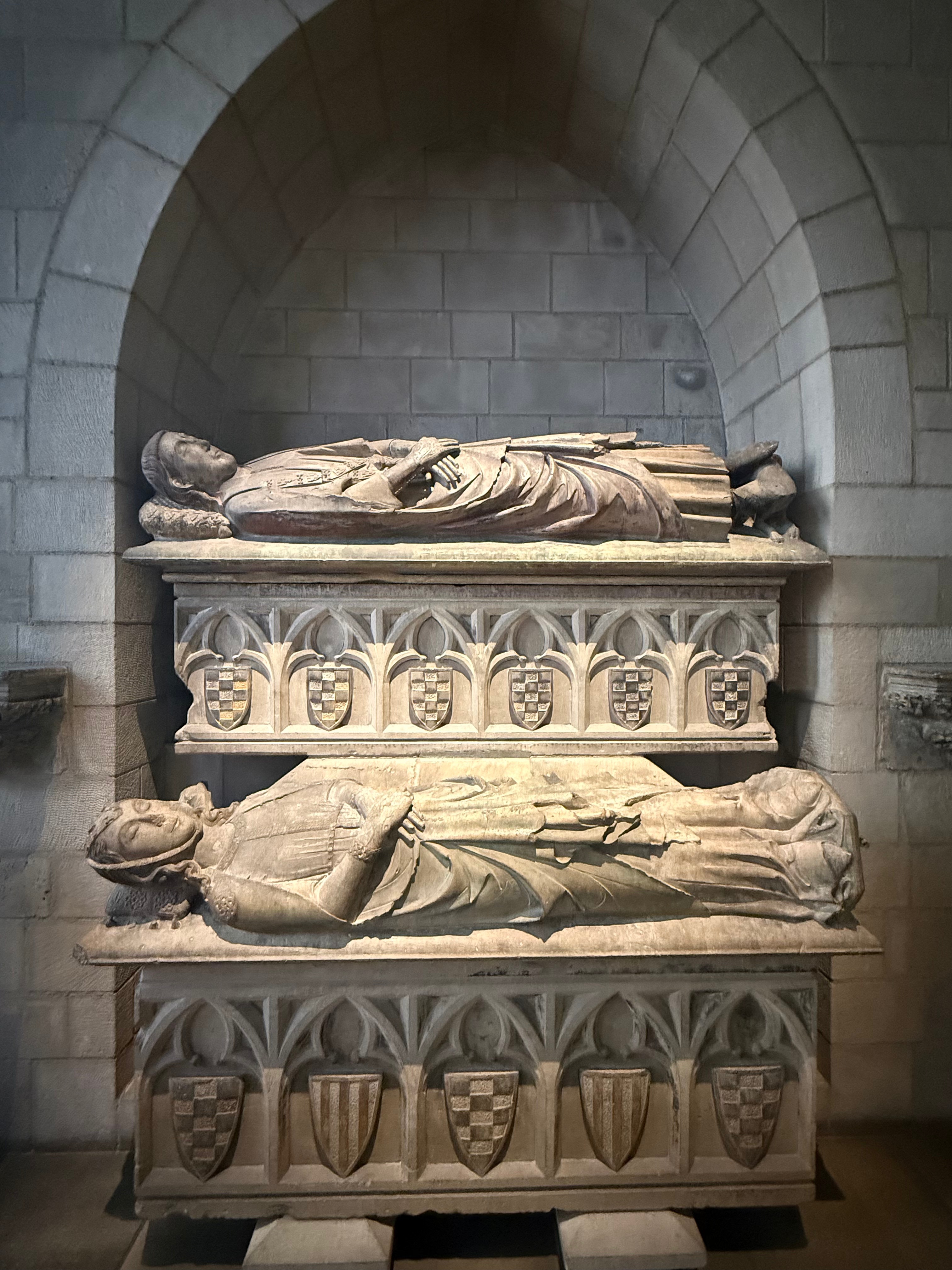
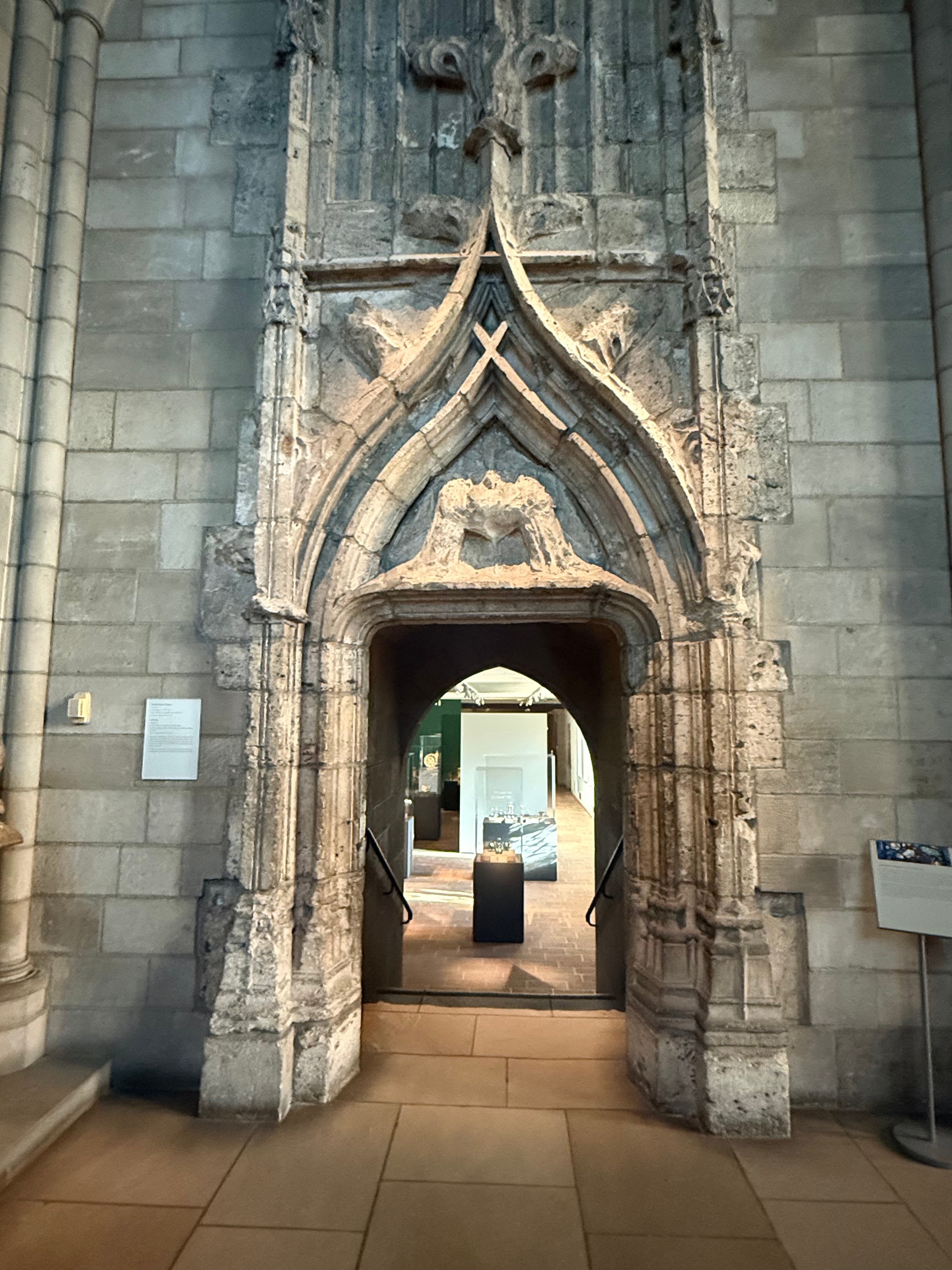
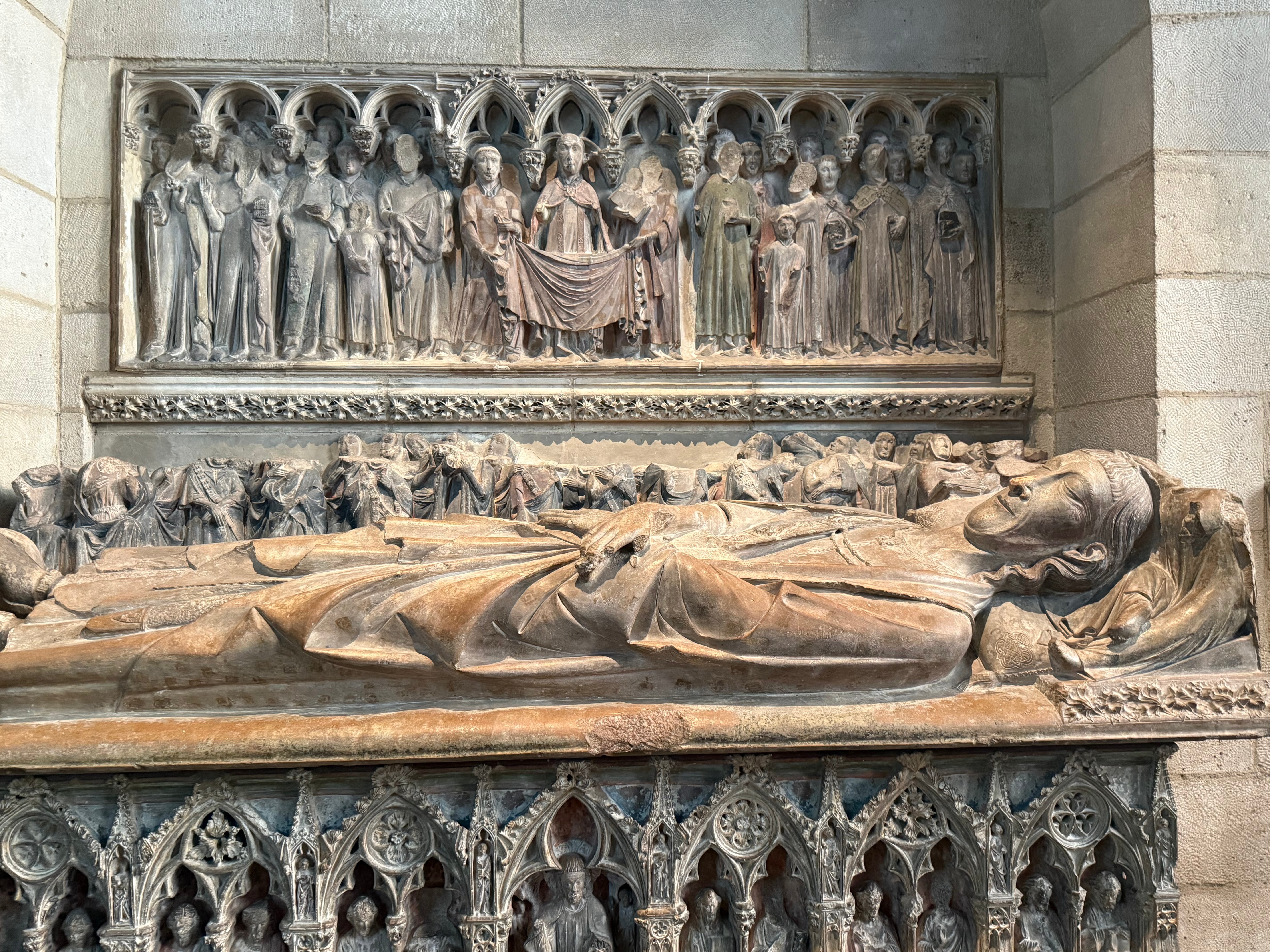
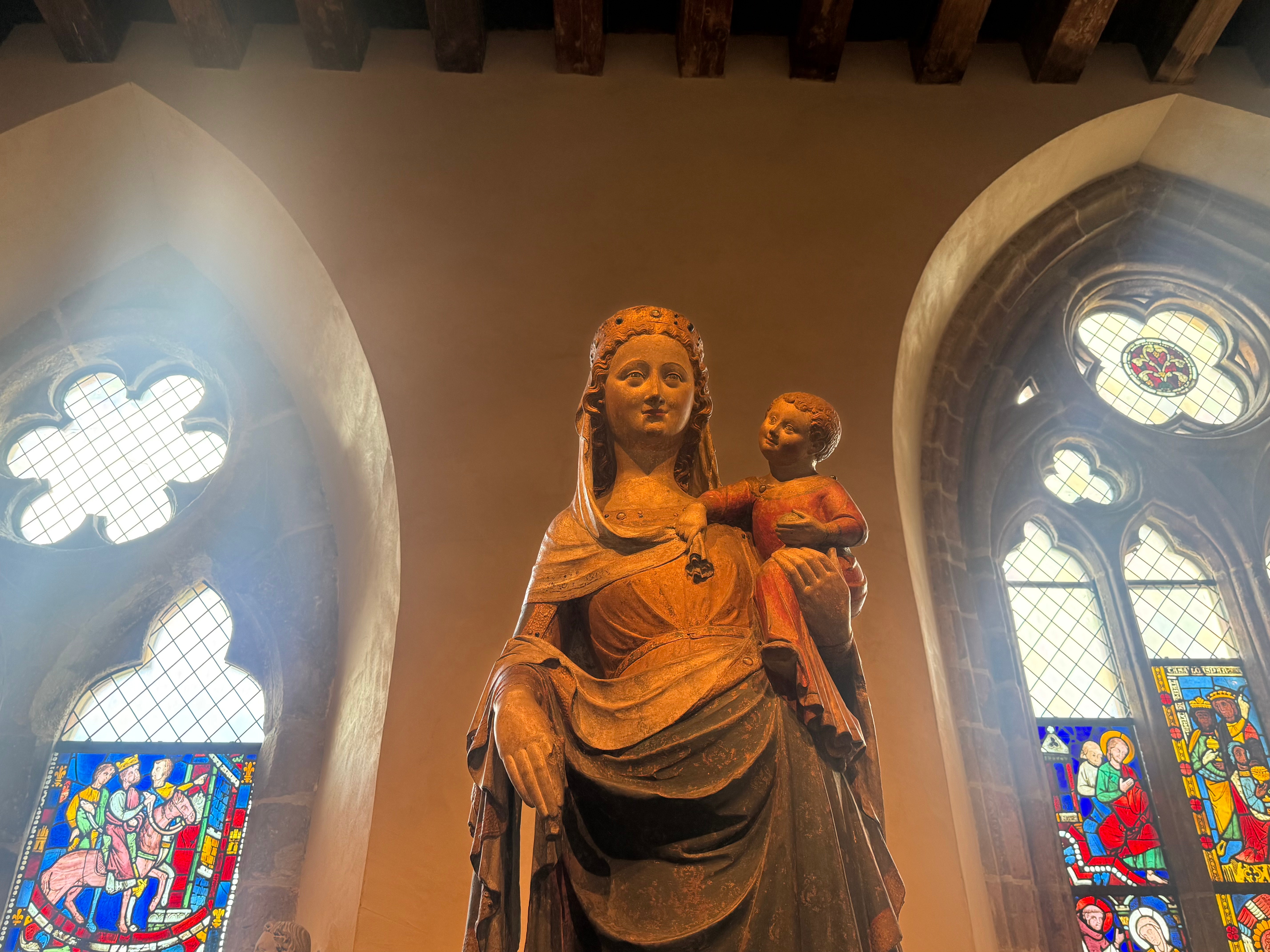
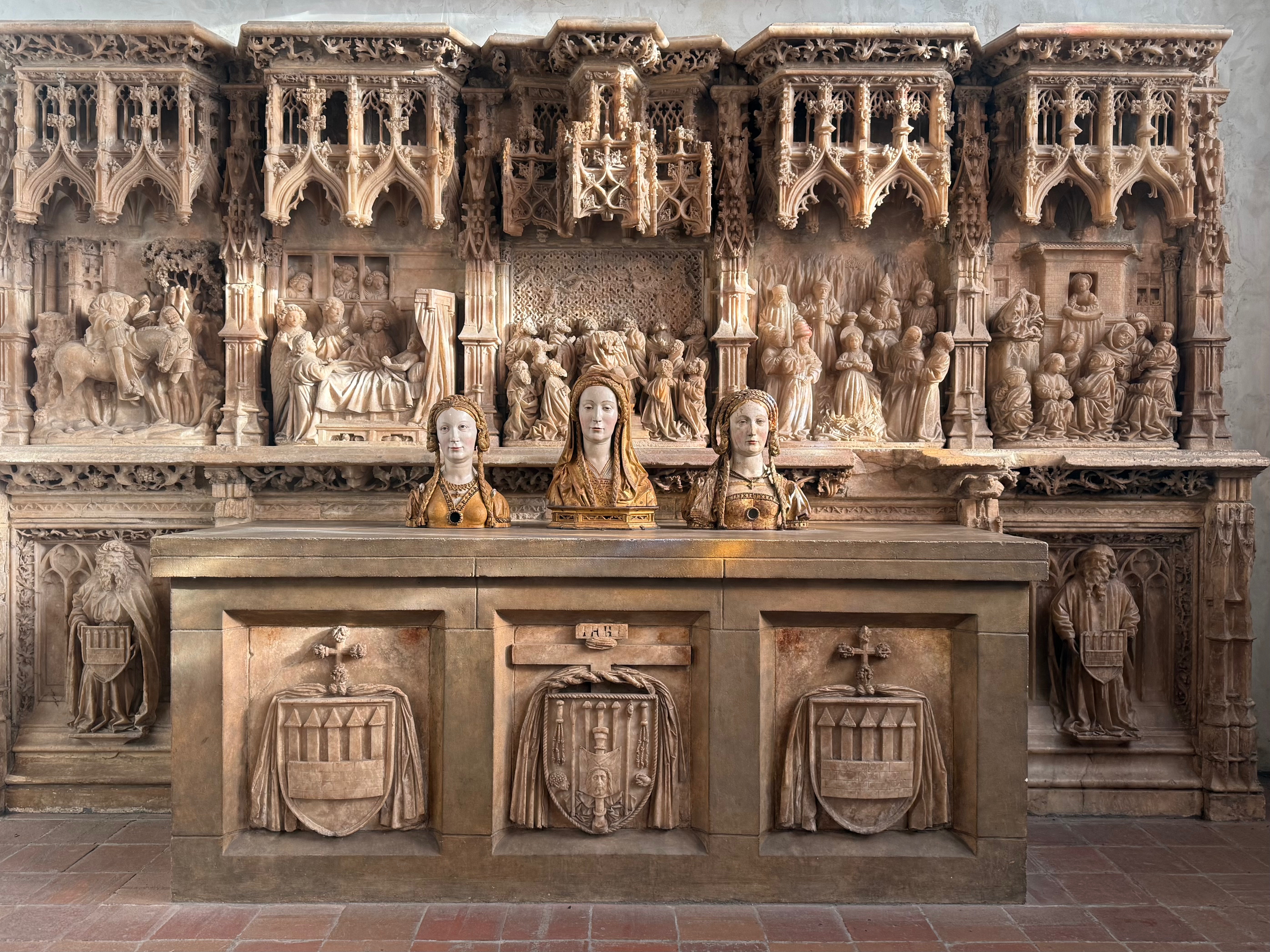
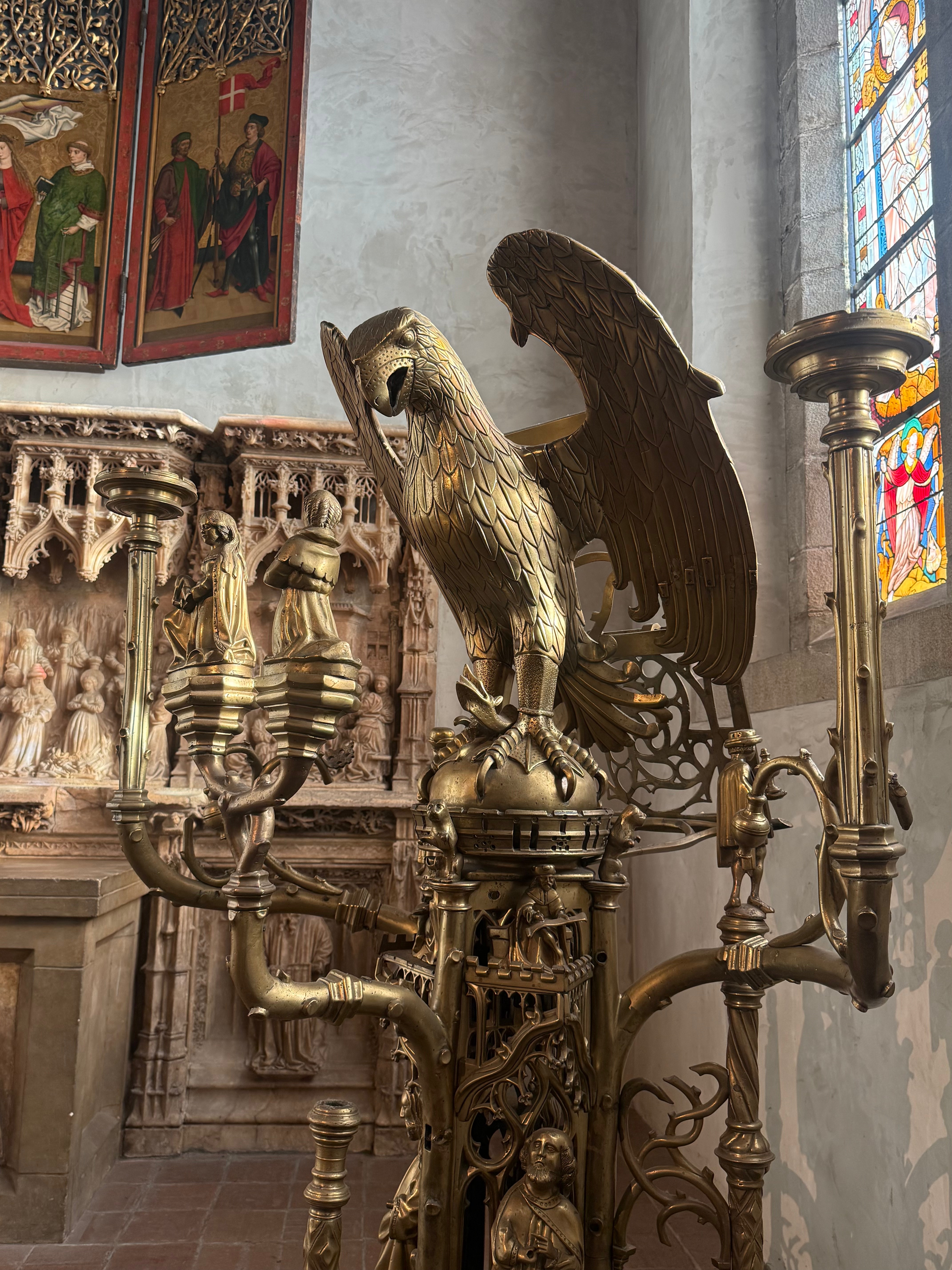
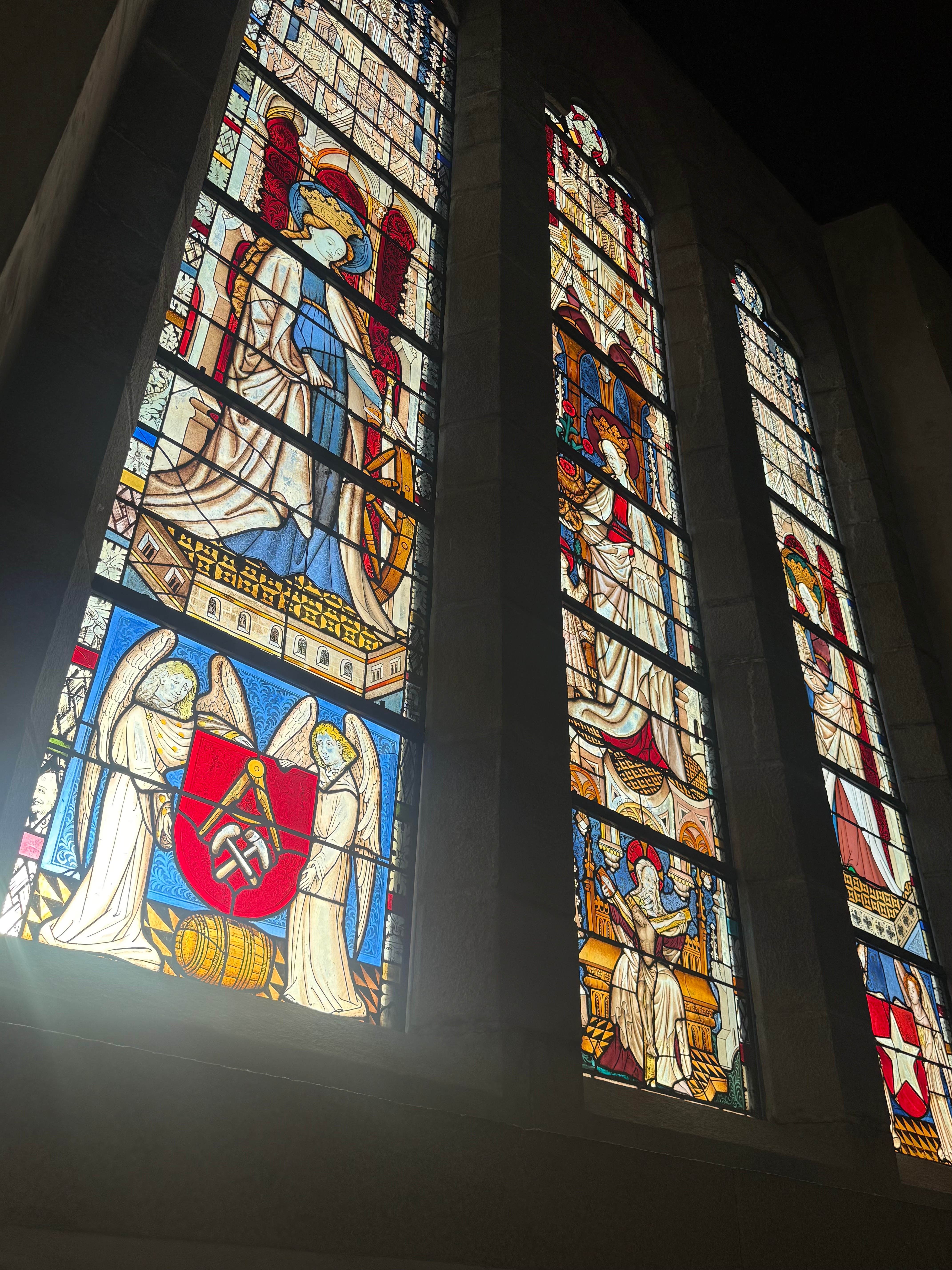
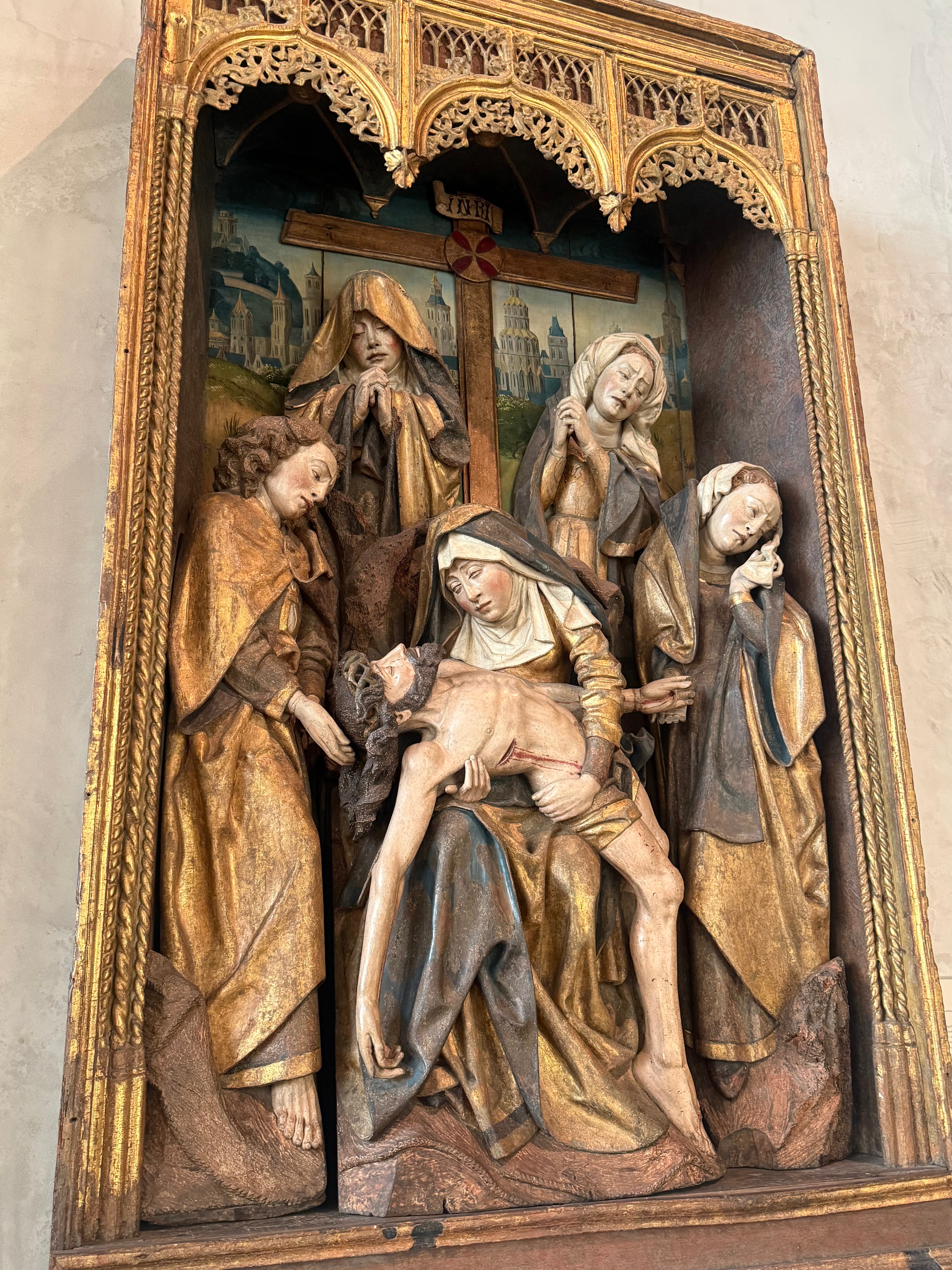
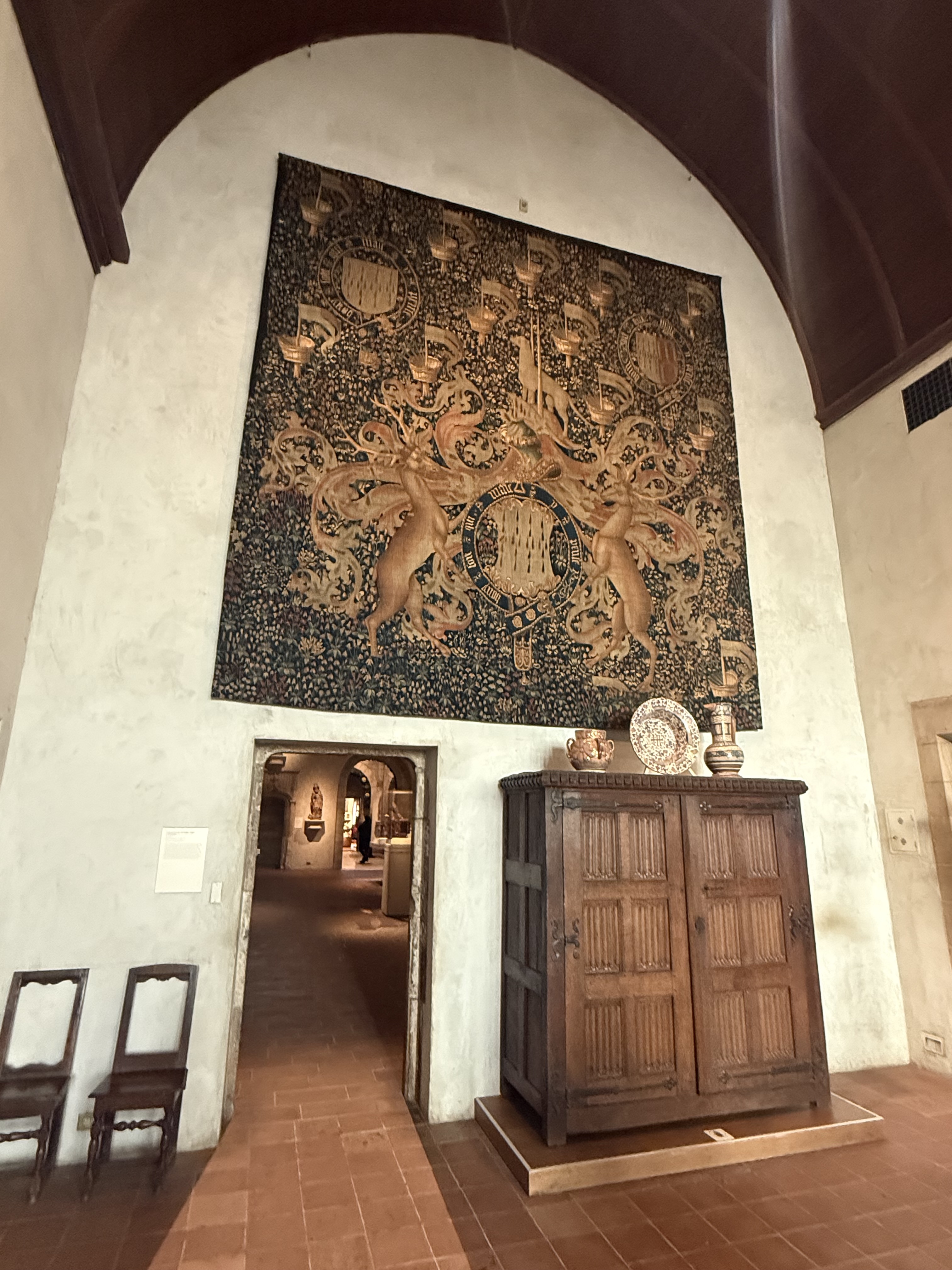
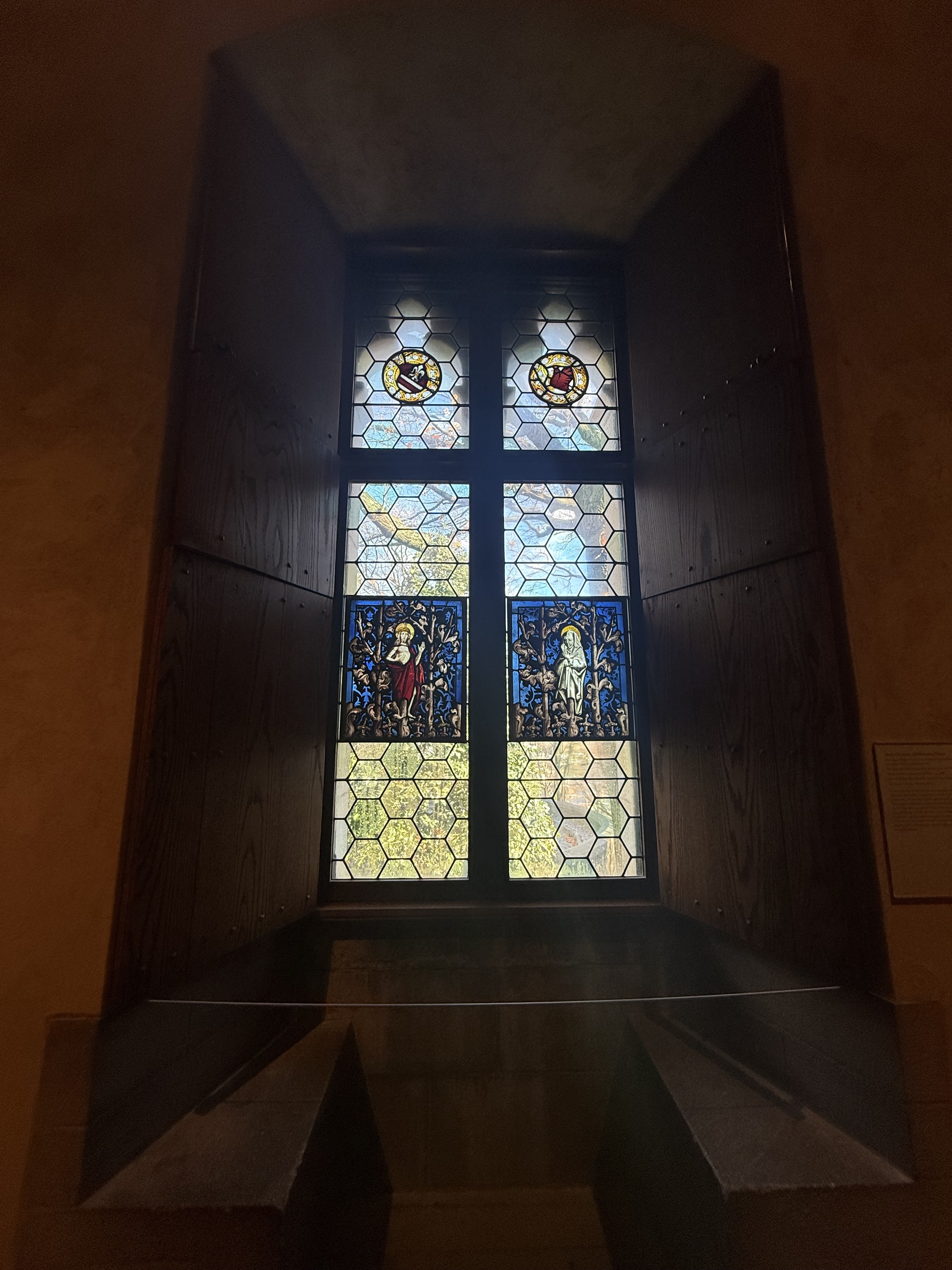
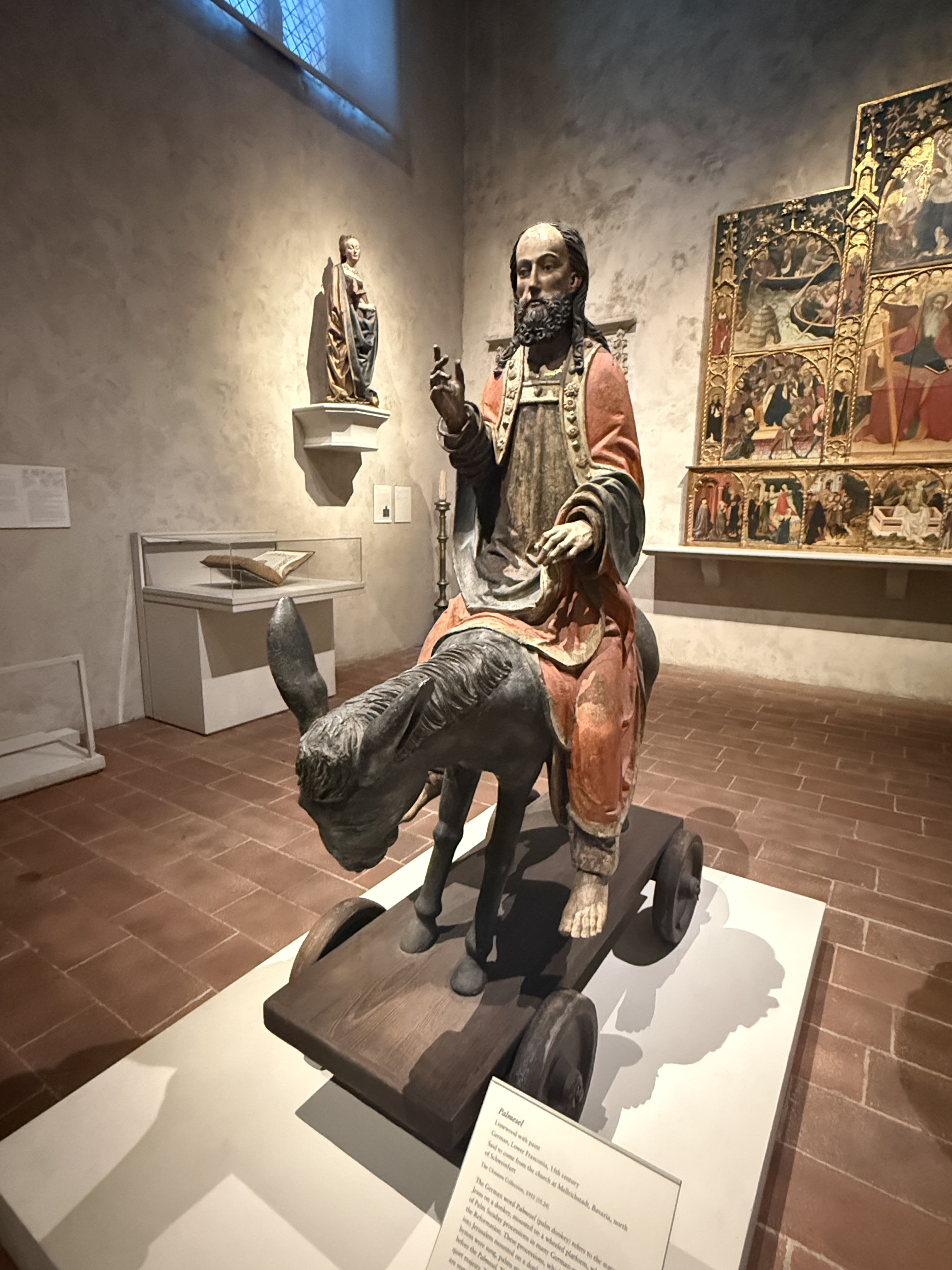
One of the wonderful things about traveling in Europe is the ability to explore ancient cathedrals and monasteries, experiencing extraordinary art and architecture from long ago. New York City is fortunate in that we can have that experience just a short subway ride, or express bus, away. The Cloisters is a part of the Metropolitan Museum of Art, and provides immersion into the art, architecture, and gardens of medieval Europe.
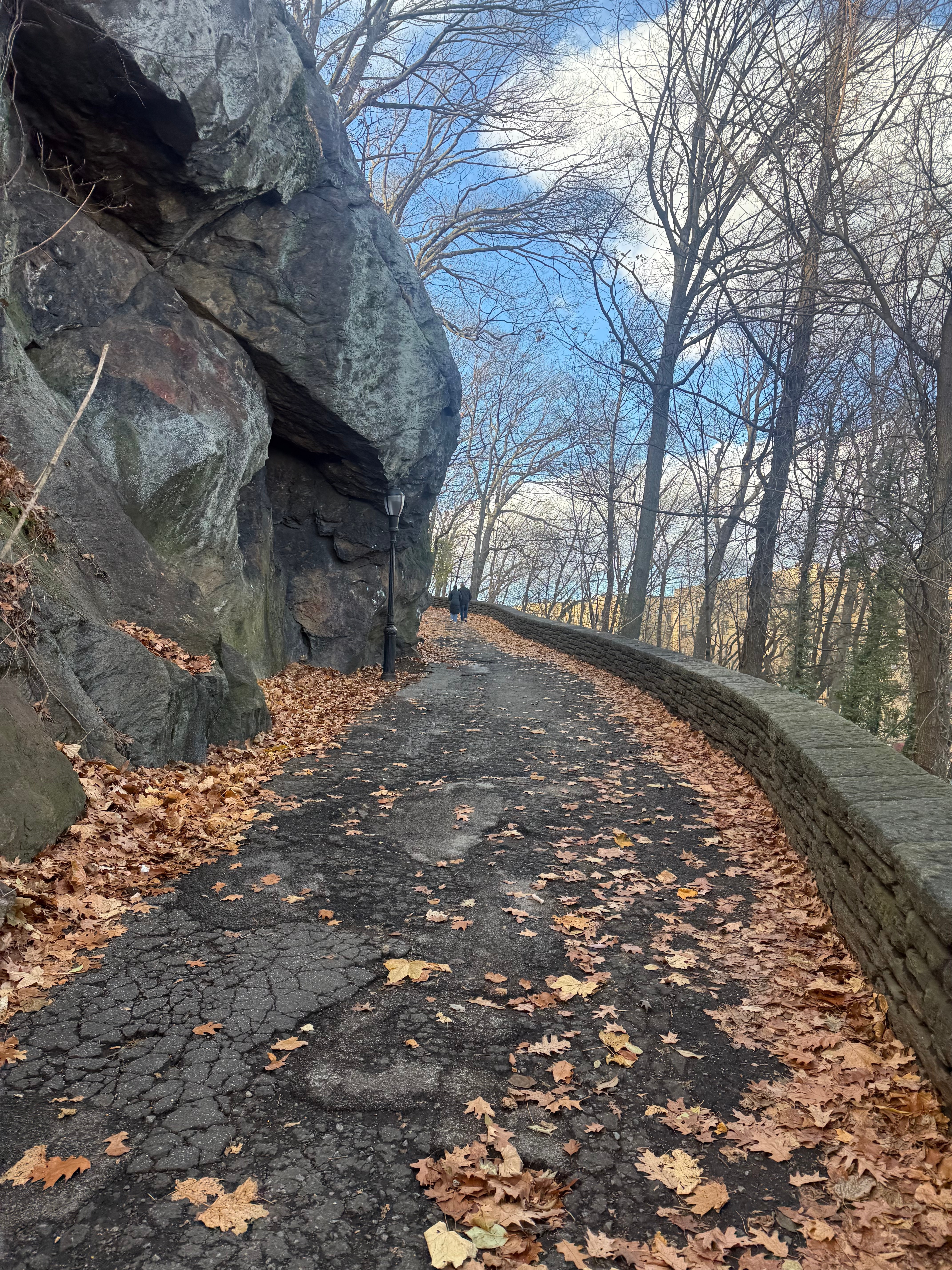
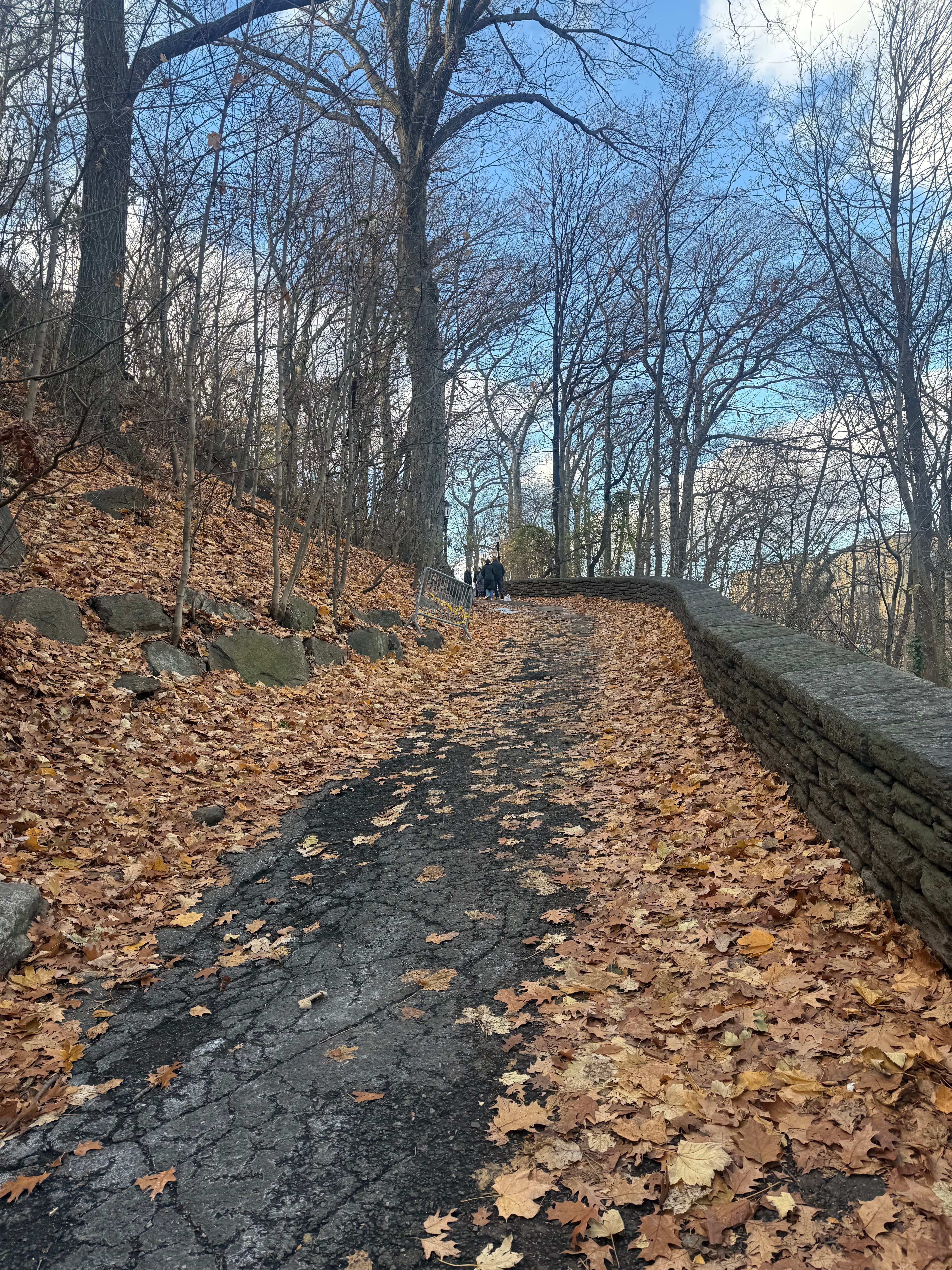
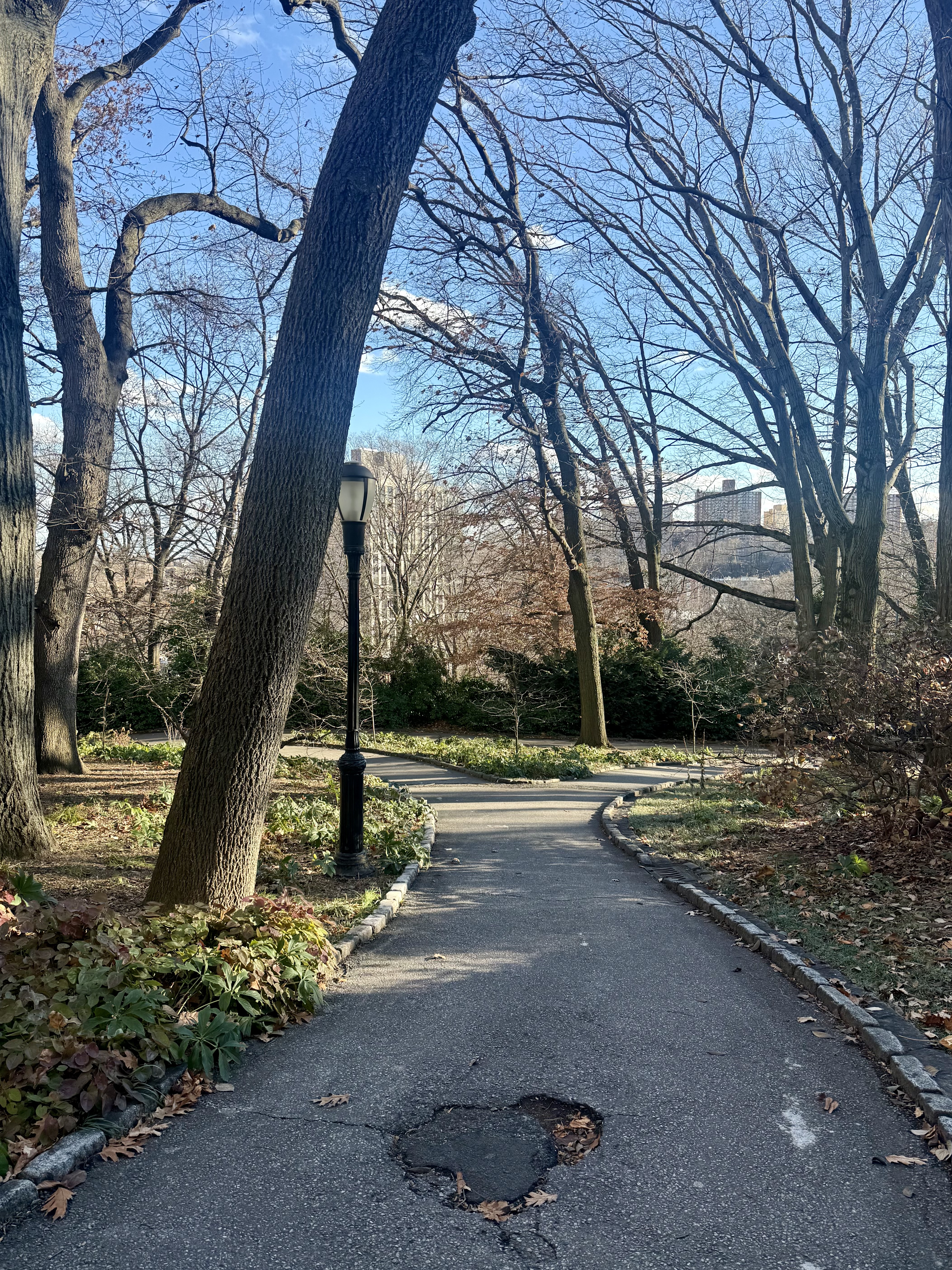
The Cloisters is in upper Manhattan, between Washington Heights and Inwood. If you have a car, you can drive there, and there is parking available. However, you can also get there via subway on the A train -getting off at Dyckman – on on the express bus BxM1 – getting off at Dyckman and Sherman – or by taking the regular M4 bus to the last stop. For all of these options except the M4 bus, you will face a ten minute hike up a winding path to get to the museum, which sits on the top of quite a steep hill. The M4 bus lets you off at the top of the hill, and the Met does have a shuttle bus to get people up the hill who can’t handle the hike; you just might need to wait a bit. The walk, if you are able, is pleasant and provides some lovely views of the Hudson river.
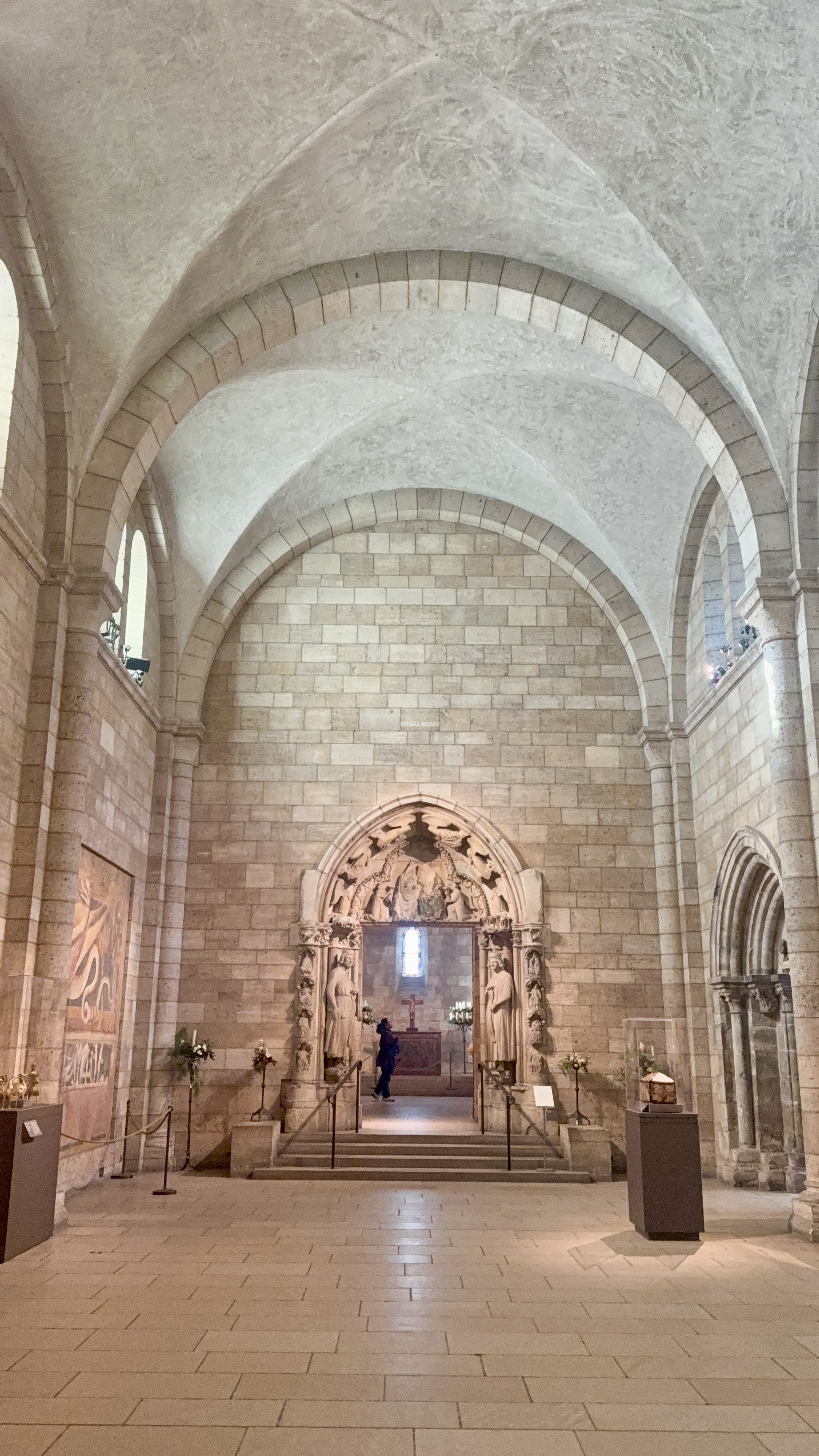
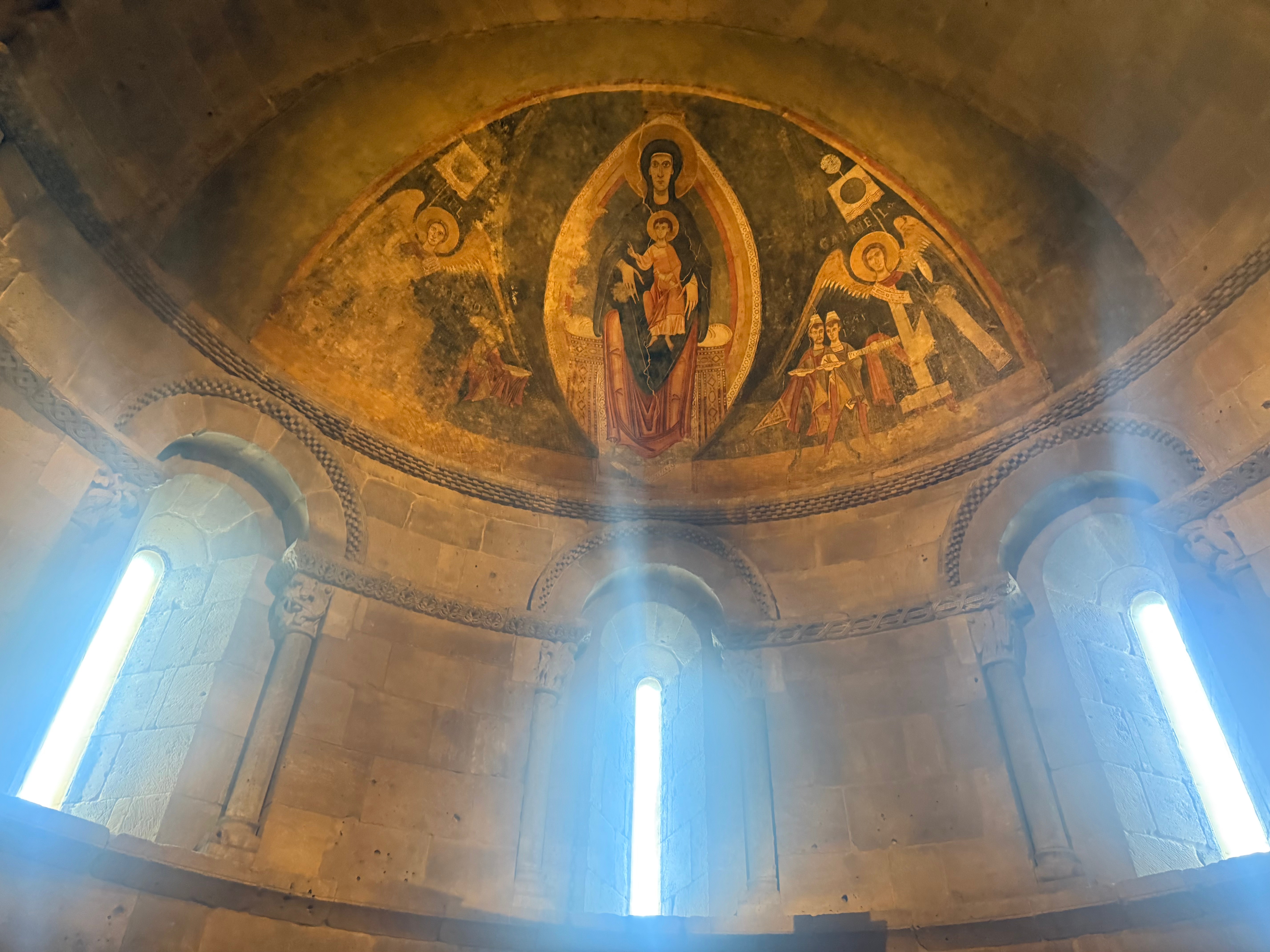
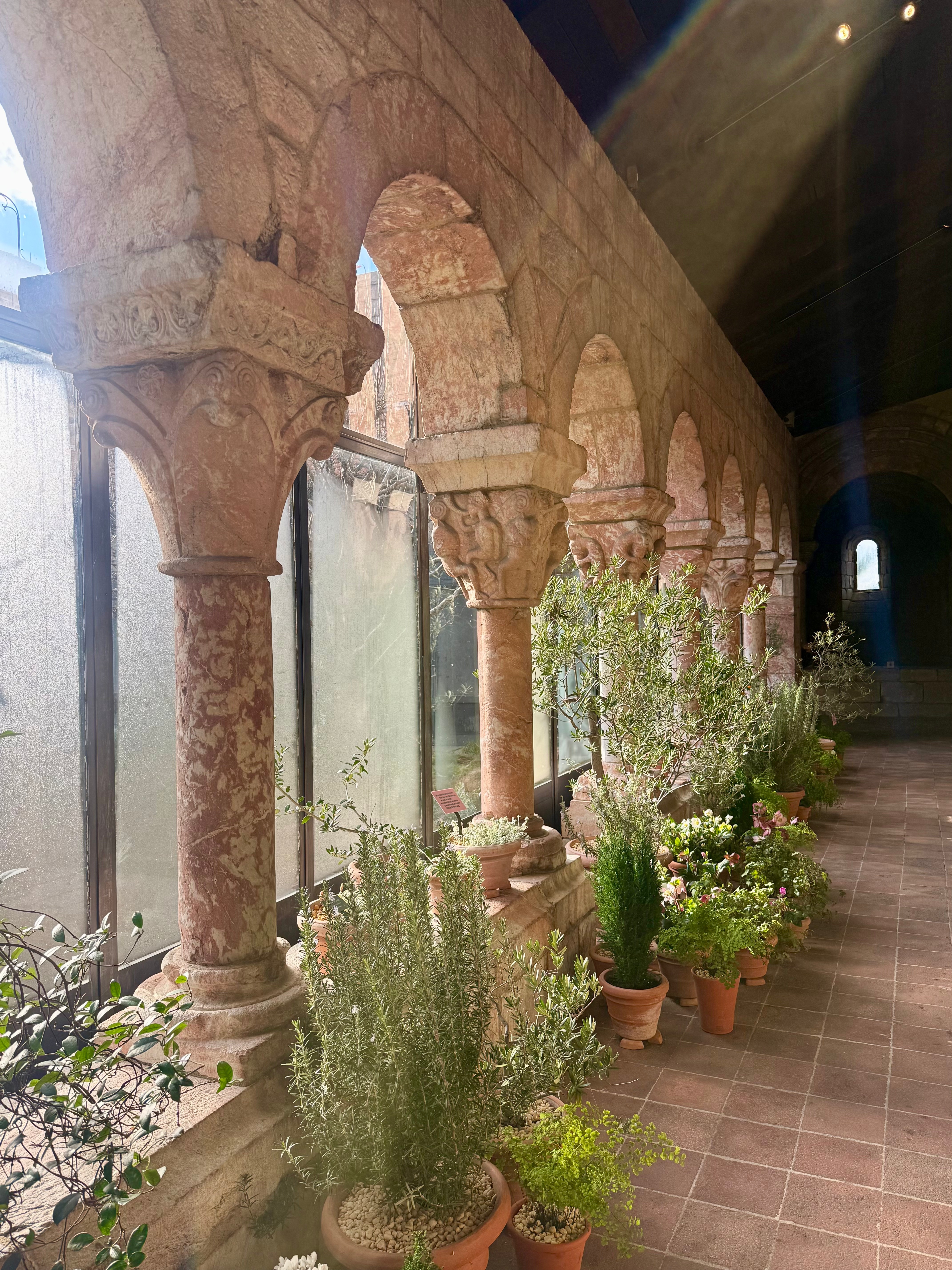
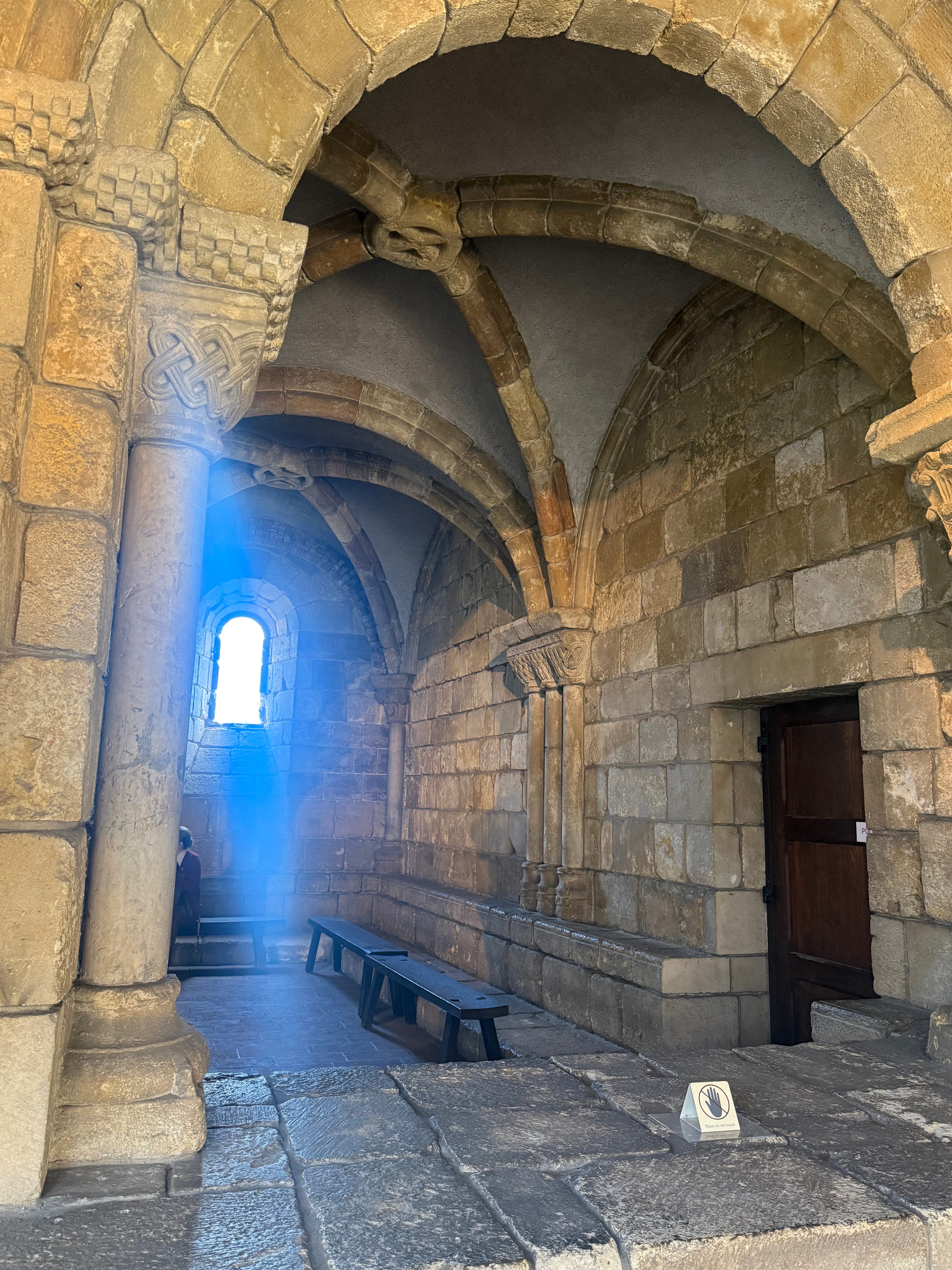
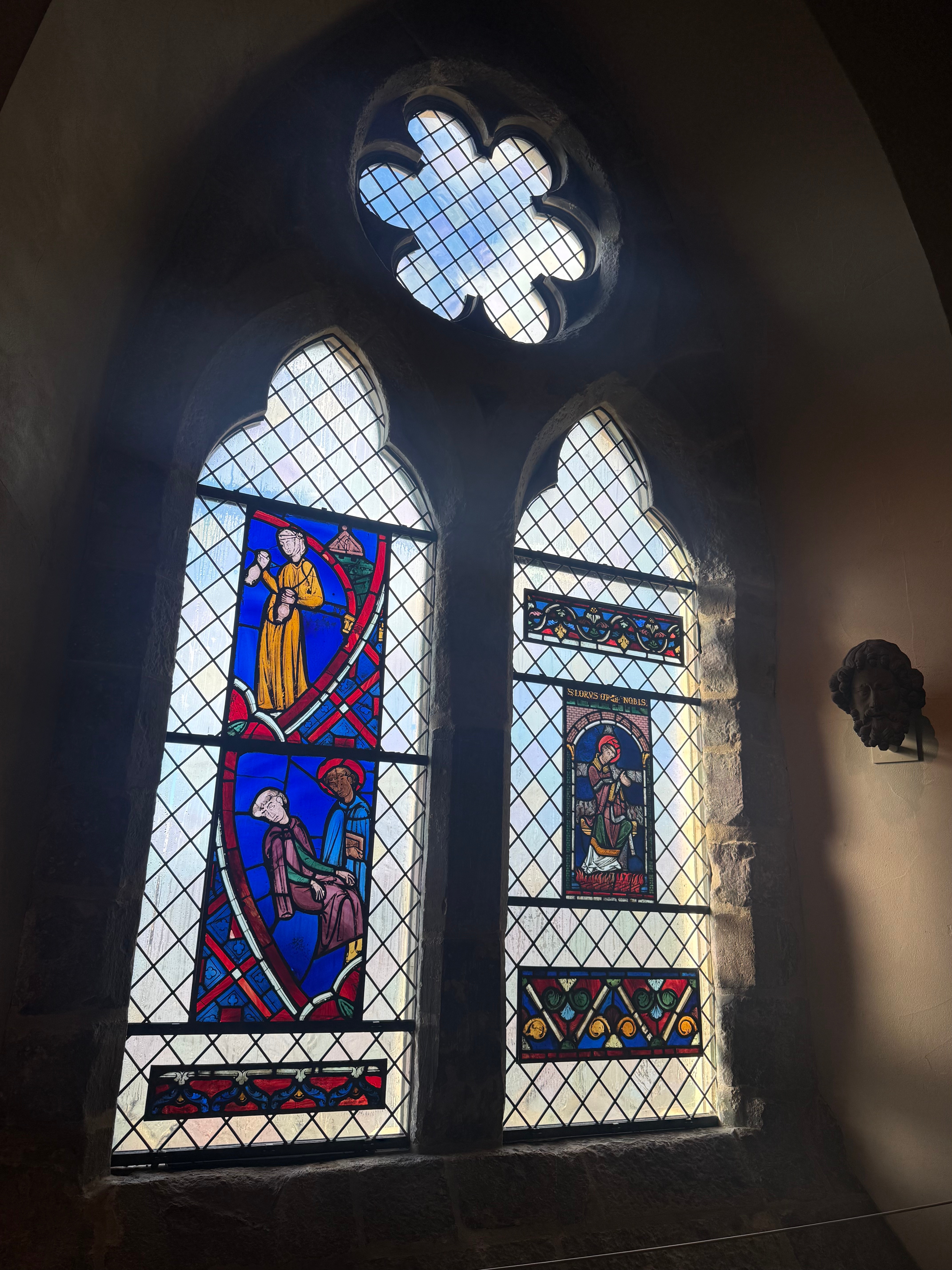
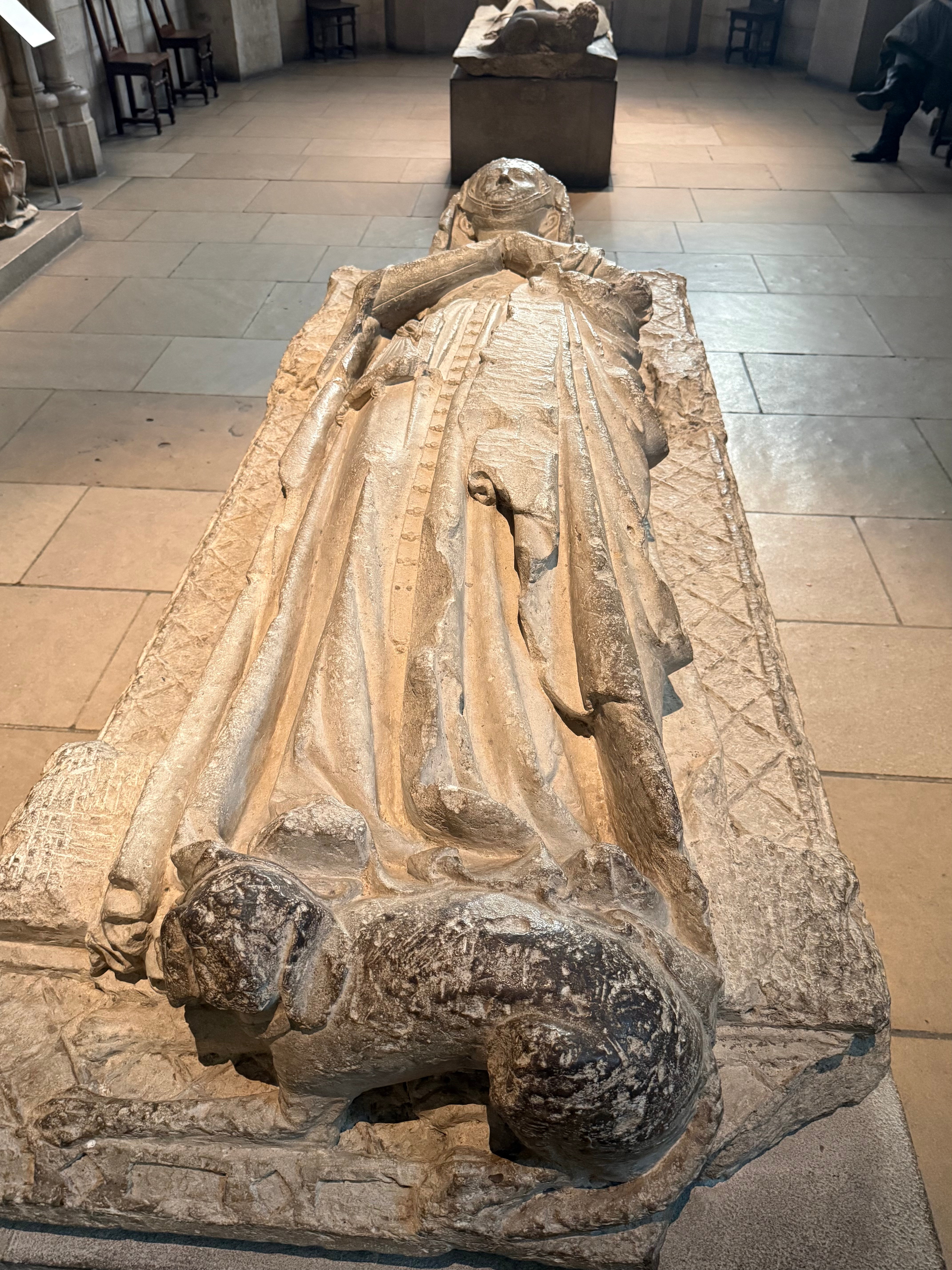
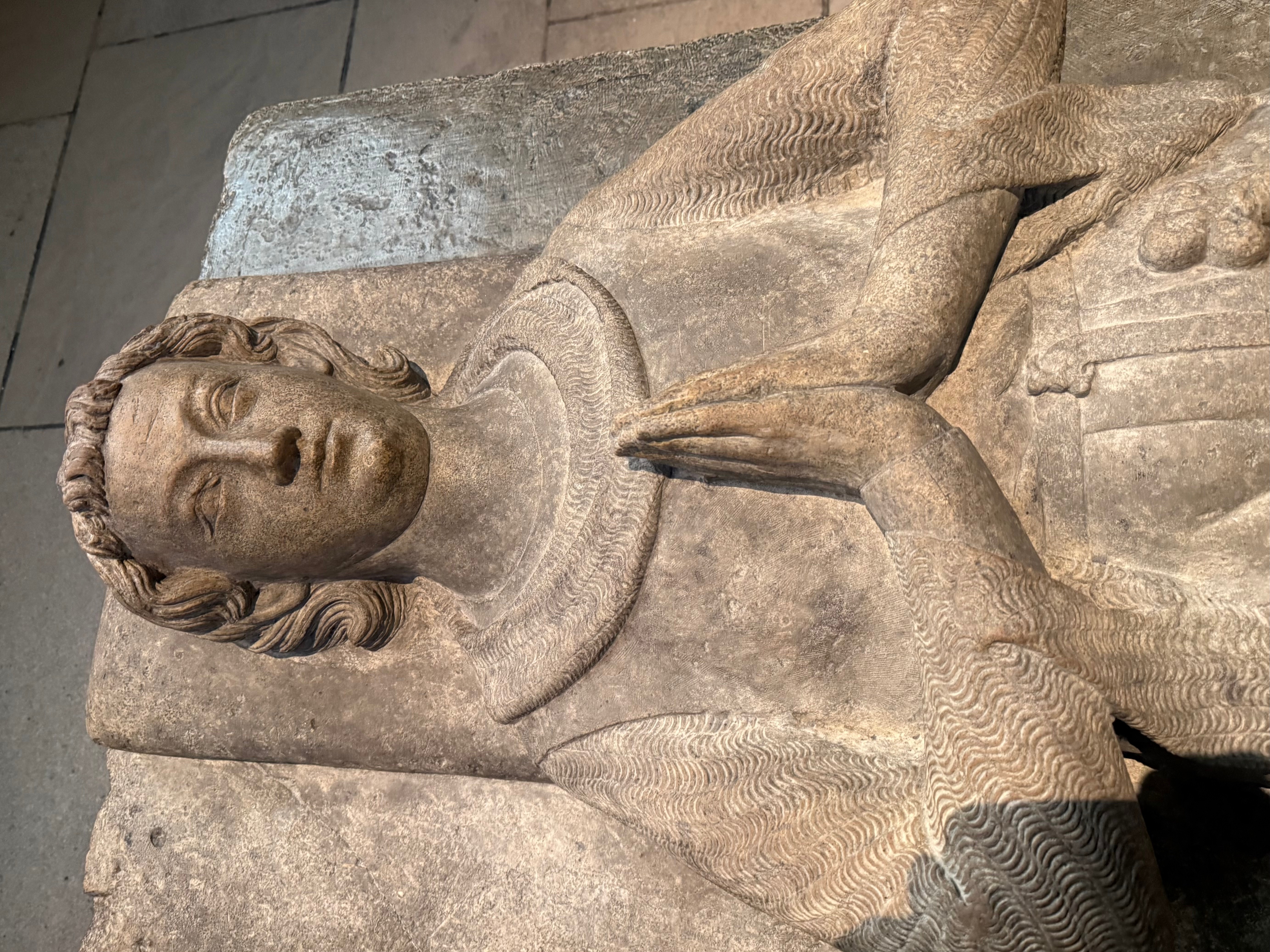
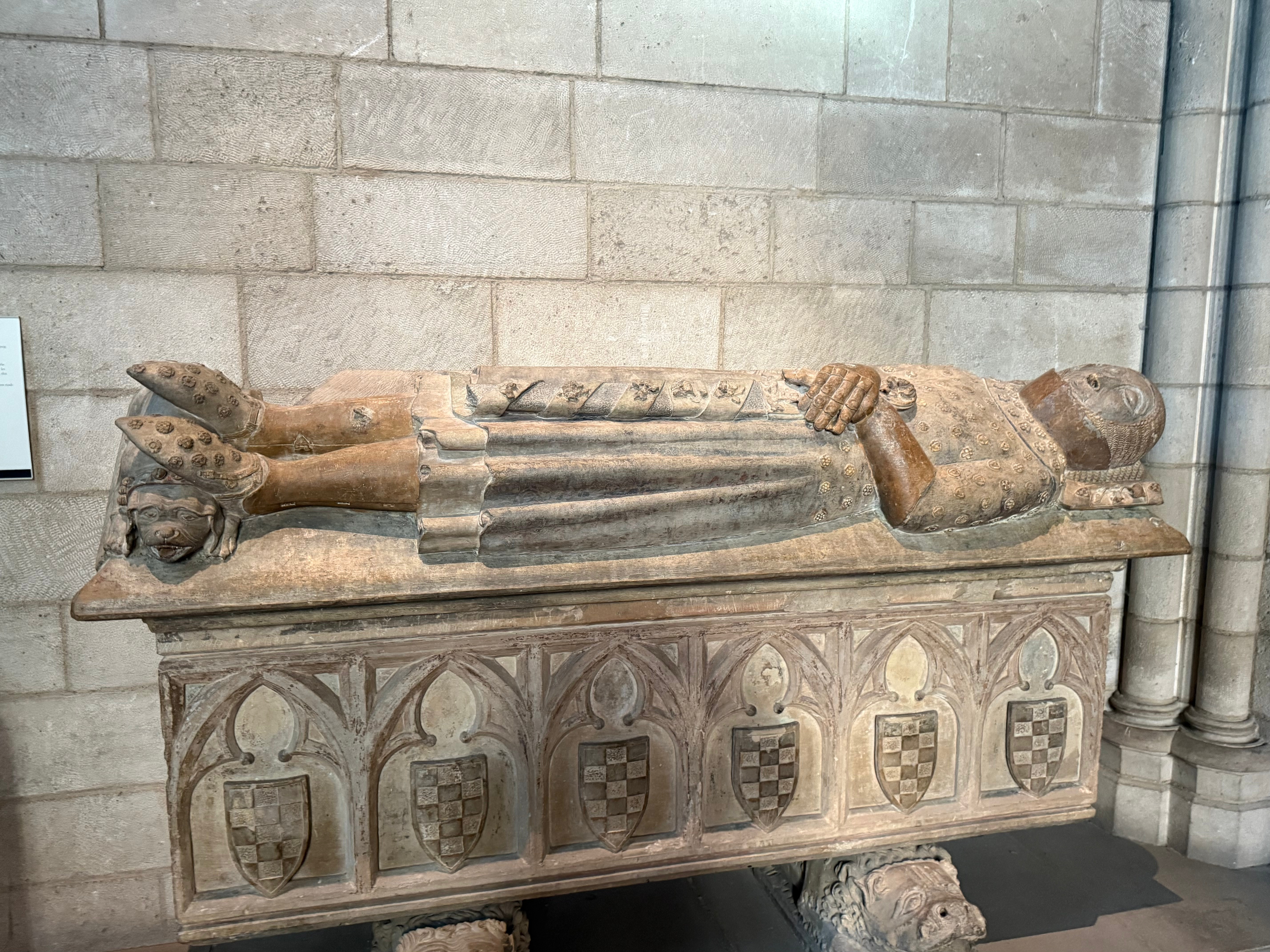
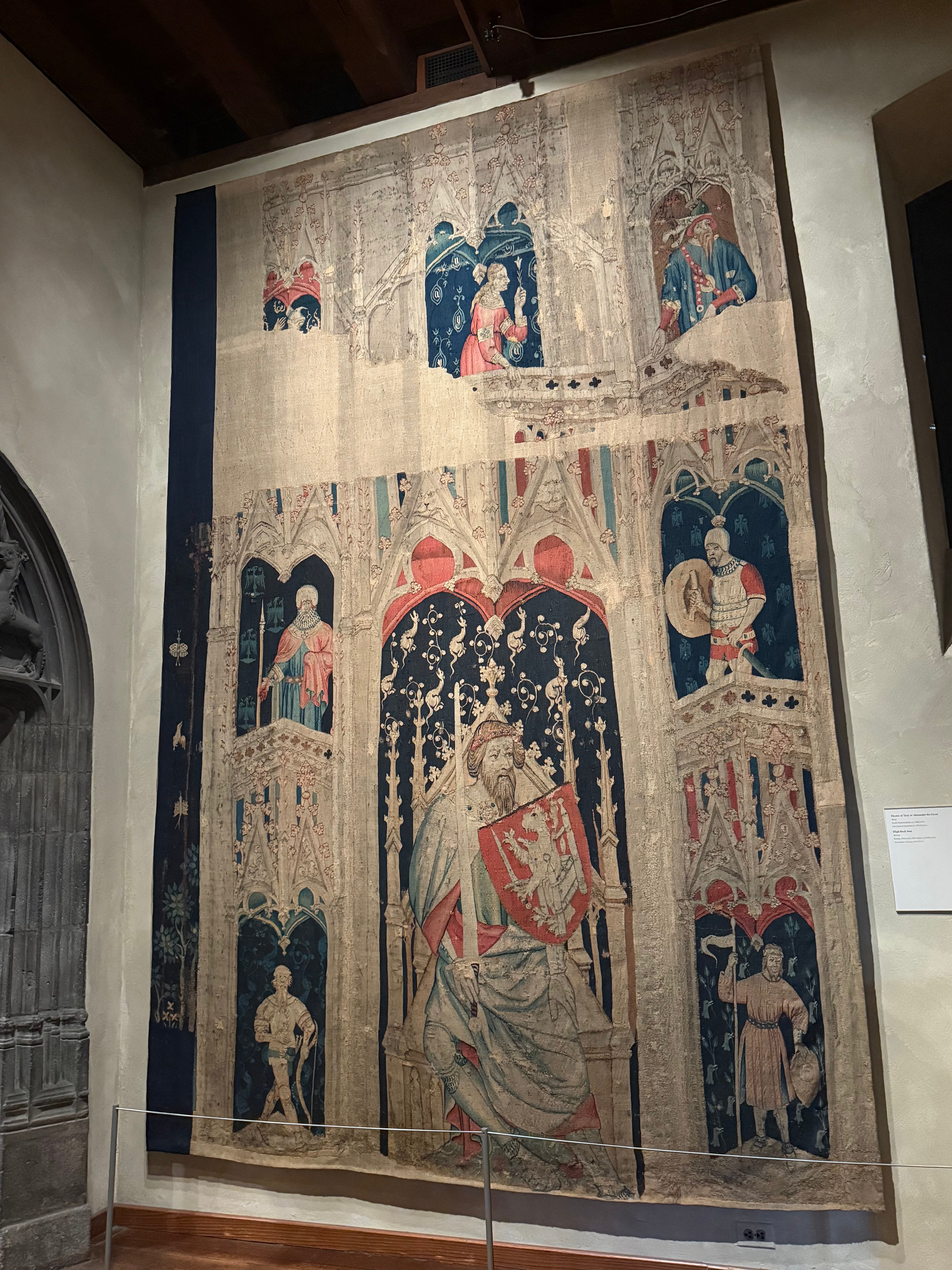
If you have already visited the main Met location that day, you can use the same ticket to visit the Cloisters at no extra cost. If you are only planning to visit the Cloisters, ticket prices can be found here, and note that New York State residents with valid ID can pay what you wish. The idea that “time in this place does not obey an order’ is immediately apparent – as soon as you enter the building, you are immersed in the past. The museum specializes in European medieval art and architecture, with a focus on the Romanesque and Gothic periods. Its large collection of medieval artworks are displayed within the architectural settings of French monasteries and abbeys. The building is centered around four medieval cloisters—the Cuxa, Saint-Guilhem, Bonnefont, and Trie-sur-Baïse—that were acquired by American sculptor and art dealer George Grey Barnard in France before 1913 and moved to New York. Barnard’s collection was bought for the museum by John D. Rockefeller Jr., while additional major sources of objects came from the collections of J. P. Morgan and Joseph Brummer.
The museum’s building was designed by the architect Charles Collens, and has upper and lower levels. It contains medieval gardens at the center, and a series of chapels and themed galleries, including the Romanesque, Fuentidueña, Unicorn, Spanish, and Gothic rooms. The design, layout, and ambiance of the building are intended to evoke a sense of medieval European monastic life.
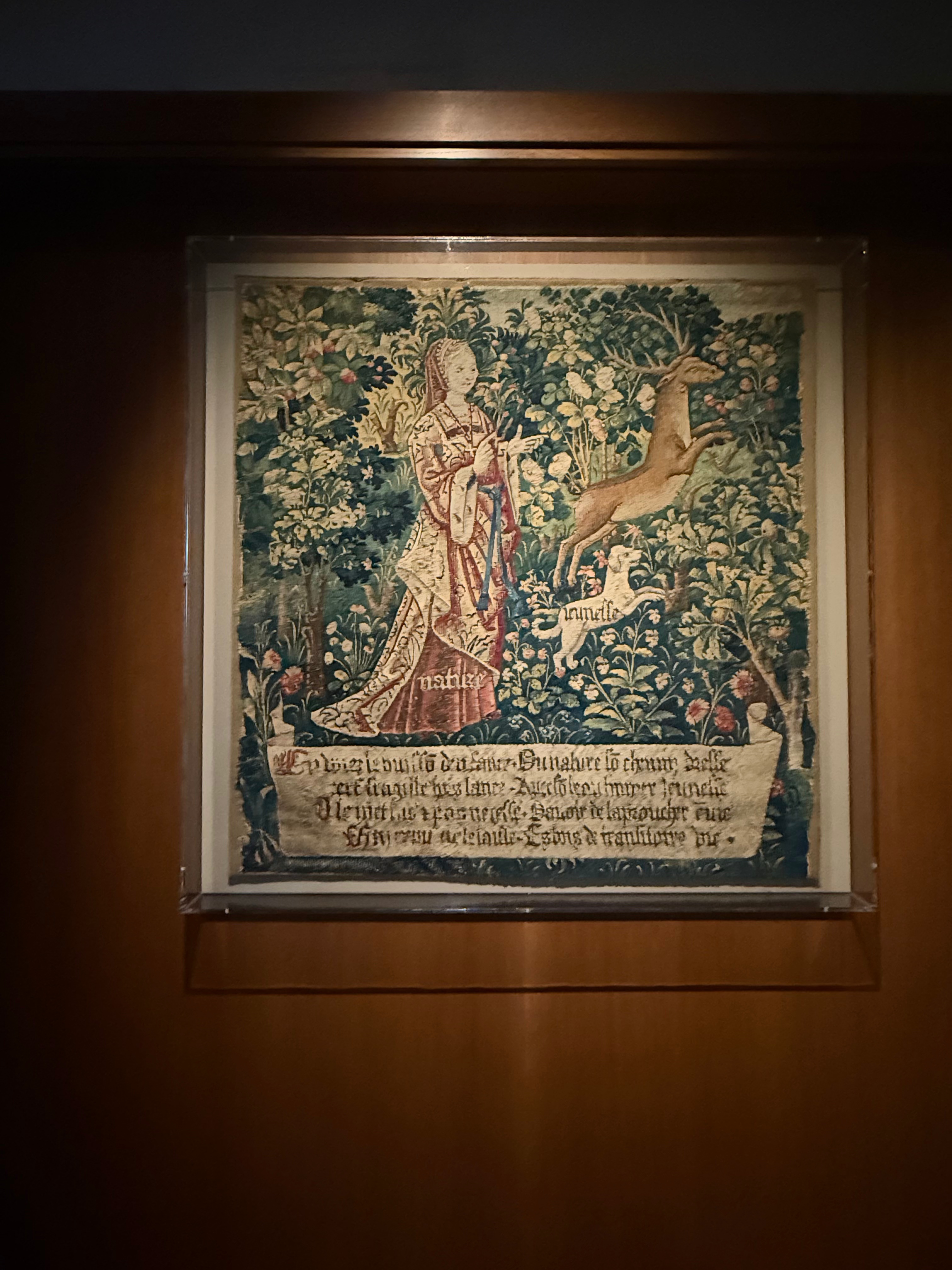
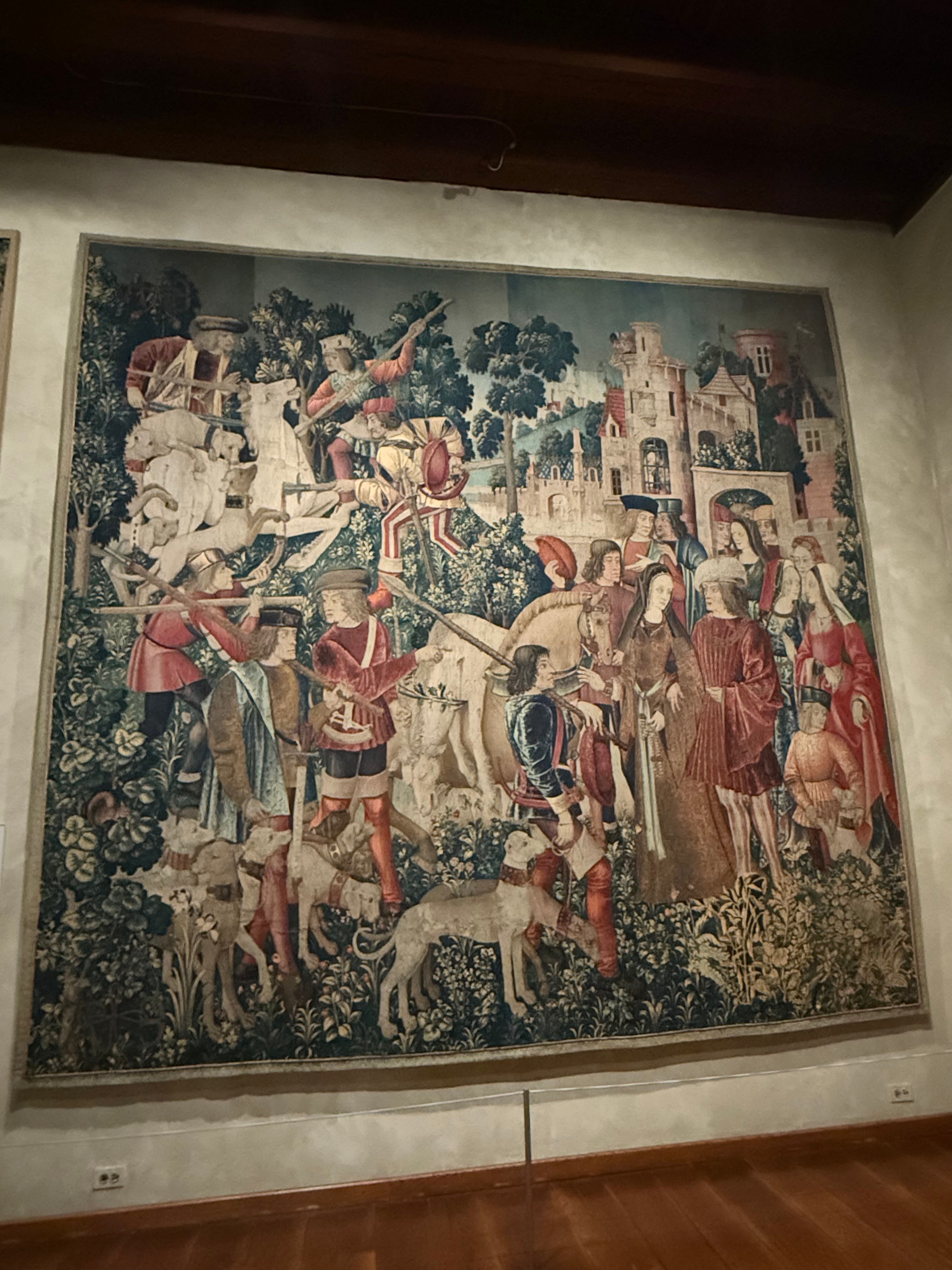
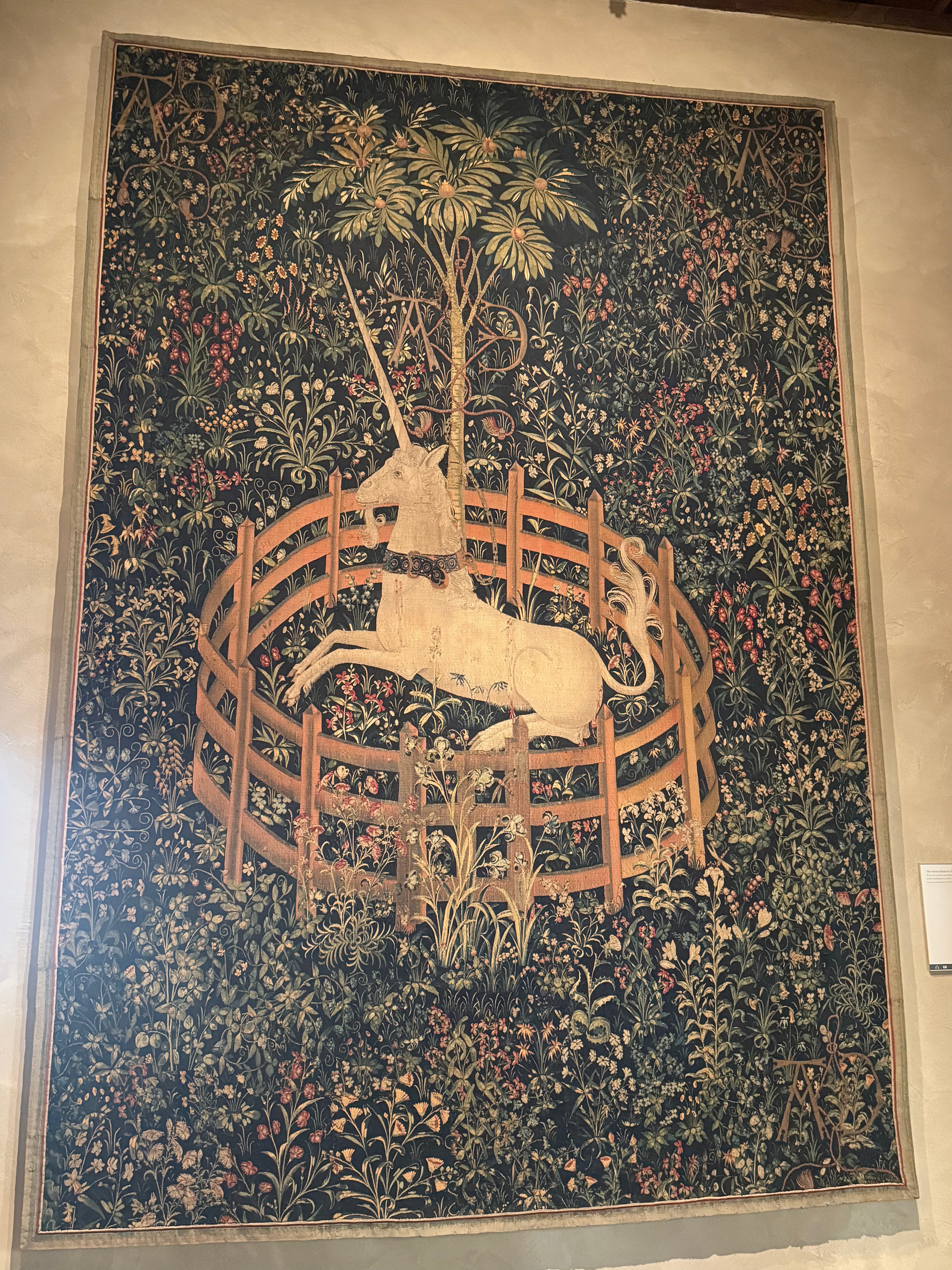
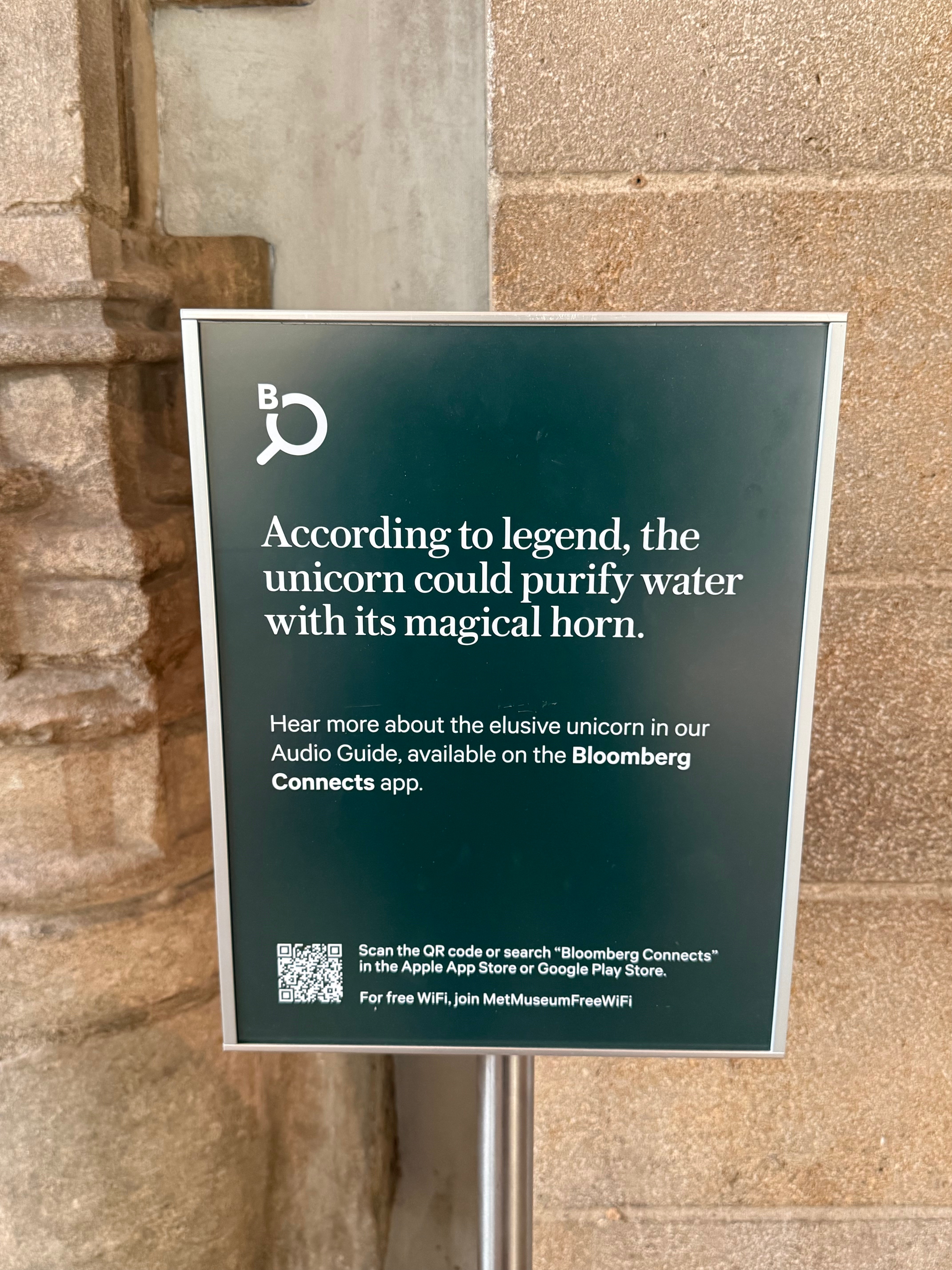
The best known works include the Early Netherlandish Mérode Altarpiece from about 1422 AD and the Flemish The Unicorn Tapestries (c. 1495–1505).
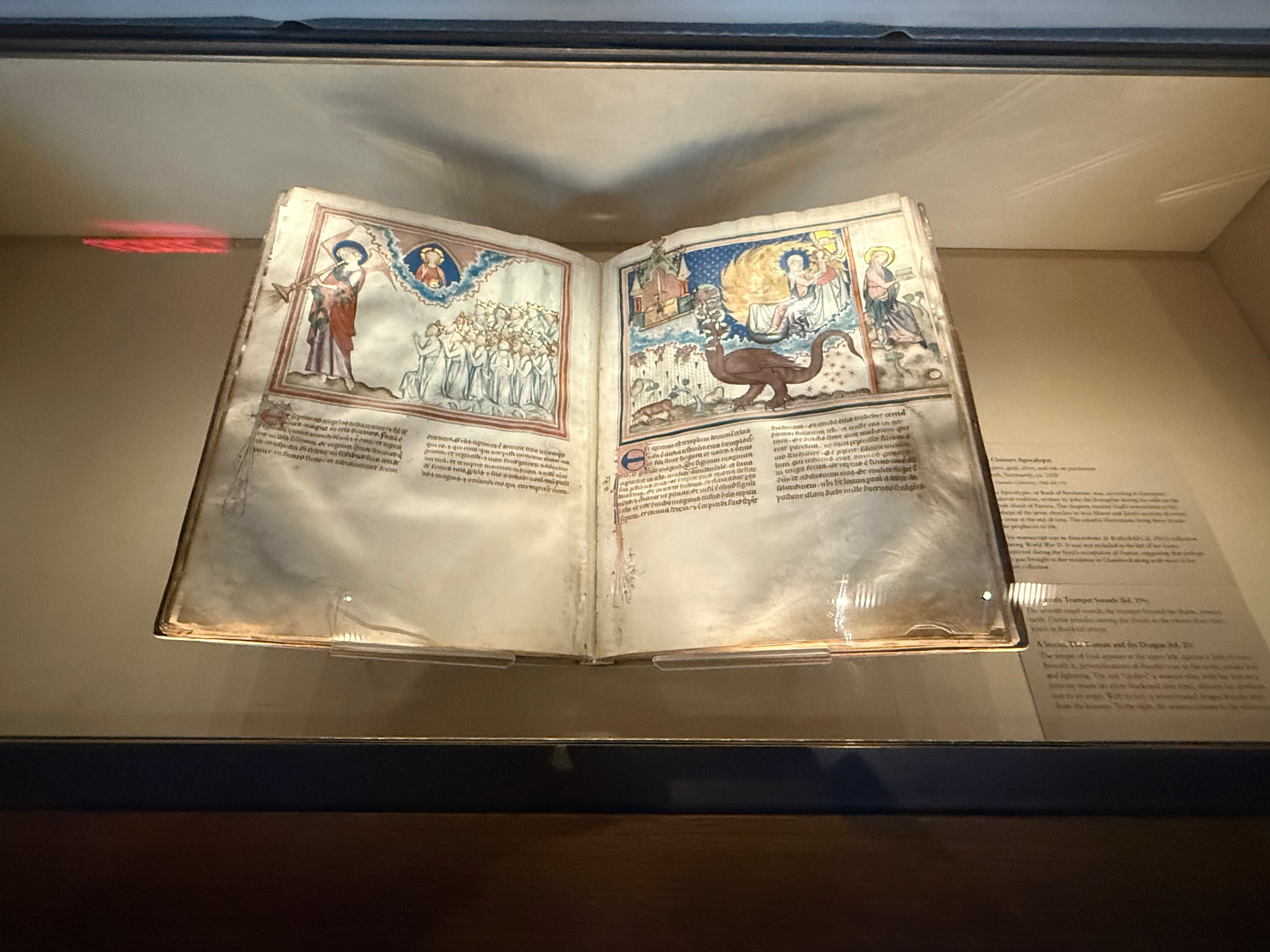
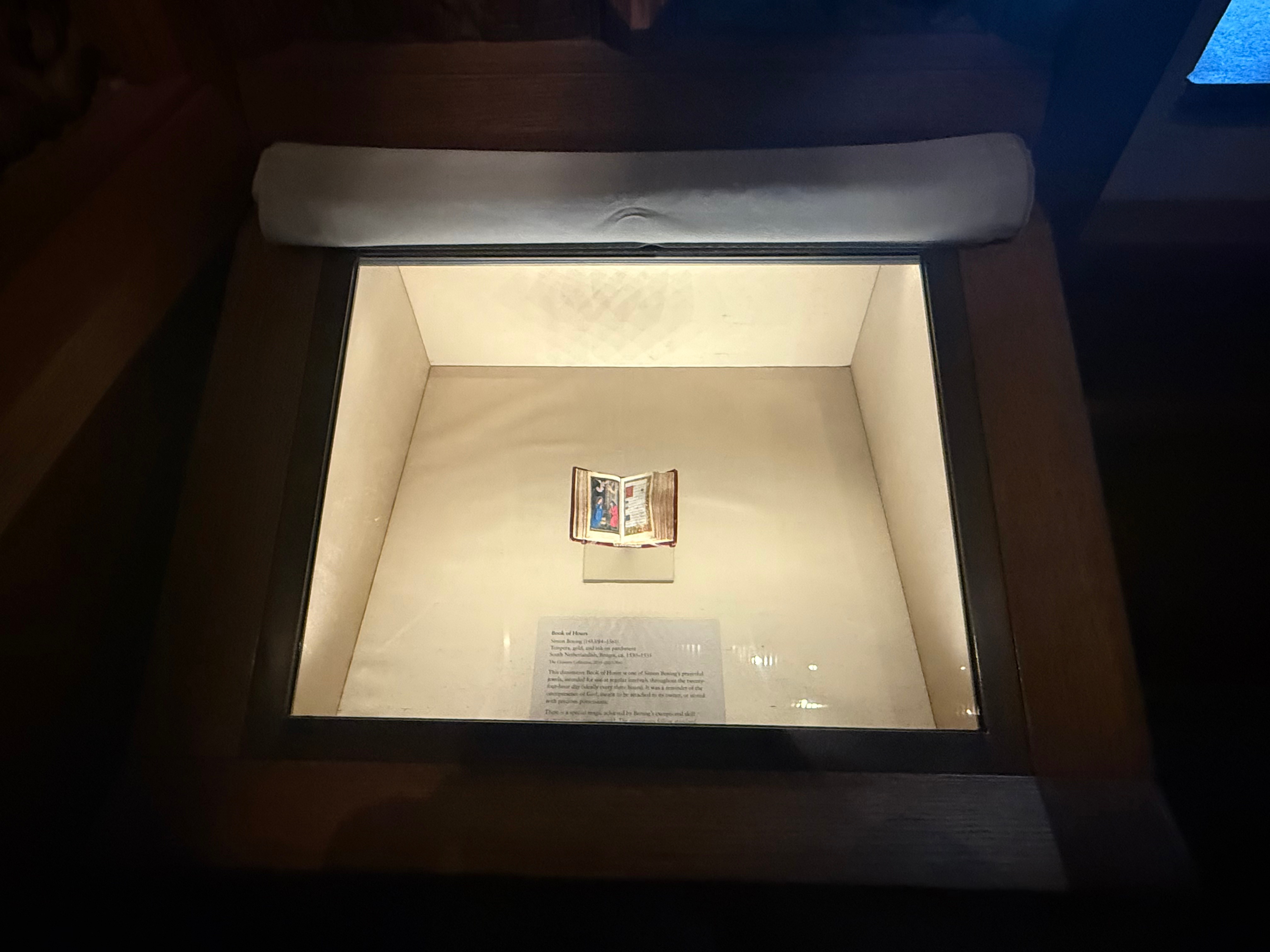
The museum’s collection of illuminated books is small but of exceptional quality. J.P. Morgan, a major early donor whose taste leaned heavily towards rare printed and illuminated books, donated most of his collection to the Morgan Library in midtown. However, there are some remarkable illuminated manuscripts at the Cloisters.
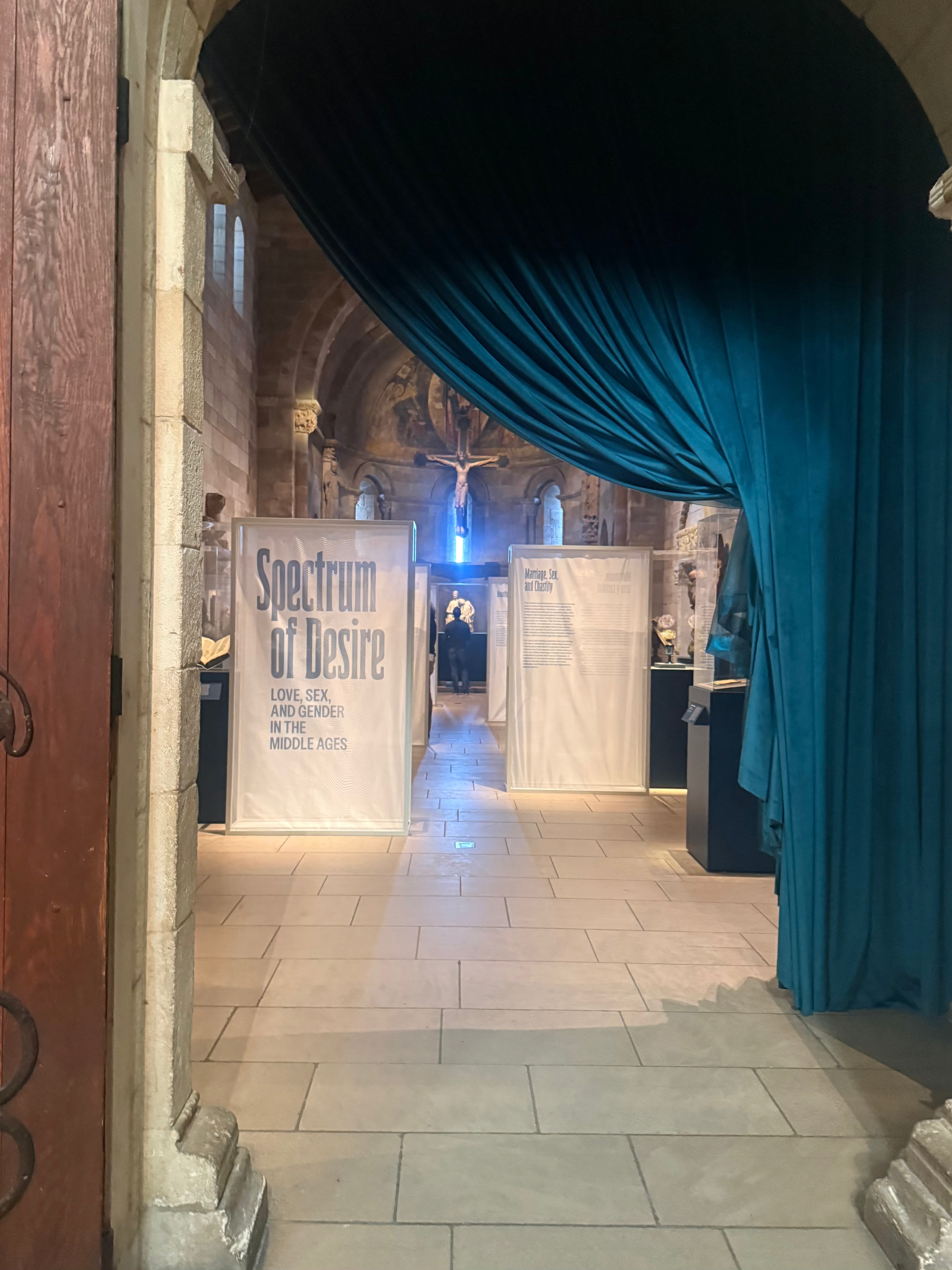
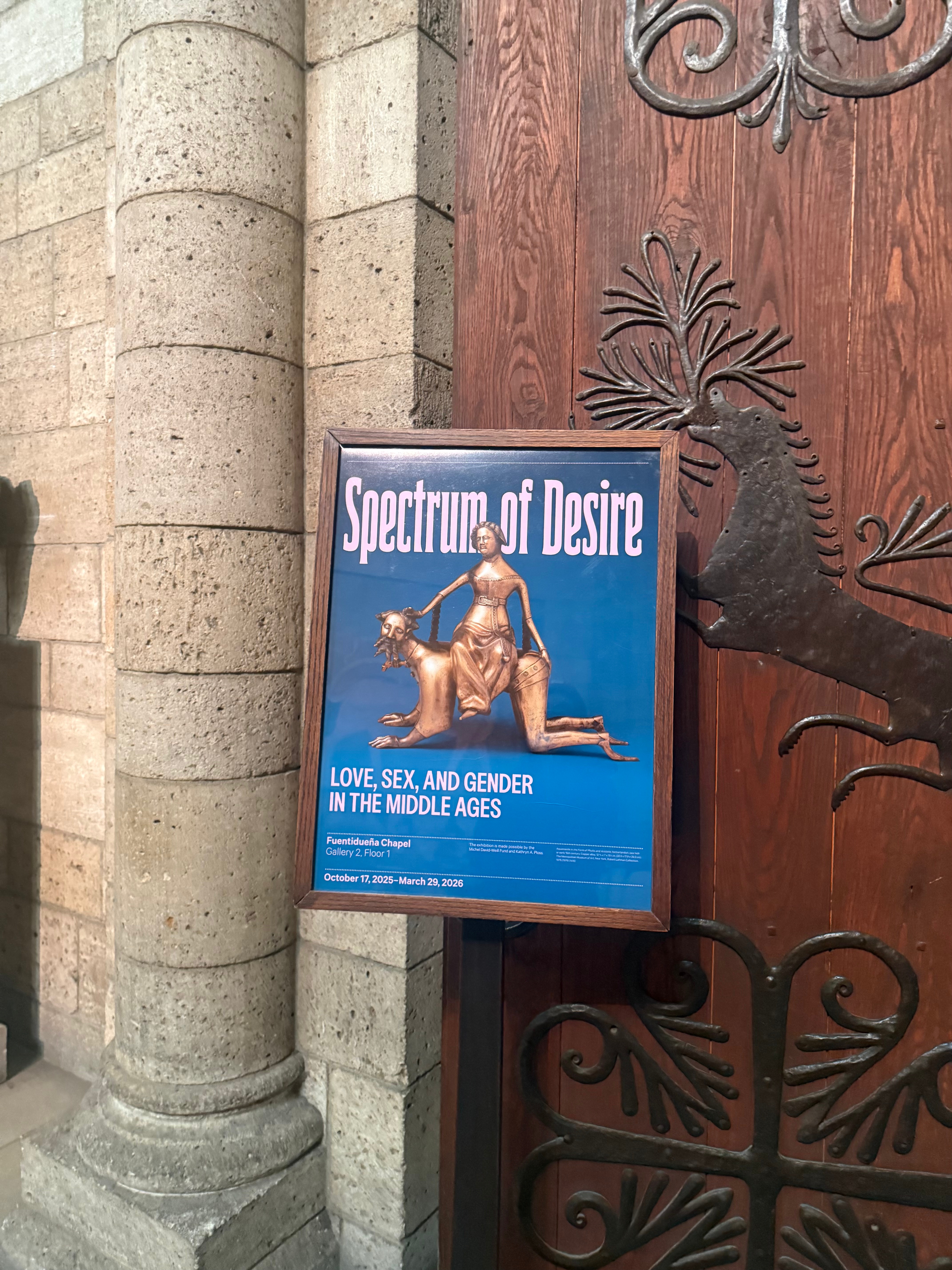
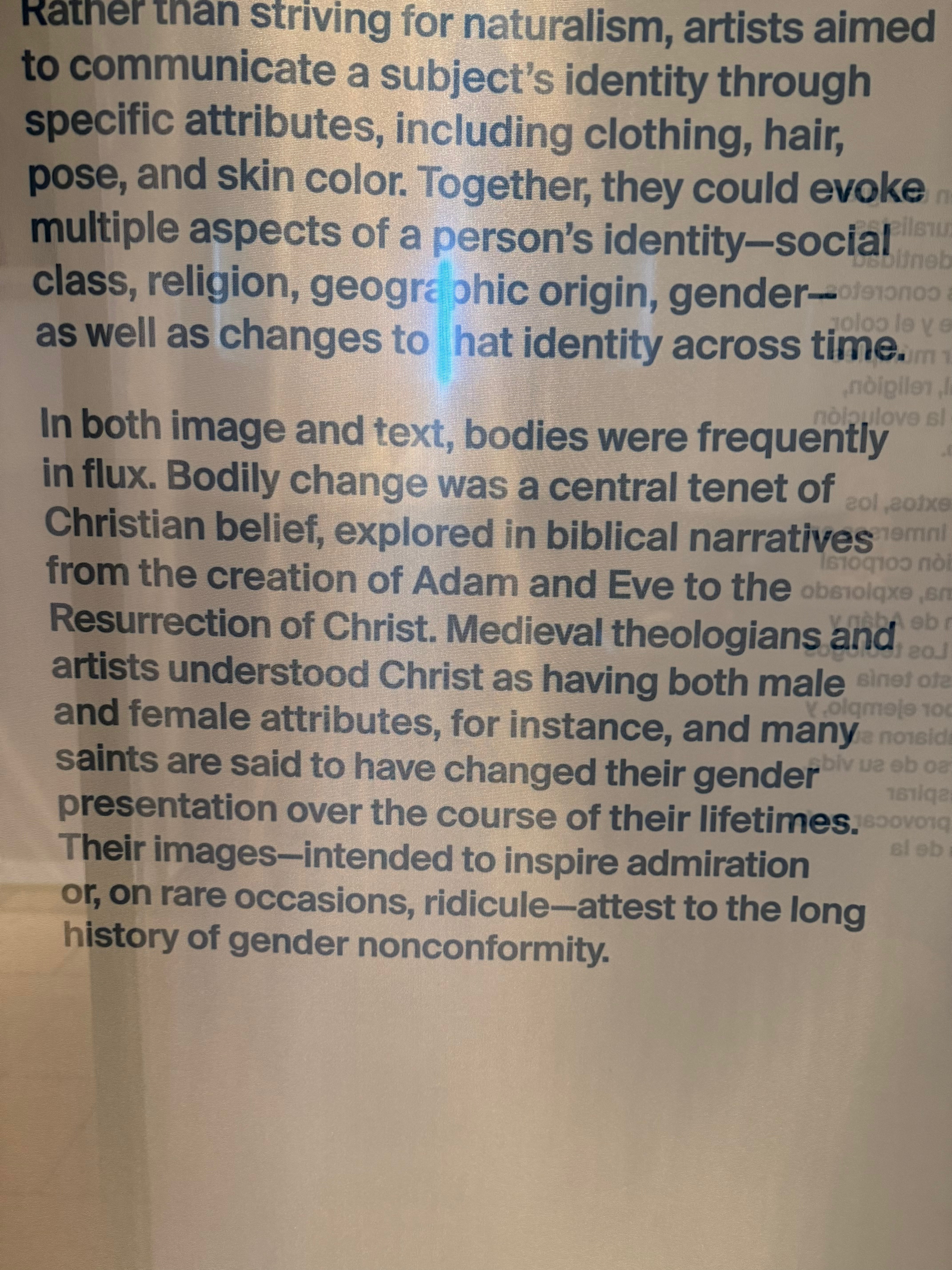
The Cloisters often has special exhibitions, and when I visited they had a very thought-provoking one called Spectrum of Desire, about love, sex, and gender in the Middle Ages. However, it’s about to close as I publish this post at the end of March of 2026.
Upon its opening on May 10, 1938, the Cloisters was described as a collection “shown informally in a picturesque setting, which stimulates imagination and creates a receptive mood for enjoyment.” Almost a century later, I would say that this description remains true. I highly recommend a trip to the Cloisters as a way to escape the noise and overstimulation that NYC can often provide, with the unique environment enabling moments of quiet reflection.
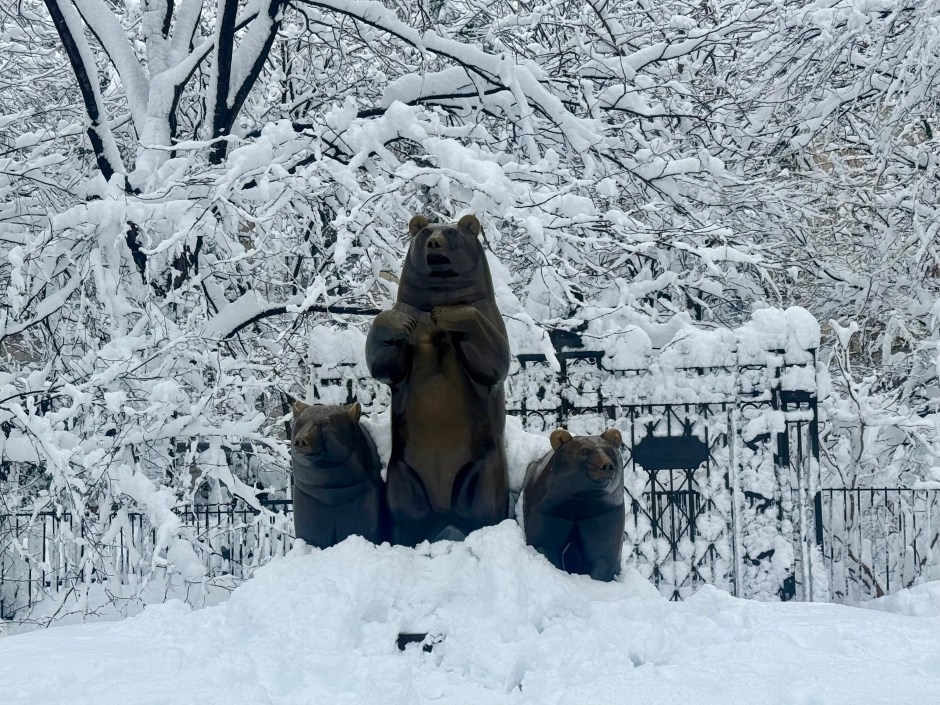
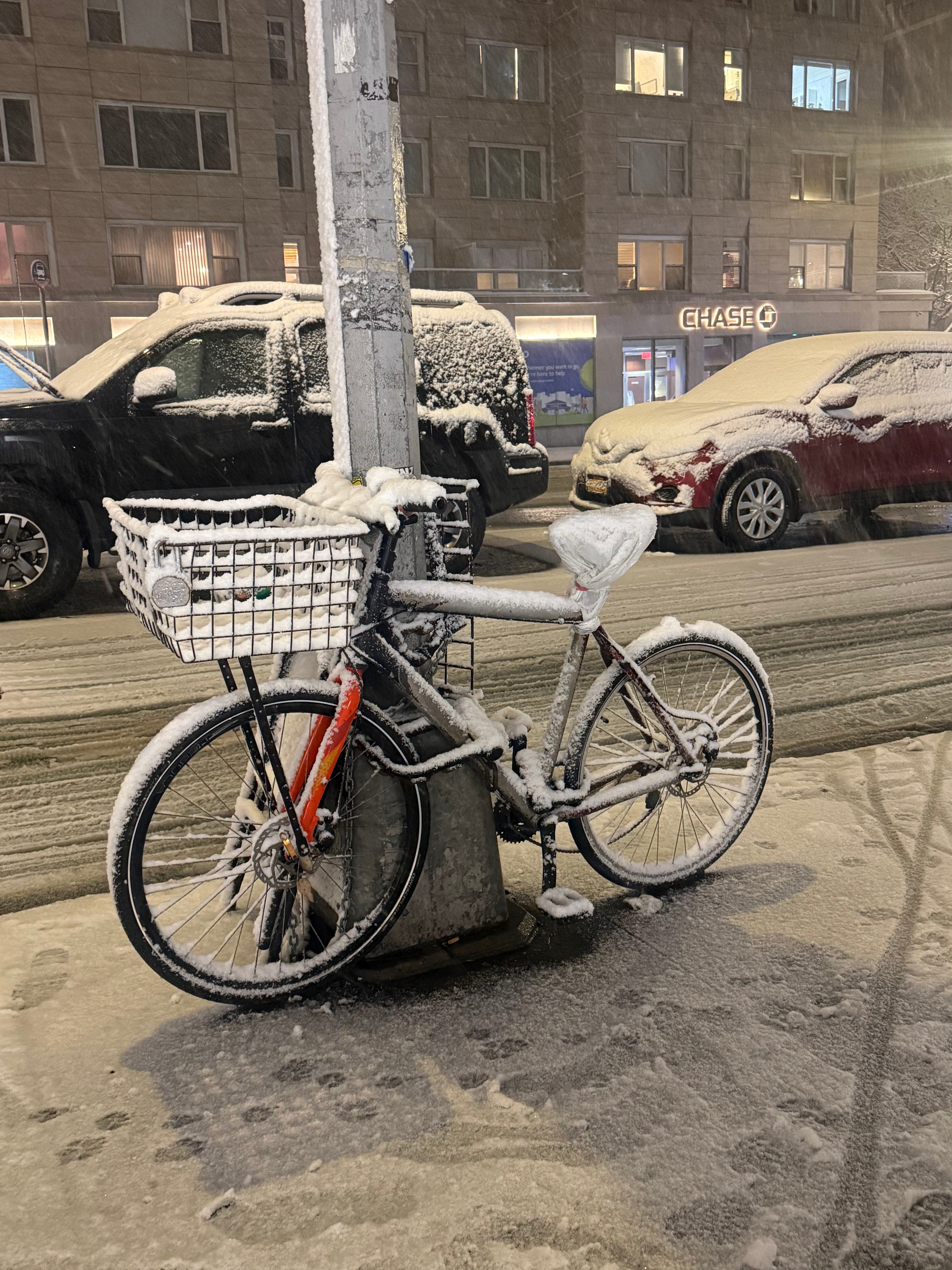
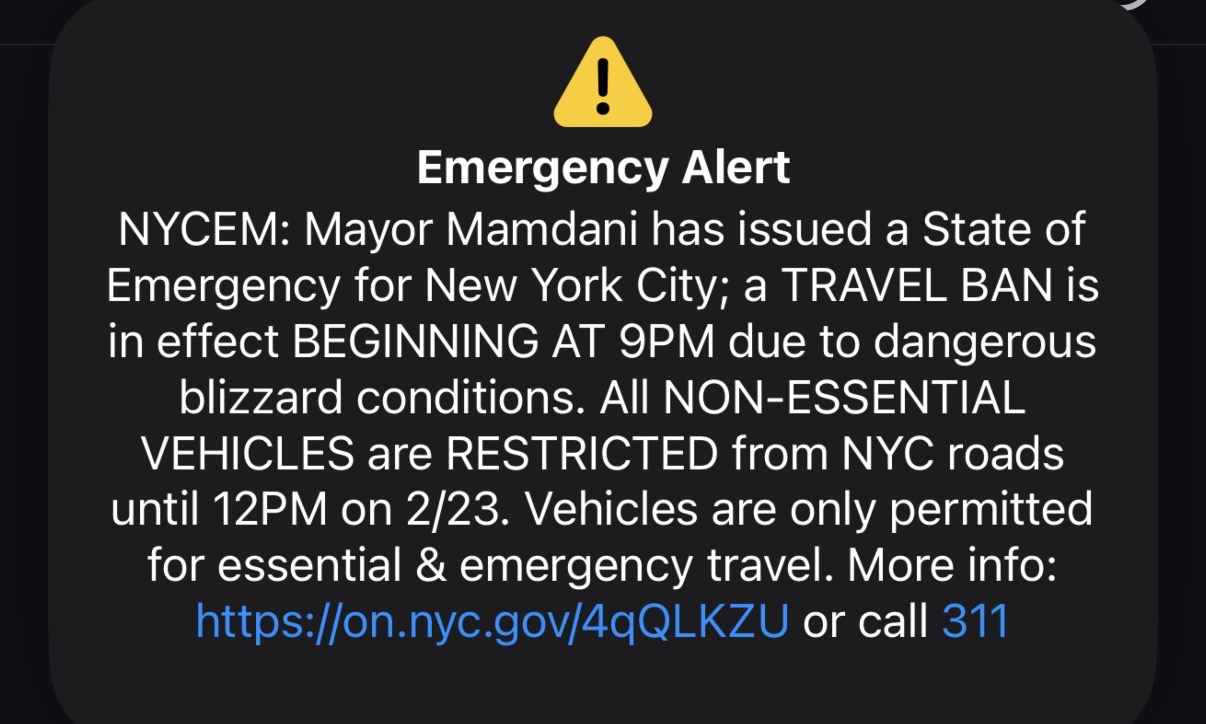
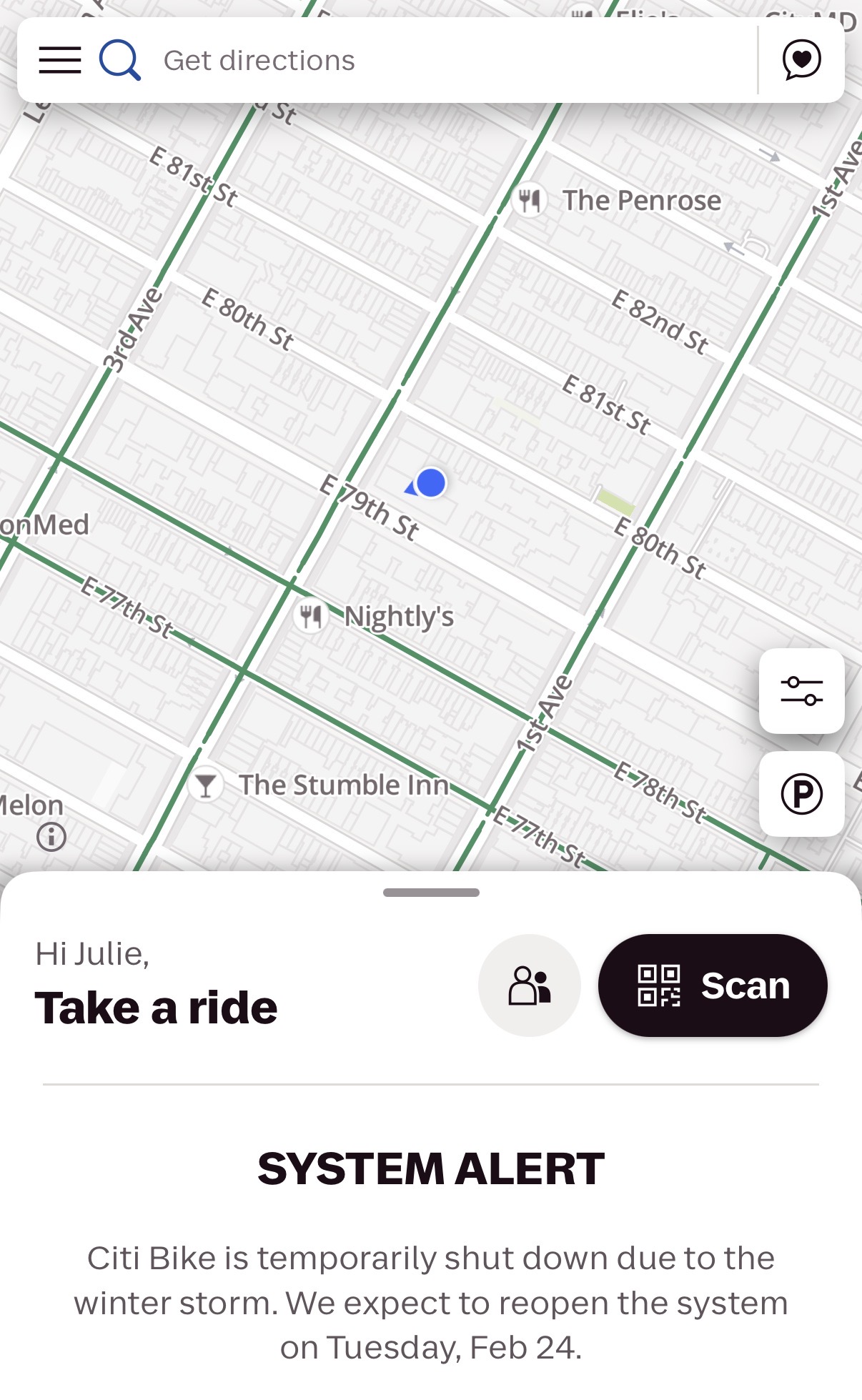
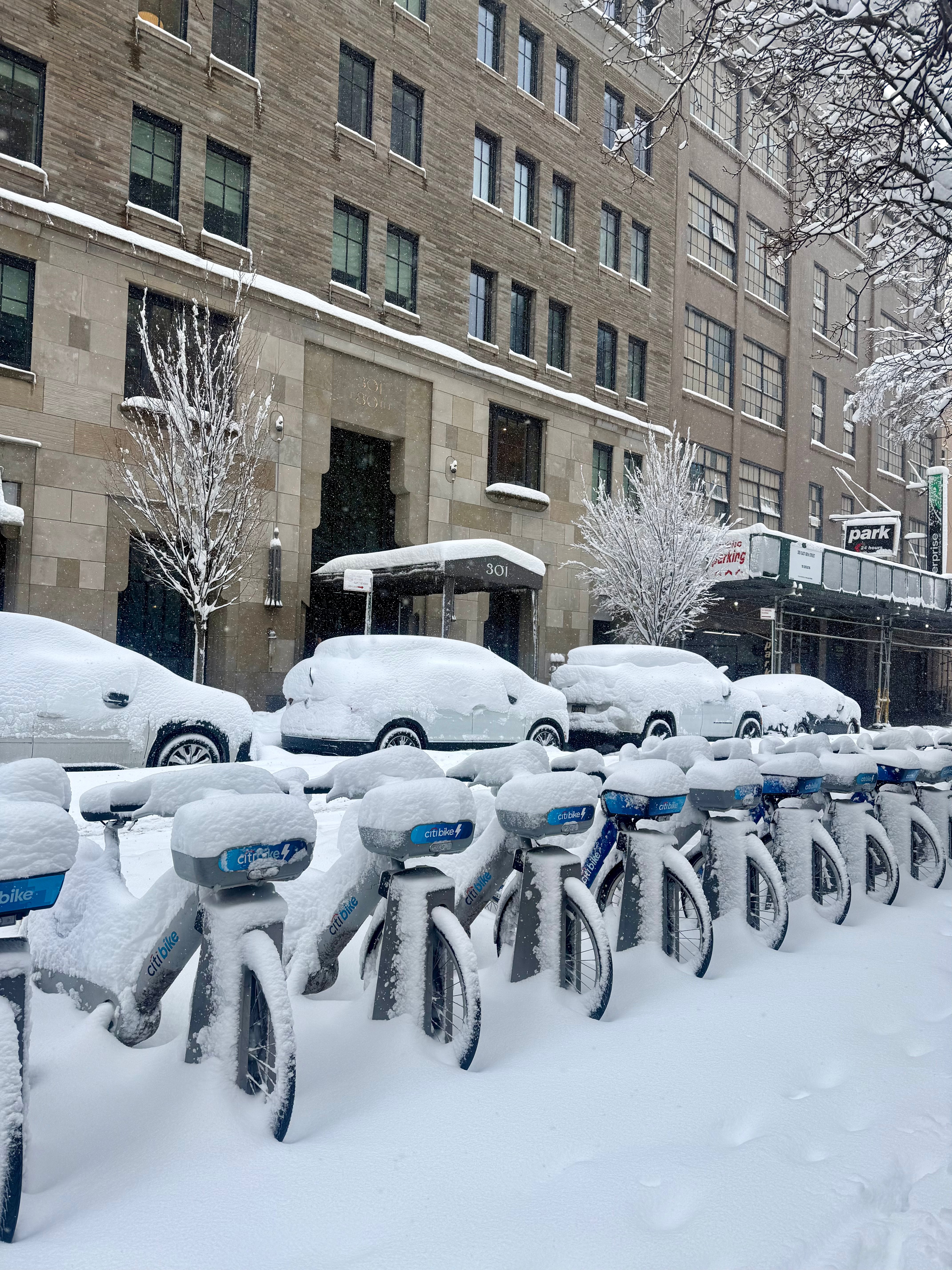
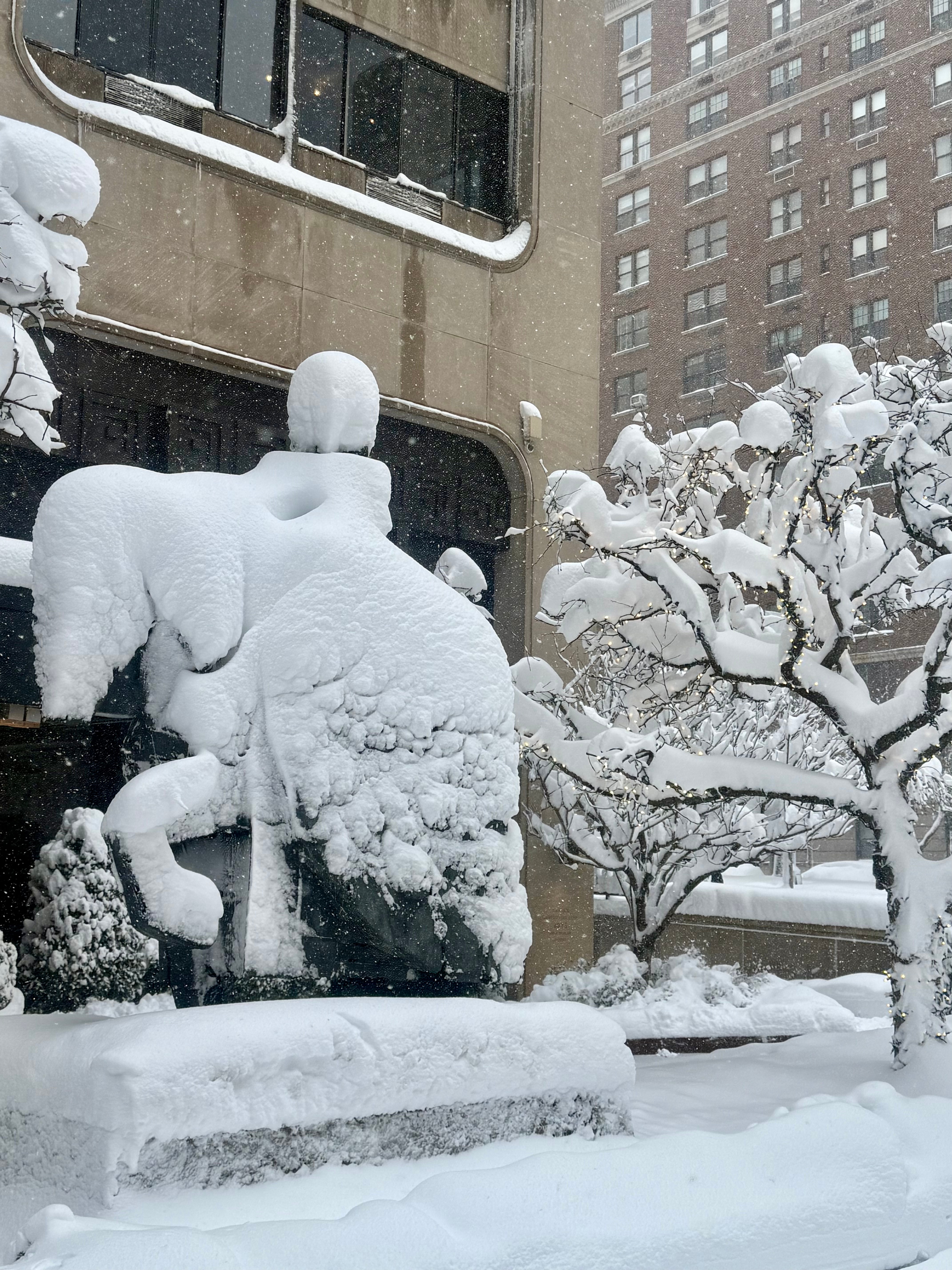
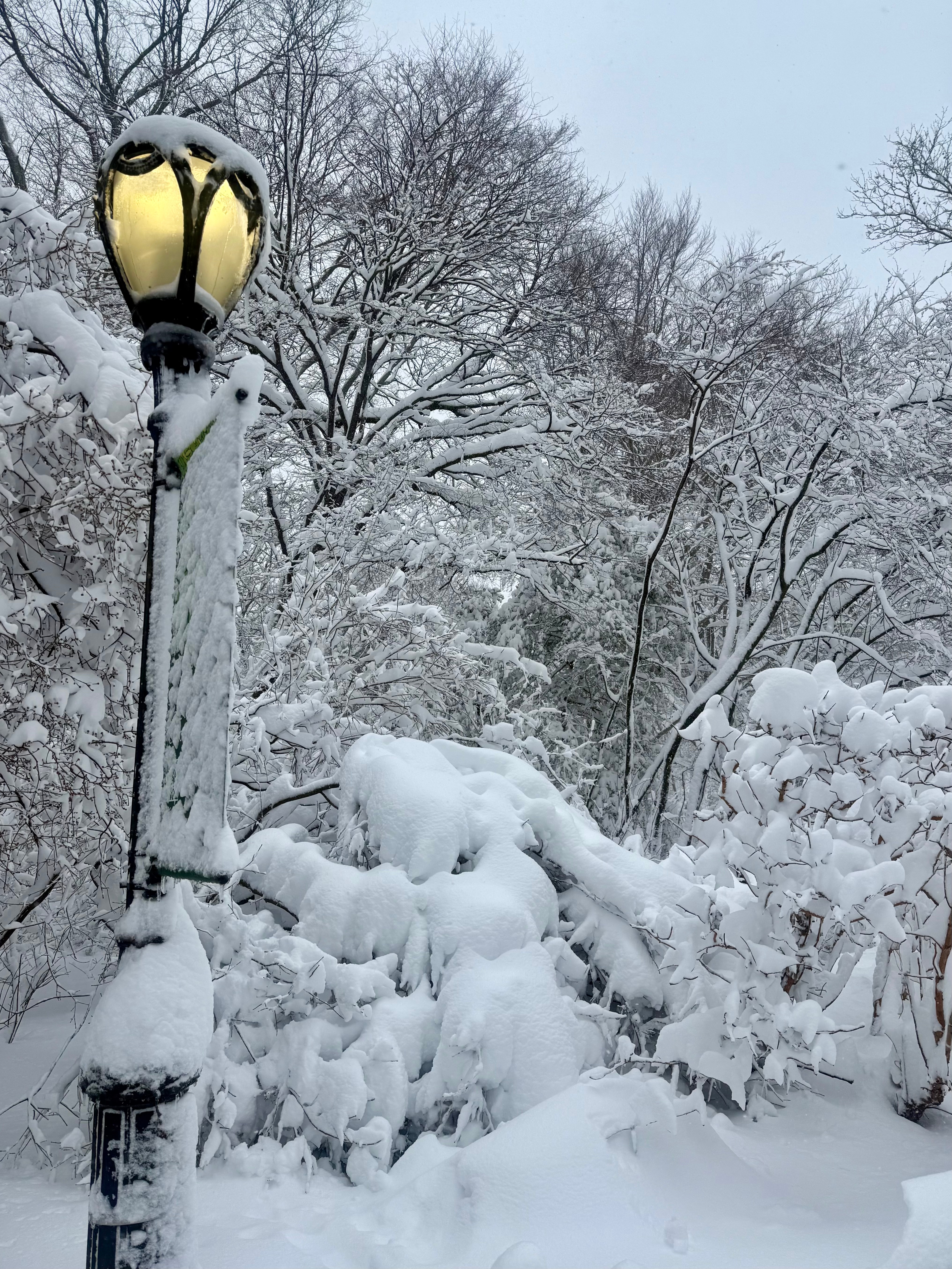
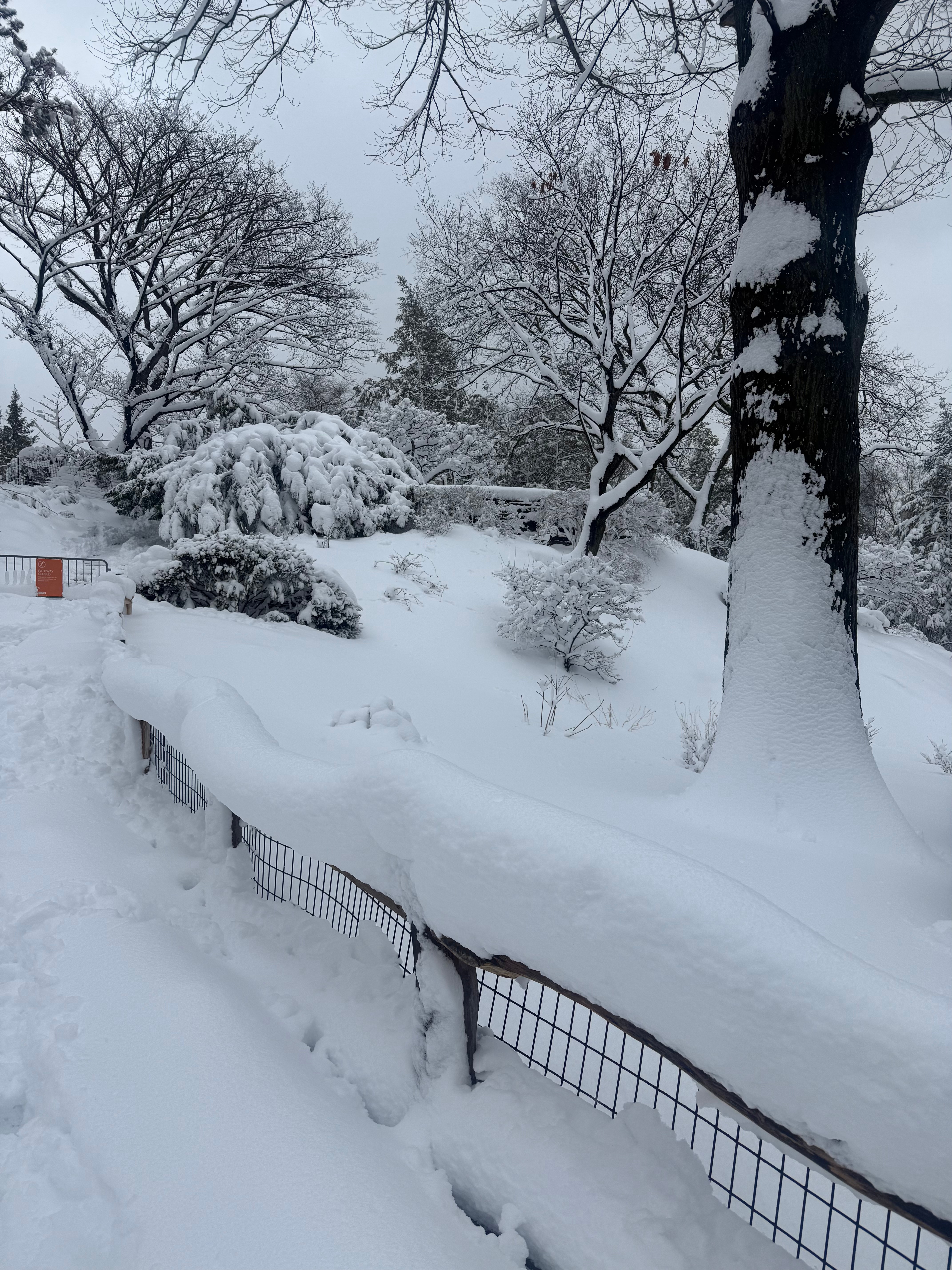
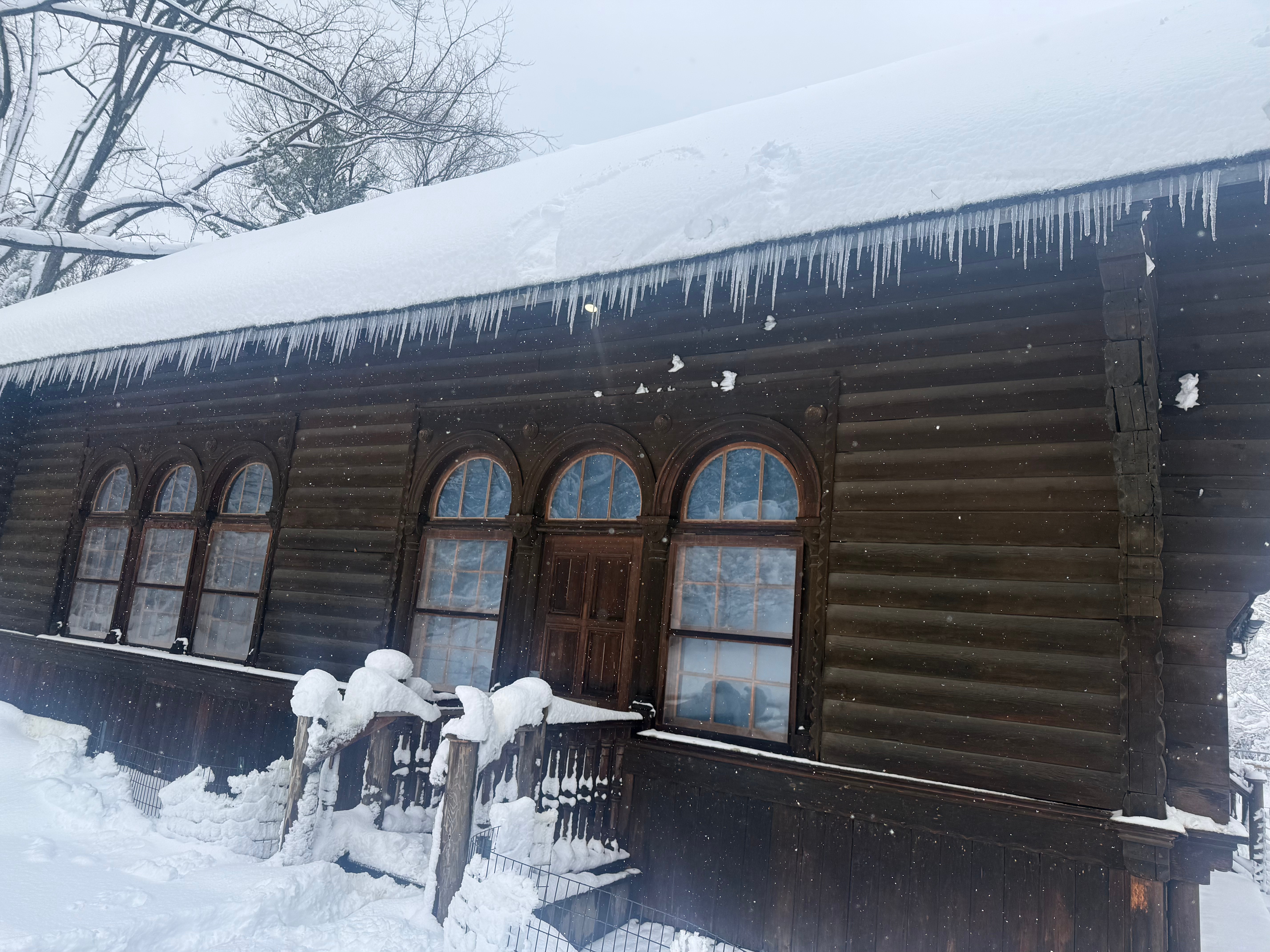
In January of 2026, New York City experienced a significant snowfall followed by weeks of temperatures much below average. You can see a few videos I made on Instagram from this snowstorm of the morning of the snow, snow removal in Central Park, a dog being carried down snow steps at the Bethesda Fountain, and of sledders in Central Park the day after the storm. Because of the frigid temps, the mountains of snow that formed where plows had pushed the snow off the roads hardened into ice. Citibikes were basically unusable for weeks, cemented into huge drifts of snow. Things had just begun to improve (although there was still snow around) in mid-February when there began to be murmurings of a possible big storm ahead. By February 20, they were predicting a blizzard (the definition of a blizzard has to do with low visibility due to high winds) with significant snowfall. The Blizzard of 2026 began on Sunday, February 22, and ended late afternoon on the 23rd, and this is what it was like in New York City – at least it’s my experience.
Screenshot
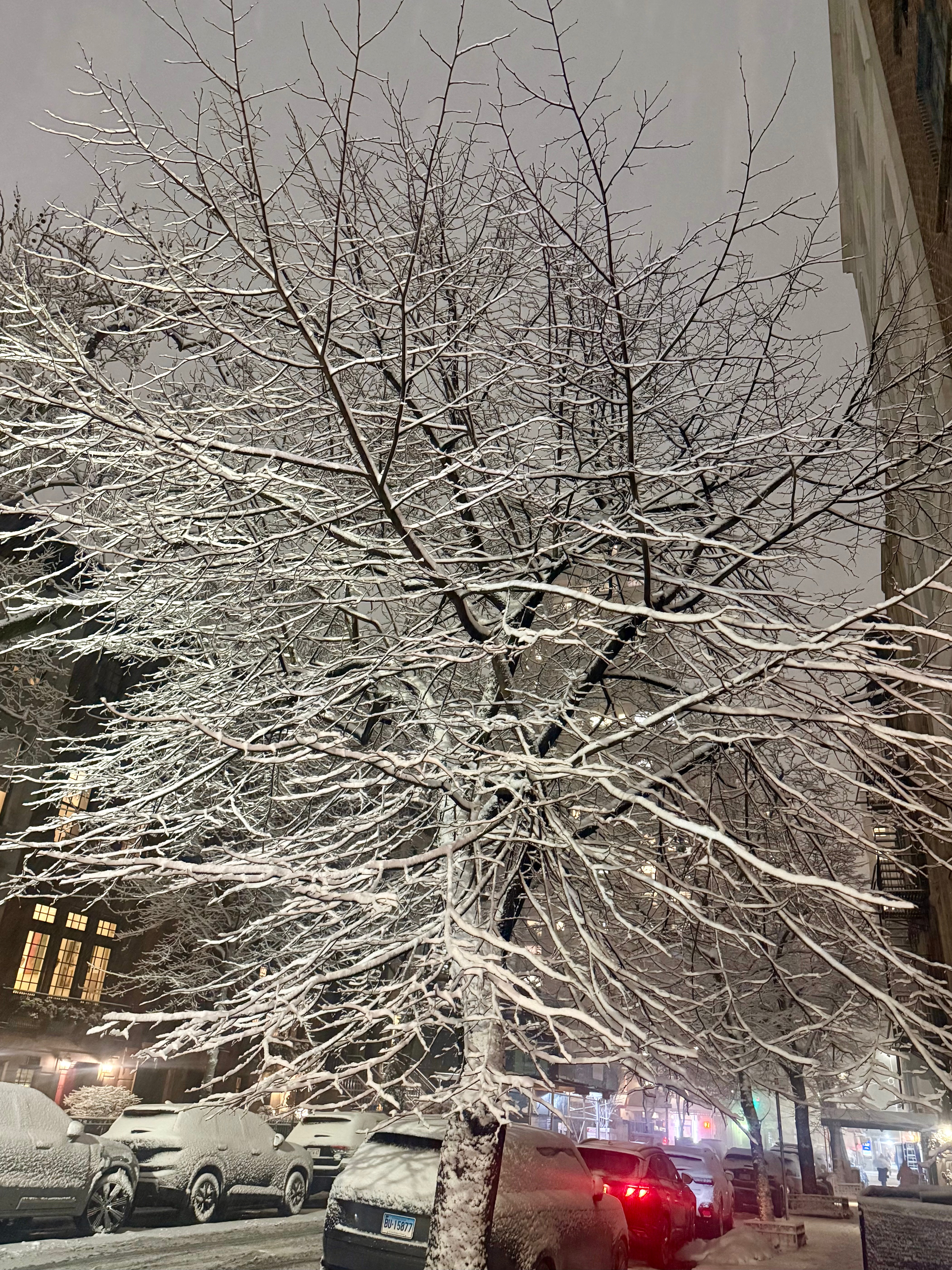
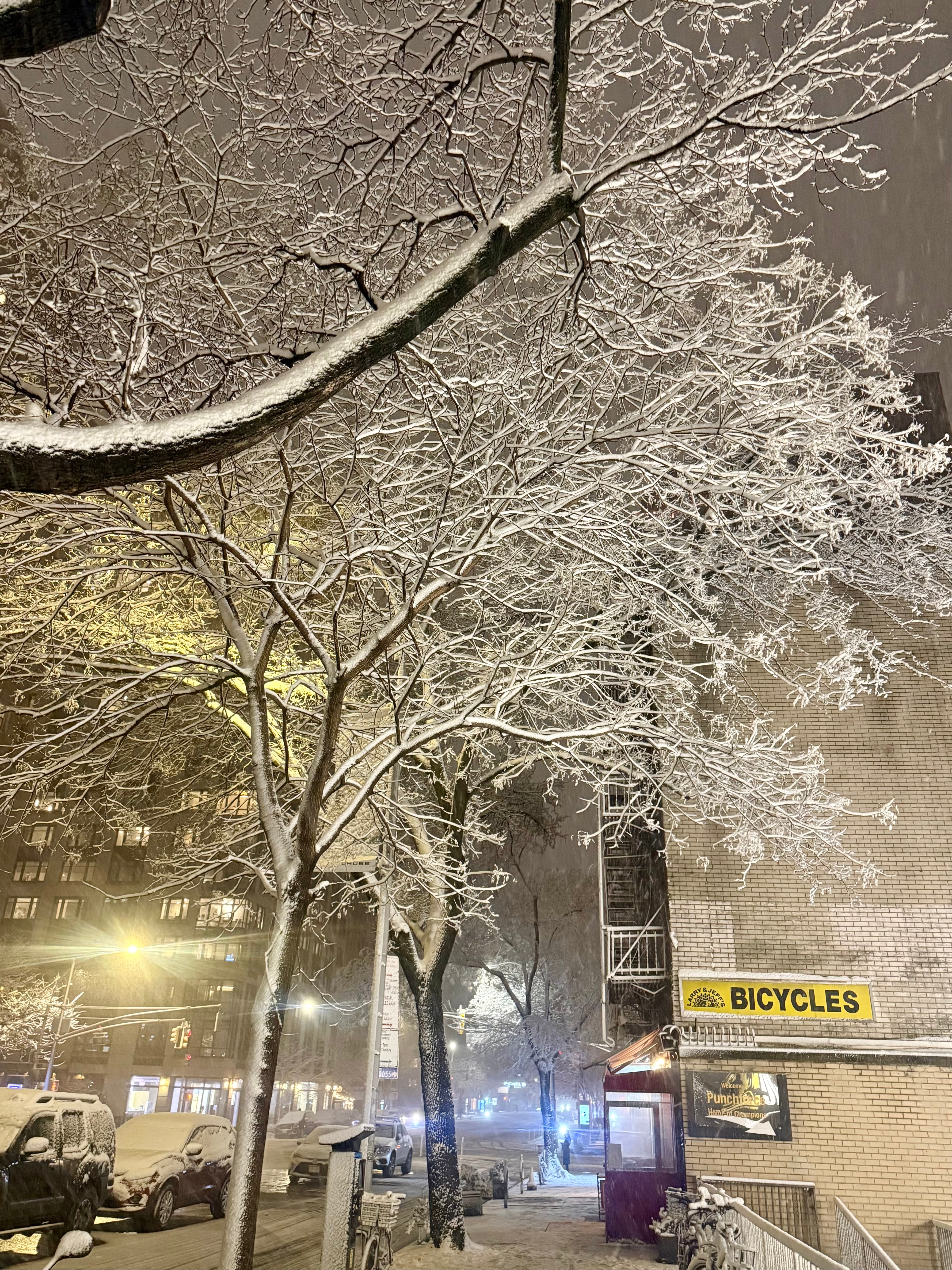
It started snowing lightly Sunday morning, but was really barely sticking until late afternoon. By 7PM, however, the snow was coming down and the wind was blowing. The photos above were taken on the Upper East Side in the evening. Around 8PM the emergency alert (photo above but thankfully I am not including the siren!) for NYC went off, startling everyone. There was a travel ban starting in the city at 9PM, lasting through noon on Monday. The snow and the wind increased overnight. I tried to take photos out my windows on Monday morning, but just captured whiteness.
Screenshot
Needless to say, my annual Citibike membership has been challenging to use this winter! I can always bundle up enough to ride even in the cold in the winter, but there is nothing that can be done when the bikes themselves are snowed in.
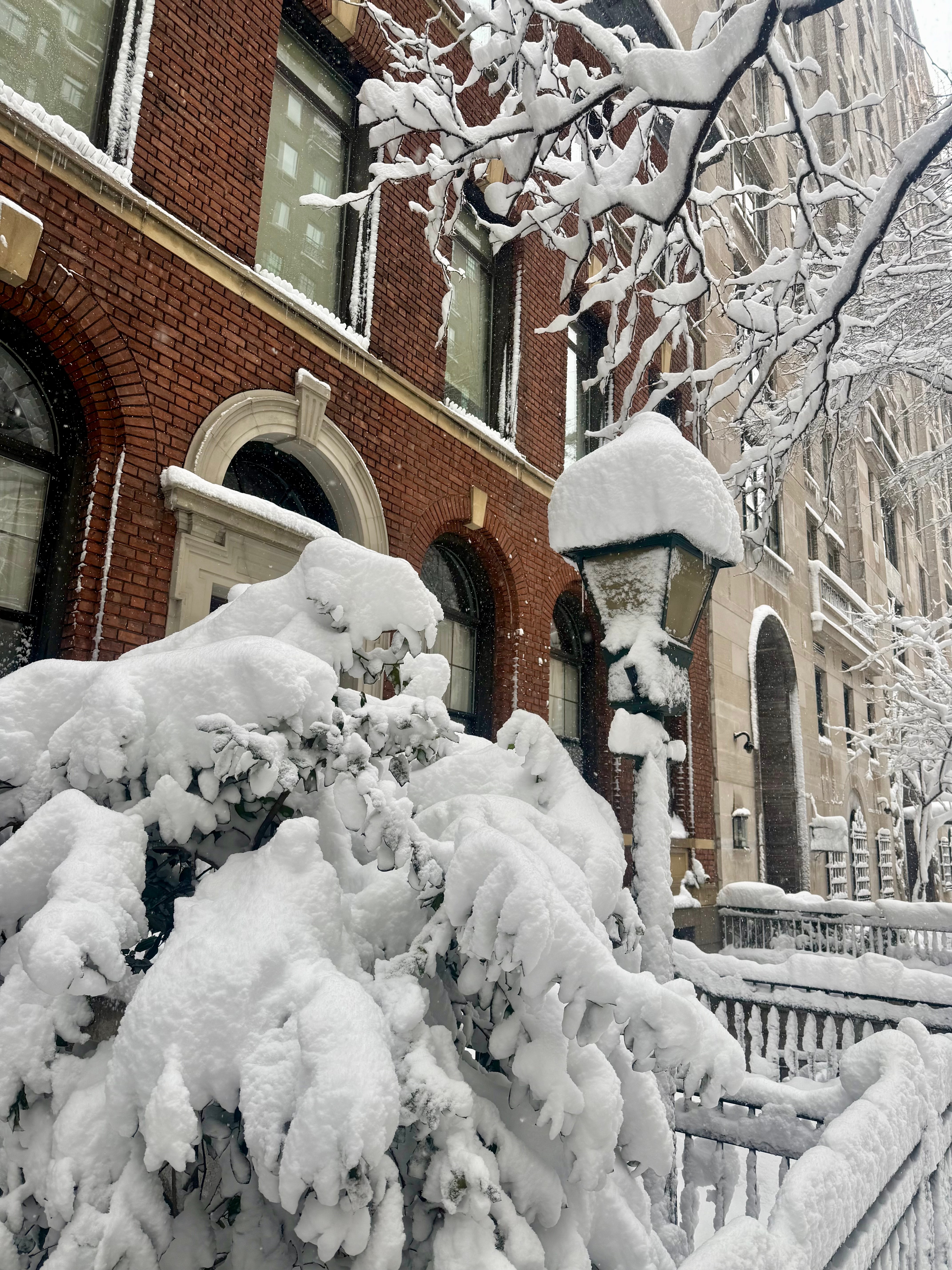
I went out Monday morning when it was still snowing – I think at this point we had 15 inches or so, and we ended up with just under 20. There were plenty of people out, and honestly, it was gorgeous (see my Instagram reel from that morning).
It was still lightly snowing when I went back mid-afternoon, but much of the accumulated snowfall had already occurred.
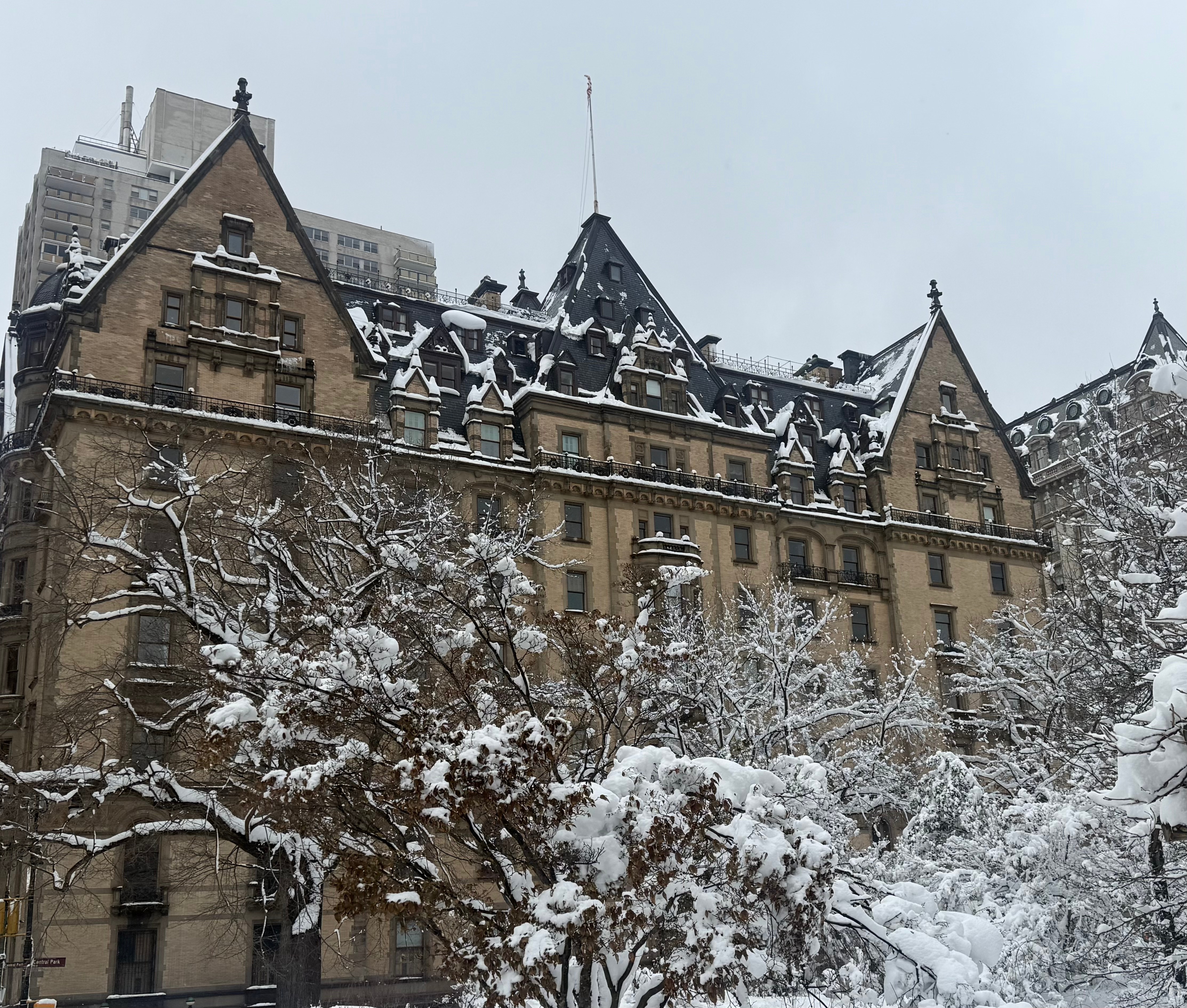
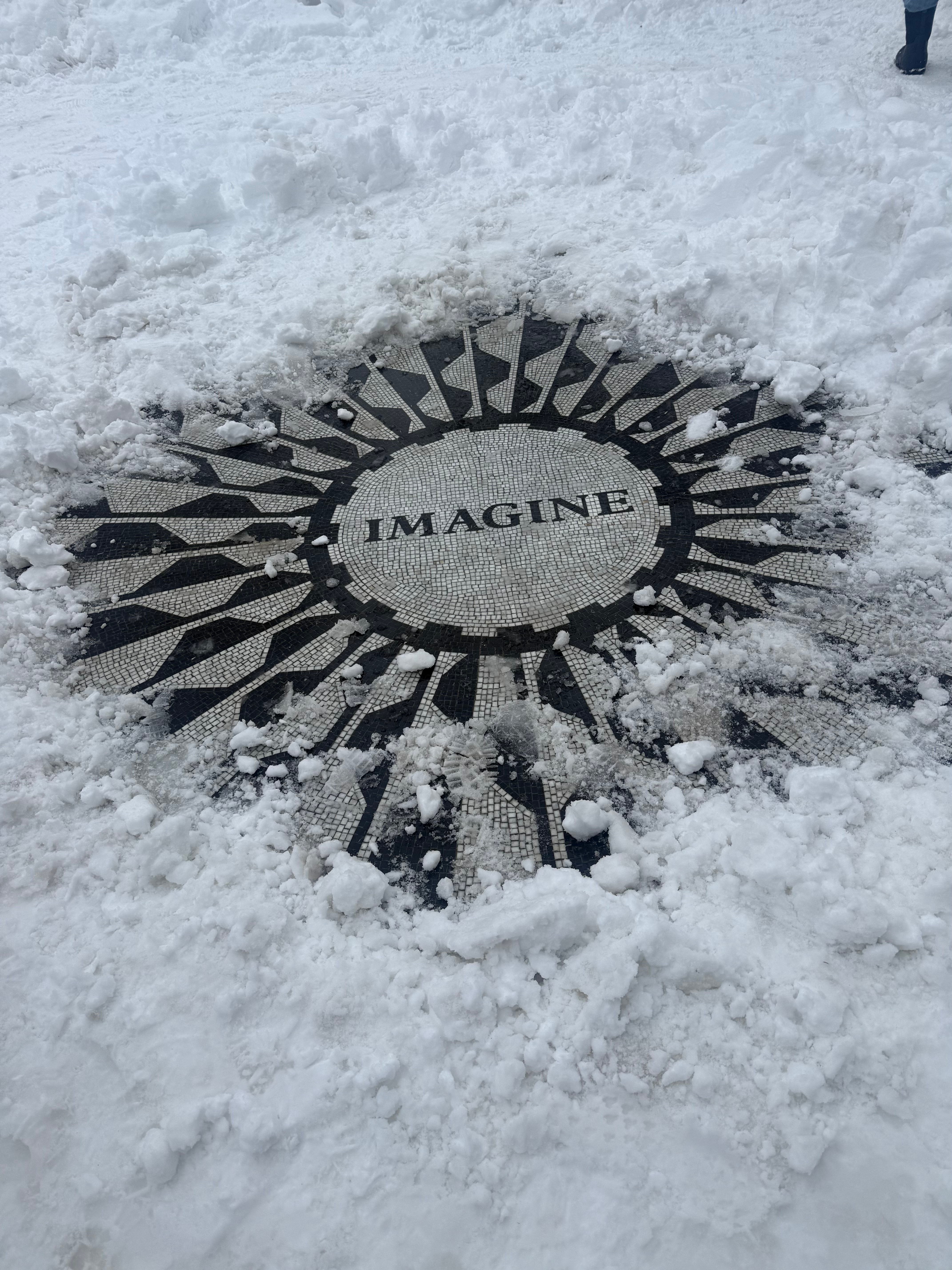
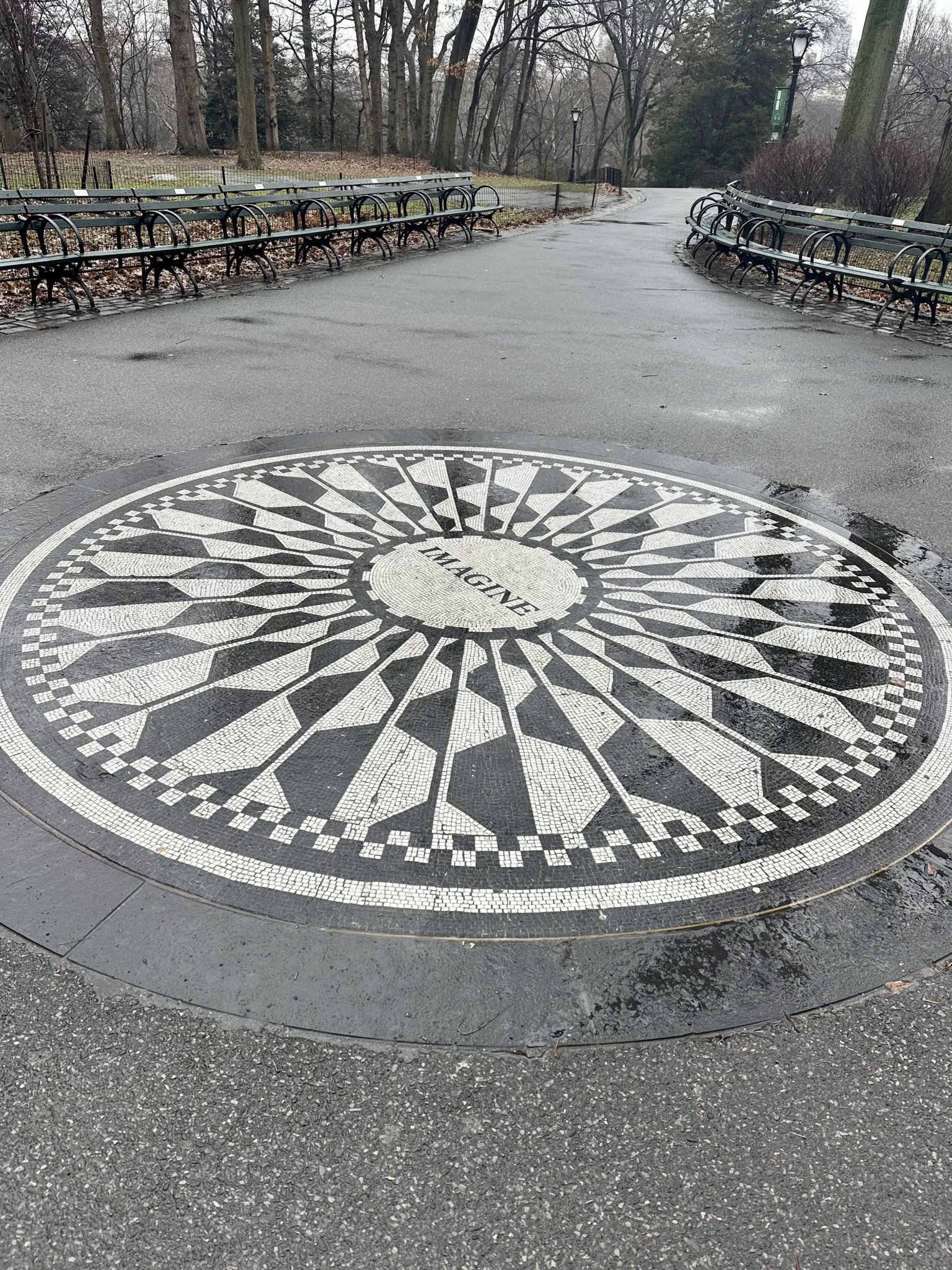
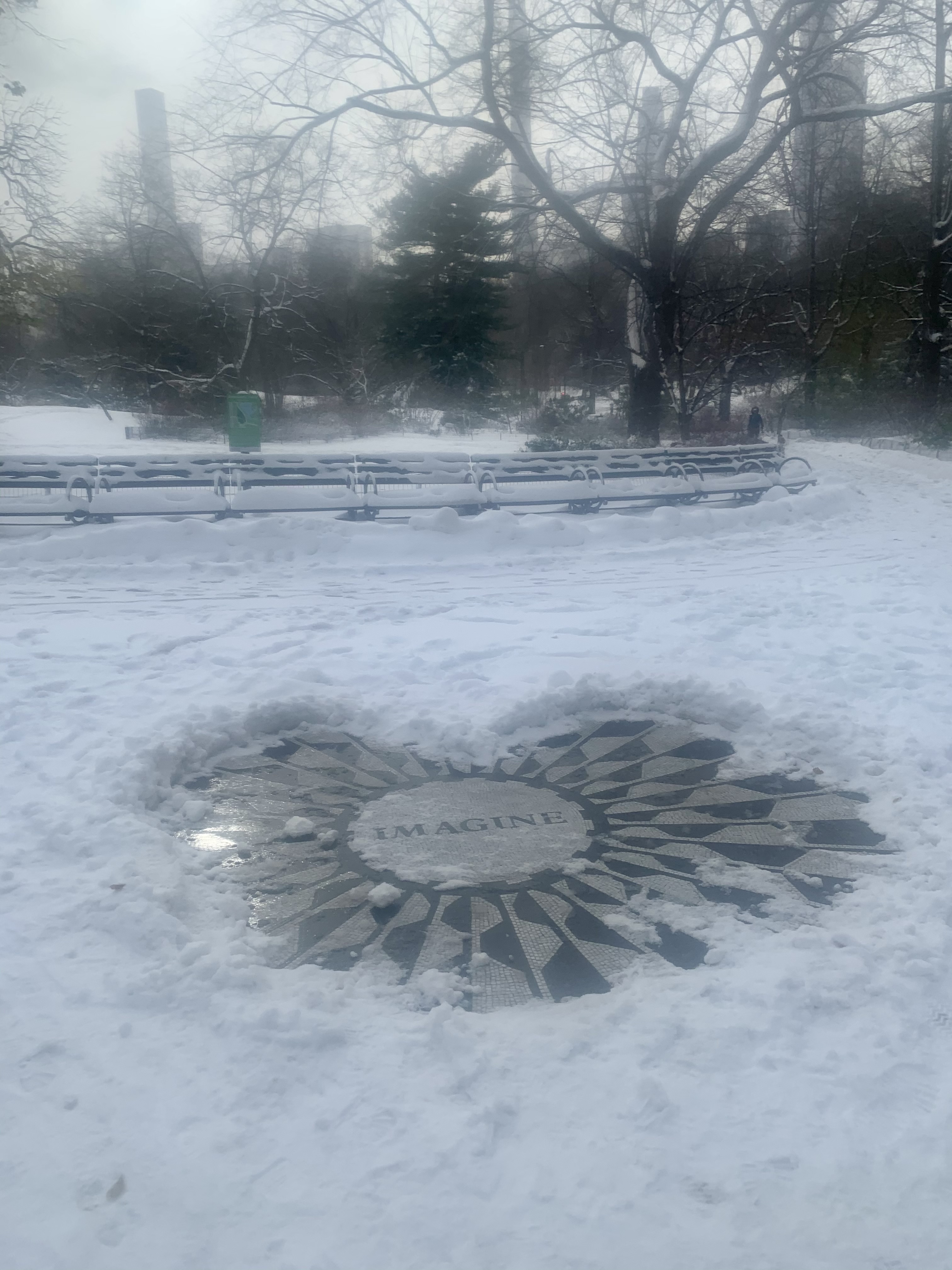
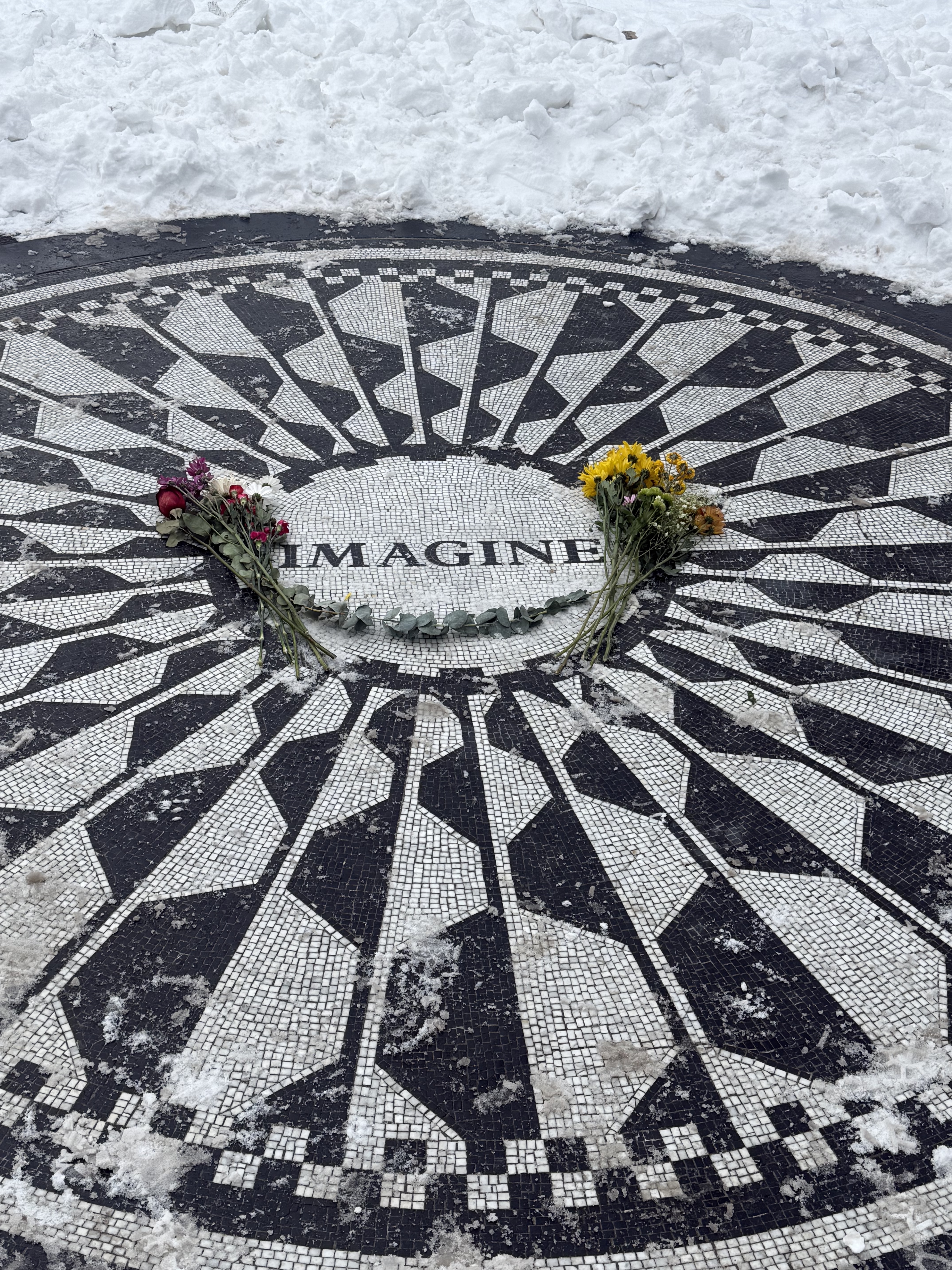
The Dakota looked stately as always, frosted with snow. And someone always keeps the Imagine mosaic honoring John Lennon in Strawberry Fields uncovered. The most entertaining and surprising thing I came across that Monday afternoon was winter sports at the Bethesda Fountain! Brave souls were skiing or skateboarding down the snow covered steps leading down to the fountain (see the video here).
Screenshot
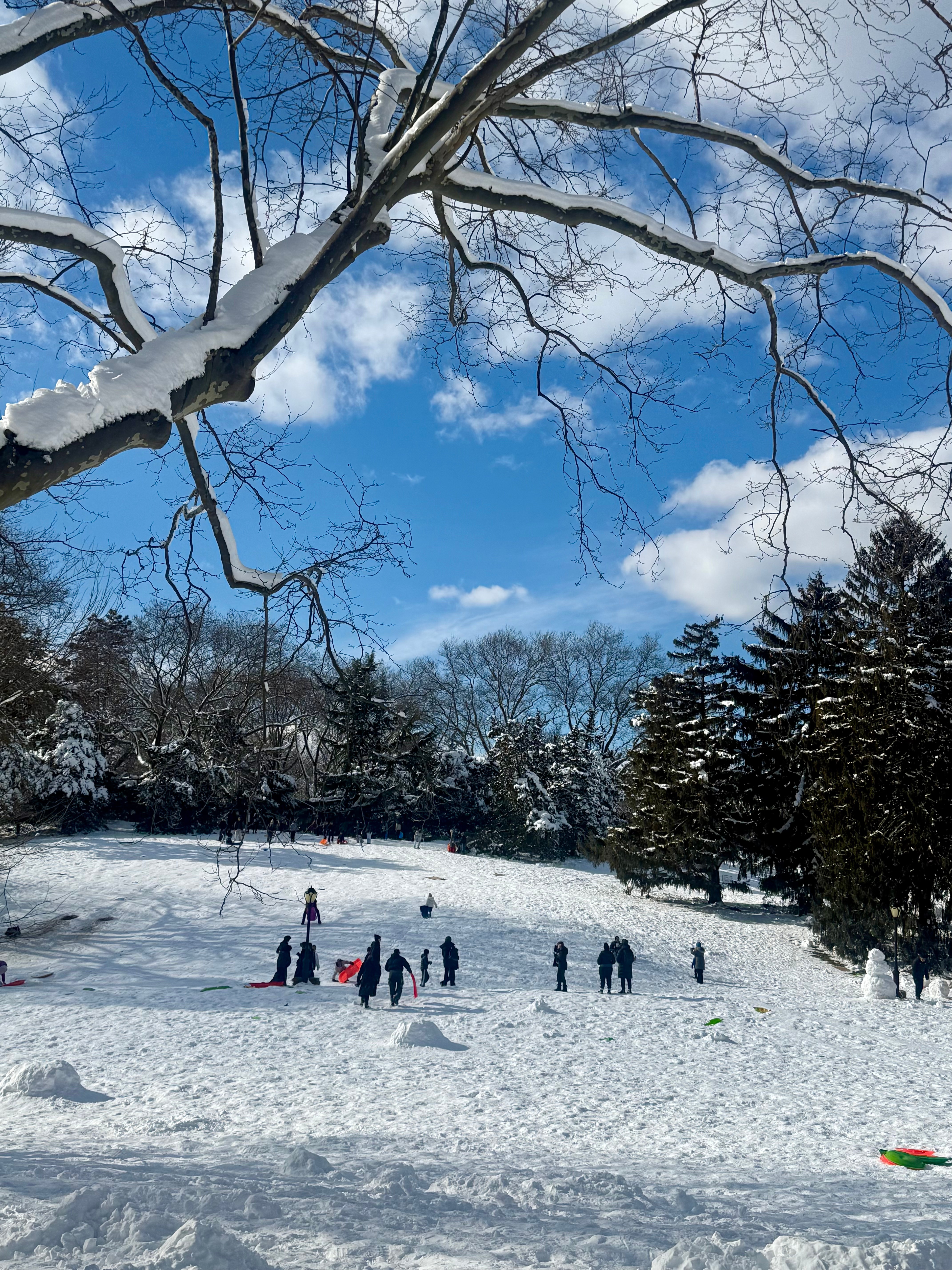
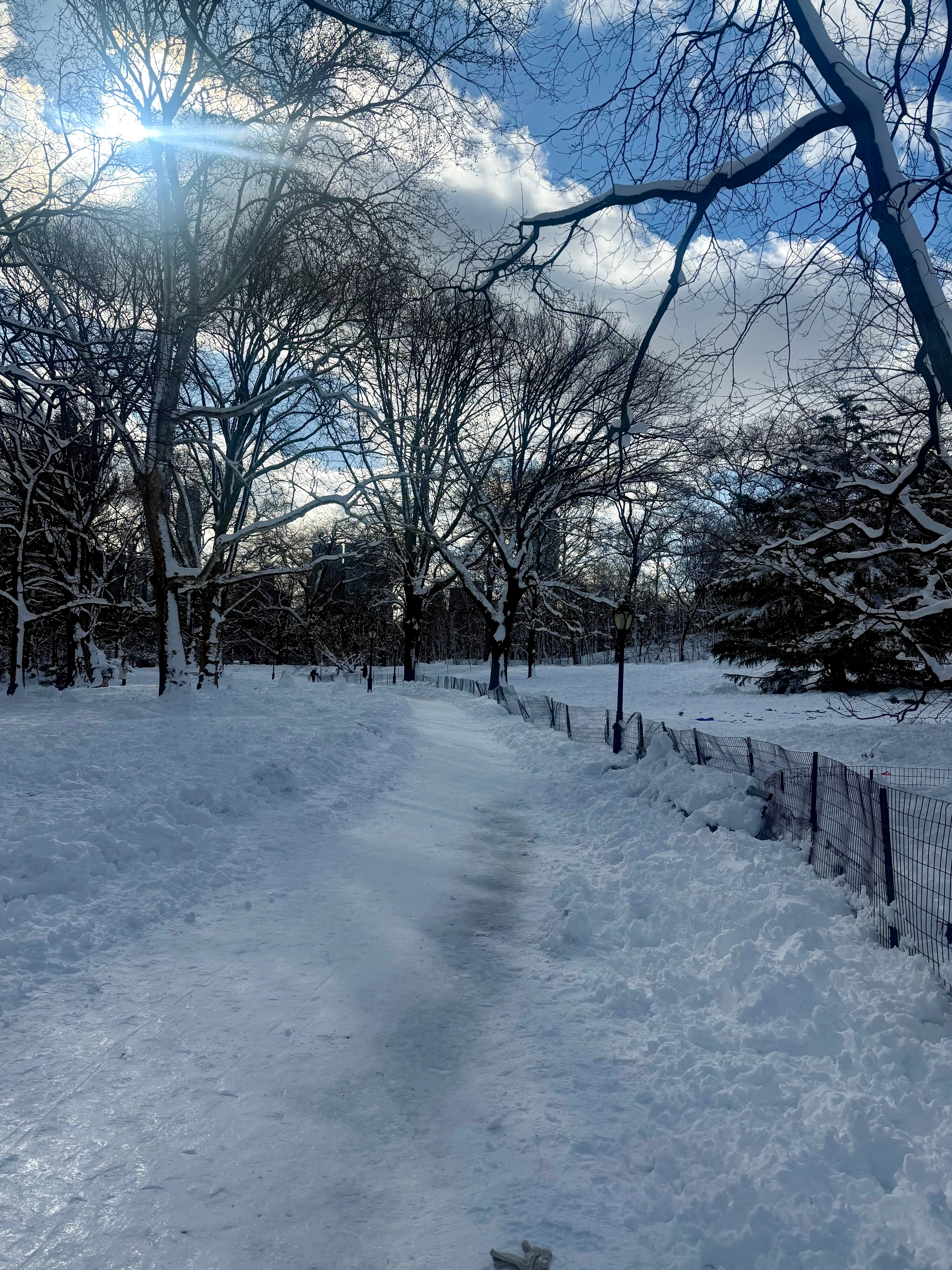
In the end, we barely squeaked into the top ten snowstorms (I am amazed that I have personally experienced all but two of the top ten – I was not alive for the 1947 or the 1888 ones!). The major impact of this storm was the blizzard conditions, and travel was certainly unsafe for a few days. In general, though, I found that snow removal was better than last time. With temperatures less arctic, it made snow removal easier than the storm with less accumulation the previous month. The packed down snow in Central Park that had turned to ice overnight was treacherous for walking, but great for sledding.
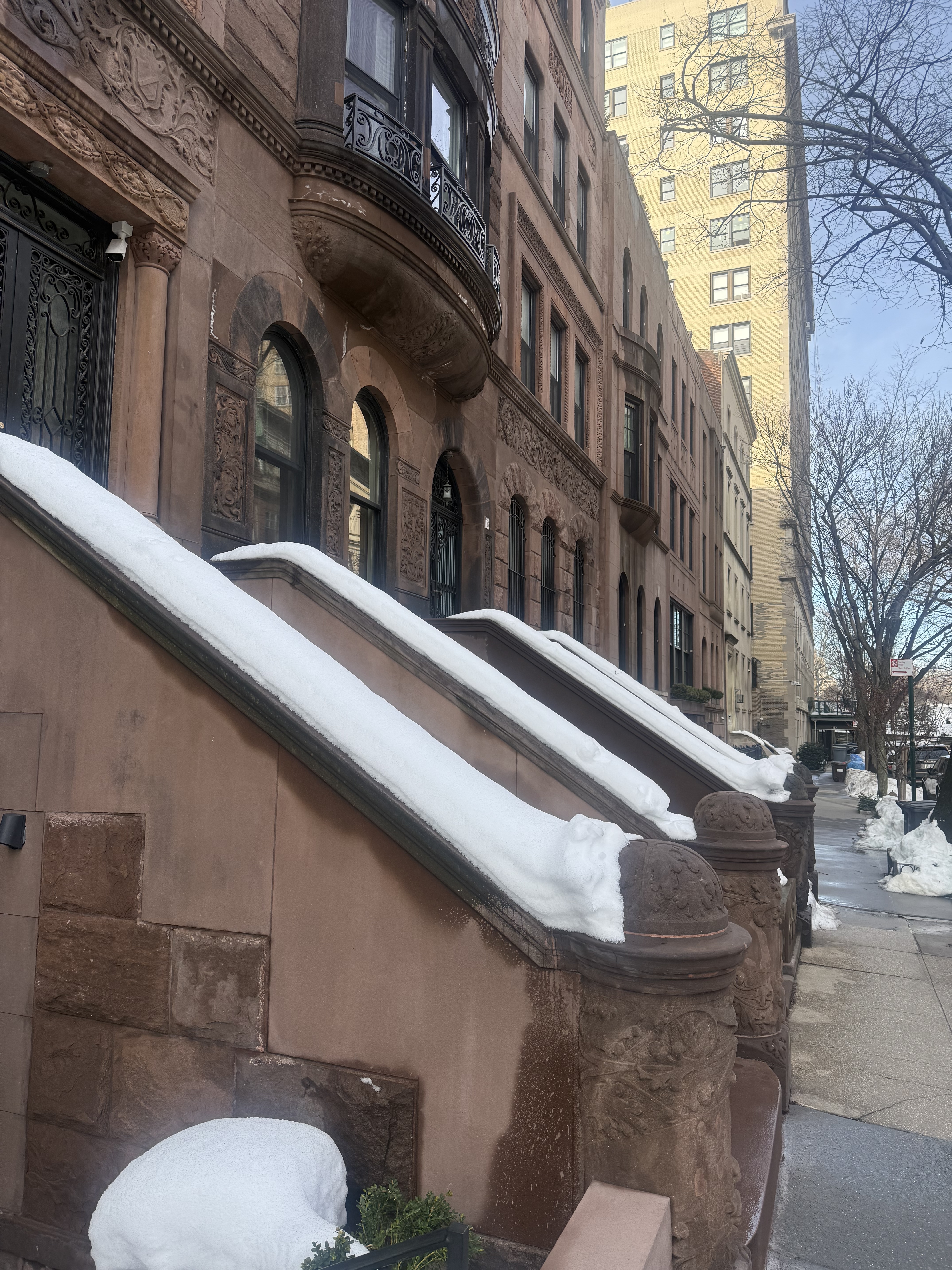
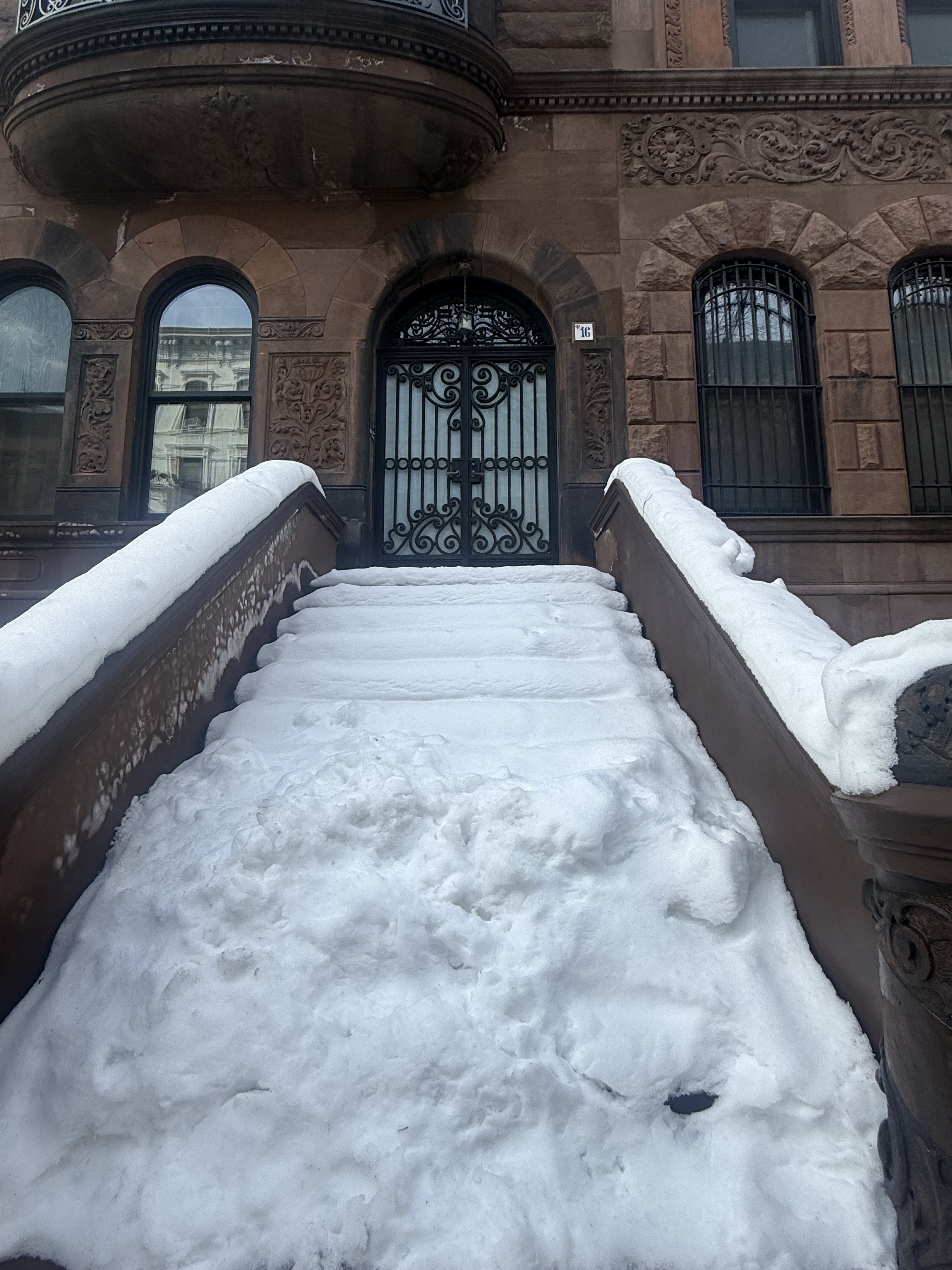
Three days after the snowstorm, there were still townhouses that had not cleared out their snow, and large drifts of snow remained.
Polar Bear Fest is an event that takes place on the Great Lawn in Central Park after every significant snow fall. Subtitled, “Don’t let the earth melt,” this is a creative demonstration, meant to remind us of the dangers of greenhouse gases and climate change. Just noticing that eight of the top ten snowfall amounts in New York City have occurred since 1996, in just the past 30 years, is alarming. In the midst of all the beauty that New York City has to offer when covered in white, the polar bears on the Great Lawn remind us of the fragility of our environment, hopefully rekindling our desire to help make meaningful change for the benefit of our beloved Mother Earth.
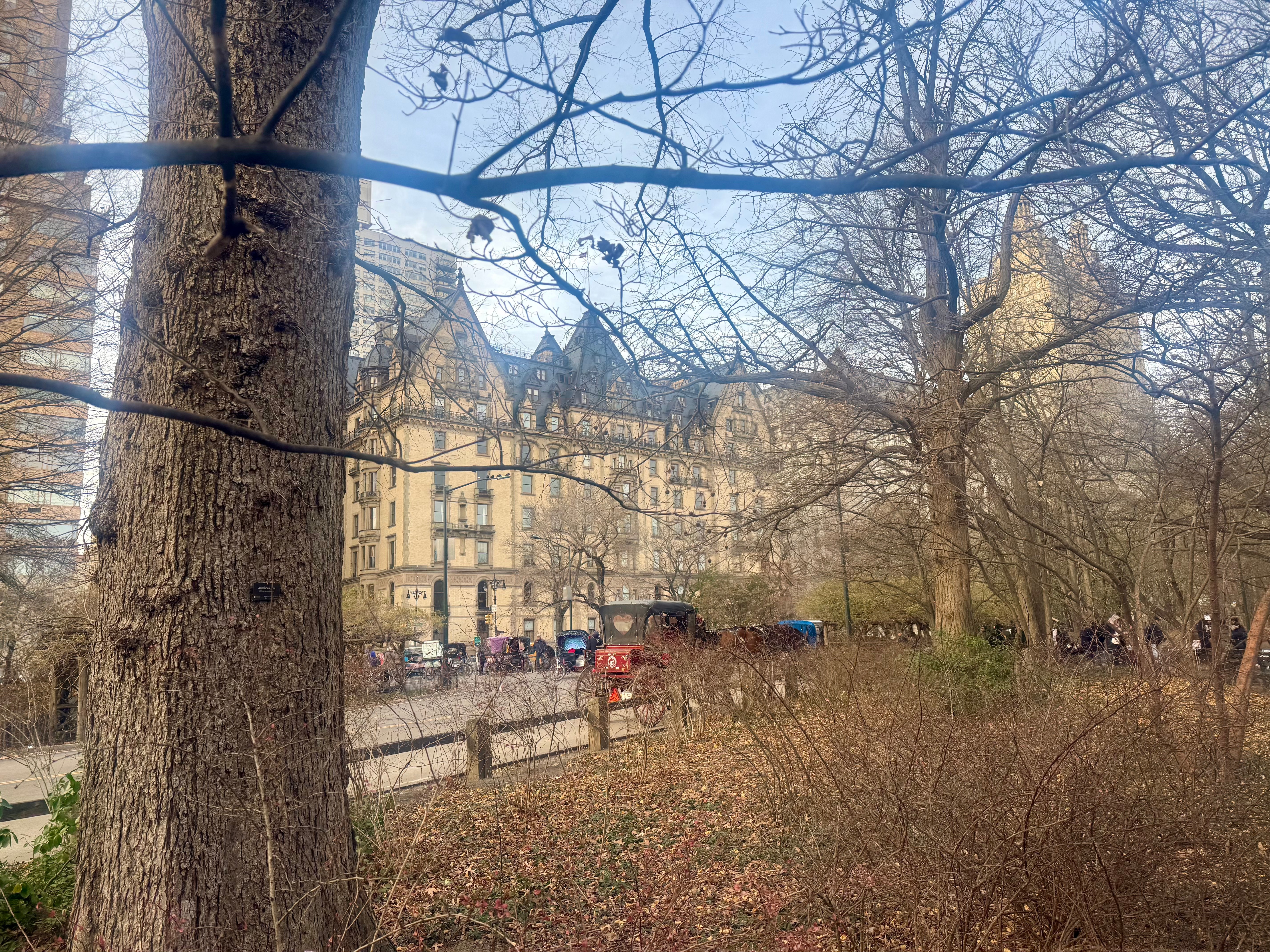
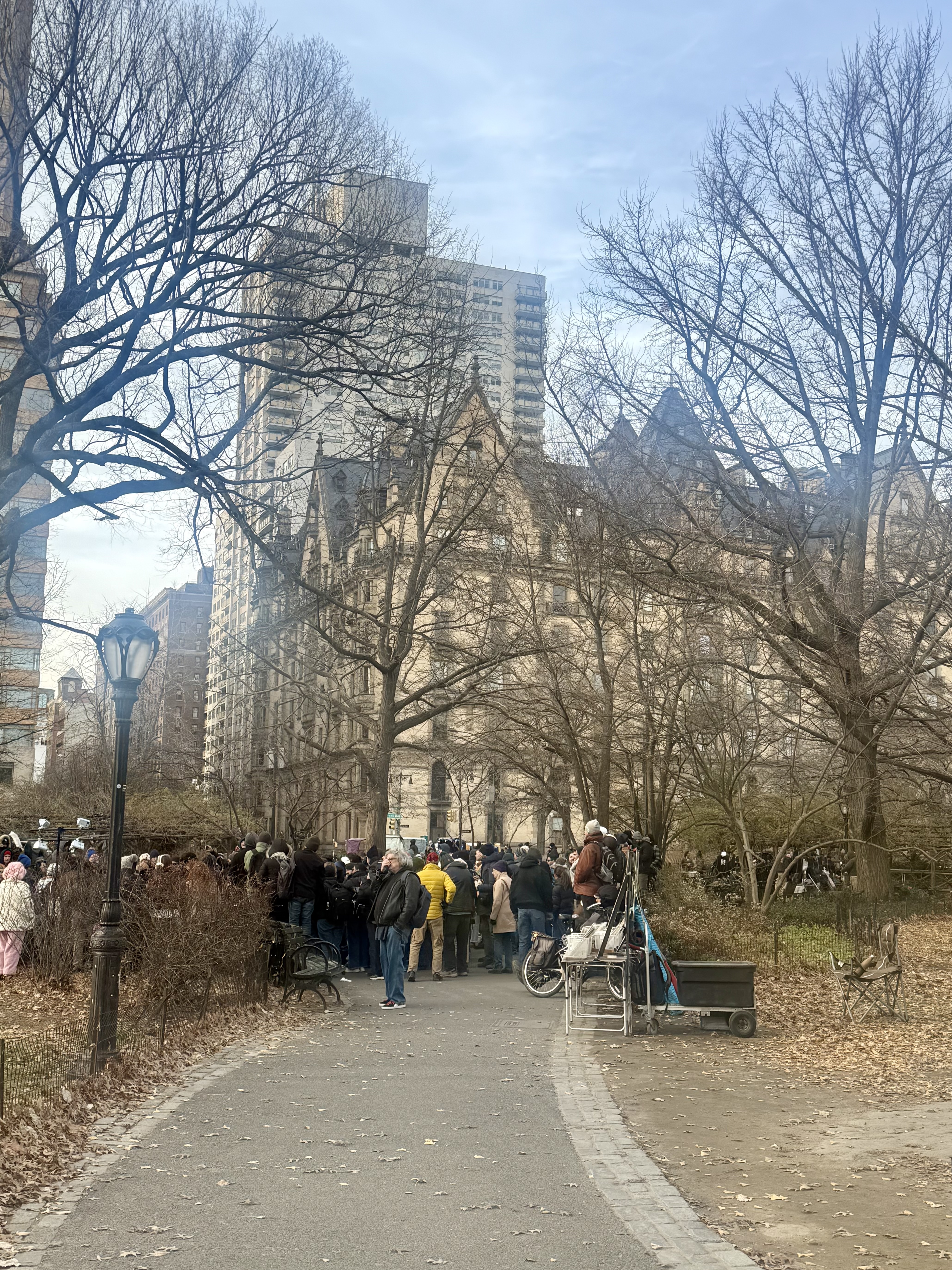
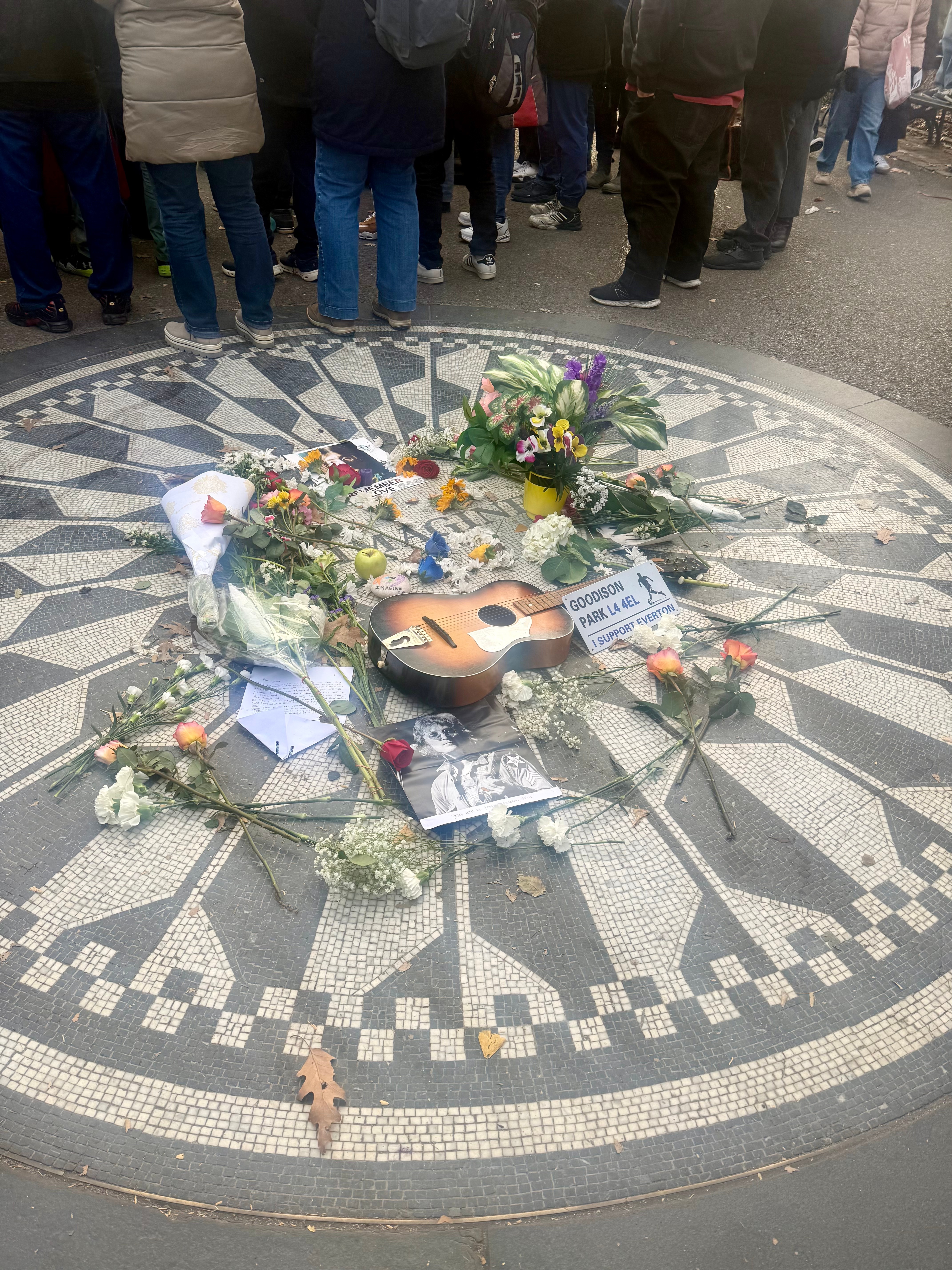
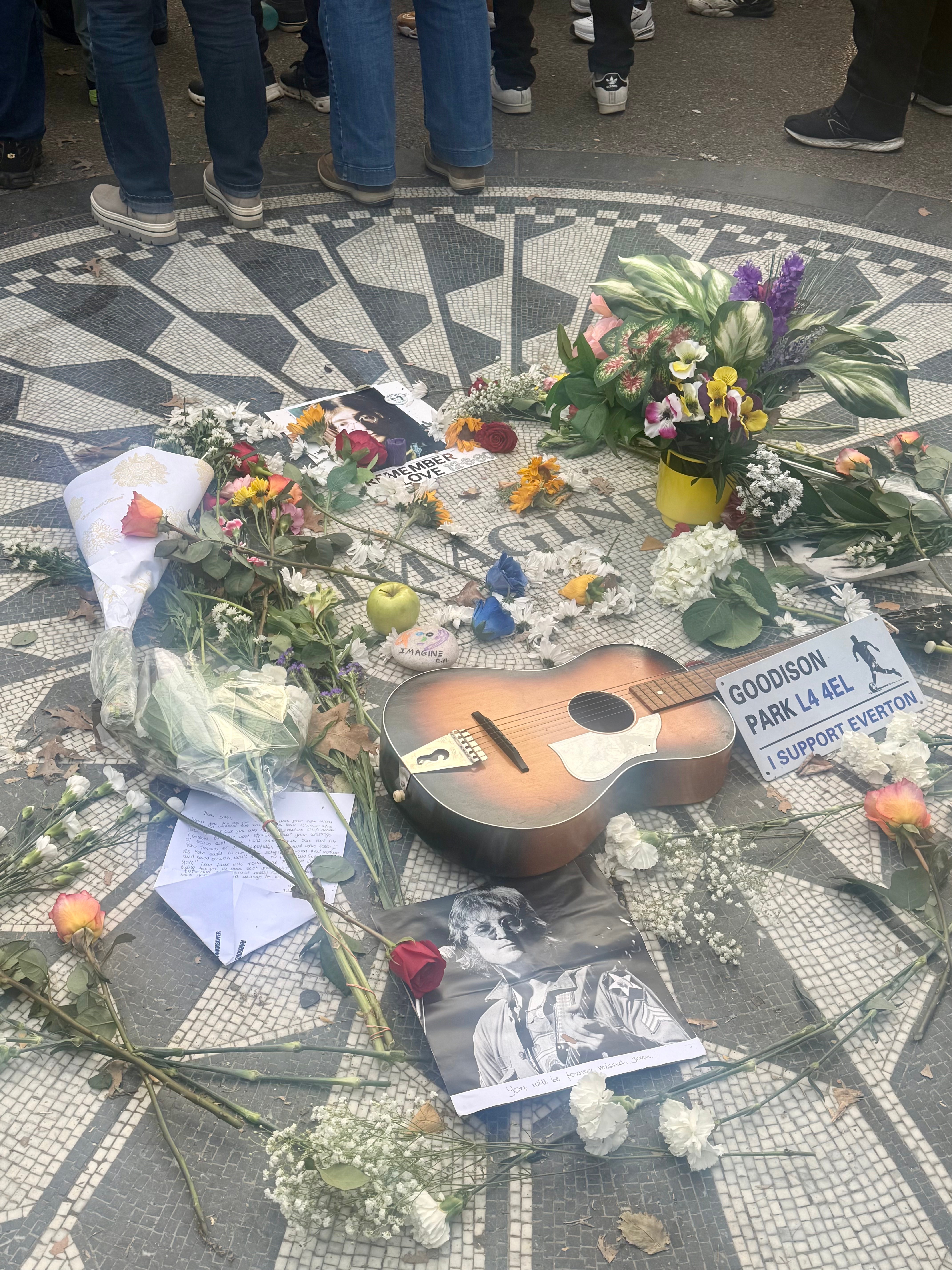
When John Lennon and Yoko Ono moved from Greenwich Village to the Dakota apartment building on West 72nd Street and Central Park South in 1973, the area of Central Park directly across from their apartment because a beloved “front yard.” New Yorkers were charmed to find them strolling through the park regularly. On the night of December 8, 1980, when Lennon was shot to death when coming home to the Dakota, grief-stricken fans gathered just inside the park at West 72nd Street, singing, holding candles, and leaving flowers.
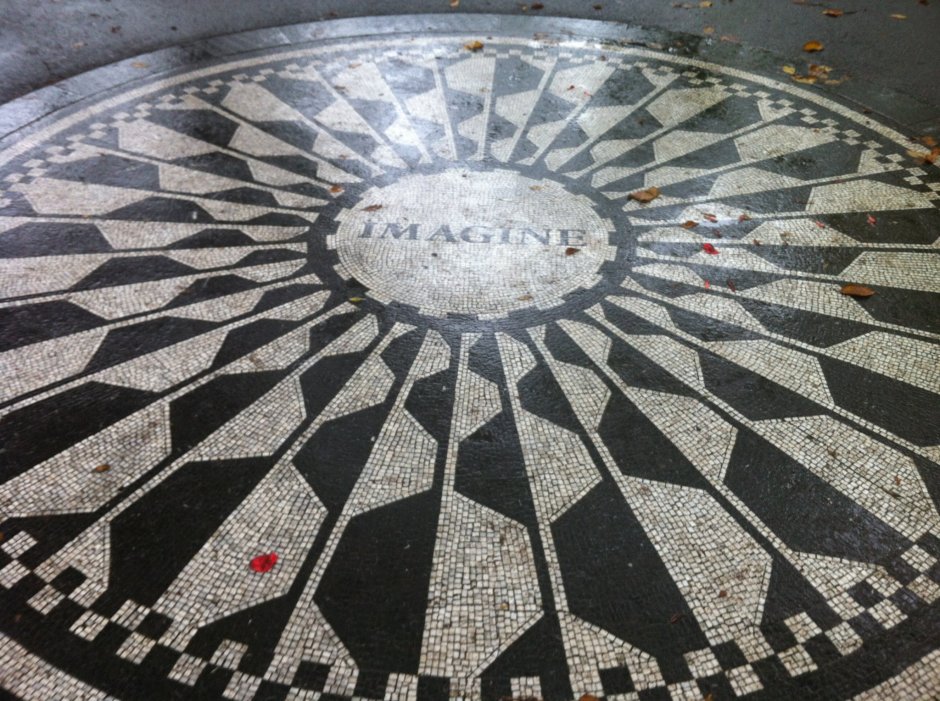
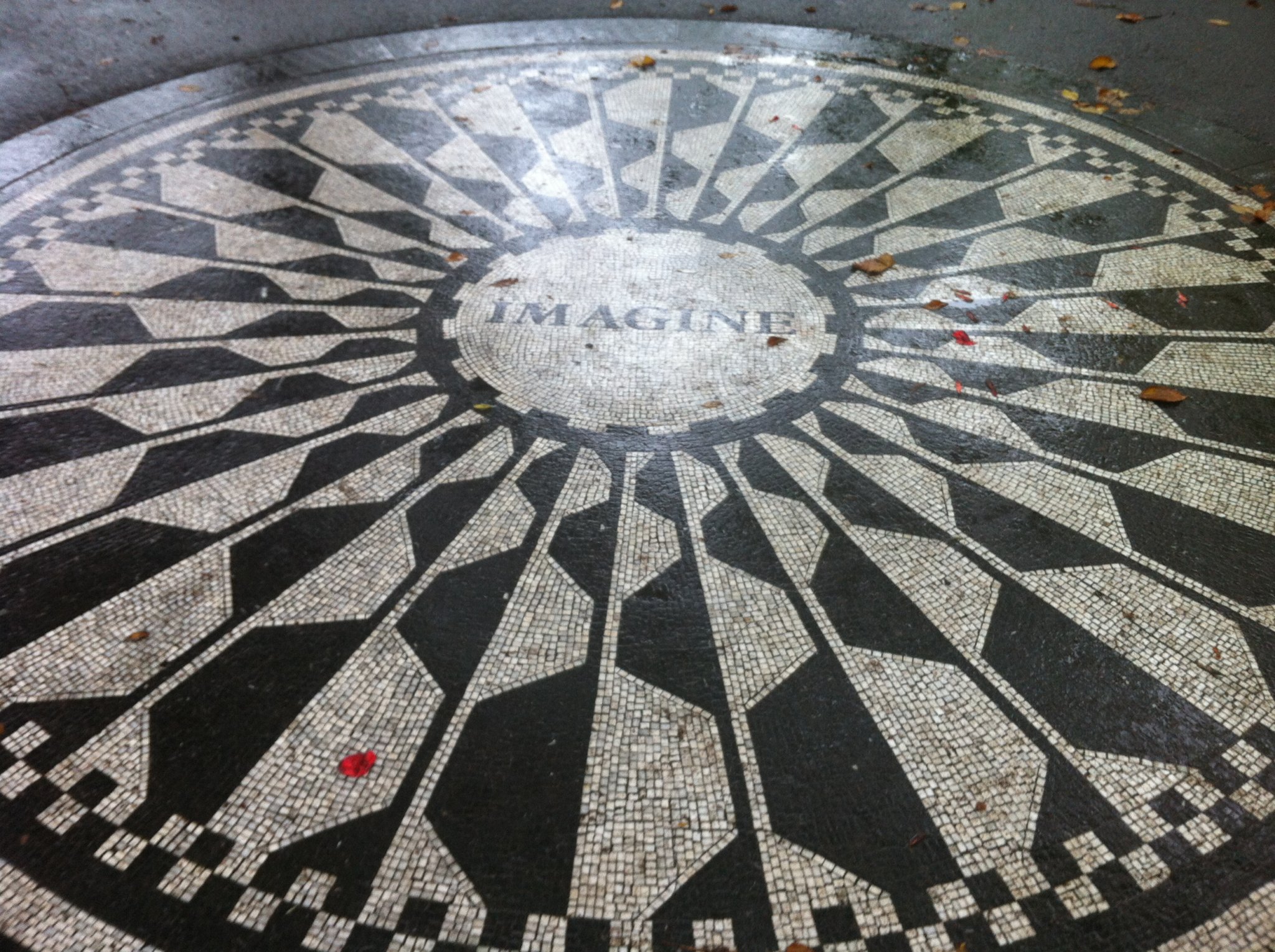
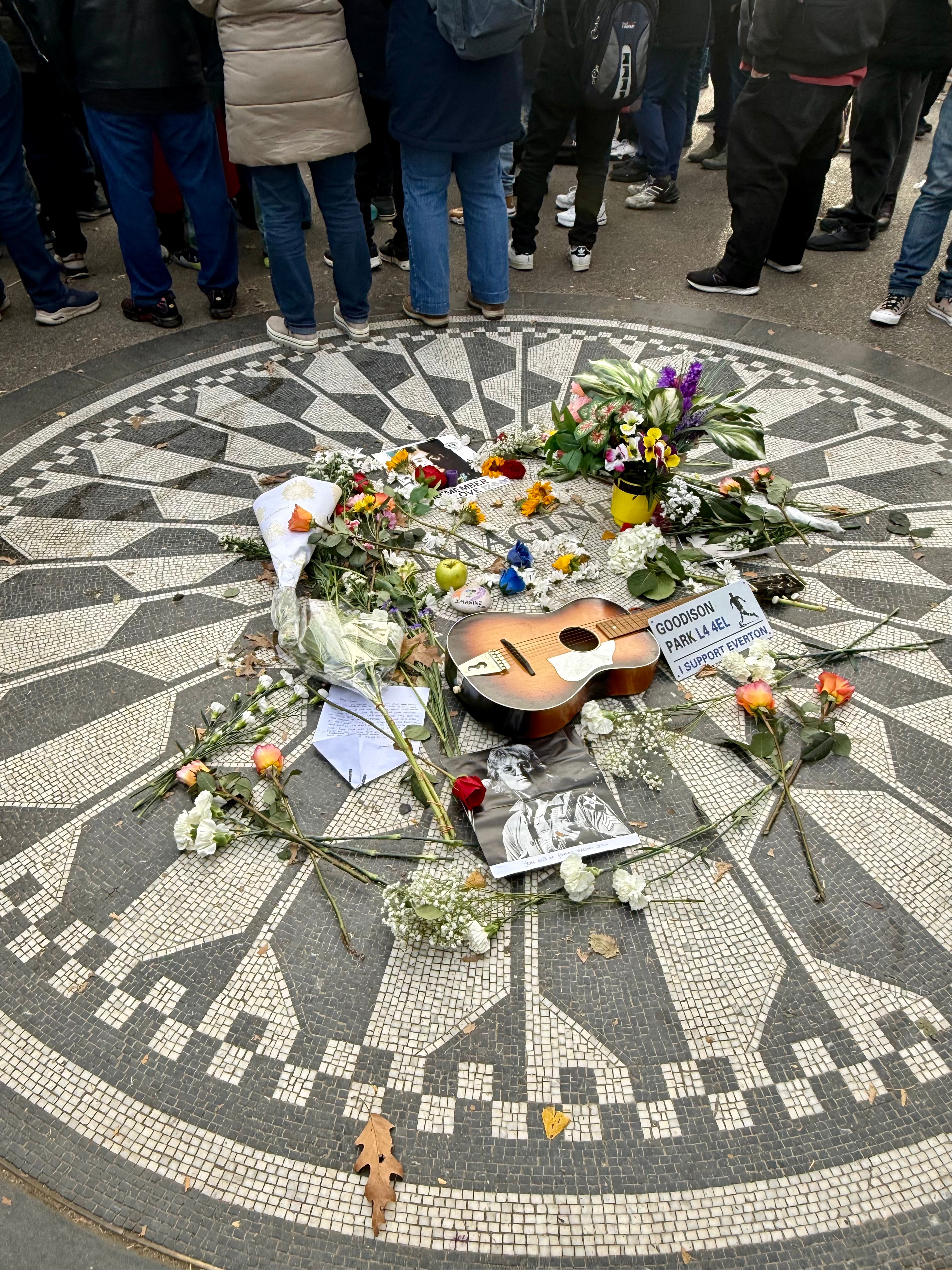
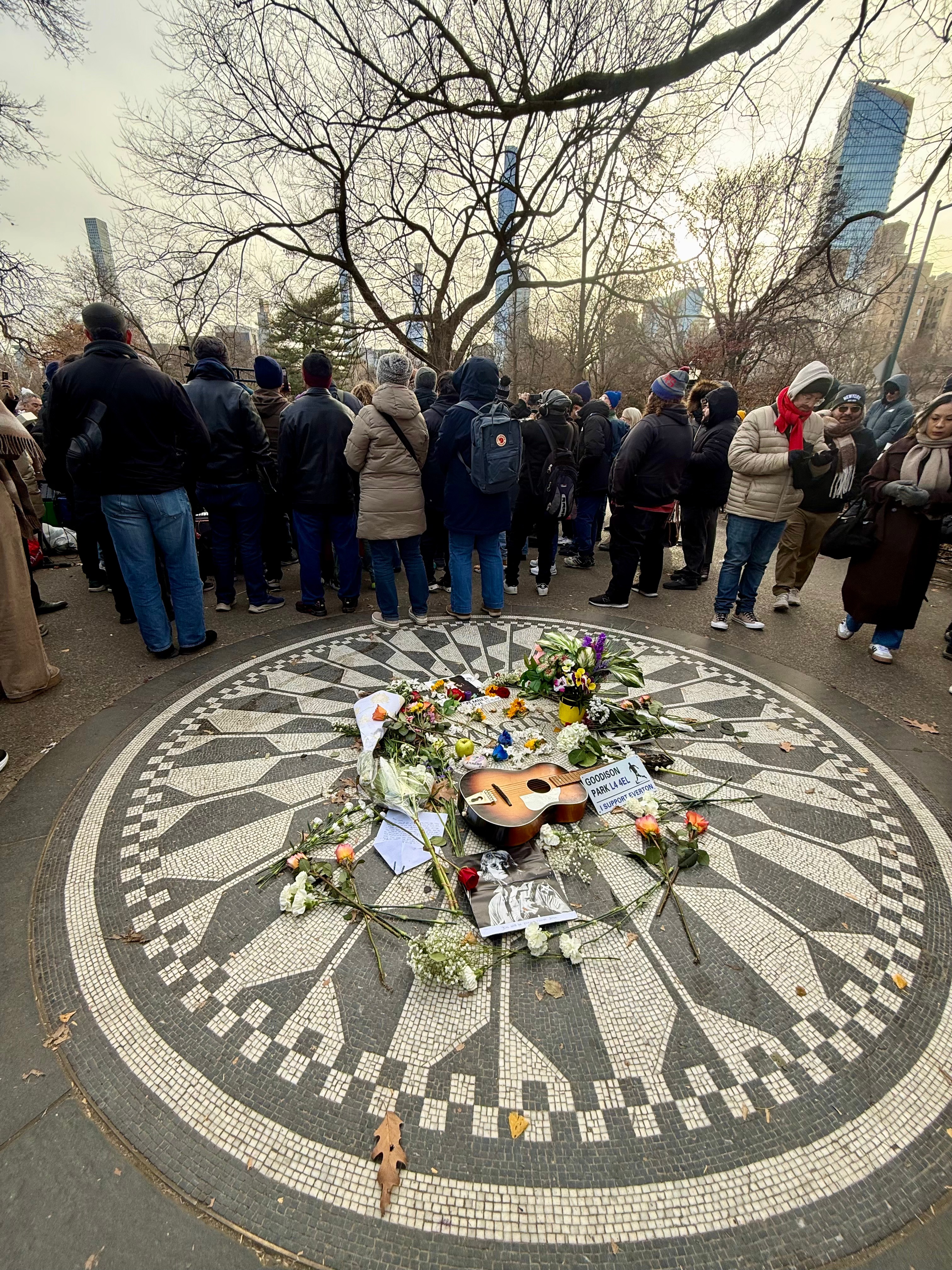
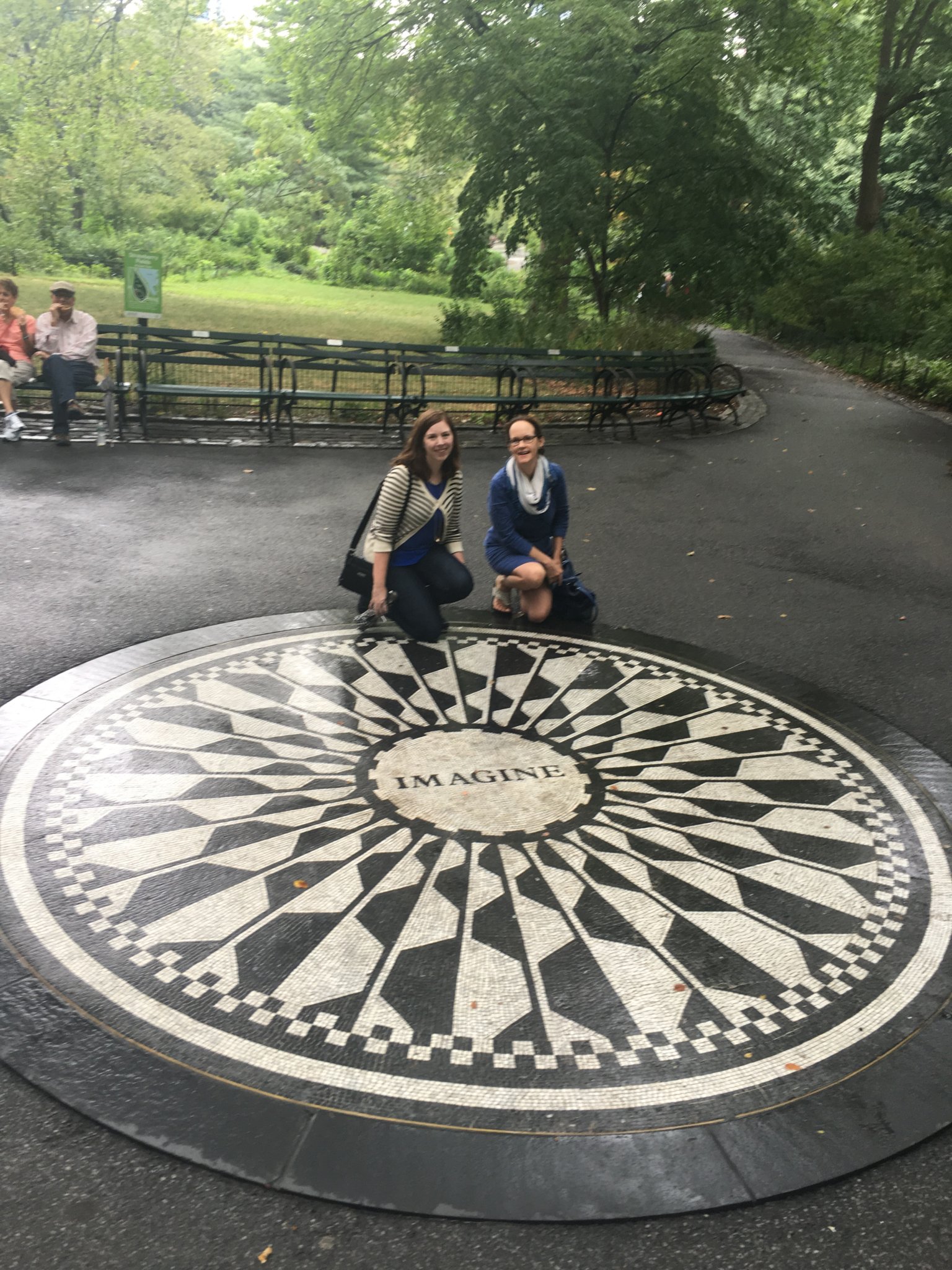
Plans for a memorial to John Lennon in Central Park began shortly after his death, and his widow worked with the city to create what she hoped would be an international garden of peace. First New York City resolved to rename this area of the park Strawberry Fields, after Lennon’s 1967 song with The Beatles, “Strawberry Fields Forever.” The design of the area served as a redevelopment of what had become a run-down part of the park, and includes several meadows and a winding path that leads through a wooded area. Countries all over the world contributed to the development of Strawberry Fields, and a plaque on a large rock just off the path shows gratitude for those donations. A central mosaic with the simple word “Imagine” – a tribute to Lennon’s beloved solo recording – was created in and donated by the city of Naples, Italy. This iconic mosaic is surrounded by benches and soon began to regularly attract groups of people to sing Lennon’s music and play guitars.
Strawberry Fields was officially dedicated on what would have been John Lennon’s 45th birthday – October 9, 1985. Since then, on anniversaries of his birth, and perhaps particularly on each anniversary of his death, large crowds gather to sing and show their love and respect.
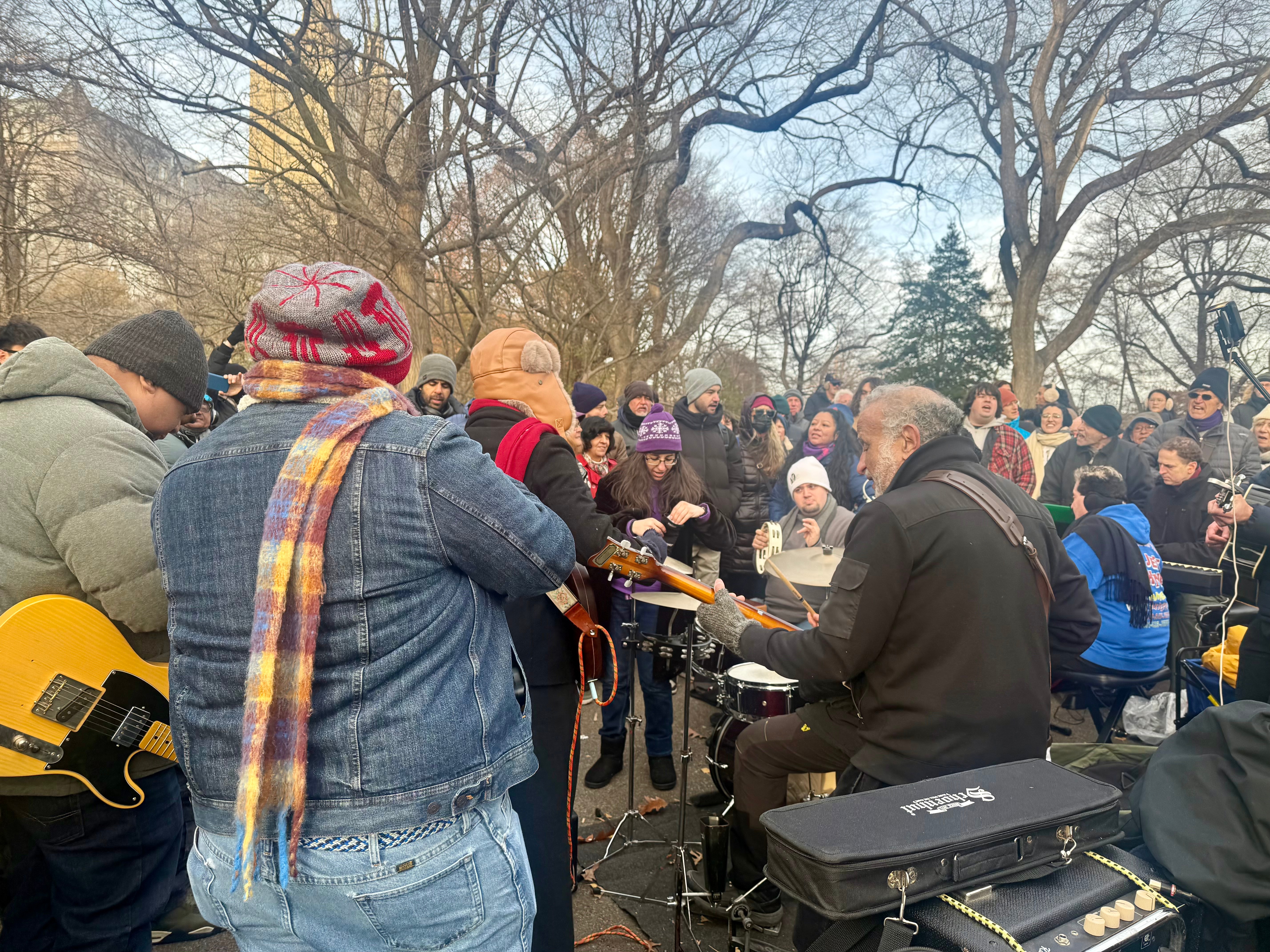
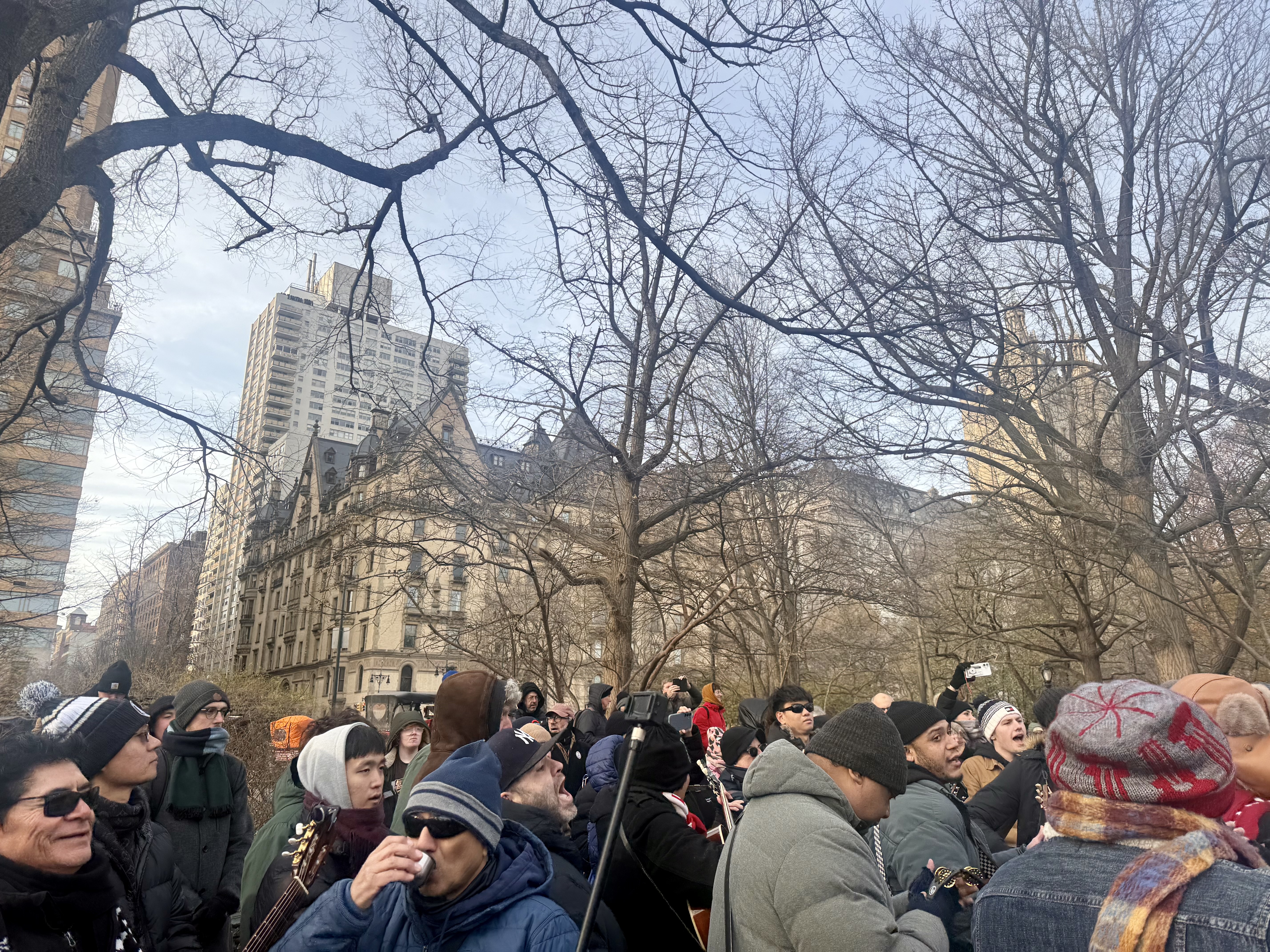
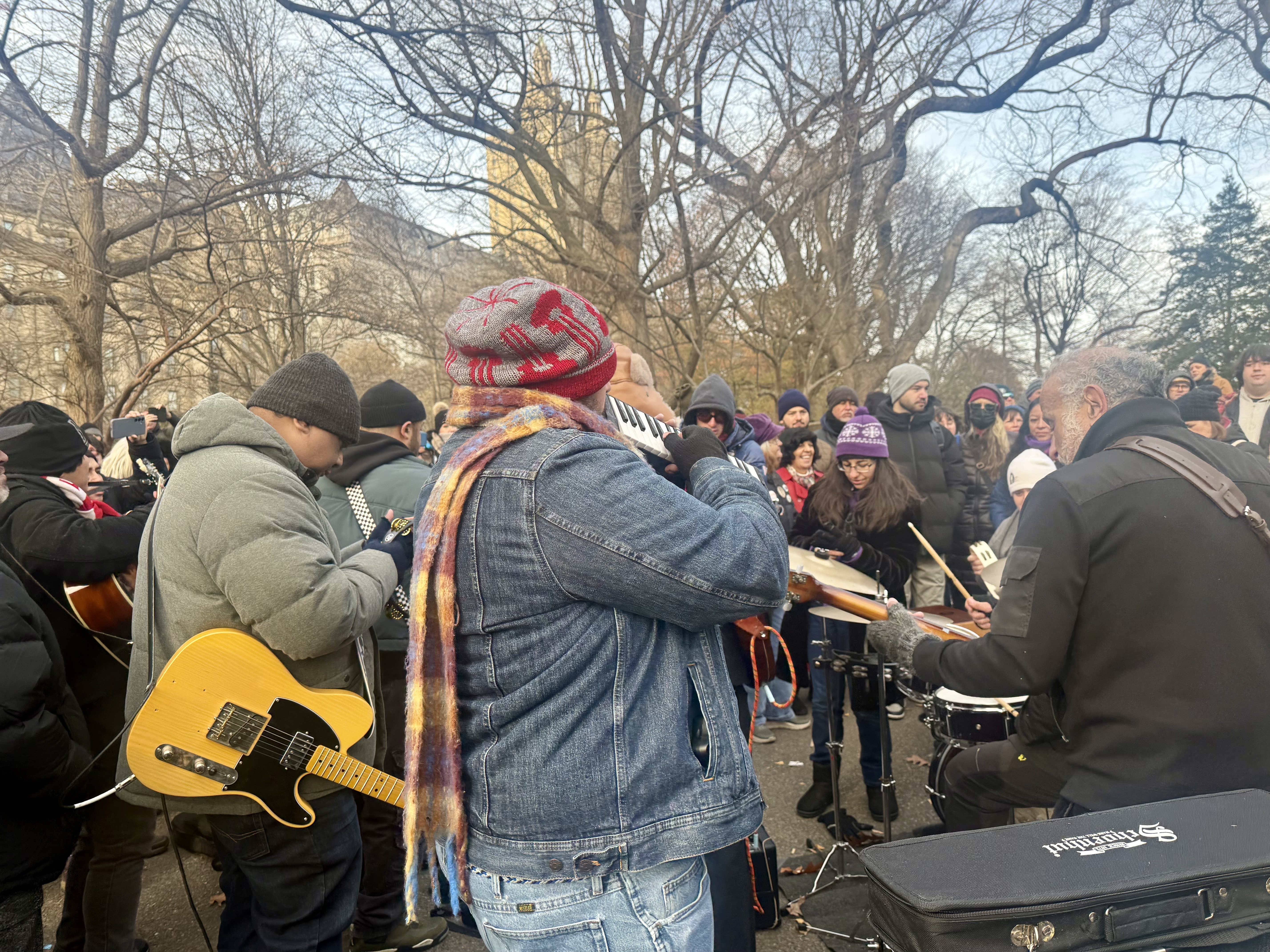
On December 8, 2025, I went by in the afternoon and found a large crowd gathered. There were more instrumentalists than the typical single acoustic guitar, and included amps, a keyboard, and drums. As I walked over, everyone was singing “If I Fell” (you can see a video of what it was like to walk up to the crowd HERE). It was a very cold day, but I stayed for many, many songs and regretted leaving when I had to. Perhaps a highlight was “We can work it out” (see a video I took of the song HERE). This song is one of the great examples of a true Lennon-McCartney collaboration, with the result being something much more than the sum of the two parts. Lennon’s weariness with the world’s constant struggles (“Life is very short/And there’s no time for fussing and fighting, my friend”) is a foil for McCartney’s sunnier optimism, constantly returning to the refrain “We can work it out.” In these troubled times, being in a group of strangers singing both to acknowledge the pain, and attempt to find hope, was a true balm to my soul.
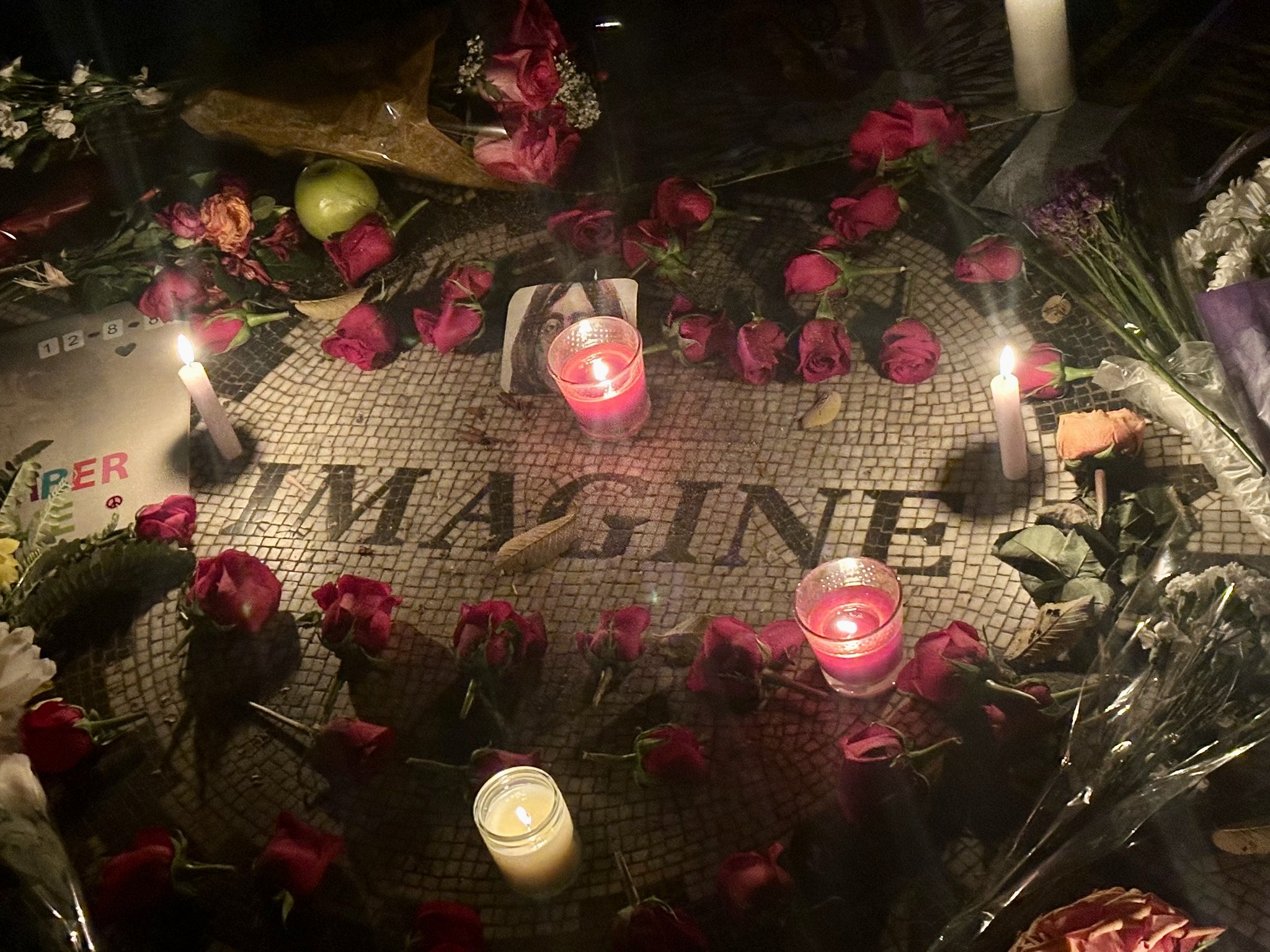
I was back later, and generally show up on the evening of December 8th to be a part of the crowd. The singing continued well into the night, with candles added to the tributes on the Imagine mosaic, and people waving their phone flashlights in time to the beat, today’s version of holding up a lighter.
When it snows in Central Park, I am always impressed with how passersby keep the mosaic cleared and visible. Before too long, someone generally comes back to sing (see a recent video of someone singing “Girl” after a snowfall HERE). Quite often on any particular day, people will leave flowers, notes, or photographs at the memorial. I consider myself fortunate to live fairly nearby, and to walk through the park often. If I am able, I generally do try to walk through Strawberry Fields and feel my spirit lift just a bit. When people come to visit me, we often head to Strawberry Fields as part of a walk around my favorite spots in Central Park. There’s no denying the tragedy that occurred on December 8, 1980 – for his family and friends primarily, but also for the world. We will never know what he might have accomplished had he been given more time. But John Lennon’s spirit and desire to foster peace lives on through Strawberry Fields, a very special place for us to gather and remember – “You might say I’m a dreamer/But I’m not the only one.”
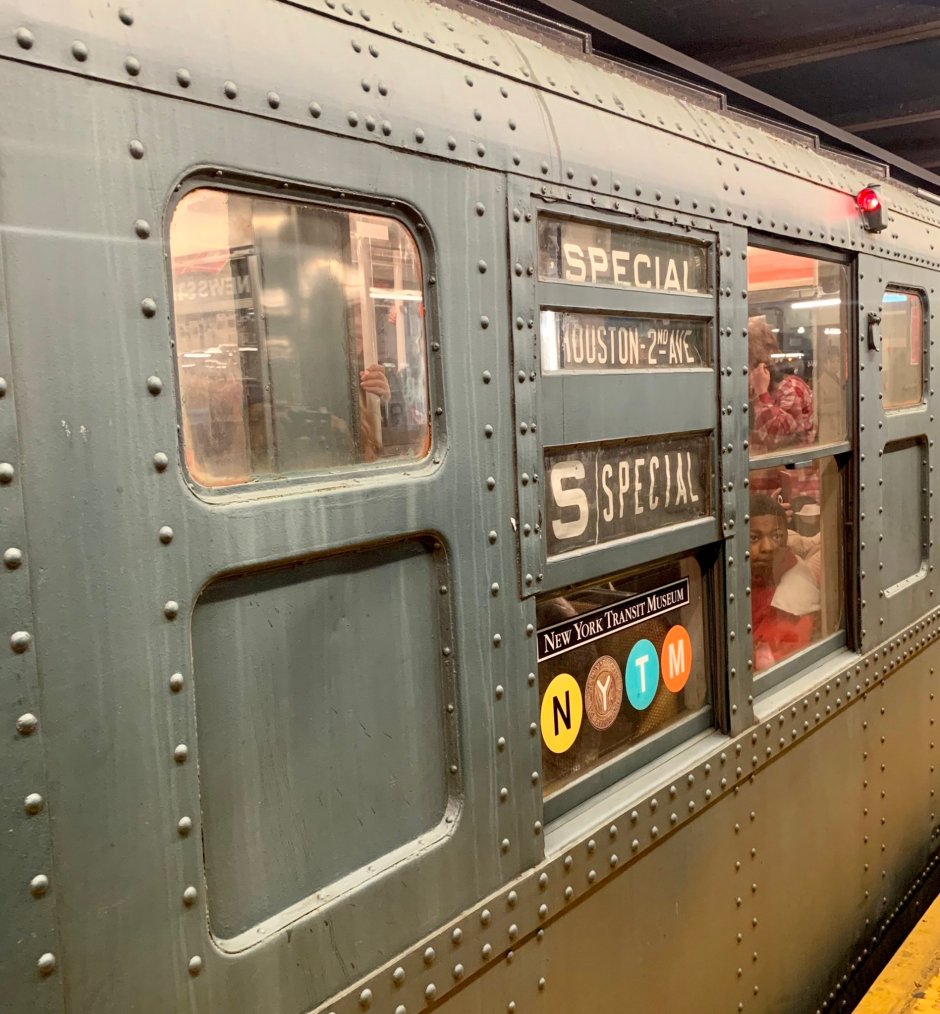
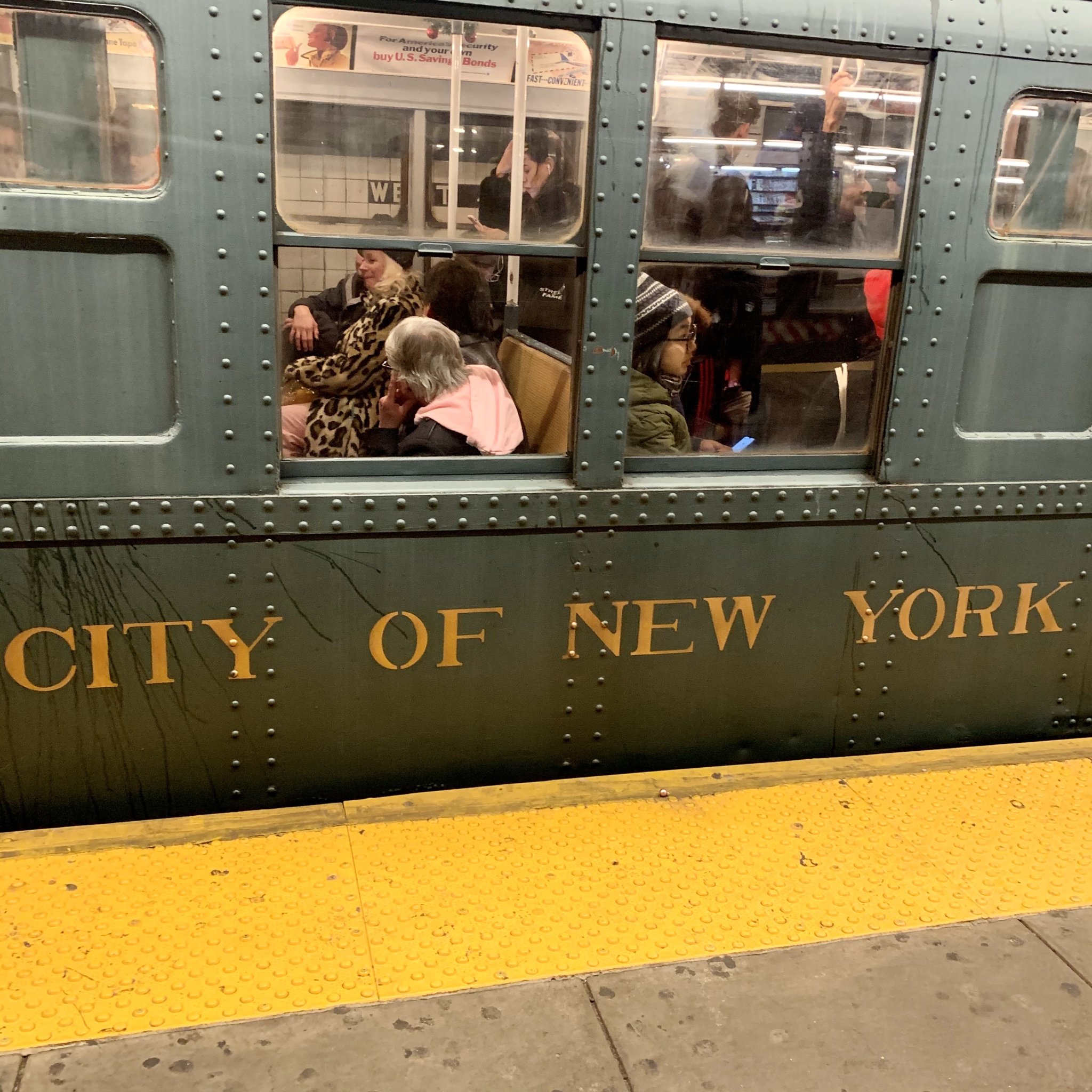
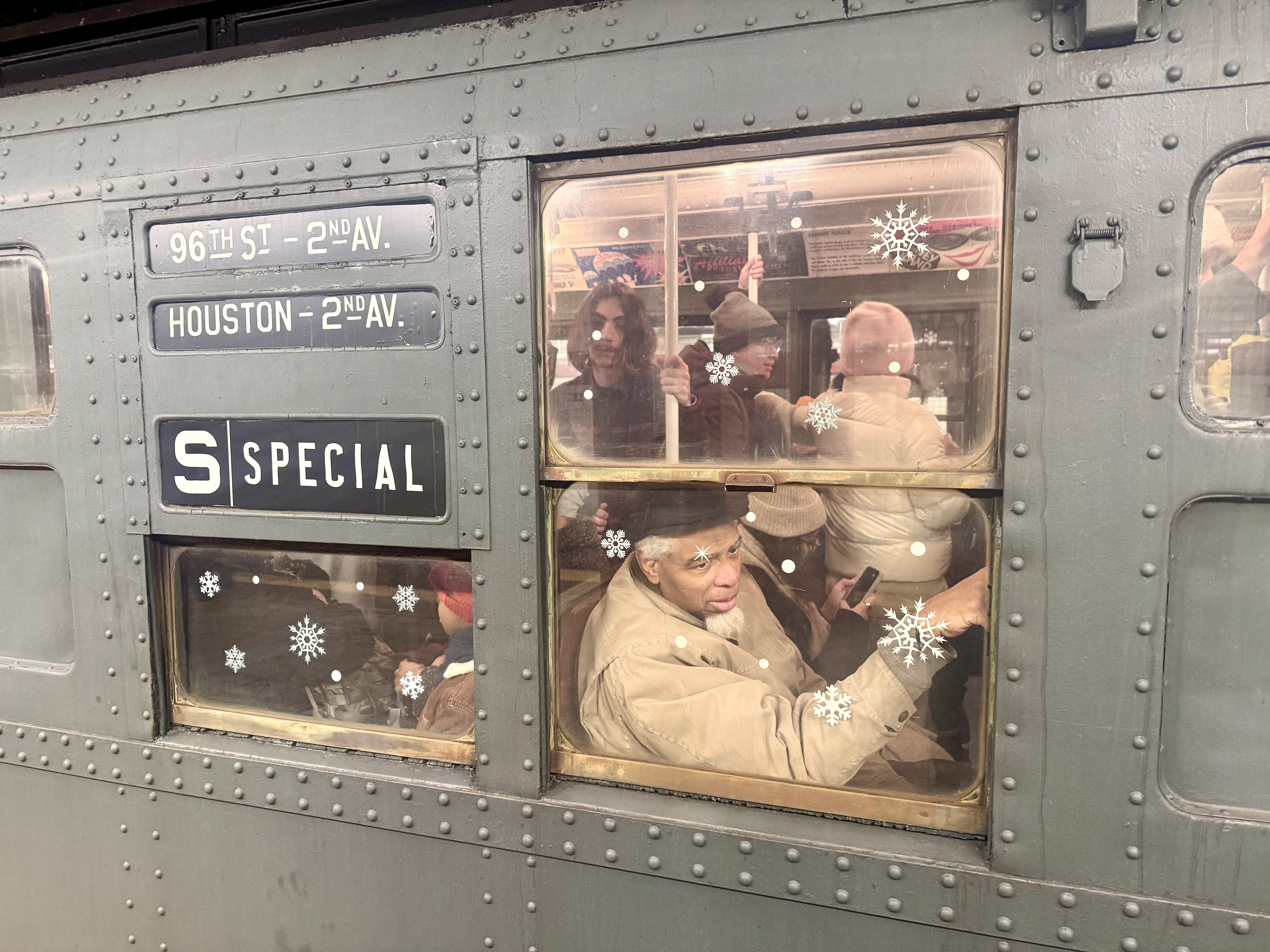
In December, there are so many wonderful things to do in New York City that it’s impossible to work them all in every year. But a special December event that can be enjoyed while you get to another of the festive displays or activities in the city, is the running of the holiday nostalgia trains by the MTA. The New York Transit Museum in collaboration with the MTA, runs Art Deco 1930’s subway trains on Sundays in December, and this is definitely the most delightful way to travel around the city! Eight subway cars from the 1930’s are brought back into service on a limited basis, and were considered state-of-the-art in their day.
These are the very trains said to have inspired Billy Strayhorn’s classic “Take the A Train.”
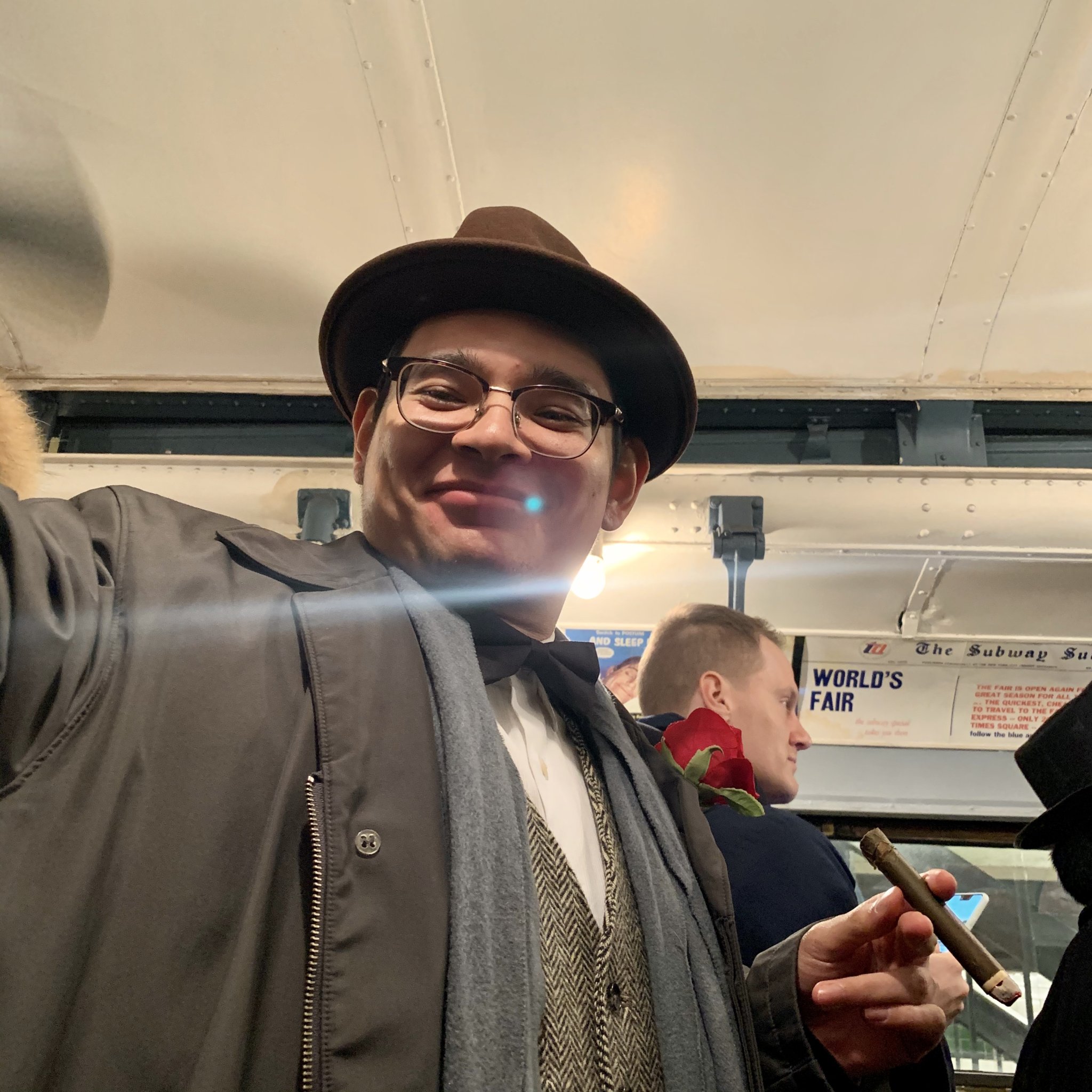
One of the fun aspects of this is that some people actually dress in period clothing to ride the trains!
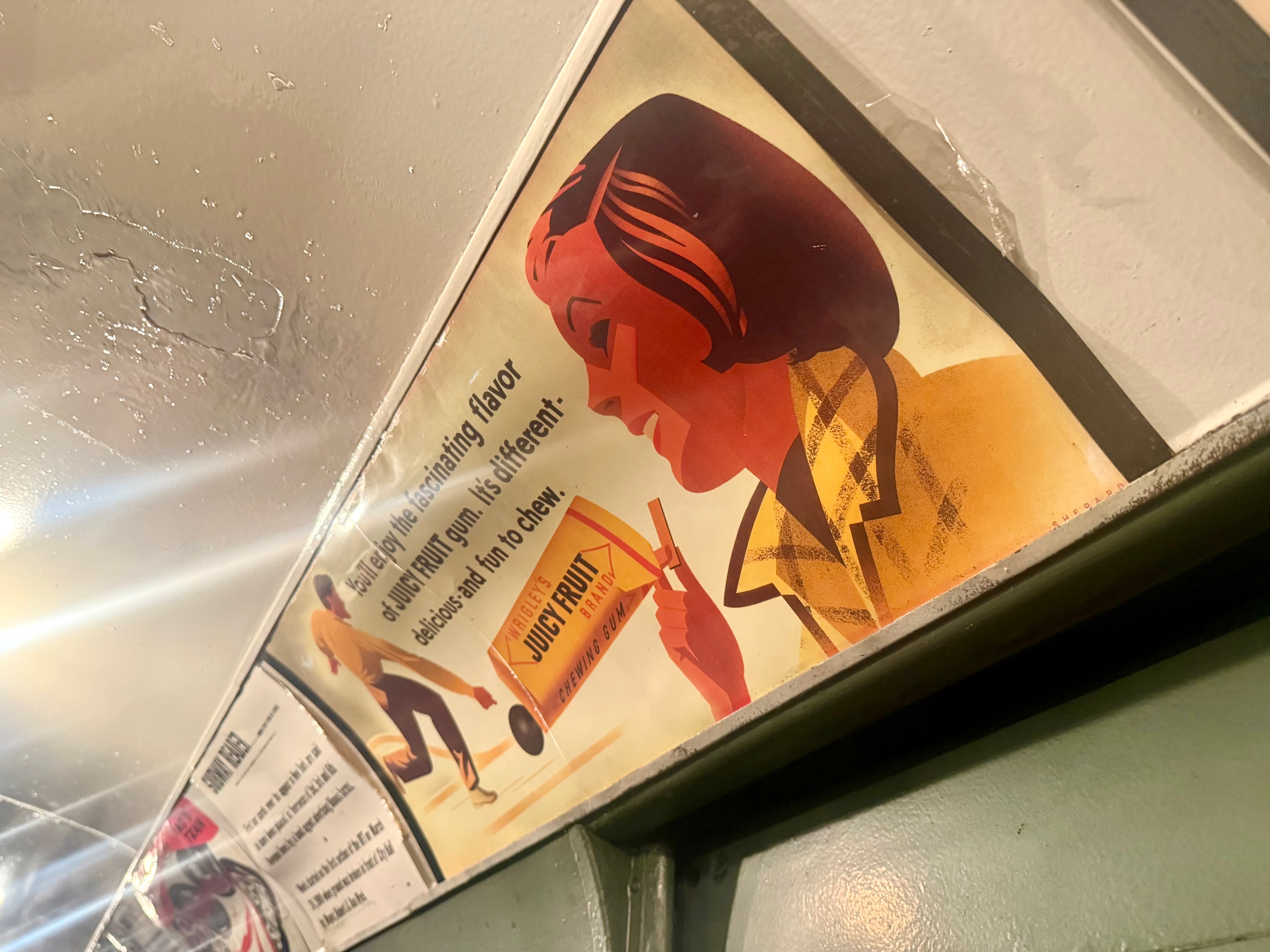
The vintage signs are fun to see as well – and apparently subway crime has existed for quite a long time!
Here are the details for this year (2025). For future years, check the New York Transit Museum’s website.
The rides run every Sunday in December from 10am to 5pm,
The train depart from 2 Av–Houston St on the uptown F line and 96 St–2 Av on the Q line.
The rides can be accessed via a standard Subway fare using either OMNY or Metrocard
For stops between 2 Av–Houston St and Lexington Av–63 St, board on the F line platform.
For stops between Lexington Av–63 St and 96 St–2 Av, board on the Q line platform.
Accessible stations along the route include: Broadway–Lafayette St (D, 6), West 4 St–Washington Sq (A/C/E, D/F), 34 St–Herald Sq (D/F, N/Q/R) , 47–50 St–Rockefeller Center (D/F), Lexington Av–63 St (F, Q), 72 St–2 Av (Q), 86 St–2 Av (Q) and 96 St–2 Av (Q).
Here’s the schedule:
The train departs from 2 Av–Houston St on the uptown F line in lower Manhattan at 10am, 12pm, 2pm and 4pm.
The train departs from 96 St– 2 Av on the Q line at 11am, 1pm, 3pm and 5pm.
Other times of the year there may be other ticketed special events using nostalgia trains (for instance, trips to Green-Wood Cemetery in Brooklyn in October), but I highly recommend trying to experience the holiday trains in December for just the cost of a subway fare. This is the best time of the year in New York City, in my opinion, and if you plan it correctly even a subway ride can enhance the joy of the season.
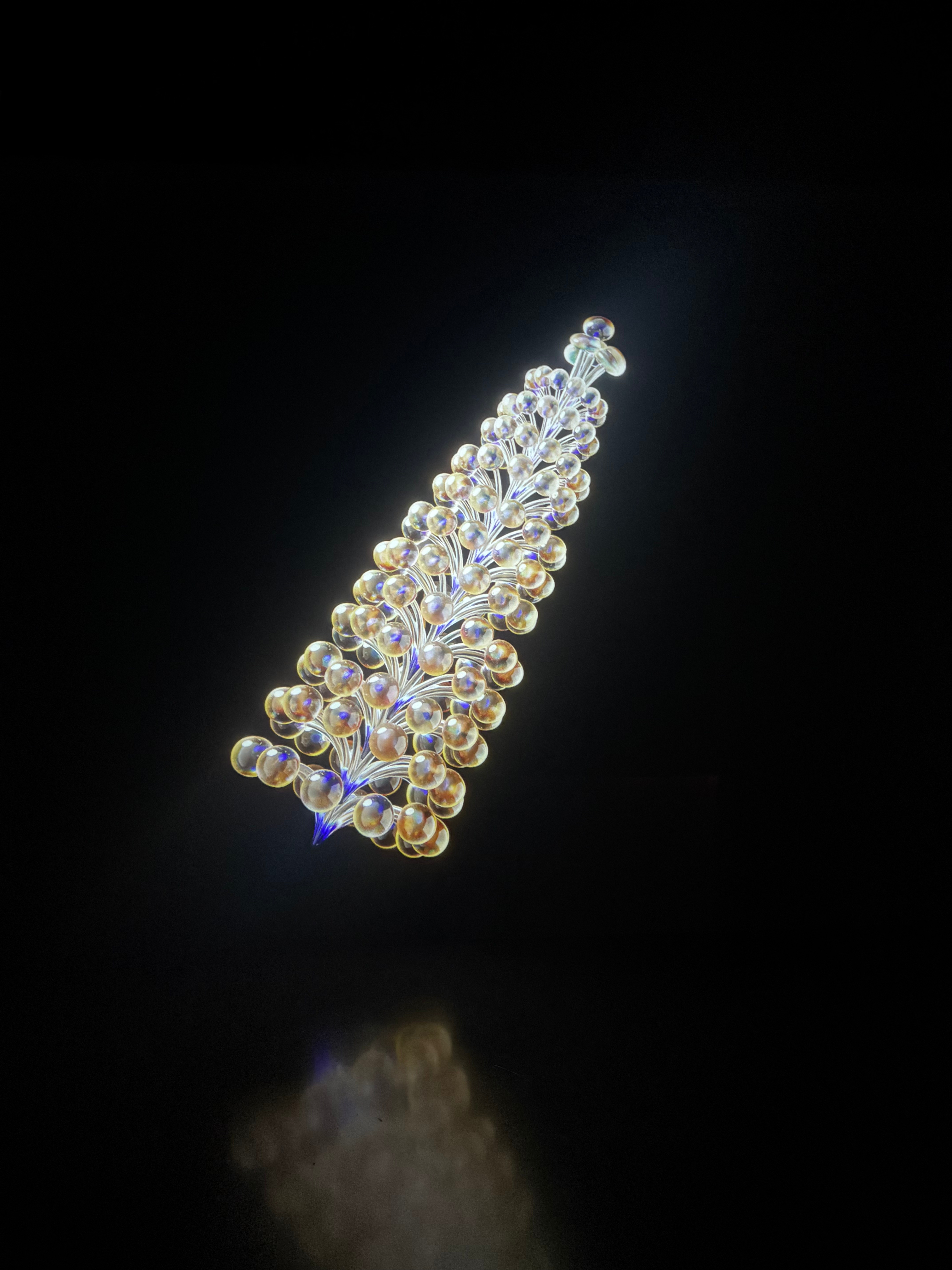
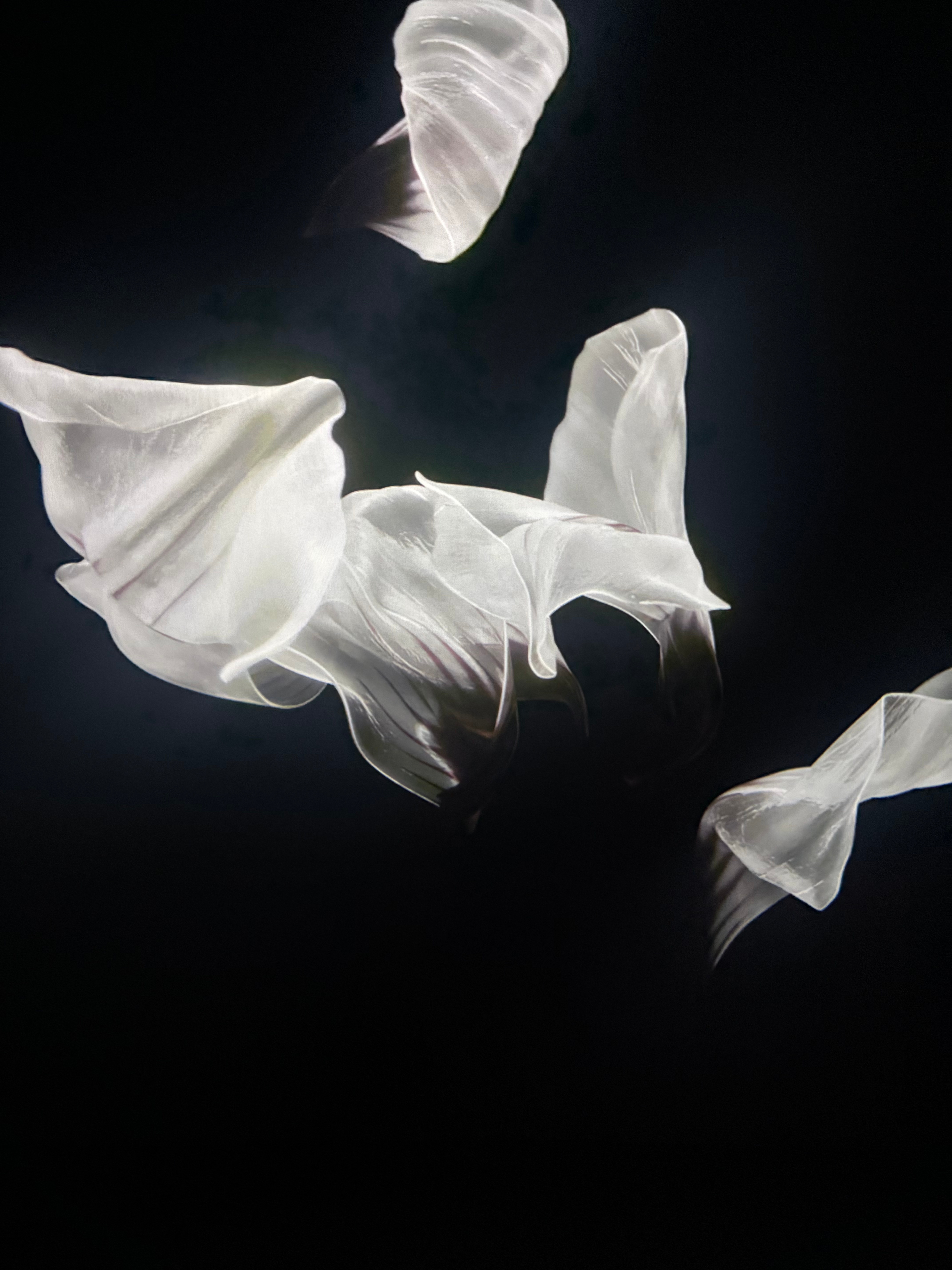
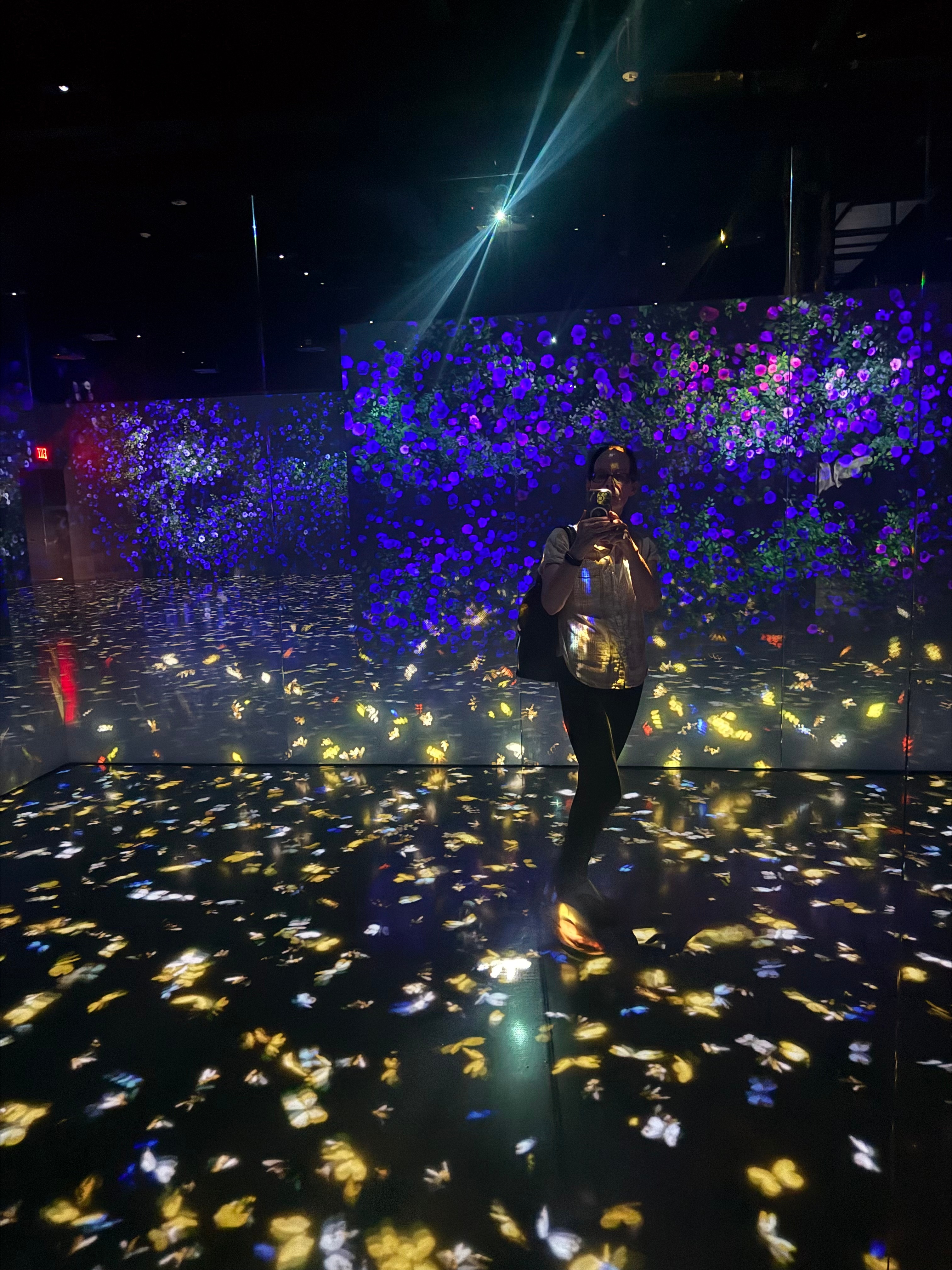
I recently wrote a blog post about immersive art exhibitions in New York City. In it, I mentioned that I was looking forward to an upcoming digital/experiential exhibit at Chelsea Piers, Arte Museum. It turns out that I enjoyed this one so much I think it deserves its own post! Needless to say, it exceeded expectations. Here’s what I experienced . . .
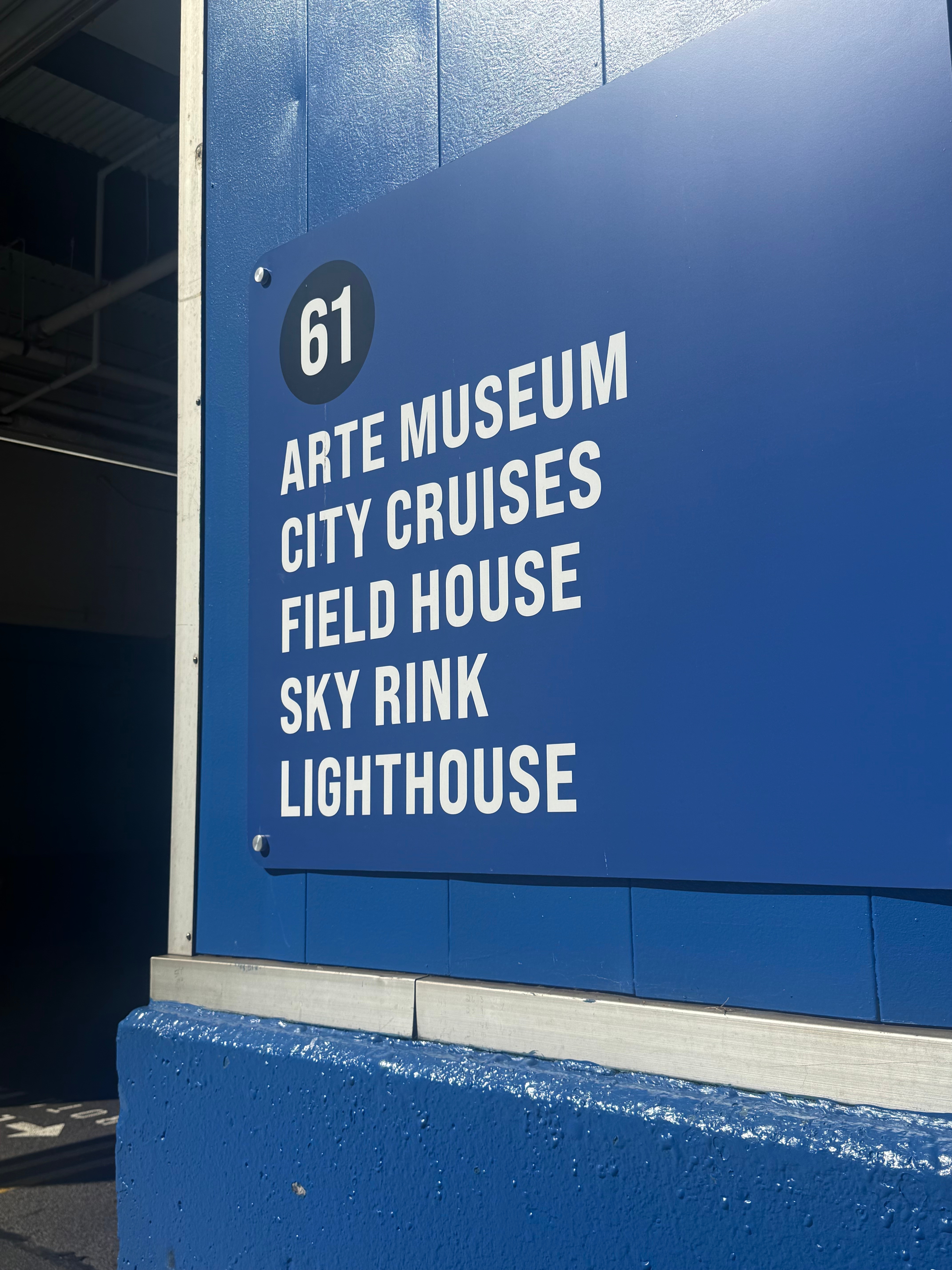
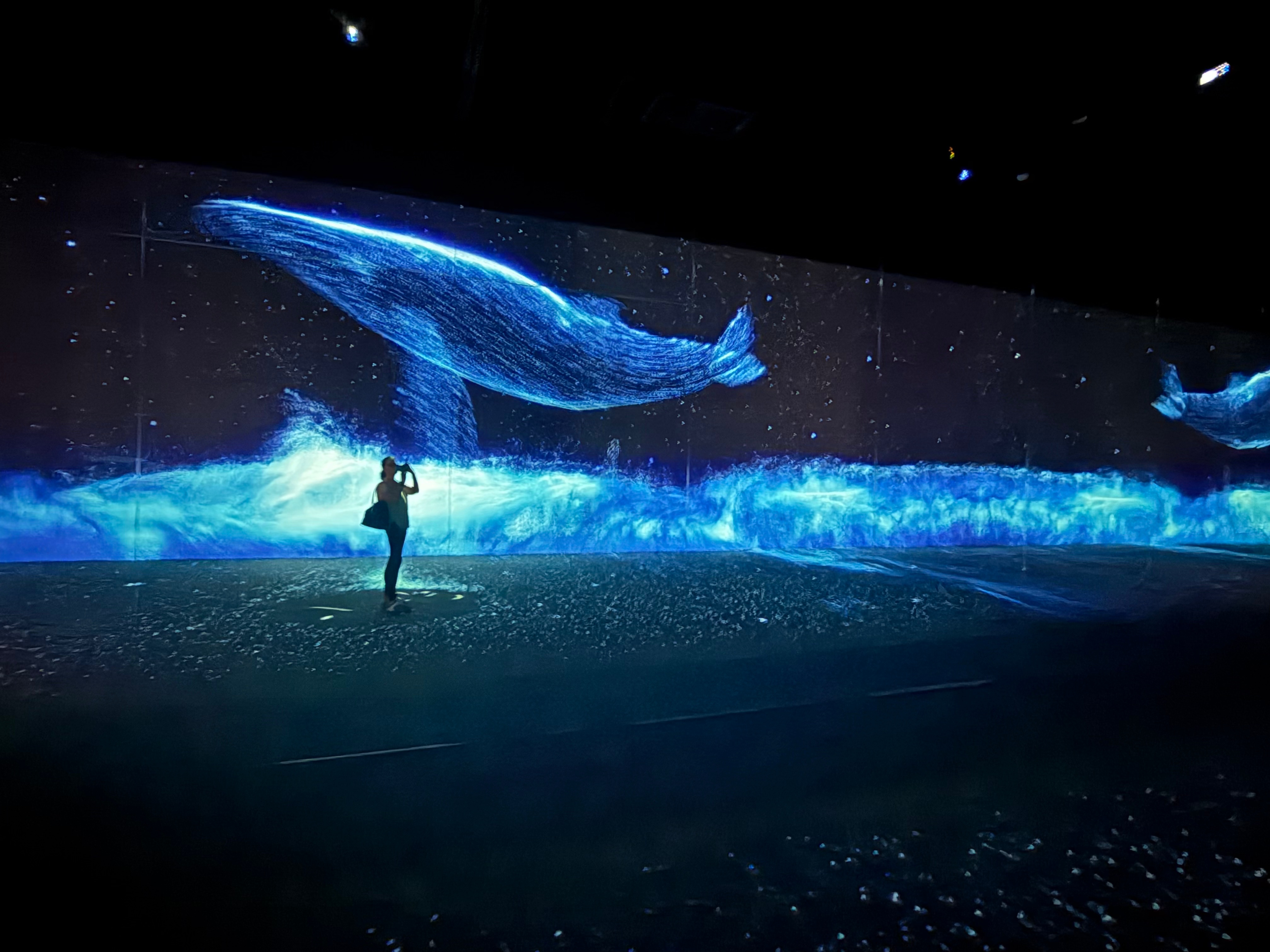
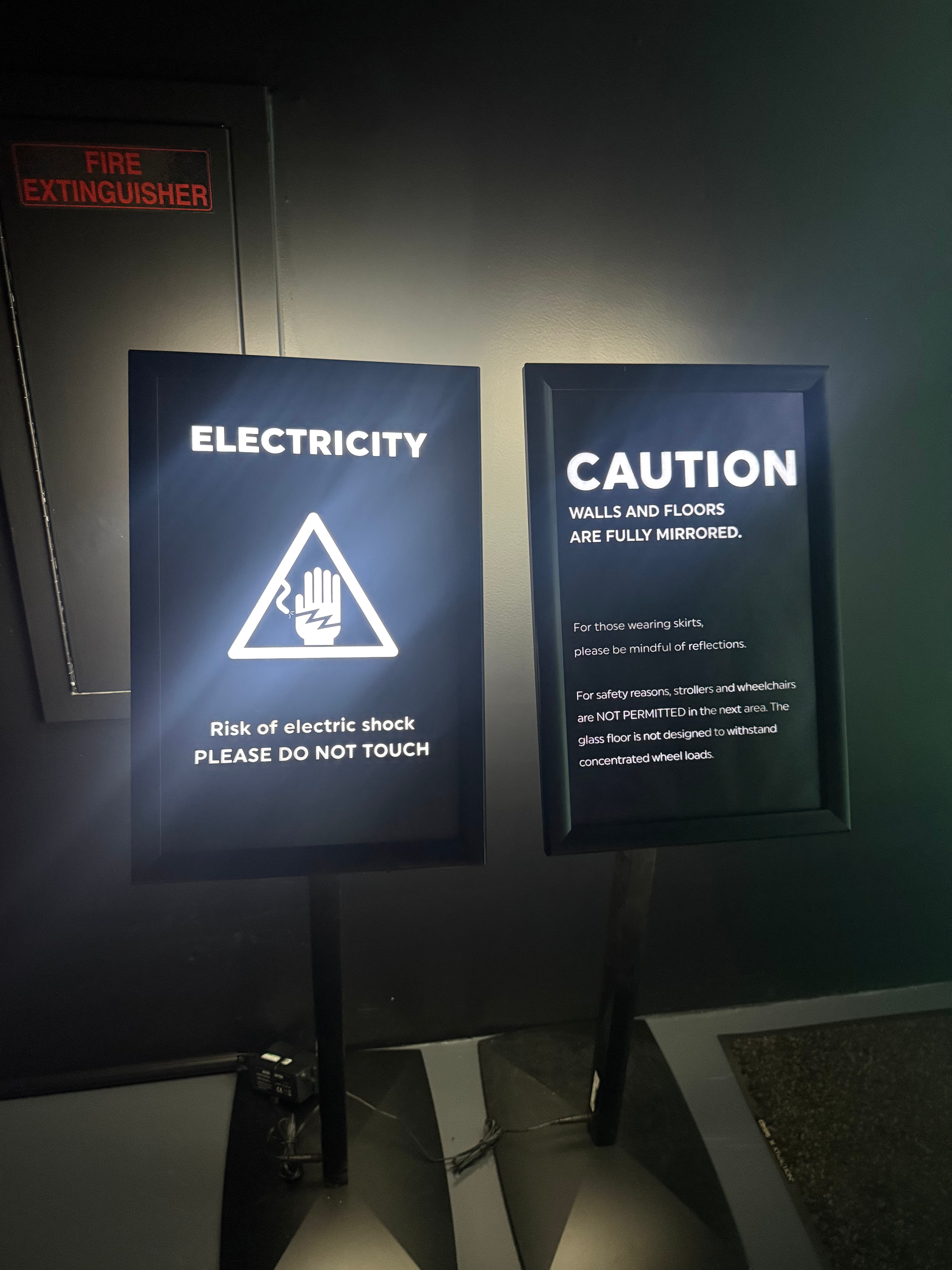
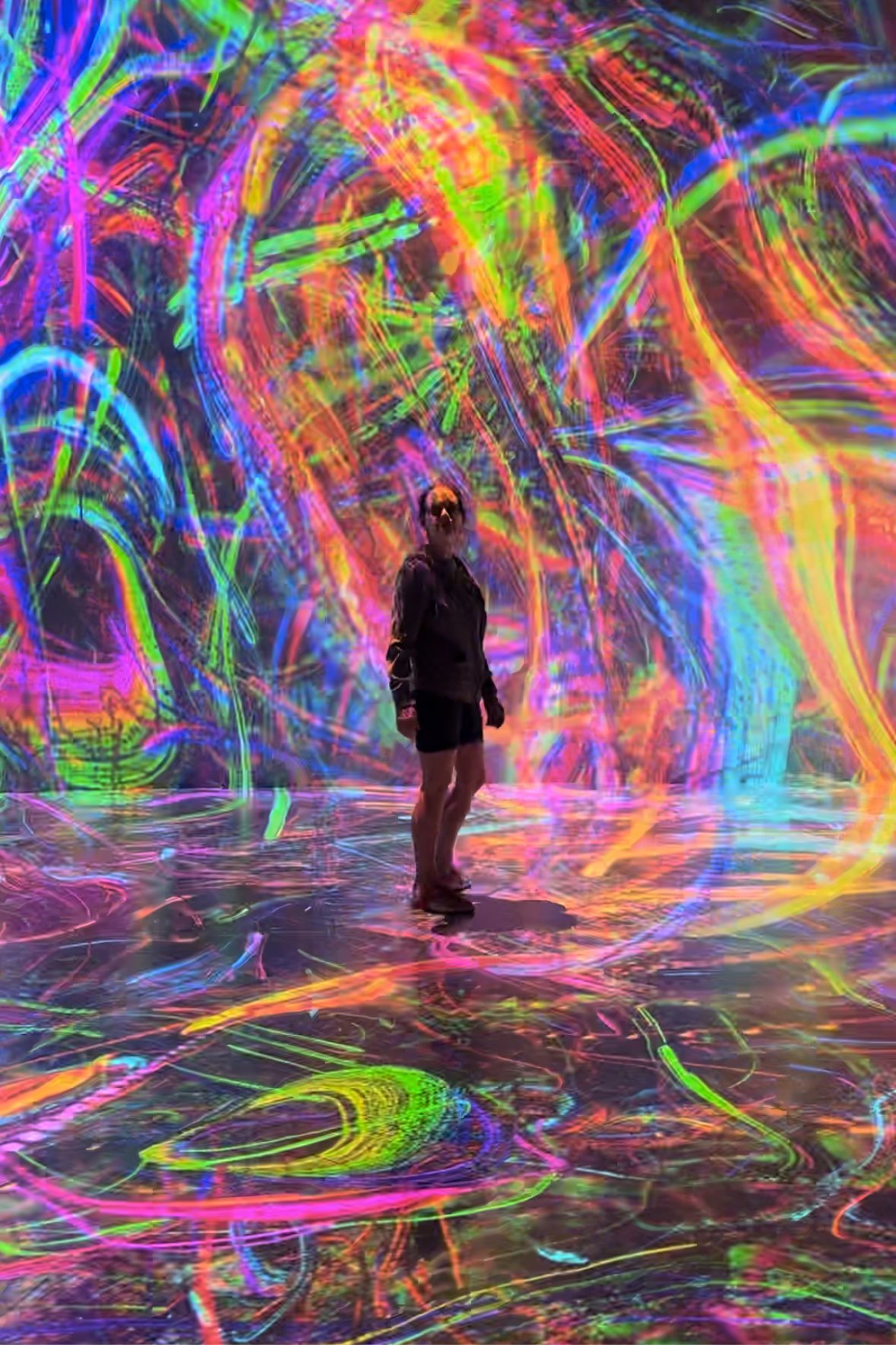
Arte Museum is easy to locate within Chelsea Piers, and well signed. I went first thing in the morning and recommend doing this if you possibly can. I had no wait to get in and I could be alone in most of the galleries. Arte Museum is an immersive digital art exhibition by d’strict, with installations around the world including Juju Island (Korea), Las Vegas, and Dubai. The scope of this installation, as well as the coordinated sounds and scents, really made this experience stand out compared to other experiential/immersive art installations I have visited.
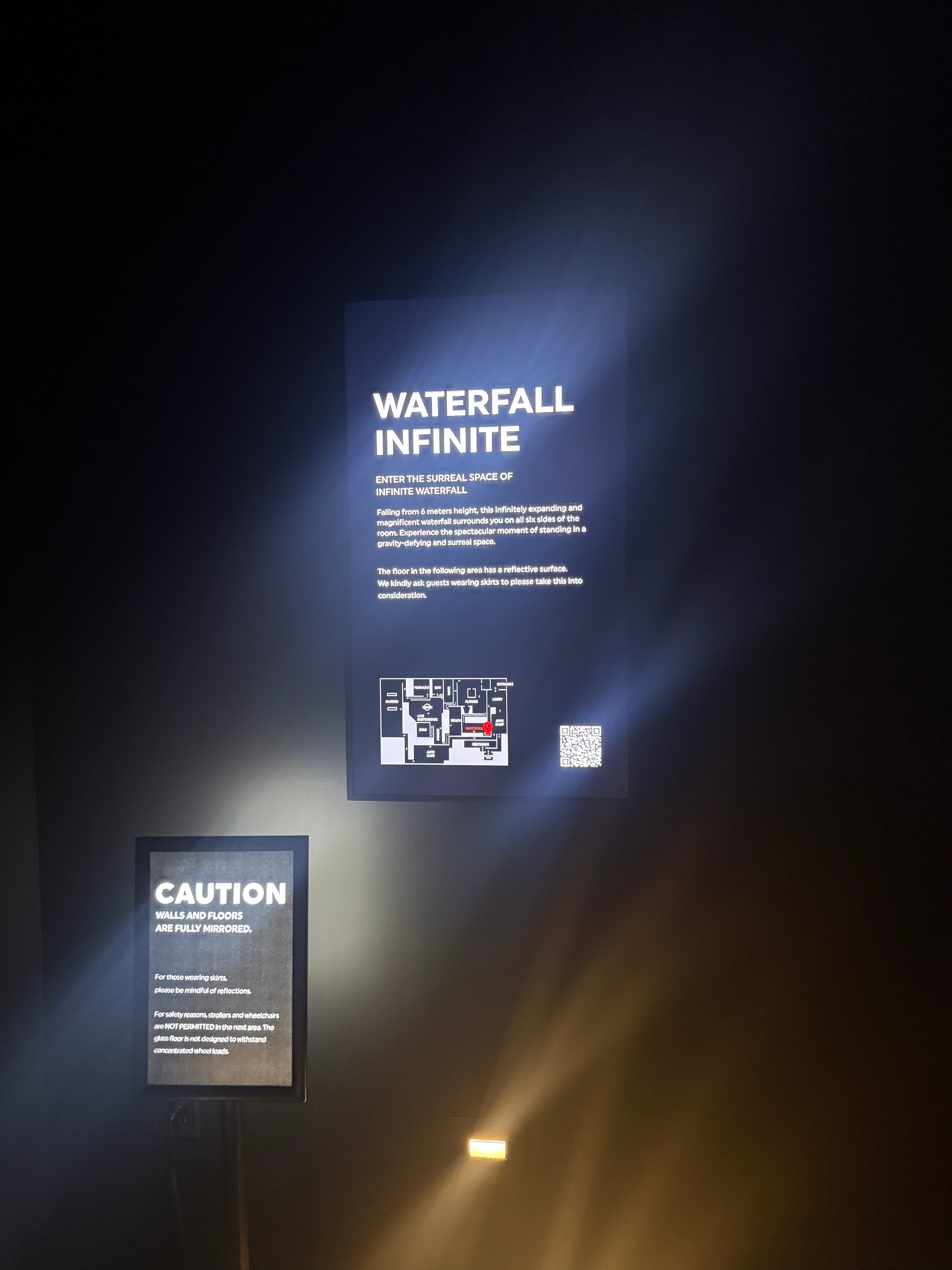
The first area, Waterfall Infinite, had its own scent (“Waterfall” – available for purchase at the gift shop at the end along with other scents!) that was fresh, woodsy, and aquatic. The reflecting surfaces made the waterfall seem to go on forever, and reminded me a bit of a similar room in SUMMIT One Vanderbilt.
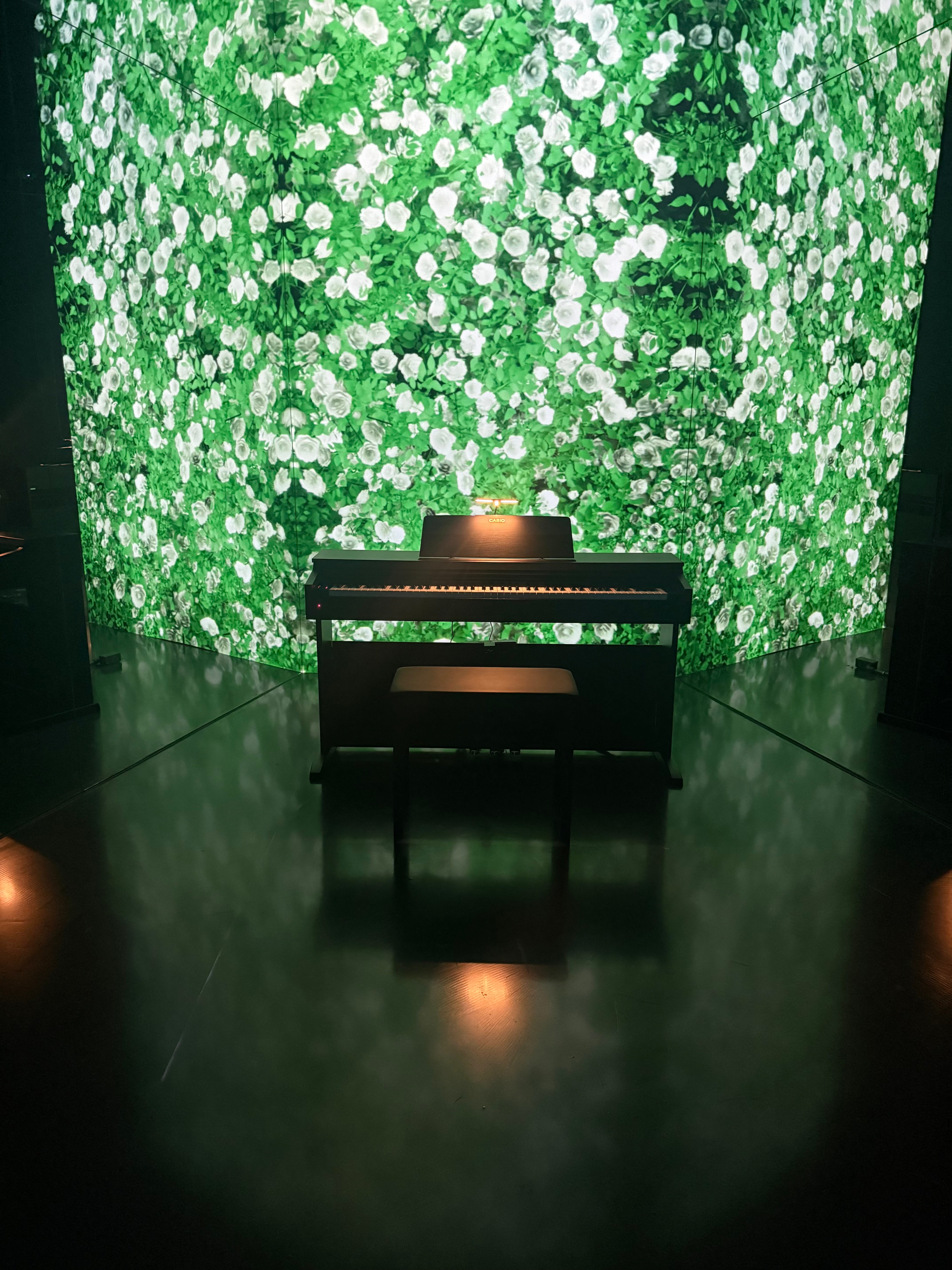
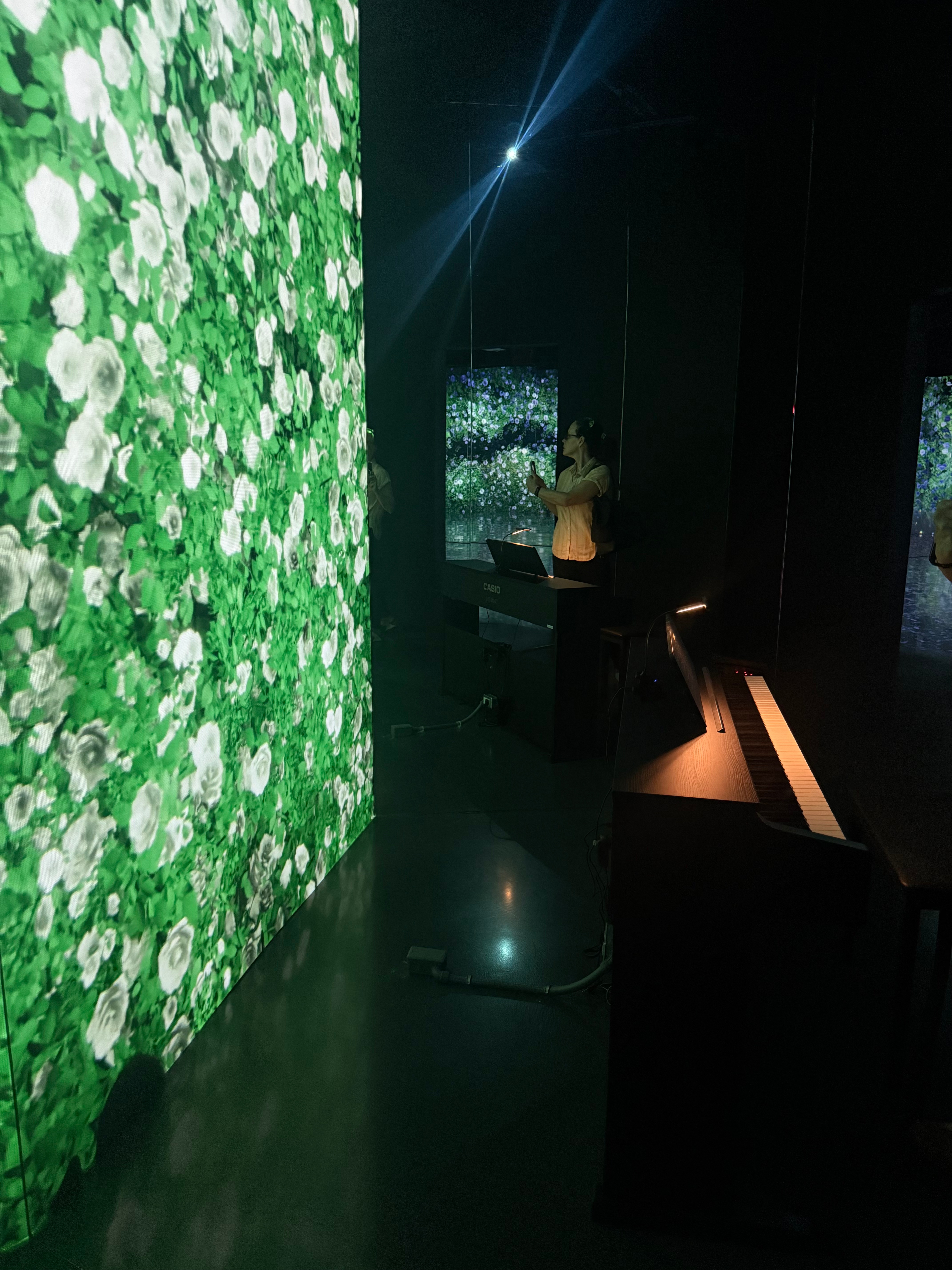
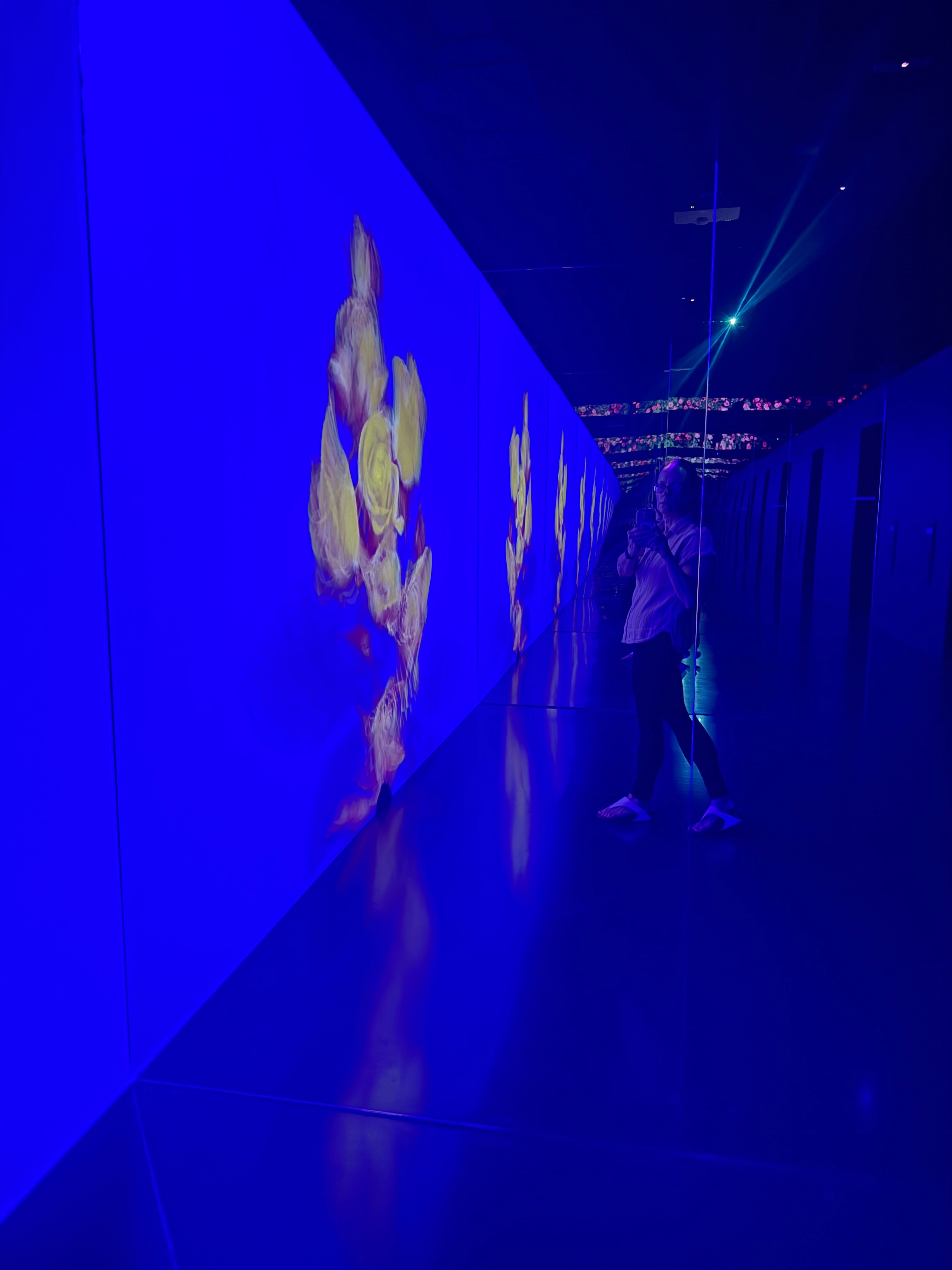
The next area, “Flower,” was scented (unsurprisingly) with a garden scent that was aquatic, green, and floral. Digital flower petals on the floor scattered as you walked through them.
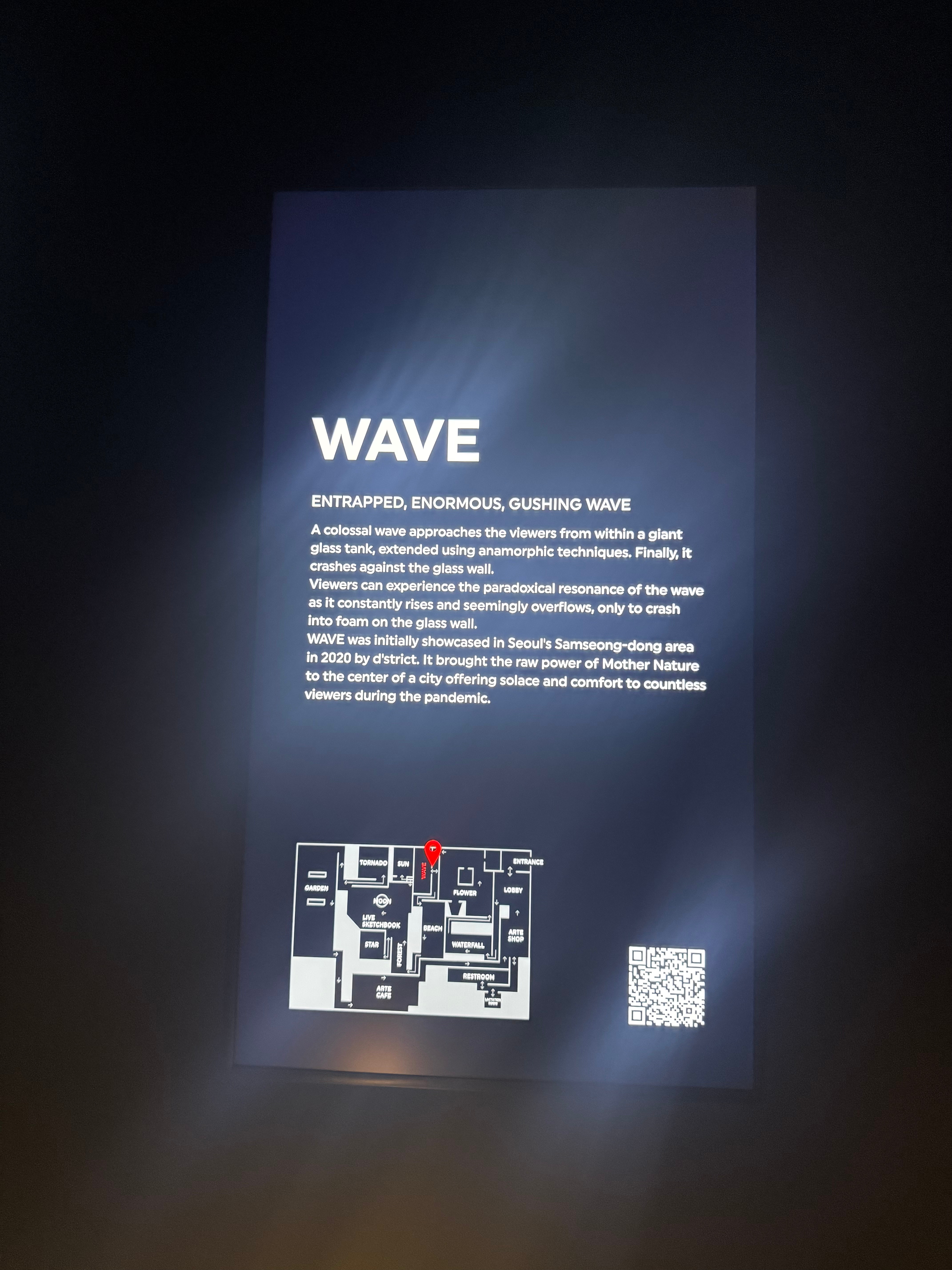
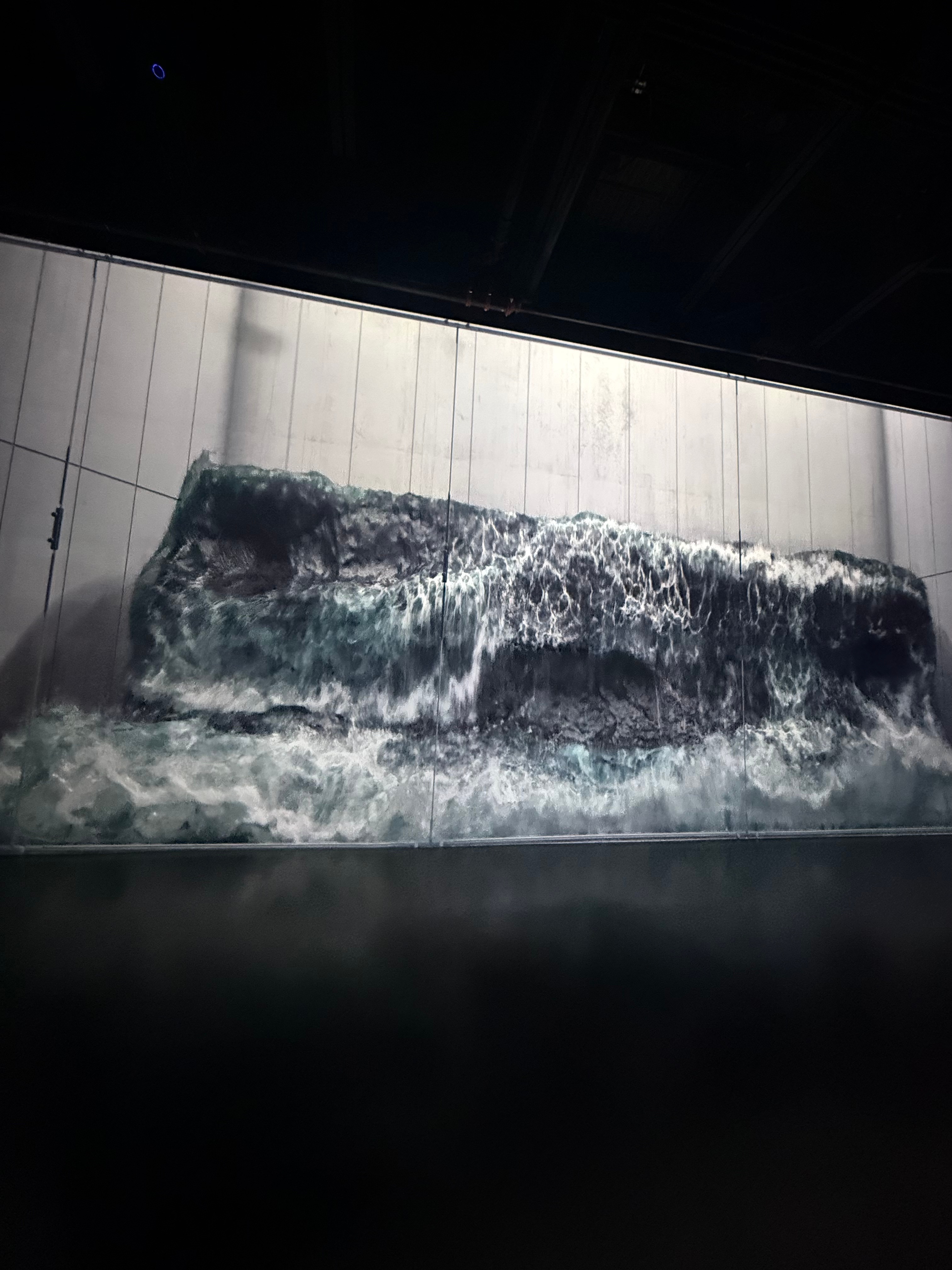
The next room, “Wave,” is the one I have seen used in ads for Arte Museum, and being in the room I can see why. Enormous waves appear to crash just on the other side of a tall glass wall. It’s an illusion of course, as this is a digital installation, but a powerful one. It was very relaxing just to be in that room and I could almost feel negative ions being released into the air even though it was not possible!
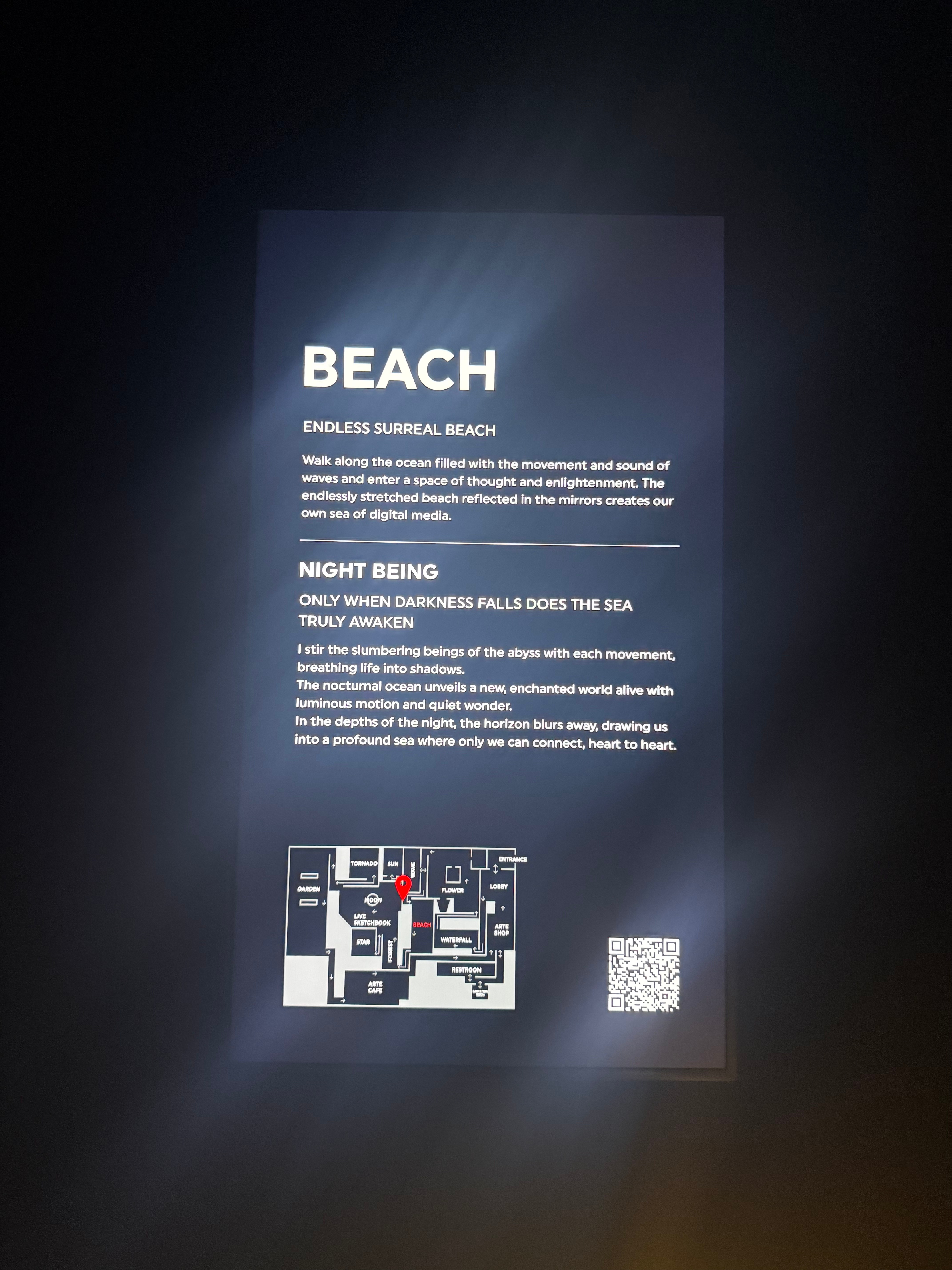
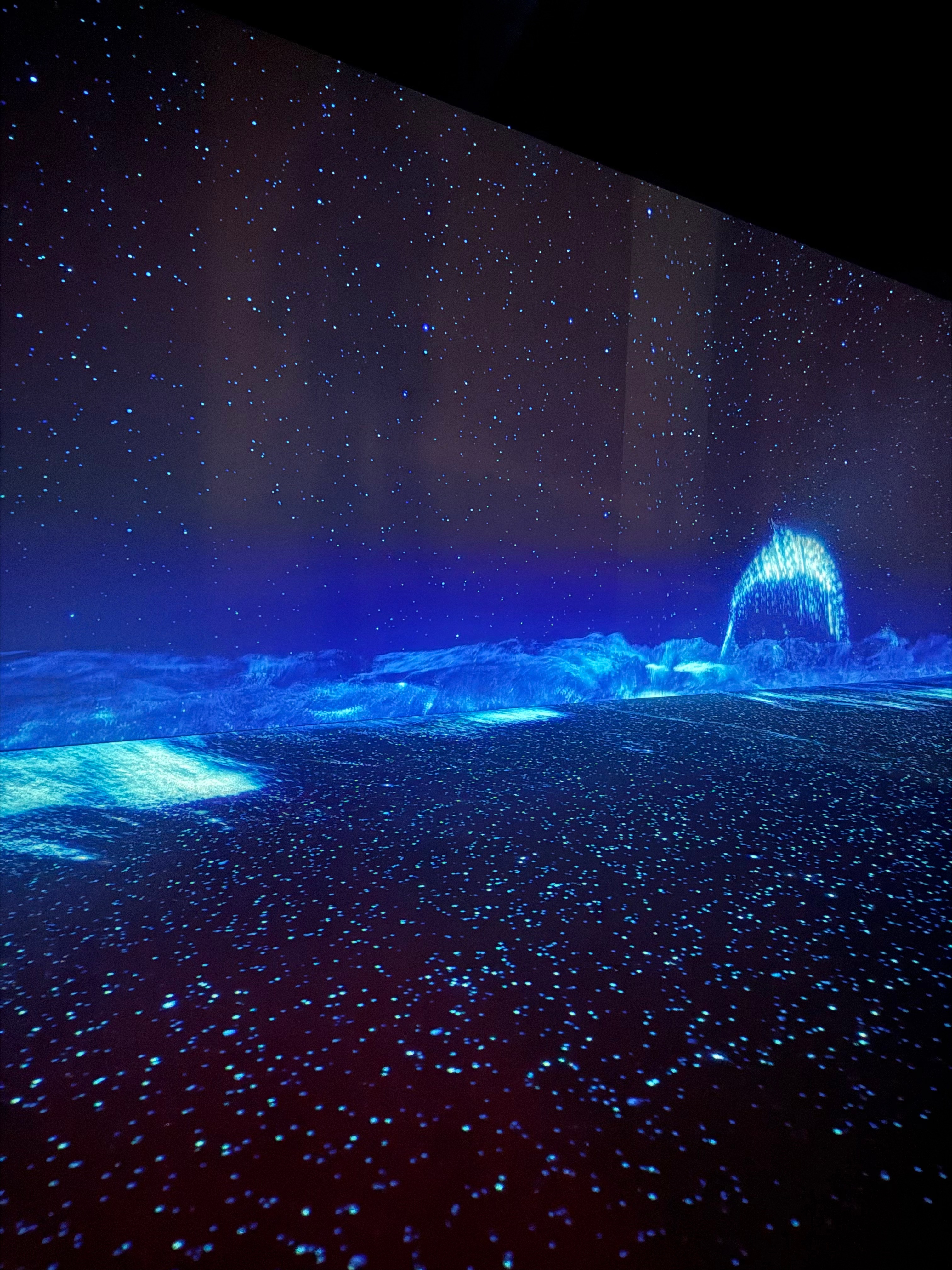
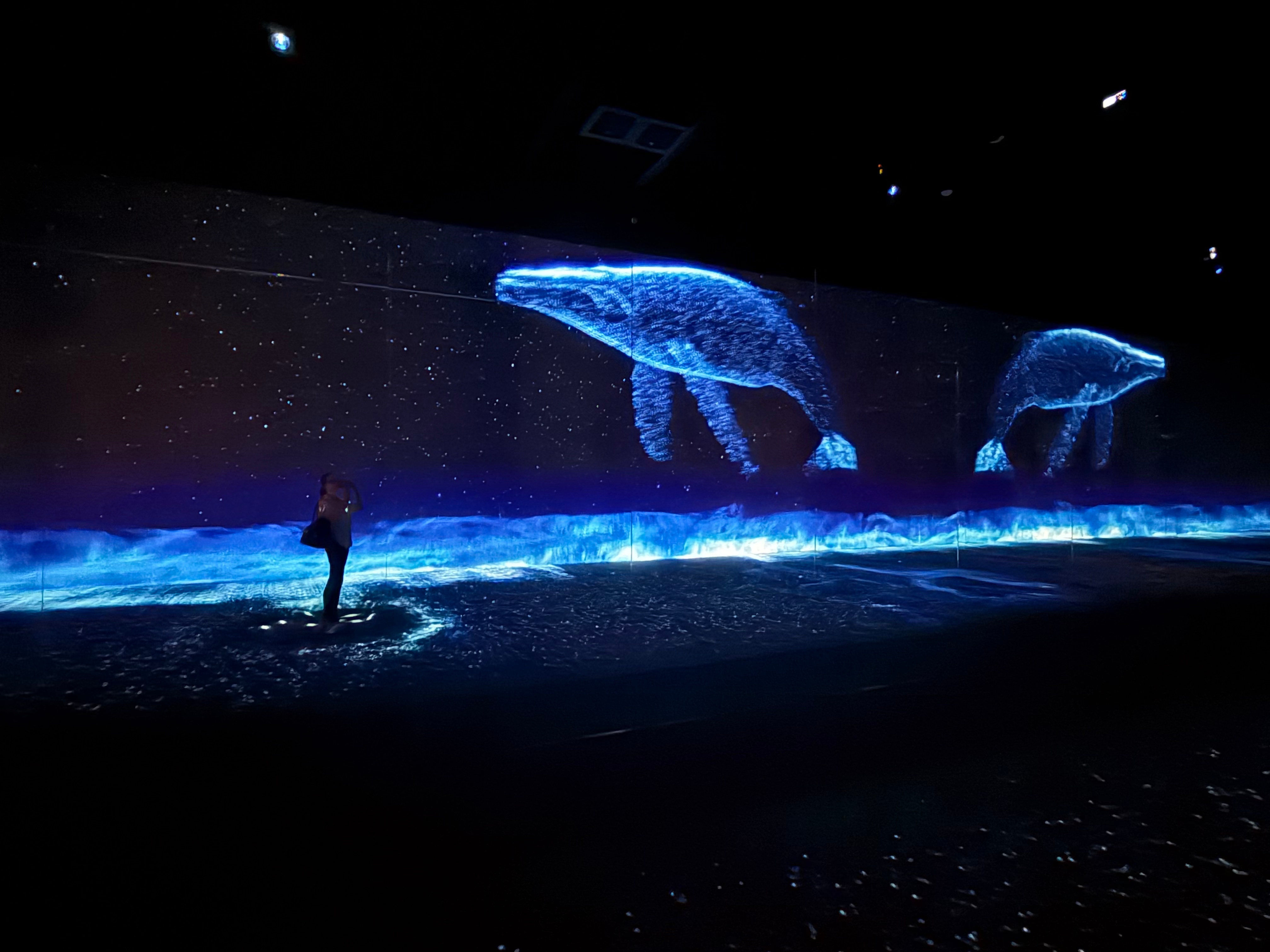
It’s hard to pick a favorite room, but if I had to the “Beach” might be the one. The scent here was very beachy – fresh, green, watery, and aromatic. Bioluminescent algae lit up and scattered as you walked along the “sand,” and whales and other marine life swam around you.
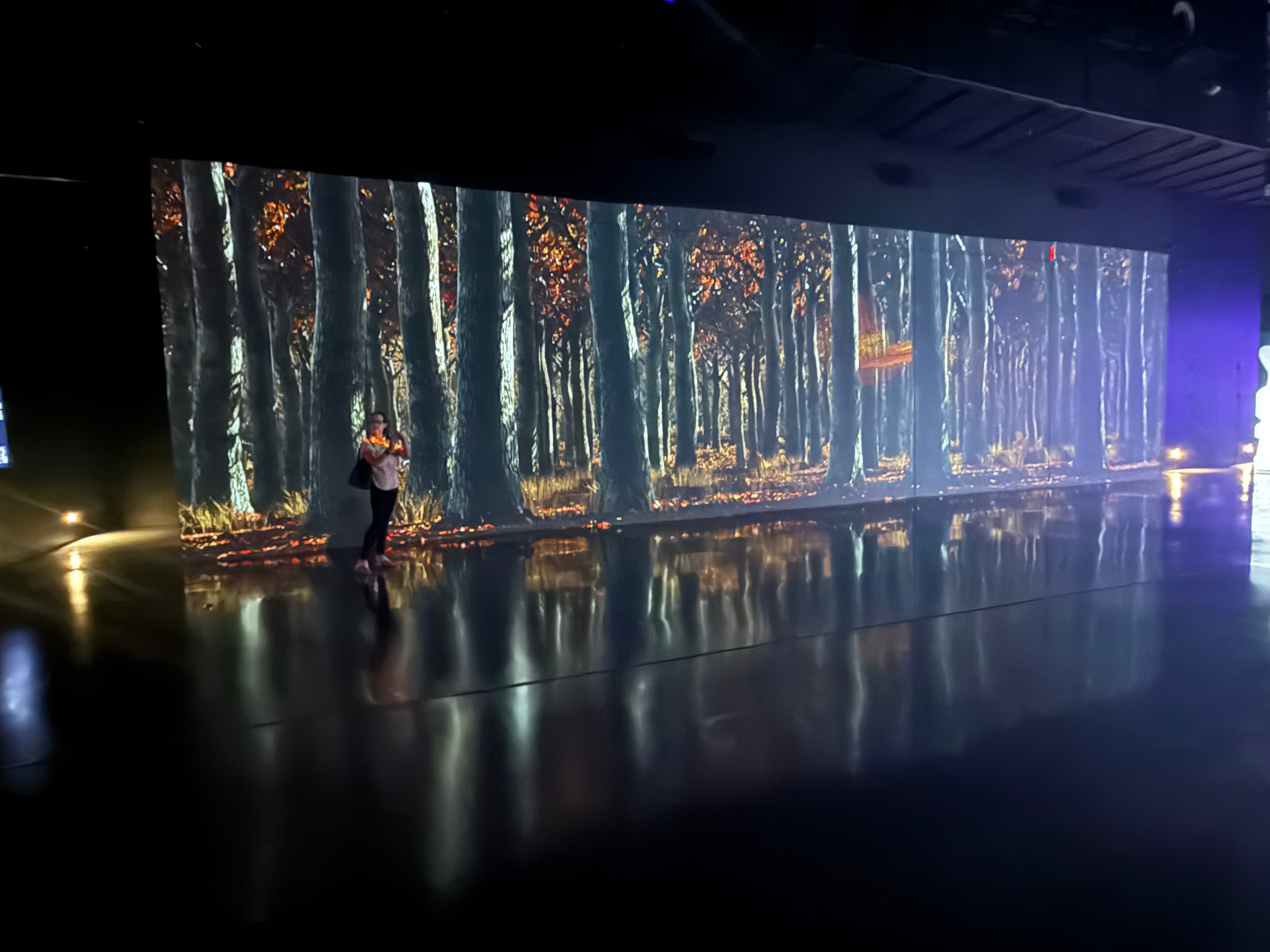
In the next area, the “Forest,” the accompanying scent was bamboo-like, green, aquatic and woody. Forest creatures stalked and crept around you.
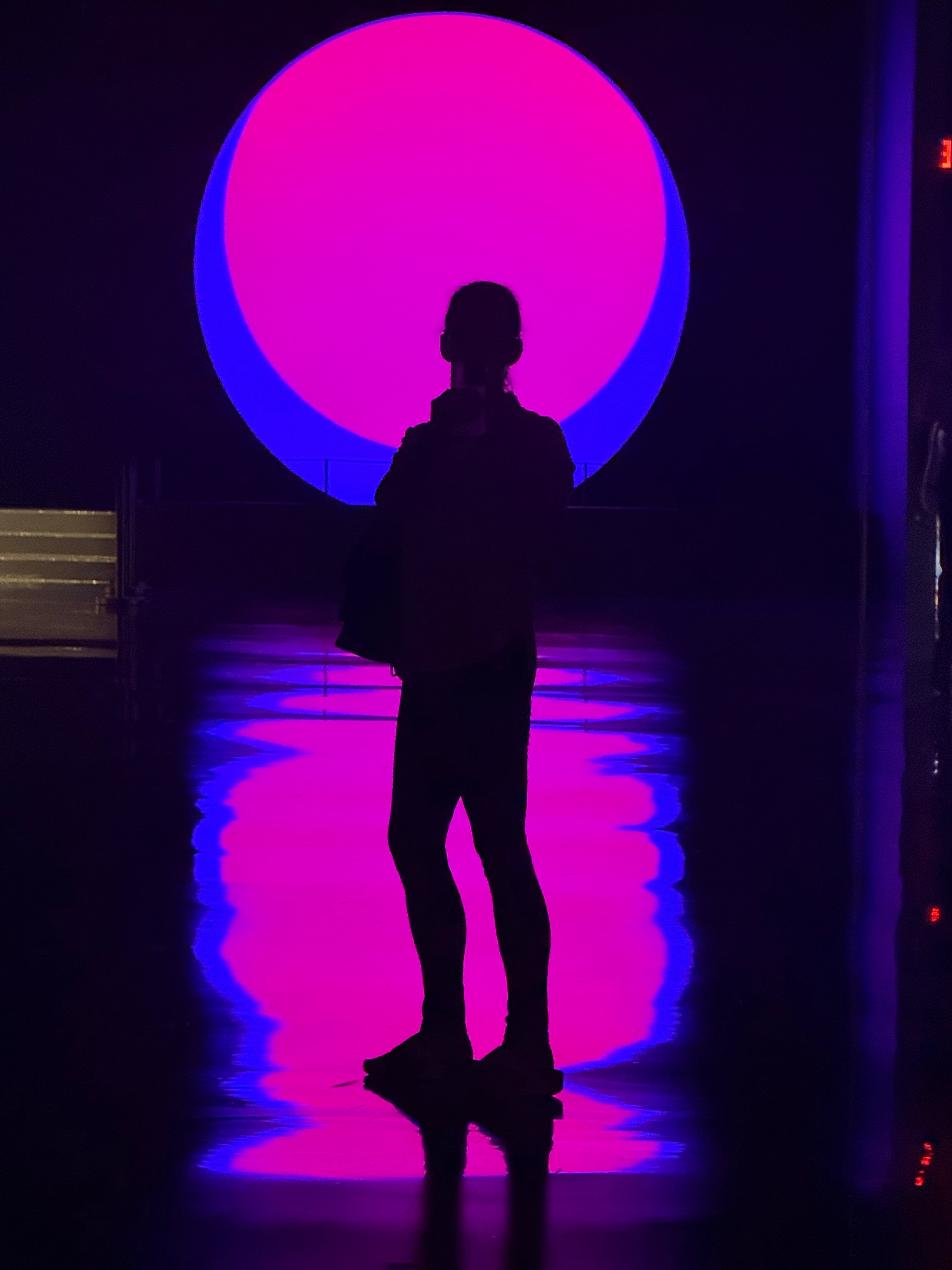
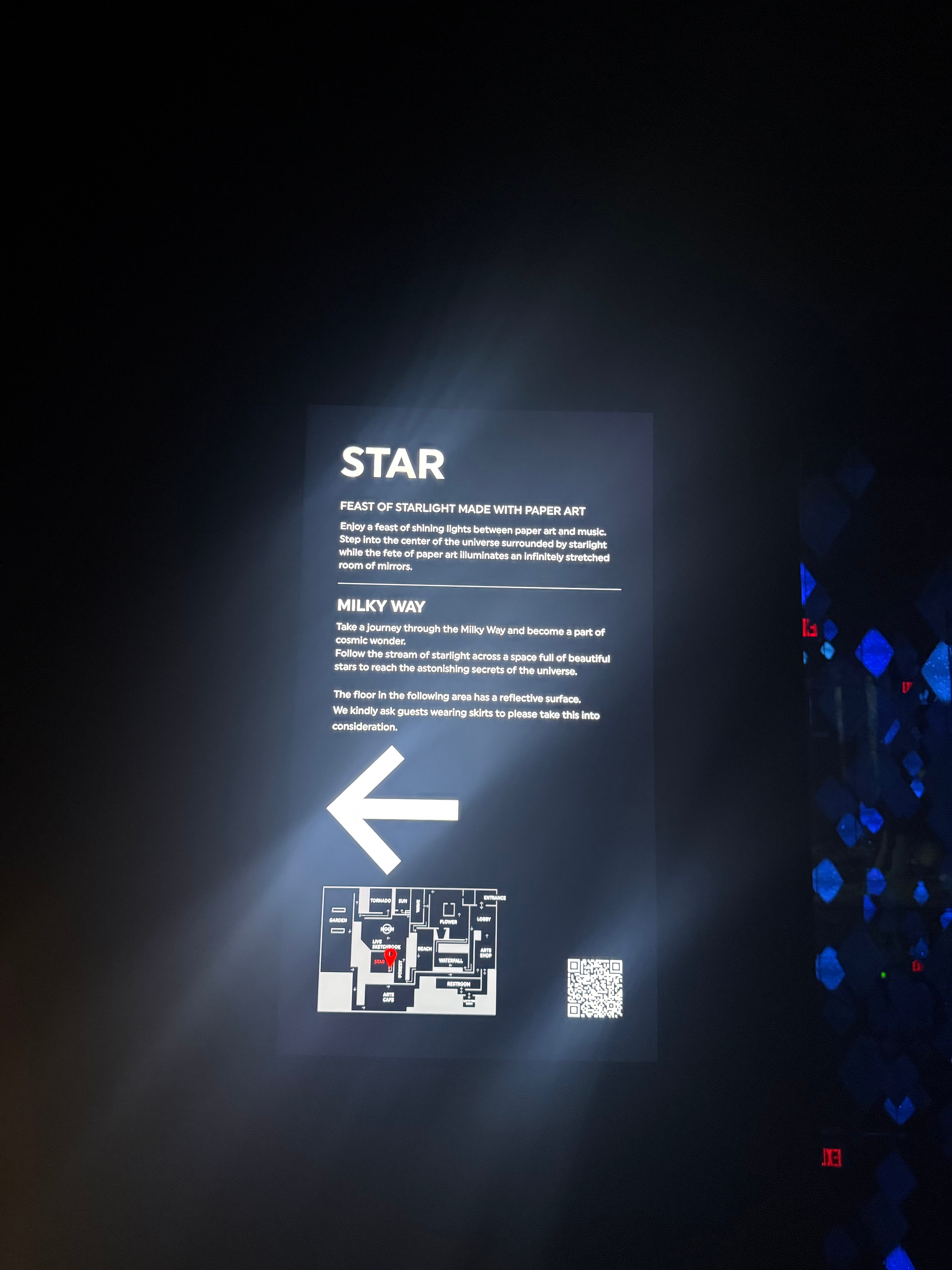
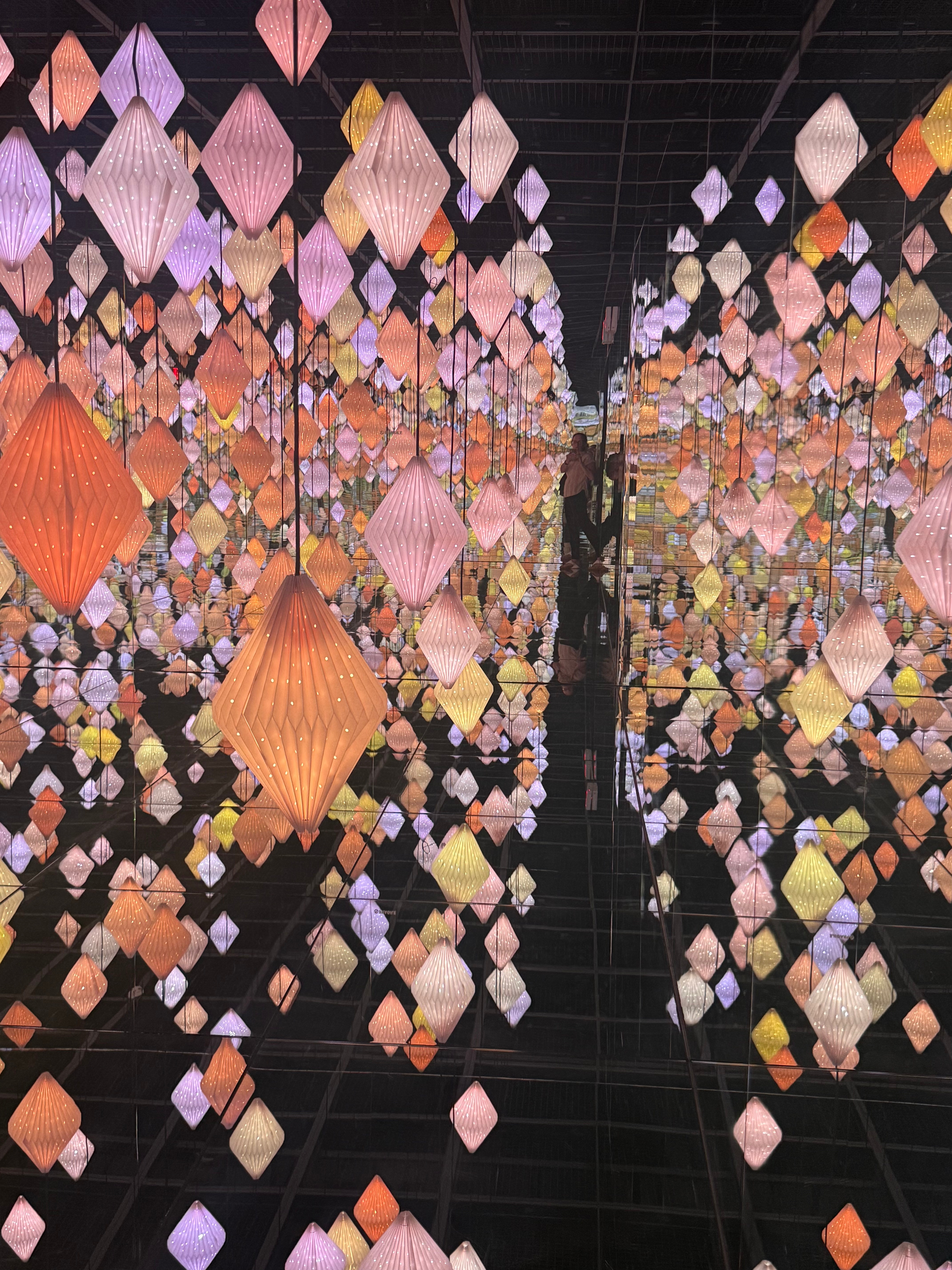
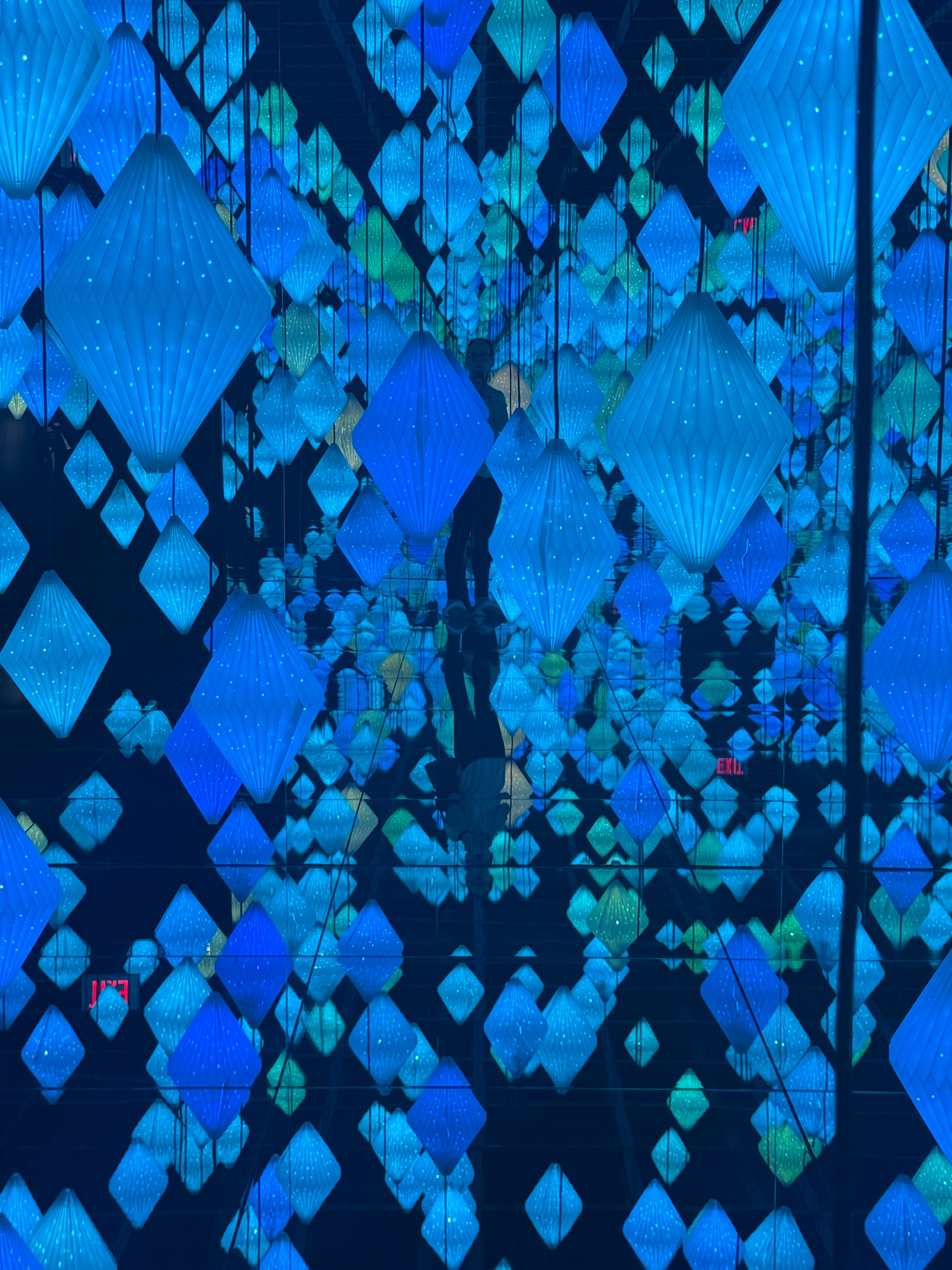
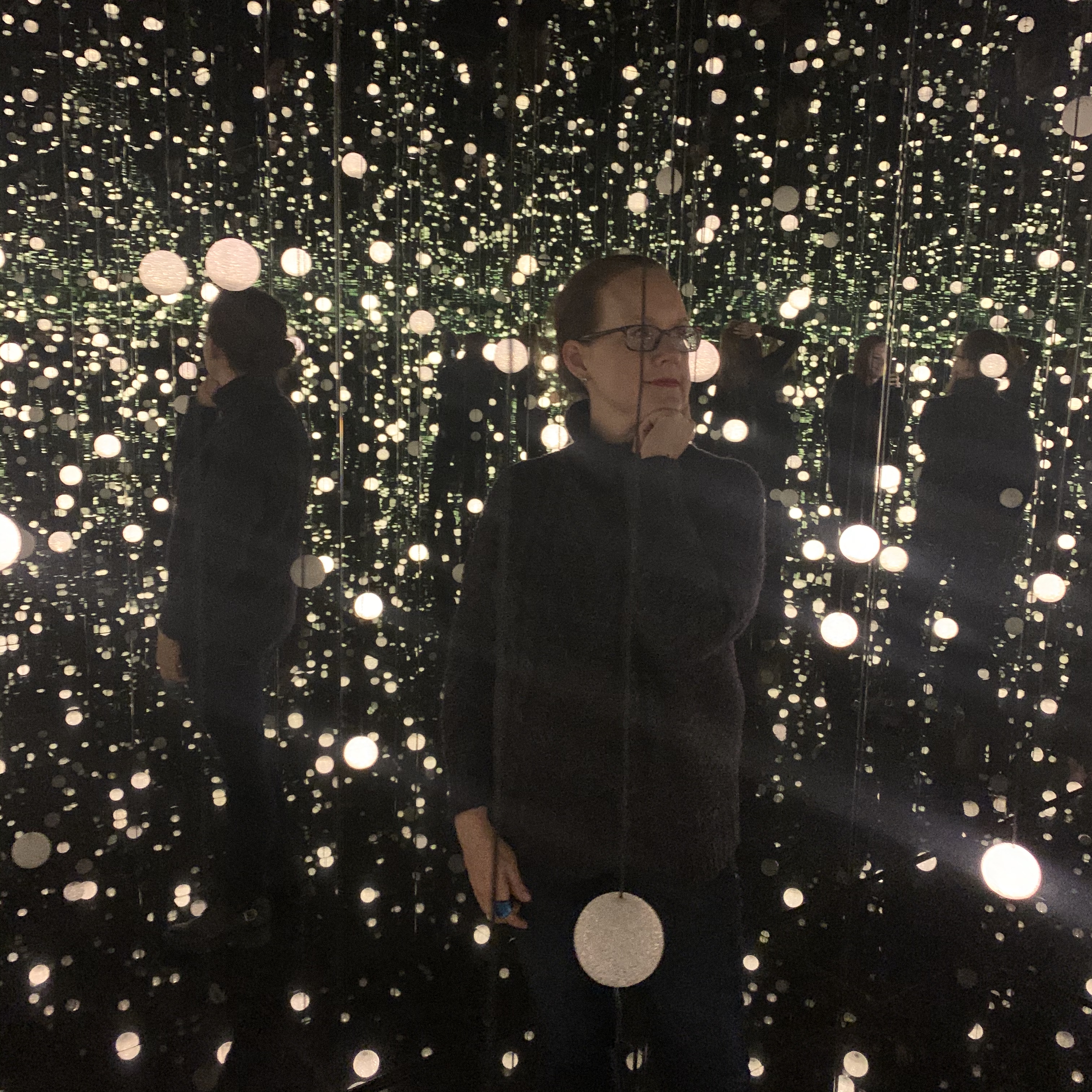
The next area, “Star,” reminded me a bit of Yayoi Kusama’s infinity mirrored rooms
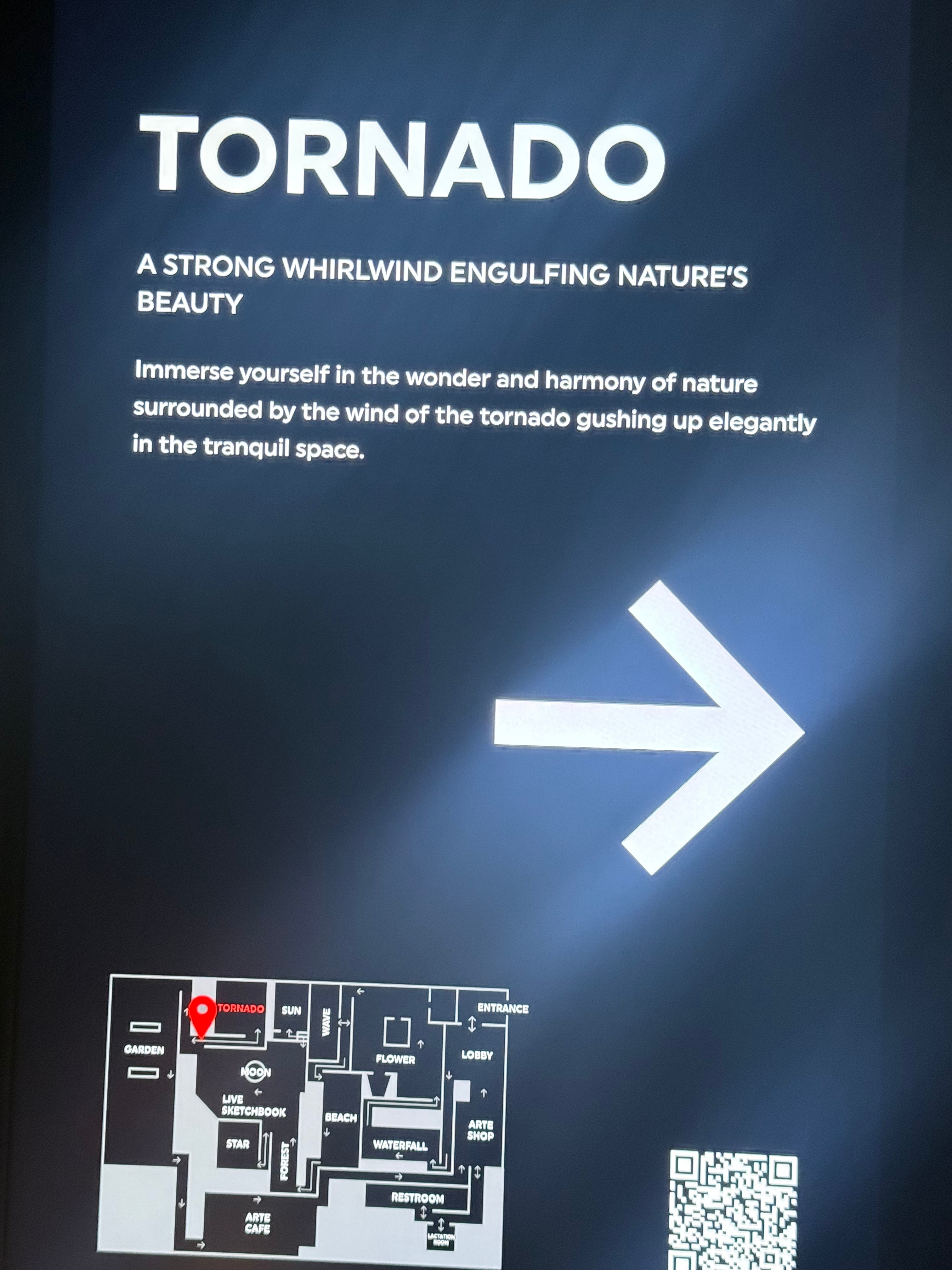
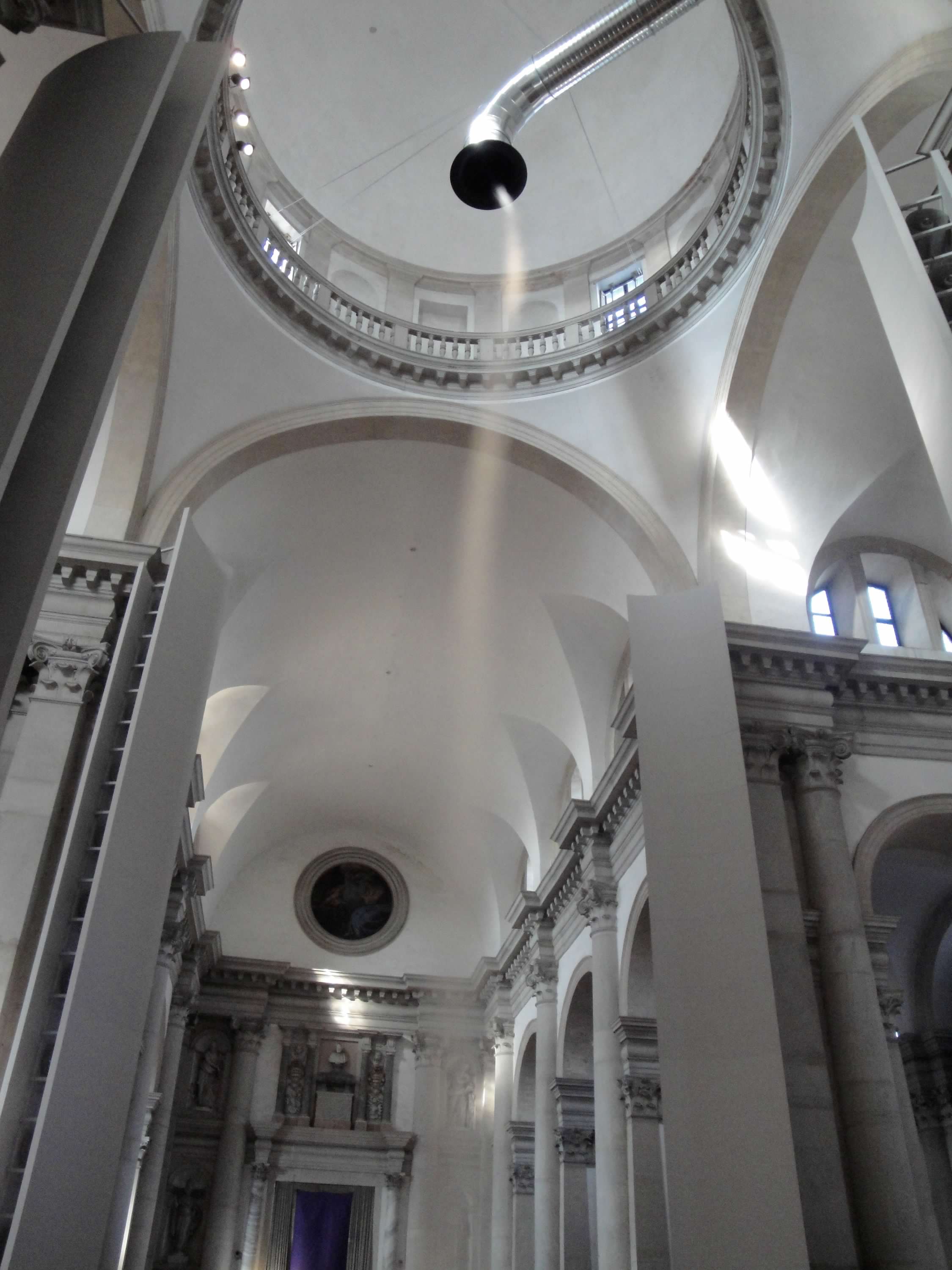
This room, “Tornado,” was just as it sounds, a swirling tornado of haze that you could circle and experience (safely!).
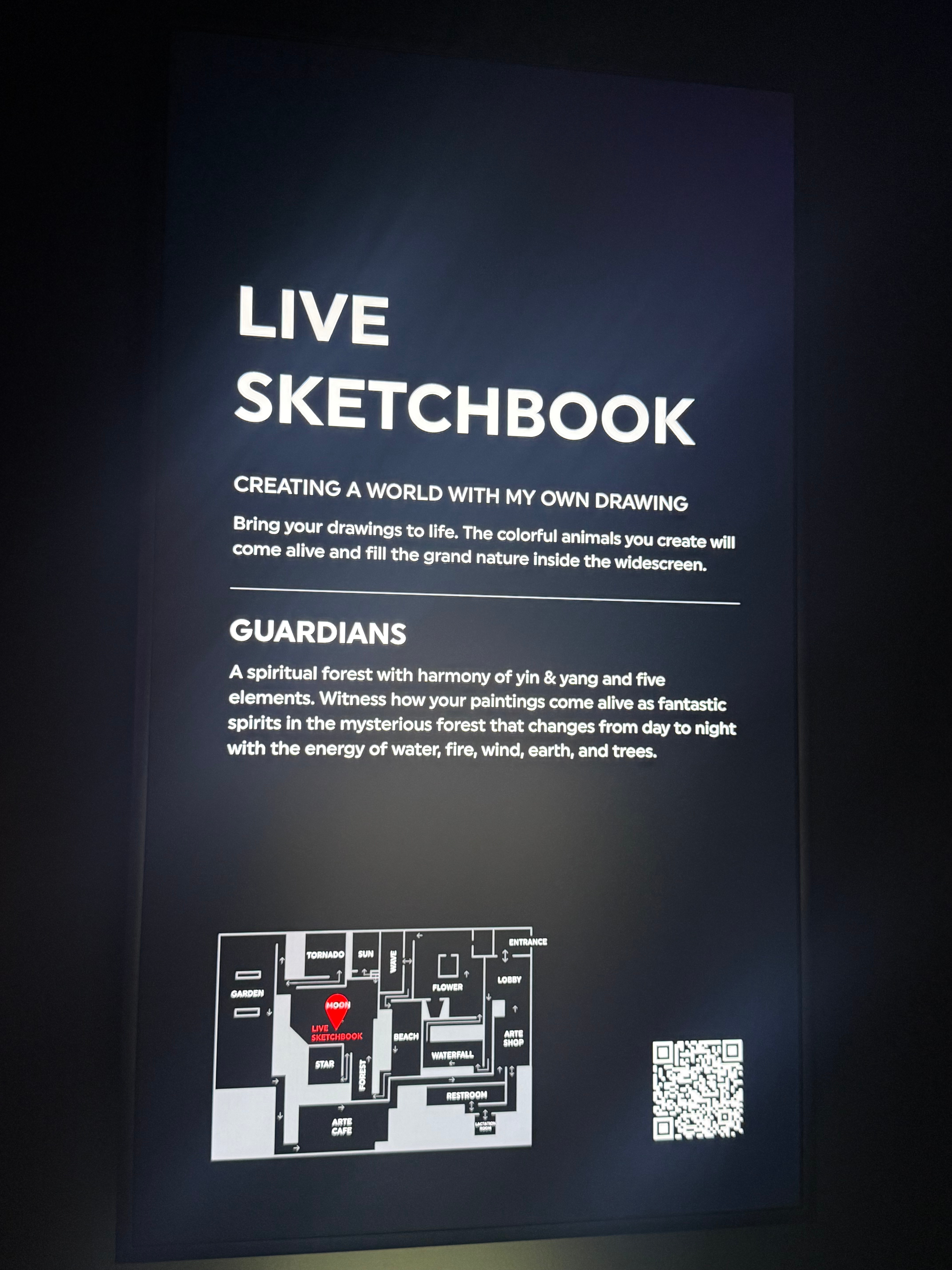
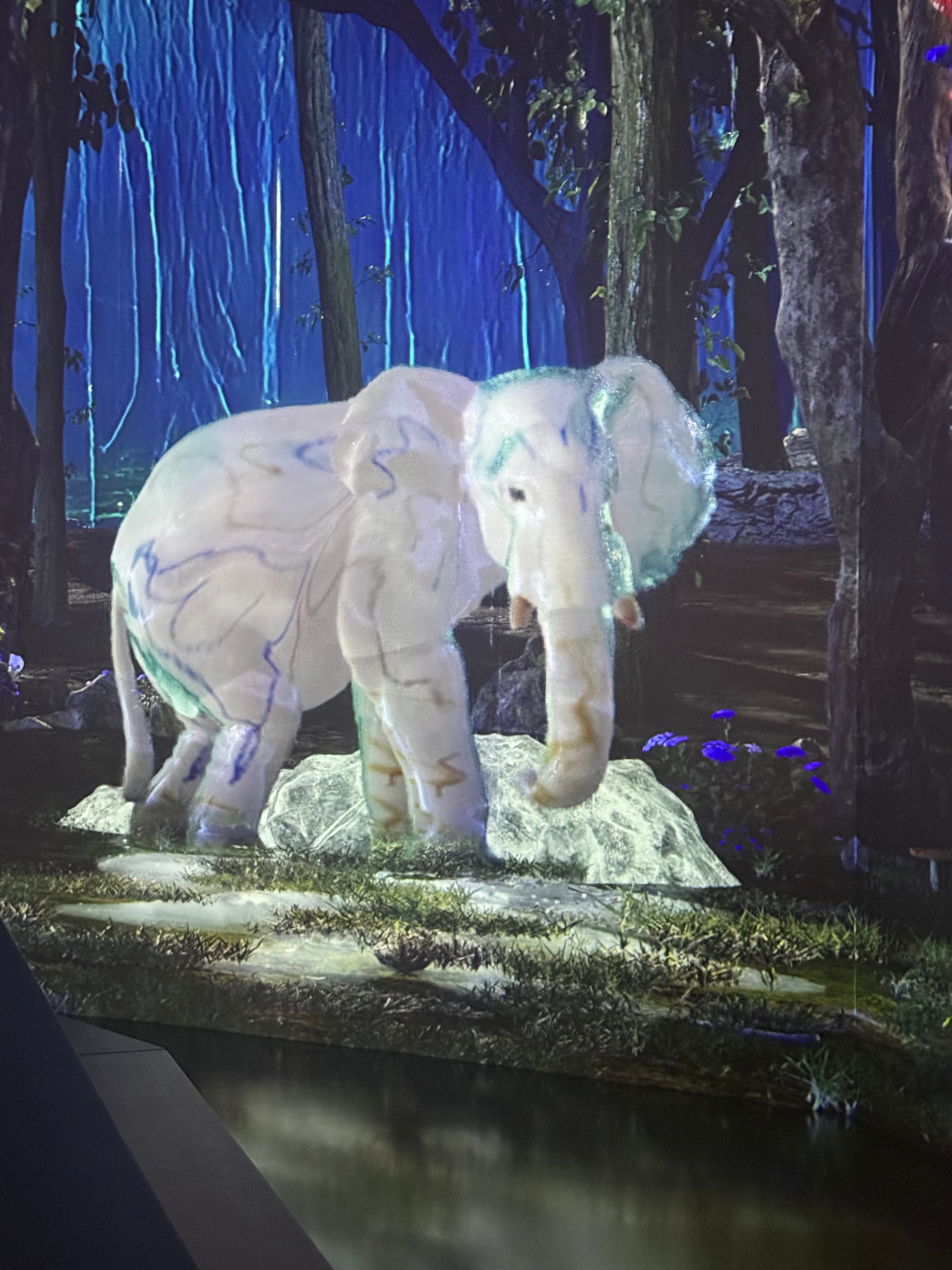
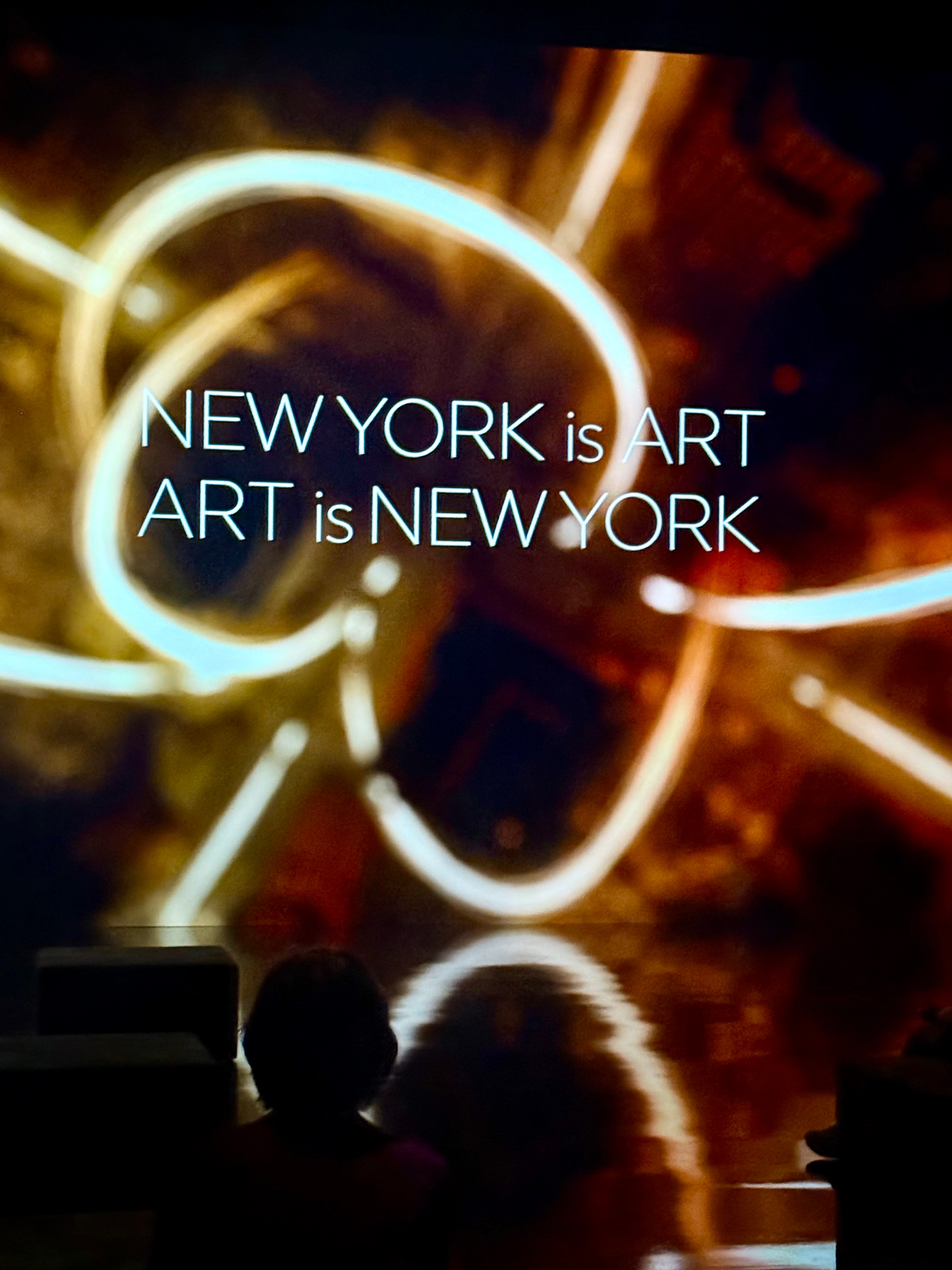
Live Sketchbook was a fun interactive way to influence what you saw, just across from the “Forest.” You could pick up a sheet with the outline of an animal, draw designs on it, scan the page, and it would appear moving across a large display. Following this was a huge room with a series of different installations – one about New York City, another beach-related, and a third of Paintings of Joseon.
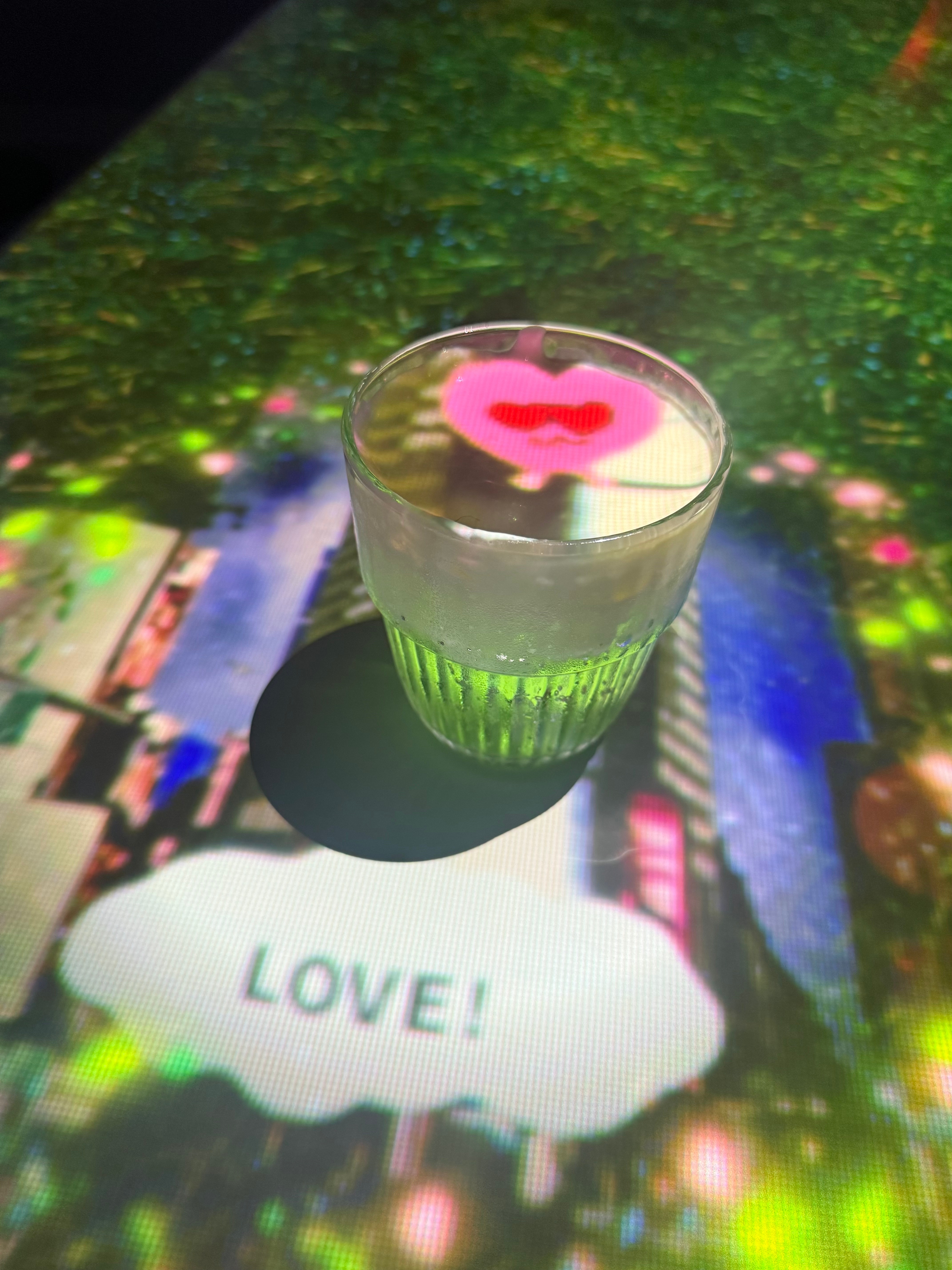
After all the installations, you can visit the gift shop (of course) or go to the Arte Cafe, with some interactive elements (you can choose a fun image and it will move to stay on top of your beverage as you move it around the table).
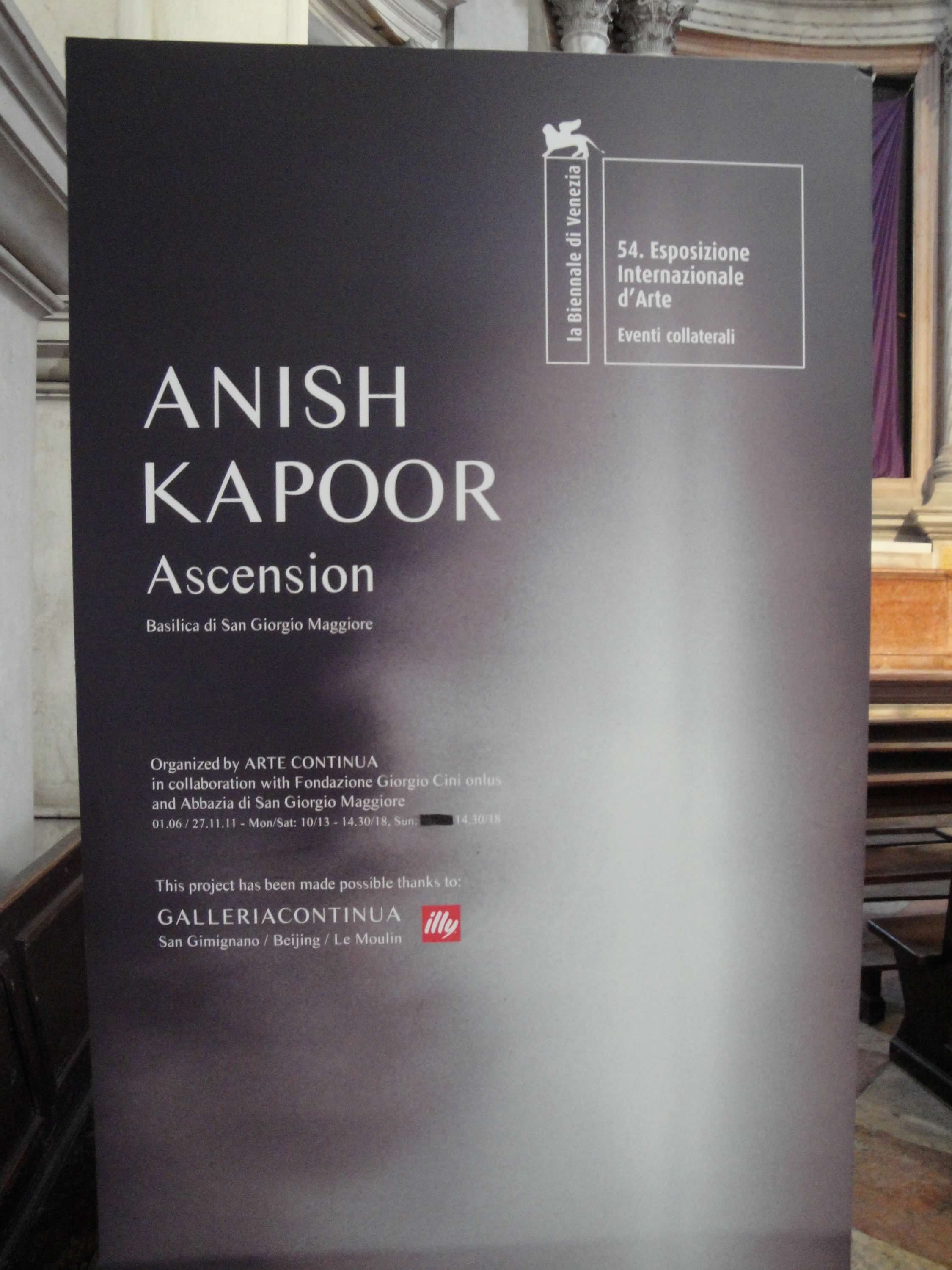
You can get an idea of how it feels to walk through this immersive space from my Instagram reel about Arte Museum. And although many discount these experiential art exhibitions, much is adjacent to (perhaps even borrowed from!) serious contemporary artists. For instance, the “Stars” room here bears a resemblance not only to Kusama’s Infinity Mirror Room (see the first photo below for when I was in one at David Zwirner Gallery in fall of 2019) but also to Pipilotti Rist’s installations (see one at the New Museum about nine years ago here) and the “Tornado” is quite like Anish Kapoor’s “Ascension” I saw at the Venice Biennale in 2011 (see the other two photos below).
I don’t equate an experiential art installation like Arte Museum to serious contemporary art, but I want to point out that I don’t find my enjoyment of it to be a “guilty pleasure.” Some of these digital experiences have a reputation for being a backdrop for an interesting Instagram photo more than an art exhibit – but many contemporary art exhibits also lend themselves to selfies! I think you can get out of Arte Museum what you choose to find, and I found it to create a sense of wonder that was at times transporting. There aren’t many places you can go these days where you realize you have had a smile on your face for quite some time . . . and that is definitely what I experienced here.
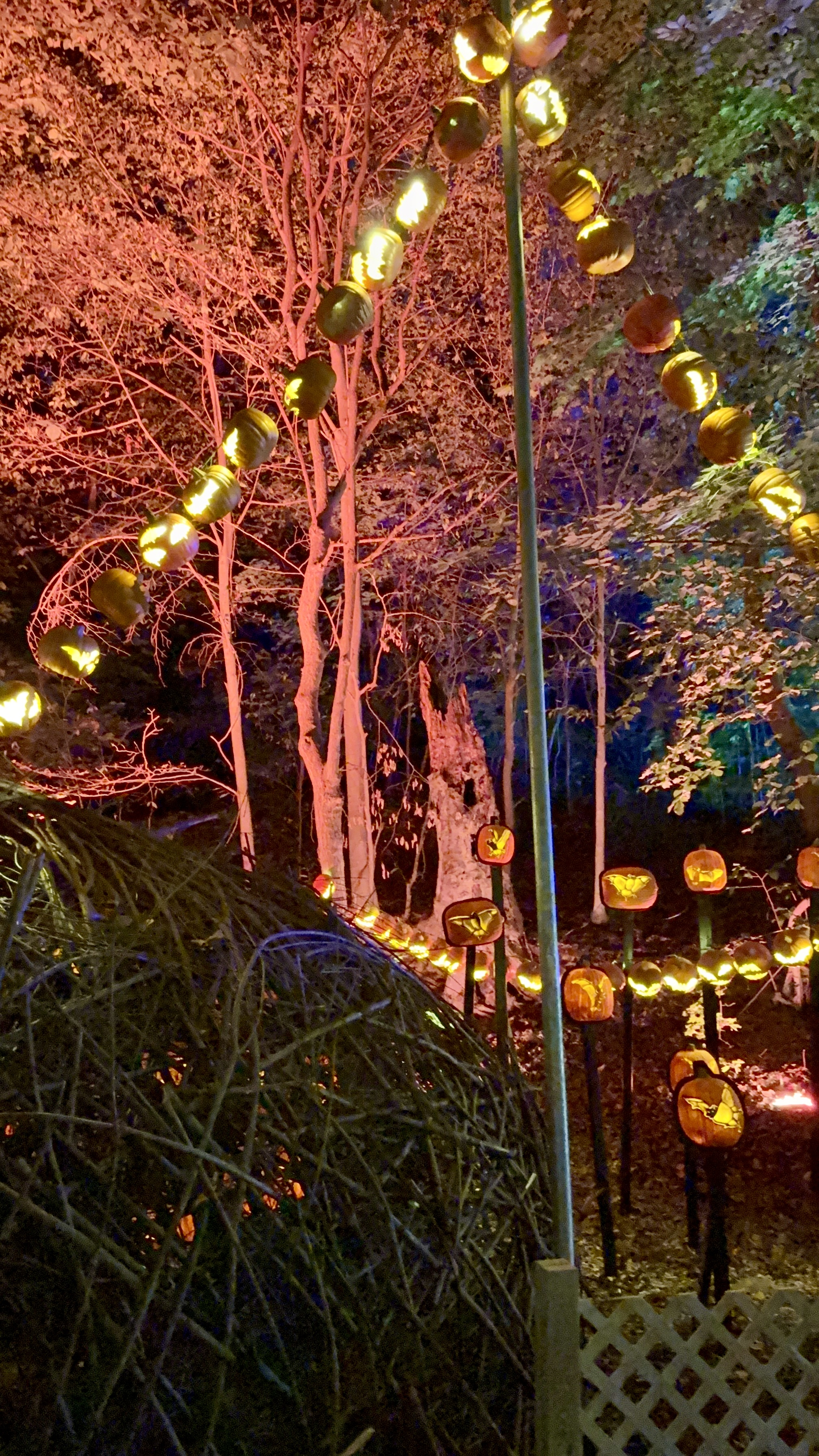
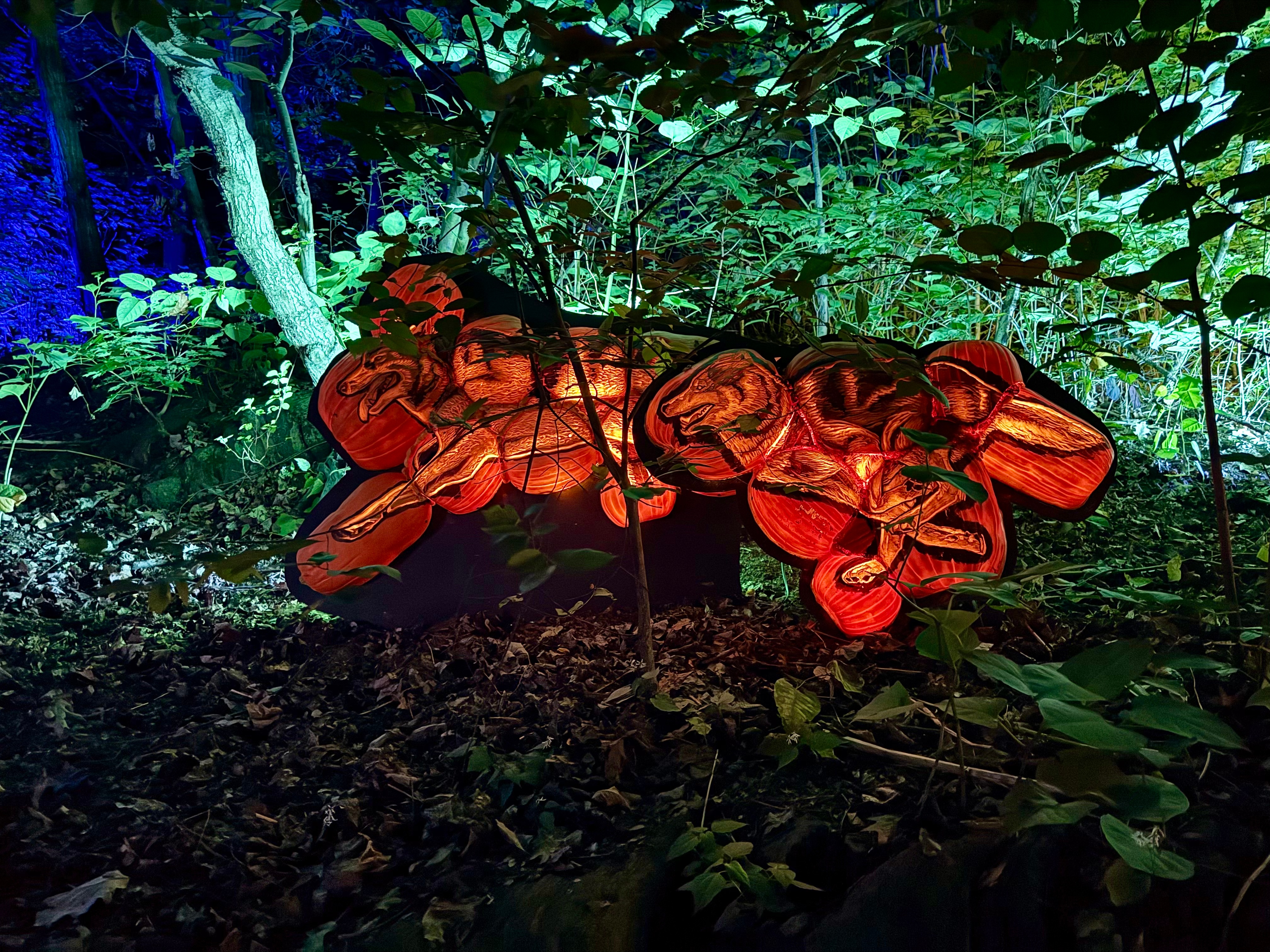
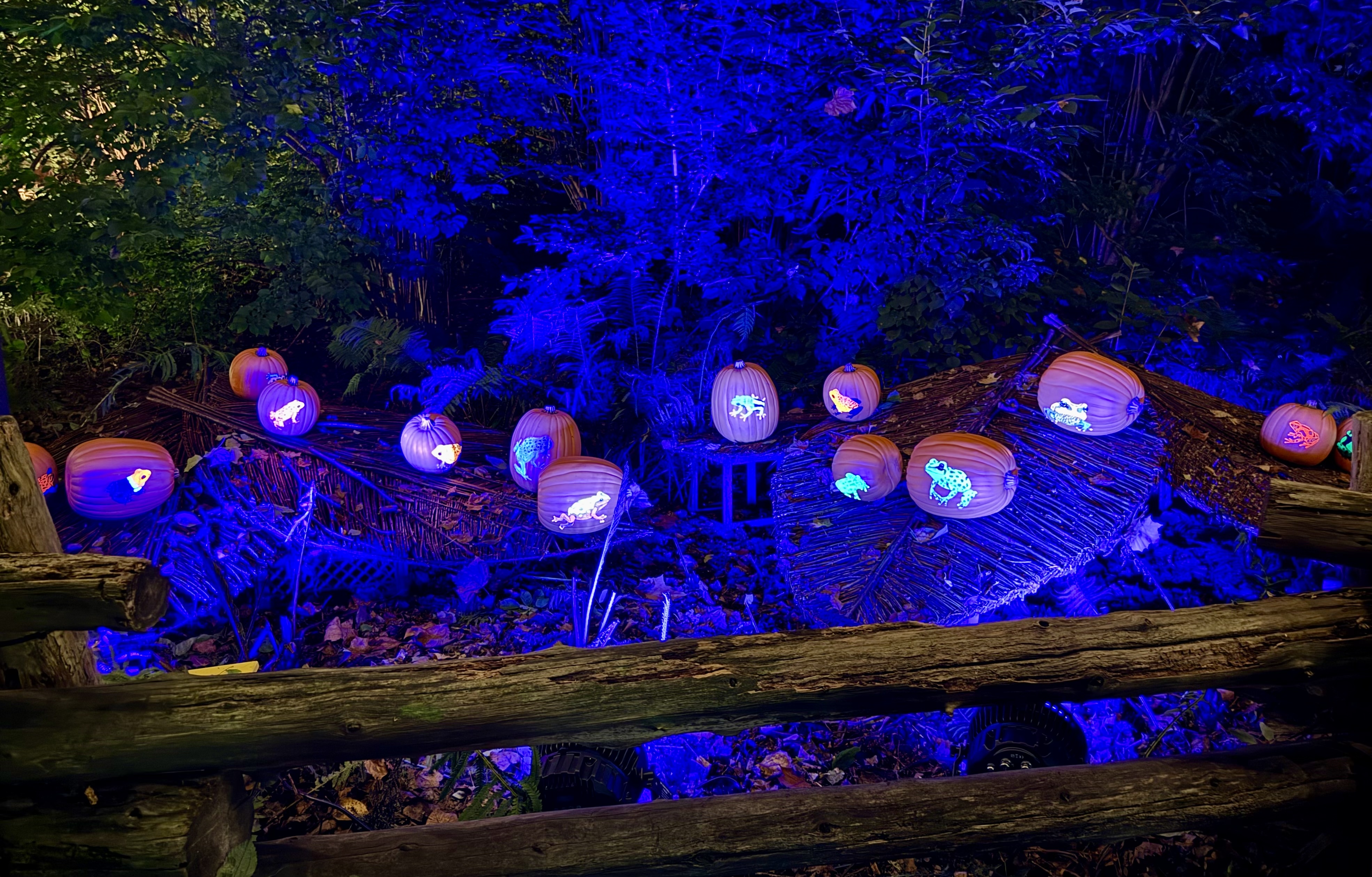
Harvest Glow at the Bronx Zoo is a separately ticketed, timed-entry event taking place after dark in the fall. There is no access to animals, but there is an elaborate trail with animal-themed illuminated jack-o-lanterns, live pumpkin carvings, food carts, games, face-painting, and an opportunity to do the dinosaur safari at night.
The trail is quite immersive – lighting is low and the different animal-themed areas are elaborate.
There is spooky music and lighting.
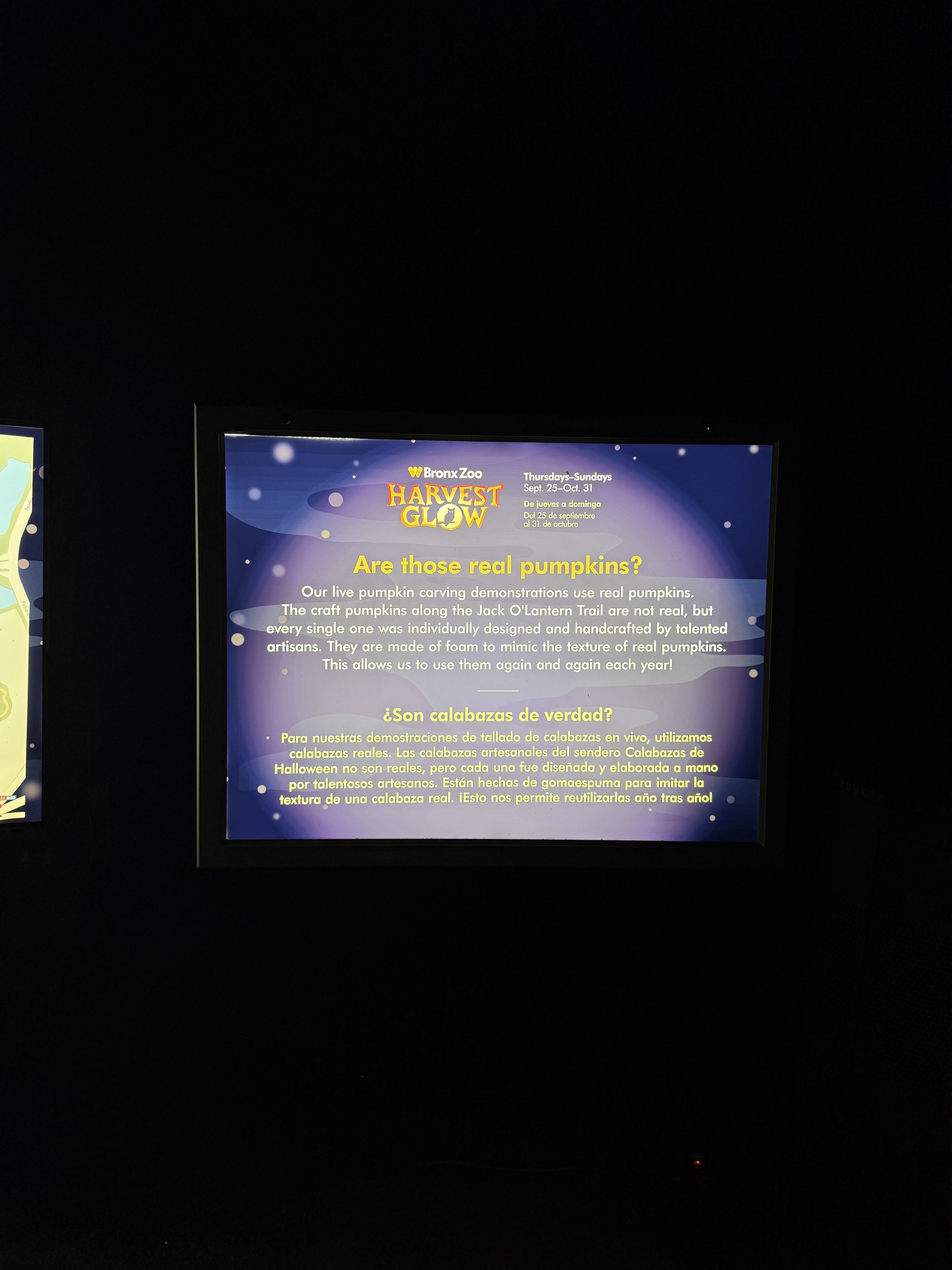
They make it clear at the beginning of the trail that the decoration on this trail are not living pumpkins that have been carved, but there are live pumpkin carving demonstrations at the hub between the trail and the dinosaur safari, and there are also food carts at the hub.
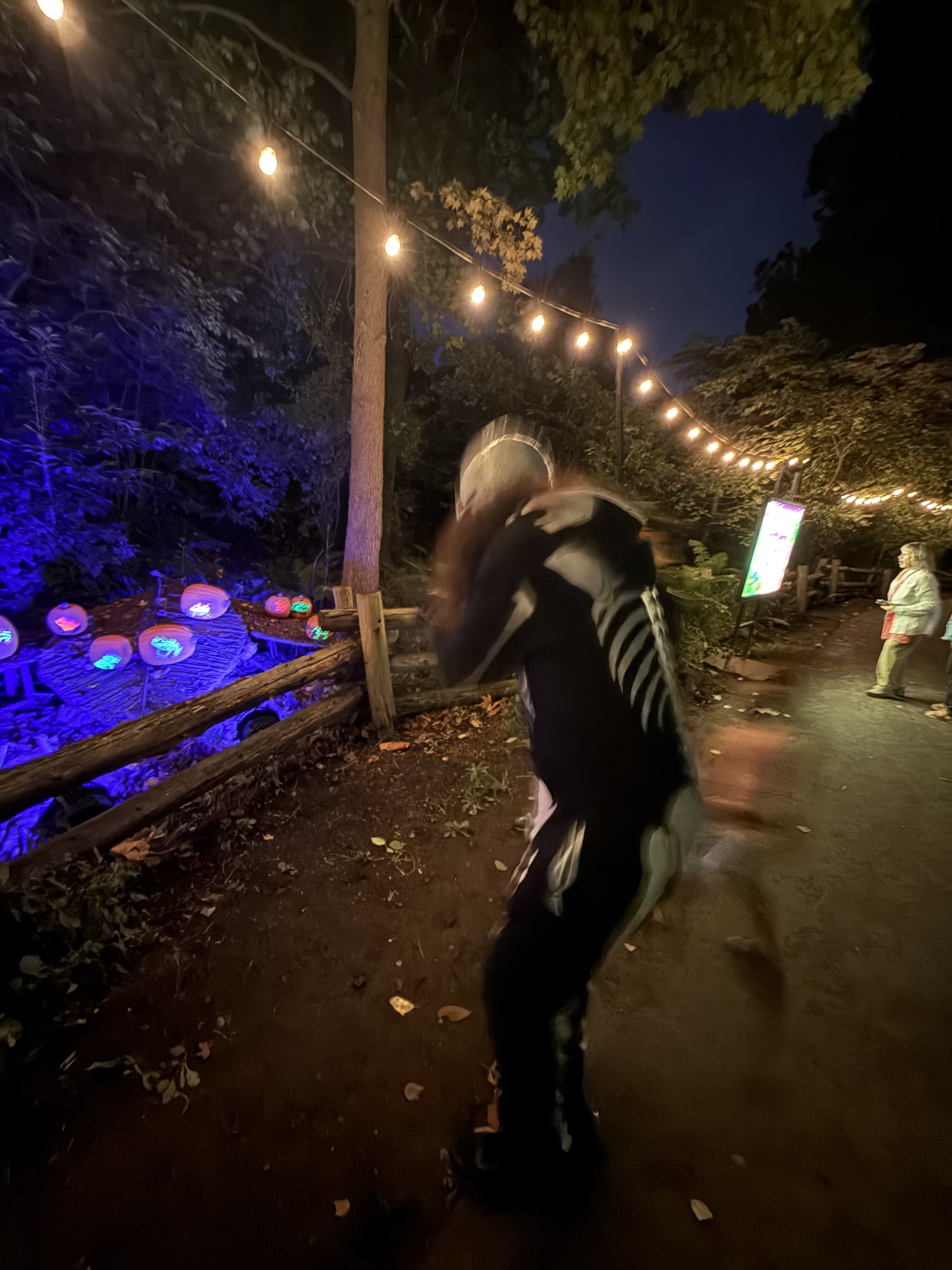
Along the trail, there are also people dressed up as skeletons, and a giant pumpkin head character. While not intentionally scary, I would say that depending on an individual child’s personality, having these suddenly appear in a fairly dark environment with spooky music might be alarming. For older children and adults, though, these characters just add to the immersion.
You can experience Halloween all over New York City in October at no cost just by walking around, but for a fun Halloween-themed evening, the Harvest Glow is an event to consider. There are discounts for zoo members, and I noted a discount code on the site for certain dates (FALLFEST). Book early if you want the earliest entries – there is no time limit once you enter. And if you are already looking ahead to the next holiday, Holiday Lights tickets at the Bronx Zoo are already available!
The Museum of Radio and Television was founded by William S. Paley, who had built CBS up from a small radio station to a powerhouse TV network. In 2007, it was renamed The Paley Center for Media, to better reflect changes in their mission from only radio and TV history to multiple media and their effects on culture and society. The Paley Museum at 25 W 52nd Street in Midtown Manhattan features exhibitions still primarily related to television shows, and also allows access to view vast archives of virtually anything that has been televised, and an entire floor with classic and virtual reality games. Despite having walked past it for decades, I checked the museum out for the first time recently! Spoiler alert, I enjoyed my visit and there is a lot there to do.
There are Paley Archives in Beverly Hills, inside the Beverly Hills Public Library, but the Paley Center in Midtown Manhattan fills multiple floors of a large office building on West 52nd St. You can find out how to become a member on their website (and I will weigh in later on whether I think this might be a good option if you live in NYC), but for one visit you can purchase timed tickets for a 30 minute entry period on a specific day. Once you are in the museum, you can stay until the center closes, so an early time slot is obviously preferable.
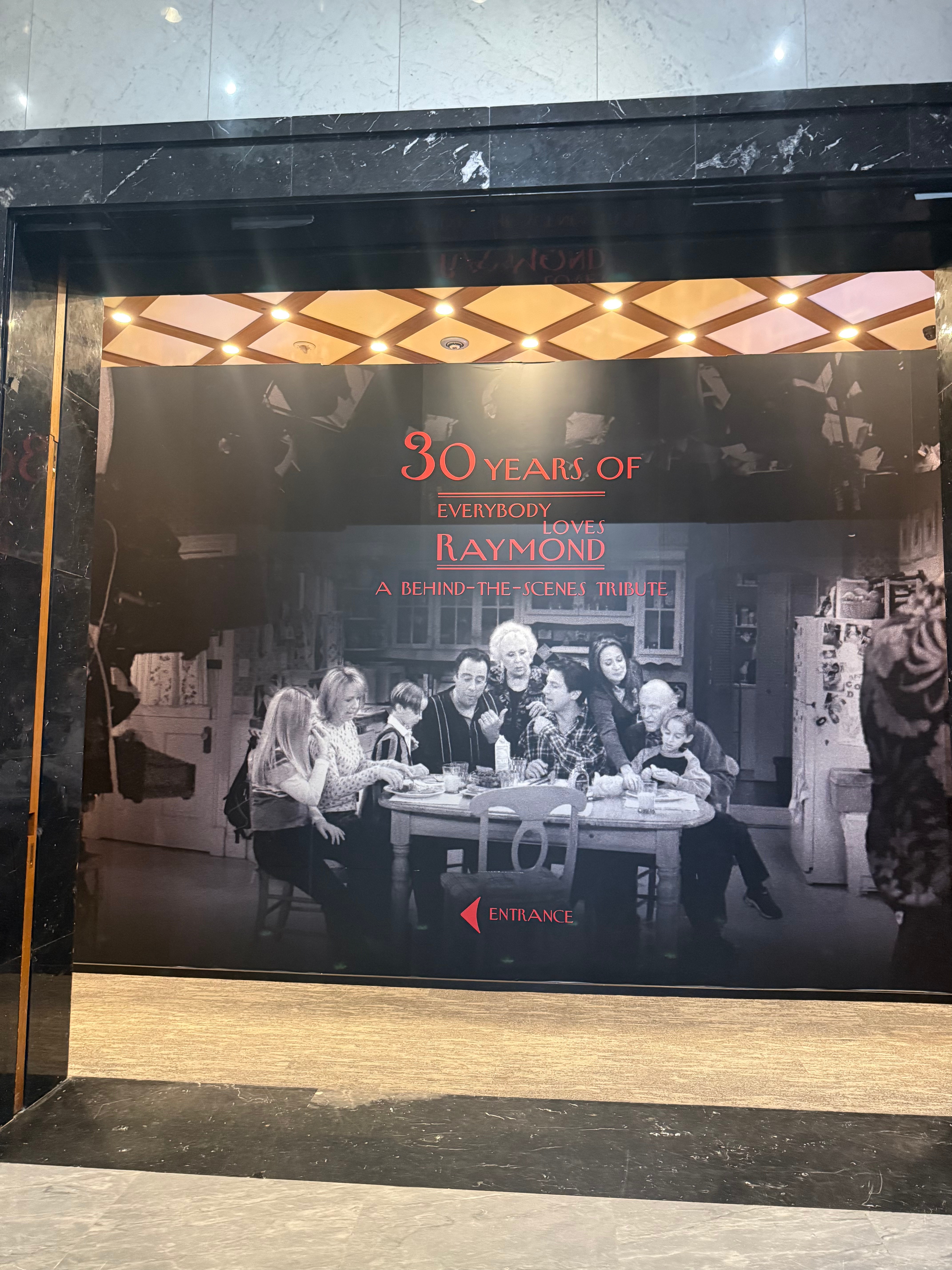
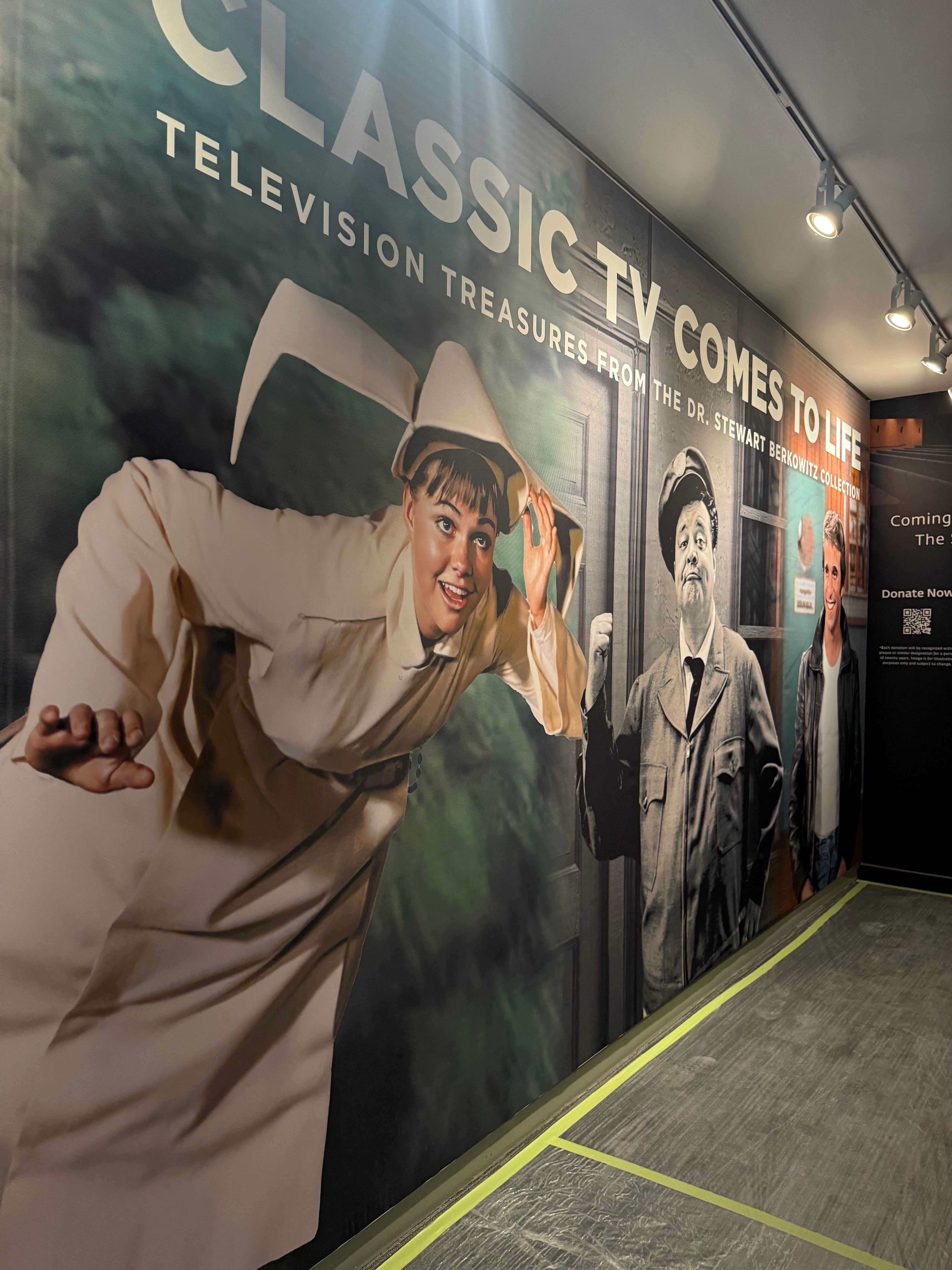
The big exhibition on the ground floor when I went was about the show Everybody Loves Raymond (it is just being replaced by a new exhibit on The Office). I have actually never seen ELR, but I was very impressed with the detail. You could sit on their sofa (photo opportunity!), see an Emmy, look at scripts and costumes, and watch videos from behind the scenes. This was as elaborate as pop-up exhibits about individual shows (which often charge as much as more for one exhibit than the Paley Museum does for the entire experience), and more detailed than what you could see on a Studio Tour in Los Angeles (I’ve done many of those).
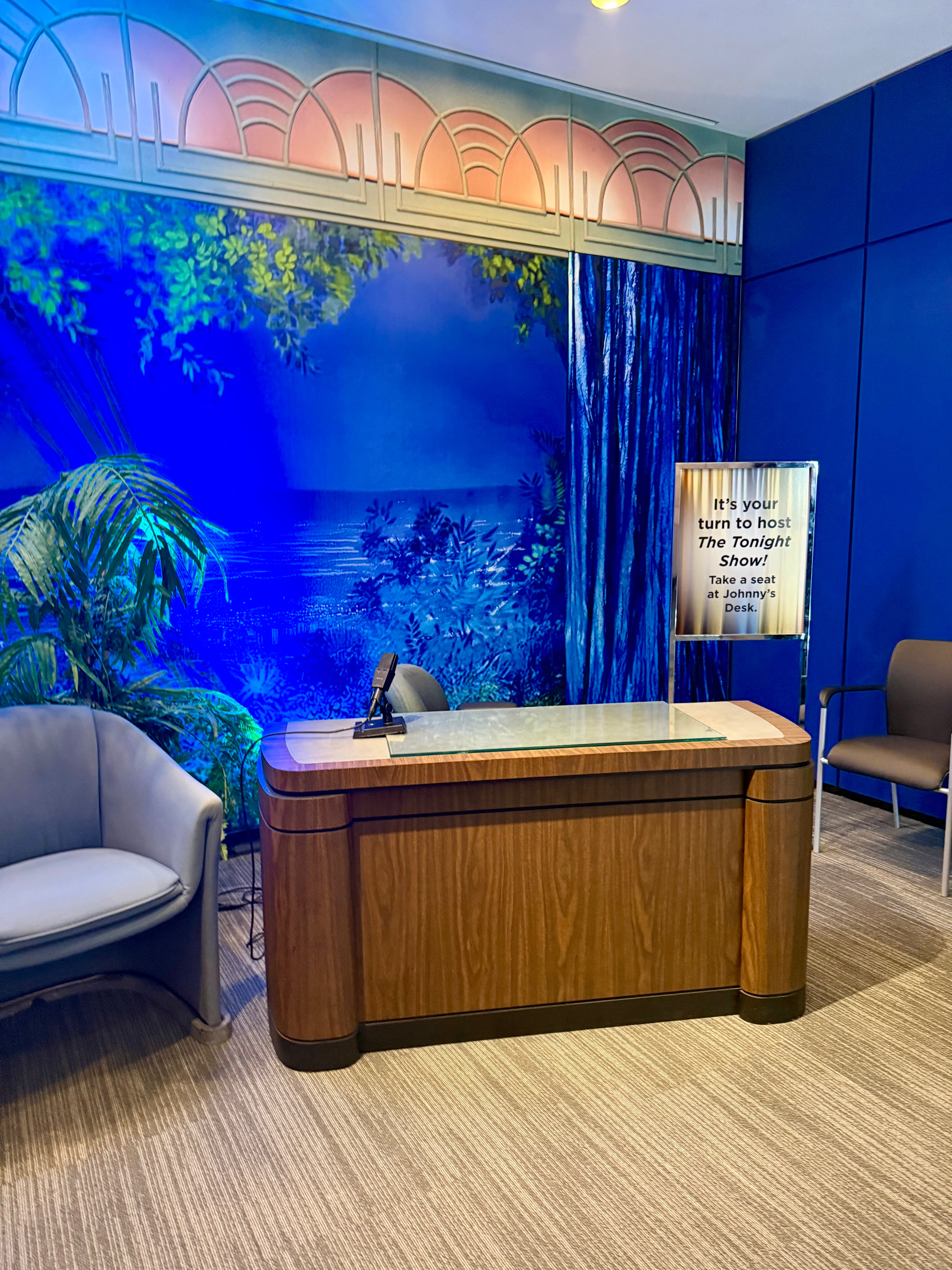
Heading up (there is an elevator), there is an exhibit about Johnny Carson’s The Tonight Show (which ran from 1972-1992, taped in Burbank, California). They were playing the last episode he ever aired, and you could sit at his desk (another photo op!), or on the sofa where so many famous guests sat, or in seats from the studio audience.
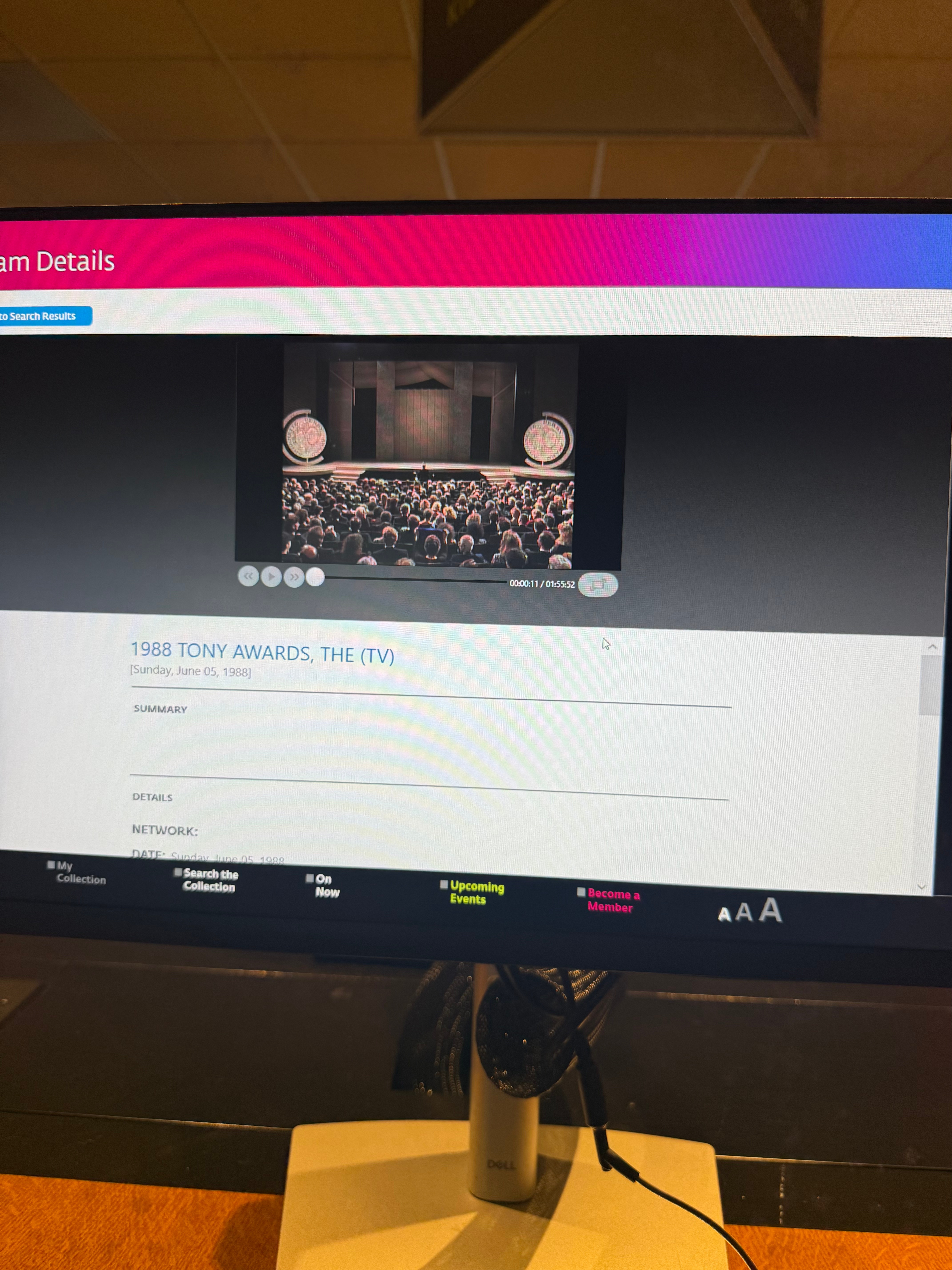
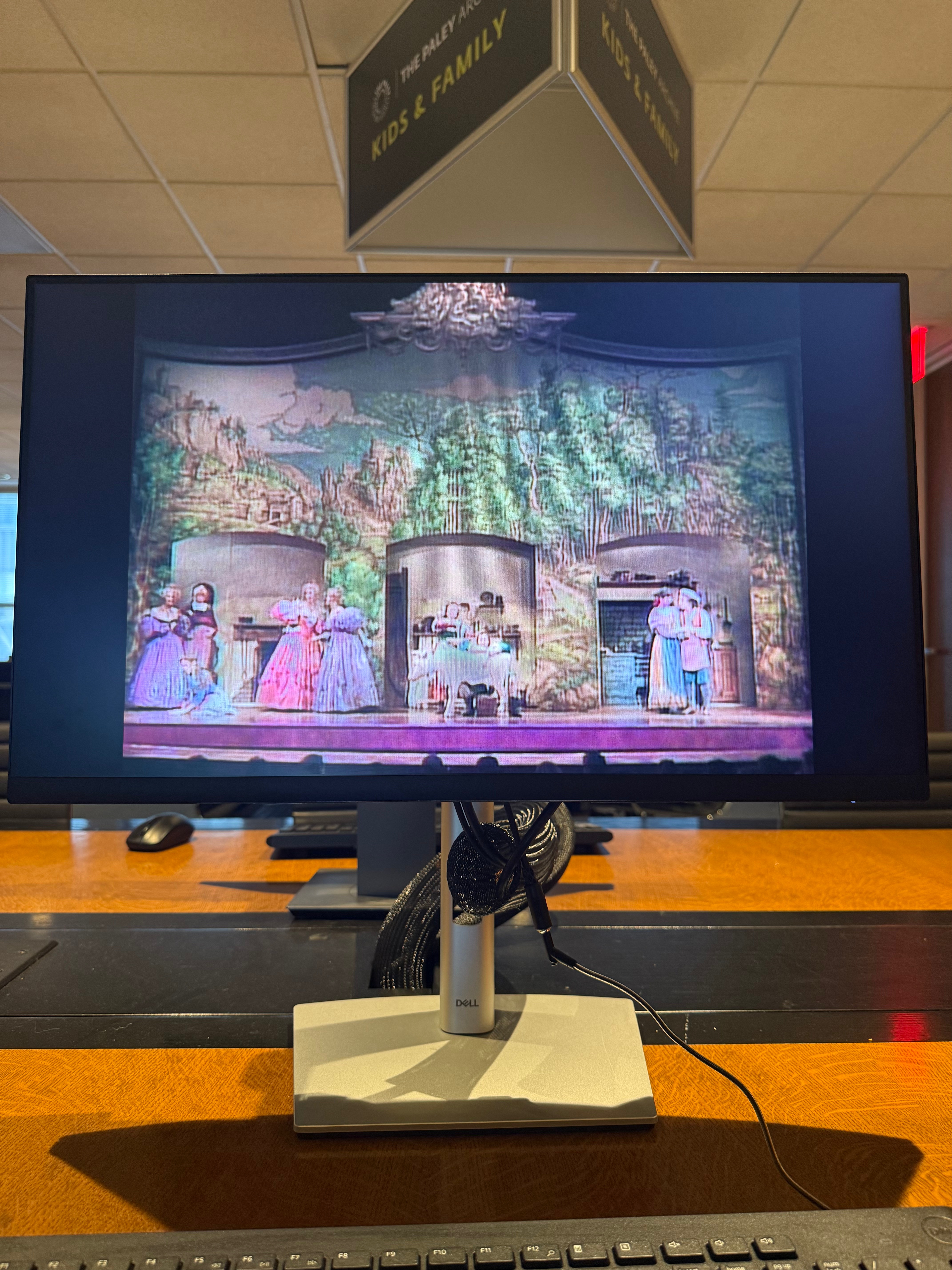
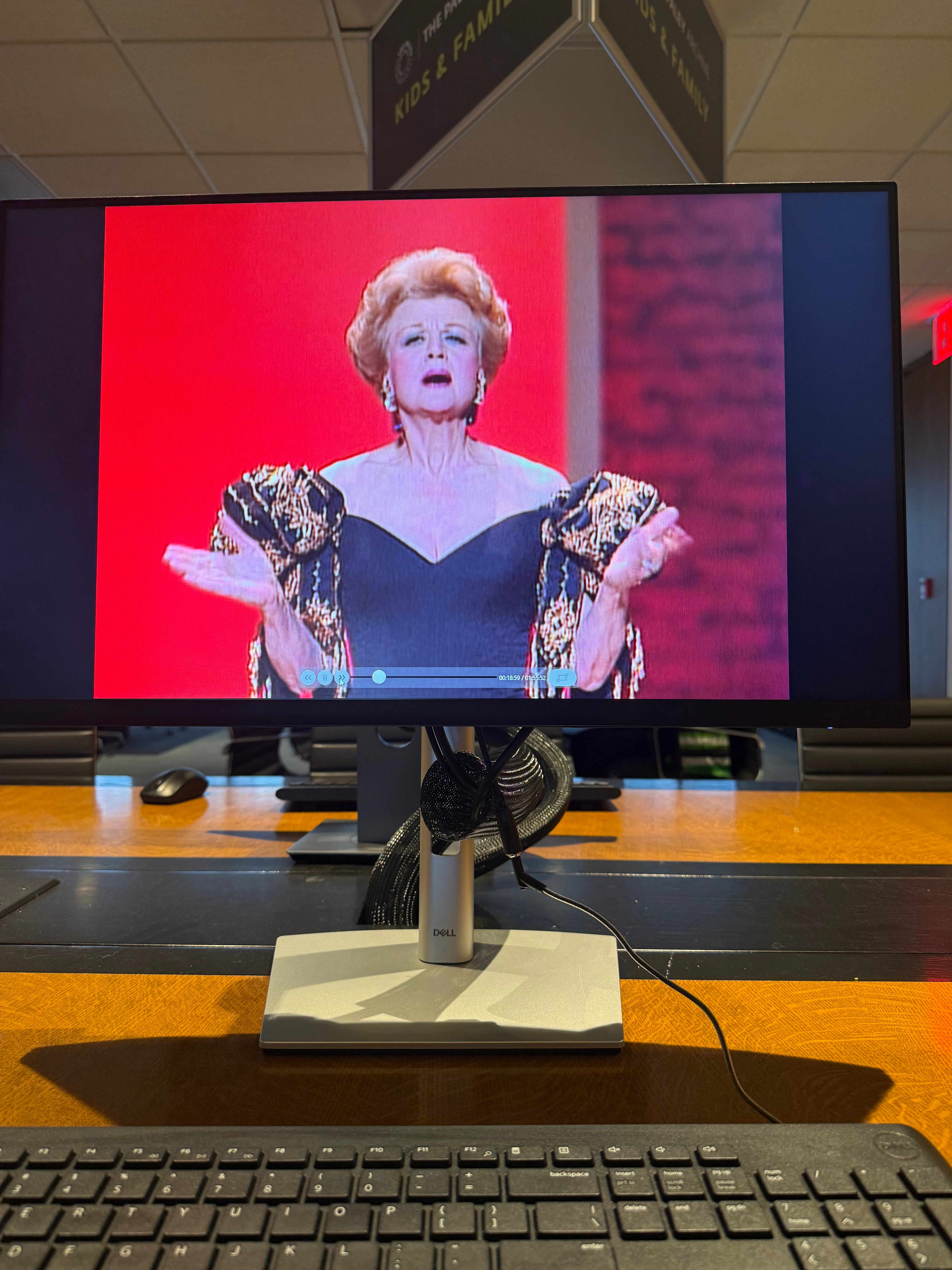
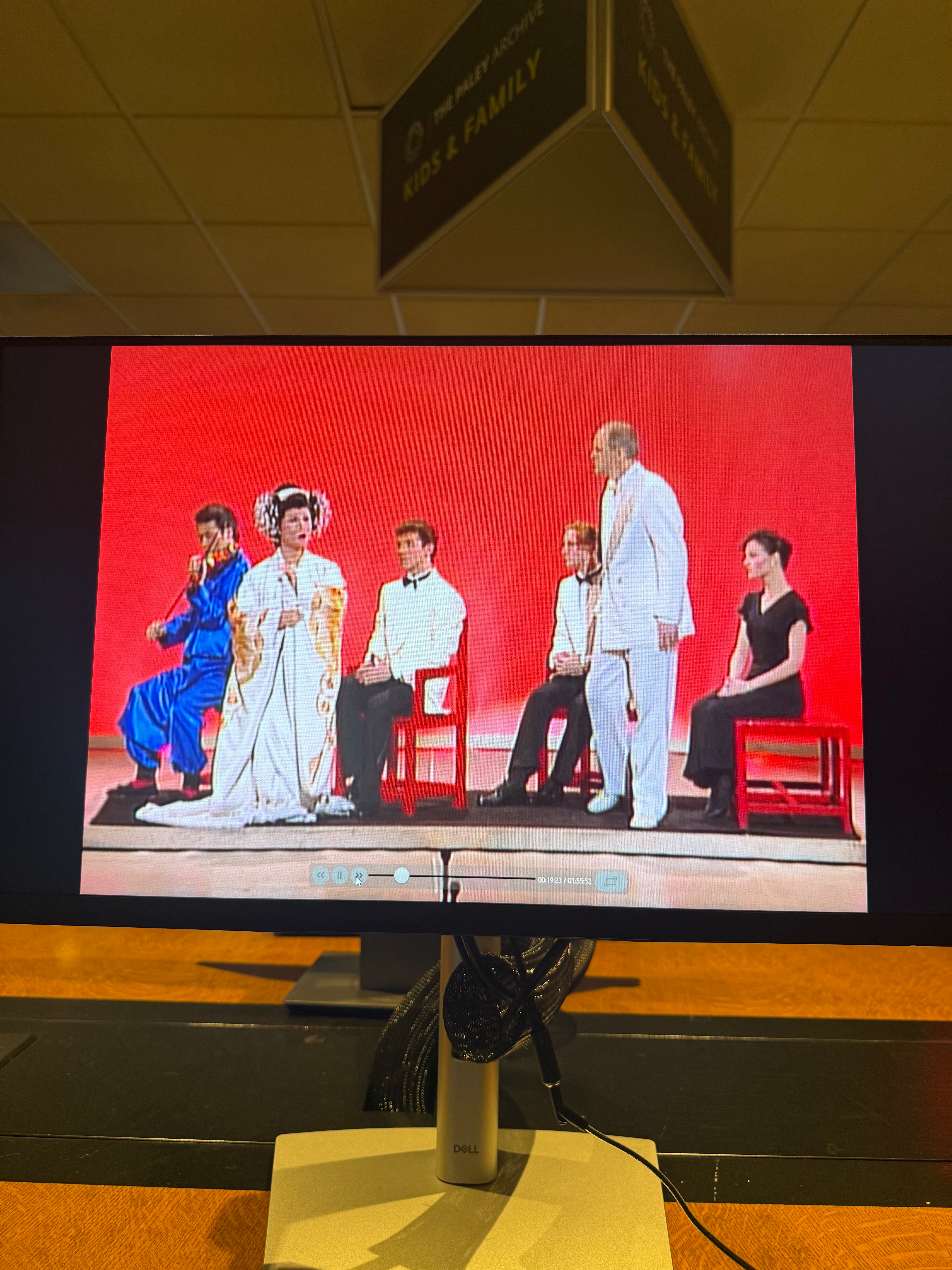
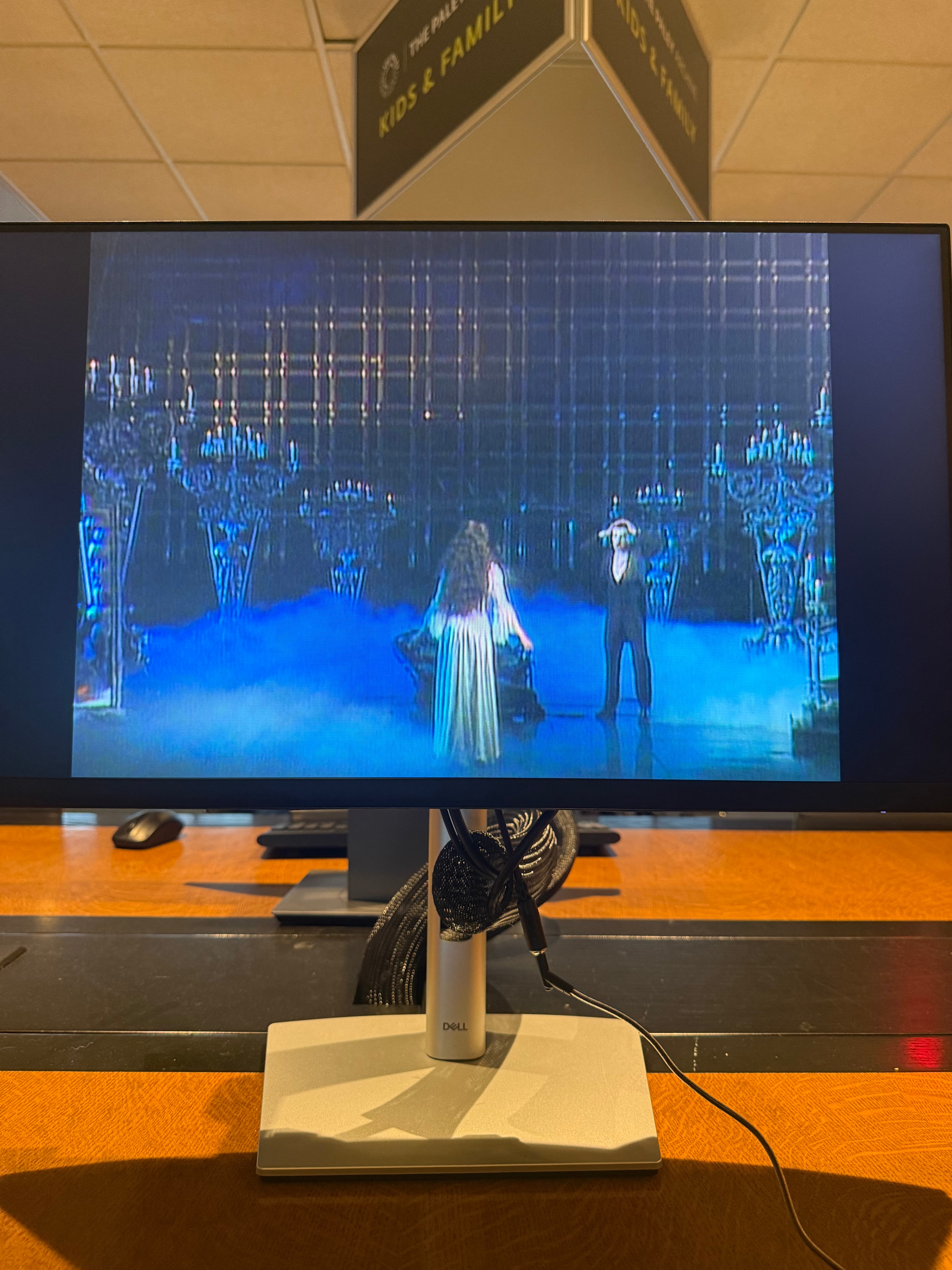
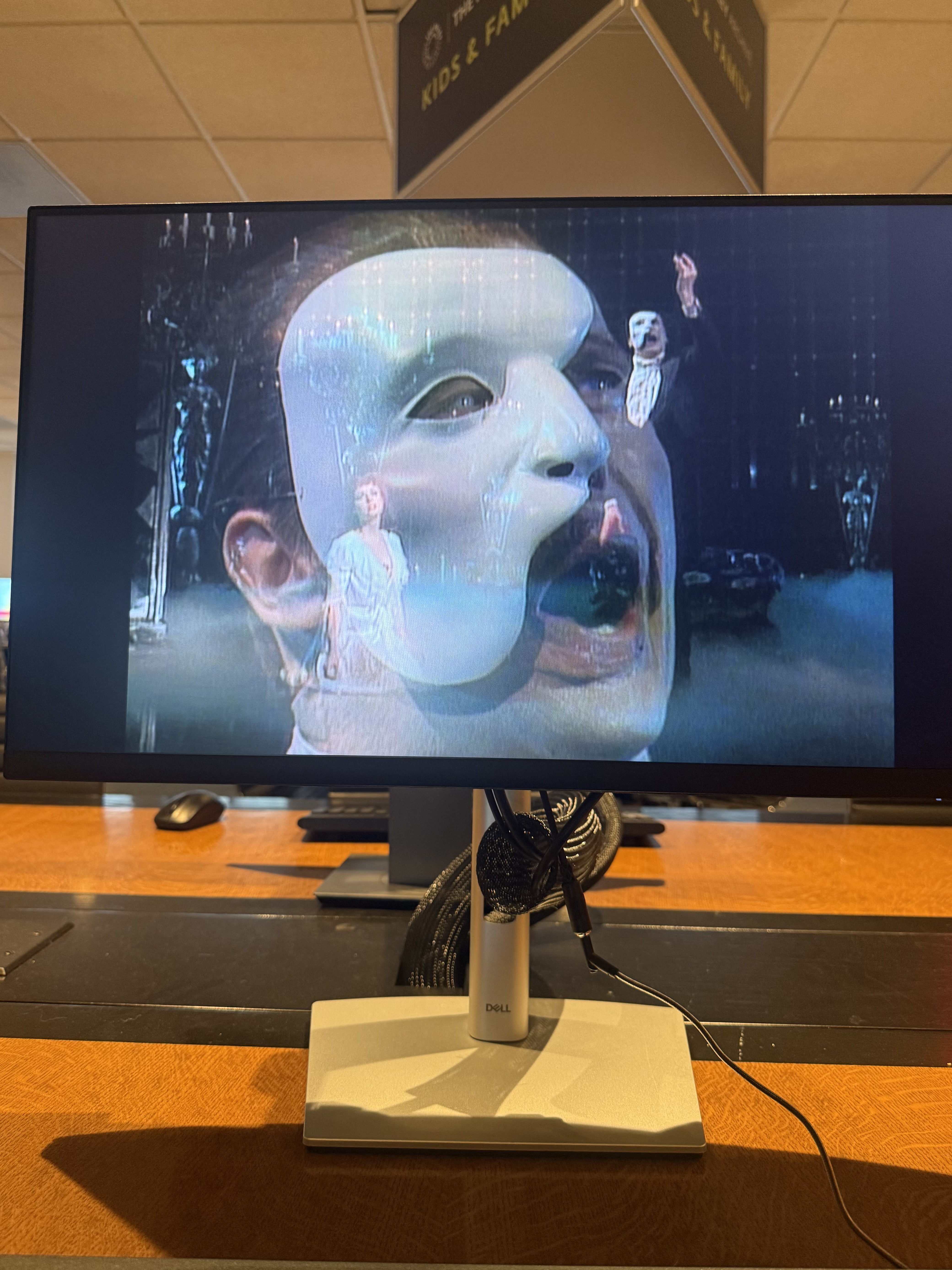
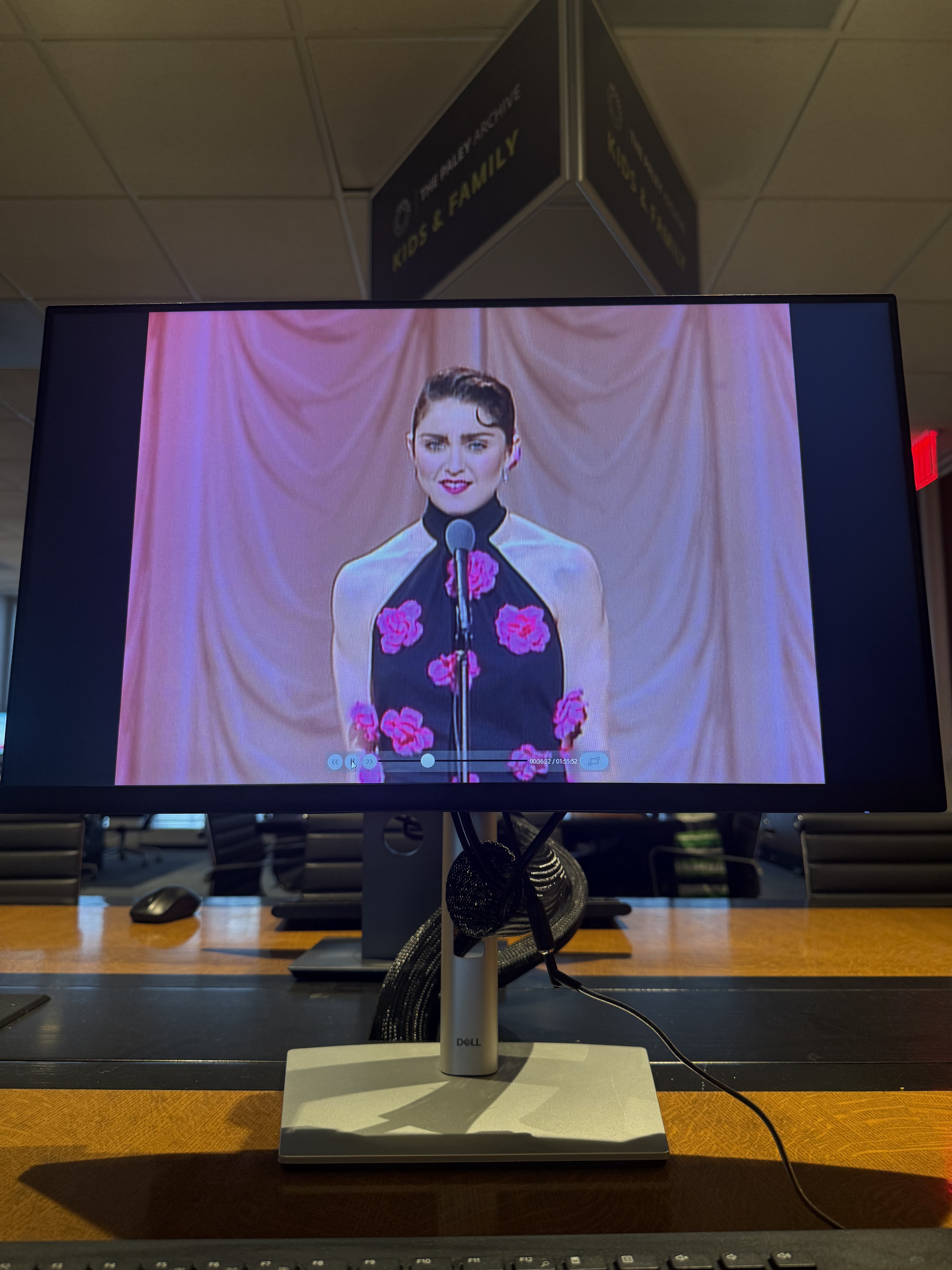
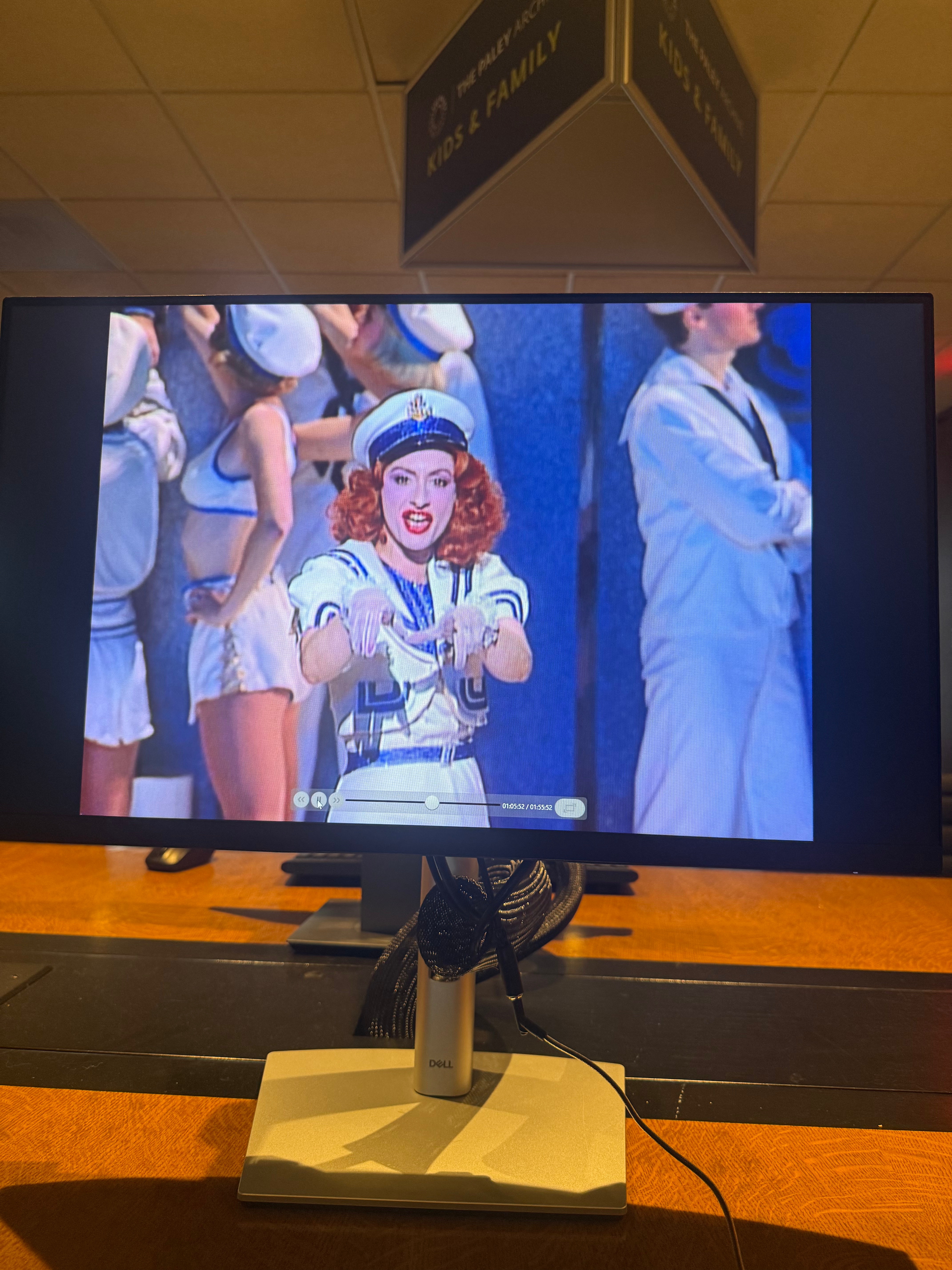
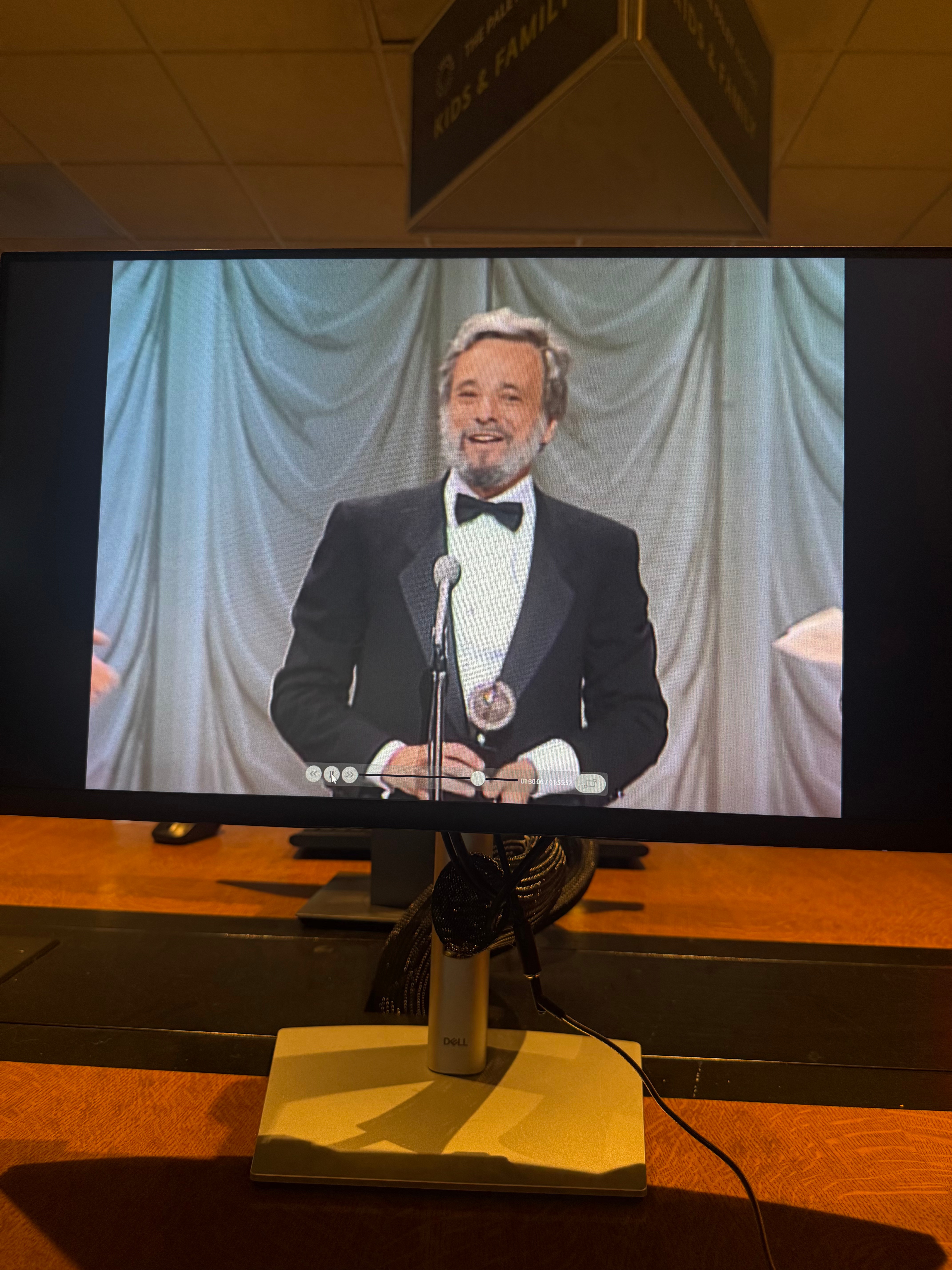
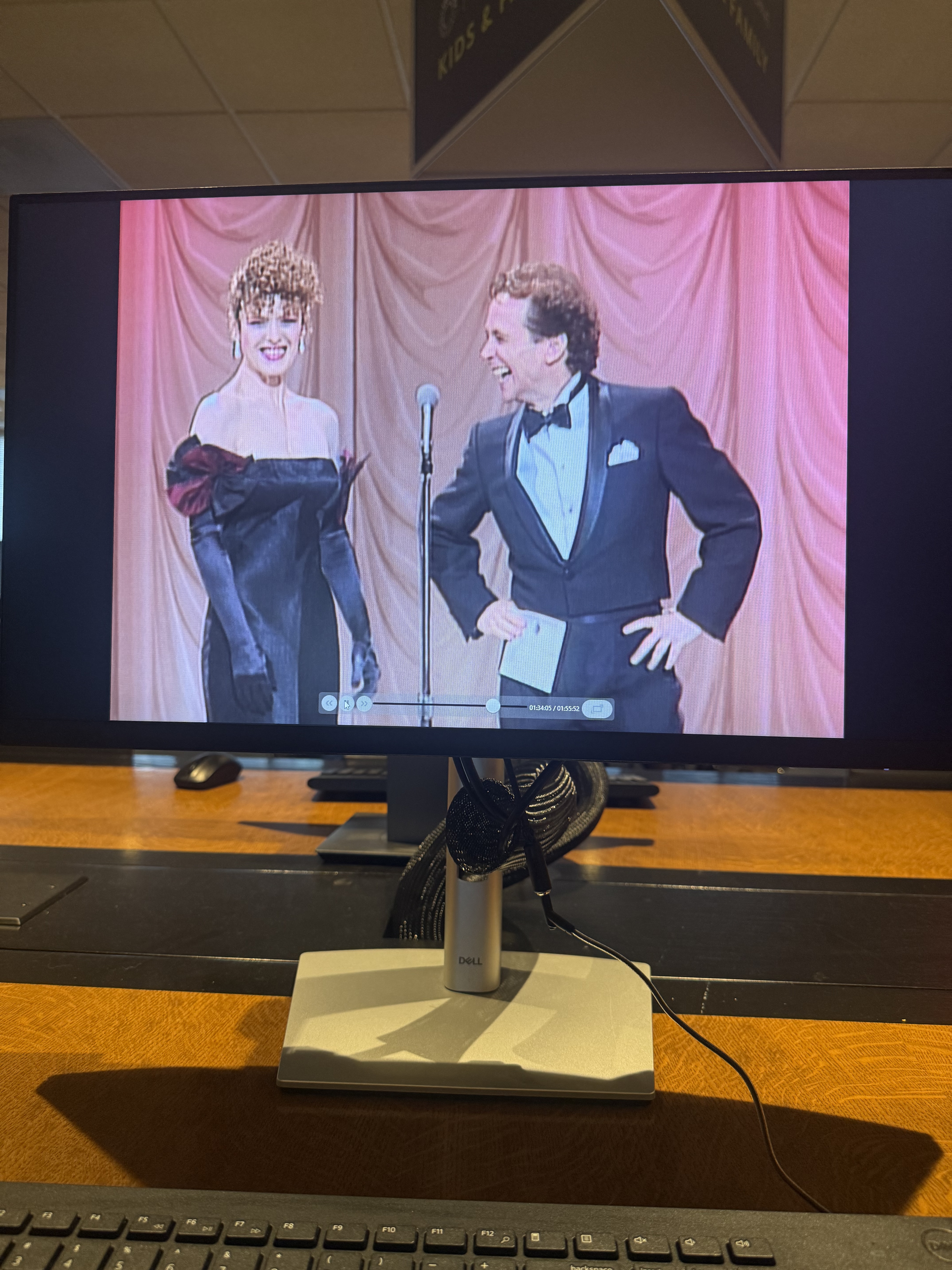
Heading up again, I visited the Paley archives. If you are a Paley member, you can visit them as often as you would like, but if you are on a one-day ticket, you get 90 minutes. They have over 160,000 television and radio programs and advertisements, covering more than 100 years of television and radio history. The collection spans all genres: comedy, drama, news, public affairs, performing arts, children’s, sports, reality, animation, and documentary, and includes a significant international presence, with 70 countries represented. You sit at a large desk with no one on either side of you, with comfortable headphones. You could watch Jacqueline Kennedy give a tour of The White House, or watch David Bowie be the musical guest on Saturday Night Live, there are almost limitless options. I had decided in advance to pull up the 1988 Tony Awards, which I had watched at home in Chicago about two months before I moved to New York City. What a treat! The quality of what you view in the archives is significantly better than videos you can find on YouTube. I had to scrub through a few things to make it in 90 minutes, but Into the Woods and Phantom of the Opera traded off awards, and M Butterfly won Best Play (and I liked the short live excerpts from plays they performed in addition to the musical numbers). There was a tribute to Michael Bennett (who had died in the previous year from AIDS), Patti LuPone sang and danced in Anything Goes, Angela Lansbury hosted, and Bernadette Peters and Joel Grey presented. A delight!
On the top floor, there is a gaming room with over 65 video games and over 25 virtual reality games. I saw on the website that this has been voted the best birthday party venue in NYC, and I can see why! If you enjoy video games or someone in your family does, I could also see a day pass or even a yearly membership being worth it just for this area of the Center.
The Paley Center has continuous screenings in their basement floor theater. The day I went, it was episodes of Everybody Loves Raymond, with one episode of Downtown Abbey thrown in (because the new movie was being released). They also have regular in-person events with television creatives, usually around either an exhibition on display, or around an anniversary of a certain show (the 40th anniversary of The Golden Girls is an upcoming event, for example). There is PaleyFest yearly in October – last year there were moderated talks with creatives and performers from Outlander, Blue Bloods, What We Do in the Shadows, and The Diplomat, among others. PaleyFest 2025 participants should be announced soon.
I enjoyed my visit to the Paley Museum and found the price for a one day pass reasonable. I could see that if you were planning to see a few of the different exhibitions throughout the year, enjoyed visiting the archive, or loved playing video games, that a membership could make a lot of sense. With so many opportunities in NYC, it’s easy to overlook some like the Paley Center – but keep it in mind!
I wrote quite a while ago (2014, 11 years ago!) about immersive theatre in general. At the time, Sleep No More was going strong, as was The Drowned Man (also by Punchdrunk, the OG of immersive theatre – and to be clear, I mean original GOAT, not Opera Ghost) in London, Then She Fell in Brooklyn, and Queen of the Night in midtown. The two Punchdrunk shows were what I think of as “choose your own adventure” shows, where you wander a space freely and in effect direct your own version of the theatrical experience. Then She Fell was controlled, with viewers ushered into a series of rooms to experience a story. And Queen of the Night had some opportunities to be taken off into different rooms (“one-on-ones”) but the bulk of the evening involved sitting at tables watching a show, and perhaps bartering with other tables for better food.
What a difference a decade (plus) has made! Sleep No More closed at the very beginning of 2025, having struggled after covid lock down (a free-flowing experience like that was even harder to adapt to early covid restrictions once theatre began to re-emerge in September of 2021), and being unable to pay rising rents. (Sleep No More does still have productions currently running in Shanghai and Seoul, who wants to go with me?) The Drowned Man closed (the space it was in near Piccadilly was redeveloped) and Punchdrunk purchased their own space in Woolwich (easily accessible from central London on the new Elizabeth line). Since then they had one traditional show, based loosely on stories in ancient Greece, The Burnt City – which has now also closed (but I was able to see it twice). They have since pivoted to trying one more controlled immersive theatrical experience (Viola’s Room – which is now in NYC, more about that later), and just announced Lander 23, which will merge video gaming with immersive theater.
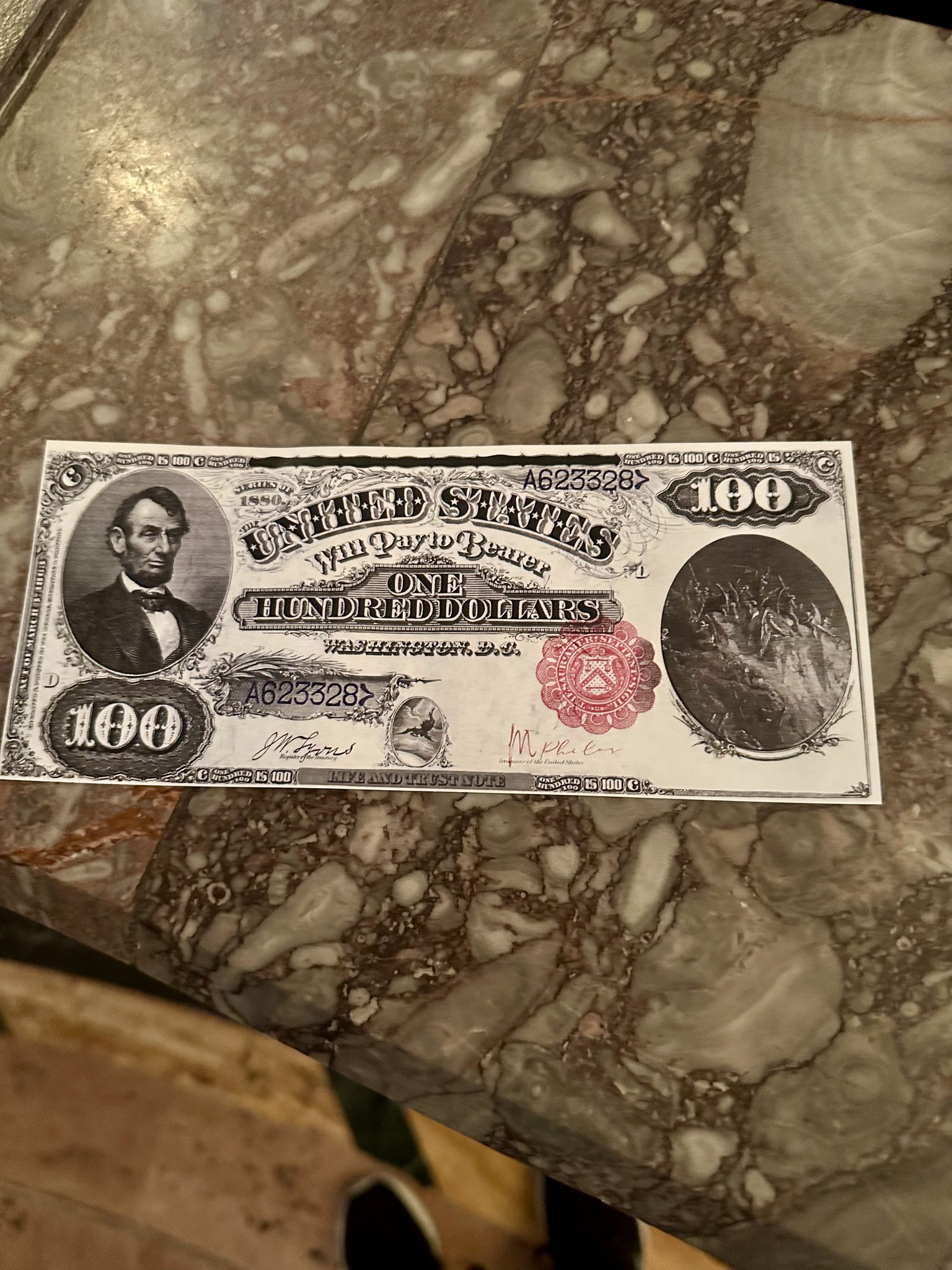
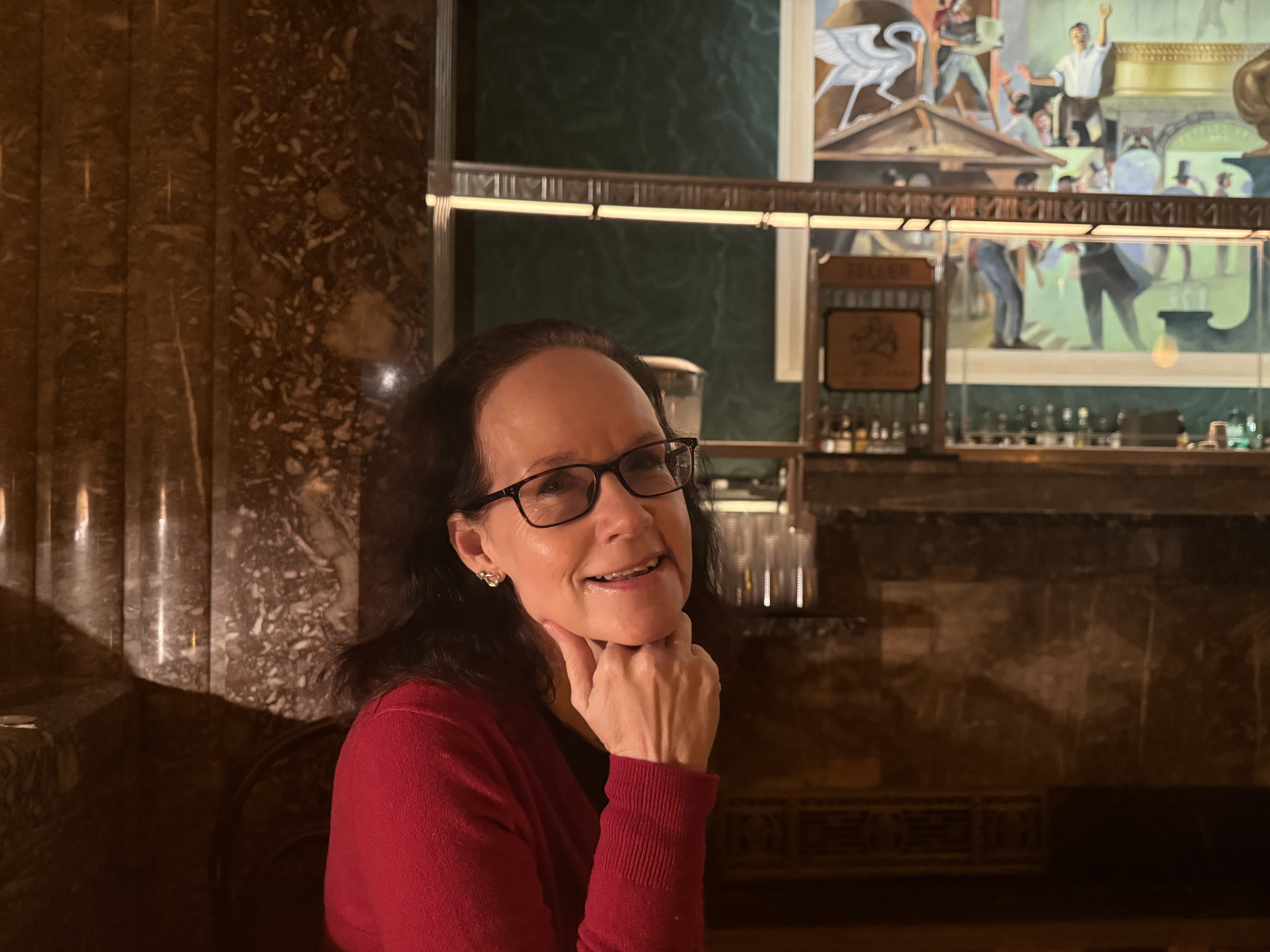
Meanwhile, here in NYC Emursive (the producer but not the creator of Sleep No More) launched an ambitious “choose your own adventure” immersive experience in lower Manhattan last summer. Titled Life and Trust, it was loosely based on the story of Faust, but set just as the great stock market crash of 1929 was about to put an end to the roaring twenties. The set was enormous and detailed, and the story took place on five different levels. In addition to the Faust story (in this case, Conwell vs Mephisto), there were storylines for Oscar Wilde’s Dorian Gray, Evelyn Nesbit, and a host of new characters. There were many extraordinary scenes – two that took place in a boxing ring – and the finale was fantastic. It opened last summer and closed abruptly earlier this year. And I mean really suddenly! They had a show on Saturday night as usual and Sunday morning they took away all social media other than an announcement that they had closed. They certainly were having a hard time making this work financially, but the sudden closing also had me wondering if there was something else going on (because if you are losing money, announcing a closing can spur interest and increase sales, sometimes repeatedly). The people in charge have not made a statement about the closing (that I have heard) but many of the performers are holding a one night event on the Upper West Side next month to discuss the experience of developing and being in the show and I will be there. After this, I wonder if NYC will not see another large-scale traditional immersive theater experience for some time.
Some Broadway musicals have had an immersive element. In my post from 2014, I mention the musical Here Lies Love, with music by David Byrne (see above, he was on the floor for one of the shows I saw in 2023) and Fatboy Slim, about the life of Imelda Marcos. At that point it was a huge hit at the Public Theater, and in 2023 it moved to the Broadway Theatre. Staged with a dance floor where you could move around with performers within an innovative set, becoming part of the crowd in Manila, I loved it and experienced it multiple times. If you were on the floor the show was quite immersive, but there were also fixed seats where there was little immersion. It was not a financial success, closing after 33 previews and 149 regular performances. Currently on Broadway there is an semi-immersive version of Cabaret, which transferred from the West End last spring but has not been received as well here. It is closing in October (if not sooner). Staged in the round, there are cabaret seats at tables where you may have interactions with the actors. The most immersive part of this production of Cabaret occurs before the performance, when musical and dance shows take place all around the public areas of the theater.
One could argue that the famous outside walk taken by the actor playing Joe Gillis in the recent Tony-winning revival of Sunset BLVD, directed by Jamie Lloyd, had an interactive quality. I experienced it multiple times from W 44th Street or Shubert Alley (see below, and here for a photo montage, and here and here for video), as well as seeing the livestream during the several times I attended the musical. Lloyd’s current revival of Evita, almost certain to arrive on Broadway in the next few years, has a similar immersive element, when people outside the theatre become the people of Argentina listening to Eva Peron sing her most famous song.
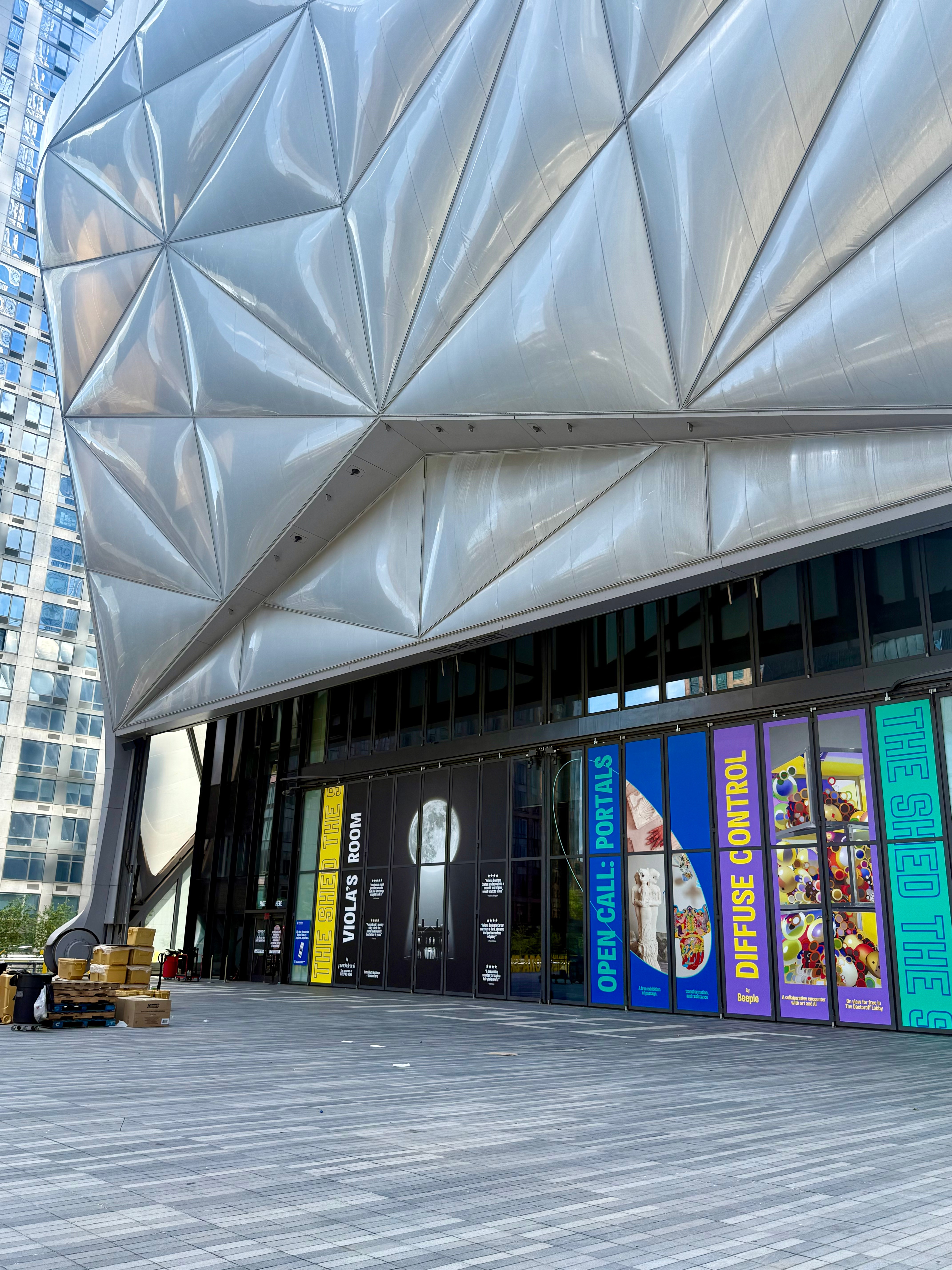
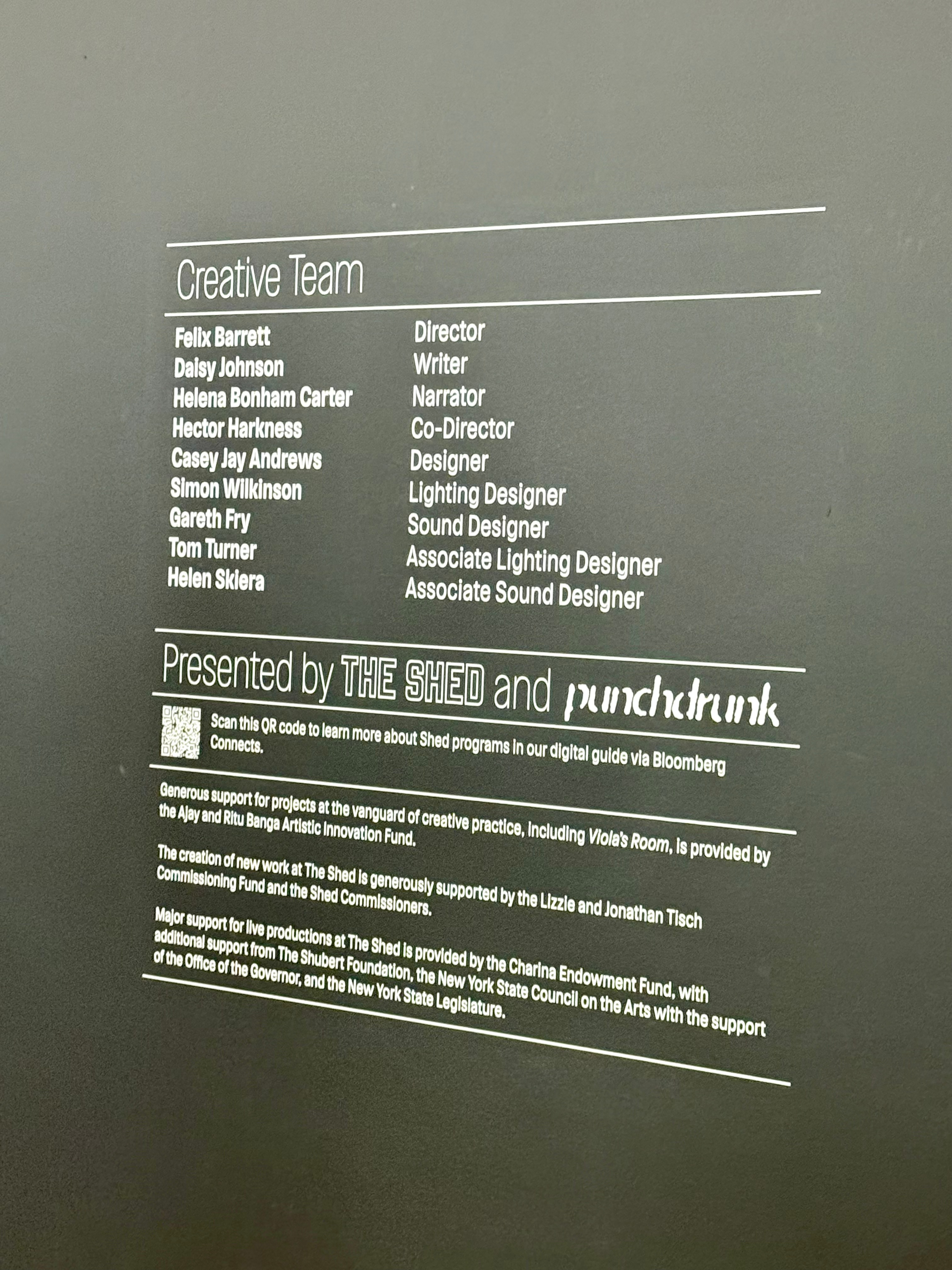
As I mentioned before, Punchdrunk (the OG creator of true classic immersive theatrical experiences, such as Sleep No More) has a current show at the Shed, Viola’s Room. a smaller-scale work by Punchdrunk founder Felix Barrett that invites audience members to move through a labyrinthine installation inspired by Barry Pain’s 1901 gothic short story “The Moon-Slave,” as adapted by the British writer Daisy Johnson. Participants wear headphones and are guided through the 50-minute experience at the Shed via narration in the voice of Helena Bonham Carter.
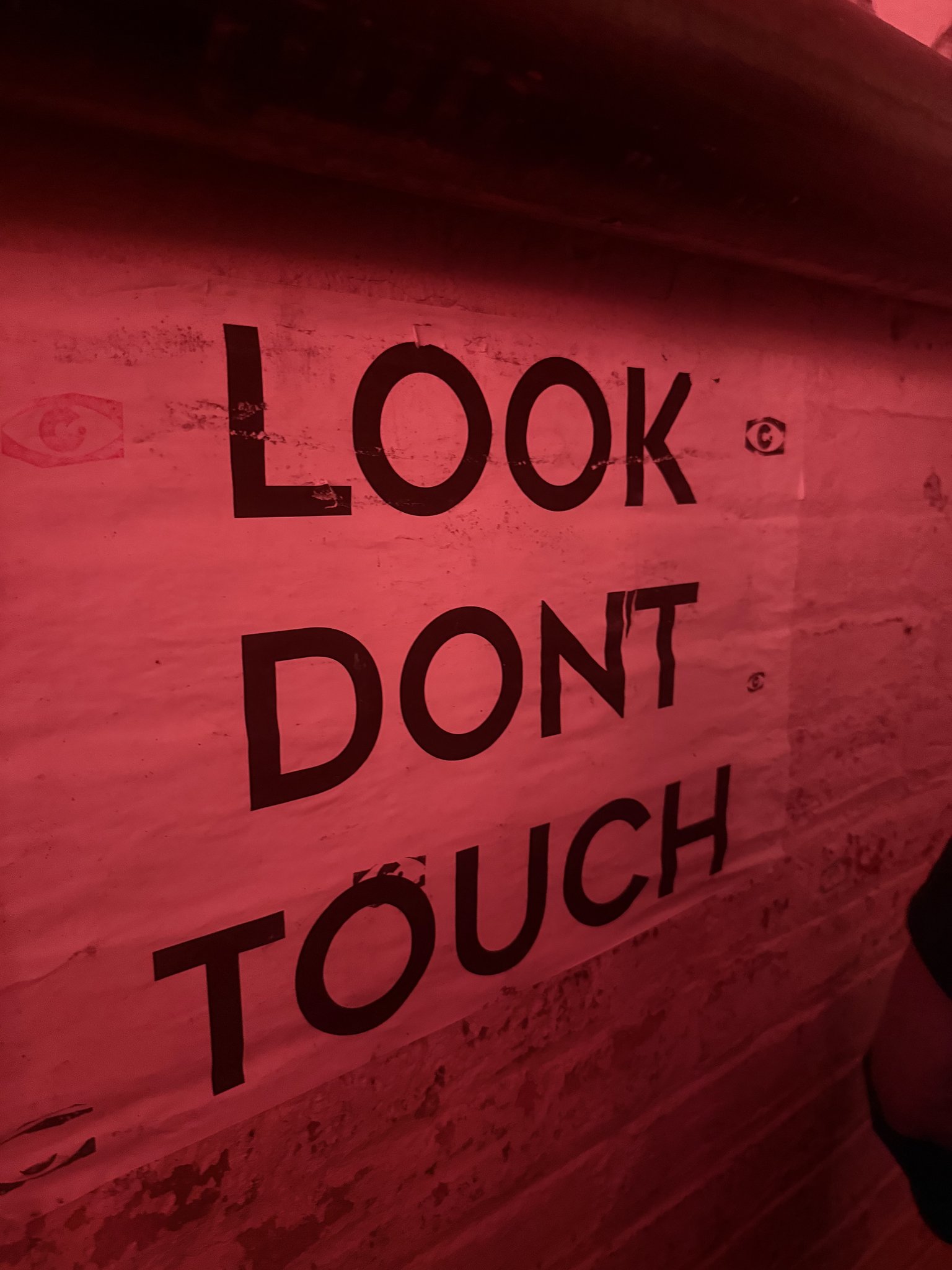
One of the more unusual things about Viola’s Room is that you experience it barefoot. There are places to clean and sanitize your feet before and after the experience. They will take your shoes and bags and put them in a box in your first room, and they are waiting for you when you enter the last room. In that first room, you will get headphones and test them out. You are with a small group of people, and instructions are to “follow the light” so you are led by light cues through a series of elaborate rooms that deepen the story being whispered in our ears by Helena Bonham Carter. There are some moments of total darkness, some areas that might bother people with claustrophobia, one instance of crawling (although we were asked in advance if that was doable so there must be an alternate route if it is not), and extremely varied floor surfaces. Like the larger scale Punchdrunk shows, there are scents that change between environments, to immerse multiple senses. Viola’s Room will be at The Shed until October 19th.
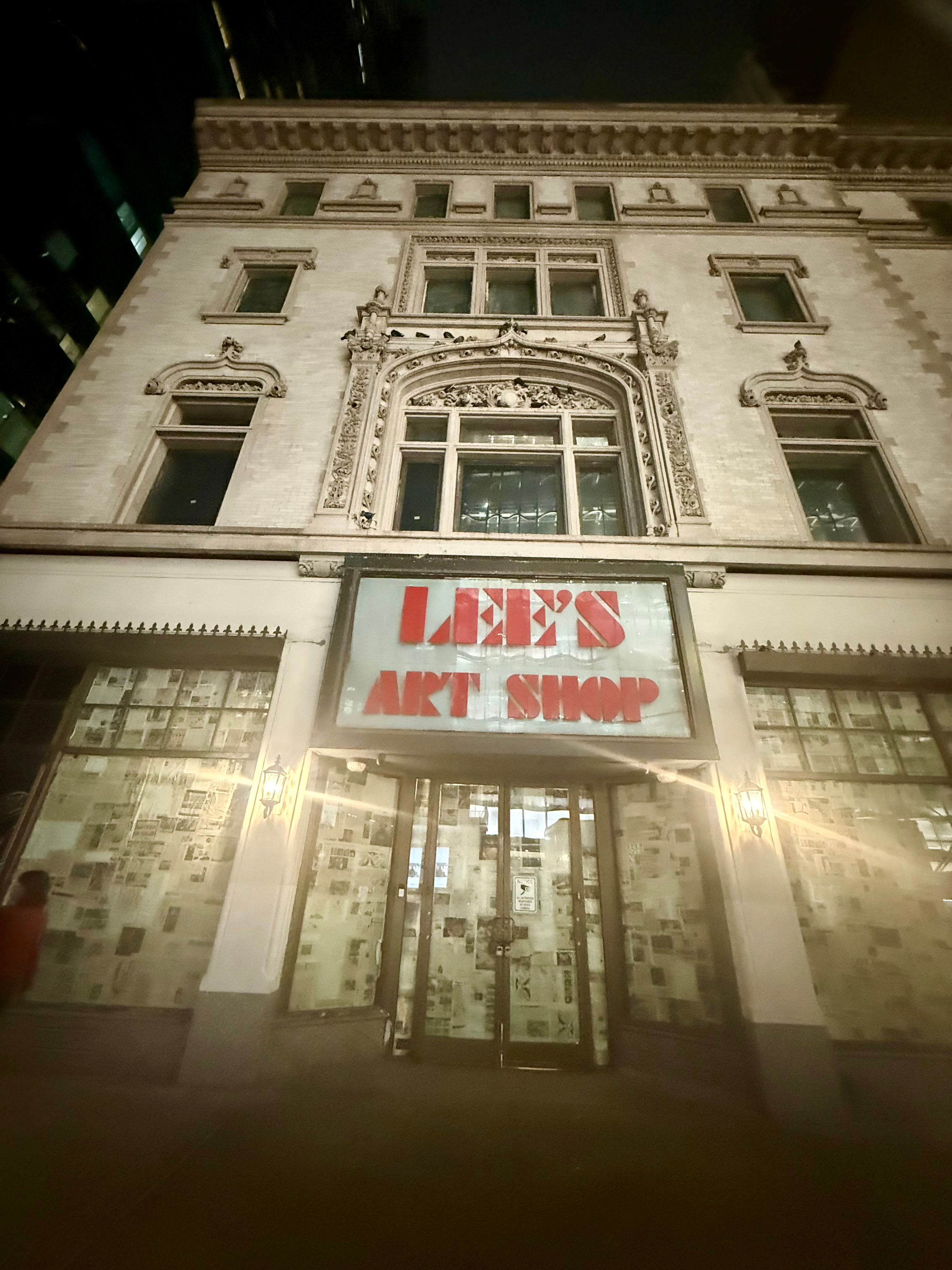
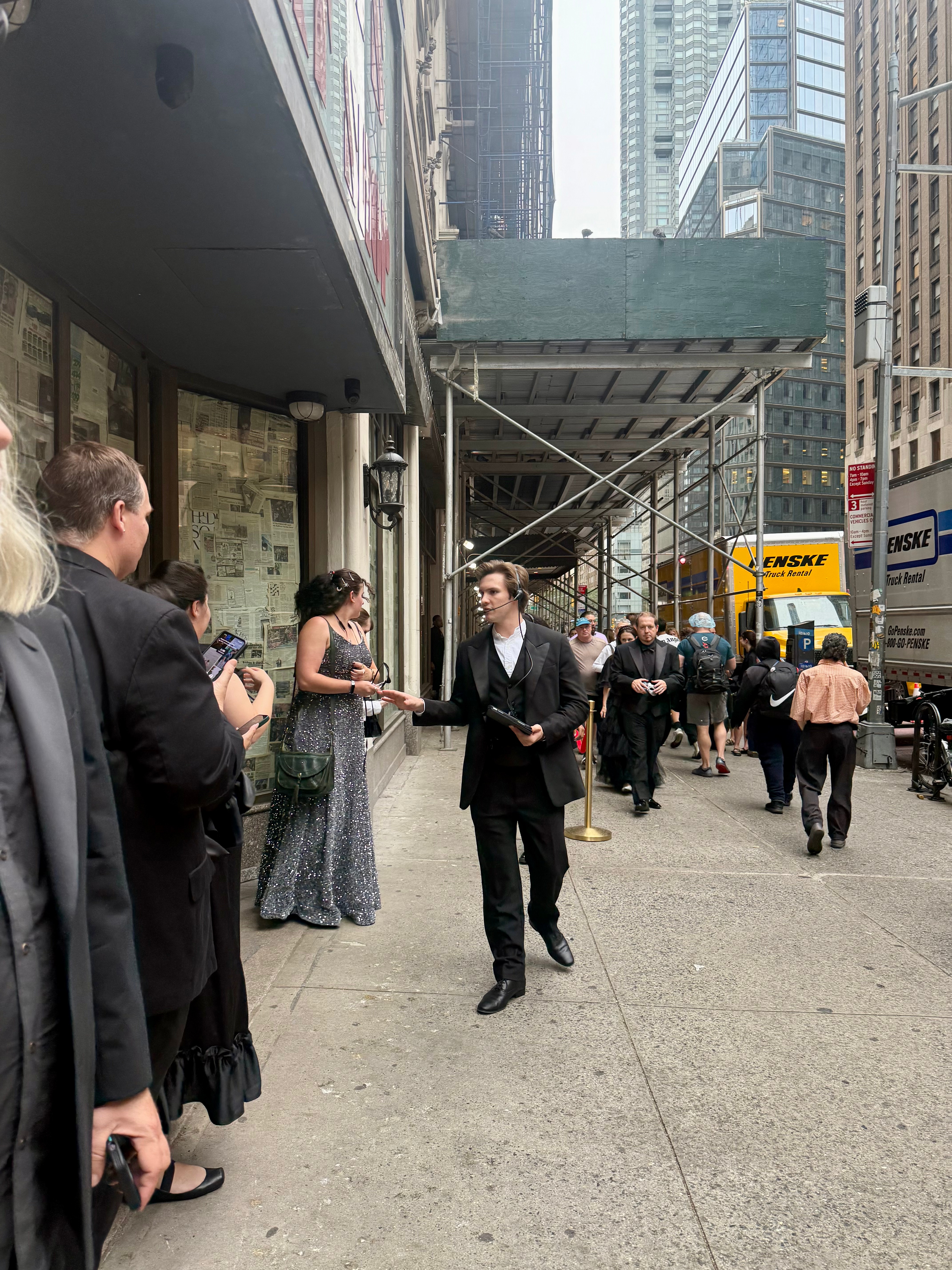
Perhaps the most buzzed about immersive theater taking place in New York City right now is Masquerade, a new immersive version of Andrew Lloyd Webber’s Phantom of the Opera. Set in a completely transformed building that once was Lee’s Art Shop on West 57th Street, this is not a “choose your own adventure” wander but rather a guided experience through the story and songs, in small groups of 50-60 people per 15 minute “pulse.” There are six “pulses” or showtimes for every evening (and matinees on Saturday and Sunday), with different actors playing Phantom and Christine for each time slot.
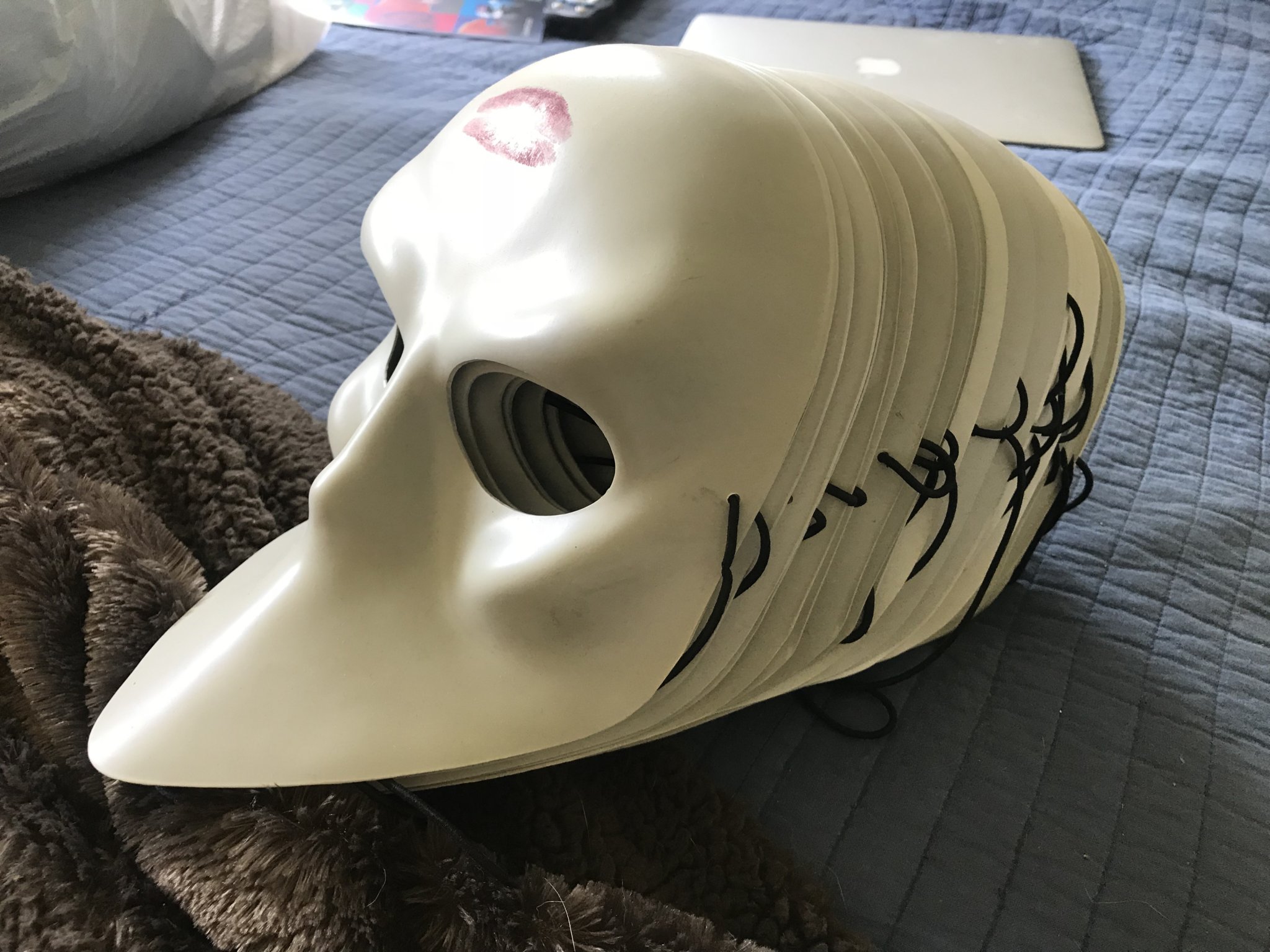
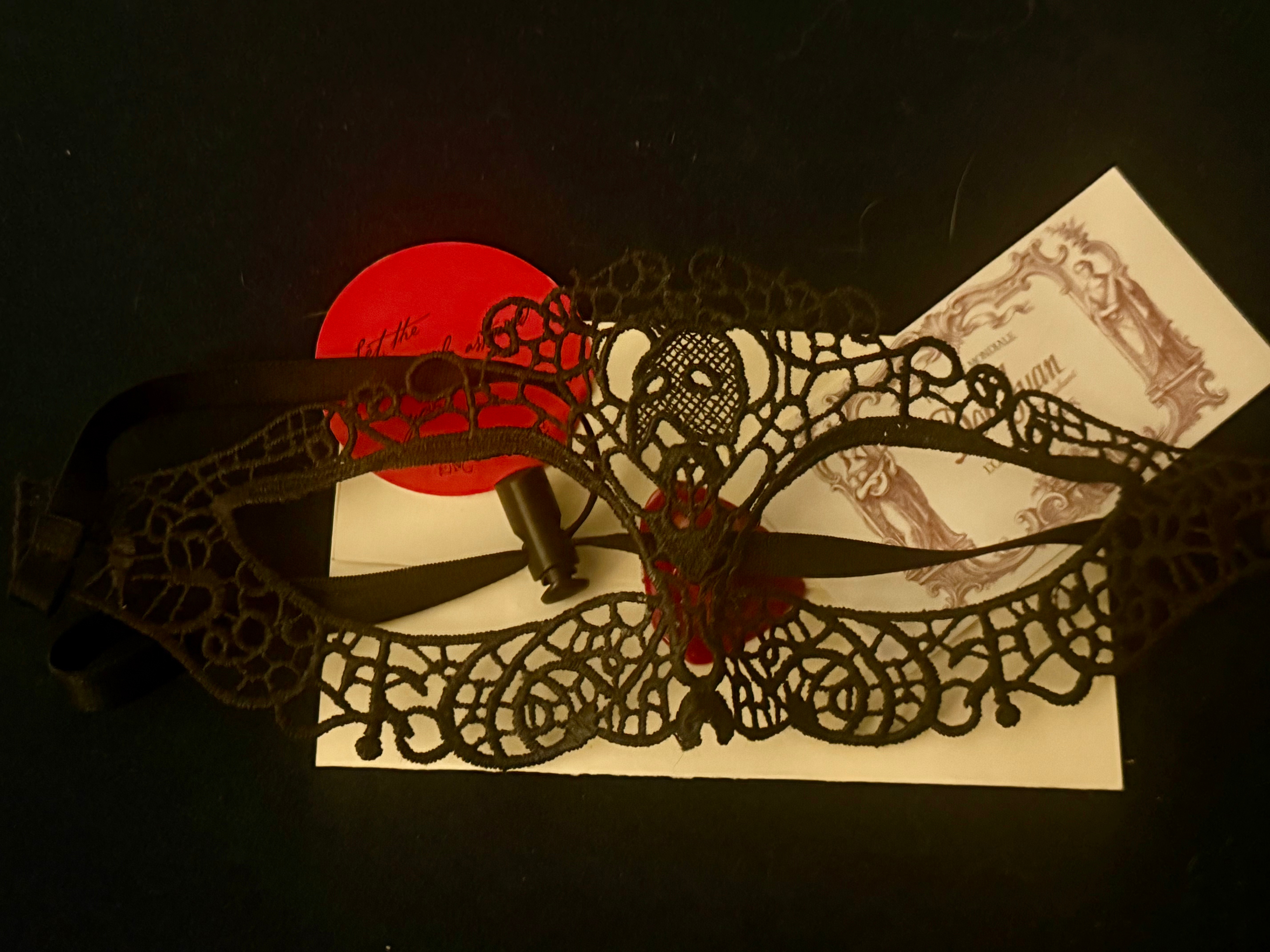
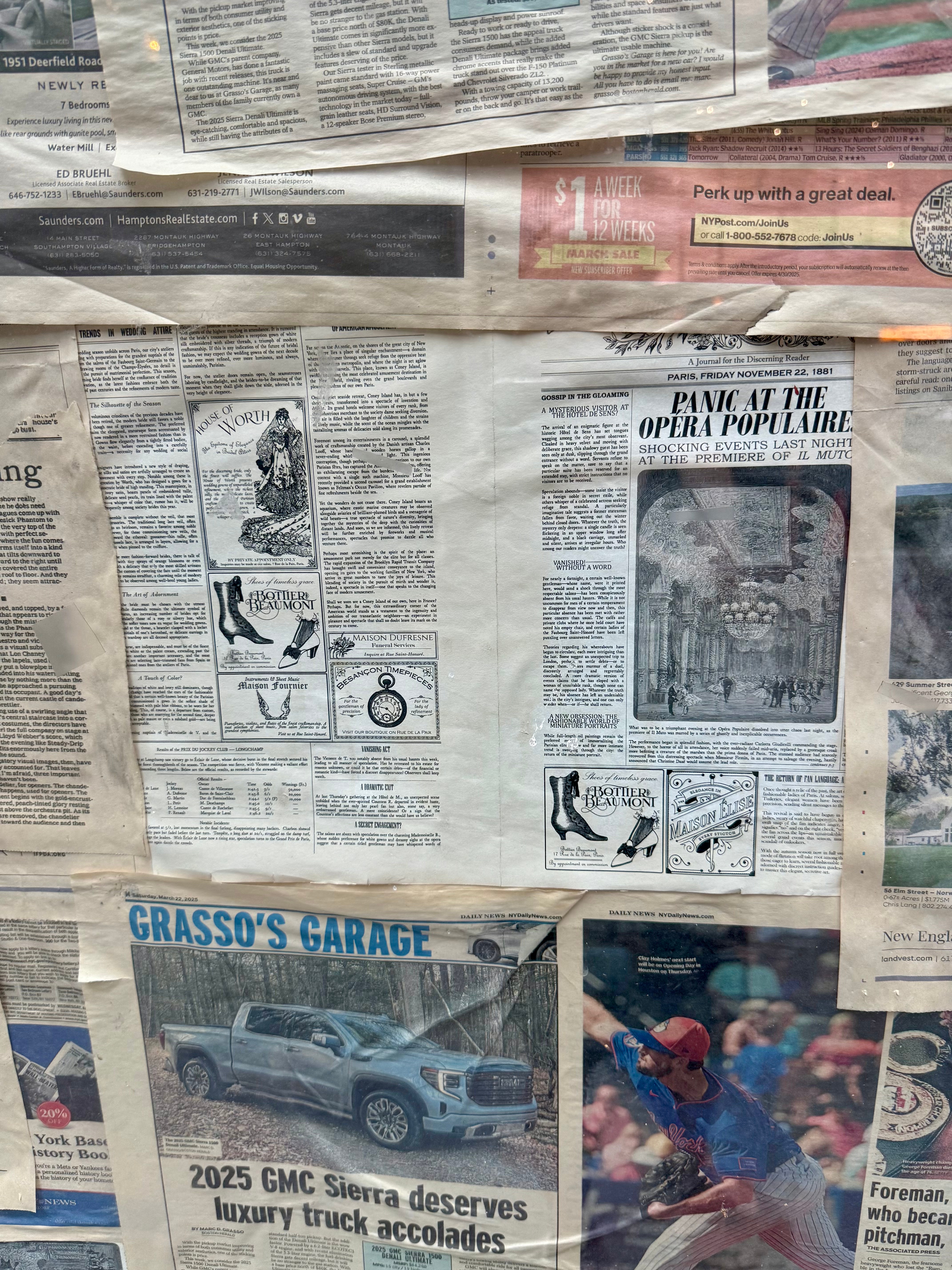
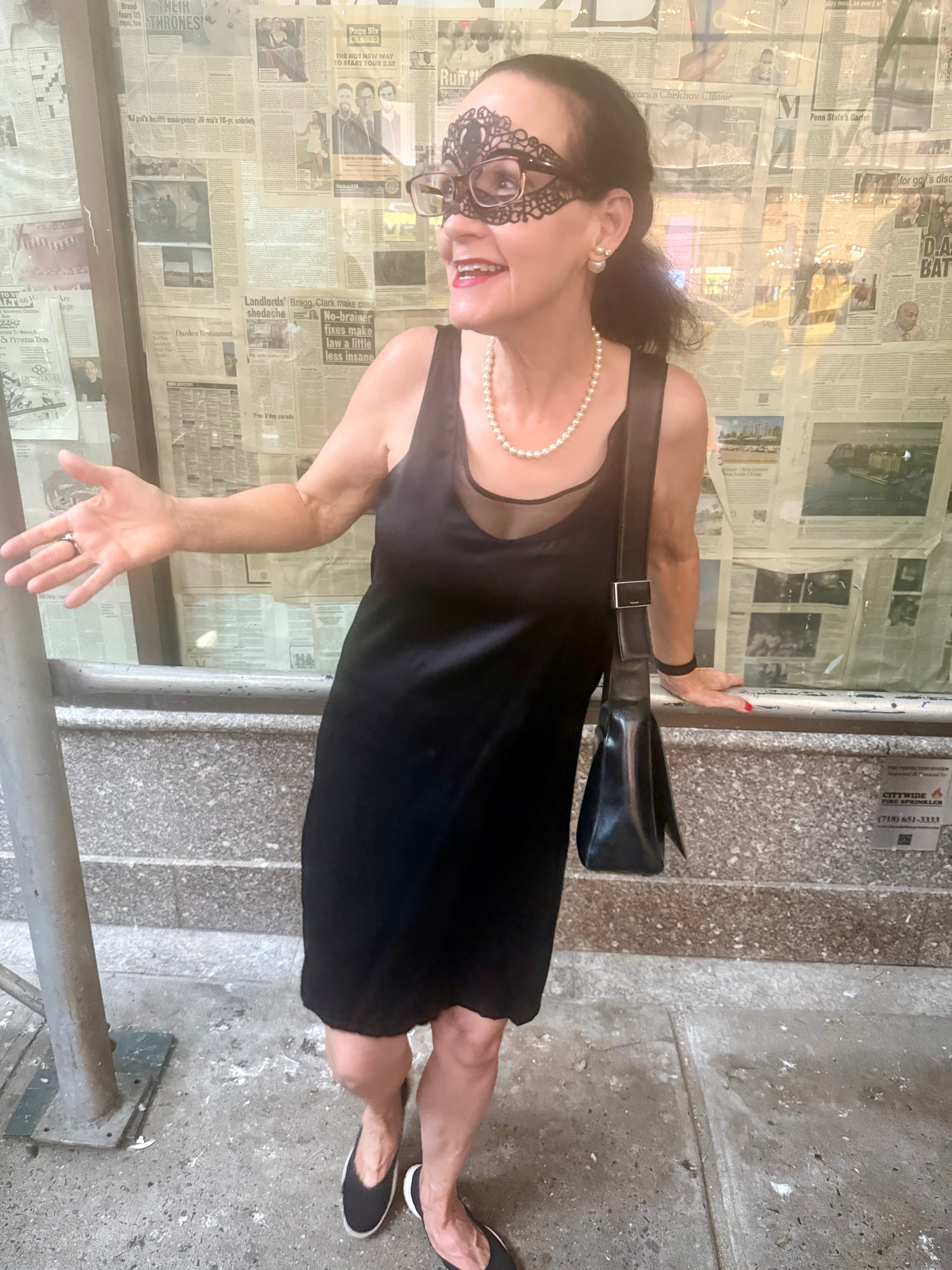
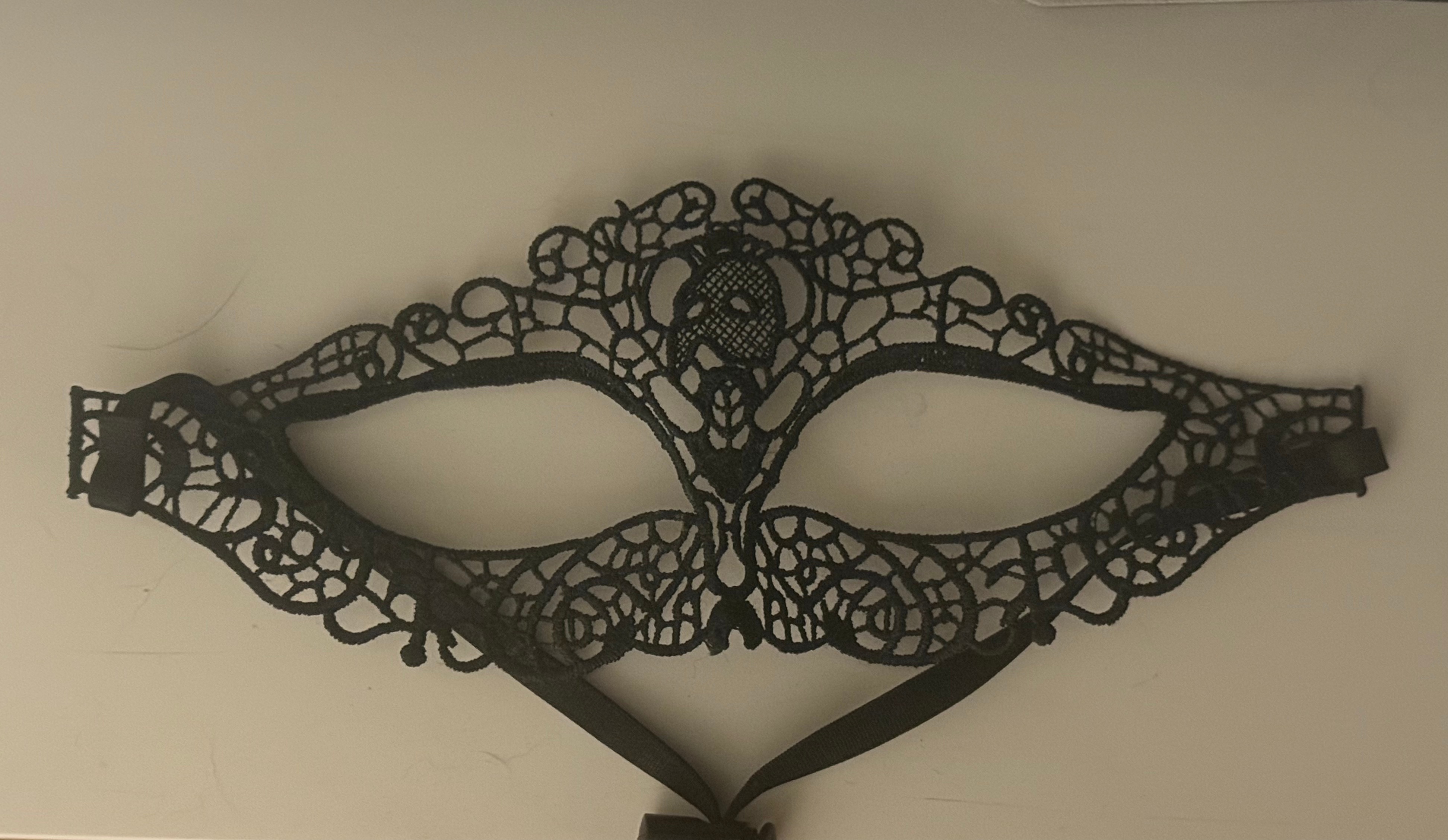
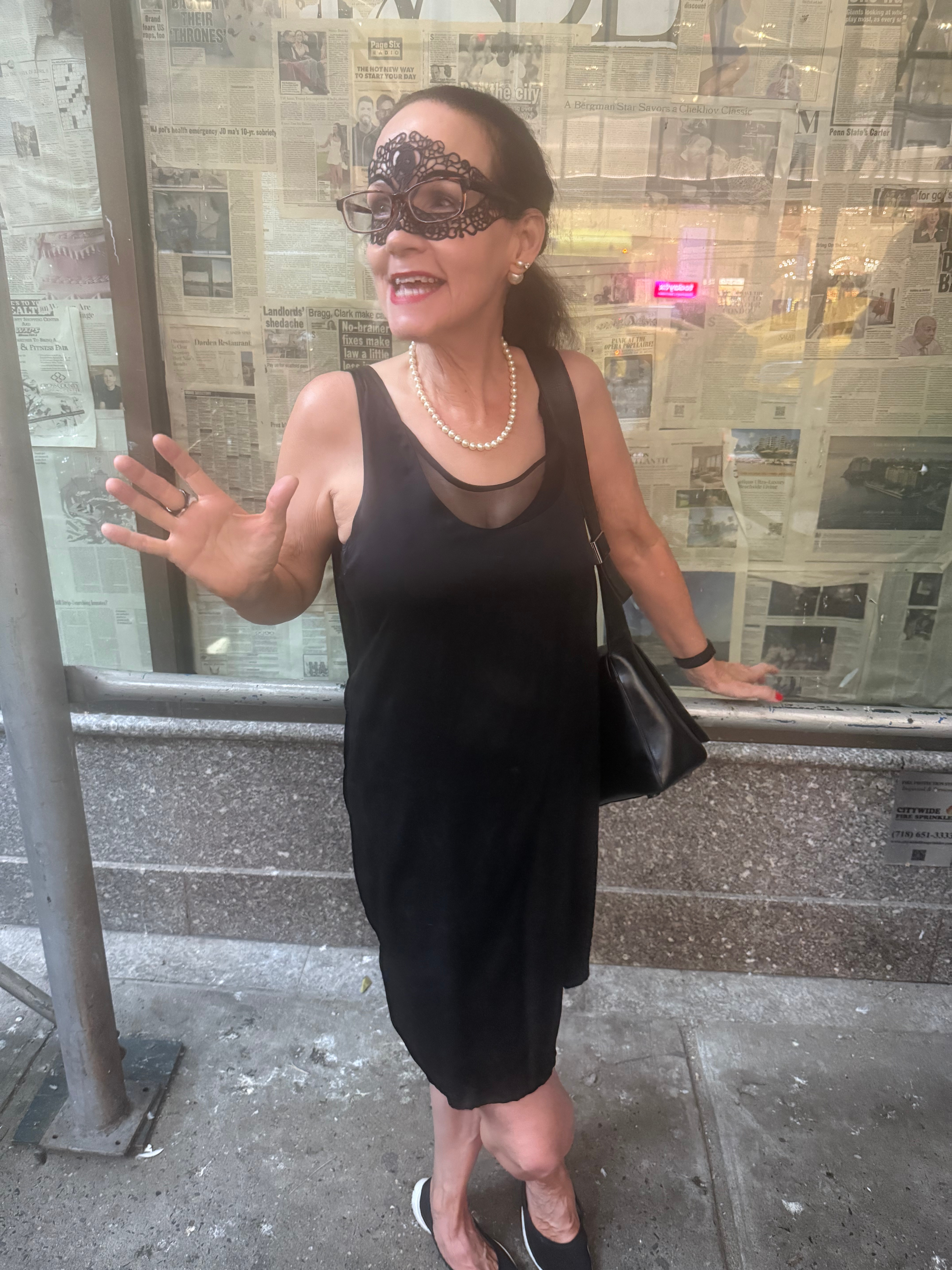
The outside of the building has the windows covered in newspaper, and if you look closer you will see some articles about the original Broadway production of Phantom, and others reporting on the fictionalized goings on at the Opera Populaire that occur during the musical. You line up outside, and if you don’t already have a mask, you can be given one. I quite liked the provided one, it was comfortable, even under glasses, and has a little Phantom mask motif. At least for now, you are asked to dress up and wear black, white, or silver, and you will likely see some people extremely dressed up and wearing their own masks. It does make the entire experience a little more like an “event” to have most people dressed in cocktail (or even ballroom) attire, with the rest at least fairly nondescript in clothing. An important aspect, though, is footwear – stilettos and kitten heels are not allowed, and I recommend flats or even sneakers. This does lead to a certain feeling of disconnect, to be dressed up but wearing “sensible shoes” but the differing floor surfaces (including grates and escalators), sometimes in low light, really do require it. There are also times when you need to rush – more or less – from one room to the next, in a small crowd, and you really don’t need to be worrying about your footing at the same time.
Each time slot or pulse is let in at all at once, and there is no early or late entry, as another group will be experiencing the show just after you. Also, tickets are not resalable, in part because there are no tickets – you show ID that matches the name on the ticket purchase, and in addition you are sent a password the day before to the email used for purchase. While waiting outside, you might have a photographer come by (I did, but have heard of other dates that did not), and if so, you will receive an email later that is password protected by the same password you used for entry. You can download any photo they take at no charge (see mine below).
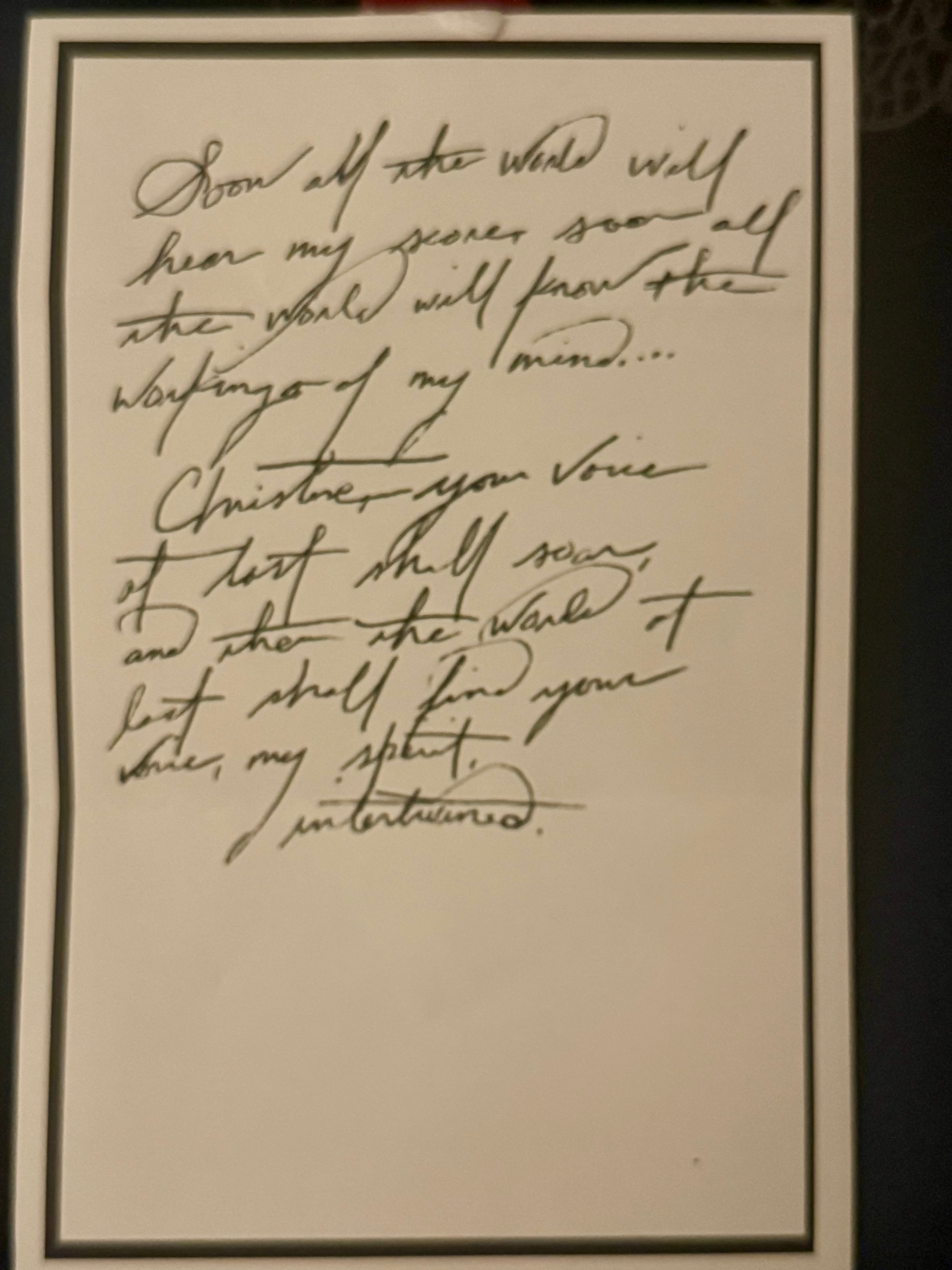
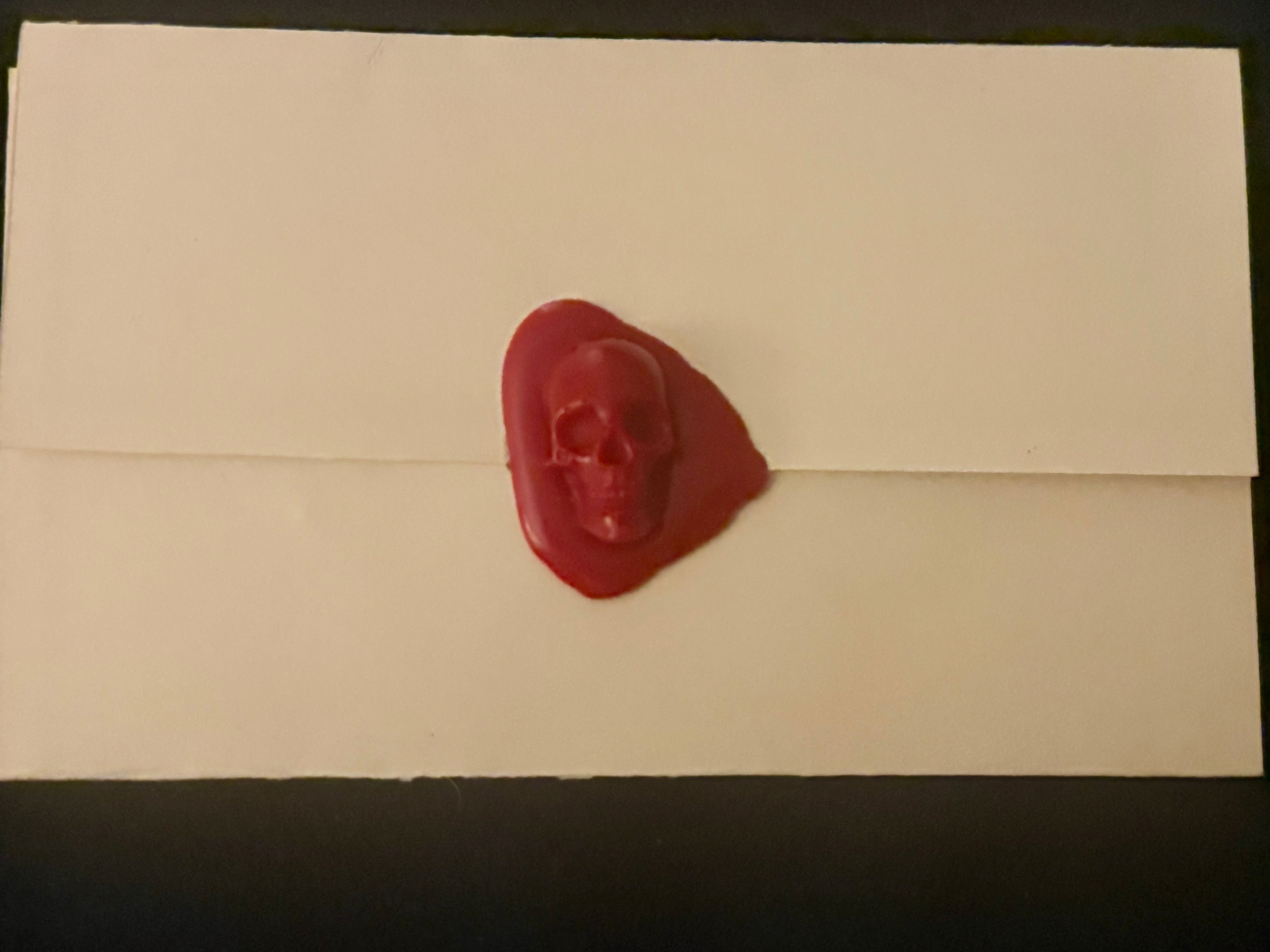
I don’t want to give too many details about the actual experience of being inside Masquerade, and no photos are allowed inside (all bags/coats need to be checked, which is at no charge, and a sticker is put over your phone camera if you have that on you). But I will say that it is the actual Andrew Lloyd Webber music, sung live with a prerecorded instrumental track. The musical has been cut a little, and a few things/songs from the Phantom movie musical added. The order of the story and some of the backstory are different from the original Broadway musical production. Sets and costumes are lavish, and it was thrilling for me to be in the middle of some of these iconic scenes. You are led from space to space, and no loitering or self-exploration is allowed. In terms of interactions, you might have a character address you, ask you to do something, dance with you, or become a supporting character (at one point Carlotta addressed me as Michaela, asked where I had been, and reminded me that I needed to follow her around with throat spray so that I could moisturize her vocal cords now and again – which I did for the rest of that scene). You might even be handed one of the Opera Ghost’s letters after someone had read it – Christine gave hers to me and the seal was thick red wax in the shape of a skull.
More practical issues: 1) You are less likely to be split up from anyone you have come with than in traditional immersive theatre. There is one time when your pulse gets divided up into three groups who each see all three scenes, but just in a different order. But the “butlers” there to move the crowd along seemed sensitive to keeping people from the same party together. 2) In most rooms there are at least some seats, and the butlers will direct people into seats until they are full. If you are the first in one room with a seat, you may be last out of that room and not get a seat. So plan on standing and moving a lot within the two hours. 3) The show is ADA compliant, and you need to contact the show in advance if accommodations are needed. From what I hear, there will be a butler assigned to help you get from place to place, using elevators, and will ensure that you don’t miss anything. 4) There is champagne when you first enter the space (and pro tip – if you drink your glass in that first room, they will refill it in the next room where it is needed for a toast), and you may be offered shots of something (whiskey? brandy?) in a later room, but there are also non-alcoholic options in both instances. 5) If the weather permits, there will be some scenes outside on the roof of the building, but there are alternate places to hold these scenes if the weather is inclement.
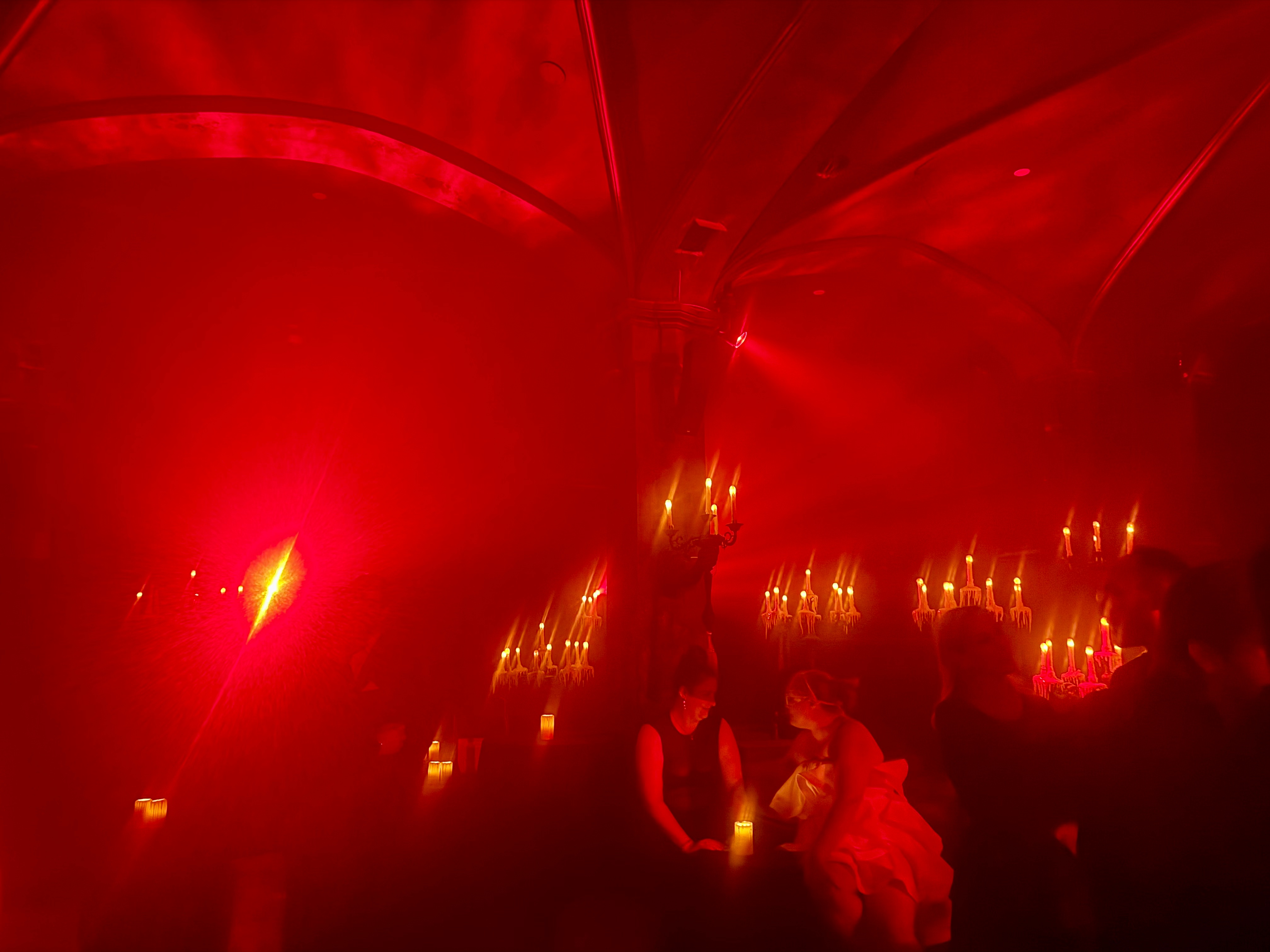
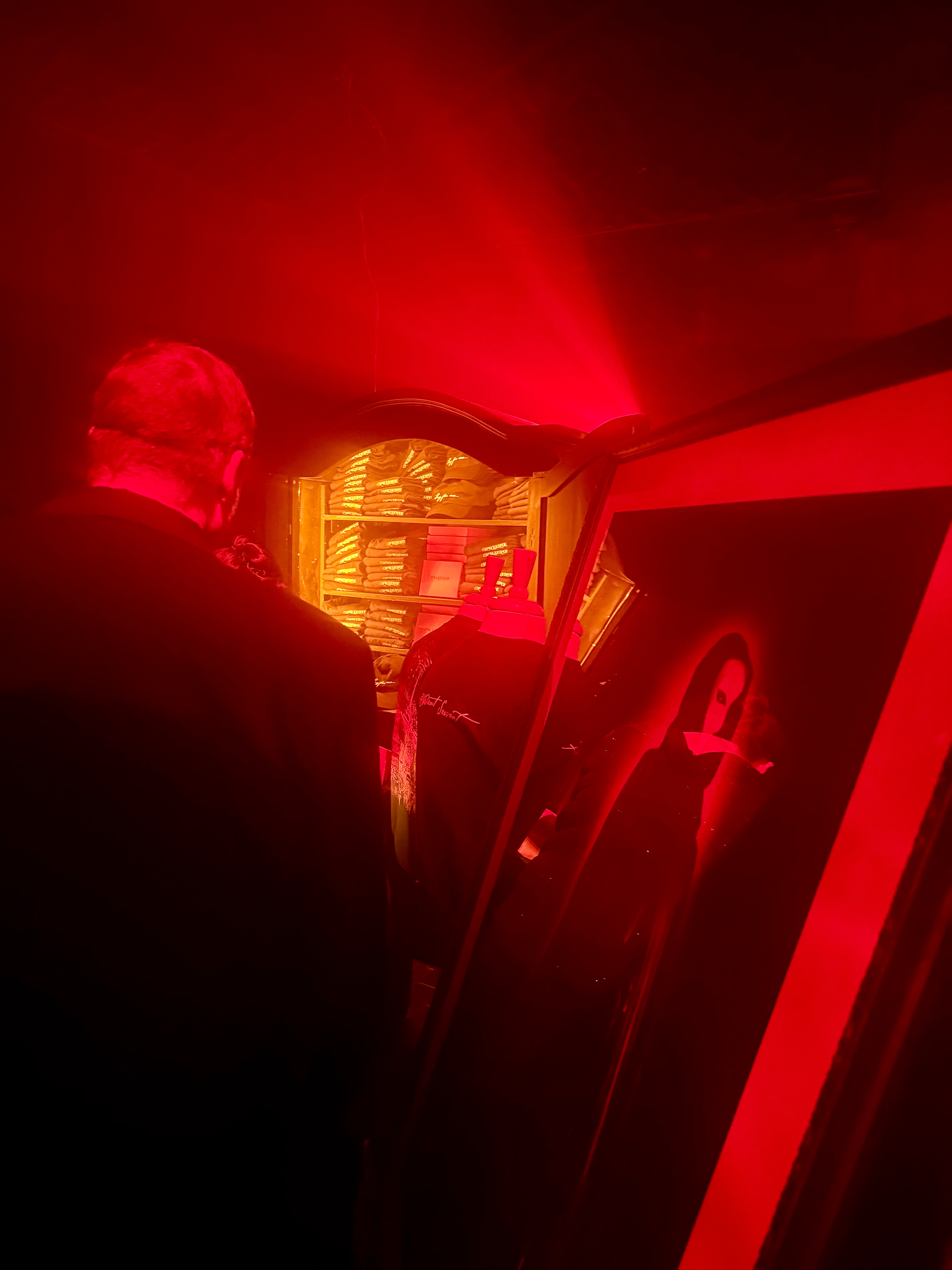
As you leave, there is an elaborately decorated bar space, and you are welcome to stay as long as you would like. You can go back to get your bags if needed and then return to the bar. There is also merch – of course! I found it useful to recap the show and process it a bit in the bar. I thoroughly enjoyed myself, and for me it worked both as someone who enjoys innovative and immersive experiences, and someone for whom the original POTO has a lot of nostalgic positive emotional valence.
As I started to write this post, inspired by exploring Viola’s Room and Masquerade this summer, I started to think more and more about what “immersive theatre” really even means. Certainly the classic Punchdrunk idea of wandering through an immense, richly detailed space, and coming in contact with performers you can choose to follow or not, is exceptionally immersive. Making your way through Viola’s Room while being guided by Helena Bonham Carter’s voice is very different, yet does immerse you into its storytelling world. So does Masquerade, even though your movement through the space and story is tightly controlled. I suppose the areas that are less clear involve a production spilling out into public areas, or having performers break the fourth wall by speaking to attendees. In the end, the definition matters less to me than the experience – and whenever I experience a sense of flow by losing myself in a story, I am immersed in it. This can happen even while sitting in a traditional theatre seat watching something on a proscenium stage. However it presents, I enjoy experiencing complete immersion into a story, and I seek it out in whatever form it happens to take!
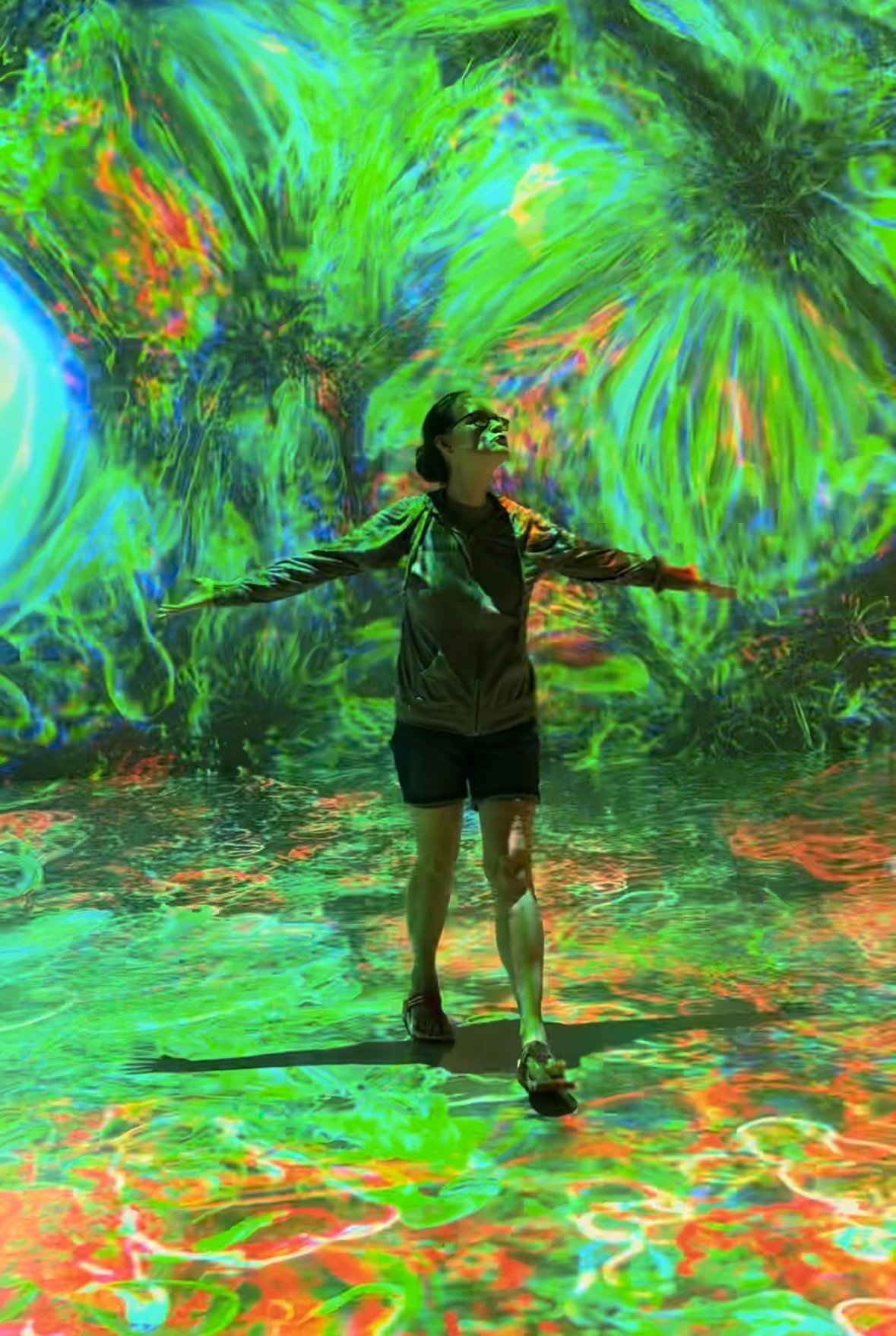
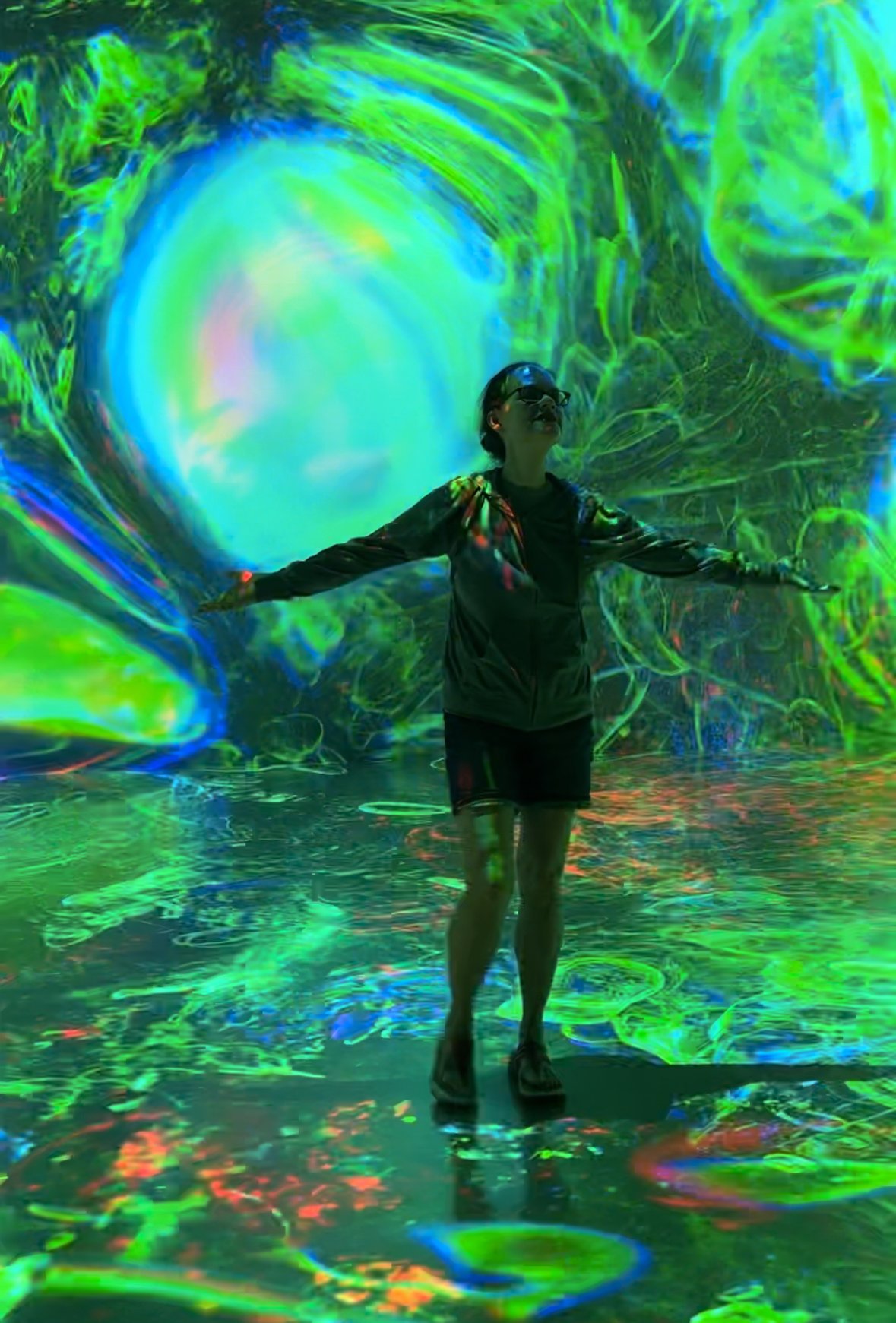
A few years ago I wrote about my experience of going to the Van Gogh immersive visual art exhibit and since then I have noticed that more and more similar exhibitions have been popping up in NYC. There is even one, ARTECHOUSE (the name is a combination of art – tech – house) in Chelsea Market, that is a permanent space but with rotating shows (and it has other locations in Washington DC and Houston). I have been to a few of these and find them at their best to be a trippy and somewhat relaxing experience, but also occasionally (in my opinion) a regular visual documentary shoehorned into the concept of experiential art.
An exhibit I saw at ARTECHOUSE a few years ago (in 2023) was Beyond the Light, which visualized NASA data from the moon, heliophysics, the Mars rovers, climate science, and their technology transfer program. Set in their gigantic gallery space with projections on the floor in addition to wrapping around the walls, the experience was odd yet transporting.
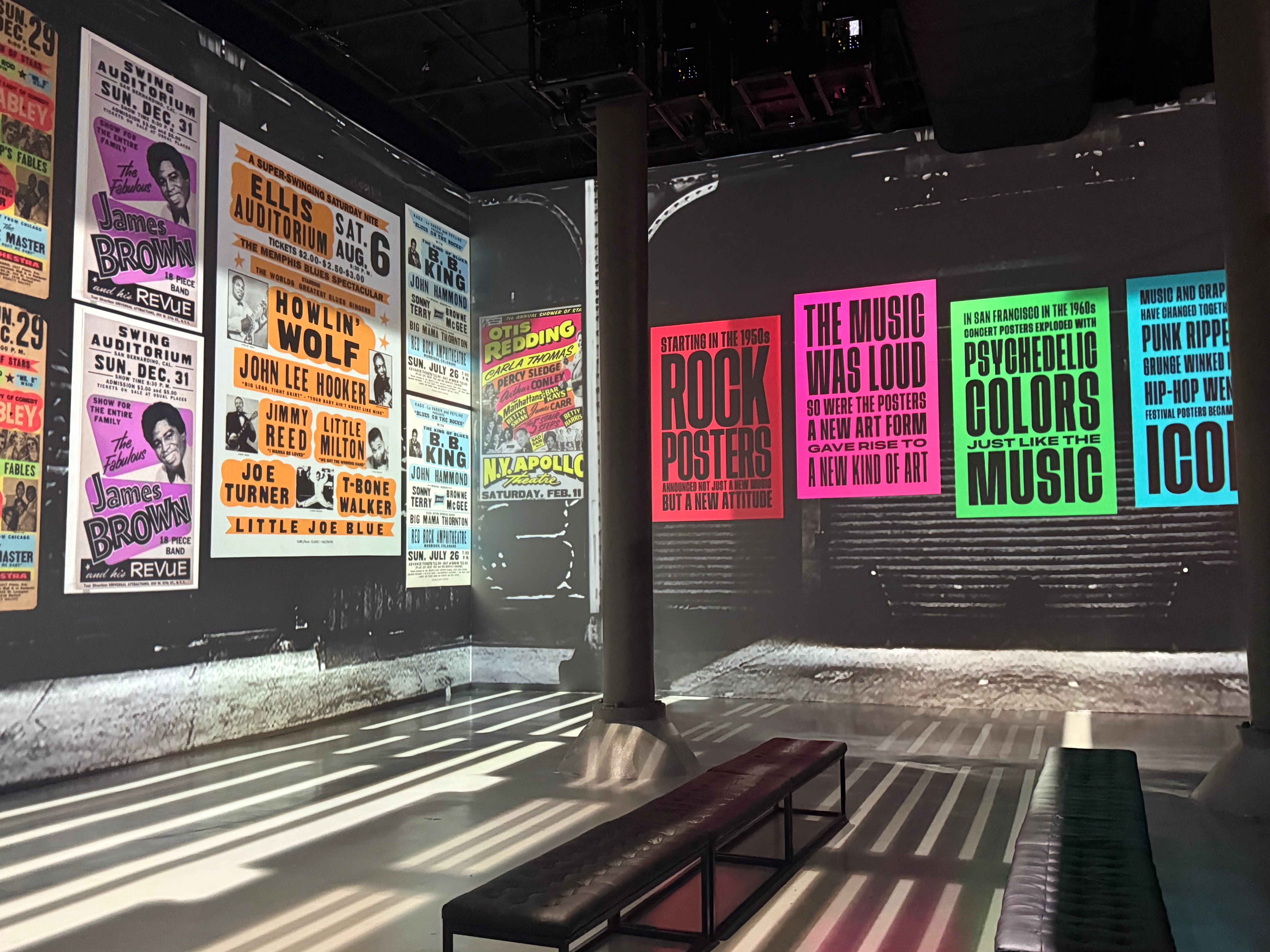
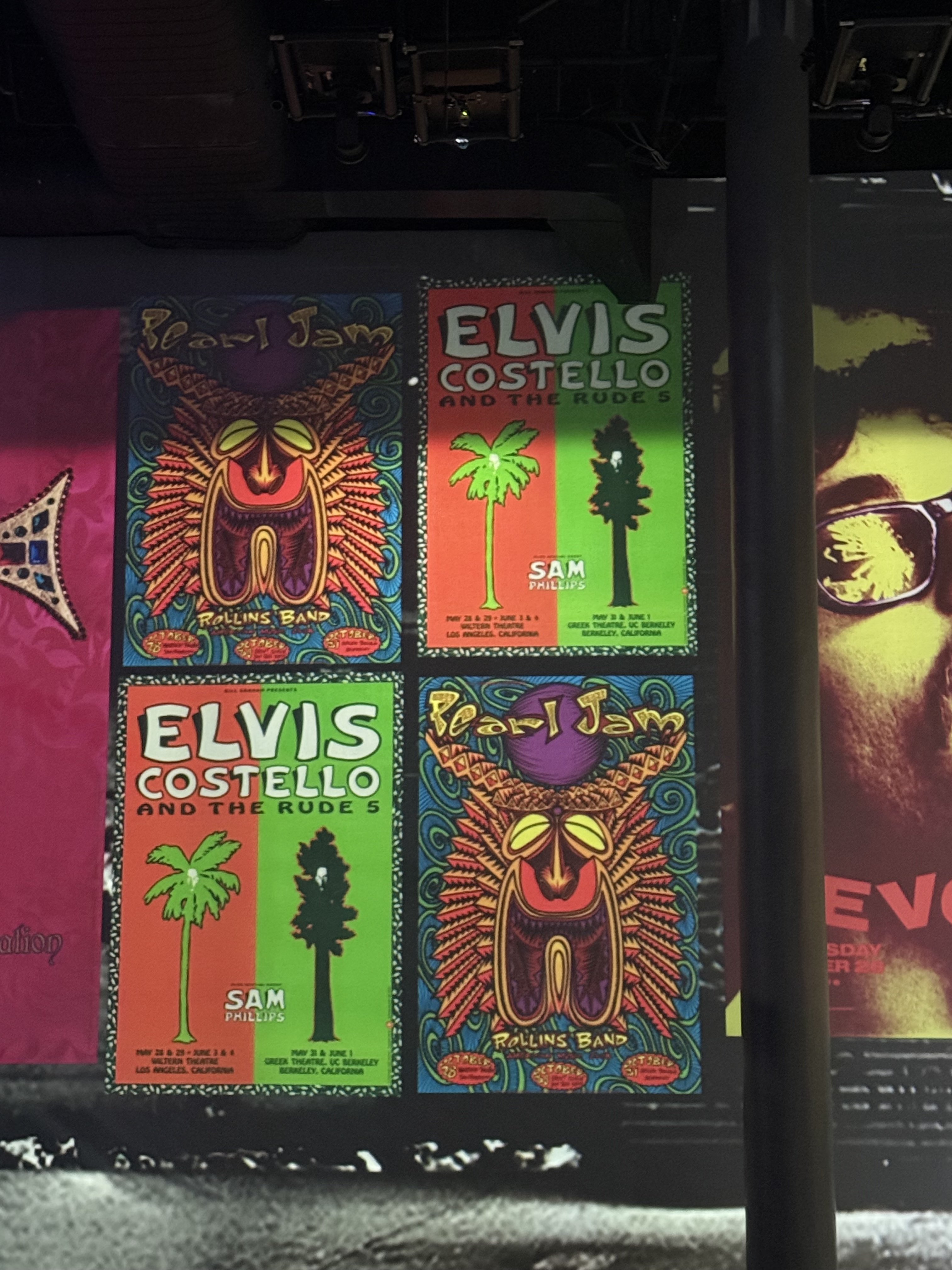
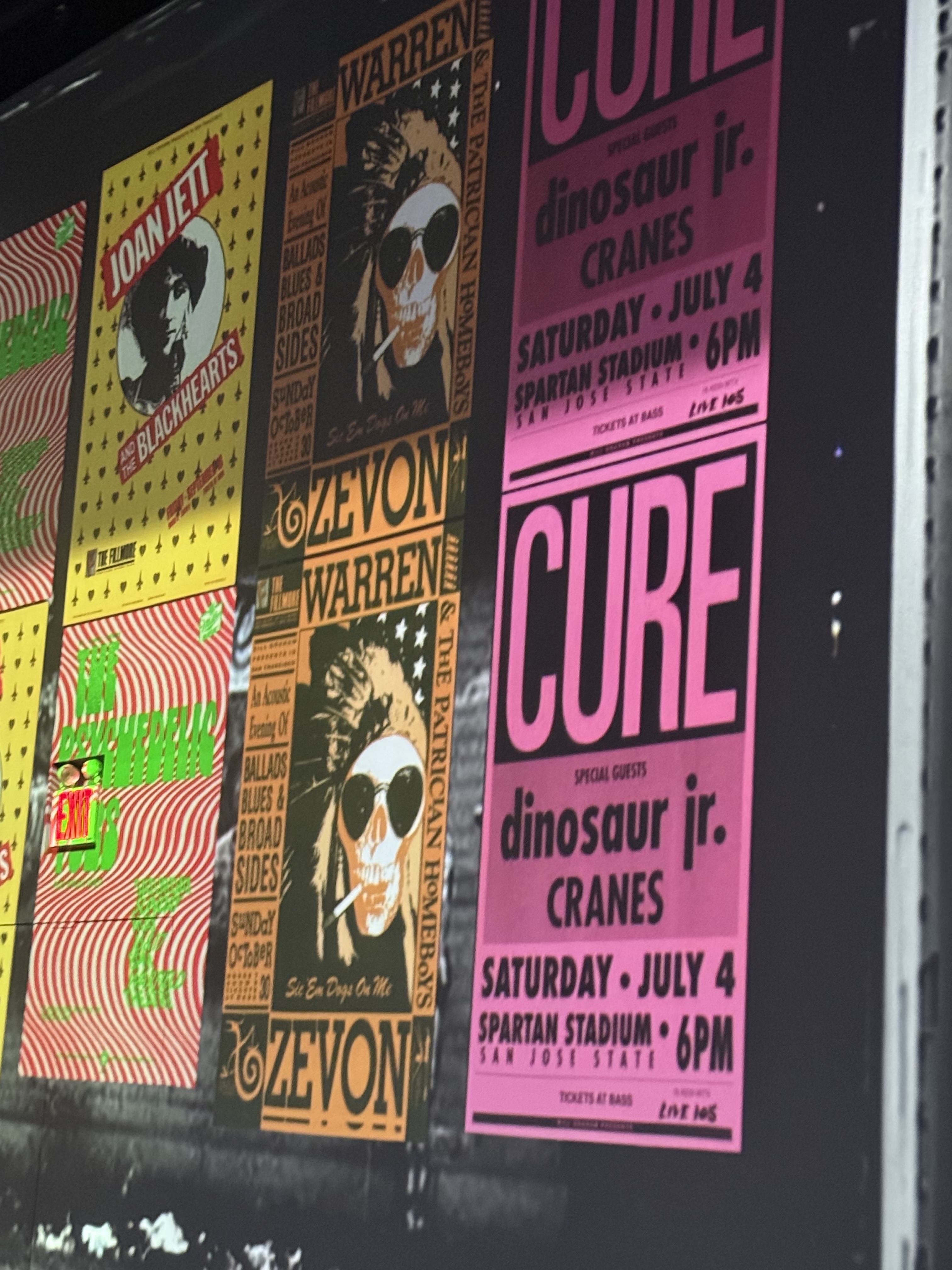
More recently, though, I went back to see their exhibit in collaboration with Rolling Stone, AMPLIFIED, which described itself as an “50-minute immersive journey into the music, history, imagery and culture of rock ‘n’ roll, encompassing over 1,000 photographs, 200 videos, and 1,300 Rolling Stone covers.”
This one I thought I would adore, as I love music, but strangely it did not seem to fit the format. It was in one way too narrative (with a voice over from Keven Bacon), which led to a more seated/”let’s just look at things and listen” experience, compared to others where people are inspired to move around within the space. But the narrative itself was disjointed to me, and I had the feeling that Rolling Stone had just thrown things together in categories (hey, here’s a bunch of rockers with cars . . . posters are cool . . .now here’s a festival) rather than there being a clear narrative journey. Did I have a good time? Yes . . . but I would have enjoyed just as much just watching a 50 minute documentary on the subject matter – the immersive presentation didn’t add anything (at least for me).
This kind of experiential and digital art is not new. I recently wrote about Luna Luna: Forgotten Fantasy, which was first presented as an art installation/amusement park in 1987 in Germany. So why are there so many more of these happening now? I believe it is usually the kind of experience you can enjoy but can provide some cool photos and videos, usually to post (and I am guilty as charged on that front). There is an upcoming exhibit that I already have a ticket for that upps the ante by not only having immersive visual effects but also scent, light and sound in tandem (Eternal Nature at Artemuseum at Chelsea Piers). These immersive visual experiences aren’t inexpensive (usually $35-50) and aren’t that long (usually less than a hour). However, when these things work for me, I find them fun but also overwhelming in a positive way, and truly feel transported and immersed in a different world.
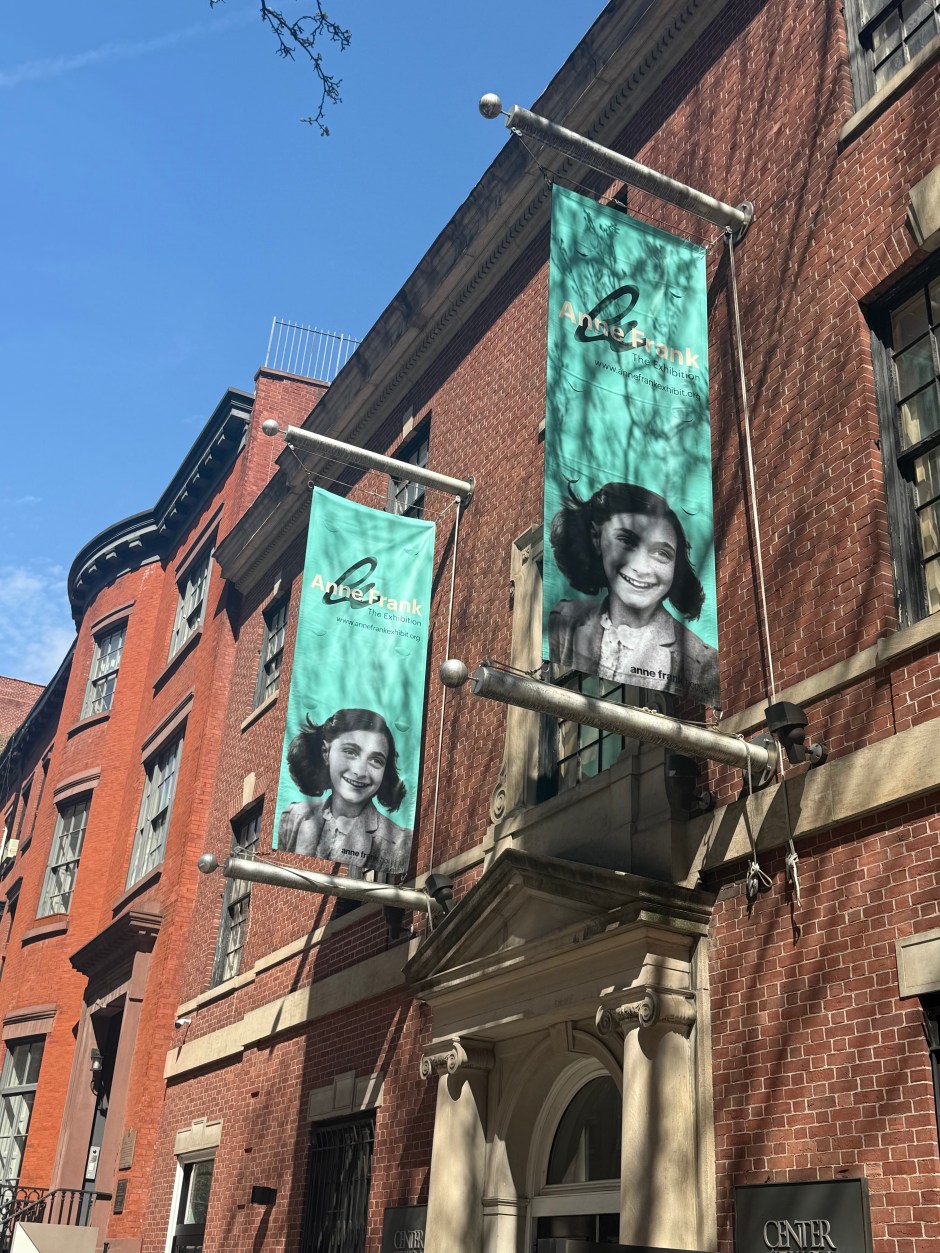
If you have ever been to the Anne Frank House in Amsterdam, you know what an incredibly moving experience it is to be there in the actual space where a German-born Jewish girl, Anne Frank, along with her family and some others, hid from the Nazis from 1942-1944. The diary that Anne kept during that time was found following the end of World War II by her father after Anne, her sister Margot, and their mother Edith all died in concentration camps after their hiding place was discovered. The very personal story it told has now been translated into more than 70 languages, become a movie and a play, and continues to be taught in schools today to illuminate the horrors of the Holocaust. The Anne Frank House has limited tickets per day and you need to plan far ahead if you want to visit when in Amsterdam (and I would highly recommend doing so). But on January 27, 2025 (Holocaust Memorial Day, that date marking the 80th anniversary of the liberation of the Auschwitz camp), Anne Frank The Exhibition opened just off Union Square in NYC.
Anne Frank The Experience is located at 15 East 16th Street, just off Union Square. Timed tickets for this also sell out well in advance, but if looking to go sooner, I have noticed that a few tickets get released one or two days in advance even for all these dates that appear sold out earlier, so keep checking. Or, just plan to see it later this summer or in early fall, as it has been extended at this point through October 31, 2025.
Most of the exhibit prohibits the taking of photographs, to keep the experience respectful and educational. I will give you an idea what is presented, but highly recommend you go and experience yourself if you live in or near NYC. It will likely take you about an hour to move through the exhibit and read and reflect on everything that is presented. The exhibit is extensive, occupying gallery space of over 7500 square feet. Initial rooms describe Anne’s extended family and its background, and introduce us to her parents, sister, and Anne herself. Woven into this story is the parallel story of the rise of fascism and the Nazi party in Germany and the danger it presented to many. I had not realized that Anne had extended family members in NYC who tried to find asylum for her family but had it repeatedly denied. The Franks’ move to Amsterdam was initially a way to escape danger in Germany, but eventually it was no longer safe there as well. The exhibit clearly describes first the limitations on freedom that were imposed, leading eventually to the need to hide in the Annex.
The different rooms leading up to the recreation of the Annex are very well done and often multi-media. In one room there is a large screen showing a photo of Anne and the rest of her class at school, and slowly one by one different children are highlighted and their eventual fate is displayed. There are also some actual artifacts that are on loan from the Anne Frank House in Amsterdam. You can see an excerpt from a neighbor’s wedding video where Anne can be seen hanging out of a window for about 20 seconds.
Finally, going through the replica of the actual Annex feels very much being in the actual location in Amsterdam. The windows are covered as they would have been during the over two years the family and four other Jewish inhabitants were in the Annex.
Leaving the Annex, the exhibit continues with the fate of those in the Annex after they were discovered (Anne died at the age of 15 in Bergen-Belsen concentration camp in Germany; seven of the eight inhabitants died in concentration camps). Her father, the only survivor, found her diary and tried to get it published. Many of the rejection letters he received are shown, suggesting that it was not likely to find a readership. But then the exhibit expands to show the movies and plays that have been based on the book, as well as endless copies of the book (Anne Frank: Diary of a Young Girl) translated into languages all over the world. It has sold over 30 million copies.
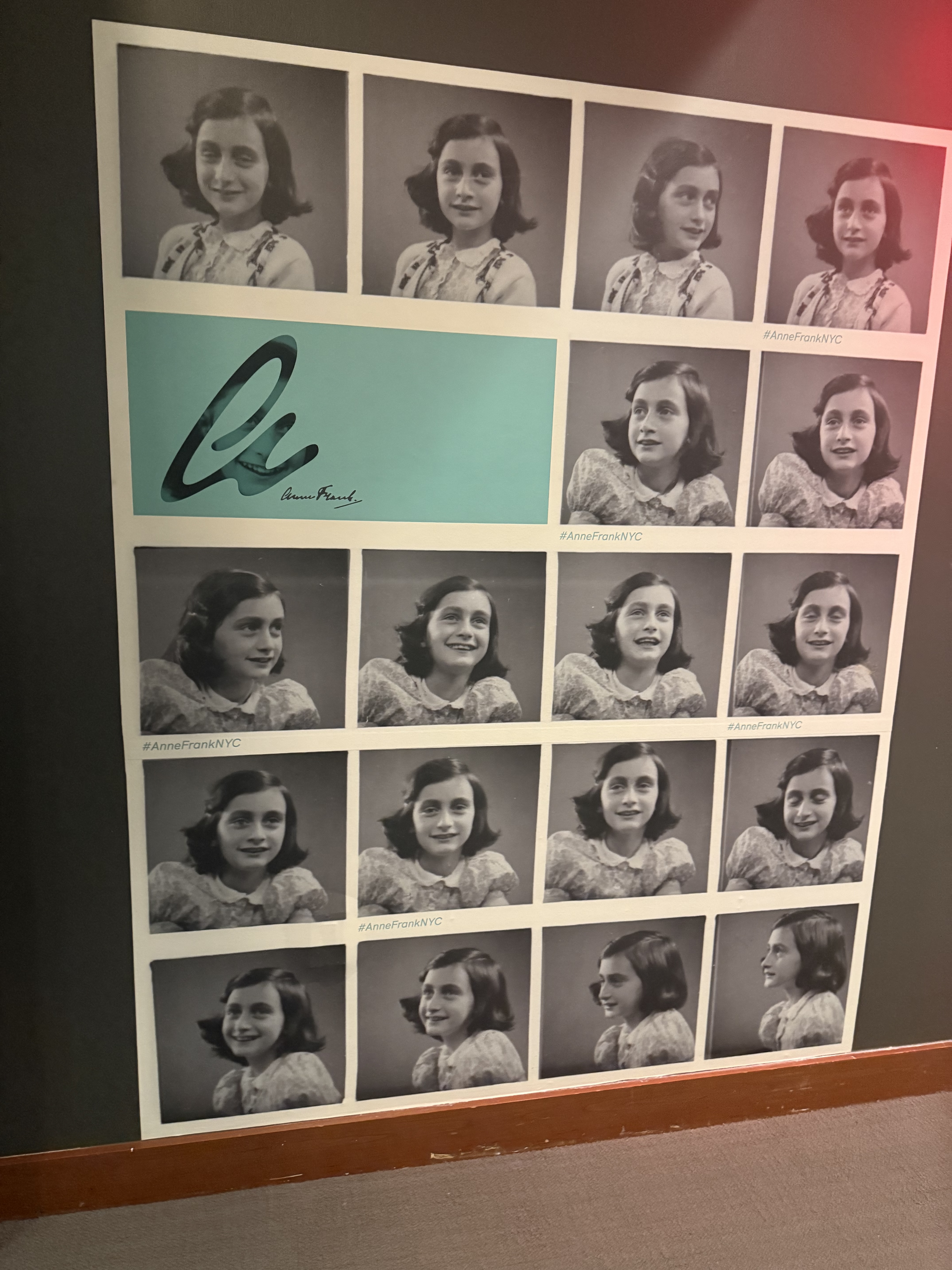
After looking at the long, long line of different versions of the diary published throughout the years, in a multitude of languages, you are invited, if you wish, to pull out your phone as you leave to take your picture with the montage of photographs of Anne (above). This still felt presumptuous to me, inserting myself into her story in any way. We humans are storytellers, though, and often the best way for us to relate the experience of a group is to tell the story of an individual. This is the magic of the diary of Anne Frank, in that we are able to relate to something almost too large to process, the Holocaust, through the lens of this one person. Primo Levi once said, “One single Anne Frank moves us more than the countless others who suffered just as she did but whose faces have remained in the shadows. Perhaps it is better that way; if we were capable of taking in all the suffering of all those people, we would not be able to live.” We can witness Anne’s story, encourage others to do so, and then expand the connection we have made with her to the larger multitudes of the Holocaust – and the lessons this teaches us. This exhibit states that it wants us to know more about Anne through the “multifaceted lens of her life—as a girl, a writer, and a symbol of resilience and strength” and for me, it succeeded brilliantly.
















































































 Julie Brannan, NYC residential real estate