
I wrote quite a while ago (2014, 11 years ago!) about immersive theatre in general. At the time, Sleep No More was going strong, as was The Drowned Man (also by Punchdrunk, the OG of immersive theatre – and to be clear, I mean original GOAT, not Opera Ghost) in London, Then She Fell in Brooklyn, and Queen of the Night in midtown. The two Punchdrunk shows were what I think of as “choose your own adventure” shows, where you wander a space freely and in effect direct your own version of the theatrical experience. Then She Fell was controlled, with viewers ushered into a series of rooms to experience a story. And Queen of the Night had some opportunities to be taken off into different rooms (“one-on-ones”) but the bulk of the evening involved sitting at tables watching a show, and perhaps bartering with other tables for better food.
What a difference a decade (plus) has made! Sleep No More closed at the very beginning of 2025, having struggled after covid lock down (a free-flowing experience like that was even harder to adapt to early covid restrictions once theatre began to re-emerge in September of 2021), and being unable to pay rising rents. (Sleep No More does still have productions currently running in Shanghai and Seoul, who wants to go with me?) The Drowned Man closed (the space it was in near Piccadilly was redeveloped) and Punchdrunk purchased their own space in Woolwich (easily accessible from central London on the new Elizabeth line). Since then they had one traditional show, based loosely on stories in ancient Greece, The Burnt City – which has now also closed (but I was able to see it twice). They have since pivoted to trying one more controlled immersive theatrical experience (Viola’s Room – which is now in NYC, more about that later), and just announced Lander 23, which will merge video gaming with immersive theater.


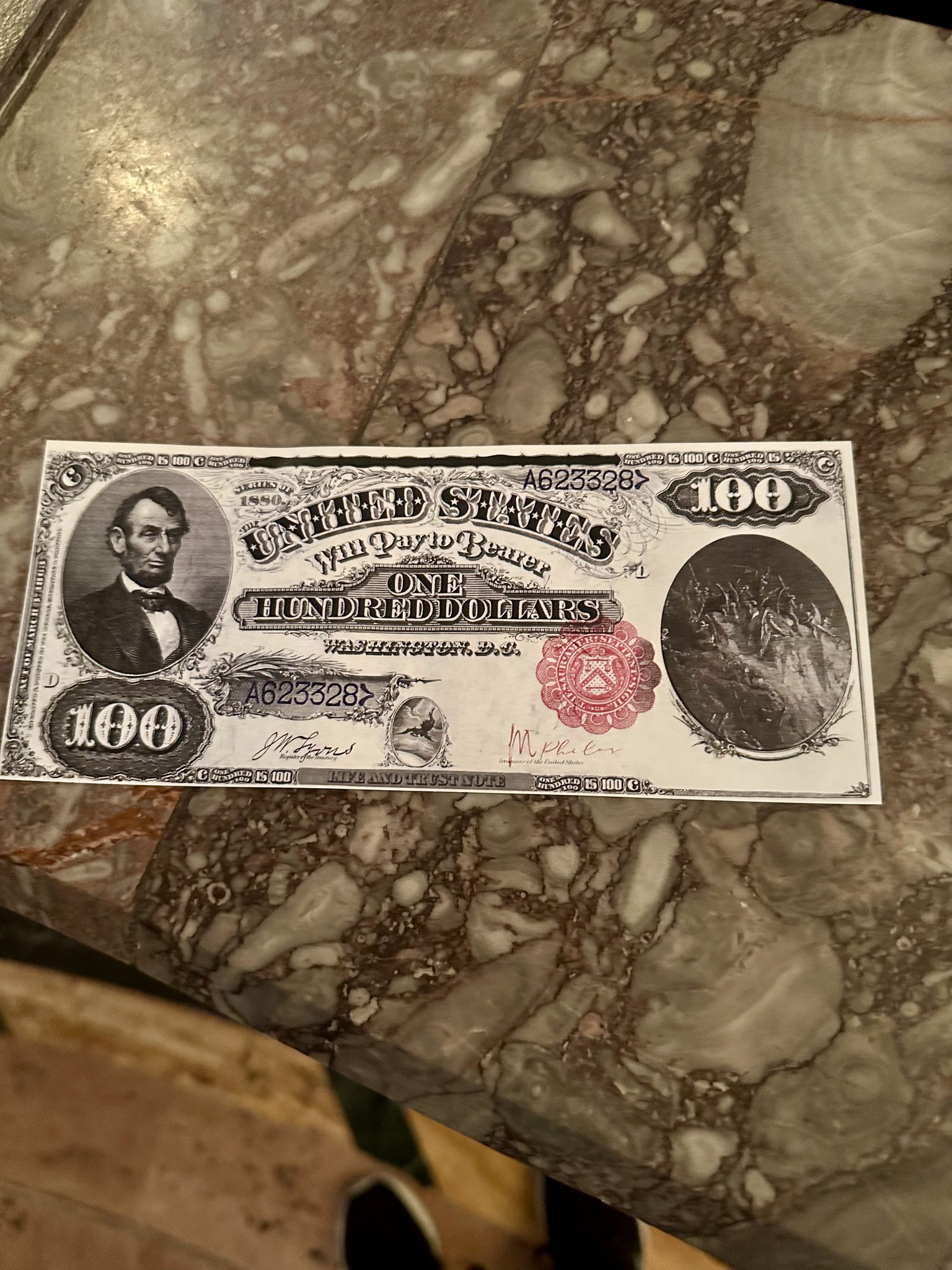


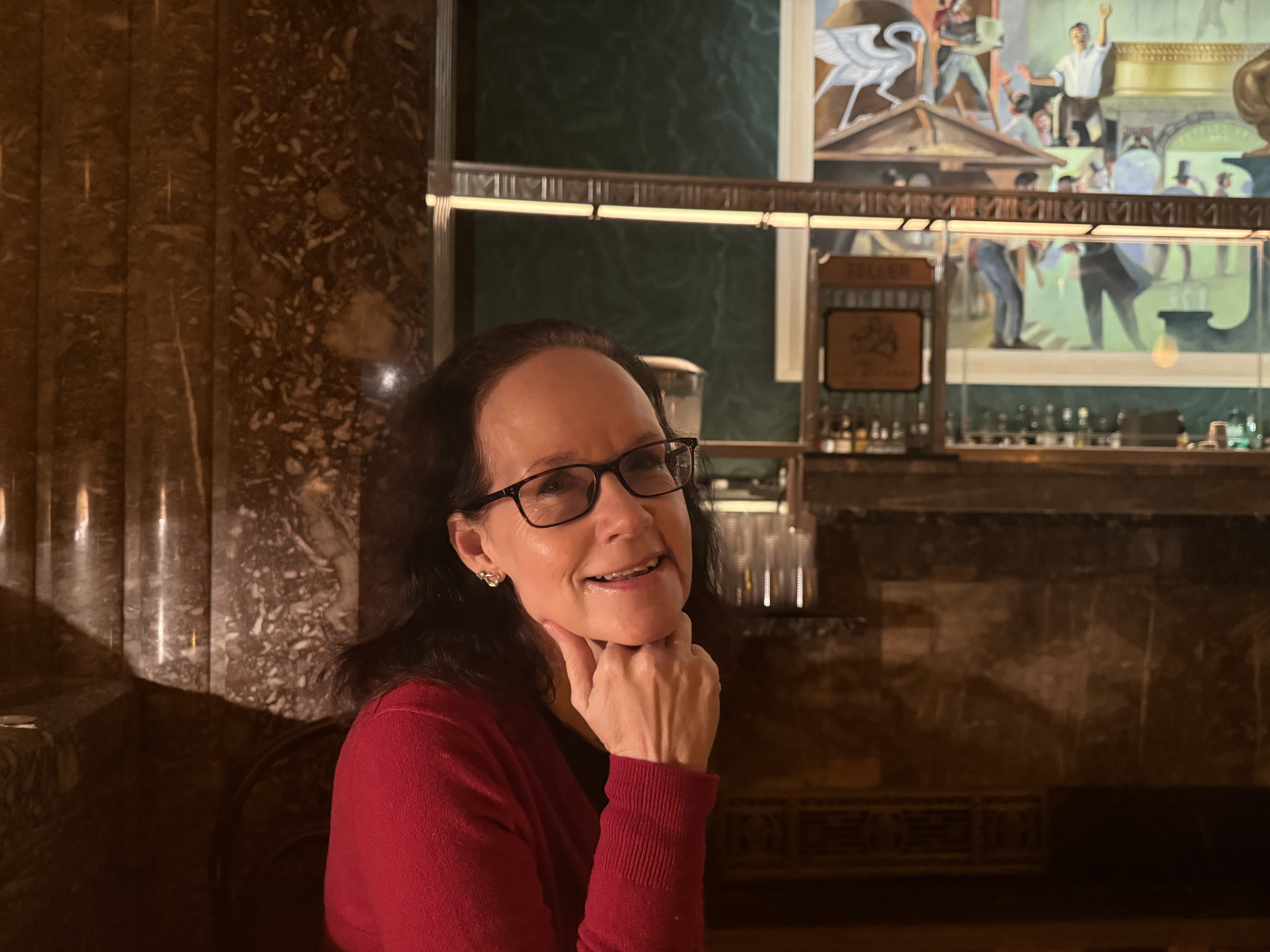
Meanwhile, here in NYC Emursive (the producer but not the creator of Sleep No More) launched an ambitious “choose your own adventure” immersive experience in lower Manhattan last summer. Titled Life and Trust, it was loosely based on the story of Faust, but set just as the great stock market crash of 1929 was about to put an end to the roaring twenties. The set was enormous and detailed, and the story took place on five different levels. In addition to the Faust story (in this case, Conwell vs Mephisto), there were storylines for Oscar Wilde’s Dorian Gray, Evelyn Nesbit, and a host of new characters. There were many extraordinary scenes – two that took place in a boxing ring – and the finale was fantastic. It opened last summer and closed abruptly earlier this year. And I mean really suddenly! They had a show on Saturday night as usual and Sunday morning they took away all social media other than an announcement that they had closed. They certainly were having a hard time making this work financially, but the sudden closing also had me wondering if there was something else going on (because if you are losing money, announcing a closing can spur interest and increase sales, sometimes repeatedly). The people in charge have not made a statement about the closing (that I have heard) but many of the performers are holding a one night event on the Upper West Side next month to discuss the experience of developing and being in the show and I will be there. After this, I wonder if NYC will not see another large-scale traditional immersive theater experience for some time.


Some Broadway musicals have had an immersive element. In my post from 2014, I mention the musical Here Lies Love, with music by David Byrne (see above, he was on the floor for one of the shows I saw in 2023) and Fatboy Slim, about the life of Imelda Marcos. At that point it was a huge hit at the Public Theater, and in 2023 it moved to the Broadway Theatre. Staged with a dance floor where you could move around with performers within an innovative set, becoming part of the crowd in Manila, I loved it and experienced it multiple times. If you were on the floor the show was quite immersive, but there were also fixed seats where there was little immersion. It was not a financial success, closing after 33 previews and 149 regular performances. Currently on Broadway there is an semi-immersive version of Cabaret, which transferred from the West End last spring but has not been received as well here. It is closing in October (if not sooner). Staged in the round, there are cabaret seats at tables where you may have interactions with the actors. The most immersive part of this production of Cabaret occurs before the performance, when musical and dance shows take place all around the public areas of the theater.


One could argue that the famous outside walk taken by the actor playing Joe Gillis in the recent Tony-winning revival of Sunset BLVD, directed by Jamie Lloyd, had an interactive quality. I experienced it multiple times from W 44th Street or Shubert Alley (see below, and here for a photo montage, and here and here for video), as well as seeing the livestream during the several times I attended the musical. Lloyd’s current revival of Evita, almost certain to arrive on Broadway in the next few years, has a similar immersive element, when people outside the theatre become the people of Argentina listening to Eva Peron sing her most famous song.

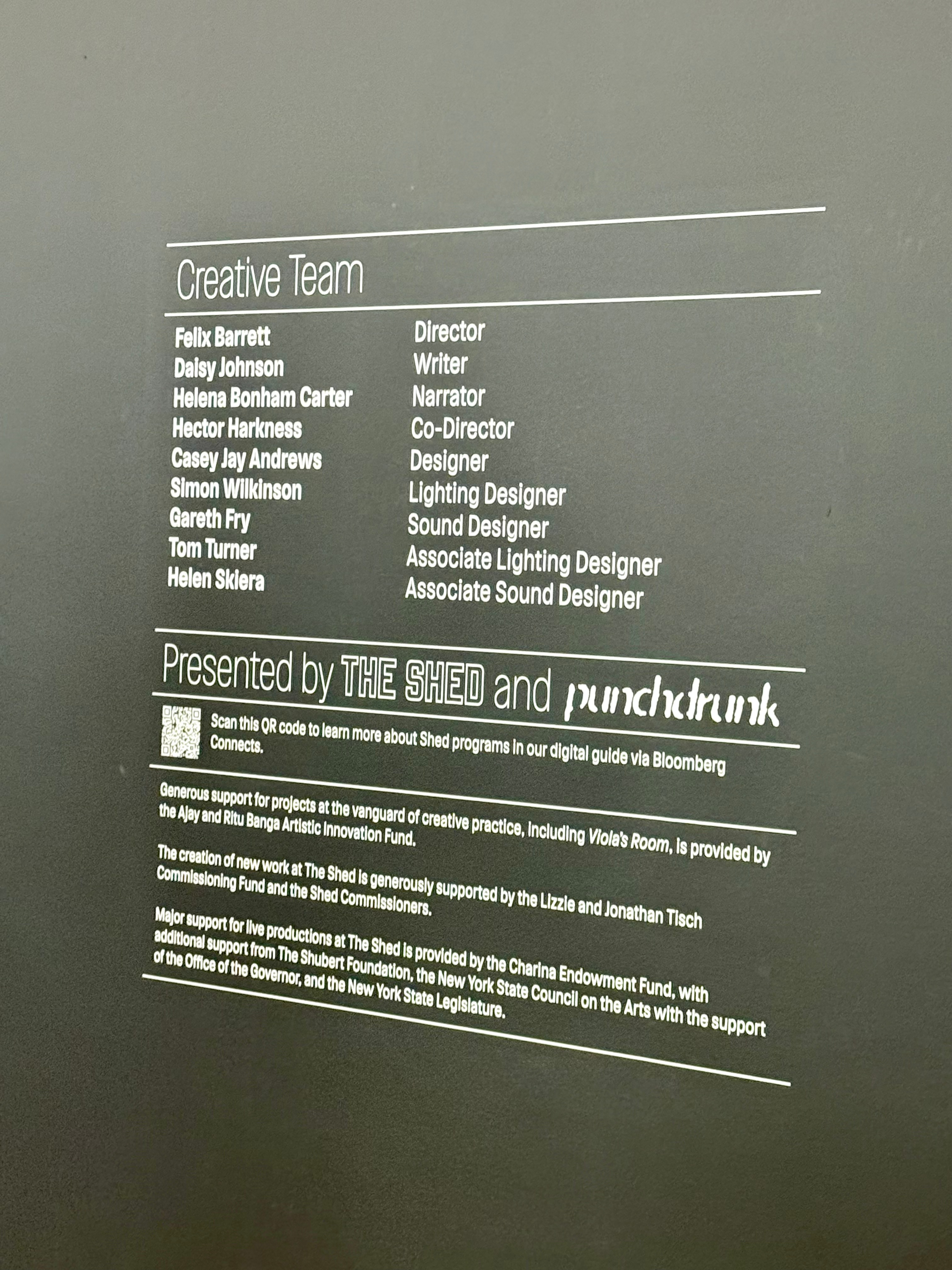
As I mentioned before, Punchdrunk (the OG creator of true classic immersive theatrical experiences, such as Sleep No More) has a current show at the Shed, Viola’s Room. a smaller-scale work by Punchdrunk founder Felix Barrett that invites audience members to move through a labyrinthine installation inspired by Barry Pain’s 1901 gothic short story “The Moon-Slave,” as adapted by the British writer Daisy Johnson. Participants wear headphones and are guided through the 50-minute experience at the Shed via narration in the voice of Helena Bonham Carter.

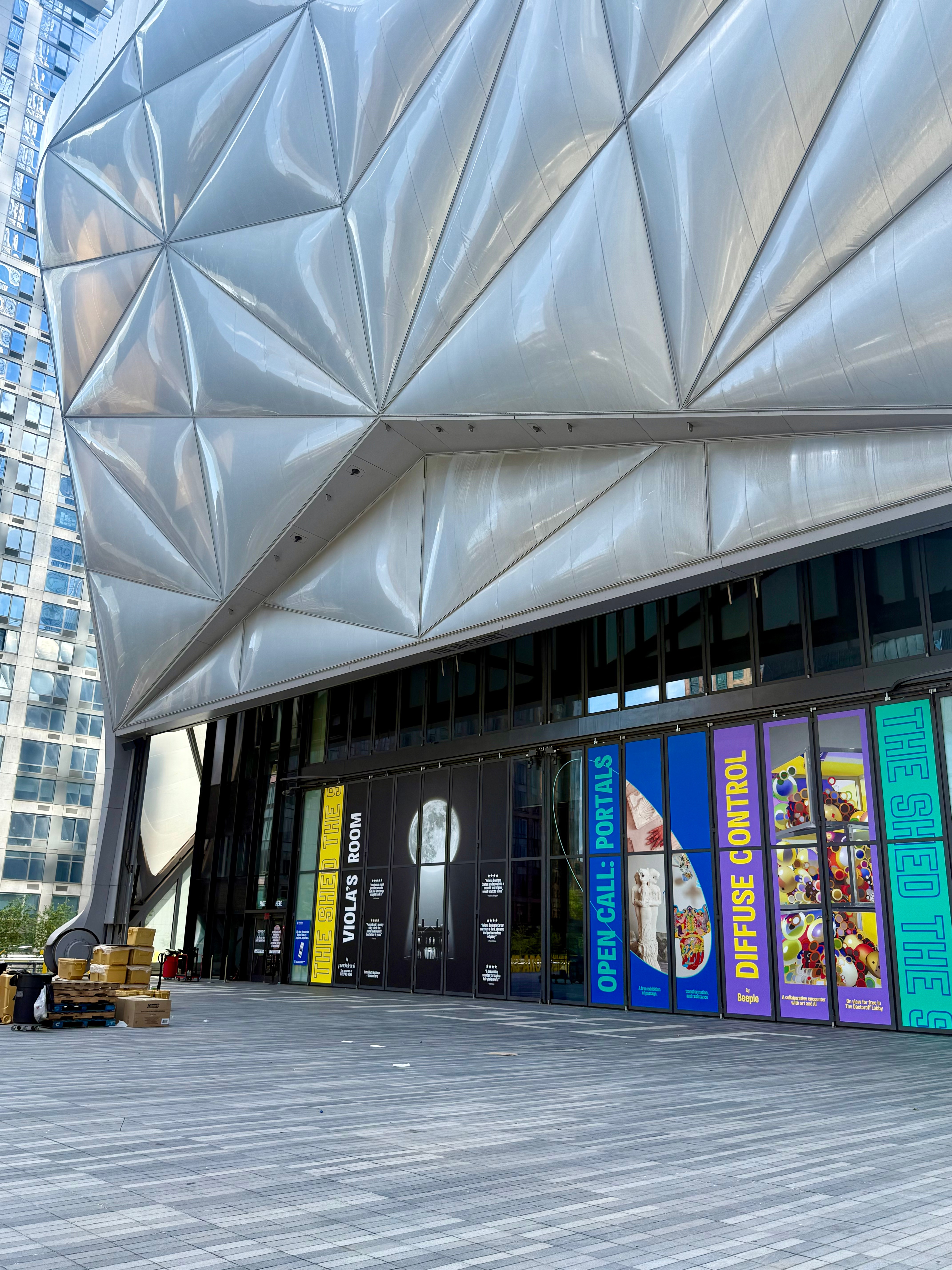



One of the more unusual things about Viola’s Room is that you experience it barefoot. There are places to clean and sanitize your feet before and after the experience. They will take your shoes and bags and put them in a box in your first room, and they are waiting for you when you enter the last room. In that first room, you will get headphones and test them out. You are with a small group of people, and instructions are to “follow the light” so you are led by light cues through a series of elaborate rooms that deepen the story being whispered in our ears by Helena Bonham Carter. There are some moments of total darkness, some areas that might bother people with claustrophobia, one instance of crawling (although we were asked in advance if that was doable so there must be an alternate route if it is not), and extremely varied floor surfaces. Like the larger scale Punchdrunk shows, there are scents that change between environments, to immerse multiple senses. Viola’s Room will be at The Shed until October 19th.


Perhaps the most buzzed about immersive theater taking place in New York City right now is Masquerade, a new immersive version of Andrew Lloyd Webber’s Phantom of the Opera. Set in a completely transformed building that once was Lee’s Art Shop on West 57th Street, this is not a “choose your own adventure” wander but rather a guided experience through the story and songs, in small groups of 50-60 people per 15 minute “pulse.” There are six “pulses” or showtimes for every evening (and matinees on Saturday and Sunday), with different actors playing Phantom and Christine for each time slot.
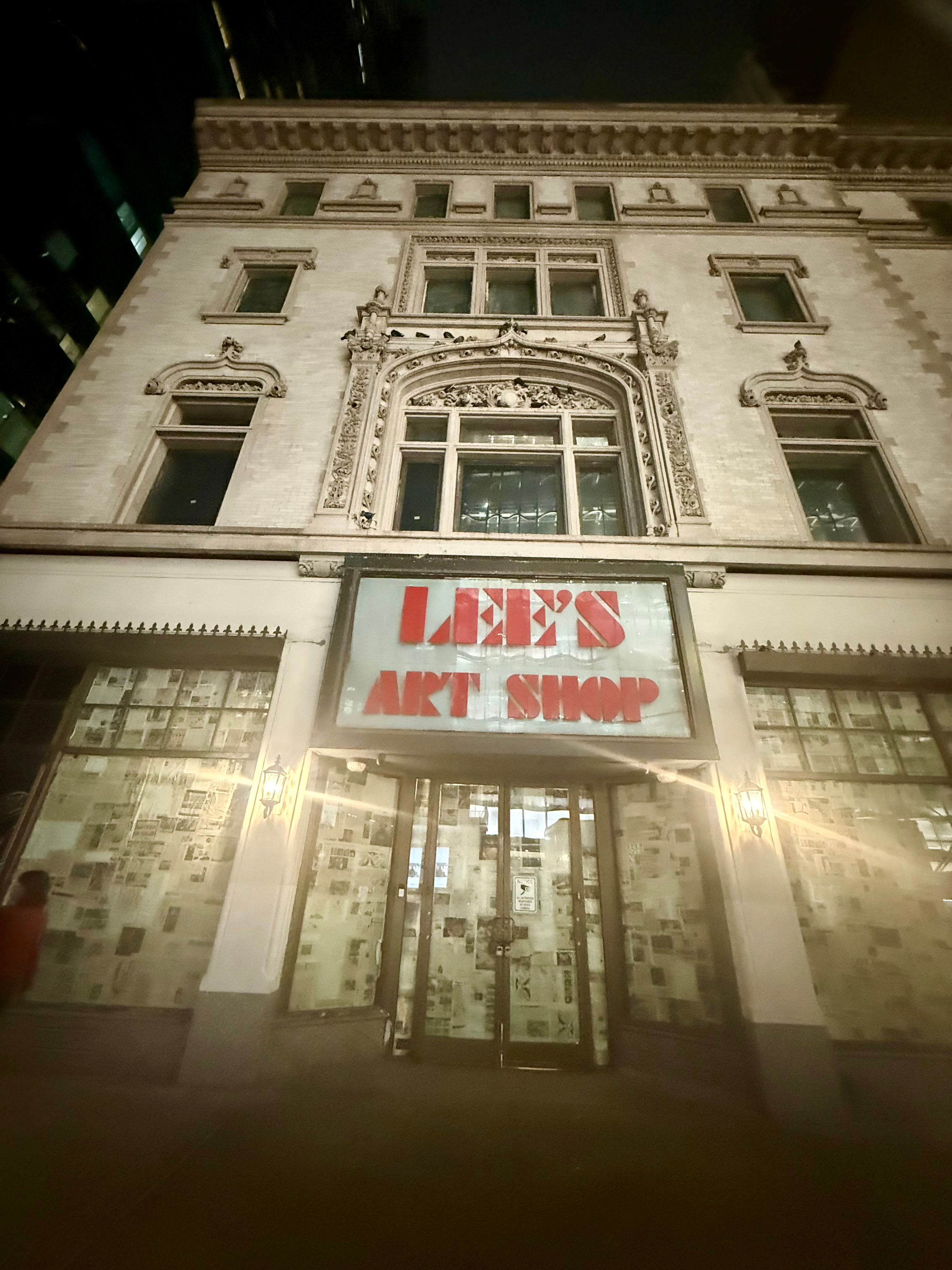


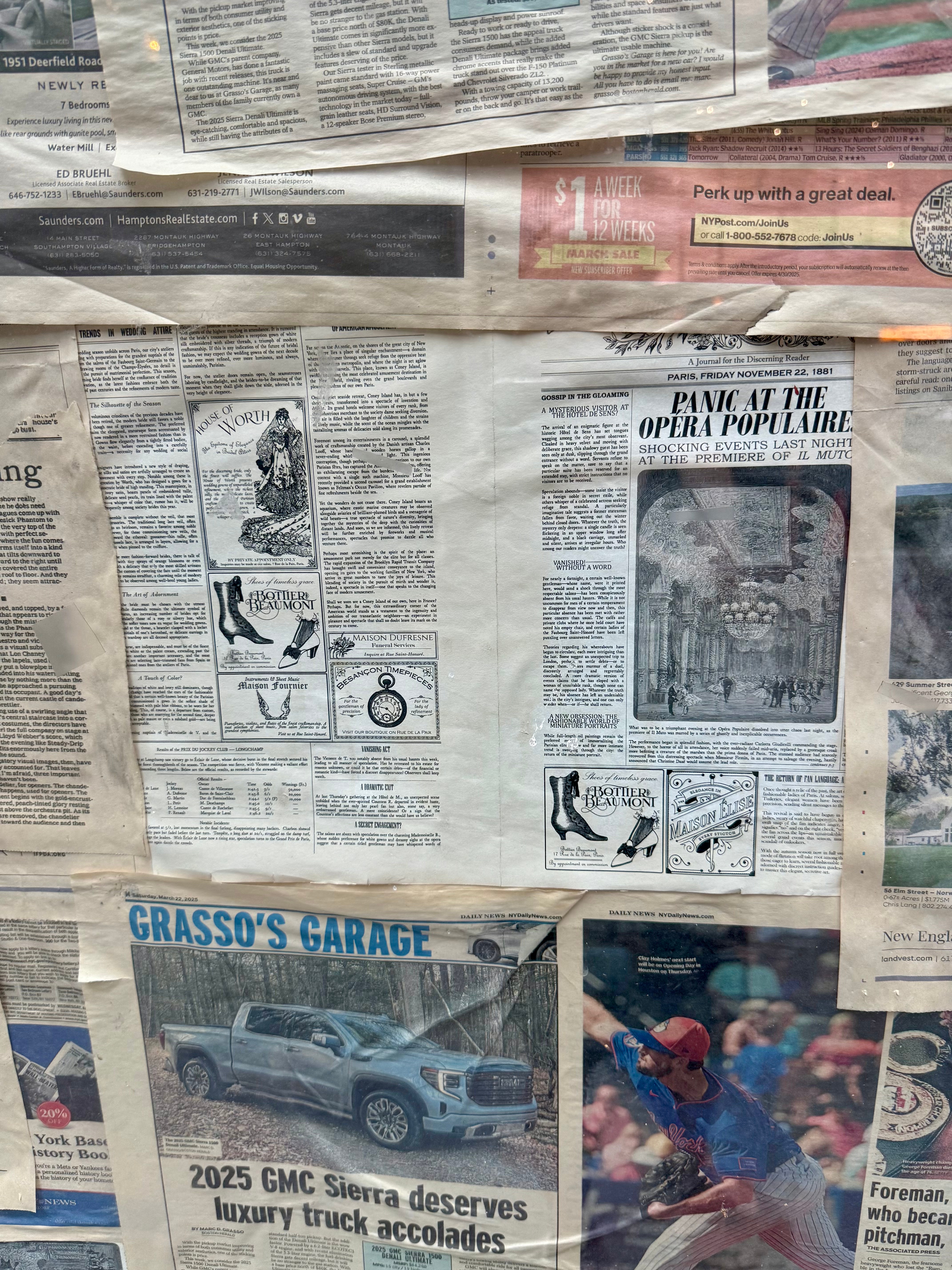
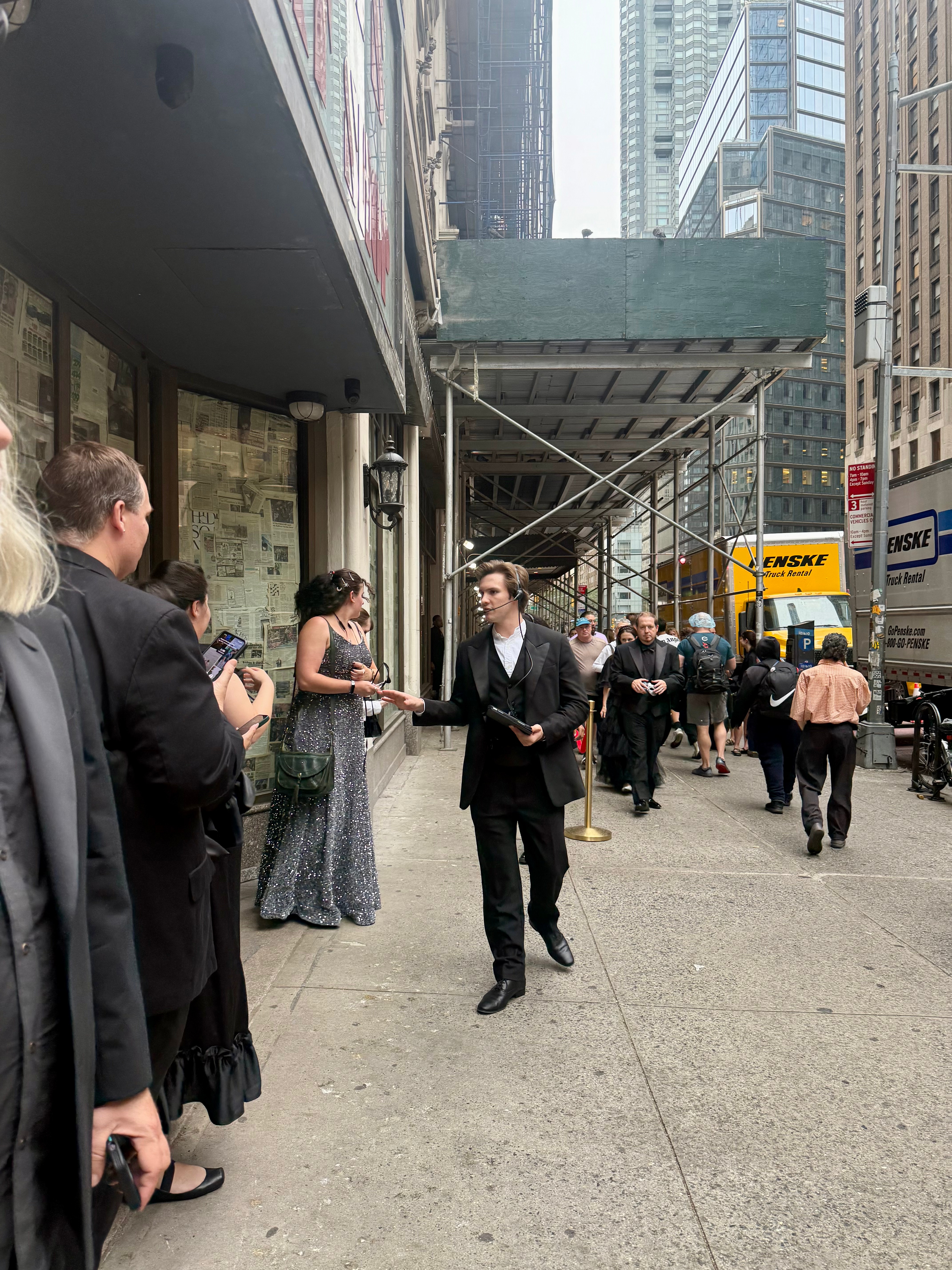
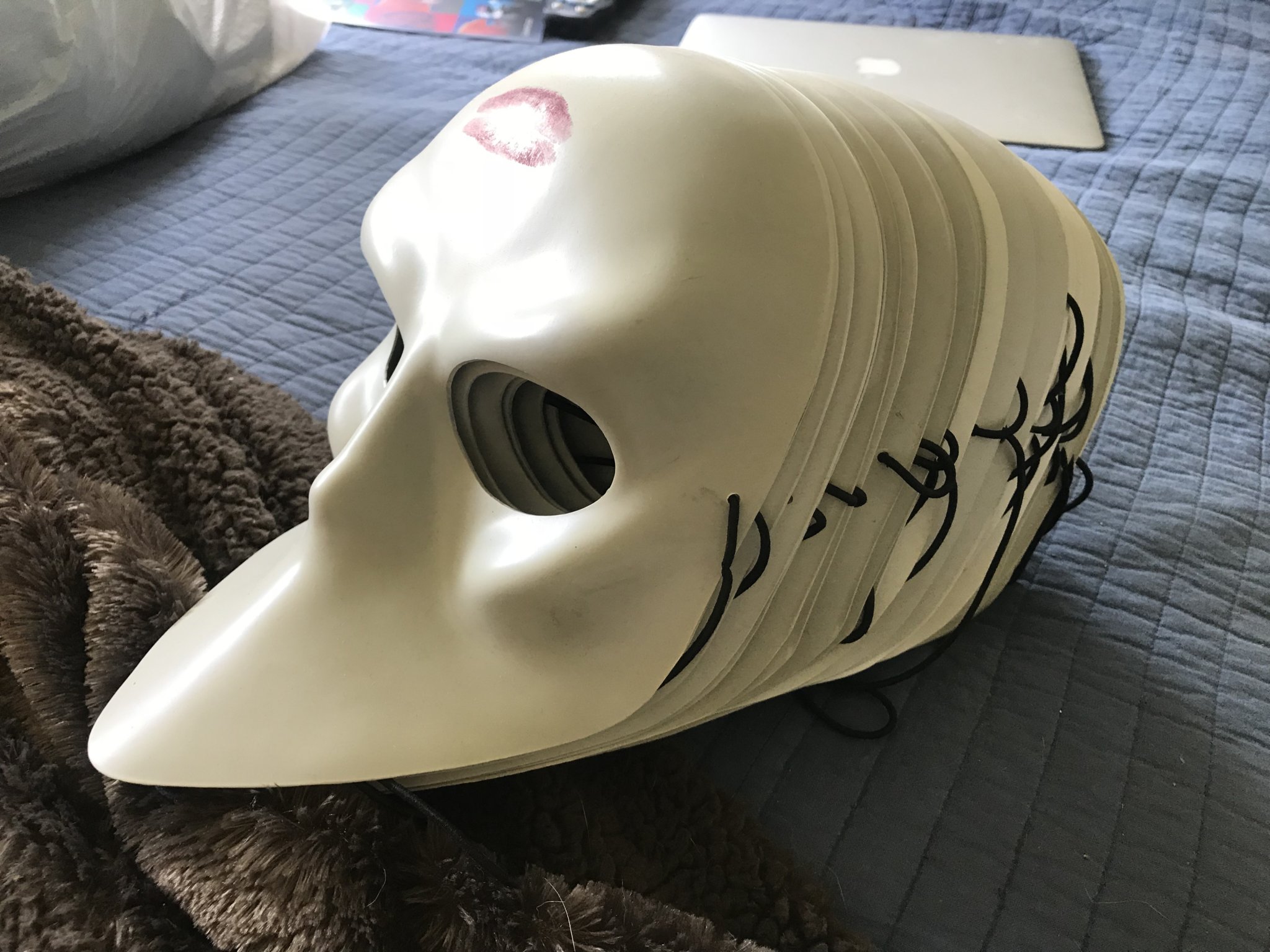
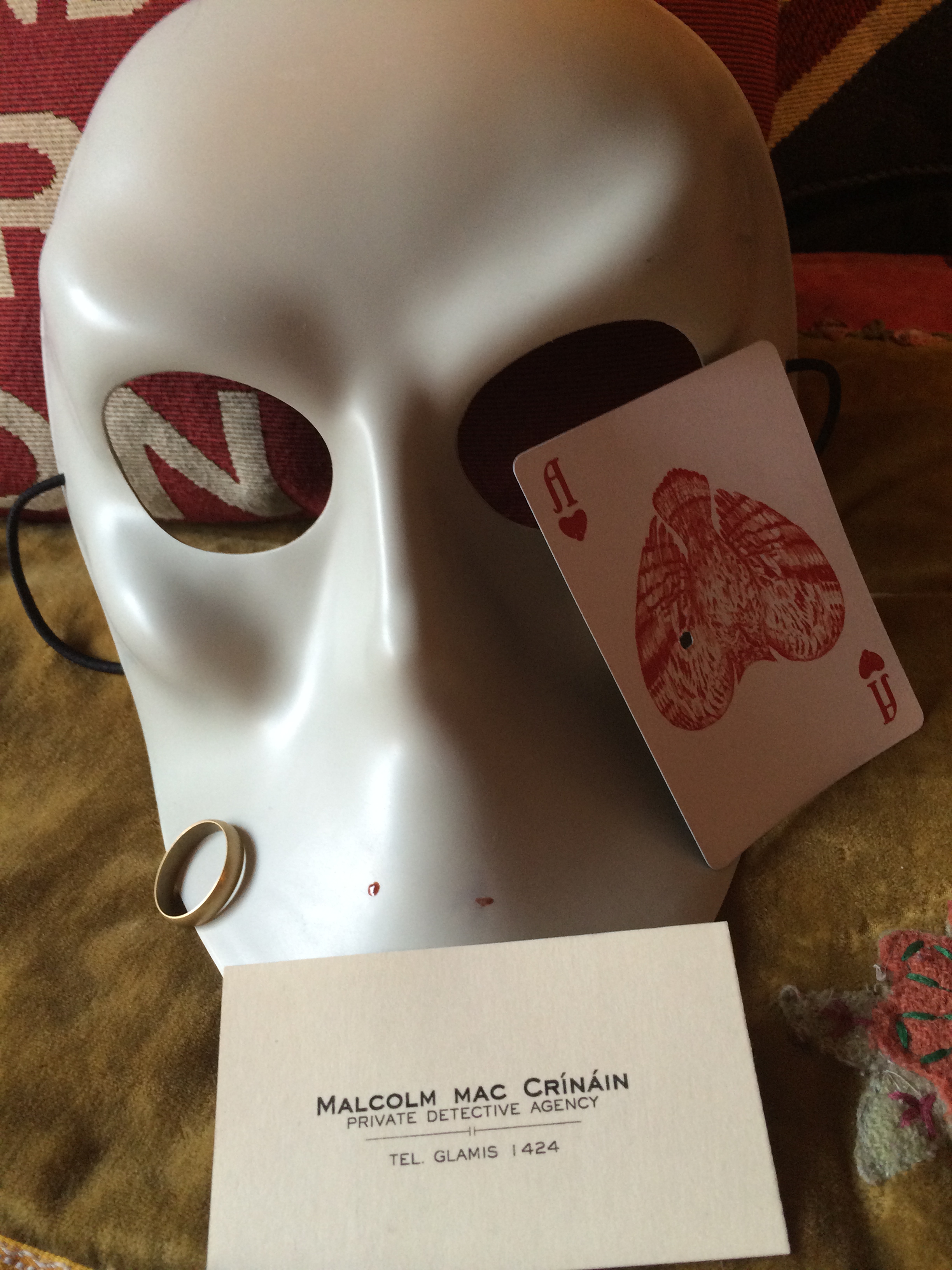
The outside of the building has the windows covered in newspaper, and if you look closer you will see some articles about the original Broadway production of Phantom, and others reporting on the fictionalized goings on at the Opera Populaire that occur during the musical. You line up outside, and if you don’t already have a mask, you can be given one. I quite liked the provided one, it was comfortable, even under glasses, and has a little Phantom mask motif. At least for now, you are asked to dress up and wear black, white, or silver, and you will likely see some people extremely dressed up and wearing their own masks. It does make the entire experience a little more like an “event” to have most people dressed in cocktail (or even ballroom) attire, with the rest at least fairly nondescript in clothing. An important aspect, though, is footwear – stilettos and kitten heels are not allowed, and I recommend flats or even sneakers. This does lead to a certain feeling of disconnect, to be dressed up but wearing “sensible shoes” but the differing floor surfaces (including grates and escalators), sometimes in low light, really do require it. There are also times when you need to rush – more or less – from one room to the next, in a small crowd, and you really don’t need to be worrying about your footing at the same time.
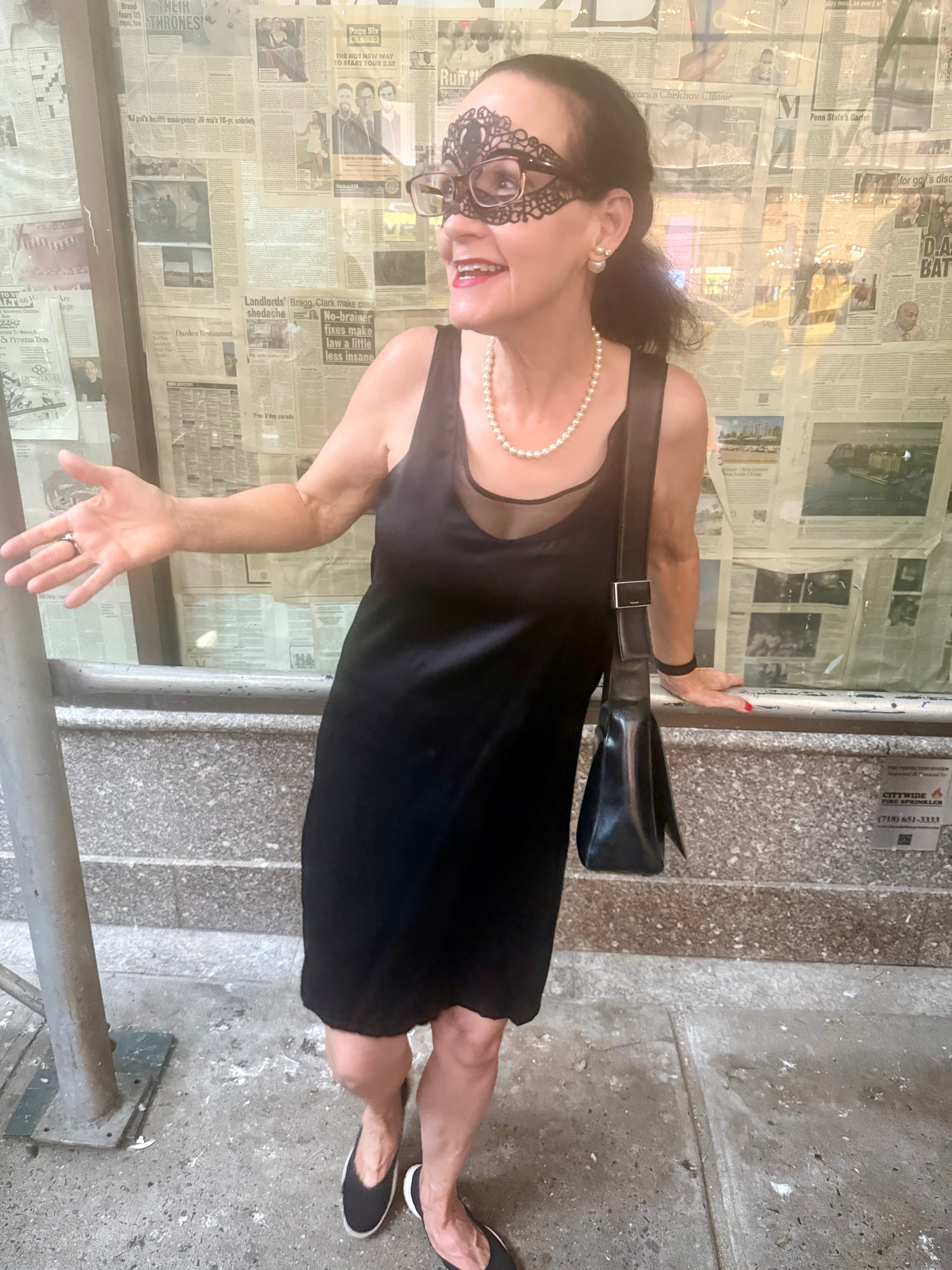
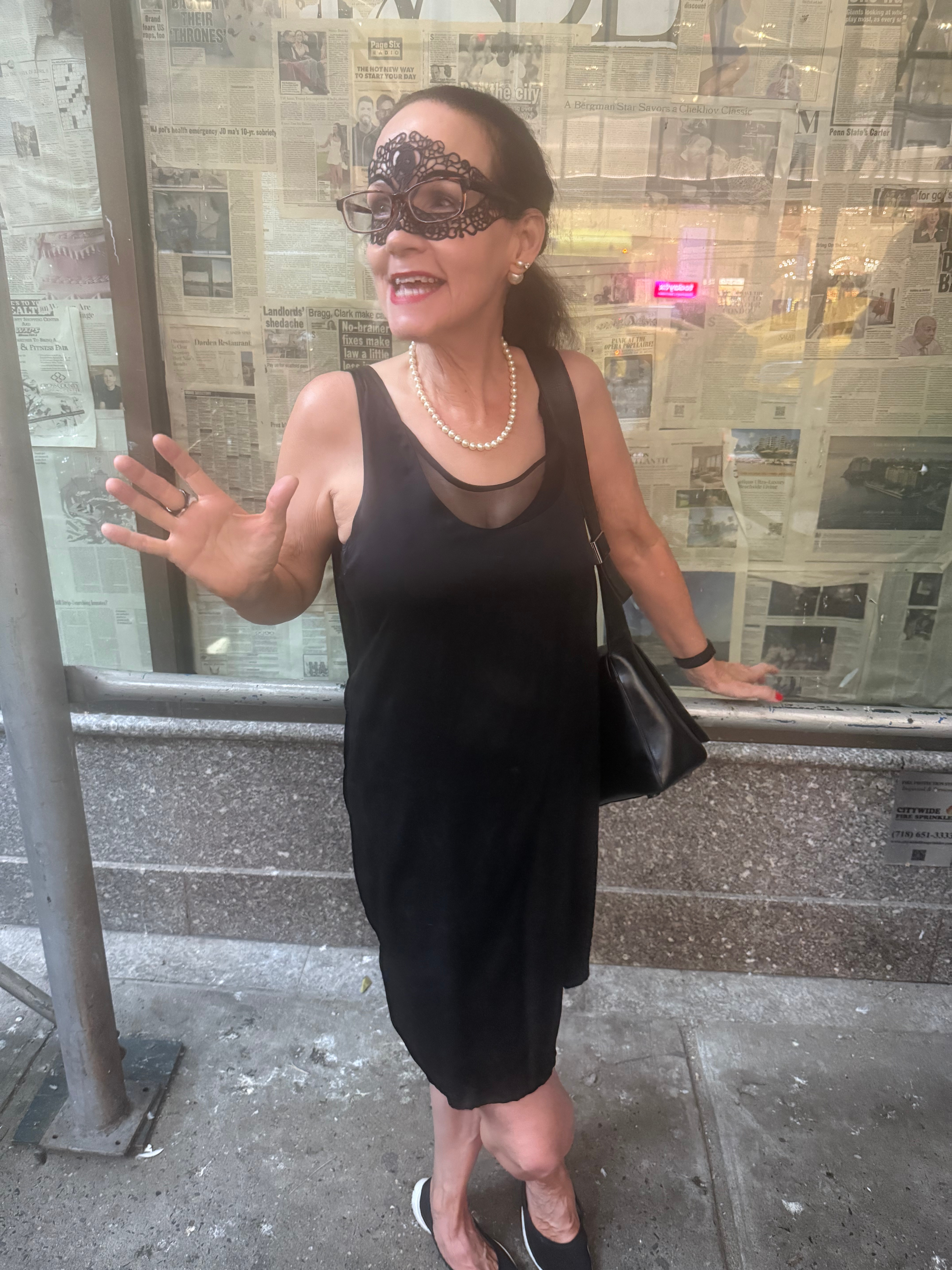
Each time slot or pulse is let in at all at once, and there is no early or late entry, as another group will be experiencing the show just after you. Also, tickets are not resalable, in part because there are no tickets – you show ID that matches the name on the ticket purchase, and in addition you are sent a password the day before to the email used for purchase. While waiting outside, you might have a photographer come by (I did, but have heard of other dates that did not), and if so, you will receive an email later that is password protected by the same password you used for entry. You can download any photo they take at no charge (see mine below).

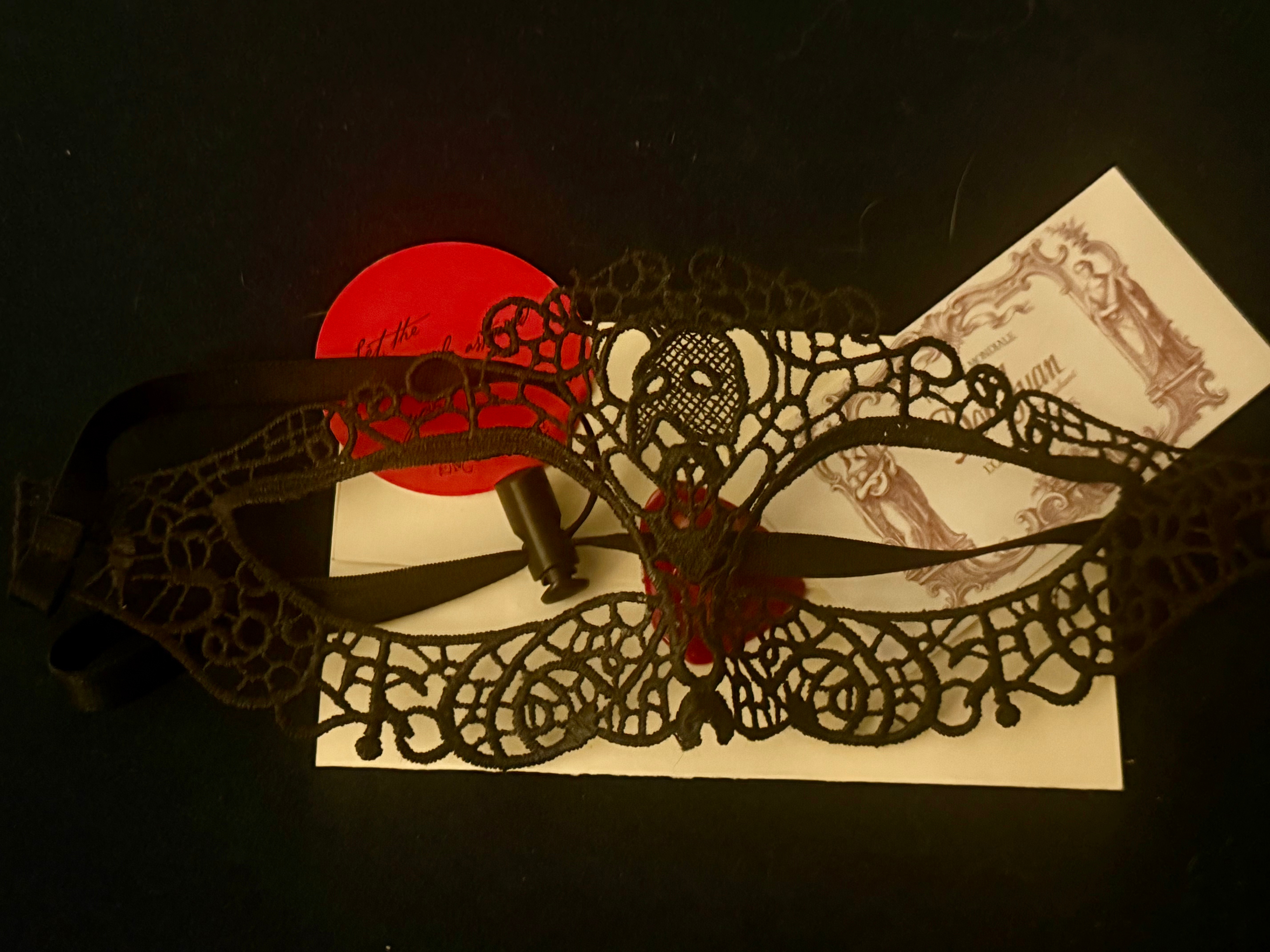
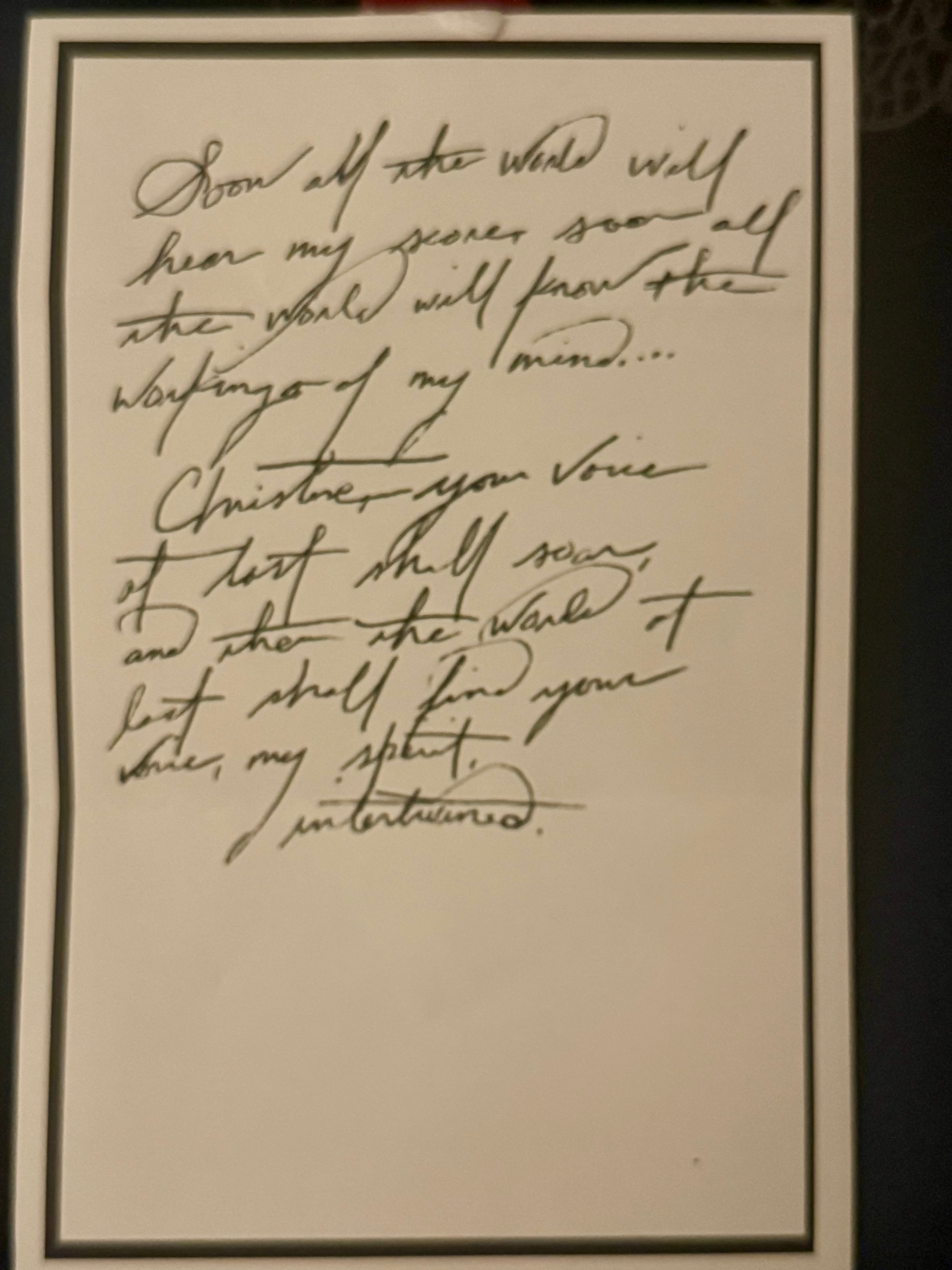
I don’t want to give too many details about the actual experience of being inside Masquerade, and no photos are allowed inside (all bags/coats need to be checked, which is at no charge, and a sticker is put over your phone camera if you have that on you). But I will say that it is the actual Andrew Lloyd Webber music, sung live with a prerecorded instrumental track. The musical has been cut a little, and a few things/songs from the Phantom movie musical added. The order of the story and some of the backstory are different from the original Broadway musical production. Sets and costumes are lavish, and it was thrilling for me to be in the middle of some of these iconic scenes. You are led from space to space, and no loitering or self-exploration is allowed. In terms of interactions, you might have a character address you, ask you to do something, dance with you, or become a supporting character (at one point Carlotta addressed me as Michaela, asked where I had been, and reminded me that I needed to follow her around with throat spray so that I could moisturize her vocal cords now and again – which I did for the rest of that scene). You might even be handed one of the Opera Ghost’s letters after someone had read it – Christine gave hers to me and the seal was thick red wax in the shape of a skull.

More practical issues: 1) You are less likely to be split up from anyone you have come with than in traditional immersive theatre. There is one time when your pulse gets divided up into three groups who each see all three scenes, but just in a different order. But the “butlers” there to move the crowd along seemed sensitive to keeping people from the same party together. 2) In most rooms there are at least some seats, and the butlers will direct people into seats until they are full. If you are the first in one room with a seat, you may be last out of that room and not get a seat. So plan on standing and moving a lot within the two hours. 3) The show is ADA compliant, and you need to contact the show in advance if accommodations are needed. From what I hear, there will be a butler assigned to help you get from place to place, using elevators, and will ensure that you don’t miss anything. 4) There is champagne when you first enter the space (and pro tip – if you drink your glass in that first room, they will refill it in the next room where it is needed for a toast), and you may be offered shots of something (whiskey? brandy?) in a later room, but there are also non-alcoholic options in both instances. 5) If the weather permits, there will be some scenes outside on the roof of the building, but there are alternate places to hold these scenes if the weather is inclement.
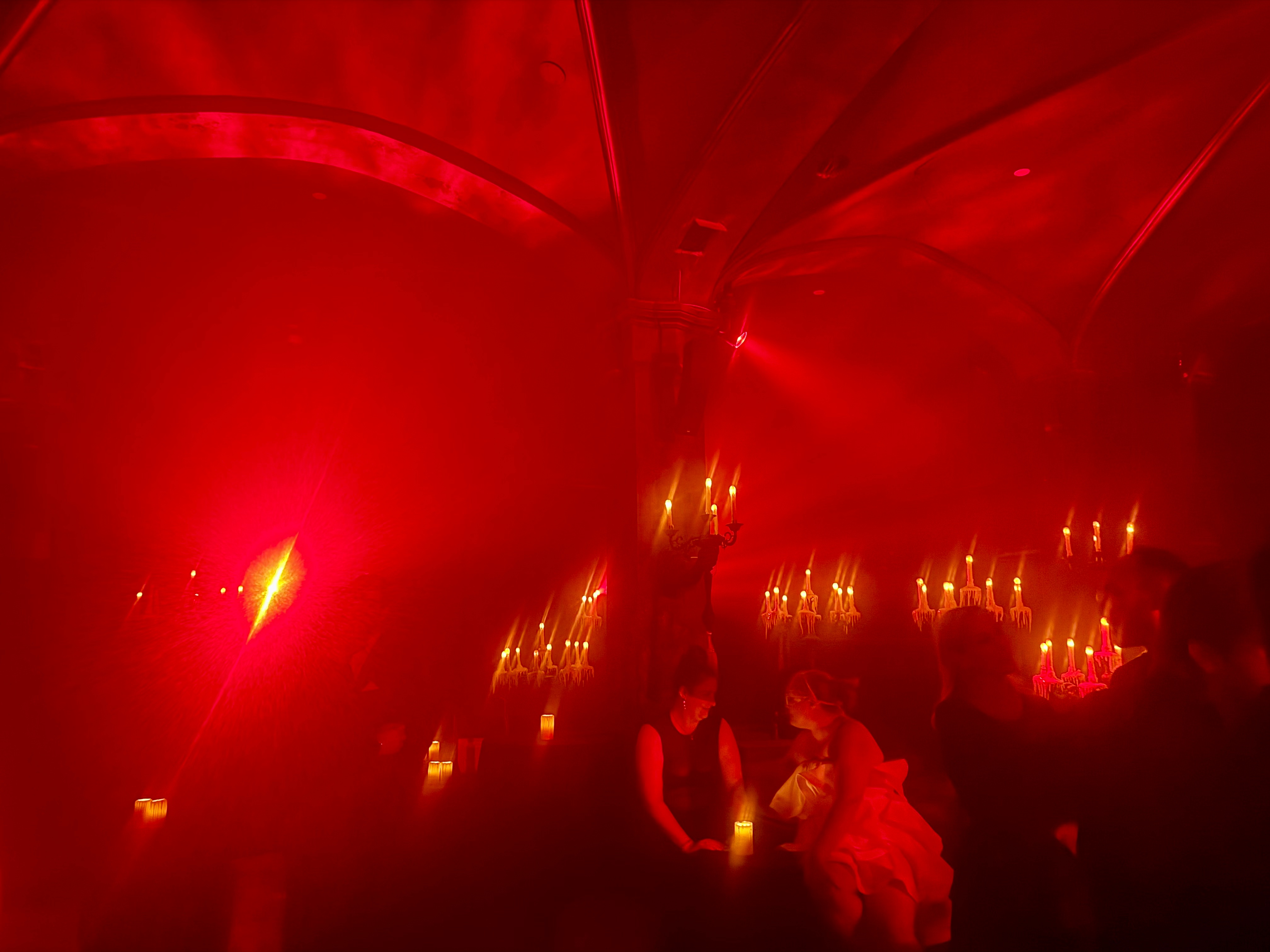

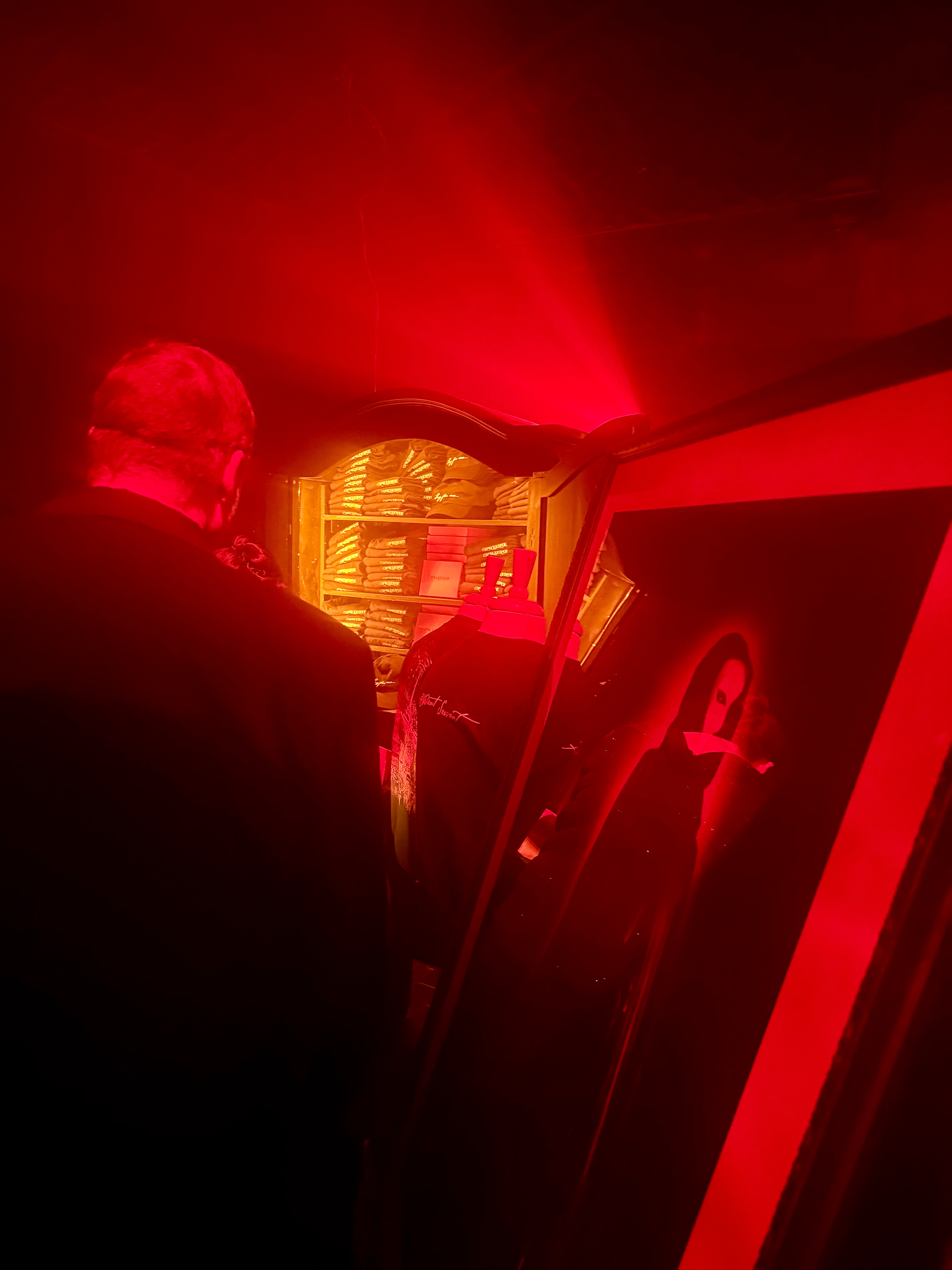
As you leave, there is an elaborately decorated bar space, and you are welcome to stay as long as you would like. You can go back to get your bags if needed and then return to the bar. There is also merch – of course! I found it useful to recap the show and process it a bit in the bar. I thoroughly enjoyed myself, and for me it worked both as someone who enjoys innovative and immersive experiences, and someone for whom the original POTO has a lot of nostalgic positive emotional valence.

As I started to write this post, inspired by exploring Viola’s Room and Masquerade this summer, I started to think more and more about what “immersive theatre” really even means. Certainly the classic Punchdrunk idea of wandering through an immense, richly detailed space, and coming in contact with performers you can choose to follow or not, is exceptionally immersive. Making your way through Viola’s Room while being guided by Helena Bonham Carter’s voice is very different, yet does immerse you into its storytelling world. So does Masquerade, even though your movement through the space and story is tightly controlled. I suppose the areas that are less clear involve a production spilling out into public areas, or having performers break the fourth wall by speaking to attendees. In the end, the definition matters less to me than the experience – and whenever I experience a sense of flow by losing myself in a story, I am immersed in it. This can happen even while sitting in a traditional theatre seat watching something on a proscenium stage. However it presents, I enjoy experiencing complete immersion into a story, and I seek it out in whatever form it happens to take!
 Julie Brannan, NYC residential real estate