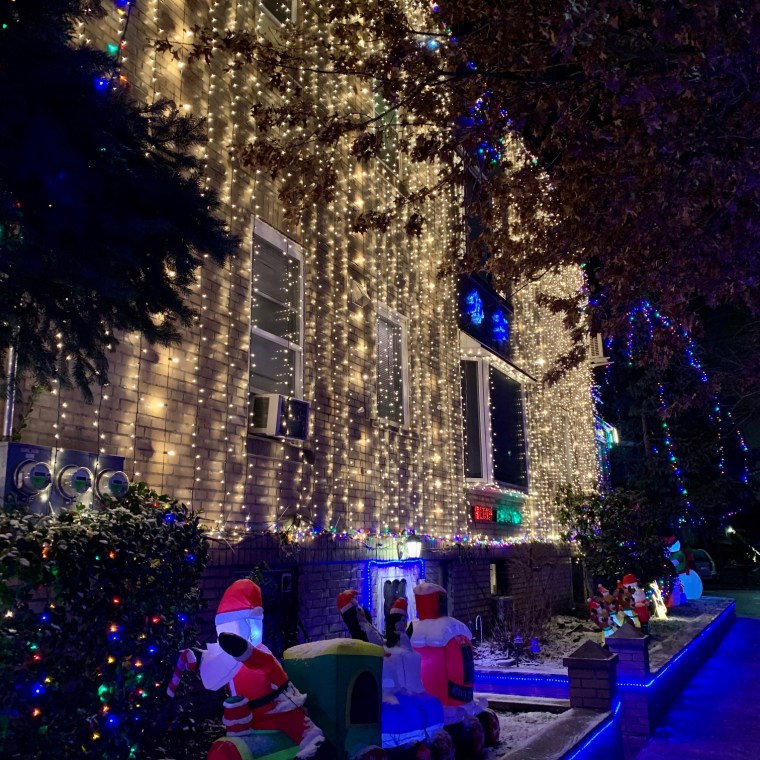
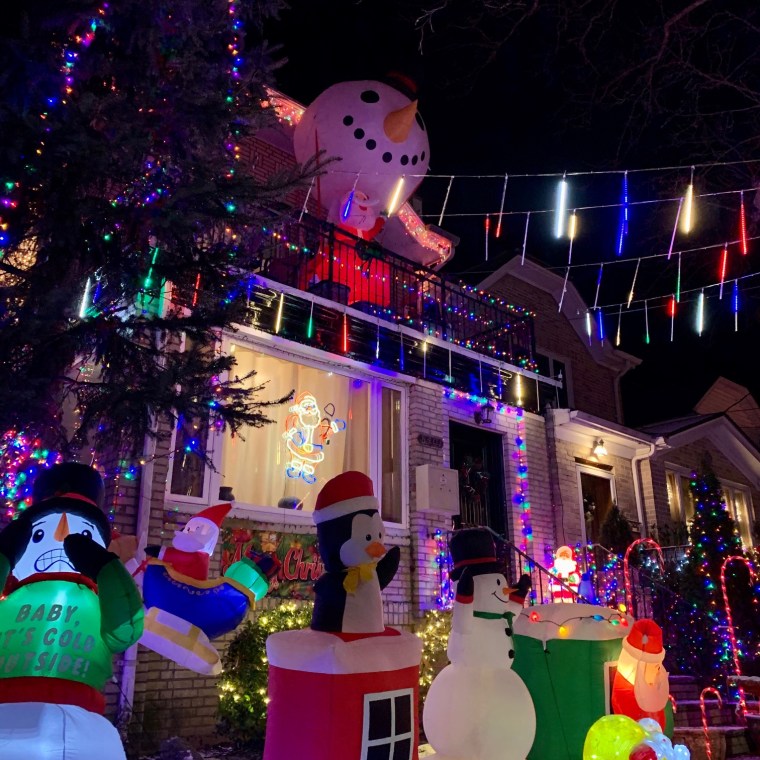
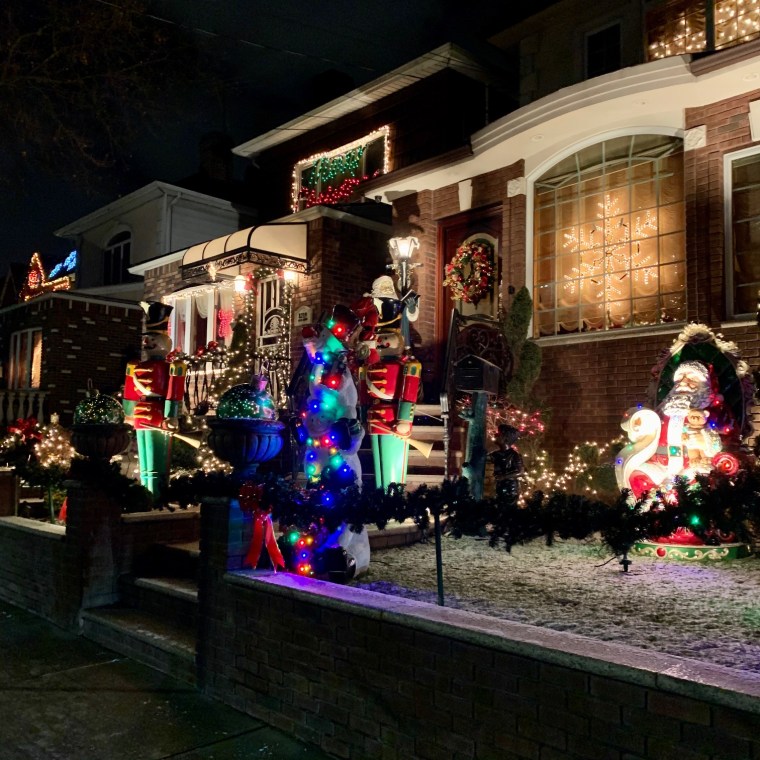
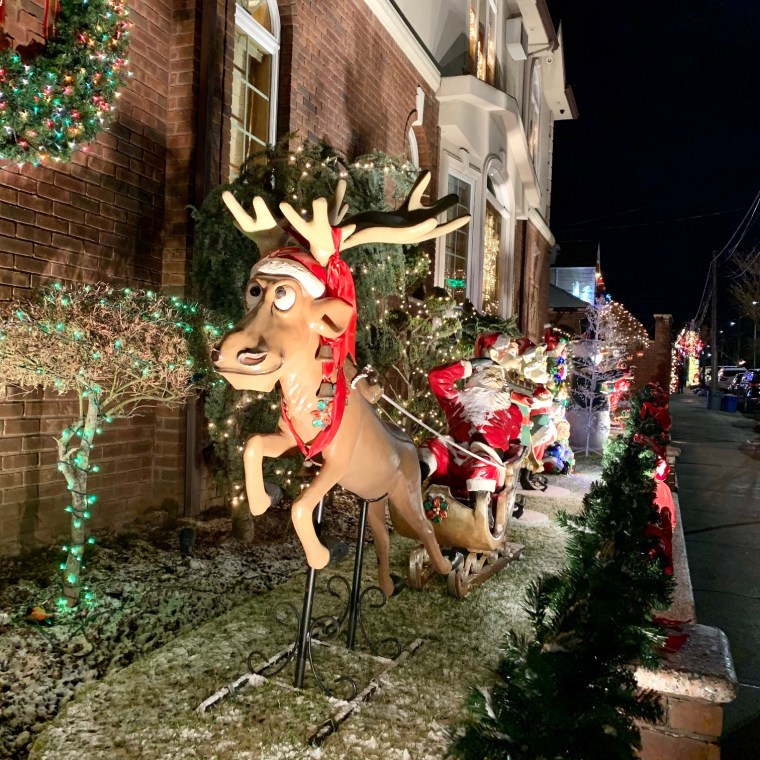
2019 Dyker Heights Holiday Lights

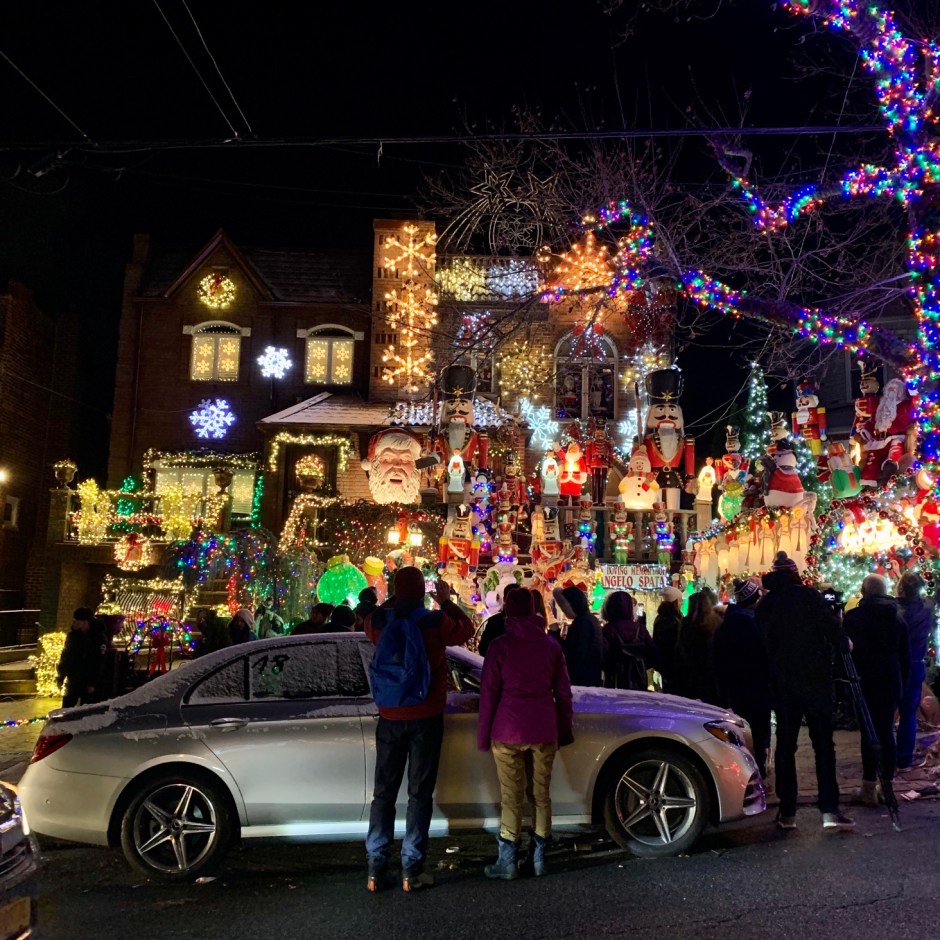
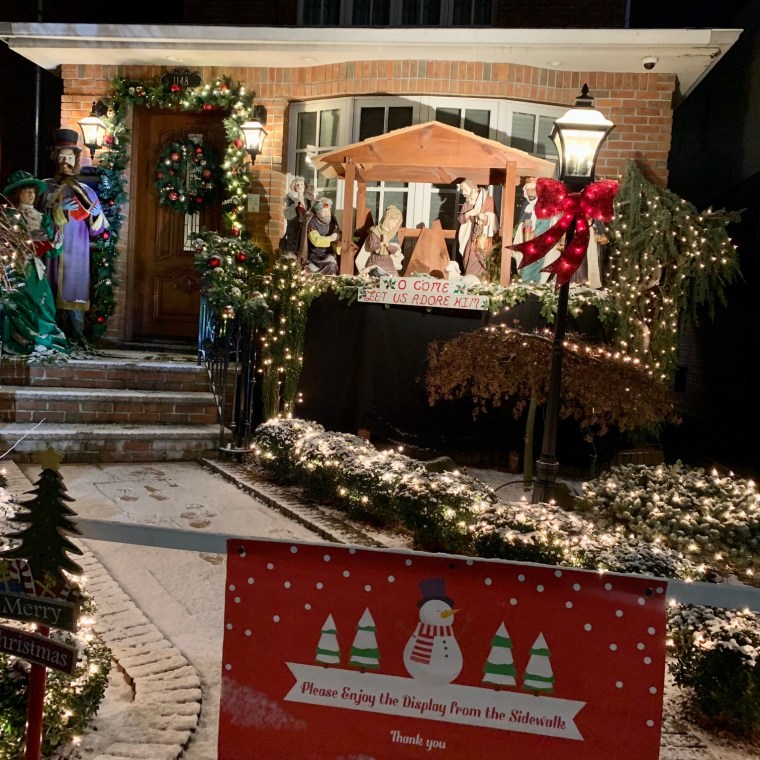
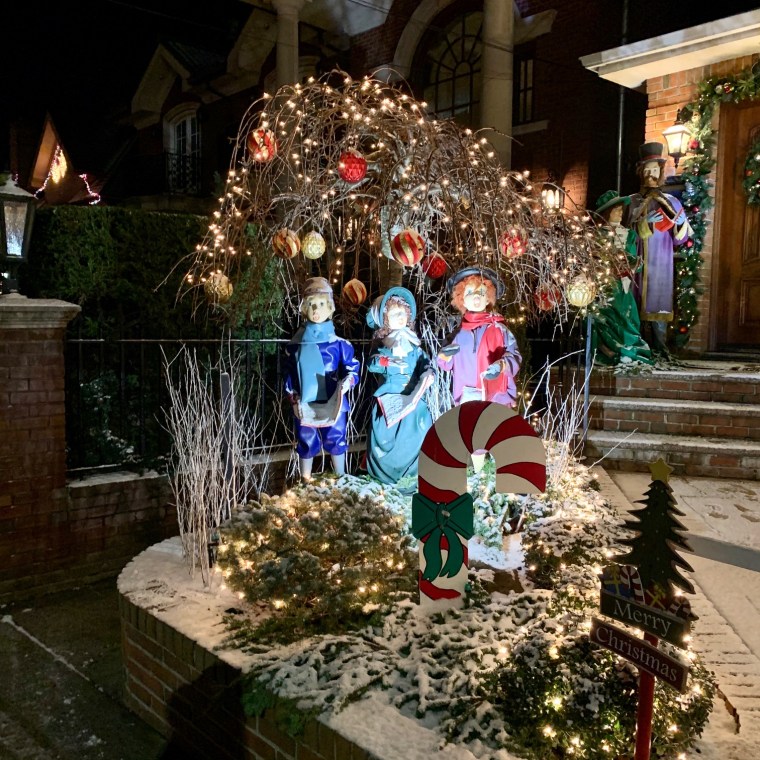
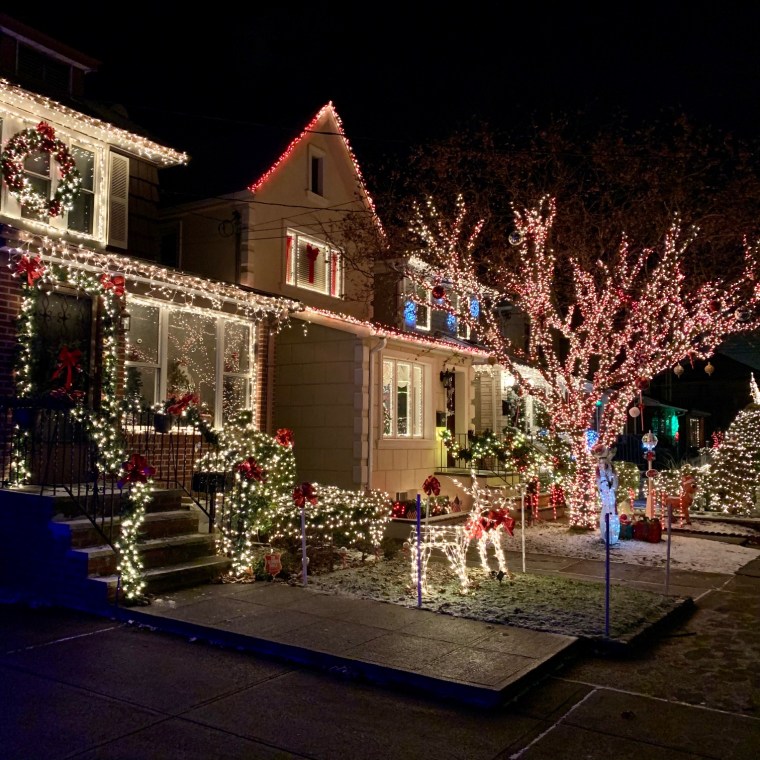
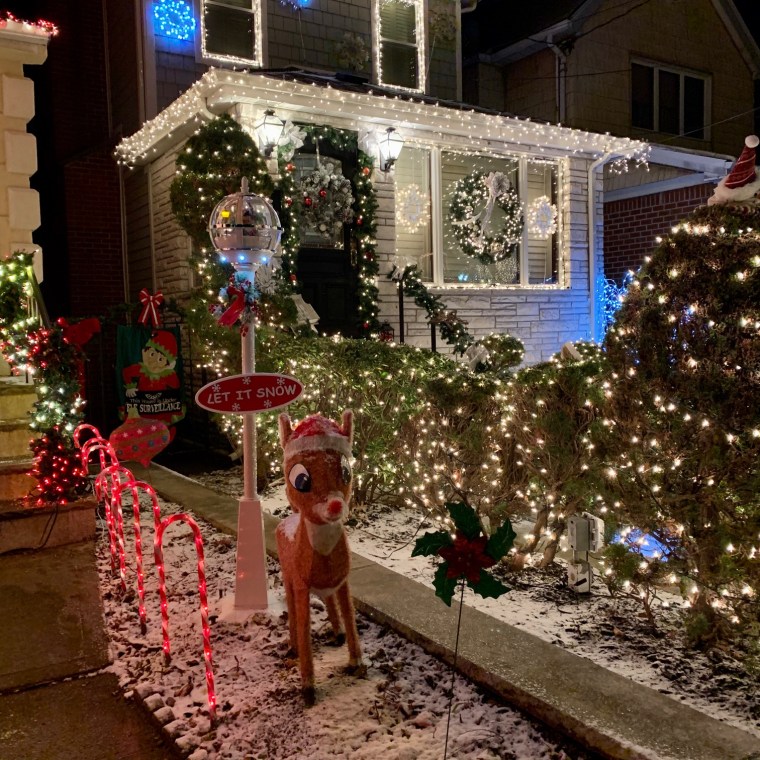
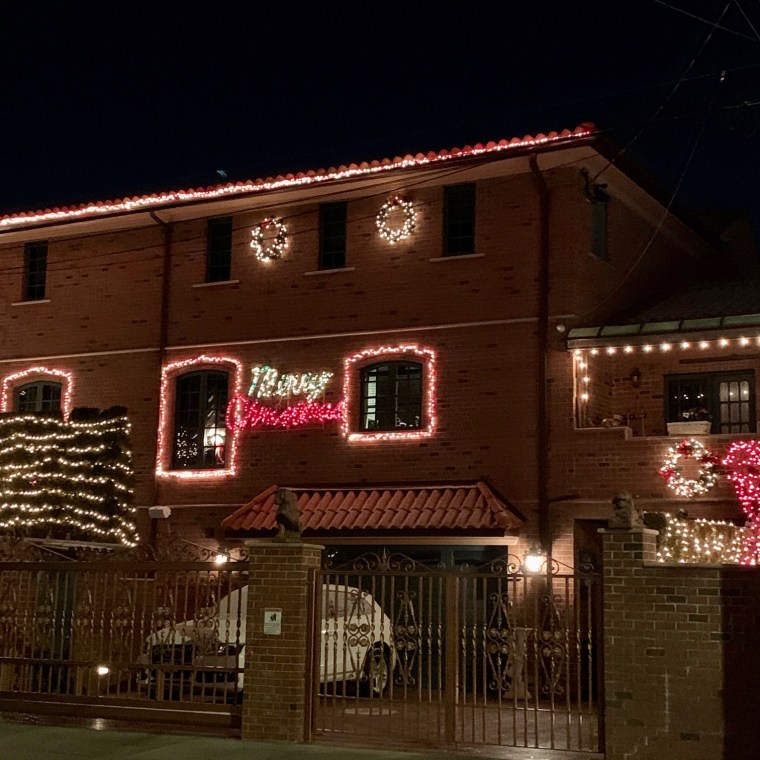
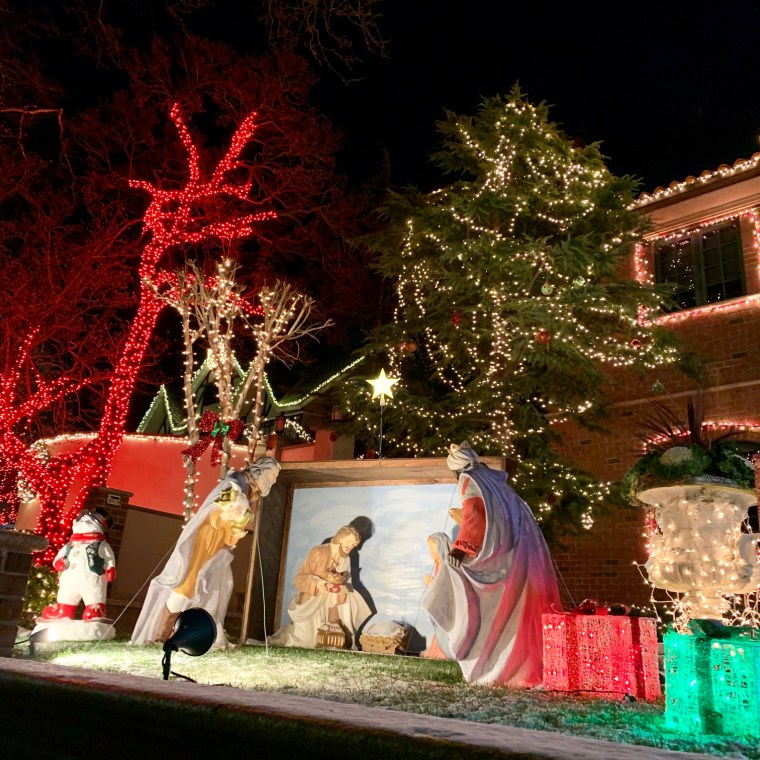
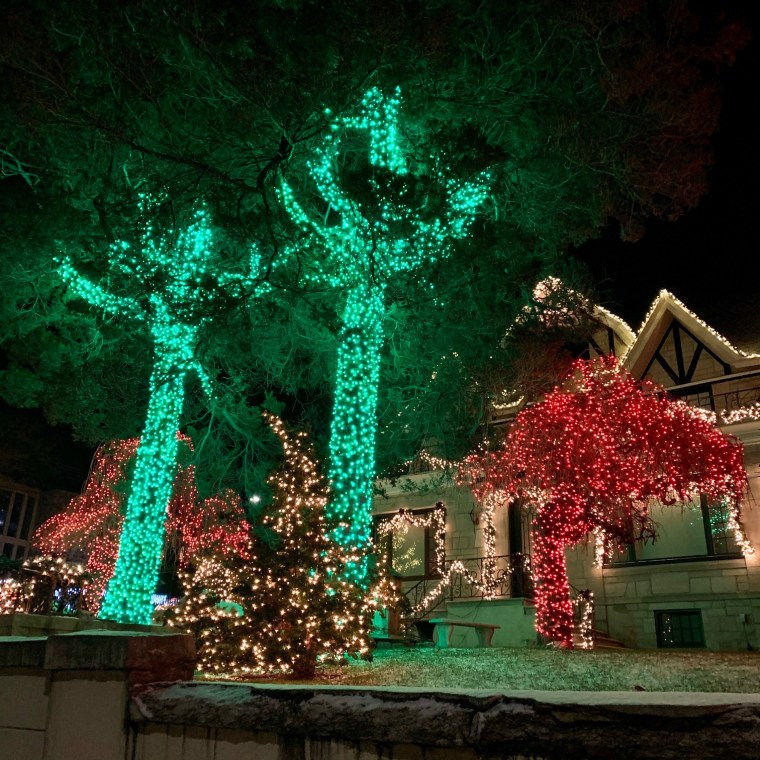
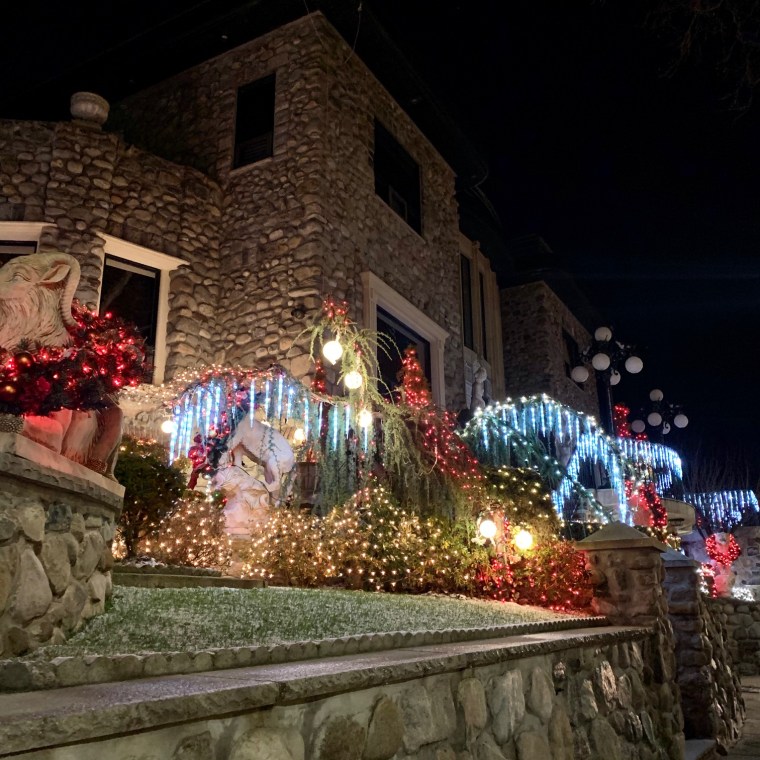
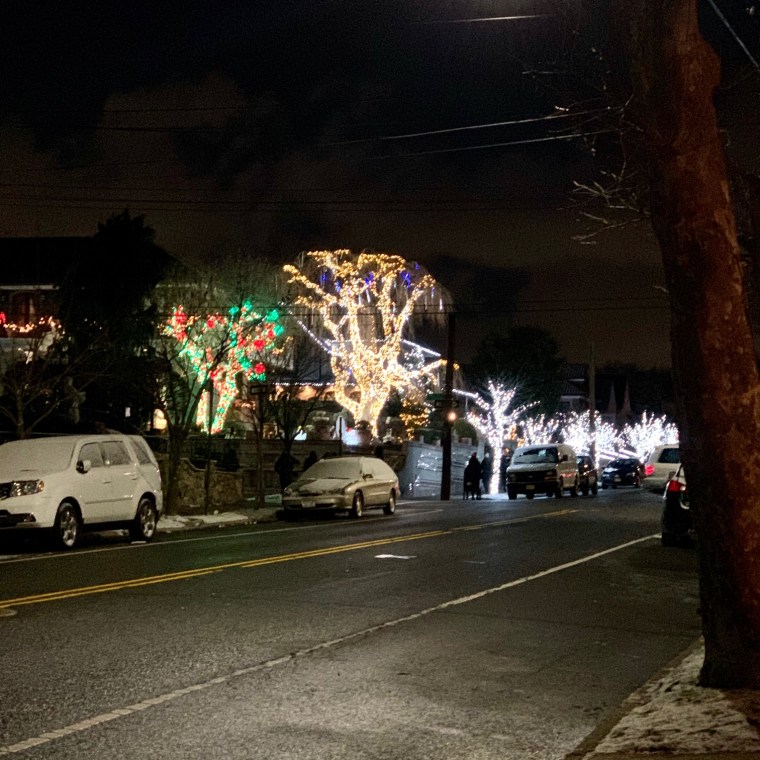
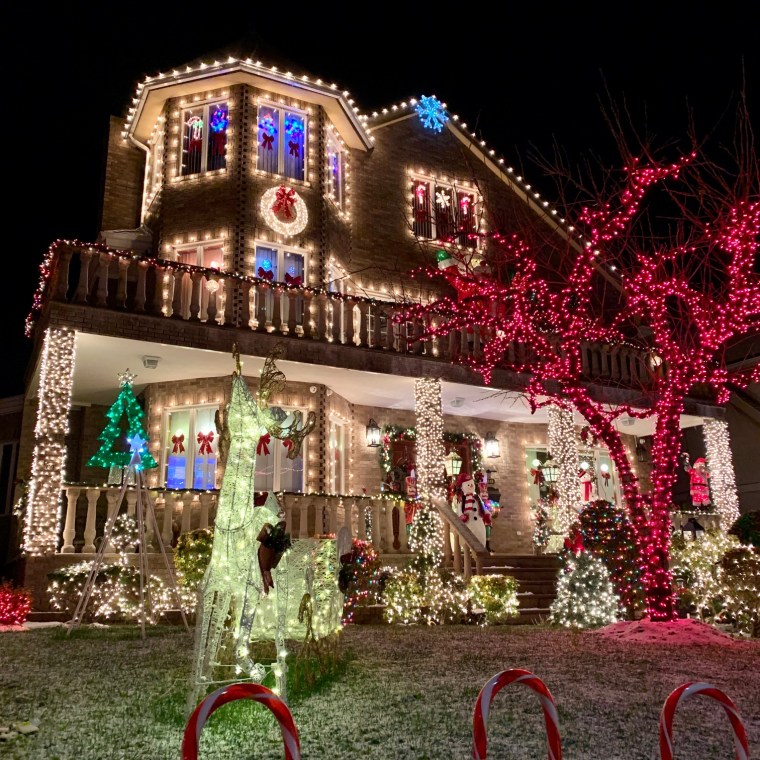
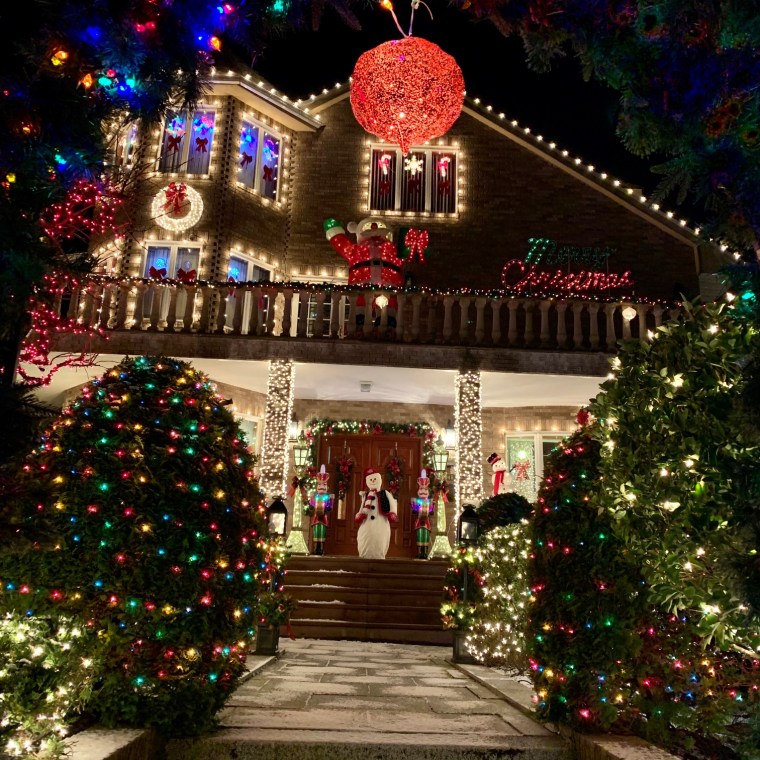
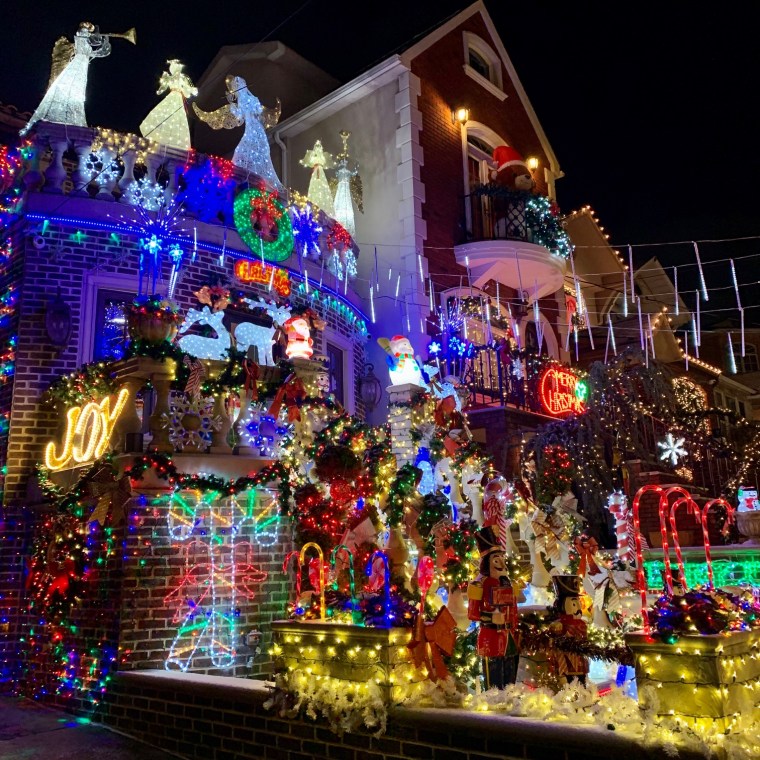
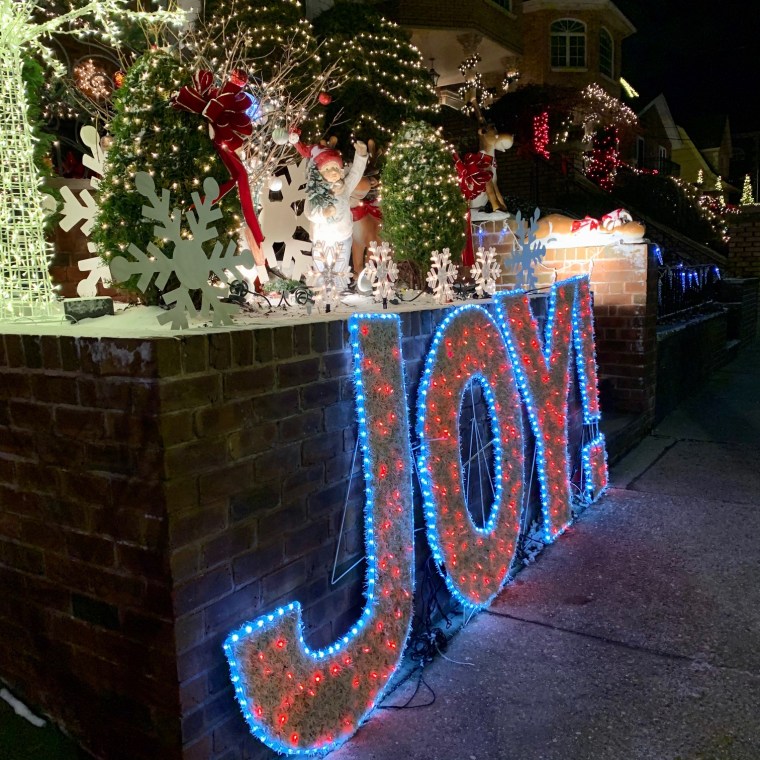
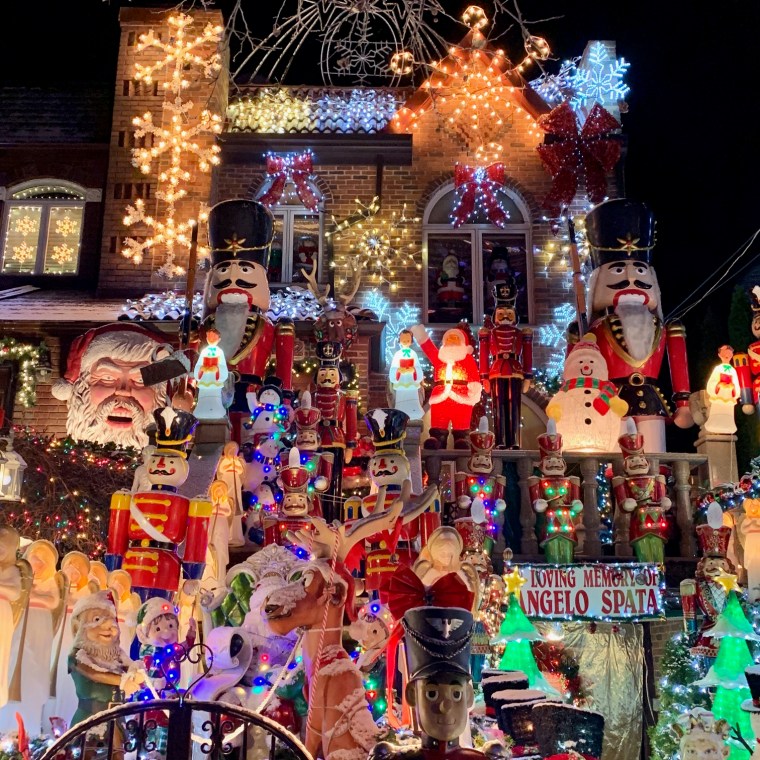
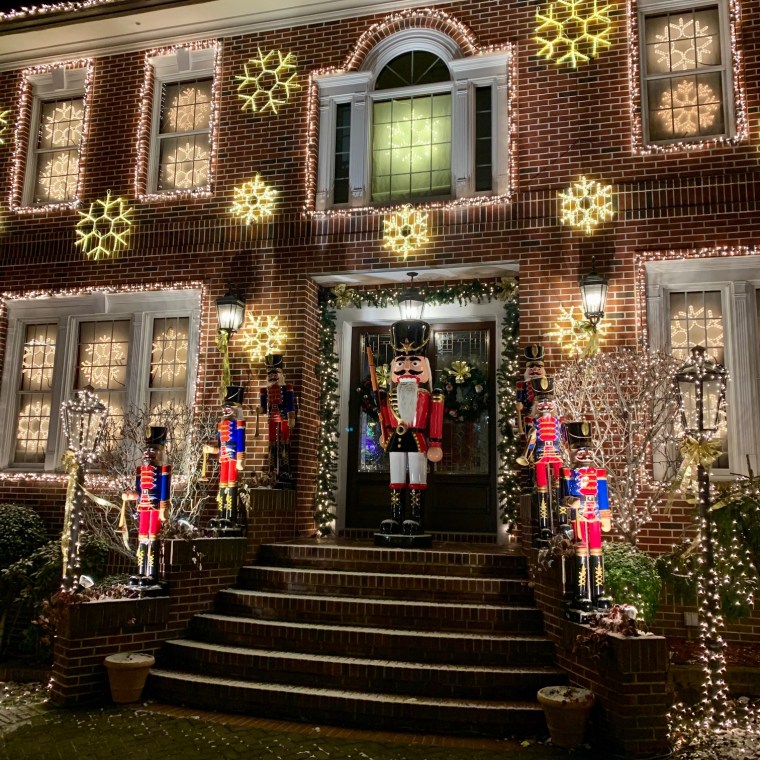
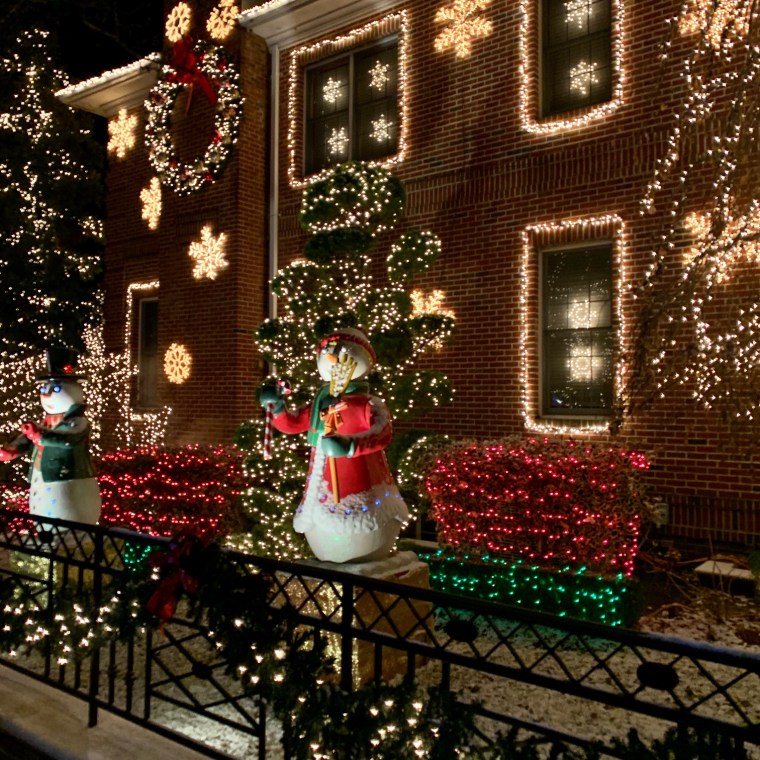
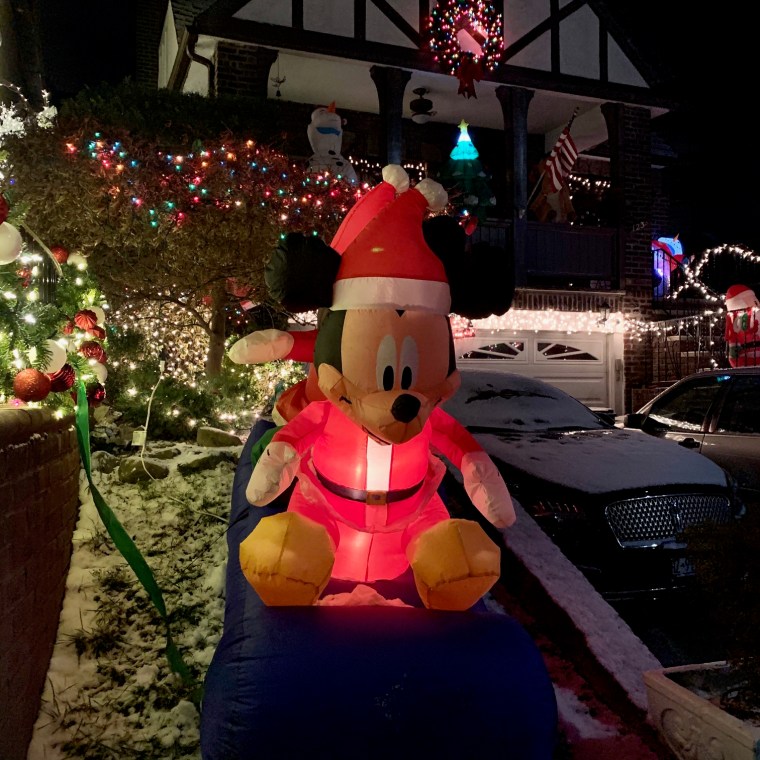
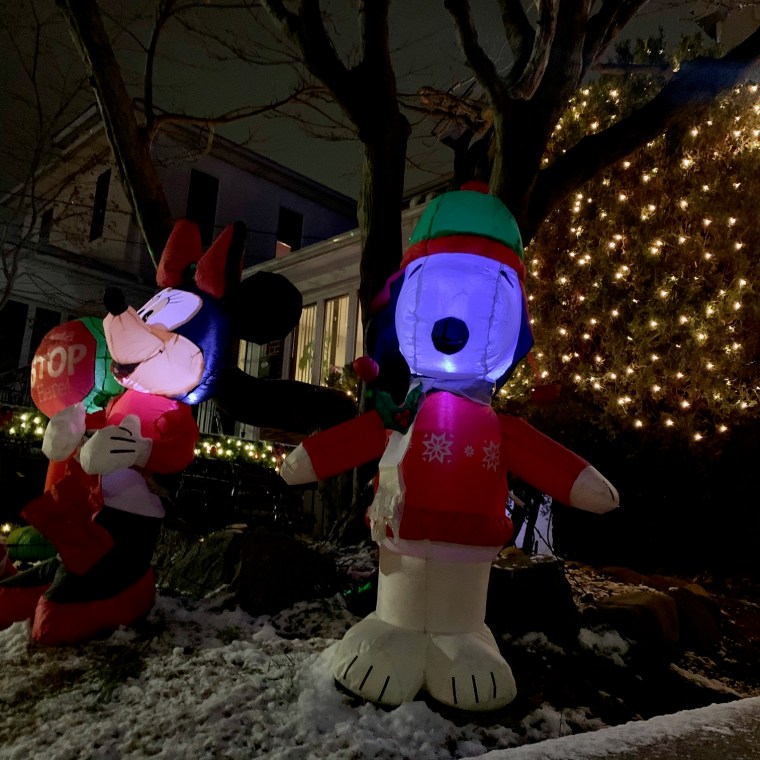
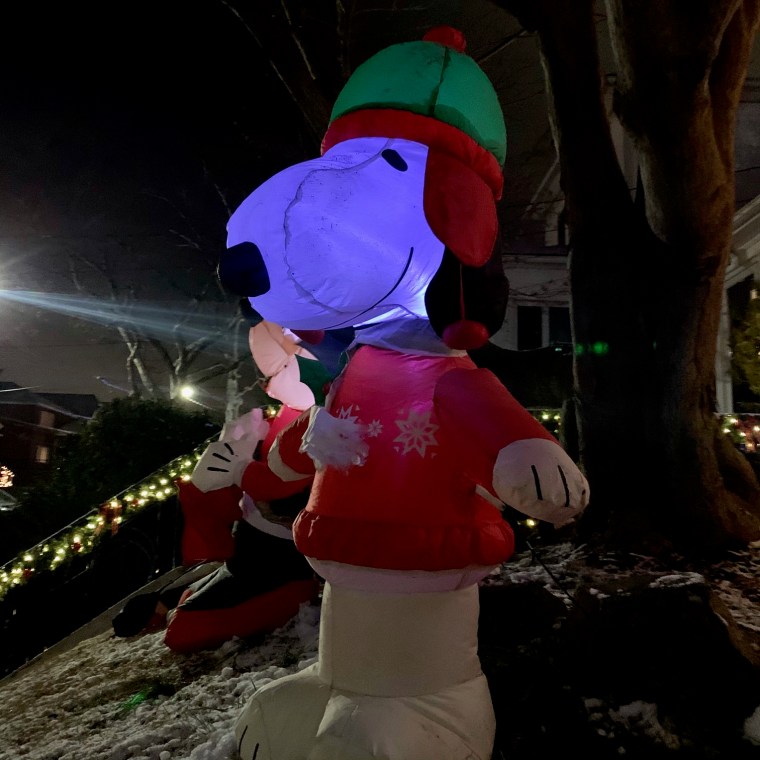
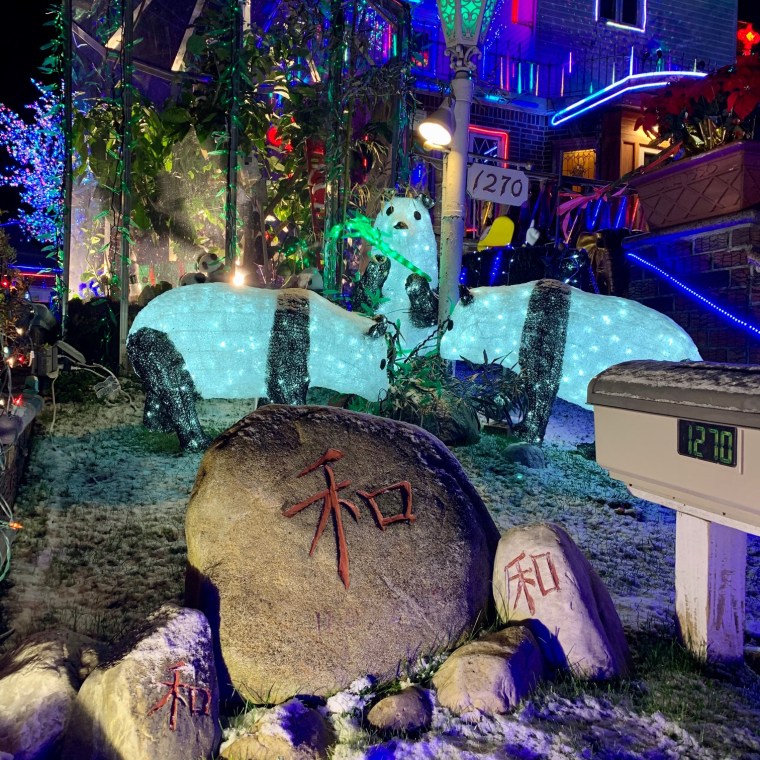
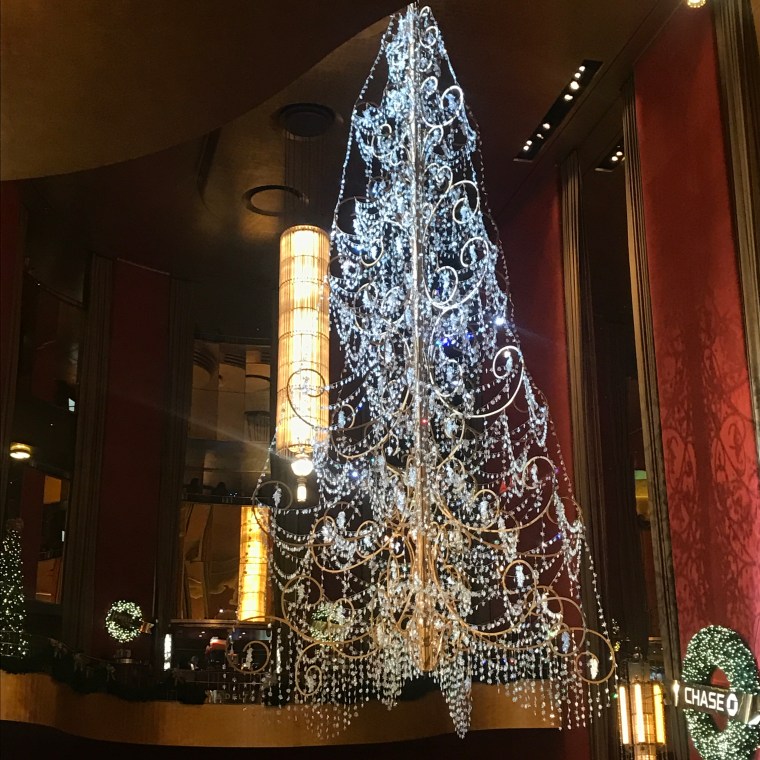
As we head into the shortest days of the year, we fight off the dark with celebrations of light. In previous years, I have written about how New York City celebrates publicly (see here for 2015 and here for 2016 posts, and here for last year’s post on holiday markets). Several years ago, I had access to a car regularly, and drove to Dyker Heights with my family to see the famed holiday lights (see that post here). This year, one of my daughters and I decided to take the subway (D train from midtown) and walk (about 20 minutes from the 18th Avenue stop in Brooklyn), and on a cold evening with some snow flurries, the lights once again did not disappoint – and I believe they have become more elaborate since the last time I was here in 2014. This tradition in Dyker Heights began in the 1980’s and since has increased every year, with many residents paying professionals $20K or more to deck out their homes. On weekends, traffic is bumper-to-bumper, and the sidewalks can be packed – so go on a weeknight if you can. The best viewing is roughly 11th Avenue to 13th Avenue, 83rd to 86th Streets. Here are some photos of what I saw this year:

IMG_5050IMG_5051IMG_5052IMG_5053IMG_5054IMG_5055IMG_5056IMG_5057IMG_5059IMG_5060

IMG_5061IMG_5062IMG_5063IMG_5065IMG_5066IMG_5067IMG_5068IMG_5070IMG_5071IMG_5072

IMG_5075IMG_5076IMG_5077IMG_5078IMG_5081IMG_5082IMG_5083IMG_5084IMG_5085IMG_5086

IMG_5087IMG_5088IMG_5090IMG_5091IMG_5093IMG_5094IMG_5097IMG_5098IMG_5099

IMG_5100IMG_5101IMG_5102IMG_5103IMG_5104IMG_5105IMG_5106IMG_5108IMG_5110

As we head into our own Roaring Twenties, I wish light and joy in the hearts of all!

Green-Wood Cemetery

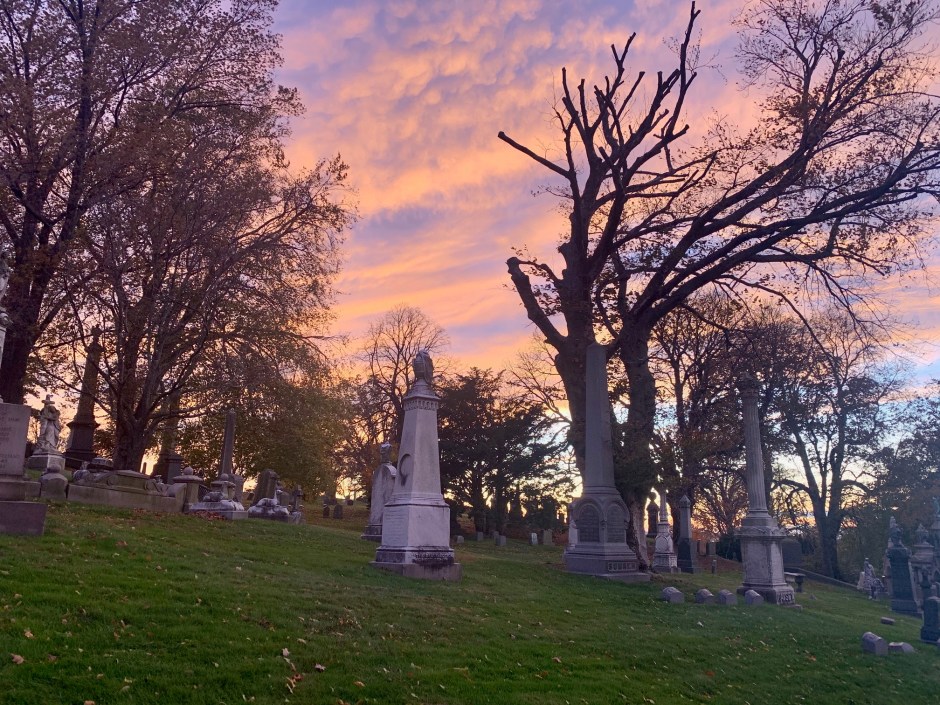
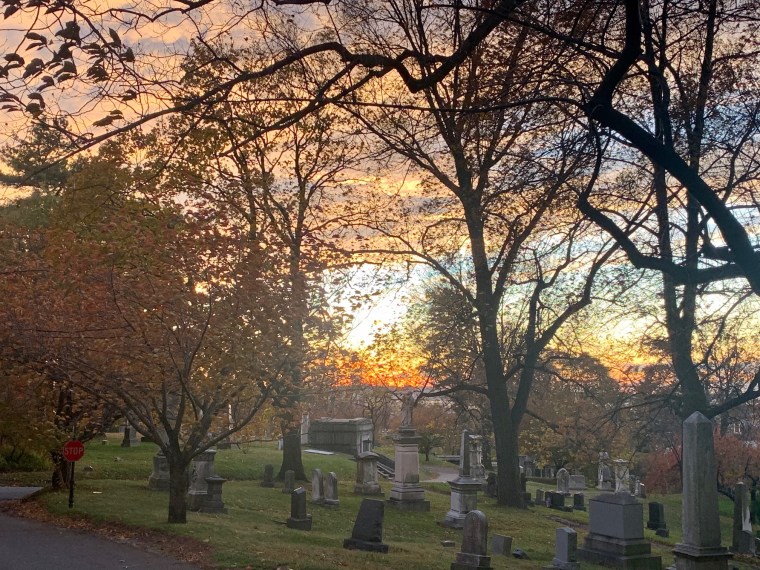
Green-Wood Cemetery in Brooklyn was founded in 1838, and by 1860 was the second most popular tourist attraction in New York State, with over half a million visitors per year (Niagara Falls was #1). Its popularity as a public park spurred on the creation of Prospect Park in Brooklyn as well as Manhattan’s Central Park. It was designated as a New York Landmark in 1966 and became a National Historic Landmark in 2006. Now with over 600,000 “permanent residents,” Green-Wood is still a wonderful place to visit, as I did recently near sunset.

IMG_4362

IMG_4411IMG_4407

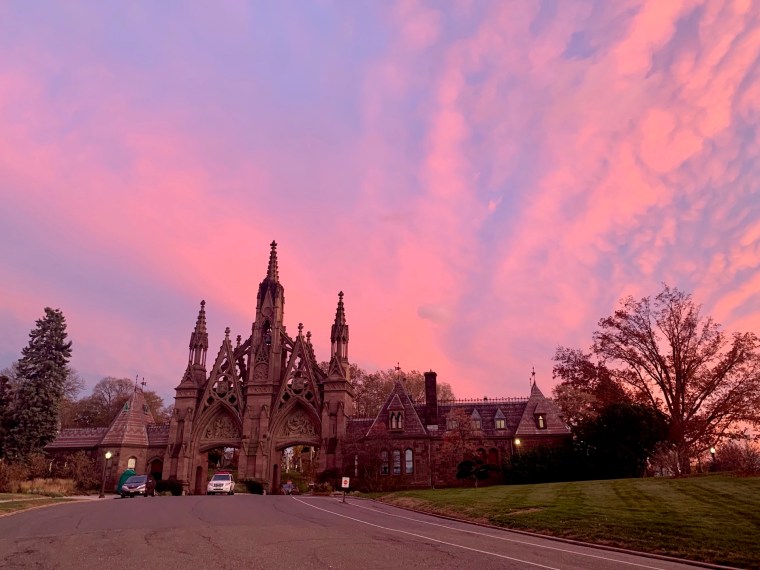
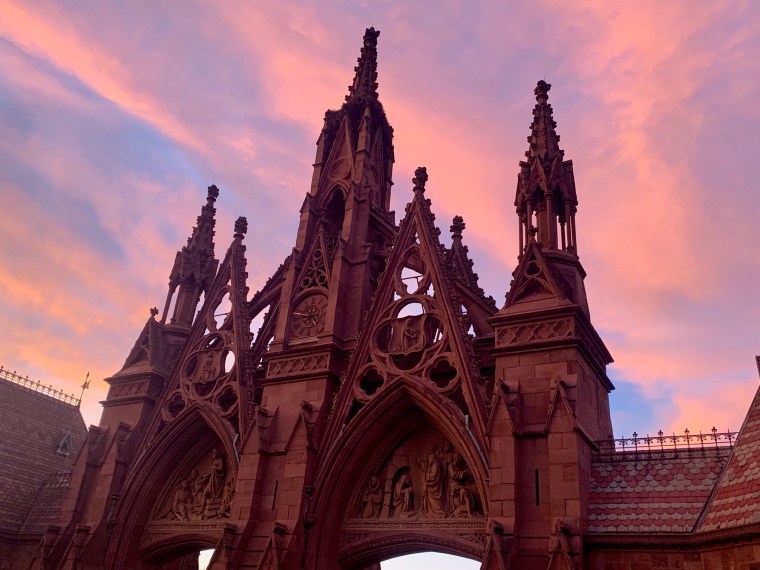
It is easy to get to Green-Wood via subway (get off the R at 25th Street in Brooklyn, or get off the N at 36th Street and walk for about 15 minutes). Entering the main gate on 25th Street, it is impossible not to be impressed by the enormous brownstone gates. An escaped colony of monk parrots has lived in and around the gates since the 1970’s, but unfortunately I was not able to spot (or hear) any.

IMG_4373IMG_4374IMG_4401

The cemetery is huge, at 478 acres. It is also really gorgeous and peaceful. Like Prospect Park and Central Park, which it influenced, it is a beautiful place to explore on foot and experience nature while being surrounded by the city.

The monuments reflect a variety of styles. Many are very grand, suggesting that even if you can’t “take it with you,” you can still show “it” off after you are gone.

IMG_4384IMG_4387

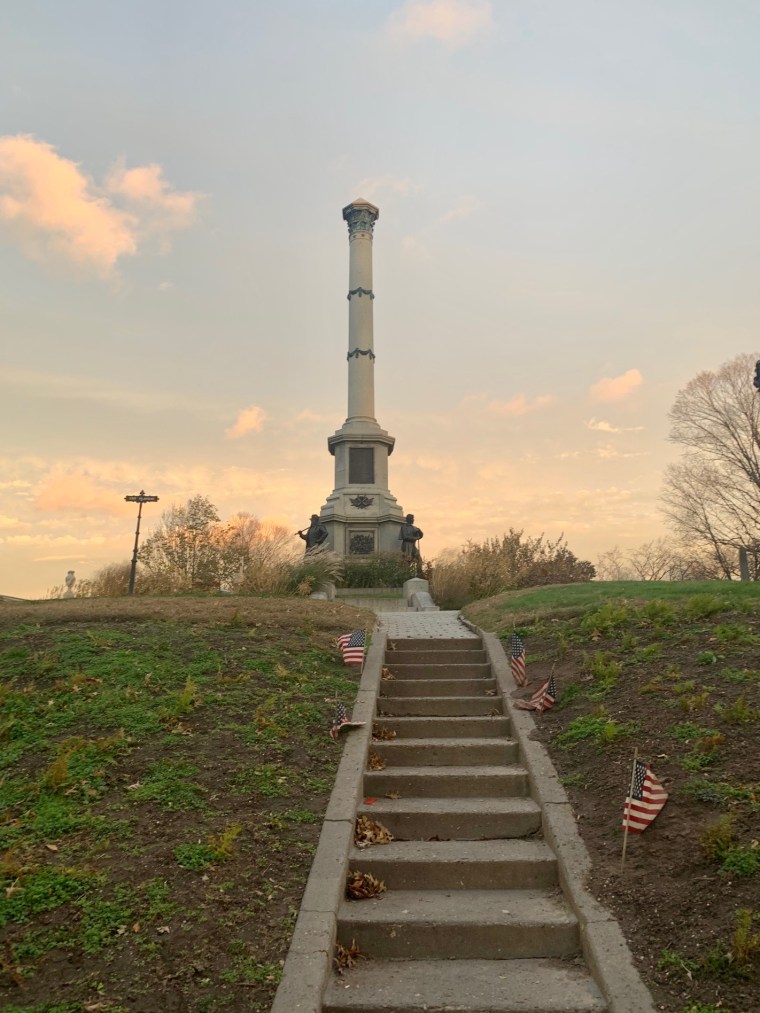
On the site of the Battle of Brooklyn, from the Revolutionary War, there is a memorial to the soldiers of the Civil War.

IMG_4389IMG_4391

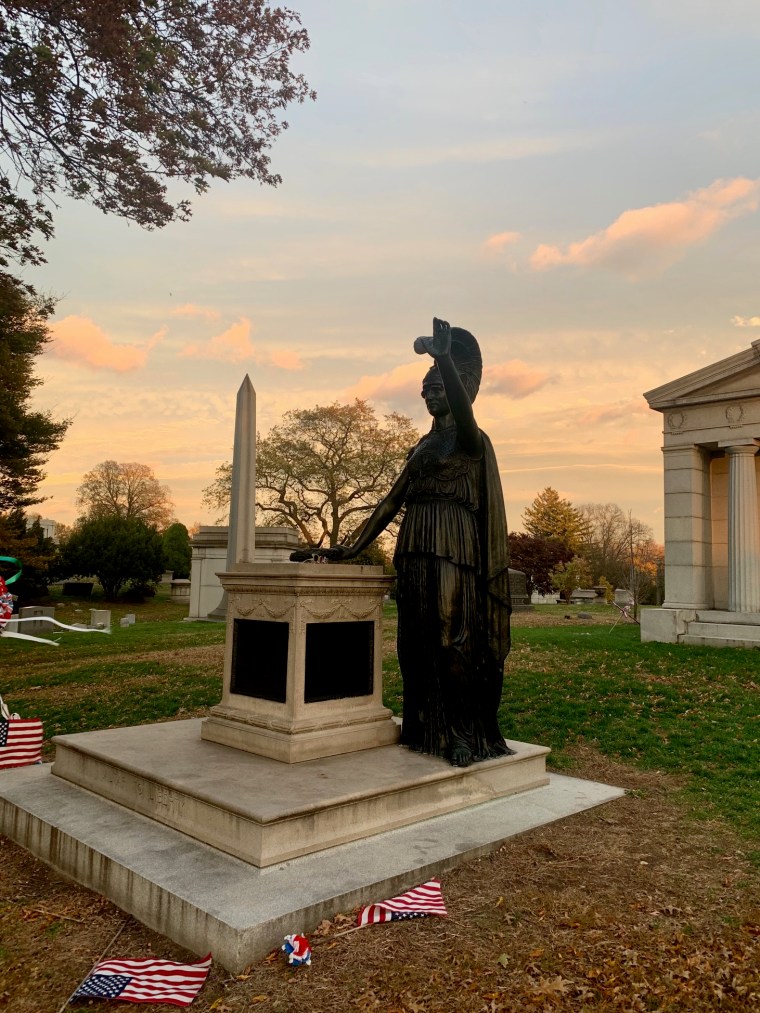
Near the Civil War memorial is a statue of Minerva, dedicated to the soldiers of the American Revolution. She waves out to the Statue of Liberty, which can be glimpsed off in the distance when you look from underneath her arm.

There are many famous residents of Green-Wood, including the artist Jean-Michel Basquiat; Samuel Morse, creator of the Morse Code; and Leonard Bernstein.

There is a public artwork by Sophie Calle in Green-Wood. Visitors to the cemetery are invited to write one of their secrets on a slip of paper and insert into a monument that is inscribed “Here lie the secrets of Green-Wood Cemetery.” As the grave becomes filled with the secrets, the artist returns to cremate them in a ceremonial bonfire. Yes, I put a secret in – and it is a surprisingly satisfying thing to do.

The sunset the evening I was there happened to be spectacular. And from higher vantage points, the skyscrapers of lower Manhattan shimmered in the last rays of the sun off in the distance.

The New York Times in 1866 remarked that “It is the ambition of the New Yorker to live on Fifth Avenue, to take his airings in [Central] Park, and to sleep with his fathers in Green-Wood.” This is certainly a statement of its time (even ignoring the gender specificity), in that many a New Yorker today would rather live in TriBeCa, take airings on the High Line, and be cremated and have their ashes scattered just off Montauk. That being said, Green-Wood still does have plots available if you are interested in becoming a “permanent resident” one day. And for now, it provides a beautiful place to appreciate the life we are currently fortunate enough to be enjoying in this splendid city.

New York City Holiday Markets

New York City has a different kind of beauty in every season, but it never shines as bright as during the holidays. Many other years I have posted about the yearly holiday decorations (see here and here and here and here for instance!) but this year I wanted to shine a light on the many holiday markets that spring up, roughly from Thanksgiving to New Year’s. While it is very easy to find gifts for your loved ones on Amazon, I guarantee that the array of small vendors with unusual gifts will enable you to find something unique for everyone on your list. And while there is a certain level of comfort in shopping online in your pajamas, shopping in a NYC holiday market is an experience that surrounds your senses with holiday spirit. I can’t loop the jaunty sounds of Vince Guaraldi’s “Linus and Lucy” theme, or provide the scents of hot cider and spruce candles, but I can show you some of the sights of the markets that brighten the city this time of year.
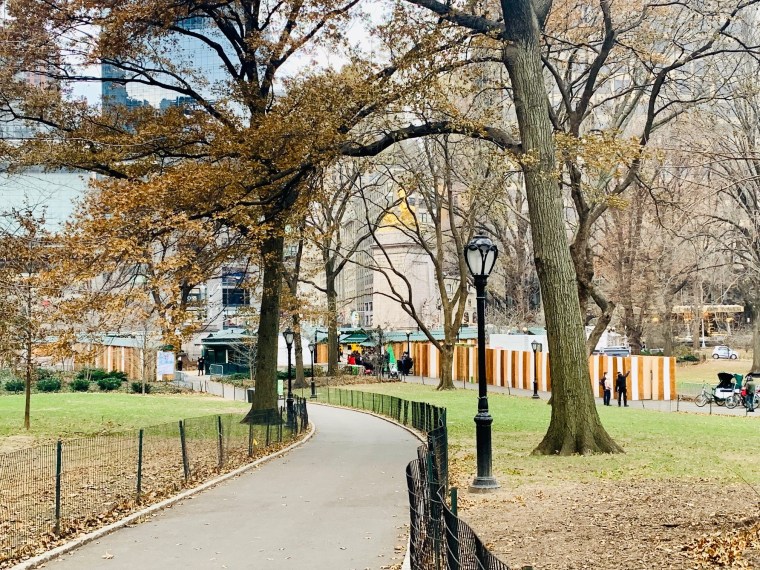
Columbus circle 1

Central Park is without a doubt my favorite place in all of New York City (see a few previous love letters here and here and here and here!) and if you are walking out of the park in December toward the southwest corner, you begin to spy the stalls of the small but atmospheric Columbus Circle market.

CC5

Limited by its geography in size, this market is on the smaller side but has lots of interesting options.

CC4

The great thing about these markets is that you don’t go looking for a specific item, but as you browse, something may just catch your eye as a perfect gift for a particular person (a unique and beautiful wine stopper for the oenophile in your life?).

CC3

These ornaments make a terrific souvenir for visitors to the city,  but can also be personalized to give as a gift to the host or hostess of the holiday party you are heading to during this month.
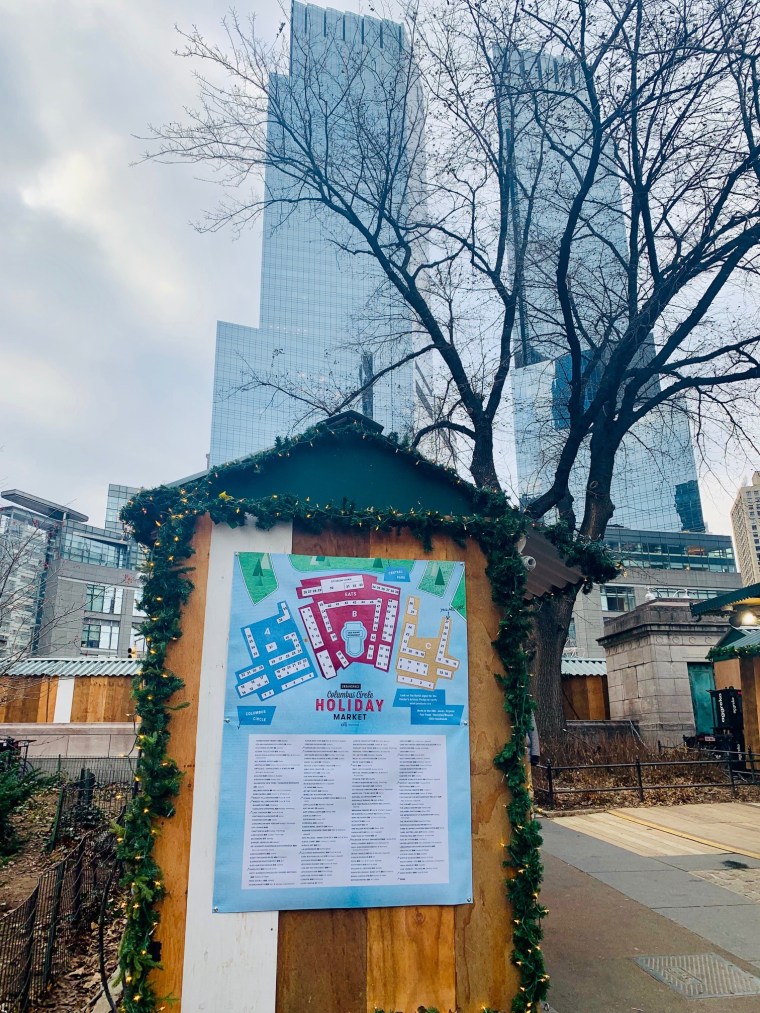
CC2

It’s hard to beat the visual drama of this market, with Central Park on one side and the towers of the Time Warner building rising on the other.
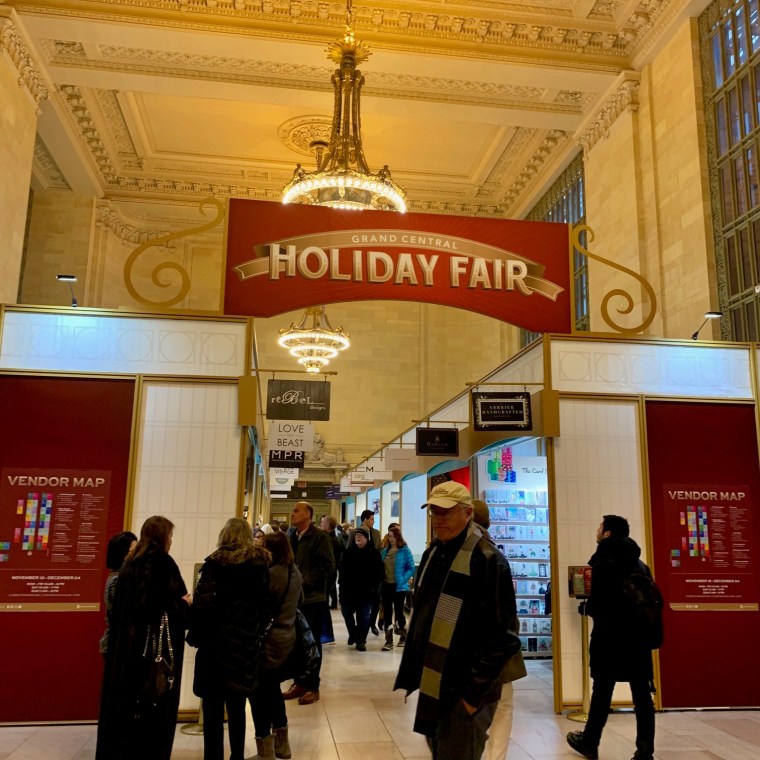
GC 2

Another market limited in size by the constraints of its location is the one in Grand Central Terminal.

GC 1

This one is just off the 42nd Street side of Grand Central, or if you are inside the main hall, just off that towards 42nd Street.

GC 3

If you go to a lot of these markets, you will see a few repeating shops, but surprisingly the vast majority are one-of-a-kind. For example, the Harlem Candle Company, which I love, is only at the Grand Central market. For that matter, they have no storefront, so the only way to smell these candles based on the Harlem Renaissance is to find them at this market (most of the year they are online only).

Brooklyn3

Some markets only run for a few weeks, like the market at CityPoint in Brooklyn. The Arctic Adventure popup is throughout the season, but for a few weekends there is also a crafts-based market.

Brooklyn 2

The market here has some vendors that are Brooklyn-based and only found at this market.

Brooklyn 1

An indoor market, while less scenic, is certainly potentially more comfortable (I was here on a cold and rainy day!). And if at CityPoint, be sure to head downstairs to the DeKalb Market for lunch or dinner.

US 1

Now we are moving on to one of the larger holiday markets, the one in Union Square.
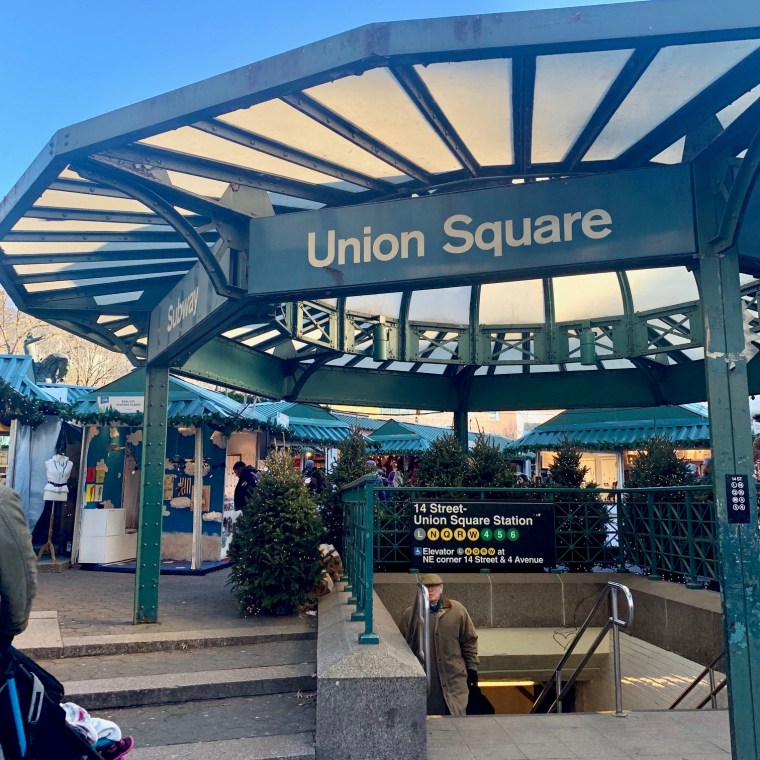
US 5

Easily accessible from multiple subway lines, this market is worth a few hours of your time, if you can spare it.
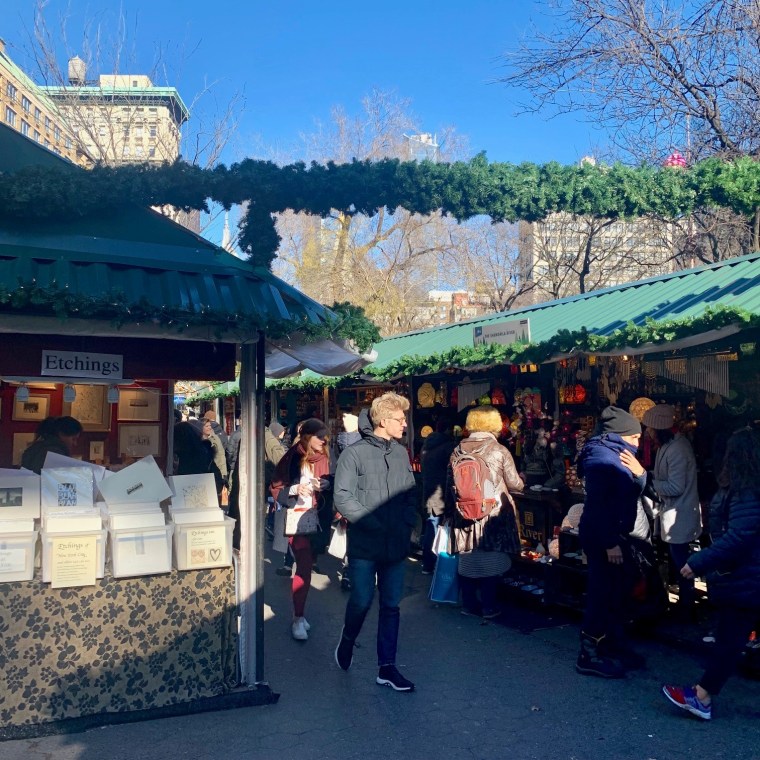
US 3

My recommendation for this market, if you can, is to go on a weekday. Seen here, it will still be busy but you will be able to get around without too many crowds.

US 2

Again, this is a place to wander and wait for the right gift to show itself. This stall sells kits for someone to make their own beer, or cheese, or sourdough pretzels.

US4US6

At all of the markets, there will be some vendors selling hot cider, or cocoa, or holiday treats to eat.
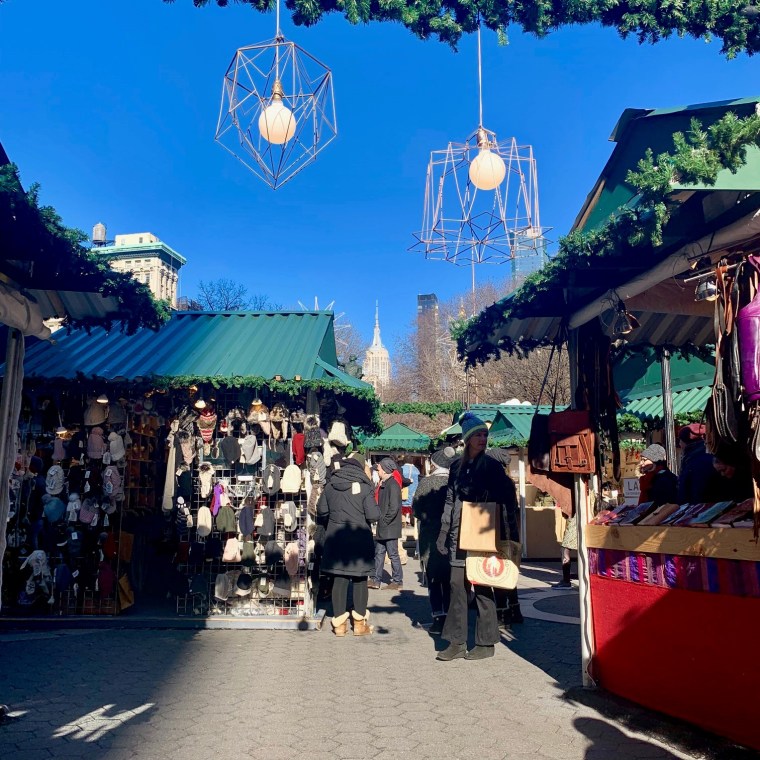
US7

I love seeing the Empire State Building off to the north through all the stalls.
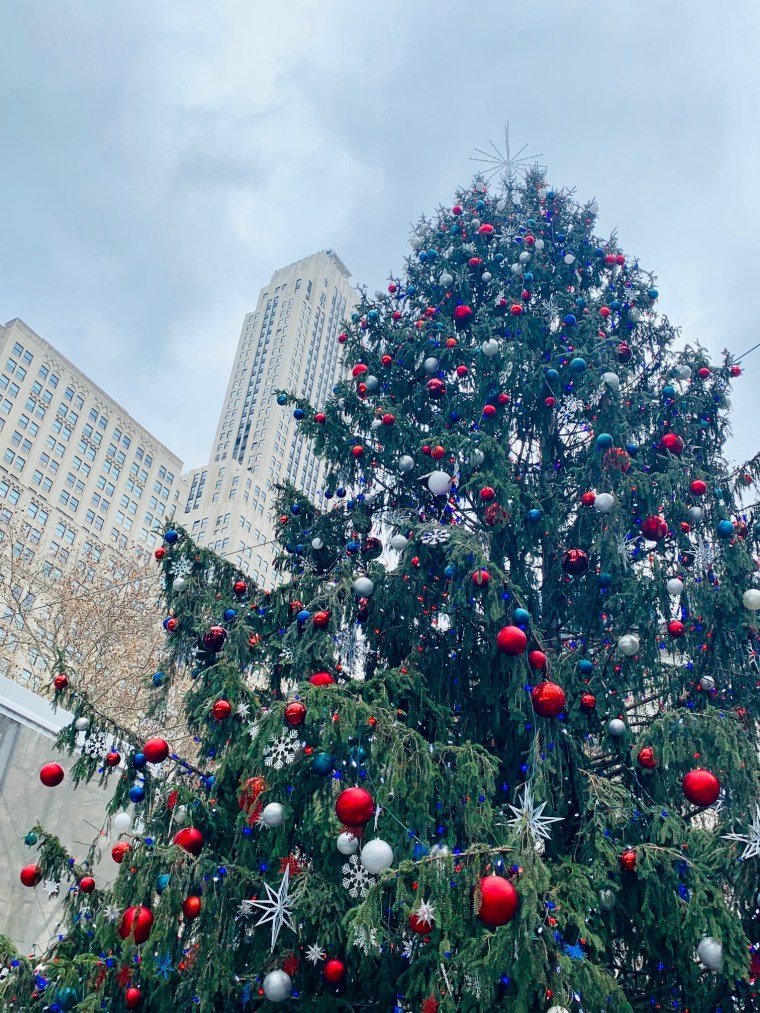
BP6

Finally, I come to the Bryant Park Winter Village, perhaps the largest and most elaborate of the markets. There’s an ice skating rink under a large Christmas tree. Skating itself is free although skate rental does involve a cost.

BP10

Just behind the NYPL on Fifth and 42nd Street, blocks from Times Square, this market is a small-scale delight surrounded by the heart of large-scale Manhattan.
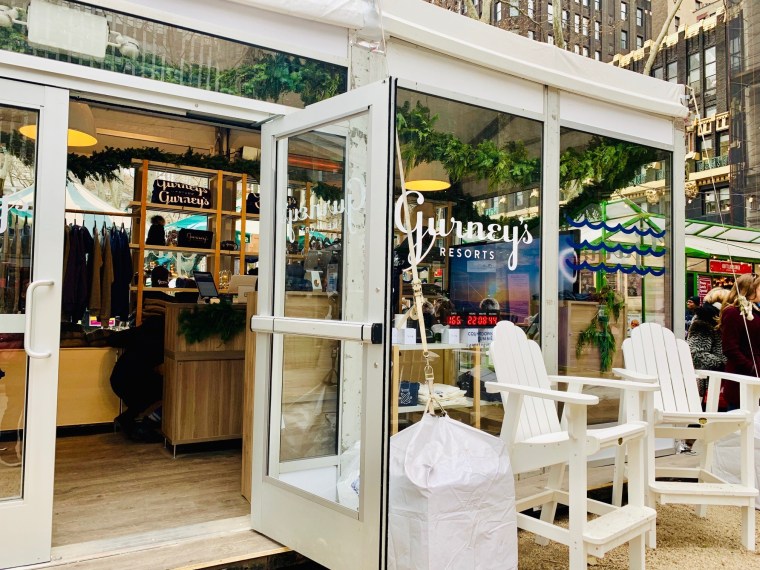
BP9

There are some very unusual shops here – this is from a very luxurious resort and spa in Montauk.
BP8

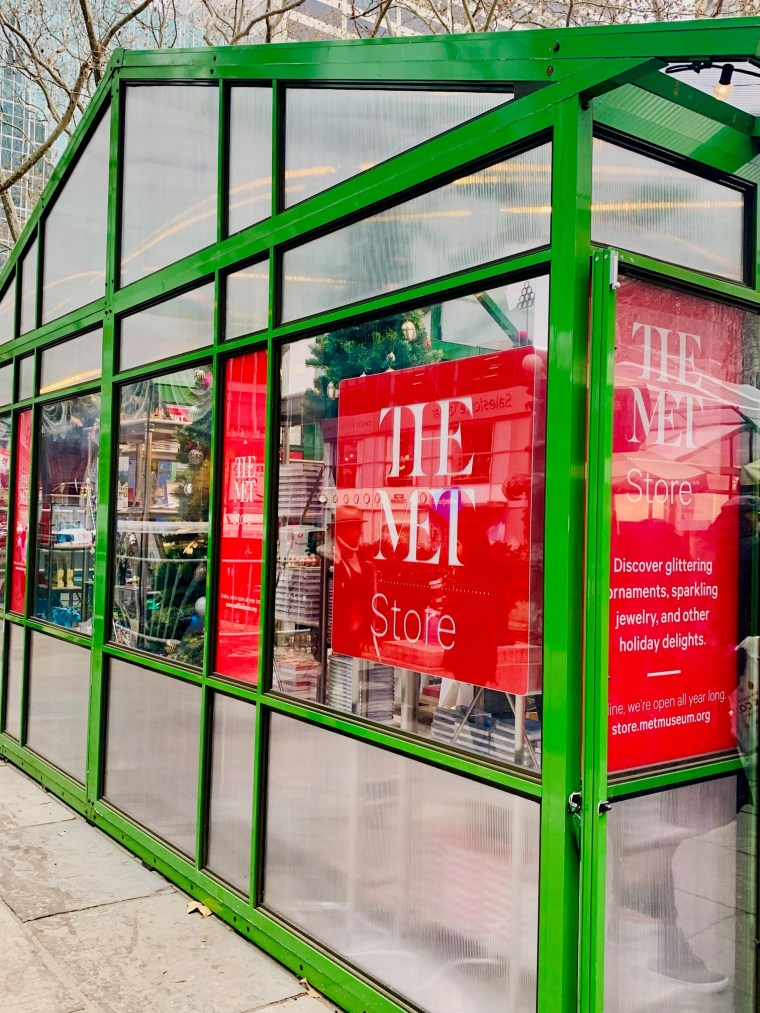
An actual outpost of the Metropolitan museum gift shop – the only one I’ve seen other than the ones in the museums.
BP5

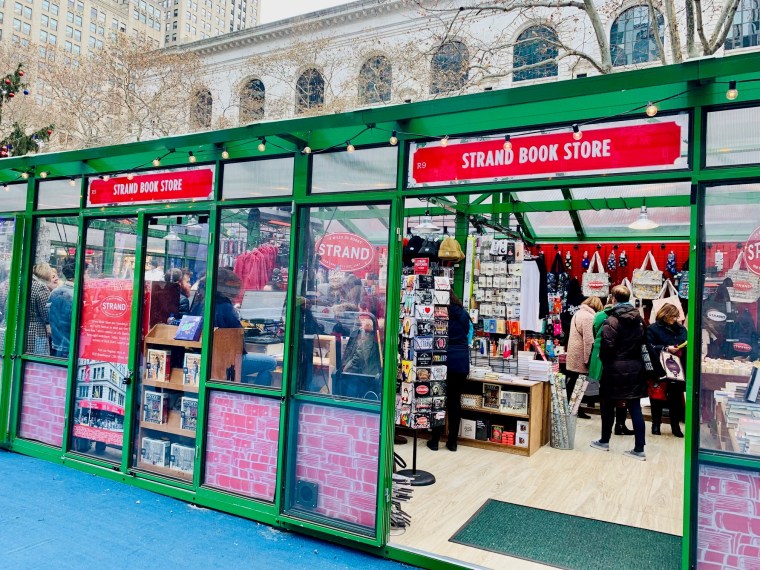
Similarly, to see an outpost of the famous Strand bookstore is a wonderful surprise.
BP4

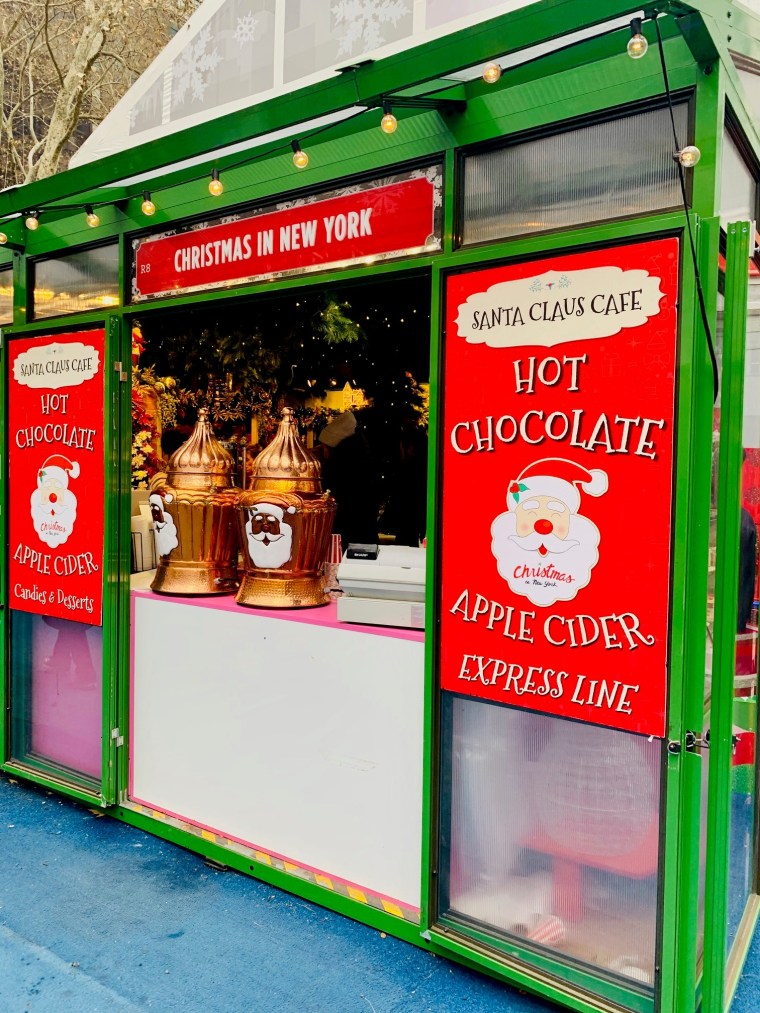
It’s hard to resist a stop of the Santa Claus Cafe, although at Bryant Park there are multiple options for food and drink, including a bar area to warm up with something alcoholic.
BP3

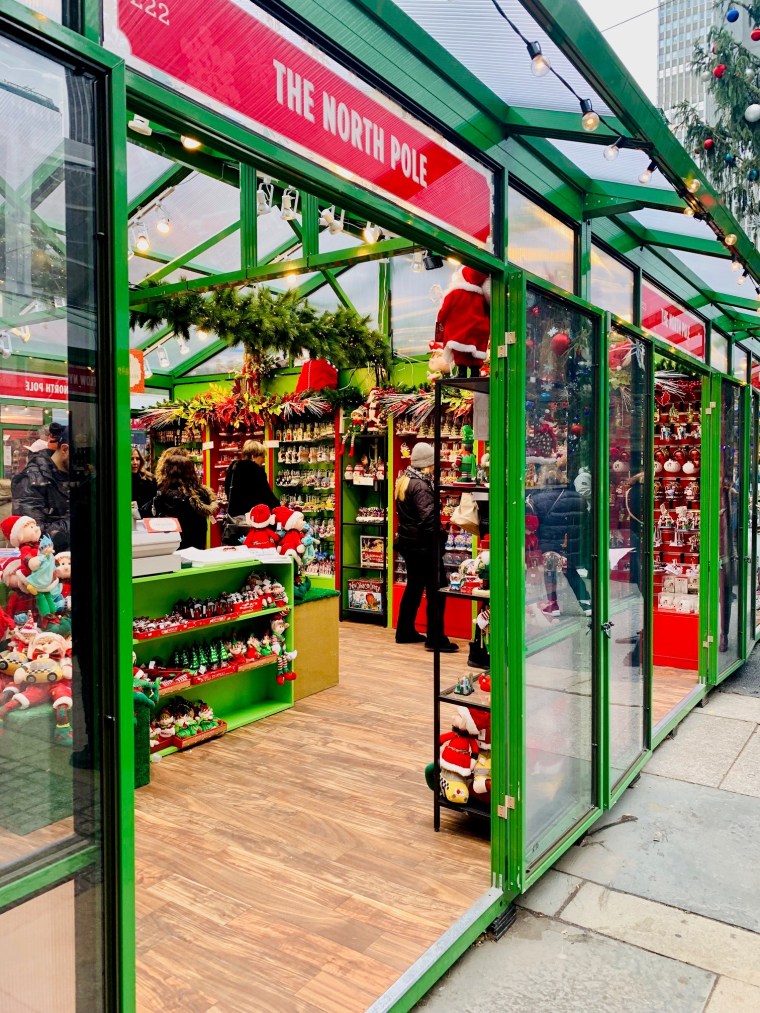
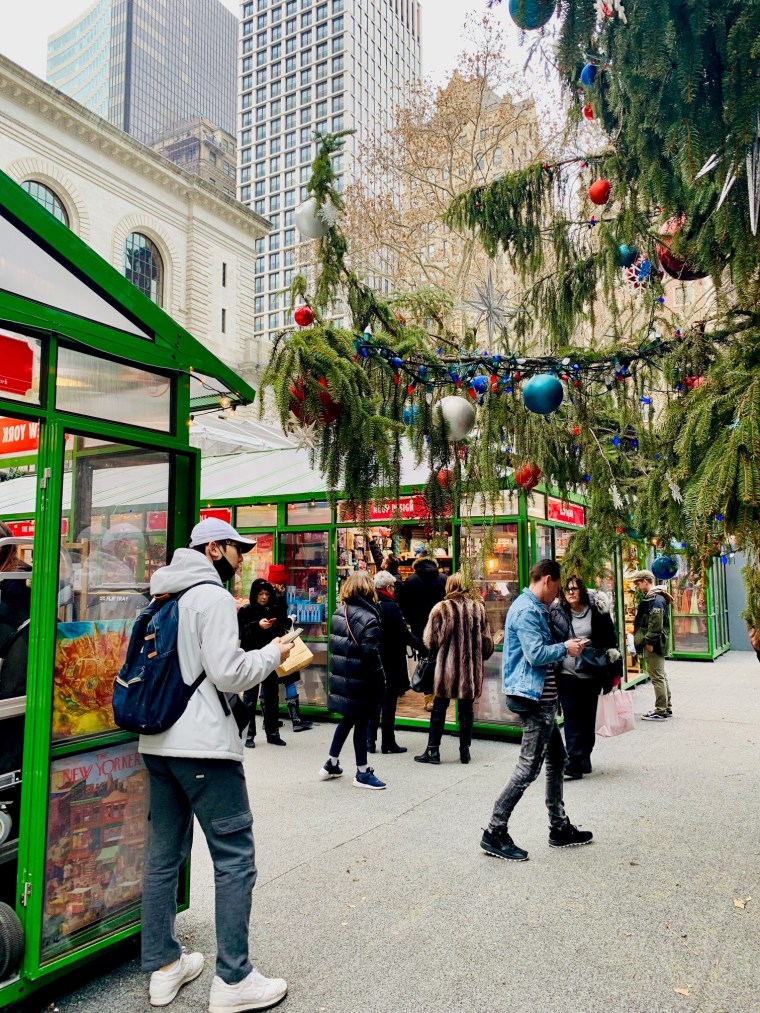
Imagine, you can even visit the North Pole before taking in a Broadway show a few blocks away!
BP2

As with the Union Square market, going on a weekday, but not during lunch or after work hours, will net the most space to walk around. However, this market is so large and well laid out that even in a crowd it doesn’t seem as overwhelming as the meandering Union Square can.

BP 1

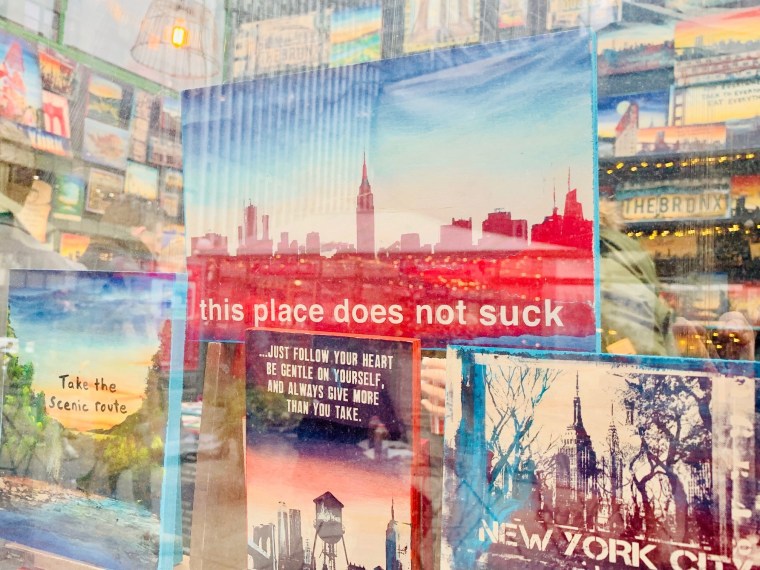
Aaah, New York City during the holiday season. In the immortal words of the sign seen at Bryant Park Winter Village, “this place does not suck.” I could not agree more.
BP7


DeKalb Market Hall

One of my favorite places to go in London is Borough Market, with so many different foods to explore that I never get tired of returning. New York City has many great markets as well, Chelsea Market and Essex Street Market on the Lower East Side being two I particularly love. A new market recently opened in downtown Brooklyn, and having been there, I highly recommend that anyone check it out.

IMG_7557

The DeKalb Market Hall is close to many subway lines (A-C-E at Hoyt, 2-3 at Hoyt, 2-3-4-5 at Nevins, or B-Q-R at DeKalb). I took the Q from the Upper East Side and was there in about 45 minutes. With the Q, you take the outside route over the East River from Manhattan to Brooklyn, with some great views of lower Manhattan and downtown Brooklyn thrown in. The City Point building is just off the Manhattan Bridge (entrance on Flatbush Avenue) and has a Target, Trader Joe’s (that so far does not seem to have the lines of the ones on 14th Street or the Upper West Side), Century 21, Flying Tiger (check this out if you’ve never been to one; you will discover 100 items you didn’t know existed and now must have), and Alamo Drafthouse (an absolutely perfect cinema with waiter service to your chair, including an extensive drink menu). The DeKalb Market Hall is in the basement of the complex.

IMG_7562IMG_7554

Once you get to the market, take a walk around once or twice to get your bearings – there are so many choices that it can be a little overwhelming.

IMG_7555

Guss’ Pickles still makes real fermented pickles, in many flavors, the way they did at their original spot on the Lower East Side. You can ask for a sample of anything. If you love pickles (and I definitely do), don’t pass this up.

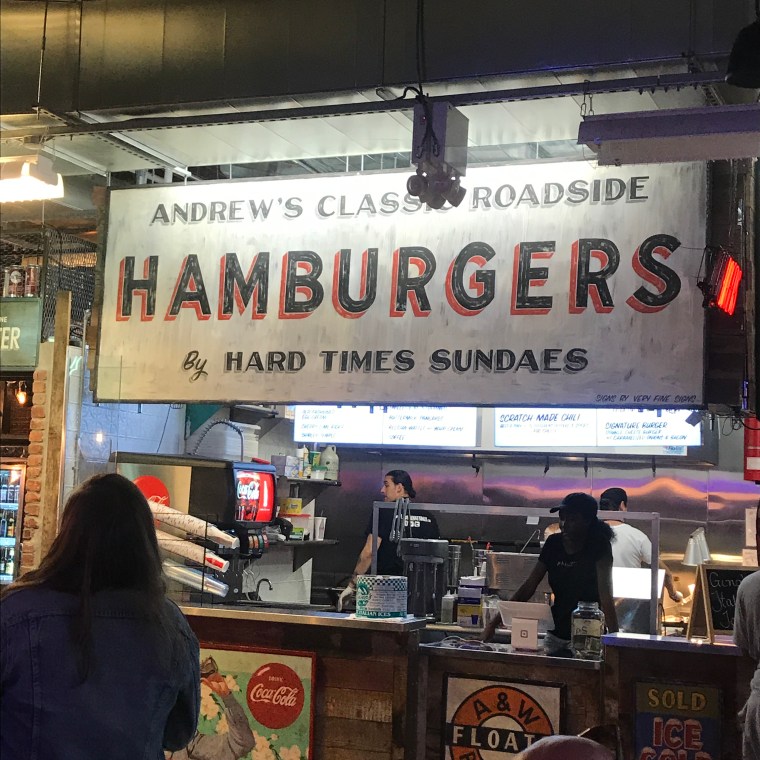
So many choices – from juice bars, to mini doughnuts, to ice cream, to Katz’s deli, to healthy selections, to classic hamburgers and more.

IMG_7561

I highly recommend the burger at Andrew’s Classic Roadside – really delicious and not overpriced.

In addition to all the things to do in the City Point complex, the Market is about a 15 minute stroll to the gorgeous Brooklyn Heights waterfront (see my previous blog about this area here). If you live in the area, the DeKalb Food Market is a great everyday addition to your choices for eating out. If you are a visitor to NYC, check it out and explore the surrounding area as well – you could easily spend a day doing it. And if you are a NYC resident, but not of Brooklyn (like I am), I believe it’s worth the trip. I enjoyed my time at the Market and will return soon.

Beautiful Brooklyn Heights

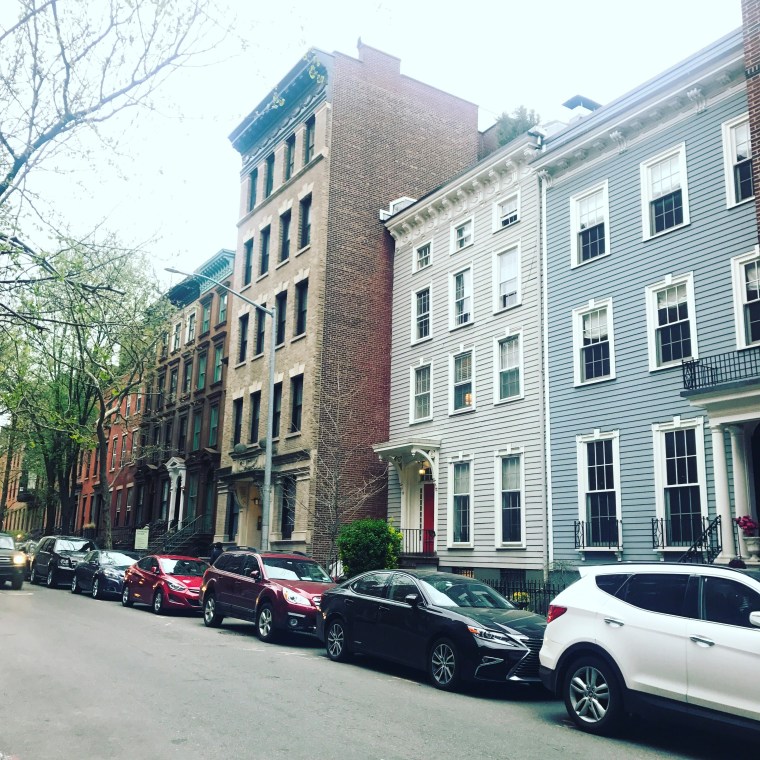
It might surprise you to learn that the first neighborhood to be protected under the 1965 Landmarks Preservation Law in New York City was not in Manhattan – it was Brooklyn Heights. I have had the pleasure of being in the area several times in the past few months, and regardless of the time of day, I find it to be an extraordinarily beautiful and gracious neighborhood. Since I love to take an unplanned walk in the city (a dérive, see my initial post about it here), one of my daughters and I took off on a beautiful warm early spring day to enjoy a walk in Brooklyn Heights.

Brooklyn Heights

Surrounded by Dumbo (see my love letter to this neighborhood here) , Cobble Hill, Boerum Hill, and Downtown Brooklyn, getting to Brooklyn Heights is quite easy via public transportation. You can take the 2-3-4-5-N-R-W to Court Street-Borough Hall in downtown Brooklyn, the A-C-F-N-R-W to Jay Street-MetroTech, or the 2-3 to Clark Street.  Before setting off on our walk, we had wood fired pizza at Dellarocco’s, which I highly recommend (214 Hick’s Street, off Montague Street). On the way there we walked past block after block of beautiful townhouses.

IMG_4591

I always find myself drawn to the water, and was unable to stay away from the gorgeous Brooklyn Heights Promenade. One of the more recent additions to Brooklyn Heights, the promenade was completed in the 1950’s.

IMG_4592

Rows of of lovely townhouses and apartment buildings face the promenade and gaze toward lower Manhattan.

IMG_4596

The promenade ends at the Brooklyn Bridge (for instructions of how to walk across the bridge from Brooklyn, see this post). John A. Roebling, the 19th Century engineer and designer of the Brooklyn Bridge, lived in Brooklyn Heights.

IMG_4618

The views from the Brooklyn Heights can be incredible. Here is a view toward the Statue of Liberty at sunset.

IMG_4586

Benches line the promenade for relaxing while strollers, both pedestrians and those containing children, move along the pathway.

IMG_4738

The view of lower Manhattan from Brooklyn Heights is extraordinary.

IMG_4616

The Brooklyn Heights Promenade eventually merges into Brooklyn Bridge Park.  Jane’s Carousel, dating from 1922, invites all to stop and take a ride on a hand painted wooden horse, to the sound of authentic calliope music.

IMG_4623

Brooklyn Heights has attracted writers and artists since its inception, and walking around the neighborhood it is easy to see why. Benjamin Britten to W.H. Auden, Walt Whitman to W.E.B. DuBois, Arthur Miller to Lena Dunham – all have found inspiration in the quiet beauty of Brooklyn Heights. Truman Capote, another resident, wrote Brooklyn Heights:  A Personal Memoir, in which he famously states, “I live in Brooklyn. By choice.” More and more people have made this choice over the past two decades. which has made this one of the most expensive neighborhoods in New York City.  The average price for a two bedroom apartment is $1,712,000 (compared to $1,149,000 for Brooklyn on the whole), and for a three bedroom it is just under $4,000,000. Townhouses can go for considerably more than that, but most people who live here consider the neighborhood well worth the cost. Brooklyn Heights has come a long way from Capote’s 1950’s description of street gangs and alley cats, but the allure of the area endures.

A day (and evening) in Bushwick

When Peter Stuyvesant chartered the area he called Boswijck (“little town in the woods”) in 1661, it included the areas of Brooklyn now called Williamsburg, Greenpoint, and Bushwick. Like its neighbor Williamsburg a decade ago, Bushwick is transforming itself from an industrial working-class neighborhood to a haven for artists. Vogue magazine declared Bushwick #7 in its 2014 list of 15 coolest neighborhoods (one of only three in the US, and the only NYC area to make the list). Since I love unplanned walks in the city (see my initial post about the concept here) I recently spent a chilly March day exploring what Bushwick has to offer. I mean, already parodied by Saturday Night Live and in the title of an episode of “Girls,” what more could a neighborhood want?

img_4104

At least until they shut down the L for repairs, it is easy to get to Bushwick (and the J, Z, and M lines will do when the L does go down). I emerged from the Morgan Avenue stop and began to walk with a purpose to Roberta’s.

Roberta’s pizza is legend, and I intended to find out if all the hype was warranted. The wait for a table during peak times can exceed 2-3 hours, so I wanted to show up for brunch and get in before the crowds arrived. Roberta’s also makes fresh bread in the pizza oven every day before opening, and the bread with homemade salted butter was a fantastic appetizer. The pizza did not disappoint, and a green juice cocktail rounded out the brunch nicely.

img_4178

Leaving Roberta’s full and happy, I was tempted to throw my shoes up to join the others.


Walking down any street in Bushwick was a visual treat. Street art is a big thing in Bushwick, especially since 2012 in the area now called The Bushwick Collective and curated by Joe Ficalora.

In an afternoon of wandering, I found spaces full of artists making and exhibiting their work, as well as a film and photo studio.

Maria Hernandez Park had playgrounds, basketball courts, and lawns, surrounded by rows of townhouses.

Housing in Bushwick is varied – lovely prewar townhomes, more modern single family homes with parking in front, converted industrial spaces, and new development condos. People priced out of Williamsburg have found Bushwick, and the rising prices here in turn are sending people to nearby Ridgewood, Queens. Costs are still lower in Bushwick than in Brooklyn as a whole (but who knows for how much longer?). For instance, median rental prices go from $1750/month for a studio to $3000/month for a three bedroom, while median sales prices go from $329K for a studio to $799K for a two bedroom, and there are still a few townhouses to be found for $1.5M.

As the evening approached, I had drinks and dinner at Sincerely Burger on Wilson Avenue.

IMG_4736.JPG

The day ended with opera – Rossini’s Otello performed at LightSpace Studios in Bushwick by LoftOpera, a Brooklyn-based company bringing a fresh take on opera (and affordable prices) to younger and decidedly unstuffy audiences. Heading back to Manhattan from the Jefferson Street L station around 11:20, I heard music and laughter coming from many bars and restaurants, as well as from a few apartments. After an enjoyable day in Bushwick, I could see the allure of living here – still relatively affordable with an abundance of things to see and do.

NYC Holiday Decorations 2016

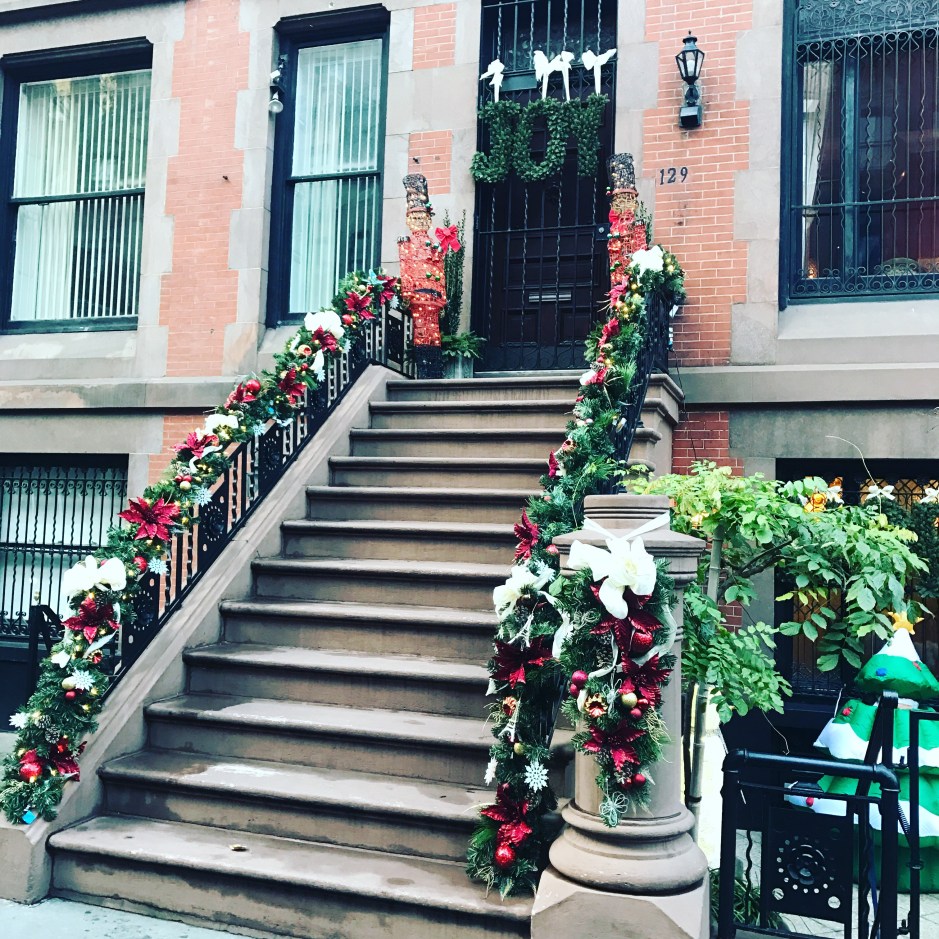
Just as the first chilly gusts of wind arrive to remind us that harsh winter days are ahead, New York City puts on its December finery, showing off with light and color to distract us from the season of dark and cold ahead. While the traditional pleasures of the department store windows, Rockefeller Center decorations, and Radio City or NYCB Nutcracker shows always delight, one of my favorite things about this month is walking down residential streets and seeing the lights we have put up in our own homes – to warm ourselves but also send warmth out to others passing by. The following photos are from the 2016 holiday season (see my post in 2015 here and my post from 2014 in Dyker Heights here):

The Rockefeller tree by day (wonderful) and night (spectacular).

img_3669

Skating at Rock Center.

The Radio City Christmas Spectacular finale and living nativity (love those camels!).

img_3703

Inside the Art Deco masterpiece, Radio City Music Hall.

img_3659

Saks Fifth Avenue, seen from Rock Center.

img_3661

Heralding angels leading up to the Rock Center tree.

img_3722

Downtown Brooklyn.

A private townhouse in the East 60’s.

It’s hard to capture the lights of the city at night with an iPhone, but I do feel that nighttime is when the city is at its best – and this is particularly true for December, where we push back the darkness as best we can with arrays of light. I absolutely love the poem that Travel and Leisure Magazine commissioned from New York poet Rowan Ricardo Phillips, A Tale of Two Cities:

City above the city and city
Below the city. The diners, theaters,
Dance spots and dives all late-light strobed life
Sumptuous as solitude that knows it’s not
Loneliness like the blue blue-green peacock
Who gales open, waits, doubts and does not doubt.
There is a city above the city
That thinks of you as you think of it: sky,
That you are the sky to it, and these buildings,
Iridescent in thick night like flora
And fauna, are its clouds. We all are part
Of some other distant constellation,
A chanced-on font you see on a marquee
When you look out and then up,
When you think the thought that gets caught in air
And rises from your head like steam in the thaw—
That is the city above the city
Calling out to you through the blued spectrum,
That veiled feeling you keep to yourself of
The time you stood on a street and could swear
Some part, some magnificent part of you
Had just turned into a fish and opened
Up upwards into the darkness, the light,
The darkness, the light, the darkness, the light.

A visit to Coney Island


image_27821405214_o

It’s summertime, and the livin’ in New York City is . . . hot and muggy. If you can’t make it out of town for a visit to the Hamptons, or the Caribbean, or the south of France, at least for the cost of one swipe of a MetroCard each way you can still get to a beach and not even leave the five boroughs. I think calling Coney Island “the playground of the world” (as the sign near the Wonder Wheel proclaims) is an over-statement, but it can be a fun day trip. I will note that the sea breeze is a real thing on these sticky August days, refreshing you even if all you do is walk along the water as the waves lap your ankles.

Coney Island was in fact once a barrier island, but became attached to the Brooklyn mainland via landfill. The source of the name “Coney” is uncertain – it could be due to a large number of wild rabbits, or coneys, but also could derive from someone’s name. Native Americans called it Narrioch, meaning “always in light” because of the abundant sunshine on the beach. After the Civil War, it became a popular seaside destination, and large piers were built. However, it was with the addition of rides that Coney Island began to take on the familiar persona of an amusement park at the beach. The United States’ first roller coaster, Switchback Gravity Railway (apparently they had yet to figure out how to create memorable names), opened in 1884. While the early 20th Century led to Coney Island’s heyday with the creation of Steeplechase Park, Luna Park, and Dreamland, it also began to develop a reputation as a somewhat seedier place as well – “Sodom by the Sea.” This didn’t keep it from becoming the #1 tourist attraction in the country (in fact, it could have helped), with 100,000 visitors a day, on average (to compare, Disney World’s Magic Kingdom averages about 56,000 a day, the most of any current theme park). Following World War II and some demolition (unsurprisingly, sponsored by Robert Moses) Coney Island began a steady decline that reached a nadir in the 1970s and ’80s. A steady revitalization began in the early years of the 21st Century, and despite serious damage from Hurricane Sandy in 2012, Coney Island is looking better these days than it has in a long time.

IMG_6096

Recently I spent a day at Coney Island, taking the 4 subway from the Upper East Side and transferring to the N at Union Square. It was a solid 90 minute journey, so bring a good book – or a good companion – if you plan to make the trek. Getting out of the Stillwell Avenue subway station, you can’t miss Nathan’s, the home of the famous (or nauseatingly infamous) hot dog eating contests every July 4th. My personal preference is for pizza (you can’t go wrong with either Grimaldi or Totonno) but my friends and family who like hot dogs love Nathan’s (just please don’t try to eat 70 of them in 10 minutes).
IMG_6095

Once you get to the boardwalk, there are many competing places to eat, but I’m personally more interested in the rides on one side of the boardwalk and the Atlantic ocean on the other.

image_28437984045_o

The Wonder Wheel is my favorite ride, built in 1920. It’s 120 feet tall and many of the cars are not fixed to the rim but swing back and forth as the wheel goes around -it’s thrilling.

image_28359365021_o

From the top of the Wonder Wheel, I noticed lower Manhattan shimmering off in the distance like a mirage.

image_28437987315_o

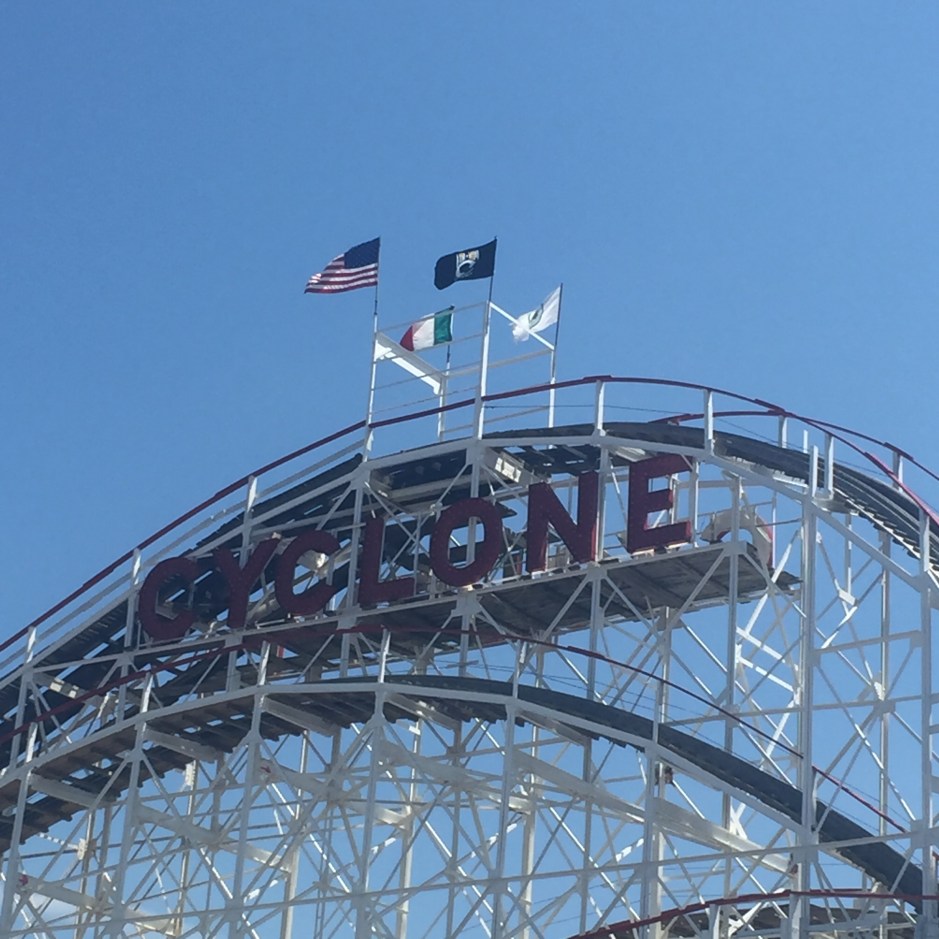
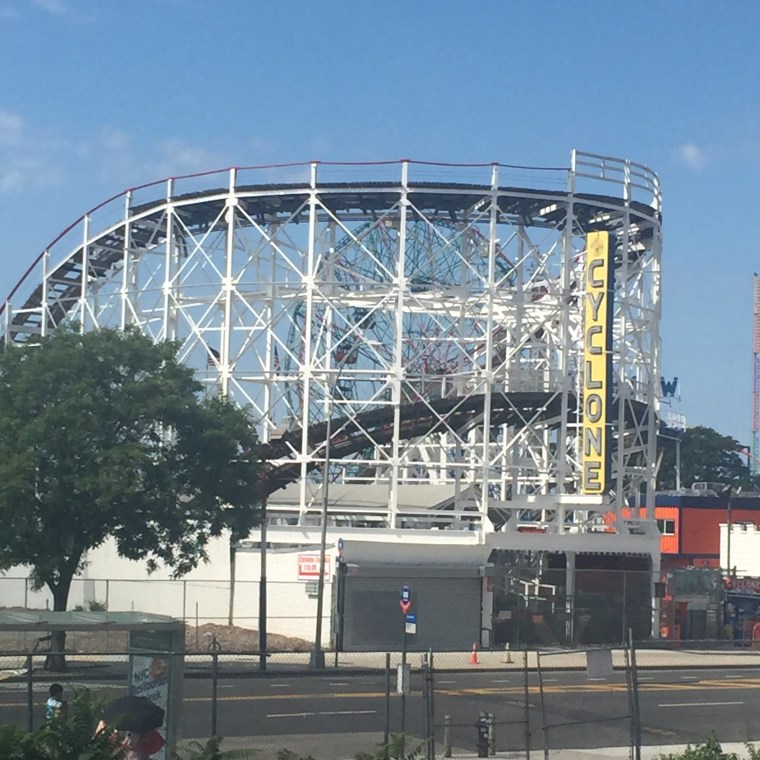
Of course the most famous ride in Coney Island is the Cyclone, a wooden coaster built in 1927 that is both a New York City landmark and on the national Register for Historic Places. I’ve ridden it a few times, and it still delivers plenty of excitement and the very real possibility of whiplash.
coneyisland beach

Walking back along the beach rather than the boardwalk, it is fun to walk along the ocean’s edge and feel the cool breeze. The beach can be packed, particularly on summer weekends, but it is kept clean and the sand raked, and there are lifeguards. On the day I was there, lifeguards were keeping people out of the water because both sharks and sting rays had been sighted!

If the idea of a seaside apartment to live in or use over weekends appeals, real estate values are beginning to improve in Coney Island – but still there are many apartments readily available to buy, averaging about $417/sq ft. Neighboring Brighton Beach has been rapidly increasing in value, with apartments there now at $665/sq ft, on average, and it is possible that Coney Island will follow this trend as more money is poured into its revitalization.

image_27821915753_o

There is much more to do on Coney Island (the NY Aquarium and the minor league baseball team the Brooklyn Cyclones, to name only two), but one of my favorite ways to end a day there is with a drink on the boardwalk. It’s hard to know which is more fun: people-watching on the boardwalk, or gazing past them to watch the ocean as the sun begins to set. A day at the beach combined with a day at the amusement park – and all without leaving New York City.

Dumbo

blogDumbo1

If you have ever been to Paris, you will know the experience of feeling that every street frames a picture-perfect view. It’s not difficult to take a good photograph in Paris – the city displays itself in such a way that every shot turns out to be achingly gorgeous. I love New York City, and particularly enjoy walking around the city in an unplanned way (a dérive), and wonderful photo opportunities are easy to come by (particularly in Central Park, in my opinion). It wasn’t until a recent walk around Dumbo in Brooklyn, however, that I had the same experience I had in Paris – an area so photogenic that it was hard to put my camera (phone) down.

An acronym for Down Under the Manhattan Bridge Overpass, the neighborhood is a relatively small swath of real estate largely between the Brooklyn and Manhattan Bridges along the East River waterfront, and also continuing a bit east from the Manhattan Bridge. Originally a manufacturing area called Fulton Landing after the ferry stop that was the only way to get there from Manhattan until the building of the Brooklyn Bridge in 1883, by the 1970’s industry had largely moved out and the area had its new (endearingly silly) name. In the constant cycle of reinvention that exists in New York City, the area is now a hub for the arts, and for the tech industry – holding 500 tech businesses within a ten block radius. In 2007, the New York City Landmarks Commission made Dumbo a historic district, and since then the value of residential real estate in the area has soared.

To get to the area from Manhattan, there is still ferry service, but it is also easily accessible via subway. I took the 4 subway down the east side and transferred at the spectacular new Fulton station to the A train. One stop toward Brooklyn and I emerged ready to experience a walk around Dumbo. It is helpful to remember that the ground slopes down toward the river in this neighborhood, and with the Brooklyn Bridge on one side and the Manhattan Bridge on the other, it would be difficult to lose your sense of direction here.

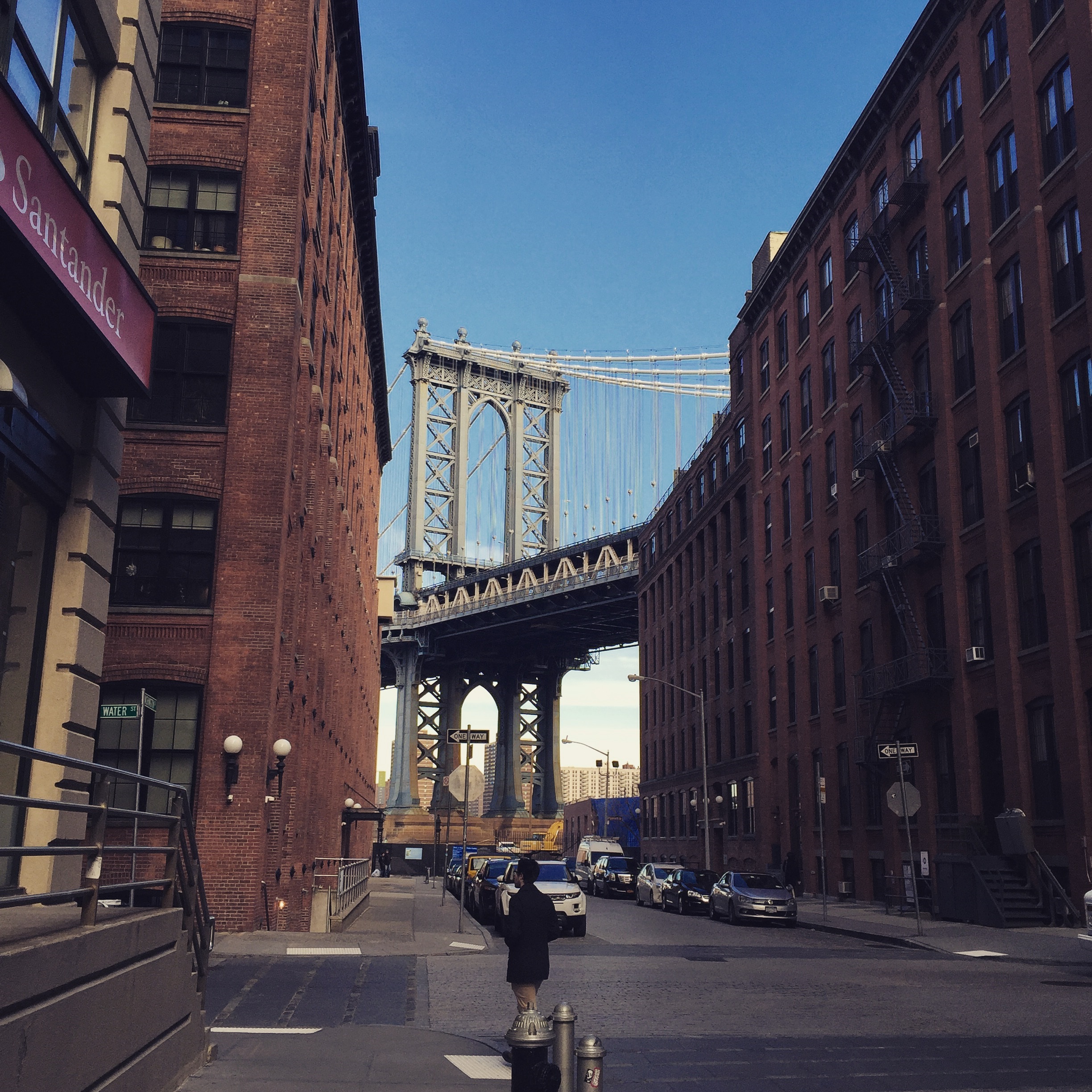
Heading down Washington Street, I was quickly struck by the charming nature of this area. The streets are largely cobblestoned as in Tribeca, the repurposed industrial buildings (now residential) are warm rather than imposing, the ground level shops are interesting rather being cookie-cutter national chains, and the geometric shapes formed by the angles of the bridges to either side frame every view perfectly.

I am always drawn to waterfront if it is nearby, so I continued to slope down toward the East River. To my surprise, there were small rocky/sandy sections along the river that looked more like a beach than a riverbank! Of course, the views of the bridges to each side here were even more spectacular. Jutting out into the water toward the Brooklyn Bridge, I saw the famous Jane’s Carousel, built in 1922 and helpfully covered so that it can operate year round (tickets are only $2). Looking back toward Dumbo, I could see the ongoing construction that is continuing to transform the waterfront. St. Ann’s Warehouse is converting an old tobacco warehouse to house its theater offerings (“Where theater meets rock and roll” – well, you had me at “theater” but I like where this catchphrase is going!). Because the shell of the building is landmarked, they will build an entirely modern facility like a nesting doll within the shell but not touching the walls of it.

blogDumbo2

Walking along Water Street, one block away from the waterfront, I enjoyed looking at some of the colorful graffiti along some of the buildings under construction, but did wonder how much longer any of that will be around this rapidly transforming area. Passing Jacques Torres’ famous chocolate shop, I decided not to go in – this time. Continuing past the Galapagos Art Space while looping back to Washington Street and preparing to walk back to Manhattan along the pedestrian path on the Brooklyn Bridge (highly recommended; see my photo tour of the experience here), I realized how many experiences were left for me to experience when I come back – pizza at Grimaldi’s, a ride on Jane’s Carousel, decadent hot chocolate at Jacques Torres – and decided that my next trip to Dumbo will be sooner rather than later.
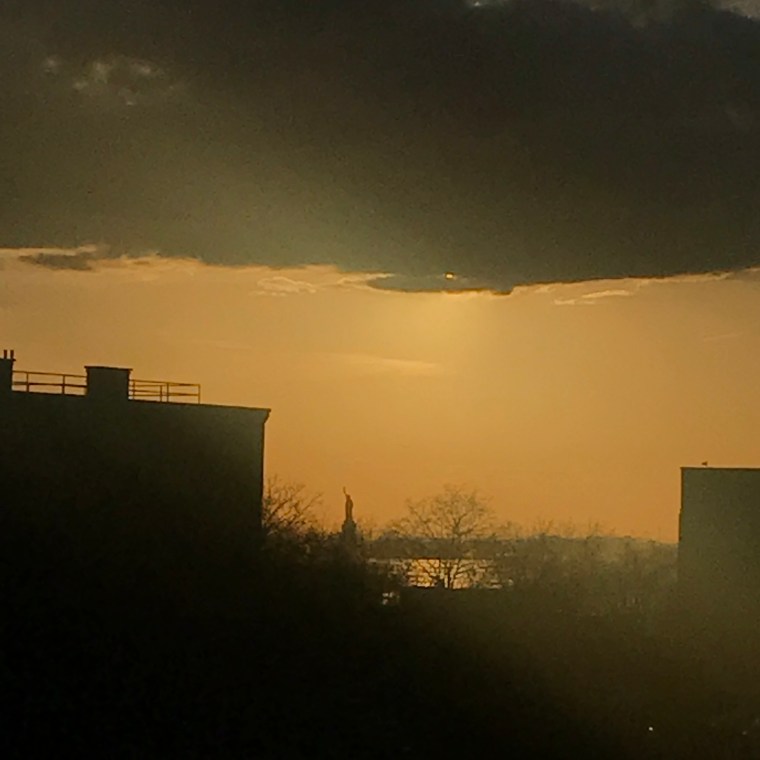
There are no real estate bargains to be had in Dumbo these days, but if you have the money and the desire to live in a beautiful center for the arts that happens to be tucked away from the bustle of the city – but with killer views of it – in my opinion, it is well worth the cost.

A photo tour of a walk across the Brooklyn Bridge

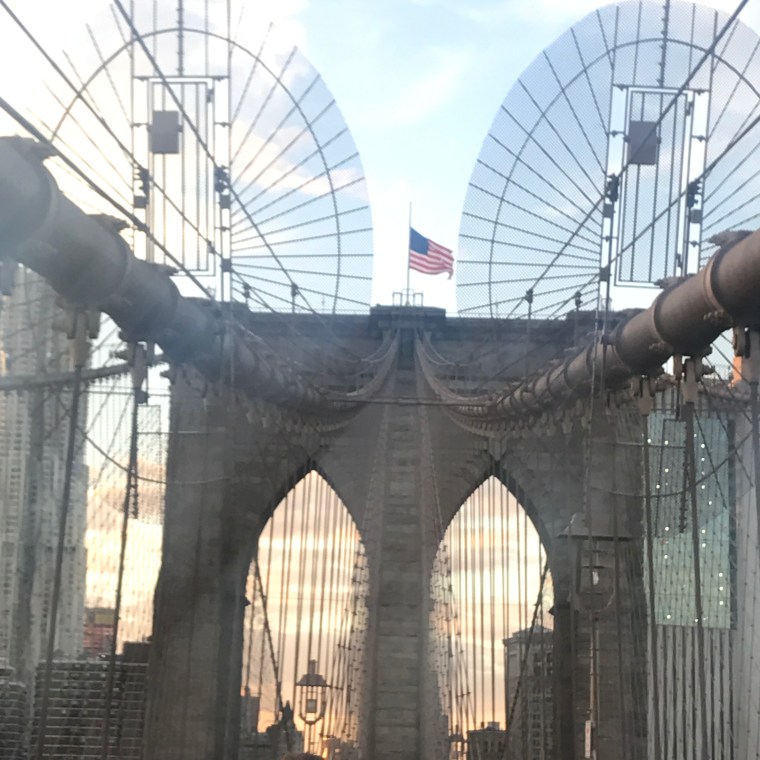
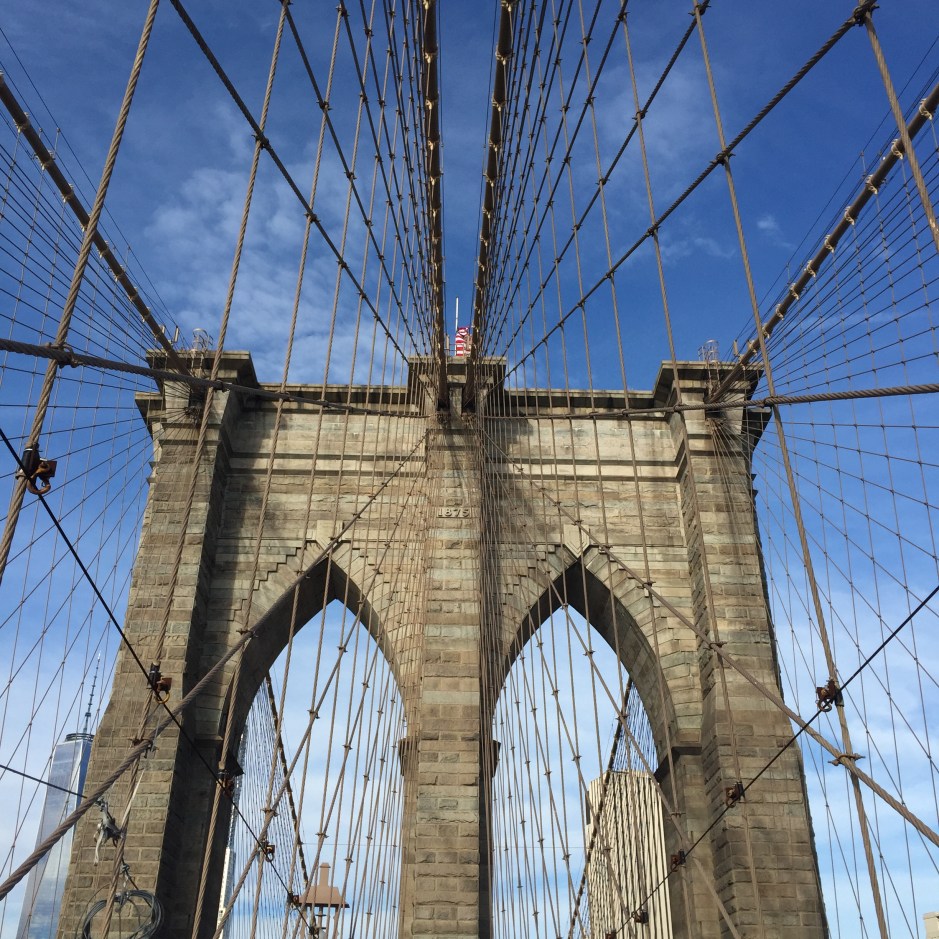
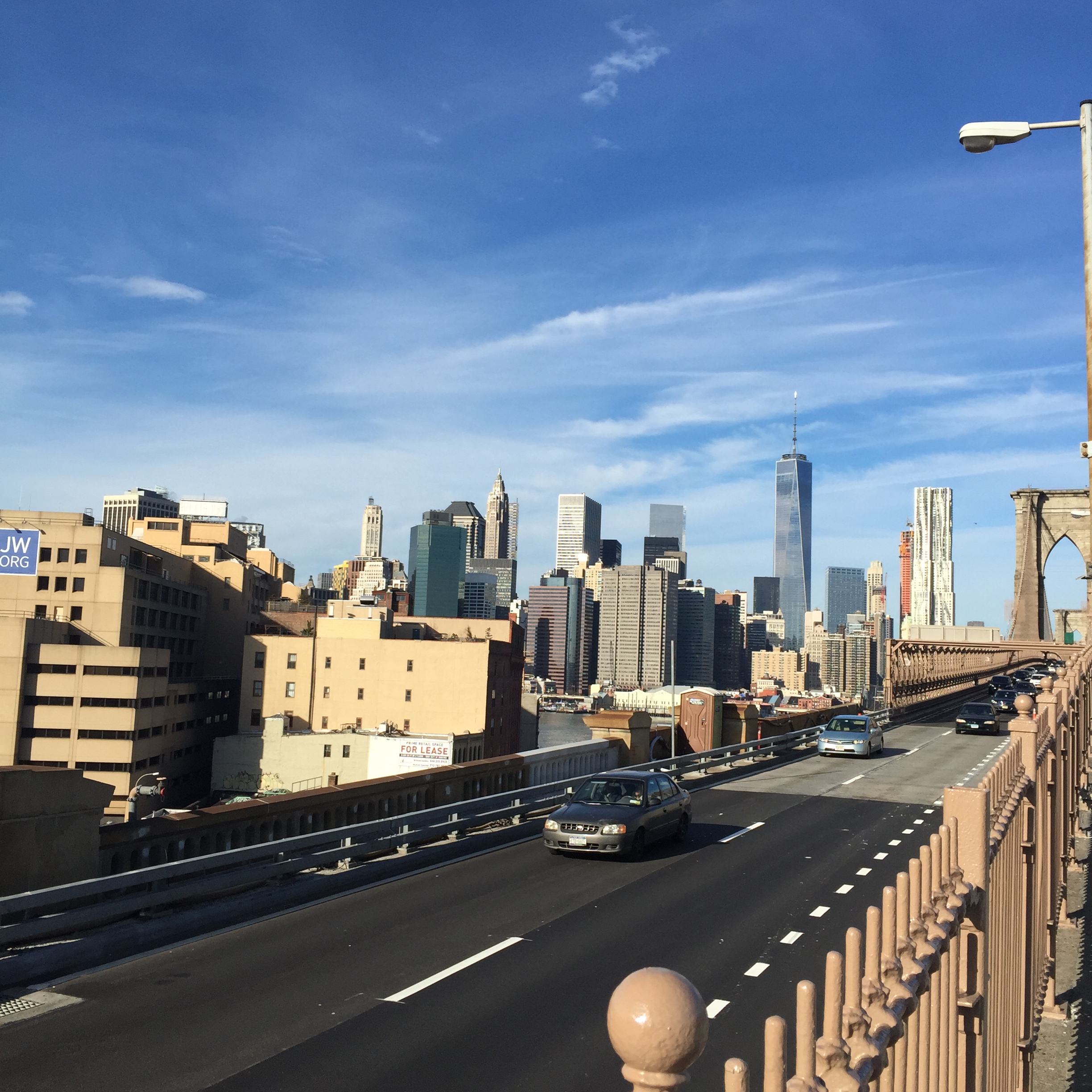
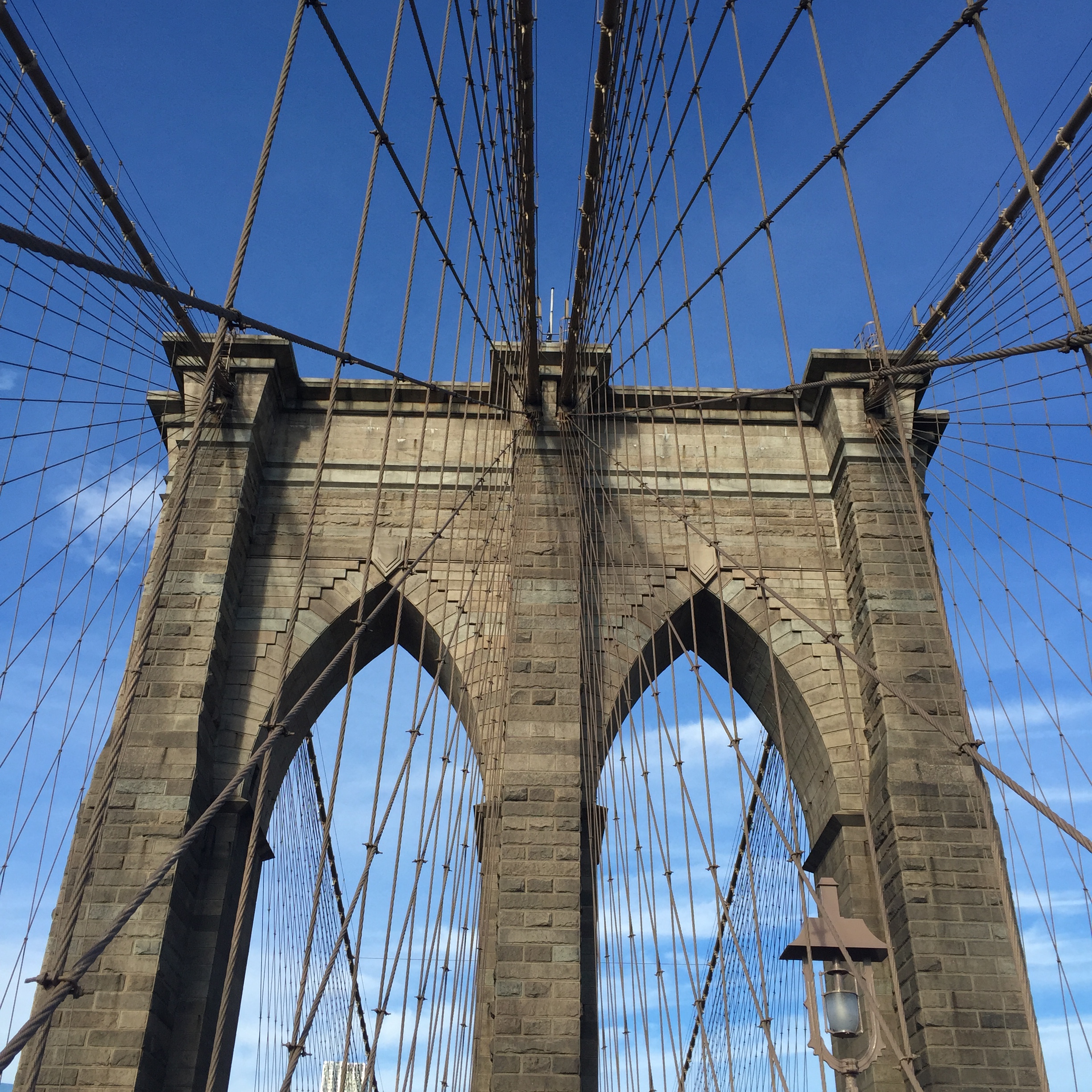
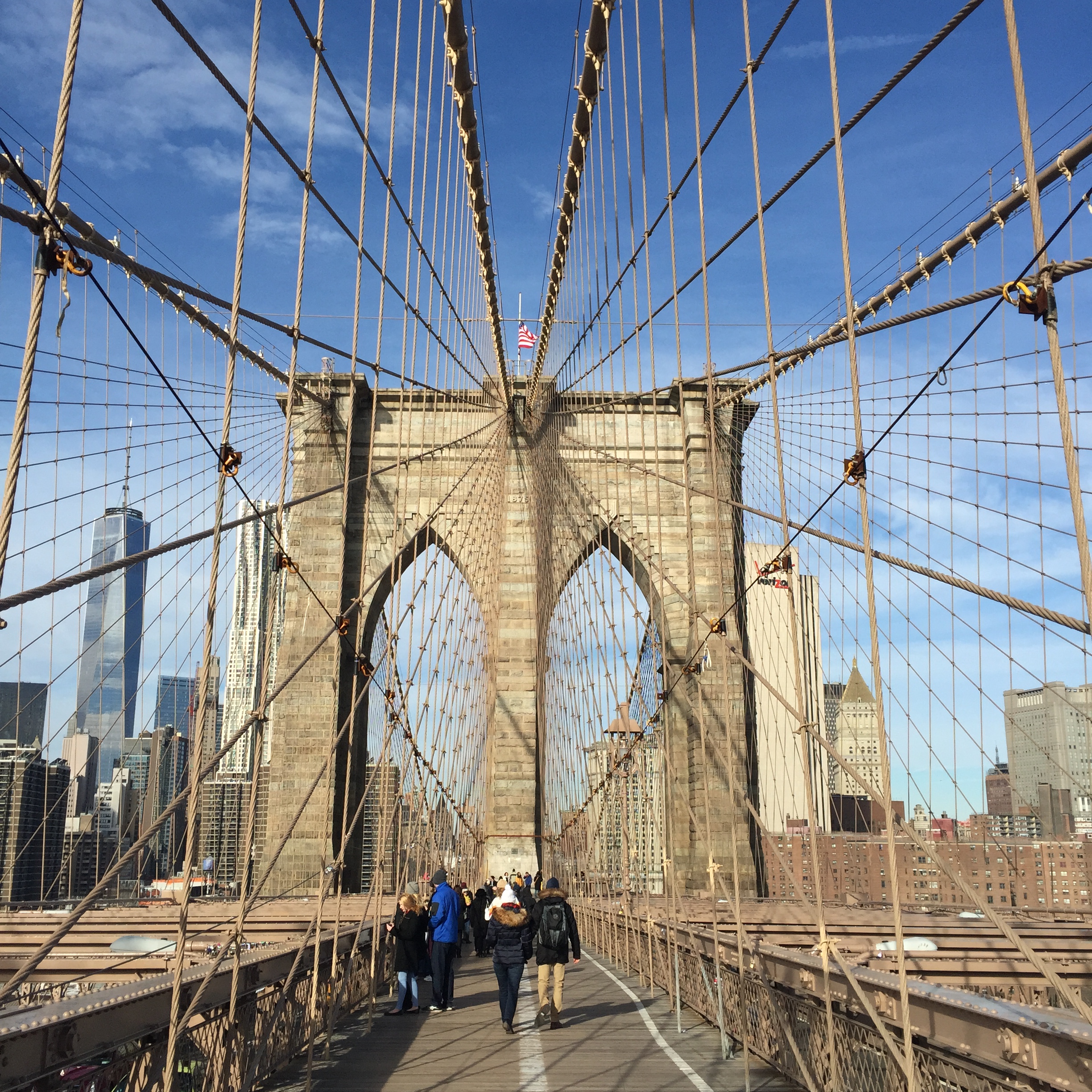
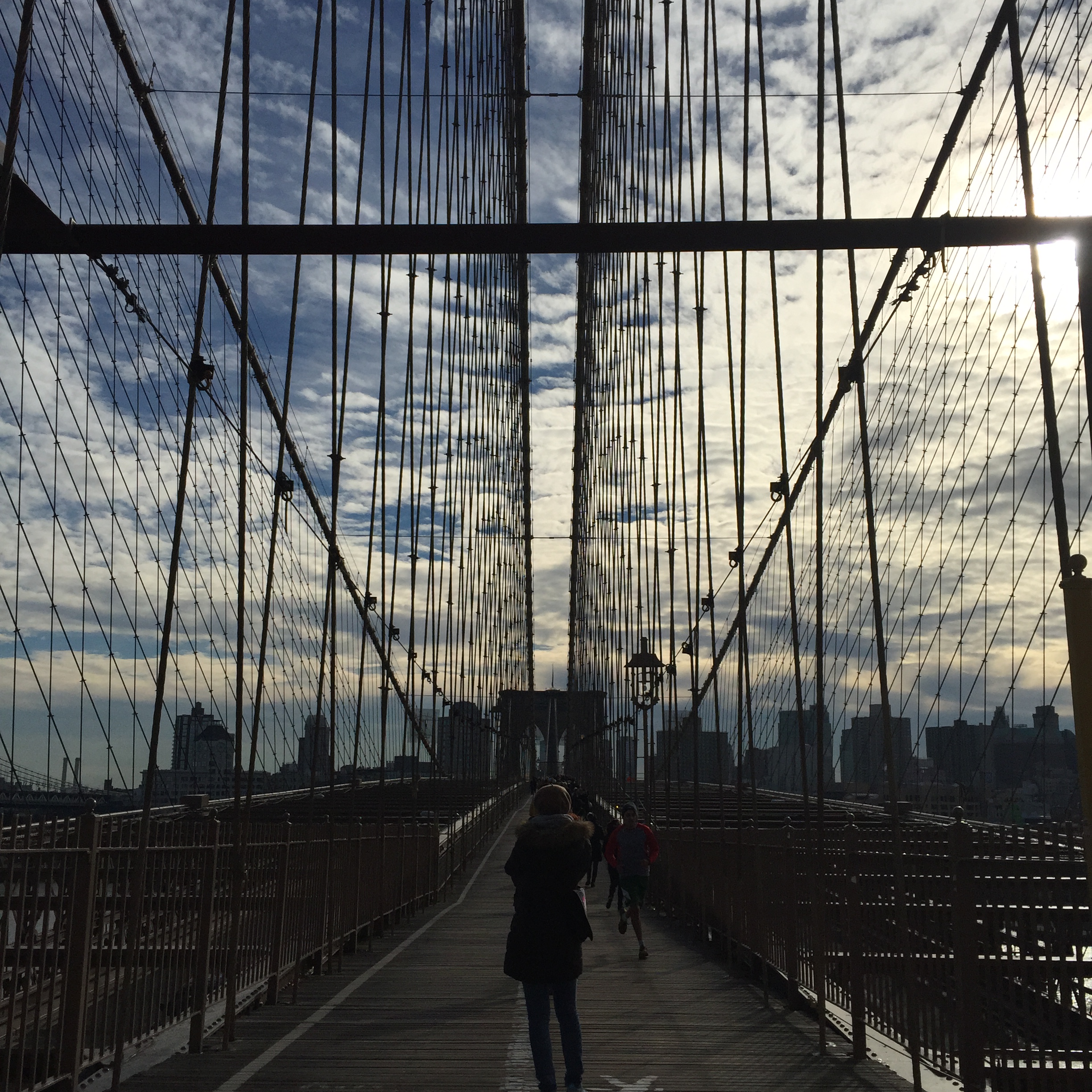
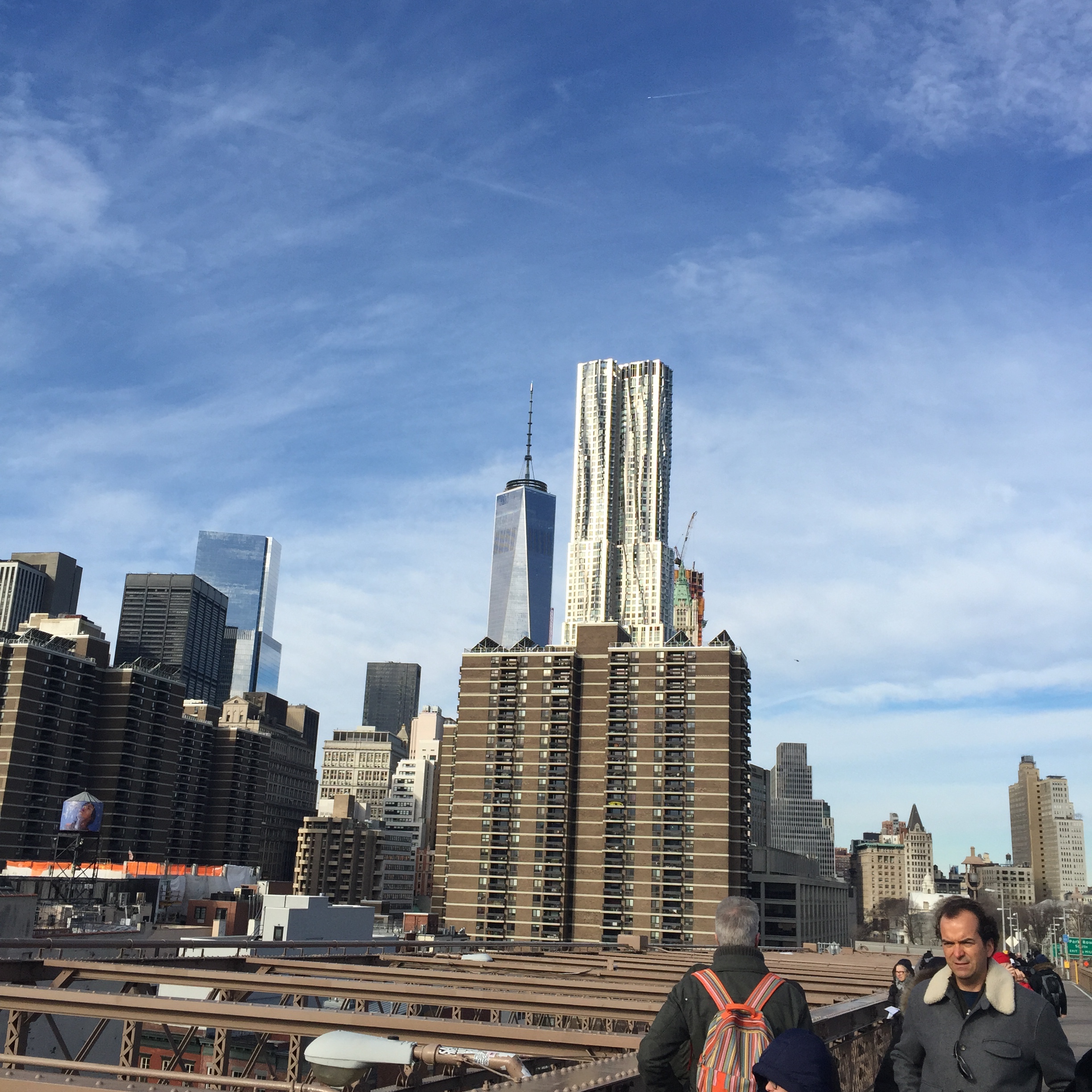
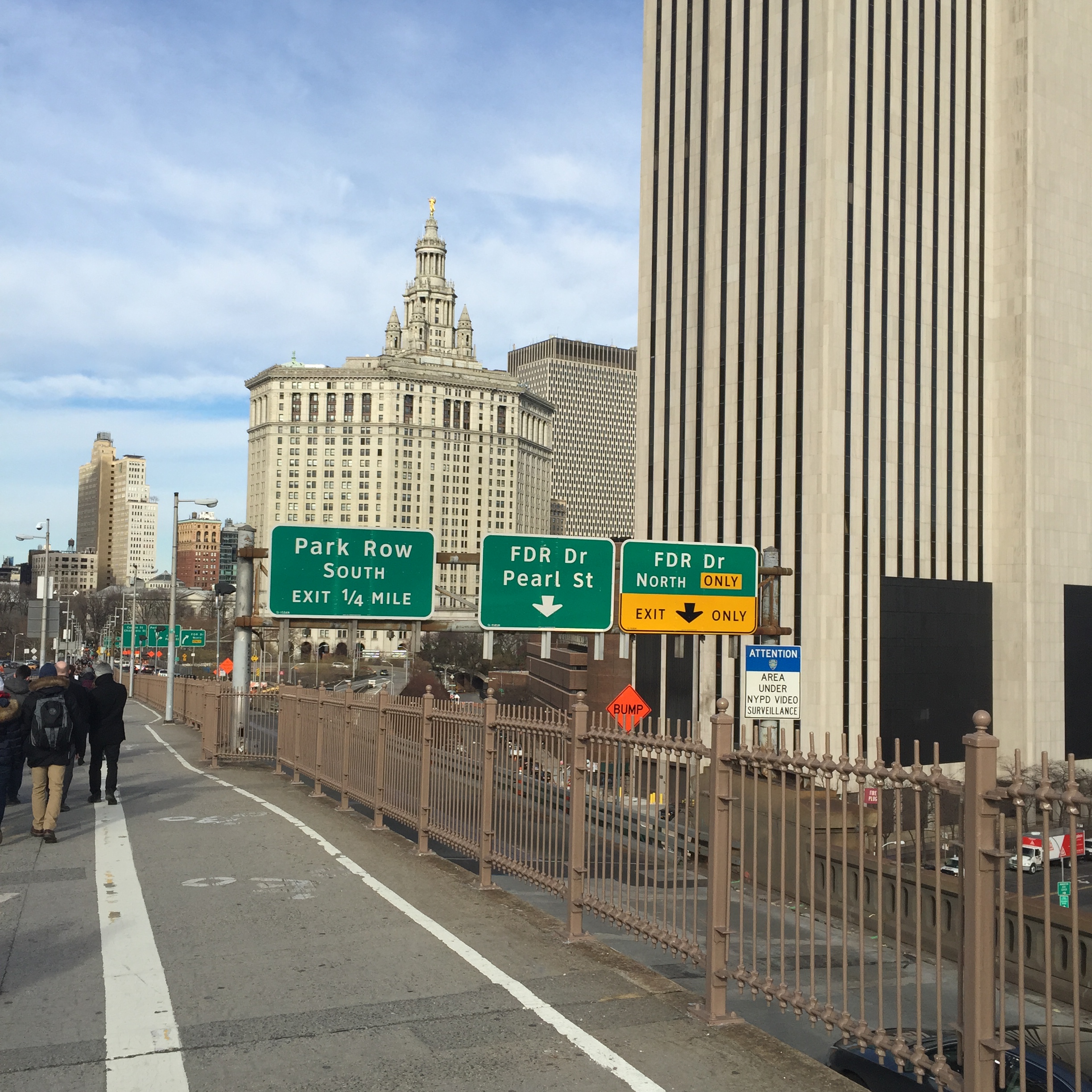
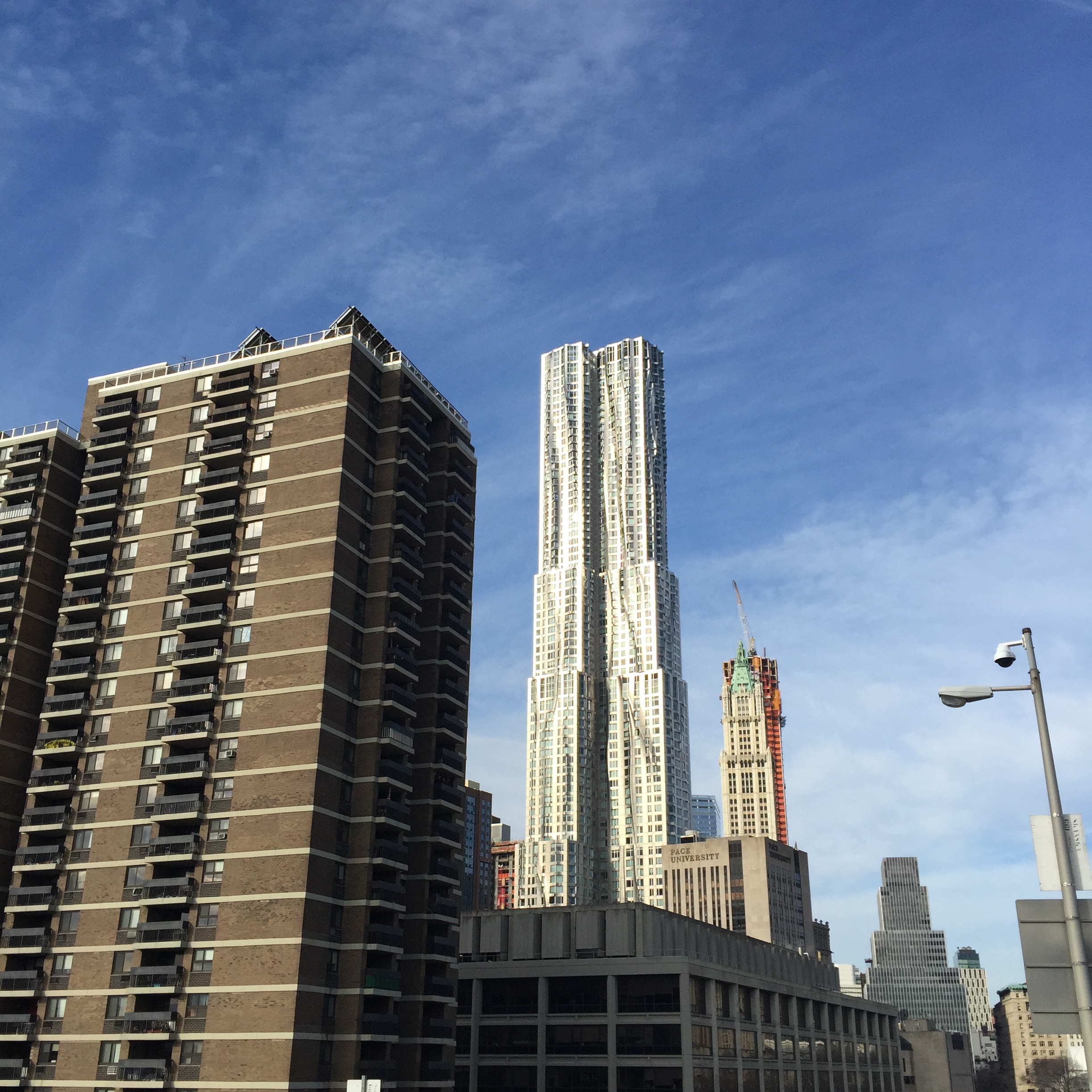
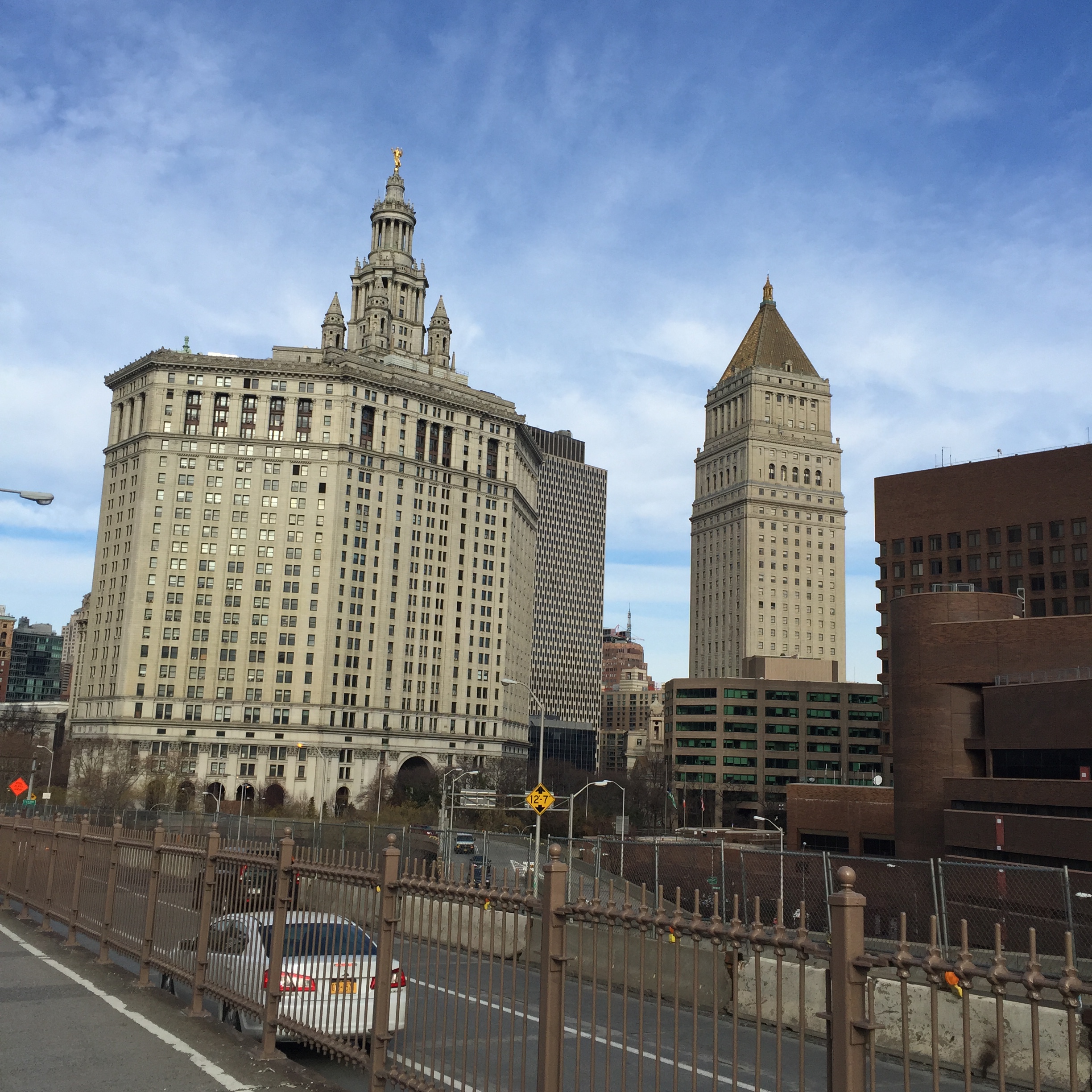
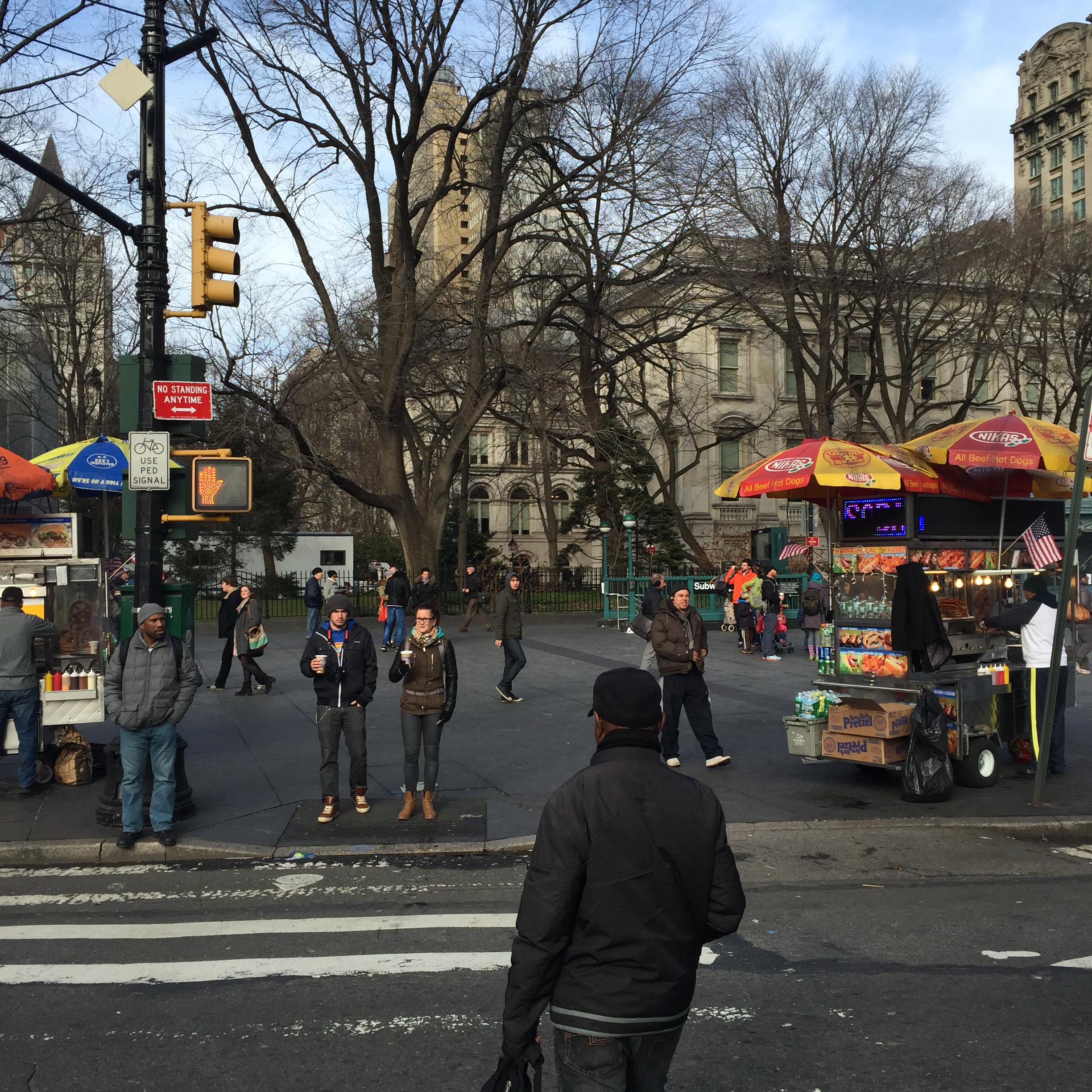
Whether you are fortunate enough to live and work in New York City, as I do, or are an occasional visitor, a walk across the Brooklyn Bridge is a magical experience – and free as well as good exercise as added benefits! The following is a series of photographs I took on a clear morning in late December (temperature was 38 degrees F, not bad in the least if you dress correctly), walking from the Brooklyn side to Manhattan. First of all, unless you plan to walk across both ways (which is not a bad idea if you have the time), the walk toward Manhattan is the more dramatic one. I also recommend this direction for the morning or evening hours – in the morning, the light is behind you and highlights what you are photographing, and in the evening of course the city lights are at their best. If you walk this direction on a sunny afternoon, the sun will be in your eyes as well as backlighting the buildings, ruining your photos.

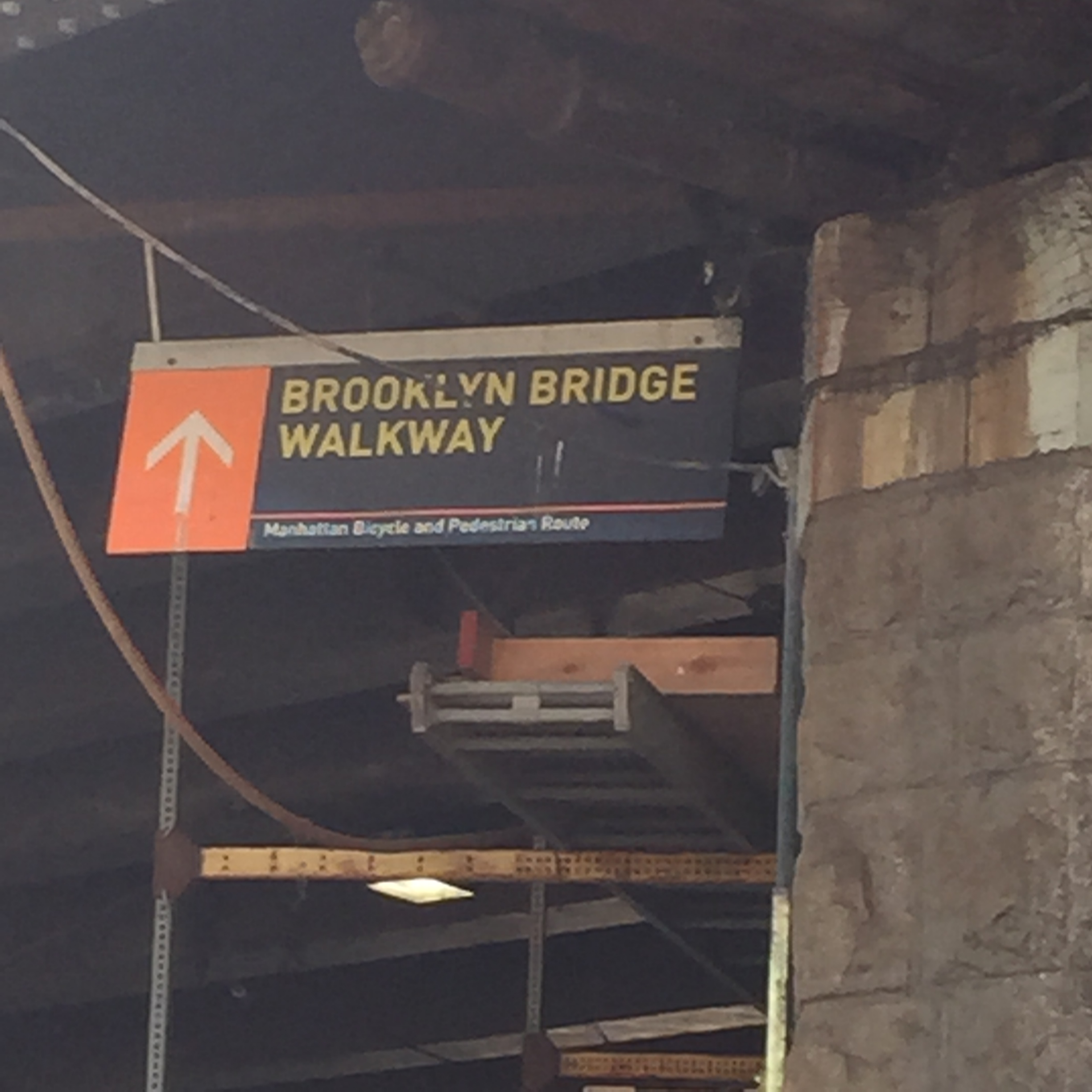
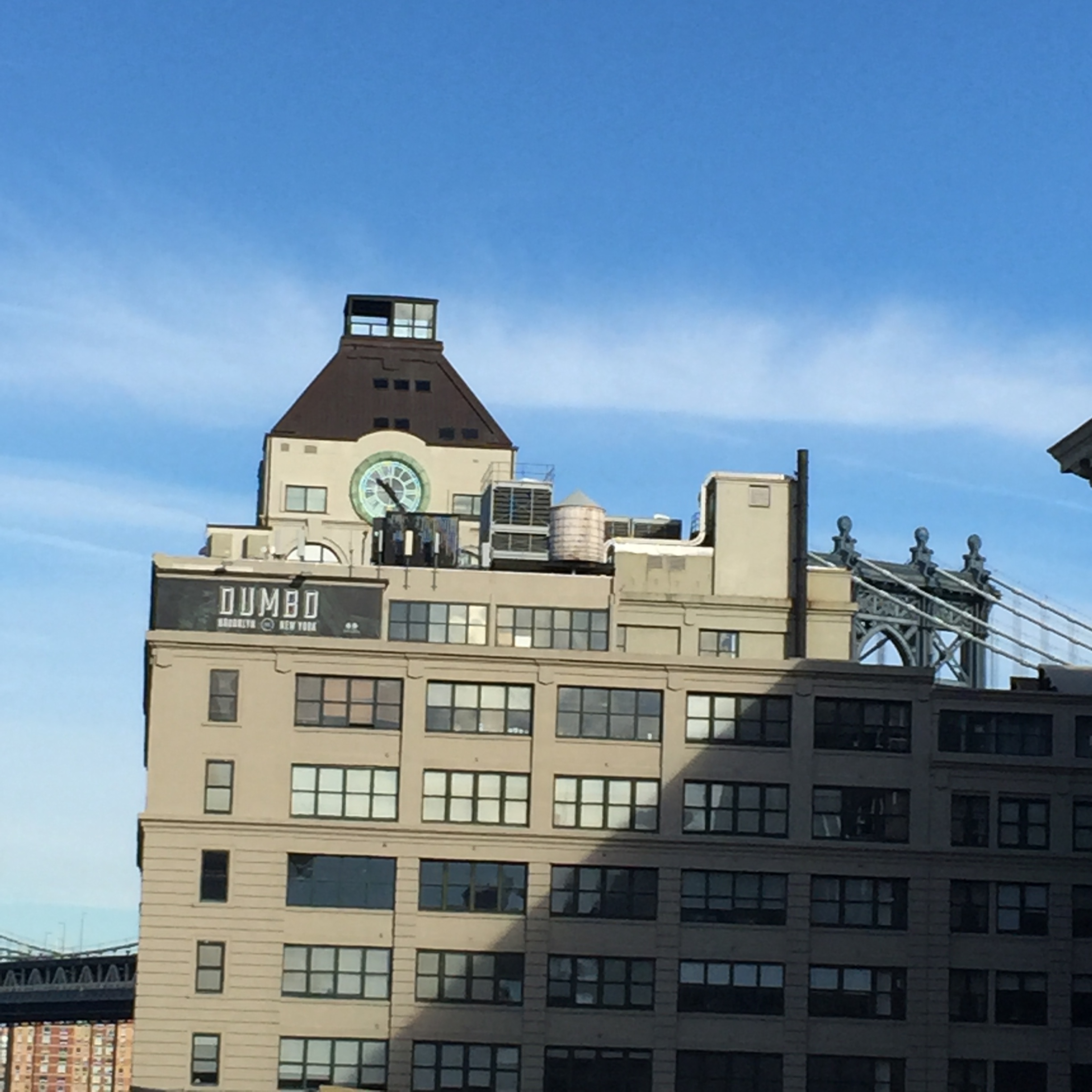
I will be showing how to get on the Brooklyn Bridge pedestrian walkway from Dumbo – many suggest getting on it deeper into Brooklyn, but first of all, to be near the Brooklyn Bridge and not talk a walk around Dumbo is a tragic loss of opportunity (my next blog post is about my walk around this incredibly charming area), and secondly, all you get from the traditional route is a gradual incline up to the bridge with no significant views. You need to be good with stairs to take this route, however. After your walk around Dumbo, head away from the river on Washington Street, and soon signs will helpfully point out where you take a set of stairs up to meet the pedestrian lane.

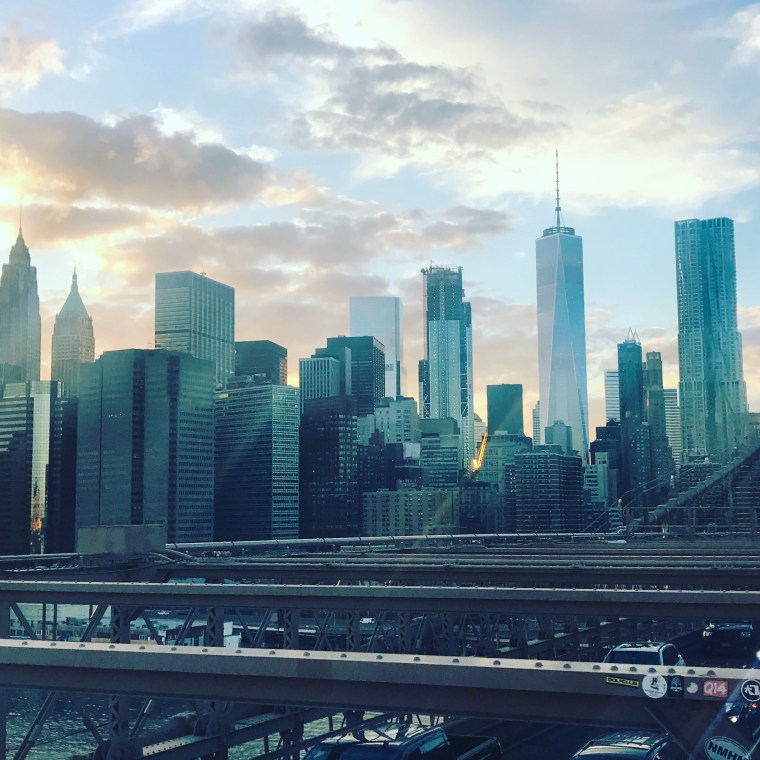
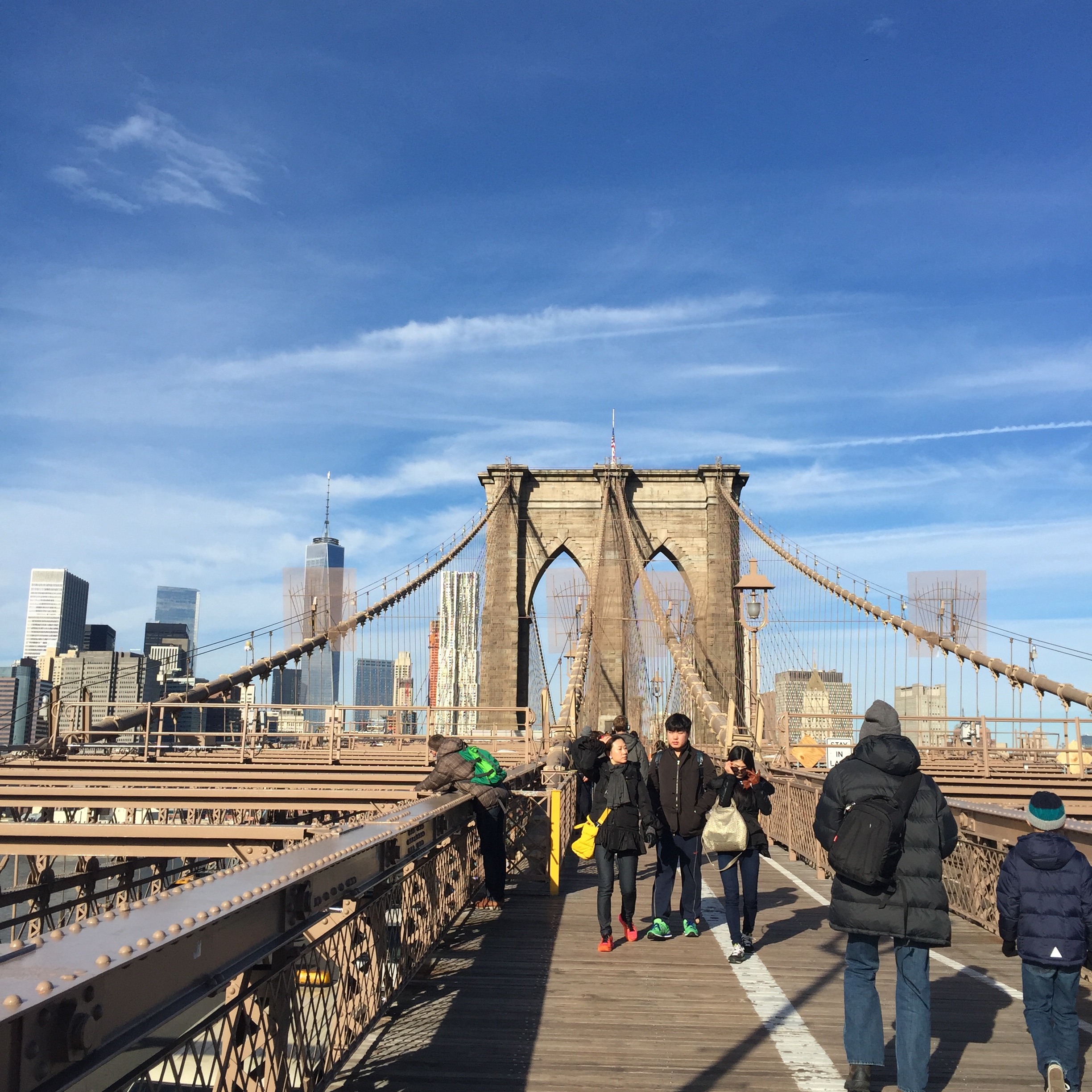
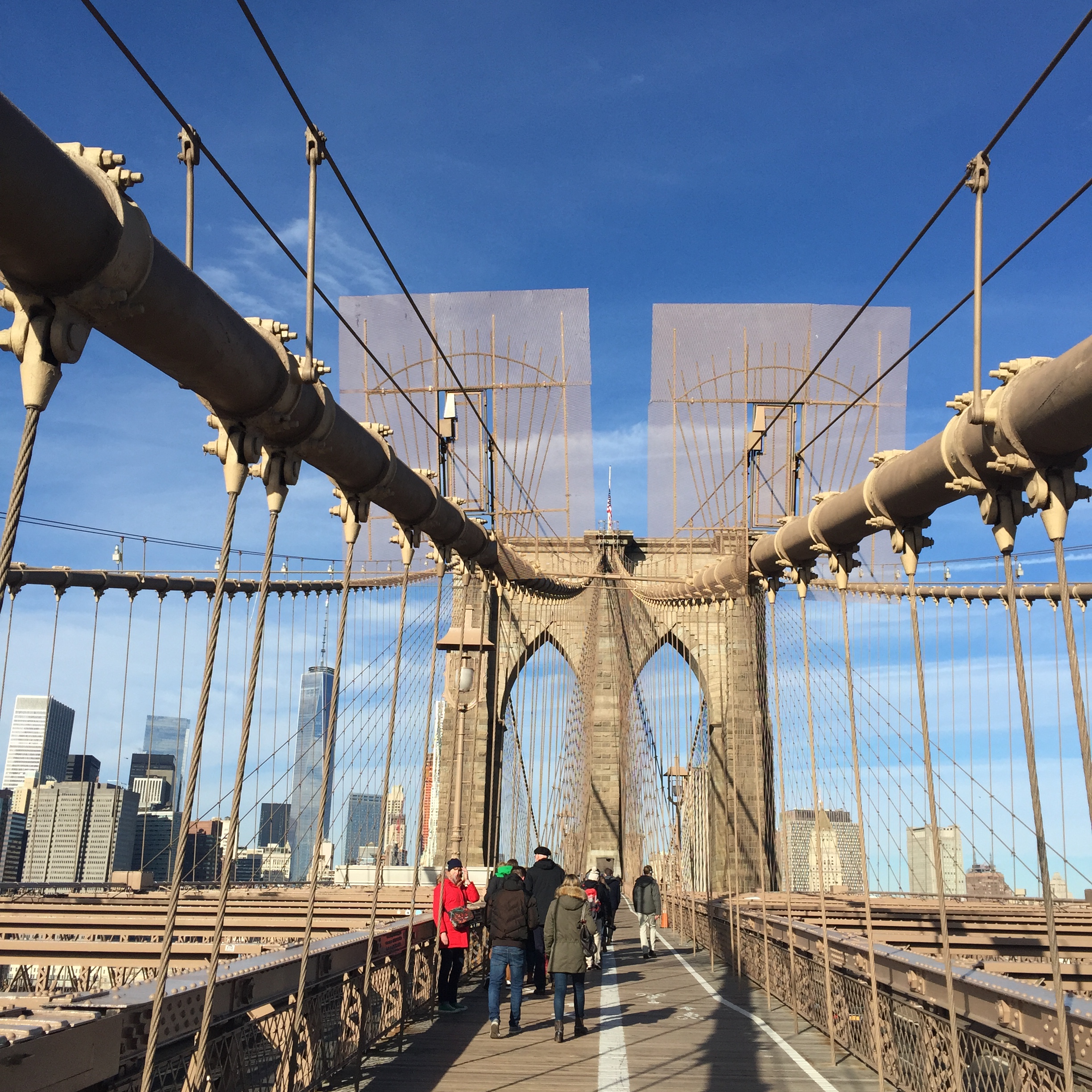
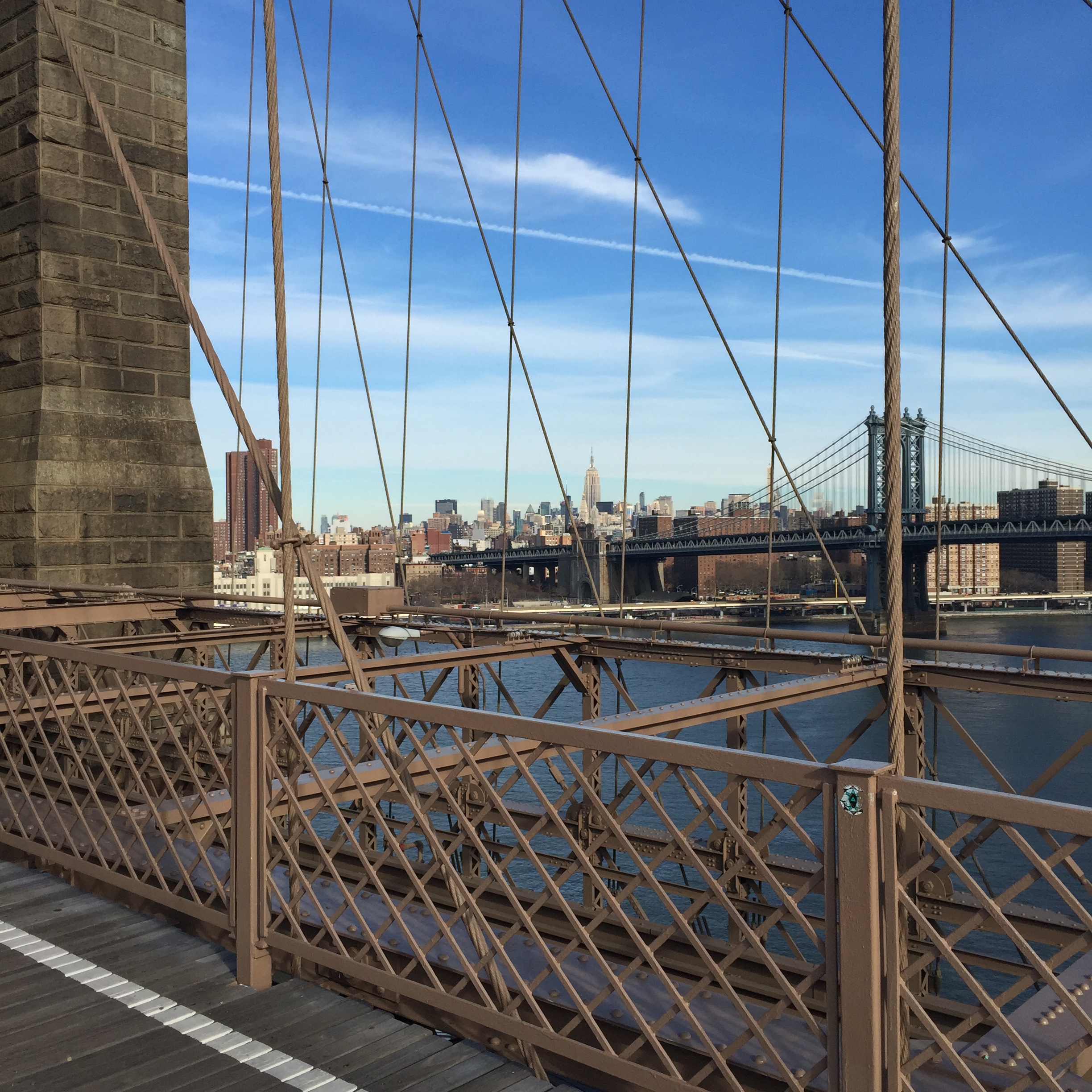
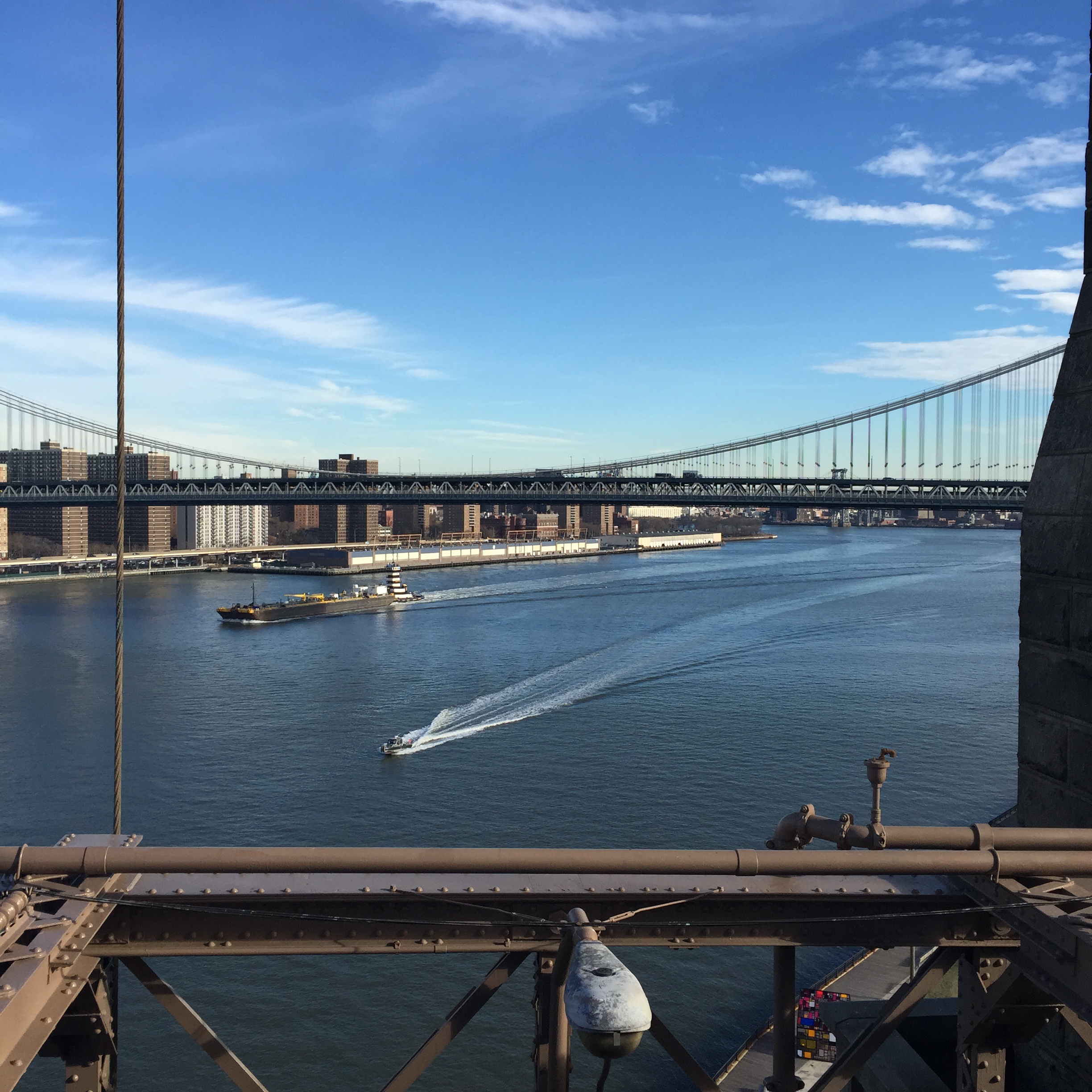
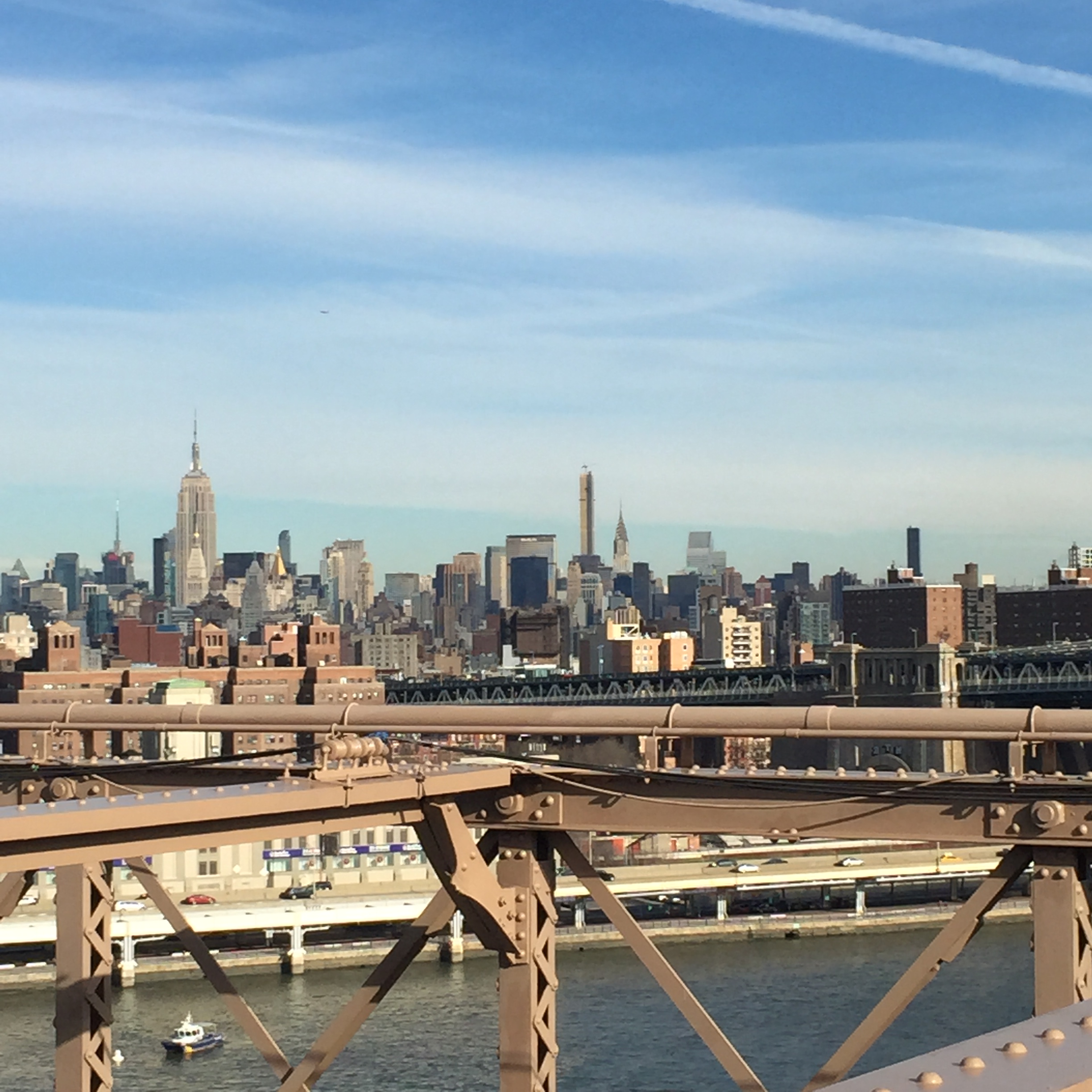
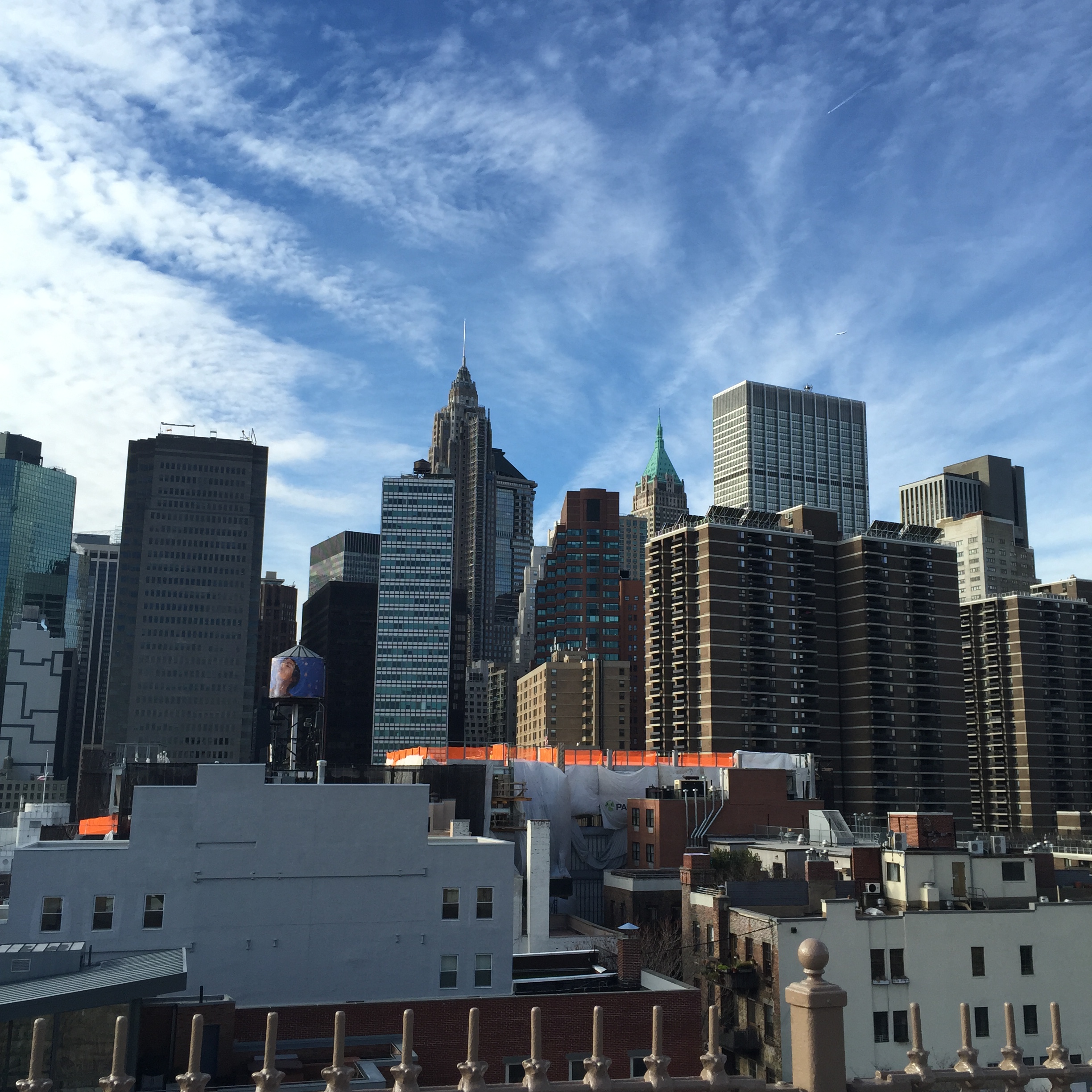
It’s not a long walk, but allow plenty of time to stop and appreciate the views, and how they change as you walk over the East River. Keep looking to your left to catch views of the Statue of Liberty and later the downtown skyline featuring One World Trade, and to your right to see the Empire State Building and the rest of the midtown skyline (I particularly enjoyed seeing the Empire State, Chrysler, and 432 Park together, suggesting a skyline willing to encompass both the old and the new).

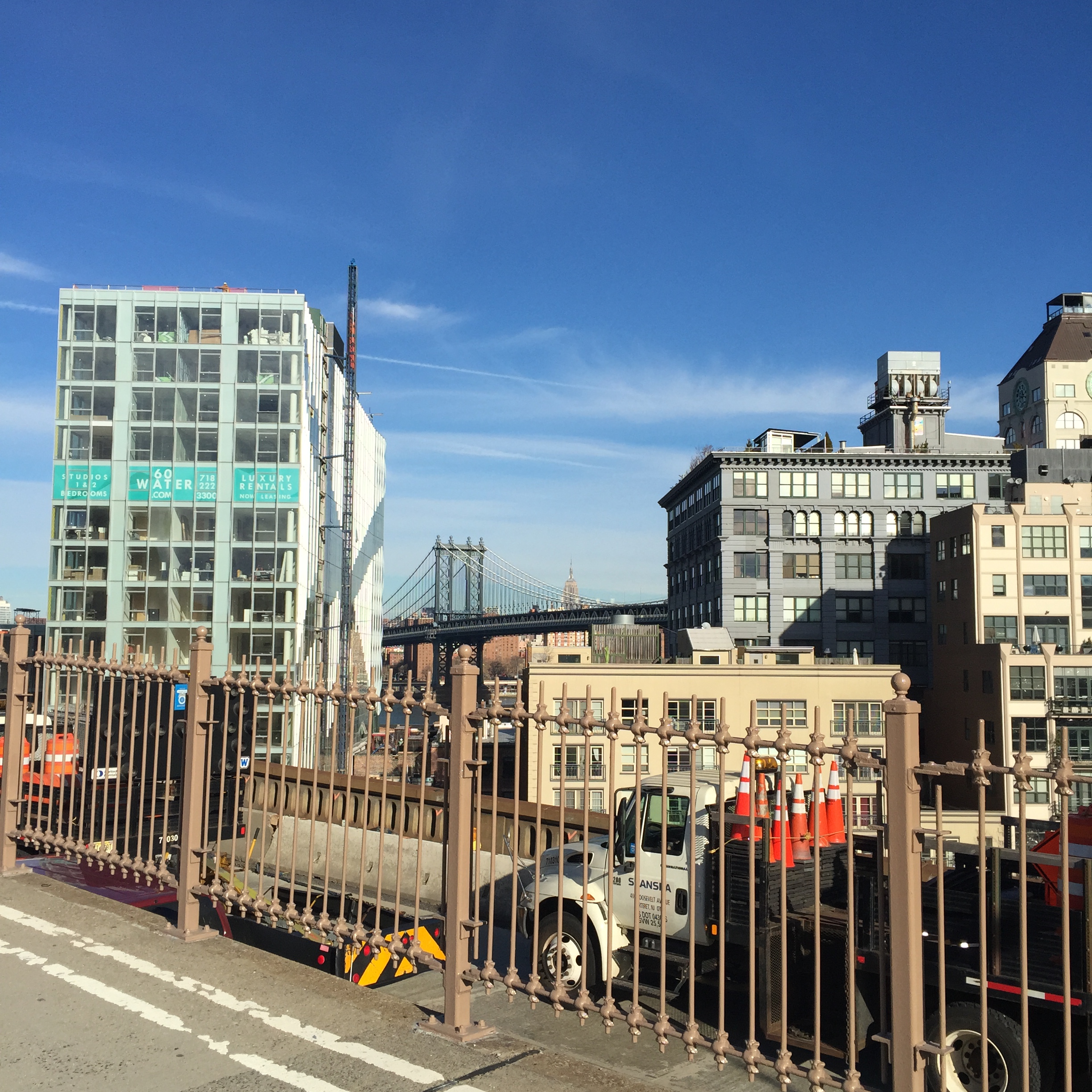
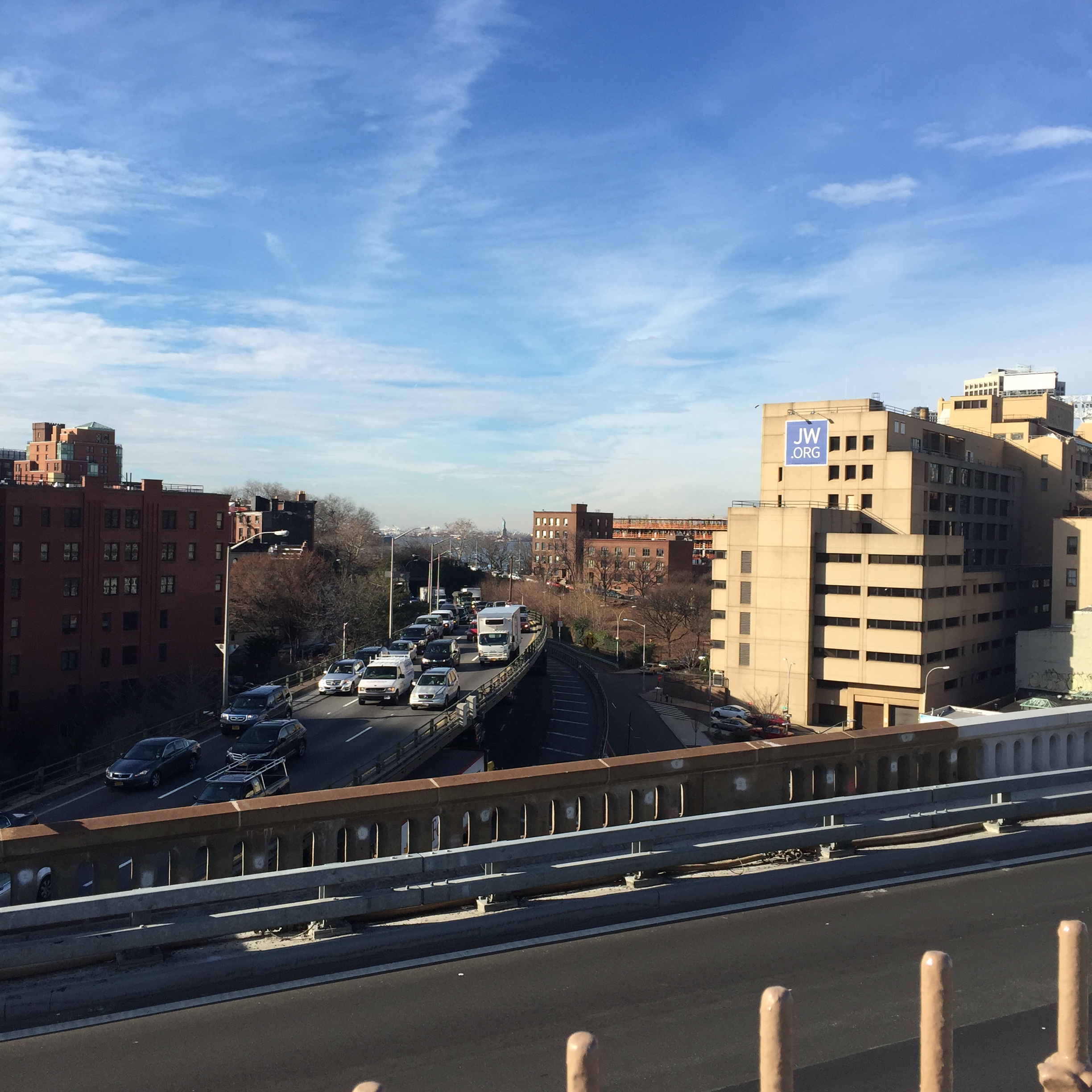
Photo Dec 29, 10 20 35 AM Photo Dec 29, 10 21 41 AM Photo Dec 29, 10 22 01 AM Photo Dec 29, 10 23 04 AM Photo Dec 29, 10 23 08 AM Photo Dec 29, 10 23 51 AM Photo Dec 29, 10 25 07 AM Photo Dec 29, 10 25 17 AM Photo Dec 29, 10 25 26 AM Photo Dec 29, 10 25 32 AM Photo Dec 29, 10 27 27 AM Photo Dec 29, 10 27 58 AM Photo Dec 29, 10 28 19 AM Photo Dec 29, 10 28 24 AM Photo Dec 29, 10 28 53 AM Photo Dec 29, 10 29 31 AM Photo Dec 29, 10 29 49 AM Photo Dec 29, 10 30 33 AM Photo Dec 29, 10 30 43 AM Photo Dec 29, 10 30 56 AM Photo Dec 29, 10 31 01 AM Photo Dec 29, 10 33 12 AM Photo Dec 29, 10 33 17 AM Photo Dec 29, 10 34 18 AM Photo Dec 29, 10 34 51 AM Photo Dec 29, 10 35 35 AM Photo Dec 29, 10 36 06 AM Photo Dec 29, 10 36 48 AM Photo Dec 29, 10 37 31 AM Photo Dec 29, 10 37 43 AM Photo Dec 29, 10 38 43 AM Photo Dec 29, 10 39 30 AM Photo Dec 29, 10 40 35 AM Photo Dec 29, 10 40 56 AM Photo Dec 29, 10 41 25 AM Photo Dec 29, 10 42 48 AM Photo Dec 29, 10 43 04 AM Photo Dec 29, 10 46 32 AM