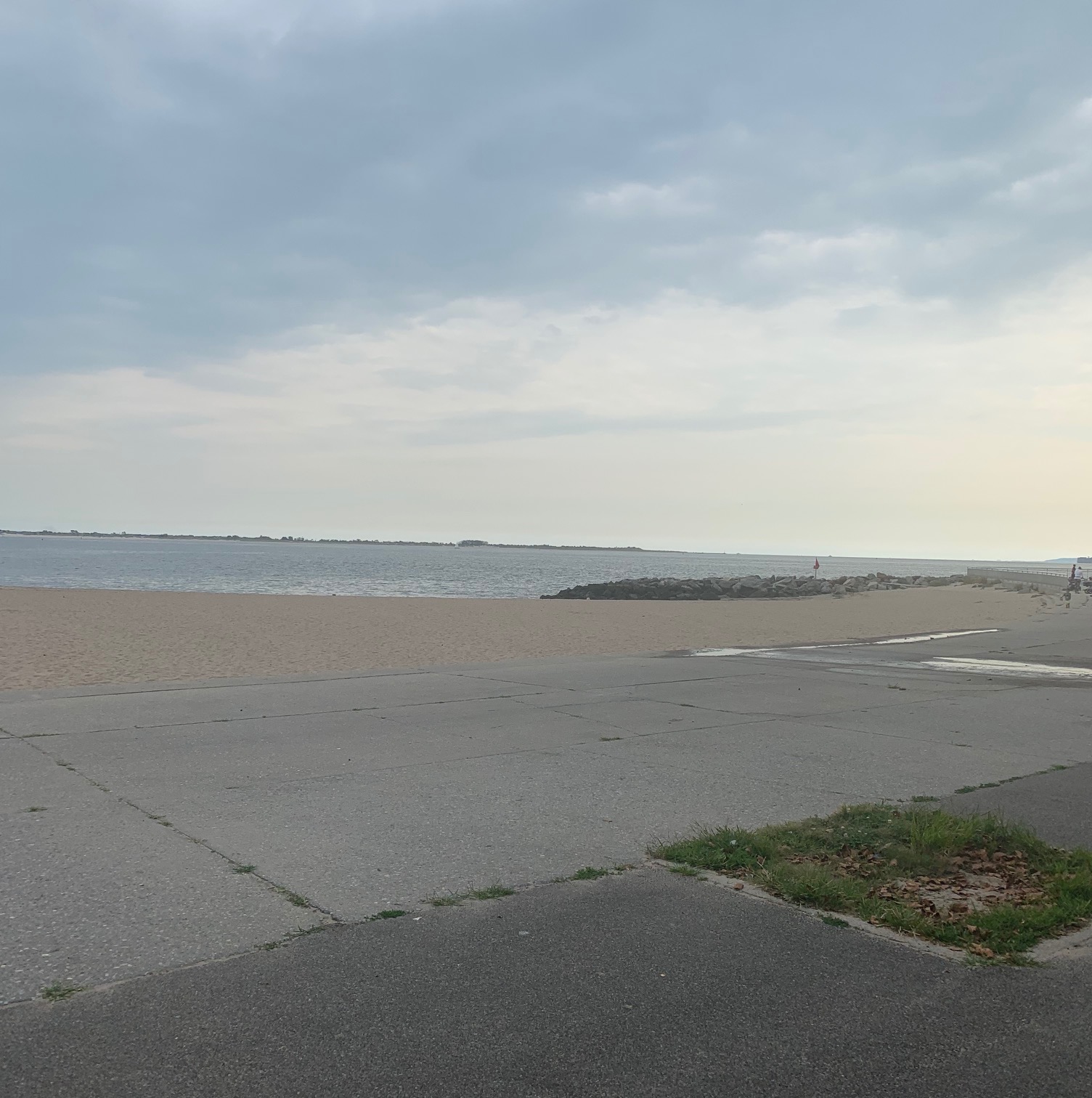
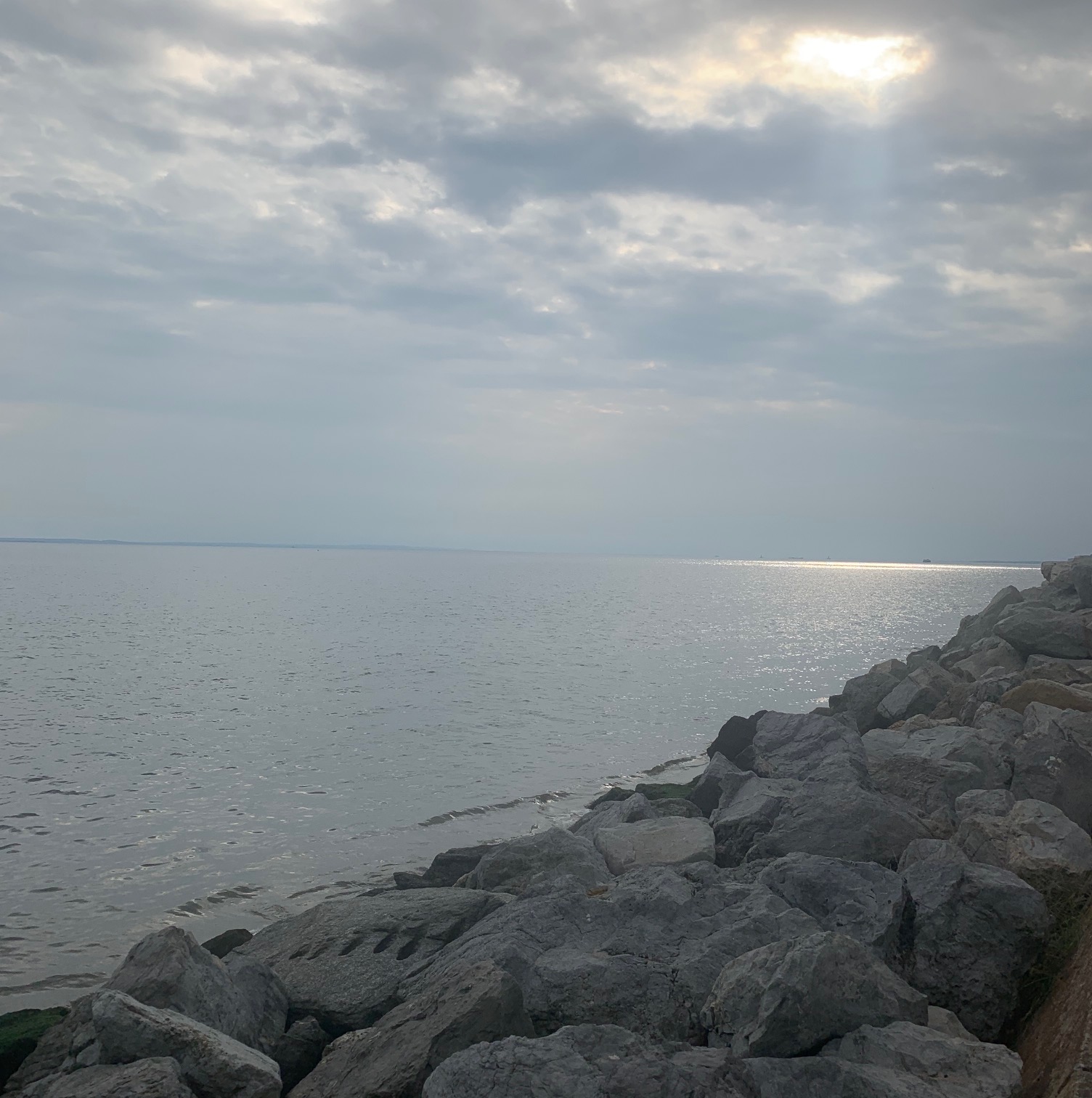
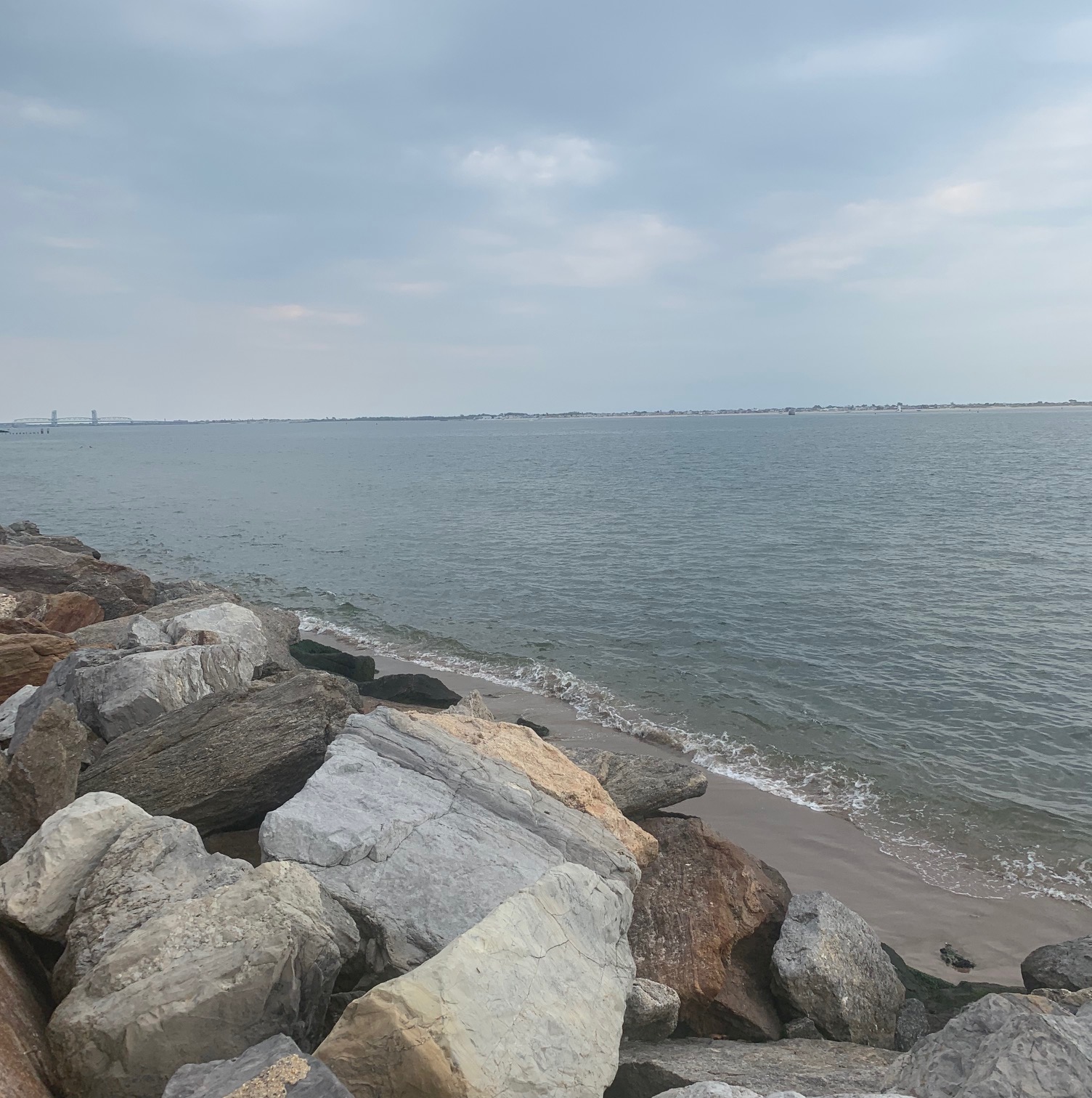
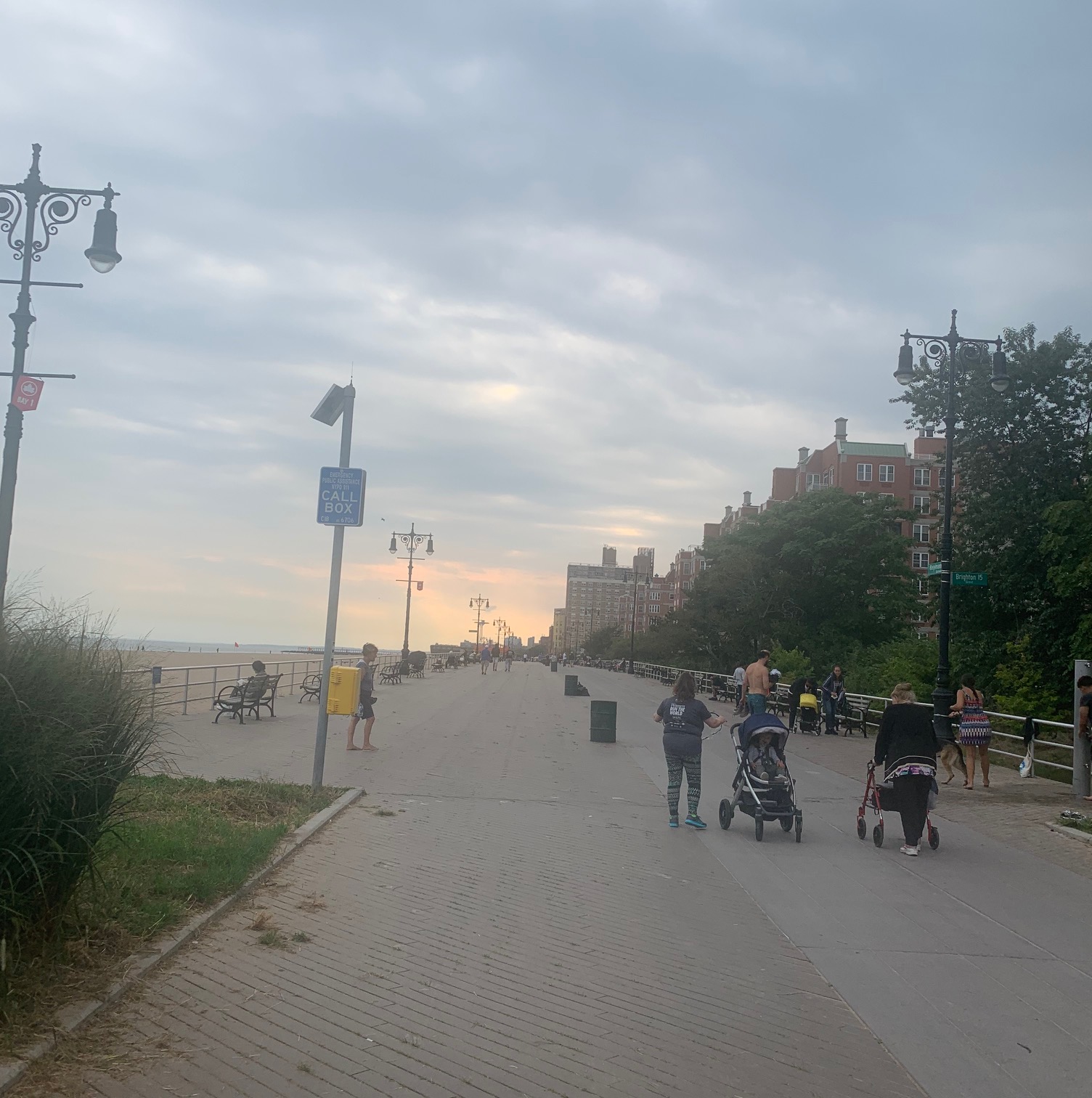
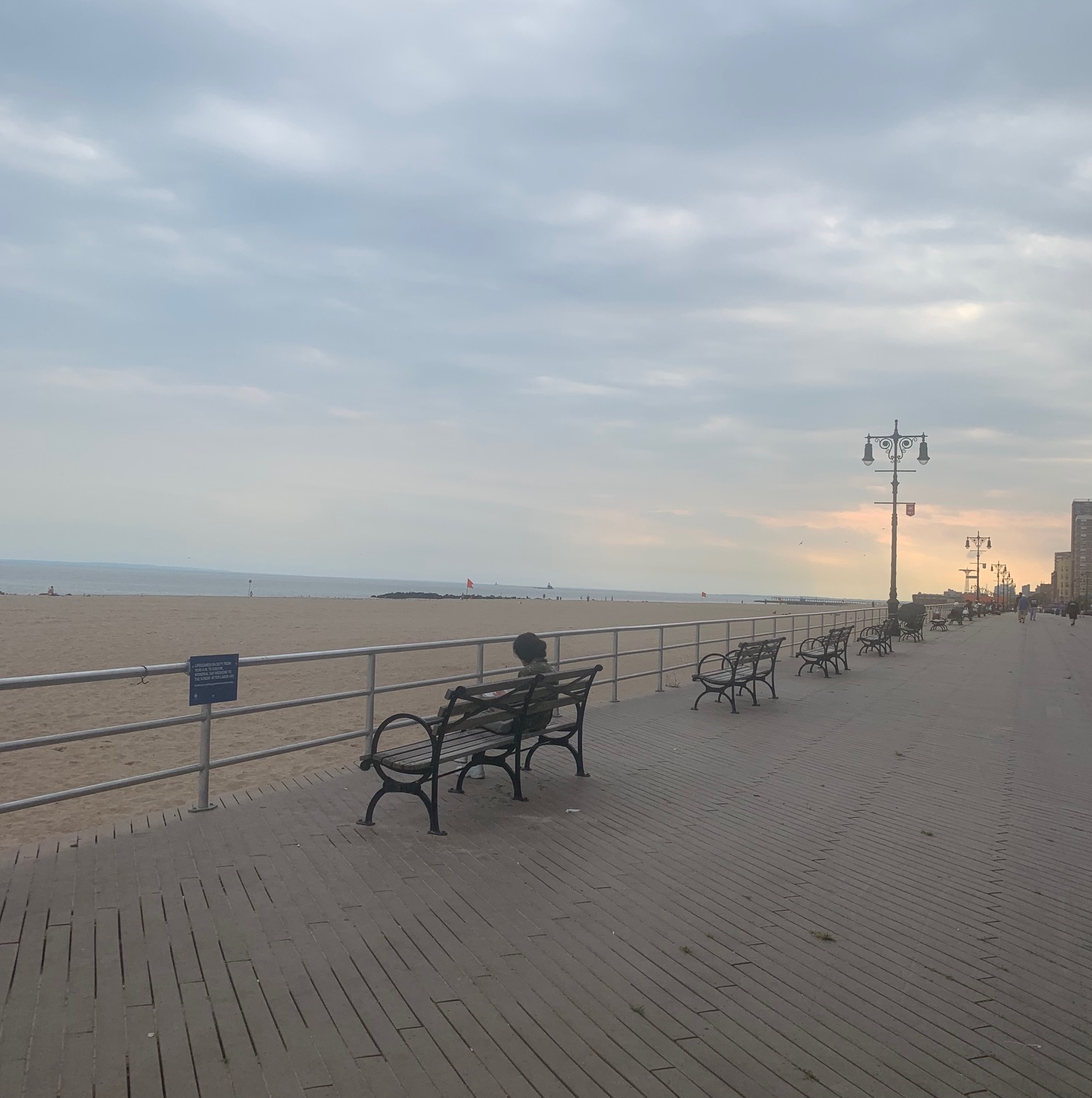
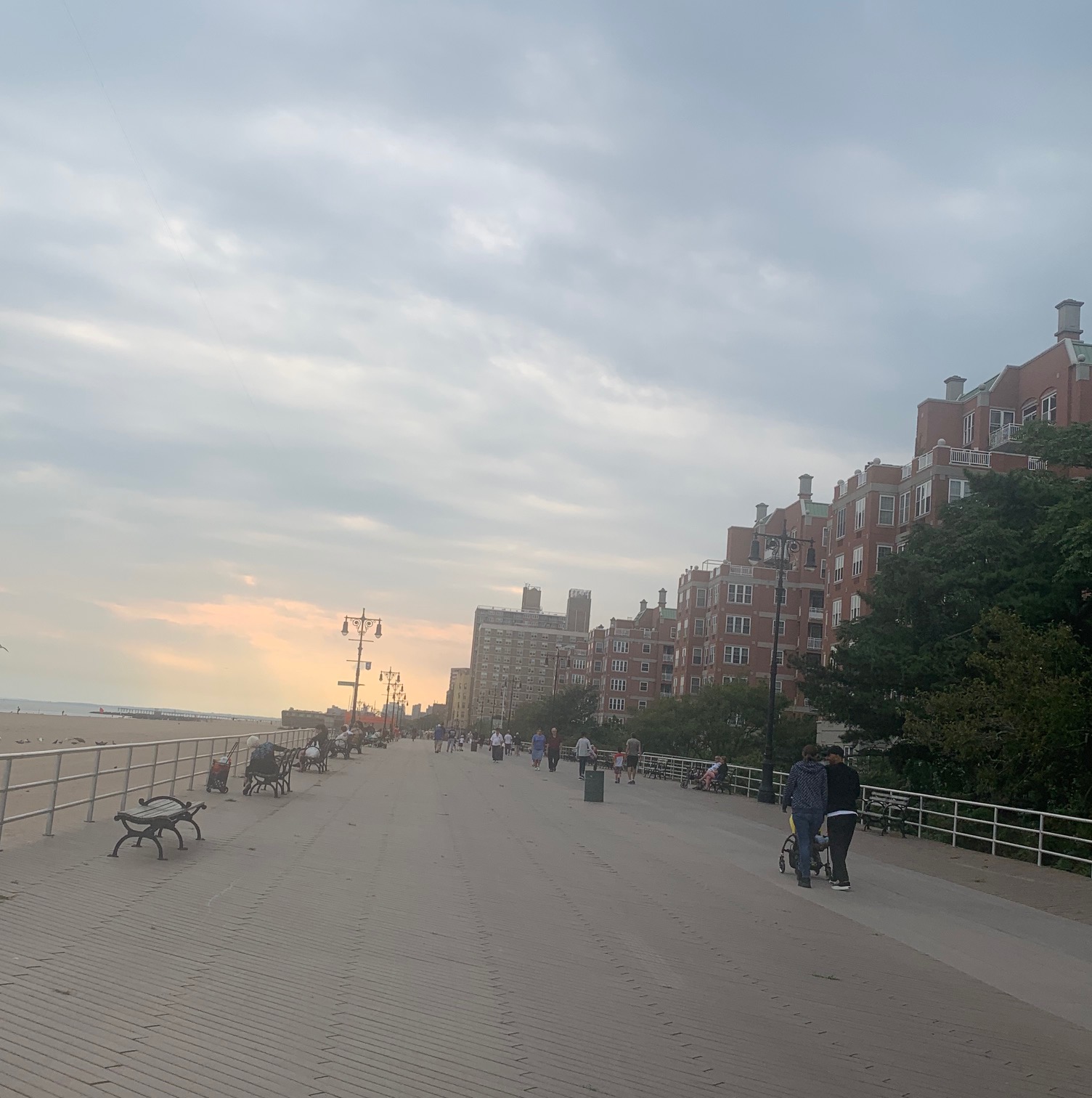
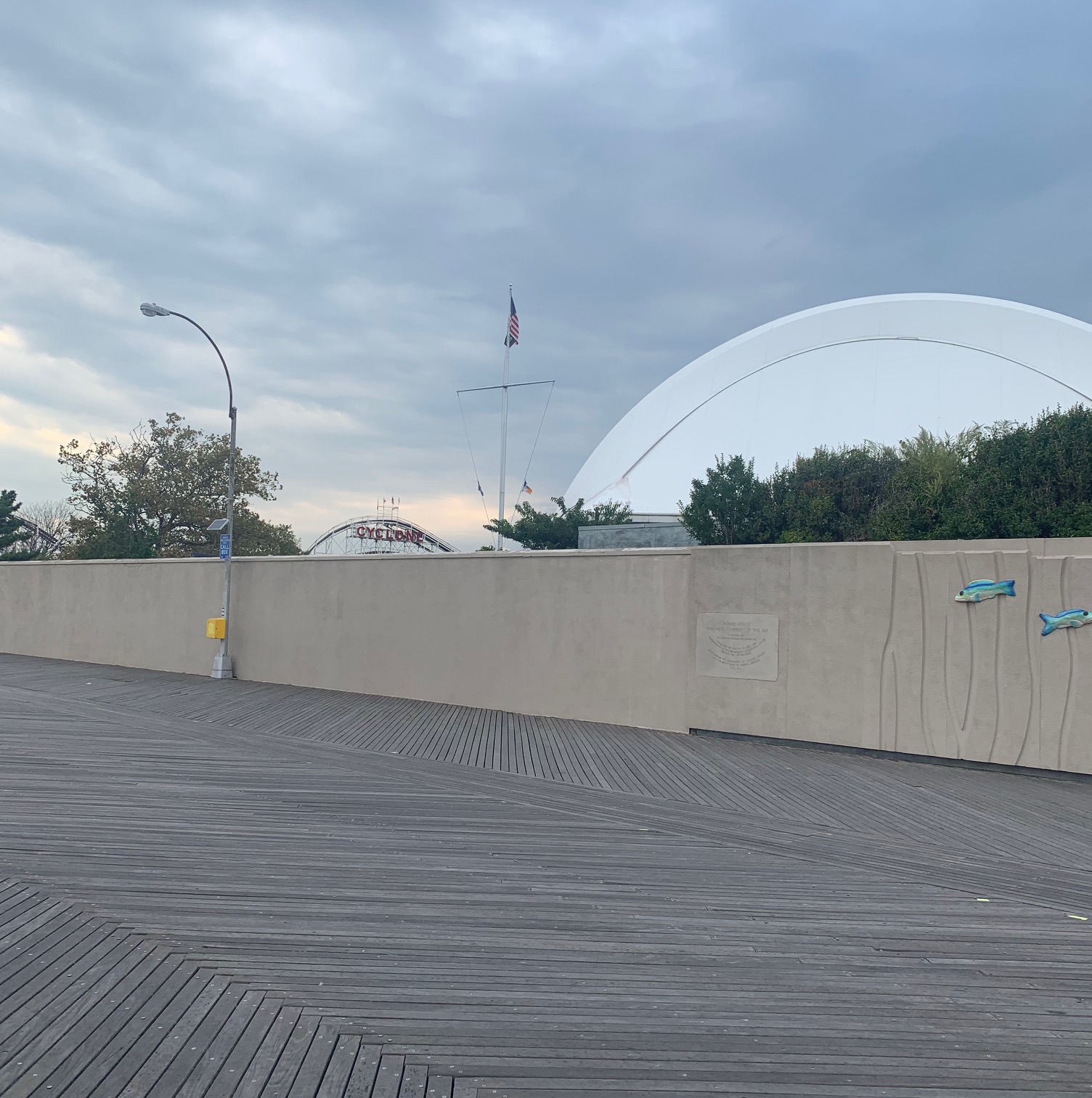
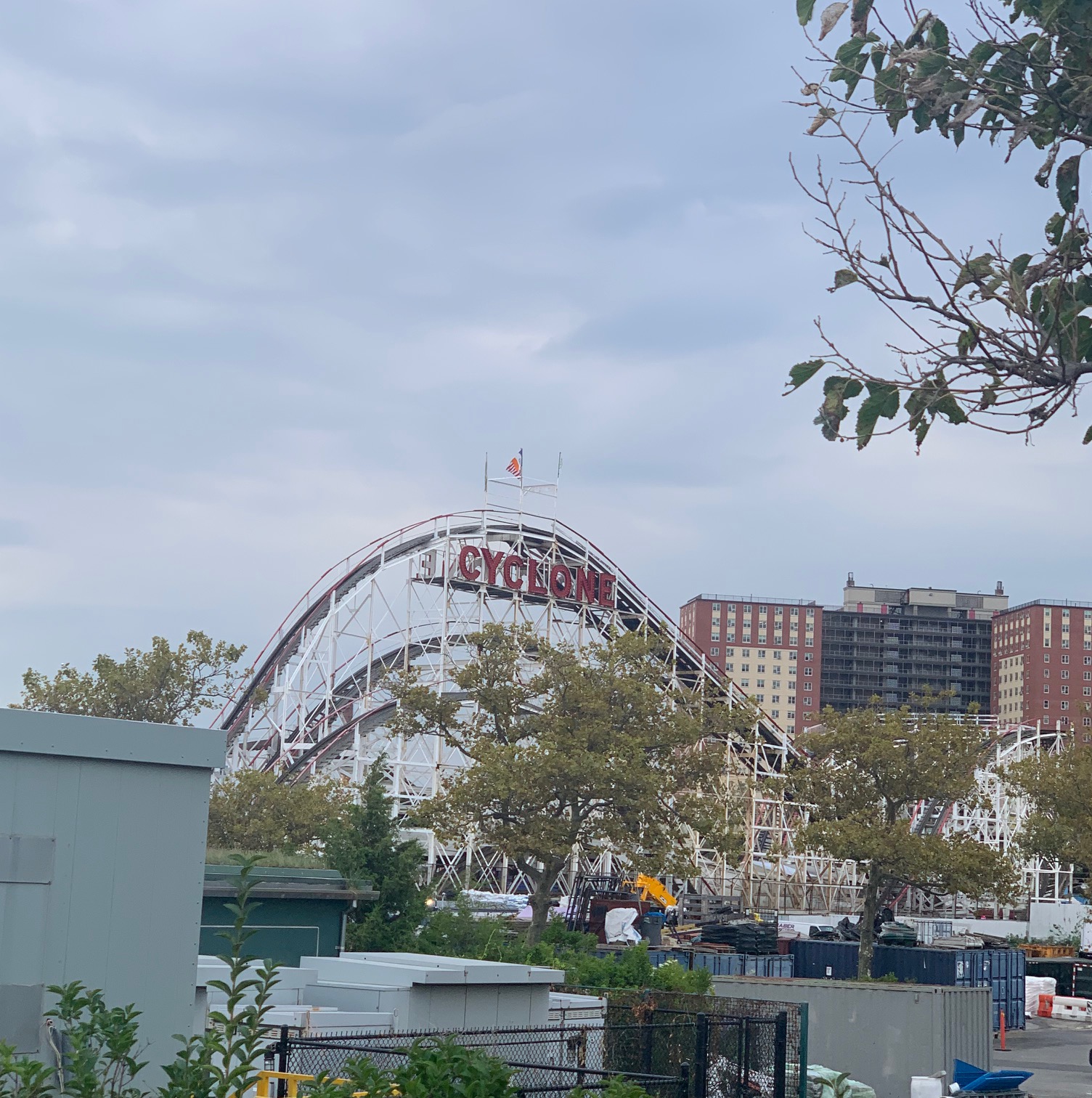
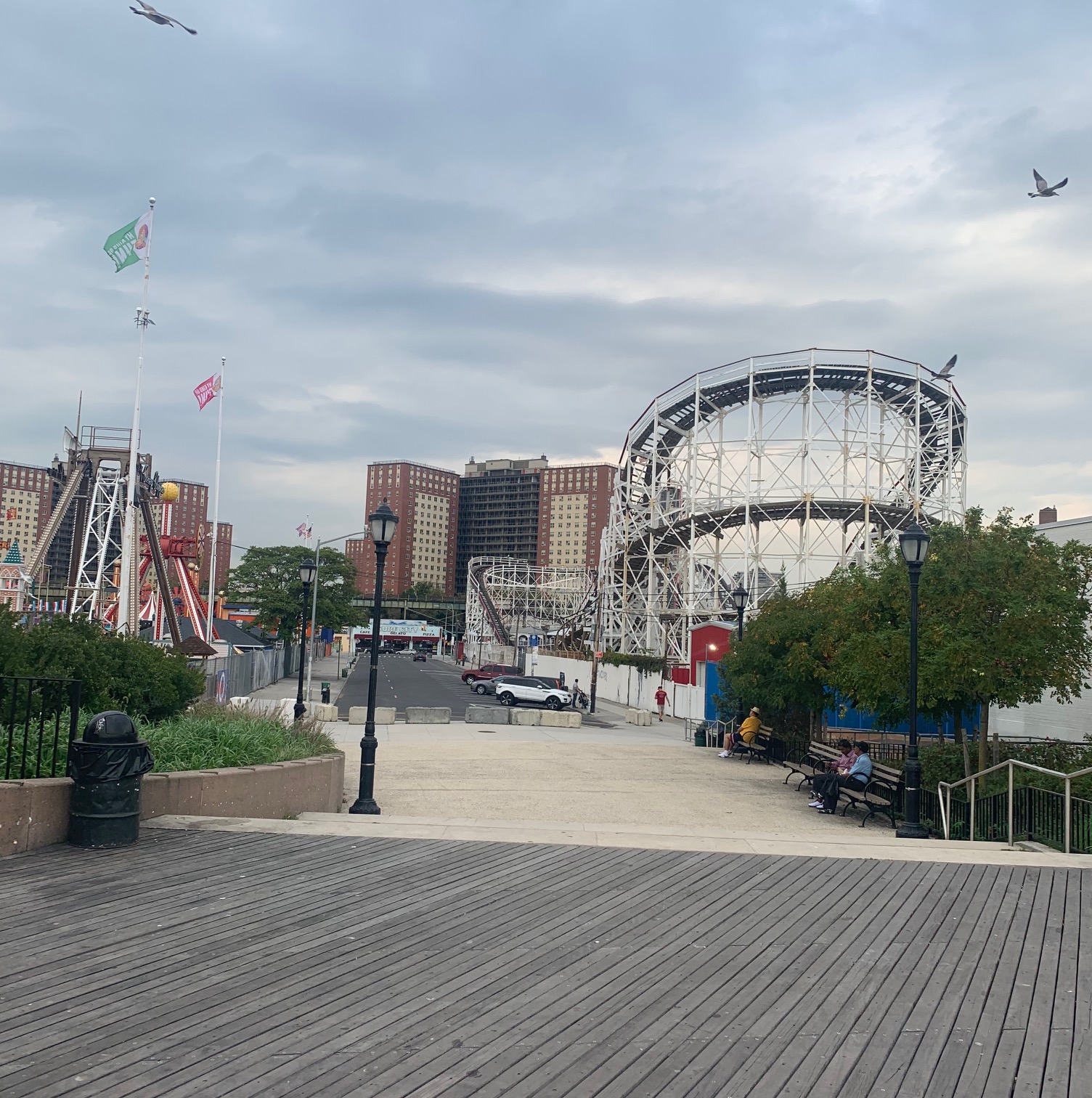
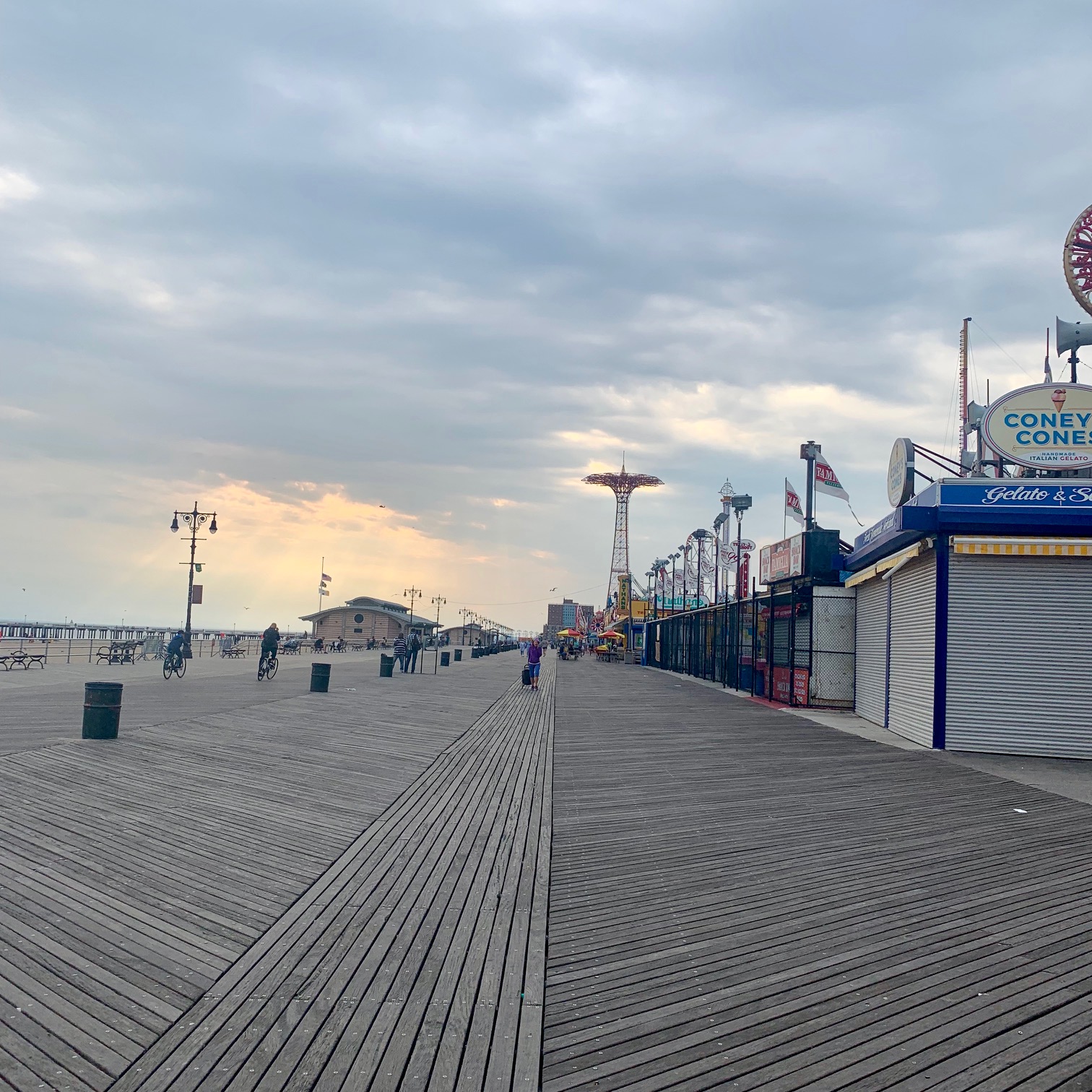
It’s been a hot summer in New York City, and many escape to the Jersey Shore or the Hamptons (or Martha’s Vineyard, Cape Cod, or Bar Harbor, for that matter) to find some cooling ocean breezes. However, we are fortunate that in NYC we have several beaches we can get to fairly easily via public transportation. I have previously blogged about taking the ferry to Rockaway Beach in Queens, and taking the subway to Coney Island. Recently though, I enjoyed a walk through three different beaches in Brooklyn, starting with Manhattan Beach, continuing to Brighton Beach, and then finishing up on Coney Island. Consider this a bit of a summer photo essay, and a reminder that there are always things to do in New York City.
To get to Manhattan Beach, you can take the Q to the Brighton Beach stop, and then either take the B1 or B49 bus toward Sheepshead Bay, or walk about 20 minutes or so. Manhattan Beach looks across Jamaica Bay right at Rockaway Beach. Walk with the water to your left and you will be walking back toward Brighton Beach. You will get a boardwalk beginning in Brighton Beach, which then eventually joins the Coney Island boardwalk.
There are multiple public transportation options at Stillwell Avenue for getting back. If you don’t stop, the entire walk from Manhattan Beach to Coney Island Beach is about an hour. There are plenty of reasons to stop though – not only to enjoy the ocean but to have a bite to eat, or sit and people watch. I went late on a weekday when it had been threatening rain off and on, and the walk was quiet, but on a sunny summer day be prepared for it to be crowded. Hey, if you can spend the month of August somewhere cooler looking at some other beach, enjoy! But if you can’t, don’t forget all the beaches that are easy to get to within the city.
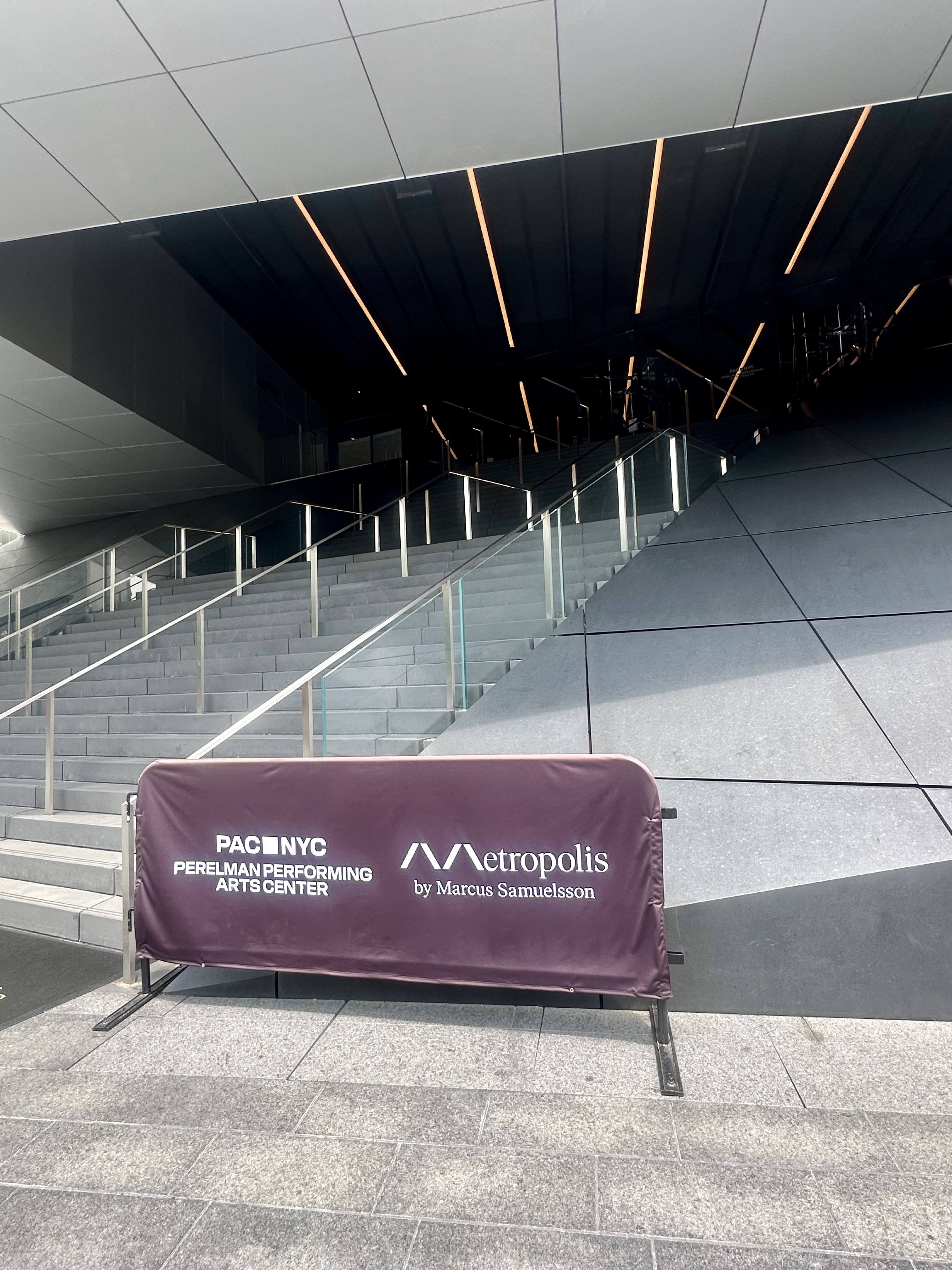
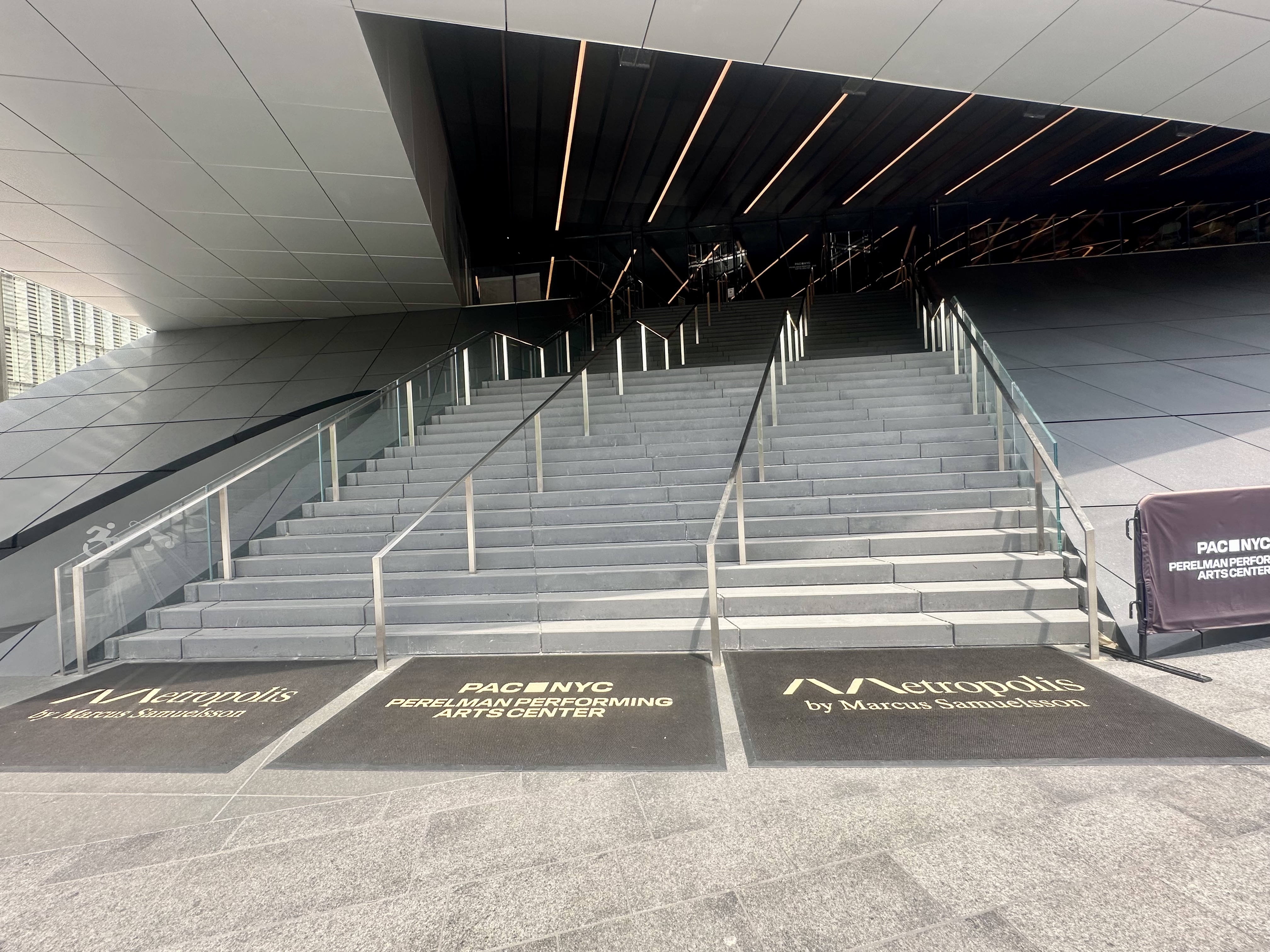
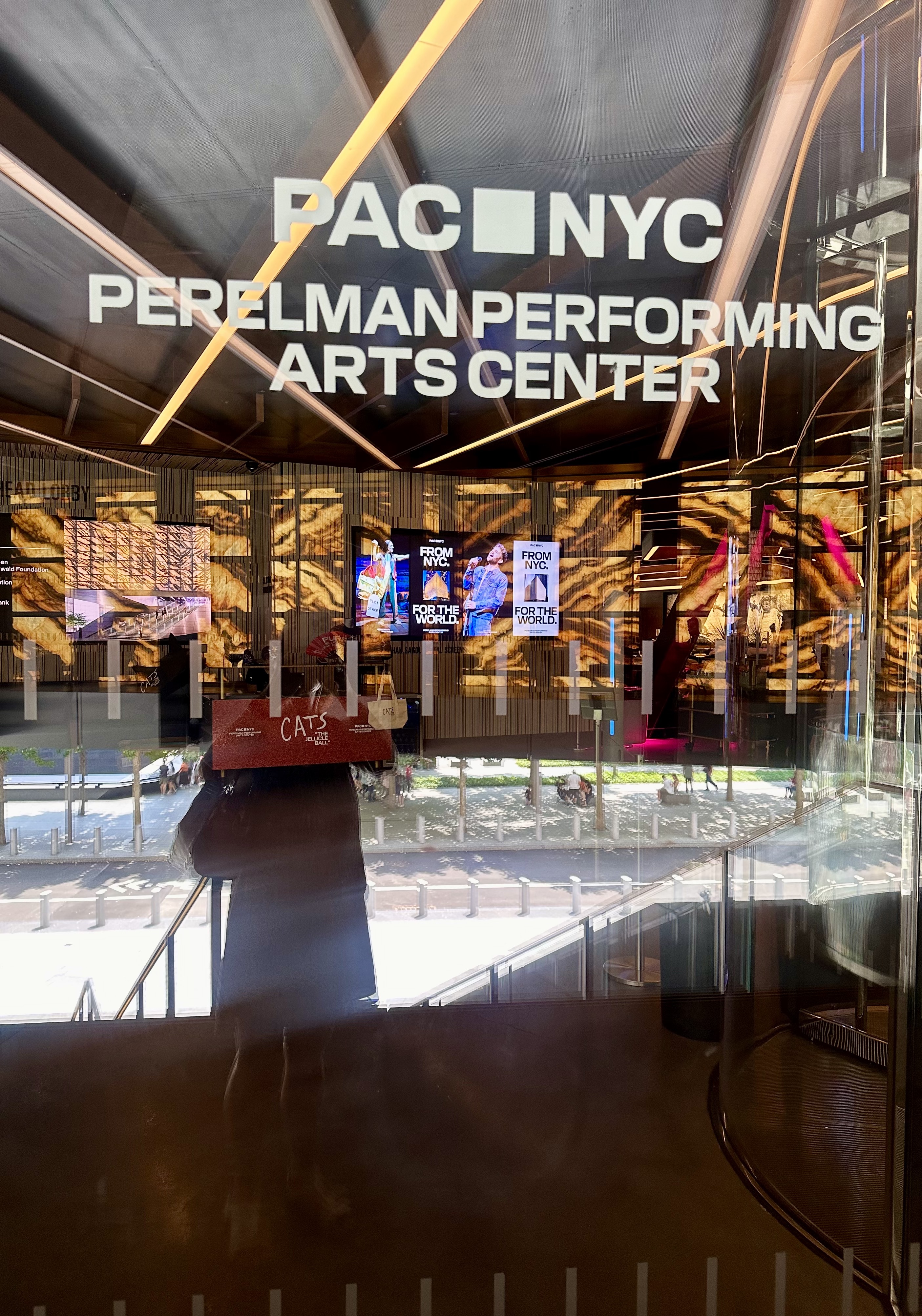
Lower Manhattan near the original site of the Twin Towers has completely transformed in the almost 23 years that have passed since September 11, 2001. I have written before about the Oculus and One World Trade, but was happy this summer to visit the Perelman Performing Arts Center, a new space for the performing arts.
The center is nestled in the shadow of One World Trade, across from the reflecting pools and the 9/11 Museum.
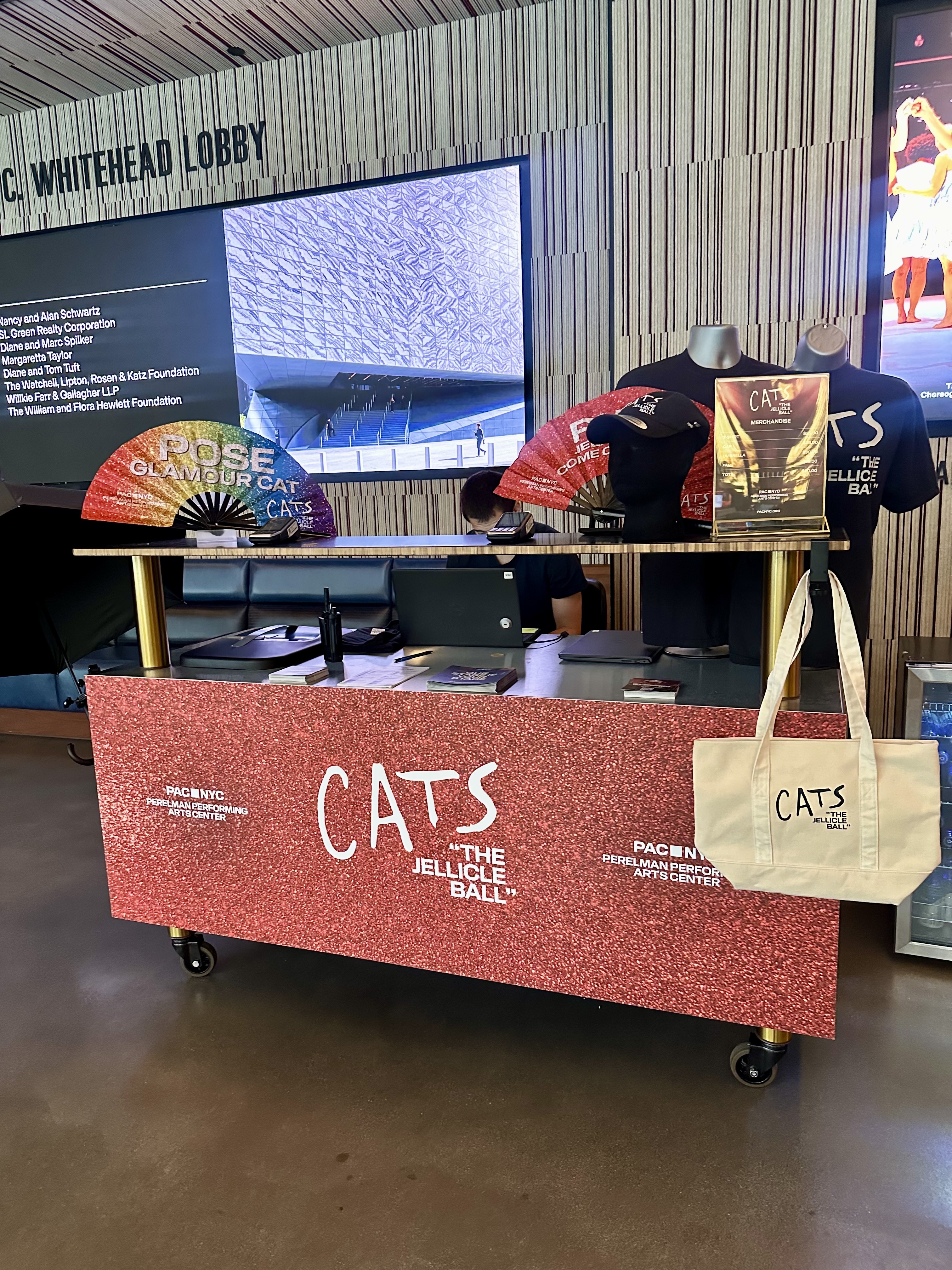
The building was designed by REX, an acclaimed architecture and design firm based in New York City, whose name signifies a re-appraisal (RE) of architecture (X). There are three potential performance spaces, and all are designed with flexibility in layout, depending on the needs of any production. I was there to see a reimagining of Andrew Lloyd Webber’s long-running feline musical as Cats: The Jellicle Ball (only there until August 11, and it is SOLD OUT – but you could keep checking the website, or go by the box office before a show to wait for returned tickets. I also hear this may transfer to Broadway after a series of rave reviews . . . ). Setting the musical within a new frame of NYC Ballroom culture works brilliantly, and the production is a lot of fun.
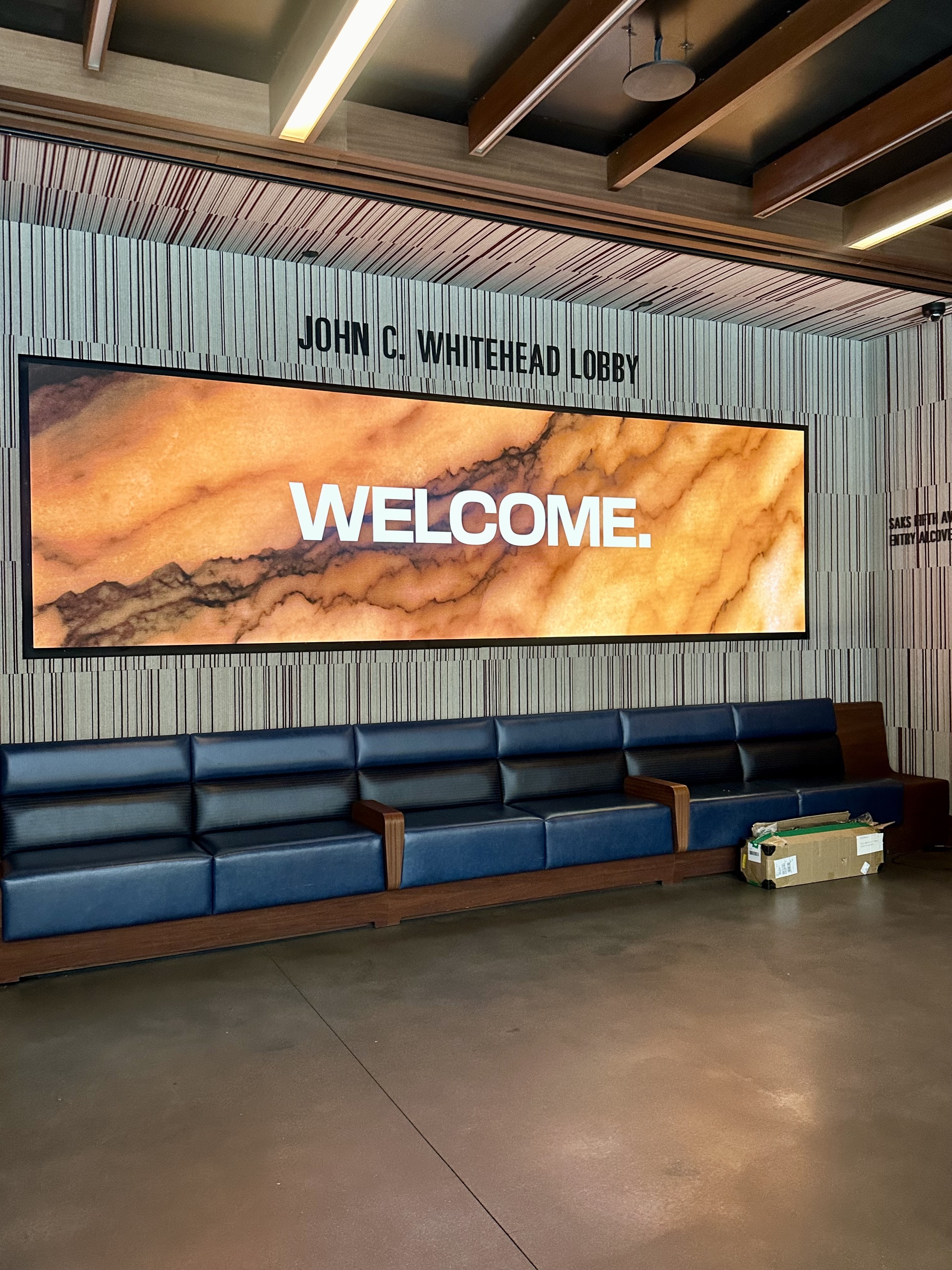
Public spaces are cool and visually arresting.
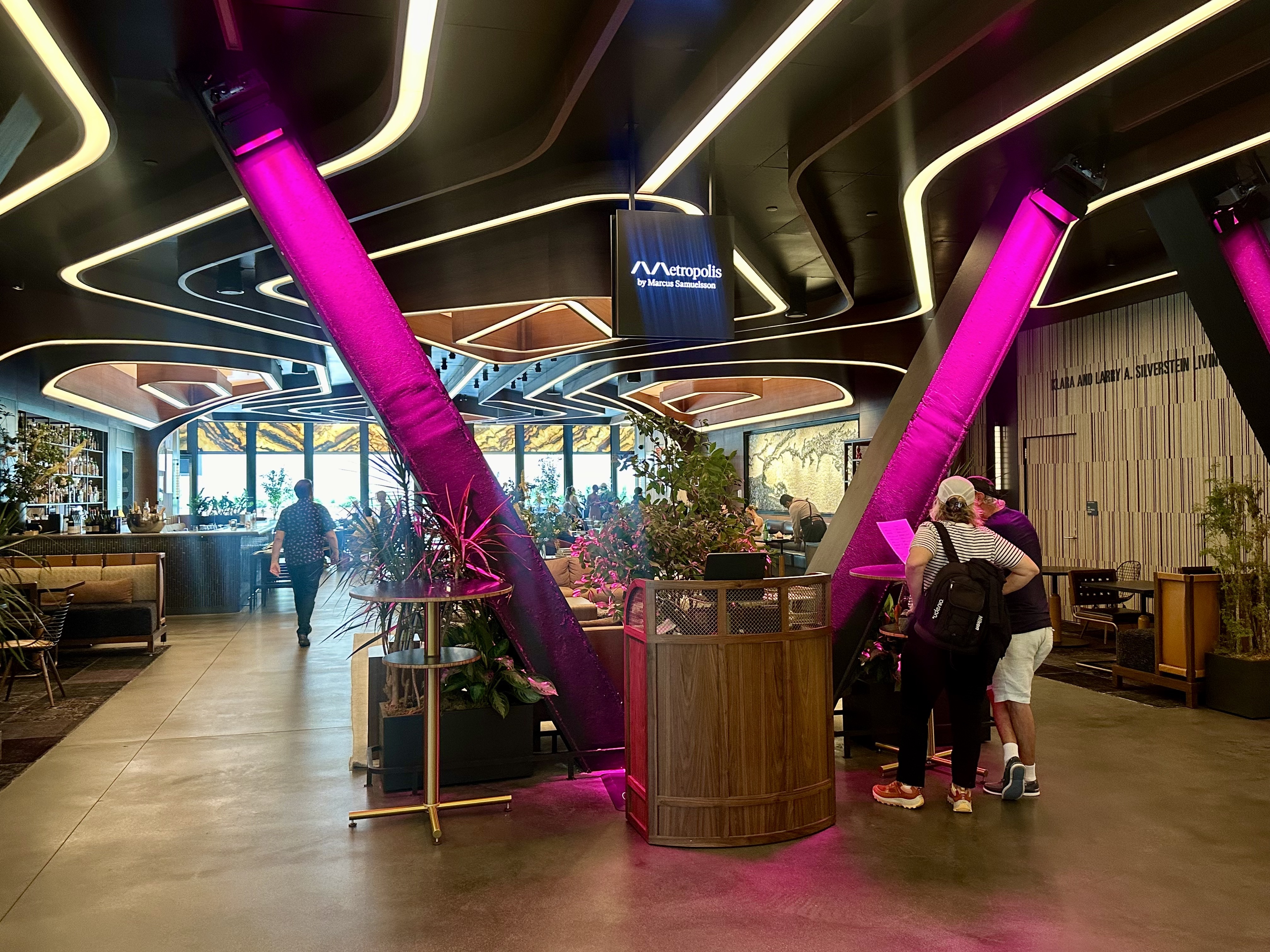
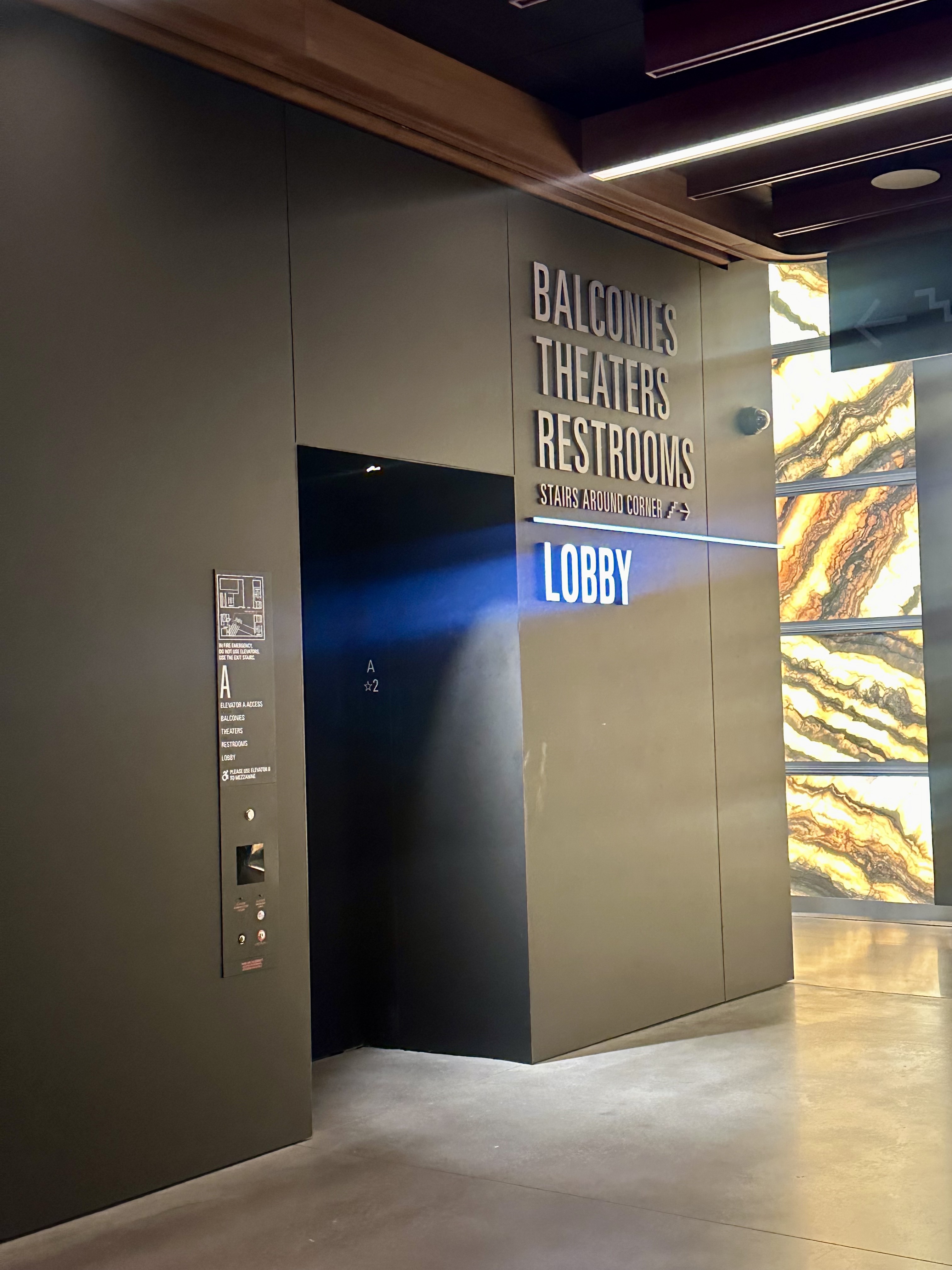
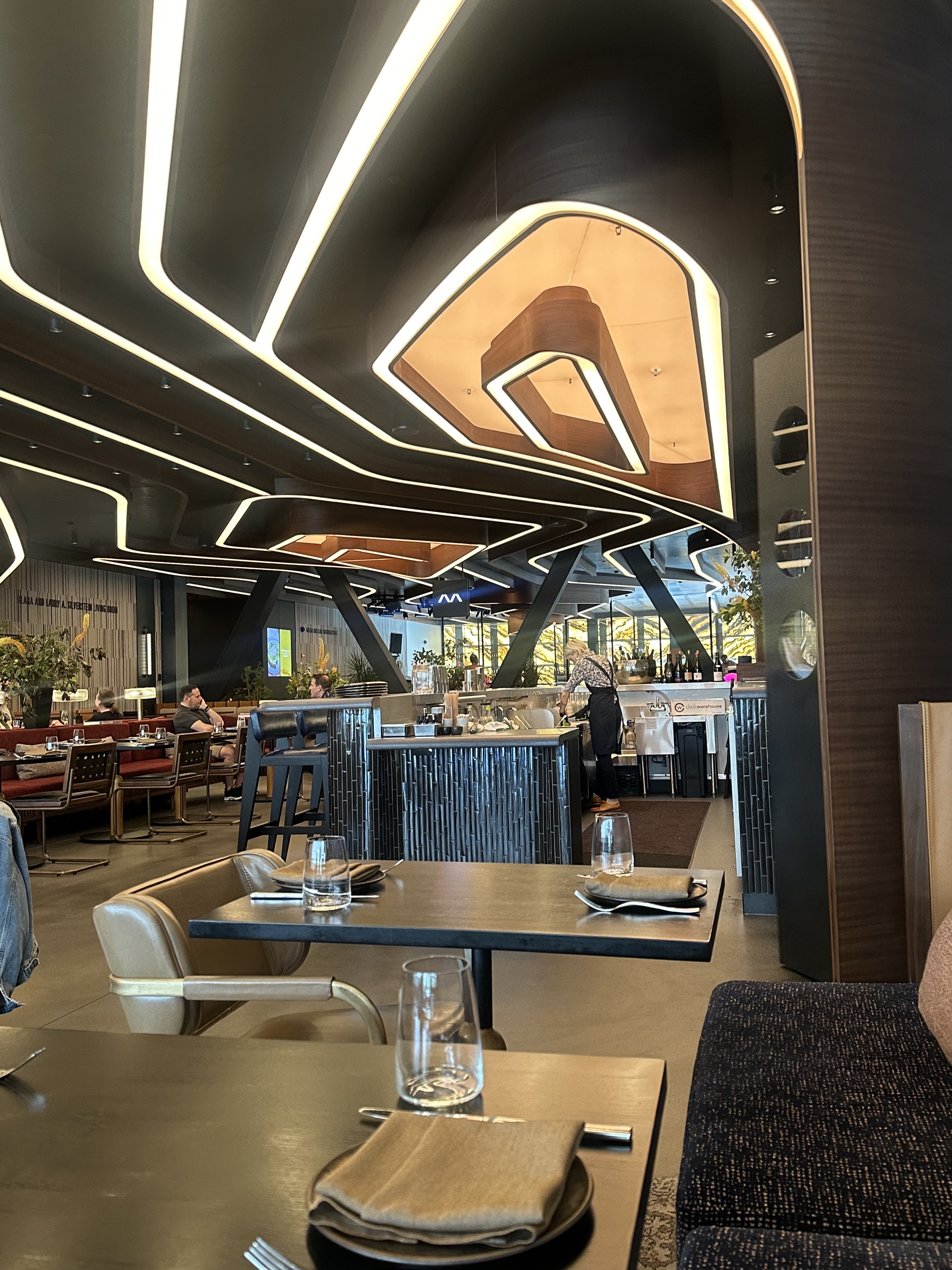
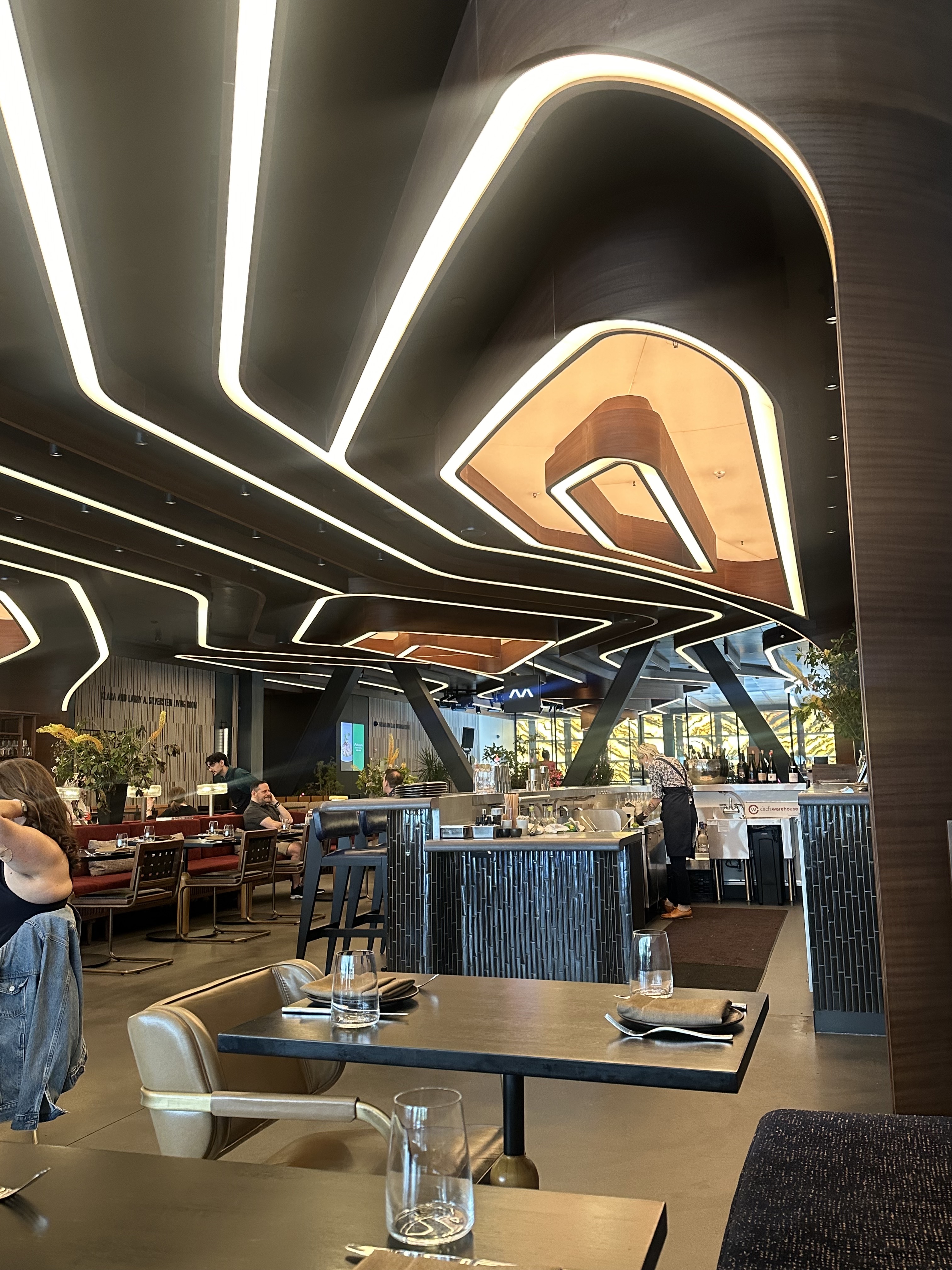
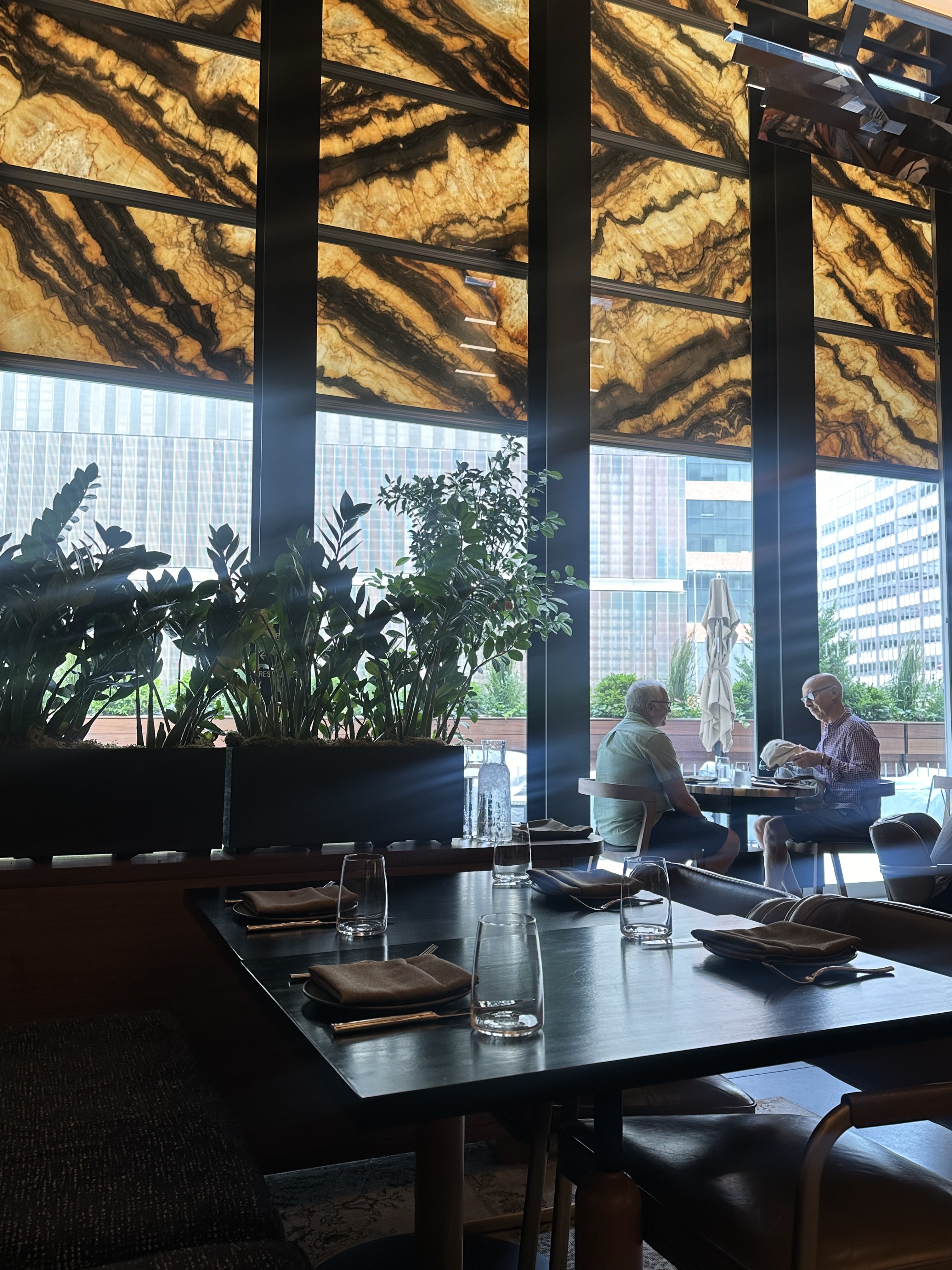
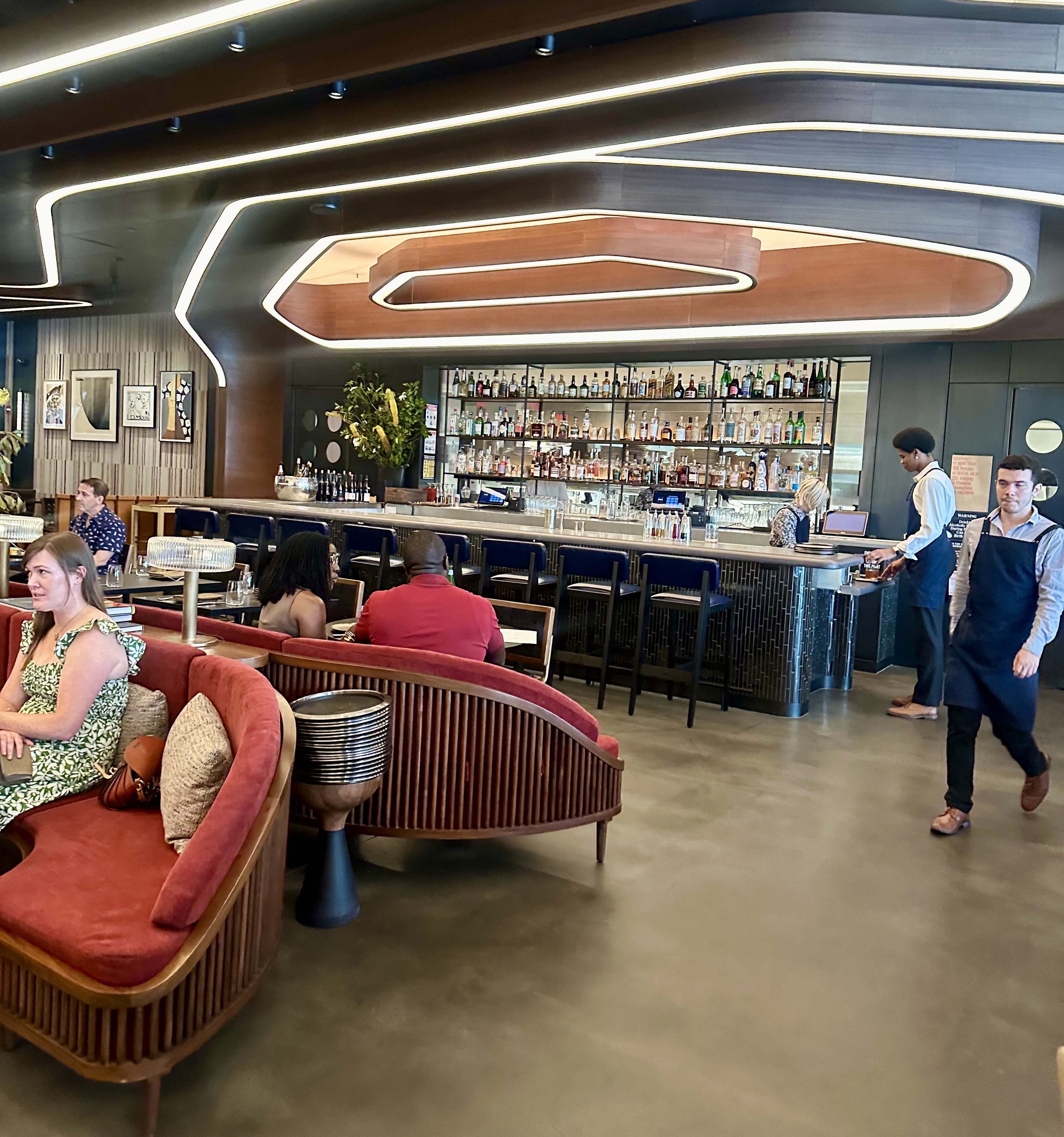
Celebrity chef Marcus Samuelson of Red Rooster fame has a new restaurant in the space, called Metropolis. We dined there before seeing Cats and I would definitely go back. I personally believe it is even worth a reservation even if you aren’t seeing a show at the PAC. If you do have tickets at the PAC, you are allowed access to reservations for your date before they open to the general public, which is a definite plus.
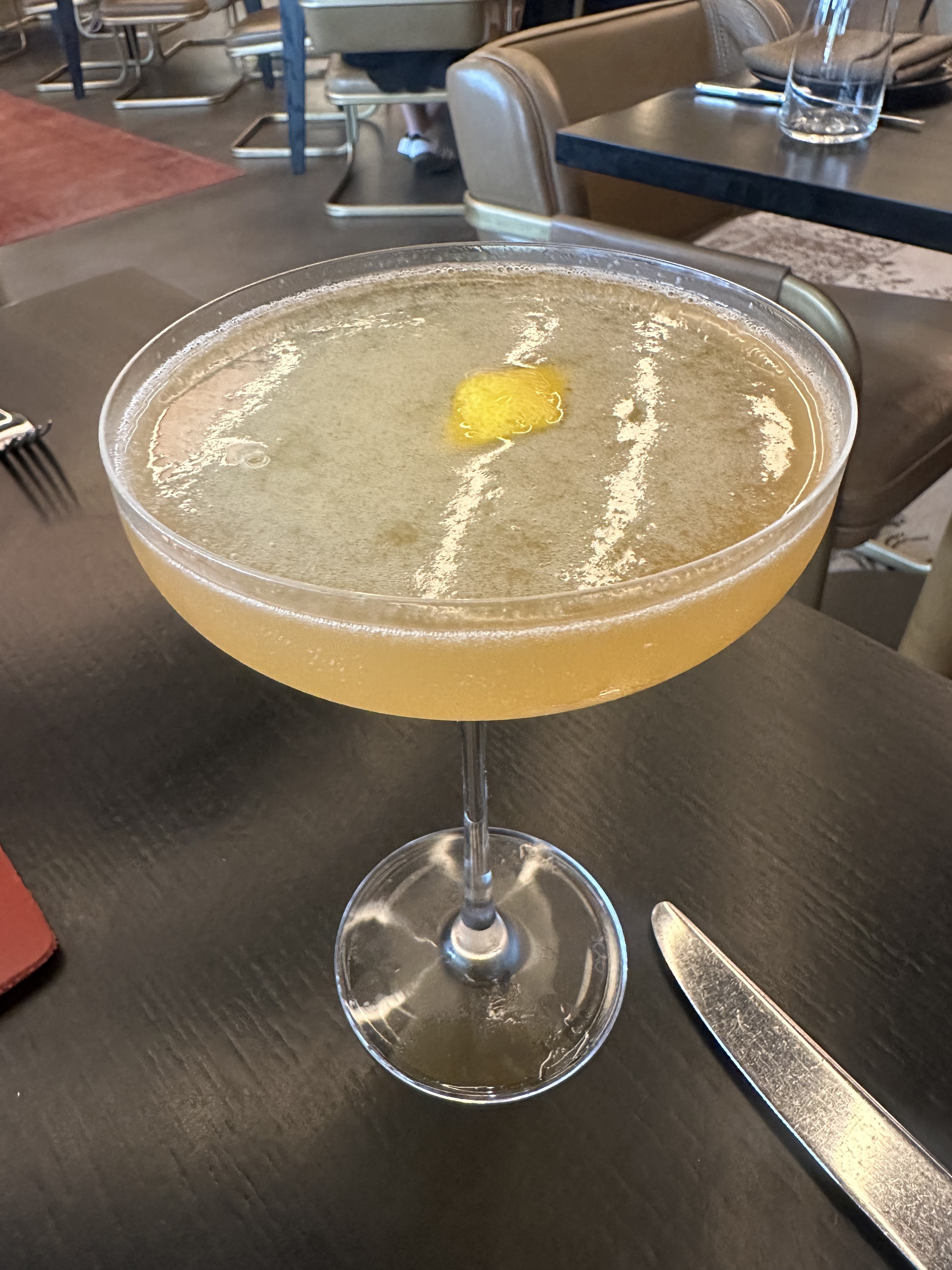
The cocktails at Metropolis were excellent and the bar looked like a great place to stop off and have a bite and a drink if you don’t want a full sit-down meal.
I don’t generally post a photo of the bathroom, but this one was cool – when you lock the stall, a red light goes on, so when you go in you can quickly look up and find a green light to know which stalls are available.
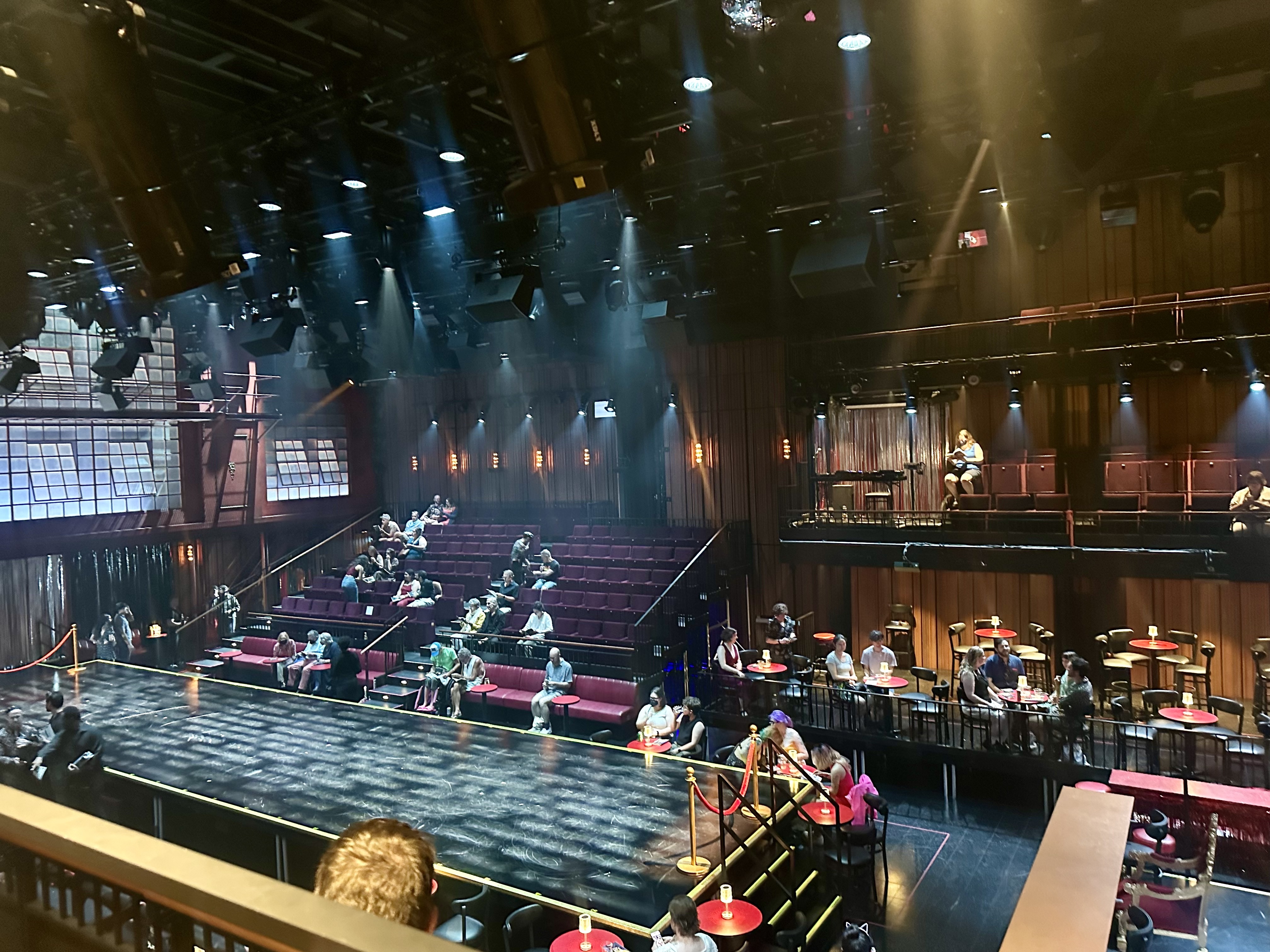
For Cats, the main performance arts area was set up with a catwalk (ha) with cabaret tables around it, elevated side seating, and more traditional seating behind the judge’s table where André De Shields sat as Old Deuteronomy. I look forward to seeing what programming is presented at PAC for decades to come.
As I exited PAC, the joyous music and dance of the performance I had just enjoyed still reverberated in my body even as I immediately faced the reflecting pools on the former footprints of One and Two World Trade. As I said in my post about the Oculus, for many years after 9/11, I completely avoided that area as I found the loss there overwhelming. But the area is now revitalized, while still holding that loss in memory via the reflection pools and the 9/11 Museum. Having a new performing arts center there now brings even more light and life to this area that, after unimaginable tragedy, has been reborn in the past two decades.
In the beginning of the Audrey Hepburn 1961 film, “Breakfast at Tiffany’s,” Hepburn’s character Holly Golightly stares into the window displays while eating a croissant out of a paper bag (this scene does not occur in the Truman Capote book the film was based on, although she does reveal at one point that whenever she is anxious Tiffany’s is the only thing that can calm her). Since May of 2023, after the flagship Tiffany and Co. store reopened after a gorgeous renovation, star chef Daniel Boulud’s Blue Box Cafe has allowed you to eat a real breakfast – or lunch, or early dinner – at Tiffany’s on the sixth floor. I recently celebrated my daughter’s birthday here and it far surpassed expectations (and my expectations were high!).
The first thing to figure out was how to get a reservation, as they are not easy to acquire. You can find out more about the cafe at its website (Blue Box Cafe) but reservations are only taken online at Resy. If you want a specific date and time, reservations open up 30 days in advance at midnight, and you need to be fast. However, in playing around with the site I noticed that often last minute reservations would show up a day or so before. You can’t order a celebration cake less than 48 hours in advance (more about that later) but otherwise it is a good option if you don’t get a reservation right at the 30 day mark. Also, note that last minute reservations tend to be for later in the day, I suppose because most people want to say they had “Breakfast at Tiffany’s.”
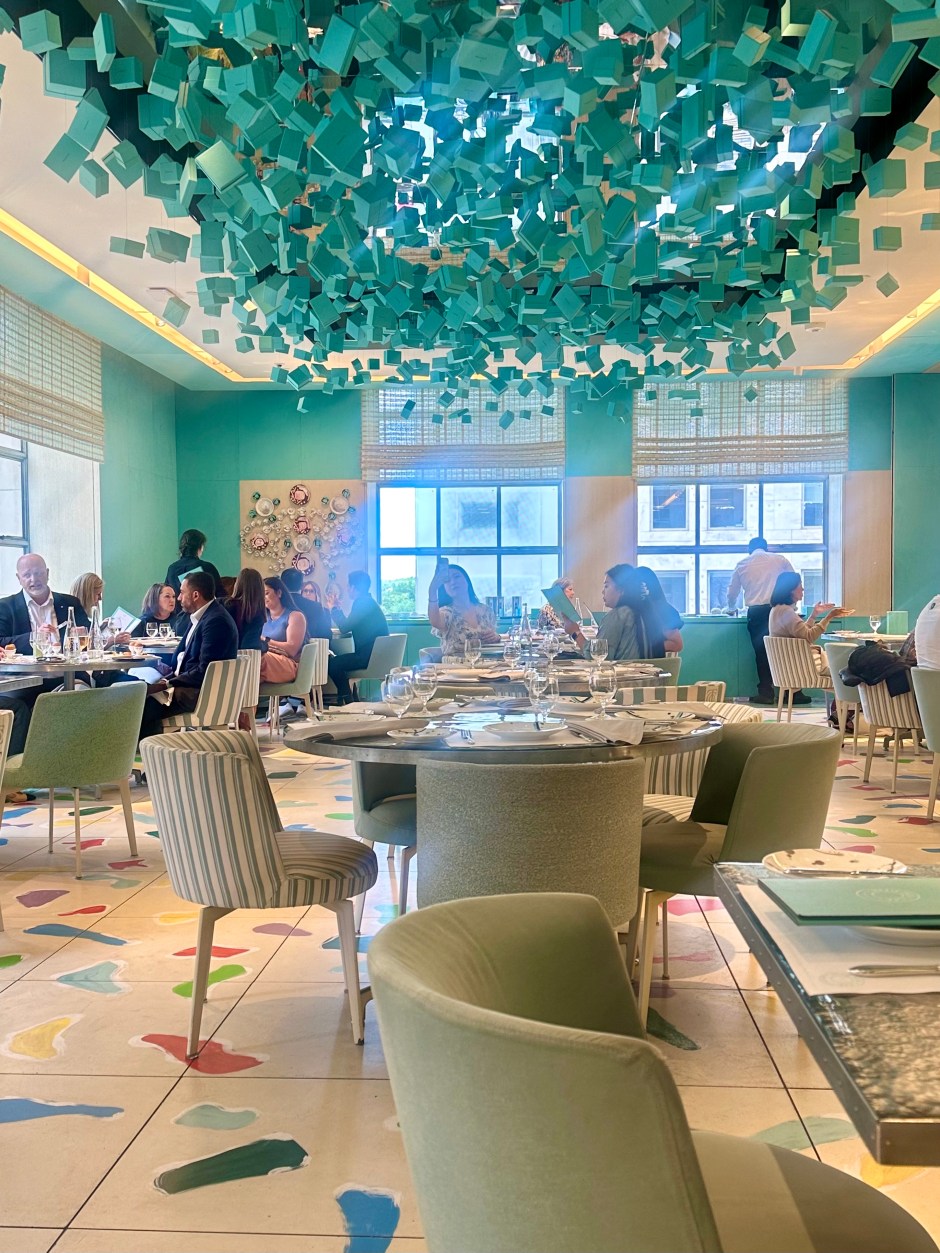
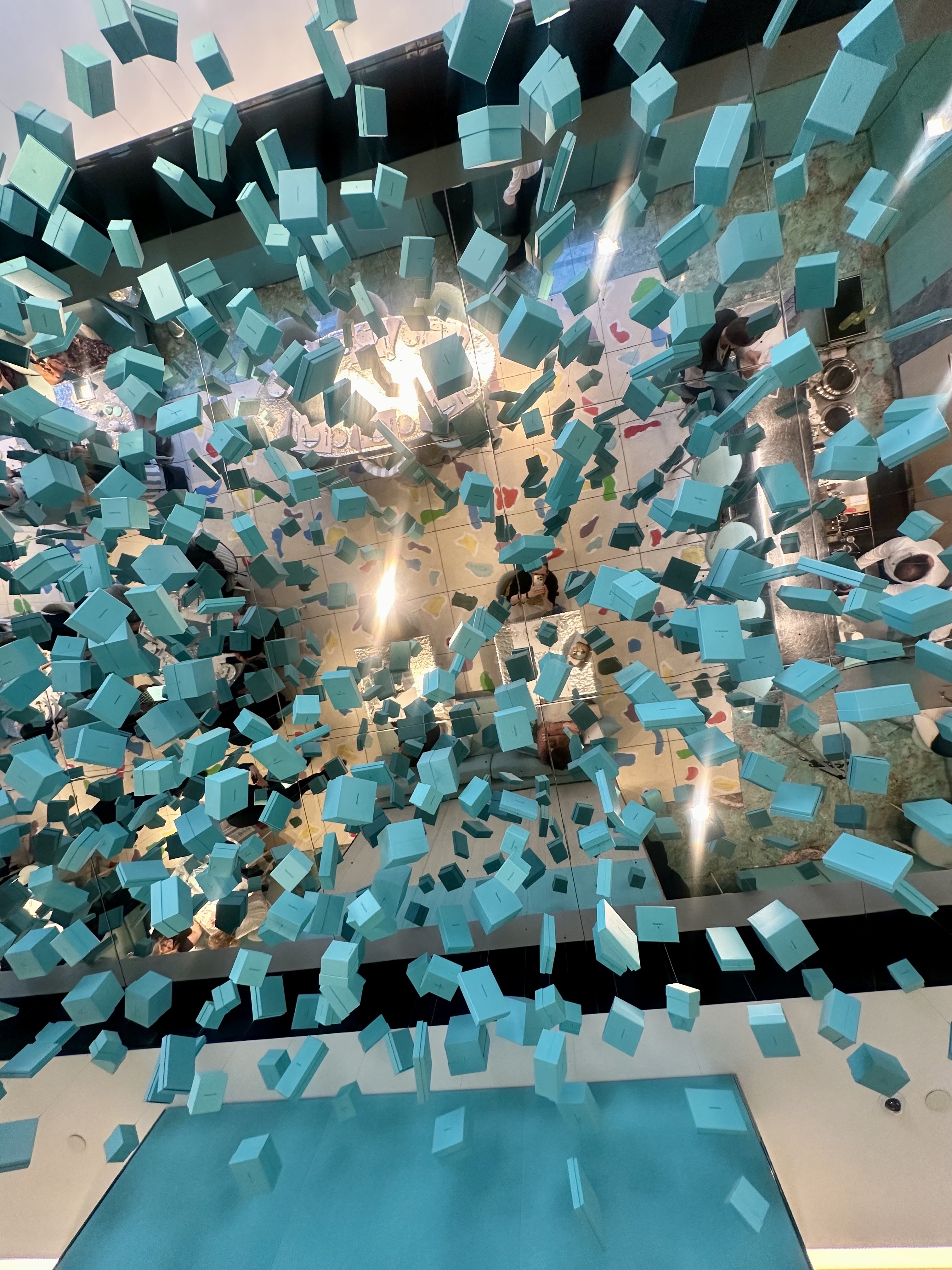
The space is exquisite – large windows looking west onto Fifth and north to Central Park, an abundance of little Tiffany blue boxes hanging from the ceiling, and an intimate space where regardless of the small size of the space you aren’t crowded right next to other diners. Service was excellent, as well. Immediately upon being seated, two coin-sized discs were placed in a bowl and hot water poured over them so that they would blossom into warm towels to remove the grime of the city from our hands.
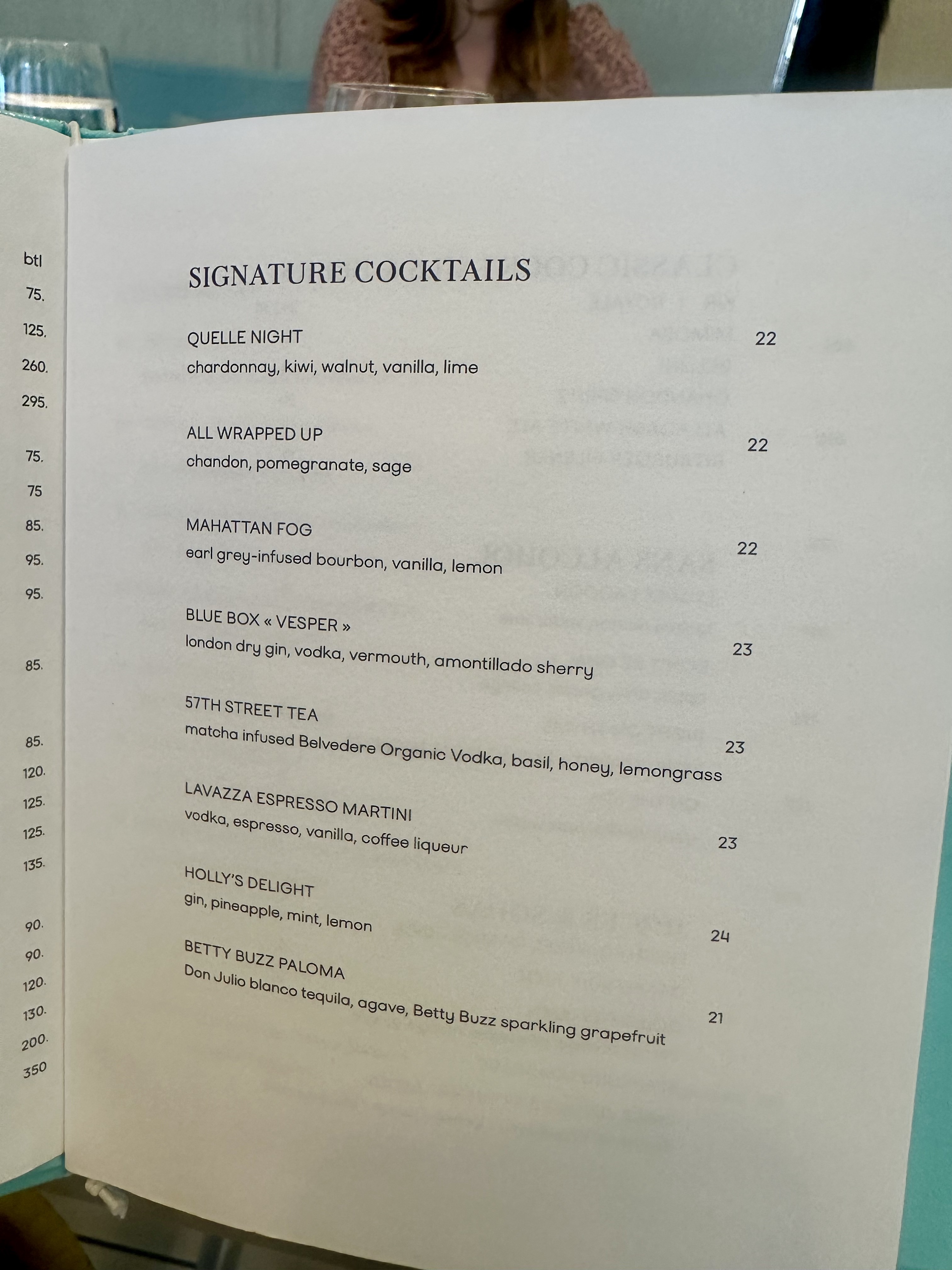
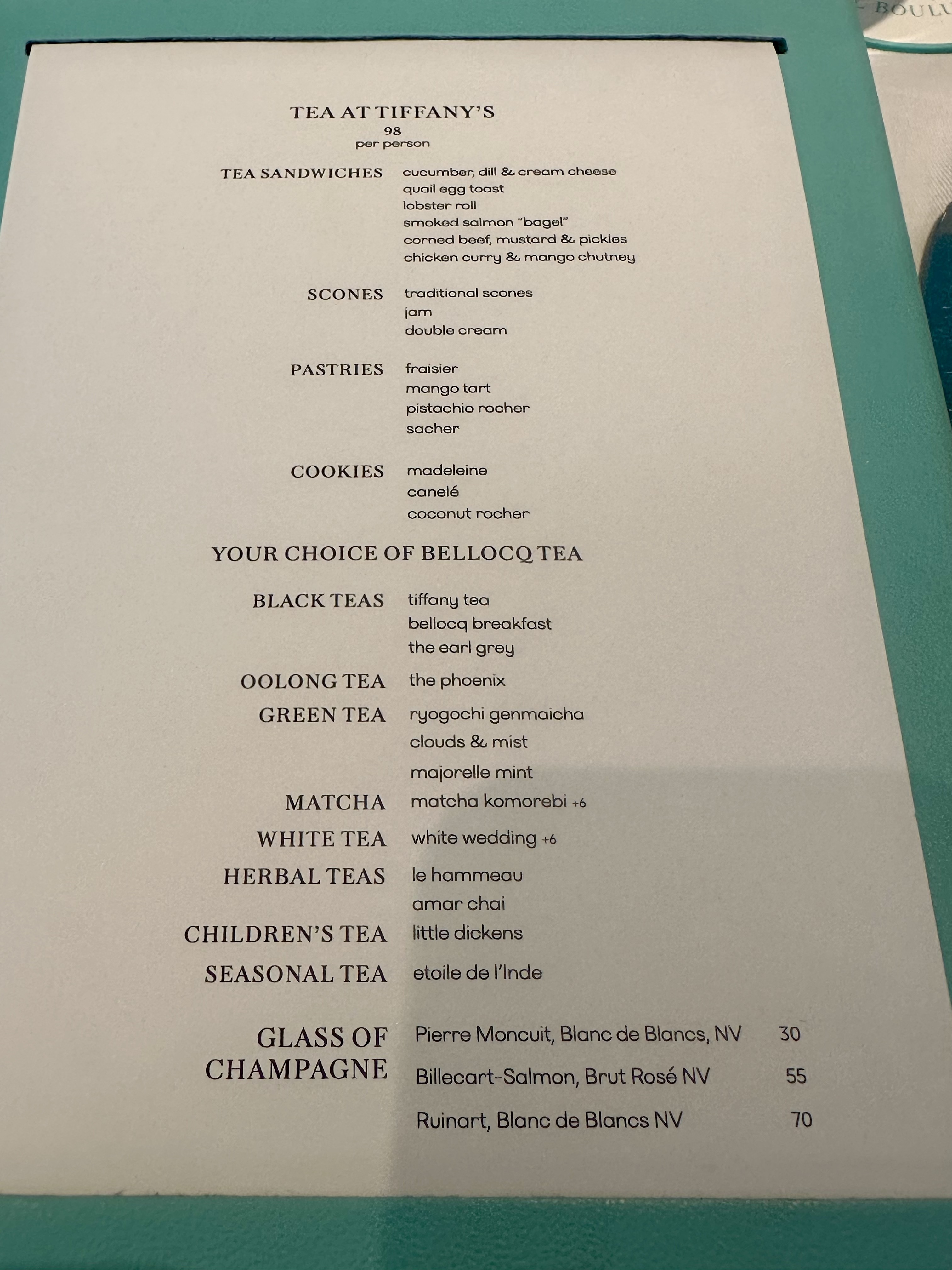
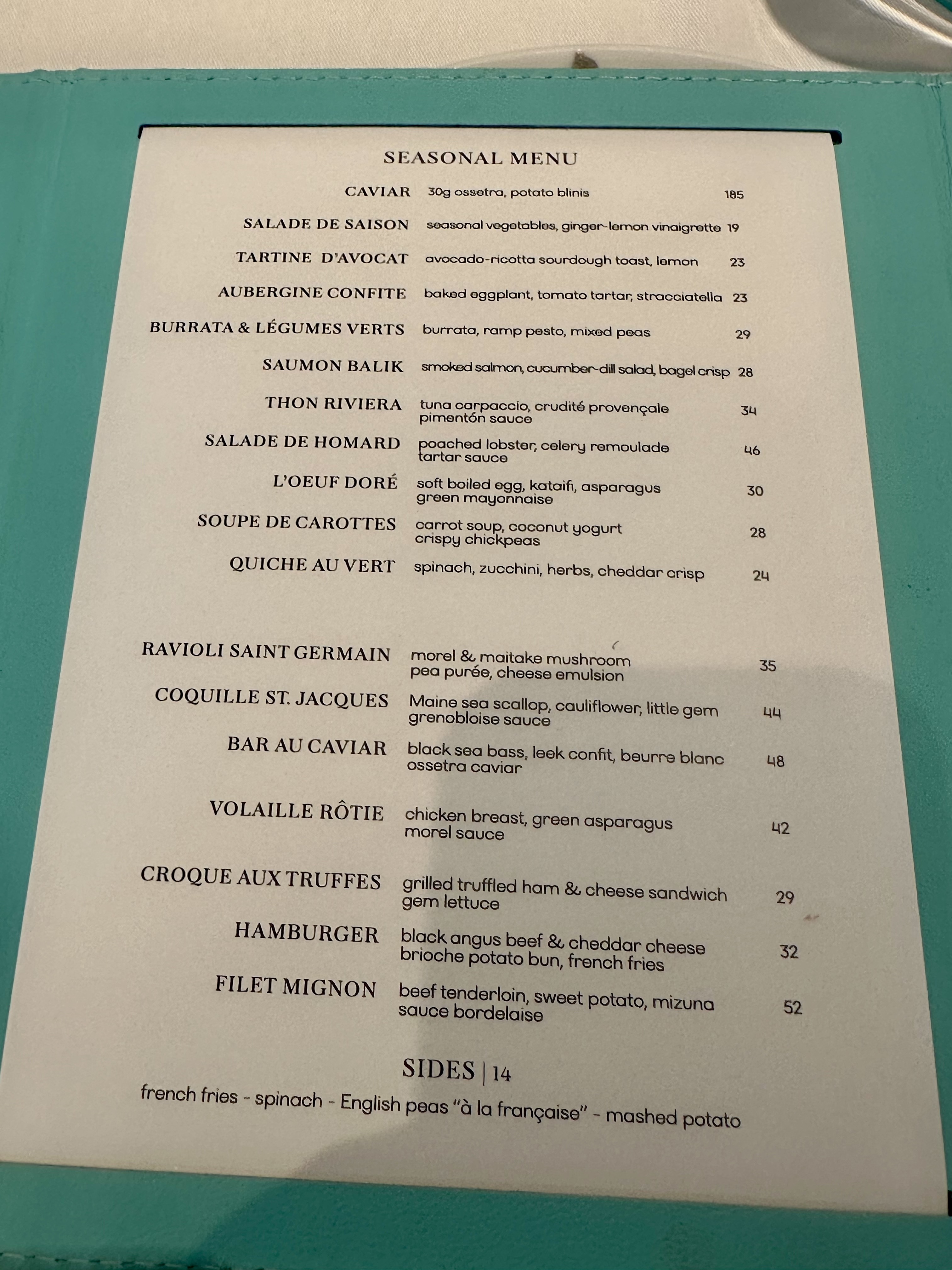
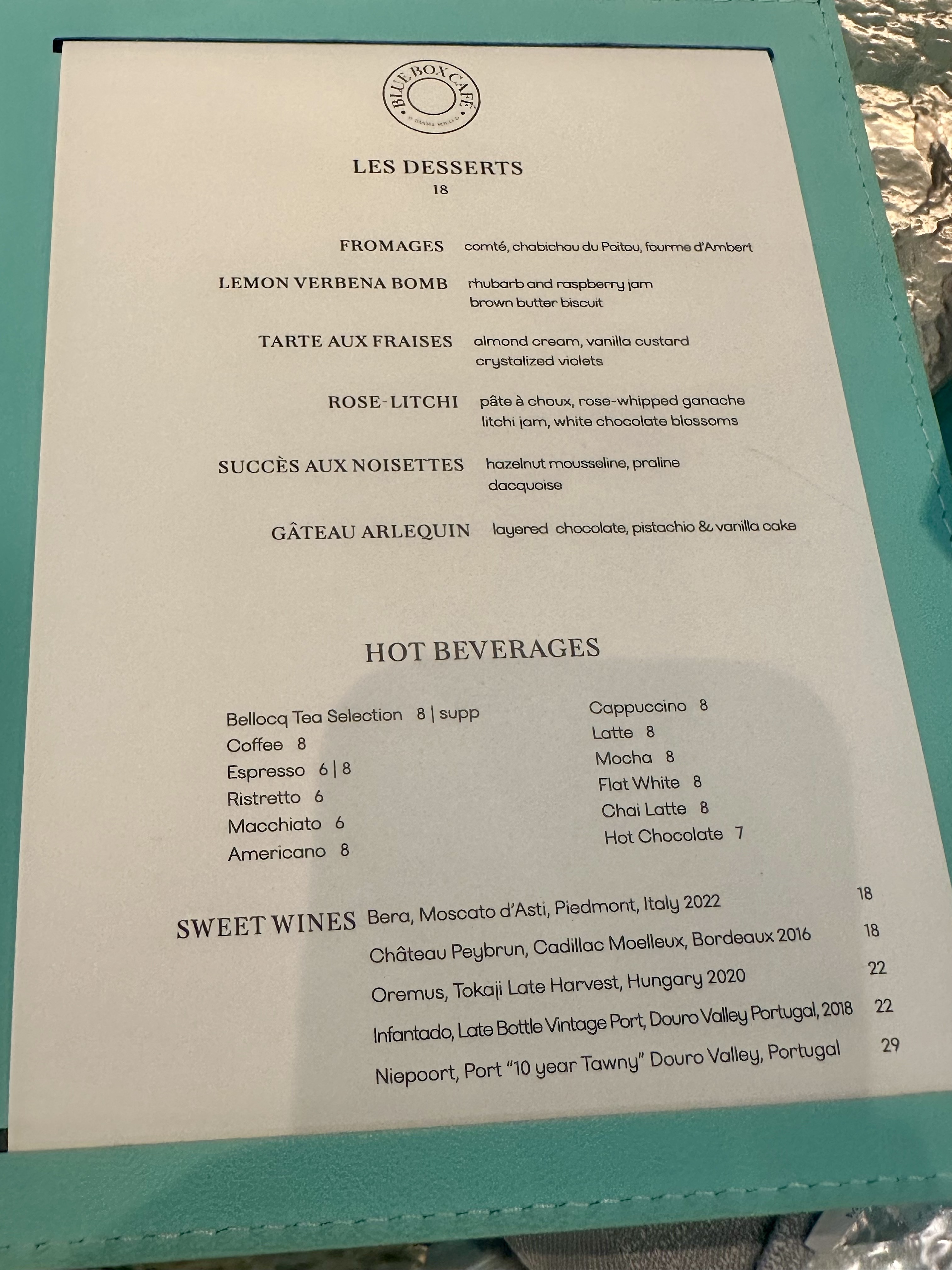
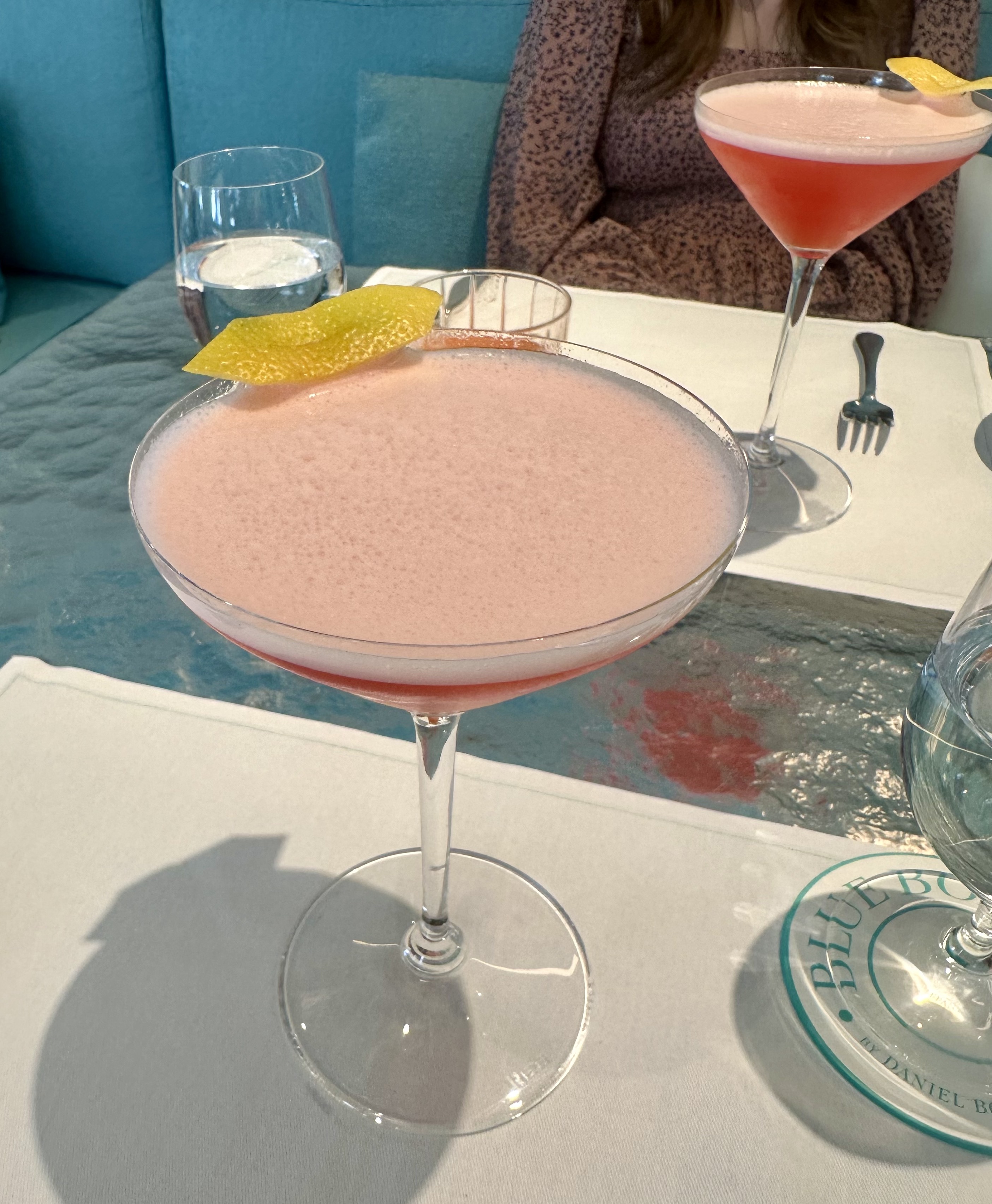
Here are the menus – a wine list, cocktails, desserts and nonalcoholic beverages, an afternoon tea prix fixe, a la carte entrees and sides, and the signature “Breakfast at Tiffany’s” prix fixe selection. Everything was tempting but we both ended up getting a gin-based cocktail called “Holly’s Delight” along with “Breakfast at Tiffany’s.” Between 10am when it opens and noon, there is also a lighter breakfast option you can choose.
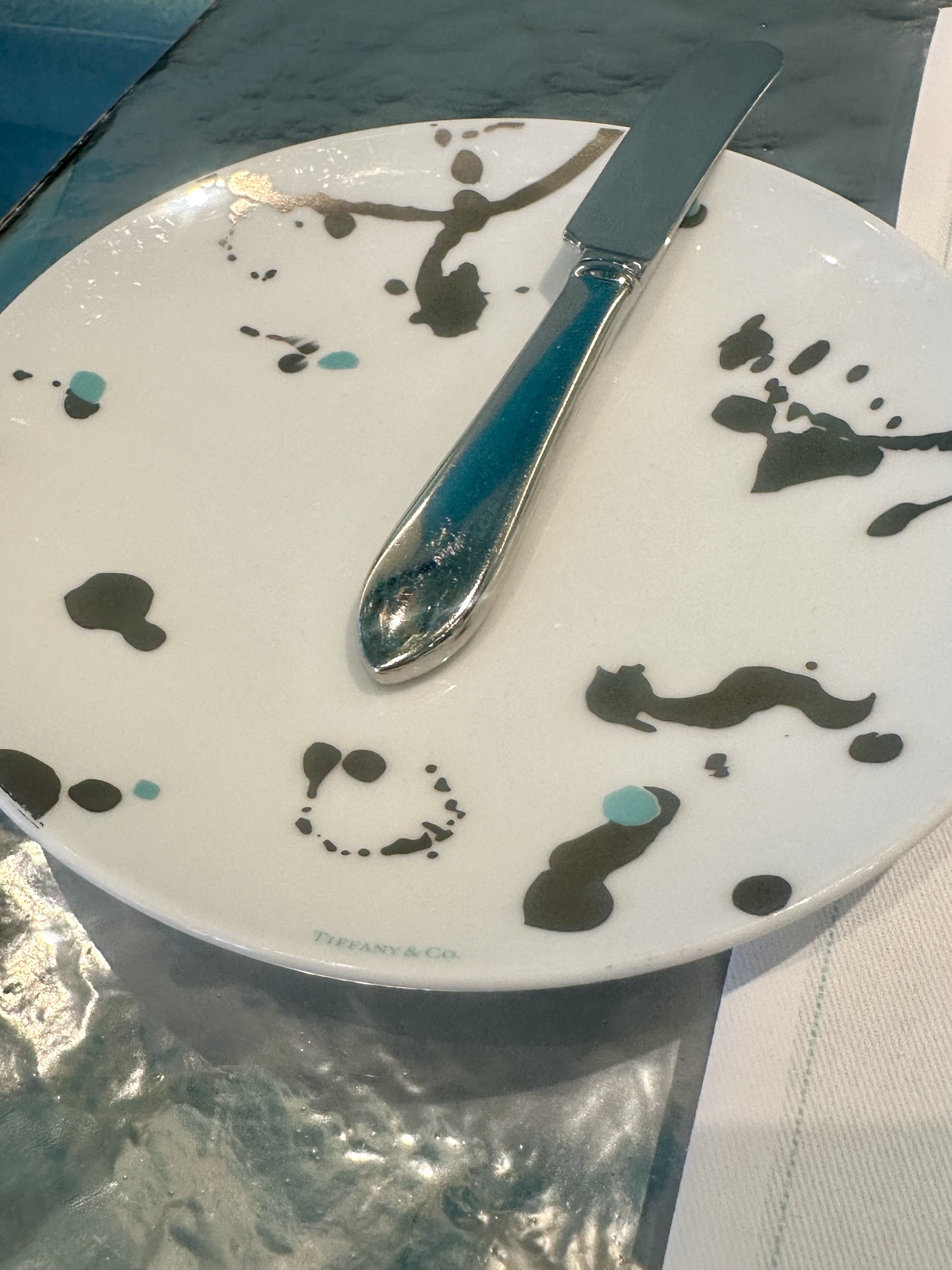
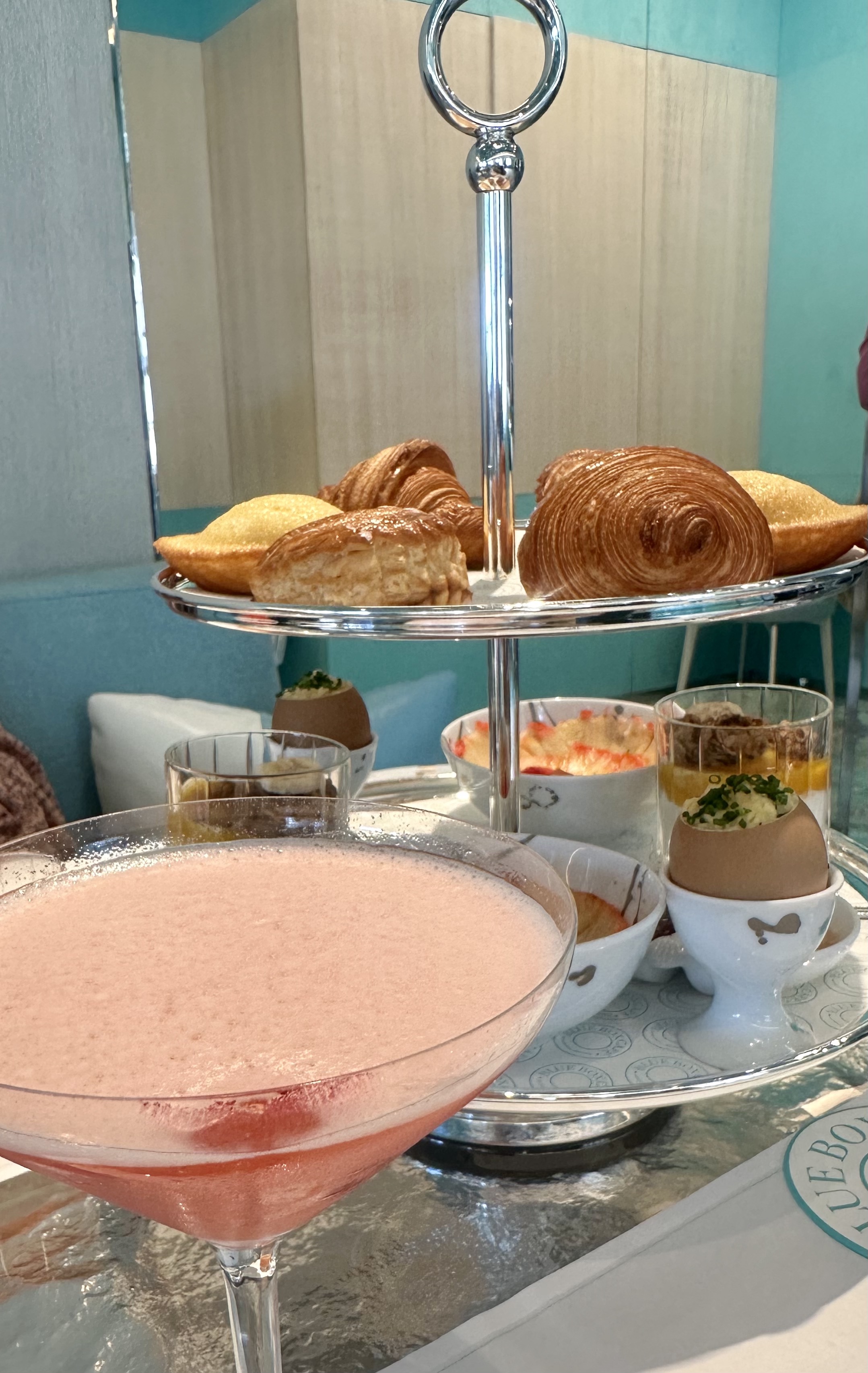
All the silverware and china were of course by Tiffany! The cocktail was delicious.
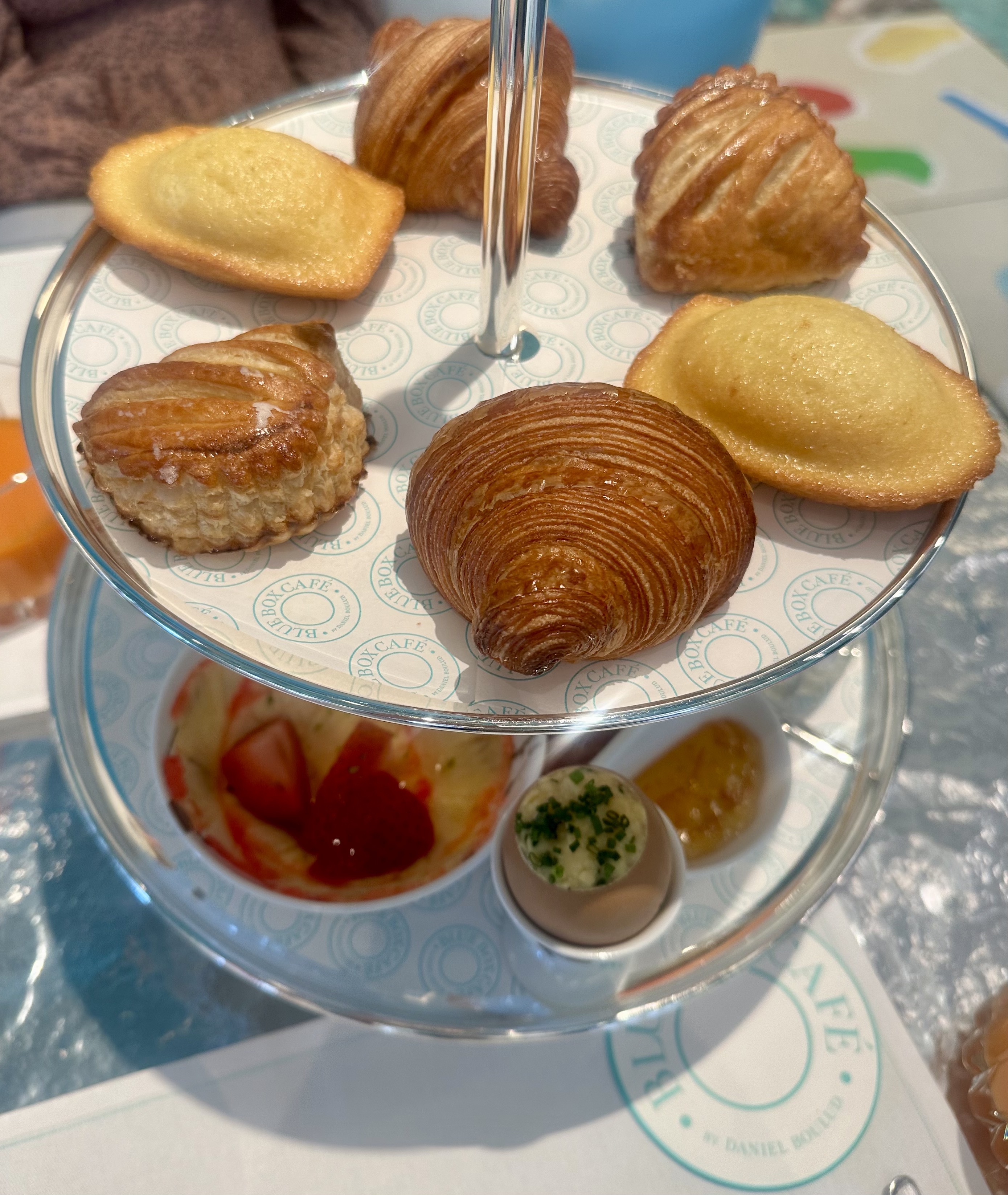
The first thing brought out was “A glass of Golightly,” a fresh fruit and vegetable juice with a touch of ginger. Then the “Breakfast at Tiffany” service came out with six different delicacies, two of each since we had both ordered this.
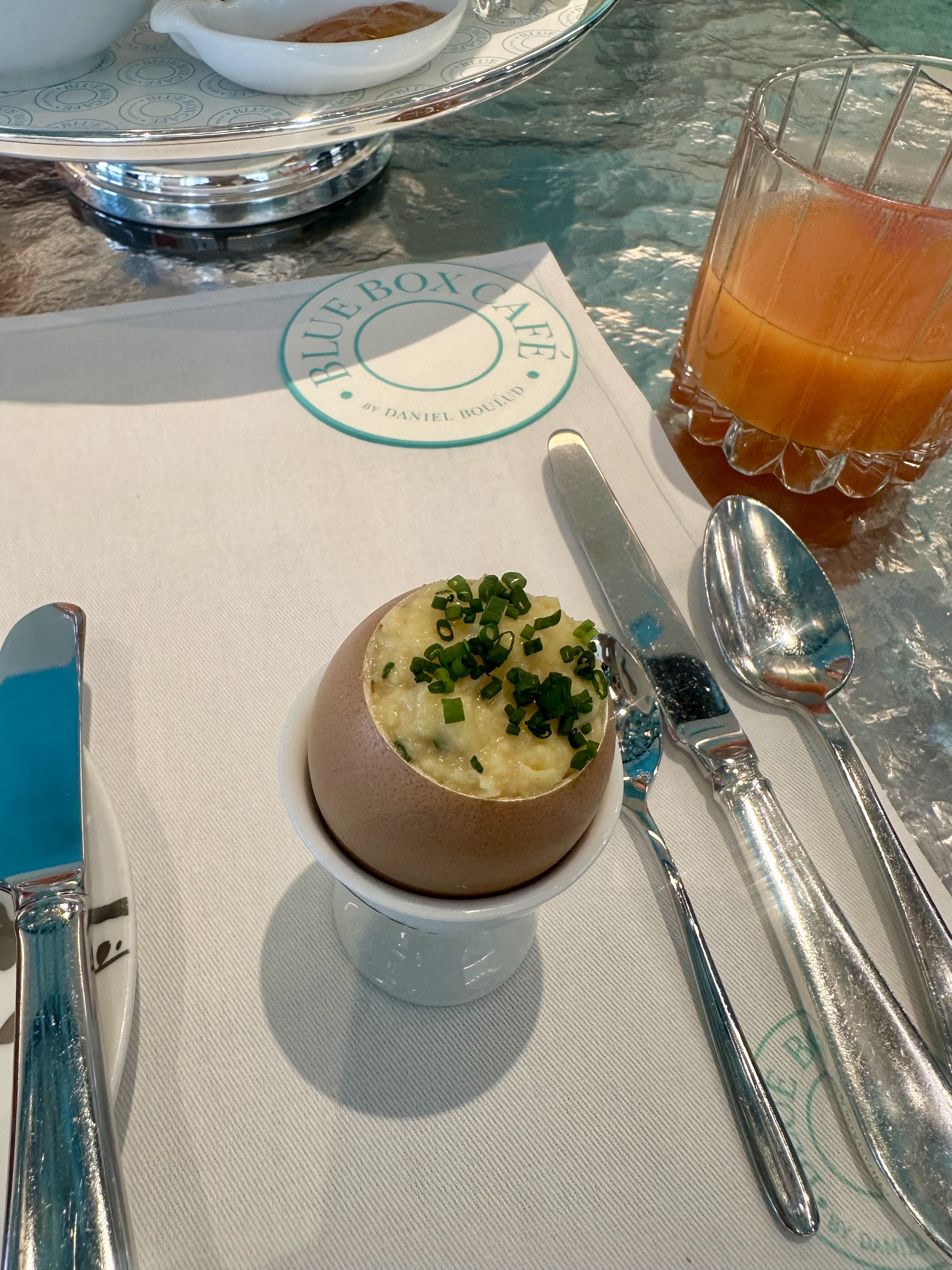
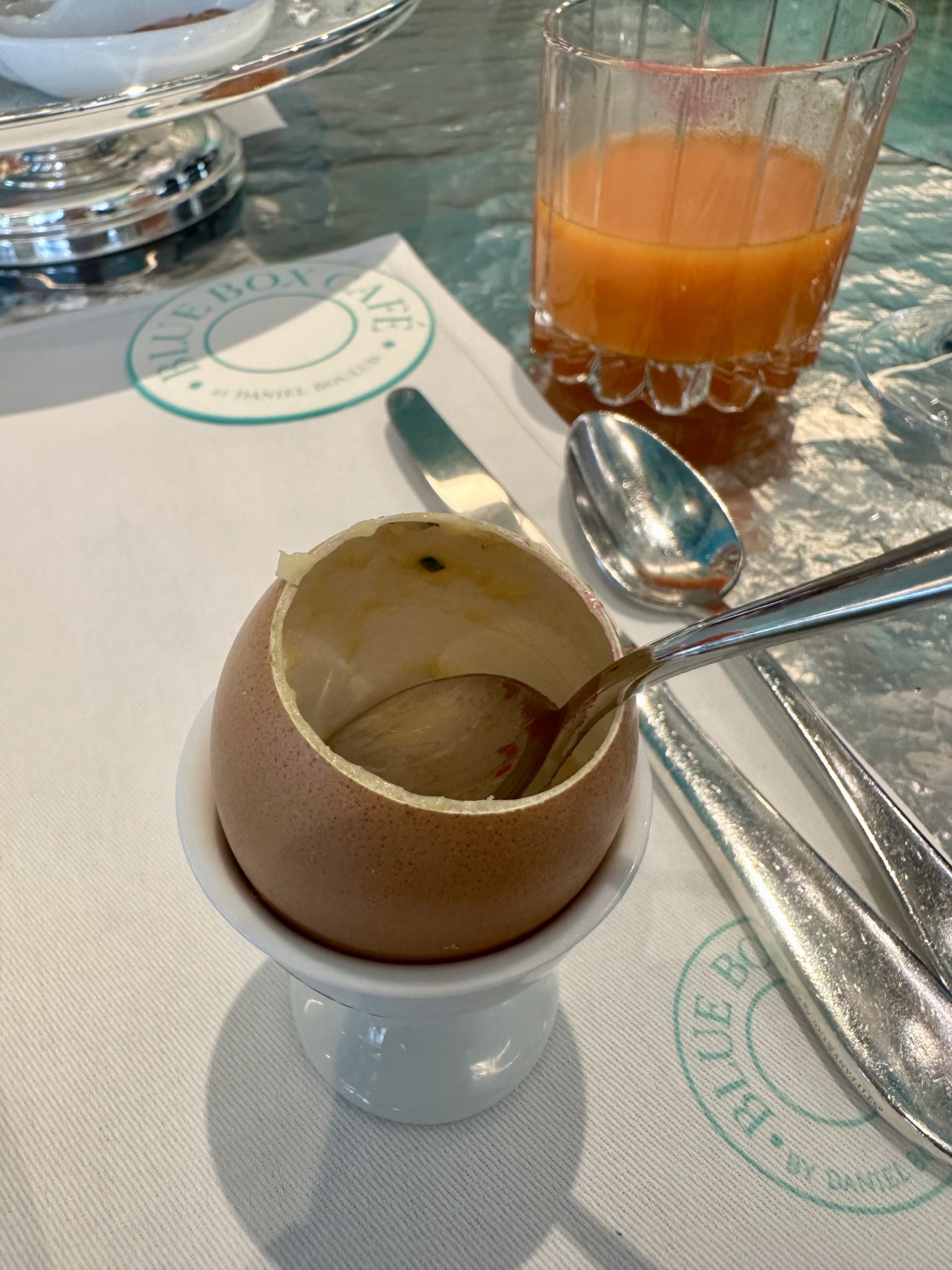
The “egg in a shell” was ingenious! A hard boiled egg shell had been hollowed out, and a delicious serving of scrambled egg with cream and chives used this shell as a container. This comes with caviar on top but I don’t care for caviar (I know, most people do!) so I asked for mine without and it was very tasty.
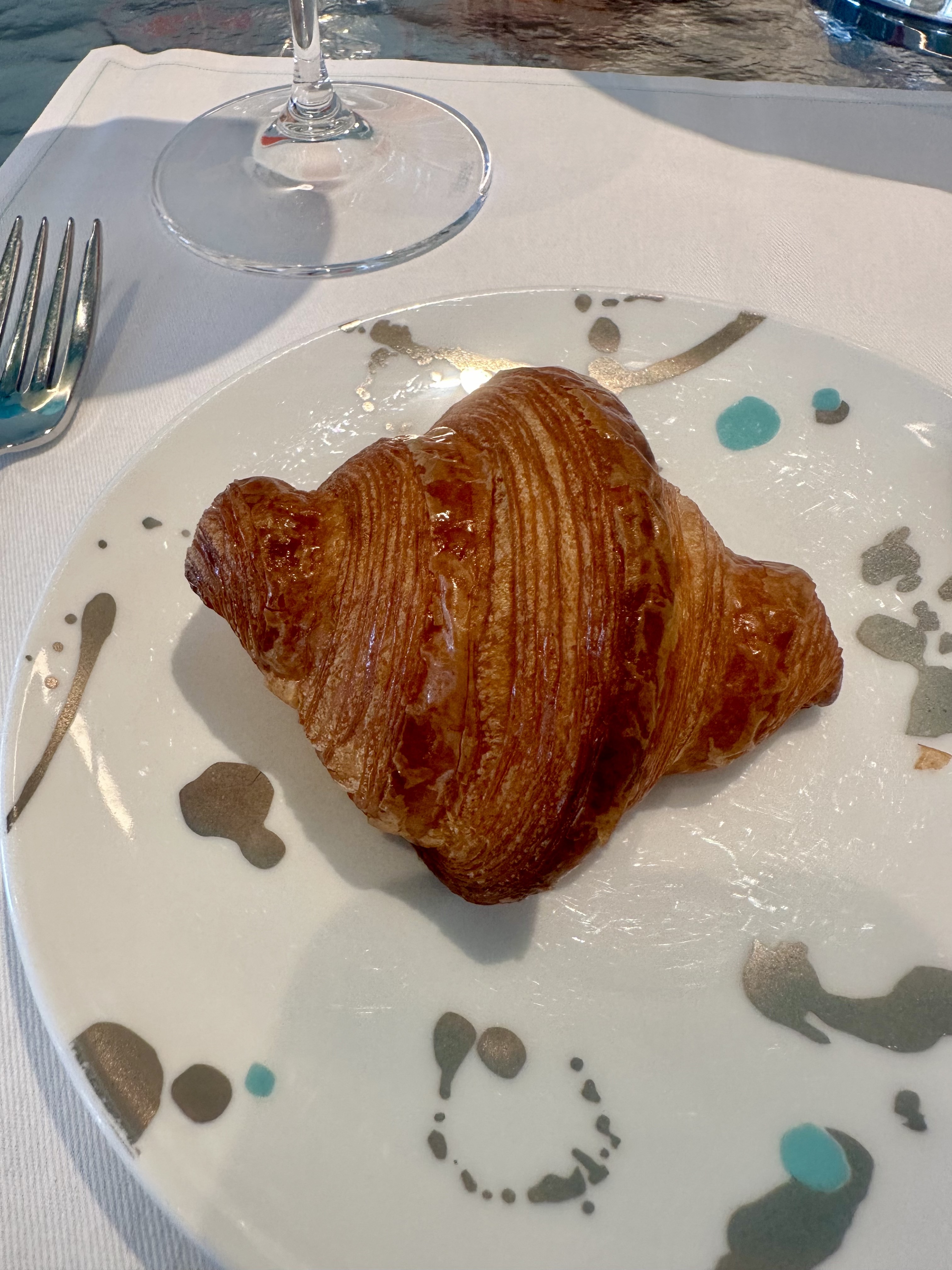
There were three pastries, a croissant, a chausson aux pommes (apple turnover) and a madeleine. They were all excellent (and for some reason, I forgot to take a photo of the madeleine, very anti-Proust of me to find they made me forgetful. . .).
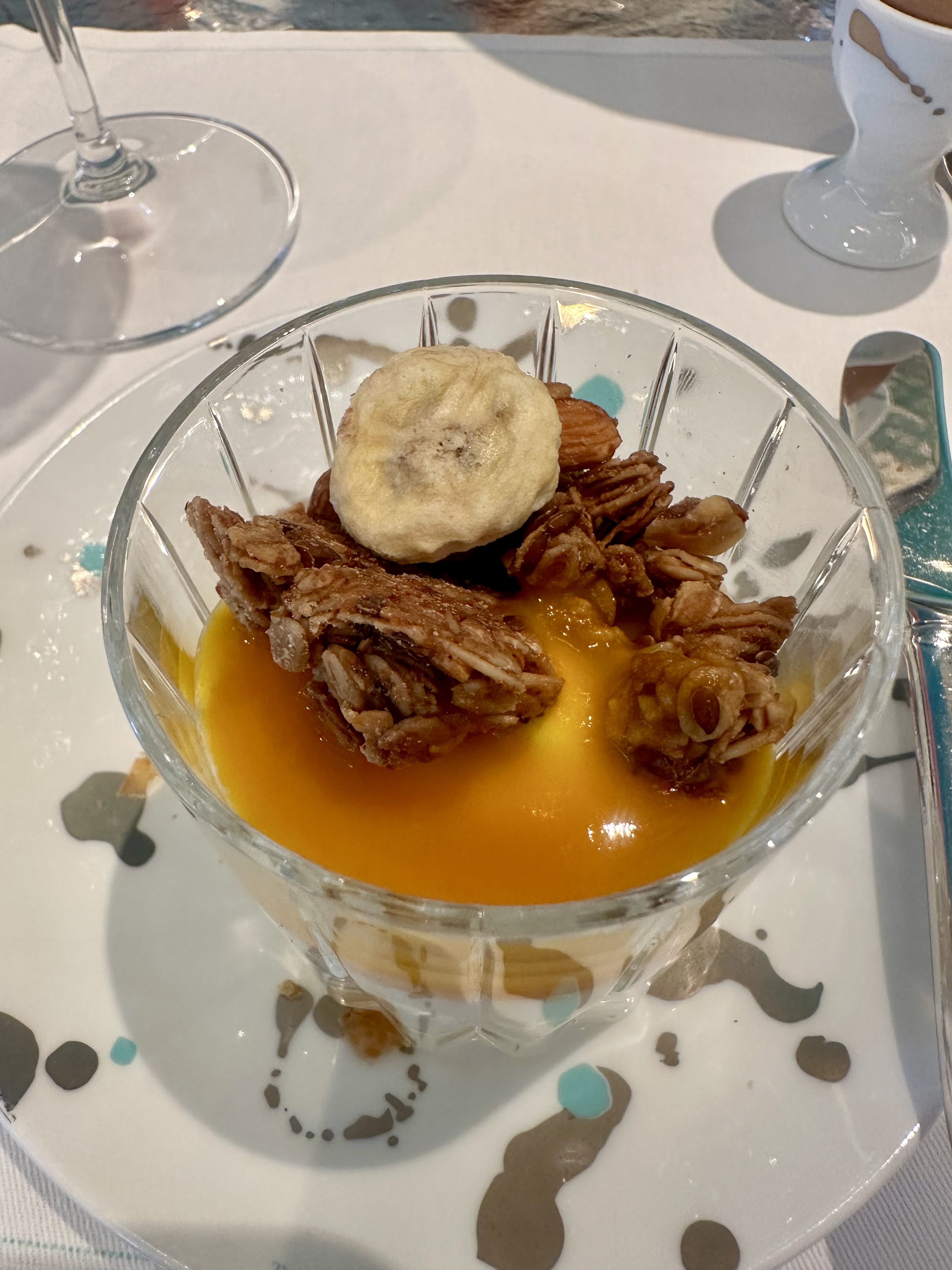
There was a lovely pineapple rosace fruit dish with strawberry, vanilla and lime. There was also a yogurt parfait with granola and a layer of mango and passionfruit. Everything served was elevated in some way and made the entire experience feel special.
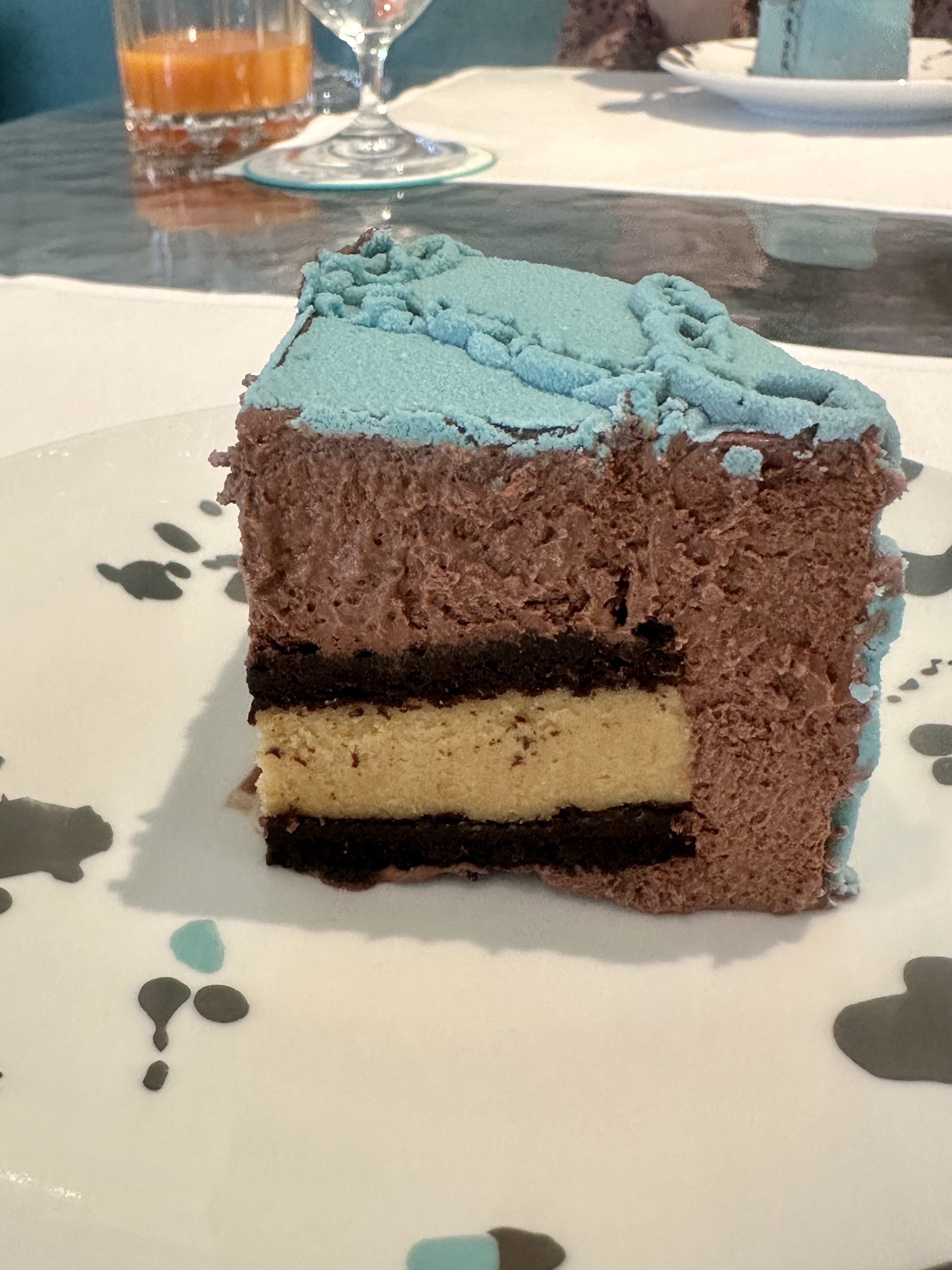
Since we were celebrating a birthday, I had ordered a “celebration cake” in advance. To do this you first need to have a reservation, then email the restaurant more than 48 hours in advance of the reservation to fill out an order form and have that linked to your reservation. The choices for flavor are either vanilla cake with seasonal fruit, or chocolate with caramel (which is what we had selected). They bring the cake out with a slab of chocolate personalized with the message of your choice with icing. The cake came with a lit candle, and they let us take pictures of the intact cake (which was beautifully detailed in Tiffany blue with chain decorations) before taking it away to cut for us and box the rest to take away. They asked how many slices we wanted but said they usually recommend for two cutting it in half, boxing half to take home and making two slices out of the other half. We did that and in fact the slices were too large for us to finish, but the cake was wonderful.
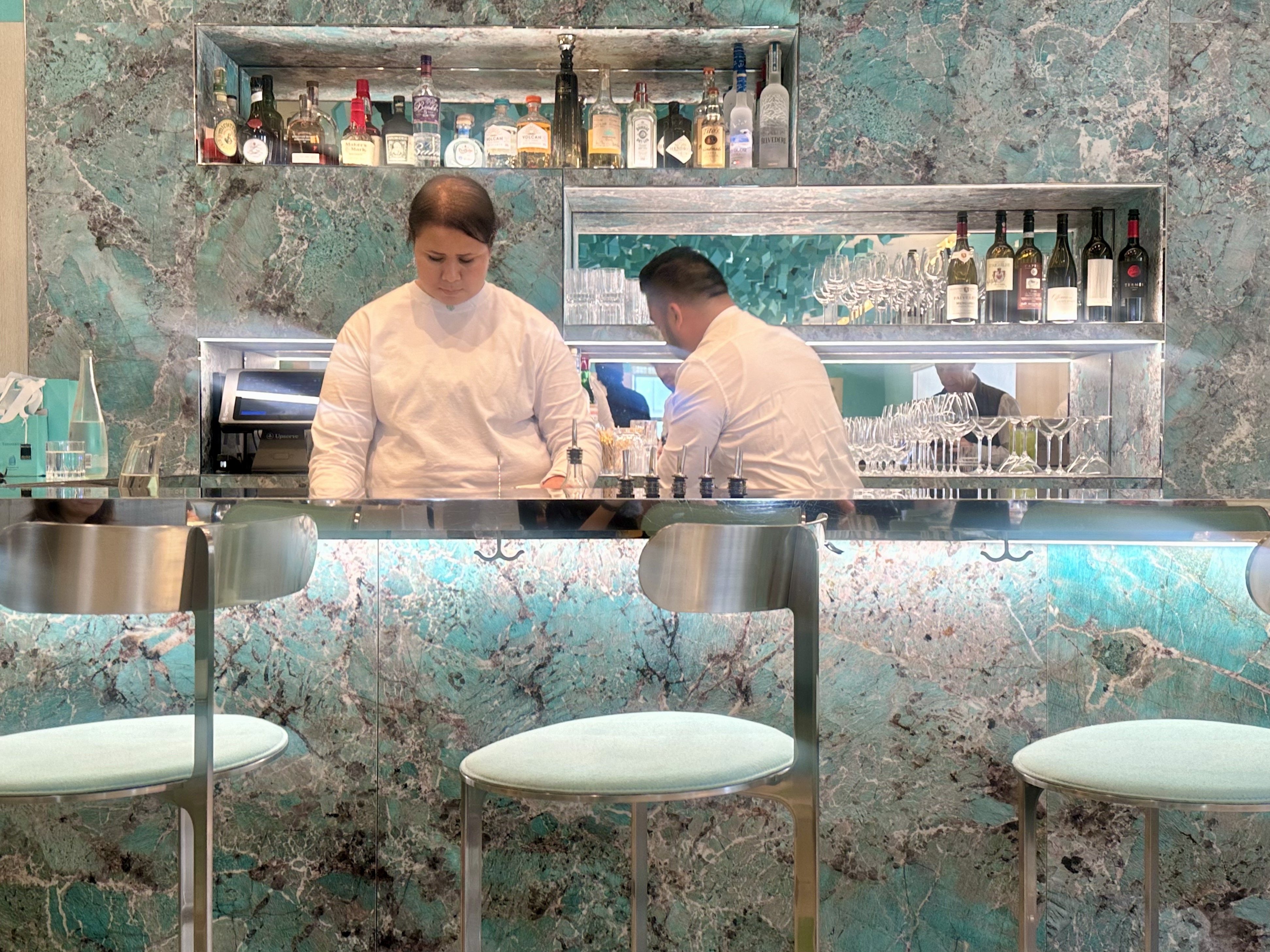
The box for the leftover cake continued the theme, as did the postcard attached to the bill. The bar, by the way, is created from gorgeous marble with blue veining. I noticed that there is the opportunity to walk in and sit at the bar if there is availability, so if you don’t have a reservation but really want to come in and experience the food, drink, and decor, that is an option.
I am fortunate enough to live in New York City, close enough that I walked there and back from home. There are so many things to do and places to go that I only go back to those that stand out and surpass expectations. Blue Box Cafe fit this description – I will be back!
On June 16th, the 77th annual Tony Awards will be awarded (and televised on CBS). The ceremony this year is at Lincoln Center for the first time and American Express will be holding a live simulcast at Damrosch Park just behind the David H. Koch Theatre where the awards will be given out (see here for more information about how to attend if this interests you). Two years ago I was fortunate enough to be able to attend the 75th annual Tonys in person at Radio City (see how I wrote up the experience here) but this year I will be watching on television as usual. The awards this year seem harder than ever to predict this very crowded season. Needless to say, with so many new productions, not everything could be nominated, and most musicals and plays rely on the publicity and the “stamp of approval” from the Tonys to fuel sales.
Best New Musical
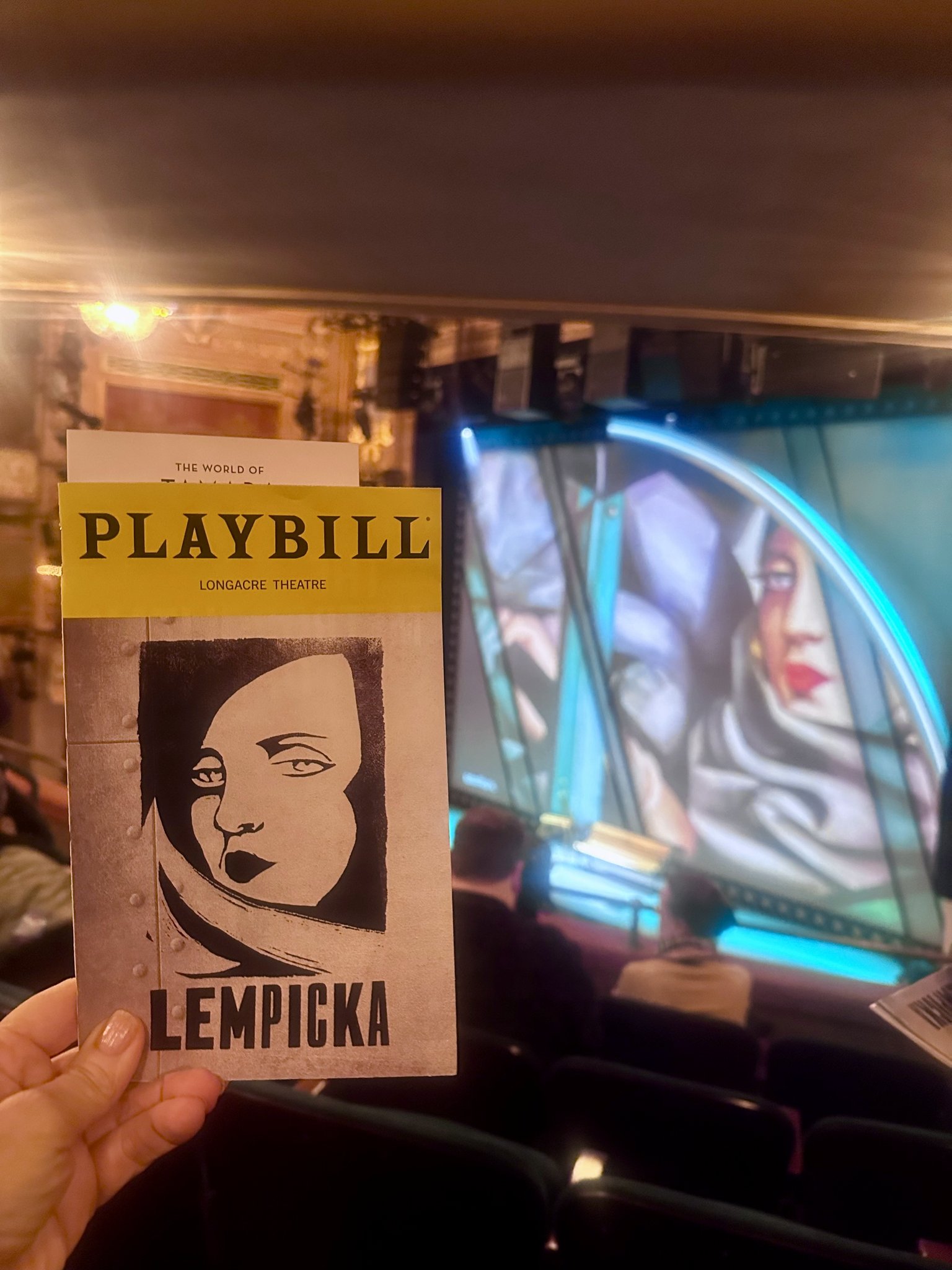
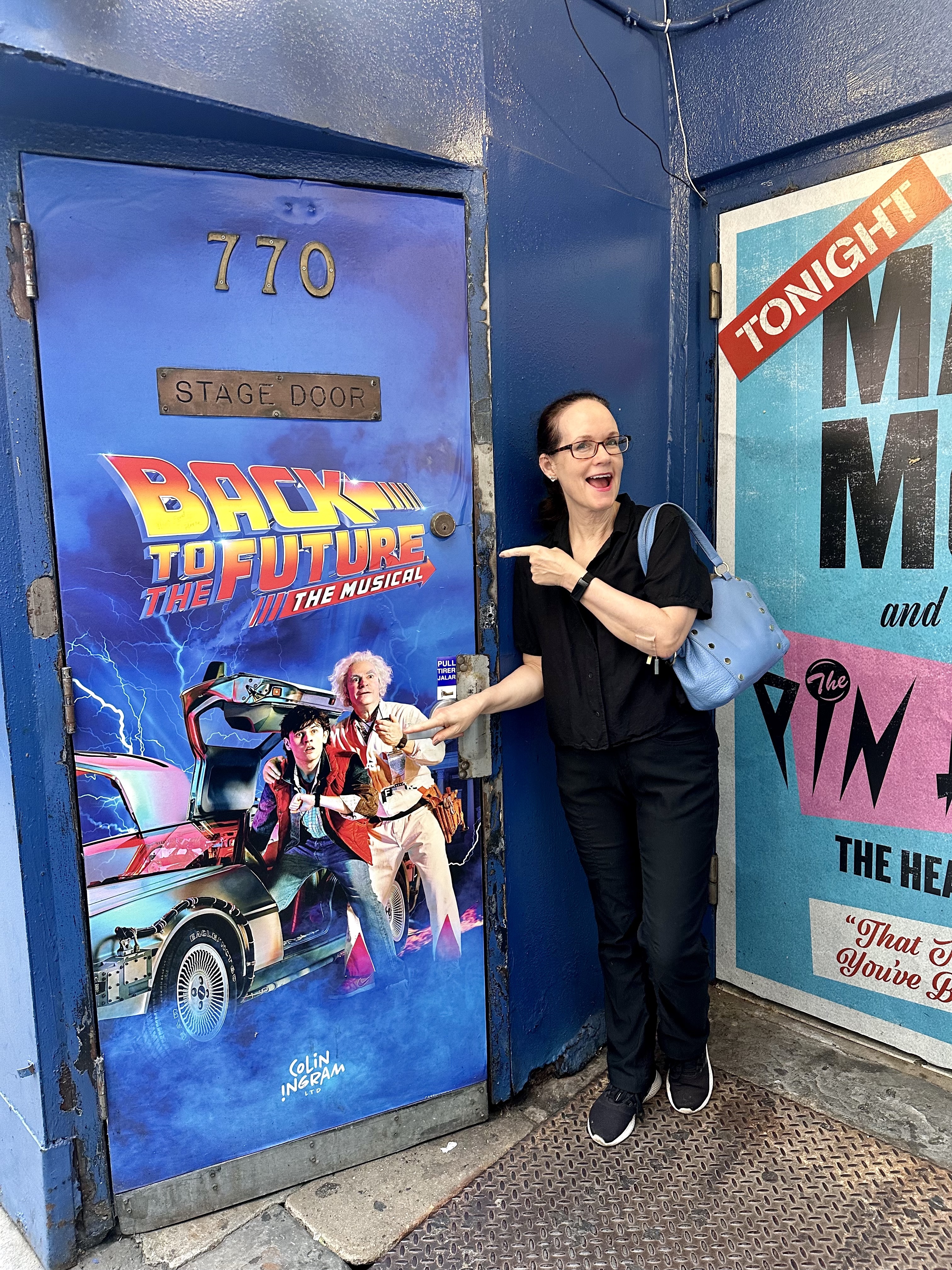
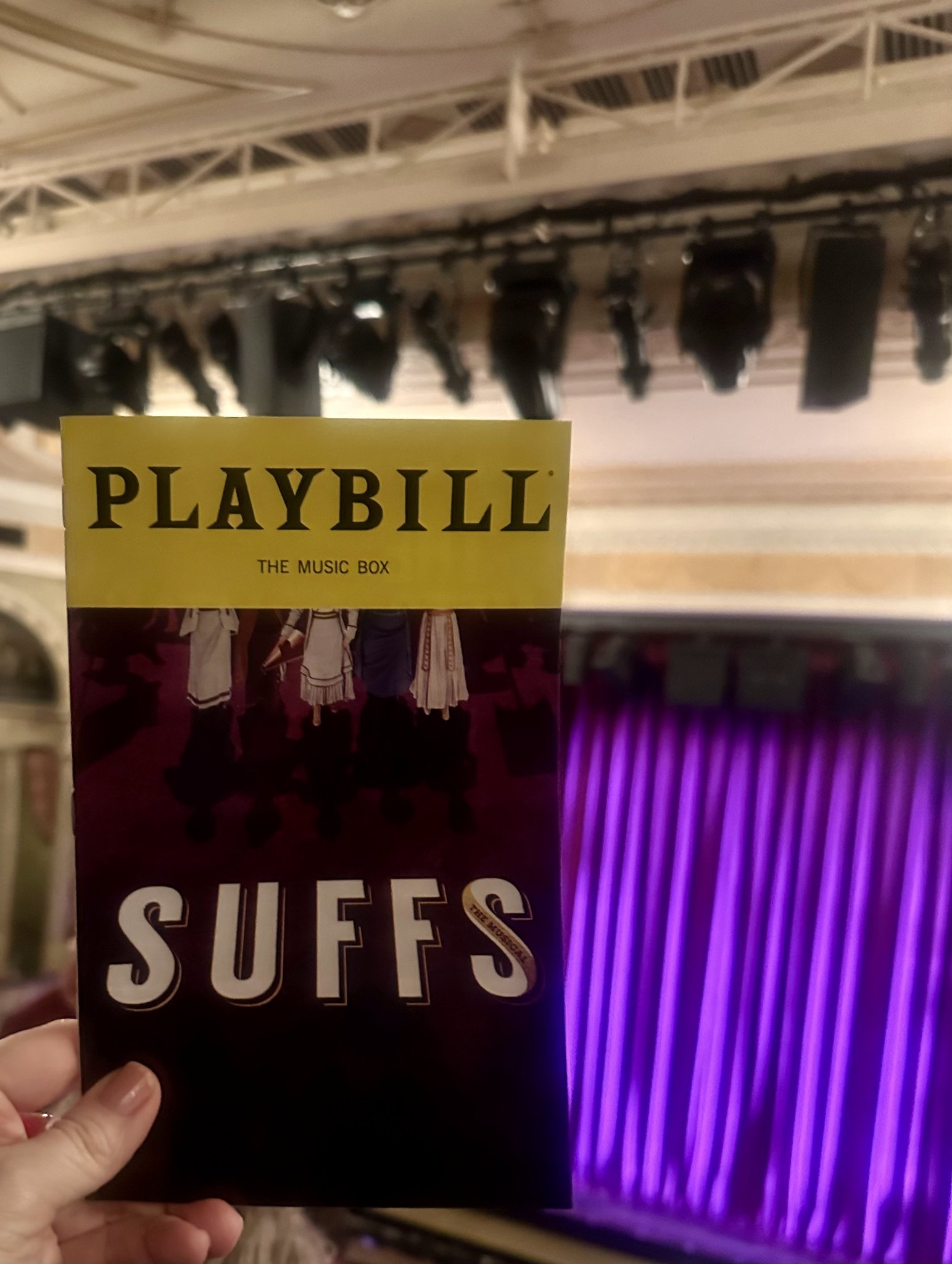
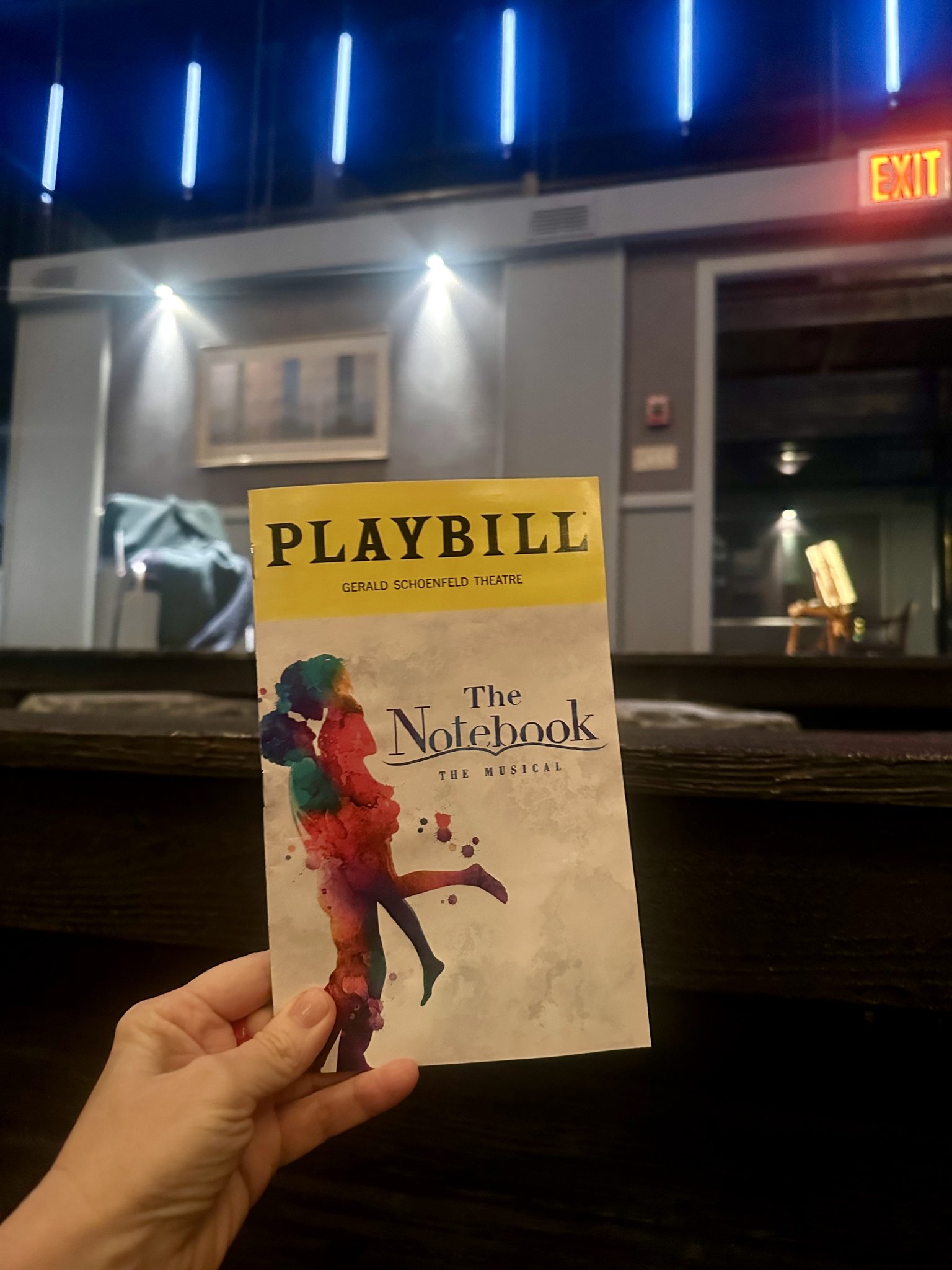
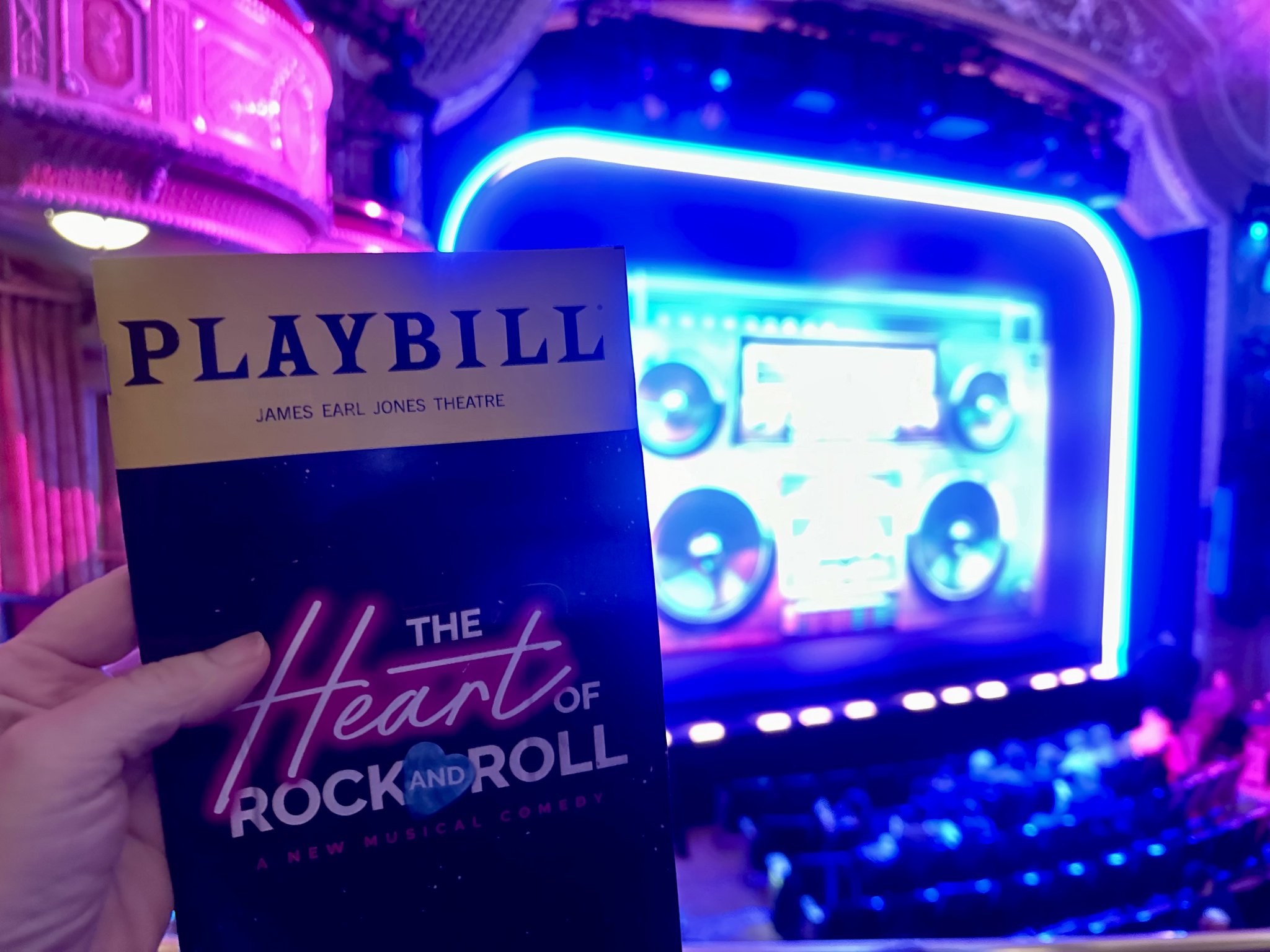
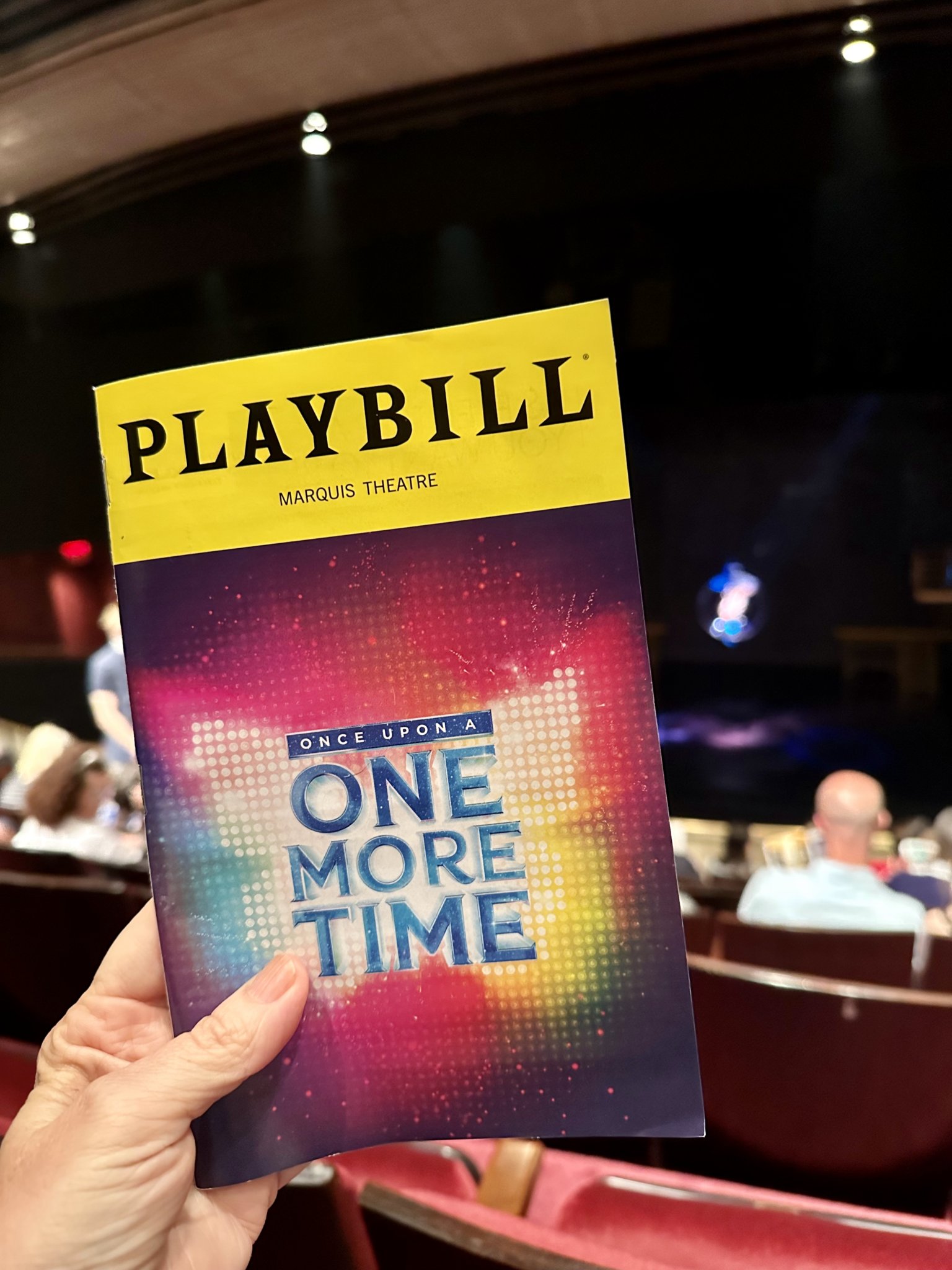
This was an unusually busy season for new musicals on Broadway, which is great for musical lovers – but very tough on producers as there was a lot of competition for the ticket-buying public. Six new musicals have already opened and closed this season: Once Upon a One More Time, Here Lies Love, How to Dance in Ohio, Harmony, Lempicka, and Days of Wine and Roses. From earlier this season, only Back to The Future (which opened last July) is still running, with most new musicals on Broadway having opened in a very busy spring season. So the eligible original musicals were Back to the Future, Days of Wine and Roses, Harmony, Hell’s Kitchen, Here Lies Love, How to Dance in Ohio, Illinoise, Lempicka, Once Upon a One More Time, Suffs, The Great Gatsby, The Heart of Rock and Roll, The Notebook, The Outsiders, and Water for Elephants. I saw all of them, and correctly predicted which five would be nominated (which is not the same as saying I agreed with the result). The five are:
“Hell’s Kitchen”
“Illinoise”
“The Outsiders”
“Suffs”
“Water for Elephants”
I have to say, this is a year where any one of these could win. The best reviewed by the New York Times were Illinoise, Hell’s Kitchen, and Water for Elephants (all “Critic’s Picks”) but Suffs and The Outsiders are both nominated for best original score as well as best new musical. Illinoise has had perhaps the most rave reviews across the board, but since it is a very unique Broadway musical (the story being told entirely through Justin Peck’s dance and a group of instrumentalists and singers, all based on Sufjan Stevens’ 2005 album) it may be hard for Tony voters to award it best in this category (although I expect it will get best choreography) when it is not nominated for Book or Score. However, Hell’s Kitchen had the most nominations (13; tied with the new play Stereophonic in number of nominations this year).
Best Musical Revival
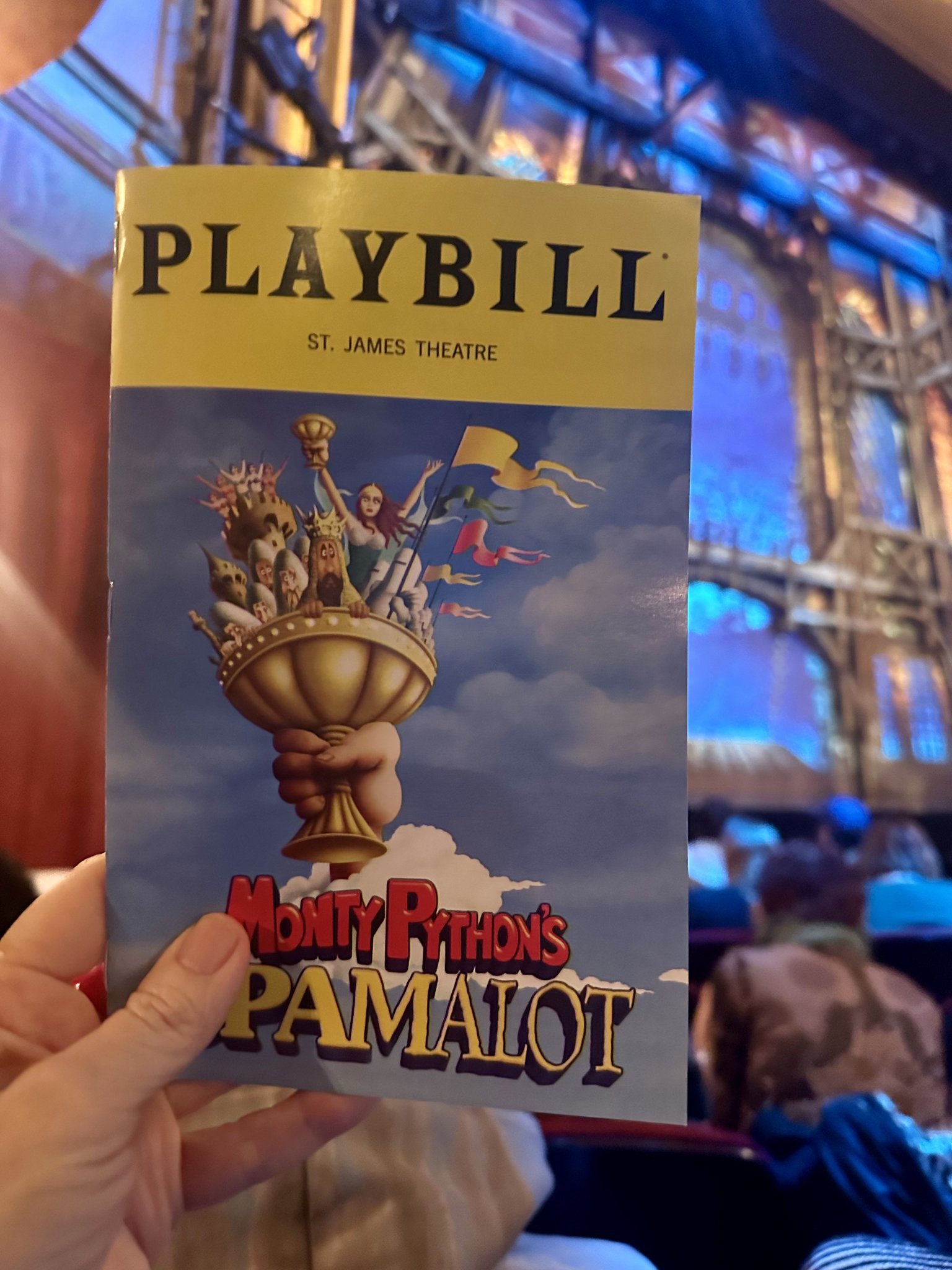
The eligible musical revivals were Cabaret, Gutenberg, Merrily We Roll Along, Spamalot, The Who’s Tommy, and The Wiz. Only four were nominated:
“Cabaret”
“Gutenberg! The Musical!”
“Merrily We Roll Along”
“The Who’s Tommy”
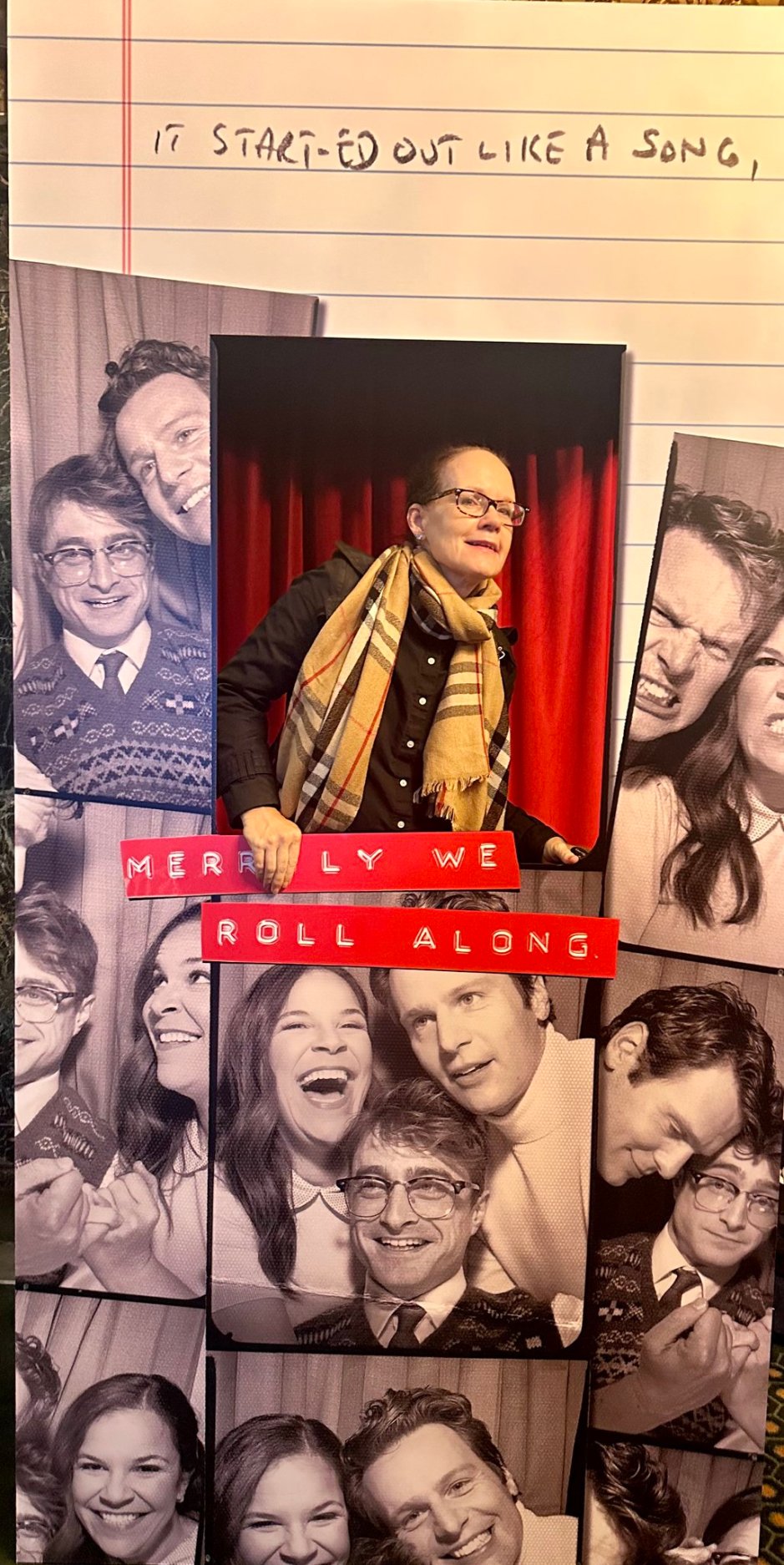
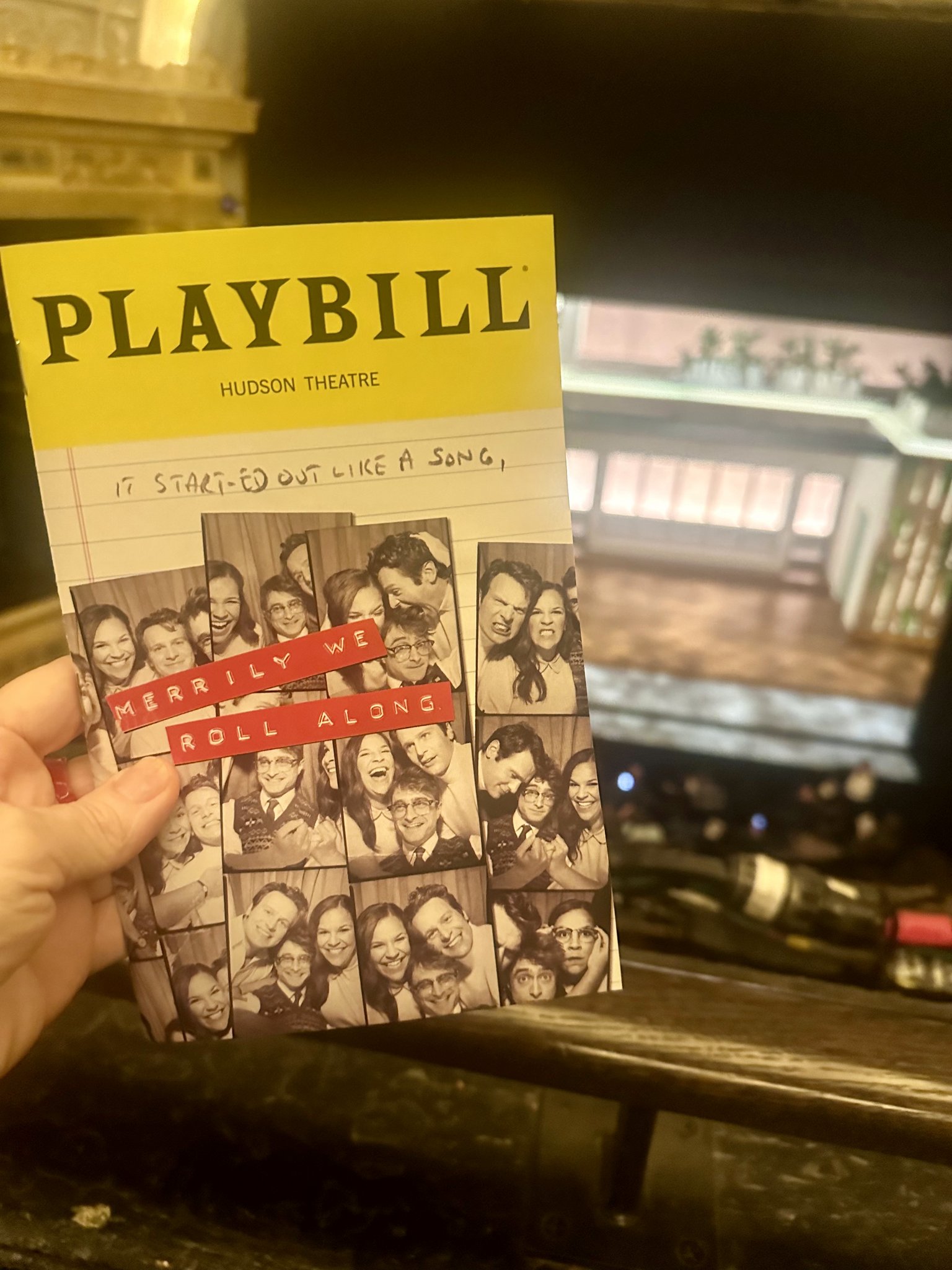
This category definitely comes down to two productions, the transfer from the West End of Rebecca Frecknall’s Cabaret, starring Eddie Redmayne, and the smash hit revival of Merrily We Roll Along, a musical once felt to be Sondheim’s great flop, but transformed by the direction of Maria Friedman and the performances by Jonathan Groff, Daniel Radcliffe, and Lindsay Mendez. The Cabaret revival has not been received as well on Broadway as it was on the West End, so I would expect Merrily to take this award. The same goes for Leading Actor in a Musical – I would be surprised (and very very disappointed) if Jonathan Groff does not win this category over Eddie Redmayne. I love The Who’s Tommy, by the way, but don’t expect it to win.
Best New Play
The nominees for best new play are:
“Jaja’s African Hair Braiding”
“Mary Jane”
“Mother Play”
“Prayer for the French Republic”
“Stereophonic”
I will be very surprised if Stereophonic doesn’t win this category. It’s a “play with music” (and in fact, it is nominated for best original score, which is unusual but not without precedent) by David Adjmi, about a rock band in the 1970s recording an album. It’s over three hours long, takes place entirely in a recording studio with no change of sets, and yet is completely riveting.
Best Play Revival
All three of the nominees for best revival of a play are excellent. They are:
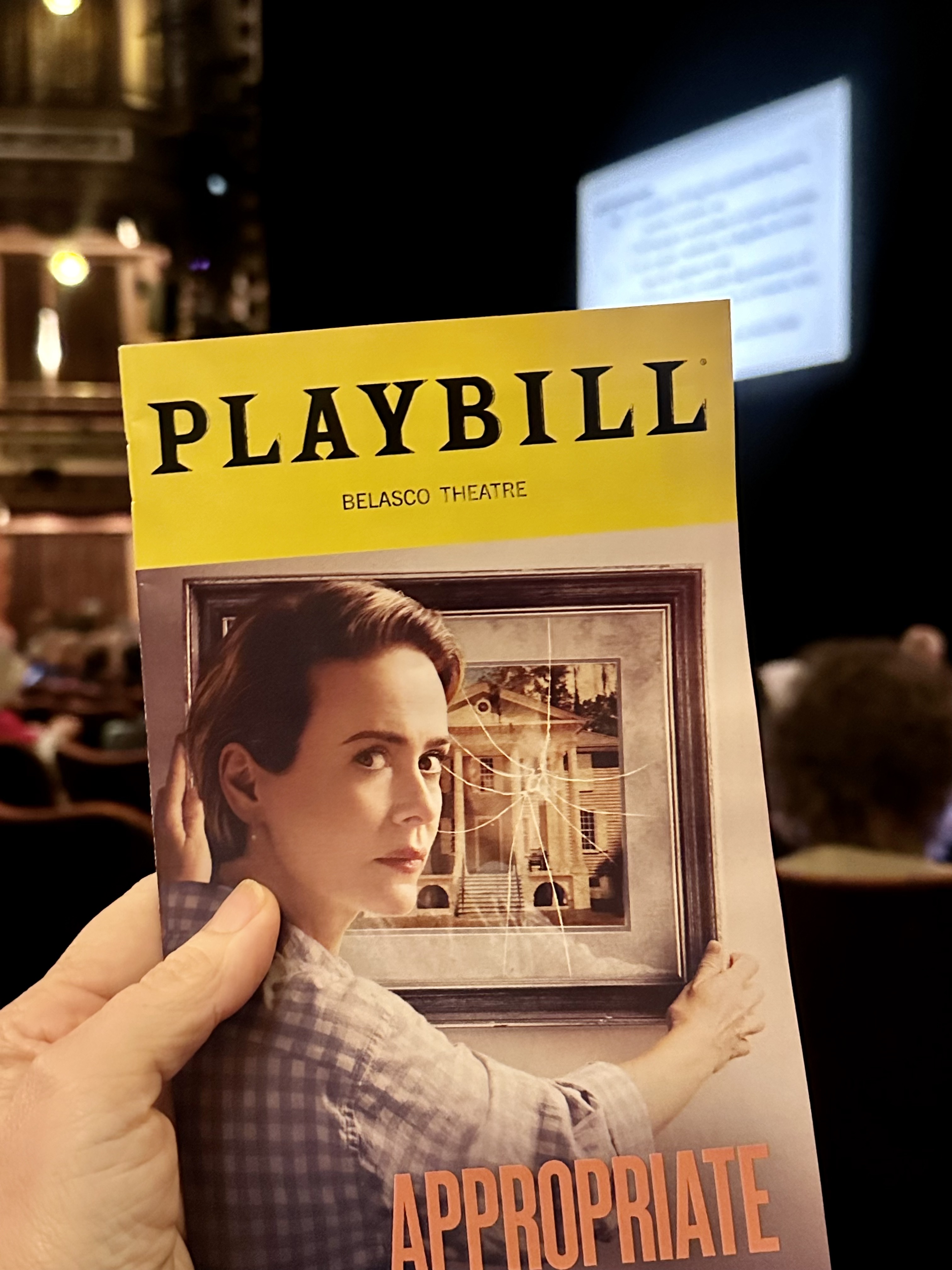
“Appropriate”
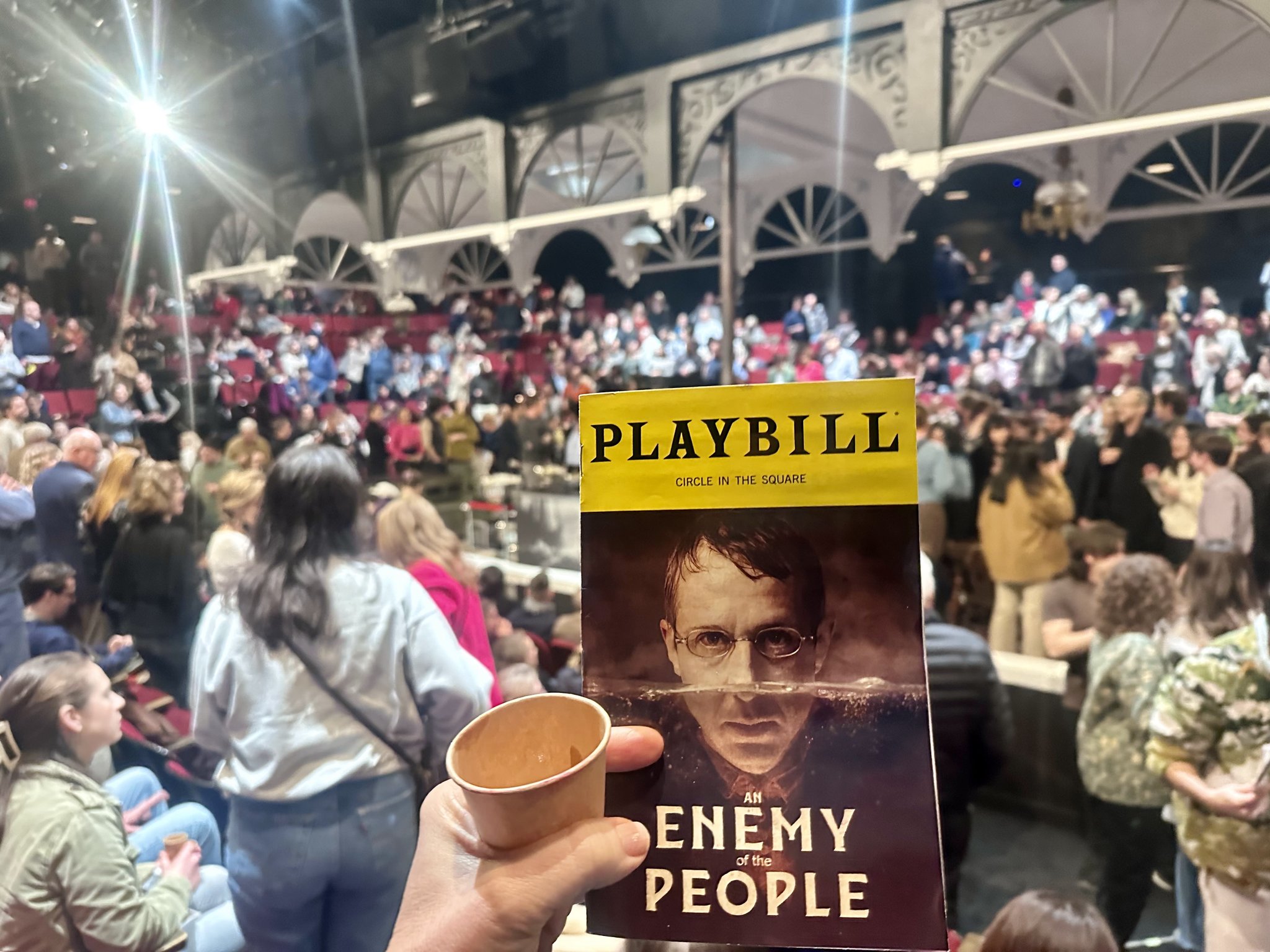
“An Enemy of the People”
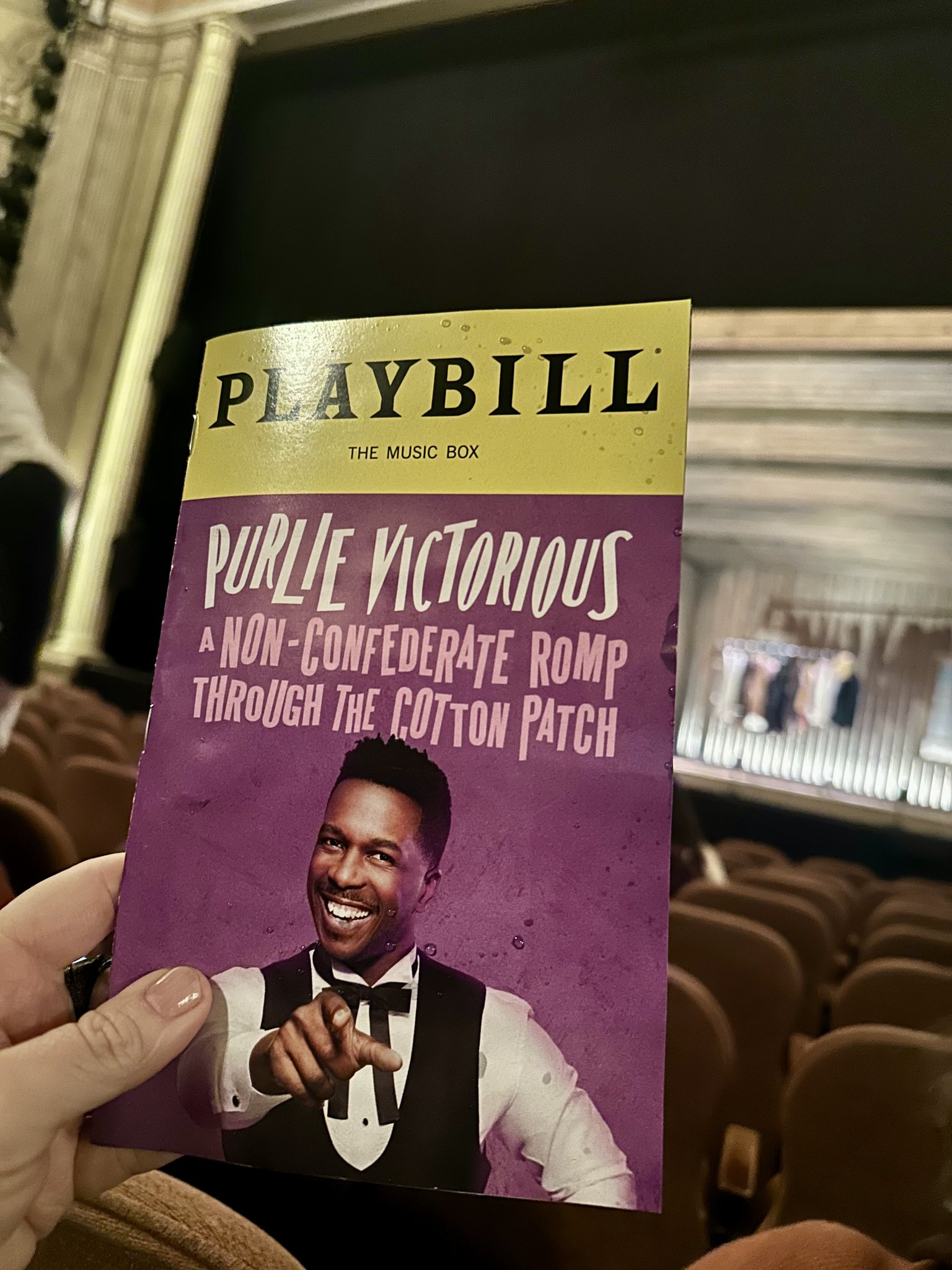
“Purlie Victorious”
Despite the strength of all three of these revivals, I would be surprised if Appropriate did not win this category (and I think Sarah Paulsen is a lock for Best Lead Actress in a Play despite being up against Jessica Lange in Mother Play).
Other thoughts
This season not only had a great number and variety of new productions, there were many extremely innovative sets. The category of best scenic design of a musical had seven nominees (for The Outsiders, Hell’s Kitchen, Back to the Future, Lempicka, Water for Elephants, Here Lies Love, and Cabaret) and I was dazzled by all of them. I think the immersive quality of Here Lies Love, which has closed but I absolutely adored, was a stand out in a great field for me – but it is very unusual for shows that have closed to win even if nominated (Here Lies Love is also up for best original score, best choreography, and best sound design).
A shout out to the Director categories this year, with four out of the five musical directors and three out of the five play directors being women.
After the Tonys, I expect many shows with disappointing results will post closing notices, either right away or as the summer ends. Tony awards do not guarantee a long run (look at A Strange Loop from 2022) but the lack of awards can be the difference between enough ticket sales to keep going and a decision to close the show. What will keep Broadway alive is not only a wealth of plays and musicals in the pipeline but also the ticket-buying public out there to support them. Go see a Broadway show (or a ton of them!) and keep this very special art form thriving here in New York City.
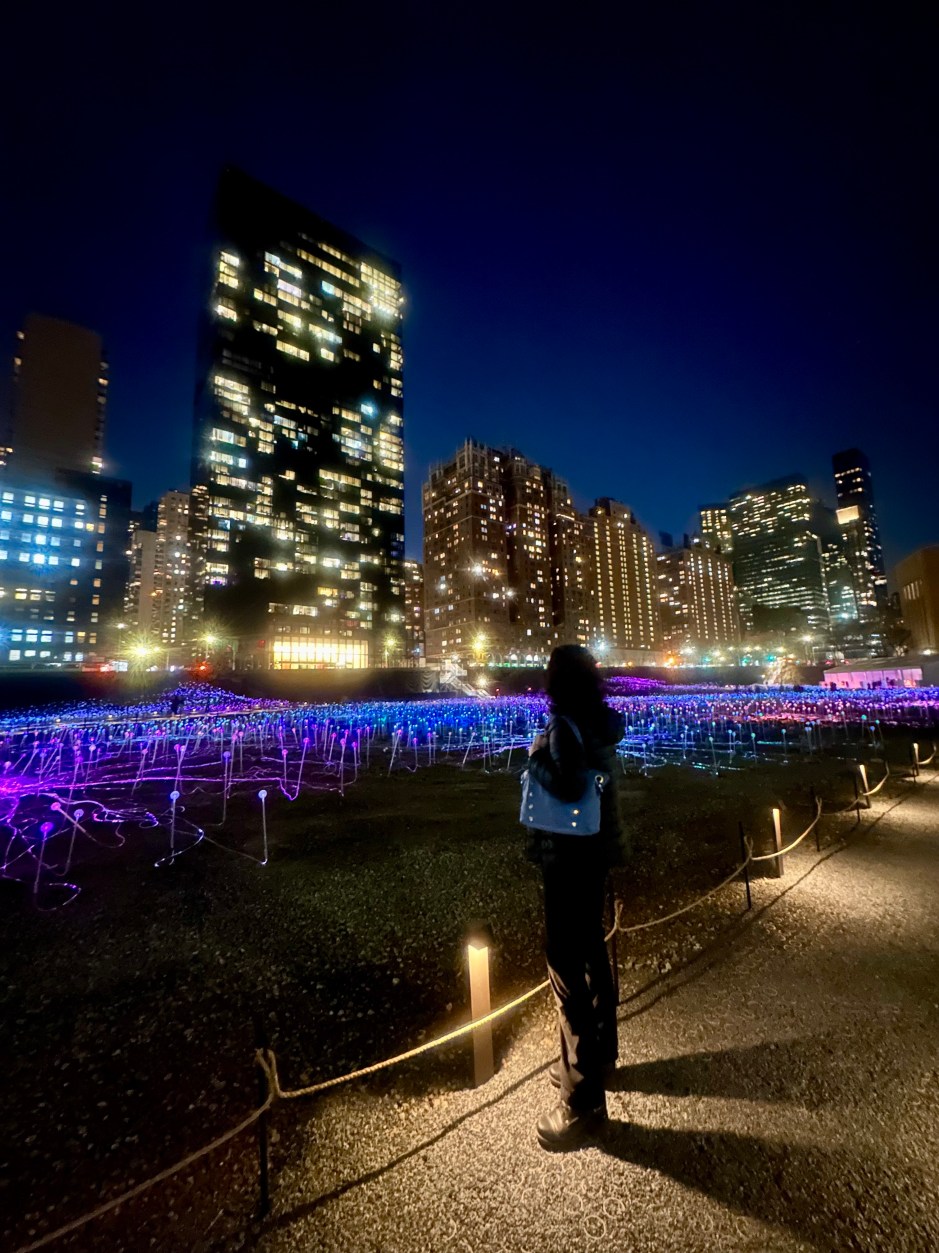
Walking around Manhattan’s East Side near the United Nations, there has always been a huge empty undeveloped (more about that later!) lot between E 38th and 41st Streets, from First Avenue to the East River. Beginning earlier this year, an enormous light installation has filled that space, Field of Light. I have been there twice and it is an unusual and charming experience.
The installation is free to enter, but you need to either have timed tickets or wait in a standby line. All of the procedures are pretty clear on their website. I have not seen long lines for standby, so even if you don’t have tickets I think your wait would be relatively short. You go through airport-style security, and then a few posters to set up the idea behind the installation and give information about the artist.
The artist, Bruce Munro, is drawn to creating large light installations, and this one in NYC is his largest to date. He notes that with buildings on three sides and the East River (and FDR Drive) on the other, the field is almost like a box filled with light.
From inside the installation, you can see the Chrysler Building, while the apartment buildings and the United Nations building surround the field, adding their own element of light.
Each bulb and stalk of light is interconnected to others in complicated tangles. The lights slowly change color over time as well.
There is a spider-web quality to the way the lighted strands snake around the bulbs on stalks.
This installation is sponsored by the Bjarke Ingels Group, which upon a little investigation, has plans for a megadevelopment in this space along the East River. A lot of it sounds good – affordable housing, a public park roughly the size of Bryant Park (the park behind the main branch of the New York Public Library), a museum (no idea what its focus would be), a dog run, play areas for children – but also a hotel … and an underground casino. See here for more details about the proposed development, which has to receive approval and licensing and hopes to by next year. The idea for the area shows a few tall buildings which would definitely impact views (and values) in Tudor City. Along with the proposed Times Square Caesar’s Palace Casino (see more about this here), and the question of whether a casino will be allowed in Hudson Yards, this casino raise the question of what NYC wants to be going forward. Proponents note the possibility of increased tourism and tax revenue, while opponents note that tourism based on gambling in places like Las Vegas and Atlantic City potentially creates a different atmosphere and clientele in those neighborhoods with a casino.
New York City is constantly changing, and there is a casino near JFK airport. I do wonder though what allowing casinos in Manhattan will change about the city. At this point New York State as announced that it will grant three licenses for NYC and/or it’s suburbs, and there is significant pushback against having a casino in a residential neighberhood. But . . . stay tuned! I enjoyed Field of Light but feel we need a little illumination (haha) about whether Manhattan wants casinos.
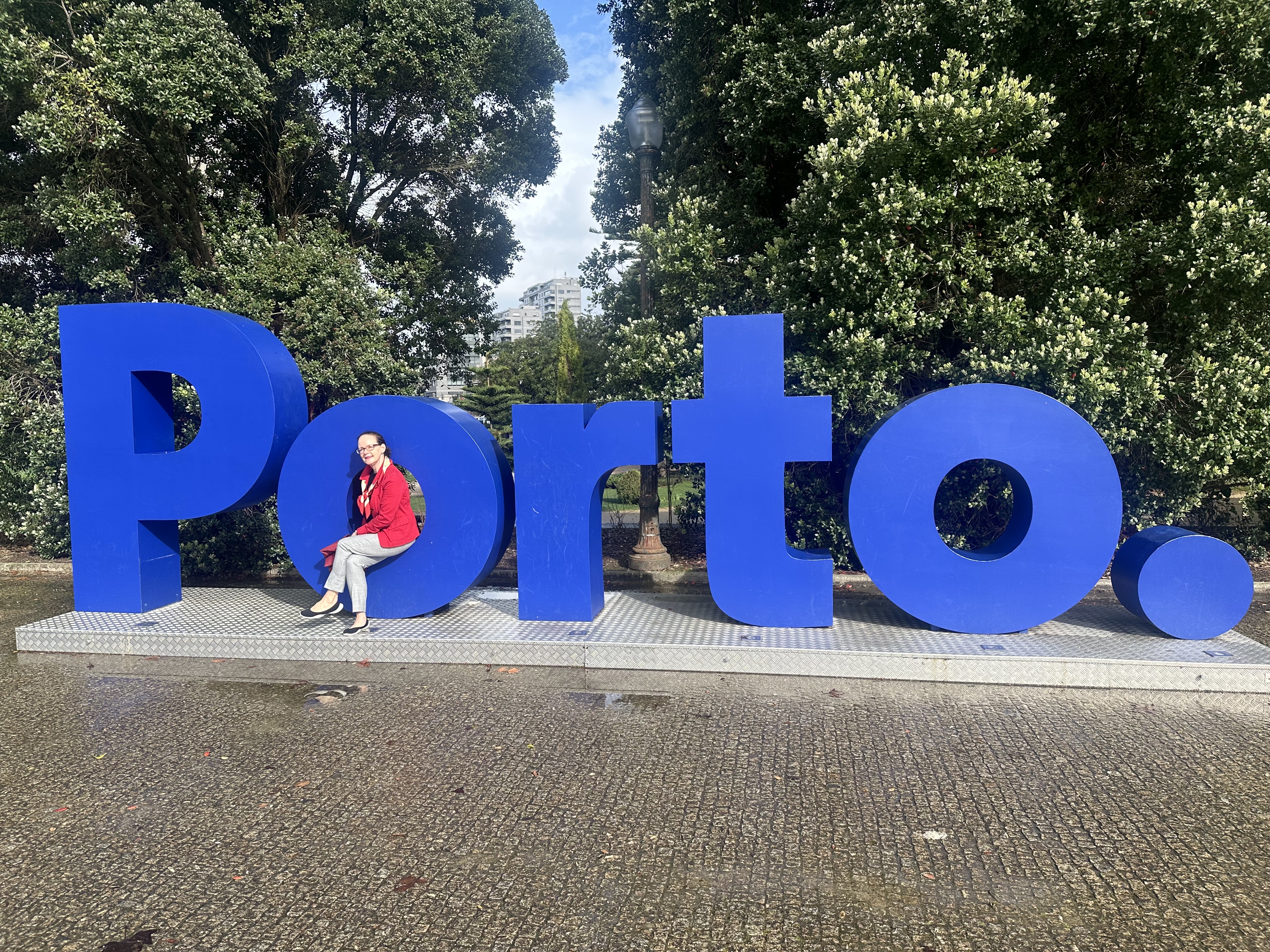
Some beloved family members – and their pets, two dogs and two cats – moved to Porto, Portugal about six months ago, and last month I went to visit them for the first of what I expect to be many trips to Portugal (as long as I don’t ruin things by being a terrible guest!). This trip was mainly about seeing them and where/how they are living now, but I can tell you about a few fun things I experienced this time and recommend if you plan to visit Porto.
My first day there, while staying up to fight jet lag and get adjusted to the time change, we went to a tour of the Pinhais sardine factory (more information and tickets here). In addition to seeing the factory itself, we learned about the history of sardines in Portugal, saw a staircase designed to look like a sardine when viewed from the correct angle ( see above – the light is its eye), practiced wrapping a tin of sardines (which the professionals can do perfectly in mere seconds but I definitely could not), and finally had a sardine/wine tasting.
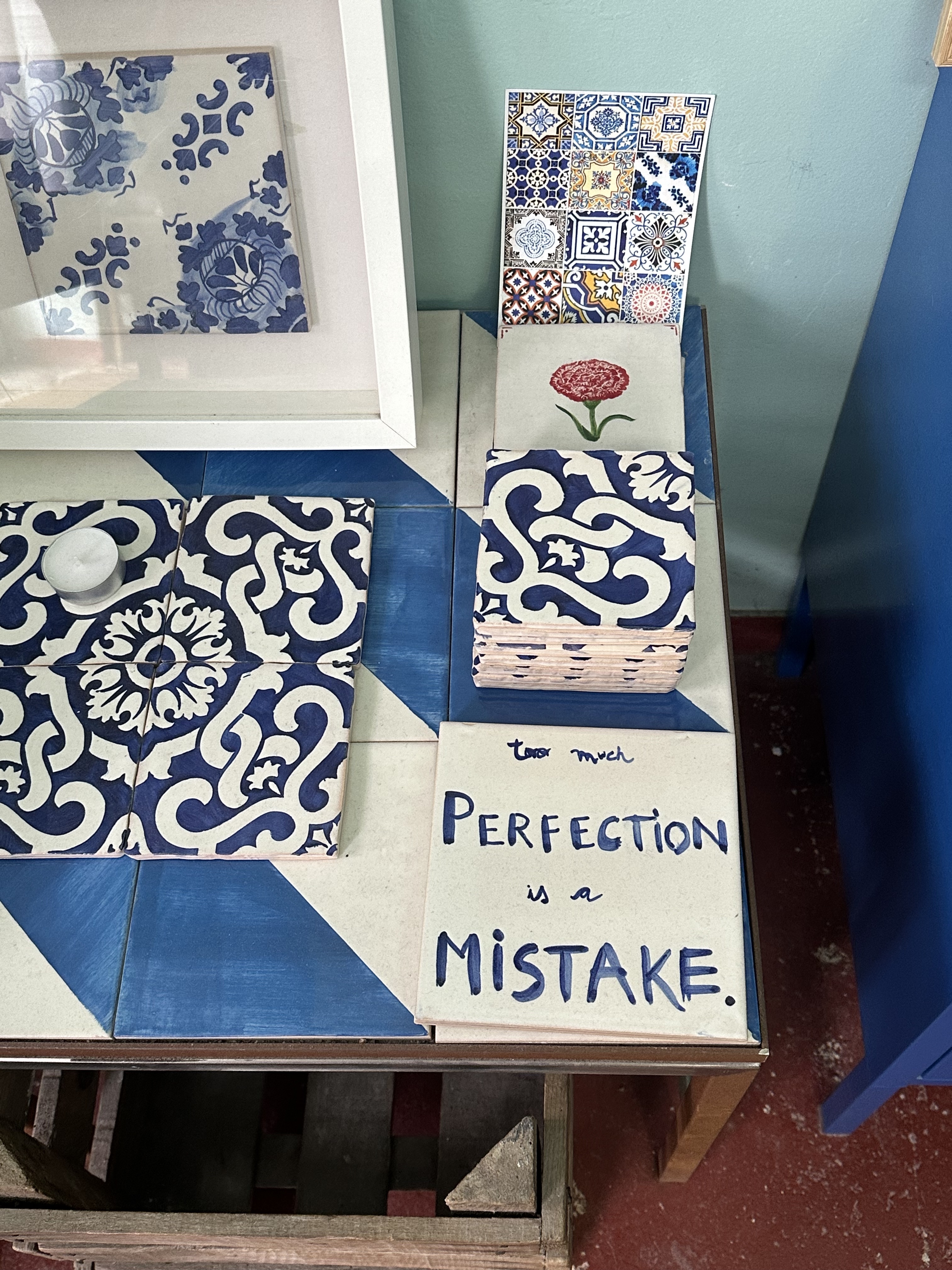
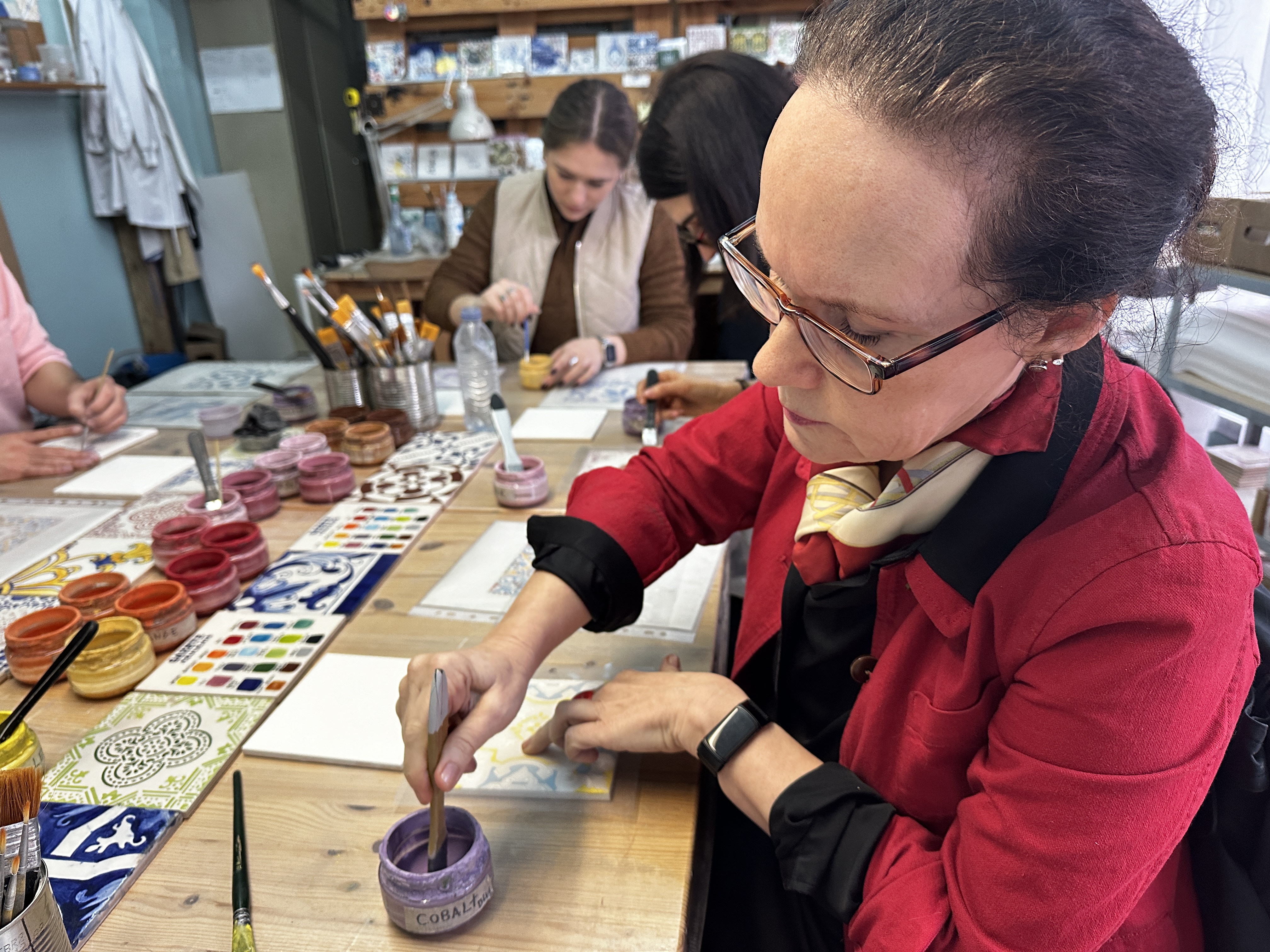
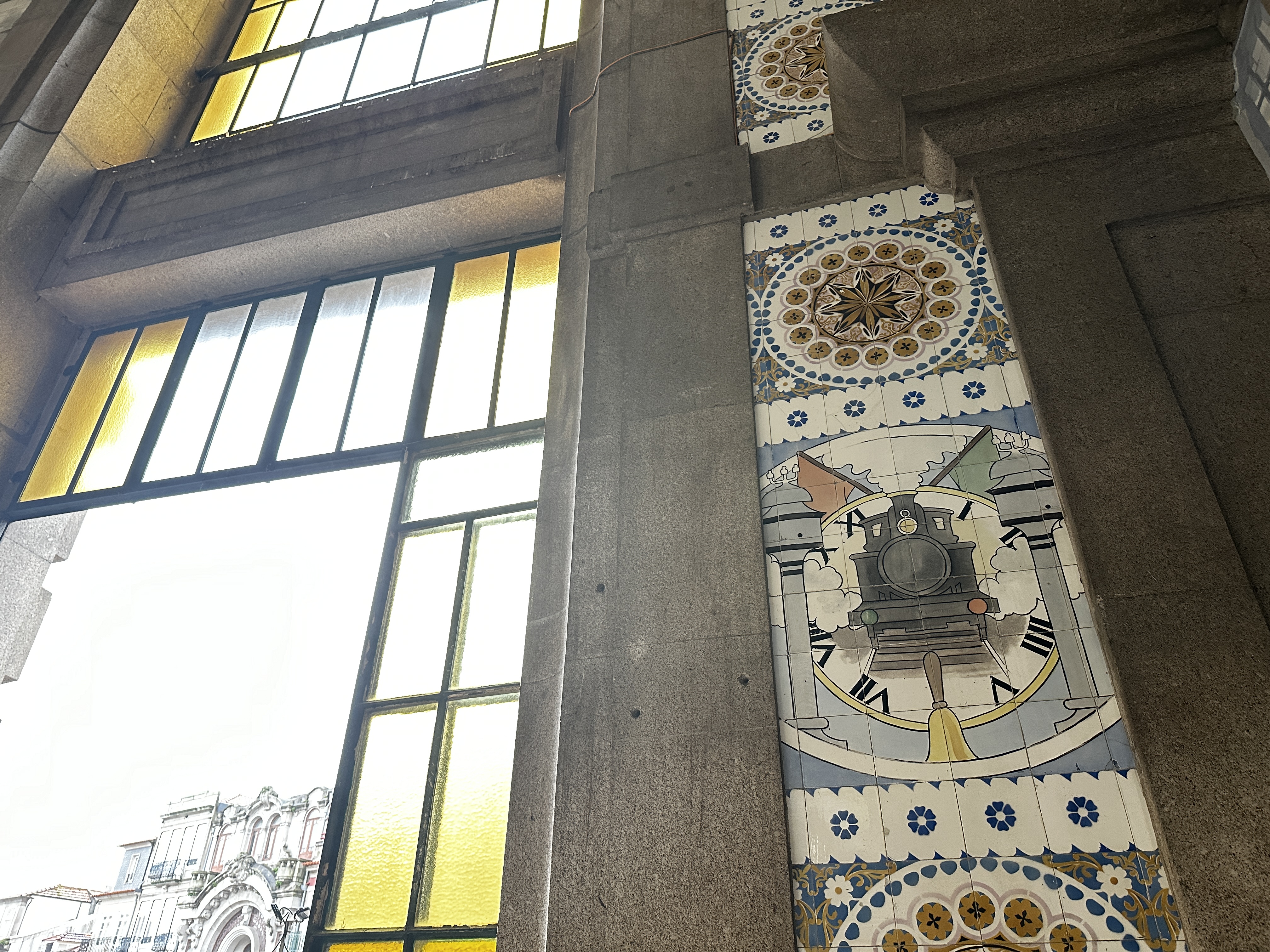
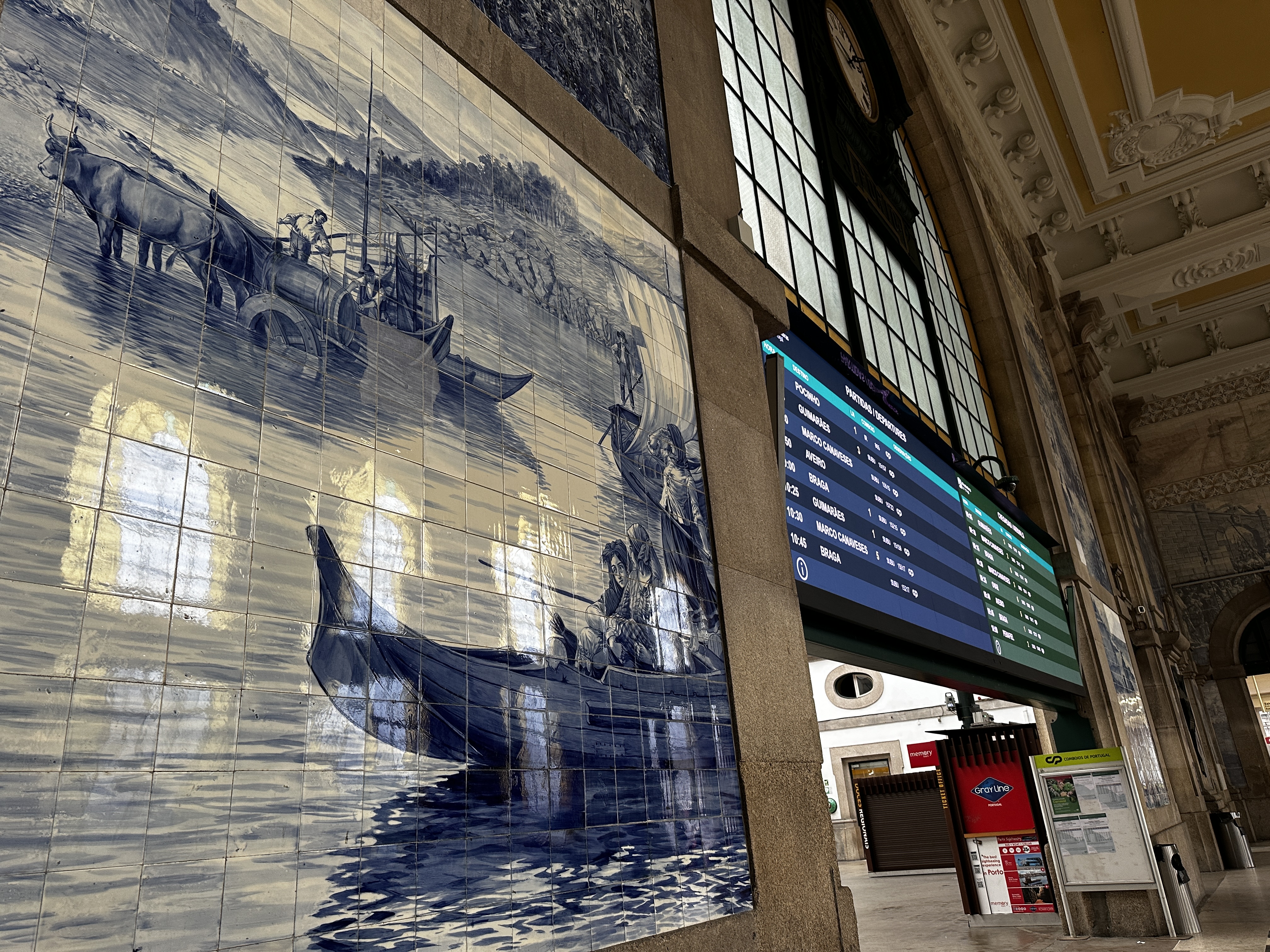
The next day, feeling fresh and ready to go, we enjoyed a fantastic tile painting class at Gazettes Azulejos (more information here). The tiles that are so beautiful covering the exteriors of buildings in Porto also serve practical purposes, keeping moisture from seeping into the facade, insulating from excess heat or cold, and strengthening the structures. Gazettes Azulejos is working to catalogue all the Porto facade tiles, and you can use a pattern from an actual address to recreate your own tile to take home as a souvenir. They admonish that “too much perfection is a mistake” and I would say that keeping that in mind is key to enjoying the workshop, as it is harder than it appears at first. The tiles I painted are definitely not perfect (the second one was better than the first, so practice helps), but I enjoyed making them, learning about the process, and bringing them home as a memento. One thing that surprised me is that Cobalt Blue looks light lavender before firing! You leave the painted tiles and come back to pick them up the next day after they are fired. I made a reel about the class that you can see on Instagram here.
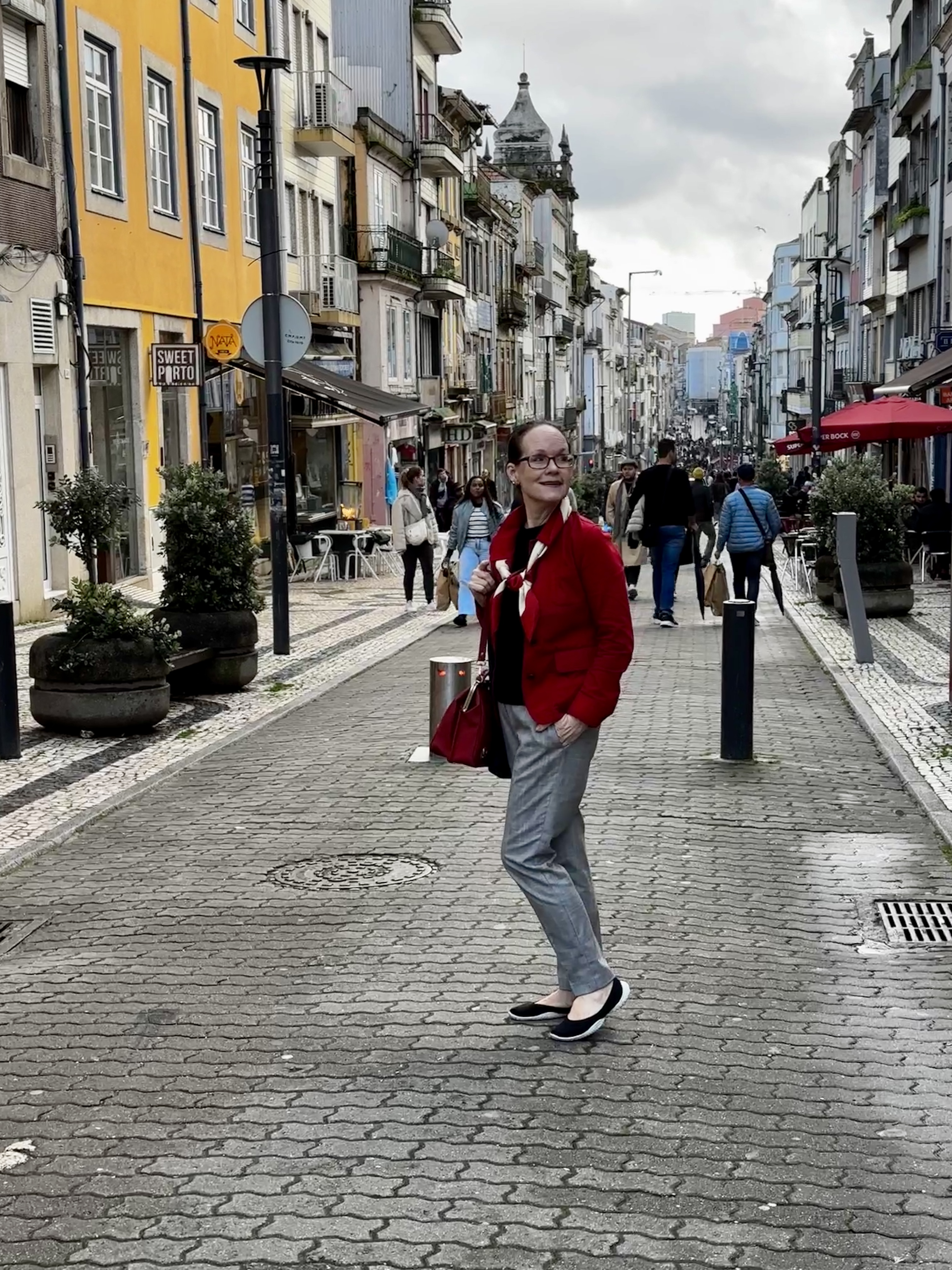
One of my favorite things to do in any city (including my own New York City) is to simply walk around and experience it. Porto was a beautiful walking city, with plenty of hills and staircases to keep things interesting and muscles fully engaged!
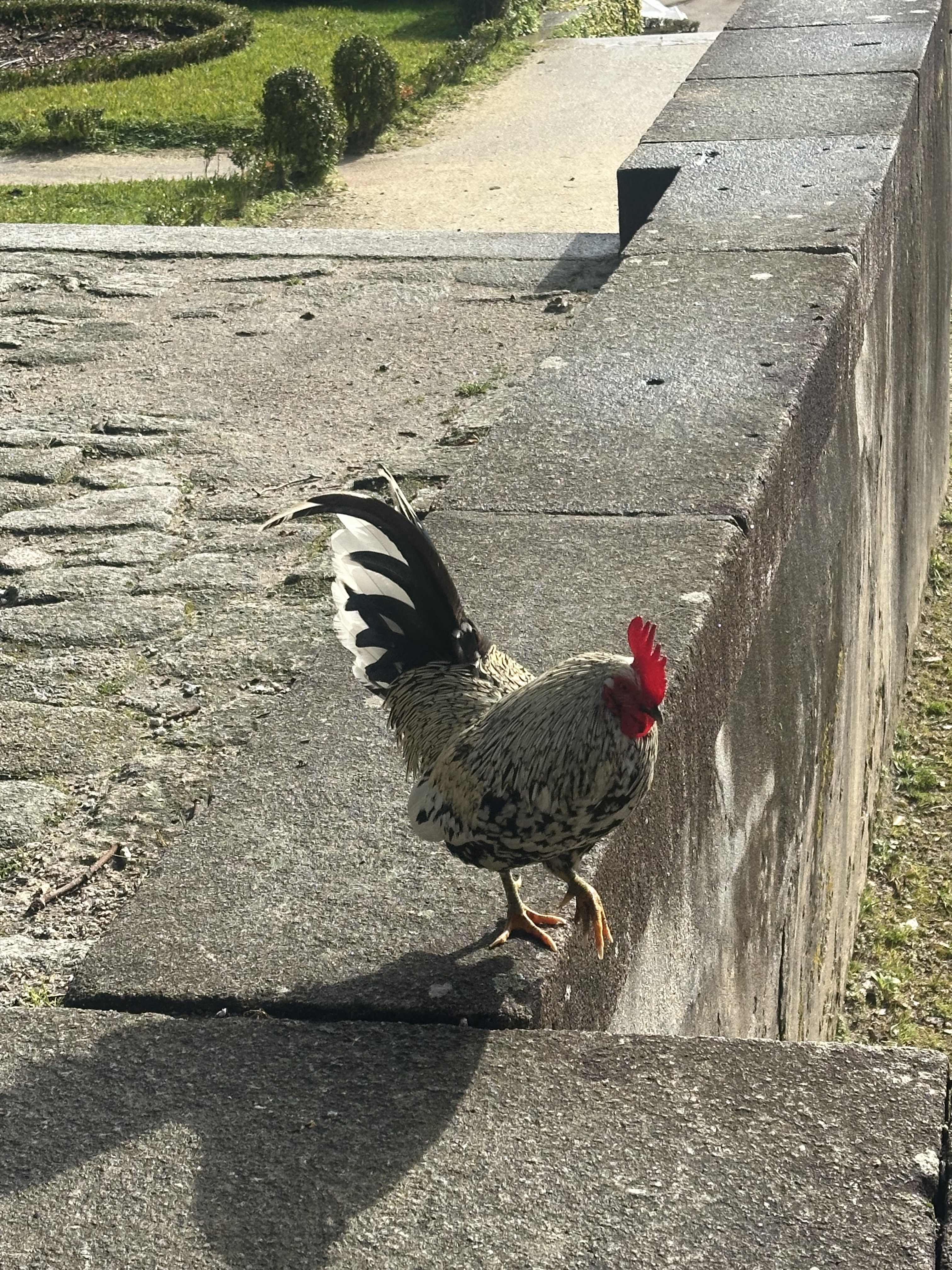
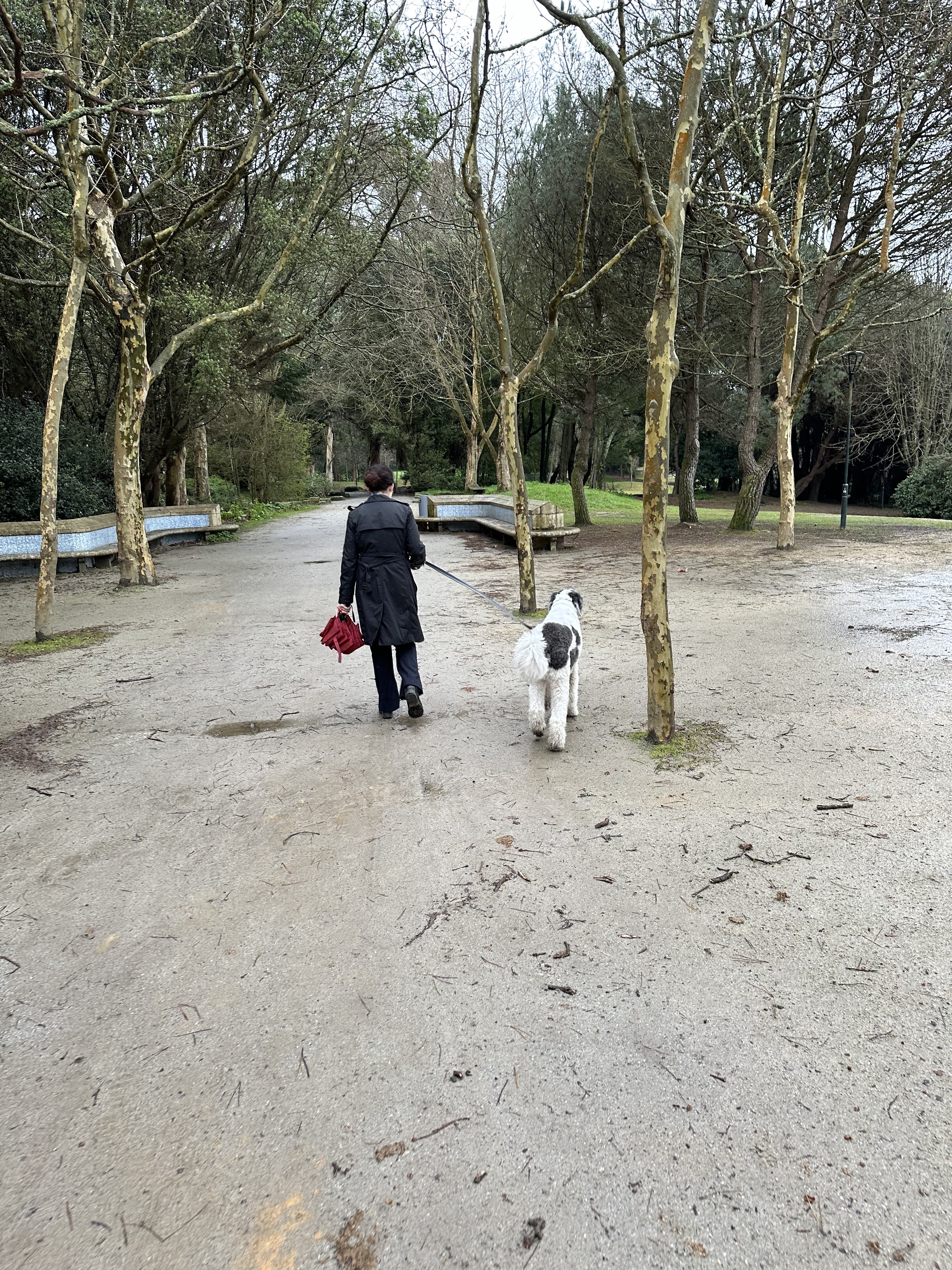
The rooster is the symbol of Portugal, and they roam many of the public parks. At the park next to the Crystal Palace, there were also peacocks. You can see a video of the peacock showing off on Instagram here.
Porto is – not surprisingly – known for its port wine, and a port wine tour and tasting at Grahams – across the river in Gaia -was fantastic. This particular tasting paired food (a pastel de nata pastry, aged cheese, and chocolate) with three different ports. Grahams has some bottles still aging from the 1860s! A reel about Grahams can be seen here.
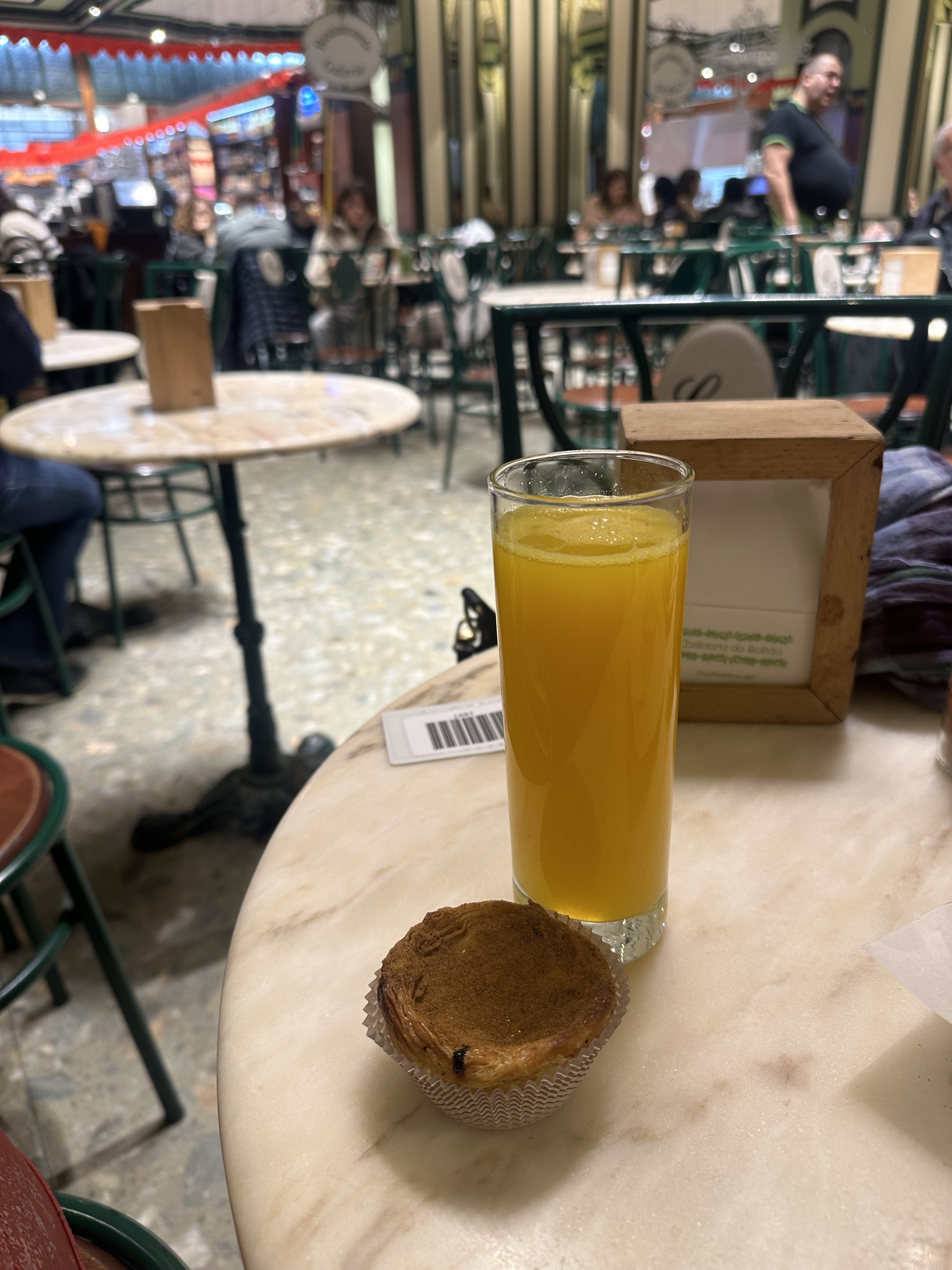
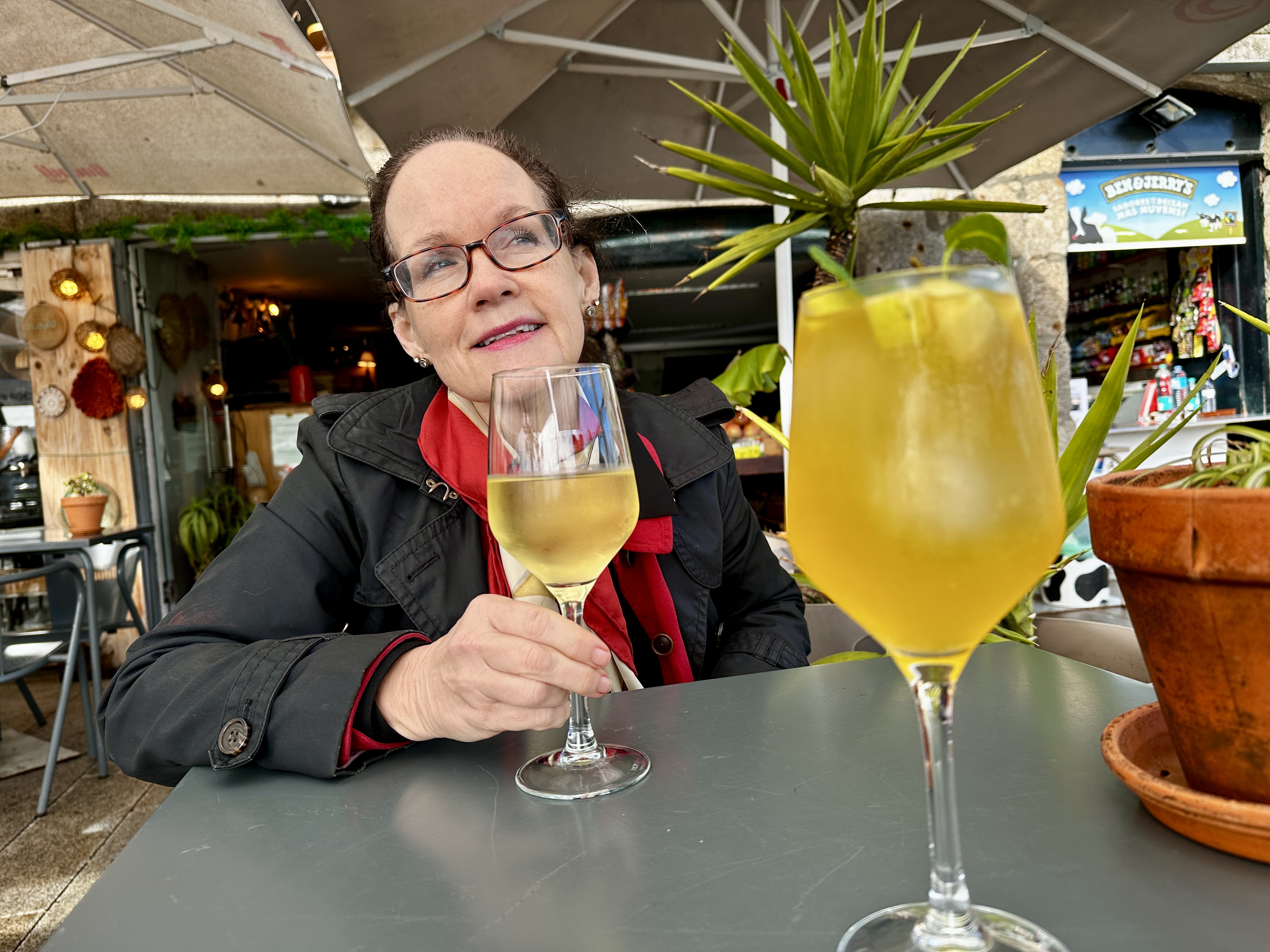
Speaking of pastel de nata, I tried several at different places. You can get these cups filled with sweet custard either plain or with cinnamon, and I liked mine with cinnamon. And the official cocktail of Porto, the porto tonico, was enjoyed several times! The porto tonico is white port and tonic water, garnished with orange peel, a cinnamon stick, and a mint leaf. Really, really good . . .
Livraria Lello proudly states itself to be “the most beautiful bookstore in the world” and I would dare not disagree. It is very hard to get into – you need timed tickets that you pay for, but the ticket cost can go toward a purchase. We went just before closing and managed to get a few photos without dozens of other people in the picture as well. To find out more about the bookstore or purchase a timed ticket, click here.
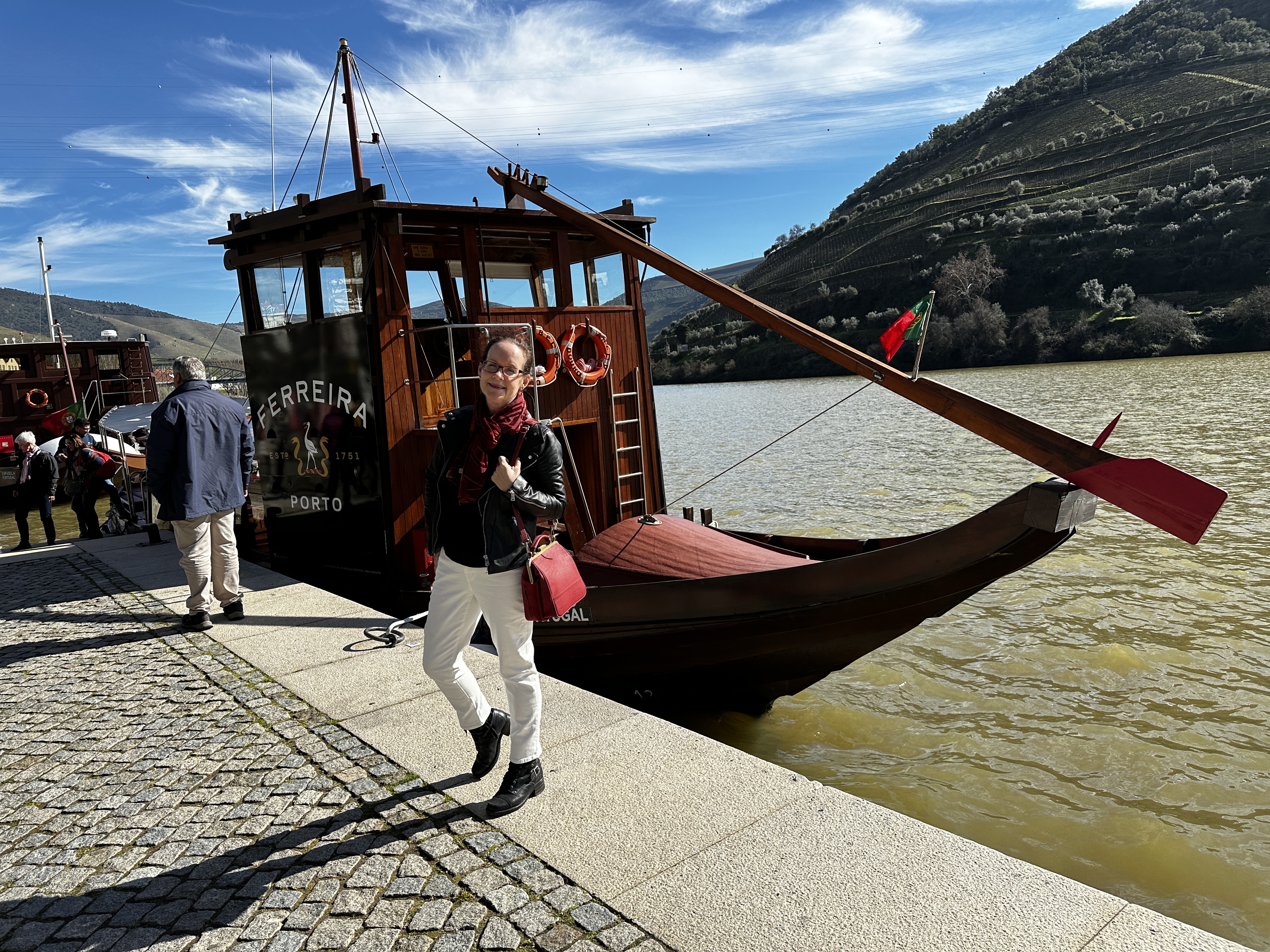
My final day before returning to NYC, we did a guided tour of the Douro Valley including wine tastings and a boat ride. The Douro Wine Region Valley is the oldest demarcated wine growing region in the world, and a World Heritage Site. The Douro (which ends up dividing Porto from Gaia just before emptying into the Atlantic Ocean) carved out this rich and beautiful landscape. I have written before about wine tasting in Napa and this day was just as special (see a reel about the day here on Instagram).
Of course the best part of this trip to Porto was spending time with family and experiencing a bit of the new life they have made there. They threw an amazing dinner one night where a private chef came in with all the ingredients and then we, the dinner party, made the meal under his guidance – so much fun, see a video reel here. And I look forward to exploring much more in Portugal as I visit them over the next many years.
The Hudson River Greenway along the Hudson River on Manhattan’s West Side is accessible for walking and biking from Battery Park all the way north to Inwood Hill Park at the top of the island. It keeps being expanded and is a destination for residents and visitors alike with recent additions like Little Island Park, Pier 26, and Pier 57. On the other hand, while the riverfront area along the East River has some lovely patches (like the John Finlay Walk next to Carl Schurz Park in Yorkville), there are also stretches where there is no waterfront access. There is a new plan to connect all of the East River waterfront, similarly to that seen on the Hudson River, and a new section of this was recently opened, beginning at East 54th Street and continuing up to connect an existing path at East 61st Street.
Entering the new stretch at East 54th Street, the views are instantly gorgeous. You can see south along the East River, as well as east to Long Island City.
The tiling on the walkway is inspired by diatoms, single-celled microscopic algae. They are the base of the food chain in the river, and convert sunlight into energy. There can be hundreds or even thousands of diatoms in one spoonful of East River water. For more details about the use of these diatom-patterned pavers, check out the description from the artist who was involved, Stacy Levy.
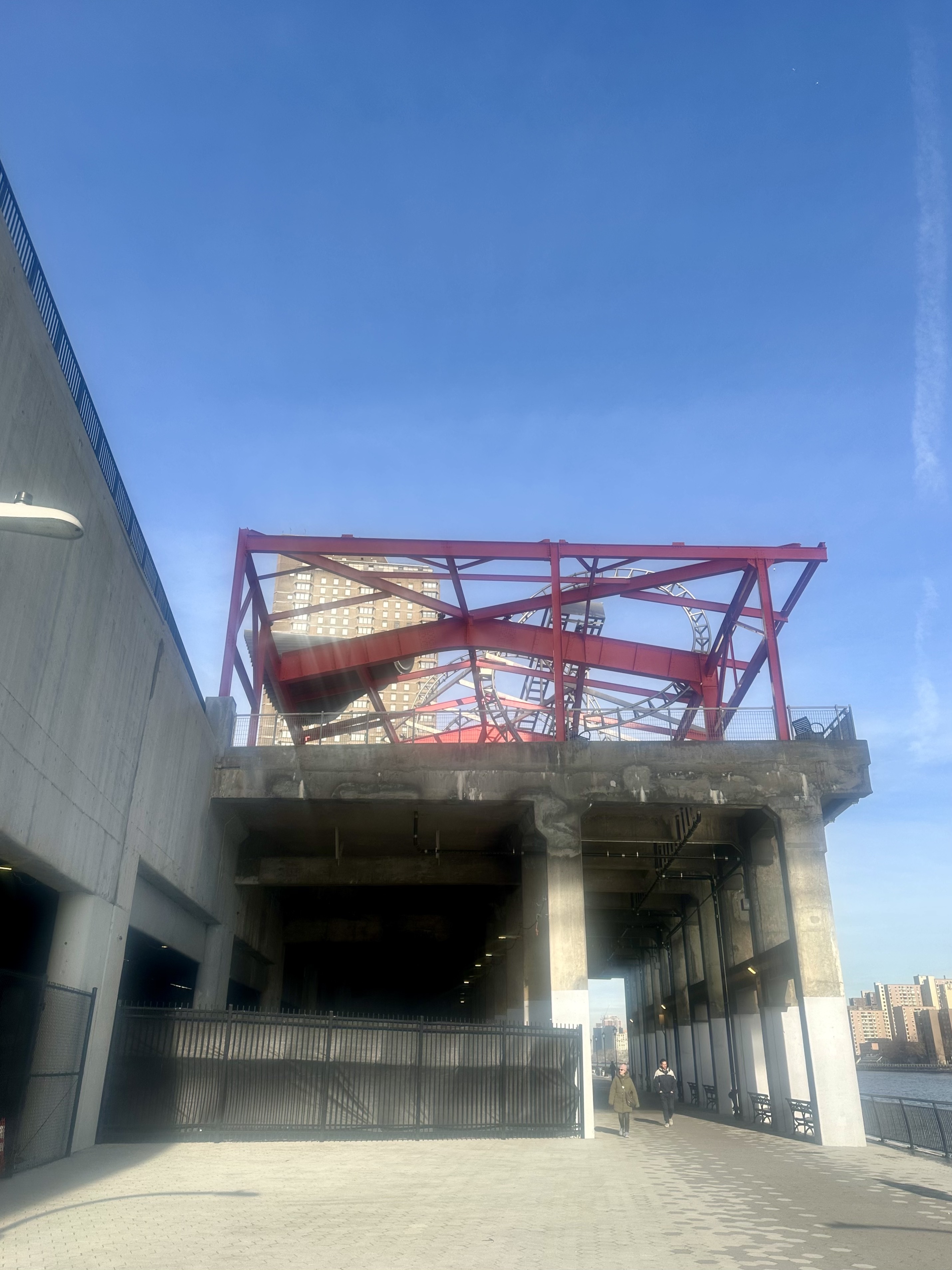
As you start to connect to Andrew Haswell Green Park at East 61st, you can’t help but notice the thing that looks like an abandoned steel roller coaster track. In fact, it is an artwork by artist Alice Aycock, called The Roundabout. A little more about that as we exit the new walkway next to it!
You get some thrilling views of the Ed Koch/Queensboro/59th Street Bridge, especially as you walk under it.
If you choose to exit at East 61st rather than continuing north to the existing Andrew Haswell Green park, you get an up close look at Roundabout. It covers the roof of a defunct Department of Sanitation Building, and was inspired by the weightlessness of Fred Astaire’s dancing! You can read more about this artwork here.
The eventual goal of the East River Waterfront project is to have a continuous loop around all of Manhattan next to the waterfront. It will likely help the livability (and hence the value) of the far east side of midtown Manhattan to have a waterfront park, and one that connects all waterfront areas in Manhattan will be even more appreciated. I look forward to seeing the East River waterway in Manhattan continue to develop and enrich the experience of New Yorkers and visitors to the city alike.
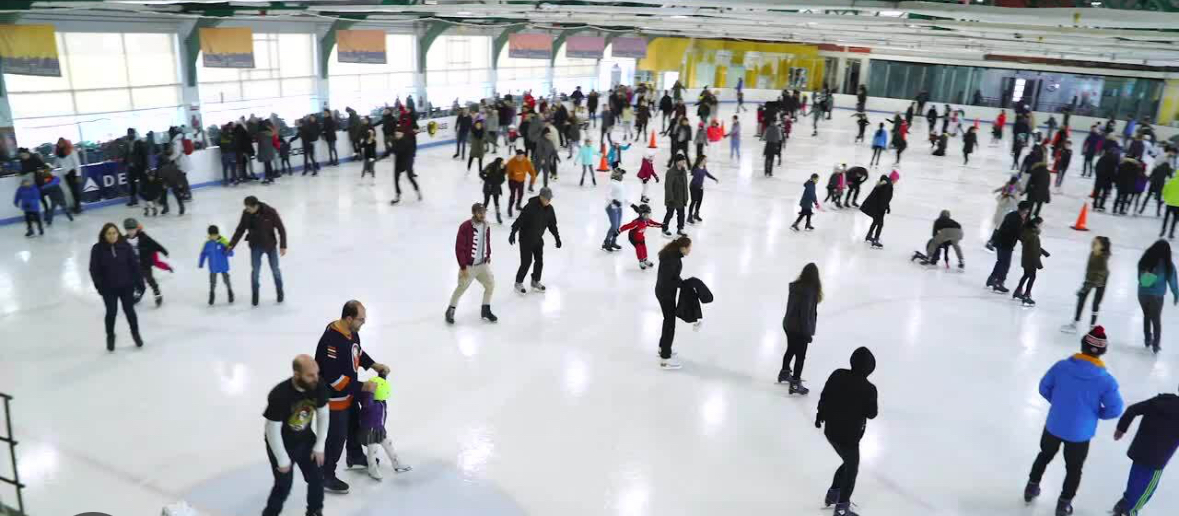
Winter in New York City has its challenges – while not incessantly freezing cold or snowy like some other cities (hey, I lived in Chicago), it certainly can be. The wind amplifies as it whips around our skyscrapers, making wind chill a real trial some days. The days are shorter, and once the festive lights of the holiday season are over, a gloomy grey day can make you feel that you are enduring rather than exuberantly enjoying walking around the city bundled in your warmest parka, hat, and gloves (I recommend mittens!). However, when my sister lived in Vermont, she told me that there you just have to figure out a way to make your peace with winter, and people would take up cross-country skiing or other outdoor sports to get out and find a way to enjoy the season. I think that is true of NYC as well, and one thing that is fun to do – and with few exceptions, only available during the winter – is to go ice skating. While the iconic Rockefeller Center rink immediately comes to mind, there are many places to go ice skating in NYC. Let’s look into our options . . .
Rockefeller Center
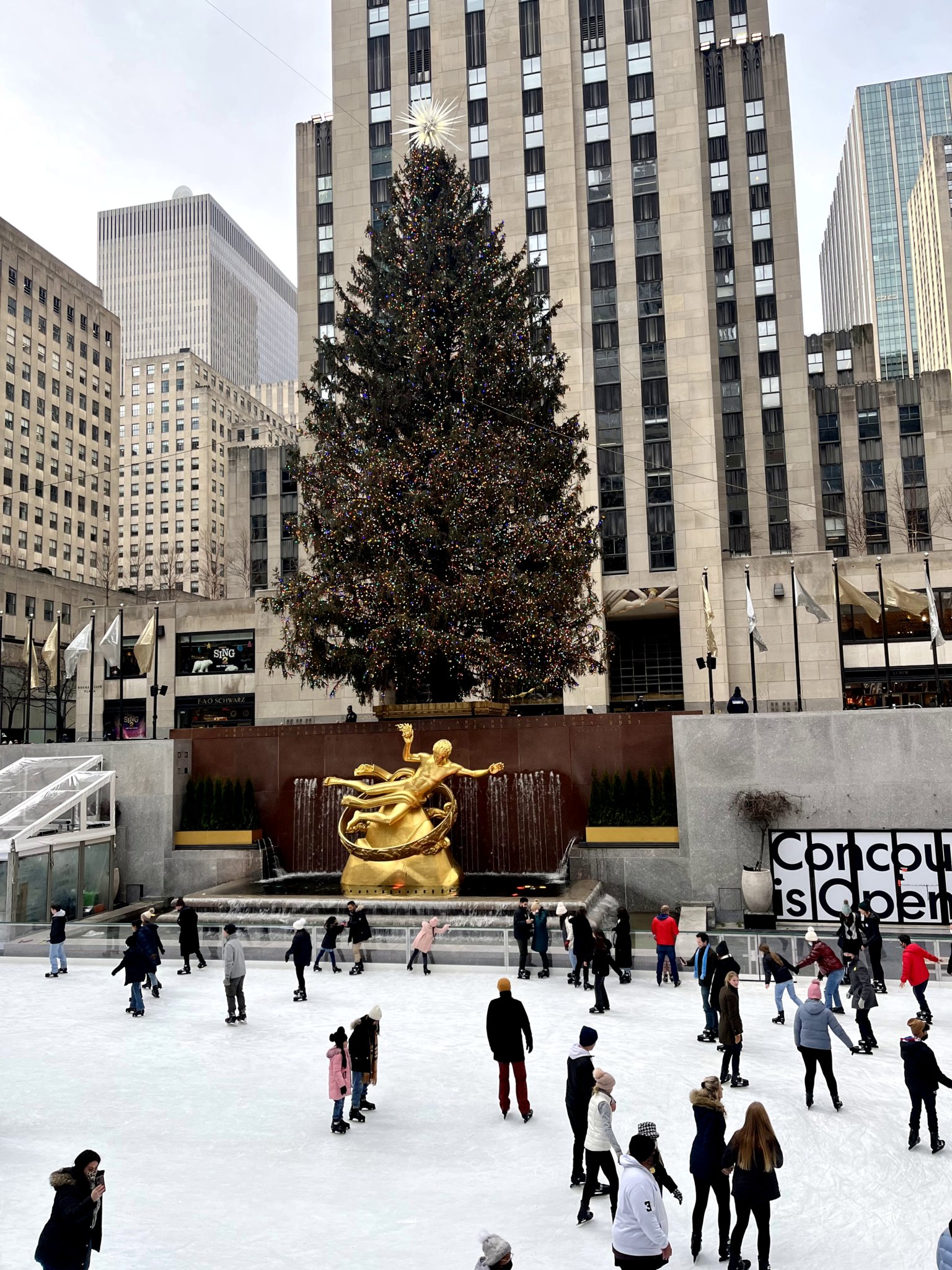
When the Rockefeller Center Christmas tree is up, it’s impossible to resist skating under it – at least once (the rink has capacity limitations, is small, and when the tree is up everyone has the same idea!). But keep in mind that the rink is open much longer than the tree is up (it opened October 21st in 2023 for this season, and will stay open until late March or early April, depending on weather). Cost for an adult to skate ranges from $21-79 (pricing is flexible and based on demand) without skate rental and for only 40-60 minutes (your time could be shorter than an hour if the Zamboni is used during your hour), so it’s not inexpensive. If you wanted to skate a lot, there is a season pass, starting at $250. It’s hard to beat this skating rink for photo opportunities (see a video I took here), but it’s not most locals’ first choice. You can find out more about the Rockefeller Center skating rink here.
Bryant Park
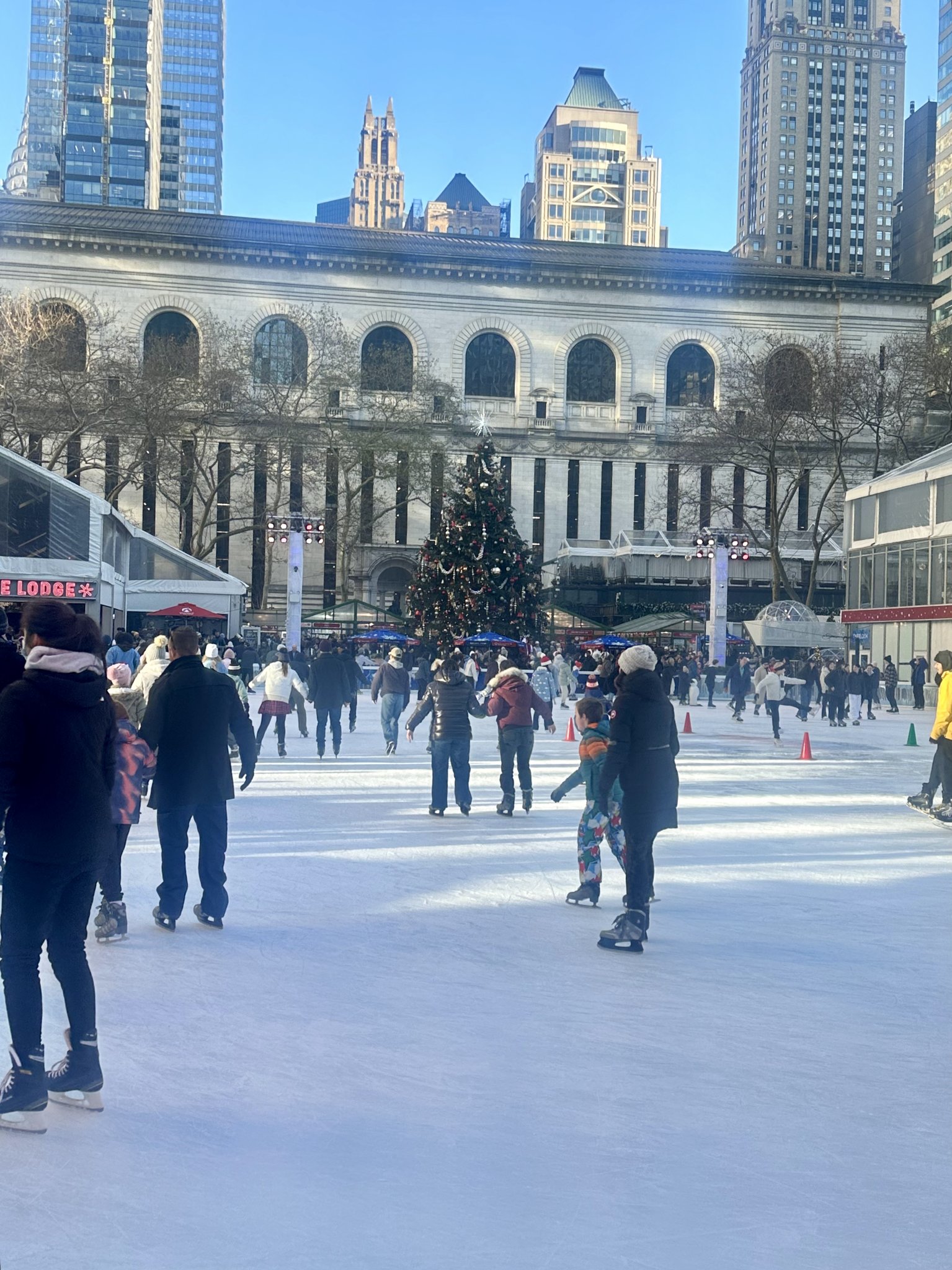
Not too far from Rockefeller Center, behind the iconic main branch of the New York Public Library, you can find the Bryant Park Winter Village. Skating here is FREE (this is not a misprint!), and you can reserve tickets (the reservations open up a week in advance). If you need to rent skates, they are available – if you have your own skates, there is no charge at all to skate here. See here for a video I took at the rink once when a skating performance surprised me. The Holiday Market here was recently voted the world’s best, and there are other fun things to do (rent a private igloo for dining, eat at the Lodge, have a drink at the L’OR Porch, even go curling!). Perhaps the most fun is BUMPER CARS ON ICE, where you sit in a big tube and basically slide around and bounce into others. Trust me, it is crazy fun. Bumper cars on ice is not free, but I think well worth it. Find out more about skating and other things to do at Bryant Park in the winter here.
Wollman Rink
I will put my own bias out right away – I think ice skating at Wollman Rink, surrounded by Central Park and looking at the skyscrapers ringing the park is the most beautiful and enjoyable skating experience in NYC (see a video I took while walking past on Christmas Eve in 2023 here). Tickets can be reserved in advance (around $15) and they also have skate rentals available. Tip to New Yorkers with a library card: Culture Pass, with which you can get free admission to museums and such, often has a pass for four available during the week at no charge. Wollman Rink is more exposed than many of the other urban skating rinks, so check the weather before you go. Find out more about skating at Wollman Rink here.
The Rink at Brookfield Place
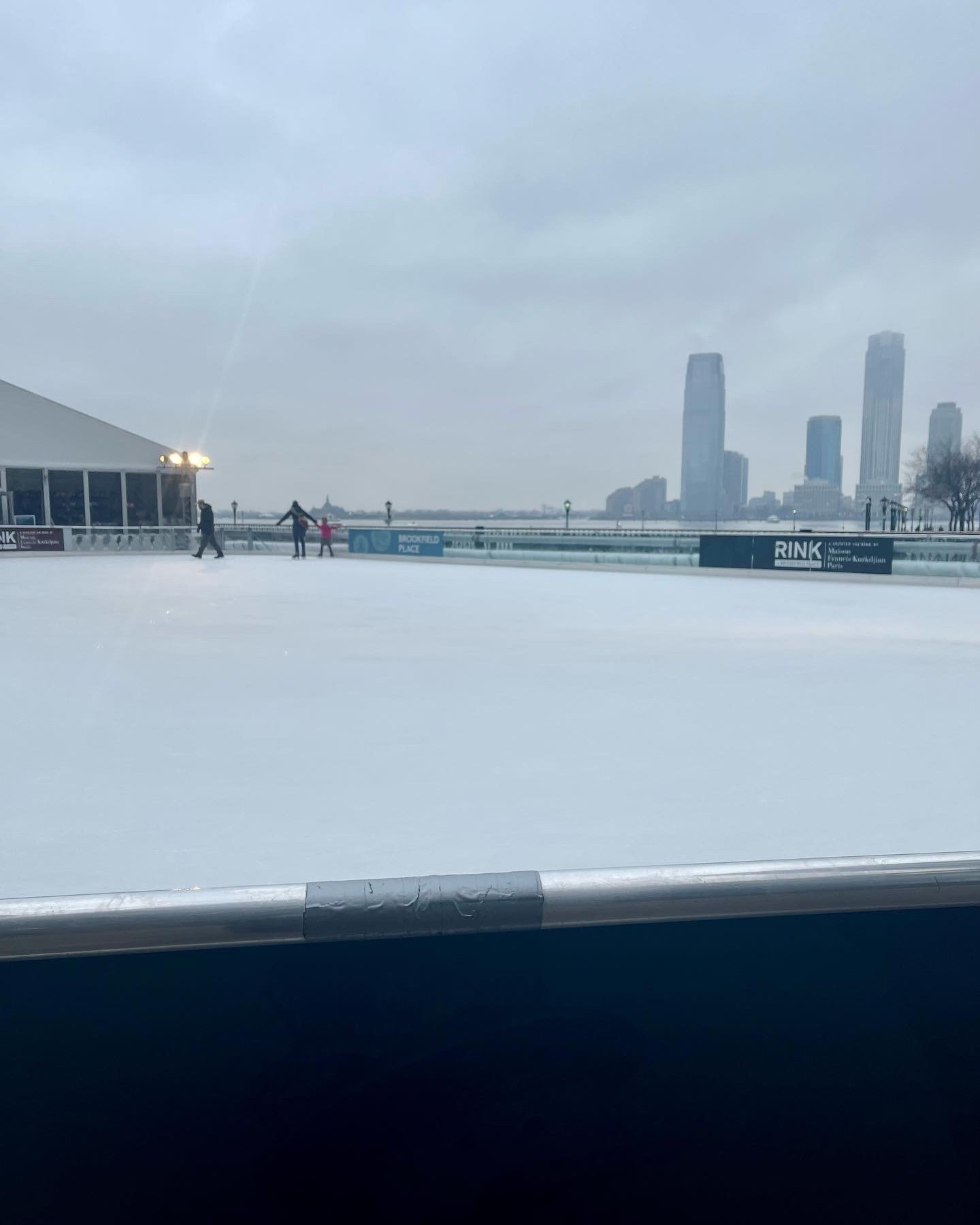
Brookfield Place, near One World Trade and Battery Park at the southern tip of Manhattan, has a nice rink that I find usually not too crowded. You have distant views of the Statue of Liberty and you are skating right next to the Hudson River. Pricing is reasonable – $15 weekdays and $17 weekends, with skate rentals only $5-7. Find out more about skating at Brookfield Place here.
Manhattan West
Manhattan West is a hidden gem – if you haven’t been to this area in Midtown near Hudson Yards, check it out. They have skating sessions mid-November through March, and the cost is about $20 (plus $5 for skate rental). Find out more about skating at Manhattan West here.
Glide at Brooklyn Bridge Park
There’s a new skating rink in NYC, and I really want to try it but haven’t yet! It’s called Glide, at Brooklyn Bridge Park right under the Brooklyn Bridge (one of my favorite pics from walking over the Brooklyn bridge is above), and is open until March 1. A skating session starts at $15, with skate rental at $5, and from what I can tell the views are incredible. Find out more about skating at Glide here.
Chelsea Piers Sky Rink
I mentioned before that most but not all ice skating rinks in NYC are outdoors, and the Sky Rink at Chelsea Piers is the big exception. Completely indoors, enormous (there are two full-sized rinks), and open year-round, this is where I took my daughters to learn to skate. Find out more about Chelsea Piers skating here.
One thing I was definitely reminded of when I summited Mount Kilimanjaro this summer in freezing cold and wind: there is no bad weather, only weather for which you have not dressed properly. (OK, not entirely true, it was still cold on Kili, and certainly at times my face has become completely numb by the cold and wind here in the city during a frigid snap – but still, proper gear makes all the difference!). So let’s get out and appreciate winter here in NYC . . . for after all, would we appreciate spring and cherry blossoms quite so much if we hadn’t just lived through our austere and challenging winter?
This time of the year, New York City is filled with holiday decor, the lights driving back the darkness a bit as we head into winter’s solstice. Not all the lights are specifically about Christmas, but images of Santa are plentiful. What if you are interested in seeing – or even meeting – Santa in the city? There are many opportunities, and I will describe a few, leading up to the “Miracle on 34th Street” pinnacle of seeing the “real” Santa at Macy’s Santaland (not for the faint of heart). I will also let you in on a few experiences where Santa is there but not necessarily the main event.
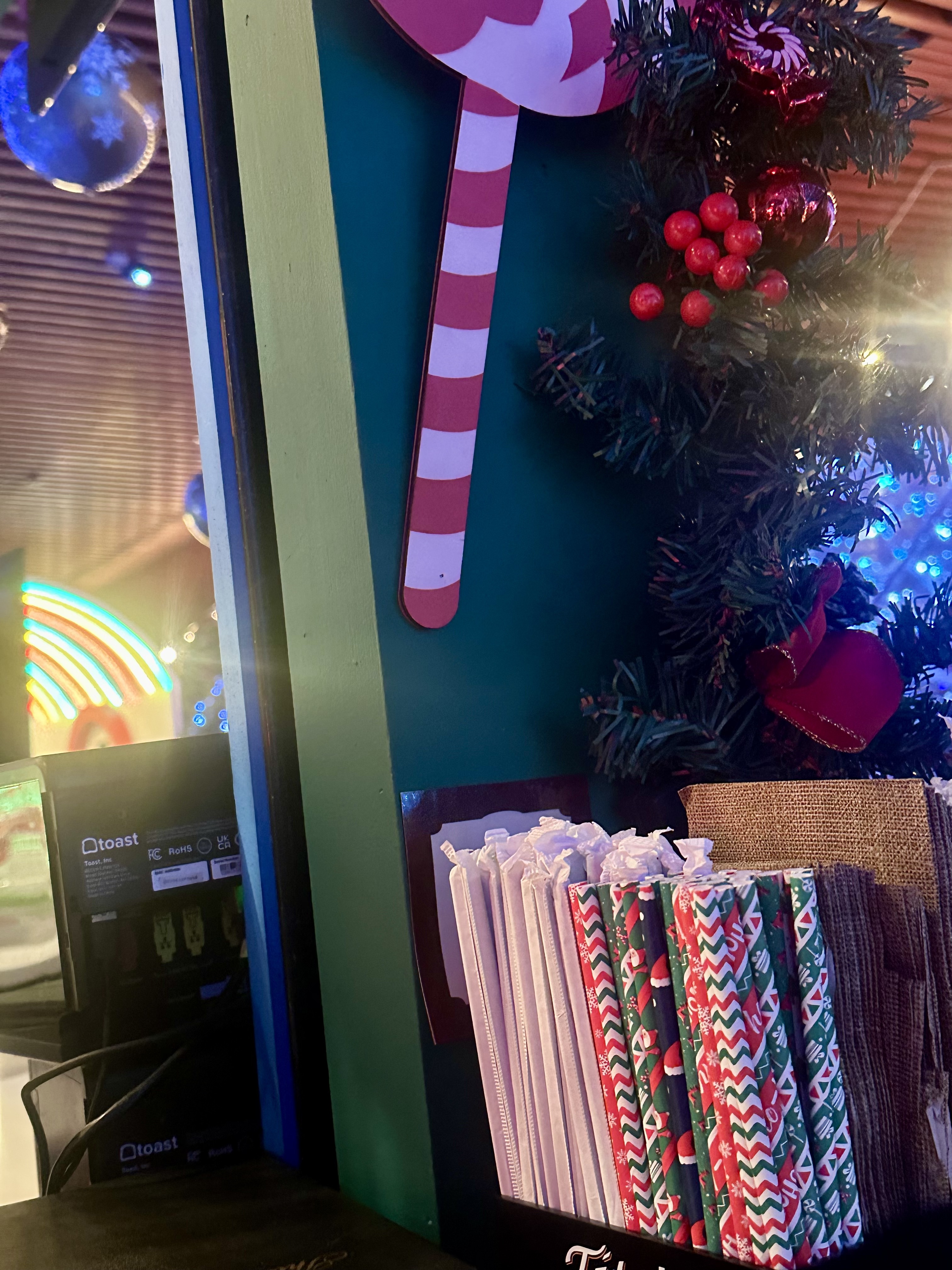
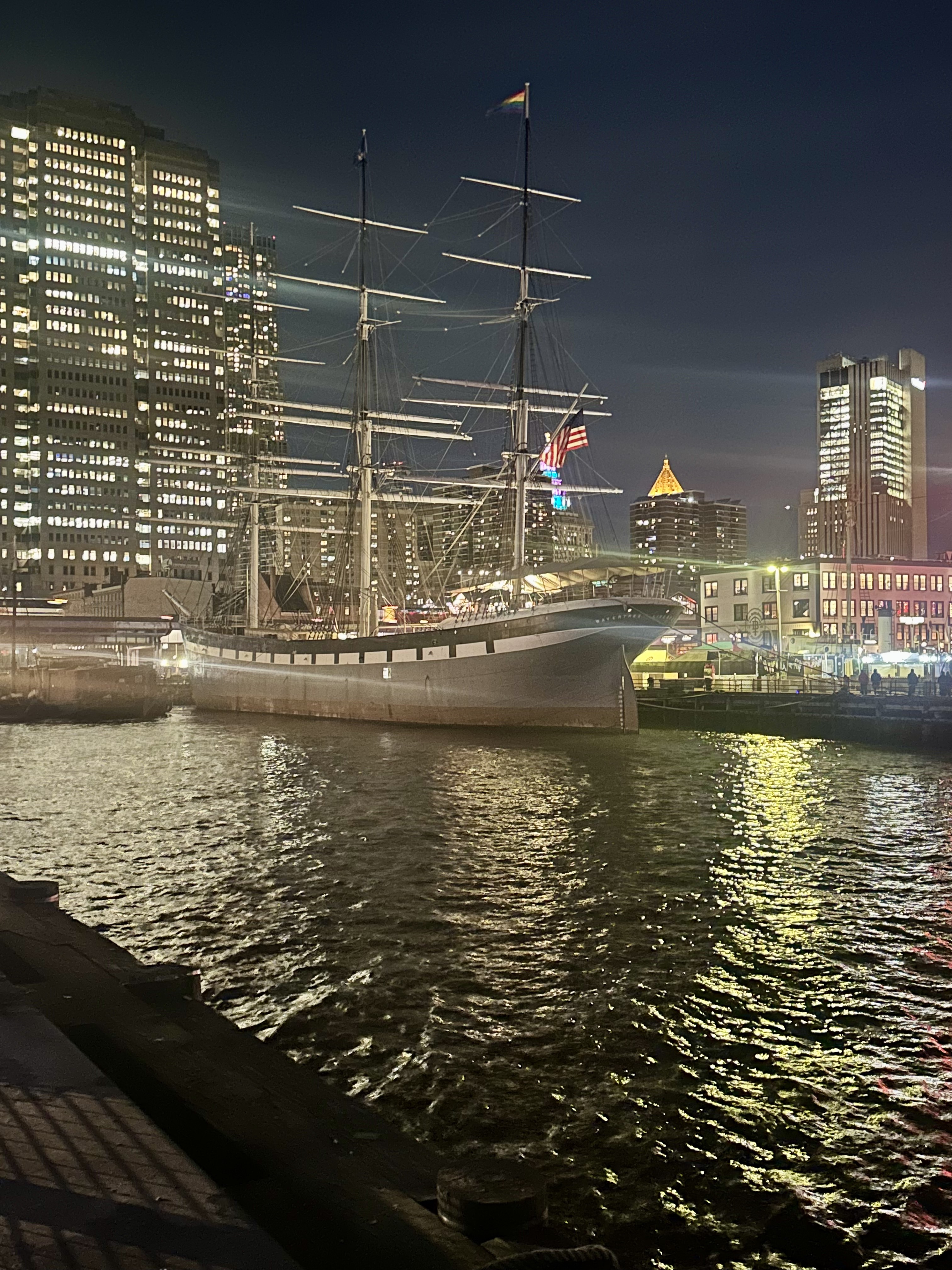
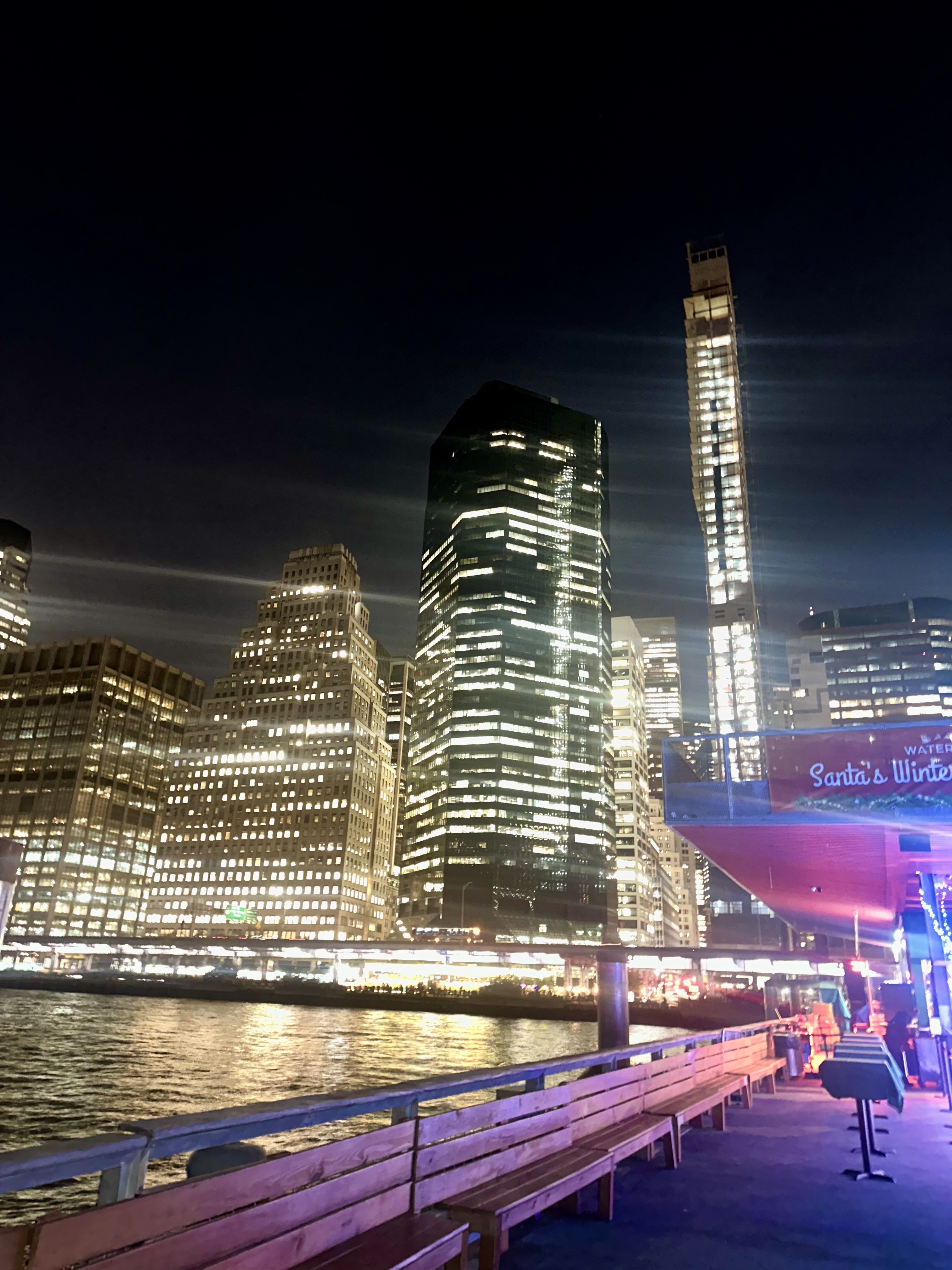
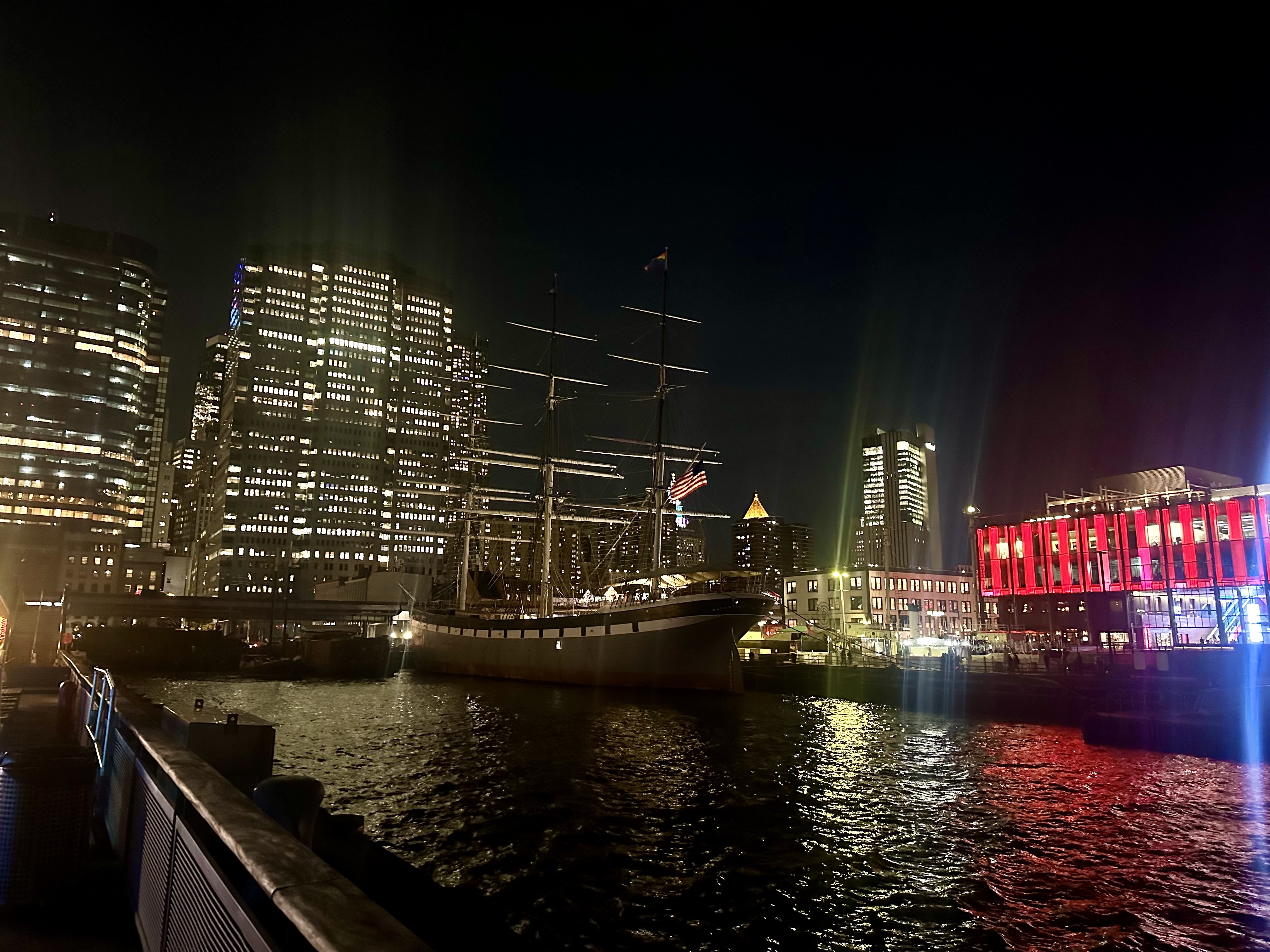
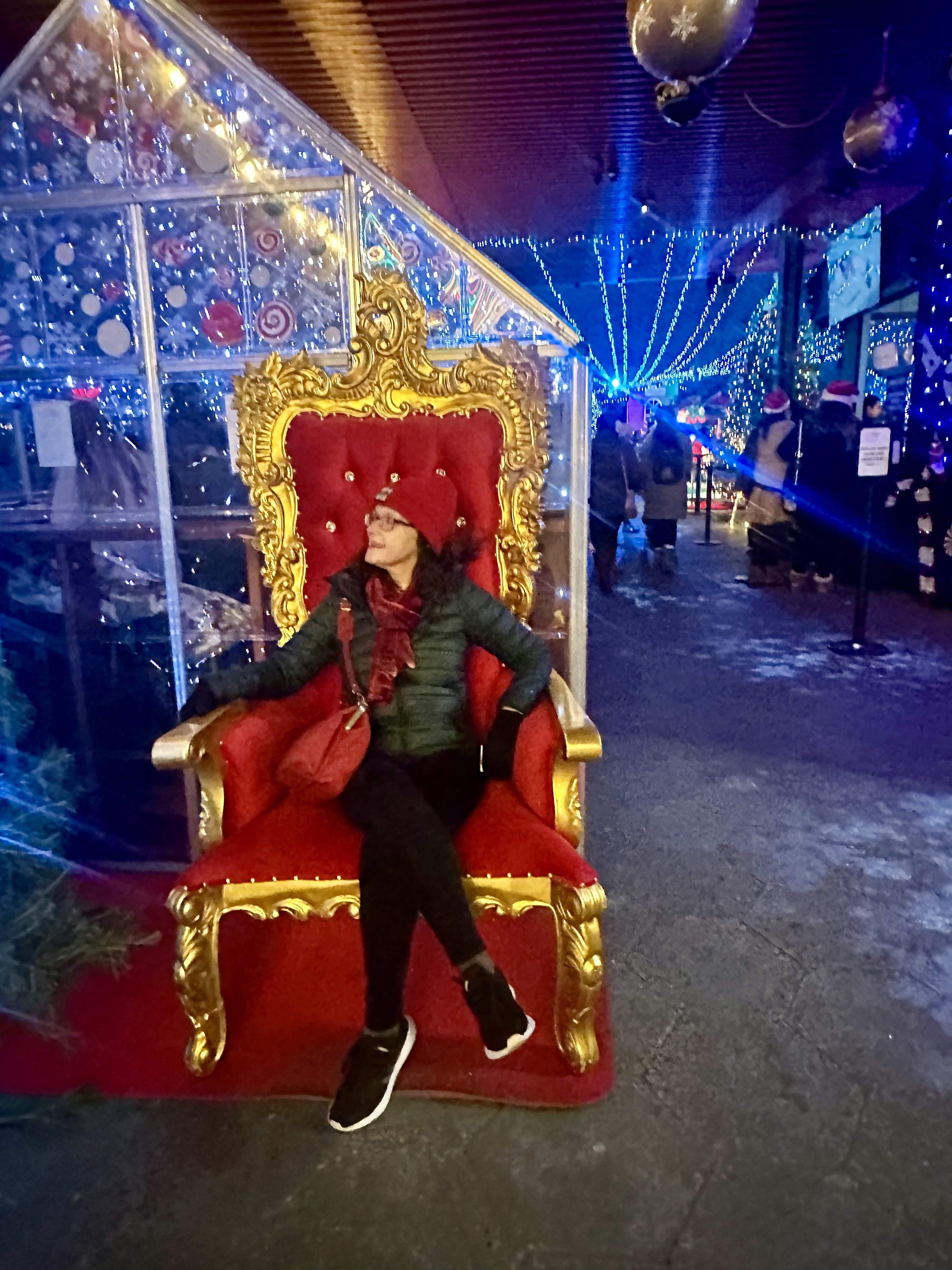
First, a new experience that I tried this year, Santa’s Winter Wonderland at Pier 15 in the South Street Seaport area. This is a fun experience that could work for a family with kids (there is Santa there for a visit with little or no line waiting, hot chocolate, snacks) or adults out for a fun evening (there are specialty cocktails, terrific views, etc).
This is a ticketed event, with timed entry. There is also an option for a sit-down meal at a specific time in an enclosed see-through hut, but I didn’t try that.
For general admission, you get a hot chocolate or hot cider, and a choice of snack (soft pretzel, chocolate chip cookie, or churro), and you can eat outside or in one inside dining area that has open seating (but was a little crowded when I was there).
For parents hoping for a Santa visit, I saw very little waiting time and plenty of interaction. I am sure adults could see Santa as well if they wanted!
The decor was festive, and the views around lower Manhattan, the South Street Seaport, and the Brooklyn Bridge were all terrific. You could purchase a s’mores kit and roast the marshmallows over a fire.
Interestingly, there is a rival Santa experience right next door at Pier 17, Disney’s The Santa Clauses’ Winter Wonderland! More expensive, but also more elaborate, this experience has a synthetic ice skating rink as one of the possible activities. Santa is also available for a visit and photos, but on specific dates and times, so if that is important be sure to check that out before purchasing timed tickets.
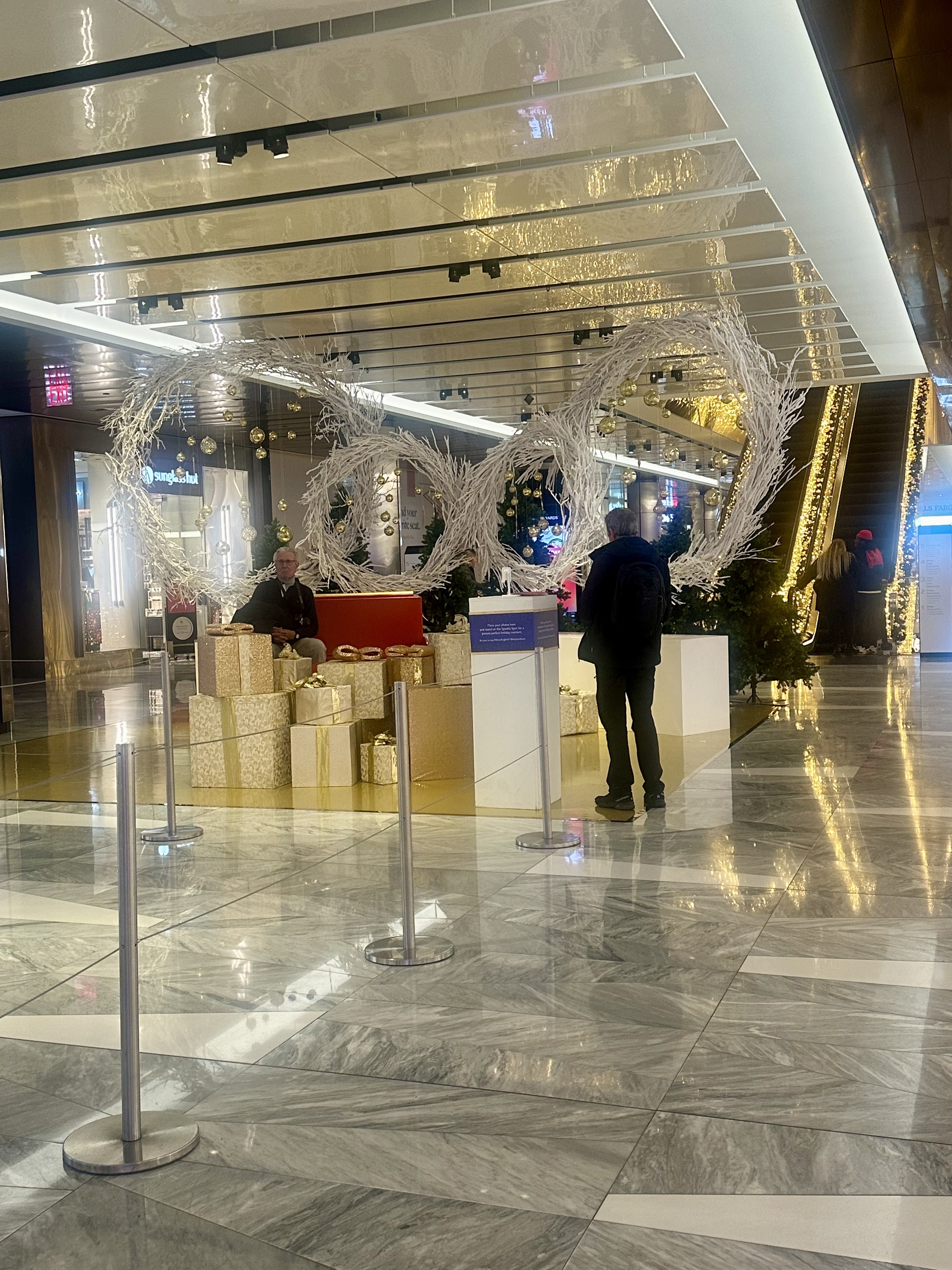
Not all Santa experiences cost money (although many might cost time!). Hudson Yards is decorated fabulously for the holidays and has signs up saying when Santa is available, free of charge. I haven’t been there during those times, but the place where Santa is looks like a lovely photo opportunity. Hudson Yards has also set up “twinkle spots” all over the building for you to set up your phone to get a photo of yourself with all the holiday lights.
Winter Village at Bryant Park has the best holiday market in the world (and I agree with this recent ranking) and Santa is there for free photo opportunities, see his schedule here. Bloomingdale’s also has an opportunity to meet Santa, reservations required, and a $25 booking fee is involved but you get it back in the form of a $25 gift certificate. The time for this has passed this year but if interested in future years the information about booking was here.
Finally the ultimate – visiting the “real” Santa at Santaland at Macy’s. The procedure now is via reservation only, and the reservations open up five days in advance. In my experience, they go very quickly. There is no entering the line without a reservation, but the reservation does not prevent you from waiting on a line. When I went this year, on a Saturday in early December, in the afternoon, we waited 90 minutes to see Santa! Some of the time was spent in the delightfully decorated line inside Santaland, but a fair amount was spent in a line in a hallway that wrapped back behind the entrance to Santaland. When I have gone before on a weekday, the experience has not been this difficult, but of course most people need to work during the week, making the weekends extremely busy.
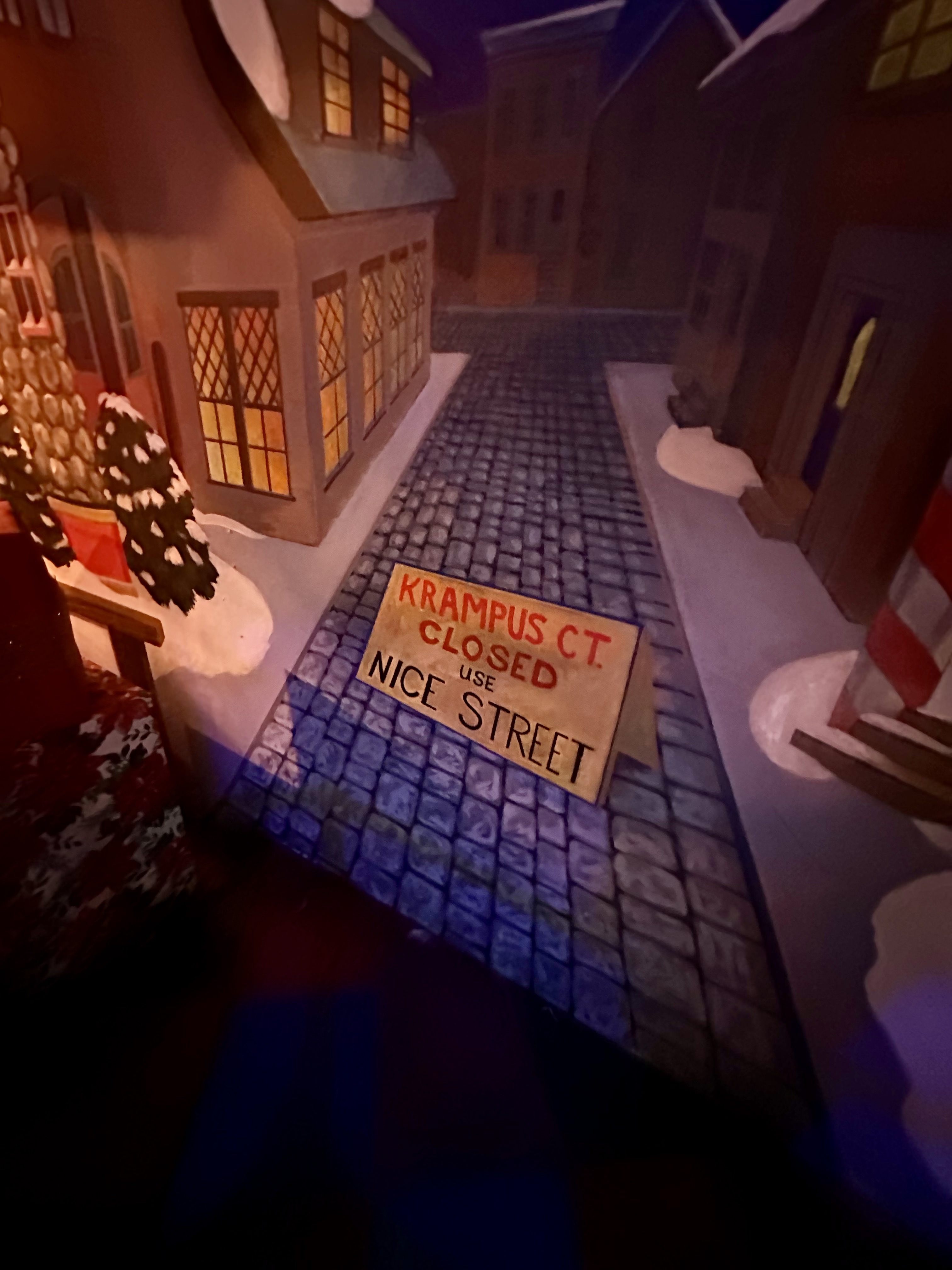
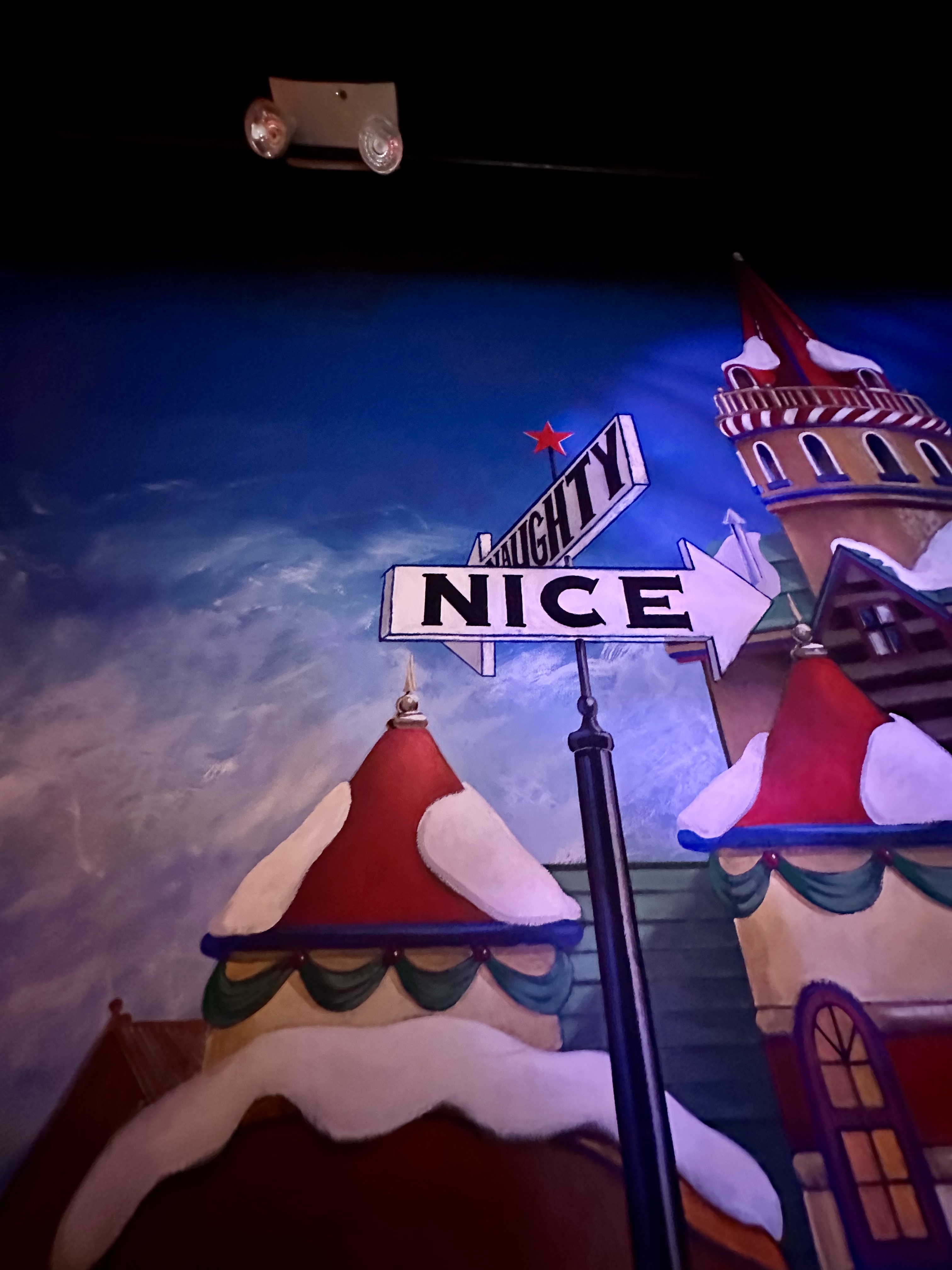
You have to pack your patience for a wait like that, and it may be difficult to stay off Krampus Court and keep on Nice Street . . . but seeing Santa there is a special experience. Macy’s won’t charge anything unless you choose to purchase their photos (which I recommend, they are terrific photos with very cute digital borders) and you are free to take your own photos too. You will pay with time and effort, but isn’t that often the case with so many things in NYC? I was at Santaland with a child this year, but a few years ago was with another adult (on a weekday, without a huge line! see below for picture) and Santa was just as kind to us as he was around a cute baby. Even as I was walking out this year, having been there mainly to see this baby get first photos with Santa and to take candids, Santa stopped me to ask my name and what I wanted this for Christmas! We are never too old to be reminded of our inner child, in my opinion.
Whether we are going to see Santa this year, or whether we ARE Santa this year, this holiday season reminds us that in the midst of darkness there can be light, that babies and children represent hope, and that opening ourselves up to unlocking our own inner childlike wonder can let a little magic into our everyday experience. Happy holidays to all!
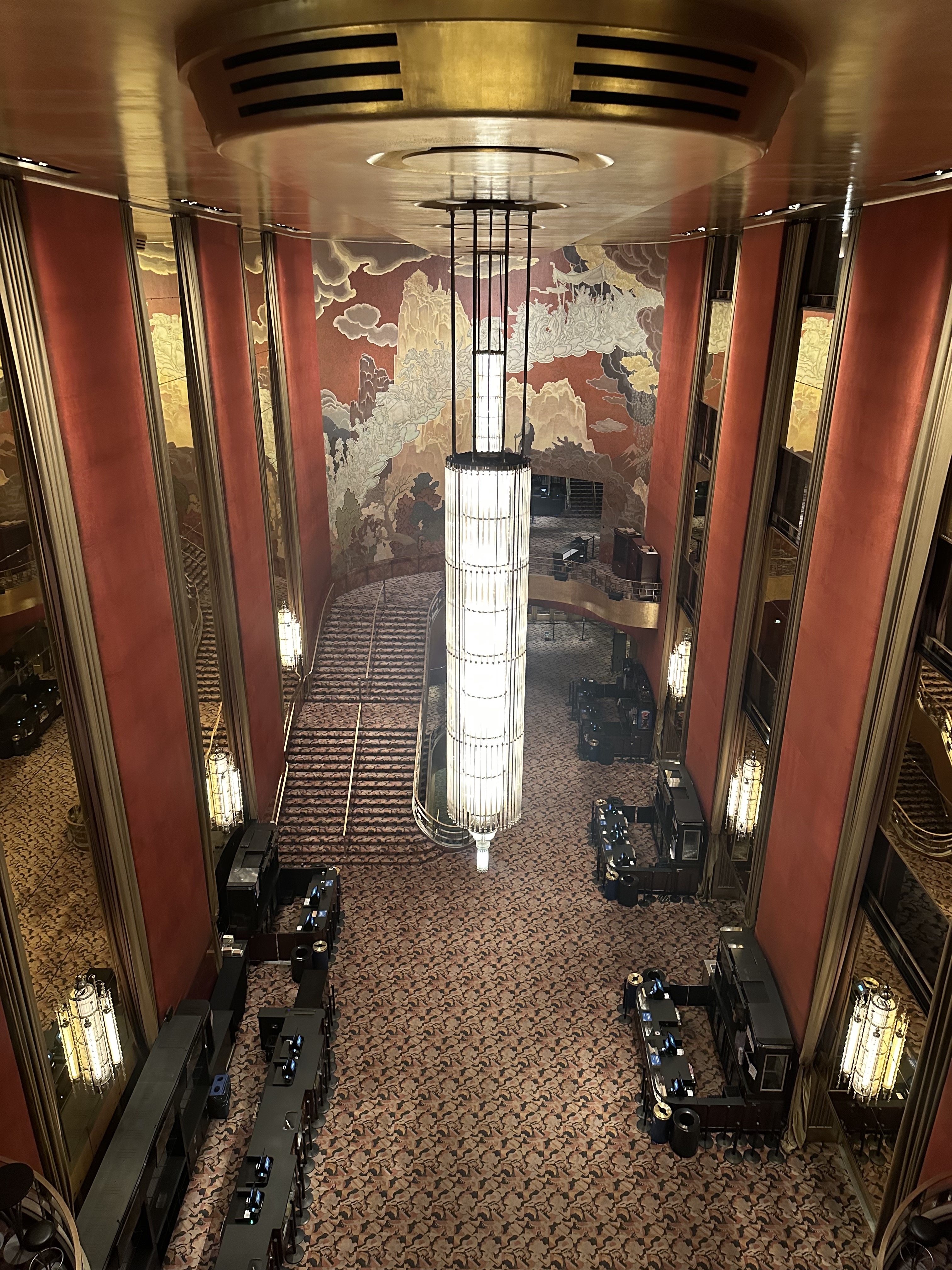
The night before Thanksgiving, a family member and I attended a show that has been a tradition for us going back several decades now – the Radio City Christmas Spectacular. This was my first time going back to Radio City Music Hall since being able to experience a backstage tour earlier this fall, and I feel that I had even more appreciation for this very very special venue. Nicknamed “The Showplace of the Nation,” it certainly is that – but it completely belongs to New York City! Opened in 1932, this magnificent Art Deco masterpiece is entirely unique. Its interior was declared a city landmark by the NYC Landmarks Preservation Commission in 1978, and the exterior was landmarked in 1985 (along with the rest of the Rockefeller Center complex).
Originally intended to be a venue for stage shows, the opening revue was so long and tedious (and badly reviewed) that within two weeks Radio City had been converted to a movie house (with almost 6000 seats!). The Rockettes (originally the Roxyettes after theatre impresario “Roxy” Rothafel) would perform between shows, and there were also an in-house orchestra and chorus. Many films received their premieres at Radio City, including King Kong (1933), Breakfast at Tiffany’s (1961), To Kill a Mockingbird (1962), Mary Poppins (1964) and The Lion King (1994). In the 1970’s, Radio City’s attendance had dropped to the point where there was talk of it being torn down and the area redeveloped (this was before it was landmarked). But a shift toward using the venue as a concert hall improved the financial picture, finally turning a profit again by 1985.
Radio City has also been the venue for numerous award shows, including the MTV Video Awards, the Grammy Awards, and my favorite, the Tony Awards! Attending the ceremony in 2022 was the realization of a life-long dream (you can read more about it here).
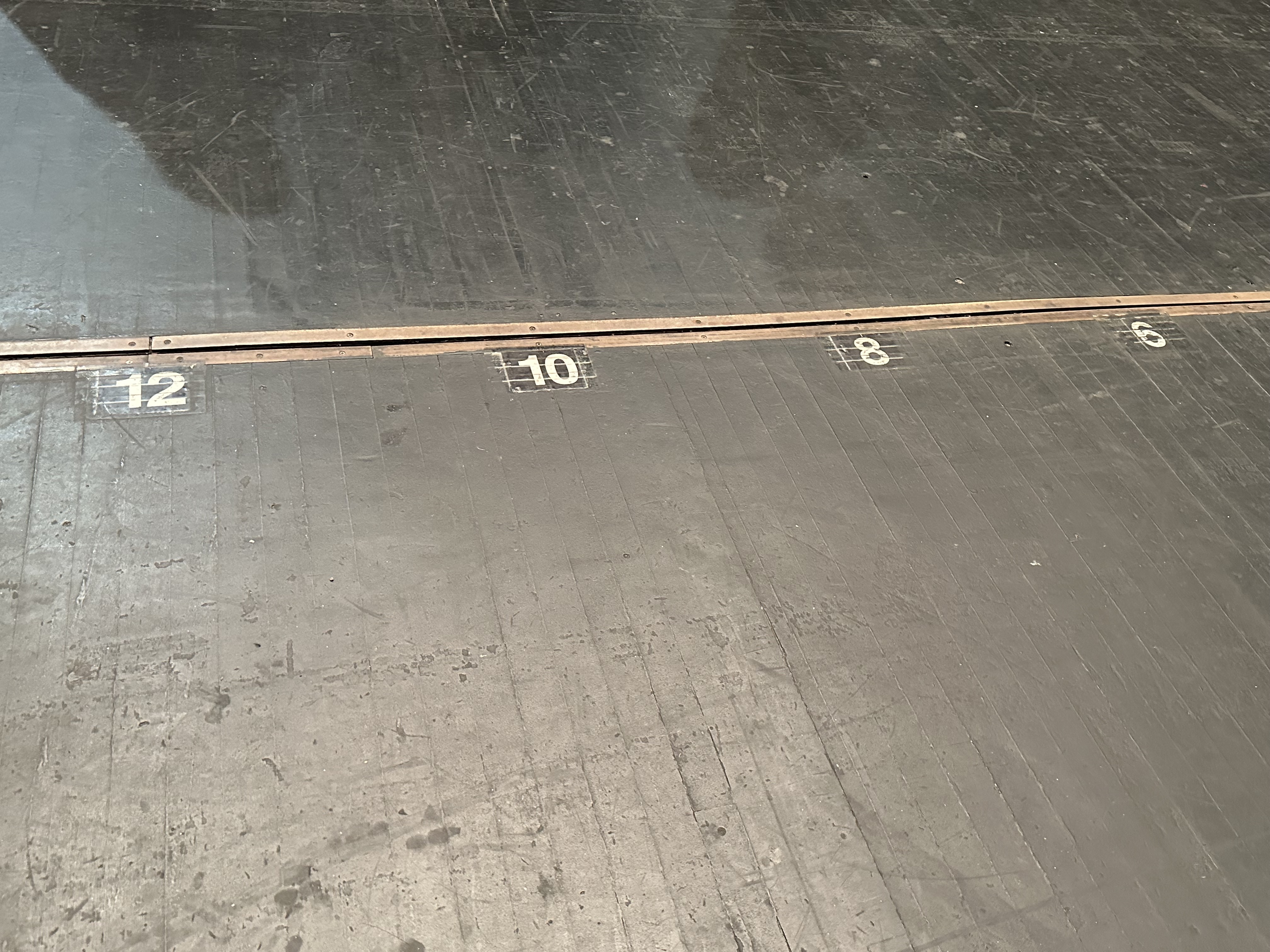
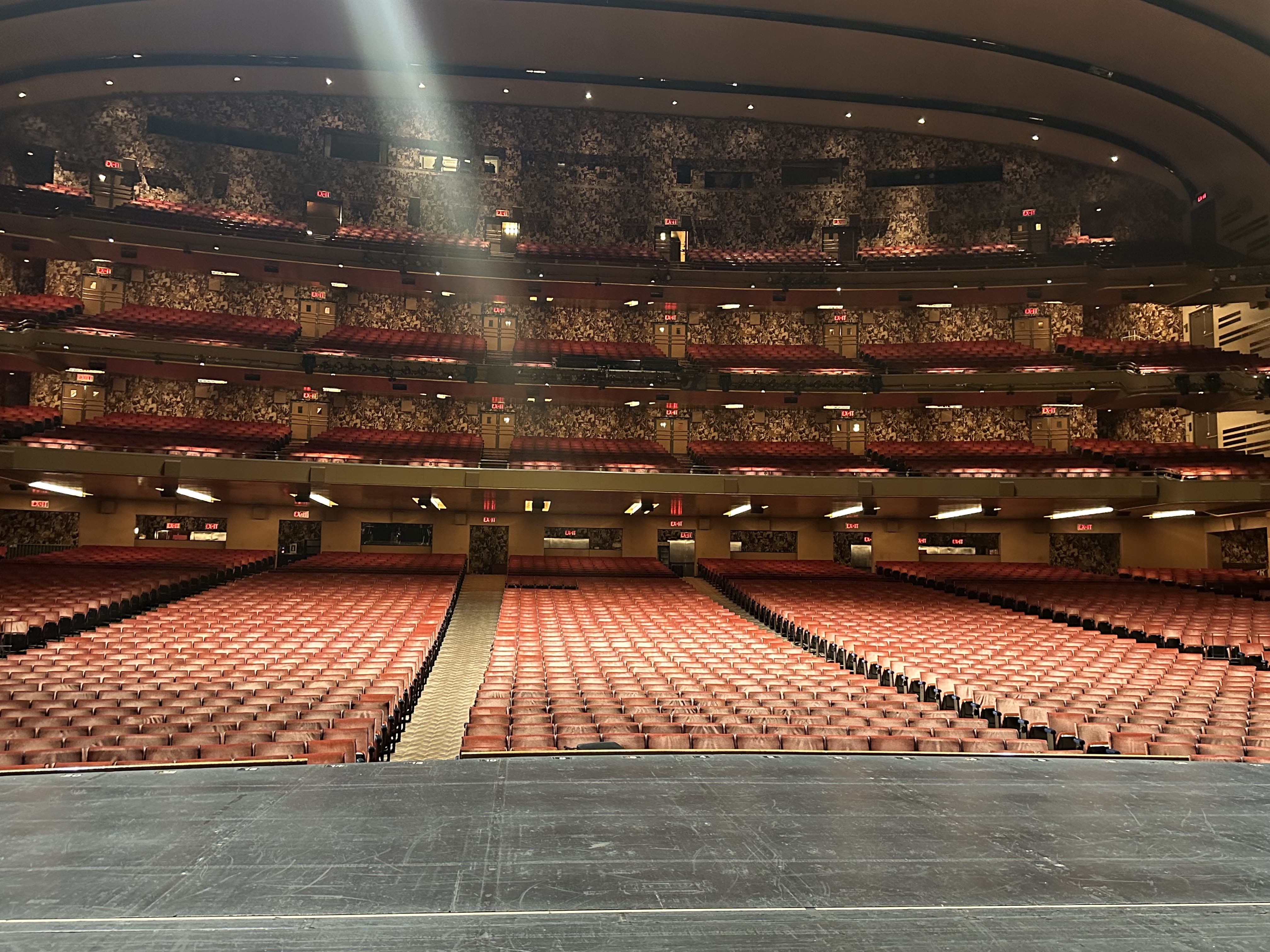
Radio City Music Hall has a backstage tour (find out more about it here) but rarely can you go on the actual stage, as I was fortunate enough to do this fall. The reason why it is so unusual to go on stage is that the venue is busy and most days of the year a show is loading in or out, preventing you from being able to go backstage or on the stage itself. Standing on the stage, you really appreciate how enormous the stage is (and the auditorium!). I loved knowing that my feet were standing on the same stage as so many Rockettes had done throughout the years.
It was disconcerting – but also fun! – to see the auditorium with house lights on, and the stage revealing things usually covered by a set or screen.
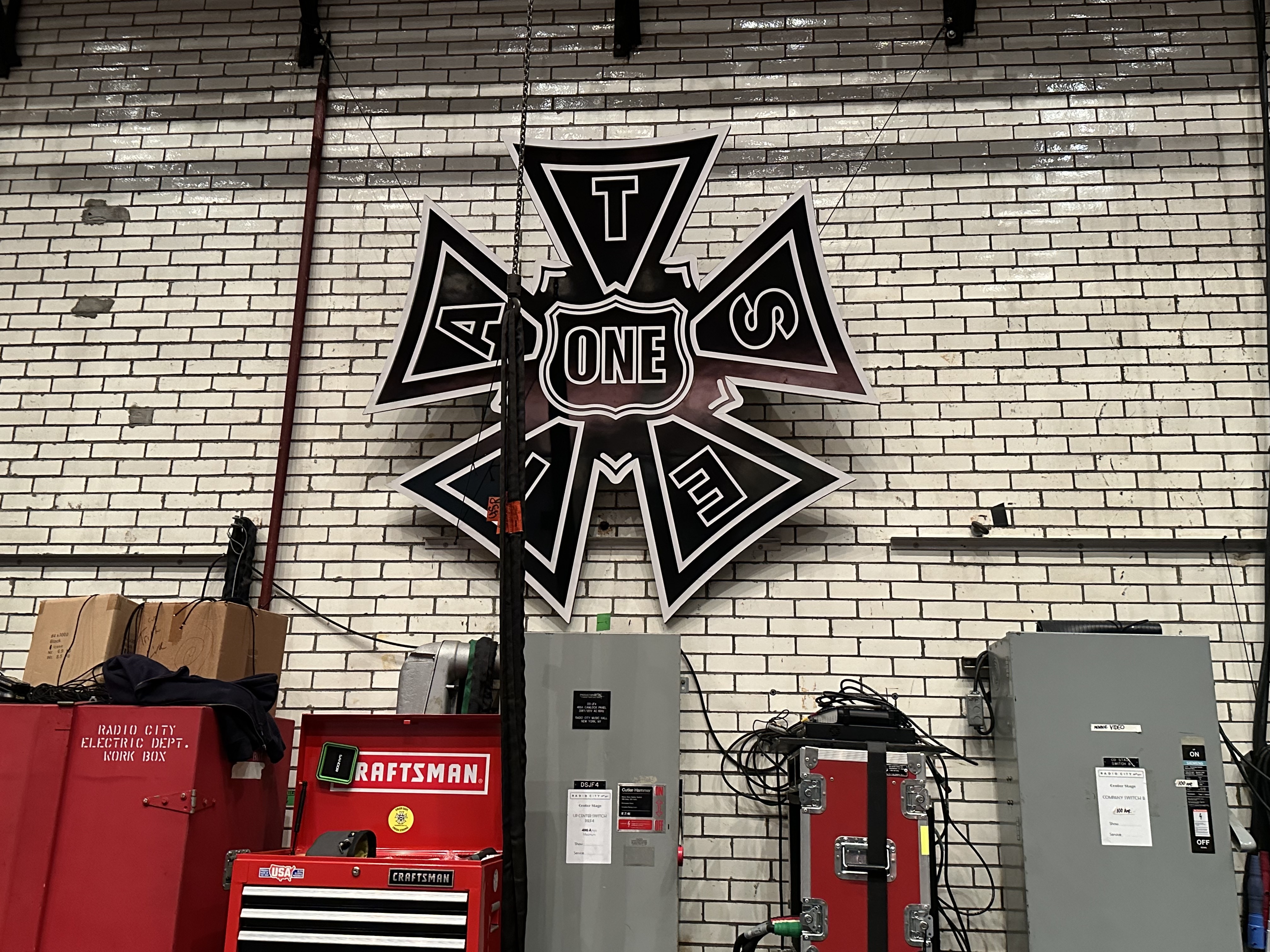
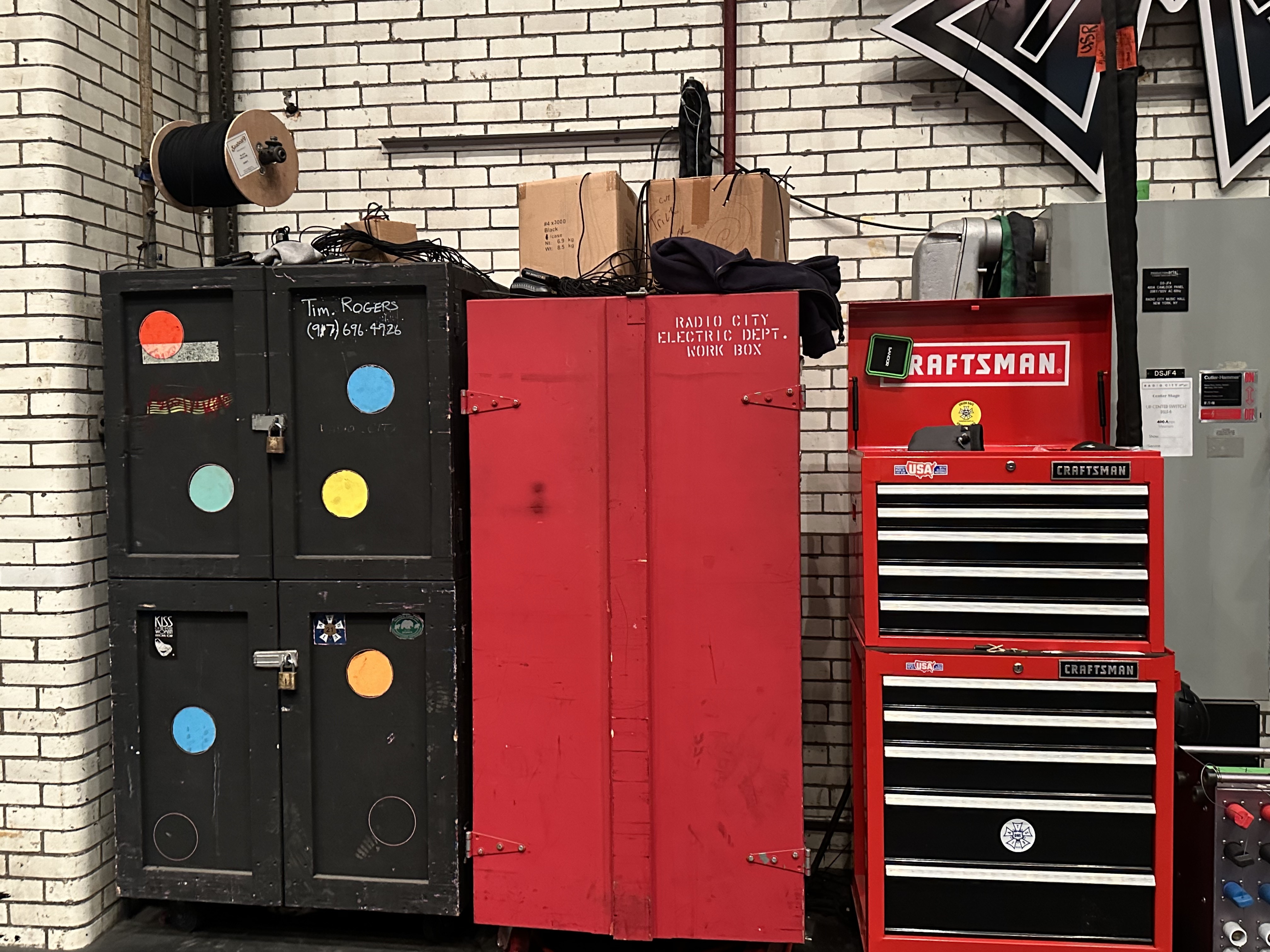
Going away from the stage in the backstage area, there was always clear signage to show directions – Radio City Music Hall is massive, and covers 50th to 51st Streets, facing Sixth, and a considerable amount of the block heading toward Fifth.
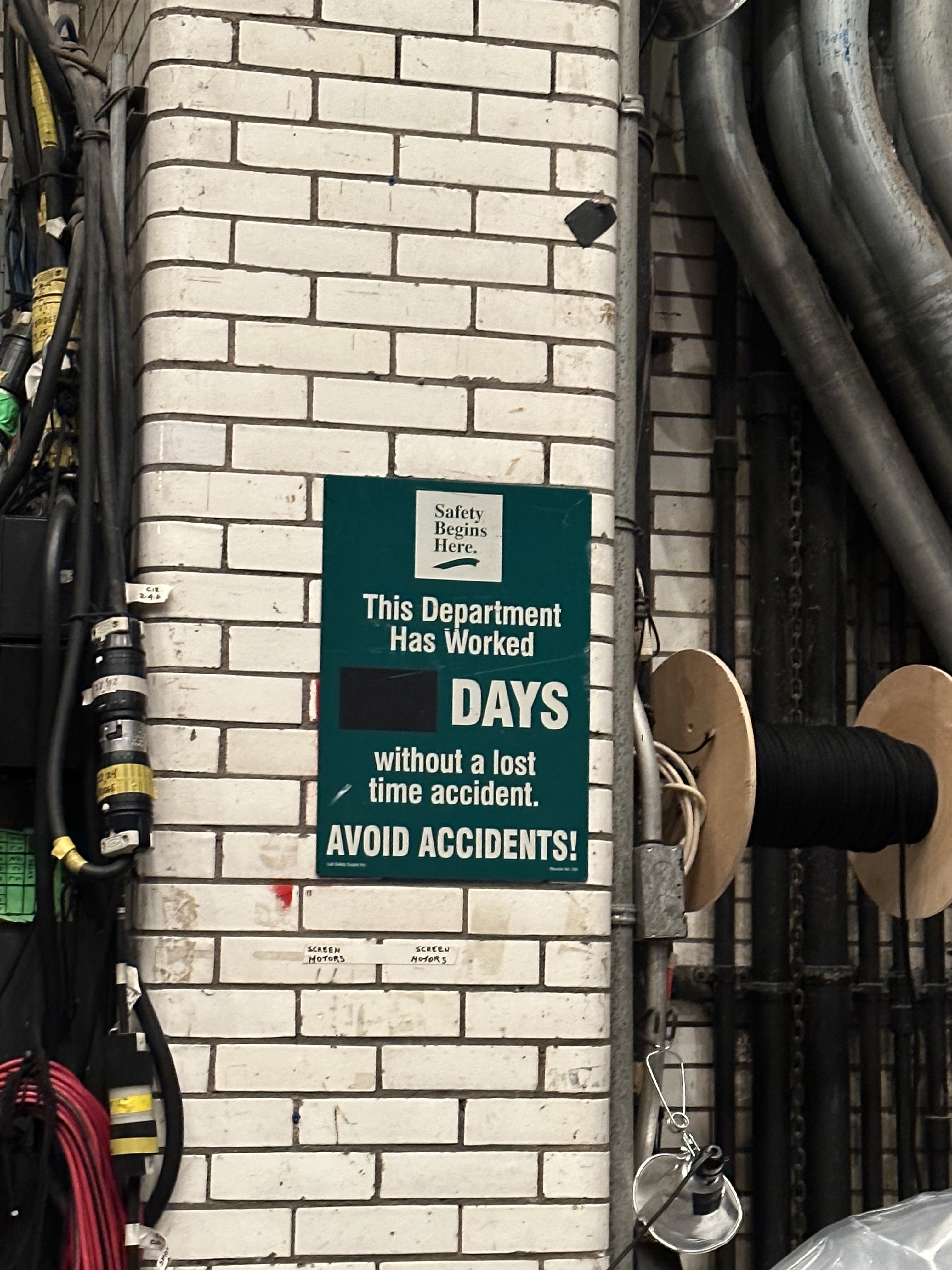
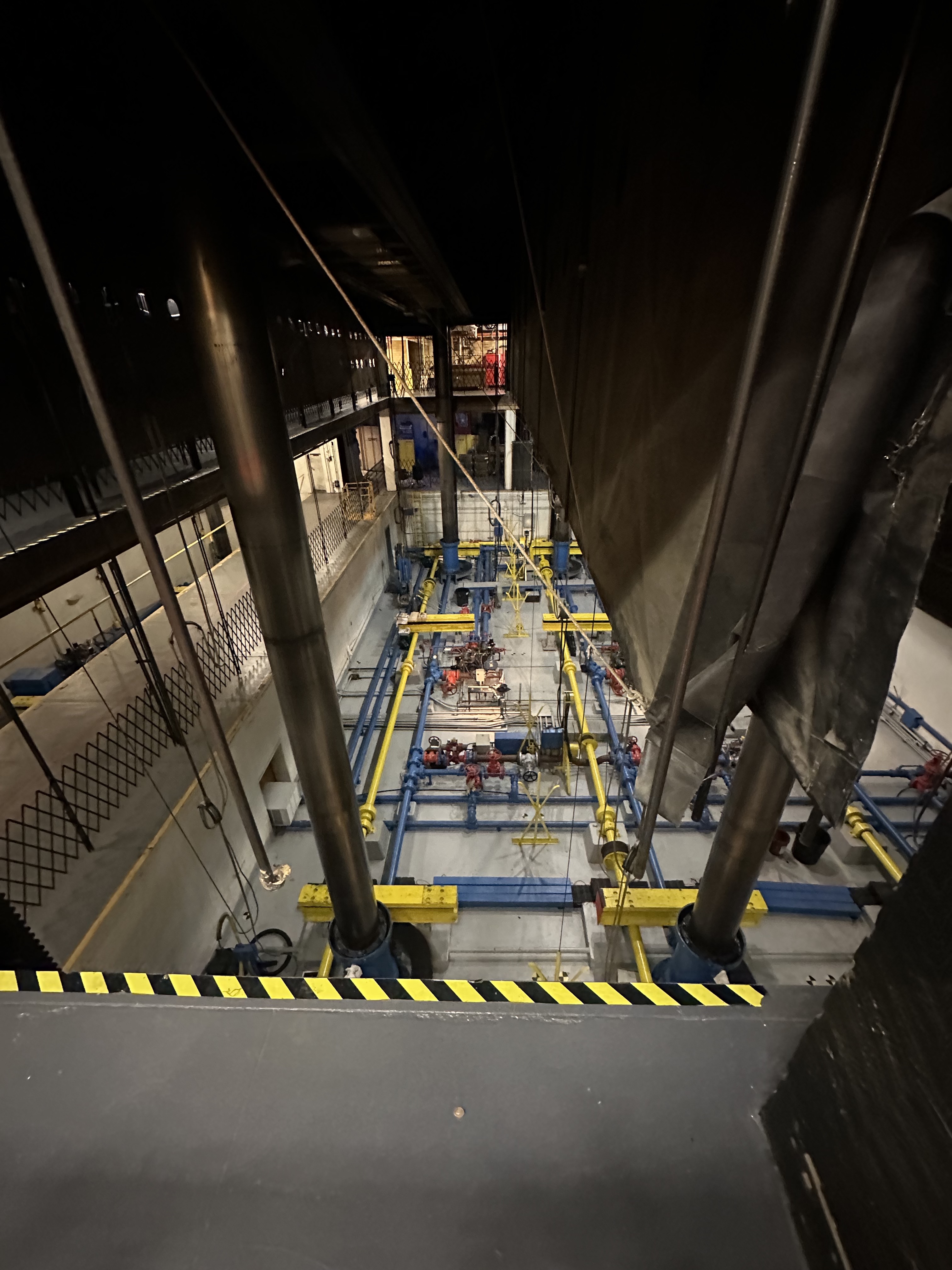
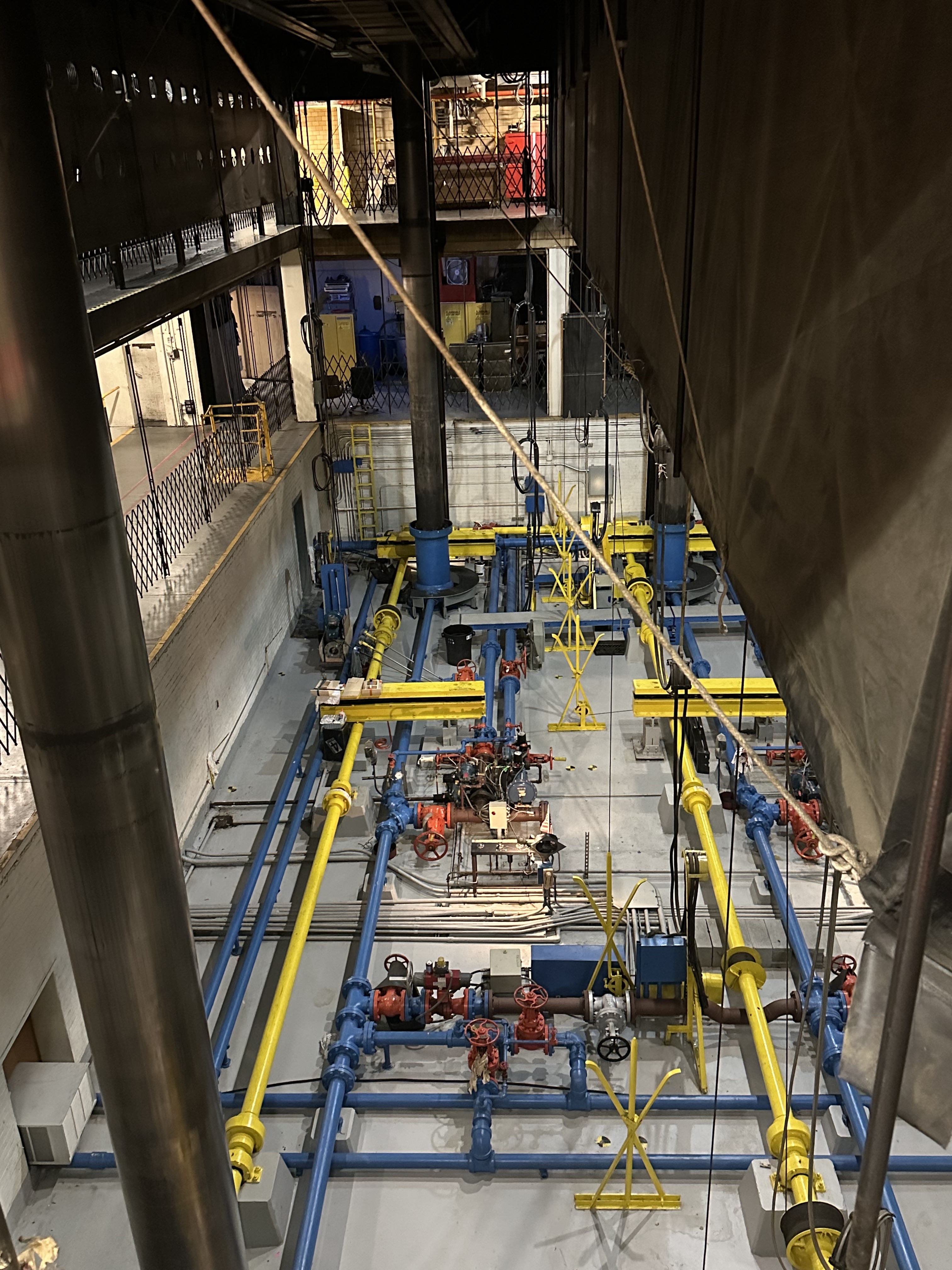
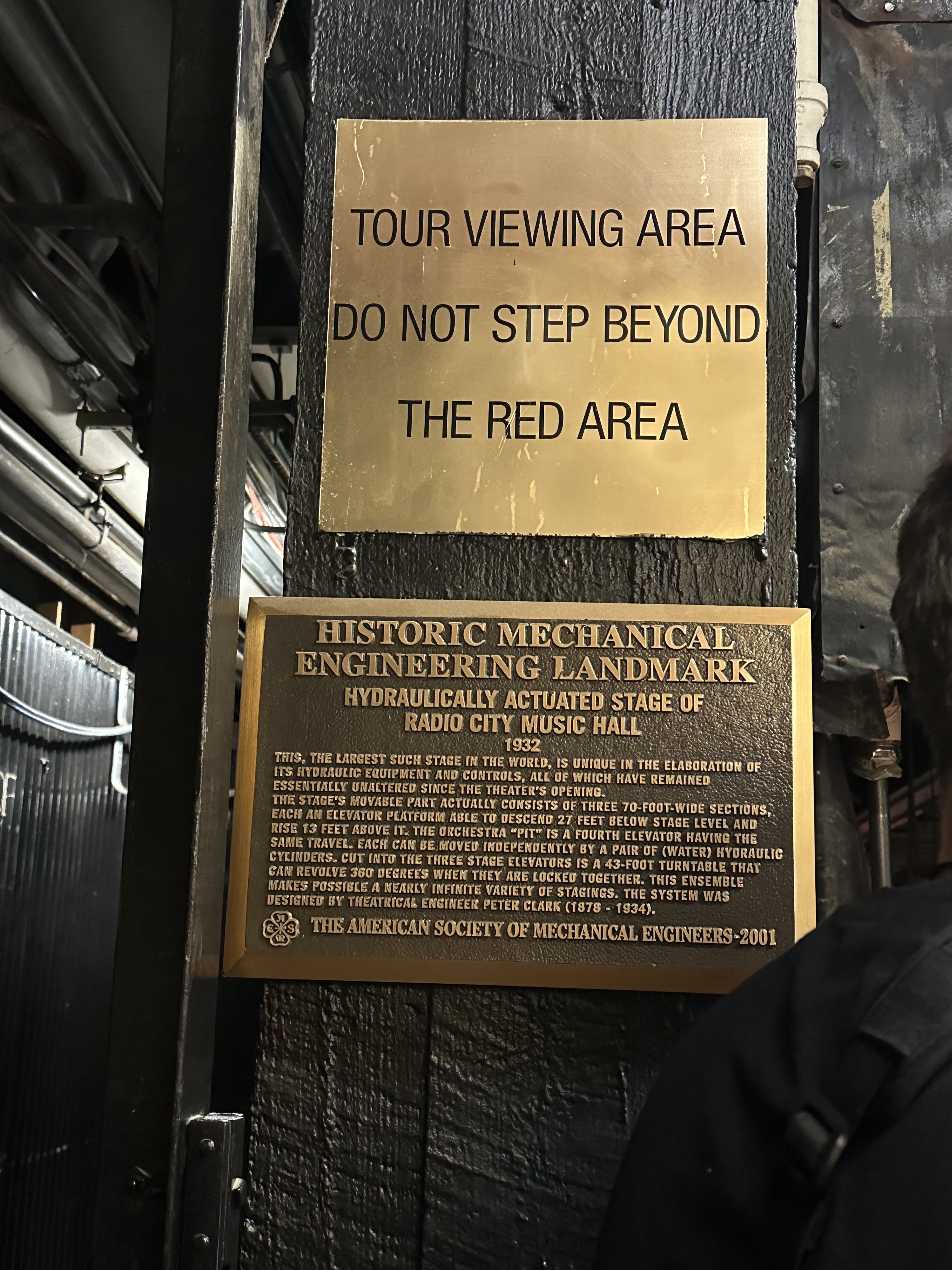
Seeing the mechanicals that allow the orchestra to rise up from below the stage to stage level, as well as travel from the front of the stage to the back, was amazing. This hydraulic mechanism is original to the building, and is a Mechanical Engineering Landmark (the first I had heard of such).
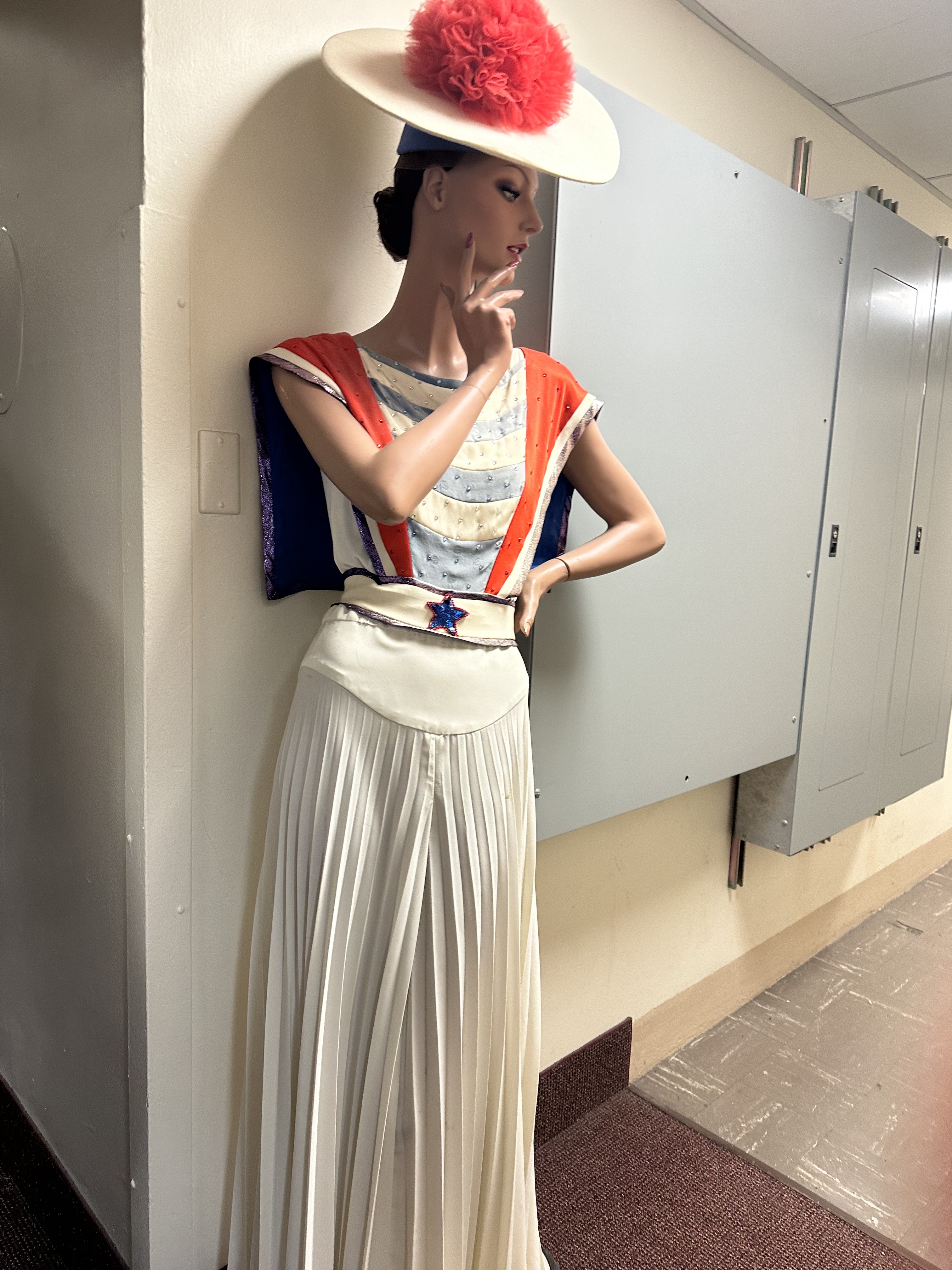
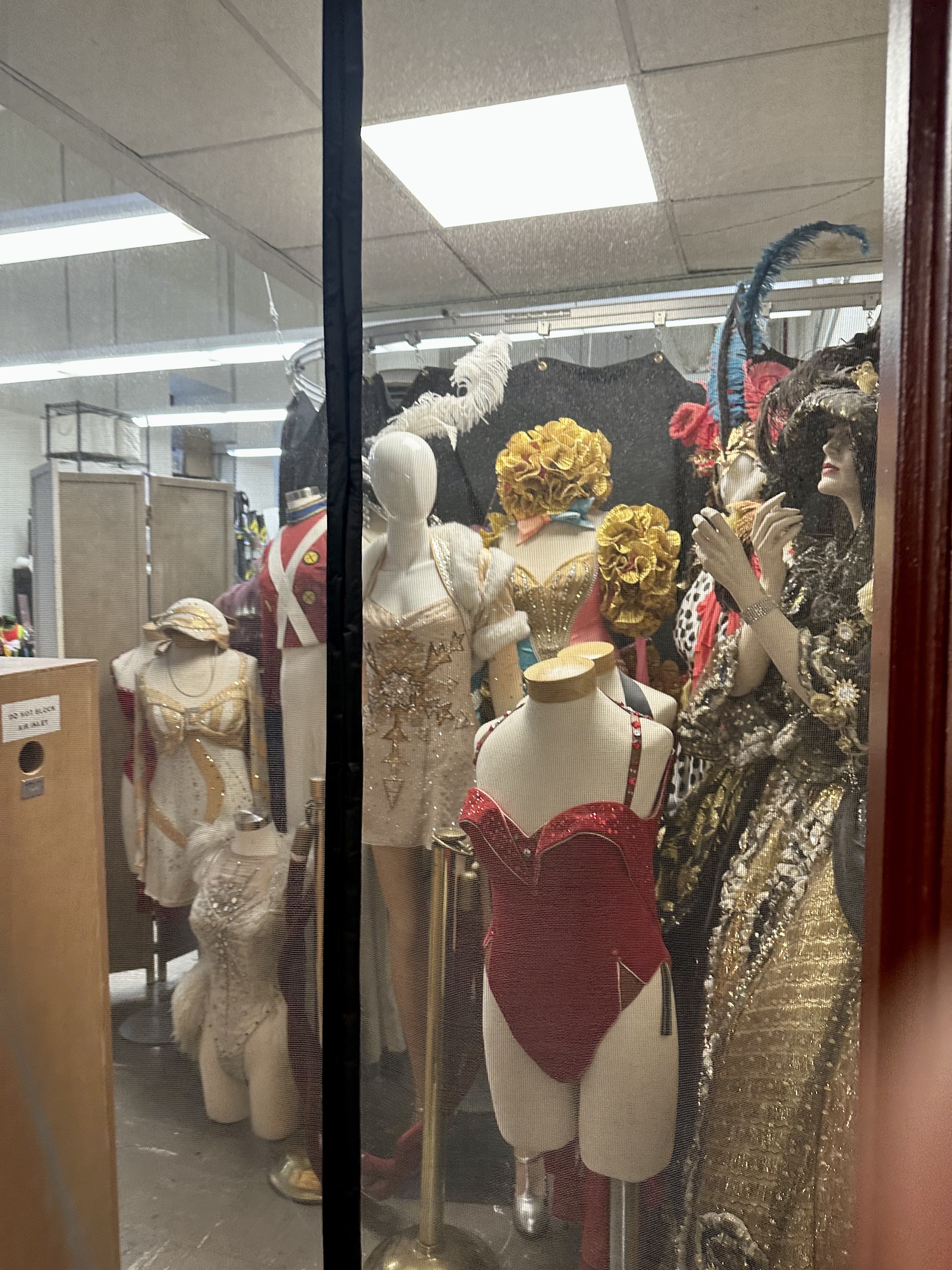
Heading to the rehearsal room, I passed interesting artifacts and posters.
The rehearsal room for the Rockettes had practice blocks for the number where they have seemingly random letters on blocks that end up spelling a phrase (I won’t spoil it for those yet to go!), a huge full-length mirror, and a way to measure to see if you are tall enough to be a Rockette (you need to be between 5’5″ and 5’10, reduced from 5’6′ before – but I’m still too short!). By the way, the illusion of all the Rockettes being the same height is accomplished by carefully tailoring the costumes so that they line up exactly the same at the waist, and by putting the tallest in the middle and very gradually reducing height as the line continues on each side.
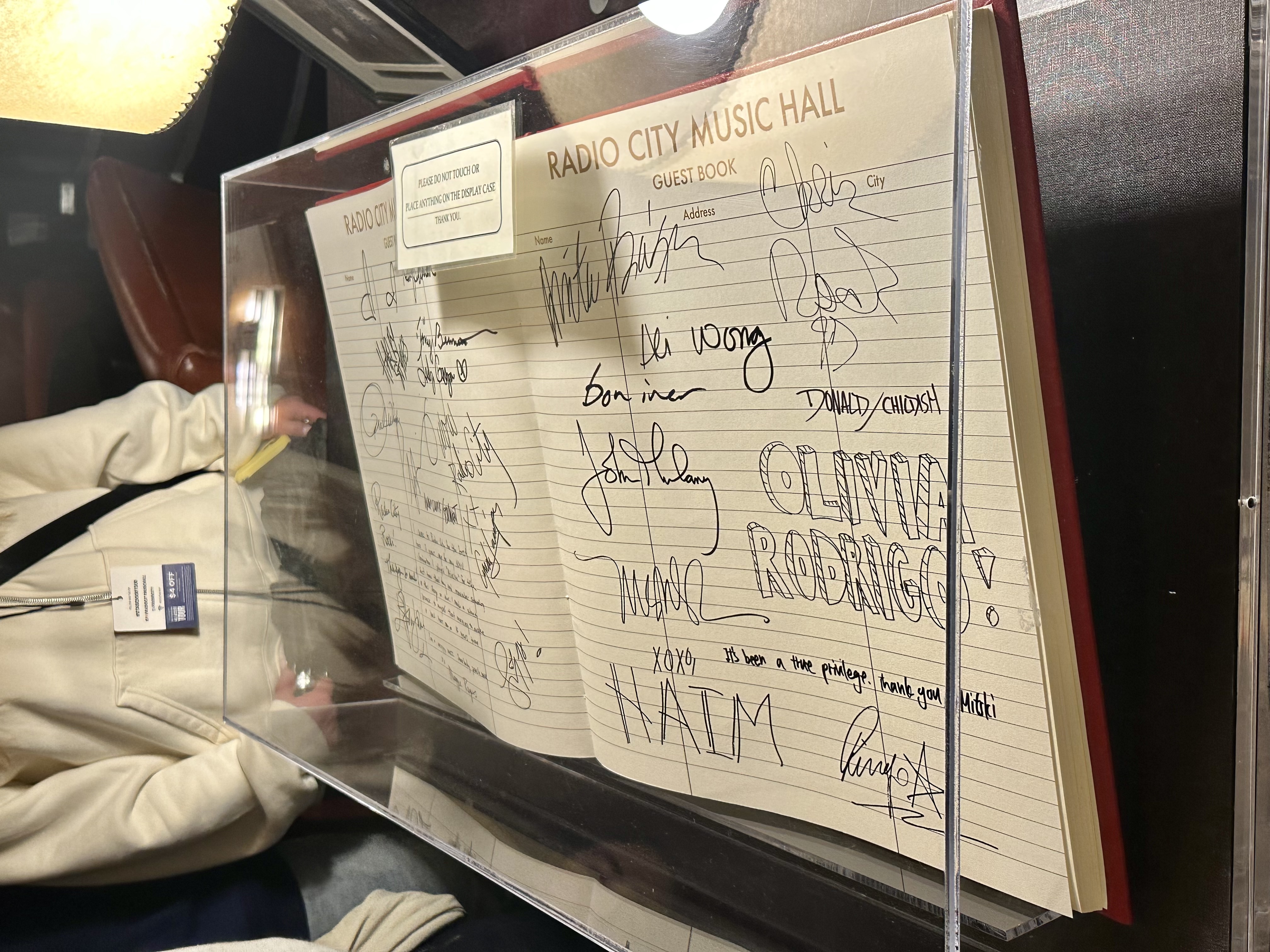
In the private VIP suite, there is a book that everyone who plays Radio City signs.
If you’ve ever wondered, this is the view from the top row of the top mezzanine (there are three of them, all stacked above the rear orchestra). From this distance, you can really see that the design around the stage was intended to look like the setting sun.
Another amazing thing about Radio City Music Hall is that there are two mighty Wurlitzer organs to either side of the stage, the largest instrument built by the company with 58 ranks of pipes and 4,178 pipes. For the Christmas Spectacular, two organists play before the show begins, play as the show ends and people depart, and occasionally during the show. My friend Trent Johnson is one of the organists and was kind enough to let me use these photos showing the organ (and himself!).
The Christmas Spectacular famously features live animals for the living nativity scene, and if you live in the neighborhood you might be lucky enough to catch the animals coming in the morning of a show. I took these photos after seeing the camels out on the street on the way to a morning meeting – proving once again that you never know what you will run into walking in New York City!
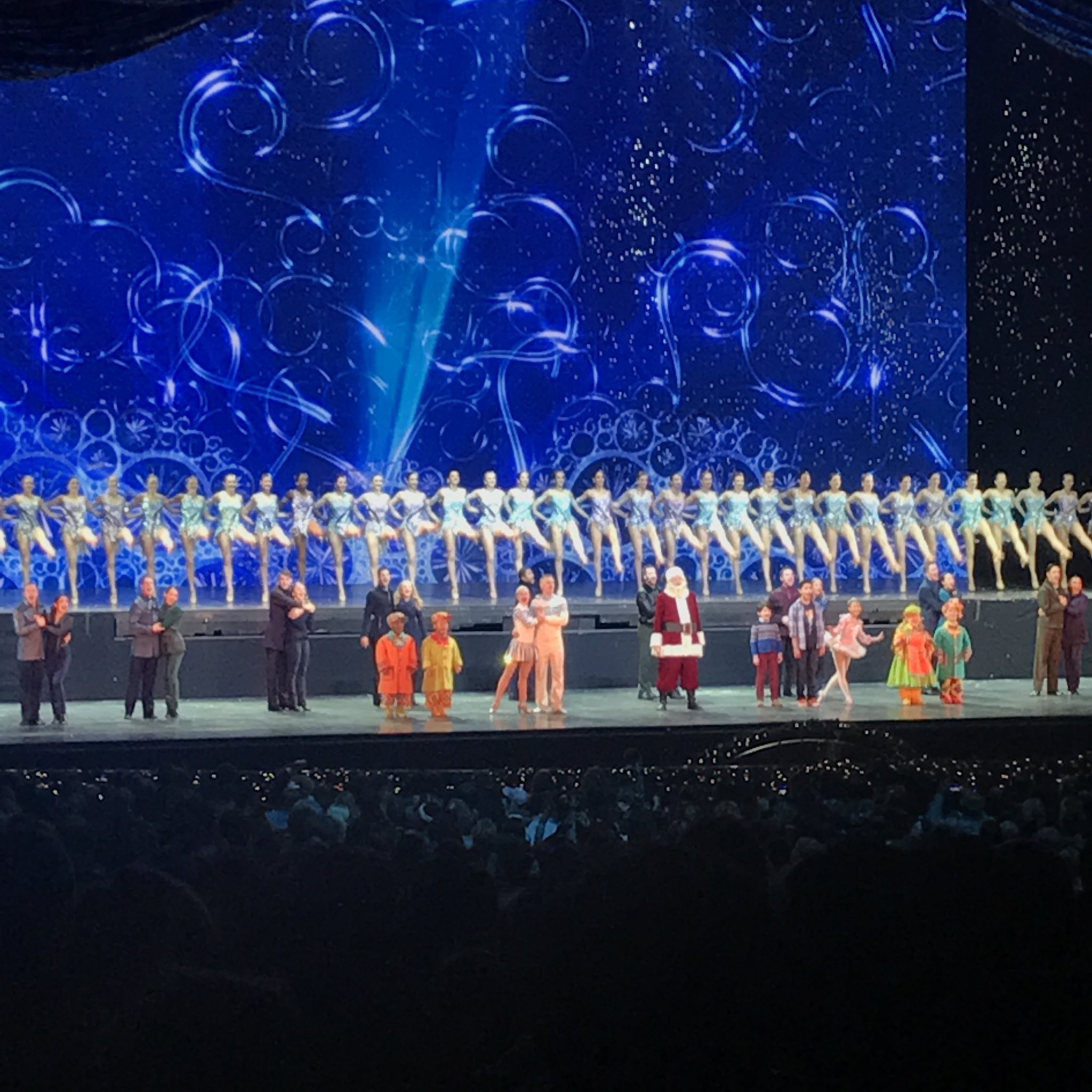
The Christmas Spectacular is always enjoyable, and yes – spectacular! For my family, it’s a yearly event, but most attendees seem to be visiting based on the surprised reactions you hear at many parts of the show that are nostalgic for those of us who may be going for our 10th or 25th time.
The last public performance I attended before everything shut down for the Covid-19 pandemic in March of 2020 was seeing Riverdance come back to Radio City for its 25th anniversary performance on March 10th (I still marvel at how we sat there in the crowded orchestra, all unmasked, with no idea of what was about to happen). By March 13 the remaining Riverdance shows had been canceled (Broadway shut down a day earlier, March 12). That pandemic time was tough on me, and on New York City in general (I wrote about it in some detail in this blog post). But as I walked past Radio City during the shutdown, the famous marquee declared “Together Better. Together as One. Together Stronger.” Radio City Music Hall is an icon of New York City, and has had its ups and downs. But it’s still here, rising up again after any setback. How emblematic of this complicated, exciting New York City that I love!






































































































 Julie Brannan, NYC residential real estate