
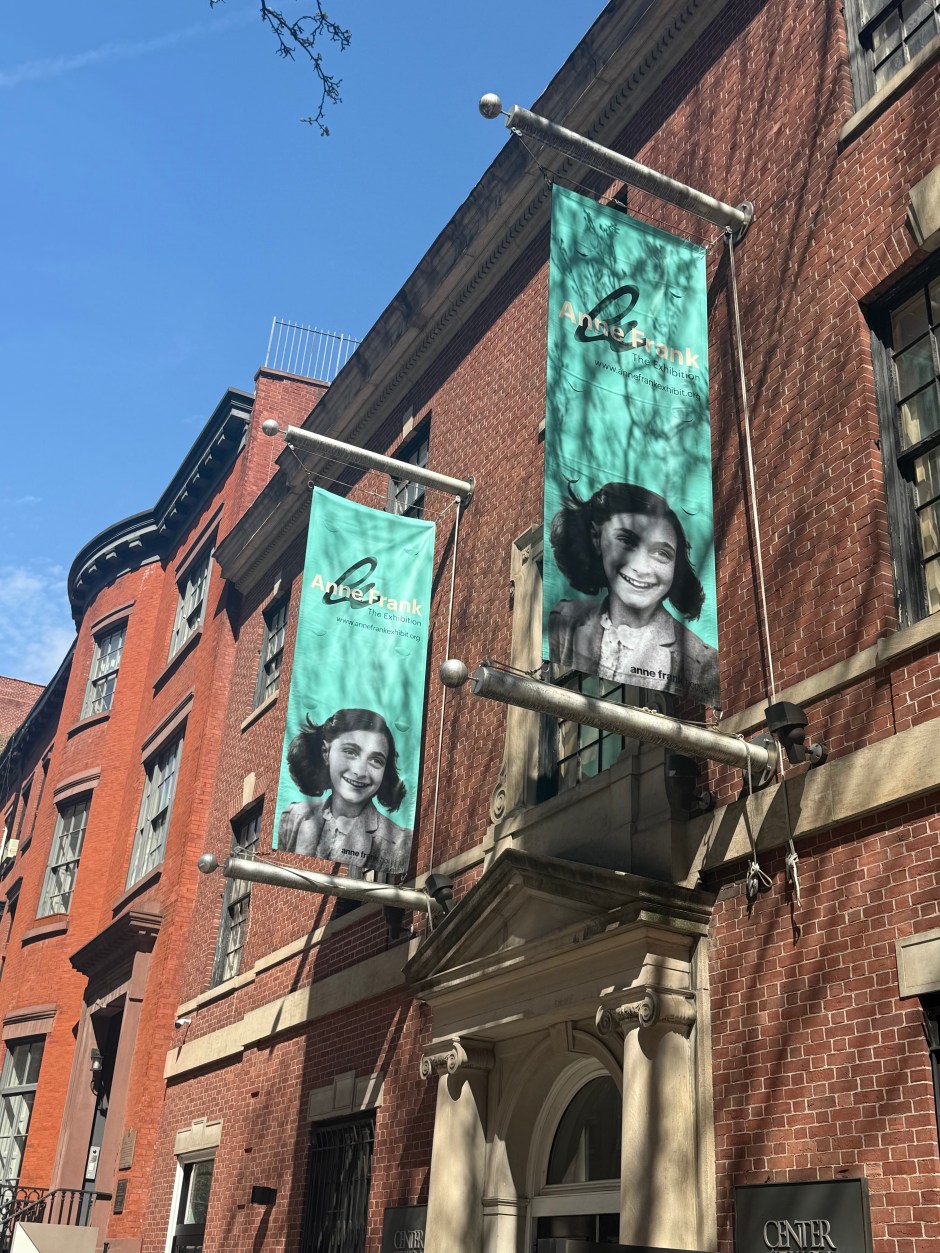
If you have ever been to the Anne Frank House in Amsterdam, you know what an incredibly moving experience it is to be there in the actual space where a German-born Jewish girl, Anne Frank, along with her family and some others, hid from the Nazis from 1942-1944. The diary that Anne kept during that time was found following the end of World War II by her father after Anne, her sister Margot, and their mother Edith all died in concentration camps after their hiding place was discovered. The very personal story it told has now been translated into more than 70 languages, become a movie and a play, and continues to be taught in schools today to illuminate the horrors of the Holocaust. The Anne Frank House has limited tickets per day and you need to plan far ahead if you want to visit when in Amsterdam (and I would highly recommend doing so). But on January 27, 2025 (Holocaust Memorial Day, that date marking the 80th anniversary of the liberation of the Auschwitz camp), Anne Frank The Exhibition opened just off Union Square in NYC.

Anne Frank The Experience is located at 15 East 16th Street, just off Union Square. Timed tickets for this also sell out well in advance, but if looking to go sooner, I have noticed that a few tickets get released one or two days in advance even for all these dates that appear sold out earlier, so keep checking. Or, just plan to see it later this summer or in early fall, as it has been extended at this point through October 31, 2025.


Most of the exhibit prohibits the taking of photographs, to keep the experience respectful and educational. I will give you an idea what is presented, but highly recommend you go and experience yourself if you live in or near NYC. It will likely take you about an hour to move through the exhibit and read and reflect on everything that is presented. The exhibit is extensive, occupying gallery space of over 7500 square feet. Initial rooms describe Anne’s extended family and its background, and introduce us to her parents, sister, and Anne herself. Woven into this story is the parallel story of the rise of fascism and the Nazi party in Germany and the danger it presented to many. I had not realized that Anne had extended family members in NYC who tried to find asylum for her family but had it repeatedly denied. The Franks’ move to Amsterdam was initially a way to escape danger in Germany, but eventually it was no longer safe there as well. The exhibit clearly describes first the limitations on freedom that were imposed, leading eventually to the need to hide in the Annex.
The different rooms leading up to the recreation of the Annex are very well done and often multi-media. In one room there is a large screen showing a photo of Anne and the rest of her class at school, and slowly one by one different children are highlighted and their eventual fate is displayed. There are also some actual artifacts that are on loan from the Anne Frank House in Amsterdam. You can see an excerpt from a neighbor’s wedding video where Anne can be seen hanging out of a window for about 20 seconds.
Finally, going through the replica of the actual Annex feels very much being in the actual location in Amsterdam. The windows are covered as they would have been during the over two years the family and four other Jewish inhabitants were in the Annex.
Leaving the Annex, the exhibit continues with the fate of those in the Annex after they were discovered (Anne died at the age of 15 in Bergen-Belsen concentration camp in Germany; seven of the eight inhabitants died in concentration camps). Her father, the only survivor, found her diary and tried to get it published. Many of the rejection letters he received are shown, suggesting that it was not likely to find a readership. But then the exhibit expands to show the movies and plays that have been based on the book, as well as endless copies of the book (Anne Frank: Diary of a Young Girl) translated into languages all over the world. It has sold over 30 million copies.
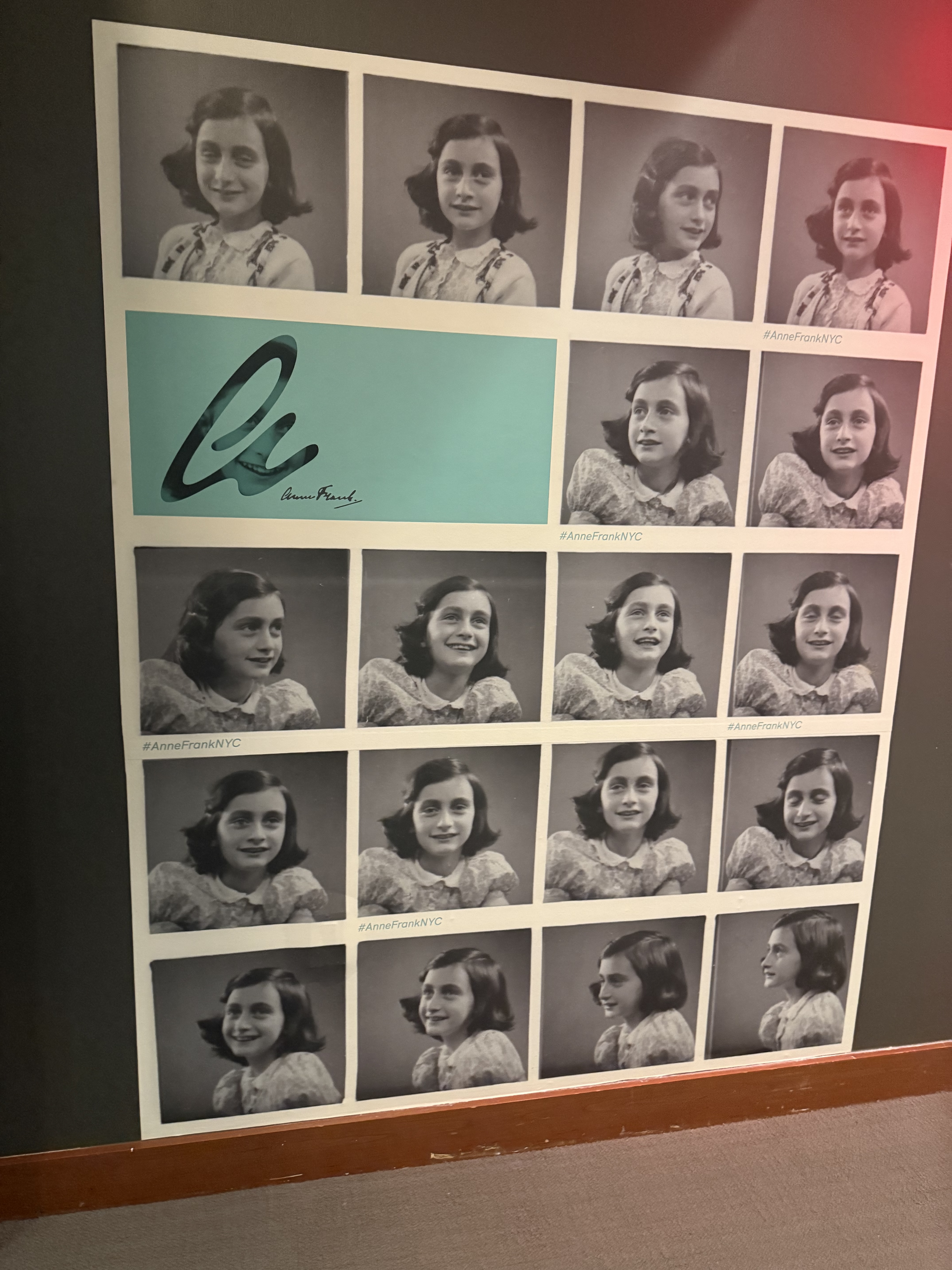
After looking at the long, long line of different versions of the diary published throughout the years, in a multitude of languages, you are invited, if you wish, to pull out your phone as you leave to take your picture with the montage of photographs of Anne (above). This still felt presumptuous to me, inserting myself into her story in any way. We humans are storytellers, though, and often the best way for us to relate the experience of a group is to tell the story of an individual. This is the magic of the diary of Anne Frank, in that we are able to relate to something almost too large to process, the Holocaust, through the lens of this one person. Primo Levi once said, “One single Anne Frank moves us more than the countless others who suffered just as she did but whose faces have remained in the shadows. Perhaps it is better that way; if we were capable of taking in all the suffering of all those people, we would not be able to live.” We can witness Anne’s story, encourage others to do so, and then expand the connection we have made with her to the larger multitudes of the Holocaust – and the lessons this teaches us. This exhibit states that it wants us to know more about Anne through the “multifaceted lens of her life—as a girl, a writer, and a symbol of resilience and strength” and for me, it succeeded brilliantly.

 Julie Brannan, NYC residential real estate