

One of the things I have done during this strange year of pandemic and lockdown has been to really get to know Hudson River Park (and I do plan a blog post on it soon). Although I have always explored Central Park – and it’s magnificent, no one can deny – during lockdown I began riding a bike (yet another planned post) and soon discovered my favorite thing was to use the dedicated bike lanes along the Hudson River, then explore the park on foot. On September 30, 2020, a new section of the park at Pier 26 opened, dedicated to the exploration of our waterfront’s ecology. Having visited it, I can say that it is a unique and very worthwhile addition to New York City’s incomparable parks.

Pier 26 juts out from West Street on the far side of Tribeca, roughly between Hubert and N. Moore Streets. It is just north of Pier 25 and behind City Vineyard restaurant and wine bar (more about that later!). Also in the old section of Pier 26 is the location for free kayaking (temporarily halted during pandemic, but keep it in mind for the future) and two dog runs.


The park is organized so that you experience different native ecological environments – woodland forests, coastal grasslands, maritime scrub, rocky tidal zone and the Hudson River itself. However, you could not even know that this was the purpose of the park and just enjoy the multiple places to relax, and the spectacular views.


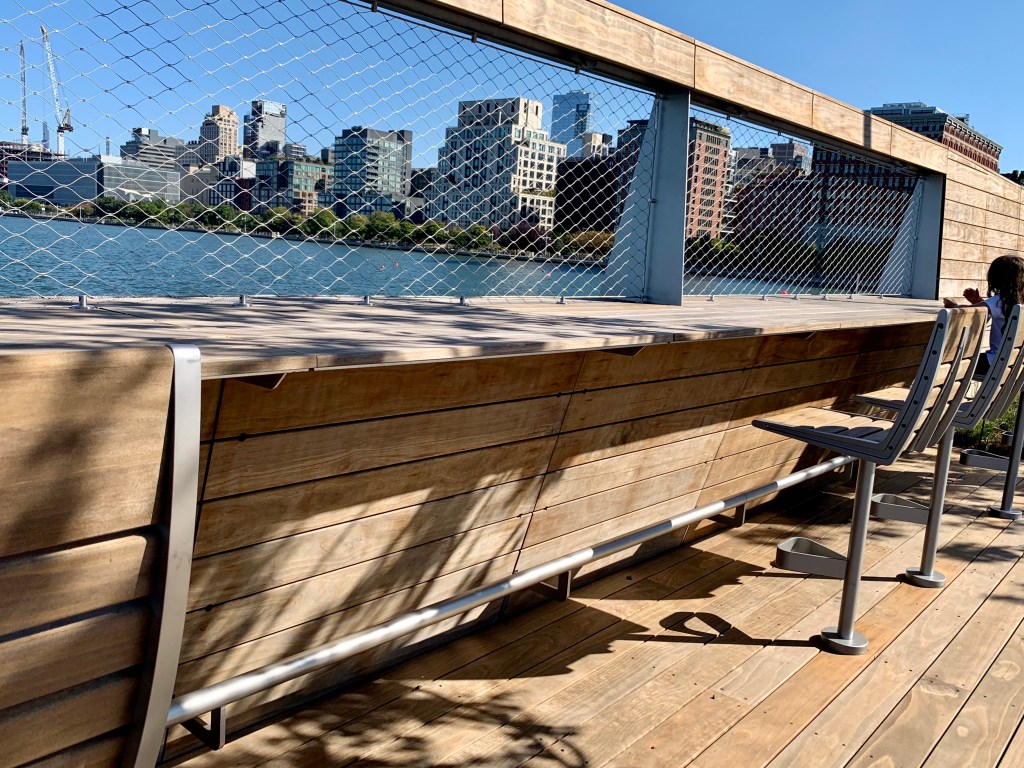

This part has a really unique variety of places to sit and relax – loungers, workspaces with a bar to place your laptop or food on while sitting at barstools, and even BENCH SWINGS.

As the pier reaches out to its westernmost point, you can see the lower section leading to the tide deck and the Hudson River. This section isn’t open at all times, but in the future there will be periodic tours for the public. This tidal marsh was created with native grasses and shrubs, and is submerged at high tide and visible at low tide. The hope is that over time the pier will become home to native species. The rocky tidal marsh is visible at all times from the elevated platform above.


In addition to places to relax, and places to learn, there is a sports play area, a sunning lawn, and my favorite – lovely walking paths. At. the end of the pier, you have the choice of looking south to the Statue of Liberty, or east toward the NYC skyline. You might see boats pass by, or jet skis.


With City Vineyard at the entry to the pier available for food and drink in the open air, it would be easy to spend a day at Pier 26. The wine garden and rooftop deck are both outside, and the deck has incredible views of New York Harbor. City Vineyard’s menu is locally sourced and inspired, and its wines are actually made in the city with grapes from some of the finest vineyards in the world.

While 2020 has been a very difficult year to be sure, one silver lining has been that we have learned to explore and appreciate what we can do outdoors. When walking the Hudson River Park, I have seen toddler movement and music classes, yoga classes, and personal training in progress outside. The bike paths are crowded with scooters, skateboards, and skaters as well as bicyclists. Parks host joggers, walkers, and babies being pushed in strollers. This turns out to be the perfect time for this new park to be unveiled, its importance now – not only as a refuge for New Yorkers escaping a pandemic but also for a reminder of what we need to do to heal our broken planet – unimaginable when planned in the early 2000s.

 Julie Brannan, NYC residential real estate