

Walking to show two apartments in the 400 block of East 52nd (not in the actual building Greta Garbo lived in for decades, but the same block), I was struck by the nomenclature “Turtle Bay” for the area (roughly from 42nd Street to 53rd Street, from Lexington Avenue to the East River) and vowed to find out whether there had in fact been turtles in a bay here a long time ago. What I discovered was one of those funny mistranslations that sometimes occurs: the Dutch called this area “Deutal” (Knife) Bay after a sharp turn in the East River (the reason why York Avenue/Sutton Place disappears at 54th Street) but the English-speaking later settlers misheard it as “Turtle.” My interest piqued, I decided to take my next dérive (an unplanned walk in an urban environment) in this area.

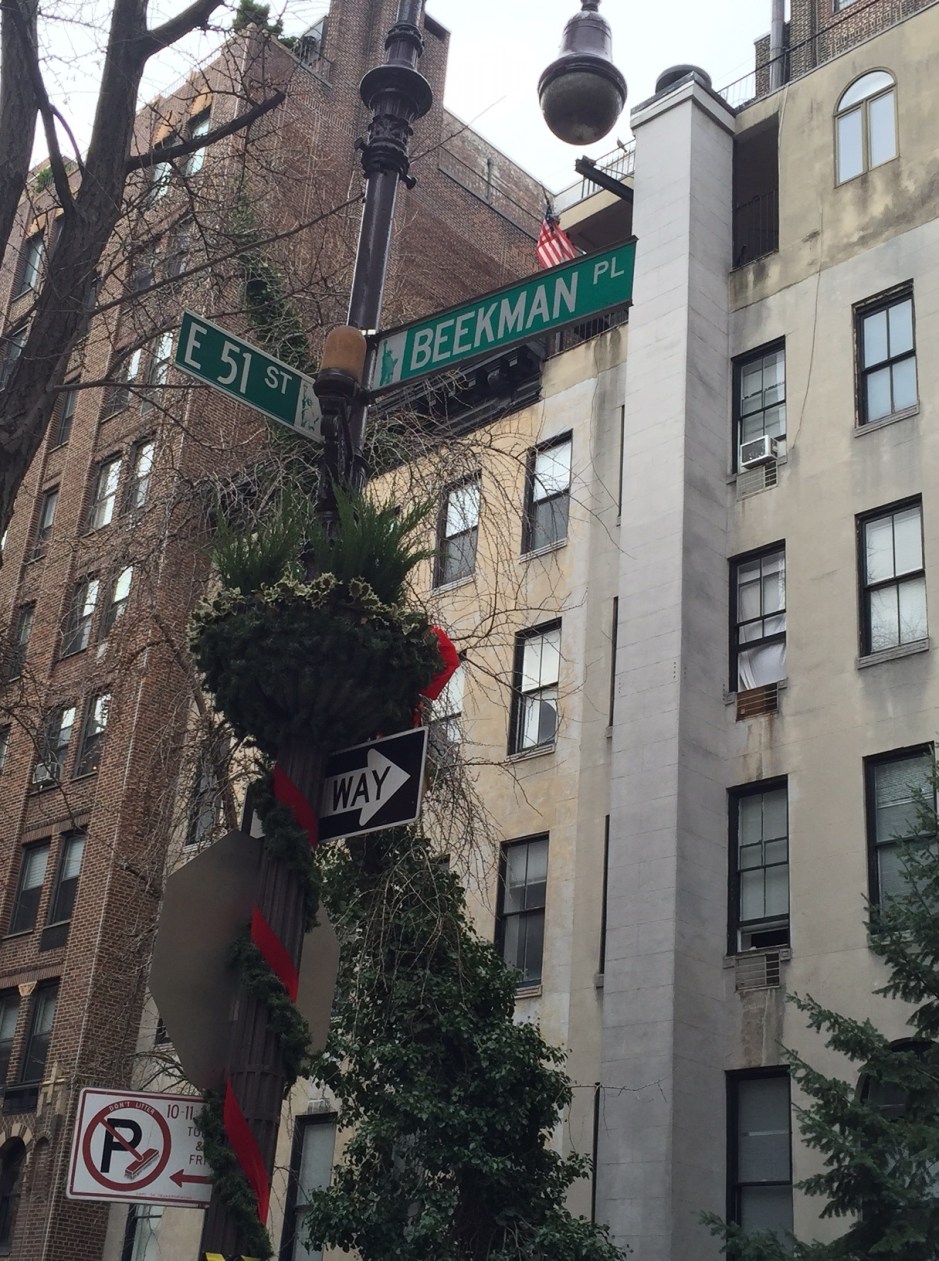
Initially farmland (including that of the Beekman family, who gave their name to Beekman Place), Turtle Bay evolved into an industrial neighborhood, noted particularly for its slaughterhouses. In the early 20th Century, Charlotte Hunnewell Sorchan bought and renovated a series of houses in the area, and sold to friends, including Maria Bowen Chapin, who founded the Chapin School. This began the evolution of Turtle Bay into a residential neighborhood, which was cemented when the last of the slaughterhouses was torn down to make way for the United Nations building.

I began my dérive at my favorite skyscraper in New York City, the Chrysler Building. Finished in 1930, it was the world’s tallest skyscraper for 11 months before being ousted by the Empire State Building, and is still the world’s tallest brick building (although it does have a steel skeleton). An Art Deco masterpiece, to me it has an airy fairy-castle quality that contrasts markedly with the more aggressive forms of most NYC skyscrapers.

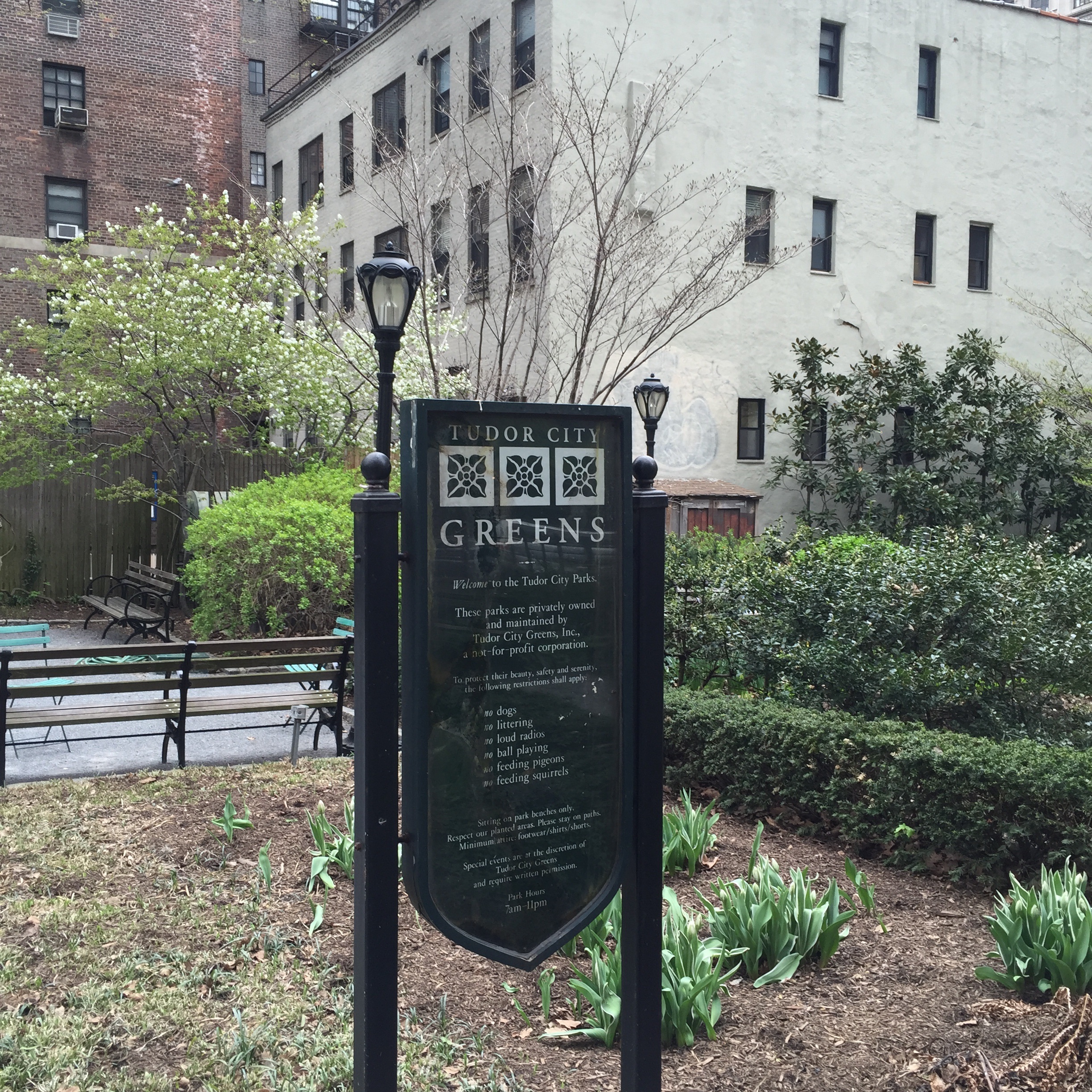
Walking east on 42nd Street, the distinctive Tudor City sign dominates the eastern view. The first residential skyscraper complex in the world, it was built in the 1920’s by a real estate developer with dreams of keeping middle-class people in the city rather than taking flight to the suburbs. Despite the name “Tudor,” the architecture is neo-Gothic in style. Most of the apartments face away from the East River, since when they were built the slaughterhouses, and their accompanying smell, still operated along the river. Many Tudor City apartments have wonderful views of the Chrysler and Empire State Buildings, but few face the United Nations for this reason.

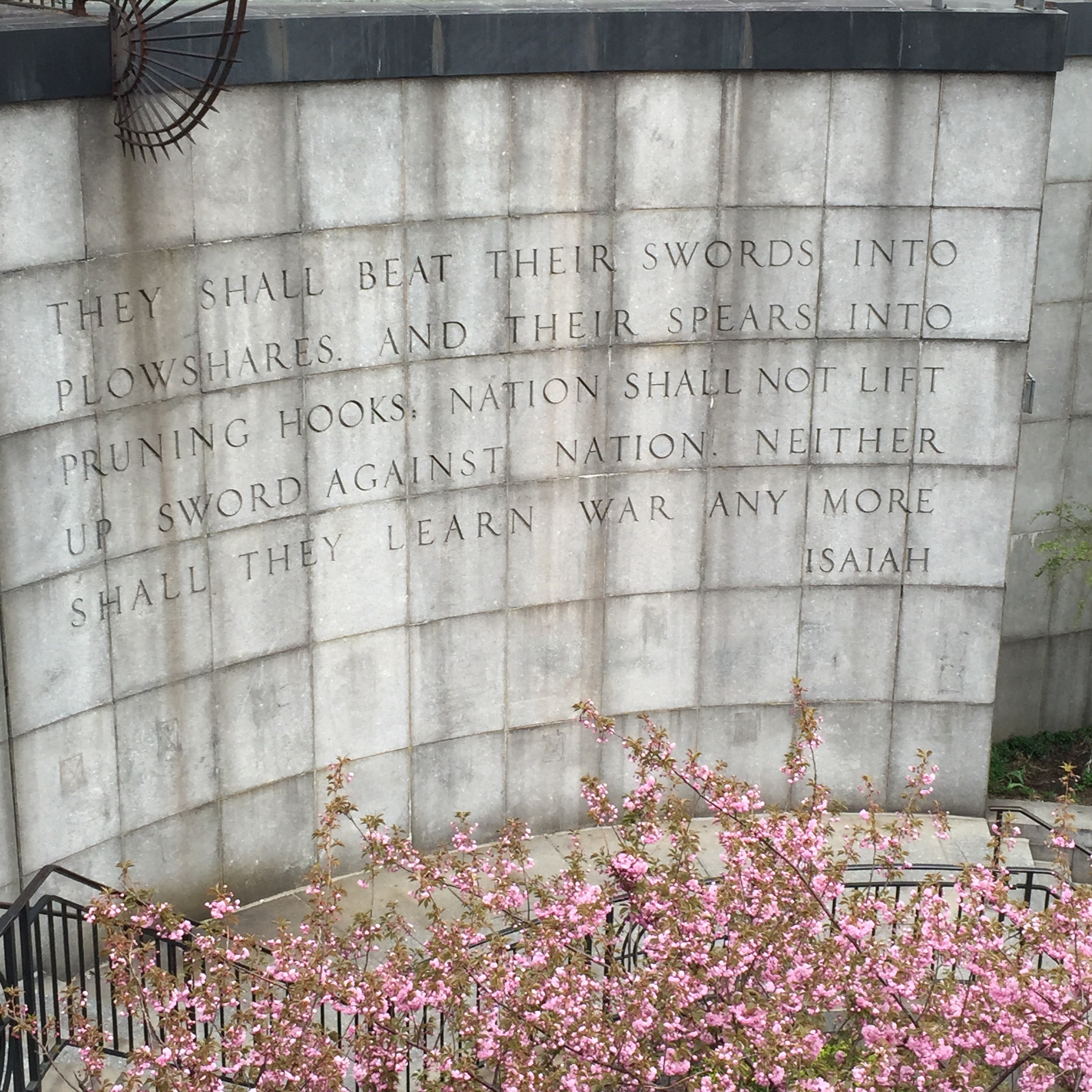
Taking a set of steps down from Tudor City to First Avenue, the United Nations (as well as multiple diplomatic missions) now dominates the area of Turtle Bay between First Avenue and the East River. Established after World War II to promote cooperation between the nations of the world and winner of the Nobel Peace Prize in 2001, the organization is imperfect but the quote across the street from the UN from Isaiah (“ . . . neither shall they learn war any more”) reveals the hope behind creating such an assembly. On a lighter note, I remember my young daughters once asking where aliens would land on earth if they were to try to reach the “leader” and I said it would have to be Manhattan because of the UN. Whether this was good news or bad news to them, I will have to ask and find out.
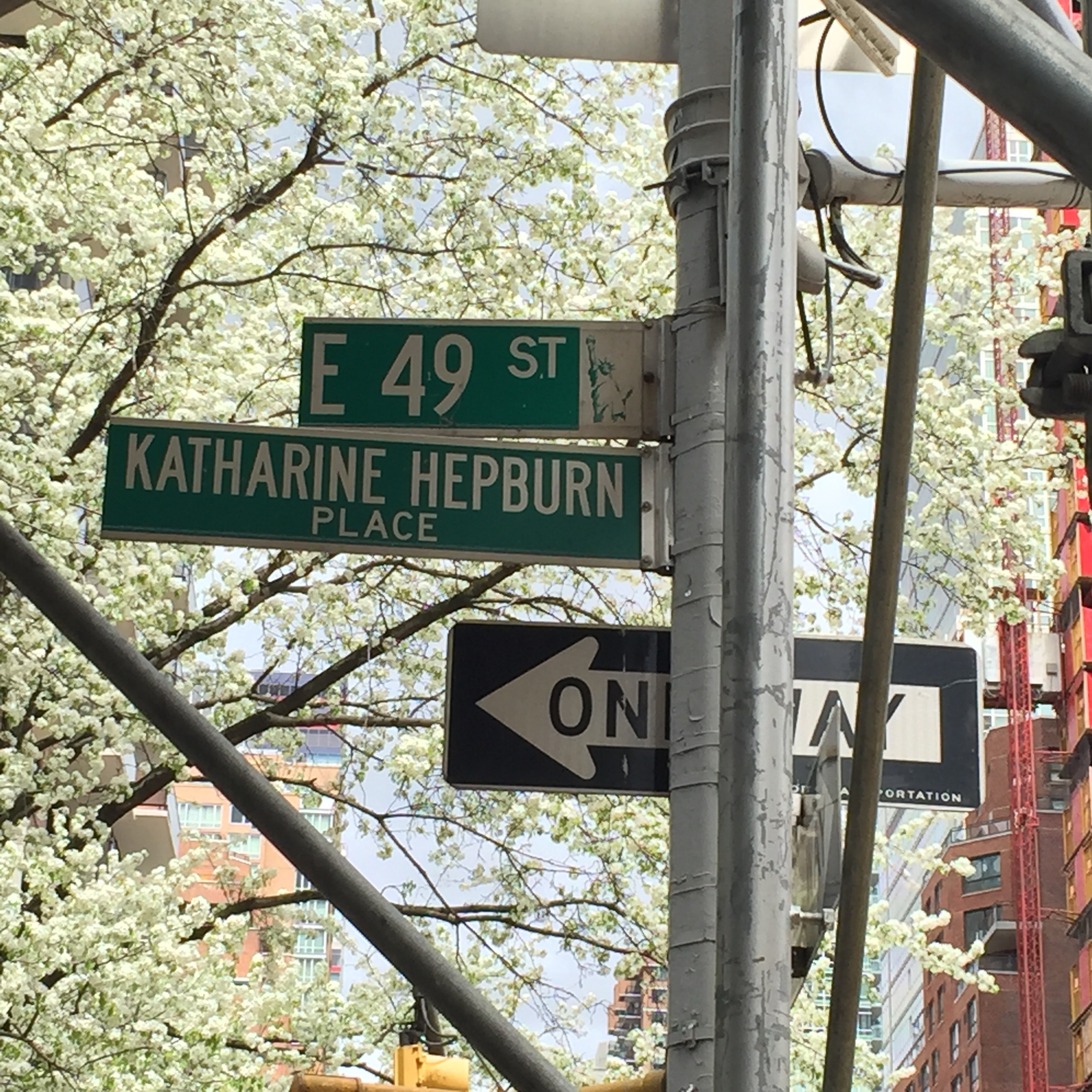
Continuing north on First from the UN, I passed Mitchell Place, one of New York’s micro-streets (comprising just one block between First and Beekman Place, next to E. 49th Street). Turning west on 49th Street, I thought of E.B. White writing Charlotte’s Web in this neighborhood (he was living on E. 48th at the time) and stopped to admire the signage for “Katharine Hepburn Place” on the corner of Second and 49th). She lived in a beautiful townhouse between Third and Second on 49th Street for most of her adult life, and that block is a gracious quiet row of townhouses.
Turtle Bay, unlike some more cohesive neighborhoods in NYC, has a wide variety of experiences represented: from the bustle of the shops and restaurants along the Avenues, to the quiet of Beekman Place, or from the gardens of Tudor City surrounded by neo-Gothic residences, to the international nexus of the United Nations. It is, however, a place where it is possible to find an apartment on a dead-end block with little to no traffic noise, but only a few blocks from everything midtown Manhattan has to offer.


 Julie Brannan, NYC residential real estate