


Recently I was fortunate enough to see the new musical “Hamilton” at the Public Theater (arriving on Broadway this summer), leading me to my last blog post – a walk through Hamilton Heights, the neighborhood in upper Manhattan where Alexander Hamilton had farmland and lived in his final two years. However, much of Alexander Hamilton’s time in the city was spent in the area now known as the Financial District. Roughly occupying the same space as the original settlement of New Amsterdam, it lies at the very southernmost point of Manhattan, below City Hall Park, excluding the areas of Battery Park and Battery Park City. This neighborhood is a unique mixture of very old (the colonial remnants of New Amsterdam) and very new (it’s only recently become a popular choice as a residential neighborhood and new development buildings abound). With these thoughts in mind, I decided to take my next unplanned walk in an urban environment (a dérive) in the Financial District.
I emerged from the subway at Bowling Green, the traditional starting point of ticket tape parades up Broadway. This tradition with a spontaneous parade associated with the dedication of the Statue of Liberty in 1886, and since has continued with celebrants as diverse as Theodore Roosevelt (upon his return from safari in Africa in 1910), Albert Einstein in the 1920’s, Charles Lindbergh as well as Amelia Earhart following their successful solo trans-Atlantic flights, Jesse Owens after winning four Olympic gold medals in 1936, the pianist Van Cliburn in 1958, the Apollo 11 astronauts, and the New York Yankees (nine times).

Wandering from Battery Park to State Street and on to Pearl Street, I came across what is possibly Manhattan’s oldest building (from 1719), Fraunces Tavern. This building is now a museum and restaurant as well as a National Historic Landmark. Once the meeting place of the secret society the Sons of Liberty, it became the headquarters for General George Washington at one point during the Revolution, and is where he gave his famous farewell address to his officers.
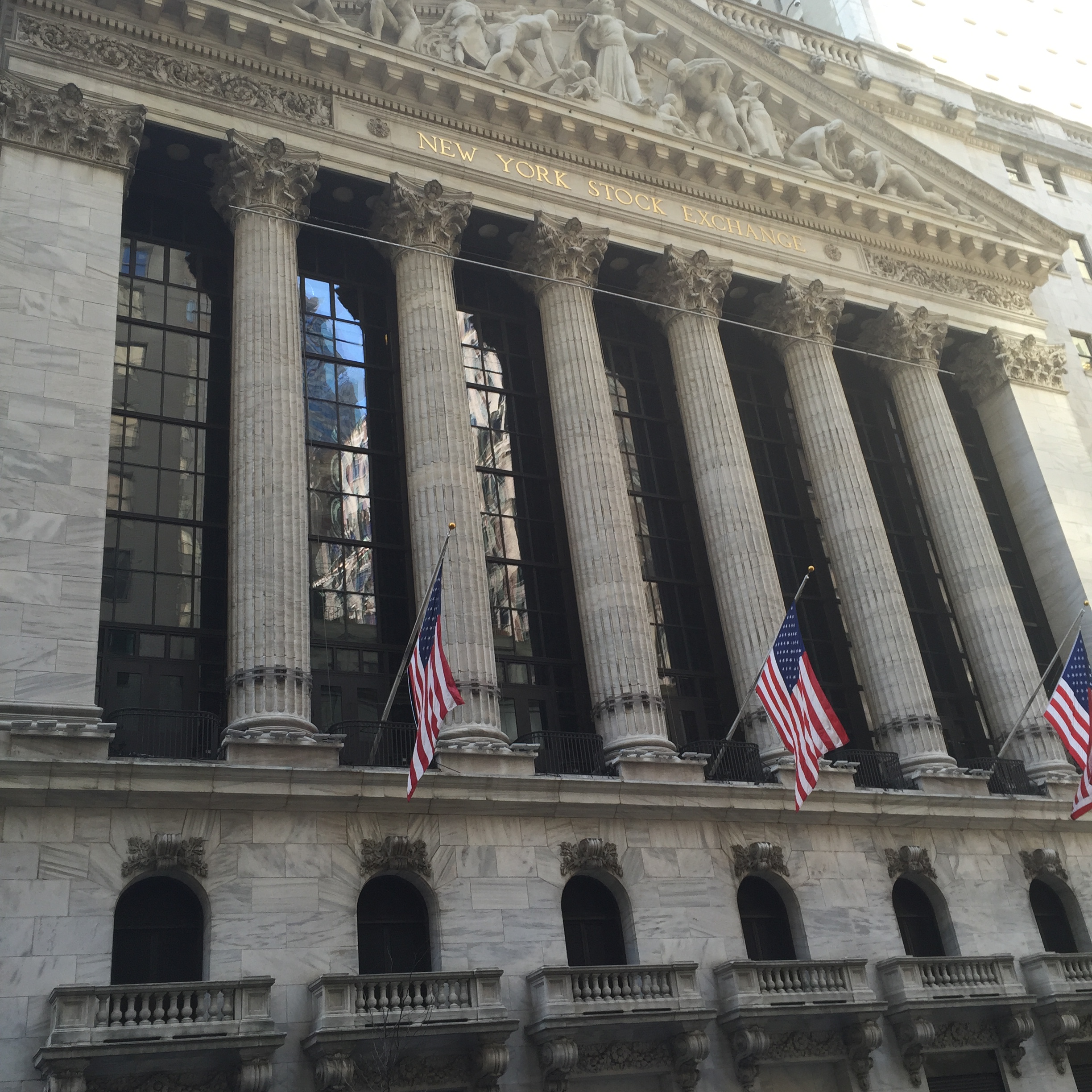
Continuing north on Broad Street, as I approached the intersection with Wall Street it was impossible to miss the imposing façade of the New York Stock Exchange. The roots of this center of American finance go back as far as the years immediately following the Revolution, and the earliest securities traded were War Bonds and stock from the First Bank of the United States (established by the first Secretary of the Treasury, Alexander Hamilton).
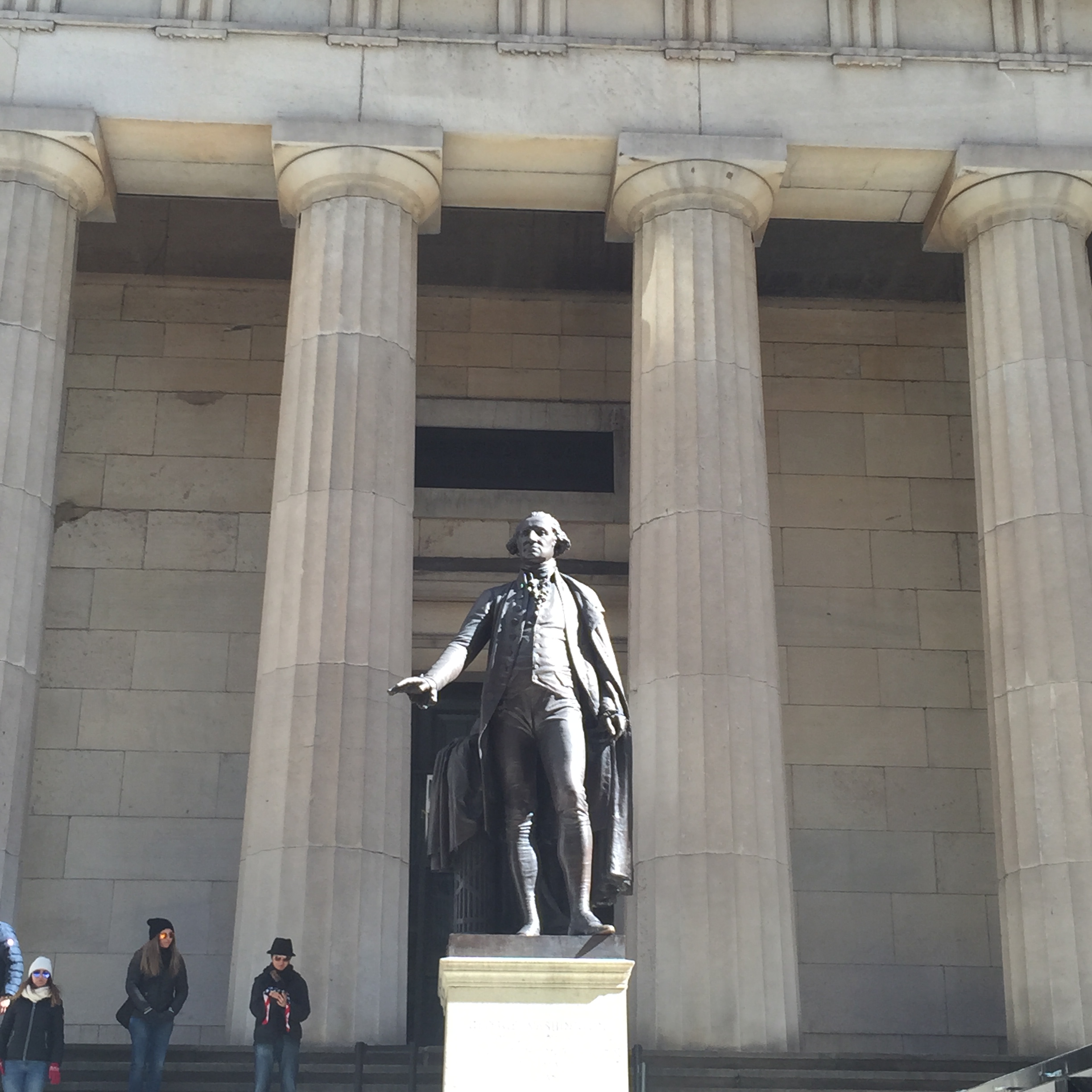
Nearby, on the corner of Wall Street and Nassau Street, is Federal Hall, the site of the first United States Capitol Building and the location of George Washington’s inaugural. A statue of the first President stands imposingly in front, gesturing as if to say “hold your applause.”
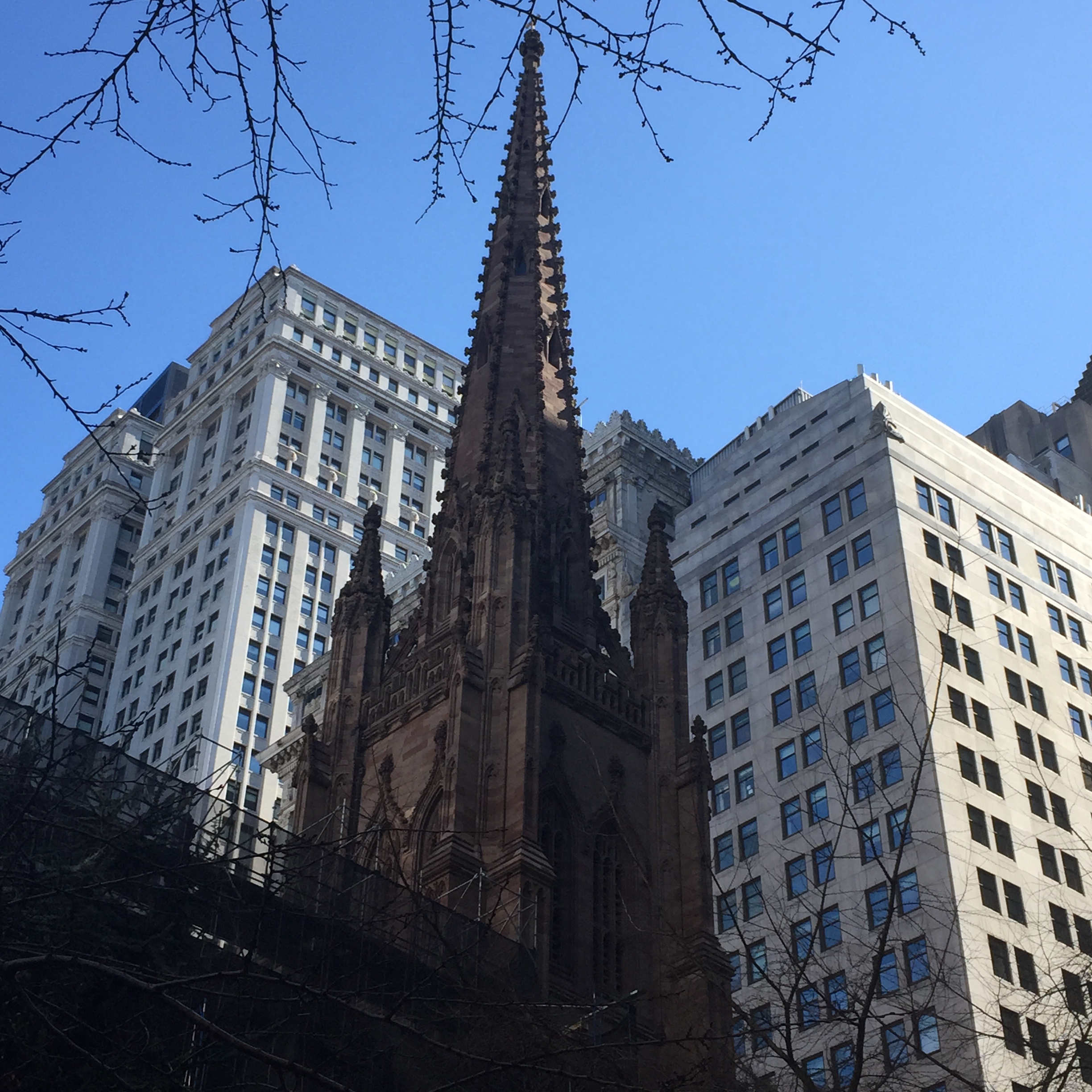
Nearby at Broadway and Wall Street is Trinity Wall Street Episcopal Church, first charted during colonial days (1696) by King William III. The current building on the site dates from 1846, but the cemetery attached to it is much older, and one of the few in Manhattan. It holds several luminaries, including Robert Fulton (inventor of the steamboat) as well as Alexander Hamilton and his wife Eliza Schuyler Hamilton.

Walking behind the cemetery along Church Street, it is impossible to miss One World Trade. Adjacent to the original footprints of the World Trade Center (now reflecting pools) and the site of the 9-11 Museum, it dominates the skyline in the area, and is now open for business. The influx of workers to One World Trade is bringing new shops and restaurants to the area. The new World Trade Center transportation hub is due to open at the intersections of Vesey, West Broadway, and Greenwich Streets at the end of 2015. Designed by famed Spanish architect Santiago Calatrava, it has been the source of controversy over its cost and overruns. However, seeing it soar in such an emotionally impactful area (Calatrava has said it is supposed to look like a bird being released from a child’s hand) was very pleasing to me.

Prior to 2001 and the 9-11 attacks, about 15-20,000 residents lived in the Financial District. Nothing could be more revealing of the strong and resilient nature of New Yorkers (and also of the success of some incentives and tax breaks created by the city to spur growth) than the fact that now there are over 60,000 residents of the neighborhood. In 2014, the average price per square foot in the Financial District was higher than the average in Manhattan for the first time, comparable to that of the Upper West Side and Greenwich Village. Simultaneously historic and fresh, this neighborhood is the closest thing New York City has to the center of Rome, where new buildings are interspersed with views of the Forum or Coliseum.



 Julie Brannan, NYC residential real estate