

One would only need to glance at this blog or know me a little to know that I walk all over New York City year-round, 50 or miles a week or more with regularity. I also bike – over 3200 miles in the past two years according to my Citibike app stats. I have blogged about walking in London and Paris, and even Los Angeles. My blog tagline is “A New York Real Estate Agent Explores the City.” But this post, and the next few I have planned, will be taking a markedly different tone, as I am about to leave NYC for Tanzania in a few days – to attempt to summit Mount Kilimanjaro, and celebrate afterwards with a photo safari.
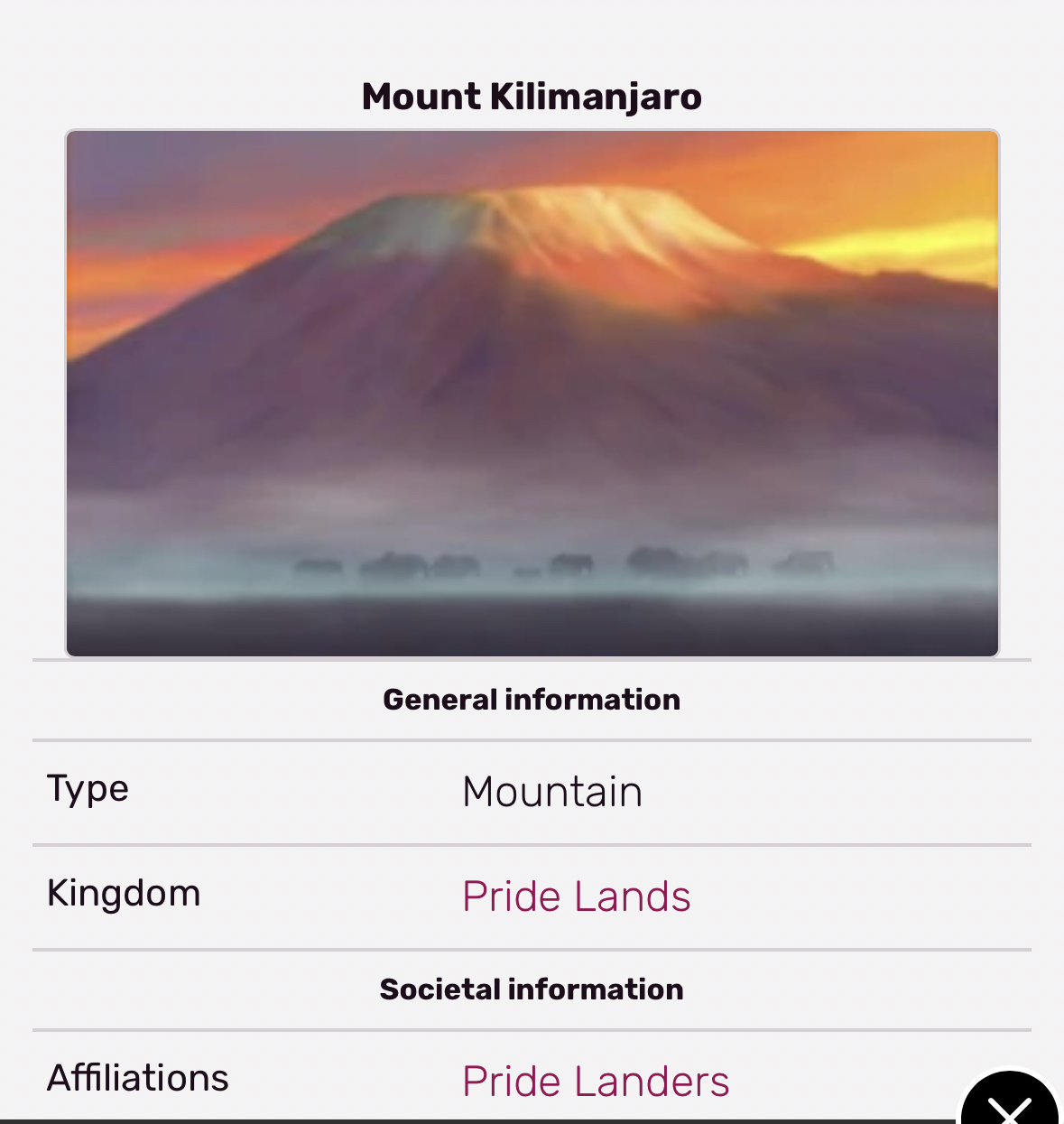
At the top of this post there is a screen grab of Mount Kilimanjaro as seen at the Disney attraction “Soarin’ Over the World.” And just above this paragraph is a Disney wiki entry showing that Mount Kilimanjaro appears in the opening sequence of Disney’s “The Lion King,” as animals travel for the presentation of Simba. This, plus a vague knowledge that Hemingway wrote a book called “The Snows of Kilimanjaro,” was my primary knowledge (absurdly limited! Kilimanjaro is in “Pride Lands” rather than Tanzania) about Kilimanjaro until a family member who enjoys hiking and I started to talk about combining her love for hiking with my desire to do a photo safari somewhere in Africa.
As I began to learn more, more decisions became necessary: which route to take up the mountain (there are several), which guiding company to go with (you are not allowed to climb Kili unguided, nor would I want to), and when to go. Here are some of my thoughts behind these choices:
Which Route
Kilimanjaro is a dormant volcano in Tanzania, with three volcanic cones: Kibo, Mawenzi, and Shira. Kibo has the highest elevation, Uhuru Peak at 5,895 m (19,341 ft) above sea level. Kilimanjaro is the highest free-standing mountain in the world, and, as the highest mountain on the continent of Africa, one of the “Seven Summits” (the highest peak on each continent). For perspective, Kilimanjaro is fourth highest of the Seven Summits, being less tall than Everest, Aconcagua, and Denali. The Marangu route, the only one with huts to stay in rather than camping, is the original way to the top. It is easier in some ways – more gradual, fewer steps since fairly direct – but is less favorable for acclimation to the altitude, leading to a success rate as low as 45%. The Machame route is the most popular route, and is often completed in six to seven days (more days leads to a higher chance of success). The Umbwe route is considered the most challenging route, very steep, and also without as much opportunity for acclimation. The Rongai route approaches from the Kenyan side of Kili, is less steep than Machame, and can be dryer during the rainy seasons (more about time of year later). Northern Circuit is a long route taking nine days, excellent for acclimation, and avoiding the Barranco wall if rock scrambling is a concern. The route I chose, Lemosho, is an eight day trip, considered to be one of the most beautiful journeys on Kili, starting in the rainforest, traveling through heather/moorlands, into Arctic desert, and concluding in the Arctic zone for the summit.
Which Guiding Company
I did a lot of research before booking with Ultimate Kilimanjaro, which has an excellent reputation for support and safety. However, there are many good companies and the most important thing is to book with a company that is a part of KPAP (Kilimanjaro Porters Assistance Project). If a company is certified by KPAP, it means that the local guides and porters are being paid a fair wage, and experience ethical treatment while working on the mountain. You can check on the KPAP site to ensure a company you are considering is on the list. Prices vary a lot between companies, and some of the least expensive companies may cut corners with payment and conditions for the people crucially supporting our climb.
When to go
Kilimanjaro is very near the equator, so temperatures don’t vary significantly between summer (December, January, February) and winter (June, July, August), but there are rainy seasons and more dry seasons. It is definitely easier to climb when you aren’t being rained on virtually every day, with snow once you get high enough, so I picked dry season (end of August). The big rainy season is in March through May, with another rainy season in November/December (usually less rainy). It can rain (or snow) any time of the year, of course, and rain is quite common year-round in the rainforest, but in the dry season you are unlikely (unless very unlucky) to have precipitation every day. The temperature on the mountain changes so much, however, that it is like climbing from the equator to the arctic in just a few days!
Physical training
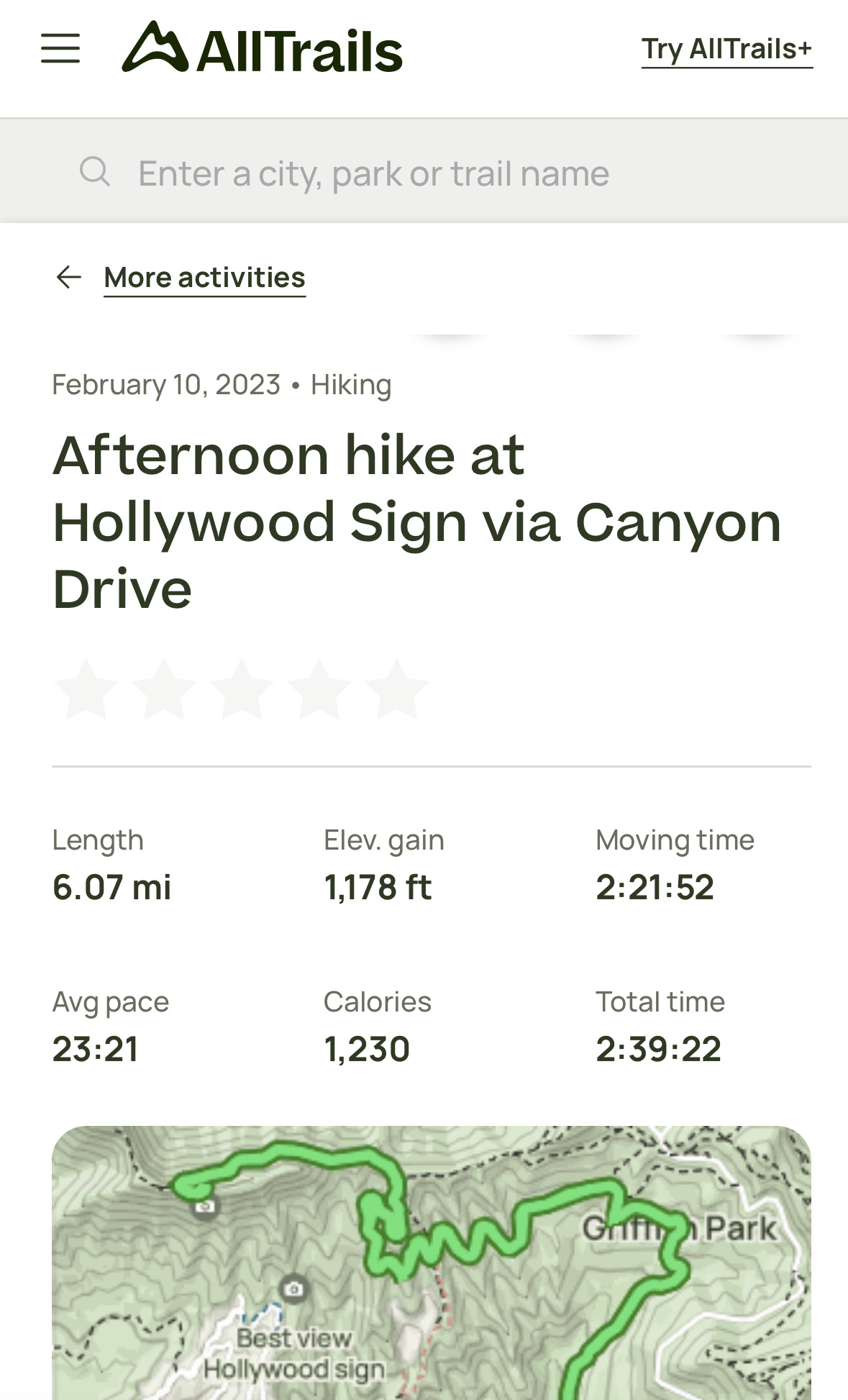
For the Lemosho route, I will hike about 45 miles, with plenty of uphill and downhill elevation, and some rock scrambling. Obviously it is best to be in good physical shape, and hiking is the best exercise for that (in addition to all my daily walking and biking in NYC, I did some hiking in California earlier this year to try out my boots and other gear, see below). Being in good cardio shape, resistance training, squats, and – especially – stairs (up and down, as the effort required for going down 15,000 feet over two days often does a real number on hikers’ quads, calves, and knees) are useful. Hiking with gear plus your fully weighed day pack is good preparation (see here for such a hike I did in Manhattan). You tend to go up slowly, to help with acclimation, and down quickly, to get back to oxygen-rich air!


Gear and clothing
At Kilimanjaro, you start out in the rainforest (at least on the Lemosho route) and end up in the Arctic zone. Temperatures at the summit range between 20 and -20 degrees Fahrenheit (-7 to -29 degrees Celsius), and the wind can vary as well, influencing the perceived temperature. Because of this range of conditions, it is challenging to pack clothes and gear for this trek. There is also a weight limit to how much your porters are allowed to carry, dictated by KPAP. I won’t go into all the details about clothing and gear, as there are many sites (including Ultimate Kilimanjaro’s) to give you sample packing lists and even specific items that are recommended. The most important items are your hiking boots, which must be comfortable, supportive, and waterproof – and well broken-in. There are no huts to stay in on the Lemosho route, so I will be sleeping in a tent. No electricity, although I will take battery packs to keep my few electronic items charged. No running water, no showers. Below is what my duffle for the mountain looks like, with things organized in waterproof bags.


Vaccinations and medications
Although there are no requirements for vaccines to travel to Tanzania other than if you are coming from a place where Yellow Fever is an issue (and coming from the US via a plane change in The Netherlands, this is not an issue for me), the CDC has a list of recommended vaccines, which you can see on their website here. I updated my TDaP, and had Hep A and Typhoid vaccines, and was fully up-to-date on everything else. As for medications, you need anti-malarials (and there are various kinds with different pluses and minuses, so look at the CDC site and talk to your doctor – all require a prescription) and you can choose to take acetazolamide (also a prescription), which may help with altitude sickness, and ibuprofen (over-the-counter) for sore muscles and symptoms of altitude sickness. Most people who are unable to summit, who need to be evacuated, or experience severe illness on the mountain are experiencing the effects of extreme altitude on the body. Going up slowly can help your body to adapt to the altitude, but some people are more susceptible than others and even people who have not had trouble with altitude before can have a bad experience on a subsequent trip. Because of lower atmospheric pressure and lower oxygen levels, at 10,000 feet and above, 75% of all people will experience some symptoms of altitude sickness (headache, nausea, dizziness, shortness of breath, loss of appetite, trouble sleeping, fatigue) but Acute Mountain Sickness (AMS) is a more severe form of altitude sickness that can affect the lungs or the brain, and if you have AMS it is crucial that you descend as quickly as possible. On my trek the guide will be checking my pulse rate, blood oxygenation level, and administering the Lake Louise Scoring System by asking questions morning and night. I have agreed that if the guide says I need to descend, I will do it. However, on the Lemosho route, which has multiple opportunities to “climb high/sleep low” (optimal for acclimation) and also takes six days to ascend (two days to descend!), as many as 90% of all climbers on this route are able to summit.


As is clear from the two quotes above, climbing a mountain is often used as a metaphor for life, for overcoming difficulties, and/or for a personal journey. In the next few weeks I will have the literal experience of putting one foot in front of the other and – hopefully – looking back to discover that I have climbed a mountain. But I expect that this physical journey will end up to be an emotional/psychological one as well. I intend to take each day as a grand adventure, focusing on the experience rather than the inconveniences, discomfort, fatigue or the ultimate goal. Although I certainly will do everything within my power to reach the summit, if altitude sickness prevents it, there will be so many other experiences that will make the trip worthwhile. And, after getting down from the mountain, a five-day safari awaits. Hopefully next month I will be posting twice, once about the Kili climb, and once about the safari. (POSTSCRIPT: read about the Kili climb here and the safari afterward here!) It’s almost time to leave – wish me luck!
 Julie Brannan, NYC residential real estate
Climbing Mount Kilimanjaro is an event in your life that will live with you for ever. It is a journey of the soul through some of the most beautiful scenery. It does not require any technical expertise, but does require lots of determination. So if you are committed, landing on this page is a good place to start.